Partnermanagement

Die 20 besten Softwareplattformen für das Partnerbeziehungsmanagement zur Steigerung des Umsatzes im Jahr 2026

Modern SaaS partner teams need modern partner relationship management software in order to successfully scale revenue. Here are 20 of the top tools in 2026.

⚡ TL;DR

Im Jahr 2026 können sich SaaS-Unternehmen nicht mehr auf Tabellenkalkulationen und veraltete Portale verlassen, um wachsende Partner-Ökosysteme zu verwalten. Moderne PRM-Tools sind unerlässlich, um Geschäfte zu verfolgen, Co-Selling-Aktivitäten voranzutreiben und Echtzeit-Transparenz über Partnerschaften hinweg zu gewährleisten. Dieser Leitfaden listet die 20 besten PRM-Plattformen auf – mit Introw an der Spitze der Liste aufgrund seiner CRM-nativen Einrichtung, No-Code-Workflows und Slack-/E-Mail-Zusammenarbeit. Ganz gleich, ob Sie Empfehlungen skalieren oder Hunderte von Partnern verwalten, das richtige PRM ermöglicht ein schnelleres Umsatzwachstum und sauberere Daten ohne aufwändige Entwicklungsarbeit.

Im Jahr 2026 sind Partner-Ökosysteme zu wichtigen Umsatztreibern geworden, wobei SaaS-Unternehmen zunehmend auf Allianzen setzen, um ihre Marktreichweite zu vergrößern, den gemeinsamen Vertrieb voranzutreiben und den Kundennutzen zu steigern. 

Da Unternehmen zunehmend von Direktvertrieb zu kooperativen Markteinführungsstrategien übergehen, bieten diese Partnerschaften Zugang zu neuen Kunden, Branchen und Regionen. 

Als Partner-Ökosysteme an Bedeutung gewannen, erkannten SaaS-Partnerteams, dass sie dringend eine Technologie für das Partnerbeziehungsmanagement (PRM) benötigten, die mit dieser Entwicklung Schritt halten konnte. 

Schließlich mangelt es traditionellen PRM-Methoden wie Tabellenkalkulationen und statischen Portalen an der Skalierbarkeit, den Echtzeit-Einblicken und der Automatisierung, die eine moderne Partnerzusammenarbeit erfordert.

Ein modernes PRM-Tool hingegen optimiert das Partnermanagement durch umfassende Transparenz, effektive Zusammenarbeit und genaue Prognosen. 

Benutzer profitieren von erhöhter Effizienz, beschleunigten Geschäftszyklen und einer stärkeren Einbindung von Partnern. 

Da Unternehmen zunehmend auf ein ökosystemorientiertes Wachstum setzen, ist der Einsatz moderner PRM-Lösungen mittlerweile unverzichtbar geworden, um Partnerschaften effektiv zu verwalten und in sich wandelnden Märkten wettbewerbsfähig und vernetzt zu bleiben.

In diesem Leitfaden möchten wir SaaS-Partnerteams dabei helfen, die besten PRM-Plattformen zu finden, mit denen sie ihren Umsatz durch bessere Transparenz der Pipeline, Lead-Flow und Co-Selling steigern können. 

Lesen Sie weiter und entdecken Sie Ihre neue Lieblingsplattform. 

Was Sie bei einer Software für das Partnerbeziehungsmanagement beachten sollten

Sind Sie bereit, Ihr PRM-System zu aktualisieren, wissen aber nicht, wo Sie anfangen sollen?

Es ist eine wichtige Entscheidung – und eine, die Sie unbedingt richtig treffen möchten. 

Schließlich kann die Wahl der richtigen PRM-Software für Ihr Unternehmen den Unterschied zwischen einem florierenden Partner-Ökosystem und einem Flop ausmachen. 

Vor diesem Hintergrund finden Sie hier eine praktische Checkliste mit den Anforderungen, die Ihre PRM-Software im Jahr 2026 erfüllen sollte:

  • Native Integration von Customer Relationship Management (CRM) (Salesforce, HubSpot)
  • Workflows für Geschäftsabschlüsse und Lead-Registrierung
  • Echtzeit-Verfolgung der Partnerinteraktion
  • White-Label-Portale und Partnersegmentierung
  • Zusammenarbeit außerhalb des Portals (E-Mail, Slack)
  • Prognose- und Berichtsfunktionen
  • No-Code-Anpassung und Skalierbarkeit

Die 20 besten Softwareplattformen für das Partnerbeziehungsmanagement im Jahr 2026

Sind Sie bereit, sich für eine glänzende neue Plattform für das Partnerbeziehungsmanagement zu entscheiden?

Lesen Sie weiter und entdecken Sie die 20 besten Tools auf dem Markt. 

#1 Introw

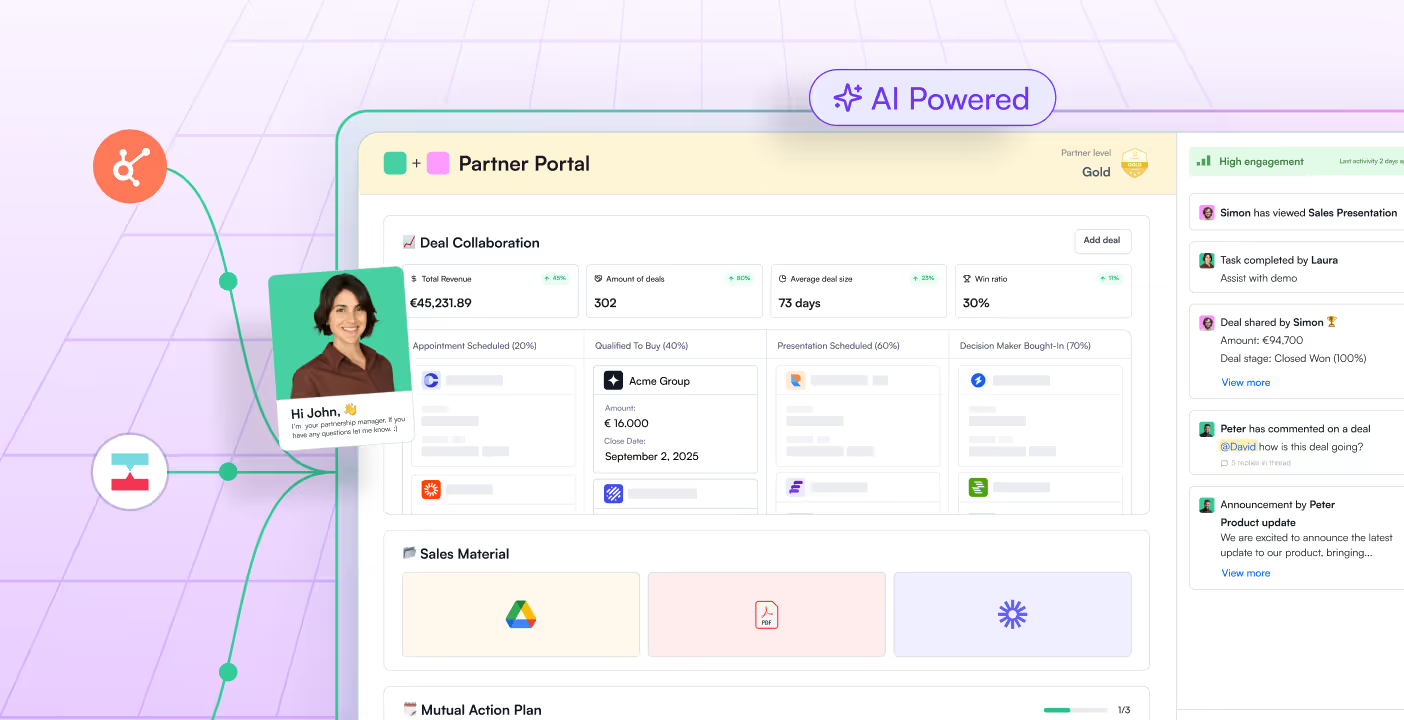
Lernen Sie Introw kennen – ein PRM der nächsten Generation mit CRM-Integration als Kernstück. 

Es wurde speziell für SaaS-Unternehmen entwickelt, die Salesforce oder HubSpot verwenden, bietet eine portalunabhängige Zusammenarbeit und lässt sich in wenigen Minuten implementieren (ohne Programmierung). 

Diese Plattform ist ideal für SaaS-Unternehmen, die zwei oder mehr Partner-/Channel-Manager haben. 

Es optimiert den Deal-Flow der Partner, automatisiert die Nachverfolgung von Interaktionen und fördert den gemeinsamen Vertrieb – und das alles, ohne das CRM zu verlassen.

Entdecken Sie die wichtigsten Funktionen von Introw: 

✅ CRM-first: Alle Daten bleiben in Salesforce/HubSpot

✅ Echtzeit-Transparenz und Prognosen für die Pipeline

✅ Partner-Tracking-Software (E-Mails, Inhalte, Updates)

✅ Zusammenarbeit außerhalb des Portals über Slack und E-Mail (keine Anmeldung erforderlich)

✅ Einfache Registrierung von Geschäften und Leads über Formulare oder E-Mail

✅ Skalierbar von 20 bis über 300 Partnern mit benutzerdefinierten Workflows

✅ Keine Programmierung erforderlich, modulare Architektur

Introw kann Ihnen dabei helfen, Ihr Partnerschafts-Ökosystem auf die nächste Stufe zu heben. Aber verlassen Sie sich nicht nur auf unser Wort, sondern vereinbaren Sie noch heute einen Termin für eine Demo, um Introw in Aktion zu erleben.

#2 Allbound

Allbound ist eine Plattform für das Partnerbeziehungsmanagement, die entwickelt wurde, um das Management von Partnerprogrammen zu automatisieren und das Wachstum des Ökosystems zu fördern. 

Es bietet Tools für die Einbindung von Partnern, gemeinsames Marketing und gemeinsamen Vertrieb und liefert umfassende Einblicke, um die Zusammenarbeit zu verbessern und den Umsatz zu steigern.

Zu den wichtigsten Funktionen gehören:

✅ Tools zur Einbindung von Partnern

✅ Inhaltsbibliothek und Verwaltung

✅ Lernpfade und Zertifizierungen

✅ Co-Branding und Interessentenseiten

✅ Verwaltung von Marktentwicklungsfonds (MDF)

✅ Lead-Verteilungs-Engine

✅ Deal-Registrierungssystem

✅ Leitfäden für den geführten Verkauf

✅ Dashboard für Gamification und Anreize

✅ Kanal-Einblicke und Berichterstattung

✅ CRM-Integrationen mit Salesforce, HubSpot und mehr

Preise: Allbound bietet individuelle Preise, je nach Ihren Anforderungen.

#3 PartnerStack

PartnerStack vereinfacht und skaliert Partner-Ökosysteme für B2B-SaaS-Unternehmen. 

Es verbindet Unternehmen mit Affiliates, Empfehlungspartnern und Wiederverkäufern, um das Wachstum voranzutreiben, den Umsatz zu steigern und die Verwaltung zu optimieren. 

Mit Automatisierung und robusten Tools unterstützt PartnerStack Unternehmen dabei, ihre Partnerschaften effektiv zu rekrutieren, zu verwalten und zu optimieren.

Wichtigste Merkmale:

✅ Partner rekrutieren

✅ Leistung der Partner verfolgen

✅ Partner mit Schulungen aktivieren

✅ Partnerprovisionen automatisieren

✅ Optimieren Sie die Leistung mit Berichten

✅ Greifen Sie auf ein großes B2B-Partnernetzwerk zu

✅ Partnerprogramme für Wachstum skalieren

Preise: PartnerStack erstellt für jeden Kunden einen maßgeschneiderten Preisplan. 

#4 Kanalaktivität

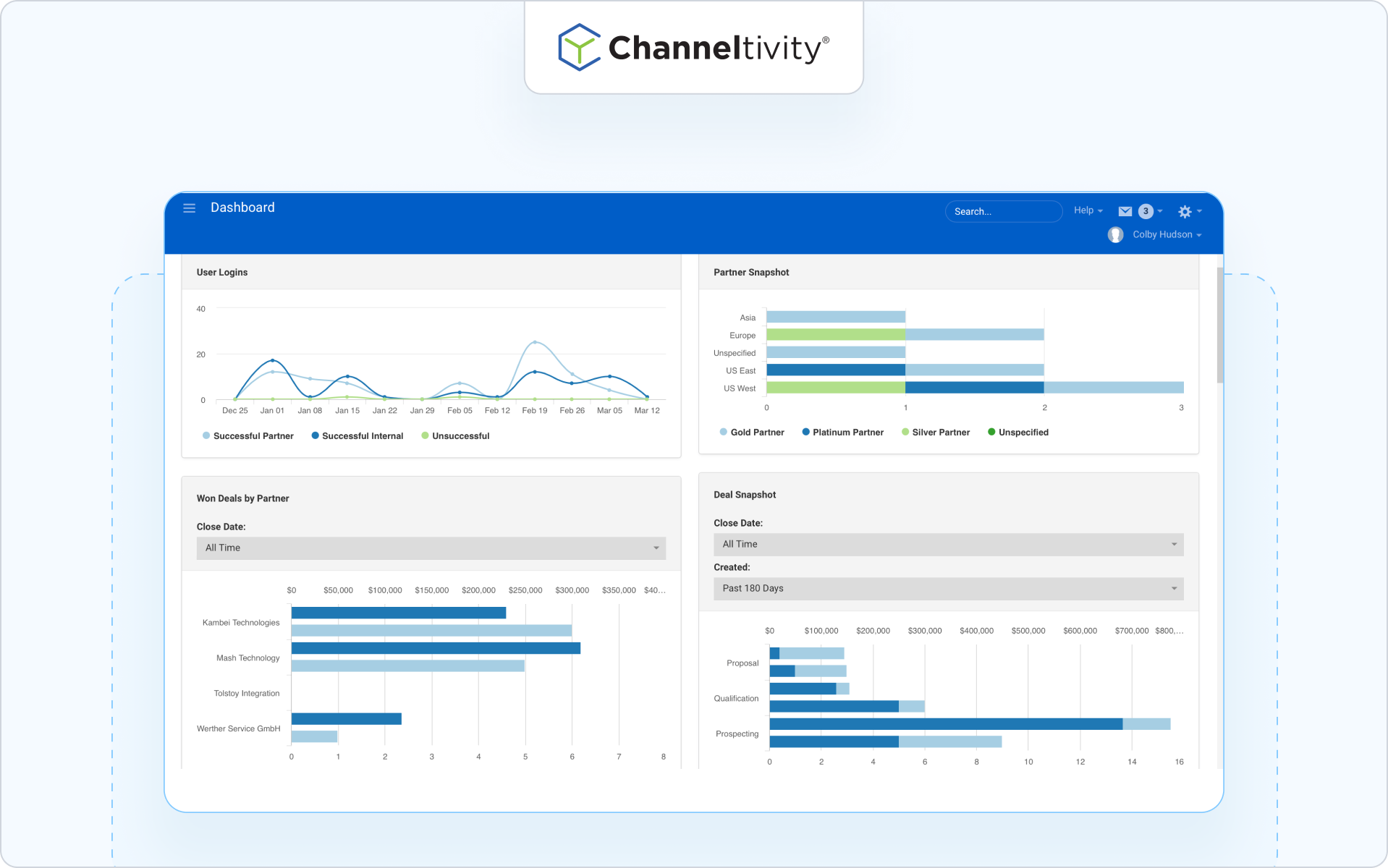
Channeltivity ist eine umfassende PRM-Plattform, die darauf ausgelegt ist, die Partnerakquise, -schulung und den Vertrieb zu optimieren. 

Es bietet eine intuitive, skalierbare Lösung für die Verwaltung von Partnerschaften, die Steigerung der Produktivität und die Förderung des Wachstums durch Marketing-, Schulungs- und Kollaborationstools.

Sehen Sie sich die wichtigsten Funktionen der Software an:

✅ Partnerportal

✅ Lead-Verteilung

✅ MDF-Management

✅ Registrierung des Geschäfts

✅ Schulung und Zertifizierung

✅ E-Mail-Marketing

✅ Co-Branding-Materialien

✅ Integrationen mit Salesforce, HubSpot und mehr

✅ Analysen und Berichterstellung

✅ Händlermanagement

Es ist anzumerken, dass viele der oben genannten Hauptfunktionen mit zusätzlichen Kosten verbunden sind.

Preise: Die Standard Edition von Channeltivity kostet 1899 US-Dollar pro Monat, die CRM Edition (mit CRM-Integration) 2199 US-Dollar pro Monat. Gegen eine zusätzliche monatliche Gebühr können Sie auch Add-ons wie Distributor- und MDF-Management erwerben.

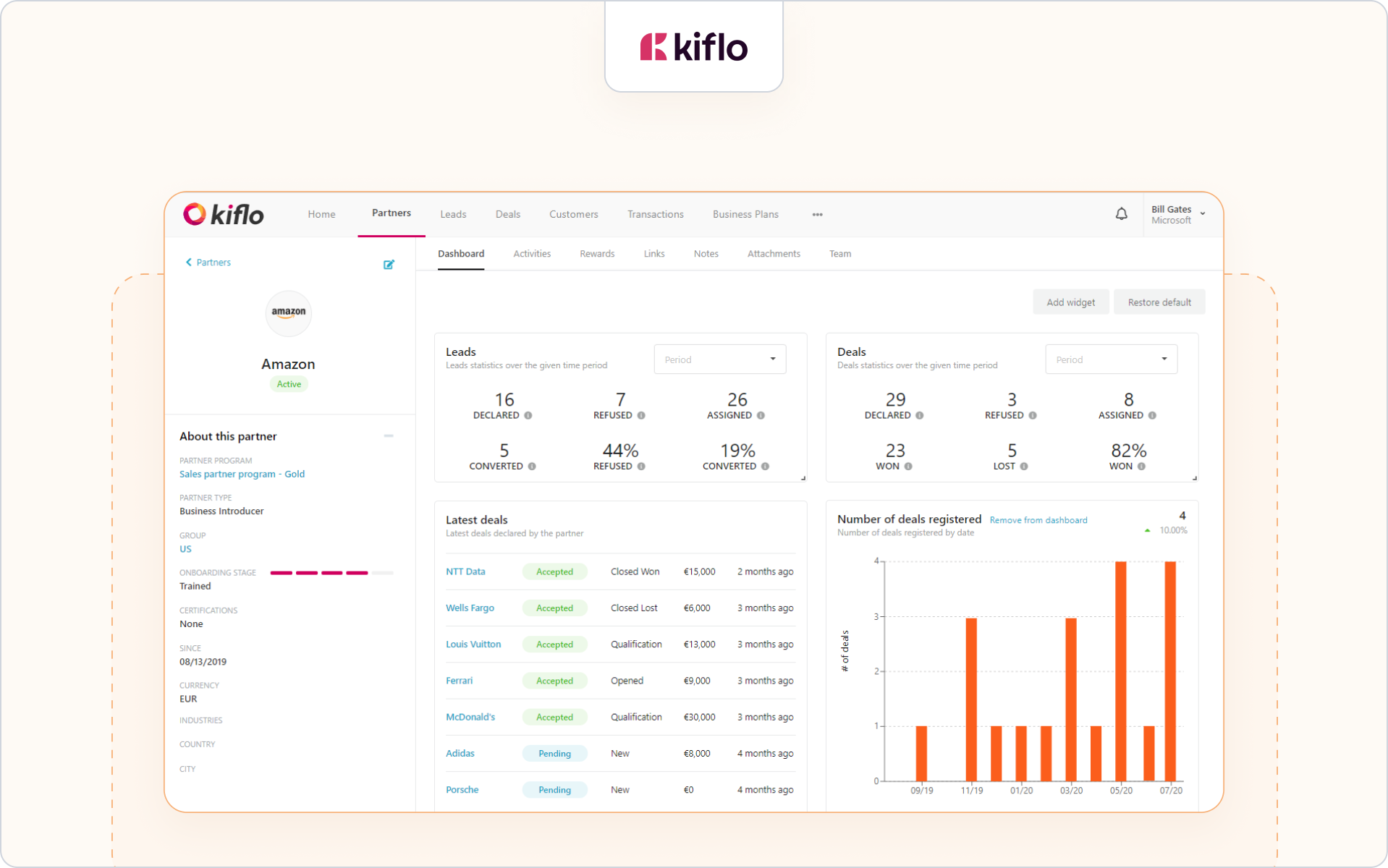
#5 Kiflo

Kiflo hilft Unternehmen dabei, den gesamten Lebenszyklus ihrer Partner effizient zu verwalten. 

Dieses PRM vereinfacht Prozesse wie die Einbindung von Partnern, die Umsatzverfolgung und die Automatisierung von Provisionen und sorgt gleichzeitig für Transparenz sowohl für Unternehmen als auch für ihre Partner. 

Zu den wichtigsten Funktionen gehören:

✅ Automatisierung der Partner-Onboarding

✅ Verfolgung der Partnerumsätze

✅ Provisionsautomatisierung

✅ CRM-Integrationen (Salesforce, HubSpot)

✅ Selbstbedienungs-Partnerportal-Software

✅ Leistungsanalyse

✅ Lead-Management

✅ Anpassbare Arbeitsabläufe

Preise: Kiflo bietet ein „Scale”-Paket zum Preis von 362 US-Dollar pro Monat für Unternehmen, die gerade ihr Partnerprogramm starten. Für Unternehmen mit wachsenden Partnerprogrammen, die bereit sind zu skalieren, werden individuelle Preise angeboten.

#6 Salesforce PRM

Salesforce, einer der größten Namen im Bereich CRM, bietet auch eine breite Palette von Tools für das Partnerbeziehungsmanagement, mit denen Unternehmen ihre Partnernetzwerke verwalten und optimieren können.

Es ermöglicht eine bessere Nachverfolgung der Partnerleistung, Lead-Verteilung und Geschäftsregistrierung – alles innerhalb eines einheitlichen CRM-Ökosystems, um das Wachstum voranzutreiben und die Partnerbindung zu optimieren.

Wichtigste Merkmale:

✅ Onboarding von Partnern

✅ Registrierung des Geschäfts

✅ Lead-Management

✅ Leistungsüberwachung

✅ Tools für die Zusammenarbeit

✅ Anpassbare Partnerportale

✅ Analysen und Berichterstellung

✅ Integration mit Salesforce CRM

Preise: Salesforce bietet maßgeschneiderte Preise je nach Ihren Anforderungen.

#7 Zinfi

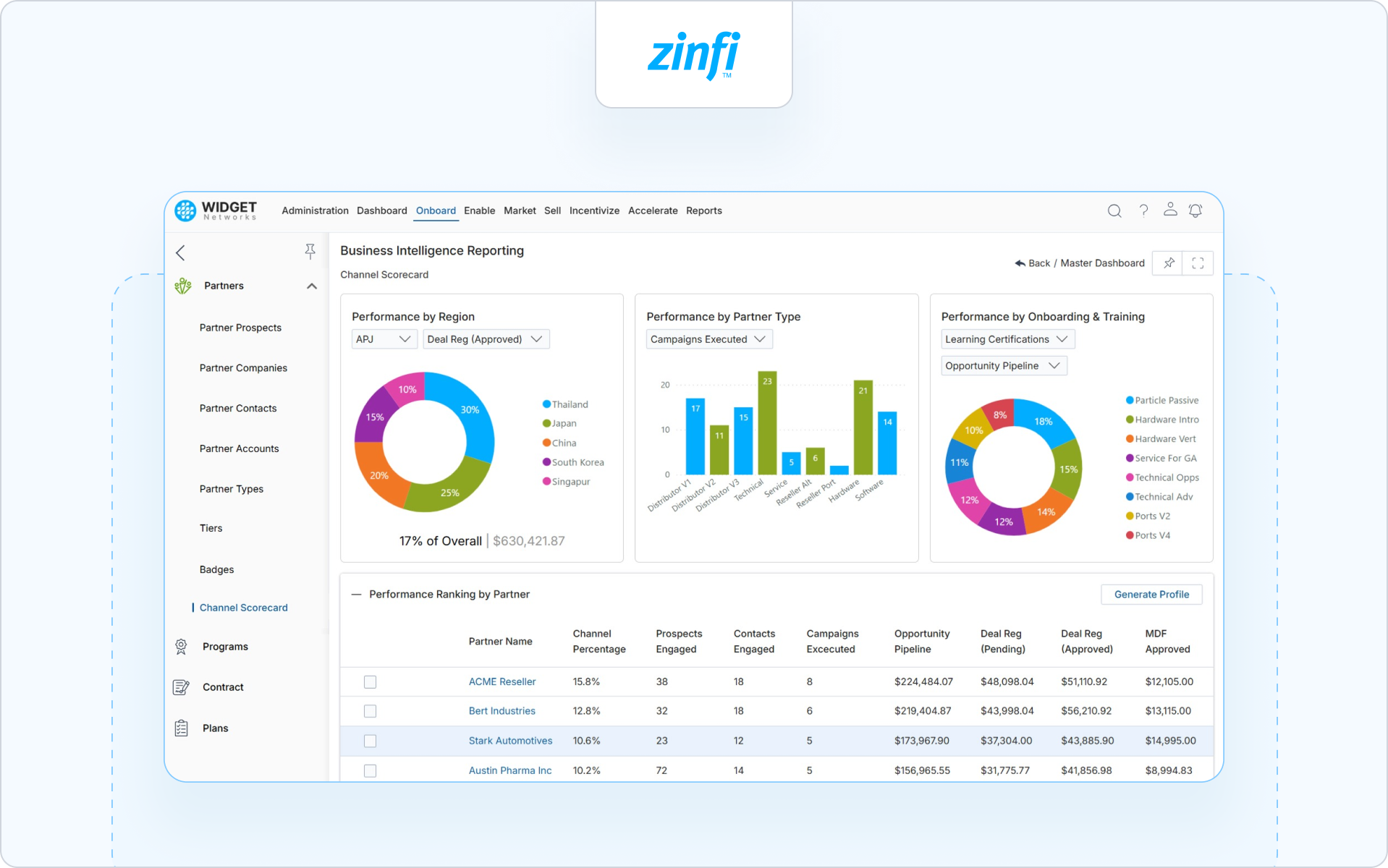
Zinfi bietet eine robuste PRM-Lösung, die darauf ausgelegt ist, die Leistung von Vertriebspartnern zu steigern. Dazu stehen Tools zur Verfügung, die die Einarbeitung neuer Partner optimieren, ein effizientes Vertragsmanagement ermöglichen und die Zusammenarbeit verbessern. 

Wichtigste Merkmale: 

✅ Automatisierung der Partner-Onboarding

✅ Lead-Verteilung und -Verwaltung

✅ Registrierung des Geschäfts

✅ Nachverfolgung der Partnerleistung

✅ Vertragsmanagement

✅ Anpassbare Partnerportale

✅ Marketing- und Vertriebsunterstützungstools

✅ Verwaltung von Prämien und Rabatten

Preise: Die Preise von Zinfi sind maßgeschneidert. 

#8 Kanalmechanik PRM

Automatisieren Sie Ihre Channel-Partner-Programme mit Channel Mechanics.

Diese Plattform ermöglicht eine optimierte Verwaltung von Partneranreizen, Werbeaktionen und Prämien und trägt dazu bei, Partner besser zu differenzieren und effektiver einzubinden. 

Sehen Sie sich die Highlights an:

✅ Automatisierung der Partnerreise

✅ Verwaltung von Incentive-Programmen

✅ Echtzeit-Berichterstattung und -Analysen

✅ Marktsegmentierung

✅ Partnerdifferenzierung

✅ Budgetkontrolle für Programme

✅ Automatisierte Partnerkommunikation

✅ Registrierung und Nachverfolgung von Geschäften

Preise: Individuelle Preisgestaltung. 

#9 Impartner

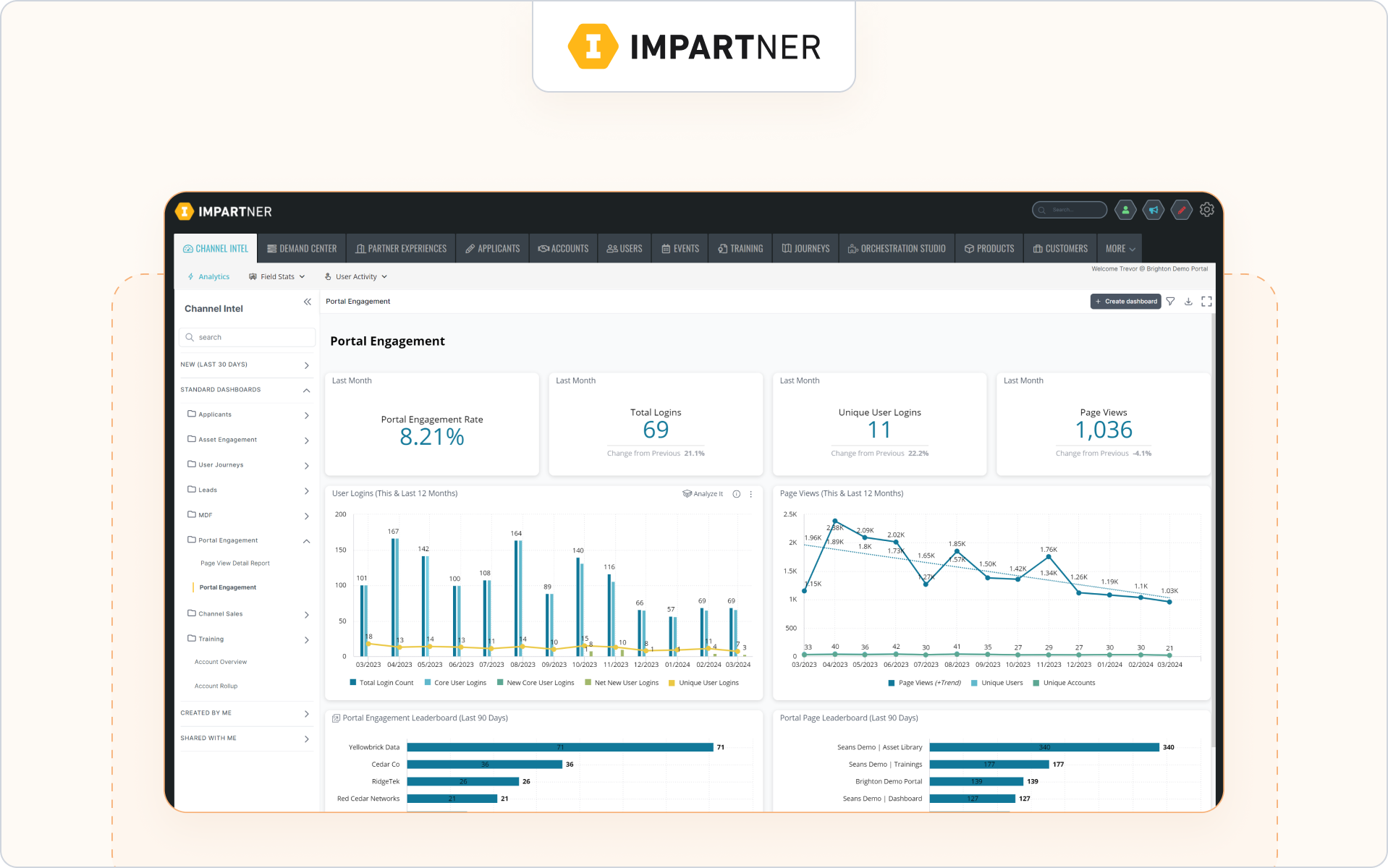
Impartner ist eine Plattform für das Partnerbeziehungsmanagement, die entwickelt wurde, um den Partnerlebenszyklus zu automatisieren und zu optimieren. 

Es lässt sich nahtlos in bestehende Systeme integrieren, um die Zusammenarbeit zu verbessern und das Umsatzwachstum in den gesamten Partner-Ökosystemen zu beschleunigen.

Werfen Sie einen Blick auf die wichtigsten Funktionen:

✅ Personalisierte Partner-Einführung

✅ Deal-Registrierung und Pipeline-Management

✅ Leistungsüberwachung

✅ Marketing-Automatisierung

✅ Tiering und Compliance-Management

✅ Berichterstattung und Analyse

✅ Anreizmanagement

✅ Partner-Geschäftsplanung

Preise: Unternehmen können individuelle Preise anfragen.

#10 Zift-Lösungen

Zift Solutions bietet eine umfassende Plattform für das Channel-Management, die eine nahtlose Einbindung von Partnern und die Optimierung von Programmen ermöglicht. 

Sein PRM konzentriert sich auf die Automatisierung und Rationalisierung der Partnerabläufe, die Verbesserung der Effizienz und die Stärkung der Zusammenarbeit mit Partnern, um eine höhere Leistung und einen besseren ROI zu erzielen.

Zu den wichtigsten Funktionen gehören:

✅ Onboarding und Befähigung von Partnern

✅ Deal-Registrierung und Lead-Management

✅ Anreiz- und Belohnungsprogramme

✅ Echtzeit-Analysen und Berichterstellung

✅ Anpassbare Partnerportale

✅ Automatisierte Marketing-Tools

✅ Leistungsüberwachung und Transparenz

✅ Nahtlose CRM- und Systemintegrationen

Preise: Zift bietet individuelle Preisgestaltung. 

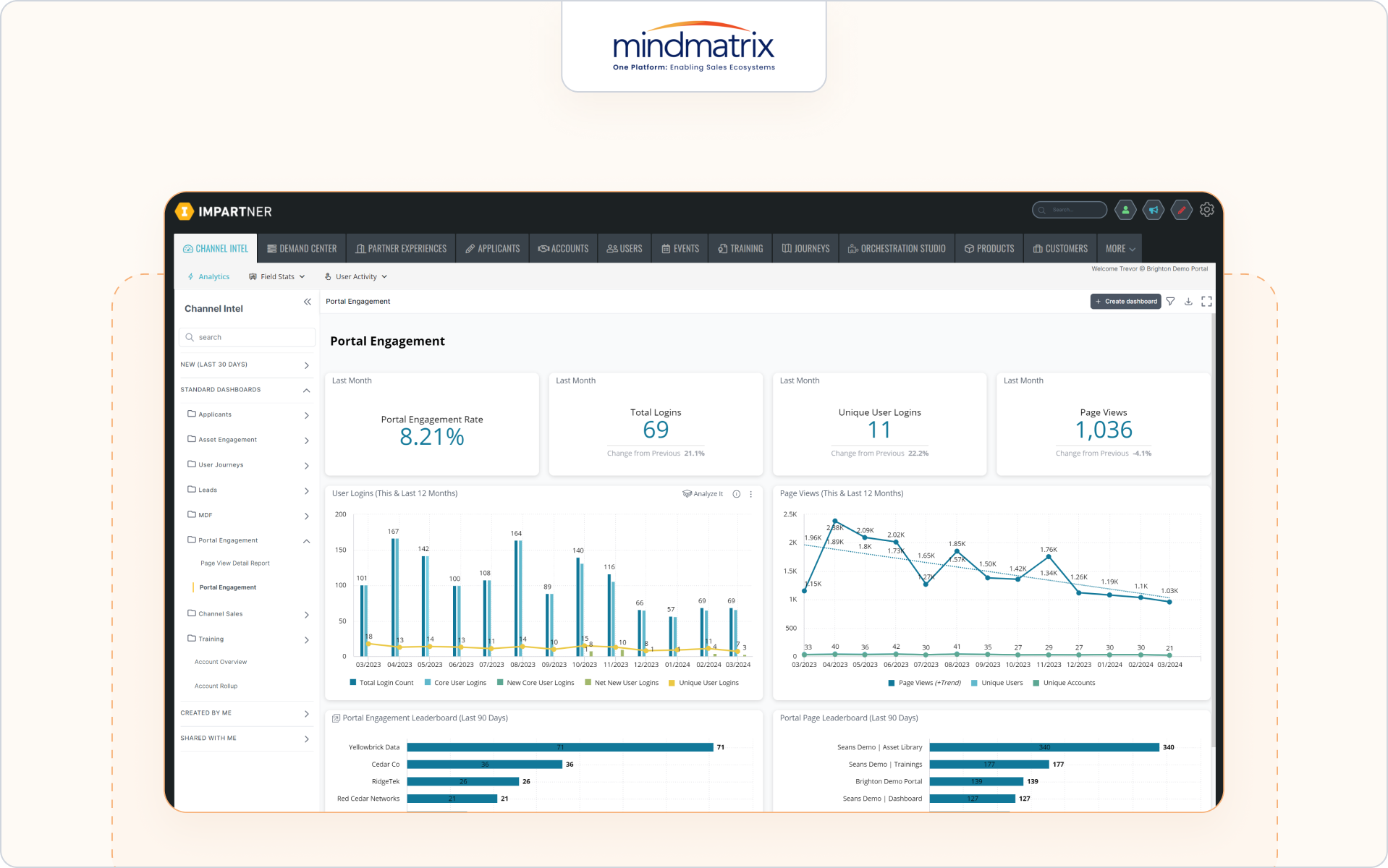
#11 Mindmatrix

Mindmatrix bietet eine PRM-Plattform, die darauf ausgelegt ist, die Partnerbindung zu stärken und die Vertriebskanal-Performance zu optimieren. 

Es unterstützt den gesamten Partner-Lebenszyklus mit Onboarding-, Schulungs-, Vertriebsunterstützungs- und Tracking-Tools.

Wichtigste Merkmale:

✅ Onboarding und Befähigung von Partnern

✅ Leitfäden für Vertrieb und Marketing

✅ Vermögens- und Inhaltsverwaltung

✅ Leistungsüberwachung und Berichterstattung

✅ Lead-Management

✅ Automatisierung von Incentive-Programmen

✅ Sichtbarkeit des Kanal-Ökosystems

✅ Mobiler Zugriff auf Vermögenswerte

Preise: Individuelle Preisgestaltung auf Anfrage möglich. 

#12 Strukturiertes Web

StructuredWeb ist eine benutzerfreundliche PRM-Plattform, die das Channel-Marketing vereinfacht und automatisiert, die Partnerbindung verbessert und das Lead-Management optimiert. 

Sehen Sie sich die wichtigsten Funktionen unten an:

✅ Lead-Verteilung und -Pflege

✅ Registrierung des Geschäfts

✅ Opportunity-Management

✅ Anpassbare Partnerportale

✅ Leistungsüberwachung

✅ Co-brandbare Werbematerialien

✅ Automatisierte Marketingkampagnen

✅ Analysen und Berichterstellung

✅ Echtzeit-Einblicke

Preisgestaltung: Individuell. 

#13 Querbalken

Crossbeam ist eine Ecosystem Revenue Platform, die Unternehmen dabei unterstützt, durch sicheren Datenaustausch mit Partnern zusammenzuarbeiten. 

Der Schwerpunkt liegt auf dem gemeinsamen Vertrieb und der Förderung des gegenseitigen Wachstums durch Einblicke in die Ökosysteme der Partner.

Top-Tipp – diese Plattform ist perfekt für alle, die auf der Suche nach einer kostenlosen Software für das Partnerbeziehungsmanagement sind!

Zu den Höhepunkten gehören:

✅ Kontozuordnung

✅ Zusammenarbeit bei Geschäften

✅ Nachverfolgung der Partnerleistung

✅ Gemeinsame Listen für das Lead-Management

✅ Einblicke in das Ökosystem

✅ Attribution und Analyse der Auswirkungen von Partnern

✅ Vorlagen und Workflows für den gemeinsamen Verkauf

✅ Echtzeit-Warnmeldungen und Benachrichtigungen

Preise: Crossbeam bietet mehrere Preispläne an, darunter Explorer (kostenlos), Connector (150 $ pro Benutzer und Monat) und Supernode (individuell). Außerdem gibt es die Option Crossbeam for Sales, die 300 $ pro Arbeitsplatz und Jahr kostet. 

#14 PartnerPortal

Möchten Sie die Verwaltung Ihres Partnerprogramms vereinfachen und automatisieren?

Die Partnerschaftsmanagement-Software PartnerPortal.io könnte eine Überlegung wert sein. 

Diese Plattform ermöglicht es Unternehmen, benutzerdefinierte Partnerportale zu erstellen, die Registrierung von Geschäften zu optimieren, Arbeitsabläufe zu automatisieren, die Leistung von Partnern zu verfolgen und Partnerzahlungen zu verwalten. 

Sehen Sie sich unten die Highlights von PartnerPortal an:

✅ Registrierung des Geschäfts

✅ Automatisierung der Partner-Onboarding

✅ Lead-Tracking und -Management

✅ Anpassbare Portale

✅ Automatisierte Zahlungen und Buchhaltung

✅ Leistungskennzahlen und Analysen

✅ Ressourcenverwaltung und -freigabe

✅ Entdeckung von Ökosystemdaten und gemeinsamer Vertrieb

Preise: Das unbegrenzte Paket von PartnerPortal kostet 249 US-Dollar pro Monat und bietet außerdem eine kostenlose Testversion für bis zu drei Mitarbeiter, fünf Partner und fünf registrierte Leads. 

#15 Affise

Affise ist eine umfassende Performance-Marketing-Plattform für das Affiliate- und Partnermanagement. 

Es hilft dabei, die Einarbeitung von Partnern zu optimieren, Aktivitäten zu überwachen und Provisionszahlungen zu automatisieren, wodurch die Zusammenarbeit verbessert und das Wachstum gefördert wird.

Die wichtigsten PRM-Funktionen sind:

✅ Onboarding von Partnern

✅ Deal-Verfolgung

✅ Leistungsanalyse

✅ Provisionsverwaltung

✅ Betrugsprävention

✅ Automatisierte Berichterstellung

✅ Datenaustausch in Echtzeit

✅ Partner-Dashboard

Preise: Affise bietet vier Preisstufen an: Beginner, Core, Expand und Custom. Die Preise sind auf Anfrage erhältlich. 

#16 Oracle PRM

Die PRM-Lösung von Oracle unterstützt Unternehmen bei der Verwaltung und Optimierung ihres Partner-Ökosystems. 

Die Plattform integriert wichtige Geschäftsprozesse, um die Leistung zu verbessern und das partnergetriebene Umsatzwachstum zu maximieren.

Zu den wichtigsten Funktionen gehören:

✅ Portal für das Partnerbeziehungsmanagement zur Zusammenarbeit

✅ Lead- und Deal-Management

✅ KI-gestütztes Verkaufen

✅ Onboarding und Rekrutierung von Partnern

✅ Co-Branding-Marketing-Tools

✅ Leistungsanalysen und Dashboards

✅ Anreizmanagement

✅ Integrierte Vertriebs- und Support-Tools

Preise: Die Preise sind individuell gestaltet.

#17 CSG Digital Großhandel

Die Wholesale Partner Management-Plattform von CSG optimiert Partnerbeziehungen durch nahtloses Onboarding, Echtzeit-Datenzugriff und automatisierte Prozesse. 

Es unterstützt eine effiziente Partnerkommunikation, Betrugsschutz und Service-Sicherheit und steigert so die Umsatzgenerierung und die betriebliche Effizienz. 

Die Lösung ist flexibel, skalierbar und lässt sich in andere Partnerplattformen integrieren.

Hier sind die wichtigsten Funktionen der Plattform:

✅ Automatisierte Partner-Onboarding

✅ Echtzeit-Zugriff auf Verkehrsdaten und Kontoauszüge

✅ Betrugserkennung und Service-Sicherheit

✅ Optimierte Zahlungsprozesse

✅ Flexible, skalierbare Cloud-SaaS-Bereitstellung

✅ Integration mit Partnerplattformen über APIs

✅ Zentralisiertes Partner-Lebenszyklusmanagement

✅ KI-gestützte Analysen für Umsatzwachstum

Preise: Die Preise sind individuell gestaltet.

#18 NetSuite PRM

Die PRM-Lösung von NetSuite hilft Unternehmen dabei, die Interaktion mit Partnern zu optimieren, um die Zusammenarbeit zu verbessern, den Umsatz zu steigern und die Transparenz während des gesamten Partnerlebenszyklus zu erhöhen.

Zu den Höhepunkten gehören: 

✅ Onboarding von Partnern

✅ Deal- und Lead-Management

✅ Leistungsüberwachung

✅ Anreizmanagement

✅ Zusammenarbeit in Echtzeit

✅ Anpassbare Partnerportale

✅ Integration von Marketing-Tools

✅ Analysen und Berichterstellung

Preise: NetSuite PRM bietet individuelle Preisgestaltung. 

#19 Magentrix PRM

Magentrix bietet anpassbare Partnermanagement-Software, die darauf ausgelegt ist, die Zusammenarbeit mit Partnern zu optimieren. 

Mit CRM-Integrationen und einer No-Code-Oberfläche vereinfacht Magentrix die Verwaltung von Partnernetzwerken und fördert die Zusammenarbeit.

Werfen Sie einen Blick auf die wichtigsten Funktionen von Magentrix: 

✅ Onboarding von Partnern

✅ Lead-Verteilung und -Verwaltung

✅ Anpassbare Partnerportale

✅ Leistungsüberwachung

✅ CRM-Integrationen (Salesforce, HubSpot, Microsoft Dynamics)

✅ Dateifreigabe und Inhaltsverwaltung

✅ Co-Branding-Marketing-Tools

✅ Selbstregistrierung für Partner

Preise: Das Essentials-Paket beginnt bei 1.000 £ pro Monat, das Advance-Paket kostet ab 1.200 $ pro Monat, während für das Unlimited-Paket individuelle Preise gelten. 

#20 360-Einblicke

360insights ermöglicht es Unternehmen, ihre Channel-Beziehungen zu verwalten und zu optimieren, das Engagement zu fördern und die Leistung ihrer Partner zu steigern. 

Es bietet Kanalanreize, Rabatte und Tools zur Leistungsüberwachung und stimmt gleichzeitig Vertrieb und Marketing aufeinander ab, um die Partnerbindung und das Umsatzwachstum zu steigern.

Wichtigste Merkmale:

✅ Anreiz- und Belohnungsmanagement

✅ Leistungsüberwachung in Echtzeit

✅ Partner-Engagement-Programme

✅ Abstimmung von Vertrieb und Marketing

✅ Rabatt- und MDF-Verwaltung

✅ Schulung und Produktwissen

✅ Partner-Treueprogramme

✅ Anpassbare Portale für die Zusammenarbeit

Preise: Maßgeschneiderte Preise. 

So wählen Sie die beste PRM-Plattform für Ihr Unternehmen aus

Es ist klar, dass moderne PRM-Systeme für Unternehmen, die ihre Partnerprogramme aufbauen oder ausbauen möchten, von entscheidender Bedeutung sind. 

Aber wie können Sie sicher sein, dass Sie das beste Partnerbeziehungsmanagement-Tool für Ihr Unternehmen auswählen?

Hier ist eine hilfreiche Checkliste für Fachleute, die auf der Suche nach einem neuen PRM-System sind:

  • CRM-Kompatibilität – Stellen Sie eine nahtlose Integration mit Ihrem bestehenden CRM (z. B. Salesforce, HubSpot) sicher, um eine einzige zuverlässige Datenquelle zu gewährleisten.
  • Partner-Workflows – Überprüfen Sie, ob die Plattform Ihren spezifischen Partner-Prozess vom Onboarding über die Registrierung von Geschäften bis hin zur Leistungsüberwachung unterstützt.
  • Prognosen erstellen – Suchen Sie nach robusten Analysen, mit denen Sie Partnerumsätze, Pipeline-Trends und Marktchancen vorhersagen können.
  • Anpassbarkeit und Skalierbarkeit – Wählen Sie ein PRM, das sich an das Wachstum Ihres Unternehmens, Ihre Branche und sich ändernde Anforderungen anpassen lässt.
  • Benutzerfreundlichkeit – Sorgen Sie für eine intuitive Benutzeroberfläche sowohl für interne Teams als auch für Partner.
  • Automatisierungsfunktionen – Optimieren Sie die Einarbeitung neuer Mitarbeiter, die Verteilung von Leads und Incentive-Programme mit Automatisierungstools.
  • Co-Marketing und Vertriebsunterstützung – Bewerten Sie Funktionen für die gemeinsame Nutzung von Inhalten, Co-Branding und Vertriebsunterstützung.
  • Sicherheit und Compliance – Überprüfen Sie den Datenschutz, die Zugriffskontrollen und die Einhaltung relevanter Vorschriften. 
  • Skalierbarkeit – Stellen Sie sicher, dass die Plattform mit Ihrem Unternehmen mitwachsen kann. 
  • Tools zur Einbindung von Partnern – Suchen Sie nach Gamification, Schulungsmodulen und Kommunikationsfunktionen, um die Beteiligung Ihrer Partner zu steigern.
  • Support und Implementierung – Bewerten Sie den Support des Anbieters, die Unterstützung bei der Einarbeitung und die laufenden Wartungsdienste.

Es gibt auch eine Reihe häufiger Fehler, die Sie vermeiden sollten, wenn Sie in PRM-Software investieren. 

Hier sind einige der größten Fallstricke, die es zu vermeiden gilt. 

  • Erzwungene Anmeldungen – Wenn sich Partner für jede kleine Aufgabe anmelden müssen, sinkt die Akzeptanz und das Engagement.
  • Überspringen von Engagement-Kennzahlen – Wenn Sie die Aktivitäten Ihrer Partner und Erfolgskennzahlen nicht nachverfolgen, verpassen Sie Optimierungsmöglichkeiten.
  • Überkomplizierte Plattform – Eine komplexe Benutzeroberfläche schreckt Partner davon ab, das System zu nutzen.
  • Fehlende CRM-Integration – Ein PRM, das nicht mit Ihrem CRM synchronisiert ist, führt zu Datensilos und Ineffizienzen.
  • Die Bedürfnisse der Partner ignorieren Auswahl eines PRM-Systems ohne Berücksichtigung der Arbeitsabläufe und Herausforderungen der Partner.
  • Fehlende Automatisierung – Die manuelle Abwicklung von Onboarding, Geschäftsregistrierung und Incentives beeinträchtigt die Effizienz.
  • Vernachlässigung von Schulungen und Support – Mangelhafte Einarbeitung und fehlende Anleitung behindern die Akzeptanz.
  • Preis statt Passform – Die Entscheidung für die günstigste Lösung führt oft zu eingeschränkter Funktionalität und später zu kostspieligen Migrationen.

Warum Introw als beste PRM-Software im Jahr 2026 hervorsticht

Es gibt mehrere Gründe, warum Introw die beste Partnermanagement-Software ist, in die Sie dieses Jahr investieren können. 

Zunächst einmal ist CRM das Herzstück der Plattform. 

Diese tiefe Integration ermöglicht reibungslose, nahtlose Prozesse und sorgt dafür, dass Ihr CRM Ihre einzige Quelle der Wahrheit bleibt.

Oh, und das bedeutet keine separaten Portale, die zu Dateninkonsistenzen und geringer Akzeptanz führen können. 

Darüber hinaus ist Introw maßgeschneidert für RevOps, Partner Manager und CROs, sodass es genau weiß, was Sie von ihm erwarten, und diese Erwartungen jedes Mal erfüllt. 

Starten Sie Introw und freuen Sie sich auf Echtzeit-Einblicke, saubere Daten, bessere Abstimmung, verbesserte Pipeline-Genauigkeit und weniger manuelle Nachverfolgung. 

Es bietet außerdem extrem einfache und anpassbare modulare Workflows, und die Implementierung dauert nur wenige Minuten, da kein Code erforderlich ist. 

Schlussfolgerung

Sind Sie bereit, in eine bahnbrechende PRM-Software zu investieren?

Hier ist eine Zusammenfassung der 20 besten PRM-Tools, die den Umsatz steigern und das Wachstum fördern: 

  1. Introw
  2. Allbound 
  3. PartnerStack
  4. Kanalaktivität
  5. Kiflo
  6. Salesforce PRM
  7. Zinfi
  8. Kanalmechanik PRM
  9. Impartner
  10. Zift-Lösungen
  11. Gedankenmatrix
  12. Strukturiertes Web
  13. Querträger
  14. PartnerPortal
  15. Affise
  16. Oracle PRM
  17. CSG Digital Großhandel
  18. NetSuite PRM
  19. Magentrix PRM 
  20. 360 Einblicke

Denken Sie daran: Die richtige Software vereinfacht den gemeinsamen Vertrieb, erhöht die Prognosegenauigkeit und spart Betriebszeit. 

Sind Sie bereit, Ihr Partner-Ökosystem zu erweitern? Buchen Sie noch heute Ihre persönliche Introw-Demo. 

Häufig gestellte Fragen

Noch neugierig? Hier sind einige kurze Antworten, die Ihnen helfen sollen, Klarheit zu gewinnen.

Kontaktieren Sie uns

What Is The Best Partner Relationship Management Software For 2026?

The best partner relationship management (PRM) software for your business will depend on your specific needs and circumstances. But whatever you want from a partner relationship management software, it's a safe bet that Introw will deliver.This cutting-edge, AI-powered platform is super simple to implement (think modular architecture and a no-code setup) and puts CRM at the heart of your processes. It offers real-time pipeline visibility and forecasting, partner engagement tracking, and off-portal collaboration via Slack and email, with no logins needed. Whatever the size of your business, there's an Introw solution for you: this software scales from 20 to 300+ partners with custom workflow.

How Does PRM Software Support Co-Selling And Deal Registration?

PRM software streamlines co-selling and deal registration by enabling seamless collaboration between vendors and partners. It provides a centralized platform for deal tracking, automated approvals, and conflict resolution. Real-time insights, pipeline visibility, and structured workflows enhance partner engagement, ensuring efficient lead management and improved sales alignment.

What makes CRM-native PRMs better than standalone tools?

CRM-native PRMs outperform standalone tools by integrating seamlessly with existing sales workflows, eliminating data silos, and providing real-time visibility into partner activities. They enhance efficiency with unified reporting, automated deal tracking, and streamlined collaboration. This approach ensures better direct and partner sales team alignment, improving pipeline accuracy and overall revenue growth.

Why Is Introw The Top Choice For SaaS Partner Teams in 2026?

Introw delivers a world-class PRM experience, making it invaluable for many SaaS partner teams trying to successfully manage partner relationships and encourage successful partners. Here are five major benefits to choosing Introw: 1. CRM-first experience (this means no separate portals) 2. Built for RevOps, Partner Managers, and CROs 3. Real-time insights, clean data, better alignment 4. Proven to reduce manual tracking, improve pipeline accuracy 5. Modular workflows for resellers, MSPs, referrals, and more

Starten Sie Ihr Partnerportal inwenigen Minuten!

Vielen Dank! Ihre Einsendung wurde erhalten!
Hoppla! Beim Absenden des Formulars ist ein Fehler aufgetreten.

Verwandte Blog-Artikel

Partnermanagement

Partner Lead Registration: Capture Leads Without Logins in 2026

Janis De Sutter
Software Engineer
5 Min. Lesezeit
16. Dezember 2025
⚡ TL;DR

Partner lead registration works best when it’s dead simple for partners, validated quickly by you, and synced to your CRM in real time. Replace portal logins with lightweight capture (email, form, or Slack), auto-create clean records, and use clear rules to prevent channel conflict. Track status from submitted to approved to won, and give partners visibility without new passwords. If you use HubSpot, you can run HubSpot partner lead registration by mapping a short registration form to your deals and workflows. Introw lets partners register leads from email or a shared page, routes them to Salesforce or HubSpot, shows status back to partners, and keeps your team focused on revenue instead of spreadsheets.

Great partner programs die on their first form. You want partners engaged, but the moment they hit a login wall, many stop. The good news: you can run partner lead registration without a portal login, keep data clean, and still resolve ownership fast. Below is a practical guide for teams that want more registered leads, fewer disputes, and a smoother sales process.

Why partner lead registration matters now

As your partner ecosystem grows, multiple partners find the same end customer, sales reps ask “who owns this account,” and leadership needs pipeline visibility. Lead registration (capturing a partner-sourced prospect early) protects the partner’s effort, reduces channel conflict, and lets you assign leads to the right team fast. It also creates a trail you can trust for commission payments and co-sell attribution.

When you make registration lightweight and fair, partners stay engaged, your sales team sees context, and operations keep a single source of truth for registered leads and registered deal records.

What “partner lead registration” is (and how it differs from deal registration)

Think of lead registration as the earliest claim: the partner flags a prospect with enough data for you to review and accept or decline. Deal registration comes later, once there’s a qualified opportunity with stage, amount, and next steps. Both fit inside modern partner programs, but they serve different moments:

  • Lead registration: fast intake to assign leads, mark a cooling-off period, and prevent multiple partners from colliding on the same company.
  • Deal registration: deeper validation to approve an existing deal with co-sell motions, attached resources, and clear SLAs.

Successful programs use both. Start with easy lead registration to capture more top-of-funnel, then elevate to deal reg when real pipeline appears.

The no-portal approach: five simple ways to capture partner leads

Logins are the biggest drop-off point. You can capture leads without a portal login and still keep control.

  1. Email-to-CRM

Give partners a single address (for example, partners@yourcompany.com). When they send a short “registration form” by email (company name, contact, problem, consent), an automated flow parses the message, creates the record, and returns a case number and status.

  1. Open web form with allowlisting

Host a short registration form that’s public but gated by reCAPTCHA and a partner email domain check. Submissions create a lead and kick off validation, while approved third parties (your partners) get instant confirmation and a “pending” badge.

  1. Slack (or Teams) app

If you co-sell in shared channels, let partners use a “/register” slash command. The bot collects company, contact, use case, and creates the registered deal or lead in your system, then posts back the record link.

  1. HubSpot meetings + hidden fields

For HubSpot partner lead registration, use a short form attached to a partner-facing “Book a discovery” page. Hidden fields tag partner ID and program. When the form is submitted, HubSpot creates the contact, company, and a deal stub, and your workflow moves it to “Submitted for review.”

  1. CSV drop for field teams

Some service partners prefer bulk. A controlled CSV upload (fields validated on import) lets them register a new deal list weekly. Your system dedupes by domain and company name, flags conflicts, and returns approved/declined with reasons.

All five methods can feed the same backend rules, the same partner portal views, and the same commission plan. The difference is friction: partners can register from wherever they already work.

Design a registration form partners will actually complete

Keep it under a minute. These fields usually give you enough to decide:

  • Company name and domain
  • Primary contact: name, email, role
  • Opportunity context: problem, solution fit, services needed
  • Stage guess: new intro, discovery scheduled, evaluation
  • Partner: who is submitting, plus reseller or referral type
  • Consent: partner confirms the prospect agrees to be contacted

Optional, when needed: geography, target revenue, product interest, and competing vendors.

Make validation fair: from “submitted” to “approved” without drama

A good lead reg process balances speed and fairness. Publish the rules, enforce them consistently, and give partners a clean status they can see.

  • SLA: respond inside two business days.
  • Checks: duplicate by domain, existing deal check, territory rules, blocked accounts.
  • Results: approved (with hold window), ask for more info, or declined (with reason).
  • Hold window: 60–90 days of protection when partners complete the next step (for example, first meeting or intro email logged).
  • Channel conflict: if two partners submit the same prospect, the one who got the first meeting within the window wins, or you split by segment/solution if that’s your policy.

Introw codifies these rules so operations doesn’t have to referee edge cases every week.

Map it to your CRM: HubSpot and Salesforce without side spreadsheets

Whether you run Salesforce or HubSpot, treat partner lead registration like any other intake you want to automate and audit.

  • Objects: create a “Partner Registration” object or use a custom property set on Deals to track registration, status, partner, and window end date.
  • De-dupe: auto-link to Company by domain; show “existing deal” if one is open.
  • Workflows:
    • Submitted → Validation queue → Approved/Declined
    • Approved → Notify AE/partner → Start sales process tasks
    • First meeting scheduled → Lock or extend hold window
  • Dashboards: real time dashboards for operations and partner managers: pending, aging, approvals, meeting rates, win rates.

For HubSpot partner lead registration, keep your registration form in HubSpot, route through workflows, and surface status to partners via automated emails or a lightweight shared page. On Salesforce, mirror the same flow with Process Builder or Flow.

Incentives and SLAs that keep partners engaged (without overpaying)

You don’t need to pay for every submission. Reward progress, not spam.

  • Tiered incentives: small flat fee when the first meeting is completed, larger percentage on new customers won, and accelerators for high margin products.
  • Partner tier alignment: higher tiers may get faster response, priority support, or co-sell resources.
  • SLAs: you respond within two days; the partner books a meeting within 14 days; your rep updates next steps after every call. Clear, mutual commitments build trust.

Seven metrics that prove the system works

Leaders care about outcomes. Measure what moves revenue and reduces friction.

  1. Registration-to-meeting rate within 14 days
  2. Approval rate by partner and segment
  3. Conflicts avoided vs. unresolved disputes
  4. Win rate and sales volume on approved registrations
  5. Time to first response and time to approval
  6. Active protection windows by region and product
  7. Commission payments accuracy and cycle time

When the numbers are visible, you can adjust commission structures, spot partner behavior trends, and focus enablement where it helps most.

A 30-day rollout you can actually ship

You don’t need a massive project to modernize lead reg. Keep it tight and iterative.

  • Week 1: Write your acceptance rules, conflict policy, and hold window. Draft the short form.
  • Week 2: Build the flow in your CRM. Stand up email-to-CRM and a public form. Test dedupe and routing.
  • Week 3: Pilot with 10 partners across motions (referral, services, reseller). Meet twice, gather feedback, refine fields and emails.
  • Week 4: Launch. Publish the rules and FAQs in your partner portal, start weekly status summaries, and open a short appeal path.

Where Introw fits

Introw is built to remove friction from partner lead registration and deal registration alike:

  • No-login capture: partners register via email, a shared page, or Slack; Introw creates the record and sends status.
  • Smart validation: automatic dedupe, account checks, and clear status transitions from submitted to approved to won.
  • CRM-first: bi-directional sync with Salesforce or HubSpot, so ops and reps work in systems they already know.
  • Visibility: partners see progress and next steps without asking you to “check the portal.”
  • Payments: clean attribution makes commission management straightforward and commission payments timely.

If you’re ready to move beyond “please log in and fill this long form,” Introw gives you a lightweight, auditable path to more revenue and fewer headaches.

Ready to simplify partner lead registration?

If you want partners engaged, fewer conflicts, and clean data, make registration effortless and visible. Introw lets you capture leads without logins, validate fairly, and sync everything to your CRM so your sales team and partners can focus on winning. Request a demo and see how it works in your environment.

Partnermanagement

A Guide to Choosing the Best CRM for Partner Management: 15 Top Tools For 2026

Janis De Sutter
Software Engineer
5 Min. Lesezeit
09 Dec 2025
⚡ TL;DR

A CRM-first approach is now essential for running high-performing partner programs. Traditional siloed PRM tools no longer cut it — modern SaaS teams need CRMs that offer native integrations, real-time deal tracking, partner engagement visibility, and forecasting capabilities. In this post, we break down the top 15 CRMs for partner management in 2026, from HubSpot and Salesforce to Creatio and Netsuite. Plus, we show how Introw — a CRM-native PRM — enhances your CRM with scalable workflows, co-sell automation, and clean, partner-attributed revenue tracking.

A strong CRM system should be the backbone of your partner programs. 

Embrace your CRM when it comes to partner management, and you can expect centralized relationships, seamless collaboration, full alignment with business operations, fewer channel conflicts, and improved revenue projections. 

What's more, by embedding partner management within a CRM, businesses gain a unified source of truth, improving efficiency, accountability, and long-term success in partner ecosystems.

Traditional, siloed partner tools simply can't keep up with the power of modern CRMs. 

It makes sense, then, that businesses are increasingly shifting to CRM-first workflows, integrating partner management into broader customer and revenue strategies. 

This transition eliminates inefficiencies caused by disconnected systems, enabling real-time visibility into partner performance.

When moving to a CRM-first workflow, businesses must understand the importance of native integrations, deal tracking, and forecasting. 

Look for CRM tools that offer native integrations with marketing automation, sales pipelines, and support tools to ensure that partner activities are fully aligned with business operations. 

Meanwhile, deal tracking within a CRM allows businesses to monitor partner-driven opportunities, assign leads effectively, and prevent channel conflicts. 

And forecasting capabilities provide data-driven insights into revenue projections, helping companies optimize their partner strategies.

To sum up, a CRM-first approach fosters stronger, data-backed partnerships that drive sustainable growth.

⬇️In this guide, we'll cover everything you need to know to make the best CRM decision for your business and your partners. 

What to Look for in a CRM for Partner Management

When considering which CRM to go for, you'll undoubtedly already have several 'must have' features in mind. 

But here are the most important features to look out for when it comes to partner management: 

  • Partner lead/deal registration
  • Custom fields and workflows for channel/reseller/referral types
  • Engagement tracking and collaboration tools
  • Reporting and forecasting across partner-attributed pipeline
  • Integration with PRM tools like Introw
  • Scalability and API access for custom automation

15 Best CRM Platforms for Partner Management in 2026

So, we know that a CRM-first approach has a wide variety of benefits for partner management. 

But choosing the right CRM can be daunting; after all, it's a pretty big decision. 

And not every CRM is fit for partner management. 

To help you out, we've compiled a list of the best 15 CRM for partner management, along with their pros and cons. 

#1 HubSpot

A giant of the CRM world, HubSpot's CRM is super popular among growing SaaS teams. 

​This comprehensive, AI-powered platform is designed to unify customer data, streamline business operations, and enhance customer experiences. 

It offers a suite of tools across marketing, sales, customer service, content management, and operations, all integrated into a single system to facilitate seamless collaboration and efficiency. ​

And when it comes to partner management, Hubspot's CRM boasts several key features, including:

For partner management, HubSpot CRM provides several key features:​

CRM partner relationship management (PRM) integrations: Access PRM software Introw through HubSpot's App Marketplace for partner engagement tracking, lead registration, and Slack-based collaboration.

✅ Association labels: Define and manage relationships with partners by labelling companies as "Partner" or "Distributor," clarifying roles and facilitating targeted communication. ​

✅ Partner services: Utilize Partner Services to track and manage services provided by partners, ensuring organized and efficient collaboration. ​

✅ Automation: Save time by automating workflows and repetitive processes 

These features enable businesses to effectively manage and nurture their partner relationships within HubSpot CRM.

🔗 Find out more about how Introw and Hubspot work together

#2 Salesforce

Salesforce remains the gold standard for enterprise partner programs. 

This comprehensive, cloud-based platform streamlines customer relationship management and partner relationship management by integrating sales, marketing, customer service, and more into a unified system. 

It empowers businesses to enhance customer interactions, improve satisfaction, and drive growth through data-driven insights and automation.

For partner management in CRM, Salesforce CRM offers several key features:​

Partner relationship management software integration: Seamlessly integrates with Introw to place PRM functionalities firmly within the CRM, enabling tracking of partner pipeline, engagement, and performance — all natively.

Powerful reporting and forecasting: Delivers key data insights to enable data-driven decisions, as well as accurate forecasting.

Personalized partner engagement: Provides personalized templates and data-driven enablement tools to engage partners effectively, enhancing communication and collaboration. ​

Automated processes: Automates marketing fund requests, discounting, and service case management, reducing manual tasks and increasing efficiency in partner interactions. ​

Real-time updates with partner connect: Facilitates secure deal tracking and real-time, automated updates on co-selling deals across different CRMs, ensuring transparency and reducing data duplication.

Scalability: Built on the Salesforce platform, it scales easily to accommodate growing partner ecosystems, adapting to evolving business needs. ​

🔗 Learn more here:  Introw + Salesforce Integration

#3 Zoho CRM

Zoho offers a flexible, cloud-based CRM that helps businesses manage sales, marketing, and customer relationships efficiently. 

It's also a good option for those looking for a CRM that will support partner relationship management for sustainable business growth. 

Territory management: Organize and manage partner territories effectively, aligning sales strategies with specific regions or market segments.

Workflow automation: Automate routine tasks and processes, enabling partners to focus on strategic activities and improving overall efficiency.

Advanced analytics: Gain insights into partner performance through detailed reports and dashboards, facilitating data-driven decision-making. ​

Customizable modules: Tailor CRM modules to fit specific partner management needs, ensuring a personalized and relevant experience. ​

Multi-channel communication: Engage with partners across various channels, including email, phone, and social media, ensuring seamless communication.

Pros: Affordable, customizable, partner portal add-on

Cons: Weaker reporting, fewer native integrations

Best For: SMEs or mid-market teams just starting their partner motion.

#4 Microsoft Dynamics 365

Microsoft Dynamics 365 is an AI-powered suite of business applications that combines CRM and ERP capabilities to enhance customer experiences and business operations. 

It integrates sales, marketing, service, and financial data to help organizations innovate, automate processes, and drive growth.

It encompasses several key features for partner management:

✅ Manage partner relationships with shared data insights

✅ Automate lead and opportunity tracking

✅ Integrate partner sales data for streamlined collaboration

✅ Enable partner performance monitoring through analytics

✅ Use AI to provide personalized partner support

Pros: Deep integrations, enterprise-friendly

Cons: Steep learning curve, dev-heavy

Best For: Enterprises already deep in Microsoft's stack or those with in-house CRM admins

#5 Pipedrive

Pipedrive offers a clean, simple CRM that's easy to use. 

It automates repetitive tasks, tracks communications, and provides actionable insights to help sales teams optimize performance.

Admittedly, this one isn't purpose-built for partners, but it can support small partner programs with the right tagging and workflows.

When it comes to partner management, Pipedrive allows you to:

✅ Organize and track partner interactions in one space

✅ Automate partner follow-ups and communications

✅ Visualize partner pipeline for better decision-making

✅ Use AI for personalized partner management insights

✅ Centralize partner data for easy collaboration and reporting

Pros: Visual pipeline, easy setup

Cons: Limited partner automation, no partner-specific fields

Best For: Early-stage teams experimenting with partnerships

#6 Close.com

Close CRM is a platform designed to streamline sales processes for small businesses, focusing on automation, communication, and deal management. 

It offers an intuitive, fast interface for managing leads and communications — and can also prove useful for partner relationship management. 

Here's how:

✅ Track partner interactions and pipeline progress

✅ Automate partner outreach and follow-ups

✅ Centralize partner data and activity

✅ Monitor partner performance with analytics

✅ Seamlessly integrate with other tools for collaboration

Pros: Simple, easy-to-use

Cons: Limited customization

Best For: Small businesses with big growth ambitions 

#7 Freshsales

Freshsales by Freshworks is an AI-powered sales CRM that enhances revenue growth with automation, lead scoring, and predictive analytics. 

It streamlines workflows and provides insights to improve sales efficiency.

Here's how it can boost partner management:

✅ Track and manage partner relationships efficiently

✅ Automate follow-ups and communication with partners

✅ Centralized data for seamless collaboration

✅ AI-powered insights to optimize partner engagement

✅ Customizable pipelines to monitor partner deals

Pros: Easy to use and excellent customer support

Cons: Limited features and a steep learning curve

Best For: Start-ups and SMEs that need a friendly, affordable CRM solution. 

#8 Copper

A relationship-focused CRM designed for Google Workspace users, Copper is all about streamlining contact management, deal tracking, and workflow automation. 

It also minimizes data entry and integrates seamlessly with Gmail.

Key features for partner management:

✅ Centralized partner contact and activity tracking

✅ Automated workflows for partner communications

✅ Custom pipelines to monitor partner deals

✅ Seamless integration with Google Workspace

✅ Real-time reporting and analytics for partner performance

Pros: Easy integration with Google properties, user-friendly 

Cons: Limited scalability

Best For: Businesses that depend on Google Workspace 

#9 Insightly

Insightly is a scalable CRM designed for businesses to manage customer relationships, sales, and marketing in one platform.

It offers automation, project tracking, and analytics to drive growth and efficiency.

Looking for a CRM to boost partner management?

Here's how Insightly can support PRM:

✅ Centralized partner relationship tracking

✅ Automated workflows for partner interactions

✅ Customizable pipelines for deal management

✅ Advanced analytics for partner performance monitoring

✅ Integration with third-party apps for collaboration 

Pros: Great customer support and deep customization  

Cons: Steep learning curve

Best For: SMEs and start-ups looking for a customizable and scalable CRM. 

#10 SugarCRM

A flexible, AI-driven CRM platform, SugarCRM is designed for B2B sales, marketing, and customer service. 

It automates data collection, provides predictive insights, and streamlines workflows for enhanced efficiency.

Key features for partner management include:

✅ Centralized partner relationship tracking

✅ AI-powered insights for partner engagement

✅ Automated workflows for seamless collaboration

✅ Custom dashboards for partner performance monitoring

✅ Integration with third-party tools for extended functionality

Pros: Lots of features, good customer support

Cons: Long implementation, steep learning curve

Best For: Large businesses and enterprises looking to commit to a CRM long-term

#11 Nutshell CRM

Nutshell is a user-friendly CRM that combines sales, marketing, and pipeline management into one intuitive platform. 

It simplifies lead tracking, automates workflows, and integrates with essential tools to enhance team collaboration and efficiency.

Here are Nutshell's most useful partner management features:

✅ Centralized partner contact and deal tracking

✅ Automated follow-ups and task reminders

✅ Customizable pipelines for partner relationship management

✅ Integration with marketing automation tools for outreach

✅ Real-time reporting and analytics for partner performance

Pros: Simple, easy to use, great customer support

Cons: Steep learning curve, limited integrations 

Best For: Smaller businesses looking for a simple, affordable CRM 

#12 Creatio

Creatio is an AI-powered, no-code CRM platform.

It automates workflows and customer relationship management for sales, marketing, and service teams, empowering businesses to streamline operations, optimize engagement, and enhance productivity.

It's pretty helpful when it comes to partner management, too. 

Here's how:

✅ Centralized partner relationship tracking

✅ AI-driven insights for partner engagement

✅ No-code automation for partner collaboration

✅ Custom dashboards for performance monitoring

✅ Seamless integrations for extended functionality

Pros: Great automation, customization, and usability 

Cons: Steep learning curve

Best For: Large businesses with multiple departments that require smooth company-wide adoption

#13 NetSuite CRM

NetSuite is a cloud-based business management suite that includes CRM, ERP, and financial tools to streamline operations, automate workflows, and improve decision-making. 

It provides robust partner management capabilities, such as:

✅ Partner relationship management with centralized data

✅ Automated workflows for seamless collaboration

✅ Real-time analytics for partner performance tracking

✅ Custom dashboards to monitor deal progress

✅ Integration with third-party applications

Pros: Great functionality and ease of use. 

Cons: Steep learning curve, expensive, complex implementation

Best For: Enterprises that need to streamline their processes. 

#14 Monday CRM

Monday CRM is a flexible, no-code customer relationship management platform that helps businesses manage sales, projects, and workflows.

It centralizes data, automates tasks, and enhances collaboration to improve efficiency.

Monday's key features for partner management include:

✅ Centralized partner tracking and collaboration

✅ Automated workflows for partner onboarding and engagement

✅ Customizable pipelines to manage partner deals

✅ Integration with third-party tools for seamless operations

✅ Real-time analytics for partner performance insights

Pros: Great range of features, scalable, easy to customize

Cons: Steep learning curve

Best For: SMEs and service businesses 

#15 Zendesk Sell

A modern sales CRM, Zendesk Sell enhances productivity, provides full pipeline visibility, and integrates automation to streamline deal management. 

It helps sales teams manage leads, track interactions, and optimize workflows.

However, its features can also be used for PRM, including:

✅ Centralized partner tracking and collaboration

✅ Automated workflows for partner engagement

✅ Customizable sales pipelines for partner deals

✅ Real-time analytics for partner performance insights

✅ Seamless integrations with external tools

Pros: Simple user interface, intuitive to use, good automation features

Cons: Complex setup

Best For: Businesses of any size that want to streamline their processes

How to Choose the Right CRM for Partner Management

Ready to decide on your new CRM?

Here are some handy guidelines.

Make sure your new CRM has:

  • Native or customizable deal reg
  • CRM alignment with partner program complexity
  • Integration with a PRM like Introw
  • Automation and reporting

And watch out for these common pitfalls:

  • No partner-specific fields or segmentation
  • Manual tracking outside the CRM
  • No integration between CRM and partner activities

Three final tips for choosing a CRM for partner channel management:

  1. Align with RevOps early
  2. Evaluate scalability and workflow compatibility
  3. Test integrations with tools like Introw

How Introw Supercharges CRM for Partner Management

Of course, when it comes to partner relationship management, a CRM alone won't do. 

Sure, investing in the right CRM can significantly boost your partner relationships, but if you aim to establish a profitable ecosystem, PRM software is crucial

And your PRM must integrate seamlessly with your CRM. 

This is where state-of-the-art PRM Introw comes in. 

Here's why Introw stands out among other PRMs:

  • CRM-first: your team works entirely within Salesforce or HubSpot — no extra logins, no tool-switching. Partners still collaborate via a dedicated portal, fully synced with your CRM.
  • Deal and lead registration are mapped directly to the CRM
  • Partner engagement tracking is synced with both the CRM and Slack
  • Forecasting and visibility operates across all partner-attributed revenue
  • No-code workflows for referrals, resellers, and MSPs

But don't just take our word for it — book your personalized demo today and see Introw in action.

Schlussfolgerung

The message is clear — choosing the right CRM is foundational to scaling partner revenue. 

The best CRMs support visibility, collaboration, and clean partner data.

They also integrate seamlessly with your PRM, empowering you to effectively manage your partners without leaving your CRM. 

To recap, here are the 15 best CRMs for partner management in 2026:

  1. HubSpot
  2. Vertriebsmannschaft
  3. Zoho CRM
  4. Microsoft Dynamics 365
  5. Pipedrive
  6. Close.com
  7. Freshsales
  8. Copper
  9. Insightly
  10. SugarCRM
  11. Nutshell CRM
  12. Creatio
  13. NetSuite CRM 
  14. Monday CRM
  15. Zendesk Sell

Want to manage your entire partner program from your CRM? Try Introw — the CRM-first PRM.

Partnermanagement

Channel Partner Gamification (How to Motivate Without Overpaying)

Andreas Geamanu
Mitbegründer und Geschäftsführer
5 Min. Lesezeit
08 Dec 2025
⚡ TL;DR

Channel partner gamification works when you reward specific behaviors, keep rules simple, and tie recognition to revenue outcomes. Start with one or two mechanics — levels, badges, or team challenges — linked to clear performance metrics like sourced pipeline, training completion, and first-meeting rates. Publish a short playbook in your partner portal, track progress in your CRM, and use light, real rewards only where they amplify momentum. Introw maps gamification elements to your CRM so partners see progress bars, earn recognition, and stay engaged without a heavy budget.

The moment a steady program stops feeling steady

Most channel partner programs start strong: a few champions engage early, sales teams celebrate quick wins, and the partner community feels energized. Then the pattern settles in. A small group stays active while others only show up at quarter-end. Traditional incentive programs and one-off sales contests give you brief spikes, not durable habits.

That is the point where a simple, thoughtful gamification strategy earns its place. Instead of chasing attention with bigger prizes, you clarify desired behaviors, make progress visible, and reward movement that matters. Done right, channel partner gamification becomes the connective tissue between your goals and partner engagement — not a gimmick, but a system that encourages healthy competition and lifts sales performance quarter after quarter.

What channel partner gamification actually means

Before you pick any game mechanics, align on meaning. Channel partner program gamification is the use of straightforward game design elements to motivate specific behaviors — completing training, registering qualified opportunities, advancing stages, running tactical promotions, and closing the loop with customer success. The goal is simple: boost channel partner engagement by making the path to success transparent and fair.

To keep it trustworthy, anchor to four guardrails and return to them often as you scale:

  1. Specific to business goals and sales targets — no vanity clicks.
  2. Visible in your PRM or partner portal — no folklore or screenshots.
  3. Fair across partner sizes — cohort logic keeps healthy competition intact.
  4. Measurable with clean performance metrics — every point maps to CRM data.

With those principles in place, you can move from concept to practice without confusing partners or creating side spreadsheets.

From strategy to practice: choose outcomes first, then mechanics

Great programs start with outcomes, not features. Decide what matters this quarter — higher training completion, more qualified deal registration, better first-meeting rates — and then choose the lightest game elements that reinforce those outcomes. This keeps focus on partner success and prevents your plan from turning into a “points for everything” distraction.

Three mechanics that move numbers

  1. Levels that mirror your tiers

When levels match your tiered structure (Registered, Select, Elite), partners always know what unlocks the next rung. They complete onboarding, validate a use-case pitch, meet a modest sourced-pipeline target, and keep renewals clean. In return, they unlock tier-specific benefits like priority support, co-marketing funds, and early access to features — real advantages that motivate partners without inventing a parallel system.

  1. Badges for skills and proof

Badges highlight skill development and credibility: certified individuals, solution validation, successful implementations. Link each badge to evidence (certification IDs, case studies, customer quotes) so sales reps route opportunities confidently and customers see the quality. This strengthens partner relationships and brand loyalty while encouraging partners to complete training modules quickly.

  1. Team challenges for joint outcomes

Short, time-boxed challenges create momentum and community. Run a 30-day sourced-pipeline sprint in a key vertical, a co-marketing push with shared UTMs, or an adoption wave for a new module. Publish standings weekly and recognize both absolute leaders and cohort winners so smaller firms compete fairly. This is encouraging healthy competition without skewing toward the biggest players.

With Introw, these gamification mechanics live where partners already work — email, Slack — so partners participate actively without extra tools and your channel partner programs avoid complexity.

Reward structure: behavior first, cash last

Picking mechanics is half the story. The other half is fuel. Recognition sustains habits; financial rewards should amplify outcomes. This balance motivates channel partners, keeps budgets sane, and avoids the pitfalls of traditional incentive programs.

  1. Immediate recognition

When partners complete training, register a qualified deal, or move a stage, trigger instant recognition: progress bars update, badges appear, and the partner community sees a shout-out. Immediate recognition creates motivation, reinforces desired behaviors, and costs nothing.

  1. Access that accelerates wins

For intermediate milestones, access beats cash. Offer priority support with named escalations, exclusive training and office hours with product, early access for ISVs, and simple MDF with quick approvals. These reward systems directly improve partner performance and help partners hit sales targets.

  1. Real rewards for real outcomes

Use financial rewards for outcome milestones — sourced-revenue bands, multi-logo wins, regional breakthroughs. Publish the rules, make them predictable, and time-box them. That way your gamification initiatives strengthen your channel strategy instead of distorting it.

These layers move naturally from learning to doing to achieving — the same arc a healthy sales process follows.

5 metrics that make the game fair and productive

Now tie each mechanic to one KPI you already trust. Keep the set short so everyone understands how points become progress and progress becomes revenue. Comparing like with like keeps the competitive spirit healthy and prevents gaming.

Five practical anchors:

  1. Training completion rates from your learning management system — onboarding, role-based certifications, product updates.
  2. Pipeline quality — qualified registrations, deal registration records, stage progression, next-step hygiene.
  3. Meeting momentum — first-meeting rate and discovery-to-proposal conversion to lift sales productivity.
  4. Delivery quality — on-time milestones, CSAT after go-live, low escalation rate to protect customer experience.
  5. Co-marketing impact — form-fills from partner audiences, event attendance, sourced opportunities.

Introw maps each signal to CRM fields and renders partner-visible progress tracking. Managers see one source of truth for performance metrics and partners see exactly how to earn rewards — no confusion, no duplicated data.

The quiet growth engine: onboarding and learning

Most teams jump to quarterly games, but the biggest lift often starts earlier. By incorporating simple game elements into enablement, you help partners complete training modules, adopt sales enablement content, and turn knowledge into action faster — shortening the sales cycle and improving buyer engagement.

Three quick plays:

  • Onboarding streak — five tasks in 14 days: portal setup, ICP training, demo pass, one use-case pitch, first registration. Outcome: Ramp-Ready badge plus a co-sell office hour.
  • Learning ladders — two tracks: Field-Ready for sales reps (discovery practical) and Deploy-Ready for delivery (sandbox build).
  • Enablement quests — watch a short play, send the snippet to three prospects, log outcomes for a micro-badge and a community callout.

If you already use sales enablement tools or an LMS, sync completion so badges and levels show up alongside open opportunities. That integration helps partners and your internal sales team keep energy on actions that move the funnel.

A rollout that respects day jobs

You do not need a big bang. A calm, six-week rollout gives partners a clear start line, removes ambiguity for sales teams, and sets up clean measurement from day one.

  • Week 1 — Pick three behaviors: training completion, qualified registrations, first-meeting rate.
  • Week 2 — Choose two or three mechanics: levels, badges, one 30-day team challenge.
  • Week 3 — Wire definitions to CRM and set cohorts for fairness.
  • Week 4 — Publish a one-page playbook in the partner portal with rules, examples, screenshots, and FAQs.
  • Week 5 — Pilot with ten partners, gather partner feedback, and tune scoring where needed.
  • Week 6 — Launch broadly, send weekly standings, highlight next steps, and support sales reps with talking points.

Introw compresses the middle weeks by turning CRM fields into progress bars, automating nudges, and letting partners engage from email or Slack, which keeps partners engaged without adding a new login.

Guardrails that keep trust high

Every fair game needs boundaries. These five keep your program credible and effective:

  • One source of truth — if it is not in CRM or PRM, it does not count.
  • No vanity metrics — score qualified actions and outcomes, not logins or clicks.
  • Cohort fairness — compare similar partner types so smaller firms can earn rewards on merit.
  • Expiring points — score within the current quarter so momentum matters.
  • Fast appeals — partners submit evidence, you respond with dates and thresholds.

These constraints keep gamification techniques aligned to business growth and partner satisfaction, not noise.

Where Introw fits when you are ready to operationalize

Introw brings partner relationship management gamification into the everyday flow of your channel strategy. Levels mirror your tiers, badges reflect real certifications and case evidence, and leaderboards run on live Salesforce or HubSpot data. Partners see their standings, immediate recognition, and next steps without extra portals. Because the gamification elements map to tier criteria and deal registration, recognition fuels mobility and partner programs stay coherent.

Ready to boost channel partner engagement without overpaying? Request an Introw demo and see how gamification initiatives, tiering, and co-selling come together in one CRM-first workflow.