Partner-Management

Die 12 besten Partnerportal-Softwareplattformen: Funktionen, Eignung und Lücken

Vergleichen Sie die 12 besten Softwareplattformen für Partnerportale. Informieren Sie sich über Funktionen, Eignung, Lücken und darüber, wie Sie in 30 bis 60 Tagen ein Portal einrichten können, das Ihre Partner tatsächlich nutzen.

5min Lesezeit
20. Februar 2026
⚡ TL;DR

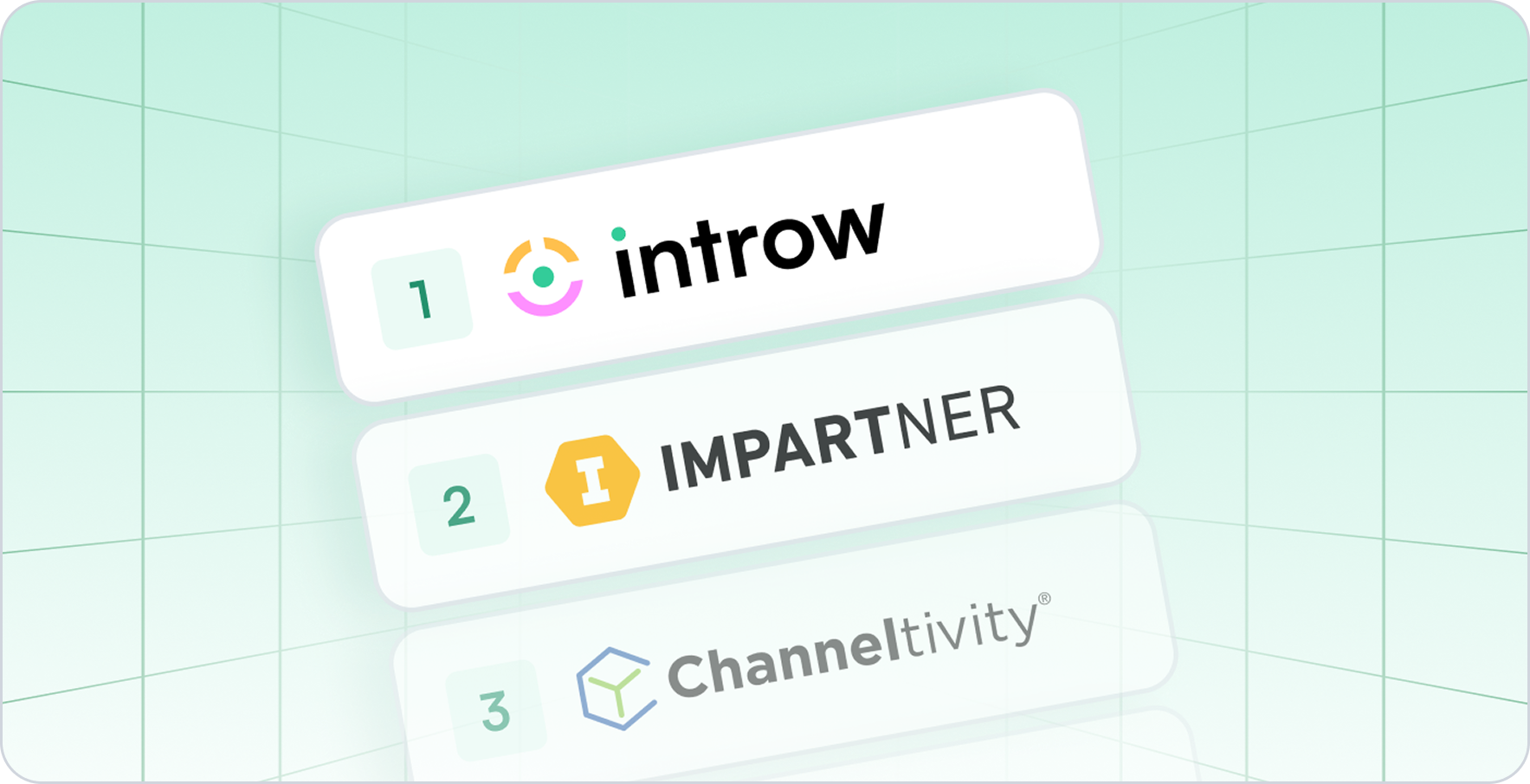
Die Qualität einer Partnerportal-Software entscheidet über Erfolg oder Misserfolg. Im Jahr 2026 sollten Sie folgenden Aspekten Priorität einräumen: SSO, White-Label-Branding, detaillierte Zugriffskontrollen, nachverfolgbare Inhalte, Ankündigungen per E-Mail und Slack, integriertes LMS und Zertifizierungen, reibungslose Registrierung von Geschäften, partnersichere Pipeline-Ansichten und native Salesforce HubSpot . Unsere Auswahlliste der besten Partnerportal-Software, mit Introw auf Platz 1 für SaaS-Partnerprogramme, die Wert auf CRM-Integrität und echte Pipeline-Transparenz legen.

Was ist ein Partnerportal, und warum und wann benötigen Sie eines?

Ein Partnerportal ist ein sicherer Bereich, in dem Ihre Partner auf die Tools, Daten, Schulungen und Marketingmaterialien zugreifen können, die sie für den Verkauf mit Ihnen benötigen.

Moderne Partnerportal-Software verbindet die Registrierung von Geschäften, die Einbindung von Partnern, das Partnermarketing und die CRM-Transparenz auf einer einzigen Plattform, sodass Ihr Team Beziehungen und Umsätze ohne Tabellenkalkulationen verwalten kann.

Warum und wann Sie eine benötigen

Sie benötigen ein Partnerportal, wenn Ihr Partnerprogramm beginnt, sich auf den tatsächlichen Umsatz auszuwirken. Wenn Ihr Team Geschäfte manuell aktualisiert, Ihre Wiederverkäufer kontrollierten Zugriff auf Pipeline-Daten benötigen oder Sie das Engagement Ihrer Partner nicht eindeutig mit dem Umsatz verknüpfen können, werden manuelle Prozesse Ihr Geschäft verlangsamen.

Die richtige Partnerportal-Software ermöglicht Ihren Partnern den Zugriff auf relevante Geschäfte und Support, während Salesforce HubSpot einzige Informationsquelle erhalten bleiben. Dieses Gleichgewicht fördert die Akzeptanz, Sichtbarkeit und das skalierbare Wachstum des Vertriebskanals.

Was unterscheidet also durchschnittliche Partnerportal-Software von der besten Partnerportal-Software für Ihr Unternehmen?

Es kommt auf die Akzeptanz, die CRM-Ausrichtung und darauf an, wie gut das Portal Ihre Partner in realen Verkaufssituationen unterstützt.

Die Auswahlliste: Beste Partnerportal-Software (2026)

Hier ist unsere Auswahlliste der Partnerportal-Softwareplattformen, die es wert sind, im Jahr 2026 verglichen zu werden, beginnend mit der Option, die speziell für SaaS-Channel-Programme entwickelt wurde.

1. Introw-Partnerportal
Am besten geeignet für

SaaS-Partnerprogramme, die Wert auf Akzeptanz, CRM-Vertrauen und messbare Auswirkungen auf den Umsatz legen.

Warum es für Portale geeignet ist

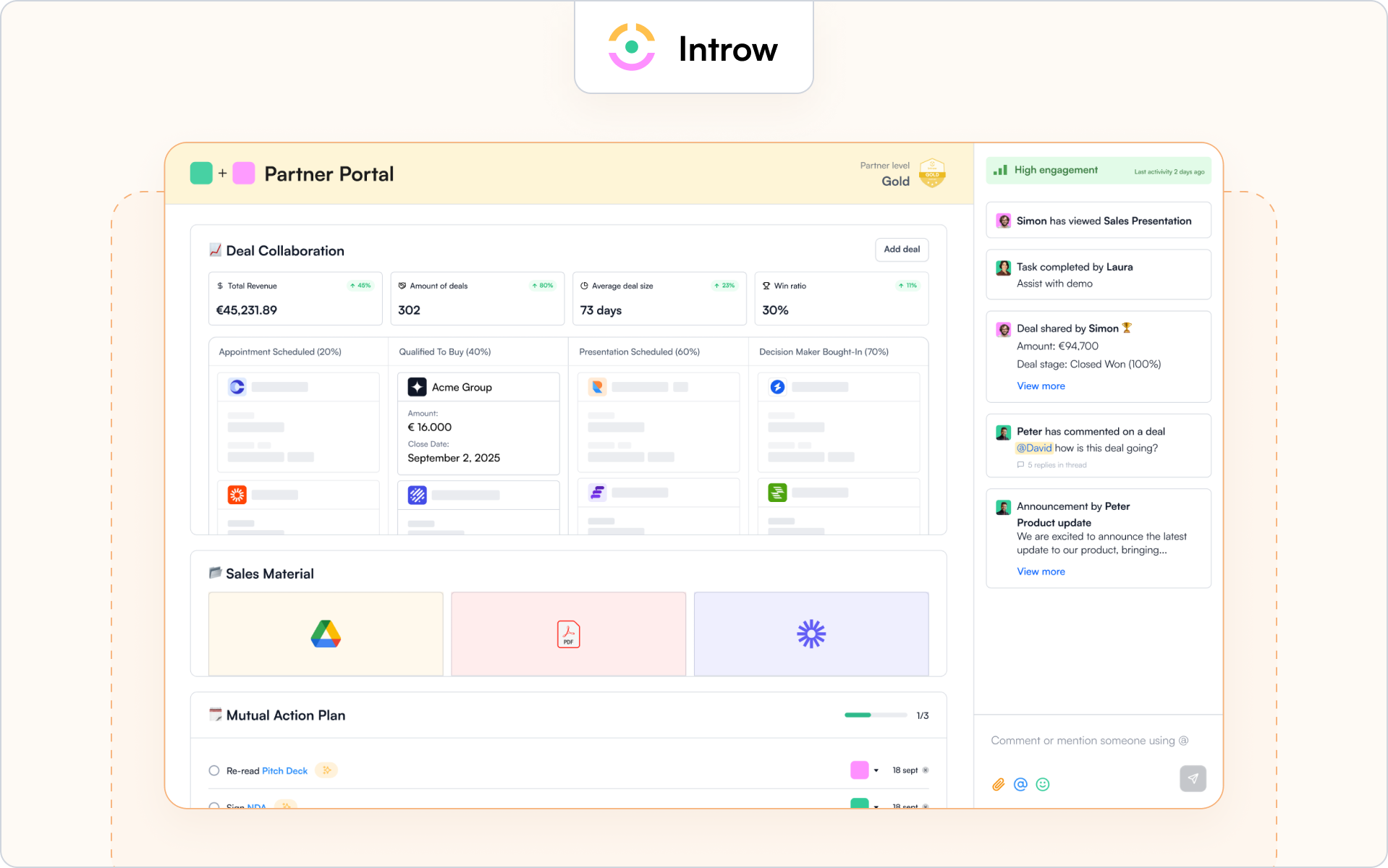
Das Introw-Partnerportal wurde speziell für die Nutzung durch externe Partner entwickelt. Es bietet Ihren Partnern kontrollierten Zugriff auf Geschäfte, Leads, Marketingmaterialien und Schulungen, während Ihr CRM als einzige Quelle für verlässliche Informationen erhalten bleibt.

Im Gegensatz zu herkömmlicher Partner-Relationship-Management-Software neben Ihrem CRM läuft, arbeitet Introw direkt darin. Ihr Partnerportal spiegelt echte Salesforce HubSpot wider, wobei die Sichtbarkeit auf Berechtigungen basiert. Ihre Geschäftsdaten bleiben geschützt, und Ihre Partner sehen nur das, was für sie relevant ist.

Wenn die Akzeptanz für Sie Priorität hat, ist dies wichtig. Partner können per E-Mail und Slack kommunizieren, Slack sich ständig anmelden zu müssen. Wenn sie per E-Mail antworten, wird die Aktivität automatisch protokolliert, sodass Ihr Team die Aktivitäten der Partner sehen kann, ohne nach Updates suchen zu müssen.

Sie können das gesamte Erlebnis auf dem Partnerportal von Introw erkunden.

Höhepunkte

Introw konzentriert sich auf die praktischen Elemente, die die Partnererfahrung und die Transparenz der Einnahmen fördern. Das Portal verbindet Ihr Partnerprogramm direkt mit Ihrem CRM, sodass Sie Geschäfte, Interaktionen und Leistungen auf einer einzigen Plattform verwalten können.

  • White-Label-Branding und SSO, damit das Portal Ihre Marke widerspiegelt
  • Granulare Zugriffskontrollen für Vertriebspartner, Wiederverkäufer und Distributoren
  • Echtzeit-Deal-Registrierung und partnersichere Pipeline-Ansichten über unsere Salesforce oder HubSpot
  • Integriertes Partner-LMS für Partner-Onboarding, Zertifizierungen, Rezertifizierungsfenster und KI-gestützte Kurserstellung

Da das Portal CRM-nativ ist, müssen Ihr Vertriebsteam und Ihre internen Teams keine Daten aus verschiedenen Tools abgleichen. Sie profitieren von einer besseren Berichterstattung, einer klareren Zuordnung und Transparenz darüber, wie Partner verkaufen und Geschäfte beeinflussen.

Wenn Sie eine umfassendere Kategorieübersicht wünschen, finden Sie in diesem Leitfaden zur die beste PRM-Software ist ein hilfreicher Begleiter.

Überlegungen

Introw ist nicht als umfangreiche Unternehmenssuite mit komplexen Anreizsystemen oder mehrstufigen Rabattstrukturen für Vertriebspartner konzipiert. Der Schwerpunkt liegt auf der Einführung, einer klaren CRM-Ausrichtung, Co-Selling-Workflows und der Unterstützung von Partnern für SaaS-Vertriebskanalprogramme.

Wenn Ihre Kanalprogramme stark auf fortschrittliche Anreizmodelle oder komplexe Regeln im Stil von Mobilfunkanbietern angewiesen sind, sollten Sie die Eignung sorgfältig prüfen.

Hinweis zur Preisgestaltung

Introw ist so strukturiert, dass es den Zugriff externer Partner unterstützt, ohne Gebühren für gelegentliche Anmeldungen zu erheben. Wenn Sie sehen möchten, wie es in Ihrem CRM funktioniert, können Sie eine Demo anfordern.

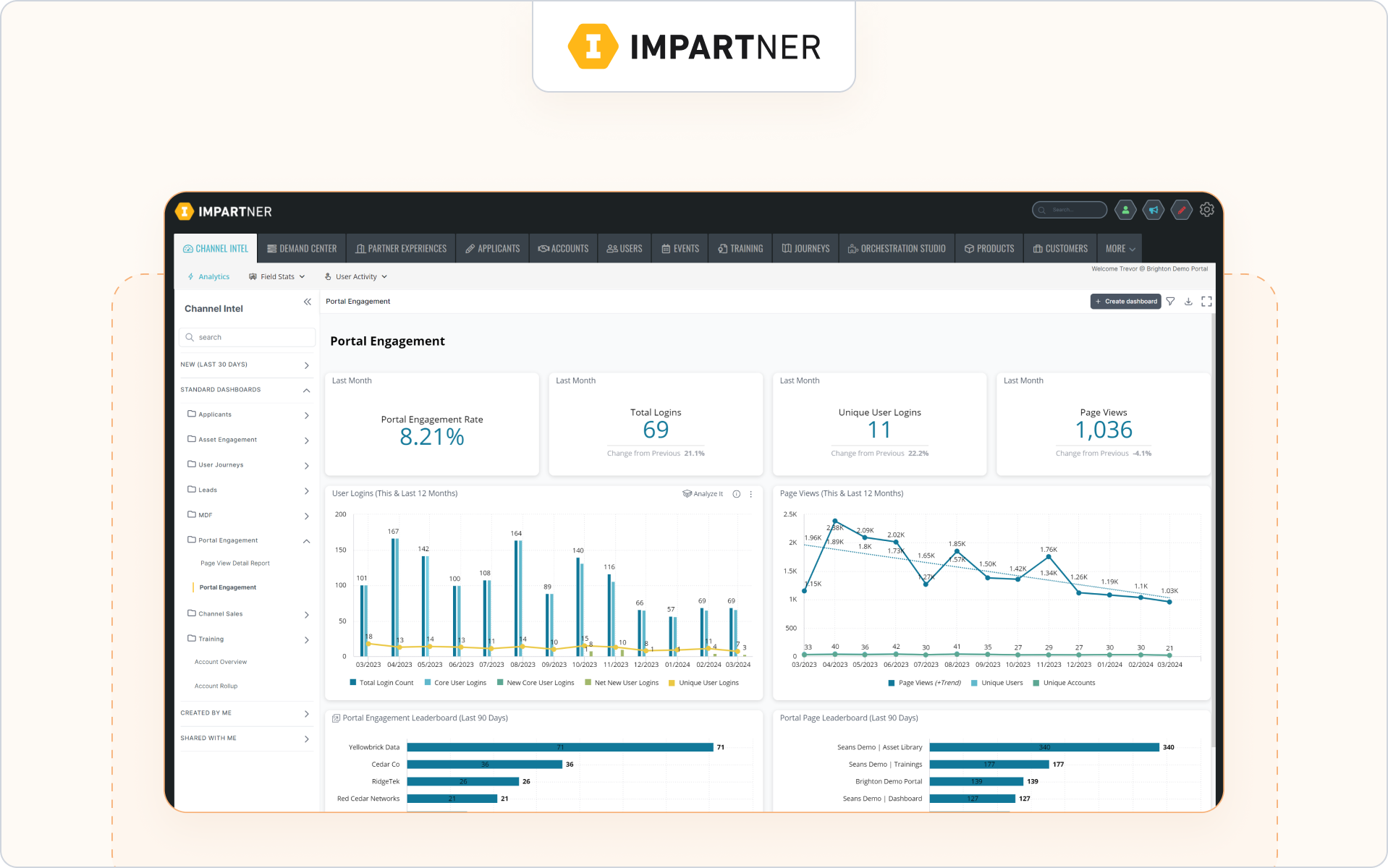
2. Impartner
Am besten geeignet für

Unternehmen, die große, mehrstufige Vertriebskanalprogramme über verschiedene Regionen und Partnertypen hinweg betreiben.

Warum es für Portale geeignet ist

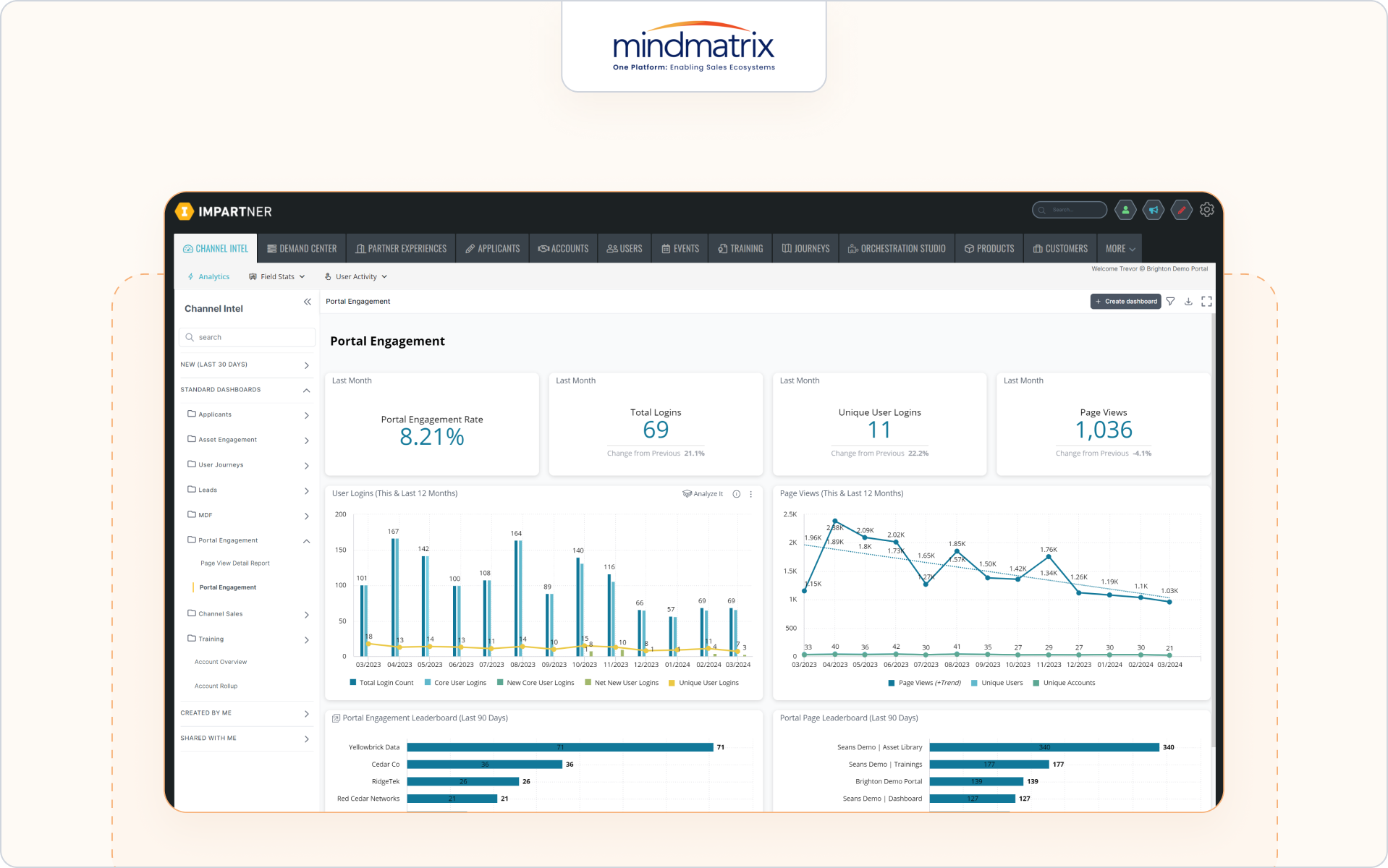
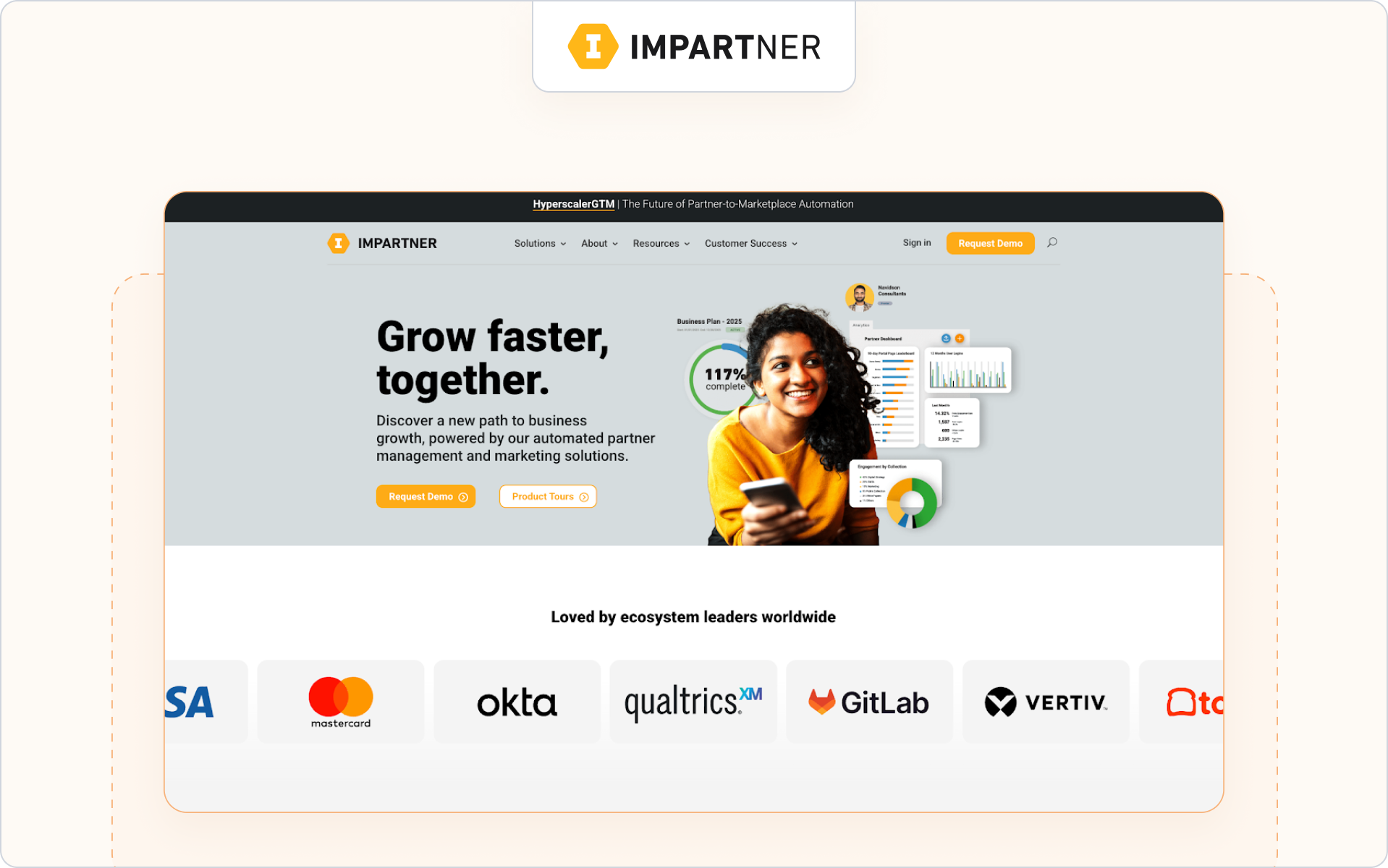
Impartner ist ein langjähriger Partner-Relationship-Management-Software mit einem robusten Portalmodul. Das Partnerportal ist darauf ausgelegt, komplexe Channel-Programme zu unterstützen, darunter Distributoren, Wiederverkäufer und globale Allianzen.

Die Plattform legt Wert auf strukturierte Governance, Automatisierung und Skalierbarkeit. Wenn Ihr Portal Teil einer umfassenderen PRM-Strategie Ihres Unternehmens ist, steht Impartner oft auf der Shortlist.

Höhepunkte

  • Konfigurierbares Portal mit rollenbasiertem Zugriff und SSO
  • Integrierte Workflows für die Registrierung von Geschäften und Genehmigungsabläufe
  • Programmmanagement-Tools für Stufen, Anreize und Partnerleistung

Überlegungen

Die Tiefe von Impartner kann eine aufwändigere Einrichtung und fortlaufende Verwaltung bedeuten. Wenn eine schnelle Akzeptanz durch Ihre Partner und schlanke Arbeitsabläufe für Sie Priorität haben, sollten Sie prüfen, wie komplex die Nutzung für Ihre Partner ist.

Hinweis zur Preisgestaltung

Unternehmenspreise. In der Regel ist eine direkte Beratung erforderlich.

3. Kanalaktivität
Am besten geeignet für

Mittelständische Unternehmen, die ein übersichtliches Partnerportal in Kombination mit zentralen PRM-Funktionen wünschen.

Warum es für Portale geeignet ist

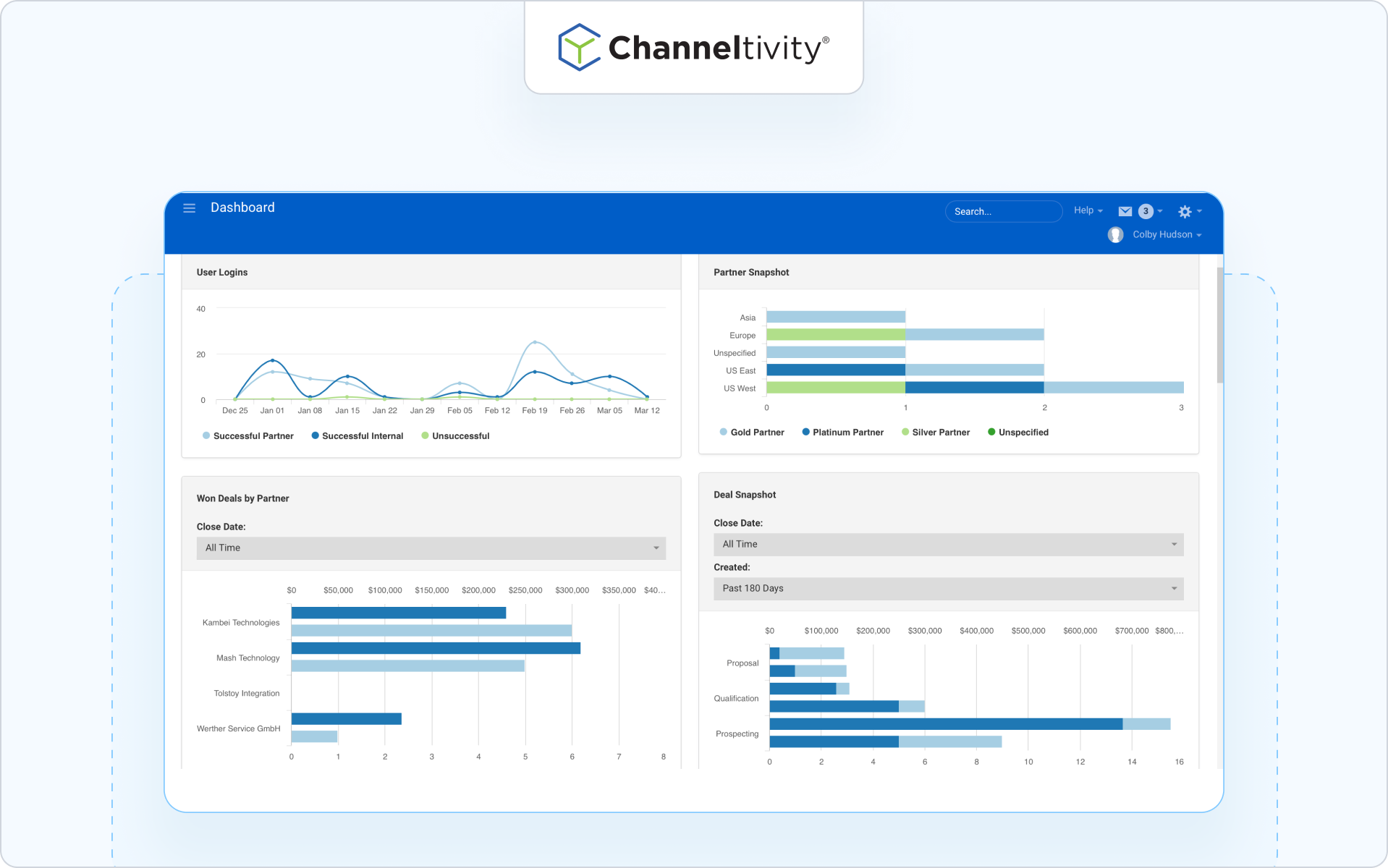
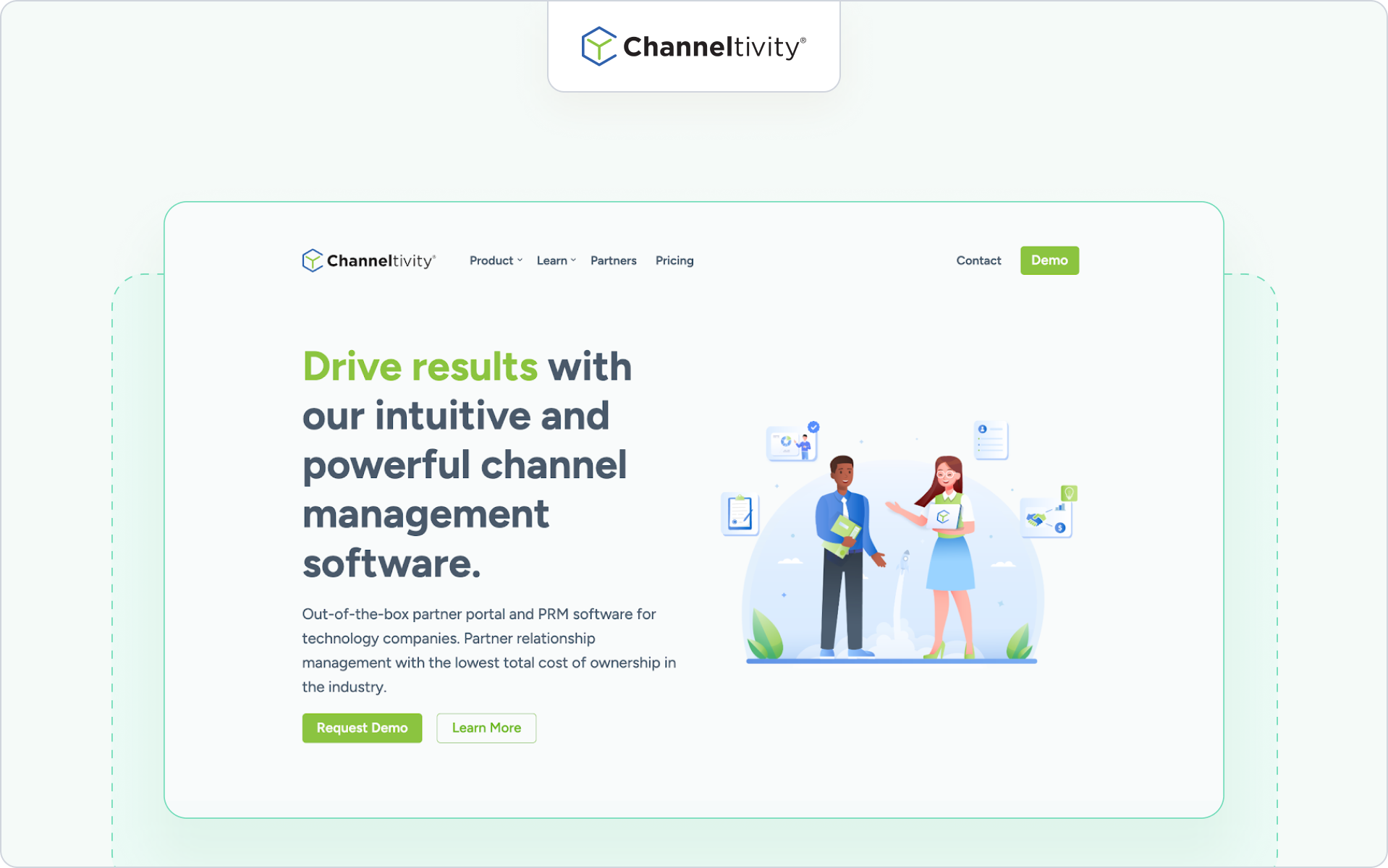
Channeltivity positioniert sein Portal als strukturierte Self-Service-Umgebung für Vertriebspartner. Es unterstützt die Registrierung von Geschäften, den Zugriff auf Inhalte, Schulungen und die Kommunikation mit Partnern über eine übersichtliche Benutzeroberfläche.

Wenn Sie eine Partnerportal-Software suchen, die Funktionalität und Benutzerfreundlichkeit ohne hohen Aufwand für Ihr Unternehmen vereint, ist dies eine praktische Option.

Höhepunkte

  • Markenpartnerportal mit zugangsberechtigungsbasiertem Zugriff
  • Workflows für die Registrierung von Geschäften und die Verteilung von Leads
  • Ressourcenbibliotheken und Schulungsmodule

Überlegungen

Wenn Ihr Unternehmen in hohem Maße auf fortschrittliche Partner-Marketing-Automatisierung oder komplexe Vertriebsstrukturen angewiesen ist, prüfen Sie, inwieweit das Portal mit Ihrer Vertriebsstrategie skalierbar ist.

Hinweis zur Preisgestaltung

Die öffentlichen gestaffelten Preise sind auf ihrer Website verfügbar.

4. Magentrix
Am besten geeignet für

Salesforce Teams, die ein flexibles Partnerportal im Community-Stil wünschen.

Warum es für Portale geeignet ist

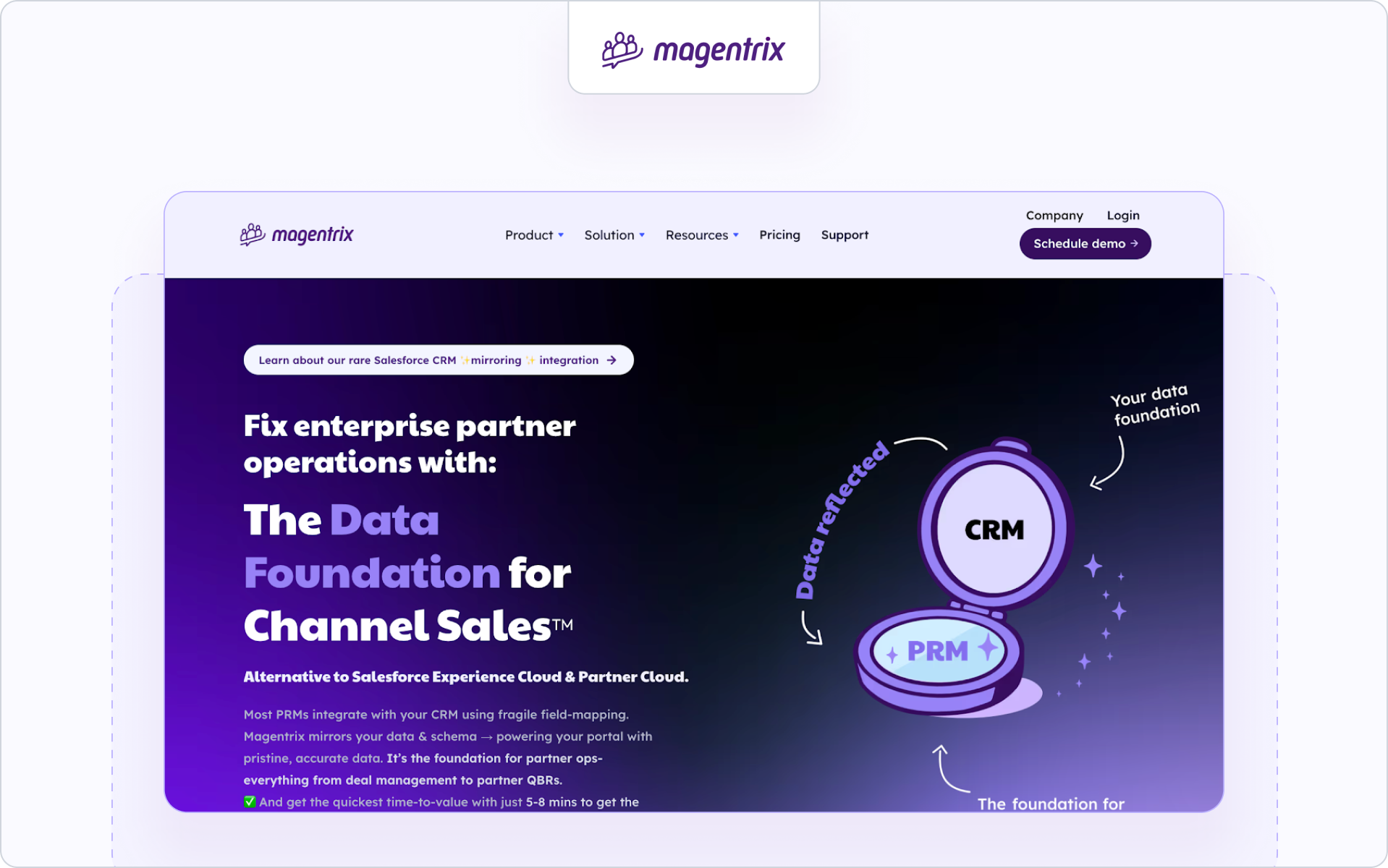
Magentrix bietet eine Partnerportal-Software, die sich nahtlos in Salesforce integrieren lässt Salesforce die Grundlagen der Experience Cloud nutzt. Sie kombiniert Portal-Funktionen mit strukturierten Features für das Partnerbeziehungsmanagement.

Wenn Ihr Unternehmen stark in Salesforce investiert ist Salesforce Sie eine umfassende Layoutanpassung wünschen, kann Magentrix eine gute Wahl sein.

Höhepunkte

  • Salesforce Transparenz von Geschäften und Konten
  • Anpassbare Portal-Layouts und Dashboards
  • Schulungs- und Einarbeitungsmodule

Überlegungen

Die Portal-Erfahrung und die Tiefe der Berichterstattung können von Ihrer internen Salesforce abhängen. Hier spielen Administratorressourcen eine wichtige Rolle.

Hinweis zur Preisgestaltung

Die Preisgestaltung ist in Stufen aufgebaut und erfordert in der Regel eine Beratung.

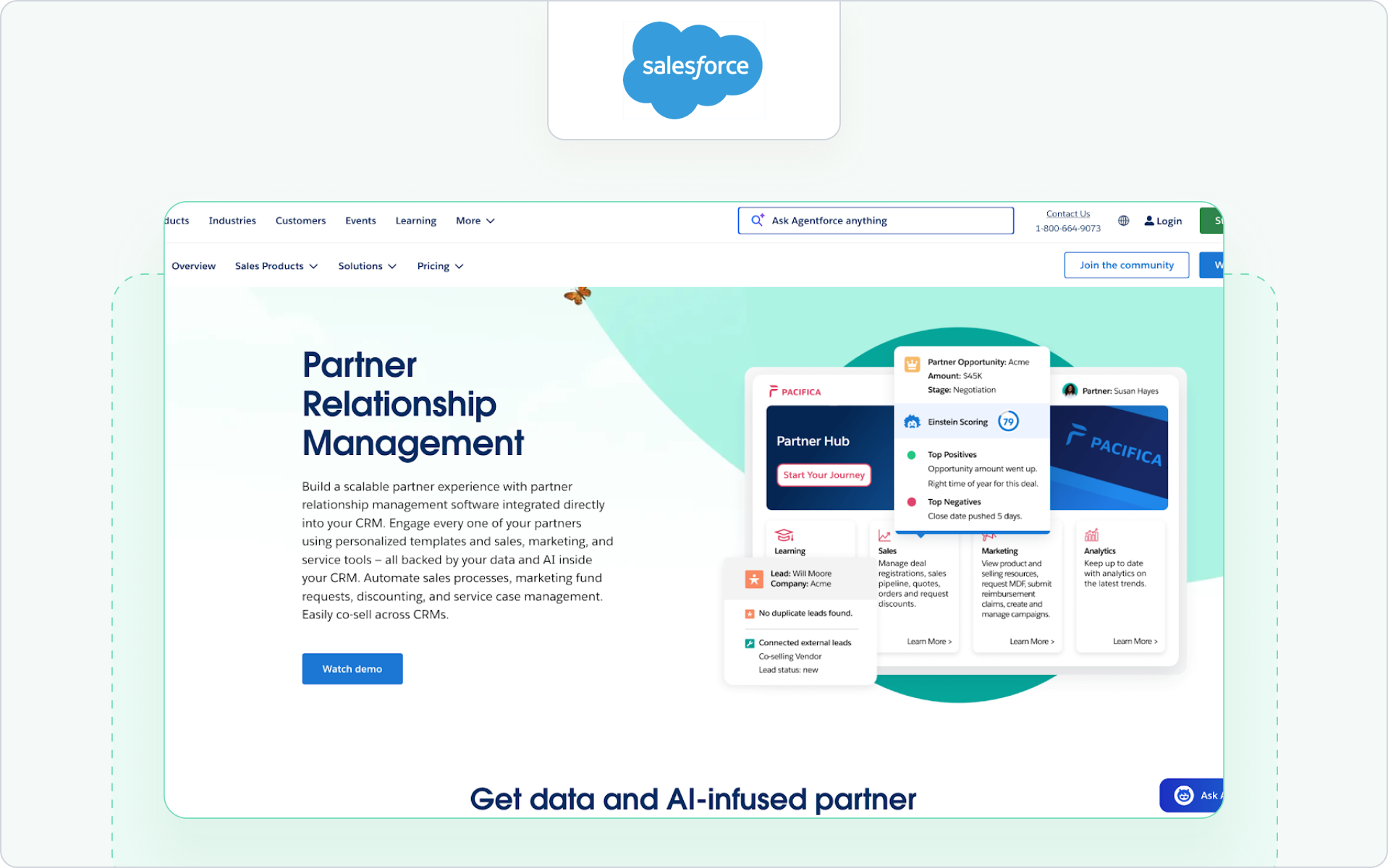
5. Salesforce (Experience Cloud)
Am besten geeignet für

Unternehmen, die ihr Partnerportal vollständig in die Salesforce integrieren möchten.

Warum es für Portale geeignet ist

Salesforce basiert auf Experience Cloud und ermöglicht Ihnen die Erstellung eines Partnerportals direkt in Ihrer CRM-Umgebung. Für Unternehmen, Salesforce, bietet dies umfassende Kontrolle über Datenzugriff, Workflows und Berichterstellung.

Dieser Ansatz eignet sich gut, wenn Ihre internen Teams mit der Verwaltung Salesforce vertraut sind und Sie Ihr Partnerportal eng mit den Vertriebsabläufen abstimmen möchten.

Höhepunkte

  • Direkter Zugriff auf CRM-Daten mit detaillierten rollenbasierten Berechtigungen
  • Native Deal-Registrierung und Lead-Sharing
  • Individuell angepasste Dashboards und Berichte, die mit der Vertriebsleistung verknüpft sind

Überlegungen

Die Implementierung und Wartung kann ressourcenintensiv sein. Wenn Sie ein schnell einführbares Partnerportal mit minimalem Konfigurationsaufwand wünschen, erfordert dieser Weg möglicherweise mehr interne Unterstützung.

Hinweis zur Preisgestaltung

Die Preise gelten in der Regel pro Partner-Benutzerlizenz und variieren je nach Edition. Die genauen Zahlen Salesforce mit Salesforce abgeklärt Salesforce .

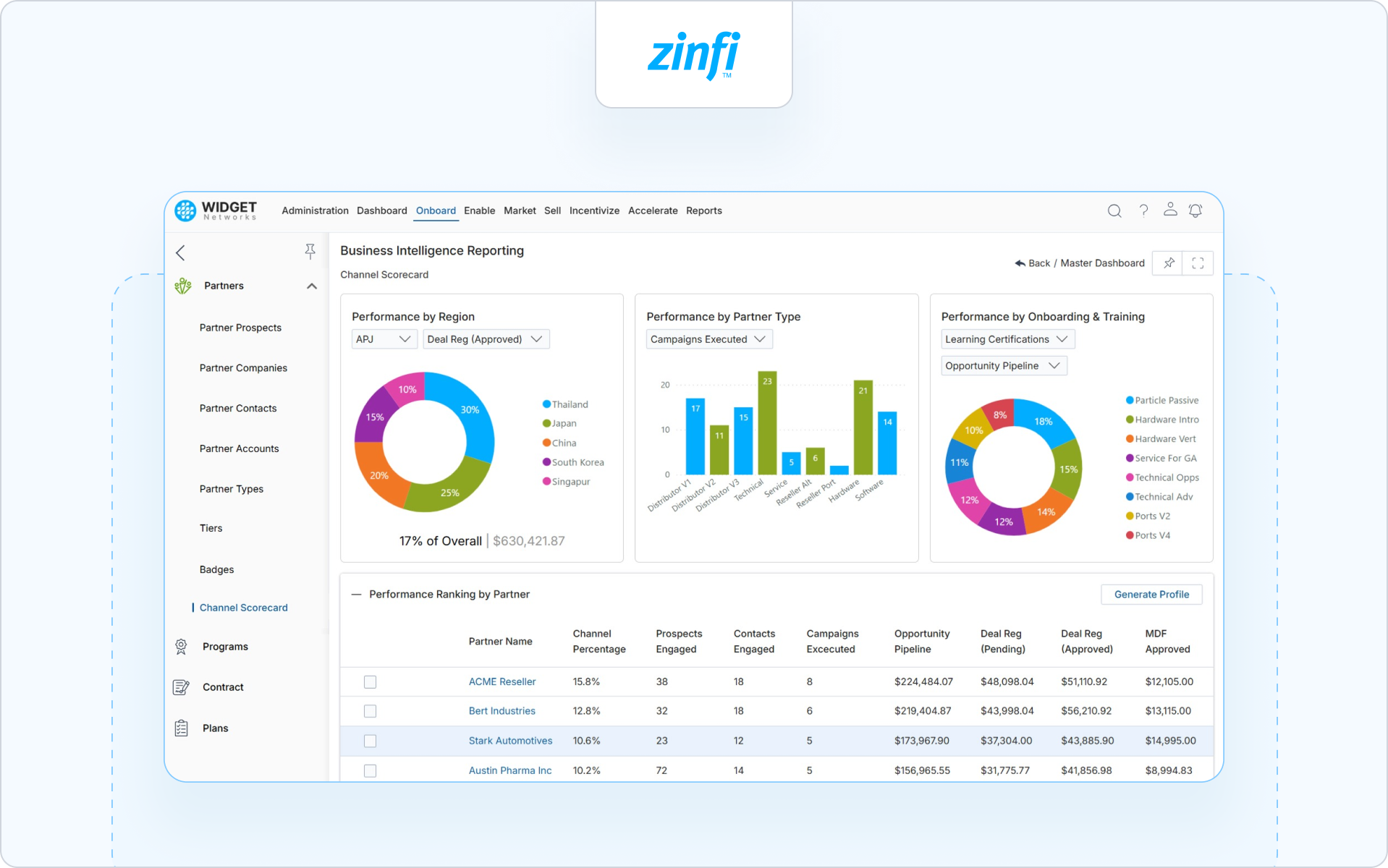
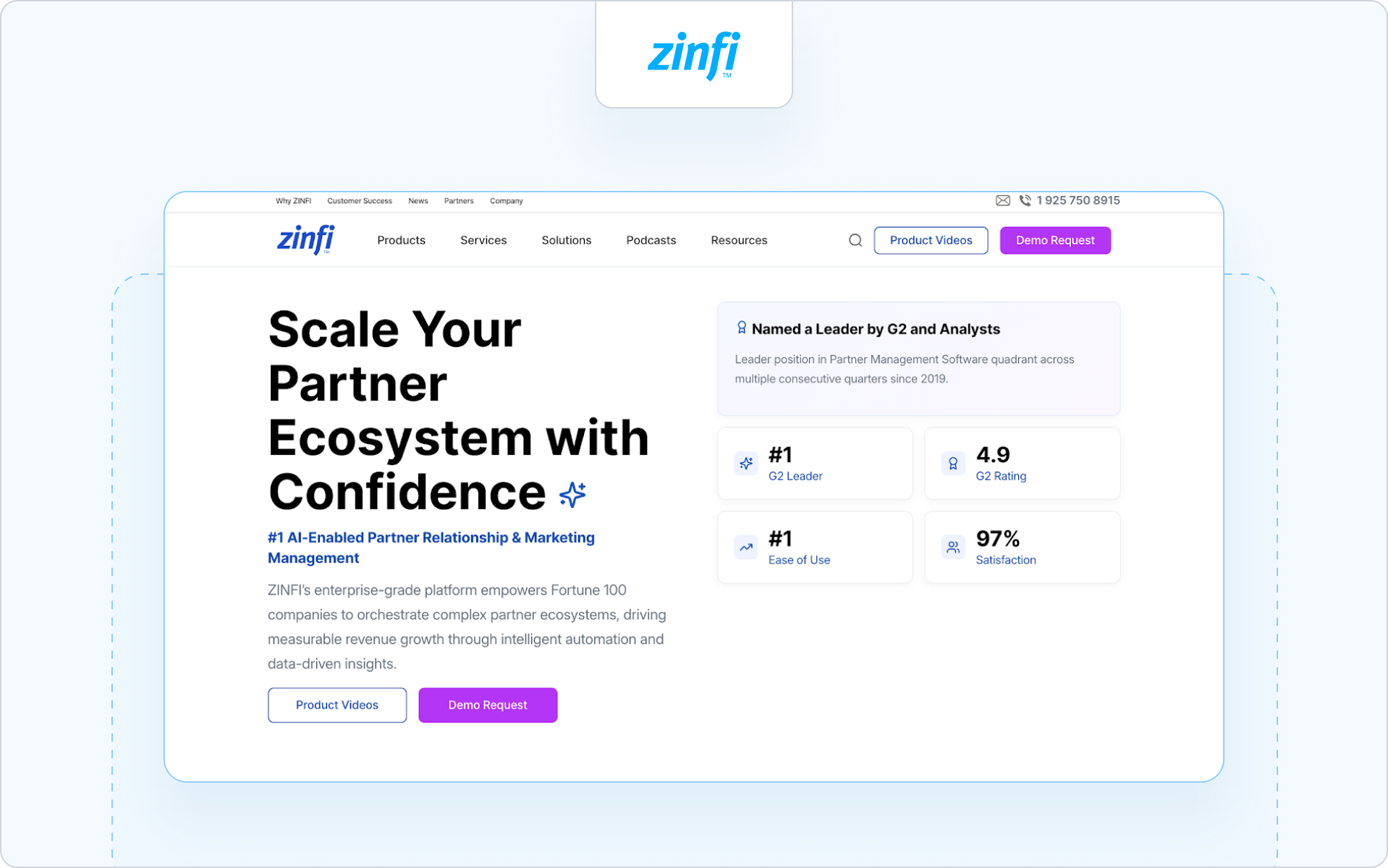
6. ZINFI
Am besten geeignet für

Unternehmen, die eine vollständige PRM-Suite mit strukturiertem Partner-Lebenszyklusmanagement und globalen Channel-Programmen wünschen.

Warum es für Portale geeignet ist

ZINFI positioniert seine Unified Channel Management-Plattform als End-to-End-Lösung für das Partnerbeziehungsmanagement. Das Partnerportal ist Teil eines umfassenderen Systems, das komplexe Channel-Programme über Regionen und Branchen hinweg unterstützt.

Wenn Ihr Partnerportal eine Ebene innerhalb eines größeren Partner-Tech-Stacks ist, wird ZINFI häufig evaluiert.

Höhepunkte

  • Strukturierte Deal-Registrierung und Workflows für die Einbindung von Partnern
  • Integrierte Lernmanagement- und Zertifizierungsmodule
  • Channel-Marketing-Automatisierung mit Analysen zur Partnerleistung

Überlegungen

Da ZINFI eine umfassende Plattform ist, können die Portal-Erfahrung und die Geschwindigkeit der Einführung davon abhängen, wie viel Konfiguration Ihr internes Team unterstützen kann.

Hinweis zur Preisgestaltung

Die Preisgestaltung wird in der Regel auf der Grundlage von Modulen und Umfang individuell angepasst.

7. Unifyr

Am besten geeignet für

Anbieter und Distributoren, die neben ihrem Partnerportal auch die Automatisierung des Channel-Marketings priorisieren.

Warum es für Portale geeignet ist

Unifyr kombiniert PRM-Funktionalität mit durchgängiger Marketingautomatisierung. Das Partnerportal wurde entwickelt, um strukturierte Partnerkommunikation, Kampagnenverteilung und Co-Branding-Marketingressourcen in großen Vertriebsnetzen zu unterstützen.

Dadurch ist es ein häufiger Anwärter auf den Titel der besten Partnerportal-Software für Technologie-Distributoren, die eine Marketingreichweite über mehrere Partner hinweg benötigen.

Höhepunkte

  • Integriertes Portal mit Deal-Registrierung und Partner-Marketing-Workflows
  • Kampagnenverteilung und Co-Branding-Marketingmaterialien
  • Integrierte Lern- und Aktivierungsfunktionen

Überlegungen

Wenn Ihre Priorität auf CRM-nativer Pipeline-Transparenz und optimiertem Co-Selling liegt, überprüfen Sie, wie eng Berichterstattung und Attribution mit Ihrem CRM verbunden sind.

Hinweis zur Preisgestaltung

Die Preise sind in der Regel auf Anfrage erhältlich.

8. Mindmatrix (Brücke)

Am besten geeignet für

Unternehmen, die ein Portal wünschen, das sich auf die Verkaufsförderung und die Aktivierung des Partnermarketings konzentriert.

Warum es für Portale geeignet ist

Mindmatrix verbindet die Funktionen eines Partnerportals mit Tools für Marketingautomatisierung und -unterstützung. Das Portal wird zu einer strukturierten Drehscheibe, über die Partner auf einer einzigen Plattform auf Marketingmaterialien, Schulungen und Vertriebsinhalte zugreifen können.

Wenn Ihr Schwerpunkt darauf liegt, die Kundenbindung durch Marketing-Tools und geführte Verkaufsprozesse zu fördern, kann dieser Ansatz gut geeignet sein.

Höhepunkte

  • Ressourcen-Hubs mit nachverfolgbaren Marketingmaterialien
  • Schulungs- und Coaching-Module
  • Kampagnen und Content-Distribution zur Unterstützung der Partner beim Verkauf

Überlegungen

Wenn Ihr Unternehmen eine umfassende CRM-Anpassung für die Transparenz von Geschäften und eine bessere Berichterstattung benötigt, die direkt mit dem Umsatz verbunden ist, klären Sie, wie die Datensynchronisierung gehandhabt wird.

Hinweis zur Preisgestaltung

Die Preise variieren je nach Konfiguration und Größe des Partners.

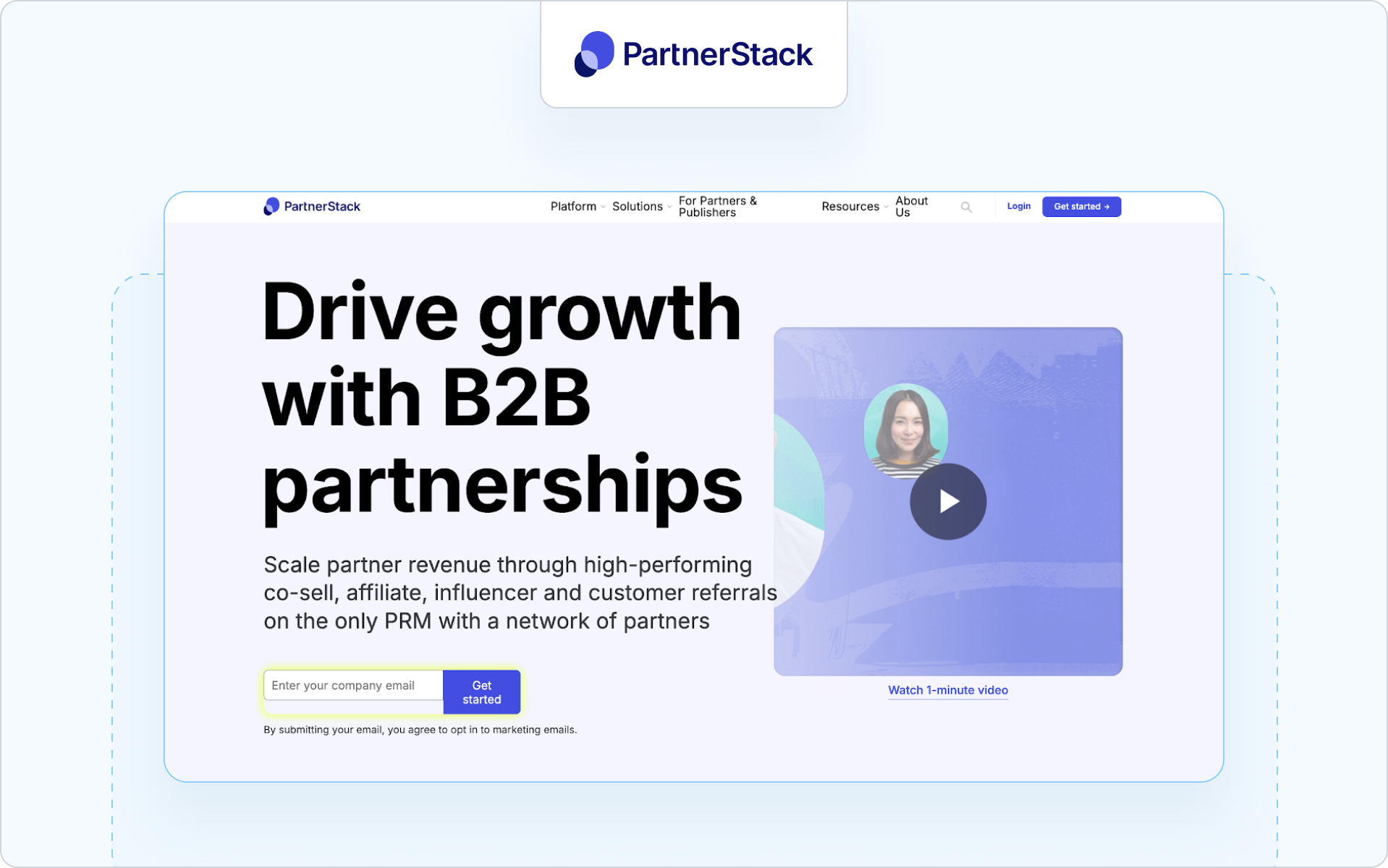
9. PartnerStack
Am besten geeignet für

Unternehmen, die partnerorientierte Wachstumsprogramme für Tochtergesellschaften, Agenturen und SaaS-Wiederverkäufer durchführen.

Warum es für Portale geeignet ist

PartnerStack ist weniger ein traditionelles Reseller-Portal als vielmehr eine Partner-Ökosystem-Plattform, deren Schwerpunkt auf Akquise und Leistungsmessung liegt. Es unterstützt Programme, bei denen Anreize, Empfehlungen und die Messung der Partnerleistung das Wachstum vorantreiben.

Wenn sich Ihre Vertriebskanalprogramme eher um die Partnerakquise und das Performance-Marketing drehen als um strukturierten Co-Selling durch Wiederverkäufer, könnte dieses Modell für Sie geeignet sein.

Höhepunkte

  • Partnergewinnung und -einbindung im Stil eines Marktplatzes
  • Automatisierte Nachverfolgung von Empfehlungen und Konversionen
  • Anreiz- und Auszahlungsmanagement

Überlegungen

Wenn Sie eine strukturierte Deal-Registrierung, einen CRM-konformen Pipeline-Zugang und eine enge Zusammenarbeit zwischen Partnern und Ihrem Vertriebsteam benötigen, prüfen Sie sorgfältig, ob das Produkt zu Ihnen passt.

Hinweis zur Preisgestaltung

Die Preisgestaltung wird in der Regel auf der Grundlage der Programmstruktur individuell angepasst.

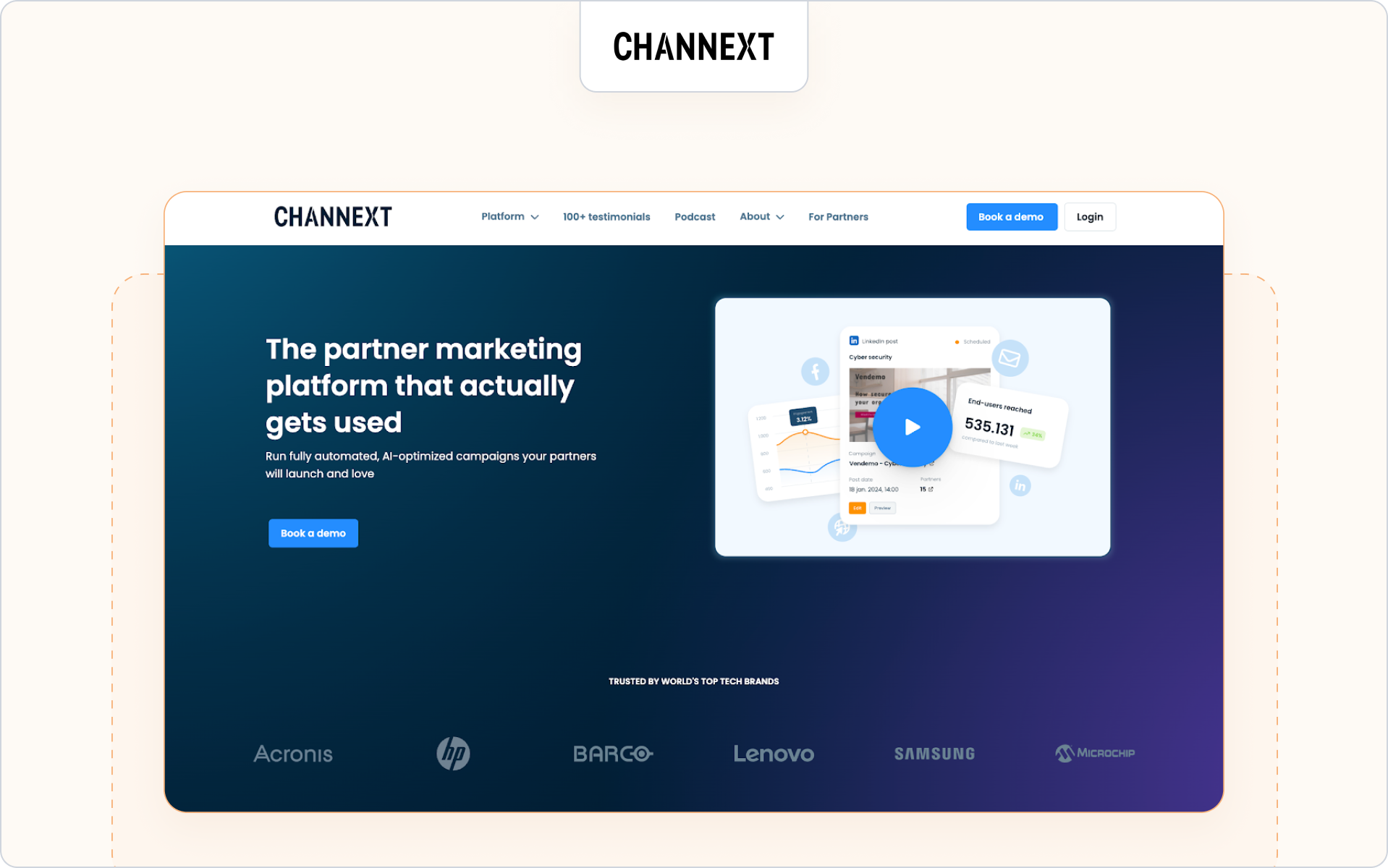
10. Channext
Am besten geeignet für

Anbieter, die Partnermarketing und Kampagnenverteilung über Wiederverkäufer und Distributoren priorisieren.

Warum es für Portale geeignet ist

Channext konzentriert sich stark auf die Automatisierung des Partnermarketings. Seine portalähnliche Umgebung ermöglicht es Partnern, Marketingmaterialien, Kampagnen und Co-Branding-Marketingressourcen schnell zu finden und zu aktivieren.

Wenn Ihre Kanalstrategie darauf ausgerichtet ist, Partnern mit einsatzbereiten Marketing-Tools beim Verkauf zu helfen, kann Channext als Automatisierungssoftware für Partnerportale fungieren, deren Schwerpunkt eher auf der Aktivierung als auf komplexen CRM-Workflows liegt.

Höhepunkte

  • Kampagnenverteilung über Wiederverkäufer und Distributoren
  • Zentrale Anlaufstelle, über die Partner auf Marketingmaterialien zugreifen können
  • Analysen in Bezug auf Engagement und Marketingleistung

Überlegungen

Wenn Ihr Unternehmen eine erweiterte Deal-Registrierung, strukturiertes Co-Selling oder eine intensive CRM-basierte Zusammenarbeit benötigt, überprüfen Sie, wie gut Channext mit Ihrem gesamten Partner-Tech-Stack kompatibel ist.

Hinweis zur Preisgestaltung

Die Preise werden in der Regel auf Anfrage mitgeteilt.

11. Kiflo

Am besten geeignet für

KMU-SaaS-Unternehmen, die ihr erstes strukturiertes Partnerprogramm starten oder formalisieren.

Warum es für Portale geeignet ist

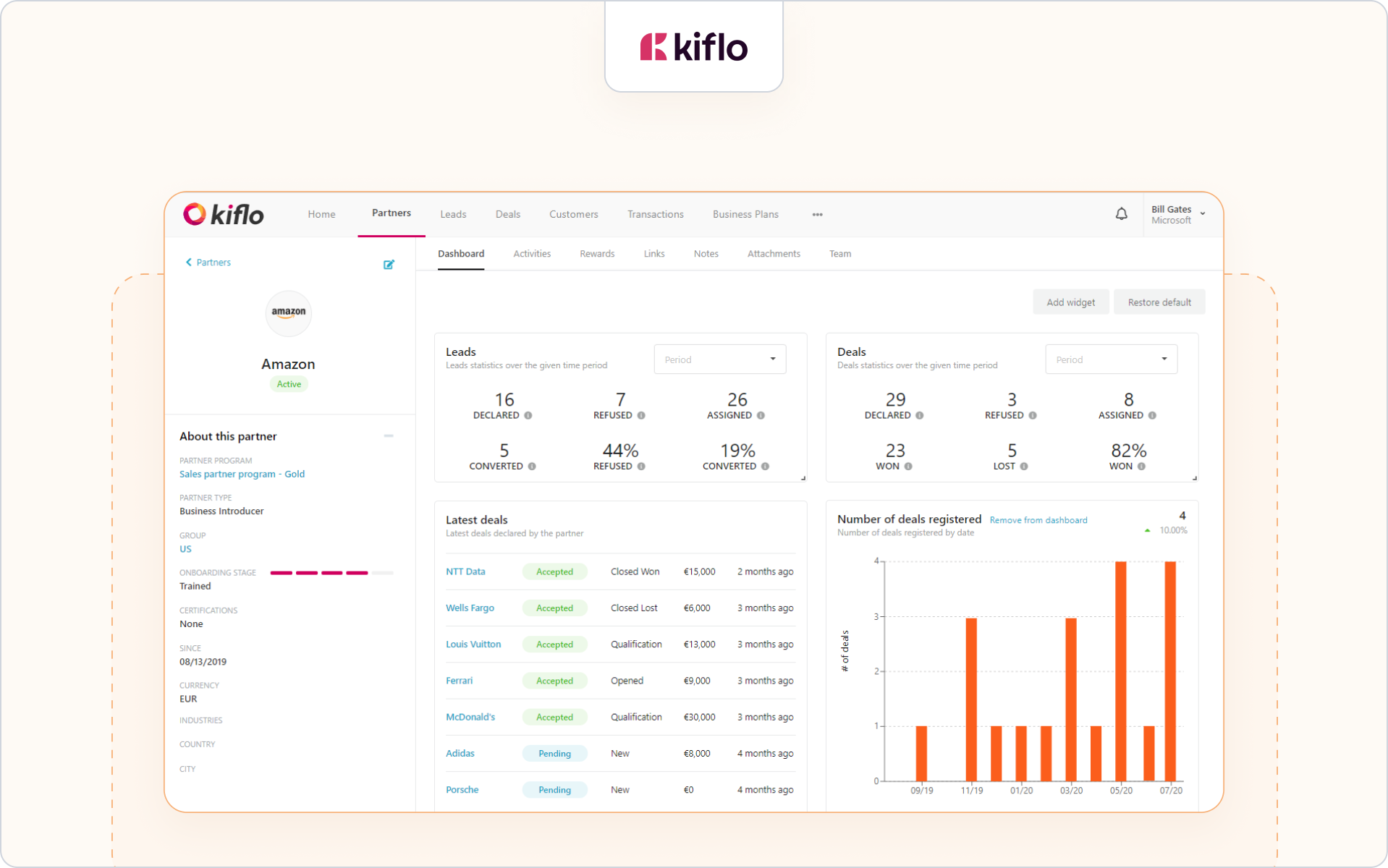
Kiflo positioniert sich als leichtgewichtige Plattform für das Partnerbeziehungsmanagement mit integrierten Portal-Funktionen. Sie wurde entwickelt, um kleineren Unternehmen dabei zu helfen, Partnerschaften zu verwalten, Leads zu verfolgen und die Einbindung von Partnern zu unterstützen, ohne dass dabei hohe Unternehmenskosten entstehen.

Wenn Sie Ihre erste formelle Partnerportal-Softwarelösung entwickeln und einen einfacheren Ansatz für die Registrierung von Geschäften und die Verwaltung von Beziehungen suchen, könnte Kiflo das Richtige für Sie sein.

Höhepunkte

  • Einfache Registrierung von Geschäften und Nachverfolgung von Leads
  • Grundlegende Tools für die Einarbeitung und Schulung von Partnern
  • Dashboard-Ansichten, die Ihrem Team bei der Verwaltung von Partneraktivitäten helfen

Überlegungen

Wenn Ihr Partner-Ökosystem wächst, benötigen Sie möglicherweise erweiterte CRM-native Steuerungsfunktionen, eine Automatisierung der Partnerkommunikation und detailliertere Berichte, um Ihren Umsatz in einer größeren Branche zu steigern.

Hinweis zur Preisgestaltung

Es gibt gestaffelte Preise, die in der Regel an die Anzahl der Partner und den Funktionsumfang angepasst sind.

Wichtigste Erkenntnisse

Die beste Partnerportal-Software hängt von Ihrem Geschäftsmodell und der Art und Weise ab, wie Ihre Partner verkaufen.

  • Wenn Sie komplexe Kanalprogramme mit mehrstufigen Anreizen durchführen, könnten Unternehmensplattformen geeignet sein.
  • Wenn Ihr Schwerpunkt auf der Aktivierung des Partnermarketings liegt, wählen Sie ein Portal, das auf Kampagnen und der Verbreitung von Inhalten ausgerichtet ist.
  • Wenn die Einführung, die CRM-Anpassung und die klare Sichtbarkeit von Geschäften am wichtigsten sind, sollten Sie Software priorisieren, die Ihr CRM als einzige Informationsquelle beibehält.

Wählen Sie vor allem ein Partnerportal, das Ihre Partner auch tatsächlich nutzen werden. Die Akzeptanz fördert das Engagement. Das Engagement fördert den Umsatz.

Die Auswahl Ihrer Partnerportal-Software ist der erste Schritt; die Partner dazu zu bringen, sie zu nutzen, ist der zweite Schritt.

Eine strukturierte Einführung ist das, was ein Portal zu einer echten Akzeptanz, zur Registrierung von Geschäften und zu messbaren Auswirkungen auf den Umsatz macht. Hier ist unser praktischer 30- bis 60-tägiger Implementierungsleitfaden, den Sie umsetzen können.

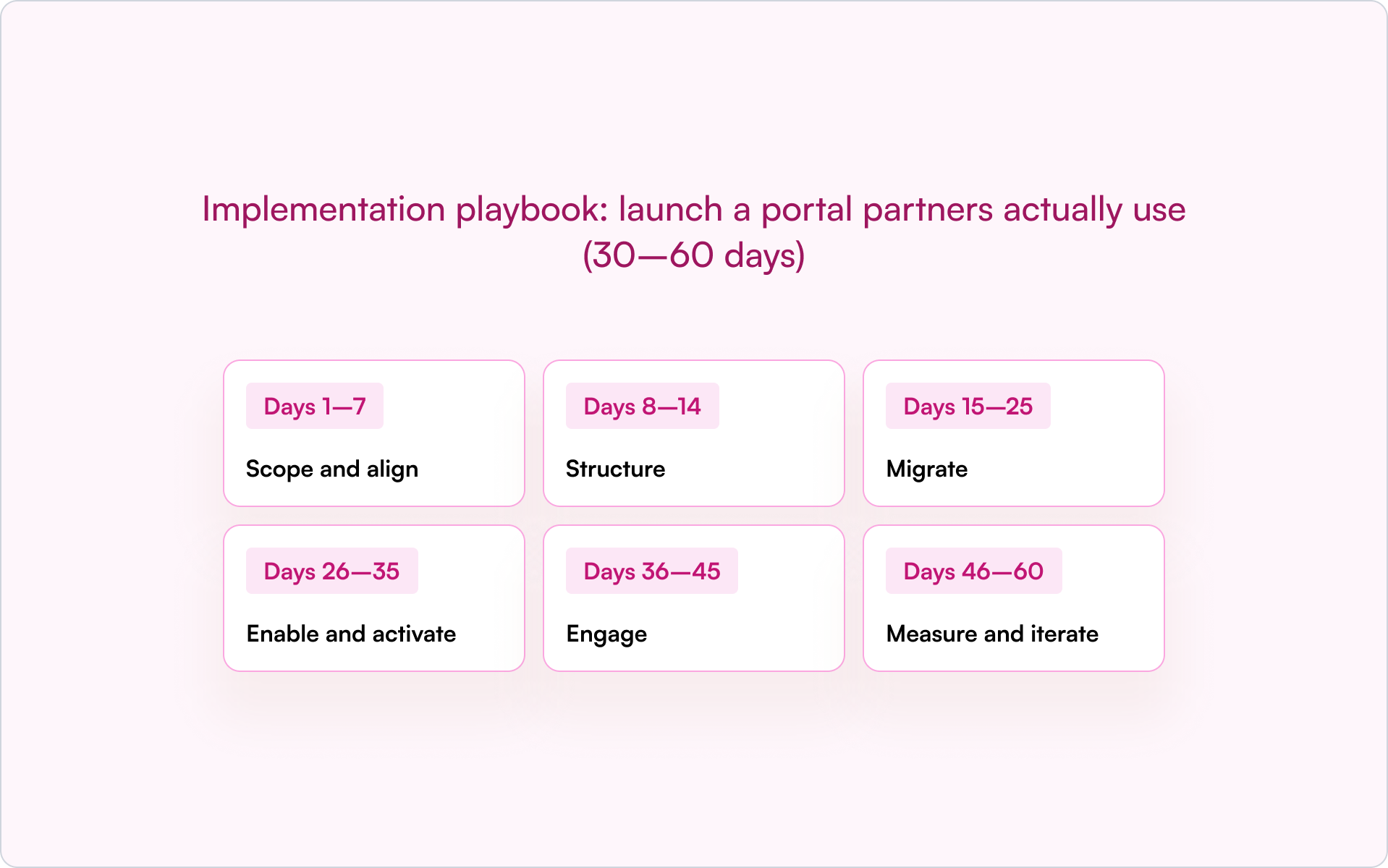
Implementierungsleitfaden: Ein Portal einrichten, das Partner tatsächlich nutzen (30–60 Tage)

Behandeln Sie die Einführung Ihrer Partnerportal-Software wie einen strukturierten Launch. Hier finden Sie einen praktischen 30- bis 60-Tage-Plan, den Sie befolgen können.

Zeitachse Fokus Was tun?
Tage 1–7 Umfang und Ausrichtung Rollen, Ebenen und SSO-Gruppen definieren. Zertifizierungs- und Rezertifizierungsregeln festlegen. Zuständigkeiten für Channel-Manager, Marketing und interne Teams zuweisen.
Tage 8–14 Struktur Organisieren Sie das Portal nach Rolle, Produkt oder Region. Erstellen Sie Sammlungen nach Partnertyp. Machen Sie es Partnern leicht, relevante Inhalte schnell zu finden.
Tage 15–25 Migrieren Laden Sie Marketingmaterialien mit Tags und Versionskontrolle hoch. Weisen Sie Eigentümer zu. Legen Sie Ablaufdaten fest. Entfernen Sie veraltete Assets.
Tage 26–35 Aktivieren und einschalten Veröffentlichen Sie Schulungen und Zertifizierungen. Melden Sie Gruppen an. Zeigen Sie die Registrierung von Geschäften an, damit Partner Geschäfte registrieren und den gemeinsamen Verkauf unterstützen können.
Tage 36–45 Engage Kündigen Sie Termine per E-Mail oder Slack an. Starten Sie Kampagnen mit klaren nächsten Schritten. Richten Sie Erinnerungen für Zertifizierungen und Partneraktivitäten ein.
Tage 46–60 Messen und wiederholen Verbinden Sie das Portal mit Salesforce HubSpot Ihrer einzigen zuverlässigen Informationsquelle. Verfolgen Sie die Akzeptanz, die Leistung Ihrer Partner und die Auswirkungen auf die Pipeline. Sammeln Sie Feedback und optimieren Sie Ihr Partnerprogramm.

Wenn Sie Ihre CRM-Einrichtung vor dem Start validieren möchten, kann Ihnen dieser Leitfaden zu den besten CRM-Lösungen für das Partnermanagement dabei helfen, Berichterstattung, Deal-Transparenz und Umsatzverfolgung aufeinander abzustimmen.

Eine strukturierte Einführung erhöht die Akzeptanz. Akzeptanz fördert das Engagement. Engagement steigert den Umsatz.

Wenn Ihnen dieses Framework schwerfällig erscheint, bedeutet dies in der Regel, dass Ihr Portal und Ihr CRM nicht aufeinander abgestimmt sind.

Die richtige Partnerportal-Software reduziert die Komplexität, anstatt sie zu erhöhen. Sie macht die Registrierung von Geschäften, das Onboarding von Partnern und die CRM-Transparenz zu einem Teil eines vernetzten Workflows.

So setzt Introw dieses Modell in der Praxis um.
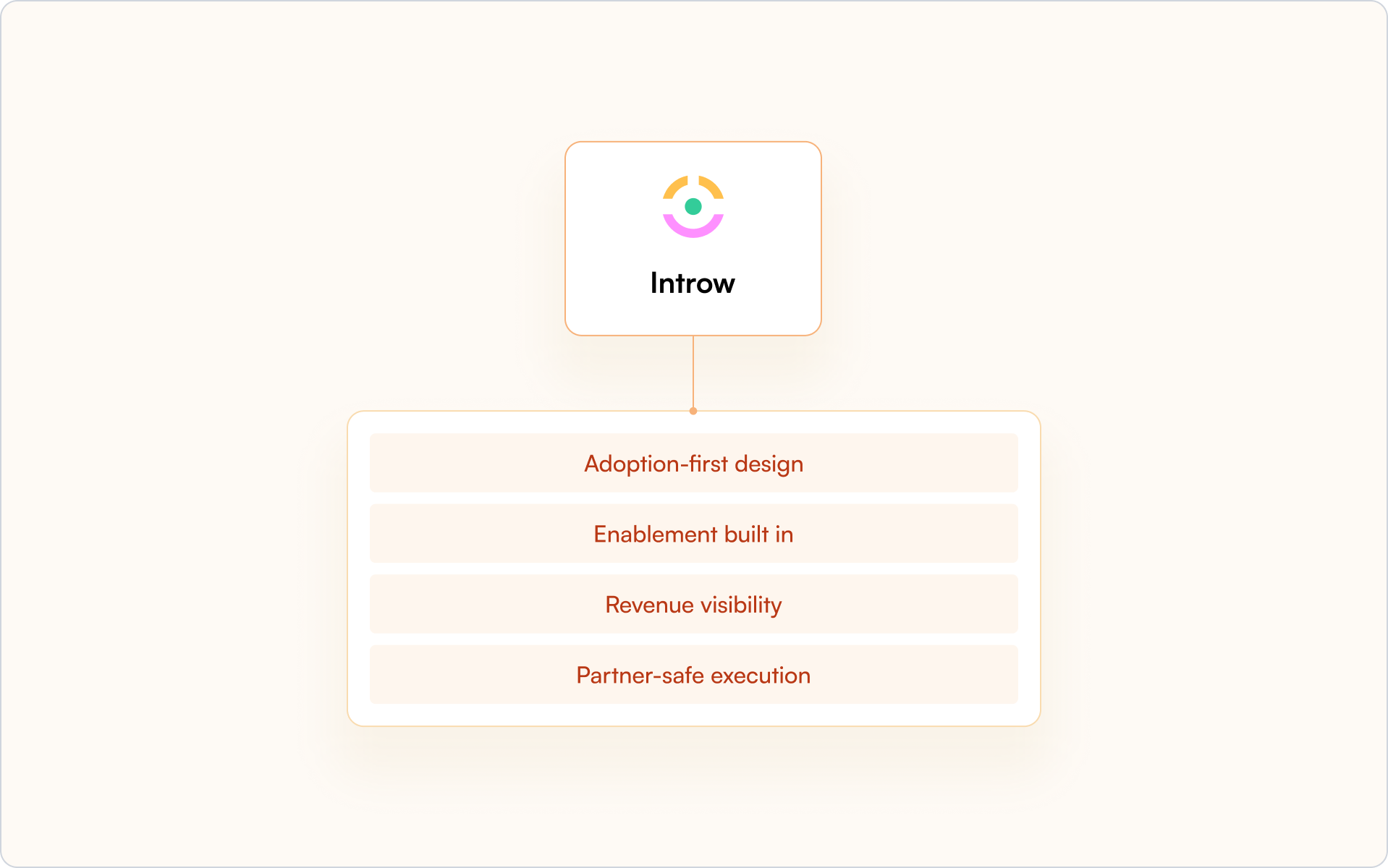
Warum Introw die erste Wahl für Partnerportale ist (kurzer Beweis)

Sie kennen die Landschaft. Hier ist der Unterschied. Introw basiert auf einer Idee: Adoption steigert den Umsatz.

Adoption-First-Design

Ihre Partner benötigen keine weitere Anmeldung. Ankündigungen werden per E-Mail oder Slack versendet. Partner können per E-Mail antworten, und ihre Aktivitäten werden automatisch protokolliert. Die Interaktion findet dort statt, wo sie bereits arbeiten.

Integrierte Aktivierung

Erstellen Sie mit dem KI-Kursersteller in wenigen Minuten Schulungen. Stellen Sie Zertifikate mit einem Klick aus. Melden Sie ganze Kohorten an. Legen Sie Zeitfenster für die Rezertifizierung fest. Die Einarbeitung und Befähigung von Partnern erfolgt direkt im Portal und nicht in separaten Tools.

Umsichtbarkeit

Abschlüsse, Zertifizierungen und Inhalte werden zurück in Salesforce HubSpot geschrieben. Ihr CRM bleibt die einzige Quelle der Wahrheit. Ihr Vertriebsteam und Ihre internen Teams sehen die tatsächlichen Auswirkungen der Partner.

Partnersichere Ausführung

Deals klar registrieren. Lassen Sie Partner Deals registrieren und über gemeinsame Pipeline-Ansichten mit Safelists auf Feldebene und SSO-Kontrollen zusammenarbeiten.
Was Sie als Nächstes tun können

  • Überprüfen Sie Ihr aktuelles Portal anhand des 30- bis 60-Tage-Leitfadens.
  • Identifizieren Sie, wo die Akzeptanz scheitert
  • Entscheiden Sie, ob Ihre aktuelle Partnerportal-Software CRM-native Transparenz unterstützt.

Wenn Sie erfahren möchten, wie Sie Ihre Partner unterstützen können, fordern Sie noch heute eine Demo an noch heute an.

Denn letztendlich ist die beste Partnerportal-Software die, die Ihre Partner tatsächlich nutzen.

FAQs

Noch Fragen? Hier findest du die häufigsten Fragen und Antworten.

Kontaktiere uns

Was ist der Unterschied zwischen Partnerportal-Software und PRM?

Die Partnerportal-Software ist die Erfahrungsebene, auf der Partner auf Angebote, Schulungen und Marketingmaterialien zugreifen können. PRM-Software ist ein umfassenderes Partnerbeziehungsmanagement, das Programmregeln, Anreize, Onboarding und Lebenszyklusmanagement umfasst. Viele Plattformen kombinieren beides, aber das Portal konzentriert sich auf die Einführung und den kontrollierten Zugriff.

Benötige ich ein Portal, wenn ich bereits Salesforce nutze?

Ja. Salesforce Ihre internen Vertriebsdaten, ist jedoch nicht als Portalsoftware für Vertriebspartner konzipiert. Ein Portal ermöglicht Partnern einen kontrollierten Zugriff auf relevante Daten, ohne Ihr gesamtes CRM offenzulegen.

Wie steigern Portale die Einnahmen aus Partnerquellen?

Portale steigern den Umsatz, indem sie die Registrierung von Geschäften, den Zugriff auf Marketingunterstützung, die Durchführung von Schulungen und die Zusammenarbeit mit Ihrem Vertriebsteam vereinfachen. Eine höhere Akzeptanz führt zu einem besseren Engagement, einer klareren Zuordnung und einer stärker von Partnern beeinflussten Pipeline.

Was ist der schnellste Weg, um ein Partnerportal zu starten?

Beginnen Sie mit definierten Rollen und SSO-Gruppen, migrieren Sie nur relevante Inhalte, machen Sie die Registrierung von Geschäften deutlich sichtbar und verbinden Sie Ihr CRM frühzeitig. Eine strukturierte 30- bis 60-tägige Einführung mit Schwerpunkt auf der Akzeptanz ist der schnellste Weg zum Erfolg.

Wie kann ich Schulungen → Pipeline mitHubSpot nachweisen?

Verbinden Sie Ihr Portal mit Salesforce HubSpot übertragen Sie abgeschlossene Kurse, Zertifizierungen und Content-Interaktionen zurück. Messen Sie anschließend den Einfluss auf Geschäfte und die Auswirkungen auf die Pipeline direkt in Ihren CRM-Dashboards.


Launch your partner portal
in minutes!

Vielen Dank! Wir haben deine Anfrage erhalten!
Hoppla! Beim Absenden des Formulars ist ein Fehler aufgetreten.

Verwandte Blog-Artikel

Partner-Management

How to Evaluate Partner Training Programs: KPIs, Benchmarks, and a Scorecard

Adèle Coolens
Marketing & Partnerschaften
5min Lesezeit
23 Apr 2026
⚡ TL;DR

If you want to know how to evaluate partner training programs, don’t rely on completion rates alone. The real signal is whether training helps partners activate faster and contribute to pipeline. Focus on partner-sourced opportunities, time to first deal, and win rates of certified partners. These metrics show whether your partner training program is driving meaningful business outcomes. A simple scorecard that compares trained vs. untrained partners, tracks certification impact, and measures revenue contribution makes it much easier to understand what’s working and where to improve.

Why most teams struggle to evaluate partner training programs

Most teams track what’s easy to measure:

  • course completions
  • certification progress
  • attendance in training courses
  • usage of training materials

These signals show activity. They don’t show partner performance or real business outcomes.

Partner training is harder to measure than internal training. Different channel partners have different partner roles, partner needs, and business goals. One KPI set rarely fits an entire partner ecosystem.

Visibility is another problem. Training data often stays inside a learning platform. Pipeline data sits somewhere else.

Without connecting training initiatives to CRM outcomes, teams struggle with measuring channel partner training ROI or understanding whether their partner training is creating knowledgeable partners.

As a result, many teams can’t tell if training efforts are creating knowledgeable partners or just more course completions.

So, before choosing the right key performance indicators, you first need a clear definition of what good partner training success actually looks like.

What “good” looks like in a partner training program (and why it depends on partner type)

A strong partner training program does more than help partners finish training courses. It helps them ramp faster, understand your positioning, and contribute to pipeline with confidence.

In practice, partner training success usually looks like this:

  • partners gain essential product knowledge early
  • new partner activation happens faster
  • certified partners start registering opportunities sooner
  • partner performance improves across the partner ecosystem
  • training supports measurable business outcomes, not just activity

But “good” depends on the type of partner you’re working with. Different channel partners need different training content and different success signals.

Here are some examples:

Referral partners
Need light initial training and clear positioning so they can introduce opportunities quickly.

Resellers
Need deeper partner certification and structured enablement to support full sales cycles.

Services partners
Need technical training modules and delivery guidance to improve customer satisfaction after handoff.

Technology partners
Need integration readiness and shared learning objectives across both teams.

That’s why many organizations are moving toward role-based training inside dedicated partner LMS software instead of relying on a generic learning management system. This helps align training with partner roles and real business goals across the partner network.

Clear expectations also make it easier to design structured certification paths. Teams using modern LMS partner certification strategies can better connect training efforts to partner readiness and long-term partner success.

Once you define what success looks like for each partner type, the next step is identifying the metrics that show whether training is working.

The 3 metrics that actually prove partner training is working

Most partner training programs track activity. Leadership cares about impact.

If you want to understand whether training efforts support real business objectives, focus on three signals that connect learning to pipeline and revenue.

Partner-sourced pipeline and deal registration

The clearest sign of partner training effectiveness is simple: trained partners start bringing opportunities.

Suchen Sie nach:

  • more deal registrations from trained cohorts
  • higher partner participation across the partner network
  • stronger contribution from channel partner training initiatives

When partners apply essential product knowledge in real conversations, they create pipeline. That’s when training starts supporting measurable business outcomes instead of just course completions.

Teams that follow structured partner training frameworks often see faster movement from learning to opportunity creation across their partner ecosystem.

This metric answers one question clearly: are trained partners actually selling?

Time to first deal after training

Speed matters more than most teams expect.

A strong partner training program helps a new partner move from initial training to their first opportunity quickly. Shorter ramp time usually means fewer knowledge gaps and stronger alignment with partner roles.

Track:

  • time between training completion and first deal registration
  • activation speed across different partner roles
  • differences between trained and untrained channel partners

Faster activation is one of the most reliable indicators of training success across a partner ecosystem.

It also shows whether your training modules match real partner needs.

Win rate of certified vs. non-certified partners

Certification only matters if it improves partner performance.

Compare trained and certified partners with those who are not properly trained. Look for differences in:

  • win rate
  • deal progression
  • customer satisfaction after handoff

When certification improves conversion, it proves your certification program supports partner success and helps empower partners to represent your solution confidently.

Programs that follow modern approaches to improve partner engagement with certification programs often see clearer links between readiness and revenue contribution.

Once you track these three metrics consistently, the next step is understanding which supporting indicators explain why those results improve.

Leading indicators vs. revenue metrics: What you should track (and what leadership cares about)

Not all metrics carry the same weight.

Some show whether partners are learning. Others show whether they are selling. Strong partner training strategies track both, but they don’t treat them the same.

Think of your metrics in three layers.

Learning engagement metrics

These metrics show whether partners are interacting with your training content.

Common examples:

  • enrollment in training courses
  • progress through training modules
  • certification program participation
  • completion of role-based training paths

These signals help you spot knowledge gaps early. They also show whether your delivery methods match different learning styles across your partner ecosystem.

Most teams track these inside a learning platform or a dedicated partner LMS. They are useful, but they don’t prove partner training effectiveness on their own.

Partner readiness and activation metrics

This layer shows whether partners are becoming usable in real situations.

Suchen Sie nach:

  • time from initial training to first opportunity
  • number of properly trained contacts per partner account
  • activation rate across your partner network
  • adoption of channel partner training paths

These indicators show whether training initiatives help empower partners and support ongoing development instead of staying theoretical.

They are often the missing link between learning activity and revenue contribution.

Business impact metrics

This is the layer leadership cares about most.

Focus on signals like:

  • pipeline from trained partners
  • conversion differences after certification
  • contribution to customer satisfaction across shared deals

These metrics connect training efforts directly to business objectives and company-wide performance.

Teams that connect learning activity with CRM data through systems like a native Salesforce integration or HubSpot integration can track these outcomes far more reliably than teams relying on LMS reporting alone.

Once you separate engagement signals from revenue indicators, it becomes easier to compare results across partner types and choose the right KPIs for each program.

Which KPIs matter most by partner type

One mistake many organizations make is using the same scorecard for every partner. But different partner roles support different business goals. So the KPIs that signal progress should change too.

Here’s what to focus on for each group.

Referral-Partner

Referral partners don’t need deep training courses. They need clarity and speed.

What you should track:

  • time from onboarding to first referral
  • number of referrals submitted
  • whether partners stay informed about positioning and use cases

Short, practical enablement usually drives better tangible results than comprehensive training here.

Vertriebs- und Channel-Partner

Resellers carry pipeline responsibility. Their KPIs should reflect that.

What you should track:

  • certified reps per partner
  • deal registrations
  • win rate and average deal size

For this group, certification depth is often a key driver of revenue contribution. Teams using structured systems similar to those compared in our guide on best partner relationship management software typically get clearer visibility into these signals.

Services and implementation partners

Services partners influence delivery quality after the deal closes.

What you should track:

  • technical onboarding completion
  • implementation success indicators
  • expansion opportunities after rollout

Here, strong training materials and ongoing training help ensure partners represent your solution consistently.

Technology and ISV partners

Technology partners succeed through alignment, not volume.

What you should track:

  • integration readiness
  • joint opportunities created
  • shared adoption of key concepts across teams

These partners benefit most from structured collaboration supported by flexible learning environments like those discussed in top 360Learning alternatives.

Once KPIs match partner type, benchmarking results become far more useful and easier to trust.

Benchmarks that actually help you evaluate partner training effectiveness

Industry benchmarks sound helpful, but they rarely reflect your reality. The most useful comparisons come from your own partner ecosystem and the systems you already use to manage training.

Comparing trained vs. untrained partners

This is the fastest way to see whether training changes behavior.

Metrisch Geschulte Partner Untrained partners
Deal registrations Higher or unchanged? Baseline
Zeit bis zum ersten Geschäft Faster or similar? Slower baseline
Gewinnquote Improving or flat? Control group
Pipeline-Beitrag Growing or stable? Limited

Many teams start building these comparisons after moving away from siloed LMS reporting toward more connected setups like those discussed in top LearnUpon LMS alternatives.

Comparing certification cohorts over time

Track partners before and after certification.

Suchen Sie nach:

  • faster opportunity creation
  • stronger deal progression
  • higher conversion rates

This helps confirm whether certification improves readiness or just adds another step in the process.

Benchmarking by tier, role, and region

Not all partners should perform the same way.

Compare results across:

  • partner tier (for example: bronze vs. gold)
  • role type (sales vs. technical)
  • region or market maturity

Teams reviewing learning visibility across segments often explore options similar to those outlined in our overview of the best Talent LMS alternatives to support clearer benchmarking across partner groups.

Up next, we’ll turn these signals into a simple scorecard you can use internally.

A simple scorecard for evaluating partner training programs

Once your metrics are clear, the next step is putting them into one place. A scorecard helps you see quickly whether your partner training program supports partner success or just produces course completions.

Here’s a practical version you can copy into a spreadsheet.

Scorecard categories to include

Use five core areas:

  • engagement
  • certification and readiness
  • activation
  • pipeline contribution
  • coverage across your partner network

Together, these reflect both learning progress and real business impact.

Example partner training scorecard

Kategorie KPI Target Current / Status
Verlobung % partners completing initial training 70%+ — 🔴 🟡 🟢
Certification % partners with certified reps 50%+ — 🔴 🟡 🟢
Activation Time to first deal after training < 60 days — 🔴 🟡 🟢
Pipeline Partner-sourced opportunities from trained partners Increasing QoQ — 🔴 🟡 🟢
Coverage % active partners properly trained 65%+ — 🔴 🟡 🟢

You don’t need perfect benchmarks at first. What matters is consistency over time.

Score key

Use a simple traffic-light model:

  • 🔴 below baseline or declining
  • 🟡 stable but needs improvement
  • 🟢 improving and supporting business goals

This keeps reporting simple for both partner teams and leadership.

How to use the scorecard in practice

Review the scorecard monthly or quarterly. Compare trained vs untrained partners and adjust training content where activation slows down or pipeline impact drops.

Over time, this helps you continuously improve training coverage, strengthen readiness across your partner network, and make better decisions about where to invest next.

But what are some things you should be watching out for?

Common mistakes teams make when measuring partner training success

We often see teams struggle with partner training measurement not because they lack data, but because they track the wrong signals.

Here are the most common mistakes:

  • treating completion rate as proof of training success
  • using the same KPIs for every partner type
  • measuring learning activity instead of partner contribution
  • not comparing trained vs. untrained partners
  • keeping training data separate from CRM pipeline data
  • tracking too many metrics without a clear decision framework

Businesses rely regularly on LMS completion data as their main success signal. The problem is that course completion doesn’t show whether partners influence deals, support customers, or stay active in your ecosystem.

That’s why many partner teams move toward tracking training alongside CRM activity. When certification, engagement, and pipeline live in the same workflow, it becomes much easier to see what training actually changes.

With those signals in place, you can evaluate your partner training program much more systematically.

A 90-day plan to evaluate your current partner training program

Improving partner training measurement doesn’t require a full rebuild. You can get a clear picture of training impact in about 90 days with a simple structure like this.

Month 1: Define success and establish baselines

Start by agreeing on what partner training is supposed to change.

We typically see teams begin with three baseline comparisons:

  • trained vs. untrained partners
  • certified vs. non-certified partners
  • active vs. inactive partners after onboarding

Capture where things stand today. Completion rates, certification numbers, deal registration activity, and influenced pipeline are enough to start.

This gives you a reference point for everything that follows.

Month 2: Segment partners and build your scorecard

Training rarely works the same way across your entire partner ecosystem.

Segment partners by:

  • tier
  • role (sales, technical, services)
  • region or market focus

Then apply the scorecard you defined earlier across these segments to see where training is driving engagement and pipeline activity, and where it isn’t. This helps you prioritize where enablement investment will have the biggest impact.

Month 3: Connect training to pipeline and revenue impact

By month three, the goal is clarity, not perfection.

Compare:

  • certification status and deal registration activity
  • trained partners and pipeline contribution
  • enablement participation and partner retention

Teams that discover that their most consistently enabled partners are also the ones influencing pipeline most reliably.

Once those patterns are visible, the next step is straightforward: expand the training paths that support real-deal activity and connect enablement data more directly to CRM workflows so partner contribution stays measurable over time.

This is where connecting training data to revenue outcomes becomes critical.

How to connect partner training data to revenue outcomes

Most partner training programs are measured inside the LMS. But completion data alone doesn’t explain whether training improves partner contribution to pipeline.

To understand revenue impact, partner teams need to connect learning activity directly to CRM behavior.

Start with one simple comparison: certified vs. non-certified partners.

If certification matters, you should see differences in deal registration, opportunity participation, or influenced pipeline.

Many teams discover the gap is larger than expected once they look at the numbers side by side, especially when certification tracking is structured inside systems like partner certification program software.

Then look at what happens inside the pipeline after training and ask these questions:

  • Do trained partners show up earlier in opportunities?
  • Do they stay involved longer?
  • Do they participate more often in technical validation or expansion deals?

These signals show whether training changes execution, not just knowledge.

From there, identify which courses actually correlate with partner activity.

Most ecosystems follow the same pattern. A small number of certifications drive most pipeline contribution.

Connecting certification milestones to pipeline visibility makes those patterns easier to see, as explained in LMS benefits for channel partner certification.

The challenge is that this analysis is difficult when training data stays inside the LMS.

When certification and engagement signals are visible in Salesforce or HubSpot alongside deal activity, it becomes much easier to see which partners are ready, active, and influencing revenue.

That visibility is what turns partner training into a measurable growth lever. If you want that level of visibility, the next step is using a platform that connects training activity directly to partner contribution.

How Introw helps you evaluate partner training programs end to end

Many teams can deliver partner training. The harder part is understanding whether it changes partner behavior and pipeline outcomes.

Introw is designed to make that connection visible without adding extra systems or reporting layers.

Here’s how that works in practice:

  • AI-built courses make it faster to launch training and update content as partner needs change
  • one-click certifications make partner readiness easy to track across roles and tiers
  • bulk enrollment helps structure programs by region, partner type, or ecosystem segment
  • training activity stays visible inside Salesforce and HubSpot instead of staying trapped in an LMS
  • RevOps teams can compare certification progress with deal activity and pipeline contribution
  • engagement insights highlight partners who completed training but are not yet active
  • training, certification, activation, and revenue signals appear together in one workflow

This makes it easier to see which programs support real partner contribution and where enablement needs adjustment.

Over to you

If you want a clearer view of how training influences partner activity and revenue, request a demo today to explore how this model works inside your CRM.

Partner-Management

How to Evaluate PRM Platforms for Security and Scalability: Buyer’s Checklist

Simon Van Den Hende
Co-Founder & AI Engineer
5min Lesezeit
23 Apr 2026
⚡ TL;DR

If you’re figuring out how to evaluate PRM platforms for security and scalability, focus on how the system protects partner data, controls access across partner programs, and supports clean CRM workflows as your partner ecosystem grows. Strong partner relationship management platforms should support role-based permissions, secure deal registration, audit visibility, and reliable integrations with tools like Salesforce or HubSpot. These are what help reduce third-party risk and keep partner relationships scalable over time.

Before choosing a vendor, compare how each partner platform handles real-world complexity across the entire partner lifecycle, not just what the partner portal looks like in a demo.

Why security and scalability now define PRM success

A PRM used to be mostly a partner portal. Today, it exposes deal registration, lead distribution, certifications, content, and partner-facing collaboration across your entire partner lifecycle.

That creates more value. It also creates more risk.

More external users now interact with partner data, customer data, and revenue workflows. Your PRM may support multiple partner programs, regions, and channel sales motions at once. That adds real complexity your team has to manage.

What this changes for security

Security is no longer just infrastructure. It’s about role-based visibility, field-level permissions, secure data sharing, and protecting sensitive data across partner relationships.

What this changes for scalability

Scalability is not user count. It’s whether your system can support multiple partner ecosystems, automated workflows, and structured deal and lead registration without creating manual work for internal teams.

Many platforms look strong in a demo but struggle once real partner management begins at scale. That’s why security and scalability directly shape partner trust, adoption, and revenue operations.

Next, let’s look at what security actually means when evaluating a PRM platform.

How to evaluate PRM security (beyond certifications)

Security certifications matter. They confirm a vendor follows strong security protocols and supports regulatory compliance.

But real PRM security shows up in daily partner management.

It affects how partner data is shared, how access works across partner programs, and how your team handles direct customer interactions inside connected systems. Strong controls help reduce vendor risks, support third-party risk management, and improve risk mitigation across your entire vendor ecosystem.

Here’s what to evaluate first.

Identity and access controls

Access control is where most security gaps start.

You should be able to control who enters the platform, what they see, and how quickly access can be removed across partner onboarding and channel programs involving multiple partner types.

Suchen Sie nach:

  • SSO and SAML support
  • MFA for internal teams and partners
  • role-based access by partner tier or region
  • fast provisioning and removal of users
  • secure authentication without manual passwords

These controls reduce cyber risk and strengthen your organization’s security across the vendor lifecycle while supporting consistent third-party risk assessments.

Strong identity controls only work if visibility inside the platform is equally precise.

Granular permissions and data visibility

Most PRM security issues come from oversharing partner data, not infrastructure failures.

A strong permission model lets you control field-level visibility, object-level access, and partner-safe CRM views across different partner journeys. Referral partners rarely need pipeline access, while resellers often do.

Sie sollten in der Lage sein:

  • segment access by partner type, role, or region
  • control visibility across deals, contacts, and marketing funds
  • protect sensitive data across partner ecosystems
  • support structured revenue tracking without exposing unnecessary fields

These controls support vendor risk management and help mitigate risks across the entire supply chain as partners interact with shared workflows.

Platforms built for structured partner management make these controls easier to apply consistently across partner relationships.

Security visibility also depends on whether activity is traceable across the system.

Auditability and governance

If something changes in your partner ecosystem, you should be able to see who did it and when.

Auditability supports risk assessment, compliance risk monitoring, and stronger third-party risk management across the entire partner lifecycle. It also helps teams respond faster to security questionnaires and internal reviews.

Suchen Sie nach:

  • activity logs across deals and approvals
  • change tracking for shared records
  • visibility into deal registration approvals
  • traceable partner onboarding updates
  • reporting capabilities for compliance reviews

These controls improve risk posture and support ongoing monitoring across your vendor lifecycle, especially when working with high-risk vendors or regulated industries such as a healthcare provider environment.

Content sharing is another place where security gaps often appear.

Content and asset access controls

Modern partner ecosystems depend on shared marketing assets, certifications, and training. That makes content governance part of everyday risk management.

You should be able to control who can access resources, limit visibility by role or region, and track engagement across partner programs. This matters even more when running through channel marketing automation, co-branded email campaigns, or social media syndication.

Platforms with a built-in partner LMS and tools to enable partners with content make it easier to manage content securely without adding manual approval steps.

Strong content controls reduce compliance risks and support consistent security across your entire partner ecosystem.

From here, the focus shifts to whether your PRM can handle growing complexity across partner programs, workflows, and systems.

What “scalable” really means in a PRM platform

PRM scalability isn’t about user limits. It’s about supporting more partner programs, partner types, and workflows without adding manual work for your team.

As your ecosystem grows, complexity increases across partner onboarding, approvals, and reporting.

A scalable platform keeps partner engagement steady, supports partner adoption, and maintains revenue visibility across the entire vendor ecosystem.

Here’s what scalability should look like in practice.

Scaling across partner programs and ecosystems

Many PRMs work well with one partner motion. Problems appear when programs expand.

As your ecosystem grows, distributors, resellers, and referral partners often need different pipelines, permissions, and incentive management structures. A scalable platform supports multiple partner journeys inside one unified platform without duplicating setup.

This reduces vendor risks and makes managing risks across the entire supply chain easier across the vendor lifecycle.

Scaling deal registration and engagement workflows

Deal workflows are often the first place scalability breaks.

As your ecosystem grows, distributors, resellers, and referral partners need different pipelines, permissions, and incentive management structures. A scalable platform supports multiple partner journeys in one unified platform without duplication.

Platforms designed for structured partner engagement make it easier to scale collaboration without adding operational risk factors.

Supporting cross-functional internal teams

A scalable PRM should support more than channel managers.

As programs mature, RevOps, marketing, enablement, and leadership rely on the same partner data. Without shared access and real-time visibility, coordination breaks across existing systems.

A dedicated system to manage contacts, track partner onboarding, and support direct customer interactions becomes the central nervous system of your ecosystem.

This improves performance metrics and strengthens the partner experience across programs.

CRM integration and systems scale

CRM integration defines whether a PRM can scale long term.

Your PRM should support deep synchronization with existing systems so partners can collaborate across pipelines, objects, and workflows without creating data handling risks or exposure to data breaches.

Comparing vendors across modern PRM software helps teams maintain data security while scaling workflows across critical phases of partner management.

With that foundation in place, the checklist below helps you evaluate whether a PRM can support both security and complexity as your partner programs grow.

PRM security and scalability checklist for buyers

Use this checklist during vendor selection, demos, and internal risk assessment reviews. It helps your team compare platforms based on real security controls, scalability limits, and how well each system supports long-term partner management.

1. Identity and access controls

Identity controls determine who can enter your partner portal and what they can see once inside. Weak access rules increase third-party risk quickly, especially as partner programs expand across regions and partner types.

Question to ask Warum es wichtig ist
Does the PRM support SSO or SAML? Reduces third-party risk and strengthens data security across partner users.
Can you enforce MFA for internal teams and partners? Protects against data breaches and unauthorized access.
Can access vary by partner type, tier, or region? Supports scalable partner programs without exposing sensitive data.
How quickly can access be revoked? Limits exposure from inactive users or high-risk third-party vendor accounts.
Are partner onboarding permissions automated or manual? Reduces managing risks across the vendor lifecycle.

Strong identity controls protect the rest of your partner management environment from avoidable access risks.

2. Permission model and data governance

Permissions decide how safely partner data moves across your ecosystem. Without granular controls, even well-designed partner programs can introduce channel conflict, compliance gaps, and vendor risks.

Question to ask Warum es wichtig ist
Can you control field-level and object-level visibility? Prevents oversharing partner data across partner programs.
Can different partner types see different pipelines or contacts? Supports secure collaboration without increasing channel conflict.
Can access rules change by role or geography? Helps align permissions with regulatory requirements.
Are permission changes logged and traceable? Supports compliance reviews and internal risk assessment processes.
Can visibility adjust across the partner journey? Keeps access aligned as programs mature over time.

Flexible permissions help maintain secure collaboration as partner relationships evolve.

3. CRM integration and data visibility controls

CRM integration affects how safely your PRM connects with existing systems and how reliably partner data flows between teams. Weak integrations often create hidden exposure across pipelines and reporting workflows.

Question to ask Warum es wichtig ist
Does the PRM sync bidirectionally with your CRM? Keeps partner data aligned across systems without duplication.
Can data write-back rules be controlled? Protects sensitive data during partner collaboration.
Does the integration support custom objects and segmentation? Ensures scalability across complex partner programs.
Can access rules apply inside shared CRM views? Improves revenue visibility while limiting exposure.
Does the system support collaboration without replacing existing systems? Reduces disruption during vendor selection.

Reliable CRM governance supports both scalability and secure long-term partner management.

4. Secure deal registration and approval workflows

Deal workflows directly affect revenue tracking, attribution, and partner trust. If approvals are unclear or inconsistent, they increase financial risk and create friction across partner programs.

Question to ask Warum es wichtig ist
Does the platform support automated deal registration? Reduces manual processing across partner programs.
Are deal registration approvals configurable by partner type? Helps prevent channel conflict between partners.
Are approval decisions logged for auditability? Supports internal governance and compliance reviews.
Can workflows scale across regions or business units? Maintains consistency as programs expand.
Can deal workflows connect to incentive management and revenue tracking? Reduces financial risk across partner pipelines.

Structured deal workflows support predictable collaboration across the entire partner lifecycle.

5. Secure partner collaboration and communication

Partners interact with your systems daily. Those interactions should remain visible, traceable, and controlled across the ongoing process of partner engagement.

Question to ask Warum es wichtig ist
Are partner comments and updates logged centrally? Supports audit visibility across collaboration activity.
Can partners interact without exposing unrelated accounts or deals? Protects shared partner data across ecosystems.
Are communications traceable across the partner journey? Strengthens governance during the ongoing process of partner engagement.
Can collaboration happen safely outside the partner portal when needed? Supports flexible engagement without increasing vendor risks.
Does the system reduce exposure across multiple third-party vendor touchpoints? Helps manage risks across distributed partner environments.

Secure collaboration controls protect both partner relationships and internal workflows.

6. Content and enablement access controls

Content sharing is part of everyday partner engagement. Without structure, marketing assets and certifications can become a source of compliance risks across partner programs.

Question to ask Warum es wichtig ist
Can content visibility vary by partner tier or region? Protects marketing assets across partner programs.
Are downloads and usage tracked? Supports monitoring across enablement workflows.
Can outdated content be removed centrally? Reduces compliance risks and exposure.
Does the system support certifications across partner onboarding? Improves partner adoption while maintaining governance.
Can access rules apply across the entire partner lifecycle? Maintains consistency as ecosystems grow.

Controlled enablement ensures partners access the right resources without increasing exposure.

7. Scaling across partner types and motions

Most ecosystems include multiple partner motions. A scalable platform should support distributors, resellers, and referral partners without duplicating workflows or creating structural limits.

Question to ask Warum es wichtig ist
Can the platform support distributors, resellers, and referral partners together? Prevents fragmentation across partner programs.
Can workflows adapt across channel programs and regions? Supports scalable partner management structures.
Can different partner experiences exist inside one platform? Improves partner engagement without duplication.
Does the system support segmentation across the entire vendor ecosystem? Reduces vendor risks as complexity increases.
Can partner motions expand without rebuilding workflows? Protects long-term scalability during vendor selection.

Support for multiple partner motions keeps programs flexible as ecosystems grow.

8. Admin and reporting at scale

Reporting determines whether teams can actually manage risks across large partner ecosystems. Without structured analytics, partner management quickly becomes manual and fragmented.

Question to ask Warum es wichtig ist
Can admins manage hundreds or thousands of users easily? Reduces operational overhead across partner ecosystems.
Can reporting scale by partner segment or region? Supports stronger decision-making with comprehensive analytics.
Can RevOps teams extract insights without manual exports? Improves performance tracking across partner programs.
Does the system support centralized oversight across the entire vendor ecosystem? Strengthens governance across distributed environments.
Are reporting workflows structured for long-term scalability? Supports managing risks across complex partner operations.

Strong reporting capabilities make it easier to compare vendors and choose a platform that scales with your partner programs.

Taken together, these checks help you evaluate how well a PRM supports security, scalability, and day-to-day partner management across your entire vendor ecosystem.

They also make it easier to compare vendors objectively during vendor selection instead of relying on surface-level demos.

If a platform cannot meet these criteria, the limitations usually appear later as channel conflict, reporting gaps, or manual approval work that slows partner engagement and reduces partner adoption.

Before moving forward with a shortlist, it helps to recognize the warning signs teams often overlook during evaluation.

PRM evaluation red flags most buyers miss

Some PRM platforms look strong in a demo but show limits once partner programs expand. These gaps often appear during partner onboarding, reporting, or deal collaboration across multiple partner types.

Watch for these common red flags during vendor selection:

  • Permissions are role-based but not field-level, which increases exposure to sensitive data
  • CRM sync is one-way, creating gaps across revenue tracking and partner data handling
  • Deal registration approvals cannot adapt across regions or partner tiers
  • The partner portal supports access, but not partner-safe visibility into shared records
  • Reporting lacks comprehensive analytics across partner segments
  • Collaboration happens outside the system without audit visibility
  • Scaling requires services work instead of configuration inside a unified platform

These limitations increase vendor risks over time and weaken your ability to manage risks across the entire supply chain.

Spotting these issues early helps you ask sharper questions during vendor evaluation meetings.

How to evaluate PRM vendors in demos and internal reviews

You’re probably thinking, 'This might be helpful, but what should I actually ask during a demo?'

This is the stage where vendor selection becomes practical.

Security and scalability claims sound convincing on slides, but what matters is how a platform behaves across your CRM, your partner workflows, and your ongoing process for managing partner programs.

The questions and scorecard below help you evaluate whether a third-party vendor can support automated deal registration, reduce channel conflict, and scale without introducing financial risk later.

16 Questions to ask during a PRM vendor demo

Security and scalability rarely appear in feature lists. They show up in how a platform handles partner visibility, approvals, reporting, and collaboration across real workflows.

Use these questions with every vendor on your shortlist, including Introw.

CRM and data control

  1. How does partner activity write back to the CRM in real time?
  2. Can we control which fields partners see at record level?
  3. How do you prevent duplicate pipelines across partner programs?
  4. What visibility controls exist beyond a standard partner portal?

Deal registration and conflict prevention

  1. Does the platform support automated deal registration workflows?
  2. How are approvals adapted by region, role, or partner tier?
  3. How does the system detect or reduce channel conflict?
  4. Can we track deal ownership changes across lifecycle stages?

Security and regulatory requirements

  1. How does the platform support GDPR and regional regulatory requirements?
  2. What permissions exist for restricting access to sensitive records?
  3. How are external partner actions logged for audit visibility?
  4. Can access be revoked instantly across partner environments?

Reporting and scalability

  1. What comprehensive analytics exist across partner segments?
  2. Can reporting track performance across multiple partner tiers?
  3. How does the system scale across regions and partner types?
  4. What workflows require services support instead of configuration?

Strong vendors demonstrate these answers directly inside the product instead of describing them in theory.

These responses also make internal comparisons much easier once evaluation moves beyond the demo stage.

A simple internal scorecard for comparing PRM platforms

After vendor demos, most teams rely on notes and impressions. A structured scorecard turns those observations into a consistent vendor selection process.

Score each area from 1 to 5:

  • 1 = missing or high risk
  • 3 = partially supported with limitations
  • 5 = strong native capability

Platforms that score consistently high across these areas are more likely to support partner programs as they expand across regions, partner types, and revenue motions.

Using a structured scorecard also helps align partnerships, RevOps, and leadership teams around a shared evaluation framework instead of feature-by-feature comparisons alone.

With that foundation in place, it becomes easier to see how a CRM-native platform like Introw approaches security, visibility, and scalable partner collaboration differently from traditional partner portal systems.

How Introw supports security and scalability in PRM

Security and scalability become much clearer when you look at how a platform supports real partner workflows, not just permission settings.

Introw focuses on structured collaboration inside Salesforce and HubSpot while supporting controlled external partner experiences through a partner portal.

This helps SaaS teams scale partner programs without losing visibility across deals, approvals, and enablement activity.

CRM-native visibility without duplicate partner data

Introw connects directly to Salesforce and HubSpot so partner collaboration stays inside your existing revenue workflows.

Teams can:

  • control partner-safe record visibility
  • track partner engagement alongside pipeline activity
  • maintain audit-friendly interaction history
  • avoid syncing partner data across separate systems

This makes it easier to expand partner programs without creating parallel infrastructure.

Deal registration and governance across partner tiers

As ecosystems grow, manual approvals increase channel conflict and operational risk.

Introw supports automated deal registration and lead routing workflows that adapt across regions, lifecycle stages, and partner roles. This keeps ownership clearer while maintaining structured governance across partner-submitted opportunities.

Enablement, certifications, and partner content in one environment

Partner readiness depends on timely access to training and sales resources.

Introw includes partner LMS capabilities, certification paths, and partner-facing asset hubs within the same environment. Access can be segmented by role, region, or partner tier so enablement stays aligned with how partners support active opportunities.

This reduces the need for separate training systems or disconnected content portals.

Built to support multiple partner motions as programs grow

Most SaaS ecosystems combine referrals, co-selling, and reseller collaboration.

Introw supports these partner motions inside one shared system while keeping visibility structured across teams and lifecycle stages. Programs can launch quickly using existing CRM data and expand over time without over-engineering early setup.

Integrations also play a role here. For example, teams using the Claude integration can extend partner workflows with AI-assisted coordination and content support without moving collaboration outside their existing environment.

That makes it easier to introduce structure early and scale partner engagement as ecosystems mature.

Over to you

If you're evaluating tools in this category, here are some useful next steps:

  • review your current partner workflows and note where visibility or approvals break down
  • shortlist the vendors that best match your CRM, partner motions, and governance needs
  • bring your checklist into the demo so you can test real workflows, not just UI

If you want to see how Introw fits with your business and teams inside a CRM-native partner environment, request a demo today.

Partner-Management

Best Partner Relationship Management (PRM) Software for B2B Teams in 2026

Andreas Geamanu
Co-founder & CEO
5min Lesezeit
17 Mar 2026
⚡ TL;DR

Partner relationship management (PRM) software helps you manage partner relationships, run partner programs, and track deal registration without losing visibility in your customer relationship management system.

If you’re comparing PRM software, this guide shows what actually works and how to choose the right fit.

Most PRM platforms still rely on a partner portal, which can slow down partner onboarding, partner activities, and adoption. Newer platforms focus on real-time collaboration, cleaner partner data, and better partner communication.

That makes it easier to manage partner relationships across the entire partner lifecycle, support channel partners, and improve partner performance.

If you’re looking for a faster, CRM-first approach to partner relationship management, Introw is built to help your sales team move quicker and stay aligned.

The best partner relationship management software (shortlist)

If you’re comparing PRM software, you don’t need a long list. You need tools that help you manage partner relationships, support co-selling, and drive partner revenue without slowing your team down. If you’re still deciding what matters, reviewing PRM best practices and learning how to choose a PRM will help you make a better call.

1. Introw

Introw is an AI-first partner relationship management software built for SaaS teams that want a modern partner experience directly inside their customer relationship management system.

It replaces the partner portal with real collaboration across email and Slack, so your sales team and channel partners stay aligned on deal registration, deal progression, and partner activities.

For co-selling and indirect sales channels, it gives you clear visibility into partner performance, partner revenue, and the sales pipeline without duplicating partner data.

Introw also combines execution with AI, helping you automate partner onboarding, track partner activities in real time, and keep deals moving across the sales cycle with built-in insights and communication support.

Am besten geeignet für

  • SaaS teams scaling partner programs and partner networks
  • Teams that want to manage partner relationships without a partner portal
  • Businesses focused on co-selling and partner growth

How Introw approaches partner relationship management differently

Most partner relationship management tools are built around structure. They rely on partner portals, manual updates, and separate workflows for partners and sales teams.

That works for some channel programs. But it can slow things down, especially if your team is focused on co-selling and real collaboration across the partner journey.

Introw takes a different approach.

Built inside your CRM, not around it

Introw works directly inside your customer relationship management system, including native integrations with Salesforce and HubSpot.

Your partner relationship manager, sales team, internal teams, and channel partners all stay aligned on deal registration, deal progression, and partner activities in one place.

This makes it easier to manage partner relationships without duplicating data or switching between systems.

Collaboration without the portal friction

Instead of forcing partners into a portal, Introw supports collaboration through email, Slack, and shared workflows.

That means business partners can stay engaged without changing how they already work.

It also reduces delays. Conversations, updates, and deal progress all happen in real time, which is critical for co-selling and keeping momentum across your partnership strategy.

Visibility into what partners are actually doing

Because everything happens inside your CRM, you get a clearer view of partner performance, partner revenue, and pipeline.

You can see which partners are active, where deals are progressing, and where support is needed without chasing updates.

This level of visibility helps teams reduce channel conflict and balance partner motions with direct sales.

AI support that fits into your workflow

Introw combines execution with AI to reduce manual work.

With the Introw + Claude integration, your team can generate summaries, surface insights, and keep partner communication moving without extra tools.

If you want to get started, you can install the Claude connector directly into your workflow.

If your team is building toward world class partner programs with faster execution and stronger visibility, this approach can feel much simpler than traditional partner management software.

In the end, the difference comes down to how your team actually works with partners.

If you’re looking for a simpler way to manage partner relationships and improve partner engagement across the entire partner lifecycle, Introw is a strong option to consider.

2. Salesforce PRM

Salesforce PRM is a partner relationship management software built into the broader customer relationship management platform, so it’s a natural fit if your business already runs on Salesforce. It helps you manage partner relationships, track deal registration, monitor partner activities, and support channel partners within a single system.

It works well for large partner ecosystems with complex partner programs, but it often depends on partner portals and custom setup across the partner lifecycle. That can slow partner onboarding and make partner experience harder to manage without strong partner operations and clear relationship management processes.

Am besten geeignet für

  • Enterprise teams already using Salesforce
  • Complex partner programs and channel sales
  • Businesses with strong internal ops resources
Pros Cons
Deep integration with customer relationship management data Heavy setup and customization required
Strong deal registration and lead distribution workflows Relies on partner portal workflows
Advanced reporting on partner performance Slower time to value for smaller teams

When it may not be the right fit

If your team needs fast setup, flexible collaboration, or wants to avoid heavy customization and portal-based workflows, this approach can feel limiting

If you’re exploring alternatives, many teams compare Salesforce PRM alternatives to see how modern PRM software supports co-selling and partner experience.

3. Impartner

Impartner is a well-known partner relationship management software designed to support structured partner programs across large partner networks. It focuses on partner onboarding, partner portals, and managing the partner lifecycle at scale.

It’s often used by companies with established reseller programs and formal partner operations. That said, it can feel heavy if your team wants faster setup or more flexible co selling workflows.

Am besten geeignet für

  • Mid-market to enterprise partner programs
  • Teams running structured reseller partners and referral partners
  • Businesses focused on long-term partner lifecycle management
Pros Cons
Strong partner onboarding experience Portal-heavy experience
Built-in marketing tools and co marketing support Less flexible for co-selling workflows
Detailed tracking of partner performance and partner activities Can feel complex for smaller teams

When it may not be the right fit

If your team prioritizes speed, simplicity, or real-time collaboration over structured partner programs, this setup can feel heavy and slow to adapt.

If you’re comparing tools in this category, reviewing the best Impartner competitors can help you see how newer PRM platforms approach partner management.

4. ZINFI

ZINFI is a partner relationship management software focused on channel partners, partner recruitment, and managing global partner ecosystems. It combines partner management, marketing activities, and sales enablement into one platform designed for indirect sales.

It’s a solid option for companies that need to manage reseller programs across regions, but the experience often centers around partner portals and structured workflows across the partner lifecycle.

Am besten geeignet für

  • Global partner ecosystems and channel sales teams
  • Businesses managing reseller programs at scale
  • Teams focused on partner recruitment and partner performance
Pros Cons
Strong support for partner onboarding and the partner lifecycle Relies on structured partner portal workflows
Tools for marketing campaigns and co-marketing Less flexible for fast-moving sales teams
Built-in performance metrics and reporting capabilities Can feel rigid for modern partner ecosystems

When it may not be the right fit

If your team needs flexible collaboration, faster execution, or wants to reduce reliance on partner portals, this approach may feel too rigid.

5. Magentrix

Magentrix is a partner relationship management software focused on customizable partner portals and controlled access to partner resources. It helps teams manage partner relationships, share marketing materials, and track deal registration and partner activities across the partner lifecycle.

It’s often chosen by teams that want flexibility without building a system from scratch, though most workflows still run through the partner portal.

Am besten geeignet für

  • Teams that want customizable partner portals
  • Businesses managing partner networks with structured access
  • Companies sharing marketing materials and partner resources
Pros Cons
Flexible partner portal setup with controlled access Portal-first experience
Integration with customer relationship management systems Less focus on real-time collaboration
Tools for managing partner activities and deal progression Can require setup to fit workflows

When it may not be the right fit

If your team prioritizes real-time collaboration, faster execution, or wants to reduce reliance on a partner portal, this setup may feel limiting.

6. Mindmatrix

Mindmatrix is a partner relationship management software that combines partner management, marketing automation, and partner enablement into one platform. It helps teams onboard partners, manage partner activities, and run marketing activities across the partner lifecycle.

It’s often used by companies that want to support partners beyond deal registration, especially with content, campaigns, and ongoing engagement.

Am besten geeignet für

  • Teams focused on partner onboarding and partner enablement
  • Businesses running content-driven partner programs
  • Companies supporting partners across the entire partner lifecycle
Pros Cons
Combines partner management with marketing automation Can feel complex to set up
Strong support for partner onboarding and partner training The interface can feel dated
Supports marketing activities and co-marketing campaigns Less focused on CRM-native workflows

When it may not be the right fit

If your team wants a lightweight tool or primarily needs CRM-native collaboration, this platform may feel too complex.

7. PartnerStack

PartnerStack is partner relationship management software built for SaaS companies running affiliate, referral, and reseller partner programs. It focuses on partner recruitment, incentive programs, and scaling partner networks.

It’s widely used for SaaS growth through partnerships, especially in marketing-led and indirect sales models.

Am besten geeignet für

  • SaaS companies running affiliate or referral partner programs
  • Teams focused on partner recruitment and partner growth
  • Businesses scaling partner ecosystems quickly
Pros Cons
Strong partner recruitment and partner discovery capabilities Less suited for complex B2B co selling
Automated payouts and incentive management Limited visibility into partner performance
Easy to scale partner programs quickly Not built for deep sales collaboration

When it may not be the right fit

If your focus is on complex sales processes, co-selling, or managing enterprise channel partners, this platform may not provide enough depth.

8. Crossbeam

Crossbeam is a partner ecosystem platform focused on account mapping, partner data sharing, and identifying opportunities across your partner network. It helps teams uncover overlap, support co-selling, and improve partner collaboration through shared insights.

It’s often used alongside partner relationship management software rather than as a full partner management solution.

Am besten geeignet für

  • Teams focused on co-selling and account mapping
  • Businesses running ecosystem-led growth strategies
  • Sales teams identifying shared opportunities with channel partners
Pros Cons
Strong partner data visibility and account mapping Not a full partner management software
Helps identify co-selling opportunities quickly No deal registration or partner onboarding workflows
Integrates with customer relationship management systems Requires additional tools for execution

When it may not be the right fit

If you need complete partner relationship management software to manage the entire partner lifecycle, this platform will need to be paired with other tools.

9. Kiflo PRM

Kiflo PRM is a lightweight partner relationship management software designed for small to mid-sized SaaS companies. It focuses on simplicity, helping teams manage partner onboarding, deal registration, and partner activities without heavy setup.

It’s positioned as an accessible option for teams building or scaling partner programs.

Am besten geeignet für

  • Small to mid-sized SaaS companies
  • Teams starting or growing partner programs
  • Businesses looking for simple partner management tools

10. Channeltivity

Channeltivity is a partner relationship management software focused on deal registration, partner communication, and performance tracking. It provides structured workflows through a partner portal to manage partner relationships and partner activities.

It’s often used by mid-market companies that want clear processes and visibility without enterprise-level complexity.

Am besten geeignet für

  • Mid-market B2B companies
  • Teams focused on deal registration and partner performance
  • Businesses managing structured partner programs
Pros Cons
Clear deal registration and lead distribution workflows Portal-based collaboration model
Centralized partner communication tools Limited flexibility for co-selling
Berichts-Dashboards für die Leistung von Partnern Less focus on real-time collaboration

When it may not be the right fit

If your team wants flexible collaboration or to move away from partner portal workflows, this setup may feel restrictive.

11. ChannelScaler

ChannelScaler is a partner relationship management software designed to help SaaS companies scale indirect sales and improve partner performance through better visibility and performance tracking.

It focuses on helping teams understand partner contribution to channel revenue, prioritize high-performing partners, and improve decision-making across their partner network.

Am besten geeignet für

  • SaaS companies scaling indirect sales channels
  • Teams focused on partner performance and channel revenue
  • Businesses needing better visibility into partner data
Pros Cons
Strong visibility into partner performance and sales pipeline Less focus on partner onboarding and enablement
Helps prioritize high-performing partners Not built for complex partner ecosystems
Focus on performance tracking and reporting capabilities Limited real-time collaboration features

When it may not be the right fit

If your team needs strong partner onboarding, enablement, or day-to-day collaboration features, this platform may not cover all needs.

PRM software: A side-by-side comparison

Tool Am besten geeignet für Key strengths Limitations
Introw SaaS teams prioritizing co-selling and CRM-native workflows CRM-first approach, real-time collaboration, fast time to value, no heavy portal reliance Newer platform compared to legacy tools
Salesforce Enterprise teams already using Salesforce Deep CRM integration, advanced reporting, strong deal registration workflows Heavy setup, portal-based workflows, slower time to value
Impartner Structured partner programs at scale Strong partner onboarding, marketing tools, lifecycle management Portal-heavy, less flexible for co selling
ZINFI Global partner ecosystems and channel sales Partner recruitment, lifecycle management, marketing, and enablement tools Rigid workflows, portal-centric experience
Magentrix Customizable partner portals Flexible portal setup, controlled access, CRM integrations Portal-first experience, limited real-time collaboration
Gedankenmatrix Partner enablement and marketing-driven programs Combines partner management and marketing automation, strong onboarding support Complex setup, less CRM-native collaboration
PartnerStack SaaS affiliate and referral programs Partner recruitment, automated payouts, easy scaling Limited for B2B co selling and complex sales workflows
Crossbeam Ecosystem-led growth and account mapping Partner data sharing, account mapping, co selling insights Not a full partner management solution
Kiflo Small to mid-sized SaaS teams Easy setup, simple workflows, lightweight tool Limited scalability and advanced features
Channeltivity Mid-market teams with structured workflows Clear deal registration, partner communication, and reporting Portal-based, less flexible collaboration
ChannelScaler Indirect sales performance tracking Strong partner performance visibility, revenue tracking Limited onboarding and collaboration features

We know there were plenty of options. And of course they don’t all solve the same problem.

Some are built for structured partner programs. Others focus on co-selling, partner engagement, or ecosystem visibility.

The right choice depends on how your team works today and where you want to take your partner strategy next.

Let’s look at how to evaluate these tools in a way that actually supports your goals.

How to evaluate partner engagement tools: 5 key questions

Choosing partner engagement tools isn’t about features. It’s about how well the platform supports your partner program and how your sales team works with partners day to day.

A quick way to assess this is to pressure-test how the tool supports the partner lifecycle. Many teams start by reviewing a broader partner lifecycle management strategy to see where tools need to support execution.

Here are five key questions to ask:

1. Does it match how your partners actually sell?

Start with your partner model.

If you’re running structured channel partner programs alongside direct sales, you may need tighter workflows. If you’re focused on co-selling, flexibility matters more.

Many teams choose partner relationship management software that looks powerful but doesn’t match how their sales team actually works.

2. Where does collaboration actually happen?

Some tools rely on a partner portal. Others support collaboration through email, Slack, and shared workflows.

Portals can create structure, but they also add friction. If partners don’t log in regularly, deal registration slows down.

The easier it is to work together, the easier it is to keep partners engaged.

3. Can you clearly see partner performance?

You should be able to track partner performance, pipeline, and revenue without digging through reports.

Strong visibility helps you understand what’s working and where deals are stuck. It also makes it easier to manage both partner and direct sales motions.

4. Does it help you enable partners or just track them?

There’s a big difference between managing partners and enabling them.

Strong tools support partner onboarding, share the right resources, and help partners move deals forward.

If your tool only tracks activity, it’s not doing enough.

5. How quickly will it deliver value?

Some tools take months to implement. Others start working in weeks.

If setup is slow, adoption drops. The best tools reduce manual work and help your team start supporting partners quickly.

This is where the gap between traditional PRM software and newer approaches starts to show. But how can you close that gap?

Final thoughts

The best partner relationship management tools don’t just help you manage partners. They help you build active partners, improve partner satisfaction, and drive consistent partner revenue.

Some platforms prioritize structure and control. Others focus on speed, collaboration, and visibility across your partner ecosystem.

The right software solution comes down to how your team works and what your partnership strategy needs to support.

Nächste Schritte

  1. Review your current setup and identify where partner engagement slows down
  2. Look at how easily your team can register deals and manage lead management across partners
  3. Prioritize platforms that help you enable partners, not just manage them

If you’re exploring a more flexible, CRM-native approach to partner management, book a demo to see how Introw works in practice.