

.svg)


.svg)
.svg)








Artikel von Andreas
15 MDF Best Practices for High-Impact Partner Programs
Why most MDF programs underperform
Most MDF programs don’t fail because the strategy is wrong. They fail because the operations around them are unclear, slow, or invisible to partners. Aligning early on expectations, ownership, and even the definition of MDF helps teams avoid the most common execution gaps.
The budget exists, but partners often don’t use it. In fact, roughly 60% of market development funds go unclaimed each year, not because partners aren’t interested, but because the process makes participation difficult.
.png)
Across many partner ecosystems, the same issues show up repeatedly:
- Channel partners don’t know funds are available
- The approval process takes too long
- Requests get lost in email or spreadsheets
- Marketing activities run without measurable outcomes
- Finance teams can’t track how marketing dollars were used
- Partner marketing teams can’t connect MDF investments to pipeline
Without structure, market development funds rarely support partner engagement or revenue growth. When MDF programs are tied to clear execution plans and measurable partner marketing campaigns, they become a predictable lever for demand generation instead of unused budget.
15 MDF best practices for SaaS partner programs
If you want market development funds to drive pipeline instead of sitting unused, you need a repeatable system. The following market development funds best practices are the framework strong SaaS teams use to make MDF programs predictable, measurable, and aligned with revenue.
.png)
1. Design your fund structure before you launch
Start with the question most teams skip: how should we allocate MDF in the first place?
Decide early whether MDF allocation is:
- Fixed per partner tier
- Performance-based
- Motion-based across reseller, referral, or integration channel partners
Also define:
- Eligible marketing activities
- Fiscal period (quarterly vs. annual)
- Whether unused MDF funds expire or roll over
Without this structure, approvals become inconsistent, and partners lose confidence in the program.
This is the foundation of strong MDF program management and best practices.
2. Make budget visibility self-service
Ask yourself this: can partners see their available budget without emailing you?
If not, adoption drops immediately.
Partners should always see:
- Total MDF allocation
- Pending requests
- Approved spend
- Remaining marketing budget
Real-time visibility improves partner engagement and increases participation in MDF campaigns faster than almost any other change you can make.
3. Build a standardized request form, not email
Inbox-driven requests slow everything down.
Instead, create a structured marketing development funds template partners complete before submitting requests. At minimum, capture:
- Campaign type
- Target audience
- Expected pipeline or qualified leads
- Zeitachse
- Budget requested
- Success metrics
When requests attach directly to CRM records, your MDF process becomes measurable from day one. Platforms designed for managing marketing development funds handle this automatically.
4. Set approval SLAs and default statuses
Partners don’t stop submitting requests because budgets are small. They stop because responses are slow.
Set a clear approval process, such as:
Submitted → Under review → Approved or declined
Then define an internal SLA, for example, five business days.
Predictability increases participation and improves demand generation activities across your partner ecosystem. It is one of the simplest MDF program best practices to implement.
5. Require a campaign brief, not just a budget ask
If a partner asks for marketing budget without a plan, pause.
Strong MDF programs require a short campaign brief that explains:
- What they want to run
- Who they want to reach
- What results they expect
- How the activity supports your strategic objectives
This improves strategic alignment and makes it easier to compare performance across MDF campaigns later.
6. Enable collaboration, not just approval
Approval is not execution.
After funding is approved, partners still need shared visibility into assets, timelines, and next steps. Otherwise, marketing initiatives disappear into email threads.
A structured collaboration environment improves partner marketing outcomes and keeps joint marketing initiatives visible across teams. It also strengthens ongoing partner engagement during campaign execution.
7. Link campaigns to deals and leads
Here’s the question leadership eventually asks: what did this spend actually generate?
If MDF campaigns are not connected to deals or sales leads, you cannot answer it.
Linking MDF-funded activities directly to pipeline turns market development funds into a measurable growth lever. It also helps channel managers understand which partners consistently generate qualified leads.
This is where many MDF programs break, and where the biggest gains usually happen. Make sure to use modern PRM that links all these activities directly in you CRM.
8. Track ROI automatically, not manually
If ROI lives in spreadsheets, you’re always reacting too late.
Modern MDF programs are being tracked directly in your CRM where you can connect spend directly to pipeline contribution so you can see which partners, campaigns, and marketing efforts drive revenue growth in real time.
That visibility helps you shift marketing investment toward activities that expand market reach and improve sales performance.
9. Gate future funds on proof of performance
A simple rule improves accountability quickly: show results before requesting more budget.
Ask partners to demonstrate:
- Campaign reach
- Lead generation
- Pipeline-Beitrag
before approving additional MDF funds.
This ensures MDF investments support partners who execute and helps drive partner success across co-op programs and co-op funds.
10. Review and iterate quarterly
Treat MDF like a planning lever, not a reimbursement process.
Each quarter, review:
- Which partners used their allocation
- Which MDF campaigns generated pipeline
- Which marketing activities underperformed
These reviews strengthen your channel partner marketing strategy and make future MDF allocation easier to justify.
11. Segment MDF by partner motion, not just partner tier
Many teams allocate development funds by partner tier alone. That’s rarely enough.
Referral partners, resellers, and integration partners contribute differently to market development. Segmenting MDF allocation by motion improves market presence and ensures shared marketing resources support the right expected outcomes.
This is one of the most overlooked market development fund best practices.
12. Pre-approve high-performing campaign templates
Instead of reviewing every request from scratch, give partners a shortlist of proven campaign options.
Examples include:
- Co-branded campaigns
- Digital ads
- Local events
- Vertical webinars
Pre-approved templates reduce approval time and increase the likelihood of generating qualified leads.
They also help partners understand how to obtain marketing development funds faster because expectations are clear.
13. Tie MDF allocation to pipeline coverage targets
Not every region needs the same level of funding.
If pipeline coverage is weak in a segment or geography, allocate MDF funds there first. If another area already performs well, shift marketing investment elsewhere.
This ensures MDF allocation supports strategic priorities instead of spreading budget evenly across the partner program.
14. Combine MDF with incentive programs to change partner behavior
Funding alone doesn’t change behavior. Incentives do.
Pair MDF campaigns with structured channel partner incentive programs to encourage participation in demand generation campaigns and improve execution quality across channel partners.
This combination helps generate leads faster and strengthens overall partner performance.
15. Reserve budget for strategic initiatives, not reactive requests
Leave part of your development funds unallocated at the start of the quarter.
Use that reserve to support:
- New product launches
- Expansion into new regions
- Demand generation for priority segments
- Initiatives that increase brand visibility
This ensures MDF investments stay aligned with long-term strategic priorities instead of being consumed by opportunistic requests.
MDF request form template and checklist
A strong MDF request form does two things at once.
It makes approvals faster for your team, and it makes it easier for partners to submit campaigns that actually generate pipeline.
Without a structured request format, MDF campaigns become hard to evaluate, hard to compare, and almost impossible to attribute later.
A standardized marketing development funds template fixes that by ensuring every request captures the information needed to support demand generation, track sales performance metrics, and align spend with strategic objectives.
Use the template below as a default structure inside your partner program.
.png)
MDF request form checklist
Use this checklist to confirm your MDF process captures everything required for attribution and execution:
.png)
In a CRM-connected workflow, this structure also gives both you and your partners real-time visibility into MDF campaigns from request through execution and attribution, which is what makes modern MDF programs scalable.
Where Introw comes in
If you follow the framework above, your MDF program becomes structured. What most teams still struggle with is proving what that structure actually produces.
Introw closes that gap by connecting MDF requests directly to the partners, campaigns, and deals they are meant to influence inside your CRM. Instead of tracking approvals separately from pipeline, everything lives in one workflow.
That changes how MDF programs operate day to day:
- Partners submit structured requests without email back-and-forth
- Every request attaches automatically to the right partner and campaign
- Approvals follow a consistent approval process instead of ad-hoc routing
- Both you and your channel partners see available MDF funds in real time
- Marketing campaigns link directly to qualified leads and influenced deals
- ROI updates automatically as pipeline moves
This is what makes market development funds (MDF) measurable.
When a deal is generated or closed, you can see whether MDF supported it. When planning next quarter’s MDF allocation, you can see which partners generated pipeline and which marketing initiatives did not.
It also changes adoption. Because partners can see their allocation, submit requests quickly, and stay aligned on campaign execution, MDF funds get used instead of sitting unused across the partner ecosystem.
For a partner marketing manager managing Market Development Funds, that means fewer spreadsheets, clearer attribution, and better conversations with leadership about where marketing investment should go next.
If you want to see how structured MDF programs work when requests, approvals, campaigns, and pipeline all stay connected in one place, request a demo today.
Best Partner Relationship Management (PRM) Software for B2B Teams in 2026
If you’re comparing PRM software, this guide shows what actually works and how to choose the right fit.
Most PRM platforms still rely on a partner portal, which can slow down partner onboarding, partner activities, and adoption. Newer platforms focus on real-time collaboration, cleaner partner data, and better partner communication.
That makes it easier to manage partner relationships across the entire partner lifecycle, support channel partners, and improve partner performance.
If you’re looking for a faster, CRM-first approach to partner relationship management, Introw is built to help your sales team move quicker and stay aligned.
The best partner relationship management software (shortlist)
If you’re comparing PRM software, you don’t need a long list. You need tools that help you manage partner relationships, support co-selling, and drive partner revenue without slowing your team down. If you’re still deciding what matters, reviewing PRM best practices and learning how to choose a PRM will help you make a better call.
1. Introw
Introw is an AI-first partner relationship management software built for SaaS teams that want a modern partner experience directly inside their customer relationship management system.
It replaces the partner portal with real collaboration across email and Slack, so your sales team and channel partners stay aligned on deal registration, deal progression, and partner activities.
For co-selling and indirect sales channels, it gives you clear visibility into partner performance, partner revenue, and the sales pipeline without duplicating partner data.
Introw also combines execution with AI, helping you automate partner onboarding, track partner activities in real time, and keep deals moving across the sales cycle with built-in insights and communication support.
Am besten geeignet für
- SaaS teams scaling partner programs and partner networks
- Teams that want to manage partner relationships without a partner portal
- Businesses focused on co-selling and partner growth
How Introw approaches partner relationship management differently
Most partner relationship management tools are built around structure. They rely on partner portals, manual updates, and separate workflows for partners and sales teams.
That works for some channel programs. But it can slow things down, especially if your team is focused on co-selling and real collaboration across the partner journey.
Introw takes a different approach.
Built inside your CRM, not around it
Introw works directly inside your customer relationship management system, including native integrations with Salesforce and HubSpot.
Your partner relationship manager, sales team, internal teams, and channel partners all stay aligned on deal registration, deal progression, and partner activities in one place.
This makes it easier to manage partner relationships without duplicating data or switching between systems.
Collaboration without the portal friction
Instead of forcing partners into a portal, Introw supports collaboration through email, Slack, and shared workflows.
That means business partners can stay engaged without changing how they already work.
It also reduces delays. Conversations, updates, and deal progress all happen in real time, which is critical for co-selling and keeping momentum across your partnership strategy.
Visibility into what partners are actually doing
Because everything happens inside your CRM, you get a clearer view of partner performance, partner revenue, and pipeline.
You can see which partners are active, where deals are progressing, and where support is needed without chasing updates.
This level of visibility helps teams reduce channel conflict and balance partner motions with direct sales.
AI support that fits into your workflow
Introw combines execution with AI to reduce manual work.
With the Introw + Claude integration, your team can generate summaries, surface insights, and keep partner communication moving without extra tools.
If you want to get started, you can install the Claude connector directly into your workflow.
If your team is building toward world class partner programs with faster execution and stronger visibility, this approach can feel much simpler than traditional partner management software.
In the end, the difference comes down to how your team actually works with partners.
If you’re looking for a simpler way to manage partner relationships and improve partner engagement across the entire partner lifecycle, Introw is a strong option to consider.
2. Salesforce PRM

Salesforce PRM is a partner relationship management software built into the broader customer relationship management platform, so it’s a natural fit if your business already runs on Salesforce. It helps you manage partner relationships, track deal registration, monitor partner activities, and support channel partners within a single system.
It works well for large partner ecosystems with complex partner programs, but it often depends on partner portals and custom setup across the partner lifecycle. That can slow partner onboarding and make partner experience harder to manage without strong partner operations and clear relationship management processes.
Am besten geeignet für
- Enterprise teams already using Salesforce
- Complex partner programs and channel sales
- Businesses with strong internal ops resources
When it may not be the right fit
If your team needs fast setup, flexible collaboration, or wants to avoid heavy customization and portal-based workflows, this approach can feel limiting
If you’re exploring alternatives, many teams compare Salesforce PRM alternatives to see how modern PRM software supports co-selling and partner experience.
3. Impartner
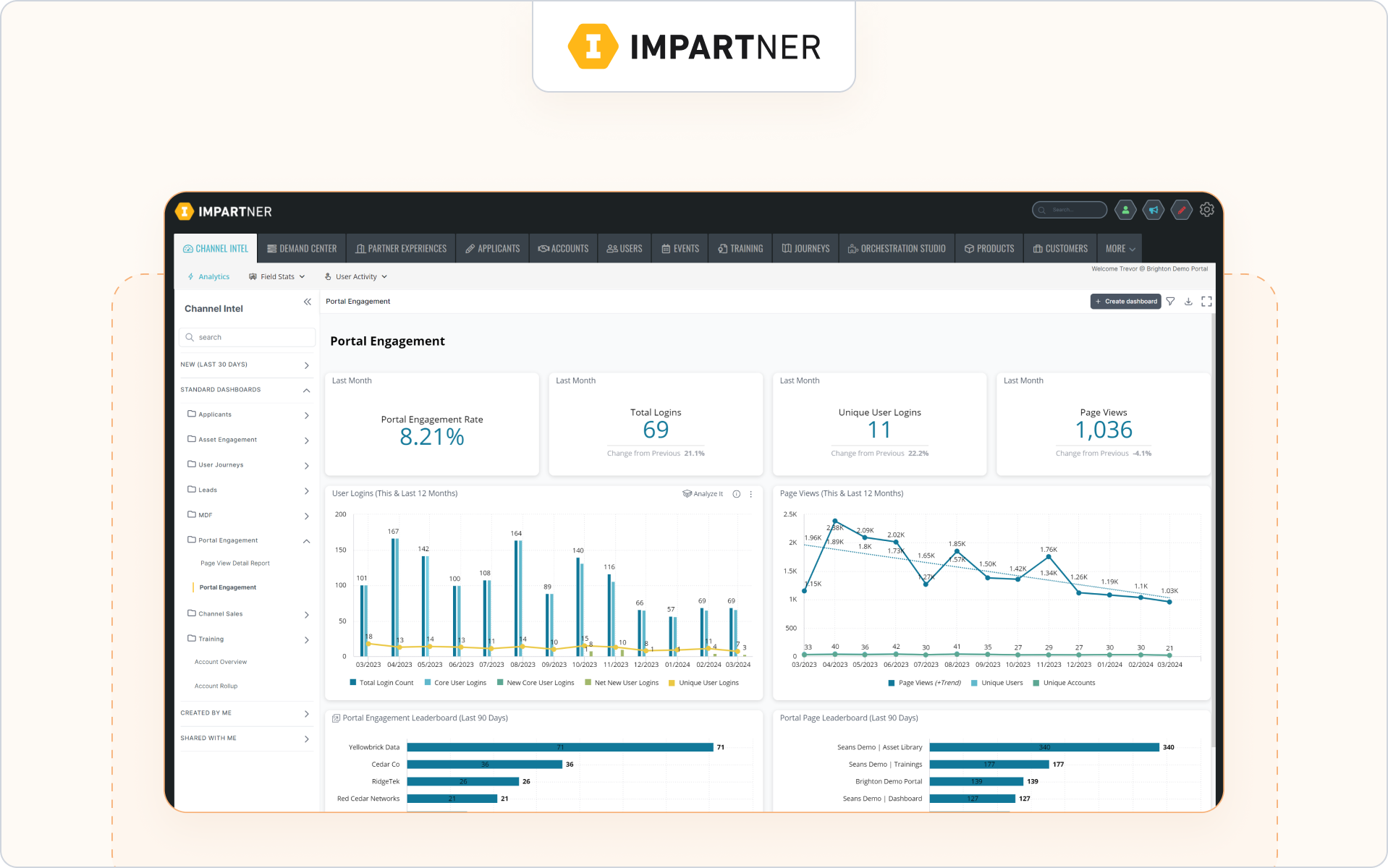
Impartner is a well-known partner relationship management software designed to support structured partner programs across large partner networks. It focuses on partner onboarding, partner portals, and managing the partner lifecycle at scale.
It’s often used by companies with established reseller programs and formal partner operations. That said, it can feel heavy if your team wants faster setup or more flexible co selling workflows.
Am besten geeignet für
- Mid-market to enterprise partner programs
- Teams running structured reseller partners and referral partners
- Businesses focused on long-term partner lifecycle management
When it may not be the right fit
If your team prioritizes speed, simplicity, or real-time collaboration over structured partner programs, this setup can feel heavy and slow to adapt.
If you’re comparing tools in this category, reviewing the best Impartner competitors can help you see how newer PRM platforms approach partner management.
4. ZINFI
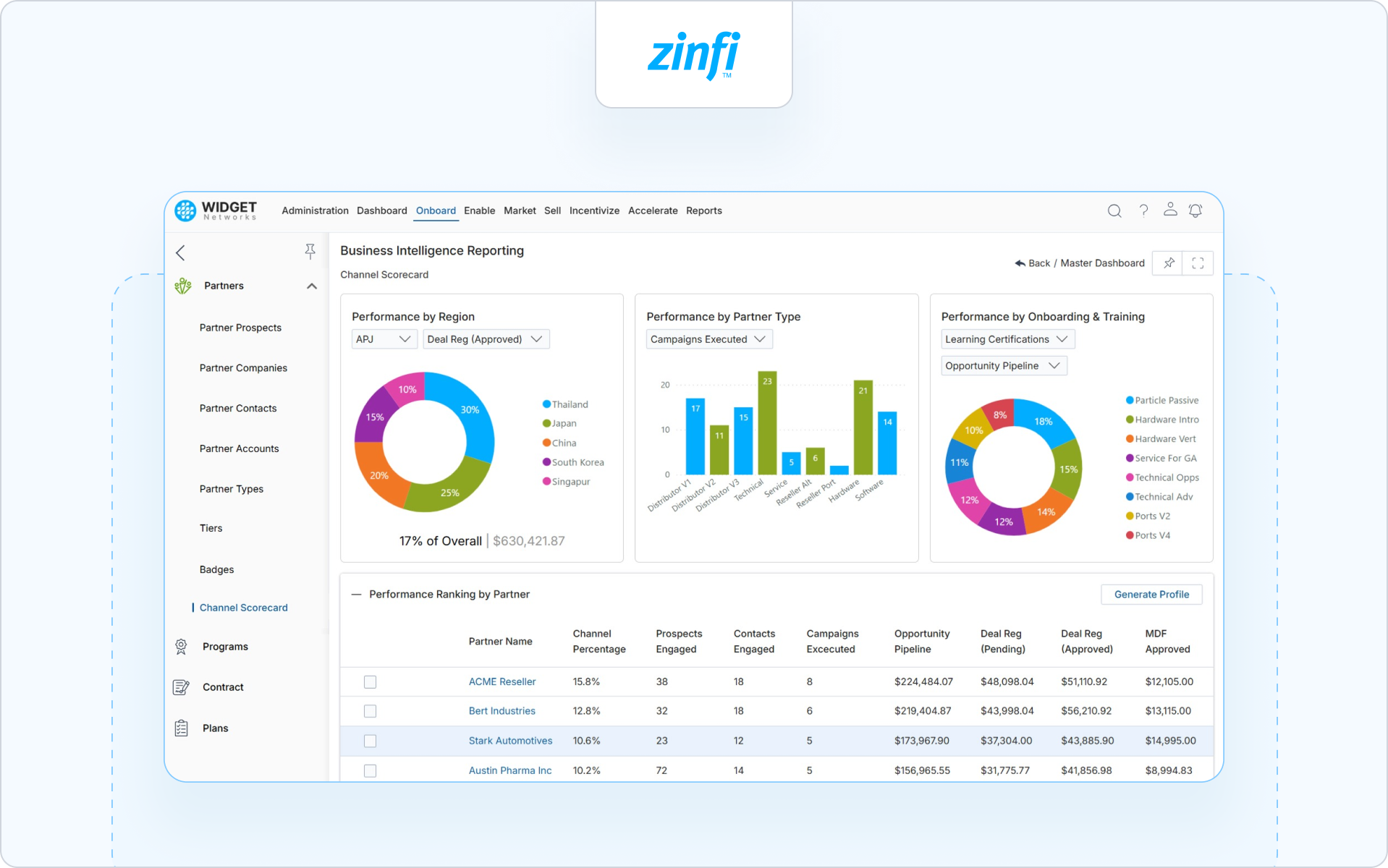
ZINFI is a partner relationship management software focused on channel partners, partner recruitment, and managing global partner ecosystems. It combines partner management, marketing activities, and sales enablement into one platform designed for indirect sales.
It’s a solid option for companies that need to manage reseller programs across regions, but the experience often centers around partner portals and structured workflows across the partner lifecycle.
Am besten geeignet für
- Global partner ecosystems and channel sales teams
- Businesses managing reseller programs at scale
- Teams focused on partner recruitment and partner performance
When it may not be the right fit
If your team needs flexible collaboration, faster execution, or wants to reduce reliance on partner portals, this approach may feel too rigid.
5. Magentrix
Magentrix is a partner relationship management software focused on customizable partner portals and controlled access to partner resources. It helps teams manage partner relationships, share marketing materials, and track deal registration and partner activities across the partner lifecycle.
It’s often chosen by teams that want flexibility without building a system from scratch, though most workflows still run through the partner portal.
Am besten geeignet für
- Teams that want customizable partner portals
- Businesses managing partner networks with structured access
- Companies sharing marketing materials and partner resources
When it may not be the right fit
If your team prioritizes real-time collaboration, faster execution, or wants to reduce reliance on a partner portal, this setup may feel limiting.
6. Mindmatrix
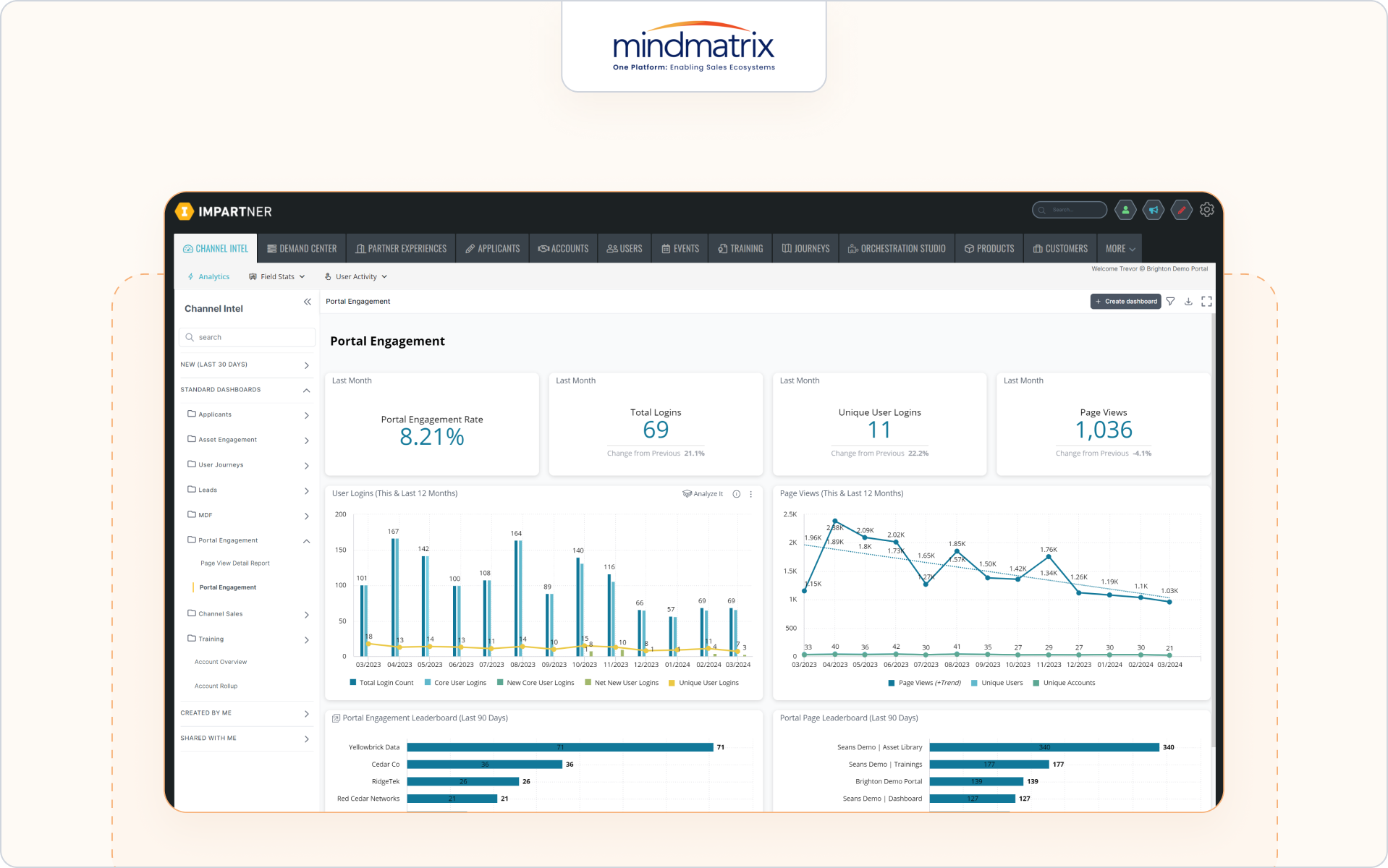
Mindmatrix is a partner relationship management software that combines partner management, marketing automation, and partner enablement into one platform. It helps teams onboard partners, manage partner activities, and run marketing activities across the partner lifecycle.
It’s often used by companies that want to support partners beyond deal registration, especially with content, campaigns, and ongoing engagement.
Am besten geeignet für
- Teams focused on partner onboarding and partner enablement
- Businesses running content-driven partner programs
- Companies supporting partners across the entire partner lifecycle
When it may not be the right fit
If your team wants a lightweight tool or primarily needs CRM-native collaboration, this platform may feel too complex.
7. PartnerStack

PartnerStack is partner relationship management software built for SaaS companies running affiliate, referral, and reseller partner programs. It focuses on partner recruitment, incentive programs, and scaling partner networks.
It’s widely used for SaaS growth through partnerships, especially in marketing-led and indirect sales models.
Am besten geeignet für
- SaaS companies running affiliate or referral partner programs
- Teams focused on partner recruitment and partner growth
- Businesses scaling partner ecosystems quickly
When it may not be the right fit
If your focus is on complex sales processes, co-selling, or managing enterprise channel partners, this platform may not provide enough depth.
8. Crossbeam
Crossbeam is a partner ecosystem platform focused on account mapping, partner data sharing, and identifying opportunities across your partner network. It helps teams uncover overlap, support co-selling, and improve partner collaboration through shared insights.
It’s often used alongside partner relationship management software rather than as a full partner management solution.
Am besten geeignet für
- Teams focused on co-selling and account mapping
- Businesses running ecosystem-led growth strategies
- Sales teams identifying shared opportunities with channel partners
When it may not be the right fit
If you need complete partner relationship management software to manage the entire partner lifecycle, this platform will need to be paired with other tools.
9. Kiflo PRM
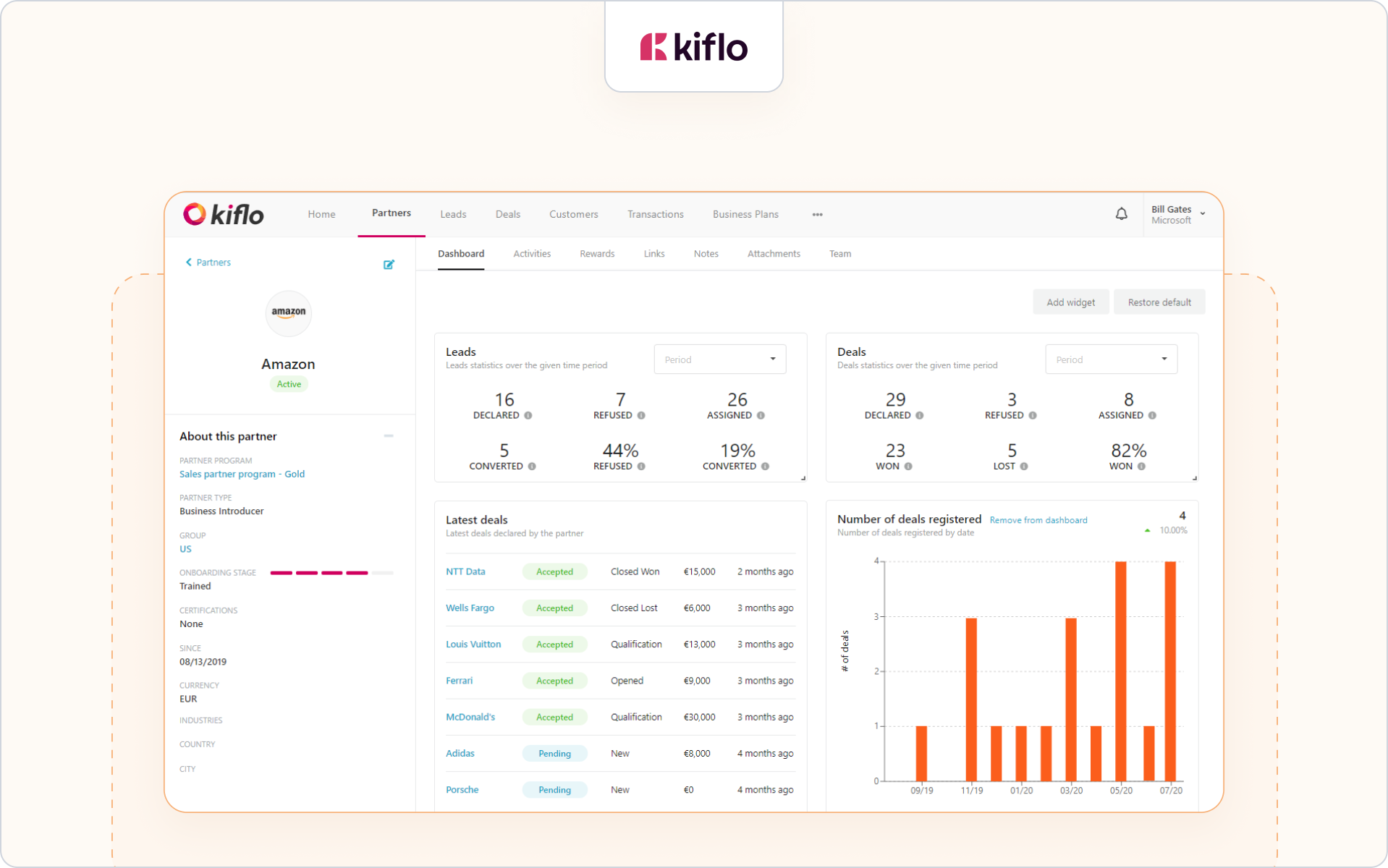
Kiflo PRM is a lightweight partner relationship management software designed for small to mid-sized SaaS companies. It focuses on simplicity, helping teams manage partner onboarding, deal registration, and partner activities without heavy setup.
It’s positioned as an accessible option for teams building or scaling partner programs.
Am besten geeignet für
- Small to mid-sized SaaS companies
- Teams starting or growing partner programs
- Businesses looking for simple partner management tools
10. Channeltivity
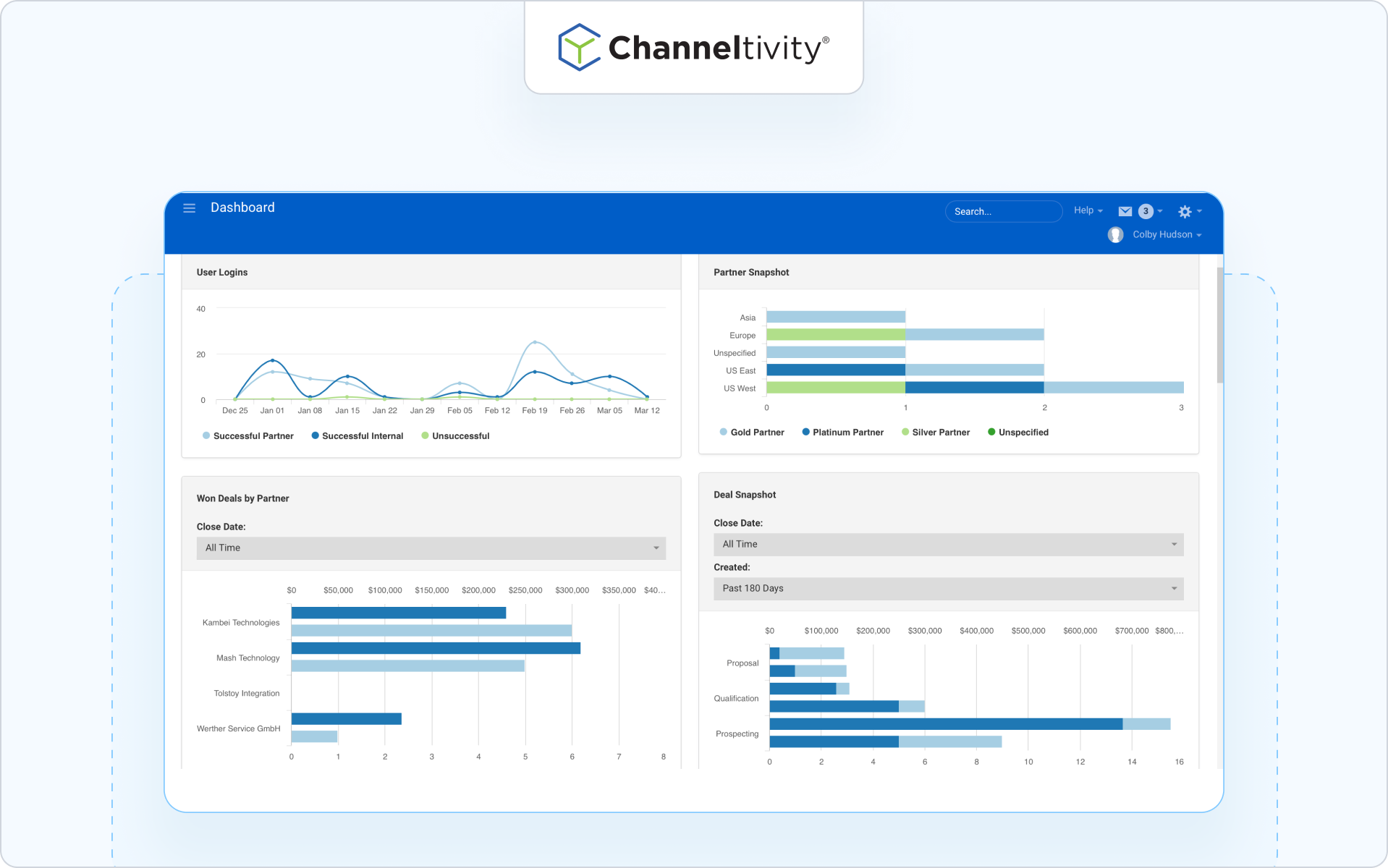
Channeltivity is a partner relationship management software focused on deal registration, partner communication, and performance tracking. It provides structured workflows through a partner portal to manage partner relationships and partner activities.
It’s often used by mid-market companies that want clear processes and visibility without enterprise-level complexity.
Am besten geeignet für
- Mid-market B2B companies
- Teams focused on deal registration and partner performance
- Businesses managing structured partner programs
When it may not be the right fit
If your team wants flexible collaboration or to move away from partner portal workflows, this setup may feel restrictive.
11. ChannelScaler
ChannelScaler is a partner relationship management software designed to help SaaS companies scale indirect sales and improve partner performance through better visibility and performance tracking.
It focuses on helping teams understand partner contribution to channel revenue, prioritize high-performing partners, and improve decision-making across their partner network.
Am besten geeignet für
- SaaS companies scaling indirect sales channels
- Teams focused on partner performance and channel revenue
- Businesses needing better visibility into partner data
When it may not be the right fit
If your team needs strong partner onboarding, enablement, or day-to-day collaboration features, this platform may not cover all needs.
PRM software: A side-by-side comparison
We know there were plenty of options. And of course they don’t all solve the same problem.
Some are built for structured partner programs. Others focus on co-selling, partner engagement, or ecosystem visibility.
The right choice depends on how your team works today and where you want to take your partner strategy next.
Let’s look at how to evaluate these tools in a way that actually supports your goals.
How to evaluate partner engagement tools: 5 key questions
Choosing partner engagement tools isn’t about features. It’s about how well the platform supports your partner program and how your sales team works with partners day to day.
A quick way to assess this is to pressure-test how the tool supports the partner lifecycle. Many teams start by reviewing a broader partner lifecycle management strategy to see where tools need to support execution.
Here are five key questions to ask:
1. Does it match how your partners actually sell?
Start with your partner model.
If you’re running structured channel partner programs alongside direct sales, you may need tighter workflows. If you’re focused on co-selling, flexibility matters more.
Many teams choose partner relationship management software that looks powerful but doesn’t match how their sales team actually works.
2. Where does collaboration actually happen?
Some tools rely on a partner portal. Others support collaboration through email, Slack, and shared workflows.
Portals can create structure, but they also add friction. If partners don’t log in regularly, deal registration slows down.
The easier it is to work together, the easier it is to keep partners engaged.
3. Can you clearly see partner performance?
You should be able to track partner performance, pipeline, and revenue without digging through reports.
Strong visibility helps you understand what’s working and where deals are stuck. It also makes it easier to manage both partner and direct sales motions.
4. Does it help you enable partners or just track them?
There’s a big difference between managing partners and enabling them.
Strong tools support partner onboarding, share the right resources, and help partners move deals forward.
If your tool only tracks activity, it’s not doing enough.
5. How quickly will it deliver value?
Some tools take months to implement. Others start working in weeks.
If setup is slow, adoption drops. The best tools reduce manual work and help your team start supporting partners quickly.
This is where the gap between traditional PRM software and newer approaches starts to show. But how can you close that gap?
Final thoughts
The best partner relationship management tools don’t just help you manage partners. They help you build active partners, improve partner satisfaction, and drive consistent partner revenue.
Some platforms prioritize structure and control. Others focus on speed, collaboration, and visibility across your partner ecosystem.
The right software solution comes down to how your team works and what your partnership strategy needs to support.
Nächste Schritte
- Review your current setup and identify where partner engagement slows down
- Look at how easily your team can register deals and manage lead management across partners
- Prioritize platforms that help you enable partners, not just manage them
If you’re exploring a more flexible, CRM-native approach to partner management, book a demo to see how Introw works in practice.
Die 360 besten Alternativen zu 360Learning, um Ihre Partner im Jahr 2026 zu schulen
Beenden Ihre Partner die Schulungen, haben aber immer noch Schwierigkeiten, Geschäfte voranzubringen?
Wenn Sie mit Wiederverkäufern, Empfehlungspartnern oder Distributoren zusammenarbeiten, reicht Zusammenarbeit allein nicht aus. Sie benötigen strukturierte Lernpfade, Zertifizierungsgating und klare CRM-Transparenz hinsichtlich des Lernfortschritts.
Hier ist der Grund, warum viele Teams beginnen, über ihre derzeitige Konfiguration hinauszuschauen.
Warum sollte man sich für die Schulung von Partnern über 360Learning hinaus umsehen?
360Learning ist eine leistungsstarke Plattform für kollaboratives Lernen. Sie unterstützt soziales Lernen, den Wissensaustausch unter Kollegen und Diskussionsforen, die Teams dabei helfen, Lernende zu motivieren.
Trainingspartner erfordern jedoch einen anderen Ansatz und eine Lösung, die darauf abgestimmt ist.
Wenn Sie mit Wiederverkäufern, Distributoren oder Empfehlungspartnern zusammenarbeiten, benötigen Sie mehr als nur gemeinsame Kurse. Sie benötigen strukturierte Lernpfade, ein klares Zertifizierungsmanagement und Transparenz über den Lernfortschritt verschiedener Zielgruppen.
Wenn Ihr Partner-Ökosystem wächst, treten Reibungen auf. Möglicherweise stellen Sie Folgendes fest:
- Manuelle Verwaltung strukturierter Lernpfade und Zertifizierungen
- Erstellen von Workarounds für benutzerdefiniertes Branding oder externe Portale
- Das Streben nach Kursabschluss statt nach Engagement
- Schwierigkeiten beim Nachweis der Schulungseffektivität in Ihrem CRM
- Segmentierung von Partnern über verschiedene Ebenen hinweg ohne skalierbare Kontrollen
Wir haben eine Liste mit Lösungen zusammengestellt, die Ihnen helfen, die Einschränkungen von 360Learning zu überwinden.
Die 18 besten Alternativen zu 360Learning für die Schulung von Partnern
Wenn Ihr Ziel eine skalierbare externe Schulung mit messbarer Wirkung ist, sind diese Alternativen zu 360Learning einen genaueren Blick wert.
1. Introw Partner LMS – Insgesamt am besten geeignet für Partner-Schulungen im Zusammenhang mit der Pipeline
Introw wurde für Partnerprogramme entwickelt, die mehr als nur Kurshosting benötigen. Es verbindet Schulungen, Zertifizierungen und Lernfortschritte direkt mit Ihrem CRM und macht so die Partnerunterstützung messbar und skalierbar.
Am besten geeignet für
B2B-SaaS-Unternehmen, die aktive Empfehlungs-, Reseller-, SI- oder ISV-Partnerprogramme betreiben und Schulungen benötigen, die direkt mit CRM-Daten und Umsatzsichtbarkeit verknüpft sind.
Warum es eine Alternative zum Partner ist
360Learning eignet sich besonders für kollaboratives Lernen und den internen Wissensaustausch. Introw wurde speziell für die Schulung externer Partner entwickelt und verbindet strukturierte Lernpfade mit Pipeline-Ergebnissen.
Anstatt als separates Lernmanagementsystem zu fungieren, arbeitet Introw CRM-first.
Schulungsabschlüsse und Zertifizierungen werden über die native Schnittstelle direkt mit Ihrem CRM synchronisiert. Salesforce und HubSpot direkt mit Ihrem CRM synchronisiert. Der Fortschritt der Lernenden wird neben Deals, Konten und Prognose-Dashboards angezeigt.
Dadurch verlagert sich der Schwerpunkt der Partnerschulung vom Kursmanagement hin zur Umsatztransparenz.
Höhepunkte
- KI-gestützte Kurserstellung aus Ihren vorhandenen Dokumenten oder Ihrer Website
- Zertifizierungsmanagement mit einem Klick und strukturierten Schulungswegen
- Massenanmeldung und automatisierte Schulungsmodule
- E-Mail- und Slack , um Lernende zu motivieren, ohne sie zum Einloggen zu zwingen
- Partnersicheres Portal mit rollenbasiertem Zugriff und individuellem Branding
- Echtzeit-CRM-Synchronisierung für Berichterstellung und Leistungsmanagement
Überlegen Sie, ob
Sie benötigen strukturierte externe Schulungsprogramme, die an Partnerstufen, Deal-Phasen oder Verkaufsrechte gekoppelt sind. Dies funktioniert besonders gut für SaaS-Unternehmen mit aktiven Partneraktivitäten und kundenorientierten Teams außerhalb der Organisation.
Um einen tieferen Einblick darin zu erhalten, wie strukturierte Partnerschulungen mit dem Umsatz zusammenhängen, entdecken Sie die gesamten Funktionen des Partner-LMS von Introw.
Mögliche Lücken
Nicht als vollständige Plattform für Mitarbeiterschulungen positioniert. Wenn Ihr Hauptbedarf in internen Unternehmensschulungen besteht, ist möglicherweise weiterhin ein herkömmliches LMS erforderlich.
Preise
Externe benutzerfreundliche Preismodelle. Fordern Sie eine Demo an, um weitere Informationen zu erhalten.
2. Skilljar – Am besten geeignet für die Schulung von Kunden und Partnern in großem Umfang
Am besten geeignet für
Teams für Kundenschulungen und Partnerunterstützung, die skalierbare Lernpfade und leistungsstarke Berichterstellung für unterschiedliche Zielgruppen benötigen.
Warum es eine Alternative zum Partner ist
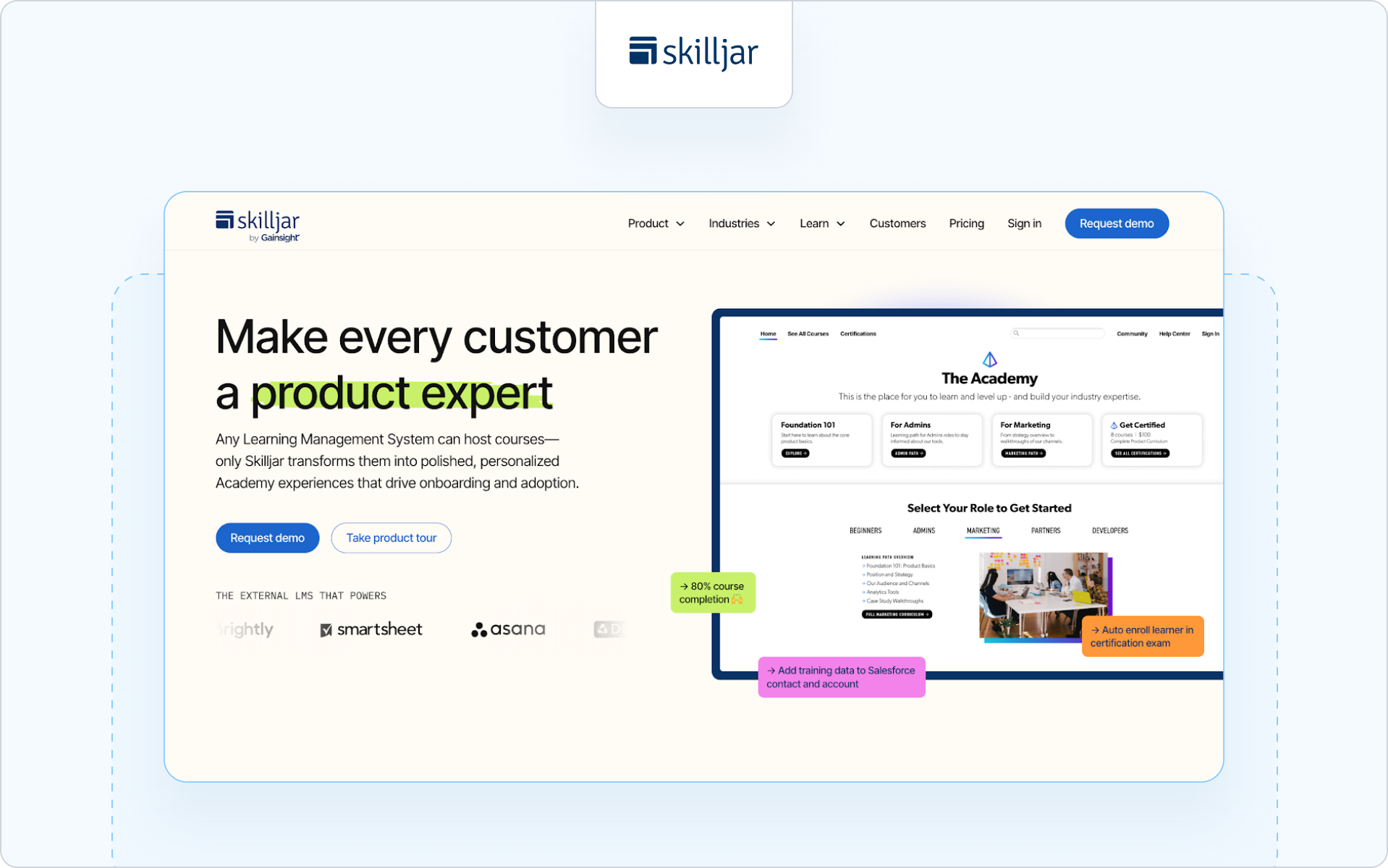
Skilljar wurde eher für strukturierte externe Schulungsprogramme als für interne Unternehmensschulungen entwickelt. Es unterstützt Markenakademien, die Verfolgung des Lernfortschritts und erweiterte Berichterstellung zur Messung der Schulungseffektivität.
Höhepunkte
- Strukturierte Lernpfade mit Fortschritts- und Abschlussverfolgung
- Erweiterte Berichts-Dashboards
- CRM-Integrationen, einschließlich Salesforce
Überlegen Sie, ob
Sie möchten eine moderne Lernplattform, deren Schwerpunkt auf externen Schulungen und nicht auf interner Zusammenarbeit liegt.
Wenn Sie strukturierte externe Plattformen vergleichen, lohnt es sich, die beste Partner-LMS-Software für einen umfassenderen Vergleich nebeneinander zu betrachten.
Mögliche Lücken
Weniger Fokus auf peer-gesteuertes soziales Lernen im Vergleich zu kollaborativen Lernplattformen.
Preise
Individuelle Preisgestaltung. Demo erforderlich.
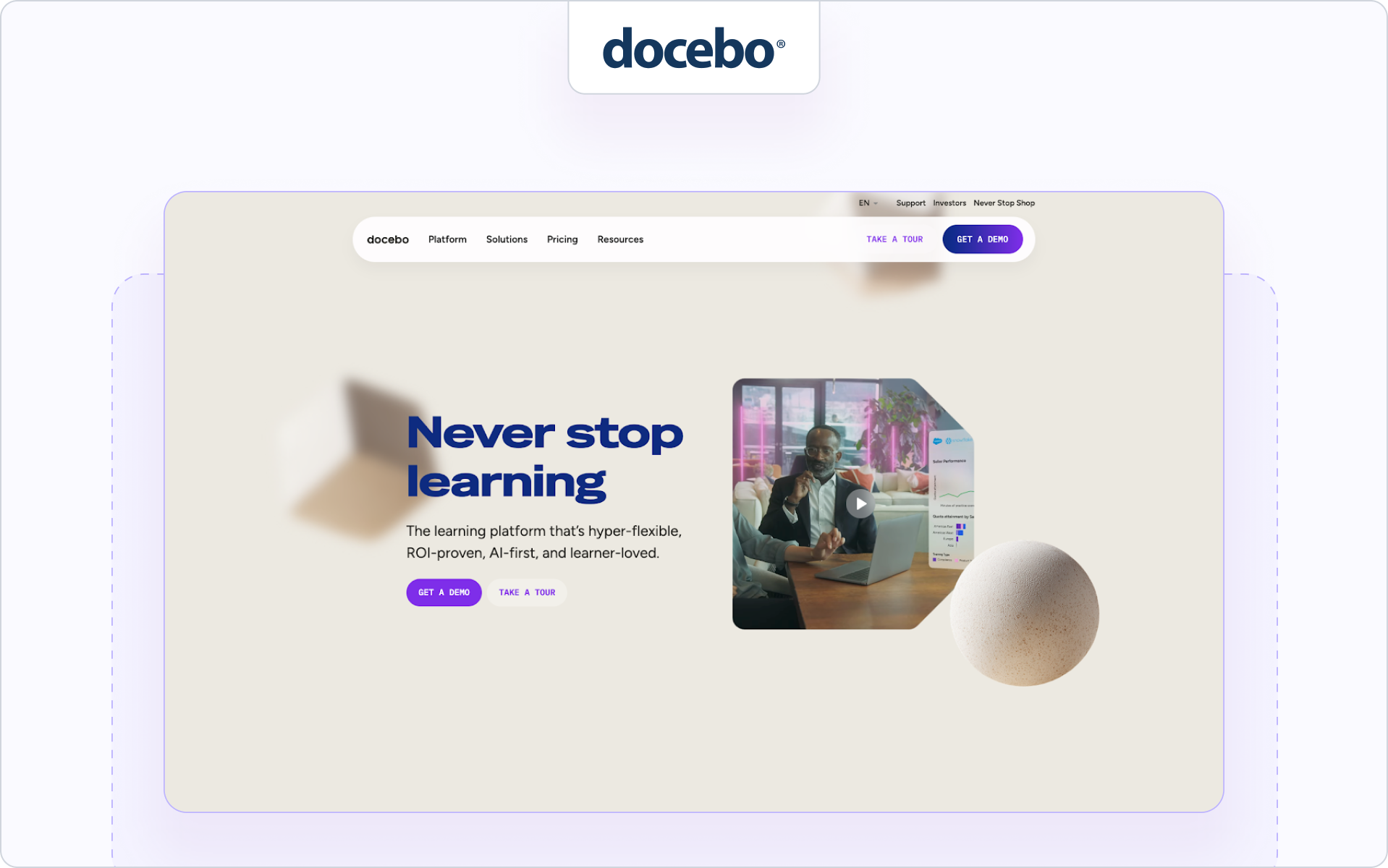
3. Docebo – Am besten geeignet für Partner- und Kundenschulungen auf Unternehmensebene
Am besten geeignet für
Unternehmensteams, die groß angelegte externe Schulungsprogramme für mehrere Partnersegmente oder ein globales Publikum durchführen.
Warum es eine Alternative zum Partner ist
Docebo positioniert sich als erweitertes Unternehmens-LMS, d. h. es unterstützt interne und externe Schulungen innerhalb derselben skalierbaren Plattform. Es umfasst anpassbare Portale und Lernpfade, die auf die Zielgruppen der Partner zugeschnitten werden können.
Höhepunkte
- KI-gestützte Inhaltskennzeichnung und Automatisierung
- Multi-Domain-Portale für unterschiedliche Zielgruppen
- Erweiterte Berichts- und Analyse-Dashboards
Überlegen Sie, ob
Sie benötigen eine skalierbare Lernplattform mit starker Governance, mehrsprachigem Support und Sicherheitskontrollen für Unternehmen.
Mögliche Lücken
Die Implementierung kann komplex sein. Im Vergleich zu leichteren, extern ausgerichteten Plattformen kann sie spezielle administrative Ressourcen erfordern.
Preise
Individuelle Preise für Unternehmen. Demo erforderlich.
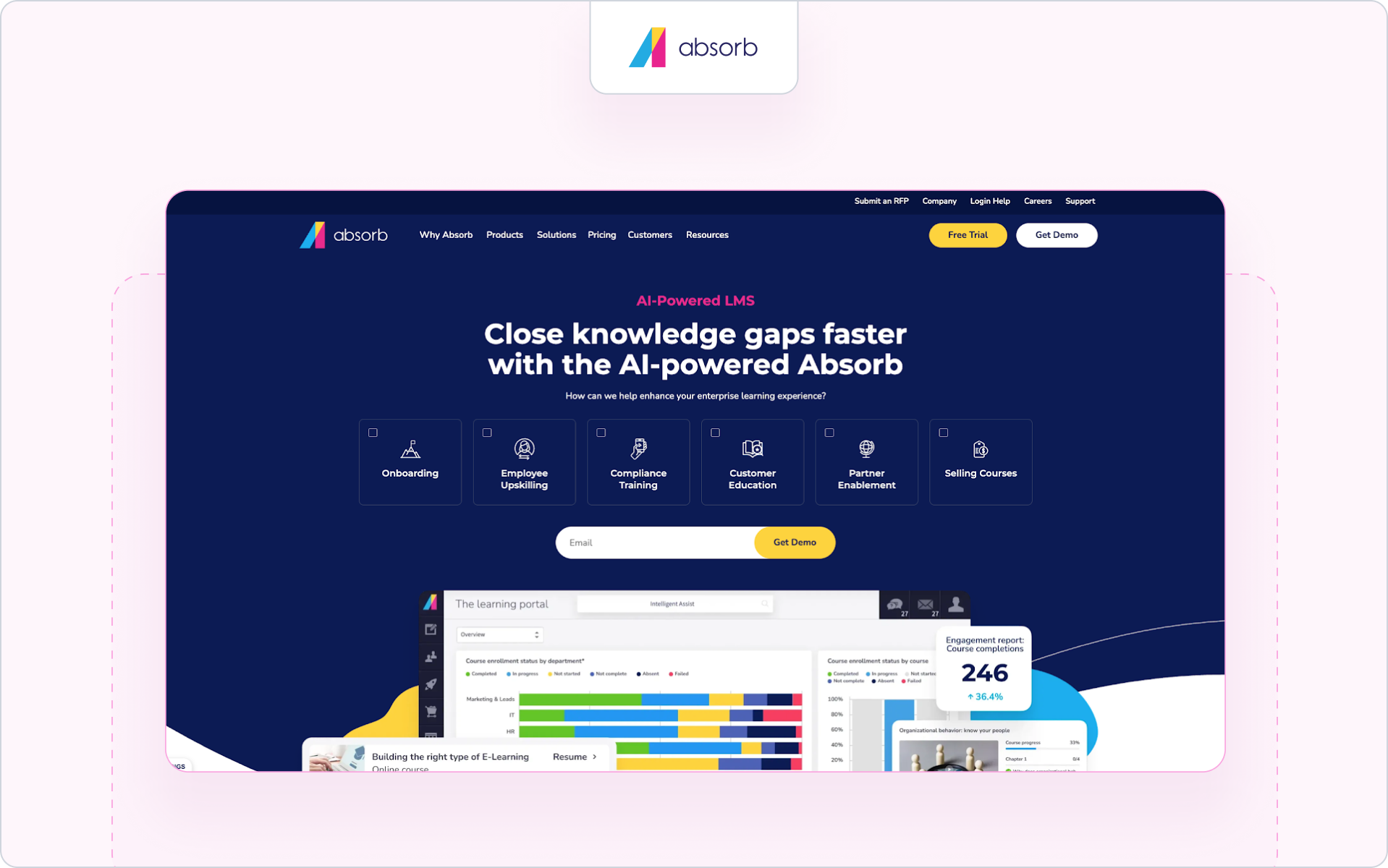
4. Absorb LMS – Am besten geeignet für konfigurierbare externe Lernumgebungen
Am besten geeignet für
Unternehmen, die flexible externe Schulungsprogramme mit strukturierten Lernpfaden und konfigurierbarem Branding benötigen.
Warum es eine Alternative zum Partner ist
Absorb LMS unterstützt separate Portale, Kursverwaltung und Berichterstellung für unterschiedliche Zielgruppen und eignet sich daher sowohl für Partnerschulungen als auch für interne Initiativen.
Höhepunkte
- Individuelles Branding und White-Label-Portale
- Lernpfade mit Nachverfolgung des Lernfortschritts
- Fortgeschrittene Tools für Berichterstattung und Compliance-Schulungen
Überlegen Sie, ob
Sie möchten ein cloudbasiertes LMS mit skalierbarer Architektur und unternehmensgerechten Analysen. Wenn CRM-Transparenz für Sie Priorität hat, sollten Sie unbedingt prüfen, wie sich die Plattform mit dem führenden CRM für das Partnermanagement verbinden lässt.
Potenzielle Lücke
Eher traditionelle LMS-Struktur; Tools für Zusammenarbeit und soziales Lernen sind nicht das Hauptunterscheidungsmerkmal.
Preise
Individuelle Preisgestaltung basierend auf Nutzung und Konfiguration.
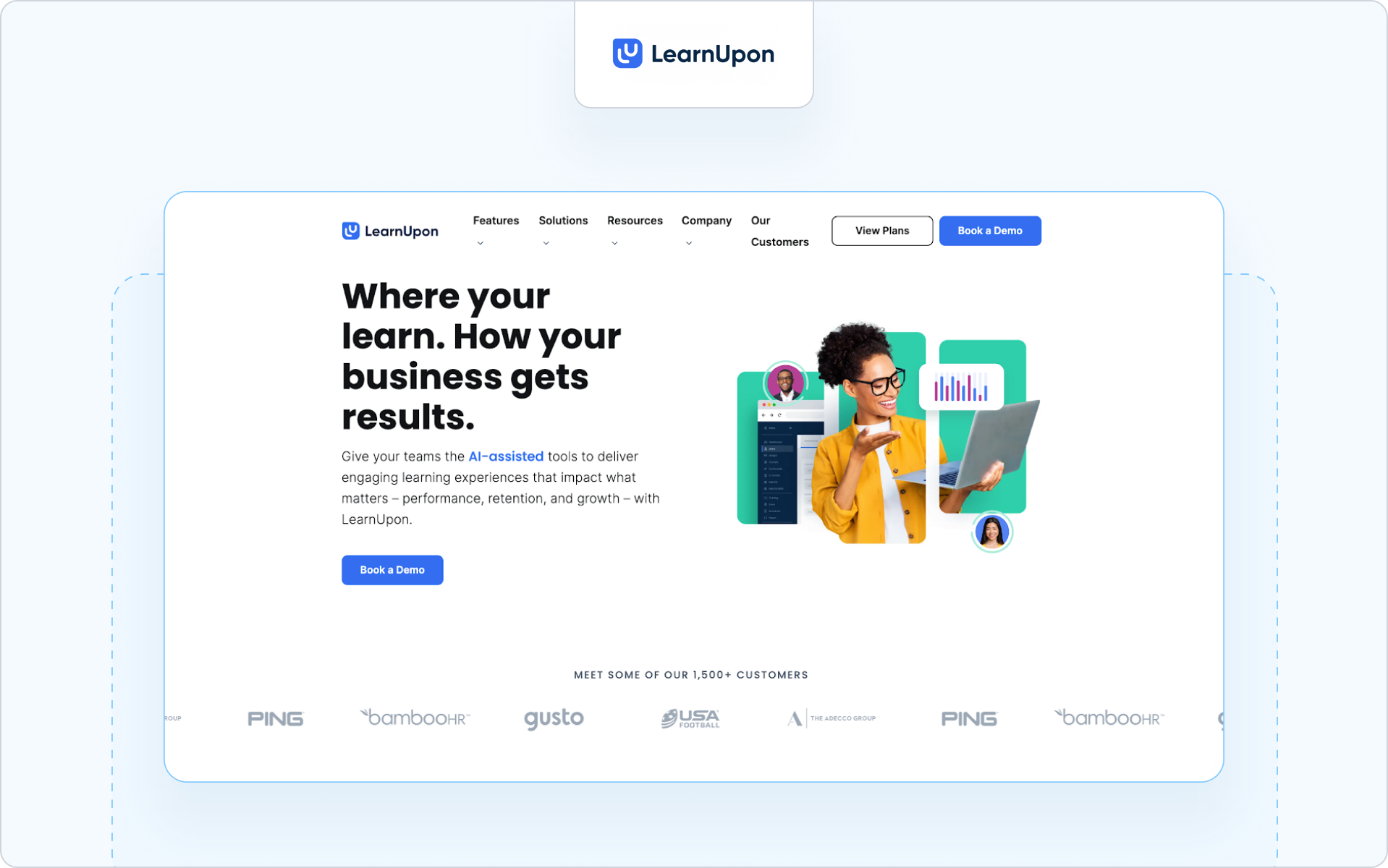
5. LearnUpon – Am besten geeignet für die Segmentierung von Partnern mit mehreren Portalen
Am besten geeignet für
Teams, die Schulungen für unterschiedliche Zielgruppen mit klarer Segmentierung verwalten müssen.
Warum es eine Alternative zum Partner ist
LearnUpon unterstützt mehrere Portale innerhalb einer LMS-Instanz, sodass Unternehmen strukturierte Schulungsprogramme für Partner erstellen können, ohne diese mit internen Mitarbeiterschulungen zu vermischen.
Höhepunkte
- Multi-Portal-Architektur
- Zertifizierungsmanagement
- Berichts-Dashboards mit Einblicken in den Lernfortschritt
Überlegen Sie, ob
Sie benötigen eine klare Zielgruppentrennung mit überschaubarem Verwaltungsaufwand.
Mögliche Lücken
Die KI-gestützte Automatisierung und die erweiterten Personalisierungsfunktionen sind im Vergleich zu einigen neueren Plattformen eingeschränkter.
Preise
Staffelpreise basierend auf Benutzerzahlen und Portalen.
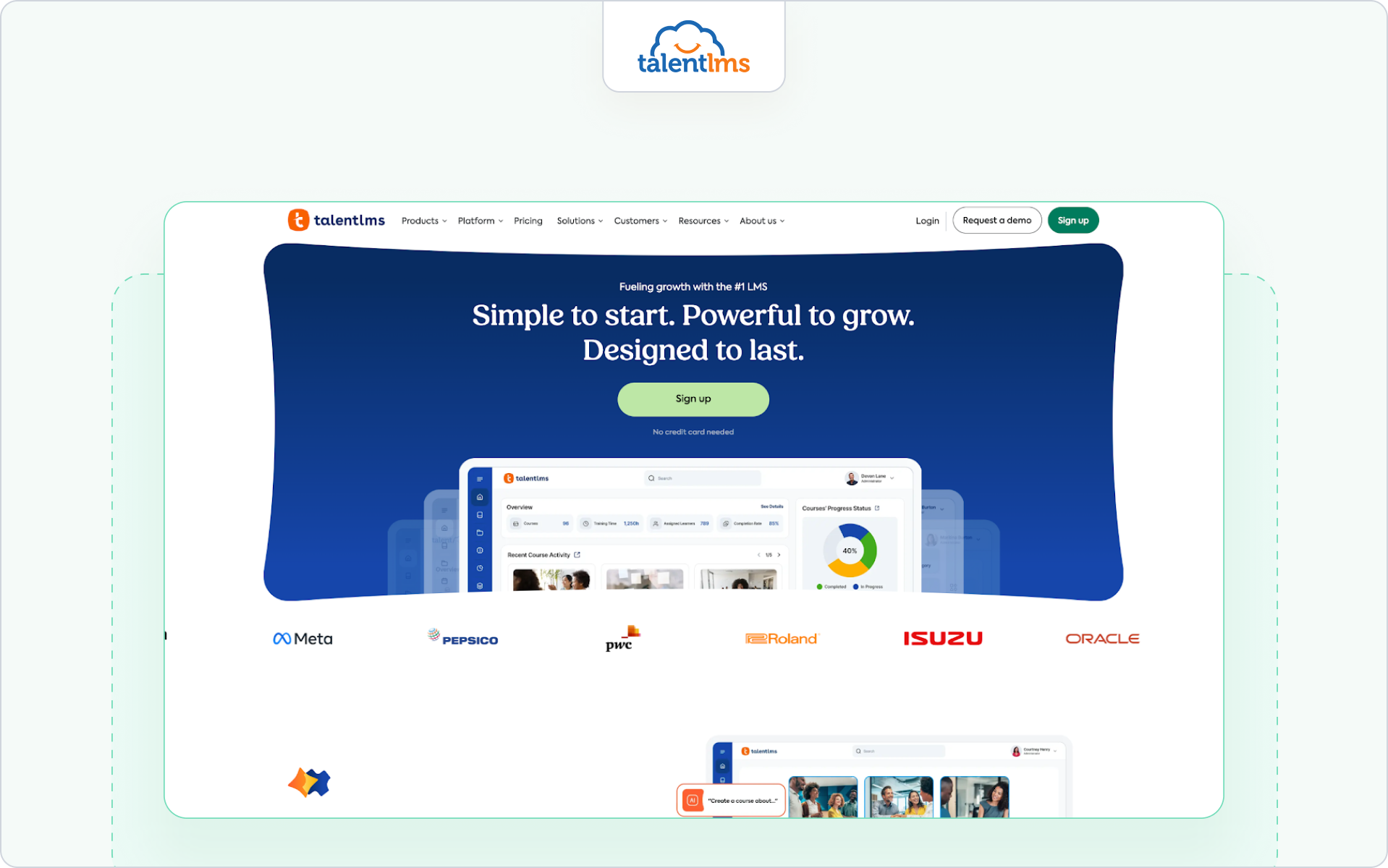
6. TalentLMS – Am besten geeignet für die einfache Einarbeitung von Partnern
Am besten geeignet für
Unternehmen, die schnell und ohne aufwendige Konfiguration externe Schulungen starten möchten.
Warum es eine Alternative zum Partner ist
TalentLMS bietet Lernpfade, Zertifizierungsmanagement und anpassbares Branding, das sich für die Einarbeitung von Partnern und strukturierte Schulungsinitiativen eignet.
Höhepunkte
- Einfache Kurserstellung und Kursverwaltung
- Lernpfade mit Nachverfolgung des Kursabschlusses
- Cloud-basiertes LMS mit schneller Bereitstellung
Überlegen Sie, ob
Sie benötigen intuitive Tools und einen geringen Verwaltungsaufwand.
Mögliche Lücken
Im Vergleich zu Partner-First-Plattformen eingeschränkte Unternehmensanalysen und CRM-native Berichterstellung. Eine detailliertere Aufschlüsselung der speziell für externe Programme entwickelten Plattformen finden Sie in unserem Leitfaden zu Partner-Schulungssoftware.
Preise
Transparente, gestaffelte Preispläne öffentlich verfügbar.
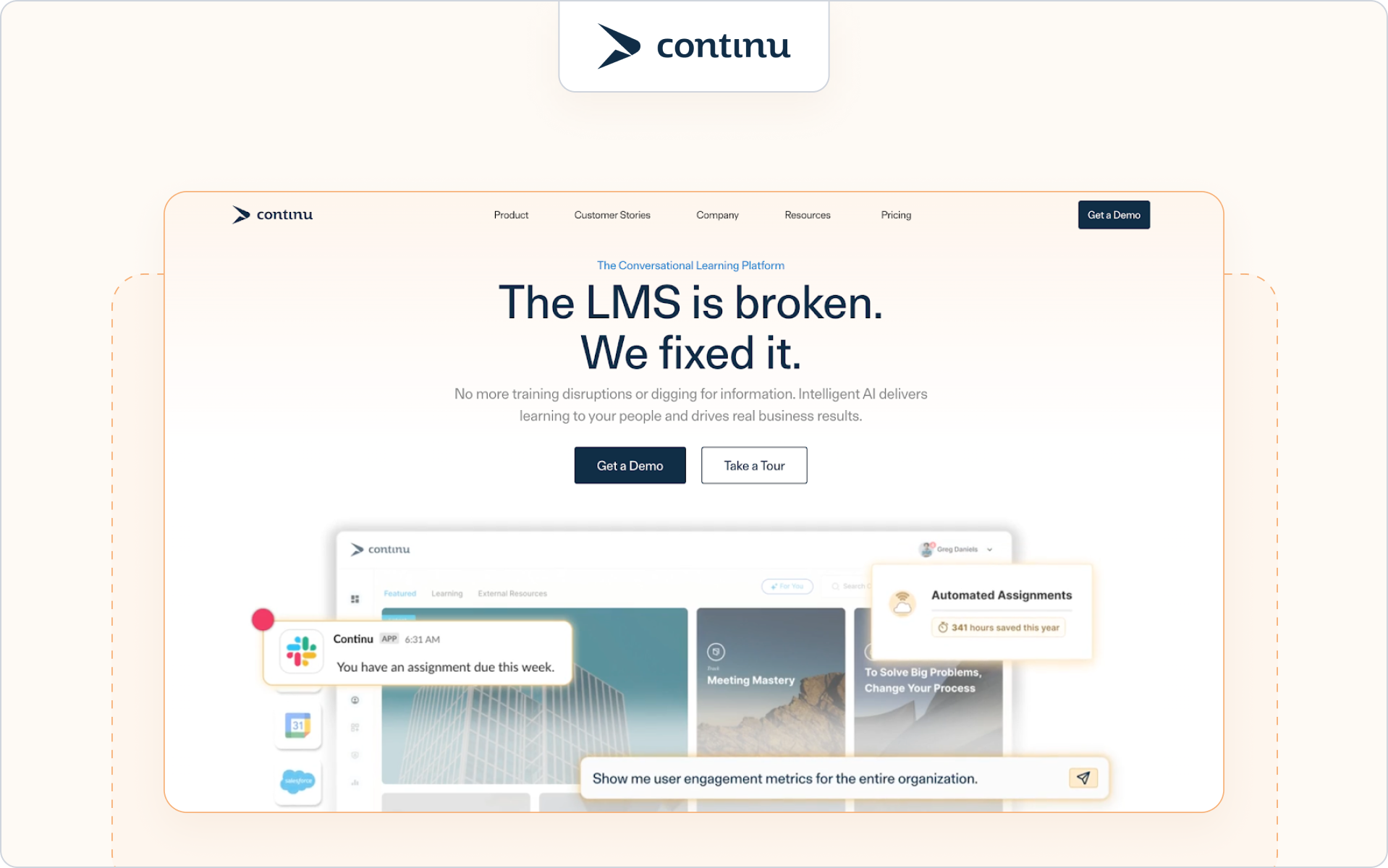
7. Continu – Am besten geeignet für intuitives Partnertraining und Engagement
Am besten geeignet für
Teams, die eine benutzerfreundliche Lernumgebung mit starker Einbindung und intuitiver Fortschrittsverfolgung wünschen.
Warum es eine Alternative zum Partner ist
Continu unterstützt strukturierte Lernpfade, die Nachverfolgung der Compliance und die Sichtbarkeit der Fortschritte aller Lernenden, was es für Partnerakademien und externe Schulungsinitiativen nützlich macht, bei denen Benutzerfreundlichkeit und Engagement im Vordergrund stehen.
Höhepunkte
- Intuitive Benutzeroberfläche, die die Lernbarriere senkt
- Echtzeit-Fortschrittsverfolgung und Erinnerungen
- Zentralisierte Bereitstellung von Inhalten für strukturiertes Lernen
Überlegen Sie, ob
Sie benötigen eine einfach zu implementierende Plattform, die Partnern dabei hilft, an Schulungen teilzunehmen und diese ohne hohen Verwaltungsaufwand abzuschließen.
Mögliche Lücken
Nicht so unternehmensorientiert oder CRM-nativ wie einige partnerzentrierte Lösungen, mit eingeschränkten erweiterten Funktionen zur Partnersegmentierung.
Preise
In der Regel individuelle Preisgestaltung nach Anfrage.
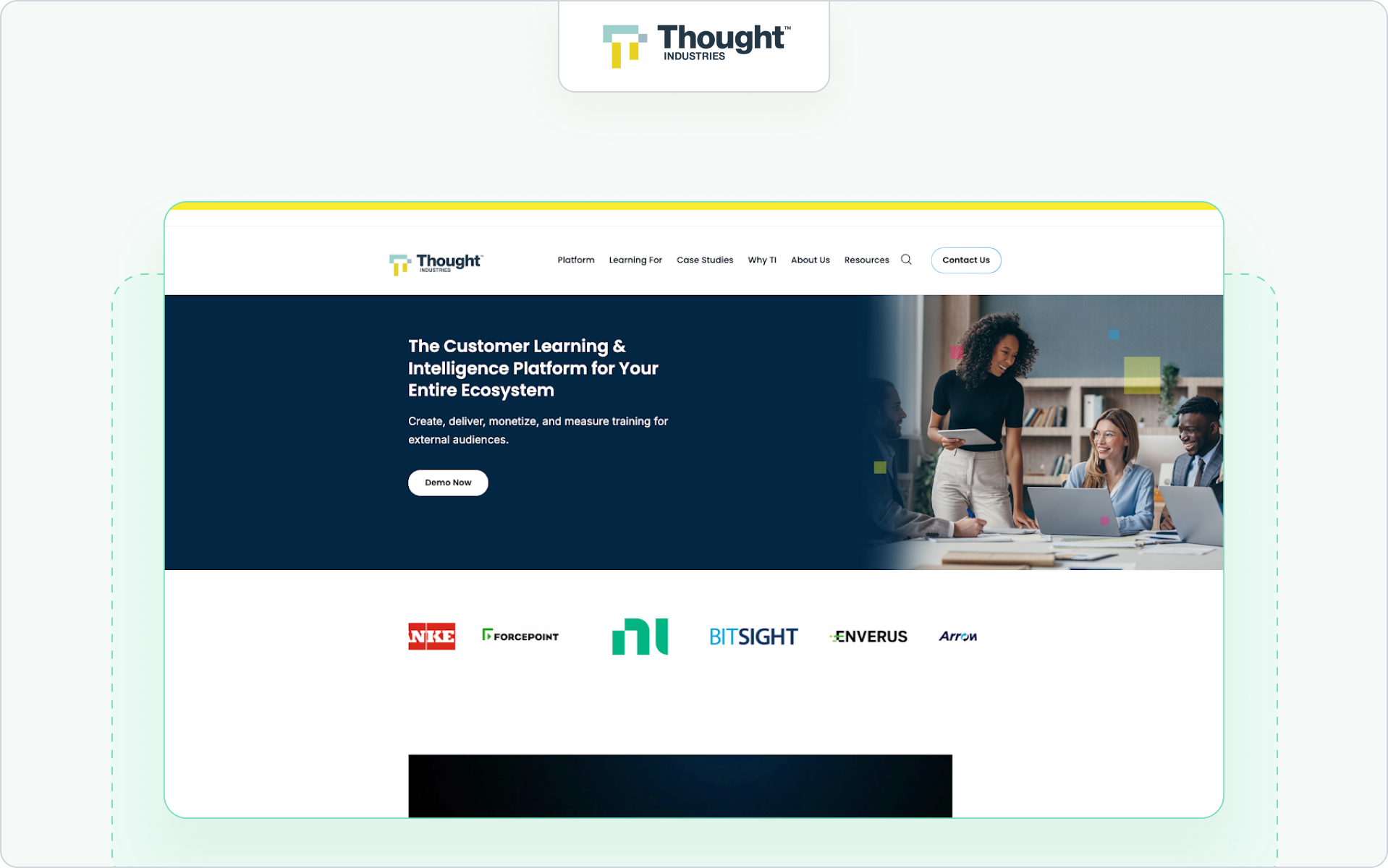
8. Thought Industries – Am besten geeignet für externe Ökosysteme und erweiterte Unternehmensschulungen
Am besten geeignet für
Große Organisationen, die ein skalierbares externes Schulungssystem mit Multi-Tenant-Portalen und erweiterter Zielgruppensegmentierung benötigen.
Warum es eine Alternative zum Partner ist
Thought Industries wurde speziell für externe Schulungszwecke entwickelt, darunter für Wiederverkäufer, Distributoren und andere Partner. Dank seiner Multi-Tenant-Struktur und der Möglichkeit, maßgeschneiderte Markenerlebnisse zu bieten, eignet es sich für komplexe Partner-Ökosysteme.
Höhepunkte
- Multi-Tenant-Portale für unterschiedliche Zielgruppen
- Erweiterte Berichterstellung und Analyse
- Flexible Bereitstellung und Segmentierung von Inhalten
Überlegen Sie, ob
Ihr Partnerprogramm umfasst mehrere Ebenen oder globale Niederlassungen, und Sie benötigen eine starke Zielgruppensegmentierung.
Mögliche Lücken
Höhere Komplexität bei der Implementierung und höhere Preise für Unternehmen im Vergleich zu einfacheren LMS-Tools.
Preise
Individuelle Preisgestaltung für Unternehmen.
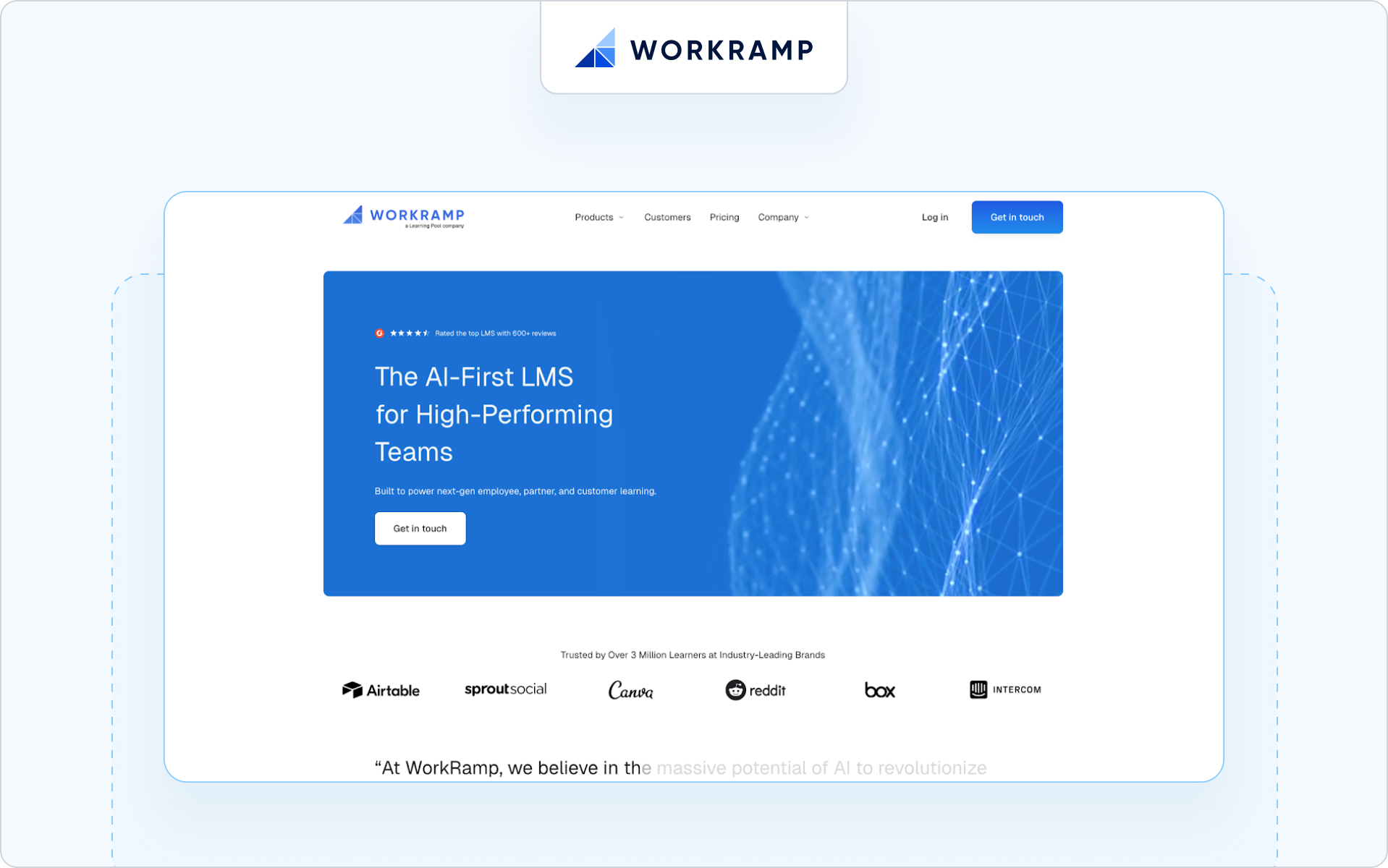
9. WorkRamp – Beste KI-gestützte Plattform für skalierbare Schulungsmaßnahmen
Am besten geeignet für
Teams, die ein KI-gestütztes System für die Schulung von Partnern, die Automatisierung von Lernpfaden und Leistungsanalysen wünschen.
Warum es eine Alternative zum Partner ist
Mitdem LMS von WorkRampkönnen Unternehmen neben internen Programmen auch externe Schulungsinhalte erstellen und bereitstellen. Integrierte Dashboards, Analysen und Automatisierungsfunktionen helfen dabei, die Auswirkungen der Schulungen auf die Leistung und die Ergebnisse sichtbar zu machen.
Höhepunkte
- KI-gestütztes Lernen, Personalisierung und Automatisierung
- Analytik-Dashboards für Fortschritt und Engagement
- Skalierbare Lernprogramme für verschiedene Zielgruppen
Überlegen Sie, ob
Sie möchten umfassende Analysen und KI-gestütztes Lernen für die Schulung Ihrer Partner in großem Maßstab.
Mögliche Lücken
Kein partner-natives LMS; Einrichtung und Verwaltung erfordern möglicherweise mehr interne Ressourcen.
Preise
Individuelle Preisgestaltung basierend auf Funktionen und Nutzung.
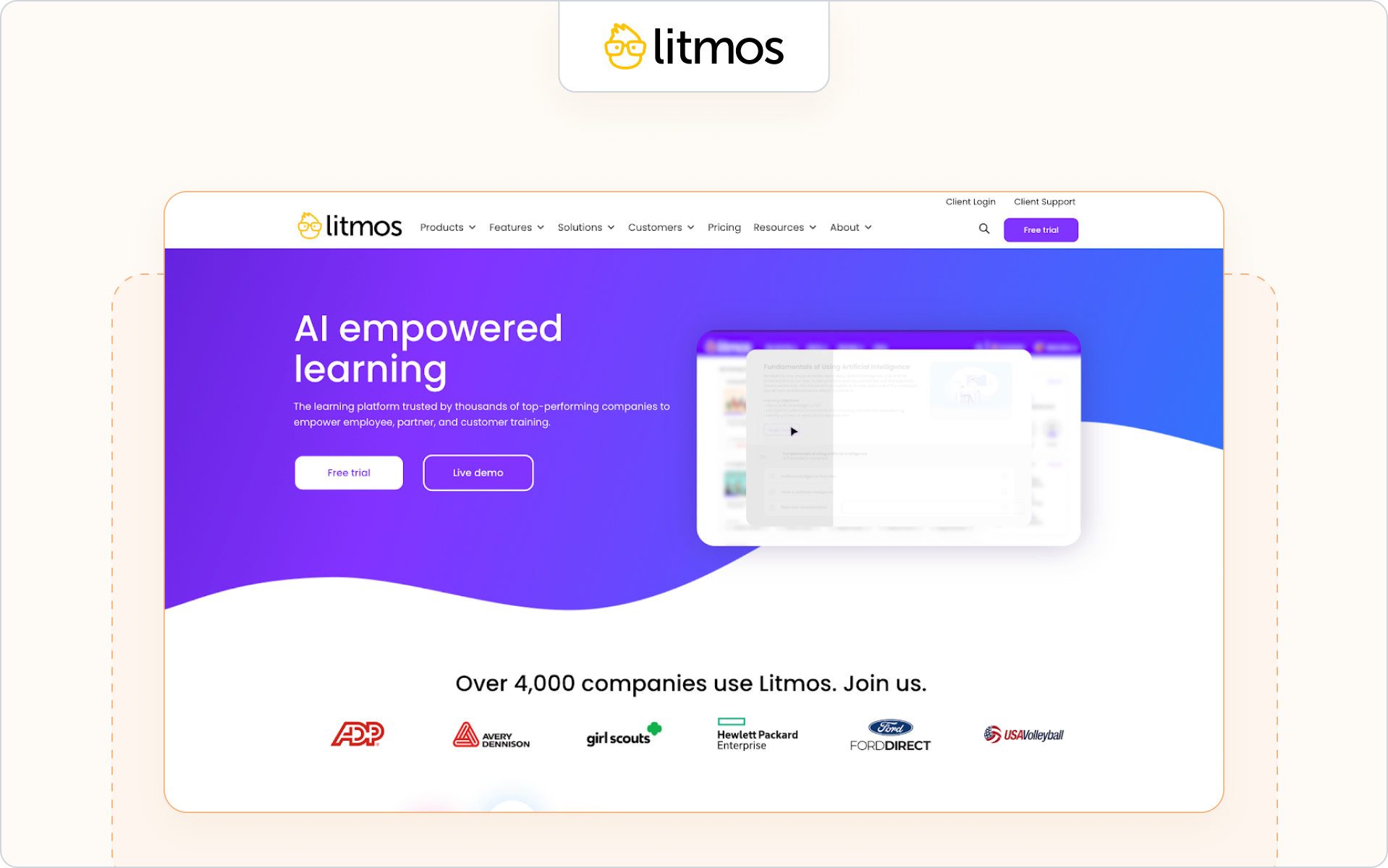
10. Litmos – Am besten geeignet für schnelle Bereitstellung und mobile Partnerschulungen
Am besten geeignet für
Unternehmen, die schnell Partner-Schulungsprogramme mit starker Unterstützung für mobiles Lernen starten müssen.
Warum es eine Alternative zum Partner ist
Litmos unterstützt strukturierte Schulungen, Zertifizierungsmanagement und die Nachverfolgung von Kursabschlüssen für verschiedene Zielgruppen. Dank seiner mobilen Lernfunktionen eignet es sich für Fernunterrichtsszenarien, in denen Partner unterwegs auf Schulungsmaterialien zugreifen können.
Höhepunkte
- Mobile Lernunterstützung für verteilte Partnerteams
- Zertifizierungsmanagement mit Compliance-Schulungs-Workflows
- Erweiterte Berichts-Dashboards für die Lernendenbindung
Überlegen Sie, ob
Sie wünschen sich eine skalierbare Lernplattform mit globaler Reichweite und mehrsprachiger Unterstützung für Schulungsinitiativen Ihrer Partner.
Mögliche Lücken
Weniger Fokus auf CRM-Sichtbarkeit und Partner-Tier-Gating im Vergleich zu eher partnerorientierten Plattformen.
Preise
Individuelle Preisgestaltung basierend auf Funktionsstufe und Benutzeranzahl.
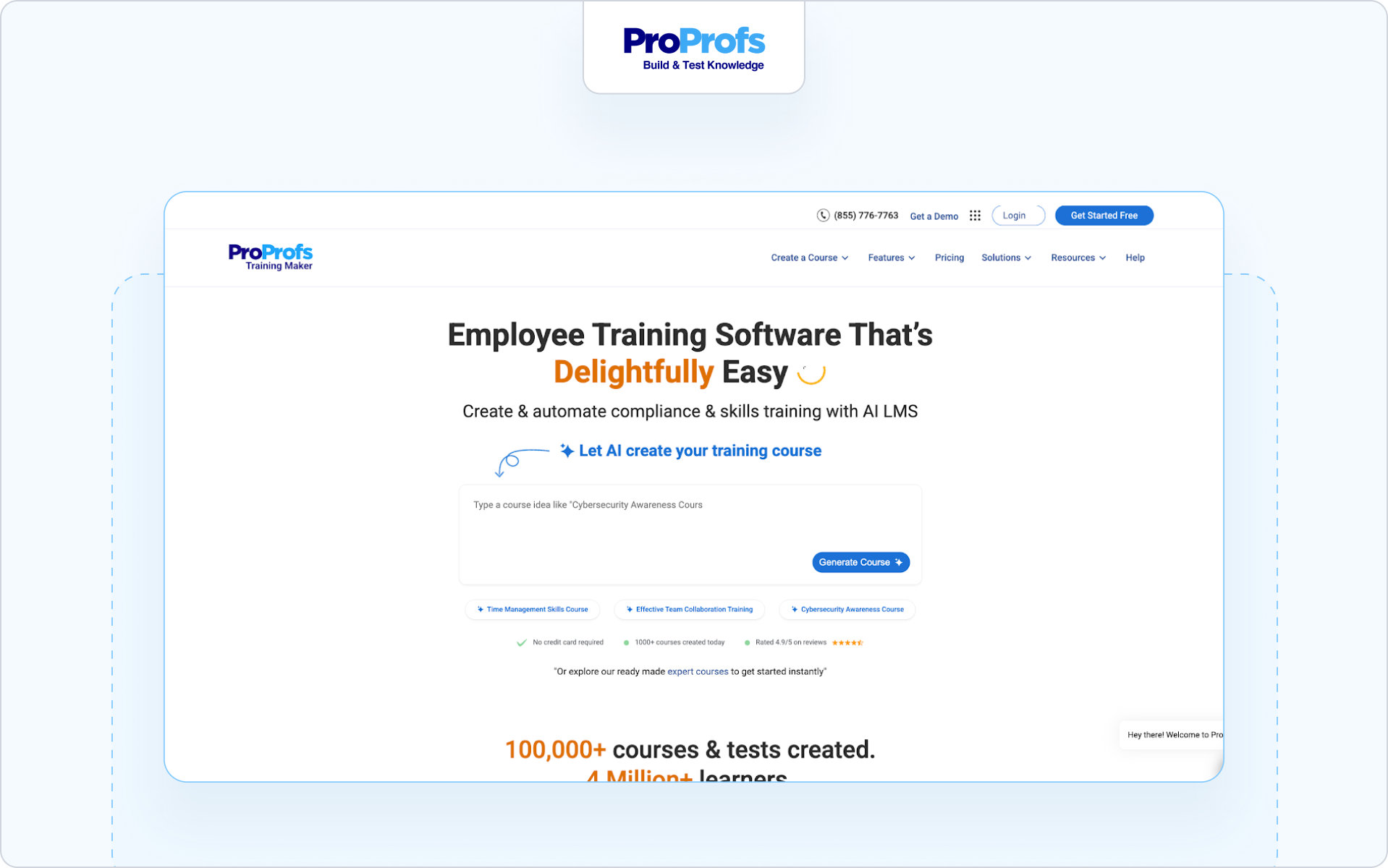
11. ProProfs LMS – Am besten geeignet für einfache externe Schulungsprogramme
Am besten geeignet für
Kleine bis mittelständische Unternehmen, die nach einer einfachen Partner-Onboarding-Lösung und Online-Kursen ohne aufwendige Konfiguration suchen.
Warum es eine Alternative zum Partner ist
Mit ProProfs LMS können Teams individuelle Lernpfade, Bewertungen und Zertifizierungsabläufe erstellen. Es eignet sich für strukturierte Schulungen, bei denen Kursmanagement und die Verfolgung des Lernfortschritts wichtiger sind als komplexe Integrationen.
Höhepunkte
- Einfache Kurserstellung und Schulungsmodule
- Integrierte Tools für Quiz und Bewertungen
- Intuitive Benutzeroberfläche, die das Interesse der Lernenden aufrechterhält
Überlegen Sie, ob
Ihr Hauptaugenmerk liegt darauf, klare, zielgerichtete Schulungen ohne unternehmerische Komplexität anzubieten.
Mögliche Lücken
Im Vergleich zu größeren Lernmanagementsystemen für Unternehmen sind die erweiterten Berichtsfunktionen eingeschränkt und es stehen weniger KI-Tools zur Verfügung.
Preise
Transparente Abonnementpreise öffentlich verfügbar.
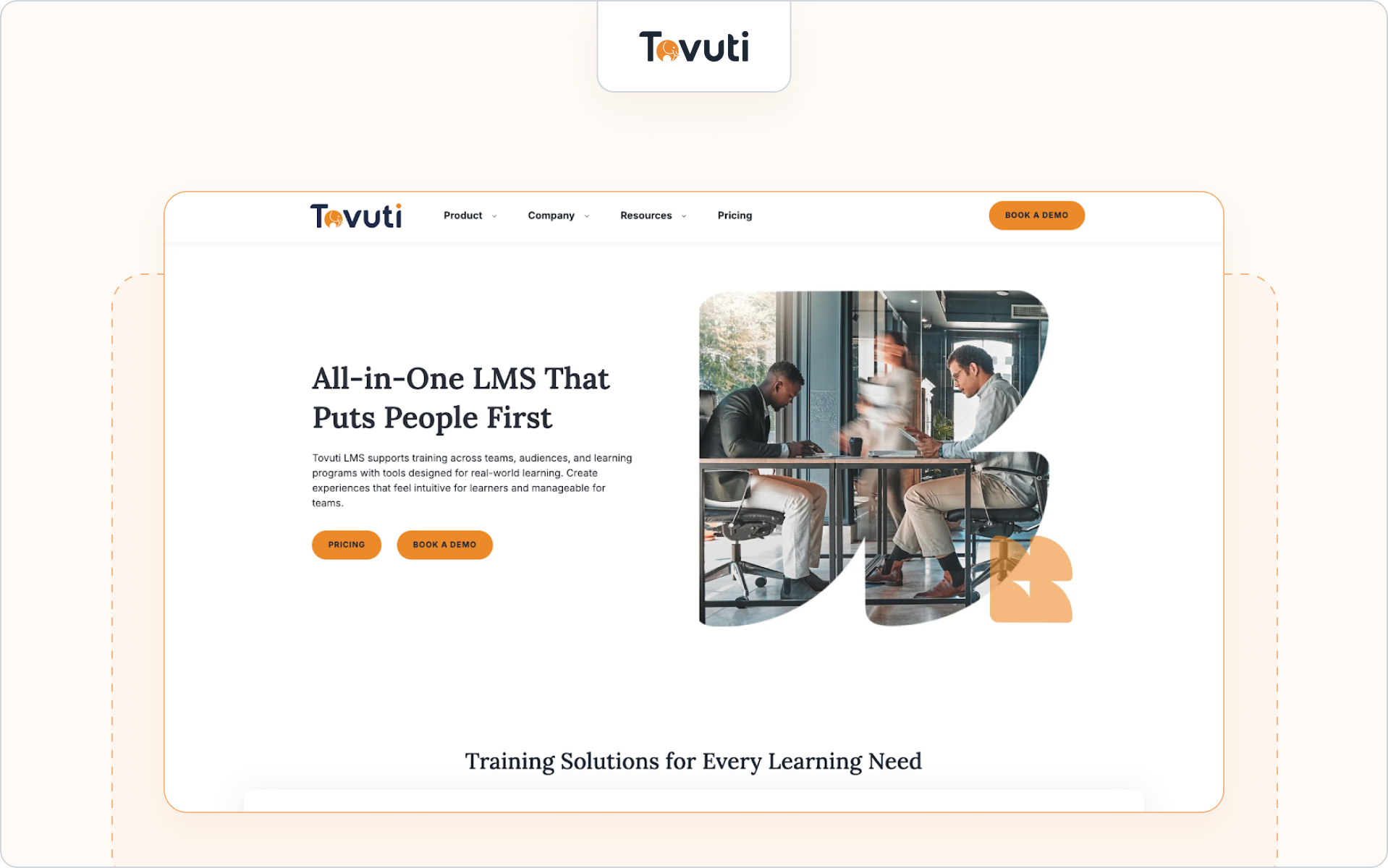
12. Tovuti LMS – Am besten geeignet für interaktive und auf Engagement ausgerichtete Lernumgebungen
Am besten geeignet für
Organisationen, die interaktive Elemente und soziale Lernwerkzeuge priorisieren, um die Zusammenarbeit innerhalb der Partnerakademien zu fördern.
Warum es eine Alternative zum Partner ist
Tovuti LMS umfasst anpassbare Lernumgebungen mit spielerischen Funktionen, Diskussionsforen und integrierten Messaging-Tools, die dazu beitragen, die Lernenden zu motivieren und die Entwicklung ihrer Fähigkeiten zu fördern.
Höhepunkte
- Interaktive Elemente und spielerische Schulungsmodule
- Soziale Lernwerkzeuge und Diskussionsforen
- Personalisierte Lernportale mit individuellem Branding
Überlegen Sie, ob
Sie möchten die Zusammenarbeit fördern und das Engagement der Lernenden in allen Partner-Communities stärken.
Mögliche Lücken
Für erweiterte Berichte auf CRM-Ebene sind möglicherweise zusätzliche Integrationsarbeiten erforderlich.
Preise
Individuelle Preisgestaltung nach Rücksprache.
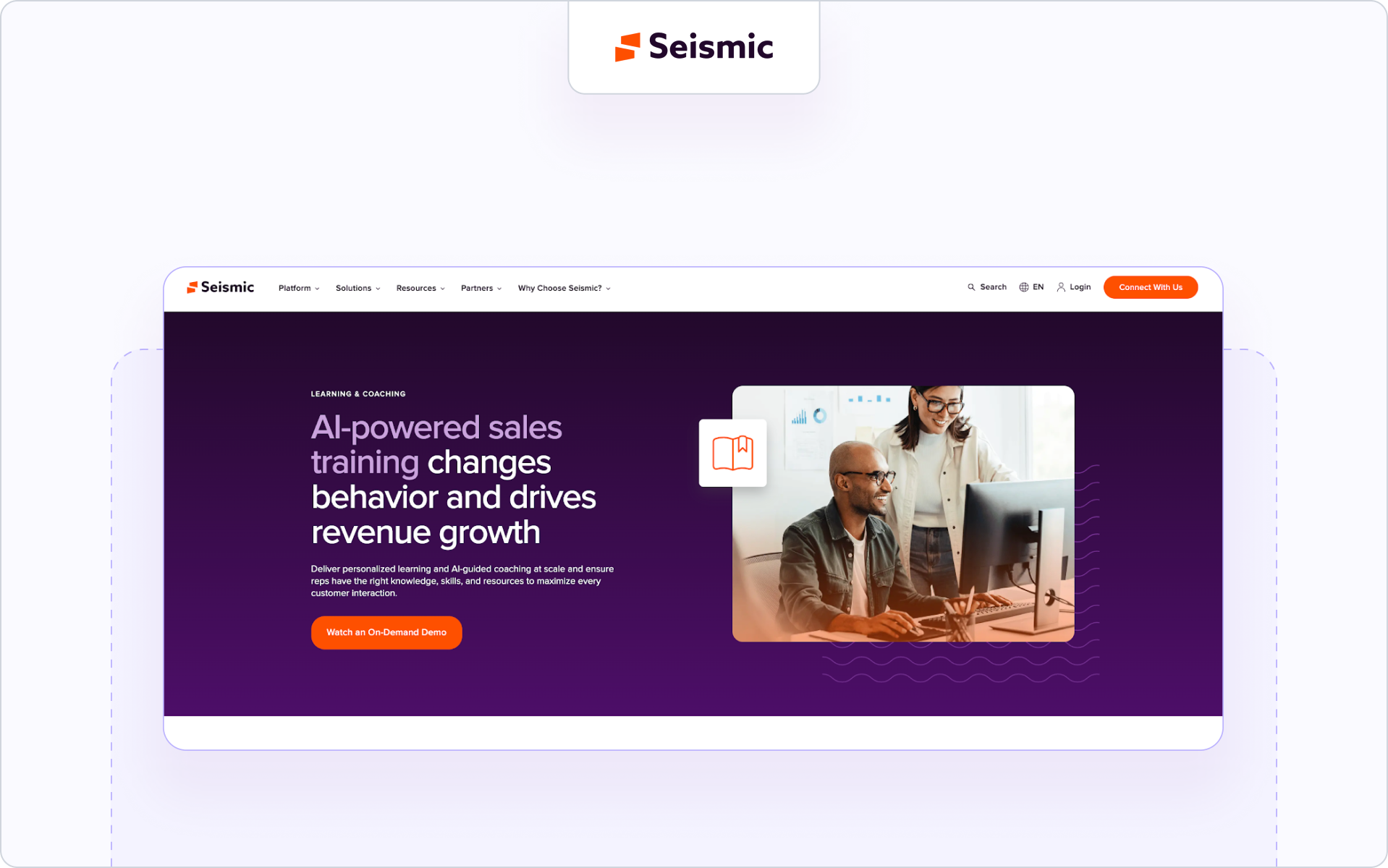
13. Seismic Learning – Am besten geeignet für die Vertiefung von Fähigkeiten und das Coaching
Am besten geeignet für
Unternehmen, die ihre Kundendienstteams mit technischen Fähigkeiten ausstatten und die Schulungen durch Coaching-Workflows verstärken müssen.
Warum es eine Alternative zum Partner ist
Seismic Learning (ehemals Lessonly) unterstützt strukturierte Lernprogramme, die sich auf Qualifikationslücken und kontinuierliches Leistungsmanagement konzentrieren und nicht nur auf die Vermittlung von Kursinhalten. Es kombiniert von Lehrern geleitete Schulungen mit Modulen zum Selbststudium.
Höhepunkte
- Coaching-Workflows zur Behebung von Qualifikationslücken
- Unterstützung bei von Lehrern geleiteten Schulungen
- Verfolgung der Kompetenzentwicklung in Verbindung mit dem Leistungsmanagement
Überlegen Sie, ob
Sie legen Wert auf Verhaltensverstärkung und messbare Leistungsverbesserung für Partner.
Mögliche Lücken
Weniger Schwerpunkt auf individuellen Lernpfaden und Zertifizierungsprozessen im Vergleich zu partner-eigenen LMS-Tools.
Preise
Preismodell für Unternehmen.
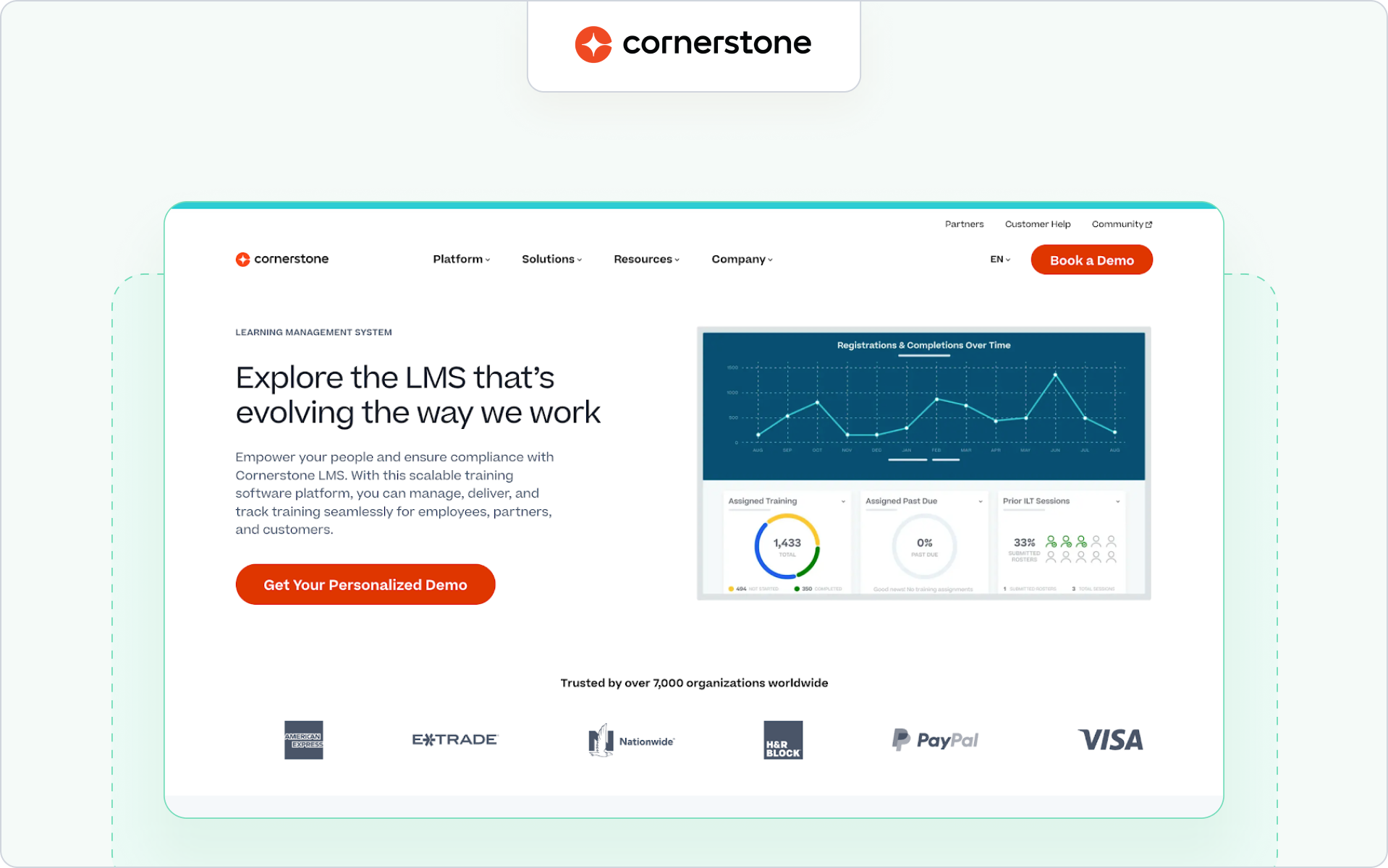
14. Cornerstone Learning – Am besten geeignet für globale Unternehmensführung
Am besten geeignet für
Unternehmensteams, die umfangreiche interne und externe Schulungen für unterschiedliche Zielgruppen verwalten.
Warum es eine Alternative zum Partner ist
Cornerstone Learning unterstützt strukturierte Lernprogramme, Compliance-Schulungen und erweiterte Berichterstellung innerhalb eines zentralisierten Lernprozess-Frameworks. Es ermöglicht eine nahtlose Integration mit bestehenden Tools in Unternehmensökosystemen.
Höhepunkte
- Compliance-Schulung mit Governance-Kontrollen
- Nahtlose Integration in Unternehmenssysteme
- Erweiterte Berichterstellung und Automatisierung von Verwaltungsaufgaben
Überlegen Sie, ob
Sie betreiben komplexe globale Partnernetzwerke mit strengen Governance-Anforderungen.
Mögliche Lücken
Komplexität der Implementierung und höherer Verwaltungsaufwand im Vergleich zu modernen Lernplattformen, die speziell für die Partnerunterstützung entwickelt wurden.
Preise
Individuelle Preisgestaltung für Unternehmen.
15. iSpring Learn – Am besten geeignet für die schnelle Kurserstellung und Blended Learning
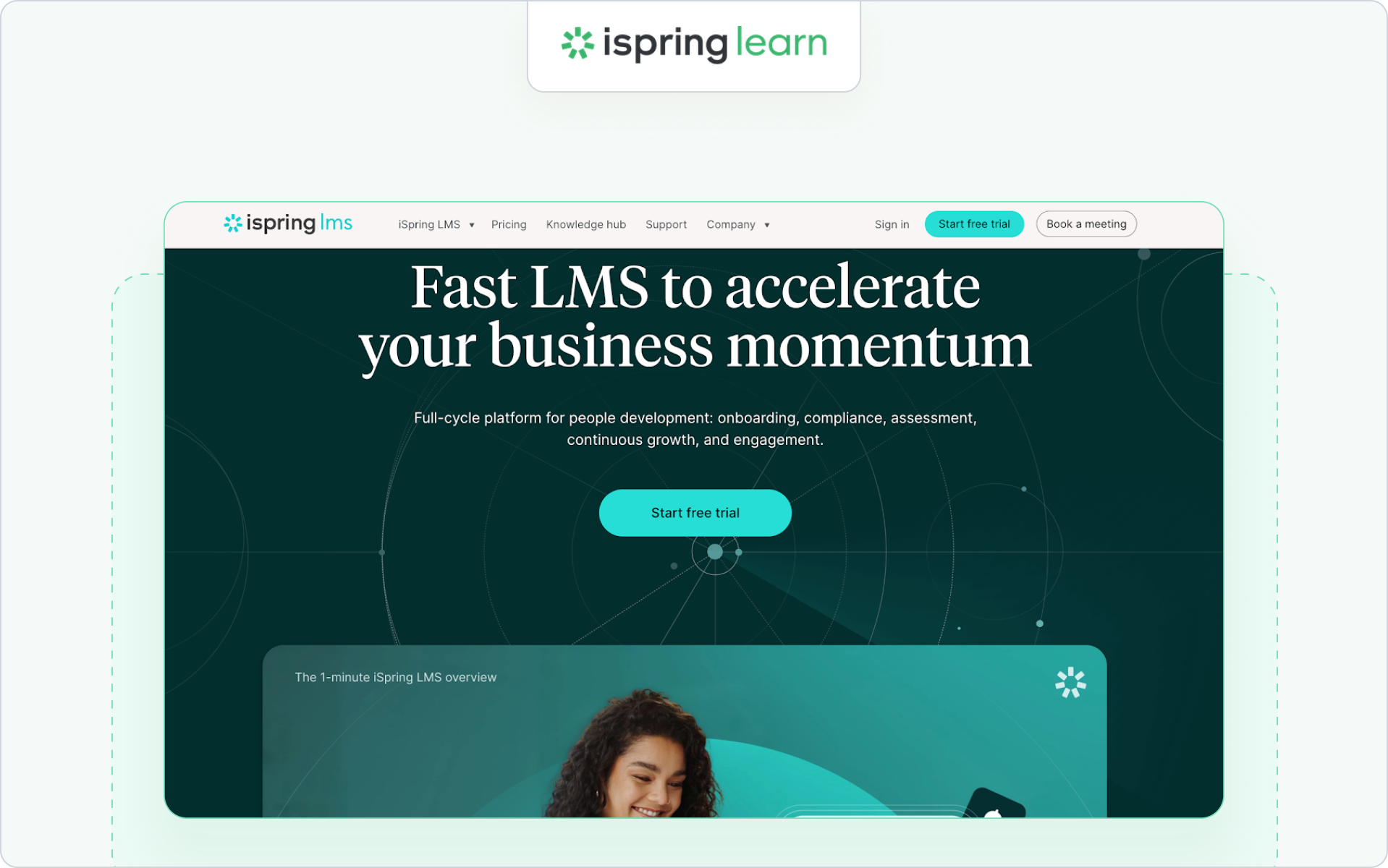
Am besten geeignet für
Teams, die eine schnelle Kurserstellung und strukturierte externe Schulungen ohne aufwendige Plattformkonfiguration benötigen.
Warum es eine Alternative zum Partner ist
Mit iSpring Learn lassen sich ganz einfach individuelle Lernpfade erstellen und Schulungsmodule schnell bereitstellen. Die Software ist besonders dann von Vorteil, wenn Instructional Designer die direkte Kontrolle über Kursmaterialien und Bewertungen wünschen.
Höhepunkte
- Schnelle Kurserstellung aus vorhandenem Schulungsmaterial
- Unterstützung für von Lehrern geleitete Schulungen und gemischte Formate
- Benutzerfreundliche Erfahrung mit unkomplizierter Verwaltung
Überlegen Sie, ob
Sie möchten Geschwindigkeit und Kontrolle über die Entwicklung von Inhalten.
Mögliche Lücken
Im Vergleich zu modernen Lernplattformen eingeschränkte fortschrittliche Automatisierung und weniger KI-gestützte Funktionen.
Preise
Staffelpreise basierend auf aktiven Nutzern.
16. Moodle Workplace – Am besten geeignet für hochgradig anpassbare Lernumgebungen
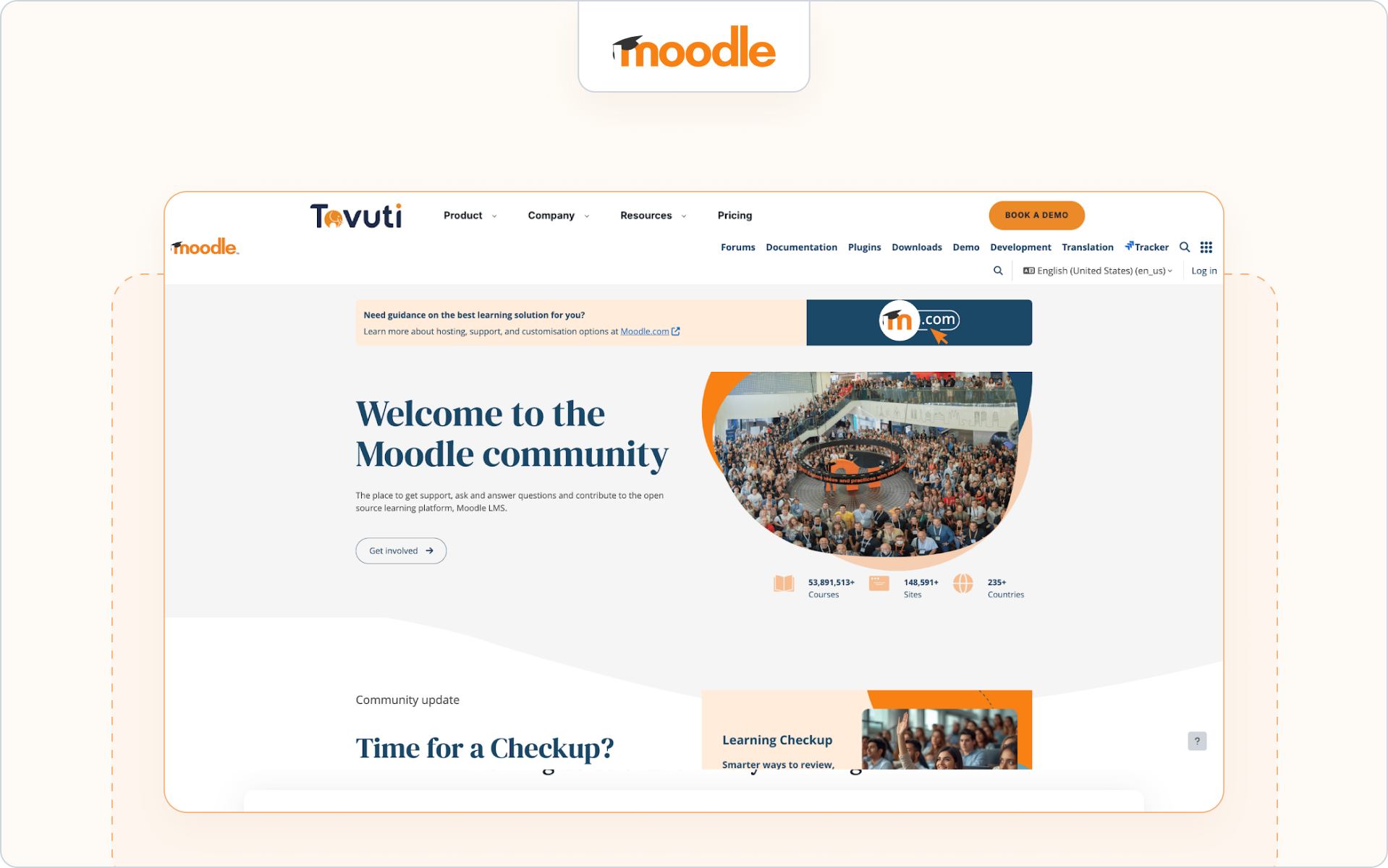
Am besten geeignet für
Organisationen, die umfassende Anpassungsmöglichkeiten und flexible Lernumgebungen für interne und externe Schulungen benötigen.
Warum es eine Alternative zum Partner ist
Moodle Workplace ermöglicht es Teams, personalisierte Lernpfade, adaptive Lernerfahrungen und komplexe rollenbasierte Zugriffsstrukturen zu erstellen. Es unterstützt strukturierte Schulungen für verschiedene Zielgruppen mit starker administrativer Kontrolle.
Höhepunkte
- Hochgradig anpassbarer Lernprozess
- Adaptives Lernen und rollenbasierte Berechtigungen
- Hohe Flexibilität beim Kursmanagement
Überlegen Sie, ob
Sie verfügen über die technischen Ressourcen, um eine maßgeschneiderte Schulungsplattform zu konfigurieren und zu warten.
Mögliche Lücken
Die Implementierung und laufende Wartung kann mehr Verwaltungsaufgaben erfordern als bei SaaS-First-Plattformen.
Preise
Die Preise variieren je nach Hosting-Partner und Konfiguration.
17. EducateMe – Am besten geeignet für kohortenbasierte Partnerakademien
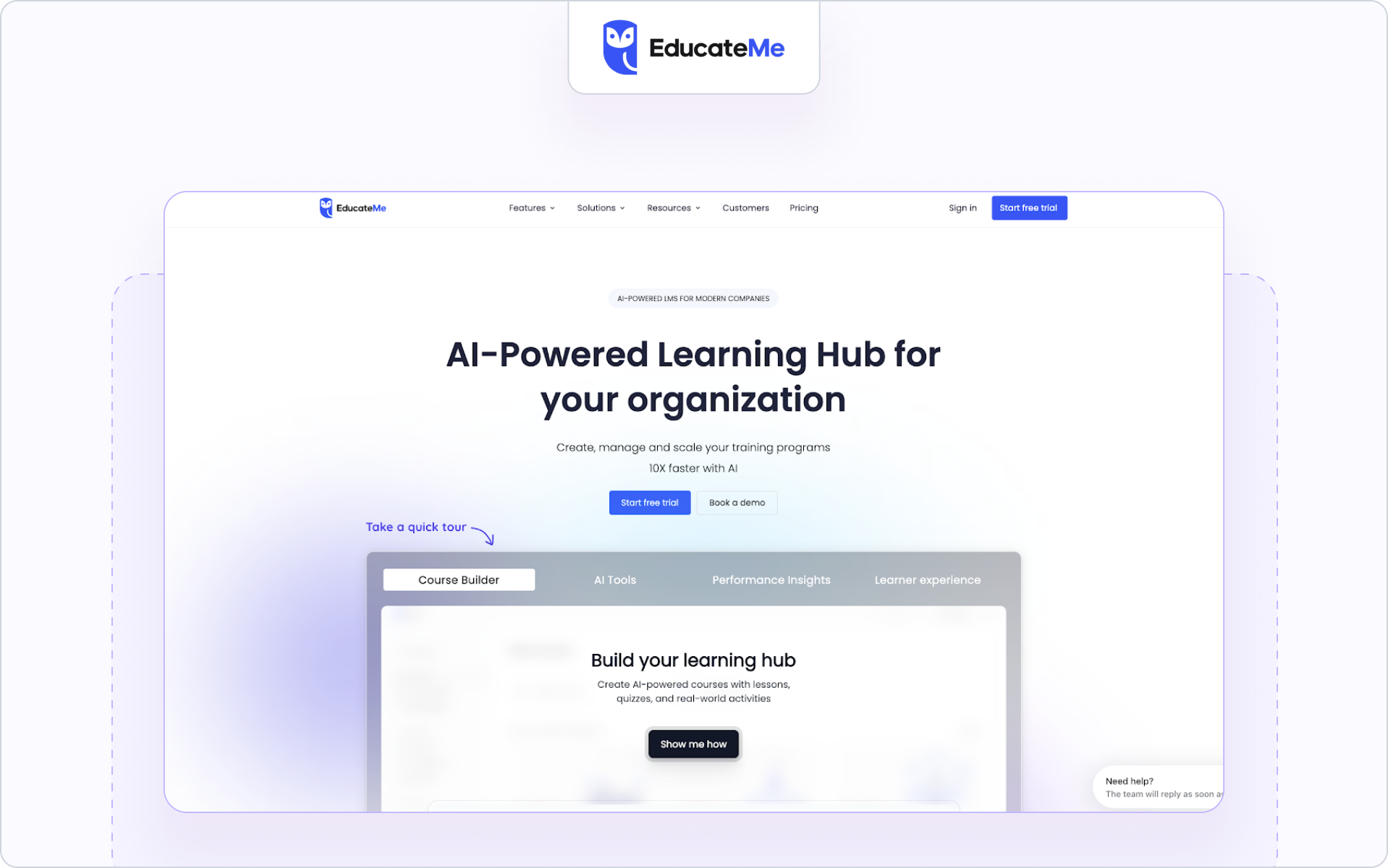
Am besten geeignet für
Teams, die externe Schulungsprogramme entwickeln, die Module zum Selbststudium mit Live-Zusammenarbeit kombinieren.
Warum es eine Alternative zum Partner ist
EducateMe unterstützt personalisierte Lernpfade und interaktive Elemente, die dazu beitragen, das Interesse der Lernenden aufrechtzuerhalten. Es verbindet kollaboratives Lernen mit strukturierten Schulungen und eignet sich daher für kleinere, aber sehr intensive Partnerinitiativen.
Höhepunkte
- Kohortenbasierte Schulungsprogramme
- Interaktive Elemente und Live-Sessions
- Personalisierte Lernerfahrungen
Überlegen Sie, ob
Sie möchten die Zusammenarbeit fördern und eine Gemeinschaft innerhalb der Partnergruppen aufbauen.
Mögliche Lücken
Weniger unternehmensorientierte Berichterstellung und weniger Analysefunktionen auf CRM-Ebene.
Preise
Abonnementbasierte Preisstufen.
18. Eloomi – Am besten geeignet für die Entwicklung von Fähigkeiten und die Abstimmung der Leistung
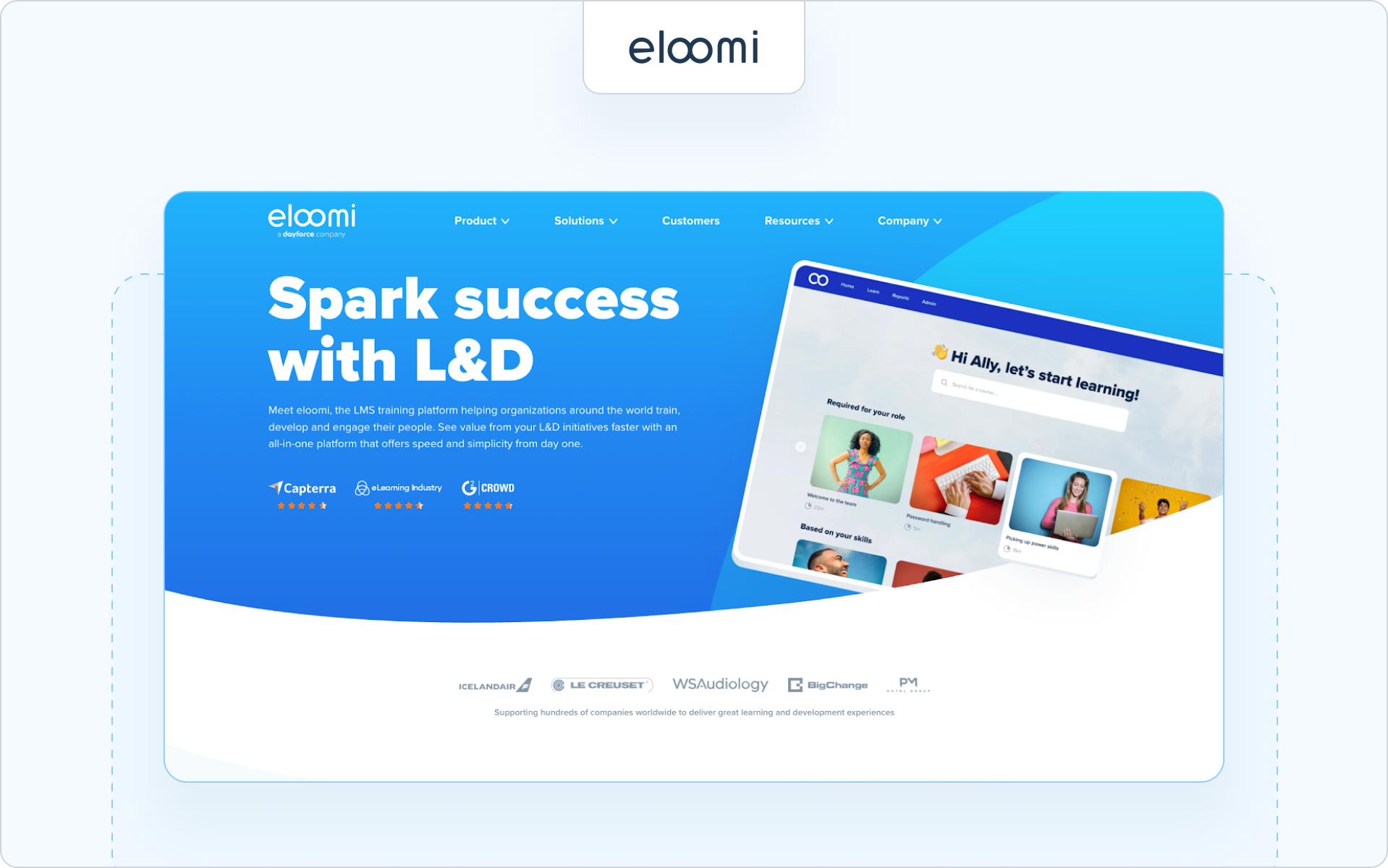
Am besten geeignet für
Unternehmen, die Schulungsinitiativen mit Leistungsmanagement und langfristiger Kompetenzentwicklung verbinden möchten.
Warum es eine Alternative zum Partner ist
Eloomi hilft Unternehmen dabei, Qualifikationslücken zu identifizieren und strukturierte Lernprogramme zu erstellen, die auf die Leistungsergebnisse abgestimmt sind. Es verbindet personalisiertes Lernen mit Zielverfolgung, um die Effektivität der Schulungen zu verbessern.
Höhepunkte
- Identifizierung von Qualifikationslücken und Nachverfolgung der Entwicklung
- Auf Leistungsziele abgestimmte Lernprogramme
- Personalisierte Lernpfade für unterschiedliche Zielgruppen
Überlegen Sie, ob
Sie möchten die Schulung Ihrer Partner mit messbaren Leistungsergebnissen verknüpfen.
Mögliche Lücken
Weniger Fokus auf erweiterte Unternehmenssegmentierung oder CRM-native Workflows.
Preise
Individuelle Preisgestaltung basierend auf Unternehmensgröße und Funktionen.
Zusammenfassung
Wir wissen, dass das eine Menge zu bewerten ist.
Nicht jede Alternative zu 360Learning passt zu Ihrer Partnerstrategie. Wichtig ist, eine Plattform zu wählen, die die tatsächlichen Lern-, Vertriebs- und Lieferprozesse Ihrer Partner unterstützt.
Anstatt Funktionslisten zu vergleichen, konzentrieren Sie sich auf die Funktionen, die die Schulung von Partnern von der Bereitstellung von Inhalten zu messbaren Ergebnissen führen.
Vereinfachen wir die Entscheidung.
So wählen Sie eine Alternative zu 360Learning für Partner aus
Die Liste war lang.
Die meisten Alternativen zu 360Learning sehen auf den ersten Blick ähnlich aus. Der eigentliche Unterschied zeigt sich darin, wie sie externe Schulungen, die Zertifizierungskontrolle und die CRM-Transparenz unterstützen.
Bevor Sie Demos buchen, sollten Sie sich darüber im Klaren sein, was Ihr Partnerprogramm tatsächlich benötigt.
Konzentrieren Sie sich auf diese sechs Bereiche.
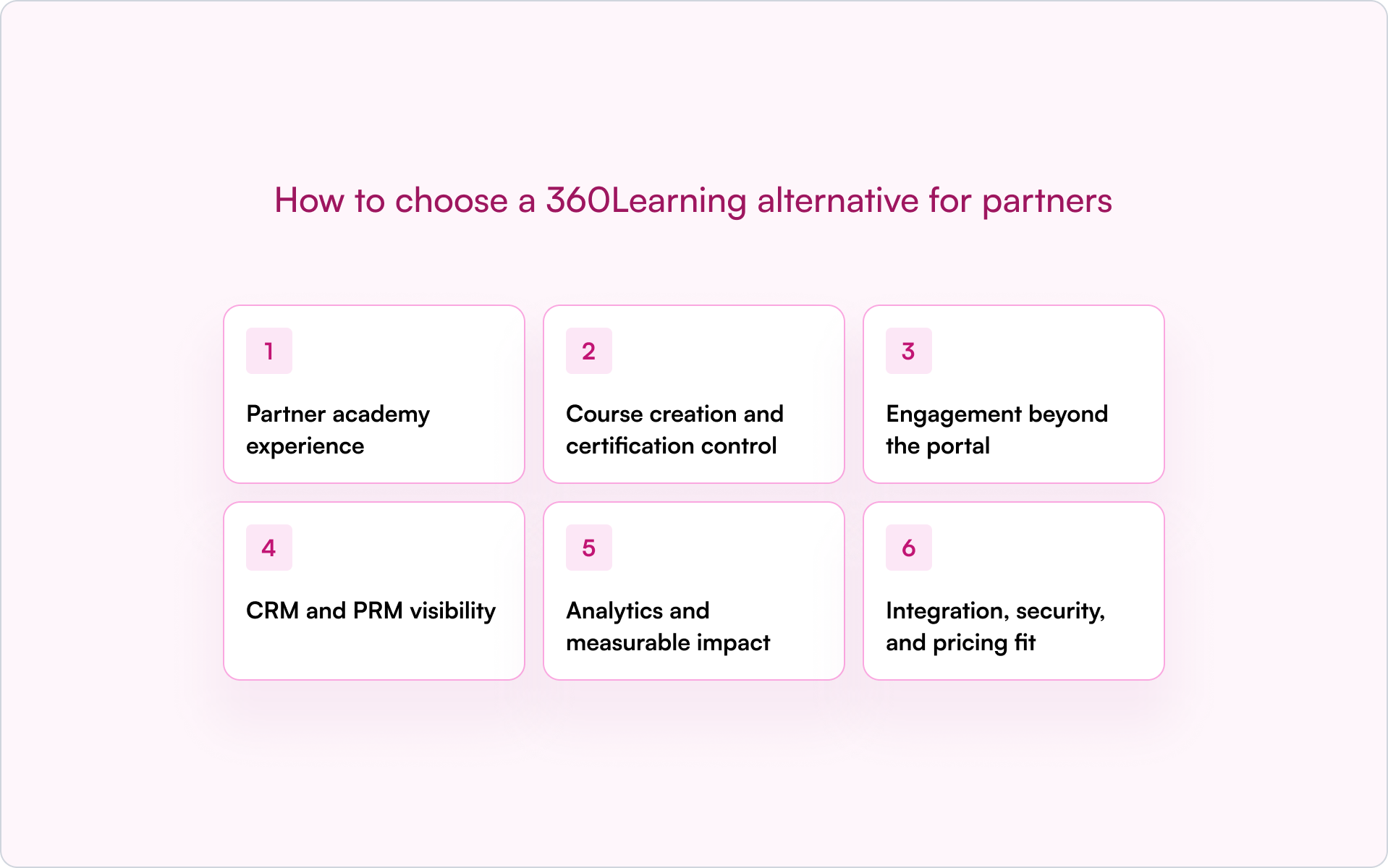
1. Erfahrungen mit Partnerakademien
Ihre Partnerakademie sollte wie eine speziell für diesen Zweck entwickelte Lösung wirken und nicht wie ein internes Lernmanagementsystem, das für externe Nutzer umfunktioniert wurde.
Suchen Sie nach:
- White-Label-Optionen und individuelles Branding
- SSO und sichere Zugriffskontrollen
- Multi-Tenant- oder Zweigstellensegmentierung
- Personalisierte Lernportale für unterschiedliche Zielgruppen
Wenn die Partner Schwierigkeiten haben, sich in der Erfahrung zurechtzufinden, sinken das Engagement der Lernenden und die Abschlussquote des Kurses.
2. Kurserstellung und Zertifizierungskontrolle
Partner-Schulungsprogramme brauchen Struktur.
Sie sollten in der Lage sein:
- Verwenden Sie KI-gestützte oder integrierte Tools zur Kurserstellung.
- Erstellen Sie maßgeschneiderte Lernpfade nach Rolle oder Stufe.
- Einfach per Mausklick Zertifikate mit Rezertifizierungsfenstern ausstellen
- Unterstützt mehrere Bewertungsarten, darunter Multiple-Choice-Fragen und offene Antworten.
Das Zertifizierungsmanagement sollte den Verwaltungsaufwand reduzieren und nicht noch mehr Verwaltungsaufgaben schaffen.
3. Engagement über das Portal hinaus
Eine einmalige Anmeldung reicht nicht aus, um die Lernenden zu motivieren.
Moderne Plattformen unterstützen:
- E-Mail- und Slack
- Integrierte Messaging-Tools
- Anstöße, die an den Lernfortschritt geknüpft sind
- Protokollierung von Antwort-E-Mails für eine bessere Nachverfolgung
Wenn eine Plattform Lernende außerhalb des Portals nicht ansprechen kann, leiden die Abschlussquoten darunter.
4. Sichtbarkeit von CRM und PRM
Hier versagen viele Mitbewerber von 360Learning.
Externe Schulungen sollten nicht isoliert durchgeführt werden. Sie sollten in der Lage sein:
- Übertragen Sie Abschlüsse und Zertifizierungen in Salesforce HubSpot.
- Zertifizierungen an Deal-Phasen knüpfen
- Effektivität des Oberflächentrainings in Pipeline-Berichten
- Unterstützung der Erneuerungsvorbereitung mit Trainingsdaten
Ohne CRM-Transparenz bleibt die Schulung ein Berichts-Silo.
5. Analytik und messbare Auswirkungen
Fertigstellungsmetriken reichen nicht aus.
Suchen Sie nach:
- Einfluss des Trainings auf die Pipeline
- Einblicke in die Partner-Rangliste
- Sichtbarkeit von Qualifikationslücken
- Ausrichtung des Leistungsmanagements
Schulungsinitiativen sollten zu tatsächlichen Umsatzergebnissen beitragen.
6. Integration, Sicherheit und Preisgestaltung
Schließlich ist die langfristige Skalierbarkeit zu bewerten.
- Nahtlose Integration in bestehende Tools
- Unterstützung für SCORM, xAPI und APIs
- Starke Kontrollen für Governance und Compliance-Schulungen
- Für externe Zielgruppen konzipierte Preismodelle
Eine skalierbare Lernplattform sollte mit Ihrem Partner-Ökosystem wachsen und Sie nicht dafür benachteiligen.
Schnelle Checkliste für Käufer
Wenn Sie eine Alternative zu 360Learning für Partner evaluieren, sollten Sie sicherstellen, dass Sie in diesen drei Bereichen mit Ja antworten können:
☐ 1. Erfahrung im Umgang mit externen Kunden
- Markengebundene Akademie für mehrere Nutzer
- SSO und sicherer Zugriff
- Rollen- oder stufenbasierte Lernpfade
☐ 2. Umsatzorientierte Schulungskontrolle
- Zertifizierungsmanagement mit Rezertifizierungsfenstern
- Off-Portal-Interaktion per E-Mail oder Slack
- CRM-Transparenz hinsichtlich Abschlüssen und Geschäftsphasen
☐ 3. Skalierbarkeit und Berichterstellung
- Erweiterte Berichterstattung über den Kursabschluss hinaus
- Integrationsunterstützung (SCORM, APIs)
- Vorhersehbare Preisgestaltung für externe Zielgruppen
Mit diesen Kriterien im Hinterkopf sind Sie für die nächsten Schritte bestens gerüstet.
Warum Introw der schnellste Weg zu einer partnerfähigen Schulung ist
Wenn die Schulung von Partnern schneller voranschreiten muss, als es Ihr LMS zulässt, liegt der Engpass in der Regel nicht beim Inhalt. Es sind vielmehr der Arbeitsablauf, die Zertifizierungskontrolle und die CRM-Transparenz.
Introw beseitigt diese Reibung.
Schnell starten
Verwenden Sie einen KI-gestützten Kursersteller, um Schulungen aus Ihren vorhandenen Dokumenten oder Ihrem Portal zu generieren. Mit einem Klick können Sie Zertifikate und Rezertifizierungsfenster erstellen und so sofort Verkaufsrechte oder Berechtigungen vergeben.
Partner in Bewegung halten
Die Massenanmeldung nach Rolle oder Stufe vereinfacht strukturierte Lernpfade. E-Mail- und Slack halten die Lernenden auf dem Laufenden, ohne dass sie sich anmelden müssen.
Machen Sie das Training messbar
Abschlüsse und Zertifizierungen werden mit Salesforce HubSpot synchronisiert, wodurch die Enablement-Maßnahmen direkt mit den Deal-Phasen und Prognosen verknüpft werden.
Bleiben Sie partnersicher
Rollenbasierte Ansichten und SSO sorgen dafür, dass sich Ihre Akademie sicher und speziell für externe Benutzer konzipiert anfühlt.
Ihre nächsten Schritte
Wenn Sie eine Alternative zu 360Learning für Partner evaluieren:
- Ordnen Sie Ihre Zertifizierungsregeln den Auswirkungen auf den Umsatz zu.
Entscheiden Sie, welche Rollen oder Ebenen einen geschützten Zugriff erfordern, bevor Geschäfte vorangebracht werden können. - Überprüfen Sie Ihre aktuellen Lücken in der Berichterstattung.
Identifizieren Sie, wo der Lernfortschritt und der Kursabschluss von Ihrem CRM abgekoppelt sind. - Testen Sie den Arbeitsablauf, nicht nur die Funktionen.
Sehen Sie selbst, wie schnell Sie Schulungen in einem einzigen System erstellen, registrieren, zertifizieren und synchronisieren können.
Weiterführende Literatur:
Wenn Sie im Rahmen einer umfassenderen Partnerstrategie Alternativen zu 360Learning evaluieren, könnten Ihnen auch folgende Informationen hilfreich sein:
- Wie man moderne Partnerprogramme strukturiert → Leitfaden zum Partnerschaftsmarketing
- Eine Aufschlüsselung der führenden Plattformen in benachbarten Kategorien → beste LMS-Alternativen für Talente
- Wie man die Förderung mit dem langfristigen Wachstum des Ökosystems in Einklang bringt → Leitfaden zur Partnerförderung
Sehen Sie sich an, wie ein partnerfähiger Workflow für Ihr Unternehmen aussehen würde, und fordern Sie noch heute eine Demo an noch heute an.
What is PRM? Guide to Choosing Your Next PRM in 2026
Die Verwaltung von Partnerbeziehungen sollte keine Überforderung darstellen, doch ohne das richtige System ist dies oft der Fall. Wenn Ihr Unternehmen über Vertriebspartner, Wiederverkäufer, Tochtergesellschaften oder Integrationspartner verkauft, wissen Sie, wie schwierig es ist, alle auf einen Nenner zu bringen. Geschäfte gehen in E-Mails unter, Marketingmaterialien bleiben ungenutzt und das Engagement der Partner lässt nach, wenn keine klare Struktur vorhanden ist.
Hier kommt die Partner Relationship Management (PRM)-Software ins Spiel – sie gibt Unternehmen die Werkzeuge an die Hand, um Geschäftsprozesse zu optimieren, die Zusammenarbeit mit Partnern zu verbessern und mehr Umsatz zu generieren.
Aber wie wählen Sie bei so vielen verfügbaren Optionen die richtige PRM-Plattform für Ihre Anforderungen aus? Dieser Leitfaden erklärt Ihnen alles und hilft Ihnen dabei, die beste PRM-Lösung zu finden, um Ihre Partnerprogramme zu skalieren, die Bindung Ihrer Partner zu stärken und letztendlich Ihre indirekten Vertriebskanäle auszubauen.
Was ist PRM (Partner Relationship Management)?
Partnerschaften sind das Herzstück vieler erfolgreicher Unternehmen, aber diese Beziehungen effizient zu verwalten, ist eine ganz andere Geschichte. Was ist PRM? Einfach ausgedrückt ist Partner Relationship Management (PRM) eine Software, die Unternehmen dabei hilft, die Zusammenarbeit mit Partnern zu optimieren, das Engagement der Partner zu steigern und das Potenzial der Vertriebspartner zu maximieren.
Wenn Ihr Unternehmen auf Partner angewiesen ist – seien es Wiederverkäufer, Tochtergesellschaften, Integrationspartner oder Distributoren –, sind Sie wahrscheinlich an einem Punkt angelangt, an dem die Verwaltung dieser Partner mit Tabellenkalkulationen, E-Mail-Verläufen oder einer Vielzahl unterschiedlicher Tools einfach nicht mehr ausreicht. Hier kommt PRM-Software ins Spiel.
Ein PRM-System hilft Ihnen dabei, alles rund um Partnerbeziehungen zu organisieren, zu automatisieren und zu optimieren. Es ähnelt einer CRM-Plattform (Customer Relationship Management), ist jedoch für Partnerschaften statt für den direkten Kundenverkauf konzipiert. Mit einem PRM können Sie Partner einbinden, Marketingmaterialien austauschen, die Leistung verfolgen, die Registrierung von Geschäften verwalten und Partner einbinden – alles an einem Ort.
Wie sich PRM von CRM unterscheidet
Viele Unternehmen gehen davon aus, dass eine CRM-Software ihre Partnerbeziehungen genauso verwalten kann wie ihre Kundenbeziehungen. Eine CRM-Plattform wurde jedoch für Direktvertriebsteams entwickelt, um Leads und Kundeninteraktionen zu verfolgen, während eine PRM-Lösung für indirekte Vertriebskanäle und Partnerprogramme konzipiert ist. Das Kundenbeziehungsmanagement konzentriert sich auf die Steigerung der Kundenzufriedenheit, -loyalität und -bindung durch die Verwaltung von Kundeninteraktionen und -daten, während PRM speziell auf die Verwaltung von Partnerbeziehungen und indirekten Vertriebskanälen zugeschnitten ist.
Ein PRM hilft Ihnen dabei:
- Verwalten Sie mehrere Partnerprogramme – Ob Sie mit Wiederverkäuferpartnern, unabhängigen Softwareanbietern oder Lösungsanbietern zusammenarbeiten, ein PRM sorgt für eine reibungslose Koordination.
- Automatisierung der Partner-Onboarding-Prozesse – Sicherstellen, dass neue Partner Zugang zu den für ihren Erfolg erforderlichen Ressourcen haben.
- Geschäftsprozesse optimieren – Manuelle Dateneingaben reduzieren und gleichzeitig die Transparenz der Partneraktivitäten verbessern.
- Deal-Registrierung aktivieren – Sicherstellen, dass Partnerverkäufe und Lead-Management gut dokumentiert und getrennt von Direktverkäufen nachverfolgt werden.
Warum benötigen Sie ein PRM?
Die Vorteile des Partnervertriebs und eines starken Partnerbeziehungsmanagementsystems gehen über die bloße Verstärkung des Personals hinaus. Eine gut verwaltete PRM-Lösung führt zu besseren Geschäftsprozessen, höherer Kundenzufriedenheit und letztendlich zu mehr Umsatz.
Unternehmen, die mit Vertriebspartnern, Wiederverkäufern oder Affiliates zusammenarbeiten, wissen, dass Partnerschaften ein enormer Umsatztreiber sein können – aber nur, wenn sie gut gemanagt werden. Ohne eine PRM-Plattform kann es schnell chaotisch werden:
- Leads und Deals verfolgen? Verstreut über E-Mails, Slack und zufällige Tabellenkalkulationen.
- Marketingmaterialien? Verloren in E-Mail-Verläufen oder veralteten PDFs.
- Neue Partner einbinden? Uneinheitlich und frustrierend.
- Die Leistung von Partnern messen? Ohne genaue Verkaufsanalysen nahezu unmöglich.
Ein PRM-System beseitigt diese Probleme, indem es eine zentrale Anlaufstelle für die Verwaltung von Partnerbeziehungen, die Information der Partner und die Optimierung von Geschäftsprozessen bietet – was zu einem höheren Umsatzwachstum und weniger manueller Dateneingabe führt.
💡 Wussten Sie schon? Von Partnern geführte Geschäfte sind in der Regel um 32 % größer und haben eine 2,8-mal höhere Erfolgsquote als Geschäfte, die allein vom Direktvertriebsteam abgeschlossen werden.
So wählen Sie das richtige PRM für Ihr Unternehmen aus
Bei der Auswahl der richtigen PRM-Software geht es nicht nur darum, die neueste Technologie zu erwerben, sondern auch darum, die richtige PRM-Plattform zu finden, die zu Ihren Geschäftszielen, Strategien zur Partnergewinnung und Umsatzwachstumszielen passt.
Nicht alle PRMs sind gleich. Einige sind umständlich und benötigen Monate für die Implementierung, während moderne PRMs (wie Introw) innerhalb weniger Minuten einsatzbereit sind. So finden Sie die beste PRM-Lösung für Ihr Unternehmen.
1. Wichtige Funktionen, auf die Sie bei einem PRM-System achten sollten
Eine gute PRM-Plattform sollte Ihnen dabei helfen, Partnerbeziehungen zu verwalten, ohne Ihnen zusätzliche Kopfschmerzen zu bereiten. Hier sind die wichtigsten Funktionen, auf die Sie achten sollten:
- Partner-Onboarding und -Schulung – Richten Sie neue Partner schnell mit strukturierten Onboarding-Prozessen und den richtigen Business-Tools ein.
- Deal-Registrierung und Lead-Management – Stellen Sie sicher, dass Vertriebspartner Leads einfach übermitteln können, um Konflikte im Vertriebskanal zu reduzieren.
- Leistungsüberwachung und Kennzahlen – Behalten Sie die Vertriebsleistung, Umsatzziele und das Engagement Ihrer Partner im Blick. Die Überwachung der Leistung Ihrer Partner mithilfe von Business-Intelligence-basierten Dashboards kann Ihnen dabei helfen, die Aktivitäten Ihrer Partner zu analysieren und Strategien zu optimieren, wodurch eine bessere Zusammenarbeit gefördert und das Umsatzwachstum vorangetrieben wird.
- Content- und Marketingmaterial-Management – Stellen Sie sicher, dass Partner jederzeit Zugriff auf Markenrichtlinien, Marketingmaterialien und Incentive-Programme haben.
- Nahtlose CRM-Integration – Eine PRM-Plattform sollte sich mit Ihren CRM-Systemen wie Salesforce HubSpot synchronisieren lassen.
- Kommunikations- und Kollaborationstools – Funktionen wie Slack , automatisierte E-Mails und Portal-Updates sorgen dafür, dass Partner stets auf dem Laufenden bleiben.
💡 Bonus: Suchen Sie nach PRM-Systemen, die sich mit Tools wie Crossbeam, Slackund Zapier integrieren lassen, um eine bessere Automatisierung zu erreichen.
2. Einbeziehung der richtigen Stakeholder in die Einbindung von Partnern
Bevor Sie in ein PRM-System investieren, sollten Sie sicherstellen, dass Sie die richtigen Personen in Ihrem Unternehmen einbeziehen:
- Vertriebs- und Channel-Manager – Sie benötigen vollständige Transparenz über den Vertrieb der Partner, das Lead-Management und die Pipeline-Performance.
- Marketingteams – Sie sind für Strategien zur Einbindung von Partnern, Marketingmaterialien und Materialien zur Vertriebsunterstützung verantwortlich.
- RevOps- und CRM-Administratoren – Sie sorgen für eine nahtlose Integration des CRM in die Geschäftsprozesse.
- Ihre Partner – Fragen Sie Ihre externen Partner, was sie tatsächlich benötigen, um erfolgreich zu sein.
3. Priorisierung der Amortisationszeit für die Partnerleistung
Die vollständige Implementierung einiger PRM-Lösungen dauert 4 bis 6 Monate, was zu unnötigen Verzögerungen und Umsatzverlusten führt. Lange Einrichtungszeiten bedeuten auch höhere Entwicklungskosten, entgangene Verkaufschancen und zunehmende Frustration für Channel-Manager und Partner, die warten müssen. Moderne PRMs (wie Introw) können innerhalb weniger Minuten bereitgestellt werden, sodass Sie schneller Ergebnisse sehen und Partnerprogramme fast sofort zum Umsatzwachstum beitragen können.
💡 Jeder Tag ohne PRM ist eine verpasste Gelegenheit, mehr Umsatz zu generieren.
4. Auswahl einer CRM-First-PRM-Plattform
Die meisten Unternehmen nutzen bereits ein CRM-System, um Kunden- und Partneraktivitäten zu verfolgen. Die besten PRM-Systeme ersetzen Ihr CRM nicht – sie ergänzen es. Achten Sie auf Folgendes:
- 2-Wege-CRM-Synchronisierung – Damit Kundenbeziehungen und Partner-Vertriebsdaten immer korrekt sind.
- Lead- und Deal-Synchronisierung – Damit Partner Verkaufschancen nicht manuell eingeben müssen.
- Support-Ticket- und Kollaborationsfunktionen – PRMs sollten über die reine Registrierung von Geschäften hinausgehen.
- Integrierte Analysen – Erhalten Sie sofortige Einblicke in die Leistung Ihrer Partner und in Ihre Vertriebskennzahlen.
Why Introw is the Best PRM in 2026
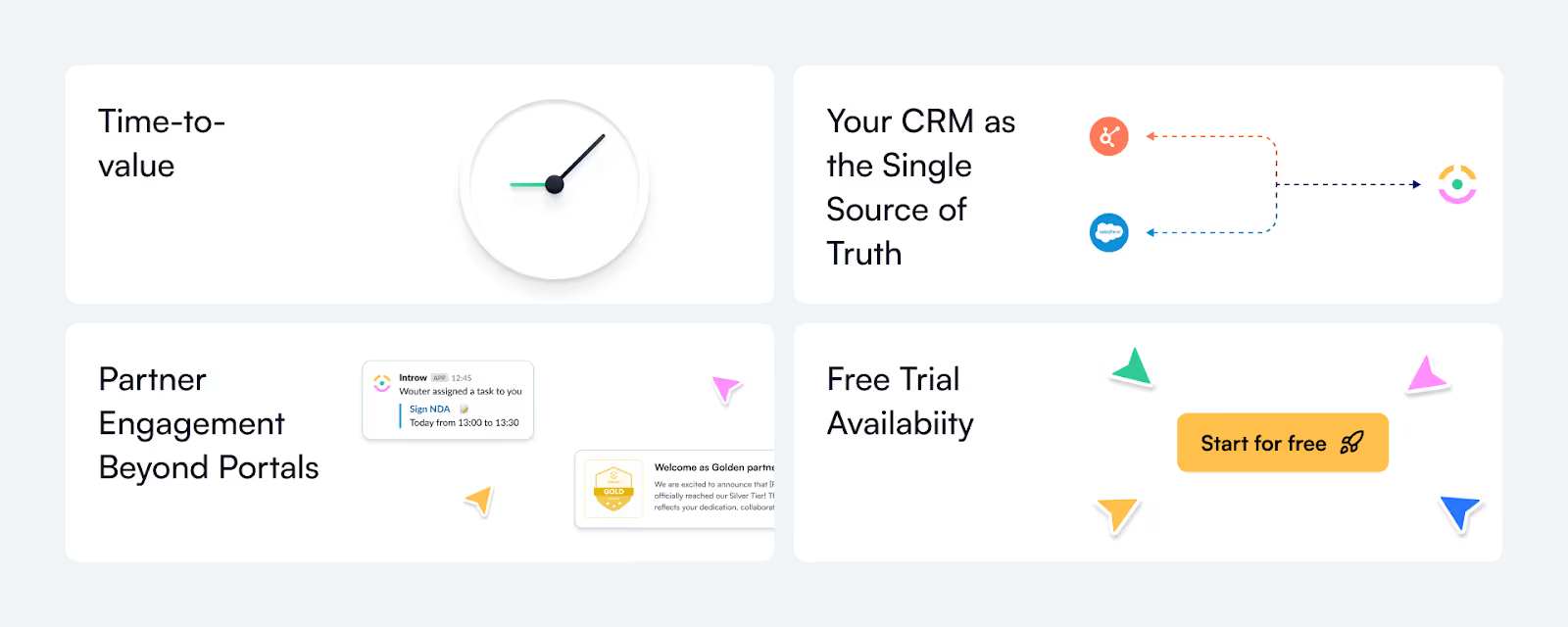
Wenn Sie nach einer PRM-Lösung suchen, die schnell und einfach ist und tatsächlich für moderne Partnerbeziehungen entwickelt wurde, ist Introw die erste Wahl. Hier sind die Gründe dafür:
- Schnelle Bereitstellung – Sie müssen nicht monatelang warten, um loszulegen.
- CRM-First-Integration – Funktioniert nahtlos mit Ihrer CRM-Plattform.
- Entwickelt für Engagement – Hilft dabei, Partner auf dem Laufenden zu halten und aktiv zu bleiben.
- Bewährte Erfolgsbilanz – Unternehmen, die Introw nutzen, verzeichnen eine höhere Partnerakzeptanz und ein höheres Umsatzwachstum.
Abschließende Gedanken
Eine leistungsstarke PRM-Plattform bedeutet nicht nur, dass alle Funktionen abgehakt sind – es geht um den Erfolg der Partner, Umsatzwachstum und die Optimierung von Geschäftsprozessen.
Wenn Sie bereit sind, Ihre Partnerprogramme zu skalieren, mehr Umsatz zu generieren und die Partnerbindung zu verbessern, ist die Investition in das richtige PRM-System ein Kinderspiel.
Möchten Sie sehen, wie Introw Ihre Partnerprogramme verändern kann? Fordern Sie eine Demo an oder probieren Sie es noch heute kostenlos aus!
Häufig gestellte Fragen zur Auswahl von PRM
1. Was ist PRM und wie unterscheidet es sich von einem CRM?
PRM (Partner Relationship Management) ist eine Software, die Unternehmen dabei unterstützt, Partnerprogramme zu verwalten, Partnerverkäufe zu verfolgen und die Zusammenarbeit mit Vertriebspartnern, Wiederverkäufern und Affiliates zu optimieren. Im Gegensatz zu CRM-Software, die sich auf Direktvertriebsteams und Kundenbeziehungen konzentriert, wurde ein PRM-System entwickelt, um indirekte Vertriebskanäle durch Funktionen wie Partner-Onboarding, Deal-Registrierung und Leistungsüberwachung zu unterstützen.
2. Wie wähle ich das beste PRM für mein Unternehmen aus?
Bei der Auswahl einer PRM-Plattform sollten Sie Faktoren wie einfache Implementierung, CRM-Integration, Automatisierungsfunktionen und Tools für die Partnerbindung berücksichtigen. Eine gute PRM-Lösung sollte Ihnen dabei helfen, Geschäftsprozesse zu optimieren, manuelle Dateneingaben zu reduzieren und die Zusammenarbeit mit Partnern zu verbessern. Achten Sie auf Funktionen wie bidirektionale CRM-Synchronisierung, Verwaltung von Marketingmaterialien und automatisierte Partner-Updates über Slack E-Mail.
3. Was sind die wichtigsten Vorteile einer PRM-Lösung?
Ein PRM-System hilft Unternehmen dabei, ihre Partnerbeziehungen effizient zu verwalten, was zu einem höheren Umsatzwachstum, einer besseren Vertriebsleistung und einer höheren Kundenzufriedenheit führt. Zu den wichtigsten Vorteilen gehören:
- Automatisierte Partner-Einbindung – Bringen Sie neue Partner schnell auf den neuesten Stand.
- Deal-Registrierung und Lead-Tracking – Konflikte reduzieren und Transparenz verbessern.
- Leistungsmanagement – Verfolgen Sie den Erfolg Ihrer Partner, Umsatzziele und Engagement-Kennzahlen.
- Marketing und Content-Sharing – Stellen Sie sicher, dass Ihre Partner über die erforderlichen Ressourcen verfügen, um effektiv zu verkaufen.
4. Why is Introw the best PRM solution in 2026?
Introw zeichnet sich als moderne PRM-Plattform aus, die Wert auf schnelle Einrichtung, nahtlose CRM-Integration und Partnerbindung über das Portal hinaus legt. Im Gegensatz zu herkömmlichen PRMs, deren Einrichtung Monate dauert, ist Introw innerhalb weniger Minuten einsatzbereit. Darüber hinaus bietet es:
- 1-Klick-CRM-Integration – Funktioniert mühelos mit HubSpot, Salesforce und anderen CRM-Systemen.
- Echtzeit-Analysen und Berichterstellung – Verfolgen Sie die Leistung Ihrer Partner und Verkaufschancen.
- Automatische Partner-Updates – Halten Sie Ihre Partner über Slack, E-Mail oder In-App-Benachrichtigungen auf dem Laufenden.
Partner-LMS-Software: Die 15 besten Optionen und worauf Sie 2026 achten sollten
Stellen Sie sich vor, Ihr Lernsystem für Ihre externen Partner entwickelt wurde für Ihre externen Partner entwickelt wurde. Sie können die Einarbeitung von Partnern beschleunigen, das Engagement der Partner steigern und Schulungen klar mit der tatsächlichen Leistung der Partner verknüpfen.
Anstatt also viel in die Schulung von Partnern zu investieren, kannst du sehen, wer qualifiziert, zertifiziert oder tatsächlich bereit ist, zu verkaufen.
Um zu verstehen, was dies ermöglicht, ist es hilfreich, zunächst zu klären, was Partner-LMS-Software eigentlich ist und warum sie sich grundlegend von einem Mitarbeiter-LMS unterscheidet.
Partner-LMS-Software – Was sie ist (und warum sie anders ist)
Die Partner-LMS-Software ist ein Lernmanagementsystem, das speziell für die Schulung von Partnern entwickelt wurde.
Es hilft SaaS-Teams:
- externe Partner schneller einbinden,
- Partner-Schulungen in großem Umfang durchführen, Zertifizierungsprogramme durchführen,
- und den Fortschritt der Partner auf eine Weise zu verfolgen, die die tatsächliche Leistung der Partner und das Geschäftswachstum unterstützt.
Im Gegensatz zur Mitarbeiterschulung muss die Partnerschulung in einem verteilten Partnernetzwerk mit unterschiedlichen Partnerebenen, Regionen und Zielen funktionieren.
Aus diesem Grund ist moderne LMS-Software für die Partnerschulung oft Teil einer umfassenderen Strategie zur Partnerförderung und arbeitet Hand in Hand mit Partner-Relationship-Management-Software , um die langfristige Leistung der Partner zu unterstützen.
Der Unterschied wird deutlicher, wenn man ihn direkt vergleicht:
Für Teams, die die beste LMS-Software für die Schulung von Partnern vergleichen, konzentriert sich diese Liste auf das, was bei einem Partner-LMS-Tool tatsächlich wichtig ist, und nicht auf allgemeine Funktionen für Mitarbeiterschulungen.
Die 15 besten LMS-Softwareoptionen für Partner (2026)
Bei der Auswahl einer LMS-Software für Ihr Unternehmen geht es nicht darum, möglichst viele Funktionen anzuhäufen. Was Sie wollen, ist ein System, das Ihre Partner auch tatsächlich nutzen werden.
Hier ist die Auswahl, die wir zusammengestellt haben, damit Sie die Optionen vergleichen und herausfinden können, welche zu Ihrer Teamarbeit passen könnten.
1. Introw Partner LMS (Am besten geeignet für CRM-orientierte SaaS-Partnerprogramme)
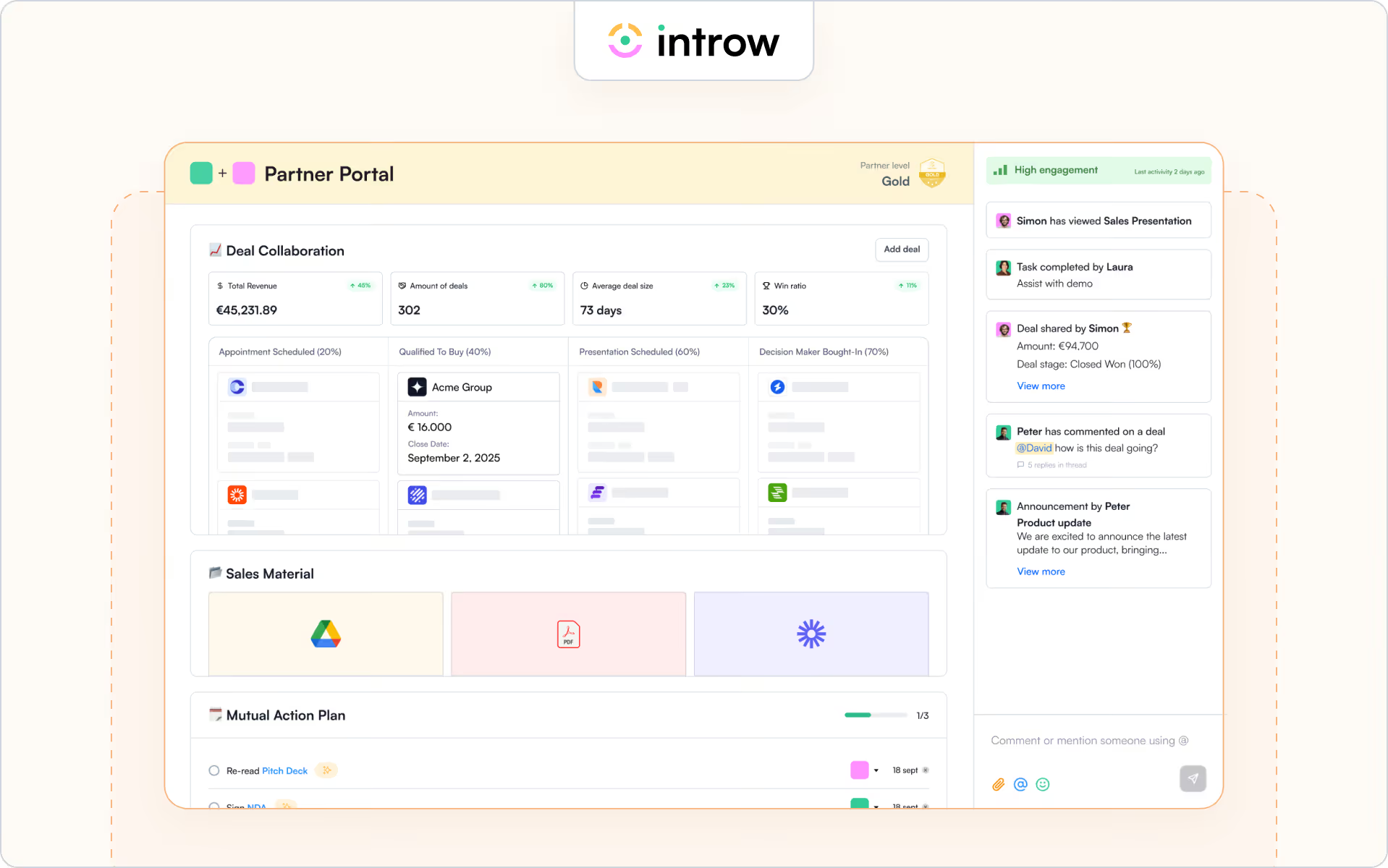
Das Partner-LMS von Introw wurde für B2B-Teams entwickelt, die Partnerschulungen, Zertifizierungsprogramme und Partnerengagement wünschen, um die Leistung und den Umsatz ihrer Partner direkt zu unterstützen, anstatt in einem isolierten Lernmanagementsystem zu arbeiten.
Am besten geeignet für:
Teams HubSpot Salesforce HubSpot verwenden und schnelle externe Schulungen, eine übersichtliche Zertifizierungsverwaltung und Einblick in den Fortschritt der Partner in Bezug auf die Pipeline benötigen.
Warum es heraussticht:
Introw konzentriert sich auf Geschwindigkeit, Relevanz und tatsächliche Akzeptanz. Anstatt Schulungsprogramme von Grund auf neu zu erstellen, wandelt ein KI-Agent Ihre vorhandenen Website-Inhalte, Partnerportal-Dokumente oder Vertriebsmaterialien innerhalb weniger Minuten in strukturierte Kurse um. Sie können diesen Ablauf in der Funktionsübersicht sehen.
Wichtigste Features:
- KI-gestützte Kurserstellung mit Modulen, Quizfragen und Bewertungen
- Ein-Klick-Zertifizierungstools, um sicherzustellen, dass nur zertifizierte Partner bestimmte Lösungen verkaufen
- Massenregistrierung von Partnern nach Partnerstufe, Region oder Partnergruppe
- Automatische Erinnerungen und Ankündigungen per E-Mail und Slack, zum Beispiel:„Das Unternehmen X hat Sie für die Fortgeschrittenen-Produktschulung 2026 angemeldet.“
- Fortschrittsverfolgung und Engagement-Daten abgestimmt auf Geschäfte und Partnerleistung
Beachten Sie:
Introw funktioniert am besten, wenn Partnerschulungen, Partnerunterstützung und Partnerbindung Teil derselben CRM-First-Initiative sind.
Integrationen:
Native Integrationen mit Salesforce, HubSpotund Slack, wobei die Daten der Partner-LMS in die umfassendere Introw-Plattform einfließen.
Weitere Informationen: Entdecken Sie das Partner-LMS oder Fordern Sie eine Demo an.
2. TalentLMS

TalentLMS ist ein Lernmanagementsystem, das häufig als Partner-Schulungssoftware von Teams verwendet wird, die externe Schulungen ohne große Einarbeitungszeit anbieten möchten. Es wird in der Regel für die unkomplizierte Einarbeitung und Schulung von Partnern gewählt.
Am besten geeignet für:
Teams in KMU und mittelständischen Unternehmen, die eine einfache Möglichkeit benötigen, Partner-Schulungsprogramme, Vertriebsschulungen und grundlegende Zertifizierungsprogramme durchzuführen.
Warum es heraussticht:
TalentLMS ist einfach zu bedienen und schnell einzurichten. Teams können Kurse erstellen, Schulungsmaterialien organisieren und On-Demand-Schulungen mit minimalem Verwaltungsaufwand durchführen.
Partner-Schulungsfunktionen:
- Getrennte Lernbereiche für verschiedene Partnergruppen
- Kurserstellung für Produktwissen und Verkaufstraining
- Zertifizierungen, Bewertungen und Fortschrittsverfolgung
Beachten Sie:
TalentLMS eignet sich gut für die Durchführung von Schulungen, aber eine tiefere CRM-Transparenz und erweiterte Analysen der Partnerleistung liegen in der Regel außerhalb der Plattform. An dieser Stelle beginnen Teams oft, sich mehr Gedanken über die Partnerbindung über die reine Schulung hinaus.
3. Thinkific

Thinkific ist eine Plattform, die häufig genutzt wird, um Partnerfortbildungen in Markenakademien und Zertifizierungszentren zu bündeln. Sie wird manchmal als Partner-Schulungssoftware ausgewählt, wenn der Schwerpunkt eher auf Präsentationen und strukturierten Lernerfahrungen als auf tiefgreifenden Partneraktivitäten liegt.
Am besten geeignet für:
Produktorientierte oder Marketing-Teams, die Partnerakademien, Zertifizierungsprogramme oder externe Schulungsportale aufbauen.
Warum es heraussticht:
Thinkific bietet ausgefeilte Kurs- und Landingpage-Erlebnisse mit integrierter Unterstützung für Kohorten, Quizze und Zertifikate.
Partner-Schulungsfunktionen:
- Kurserstellung für Partnerfortbildungen und Produktwissen
- Zertifikate und Bewertungen
- Gemeinschafts- und kohortenbasiertes Lernen
Beachten Sie:
Thinkific ist auf externe Bildung ausgerichtet. Erweiterte Workflows für die Partner-Onboarding, CRM-Attribution und die Nachverfolgung der Partnerleistung erfordern in der Regel Add-ons oder Integrationen.
4. Intellum

Intellum ist eine Lernplattform für Unternehmen, die für groß angelegte Schulungsprogramme für Kunden und Partner genutzt wird. Sie wurde entwickelt, um komplexe Schulungen in einem breiten Partner-Ökosystem zu unterstützen.
Am besten geeignet für:
Unternehmensteams, die strukturierte Partner-Schulungsprogramme in großem Umfang durchführen.
Warum es heraussticht:
Intellum bietet solide Lernerfahrungen, fortschrittliche Analysen und Erweiterbarkeit für komplexe Schulungsumgebungen.
Partner-Schulungsfunktionen:
- Externe Zielgruppen und Partnerportale
- Zertifizierungsprogramme und Veranstaltungen
- Berichterstattungsinstrumente für die Effektivität von Schulungen
Beachten Sie:
Intellum ist ein System für Unternehmen. Der Implementierungsaufwand und die CRM-Anpassung für die Leistung der Partner sollten frühzeitig bewertet werden.
5. 360Learning
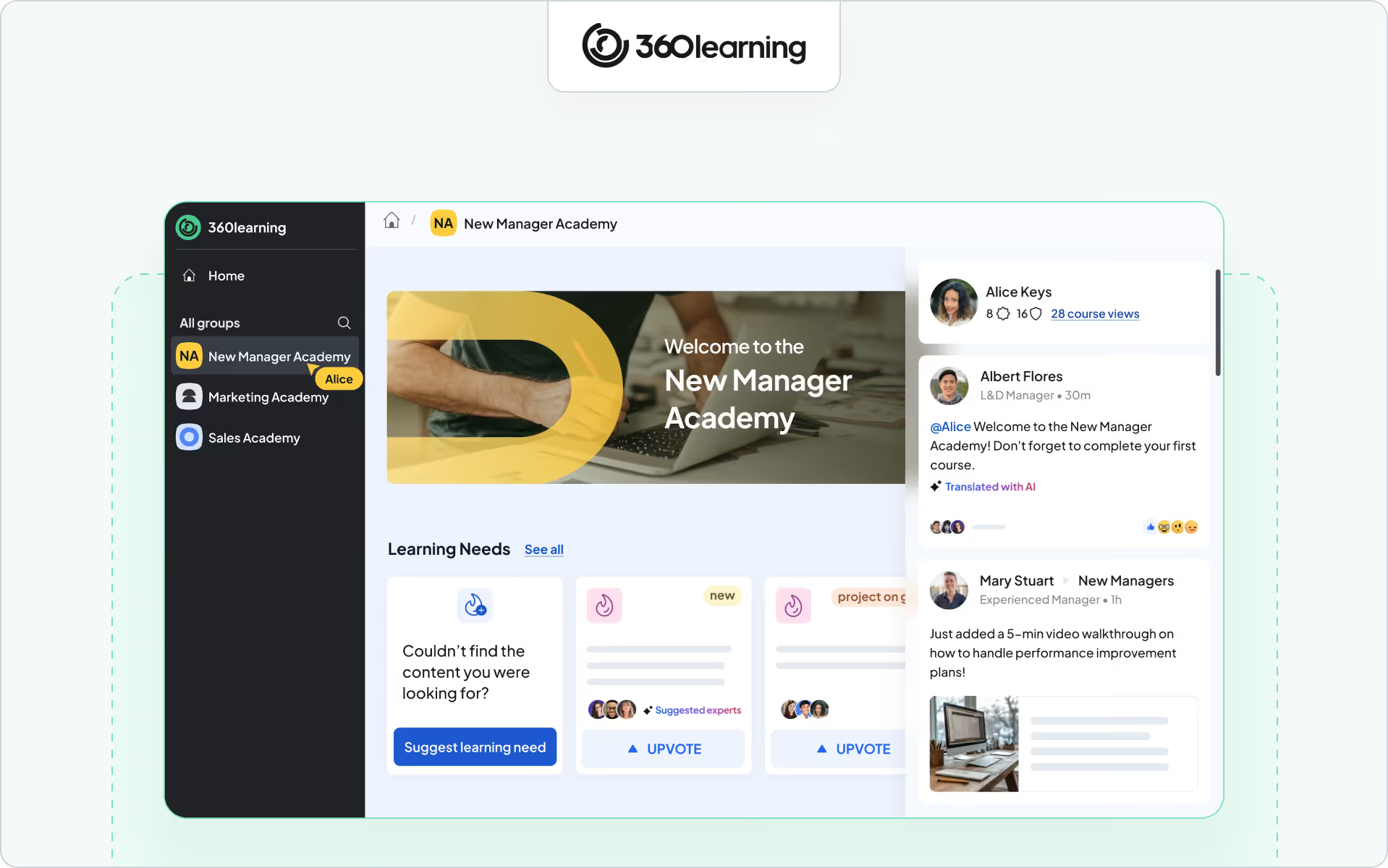
360Learning konzentriert sich auf kollaboratives und peer-gesteuertes Lernen. Es wird manchmal für Partner-Enablement-Schulungen verwendet, bei denen gemeinsames Wissen und soziales Lernen eine wichtige Rolle spielen.
Am besten geeignet für:
Teams, die Partner suchen, um gemeinsam Inhalte zu erstellen und voneinander zu lernen.
Warum es heraussticht:
360Learning legt den Schwerpunkt auf soziales Lernen, Peer Reviews und die gemeinsame Erstellung von Kursen.
Partner-Schulungsfunktionen:
- Externe Partnergruppen
- Zertifizierungen und Blended Learning
- Soziale und von Nutzern generierte Inhalte
Beachten Sie:
Das kollaborationsorientierte Modell funktioniert am besten mit einer klaren Governance, insbesondere wenn es auf externe Partner angewendet wird.
6. Articulate 360

Articulate 360 ist eher eine Suite zur Erstellung von Inhalten als ein vollständiges Lernmanagementsystem. Es wird oft mit Schulungssoftware von Partnern kombiniert, um umfangreiche Kurse zu erstellen.
Am besten geeignet für:
Teams, die hochwertige SCORM- oder xAPI-Schulungsinhalte erstellen möchten.
Warum es heraussticht:
Die Tools von Articulate, wie Storyline und Rise, werden häufig zur Erstellung responsiver, interaktiver Schulungsmaterialien verwendet.
Partner-Schulungsfunktionen:
- Erweiterte Kurserstellung für Produktwissen und Verkaufstraining
- SCORM- und xAPI-Unterstützung
Beachten Sie:
Articulate befasst sich ausschließlich mit der Erstellung von Inhalten. Sie benötigen ein separates LMS, um Schulungen durchzuführen, Zertifizierungen zu verwalten und den Fortschritt Ihrer Partner zu verfolgen.
7. LearnUpon

LearnUpon ist ein LMS, das für den erweiterten Einsatz in Unternehmen entwickelt wurde, einschließlich Schulungen für Kunden und Partner. Es wird häufig verwendet, wenn Teams klare Verwaltungsfunktionen für verschiedene Zielgruppen benötigen.
Am besten geeignet für:
Teams schulen Kunden und Partner über strukturierte Portale.
Warum es heraussticht:
LearnUpon bietet eine übersichtliche Benutzeroberfläche und eine Multi-Portal-Konfiguration für verschiedene Zielgruppen.
Partner-Schulungsfunktionen:
- Separate Lernportale für Partnergruppen
- Lernpfade und Zertifizierungen
- Berichterstattung über die Durchführung und den Fortschritt der Schulungen
Beachten Sie:
Für Teams, die sich auf die Vertriebsleistung der Vertriebskanäle oder die Analyse der Partner auf CRM-Ebene konzentrieren, sollte die Integrationsintensität überprüft werden.
8. Skilljar

Skilljar ist eine Plattform, die sich auf die Schulung von Kunden und Partnern konzentriert und häufig von Teams genutzt wird, die strukturierte Zertifizierungs- und Compliance-orientierte Schulungsprogramme durchführen.
Am besten geeignet für:
Teams, die Partnerfortbildungen in großem Umfang mit Schwerpunkt auf Zertifizierungen und Berichterstattung durchführen müssen.
Warum es heraussticht:
Skilljar wurde speziell für externe Schulungen entwickelt und bietet leistungsstarke APIs und Analysen für Bildungsprogramme.
Partner-Schulungsfunktionen:
- Externe Partnerportale
- Zertifizierungsprogramme und Abzeichen
- Berichterstattungsinstrumente für die Effektivität von Schulungen
Beachten Sie:
Skilljar konzentriert sich auf die Bereitstellung von Bildungsangeboten. Für Partner-Engagement-Abläufe und die Nachverfolgung der Partnerleistung auf CRM-Ebene sind möglicherweise zusätzliche Integrationen erforderlich.
9. Docebo
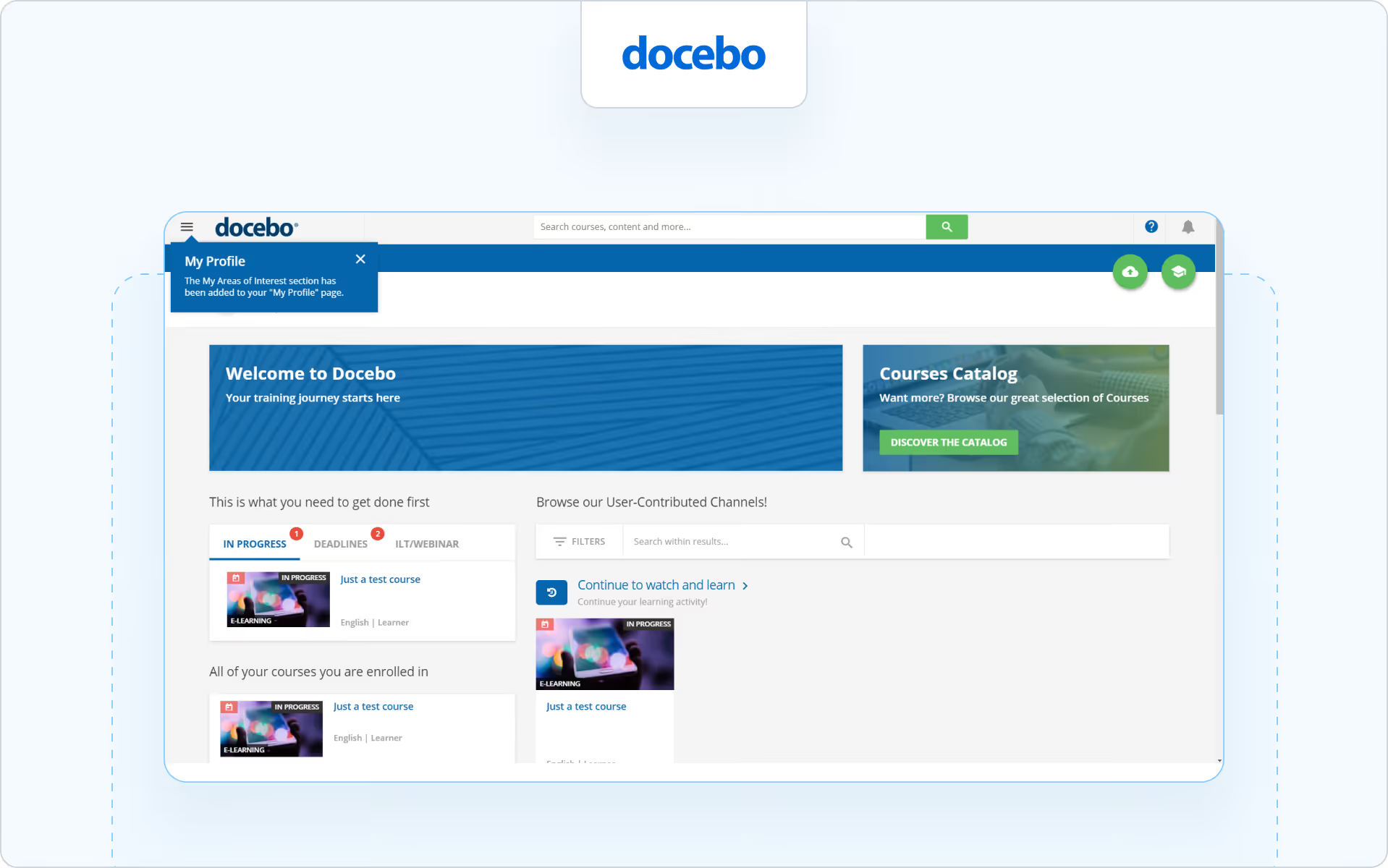
Docebo ist ein Lernmanagementsystem für Unternehmen, das für umfangreiche Unternehmensschulungen, einschließlich Kunden und Partner, verwendet wird. Es wird manchmal als Partner-Schulungssoftware für große, globale Programme ausgewählt.
Am besten geeignet für:
Unternehmen, die komplexe Schulungsprogramme für Partner in verschiedenen Regionen verwalten.
Warum es heraussticht:
Docebo bietet KI-gestützte Content-Kuration und ein breites Ökosystem an Integrationen.
Partner-Schulungsfunktionen:
- Portale für externe Partner mit unterschiedlichen Zielgruppen
- Zertifizierungsmanagement und Automatisierung
- Erweiterte Analysen und Berichterstellung
Beachten Sie:
Die Umsetzung kann komplex sein. Teams sollten frühzeitig die CRM-Ausrichtung und die Sichtbarkeit der Partnerleistung überprüfen.
10. Litmos
Litmos ist ein LMS, das häufig in Umgebungen mit hohen Compliance-Anforderungen und großen Partnernetzwerken eingesetzt wird.
Am besten geeignet für:
Unternehmen, die eine konsistente Schulungsdurchführung und Compliance-Überwachung für globale Partner benötigen.
Warum es heraussticht:
Litmos bietet Compliance-Tools, Bewertungen und eine große Bibliothek mit vorgefertigten Inhalten.
Partner-Schulungsfunktionen:
- Externe Lernende und Partnergruppen
- Zertifizierungen und Bewertungen
- Berichterstattung über den Abschluss der Schulung
Beachten Sie:
Die Benutzererfahrung kann sich eher traditionell anfühlen. Die Segmentierung der Partner und die Flexibilität der Interaktion sollten überprüft werden.
11. LMS absorbieren
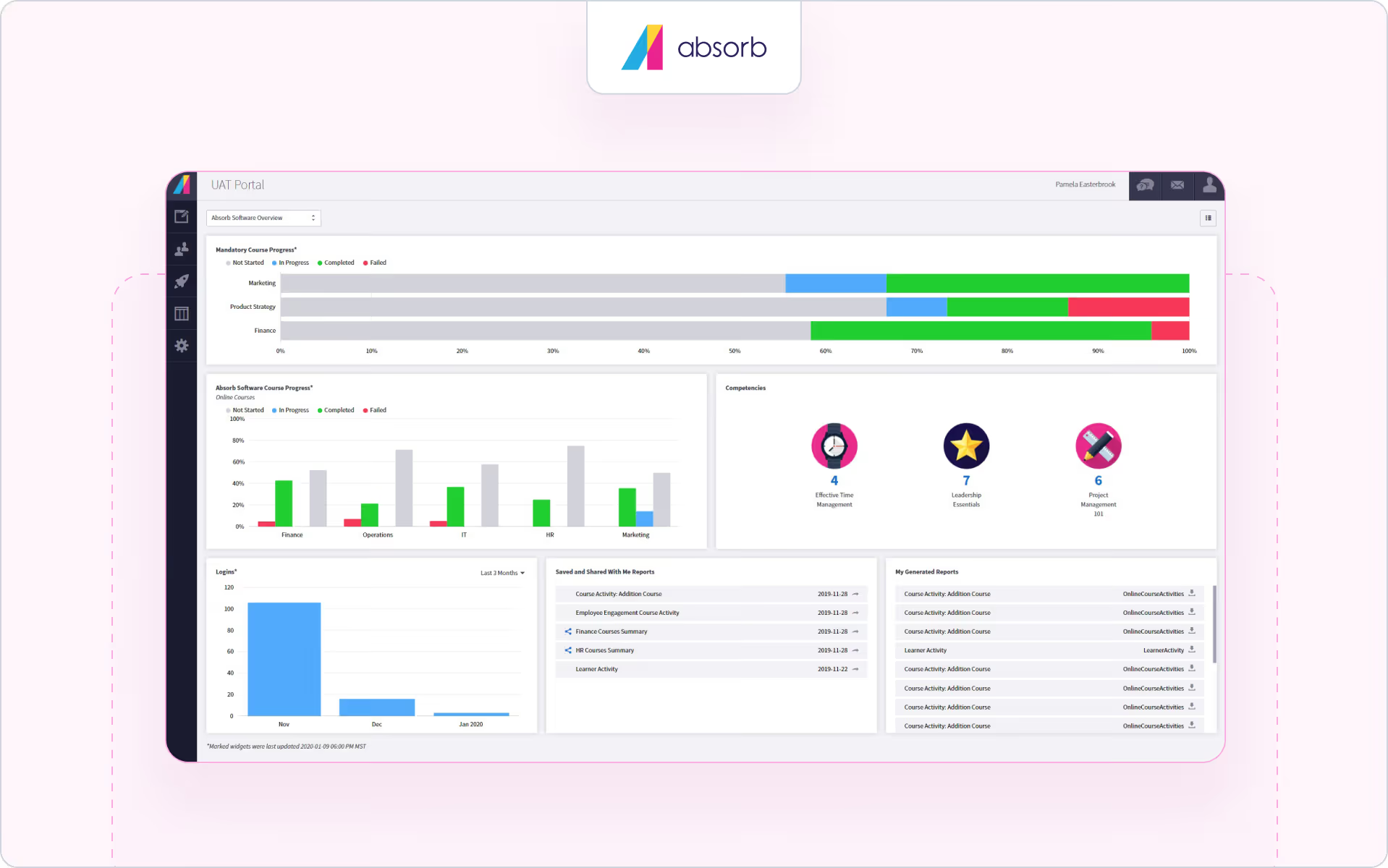
Absorb LMS ist ein LMS, das für erweiterte Unternehmensschulungen, einschließlich Partner- und Kundenschulungen, entwickelt wurde.
Am besten geeignet für:
Teams, die flexible Portale und leistungsstarke Berichterstellung für externe Zielgruppen wünschen.
Warum es heraussticht:
Absorb LMS kombiniert konfigurierbare Lernportale mit soliden Analyse- und Automatisierungsoptionen.
Partner-Schulungsfunktionen:
- Multi-Tenant-Portale für Partnergruppen
- Zertifizierungsprogramme und Automatisierung
- Berichterstattung über Fortschrittsverfolgung und Schulungsdurchführung
Beachten Sie:
Für Interaktionen außerhalb des LMS, wie E-Mail- oder Slack Updates, sind möglicherweise Integrationen erforderlich.
12. Gedankenspielerei

Mindtickle ist eine Plattform zur Verkaufsvorbereitung, die manchmal für Schulungen zur Partnerunterstützung eingesetzt wird, insbesondere wenn der Schwerpunkt eher auf der Verkaufsabwicklung als auf einer umfassenden Partnerausbildung liegt.
Am besten geeignet für:
Die Teams konzentrierten sich auf die Verkaufsbereitschaft der Partner, das Pitching und die Zertifizierung im Zusammenhang mit Vertriebsaktivitäten.
Warum es heraussticht:
Mindtickle legt den Schwerpunkt auf Coaching, Rollenspiele und Bereitschaftsbewertung, um die Vertriebsleistung zu unterstützen.
Partner-Schulungsfunktionen:
- Vertriebskanäle und Zertifizierungen von Partnern
- Inhalt, Praxis und Bewertungen
- Bereitschaftsbewertung und Coaching-Workflows
Beachten Sie:
Mindtickle ist bereitstellungsorientiert. Die meisten Teams kombinieren es mit einem PRM oder LMS, um ein breiteres Spektrum an Partner-Onboarding und -Operationen abzudecken.
13. Lernwelten
LearnWorlds ist eine Plattform für externe Bildungsangebote, die häufig zum Aufbau von Markenakademien und Zertifizierungszentren genutzt wird.
Am besten geeignet für:
Teams, die Partner-Schulungsprogramme mit starkem Branding und optionaler Monetarisierung starten möchten.
Warum es heraussticht:
LearnWorlds bietet flexible Kurserstellung, interaktive Inhalte und ausgefeilte Lernerfahrungen.
Partner-Schulungsfunktionen:
- Kurserstellung für Partnerfortbildungen und Produktwissen
- Zertifizierungen, Bewertungen und Lernpfade
- Markenportale für externe Partner
Beachten Sie:
Partnerspezifische Governance, Segmentierung und CRM-Transparenz erfordern in der Regel zusätzliche Einstellungen oder Integrationen.
14. Eckpfeiler Kunde & Partner LMS

Cornerstone Customer & Partner LMS unterstützt die Schulung von Kunden und Partnern durch markenspezifische externe Lernerfahrungen, die auf verschiedene Regionen, Zielgruppen und Partner-Ökosysteme skalierbar sind.
Am besten geeignet für:
Große Unternehmen, die Cornerstone bereits nutzen und die Schulungen für Kunden und Partner durch markenspezifische externe Lernerfahrungen erweitern möchten.
Warum es heraussticht:
Cornerstone konzentriert sich auf skalierbares externes Lernen mit starker Governance, wodurch die Verwaltung von Schulungen in komplexen Partner-Ökosystemen und Regionen vereinfacht wird.
Partner-Schulungsfunktionen:
- Markenspezifische externe Lernportale für Partner und Kunden
- Zertifizierungen, Bewertungen und strukturierte Lernprozesse
- Berichterstattung und Analysen über große Partnernetzwerke hinweg
Beachten Sie:
Cornerstone ist für Unternehmen ausgelegt. Die Einrichtung und Anpassung kann mehr Zeit in Anspruch nehmen, und Teams sollten die Benutzererfahrung der Partner während der Implementierung genau evaluieren.
15. Tovuti LMS
Tovuti LMS ist ein flexibles Lernmanagementsystem für Kunden- und Partnerschulungen, dessen Schwerpunkt eher auf konfigurierbaren Lernerfahrungen als auf starren Arbeitsabläufen liegt.
Am besten geeignet für:
Teams, die ein anpassbares LMS suchen, um Partner-Schulungsprogramme, Partner-Onboarding und externe Schulungen ohne die Komplexität auf Unternehmensebene zu unterstützen.
Warum es heraussticht:
Tovuti bietet eine Vielzahl von Konfigurationsoptionen für Kurse, Portale und Lernerfahrungen, wodurch es einfacher wird, Schulungen an verschiedene Partnergruppen und Anwendungsfälle anzupassen.
Partner-Schulungsfunktionen:
- Markenbezogene Lernportale für externe Partner
- Kurserstellung, Bewertungen und Zertifizierungen
- Lernpfade und Interaktionsfunktionen
Beachten Sie:
Tovuti bietet Flexibilität, aber Teams sollten prüfen, inwieweit Berichterstattung, CRM-Transparenz und die Nachverfolgung der Partnerleistung mit ihren allgemeinen Partneraktivitäten übereinstimmen.
Es gibt keine LMS-Software, die für jedes Team gleichermaßen ideal ist. Wichtig ist, ein System zu wählen, das zu Ihrer tatsächlichen Arbeitsweise passt, und nicht nur zu den Funktionen, die auf dem Papier stehen.
Im nächsten Abschnitt werden die unverzichtbaren Bewertungskriterien aufgeführt, auf die sich SaaS-Teams beim Vergleich von LMS-Softwarepartnern konzentrieren sollten, von der Kurserstellung und Zertifizierungen bis hin zu Engagement und CRM-Transparenz.
Unverzichtbare Bewertungskriterien (SaaS-Channel-Perspektive)
Wenn Sie die Auswahl an LMS-Softwarepartnern eingrenzen, wird die Entscheidung in der Regel an dieser Stelle klarer.
Über die Liste der Funktionen hinaus ist es wichtig, dass ein System die Schulung von Partnern in großem Umfang unterstützt, sich in Ihre bestehende Struktur einfügt und auch dann weiter funktioniert, wenn Ihr Partner-Ökosystem wächst, insbesondere bei der Schulung von Vertriebspartnern.
Die folgende Tabelle zeigt, wie SaaS-Teams in der Regel LMS-Tools von Partnern bewerten, wenn sie Optionen wie ein LMS für Vertriebspartner oder die beste LMS-Software für Partnerschulungen für ihr Modell vergleichen.
Zusammengenommen erleichtern diese Kriterien den Vergleich eines Partner-LMS, eines Schulungspartner-LMS oder des besten LMS für Partnerschulungen, ohne Funktionen überzubewerten, die langfristig keine Rolle spielen.
Wenn die Grundlage stimmt, fördert die Partnerschulung das Wissen der Partner, ihre Glaubwürdigkeit und das das Partnerschaftsmarketing statt isoliert zu agieren.
Nach Durchsicht der Kriterien wird leichter verständlich, warum manche Teams über ein eigenständiges Lernmanagementsystem hinausblicken und sich für eine Plattform entscheiden, die speziell für das Lernen von Partnern entwickelt wurde.
Warum Teams Introw für das Partner-Lernen wählen (in 90 Sekunden)
Schaffen Sie partnerschaftliches Lernen, ohne Teams zu verlangsamen
Die meisten Teams verfügen bereits über die richtigen Inhalte; diese sind lediglich über Websites, Dokumente und Partnerportale verteilt.
Teams wie Factorial haben sich vom manuellen Neuaufbau von Schulungen verabschiedet, indem sie vorhandene Materialien in strukturierte Kurse mit Modulen und Quizfragen umgewandelt haben. Dadurch lassen sich Schulungen für Partner leichter starten und aktualisieren, wenn sich das Unternehmen weiterentwickelt.
Nutzen Sie Zertifizierungen, um die Qualität zu schützen, nicht um Reibungsverluste zu verursachen.
Introw unterstützt Zertifikate, Ablaufdaten und geschützte Tracks, damit Fortbildungen und Verkaufsaktivitäten auf die Bereitschaft der Partner abgestimmt bleiben.
Die richtigen Partner zum richtigen Zeitpunkt gewinnen
Mit Introw können Teams Partner nach Typ, Stufe oder Region segmentieren und sie in großen Mengen registrieren, wodurch die Schulungen relevant bleiben, ohne dass zusätzlicher Betriebsaufwand entsteht.
Halten Sie Ihre Partner auf dem Laufenden, ohne dass sie ein weiteres Portal überprüfen müssen.
Eines der größten Hindernisse für das Lernen von Partnern ist die Abhängigkeit von Portalen, die Partner nicht regelmäßig besuchen.
Cubbit und Factorial wurden stärker angenommen, nachdem die Schulungskommunikation in die Kanäle verlagert wurde, die die Partner bereits nutzen, wobei Ankündigungen und Erinnerungen per E-Mail und Slack über einen weiteren Login versendet wurden.
Lernen mit dem verbinden, was wichtig ist
Schulungen sind viel nützlicher, wenn sie nicht isoliert stattfinden. Für Teams wie Coder war es unerlässlich zu wissen, welche Partner geschult und bereit für den gemeinsamen Vertrieb waren.
Durch die Abstimmung der Daten zu Kursabschlüssen und Zertifizierungen mit Salesforce HubSpot hilft Introw Teams dabei, die Bereitschaft ihrer Partner im Kontext der Pipeline und des Umsatzes zu verstehen.
Wenn Sie kurz vor einer Entscheidung stehen, können ein paar einfache nächste Schritte helfen, alles zusammenzufügen:
- Erfassen Sie Ihre aktuellen Defizite
Finden Sie heraus, wo das Lernen Ihrer Partner derzeit ins Stocken gerät, sei es bei der Kurserstellung, der Einarbeitung neuer Partner, der Einbindung oder der Transparenz hinsichtlich der Bereitschaft Ihrer Partner. - Überprüfen Sie Ihre Kriterien auf Herz und Nieren
Sehen Sie sich die oben genannten Bewertungskriterien noch einmal an und erstellen Sie eine Auswahlliste mit den Fähigkeiten, die für Ihr Partner-Ökosystem am wichtigsten sind, und nicht nur mit denen, die auf einer Liste mit Funktionen gut aussehen. - Sehen Sie sich den gesamten Workflow an
Bevor Sie sich festlegen, sollten Sie sich vergewissern, dass Sie verstehen, wie Partner Learning in Ihr bestehendes CRM, Ihre Partneraktivitäten und Ihre Umsatzentwicklung passt.
Jetzt ist es an der Zeit, dass Sie sehen, wie das in der Praxis funktioniert.
Fordern Sie eine Demo an und durchlaufen Sie den gesamten Lernprozess für Partner.
Die 15 wirkungsvollsten Alternativen für ein effektives Partnermanagement im Jahr 2026
Impact ist eine Partnerschaftsmanagement-Plattform, die in erster Linie für Affiliate-, Influencer- und Performance-Marketing-Programme entwickelt wurde.
Es kann ein nützliches Tool sein, wenn Ihr Unternehmen stark auf Affiliates und Influencer angewiesen ist, um Umsatz zu generieren.
Wenn Ihr Partnerprogramm jedoch einen größeren Umfang hat – beispielsweise weil Ihre Strategie stärker auf Vertriebskanäle ausgerichtet ist –, profitieren Sie von einer umfassenderen Plattform für das Partner Relationship Management (PRM).
Sind Sie bereit, Ihr Partnermanagement in diesem Jahr auf ein neues Level zu heben? Lesen Sie weiter und entdecken Sie unsere 15 besten Alternativen zu Impact.com im Jahr 2026.
Warum sollte man 2026 eine Impact-Alternative in Betracht ziehen?
Als umfassendes Performance-Marketing-Tool eignet sich Impact hervorragend für Affiliate- und Influencer-Programme, da es genau für diesen Zweck entwickelt wurde.
Es gibt jedoch vier wichtige Bereiche, in denen SaaS diese Online-Plattform übertrifft.
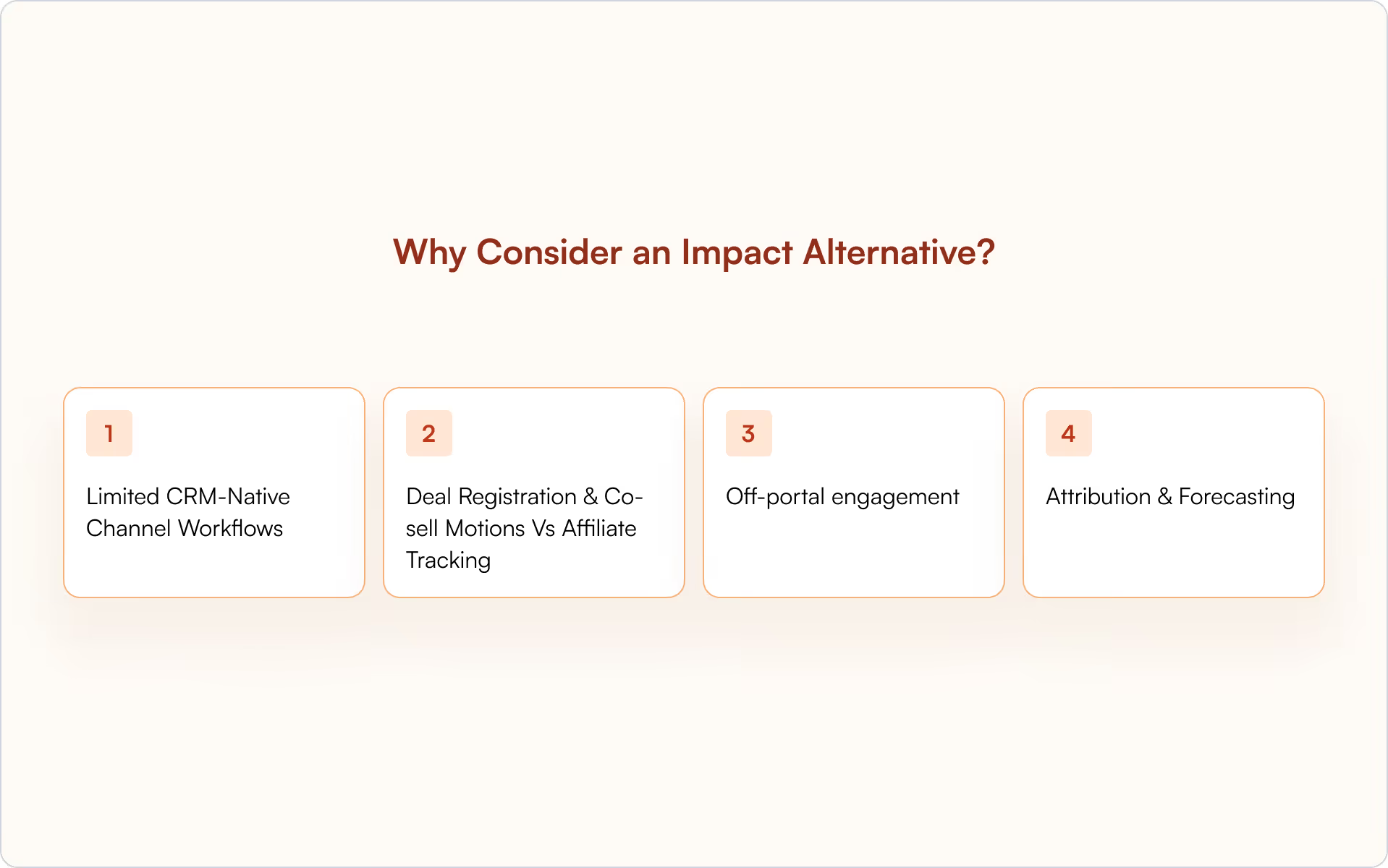
1. Begrenzte CRM-native Kanal-Workflows
Moderne SaaS-Plattformen wie Introw arbeiten auf Basis Ihres CRM und ermöglichen eine nahtlose Protokollierung, Nachverfolgung und Berichterstellung direkt in Salesforce HubSpot.
Diese tiefe Einbettung bietet Vertriebsteams und all ihren Partnern Echtzeit-Transparenz, sodass kein Plattformwechsel mehr erforderlich ist.
Impact ist jedoch browser- und app-basiert und erfordert, dass Teams und ihre Partner weitgehend außerhalb des CRM arbeiten, was zu Reibungsverlusten in den Channel-Workflows führen kann.
2. Deal-Registrierung und Co-Sell-Anträge vs. Affiliate-Tracking
Impact ist zwar zweifellos stark im Bereich Affiliate-Tracking und Provisionsmanagement, unterstützt jedoch Deal-Registrierung und Co-Sell-Aktivitäten nicht vollständig.
Das Tracking von Affiliate-Links konzentriert sich in erster Linie auf die Klick-Attribution, aber die SaaS-Funktionalität geht noch weiter und ermöglicht gemeinsame Verkaufsaktivitäten, eine sinnvollere Zusammenarbeit und eine verbesserte Transparenz der Pipeline.
Probieren Sie eine moderne SaaS-Plattform aus, und Sie werden in der Regel eine strukturierte Pipeline für die Registrierung von Geschäften vorfinden, in der Partner Opportunities einreichen, mit Vertriebsteams zusammenarbeiten und den Fortschritt durch den Trichter verfolgen können.
3. Engagement außerhalb des Portals
Impact stützt sich bei der Kommunikation mit seinen Partnern stark auf sein Portal.
Im Gegensatz dazu holen moderne SaaS-Lösungen die Partner dort ab, wo sie bereits arbeiten – beispielsweise E-Mail, Slack oder andere Tools für die Zusammenarbeit.
Darüber hinaus ist diese Off-Portal-Interaktion im Jahr 2026 weitgehend automatisiert, sodass Aktualisierungen zu Vertragsphasen, Genehmigungen oder Zahlungen in die täglichen Arbeitsabläufe der Partner integriert werden.
Und wenn es darum geht, Zeit zu sparen und das Engagement zu steigern, gibt es nichts Besseres als automatisierte Kundenansprache.
4. Zuordnung und Prognose
Impact verfolgt Conversions und Klicks, aber SaaS-Plattformen bieten in der Regel robustere Attributions- und Prognosefunktionen als dies.
Tatsächlich verbinden SaaS-Tools die Aktivitäten der Partner direkt mit den Pipeline-Kennzahlen und machen so deutlich, wie sich jeder einzelne Partner auf den Umsatz auswirkt.
Dies erleichtert die strategische Planung und Prognose erheblich.
➡️ Aus diesem Grund lohnt es sich, eine CRM-orientierte Alternative zu Impact in Betracht zu ziehen, wenn Ihre B2B-Partnerschaften Empfehlungen, Wiederverkäufer oder Co-Selling umfassen. Erfahren Sie hier mehr über Introw oder lesen Sie weiter, um weitere Informationen zum Kauf der besten Alternative zu erhalten.
Was man 2026 bei einer Impact-Alternative beachten sollte
Erwägen Sie, Impact gegen ein modernes PRM auszutauschen?
Hier sind die Punkte, auf die Sie bei der Auswahl Ihres nächsten PRM achten sollten.
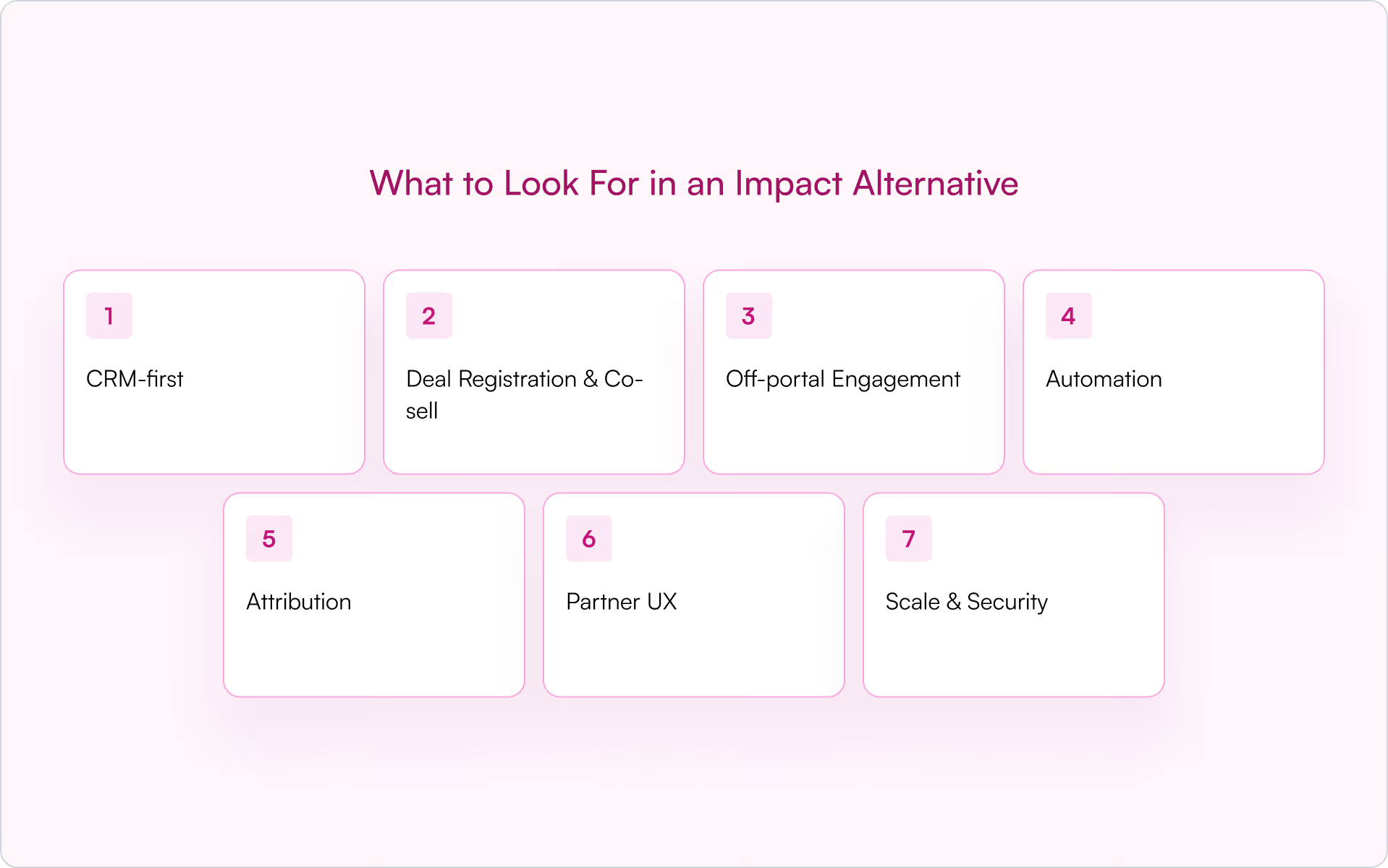
- CRM-first: Suchen Sie nach einem PRM, das sich direkt in Ihr CRM integrieren lässt, sodass Partnerdaten, Felder und Berichte nativ in Salesforce HubSpot verfügbar sind.
- Deal-Registrierung und Co-Selling: Ihr neues PRM sollte eine nahtlose Deal-Registrierung und Co-Selling unterstützen, indem es eine gemeinsame Pipeline, gegenseitige Aktionspläne und Konfliktvermeidung ermöglicht.
- Engagement außerhalb des Portals: Wenn Sie Ihre Partner dazu zwingen, sich jedes Mal, wenn sie ein kurzes Update benötigen, in ein Portal einzuloggen, werden Sie schnell das Interesse Ihrer Partner verlieren. Setzen Sie stattdessen auf ein PRM, das automatisierte Updates und Benachrichtigungen über die Kanäle bereitstellt, die Ihre Partner bereits nutzen, beispielsweise E-Mail oder Slack.
- Automatisierung: Automatisierung ist im Jahr 2026 ein Muss. Diese Tools helfen Ihnen dabei, Kampagnen zu starten und zu optimieren, Partner zu gewinnen, Partner zu binden, Erinnerungen an Aktivitäten zu versenden und sich viel schneller und mit viel weniger manuellem Aufwand als in der Vergangenheit auf QBRs vorzubereiten.
- Attribution: Stellen Sie sicher, dass Ihre neue Plattform eine klare Attribution bietet, vom Partnerengagement bis hin zu den Auswirkungen auf die Pipeline und den Umsatz.
- Partner-UX: Ihr PRM muss eine reibungslose Erfahrung bieten und die Benutzererfahrung für Ihre Partner so einfach wie möglich gestalten. Achten Sie auf Funktionen wie einen einfachen Einreichungsprozess, einfachen Zugriff auf Markenressourcen und Self-Service-Tools.
- Skalierbarkeit und Sicherheit: Mit dem Wachstum Ihres Partnerprogramms müssen Sie in der Lage sein, verschiedene Partnerebenen, Regionen und -typen einfach zu verwalten. Wählen Sie ein PRM mit hoher Sicherheit und rollenbasierten Zugriffskontrollen.
Die 15 besten Alternativen für SaaS-Partnerprogramme (2026)
Wenn Sie Impact bisher verwendet haben, aber gerne wissen möchten, was andere Alternativen Ihnen bieten könnten, sind Sie hier genau richtig.
Hier ist unsere Auswahl der 15 besten Impact-Alternativen, die 2026 auf dem Markt erhältlich sind.
1) Introw
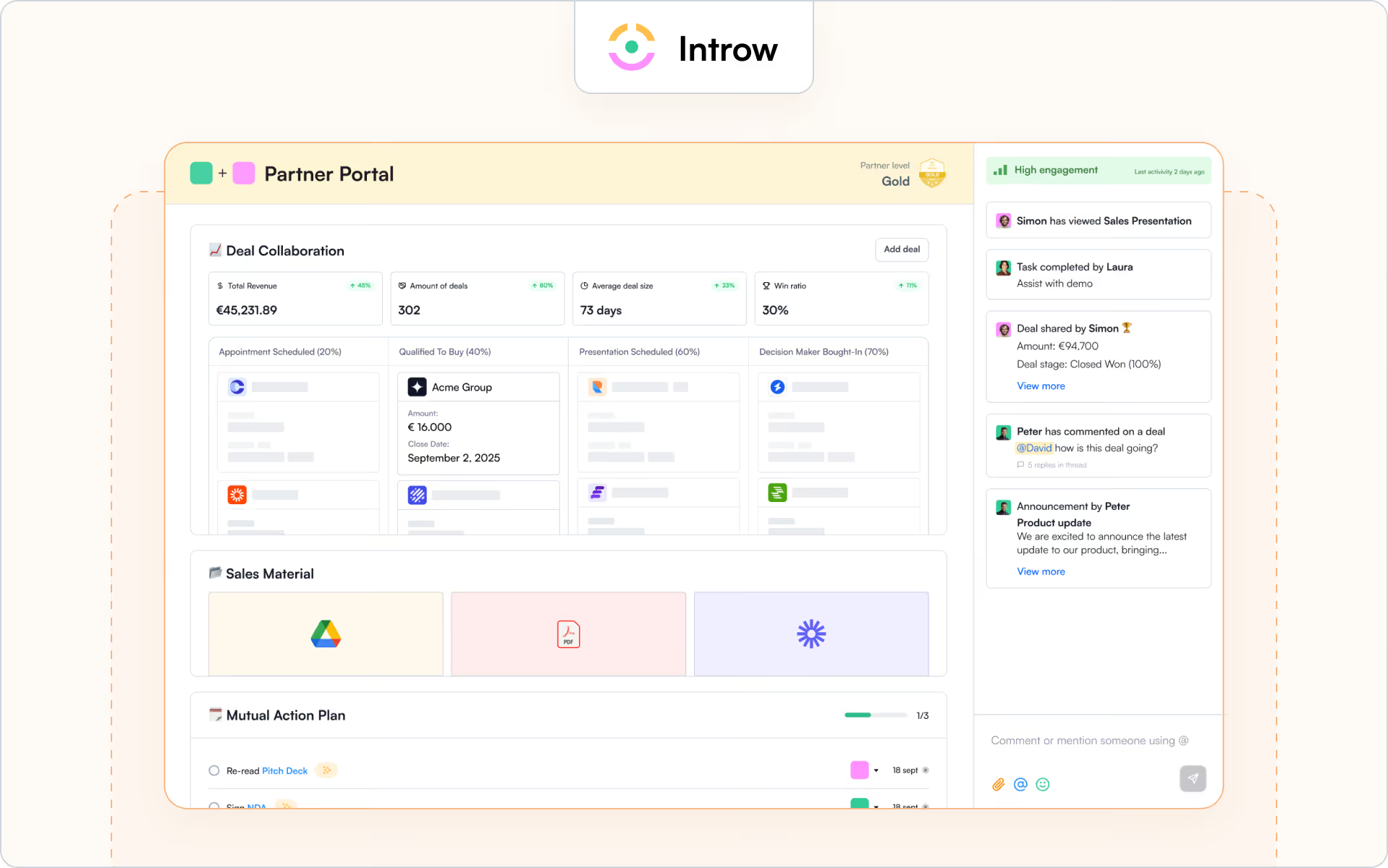
Introw ist ein CRM-orientiertes PRM-System, das speziell für SaaS entwickelt wurde. Es eignet sich perfekt für Teams, die bereits Salesforce HubSpot nutzen und in großem Umfang Empfehlungs-, Wiederverkäufer- und/oder Co-Selling-Programme durchführen.
Warum sollten Sie also Introw gegenüber Impact den Vorzug geben?
Introw wurde speziell für Vertriebspartnerschaften entwickelt – mit CRM-nativen, partnerorientierten Workflows, die den gemeinsamen Vertrieb und das gemeinsame Marketing in Ihrem gesamten Ökosystem optimieren.
Es integriert die Registrierung von Geschäften, Co-Sell-Updates und die Nachverfolgung von Interaktionen direkt in Ihr CRM, während Updates außerhalb des Portals per E-Mail und Slack die Partner auf dem Laufenden halten, ohne dass sie sich in ein anderes Tool einloggen müssen.
Wichtige Funktionen:
- Kampagnenmanagement-Funktionen
- Analyse der Partnerinteraktion (Besuche, Nutzung von Inhalten, Öffnungen/Klicks)
- Automatisierung der Kundenansprache einschließlich automatisierter Deal-Updates
- White-Label-Erlebnisse
- Rollenbasierte Dashboards
- Integriert mit Salesforce, HubSpot, Slack
- Reaktionsschneller Kundensupport
🚀Sind Sie bereit, Ihr Partnerprogramm auf die nächste Stufe zu heben? Fordern Sie hier eine Introw-Demo an.
2) PartnerStack

Möchten Sie Affiliate-Programme, Empfehlungsmarketing und Reseller-Partner kombinieren und gleichzeitig Ihre Marktpräsenz ausbauen?
Werfen Sie einen Blick auf PartnerStack.
Im Gegensatz zu Impact, das in erster Linie auf Affiliates ausgerichtet ist, wurde PartnerStack mit Blick auf SaaS-Markteinführungsstrategien entwickelt und geht weit über reine Affiliate-Anwendungsfälle hinaus.
Bitte beachten Sie, dass PartnerStack kein CRM-natives System ist, sodass für erweiterte Co-Selling-Programme möglicherweise zusätzliche Tools erforderlich sind.
Wichtige Funktionen:
- Partner-Marktplatz
- Auszahlungen
- Empfehlungen/Reseller-Workflows
💡Auf der Suche nach großartigen Alternativen zu PartnerStack? Hier sind einige der besten.
3) Kiflo
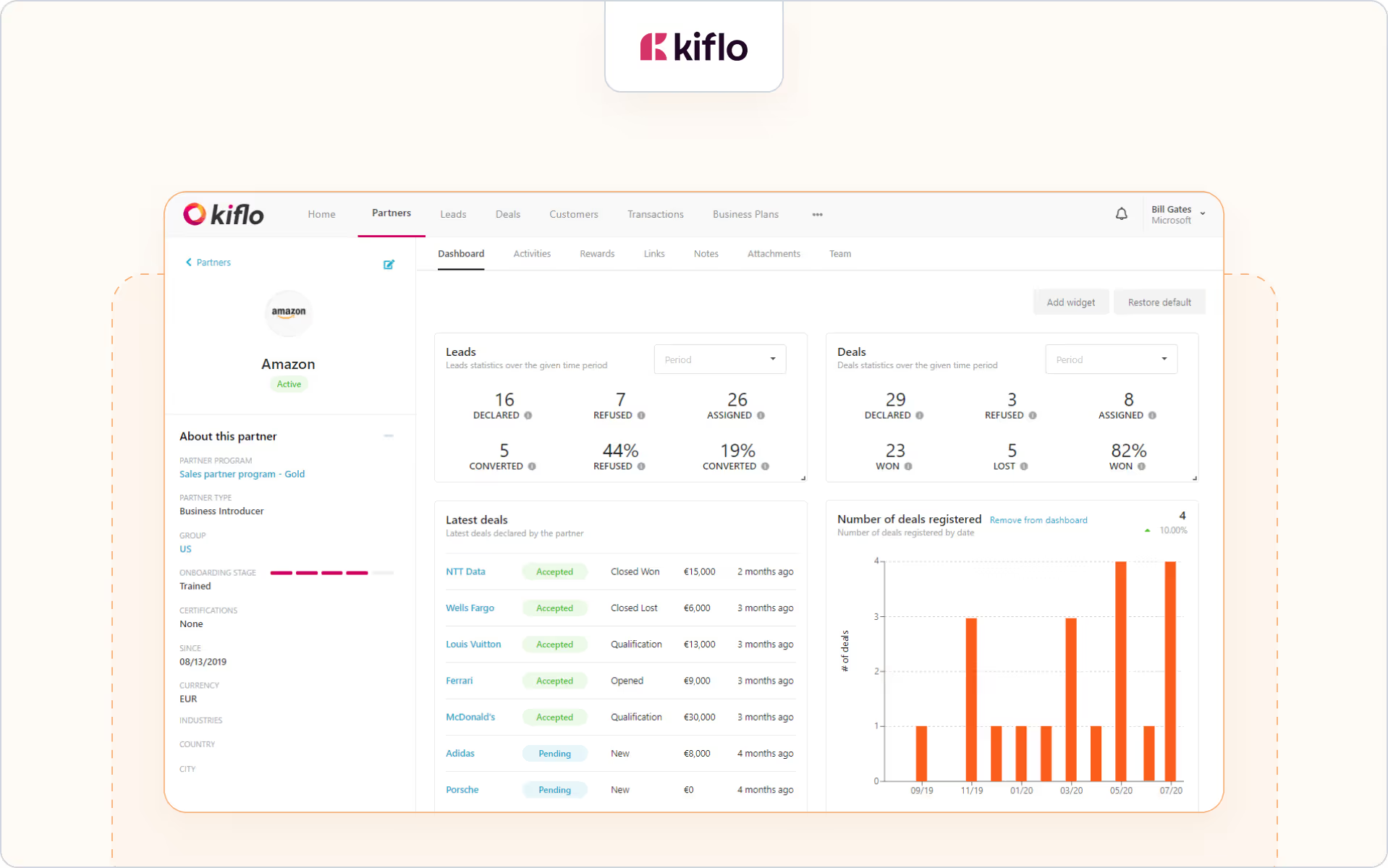
Kiflo ist ein PRM, das sich gut für kleine bis mittelständische SaaS-Unternehmen eignet, die gerade erst mit ihren offiziellen Channel- oder Partnerprogrammen beginnen.
Diese Plattform bietet einen im Vergleich zu Impact weniger aufwendigen PRM-Ansatz, wodurch es für Unternehmen einfacher wird, Reseller- oder Empfehlungsprogramme zu starten und zu verwalten.
Beachten Sie jedoch, dass es nur über begrenzte Analysemöglichkeiten auf Unternehmensebene und tiefgreifende CRM-Workflows verfügt, sodass es sich viel besser für kleinere Unternehmen eignet, die nach einer einfacheren Lösung suchen.
Wichtige Funktionen:
- Deal-Registrierung
- Anreize
- Grundlagen der Befähigung
➡️ Hier finden Sie unsere besten Kiflo-Alternativen hier.
4) Kanalskalierer

Channelscaler bietet ein umfassendes PRM- und Partner-Automatisierungs-Stack für Unternehmen, die Channel- oder Partnerprogramme betreiben.
Es ist perfekt für Unternehmen, die nach modularen Lösungen suchen, aber wenn Sie ein einfaches Programm ausführen möchten, sollten Sie darauf achten, dass Sie nicht mehr Module implementieren, als Sie tatsächlich benötigen.
Wie lässt es sich mit Impact vergleichen? Channelscaler bietet eine kanalorientierte Plattform mit einem breiteren Anwendungsbereich, während Impact in erster Linie ein Affiliate-Tool ist.
Wichtige Funktionen:
- Deal-Registrierung
- Incentive- und Rabattmanagement
- Inhalt & Aktivierung
- Automatisierung der Partnerreise
- Dashboards zur Leistungsüberwachung
5) Impartner
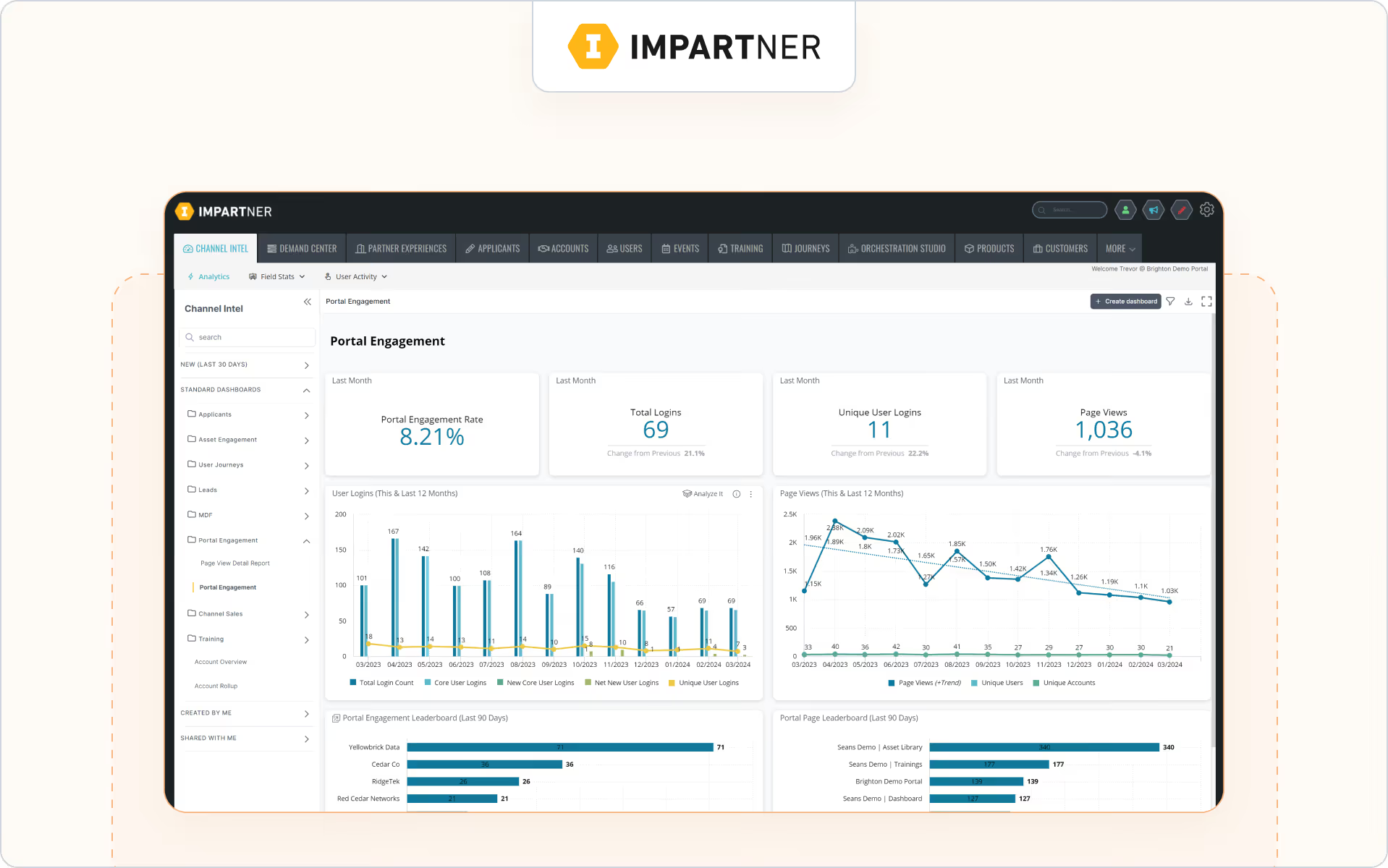
Die Partner-Marketing-Automatisierungsplattform Impartner richtet sich an Unternehmen mit komplexen, globalen Vertriebsaktivitäten.
Ziehen Sie diese Plattform in Betracht, wenn Sie ein System benötigen, das robust genug ist, um mehrere Regionen, Ebenen und Partnertypen zu verwalten.
Wenn Sie einen Wechsel von Impact zu Impartner in Betracht ziehen, werden Sie einen großen Unterschied feststellen: Diese Lösung bietet ein Full-Stack-PRM, das für umfassende Governance und Unternehmensgröße ausgelegt ist, während Impact einen engeren Fokus hat.
Natürlich ist das komplexere System von Impartner mit einem höheren Implementierungs- und Verwaltungsaufwand verbunden. Daher ist es wichtig, sicherzustellen, dass Ihr Unternehmen über die erforderlichen Ressourcen verfügt, um es effektiv zu verwalten.
Wichtige Funktionen:
- Partner-Stufen
- MDF
- Arbeitsabläufe
- Robuste Analytik
6) Unifyr

Unifyr ist eine All-in-One-Plattform für PRM und Channel-Wachstum mit KI-Unterstützung.
Es wurde für Unternehmen entwickelt, die Partner-Ökosysteme verwalten und ihre Abläufe zentralisieren und optimieren möchten, insbesondere im Umgang mit ausgereiften oder unternehmensweiten Channel-Programmen.
Diese SaaS-Plattform bietet eine größere Vielfalt an Funktionen als Impact, das sich auf Performance-Marketing konzentriert.
Dies bedeutet jedoch, dass es eine gewisse Einarbeitungszeit geben kann und es für kleinere Marken etwas aufwendig sein kann, da einige erweiterte Funktionen eher für mittelständische oder große Unternehmen geeignet sind.
Wichtige Funktionen:
- Partner-Onboarding und -Aktivierung
- Deal-Registrierung und Lead-Management
- Lieferanten-/Multi-Vendor-Support
- KI-gestützte Funktionen
7) Magentrix
Magentrix wurde für Salesforce Teams entwickelt, die tief integrierte benutzerdefinierte Portale benötigen.
Es eignet sich gut für Teams, die eine enge Abstimmung zwischen ihrem CRM und dem Partnerportal sowie leistungsstarke Anpassungsmöglichkeiten und Skalierbarkeit benötigen.
Im Vergleich zu Impact ist es erwähnenswert, dass Magentrix Salesforce umfassende Salesforce sowie robuste Community- und Portal-Funktionen bietet, die über das Angebot der anderen Plattform hinausgehen.
Da Magentrix jedoch in erster Linie ein Portal ist, ist es wichtig, sicherzustellen, dass die Einbindung von Partnern nicht ausschließlich auf der Anmeldung basiert.
Wichtige Funktionen:
- Ressourcenbibliothek
- Fallzusammenarbeit
- Portal-UX
8) Kanalaktivität
Channeltivity wurde für mittelständische SaaS-Unternehmen entwickelt, die ein umfassendes PRM benötigen, um ihre Channel-Programme effektiv zu verwalten und zu skalieren.
Dieses SaaS-Tool bietet eine solide Grundlage für den Vertriebskanalbetrieb, während Impact sich eher auf Partnerprogramme konzentriert.
Channeltivity bietet beispielsweise leistungsstarke Funktionen wie die Registrierung von Geschäften, die Verwaltung von Marktentwicklungsfonds und detaillierte Berichterstellung.
Beachten Sie jedoch, dass Channeltivity in erster Linie portalorientiert ist, was die Interaktion außerhalb des Portals einschränken könnte.
Wichtige Funktionen:
- Partner-Onboarding
- Partner-Stufen
- Genehmigungen
9) WorkSpan
Sind Sie mit der Verwaltung von Allianz- und Co-Sell-Ökosystemen betraut?
WorkSpan erleichtert die Zusammenarbeit zwischen mehreren Partnern bei gemeinsamen Geschäftsmöglichkeiten und gemeinsamen Vertriebsinitiativen.
Diese Lösung hebt sich von Impact ab, da sie für die Verwaltung gemeinsamer Pipelines zwischen Partnern entwickelt wurde, wodurch Partner ihre Vertriebsaktivitäten effektiver koordinieren können als mit einer auf Affiliates ausgerichteten Plattform wie Impact.
WorkSpan ist jedoch kein vollständiges PRM – es wird in der Regel zusammen mit einem PRM oder CRM eingesetzt, um das Partnermanagement zu verbessern.
Wichtige Funktionen:
- Co-Selling-Workflows
- Gemeinsame Planung
- Pipeline-Verfolgung
10) Partnerisieren

Dieses Produkt ist auf Unternehmen ausgerichtet.
Partnerize bietet eine einzige Plattform für verschiedene Arten von Partnern und ist daher besonders nützlich für diejenigen, die sowohl Affiliate-Programme als auch umfassendere Partnerschaftsinitiativen verwalten.
Diese Plattform unterstützt eine viel größere Bandbreite an Partnertypen als Impact und bietet leistungsstarke Optimierungstools.
Partnerize hat jedoch einen starken Fokus auf E-Commerce und Affiliate-Marketing.
Das bedeutet, dass Sie bei der Suche nach einer B2B-Partnerschaftslösung unbedingt berücksichtigen sollten, ob diese Plattform Ihren spezifischen Anforderungen am besten gerecht wird.
Wichtige Funktionen:
- Auftragsvergabe
- Auszahlungen
- Erweiterte Analysefunktionen
11) TUNE

TUNE wurde für Performance- und Affiliate-Marketing-Teams entwickelt – insbesondere für solche, die sich auf mobile und App-basierte Kampagnen konzentrieren.
Unternehmen könnten diese Plattform aufgrund ihrer flexiblen Tracking-Funktionen und entwicklerfreundlichen Tools, die zahlreiche Anpassungsmöglichkeiten für technische Integrationen bieten, gegenüber Impact bevorzugen.
Es ist wichtig zu beachten, dass TUNE nicht für B2B-Kanäle oder Co-Selling-Programme entwickelt wurde.
Das bedeutet, dass die Plattform zwar für Affiliate-orientierte Einzelhandelsmarken, die E-Commerce-Verkäufe anstreben, nützlich sein kann, aber möglicherweise nicht den Anforderungen von Unternehmen entspricht, die komplexe Partner-Ökosysteme über Performance-Marketing-Kanäle hinaus verwalten möchten.
Wichtige Funktionen:
- Benutzerdefinierte Nachverfolgung
- APIs
- Mobile SDKs
12) Affise

Affise wurde mit Blick auf Affiliate-Netzwerke und Performance-Marketing entwickelt und hilft Teams dabei, ihre Abläufe zu optimieren und mehrere Affiliate-Performance-Programme effizient zu verwalten.
Zwar gibt es Überschneidungen zwischen Affise und Impact, doch Affise bietet einen optimierten Ansatz für Affiliate-Aktivitäten und automatisierte Affiliate-Auszahlungen.
Bitte beachten Sie, dass Affise nur eingeschränkten Support für Channel-Co-Sell-Workflows bietet und daher möglicherweise nicht für Unternehmen geeignet ist, die ein breiteres B2B-Partner-Ökosystem verwalten möchten.
Wichtige Funktionen:
- Verfolgung
- Betrugswerkzeuge
- Programmmanagement
13) Everflow
Everflow wurde für Performance- und Partnerprogramme entwickelt, insbesondere für solche, die umfassende Analyse- und Berichtsfunktionen von ihrer Partner-Marketingplattform erwarten.
Tatsächlich bietet diese Technologie eine Alternative zu Impact mit flexiblen Berichten und detaillierten Analysen.
Beachten Sie, dass Everflow in erster Linie auf Affiliates ausgerichtet ist und nur eingeschränkten Support für CRM-native Kanaloperationen bietet.
Überlegen Sie also sorgfältig, ob es für komplexe B2B-Co-Selling-Programme geeignet ist.
Wichtige Funktionen:
- Partnerverfolgung
- Betrugsprävention
- APIs
👉Entdecken Sie hier einige der besten Everflow-Alternativen.
14) Salesforce

Arbeiten Sie bereits mit Salesforce? Die Entscheidung für Salesforce könnte Ihrem Team das Leben erheblich erleichtern.
Salesforce wurde für Teams entwickelt, die ihr Partnermanagement vollständig in ihr CRM integrieren möchten – und unterscheidet sich deutlich von Impact.
Tatsächlich bietet Salesforce native Salesforce , Berichterstellung und Erweiterbarkeit, was es zu einer guten Wahl für Unternehmen macht, die eine tief integrierte Lösung anstelle einer externen, auf Partner fokussierten Plattform benötigen.
Es ist anzumerken, dass die Benutzererfahrung nach der Installation recht einfach ist, sodass der Erfolg von Salesforce oft von internen Ressourcen und technischer Unterstützung abhängt.
Oder, mit anderen Worten, wie gut Sie in der Lage sind, das System für Ihre Partnerprogramme anzupassen und zu optimieren.
Wichtigste Features:
- Partnerkonten
- Deal reg
- Arbeitsabläufe
15) HubSpot PRM-Add-ons
Auf der Suche nach maßgeschneiderten Lösungen?
HubSpot-geführte Markteinführungsteams können sich dafür entscheiden, ihr CRM beizubehalten und in einige PRM-Add-ons zu investieren.
Durch die einfache Erweiterung ihres CRM-Systems um die Verwaltung von Partnerprogrammen können diese Teams mit CRM-eigenen Leistungsdaten arbeiten und gleichzeitig die Partnererweiterungen auswählen, die ihren Zwecken am besten dienen.
Dieser Ansatz hat jedoch auch Nachteile.
Für Unternehmen, die umfassendere PRM-Funktionen benötigen, ist eine spezielle PRM-Plattform wie Introw erforderlich.
HubSpot :
- Objekte
- Arbeitsabläufe
- Partner-Tagging
- Berichterstattung
Warum SaaS-Teams Introw gegenüber Impact bevorzugen
Introw ist eine ganz andere Lösung als Impact, aber wenn Sie nach einem PRM suchen, das das SaaS-Partnermanagement unterstützt, ist es eine leistungsstarke Alternative.
Hier sind die Gründe, warum SaaS-Teams von der Wahl von Introw profitieren:
- Channel-first, nicht Affiliate-first: Impact wurde für das Affiliate-Management und Influencer-Programme entwickelt, daher drehen sich seine Workflows um Klicks, Auszahlungen und das Tracking von Empfehlungen. Introw hingegen wurde speziell für SaaS entwickelt und konzentriert sich daher auf die Registrierung von Geschäften, Co-Selling und die Einbindung von Partnern.
- CRM-nativ: Mit Introw werden alle Partneraktivitäten direkt in Salesforce HubSpot gespeichert, wodurch Silos vermieden werden und Sie eine einzige zuverlässige Informationsquelle erhalten.
- Engagement außerhalb des Portals: Viele PRMs sind auf Portale angewiesen, für die eine Anmeldung erforderlich ist. Dies erschwert die Zusammenarbeit mit Partnern und schränkt das Engagement ein. Introw trifft Partner dort, wo sie arbeiten (z. B. per E-Mail oder Slack), um eine nahtlose Zusammenarbeit zu ermöglichen.
- Automatisierung überall: Mit Introw können Sie mühsame Verwaltungsaufgaben eliminieren und Ihre Zeit für wirklich wertschöpfende Tätigkeiten nutzen. Introw automatisiert Onboarding, Kampagnenmanagement, Nudges und sogar die Vorbereitung von Quartalsberichten.
- Zuverlässige Attribution: Affiliate-First-Tools verfolgen in der Regel Klicks und Last-Touch-Verweise, die den Einfluss von SaaS-Partnern nicht genau widerspiegeln. Introw verknüpft die Nutzung von Inhalten, Benachrichtigungen und Partneraktivitäten direkt mit der Pipeline und dem Umsatz, sodass Sie sich auf die Attribution verlassen können.
📣 Möchten Sie Introw in Aktion sehen? Fordern Sie hier eine Demo an.
Fazit
Ist es an der Zeit, nach Alternativen zu Impact zu suchen?
Sie werden wissen, wann Sie die richtige Impact-Alternative für B2B-SaaS gefunden haben, denn sie wird das Co-Selling, das Engagement und die Attribution direkt in Ihrem CRM verbessern.
Wenn Sie sich nach Alternativen zu Impact.com umsehen, sollten Sie zunächst einen Schritt zurücktreten und überprüfen, wie Ihr aktuelles Partnerprogramm funktioniert.
Überlegen Sie, ob Ihre Kanalstrategie so effektiv ist, wie Sie es sich wünschen, und identifizieren Sie eventuelle Lücken.
Dann:
1️⃣ CRM-first PRMs in die engere Wahl nehmen
2️⃣ Führen Sie ein Live-Pilotprojekt durch.
3️⃣ Wählen Sie die Plattform, auf die Ihre Partner tatsächlich reagieren.
👉 Erfahren Sie, wie Introw Ihr Partnerprogramm optimieren kann – vereinbaren Sie noch heute einen Termin für eine Demo.

