
Partner-Marketing

16 Allbound-Alternativen für 2026 (Channelscaler)

Entdecke 16 Top-Allbound-Alternativen, die du 2026 in Betracht ziehen solltest. Vergleiche Funktionen, Preise und Anwendungsfälle, um das beste PRM und Partnerportal für dein Partnerprogramm zu finden.

5min Lesezeit
11. Dez. 2025
⚡ TL;DR

Allbound fusionierte mit Channel Mechanics und wurde in Channelscaler umbenannt, das nun modernes PRM mit Preisgestaltung, Rabatten und Channel-Automatisierung auf Unternehmensniveau kombiniert. Dennoch ziehen viele SaaS-Unternehmen Alternativen für eine schnellere Einführung, CRM-orientierte Abläufe in Salesforce Cloud oder HubSpot, Co-Selling-Workflows oder TCMA-Tiefe in Betracht. Zu den Top-Auswahlen gehören Introw (CRM-first, off-portal), Impartner (Enterprise-PRM + MDF), ZINFI (UPM-Marktführer), Unifyr (ehemals Zift Solutions), Channeltivity, Magentrix, PartnerStack, StructuredWeb, SproutLoud, WorkSpan, Kiflo, Mindmatrix, PartnerPortal.io, impact.com und Everflow.

Die Wahl einer Alternative zu Allbound beginnt damit, wie Ihr Partnerprogramm tatsächlich funktioniert: Wo befindet sich das Vertriebsteam (Salesforce HubSpot)? Bevorzugen Partner Portal-Workflows oderSlack? Wie viel Marketing-Automatisierung oder TCMA benötigen Sie? Und wird der gemeinsame Vertrieb mit Hyperscalern in diesem Quartal – oder im nächsten Monat – eine Rolle spielen?

Unten findest du 16 der besten Optionen – jede mit klarem „Am besten geeignet für“, warum sie eine Allbound-Alternative ist, und wichtigen Hinweisen zu Beziehungsmanagement, Onboarding und Schulung, Deal-Registrierung, Analysen und Integrationen über deine CRM-Plattform und Geschäftsanwendungen hinweg.

Worauf du bei einer Allbound-Alternative achten solltest
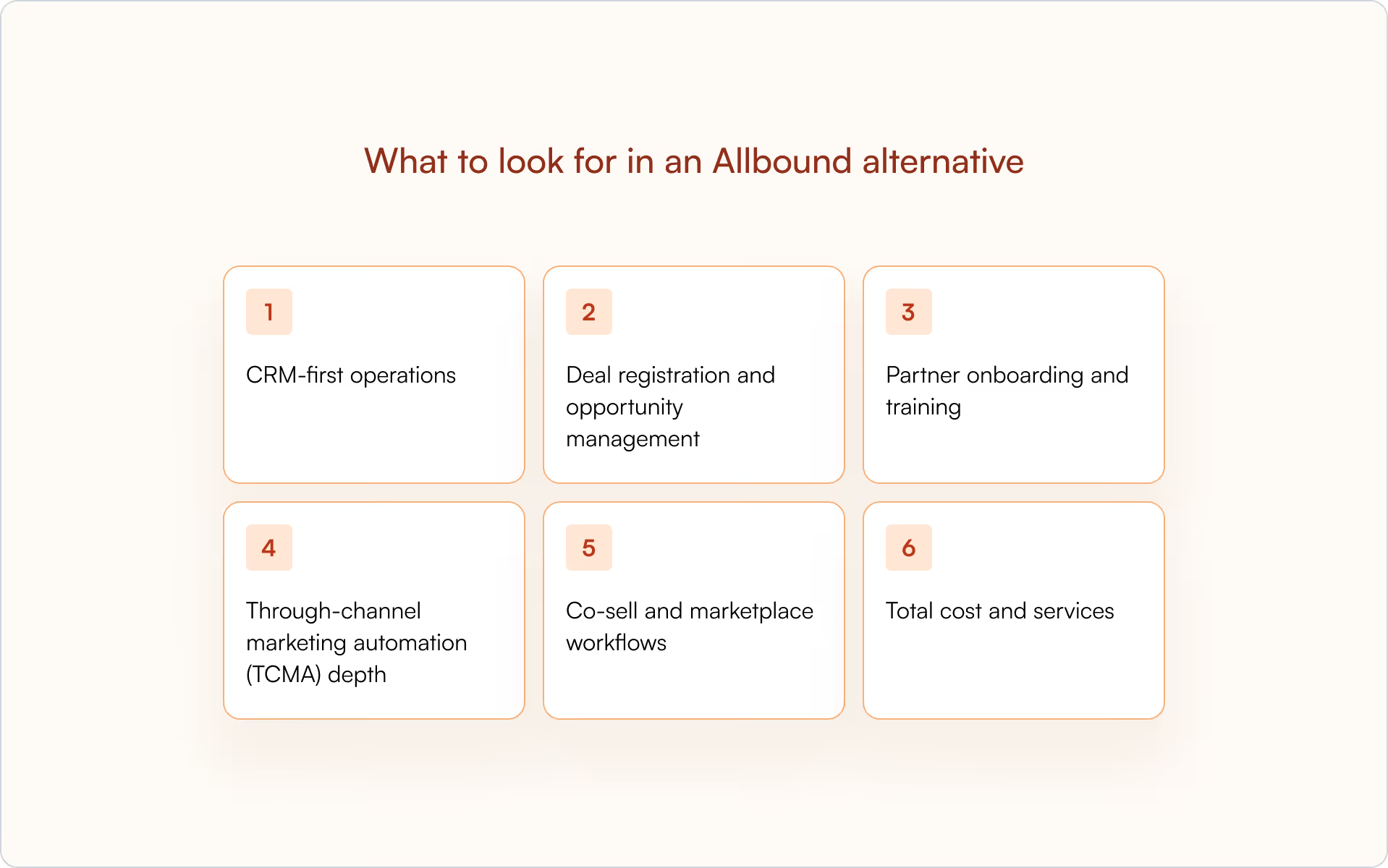
  1. CRM-first-Abläufe – Halten Sie Verkäufer in Salesforce Cloud oder HubSpot Partner in einem Portal (oder perSlack) arbeiten, das Kunden- und Partnerdaten in Echtzeit synchronisiert. Das reduziert den Arbeitsaufwand und bewahrt einen vollständigen Überblick über Konten, Verkaufschancen und Partneraktivitäten.
  2. Deal-Registrierung und Opportunity-Management – Achte auf klare Konfliktprävention, Stage-Mapping und SLA-Benachrichtigungen, damit Channel Manager Deals verfolgen, Prognosen erstellen und Pipeline-Inspektionen durchführen können, ohne das CRM zu verlassen.
  3. Partner-Onboarding und Schulung – Automatisiere Partner-Onboarding-Schritte, zertifiziere Rollen und biete ergebnisorientiertes Enablement, um den Fortschritt zu verfolgen, die Partnerproduktivität zu steigern und die Akzeptanz zu fördern.
  4. Tiefe der Through-Channel Marketing Automation (TCMA) – Wenn die lokale Nachfragegenerierung ein Kernbestandteil deines Plans ist, stelle sicher, dass die Plattform markenkonforme Kampagnen, Budgets und Content-Bibliotheken bietet, auf die Partner einfach zugreifen und die sie leicht mitgestalten können.
  5. Co-Selling- und Marketplace-Workflows – Wenn Hyperscaler-Routen strategisch sind, priorisiere native Integrationen für AWS ACE und Microsoft Partner Center, damit Allianz-Teams von deinem CRM aus zusammenarbeiten und gemeinsam verkaufen können.
  6. Gesamtkosten und Services – Vergleiche Abonnement, Implementierung und laufende Administration. In vielen Unternehmen reduzieren leichtere Tools die Time-to-Value, vereinfachen Registrierungsabläufe und Formulare und setzen Budget für Enablement frei – ohne Abstriche bei Sicherheit oder Data Governance.

Die 16 besten Allbound-Alternativen im Jahr 2026

So liest du diese Liste: Jeder Eintrag enthält, für wen er am besten geeignet ist, warum er eine glaubwürdige Alternative zu Allbound ist, und praktische Hinweise zu Funktionen, Integrationen und der täglichen Arbeitsweise von Teams.

#1 Introw
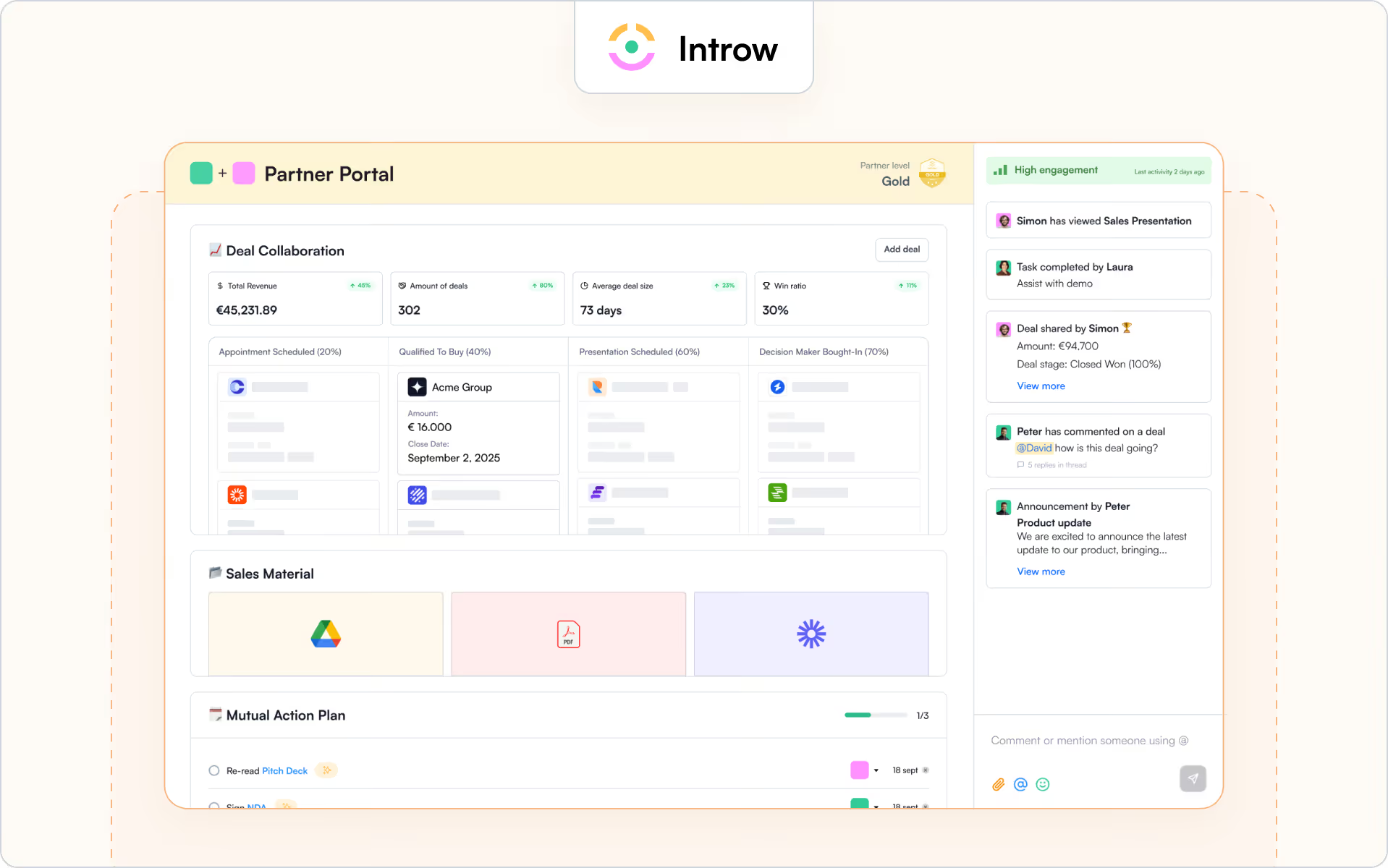
Am besten geeignet für: SaaS-Unternehmen, die Empfehlungs-, Wiederverkäufer- und Co-Selling-Aktivitäten durchführen und den gesamten Partner-Workflow in Salesforce HubSpot abwickeln möchten HubSpot während Partner per E-Mail oder Slack zusammenarbeiten können, Slack sich anmelden zu müssen. So bleiben Leads und Deals an einem Ort und die betriebliche Effizienz wird verbessert.

Warum es eine Alternative zu Allbound ist: Anstatt ein schwerfälliges Portal einzurichten, speichert Introw die Registrierung von Geschäften, Benachrichtigungen und Echtzeitdaten in Ihrem CRM und spiegelt Aktualisierungen perSlack an PartnerSlack alles synchronisiert mit Salesforce HubSpot. Es ist eine übersichtliche Möglichkeit, Partnerbeziehungen zu verwalten und Fortschritte zu verfolgen, ohne zusätzlichen Verwaltungsaufwand.

Besondere Highlights: NativeHubSpot , Slack und öffentliche Formulare erfassen Eingaben und leiten sie an die richtigen Objekte weiter, um die Zuordnung und Transparenz der Pipeline zu gewährleisten – nützlich für Channel-Manager und RevOps, die Genauigkeit ohne anfällige Konnektoren wünschen.

#2 Channelscaler (Allbound + Channel Mechanics)
Am besten geeignet für: Unternehmen, denen die Portal-UX von Allbound gefallen hat, die aber Enterprise-Pricing, Rabatt- und Incentive-Automatisierung in einer Plattform benötigen.

Warum es eine Alternative zu Allbound ist: Weil es das nächste Kapitel von Allbound ist: Das Unternehmen fusionierte mit Channel Mechanics und wurde in Channelscaler umbenannt, wodurch das PRM-Frontend mit robuster Pricing-/Rabatt-Tooling vereint wird – ein natürlicher Upgrade-Pfad, wenn du Allbound mit „was kommt als Nächstes“ vergleichst.

Besondere Merkmale: Materialien nach der Fusion betonen die Skalierung indirekter Umsätze und die Reduzierung von Channel-Kosten – praktisch, wenn dein Programm von komplexen Incentives über Reseller, Distributoren oder Agenturen hinweg abhängt.

#3 Impartner
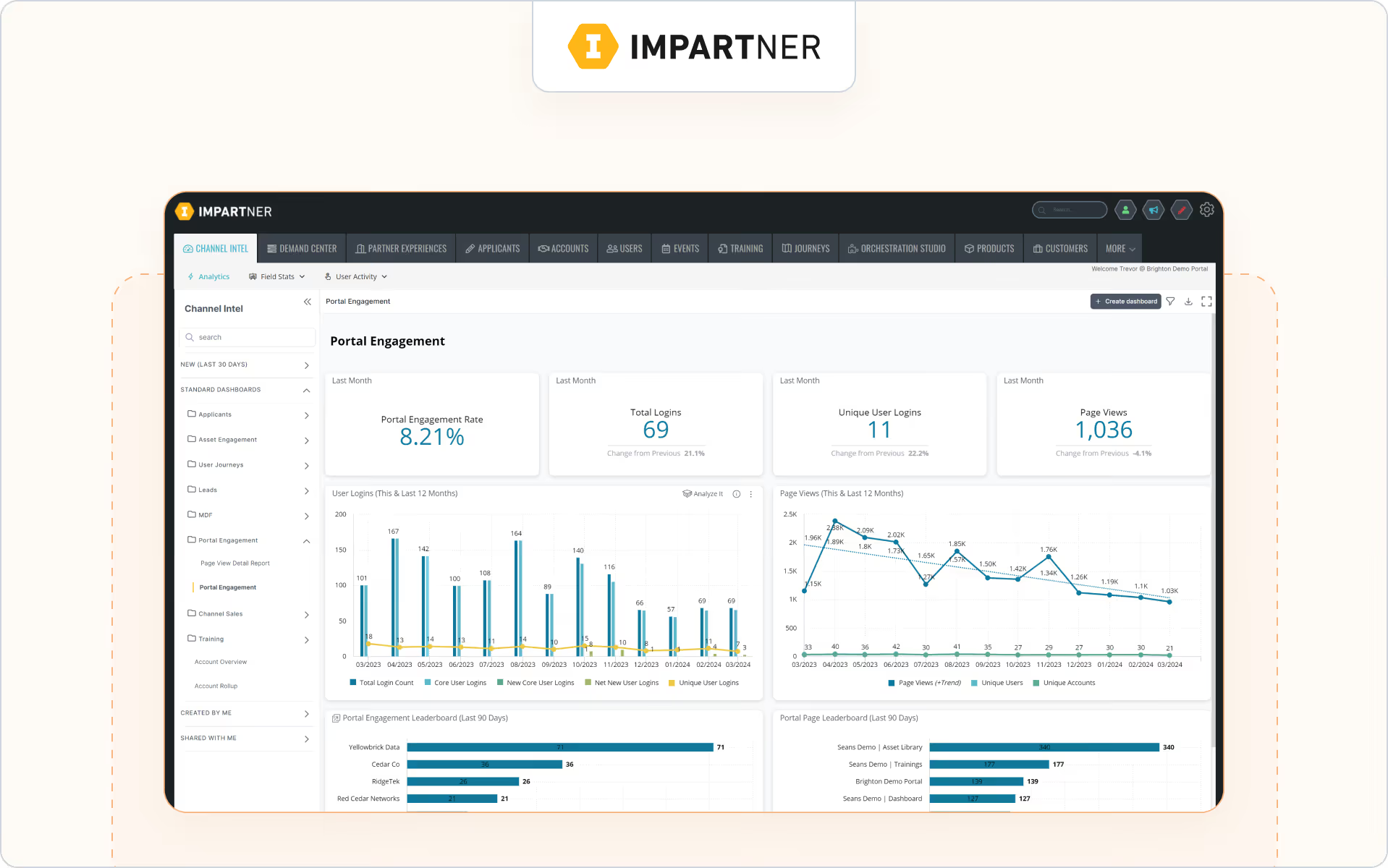
Am besten geeignet für: Unternehmen mit globalen Channels, strukturiertem Tiering, MDF und Compliance-Anforderungen.

Warum es eine Alternative zu Allbound ist: Wenn du ein ausgereiftes PRM plus durchgängiges MDF innerhalb desselben Managementsystems suchst, ist Impartner eine etablierte Option mit umfassenden Genehmigungen, Erstattungen und Analysen, die direkt ins Partnerportal integriert sind.

Besondere Merkmale: MDF- und Deal-Registrierungs-Workflows umfassen Genehmigungsregeln, Benachrichtigungen und Forderungen nach Kampagnen – so wird es einfacher, den ROI zu verfolgen und Gelder mit der Pipeline zu verknüpfen.

#4 ZINFI (Unified Partner Management)
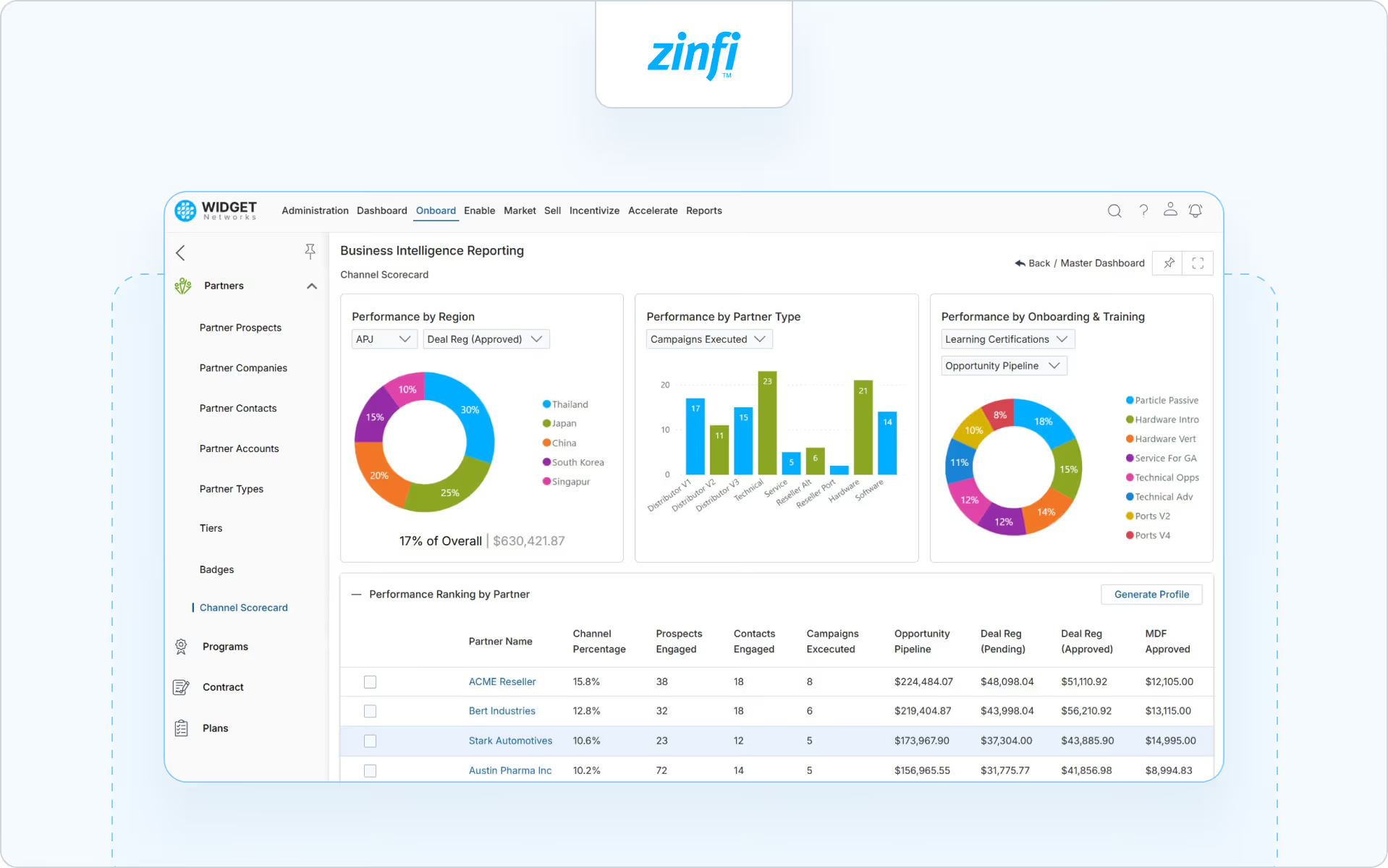
Am besten geeignet für: Teams, die eine breite Abdeckung suchen – rekrutieren, befähigen, vermarkten, verkaufen und Anreize schaffen – mit starker Analysten- und Peer-Validierung.

Warum es eine Alternative zu Allbound ist: ZINFIs Unified Partner Management Plattform rangiert konstant hoch und hat KI-gestützte Verbesserungen eingeführt, um das Beziehungsmanagement und die Partner-Performance zu optimieren.

Besondere Merkmale: Bekannt für Kundenzufriedenheit; modulare Apps decken Opportunity Management, Content Management und Analysen ab, um die Performance im großen Maßstab zu überwachen.

#5 Unifyr (ehemals Zift Solutions)
Am besten geeignet für: Organisationen, die PRM, TCMA und Schulungen unter einem Dach wollen – und sich auf KI stützen, um Partner zu führen.

Warum es eine Alternative zu Allbound ist: Die Marke Zift Solutions entwickelte sich zu Unifyr und führte neue Pakete ein, die eine KI-gestützte Partner-Engagement-Plattform positionieren, welche Befähigung und Engagement zentralisiert.

Besondere Merkmale: Die Kommunikation hebt Multi-Portal-Administration, Analysen, MDF, Schulung/Zertifizierung und KI-Unterstützung hervor – nützlich, wenn du Tiefe in Enablement und Marketing suchst.

#6 Channeltivity
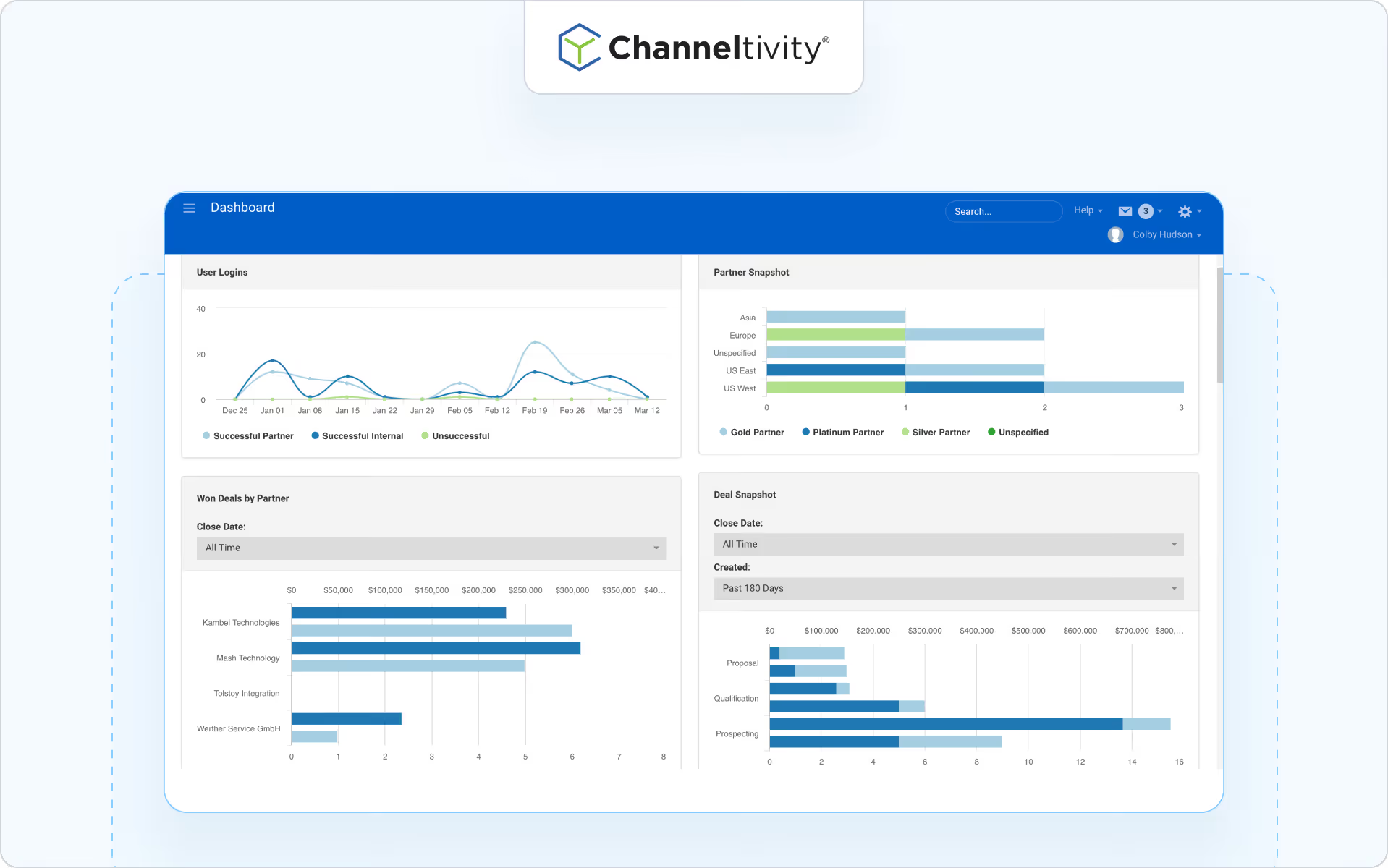
Am besten geeignet für: Mittelständische Teams, die eine schnelle Amortisierung und klickbasierte statt programmierbasierte Integrationen mit Salesforce HubSpot wünschen.

Warum es eine Alternative zu Allbound ist: Channeltivitys Plug-and-Play CRM-Synchronisierung lässt Deal-Registrierungen und Empfehlungen ins CRM fließen, für Pipeline-Transparenz – und das ohne großen IT-Aufwand.

Besondere Merkmale: Setup-Dokumente und Marktplatzseiten zeigen Zwei-Wege-Synchronisierung, Feld-Mapping und praktische Anleitungen für Channel Manager, die schnell live gehen wollen.

#7 Magentrix
Am besten geeignet für: Salesforce Programme, die eine konfigurierbare Partner-Website wünschen, die eng mit CRM-Objekten und -Daten verknüpft ist.

Warum es eine Alternative zu Allbound ist: Als AppExchange PRM spiegelt Magentrix die Salesforce wider, reduziert fragile Synchronisierungen zwischen benutzerdefinierten Objekten und sorgt für die Konsistenz der Kundendaten.

Besondere Merkmale: Zu den Funktionen gehören Deal-Registrierung und Zuweisung mit automatisierten Benachrichtigungen und Anleitungen zur CRM-zu-PRM-Datenspiegelung für ein saubereres Datensatzmanagement.

#8 PartnerStack

Am besten geeignet für: SaaS-Teams, die Affiliate-, Referral- und Reseller-Partner kombinieren – und automatisierte Auszahlungen sowie einen Marktplatz benötigen, um Traffic und Leads zu generieren.

Warum es eine Alternative zu Allbound ist: PartnerStack kombiniert PRM-ähnliche Workflows mit zuverlässigen, währungsübergreifenden Auszahlungen und einem großen Partnernetzwerk – wertvoll für Long-Tail-Akquise und Lead-Generierung.

Besondere Merkmale: Provisions-Trigger, einzelne monatliche Rechnungen und Marktplatz-Updates reduzieren den Finanzaufwand und halten Partner engagiert.

#9 StructuredWeb

Am besten geeignet für: Marken, bei denen Through-Channel Marketing Automation der Wachstumshebel ist – Kampagnen, Co-Branding und Fondsmanagement.

Warum es eine Alternative zu Allbound ist: StructuredWeb ist bekannt für Partner-Marketing-Automatisierung mit starker KI, Lokalisierung, Workflow-Automatisierung und Insights. Kombiniere es mit einem PRM, wenn du eine tiefe Marketing-Ausführung willst.

Besondere Highlights: Entwickelt für verteilte Teams und Partner – von Content-Bibliotheken bis hin zu Concierge-Services –, damit lokale Kampagnen markenkonform bleiben, während du die Performance trackst.

#10 SproutLoud
Ideal für: Verteilt agierende Marken, die eine Brand-to-Local-Umsetzung mit On-Behalf-Of-Services und einem großen Anbieter-Ökosystem brauchen.

Warum es eine Alternative zu Allbound ist: SproutLoud zentralisiert TCMA und verbindet Brands mit einer breiten Palette an Marketing-Service-Integrationen für eine konforme, lokale Aktivierung über alle Kategorien hinweg.

Besondere Highlights: Verteilte Marketing-Module und Analytics helfen Kunden und Partnern, lokal erfolgreich zu sein – besonders nützlich beim Onboarding neuer Partner, die Done-for-you-Optionen benötigen.

#11 WorkSpan
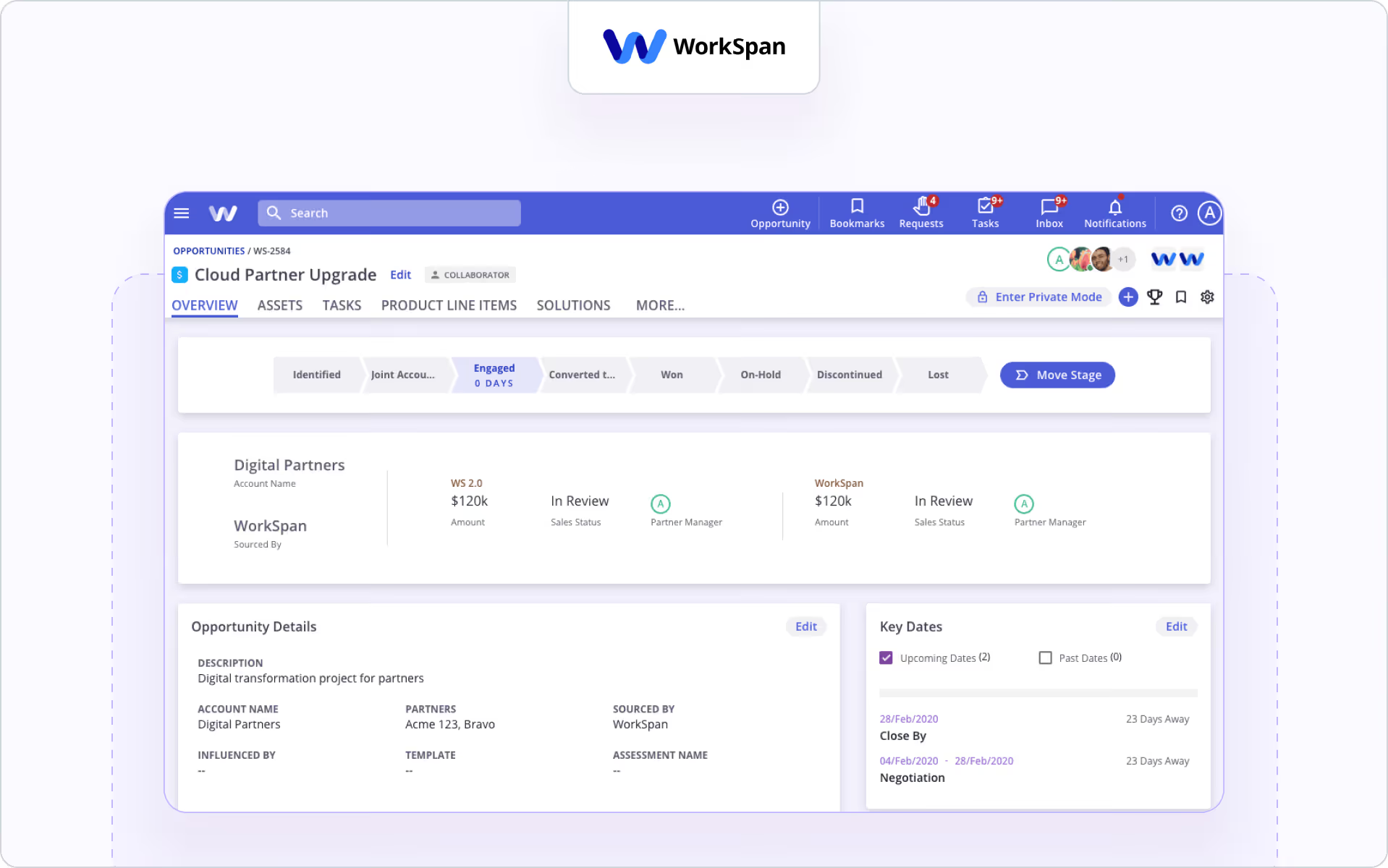
Am besten geeignet für: ISVs, die Hyperscaler-Co-Selling- und Marktplatz-Privatangebote mit AWS und Microsoft durchführen und diese in Salesforce integrieren möchten.

Warum es eine Alternative zu Allbound ist: WorkSpan liefert eine Salesforce , die die Weitergabe von Empfehlungen mit AWS ACE und Microsoft Partner Center automatisiert und über Dashboards für die Echtzeit-Verfolgung von Co-Selling verfügt.

Besondere Highlights: Leitfäden und Listen zeigen Integrationen für Salesforce, Dynamics und HubSpot sowie Schritt-für-Schritt-Anleitungen für die schnelle Inbetriebnahme von Co-Sell.

#12 Kiflo
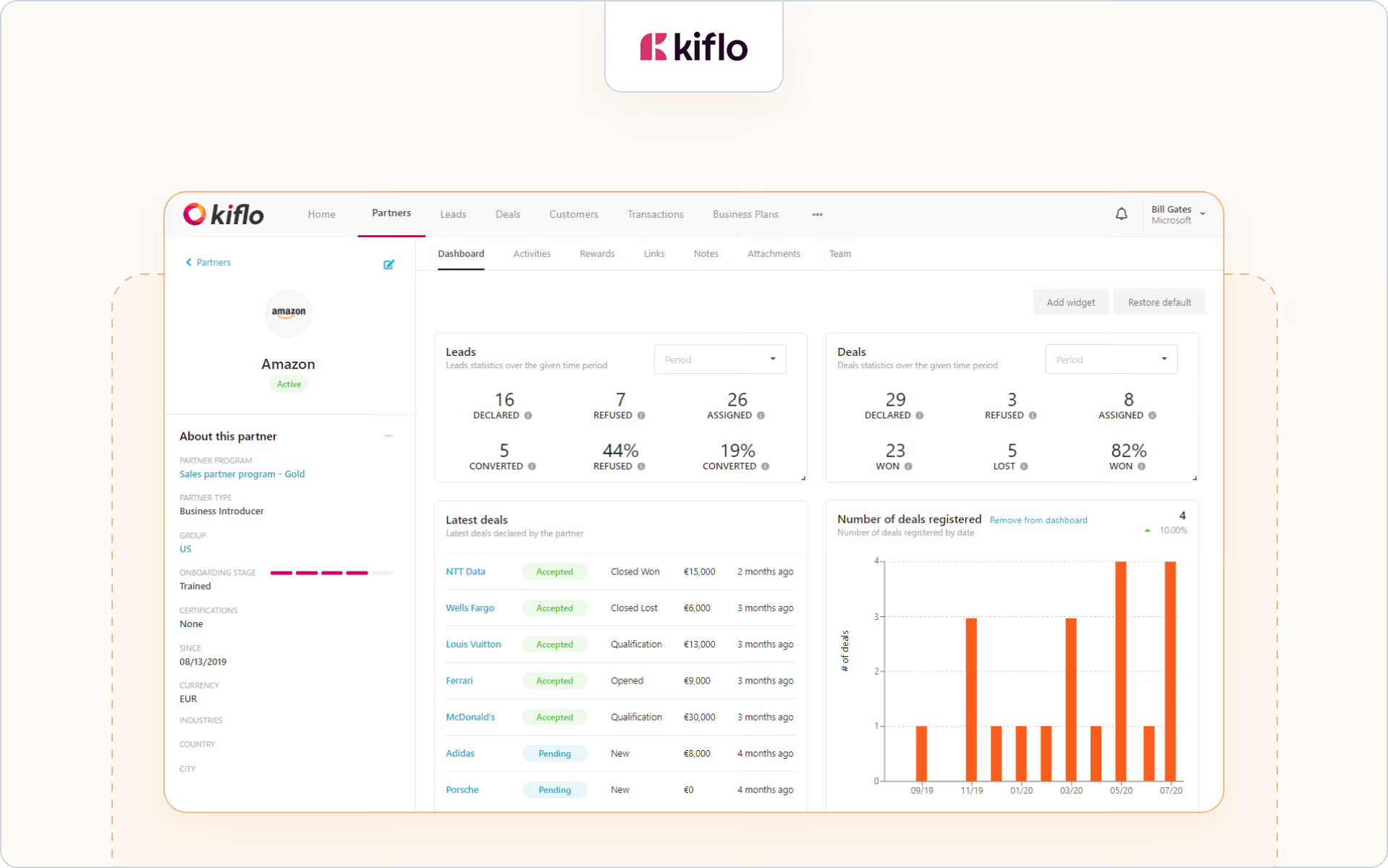
Am besten geeignet für: KMUs und Scale-ups, die ihr erstes Partnerprogramm mit HubSpot Salesforce formalisieren möchten.

Warum es eine Alternative zu Allbound ist: Kiflo sorgt mit nativer HubSpot für einfache Arbeitsabläufe für Empfehlungspartner und Wiederverkäufer, sodass Sie Leads verwalten und Geschäfte verfolgen können, ohne dass Sie dafür eigene Lösungen entwickeln müssen.

Besondere Highlights: Marketplace-Seiten und Docs zeigen Zwei-Wege-Sync, Stage Mapping und klare Enablement-Pfade, die die Time-to-Value für neue Partner verkürzen.

#13 Mindmatrix (Bridge)
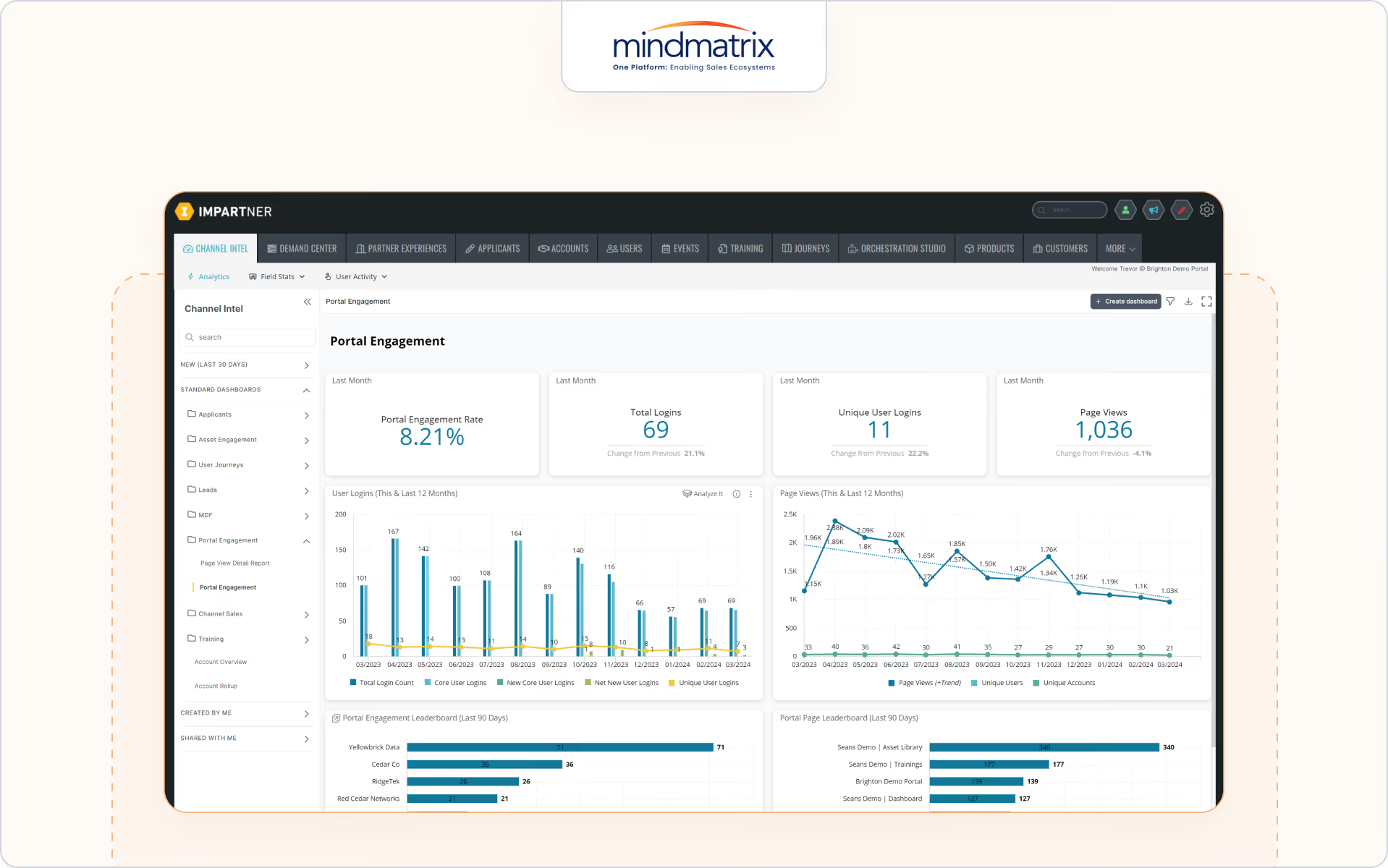
Ideal für: Teams, die PRM + Enablement + Co-Marketing in einem System wollen – mit fortschrittlicher Automatisierung und KI.

Warum es eine Alternative zu Allbound ist: Die Bridge-Plattform von Mindmatrix deckt Partner-Onboarding, Training, Deal-Registrierung, Co-Sell/Co-Market ab und ergänzt das Alliance Management – entwickelt, um komplexe Partner-Ökosysteme zu orchestrieren.

Besondere Highlights: HubSpot Salesforce , Lernmanagement und Concierge-Services helfen Ihnen dabei, die Akzeptanz zu optimieren und gleichzeitig die Daten in Ihrem CRM zu behalten.

#14 PartnerPortal.io
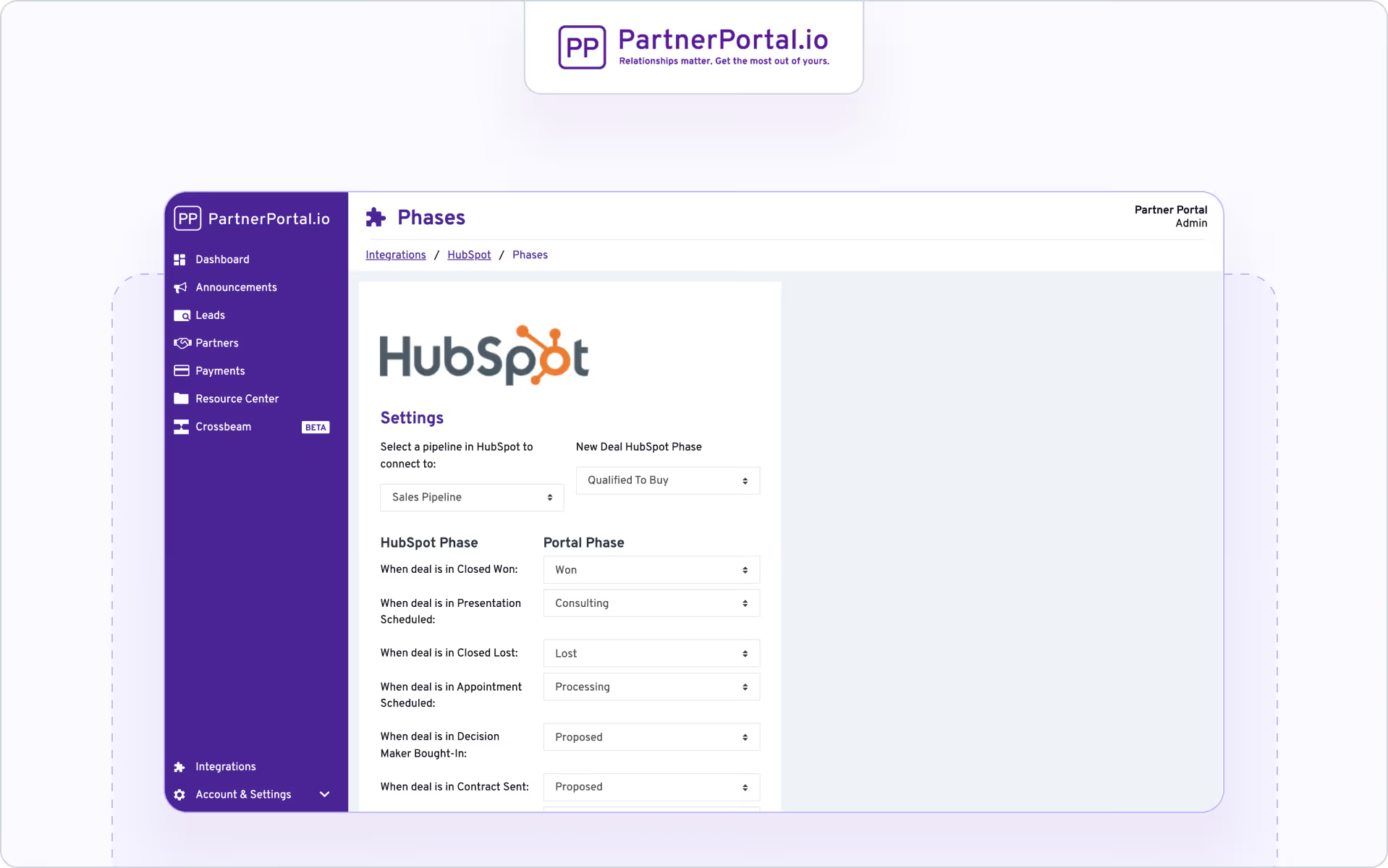
Am besten geeignet für: HubSpot Teams, die ein 15-minütiges Partnerportal für die Registrierung, Lead-Übermittlung, Deal-Registrierung und ein einfaches Ressourcenzentrum wünschen.

Warum es eine Alternative zu Allbound ist: Anstelle einer großen PRM-Einführung ist PartnerPortal.io sofort einsatzbereit – Partner reichen Leads ein, die HubSpot erstellen oder mit HubSpot verknüpfen; Sie können sogar Account-Mapping für die Attribution durchführen.

Besondere Highlights: Docs heben schnelles Setup, Zwei-Wege-Sync, Mapping zu mehreren Pipelines und Integrationen hervor – ideal, wenn dein Team jetzt handeln muss.

#15 impact.com
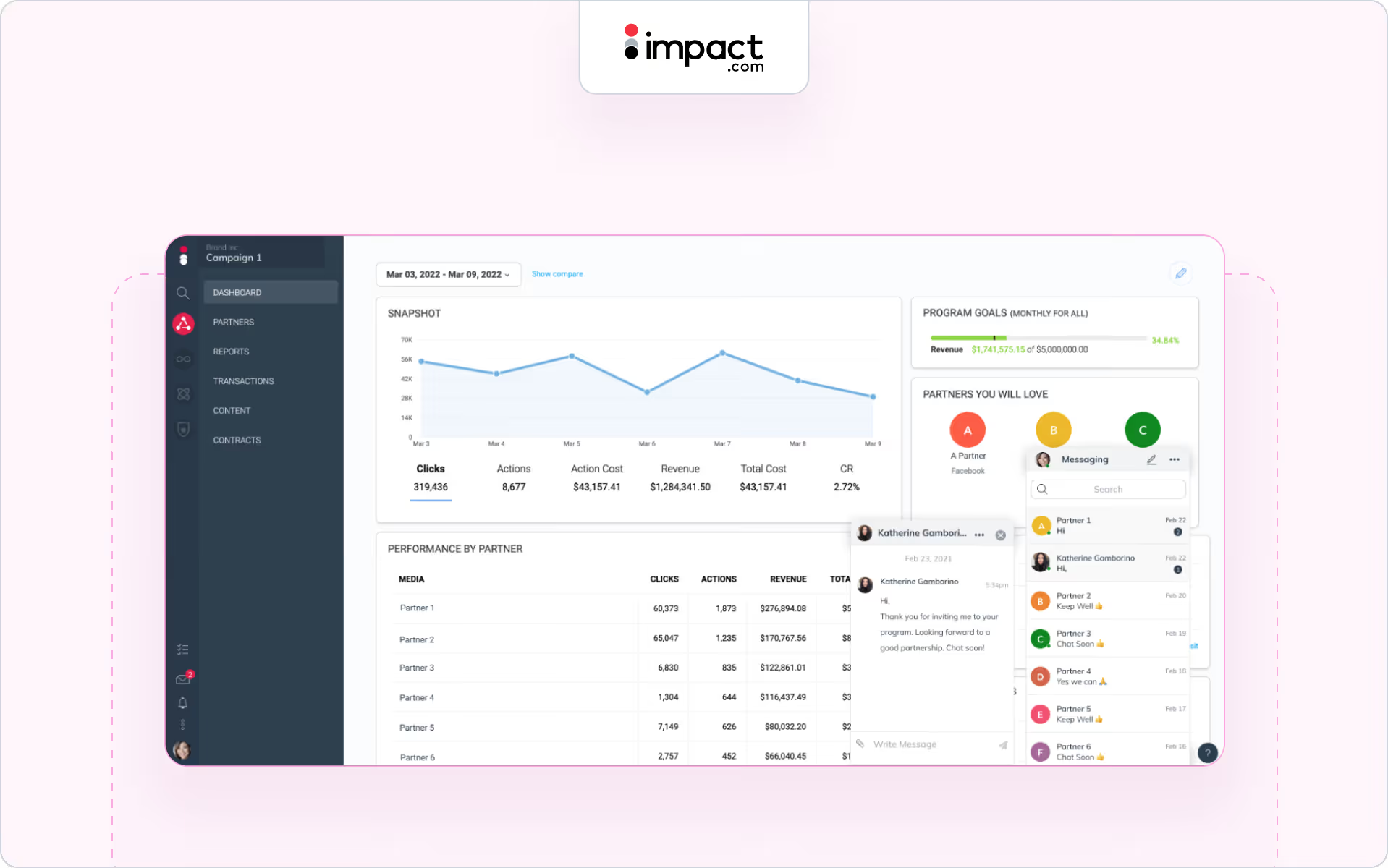
Ideal für: Affiliate-, Influencer- und Advocacy-Programme, bei denen Discovery, Contracting, Tracking und Payouts mit starker Automatisierung zusammenlaufen müssen.

Warum es eine Alternative zu Allbound ist: Viele B2B-Unternehmen koppeln impact.com mit ihrem CRM, um den beeinflussten Umsatz zu messen, während die Plattform Verträge und Zahlungen über verschiedene Währungen hinweg automatisiert.

Besondere Highlights: Echtzeit-Tracking, flexible Incentives und Creator Tools erleichtern es, die richtigen Partner zu engagieren und Outcomes über alle Kanäle hinweg zu verfolgen.

#16 Everflow
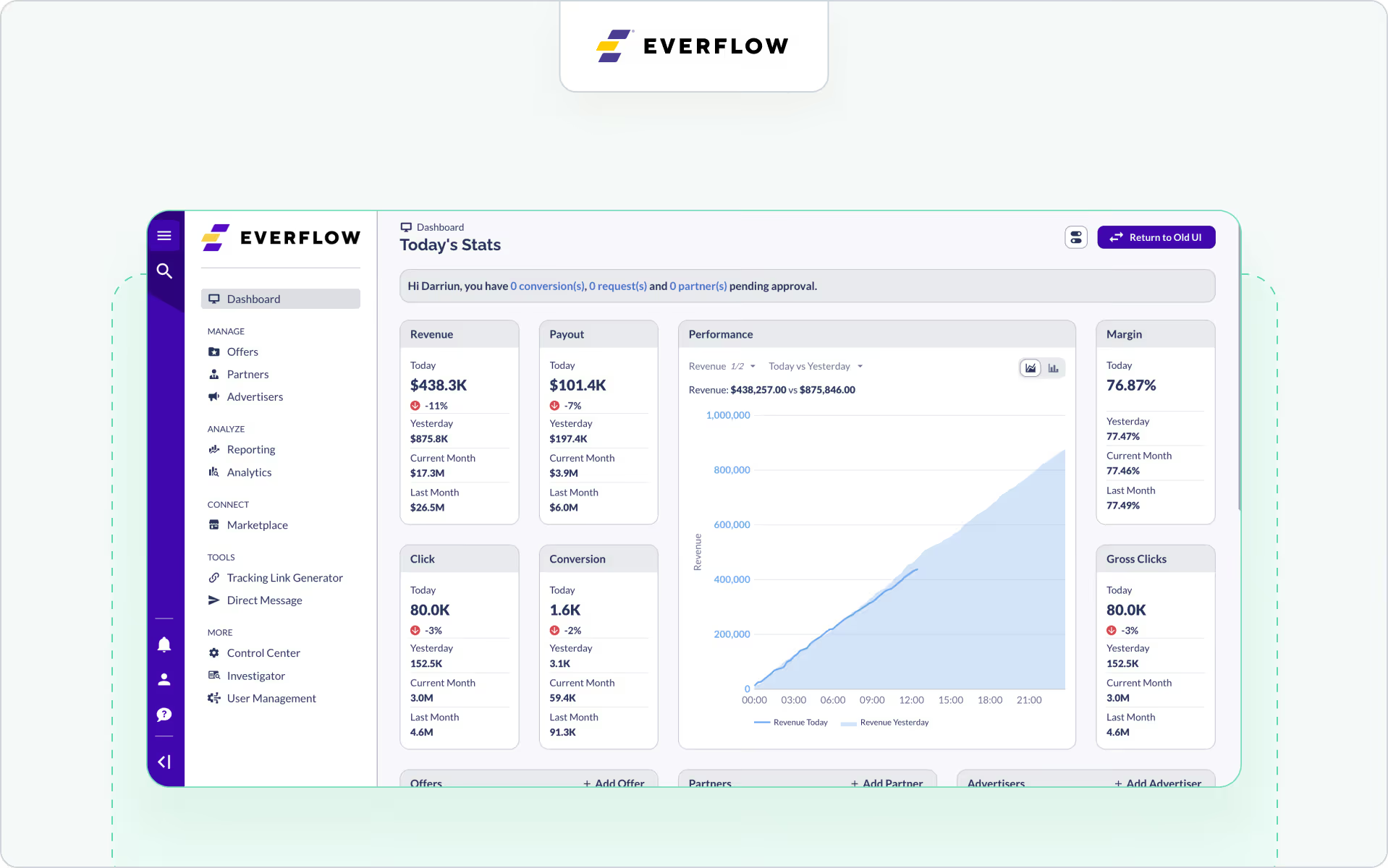
Am besten geeignet für: Fortgeschrittene Partner- und Affiliate-Programme, die detailliertes Tracking, Analysen, Betrugskontrollen und White-Label-Erfahrungen benötigen.

Warum es eine Alternative zu Allbound ist: Everflow konzentriert sich auf die Messung über Affiliates, Influencer und bezahlte Medien hinweg – so können Sie die Leistung überwachen, die Attribution analysieren und Ihre Partner zuverlässig bezahlen.

Besondere Highlights: Verweise auf klickfreies Tracking, detaillierte Berichterstellung und KPI-basierte Regeln – hilfreich, wenn Sie jeden Touchpoint verfolgen und in großem Maßstab optimieren möchten.

Wann sollte man Channelscaler (ehemals Allbound) behalten?

Bleiben Sie bei Channelscaler, wenn Sie Kontinuität vom Allbound-Portal sowie die Preisgestaltung/Rabatte von Channel Mechanics auf einer Plattform wünschen. Wenn Ihr Unternehmen bereits auf komplexe Anreize, zentralisierte Analysen und eine einheitliche Suite für Preisgestaltung und Werbeaktionen angewiesen ist, passt die Roadmap nach der Fusion möglicherweise gut zu Ihren Plänen.

Die beste Plattform hängt davon ab, wo Sie Hebelwirkung benötigen: CRM-first-Beziehungsmanagement und Echtzeit-Zusammenarbeit (Introw), End-to-End-UPM (ZINFI), All-in-One-PRM + TCMA (Unifyr), Co-Sell-Ausführung (WorkSpan) oder Performance-Partner-Software (impact.com, Everflow). Beginnen Sie mit den Maßnahmen, die den Umsatz steigern, wählen Sie Tools, die Ihre tägliche Arbeit automatisieren und optimieren, und halten Sie Verkäufer und Partner in den Arbeitsabläufen, die sie tatsächlich nutzen.

Warum Introw Ihre Wahl im Jahr 2026 ist

Wenn Sie ein Partnerbeziehungsmanagement wünschen, das sich wie ein integraler Bestandteil Ihres CRM anfühlt, vereint Introw AE, RevOps und Partner in einem einzigen Workflow – erstellen und verwalten Sie Leads und Opportunities, verwenden Sie bei Bedarf benutzerdefinierte Objekte und verlassen Sie sich auf Echtzeitdaten für die Nachverfolgung von Geschäften, die Zuordnung und die Prognose. E-Mails außerhalb des Portals und Slack Drittanbietern die Zusammenarbeit ohne lästige Anmeldeprozesse. Dank einfacher Aktivierungsfunktionen und einer Inhaltsbibliothek können Sie Partner anleiten, Ressourcen teilen und die Leistung überwachen. 
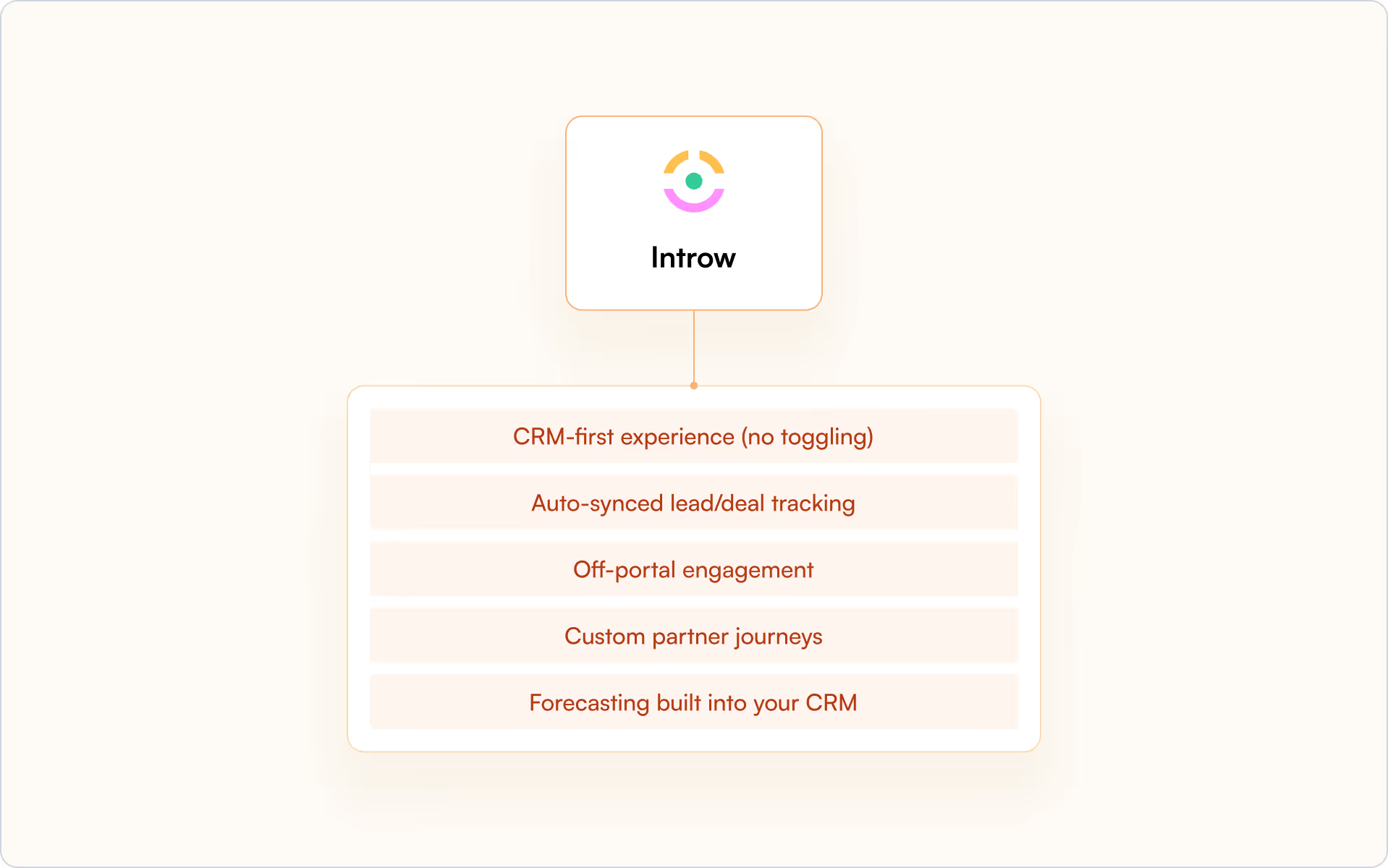
Das Ergebnis ist eine höhere Produktivität der Partner, sauberere Kundendaten und messbare Auswirkungen auf Vertrieb, Marketing und Service – ohne den Aufwand einer individuellen Entwicklung. Wenn das die Richtung ist, in die Sie gehen möchten, buchen Sie eine Demo und sehen Sie selbst, wie schnell Ihr Team einsatzbereit sein kann.

Autor

Ruben Bellaert

Growth

Hallo, ich bin Ruben. Bei Introw bin ich darauf spezialisiert, authentische Beziehungen aufzubauen, die partnergestütztes Wachstum vorantreiben. Ich bin von Natur aus gesellig und liebe es, mit Menschen in Kontakt zu treten – sei es durch eine herzliche Vorstellung, ein spontanes Gespräch oder die Zusammenarbeit in unseren gemeinsamen digitalen Räumen. Meine kreative Denkweise und mein People-First-Ansatz helfen mir, mich mühelos in der dynamischen Welt der B2B-Partnerschaften zurechtzufinden. Bei Introw transformieren wir die Art und Weise, wie Unternehmen mit Partnern zusammenarbeiten, indem wir Reibung eliminieren und das Engagement verbessern. Ich bin stolz darauf, dazu beizutragen, indem ich Verbindungen fördere, die zu bedeutsamem Wachstum führen.

Hallo, ich bin Ruben. Bei Introw bin ich darauf spezialisiert, authentische Beziehungen aufzubauen, die partnergestütztes Wachstum vorantreiben. Ich bin von Natur aus gesellig und liebe es, mit Menschen in Kontakt zu treten – sei es durch eine herzliche Vorstellung, ein spontanes Gespräch oder die Zusammenarbeit in unseren gemeinsamen digitalen Räumen. Meine kreative Denkweise und mein People-First-Ansatz helfen mir, mich mühelos in der dynamischen Welt der B2B-Partnerschaften zurechtzufinden. Bei Introw transformieren wir die Art und Weise, wie Unternehmen mit Partnern zusammenarbeiten, indem wir Reibung eliminieren und das Engagement verbessern. Ich bin stolz darauf, dazu beizutragen, indem ich Verbindungen fördere, die zu bedeutsamem Wachstum führen.

FAQs

Noch Fragen? Hier findest du die häufigsten Fragen und Antworten.

Kontaktiere uns

Welche Allbound-Konkurrenten eignen sich am besten für HubSpot Teams?

Introw und PartnerPortal.io sind leistungsstarke HubSpot Optionen. Beide übertragen Partnerregistrierungen und Deal-Updates direkt in HubSpot eine nahtlose Verkäufer- und Benutzererfahrung, wobei Introw zusätzlich eine Slack Zusammenarbeit bietet.

Wir entscheiden zwischen Channelscaler und einem CRM-First-Ansatz – was ist am wichtigsten?

Wenn Ihre Verkäufer in Salesforce HubSpot arbeiten HubSpot Sie Wert auf minimalen Verwaltungsaufwand legen, kann ein CRM-orientierter Ansatz wie Introw Reibungsverluste reduzieren und die Einführung vereinfachen. Wenn Ihr Programm auf komplexen Anreizen, Rabatten und Plänen basiert, ist die kombinierte PRM- und Preisgestaltungslösung von Channelscaler möglicherweise die bessere Wahl.

Können wir unser bestehendes Salesforce-/HubSpot-Setup beibehalten, ohne eine Re-Plattformierung durchführen zu müssen?

Ja – Introw ordnet Ihre aktuellen Objekte und Felder zu, sodass die Registrierung von Partnern, Aktualisierungen und Zuordnungen in derselben CRM-Plattform erfolgen, die Sie bereits verwenden. Das reduziert das Migrationsrisiko, sorgt für die Abstimmung von Kunden- und Partnerdaten und erleichtert es Verkäufern, in einem Workflow zu bleiben.

Wie schnell können wir Introw einführen – und wie wirkt sich das tatsächlich auf Kosten und Akzeptanz aus?

Die meisten Teams richten innerhalb weniger Tage die wichtigsten Abläufe ein – Formulare für die Registrierung von Geschäften,Slack und grundlegende Funktionen – und fügen dann im Laufe der Zeit Genehmigungen und komplexere Workflows hinzu. Eine schnellere Amortisation und weniger Verwaltungsaufwand führen in der Regel zu geringeren Serviceausgaben und einer höheren Partnerbindung im Vergleich zu portalorientierten Alternativen.


Launch your partner portal
in minutes!

Vielen Dank! Wir haben deine Anfrage erhalten!
Hoppla! Beim Absenden des Formulars ist ein Fehler aufgetreten.

Verwandte Blog-Artikel

Partner-Marketing

15 MDF Best Practices for High-Impact Partner Programs

Andreas Geamanu
Co-founder & CEO
5min Lesezeit
04 May 2026
⚡ TL;DR

Most market development funds (MDF) programs fail because they lack structure, visibility, and attribution to pipeline. The strongest partner teams treat market development funds as a revenue investment, not just extra marketing dollars. These MDF best practices will show you and your team how to improve MDF program management, support partners with targeted marketing activities, streamline approvals, and connect spend directly to measurable pipeline outcomes.

Why most MDF programs underperform

Most MDF programs don’t fail because the strategy is wrong. They fail because the operations around them are unclear, slow, or invisible to partners. Aligning early on expectations, ownership, and even the definition of MDF helps teams avoid the most common execution gaps.

The budget exists, but partners often don’t use it. In fact, roughly 60% of market development funds go unclaimed each year, not because partners aren’t interested, but because the process makes participation difficult.  

Across many partner ecosystems, the same issues show up repeatedly:

  • Channel partners don’t know funds are available
  • The approval process takes too long
  • Requests get lost in email or spreadsheets
  • Marketing activities run without measurable outcomes
  • Finance teams can’t track how marketing dollars were used
  • Partner marketing teams can’t connect MDF investments to pipeline

Without structure, market development funds rarely support partner engagement or revenue growth. When MDF programs are tied to clear execution plans and measurable partner marketing campaigns, they become a predictable lever for demand generation instead of unused budget.

15 MDF best practices for SaaS partner programs

If you want market development funds to drive pipeline instead of sitting unused, you need a repeatable system. The following market development funds best practices are the framework strong SaaS teams use to make MDF programs predictable, measurable, and aligned with revenue.

1. Design your fund structure before you launch

Start with the question most teams skip: how should we allocate MDF in the first place?

Decide early whether MDF allocation is:

  • Fixed per partner tier
  • Performance-based
  • Motion-based across reseller, referral, or integration channel partners

Also define:

  • Eligible marketing activities
  • Fiscal period (quarterly vs. annual)
  • Whether unused MDF funds expire or roll over

Without this structure, approvals become inconsistent, and partners lose confidence in the program.

This is the foundation of strong MDF program management and best practices.

2. Make budget visibility self-service

Ask yourself this: can partners see their available budget without emailing you?

If not, adoption drops immediately.

Partners should always see:

  • Total MDF allocation
  • Pending requests
  • Approved spend
  • Remaining marketing budget

Real-time visibility improves partner engagement and increases participation in MDF campaigns faster than almost any other change you can make.

3. Build a standardized request form, not email

Inbox-driven requests slow everything down.

Instead, create a structured marketing development funds template partners complete before submitting requests. At minimum, capture:

  • Campaign type
  • Target audience
  • Expected pipeline or qualified leads
  • Zeitachse
  • Budget requested
  • Success metrics

When requests attach directly to CRM records, your MDF process becomes measurable from day one. Platforms designed for managing marketing development funds handle this automatically.

4. Set approval SLAs and default statuses

Partners don’t stop submitting requests because budgets are small. They stop because responses are slow.

Set a clear approval process, such as:

Submitted → Under review → Approved or declined

Then define an internal SLA, for example, five business days.

Predictability increases participation and improves demand generation activities across your partner ecosystem. It is one of the simplest MDF program best practices to implement.

5. Require a campaign brief, not just a budget ask

If a partner asks for marketing budget without a plan, pause.

Strong MDF programs require a short campaign brief that explains:

  • What they want to run
  • Who they want to reach
  • What results they expect
  • How the activity supports your strategic objectives

This improves strategic alignment and makes it easier to compare performance across MDF campaigns later.

6. Enable collaboration, not just approval

Approval is not execution.

After funding is approved, partners still need shared visibility into assets, timelines, and next steps. Otherwise, marketing initiatives disappear into email threads.

A structured collaboration environment improves partner marketing outcomes and keeps joint marketing initiatives visible across teams. It also strengthens ongoing partner engagement during campaign execution.

7. Link campaigns to deals and leads

Here’s the question leadership eventually asks: what did this spend actually generate?

If MDF campaigns are not connected to deals or sales leads, you cannot answer it.

Linking MDF-funded activities directly to pipeline turns market development funds into a measurable growth lever. It also helps channel managers understand which partners consistently generate qualified leads.

This is where many MDF programs break, and where the biggest gains usually happen. Make sure to use modern PRM that links all these activities directly in you CRM. 

8. Track ROI automatically, not manually

If ROI lives in spreadsheets, you’re always reacting too late. 

Modern MDF programs are being tracked directly in your CRM where you can connect spend directly to pipeline contribution so you can see which partners, campaigns, and marketing efforts drive revenue growth in real time. 

That visibility helps you shift marketing investment toward activities that expand market reach and improve sales performance.

9. Gate future funds on proof of performance

A simple rule improves accountability quickly: show results before requesting more budget.

Ask partners to demonstrate:

  • Campaign reach
  • Lead generation
  • Pipeline-Beitrag

before approving additional MDF funds.

This ensures MDF investments support partners who execute and helps drive partner success across co-op programs and co-op funds.

10. Review and iterate quarterly

Treat MDF like a planning lever, not a reimbursement process.

Each quarter, review:

  • Which partners used their allocation
  • Which MDF campaigns generated pipeline
  • Which marketing activities underperformed

These reviews strengthen your channel partner marketing strategy and make future MDF allocation easier to justify.

11. Segment MDF by partner motion, not just partner tier

Many teams allocate development funds by partner tier alone. That’s rarely enough.

Referral partners, resellers, and integration partners contribute differently to market development. Segmenting MDF allocation by motion improves market presence and ensures shared marketing resources support the right expected outcomes.

This is one of the most overlooked market development fund best practices.

12. Pre-approve high-performing campaign templates

Instead of reviewing every request from scratch, give partners a shortlist of proven campaign options.

Examples include:

  • Co-branded campaigns
  • Digital ads
  • Local events
  • Vertical webinars

Pre-approved templates reduce approval time and increase the likelihood of generating qualified leads.

They also help partners understand how to obtain marketing development funds faster because expectations are clear.

13. Tie MDF allocation to pipeline coverage targets

Not every region needs the same level of funding.

If pipeline coverage is weak in a segment or geography, allocate MDF funds there first. If another area already performs well, shift marketing investment elsewhere.

This ensures MDF allocation supports strategic priorities instead of spreading budget evenly across the partner program.

14. Combine MDF with incentive programs to change partner behavior

Funding alone doesn’t change behavior. Incentives do.

Pair MDF campaigns with structured channel partner incentive programs to encourage participation in demand generation campaigns and improve execution quality across channel partners.

This combination helps generate leads faster and strengthens overall partner performance.

15. Reserve budget for strategic initiatives, not reactive requests

Leave part of your development funds unallocated at the start of the quarter.

Use that reserve to support:

  • New product launches
  • Expansion into new regions
  • Demand generation for priority segments
  • Initiatives that increase brand visibility

This ensures MDF investments stay aligned with long-term strategic priorities instead of being consumed by opportunistic requests.

MDF request form template and checklist

A strong MDF request form does two things at once.

It makes approvals faster for your team, and it makes it easier for partners to submit campaigns that actually generate pipeline.

Without a structured request format, MDF campaigns become hard to evaluate, hard to compare, and almost impossible to attribute later.

A standardized marketing development funds template fixes that by ensuring every request captures the information needed to support demand generation, track sales performance metrics, and align spend with strategic objectives.

Use the template below as a default structure inside your partner program.

MDF request form checklist

Use this checklist to confirm your MDF process captures everything required for attribution and execution:

In a CRM-connected workflow, this structure also gives both you and your partners real-time visibility into MDF campaigns from request through execution and attribution, which is what makes modern MDF programs scalable.

Where Introw comes in

If you follow the framework above, your MDF program becomes structured. What most teams still struggle with is proving what that structure actually produces.

Introw closes that gap by connecting MDF requests directly to the partners, campaigns, and deals they are meant to influence inside your CRM. Instead of tracking approvals separately from pipeline, everything lives in one workflow.

That changes how MDF programs operate day to day:

  • Partners submit structured requests without email back-and-forth
  • Every request attaches automatically to the right partner and campaign
  • Approvals follow a consistent approval process instead of ad-hoc routing
  • Both you and your channel partners see available MDF funds in real time
  • Marketing campaigns link directly to qualified leads and influenced deals
  • ROI updates automatically as pipeline moves

This is what makes market development funds (MDF) measurable.

When a deal is generated or closed, you can see whether MDF supported it. When planning next quarter’s MDF allocation, you can see which partners generated pipeline and which marketing initiatives did not.

It also changes adoption. Because partners can see their allocation, submit requests quickly, and stay aligned on campaign execution, MDF funds get used instead of sitting unused across the partner ecosystem.

For a partner marketing manager managing Market Development Funds, that means fewer spreadsheets, clearer attribution, and better conversations with leadership about where marketing investment should go next.

If you want to see how structured MDF programs work when requests, approvals, campaigns, and pipeline all stay connected in one place, request a demo today.

Partner-Marketing

What Are Marketing Development Funds (MDF)? A Complete Guide for Partner Teams

Stijn Provoost
Marketing
5min Lesezeit
01 May 2026
⚡ TL;DR

Marketing development funds (MDF) are budgets vendors provide to channel partners to support co-marketing campaigns, events, and demand generation activities that help grow pipeline and revenue. When managed effectively, MDF programs can increase partner-sourced pipeline, improve brand visibility in target markets, support localized marketing initiatives, and drive measurable business growth. However, when teams rely on spreadsheets and email threads to manage MDF, a large portion of funds often goes unused, making it harder to track performance and maximize ROI. Modern PRM tools help streamline MDF management, turning it from an operational headache into a predictable growth lever.

What are marketing development funds?

Marketing development funds (MDF) are budgets vendors allocate to channel partners to run approved marketing activities that promote the vendor’s products and generate pipeline.

A simple marketing development funds definition: MDF is vendor-funded support that helps partners execute campaigns like events, webinars, digital ads, and localized marketing programs that drive demand and expand market reach.

Here’s how MDF programs typically work:

  • The vendor sets aside development funds for partners
  • Partners submit requests for MDF-funded marketing efforts
  • The vendor approves the activity and releases marketing dollars
  • Both teams track results such as leads, pipeline, and revenue impact

You’ll also see MDF called market development funds, which refers to the same concept in most channel marketing programs.

It’s important not to confuse MDF with co-op funds. MDF is discretionary and approved in advance, while co-op programs are usually earned after past sales performance and reimbursed later.

Why MDF matters for partner programs

Most channel partners don’t have extra marketing dollars to promote your product. Marketing development funds close that gap so partners can run campaigns that create pipeline instead of waiting for inbound demand.

When partners get MDF support, they can:

  • Launch localized marketing campaigns faster
  • Generate leads in their own regions
  • Increase brand visibility with potential customers
  • Expand your market presence without adding headcount

That’s why strong MDF programs are a core part of a modern channel partner marketing strategy. They help both the vendor and the partner invest in shared growth instead of working in silos.

MDF also creates accountability. You fund the activity. Partners execute the marketing initiatives. Both teams track progress and measure sales opportunities together.

Yet many teams still struggle to use the budget they already have. Up to 60% of development funds go unused because the approval process is slow and results aren’t visible across systems.

When the MDF process works, the impact is real. It’s common to see about $8K in MDF-funded activity influence more than $130K in pipeline. That kind of return turns MDF from a cost line into a predictable lever inside your broader partnership marketing strategy.

8 common MDF-eligible activities

Marketing development funds help channel partners run targeted marketing activities that generate pipeline and expand market reach. Most MDF programs support digital campaigns, events, and co-branded assets that increase brand visibility and help generate leads.

Here are the most common MDF-funded activities across SaaS partner ecosystems.

1. Co-branded webinars and virtual events

Partners often use development funds MDF budgets for hosting webinars that introduce your vendor’s products to new audiences. These sessions support lead generation programs and strengthen partner engagement through structured co-marketing initiatives.

2. Digital advertising campaigns

Paid LinkedIn campaigns, search engine marketing, and digital ads help local partners reach potential customers faster. These MDF-funded marketing efforts are a reliable way to drive demand generation and generate leads.

3. Trade show and conference sponsorships

Trade shows increase brand awareness and create sales opportunities in new markets. Many MDF programs allocate MDF for booth presence, speaking slots, or regional sponsorships alongside broader channel partner incentive programs.

4. Co-branded content creation

Partners often invest MDF support into case studies, whitepapers, and promotional materials that highlight joint solutions. These assets strengthen brand recognition and support marketing goals, especially when teams enable partners with content that’s ready to deploy.

5. Email marketing campaigns

Email marketing campaigns help partners nurture sales leads and stay visible with existing accounts. They’re a simple way to support marketing and improve partner performance.

6. Local demand generation campaigns

Geo-targeted outreach helps increase local awareness and expand market reach in priority regions. These localized marketing campaigns are especially valuable for smaller partners building market presence.

7. Partner-hosted workshops and roundtables

Workshops and executive roundtables help educate potential customers and improve sales performance through direct engagement. They also support the work of a modern partner marketing manager running joint marketing activities across channel partners.

8. Product demo environments and trial programs

Some MDF activities support hands-on demo environments that help partners showcase real use cases and drive sales through practical product experiences.

Eligible MDF activities vary by vendor, but strong MDF programs make eligibility clear upfront. That clarity speeds the approval process and helps partners move faster on marketing initiatives that support market development.

How MDF programs typically work (the MDF lifecycle)

What MDF is in marketing becomes easier when you start looking at the lifecycle. Most MDF programs follow a predictable structure from fund allocation to ROI tracking. The difference between average programs and high-performing ones is how well teams manage each step.

Here’s how the MDF process usually works.

Step 1: Fund allocation

The vendor sets aside development funds budgets by partner tier, region, or strategic priority. Many teams allocate MDF based on partner performance, planned market development goals, or expected pipeline contribution.

Step 2: Partner request submission

The partner apply step starts when channel partners submit a proposal describing the MDF-funded activity, expected outcomes, target audience, and marketing initiatives they plan to run. This stage often answers questions like what does MDF mean in marketing for new partners entering the program.

Step 3: Review and approval

Your team evaluates the request based on marketing goals, eligibility rules, and available marketing dollars. This approval process is where many MDF programs slow down due to email chains and limited visibility into fund management.

Step 4: Campaign execution

Once approved, partners launch marketing campaigns such as digital ads, trade shows, or lead generation programs designed to support marketing and expand market reach.

Step 5: Proof of performance

Partners submit results from the MDF-funded activity, including receipts, campaign metrics, and sales leads. This helps both the vendor and partner track progress and confirm expected outcomes.

Step 6: ROI measurement

The final step connects spend to pipeline and revenue growth. Strong teams link market development funds (MDF) activity directly to sales opportunities and partner performance. Weak programs rely on spreadsheets and guesswork instead of real attribution.

Most breakdowns happen during request approvals and ROI measurement. Without structured workflows and CRM visibility, teams struggle to allocate MDF efficiently or prove impact.

This gap explains why the MDF meaning in marketing (and the broader meaning of MDF in channel marketing) often gets reduced to spend tracking instead of driving growth.

MDF allocation models: how to decide who gets what

Your allocation model determines how fairly and effectively you distribute development funds across channel partners. If partners don’t understand how budgets are assigned - or can’t see what’s available - MDF programs quickly lose momentum.

Here are the three most common approaches.

Flat allocation

Every partner receives the same amount of development funds support.

This model is simple to manage and easy to explain, especially for newer programs where teams are still clarifying the MDF definition marketing teams use internally. The downside: it ignores partner performance and strategic impact.

Tier-based allocation

Partners receive budgets based on program level. Gold partners get more. Silver partners get less. Bronze partners receive the smallest share.

This structure aligns MDF usage with partner capabilities and expected contribution. It also reinforces program incentives and improves partner engagement across your ecosystem.

Performance-based allocation

Partners earn market development funds based on past revenue, deal volume, or pipeline contribution.

This is the most efficient model for driving growth because it ties marketing dollars directly to results. It also helps reinforce the MDF meaning marketing leaders care about most – measurable pipeline influence and increased sales.

Hybrid allocation models

Many teams combine approaches. For example:

  • A base allocation for all partners
  • A bonus pool tied to partner performance

This balances fairness with accountability and reflects the practical MDF marketing meaning inside mature partner programs.

Whatever model you choose, partners should always see their available budget in real time. If they have to ask a channel manager over email, the MDF in marketing meaning shifts from a growth lever to an administrative bottleneck.

Why most MDF programs fail (and how to fix it)

Many teams understand the MDF meaning marketing leaders expect: pipeline growth, stronger partner engagement, and measurable revenue impact. But execution often breaks down long before those results appear.

Here’s where most MDF programs fail and how to fix each issue.

Problem What happens in practice How to fix it
Spreadsheet-based tracking No audit trail, no real-time visibility, and constant version conflicts. Teams lose control of development funds and can’t track fund allocation accurately. Move fund management into a structured portal workflow with centralized tracking and live budget visibility.
Email-based approvals Requests get buried, status is unclear, and there’s no reliable approval process or SLA. Campaign timelines slip and partners disengage. Use automated approval workflows that route requests instantly and track status end-to-end.
No partner self-service Channel partners email your team to check balances, submit requests, or follow up on MDF usage. This slows marketing activities and increases admin overhead. Provide self-service dashboards so partners can view available development fund budgets and submit requests directly.
No connection between spend and revenue Teams know how much they spent but can’t tie MDF-funded activity to pipeline, partner performance, or revenue growth. This weakens reporting and limits strategic alignment. Connect MDF programs to CRM data so spend links directly to deals, attribution, and measurable sales opportunities.
Slow approval cycles Partners want to launch marketing campaigns quickly, but approval delays stall execution and reduce impact. Momentum drops, and fewer initiatives move forward. Shorten approval cycles with configurable workflows that support marketing efforts without manual back-and-forth.

When these gaps are removed, MDF programs shift from reactive fund tracking to structured demand generation engines that support marketing goals, improve partner engagement, and drive measurable revenue growth.

How modern PRM tools manage MDF

Modern PRM tools turn MDF from a tracking exercise into a system your team can actually use to support marketing initiatives and prove impact.

Instead of chasing approvals, reconciling spreadsheets, or guessing which MDF-funded campaigns influenced pipeline, your team gets a clear structure for managing development funds across partners and programs.

A strong MDF setup should include:

  • Fund creation with budget caps and partner-level allocation
  • No-code request forms that auto-map to CRM objects
  • Approval workflows with status tracking and audit trails
  • Partner-facing budget visibility across available, consumed, and pending funds
  • Campaign-to-deal linking for revenue attribution
  • Automated ROI calculation tied to pipeline and more sales opportunities

The best PRM platforms keep development funds MDF activity synced with Salesforce or HubSpot, so finance, RevOps, and partnership teams trust the same numbers. That makes it easier to track progress, justify future budget decisions, and improve partner performance over time.

When this structure is in place, the MDF meaning marketing teams care about becomes practical: clearer attribution, faster approvals, better partner engagement, and more predictable revenue growth.

Curious how this works in practice? Learn how modern teams like yours manage marketing development funds.

MDF vs. co-op funds vs. SPIFF: what is the difference?

Partner programs often combine multiple incentive types. Understanding the difference helps your team choose the right structure for supporting marketing activities, improving sales performance, and driving revenue growth across channel partners.

Anreiztyp How it works Best used for
MDF (marketing development funds) Development fund budgets are allocated upfront and approved before campaigns begin. Partners use them for future marketing efforts like events, digital ads, or co-branded content. This is the core MDF definition marketing teams rely on when planning pipeline-building activities. Supporting marketing campaigns that increase brand visibility, generate leads, increase pipeline and build revenue.
Co-op funds Co-op funds are earned after sales. A percentage of revenue (often 1–5%) goes into a shared co-op budget partners can later use for approved marketing programs. Rewarding partners who already drive revenue and expanding ongoing market development.
SPIFFs (sales performance incentive funds) Short-term bonuses paid to partner & sales reps for hitting specific targets such as closing deals, generating sales leads, or promoting priority vendor products. Driving fast action on priority offers and creating near-term sales opportunities.

Most mature partner programs use all three together. MDF supports planned demand generation, co-op programs reward past results, and SPIFs accelerate short-term pipeline activity. If you’re designing a broader incentive structure across your ecosystem, this overview of channel partner incentive programs shows how these models work together.

Where Introw comes in

Most MDF programs don’t fail because the budget is too small. They fail because the process around market development funds is fragmented across spreadsheets, inboxes, and disconnected systems.

That friction shows up in daily work quickly. Channel managers chase approvals. Partners ask about balances. RevOps can’t connect spend to pipeline. Leadership sees the cost but not the outcomes. Over time, MDF usage drops and marketing initiatives lose momentum.

Introw brings the entire MDF lifecycle into one CRM-connected workflow so your team can manage development funds with clear structure and visibility.

What changes for your team in practice

Channel managers stop tracking requests manually and instead see budgets, approvals, and campaign activity in one place. Partner marketing managers move faster because requests follow structured workflows instead of email threads. RevOps gains reliable attribution by linking MDF-funded activity directly to deals in HubSpot or Salesforce. Leadership gets a clearer view of how marketing dollars support pipeline and revenue growth.

Instead of treating MDF as a quarterly coordination task, your team can track progress continuously across partners, campaigns, and sales opportunities.

If you want to know where to go next, here’s where to start:

  1. Review how your team currently allocates and tracks marketing development funds
  2. Identify where approvals slow down campaign execution or reduce MDF usage
  3. Explore how structured workflows improve attribution inside modern marketing development funds programs

When your MDF process becomes measurable and easy to manage, it becomes easier to support partners, improve partner performance, and plan future budget decisions with confidence.

Request a demo today to chat with us about how to turn your marketing development funds into a measurable source of partner-driven pipeline.

Partner-Marketing

The Only Partner Marketing Campaigns Worth Copying in 2026

Adèle Coolens
Marketing & Partnerschaften
5min Lesezeit
03 Mar 2026
⚡ TL;DR

Partner marketing campaigns should be built for repeatability rather than treated as one-off co-marketing moments. The strongest campaigns have clear ownership, a ready-to-run campaign-in-a-box, and measurement frameworks that connect activity directly to pipeline. In 2026, the formats that scale best include integration launches, co-branded content, referral motions, and partner-led events. A CRM-first approach to attribution is what turns partner marketing from a stream of busy activity into a predictable source of partner-sourced revenue.

Most partner marketing campaigns look great in a recap deck and go nowhere in the pipeline. Two brands post about each other, share a webinar link, and call it a success — but nobody can trace a single deal back to the effort.

The partner marketing campaigns worth copying work differently. They’re built to scale across multiple partners, track back to revenue, and run again without a full rebuild. This guide breaks down the campaign types that actually drive pipeline, examples you can replicate, and a practical planning and measurement approach that connects to your CRM.

What is a partner marketing campaign?

A partner marketing campaign is a joint marketing effort between a vendor and one or more partners — resellers, referral partners, technology partners, or strategic alliances — designed to generate leads, build awareness, or drive pipeline together.

Both sides contribute resources, distribution, and credibility. The outcome you’re aiming for is mutual: expanded reach, higher trust, and pipeline neither party could generate as efficiently on their own.

Partner marketing campaigns typically live inside broader partner marketing programs. You’ll also hear these called partnership marketing examples or co-marketing initiatives. The mechanics vary, but the principle stays the same: two brands coordinating around a shared customer, shared narrative, and shared outcomes.

What makes partner marketing campaigns worth copying?

Some partner campaigns generate buzz but no pipeline. Others “work” once, then fall apart when you try to roll them out across ten partners and two quarters.

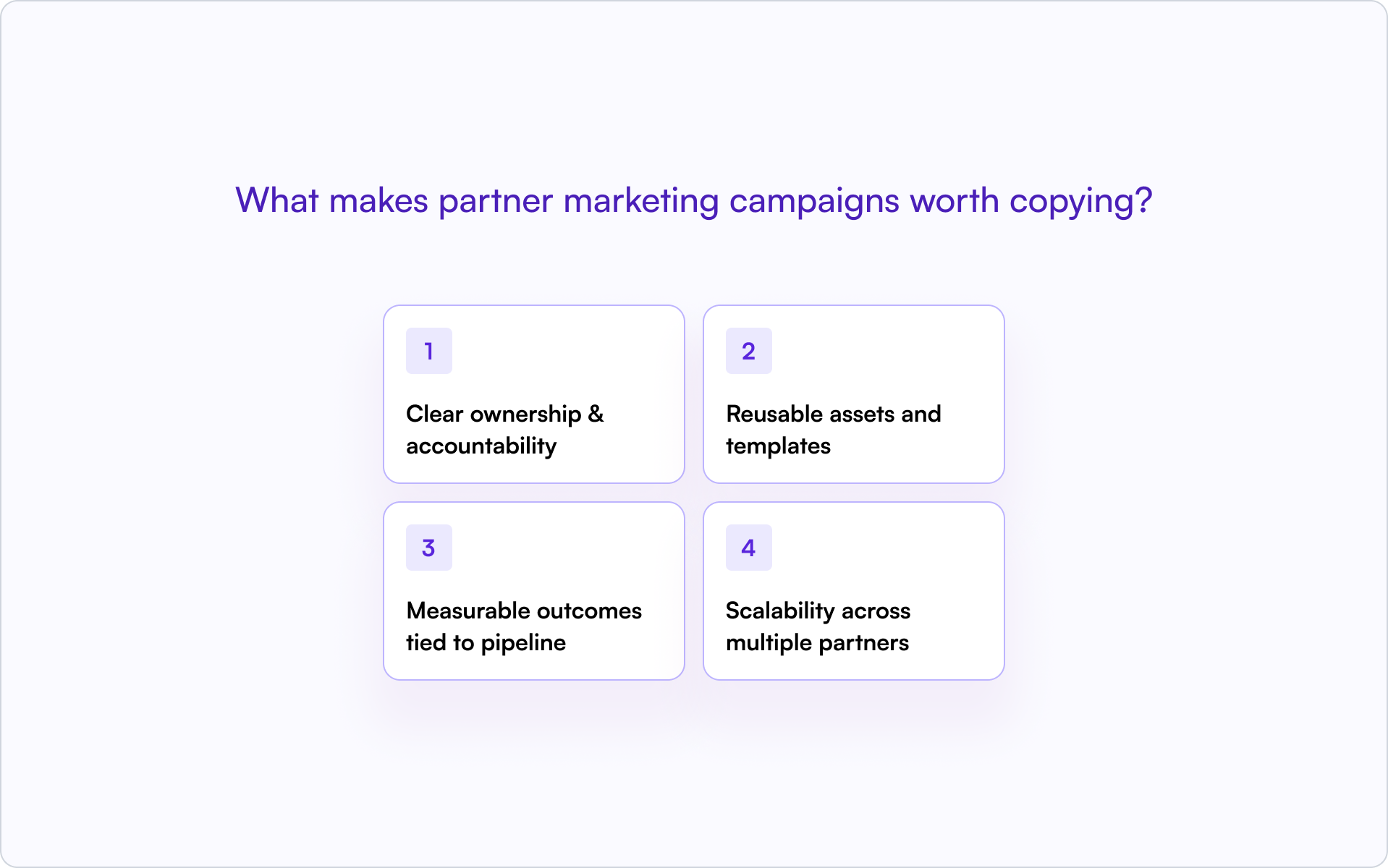
The partner marketing campaigns worth copying share a few operational qualities that make them repeatable, measurable, and scalable.

Klare Zuständigkeiten und Verantwortlichkeiten

Before anything goes live, the best teams define who owns what — the vendor, the partner, or both. When ownership is fuzzy, follow-up stalls, leads go cold, and the campaign gets remembered as “a nice collaboration” instead of a repeatable pipeline motion.

Reusable assets and templates

Scalable campaigns come with a “campaign-in-a-box”: pre-built emails, social posts, landing pages, and talking points partners can customize without starting from scratch. Reusable assets reduce partner friction and make opt-in easy.

Measurable outcomes tied to pipeline

Impressions and clicks are fine inputs, but the campaigns worth copying connect to revenue. If you can’t trace leads back to a partner and into opportunities, you’re running activity — not a growth channel.

Scalability across multiple partners

A great campaign can be rolled out to many partners without heavy customization each time. The goal is a library of repeatable motions partners can join — not one-off collaborations that require a rebuild every launch.

Types of partner marketing programs that drive pipeline

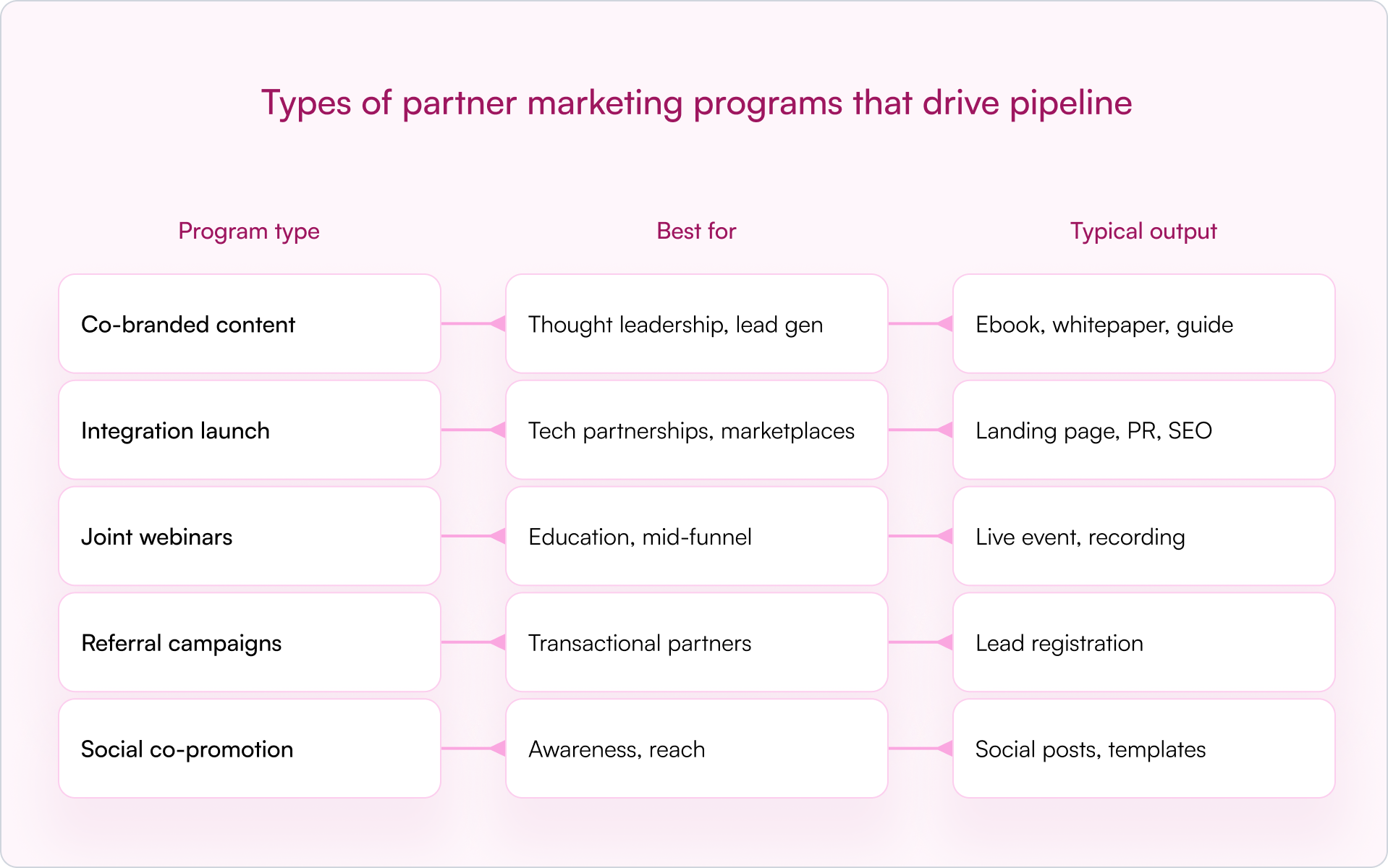
Before you pick tactics, anchor on program structure. Different partner marketing programs serve different jobs — and the best stacks combine several.

Program Type Am besten geeignet für Typical Output
Co-branded content Thought leadership, lead gen Ebook, whitepaper, guide
Integration launch Tech partnerships, marketplaces Landing page, PR, SEO
Joint webinars Education, mid-funnel Live event, recording
Referral campaigns Transactional partners Lead registration
Social co-promotion Awareness, reach Social posts, templates

Co-branded content campaigns

Joint whitepapers, ebooks, or guides featuring both brands. Both parties co-create and co-distribute — which means shared audience, shared credibility, and shared leads. Co-branded content campaigns are classic partnership marketing examples in B2B because the content lives on long after the launch.

Integration and marketplace launch campaigns

Campaigns that announce a new tech integration or app marketplace listing often include landing pages, PR, and SEO-optimized content. Done right, these assets compound — a well-built integration page can drive organic traffic for years.

Joint webinars and virtual events

Co-hosted educational sessions where both parties promote and both capture leads. Joint webinars are one of the most repeatable joint marketing examples when you have clear audience overlap and a topic that matters to both ICPs.

Referral and incentive campaigns

A partner refers leads in exchange for rewards — SPIFFs (short-term incentive bonuses), commissions, or other incentives. Referral campaigns tie directly to partner-sourced revenue and work well for transactional partner motions.

Social media co-promotion campaigns

Coordinated posts across both brands’ channels, often with templates provided to partners. Social co-promotion is a lightweight way to test new partner marketing ideas before committing to bigger co-marketing investments.

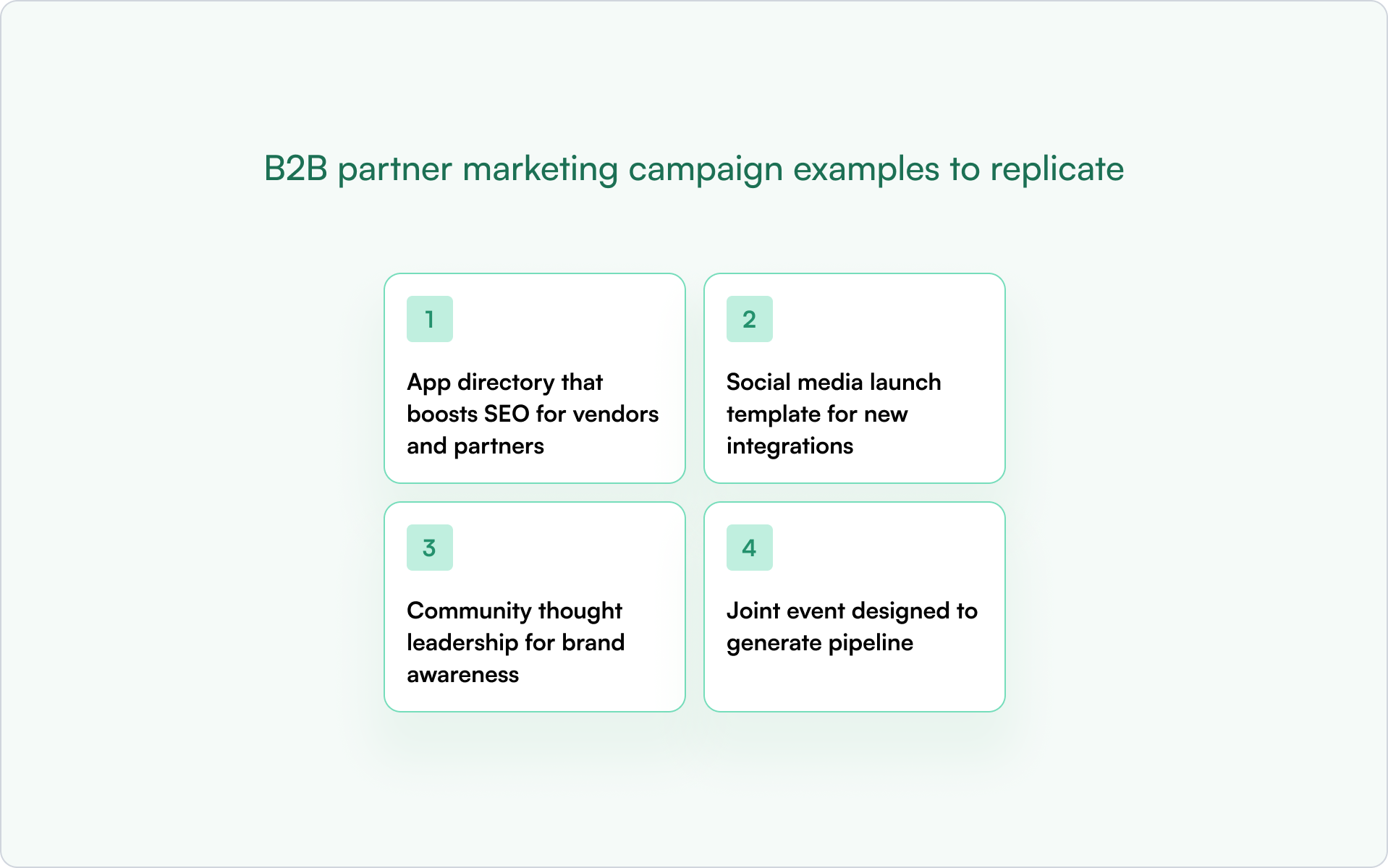
B2B partner marketing campaign examples to replicate

Theory is cheap. The following partner marketing campaign structures are practical, repeatable, and designed to scale beyond a single partner.

1) App directory that boosts SEO for vendors and partners

A searchable partner or integration directory drives organic traffic for both parties. Each listing becomes a landing page that can rank for relevant keywords. It’s one of the strongest long-term partner marketing campaigns because it creates always-on demand without ongoing campaign spend.

  • What it is: A public directory of integrations or partners, optimized for search.
  • Why it works: Compounds over time; drives inbound for both vendor and partner.
  • How to replicate: Create a directory with unique content per partner, and optimize pages for “[your product] + [partner product] integration” search intent.

2) Social media launch template for new integrations

When a new integration goes live, give partners ready-to-post social templates — images, copy, and hashtags. This increases participation because partners don’t have to write anything from scratch, and you get coordinated reach across multiple audiences.

  • What it is: Pre-built social assets partners can post on launch day.
  • Why it works: Low lift for partners, high participation rates.
  • How to replicate: Create a shared folder with 3–5 copy variations, images sized per channel, and posting guidelines. Send it 48 hours before launch.

3) Community thought leadership for brand awareness

Feature partner experts in blog posts, podcasts, or LinkedIn content. Both brands benefit from credibility transfer, and the content reads as more authentic than solo marketing.

  • What it is: Vendor-hosted content featuring partner voices.
  • Why it works: Builds trust when paid channels are saturated.
  • How to replicate: Invite partners to contribute quotes, guest posts, or podcast episodes, then cross-promote to both audiences.

4) Joint event designed to generate pipeline

Co-hosted dinners, roundtables, or virtual events targeting a shared ICP. Both parties invite prospects and both capture leads. The key is to productize the format so it doesn’t become a one-off.

  • What it is: A co-branded event with shared invite lists and coordinated follow-up.
  • Why it works: High-intent leads, shared costs, mutual credibility.
  • How to replicate: Build an event-in-a-box kit: agenda template, invite copy, registration page, day-of run-of-show, and follow-up sequences for both sales teams.

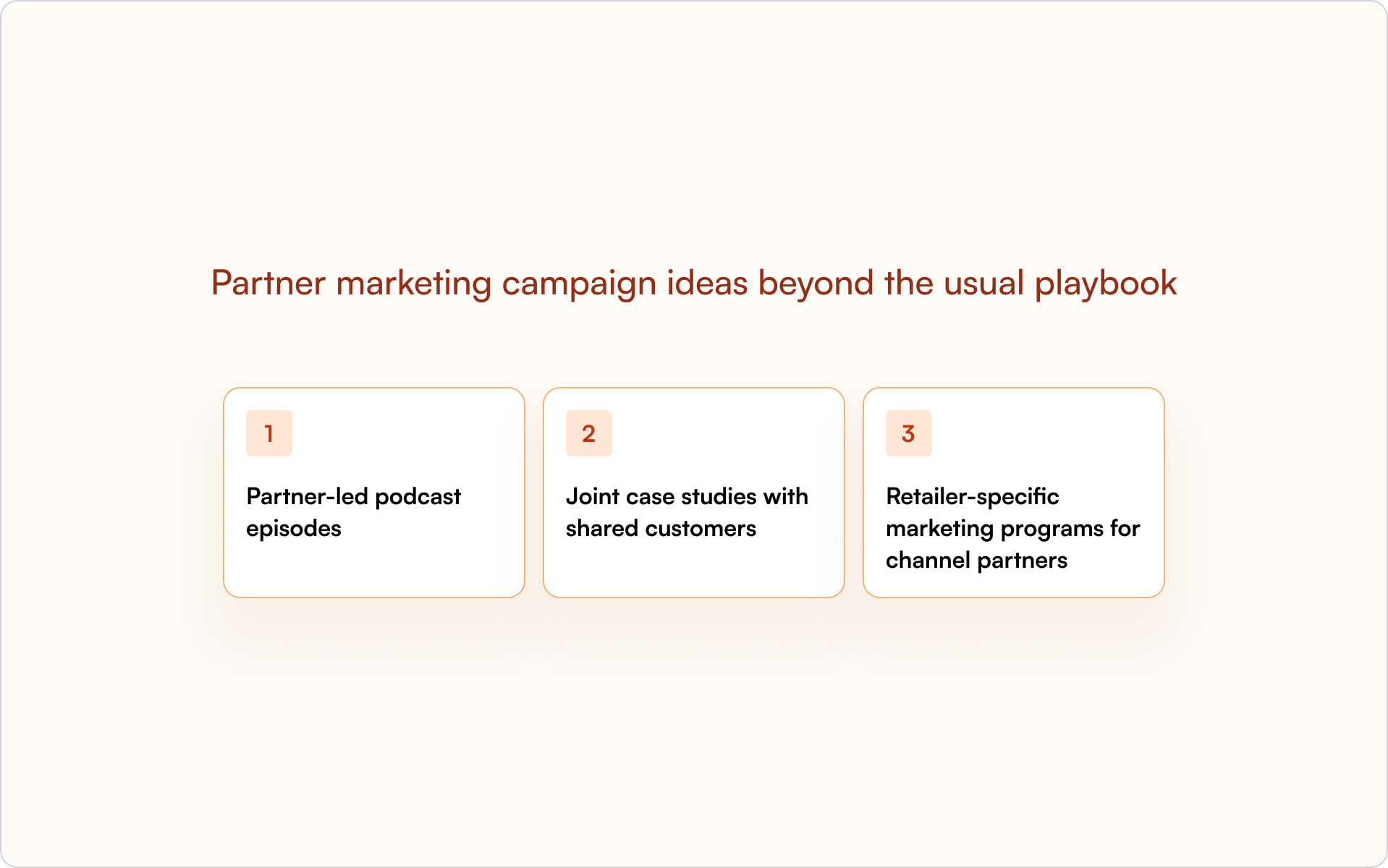
Partner marketing campaign ideas beyond the usual playbook

If you’ve already run webinars and co-branded content, the next step is to create partner marketing campaigns that feel native to how your buyers actually learn and decide.

Partner-led podcast episodes

Invite partners as guests or let them host an episode. You get shared distribution, authentic content, and an evergreen backlog you can repurpose into clips, posts, and newsletters.

Joint case studies with shared customers

When a customer uses both vendor and partner, co-create the case study. Joint case studies often outperform generic partner marketing examples because they prove end-to-end outcomes for a shared ICP — with less “marketing speak.”

Retailer-specific marketing programs for channel partners

For companies selling through distributors or resellers, tailored campaigns by region, vertical, or partner tier can increase adoption. The key is to provide modular assets partners can localize without rewriting the offer.

How to plan and execute partner marketing campaigns

Planning is where most partner marketing campaigns succeed or fail. If you’re a founder, this is the part that turns “we should do something with partners” into a repeatable growth motion your team can run without heroics.

1) Define campaign goals and success metrics

Start with what you want: leads, pipeline, awareness, or something else. Whenever possible, tie goals to partner-attributed revenue. Consistent goal-setting lets you compare performance across partner marketing campaigns and double down on what actually converts.

2) Select the right partners for the campaign

Not every partner fits every campaign. Consider partner tier, audience overlap, and engagement level. The best joint marketing examples happen when there’s obvious ICP overlap and a believable shared story.

3) Build a campaign-in-a-box with ready assets

Reduce friction by providing everything partners need to participate:

  • Email templates (customizable)
  • Social media copy and images
  • Co-branded landing page
  • Tracking links for attribution
  • Partner talking points or FAQ

Campaign-in-a-box is what turns good ideas into repeatable motions inside your partner marketing programs.

4) Set a communication and approval workflow

Define who approves what, how partners submit content for review, and timeline expectations. A simple workflow keeps multi-partner campaigns consistent and on-brand without slowing everything down.

5) Launch, monitor, and adjust in real time

Track engagement and leads as the campaign runs. Sync partner activity to your CRM so you can quickly see which partner marketing campaigns are generating meetings and opportunities — and which ones need a tweak to targeting, messaging, or follow-up.

How to measure partner marketing campaigns (without guessing)

Attribution is where most partner marketing programs struggle. Without clean data, you can’t tell which campaigns drive revenue and which ones just look good in a slide deck.

Leads and pipeline attributed to partners

Track which partners sourced or influenced which deals. Your CRM should be the source of truth. This is what separates “fun co-marketing” from partner marketing campaigns you can scale quarter after quarter.

Campaign engagement and conversion metrics

Measure opens, clicks, registrations, meetings booked, and conversion rates — and compare across formats. Over time, you’ll see patterns: which topics drive attendance, which partners consistently activate, and which campaigns convert into pipeline for your ICP.

Solving the attribution problem with CRM-first tracking

Attribution is hard because deals usually have multiple touches, and partner versus direct overlap is common. CRM-first tracking helps by syncing partner activity directly to deal records. Once your data is clean, it’s easier to invest in the partner marketing campaigns that influence revenue — and stop funding the ones that don’t.

Tip: If your partner activity lives outside your CRM — in spreadsheets, email threads, or a disconnected portal — attribution becomes guesswork. The teams that measure partner marketing well keep everything connected to HubSpot or Salesforce from day one.

Run partner marketing campaigns that actually scale

The partner marketing campaigns worth copying aren’t just creative — they’re structured, measurable, and repeatable. They come with clear ownership, reusable assets, and a direct line to pipeline.

Most teams run partner marketing campaigns that feel productive but don’t connect to revenue. The difference is infrastructure: clean CRM data, consistent attribution, and a process that works across many partners, not just one.

If you want partner marketing campaigns with real visibility into what’s working, consider tightening your workflow around CRM-first attribution and standardized campaign kits. When you’re ready to operationalize it, get a demo to see how Introw keeps partner activity connected to your CRM — so you can scale what works and stop guessing.