Partner-Management

Die 9 besten PartnerStack-Alternativen, die Sie 2026 in Betracht ziehen sollten

PartnerStack bietet eine gute Grundlage für die Verwaltung von Partnerprogrammen, aber SaaS-Marken könnten darüber hinauswachsen. Hier sind die 9 besten PartnerStack-Alternativen für 2026.

5min Lesezeit
07. Dezember 2025
⚡ TL;DR

PartnerStack wird Ihnen langsam zu klein? Damit sind Sie nicht allein. Viele SaaS-Teams suchen nach Alternativen, die eine tiefere CRM-Integration, bessere Automatisierung und Echtzeit-Einblicke in Partner bieten. Dieser Leitfaden untersucht die besten Alternativen wie Introw, Partnero und Allbound und beschreibt, worauf Sie bei einem modernen PRM achten sollten – darunter nativeHubSpot , anpassbare Workflows und die Abstimmung des Co-Selling. Introw ist mit seinem CRM-First-Ansatz, dem No-Code-Partnerportal, den Slack-Workflows und dem KI-gestützten Support führend und damit die erste Wahl für umsatzorientierte SaaS-Partnerprogramme im Jahr 2026.

Die Partnerplattform PartnerStack eignet sich zwar gut für einige Unternehmen, kann jedoch für SaaS-Teams, die eine umfassende CRM-Integration, ein benutzerdefiniertes Partnerportal sowie mehr Berichts- und Automatisierungsfunktionen benötigen, unzureichend sein.

Wenn Sie mit Datensilos, eingeschränkter Automatisierung oder Partnerportalen zu kämpfen haben, die nicht Ihren Anforderungen entsprechen, ist es Zeit für eine Veränderung. 

Suchen Sie nach einer Lösung, die speziell für RevOps entwickelt wurde, in Ihr CRM integriert ist und sich auf den Umsatz konzentriert – nicht auf Eitelkeitsmetriken.

➡️ Entdecken Sie, warum Introw eine der besten Alternativen zu PartnerStack ist – buchen Sie noch heute Ihre Live-Demo.

Warum sollte man 2026 nach einer Alternative zu PartnerStack suchen?

Angesichts der sich wandelnden SaaS-Landschaft müssen Unternehmen ihre Tools für das Partnerschaftsmanagement kontinuierlich neu bewerten. 

PartnerStack bleibt zwar ein starker Wettbewerber, doch aufgrund sich wandelnder Anforderungen in Bezug auf Anpassungsmöglichkeiten, Berichterstellung, Automatisierung und Integrationsoptionen könnten einige SaaS-Marken dazu veranlasst werden, nach Alternativen zu suchen, die besser zu ihren Wachstumsstrategien und technischen Anforderungen passen.

Ist es an der Zeit, dass Ihr Unternehmen Alternativen zu PartnerStack in Betracht zieht? 

Lesen Sie weiter, um es herauszufinden. 

Wo PartnerStack bei der Skalierung von SaaS-Teams zu kurz greift

PartnerStack kann Ihnen dabei helfen, ein Partnerprogramm zu starten – aber sobald Sie über Partner echte Umsätze erzielen, stößt es oft an seine Grenzen. 

Hier sind drei häufige Reibungspunkte für SaaS-Unternehmen, die versuchen, mit PartnerStack zu skalieren:

1. CRM-Trennung

Eine mangelnde nahtlose Integration in Ihr CRM kann zu Datensilos, doppelter Arbeit und verpassten Chancen für eine teamübergreifende Abstimmung führen. 

Kurz gesagt – eine Qual. 

Schließlich leiden Effizienz und Transparenz darunter, wenn Ihre Vertriebs- und Partnerschaftsmarketingplattformen nicht dieselbe Sprache sprechen.

Suchen Sie stattdessen nach Partnermanagement-Plattformen, die vollständig in Ihr CRM integriert sind. 

2. Keine Zusammenarbeit außerhalb des Portals

Wenn sich Ihre Partner in ein Portal einloggen müssen, nur um auf dem Laufenden zu bleiben, schaffen Sie bereits Reibungspunkte. PartnerStack erfordert den Zugang zum Portal für Updates oder Interaktionen – was oft zu Ausfällen und Verzögerungen führt.

Es gibt keine Unterstützung für die Zusammenarbeit außerhalb des Portals, wie beispielsweise das Beantworten von Deal-Updates per E-Mail oder Slack die Synchronisierung mit Ihrem CRM. Diese Trennung bremst die Dynamik und erschwert es, Partner zu binden.

Moderne Partnerteams benötigen Tools, die den Partnern dort entgegenkommen, wo sie sich befinden – mit reibungsloser, in das Portal integrierter Zusammenarbeit.

3. Keine anpassbare Portal-Erfahrung

Wenn Ihr Partnerprogramm ausgereift ist, reicht ein einheitliches Portal einfach nicht mehr aus. PartnerStack bietet nur begrenzte Flexibilität bei der Anpassung der Partnererfahrung, was es schwierig macht, verschiedene Partnertypen, Stufen oder regionale Besonderheiten zu unterstützen.

Wenn Ihr Team Onboarding, Branding oder Workflows für Empfehlungspartner, Wiederverkäufer und MSPs individuell anpassen muss, ist PartnerStack wahrscheinlich nicht die richtige Lösung.

Suchen Sie nach Plattformen, die vollständig anpassbare White-Label-Portale mit CRM-gesteuerter Logik bieten, damit jeder Partner die richtige Erfahrung in der richtigen Größenordnung erhält.

Was man stattdessen beachten sollte

Wenn Sie sich entschieden haben, dass es Zeit ist, sich von PartnerStack zu verabschieden, was sollten Sie dann von Ihrem Partnermanagementsystem erwarten? 

1. CRM-nativ mit Echtzeit-Synchronisierung

Im Jahr 2026 muss Ihre Partnerplattform in Salesforce HubSpot integriert sein. Das bedeutet native CRM-Integration – nicht nur das Einfügen von Tabellenkalkulationen in ein Dashboard. Echtzeit-Synchronisierung von Geschäften, automatisierte Registrierung und gemeinsame Sichtbarkeit der Pipeline helfen Ihnen, Silos zu beseitigen und alle auf dem gleichen Stand zu halten.

2. Reibungslose Zusammenarbeit außerhalb des Portals 

Suchen Sie nach Tools, die es Partnern erleichtern, sich ohne Anmeldung zu beteiligen – denken Sie beispielsweise an Slack E-Mail-Updates, die direkt mit Ihrem CRM synchronisiert werden. Die Zusammenarbeit außerhalb des Portals sorgt für eine hohe Dynamik und stellt sicher, dass Vertriebsmitarbeiter und Partner in Echtzeit aufeinander abgestimmt bleiben und sich nicht gegenseitig über verschiedene Plattformen hinweg hinterherlaufen müssen.

3. Individuell gestaltbares, flexibles Partnerportal

Ihr Partnerportal sollte die Arbeitsweise Ihres Unternehmens widerspiegeln – und Sie nicht in eine starre Vorlage zwingen. Suchen Sie nach einem PRM, mit dem Sie das Layout, das Branding und die Workflows des Portals vollständig an Ihre Prozesse, Ihr Partnermodell und Ihre Markteinführungsstrategie anpassen können. Von den Inhalten bis hin zu den Deal-Reg-Abläufen sollte jeder Teil wie eine Erweiterung Ihres Unternehmens wirken – und nicht wie ein Anhängsel. 

Wenn PartnerStack beginnt, Ihre Dynamik zu bremsen – sei es aufgrund von Reibungsverlusten bei der Zusammenarbeit, eingeschränkter CRM-Anpassung oder mangelnder Individualisierbarkeit – lohnt es sich, speziell für Skalierbarkeit entwickelte Tools in Betracht zu ziehen.

Mal sehen... 

Die besten PartnerStack-Alternativen, die Sie in Betracht ziehen sollten

Wenn Sie einen Wechsel von PartnerStack in Betracht ziehen, ist es wichtig, Ihre Optionen zu prüfen und die für Sie am besten geeignete Lösung zu finden. 

1. Introw – Das beste CRM-native PRM für SaaS-Teams
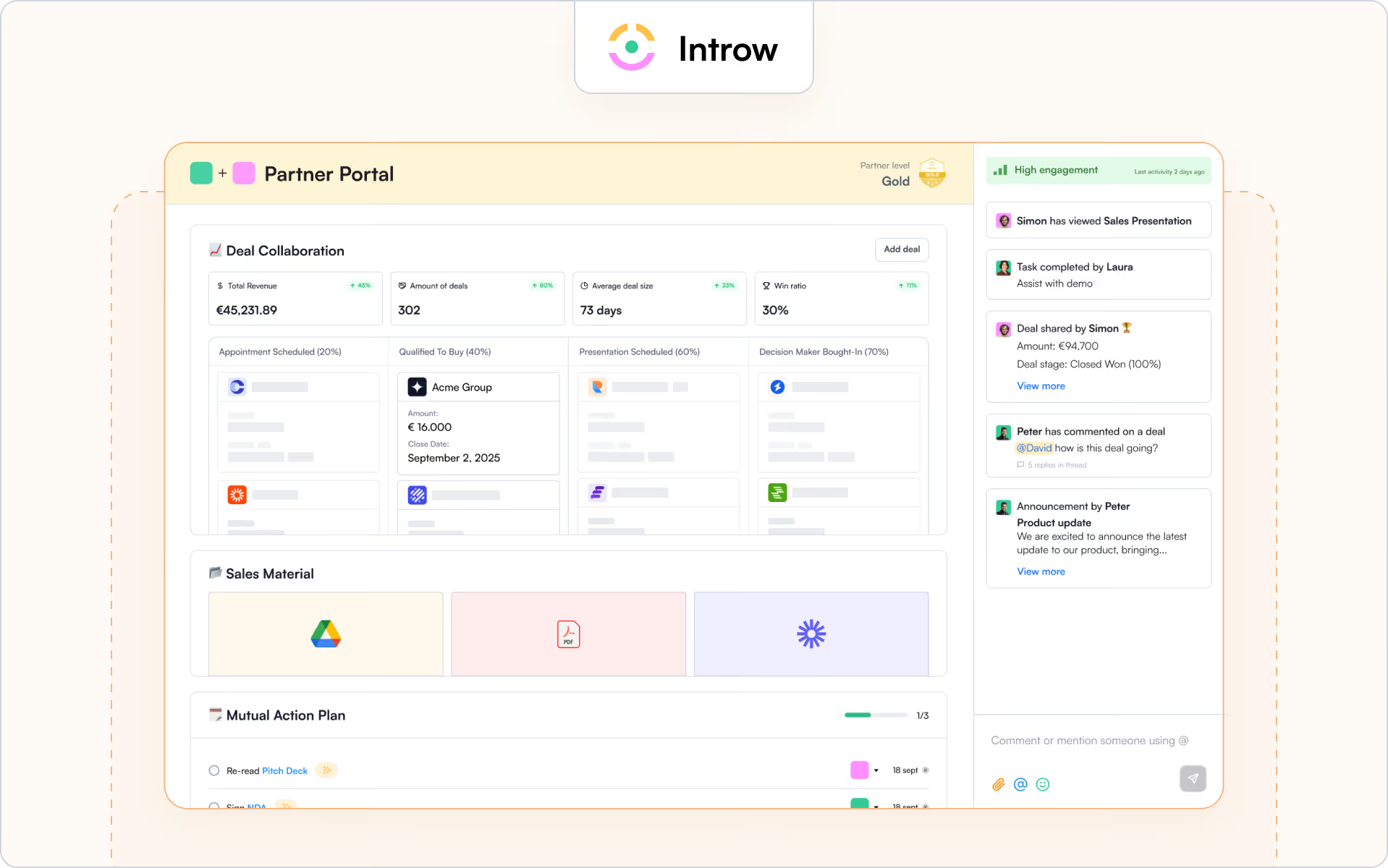
Introw ist eine hochentwickelte Plattform für das Management von Partnerschaftsbeziehungen (PRM) mit umfassender HubSpot Salesforce HubSpot . 

Der CRM-First-Ansatz sorgt dafür, dass Partnerschaftsdaten – wie Leads, Deals, Engagement und Pipeline-Kennzahlen – automatisch zwischen Introw und Ihrem CRM ausgetauscht werden, sodass Salesforce oder HubSpot Ihre einzige Quelle der Wahrheit.

Weitere Höhepunkte von Introw sind:

  • Echtzeit-Co-Selling 
  • No-Code-Partnerportal-Builder
  • KI-Agent, der Ihren Partnern rund um die Uhr Unterstützung bietet
  • Keine Anmeldung für Partner erforderlich – Off-Portal-Erfahrung
  • Echtzeit-Deal-Registrierung, Prognosen und MAPs
  • Modulare Arbeitsabläufe (Empfehlung, Wiederverkäufer usw.)
  • Slack für Benachrichtigungen und Updates
  • Starke Abstimmung zwischen RevOps und CCO/CRO
  • Transparente Preisgestaltung

Für wen ist Introw am besten geeignet?

Introw eignet sich perfekt für SaaS-Teams mit zwei oder mehr Partnermanagern, die bereits Salesforce HubSpotverwenden (oder verwenden möchten).

Preise: Introw ist für einen Partner kostenlos. Das Basisangebot beginnt bei 329 US-Dollar pro Monat für zehn Partner, Pro kostet 579 US-Dollar+ pro Monat für zehn Partner und die Preise für Enterprise sind individuell gestaltet. Buchen Sie hier eine Live-Demo

2. Partnero

Partnero ist eine All-in-One-Plattform für das Partnerschaftsmanagement, die für SaaS- und E-Commerce-Unternehmen entwickelt wurde, um Affiliate-, Empfehlungs- und Newsletter-Empfehlungsprogramme zu erstellen, zu verwalten und zu skalieren.

Partnero unterstützt automatisierte Auszahlungen, bietet vollständig anpassbare Belohnungsstrukturen, White-Label-Partnerportale und nahtlose Integrationen mit Tools wie Stripe, Shopify, PayPal und WooCommerce.

Features sind:

  • All-in-One-Programmverwaltung
  • Anpassbare Belohnungsstrukturen
  • White-Label-Partnerportale
  • Nahtlose Integrationen
  • Automatisierte Auszahlungen
  • Echtzeit-Analysen
  • Individuelle Empfehlungsmarketing-Links und Gutscheine
  • Tools zur Unterstützung von Partnern
  • Entwicklerfreundliche API

Für wen ist Partnero am besten geeignet?

Partnero eignet sich am besten für Unternehmen, die Partner- und Influencer-Programme betreiben. Seine schlankeren Funktionen sind ideal für Unternehmen in der Frühphase, weniger geeignet jedoch für die Skalierung von SaaS mit ausgereiften CRMs.

Preise: Das Starter-Paket von Partnero kostet 49 US-Dollar pro Monat, die Partner-Stufe 149 US-Dollar pro Monat und die Advanced-Option für größere Unternehmen 479 US-Dollar pro Monat. 

3. Kiflo
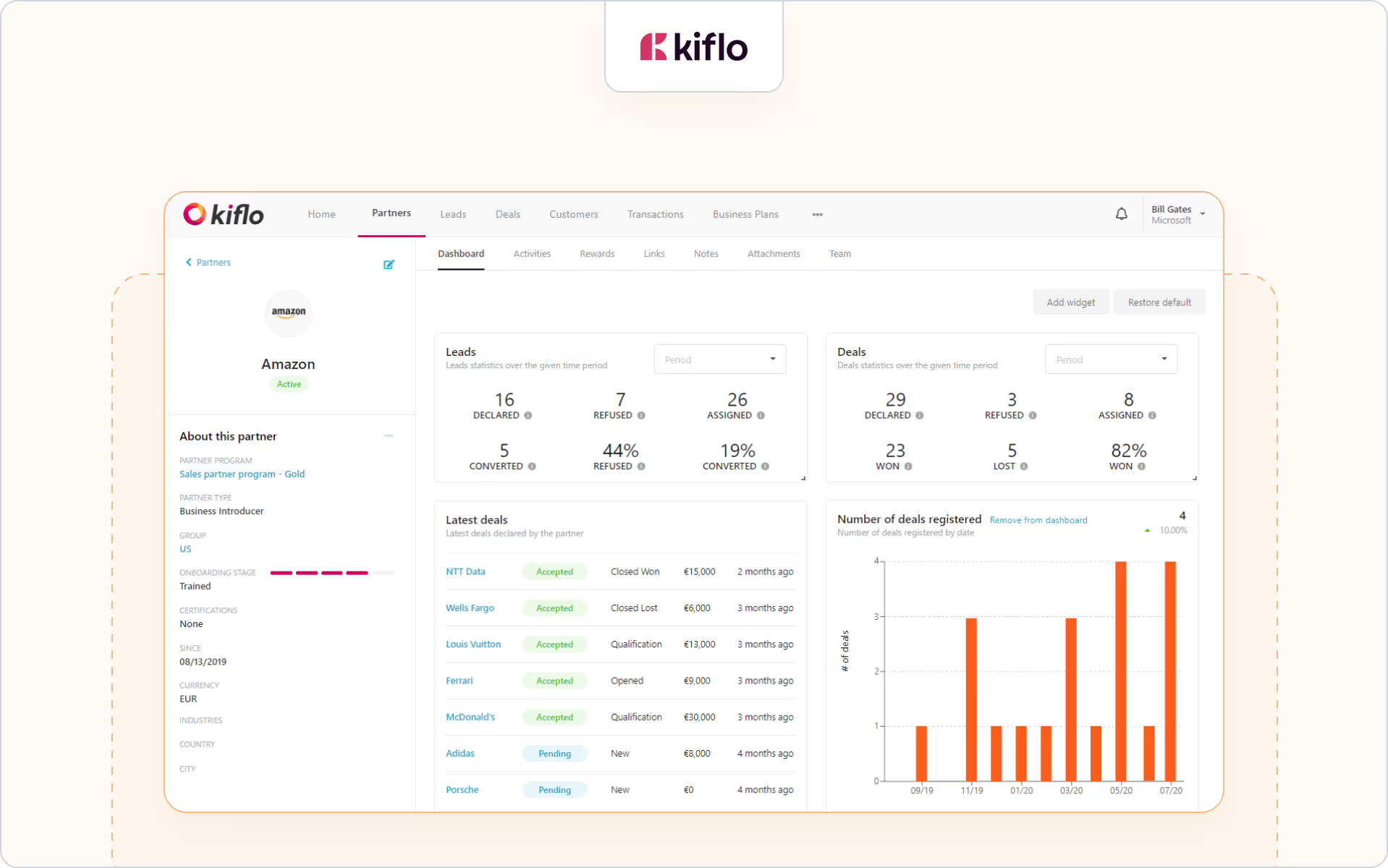
Kiflo ist eine PRM-Plattform, die B2B-Unternehmen dabei unterstützt, ihre Partnerprogramme auszubauen und zu skalieren. 

Es ermöglicht Benutzern, die von Partnern generierten Einnahmen zu verfolgen, Leads zu verwalten, Partner zu integrieren und zu aktivieren sowie langfristige, profitable Partnerbeziehungen zu pflegen.

Zu den besonderen Merkmalen gehören:

  • Einbindung und Befähigung von Partnern
  • Lead- und Deal-Management
  • Umsatzverfolgung und -zuordnung

Für wen ist Kiflo am besten geeignet?

Kiflo ist eine großartige Option für Startups, mit einer super einfachen Einarbeitung. 

Allerdings fehlt eine native Salesforce , sodass Unternehmen, die auf dieses CRM setzen, möglicherweise Alternativen in Betracht ziehen sollten. 

Auch die Analysefunktionen sind recht einfach gehalten. 

Preise: Die Core-Stufe von Kiflo – für Teams, die gerade ihr Partnerprogramm starten – beginnt bei 359 US-Dollar pro Monat. Die Stufen Plus und Premier basieren auf maßgeschneiderten Preisplänen. 

4. Tolt
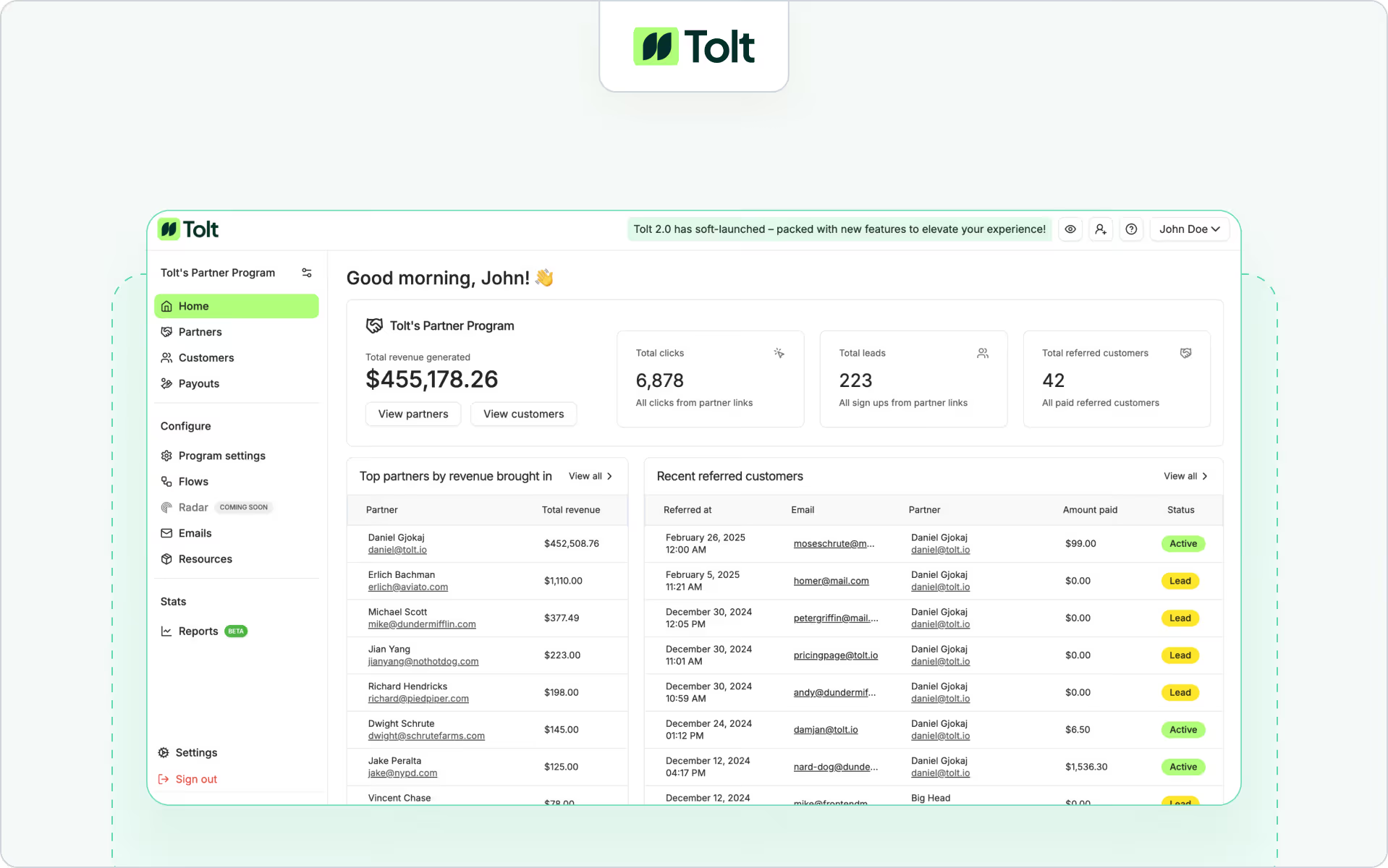
Tolt ist eine All-in-One-Affiliate-Marketing-Plattform, die speziell auf SaaS-Startups zugeschnitten ist, die Affiliate- und Empfehlungsprogramme schnell starten und verwalten möchten. 

Mit einem starken Fokus auf Partner-Onboarding, Echtzeit-Analysen und anpassbaren Provisionsstrukturen optimiert Tolt das Affiliate-Management und ermöglicht Start-ups eine effiziente und kostengünstige Skalierung. 

Zu den Funktionen von Tolt gehören:

  • Marken-Affiliate-Portale
  • Echtzeit -Leistungsüberwachung
  • Anpassbare Provisionsstrukturen
  • Passwortlose Anmeldung für Partner
  • Schnelle Einrichtung innerhalb von 15 Minuten

Für wen ist Tolt am besten geeignet?

Der Schwerpunkt von Tolt liegt auf der Einbindung von Partnern, sodass es sich gut für Unternehmen eignet, die eine hohe Anzahl neuer Partner gewinnen möchten oder einfach nur ihre Partner von Anfang an beeindrucken wollen.

Allerdings befindet sich dieses Tool in Bezug auf Deal-Registrierungen und Pipeline-Management noch in der Entwicklungsphase und unterstützt weder MAPs noch Slack nativ – all dies macht es zu einer besseren Option für Startups und kleinere Unternehmen als für ausgereifte Partnerprogramme. 

Preise: Das Basis-Paket von Tolt kostet ab 49 US-Dollar pro Monat, das Wachstumspaket 99 US-Dollar pro Monat und die Pro-Option 199 US-Dollar pro Monat. 

5. Allbound

PRM Allbound wurde entwickelt, um alle Aspekte von Partnerprogrammen für B2B-Unternehmen zu optimieren und zu automatisieren. 

Es bietet Tools für Onboarding, Enablement, Co-Marketing, Co-Selling und Leistungsüberwachung – alles in einer einheitlichen Benutzeroberfläche.

Zu den Highlights gehören:

  • Automatisierung der Partnerreise
  • Inhaltsbibliothek und -verwaltung
  • Lernpfade und Zertifizierungen
  • Deal-Registrierung und Playbooks
  • Unterstützung für mehrstufigen Vertrieb
  • Gamification und Incentive-Dashboards
  • Kanal-Einblicke und Berichterstattung
  • CRM-Integrationen mit Echtzeit-Updates

Für wen ist Allbound am besten geeignet?

Allbound ist eine hervorragende Option für mittelständische bis große B2B-Technologieunternehmen mit ausgereiften oder skalierbaren Partner-Ökosystemen. 

Preise: Die Preise von Allbound sind maßgeschneidert. 

6. Impartner
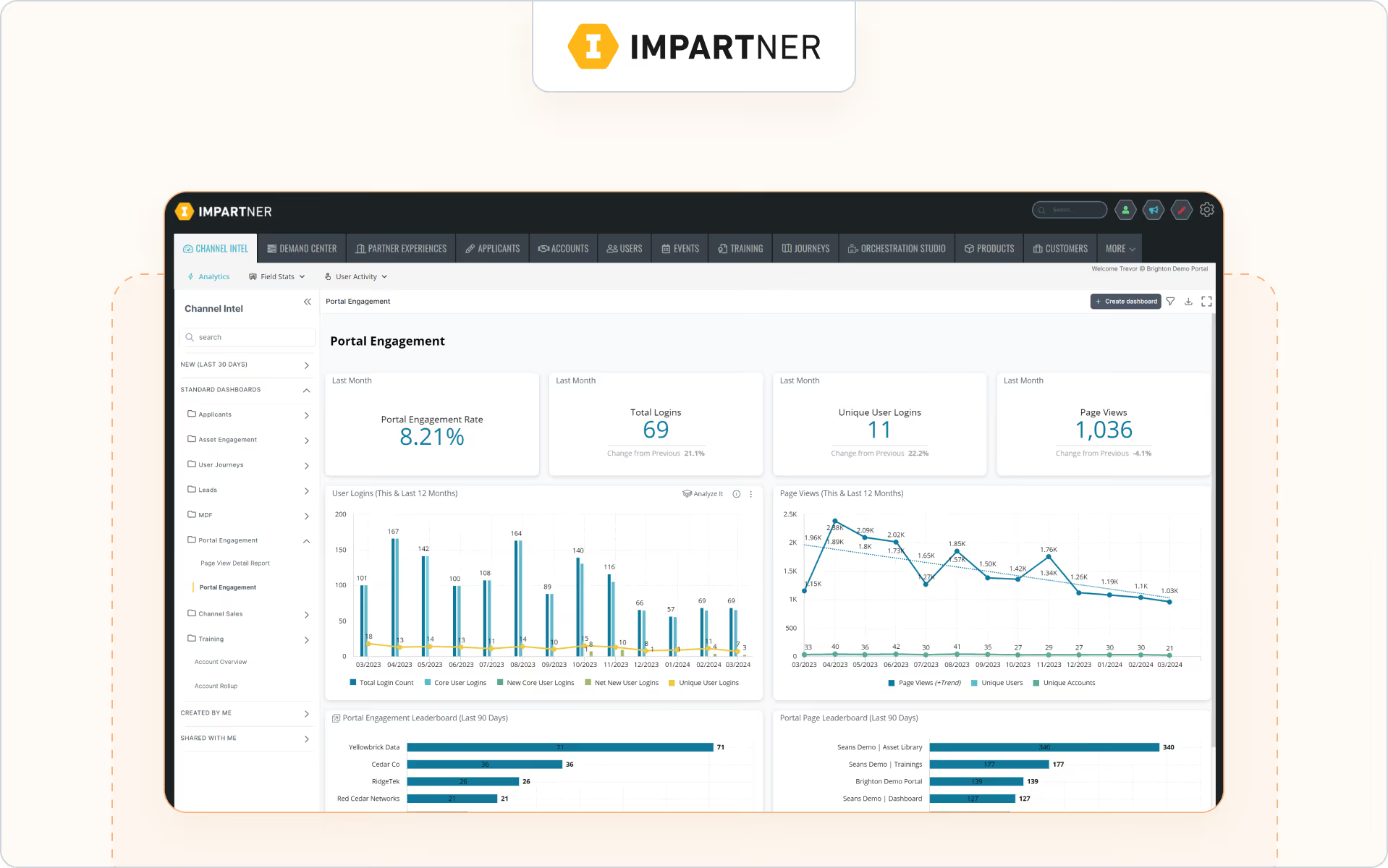
Die umfassende PRM-Plattform Impartner wurde entwickelt, um B2B-Unternehmen dabei zu unterstützen, ihre Partner-Ökosysteme effektiv zu verwalten und zu skalieren.

Es unterstützt alle Arten von Partnern, darunter Wiederverkäufer, Distributoren, Tochtergesellschaften, ISVs und mehr. 

Impartner bietet umfassende Tools, die Unternehmen dabei helfen, die Partnerbindung zu stärken, Abläufe zu optimieren und das Umsatzwachstum über indirekte Vertriebskanäle zu steigern. 

Zu den Highlights gehören:

  • Automatisierte Einarbeitung und Schulung von Partnern
  • Zentralisierte Partnerportale mit rollenbasiertem Zugriff
  • Deal-Registrierung und Lead-Management
  • Dashboards zur Leistungsüberwachung und -analyse
  • Erstellung von Marketingmaterialien unter gemeinsamer Marke
  • Partner-Geschäftsplanung und Zielsetzung
  • Automatisierung von Tiering und Compliance
  • CRM-Integrationen mit Echtzeit-Datensynchronisation
  • Unterstützung für Empfehlungs- und Partnerprogramme

Für wen ist Impartner am besten geeignet?

Impartner ist eine umfassende PRM-Lösung, die sich am besten für mittelständische bis große B2B-Unternehmen mit komplexen, globalen oder wachstumsstarken Partner-Ökosystemen eignet. 

Preise: Impartner bietet maßgeschneiderte Preise. 

7. Impact.com
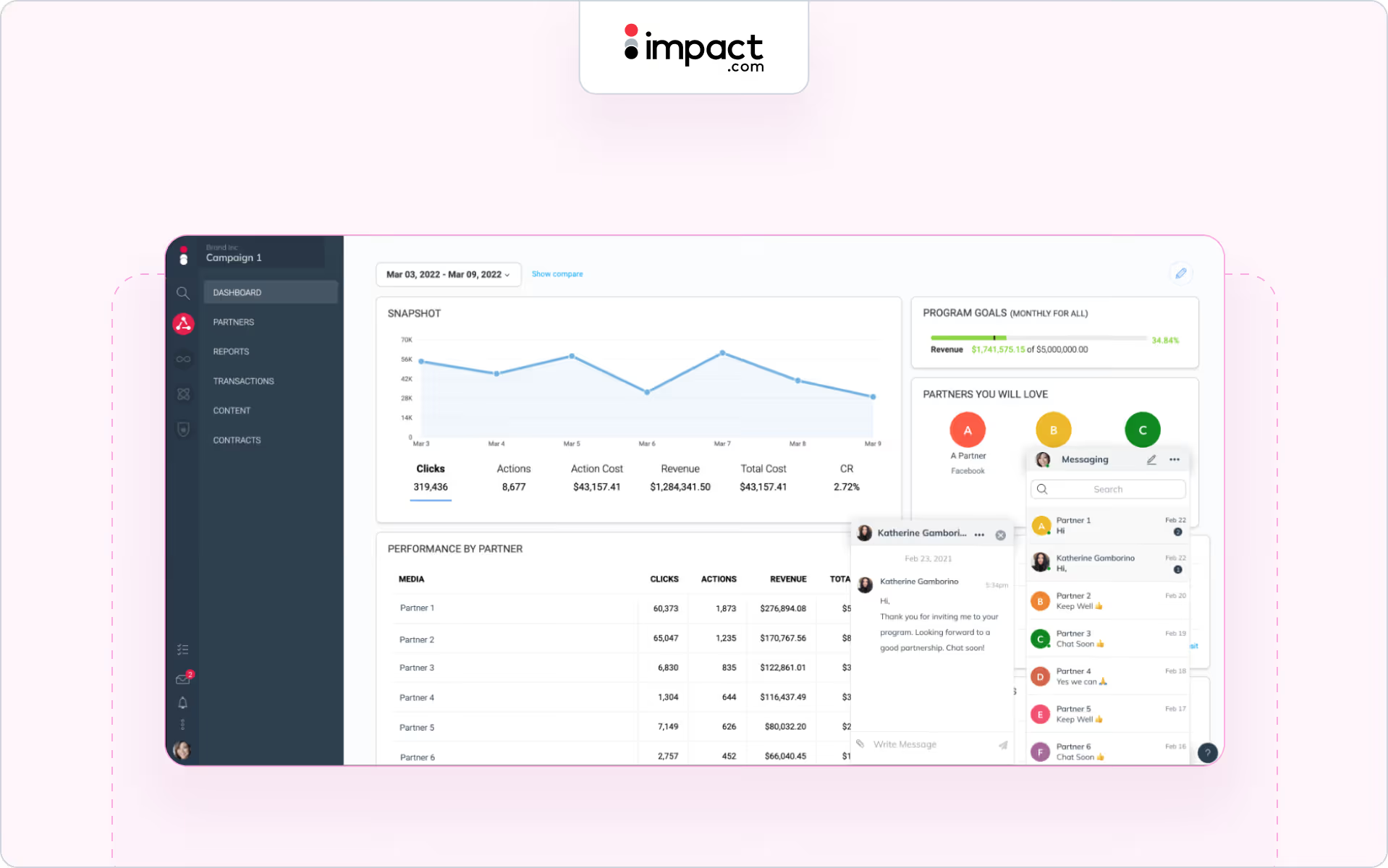
Impact.com ist eine umfassende Plattform für das Partnerschaftsmanagement, mit der Unternehmen verschiedene Arten von Partnerschaften – darunter Affiliates, Influencer, Creator, B2B-Partner und Empfehlungen – in einem einzigen System verwalten und optimieren können. 

Zu seinen Funktionen gehören:

  • Automatisierung der Partnersuche und -akquise
  • Automatisierte Zahlungen und Verträge
  • Echtzeit-Tracking und Leistungsanalyse
  • Betrugserkennung und -prävention
  • Anpassbare Attributionsmodellierung
  • Integration von CRM- und E-Commerce-Plattformen
  • Rollenbasierter Zugriff und Berechtigungen
  • Automatisierte Workflows für die Partner-Onboarding
  • Benchmarking-Berichte im Vergleich zu Branchenkollegen

Für wen ist Impact.com am besten geeignet?

Impact.com eignet sich am besten für Unternehmen, die vielfältige, leistungsbasierte Partnerschaften auf einer einheitlichen Plattform aufbauen, verwalten und skalieren möchten.

Es eignet sich besonders gut für große Unternehmen, E-Commerce- und DTC-Marken sowie Agenturen und Netzwerke, die Partnerschaftsprogramme für mehrere Kunden durchführen. 

Preisgestaltung: Die Preisgestaltung ist maßgeschneidert.

8. Lohnend

Rewardful ist eine All-in-One-Plattform für das Affiliate- und Empfehlungsmanagement, die speziell auf SaaS-Unternehmen und Abonnement-basierte Unternehmen zugeschnitten ist. 

Es ermöglicht Benutzern, Affiliate-Programme in weniger als 15 Minuten durch nahtlose Integrationen mit Stripe und Paddle zu starten.

Hier sind die wichtigsten Funktionen:

  • Einfache Integration von Stripe und Paddle
  • Anpassbare Provisionsstrukturen
  • Benutzerfreundliches Affiliate-Portal mit individueller Anpassung an die Marke
  • Automatisierte Auszahlungen über PayPal und Wise
  • Echtzeit-Verfolgung von Empfehlungen und Konversionen
  • Tracking von Gutscheincodes und Link-basierten Empfehlungspartnern
  • Mechanismen zur Betrugserkennung und -prävention
  • Partnerfinder-Tool 
  • White-Label-Funktionen 
  • Analytik-Dashboard 

Für wen ist Rewardful am besten geeignet?

Rewardful eignet sich am besten für kleine bis mittelgroße SaaS-Unternehmen, die Stripe oder Paddle für die Abrechnung nutzen und eine schnelle, programmierfreie Affiliate-Einrichtung wünschen.

Es eignet sich auch hervorragend für Abonnement-Unternehmen, die wiederkehrende oder einmalige Provisionsmodelle benötigen.

Preise: Das Starter-Paket von Rewardful kostet 49 US-Dollar pro Monat, das Growth-Paket 99 US-Dollar pro Monat, während die Preise für Unternehmen bei 149 US-Dollar pro Monat beginnen.  

9. Partnerisieren

Partnerize ist eine umfassende End-to-End-Plattform für das Partnerschaftsmanagement, die Marken dabei unterstützt, vielfältige Partnerbeziehungen in großem Umfang zu entdecken, zu verwalten und zu optimieren.

Es unterstützt verschiedene Arten von Partnern, darunter Affiliates, Influencer und Content-Ersteller. 

Die wichtigsten Merkmale sind wie folgt: 

  • Automatisierte Partnersuche und -akquise
  • Dynamische Inbetriebnahme auf Basis von Leistungskennzahlen
  • Echtzeit-Tracking und Analyse-Dashboards
  • Tools für Markensicherheit und Betrugsprävention
  • Anpassbare Berichts- und Attributionsmodelle
  • Integration mit den wichtigsten E-Commerce- und CRM-Plattformen
  • Rollenbasierte Zugriffskontrollen und Benutzerberechtigungen
  • Spezielle Partnerportale 

Für wen ist Partnerize am besten geeignet?

Partnerize ist ideal für mittelständische bis große Unternehmen, die ihre Partnerschaftsprogramme effizient skalieren möchten. 

Dies ist besonders vorteilhaft für Unternehmen, die eine Vielzahl unterschiedlicher Partner verwalten und/oder in mehreren Regionen tätig sind.

Preise: Die Gebühren variieren je nach Ihren Anforderungen. 

So wählen Sie die richtige PartnerStack-Alternative aus

Sind Sie bereit, die beste Partnermanagement-Plattform für Ihr Unternehmen zu finden?

Hier sind drei wichtige Punkte zu beachten:
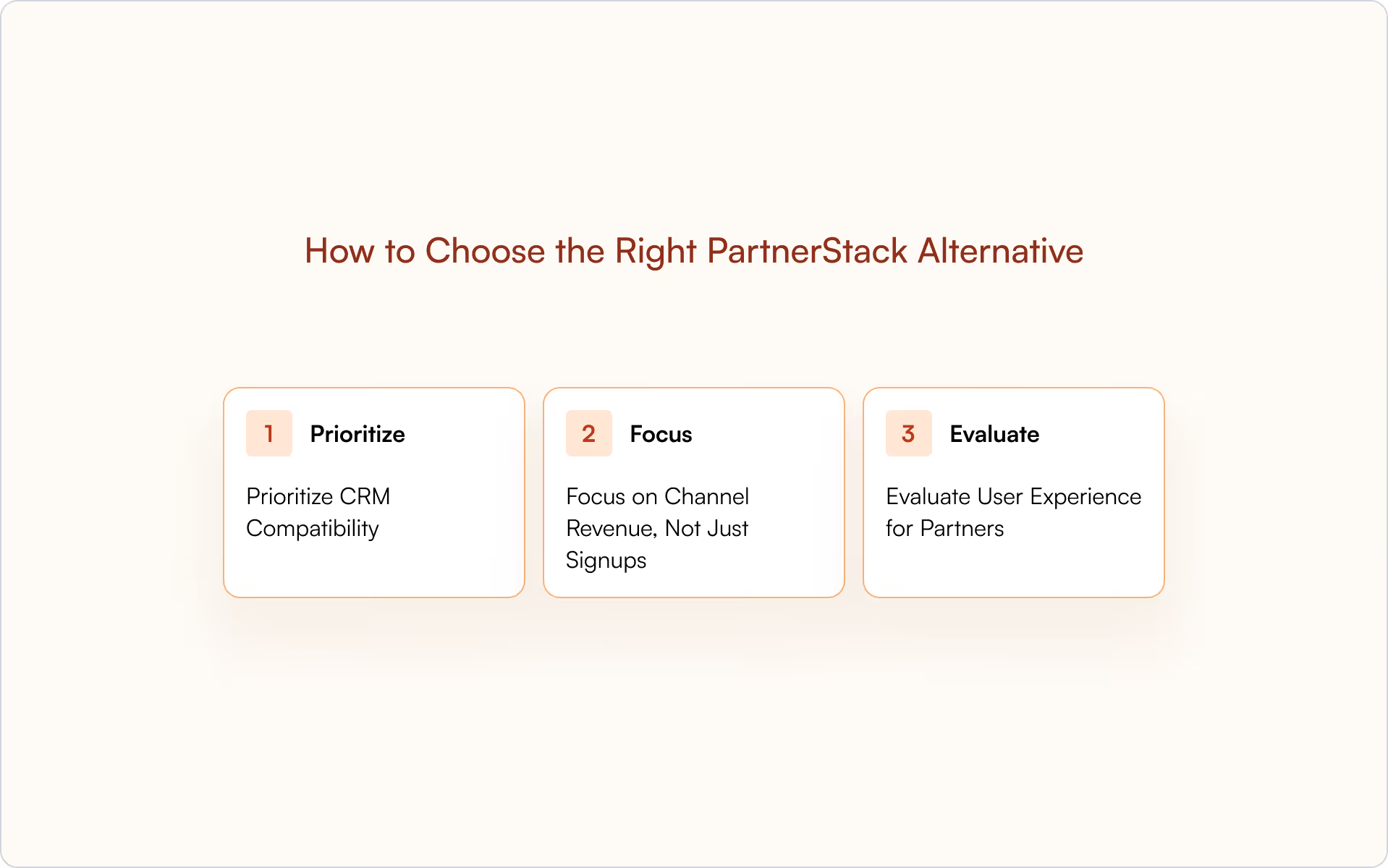
1. Priorisieren Sie die CRM-Kompatibilität

Es ist von entscheidender Bedeutung, dass Ihr PRM nahtlos in Ihr CRM integriert ist – beispielsweise Salesforce HubSpot. 

Eine Partnermanagement-Plattform, die nicht in Echtzeit synchronisiert wird, kann zu Datensilos, Doppelarbeit und verpassten Chancen führen. 

Suchen Sie also nach einer Lösung, die eine native, bidirektionale CRM-Integration unterstützt, um eine genaue Berichterstattung, optimierte Arbeitsabläufe und eine einzige zuverlässige Informationsquelle zu gewährleisten. 

2. Konzentrieren Sie sich auf Kanalumsätze, nicht nur auf Anmeldungen

Es ist leicht, sich von steigenden Partneranmeldungen mitreißen zu lassen – aber Quantität ist nicht gleich Qualität. 

Das richtige PRM sollte Ihnen dabei helfen, das zu messen, was wirklich zählt: den Kanalumsatz

Priorisieren Sie Tools, die von Partnern generierte und beeinflusste Geschäfte nachverfolgen, Aktivitäten mit Pipeline-Phasen verknüpfen und Leistungskennzahlen anzeigen. 

3. Bewertung der Benutzererfahrung für Partner

Eine großartige Partnererfahrung fördert das Engagement und die Ergebnisse. 

Wenn Ihr PRM komplexe Anmeldungen oder umständliche Portale erfordert, werden Partner es einfach nicht nutzen. 

Es ist entscheidend, Tools zu finden, die eine reibungslose Interaktion ermöglichen – beispielsweise das Beantworten von Deal-Threads per E-Mail oder Slack sich anzumelden. 

Die richtige Plattform sollte auch Einblick in die Aktivitäten der Partner bieten (Öffnungen, Klicks, Antworten), sodass Sie das Engagement verfolgen und effektiv nachfassen können, ohne ständig manuelle Überprüfungen durchführen zu müssen.

Warum Introw 2026 führend sein wird

Introw zeichnet sich als führende Alternative zu PartnerStack aus, indem es einen modernen, umsatzorientierten Ansatz für das Partnermanagement mit tiefer CRM-Integration bietet. 

Diese benutzerfreundliche PRM-Plattform bietet eine vollständig integrierte Erfahrung in Plattformen wie Salesforce und HubSpot bietet Co-Selling-Funktionen in Echtzeit, sodass Ihre Partner und Ihre Pipeline stets synchronisiert sind. 

Der No-Code-Portal-Builder ermöglicht maßgeschneiderte Partnererlebnisse, die Slack E-Mail-Integration erleichtert die Kommunikation, und ein integrierter KI-Agent bietet Support rund um die Uhr. 

Introw wurde speziell für SaaS, RevOps und Skalierbarkeit entwickelt und legt mehr Wert auf tatsächliche Umsätze als auf oberflächliche Kennzahlen.

➡️ Sind Sie bereit, die Zukunft des Partnermanagements zu erleben? Fordern Sie hier eine Live-Demo von Introw an.

FAQs

Noch Fragen? Hier findest du die häufigsten Fragen und Antworten.

Kontaktiere uns

Was sind die besten PartnerStack-Alternativen im Jahr 2026?

Es gibt mehrere großartige Alternativen zu PartnerStack. Bei der Auswahl Ihrer Partnermanagement-Plattform ist es wichtig, sich umzuschauen, um die für Ihr Unternehmen am besten geeignete Lösung zu finden. Zu den neun besten PartnerStack-Alternativen, die Sie in Betracht ziehen sollten, gehören Introw, Partnero, Kiflo, Tolt, Allbound, Impartner, Impact, Rewardful und Partnerize.

Worauf sollte ich bei einer Partnermanagement-Plattform im Jahr 2026 achten?

Bei der Auswahl einer Partnermanagement-Software ist es wichtig, der CRM-Kompatibilität Priorität einzuräumen. Wenn Sie beispielsweise HubSpot Salesforce verwenden, sollten Sie sich für eine CRM-orientierte Software entscheiden, die sich nahtlos in diese Tools integrieren lässt, wie beispielsweise Introw. Außerdem ist es wichtig, sich nicht nur auf die Anzahl der Anmeldungen, sondern auch auf die Kanalumsätze zu konzentrieren. Mit anderen Worten: Das von Ihnen gewählte Tool sollte eng mit der Pipeline und der Performance verknüpft sein. Vergessen Sie nicht, auch die Benutzererfahrung für Partner zu bewerten – sie sollte sowohl ansprechend als auch reibungslos sein, um Partner bei Laune zu halten. Weitere wichtige Funktionen, auf die Sie achten sollten, sind Echtzeit-Berichte, Deal-Synchronisierung, Co-Selling und RevOps-Abstimmung.

Ist Introw ein gutes PRM für 2026?

Introw ist eines der besten PRMs auf dem Markt im Jahr 2026. Hier sind die Gründe, warum wir es für die beste Alternative zu PartnerStack halten. Diese hochentwickelte Plattform für das Management von Partnerschaftsbeziehungen bietet eine CRM-orientierte Erfahrung mit tiefer Integration. Sie verfügt außerdem über einen No-Code-Partnerportal-Builder, mit dem Ihr Team personalisierte Partnererlebnisse schaffen kann. Gleichzeitig ermöglicht die Echtzeit-Co-Selling-Funktion von Introw eine sofortige Kommunikation und Zusammenarbeit zwischen Vertriebsmitarbeitern und Partnern. Der KI-Agent von Introw bietet Ihren Partnern rund um die Uhr Support. Was noch? Introw wurde speziell für SaaS-Unternehmen, RevOps und die Skalierung wachsender Unternehmen entwickelt. Kurz gesagt: Es wurde entwickelt, um Ihrem Partnerprogramm zu helfen, tatsächliche Einnahmen zu generieren und nicht nur oberflächliche Kennzahlen zu erreichen.


Launch your partner portal
in minutes!

Vielen Dank! Wir haben deine Anfrage erhalten!
Hoppla! Beim Absenden des Formulars ist ein Fehler aufgetreten.

Verwandte Blog-Artikel

Partner-Management

Best Partner Relationship Management (PRM) Software for B2B Teams in 2026

Andreas Geamanu
Co-founder & CEO
5min Lesezeit
17 Mar 2026
⚡ TL;DR

Partner relationship management (PRM) software helps you manage partner relationships, run partner programs, and track deal registration without losing visibility in your customer relationship management system.

If you’re comparing PRM software, this guide shows what actually works and how to choose the right fit.

Most PRM platforms still rely on a partner portal, which can slow down partner onboarding, partner activities, and adoption. Newer platforms focus on real-time collaboration, cleaner partner data, and better partner communication.

That makes it easier to manage partner relationships across the entire partner lifecycle, support channel partners, and improve partner performance.

If you’re looking for a faster, CRM-first approach to partner relationship management, Introw is built to help your sales team move quicker and stay aligned.

The best partner relationship management software (shortlist)

If you’re comparing PRM software, you don’t need a long list. You need tools that help you manage partner relationships, support co-selling, and drive partner revenue without slowing your team down. If you’re still deciding what matters, reviewing PRM best practices and learning how to choose a PRM will help you make a better call.

1. Introw

Introw is an AI-first partner relationship management software built for SaaS teams that want a modern partner experience directly inside their customer relationship management system.

It replaces the partner portal with real collaboration across email and Slack, so your sales team and channel partners stay aligned on deal registration, deal progression, and partner activities.

For co-selling and indirect sales channels, it gives you clear visibility into partner performance, partner revenue, and the sales pipeline without duplicating partner data.

Introw also combines execution with AI, helping you automate partner onboarding, track partner activities in real time, and keep deals moving across the sales cycle with built-in insights and communication support.

Am besten geeignet für

  • SaaS teams scaling partner programs and partner networks
  • Teams that want to manage partner relationships without a partner portal
  • Businesses focused on co-selling and partner growth

How Introw approaches partner relationship management differently

Most partner relationship management tools are built around structure. They rely on partner portals, manual updates, and separate workflows for partners and sales teams.

That works for some channel programs. But it can slow things down, especially if your team is focused on co-selling and real collaboration across the partner journey.

Introw takes a different approach.

Built inside your CRM, not around it

Introw works directly inside your customer relationship management system, including native integrations with Salesforce and HubSpot.

Your partner relationship manager, sales team, internal teams, and channel partners all stay aligned on deal registration, deal progression, and partner activities in one place.

This makes it easier to manage partner relationships without duplicating data or switching between systems.

Collaboration without the portal friction

Instead of forcing partners into a portal, Introw supports collaboration through email, Slack, and shared workflows.

That means business partners can stay engaged without changing how they already work.

It also reduces delays. Conversations, updates, and deal progress all happen in real time, which is critical for co-selling and keeping momentum across your partnership strategy.

Visibility into what partners are actually doing

Because everything happens inside your CRM, you get a clearer view of partner performance, partner revenue, and pipeline.

You can see which partners are active, where deals are progressing, and where support is needed without chasing updates.

This level of visibility helps teams reduce channel conflict and balance partner motions with direct sales.

AI support that fits into your workflow

Introw combines execution with AI to reduce manual work.

With the Introw + Claude integration, your team can generate summaries, surface insights, and keep partner communication moving without extra tools.

If you want to get started, you can install the Claude connector directly into your workflow.

If your team is building toward world class partner programs with faster execution and stronger visibility, this approach can feel much simpler than traditional partner management software.

In the end, the difference comes down to how your team actually works with partners.

If you’re looking for a simpler way to manage partner relationships and improve partner engagement across the entire partner lifecycle, Introw is a strong option to consider.

2. Salesforce PRM

Salesforce PRM is a partner relationship management software built into the broader customer relationship management platform, so it’s a natural fit if your business already runs on Salesforce. It helps you manage partner relationships, track deal registration, monitor partner activities, and support channel partners within a single system.

It works well for large partner ecosystems with complex partner programs, but it often depends on partner portals and custom setup across the partner lifecycle. That can slow partner onboarding and make partner experience harder to manage without strong partner operations and clear relationship management processes.

Am besten geeignet für

  • Enterprise teams already using Salesforce
  • Complex partner programs and channel sales
  • Businesses with strong internal ops resources
Pros Cons
Deep integration with customer relationship management data Heavy setup and customization required
Strong deal registration and lead distribution workflows Relies on partner portal workflows
Advanced reporting on partner performance Slower time to value for smaller teams

When it may not be the right fit

If your team needs fast setup, flexible collaboration, or wants to avoid heavy customization and portal-based workflows, this approach can feel limiting

If you’re exploring alternatives, many teams compare Salesforce PRM alternatives to see how modern PRM software supports co-selling and partner experience.

3. Impartner

Impartner is a well-known partner relationship management software designed to support structured partner programs across large partner networks. It focuses on partner onboarding, partner portals, and managing the partner lifecycle at scale.

It’s often used by companies with established reseller programs and formal partner operations. That said, it can feel heavy if your team wants faster setup or more flexible co selling workflows.

Am besten geeignet für

  • Mid-market to enterprise partner programs
  • Teams running structured reseller partners and referral partners
  • Businesses focused on long-term partner lifecycle management
Pros Cons
Strong partner onboarding experience Portal-heavy experience
Built-in marketing tools and co marketing support Less flexible for co-selling workflows
Detailed tracking of partner performance and partner activities Can feel complex for smaller teams

When it may not be the right fit

If your team prioritizes speed, simplicity, or real-time collaboration over structured partner programs, this setup can feel heavy and slow to adapt.

If you’re comparing tools in this category, reviewing the best Impartner competitors can help you see how newer PRM platforms approach partner management.

4. ZINFI

ZINFI is a partner relationship management software focused on channel partners, partner recruitment, and managing global partner ecosystems. It combines partner management, marketing activities, and sales enablement into one platform designed for indirect sales.

It’s a solid option for companies that need to manage reseller programs across regions, but the experience often centers around partner portals and structured workflows across the partner lifecycle.

Am besten geeignet für

  • Global partner ecosystems and channel sales teams
  • Businesses managing reseller programs at scale
  • Teams focused on partner recruitment and partner performance
Pros Cons
Strong support for partner onboarding and the partner lifecycle Relies on structured partner portal workflows
Tools for marketing campaigns and co-marketing Less flexible for fast-moving sales teams
Built-in performance metrics and reporting capabilities Can feel rigid for modern partner ecosystems

When it may not be the right fit

If your team needs flexible collaboration, faster execution, or wants to reduce reliance on partner portals, this approach may feel too rigid.

5. Magentrix

Magentrix is a partner relationship management software focused on customizable partner portals and controlled access to partner resources. It helps teams manage partner relationships, share marketing materials, and track deal registration and partner activities across the partner lifecycle.

It’s often chosen by teams that want flexibility without building a system from scratch, though most workflows still run through the partner portal.

Am besten geeignet für

  • Teams that want customizable partner portals
  • Businesses managing partner networks with structured access
  • Companies sharing marketing materials and partner resources
Pros Cons
Flexible partner portal setup with controlled access Portal-first experience
Integration with customer relationship management systems Less focus on real-time collaboration
Tools for managing partner activities and deal progression Can require setup to fit workflows

When it may not be the right fit

If your team prioritizes real-time collaboration, faster execution, or wants to reduce reliance on a partner portal, this setup may feel limiting.

6. Mindmatrix

Mindmatrix is a partner relationship management software that combines partner management, marketing automation, and partner enablement into one platform. It helps teams onboard partners, manage partner activities, and run marketing activities across the partner lifecycle.

It’s often used by companies that want to support partners beyond deal registration, especially with content, campaigns, and ongoing engagement.

Am besten geeignet für

  • Teams focused on partner onboarding and partner enablement
  • Businesses running content-driven partner programs
  • Companies supporting partners across the entire partner lifecycle
Pros Cons
Combines partner management with marketing automation Can feel complex to set up
Strong support for partner onboarding and partner training The interface can feel dated
Supports marketing activities and co-marketing campaigns Less focused on CRM-native workflows

When it may not be the right fit

If your team wants a lightweight tool or primarily needs CRM-native collaboration, this platform may feel too complex.

7. PartnerStack

PartnerStack is partner relationship management software built for SaaS companies running affiliate, referral, and reseller partner programs. It focuses on partner recruitment, incentive programs, and scaling partner networks.

It’s widely used for SaaS growth through partnerships, especially in marketing-led and indirect sales models.

Am besten geeignet für

  • SaaS companies running affiliate or referral partner programs
  • Teams focused on partner recruitment and partner growth
  • Businesses scaling partner ecosystems quickly
Pros Cons
Strong partner recruitment and partner discovery capabilities Less suited for complex B2B co selling
Automated payouts and incentive management Limited visibility into partner performance
Easy to scale partner programs quickly Not built for deep sales collaboration

When it may not be the right fit

If your focus is on complex sales processes, co-selling, or managing enterprise channel partners, this platform may not provide enough depth.

8. Crossbeam

Crossbeam is a partner ecosystem platform focused on account mapping, partner data sharing, and identifying opportunities across your partner network. It helps teams uncover overlap, support co-selling, and improve partner collaboration through shared insights.

It’s often used alongside partner relationship management software rather than as a full partner management solution.

Am besten geeignet für

  • Teams focused on co-selling and account mapping
  • Businesses running ecosystem-led growth strategies
  • Sales teams identifying shared opportunities with channel partners
Pros Cons
Strong partner data visibility and account mapping Not a full partner management software
Helps identify co-selling opportunities quickly No deal registration or partner onboarding workflows
Integrates with customer relationship management systems Requires additional tools for execution

When it may not be the right fit

If you need complete partner relationship management software to manage the entire partner lifecycle, this platform will need to be paired with other tools.

9. Kiflo PRM

Kiflo PRM is a lightweight partner relationship management software designed for small to mid-sized SaaS companies. It focuses on simplicity, helping teams manage partner onboarding, deal registration, and partner activities without heavy setup.

It’s positioned as an accessible option for teams building or scaling partner programs.

Am besten geeignet für

  • Small to mid-sized SaaS companies
  • Teams starting or growing partner programs
  • Businesses looking for simple partner management tools

10. Channeltivity

Channeltivity is a partner relationship management software focused on deal registration, partner communication, and performance tracking. It provides structured workflows through a partner portal to manage partner relationships and partner activities.

It’s often used by mid-market companies that want clear processes and visibility without enterprise-level complexity.

Am besten geeignet für

  • Mid-market B2B companies
  • Teams focused on deal registration and partner performance
  • Businesses managing structured partner programs
Pros Cons
Clear deal registration and lead distribution workflows Portal-based collaboration model
Centralized partner communication tools Limited flexibility for co-selling
Berichts-Dashboards für die Leistung von Partnern Less focus on real-time collaboration

When it may not be the right fit

If your team wants flexible collaboration or to move away from partner portal workflows, this setup may feel restrictive.

11. ChannelScaler

ChannelScaler is a partner relationship management software designed to help SaaS companies scale indirect sales and improve partner performance through better visibility and performance tracking.

It focuses on helping teams understand partner contribution to channel revenue, prioritize high-performing partners, and improve decision-making across their partner network.

Am besten geeignet für

  • SaaS companies scaling indirect sales channels
  • Teams focused on partner performance and channel revenue
  • Businesses needing better visibility into partner data
Pros Cons
Strong visibility into partner performance and sales pipeline Less focus on partner onboarding and enablement
Helps prioritize high-performing partners Not built for complex partner ecosystems
Focus on performance tracking and reporting capabilities Limited real-time collaboration features

When it may not be the right fit

If your team needs strong partner onboarding, enablement, or day-to-day collaboration features, this platform may not cover all needs.

PRM software: A side-by-side comparison

Tool Am besten geeignet für Key strengths Limitations
Introw SaaS teams prioritizing co-selling and CRM-native workflows CRM-first approach, real-time collaboration, fast time to value, no heavy portal reliance Newer platform compared to legacy tools
Salesforce Enterprise teams already using Salesforce Deep CRM integration, advanced reporting, strong deal registration workflows Heavy setup, portal-based workflows, slower time to value
Impartner Structured partner programs at scale Strong partner onboarding, marketing tools, lifecycle management Portal-heavy, less flexible for co selling
ZINFI Global partner ecosystems and channel sales Partner recruitment, lifecycle management, marketing, and enablement tools Rigid workflows, portal-centric experience
Magentrix Customizable partner portals Flexible portal setup, controlled access, CRM integrations Portal-first experience, limited real-time collaboration
Gedankenmatrix Partner enablement and marketing-driven programs Combines partner management and marketing automation, strong onboarding support Complex setup, less CRM-native collaboration
PartnerStack SaaS affiliate and referral programs Partner recruitment, automated payouts, easy scaling Limited for B2B co selling and complex sales workflows
Crossbeam Ecosystem-led growth and account mapping Partner data sharing, account mapping, co selling insights Not a full partner management solution
Kiflo Small to mid-sized SaaS teams Easy setup, simple workflows, lightweight tool Limited scalability and advanced features
Channeltivity Mid-market teams with structured workflows Clear deal registration, partner communication, and reporting Portal-based, less flexible collaboration
ChannelScaler Indirect sales performance tracking Strong partner performance visibility, revenue tracking Limited onboarding and collaboration features

We know there were plenty of options. And of course they don’t all solve the same problem.

Some are built for structured partner programs. Others focus on co-selling, partner engagement, or ecosystem visibility.

The right choice depends on how your team works today and where you want to take your partner strategy next.

Let’s look at how to evaluate these tools in a way that actually supports your goals.

How to evaluate partner engagement tools: 5 key questions

Choosing partner engagement tools isn’t about features. It’s about how well the platform supports your partner program and how your sales team works with partners day to day.

A quick way to assess this is to pressure-test how the tool supports the partner lifecycle. Many teams start by reviewing a broader partner lifecycle management strategy to see where tools need to support execution.

Here are five key questions to ask:

1. Does it match how your partners actually sell?

Start with your partner model.

If you’re running structured channel partner programs alongside direct sales, you may need tighter workflows. If you’re focused on co-selling, flexibility matters more.

Many teams choose partner relationship management software that looks powerful but doesn’t match how their sales team actually works.

2. Where does collaboration actually happen?

Some tools rely on a partner portal. Others support collaboration through email, Slack, and shared workflows.

Portals can create structure, but they also add friction. If partners don’t log in regularly, deal registration slows down.

The easier it is to work together, the easier it is to keep partners engaged.

3. Can you clearly see partner performance?

You should be able to track partner performance, pipeline, and revenue without digging through reports.

Strong visibility helps you understand what’s working and where deals are stuck. It also makes it easier to manage both partner and direct sales motions.

4. Does it help you enable partners or just track them?

There’s a big difference between managing partners and enabling them.

Strong tools support partner onboarding, share the right resources, and help partners move deals forward.

If your tool only tracks activity, it’s not doing enough.

5. How quickly will it deliver value?

Some tools take months to implement. Others start working in weeks.

If setup is slow, adoption drops. The best tools reduce manual work and help your team start supporting partners quickly.

This is where the gap between traditional PRM software and newer approaches starts to show. But how can you close that gap?

Final thoughts

The best partner relationship management tools don’t just help you manage partners. They help you build active partners, improve partner satisfaction, and drive consistent partner revenue.

Some platforms prioritize structure and control. Others focus on speed, collaboration, and visibility across your partner ecosystem.

The right software solution comes down to how your team works and what your partnership strategy needs to support.

Nächste Schritte

  1. Review your current setup and identify where partner engagement slows down
  2. Look at how easily your team can register deals and manage lead management across partners
  3. Prioritize platforms that help you enable partners, not just manage them

If you’re exploring a more flexible, CRM-native approach to partner management, book a demo to see how Introw works in practice.

Partner-Management

From Strategy to Results: 11 Partner Enablement Best Practices That Work in 2026

Sara De Meurichy
Growth
5min Lesezeit
14 Mar 2026
⚡ TL;DR

Partner enablement gives partners the training, content, tools, and support they need to sell independently rather than relying on constant hand-holding from your team. The most effective programmes are structured, segmented by partner type, and connected to the CRM so you can measure readiness, track activation, and attribute revenue accurately. Strong enablement focuses on reducing time to first deal, delivering role-based training, and giving partners collateral they will actually use in live opportunities. To understand whether the programme is working, teams should track outcome-based metrics such as pipeline, revenue, certifications, and activation speed rather than vanity portal activity.

Partner enablement looks simple on paper: give partners the right resources, and they’ll sell your product. In practice, most programs stall because content is scattered, training is generic, and no one can tell which partners are actually ready to close deals.

The difference between a partner program that generates attributable revenue and one that drains resources usually comes down to structure — clear goals, the right content at the right time, and data that lives in your CRM instead of a forgotten portal. This guide breaks down partner enablement best practices from strategy through execution, plus the metrics that tell you if it’s working.

Was ist Partner-Enablement?

Partner enablement is the system you build to help external partners sell (and often implement) your product effectively. That system typically includes structured onboarding, tailored training, and easy access to the right resources so partners can move deals forward without waiting on your team.

When partner enablement is done well, partners don’t just understand what you do. They can position it, handle objections, run a clean handoff, and create repeatable wins — the same way a high-performing internal sales team would.

What partner enablement typically includes

  • Training and certification: Product knowledge, positioning, and selling motions (with a quality bar partners must meet).
  • Sales and marketing resources: Collateral, templates, and campaigns partners can use with prospects.
  • Tools and portal access: Systems that streamline deal registration, content access, and communication.
  • Ongoing communication: A predictable cadence for updates, feedback, and performance reviews.

Why partner enablement matters for revenue growth

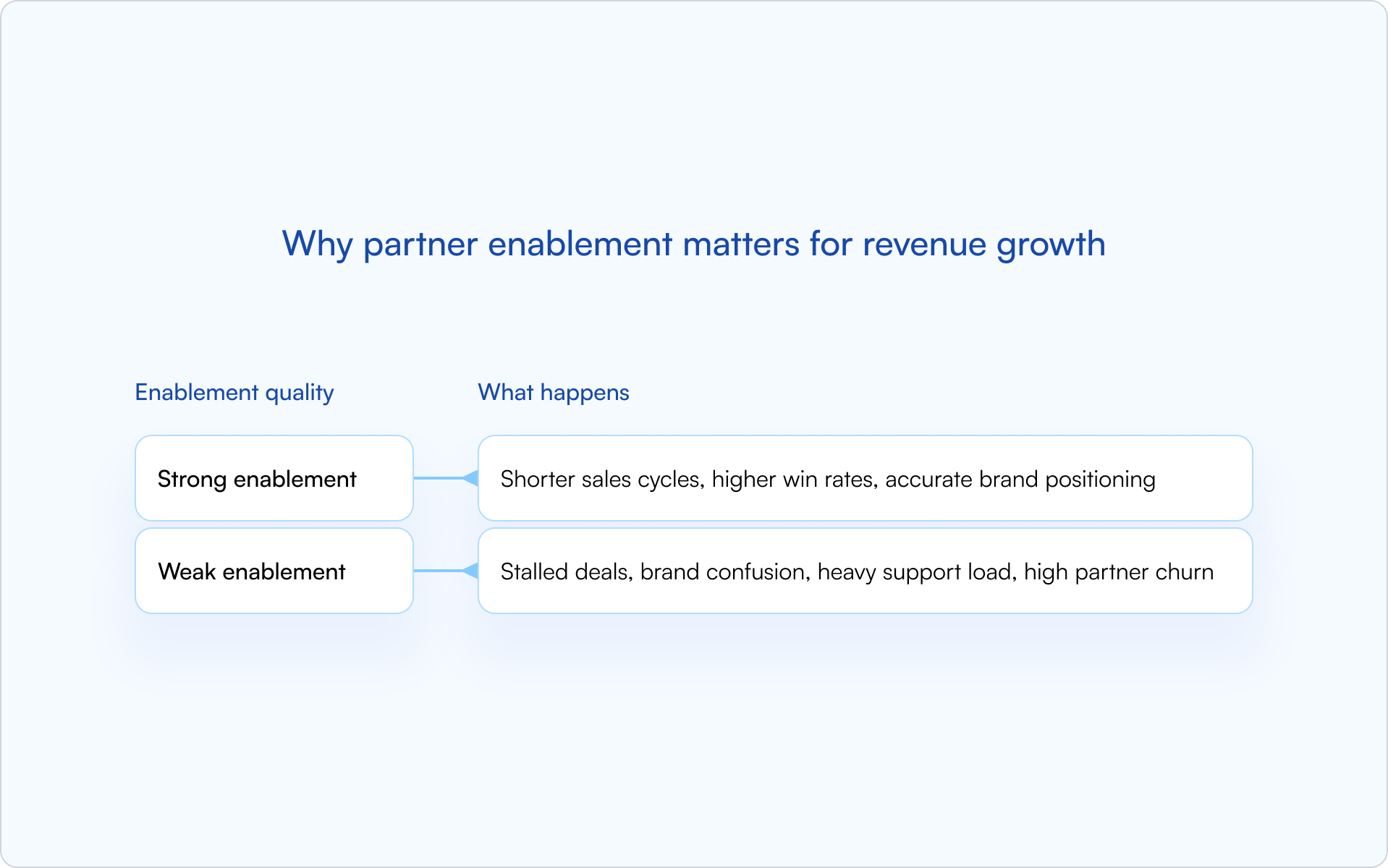
Enabled partners drive revenue because they can execute without friction. They close deals faster, represent your brand accurately, and generate pipeline you can actually attribute.

Weak enablement is expensive in quieter ways: partners misposition the product, opportunities stall, your team becomes the bottleneck, and high-potential partners churn because “it’s too hard to work with you.”

Enablement quality What happens
Strong enablement Shorter sales cycles, higher win rates, accurate brand positioning
Weak enablement Stalled deals, brand confusion, heavy support load, high partner churn

What a partner enablement program includes

A complete channel partner enablement program isn’t a portal full of PDFs. It’s a structured system that helps partners learn, launch, and improve — with clear ownership and measurable outcomes.

Partnerschulung und -zertifizierung

Training forms the foundation: product knowledge, competitive positioning, and your sales methodology. Certification acts as a gate, ensuring partners meet a minimum quality bar before they’re authorized to sell on your behalf.

Partner sales enablement

Partner sales enablement means giving partners the same caliber of sales tools your direct team uses, adapted to their role. Think: battle cards, demo scripts, objection-handling guides, and pricing documentation.

Marketing support and co-marketing

Effective enablement helps partners generate demand, not just close it. Co-branded assets, “campaign-in-a-box” kits, and structured lead-sharing programs all increase partner-sourced pipeline.

Partner portals (and why login friction kills adoption)

A partner portal should be a self-service hub for training, collateral, deal registration, and updates. But there’s a common failure mode: partners avoid portals that require a separate, inconvenient login.

CRM-first portals reduce that friction by connecting directly to HubSpot or Salesforce, so partners can work inside the flow of real deals instead of “checking another system.”

Performance tracking and ongoing communication

Enablement is ongoing, not a one-time launch. A strong program includes visibility into partner activity, a consistent communication cadence, and mechanisms for gathering feedback and improving the experience.

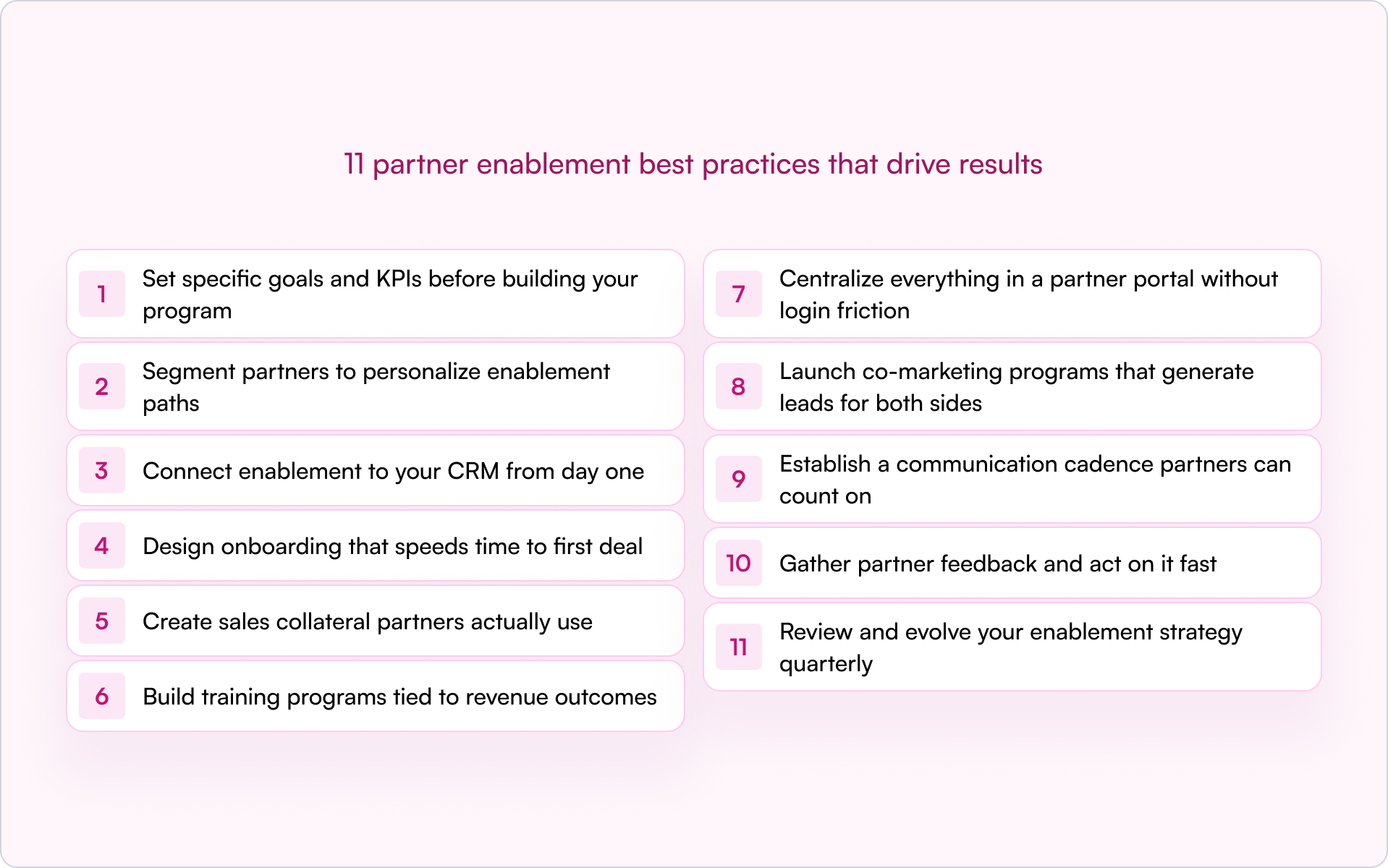
11 partner enablement best practices that drive results

If you’re building a partner program inside a startup, your constraint is almost never “ideas.” It’s focus and execution. These partner enablement best practices move from strategy through rollout and iteration — with an emphasis on what actually shows up in pipeline.

1. Set specific goals and KPIs before building your program

Before you create a single asset, define what success looks like. Start with outcomes — partner-sourced revenue targets, certification completion rates, and a target time-to-first-deal — then work backward into the program.

  • Partner-sourced pipeline value
  • Certification completion rate
  • Average time from onboarding to first registered deal
  • Content engagement (downloads, video views)

2. Segment partners to personalize enablement paths

Not all partners need the same materials. Segment by partner type (reseller, referral, systems integrator), vertical focus, or performance tier, then tailor training and content accordingly.

Segment Enablement focus
Reseller Deep product training, pricing, deal registration
Referral-Partner Lightweight pitch training, lead handoff process
SIs/MSPs Technical implementation guides, certification

3. Connect enablement to your CRM from day one

For true visibility and attribution, all your enablement data — certifications, content consumption, deal registrations — lives best in your CRM, not in a disconnected system.

A CRM-first approach provides a single source of truth. When partner activity syncs directly to HubSpot or Salesforce, your sales team and RevOps see the same reality. No more chasing updates or reconciling spreadsheets. (If deal attribution is a pain point today, it’s worth tightening up your workflow around partner deal registration specifically.)

4. Design onboarding that speeds time to first deal

Partner onboarding works best as a structured, time-bound journey — not a massive content dump. The goal is to get partners to their first real opportunity quickly, then reinforce with deeper training once momentum is real.

A strong onboarding checklist includes:

  • Welcome and program overview
  • Product and Ideal Customer Profile (ICP) training
  • Competitive positioning
  • Deal registration process walkthrough
  • First co-sell or shadow opportunity

5. Create sales collateral partners actually use

Don’t reinvent the wheel. Audit the sales collateral your direct team uses most effectively and adapt it for your partners. Prioritize assets that accelerate live deals: one-pagers, battle cards, ROI calculators, and customer stories.

The fastest way to avoid producing content no one opens is simple: ask partners what they need to win the deals they already have, then build for that.

6. Build training programs tied to revenue outcomes

Training works best when it’s modular, role-based, and tied to certification. Use certification as a gate — for example, require a partner to complete key modules before they can register deals or request MDF.

On-demand training offers flexibility; live sessions drive engagement for complex topics. Most teams land on a hybrid model.

7. Centralize everything in a partner portal without login friction

A partner portal should be the single place to find enablement content, register deals, and get program updates. But portals fail when they add friction — especially separate logins, stale content, and unclear navigation.

If you want adoption, reduce steps. Portals built directly on the CRM (with SSO or no-login options) make access feel seamless, which is often the difference between “partners love it” and “partners ignore it.”

8. Launch co-marketing programs that generate leads for both sides

Co-marketing goes beyond providing partners with your logo. Joint webinars, co-branded content like eBooks or case studies, and Market Development Funds (MDF) programs actively help partners generate demand.

If you’re a founder, this is one of the highest-leverage shifts you can make: partners often need help creating pipeline, not just closing it.

9. Establish a communication cadence partners can count on

Define a predictable rhythm. Partners shouldn’t have to guess where to find updates or whether deal registration is working. Use channels like email and Slack to reach partners where they already operate — don’t rely solely on them logging into a portal.

Häufigkeit What to communicate
Wöchentlich Deal registration status updates
Monatlich Product updates, new content announcements
vierteljährlich QBRs, performance reviews, program changes

10. Gather partner feedback and act on it fast

Enablement is a two-way street. Collect feedback through surveys, QBR conversations, and portal analytics — then close the loop by making changes and telling partners what you changed.

Partners keep investing when they feel momentum. Small, fast improvements create that signal.

11. Review and evolve your enablement strategy quarterly

Partner enablement isn’t set-and-forget. Quarterly, review what’s working and what isn’t by analyzing content engagement, certification rates, and revenue impact. Then adjust your program like you’d adjust product — based on usage and outcomes.

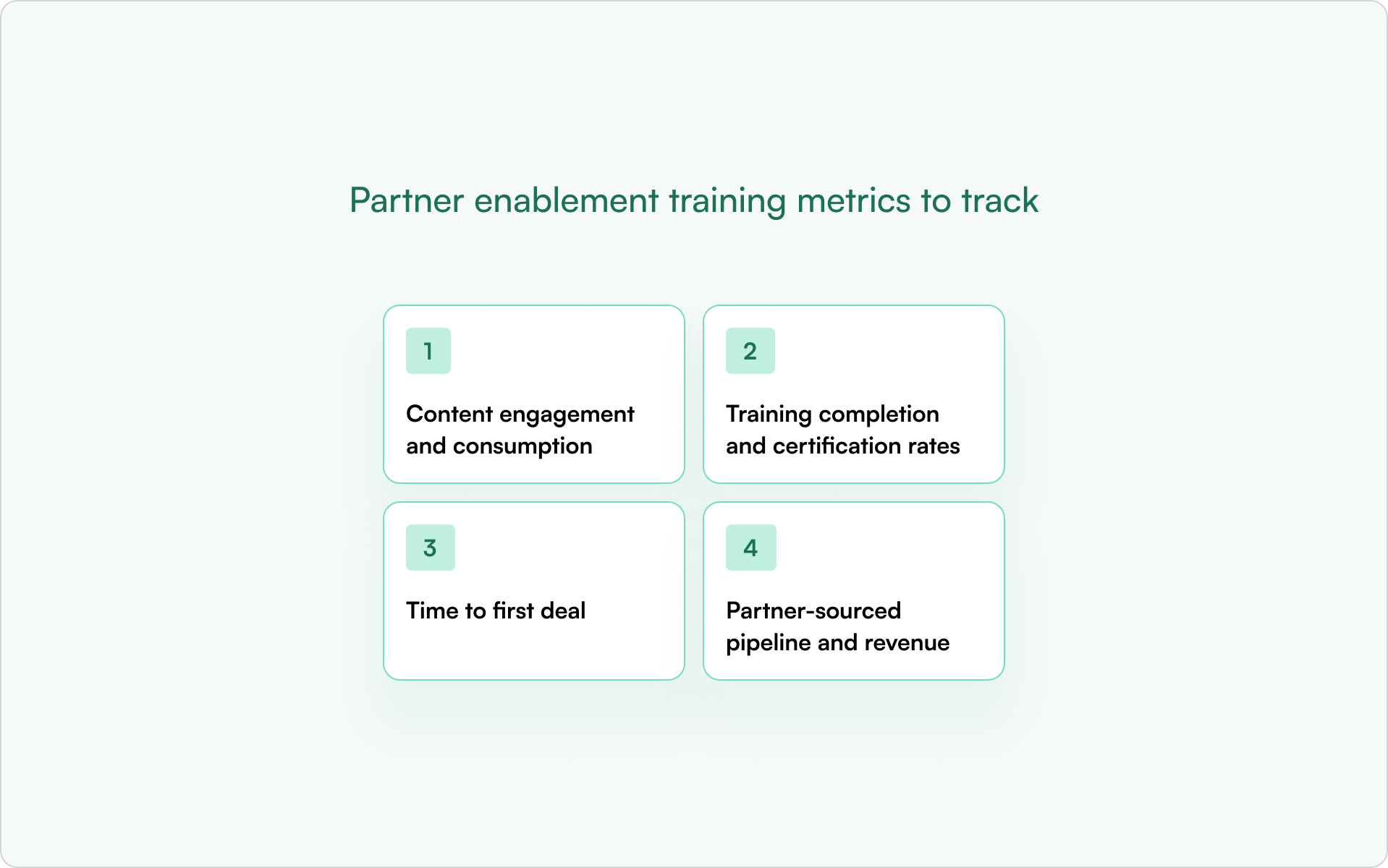
Partner enablement training metrics to track

To understand if your partner enablement process is working, track metrics that connect enablement activities directly to revenue outcomes — not just vanity activities.

Content engagement and consumption

Track which resources partners actually use: downloads, video completion rates, and page views. Low engagement can signal the content isn’t relevant, is hard to find, or doesn’t match what partners need in active deals.

Training completion and certification rates

Measure how many partners complete onboarding and earn certifications. Completion rates help you pinpoint drop-off points so you can shorten, reorder, or redesign modules.

Zeit bis zum ersten Geschäft

Track the time between partner activation and their first registered deal. This is one of the cleanest indicators that onboarding is working — or that partners are stuck.

Partner-sourced pipeline and revenue

This is the ultimate scoreboard. Track pipeline and closed-won revenue generated by partners. To do it well, you need tight CRM attribution so enablement activity can be tied to financial results without manual cleanup.

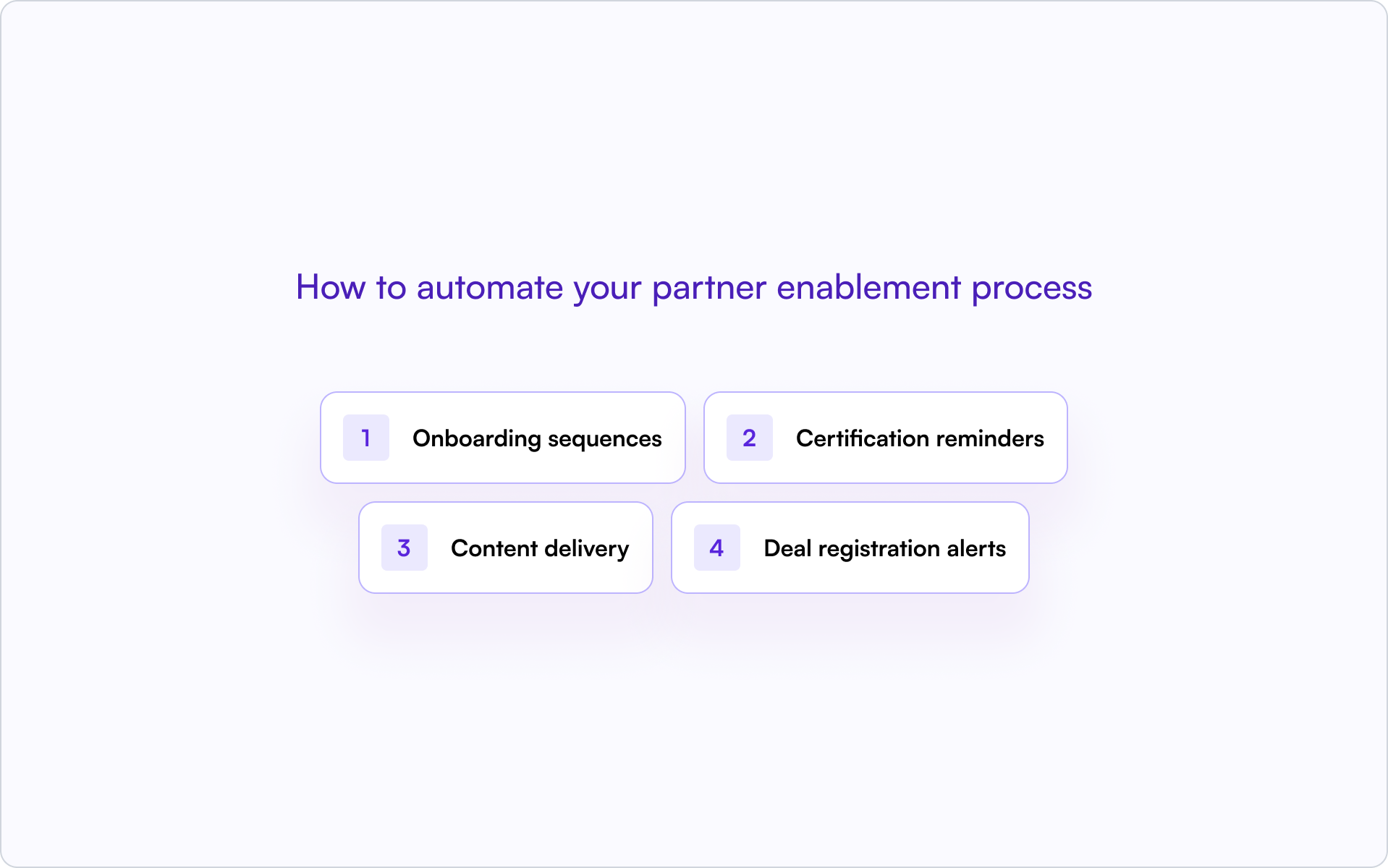
How to automate your partner enablement process

Automation lets you scale partner enablement without scaling headcount. The goal isn’t to make the experience robotic — it’s to make it consistent, timely, and measurable.

CRM-based automation is ideal because it keeps data and workflows in one system. That’s how you avoid the “portal says one thing, CRM says another” problem.

  • Onboarding sequences: Automatically enroll new partners in training modules and send welcome materials as soon as they sign up.
  • Certification reminders: Trigger automated alerts to partners and partner managers before certifications expire.
  • Content delivery: Push relevant collateral to partners based on their segment, tier, or deal stage.
  • Deal registration alerts: Automatically notify partners of the status of their registered deals.

Turn partner enablement into a revenue engine with Introw

Introw is the CRM-first PRM that makes best-practice partner enablement practical and scalable. Because it’s built on HubSpot and Salesforce, Introw centralizes your entire partner program where you already work.

It includes a partner portal for centralizing enablement content without login friction, deal registration with real-time visibility, and off-portal collaboration so partners can reply via email while data syncs automatically to your CRM.

If you’re trying to get out of spreadsheet chaos and into measurable partner-sourced revenue, get a demo.

Fazit

The best partner enablement programs aren’t built on more content — they’re built on clarity. Clear goals, segmented paths, CRM-connected workflows, and a focus on speed-to-first-deal turn “partners we signed” into “partners who ship revenue.”

Use these partner enablement best practices as a blueprint, then iterate quarterly based on what your data (and your partners) tell you.

Partner-Management

11 Best Partner Engagement Platforms for SaaS Partner Programs

Janis De Sutter
Software Engineer
5min Lesezeit
14 Mar 2026
⚡ TL;DR

The right partner engagement tools help your team activate partners faster, keep channel partner communication consistent, and turn partner activity into real pipeline. Modern partner engagement software goes beyond basic portals. It supports partner enablement, deal registration, and real-time collaboration with your sales team inside existing workflows. You'll get a shortlist of partner engagement platforms built for SaaS partner programs, plus what features actually matter when choosing one.

The 11 best partner engagement tools in 2026

The right partner engagement tools help your team activate partners, keep communication consistent, and connect partner activity to real pipeline.

Here is our shortlist of platforms used by SaaS companies to manage partner engagement, partner enablement, and channel partner collaboration.

1. Introw - Best CRM-native partner engagement platform

Introw is a CRM-first partner engagement platform built for SaaS companies that want partner engagement tied directly to pipeline activity.

Instead of forcing partners into a portal, Introw keeps partners up to date through email, Slack, and CRM-driven workflows while logging partner activities directly inside HubSpot or Salesforce.

Because engagement data connects to deals and revenue, your team can clearly see how partner engagement influences partner performance and sales performance. This is why many SaaS companies adopt a CRM-native approach to partner engagement rather than relying on standalone partner portals.

Teams often use Introw to manage partner communication, deal registration, partner onboarding, and channel partner enablement directly inside their CRM. Many of the workflows behind these processes are documented in Introw’s resources on partner engagement.

Am besten geeignet für

SaaS companies that want partner engagement tied directly to pipeline and CRM workflows.

Key engagement features

  • CRM-native collaboration inside HubSpot and Salesforce
  • Segmented announcements to keep partners up to date
  • Engagement tracking and performance analytics
  • Off-portal communication logging across email and Slack
  • Deal registration and deal-based partner activity visibility
  • Engagement metrics connected to partner performance and revenue
  • Integrated partner portal and partner training capabilities for channel partner enablement programs

Strength

Deep CRM integration allows partner engagement data to live alongside deals, accounts, and sales process activity, making it easier for RevOps and the sales team to monitor partner activities and optimize channel partner performance.

Limitation

Companies without Salesforce or HubSpot will not benefit from the platform’s CRM-native design.

Ideal company size

Mid-market and enterprise SaaS companies running structured partner programs with multiple partner managers and active partner ecosystems.

A strong partner engagement platform should make it easier to activate partners and track their impact on the pipeline. Now let’s look at other tools used across partner ecosystems and channel partner enablement programs.

2. Impartner – Enterprise partner management platform

Impartner is a partner management platform designed for companies running large channel partner ecosystems. It focuses on structured partner onboarding, partner marketing, and automation that helps partner programs scale while keeping partners up to date.

Am besten geeignet für

Enterprise companies managing complex channel partner ecosystems and structured channel partner enablement programs.

Key engagement features

  • Automated partner onboarding and partner training workflows
  • Campaign management and marketing materials for partner marketing
  • Performance analytics dashboards to monitor partner performance

Strength

Strong structure for large partner ecosystems that need standardized workflows across partner onboarding, partner enablement, and partner management.

Limitation

Engagement often depends on partners returning to a portal, which can slow down real-time partner activities and collaboration with the sales team.

Ideal company size

Enterprise organizations with global partner programs and large partner networks.

3. Channelscaler – Partner enablement and automation platform

Channelscaler is a partner platform designed to help companies scale partner revenue through PRM, partner program automation, and channel partner enablement. It focuses on partner onboarding, training, content delivery, and structured program management across partner ecosystems. 

Am besten geeignet für

Companies that want structured partner onboarding, partner enablement, and channel partner enablement tools in one platform.

Key engagement features

  • Partner onboarding, training, and personalized learning paths
  • Content delivery for marketing resources and marketing materials
  • Program automation and reporting to monitor partner performance

Strength

Strong fit for teams that need structured channel partner enablement and formal partner program workflows across a growing partner network. 

Limitation

The platform is more program- and portal-led than lightweight, CRM-native engagement, so it may feel heavier for teams that want faster off-platform collaboration. This is an inference from its public positioning and feature structure. 

Ideal company size

Mid-market and enterprise companies running structured partner programs. 

4. Channeltivity – Practical PRM for growing channel teams

Channeltivity is PRM software built for companies that want practical partner management without heavy enterprise complexity. It supports partner onboarding, partner marketing coordination, and deal registration workflows across growing partner ecosystems.

Teams often use the platform to monitor partner activities, track channel partner performance, and keep partners up to date on sales strategies and partner initiatives.

Am besten geeignet für

Mid-market companies building structured partner programs and growing channel partner ecosystems.

Key engagement features

  • Deal registration, referral tracking, and lead generation workflows
  • Built-in communication tools to keep partners up to date
  • Reporting dashboards that track partner performance and sales performance

Strength

Clear operational structure for partner activities and partner onboarding across growing partner networks.

Limitation

The platform focuses on partner management processes rather than deeper engagement analytics tied directly to pipeline.

Ideal company size

Mid-market organizations with developing partner ecosystems and growing channel partner programs.

5. PartnerStack – Ecosystem platform for affiliate and referral programs

PartnerStack is an ecosystem platform used by SaaS companies to recruit, manage, and reward partners across affiliate, referral, and reseller partner programs. It helps companies scale their market reach by managing partner incentives and partner performance at scale.

Many SaaS companies rely on PartnerStack to support lead generation and expand their partner network while rewarding partner productivity.

Am besten geeignet für

SaaS companies running affiliate, referral, or partner-led growth programs.

Key engagement features

  • Automated partner onboarding and partner incentives management
  • Commission tracking and reward partners workflows
  • Performance analytics dashboards that track partner productivity

Strength

Strong ecosystem platform for scaling partner programs and expanding market reach.

Limitation

The platform focuses primarily on affiliate-style programs rather than deep co-selling workflows tied to CRM sales process activity.

Ideal company size

Small to mid-market SaaS companies scaling partner ecosystems and referral programs.

6. Unifyr – Enterprise ecosystem management platform

Unifyr is an ecosystem management platform designed to help enterprise companies coordinate partner engagement, partner marketing, and partner enablement across complex partner ecosystems.

It supports structured partner programs with automation, analytics, and tools designed to optimize channel performance across large partner networks.

Companies running global channel programs often use the platform to strengthen relationships with partners and monitor channel partner performance across multiple regions.

Am besten geeignet für

Enterprise companies managing complex global partner ecosystems.

Key engagement features

  • Multi-portal partner engagement and partner management capabilities
  • Campaign management and marketing resources for partner marketing
  • Performance analytics that track channel partner performance

Strength

Enterprise-grade ecosystem management with strong reporting and partner marketing capabilities.

Limitation

The platform is designed for large enterprise ecosystems and may be too complex for smaller partner programs.

Ideal company size

Enterprise organizations managing large partner ecosystems and global channel partner networks.

7. Magentrix – Partner portal and collaboration platform

Magentrix is a partner portal platform built on Salesforce that helps companies manage partner onboarding, partner communication, and collaboration across partner ecosystems. It focuses on centralizing partner engagement, marketing resources, and communication tools inside a secure partner portal.

Am besten geeignet für

Companies running Salesforce that want structured partner portals to support channel partner enablement.

Key engagement features

  • Partner portal collaboration and communication tools
  • Content hubs for marketing materials and partner marketing
  • Activity tracking to monitor partner activities and partner performance

Strength

Tight Salesforce integration helps the sales team monitor partner activities and support channel partner performance across deals.

Limitation

Engagement often depends on partners logging into the portal rather than collaborating through external communication channels.

Ideal company size

Mid-market and enterprise companies managing partner ecosystems on Salesforce.

8. Kiflo PRM – Lightweight partner management platform

Kiflo PRM is a partner management platform designed for SaaS companies building structured partner programs. The platform focuses on partner onboarding, deal registration, and partner engagement across growing partner networks.

It helps partner managers monitor partner activities and coordinate partner enablement programs without the complexity of heavier enterprise PRM systems.

Am besten geeignet für

SaaS companies launching or scaling channel partner programs.

Key engagement features

  • Partner onboarding workflows and partner tiers management
  • Deal registration and pipeline collaboration with the sales team
  • Reporting dashboards to track partner productivity and partner performance

Strength

Lightweight partner management system that helps smaller teams organize partner activities and improve partner productivity.

Limitation

The platform is simpler than enterprise partner engagement tools and may lack deeper ecosystem automation for very large partner programs.

Ideal company size

Small to mid-market SaaS companies building early partner ecosystems.

9. WorkSpan – Ecosystem collaboration platform

WorkSpan is an ecosystem management platform designed to help companies coordinate partnerships, co-sell motions, and joint sales strategies across partner ecosystems. It focuses on collaboration between companies rather than traditional PRM portals.

The platform helps revenue teams monitor partner activities and connect partner engagement to shared business objectives.

Am besten geeignet für

Enterprise companies running strategic alliances, co-sell partnerships, and ecosystem programs.

Key engagement features

  • Joint pipeline tracking and opportunity collaboration
  • Ecosystem reporting and performance analytics
  • Shared workspaces to coordinate partner activities

Strength

Strong platform for companies that want to optimize channel performance across strategic alliances and joint sales initiatives.

Limitation

It focuses more on ecosystem collaboration than traditional partner onboarding or partner enablement workflows.

Ideal company size

Enterprise companies managing strategic partner ecosystems and alliances.

10. Mindmatrix – Partner enablement and marketing platform

Mindmatrix is a partner enablement platform designed to help companies manage partner marketing, partner training, and partner engagement across global partner networks.

The platform combines partner enablement tools with marketing automation and sales content management to help partners stay aligned with company sales strategies.

Am besten geeignet für

Companies that want to support partner marketing and channel partner enablement at scale.

Key engagement features

  • Marketing automation and marketing resources for partners
  • Training modules with tailored training programs
  • Incentive management and engagement analytics for partner performance

Strength

Strong support for partner marketing and marketing materials that help motivate partners and strengthen relationships.

Limitation

The platform focuses heavily on marketing automation rather than direct CRM collaboration with the sales process.

Ideal company size

Mid-market and enterprise companies managing global partner programs.

11. Salesforce PRM – Native partner management inside Salesforce

Salesforce PRM is Salesforce’s native partner relationship management solution built within Experience Cloud. It allows companies to manage partner onboarding, partner engagement, and deal collaboration directly inside the Salesforce ecosystem.

Because partner activities are connected to CRM data, revenue teams can monitor channel partner performance and track how partner engagement influences sales performance.

Am besten geeignet für

Organizations already running Salesforce that want partner management built directly into their CRM.

Key engagement features

  • Deal registration and pipeline collaboration with the sales team
  • Partner portals with content libraries and communication tools
  • Reporting dashboards that track partner performance and partner satisfaction

Strength

Native CRM integration allows partner activities to connect directly to pipeline and sales performance.

Limitation

Setup and customization can require significant Salesforce administration and technical resources.

Ideal company size

Mid-market and enterprise companies operating primarily within Salesforce ecosystems.

These platforms show the different ways companies approach partner engagement. Some focus on portals and partner management. Others focus on ecosystem collaboration or partner marketing automation.

The right choice depends on how your team activates partners, supports the sales process, and monitors partner performance across your partner network.

Next, let’s look at the specific capabilities that matter most when comparing partner engagement tools.

What to compare in partner engagement tools

Once you’ve shortlisted a few partner engagement tools, the next step is evaluating how they support real partner engagement across your partner network.

The right platform should help you monitor partner activities, keep partners up to date, and connect engagement to pipeline.

Most modern partner engagement tools also act as a centralized platform that aligns partner work with the sales process.

Here are the capabilities revenue teams compare when evaluating partner engagement platforms.

1. CRM-native collaboration

Many partner engagement tools still operate outside the CRM. That makes it harder for the sales team to see partner activities during the sales process.

Look for platforms that allow partner collaboration directly around deals.

Check whether the tool can:

  • Log partner activities inside Salesforce or HubSpot
  • Support deal registration and opportunity collaboration
  • Capture email or Slack conversations tied to deals
  • Give the sales team visibility into partner engagement

CRM visibility helps teams connect partner engagement to sales performance and optimize channel performance across partner ecosystems.

Teams building structured partner programs often pair CRM collaboration with clear partner lifecycle management so engagement aligns with pipeline development.

Next, let’s look at communication capabilities.

2. Segmented announcements and messaging

Generic announcements rarely motivate partners.

Modern partner engagement tools allow partner managers to target messages based on partner tiers, market reach, or product focus.

Look for platforms that support:

  • Segmentation by partner tiers or partner programs
  • Targeted updates that keep partners up to date
  • Communication tools that track responses and engagement

Clear messaging helps improve partner productivity and maintain alignment across B2B SaaS partnerships and partner ecosystems.

Once communication improves, the next step is measuring impact.

3. Engagement analytics and revenue visibility

Partner engagement should connect to measurable outcomes.

Strong platforms provide analytics that help teams monitor partner activities and understand how engagement affects revenue.

Look for reporting that shows:

  • Active partners across your partner network
  • Campaign participation and engagement trends
  • Partner productivity and sales performance
  • Revenue influenced by engaged partners

These insights help teams optimize channel performance and reward partners who contribute to the pipeline. Many programs support this with structured partner performance incentives.

Next, consider how tools support collaboration outside portals.

4. Off-portal engagement capabilities

Many partners stop logging into portals after partner onboarding.

Partner engagement tools should support collaboration outside the portal while still tracking engagement.

Look for tools that allow partners to:

  • Respond to messages via email
  • Collaborate through communication tools like Slack
  • Join deal discussions without logging into a portal
  • Sync conversations back to the CRM

This improves partner experience and helps partner managers maintain consistent engagement across partner ecosystems.

Finally, automation helps scale engagement.

5. Workflow automation

As partner ecosystems grow, manual partner management becomes difficult.

Partner engagement tools should automate repetitive partner activities so partner managers can focus on strategy.

Look for automation features such as:

  • Deal follow-ups tied to the sales process
  • Reactivation campaigns for inactive partners
  • Partner tier progression triggers
  • Incentive management to reward partners

Automation improves partner productivity and helps maintain consistent partner engagement across channel partner enablement programs.

Next, let’s look at how Introw approaches partner engagement at the execution layer.

How Introw powers partner engagement (execution layer)

Most partner engagement tools rely on portals.

But if engagement data never reaches the CRM, revenue teams lose visibility into how partners actually influence pipeline.

Introw is designed to solve partner engagement around deals, conversations, and partner activities that move the sales process forward.

Instead of managing partner engagement in a separate system, Introw connects partner communication, collaboration, and engagement insights directly to HubSpot and Salesforce.

Introw acts as a centralized platform where partner engagement, deal collaboration, and revenue visibility live together.

CRM-native collaboration

Partner engagement should happen where opportunities live.

Introw allows partner managers and the sales team to collaborate with partners directly around deals inside the CRM. Partner activities stay tied to accounts, opportunities, and the broader sales process.

Teams can:

  • Track partner engagement alongside deals and pipeline
  • Collaborate with partners during deal registration and opportunity development
  • Monitor partner productivity and partner performance across partner programs

Because engagement happens inside the CRM, revenue teams can finally connect partner engagement to sales performance.

Announcements and partner segmentation

Keeping partners up to date across partner ecosystems is harder than it sounds.

Introw allows partner managers to send segmented announcements based on partner tiers, region, or product specialization. This helps channel teams communicate relevant updates without overwhelming the partner network.

Announcements often support:

  • Product updates and sales strategies
  • Channel partner enablement program updates
  • Partner marketing initiatives and marketing resources
  • Partner training and tailored training programs

Targeted communication helps partner managers motivate partners and strengthen relationships across partner ecosystems.

Off-Portal-Engagement

Many partners stop logging into portals after partner onboarding.

Introw supports off-portal engagement so partners can respond through email or Slack while engagement data still syncs back to the CRM.

This allows teams to:

  • Monitor partner activities without forcing portal logins
  • Keep partners up to date through familiar communication tools
  • Capture conversations tied to opportunities and deal progress

If you would like to explore the feature set in more detail, the resources on partner engagement explain how announcements, engagement insights, and communication workflows work inside the platform.

Engagement insights and revenue visibility

Partner engagement should lead to measurable outcomes.

Introw gives revenue teams visibility into how partner engagement affects channel partner performance across the pipeline.

Teams can track:

  • Active partners across the partner network
  • Engagement trends across partner ecosystems
  • Partner productivity tied to deals and revenue
  • How engagement supports lead generation and market reach

This makes it easier to optimize channel performance and reward partners who contribute to real business outcomes.

If you’re evaluating partner engagement tools, start by asking a few practical questions:

  1. Can we see partner engagement directly inside our CRM and sales process?
  2. Do we have visibility into partner activities and partner performance across our partner network?
  3. Can we keep partners up to date without relying on a portal?
  4. Are we measuring engagement in ways that actually improve channel partner performance?

If the answer to those questions is unclear, it may be time to rethink how partner engagement works in your partner programs.

Over to you

You can request a demo to see how Introw connects partner engagement, CRM collaboration, and revenue visibility in one place.