Partner Marketing

15+ Impartner Alternatives To Choose From in 2026

Compare 17 Impartner alternatives in 2026 — PRM platforms for partner onboarding, deal registration, TCMA, and co-selling to grow revenue.

5 Min. Lesezeit
03. Dezember 2025
⚡ TL;DR

These Impartner alternatives — from Introw and Salesforce Partner Cloud to ZINFI, Unifyr, Channelscaler, and others — help SaaS companies run stronger partner programs, automate partner onboarding, and scale channel sales with modern PRM platforms, co-sell workflows, and through channel marketing automation.

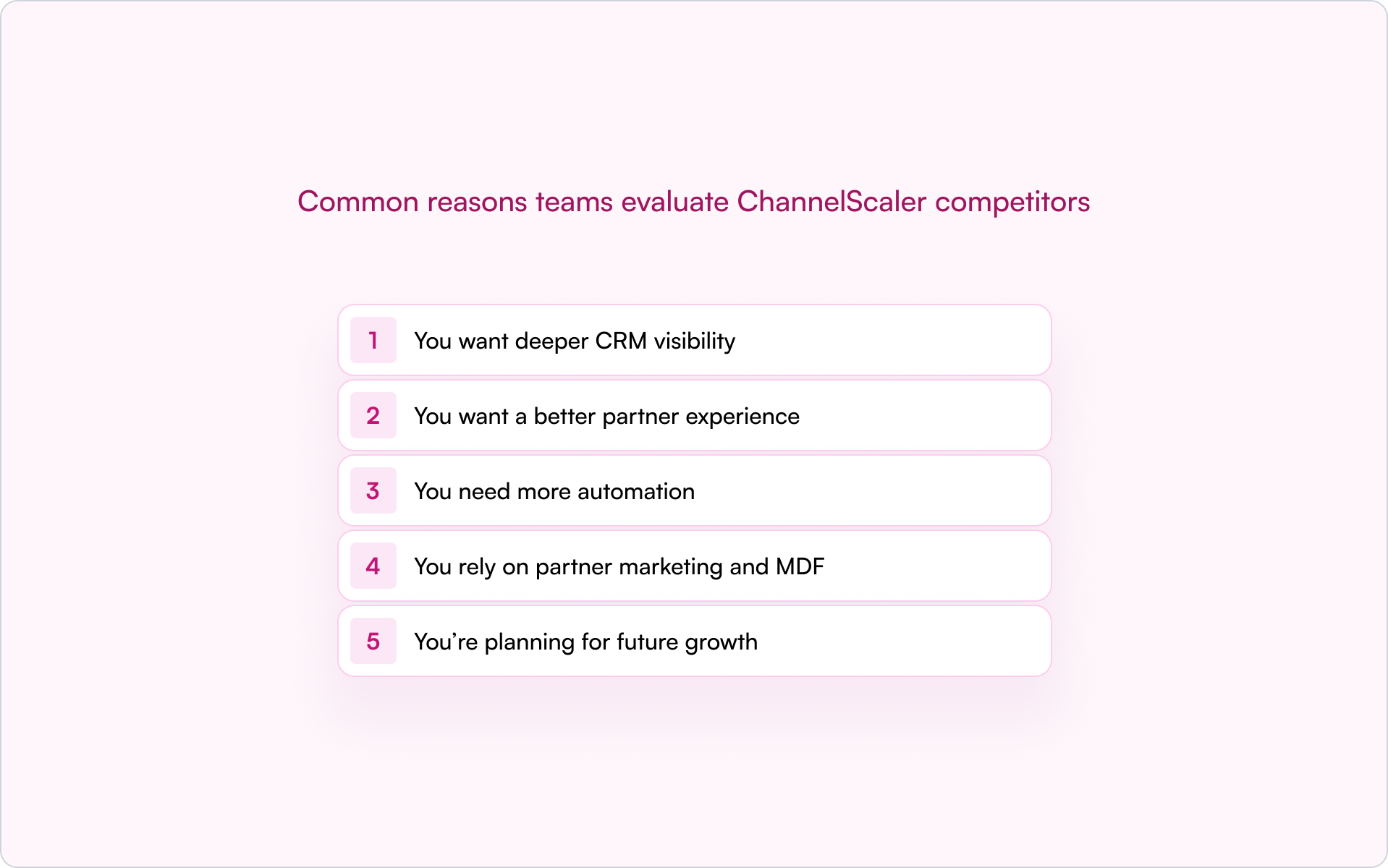
Let's start with an obvious question - why teams look beyond Impartner? Impartner is a leading partner relationship management and TCMA provider and remains popular with enterprise programs that need MDF, incentives, and a full management system for partner relationships. Still, many companies assess Impartner competitors to find a better fit for HubSpot coexistence, speed of deployment, lighter admin overhead, or specialized motions like hyperscaler co selling, affiliate partnerships, and marketplace listings.

To help you choose, we compared core PRM software key features — partner portals, partner onboarding and partner training, lead generation and registration, co selling workflows, content management for enablement, real time data sync, and analytics to monitor performance — plus security, global scale, and time-to-value. We also looked at AI capabilities that support partner adoption, guide partners, and automate or orchestrate tasks.

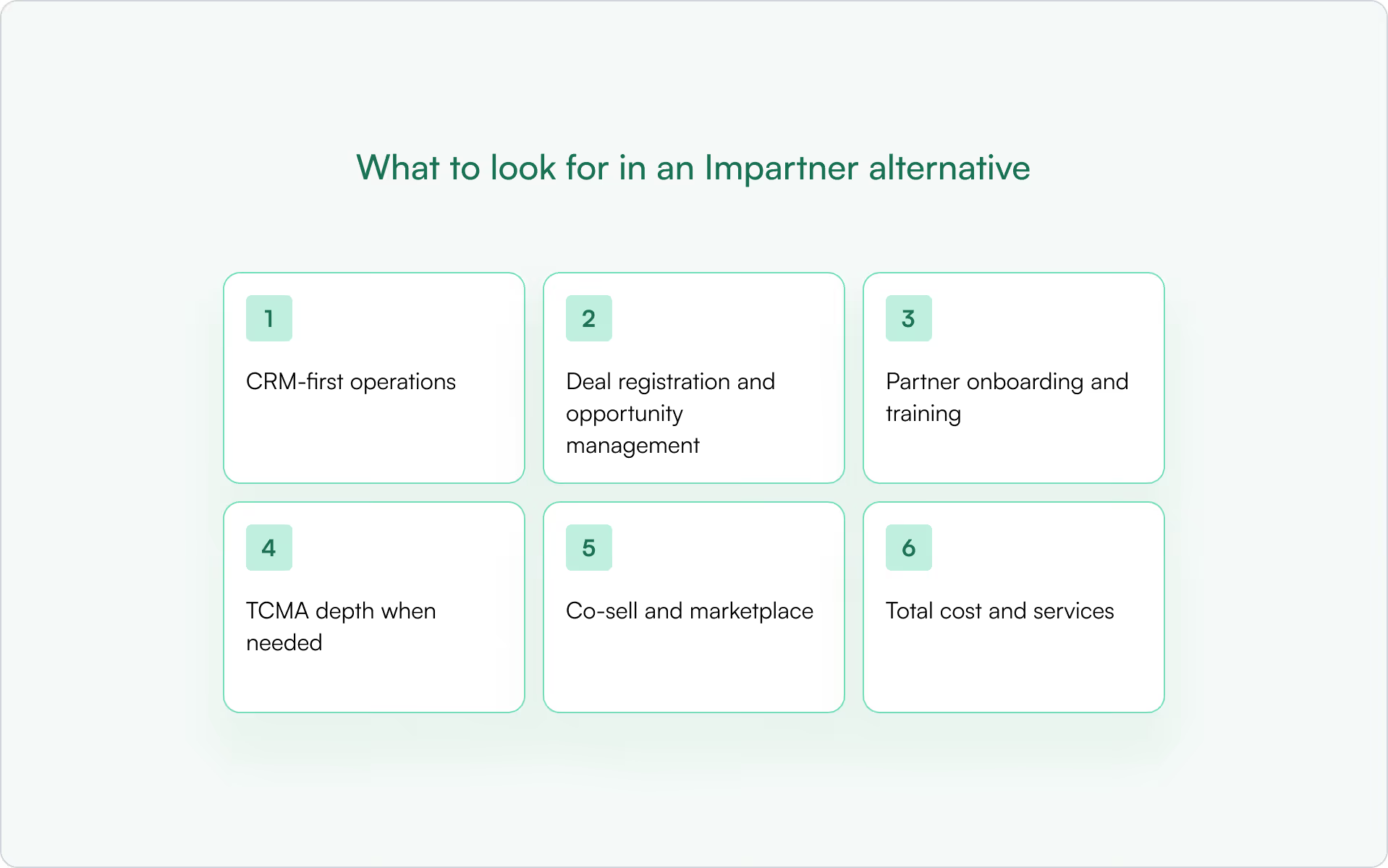
What to look for in an Impartner alternative

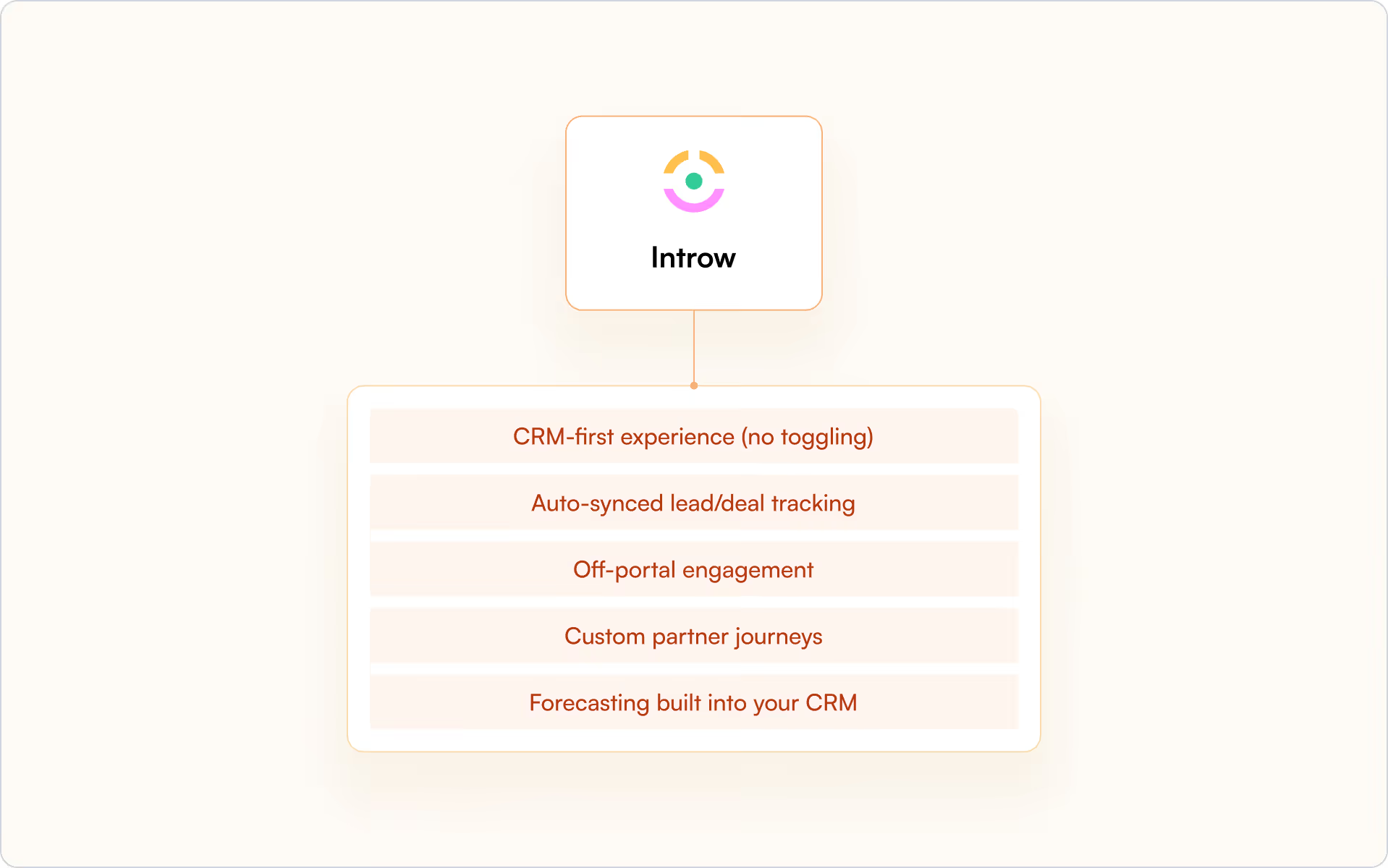
  1. CRM-first operations — keep sellers in Salesforce or HubSpot and give partners a portal that syncs customer and partner data without brittle connectors.
  2. Deal registration and opportunity management — clear conflict prevention, stage mapping, and SLA alerts so you can track deals, forecast, and run pipeline inspection.
  3. Partner onboarding and training — automate steps, certify roles, and deliver outcome based enablement that increases partner productivity and adoption.
  4. TCMA depth when needed — if local demand generation is core, ensure strong through channel marketing automation for brand-compliant campaigns and funding.
  5. Co-sell and marketplace — if you work with AWS or Microsoft, look for native hyperscaler integrations so alliance teams can collaborate and sell together from your CRM.
  6. Total cost and services — compare subscription, implementation, and ongoing admin. Lightweight tools can reduce costs and complexity for many businesses.

If you nodded along to most of the checklist above, you’re already thinking like a modern channel team — CRM-first operations, outcome-based enablement, and motion-specific depth where it actually moves the needle. The next step is matching those needs to a platform that your partners will adopt and your RevOps can trust.

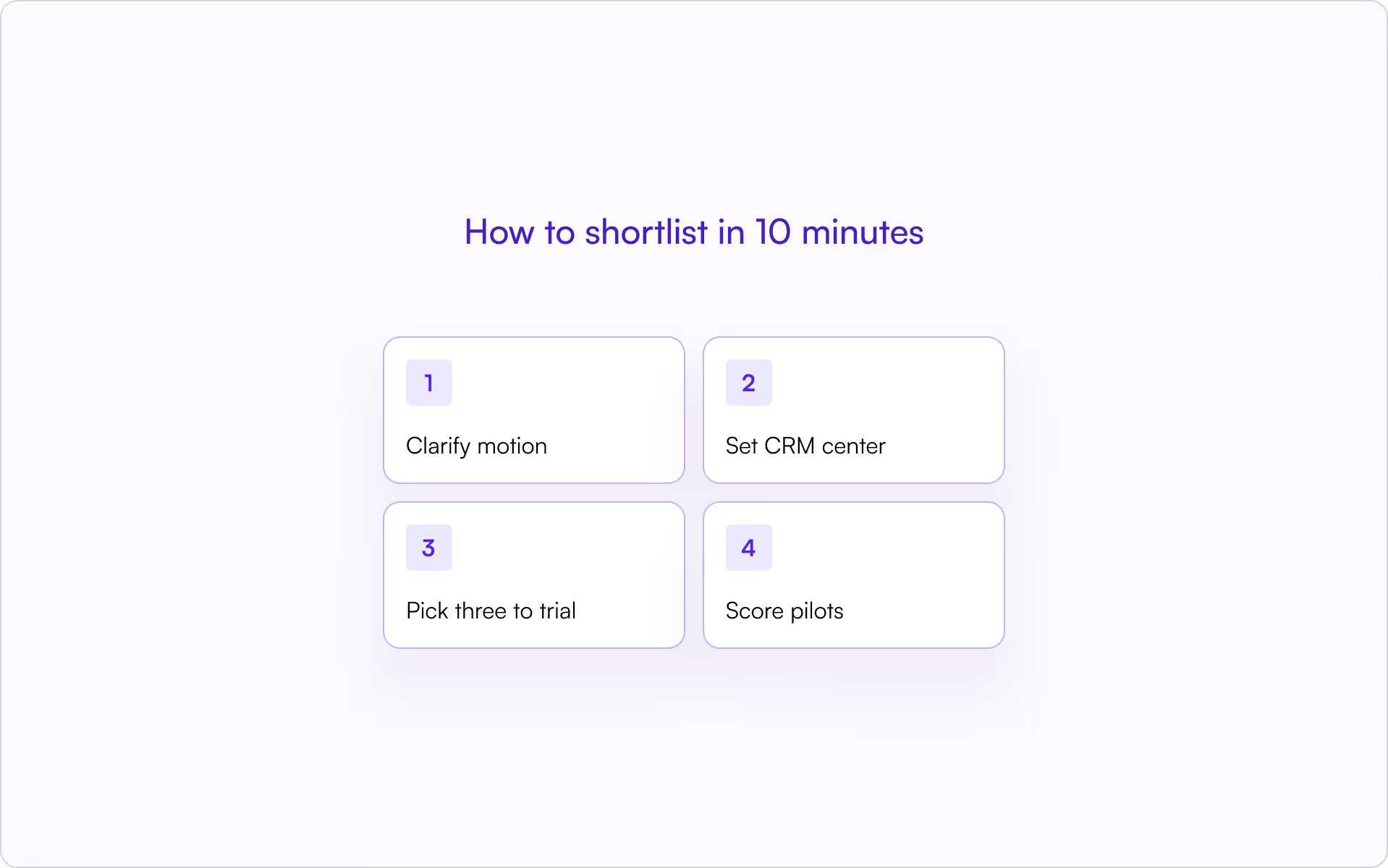
Wie man in 10 Minuten eine Vorauswahl trifft

If that sounds like your roadmap — faster time-to-value, fewer admin cycles, and motions your partners will actually use — the next step is turning options into a shortlist your team can pilot. Use the quick framework below to move from “interesting” to “in production” without stalling in analysis:

  1. Clarify motion — reseller, referral, co selling, affiliate.
  2. Set CRM center — Salesforce only, or Salesforce plus HubSpot.
  3. Pick three to trial — for CRM-first PRM consider Introw; for breadth and incentives consider ZINFI, Unifyr, Channelscaler; for performance-led programs consider impact.com or Everflow; for hyperscaler co-sell consider WorkSpan.
  4. Score pilots — time to first deal registration, partner adoption and engagement, CRM data quality, visibility for pipeline inspection, and ability to monitor performance.

The 17 best Impartner alternatives in 2026

Before we dive in, a quick orientation: the list mixes classic PRM, co-sell orchestration, and TCMA-led options. Skim the “Best for” line to see fit at a glance, then use the “Why it’s an Impartner alternative” line to understand how each platform approaches partner onboarding, deal registration, and day-to-day collaboration differently.

1) Introw

Best for: CRM-first teams that want partner relationship management embedded in Salesforce or HubSpot — including partner portals, deal registration, and Slack/email collaboration that keeps partners engaged without logins.

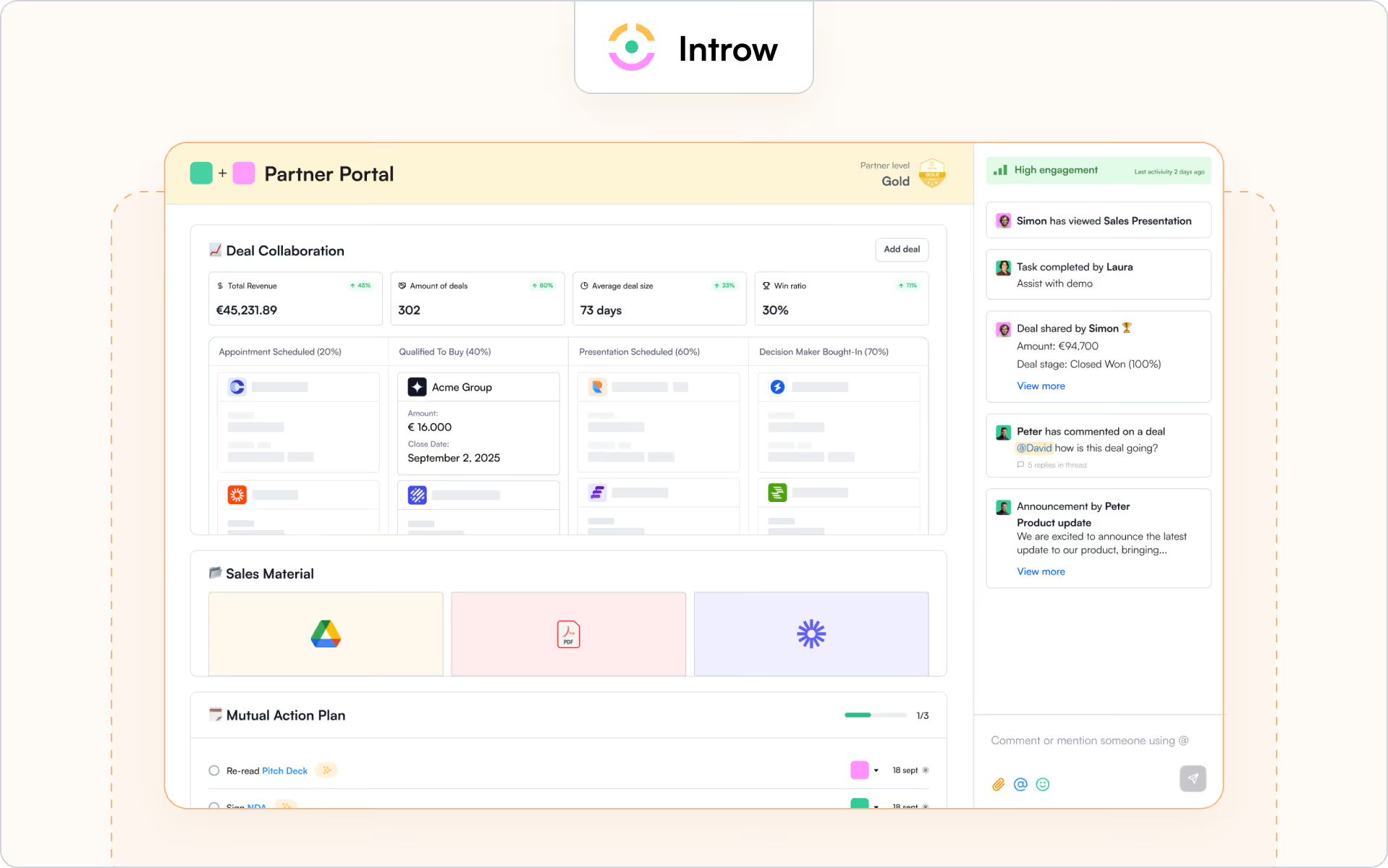
Why it’s an Impartner alternative: Introw keeps the portal simple and pushes updates to where people already work. Partners can create and update leads and opportunities; AEs see real time changes in the CRM; RevOps avoids duplicate records. This approach can shorten time-to-value for companies that don’t need a heavy management system.

Notable callouts: Native Salesforce and HubSpot integrations, off-portal Slack and email nudges, and templates that enable partners with the right content at the right time, plus support for custom objects and AI-assisted engagement.

2) Salesforce Partner Cloud (Salesforce PRM)

Best for: Channel partners operating in a single platform with tight ties to Sales Cloud and Service Cloud.

Why it’s an Impartner alternative: Partner Cloud provides partner portals, deal registration, lead distribution, and in app guidance on Experience Cloud with AI CRM alignment. It fits when your organization standardizes on other Salesforce products and wants to automate sales processes in the same data model.

Notable callouts: Strong configuration patterns for deal registration, lead distribution, portal security, and partner enablement practices.

3) ZINFI (Einheitliches Partnermanagement)
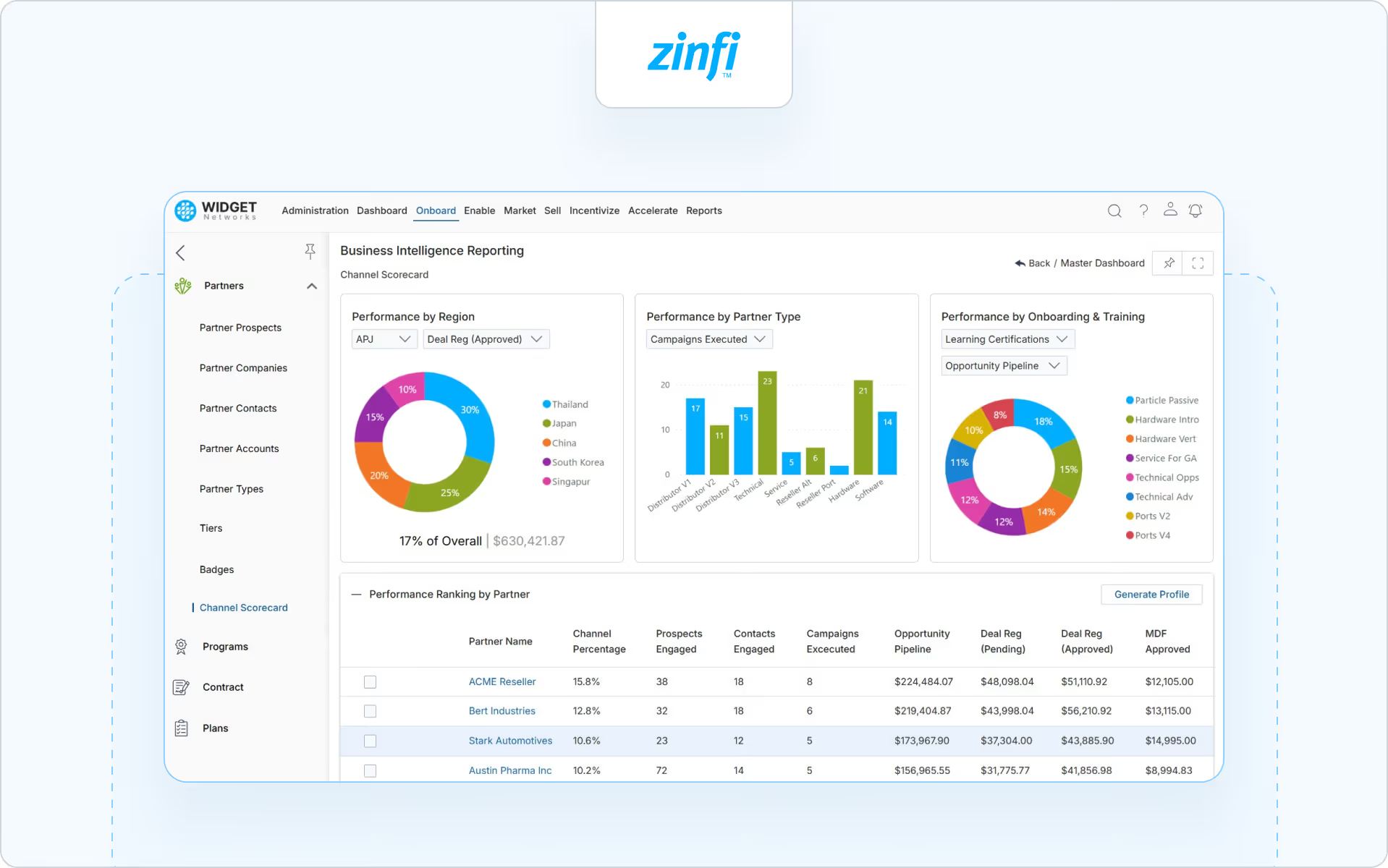
Best for: Programs needing broad PRM coverage — recruitment, onboarding, enablement, incentives — with steady product velocity and AI functionality.

Why it’s an Impartner alternative: ZINFI bundles partner management, partner training, MDF, and automation into one solution so channel managers can manage lifecycles in fewer tools. Often shortlisted by Impartner customers exploring options.

Notable callouts: Emphasis on AI and autonomous workflows to improve engagement and performance while reducing admin.

4) Unifyr (ehemals Zift Solutions)

Best for: Teams that want PRM plus through channel marketing automation and training under one roof.

Why it’s an Impartner alternative: The ZiftONE stack rebranded as Unifyr, positioning an all-in-one, AI-enabled platform for partner ecosystem growth. It shines when MDF, enablement, and content syndication sit alongside PRM.

Notable callouts: Automated partner onboarding, certification, and flexible experiences for VARs, MSPs, referral partners, and distributors.

5) Kanalskalierer (Allbound + Kanalmechanik)

Best for: Teams that need modern PRM UX plus enterprise-grade rebates, pricing, and incentive automation.

Why it’s an Impartner alternative: After the Allbound and Channel Mechanics merger, Channelscaler unified PRM with powerful commercial automation — an attractive combo for programs that need both.

Notable callouts: Focus on scalability, integration, and intelligence that improves partner experience and outcomes.

6) Kanalaktivität

Best for: Mid-market teams prioritizing fast deployment and point-and-click CRM integration over custom builds.

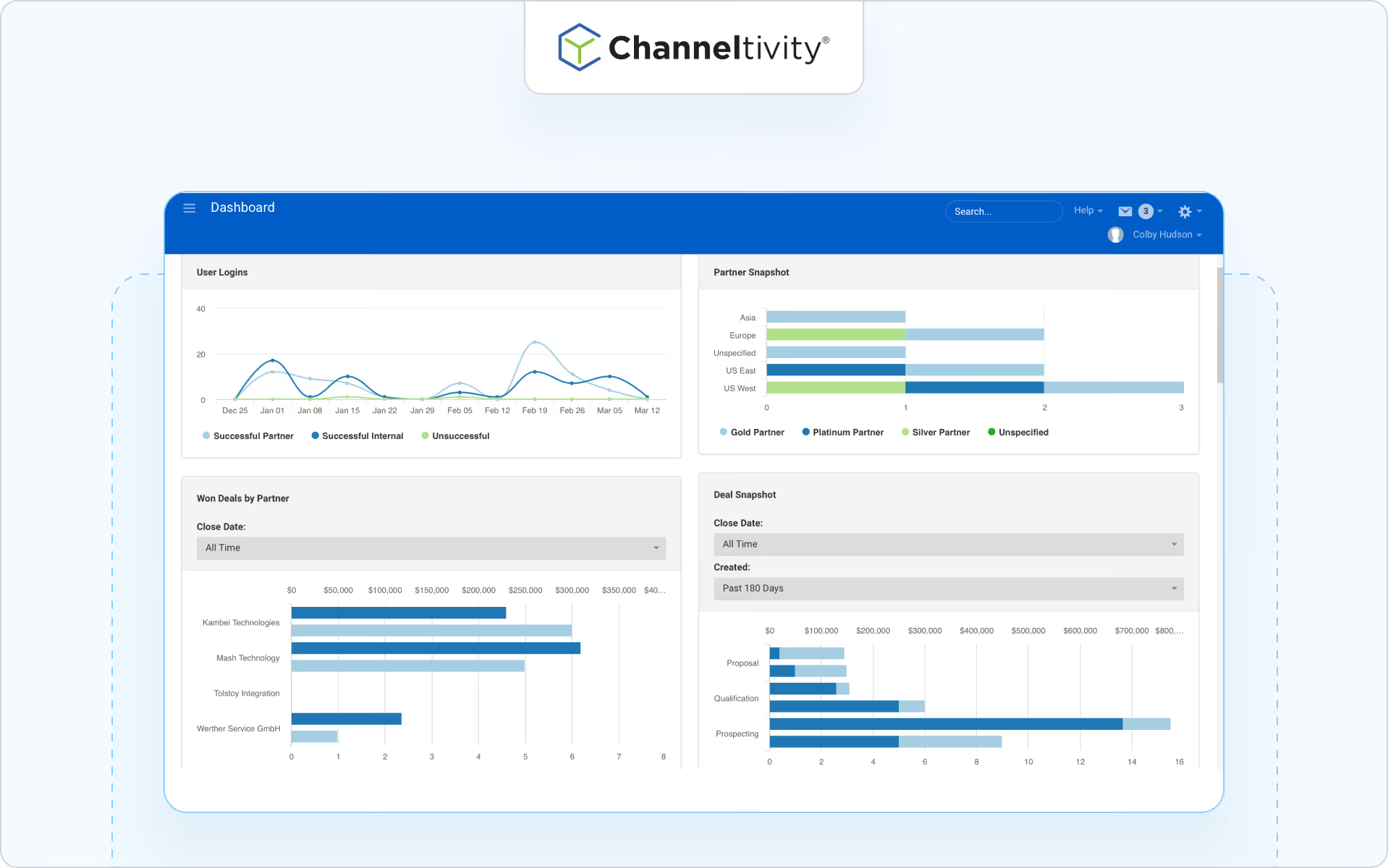
Why it’s an Impartner alternative: Channeltivity’s partner portal integrates with HubSpot and Salesforce to sync partners, contacts, deal registration, and referrals — giving channel managers immediate visibility in CRM.

Notable callouts: Two-way sync and simple field mapping — helpful when ramping new partners quickly.

7) Magentrix

Best for: Salesforce-centric companies that want a configurable portal with strong CRM mirroring and fewer sync headaches.

Why it’s an Impartner alternative: Magentrix positions itself as a Salesforce PRM alternative to Experience Cloud, focusing on partner portals, collaboration, and opportunity management.

Notable callouts: Integration resources and guides emphasize running partner operations without constant connector firefights.

8) PartnerStack

Best for: B2B programs combining affiliate, referral, and reseller motions with marketplace reach and automated payouts.

Why it’s an Impartner alternative: PartnerStack marries PRM-like workflows with a large marketplace and payouts engine — useful when you need to drive traffic, recruit the right partners, and pay at scale.

Notable callouts: Strong market reach and partner liquidity that can accelerate lead generation and revenue.

9) Kiflo

Best for: SMBs and scale-ups formalizing a first partner program with clean HubSpot connectivity.

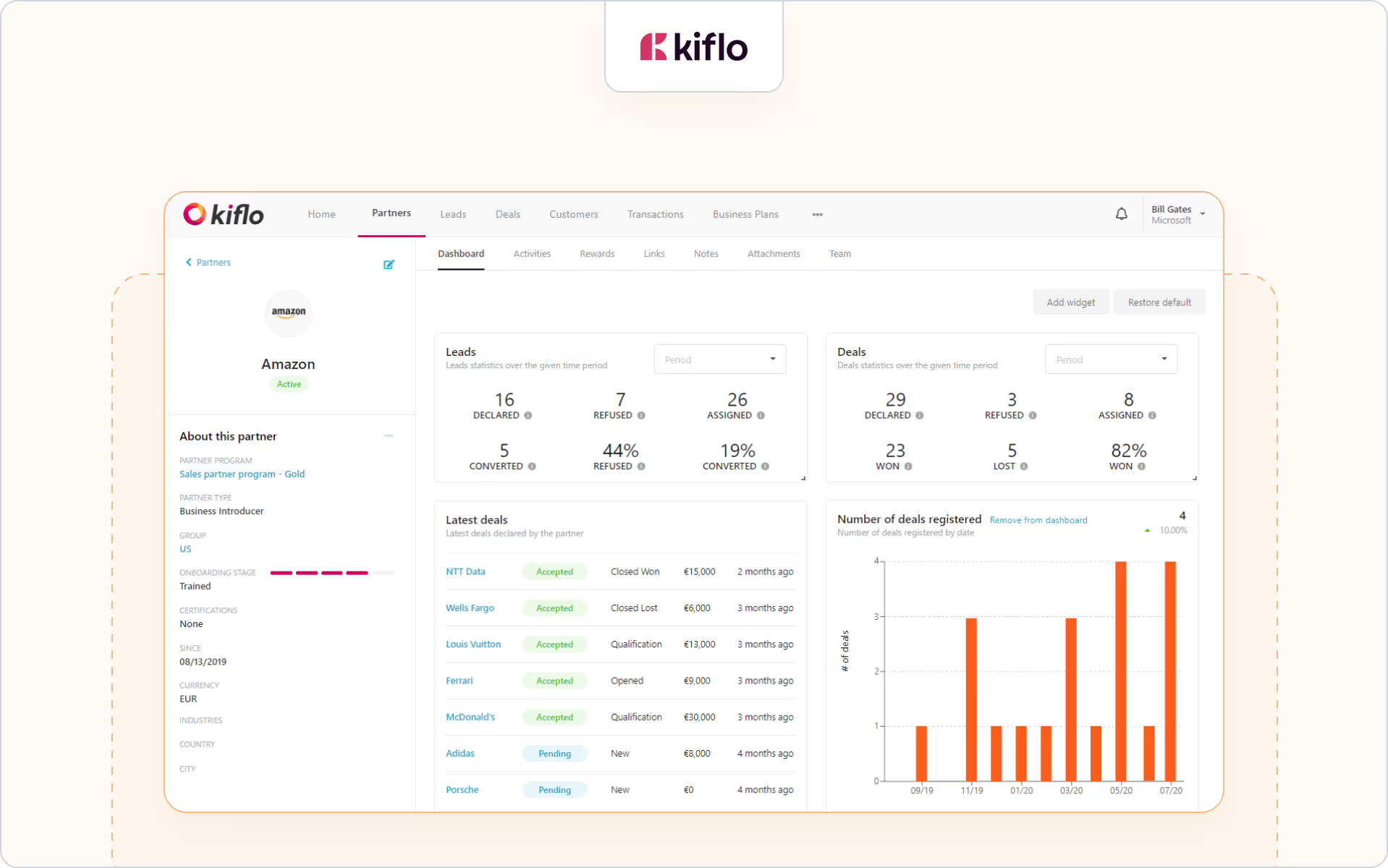
Why it’s an Impartner alternative: Kiflo is a lighter-weight PRM software with native HubSpot sync for leads, deals, and contacts — enough to manage partners, share marketing resources, and track outcomes without a heavy lift.

Notable callouts: Two-way sync and field mapping that support quick adoption.

10) WorkSpan

Best for: ISVs and companies that co-sell with AWS, Microsoft, or Google — and want those motions inside Salesforce.

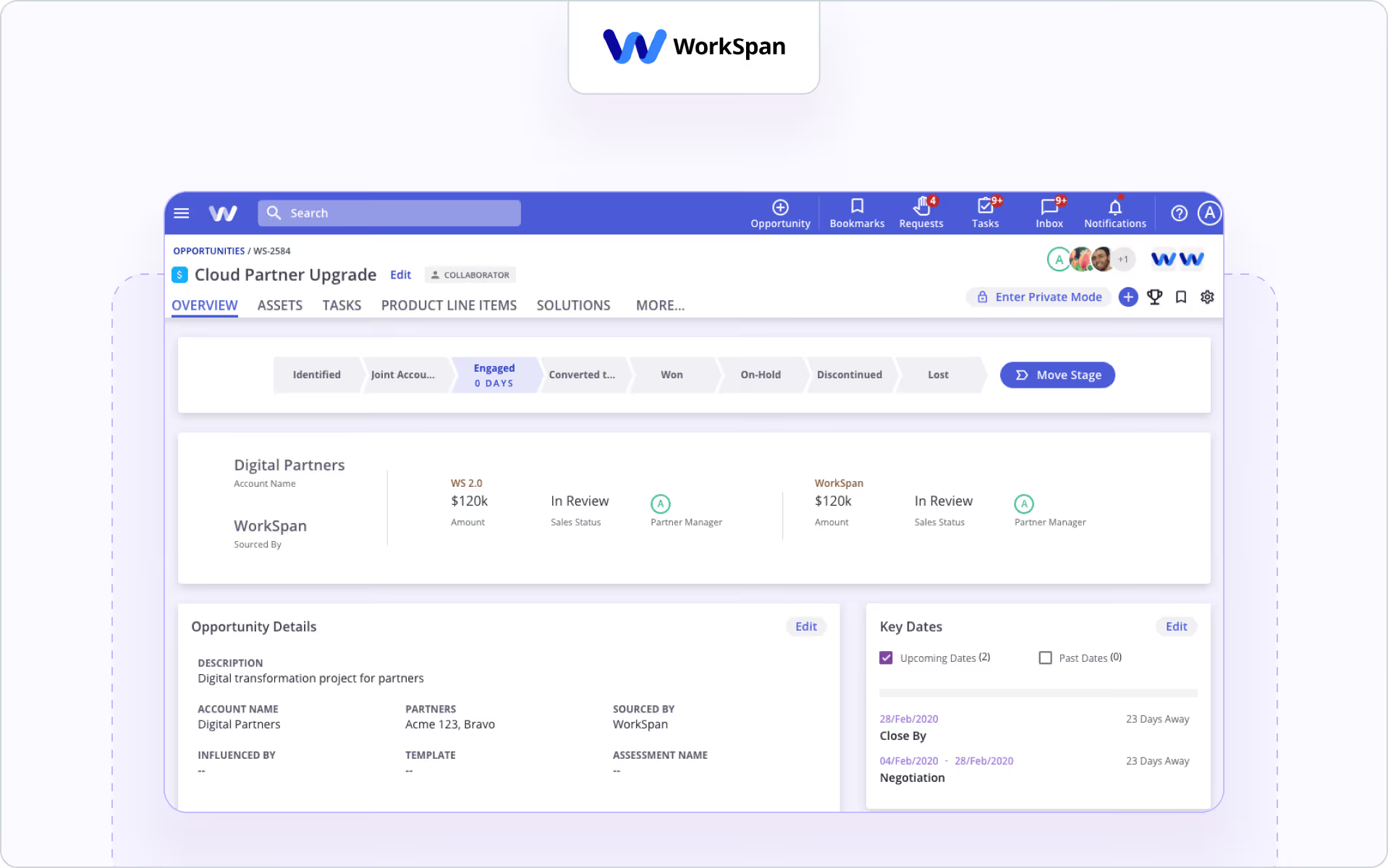
Why it’s an Impartner alternative: WorkSpan digitizes co-sell and marketplace workflows with managed packages for Sales Cloud, integrating with hyperscaler partner systems to share referrals and real time insights.

Notable callouts: Bi-directional sync, KPI dashboards, and private offer support that keep alliance teams aligned.

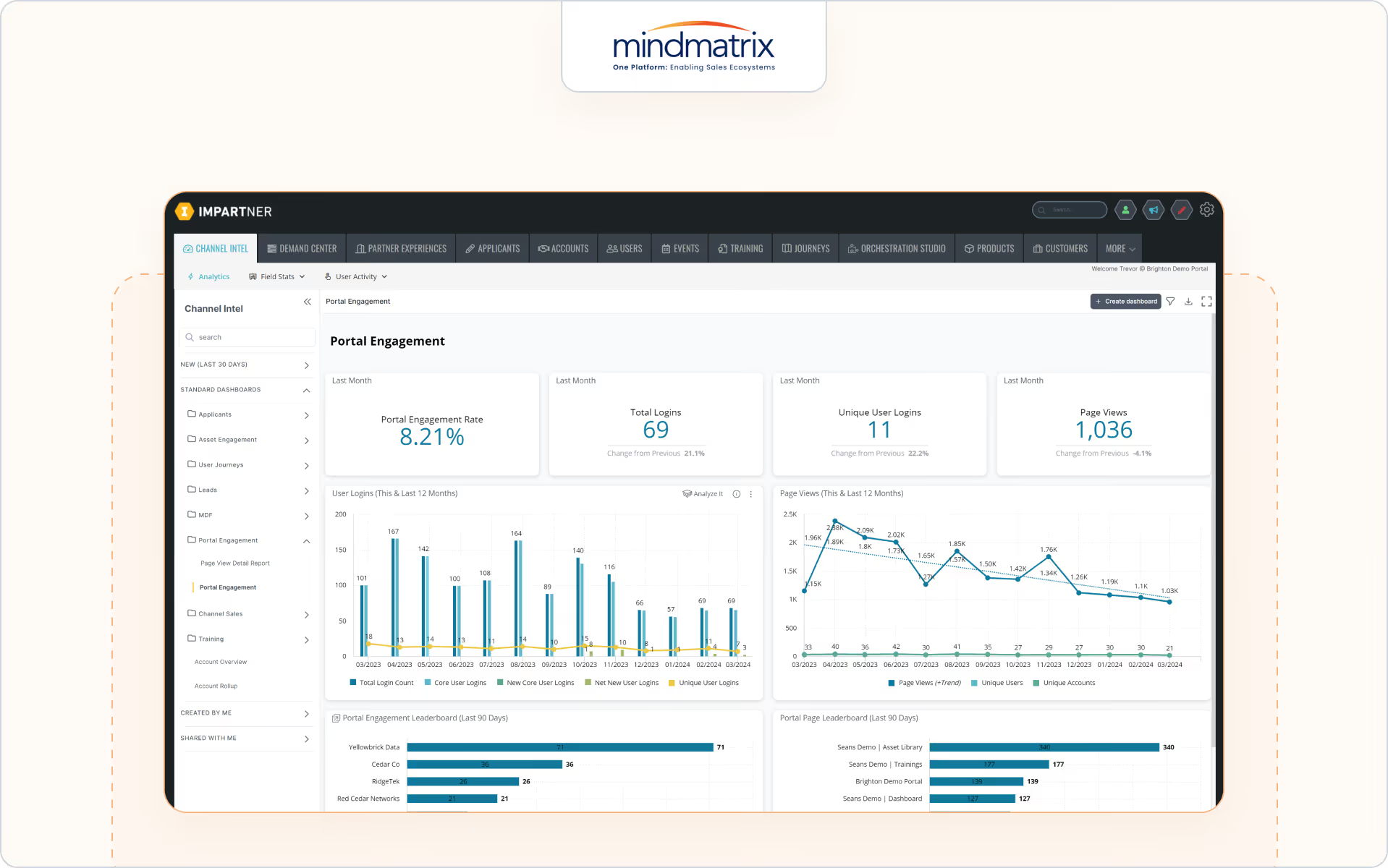
11) Mindmatrix (Bridge)

Best for: Programs that need deep partner enablement and partner marketing with integrated PRM and TCMA.

Why it’s an Impartner alternative: Mindmatrix positions an AI-powered PRM that spans engagement, partner onboarding, training, and performance — combining portal experience with campaign tools.

Notable callouts: Bi-directional sync, KPI tracking, and training capabilities to enable partners effectively.

12) StructuredWeb

Best for: Enterprise brands where through channel marketing automation is central to the partner program.

Why it’s an Impartner alternative: StructuredWeb focuses on channel marketing automation, personalization, and last-mile execution to help partners sell more.

Notable callouts: Enterprise-grade TCMA that complements PRM for brand control and local activation.

13) SproutLoud

Best for: Distributed marketing and brand-to-local execution where partners need turnkey, compliant campaigns.

Why it’s an Impartner alternative: SproutLoud simplifies local marketing with catalogs, last-mile fulfillment, and services that help partners launch campaigns and drive traffic.

Notable callouts: Education content and analytics to monitor performance and optimize spend.

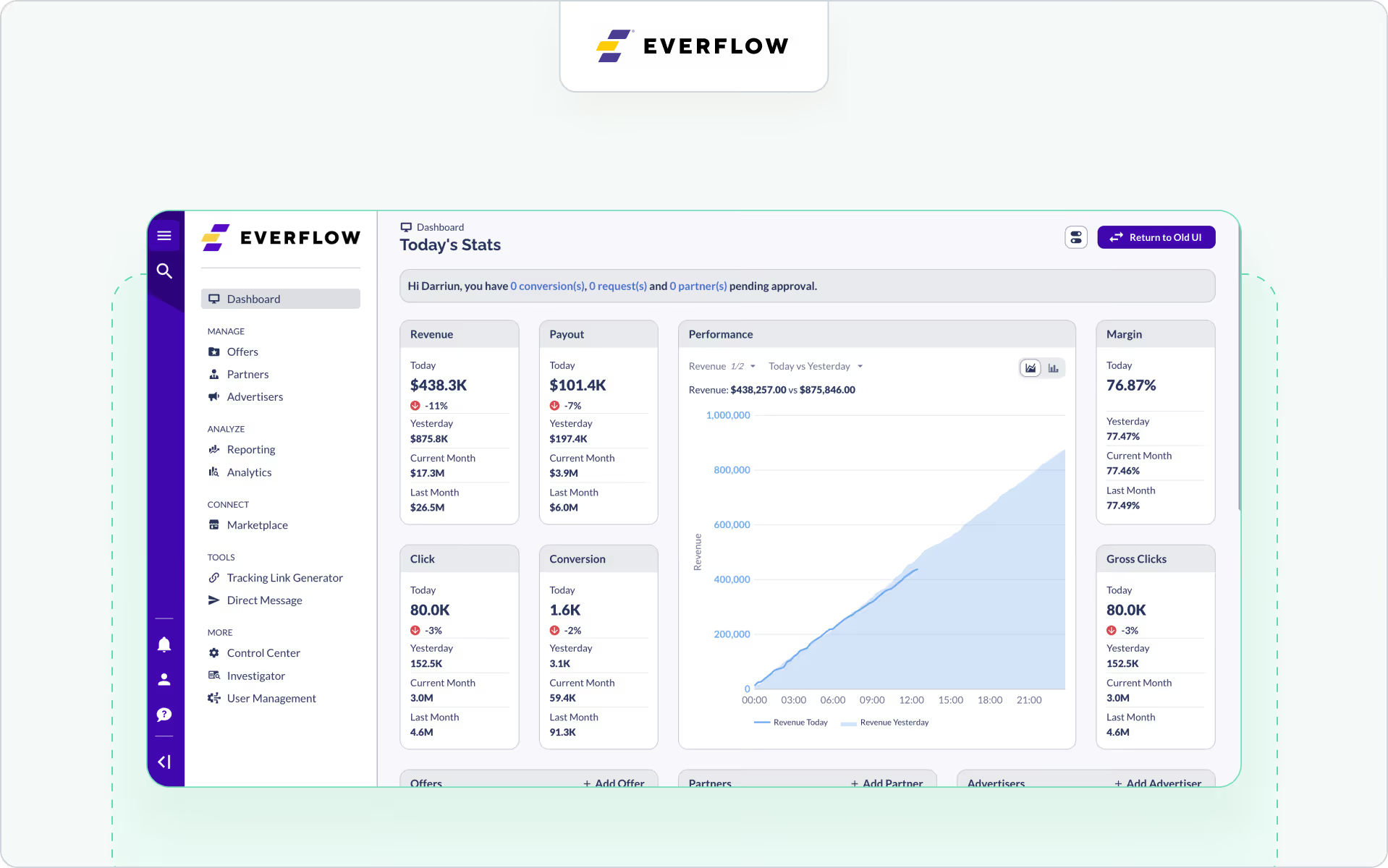
14) Everflow

Best for: Performance-driven partnerships where you need granular tracking, fraud controls, and analytics across affiliates, influencers, and B2B referrals.

Why it’s an Impartner alternative: Everflow consolidates partner and affiliate management in one platform with strong reporting — useful for companies that treat affiliates as a core channel.

Notable callouts: First-party tracking and multi-channel attribution to track leads, engagement, and deals.

15) TUNE

Best for: Teams that want a highly configurable partner and affiliate software with branded experiences.

Why it’s an Impartner alternative: TUNE emphasizes customization and flexible commissioning — good when your program model doesn’t fit template tools and you want more control over partner activities and payouts.

Notable callouts: Usability and data visualization for managing partnerships end-to-end.

16) Partnerize

Am besten geeignet für: Globale Marken, die ihre Affiliate- und Partnerschaftskanäle mit KI-gestützter Optimierung ausbauen möchten.

Why it’s an Impartner alternative: Partnerize invests in AI and data intelligence — helping brands identify the right partners, optimize spend, and mitigate fraud.

Notable callouts: An AI-powered roadmap and enterprise focus — relevant if you run a mature performance program.

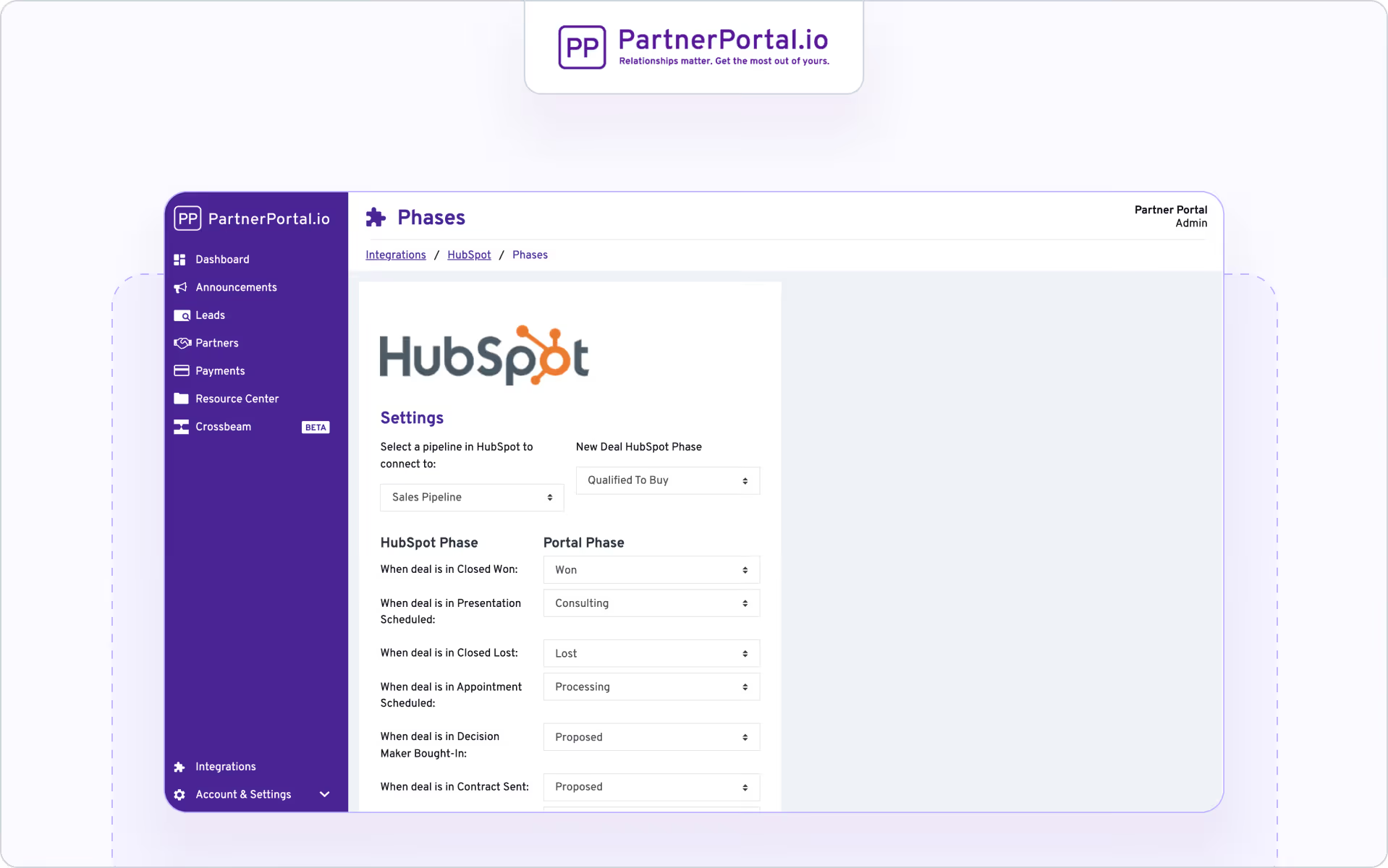
17) PartnerPortal.io

Best for: HubSpot-centric teams that want a 15-minute partner portal for registration, lead generation, deal registration, and a simple resource center.

Why it’s an Impartner alternative: Instead of a big PRM rollout, PartnerPortal.io is plug-and-play — submit leads, create or link deals, and leverage account mapping for attribution.

Notable callouts: Fast setup and two-way sync for channel partners that need to get moving now.

With PartnerPortal.io, we wrap up the spectrum from enterprise suites to plug-and-play portals — spanning PRM depth, TCMA muscle, co-sell orchestration, and affiliate performance. If one of these fits your motion, great. If not, it’s worth checking whether your needs actually match what Impartner already does best.

When to stick with Impartner

Stay with Impartner if you’re deeply invested in MDF, TCMA, and global governance — especially if your partner program needs robust incentives and brand control plus advanced services and support. Impartner’s breadth in incentives and marketing operations remains a differentiator for many Impartner customers.

Switch when your priorities are CRM-first workflows, lightweight admin, or specialized motions — such as hyperscaler co selling (WorkSpan), HubSpot-native operations (Introw, PartnerPortal.io), or affiliate-heavy growth (impact.com, Everflow, TUNE, Partnerize).

Warum Introw Ihre Wahl im Jahr 2026 ist

If you want partner operations that feel native to your CRM, Introw keeps partners, AEs, and RevOps working in the same place — no extra portals or swivel-chairing. You can create and manage leads and opportunities, use custom objects where it makes sense, and rely on real time data for tracking deals, attribution, and forecasts. Partners can collaborate via email or Slack, and updates land back in the CRM automatically. Enablement stays practical too — lightweight content, simple guidance, and clear checkpoints so partners know what to do next and you can monitor progress without chasing spreadsheets.

The payoff is straightforward: cleaner customer data, faster handoffs, and a steadier pipeline without the overhead of a custom Experience Cloud build. If that’s the kind of partner experience you’re after, book a short demo to see Introw in your stack and talk through your motions.

Häufig gestellte Fragen

Noch neugierig? Hier sind einige kurze Antworten, die Ihnen helfen sollen, Klarheit zu gewinnen.

Kontaktieren Sie uns

Which Impartner alternative fits HubSpot-centric teams best?

Introw runs CRM-first in HubSpot — partners submit leads, deals sync both ways, and channel managers see real-time pipeline without adding another heavy portal.

How does Introw compare to Impartner on partner adoption?

Introw lets partners work by email or Slack — no forced logins — and writes updates back to the CRM in real time. That reduces friction and raises engagement versus classic portal-only flows.

If we need through channel marketing automation, do we have to pick Impartner?

Not necessarily. Many teams pair Introw for onboarding, deal registration, and attribution with a TCMA tool for brand and campaigns — keeping data connected through the CRM.

Can Introw cover co-sell and deal registration like Impartner?

Yes — partners register and update deals, AEs and RevOps get attribution and forecasts inside the CRM, and co-selling updates flow by email or Slack for faster collaboration.

What’s the time-to-value difference vs. an enterprise PRM like Impartner?

Introw typically goes live in days with forms, deal reg, and notifications — then you layer approvals and custom objects over time. Lighter admin usually means lower total cost and faster outcomes.

Starten Sie Ihr Partnerportal inwenigen Minuten!

Vielen Dank! Ihre Einsendung wurde erhalten!
Hoppla! Beim Absenden des Formulars ist ein Fehler aufgetreten.

Verwandte Blog-Artikel

Partner Marketing

Partner Content Enablement Guide (That Actually Reaches Your Partners in 2026)

Peter Vermeulen
Technischer Mitarbeiter
5 Min. Lesezeit
15 Dec 2025
⚡ TL;DR

Content enablement only works when sales and marketing teams deliver the right asset to the right partner at the right moment in the sales process, and you can prove it moved a deal. Treat marketing content enablement like a campaign, not a filing cabinet: define audiences and use cases, keep a centralized repository as your single source of truth, distribute in the tools partners already use, and measure impact inside your CRM. Introw turns this into intelligent content enablement with segmentation, push delivery by email or Slack, a lightweight partner content hub, and analytics that tie partner content to meetings, pipeline, and revenue.

If you have ever asked what is content enablement, think of it as the connective tissue between creating content and closing deals. It is the discipline of organizing, delivering, and measuring sales enablement materials so sellers and partners can move prospective customers through the sales funnel with less friction. In a partner context, content enablement meaning widens: you are equipping external channel partners with up to date partner content and giving your internal sales team visibility into how it was used before a purchase order shows up.

Why is this urgent in 2026? Creation points keep multiplying. Marketing teams ship pages, playbooks, and videos. Sales reps record custom demos. Product managers publish technical specifications and security FAQs. Without a content enablement strategy, valuable content scatters across drives and chat threads. Partners guess which version is current, legal fees rise because brand risk slips through, and sales cycles drag while people hunt for the right slide. A thoughtful partner enablement strategy fixes this by aligning business content to buyer engagement and making it simple for partners to find, send, and track.

The old way versus the new way of enabling partners

It helps to name the shift so your partner program knows what will change and why.

Old way, hard to scale

  • Content lives in disparate workflow tools and inboxes.
  • A heavy partner portal is the only door and logins go stale.
  • Marketing and sales collateral is uploaded once and forgotten.
  • Success is counted as downloads, not meetings or revenue.
  • No one can answer how much revenue a specific asset helped create.

New way, built for adoption

  • A centralized repository controls versions and permissions.
  • Distribution happens where partners already work: email and Slack.
  • Sales enablement tools and digital asset management talk to each other.
  • Measurement ties sales content to meetings, stage progression, and closed won.
  • Introw adds intelligent content enablement so assets route by role, tier, and industry, and partners engaged can act without extra logins.

The new way respects how sales partners actually sell and how marketing teams want to manage brand consistency.

The expanded definition: content enablement for partner ecosystems

Let’s expand the definition so you can design an effective partner enablement strategy that fits a modern partner ecosystem.

  • Content strategy maps formats to customer personas, objections, and stages. This is where value propositions are clarified and marketing materials are prioritized.
  • Content management ensures managing content is safe and simple. Digital asset management, access controls, and data security keep everything current and compliant.
  • Distribution puts partner enablement content into the flow of work. Think push delivery for urgency and a partner content hub for browsing and training.
  • Measurement connects actions to outcomes. Key performance indicators live in your CRM and show what content actually shortens the sales cycle and improves sales performance.
  • Ongoing support keeps partners engaged. Sales training, partner enablement training, and office hours help partners apply the message on real sales calls.
  • Enablement tools automate the boring parts. Sales AI tools can flag stale claims, suggest next best content, apply AI powered spell checking to drafts, and even trigger document generation for localized one pagers.

This expanded definition turns a pile of files into a repeatable system.

The formats partners actually use — and why they work

You do not need hundreds of assets to support channel partners. You need a tight core mapped to the buyer journey, plus a plan to keep it up to date. Here is a practical short list that consistently moves deals:

  1. ICP one pager that captures pains, triggers, and crisp value propositions for your target audience.
  2. Short case studies with outcomes, named roles, and a quote you can reuse.
  3. Competitive snapshots with three differentiators and traps to avoid.
  4. Security and privacy FAQ that answers procurement’s first questions and reduces back-and-forth.
  5. Demo storyboard and 90-second talk track that link features to jobs-to-be-done.
  6. Pricing guidance that explains models without revealing internal margins.
  7. Co-marketing kit with a landing page outline, two emails, and three social posts that partners can localize.
  8. Implementation checklist for services partners, including technical specifications and boundaries.
  9. Onboarding guide that sets expectations for handoff and adoption.
  10. Marketplace companion if you transact through AWS Marketplace or Google Cloud Marketplace.

Each item should show an owner, a version date, and a stage. That simple metadata is how sales and marketing teams keep confidence high.

Building your partner content engine in five steps

Every step here flows into the next, so avoid skipping ahead. You are building a system, not just uploading files.

Step 1. Align on audiences, motions, and use cases

Start with segmentation. Split your partner ecosystem by motion — resell, referral, ISV, and services. Within each motion, separate sellers and consultants, then overlay partner tier and region. This gives you the targeting you need so a consultant does not receive first-call decks, and a reseller AE is not reading deep implementation playbooks.

Outcome: clear audiences for content and reporting, fewer irrelevant pings, better partner satisfaction.

Step 2. Audit existing content with ruthless clarity

Map every asset to discovery, evaluation, selection, or onboarding. Identify duplicates and outdated claims. Keep winners, merge near-duplicates, and retire risky files. Capture gaps that stall deals, like an absent security FAQ or a weak competitive snapshot. This is where content related technologies help: a digital asset management tool will expose duplicates, and enablement tools will surface low-use files to replace.

Outcome: a trimmed library that your internal team trusts and partners will actually reuse.

Step 3. Create the minimum viable set and standardize quality

Create marketing and sales collateral with a shared checklist: audience, use case, stage, owner, review cadence, legal status. Use standardized templates to speed document generation and maintain brand consistency. Where possible, add short narration guidance so sales reps know when and how to use the asset during sales calls.

Outcome: fewer, sharper pieces that are easier to keep up to date and safer to send.

Step 4. Distribute in the flow of work, not just the portal

A partner portal is useful, but it should not be the only door. Push content by email and Slack when timing matters. Let partners browse a partner content hub for training and self-serve discovery. Surface the next best asset inside your CRM when a sales rep opens an opportunity. Distribution should feel like today’s digital HQ, not a scavenger hunt.

Outcome: higher adoption, faster response, and less time spent hunting links.

Step 5. Measure what leaders care about and iterate quarterly

Replace vanity metrics with outcome metrics. Track first meetings within 14 days of send, stage progression on opportunities that received specific assets, influenced pipeline, and win rate deltas where content was used. Add operational KPIs like training completion and asset freshness. Review quarterly with partners and your internal sales team, then tune your content enablement strategy.

Outcome: proof that content moves revenue, not just downloads.

Where Introw fits — intelligent content enablement that partners adopt

Introw is built to make partner content reach the field and show up in your numbers.

  • Segment once, deliver everywhere. Target by motion, tier, role, industry, certification status, or region. A reseller AE gets first-call assets and a co-marketing kit. A services architect sees implementation plays and product training.
  • Push and pull distribution. Send content by email and Slack for urgency, while a lightweight partner content hub supports discovery and training. Partners do not need to learn a heavy system to stay current.
  • CRM-first analytics. Engagement rolls up next to account and opportunity records so leaders can see which assets improve first-meeting rate, stage progression, and close won.
  • Single source of truth. A centralized repository handles managing content, permissions, and data security. Owners and review cadences keep everything up to date.
  • Assistive creation. Sales AI tools inside the workflow suggest next best content, flag stale messages, apply AI powered spell checking, and trigger document generation for localized one pagers.

This is partner content marketing that respects how partners sell and how marketing and sales teams want to measure.

A 90-day rollout plan that respects day jobs

Long rollouts lose momentum. This plan gets you live fast and gives you space to improve.

Weeks 1–2 — pick two motions and two roles, define KPIs, align owners.

Weeks 3–4 — audit, trim, and draft the core set with standardized templates.

Weeks 5–6 — stand up the centralized repository, permissions, and CRM tracking.

Weeks 7–8 — pilot with a small partner cohort, run one live enablement session, collect feedback.

Weeks 9–10 — tune assets, set review cadences, finalize distribution rules.

Weeks 11–12 — publish the playbook in the partner content hub, expand targeting, and schedule the next co-marketing kit.

Because Introw connects segmentation, delivery, and analytics to your CRM, most of the wiring is configuration rather than custom work.

Bringing it all together

Great partner enablement is not about more files. It is about delivering relevant marketing content to the right people at the right time and proving it helped close business. When sales and marketing teams share a centralized repository, when content management is tight, and when distribution meets partners where they already work, buyer engagement improves and closing deals gets easier. 

Introw adds the missing glue by combining segmentation, a partner content hub, push delivery, and CRM analytics so your channel partner enablement program turns content into revenue. If you want an effective partner enablement strategy that partners adopt and leaders can measure, Introw is ready to help.

Partner Marketing

Top 15 Impact Alternatives for Effective Partner Management in 2026

Andreas Geamanu
Mitbegründer und Geschäftsführer
5 Min. Lesezeit
15 Dec 2025
⚡ TL;DR

The 15 best Impact alternatives for partner management in 2026 are Introw, PartnerStack, Kiflo, Channelscaler, Impartner, Unifyr, Magentrix, Channeltivity, WorkSpan, Partnerize, TUNE, Affise, Everflow, Salesforce PRM, and HubSpot with PRM add-ons.

Impact is a partnership management platform designed primarily for affiliate, influencer, and performance marketing programs. 

It can be a handy tool if your business relies heavily on affiliates and influencers to generate sales.

However, if your partner program is broader in scope – perhaps your strategy is more channel-focused, for example – you’ll benefit from a more comprehensive partner relationship management (PRM) platform. 

Ready to kick your partner management up a gear this year? Read on for our 15 top Impact.com alternatives in 2026. 

Why Consider an Impact Alternative in 2026?

An end-to-end performance marketing tool, Impact excels at affiliate and influencer programs because that’s what it’s designed for. 

However, there are four major areas in which SaaS outstrips this online platform.  

1. Limited CRM-Native Channel Workflows

Modern SaaS platforms like Introw work on top of your CRM, enabling seamless logging, tracking, and reporting directly inside Salesforce or HubSpot

This deep embedding provides sales teams and all their partners with real-time visibility, eliminating the need to switch platforms. 

However, Impact is browser and app-based, and requires teams and their partners to operate largely outside the CRM, which can create friction in channel workflows. 

2. Deal Registration & Co-sell Motions Vs Affiliate Tracking

While Impact is certainly strong on affiliate tracking and commission management, it doesn’t fully support deal registration and co-sell motions. 

Affiliate link tracking is primarily focused on click attribution, but SaaS functionality goes deeper, enabling joint selling motions, more meaningful collaboration, and improved pipeline visibility. 

Indeed, try out a modern SaaS platform and you’ll generally find a structured deal registration pipeline, where partners can submit opportunities, collaborate with sales teams, and track progress through the funnel. 

3. Off-portal engagement 

Impact relies heavily on its portal for communication with partners. 

In contrast, modern SaaS solutions meet partners where they already work – for example, email, Slack, or other collaboration tools. 

What’s more, in 2026, this off-portal engagement is mostly automated, delivering updates surrounding deal stages, approvals, or payments into partners’ daily workflows. 

And when it comes to saving time and boosting engagement, you can't beat automated outreach.

4. Attribution & Forecasting 

Impact will track conversions and clicks, but SaaS platforms will typically offer more robust attribution and forecasting capabilities than this. 

Indeed, SaaS tools directly tie partner activities to pipeline metrics, making it clear how each partner impacts revenue. 

This makes strategic planning and forecasting much easier. 

➡️ This is why, if your B2B partnerships include referral, reseller, or co-sell, it’s worth considering a CRM-first alternative to Impact. Learn more about Introw here, or read on for more information on shopping for the best alternative. 

What to Look For in an Impact Alternative in 2026

Considering swapping Impact for a modern PRM?

Here’s what you should be looking for when it comes to choosing your next PRM

  • CRM-first: Look for a PRM that integrates directly with your CRM, so partner records, fields, and reporting live natively in Salesforce or HubSpot. 
  • Deal Registration & Co-sell: Your new PRM should support seamless deal registration and co-selling by enabling a shared pipeline, mutual action plans, and conflict prevention. 
  • Off-portal Engagement: Forcing partners to log into a portal every time they need a quick update will put you on a fast track to disengagement. Instead, prioritize a PRM that delivers automated updates and alerts in channels they already use, such as email or Slack.
  • Automation: Automation is a must-have in 2026. These tools help you launch and optimize campaigns, onboard partners, engage partners, send activity reminders and prepare for QBRs much more quickly, and with much less manual labour, than in the past.
  • Attribution: Make sure your new platform provides clear attribution, from partner engagement through to pipeline and revenue impact.
  • Partner UX: Your PRM must deliver a frictionless experience, making the user journey as easy as possible for your partners. Look out for features like a simple submission process, easy access to branded assets, and self-serve tools. 
  • Scale & Security: As your partnership program grows, you’ll need to be able to easily manage different partner tiers, regions, and types. Choose a PRM with strong security and role-based access controls. 

The 15 Best Impact Alternatives for SaaS Partner Programs (2026)

If you’ve been using Impact, but are keen to see what other alternatives could offer you, you’re in the right place.

Here’s our pick of the 15 best Impact alternatives on the market in 2026. 

1) Introw 

A CRM-first PRM designed for SaaS, Introw is perfect for teams that already use Salesforce or HubSpot, and are running referral, reseller, and/or co-sell programs at scale.

So, why should you choose Introw over Impact? 

Introw is purpose-built for channel partnerships — with CRM-native, partner-first workflows that streamline co-selling and co-marketing across your ecosystem. 

It embeds deal registration, co-sell updates, and engagement tracking directly inside your CRM, while off-portal updates via email and Slack keep partners engaged without forcing them to log into another tool.

Key capabilities: 

  • Campaign management features
  • Partner engagement analytics (visits, content usage, opens/clicks)
  • Outreach automation including automated deal updates
  • White-labeled experiences
  • Role-based dashboards
  • Integrates with Salesforce, HubSpot, Slack
  • Responsive customer support

🚀Ready to take your partner program to the next level? Request an Introw demo here.

2) PartnerStack

Looking to combine affiliate programs, referral marketing, and reseller partners while gaining marketplace reach?

Take a look at PartnerStack

Unlike Impact, which is primarily affiliate-focused, PartnerStack is built with SaaS go-to-market strategies in mind and extends well beyond affiliate-only use cases.

Please note that PartnerStack is not CRM-native, so advanced co-sell programs may require additional tools. 

Key capabilities: 

  • Partner marketplace
  • Payouts
  • Referrals/reseller workflows

💡Looking for some great PartnerStack alternatives? Here are some of the best.

3) Kiflo

Kiflo is a PRM that works well for small to mid-market SaaS companies just starting their formal channel or partner programs. 

This platform offers a lighter-weight PRM approach compared to Impact, making it easier for companies to launch and manage reseller or referral programs. 

However, bear in mind that it has limited enterprise-grade analytics and deep CRM workflows, so it’s much better suited to smaller businesses looking for a simpler solution. 

Key capabilities: 

  • Deal registration
  • Incentives
  • Enablement basics

➡️ You can see our top Kiflo alternatives here.

4) Channelscaler

Channelscaler offers a full PRM and partner automation stack for companies running channel or partner programs. 

It’s perfect for companies looking for modular solutions, but if you’re planning to run a simple program, be careful you don’t end up implementing more modules than you actually need. 

How does it compare to Impact? Channelscaler delivers a channel-centric platform with a wider scope, while Impact is an affiliate-first tool. 

Key capabilities:

  • Deal registration
  • Incentive and rebate management 
  • Content & enablement 
  • Partner journey automation
  • Performance tracking dashboards

5) Impartner

Partner marketing automation platform Impartner caters to enterprises with complex, global channel operations. 

Consider this platform if you need a system robust enough to handle multiple regions, tiers, and partner types.

If you’re considering switching from Impact to Impartner, you’ll notice a huge difference: namely, that this solution provides a full-stack PRM built for deep governance and enterprise-grade scale, while Impact has a more narrow focus. 

Of course, Impartner’s more complex system comes with a heavier implementation and administrative lift, so it’s vital to ensure your business has the resources to manage it effectively. 

Key capabilities: 

  • Tiering
  • MDF
  • Workflows
  • Robust analytics

6) Unifyr

Unifyr is an all-in-one, AI-enabled PRM and channel growth platform. 

It is designed for organizations managing partner ecosystems and aiming to centralize and streamline their operations, particularly in dealing with maturing or enterprise-scale channel programs. 

This SaaS platform offers a wider variety of features than Impact, which focuses on performance marketing. 

However, this does mean there can be a learning curve and it can be a little heavy for smaller brands, with some advanced features more applicable to mid-size or large companies. 

Key capabilities:

  • Partner onboarding & activation
  • Deal registration & lead management
  • Supplier/multi-vendor support
  • AI-enabled features

7) Magentrix

Magentrix is made for Salesforce-centric teams that need deeply integrated custom portals. 

It’s a good match for teams that require close alignment between their CRM and the partner-facing portal, as well as powerful customization and scalability.

When compared to Impact, it’s worth noting that Magentrix offers deep Salesforce alignment, along with robust community and portal features that go beyond what the other platform provides.

However, since Magentrix is portal-first, it’s important to ensure that partner engagement does not rely solely on logging in.

Key capabilities: 

  • Resource library
  • Case collaboration
  • Portal UX

8) Channeltivity

Channeltivity is designed for mid-market SaaS companies that need a comprehensive PRM to effectively manage and scale their channel programs. 

This SaaS tool offers a solid foundation for channel operations, while Impact is more focused on affiliate programs.

For example, Channeltivity offers robust features, including deal registration, Market Development Fund management, and detailed reporting.

Just bear in mind that Channeltivity is primarily portal-centric, which could limit off-portal engagement.

Key capabilities: 

9) WorkSpan

Are you tasked with managing alliance and co-sell ecosystems?

WorkSpan facilitates collaboration between multiple partners on shared opportunities and joint sales initiatives.

This solution stands out over Impact because it’s built to manage joint pipelines across partners, which helps partners to coordinate sales efforts more effectively than an affiliate-focused platform like Impact.

However, WorkSpan is not a full PRM – it’s typically used alongside a PRM or CRM to enhance partner management. 

Key capabilities: 

  • Co-sell workflows
  • Joint planning
  • Pipeline tracking

10) Partnerize

This one has an enterprise focus.

Partnerize provides a single platform for diverse partner types, making it particularly useful for those who manage both affiliate programs and broader partnership initiatives. 

This platform supports a much wider range of partner types than Impact and provides robust optimization tools. 

However, Partnerize does have a strong e-commerce and affiliate focus.

This means that if you’re looking for a B2B partnership solution, it’s vital to consider whether this platform caters best to your specific requirements.

Key capabilities: 

  • Contracting
  • Payouts
  • Advanced analytics features

11) TUNE

TUNE is designed for performance and affiliate marketing teams – especially those focused on mobile and app-based campaigns.

Businesses might pick this platform over Impact because of its flexible tracking capabilities and developer-friendly tools, which offer plenty of customization for technical integrations. 

It’s important to note that TUNE is not built for B2B channel or co-sell programs.

This means while the platform might be useful for affiliate-focused retail brands aiming for ecommerce sales, it may not meet the needs of organizations looking to manage complex partner ecosystems beyond performance marketing channels.

Key capabilities: 

  • Custom tracking
  • APIs
  • Mobile SDKs

12) Affise

Built with affiliate networks and performance marketing in mind, Affise helps teams to streamline their operations and manage multiple affiliate performance programs efficiently. 

While there’s overlap between Affise and Impact, Affise offers a more streamlined approach to affiliate operations and automated affiliate payouts. 

Please note that Affise offers limited support for channel co-sell workflows, so it may not be suitable for organizations looking to manage broader B2B partner ecosystems.

Key capabilities: 

  • Tracking
  • Fraud tools
  • Program management

13) Everflow

Everflow is designed for performance and affiliate programs, especially those that demand comprehensive analytics and reporting capabilities from their partner marketing platform. 

Indeed, this tech offers an alternative tracking stack to Impact, with flexible reporting and detailed analytics. 

Keep in mind that Everflow is primarily affiliate-focused and offers limited support for CRM-native channel operations. 

So think carefully about whether it’s suitable for complex B2B co-sell programs.

Key capabilities: 

  • Partner tracking
  • Fraud prevention
  • APIs

👉Discover some top Everflow alternatives here.

14) Salesforce PRM

Already work on Salesforce? Opting for Salesforce PRM could make your team’s life a lot easier. 

Salesforce PRM is designed for teams that want their partner management fully integrated within their CRM – and it’s a very different solution to Impact. 

Indeed, Salesforce PRM offers native Salesforce records, reporting, and extensibility, making it a strong choice for organizations that need a deeply integrated solution rather than an external affiliate-focused platform.

It’s worth noting that the out-of-the-box user experience is pretty basic, so the success of Salesforce PRM often depends on internal resources and technical assistance.

Or, in other words, how well you’re able to customize and optimize the system for your partner programs.

Wichtigste Merkmale: 

  • Partner accounts
  • Deal reg
  • Workflows

15) HubSpot + PRM Add-Ons

Looking for tailored solutions?

HubSpot-led go-to-market teams may decide to stick with their CRM and invest in some PRM add-ons. 

By simply extending their CRM to manage partner programs, these teams can work with CRM-native performance data while selecting the partner extensions that best serve their purposes. 

However, there are downsides to this approach. 

Indeed, for organizations that need deeper PRM functionality, a dedicated PRM platform like Introw will be required.

HubSpot supports:

  • Objects
  • Workflows
  • Partner tagging
  • Reporting

Why SaaS Teams Pick Introw Over Impact 

Introw is a very different solution to Impact, but if you’re looking for a PRM that supports SaaS partner management, it’s a powerful alternative. 

Here’s why SaaS teams benefit from choosing Introw: 

  1. Channel-first, not affiliate-first: Impact was designed for affiliate management and influencer programs, so its workflows revolve around clicks, payouts, and referral tracking. But Introw is purpose-built for SaaS, making deal registration, co-selling, and partner engagement its core focus.
  2. CRM-native: With Introw, all partner activity lives directly inside Salesforce or HubSpot, eliminating silos and giving you a single source of truth. 
  3. Off-portal engagement: Many PRMs rely on portals that require logins. This adds friction to the partner journey and limits engagement. Introw meets partners where they work (such as email or Slack) for seamless collaboration.
  4. Automation everywhere: Eliminate tedious administrative tasks with Introw, and spend your time adding genuine value. Introw automates onboarding, campaign management, nudges, and even QBR prep.
  5. Attribution you can trust: Affiliate-first tools typically track clicks and last-touch referrals, which don’t accurately reflect the influence of SaaS partners. Introw ties content usage, notifications, and partner activity directly to pipeline and revenue for attribution you can feel confident in. 

📣 Want to see Introw in action? Request a demo here

Schlussfolgerung

Is it time to seek alternatives to Impact?

You’ll know when you’ve found the right Impact alternative for B2B SaaS, because it will improve co-selling, engagement, and attribution directly in your CRM. 

When shopping around for Impact.com alternatives, take a step back to review how your current partner program works.

Consider whether your channel strategy is as effective as you’d like it to be, and identify any gaps. 

Then:

1️⃣ Shortlist CRM-first PRMs

2️⃣ Run a live pilot

3️⃣ Choose the platform your partners actually respond to

👉 See how Introw can power your partner program – book a demo today.

Partner Marketing

Channel Partner Marketing Guide 2026: Strategies and Tactics

Adèle Coolens
Marketing & Partnerschaften
5 Min. Lesezeit
14 Dec 2025
⚡ TL;DR

A strong channel partner marketing strategy helps you segment partners, launch repeatable through-partner campaigns, and track every touch directly in Salesforce or HubSpot. Winning teams keep channel partner marketing activities simple, automate updates through tools like Introw, and use data to connect partner actions to pipeline and revenue.

What would change if every partner campaign were easy to launch, easy to join, and easy to measure?

Most teams still juggle scattered content and manual follow-ups, which slows down even the best channel partner marketing programs.

A focused channel partner marketing strategy removes that friction by meeting partners where they work, using repeatable assets, and keeping everything aligned in your CRM.

With CRM-native tools like Introw, partner channel marketing programs become easier to run and easier for partners to engage with across both to-partner and through-partner motions.

If predictable revenue is the goal, clarity and automation are the starting point.

So what does channel partner marketing actually mean in 2026?

What is channel partner marketing? (SaaS 2026 definition)

Channel partner marketing is the work you do with and for partners to create demand, drive adoption, and grow revenue together.

In 2026, it’s a mix of to-partner enablement and through-partner campaigns, all tied back to your CRM so nothing gets lost in the shuffle.

To-partner vs through-partner

Here’s the quick way to think about the two motions:

Motion What it means Examples
To-partner Give partners the tools and context they need Onboarding kits, playbooks, product updates, campaign assets
Through-partner Run demand plays alongside partners Co-marketing webinars, ABM bundles, field events, integration pushes

Most strong partner programs run both motions at the same time.

Channel marketing vs partner marketing

People use these terms interchangeably, but they’re not the same.

  • Channel marketing is your route-to-market strategy
  • Partner marketing is the actual programs and campaigns you run with partners

Your channel partner marketing strategy sits right in the middle of the two.

Who counts as a channel partner?

A channel partner can be a reseller, referral partner, MSP, SI, tech integration partner, agency, or consultant.

Each one brings different strengths and sits at a different stage of the channel partner marketing journey, which is why segmentation early on matters so much.

Why this definition matters

To run channel partner marketing activities that move pipeline, you need clarity about who you’re enabling and what you expect from them.

When everyone shares the same definition, partner managers and RevOps can set goals and measure success directly in Salesforce or HubSpot.

A shared foundation makes your channel partner marketing plan easier to build and scale. Everything else in this guide builds on that framework.

The 4-part framework: Plan → Enable → Run → Measure

Every strong channel partner marketing strategy follows the same rhythm.

These four stages help you plan campaigns partners actually want to use, run consistent through-partner plays, and measure every result directly in Salesforce or HubSpot.

Think of this as the backbone of your entire channel partner marketing journey.

Plan: Build the foundation of your channel partner marketing strategy

Before you launch a partner campaign, you need a quick, clear plan that keeps everyone aligned

This stage shapes the full channel partner marketing journey. It also gives partner managers and RevOps the structure they need to measure outcomes in the CRM.

What to define

  • Your partner ICP for each segment in your channel partner marketing programs
  • A clear offer for referral, reseller, SI, MSP, or tech partners
  • Goals tied to registered deals, qualified intros, and pipeline
  • Quarterly focus areas that support your wider channel partner go-to-market strategy
  • MDF guidelines and how they connect to channel partner marketing activities
  • A campaign calendar with repeatable moments partners can rely on

Warum es wichtig ist

This is one of the simplest channel partner marketing best practices to get right. If the plan is unclear, partners won’t know how to participate, and your channel partner marketing plan becomes harder to scale.

Example

A strong plan might segment partners by type and region, then map one or two through-partner plays to each group so marketing and partner teams stay aligned.

For a deeper starting point, the How to build a channel partner program guide is a helpful reference.

Enable: Prepare partners for high-impact channel partner marketing activities

Enablement is where your strategy becomes real for partners. When partners know what to say, what to share, and how the campaign works, execution gets a lot easier.

What to provide

  • Campaign-in-a-box kits
  • Talk tracks and positioning
  • Onboarding materials that match each channel partner marketing segment
  • Localizable content and co-brandable assets
  • Email and social templates that reduce friction
  • Clear instructions for through-partner execution

Warum es wichtig ist

Enablement is the moment partners decide whether they will actually run your campaign. If assets are simple and accessible, your channel partner marketing programs instantly become more repeatable.

Example

A partner might open a kit, grab the email sequence, and start outreach the same day. This is the kind of activation every channel partner marketing plan aims for.

For more ideas, the partnership marketing guide offers helpful examples.

Run: Launch through-partner plays across your channel partner marketing programs

This stage turns planning into real execution. Through-partner campaigns should feel easy for partners and easy for your internal teams to manage.

What execution looks like

  • Multi-channel campaigns that match each partner’s motion
  • Off-portal updates through email or Slack so partners never need extra logins
  • Automated reminders for deadlines, events, and asset usage
  • Co-selling handoff steps that roll directly into Salesforce or HubSpot

Warum es wichtig ist

If execution feels heavy, your partner channel marketing efforts slow down fast. When updates and communication run off-portal, channel partner marketing activities scale without manual follow-ups.

Example

A partner might receive a Slack update about a new campaign and start promoting it without ever logging into a portal. This keeps momentum high and adoption consistent.

Measure: Track engagement, pipeline, and revenue

Measurement is what turns channel partner marketing strategy into a predictable engine. It removes guesswork and shows exactly which partners and campaigns drive revenue.

What to track

  • Engagement with assets and campaign kits
  • Deal registration volume and influenced pipeline
  • Co-selling activity tied to partner channel marketing plays
  • Activation rates across each segment
  • Conversion rates and influenced ARR
  • Examples of channel partner marketing impact across the quarter

How Introw supports this

With Introw, every partner email click, asset download, deal update, and campaign touchpoint syncs directly into Salesforce or HubSpot.

RevOps, partner managers, and CROs get clear dashboards that tie channel partner marketing activities to pipeline and revenue. No portals, no manual reporting.

10 proven partner marketing plays for 2026

These plays help your partner program stay consistent without overloading your marketing team or your partners.

Each one can fit neatly into your channel partner marketing strategy and can support both lead generation and revenue growth.

Feel free to treat this list as a starting point and choose the plays that match your channel partnerships best.

1. Co-marketing webinar sprint

What it is: A short, focused webinar campaign partners can run with you.

Why it works: Partners bring warm audiences, and your sales team gets qualified conversations.

How to launch: Pick a joint topic, share your campaign in a box, run a promo for two weeks, then follow up on attendees.

KPI: Registrations, attendance, meetings booked.

Introw tip: Automated announcements and attendance tracking show which partners amplify the campaign most.

2. Vertical ABM mini-bundle

What it is: A ready-made industry-specific bundle partners can use for targeted outreach.

Why it works: Vertical relevance increases conversion and helps partners tailor messaging.

How to launch: Give partners a landing page, case study, and email set for one key vertical.

KPI: Meetings booked in in-segment accounts.

Introw tip: Segment partners by vertical and schedule updates that match their territory.

3. Marketplace Boost + Bundle

What it is: A small campaign that refreshes your marketplace listing and gives partners a bundled offer to promote.

Why it works: Marketplaces are high-intent surfaces that help boost sales.

How to launch: Update your listing, share a co-branded bundle, and offer promotional copy partners can use.

KPI: Listing traffic, trials, influenced opportunities.

Introw tip: Track which partners use your marketing materials and which bundles drive activity.

4. Partner spiff + countdown

What it is: A short, incentive-based push for intros or registered deals.

Why it works: Deadlines create energy inside your partner ecosystem.

How to launch: Set a timeline, define a reward, and share daily reminders.

KPI: Registered deals, pipeline created.

Introw tip: Automated countdown nudges keep partners engaged without your team chasing updates.

5. Customer upgrade and expansion drive

What it is: A simple play where partners help existing customers adopt more features or expand usage.

Why it works: Partners already know shared accounts and can influence timing.

How to launch: Give partners an expansion playbook and match them with eligible accounts.

KPI: Expansion opportunities and ARR added.

Introw tip: Signals inside the CRM can trigger partner notifications with no manual work.

6. Regional field event-in-a-box

What it is: A small local event your partner can run with your support.

Why it works: In-person time improves partner engagement and helps your sales team move deals forward.

How to launch: Share a checklist, invite templates, and quick follow-up scripts.

KPI: Show rate, meetings booked after the event.

Introw tip: Use RSVPs and automated follow-ups to keep the momentum strong.

7. Integration adoption campaign

What it is: A targeted push promoting a shared integration.

Why it works: Integration usage is strongly tied to retention and expansion.

How to launch: Give partners “why this matters” messaging, in-product prompts, and ready-to-send emails.

KPI: Integration activations and related opportunities.

Introw tip: Track activation-related content usage to see which partners drive adoption.

8. Partner portal-lite digest

What it is: A monthly Slack or email roundup instead of a traditional partner portal experience.

Why it works: Partners stay informed without logging into another tool.

How to launch: Send a simple digest with top assets, deadlines, wins, and next steps.

KPI: Engagement score, reactivation of dormant partners.

Introw tip: Announcements show exactly which partners interact with each update.

9. QBR-ready story pack

What it is: A lightweight deck partners can use to plan next-quarter actions.

Why it works: Partners see their wins clearly and agree on priorities faster.

How to launch: Share a short deck with highlights, content performance, and next steps.

KPI: Quarterly commitment and pipeline alignment.

Introw tip: CRM-powered story packs help your marketing team and partner managers prep in minutes.

10. Post-win “show and share” case engine

What it is: A quick process for turning partner wins into case snippets.

Why it works: Proof points help partners sell more confidently.

How to launch: Offer a simple template and share the stories across your channel partnerships.

KPI: Case assets created, influenced pipeline lift.

Introw tip: Track downstream clicks to see which stories support your partner marketing strategy best.

These plays help your partner program focus on campaigns your partners can launch quickly, and your marketing team can measure easily.

Which tools actually support this level of consistency without overwhelming your business?

The tech stack you actually need (and nothing more)

A strong channel partner marketing strategy doesn’t require dozens of marketing tools.

Your marketing team, sales team, and partner managers only need a few systems that help you work with the right partners, support effective channel partner motions, and keep everything tied to your customer journey.

Core tools

  • CRM (Salesforce or HubSpot): Your single source of truth for pipeline, attribution, sales qualified leads, and the full sales process.
  • PRM and partner management: A CRM-native tool like partner management software keeps deal registration, partner engagement, and channel marketing activity aligned across third-party partners and strategic partnerships.
  • Content hub: Stores the marketing materials your marketing department uses for each campaign in a box.
  • Webinar or event tool: Helps your team run through-partner plays that fit your target audience.
  • Light design tools: Support quick co-branding and save marketing resources when working with external partners.

Why this matters for your partner program

A simple tech stack helps channel partnerships move faster and reduces work for your marketing department.

It keeps your partner marketing strategy aligned and gives your team clear CRM reporting, partner clarity, and more predictable revenue growth.

A simple stack sets the stage. The final step is bringing your strategy together in a way partners can trust and act on.

Over to you: Bring your partner strategy to life

A strong channel partner marketing strategy comes down to clarity, simple campaigns, and tools that make it easy for partners to take action.

Ihre nächsten Schritte

  • Choose two or three channel partner marketing activities your partners can launch quickly
  • Give them a campaign in a box with clear messaging and ready-to-use assets
  • Measure engagement and pipeline in your CRM, so you know what to repeat

Ready to run high-performing partner campaigns without chasing updates? Request a demo!