

.svg)


.svg)
.svg)







Blog

SPIFF Programs: What They Are, How to Design Them, and Examples That Drive Partner Sales
A well-designed SPIFF program can turn a slow quarter, product launch, or stalled partner pipeline into a surge of sales activity. Used well, SPIFFs can change behavior fast. Used poorly, they can create expensive distractions. If you’ve heard the term before but never really knew what it meant, you’re not alone.
What is a SPIFF program?
A SPIFF program is a short-term sales incentive used to reward a specific action. SPIFF stands for sales performance incentive fund, though you may also see it written as “spiff” or “spiv.”
The SPIFF program's meaning is simple: you offer an extra reward when someone does the thing you want more of.
.png)
That could mean a direct cash bonus for closing deals above a set value, selling a new product, registering qualified leads, or reaching specific sales targets during a promotion period.
Unlike standard sales commissions, a sales SPIFF is temporary and focused. Commission usually runs in the background as part of your long-term compensation plans. A SPIFF is used when you want immediate motivation around one goal.
A well-structured SPIFF program usually has five traits:
- Short-term: It runs for a month, a quarter, or a campaign window.
- Targeted: It focuses on one product, region, deal size, or behavior.
- Simple: The program rules are easy to understand.
- Stackable: It can run alongside regular commission.
- Trackable: Every qualifying sale is tied to clear eligibility criteria.
.png)
SPIFFs can motivate sales teams, individual salesperson performance, and external channel partners. This guide focuses on partner SPIFFs because they’re harder to manage. Your channel partners don’t live in your CRM, and they can’t always see what they’ve earned.
That’s why a strong channel partner incentive program needs more than a good reward. It also requires clear tracking, fast communication, and a simple way for partners to see progress.
If your goal is to improve partner sales, a SPIFF can help. But only when the reward, rules, and payout process are easy to trust.
Why companies run SPIFF programs
The best SPIFF programs don’t just offer extra money. They encourage specific sales behaviors when they matter most.
Here’s why they work.
.png)
#1 Urgency creates action
Most sales commissions become part of the background. Sales reps and channel partners expect them, so they rarely change behavior on their own.
A short-term incentive creates a reason to act now.
For example, a channel SPIFF program might offer:
- $500 for every new logo deal closed this quarter
- A bonus for selling a newly launched product
- Extra rewards for deals above a specific value
The deadline matters as much as the reward. When partners know the opportunity disappears after a promotion period, they’re more likely to prioritize that deal over competing opportunities.
This is why SPIFFs are often used during product launches, pipeline pushes, and other strategic initiatives where timing matters. Teams running incentives alongside their existing HubSpot integration can track participation and revenue generated without creating separate workflows.
#2 Clarity drives participation
A successful SPIFF program should be easy to explain.
If partners need a spreadsheet and three meetings to understand the reward, participation drops. If the rules fit in one sentence, participation rises.
For example:
“Close a new logo deal above $10,000 this quarter and earn $500.”
That’s clear. Partners know the sales goals, the reward, and the eligibility criteria immediately.
The most effective SPIFF program ideas focus on simplicity. Partners should spend time selling, not interpreting program rules.
#3 Visibility keeps partners engaged
A sales SPIFF only works when people can see it.
Many sales SPIFF programs fail because the incentive is announced once and then forgotten. The reward lives in an email or PDF while partners focus on daily sales activity.
Visibility creates immediate motivation.
For example, when incentives appear directly inside a partner portal, partners can see pending and confirmed SPIFF rewards alongside active deals. Seeing the reward attached to a live opportunity keeps the incentive top of mind.
This is especially important for channel partners who may be managing opportunities across multiple sales channels at the same time.
#4 Low friction means more claims
Even strong cash SPIFFs lose impact when the payout process is complicated.
If partners have to chase approvals, fill out forms, or wait months for reward distribution, participation drops. Friction creates doubt, and doubt reduces engagement.
The best incentive program experiences make claiming rewards almost automatic.
With tools such as deal and lead registration, partner activity can be tracked from the original opportunity through payout. Add automation, notifications, and approval workflows, and salespeople spend less time on admin and more time closing deals.
When earning a reward feels easy, more partners participate. When rewards are visible, simple, and easy to claim, SPIFFs consistently boost sales and increase sales activity.
How to design a SPIFF program that actually changes behavior
A successful SPIFF program starts with a clear goal. The reward matters, but the behavior matters more.
.png)
Step 1: Define the behavior you want to change
Start with the outcome, not the incentive.
Ask yourself:
- Do you want more deals registered?
- Do you want to shorten the sales cycle?
- Do you want bigger deals?
- Do you want more certified partners?
- Do you want to increase sales in a specific market?
Pick one.
The best sales incentive programs focus on a single objective. If you try to change too many sales behaviors at once, partners won’t know what matters most.
Step 2: Set clear, simple rules
Partners should understand the SPIFF in seconds.
Every SPIFF program should answer four questions:
- What triggers the bonus?
- How much is the reward?
- Who is eligible?
- When does it expire?
For example:
“Register and close a new logo deal above $10,000 before September 30 and earn a $500 bonus.”
Simple rules lead to more participation. Complex rules lead to salespeople guessing.
Step 3: Make the incentive meaningful
A bigger reward isn’t always a better reward.
The goal is to offer meaningful rewards that justify the extra effort. For many SaaS programs, cash bonuses between $250 and $1,000 are enough to change behavior. Enterprise-focused SPIFF campaigns may require larger payouts.
You can also experiment with:
- Cash SPIFFs
- Non-cash rewards
- Non-cash SPIFFs
- Tech gadgets
- Prepaid debit cards
The best reward is the one that motivates channel partners to take action.
Step 4: Use CRM-based conditions
Manual tracking breaks quickly.
The most effective SPIFF programs use CRM data as the source of truth.
For example:
- Deal stage = Closed Won
- Deal value > $10,000
- Close date falls within Q3
When all conditions are met, the reward is triggered automatically.
In Introw, SPIFFs are configured using CRM filters, so qualifying deals are identified automatically based on your existing CRM data.
Here's an example of Introw’s commission plan builder showing CRM-based SPIFF conditions and a live preview of qualifying deals:
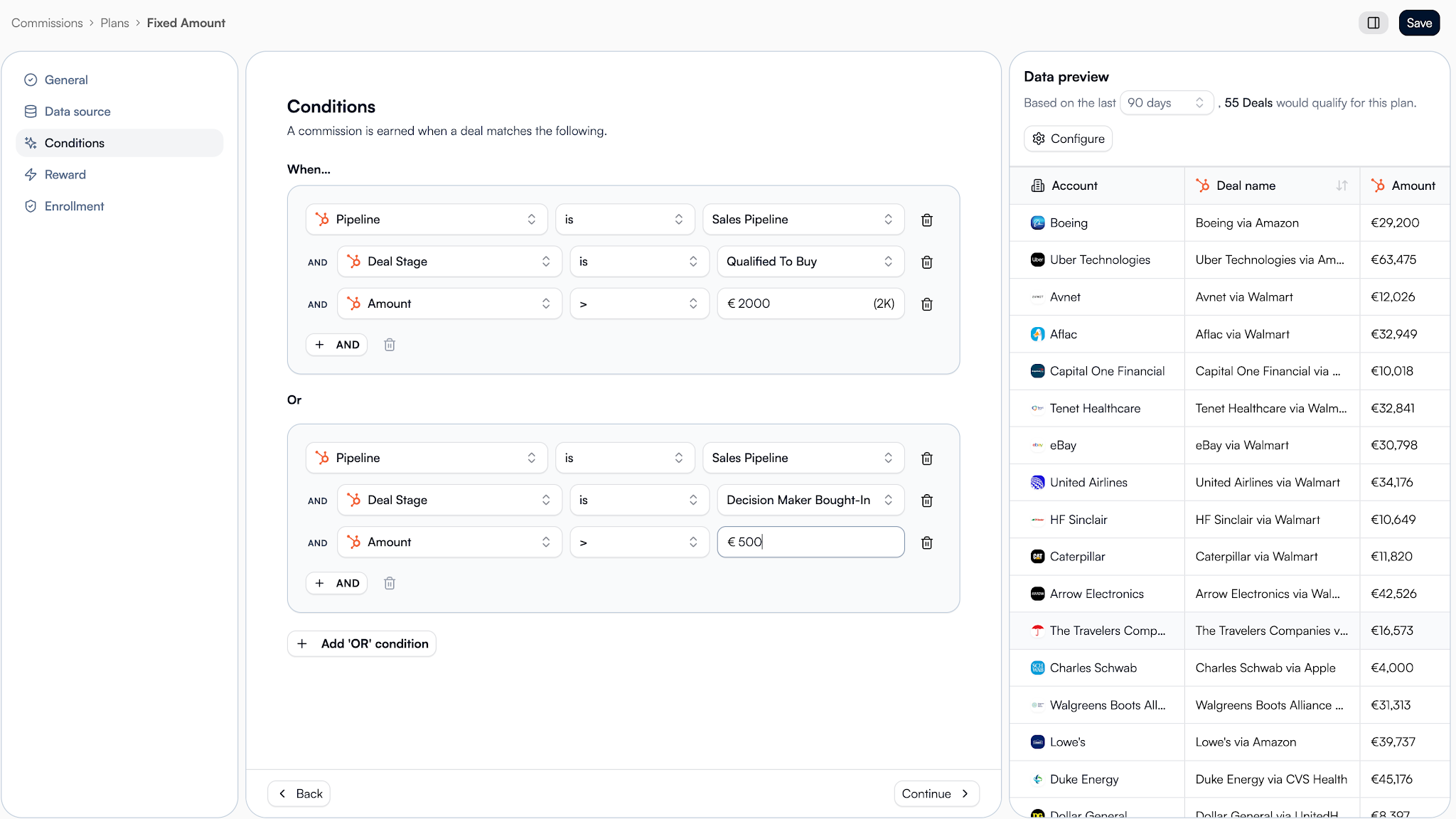
Good SPIFF program management starts with reliable data.
Step 5: Make the reward visible
Partners shouldn’t have to remember a SPIFF.
They should see it where they already work.
For example, Introw displays expected earnings directly on deal cards and inside the partner experience. Partners can see whether rewards are pending or confirmed without digging through old emails.
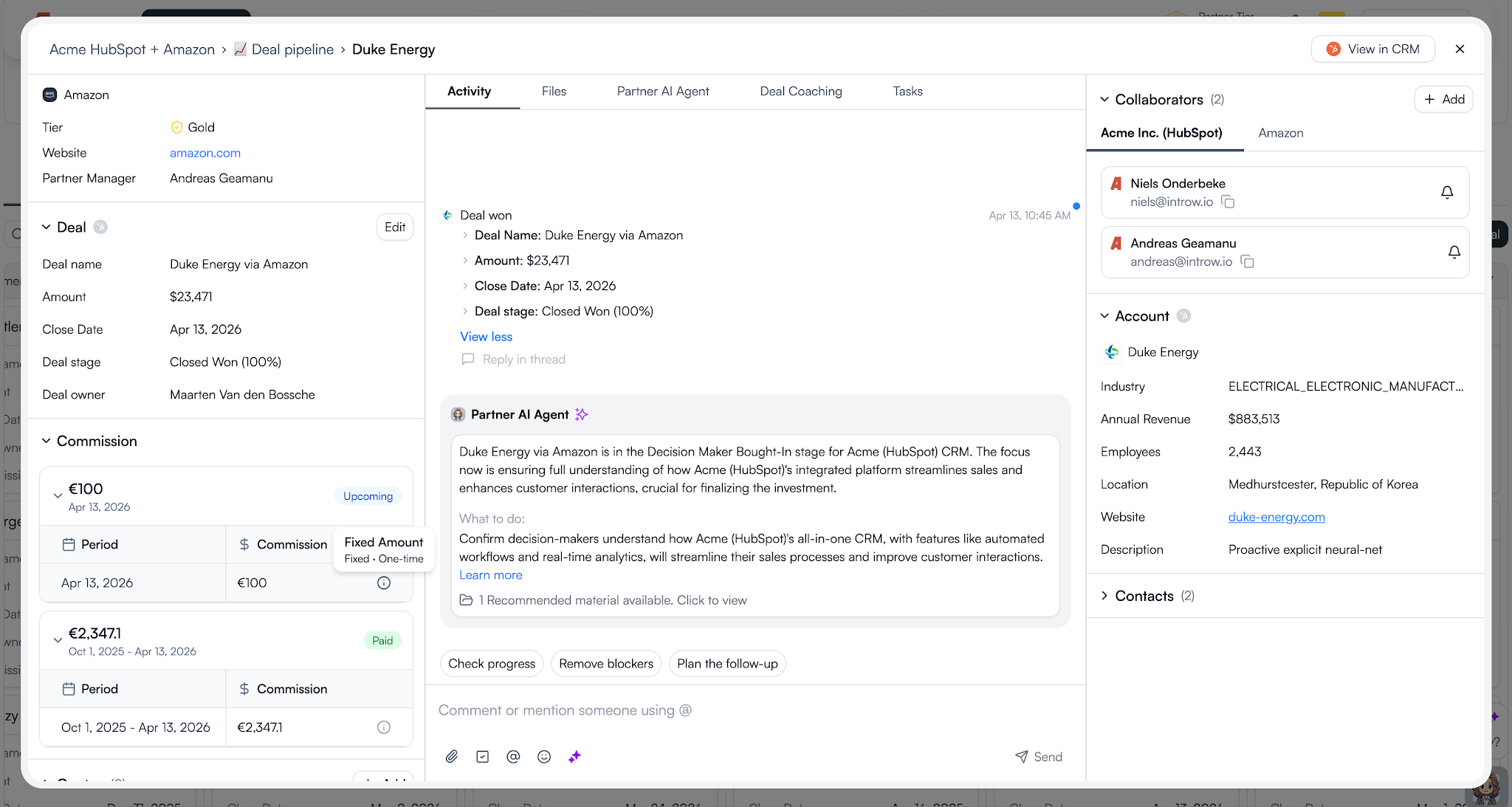
Visibility keeps sales teams driven and helps motivate channel partners throughout the entire campaign.
Step 6: Automate the payout process
A reward loses power when the payout process becomes a project.
A simple flow looks like this:
- The deal closes.
- The SPIFF calculates automatically.
- Eligible rewards are added to a statement.
- The partner uploads an invoice.
- Finance approves the payment.
- The reward is marked as paid.
Introw’s AI Agent can also help surface information and reduce admin work, making it easier to manage larger incentive programs without creating extra overhead.
The easier the process, the more likely partners are to participate.
Here's what this all looks like in action:
Step 7: Review and improve
Every SPIFF should teach you something.
After the campaign ends, review:
- How many partners earned the reward?
- How much sales revenue was generated?
- Which partner segments responded best?
- Did sales activity increase?
- Did you achieve the original sales goals?
Use those insights to improve future iterations.
The best partner programs don’t rely on one successful SPIFF. They run targeted incentives throughout the year as part of a broader incentive strategy.
A few well-designed SPIFFs will usually outperform one giant annual campaign.
The best way to see these principles in action is through real SPIFF program examples.
7 SPIFF program examples you can steal
Not every SPIFF needs to be complicated. Here are seven proven SPIFF program examples you can adapt for your partner program.
1. The activation accelerator
Use this SPIFF when you want new partners to take action quickly instead of waiting months to engage.
Rule: Earn $750 on your first closed-won deal as a new partner.
Trigger: First deal where deal stage = Closed Won.
Bonus: $750 flat fee.
Best for: New partners in their first 90 days.
Why it works: Early sales success builds confidence. Partners who close their first deal quickly are more likely to stay active and become a team motivated by results.
2. The Q3 pipeline push
This is one of the simplest sales SPIFF programs for accelerating pipeline movement before a deadline.
Rule: Earn $500 for every deal above $25,000 closed this quarter.
Trigger: Deal amount > $25K AND deal stage = Closed Won.
Bonus: $500 flat fee.
Best for: Active reseller partners.
Why it works: Short-term incentives and cash SPIFFs create urgency. Partners focus on closing deals before the deadline instead of letting opportunities sit in the pipeline.
3. The EMEA expansion bonus
Geographic incentives work well when you’re trying to grow partner activity in a specific market.
Rule: Earn an extra 5% on every DACH deal closed this quarter.
Trigger: Deal country = Germany, Austria, or Switzerland AND deal stage = Closed Won.
Bonus: 5% of deal value.
Best for: Reseller and referral partners expanding into new markets.
Why it works: Supports broader sales strategies without changing existing sales compensation plans. The bonus stacks on top of normal sales commissions.
4. The product launch SPIFF
When product launches need momentum, a targeted SPIFF can help direct attention where you want it.
Rule: Earn $300 for every deal that includes the new product.
Trigger: Deal contains the new product SKU AND deal stage = Closed Won.
Bonus: $300 flat fee.
Best for: New product launches.
Why it works: Partners sell what they’re rewarded to sell. This type of sales incentive helps boost sales of new offerings and improves product adoption.
5. The speed-to-close SPIFF
If deals are moving slowly through the pipeline, this type of SPIFF encourages faster action.
Rule: Earn $400 for any deal closed within 45 days of registration.
Trigger: Deal registration date to close date < 45 days.
Bonus: $400 flat fee.
Best for: Programs with a slow sales cycle.
Why it works: It encourages faster sales activity and helps prevent deals from becoming stale. The goal is to stop partners from letting opportunities delay closing deals.
6. The certification reward
Not every incentive program needs to be tied directly to revenue.
Rule: Earn $200 for completing an advanced certification.
Trigger: Certification completed with a passing score.
Bonus: $200 flat fee.
Best for: Individual salesperson development.
Why it works: Better-trained sales professionals often deliver stronger sales performance. It can also boost morale, improve job satisfaction, and increase long-term sales performance.
7. The stacked deal bonus
This example shows how SPIFFs and recurring commissions can work together.
Rule: Earn your standard commission plus a $1,000 bonus on deals above $100,000.
Trigger: Deal amount > $100K AND deal stage = Closed Won.
Bonus: $1,000 flat fee plus existing commission.
Best for: Gold and Platinum partners.
Why it works: SPIFFs don’t replace long-term compensation plans. They complement them. In Introw, partners can be enrolled in multiple plans at the same time, including recurring commissions, tiered SPIFFs, and one-time bonuses. Both rewards are calculated independently and rolled into the same statement.
Notice the pattern
Every example focuses on one behavior, one reward, and one clear trigger. That’s usually all you need to create a successful sales performance incentive fund that partners actually remember and act on.
So, what are things you should watch out for to make things go smoothly?
Common SPIFF mistakes to avoid
Even a good SPIFF program can fail if the execution is poor. Here are the most common mistakes to avoid.
.png)
Making the rules too complicated
If sales reps, channel partners, or an individual salesperson need a guide to understand the reward, participation drops.
Keep the program rules simple. A well structured SPIFF program should be easy to explain in one sentence.
Trying to reward too many behaviors
Some sales SPIFF programs try to influence multiple sales behaviors at once.
For example:
- Sell a new product
- Increase deal size
- Enter a new market
- Complete training
Pick one goal per campaign. The most effective SPIFF programs focus on a single outcome.
Offering rewards that don’t motivate action
A $25 reward on a six-month deal won’t motivate salespeople.
The reward should match the effort required. Whether you use cash SPIFFs, non cash rewards, prepaid debit cards, annual bonuses, or instant rewards, the incentive needs to feel worthwhile.
Making rewards hard to track
Partners should never wonder whether they’ve earned a reward.
Poor visibility hurts a program’s effectiveness and can damage team morale. Clear tracking helps motivate channel partners and supports healthy competition.
Ignoring payouts and compliance
Rewarding participants is only half the process.
You also need clear reward distribution, payment records, and tax compliance processes. This becomes even more important when managing channel partners across different regions.
Forgetting to measure results
After every SPIFF campaign, ask:
- Did sales targets improve?
- Was more sales activity generated?
- Did revenue increase?
- Did the SPIFF help move old inventory?
- Was the behavior change worth the cost?
The answers will help improve future SPIFF campaigns and strengthen your overall sales performance management approach.
Here is how partner teams run SPIFFs with Introw
Designing a SPIFF is only half the job. You also need a reliable way to track earnings, manage payouts, and keep channel partners informed.
Here’s what that looks like in Introw.
.png)
1. Create a SPIFF plan from CRM conditions
SPIFFs are created as commission plans using CRM data.
Set your date range, define the qualifying conditions, and choose the reward amount. Introw supports flat-fee and percentage-based rewards, and you can preview matching deals before the plan goes live.
2. Assign the plan to partners
Assign the SPIFF to individual partners or entire partner groups.
Partners can participate in multiple plans at the same time, including recurring commissions, certification rewards, and short-term incentive programs.
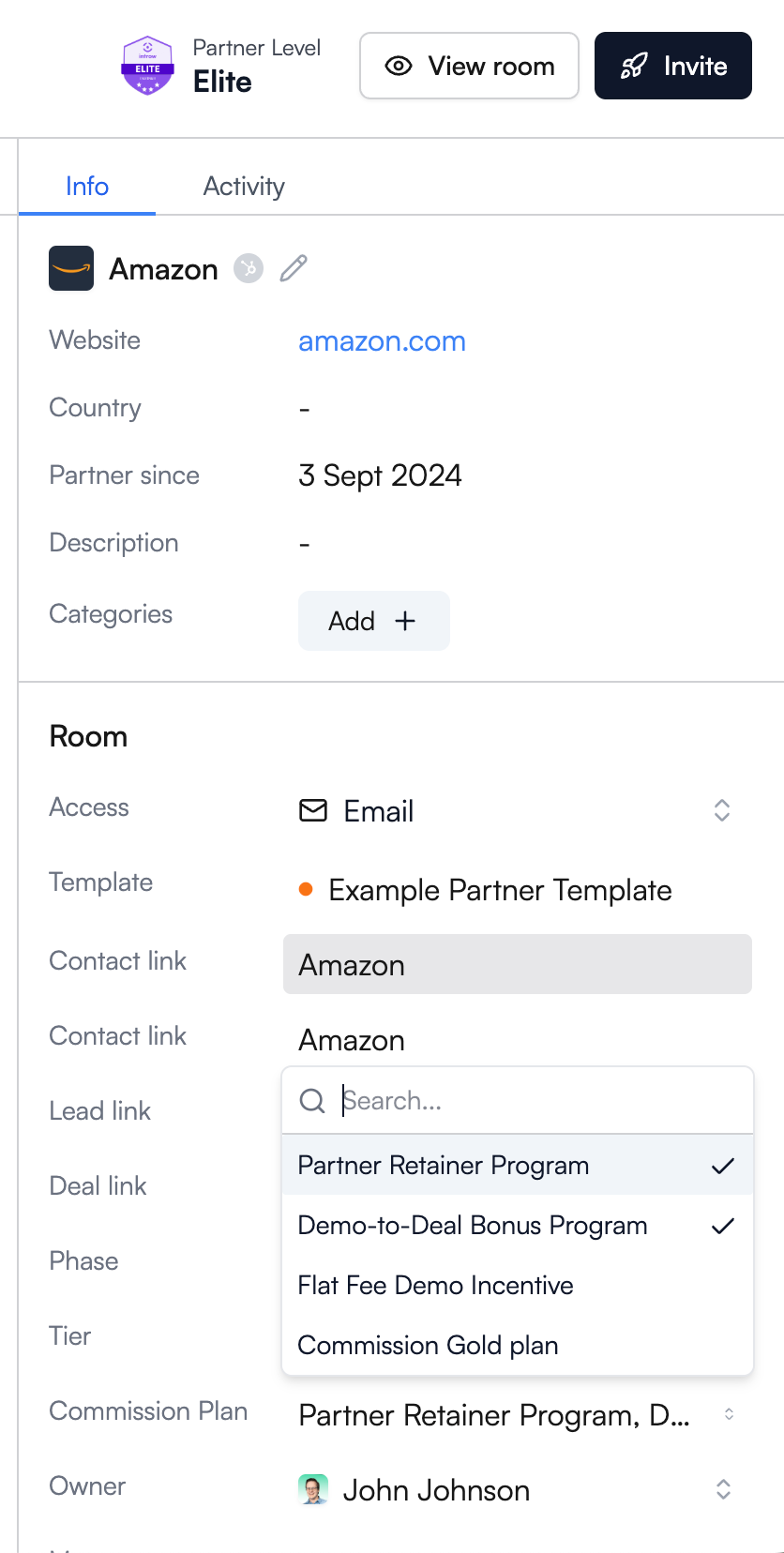
3. Partners see earnings in real time
Once the plan is active, partners can see expected earnings directly inside Introw.
Pending and confirmed rewards appear alongside deal information, helping partners stay focused on the opportunities that matter most.
4. Generate statements and collect invoices
When it’s time to pay, generate a statement with a few clicks.
Introw bundles eligible SPIFF rewards, sales commissions, and other payouts into a single statement. Partners can then upload invoices through the portal or simply reply to the notification email.
5. Approve payments and track everything
Every action is logged.
Partner managers and finance teams can review invoices, approve payments, and trace every reward back to the original CRM record. This creates a clear audit trail and simplifies reward distribution.
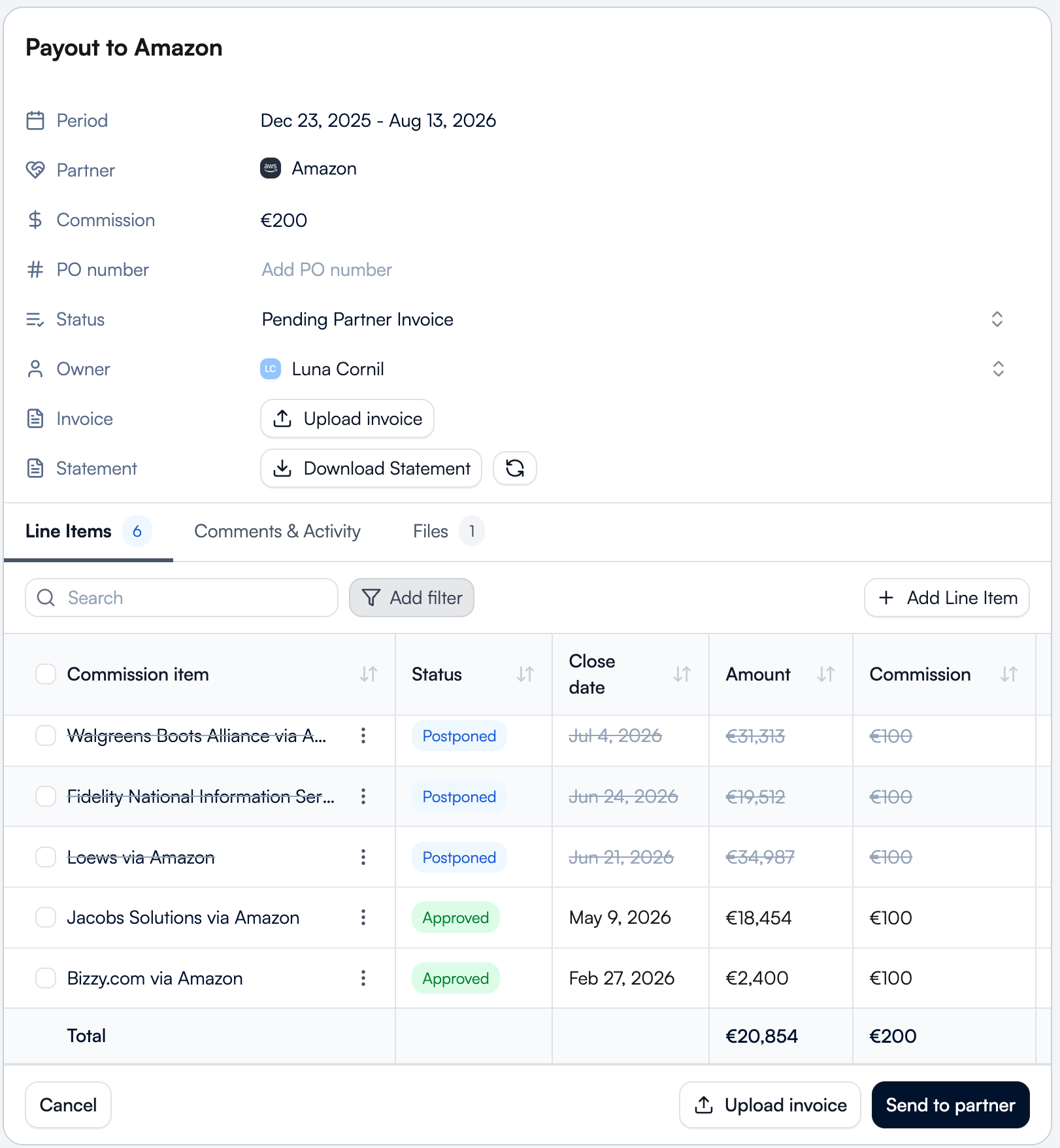
The commission overview ties it all together
The commission overview gives you one place to track SPIFF rewards, upcoming payments, and payout history.
Instead of managing spreadsheets, email chains, and separate systems, partner teams get a single source of truth for commissions, incentives, and partner earnings.
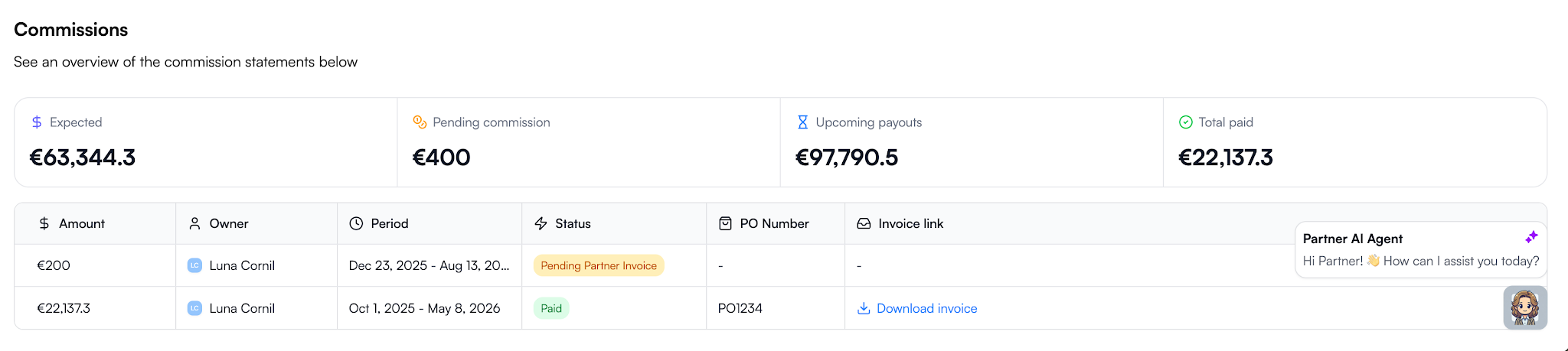
The result is a SPIFF program that’s visible to partners, tied directly to CRM data, and easy for finance teams to manage. Instead of tracking rewards across spreadsheets, email threads, and disconnected systems, everything lives in one workflow from deal registration to payout.
Ready to stop managing SPIFFs in spreadsheets? Request a demo and see how Introw automates partner incentives, commission tracking, invoicing, approvals, and payouts in one place.
15 MDF Best Practices for High-Impact Partner Programs
Why most MDF programs underperform
Most MDF programs don’t fail because the strategy is wrong. They fail because the operations around them are unclear, slow, or invisible to partners. Aligning early on expectations, ownership, and even the definition of MDF helps teams avoid the most common execution gaps.
The budget exists, but partners often don’t use it. In fact, roughly 60% of market development funds go unclaimed each year, not because partners aren’t interested, but because the process makes participation difficult.
.png)
Across many partner ecosystems, the same issues show up repeatedly:
- Channel partners don’t know funds are available
- The approval process takes too long
- Requests get lost in email or spreadsheets
- Marketing activities run without measurable outcomes
- Finance teams can’t track how marketing dollars were used
- Partner marketing teams can’t connect MDF investments to pipeline
Without structure, market development funds rarely support partner engagement or revenue growth. When MDF programs are tied to clear execution plans and measurable partner marketing campaigns, they become a predictable lever for demand generation instead of unused budget.
15 MDF best practices for SaaS partner programs
If you want market development funds to drive pipeline instead of sitting unused, you need a repeatable system. The following market development funds best practices are the framework strong SaaS teams use to make MDF programs predictable, measurable, and aligned with revenue.
.png)
1. Design your fund structure before you launch
Start with the question most teams skip: how should we allocate MDF in the first place?
Decide early whether MDF allocation is:
- Fixed per partner tier
- Performance-based
- Motion-based across reseller, referral, or integration channel partners
Also define:
- Eligible marketing activities
- Fiscal period (quarterly vs. annual)
- Whether unused MDF funds expire or roll over
Without this structure, approvals become inconsistent, and partners lose confidence in the program.
This is the foundation of strong MDF program management and best practices.
2. Make budget visibility self-service
Ask yourself this: can partners see their available budget without emailing you?
If not, adoption drops immediately.
Partners should always see:
- Total MDF allocation
- Pending requests
- Approved spend
- Remaining marketing budget
Real-time visibility improves partner engagement and increases participation in MDF campaigns faster than almost any other change you can make.
3. Build a standardized request form, not email
Inbox-driven requests slow everything down.
Instead, create a structured marketing development funds template partners complete before submitting requests. At minimum, capture:
- Campaign type
- Target audience
- Expected pipeline or qualified leads
- Timeline
- Budget requested
- Success metrics
When requests attach directly to CRM records, your MDF process becomes measurable from day one. Platforms designed for managing marketing development funds handle this automatically.
4. Set approval SLAs and default statuses
Partners don’t stop submitting requests because budgets are small. They stop because responses are slow.
Set a clear approval process, such as:
Submitted → Under review → Approved or declined
Then define an internal SLA, for example, five business days.
Predictability increases participation and improves demand generation activities across your partner ecosystem. It is one of the simplest MDF program best practices to implement.
5. Require a campaign brief, not just a budget ask
If a partner asks for marketing budget without a plan, pause.
Strong MDF programs require a short campaign brief that explains:
- What they want to run
- Who they want to reach
- What results they expect
- How the activity supports your strategic objectives
This improves strategic alignment and makes it easier to compare performance across MDF campaigns later.
6. Enable collaboration, not just approval
Approval is not execution.
After funding is approved, partners still need shared visibility into assets, timelines, and next steps. Otherwise, marketing initiatives disappear into email threads.
A structured collaboration environment improves partner marketing outcomes and keeps joint marketing initiatives visible across teams. It also strengthens ongoing partner engagement during campaign execution.
7. Link campaigns to deals and leads
Here’s the question leadership eventually asks: what did this spend actually generate?
If MDF campaigns are not connected to deals or sales leads, you cannot answer it.
Linking MDF-funded activities directly to pipeline turns market development funds into a measurable growth lever. It also helps channel managers understand which partners consistently generate qualified leads.
This is where many MDF programs break, and where the biggest gains usually happen. Make sure to use modern PRM that links all these activities directly in you CRM.
8. Track ROI automatically, not manually
If ROI lives in spreadsheets, you’re always reacting too late.
Modern MDF programs are being tracked directly in your CRM where you can connect spend directly to pipeline contribution so you can see which partners, campaigns, and marketing efforts drive revenue growth in real time.
That visibility helps you shift marketing investment toward activities that expand market reach and improve sales performance.
9. Gate future funds on proof of performance
A simple rule improves accountability quickly: show results before requesting more budget.
Ask partners to demonstrate:
- Campaign reach
- Lead generation
- Pipeline contribution
before approving additional MDF funds.
This ensures MDF investments support partners who execute and helps drive partner success across co-op programs and co-op funds.
10. Review and iterate quarterly
Treat MDF like a planning lever, not a reimbursement process.
Each quarter, review:
- Which partners used their allocation
- Which MDF campaigns generated pipeline
- Which marketing activities underperformed
These reviews strengthen your channel partner marketing strategy and make future MDF allocation easier to justify.
11. Segment MDF by partner motion, not just partner tier
Many teams allocate development funds by partner tier alone. That’s rarely enough.
Referral partners, resellers, and integration partners contribute differently to market development. Segmenting MDF allocation by motion improves market presence and ensures shared marketing resources support the right expected outcomes.
This is one of the most overlooked market development fund best practices.
12. Pre-approve high-performing campaign templates
Instead of reviewing every request from scratch, give partners a shortlist of proven campaign options.
Examples include:
- Co-branded campaigns
- Digital ads
- Local events
- Vertical webinars
Pre-approved templates reduce approval time and increase the likelihood of generating qualified leads.
They also help partners understand how to obtain marketing development funds faster because expectations are clear.
13. Tie MDF allocation to pipeline coverage targets
Not every region needs the same level of funding.
If pipeline coverage is weak in a segment or geography, allocate MDF funds there first. If another area already performs well, shift marketing investment elsewhere.
This ensures MDF allocation supports strategic priorities instead of spreading budget evenly across the partner program.
14. Combine MDF with incentive programs to change partner behavior
Funding alone doesn’t change behavior. Incentives do.
Pair MDF campaigns with structured channel partner incentive programs to encourage participation in demand generation campaigns and improve execution quality across channel partners.
This combination helps generate leads faster and strengthens overall partner performance.
15. Reserve budget for strategic initiatives, not reactive requests
Leave part of your development funds unallocated at the start of the quarter.
Use that reserve to support:
- New product launches
- Expansion into new regions
- Demand generation for priority segments
- Initiatives that increase brand visibility
This ensures MDF investments stay aligned with long-term strategic priorities instead of being consumed by opportunistic requests.
MDF request form template and checklist
A strong MDF request form does two things at once.
It makes approvals faster for your team, and it makes it easier for partners to submit campaigns that actually generate pipeline.
Without a structured request format, MDF campaigns become hard to evaluate, hard to compare, and almost impossible to attribute later.
A standardized marketing development funds template fixes that by ensuring every request captures the information needed to support demand generation, track sales performance metrics, and align spend with strategic objectives.
Use the template below as a default structure inside your partner program.
.png)
MDF request form checklist
Use this checklist to confirm your MDF process captures everything required for attribution and execution:
.png)
In a CRM-connected workflow, this structure also gives both you and your partners real-time visibility into MDF campaigns from request through execution and attribution, which is what makes modern MDF programs scalable.
Where Introw comes in
If you follow the framework above, your MDF program becomes structured. What most teams still struggle with is proving what that structure actually produces.
Introw closes that gap by connecting MDF requests directly to the partners, campaigns, and deals they are meant to influence inside your CRM. Instead of tracking approvals separately from pipeline, everything lives in one workflow.
That changes how MDF programs operate day to day:
- Partners submit structured requests without email back-and-forth
- Every request attaches automatically to the right partner and campaign
- Approvals follow a consistent approval process instead of ad-hoc routing
- Both you and your channel partners see available MDF funds in real time
- Marketing campaigns link directly to qualified leads and influenced deals
- ROI updates automatically as pipeline moves
This is what makes market development funds (MDF) measurable.
When a deal is generated or closed, you can see whether MDF supported it. When planning next quarter’s MDF allocation, you can see which partners generated pipeline and which marketing initiatives did not.
It also changes adoption. Because partners can see their allocation, submit requests quickly, and stay aligned on campaign execution, MDF funds get used instead of sitting unused across the partner ecosystem.
For a partner marketing manager managing Market Development Funds, that means fewer spreadsheets, clearer attribution, and better conversations with leadership about where marketing investment should go next.
If you want to see how structured MDF programs work when requests, approvals, campaigns, and pipeline all stay connected in one place, request a demo today.
Latest articles
A Masterclass in Modern B2B SaaS Partnerships: What We Learned from Martin Scholz
As a team that spends every day talking to partnership professionals, we know one thing for sure: we can’t just talk the talk - we have to walk it, too. That’s why we brought in a true expert to level us up: Martin Scholz, seasoned SaaS partnership leader, strategist, and (bonus!) one of our own partners.
And wow, did he deliver.
Martin took us through a full-day training covering every nook and cranny of partnership management, from the fundamentals to the frameworks you won’t find in your average playbook. Here are the biggest takeaways from our session.
First Reality Check: 80% of Partnerships Fail
Martin opened with this stat: 80% of partnerships fail (source). Why? Because there’s no blueprint. No one-size-fits-all. Every company defines “partnership” differently.
The truth is, partnerships aren't a solo act. They're a team effort
What Successful Partnerships Actually Drive
Done right, partnerships don’t just generate revenue - they unlock scale:
- Shorter sales cycles
- Higher win rates
- Transparent deal flow
- Better-quality leads (hello, PQLs 👋)
- More focus on your core business while partners drive volume
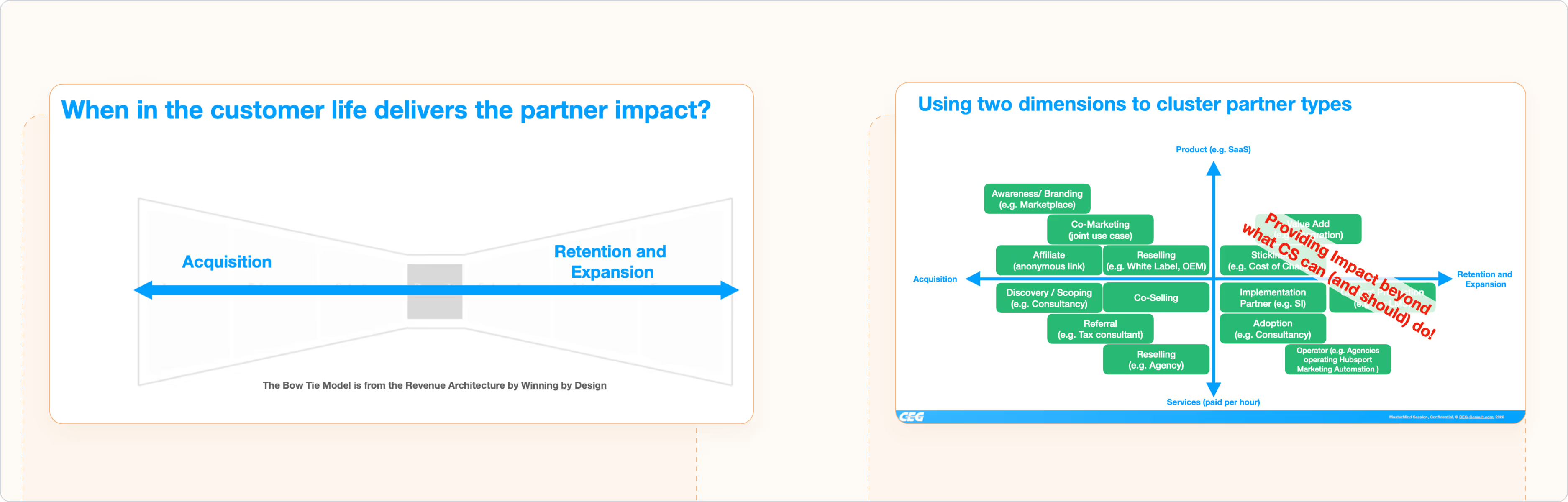
And yes - the Bow Tie model (Winning By Design) made an appearance.
Martin reminded us that many forget the power partners have across the entire customer lifecycle - not just in introducing or closing the deal, but in retention, expansion, and long-term value
Whether you're working with tech partners, service partners, or resellers, their role varies by stage - and your strategy should too.
Revenue is a Result, Not the Goal
A big mindset shift: Stop chasing revenue, start building outcomes.
Too many teams treat revenue as the first metric, but Martin reminded us it’s the result of well-executed partnership strategies. Instead, define shared targets and goals - then align around those.
The Biggest Risk? Too Many Wrong Partners
Here’s your new motto: Disqualify fast.
Don’t let “more” distract you from “better.” A bloated partner list full of misaligned or inactive collaborators is worse than having none at all.
The Secret Weapon: Your MAP (Mutual Action Plan)
Your MAP is your North Star.
It’s a living document, co-created with your partner, that defines what success looks like—milestones, metrics, activities. This is what keeps partnerships focused and accountable from day one.
The Partnership Lifecycle According to Martin
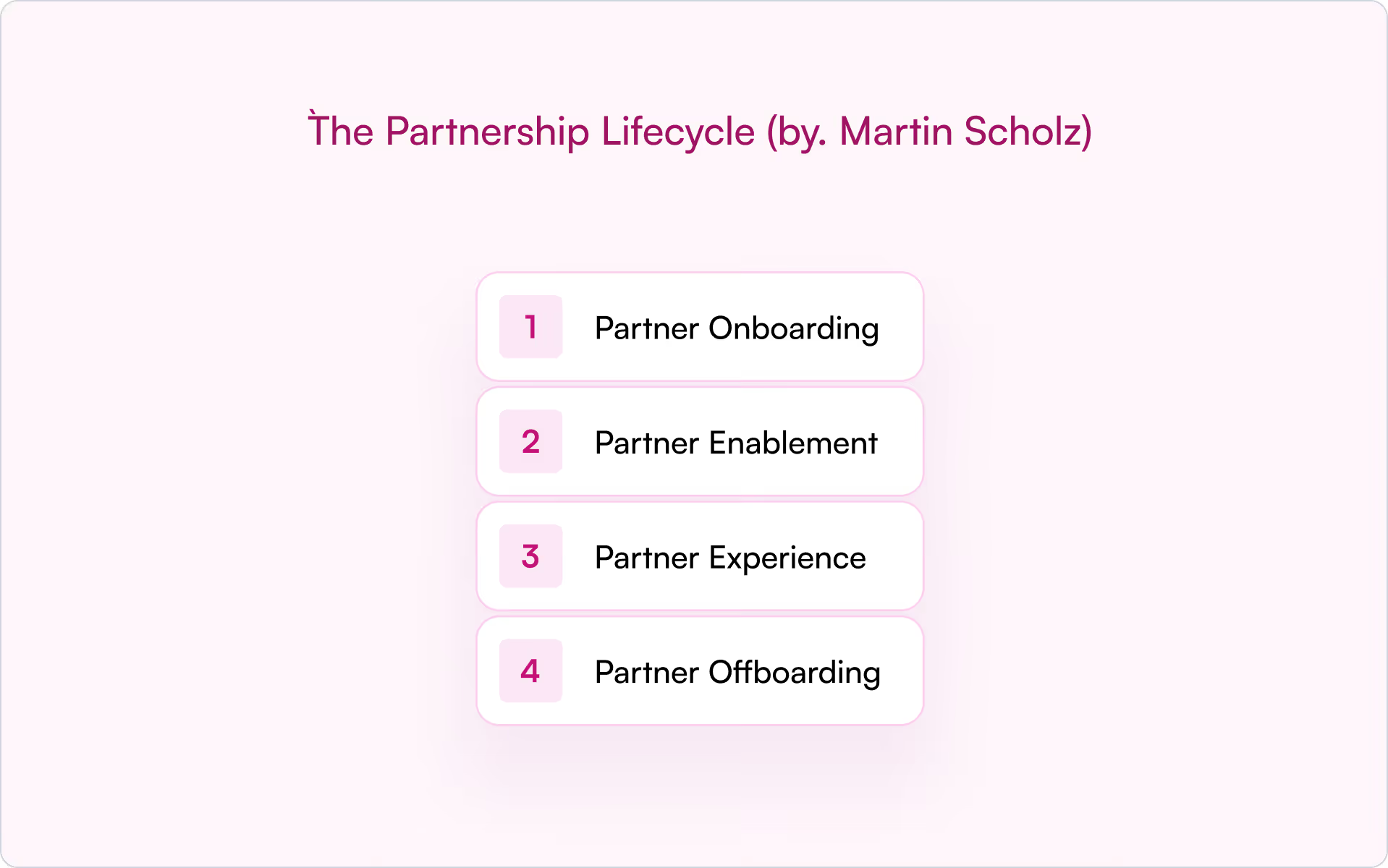
Partner Onboarding = The Honeymoon Phase
First impressions matter. Use this phase to build trust, show value, and get wins on the board.
Tips:
- Deliver an amazing partner experience
- Connect teams & execs (use leadership wisely!)
- Execute on your MAP - don’t just let it sit in a doc
- Prioritize fast wins and momentum
- The first 90-120 days? Absolutely critical.
Partner Enablement = Where the Real Work Starts
Once the honeymoon is over, reality hits - and that’s when enablement really begins.
Key actions:
- Run a no-fluff business review (internal + external)
- Adjust the MAP to reflect reality
- Tier and prioritize your partner list
- Agree on new ways of working (cadence, content, etc.)
And a big one: Reality ≠ one single source per deal.
Most deals are touched by multiple sources (partners, marketing, sales) and yet traditional deal registration often gives credit to just one. It's time to rethink attribution and make space for the real complexity of modern sales motions.
Never forget: partnerships are built between people, not logos.
Best Practices for Partner Collaboration
Here's what Martin recommends:
- Be part of the first 3 intro calls before partners go solo
- Ensure strong overlap in goals and ICP
- Use a PRM tool to streamline the entire partnership workflow:
- Lead submission & deal registration
- Transparency around pipeline
- Goal tracking and performance measurement
- Communication & updates in real time
- Sales enablement that’s actually useful
Partner Experience is a Team Effort
Your partner doesn’t experience “the partnership” - they experience your product team, your CS team, your marketing team. Partner experience = everyone’s job.
And Yes - Some Partnerships End
Not every partnership is forever, and that’s OK. Offboarding should be handled with the same care and clarity as onboarding. It’s part of the cycle - not a failure.
Final Thought
Martin left us with this gem:
Work with partners so you can focus on your core business.
That’s the promise of a well-built, well-run partnership ecosystem. Not just revenue. Not just reach. But real business leverage.
Thanks again, Martin, for the masterclass. We’re sharper, smarter, and more aligned than ever, and we can’t wait to put these lessons into practice.
Top 20 Partner Training Software: How to Choose the Right Platform in 2026
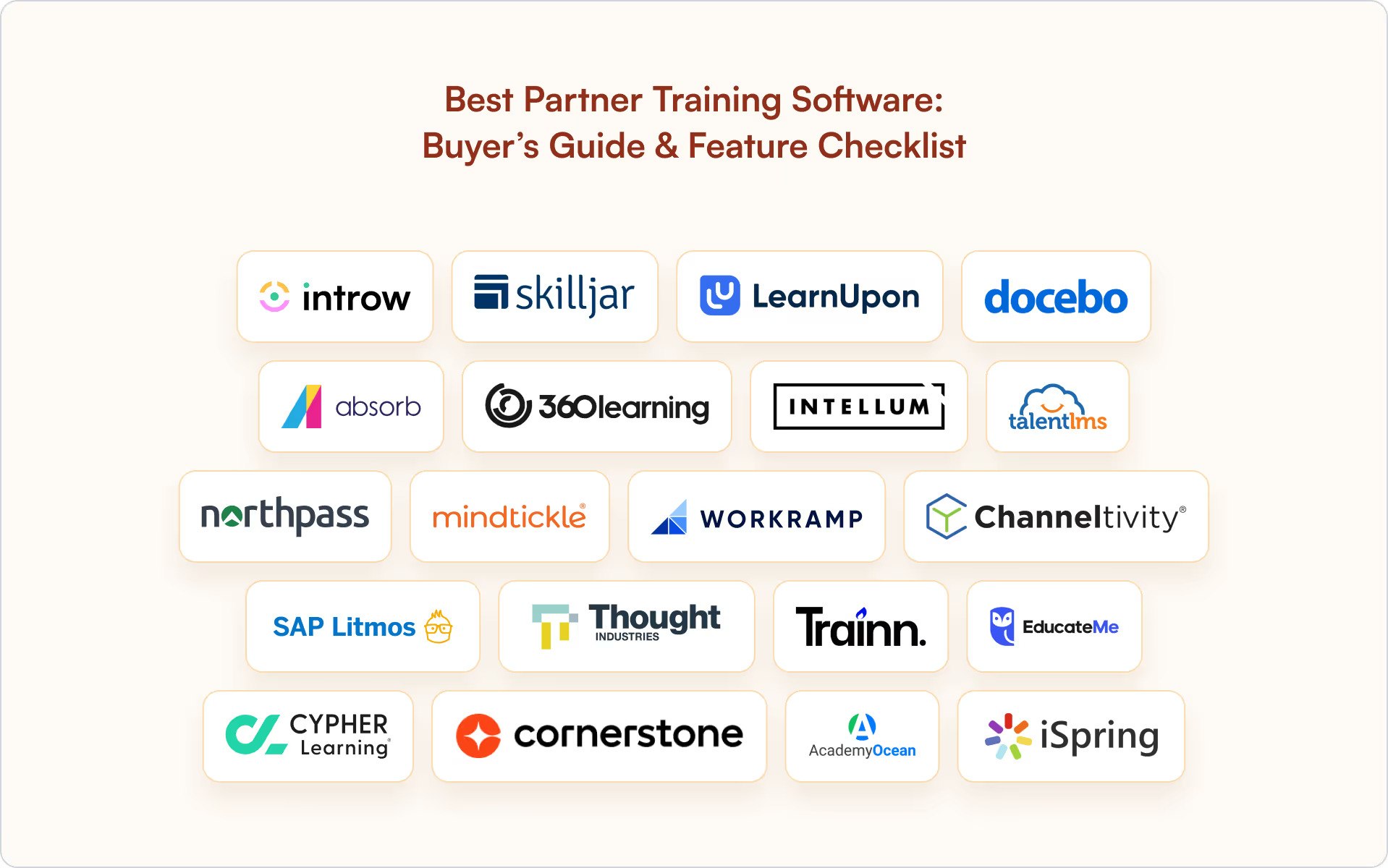
Ask three teams about partner training, and you’ll hear three different priorities.
- Sales wants readiness.
- RevOps wants clean, reliable data.
- Partners want fewer tools and less friction.
Partner training software sits at the intersection of those expectations.
The platforms that work are the ones that resolve the tension instead of creating another system to manage. That’s why it’s important to understand why partner training software is not the same as a traditional LMS.
Partner Training Software Isn't Just an LMS
Partner training software is often mistaken for an LMS. In reality, they’re built for fundamentally different jobs.
Employee LMS platforms are designed for internal training, usually owned by HR or L&D. Partner training software has to support external partners like resellers, system integrators, and technology alliances.
And each of them have different access rules, certification requirements, and expectations around reporting and visibility.
The difference becomes clearer when you look at what each system is optimized for.
That’s why partner training can’t stop at course delivery.
The right partner training software supports the full flow, from course creation and certification management to sales training readiness and ongoing partner engagement.
Most importantly, training progress has to show up in the CRM so teams can see how partner progress connects to pipeline in Salesforce or HubSpot.
Our Partner Enablement Guide and the Partner Engagement Guide both reflect this shift toward lifecycle-driven partner training.
If training never reaches the CRM, it’s disconnected from business objectives and hard to measure. Platforms like the Introw Partner LMS are built to close that gap by linking partner training, certifications, and engagement directly to CRM data.
With that distinction clear, let’s look at the best partner training software options for 2026 and how they compare.
1. Introw Partner Training (via Introw Partner LMS)
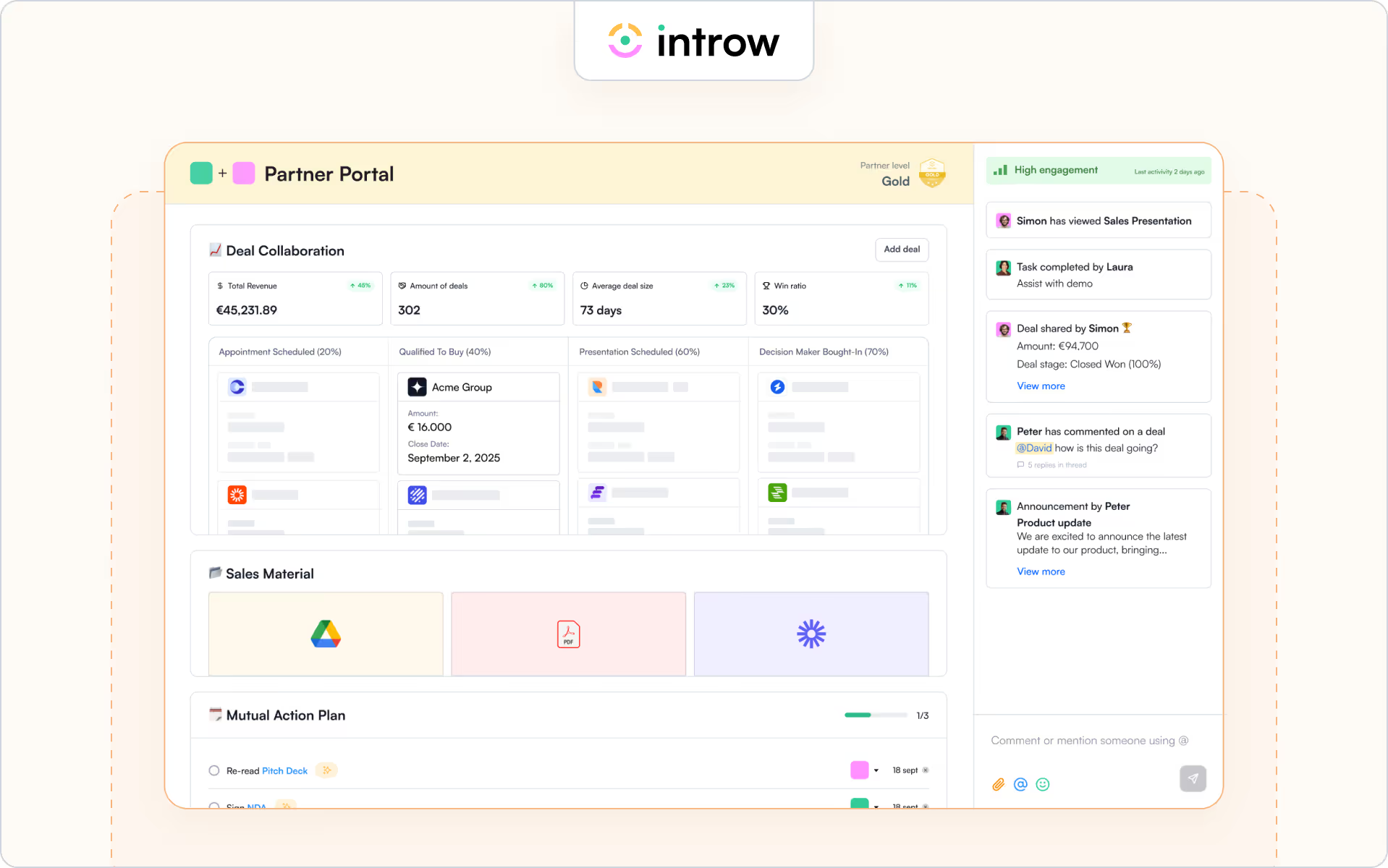
Introw is built for SaaS teams that want partner training to show up in pipeline, not disappear into an LMS.
Best for
Teams running channel partner training on Salesforce or HubSpot that need fast course creation, governed certification programs, and clear links between partner training, deal registration, and partner performance.
Why it stands out
Introw treats partner training as part of the partner workflow, not a separate learning platform. Its AI agent can create courses, modules, and quizzes from existing content in minutes, removing the steep learning curve typical of LMS for partner training.
Certification management is built in, with expiration and recertification to support real partner credibility.
Teams can segment partner audiences by partner tier or partner groups, then deliver training and sales training readiness through off-portal email and Slack nudges partners actually see.
Training progress and partner engagement are visible inside the CRM, allowing teams to link training activity directly to business objectives, partner performance, and deal registration. You can see this flow in the Introw Partner LMS demo:
Key capabilities
- AI-assisted course creation and intuitive course creation
- Partner training programs with learning paths
- Certification programs with expiration and recertification
- Partner onboarding and external training delivery
- Off-portal partner engagement via email and Slack
- Progress tracking, advanced analytics, and CRM-visible attribution
Keep in mind
Introw is strongest when partner training, partner enablement, and certification governance need to work together across the partner ecosystem.
Integrations
Salesforce, HubSpot, Slack, API.
Learn more: Partner LMS · Request a demo
2. Skilljar by Gainsight
Skilljar is built for external training programs and is commonly used for partner education and customer academies.
Best for
SaaS teams running partner training at scale that care about analytics, reporting, and training effectiveness.
Why it stands out
Skilljar emphasizes data visibility, making it easier to understand partner progress and completion across large partner networks.
Partner training features
- External partner and customer academies
- Certification programs and assessments
- Progress tracking and performance analytics
- Advanced reporting across partner groups
Keep in mind
Skilljar focuses on external education. CRM alignment and partner enablement workflows depend on integrations and data setup.
3. LearnUpon

LearnUpon supports partner training through multiple branded portals managed from a single admin environment.
Best for
Teams that need a partner education LMS to support different partner tiers, regions, or programs.
Why it stands out
LearnUpon makes it easy to separate audiences while maintaining centralized control, which helps manage complex partner programs.
Partner training features
- Multiple branded partner portals
- Certification tools with expiration and recertification
- Structured partner training programs
- Reporting across partner audiences
Keep in mind
Partner engagement and CRM-driven workflows may require additional tools beyond the LMS.
4. Docebo
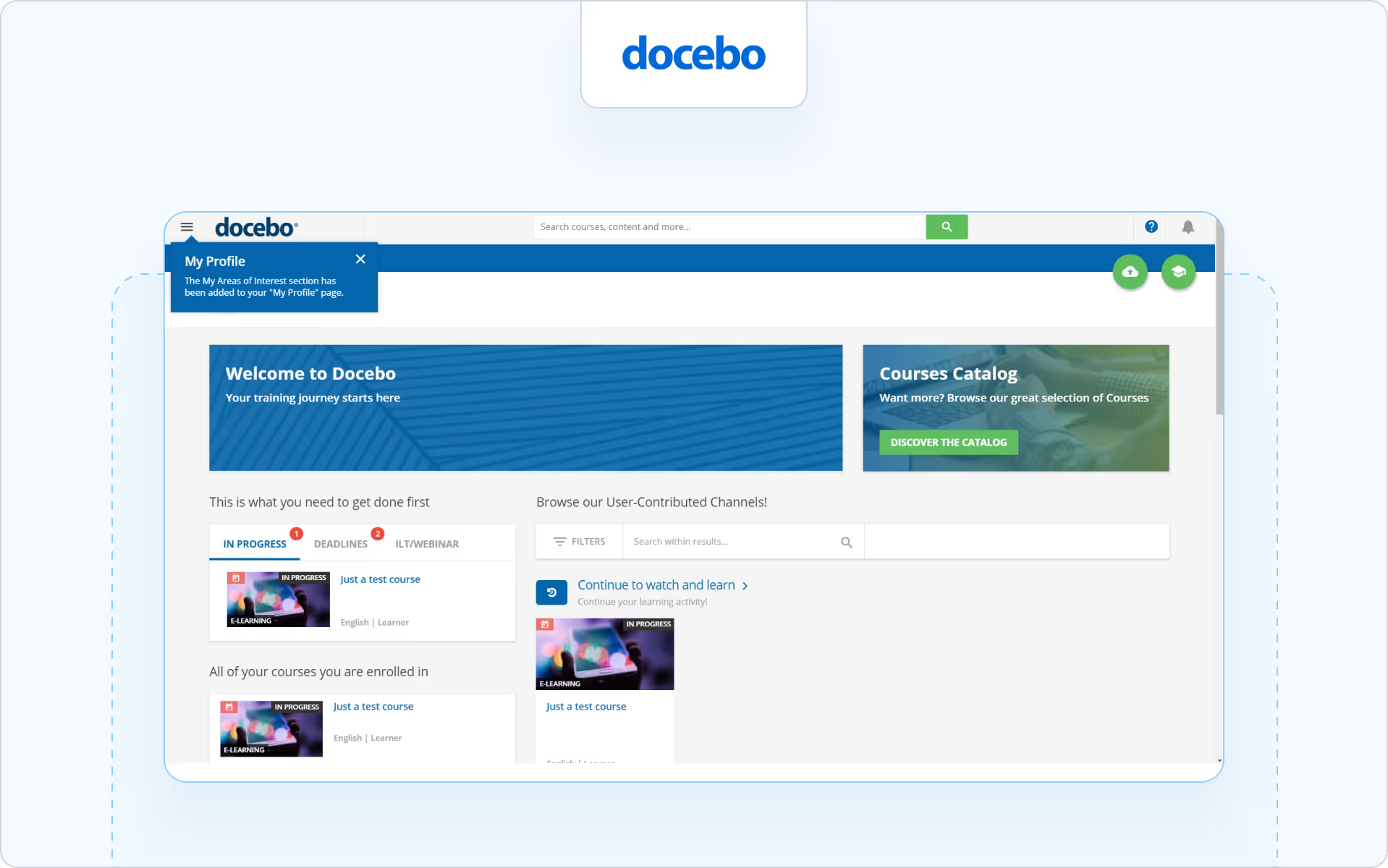
Docebo is a cloud-based LMS used for employee, customer, and channel partner training.
Best for
Large enterprises managing global channel partner training with advanced learning experience requirements.
Why it stands out
Docebo combines AI recommendations, social learning, and extensive configuration options to support large partner ecosystems.
Partner training features
- Partner training LMS software with AI-driven content recommendations
- Social learning and knowledge sharing features
- Certification programs and assessments
- Advanced analytics and reporting tools
Keep in mind
Docebo’s flexibility comes with complexity. Setup and customization can take time for partner training use cases.
5. Absorb LMS
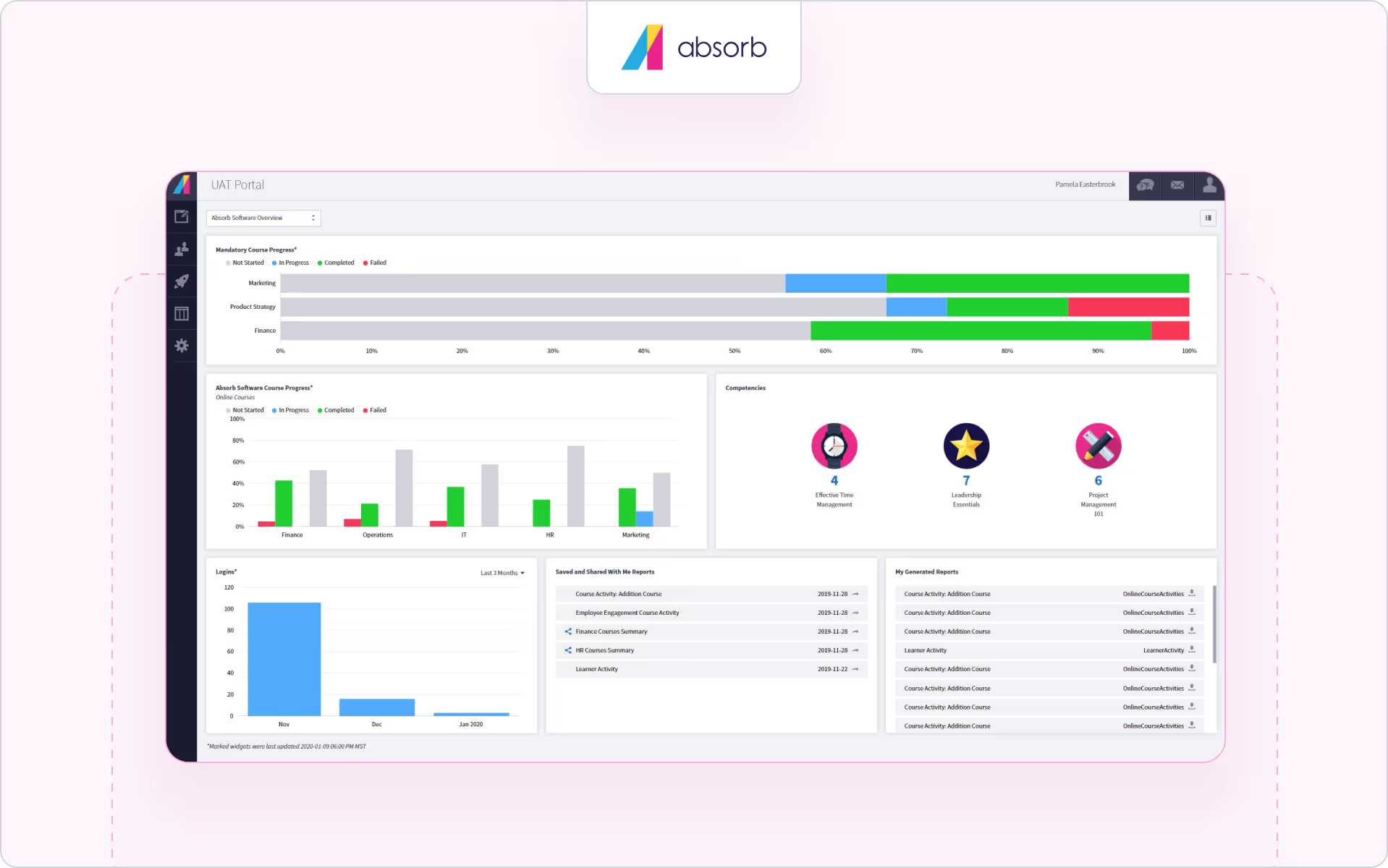
Absorb LMS is an enterprise learning platform used for customer and partner training programs.
Best for
Teams that need strong reporting tools and branded external training experiences for partners.
Why it stands out
Absorb LMS offers robust analytics and reporting, making it easier to measure partner training effectiveness across large audiences.
Partner training features
- Branded partner portals
- Certification management and assessments
- SCORM and xAPI support for training materials
- Advanced reporting and analytics
Keep in mind
Absorb LMS is feature-rich. Teams should evaluate partner user experience and onboarding effort during implementation
6. 360Learning
360Learning focuses on collaborative learning, with subject-matter experts contributing directly to courses.
Best for
Teams that want to accelerate partner enablement through shared knowledge and peer-driven learning.
Why it stands out
360Learning emphasizes social learning and fast content contribution, which can help surface real partner knowledge quickly.
Partner training features
- Collaborative course creation and updates
- Social learning and peer feedback
- Partner training programs with structured learning paths
- Progress tracking and reporting
Keep in mind
This model works best when partners actively contribute. Less suited for certification-heavy partner programs.
7. Intellum

Intellum supports large-scale customer and partner education programs through highly configurable learning experiences.
Best for
Enterprises running complex partner training programs that need strong authoring tools and analytics.
Why it stands out
Intellum offers deep control over learning experiences, content structure, and reporting across large partner networks.
Partner training features
- External partner education LMS
- Advanced course creation and content management
- Certification programs and assessments
- Advanced analytics and reporting
Keep in mind
Built for scale. Implementation and configuration can take time.
8. TalentLMS (by Epignosis)

TalentLMS is a cloud-based LMS often used for partner and customer training due to its simplicity.
Best for
Teams that need to deliver partner training quickly without enterprise-level complexity.
Why it stands out
TalentLMS is easy to deploy and manage, making it a practical choice for smaller partner programs.
Partner training features
- Partner training LMS with branches for partners
- Certification programs and assessments
- Course creation and training materials
- Basic reporting and progress tracking
Keep in mind
Analytics and partner enablement depth are limited compared to enterprise platforms.
9. Lessonly by Seismic
Lessonly is a learning platform focused on sales training, coaching, and readiness for internal teams and partners.
Best for
Teams that want to improve partner performance through structured sales training, coaching, and certification programs.
Why it stands out
Lessonly is strong on practice and reinforcement. It supports partner training programs that focus on real-world scenarios, role-based learning, and ongoing readiness instead of one-time course completion.
Partner training features
- Sales training and role-based learning paths
- Coaching, practice scenarios, and assessments
- Certification programs and readiness tracking
- Progress tracking and reporting tools
Keep in mind
Lessonly is optimized for readiness and coaching. Teams needing a full partner education LMS with deep content management may pair it with other tools.
10. Mindtickle

Mindtickle focuses on sales training and readiness rather than broad partner education.
Best for
Organizations prioritizing sales team readiness, coaching, and role-based partner training.
Why it stands out
Mindtickle excels at readiness measurement through role-plays, coaching workflows, and scorecards.
Partner training features
- Sales training and readiness programs
- Role-plays, coaching, and assessments
- Performance tracking and analytics
- Partner training programs aligned to sales motions
Keep in mind
Not a full partner training LMS. Often paired with other tools for broader partner education.
11. WorkRamp (by Learning Pool)
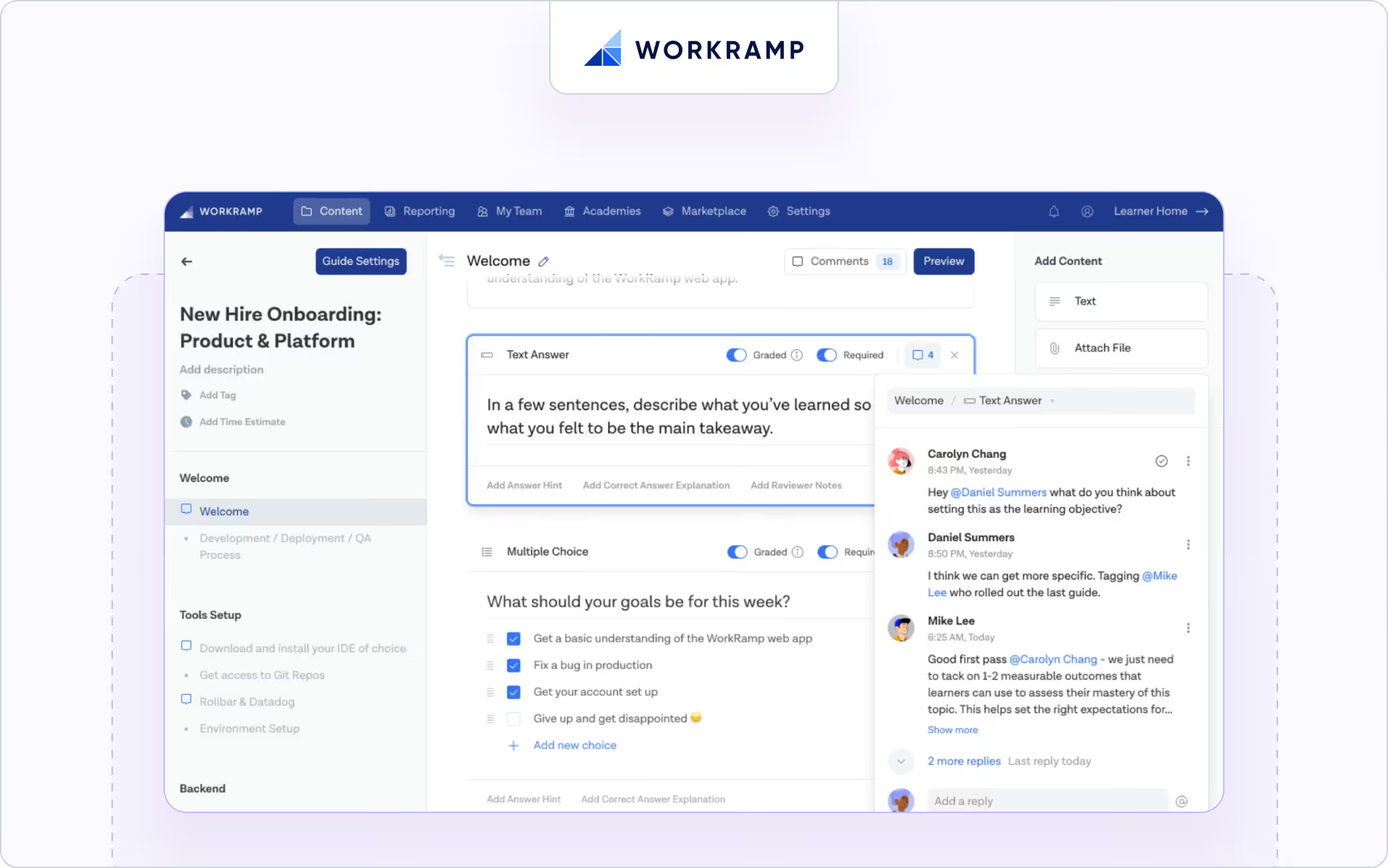
WorkRamp is a learning platform designed around sales training and partner readiness.
Best for
Teams that need partner enablement software focused on sales team readiness and partner performance.
Partner training features
- Sales training programs and coaching
- Certification programs and certification management
- Personalized learning paths and progress tracking
- Performance analytics and reporting tools
Keep in mind
WorkRamp prioritizes readiness over full partner education LMS coverage.
12. Channeltivity (Training Module)

Channeltivity combines partner management with embedded training.
Best for
Teams running a partner program that want training tightly connected to partner management.
Partner training features
- Partner onboarding and external training
- Certification tools and assessments
- Partner groups and partner tier management
- Deal registration visibility
Keep in mind
Training depth is lighter than a dedicated LMS for partner training platforms. For broader context, see the best partner relationship management software.
13. Litmos
Litmos supports large-scale external training with strong compliance controls.
Best for
Organizations delivering external training to global partner networks with strict requirements.
Partner training features
- Partner education LMS with certifications
- Training materials and assessments
- Multi-language support
- Advanced reporting and analytics capabilities
Keep in mind
Less flexible for customized learning or partner engagement beyond compliance.
14. Thought Industries

Thought Industries is built for scalable partner education and external learning experiences.
Best for
Companies investing in partner education as part of customer experience and business growth.
Partner training features
- Separate learning spaces for partner groups
- Certification programs and training program design
- Course creation and content management
- Community features and knowledge sharing
Keep in mind
CRM alignment and deal registration workflows require additional integration. Fits well alongside partnership marketing strategies, outlined in the partnership marketing guide.
15. Trainn
Trainn focuses on guided product education for external partners.
Best for
Teams that want to provide training around product knowledge and onboarding.
Partner training features
- Interactive training materials and guides
- Product knowledge walkthroughs
- Create courses quickly with AI support
- Progress tracking
Keep in mind
Not a full partner training LMS software for certifications or analytics-heavy use cases.
16. EducateMe

EducateMe supports partner education through branded learning hubs.
Best for
Teams that want to customize training and deliver structured partner training programs.
Partner training features
- Partner education LMS with automated paths
- Customized learning paths
- Certification management
- Reporting tools and partner progress tracking
Keep in mind
Advanced analytics and CRM attribution are more limited.
17. CYPHER Learning
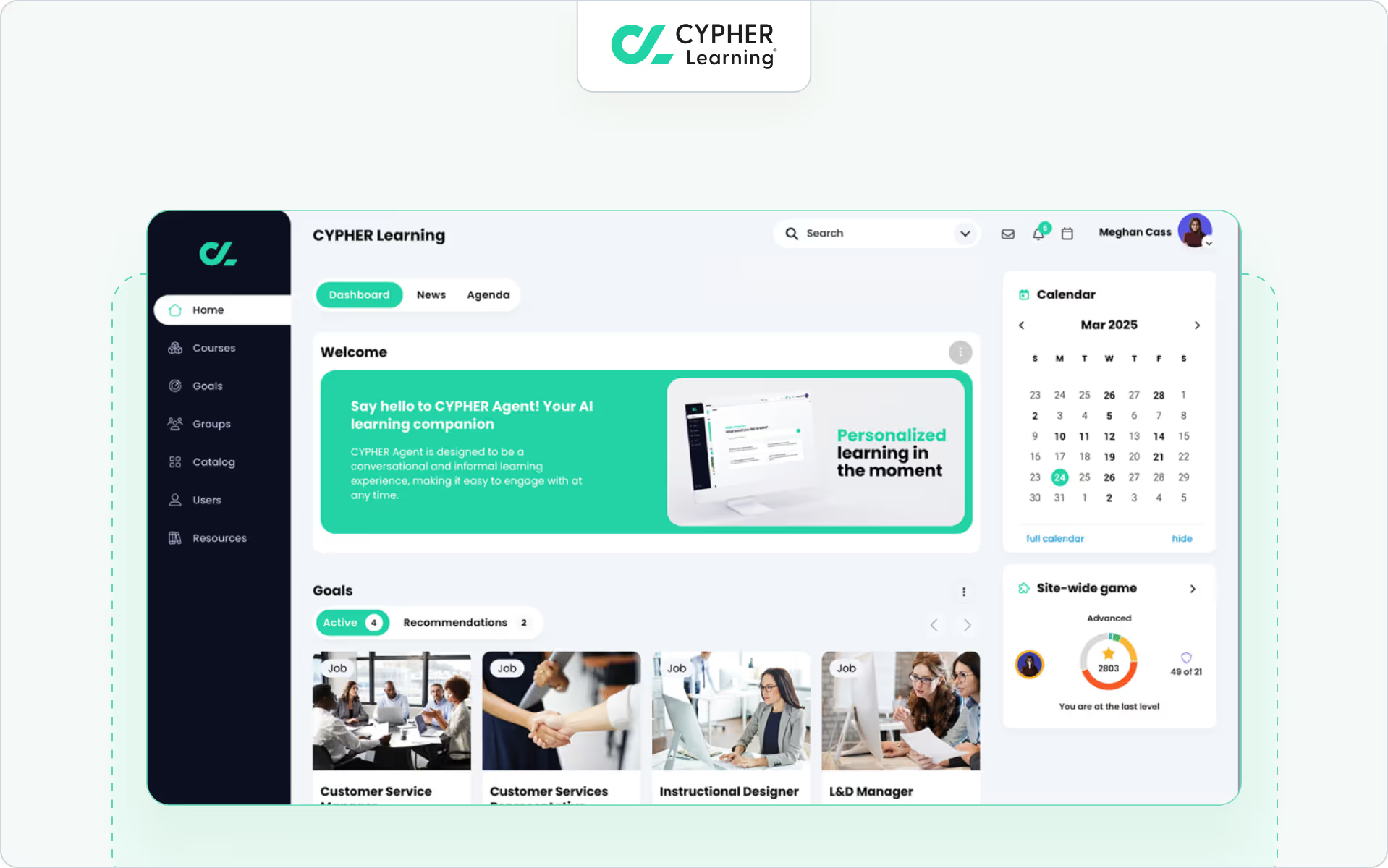
CYPHER Learning is a cloud-based LMS designed for skills development at scale.
Best for
Enterprises managing large partner ecosystems with diverse partner training needs.
Partner training features
- Adaptive learning paths and personalized learning
- Certification tools and assessments
- Robust analytics and advanced reporting
- Multi-language support
Keep in mind
Feature breadth can introduce a steep learning curve during setup. CYPHER Learning is often evaluated as training partner software for global programs.
18. Cornerstone Customer & Partner LMS
Cornerstone supports partner training across complex partner networks.
Best for
Large enterprises extending existing Cornerstone deployments to external partners.
Partner training features
- Branded external learning portals
- Certification programs and structured journeys
- Advanced analytics and performance tracking
- Partner network reporting
Keep in mind
Implementation can be heavy. Teams should validate partner experience and CRM fit early, especially when aligning with the top CRM for partner management.
19. AcademyOcean

AcademyOcean is built for structured external partner training.
Best for
Teams running partner onboarding and partner training built around multiple partner groups.
Partner training features
- Partner training LMS with multiple academies
- Personalized learning and learning experience controls
- Certification programs
- Training effectiveness tracking
Keep in mind
Analytics depth and partner enablement breadth vary by plan.
20. iSpring LMS
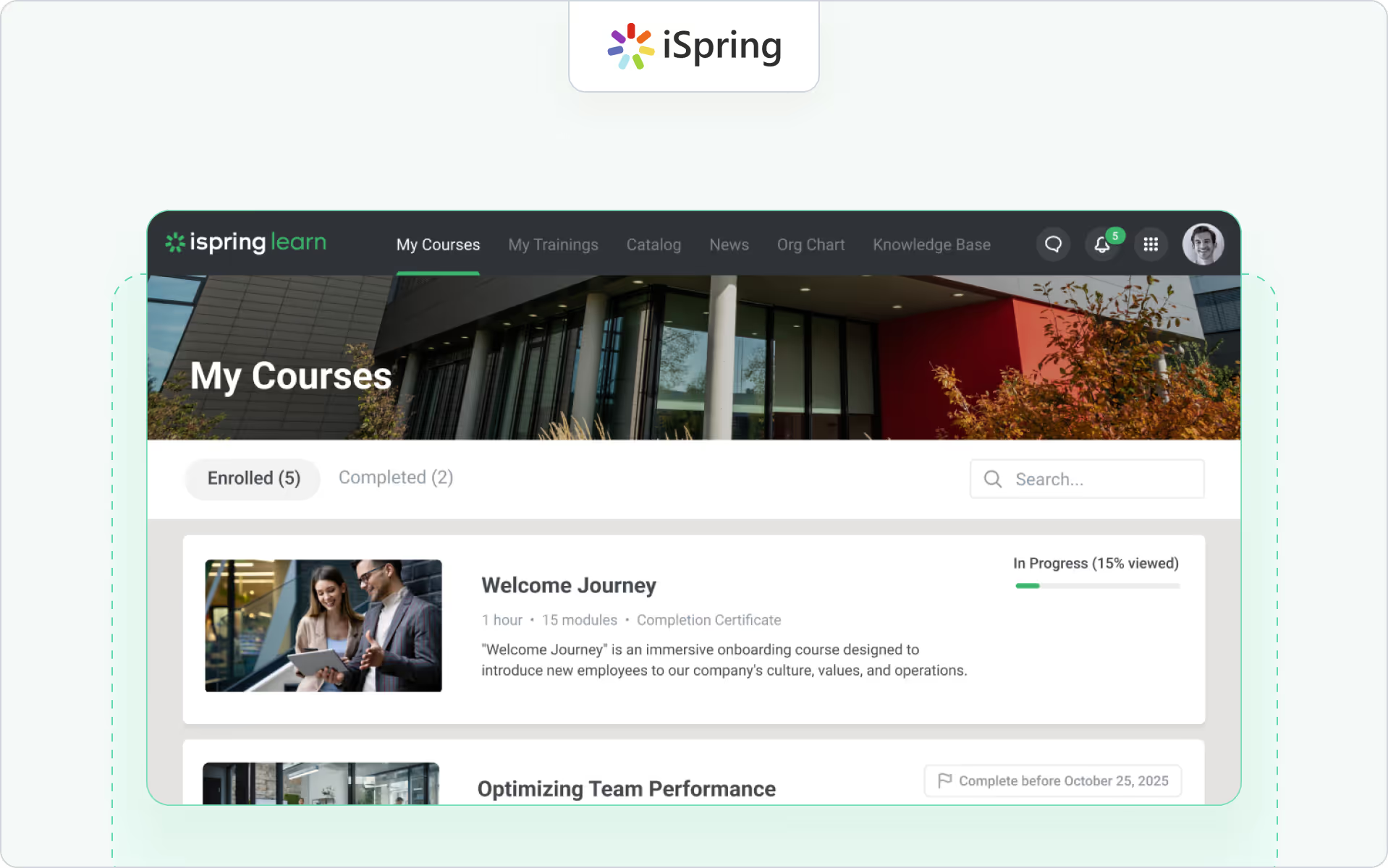
iSpring LMS combines LMS delivery with course authoring tools.
Best for
Teams that want to deliver training quickly without enterprise complexity.
Partner training features
- LMS for partner training with certificates
- Course creation and intuitive course creation tools
- Training materials and assessments
- Progress tracking and reporting tools
Keep in mind
Best suited for smaller partner programs or early-stage partner enablement.
Taken together, these tools show how wide the partner training landscape has become. Some focus on external education and certifications.
Before making a shortlist, it helps to step back and evaluate what actually matters for your partner program in 2026.
Buyer’s Checklist (What to Look For in 2026)
Use this checklist to evaluate partner training software side by side and assess fit against real partner program requirements.
Authoring speed
Look for intuitive course creation with AI-assisted course and quiz builders. The ability to create courses by importing content from your website, portal, or documentation reduces setup time and avoids a steep learning curve.
Certification governance
Effective certification programs should support certification management, expiration, and recertification, prerequisites, and product or permission gating to protect partner credibility.
Enrollment at scale
Partner training LMS platforms should support SSO or SAML, bulk invitations, and the ability to segment partner audiences by partner type, partner tier, region, role, or partner groups.
Engagement without friction
Partner engagement improves when training is delivered without forcing partners into separate learning spaces. Off-portal email and Slack announcements, reminders, and countdowns help deliver training efficiently.
Readiness and assessments
Training effectiveness depends on quizzes, scenarios, role-plays, and scorecards that track partner progress and partner performance.
CRM-first reporting
A partner training LMS should sync training progress and certifications to Salesforce or HubSpot. This enables linking training to deal registration, opportunities, ARR, and performance analytics.
Branding and multi-portal support
For larger partner ecosystems, look for white-label options, localization, and multi-portal or multi-audience support to manage different partner networks.
Security and governance
Enterprise-ready training partner software should include role-based access, audit trails, PII controls, and data residency options to support external partners securely.
Ecosystem fit
Evaluate how well the learning platform fits into your broader ecosystem. Alignment with partner management or PRM tools, support for webinars or live training, SCORM or xAPI compatibility, APIs, and marketing tools all affect long-term partner enablement and business growth.
Once you’ve worked through these criteria, a clear pattern tends to emerge.
Teams that need partner training to move beyond content delivery and actually support partner performance, engagement, and deal registration start prioritizing CRM-first workflows and governed certification at scale.
That’s where Introw comes in.
Next, we’ll look at why many teams choose Introw for partner training and how it supports these requirements in practice.
Why Teams Choose Introw for Partner Training
When teams evaluate partner training software against real-world requirements, Introw consistently stands out for one reason: it connects training directly to revenue workflows instead of isolating it in an LMS.
Introw is built for teams that want partner training to support partner performance, partner credibility, and measurable business outcomes across the entire partner ecosystem.
Your next steps
If you’re evaluating partner training software for 2026, here’s how to move forward:
- Shortlist platforms that support certification governance, CRM visibility, and off-portal engagement.
- Validate how training data connects to deal registration, pipeline, and partner performance in your CRM.
- Run a focused trial to assess authoring speed, partner adoption, and reporting depth.
Ready to see how this works in practice?
Request an Introw demo and see how partner training looks when it’s built for real partner activation, not just course completion.
How to Prevent Channel Conflict Before It Kills a Deal
Channel conflict rarely starts with open disagreement.
It usually appears late in the sales cycle, when a deal is already active, and expectations are already set. A partner believes they have ownership. The sales team believes otherwise. Another channel surfaces at the last moment.
At that point, resolving channel conflict becomes slow, political, and expensive.
The more effective approach is prevention. When rules are clear, data is shared correctly, and ownership is visible early, channel conflicts are far less likely to occur.
You'll learn about a prevention-first operating model for channel conflict, built for SaaS teams managing multiple channels, channel partners, and direct sales motions at the same time.
But, to prevent channel conflict, you need clarity on what channel conflict is and the types of channel conflict that show up in modern SaaS programs.
Channel Conflict 101 (Types, Causes, and B2B SaaS Context)
To prevent channel conflict, everyone needs to be aligned on what it actually means in a modern SaaS environment.
What is channel conflict?
In B2B SaaS, channel conflict occurs when multiple channels or channel partners pursue the same customers, accounts, or revenue without clear ownership, rules, or visibility.
This weakens channel relationships and makes effective channel partner management harder for partners and direct sales teams.
The main types of channel conflict in SaaS
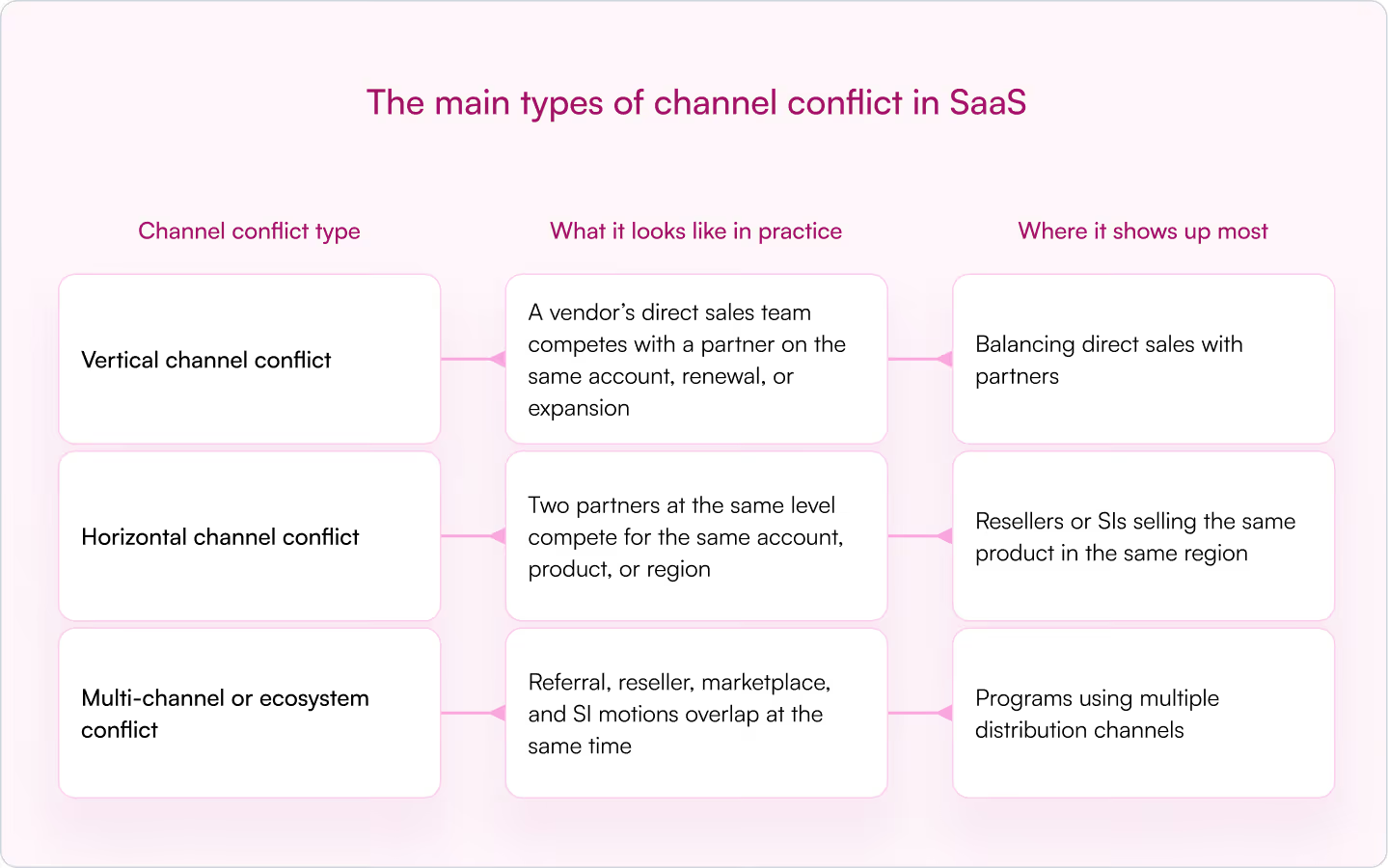
These channel conflict types are rarely about bad behavior. They are a predictable outcome of multiple channels operating without shared rules or data.
Root causes of channel conflict in B2B SaaS
Most channel conflicts stem from a small set of structural issues:
- Unclear rules of engagement across different channels
- Overlapping territories, segments, or named accounts
- Inconsistent pricing strategies, discounting, or price protection
- Unmanaged renewals and expansions across the same customer base
- Poor communication cadence and limited visibility into customer data
As SaaS teams scale and add new channels, these gaps quickly create potential conflicts, even when channel management intentions are sound. This is common when channel relationships evolve faster than the operating model behind channel partner management.
Next, we’ll look at how to detect channel conflict early, before it turns into an escalation, a stalled deal, or a damaged partner relationship.
Early Warning System: Spot Conflicts Before They Surface
Channel conflict is easiest to manage when you catch it early. The goal here isn’t perfect forecasting; it’s visibility into the signals that show channel conflicts forming before they slow a deal or damage channel relationships.
Signal categories
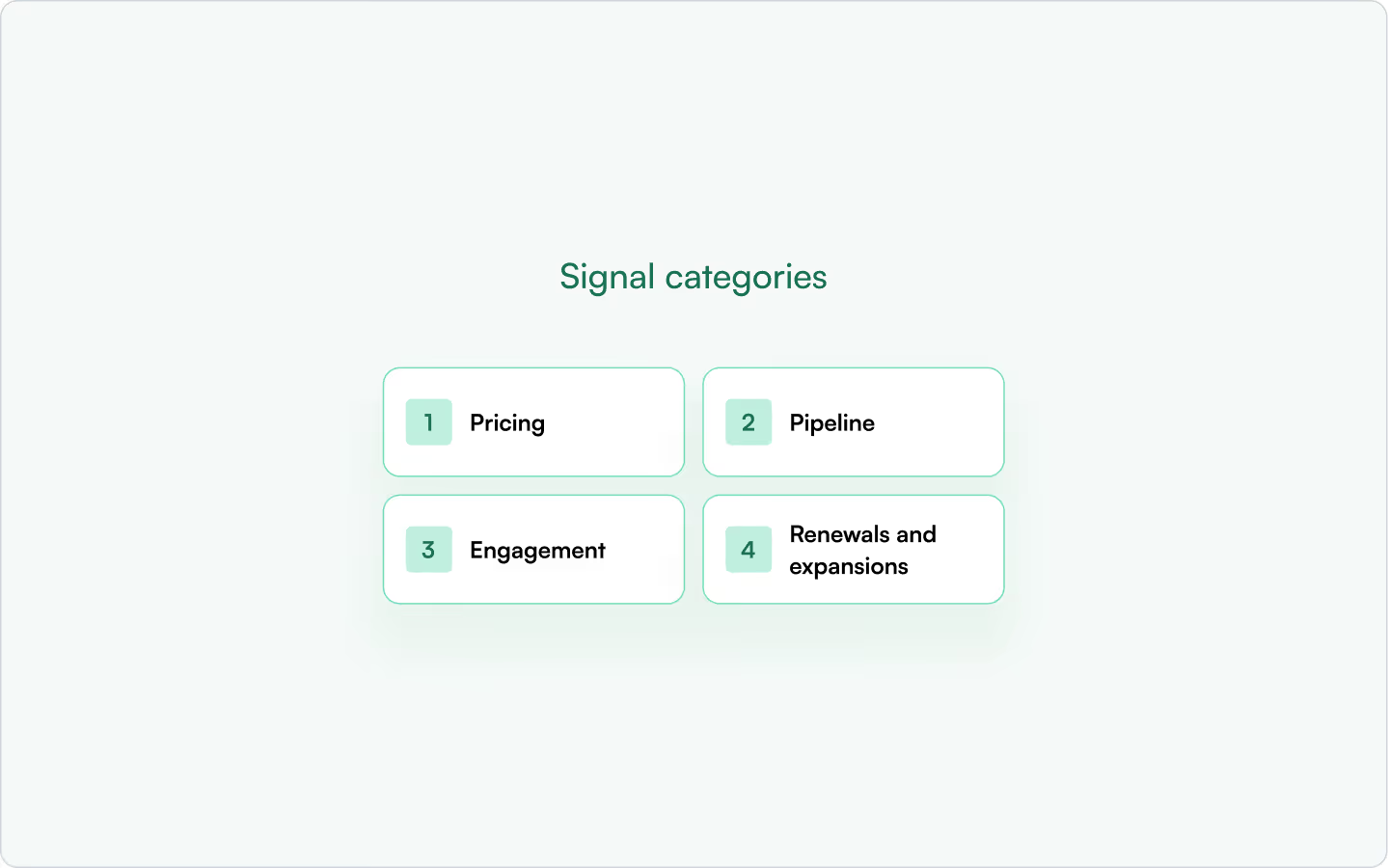
Pricing
Unusual discount requests, overlapping price protection, or duplicate quotes for the same product often signal early channel partner conflict. Left unchecked, these patterns can escalate into price wars that hurt brand integrity and market share.
Pipeline
Duplicate opportunities or accounts, missing partner fields, or sudden owner changes are classic indicators that multiple channels are touching the same account. In a customer relationship management system, this is often the first sign of horizontal conflict across the same channel or same region.
Engagement
Emails from partners raising concerns about fairness, silence after policy changes, or reduced response to announcements often indicate tension across channel members, even before it shows up in the sales channel data.
Renewals and expansions
When a direct sales team engages an account with an incumbent reseller or SI already in place, channel conflict occurs fast, especially if renewal ownership rules are unclear.
Automations to catch them
Early detection depends on automation, not vigilance.
Common safeguards include duplicate detection, stage-change alerts, two-opportunities-one-account reports, expiring deal registration timers, and renewal ownership rules enforced directly in your CRM.
A structured deal registration process is especially effective for surfacing potential conflicts early and keeping different channel partners on the same page.
Teams that rely on manual checks usually spot conflicts too late. Teams that automate signals spend far less time on conflict resolution and more time closing deals.
Let's design your channel program so these signals appear less often in the first place, starting with segmentation, territories, and pricing guardrails.
Program Design That Prevents Conflict (Get This Right First)
Most channel conflict is designed early. Strong program design aligns channel members across distribution channels before deals exist and reduces the need to resolve channel conflict later.
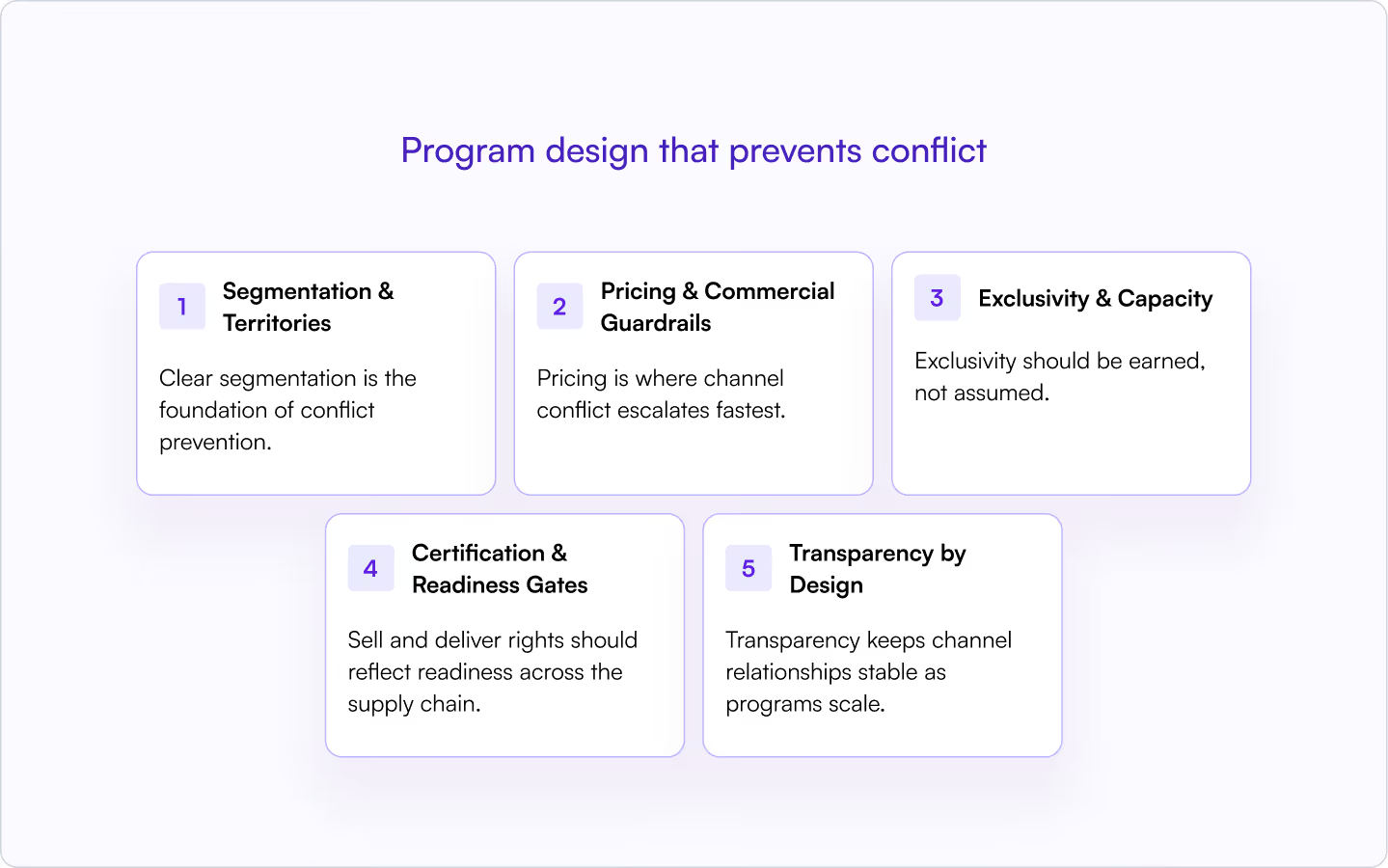
1) Segmentation & Territories
Clear segmentation is the foundation of conflict prevention.
- Define a clear ICP and segment channel partners by region, vertical, tier, and install base
- Use named-account programs for strategic partners operating at the same level
- Set explicit rules for marketplace versus direct sales ownership
- Avoid multiple distribution channels working the same customers by default
This kind of structure is a core pillar of effective channel management, especially as new channels are added.
2) Pricing & Commercial Guardrails
Pricing is where channel conflict escalates fastest.
- Define pricing strategies by partner tier and sales channel, including referral, resale, marketplace, and SI
- Set price protection duration and clarify renewal and expansion applicability
- Enforce minimum advertised price policies where applicable to protect brand integrity
- Use SPIFFs versus margin deliberately to prevent price wars and lower prices across channels
Fair pricing policies reduce direct competition between channel members selling the same product through different channels.
3) Exclusivity & Capacity
Exclusivity should be earned, not assumed.
- Grant exclusivity only when justified by specialization, certification, or commitment
- Set capacity limits per region, product line, or customer base
- Avoid onboarding too many partners into the same sales channel
Capacity limits help minimize conflicts caused by too many partners competing in the same region or account.
4) Certification & Readiness Gates
Sell and deliver rights should reflect readiness across the supply chain.
- Tie sell and deliver permissions to the certification status
- Require certification for access to exclusive products or specific customer segments
- Set expiration and re-certification SLAs aligned with supply chain management needs
Readiness gates protect customer satisfaction and reduce downstream conflict tied to poor execution.
5) Transparency by Design
Transparency keeps channel relationships stable as programs scale.
- Publish rules of engagement in a partner portal as the single source of truth
- Announce policy changes early and often through shared communication channels like email or Slack
- Require acknowledgment to ensure all parties involved stay on the same page
- Use SSO to remove access friction and reduce shadow communication
Platforms like Introw support this by combining a partner portal, announcements with read receipts, and frictionless access.
When paired with a structured deal registration process, teams can enforce rules consistently instead of relying on ad-hoc decisions.
Let's go deeper into deal registration itself and how to use it as a conflict firewall rather than a bottleneck.
Deal Registration: Your Primary Conflict Firewall
If you’re looking for a practical answer to how to manage channel conflict, deal registration is it. This is where ownership is established early and where most channel conflicts can be prevented instead of debated.
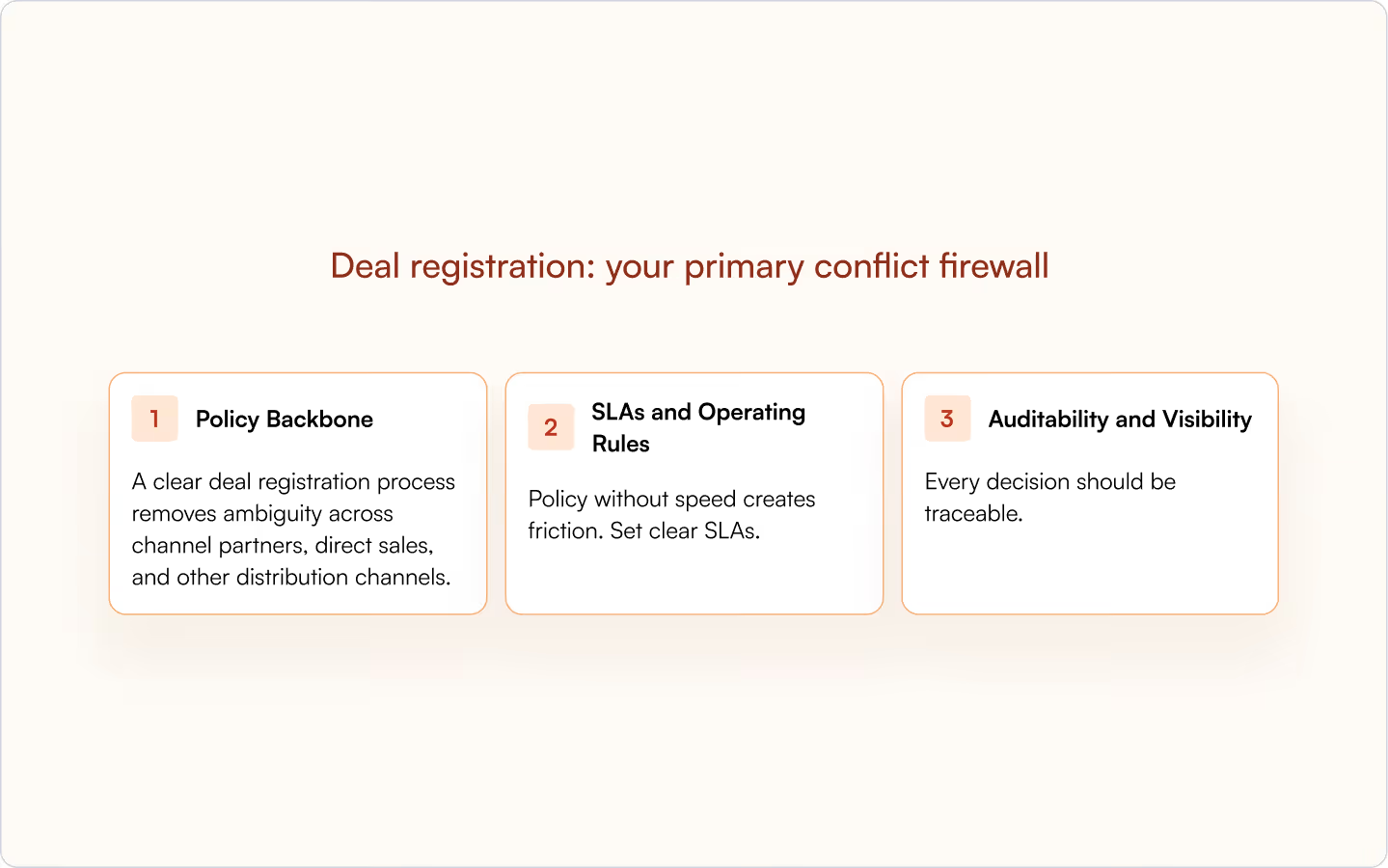
Policy Backbone
A clear deal registration process removes ambiguity across channel partners, direct sales, and other distribution channels.
Your policy should define:
- Eligibility criteria, required fields, proof of work, and a customer uniqueness test to prevent different partners pursuing the same account
- A protection window, typically 60–90 days, with explicit extension rules
- Renewal and expansion of ownership rules when the same customers move between partners and the sales team
- A conflict hierarchy, registered beats unregistered, incumbent beats net-new, certification status breaks ties
- An appeals and escalation window with defined evidence requirements
This is the operational layer of channel conflict resolution. Without it, vertical conflict and horizontal conflict are left to judgment calls, which quickly strain existing channel relationships.
SLAs and Operating Rules
Policy without speed creates friction.
Set clear SLAs:
- Approval or decline within 48 hours
- Automatic reminders before protection expires, usually seven days out
- Reassignment rules for inactive deals based on no-touch thresholds
These mechanics are a core part of effective channel management, especially in programs that rely on co-selling and shared ownership across teams.
Many teams formalize this alongside their broader approach to managing co-selling effectively to keep all parties aligned.
Auditability and Visibility
Every decision should be traceable.
Approvals, declines, timestamps, and rationale should live in your customer relationship management system, with shared pipeline visibility limited to safe fields like stage, owner, and protection status.
This keeps different partners on the same page without exposing pricing or internal notes.
In practice, this is where a structured deal registration process, supported by modern partner relationship management software, makes it far easier to resolve channel conflict consistently as programs scale.
Next, we’ll look at the CRM data model you need to support this, and how to enforce these rules automatically across multiple channels.
Your CRM Data Model for Conflict Prevention (Salesforce/HubSpot)
Channel conflict becomes expensive when your CRM can’t answer basic ownership questions. A clean data model makes channel conflict visible early and keeps channel partners, direct sales, and RevOps aligned across multiple channels.
Required fields on Opportunity or Deal
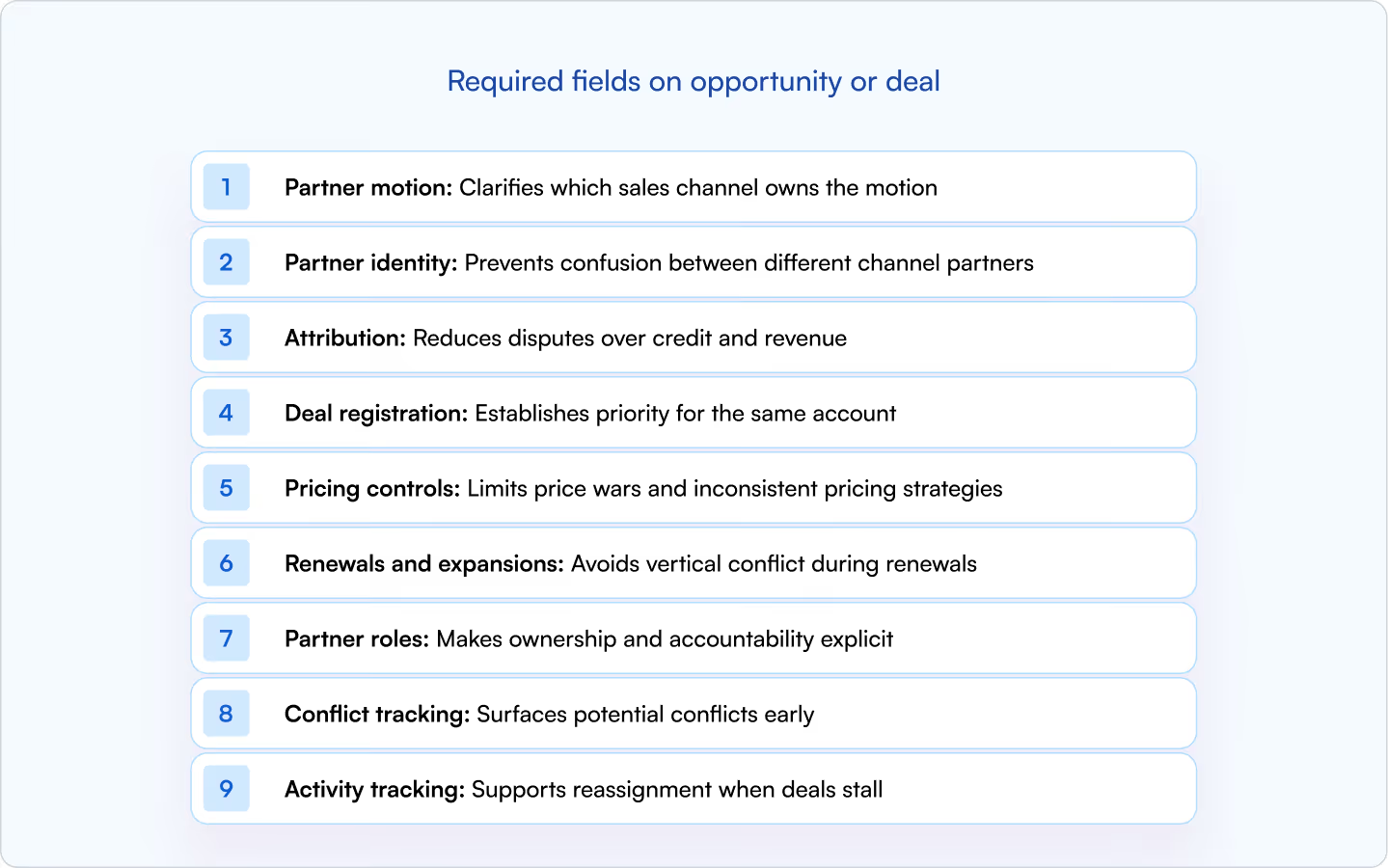
Without these fields, channel conflict occurs late, often after multiple partners have already engaged the same customers.
Governance Rules That Enforce Discipline
Fields only work if they’re enforced.
- Stage-change validations that require partner fields before deals advance
- Duplicate rules on accounts and opportunities to catch horizontal conflict early
- Renewal ownership logic to prevent overlap with direct sales
- Dashboards segmented by motion and conflict status for fast visibility
This is what managing channel conflict looks like in practice, not spreadsheets and exceptions.
How This Works In Practice
With native integrations for Salesforce and HubSpot, partner-submitted data stays synced without manual updates.
Shared pipeline views expose only safe properties, such as stage, owner, and protection status, so different partners stay aligned without seeing sensitive pricing or internal notes.
Announcements can then be used to communicate policy changes tied to these fields, keeping channel members on the same page as rules evolve.
At this point, conflict is no longer hidden. The question becomes how consistently your team reviews signals and communicates decisions.
Operating Cadence & Communications (the “no-surprises” policy)
Once ownership and risk are visible, cadence is what keeps channel conflict from resurfacing. This is how to manage channel conflict day to day, without escalation or guesswork.
Cadence That Prevents Surprises
This rhythm supports strong channel relationships across multiple channels and distribution strategies, especially as new channels are introduced.
Response SLAs That Reduce Escalation
Speed signals fairness.
- Deal registration decision within 48 hours
- Conflict acknowledgment within 24 hours, with a resolution plan in five business days
- Renewal ownership confirmed at least 90 days before renewal
Clear SLAs help resolve channel conflict consistently and protect existing channel relationships when the same account is touched by different partners or direct sales.
Keeping Communication Operational, Not Performative
Announcements should push updates through email and Slack, so channel members don’t have to log into another portal. Replies via email should write back to the CRM timeline automatically, preserving context and evidence without slowing the sales team.
This approach supports open communication without adding friction, and it scales far better than ad-hoc outreach.
Many teams formalize this cadence alongside guidance on building a channel partner program and broader ecosystem expectations outlined in a channel partnership guide.
At this point, channel conflict refers to a managed process, not an unexpected interruption. Incentives, recognition, and feedback loops can then reinforce the right behaviors, something teams often pair with thoughtful channel partner gamification.
Introw supports this prevention-first approach by enforcing rules, surfacing risk early, and keeping partners aligned without adding friction. Here's how.
How Introw Helps Prevent Channel Conflict
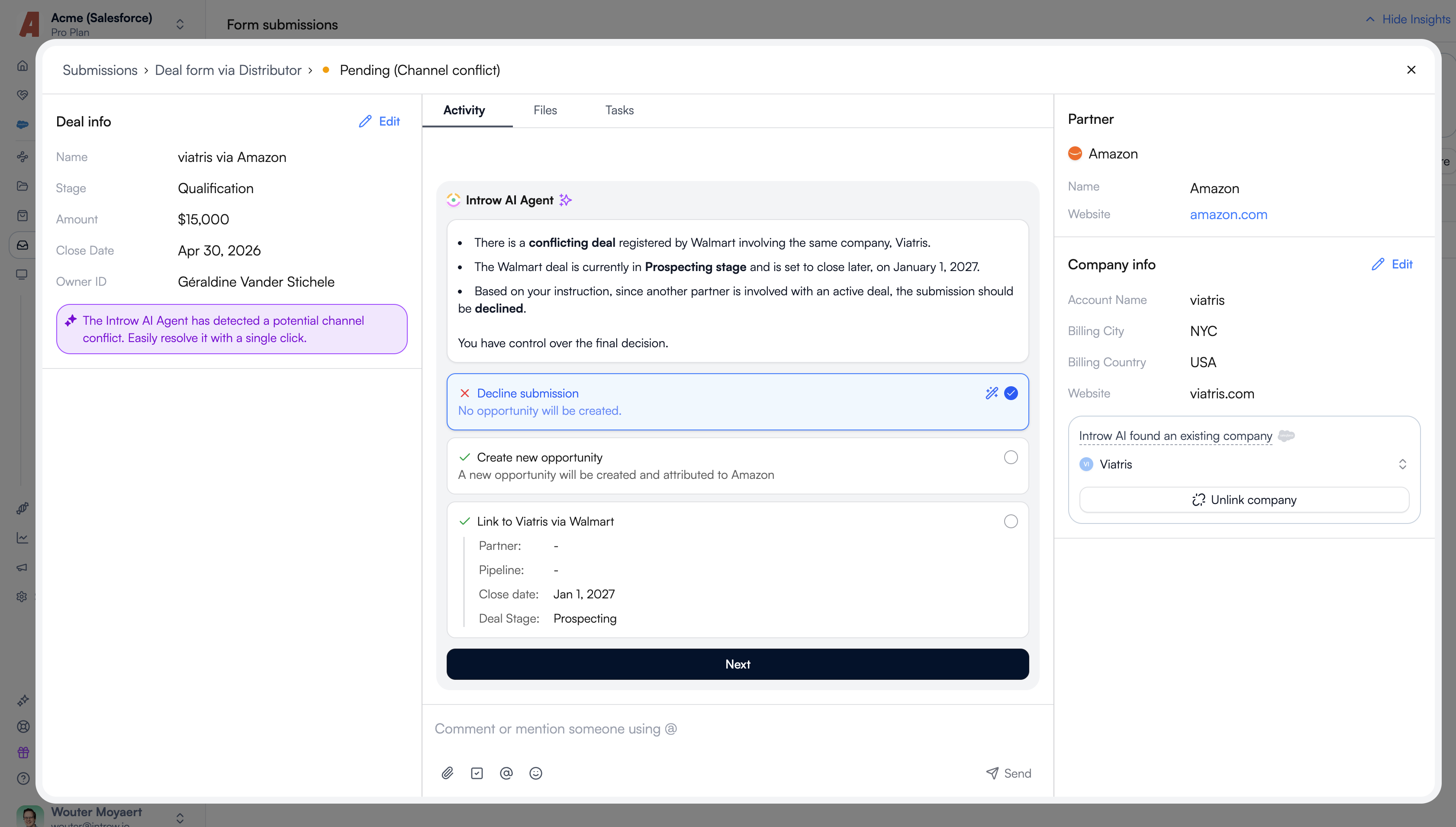
If you want to prevent channel conflict, your rules can’t live in slide decks or policy docs. They have to show up where deals are registered, approved, and worked on every day, by your team and your partners.
Introw does that by embedding your channel rules directly into the workflow.
Single source of truth from day one.
Deal and lead registration ensure every opportunity starts with the same required context.
Ownership, approvals, protection windows, and timestamps are clear from the moment a deal is submitted, which matters when your channel partners and direct sales team are working the same account.
Rules your partners don’t have to hunt for.
Rules of engagement, pricing bands, and territories live in the partner portal with SSO. Your partners always know what applies right now, without forwarding old emails or guessing which version is current.
Shared visibility without oversharing.
Shared pipeline views show partners exactly what they need, like stage, next step, and protection expiry, without exposing pricing or internal notes.
That keeps everyone aligned while deals are active and reduces channel partner conflict before it escalates.
Signals your team can act on early.
Alerts for new registrations, approval deadlines, expiring protection windows, and stage changes are pushed through email and Slack.
Partners can reply by email, and those responses are written back to the CRM timeline so decisions are based on full context, not memory.
This is what modern partner relationship management software is meant to support: consistent execution, fewer surprises, and channel conflict resolution that scales with your business.
With the right structure in place, prevention does most of the work. What remains is a clear, repeatable way to resolve the few conflicts that still surface.
Over to You: Prevent First, Resolve Less
Channel conflict doesn’t have to be a constant fire drill. When you design for prevention, most issues never reach escalation, and the few that do are easier to resolve without damaging trust or momentum.
The teams that handle channel conflict well don’t rely on heroics or exceptions. They rely on clear rules, early signals, and consistent execution across partners, direct sales, and systems. That’s what keeps deals moving and relationships intact as your channel scales.
What to do next:
- Review where channel conflict occurs today and identify which signals surface too late
- Pressure-test your deal registration, ownership, and renewal rules against real scenarios
- Make sure your tooling enforces the model instead of working around it
Final Takeaway
Channel conflict is rarely about intent. It’s about clarity, timing, and visibility. Get those right, and conflict becomes manageable instead of disruptive.
If you want to see how this prevention-first model works in practice, you can request a demo and walk through how Introw supports it across your channel program.
17 TalentLMS Alternatives for Partner Training in 2026
What would partner training look like if certifications stayed current, partners were engaged through email or Slack, and learner progress was visible inside your CRM?
For SaaS teams, partner training has different requirements than employee training. It often involves training multiple groups, role-based learning paths, certification governance, and CRM-first reporting to support partner enablement at scale.
This article compares TalentLMS alternatives for partner training in 2026, outlines the key features to prioritize, and explains how teams move from course completion to measurable business outcomes.
When it comes to partner training, what prompts teams to look for another solution?
Why Teams Look Beyond TalentLMS for Partner Training
As partner programs scale, training requirements start to look very different from traditional corporate training.
Partner enablement introduces more complex needs that go beyond a standard learning management system, especially when teams start formalizing certification, onboarding, and readiness as part of a broader partner enablement strategy.
What partner training typically needs
Compared to internal training programs, partner training usually requires:
- Training multiple groups across regions, partner types, and tiers
- Role- and tier-based learning paths aligned to how partners sell, implement, or support your product
- Certifications that gate access to deal registration, co-selling, or incentives
- CRM visibility so learner progress, certifications, and readiness connect directly to pipeline and revenue
At this stage, training is no longer just about delivering online courses.
It becomes part of a wider partner engagement and collaborative learning motion, where enablement, communication, and attribution reinforce each other as teams apply proven principles from a practical partner engagement guide.
Where programs commonly get stuck
As partner programs mature, teams often encounter friction in a few predictable areas:
Portal dependency
Partners must log into another learning platform, which reduces learner engagement and limits collaborative learning across the ecosystem.
Manual course creation
Updating training materials and certifications becomes time-consuming as products and messaging evolve.
Limited governance
Managing certification expirations, recertification windows, and prerequisites is difficult to scale across partner tiers.
Weak CRM linkage
Training data remains isolated inside the learning management system, making it harder to measure training ROI or align training programs with revenue.
These gaps are typically the point where teams begin evaluating TalentLMS alternatives designed for partner training rather than internal corporate learning alone.
With these needs in mind, here are the most relevant TalentLMS alternatives for partner training in 2026.
17 Best TalentLMS Alternatives for Partner Training (2026)
Here’s our carefully curated list of TalentLMS alternatives that support partner training, certification, and reporting at scale.
1. Introw Partner LMS
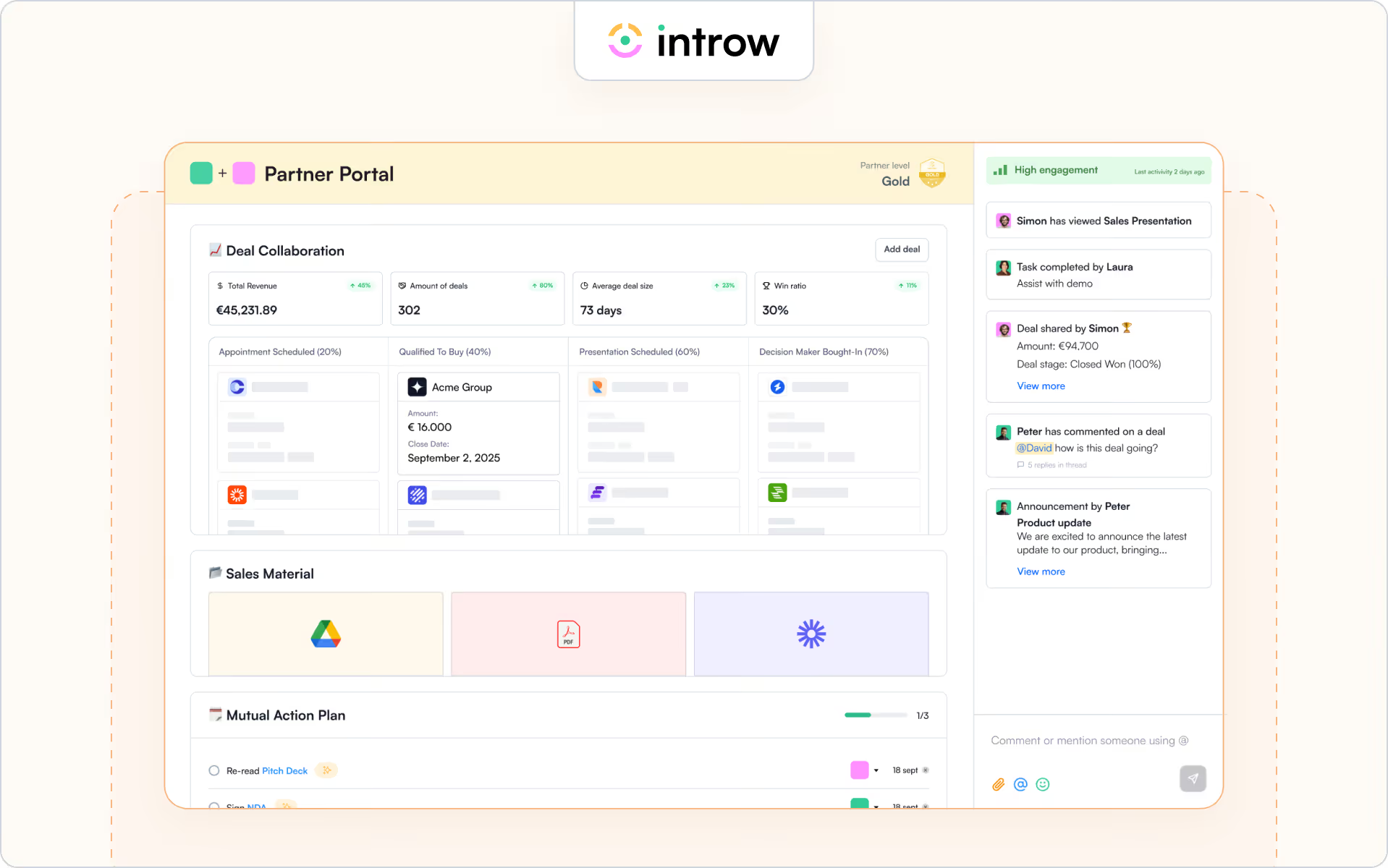
Introw is built for SaaS teams evaluating TalentLMS alternatives that need partner training to drive real outcomes, not live in a standalone learning management system. The focus is on connecting training programs, certifications, and learner progress directly to CRM workflows using the Introw Partner LMS.
Best for
B2B SaaS teams on Salesforce or HubSpot that need fast course creation, governed certification programs, and clear visibility into learner progress, deal registration, and partner performance.
Why it’s a strong alternative to TalentLMS
Introw uses AI-driven course creation to generate structured online courses, quizzes, and training materials from existing content in minutes. Certification programs include expiration and recertification, supporting complex training requirements across partner tiers.
Partner engagement happens off-portal through email and Slack, improving learner engagement without forcing logins. Training programs, learning paths, and certifications are visible inside Salesforce and HubSpot, making it easier to measure training ROI and connect training activity to pipeline.
Key features
- AI-driven course creation and role- or tier-based learning paths
- Certification governance with expiration and recertification
- Off-portal engagement via email and Slack
- Training multiple groups with bulk enrollment
- Tracking learner progress with CRM-visible reporting tools
Integrations
Salesforce, HubSpot, Slack, API.
2. Skilljar by Gainsight
Skilljar by Gainsight is a learning management system designed for customer and partner training programs at scale.
Best for
SaaS teams running external training programs that need structured certifications and strong learner engagement reporting.
Why it’s a strong alternative to TalentLMS
Skilljar supports partner-facing online courses, certification paths, and training programs across multiple audiences, making it suitable as teams move beyond basic corporate training.
Key features
- Multi-portal training programs
- Certification workflows with tracking
- Advanced analytics for learner progress
Keep in mind
Training data lives primarily inside the platform rather than the CRM.
Integrations
Salesforce, Gainsight, APIs
3. LearnUpon

LearnUpon is a learning management system used for employee training, customer training, and partner enablement.
Best for
Teams training multiple groups that need separate portals with consistent branding.
Why it’s a strong alternative to TalentLMS
LearnUpon supports structured learning paths, certification governance, and reporting tools, making it a common choice for scalable partner and customer training.
Key features
- Multi-portal learning management system
- Learning paths and certifications
- Reporting tools for learner progress
Keep in mind
Course creation is largely manual compared to AI-driven platforms.
Integrations
Salesforce, HRIS tools, APIs
4. Docebo
Docebo is an enterprise learning management system built for complex training requirements.
Best for
Organizations managing large-scale corporate training alongside customer or partner education.
Why it’s a strong alternative to TalentLMS
Docebo supports collaborative learning, personalized learning paths, and advanced features for organizations with complex training needs.
Key features
- AI-driven content recommendations
- Social and collaborative learning tools
- Advanced analytics and reporting
Keep in mind
Configuration and administration can be complex for smaller teams.
Integrations
Salesforce, HR systems, content tools
5. Absorb LMS
Absorb LMS is a learning management system used for corporate training and external learning programs.
Best for
Teams that need detailed reporting tools and custom branding for partner training.
Why it’s a strong alternative to TalentLMS
Absorb LMS supports structured learning, compliance training, and tracking learner progress across multiple audiences.
Key features
- Advanced reporting and analytics tools
- Branded portals and custom branding
- SCORM and xAPI support
Keep in mind
User experience and setup may require dedicated technical support.
Integrations
Salesforce, HRIS platforms, APIs
6. 360Learning
360Learning emphasizes social learning and internal knowledge sharing.
Best for
Teams prioritizing collaborative learning and rapid course creation.
Why it’s a strong alternative to TalentLMS
360Learning supports collaborative learning capabilities that enable subject-matter experts to create and update training content quickly.
Key features
- Collaborative course creation
- Social learning tools
- Learning paths and assessments
Keep in mind
Less focused on external partner certification governance.
Integrations
HR systems, content tools, APIs
7. Intellum

Intellum is a learning platform designed for customer training and partner enablement.
Best for
Organizations running structured external training programs with advanced reporting needs.
Why it’s a strong alternative to TalentLMS
Intellum supports scalable training programs, certification management, and detailed learner engagement analytics.
Key features
- Advanced authoring tools
- Certification and learner progress tracking
- Analytics for training effectiveness
Keep in mind
Often used by larger enterprises with dedicated learning teams.
Integrations
Salesforce, CRM tools, APIs
8. Thinkific

Thinkific is an online learning platform commonly used to deliver external training and online courses.
Best for
Teams creating partner-facing “universities” or training hubs.
Why it’s a strong alternative to TalentLMS
Thinkific makes it easy to deliver training content and structured courses to external audiences.
Key features
- Course creation and delivery
- Custom branding options
- Training videos and assessments
Keep in mind
Limited certification governance and enterprise reporting.
Integrations
Payment tools, marketing platforms, APIs
9. WorkRamp
WorkRamp supports employee training, customer training, and partner enablement.
Best for
Teams looking for modern UX and certification paths across audiences.
Why it’s a strong alternative to TalentLMS
WorkRamp combines course creation, certification management, and learner engagement tools in a single platform.
Key features
- AI-assisted course creation
- Certification paths
- Learner engagement tools
Keep in mind
CRM attribution is not the primary focus.
Integrations
Salesforce, HRIS tools, APIs
10. Litmos
Litmos is a learning management system often used for compliance training and distributed teams.
Best for
Organizations delivering standardized training across regions.
Why it’s a strong alternative to TalentLMS
Litmos supports mobile learning, compliance training, and scalable training management.
Key features
- Compliance and regulatory training
- Mobile learning support
- Training management tools
Keep in mind
Less flexible for complex partner certification models.
Integrations
Salesforce, SAP ecosystem, APIs
11. iSpring Learn
iSpring Learn is a learning management system often paired with iSpring’s authoring tools for structured training delivery.
Best for
Teams delivering structured training courses with limited technical complexity.
Why it’s a strong alternative to TalentLMS
iSpring Learn supports training programs, certifications, and tracking learner progress with a straightforward interface.
Key features
- Course creation with certificates
- Mobile learning support
- Learner progress tracking
Keep in mind
Less flexible for complex partner or multi-portal training.
Integrations
HR systems, content tools, APIs
12. Tovuti LMS

Tovuti LMS supports customer training and partner training through a configurable learning platform.
Best for
Organizations running diverse external training programs with engagement-focused features.
Why it’s a strong alternative to TalentLMS
Tovuti supports blended learning, training videos, and social learning to improve learner engagement.
Key features
- Gamification and social learning
- Course creation and training content
- Events and live training support
Keep in mind
Administration can be complex for smaller teams.
Integrations
CRM systems, webinar tools, APIs
13. Adobe Learning Manager

Adobe Learning Manager is an enterprise learning management system designed for large-scale training delivery.
Best for
Enterprises managing corporate training and customer training across regions.
Why it’s a strong alternative to TalentLMS
Adobe Learning Manager supports complex training requirements, reporting tools, and enterprise learning workflows.
Key features
- Advanced analytics and reporting
- Personalized learning paths
- Mobile and blended learning
Keep in mind
Setup and customization often require technical expertise.
Integrations
Adobe ecosystem, HR systems, APIs
14. Cornerstone LMS
Cornerstone LMS is a learning management system used for enterprise learning and talent development.
Best for
Large organizations with complex corporate training and compliance training needs.
Why it’s a strong alternative to TalentLMS
Cornerstone supports structured learning, compliance training, and advanced reporting across large user bases.
Key features
- Enterprise learning management
- Compliance and regulatory training
- Advanced analytics
Keep in mind
Less focused on partner-specific training workflows.
Integrations
HRIS platforms, content providers, APIs
15. D2L Brightspace
D2L Brightspace is a learning platform used across enterprise learning and education sectors.
Best for
Organizations delivering structured learning at scale with diverse audiences.
Why it’s a strong alternative to TalentLMS
Brightspace supports personalized learning experiences, assessments, and analytics.
Key features
- Personalized learning journeys
- Analytics and reporting tools
- Mobile learning support
Keep in mind
Originally built for educational institutions, not partner-first workflows.
Integrations
Content tools, HR systems, APIs
16. Moodle
Moodle is an open-source learning management system widely used for online learning.
Best for
Teams with technical resources that need full control over their learning platform.
Why it’s a strong alternative to TalentLMS
Moodle supports custom training programs, learning paths, and collaborative learning through plugins.
Key features
- Open-source flexibility
- Community-driven plugins
- Structured learning paths
Keep in mind
Requires ongoing technical maintenance and support.
Integrations
Plugins, APIs, third-party extensions
17. Articulate 360
Articulate 360 is not a learning management system but a widely used tool for creating training content.
Best for
Teams that need to create high-quality e learning content to deliver through an LMS.
Why it’s a strong alternative to TalentLMS
Articulate 360 excels at course creation and training materials when paired with an existing LMS.
Key features
- Course creation and training videos
- Interactive assessments
- Content authoring tools
Keep in mind
Requires a separate LMS to manage learners and reporting.
Integrations
SCORM/xAPI-compatible LMS platforms
You've now seen how these TalentLMS alternatives vary by complexity, audience, and how training connects to revenue.
How do you know which one is right for you? Use our checklist to evaluate what will fit your partner training needs.
Buyer’s Checklist for TalentLMS Alternatives (Partner POV)
Use this checklist to quickly assess whether a learning management system can support partner training as part of a broader partnership motion.
Introw tip:
If partners must log in for every update, adoption drops. Favor off-portal nudges.
Now that you know how to narrow down your choice, here’s why many teams choose Introw over TalentLMS for partner training.
Why Teams Pick Introw Over TalentLMS for Partner Training
As partner programs mature, training needs to move faster, stay governed, and show impact beyond course completion. That’s where Introw stands apart from traditional learning platforms.
Create in minutes
Introw’s AI-driven course creation turns existing site or portal content into structured training modules and quizzes in minutes, removing the overhead of manual course building through the Introw Partner LMS.
Certify with control
One-click certificates, expiration and recertification rules, prerequisites, and sell-gating make certifications credible and scalable across partner tiers.
Engage off-portal
Training announcements and reminders reach partners where they already work through email and Slack, driving higher completion without relying on portal logins.
Prove impact
Training progress and certifications sync directly to Salesforce and HubSpot, making it easier to connect training programs to deal registration, pipeline, and forecasting.
Final takeaway
Partner training works best when it’s fast to create, easy to engage with, and visible where revenue decisions happen.
If you’re evaluating TalentLMS alternatives and want partner training to connect directly to CRM data and measurable outcomes, it’s worth seeing Introw in action.
Request a demo and explore how Introw supports modern partner training end-to-end.
The Ultimate Guide to Channel Partner Management in 2026
Effective channel partner management is the backbone of every successful SaaS partner program. In 2026, winning teams are moving far beyond static portals and manual spreadsheets. Instead, they’re combining clear channel strategy, consistent communication, and CRM-first execution to turn channel partners into a dependable source of pipeline and revenue growth. In this guide, you’ll find practical frameworks, best practices, and tools to help you build a solid foundation, motivate partners, and run an operating model that scales across multiple vendors, motions, and regions. Along the way, we’ll show where Introw’s partner relationship management approach fits when you want less friction and more shared truth.
What Is Channel Partner Management?
In B2B SaaS, channel partner management is the ongoing, two-way system for recruiting the right partners, enabling them with training resources, aligning on business objectives, and collaborating to win and retain customers. It’s broader than enablement and deeper than a partner portal login count. It covers the business relationship and the business model: how partners sell, how you reward partners, how you prevent channel conflict, and how you measure partner performance across the customer lifecycle. Engaged partners submit qualified deals, join joint business planning sessions, co-host campaigns, and escalate risks early. A capable channel partner manager orchestrates these motions, balancing sales techniques with program design so third party partners can move quickly without sacrificing data quality. The outcome you’re after isn’t activity for activity’s sake; it’s mutual support, new customers, and sustainable revenue.
Why Channel Partner Management Still Matters in 2026
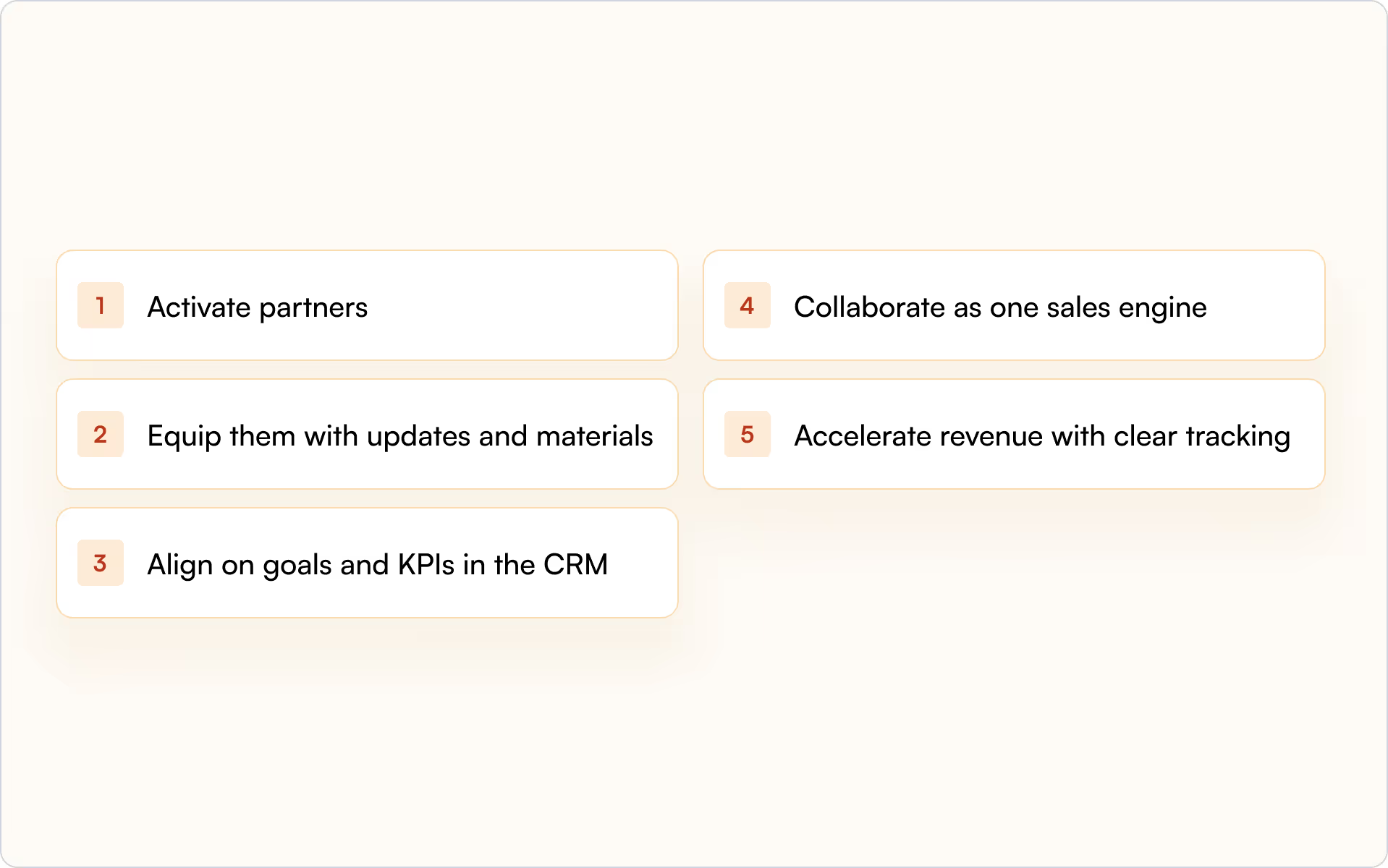
Signing new partners is easy; managing channel for mutual success is the real work. Competition is intense, partner ecosystems are crowded, and buyers expect coordinated experiences across software, services, and integrations. If you don’t keep partner relationships active — through timely updates, useful marketing materials, and clear sales support — enthusiasm fades, channel conflict rises, and deals quietly stall. The best programs treat partners as an extension of the sales team, not a parallel track. They publish sales targets and key performance indicators, make the entire partner lifecycle visible in the CRM, and keep the same page across partner managers, AE, and RevOps. When you track partner progress alongside direct motions and tie activities to outcomes, you get faster cycles, cleaner attribution, and reliable forecasting. Introw’s stance is pragmatic: meet partners where they already work, sync everything back to Salesforce or HubSpot, and let automation handle the nudges so humans can focus on selling.
10 Proven Strategies for Managing Channel Partners in 2026
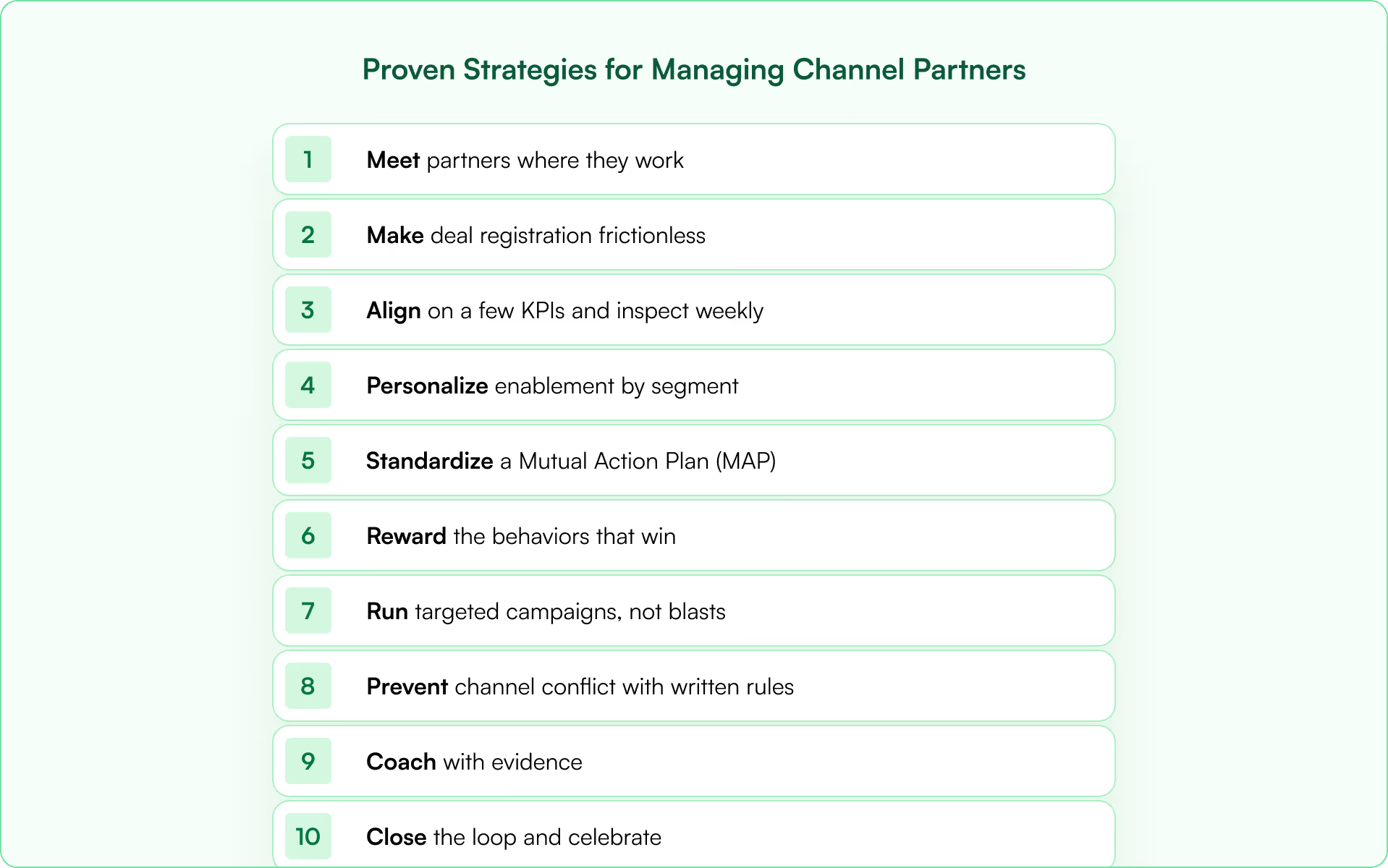
1) Meet Partners Where They Work
Reduce friction by engaging partners through the tools they already use — email, Slack, and the CRM. Replace “please log in” moments with no-login updates and reply-to-update workflows. Introw enables off-portal collaboration so partners can respond from their inbox and have that context land on the opportunity. The result: higher partner engagement, fewer missed signals, and faster decisions.
2) Make Deal Registration Frictionless
Short forms, clear rules, instant confirmation. Let partners register via link or email and auto-attach submissions to the right account with deduplication. Acceptance SLAs should be visible so a partner manager isn’t chasing status. When registration is simple, partners sell earlier, attribution is clean, and your sales team can prioritize correctly.
3) Align on a Few KPIs and Inspect Weekly
Pick a concise set of key performance indicators that tie to outcomes: partner-sourced pipeline, time from registration to acceptance, stage conversion on co-sell deals, average discount, and renewal or expansion on shared accounts. Review weekly internally and monthly with partners. Action beats dashboards: agree on one change per review and track the effect.
4) Personalize Enablement by Segment
Managed service providers often need deeper technical support and services packaging; resellers want campaigns and pricing clarity; referral partners need fast handoffs. Segment by type, tier, and region, then tailor training materials, sales strategies, and incentive programs accordingly. Keep everything easy to find and easy to reuse.
5) Standardize a Mutual Action Plan
Create a simple plan template for every registered opportunity: owners on both sides, next three steps, and dates. Keep it inside the CRM so partner activities and internal tasks live together. This turns “let’s sync later” into concrete progress and keeps independent entities rowing in the same direction.
6) Reward the Behaviors That Win
Develop incentive programs that favor early, qualified registrations, first-meeting mutual action plans, and clean data. Pay on time and publish status so finance doesn’t become the help desk. Balance sourced and influenced models to prevent noise. When rewards mirror reality, you’ll see improved partner performance without adding complexity.
7) Run Targeted Campaigns, Not Blasts
Use your segments to deliver timely announcements, co-marketing offers, and marketing materials that match the partner’s audience. Track opens, clicks, replies, and pipeline created so you can double down on what works. Partners feel valued when outreach is relevant and light on ceremony.
8) Prevent Channel Conflict With Written Rules
Define protection windows, duplicate logic, and escalation paths. Keep decisions quick and documented in the CRM. Clear, enforced rules lower drama and safeguard long term relationships — especially when multiple vendors and overlapping territories are in play.
9) Coach With Evidence
Replace gut feel with concrete observations: “Your registrations stall at validation; let’s tighten discovery and bring technical support earlier.” Use conversation snippets, win-loss notes, and customer data patterns to improve talk tracks. Share learnings across partners so valuable insights travel.
10) Close the Loop and Celebrate
Publish small wins, share what changed because of feedback, and highlight partner reps who moved a deal. Recognition compounds motivation. A simple monthly roundup does more for partner relationships than another generic webinar.
Tech Stack & Frameworks That Actually Help
Modern partner management doesn’t require a maze of tools. Aim for a CRM-first spine that covers registration, collaboration, and analytics. You’ll want automation for updates, no-login access for partners, and real-time engagement tracking so you can measure without chasing screenshots. Introw’s approach is to mirror your sales processes, keep partner portal usage optional, and centralize partner activities on opportunities, accounts, and contacts. That way, track partner progress and revenue attribution live where leadership already inspects the business.
The operate framework
- Engage: meet partners in their tools, send concise updates, and provide sales tools they’ll actually use.
- Measure: tie partner activities to pipeline and bookings, not just logins.
- Optimize: retire low-yield motions, expand plays that convert, and adjust incentives quarterly.
How Introw Supports This Operating Model
Introw brings partner relationship management into Salesforce and HubSpot, letting partners sell without changing their day-to-day habits. No-login deal registration, reply-to-update collaboration, Slack nudges, and role-based dashboards keep everyone aligned. For partner managers, it simplifies managing channel by removing swivel-chair work. For RevOps, it protects data hygiene. For CROs, it links partner activities to forecast and revenue growth — the measures that matter.
Conclusion
Channel partner management in 2026 is a flow, not a checklist. Recruit the right partners, align on a few KPIs, keep communication lightweight and frequent, and make it effortless to register and advance deals. Handle conflict quickly, reward partners for behaviors that move the needle, and keep improving the business strategy with evidence, not hunches. When you operate from a single source of truth and design for adoption, you get mutual success: stronger partner relationships, predictable pipeline, and customers who experience coordinated service from first meeting through renewal. If you want that flow to scale, consider a CRM-first platform like Introw to keep the work simple and the results visible.
Partner LMS Software: The Top 15 Options and What to Look For in 2026
Imagine that your learning system is built for your external partners. You can speed up partner onboarding, boost partner engagement, and clearly connect training to real partner performance.
So, instead of investing heavily in partner training, you'll be able to see who’s enabled, certified, or actually ready to sell.
To understand what makes that possible, it helps to first clarify what partner LMS software actually is, and why it’s fundamentally different from an employee LMS.
Partner LMS Software - What It Is (and Why It’s Different)
Partner LMS software is a learning management system built specifically for partner training.
It helps SaaS teams:
- onboard external partners faster,
- deliver partner education at scale, run certification programs,
- and track partner progress in a way that supports real partner performance and business growth.
Unlike employee training, partner training has to work across a distributed partner network with different partner tiers, regions, and goals.
That’s why modern partner training LMS software is often part of a broader partner enablement strategy, working hand in hand with partner relationship management software to support long-term partner performance.
The difference becomes clearer when you compare it directly:
For teams comparing the best partner training LMS software, this list focuses on what actually matters in a partner LMS tool, not generic employee training features.
The 15 Best Partner LMS Software Options (2026)
When you’re choosing partner LMS software for your business, you’re not trying to pile on features. What you want is a system your partners will actually use.
Here’s the selection we put together to help you compare the options and see which ones might fit how your team works.
1. Introw Partner LMS (Best for CRM-first SaaS partner programs)
Introw's Partner LMS is designed for B2B teams that want partner training, certification programs, and partner engagement to directly support partner performance and revenue, not live in a disconnected learning management system.
Best for:
Teams using Salesforce or HubSpot that need fast external training, clear certification management, and visibility into partner progress tied to pipeline.
Why it stands out:
Introw focuses on speed, relevance, and real adoption. Instead of building training programs from scratch, an AI agent turns your existing website content, partner portal docs, or sales materials into structured courses in minutes. You can see this flow in the feature walkthrough.
Key features:
- AI-powered course creation with modules, quizzes, and assessments
- One-click certification tools to ensure only certified partners sell specific solutions
- Bulk partner enrollment by partner tier, region, or partner group
- Automated reminders and announcements via email and Slack, for example: “Company X has enrolled you in Advanced Product Training 2026.”
- Progress tracking and engagement data aligned to deals and partner performance
Keep in mind:
Introw works best when partner training, partner enablement, and partner engagement are part of the same CRM-first motion.
Integrations:
Native integrations with Salesforce, HubSpot, and Slack, with partner LMS data flowing into the wider Introw platform.
Learn more: Explore the Partner LMS or request a demo.
2. TalentLMS

TalentLMS is a learning management system often used as partner training software by teams that want to deliver external training without a steep learning curve. It’s typically chosen for straightforward partner onboarding and partner education.
Best for:
SMB to mid-market teams that need a simple way to run partner training programs, sales training, and basic certification programs.
Why it stands out:
TalentLMS is easy to use and quick to set up. Teams can create courses, organize training materials, and deliver on-demand training with minimal administration.
Partner training features:
- Separate learning spaces for different partner groups
- Course creation for product knowledge and sales training
- Certifications, assessments, and progress tracking
Keep in mind:
TalentLMS handles training delivery well, but deeper CRM visibility and advanced partner performance analytics usually sit outside the platform. This is often where teams start thinking more about partner engagement beyond training alone.
3. Thinkific

Thinkific is a platform often used to package partner education into branded academies and certification hubs. It’s sometimes chosen as partner training software when the focus is on presentation and structured learning experiences rather than deep partner operations.
Best for:
Product-led or marketing teams building partner academies, certification tracks, or external training portals.
Why it stands out:
Thinkific offers polished course and landing page experiences, with built-in support for cohorts, quizzes, and certificates.
Partner training features:
- Course creation for partner education and product knowledge
- Certificates and assessments
- Community and cohort-based learning
Keep in mind:
Thinkific is oriented toward external education. Advanced partner onboarding workflows, CRM attribution, and partner performance tracking typically require add-ons or integrations.
4. Intellum

Intellum is an enterprise learning platform used for large-scale customer and partner education programs. It’s designed to support complex training delivery across broad partner ecosystems.
Best for:
Enterprise teams running structured partner training programs at scale.
Why it stands out:
Intellum offers robust learning experiences, advanced analytics, and extensibility for complex training environments.
Partner training features:
- External audiences and partner portals
- Certification programs and events
- Reporting tools for training effectiveness
Keep in mind:
Intellum is an enterprise-grade system. Implementation effort and CRM alignment for partner performance should be evaluated early.
5. 360Learning
360Learning focuses on collaborative and peer-driven learning. It’s sometimes used for partner enablement training where shared knowledge and social learning matter.
Best for:
Teams that want partners to co-create content and learn from each other.
Why it stands out:
360Learning emphasizes social learning, peer reviews, and collaborative course creation.
Partner training features:
- External partner groups
- Certifications and blended learning
- Social and peer-generated content
Keep in mind:
The collaboration-first model works best with clear governance, especially when applied to external partners.
6. Articulate 360

Articulate 360 is a content creation suite rather than a full learning management system. It’s often paired with partner training software to build rich courses.
Best for:
Teams that want to author high-quality SCORM or xAPI training content.
Why it stands out:
Articulate’s tools, like Storyline and Rise, are widely used to create responsive, interactive training materials.
Partner training features:
- Advanced course creation for product knowledge and sales training
- SCORM and xAPI support
Keep in mind:
Articulate handles content creation only. You’ll need a separate LMS to deliver training, manage certifications, and track partner progress.
7. LearnUpon
LearnUpon is an LMS designed for extended enterprise use, including customer and partner training. It’s often used when teams need clear admin controls across audiences.
Best for:
Teams training customers and partners through structured portals.
Why it stands out:
LearnUpon offers a clean interface and multi-portal setup for different audiences.
Partner training features:
- Separate learning portals for partner groups
- Learning paths and certifications
- Reporting on training delivery and progress
Keep in mind:
For teams focused on channel sales performance or CRM-level partner analytics, integration depth should be reviewed.
8. Skilljar
Skilljar is a platform focused on customer and partner education, often used by teams running structured certification and compliance-driven training programs.
Best for:
Teams that need to deliver partner education at scale with an emphasis on certifications and reporting.
Why it stands out:
Skilljar is purpose-built for external training and offers strong APIs and analytics for education programs.
Partner training features:
- External partner portals
- Certification programs and badges
- Reporting tools for training effectiveness
Keep in mind:
Skilljar focuses on education delivery. Partner engagement flows and CRM-level partner performance tracking may require additional integrations.
9. Docebo
Docebo is an enterprise learning management system used for extended enterprise training, including customers and partners. It’s sometimes selected as partner training software for large, global programs.
Best for:
Enterprise organizations managing complex partner training programs across regions.
Why it stands out:
Docebo offers AI-assisted content curation and a broad ecosystem of integrations.
Partner training features:
- Multi-audience portals for external partners
- Certification management and automation
- Advanced analytics and reporting
Keep in mind:
Implementation can be complex. Teams should validate CRM alignment and partner performance visibility early.
10. Litmos
Litmos is an LMS commonly used in compliance-heavy environments with large partner networks.
Best for:
Organizations that need consistent training delivery and compliance tracking for global partners.
Why it stands out:
Litmos offers compliance tooling, assessments, and a large off-the-shelf content library.
Partner training features:
- External learners and partner groups
- Certifications and assessments
- Reporting on training completion
Keep in mind:
User experience can feel more traditional. Partner segmentation and engagement flexibility should be reviewed.
11. Absorb LMS
Absorb LMS is an LMS designed for extended enterprise training, including partner and customer education.
Best for:
Teams that want flexible portals and strong reporting across external audiences.
Why it stands out:
Absorb LMS combines configurable learning portals with solid analytics and automation options.
Partner training features:
- Multi-tenant portals for partner groups
- Certification programs and automation
- Reporting on progress tracking and training delivery
Keep in mind:
Engagement outside the LMS, such as email or Slack-based updates, may require integrations.
12. Mindtickle

Mindtickle is a sales readiness platform sometimes used for partner enablement training, particularly when the focus is on sales execution rather than broad partner education.
Best for:
Teams focused on partner sales readiness, pitching, and certification tied to sales motions.
Why it stands out:
Mindtickle emphasizes coaching, role-play, and readiness scoring to support sales performance.
Partner training features:
- Partner sales tracks and certifications
- Content, practice, and assessments
- Readiness scoring and coaching workflows
Keep in mind:
Mindtickle is readiness-first. Most teams pair it with a PRM or LMS to cover broader partner onboarding and operations.
13. LearnWorlds
LearnWorlds is a platform designed for external education, often used to build branded academies and certification hubs.
Best for:
Teams that want to launch partner education programs with strong branding and optional monetization.
Why it stands out:
LearnWorlds offers flexible course creation, interactive content, and polished learning experiences.
Partner training features:
- Course creation for partner education and product knowledge
- Certifications, assessments, and learning paths
- Branded portals for external partners
Keep in mind:
Partner-specific governance, segmentation, and CRM visibility typically require additional setup or integrations.
14. Cornerstone Customer & Partner LMS
Cornerstone Customer & Partner LMS supports customer and partner training through branded external learning experiences designed to scale across regions, audiences, and partner ecosystems.
Best for:
Large enterprises that already use Cornerstone and want to extend customer and partner training through branded external learning experiences.
Why it stands out:
Cornerstone focuses on scalable external learning with strong governance, making it easier to manage training across complex partner ecosystems and regions.
Partner training features:
- Branded external learning portals for partners and customers
- Certifications, assessments, and structured learning journeys
- Reporting and analytics across large partner networks
Keep in mind:
Cornerstone is built for enterprise scale. Setup and customization can require more time, and teams should closely evaluate partner user experience during implementation.
15. Tovuti LMS
Tovuti LMS is a flexible learning management system used for customer and partner training, with an emphasis on configurable learning experiences rather than rigid workflows.
Best for:
Teams looking for a customizable LMS to support partner training programs, partner onboarding, and external training without enterprise-level complexity.
Why it stands out:
Tovuti offers a wide range of configuration options for courses, portals, and learning experiences, making it easier to adapt training to different partner groups and use cases.
Partner training features:
- Branded learning portals for external partners
- Course creation, assessments, and certifications
- Learning paths and engagement features
Keep in mind:
Tovuti provides flexibility, but teams should assess how well reporting, CRM visibility, and partner performance tracking align with their broader partner operations.
There’s no single best partner LMS software for every team. What matters is choosing a system that fits how your channel actually works, not just how training looks on a feature list.
The next section breaks down the must-have evaluation criteria SaaS teams should focus on when comparing partner LMS software, from course creation and certifications to engagement and CRM visibility.
Must-Have Evaluation Criteria (SaaS Channel POV)
When you’re narrowing down partner LMS software, this is usually where the decision becomes clearer.
Beyond feature lists, what matters is whether a system can support partner training at scale, fit into your existing setup, and keep working as your partner ecosystem grows, especially for channel partner training.
The table below reflects how SaaS teams typically evaluate partner LMS tools when comparing options like a channel partner LMS or the best partner training LMS software for their model.
Taken together, these criteria make it easier to compare a partner LMS, a training partner LMS, or the best LMS for partner training without over-indexing on features that won’t matter long term.
When the foundation is right, partner training supports partner knowledge, partner credibility, and partnership marketing instead of sitting in a silo.
After reviewing the criteria, it becomes easier to see why some teams look beyond a standalone learning management system and choose a platform built specifically for partner learning.
Why Teams Choose Introw for Partner Learning (in 90 Seconds)
Create partner learning without slowing teams down
Most teams already have the right content; it’s just spread across websites, docs, and partner portals.
Teams like Factorial moved away from manually rebuilding training by turning existing materials into structured courses with modules and quizzes, making it easier to launch and update partner learning as the business evolves.
Use certifications to protect quality, not add friction
Introw supports certificates, expirations, and gated tracks so advanced training and selling motions stay aligned with partner readiness.
Enroll the right partners at the right time
With Introw, teams can segment partners by type, tier, or region and enroll them in bulk, keeping training relevant without adding operational overhead.
Keep partners engaged without another portal to check
One of the biggest blockers to partner learning is relying on portals that partners don’t visit regularly.
Cubbit and Factorial saw stronger adoption once training communication moved into channels partners already use, with announcements and reminders delivered through email and Slack instead of another login.
Connect learning to what matters
Training becomes far more useful when it doesn’t live in isolation. For teams like Coder, visibility into which partners were trained and ready to co-sell was essential.
By aligning course completion and certification data with Salesforce or HubSpot, Introw helps teams understand partner readiness in the context of pipeline and revenue.
If you’re at the point of making a decision, a few simple next steps can help bring everything together:
- Map your current gaps
Look at where partner learning slows down today, whether that’s course creation, partner onboarding, engagement, or visibility into partner readiness. - Pressure-test your criteria
Revisit the evaluation criteria above and shortlist the capabilities that matter most for your partner ecosystem, not just what looks good on a feature list. - See the workflow end-to-end
Before committing, make sure you understand how partner learning fits into your existing CRM, partner operations, and revenue motion.
Now it's time for you to see how this works in practice.
Request a demo and walk through the partner learning flow end-to-end.
16 Deal Registration Software Platforms Your Partners Will Actually Use
What would change if every partner could register deals from email or Slack in seconds?
Most deal registration programs still rely on long forms, portal logins, and manual updates. That slows partners down and creates a duplicate pipeline and unclear ownership.
A modern deal registration process removes those steps, automates approvals, and keeps every deal stage in your CRM. When registering deals feels easy, partners submit earlier and stay aligned with your team.
You’ll learn
- what effective deal registration software looks like today,
- how to evaluate the essentials,
- and which platforms actually help partners register deals consistently.
So where does friction come from, and how does a better workflow protect partner trust and improve forecasting?
Why deal registration still breaks (and how to fix it)
Deal registration should be simple. Partners register deals, your team reviews them quickly, and everyone stays aligned.
Yet many deal registration programs still create friction. Partners hit access issues, approvals move slowly, and deal data becomes inconsistent.
Over time, this reduces partner trust and increases channel conflict across direct and indirect sales.
Deal registration process friction
Most deal registration failures come from three predictable blockers:
- Partner portals that require logins or too many steps.
- Deal submission forms that take too long to complete.
- Approval delays that leave partners without updates.
When the process feels heavy, partners default to emailing an AE instead of using the deal registration tool.
This leads to duplicate deal data, unclear ownership, and rising tension between channel partners and the direct sales team.
Channel managers then lose visibility into deal stages and partner behavior.
A common breakdown looks like this:
- A partner tries to register deals but cannot access the partner portal easily.
- The direct sales team enters the same customer manually.
- Conflicting records appear, and no one has a clean view of deal progress.
This cycle hurts partner relationships and weakens your partner program.
What good deal registration looks like
A strong deal registration program focuses on three essentials:
- Off-portal intake through email, Slack, or lightweight links.
- Instant confirmations tied to CRM deal stages.
- Clean, CRM-native deal data that updates in real time.
With these elements in place, partners register deals earlier and more consistently.
Clear rules reduce conflict when multiple partners work with the same customer. Automated updates keep partners informed without manual data entry. And real-time visibility across your sales pipeline helps both channel partners and internal channel managers stay aligned.
Here is how modern systems solve old problems:
Platforms that follow this model, including Introw’s deal and lead registration workflow, reduce friction by syncing every submission directly into the CRM and keeping partners informed automatically.
Why this matters for deal flow
Deal registration software works only when partners trust the experience.
When partners can register deals quickly, stay informed, and see consistent deal stages, they engage more. This leads to cleaner partner pipeline visibility, fewer disputes, and faster revenue cycles.
To evaluate which deal registration software delivers on this, the next section breaks down the core features every buyer should look for in 2026.
How to evaluate deal registration tools (buyer checklist)
Choosing deal registration software is easier when you know what actually drives partner adoption.
Most teams compare features, but in our experience, the real difference comes from how well the tool supports your partners day to day.
If the process feels simple, partners register deals more often, and your deal data stays clean inside Salesforce or HubSpot.
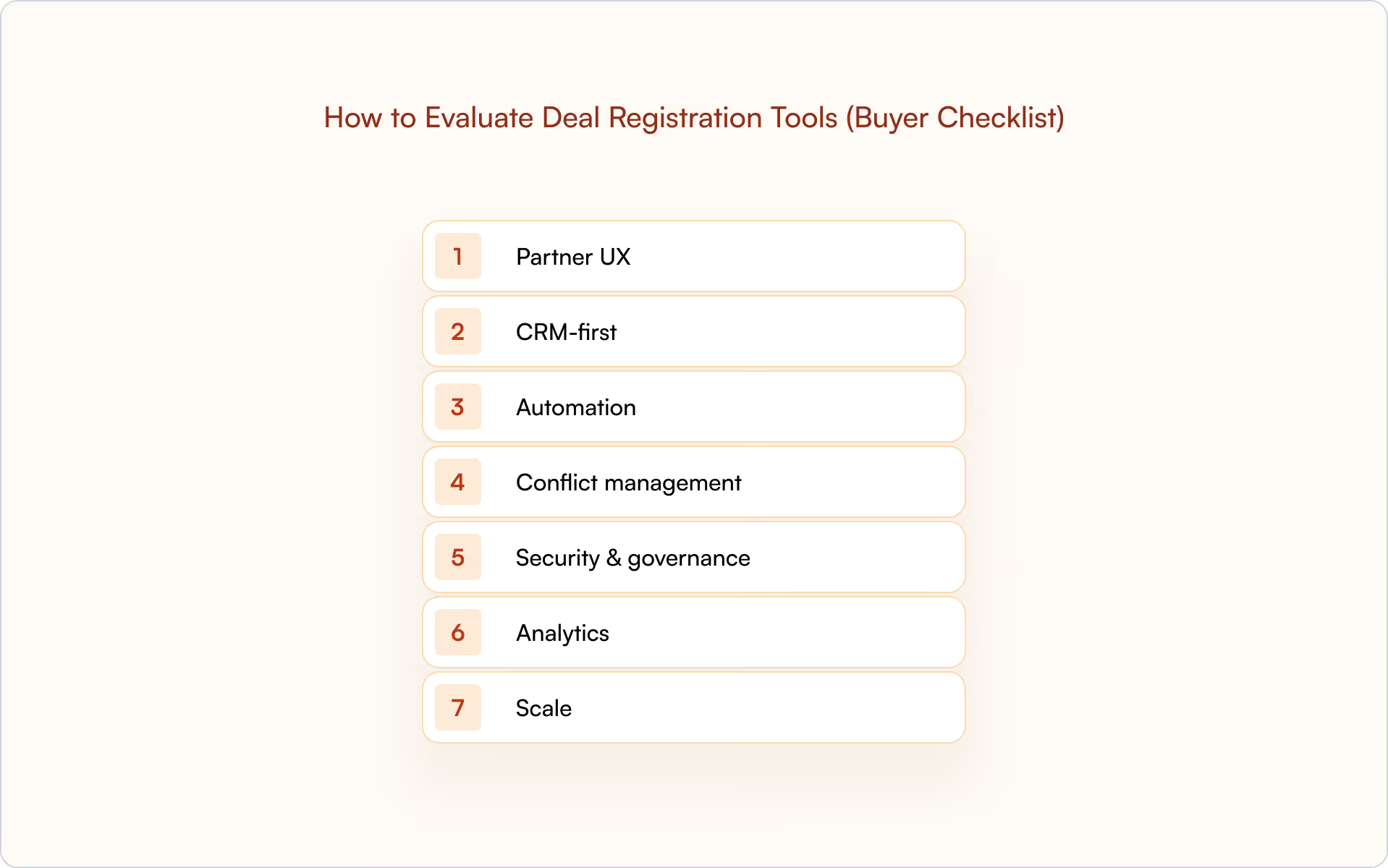
Start with partner experience
Partner experience is the biggest factor in deal registration success. If the process feels slow or confusing, partners will skip it and email someone on your direct sales team instead.
Strong tools make deal registration simple by offering:
- Fast intake through email, Slack, or a short deal submission form.
- Clear steps so partners know exactly how to register deals.
- Mobile-friendly options for partners who work on the go.
We see the best results when channel partners can register deals without touching a partner portal. It removes friction and improves partner trust from the start.
Set up a good deal registration module
A good deal registration module should help your business reduce channel conflict and keep deal progress visible across teams.
When tools automate the steps partners usually struggle with, your partner program becomes easier to run.
Look for:
- Automatic approvals based on time stamps, partner tier, or ownership rules.
- Real-time sync of deal stages inside your CRM.
- Clean deal data that does not require manual data entry.
These features keep your channel pipeline data accurate and give both partner managers and internal sales teams a single view of each opportunity.
Governance and scale as your partner program grows
As your partner program expands, you need structure. Different partner segments often need different experiences, and your internal teams need clear rules to avoid mix-ups.
We suggest checking for:
- Role-based access so partner managers and sales leadership see what they need.
- A reliable audit trail that tracks changes and partner behavior.
- Flexible segmentation for geos, partner tier, or product lines.
These guardrails help your business stay aligned as more partners register deals and your sales pipeline grows.
A quick way to compare tools
Why this checklist helps your business
A deal registration program only works when partners engage with it.
If you choose software that simplifies the process, your partners register deals earlier, your teams stay aligned, and you avoid the channel conflict that slows down revenue.
Now that you know what to look for, we can compare the deal registration tools that actually help partners register deals without friction.
The 17 best deal registration software platforms (2026)
We've put together our picks for solid deal registration tools that we see most often across SaaS partner programs.
Each one supports deal registration, but they solve different problems depending on your partner segments, tech stack, and channel strategy.
Use this section to match your program design to the right platform, not just the biggest brand.
1. Introw
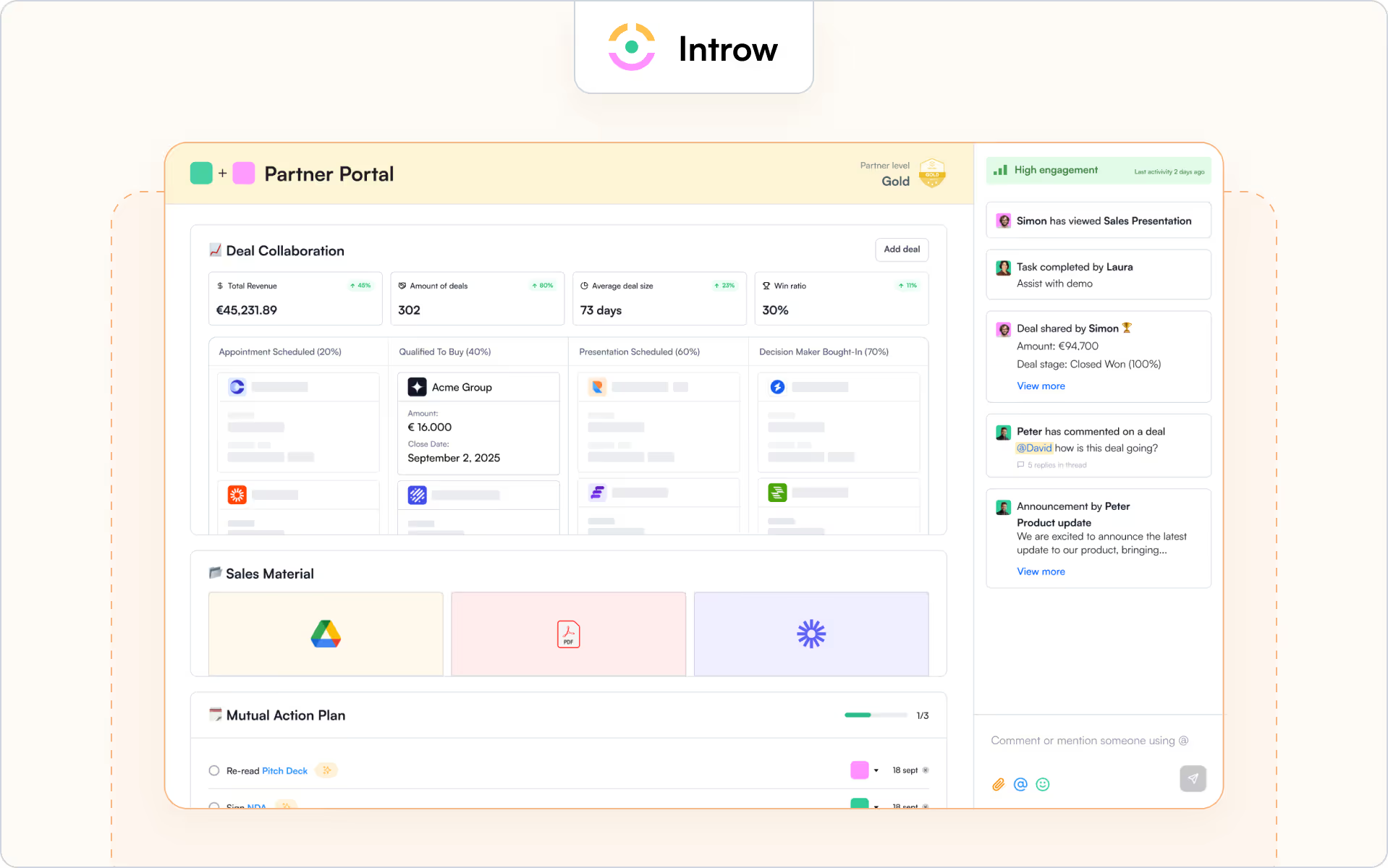
Introw is a CRM-native deal registration system that lets partners register deals from email, Slack, or lightweight links instead of a portal.
Who it’s for
B2B teams on Salesforce or HubSpot running referral, reseller, or co-sell motions with 20–300+ channel partners.
Why choose it
Partners register deals without logging in, while your teams work entirely from native CRM objects with real-time deal stages.
Standout capabilities
Off-portal intake, automated approvals, deal progress updates synced to Salesforce or HubSpot, and engagement analytics across the partner pipeline.
Keep in mind
Best if you want deal registration, partner engagement, and attribution in one CRM-first platform instead of a heavy portal.
Integrations/notes
Deep Salesforce and HubSpot integrations, Slack notifications, open API, and a focused deal registration module tied to clean pipeline data.
2. Impartner
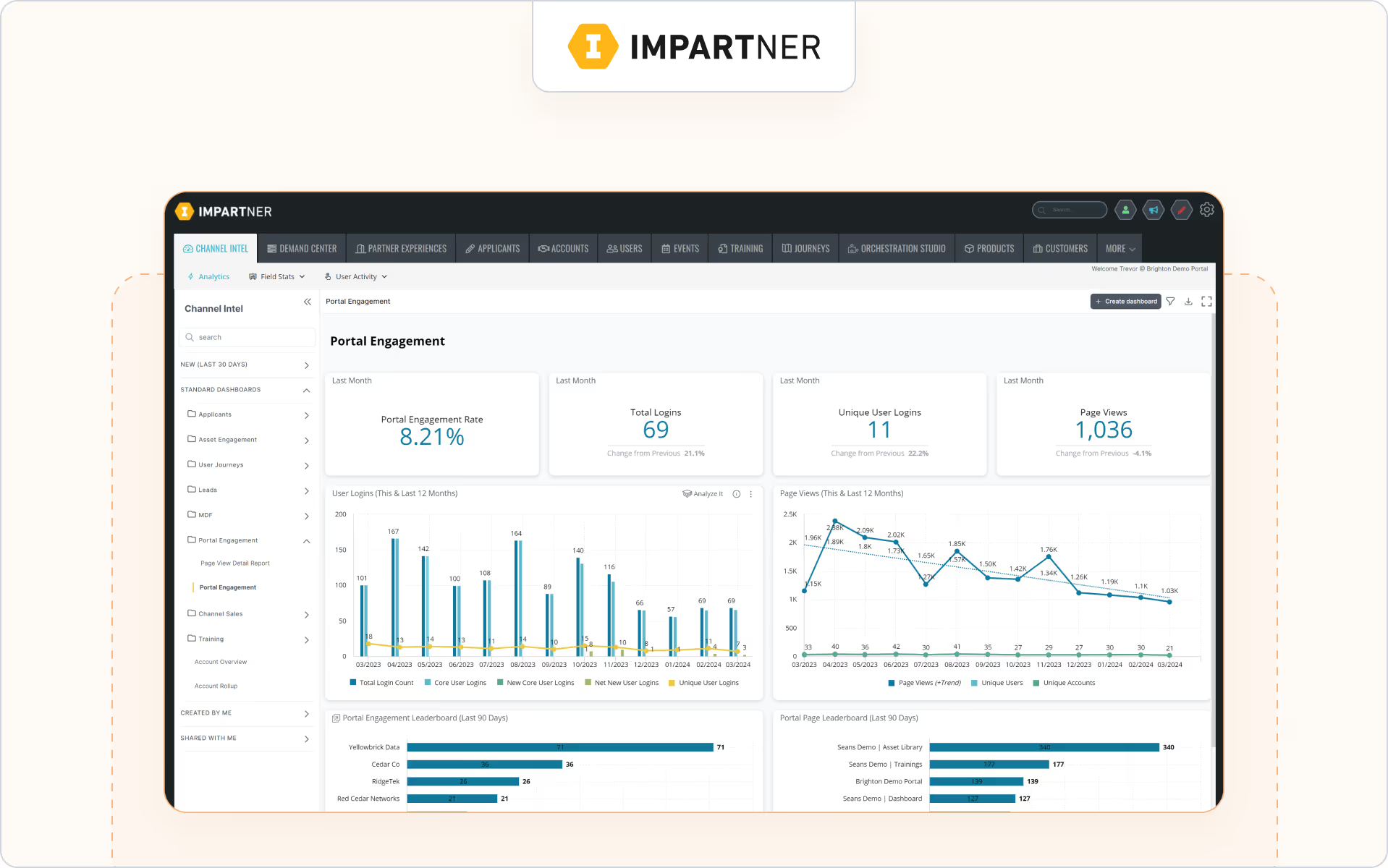
Impartner is a full PRM platform built for large channel programs with complex workflows.
Who it’s for
Global SaaS and technology companies with structured partner tiers and compliance needs.
Why choose it
Mature deal registration module, configurable approval logic, and strong governance for value-added resellers and distributors.
Standout capabilities
Tier rules, multi-step approvals, MDF, channel performance reporting, and tools to reduce channel conflict.
Keep in mind
Heavier setup; works best with dedicated channel managers and Salesforce-centric environments.
Integrations/notes
Strong CRM connectors, especially Salesforce, plus a wide ecosystem of partner marketing integrations.
3. Channelscaler (prev. Allbound)

Channelscaler combines partner training, content, and deal registration in a single portal.
Who it’s for
Teams that care about partner enablement as much as partner pipeline.
Why choose it
Partners can access marketing materials, complete training, and register deals in one place.
Standout capabilities
Content hub, learning paths, QBR support, and MDF handling with a guided partner portal.
Keep in mind
Portal-first model, so plan how you will keep partners logging in consistently.
Integrations/notes
Integrates with major CRMs and common partner marketing tools.
4. Kiflo
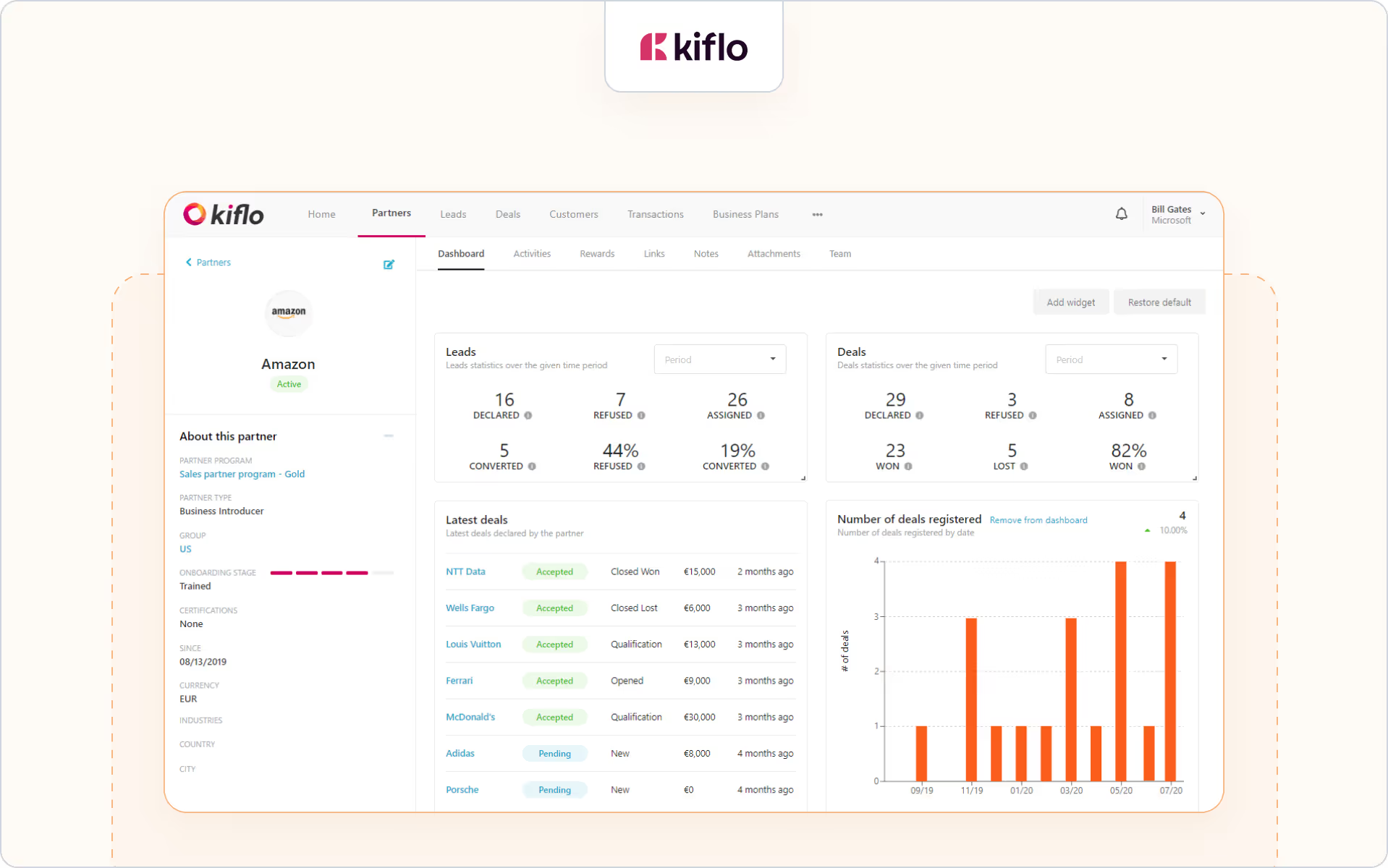
Kiflo is a simple, lightweight PRM with built-in deal registration for growing partner programs.
Who it’s for
SMB and mid-market SaaS companies launching a partner program for the first time.
Why choose it
Straightforward deal registration and onboarding without heavy admin.
Standout capabilities
Deal forms, partner onboarding, commission tracking, and basic partner performance reporting.
Keep in mind
Analytics and customization are lighter for complex global programs.
Integrations/notes
Connects with Salesforce, HubSpot, and common marketing tools.
5. Channeltivity
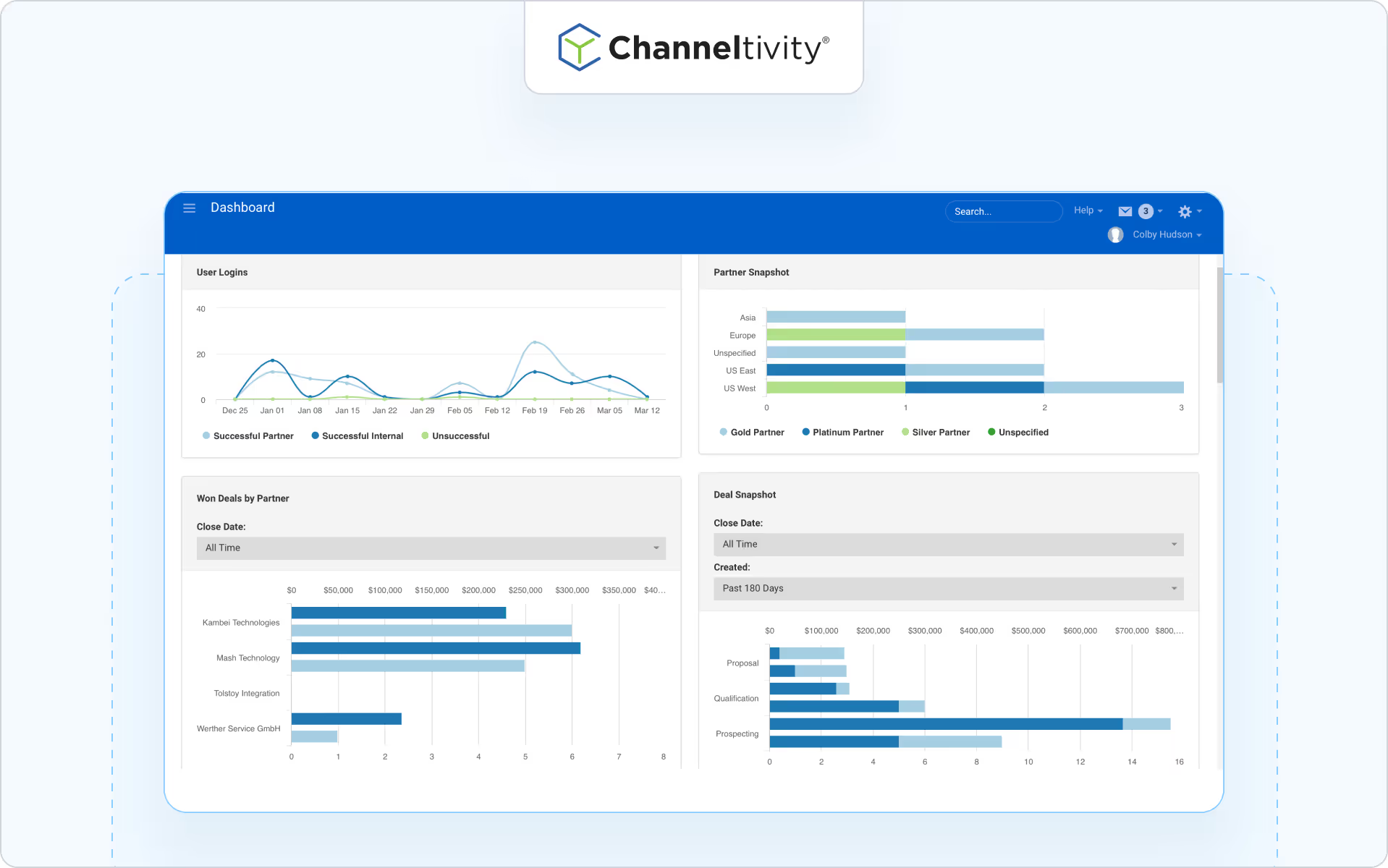
Channeltivity delivers structured deal registration and channel operations in a clean partner portal.
Who it’s for
Tech vendors that want predictable deal registration and partner management without enterprise overhead.
Why choose it
Reliable deal registration module with lead distribution and partner onboarding.
Standout capabilities
Deal forms, MDF, lead routing, referral management, and HubSpot integration.
Keep in mind
Off-portal submission is limited, so adoption relies on partner portal use.
Integrations/notes
Strong HubSpot integration with support for Salesforce.
6. Magentrix
Magentrix is a partner relationship management (PRM) platform.
Who it’s for
Salesforce-centric companies that need branded partner experiences.
Why choose it
Lets you build custom partner portals with community features, content, and deal registration.
Standout capabilities
Admin is no-code with drag-and-drop capabilities (and has been for the past three years). Magentrix emphasises that it’s the only enterprise-fit PRM with 100% no-code capability. You can also create flexible portal pages and set granular permission controls.
Integrations/notes
Magentrix positions itself as an alternative to Salesforce Experience Cloud, with integrations/connectors available (including Salesforce, depending on your setup) as well as support and marketing tools.
7. ZINFI
ZINFI supports large, complex channel programs that need detailed rules and compliance.
Who it’s for
Enterprises with many partner types, geos, and strict governance requirements.
Why choose it
Highly configurable approval rules and workflows for deal registration programs at scale.
Standout capabilities
Audit trails, rule engines, partner tiering, and multi-language support.
Keep in mind
Admin setup can be intensive; best for structured, mature channel programs.
Integrations/notes
CRM integrations plus connectors for channel marketing and data management.
8. WorkSpan
WorkSpan specializes in co-selling and alliances rather than classic PRM workflows.
Who it’s for
Vendors working with hyperscalers or cloud marketplaces on joint opportunities.
Why choose it
Shared opportunity records make co-sell deal stages clear across both organizations.
Standout capabilities
Joint pipeline, ecosystem account mapping, and influenced-versus-sourced reporting.
Keep in mind
Not a traditional deal registration portal; often used alongside other partner tools.
Integrations/notes
Salesforce, Microsoft Dynamics, and cloud marketplace ecosystems.
9. Unifyr (formerly Zift Solutions)
Unifyr is an all-in-one partner management platform that includes deal registration, partner marketing, and enablement.
Who it’s for
Established channel programs managing many partners, regions, and partner segments.
Why choose it
Combines deal registration, training, and channel marketing in one partner portal.
Standout capabilities
Through-channel marketing, certification paths, deal lifecycle tracking, and channel revenue reporting.
Keep in mind
Broad feature set; define which modules matter most so partners are not overwhelmed.
Integrations/notes
Connectors for Salesforce, HubSpot, and major marketing systems.
10. Computer Market Research (CMR)

CMR provides deal registration and compliance automation for traditional channel programs.
Who it’s for
Vendors managing distributors, resellers, or partners with strict governance requirements.
Why choose it
Strong multi-step approval logic and audit records for channel conflict management.
Standout capabilities
Deal registration module, ERP/CRM connectors, and tier-based workflows.
Keep in mind
UX leans traditional; training may be needed for partner adoption.
Integrations/notes
Supports major CRMs and ERPs used in hardware and distribution channels.
11. PartnerStack

PartnerStack mixes affiliate, referral, and reseller programs with simple lead and deal registration.
Who it’s for
SaaS companies working with many small partners across different partner segments.
Why choose it
Partners get one portal to find campaigns, register deals, and track rewards.
Standout capabilities
Marketplace, payout automation, onboarding flows, and basic deal registration.
Keep in mind
Not CRM-native; syncing tight pipeline data may require extra setup.
Integrations/notes
Billing, payment, and referral tools, with optional CRM integrations.
12. Kademi
Kademi focuses on partner enablement, incentives, and engagement, with deal registration included.
Who it’s for
Partner programs that rely heavily on motivation, gamification, and performance tracking.
Why choose it
Combines deal registration with incentives, certifications, and training.
Standout capabilities
Gamification, rewards, content libraries, and deal forms in one portal.
Keep in mind
Best suited for programs where partner loyalty is the main driver.
Integrations/notes
CRM and marketing tool integrations to support partner programs.
13. Partnerize
Partnerize supports partnership management across affiliates, influencers, and strategic partners.
Who it’s for
Enterprise brands with hybrid partner programs, including both performance and strategic partnerships.
Why choose it
Tracking, contracting, and attribution across many partner types, including deal-like flows.
Standout capabilities
Payments, performance reporting, partner discovery, and flexible contracting.
Keep in mind
Not built for classic B2B co-sell deal registration.
Integrations/notes
API-driven integrations for analytics, data warehouses, and performance platforms.
14. TUNE

TUNE is a customizable partner platform for app, mobile, and performance-driven programs.
Who it’s for
Mobile-focused vendors and performance teams that need flexible tracking.
Why choose it
Open APIs let teams design their own partner workflows, including light deal-style submissions.
Standout capabilities
Custom tracking, flexible partner types, and strong analytics.
Keep in mind
Not designed for B2B channel sales or structured deal registration.
Integrations/notes
API-first, integrates with mobile and ad-tech ecosystems.
15. Affise

Affise powers performance and affiliate programs with tracking, attribution, and partner management.
Who it’s for
Digital commerce vendors working with large performance networks.
Why choose it
High-scale partner tracking with optional lead or deal-style inputs.
Standout capabilities
Fraud protection, performance analytics, and flexible payout setups.
Keep in mind
Not a traditional channel sales platform; confirm fit for B2B deal registration needs.
Integrations/notes
Analytics, BI tools, and performance marketing platforms.
16. Salesforce PRM
Salesforce PRM extends Sales Cloud with partner portal and deal registration features.
Who it’s for
Companies standardized on Salesforce that want deal registration inside their CRM.
Why choose it
Partners register deals through a branded portal built on Experience Cloud with native Salesforce objects.
Standout capabilities
Partner portal, opportunity sharing, channel sales workflows, and training through Trailhead.
Keep in mind
Out-of-the-box UX is basic; usually needs admin support to fine-tune.
Integrations/notes
Deep Salesforce ecosystem integration, including Slack.
We know reviewing this many tools can feel overwhelming, but having a clear comparison helps you focus on what truly improves partner adoption and reduces friction.
The best way to narrow your list is to run a small, structured test.
So how do you compare platforms in a way that reflects real partner behavior?
Your 30-day deal registration software evaluation plan
A simple, structured test is the easiest way to see which deal registration software your partners will actually use.
In our experience, a short evaluation reveals far more than feature lists or demos. It shows how your channel partners register deals in real conditions, how clean your deal data stays, and which tool removes friction for your teams.
Week 1: shortlist and configure
Start with two or three options from your list. Set them up with the basics:
- Deal fields, partner segments, and approval rules
- Off-portal intake through email, Slack, or a lightweight form
- CRM sync for deal stages and ownership
This gives you a real view of how each deal registration tool fits your sales process.
Week 2: run a small partner pilot
Invite ten partners from different partner segments. Ask them to register deals the same way they usually would and watch what slows them down.
Measure:
- How fast partners register deals
- What questions they ask during the deal registration process
- How easily they stay informed as deal data updates in your CRM
This shows the difference between portal-heavy tools and software deal registration that partners enjoy using.
Week 3: evaluate performance
Focus on the signals that matter for channel programs:
- Submission time and approval speed
- Percent of accepted deals and clean deal stages
- Partner feedback on ease of use and partner satisfaction
These metrics show which platform improves partner pipeline visibility and reduces channel conflict across teams.
Week 4: choose your winner
Share your findings with sales leadership and internal channel managers. Here are the steps:
- Highlight what helped partners register deals faster,
- Look at where deal data stayed clean,
- and evaluate which deal registration software supported your channel partners without extra effort.
A fast path forward is to adopt the tool that reduces friction and improves forecasting.
Want to see how a CRM-first workflow feels in Salesforce or HubSpot? Request an Introw demo.
To understand how this plays out when partners register deals without hesitation, it helps to look at how Introw handles the entire flow.
Why SaaS teams pick Introw for deal registration
If you want partners to register deals consistently, keep deal data clean, and avoid channel conflict, the experience has to be simple.
Introw was built for that.
It meets partners where they already work, keeps your CRM as the single source of truth, and removes the manual work that slows teams down.
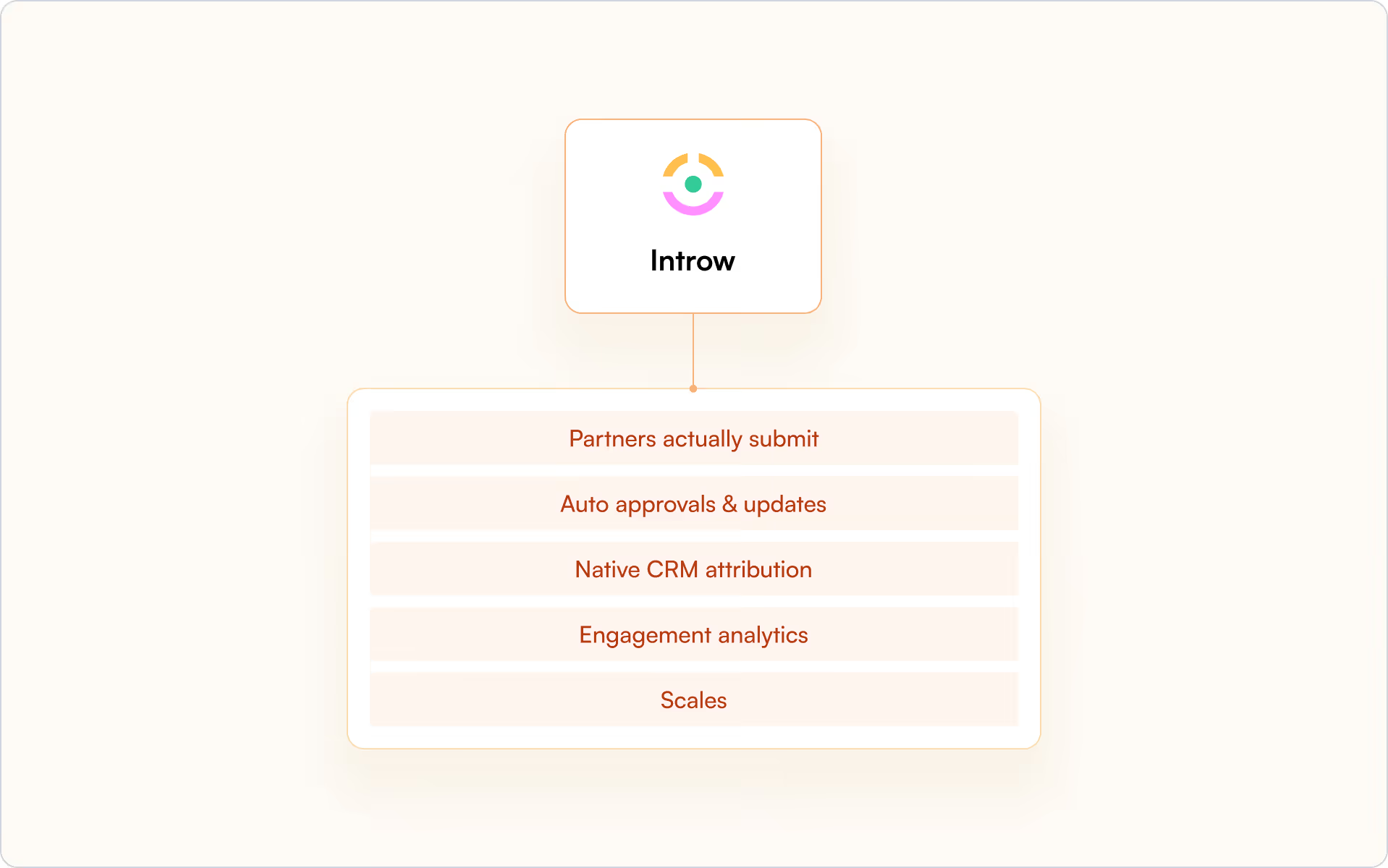
A quick look at how Introw compares
The results teams see with Introw
Introw is used in real partner programs that need reliable deal registration software. One example comes from SANDSIV, where moving away from spreadsheets to a CRM-first workflow created a measurable impact.
This lift came from reducing friction, improving partner satisfaction, and giving internal sales teams clear visibility into deal stages across different partner segments.
Your next steps
If you want your partner program to run with less friction and more consistency, here are three simple places to start:
- Audit your current deal registration process
Identify where partners get stuck, which steps require manual updates, and where deal data becomes unreliable in your CRM. - Test two or three tools with real partners
Even a small pilot shows which platform supports your channel partners and which ones create more work. - Compare CRM-native workflows
Look closely at how each tool handles deal stages, approvals, and pipeline visibility inside Salesforce or HubSpot.
Ready to see what a CRM-first, partner-friendly workflow looks like in practice? Schedule a short Introw session and request a demo today.
Partner Lead Registration: Capture Leads Without Logins in 2026
Great partner programs die on their first form. You want partners engaged, but the moment they hit a login wall, many stop. The good news: you can run partner lead registration without a portal login, keep data clean, and still resolve ownership fast. Below is a practical guide for teams that want more registered leads, fewer disputes, and a smoother sales process.
Why partner lead registration matters now
As your partner ecosystem grows, multiple partners find the same end customer, sales reps ask “who owns this account,” and leadership needs pipeline visibility. Lead registration (capturing a partner-sourced prospect early) protects the partner’s effort, reduces channel conflict, and lets you assign leads to the right team fast. It also creates a trail you can trust for commission payments and co-sell attribution.
When you make registration lightweight and fair, partners stay engaged, your sales team sees context, and operations keep a single source of truth for registered leads and registered deal records.
What “partner lead registration” is (and how it differs from deal registration)
Think of lead registration as the earliest claim: the partner flags a prospect with enough data for you to review and accept or decline. Deal registration comes later, once there’s a qualified opportunity with stage, amount, and next steps. Both fit inside modern partner programs, but they serve different moments:
- Lead registration: fast intake to assign leads, mark a cooling-off period, and prevent multiple partners from colliding on the same company.
- Deal registration: deeper validation to approve an existing deal with co-sell motions, attached resources, and clear SLAs.
Successful programs use both. Start with easy lead registration to capture more top-of-funnel, then elevate to deal reg when real pipeline appears.
The no-portal approach: five simple ways to capture partner leads
Logins are the biggest drop-off point. You can capture leads without a portal login and still keep control.
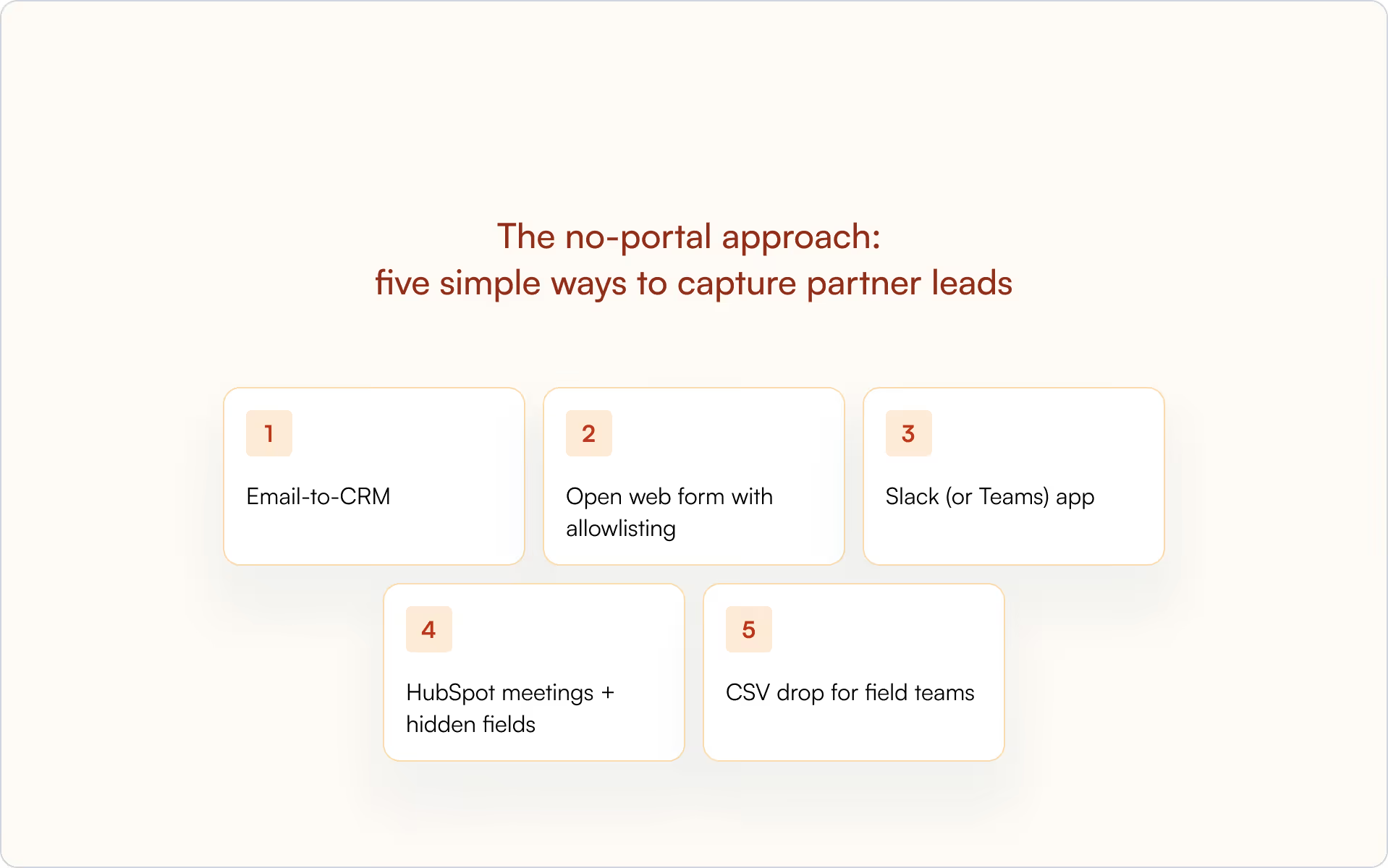
- Email-to-CRM
Give partners a single address (for example, partners@yourcompany.com). When they send a short “registration form” by email (company name, contact, problem, consent), an automated flow parses the message, creates the record, and returns a case number and status.
- Open web form with allowlisting
Host a short registration form that’s public but gated by reCAPTCHA and a partner email domain check. Submissions create a lead and kick off validation, while approved third parties (your partners) get instant confirmation and a “pending” badge.
- Slack (or Teams) app
If you co-sell in shared channels, let partners use a “/register” slash command. The bot collects company, contact, use case, and creates the registered deal or lead in your system, then posts back the record link.
- HubSpot meetings + hidden fields
For HubSpot partner lead registration, use a short form attached to a partner-facing “Book a discovery” page. Hidden fields tag partner ID and program. When the form is submitted, HubSpot creates the contact, company, and a deal stub, and your workflow moves it to “Submitted for review.”
- CSV drop for field teams
Some service partners prefer bulk. A controlled CSV upload (fields validated on import) lets them register a new deal list weekly. Your system dedupes by domain and company name, flags conflicts, and returns approved/declined with reasons.
All five methods can feed the same backend rules, the same partner portal views, and the same commission plan. The difference is friction: partners can register from wherever they already work.
Design a registration form partners will actually complete
Keep it under a minute. These fields usually give you enough to decide:
- Company name and domain
- Primary contact: name, email, role
- Opportunity context: problem, solution fit, services needed
- Stage guess: new intro, discovery scheduled, evaluation
- Partner: who is submitting, plus reseller or referral type
- Consent: partner confirms the prospect agrees to be contacted
Optional, when needed: geography, target revenue, product interest, and competing vendors.
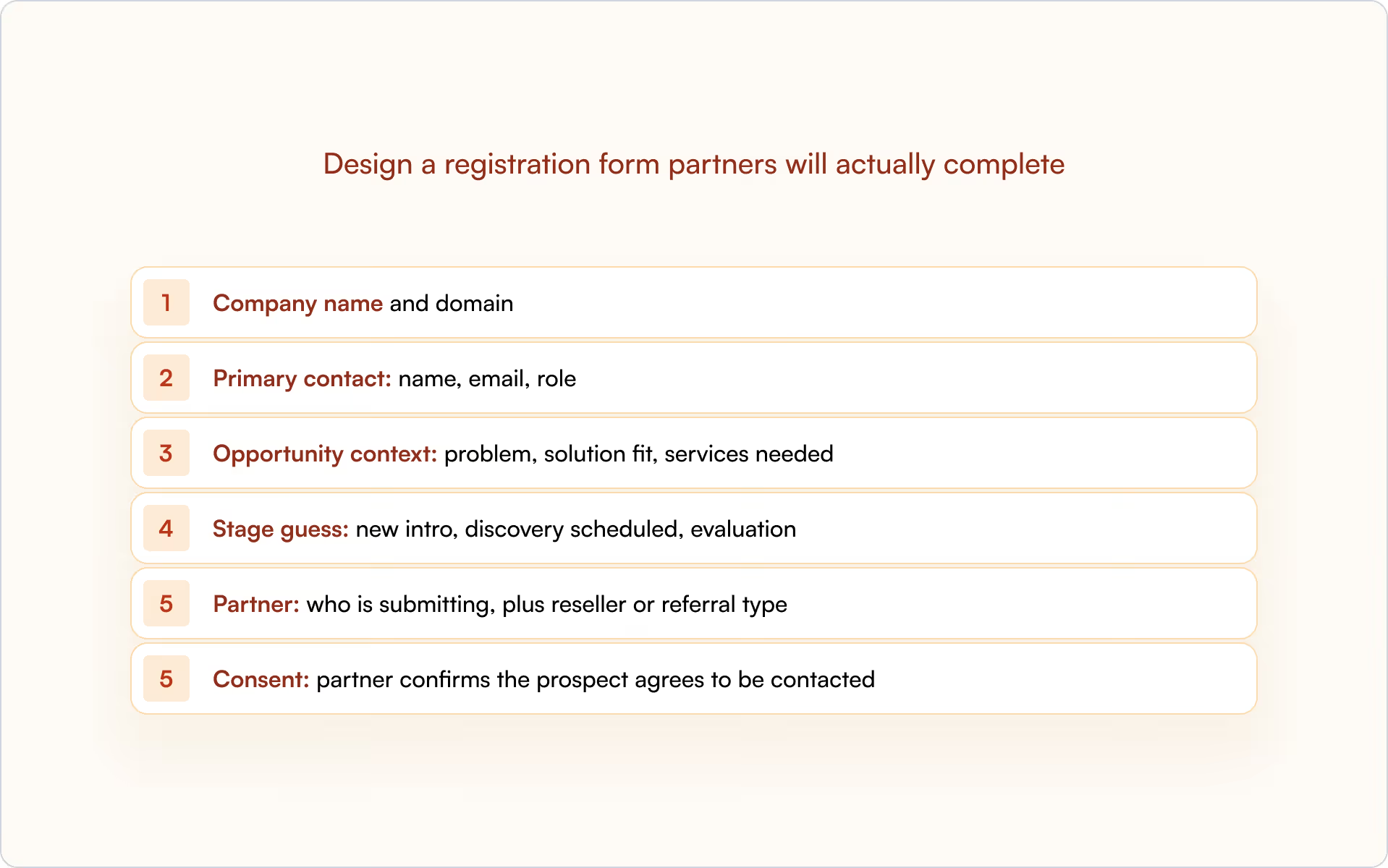
Make validation fair: from “submitted” to “approved” without drama
A good lead reg process balances speed and fairness. Publish the rules, enforce them consistently, and give partners a clean status they can see.
- SLA: respond inside two business days.
- Checks: duplicate by domain, existing deal check, territory rules, blocked accounts.
- Results: approved (with hold window), ask for more info, or declined (with reason).
- Hold window: 60–90 days of protection when partners complete the next step (for example, first meeting or intro email logged).
- Channel conflict: if two partners submit the same prospect, the one who got the first meeting within the window wins, or you split by segment/solution if that’s your policy.
Introw codifies these rules so operations doesn’t have to referee edge cases every week.
Map it to your CRM: HubSpot and Salesforce without side spreadsheets
Whether you run Salesforce or HubSpot, treat partner lead registration like any other intake you want to automate and audit.
- Objects: create a “Partner Registration” object or use a custom property set on Deals to track registration, status, partner, and window end date.
- De-dupe: auto-link to Company by domain; show “existing deal” if one is open.
- Workflows:
- Submitted → Validation queue → Approved/Declined
- Approved → Notify AE/partner → Start sales process tasks
- First meeting scheduled → Lock or extend hold window
- Dashboards: real time dashboards for operations and partner managers: pending, aging, approvals, meeting rates, win rates.
For HubSpot partner lead registration, keep your registration form in HubSpot, route through workflows, and surface status to partners via automated emails or a lightweight shared page. On Salesforce, mirror the same flow with Process Builder or Flow.
Incentives and SLAs that keep partners engaged (without overpaying)
You don’t need to pay for every submission. Reward progress, not spam.
- Tiered incentives: small flat fee when the first meeting is completed, larger percentage on new customers won, and accelerators for high margin products.
- Partner tier alignment: higher tiers may get faster response, priority support, or co-sell resources.
- SLAs: you respond within two days; the partner books a meeting within 14 days; your rep updates next steps after every call. Clear, mutual commitments build trust.
Seven metrics that prove the system works
Leaders care about outcomes. Measure what moves revenue and reduces friction.
- Registration-to-meeting rate within 14 days
- Approval rate by partner and segment
- Conflicts avoided vs. unresolved disputes
- Win rate and sales volume on approved registrations
- Time to first response and time to approval
- Active protection windows by region and product
- Commission payments accuracy and cycle time
When the numbers are visible, you can adjust commission structures, spot partner behavior trends, and focus enablement where it helps most.
A 30-day rollout you can actually ship
You don’t need a massive project to modernize lead reg. Keep it tight and iterative.
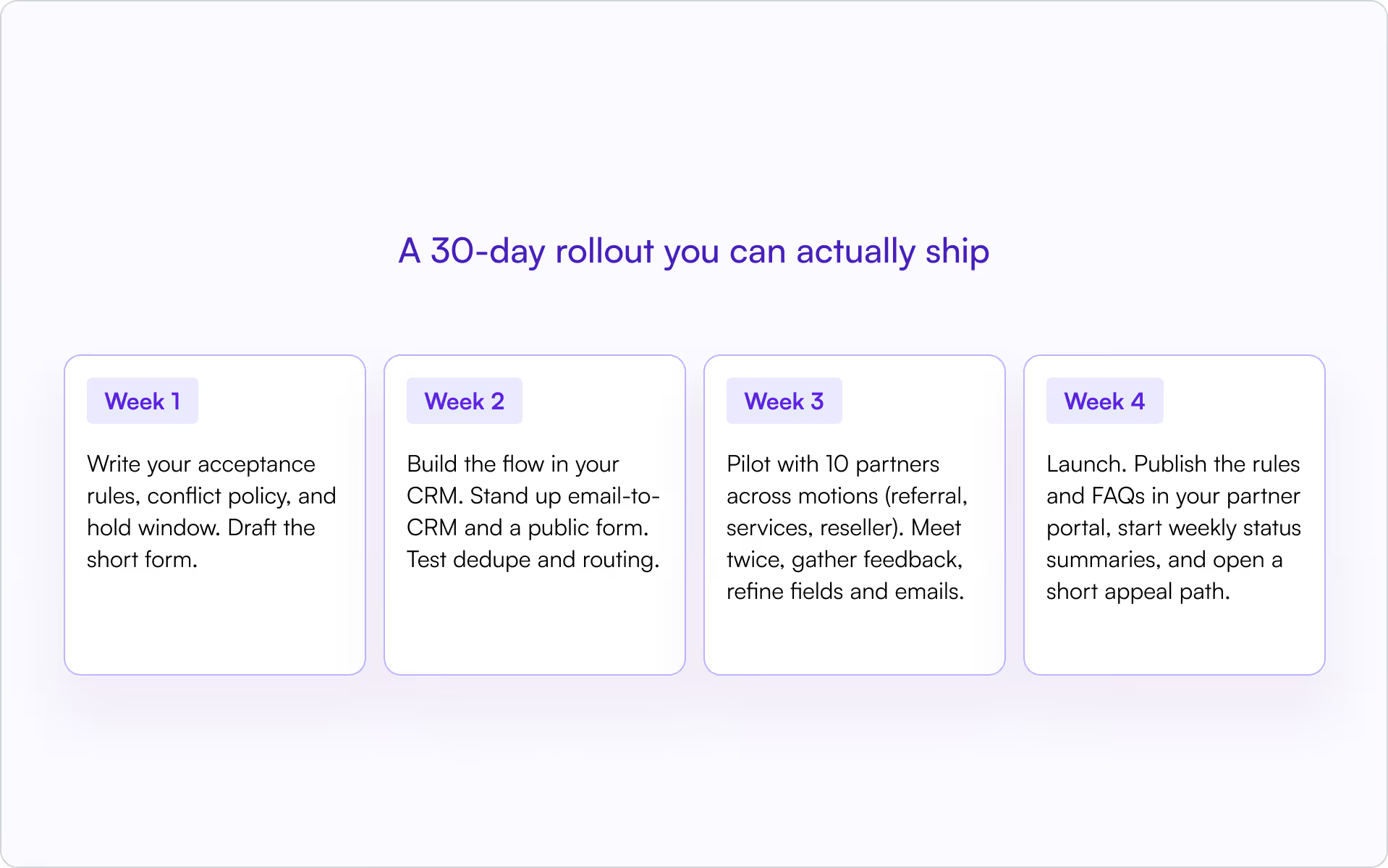
- Week 1: Write your acceptance rules, conflict policy, and hold window. Draft the short form.
- Week 2: Build the flow in your CRM. Stand up email-to-CRM and a public form. Test dedupe and routing.
- Week 3: Pilot with 10 partners across motions (referral, services, reseller). Meet twice, gather feedback, refine fields and emails.
- Week 4: Launch. Publish the rules and FAQs in your partner portal, start weekly status summaries, and open a short appeal path.
Where Introw fits
Introw is built to remove friction from partner lead registration and deal registration alike:
- No-login capture: partners register via email, a shared page, or Slack; Introw creates the record and sends status.
- Smart validation: automatic dedupe, account checks, and clear status transitions from submitted to approved to won.
- CRM-first: bi-directional sync with Salesforce or HubSpot, so ops and reps work in systems they already know.
- Visibility: partners see progress and next steps without asking you to “check the portal.”
- Payments: clean attribution makes commission management straightforward and commission payments timely.
If you’re ready to move beyond “please log in and fill this long form,” Introw gives you a lightweight, auditable path to more revenue and fewer headaches.
Ready to simplify partner lead registration?
If you want partners engaged, fewer conflicts, and clean data, make registration effortless and visible. Introw lets you capture leads without logins, validate fairly, and sync everything to your CRM so your sales team and partners can focus on winning. Request a demo and see how it works in your environment.
Partner Content Enablement Guide (That Actually Reaches Your Partners in 2026)
If you have ever asked what is content enablement, think of it as the connective tissue between creating content and closing deals. It is the discipline of organizing, delivering, and measuring sales enablement materials so sellers and partners can move prospective customers through the sales funnel with less friction. In a partner context, content enablement meaning widens: you are equipping external channel partners with up to date partner content and giving your internal sales team visibility into how it was used before a purchase order shows up.
Why is this urgent in 2026? Creation points keep multiplying. Marketing teams ship pages, playbooks, and videos. Sales reps record custom demos. Product managers publish technical specifications and security FAQs. Without a content enablement strategy, valuable content scatters across drives and chat threads. Partners guess which version is current, legal fees rise because brand risk slips through, and sales cycles drag while people hunt for the right slide. A thoughtful partner enablement strategy fixes this by aligning business content to buyer engagement and making it simple for partners to find, send, and track.
The old way versus the new way of enabling partners
It helps to name the shift so your partner program knows what will change and why.
Old way, hard to scale
- Content lives in disparate workflow tools and inboxes.
- A heavy partner portal is the only door and logins go stale.
- Marketing and sales collateral is uploaded once and forgotten.
- Success is counted as downloads, not meetings or revenue.
- No one can answer how much revenue a specific asset helped create.
New way, built for adoption
- A centralized repository controls versions and permissions.
- Distribution happens where partners already work: email and Slack.
- Sales enablement tools and digital asset management talk to each other.
- Measurement ties sales content to meetings, stage progression, and closed won.
- Introw adds intelligent content enablement so assets route by role, tier, and industry, and partners engaged can act without extra logins.
The new way respects how sales partners actually sell and how marketing teams want to manage brand consistency.
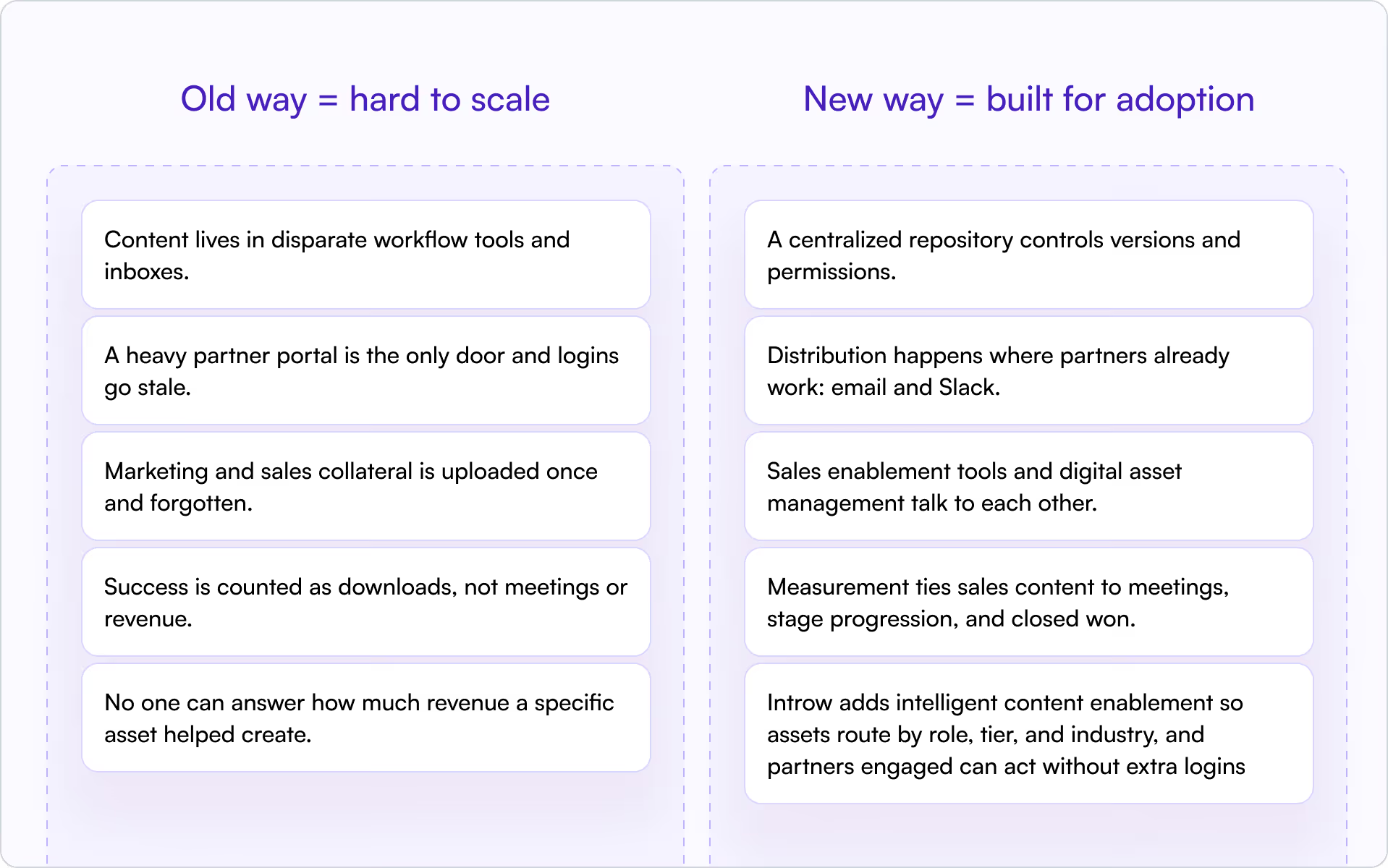
The expanded definition: content enablement for partner ecosystems
Let’s expand the definition so you can design an effective partner enablement strategy that fits a modern partner ecosystem.
- Content strategy maps formats to customer personas, objections, and stages. This is where value propositions are clarified and marketing materials are prioritized.
- Content management ensures managing content is safe and simple. Digital asset management, access controls, and data security keep everything current and compliant.
- Distribution puts partner enablement content into the flow of work. Think push delivery for urgency and a partner content hub for browsing and training.
- Measurement connects actions to outcomes. Key performance indicators live in your CRM and show what content actually shortens the sales cycle and improves sales performance.
- Ongoing support keeps partners engaged. Sales training, partner enablement training, and office hours help partners apply the message on real sales calls.
- Enablement tools automate the boring parts. Sales AI tools can flag stale claims, suggest next best content, apply AI powered spell checking to drafts, and even trigger document generation for localized one pagers.
This expanded definition turns a pile of files into a repeatable system.
The formats partners actually use — and why they work
You do not need hundreds of assets to support channel partners. You need a tight core mapped to the buyer journey, plus a plan to keep it up to date. Here is a practical short list that consistently moves deals:
- ICP one pager that captures pains, triggers, and crisp value propositions for your target audience.
- Short case studies with outcomes, named roles, and a quote you can reuse.
- Competitive snapshots with three differentiators and traps to avoid.
- Security and privacy FAQ that answers procurement’s first questions and reduces back-and-forth.
- Demo storyboard and 90-second talk track that link features to jobs-to-be-done.
- Pricing guidance that explains models without revealing internal margins.
- Co-marketing kit with a landing page outline, two emails, and three social posts that partners can localize.
- Implementation checklist for services partners, including technical specifications and boundaries.
- Onboarding guide that sets expectations for handoff and adoption.
- Marketplace companion if you transact through AWS Marketplace or Google Cloud Marketplace.
Each item should show an owner, a version date, and a stage. That simple metadata is how sales and marketing teams keep confidence high.
Building your partner content engine in five steps
Every step here flows into the next, so avoid skipping ahead. You are building a system, not just uploading files.
Step 1. Align on audiences, motions, and use cases
Start with segmentation. Split your partner ecosystem by motion — resell, referral, ISV, and services. Within each motion, separate sellers and consultants, then overlay partner tier and region. This gives you the targeting you need so a consultant does not receive first-call decks, and a reseller AE is not reading deep implementation playbooks.
Outcome: clear audiences for content and reporting, fewer irrelevant pings, better partner satisfaction.
Step 2. Audit existing content with ruthless clarity
Map every asset to discovery, evaluation, selection, or onboarding. Identify duplicates and outdated claims. Keep winners, merge near-duplicates, and retire risky files. Capture gaps that stall deals, like an absent security FAQ or a weak competitive snapshot. This is where content related technologies help: a digital asset management tool will expose duplicates, and enablement tools will surface low-use files to replace.
Outcome: a trimmed library that your internal team trusts and partners will actually reuse.
Step 3. Create the minimum viable set and standardize quality
Create marketing and sales collateral with a shared checklist: audience, use case, stage, owner, review cadence, legal status. Use standardized templates to speed document generation and maintain brand consistency. Where possible, add short narration guidance so sales reps know when and how to use the asset during sales calls.
Outcome: fewer, sharper pieces that are easier to keep up to date and safer to send.
Step 4. Distribute in the flow of work, not just the portal
A partner portal is useful, but it should not be the only door. Push content by email and Slack when timing matters. Let partners browse a partner content hub for training and self-serve discovery. Surface the next best asset inside your CRM when a sales rep opens an opportunity. Distribution should feel like today’s digital HQ, not a scavenger hunt.
Outcome: higher adoption, faster response, and less time spent hunting links.
Step 5. Measure what leaders care about and iterate quarterly
Replace vanity metrics with outcome metrics. Track first meetings within 14 days of send, stage progression on opportunities that received specific assets, influenced pipeline, and win rate deltas where content was used. Add operational KPIs like training completion and asset freshness. Review quarterly with partners and your internal sales team, then tune your content enablement strategy.
Outcome: proof that content moves revenue, not just downloads.
Where Introw fits — intelligent content enablement that partners adopt
Introw is built to make partner content reach the field and show up in your numbers.
- Segment once, deliver everywhere. Target by motion, tier, role, industry, certification status, or region. A reseller AE gets first-call assets and a co-marketing kit. A services architect sees implementation plays and product training.
- Push and pull distribution. Send content by email and Slack for urgency, while a lightweight partner content hub supports discovery and training. Partners do not need to learn a heavy system to stay current.
- CRM-first analytics. Engagement rolls up next to account and opportunity records so leaders can see which assets improve first-meeting rate, stage progression, and close won.
- Single source of truth. A centralized repository handles managing content, permissions, and data security. Owners and review cadences keep everything up to date.
- Assistive creation. Sales AI tools inside the workflow suggest next best content, flag stale messages, apply AI powered spell checking, and trigger document generation for localized one pagers.
This is partner content marketing that respects how partners sell and how marketing and sales teams want to measure.
A 90-day rollout plan that respects day jobs
Long rollouts lose momentum. This plan gets you live fast and gives you space to improve.
Weeks 1–2 — pick two motions and two roles, define KPIs, align owners.
Weeks 3–4 — audit, trim, and draft the core set with standardized templates.
Weeks 5–6 — stand up the centralized repository, permissions, and CRM tracking.
Weeks 7–8 — pilot with a small partner cohort, run one live enablement session, collect feedback.
Weeks 9–10 — tune assets, set review cadences, finalize distribution rules.
Weeks 11–12 — publish the playbook in the partner content hub, expand targeting, and schedule the next co-marketing kit.
Because Introw connects segmentation, delivery, and analytics to your CRM, most of the wiring is configuration rather than custom work.
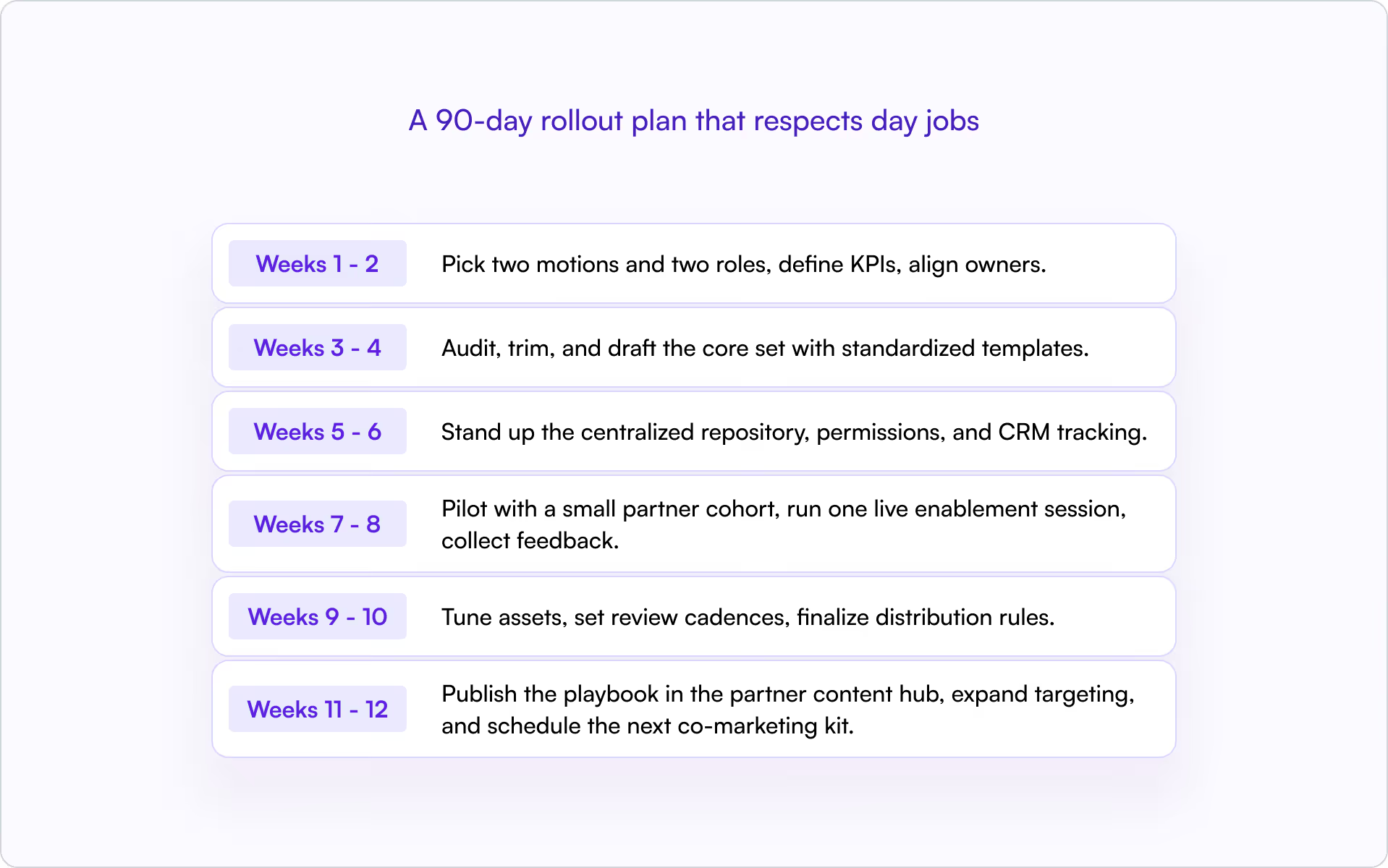
Bringing it all together
Great partner enablement is not about more files. It is about delivering relevant marketing content to the right people at the right time and proving it helped close business. When sales and marketing teams share a centralized repository, when content management is tight, and when distribution meets partners where they already work, buyer engagement improves and closing deals gets easier.
Introw adds the missing glue by combining segmentation, a partner content hub, push delivery, and CRM analytics so your channel partner enablement program turns content into revenue. If you want an effective partner enablement strategy that partners adopt and leaders can measure, Introw is ready to help.