

Ask three teams about partner training, and you’ll hear three different priorities.
- Sales wants readiness.
- RevOps wants clean, reliable data.
- Partners want fewer tools and less friction.
Partner training software sits at the intersection of those expectations.
The platforms that work are the ones that resolve the tension instead of creating another system to manage. That’s why it’s important to understand why partner training software is not the same as a traditional LMS.
Partner Training Software Isn't Just an LMS
Partner training software is often mistaken for an LMS. In reality, they’re built for fundamentally different jobs.
Employee LMS platforms are designed for internal training, usually owned by HR or L&D. Partner training software has to support external partners like resellers, system integrators, and technology alliances.
And each of them have different access rules, certification requirements, and expectations around reporting and visibility.
The difference becomes clearer when you look at what each system is optimized for.
That’s why partner training can’t stop at course delivery.
The right partner training software supports the full flow, from course creation and certification management to sales training readiness and ongoing partner engagement.
Most importantly, training progress has to show up in the CRM so teams can see how partner progress connects to pipeline in Salesforce or HubSpot.
Our Partner Enablement Guide and the Partner Engagement Guide both reflect this shift toward lifecycle-driven partner training.
If training never reaches the CRM, it’s disconnected from business objectives and hard to measure. Platforms like the Introw Partner LMS are built to close that gap by linking partner training, certifications, and engagement directly to CRM data.
With that distinction clear, let’s look at the best partner training software options for 2026 and how they compare.
1. Introw Partner Training (via Introw Partner LMS)
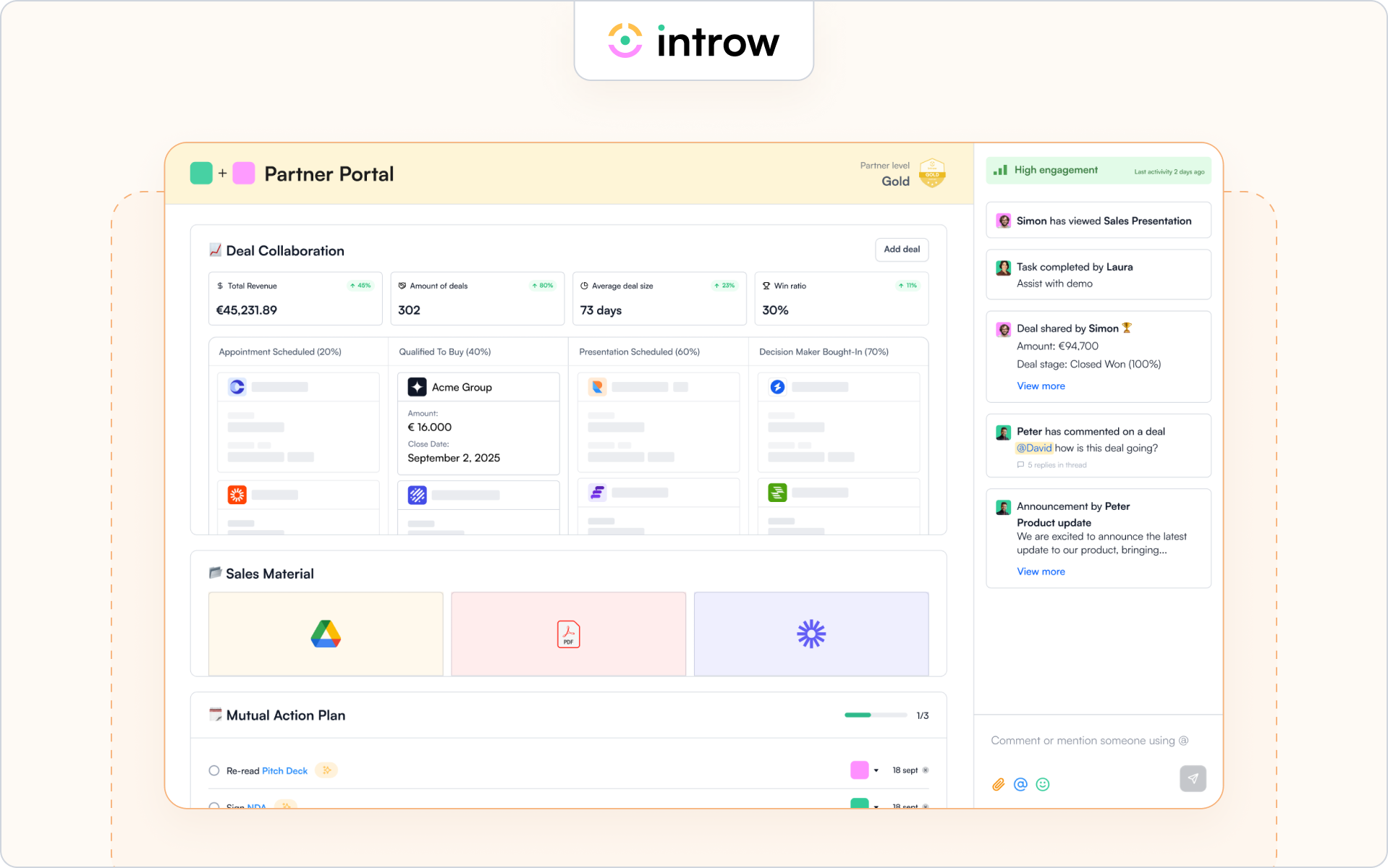
Introw is built for SaaS teams that want partner training to show up in pipeline, not disappear into an LMS.
Best for
Teams running channel partner training on Salesforce or HubSpot that need fast course creation, governed certification programs, and clear links between partner training, deal registration, and partner performance.
Why it stands out
Introw treats partner training as part of the partner workflow, not a separate learning platform. Its AI agent can create courses, modules, and quizzes from existing content in minutes, removing the steep learning curve typical of LMS for partner training.
Certification management is built in, with expiration and recertification to support real partner credibility.
Teams can segment partner audiences by partner tier or partner groups, then deliver training and sales training readiness through off-portal email and Slack nudges partners actually see.
Training progress and partner engagement are visible inside the CRM, allowing teams to link training activity directly to business objectives, partner performance, and deal registration. You can see this flow in the Introw Partner LMS demo:
Key capabilities
- AI-assisted course creation and intuitive course creation
- Partner training programs with learning paths
- Certification programs with expiration and recertification
- Partner onboarding and external training delivery
- Off-portal partner engagement via email and Slack
- Progress tracking, advanced analytics, and CRM-visible attribution
Keep in mind
Introw is strongest when partner training, partner enablement, and certification governance need to work together across the partner ecosystem.
Integrations
Salesforce, HubSpot, Slack, API.
Learn more: Partner LMS · Request a demo
2. Skilljar by Gainsight

Skilljar is built for external training programs and is commonly used for partner education and customer academies.
Best for
SaaS teams running partner training at scale that care about analytics, reporting, and training effectiveness.
Why it stands out
Skilljar emphasizes data visibility, making it easier to understand partner progress and completion across large partner networks.
Partner training features
- External partner and customer academies
- Certification programs and assessments
- Progress tracking and performance analytics
- Advanced reporting across partner groups
Keep in mind
Skilljar focuses on external education. CRM alignment and partner enablement workflows depend on integrations and data setup.
3. LearnUpon
LearnUpon supports partner training through multiple branded portals managed from a single admin environment.
Best for
Teams that need a partner education LMS to support different partner tiers, regions, or programs.
Why it stands out
LearnUpon makes it easy to separate audiences while maintaining centralized control, which helps manage complex partner programs.
Partner training features
- Multiple branded partner portals
- Certification tools with expiration and recertification
- Structured partner training programs
- Reporting across partner audiences
Keep in mind
Partner engagement and CRM-driven workflows may require additional tools beyond the LMS.
4. Docebo
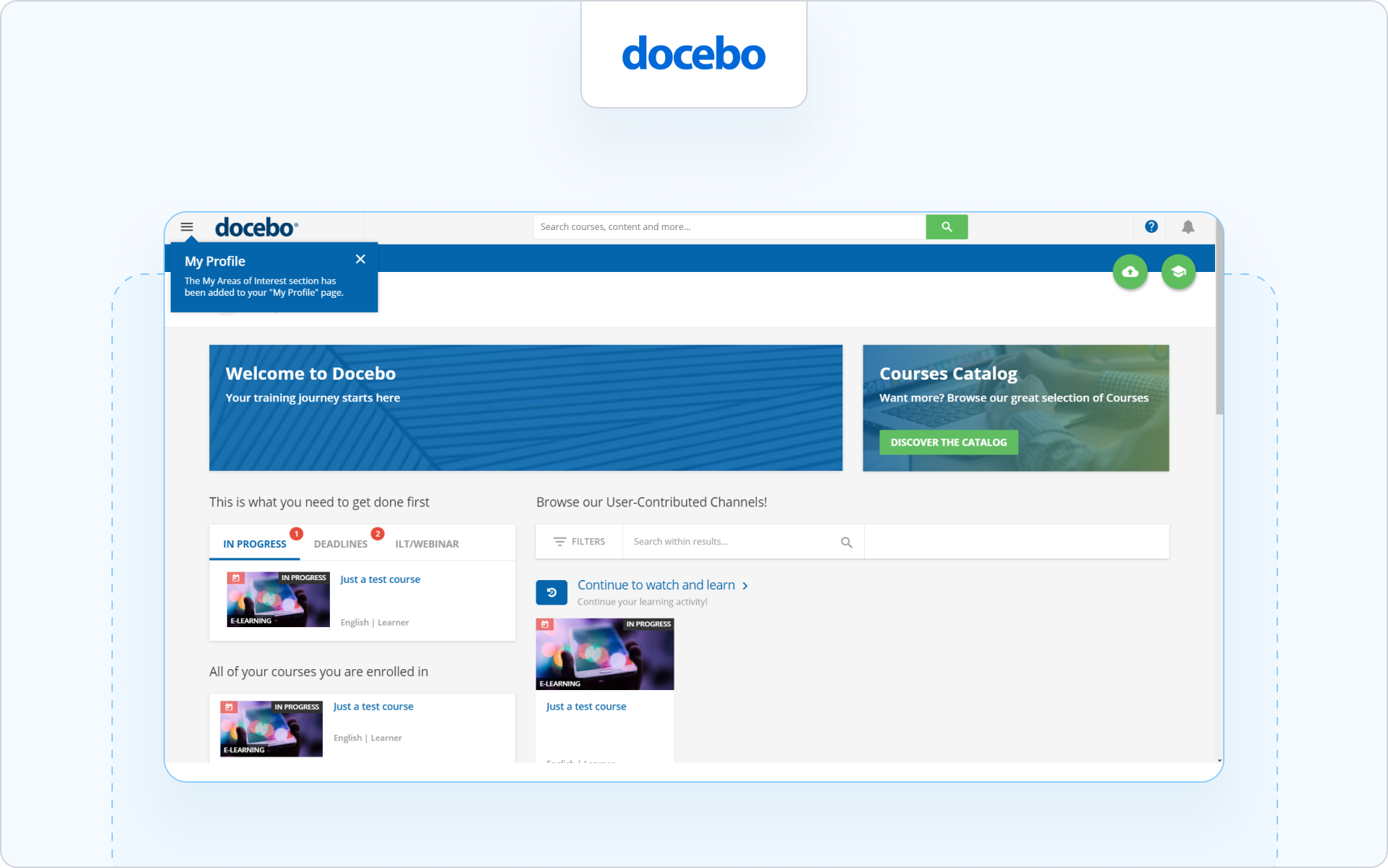
Docebo is a cloud-based LMS used for employee, customer, and channel partner training.
Best for
Large enterprises managing global channel partner training with advanced learning experience requirements.
Why it stands out
Docebo combines AI recommendations, social learning, and extensive configuration options to support large partner ecosystems.
Partner training features
- Partner training LMS software with AI-driven content recommendations
- Social learning and knowledge sharing features
- Certification programs and assessments
- Advanced analytics and reporting tools
Keep in mind
Docebo’s flexibility comes with complexity. Setup and customization can take time for partner training use cases.
5. Absorb LMS
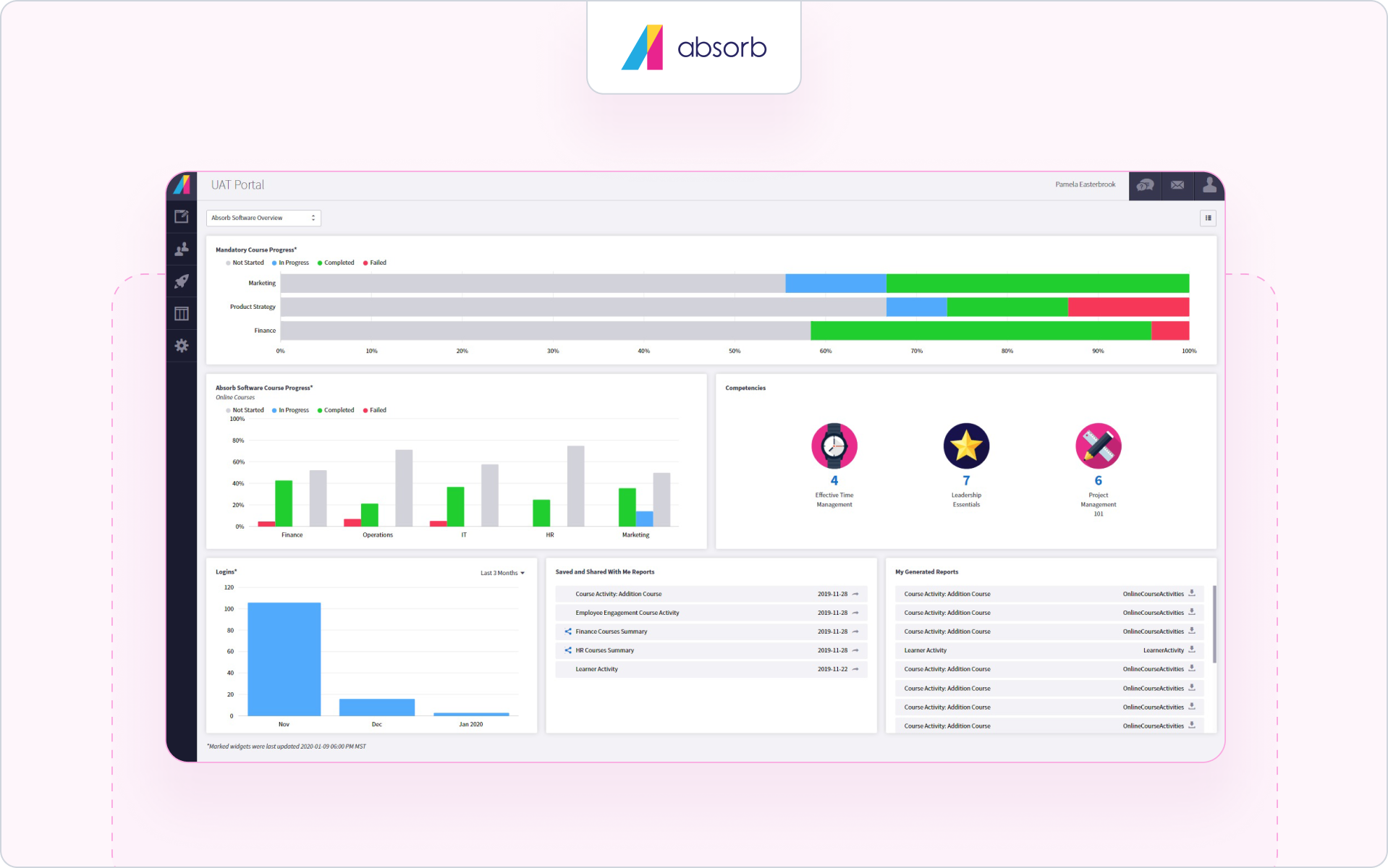
Absorb LMS is an enterprise learning platform used for customer and partner training programs.
Best for
Teams that need strong reporting tools and branded external training experiences for partners.
Why it stands out
Absorb LMS offers robust analytics and reporting, making it easier to measure partner training effectiveness across large audiences.
Partner training features
- Branded partner portals
- Certification management and assessments
- SCORM and xAPI support for training materials
- Advanced reporting and analytics
Keep in mind
Absorb LMS is feature-rich. Teams should evaluate partner user experience and onboarding effort during implementation
6. 360Learning

360Learning focuses on collaborative learning, with subject-matter experts contributing directly to courses.
Best for
Teams that want to accelerate partner enablement through shared knowledge and peer-driven learning.
Why it stands out
360Learning emphasizes social learning and fast content contribution, which can help surface real partner knowledge quickly.
Partner training features
- Collaborative course creation and updates
- Social learning and peer feedback
- Partner training programs with structured learning paths
- Progress tracking and reporting
Keep in mind
This model works best when partners actively contribute. Less suited for certification-heavy partner programs.
7. Intellum

Intellum supports large-scale customer and partner education programs through highly configurable learning experiences.
Best for
Enterprises running complex partner training programs that need strong authoring tools and analytics.
Why it stands out
Intellum offers deep control over learning experiences, content structure, and reporting across large partner networks.
Partner training features
- External partner education LMS
- Advanced course creation and content management
- Certification programs and assessments
- Advanced analytics and reporting
Keep in mind
Built for scale. Implementation and configuration can take time.
8. TalentLMS (by Epignosis)
TalentLMS is a cloud-based LMS often used for partner and customer training due to its simplicity.
Best for
Teams that need to deliver partner training quickly without enterprise-level complexity.
Why it stands out
TalentLMS is easy to deploy and manage, making it a practical choice for smaller partner programs.
Partner training features
- Partner training LMS with branches for partners
- Certification programs and assessments
- Course creation and training materials
- Basic reporting and progress tracking
Keep in mind
Analytics and partner enablement depth are limited compared to enterprise platforms.
9. Lessonly by Seismic
Lessonly is a learning platform focused on sales training, coaching, and readiness for internal teams and partners.
Best for
Teams that want to improve partner performance through structured sales training, coaching, and certification programs.
Why it stands out
Lessonly is strong on practice and reinforcement. It supports partner training programs that focus on real-world scenarios, role-based learning, and ongoing readiness instead of one-time course completion.
Partner training features
- Sales training and role-based learning paths
- Coaching, practice scenarios, and assessments
- Certification programs and readiness tracking
- Progress tracking and reporting tools
Keep in mind
Lessonly is optimized for readiness and coaching. Teams needing a full partner education LMS with deep content management may pair it with other tools.
10. Mindtickle
Mindtickle focuses on sales training and readiness rather than broad partner education.
Best for
Organizations prioritizing sales team readiness, coaching, and role-based partner training.
Why it stands out
Mindtickle excels at readiness measurement through role-plays, coaching workflows, and scorecards.
Partner training features
- Sales training and readiness programs
- Role-plays, coaching, and assessments
- Performance tracking and analytics
- Partner training programs aligned to sales motions
Keep in mind
Not a full partner training LMS. Often paired with other tools for broader partner education.
11. WorkRamp (by Learning Pool)

WorkRamp is a learning platform designed around sales training and partner readiness.
Best for
Teams that need partner enablement software focused on sales team readiness and partner performance.
Partner training features
- Sales training programs and coaching
- Certification programs and certification management
- Personalized learning paths and progress tracking
- Performance analytics and reporting tools
Keep in mind
WorkRamp prioritizes readiness over full partner education LMS coverage.
12. Channeltivity (Training Module)

Channeltivity combines partner management with embedded training.
Best for
Teams running a partner program that want training tightly connected to partner management.
Partner training features
- Partner onboarding and external training
- Certification tools and assessments
- Partner groups and partner tier management
- Deal registration visibility
Keep in mind
Training depth is lighter than a dedicated LMS for partner training platforms. For broader context, see the best partner relationship management software.
13. Litmos
Litmos supports large-scale external training with strong compliance controls.
Best for
Organizations delivering external training to global partner networks with strict requirements.
Partner training features
- Partner education LMS with certifications
- Training materials and assessments
- Multi-language support
- Advanced reporting and analytics capabilities
Keep in mind
Less flexible for customized learning or partner engagement beyond compliance.
14. Thought Industries

Thought Industries is built for scalable partner education and external learning experiences.
Best for
Companies investing in partner education as part of customer experience and business growth.
Partner training features
- Separate learning spaces for partner groups
- Certification programs and training program design
- Course creation and content management
- Community features and knowledge sharing
Keep in mind
CRM alignment and deal registration workflows require additional integration. Fits well alongside partnership marketing strategies, outlined in the partnership marketing guide.
15. Trainn
Trainn focuses on guided product education for external partners.
Best for
Teams that want to provide training around product knowledge and onboarding.
Partner training features
- Interactive training materials and guides
- Product knowledge walkthroughs
- Create courses quickly with AI support
- Progress tracking
Keep in mind
Not a full partner training LMS software for certifications or analytics-heavy use cases.
16. EducateMe
EducateMe supports partner education through branded learning hubs.
Best for
Teams that want to customize training and deliver structured partner training programs.
Partner training features
- Partner education LMS with automated paths
- Customized learning paths
- Certification management
- Reporting tools and partner progress tracking
Keep in mind
Advanced analytics and CRM attribution are more limited.
17. CYPHER Learning
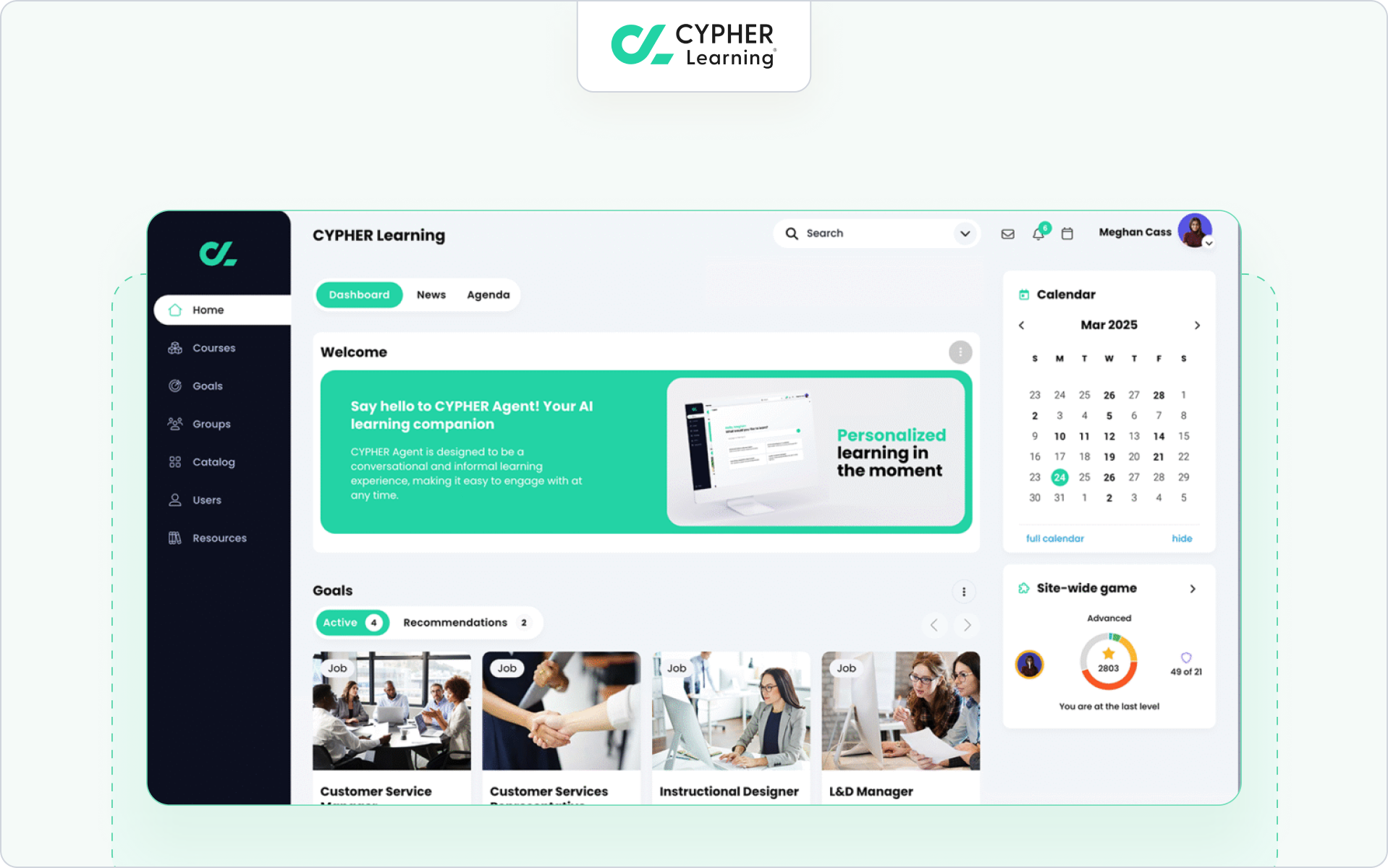
CYPHER Learning is a cloud-based LMS designed for skills development at scale.
Best for
Enterprises managing large partner ecosystems with diverse partner training needs.
Partner training features
- Adaptive learning paths and personalized learning
- Certification tools and assessments
- Robust analytics and advanced reporting
- Multi-language support
Keep in mind
Feature breadth can introduce a steep learning curve during setup. CYPHER Learning is often evaluated as training partner software for global programs.
18. Cornerstone Customer & Partner LMS
Cornerstone supports partner training across complex partner networks.
Best for
Large enterprises extending existing Cornerstone deployments to external partners.
Partner training features
- Branded external learning portals
- Certification programs and structured journeys
- Advanced analytics and performance tracking
- Partner network reporting
Keep in mind
Implementation can be heavy. Teams should validate partner experience and CRM fit early, especially when aligning with the top CRM for partner management.
19. AcademyOcean
AcademyOcean is built for structured external partner training.
Best for
Teams running partner onboarding and partner training built around multiple partner groups.
Partner training features
- Partner training LMS with multiple academies
- Personalized learning and learning experience controls
- Certification programs
- Training effectiveness tracking
Keep in mind
Analytics depth and partner enablement breadth vary by plan.
20. iSpring LMS
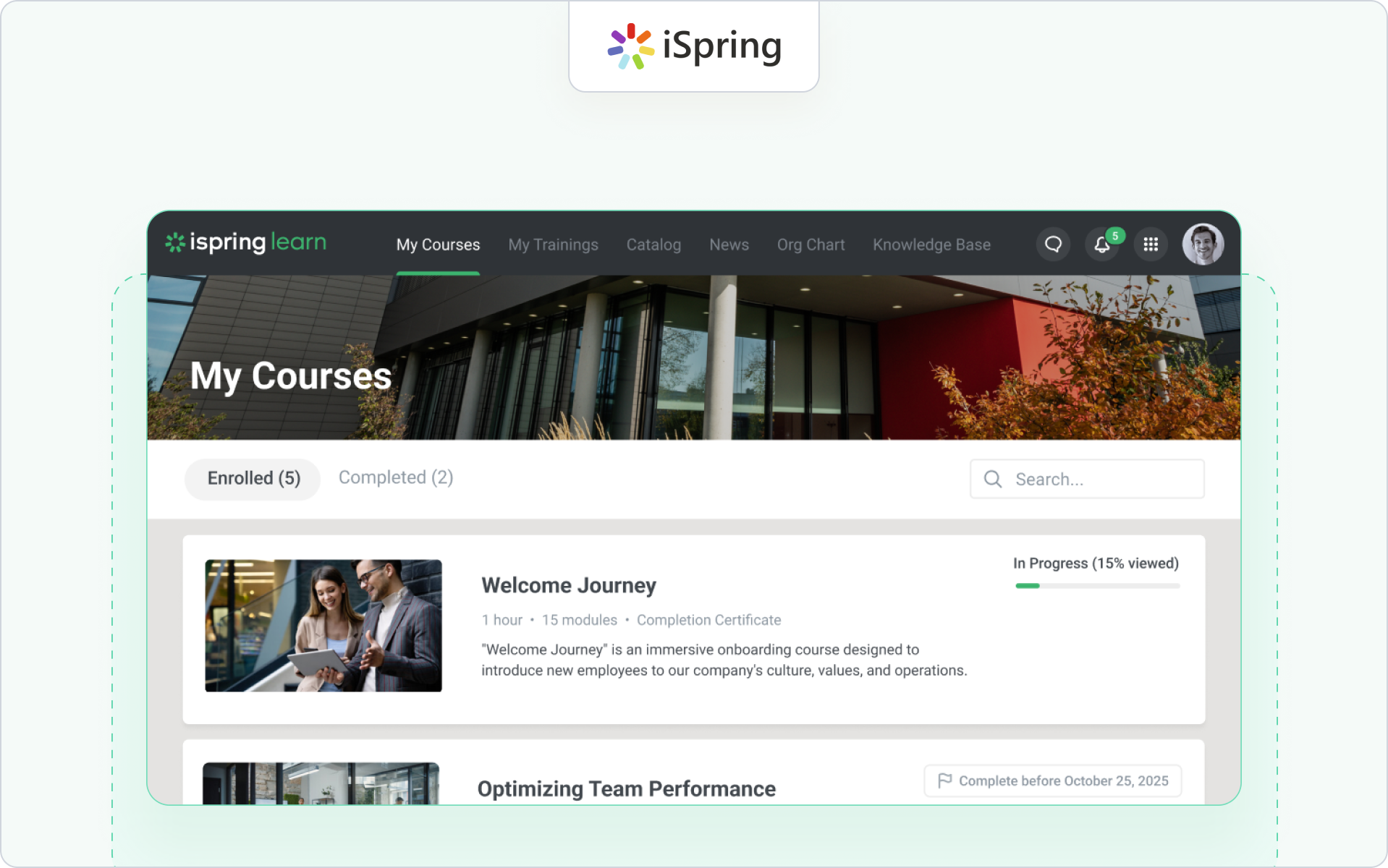
iSpring LMS combines LMS delivery with course authoring tools.
Best for
Teams that want to deliver training quickly without enterprise complexity.
Partner training features
- LMS for partner training with certificates
- Course creation and intuitive course creation tools
- Training materials and assessments
- Progress tracking and reporting tools
Keep in mind
Best suited for smaller partner programs or early-stage partner enablement.
Taken together, these tools show how wide the partner training landscape has become. Some focus on external education and certifications.
Before making a shortlist, it helps to step back and evaluate what actually matters for your partner program in 2026.
Buyer’s Checklist (What to Look For in 2026)
Use this checklist to evaluate partner training software side by side and assess fit against real partner program requirements.
Authoring speed
Look for intuitive course creation with AI-assisted course and quiz builders. The ability to create courses by importing content from your website, portal, or documentation reduces setup time and avoids a steep learning curve.
Certification governance
Effective certification programs should support certification management, expiration, and recertification, prerequisites, and product or permission gating to protect partner credibility.
Enrollment at scale
Partner training LMS platforms should support SSO or SAML, bulk invitations, and the ability to segment partner audiences by partner type, partner tier, region, role, or partner groups.
Engagement without friction
Partner engagement improves when training is delivered without forcing partners into separate learning spaces. Off-portal email and Slack announcements, reminders, and countdowns help deliver training efficiently.
Readiness and assessments
Training effectiveness depends on quizzes, scenarios, role-plays, and scorecards that track partner progress and partner performance.
CRM-first reporting
A partner training LMS should sync training progress and certifications to Salesforce or HubSpot. This enables linking training to deal registration, opportunities, ARR, and performance analytics.
Branding and multi-portal support
For larger partner ecosystems, look for white-label options, localization, and multi-portal or multi-audience support to manage different partner networks.
Security and governance
Enterprise-ready training partner software should include role-based access, audit trails, PII controls, and data residency options to support external partners securely.
Ecosystem fit
Evaluate how well the learning platform fits into your broader ecosystem. Alignment with partner management or PRM tools, support for webinars or live training, SCORM or xAPI compatibility, APIs, and marketing tools all affect long-term partner enablement and business growth.
Once you’ve worked through these criteria, a clear pattern tends to emerge.
Teams that need partner training to move beyond content delivery and actually support partner performance, engagement, and deal registration start prioritizing CRM-first workflows and governed certification at scale.
That’s where Introw comes in.
Next, we’ll look at why many teams choose Introw for partner training and how it supports these requirements in practice.
Why Teams Choose Introw for Partner Training
When teams evaluate partner training software against real-world requirements, Introw consistently stands out for one reason: it connects training directly to revenue workflows instead of isolating it in an LMS.
Introw is built for teams that want partner training to support partner performance, partner credibility, and measurable business outcomes across the entire partner ecosystem.
Your next steps
If you’re evaluating partner training software for 2026, here’s how to move forward:
- Shortlist platforms that support certification governance, CRM visibility, and off-portal engagement.
- Validate how training data connects to deal registration, pipeline, and partner performance in your CRM.
- Run a focused trial to assess authoring speed, partner adoption, and reporting depth.
Ready to see how this works in practice?
Request an Introw demo and see how partner training looks when it’s built for real partner activation, not just course completion.

Still curious? Here are some quick answers to help clear things up
Partner training software is built for external partners and channel programs, not internal employees, with certification governance and CRM visibility.
The best partner training software connects training completion to partner performance, deal registration, and revenue outcomes.
By syncing training data from the partner training platform to Salesforce or HubSpot, and correlating it with opportunities and closed deals.
Most teams do not need SCORM or xAPI. Modern training partner software with AI authoring and native modules is usually sufficient.
Yes. Channel partner training software can deliver reminders and announcements via email or Slack without portal logins.





Are you already an active Introw partner?
Book a demo with one of our partner program experts, or explore Introw on your own time.