

.svg)


.svg)
.svg)








Articles by Andreas
Channel Partner Gamification (How to Motivate Without Overpaying)
The moment a steady program stops feeling steady
Most channel partner programs start strong: a few champions engage early, sales teams celebrate quick wins, and the partner community feels energized. Then the pattern settles in. A small group stays active while others only show up at quarter-end. Traditional incentive programs and one-off sales contests give you brief spikes, not durable habits.
That is the point where a simple, thoughtful gamification strategy earns its place. Instead of chasing attention with bigger prizes, you clarify desired behaviors, make progress visible, and reward movement that matters. Done right, channel partner gamification becomes the connective tissue between your goals and partner engagement — not a gimmick, but a system that encourages healthy competition and lifts sales performance quarter after quarter.
What channel partner gamification actually means
Before you pick any game mechanics, align on meaning. Channel partner program gamification is the use of straightforward game design elements to motivate specific behaviors — completing training, registering qualified opportunities, advancing stages, running tactical promotions, and closing the loop with customer success. The goal is simple: boost channel partner engagement by making the path to success transparent and fair.
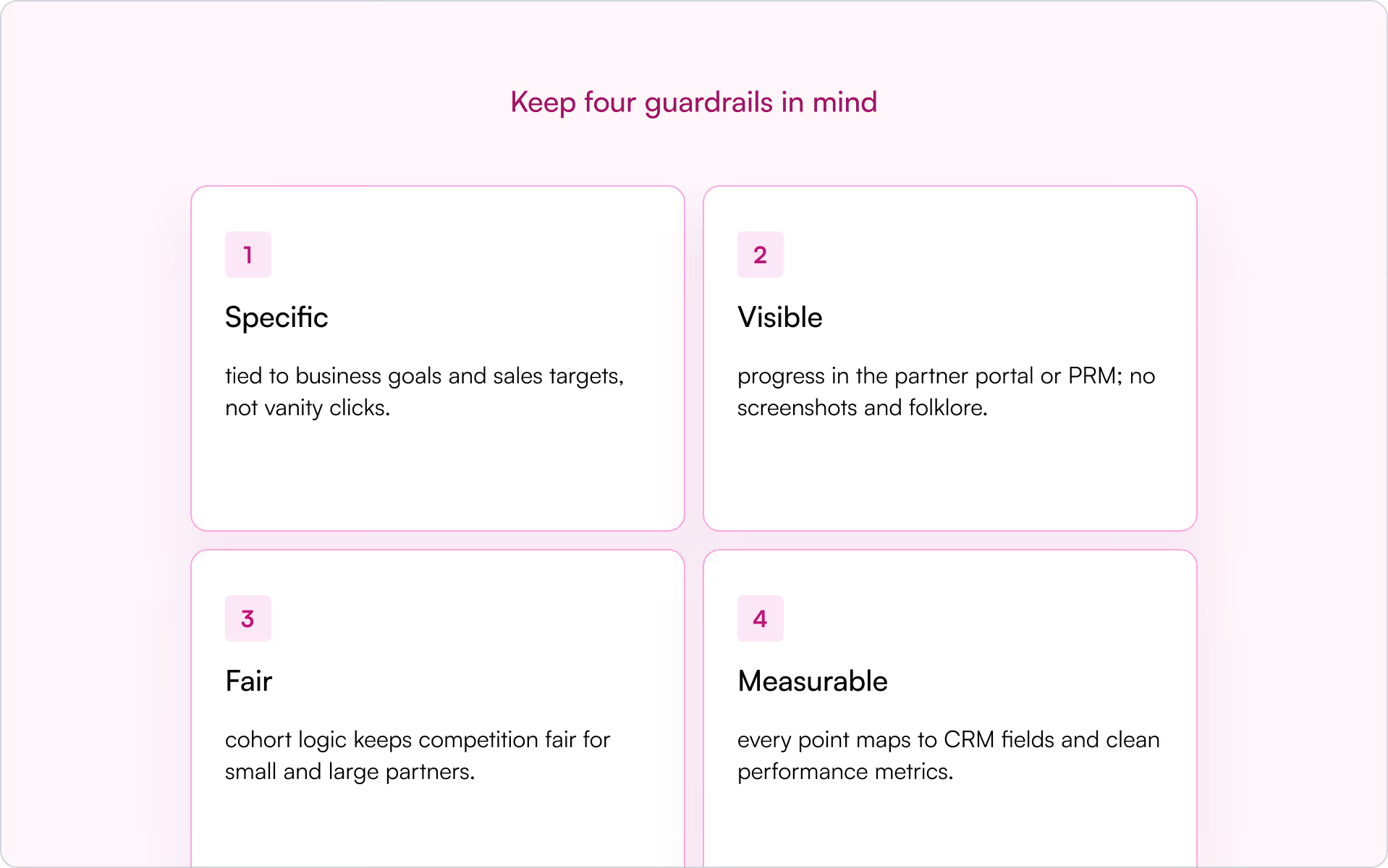
To keep it trustworthy, anchor to four guardrails and return to them often as you scale:
- Specific to business goals and sales targets — no vanity clicks.
- Visible in your PRM or partner portal — no folklore or screenshots.
- Fair across partner sizes — cohort logic keeps healthy competition intact.
- Measurable with clean performance metrics — every point maps to CRM data.
With those principles in place, you can move from concept to practice without confusing partners or creating side spreadsheets.
From strategy to practice: choose outcomes first, then mechanics
Great programs start with outcomes, not features. Decide what matters this quarter — higher training completion, more qualified deal registration, better first-meeting rates — and then choose the lightest game elements that reinforce those outcomes. This keeps focus on partner success and prevents your plan from turning into a “points for everything” distraction.
Three mechanics that move numbers
- Levels that mirror your tiers
When levels match your tiered structure (Registered, Select, Elite), partners always know what unlocks the next rung. They complete onboarding, validate a use-case pitch, meet a modest sourced-pipeline target, and keep renewals clean. In return, they unlock tier-specific benefits like priority support, co-marketing funds, and early access to features — real advantages that motivate partners without inventing a parallel system.
- Badges for skills and proof
Badges highlight skill development and credibility: certified individuals, solution validation, successful implementations. Link each badge to evidence (certification IDs, case studies, customer quotes) so sales reps route opportunities confidently and customers see the quality. This strengthens partner relationships and brand loyalty while encouraging partners to complete training modules quickly.
- Team challenges for joint outcomes
Short, time-boxed challenges create momentum and community. Run a 30-day sourced-pipeline sprint in a key vertical, a co-marketing push with shared UTMs, or an adoption wave for a new module. Publish standings weekly and recognize both absolute leaders and cohort winners so smaller firms compete fairly. This is encouraging healthy competition without skewing toward the biggest players.
With Introw, these gamification mechanics live where partners already work — email, Slack — so partners participate actively without extra tools and your channel partner programs avoid complexity.
Reward structure: behavior first, cash last
Picking mechanics is half the story. The other half is fuel. Recognition sustains habits; financial rewards should amplify outcomes. This balance motivates channel partners, keeps budgets sane, and avoids the pitfalls of traditional incentive programs.
- Immediate recognition
When partners complete training, register a qualified deal, or move a stage, trigger instant recognition: progress bars update, badges appear, and the partner community sees a shout-out. Immediate recognition creates motivation, reinforces desired behaviors, and costs nothing.
- Access that accelerates wins
For intermediate milestones, access beats cash. Offer priority support with named escalations, exclusive training and office hours with product, early access for ISVs, and simple MDF with quick approvals. These reward systems directly improve partner performance and help partners hit sales targets.
- Real rewards for real outcomes
Use financial rewards for outcome milestones — sourced-revenue bands, multi-logo wins, regional breakthroughs. Publish the rules, make them predictable, and time-box them. That way your gamification initiatives strengthen your channel strategy instead of distorting it.
These layers move naturally from learning to doing to achieving — the same arc a healthy sales process follows.
5 metrics that make the game fair and productive
Now tie each mechanic to one KPI you already trust. Keep the set short so everyone understands how points become progress and progress becomes revenue. Comparing like with like keeps the competitive spirit healthy and prevents gaming.
Five practical anchors:
- Training completion rates from your learning management system — onboarding, role-based certifications, product updates.
- Pipeline quality — qualified registrations, deal registration records, stage progression, next-step hygiene.
- Meeting momentum — first-meeting rate and discovery-to-proposal conversion to lift sales productivity.
- Delivery quality — on-time milestones, CSAT after go-live, low escalation rate to protect customer experience.
- Co-marketing impact — form-fills from partner audiences, event attendance, sourced opportunities.
Introw maps each signal to CRM fields and renders partner-visible progress tracking. Managers see one source of truth for performance metrics and partners see exactly how to earn rewards — no confusion, no duplicated data.
The quiet growth engine: onboarding and learning
Most teams jump to quarterly games, but the biggest lift often starts earlier. By incorporating simple game elements into enablement, you help partners complete training modules, adopt sales enablement content, and turn knowledge into action faster — shortening the sales cycle and improving buyer engagement.
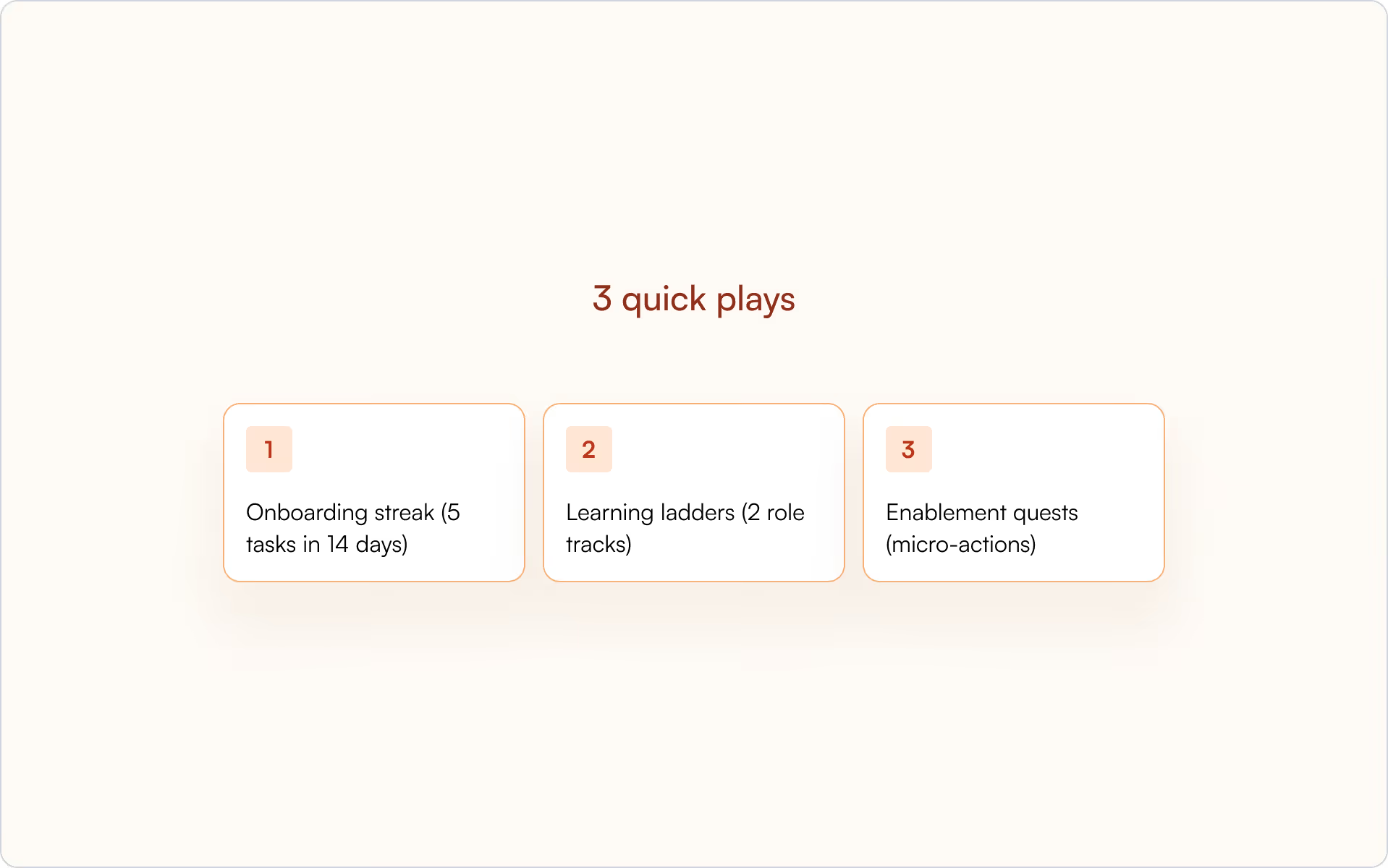
Three quick plays:
- Onboarding streak — five tasks in 14 days: portal setup, ICP training, demo pass, one use-case pitch, first registration. Outcome: Ramp-Ready badge plus a co-sell office hour.
- Learning ladders — two tracks: Field-Ready for sales reps (discovery practical) and Deploy-Ready for delivery (sandbox build).
- Enablement quests — watch a short play, send the snippet to three prospects, log outcomes for a micro-badge and a community callout.
If you already use sales enablement tools or an LMS, sync completion so badges and levels show up alongside open opportunities. That integration helps partners and your internal sales team keep energy on actions that move the funnel.
A rollout that respects day jobs
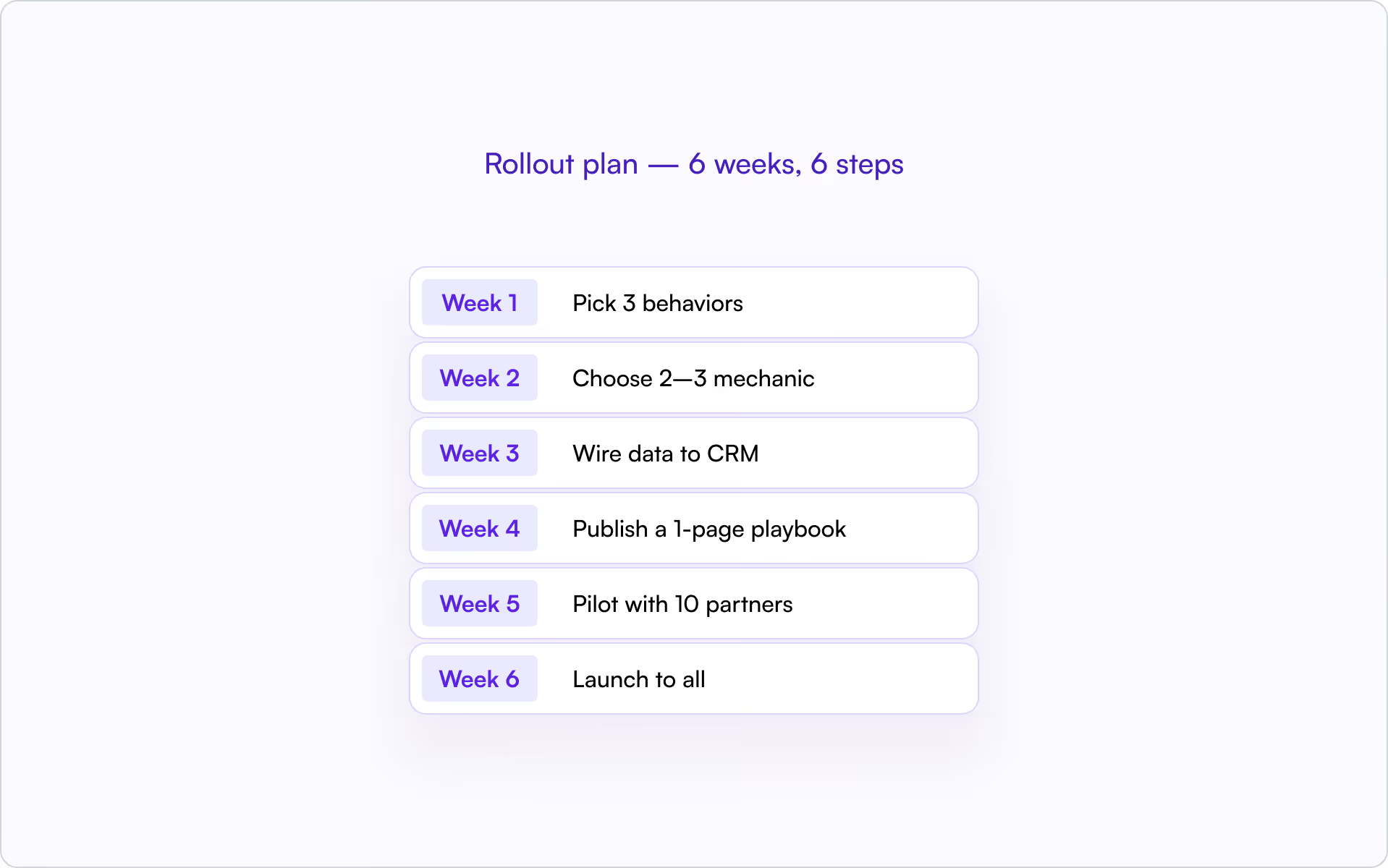
You do not need a big bang. A calm, six-week rollout gives partners a clear start line, removes ambiguity for sales teams, and sets up clean measurement from day one.
- Week 1 — Pick three behaviors: training completion, qualified registrations, first-meeting rate.
- Week 2 — Choose two or three mechanics: levels, badges, one 30-day team challenge.
- Week 3 — Wire definitions to CRM and set cohorts for fairness.
- Week 4 — Publish a one-page playbook in the partner portal with rules, examples, screenshots, and FAQs.
- Week 5 — Pilot with ten partners, gather partner feedback, and tune scoring where needed.
- Week 6 — Launch broadly, send weekly standings, highlight next steps, and support sales reps with talking points.
Introw compresses the middle weeks by turning CRM fields into progress bars, automating nudges, and letting partners engage from email or Slack, which keeps partners engaged without adding a new login.
Guardrails that keep trust high
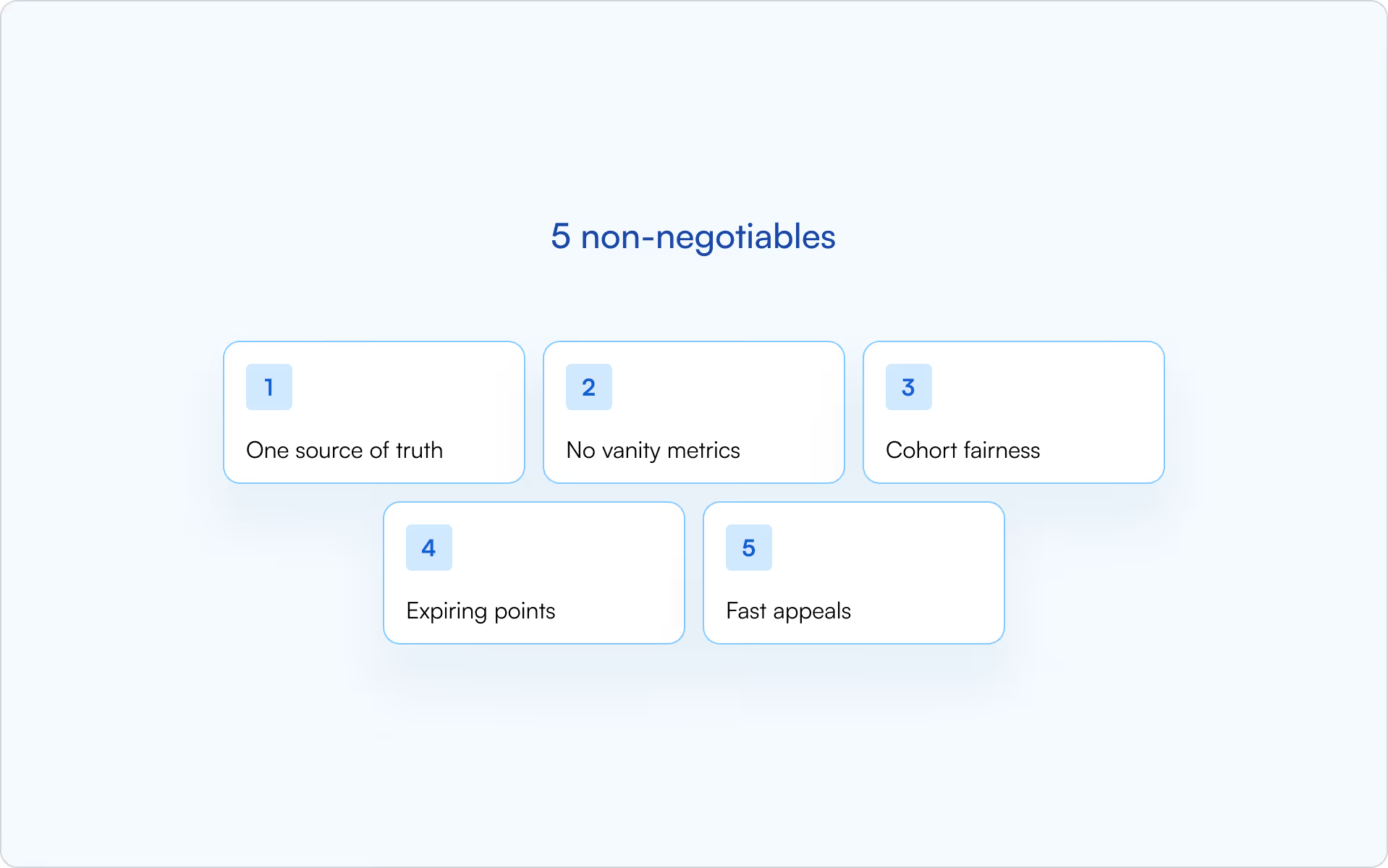
Every fair game needs boundaries. These five keep your program credible and effective:
- One source of truth — if it is not in CRM or PRM, it does not count.
- No vanity metrics — score qualified actions and outcomes, not logins or clicks.
- Cohort fairness — compare similar partner types so smaller firms can earn rewards on merit.
- Expiring points — score within the current quarter so momentum matters.
- Fast appeals — partners submit evidence, you respond with dates and thresholds.
These constraints keep gamification techniques aligned to business growth and partner satisfaction, not noise.
Where Introw fits when you are ready to operationalize
Introw brings partner relationship management gamification into the everyday flow of your channel strategy. Levels mirror your tiers, badges reflect real certifications and case evidence, and leaderboards run on live Salesforce or HubSpot data. Partners see their standings, immediate recognition, and next steps without extra portals. Because the gamification elements map to tier criteria and deal registration, recognition fuels mobility and partner programs stay coherent.
Ready to boost channel partner engagement without overpaying? Request an Introw demo and see how gamification initiatives, tiering, and co-selling come together in one CRM-first workflow.
Top 9 PartnerStack Alternatives to Consider in 2026
While partner platform PartnerStack works well for some businesses, it can fall short for SaaS teams needing deep CRM integration, a custom partner portal, and more reporting and automation capabilities.
If you're struggling with data silos, limited automation, or partner portals that don't work with your needs, it's time for a change.
Look for a solution built for RevOps, embedded in your CRM, and focused on revenue—not vanity metrics.
➡️ Explore why Introw is a top PartnerStack alternative — book your live demo today.
Why Look for a PartnerStack Alternative in 2026?
As the SaaS landscape evolves, businesses must continually re-evaluate their partnership management tools.
While PartnerStack remains a strong contender, shifting needs around customization, reporting, automation, and integration options may prompt some SaaS brands to explore alternatives that better align with their growth strategies and tech demands.
Is it time for your business to consider PartnerStack alternatives?
Read on to find out.
Where PartnerStack Falls Short for Scaling SaaS Teams
PartnerStack can help launch a partner program — but once you're driving real revenue through partners, it often hits its limits.
Here are three common friction points for SaaS companies trying to scale with PartnerStack:
1. CRM Disconnect
A lack of seamless integration with your CRM can lead to data silos, duplicated work, and missed opportunities for cross-team alignment.
In short — a headache.
After all, when your sales and partnership marketing platforms don't speak the same language, efficiency and visibility suffer.
Instead, look for partner management platforms that are fully embedded in your CRM.
2. No Off-Portal Collaboration
If your partners have to log into a portal just to stay in the loop, you're already creating friction. PartnerStack requires portal access for updates or engagement — which often leads to drop-off and delays.
There’s no support for off-portal collaboration, like replying to deal updates via email or Slack and having it sync back to your CRM. That disconnect slows down momentum and makes it harder to keep partners engaged.
Modern partner teams need tools that meet partners where they are — with frictionless, off-portal collaboration baked in.
3. No Customizable Portal Experience
As your partner program matures, a one-size-fits-all portal just doesn’t cut it. PartnerStack offers limited flexibility when it comes to customizing the partner experience — making it hard to support different partner types, tiers, or regional nuances.
If your team needs to tailor onboarding, branding, or workflows for referral partners vs. resellers vs. MSPs, PartnerStack likely falls short.
Look for platforms that offer fully customizable, white-labeled portals with CRM-driven logic — so every partner gets the right experience, at scale.
What to Look for Instead
If you've decided it's time to move on from PartnerStack, what should you be looking for from your partner management system?
1. CRM-Native with Real-Time Sync
In 2026, your partner platform must live inside Salesforce or HubSpot. That means native CRM integration — not just pushing spreadsheets into a dashboard. Real-time deal sync, automated registration, and shared pipeline visibility help you eliminate silos and keep everyone on the same page.
2. Frictionless Off-Portal Collaboration
Look for tools that make it easy for partners to engage without logging in — think Slack or email updates that sync directly to your CRM. Off-portal collaboration keeps momentum high and ensures reps and partners stay aligned in real time, not stuck chasing each other across platforms.
3. Custom-Branded, Flexible Partner Portal
Your partner portal should reflect how your business operates — not force you into a rigid template. Look for a PRM that lets you fully customize the portal layout, branding, and workflows to match your processes, partner model, and go-to-market motion. From content to deal reg flows, every part should feel like an extension of your company — not a bolt-on.
If PartnerStack is starting to slow your momentum — whether due to collaboration friction, limited CRM alignment, or lack of customization — it’s worth evaluating purpose-built tools designed for scale.
Let’s see…
Top PartnerStack Alternatives to Consider
When considering moving on from PartnerStack, it's essential to explore your options and identify the best fit for you.
1. Introw — Best CRM-Native PRM for SaaS Teams
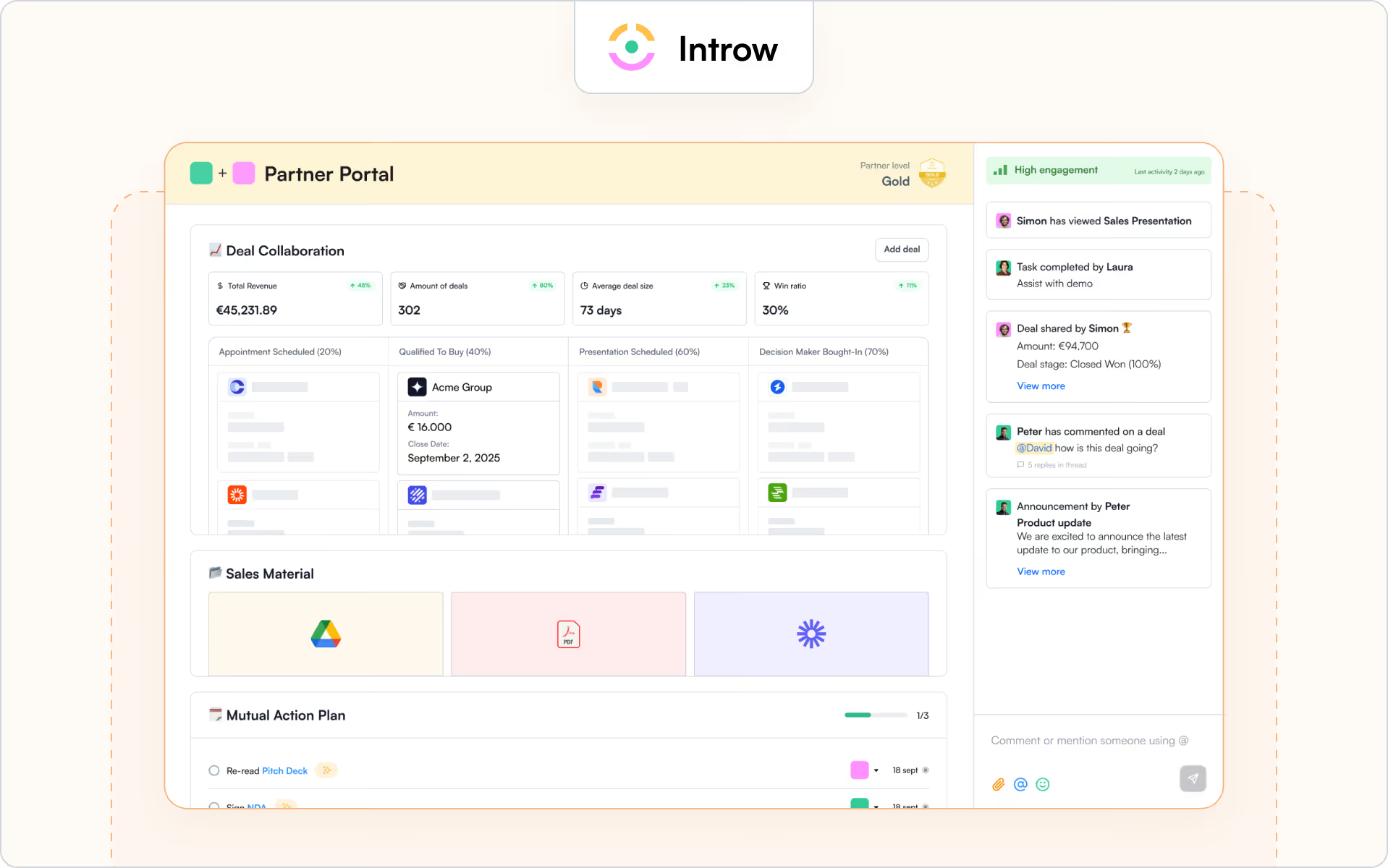
Introw is a sophisticated partnership relationship management (PRM) platform with deep Salesforce and HubSpot integrations.
Its CRM-first approach ensures that partnership data — such as leads, deals, engagement, and pipeline metrics — flows automatically between Introw and your CRM, keeping Salesforce or HubSpot as your single source of truth.
Other Introw highlights include:
- Real-time co-selling
- No-code partner portal builder
- AI Agent, providing 24/7 support to your partners
- No login needed for partners — off-portal experience
- Real-time deal reg, forecasting, and MAPs
- Modular workflows (referral, reseller, etc)
- Slack sync for nudges, updates
- Strong RevOps and CCO/CRO alignment
- Transparent pricing
Who Is Introw Best For?
Introw is perfect for SaaS teams with two or more partner managers and who already use (or intend to use) Salesforce or HubSpot.
Pricing: Introw is free for one partner. Its basic tier starts at $329 per month for ten partners, Pro costs $579+ per month for ten partners, and Enterprise pricing is bespoke. Book a live demo here.
2. Partnero

Partnero is an all-in-one partnership management platform designed for SaaS and e-commerce businesses to create, manage, and scale affiliate, referral, and newsletter referral programs.
Partnero supports automated payouts, offers fully customizable reward structures, white-label partner portals, and boasts seamless integrations with tools like Stripe, Shopify, PayPal, and WooCommerce.
Features include:
- All-in-one program management
- Customizable reward structures
- White-label partner portals
- Seamless integrations
- Automated payouts
- Real-time analytics
- Custom referral marketing links and coupons
- Partner enablement tools
- Developer-friendly API
Who Is Partnero Best For?
Partnero works best for companies running affiliate and influencer programs. Its lighter feature set works well for early-stage companies, but it's less ideal for scaling SaaS with mature CRMs.
Pricing: Partnero's starter bundle costs $49 per month, its Partner tier is $149 per month, and the Advanced option for larger companies comes in at $479 per month.
3. Kiflo
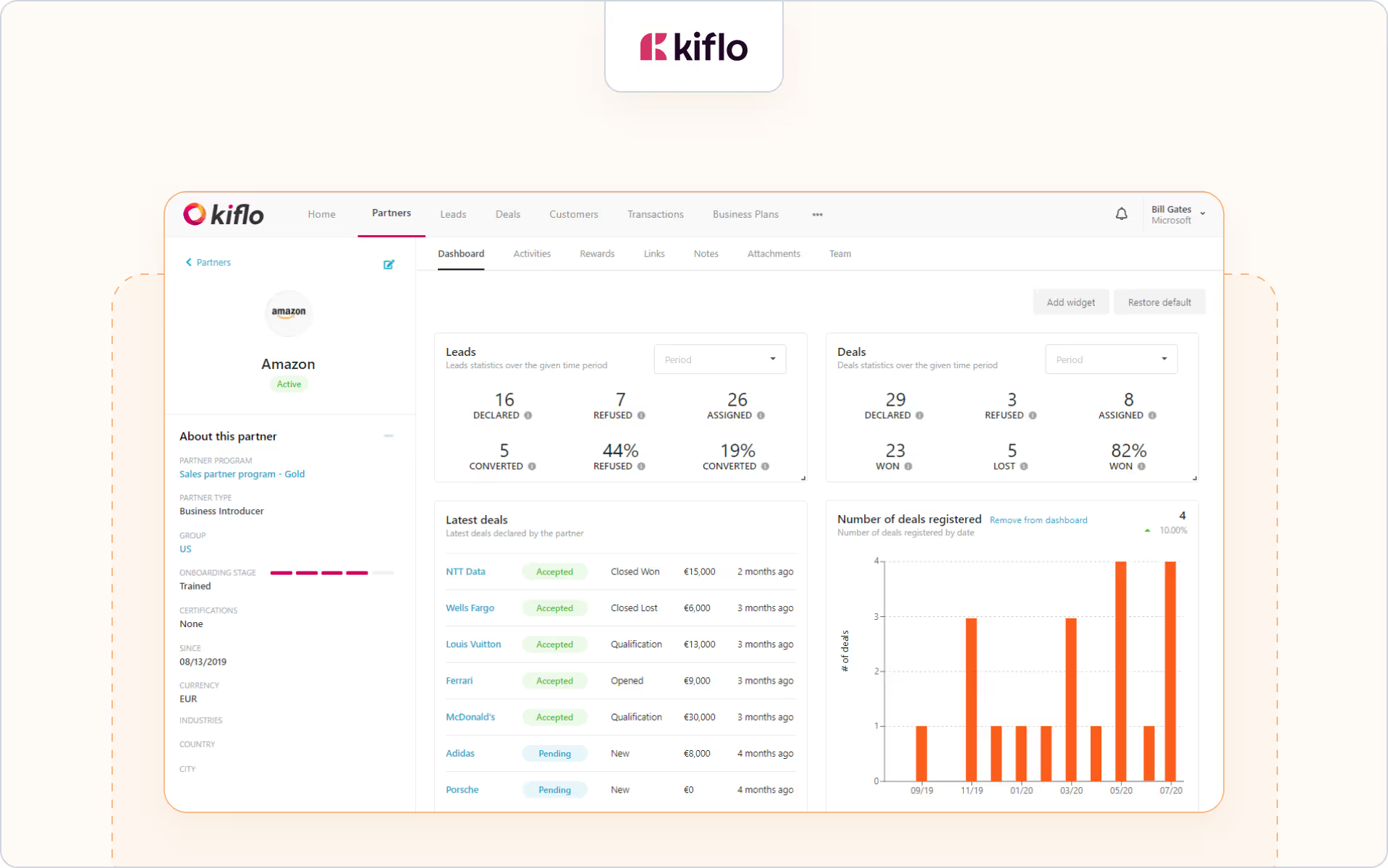
Kiflo is a PRM platform designed to help B2B companies grow and scale their partner programs.
It enables users to track partner-sourced revenue, manage leads, onboard and enable partners, and foster long-term, profitable partner relationships.
Specific features include:
- Partner onboarding and enablement
- Lead and deal management
- Revenue tracking and attribution
Who Is Kiflo Best For?
Kiflo is a great option for startups, with super easy onboarding.
However, it lacks a native Salesforce integration, so companies that rely on this CRM may want to consider alternatives.
Its analytics are also quite basic.
Pricing: Kiflo's Core tier — for teams just launching their partner program — starts at $359 per month. The Plus and Premier tiers operate on bespoke pricing plans.
4. Tolt
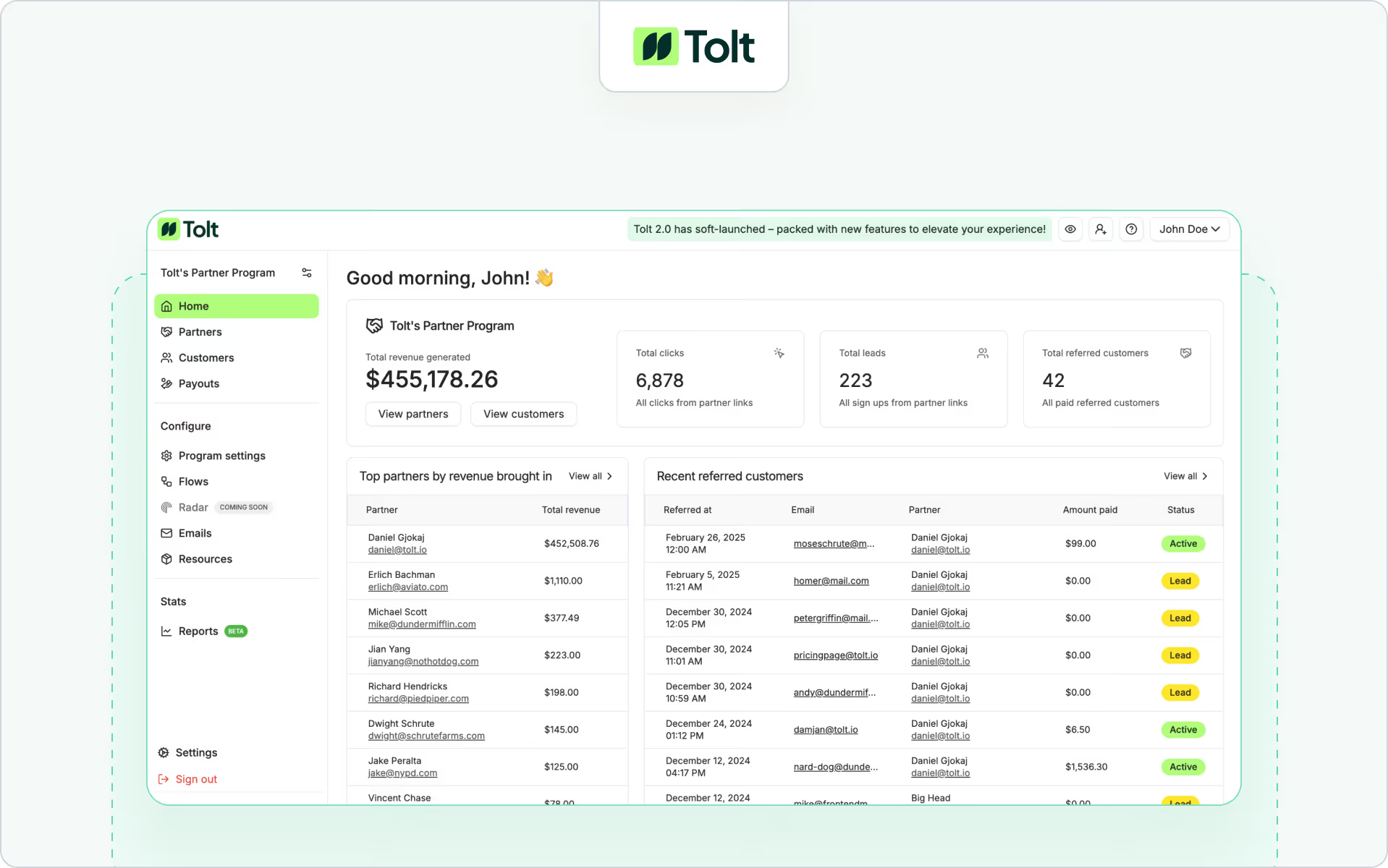
Tolt is an all-in-one affiliate marketing platform tailored for SaaS startups looking to swiftly launch and manage affiliate and referral programs.
With a heavy focus on partner onboarding, real-time analytics, and customizable commission structures, Tolt streamlines affiliate management, enabling startups to scale efficiently and cost-effectively.
Tolt's features include:
- Branded affiliate portals
- Real-time performance tracking
- Customizable commission structures
- Passwordless login for affiliates
- Quick setup within 15 minutes
Who Is Tolt Best For?
Tolt's focus is on partner onboarding, so it works well for companies that expect to attract a high number of new partners or simply want to impress their partners from the outset.
However, this tool is still maturing when it comes to deal registrations and pipeline management, and it doesn't natively support MAPs or Slack workflows — all of which make it a better option for startups and smaller businesses rather than mature partner programs.
Pricing: Tolt's Basic bundle starts at $49 per month, its Growth package is $99 per month, and the Pro option costs $199 per month.
5. Allbound

PRM Allbound is designed to streamline and automate every aspect of partner programs for B2B organizations.
It offers tools for onboarding, enablement, co-marketing, co-selling, and performance tracking, all within a unified interface.
Highlights include:
- Partner journey automation
- Content library and management
- Learning tracks and certifications
- Deal registration and playbooks
- Multi-tier distribution support
- Gamification and incentive dashboards
- Channel insights and reporting
- CRM integrations with real-time updates
Who Is Allbound Best For?
Allbound is a great option for mid-market to enterprise-level B2B tech businesses with mature or scaling partner ecosystems.
Pricing: Allbound's pricing is bespoke.
6. Impartner
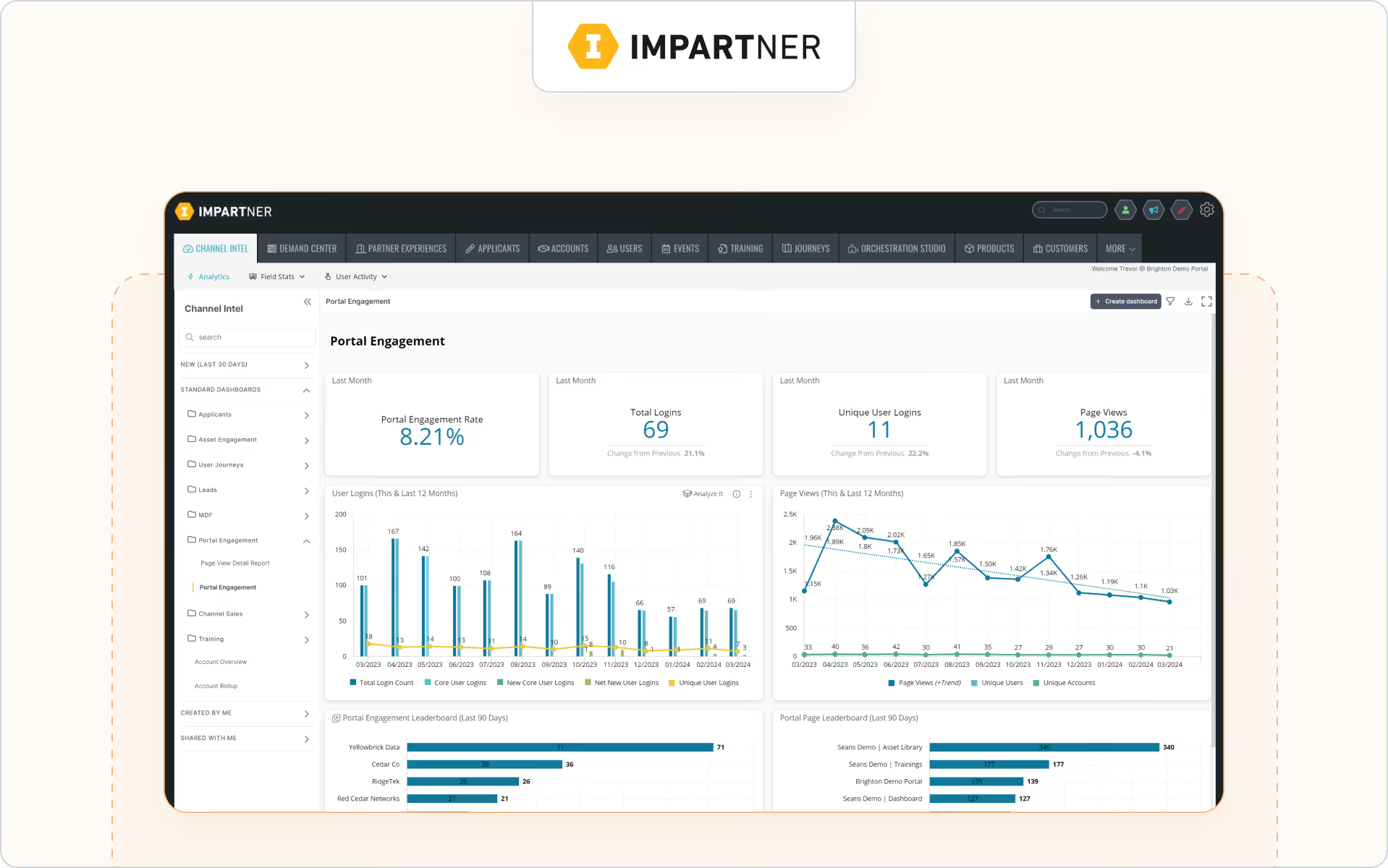
Comprehensive PRM platform Impartner is designed to help B2B companies manage and scale their partner ecosystems effectively.
It supports all types of partners, including reseller partners, distributors, affiliates, ISVs, and more.
Impartner offers comprehensive tools designed to help businesses enhance partner engagement, streamline operations, and drive revenue growth through indirect sales channels.
Highlights include:
- Automated partner onboarding and training
- Centralized partner portals with role-based access
- Deal registration and lead management
- Performance tracking and analytics dashboards
- Co-branded marketing asset creation
- Partner business planning and goal-setting
- Tiering and compliance automation
- CRM integrations with real-time data sync
- Referral and affiliate program support
Who Is Impartner Best For?
Impartner is a comprehensive PRM solution that works best for mid-sized to enterprise-level B2B companies with complex, global, or high-growth partner ecosystems.
Pricing: Impartner offers tailored pricing.
7. Impact.com
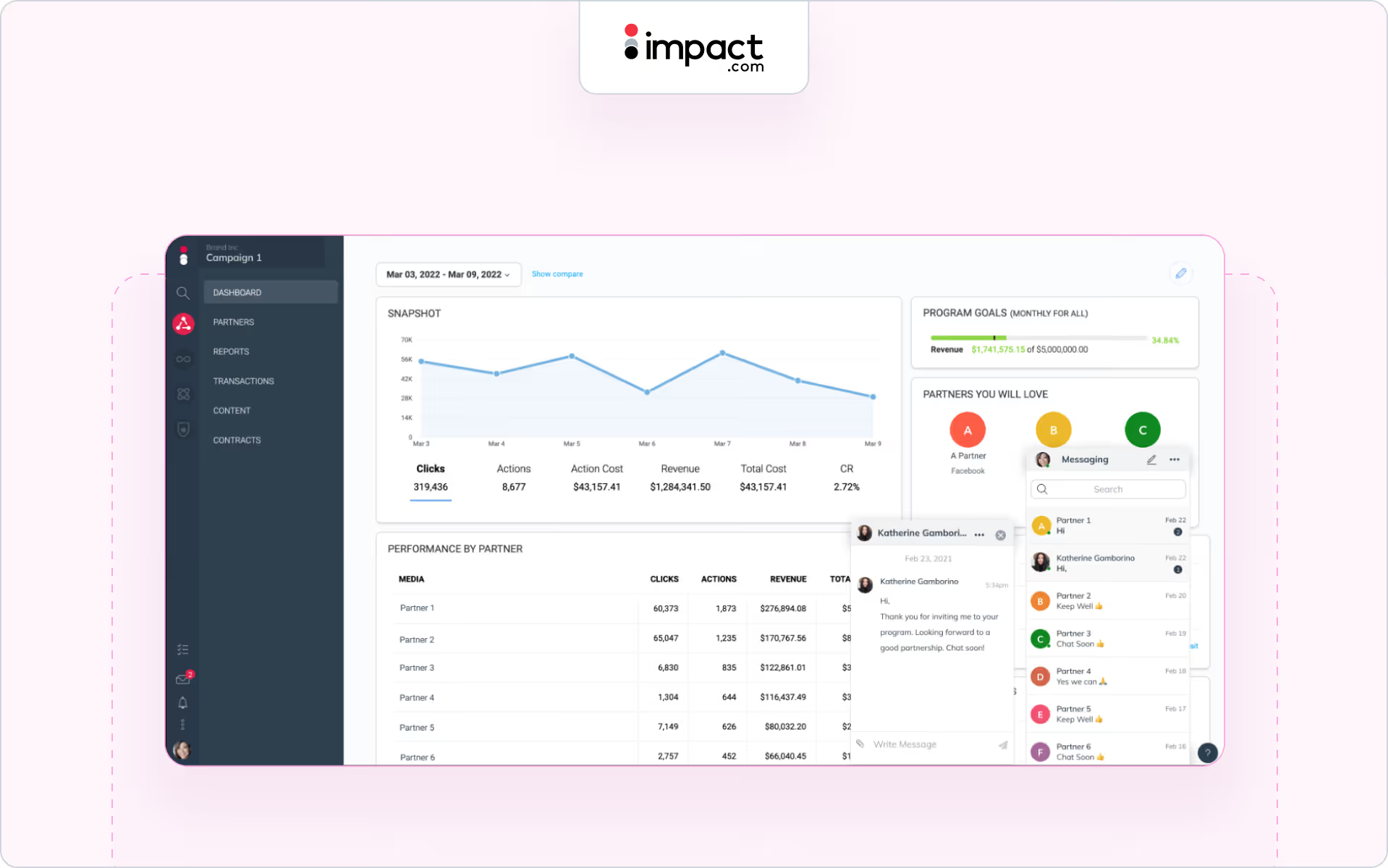
Impact.com is a comprehensive partnership management platform that enables businesses to manage and optimize various types of partnerships — including affiliates, influencers, creators, B2B partners, and referrals — within a single system.
Its features include:
- Partner discovery and recruitment automation
- Automated payments and contracts
- Real-time tracking and performance analytics
- Fraud detection and prevention
- Customizable attribution modeling
- CRM and e-commerce platform integrations
- Role-based access and permissions
- Automated partner onboarding workflows
- Benchmarking reports against industry peers
Who Is Impact.com Best For?
Impact.com is best for companies that want to build, manage, and scale diverse, performance-based partnerships in a unified platform.
It's particularly well-suited for large companies, e-commerce and DTC brands, and agencies and networks that are running partnership programs for multiple clients.
Pricing: Impact pricing is bespoke.
8. Rewardful

Rewardful is an all-in-one affiliate and referral management platform tailored for SaaS companies and subscription-based businesses.
It enables users to launch affiliate programs in under 15 minutes through seamless integrations with Stripe and Paddle.
Here are its top features:
- Easy Stripe and Paddle integrations
- Customizable commission structures
- User-friendly affiliate portal with branded customization
- Automated payouts via PayPal and Wise
- Real-time tracking of referrals and conversions
- Coupon code and link-based referral partners tracking
- Fraud detection and prevention mechanisms
- Affiliate finder tool
- White-label capabilities
- Analytics dashboard
Who Is Rewardful Best For?
Rewardful is best for bootstrapped to mid-sized SaaS companies that use Stripe or Paddle for billing and want fast, no-code affiliate setup.
It's also great for subscription businesses that need recurring or one-time commission models.
Pricing: Rewardful's Starter package costs $49 per month, and its Growth bundle is $99 per month, while Enterprise pricing starts at $149 per month.
9. Partnerize
Partnerize is a comprehensive end-to-end partnership management platform designed to help brands discover, manage, and optimize diverse partner relationships at scale.
It supports various partner types, including affiliates, influencers, and content creators.
Its key features are as follows:
- Automated partner discovery and recruitment
- Dynamic commissioning based on performance metrics
- Real-time tracking and analytics dashboards
- Brand safety and fraud prevention tools
- Customizable reporting and attribution models
- Integration with major e-commerce and CRM platforms
- Role-based access controls and user permissions
- Dedicated partner portals
Who Is Partnerize Best For?
Partnerize is ideal for mid-sized to enterprise-level businesses seeking to scale their partnership programs efficiently.
It's especially beneficial for companies that manage a diverse range of partners and/or operate in multiple regions.
Pricing: Fees vary depending on your requirements.
How to Choose the Right PartnerStack Alternative
Ready to find the very best partner management platform for your business?
Here are three major points to consider:
1. Prioritize CRM Compatibility
It's vital that your PRM integrates seamlessly with your CRM — such as Salesforce or HubSpot.
A partner management platform that doesn't sync in real time can create data silos, duplicate efforts, and missed opportunities.
So, look for a solution that supports native, two-way CRM integration to ensure accurate reporting, streamlined workflows, and a single source of truth.
2. Focus on Channel Revenue, Not Just Signups
It's easy to get caught up in growing partner signups — but quantity doesn't equal quality.
The right PRM should help you measure what really matters: channel revenue.
Prioritize tools that track partner-sourced and influenced deals, connect activity to pipeline stages, and surface performance metrics.
3. Evaluate User Experience for Partners
A great partner experience drives engagement and results.
If your PRM requires complex logins or clunky portals, partners simply won't use it.
It's crucial to find tools that offer frictionless interaction — like replying to deal threads via email or Slack without logging in.
The right platform should also provide visibility into partner activity (opens, clicks, replies), allowing you to track engagement and follow up effectively without requiring constant manual check-ins.
Why Introw Leads the Pack in 2026
Introw stands out as the leading PartnerStack alternative by delivering a modern, revenue-focused approach to partner management with deep CRM integration.
This user-friendly PRM platform delivers a fully embedded experience in platforms like Salesforce and HubSpot and offers real-time co-selling capabilities, keeping your partners and pipeline in sync.
Meanwhile, its no-code portal builder enables tailored partner experiences, and its Slack and email integration makes communication easy, while a built-in AI Agent offers 24/7 support.
Purpose-built for SaaS, RevOps, and scale, Introw prioritizes actual revenue over vanity metrics.
➡️ Ready to experience the future of partner management? Request a live Introw demo here.
Partner Deal Registration (How to Make It Easy, Fast, and CRM-Synced)
You can feel a channel program’s health in the quiet moments between emails. A reseller spots a promising account, sends details, and waits. Somewhere else, another partner mentions the same opportunity. Threads multiply. By the time someone checks the CRM, it’s unclear who arrived first or whether the end customer even wants a meeting. Trust dips; velocity stalls. That’s the mess partner deal registration exists to prevent. The fix isn’t more policy — it’s a cleaner flow that partners actually use.
What partner deal registration really is
Before we tune the mechanics, align on meaning. Partner deal registration is a simple agreement: a deal registration partner brings you a potential sales opportunity, you review it quickly, and if it qualifies you grant clear benefits for a fixed window and make it visible to your sales team. In return, the partner commits to next steps. The outcome is a single, CRM-synced record that guides the sales process rather than a separate system no one trusts.
This matters for three reasons: it protects partner investments, limits channel conflict when multiple partners touch the same opportunity, and gives early visibility into new business, which sharpens sales forecasting.
Why partners register — or quietly don’t
Partners do fast math. If submitting a partner deal registration form takes two minutes and decisions arrive quickly, they register. If the approval process is opaque or slow, they work the deal off-book. Adoption is earned by respecting partner time and by rewarding real progress, not just first clicks.
3 signals your program respects partner time
- Immediate acknowledgment after submission so partners know you received it.
- A short approval SLA — think two business days.
- Clear reasons for rejection and a lightweight appeal path.
These signals build partner satisfaction even when the answer is no, because the process feels fair.
Fair approvals without drama
Approvals are where programs build or lose trust. Partners don’t expect a blanket yes; they expect a clear, repeatable rule set. Publish simple criteria and stick to them: net-new opportunity, verified customer contact, plausible timeline, and no conflicting registered deals. Add a defined protection window with an equally clear extension rule tied to progress (for example: discovery booked or solution validation scheduled).
When your team decides quickly and explains why, partners stay engaged even if they don’t win every request. Internally, your sellers benefit too — registered deals show up in the same pipeline, with the same fields, and the same status values they already use.
Avoiding channel conflict without scaring partners
Conflict usually comes from ambiguity: multiple partners chase the same company name, or a protected registration goes cold but blocks others. Keep the temperature down with straightforward policies.
4 rules that prevent “same opportunity” fights:
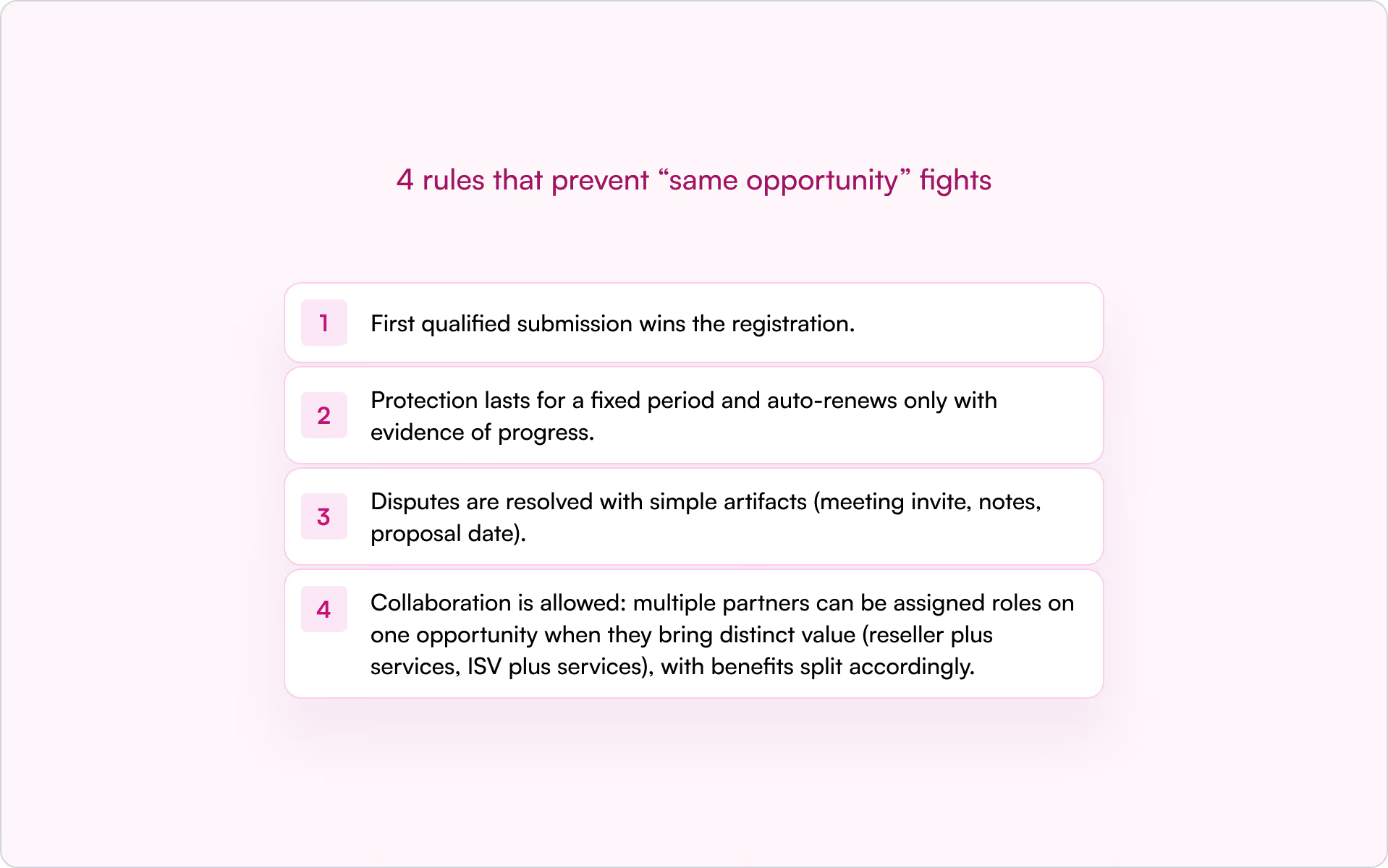
- First qualified submission wins the registration.
- Protection lasts for a fixed period and auto-renews only with evidence of progress.
- Disputes are resolved with simple artifacts (meeting invite, notes, proposal date).
- Collaboration is allowed: multiple partners can be assigned roles on one opportunity when they bring distinct value (reseller plus services, ISV plus services), with benefits split accordingly.
A few plain rules, consistently enforced, do more for partner trust than a long policy in a portal no one reads.
Benefits that reward real work
A deal registration program should nudge the right sales efforts, not just hand out discounts. Offer light benefits for an approved registration, stronger support once momentum appears, and material rewards when the opportunity closes.
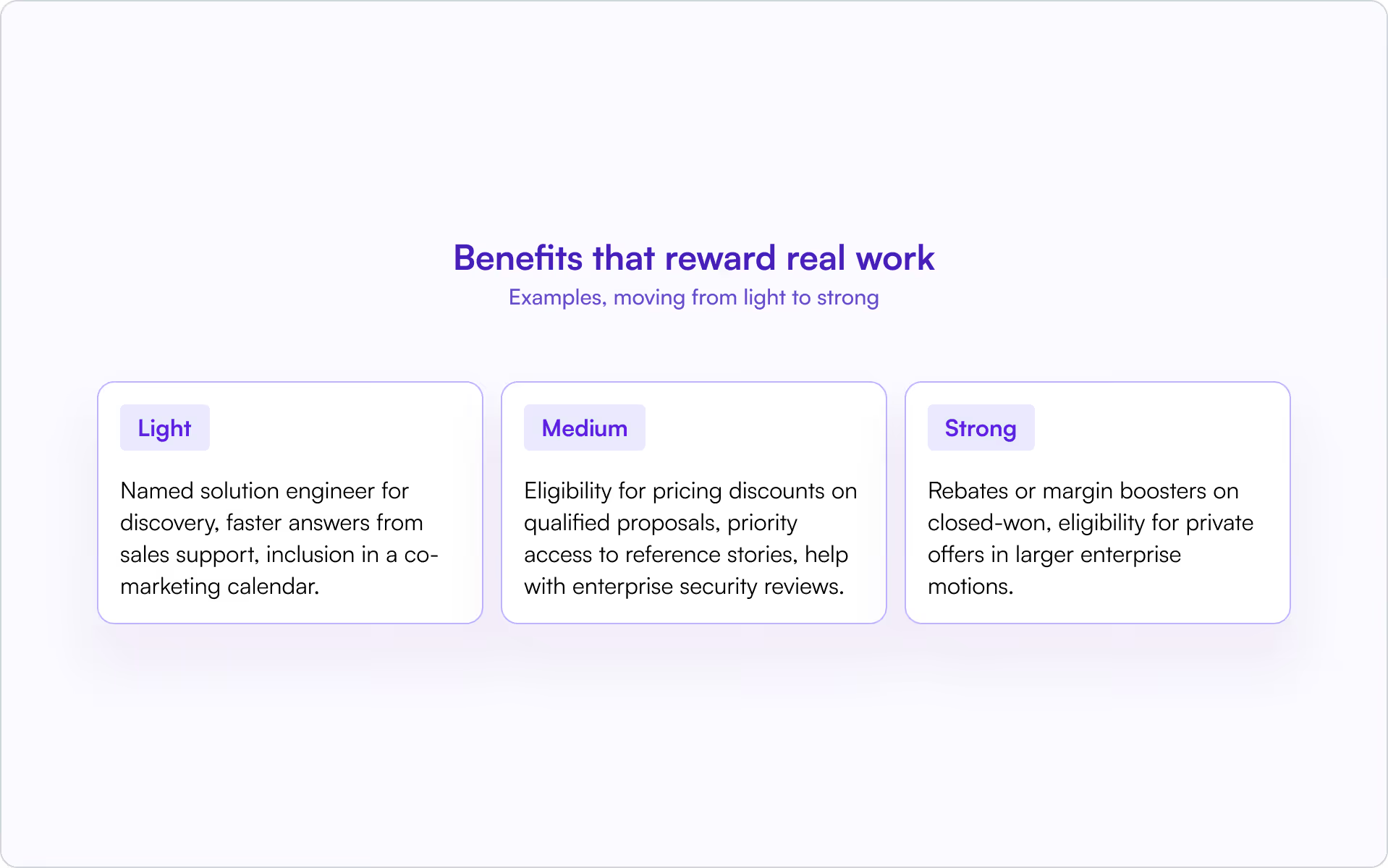
Examples, moving from light to strong
- Light: named solution engineer for discovery, faster answers from sales support, inclusion in a co-marketing calendar.
- Medium: eligibility for pricing discounts on qualified proposals, priority access to reference stories, help with enterprise security reviews.
- Strong: rebates or margin boosters on closed-won, eligibility for private offers in larger enterprise motions.
Tie each benefit to observable milestones in the CRM so partner rewards feel earned and finance sees clean attribution.
Everything belongs in your CRM
Programs falter when registered deals live in a portal and the sales team lives in a different system. End the split. Every registration should create or link to a CRM record and update status fields your team already understands. That keeps the sales pipeline honest, improves sales forecasting, and eliminates duplicate data entry.
Introw was built for this. Partners can submit a registration without a portal login. The system checks for duplicates in real time, creates the registration, links the opportunity, and sends the acknowledgment immediately. Status changes sync in both directions, so partners see what sellers see — no screenshots, no side spreadsheets.
What to measure so you can improve
Measurement is where a deal registration program becomes a growth engine instead of a queue.
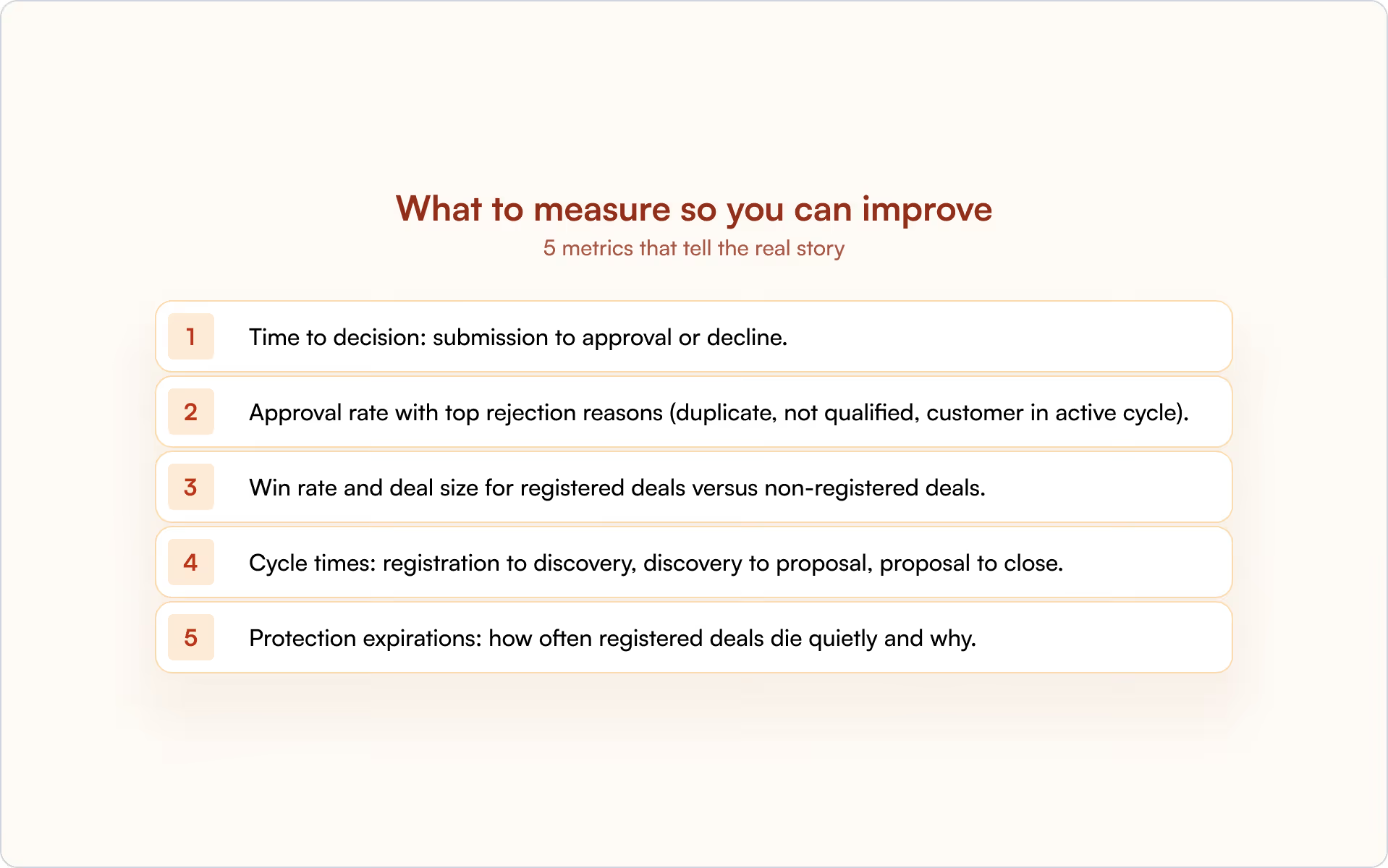
5 metrics that tell the real story
- Time to decision: submission to approval or decline.
- Approval rate with top rejection reasons (duplicate, not qualified, customer in active cycle).
- Win rate and deal size for registered deals versus non-registered deals.
- Cycle times: registration to discovery, discovery to proposal, proposal to close.
- Protection expirations: how often registered deals die quietly and why.
Use these to tune the registration process, the benefits, and your enablement with channel partners.
How this scales as your partner ecosystem grows
Growth introduces edge cases — multiple partners on one opportunity, regional handoffs, co-sell with a cloud provider, or services-only plays after a direct sale. Resist inventing a new process for each scenario. Keep one consistent deal registration process, allow multiple roles on the same opportunity when justified, and split incentives according to documented contribution. Your partner program stays understandable; your team stays efficient.
Where Introw fits
Introw makes partner deal registration easy for partners and operationally clean for your team — without forcing partners into a portal they won’t use. Partners submit via link (no login), Introw validates and de-dupes in real time, and the registration syncs directly to Salesforce or HubSpot.
The big unlock is pipeline visibility the moment a deal is submitted: partner-sourced pipeline shows up inside your CRM where your team already runs pipeline reviews, reporting, and forecasting — so Partner/Channel Managers aren’t stuck chasing updates across email threads. Introw also maps registrations to the right CRM fields so reporting stays current without manual cleanup, which is what makes forecasting reliable at scale.
And because collaboration is off-portal, partners can get status updates via email or Slack and reply directly — keeping momentum high while still keeping the CRM record authoritative.
If you want channel partner deal registration that partners actually use — and a CRM view your sales and RevOps teams actually trust — book a short Introw demo. We’ll show what “easy, fast, and CRM-synced” looks like with live pipeline visibility from submission to close.
HubSpot Partner Management: 7 Best Practices For 2026
Partner-led growth depends on empowering partners to work alongside direct sales to drive customer acquisition and revenue — and tight integration between your CRM and partner workflows is essential to get this right.
This seamless integration creates a unified view of leads and opportunities, allowing both internal teams and partners to collaborate seamlessly and avoid duplicating their efforts.
Furthermore, integrated systems enable accurate deal registration, attribution, and tracking, which is critical for partner incentives and performance insights.
With synced workflows, partners can register deals directly, co-sell with your team, and stay aligned through shared timelines and updates.
Additionally, CRM integration enables automated notifications, streamlined onboarding, and enhanced forecasting (by including partner pipeline in revenue projections).
The key benefits of tightly integrating your CRM and partner workflows?
Less friction, shorter sales cycles, and better partner trust.
Ultimately, it allows you to scale your partner ecosystem efficiently while maintaining transparency, accountability, and data-driven decision-making — all of which are vital to a successful partner-led growth strategy.
This is why companies are increasingly shifting from standalone PRM portals to CRM-first experiences like Introw — which integrates with popular CRMs, including HubSpot — to streamline their partner collaboration.
This approach meets partners where they work and aligns them more closely with internal sales processes.
Ready to scale your partner management this year?
⬇️ In this guide, we'll cover why HubSpot is a highly effective platform for partner management and take you through seven must-have best practices for scaling in 2026.
Can You Manage Partners in HubSpot? (Spoiler: Yes — with the Right Setup)
HubSpot doesn't have native PRM, but it offers several features that can be useful for SaaS partner management projects.
For example, the platform supports custom objects, labels, and workflows.
All of these elements are super useful for companies running small partner management projects.
The problem arises when you want to scale.
Indeed, most partner programs will quickly outgrow manual tagging and disconnected forms.
Once you get serious about your partner program, you need a PRM that is tailor-made for managing and scaling these schemes.
At the same time, you don't want to silo your partner management efforts from your CRM — this would create data disconnects, limiting visibility into partner-driven deals and slowing collaboration.
The solution?
Invest in tightly CRM-integrated PRM tools like Introw.
This way, you fill the PRM gap natively inside HubSpot and give your partnerships the best possible chance of flourishing.
Why HubSpot Is a Strong Foundation for Partner Management
Many SaaS teams already rely on HubSpot as their central source of truth for customers, deals, and marketing.
But increasingly, partner managers are realizing HubSpot can also be a superb command center for their partner programs — as long as they configure the platform in the right way.
Here's why HubSpot makes sense as a foundation for partner management in 2026:
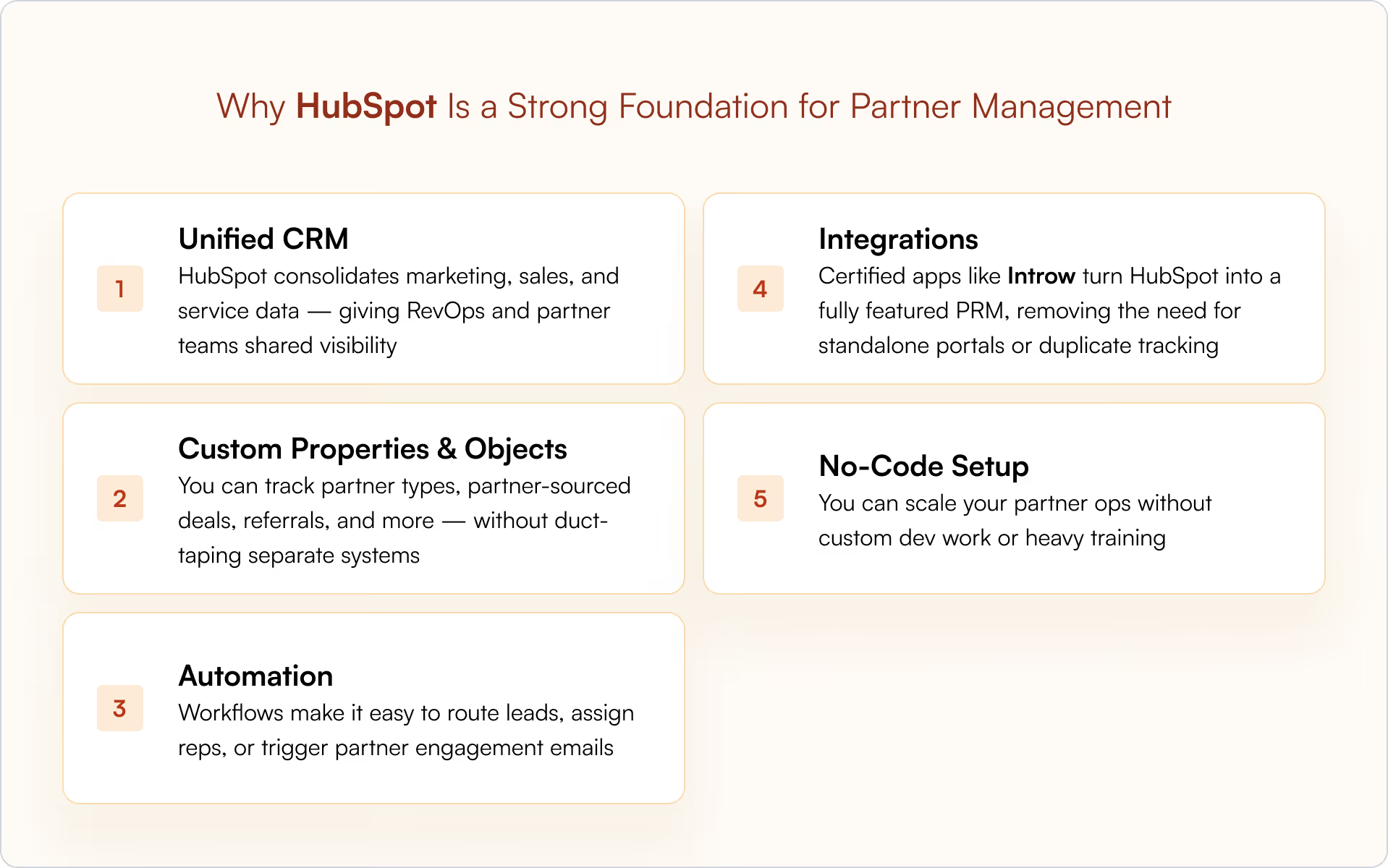
- Unified CRM: HubSpot consolidates marketing, sales, and service data — giving RevOps and partner teams shared visibility
- Custom Properties & Objects: You can track partner types, partner-sourced deals, referrals, and more — without duct-taping separate systems
- Automation: Workflows make it easy to route leads, assign reps, or trigger partner engagement emails
- Integrations: Certified apps like Introw turn HubSpot into a fully featured PRM, removing the need for standalone portals or duplicate tracking
- No-Code Setup: You can scale your partner ops without custom dev work or heavy training
In short, if HubSpot is already your CRM, there's no reason to manage your partner program outside of it.
Instead, plug in a PRM like Introw, and you'll gain a partner-ready ecosystem inside your CRM — one that works for RevOps, Sales, and Partner Managers alike.
7 Must-Have HubSpot Partner Management Practices for 2026
Ready to scale your partner program with Hubspot?
Here are seven vital HubSpot partner management practices you should be following for success in 2026.
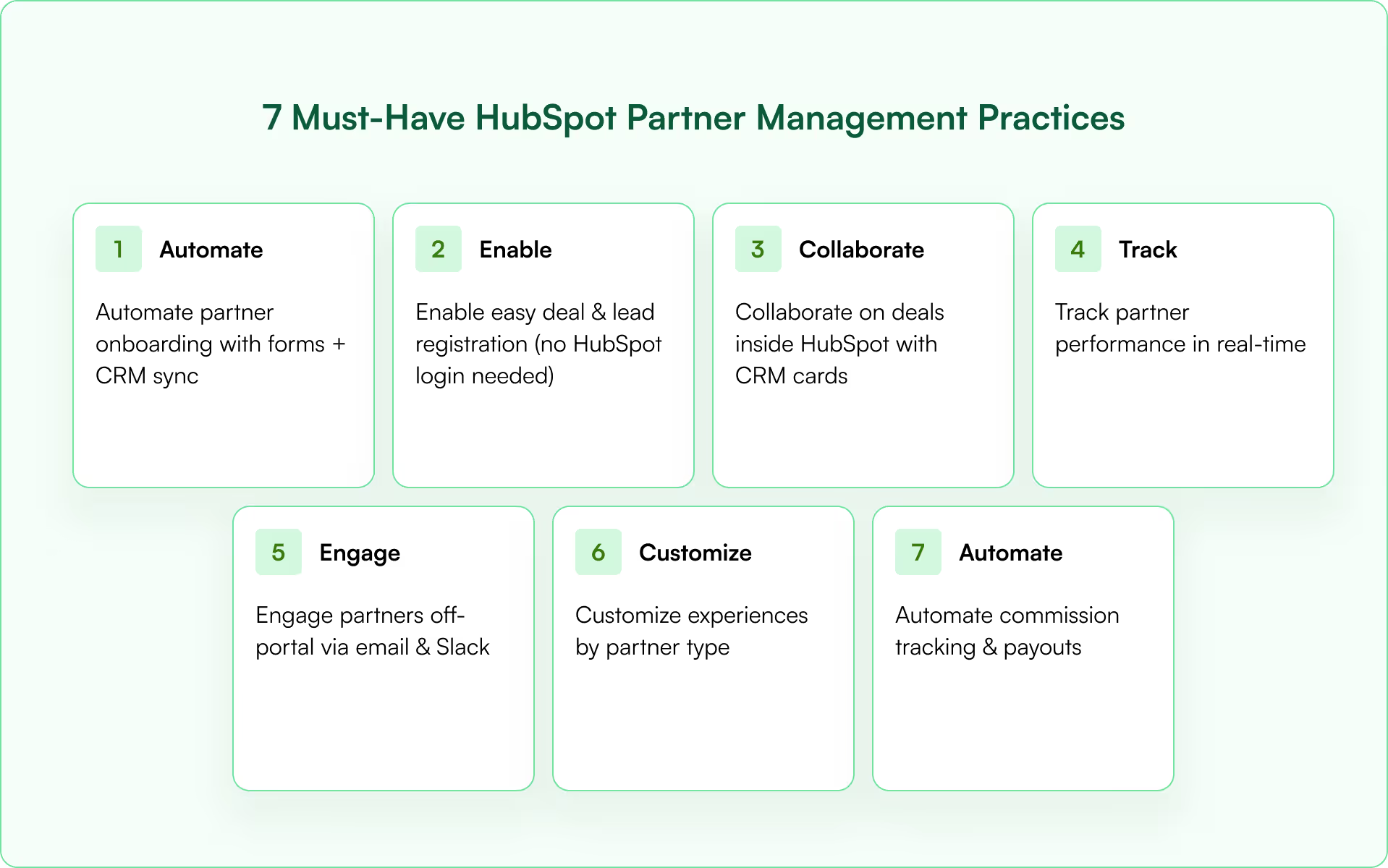
1. Automate Partner Onboarding with Forms + CRM Sync
This one will save you a lot of time!
Did you know you can use Introw to push form data (e.g. "Become a Partner") directly into HubSpot?
First, connect Introw to HubSpot to enable seamless data synchronization.
This integration allows form submissions, such as partner applications, to be pushed directly into HubSpot.
You can then use HubSpot's automation tools to trigger actions upon form submission.
For instance, automatically create a contact or company record, assign tasks, or send follow-up emails.
2. Enable Easy Deal & Lead Registration (No HubSpot Login Needed)
Introw allows for off-portal collaboration, which makes life much easier for your partners.
Indeed, your partners don't even need to log in to HubSpot in order to submit deals or register leads.
Instead, they can submit deals via a form, Slack or email.
The details are then auto-mapped to HubSpot, which acts as your single source of truth.
3. Collaborate on Deals Inside HubSpot with CRM Cards
Using CRM cards from Introw, teams can collaborate on partner-sourced deals directly inside HubSpot.
These embedded cards show deal details, partner info, and updates in real-time — without switching tools.
This means your partner's comments are automatically turned into CRM notes
Real-time sync keeps the deal's status, details, and updates aligned with your HubSpot pipeline, enabling smooth, in-CRM collaboration.
This streamlines communication, boosts visibility and keeps sales and partner teams aligned throughout the deal cycle.
4. Track Partner Performance in Real-Time
The success of your partner strategy hinges on data analysis.
Tracking partner performance in real-time is crucial to help you identify top performers, spot bottlenecks, and optimize your partner strategy as deals progress.
Indeed, without a sophisticated tracking and data analysis system, you're just guessing at what works and hoping you're right.
But with the right tools in your arsenal, you unlock faster decision-making, more accurate forecasting, and effective incentives — driving accountability, growth, and stronger partner relationships across your ecosystem.
Fortunately, Introw and HubSpot work together to make real-time data analysis easy.
Introw generates dashboards based on HubSpot data.
Set up dashboards based on metrics that speak to your goals — for example, revenue, activity, pipeline, or deal data.
5. Engage Partners Off-Portal via Email & Slack
One of Introw's most partner-friendly features is that it allows you to engage your partners off-portal via email and Slack.
This means partners don't need to log into their portal to communicate or collaborate with you.
Instead, they receive real-time notifications, can comment on deals, and stay in the loop — all off-portal — making collaboration faster, easier, and more integrated into their daily workflows.
6. Customize Experiences by Partner Type
In 2026, personalization is crucial when it comes to engaging your partners.
Deliver an irrelevant or jarring experience, and partners could lose trust in your offering and become more reluctant to recommend you.
Introw supports dynamic views and objects in HubSpot, which allows you to customize partner experiences by type.
For example, you can tailor onboarding flows, forms, content, and deal stages for different partner types, like partner submitted referrals, a successful reseller channel, or MSPs.
Simply segment partners within HubSpot and Introw, then deliver relevant experiences and workflows that match their role, ensuring higher engagement and more effective collaboration across partner types.
7. Automate Commission Tracking & Payouts
Connect Introw with your HubSpot CRM to automate commission tracking and payouts.
As deals close, Introw tracks which partner influenced each one, calculates commissions based on preset rules and logs the data.
You can then use CRM triggers to automate payout workflows or give partners visibility over their commissions.
This ensures accuracy, transparency, and timely rewards.
Why Introw Is the Best HubSpot PRM Integration for 2026
Introw stands out in 2026 as the ultimate PRM integration for HubSpot, delivering unmatched efficiency, partner experiences, and growth capabilities.
Here's why it's the best partner relationship management tool integration with HubSpot:
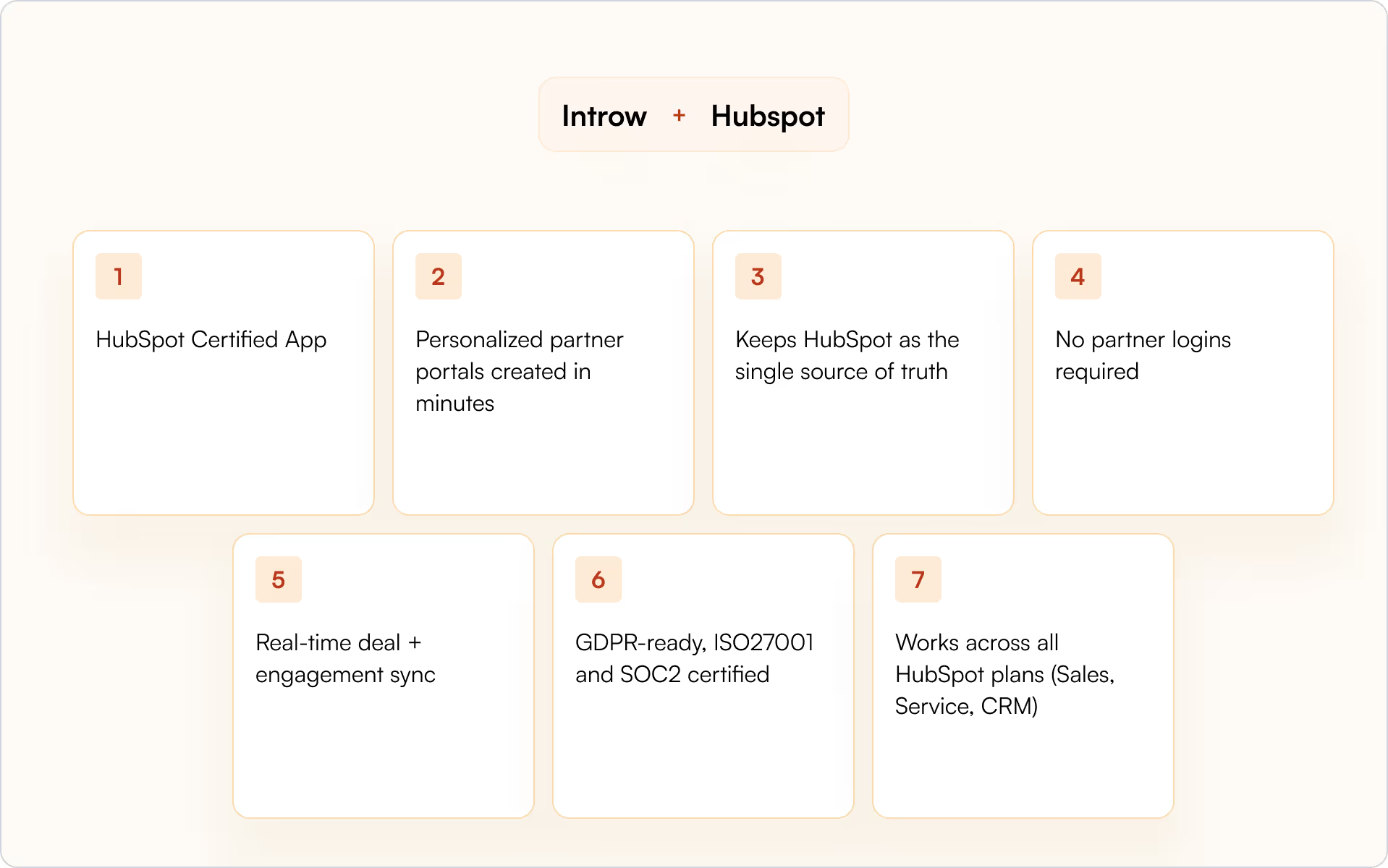
- HubSpot Certified App: Introw is trusted and verified by HubSpot, ensuring a smooth, secure integration.
- Personalized partner portals created in minutes: Launch clean, branded portals for each partner quickly — no technical setup required.
- Keeps HubSpot as the single source of truth: All partner data, leads, and deal activity sync directly into HubSpot, eliminating the need to manage a separate PRM system.
- No partner logins required: Partners can view, register, and collaborate on deals via shared links — no friction, forgotten passwords, or onboarding headaches.
- Real-time deal + engagement sync: Instantly reflects partner-submitted leads and activity in HubSpot, giving your sales team live visibility.
- GDPR-ready, ISO27001 and SOC2 certified: Designed with enterprise-level security and global compliance in mind.
- Works across all HubSpot plans (Sales, Service, CRM): Fully compatible with the entire HubSpot suite, so you can support partner workflows wherever your teams operate.
🚀 Launch Your HubSpot Partner Portal in Minutes — Book a Demo!
Conclusion
If HubSpot is already your CRM, why not make it your partner system too?
With Introw, you can scale partner programs without silos, clunky portals, or extra logins.
Save RevOps time, align with Sales, and drive more revenue from your ecosystem.
✅ Ready to simplify partner management in HubSpot? Get a personalized demo
Introw Raises $3M to build the future of B2B partnerships
The Ghent-based technology startup Introw, which is already helping 100+ B2B companies to boost sales through partners, has raised $3 million in a new funding round led by Visionaries Club and with the continued support from PitchDrive. Since its launch in 2023, Introw’s AI-powered partner platform has facilitated tens of thousands of partner interactions and helped clients generate millions in additional pipeline.
The company had previously raised €1 million from Pitchdrive and angel investors including Pieterjan Bouten (Ex-Showpad) and Ewout Meyns (Ex-HubSpot).
From Local Studio to International Growth
Founders Andreas Geamanu (CEO), Laurens Lavaert (CTO), and Simon Van Den Hende (Head of AI) started Introw in early 2023, originally incubated by StarApps, the venture studio of serial entrepreneurs Lorenz Bogaert & Nicolas Van Eenaeme, also known as the “Netlog mafia.”
2025 has been a breakthrough year for Introw: the team grew from 4 to 15 people, and revenue quadrupled.

AI-Driven Partner Enablement
Buyers now expect highly personalized experiences, yet outreach fatigue and tighter privacy regulations have made it harder for direct sales teams to cut through the noise. That’s why an increasing number of companies are turning to partner sales (indirect sales) as these already have relationships, credibility, and access to customers.
Introw’s AI-powered partner portal enables companies to onboard, train, and activate partners in minutes. Unlike legacy systems that take months to deploy, Introw connects instantly to your CRM, giving partners access to customer data, and sales tools to close more deals.
“Each day a partner lacks the right information, means lost revenue. Where other partner portals take four to six months to launch, we do it in minutes.” says CEO Andreas Geamanu.
Visionaries Club Backs a Fast-Growing Success Story
Visionaries Club, which previously invested in tech companies such as Lovable, n8n, and the Belgian Accountable (recently acquired by Visma), sees huge potential in Introw.
Partnerships drive a huge share of global B2B revenue, yet most teams still manage them with spreadsheets and outdated tools. Introw is changing that with a platform built for speed and simplicity.” said Robert Jäckle, Partner at Visionaries Club. “The team is creating the first truly intelligent partner system, turning partnerships from a ‘nice-to-have’ into a real growth engine. We’re backing them because they move fast and have the ambition to own this category
Becoming the Market Leader in Partner Enablement
A large share of Introw’s revenue already comes from the US, where the company is seeing accelerating traction. With this new funding, Introw is scaling its sales and marketing presence and doubling down on its AI-first vision.
The mission is clear: To become the global leader in AI-driven partner enablement and redefine how companies grow through partners.
About Introw
Founded in 2023 and based in Ghent, Introw is redefining how companies sell through partners. The platform empowers B2B organizations to onboard, train, and enable their partners globally through an AI-powered partner portal.
By deeply integrating with a company’s CRM, Introw enables seamless collaboration between internal sales teams and external partners, ensuring everyone has access to the right data, context, and tools to close deals faster.
Already used by 100+ companies across more than 30 countries such as Factorial, Parloa & Coder, Introw helps organizations transform partnerships into a scalable revenue engine.
About Visionaries Club
Visionaries Club is a leading European early-stage VC with offices in London and Berlin, focusing on B2B with its flagship seed and early-growth funds, alongside its industrial deeptech fund, Visionaries Tomorrow. Visionaries unites the strongest network of successful tech founders together with the family entrepreneurs behind global industrial businesses in a single LP community to supercharge the next generation of category-defining software and AI giants. It counts Personio, Lovable, Miro, Pigment, Accountable, n8n, Tacto, Apron, Choco and Xentral among its portfolio companies.
(Fun)ding video
We love building and hustling, but we also love to have some fun. Enjoy the video (powered by Hooked Visuals) 😜.
Salesforce Partner Management: 7 Top Tips to Scale in 2026
In 2026, ecosystem-led growth is a key priority for SaaS teams.
In a fiercely competitive landscape, relying solely on your direct sales team and internal resources is no longer enough.
SaaS companies increasingly recognize the power of strategic partnerships to drive scalable, sustainable revenue.
Indeed, by tapping into partner ecosystems, companies can expand market reach, accelerate customer acquisition, and increase trust through third-party validation.
But in order to efficiently manage and scale partnership programs, you need the right tech stack.
In 2026, this means a partner relationship management system that seamlessly integrates with — and is embedded within — your CRM.
Introw is an attractive option for Salesforce users.
This no-code PRM platform empowers teams to manage partner collaboration within a fully customizable portal — while keeping everything synced in Salesforce, eliminating the need for manual updates or disconnected tools.
Embedded partner management streamlines workflows, enhances collaboration, helps you deliver engaging partner experiences and eliminates the need for partners to switch platforms, ultimately driving higher adoption and performance.
It turns the CRM into a central hub for direct and partner-led growth, ensuring tighter integration with core sales processes, better data accuracy, and real-time visibility.
⬇️ In this guide, we'll take you through our top recommendations for scaling your partnership program through Salesforce.
What Makes Salesforce Powerful for Partner Management?
So, first up — why should you opt for partner management in Salesforce?
Here are four major Salesforce partner relationship management features:
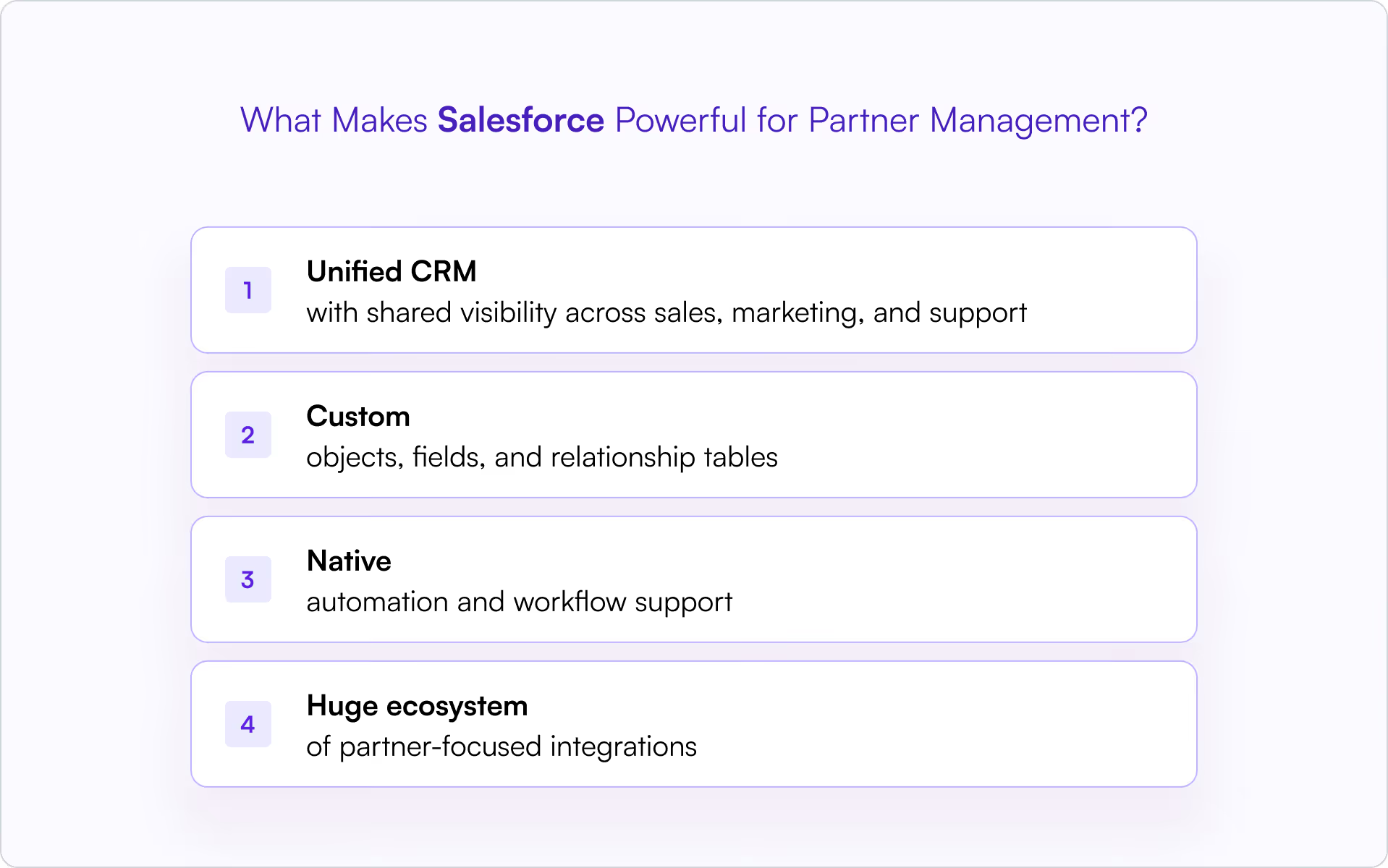
1. Unified CRM With Shared Visibility Across Sales, Marketing, And Support
Salesforce's Experience Cloud PRM is fully integrated within its CRM platform, providing a centralized system where sales, marketing, and support teams can collaborate seamlessly.
The Salesforce partner management software allows for real-time sharing of sales leads, marketing campaigns, and support cases with partners.
It aims to ensure consistent and efficient communication across all departments.
2. Custom Objects, Fields, and Relationship Tables
Salesforce offers the flexibility to create custom objects and fields.
This is super useful when it comes to partner relationship management.
Indeed, these handy customizations enable businesses to tailor their partner management processes to their specific needs.
Furthermore, they facilitate complex data modeling and allow for the precise tracking of partner interactions and performance metrics.
3. Native Automation And Workflow Support
In 2026, automation is a must if you wish to remain competitive.
Fortunately, Salesforce delivers with a whole host of built-in automation tools via Sales Cloud.
For instance, users can create workflows that streamline partner onboarding, deal registration, and lead distribution.
These automated processes reduce manual tasks, enhance efficiency, and ensure that partners receive timely updates and support throughout their engagement lifecycle.
4. Huge Ecosystem Of Partner-Focused Integrations
Partner relationship management on Salesforce is made much easier by the platform's extensive AppExchange.
Here you'll discover a vast array of partner-focused integrations, with access to thousands of prebuilt applications and consultant offerings.
This extensive ecosystem allows businesses to extend their capabilities, incorporating tools for PRM, marketing automation, analytics, and more, to enhance partner collaboration and drive revenue growth.
While Salesforce is an excellent option for partner management — especially if it's already your CRM — when it comes to PRM, it's worth looking beyond Experience Cloud.
Experience Cloud is expensive, dev-heavy, and slow to implement.
What's more, it can be way too complex for smaller organizations or those with smaller partner programs.
Instead, take a look at Introw.
This slick no-code PRM platform integrates seamlessly with Salesforce, enabling rapid deployment and off-portal collaboration with no extensive setup.
Introw delivers off-portal collaboration tools such as Slack integration, so partners no longer need to log into Salesforce directly to engage through shared channels or receive updates.
At the same time, Introw is embedded within Salesforce, so your CRM remains your single source of truth.
7 Salesforce Partner Management Recommendations for 2026
Ready to take your partner program to the next level with Salesforce partner relationship management via Introw?
Here are seven best practices to follow.
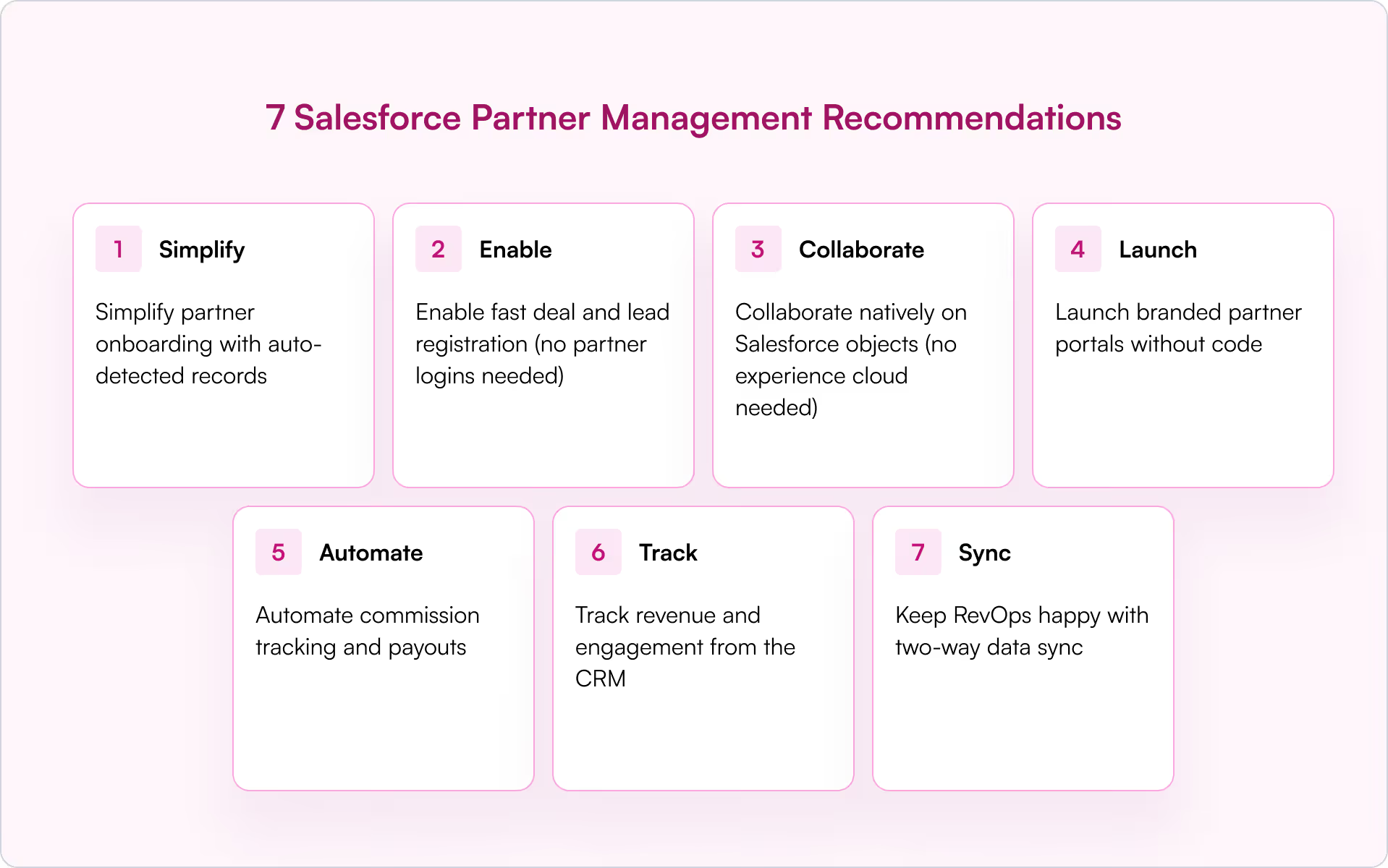
1. Simplify Partner Onboarding with Auto-Detected Records
Introw simplifies partner onboarding by seamlessly integrating with Salesforce to auto-detect partner records.
Upon connecting Salesforce to Introw, the PRM platform automatically syncs partner data from the CRM and kicks off workflows automatically.
It identifies partners by filtering accounts labeled as 'Partner' or based on your custom configurations.
This automation eliminates manual data entry, ensuring a swift and accurate setup.
Once detected, Introw enables you to build no-code onboarding workflows that guide partners through essential steps like profile completion, content access, and deal registration.
These workflows are tracked and synced with Salesforce, maintaining your CRM as the single source of truth and enhancing the efficiency of your partner onboarding process.
2. Enable Fast Deal And Lead Registration (No Partner Logins Needed)
Introw enables fast deal and lead registration without requiring partners to log in to Salesforce.
This streamlined approach accelerates partner engagement and ensures all submissions are tracked within your CRM.
Here's how it works.
Partners submit deals via secure, custom-branded forms created within Introw.
These forms are linked directly to Salesforce and automatically map submitted data — like company, contact, and deal details — to the correct custom objects, such as Opportunities or Leads.
Furthermore, Introw's native Salesforce integration ensures real-time syncing, eliminating manual data entry and reducing friction for partners.
3. Collaborate Natively On Salesforce Objects (No Experience Cloud Needed)
Introw lets users collaborate directly on Salesforce objects — like Opportunities, Contacts, or Accounts — without Experience Cloud.
Through Introw's native Salesforce integration, partners can:
- Leave comments
- Upload files
- Share updates via Introw's interface
Meanwhile, all this activity is automatically synced to the corresponding Salesforce records.
This keeps every note, document, and status update tied to the right object in your CRM, ensuring full context and traceability without requiring partner logins.
By eliminating the need for Experience Cloud, Introw reduces complexity and cost while enabling seamless, real-time collaboration between internal teams and external partners — all within your existing Salesforce environment.
4. Launch Branded Partner Portals Without Code
With Introw, users can launch fully branded partner portals in Salesforce in minutes — no coding required.
These portals are dynamically generated and personalized based on partner type, deal stage, or custom Salesforce fields.
Introw pulls data directly from Salesforce to tailor each partner's experience, displaying relevant content, contacts, and opportunities.
Businesses can also customize branding, messaging, and segmentation rules to reflect their identity and target different partner segments.
Unlike traditional Experience Cloud setups, Introw's no-code approach simplifies deployment while offering powerful functionality, empowering teams to quickly deliver a professional, secure, and scalable partner experience directly integrated with their Salesforce data.
5. Automate Commission Tracking And Payouts
Want to save time on commission and payments while also ensuring your partners are accurately rewarded?
Introw automates commission tracking and payouts by tapping into real-time Salesforce data.
Once connected, Introw monitors key objects like Opportunities or custom revenue fields to determine commission eligibility.
Users can configure rules to automate when and how payouts are triggered — no manual input required.
Moreover, partners gain visibility into their commission status through branded, no-login-required portals.
All activity is synced back to Salesforce.
6. Track Revenue And Engagement From The CRM
Introw enables users to track deals, revenue and partner engagement directly from Salesforce by syncing real-time CRM data into intuitive dashboards.
Leveraging connected objects like Opportunities, Accounts, and custom fields, Introw surfaces deal flow, partner performance, and key engagement signals — such as submitted deals, shared files, and comments.
These insights are then visualized in real-time dashboards that require no manual updates or separate tools.
This gives you a vital overview of which partners are most active and where revenue is being influenced, making it easier to optimize partner programs based on accurate, live performance and engagement metrics.
7. Keep RevOps Happy With Two-Way Data Sync
Introw keeps RevOps aligned by enabling two-way data sync with Salesforce, ensuring the CRM remains the single source of truth while powering enhanced partner-facing workflows.
When partners submit deals, leave comments, or share updates via Introw, all activity is instantly synced to the correct Salesforce objects — like Opportunities or Contacts.
Furthermore, any updates made in Salesforce are also reflected in partner-facing views, maintaining real-time consistency.
This eliminates manual data entry, reduces errors, and ensures that every internal or external interaction is captured and tracked centrally.
RevOps teams gain full visibility and control, while partners enjoy a seamless, user-friendly experience without needing direct CRM access.
Why Introw Is the Ideal Salesforce PRM Integration
Introw is purpose-built to enhance Salesforce with seamless, secure, and scalable partner relationship management — without disrupting your existing CRM workflows.
If Salesforce is already your CRM, choosing Introw for your PRM needs is a no-brainer.
Here are seven reasons why: partner relationship management on Salesforce
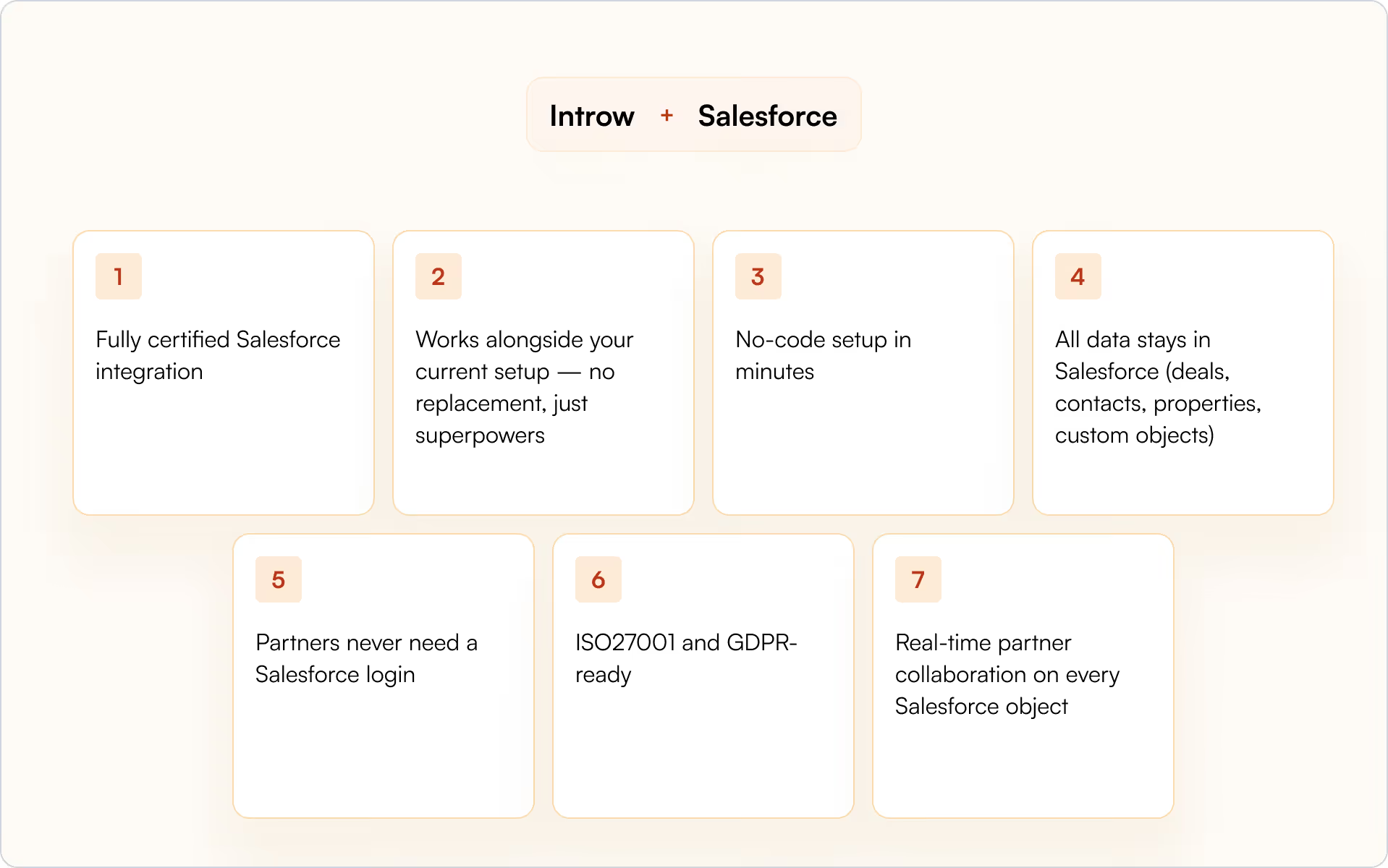
- Fully certified Salesforce integration: Introw meets the highest standards for security, functionality, and compatibility, providing a seamless connection with your Salesforce CRM.
- Works alongside your current setup — no replacement, just superpowers: Introw enhances your existing Salesforce environment by introducing sophisticated PRM capabilities without requiring a complete system overhaul or replacement.
- No-code setup in minutes: Users can quickly implement and customize the intuitive platform in minutes, eliminating the need for technical expertise or lengthy development processes.
- All data stays in Salesforce (deals, contacts, properties, custom objects): Introw ensures that all partner-related data remains within your Salesforce environment, preserving data integrity and centralizing all information.
- Partners never need a Salesforce login: Introw encourages partner enablement by allowing partners to collaborate and access necessary data without requiring them to log into Salesforce, simplifying the user experience and increasing partner engagement.
- ISO27001 and GDPR-ready: Introw complies with ISO27001 and GDPR regulations, ensuring that all partner data is securely managed and your organization meets global data privacy standards.
- Real-time partner collaboration on every Salesforce object: Introw facilitates real-time collaboration on every Salesforce object, including Opportunities, Contacts, and custom objects, keeping all interactions up-to-date and integrated for better decision-making.
🚀 Ready to launch your Salesforce Partner Portal in minutes? → Book a Demo
Conclusion
Salesforce is already your customer engine — now it can be your partner engine too.
Don't overbuild with Experience Cloud when Introw gives you instant value: faster launches, better adoption, and cleaner CRM data.
📈 Want to scale partner revenue inside Salesforce? Get a personalized Introw demo

