


Great partner programs die on their first form. You want partners engaged, but the moment they hit a login wall, many stop. The good news: you can run partner lead registration without a portal login, keep data clean, and still resolve ownership fast. Below is a practical guide for teams that want more registered leads, fewer disputes, and a smoother sales process.
Why partner lead registration matters now
As your partner ecosystem grows, multiple partners find the same end customer, sales reps ask “who owns this account,” and leadership needs pipeline visibility. Lead registration (capturing a partner-sourced prospect early) protects the partner’s effort, reduces channel conflict, and lets you assign leads to the right team fast. It also creates a trail you can trust for commission payments and co-sell attribution.
When you make registration lightweight and fair, partners stay engaged, your sales team sees context, and operations keep a single source of truth for registered leads and registered deal records.
What “partner lead registration” is (and how it differs from deal registration)
Think of lead registration as the earliest claim: the partner flags a prospect with enough data for you to review and accept or decline. Deal registration comes later, once there’s a qualified opportunity with stage, amount, and next steps. Both fit inside modern partner programs, but they serve different moments:
- Lead registration: fast intake to assign leads, mark a cooling-off period, and prevent multiple partners from colliding on the same company.
- Deal registration: deeper validation to approve an existing deal with co-sell motions, attached resources, and clear SLAs.
Successful programs use both. Start with easy lead registration to capture more top-of-funnel, then elevate to deal reg when real pipeline appears.
The no-portal approach: five simple ways to capture partner leads
Logins are the biggest drop-off point. You can capture leads without a portal login and still keep control.
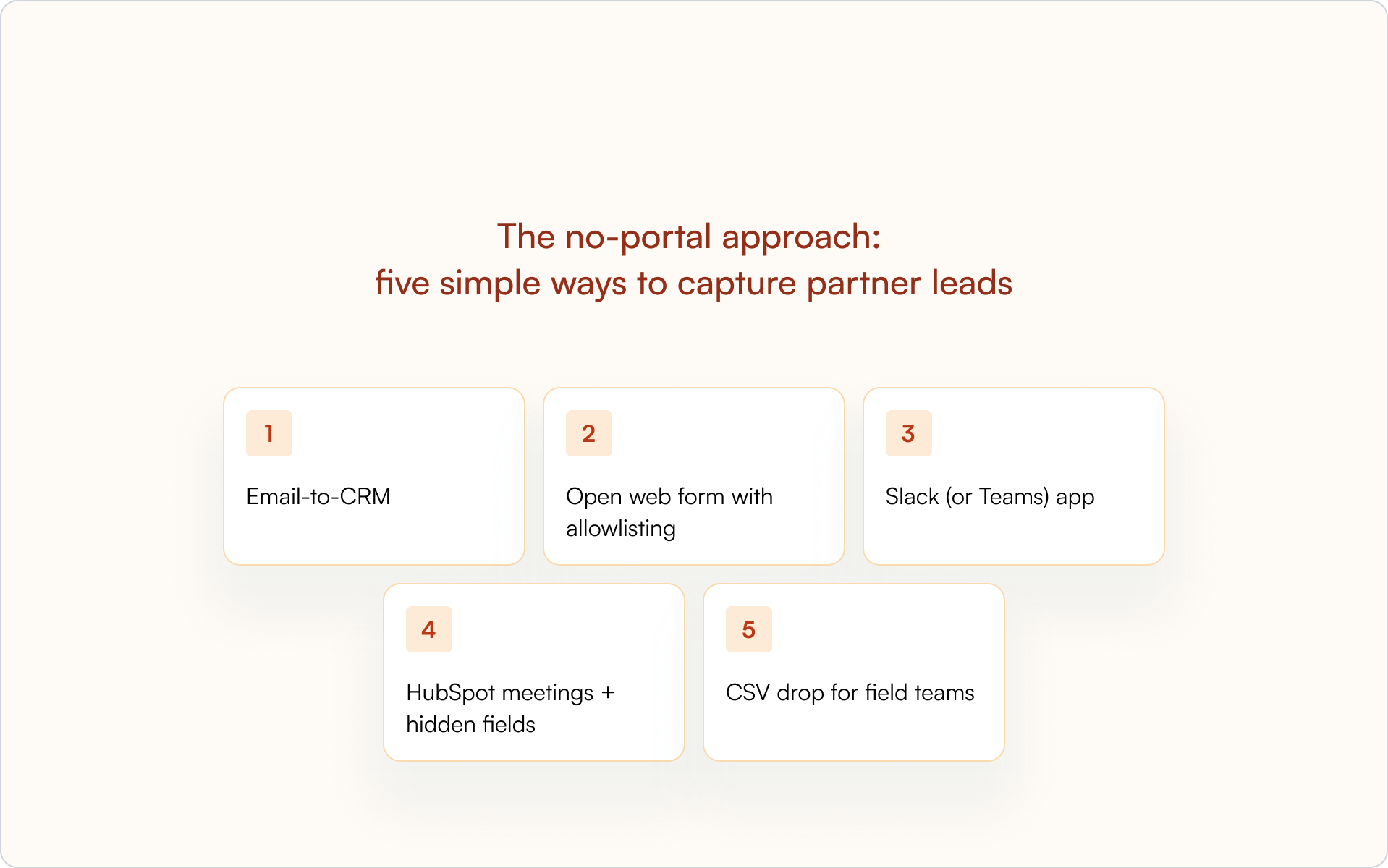
- Email-to-CRM
Give partners a single address (for example, partners@yourcompany.com). When they send a short “registration form” by email (company name, contact, problem, consent), an automated flow parses the message, creates the record, and returns a case number and status.
- Open web form with allowlisting
Host a short registration form that’s public but gated by reCAPTCHA and a partner email domain check. Submissions create a lead and kick off validation, while approved third parties (your partners) get instant confirmation and a “pending” badge.
- Slack (or Teams) app
If you co-sell in shared channels, let partners use a “/register” slash command. The bot collects company, contact, use case, and creates the registered deal or lead in your system, then posts back the record link.
- HubSpot meetings + hidden fields
For HubSpot partner lead registration, use a short form attached to a partner-facing “Book a discovery” page. Hidden fields tag partner ID and program. When the form is submitted, HubSpot creates the contact, company, and a deal stub, and your workflow moves it to “Submitted for review.”
- CSV drop for field teams
Some service partners prefer bulk. A controlled CSV upload (fields validated on import) lets them register a new deal list weekly. Your system dedupes by domain and company name, flags conflicts, and returns approved/declined with reasons.
All five methods can feed the same backend rules, the same partner portal views, and the same commission plan. The difference is friction: partners can register from wherever they already work.
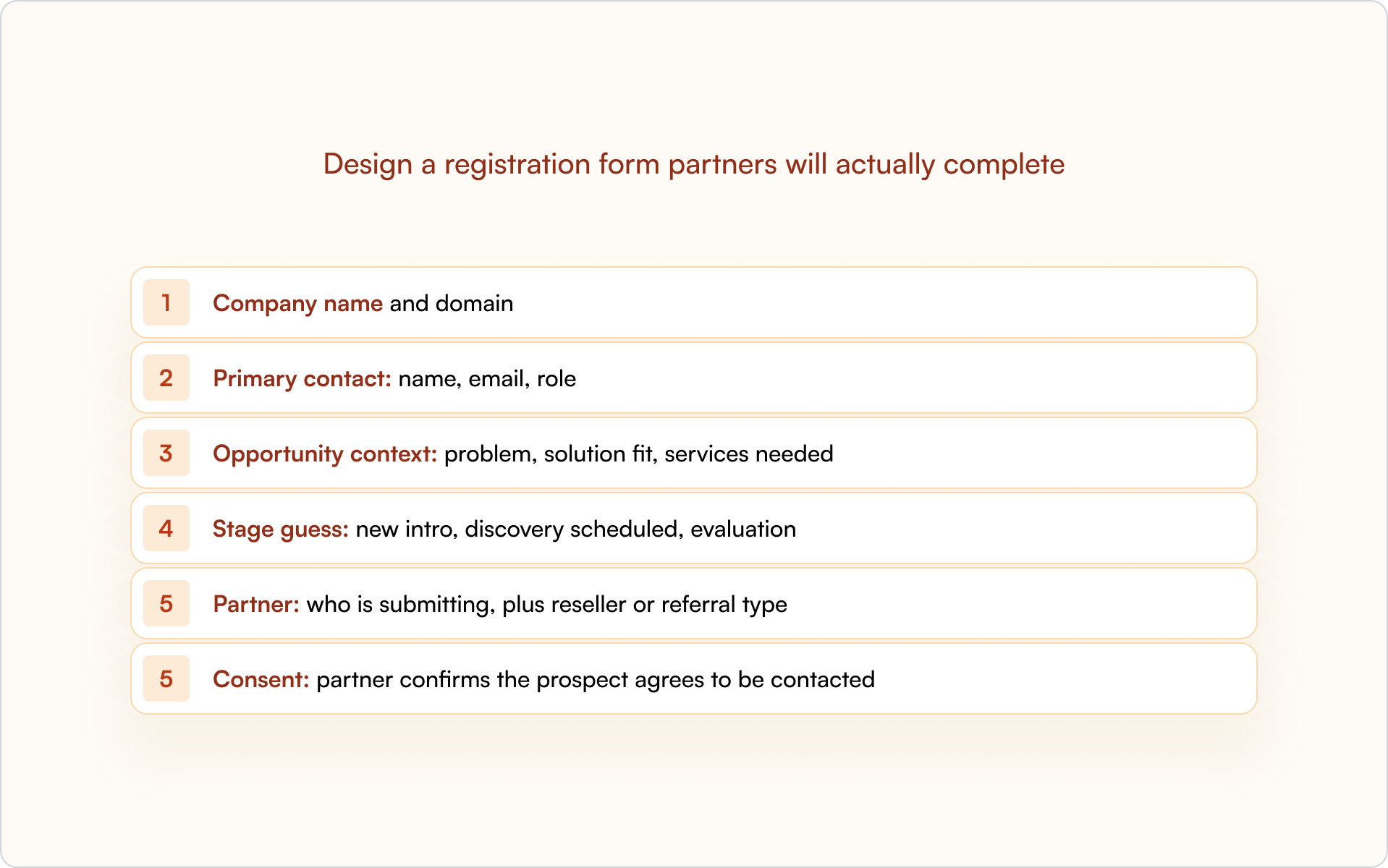
Design a registration form partners will actually complete
Keep it under a minute. These fields usually give you enough to decide:
- Company name and domain
- Primary contact: name, email, role
- Opportunity context: problem, solution fit, services needed
- Stage guess: new intro, discovery scheduled, evaluation
- Partner: who is submitting, plus reseller or referral type
- Consent: partner confirms the prospect agrees to be contacted
Optional, when needed: geography, target revenue, product interest, and competing vendors.
Make validation fair: from “submitted” to “approved” without drama
A good lead reg process balances speed and fairness. Publish the rules, enforce them consistently, and give partners a clean status they can see.
- SLA: respond inside two business days.
- Checks: duplicate by domain, existing deal check, territory rules, blocked accounts.
- Results: approved (with hold window), ask for more info, or declined (with reason).
- Hold window: 60–90 days of protection when partners complete the next step (for example, first meeting or intro email logged).
- Channel conflict: if two partners submit the same prospect, the one who got the first meeting within the window wins, or you split by segment/solution if that’s your policy.
Introw codifies these rules so operations doesn’t have to referee edge cases every week.
Map it to your CRM: HubSpot and Salesforce without side spreadsheets
Whether you run Salesforce or HubSpot, treat partner lead registration like any other intake you want to automate and audit.
- Objects: create a “Partner Registration” object or use a custom property set on Deals to track registration, status, partner, and window end date.
- De-dupe: auto-link to Company by domain; show “existing deal” if one is open.
- Workflows:
- Submitted → Validation queue → Approved/Declined
- Approved → Notify AE/partner → Start sales process tasks
- First meeting scheduled → Lock or extend hold window
- Dashboards: real time dashboards for operations and partner managers: pending, aging, approvals, meeting rates, win rates.
For HubSpot partner lead registration, keep your registration form in HubSpot, route through workflows, and surface status to partners via automated emails or a lightweight shared page. On Salesforce, mirror the same flow with Process Builder or Flow.
Incentives and SLAs that keep partners engaged (without overpaying)
You don’t need to pay for every submission. Reward progress, not spam.
- Tiered incentives: small flat fee when the first meeting is completed, larger percentage on new customers won, and accelerators for high margin products.
- Partner tier alignment: higher tiers may get faster response, priority support, or co-sell resources.
- SLAs: you respond within two days; the partner books a meeting within 14 days; your rep updates next steps after every call. Clear, mutual commitments build trust.
Seven metrics that prove the system works
Leaders care about outcomes. Measure what moves revenue and reduces friction.
- Registration-to-meeting rate within 14 days
- Approval rate by partner and segment
- Conflicts avoided vs. unresolved disputes
- Win rate and sales volume on approved registrations
- Time to first response and time to approval
- Active protection windows by region and product
- Commission payments accuracy and cycle time
When the numbers are visible, you can adjust commission structures, spot partner behavior trends, and focus enablement where it helps most.
A 30-day rollout you can actually ship
You don’t need a massive project to modernize lead reg. Keep it tight and iterative.
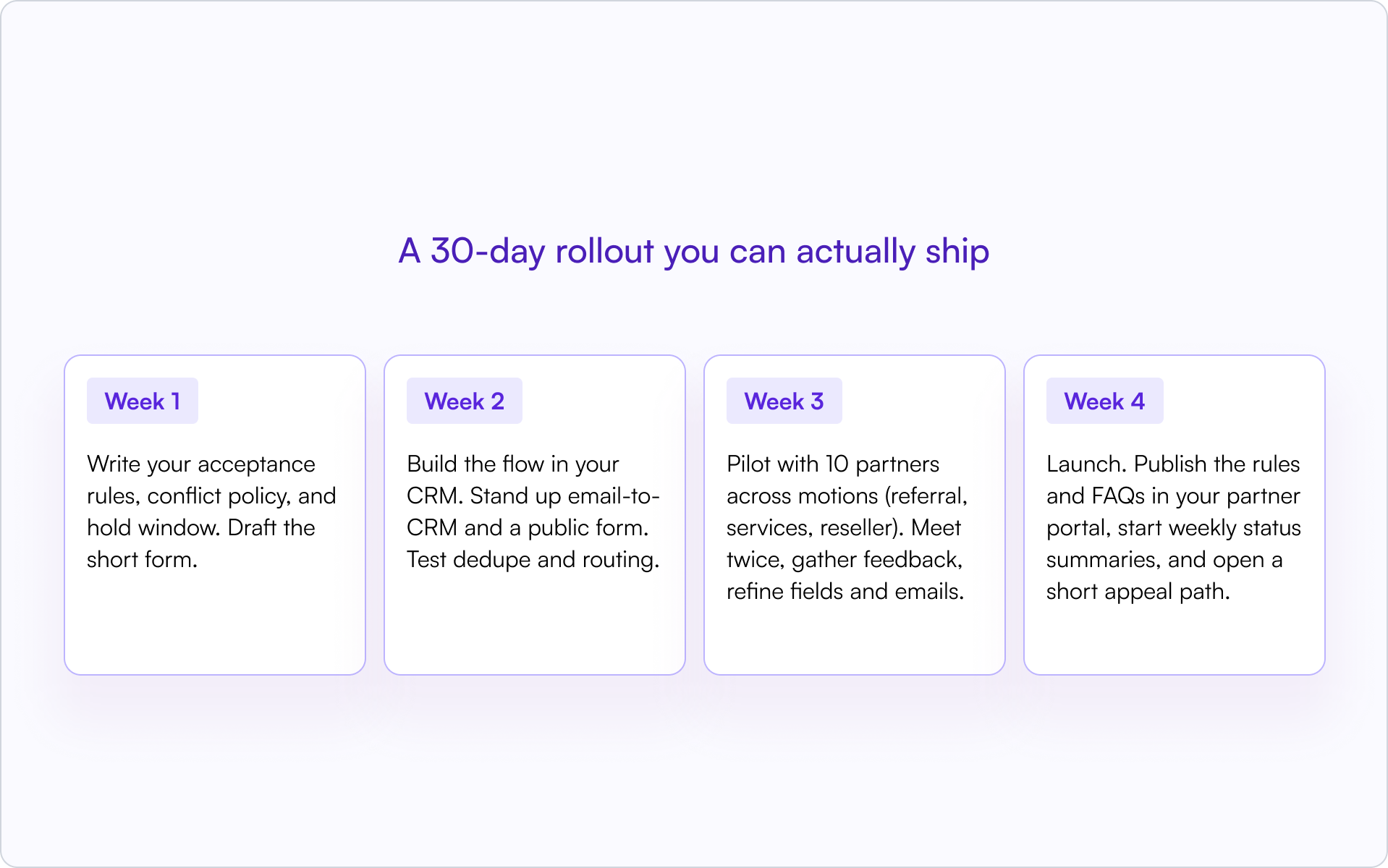
- Week 1: Write your acceptance rules, conflict policy, and hold window. Draft the short form.
- Week 2: Build the flow in your CRM. Stand up email-to-CRM and a public form. Test dedupe and routing.
- Week 3: Pilot with 10 partners across motions (referral, services, reseller). Meet twice, gather feedback, refine fields and emails.
- Week 4: Launch. Publish the rules and FAQs in your partner portal, start weekly status summaries, and open a short appeal path.
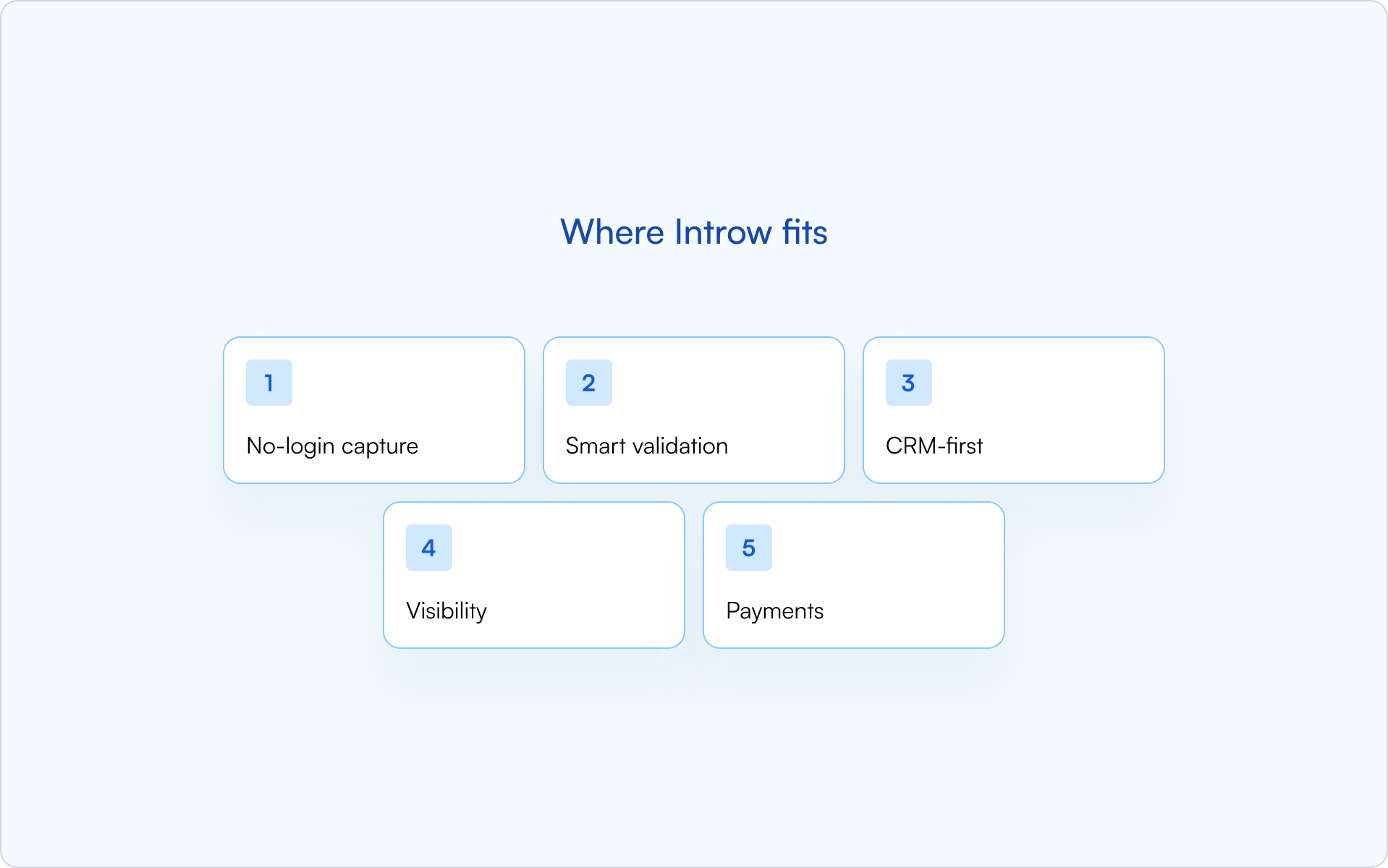
Where Introw fits
Introw is built to remove friction from partner lead registration and deal registration alike:
- No-login capture: partners register via email, a shared page, or Slack; Introw creates the record and sends status.
- Smart validation: automatic dedupe, account checks, and clear status transitions from submitted to approved to won.
- CRM-first: bi-directional sync with Salesforce or HubSpot, so ops and reps work in systems they already know.
- Visibility: partners see progress and next steps without asking you to “check the portal.”
- Payments: clean attribution makes commission management straightforward and commission payments timely.
If you’re ready to move beyond “please log in and fill this long form,” Introw gives you a lightweight, auditable path to more revenue and fewer headaches.
Ready to simplify partner lead registration?
If you want partners engaged, fewer conflicts, and clean data, make registration effortless and visible. Introw lets you capture leads without logins, validate fairly, and sync everything to your CRM so your sales team and partners can focus on winning. Request a demo and see how it works in your environment.
Still curious? Here are some quick answers to help clear things up
Lead registration is an early claim on a prospect with enough data for you to review. Deal registration is a qualified opportunity with amount, stage, and clear next actions. Many programs use both to protect effort and keep the sales process moving.
Yes. Use a short HubSpot form or meetings page with hidden partner fields, route through workflows, and email partners their status updates. You can mirror this on Salesforce, too.
Publish a conflict policy. Most vendors use first-approved with a “meeting within 14 days” rule. If two partners qualify, split by product line or segment, and document it.
Company, domain, primary contact, a sentence on the problem, partner info, and consent. Everything else can be collected after approval.
Send real-time status, list the next action, and align a small incentive to the first meeting. Visibility and quick responses keep partners engaged more than complex perks.






Are you already an active Introw partner?
Book a demo with one of our partner program experts, or explore Introw on your own time.