

.svg)


.svg)
.svg)







Partner Marketing
Strategies, campaigns, and co-marketing tactics to help SaaS teams activate partners, drive pipeline, and measure impact — CRM-first.
Latest articles
Top 15 Impact Alternatives for Effective Partner Management in 2026
Impact is a partnership management platform designed primarily for affiliate, influencer, and performance marketing programs.
It can be a handy tool if your business relies heavily on affiliates and influencers to generate sales.
However, if your partner program is broader in scope – perhaps your strategy is more channel-focused, for example – you’ll benefit from a more comprehensive partner relationship management (PRM) platform.
Ready to kick your partner management up a gear this year? Read on for our 15 top Impact.com alternatives in 2026.
Why Consider an Impact Alternative in 2026?
An end-to-end performance marketing tool, Impact excels at affiliate and influencer programs because that’s what it’s designed for.
However, there are four major areas in which SaaS outstrips this online platform.

1. Limited CRM-Native Channel Workflows
Modern SaaS platforms like Introw work on top of your CRM, enabling seamless logging, tracking, and reporting directly inside Salesforce or HubSpot.
This deep embedding provides sales teams and all their partners with real-time visibility, eliminating the need to switch platforms.
However, Impact is browser and app-based, and requires teams and their partners to operate largely outside the CRM, which can create friction in channel workflows.
2. Deal Registration & Co-sell Motions Vs Affiliate Tracking
While Impact is certainly strong on affiliate tracking and commission management, it doesn’t fully support deal registration and co-sell motions.
Affiliate link tracking is primarily focused on click attribution, but SaaS functionality goes deeper, enabling joint selling motions, more meaningful collaboration, and improved pipeline visibility.
Indeed, try out a modern SaaS platform and you’ll generally find a structured deal registration pipeline, where partners can submit opportunities, collaborate with sales teams, and track progress through the funnel.
3. Off-portal engagement
Impact relies heavily on its portal for communication with partners.
In contrast, modern SaaS solutions meet partners where they already work – for example, email, Slack, or other collaboration tools.
What’s more, in 2026, this off-portal engagement is mostly automated, delivering updates surrounding deal stages, approvals, or payments into partners’ daily workflows.
And when it comes to saving time and boosting engagement, you can't beat automated outreach.
4. Attribution & Forecasting
Impact will track conversions and clicks, but SaaS platforms will typically offer more robust attribution and forecasting capabilities than this.
Indeed, SaaS tools directly tie partner activities to pipeline metrics, making it clear how each partner impacts revenue.
This makes strategic planning and forecasting much easier.
➡️ This is why, if your B2B partnerships include referral, reseller, or co-sell, it’s worth considering a CRM-first alternative to Impact. Learn more about Introw here, or read on for more information on shopping for the best alternative.
What to Look For in an Impact Alternative in 2026
Considering swapping Impact for a modern PRM?
Here’s what you should be looking for when it comes to choosing your next PRM.
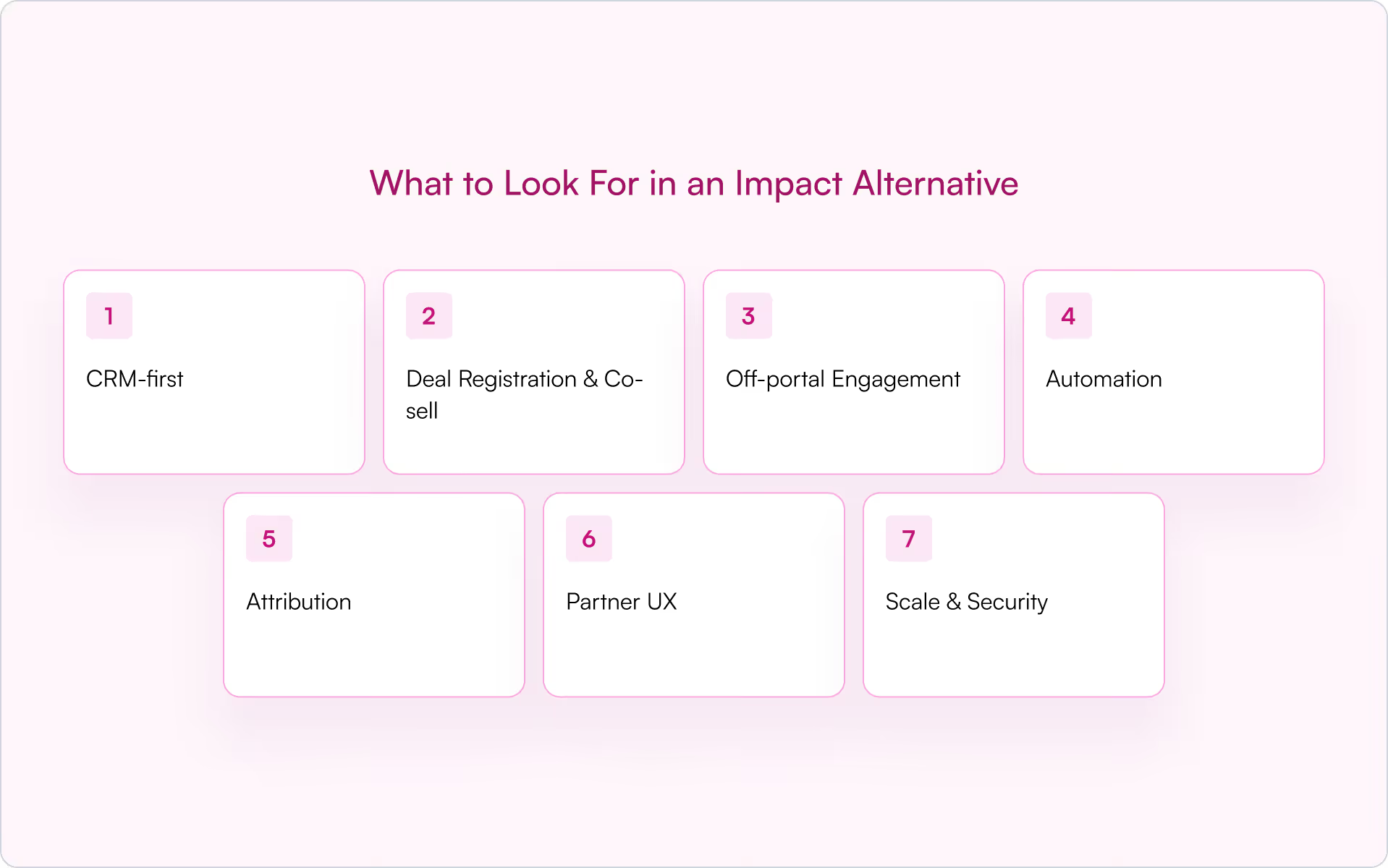
- CRM-first: Look for a PRM that integrates directly with your CRM, so partner records, fields, and reporting live natively in Salesforce or HubSpot.
- Deal Registration & Co-sell: Your new PRM should support seamless deal registration and co-selling by enabling a shared pipeline, mutual action plans, and conflict prevention.
- Off-portal Engagement: Forcing partners to log into a portal every time they need a quick update will put you on a fast track to disengagement. Instead, prioritize a PRM that delivers automated updates and alerts in channels they already use, such as email or Slack.
- Automation: Automation is a must-have in 2026. These tools help you launch and optimize campaigns, onboard partners, engage partners, send activity reminders and prepare for QBRs much more quickly, and with much less manual labour, than in the past.
- Attribution: Make sure your new platform provides clear attribution, from partner engagement through to pipeline and revenue impact.
- Partner UX: Your PRM must deliver a frictionless experience, making the user journey as easy as possible for your partners. Look out for features like a simple submission process, easy access to branded assets, and self-serve tools.
- Scale & Security: As your partnership program grows, you’ll need to be able to easily manage different partner tiers, regions, and types. Choose a PRM with strong security and role-based access controls.
The 15 Best Impact Alternatives for SaaS Partner Programs (2026)
If you’ve been using Impact, but are keen to see what other alternatives could offer you, you’re in the right place.
Here’s our pick of the 15 best Impact alternatives on the market in 2026.
1) Introw
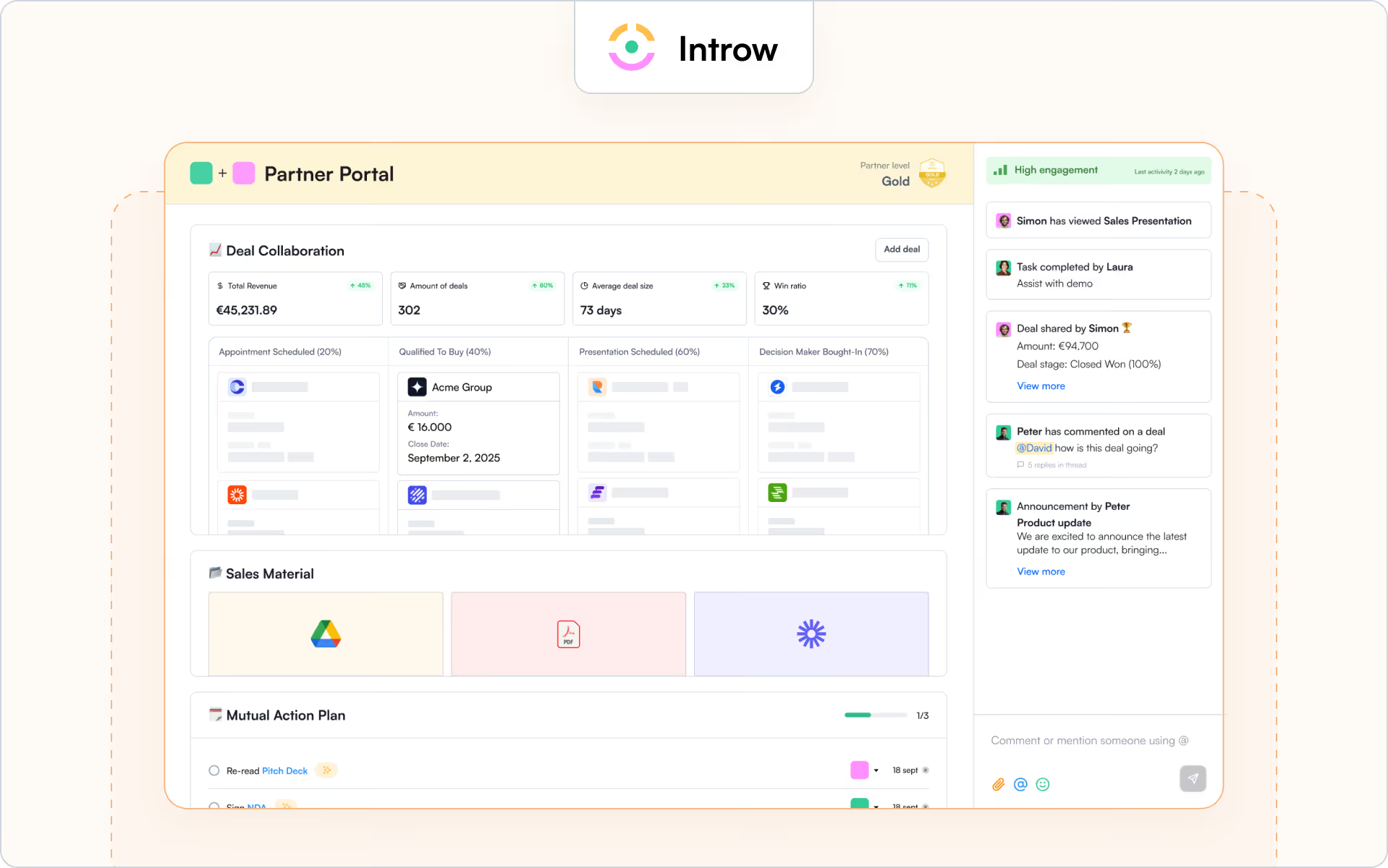
A CRM-first PRM designed for SaaS, Introw is perfect for teams that already use Salesforce or HubSpot, and are running referral, reseller, and/or co-sell programs at scale.
So, why should you choose Introw over Impact?
Introw is purpose-built for channel partnerships — with CRM-native, partner-first workflows that streamline co-selling and co-marketing across your ecosystem.
It embeds deal registration, co-sell updates, and engagement tracking directly inside your CRM, while off-portal updates via email and Slack keep partners engaged without forcing them to log into another tool.
Key capabilities:
- Campaign management features
- Partner engagement analytics (visits, content usage, opens/clicks)
- Outreach automation including automated deal updates
- White-labeled experiences
- Role-based dashboards
- Integrates with Salesforce, HubSpot, Slack
- Responsive customer support
🚀Ready to take your partner program to the next level? Request an Introw demo here.
2) PartnerStack

Looking to combine affiliate programs, referral marketing, and reseller partners while gaining marketplace reach?
Take a look at PartnerStack.
Unlike Impact, which is primarily affiliate-focused, PartnerStack is built with SaaS go-to-market strategies in mind and extends well beyond affiliate-only use cases.
Please note that PartnerStack is not CRM-native, so advanced co-sell programs may require additional tools.
Key capabilities:
- Partner marketplace
- Payouts
- Referrals/reseller workflows
💡Looking for some great PartnerStack alternatives? Here are some of the best.
3) Kiflo
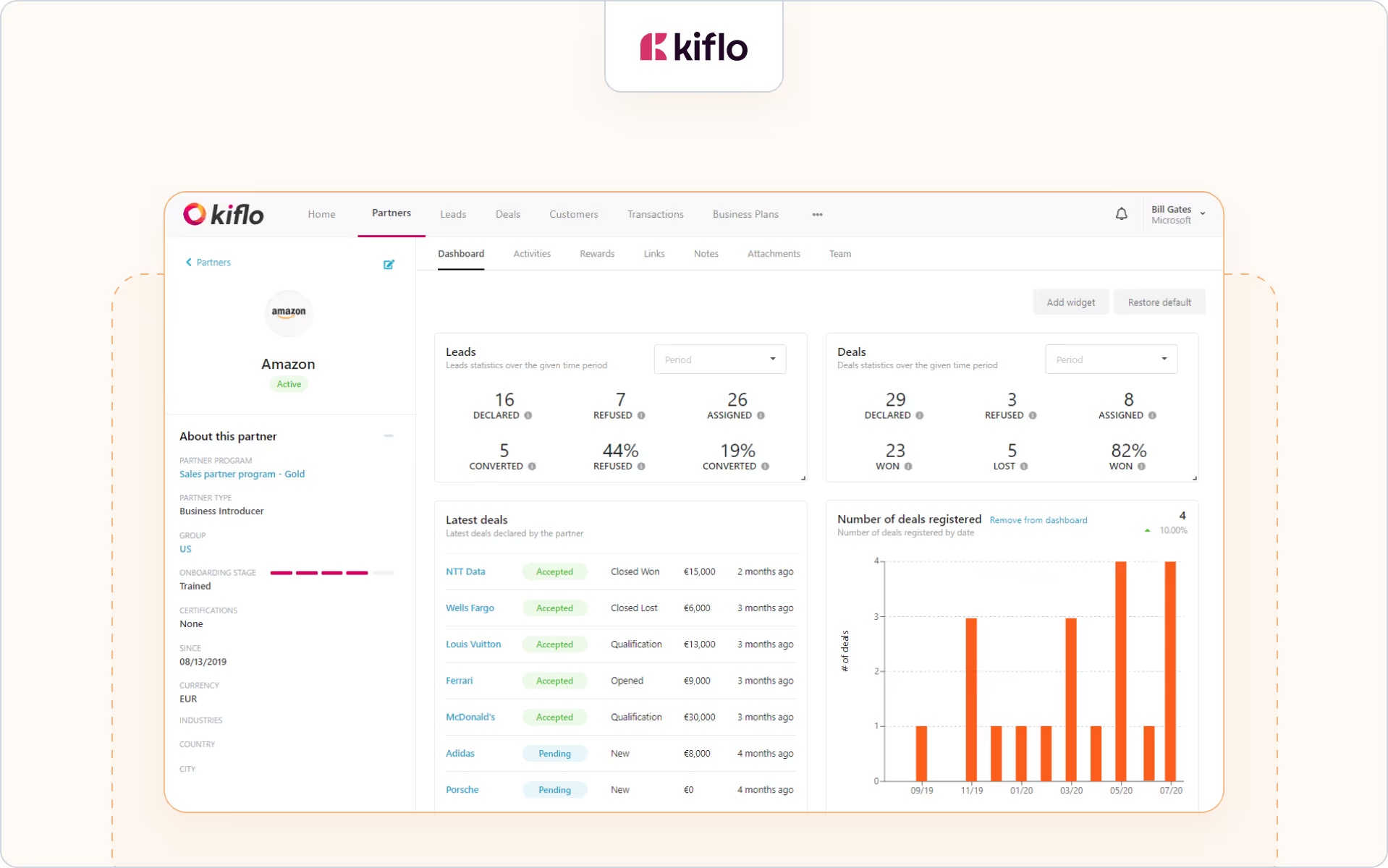
Kiflo is a PRM that works well for small to mid-market SaaS companies just starting their formal channel or partner programs.
This platform offers a lighter-weight PRM approach compared to Impact, making it easier for companies to launch and manage reseller or referral programs.
However, bear in mind that it has limited enterprise-grade analytics and deep CRM workflows, so it’s much better suited to smaller businesses looking for a simpler solution.
Key capabilities:
- Deal registration
- Incentives
- Enablement basics
➡️ You can see our top Kiflo alternatives here.
4) Channelscaler

Channelscaler offers a full PRM and partner automation stack for companies running channel or partner programs.
It’s perfect for companies looking for modular solutions, but if you’re planning to run a simple program, be careful you don’t end up implementing more modules than you actually need.
How does it compare to Impact? Channelscaler delivers a channel-centric platform with a wider scope, while Impact is an affiliate-first tool.
Key capabilities:
- Deal registration
- Incentive and rebate management
- Content & enablement
- Partner journey automation
- Performance tracking dashboards
5) Impartner
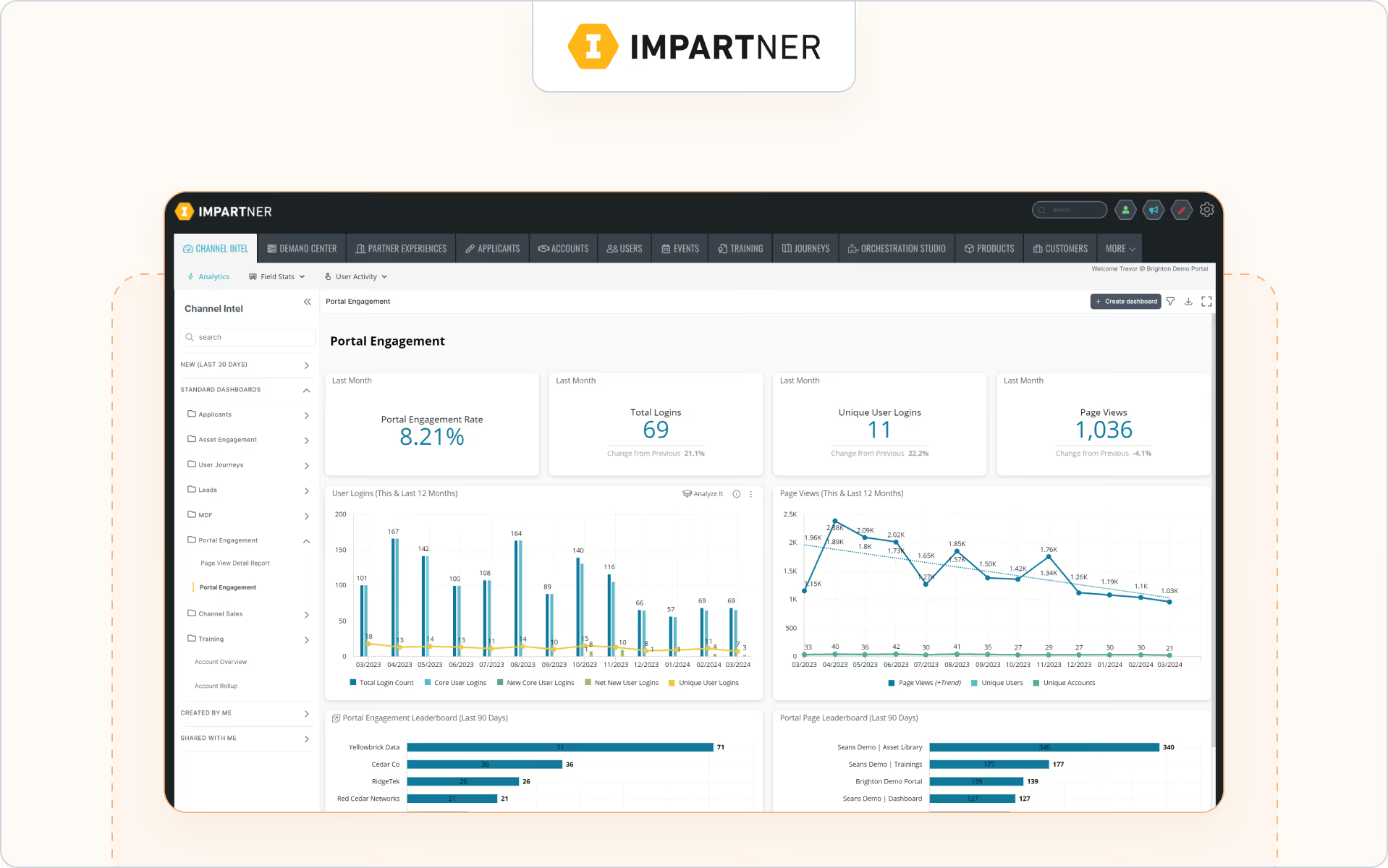
Partner marketing automation platform Impartner caters to enterprises with complex, global channel operations.
Consider this platform if you need a system robust enough to handle multiple regions, tiers, and partner types.
If you’re considering switching from Impact to Impartner, you’ll notice a huge difference: namely, that this solution provides a full-stack PRM built for deep governance and enterprise-grade scale, while Impact has a more narrow focus.
Of course, Impartner’s more complex system comes with a heavier implementation and administrative lift, so it’s vital to ensure your business has the resources to manage it effectively.
Key capabilities:
- Tiering
- MDF
- Workflows
- Robust analytics
6) Unifyr

Unifyr is an all-in-one, AI-enabled PRM and channel growth platform.
It is designed for organizations managing partner ecosystems and aiming to centralize and streamline their operations, particularly in dealing with maturing or enterprise-scale channel programs.
This SaaS platform offers a wider variety of features than Impact, which focuses on performance marketing.
However, this does mean there can be a learning curve and it can be a little heavy for smaller brands, with some advanced features more applicable to mid-size or large companies.
Key capabilities:
- Partner onboarding & activation
- Deal registration & lead management
- Supplier/multi-vendor support
- AI-enabled features
7) Magentrix

Magentrix is made for Salesforce-centric teams that need deeply integrated custom portals.
It’s a good match for teams that require close alignment between their CRM and the partner-facing portal, as well as powerful customization and scalability.
When compared to Impact, it’s worth noting that Magentrix offers deep Salesforce alignment, along with robust community and portal features that go beyond what the other platform provides.
However, since Magentrix is portal-first, it’s important to ensure that partner engagement does not rely solely on logging in.
Key capabilities:
- Resource library
- Case collaboration
- Portal UX
8) Channeltivity
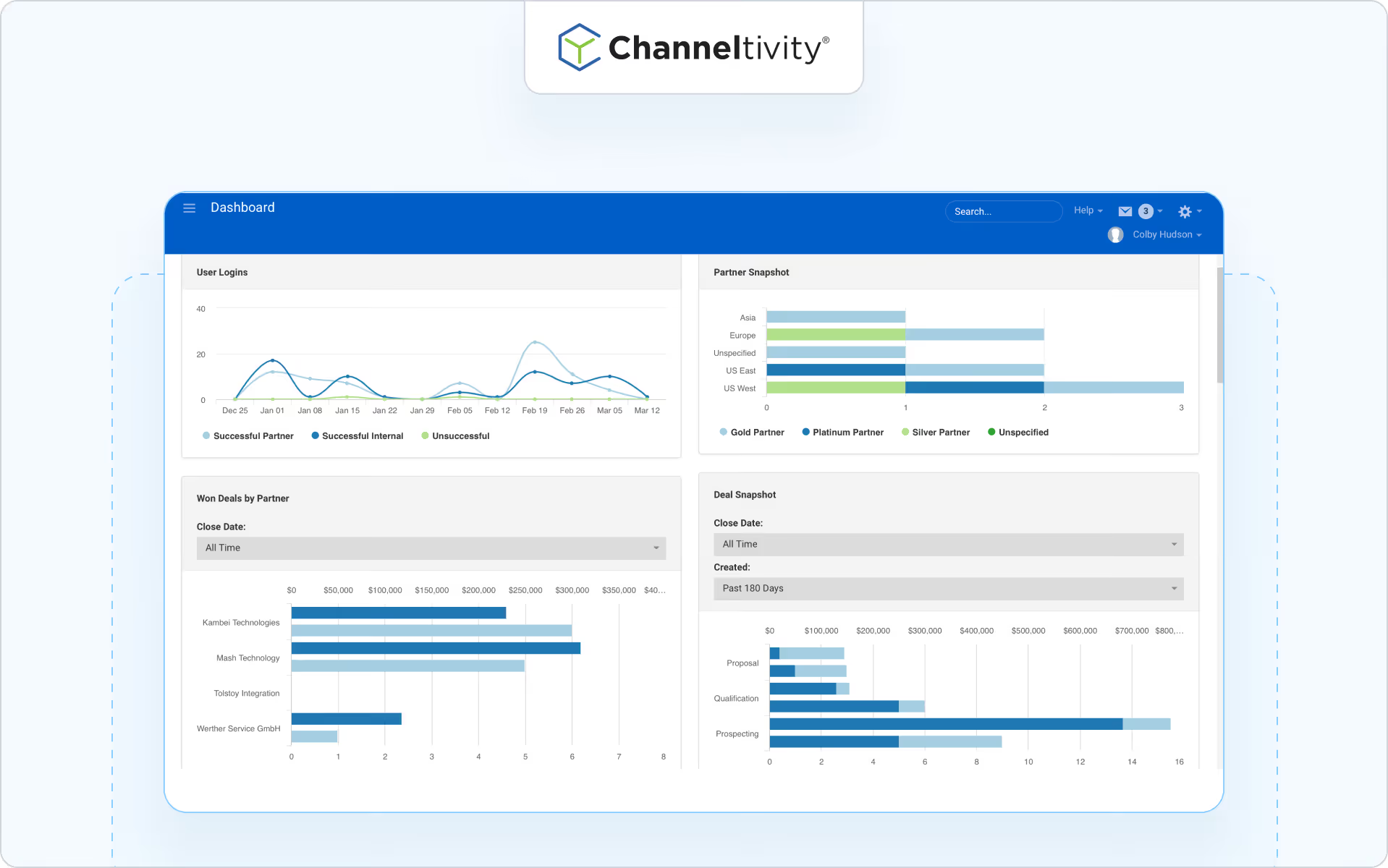
Channeltivity is designed for mid-market SaaS companies that need a comprehensive PRM to effectively manage and scale their channel programs.
This SaaS tool offers a solid foundation for channel operations, while Impact is more focused on affiliate programs.
For example, Channeltivity offers robust features, including deal registration, Market Development Fund management, and detailed reporting.
Just bear in mind that Channeltivity is primarily portal-centric, which could limit off-portal engagement.
Key capabilities:
- Partner onboarding
- Tiering
- Approvals
9) WorkSpan
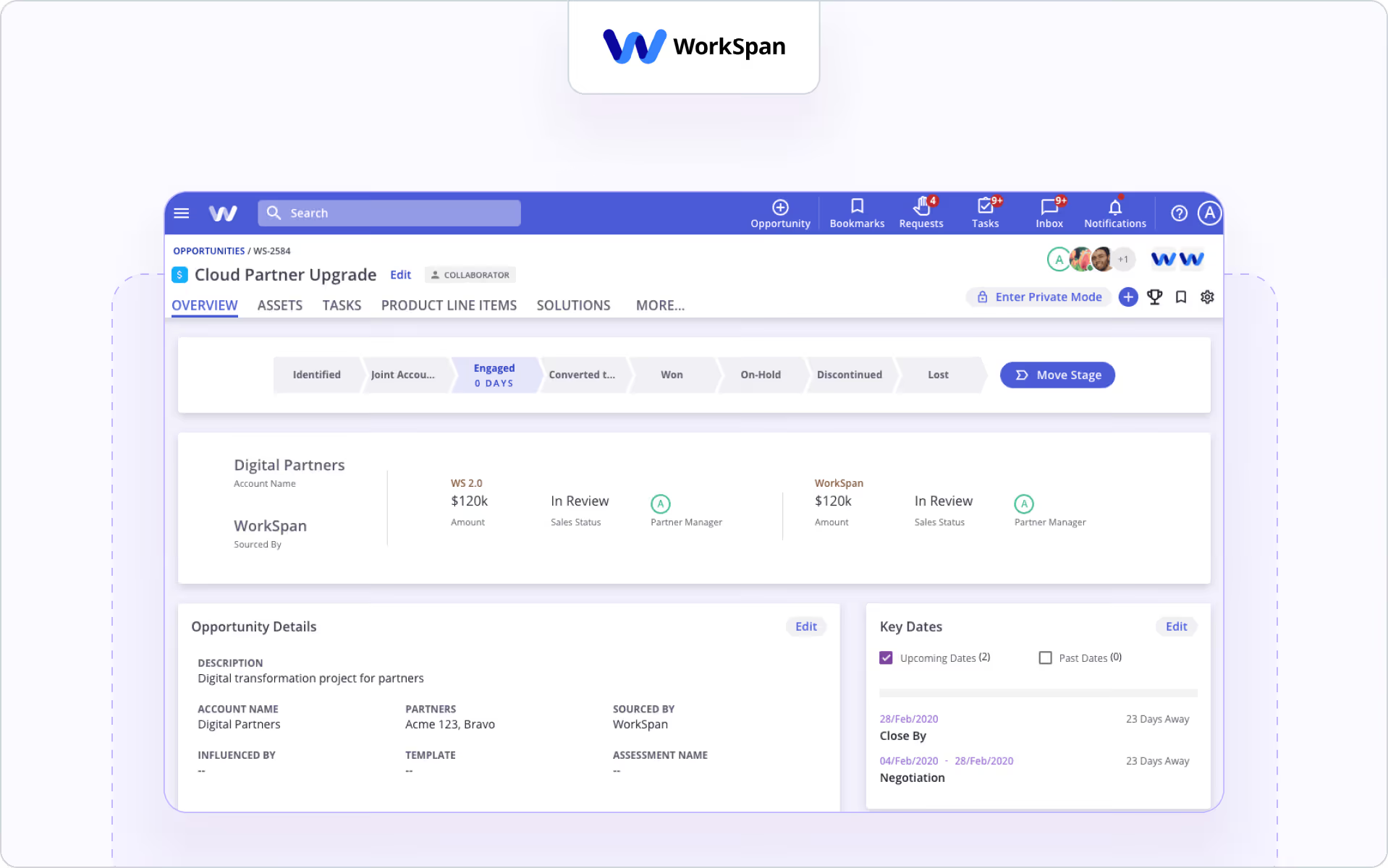
Are you tasked with managing alliance and co-sell ecosystems?
WorkSpan facilitates collaboration between multiple partners on shared opportunities and joint sales initiatives.
This solution stands out over Impact because it’s built to manage joint pipelines across partners, which helps partners to coordinate sales efforts more effectively than an affiliate-focused platform like Impact.
However, WorkSpan is not a full PRM – it’s typically used alongside a PRM or CRM to enhance partner management.
Key capabilities:
- Co-sell workflows
- Joint planning
- Pipeline tracking
10) Partnerize

This one has an enterprise focus.
Partnerize provides a single platform for diverse partner types, making it particularly useful for those who manage both affiliate programs and broader partnership initiatives.
This platform supports a much wider range of partner types than Impact and provides robust optimization tools.
However, Partnerize does have a strong e-commerce and affiliate focus.
This means that if you’re looking for a B2B partnership solution, it’s vital to consider whether this platform caters best to your specific requirements.
Key capabilities:
- Contracting
- Payouts
- Advanced analytics features
11) TUNE

TUNE is designed for performance and affiliate marketing teams – especially those focused on mobile and app-based campaigns.
Businesses might pick this platform over Impact because of its flexible tracking capabilities and developer-friendly tools, which offer plenty of customization for technical integrations.
It’s important to note that TUNE is not built for B2B channel or co-sell programs.
This means while the platform might be useful for affiliate-focused retail brands aiming for ecommerce sales, it may not meet the needs of organizations looking to manage complex partner ecosystems beyond performance marketing channels.
Key capabilities:
- Custom tracking
- APIs
- Mobile SDKs
12) Affise

Built with affiliate networks and performance marketing in mind, Affise helps teams to streamline their operations and manage multiple affiliate performance programs efficiently.
While there’s overlap between Affise and Impact, Affise offers a more streamlined approach to affiliate operations and automated affiliate payouts.
Please note that Affise offers limited support for channel co-sell workflows, so it may not be suitable for organizations looking to manage broader B2B partner ecosystems.
Key capabilities:
- Tracking
- Fraud tools
- Program management
13) Everflow
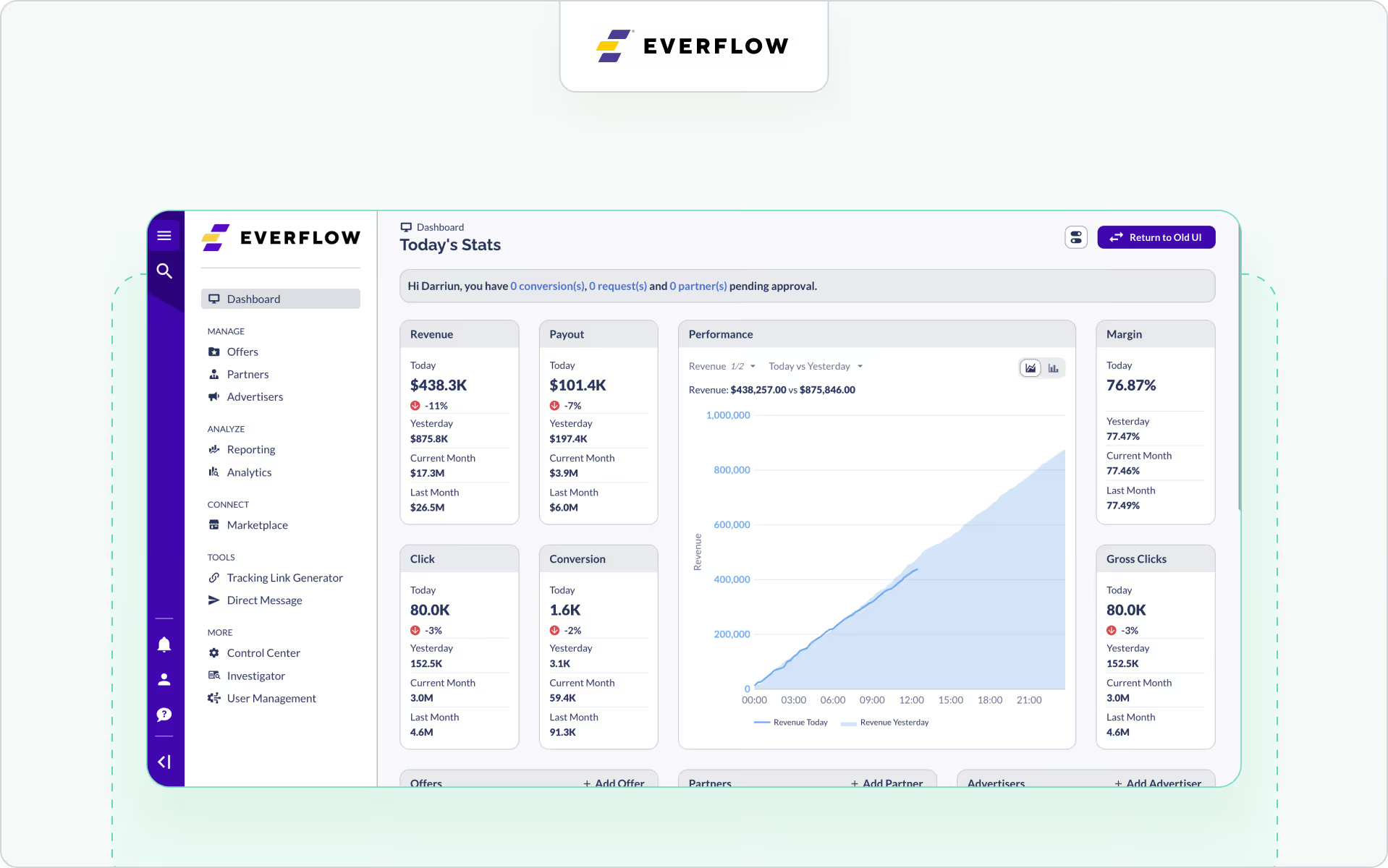
Everflow is designed for performance and affiliate programs, especially those that demand comprehensive analytics and reporting capabilities from their partner marketing platform.
Indeed, this tech offers an alternative tracking stack to Impact, with flexible reporting and detailed analytics.
Keep in mind that Everflow is primarily affiliate-focused and offers limited support for CRM-native channel operations.
So think carefully about whether it’s suitable for complex B2B co-sell programs.
Key capabilities:
- Partner tracking
- Fraud prevention
- APIs
👉Discover some top Everflow alternatives here.
14) Salesforce PRM

Already work on Salesforce? Opting for Salesforce PRM could make your team’s life a lot easier.
Salesforce PRM is designed for teams that want their partner management fully integrated within their CRM – and it’s a very different solution to Impact.
Indeed, Salesforce PRM offers native Salesforce records, reporting, and extensibility, making it a strong choice for organizations that need a deeply integrated solution rather than an external affiliate-focused platform.
It’s worth noting that the out-of-the-box user experience is pretty basic, so the success of Salesforce PRM often depends on internal resources and technical assistance.
Or, in other words, how well you’re able to customize and optimize the system for your partner programs.
Key features:
- Partner accounts
- Deal reg
- Workflows
15) HubSpot + PRM Add-Ons
Looking for tailored solutions?
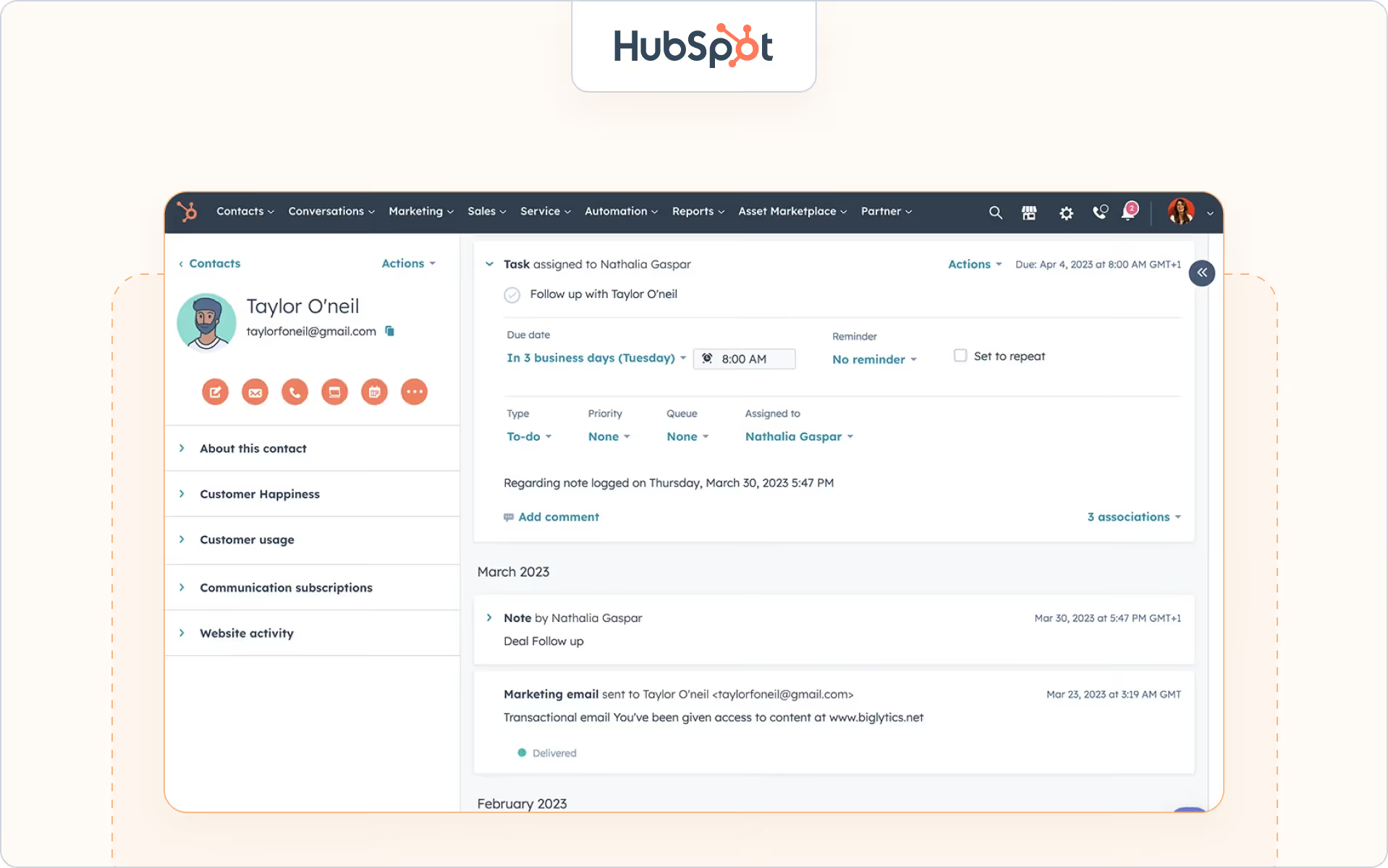
HubSpot-led go-to-market teams may decide to stick with their CRM and invest in some PRM add-ons.
By simply extending their CRM to manage partner programs, these teams can work with CRM-native performance data while selecting the partner extensions that best serve their purposes.
However, there are downsides to this approach.
Indeed, for organizations that need deeper PRM functionality, a dedicated PRM platform like Introw will be required.
HubSpot supports:
- Objects
- Workflows
- Partner tagging
- Reporting
Why SaaS Teams Pick Introw Over Impact
Introw is a very different solution to Impact, but if you’re looking for a PRM that supports SaaS partner management, it’s a powerful alternative.
Here’s why SaaS teams benefit from choosing Introw:
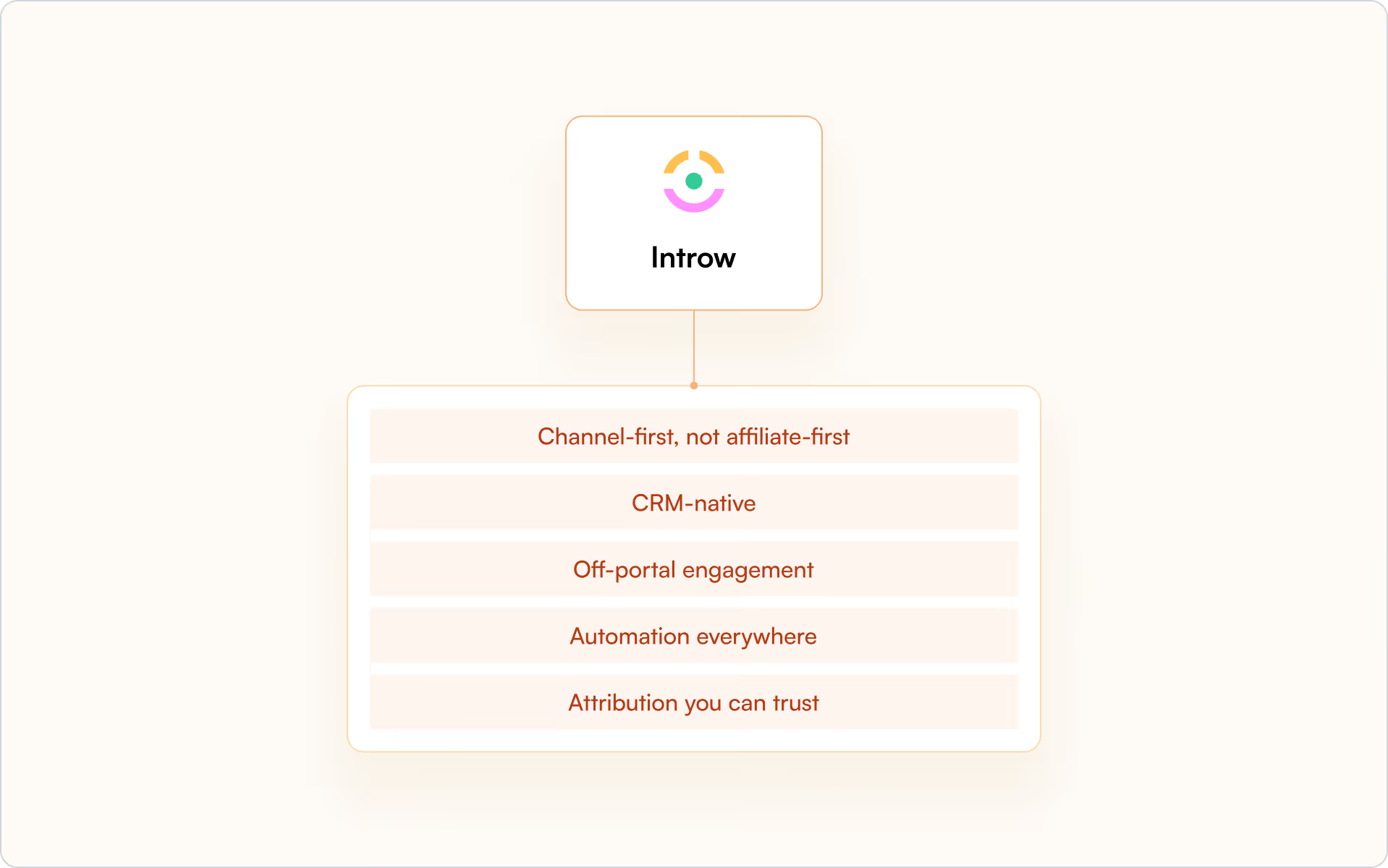
- Channel-first, not affiliate-first: Impact was designed for affiliate management and influencer programs, so its workflows revolve around clicks, payouts, and referral tracking. But Introw is purpose-built for SaaS, making deal registration, co-selling, and partner engagement its core focus.
- CRM-native: With Introw, all partner activity lives directly inside Salesforce or HubSpot, eliminating silos and giving you a single source of truth.
- Off-portal engagement: Many PRMs rely on portals that require logins. This adds friction to the partner journey and limits engagement. Introw meets partners where they work (such as email or Slack) for seamless collaboration.
- Automation everywhere: Eliminate tedious administrative tasks with Introw, and spend your time adding genuine value. Introw automates onboarding, campaign management, nudges, and even QBR prep.
- Attribution you can trust: Affiliate-first tools typically track clicks and last-touch referrals, which don’t accurately reflect the influence of SaaS partners. Introw ties content usage, notifications, and partner activity directly to pipeline and revenue for attribution you can feel confident in.
📣 Want to see Introw in action? Request a demo here.
Conclusion
Is it time to seek alternatives to Impact?
You’ll know when you’ve found the right Impact alternative for B2B SaaS, because it will improve co-selling, engagement, and attribution directly in your CRM.
When shopping around for Impact.com alternatives, take a step back to review how your current partner program works.
Consider whether your channel strategy is as effective as you’d like it to be, and identify any gaps.
Then:
1️⃣ Shortlist CRM-first PRMs
2️⃣ Run a live pilot
3️⃣ Choose the platform your partners actually respond to
👉 See how Introw can power your partner program – book a demo today.
The Ultimate Partnership Marketing Guide for 2026: Strategies, Examples & Tips
Partnership marketing is a mutually beneficial strategic collaboration between businesses to promote each other's products or services.
When entering into a marketing partnership, instead of competing, companies work together, combining their strengths, audiences, and resources for mutual growth.
Examples of popular partnership marketing strategies include co-branded marketing campaigns, ABM partnerships, social media collaborations, marketplace partnerships and product integrations.
And in 2026, partnership marketing is more critical than ever.
With rising customer acquisition costs, fierce competition, and increasing demand for authentic, value-driven interactions, businesses are shifting from transactional marketing to relationship-led growth.
Trust is key, and partnerships offer a credible way to build it — especially when a trusted partner introduces your brand.
For B2B SaaS companies, this shift is even more pronounced.
In a saturated, rapidly evolving market, partner-led growth enables SaaS firms to scale faster, tap into new verticals, and extend customer lifetime value through integrated solutions.
It can also help them to keep up with competition without busting the marketing budget.
Furthermore, by embedding products into broader partner ecosystems, SaaS companies reduce churn and drive stickiness.
As buyer journeys become more complex, collaborative go-to-market strategies are no longer optional—they're essential.
⬇️ In this guide, we'll take you through everything you need to know about partnership marketing, so you can decide whether it's the right tactic for your business.
What is Partnership Marketing?
Partnership marketing is a strategy where two or more companies collaborate to promote each other's brand, products, or services — with the goal of driving mutual growth. Rather than operating through traditional paid channels or simple referral schemes, partnership marketing focuses on strategic alignment: both partners contribute resources, co-create campaigns, and share audiences to generate value on both sides.
Unlike affiliate marketing, which is purely performance-based with direct financial incentives for each conversion, partnership marketing often emphasizes broader strategic goals — like brand visibility, market expansion, and pipeline generation. However, performance still matters: successful partnerships typically track results like leads, engagement, and influenced revenue, even if there isn’t always a strict "commission per sale" model.
Channel sales, on the other hand, do overlap with partnership marketing — especially when partners engage in co-marketing activities such as joint webinars, content syndication, or event sponsorships. In many cases, channel partners do both promote and sell products, depending on the nature of the partnership.
In short, partnership marketing is about creating strategic go-to-market alliances — blending promotional activities with co-selling or co-branding initiatives to drive shared success.
Benefits of Partnership Marketing
There are many direct and indirect advantages to implementing partnership marketing strategies.
Here are ten of the top benefits you can expect to see:
- Expanded reach: Access new audiences through your partner's customer base and marketing channels.
- Increased credibility: Build trust faster when introduced by a known and respected partner.
- Lower customer acquisition cost (CAC): Reduce marketing spend by sharing efforts and leveraging established relationships.
- Scalable revenue growth: Partnerships create repeatable, cost-effective growth channels that scale alongside your business.
- Improved lead quality: Benefit from warm, qualified referrals that convert faster and more reliably.
- Stronger value proposition: Offer customers a more complete solution by pairing complementary products or services.
- Faster market entry: Leverage partners' presence and expertise to break into new verticals or regions.
- Shared resources and expertise: Collaborate on content, tools, and campaigns—saving time and expanding capabilities.
- Greater customer retention: Integrated, value-rich solutions increase stickiness and reduce churn.
- Innovation and strategic insight: Learn from partners' market experience and co-create innovative solutions.
Types of Partnership Marketing in 2026
There are many different varieties of effective partnership marketing to consider in 2026.
So which type is going to make the biggest positive impact in your business?
This will depend on your business' specific needs, challenges, goals, and overall circumstances — as well as those of your partner.
Here are eight of the most popular types of partnership marketing to consider:
1. Co-marketing Campaigns
Co-marketing campaigns involve two or more companies collaborating to create and promote content or events that deliver mutual value.
So what does this look like, exactly?
Common formats include co-branded eBooks, joint webinars, and shared industry events.
These campaigns combine expertise, expand reach, and engage both audiences through shared promotion.
Each partner contributes resources — like content, speakers, or distribution channels, for example — while benefiting from increased visibility and lead generation.
The key benefits of co-marketing include reduced costs, higher-quality leads, and enhanced credibility through association.
Remember — it's vital to ensure both organizations are aligned on messaging and goals before kicking off your partnership.
This alignment empowers partners to create more impactful, resource-efficient campaigns that resonate with their shared target audience.
2. Marketplace Partnerships
A marketplace partnership is a collaboration where a company integrates or lists its product or service within another company's platform or digital marketplace.
For example, an app store or software ecosystem like HubSpot Marketplace, Salesforce AppExchange, or AWS Marketplace.
These partnerships typically involve:
- Product integrations that enhance functionality for shared users
- Co-marketing opportunities within the marketplace
- Shared customer acquisition channels
By being listed in a trusted marketplace, your solution gains visibility among highly targeted, ready-to-buy users.
Indeed, benefits include increased discoverability, faster customer acquisition, and added credibility through platform association.
As a bonus, seamless integrations boost customer satisfaction and retention by creating a more complete, user-friendly solution.
For SaaS companies especially, marketplace partnerships can be a scalable, low-friction channel for growth and long-term partner-led revenue.
3. Content Swaps And Backlink Partnerships
These tactics are designed to boost your online visibility, build authority in your industry and reach new audiences.
Content swaps and backlink partnerships are search engine optimization (SEO) tactics that involve two companies exchanging content — such as blog posts, guides, or ebooks — with links back to each other's websites.
For example, your company's CEO could write a thought leadership guest blog with links back to your own website.
This would then be published on your partner's website.
Driving referral traffic and enhancing brand credibility are two of the major benefits.
Still, the number one reason businesses deploy this tactic is to strengthen domain authority, helping both companies perform better in search engines.
This low-cost, high-impact strategy is especially effective for B2B companies looking to grow their online presence, generate organic leads, and establish thought leadership through mutually beneficial content collaboration.
4. Social Media Collaborations
Social media collaborations are not only for B2C brands.
While the tone and style of your content might be different to a B2C social collaboration campaign, these campaigns can be an extremely useful tool for brands in the SaaS space.
B2B social media collaborations involve two or more companies teaming up to share content, campaigns, or promotions across their social channels.
These can include co-branded posts, joint LinkedIn Lives, shared video series, or collaborative giveaways.
By leveraging each other's audiences, businesses expand their reach, boost engagement, and build trust through association, all while driving qualified traffic to each partner's site.
This type of partnership marketing is cost-effective, easy to execute, and ideal for increasing visibility, sparking conversation, and generating leads in a more authentic, relationship-driven way.
5. ABM partnerships
Account-based marketing (ABM) is where a brand focuses on a high-value prospect that fits its ICP.
In ABM, the stakes are high: the wins are significant, but losses are expensive.
This is why ABM partnerships appeal.
In an ABM partnership, two companies collaborate to target shared ideal customer profiles (ICPs) with personalized, coordinated outreach.
Partners align on high-value accounts, then co-create tailored campaigns — such as custom content, joint emails, or personalized events — designed to engage key decision-makers.
This approach combines data, insights, and resources from both sides to increase relevance and impact.
By working together, companies can boost campaign effectiveness, shorten sales cycles, and increase deal size.
ABM partnerships are especially powerful in B2B SaaS, where long sales cycles and complex buying committees require strategic, high-touch marketing that resonates with specific prospects across channels.
6. Influencer Partnerships
In B2B SaaS, influencer partnerships involve collaborating with trusted voices in a specific niche to build credibility, reach decision-makers, and drive awareness or adoption.
These influencers might be:
- Industry consultants
- Niche content creators (e.g. YouTubers, podcasters, LinkedIn voices)
- Community leaders or analysts
They promote your SaaS solution through reviews, tutorials, webinars, or co-branded content tailored to their audience.
What's more, since vertical SaaS targets specialized markets (like healthcare, legal, or construction), these influencers often have deep domain credibility, which means backlinks can boost your website's SEO.
Other benefits include targeted reach, faster trust-building, and improved lead quality — making it a powerful channel for awareness and education-driven growth.
In exchange, some influencers may require payment or commission, while others will accept free access to tools and services along with promotion of their page on your channels.
So, are influencer partnerships the right strategy for your brand?
This is an especially useful tactic in vertical SaaS, which is designed for a specific industry or niche.
However, if your SaaS targets a more general market, you might struggle to find influencers that unite your audience.
7. Reseller/Referral Hybrid Motions
Reseller/Referral hybrid motions combine elements of both reseller and referral partnerships into a single go-to-market strategy.
- In a referral model, the partner introduces or refers potential customers to your business and earns a commission or incentive when deals close.
- In a reseller model, the partner actually sells your product — often bundling it with their own services — and may handle billing and customer support.
The hybrid motion allows partners to start by referring leads and transition into full resellers as they gain confidence or technical expertise.
It's flexible, lowers onboarding friction, and supports deeper collaboration over time, making it ideal for scaling partner-led growth.
How to Build a Partnership Marketing Strategy
Sold on partnership marketing and ready to get started?
Admittedly, this can be a little daunting: after all, when there are two plus parties involved, it's never as simple as creating an in-house strategy.
However, get partnership marketing right and the results should be worth the extra effort.
We've simplified the partnership marketing strategy into five steps:
1. Define Objectives
Kick off your B2B partner marketing strategy by defining your objectives.
This is crucial for measuring the success of your partnership and continuously optimizing your strategy down the line.
To define objectives, start by aligning with business goals — whether these are generating leads, influencing pipeline, or increasing brand awareness.
Now, define your objectives for partnership marketing.
For example, if generating more leads is a general business goal, you might set a SMART goal such as:
"Generate [NUMBER] of leads from [PARTNERSHIP MARKETING PROJECT by [DATE]."
Then, set clear KPIs for each goal, such as number of qualified leads, sourced revenue, or reach and engagement metrics.
It's vital to ensure both partners agree on success measures, timelines, and tracking methods to keep efforts focused, measurable, and mutually beneficial.
2. Align With RevOps And Sales To Define Attribution Model
Aligning with RevOps and Sales is crucial when setting up a partnership marketing program because it ensures clear, consistent attribution of leads and revenue.
Without alignment, partner-sourced or influenced deals can be misattributed, leading to inaccurate reporting and under-valuing partner efforts.
RevOps should help to define the attribution model — deciding how credit is assigned across touchpoints — while Sales will ensure partner leads are properly followed up.
Together, they create transparency, trust, and accountability, enabling smarter investment and stronger partner relationships.
3. Identify High-Fit Partners
This is the exciting bit: it's time to identify your potential partners!
Remember — you're looking for high-fit partners.
Start by searching for companies that share your ideal customer profile (ICP) — targeting similar industries, roles, or challenges.
Look for mutual value, where both parties benefit from shared leads, increased reach, or enhanced offerings.
Strong cultural alignment, complementary products or services, and overlapping sales motions also matter.
You should be able to gain some important answers simply by evaluating a company's audience size, reputation, and willingness to collaborate.
Ideal partners should:
- Fill a gap in your customer journey
- Strengthen your value proposition
- Be equally invested in long-term success
And if the prospect of collaborating with another company makes you nervous, take it slowly.
Start with low-lift collaborations, then scale deeper based on results and strategic fit.
4. Set Up Co-Marketing Playbooks And Tools
Congratulations — you've secured your first partnership!
Now you've cracked the who, it's time to get into the how.
Co-marketing playbooks help partners launch campaigns faster, stay aligned, and deliver consistent, high-quality content — making collaboration smoother and results more scalable across multiple partnerships.
Here are some key tips for setting up your co-marketing playbooks and tools:
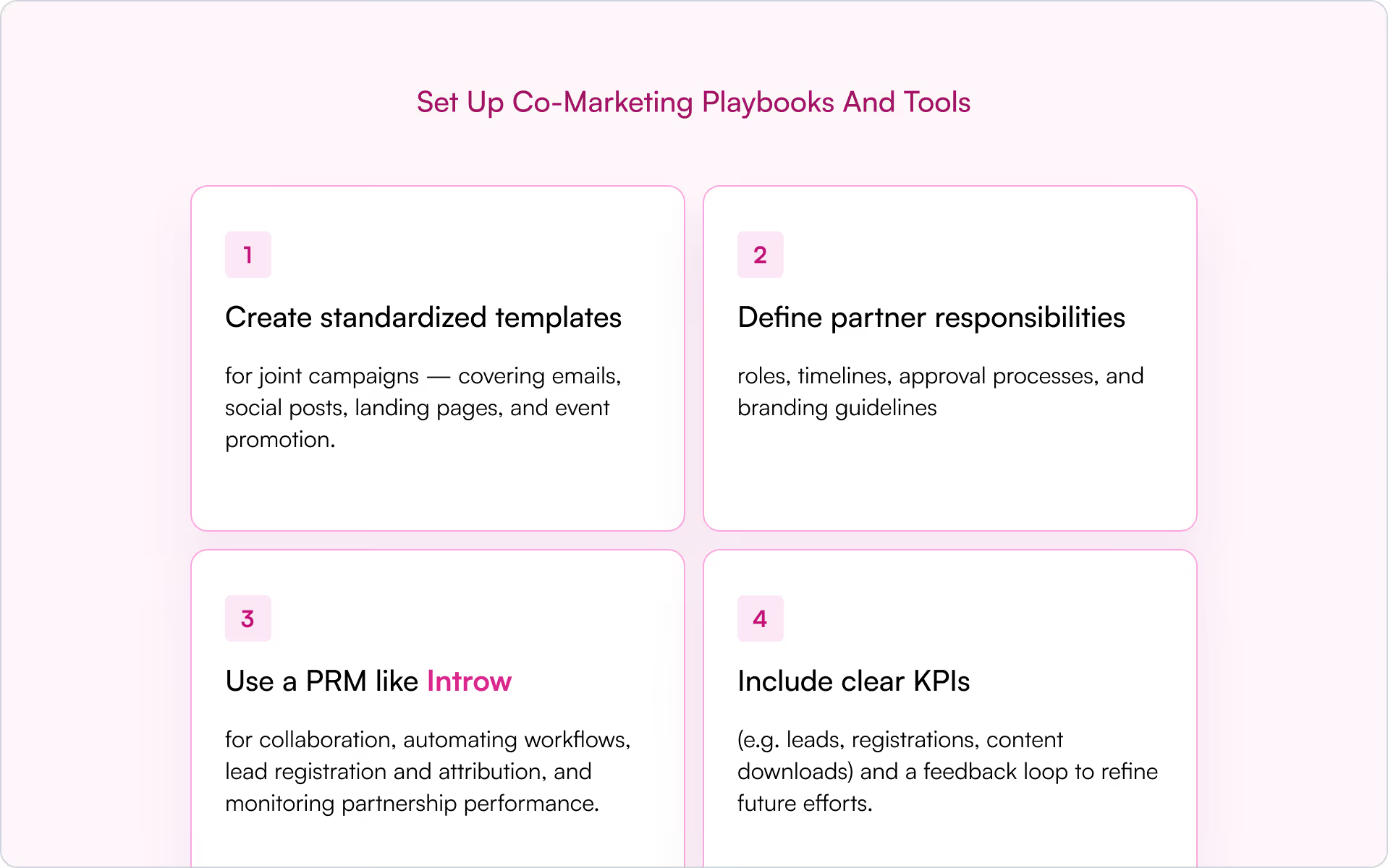
- Create standardized templates for joint campaigns — covering emails, social posts, landing pages, and event promotion.
- Define roles, timelines, approval processes, and branding guidelines to streamline execution.
- Use a PRM like Introw for collaboration, automating workflows, lead registration and attribution, and monitoring partnership performance.
- Include clear KPIs (e.g. leads, registrations, content downloads) and a feedback loop to refine future efforts.
5. Track And Optimize Performance Via CRM/PRM Integration
Tracking and optimizing performance via a CRM-first PRM like Introw is crucial for measuring the true impact of your partnership marketing efforts.
With integrated systems, you gain real-time visibility into lead flow, deal progress, and revenue attribution from each partner campaign.
This transparency allows you to assess what's working, identify gaps, and make data-driven decisions.
It also ensures partners receive proper credit and fosters trust.
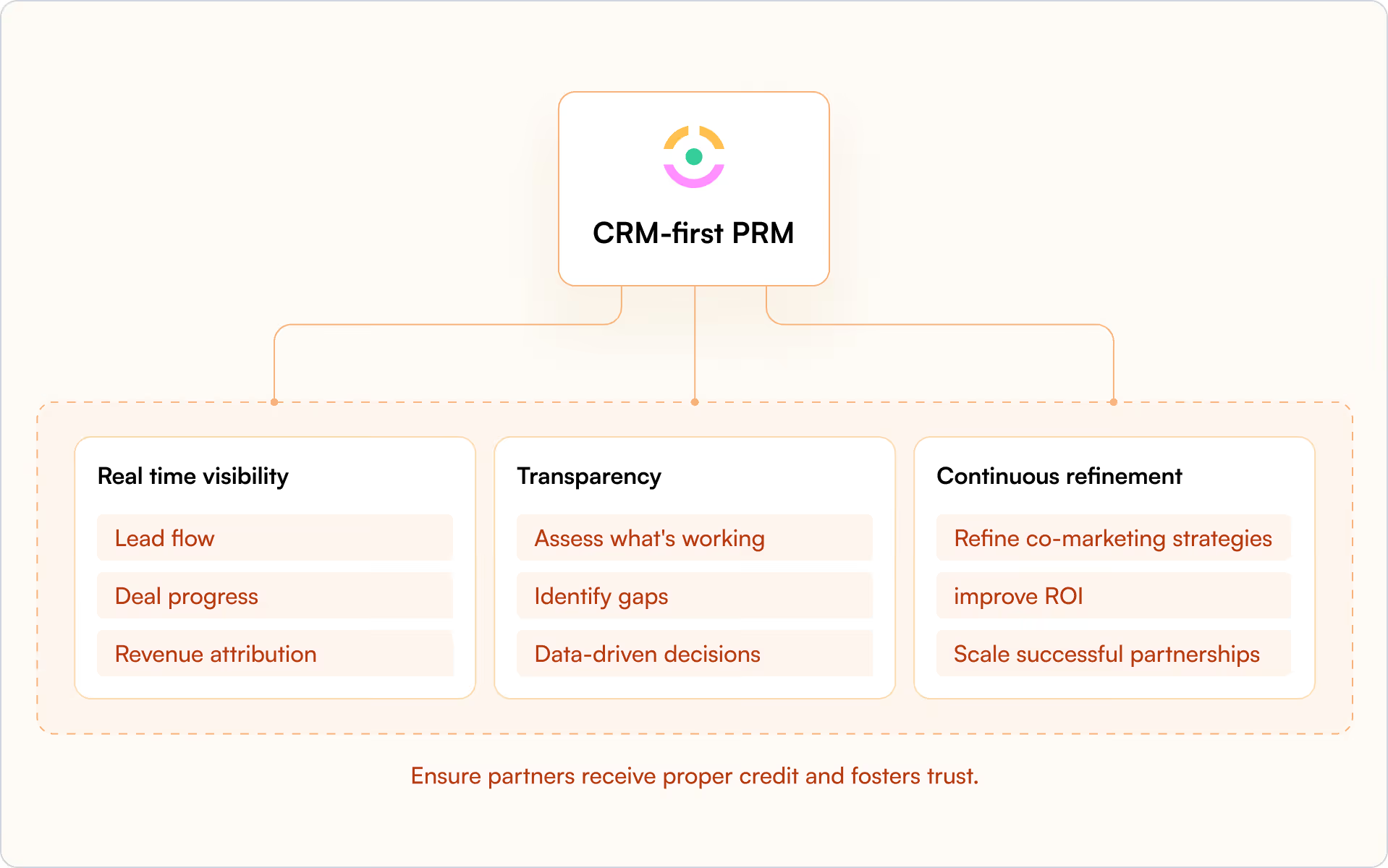
By syncing marketing activities, lead registrations, and closed-won data, you can continuously refine co-marketing strategies, improve ROI, and confidently scale successful partnerships.
Ultimately, integration turns partnership marketing from guesswork into a performance-driven growth engine.
Real-World Partnership Marketing Example: Hubspot + Typeform
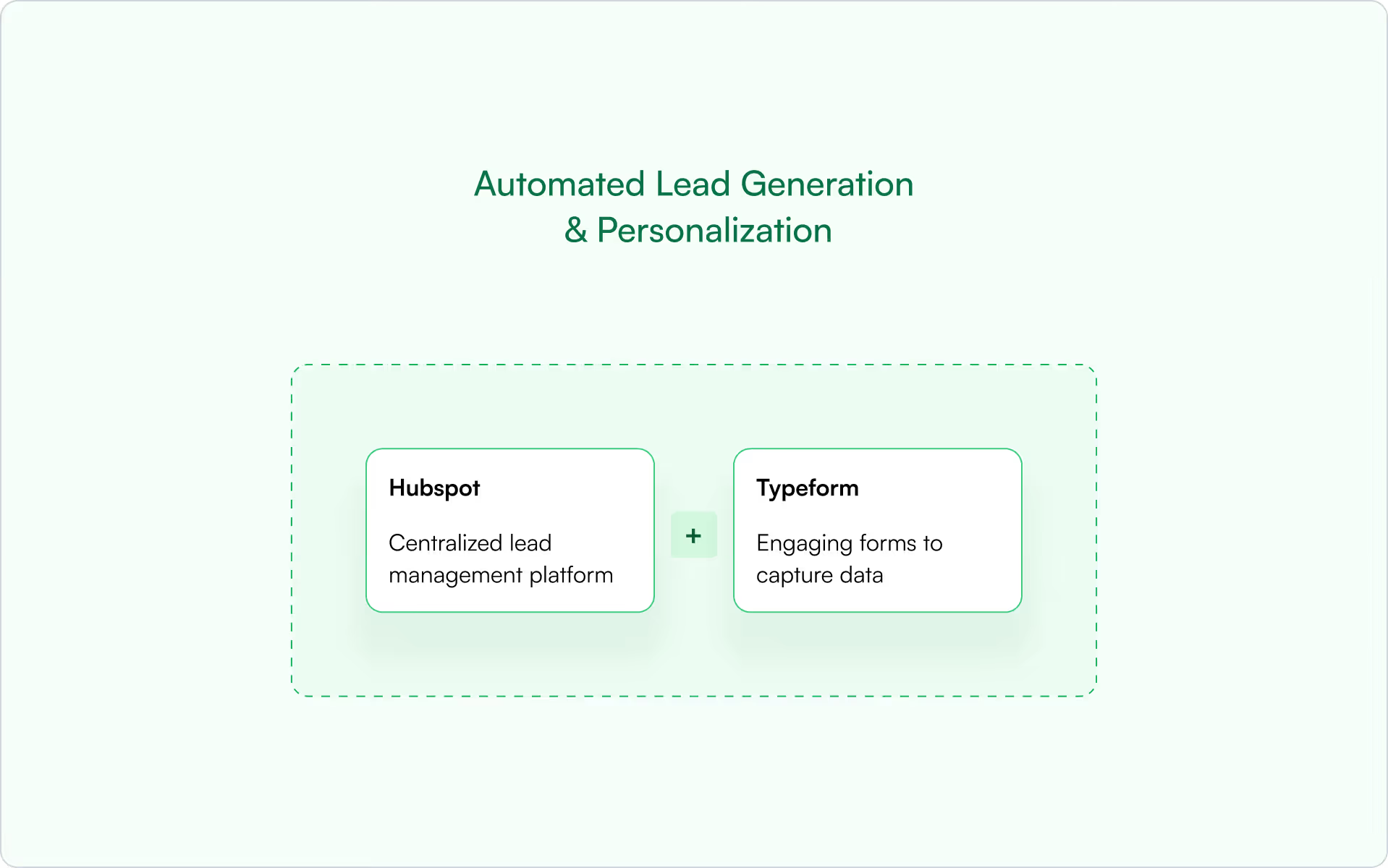
HubSpot and Typeform have developed a robust partnership marketing strategy centred on seamless integration to enhance lead generation and customer engagement.
By combining Typeform's interactive forms with HubSpot's CRM capabilities, businesses can capture and manage leads more effectively.
For instance, the education platform 100mentors utilized this integration to automate data entry, resulting in a 50% reduction in manual tasks and a 20% increase in conversions.
Additionally, HubSpot's "Make My Persona" tool, built using Typeform, exemplifies successful co-marketing.
This tool allows users to create detailed buyer personas, providing value to users while generating approximately 1,000 leads per month for HubSpot.
The partnership's strength lies in its ability to deliver personalized, scalable marketing solutions, making it a model for effective B2B collaboration.
Best Practices for B2B Partner Marketing in 2026
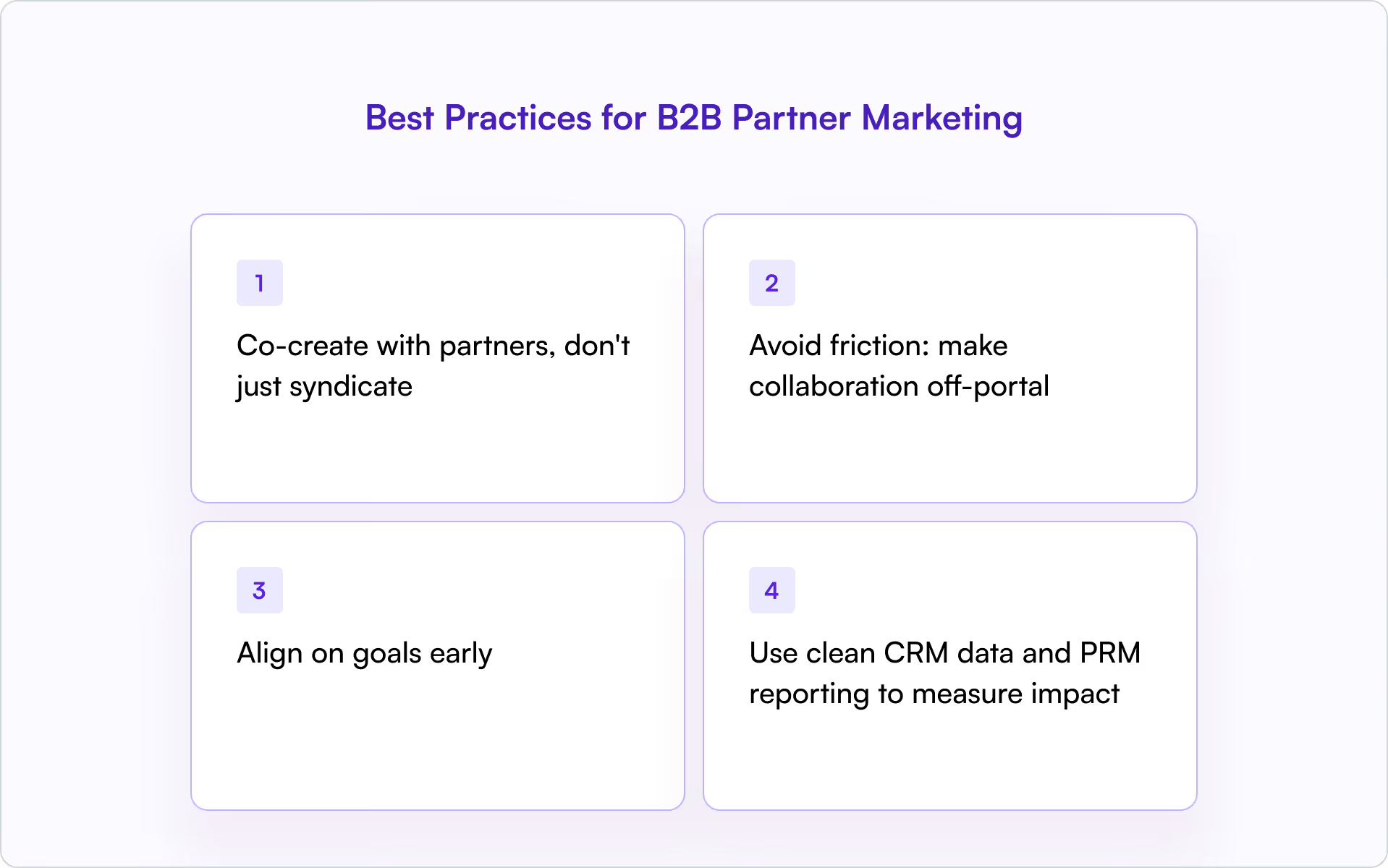
For best results, ensure you follow these four partner marketing best practices:
1. Co-Create With Partners, Don't Just Syndicate
Truly effective partner marketing stems from collaboration, not just content redistribution.
So instead of simply handing partners premade assets, co-develop campaigns like joint webinars, co-branded eBooks, or social content.
This ensures alignment with both brands' voices and audience needs, leading to better engagement and shared ownership of outcomes.
2. Avoid Friction: Make Collaboration Off-Portal
Friction in your joint workflows can see your collaborative projects end before you've had a chance to see the benefits.
This is why it's so important to streamline how you work together.
While portals are useful for asset storage and reporting, real-time collaboration thrives in low-friction channels like Slack or shared email threads.
For a truly frictionless project, why not harness the power of Introw's PRM, which offers off-portal collaboration and integrates with Slack?
This encourages faster communication, easier brainstorming, and a more agile response to opportunities or blockers.
3. Align On Goals Early
Before launching any activity, you need to get on the same page about what success looks like.
Are you focused on brand awareness, marketing qualified leads (MQLs), or influencing pipeline?
Setting shared KPIs avoids misalignment and enables meaningful measurement and reporting.
4. Use Clean CRM Data And PRM Reporting To Measure Impact
Poor data hygiene kills performance tracking.
Ensure your CRM is clean and synced with a PRM tool like Introw so you can accurately attribute results — confidently track sourced leads, influenced pipeline, and partner-driven revenue.
➡️On the hunt for a highly effective partner relationship management system? Here's everything you need to know about choosing your next PRM.
How Introw Powers Scalable Partnership Marketing
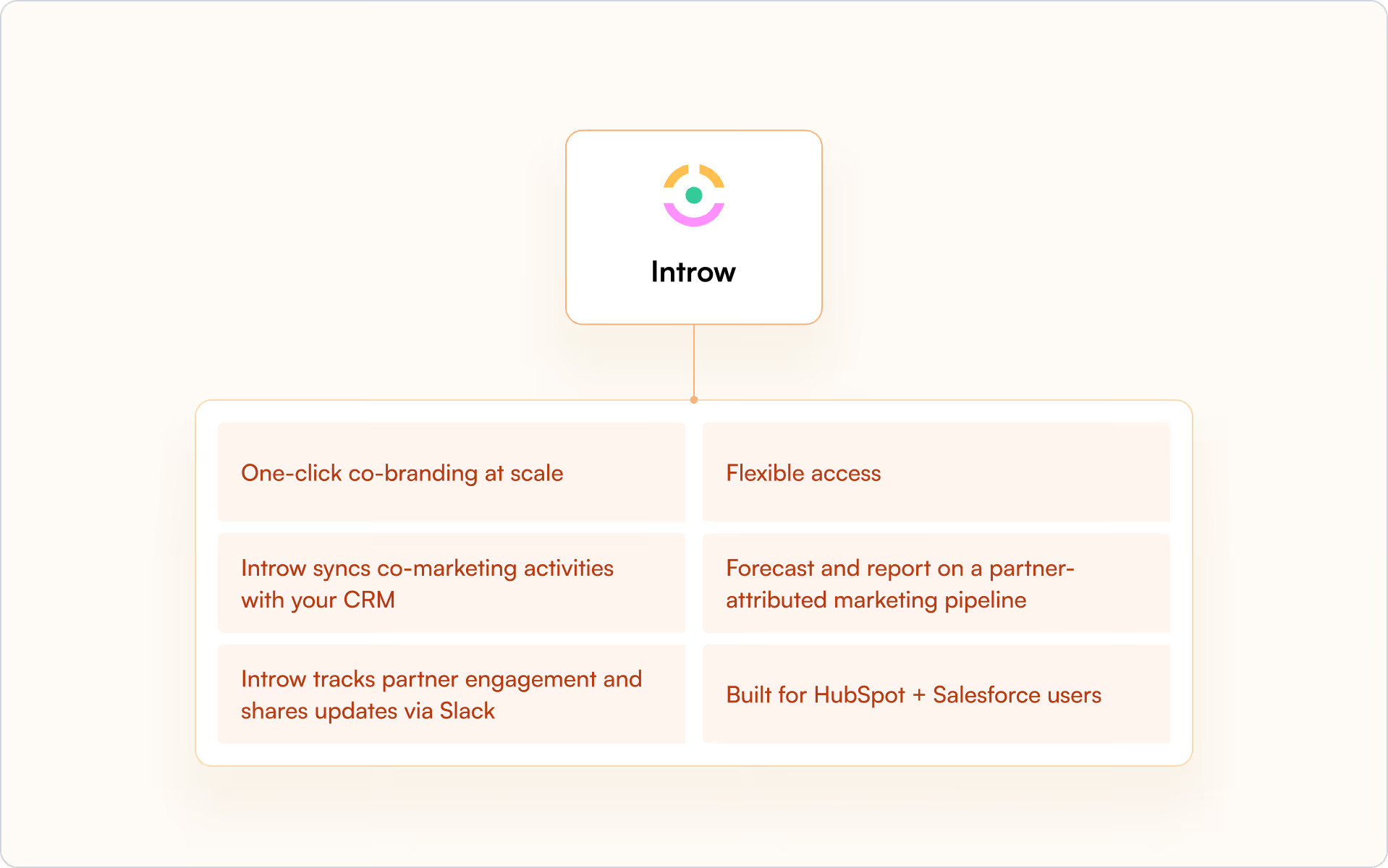
- One-click co-branding at scale: Introw lets you instantly add partner logos, names, and details to your sales and marketing assets — all in one click. No more manual edits for every campaign or piece of content. Scale co-branded marketing efforts effortlessly and maintain brand consistency across partner initiatives.
- Introw syncs co-marketing activities with your CRM: Introw integrates natively with HubSpot and Salesforce, ensuring all co-marketing activities, lead registrations, and partner deals are tracked directly in your CRM — no need for duplicate data entry or disconnected tools.
- Introw tracks partner engagement and shares updates via Slack: Partners receive real-time updates via its Slack integration, including notifications when leads engage or deals move forward. This off-portal engagement keeps communication flowing and visibility high without needing extra tools.
- Flexible access: Introw eliminates the friction of portal fatigue by enabling partners to engage via Slack or email — no mandatory logins needed for day-to-day updates. However, for deeper collaboration on content, strategy, and co-selling, partners can also access a fully customizable portal when needed, keeping everything aligned and easily accessible.
- Forecast and report on a partner-attributed marketing pipeline: Easily report on partner-sourced and influenced pipeline with attribution tied directly to CRM data. Introw enables forecasting by tracking partner performance and marketing contributions in real-time.
- Built for HubSpot + Salesforce users: Designed specifically for go-to-market teams using HubSpot or Salesforce, Introw fits neatly into your existing tech stack and enhances partner marketing without adding complexity.
🚀 Power up your partner marketing with Introw — book a demo here today.
Conclusion
Ultimately, partnership marketing is a powerful, scalable growth lever for B2B SaaS, delivering lower customer acquisition costs and high-impact results.
But remember — success depends on strong alignment across marketing, sales, and ops to ensure smooth execution and measurable outcomes.
With the right strategy, partnerships can drive pipeline, brand visibility, and long-term revenue.
However, partnership marketing — like any form of collaboration — is not without its challenges, from misaligned goals and communication barriers to inaccurate tracking and failure to commit.
Fortunately, Introw makes partnership marketing much easier — after all, managing partners is what this cutting-edge platform was designed for.
Introw keeps partner marketing CRM-native — fully integrated with HubSpot and Salesforce — so all activities are trackable, collaborative, and scalable from day one.
By streamlining workflows and partner engagement, this software helps you unlock the full potential of partner-led growth without adding complexity or disconnected tools.
💡 Ready to streamline your partner marketing strategy? Get a personalized Introw demo.
What Is Co-Selling? A Guide to Scaling Faster with the Right Partners
Most B2B companies hit a ceiling because they rely solely on direct sales. But growth doesn’t have to be a solo mission. The fastest path to revenue? Co-selling.
A co-selling strategy brings together two or more companies to reach new markets, shorten the sales cycle, and close more deals — faster. It’s not just about splitting commissions; it’s about aligning with the right co-selling partners to deliver more comprehensive solutions to potential customers.
This guide breaks down what co-selling is, how to build a successful co-selling partnership, and why aligning your sales team with a partner team unlocks game-changing co-sell opportunities.
If your sales reps are tired of chasing cold leads alone, it’s time to think bigger. Build a co-selling program, empower your sales process with partner intelligence, and see what happens when your co-selling efforts are structured for scale — not luck.
What Is Co-Selling and Why It Works
Co-selling is a B2B sales approach where two or more companies work together to jointly position, promote, and sell complementary solutions to a shared target market.
Unlike traditional reseller models or B2B SaaS partnerships, co-selling partners collaborate actively throughout the entire sales process — from account mapping to opportunity engagement, to closing.
The goal? Shorten the sales cycle, expand reach, and deliver a joint solution that creates more value than either company could on its own.
A well-structured co-selling program isn't just about generating leads. It's about aligning sales teams, sharing deal intelligence, and creating a seamless experience for potential customers. When executed correctly, a co-selling partnership can unlock deeper customer relationships, improved win rates, and long-term revenue growth.
So how does it actually work in practice?
Inside the Co-Selling Process: How It Works
At its core, co-selling is all about alignment — across systems, teams, and incentives. Whether you’re running a formal co-selling program or experimenting with an ad hoc co-selling motion, success comes down to shared intent and execution.
Here’s what a typical co-selling process looks like:
- Identifying complementary solutions that solve adjacent pain points
- Mapping accounts to uncover overlap and co-sell opportunities
- Activating sales teams on both sides to co-engage prospects
- Tracking co-selling activities across CRM and partner tools
- Maintaining consistent communication to keep both teams aligned
This level of collaboration between two sales teams requires coordination, visibility, and trust. That’s why the most effective co-selling partnerships are built on clear agreements and repeatable workflows.
Co-Selling Agreements: Setting the Rules for Collaboration
To avoid confusion and misalignment, leading companies establish a co-selling agreement — a formal, legally binding contract that defines how the co-selling partnership will operate.
A co-selling agreement outlines critical components of your co-selling process, including:
- Roles and responsibilities across both sales teams
- Lead sharing and deal registration procedures
- Incentive structures and commission splits
- Rules for customer ownership and contract management
- Guidelines for co-marketing plans, communication, and escalation paths
In short, it clarifies who owns what, who does what, and how both parties benefit — paving the way for a successful co-selling relationship.
Now let’s take a look at real-world examples that show how co-selling partners put this into action.
Real-World Co-Selling Examples and Strategies
Now that we’ve covered what co-selling is and how it works, let’s look at real-world examples that show how co-selling partners create value through collaboration.
Each example highlights a key type of co-selling activity that helps expand reach, improve the sales process, and increase adoption through joint effort.
1. Identifying Complementary Co-Selling Solutions
Co-selling works best when the products or services naturally complement each other—creating a more compelling value proposition for sales teams and potential customers.
Take HubSpot and Introw, for example:
- HubSpot equips sales teams with robust tools for lead management, helping them track, organize, and nurture pipeline more effectively.
- Introw focuses on automated outreach, enabling reps to reach out to shared accounts via personalized emails, timely follow-ups, and Slack nudges — all synced with the CRM.
Since sales reps need both efficient lead tracking and high-volume outreach, these two companies form a strong co-selling partnership to jointly offer a more complete solution. It’s a classic example of combining capabilities to strengthen the entire sales process.
Another example? Dropbox and HelloSign:
These tools are bundled into a single workflow where users can store, access, and sign documents in one place. By solving multiple pain points in a single motion, co-selling partners reduce complexity, drive adoption, and improve retention.
2. Integrating the Products (Optional, But Powerful)
When co-selling partners go a step further and integrate their products, the value of the joint solution multiplies.
Consider Slack and Zoom. Their integration allows users to start video calls directly from Slack — removing friction and improving daily workflow for marketing teams, customer success, and sales teams alike.
This kind of product alignment boosts stickiness, enhances user engagement, and makes the co-selling relationship feel like a natural fit — not a bolt-on. Integrated experiences are key to delivering more comprehensive solutions and building deeper customer relationships.
3. Aligning Sales and Marketing Teams for Co-Marketing Success
A successful co-selling strategy depends not just on product synergy, but on team alignment.
For example, in the Slack + Zoom model, both companies' sales teams and marketing teams co-develop messaging, plan co-marketing campaigns, and execute coordinated outreach to potential customers. The result? Clearer communication, faster execution, and a stronger pipeline.
When both sales teams are on the same page, co-engagement feels seamless — and prospects experience a unified, high-value solution.
4. Leveraging Partner Ecosystems for Co-Sell Opportunities
Cloud marketplaces like AWS, Microsoft Azure, and Google Cloud offer built-in trust and exposure—making them perfect launchpads for co-selling programs.
For example, a security SaaS vendor participating in the AWS Marketplace can co-sell with AWS, positioning their product as “AWS-optimized” and immediately gaining access to larger enterprise deals.
By tapping into the marketplace’s partner ecosystem, vendors eliminate friction in the sales cycle, reduce procurement hurdles, and access co-sell opportunities that would be difficult to close via direct sales teams alone.
Each of these examples shows how a thoughtful co-selling program can deliver more than just pipeline — it creates leverage, trust, and sales enablement across every touchpoint.
Next, we’ll look at how co-selling compares to reselling, and why understanding the distinction matters for long-term partner strategy.
Co-Selling vs. Reselling: Understanding the Strategic Difference
As you build out your co-selling strategy, it’s important to understand how it differs from reselling—especially when aligning your sales team, setting expectations with co-selling partners, and structuring your co-selling program for scale.
While both approaches involve multiple companies working together to drive revenue, the key distinction lies in ownership of the deal and relationship with the customer.
- In a co-selling partnership, each company contributes to the sales process, but the original vendor retains ownership of the customer and contract. The value comes from mutual sales efforts, faster deal velocity, and the ability to reach new markets together.
- In a reseller model, one company purchases your product (often at a discount) and resells it independently. You may get the deal, but you lose visibility, control, and direct contact with the potential customers.
Understanding this distinction is critical as you build your co-selling program, prioritize co-sell opportunities, and design effective incentive models for your sales reps and partner team.
Here’s a side-by-side breakdown to make the difference crystal clear:
Whether you choose co-selling, reselling, or a hybrid of both, understanding the mechanics of each model is key to avoiding misalignment—and unlocking the true benefits of co-selling.
Why Co-Selling Matters More Than Ever
As B2B sales cycles grow longer and buyers get harder to reach, co-selling has become more than a strategy — it’s a competitive advantage.
According to ZDNet, 84% of sales professionals say partner selling impacts revenue more today than it did just a year ago. And nearly 9 out of 10 sales teams are already engaging in some form of co-selling.
For SaaS companies looking to scale faster, break into new markets, and build deeper customer relationships, a structured co-selling program isn’t optional — it’s essential.
That’s why leading B2B teams are investing in the right systems — to make co-selling repeatable, visible, and scalable.
How to Run a Scalable Co-Selling Program with PRM Software
Running a co-selling program at scale isn’t about working harder — it’s about working smarter. That’s where PRM (Partner Relationship Management) software comes in.
A modern PRM platform helps co-selling partners align across teams, systems, and workflows — enabling faster execution, stronger sales enablement, and greater co-sell opportunities.
But not all PRMs are built for how today’s SaaS companies sell.
Enter Introw: CRM-First, Partner-Ready
Introw is purpose-built to streamline the entire co-selling process — from deal registration and account mapping to partner engagement and performance tracking — all inside the tools your sales team already uses (like Salesforce or HubSpot).
Here’s how you can run a successful co-selling program with Introw:
1. Define Clear Co-Selling Objectives
Before launching into activity, define what success looks like.
- Are you entering new markets?
- Targeting a shared target market?
- Trying to shorten the sales cycle?
- Aligning around partner sourced deals?
With Introw, you can build structured co-sell motions from the start — tracking success by CRM stage, partner type, and target account segment.
Pro tip: Start with account mapping using Crossbeam and Introw to surface mutual customers or warm intro paths.
2. Identify & Onboard the Right Partners
Not every company is a fit for co-selling — focus on those with a natural joint solution, adjacent ICP, and a motivated partner team.
Once identified, Introw makes onboarding painless:
- No logins required
- Partner-friendly deal forms
- Slack + email notifications
- Full sync with your CRM
This allows your co-selling partners to contribute without friction — and your sales reps stay focused on deals, not admin.
3. Streamline Deal Registration & Account Mapping
This is where most co-selling efforts fall apart: misalignment around who’s working what, and no central system to track it.
With Introw:
- Partners register deals via simple forms linked directly to your CRM
- All mapped accounts are visible and actionable by your sales team
- Auto-tagged, auto-synced — no more chasing down updates
Bonus: Get Slack nudges when a new deal is registered or a mapped account is touched, so your sales process stays proactive.
4. Track Performance & Automate Feedback Loops
A successful co-selling relationship thrives on visibility and iteration.
Introw gives you shared dashboards across both teams — tracking:
- Partner activity across deals, accounts, and emails
- Win rates and sales velocity
- Top-performing co-selling partners
- Campaign performance from co-marketing plans
This isn’t just helpful for RevOps — it empowers sales teams, partner managers, and leadership to see where the revenue is really coming from.
5. Enable Real-Time Communication & Collaboration
Speed matters. With Introw, your co-selling activities move fast and stay aligned:
- Chat with partners in Slack or via email (no login required)
- Share pitch decks, proposals, or videos via integrated doc-sharing
- Trigger Slack or email notifications when key actions are taken (e.g. deal registered, task assigned, doc opened)
Think of it as the connective tissue that keeps your two sales teams on the same page — even across orgs.
6. Incentivize and Optimize
Co-selling isn’t a one-and-done motion — it’s a growth engine.
Use Introw to:
- Set up custom incentives tied to partner performance
- Monitor partner-driven revenue by segment or region
- Run A/B tests on co-selling offers, outreach styles, or co-marketing campaigns
By turning every co-sell opportunity into structured data, Introw lets you double down on what works — and sunset what doesn’t.
Why Introw Makes Co-Selling Scalable
Co-selling requires precision, process, and trust. Introw delivers:
- CRM-first workflows (Salesforce & HubSpot)
- Slack and email-native partner comms
- Real-time dashboards and deal insights
- No login friction for partners
- Built-in co-sell motion templates
- Custom workflows by partner type (reseller, referral, MSP, etc.)
Whether you're working with 5 partners or 500, Introw helps you launch, run, and scale a co-selling program that drives real revenue — without burning out your sales team or partner ops.
Ready to Turn Co-Selling Into a Scalable Revenue Engine?
You’ve built a great product. Your sales team is putting in the work. But growth still feels slower than it should — because you’re doing it alone.
The companies scaling fastest right now aren’t just selling — they’re co-selling. They’re tapping into partner ecosystems, collaborating across two sales teams, and unlocking warm intros that never would’ve come from cold outreach.
The difference? They’re not running their co-selling efforts on spreadsheets and hope. They’re using Introw.
Introw gives you everything you need to turn your co-selling program into a repeatable revenue machine:
- Seamless Salesforce and HubSpot integration
- Slack and email-native workflows — no logins needed
- Real-time dashboards across partners, deals, and accounts
- Built-in guardrails for RevOps, CROs, and partner managers alike
No friction. No guesswork. Just faster, smarter revenue — driven by aligned teams and trusted partners.
Stop relying on luck. Start co-selling with intention.
Book your Introw demo and see how today’s top SaaS companies are building scalable, partner-powered pipelines.
How Data is Transforming Partnerships
The world of partnerships is evolving—and for the better! Data has become the cornerstone of modern partnership management, transforming how partner managers make decisions, build relationships, and drive growth. Today’s partner managers don’t just maintain connections—they leverage data to uncover insights, optimise processes, and unlock new opportunities. When I started, I was navigating spreadsheets and tracking relationships through CRMs like Pipedrive and HubSpot. Today, the focus is on integrating those systems into a single source of truth, creating transparent, frictionless experiences for partners that foster long-term success.
This shift is a game-changer for managing and scaling partnerships. I’m Eva Fayemi, Co-Founder & CEO of Bond Agency, and I’m excited to share how data is reshaping partnership management.
1. Companies start with CRM Data
For most companies, CRM systems are the starting point for managing partnerships. These systems provide key data on sales interactions and performance, but integrating partner-sourced data can be a challenge. While it's better than nothing, simply tracking data isn't enough—it's crucial to define a partnership strategy first.
At Bond Agency, we help clients identify their partnership goals and align them with broader business objectives before optimising their CRM or introducing tools like Introw. A common challenge we see is companies not tracking which partnerships contribute most to the bottom line. We guide them in mapping partner journeys, attributing engagement, and tracking conversions in the CRM. This clarity leads to improved decision-making, better tracking, and growth.
Protip: Ensure your sales team is aligned on reporting partner-sourced leads. Create internal documentation and calls to keep everyone on the same page for seamless reporting across teams.
2. Increasing Revenue and Engagement
Growing revenue and boosting partner engagement are top priorities, but these goals can be time-consuming and difficult to track. Modern partner managers balance engagement and tracking more efficiently through technology, automating key processes and logging communication touchpoints with partners.
For example, one of our clients used to spend hours tracking partner engagement manually. After integrating their CRM with automation tools, they gained a dynamic, real-time view of partner contributions. Automated alerts and insights allowed their team to respond quickly, increasing partner engagement and revenue from key accounts.
Protip: Track whether partners open onboarding materials like sales brochures or marketing resources. This helps identify where additional support is needed for smoother, more effective onboarding.
3. More Transparency Through Data Means Better Collaboration
A common issue partners face is a lack of transparency. Without it, trust erodes, and partnerships can’t thrive. Tools like Introw are changing this dynamic by providing greater transparency. It connects CRM data with partnership management, offering a platform that tracks key metrics, aligns partners on pipeline progress, provides content, and monitors engagement.
This transparency empowers partner managers to track the entire partnership ecosystem while giving partners visibility into their performance. When everyone is aligned with clear data, collaboration becomes more efficient and impactful.
The future of partnership management is data-driven. With tools like Introw, partner managers can unlock new insights, improve collaboration, and drive faster, more efficient growth. Companies that embrace this will lead the next era of partnership management.
About Bond Agency: Since 2020, Bond Agency has been helping B2B tech and SaaS startups accelerate growth through strategic partnerships. We specialise in strategy development, execution, and providing fractional partner teams, focusing on scaling businesses in the EMEA and USA. With a diverse network of affiliates, tech integrations, and B2B influencers, we’ve delivered impactful results across industries including hospitality tech (e.g., Unicorn Mews), MarTech (e.g., Hotjar), and SaaS (e.g., Revenue Hero).
Join the conversation in our Slack community, The Nearbound Club, where tech founders and partnership leaders drive innovation in the partnerships space.
Visit: www.bond-agency.io

