

.svg)


.svg)
.svg)







Partner Marketing
Strategies, campaigns, and co-marketing tactics to help SaaS teams activate partners, drive pipeline, and measure impact — CRM-first.
Latest articles
15 MDF Best Practices for High-Impact Partner Programs
Why most MDF programs underperform
Most MDF programs don’t fail because the strategy is wrong. They fail because the operations around them are unclear, slow, or invisible to partners. Aligning early on expectations, ownership, and even the definition of MDF helps teams avoid the most common execution gaps.
The budget exists, but partners often don’t use it. In fact, roughly 60% of market development funds go unclaimed each year, not because partners aren’t interested, but because the process makes participation difficult.
.png)
Across many partner ecosystems, the same issues show up repeatedly:
- Channel partners don’t know funds are available
- The approval process takes too long
- Requests get lost in email or spreadsheets
- Marketing activities run without measurable outcomes
- Finance teams can’t track how marketing dollars were used
- Partner marketing teams can’t connect MDF investments to pipeline
Without structure, market development funds rarely support partner engagement or revenue growth. When MDF programs are tied to clear execution plans and measurable partner marketing campaigns, they become a predictable lever for demand generation instead of unused budget.
15 MDF best practices for SaaS partner programs
If you want market development funds to drive pipeline instead of sitting unused, you need a repeatable system. The following market development funds best practices are the framework strong SaaS teams use to make MDF programs predictable, measurable, and aligned with revenue.
.png)
1. Design your fund structure before you launch
Start with the question most teams skip: how should we allocate MDF in the first place?
Decide early whether MDF allocation is:
- Fixed per partner tier
- Performance-based
- Motion-based across reseller, referral, or integration channel partners
Also define:
- Eligible marketing activities
- Fiscal period (quarterly vs. annual)
- Whether unused MDF funds expire or roll over
Without this structure, approvals become inconsistent, and partners lose confidence in the program.
This is the foundation of strong MDF program management and best practices.
2. Make budget visibility self-service
Ask yourself this: can partners see their available budget without emailing you?
If not, adoption drops immediately.
Partners should always see:
- Total MDF allocation
- Pending requests
- Approved spend
- Remaining marketing budget
Real-time visibility improves partner engagement and increases participation in MDF campaigns faster than almost any other change you can make.
3. Build a standardized request form, not email
Inbox-driven requests slow everything down.
Instead, create a structured marketing development funds template partners complete before submitting requests. At minimum, capture:
- Campaign type
- Target audience
- Expected pipeline or qualified leads
- Timeline
- Budget requested
- Success metrics
When requests attach directly to CRM records, your MDF process becomes measurable from day one. Platforms designed for managing marketing development funds handle this automatically.
4. Set approval SLAs and default statuses
Partners don’t stop submitting requests because budgets are small. They stop because responses are slow.
Set a clear approval process, such as:
Submitted → Under review → Approved or declined
Then define an internal SLA, for example, five business days.
Predictability increases participation and improves demand generation activities across your partner ecosystem. It is one of the simplest MDF program best practices to implement.
5. Require a campaign brief, not just a budget ask
If a partner asks for marketing budget without a plan, pause.
Strong MDF programs require a short campaign brief that explains:
- What they want to run
- Who they want to reach
- What results they expect
- How the activity supports your strategic objectives
This improves strategic alignment and makes it easier to compare performance across MDF campaigns later.
6. Enable collaboration, not just approval
Approval is not execution.
After funding is approved, partners still need shared visibility into assets, timelines, and next steps. Otherwise, marketing initiatives disappear into email threads.
A structured collaboration environment improves partner marketing outcomes and keeps joint marketing initiatives visible across teams. It also strengthens ongoing partner engagement during campaign execution.
7. Link campaigns to deals and leads
Here’s the question leadership eventually asks: what did this spend actually generate?
If MDF campaigns are not connected to deals or sales leads, you cannot answer it.
Linking MDF-funded activities directly to pipeline turns market development funds into a measurable growth lever. It also helps channel managers understand which partners consistently generate qualified leads.
This is where many MDF programs break, and where the biggest gains usually happen. Make sure to use modern PRM that links all these activities directly in you CRM.
8. Track ROI automatically, not manually
If ROI lives in spreadsheets, you’re always reacting too late.
Modern MDF programs are being tracked directly in your CRM where you can connect spend directly to pipeline contribution so you can see which partners, campaigns, and marketing efforts drive revenue growth in real time.
That visibility helps you shift marketing investment toward activities that expand market reach and improve sales performance.
9. Gate future funds on proof of performance
A simple rule improves accountability quickly: show results before requesting more budget.
Ask partners to demonstrate:
- Campaign reach
- Lead generation
- Pipeline contribution
before approving additional MDF funds.
This ensures MDF investments support partners who execute and helps drive partner success across co-op programs and co-op funds.
10. Review and iterate quarterly
Treat MDF like a planning lever, not a reimbursement process.
Each quarter, review:
- Which partners used their allocation
- Which MDF campaigns generated pipeline
- Which marketing activities underperformed
These reviews strengthen your channel partner marketing strategy and make future MDF allocation easier to justify.
11. Segment MDF by partner motion, not just partner tier
Many teams allocate development funds by partner tier alone. That’s rarely enough.
Referral partners, resellers, and integration partners contribute differently to market development. Segmenting MDF allocation by motion improves market presence and ensures shared marketing resources support the right expected outcomes.
This is one of the most overlooked market development fund best practices.
12. Pre-approve high-performing campaign templates
Instead of reviewing every request from scratch, give partners a shortlist of proven campaign options.
Examples include:
- Co-branded campaigns
- Digital ads
- Local events
- Vertical webinars
Pre-approved templates reduce approval time and increase the likelihood of generating qualified leads.
They also help partners understand how to obtain marketing development funds faster because expectations are clear.
13. Tie MDF allocation to pipeline coverage targets
Not every region needs the same level of funding.
If pipeline coverage is weak in a segment or geography, allocate MDF funds there first. If another area already performs well, shift marketing investment elsewhere.
This ensures MDF allocation supports strategic priorities instead of spreading budget evenly across the partner program.
14. Combine MDF with incentive programs to change partner behavior
Funding alone doesn’t change behavior. Incentives do.
Pair MDF campaigns with structured channel partner incentive programs to encourage participation in demand generation campaigns and improve execution quality across channel partners.
This combination helps generate leads faster and strengthens overall partner performance.
15. Reserve budget for strategic initiatives, not reactive requests
Leave part of your development funds unallocated at the start of the quarter.
Use that reserve to support:
- New product launches
- Expansion into new regions
- Demand generation for priority segments
- Initiatives that increase brand visibility
This ensures MDF investments stay aligned with long-term strategic priorities instead of being consumed by opportunistic requests.
MDF request form template and checklist
A strong MDF request form does two things at once.
It makes approvals faster for your team, and it makes it easier for partners to submit campaigns that actually generate pipeline.
Without a structured request format, MDF campaigns become hard to evaluate, hard to compare, and almost impossible to attribute later.
A standardized marketing development funds template fixes that by ensuring every request captures the information needed to support demand generation, track sales performance metrics, and align spend with strategic objectives.
Use the template below as a default structure inside your partner program.
.png)
MDF request form checklist
Use this checklist to confirm your MDF process captures everything required for attribution and execution:
.png)
In a CRM-connected workflow, this structure also gives both you and your partners real-time visibility into MDF campaigns from request through execution and attribution, which is what makes modern MDF programs scalable.
Where Introw comes in
If you follow the framework above, your MDF program becomes structured. What most teams still struggle with is proving what that structure actually produces.
Introw closes that gap by connecting MDF requests directly to the partners, campaigns, and deals they are meant to influence inside your CRM. Instead of tracking approvals separately from pipeline, everything lives in one workflow.
That changes how MDF programs operate day to day:
- Partners submit structured requests without email back-and-forth
- Every request attaches automatically to the right partner and campaign
- Approvals follow a consistent approval process instead of ad-hoc routing
- Both you and your channel partners see available MDF funds in real time
- Marketing campaigns link directly to qualified leads and influenced deals
- ROI updates automatically as pipeline moves
This is what makes market development funds (MDF) measurable.
When a deal is generated or closed, you can see whether MDF supported it. When planning next quarter’s MDF allocation, you can see which partners generated pipeline and which marketing initiatives did not.
It also changes adoption. Because partners can see their allocation, submit requests quickly, and stay aligned on campaign execution, MDF funds get used instead of sitting unused across the partner ecosystem.
For a partner marketing manager managing Market Development Funds, that means fewer spreadsheets, clearer attribution, and better conversations with leadership about where marketing investment should go next.
If you want to see how structured MDF programs work when requests, approvals, campaigns, and pipeline all stay connected in one place, request a demo today.
What Are Marketing Development Funds (MDF)? A Complete Guide for Partner Teams
What are marketing development funds?
Marketing development funds (MDF) are budgets vendors allocate to channel partners to run approved marketing activities that promote the vendor’s products and generate pipeline.
A simple marketing development funds definition: MDF is vendor-funded support that helps partners execute campaigns like events, webinars, digital ads, and localized marketing programs that drive demand and expand market reach.
Here’s how MDF programs typically work:
- The vendor sets aside development funds for partners
- Partners submit requests for MDF-funded marketing efforts
- The vendor approves the activity and releases marketing dollars
- Both teams track results such as leads, pipeline, and revenue impact
You’ll also see MDF called market development funds, which refers to the same concept in most channel marketing programs.
It’s important not to confuse MDF with co-op funds. MDF is discretionary and approved in advance, while co-op programs are usually earned after past sales performance and reimbursed later.
Why MDF matters for partner programs
Most channel partners don’t have extra marketing dollars to promote your product. Marketing development funds close that gap so partners can run campaigns that create pipeline instead of waiting for inbound demand.
When partners get MDF support, they can:
- Launch localized marketing campaigns faster
- Generate leads in their own regions
- Increase brand visibility with potential customers
- Expand your market presence without adding headcount
That’s why strong MDF programs are a core part of a modern channel partner marketing strategy. They help both the vendor and the partner invest in shared growth instead of working in silos.
MDF also creates accountability. You fund the activity. Partners execute the marketing initiatives. Both teams track progress and measure sales opportunities together.
Yet many teams still struggle to use the budget they already have. Up to 60% of development funds go unused because the approval process is slow and results aren’t visible across systems.
When the MDF process works, the impact is real. It’s common to see about $8K in MDF-funded activity influence more than $130K in pipeline. That kind of return turns MDF from a cost line into a predictable lever inside your broader partnership marketing strategy.
8 common MDF-eligible activities
Marketing development funds help channel partners run targeted marketing activities that generate pipeline and expand market reach. Most MDF programs support digital campaigns, events, and co-branded assets that increase brand visibility and help generate leads.
Here are the most common MDF-funded activities across SaaS partner ecosystems.
1. Co-branded webinars and virtual events
Partners often use development funds MDF budgets for hosting webinars that introduce your vendor’s products to new audiences. These sessions support lead generation programs and strengthen partner engagement through structured co-marketing initiatives.
2. Digital advertising campaigns
Paid LinkedIn campaigns, search engine marketing, and digital ads help local partners reach potential customers faster. These MDF-funded marketing efforts are a reliable way to drive demand generation and generate leads.
3. Trade show and conference sponsorships
Trade shows increase brand awareness and create sales opportunities in new markets. Many MDF programs allocate MDF for booth presence, speaking slots, or regional sponsorships alongside broader channel partner incentive programs.
4. Co-branded content creation
Partners often invest MDF support into case studies, whitepapers, and promotional materials that highlight joint solutions. These assets strengthen brand recognition and support marketing goals, especially when teams enable partners with content that’s ready to deploy.
5. Email marketing campaigns
Email marketing campaigns help partners nurture sales leads and stay visible with existing accounts. They’re a simple way to support marketing and improve partner performance.
6. Local demand generation campaigns
Geo-targeted outreach helps increase local awareness and expand market reach in priority regions. These localized marketing campaigns are especially valuable for smaller partners building market presence.
7. Partner-hosted workshops and roundtables
Workshops and executive roundtables help educate potential customers and improve sales performance through direct engagement. They also support the work of a modern partner marketing manager running joint marketing activities across channel partners.
8. Product demo environments and trial programs
Some MDF activities support hands-on demo environments that help partners showcase real use cases and drive sales through practical product experiences.
Eligible MDF activities vary by vendor, but strong MDF programs make eligibility clear upfront. That clarity speeds the approval process and helps partners move faster on marketing initiatives that support market development.
How MDF programs typically work (the MDF lifecycle)
What MDF is in marketing becomes easier when you start looking at the lifecycle. Most MDF programs follow a predictable structure from fund allocation to ROI tracking. The difference between average programs and high-performing ones is how well teams manage each step.
Here’s how the MDF process usually works.
Step 1: Fund allocation
The vendor sets aside development funds budgets by partner tier, region, or strategic priority. Many teams allocate MDF based on partner performance, planned market development goals, or expected pipeline contribution.
Step 2: Partner request submission
The partner apply step starts when channel partners submit a proposal describing the MDF-funded activity, expected outcomes, target audience, and marketing initiatives they plan to run. This stage often answers questions like what does MDF mean in marketing for new partners entering the program.
Step 3: Review and approval
Your team evaluates the request based on marketing goals, eligibility rules, and available marketing dollars. This approval process is where many MDF programs slow down due to email chains and limited visibility into fund management.
Step 4: Campaign execution
Once approved, partners launch marketing campaigns such as digital ads, trade shows, or lead generation programs designed to support marketing and expand market reach.
Step 5: Proof of performance
Partners submit results from the MDF-funded activity, including receipts, campaign metrics, and sales leads. This helps both the vendor and partner track progress and confirm expected outcomes.
Step 6: ROI measurement
The final step connects spend to pipeline and revenue growth. Strong teams link market development funds (MDF) activity directly to sales opportunities and partner performance. Weak programs rely on spreadsheets and guesswork instead of real attribution.
Most breakdowns happen during request approvals and ROI measurement. Without structured workflows and CRM visibility, teams struggle to allocate MDF efficiently or prove impact.
This gap explains why the MDF meaning in marketing (and the broader meaning of MDF in channel marketing) often gets reduced to spend tracking instead of driving growth.
MDF allocation models: how to decide who gets what
Your allocation model determines how fairly and effectively you distribute development funds across channel partners. If partners don’t understand how budgets are assigned - or can’t see what’s available - MDF programs quickly lose momentum.
Here are the three most common approaches.
Flat allocation
Every partner receives the same amount of development funds support.
This model is simple to manage and easy to explain, especially for newer programs where teams are still clarifying the MDF definition marketing teams use internally. The downside: it ignores partner performance and strategic impact.
Tier-based allocation
Partners receive budgets based on program level. Gold partners get more. Silver partners get less. Bronze partners receive the smallest share.
This structure aligns MDF usage with partner capabilities and expected contribution. It also reinforces program incentives and improves partner engagement across your ecosystem.
Performance-based allocation
Partners earn market development funds based on past revenue, deal volume, or pipeline contribution.
This is the most efficient model for driving growth because it ties marketing dollars directly to results. It also helps reinforce the MDF meaning marketing leaders care about most – measurable pipeline influence and increased sales.
Hybrid allocation models
Many teams combine approaches. For example:
- A base allocation for all partners
- A bonus pool tied to partner performance
This balances fairness with accountability and reflects the practical MDF marketing meaning inside mature partner programs.
Whatever model you choose, partners should always see their available budget in real time. If they have to ask a channel manager over email, the MDF in marketing meaning shifts from a growth lever to an administrative bottleneck.
Why most MDF programs fail (and how to fix it)
Many teams understand the MDF meaning marketing leaders expect: pipeline growth, stronger partner engagement, and measurable revenue impact. But execution often breaks down long before those results appear.
Here’s where most MDF programs fail and how to fix each issue.
When these gaps are removed, MDF programs shift from reactive fund tracking to structured demand generation engines that support marketing goals, improve partner engagement, and drive measurable revenue growth.
How modern PRM tools manage MDF
Modern PRM tools turn MDF from a tracking exercise into a system your team can actually use to support marketing initiatives and prove impact.
Instead of chasing approvals, reconciling spreadsheets, or guessing which MDF-funded campaigns influenced pipeline, your team gets a clear structure for managing development funds across partners and programs.
A strong MDF setup should include:
- Fund creation with budget caps and partner-level allocation
- No-code request forms that auto-map to CRM objects
- Approval workflows with status tracking and audit trails
- Partner-facing budget visibility across available, consumed, and pending funds
- Campaign-to-deal linking for revenue attribution
- Automated ROI calculation tied to pipeline and more sales opportunities
The best PRM platforms keep development funds MDF activity synced with Salesforce or HubSpot, so finance, RevOps, and partnership teams trust the same numbers. That makes it easier to track progress, justify future budget decisions, and improve partner performance over time.
When this structure is in place, the MDF meaning marketing teams care about becomes practical: clearer attribution, faster approvals, better partner engagement, and more predictable revenue growth.
Curious how this works in practice? Learn how modern teams like yours manage marketing development funds.
MDF vs. co-op funds vs. SPIFF: what is the difference?
Partner programs often combine multiple incentive types. Understanding the difference helps your team choose the right structure for supporting marketing activities, improving sales performance, and driving revenue growth across channel partners.
Most mature partner programs use all three together. MDF supports planned demand generation, co-op programs reward past results, and SPIFs accelerate short-term pipeline activity. If you’re designing a broader incentive structure across your ecosystem, this overview of channel partner incentive programs shows how these models work together.
Where Introw comes in
Most MDF programs don’t fail because the budget is too small. They fail because the process around market development funds is fragmented across spreadsheets, inboxes, and disconnected systems.
That friction shows up in daily work quickly. Channel managers chase approvals. Partners ask about balances. RevOps can’t connect spend to pipeline. Leadership sees the cost but not the outcomes. Over time, MDF usage drops and marketing initiatives lose momentum.
Introw brings the entire MDF lifecycle into one CRM-connected workflow so your team can manage development funds with clear structure and visibility.
What changes for your team in practice
Channel managers stop tracking requests manually and instead see budgets, approvals, and campaign activity in one place. Partner marketing managers move faster because requests follow structured workflows instead of email threads. RevOps gains reliable attribution by linking MDF-funded activity directly to deals in HubSpot or Salesforce. Leadership gets a clearer view of how marketing dollars support pipeline and revenue growth.
Instead of treating MDF as a quarterly coordination task, your team can track progress continuously across partners, campaigns, and sales opportunities.
If you want to know where to go next, here’s where to start:
- Review how your team currently allocates and tracks marketing development funds
- Identify where approvals slow down campaign execution or reduce MDF usage
- Explore how structured workflows improve attribution inside modern marketing development funds programs
When your MDF process becomes measurable and easy to manage, it becomes easier to support partners, improve partner performance, and plan future budget decisions with confidence.
Request a demo today to chat with us about how to turn your marketing development funds into a measurable source of partner-driven pipeline.
The Only Partner Marketing Campaigns Worth Copying in 2026
Most partner marketing campaigns look great in a recap deck and go nowhere in the pipeline. Two brands post about each other, share a webinar link, and call it a success — but nobody can trace a single deal back to the effort.
The partner marketing campaigns worth copying work differently. They’re built to scale across multiple partners, track back to revenue, and run again without a full rebuild. This guide breaks down the campaign types that actually drive pipeline, examples you can replicate, and a practical planning and measurement approach that connects to your CRM.
What is a partner marketing campaign?
A partner marketing campaign is a joint marketing effort between a vendor and one or more partners — resellers, referral partners, technology partners, or strategic alliances — designed to generate leads, build awareness, or drive pipeline together.
Both sides contribute resources, distribution, and credibility. The outcome you’re aiming for is mutual: expanded reach, higher trust, and pipeline neither party could generate as efficiently on their own.
Partner marketing campaigns typically live inside broader partner marketing programs. You’ll also hear these called partnership marketing examples or co-marketing initiatives. The mechanics vary, but the principle stays the same: two brands coordinating around a shared customer, shared narrative, and shared outcomes.
What makes partner marketing campaigns worth copying?
Some partner campaigns generate buzz but no pipeline. Others “work” once, then fall apart when you try to roll them out across ten partners and two quarters.
The partner marketing campaigns worth copying share a few operational qualities that make them repeatable, measurable, and scalable.
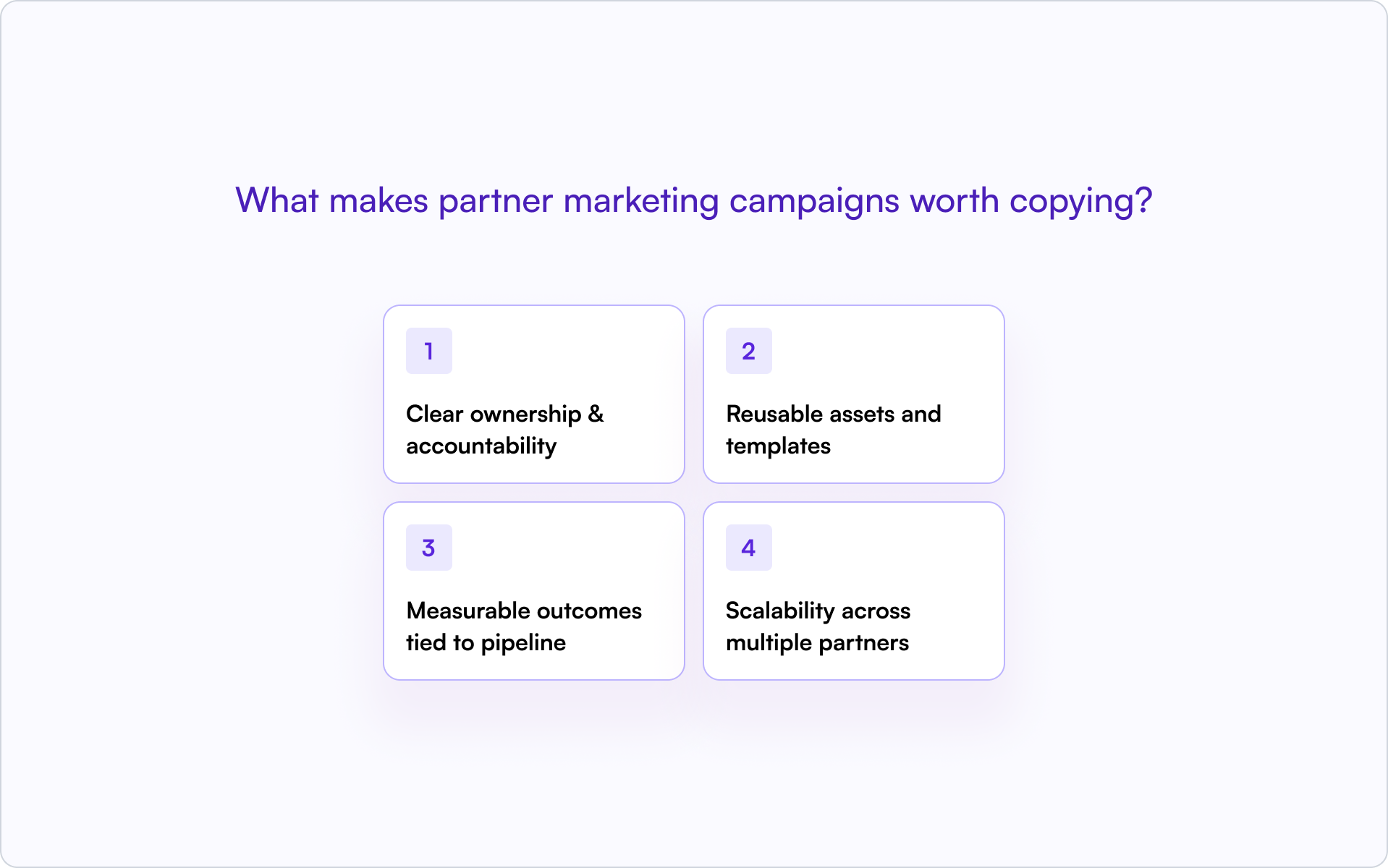
Clear ownership and accountability
Before anything goes live, the best teams define who owns what — the vendor, the partner, or both. When ownership is fuzzy, follow-up stalls, leads go cold, and the campaign gets remembered as “a nice collaboration” instead of a repeatable pipeline motion.
Reusable assets and templates
Scalable campaigns come with a “campaign-in-a-box”: pre-built emails, social posts, landing pages, and talking points partners can customize without starting from scratch. Reusable assets reduce partner friction and make opt-in easy.
Measurable outcomes tied to pipeline
Impressions and clicks are fine inputs, but the campaigns worth copying connect to revenue. If you can’t trace leads back to a partner and into opportunities, you’re running activity — not a growth channel.
Scalability across multiple partners
A great campaign can be rolled out to many partners without heavy customization each time. The goal is a library of repeatable motions partners can join — not one-off collaborations that require a rebuild every launch.
Types of partner marketing programs that drive pipeline
Before you pick tactics, anchor on program structure. Different partner marketing programs serve different jobs — and the best stacks combine several.
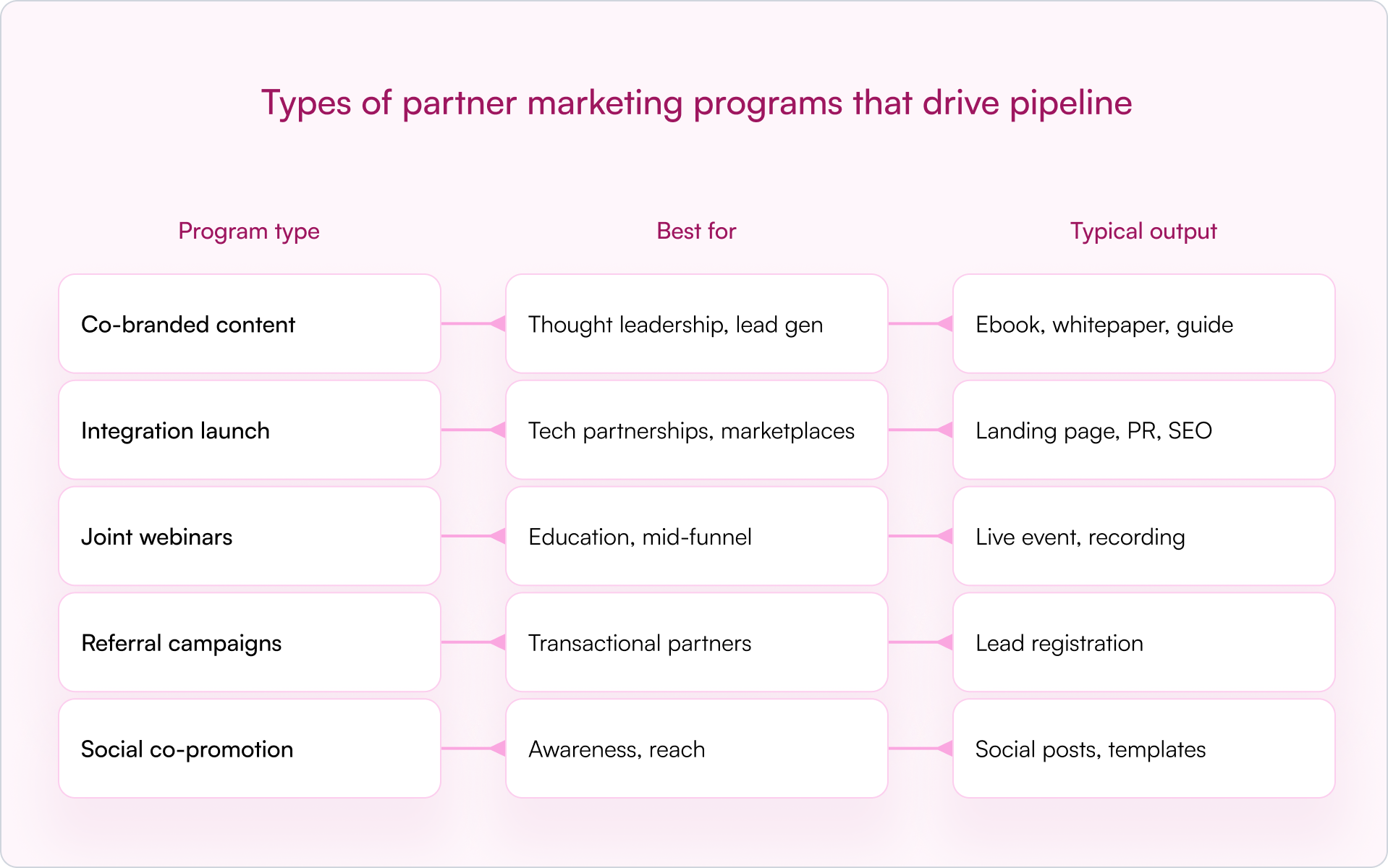
Co-branded content campaigns
Joint whitepapers, ebooks, or guides featuring both brands. Both parties co-create and co-distribute — which means shared audience, shared credibility, and shared leads. Co-branded content campaigns are classic partnership marketing examples in B2B because the content lives on long after the launch.
Integration and marketplace launch campaigns
Campaigns that announce a new tech integration or app marketplace listing often include landing pages, PR, and SEO-optimized content. Done right, these assets compound — a well-built integration page can drive organic traffic for years.
Joint webinars and virtual events
Co-hosted educational sessions where both parties promote and both capture leads. Joint webinars are one of the most repeatable joint marketing examples when you have clear audience overlap and a topic that matters to both ICPs.
Referral and incentive campaigns
A partner refers leads in exchange for rewards — SPIFFs (short-term incentive bonuses), commissions, or other incentives. Referral campaigns tie directly to partner-sourced revenue and work well for transactional partner motions.
Social media co-promotion campaigns
Coordinated posts across both brands’ channels, often with templates provided to partners. Social co-promotion is a lightweight way to test new partner marketing ideas before committing to bigger co-marketing investments.
B2B partner marketing campaign examples to replicate
Theory is cheap. The following partner marketing campaign structures are practical, repeatable, and designed to scale beyond a single partner.
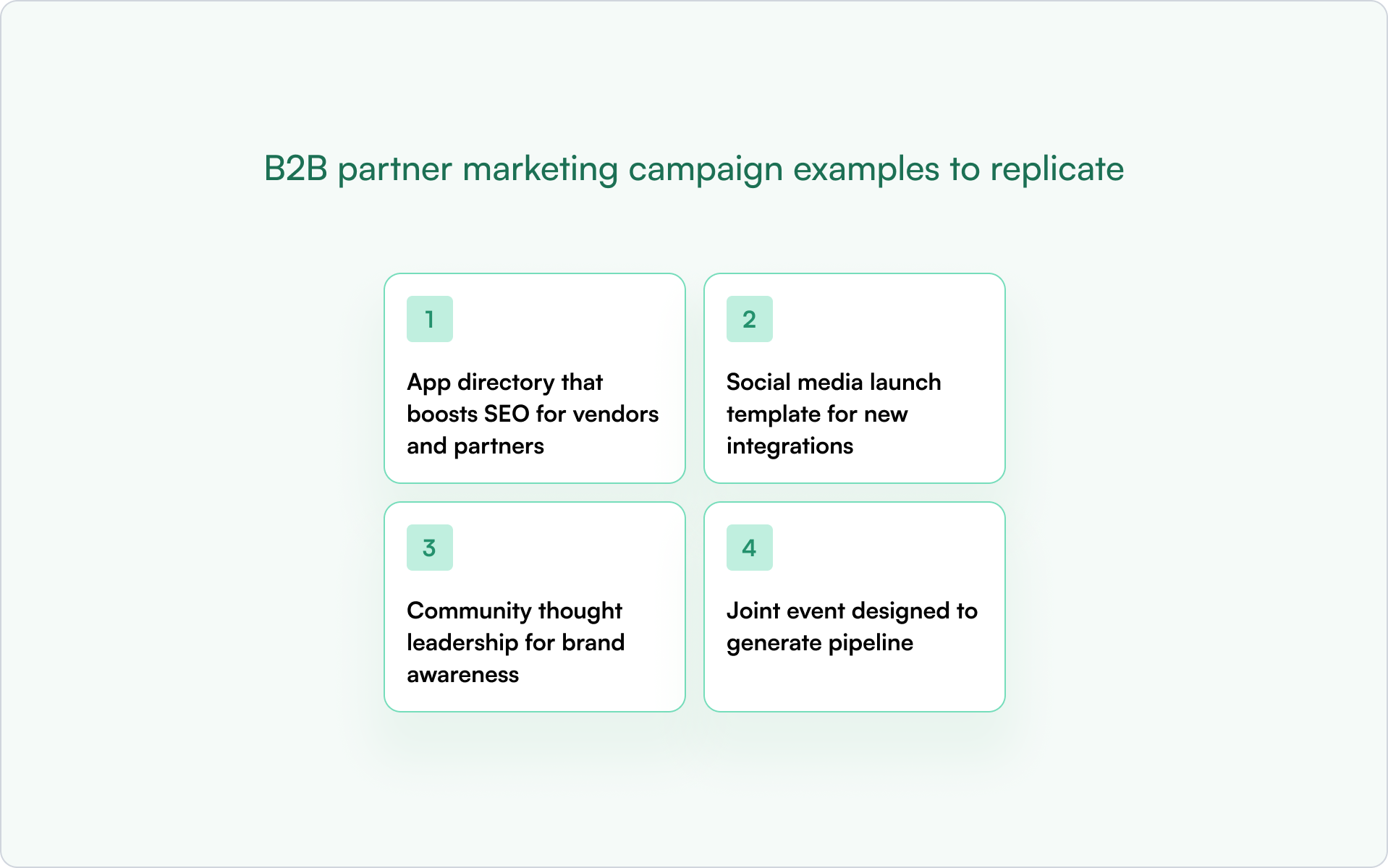
1) App directory that boosts SEO for vendors and partners
A searchable partner or integration directory drives organic traffic for both parties. Each listing becomes a landing page that can rank for relevant keywords. It’s one of the strongest long-term partner marketing campaigns because it creates always-on demand without ongoing campaign spend.
- What it is: A public directory of integrations or partners, optimized for search.
- Why it works: Compounds over time; drives inbound for both vendor and partner.
- How to replicate: Create a directory with unique content per partner, and optimize pages for “[your product] + [partner product] integration” search intent.
2) Social media launch template for new integrations
When a new integration goes live, give partners ready-to-post social templates — images, copy, and hashtags. This increases participation because partners don’t have to write anything from scratch, and you get coordinated reach across multiple audiences.
- What it is: Pre-built social assets partners can post on launch day.
- Why it works: Low lift for partners, high participation rates.
- How to replicate: Create a shared folder with 3–5 copy variations, images sized per channel, and posting guidelines. Send it 48 hours before launch.
3) Community thought leadership for brand awareness
Feature partner experts in blog posts, podcasts, or LinkedIn content. Both brands benefit from credibility transfer, and the content reads as more authentic than solo marketing.
- What it is: Vendor-hosted content featuring partner voices.
- Why it works: Builds trust when paid channels are saturated.
- How to replicate: Invite partners to contribute quotes, guest posts, or podcast episodes, then cross-promote to both audiences.
4) Joint event designed to generate pipeline
Co-hosted dinners, roundtables, or virtual events targeting a shared ICP. Both parties invite prospects and both capture leads. The key is to productize the format so it doesn’t become a one-off.
- What it is: A co-branded event with shared invite lists and coordinated follow-up.
- Why it works: High-intent leads, shared costs, mutual credibility.
- How to replicate: Build an event-in-a-box kit: agenda template, invite copy, registration page, day-of run-of-show, and follow-up sequences for both sales teams.
Partner marketing campaign ideas beyond the usual playbook
If you’ve already run webinars and co-branded content, the next step is to create partner marketing campaigns that feel native to how your buyers actually learn and decide.
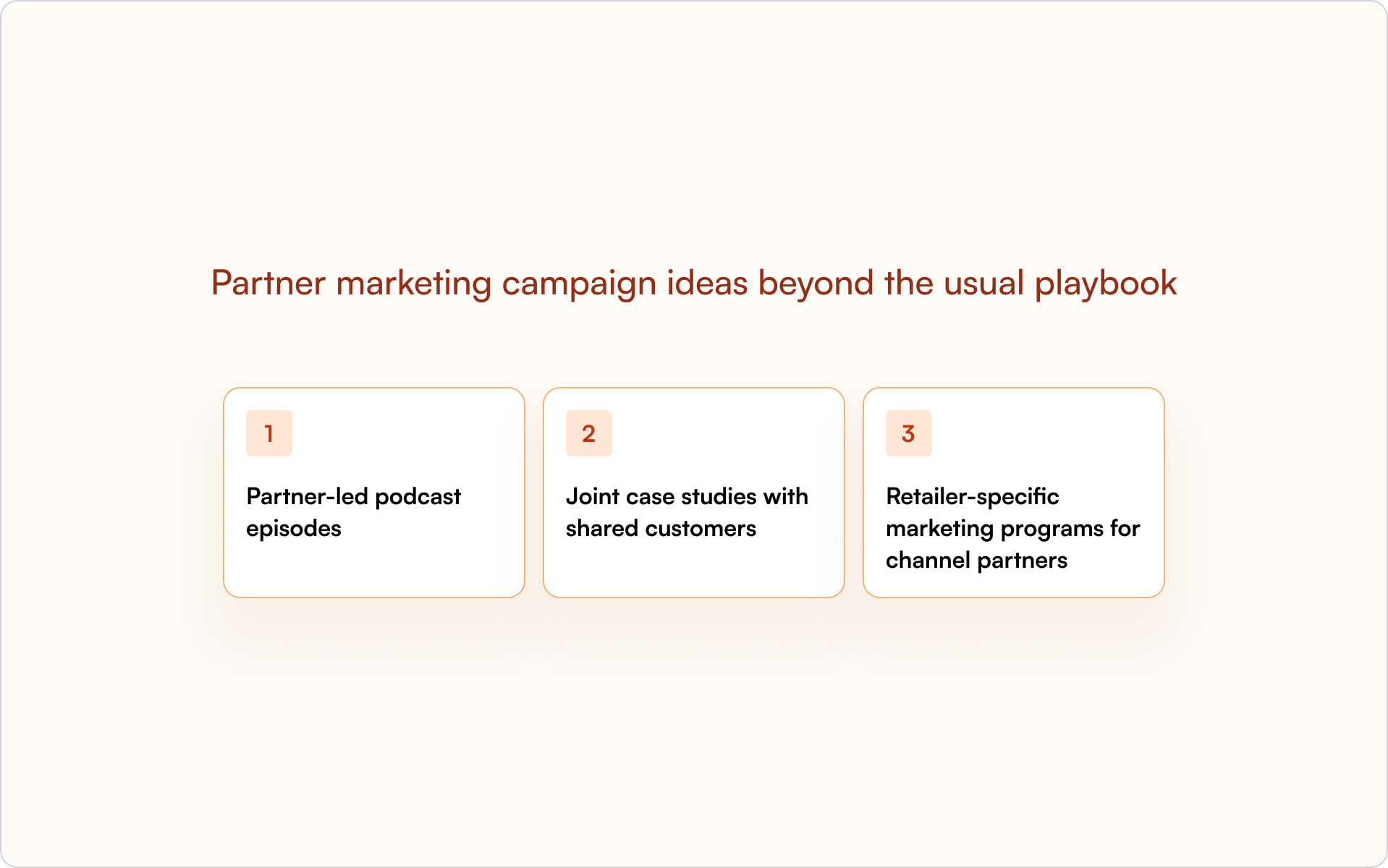
Partner-led podcast episodes
Invite partners as guests or let them host an episode. You get shared distribution, authentic content, and an evergreen backlog you can repurpose into clips, posts, and newsletters.
Joint case studies with shared customers
When a customer uses both vendor and partner, co-create the case study. Joint case studies often outperform generic partner marketing examples because they prove end-to-end outcomes for a shared ICP — with less “marketing speak.”
Retailer-specific marketing programs for channel partners
For companies selling through distributors or resellers, tailored campaigns by region, vertical, or partner tier can increase adoption. The key is to provide modular assets partners can localize without rewriting the offer.
How to plan and execute partner marketing campaigns
Planning is where most partner marketing campaigns succeed or fail. If you’re a founder, this is the part that turns “we should do something with partners” into a repeatable growth motion your team can run without heroics.

1) Define campaign goals and success metrics
Start with what you want: leads, pipeline, awareness, or something else. Whenever possible, tie goals to partner-attributed revenue. Consistent goal-setting lets you compare performance across partner marketing campaigns and double down on what actually converts.
2) Select the right partners for the campaign
Not every partner fits every campaign. Consider partner tier, audience overlap, and engagement level. The best joint marketing examples happen when there’s obvious ICP overlap and a believable shared story.
3) Build a campaign-in-a-box with ready assets
Reduce friction by providing everything partners need to participate:
- Email templates (customizable)
- Social media copy and images
- Co-branded landing page
- Tracking links for attribution
- Partner talking points or FAQ
Campaign-in-a-box is what turns good ideas into repeatable motions inside your partner marketing programs.
4) Set a communication and approval workflow
Define who approves what, how partners submit content for review, and timeline expectations. A simple workflow keeps multi-partner campaigns consistent and on-brand without slowing everything down.
5) Launch, monitor, and adjust in real time
Track engagement and leads as the campaign runs. Sync partner activity to your CRM so you can quickly see which partner marketing campaigns are generating meetings and opportunities — and which ones need a tweak to targeting, messaging, or follow-up.
How to measure partner marketing campaigns (without guessing)
Attribution is where most partner marketing programs struggle. Without clean data, you can’t tell which campaigns drive revenue and which ones just look good in a slide deck.
Leads and pipeline attributed to partners
Track which partners sourced or influenced which deals. Your CRM should be the source of truth. This is what separates “fun co-marketing” from partner marketing campaigns you can scale quarter after quarter.
Campaign engagement and conversion metrics
Measure opens, clicks, registrations, meetings booked, and conversion rates — and compare across formats. Over time, you’ll see patterns: which topics drive attendance, which partners consistently activate, and which campaigns convert into pipeline for your ICP.
Solving the attribution problem with CRM-first tracking
Attribution is hard because deals usually have multiple touches, and partner versus direct overlap is common. CRM-first tracking helps by syncing partner activity directly to deal records. Once your data is clean, it’s easier to invest in the partner marketing campaigns that influence revenue — and stop funding the ones that don’t.
Tip: If your partner activity lives outside your CRM — in spreadsheets, email threads, or a disconnected portal — attribution becomes guesswork. The teams that measure partner marketing well keep everything connected to HubSpot or Salesforce from day one.
Run partner marketing campaigns that actually scale
The partner marketing campaigns worth copying aren’t just creative — they’re structured, measurable, and repeatable. They come with clear ownership, reusable assets, and a direct line to pipeline.
Most teams run partner marketing campaigns that feel productive but don’t connect to revenue. The difference is infrastructure: clean CRM data, consistent attribution, and a process that works across many partners, not just one.
If you want partner marketing campaigns with real visibility into what’s working, consider tightening your workflow around CRM-first attribution and standardized campaign kits. When you’re ready to operationalize it, get a demo to see how Introw keeps partner activity connected to your CRM — so you can scale what works and stop guessing.
The Role of Content in Channel Partner Marketing: 2026’s Guide
Most partner content follows a predictable path: it gets created, uploaded to a portal, and never touched again. Partners don’t know it exists, can’t find it when they need it, or discover it’s outdated the moment they try to use it.
When that happens, the issue usually isn’t the content quality — it’s the system around it. How content is organized, distributed, and tracked (or more often, how it isn’t) determines whether your channel motion scales or stalls.
This guide breaks down the role of content in channel partner marketing from a founder’s lens: what partners actually use, how to make assets self-serve (without losing control of your brand), and how to measure partner-level performance so you can connect enablement to pipeline.
Why content drives channel partner marketing success
Content in channel partner marketing acts as a bridge — it educates, enables, and empowers partners to market and sell your product accurately. Without ready-to-use assets, partners are forced to invent positioning, messaging, and objection handling on their own. That rarely ends well for brand consistency or deal velocity.
Partners represent your brand to their audiences. If you don’t provide approved, up-to-date materials, partners will either: (1) create their own (often off-message), or (2) stay silent because the lift feels too high.
- Brand consistency: Partners show up with current, approved messaging and visuals.
- Partner activation: New partners ramp faster when onboarding content answers their first questions.
- End-customer trust: Thought leadership and case studies build credibility partners can borrow.
- Engagement retention: Fresh content gives partners a reason to stay active instead of going quiet.
Types of content that engage channel partners
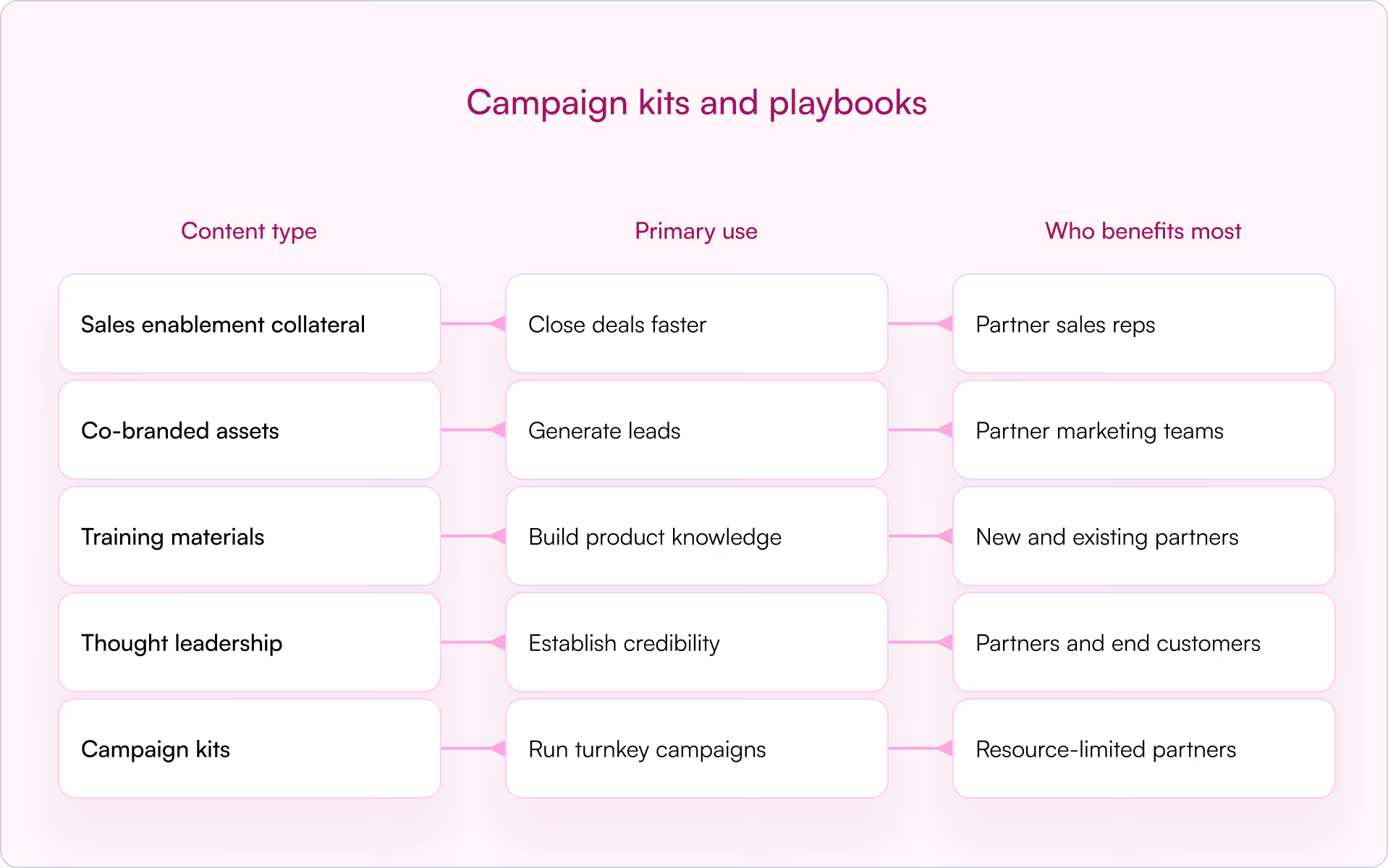
Not all content serves the same job. Some assets help partners close deals. Others help them generate leads. And some exist to build product knowledge before partners ever talk to a prospect.
The difference between a content library that drives revenue and one that collects dust usually comes down to a single question: when will partners use this — and what will they be trying to accomplish in that moment?
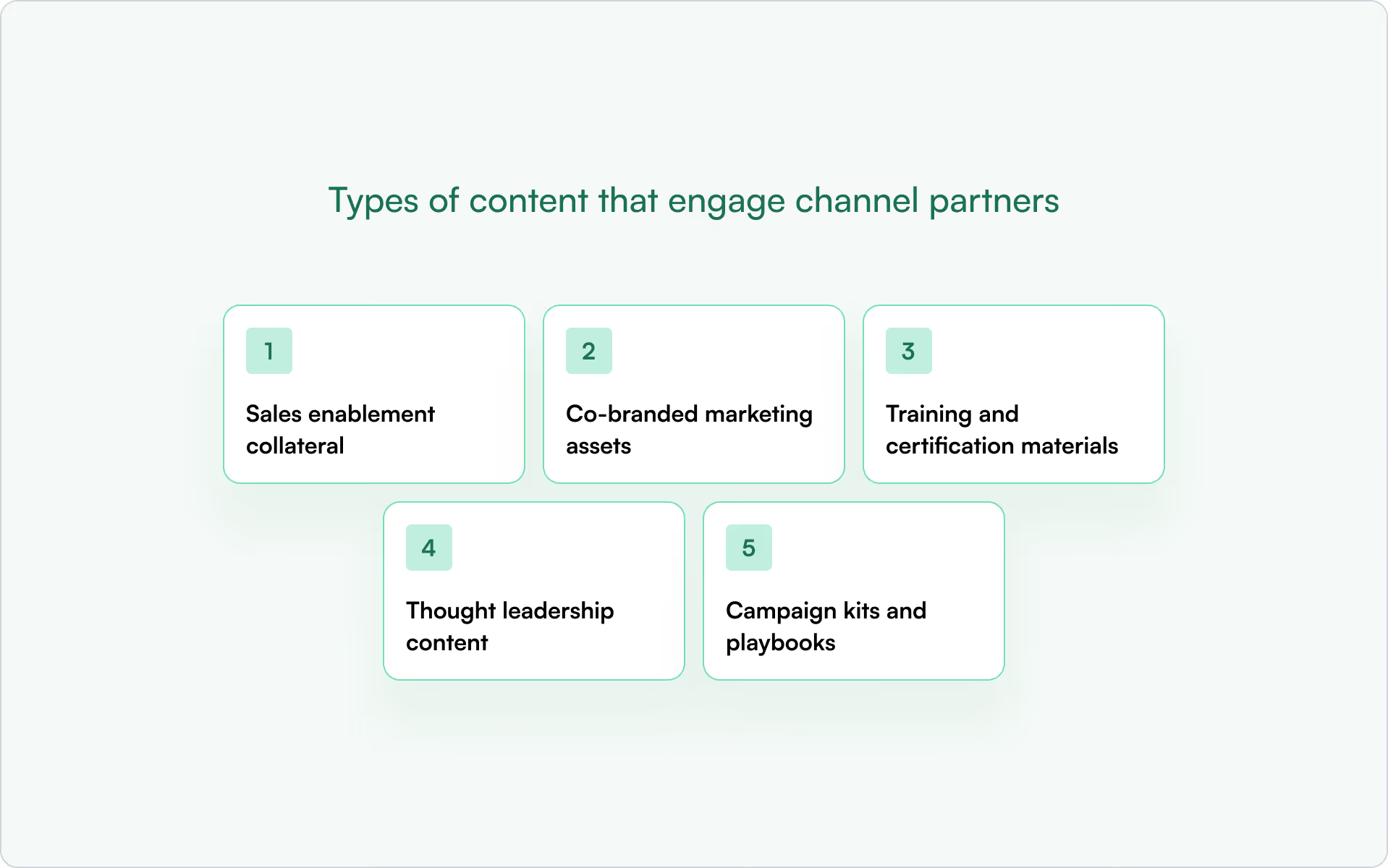
Sales enablement collateral
Sales enablement collateral includes battle cards, one-pagers, pricing guides, and competitive comparisons. Partners use these assets to answer buyer objections and position your product during active sales conversations.
If you’re prioritizing what to build first, start here. Partners ask for enablement content early because it supports deals they’re already working.
Co-branded marketing assets
Co-branded content includes landing pages, email templates, and social posts that partners customize with their logo and branding. Done well, it lets partners generate leads while maintaining your brand’s look and feel.
The balance is tricky: too much control and partners won’t use it; too little and your brand gets diluted. Editable templates in tools like Canva or Google Slides tend to see higher adoption than locked PDFs.
Training and certification materials
Training content includes onboarding decks, product tutorials, and certification tracks. Partners can’t sell what they don’t understand, so training directly impacts partner readiness.
Certification programs also create a natural gate for access to exclusive products, higher tiers, or specific customer segments.
Thought leadership content
Thought leadership includes blogs, whitepapers, and webinars. Partners use it to establish credibility with their audiences without building content from scratch. In practice, they get to “borrow” your expertise.
This is especially valuable for partners without in-house marketing resources who still want to position themselves as trusted advisors.
Campaign kits and playbooks
Campaign kits bundle everything a partner needs to run a campaign: email sequences, social copy, landing pages, and sometimes ad creative. Playbooks provide step-by-step guidance on how to deploy those kits.
For resource-limited partners, kits remove the friction of figuring out what to do next. They just execute.
How to tailor content for different partner types
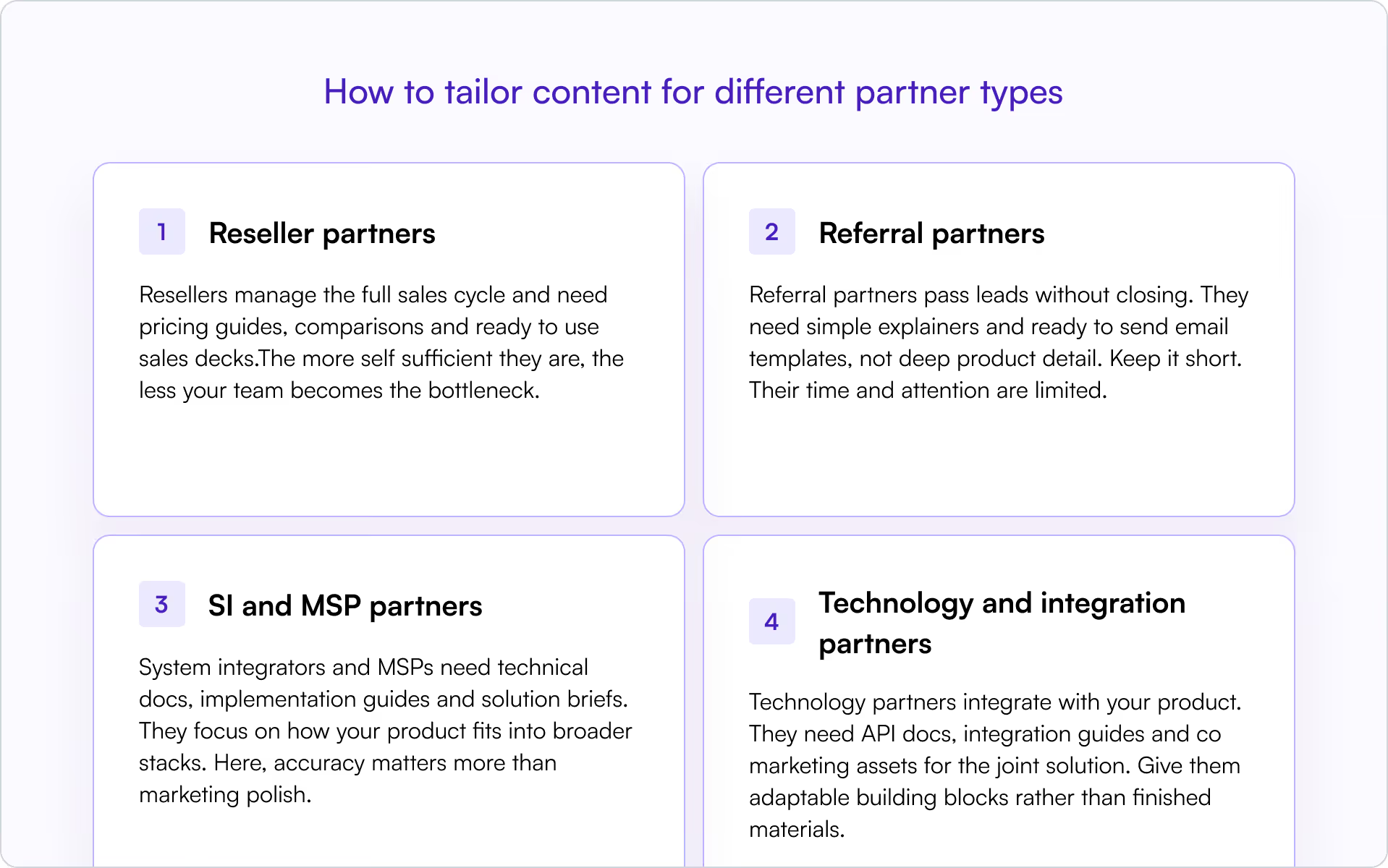
One-size-fits-all content rarely works. A reseller closing deals directly has different needs than a referral partner passing leads, and both differ from an SI building custom implementations.
If you want higher adoption, tailor content by partner type — and make that segmentation obvious in how you label and distribute assets.
Reseller partners
Resellers buy and resell your product, often handling the full sales cycle. They typically need pricing guides, product comparisons, and sales decks they can present directly to buyers.
The more self-sufficient you make resellers, the less your team becomes a bottleneck on every deal.
Referral partners
Referral partners pass leads without closing deals. Their content needs are lighter: simple explainer materials and email templates that introduce your product without requiring deep product expertise.
Keep referral content short. Referral partners often have limited time and attention for any single vendor.
SI and MSP partners
System integrators (SIs) and managed service providers (MSPs) need technical documentation, implementation guides, and solution briefs. They position your product as part of larger deployments, so they care about how your product fits into existing stacks.
Technical accuracy matters more here than marketing polish.
Technology and integration partners
Technology partners integrate with your product. They need API documentation, integration guides, and co-marketing assets that highlight the joint solution.
Many technology partners have their own marketing teams, so providing adaptable building blocks often works better than finished assets.
Best practices for creating partner marketing content
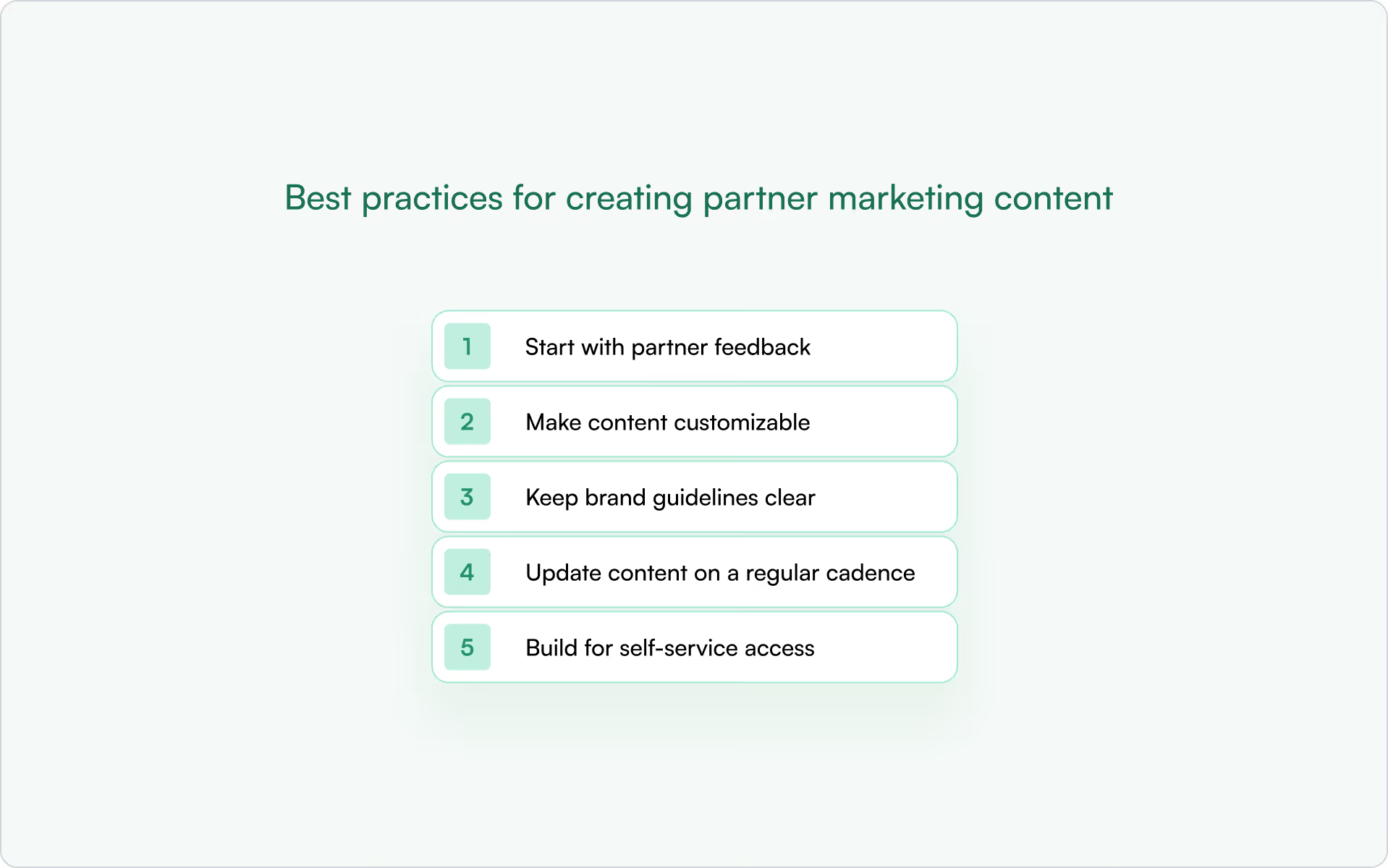
Great partner content is less about writing skill and more about operational discipline: building what partners will actually use, making it easy to customize, and keeping it current.
1. Start with partner feedback
Survey partners on what content they need and what’s missing. Content created without partner input often goes unused because it solves the wrong problem.
Even a quick Slack poll or quarterly check-in can surface gaps you didn’t know existed.
2. Make content customizable
Provide editable templates so partners can add their branding. Locked PDFs frustrate partners and often get ignored in favor of whatever they can actually modify.
Canva, Google Slides, and Figma templates tend to see higher adoption than static files.
3. Keep brand guidelines clear
Share a simple brand guide with logo usage, colors, and messaging dos and don’ts. Brand guidelines protect your brand while giving partners room to make content their own.
The goal is guardrails, not handcuffs.
4. Update content on a regular cadence
Stale content erodes partner trust. If a partner shares outdated pricing or discontinued features, it reflects poorly on both of you.
Set a quarterly review cycle and announce updates so partners know what’s current. Platforms like Introw let you push announcements directly to partners via email and Slack, with no portal login required.
5. Build for self-service access
Organize content in a searchable partner portal so partners find what they need without emailing you. The fewer barriers between a partner and the right asset, the more likely they are to use it.
CRM-first portals keep content tied to partner records, which matters when you’re tracking engagement and tying it back to pipeline.
How to distribute content through a partner portal
Creating content is only half the job. Distribution determines whether partners actually use content or whether carefully crafted assets sit in a folder no one opens.
A partner portal is a centralized hub where partners access resources, register deals, and collaborate with your team. How you organize and push content through that portal makes the difference between adoption and a content graveyard.
Organize content by partner tier and type
Structure your content library so partners see relevant assets first. Use folders or tags by partner tier (Gold, Silver) and type (reseller, referral, SI).
When partners log in and immediately see content that fits their motion, they engage. When they have to dig through irrelevant materials, they often give up.
Use announcements to drive engagement
Don’t rely on partners checking the portal. Push new content via email and Slack announcements so partners know when something relevant drops.
Introw’s announcements feature writes engagement data back to the CRM, so you can see which partners opened, clicked, or ignored your updates without guessing.
Enable off-portal access via email
Not all partners log into portals regularly. Some prefer email. Others forget their passwords. Either way, forcing portal logins creates friction.
Let partners receive and respond to content via email, with replies syncing back to your CRM for visibility. Off-portal access keeps content accessible without sacrificing tracking.
How content supports your channel partner sales strategy
Content isn’t just a marketing function. Content directly supports your channel partner sales strategy by mapping to different stages of the partner lifecycle.
The right content at the right stage accelerates partner performance. The wrong content — or no content — creates friction that slows everything down.
Content for partner recruitment
Attract new partners with program overviews, partner success stories, and benefits summaries. Recruitment content answers the question every prospective partner asks: “Why join this program?”
Strong recruitment content positions your program as worth the partner’s time and attention, especially when they’re evaluating multiple vendors.
Content for partner activation
Onboard partners faster with quick-start guides, first-deal playbooks, and product training. Activation content answers: “How do I get started?”
The faster a partner closes their first deal, the more likely they are to stay engaged. Activation content shortens that timeline.
Content for deal progression
Help partners close deals with battle cards, ROI calculators, and customer case studies. Deal progression content answers: “How do I win this deal?”
Partners working active opportunities often need specific assets on short notice. Having deal progression content ready and easy to find keeps deals moving.
- Recruitment stage: Program overview decks, partner testimonials, benefits one-pagers
- Activation stage: Onboarding checklists, product training videos, first-deal playbooks
- Deal progression stage: Battle cards, objection handlers, customer case studies
How to measure partner content performance
Content without measurement is guesswork. You might feel like you’re enabling partners, but without data, you can’t know which assets drive results and which ones get ignored.
Measuring content performance at the partner level, not just the end-customer level, is what separates strategic content programs from content graveyards.
Content engagement metrics
Track views, downloads, and time spent on content. Content engagement metrics show whether partners are consuming what you create.
Low engagement often signals a distribution problem, a relevance problem, or both.
Partner activation metrics
Measure how many partners complete onboarding content or certifications. Partner activation metrics indicate whether your content is actually ramping partners toward their first deal.
If partners consume training but never close deals, the content might be informative but not actionable.
Pipeline attribution metrics
Connect content usage to registered deals and closed revenue. Pipeline attribution is where content ROI becomes visible to leadership.
CRM-first platforms like Introw make attribution visible inside Salesforce or HubSpot, so you can tie specific content assets to specific pipeline outcomes without manual tracking.
Partner marketing ideas to try in your next quarter
If you’re looking for partner marketing ideas you can implement quickly, the following tactics tend to deliver results without requiring massive lift.
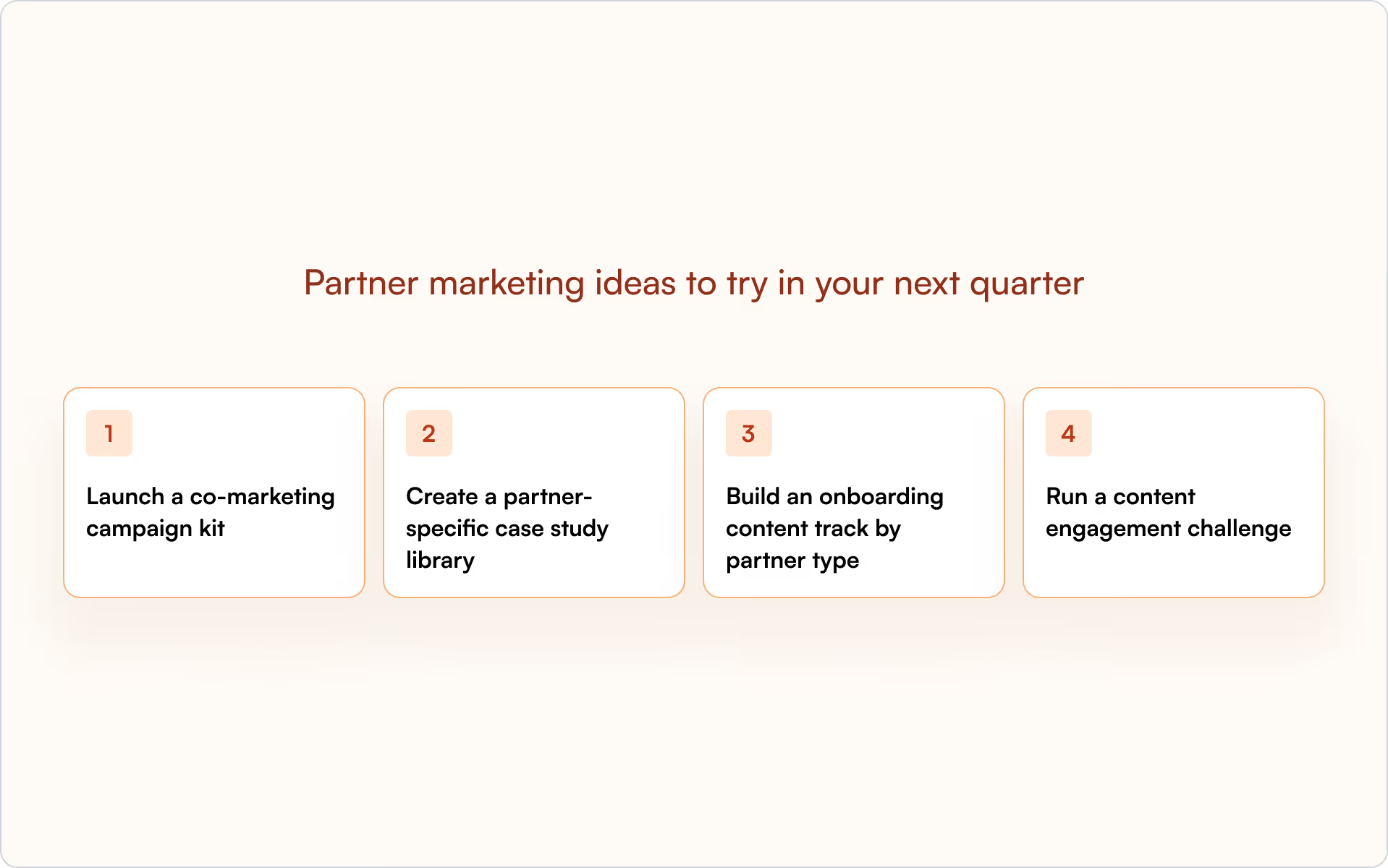
1. Launch a co-marketing campaign kit
Bundle email templates, social posts, and a landing page around a specific use case. Give partners everything they need to run a campaign in one download.
Co-marketing campaign kits work especially well for product launches or seasonal promotions where timing matters.
2. Create a partner-specific case study library
Develop case studies featuring deals partners helped close. Partner-specific case studies give partners social proof they can share with prospects, and they recognize partner contributions publicly.
Partners who see their wins highlighted tend to stay more engaged.
3. Build an onboarding content track by partner type
Create separate onboarding paths for resellers, referral partners, and SIs. Tailored onboarding content accelerates time-to-first-deal because partners aren’t wading through irrelevant materials.
Even simple segmentation — three tracks instead of one — can meaningfully improve activation rates.
4. Run a content engagement challenge
Gamify content consumption by rewarding partners who complete training or share co-branded assets. Leaderboards and SPIFFs drive participation, especially among competitive partner teams.
Content engagement challenges work best when the rewards are meaningful and the tracking is visible.
Turn partner content into pipeline with CRM-first distribution
Here’s the uncomfortable truth for founders: content only drives revenue when it’s accessible, trackable, and tied to your CRM. Otherwise, you’re creating assets that live in a silo — disconnected from the partners and deals they’re meant to support.
- Visibility: When content lives in a CRM-first portal, you see which partners engage and which don’t.
- Attribution: Content downloads tied to deal records prove marketing impact.
- Automation: Announcements push content to partners via email and Slack without manual follow-up.
See how Introw helps partner teams distribute content and track engagement inside HubSpot or Salesforce. Get a demo
Channel Partner Marketing Guide 2026: Strategies and Tactics
What would change if every partner campaign were easy to launch, easy to join, and easy to measure?
Most teams still juggle scattered content and manual follow-ups, which slows down even the best channel partner marketing programs.
A focused channel partner marketing strategy removes that friction by meeting partners where they work, using repeatable assets, and keeping everything aligned in your CRM.
With CRM-native tools like Introw, partner channel marketing programs become easier to run and easier for partners to engage with across both to-partner and through-partner motions.
If predictable revenue is the goal, clarity and automation are the starting point.
So what does channel partner marketing actually mean in 2026?
What is channel partner marketing? (SaaS 2026 definition)
Channel partner marketing is the work you do with and for partners to create demand, drive adoption, and grow revenue together.
In 2026, it’s a mix of to-partner enablement and through-partner campaigns, all tied back to your CRM so nothing gets lost in the shuffle.
To-partner vs through-partner
Here’s the quick way to think about the two motions:
Most strong partner programs run both motions at the same time.
Channel marketing vs partner marketing
People use these terms interchangeably, but they’re not the same.
- Channel marketing is your route-to-market strategy
- Partner marketing is the actual programs and campaigns you run with partners
Your channel partner marketing strategy sits right in the middle of the two.
Who counts as a channel partner?
A channel partner can be a reseller, referral partner, MSP, SI, tech integration partner, agency, or consultant.
Each one brings different strengths and sits at a different stage of the channel partner marketing journey, which is why segmentation early on matters so much.
Why this definition matters
To run channel partner marketing activities that move pipeline, you need clarity about who you’re enabling and what you expect from them.
When everyone shares the same definition, partner managers and RevOps can set goals and measure success directly in Salesforce or HubSpot.
A shared foundation makes your channel partner marketing plan easier to build and scale. Everything else in this guide builds on that framework.
The 4-part framework: Plan → Enable → Run → Measure
Every strong channel partner marketing strategy follows the same rhythm.
These four stages help you plan campaigns partners actually want to use, run consistent through-partner plays, and measure every result directly in Salesforce or HubSpot.
Think of this as the backbone of your entire channel partner marketing journey.
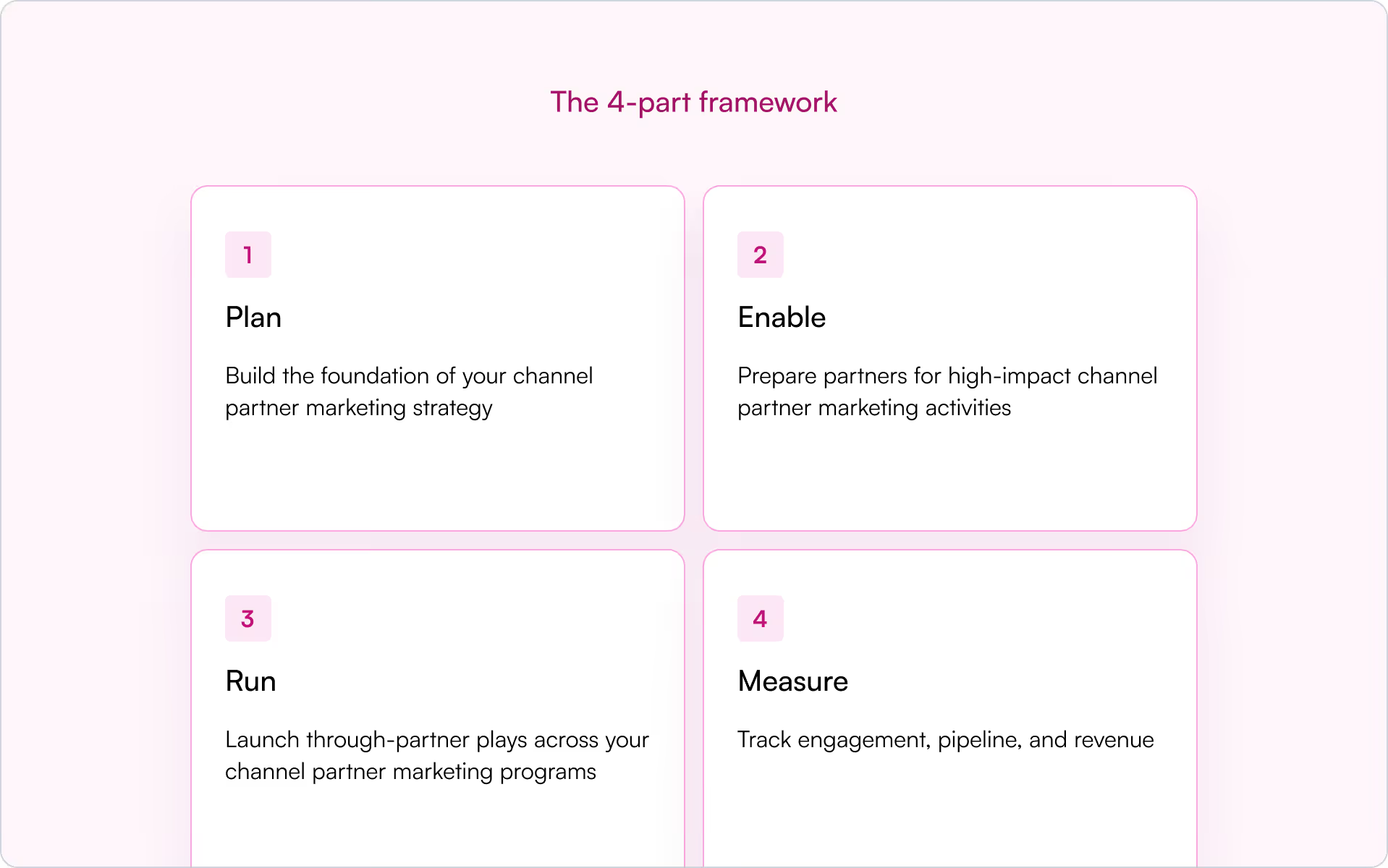
Plan: Build the foundation of your channel partner marketing strategy
Before you launch a partner campaign, you need a quick, clear plan that keeps everyone aligned
This stage shapes the full channel partner marketing journey. It also gives partner managers and RevOps the structure they need to measure outcomes in the CRM.
What to define
- Your partner ICP for each segment in your channel partner marketing programs
- A clear offer for referral, reseller, SI, MSP, or tech partners
- Goals tied to registered deals, qualified intros, and pipeline
- Quarterly focus areas that support your wider channel partner go-to-market strategy
- MDF guidelines and how they connect to channel partner marketing activities
- A campaign calendar with repeatable moments partners can rely on
Why it matters
This is one of the simplest channel partner marketing best practices to get right. If the plan is unclear, partners won’t know how to participate, and your channel partner marketing plan becomes harder to scale.
Example
A strong plan might segment partners by type and region, then map one or two through-partner plays to each group so marketing and partner teams stay aligned.
For a deeper starting point, the How to build a channel partner program guide is a helpful reference.
Enable: Prepare partners for high-impact channel partner marketing activities
Enablement is where your strategy becomes real for partners. When partners know what to say, what to share, and how the campaign works, execution gets a lot easier.
What to provide
- Campaign-in-a-box kits
- Talk tracks and positioning
- Onboarding materials that match each channel partner marketing segment
- Localizable content and co-brandable assets
- Email and social templates that reduce friction
- Clear instructions for through-partner execution
Why it matters
Enablement is the moment partners decide whether they will actually run your campaign. If assets are simple and accessible, your channel partner marketing programs instantly become more repeatable.
Example
A partner might open a kit, grab the email sequence, and start outreach the same day. This is the kind of activation every channel partner marketing plan aims for.
For more ideas, the partnership marketing guide offers helpful examples.
Run: Launch through-partner plays across your channel partner marketing programs
This stage turns planning into real execution. Through-partner campaigns should feel easy for partners and easy for your internal teams to manage.
What execution looks like
- Multi-channel campaigns that match each partner’s motion
- Off-portal updates through email or Slack so partners never need extra logins
- Automated reminders for deadlines, events, and asset usage
- Co-selling handoff steps that roll directly into Salesforce or HubSpot
Why it matters
If execution feels heavy, your partner channel marketing efforts slow down fast. When updates and communication run off-portal, channel partner marketing activities scale without manual follow-ups.
Example
A partner might receive a Slack update about a new campaign and start promoting it without ever logging into a portal. This keeps momentum high and adoption consistent.
Measure: Track engagement, pipeline, and revenue
Measurement is what turns channel partner marketing strategy into a predictable engine. It removes guesswork and shows exactly which partners and campaigns drive revenue.
What to track
- Engagement with assets and campaign kits
- Deal registration volume and influenced pipeline
- Co-selling activity tied to partner channel marketing plays
- Activation rates across each segment
- Conversion rates and influenced ARR
- Examples of channel partner marketing impact across the quarter
How Introw supports this
With Introw, every partner email click, asset download, deal update, and campaign touchpoint syncs directly into Salesforce or HubSpot.
RevOps, partner managers, and CROs get clear dashboards that tie channel partner marketing activities to pipeline and revenue. No portals, no manual reporting.
10 proven partner marketing plays for 2026
These plays help your partner program stay consistent without overloading your marketing team or your partners.
Each one can fit neatly into your channel partner marketing strategy and can support both lead generation and revenue growth.
Feel free to treat this list as a starting point and choose the plays that match your channel partnerships best.
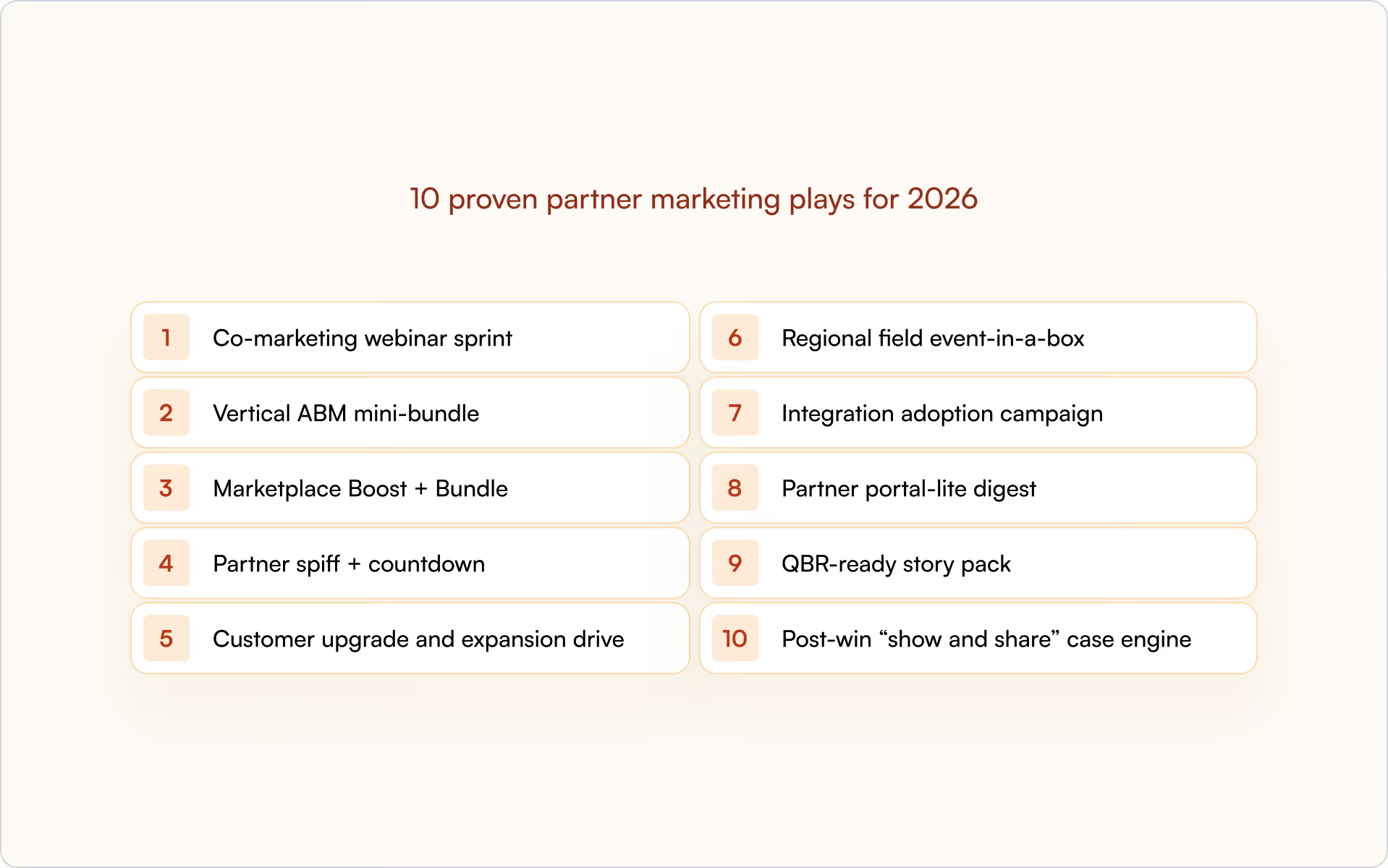
1. Co-marketing webinar sprint
What it is: A short, focused webinar campaign partners can run with you.
Why it works: Partners bring warm audiences, and your sales team gets qualified conversations.
How to launch: Pick a joint topic, share your campaign in a box, run a promo for two weeks, then follow up on attendees.
KPI: Registrations, attendance, meetings booked.
Introw tip: Automated announcements and attendance tracking show which partners amplify the campaign most.
2. Vertical ABM mini-bundle
What it is: A ready-made industry-specific bundle partners can use for targeted outreach.
Why it works: Vertical relevance increases conversion and helps partners tailor messaging.
How to launch: Give partners a landing page, case study, and email set for one key vertical.
KPI: Meetings booked in in-segment accounts.
Introw tip: Segment partners by vertical and schedule updates that match their territory.
3. Marketplace Boost + Bundle
What it is: A small campaign that refreshes your marketplace listing and gives partners a bundled offer to promote.
Why it works: Marketplaces are high-intent surfaces that help boost sales.
How to launch: Update your listing, share a co-branded bundle, and offer promotional copy partners can use.
KPI: Listing traffic, trials, influenced opportunities.
Introw tip: Track which partners use your marketing materials and which bundles drive activity.
4. Partner spiff + countdown
What it is: A short, incentive-based push for intros or registered deals.
Why it works: Deadlines create energy inside your partner ecosystem.
How to launch: Set a timeline, define a reward, and share daily reminders.
KPI: Registered deals, pipeline created.
Introw tip: Automated countdown nudges keep partners engaged without your team chasing updates.
5. Customer upgrade and expansion drive
What it is: A simple play where partners help existing customers adopt more features or expand usage.
Why it works: Partners already know shared accounts and can influence timing.
How to launch: Give partners an expansion playbook and match them with eligible accounts.
KPI: Expansion opportunities and ARR added.
Introw tip: Signals inside the CRM can trigger partner notifications with no manual work.
6. Regional field event-in-a-box
What it is: A small local event your partner can run with your support.
Why it works: In-person time improves partner engagement and helps your sales team move deals forward.
How to launch: Share a checklist, invite templates, and quick follow-up scripts.
KPI: Show rate, meetings booked after the event.
Introw tip: Use RSVPs and automated follow-ups to keep the momentum strong.
7. Integration adoption campaign
What it is: A targeted push promoting a shared integration.
Why it works: Integration usage is strongly tied to retention and expansion.
How to launch: Give partners “why this matters” messaging, in-product prompts, and ready-to-send emails.
KPI: Integration activations and related opportunities.
Introw tip: Track activation-related content usage to see which partners drive adoption.
8. Partner portal-lite digest
What it is: A monthly Slack or email roundup instead of a traditional partner portal experience.
Why it works: Partners stay informed without logging into another tool.
How to launch: Send a simple digest with top assets, deadlines, wins, and next steps.
KPI: Engagement score, reactivation of dormant partners.
Introw tip: Announcements show exactly which partners interact with each update.
9. QBR-ready story pack
What it is: A lightweight deck partners can use to plan next-quarter actions.
Why it works: Partners see their wins clearly and agree on priorities faster.
How to launch: Share a short deck with highlights, content performance, and next steps.
KPI: Quarterly commitment and pipeline alignment.
Introw tip: CRM-powered story packs help your marketing team and partner managers prep in minutes.
10. Post-win “show and share” case engine
What it is: A quick process for turning partner wins into case snippets.
Why it works: Proof points help partners sell more confidently.
How to launch: Offer a simple template and share the stories across your channel partnerships.
KPI: Case assets created, influenced pipeline lift.
Introw tip: Track downstream clicks to see which stories support your partner marketing strategy best.
These plays help your partner program focus on campaigns your partners can launch quickly, and your marketing team can measure easily.
Which tools actually support this level of consistency without overwhelming your business?
The tech stack you actually need (and nothing more)
A strong channel partner marketing strategy doesn’t require dozens of marketing tools.
Your marketing team, sales team, and partner managers only need a few systems that help you work with the right partners, support effective channel partner motions, and keep everything tied to your customer journey.
Core tools
- CRM (Salesforce or HubSpot): Your single source of truth for pipeline, attribution, sales qualified leads, and the full sales process.
- PRM and partner management: A CRM-native tool like partner management software keeps deal registration, partner engagement, and channel marketing activity aligned across third-party partners and strategic partnerships.
- Content hub: Stores the marketing materials your marketing department uses for each campaign in a box.
- Webinar or event tool: Helps your team run through-partner plays that fit your target audience.
- Light design tools: Support quick co-branding and save marketing resources when working with external partners.
Why this matters for your partner program
A simple tech stack helps channel partnerships move faster and reduces work for your marketing department.
It keeps your partner marketing strategy aligned and gives your team clear CRM reporting, partner clarity, and more predictable revenue growth.
A simple stack sets the stage. The final step is bringing your strategy together in a way partners can trust and act on.
Over to you: Bring your partner strategy to life
A strong channel partner marketing strategy comes down to clarity, simple campaigns, and tools that make it easy for partners to take action.
Your next steps
- Choose two or three channel partner marketing activities your partners can launch quickly
- Give them a campaign in a box with clear messaging and ready-to-use assets
- Measure engagement and pipeline in your CRM, so you know what to repeat
Ready to run high-performing partner campaigns without chasing updates? Request a demo!
Partner Content Enablement Guide (That Actually Reaches Your Partners in 2026)
If you have ever asked what is content enablement, think of it as the connective tissue between creating content and closing deals. It is the discipline of organizing, delivering, and measuring sales enablement materials so sellers and partners can move prospective customers through the sales funnel with less friction. In a partner context, content enablement meaning widens: you are equipping external channel partners with up to date partner content and giving your internal sales team visibility into how it was used before a purchase order shows up.
Why is this urgent in 2026? Creation points keep multiplying. Marketing teams ship pages, playbooks, and videos. Sales reps record custom demos. Product managers publish technical specifications and security FAQs. Without a content enablement strategy, valuable content scatters across drives and chat threads. Partners guess which version is current, legal fees rise because brand risk slips through, and sales cycles drag while people hunt for the right slide. A thoughtful partner enablement strategy fixes this by aligning business content to buyer engagement and making it simple for partners to find, send, and track.
The old way versus the new way of enabling partners
It helps to name the shift so your partner program knows what will change and why.
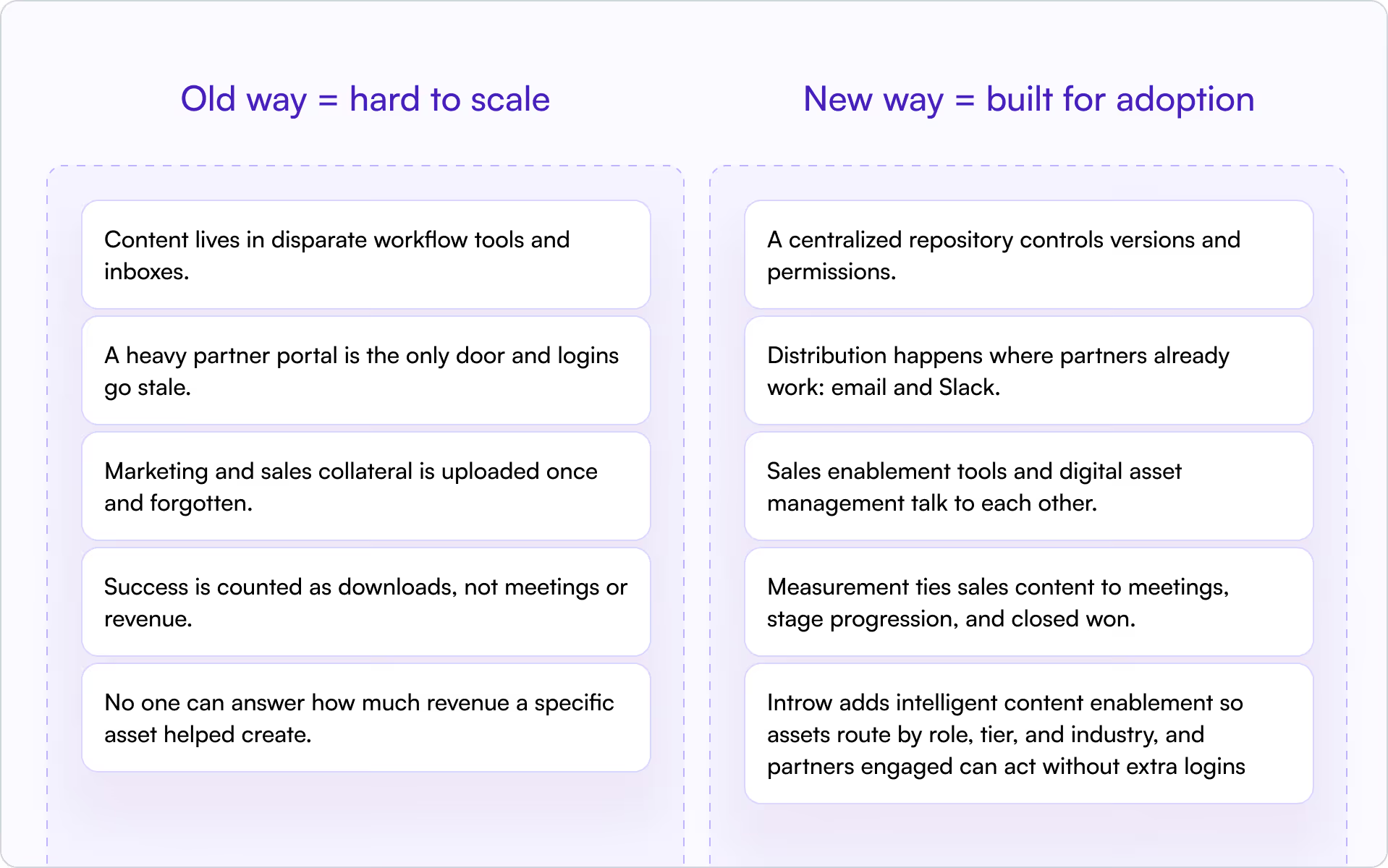
Old way, hard to scale
- Content lives in disparate workflow tools and inboxes.
- A heavy partner portal is the only door and logins go stale.
- Marketing and sales collateral is uploaded once and forgotten.
- Success is counted as downloads, not meetings or revenue.
- No one can answer how much revenue a specific asset helped create.
New way, built for adoption
- A centralized repository controls versions and permissions.
- Distribution happens where partners already work: email and Slack.
- Sales enablement tools and digital asset management talk to each other.
- Measurement ties sales content to meetings, stage progression, and closed won.
- Introw adds intelligent content enablement so assets route by role, tier, and industry, and partners engaged can act without extra logins.
The new way respects how sales partners actually sell and how marketing teams want to manage brand consistency.
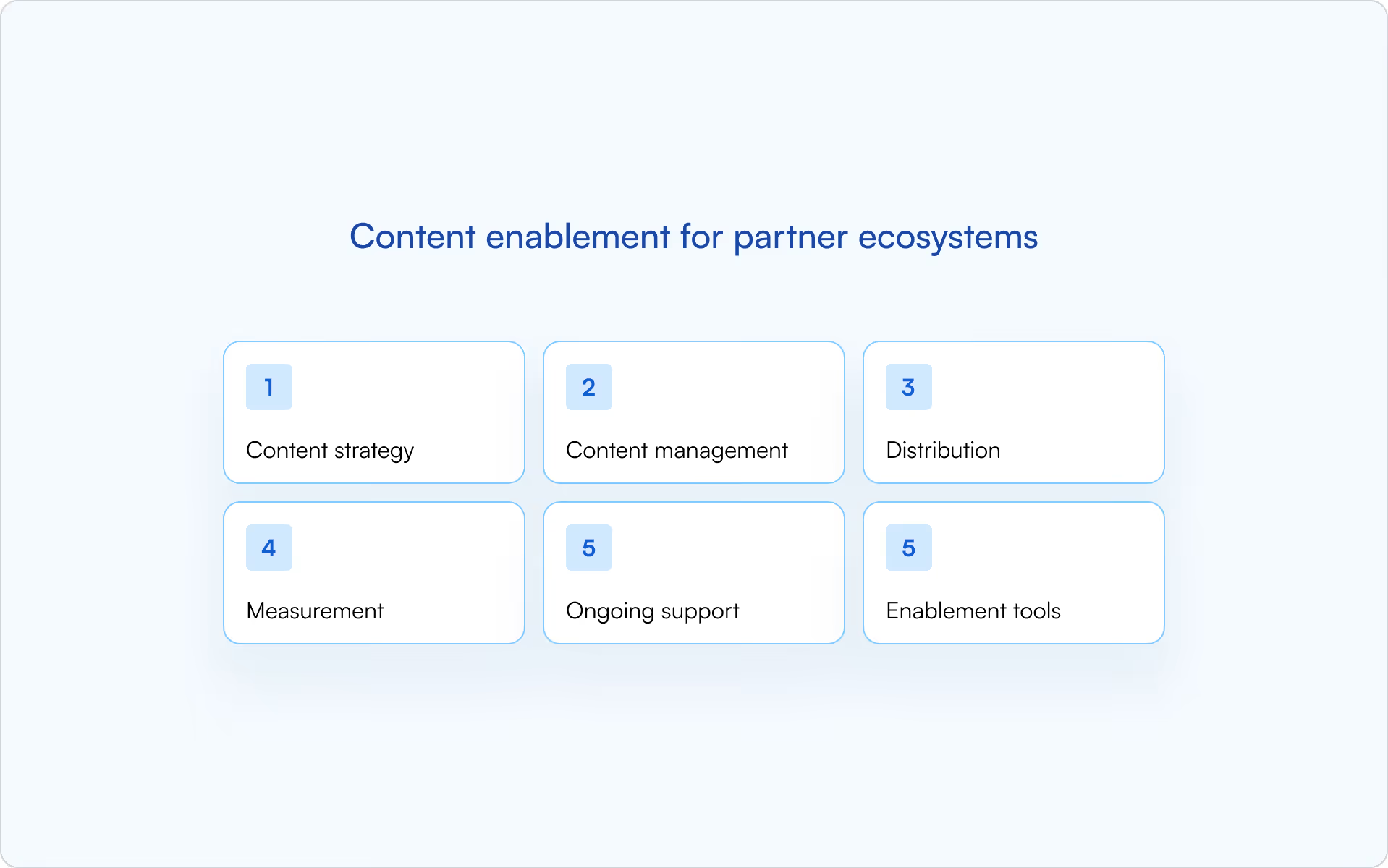
The expanded definition: content enablement for partner ecosystems
Let’s expand the definition so you can design an effective partner enablement strategy that fits a modern partner ecosystem.
- Content strategy maps formats to customer personas, objections, and stages. This is where value propositions are clarified and marketing materials are prioritized.
- Content management ensures managing content is safe and simple. Digital asset management, access controls, and data security keep everything current and compliant.
- Distribution puts partner enablement content into the flow of work. Think push delivery for urgency and a partner content hub for browsing and training.
- Measurement connects actions to outcomes. Key performance indicators live in your CRM and show what content actually shortens the sales cycle and improves sales performance.
- Ongoing support keeps partners engaged. Sales training, partner enablement training, and office hours help partners apply the message on real sales calls.
- Enablement tools automate the boring parts. Sales AI tools can flag stale claims, suggest next best content, apply AI powered spell checking to drafts, and even trigger document generation for localized one pagers.
This expanded definition turns a pile of files into a repeatable system.
The formats partners actually use — and why they work
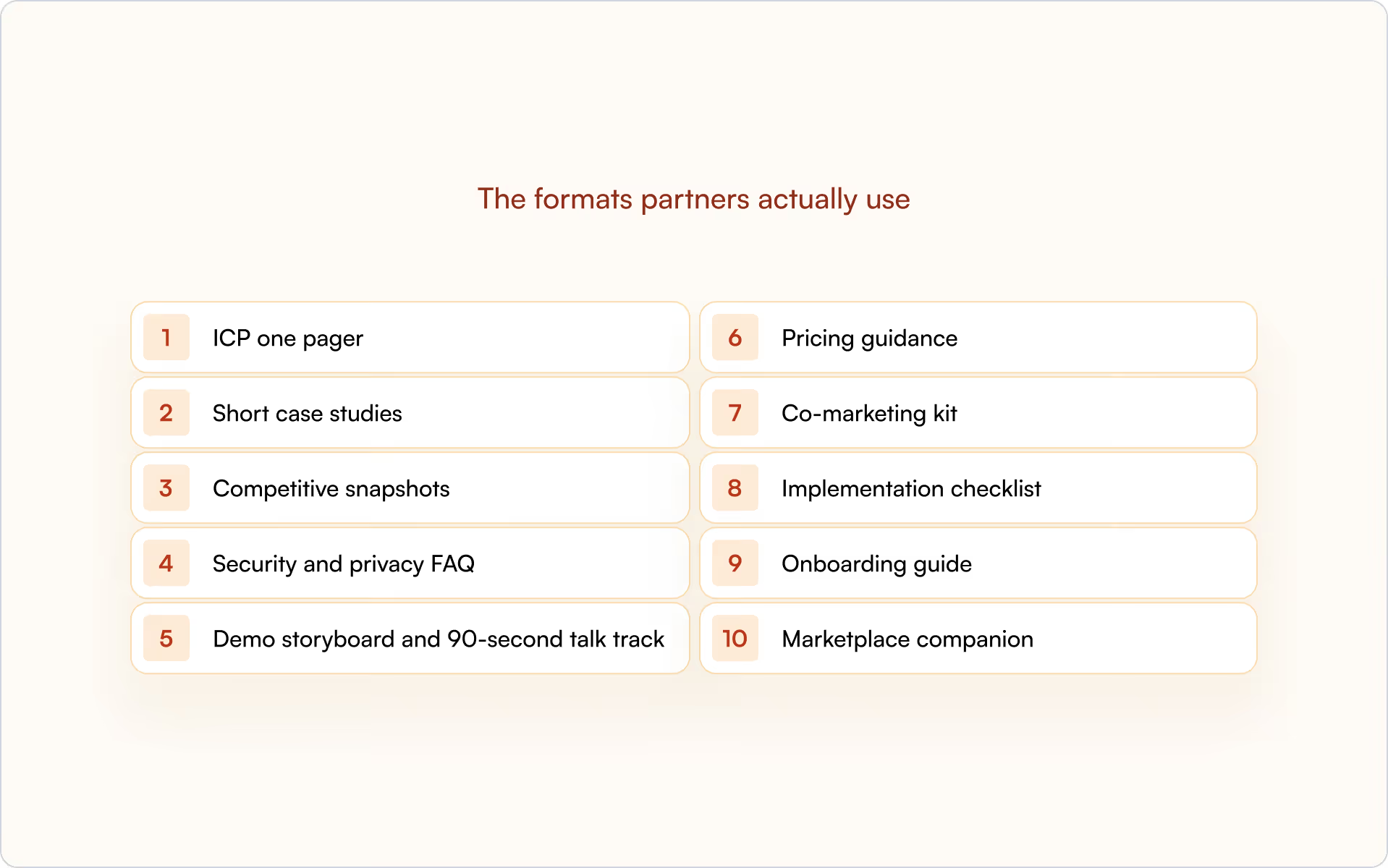
You do not need hundreds of assets to support channel partners. You need a tight core mapped to the buyer journey, plus a plan to keep it up to date. Here is a practical short list that consistently moves deals:
- ICP one pager that captures pains, triggers, and crisp value propositions for your target audience.
- Short case studies with outcomes, named roles, and a quote you can reuse.
- Competitive snapshots with three differentiators and traps to avoid.
- Security and privacy FAQ that answers procurement’s first questions and reduces back-and-forth.
- Demo storyboard and 90-second talk track that link features to jobs-to-be-done.
- Pricing guidance that explains models without revealing internal margins.
- Co-marketing kit with a landing page outline, two emails, and three social posts that partners can localize.
- Implementation checklist for services partners, including technical specifications and boundaries.
- Onboarding guide that sets expectations for handoff and adoption.
- Marketplace companion if you transact through AWS Marketplace or Google Cloud Marketplace.
Each item should show an owner, a version date, and a stage. That simple metadata is how sales and marketing teams keep confidence high.
Building your partner content engine in five steps
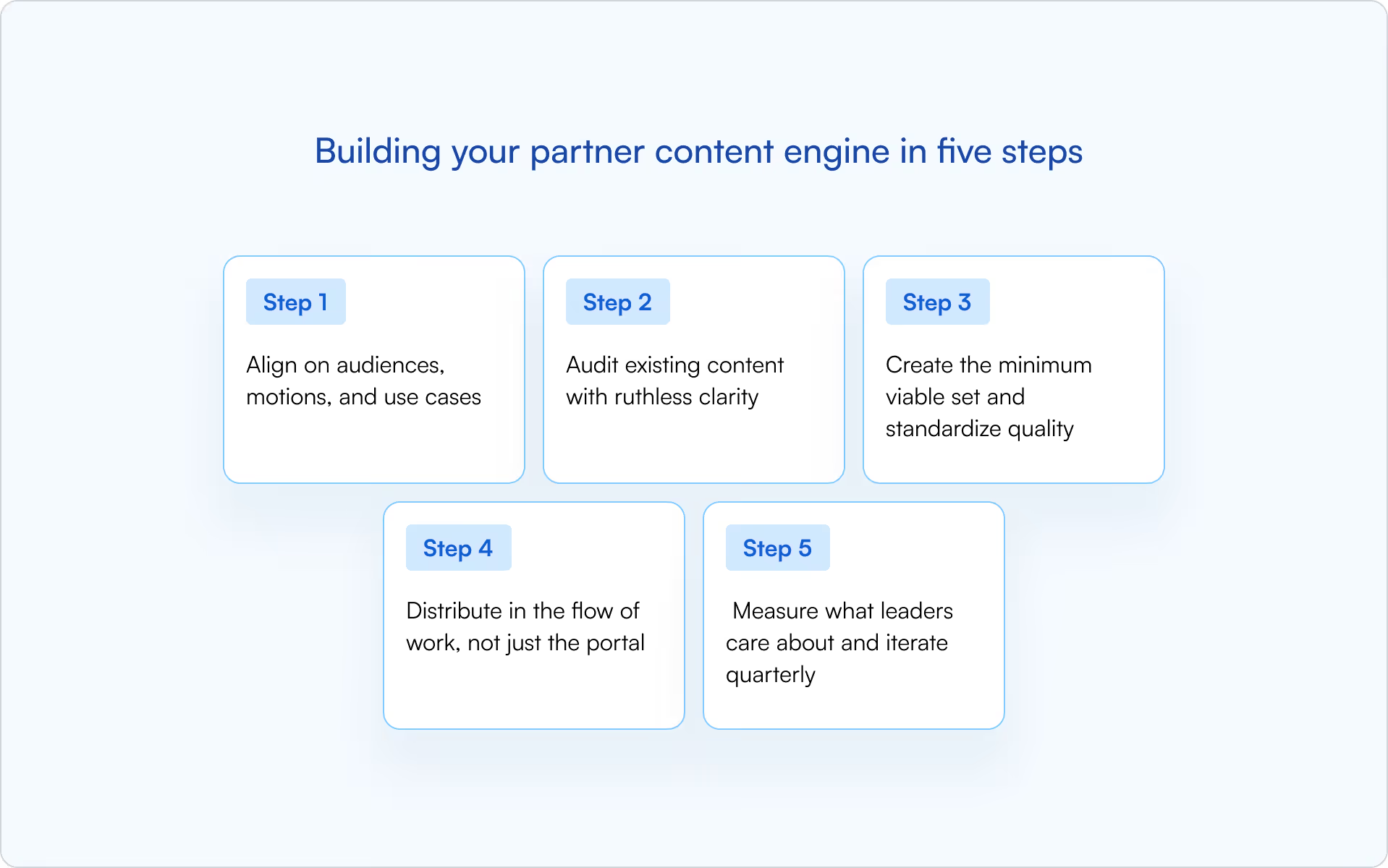
Every step here flows into the next, so avoid skipping ahead. You are building a system, not just uploading files.
Step 1. Align on audiences, motions, and use cases
Start with segmentation. Split your partner ecosystem by motion — resell, referral, ISV, and services. Within each motion, separate sellers and consultants, then overlay partner tier and region. This gives you the targeting you need so a consultant does not receive first-call decks, and a reseller AE is not reading deep implementation playbooks.
Outcome: clear audiences for content and reporting, fewer irrelevant pings, better partner satisfaction.
Step 2. Audit existing content with ruthless clarity
Map every asset to discovery, evaluation, selection, or onboarding. Identify duplicates and outdated claims. Keep winners, merge near-duplicates, and retire risky files. Capture gaps that stall deals, like an absent security FAQ or a weak competitive snapshot. This is where content related technologies help: a digital asset management tool will expose duplicates, and enablement tools will surface low-use files to replace.
Outcome: a trimmed library that your internal team trusts and partners will actually reuse.
Step 3. Create the minimum viable set and standardize quality
Create marketing and sales collateral with a shared checklist: audience, use case, stage, owner, review cadence, legal status. Use standardized templates to speed document generation and maintain brand consistency. Where possible, add short narration guidance so sales reps know when and how to use the asset during sales calls.
Outcome: fewer, sharper pieces that are easier to keep up to date and safer to send.
Step 4. Distribute in the flow of work, not just the portal
A partner portal is useful, but it should not be the only door. Push content by email and Slack when timing matters. Let partners browse a partner content hub for training and self-serve discovery. Surface the next best asset inside your CRM when a sales rep opens an opportunity. Distribution should feel like today’s digital HQ, not a scavenger hunt.
Outcome: higher adoption, faster response, and less time spent hunting links.
Step 5. Measure what leaders care about and iterate quarterly
Replace vanity metrics with outcome metrics. Track first meetings within 14 days of send, stage progression on opportunities that received specific assets, influenced pipeline, and win rate deltas where content was used. Add operational KPIs like training completion and asset freshness. Review quarterly with partners and your internal sales team, then tune your content enablement strategy.
Outcome: proof that content moves revenue, not just downloads.
Where Introw fits — intelligent content enablement that partners adopt
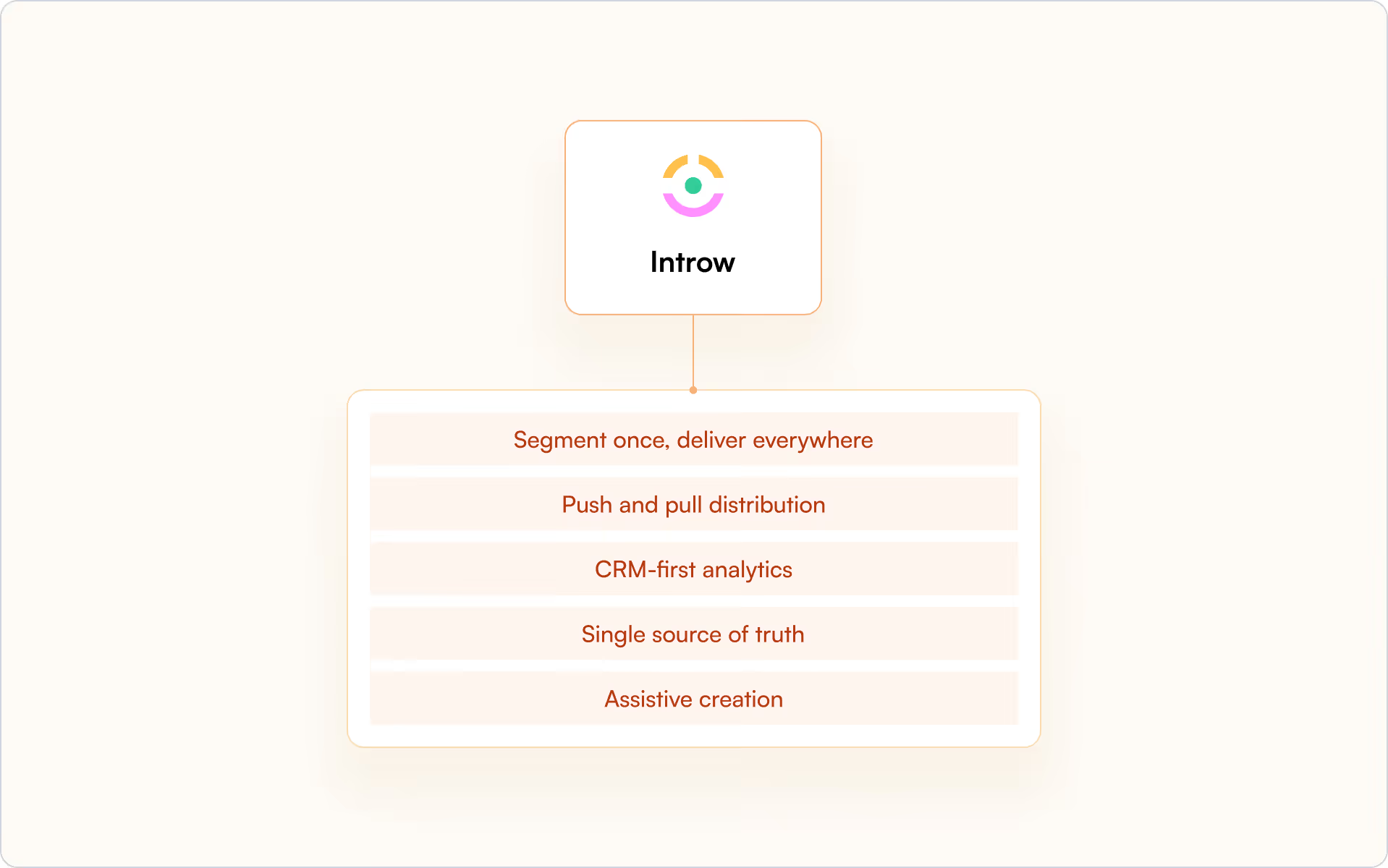
Introw is built to make partner content reach the field and show up in your numbers.
- Segment once, deliver everywhere. Target by motion, tier, role, industry, certification status, or region. A reseller AE gets first-call assets and a co-marketing kit. A services architect sees implementation plays and product training.
- Push and pull distribution. Send content by email and Slack for urgency, while a lightweight partner content hub supports discovery and training. Partners do not need to learn a heavy system to stay current.
- CRM-first analytics. Engagement rolls up next to account and opportunity records so leaders can see which assets improve first-meeting rate, stage progression, and close won.
- Single source of truth. A centralized repository handles managing content, permissions, and data security. Owners and review cadences keep everything up to date.
- Assistive creation. Sales AI tools inside the workflow suggest next best content, flag stale messages, apply AI powered spell checking, and trigger document generation for localized one pagers.
This is partner content marketing that respects how partners sell and how marketing and sales teams want to measure.
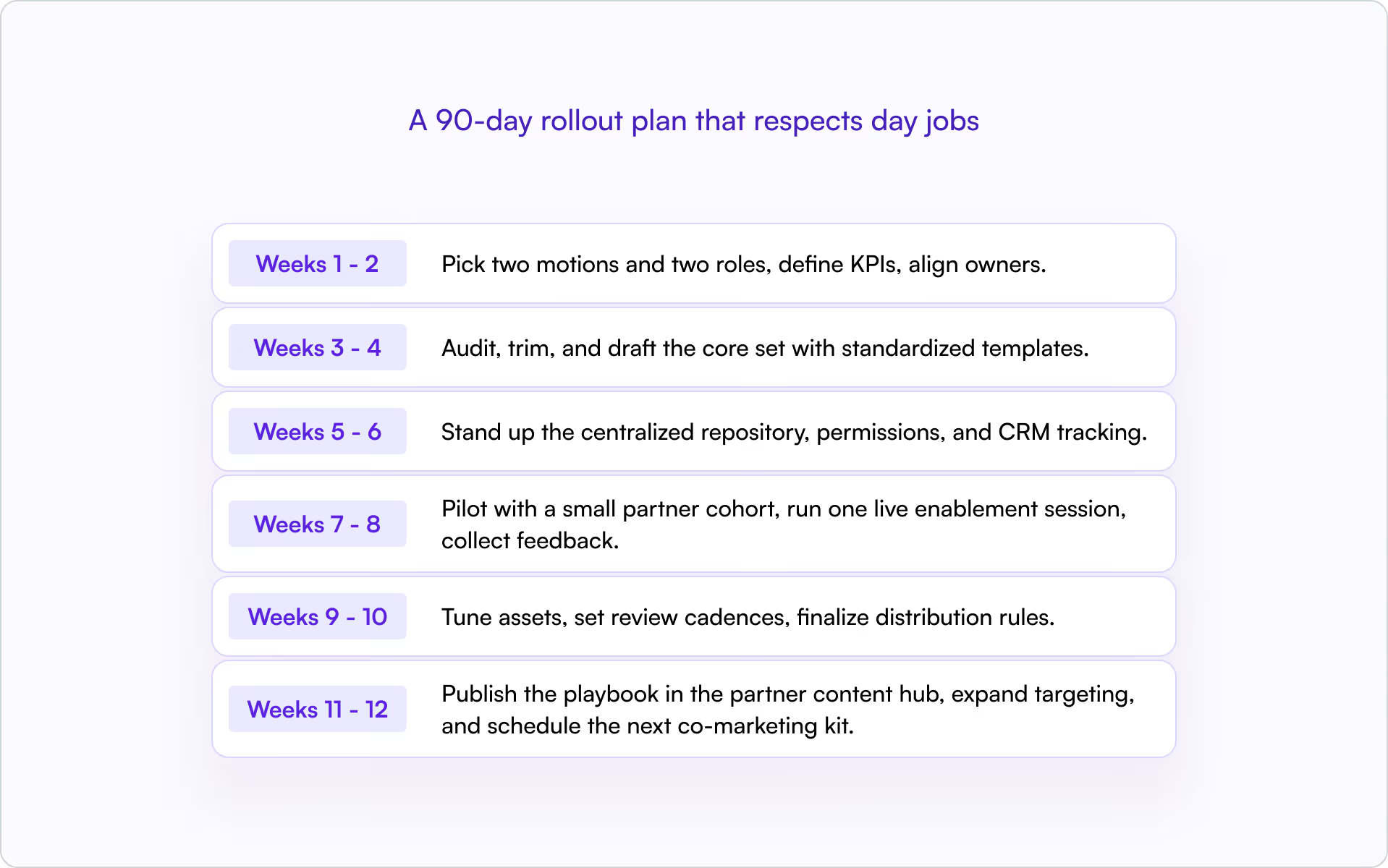
A 90-day rollout plan that respects day jobs
Long rollouts lose momentum. This plan gets you live fast and gives you space to improve.
Weeks 1–2 — pick two motions and two roles, define KPIs, align owners.
Weeks 3–4 — audit, trim, and draft the core set with standardized templates.
Weeks 5–6 — stand up the centralized repository, permissions, and CRM tracking.
Weeks 7–8 — pilot with a small partner cohort, run one live enablement session, collect feedback.
Weeks 9–10 — tune assets, set review cadences, finalize distribution rules.
Weeks 11–12 — publish the playbook in the partner content hub, expand targeting, and schedule the next co-marketing kit.
Because Introw connects segmentation, delivery, and analytics to your CRM, most of the wiring is configuration rather than custom work.
Bringing it all together
Great partner enablement is not about more files. It is about delivering relevant marketing content to the right people at the right time and proving it helped close business. When sales and marketing teams share a centralized repository, when content management is tight, and when distribution meets partners where they already work, buyer engagement improves and closing deals gets easier.
Introw adds the missing glue by combining segmentation, a partner content hub, push delivery, and CRM analytics so your channel partner enablement program turns content into revenue. If you want an effective partner enablement strategy that partners adopt and leaders can measure, Introw is ready to help.
Benefits of Selling SaaS on Cloud Marketplaces (And How Partners Make It Even Better)
You’re shipping a great SaaS product and your sales team keeps running into the same blockers: new vendor onboarding takes months, security reviews stall, and finance wants a cleaner procurement process. Listing on cloud marketplaces fixes a big chunk of that. When your SaaS solution is available via AWS Marketplace or Google Cloud Marketplace, enterprise buyers can use existing contracts and committed spend to purchase in days, not quarters. Below, we unpack the core benefits of selling SaaS on cloud marketplaces, how marketplace transactions actually work, and where partners turn a good motion into a great one.
Why cloud marketplaces matter right now
Enterprise buyers are already in the cloud. Procurement teams prefer buying cloud solutions through the platforms they trust because the vendor risk work is largely done, billing is centralized, and usage rolls into existing financial processes. That means your SaaS product benefits from shorter transaction time, cleaner paperwork, and access to budget buckets like committed spend.
For sellers, the advantages stack up: you tap into the marketplace’s global reach, ride the brand trust of the cloud provider, and remove “new vendor” friction from legal and finance. In most cases, the question isn’t “if” you should list — it’s “when” and “where” to start so you don’t spread product teams too thin.
The five biggest benefits of selling SaaS on cloud marketplaces
Let’s get specific. These are the wins you can count on when SaaS companies list and transact on a marketplace.
- Faster procurement and fewer hurdles
Purchase via the buyer’s existing MSA with AWS or Google; no duplicate vendor onboarding. Security and commercial terms inherit marketplace protections, so the procurement process is simpler, and approvals move quicker.
- Access to committed cloud budgets
Many enterprises must burn down committed spend with the cloud provider. Buying your SaaS applications through the marketplace helps buyers hit those targets, which can be the deciding factor late in a cycle.
- Flexible pricing and deal structures
Public listing with pricing plans (monthly/annual), pay as you go, or bespoke private offers for large deals. This flexibility lets your sales team meet the buyer where they are without new paperwork each time.
- Unified billing and entitlement
Marketplace handles invoicing, collections, taxes, and remittance. Entitlements flow automatically to your system once the marketplace transactions close, reducing manual ops and mistakes with sensitive data.
- Co-sell programs and extra air cover
Marketplaces reward aligned co selling motions. When you work with cloud field reps, they bring intros, help shape procurement strategies, and often unblock tough accounts. That creates net-new buyers and sellers connections you won’t get elsewhere.
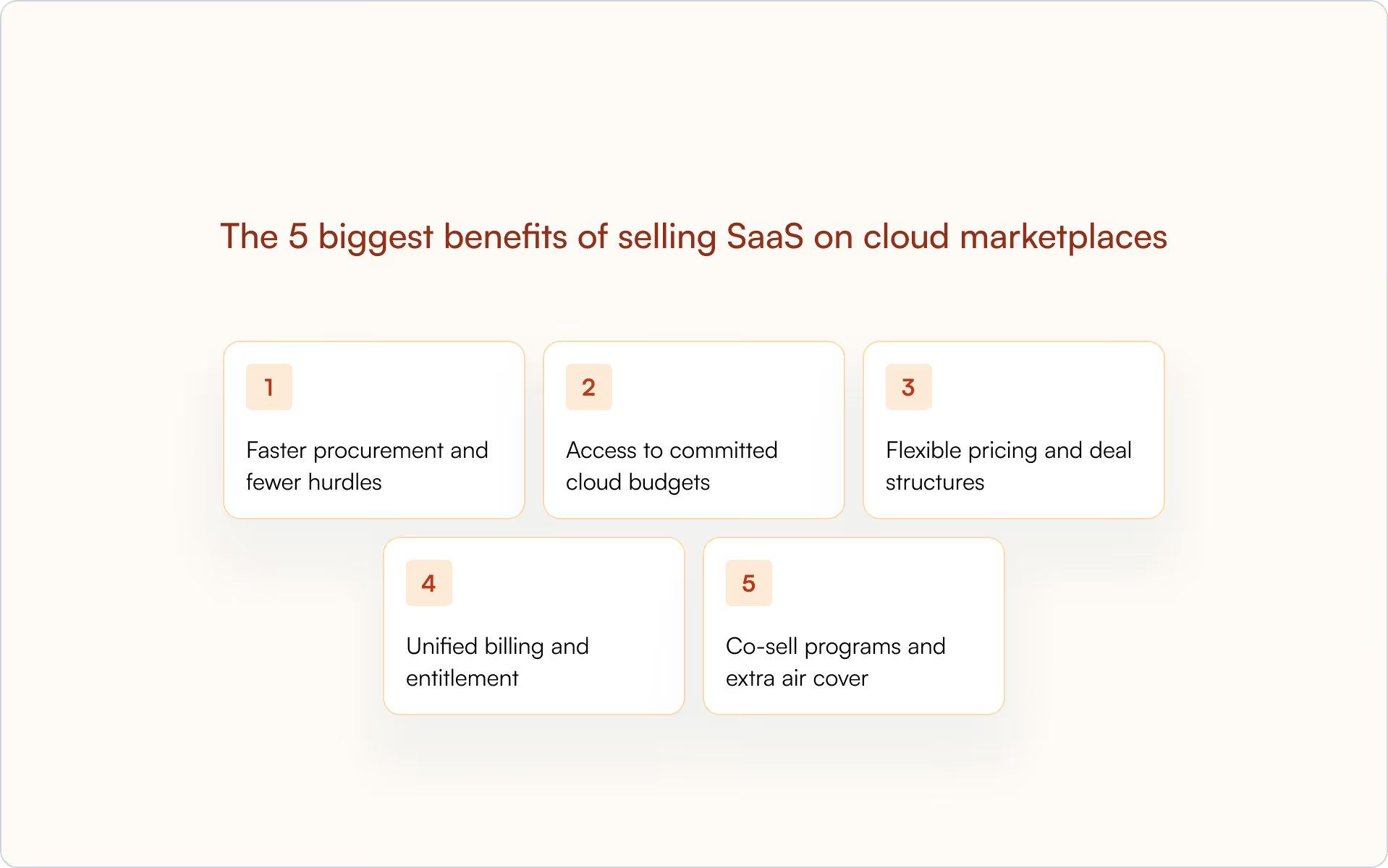
AWS Marketplace vs Google Cloud Marketplace (in practice)
Both platforms deliver the core value, but they feel different in the details:
- AWS Marketplace: deep maturity, broad buyer base, extensive private offers tooling, and robust Vendor Insights for security. Great for ISVs selling into teams already living in AWS services.
- Google Cloud Marketplace: strong if your customers are heavy Google Cloud users or lean into data/AI workloads on GCP. Co-sell alignment with Google field teams can be a force multiplier for marketplace success.
Most companies start with the platform that matches their customer base, then add the second once the operational motion hums.
How marketplace transactions actually work (the short version)
Understanding the flow helps you design a listing that closes smoothly:
- Cloud marketplace listing is created
You publish a concise product page: value prop, supported regions, pricing model, technical overview, and free trials if offered. You also set the fulfillment method (SaaS callbacks, entitlement API, or private offer only).
- Buyer selects a plan and executes
For public pricing, it’s a click-through; for enterprise deals, your rep sends a private offer with negotiated terms. The buyer approves inside their console.
- Billing and entitlement fire
The cloud marketplace invoices the buyer; you receive payouts per their schedule. Your backend gets the entitlement signal (activate, upgrade, cancel) and provisions the account automatically.
- Usage and renewals
If metered, your service reports usage back to the marketplace. Renewals can be automated or handled via new private offers.
The key to cloud marketplace success is keeping this plumbing reliable and your product page crystal clear so buyers and sellers don’t stall on basics.
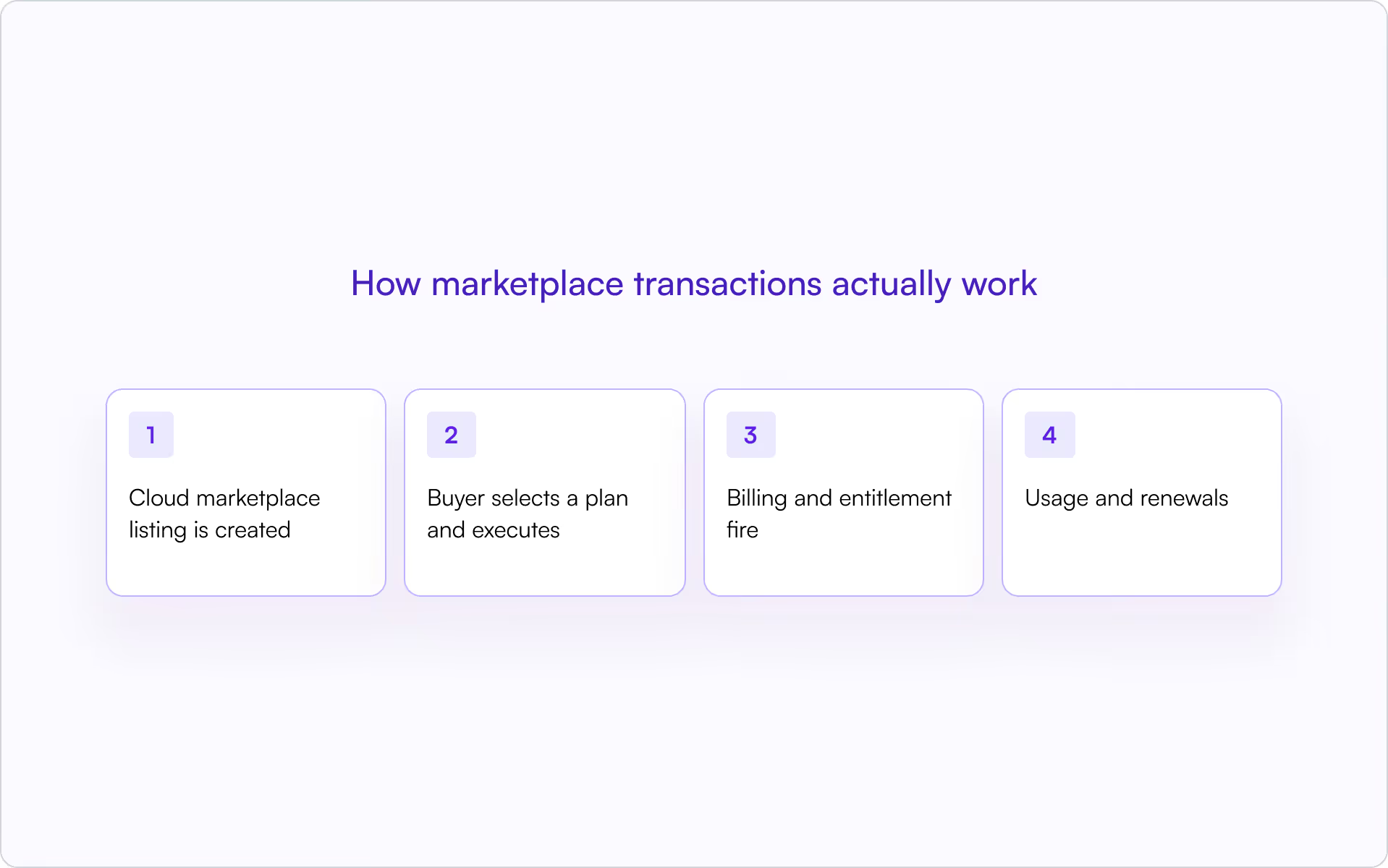
What to include on your listing (to build trust and conversions)
Think like a skeptical enterprise architect and a busy procurement lead. Your page should answer both in under two minutes.
- Who it’s for: ICP, industries, common use cases.
- What it does: outcome-first description; avoid jargon.
- How it deploys: regions, data residency, identity model, SSO/SCIM.
- Security & compliance: SOC 2/ISO, encryption, links to docs.
- Commercials: pricing plans, pay as you go, free trials, and contact for private offers.
- Proof: named customers, case studies, benchmarks.
- Integration notes: APIs, SDKS, popular connectors.
This is also where you anchor co selling: add a clear “Contact Sales” path for bespoke deals and a “Try Free” button for survey respondents who prefer self-serve.
How partners make marketplaces even better
Listing unlocks speed; partners create scale. Three partner types amplify the motion:
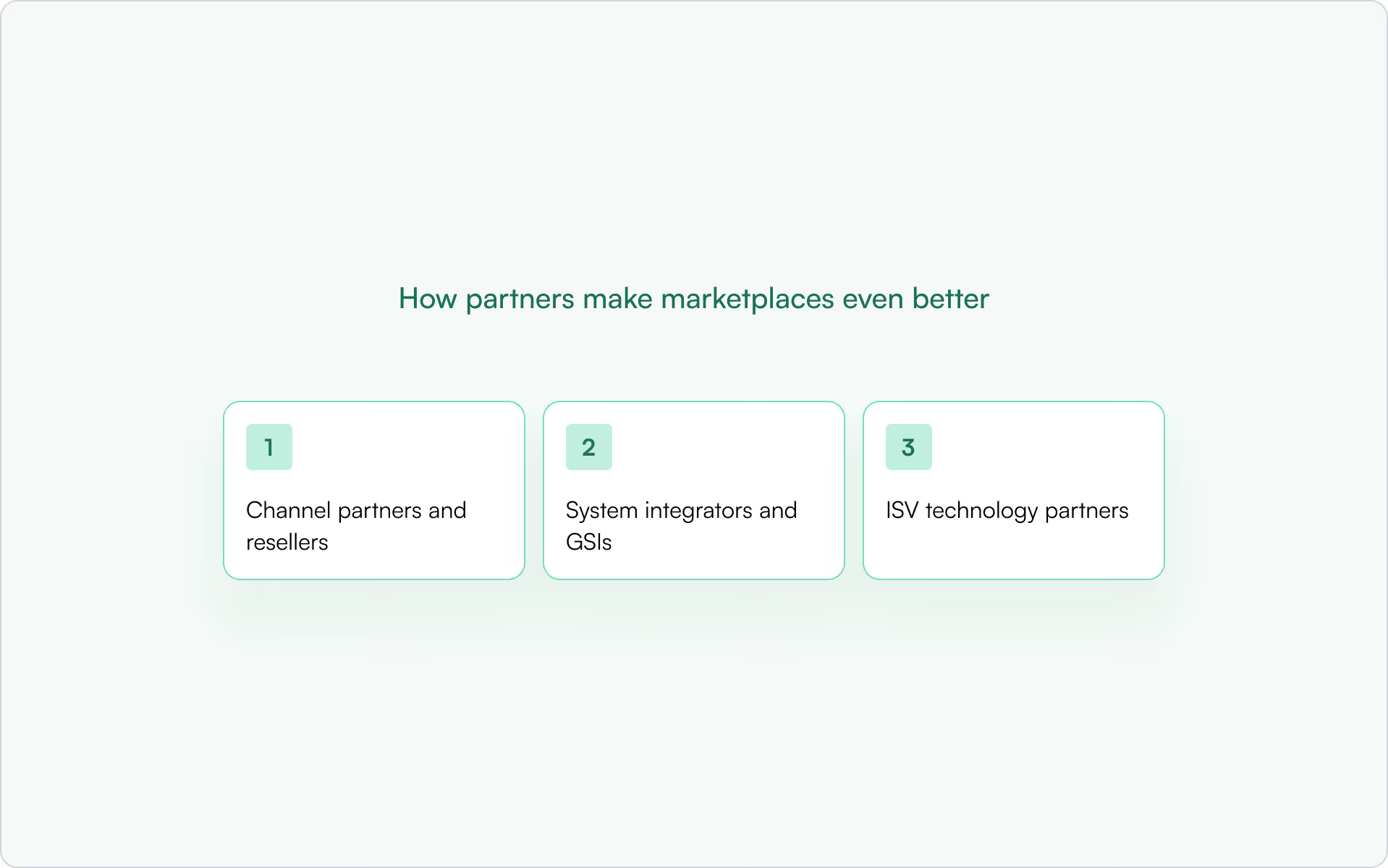
- Channel partners and resellers
They package your SaaS with services or other cloud solutions, route the purchase through the marketplace, and manage customer onboarding. Because they already handle compliance, they can move deals through vendor onboarding faster than you can alone.
- System integrators and GSIs
They design the business case, run pilots, and own rollout and change management. In enterprise accounts, the SI’s advocacy often determines whether an evaluation becomes a marketplace purchase.
- ISV technology partners
They turn your offer into part of a solution — especially for data, security, or observability. These integrations lift win rate and reduce churn because the SaaS offer fits the buyer’s stack from day one.
When you track partner engagement inside CRM and map it to the marketplace opportunity, the value is obvious: shorter cycles, larger ACVs, and higher expansion.
A pragmatic launch plan (without burning your team out)
You can ship a credible first listing in 8–12 weeks if you stay focused:
- Pick one marketplace that matches your customers.
- Choose the initial pricing model (simple subscription or pay-go) and add private offers later.
- Wire entitlement and billing callbacks; keep the technical surface small to start.
- Publish the trust signals (security, compliance, data flow).
- Train the sales team on how marketplace transactions work and how to ask about committed spend.
- Add a short free trial only if it mirrors your product-led experience — otherwise route to a public offer with a clear demo path.
- Stand up a partner brief so channel partners and SIs know how to transact your product and what services to add.
As you learn, expand pricing plans, launch co selling plays with the cloud field, and layer in a second marketplace.
What to watch after you go live (signals that matter)
Skip vanity stats and track the metrics that prove revenue impact:
- Marketplace-sourced pipeline and win rate
- Days from intro to executed marketplace listing purchase (vs direct)
- Share of deals using private offers
- Percentage of bookings tied to committed spend
- Time to provision and first value after entitlement
- Attach rate with partners (SI involvement, reseller influence)
- Renewal rate and expansion from marketplace cohorts
If cycles aren’t shrinking, tighten your listing, simplify commercial options, and make the “how to buy” path obvious. If attach rates lag, recruit services partners with clear plays and co-market together.
Where Introw fits
Marketplaces move fast; partner motions can lag if they’re stuck in spreadsheets. Introw keeps your partner GTM CRM-first: deal and lead registration for marketplace opportunities, co-sell tracking with field teams, and clean workflows for SIs, resellers, and ISV integrations. You’ll see exactly which partners helped drive revenue, which co selling plays convert, and where to double down. When you’re ready to turn marketplace momentum into a repeatable partner engine, Introw shows the path in Salesforce or HubSpot — no extra portals required.
Ready to accelerate marketplace deals and scale with partners? Request an Introw demo.
15 Best ChannelScaler Alternatives for Partner Teams in 2026
What is ChannelScaler (and why do teams seek alternatives)?
ChannelScaler is a partner relationship management (PRM) platform created through the merger of Allbound and Channel Mechanics. It combines deal registration, MDF management, incentives, partner marketing, and through-channel marketing automation in one platform.
For many businesses, that’s exactly what they need.
Others look for deeper CRM integration, a simpler partner experience, stronger automation, or more flexibility as their partner program grows.
Common reasons teams evaluate ChannelScaler competitors include:
1. You want deeper CRM visibility
Many teams want deal registration, attribution, partner data, and reporting tied more closely to Salesforce or HubSpot.
2. You want a better partner experience
As partner ecosystems grow, adoption matters. Teams often look for ways to reduce friction and make it easier for partners to engage.
3. You need more automation
Automation can reduce manual work across onboarding, approvals, notifications, reporting, and partner operations.
4. You rely on partner marketing and MDF
If MDF management, partner marketing, and through-channel marketing automation are important, it’s worth comparing how each platform supports those workflows.
5. You’re planning for future growth
The right platform should support your partner ecosystem today and continue to scale with your business.
ChannelScaler alternatives at a glance
If you’re shortlisting ChannelScaler alternatives, this table gives you a quick overview of where each platform fits before diving into the detailed reviews.
The right choice depends on your partner program, growth goals, and how your team prefers to work.
The 15 best ChannelScaler alternatives in 2026
Choosing a PRM is often less about features and more about fit. The platforms below take very different approaches to partner relationship management, partner engagement, channel automation, and partner marketing.
1. Introw

What it does:
Introw is a CRM-first partner relationship management platform built for SaaS companies running referral, reseller, and co-sell programs. It keeps partner data, deal registration, attribution, forecasting, and partner operations directly inside Salesforce or HubSpot.
Partners can collaborate through email, Slack, forms, and lightweight portal experiences, helping teams scale partner revenue with less administrative overhead and a more frictionless channel experience.
Why it’s a good ChannelScaler alternative:
While ChannelScaler combines partner management, MDF management, incentives, and channel marketing in one platform, Introw takes a CRM-first approach. It’s a strong fit for teams that want deeper Salesforce or HubSpot integration, AI-powered workflows, faster implementation, and less reliance on a traditional partner portal.
Who it’s best for:
SaaS companies that want to manage their partner ecosystem from Salesforce or HubSpot and improve partner engagement, partner experience, pipeline visibility, and partner-sourced revenue without relying heavily on a traditional partner portal.
Key features:
- Native Salesforce and HubSpot integration with support for custom objects and partner data
- AI-powered deal coaching that delivers guidance, content recommendations, and next steps inside active opportunities
- Deal registration, attribution, forecasting, and reporting built directly around CRM workflows
- Email and Slack-based partner collaboration that reduces portal dependency and improves partner engagement
- MDF management, partner marketing workflows, and partner program automation within a single platform
Pricing:
Custom pricing. Contact Introw for a quote based on your partner program requirements.
2. Impartner
.png)
What it does:
Impartner is an enterprise partner relationship management platform focused on partner onboarding, deal registration, partner engagement, MDF management, and channel automation. It’s designed to help businesses manage complex partner programs from a single platform.
Why it’s a good ChannelScaler alternative:
Impartner offers enterprise-grade partner relationship management, MDF management, incentives, onboarding, and channel marketing capabilities with extensive customization and advanced workflow automation.
Who it’s best for:
Mid-market and enterprise businesses with mature channel sales motions that need advanced workflows, structured partner programs, and strong MDF management capabilities.
Key features:
- Partner onboarding, training, certification, and deal registration workflows
- MDF management with approval processes, reimbursement tracking, and ROI tracking
- Automated partner engagement, reporting, and channel program management
Pricing:
Custom pricing. Contact Impartner for a personalized quote.
3. ZINFI
.png)
What it does:
ZINFI is a partner relationship management and through-channel marketing automation platform designed to support the full partner lifecycle, from recruitment and onboarding to deal registration, partner marketing, incentives, and analytics.
Why it’s a good ChannelScaler alternative:
ZINFI offers broad channel automation capabilities across partner management, MDF management, partner engagement, and channel marketing. It’s a strong fit for businesses managing multiple partners across complex partner programs.
Who it’s best for:
Large partner ecosystems that need end-to-end partner program automation and global channel operations.
Key features:
- Partner onboarding, deal registration, and partner portal management
- MDF management, incentives, and partner performance tracking
- Through channel marketing automation and partner marketing tools
Pricing:
Custom pricing.
4. Unifyr (formerly Zift Solutions)
.png)
What it does:
Unifyr is a partner relationship management platform that evolved from Zift Solutions. It combines partner engagement, channel marketing, training, content management, and partner program automation in one platform.
Why it’s a good ChannelScaler alternative:
Unifyr focuses heavily on partner engagement and partner marketing while offering strong automation across the partner journey. Its AI-powered capabilities are designed to help teams scale partner revenue more efficiently.
Who it’s best for:
Businesses that want partner enablement, training, and channel marketing in a single platform.
Key features:
- Partner portal with onboarding, training, and certification
- AI-powered content recommendations and partner engagement workflows
- Through channel marketing automation and campaign management
Pricing:
Custom pricing.
5. Channeltivity
.png)
What it does:
Channeltivity is a partner relationship management platform focused on helping channel sales teams launch and manage partner programs without lengthy implementations.
Why it’s a good ChannelScaler alternative:
Channeltivity provides core PRM functionality without the complexity often associated with larger enterprise platforms. It focuses on partner experience, deal registration, and partner engagement while maintaining strong CRM connectivity.
Who it’s best for:
Mid-market businesses that want a dedicated PRM with fast deployment and straightforward administration.
Key features:
- Partner portal, onboarding, and deal registration
- MDF management and training modules
- Native Salesforce and HubSpot integrations
Pricing:
- Standard Edition: $1,899/month
- CRM Edition: $2,199/month
6. Magentrix
.png)
What it does:
Magentrix is a Salesforce-centric partner relationship management platform that helps businesses manage channel partners, partner engagement, and deal registration through customizable partner portals.
Why it’s a good ChannelScaler alternative:
Magentrix appeals to businesses that want a Salesforce-native partner portal and tighter control over partner-facing experiences without investing in a larger channel automation platform.
Who it’s best for:
Salesforce-centric organizations that want configurable partner portals and CRM-connected workflows.
Key features:
- Salesforce-native partner portal
- Deal registration and partner onboarding workflows
- Partner content management and reporting
Pricing:
- Essential: $1,500/month
- Advanced: $3,000/month
- Unlimited: Custom pricing
7. PartnerStack
.png)
What it does:
PartnerStack helps SaaS companies recruit, manage, and reward referral, reseller, and affiliate partners. The platform is particularly known for automated payouts and partner recruitment through its marketplace.
Why it’s a good ChannelScaler alternative:
PartnerStack focuses more on growing partner-sourced revenue and managing partner payouts than traditional partner relationship management. It’s often chosen by SaaS companies looking to generate pipeline through referral and affiliate channels.
Who it’s best for:
SaaS companies building referral, affiliate, and reseller programs.
Key features:
- Partner recruitment marketplace
- Automated payouts and commission management
- Deal registration and partner tracking
Pricing:
Starts at approximately $1,520/month.
8. StructuredWeb
.png)
What it does:
StructuredWeb is a partner marketing platform focused on helping brands drive demand through channel partners using automated campaign execution, content distribution, and localized marketing campaigns.
Why it’s a good ChannelScaler alternative:
StructuredWeb is often selected when partner marketing is the primary objective. It offers strong support for campaign execution, content syndication, and through channel marketing automation.
Who it’s best for:
Businesses that rely heavily on channel marketing and partner-led demand generation.
Key features:
- Through channel marketing automation
- Content management and campaign distribution
- MDF management and ROI tracking
Pricing:
Custom pricing.
9. Ansira (formerly SproutLoud)
.png)
What it does:
Ansira helps brands manage distributed marketing programs across large partner networks. The platform focuses on channel marketing, localized marketing campaigns, incentives, and campaign execution while supporting brand consistency across local markets.
Why it’s a good ChannelScaler alternative:
Ansira is a strong choice for businesses that prioritize partner marketing, localized campaign execution, and demand generation across large partner networks.
Who it’s best for:
Businesses with large partner ecosystems that rely heavily on channel marketing and localized campaign execution.
Key features:
- Localized marketing campaigns and campaign execution tools
- Incentives, MDF management, and partner marketing support
- Brand compliance and distributed marketing workflows
Pricing:
Custom pricing.
10. WorkSpan
.png)
What it does:
WorkSpan helps businesses manage strategic alliances, cloud marketplace partnerships, and co-sell programs across major ecosystems such as AWS and Microsoft.
Why it’s a good ChannelScaler alternative:
WorkSpan specializes in ecosystem-led growth and co-sell execution rather than traditional partner portal workflows. It provides visibility into shared opportunities and partner revenue across alliance programs.
Who it’s best for:
Businesses running strategic alliance and co-sell motions with major technology partners.
Key features:
- Co-sell opportunity management
- Marketplace and alliance automation
- Shared pipeline visibility and reporting
Pricing:
Custom pricing.
11. Kiflo
.png)
What it does:
Kiflo is a lightweight partner relationship management platform designed to help businesses launch and manage partner programs with minimal complexity.
Why it’s a good ChannelScaler alternative:
Kiflo focuses on ease of use, partner onboarding, deal registration, and partner engagement rather than enterprise-scale channel operations. It offers a simpler entry point for growing partner teams.
Who it’s best for:
Businesses launching their first partner program or managing a smaller partner ecosystem.
Key features:
- Partner onboarding and deal registration
- Partner portal and commission tracking
- HubSpot and Salesforce integrations
Pricing:
- Core: $399/month (annual billing)
- Plus: Contact sales
- Premier: Contact sales
12. Mindmatrix
.png)
What it does:
Mindmatrix combines partner relationship management, partner marketing, training, sales enablement, and channel automation within a single platform.
Why it’s a good ChannelScaler alternative:
Mindmatrix provides broad coverage across partner enablement, content distribution, training, MDF management, and partner engagement. It is often evaluated by organizations seeking one platform for multiple partner-facing functions.
Who it’s best for:
Businesses that want partner enablement, training, channel marketing, and partner management in one platform.
Key features:
- Partner onboarding, training, and certification
- Content management and sales enablement
- MDF management and partner marketing automation
Pricing:
Contact vendor.
13. PartnerPortal.io
.png)
What it does:
PartnerPortal.io is a HubSpot-focused partner portal platform that helps businesses manage partner onboarding, lead submission, deal registration, and partner communication.
Why it’s a good ChannelScaler alternative:
PartnerPortal.io prioritizes simplicity and fast deployment. It delivers core partner portal functionality without the complexity of larger partner program automation platforms.
Who it’s best for:
HubSpot users that need a simple partner portal and deal registration process.
Key features:
- Native HubSpot integration
- Lead submission and deal registration
- Partner portal and resource management
Pricing:
- Free
- Growth: $249/month
- Enterprise: $499/month
14. impact.com
.png)
What it does:
impact.com is a partnership management platform focused on affiliate, influencer, referral, and creator partnerships. It helps businesses discover, manage, track, and reward partners at scale.
Why it’s a good ChannelScaler alternative:
impact is built around partnership growth and automated payouts rather than traditional channel sales workflows. It’s commonly used to expand partner reach and drive measurable growth through performance-based partnerships.
Who it’s best for:
Businesses investing in affiliate, influencer, referral, and creator programs.
Key features:
- Partner recruitment and discovery
- Automated payouts and incentive management
- Attribution and performance analytics
Pricing:
- Starter: From $30/month
- Essentials: From $500/month
- Pro: From $2,500/month
- Enterprise: Custom pricing
15. Everflow
.png)
What it does:
Everflow is a partnership management platform focused on tracking, attribution, and performance management for affiliate, referral, influencer, and media partnerships.
Why it’s a good ChannelScaler alternative:
Everflow provides deep reporting and attribution capabilities for businesses that prioritize performance tracking, partner revenue measurement, and optimization.
Who it’s best for:
Businesses running large-scale affiliate and performance partnership programs.
Key features:
- Partnership attribution and analytics
- Automated partner management workflows
- Fraud prevention and performance reporting
Pricing:
Custom pricing.
There’s a lot to choose from, and the right platform depends less on features and more on how your partner program works day to day.
To help narrow down your options, here are the key questions worth asking every vendor.
How to evaluate PRM platforms
A good demo can make every platform look similar. The real differences appear when you look at how the system fits your processes, your team, and your long-term goals.
1. Will it fit the way your team already works?
Some vendors expect everyone to work inside a portal. Others are built around Salesforce, HubSpot, email, or Slack.
Ask vendors:
- Where do partner managers spend most of their time?
- How much work happens outside the portal?
- How much manual administration is required?
- How quickly can new users get started?
2. How easy is onboarding for new partners?
Even the best technology won’t help if adoption is low.
As you review vendors, compare the experience against a practical partner onboarding checklist and ask how quickly new partners can start generating opportunities.
A strong onboarding process should help shorten time-to-value while reducing work for your internal team.
You can compare your process against this partner onboarding checklist when evaluating different approaches.
3. Can it support future growth?
Many teams buy for today’s requirements and discover limitations a year later.
Questions worth asking:
- Can it support different partner types?
- Can it support international expansion?
- How easily can workflows be customized?
- What happens as participation grows?
As your partner ecosystem expands, the platform should be able to support new processes and additional stakeholders without becoming harder to manage.
Look for evidence that the vendor can support revenue growth without adding unnecessary complexity.
4. Can you measure what’s working?
Good reporting should answer business questions, not just display activity metrics.
Ask vendors how they track:
- Partner-sourced revenue
- Revenue growth
- Performance trends
- Attribution
- Real-time insights
If reporting requires spreadsheets and manual reconciliation, visibility usually suffers.
5. What does implementation actually involve?
Implementation timelines vary significantly between vendors.
Before making a decision, ask:
- How long does deployment take?
- Are implementation services required?
- What ongoing administration is needed?
- What level of customer support is included?
Reading independent reviews, customer feedback, and a detailed ChannelScaler review can help uncover issues that rarely appear in product demos.
A little extra evaluation now can save a lot of frustration later.
When ChannelScaler is a good choice
ChannelScaler is a strong fit for mature partner programs that need partner onboarding, deal registration, MDF management, incentives, rebates, and through-channel marketing automation in one platform.
ChannelScaler may be a good choice if you:
- Manage a large network of channel partners
- Run complex incentive, rebate, or MDF programs
- Need stronger control over indirect revenue programs
- Want channel marketing and partner management in one platform
- Have the resources for a more comprehensive implementation
For businesses where incentives, partner marketing, and channel operations are central to the partner program, ChannelScaler offers a broad set of capabilities under one roof.
When it’s time to consider a ChannelScaler alternative
ChannelScaler offers a broad feature set, but it won’t be the right fit for every partner team.
Many businesses start exploring alternatives when they want simpler workflows, faster deployment, or a platform that works more closely with their CRM. Others are looking for a lighter partner experience with less reliance on a traditional portal.
Evaluate ChannelScaler competitors if you:
- Want Salesforce or HubSpot to remain the primary system of record
- Need a faster implementation and shorter time-to-value
- Prefer partners to collaborate through email or Slack
- Want simpler administration and fewer moving parts
- Focus heavily on co-sell motions and partner-sourced revenue
- Need more flexibility around how partners engage with your team
This can be particularly valuable for teams investing heavily in partner-led demand generation, MDF programs, and broader partnership marketing initiatives.
The best platform isn’t necessarily the one with the most features. It’s the one that helps your team and your partners work more effectively every day.
Why Introw is the best choice for modern partner teams
Most PRMs help you manage partners. Introw helps you improve how partner programs perform.
Because Introw is built around Salesforce and HubSpot, partner managers spend less time updating systems and more time helping partners close deals.
Deal registration, attribution, forecasting, MDF management, and partner collaboration stay connected to the CRM, creating better visibility across the entire program.
What makes Introw different?
.png)
- CRM-first workflows that improve visibility and reduce manual administration
- AI-powered deal coaching that helps partners move opportunities forward
- AI integrations, including Claude, that support partner enablement and content workflows
- Email and Slack collaboration that reduces dependence on portal logins
- Attribution and forecasting tied directly to partner revenue
Ready to see how a modern PRM works in practice?
Learn more about Introw’s PRM software, and book a demo to see how Introw can help your team increase partner revenue with less complexity and better visibility.
15+ Impartner Alternatives To Choose From in 2026
Let's start with an obvious question - why teams look beyond Impartner? Impartner is a leading partner relationship management and TCMA provider and remains popular with enterprise programs that need MDF, incentives, and a full management system for partner relationships. Still, many companies assess Impartner competitors to find a better fit for HubSpot coexistence, speed of deployment, lighter admin overhead, or specialized motions like hyperscaler co selling, affiliate partnerships, and marketplace listings.
To help you choose, we compared core PRM software key features — partner portals, partner onboarding and partner training, lead generation and registration, co selling workflows, content management for enablement, real time data sync, and analytics to monitor performance — plus security, global scale, and time-to-value. We also looked at AI capabilities that support partner adoption, guide partners, and automate or orchestrate tasks.
What to look for in an Impartner alternative
- CRM-first operations — keep sellers in Salesforce or HubSpot and give partners a portal that syncs customer and partner data without brittle connectors.
- Deal registration and opportunity management — clear conflict prevention, stage mapping, and SLA alerts so you can track deals, forecast, and run pipeline inspection.
- Partner onboarding and training — automate steps, certify roles, and deliver outcome based enablement that increases partner productivity and adoption.
- TCMA depth when needed — if local demand generation is core, ensure strong through channel marketing automation for brand-compliant campaigns and funding.
- Co-sell and marketplace — if you work with AWS or Microsoft, look for native hyperscaler integrations so alliance teams can collaborate and sell together from your CRM.
- Total cost and services — compare subscription, implementation, and ongoing admin. Lightweight tools can reduce costs and complexity for many businesses.
If you nodded along to most of the checklist above, you’re already thinking like a modern channel team — CRM-first operations, outcome-based enablement, and motion-specific depth where it actually moves the needle. The next step is matching those needs to a platform that your partners will adopt and your RevOps can trust.
How to shortlist in 10 minutes
If that sounds like your roadmap — faster time-to-value, fewer admin cycles, and motions your partners will actually use — the next step is turning options into a shortlist your team can pilot. Use the quick framework below to move from “interesting” to “in production” without stalling in analysis:
- Clarify motion — reseller, referral, co selling, affiliate.
- Set CRM center — Salesforce only, or Salesforce plus HubSpot.
- Pick three to trial — for CRM-first PRM consider Introw; for breadth and incentives consider ZINFI, Unifyr, Channelscaler; for performance-led programs consider impact.com or Everflow; for hyperscaler co-sell consider WorkSpan.
- Score pilots — time to first deal registration, partner adoption and engagement, CRM data quality, visibility for pipeline inspection, and ability to monitor performance.
The 17 best Impartner alternatives in 2026
Before we dive in, a quick orientation: the list mixes classic PRM, co-sell orchestration, and TCMA-led options. Skim the “Best for” line to see fit at a glance, then use the “Why it’s an Impartner alternative” line to understand how each platform approaches partner onboarding, deal registration, and day-to-day collaboration differently.
1) Introw
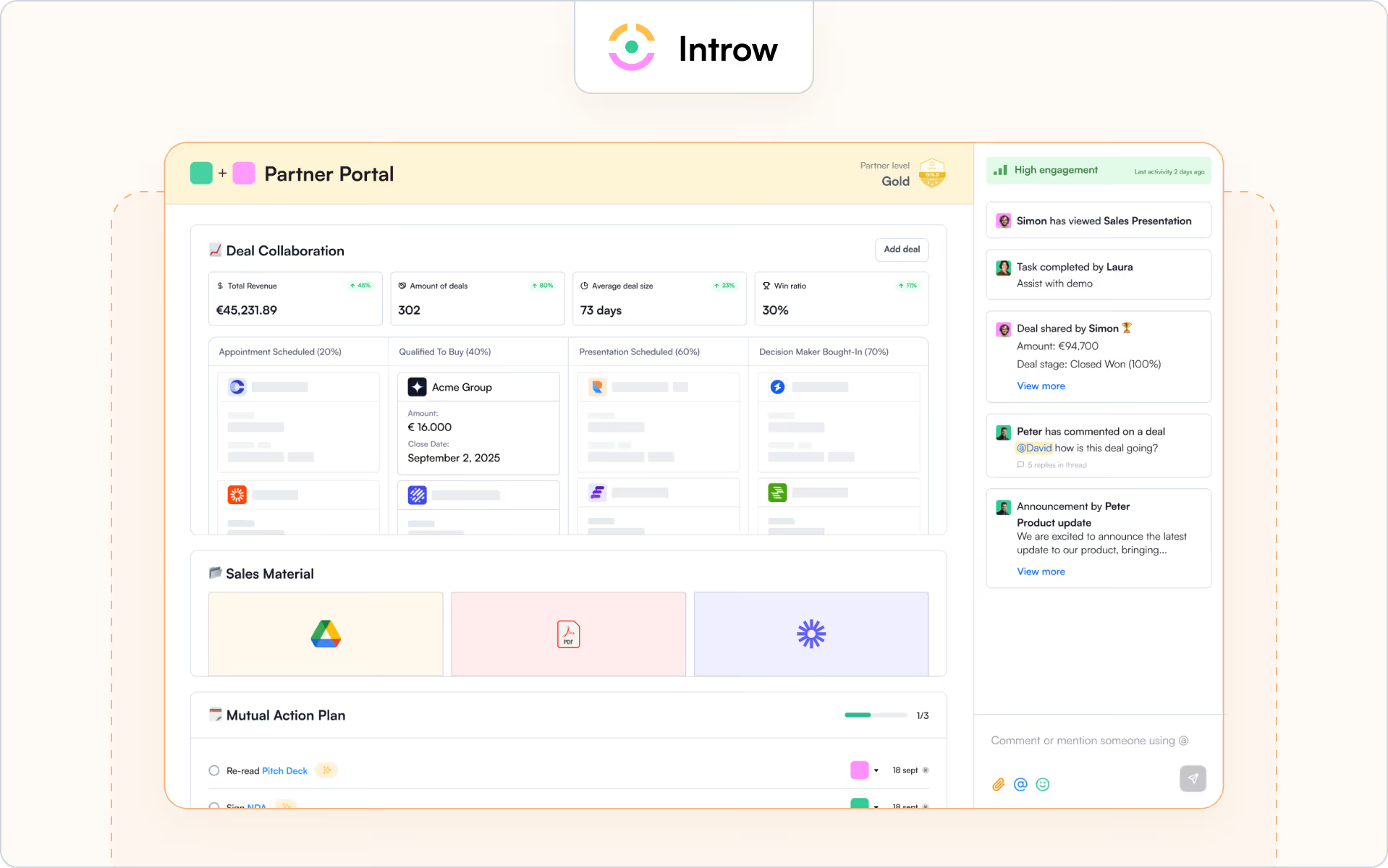
Best for: CRM-first teams that want partner relationship management embedded in Salesforce or HubSpot — including partner portals, deal registration, and Slack/email collaboration that keeps partners engaged without logins.
Why it’s an Impartner alternative: Introw keeps the portal simple and pushes updates to where people already work. Partners can create and update leads and opportunities; AEs see real time changes in the CRM; RevOps avoids duplicate records. This approach can shorten time-to-value for companies that don’t need a heavy management system.
Notable callouts: Native Salesforce and HubSpot integrations, off-portal Slack and email nudges, and templates that enable partners with the right content at the right time, plus support for custom objects and AI-assisted engagement.
2) Salesforce Partner Cloud (Salesforce PRM)

Best for: Channel partners operating in a single platform with tight ties to Sales Cloud and Service Cloud.
Why it’s an Impartner alternative: Partner Cloud provides partner portals, deal registration, lead distribution, and in app guidance on Experience Cloud with AI CRM alignment. It fits when your organization standardizes on other Salesforce products and wants to automate sales processes in the same data model.
Notable callouts: Strong configuration patterns for deal registration, lead distribution, portal security, and partner enablement practices.
3) ZINFI (Unified Partner Management)
Best for: Programs needing broad PRM coverage — recruitment, onboarding, enablement, incentives — with steady product velocity and AI functionality.
Why it’s an Impartner alternative: ZINFI bundles partner management, partner training, MDF, and automation into one solution so channel managers can manage lifecycles in fewer tools. Often shortlisted by Impartner customers exploring options.
Notable callouts: Emphasis on AI and autonomous workflows to improve engagement and performance while reducing admin.
4) Unifyr (formerly Zift Solutions)

Best for: Teams that want PRM plus through channel marketing automation and training under one roof.
Why it’s an Impartner alternative: The ZiftONE stack rebranded as Unifyr, positioning an all-in-one, AI-enabled platform for partner ecosystem growth. It shines when MDF, enablement, and content syndication sit alongside PRM.
Notable callouts: Automated partner onboarding, certification, and flexible experiences for VARs, MSPs, referral partners, and distributors.
5) Channelscaler (Allbound + Channel Mechanics)

Best for: Teams that need modern PRM UX plus enterprise-grade rebates, pricing, and incentive automation.
Why it’s an Impartner alternative: After the Allbound and Channel Mechanics merger, Channelscaler unified PRM with powerful commercial automation — an attractive combo for programs that need both.
Notable callouts: Focus on scalability, integration, and intelligence that improves partner experience and outcomes.
6) Channeltivity
Best for: Mid-market teams prioritizing fast deployment and point-and-click CRM integration over custom builds.
Why it’s an Impartner alternative: Channeltivity’s partner portal integrates with HubSpot and Salesforce to sync partners, contacts, deal registration, and referrals — giving channel managers immediate visibility in CRM.
Notable callouts: Two-way sync and simple field mapping — helpful when ramping new partners quickly.
7) Magentrix
Best for: Salesforce-centric companies that want a configurable portal with strong CRM mirroring and fewer sync headaches.
Why it’s an Impartner alternative: Magentrix positions itself as a Salesforce PRM alternative to Experience Cloud, focusing on partner portals, collaboration, and opportunity management.
Notable callouts: Integration resources and guides emphasize running partner operations without constant connector firefights.
8) PartnerStack

Best for: B2B programs combining affiliate, referral, and reseller motions with marketplace reach and automated payouts.
Why it’s an Impartner alternative: PartnerStack marries PRM-like workflows with a large marketplace and payouts engine — useful when you need to drive traffic, recruit the right partners, and pay at scale.
Notable callouts: Strong market reach and partner liquidity that can accelerate lead generation and revenue.
9) Kiflo
Best for: SMBs and scale-ups formalizing a first partner program with clean HubSpot connectivity.
Why it’s an Impartner alternative: Kiflo is a lighter-weight PRM software with native HubSpot sync for leads, deals, and contacts — enough to manage partners, share marketing resources, and track outcomes without a heavy lift.
Notable callouts: Two-way sync and field mapping that support quick adoption.
10) WorkSpan
Best for: ISVs and companies that co-sell with AWS, Microsoft, or Google — and want those motions inside Salesforce.
Why it’s an Impartner alternative: WorkSpan digitizes co-sell and marketplace workflows with managed packages for Sales Cloud, integrating with hyperscaler partner systems to share referrals and real time insights.
Notable callouts: Bi-directional sync, KPI dashboards, and private offer support that keep alliance teams aligned.
11) Mindmatrix (Bridge)
Best for: Programs that need deep partner enablement and partner marketing with integrated PRM and TCMA.
Why it’s an Impartner alternative: Mindmatrix positions an AI-powered PRM that spans engagement, partner onboarding, training, and performance — combining portal experience with campaign tools.
Notable callouts: Bi-directional sync, KPI tracking, and training capabilities to enable partners effectively.
12) StructuredWeb

Best for: Enterprise brands where through channel marketing automation is central to the partner program.
Why it’s an Impartner alternative: StructuredWeb focuses on channel marketing automation, personalization, and last-mile execution to help partners sell more.
Notable callouts: Enterprise-grade TCMA that complements PRM for brand control and local activation.
13) SproutLoud
Best for: Distributed marketing and brand-to-local execution where partners need turnkey, compliant campaigns.
Why it’s an Impartner alternative: SproutLoud simplifies local marketing with catalogs, last-mile fulfillment, and services that help partners launch campaigns and drive traffic.
Notable callouts: Education content and analytics to monitor performance and optimize spend.
14) Everflow
Best for: Performance-driven partnerships where you need granular tracking, fraud controls, and analytics across affiliates, influencers, and B2B referrals.
Why it’s an Impartner alternative: Everflow consolidates partner and affiliate management in one platform with strong reporting — useful for companies that treat affiliates as a core channel.
Notable callouts: First-party tracking and multi-channel attribution to track leads, engagement, and deals.
15) TUNE

Best for: Teams that want a highly configurable partner and affiliate software with branded experiences.
Why it’s an Impartner alternative: TUNE emphasizes customization and flexible commissioning — good when your program model doesn’t fit template tools and you want more control over partner activities and payouts.
Notable callouts: Usability and data visualization for managing partnerships end-to-end.
16) Partnerize
Best for: Global brands scaling affiliate and partnership channels with AI-assisted optimization.
Why it’s an Impartner alternative: Partnerize invests in AI and data intelligence — helping brands identify the right partners, optimize spend, and mitigate fraud.
Notable callouts: An AI-powered roadmap and enterprise focus — relevant if you run a mature performance program.
17) PartnerPortal.io
Best for: HubSpot-centric teams that want a 15-minute partner portal for registration, lead generation, deal registration, and a simple resource center.
Why it’s an Impartner alternative: Instead of a big PRM rollout, PartnerPortal.io is plug-and-play — submit leads, create or link deals, and leverage account mapping for attribution.
Notable callouts: Fast setup and two-way sync for channel partners that need to get moving now.
With PartnerPortal.io, we wrap up the spectrum from enterprise suites to plug-and-play portals — spanning PRM depth, TCMA muscle, co-sell orchestration, and affiliate performance. If one of these fits your motion, great. If not, it’s worth checking whether your needs actually match what Impartner already does best.
When to stick with Impartner
Stay with Impartner if you’re deeply invested in MDF, TCMA, and global governance — especially if your partner program needs robust incentives and brand control plus advanced services and support. Impartner’s breadth in incentives and marketing operations remains a differentiator for many Impartner customers.
Switch when your priorities are CRM-first workflows, lightweight admin, or specialized motions — such as hyperscaler co selling (WorkSpan), HubSpot-native operations (Introw, PartnerPortal.io), or affiliate-heavy growth (impact.com, Everflow, TUNE, Partnerize).
Why Introw is your choice in 2026
If you want partner operations that feel native to your CRM, Introw keeps partners, AEs, and RevOps working in the same place — no extra portals or swivel-chairing. You can create and manage leads and opportunities, use custom objects where it makes sense, and rely on real time data for tracking deals, attribution, and forecasts. Partners can collaborate via email or Slack, and updates land back in the CRM automatically. Enablement stays practical too — lightweight content, simple guidance, and clear checkpoints so partners know what to do next and you can monitor progress without chasing spreadsheets.
The payoff is straightforward: cleaner customer data, faster handoffs, and a steadier pipeline without the overhead of a custom Experience Cloud build. If that’s the kind of partner experience you’re after, book a short demo to see Introw in your stack and talk through your motions.

