

The moment a steady program stops feeling steady
Most channel partner programs start strong: a few champions engage early, sales teams celebrate quick wins, and the partner community feels energized. Then the pattern settles in. A small group stays active while others only show up at quarter-end. Traditional incentive programs and one-off sales contests give you brief spikes, not durable habits.
That is the point where a simple, thoughtful gamification strategy earns its place. Instead of chasing attention with bigger prizes, you clarify desired behaviors, make progress visible, and reward movement that matters. Done right, channel partner gamification becomes the connective tissue between your goals and partner engagement — not a gimmick, but a system that encourages healthy competition and lifts sales performance quarter after quarter.
What channel partner gamification actually means
Before you pick any game mechanics, align on meaning. Channel partner program gamification is the use of straightforward game design elements to motivate specific behaviors — completing training, registering qualified opportunities, advancing stages, running tactical promotions, and closing the loop with customer success. The goal is simple: boost channel partner engagement by making the path to success transparent and fair.
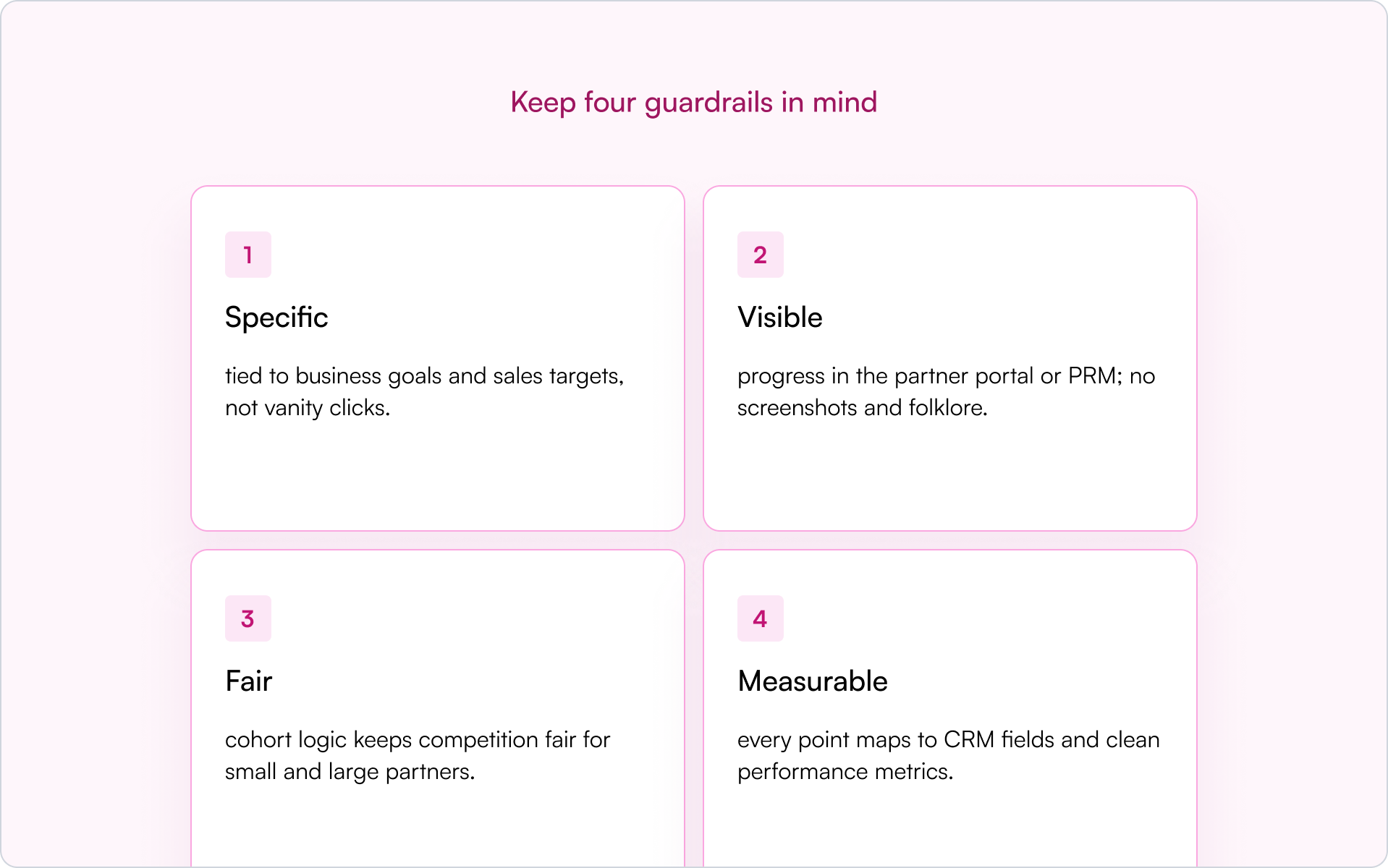
To keep it trustworthy, anchor to four guardrails and return to them often as you scale:
- Specific to business goals and sales targets — no vanity clicks.
- Visible in your PRM or partner portal — no folklore or screenshots.
- Fair across partner sizes — cohort logic keeps healthy competition intact.
- Measurable with clean performance metrics — every point maps to CRM data.
With those principles in place, you can move from concept to practice without confusing partners or creating side spreadsheets.
From strategy to practice: choose outcomes first, then mechanics
Great programs start with outcomes, not features. Decide what matters this quarter — higher training completion, more qualified deal registration, better first-meeting rates — and then choose the lightest game elements that reinforce those outcomes. This keeps focus on partner success and prevents your plan from turning into a “points for everything” distraction.
Three mechanics that move numbers
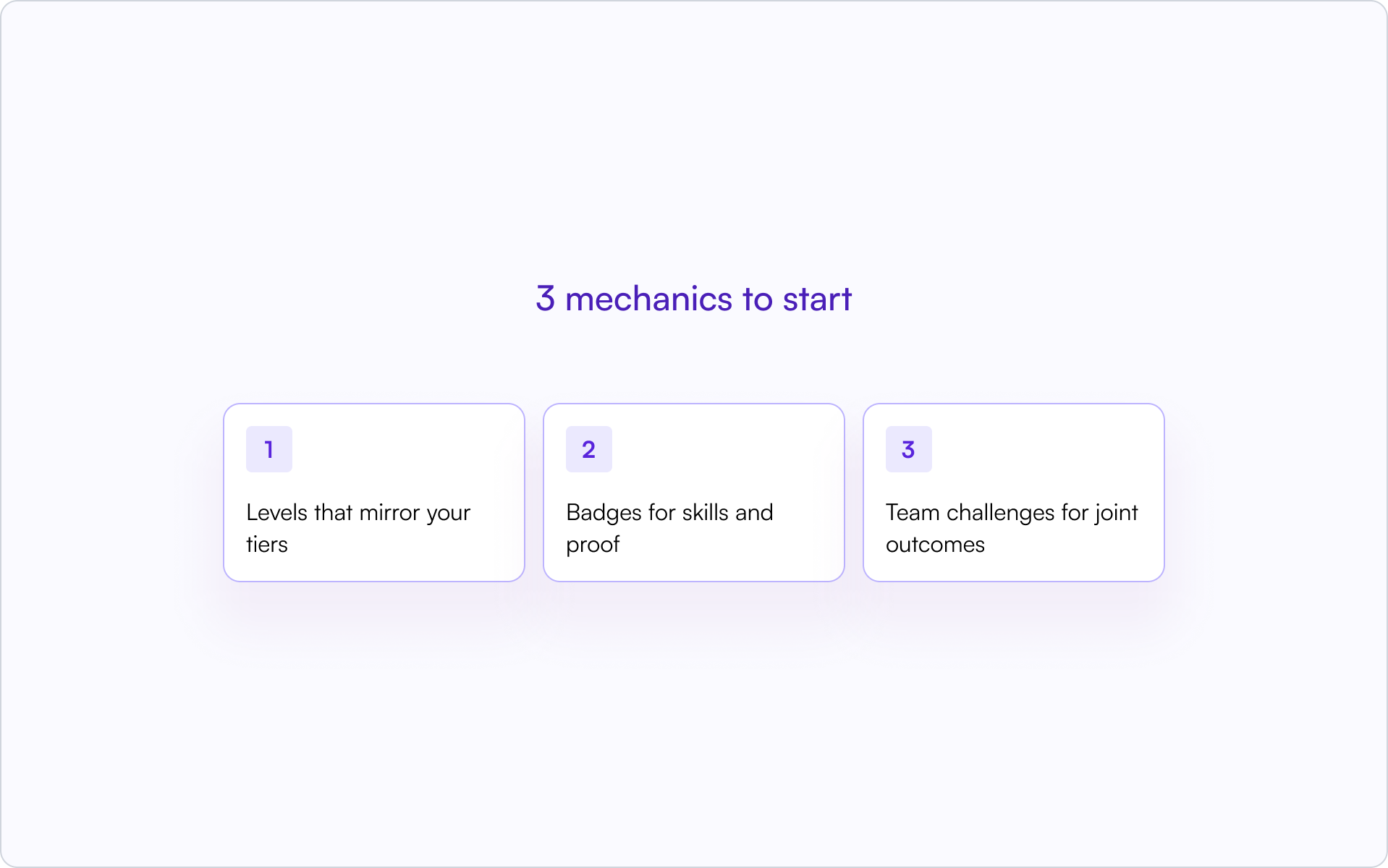
- Levels that mirror your tiers
When levels match your tiered structure (Registered, Select, Elite), partners always know what unlocks the next rung. They complete onboarding, validate a use-case pitch, meet a modest sourced-pipeline target, and keep renewals clean. In return, they unlock tier-specific benefits like priority support, co-marketing funds, and early access to features — real advantages that motivate partners without inventing a parallel system.
- Badges for skills and proof
Badges highlight skill development and credibility: certified individuals, solution validation, successful implementations. Link each badge to evidence (certification IDs, case studies, customer quotes) so sales reps route opportunities confidently and customers see the quality. This strengthens partner relationships and brand loyalty while encouraging partners to complete training modules quickly.
- Team challenges for joint outcomes
Short, time-boxed challenges create momentum and community. Run a 30-day sourced-pipeline sprint in a key vertical, a co-marketing push with shared UTMs, or an adoption wave for a new module. Publish standings weekly and recognize both absolute leaders and cohort winners so smaller firms compete fairly. This is encouraging healthy competition without skewing toward the biggest players.
With Introw, these gamification mechanics live where partners already work — email, Slack — so partners participate actively without extra tools and your channel partner programs avoid complexity.
Reward structure: behavior first, cash last
Picking mechanics is half the story. The other half is fuel. Recognition sustains habits; financial rewards should amplify outcomes. This balance motivates channel partners, keeps budgets sane, and avoids the pitfalls of traditional incentive programs.
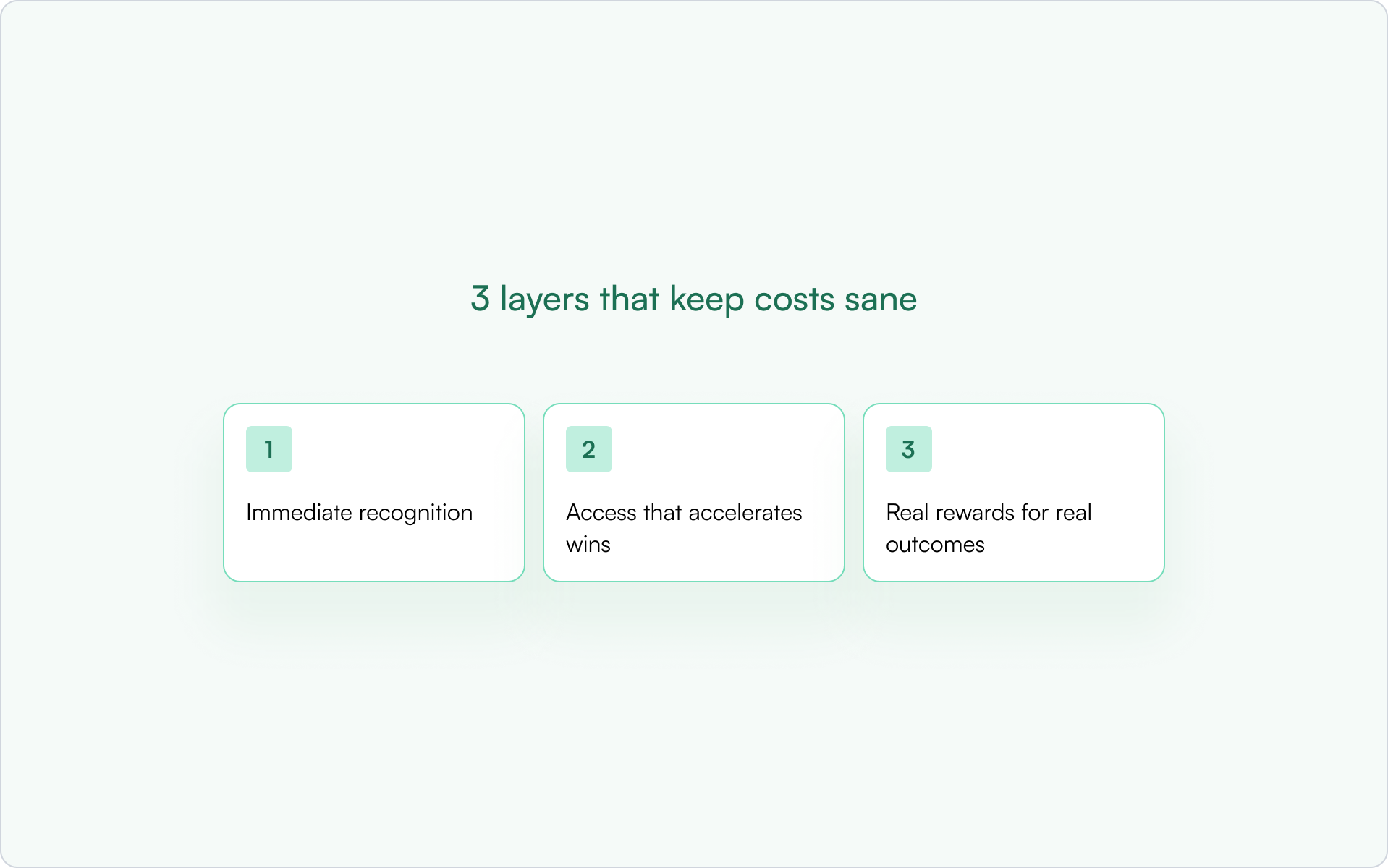
- Immediate recognition
When partners complete training, register a qualified deal, or move a stage, trigger instant recognition: progress bars update, badges appear, and the partner community sees a shout-out. Immediate recognition creates motivation, reinforces desired behaviors, and costs nothing.
- Access that accelerates wins
For intermediate milestones, access beats cash. Offer priority support with named escalations, exclusive training and office hours with product, early access for ISVs, and simple MDF with quick approvals. These reward systems directly improve partner performance and help partners hit sales targets.
- Real rewards for real outcomes
Use financial rewards for outcome milestones — sourced-revenue bands, multi-logo wins, regional breakthroughs. Publish the rules, make them predictable, and time-box them. That way your gamification initiatives strengthen your channel strategy instead of distorting it.
These layers move naturally from learning to doing to achieving — the same arc a healthy sales process follows.
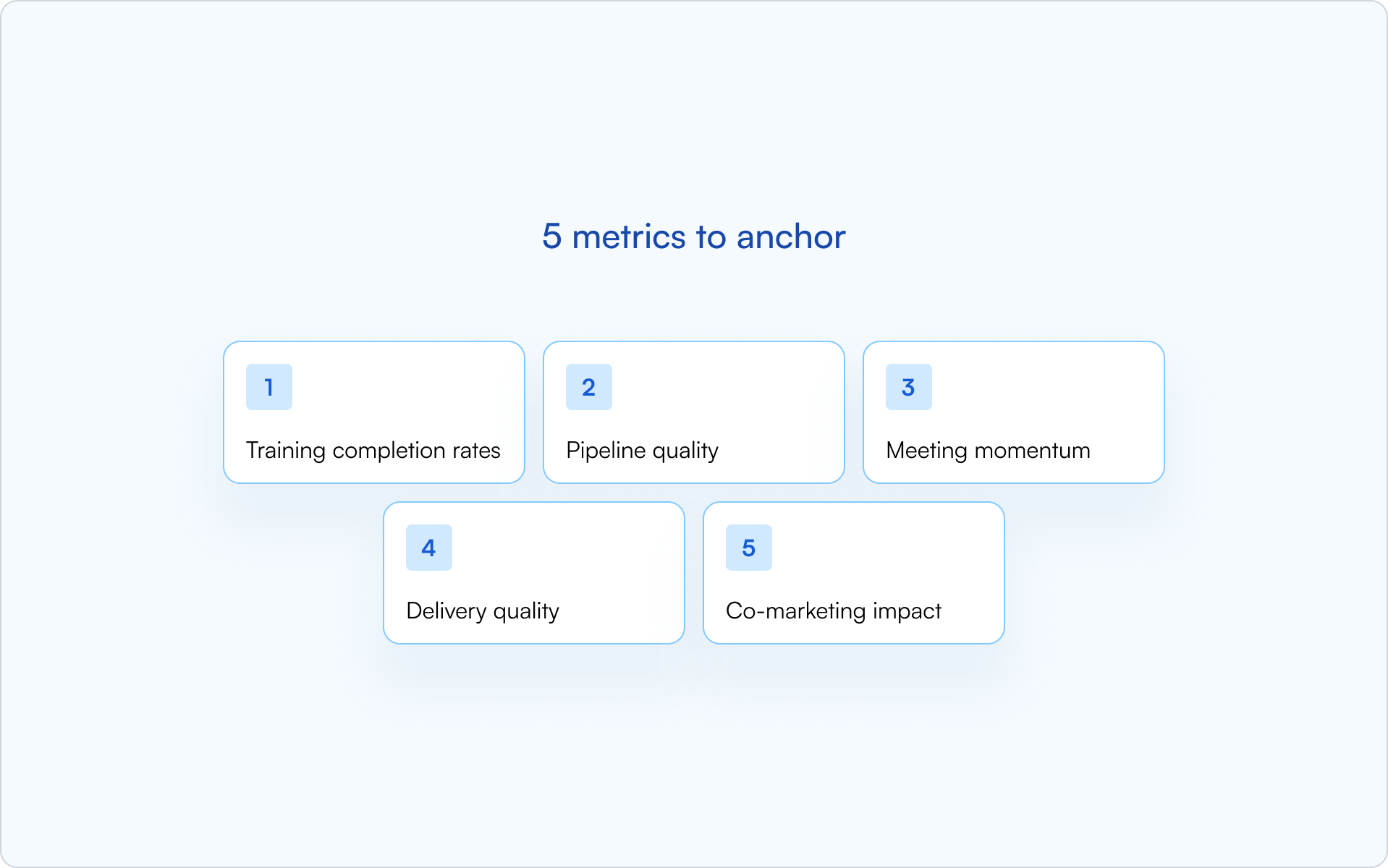
5 metrics that make the game fair and productive
Now tie each mechanic to one KPI you already trust. Keep the set short so everyone understands how points become progress and progress becomes revenue. Comparing like with like keeps the competitive spirit healthy and prevents gaming.
Five practical anchors:
- Training completion rates from your learning management system — onboarding, role-based certifications, product updates.
- Pipeline quality — qualified registrations, deal registration records, stage progression, next-step hygiene.
- Meeting momentum — first-meeting rate and discovery-to-proposal conversion to lift sales productivity.
- Delivery quality — on-time milestones, CSAT after go-live, low escalation rate to protect customer experience.
- Co-marketing impact — form-fills from partner audiences, event attendance, sourced opportunities.
Introw maps each signal to CRM fields and renders partner-visible progress tracking. Managers see one source of truth for performance metrics and partners see exactly how to earn rewards — no confusion, no duplicated data.
The quiet growth engine: onboarding and learning
Most teams jump to quarterly games, but the biggest lift often starts earlier. By incorporating simple game elements into enablement, you help partners complete training modules, adopt sales enablement content, and turn knowledge into action faster — shortening the sales cycle and improving buyer engagement.
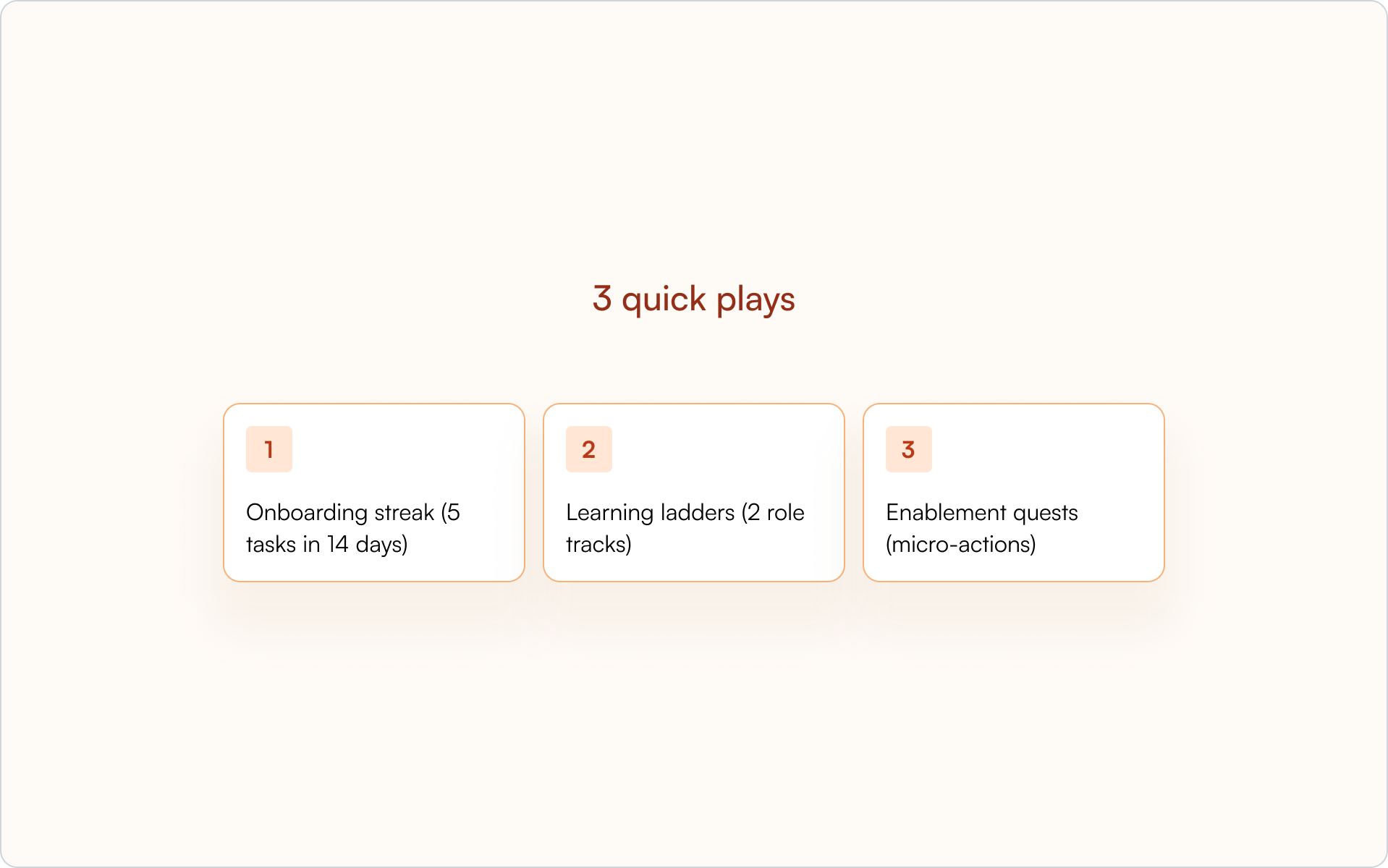
Three quick plays:
- Onboarding streak — five tasks in 14 days: portal setup, ICP training, demo pass, one use-case pitch, first registration. Outcome: Ramp-Ready badge plus a co-sell office hour.
- Learning ladders — two tracks: Field-Ready for sales reps (discovery practical) and Deploy-Ready for delivery (sandbox build).
- Enablement quests — watch a short play, send the snippet to three prospects, log outcomes for a micro-badge and a community callout.
If you already use sales enablement tools or an LMS, sync completion so badges and levels show up alongside open opportunities. That integration helps partners and your internal sales team keep energy on actions that move the funnel.
A rollout that respects day jobs
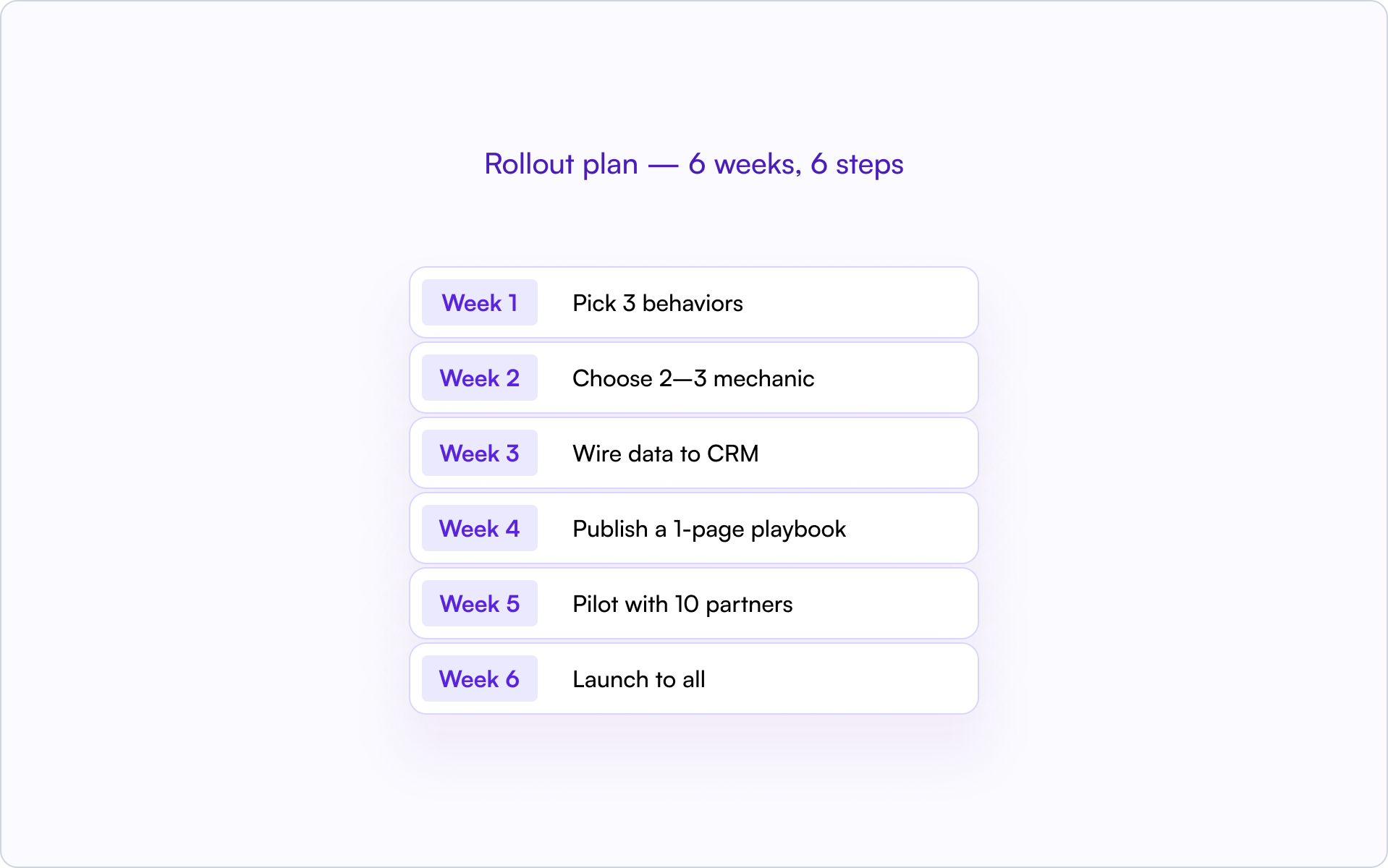
You do not need a big bang. A calm, six-week rollout gives partners a clear start line, removes ambiguity for sales teams, and sets up clean measurement from day one.
- Week 1 — Pick three behaviors: training completion, qualified registrations, first-meeting rate.
- Week 2 — Choose two or three mechanics: levels, badges, one 30-day team challenge.
- Week 3 — Wire definitions to CRM and set cohorts for fairness.
- Week 4 — Publish a one-page playbook in the partner portal with rules, examples, screenshots, and FAQs.
- Week 5 — Pilot with ten partners, gather partner feedback, and tune scoring where needed.
- Week 6 — Launch broadly, send weekly standings, highlight next steps, and support sales reps with talking points.
Introw compresses the middle weeks by turning CRM fields into progress bars, automating nudges, and letting partners engage from email or Slack, which keeps partners engaged without adding a new login.
Guardrails that keep trust high
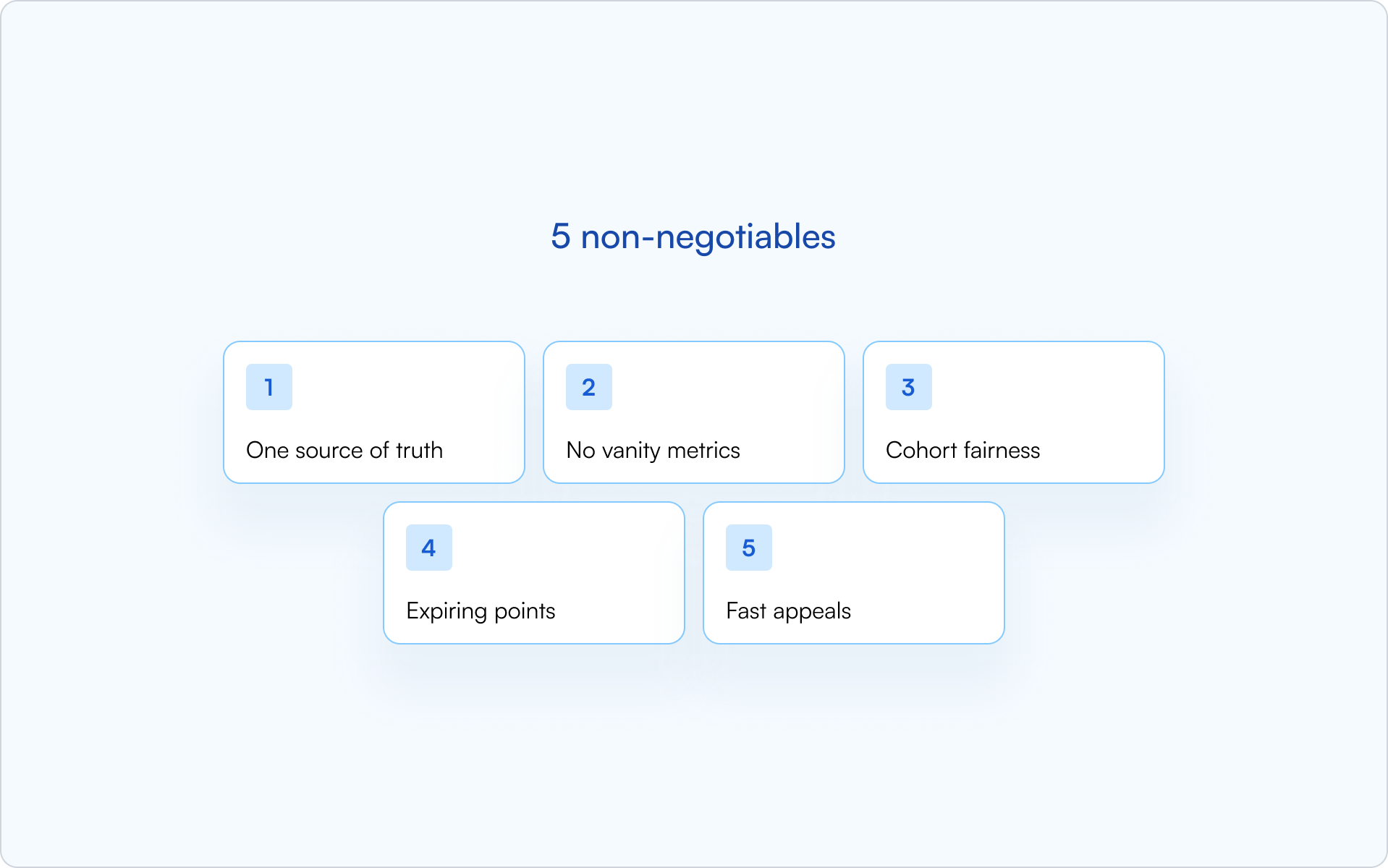
Every fair game needs boundaries. These five keep your program credible and effective:
- One source of truth — if it is not in CRM or PRM, it does not count.
- No vanity metrics — score qualified actions and outcomes, not logins or clicks.
- Cohort fairness — compare similar partner types so smaller firms can earn rewards on merit.
- Expiring points — score within the current quarter so momentum matters.
- Fast appeals — partners submit evidence, you respond with dates and thresholds.
These constraints keep gamification techniques aligned to business growth and partner satisfaction, not noise.
Where Introw fits when you are ready to operationalize
Introw brings partner relationship management gamification into the everyday flow of your channel strategy. Levels mirror your tiers, badges reflect real certifications and case evidence, and leaderboards run on live Salesforce or HubSpot data. Partners see their standings, immediate recognition, and next steps without extra portals. Because the gamification elements map to tier criteria and deal registration, recognition fuels mobility and partner programs stay coherent.
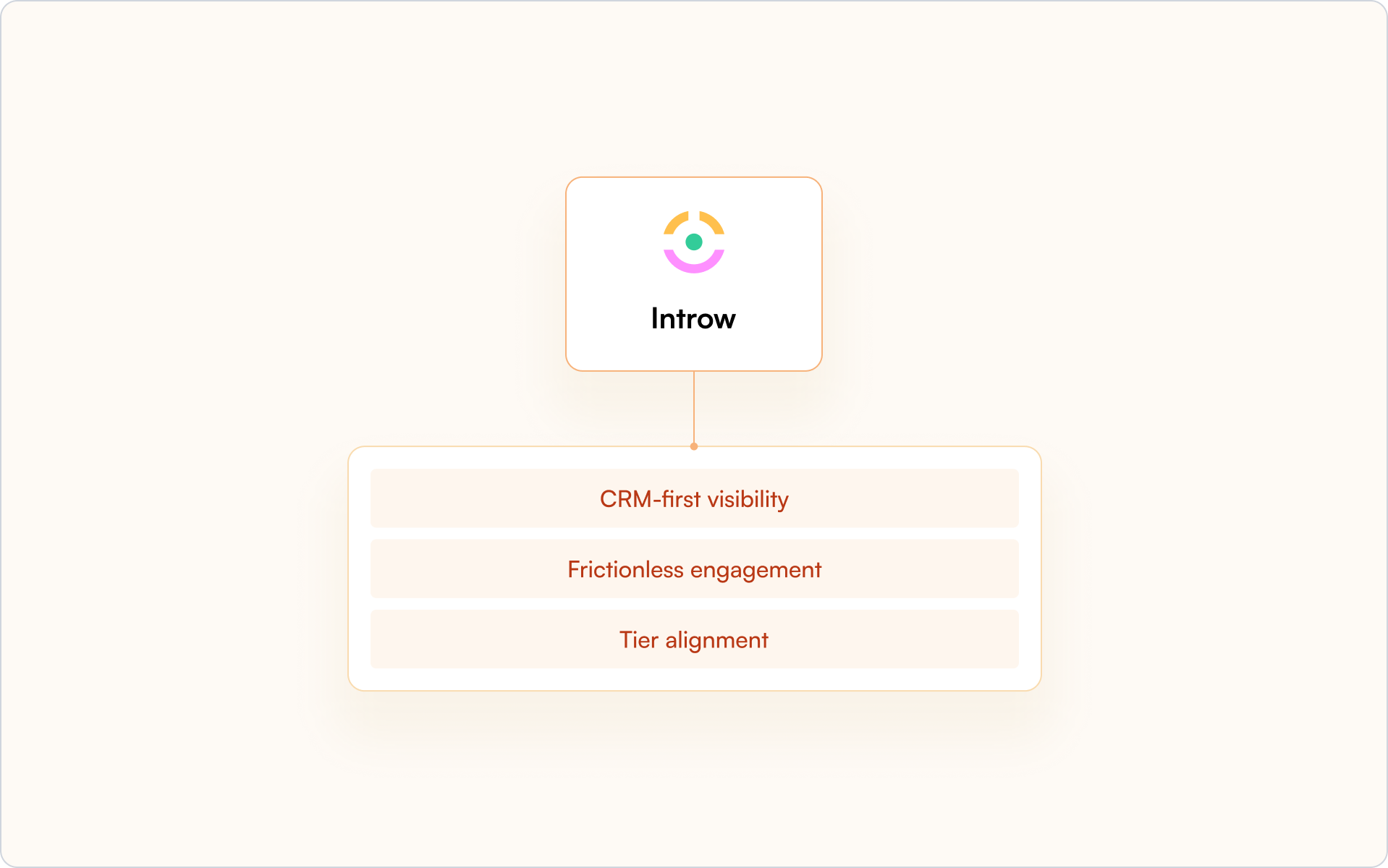
Ready to boost channel partner engagement without overpaying? Request an Introw demo and see how gamification initiatives, tiering, and co-selling come together in one CRM-first workflow.
Still curious? Here are some quick answers to help clear things up
Launch one leaderboard for first-meeting rate and a Ramp-Ready badge for finishing onboarding within 14 days. Announce in your partner portal and by email to kick-start engagement.
Use financial rewards only for outcomes — sourced revenue bands and multi-logo wins. Use access-based incentives for intermediate steps to motivate desired behaviors without inflating costs.
Yes. Cohort leaderboards by size or region and include rate-based metrics like conversion and CSAT so comparisons stay fair and partners complete on ability, not footprint.
In a CRM-connected PRM so levels, badges, challenges, and opportunities live together. Introw shows progress without extra logins, which keeps participation high.
Track leading indicators first — training completion, qualified registrations, first-meeting rate, and stage progression. Over two to three quarters, look for lift in sourced pipeline, win rate, renewals, and overall partner performance.



Are you already an active Introw partner?
Book a demo with one of our partner program experts, or explore Introw on your own time.