


What would change if every partner could register deals from email or Slack in seconds?
Most deal registration programs still rely on long forms, portal logins, and manual updates. That slows partners down and creates a duplicate pipeline and unclear ownership.
A modern deal registration process removes those steps, automates approvals, and keeps every deal stage in your CRM. When registering deals feels easy, partners submit earlier and stay aligned with your team.
You’ll learn
- what effective deal registration software looks like today,
- how to evaluate the essentials,
- and which platforms actually help partners register deals consistently.
So where does friction come from, and how does a better workflow protect partner trust and improve forecasting?
Why deal registration still breaks (and how to fix it)
Deal registration should be simple. Partners register deals, your team reviews them quickly, and everyone stays aligned.
Yet many deal registration programs still create friction. Partners hit access issues, approvals move slowly, and deal data becomes inconsistent.
Over time, this reduces partner trust and increases channel conflict across direct and indirect sales.
Deal registration process friction
Most deal registration failures come from three predictable blockers:
- Partner portals that require logins or too many steps.
- Deal submission forms that take too long to complete.
- Approval delays that leave partners without updates.
When the process feels heavy, partners default to emailing an AE instead of using the deal registration tool.
This leads to duplicate deal data, unclear ownership, and rising tension between channel partners and the direct sales team.
Channel managers then lose visibility into deal stages and partner behavior.
A common breakdown looks like this:
- A partner tries to register deals but cannot access the partner portal easily.
- The direct sales team enters the same customer manually.
- Conflicting records appear, and no one has a clean view of deal progress.
This cycle hurts partner relationships and weakens your partner program.
What good deal registration looks like
A strong deal registration program focuses on three essentials:
- Off-portal intake through email, Slack, or lightweight links.
- Instant confirmations tied to CRM deal stages.
- Clean, CRM-native deal data that updates in real time.
With these elements in place, partners register deals earlier and more consistently.
Clear rules reduce conflict when multiple partners work with the same customer. Automated updates keep partners informed without manual data entry. And real-time visibility across your sales pipeline helps both channel partners and internal channel managers stay aligned.
Here is how modern systems solve old problems:
Platforms that follow this model, including Introw’s deal and lead registration workflow, reduce friction by syncing every submission directly into the CRM and keeping partners informed automatically.
Why this matters for deal flow
Deal registration software works only when partners trust the experience.
When partners can register deals quickly, stay informed, and see consistent deal stages, they engage more. This leads to cleaner partner pipeline visibility, fewer disputes, and faster revenue cycles.
To evaluate which deal registration software delivers on this, the next section breaks down the core features every buyer should look for in 2026.
How to evaluate deal registration tools (buyer checklist)
Choosing deal registration software is easier when you know what actually drives partner adoption.
Most teams compare features, but in our experience, the real difference comes from how well the tool supports your partners day to day.
If the process feels simple, partners register deals more often, and your deal data stays clean inside Salesforce or HubSpot.
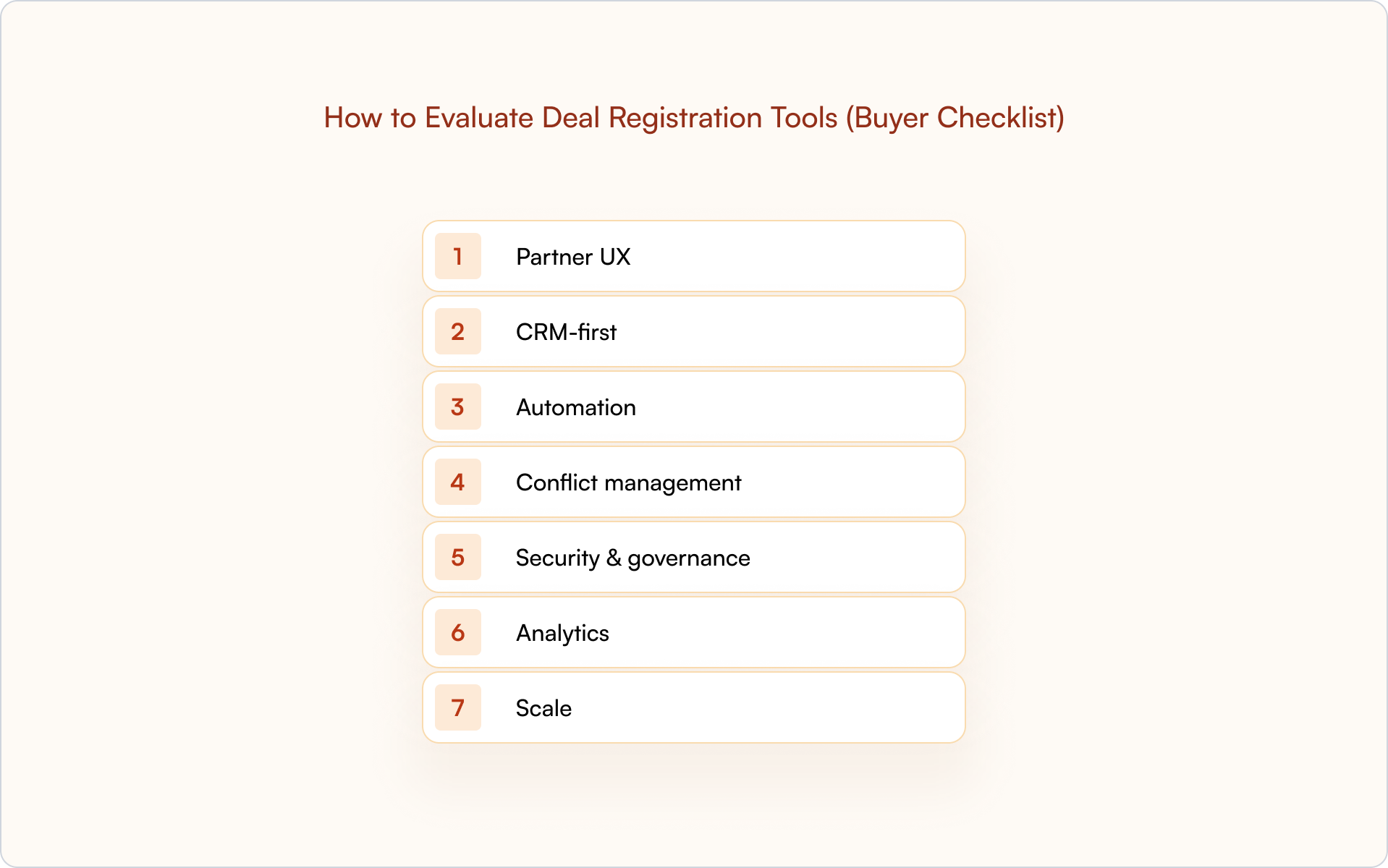
Start with partner experience
Partner experience is the biggest factor in deal registration success. If the process feels slow or confusing, partners will skip it and email someone on your direct sales team instead.
Strong tools make deal registration simple by offering:
- Fast intake through email, Slack, or a short deal submission form.
- Clear steps so partners know exactly how to register deals.
- Mobile-friendly options for partners who work on the go.
We see the best results when channel partners can register deals without touching a partner portal. It removes friction and improves partner trust from the start.
Set up a good deal registration module
A good deal registration module should help your business reduce channel conflict and keep deal progress visible across teams.
When tools automate the steps partners usually struggle with, your partner program becomes easier to run.
Look for:
- Automatic approvals based on time stamps, partner tier, or ownership rules.
- Real-time sync of deal stages inside your CRM.
- Clean deal data that does not require manual data entry.
These features keep your channel pipeline data accurate and give both partner managers and internal sales teams a single view of each opportunity.
Governance and scale as your partner program grows
As your partner program expands, you need structure. Different partner segments often need different experiences, and your internal teams need clear rules to avoid mix-ups.
We suggest checking for:
- Role-based access so partner managers and sales leadership see what they need.
- A reliable audit trail that tracks changes and partner behavior.
- Flexible segmentation for geos, partner tier, or product lines.
These guardrails help your business stay aligned as more partners register deals and your sales pipeline grows.
A quick way to compare tools
Why this checklist helps your business
A deal registration program only works when partners engage with it.
If you choose software that simplifies the process, your partners register deals earlier, your teams stay aligned, and you avoid the channel conflict that slows down revenue.
Now that you know what to look for, we can compare the deal registration tools that actually help partners register deals without friction.
The 17 best deal registration software platforms (2026)
We've put together our picks for solid deal registration tools that we see most often across SaaS partner programs.
Each one supports deal registration, but they solve different problems depending on your partner segments, tech stack, and channel strategy.
Use this section to match your program design to the right platform, not just the biggest brand.
1. Introw

Introw is a CRM-native deal registration system that lets partners register deals from email, Slack, or lightweight links instead of a portal.
Who it’s for
B2B teams on Salesforce or HubSpot running referral, reseller, or co-sell motions with 20–300+ channel partners.
Why choose it
Partners register deals without logging in, while your teams work entirely from native CRM objects with real-time deal stages.
Standout capabilities
Off-portal intake, automated approvals, deal progress updates synced to Salesforce or HubSpot, and engagement analytics across the partner pipeline.
Keep in mind
Best if you want deal registration, partner engagement, and attribution in one CRM-first platform instead of a heavy portal.
Integrations/notes
Deep Salesforce and HubSpot integrations, Slack notifications, open API, and a focused deal registration module tied to clean pipeline data.
2. Impartner
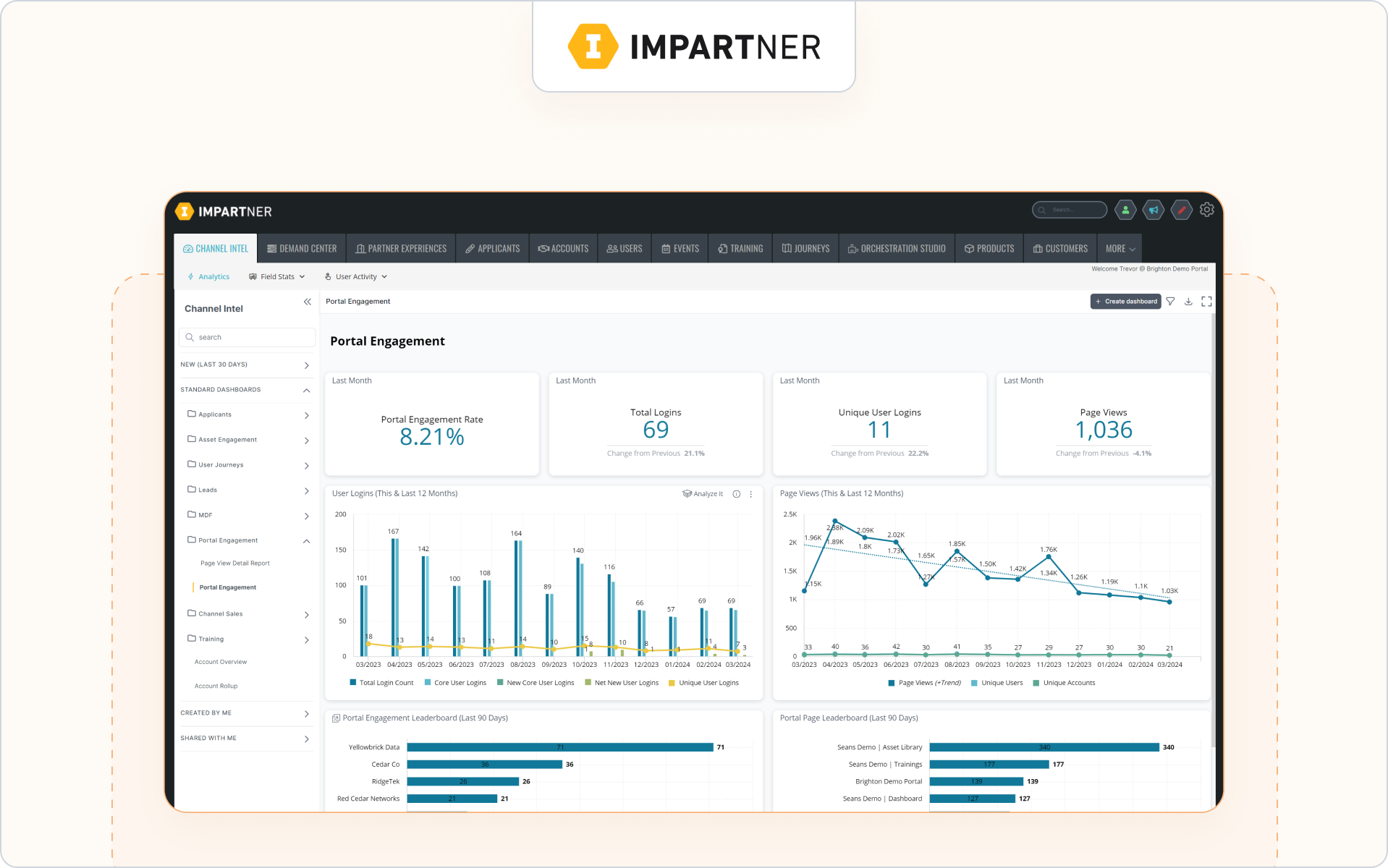
Impartner is a full PRM platform built for large channel programs with complex workflows.
Who it’s for
Global SaaS and technology companies with structured partner tiers and compliance needs.
Why choose it
Mature deal registration module, configurable approval logic, and strong governance for value-added resellers and distributors.
Standout capabilities
Tier rules, multi-step approvals, MDF, channel performance reporting, and tools to reduce channel conflict.
Keep in mind
Heavier setup; works best with dedicated channel managers and Salesforce-centric environments.
Integrations/notes
Strong CRM connectors, especially Salesforce, plus a wide ecosystem of partner marketing integrations.
3. Channelscaler (prev. Allbound)

Channelscaler combines partner training, content, and deal registration in a single portal.
Who it’s for
Teams that care about partner enablement as much as partner pipeline.
Why choose it
Partners can access marketing materials, complete training, and register deals in one place.
Standout capabilities
Content hub, learning paths, QBR support, and MDF handling with a guided partner portal.
Keep in mind
Portal-first model, so plan how you will keep partners logging in consistently.
Integrations/notes
Integrates with major CRMs and common partner marketing tools.
4. Kiflo
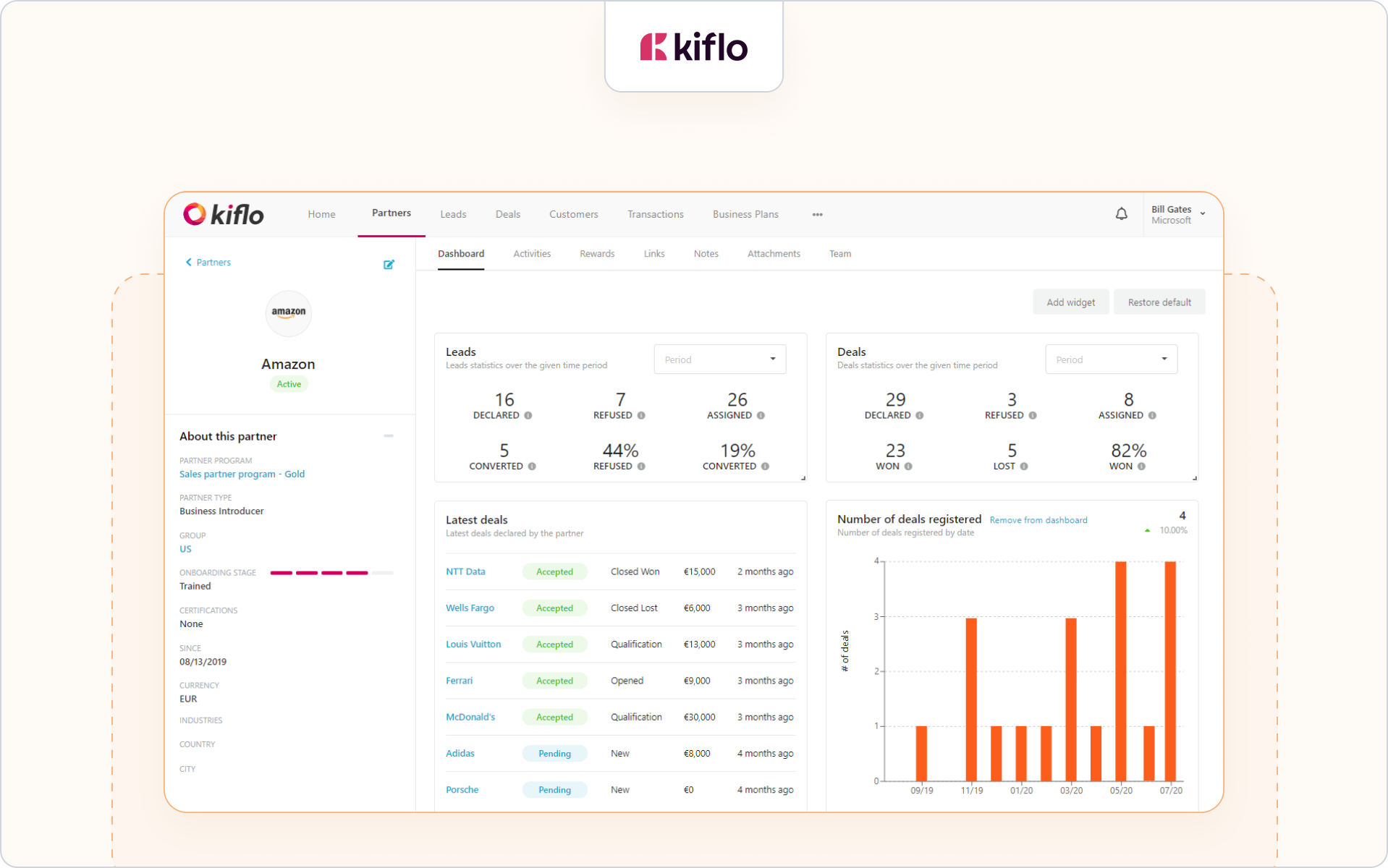
Kiflo is a simple, lightweight PRM with built-in deal registration for growing partner programs.
Who it’s for
SMB and mid-market SaaS companies launching a partner program for the first time.
Why choose it
Straightforward deal registration and onboarding without heavy admin.
Standout capabilities
Deal forms, partner onboarding, commission tracking, and basic partner performance reporting.
Keep in mind
Analytics and customization are lighter for complex global programs.
Integrations/notes
Connects with Salesforce, HubSpot, and common marketing tools.
5. Channeltivity

Channeltivity delivers structured deal registration and channel operations in a clean partner portal.
Who it’s for
Tech vendors that want predictable deal registration and partner management without enterprise overhead.
Why choose it
Reliable deal registration module with lead distribution and partner onboarding.
Standout capabilities
Deal forms, MDF, lead routing, referral management, and HubSpot integration.
Keep in mind
Off-portal submission is limited, so adoption relies on partner portal use.
Integrations/notes
Strong HubSpot integration with support for Salesforce.
6. Magentrix

Magentrix is a partner relationship management (PRM) platform.
Who it’s for
Salesforce-centric companies that need branded partner experiences.
Why choose it
Lets you build custom partner portals with community features, content, and deal registration.
Standout capabilities
Admin is no-code with drag-and-drop capabilities (and has been for the past three years). Magentrix emphasises that it’s the only enterprise-fit PRM with 100% no-code capability. You can also create flexible portal pages and set granular permission controls.
Integrations/notes
Magentrix positions itself as an alternative to Salesforce Experience Cloud, with integrations/connectors available (including Salesforce, depending on your setup) as well as support and marketing tools.
7. ZINFI
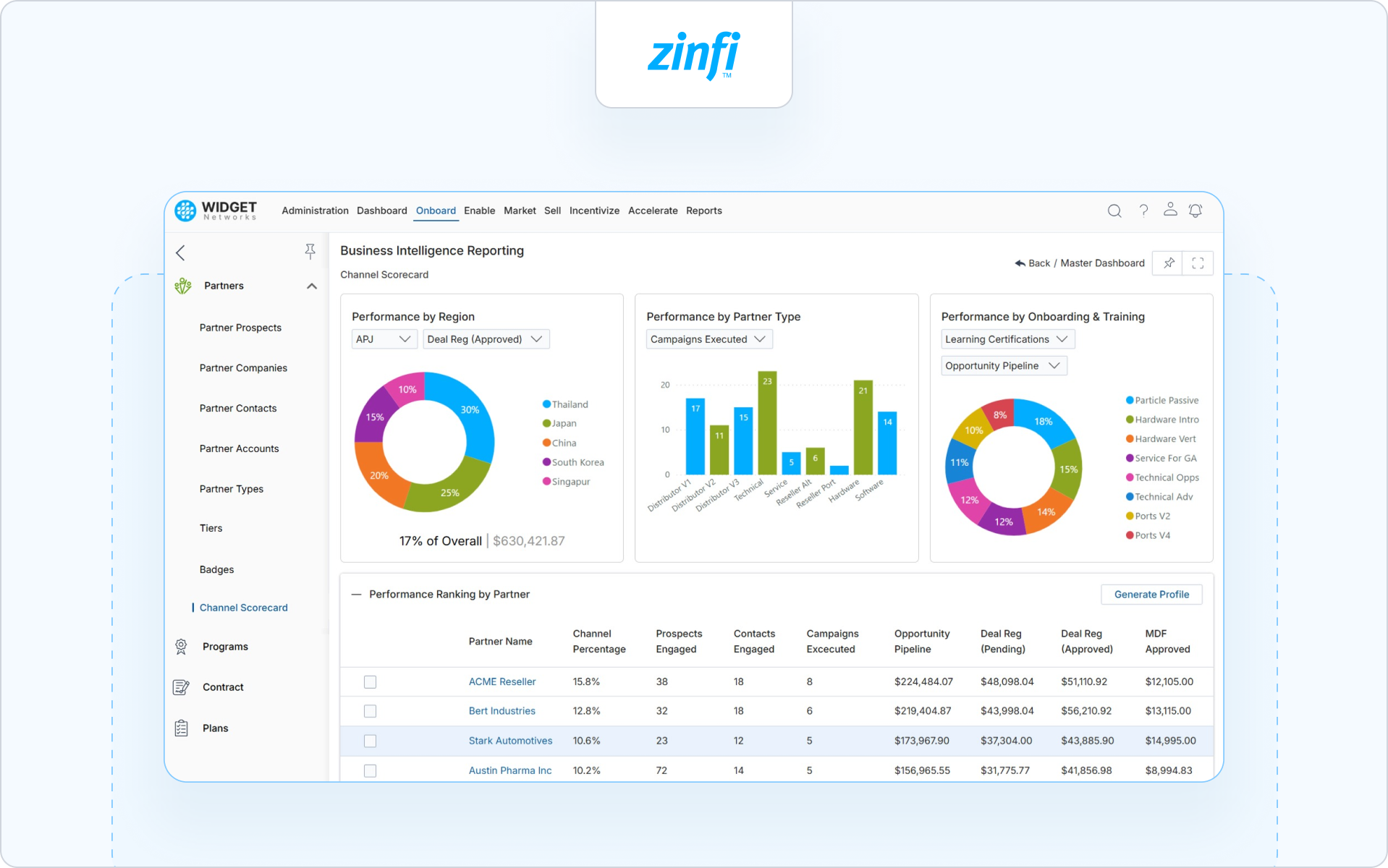
ZINFI supports large, complex channel programs that need detailed rules and compliance.
Who it’s for
Enterprises with many partner types, geos, and strict governance requirements.
Why choose it
Highly configurable approval rules and workflows for deal registration programs at scale.
Standout capabilities
Audit trails, rule engines, partner tiering, and multi-language support.
Keep in mind
Admin setup can be intensive; best for structured, mature channel programs.
Integrations/notes
CRM integrations plus connectors for channel marketing and data management.
8. WorkSpan
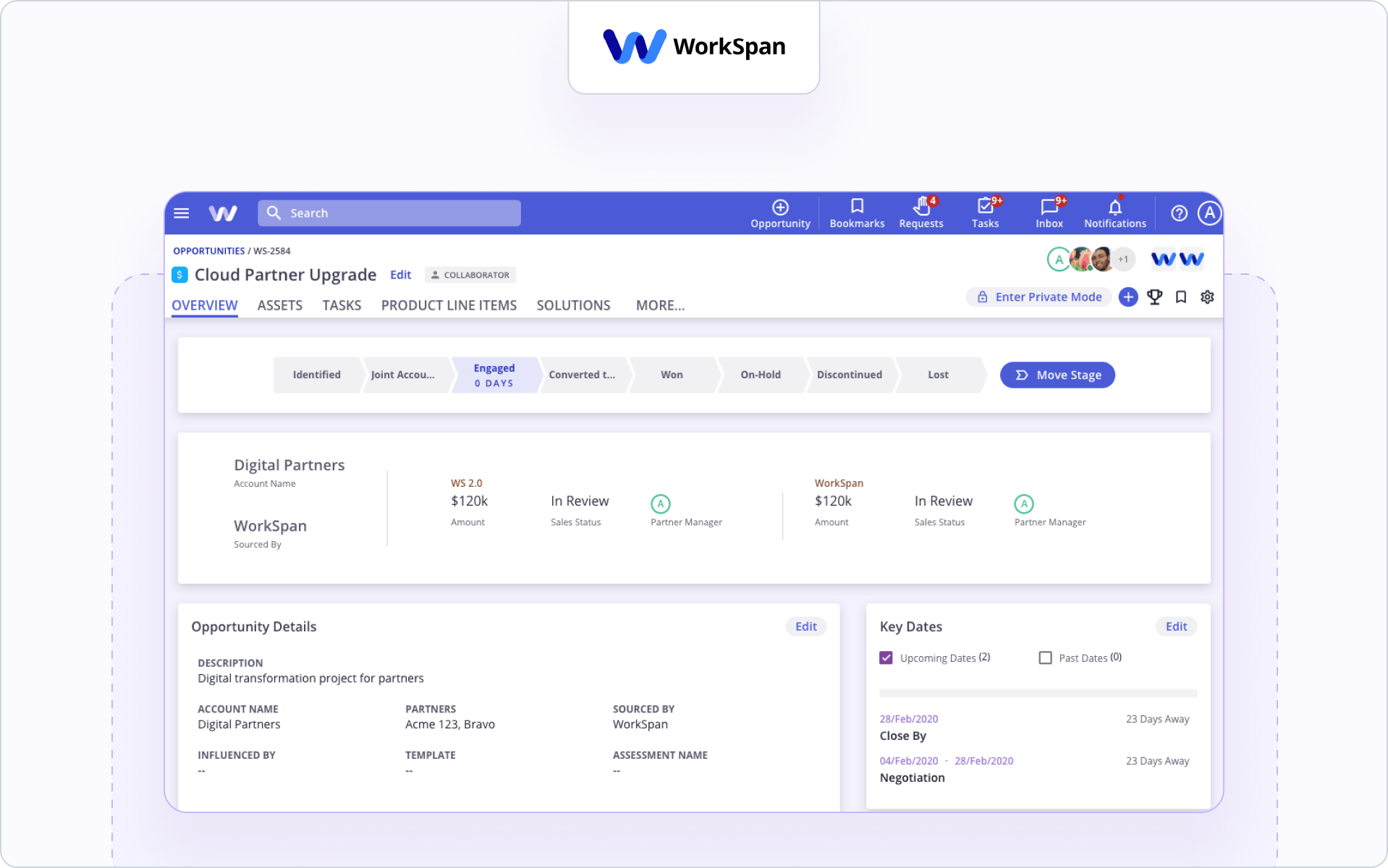
WorkSpan specializes in co-selling and alliances rather than classic PRM workflows.
Who it’s for
Vendors working with hyperscalers or cloud marketplaces on joint opportunities.
Why choose it
Shared opportunity records make co-sell deal stages clear across both organizations.
Standout capabilities
Joint pipeline, ecosystem account mapping, and influenced-versus-sourced reporting.
Keep in mind
Not a traditional deal registration portal; often used alongside other partner tools.
Integrations/notes
Salesforce, Microsoft Dynamics, and cloud marketplace ecosystems.
9. Unifyr (formerly Zift Solutions)

Unifyr is an all-in-one partner management platform that includes deal registration, partner marketing, and enablement.
Who it’s for
Established channel programs managing many partners, regions, and partner segments.
Why choose it
Combines deal registration, training, and channel marketing in one partner portal.
Standout capabilities
Through-channel marketing, certification paths, deal lifecycle tracking, and channel revenue reporting.
Keep in mind
Broad feature set; define which modules matter most so partners are not overwhelmed.
Integrations/notes
Connectors for Salesforce, HubSpot, and major marketing systems.
10. Computer Market Research (CMR)

CMR provides deal registration and compliance automation for traditional channel programs.
Who it’s for
Vendors managing distributors, resellers, or partners with strict governance requirements.
Why choose it
Strong multi-step approval logic and audit records for channel conflict management.
Standout capabilities
Deal registration module, ERP/CRM connectors, and tier-based workflows.
Keep in mind
UX leans traditional; training may be needed for partner adoption.
Integrations/notes
Supports major CRMs and ERPs used in hardware and distribution channels.
11. PartnerStack

PartnerStack mixes affiliate, referral, and reseller programs with simple lead and deal registration.
Who it’s for
SaaS companies working with many small partners across different partner segments.
Why choose it
Partners get one portal to find campaigns, register deals, and track rewards.
Standout capabilities
Marketplace, payout automation, onboarding flows, and basic deal registration.
Keep in mind
Not CRM-native; syncing tight pipeline data may require extra setup.
Integrations/notes
Billing, payment, and referral tools, with optional CRM integrations.
12. Kademi

Kademi focuses on partner enablement, incentives, and engagement, with deal registration included.
Who it’s for
Partner programs that rely heavily on motivation, gamification, and performance tracking.
Why choose it
Combines deal registration with incentives, certifications, and training.
Standout capabilities
Gamification, rewards, content libraries, and deal forms in one portal.
Keep in mind
Best suited for programs where partner loyalty is the main driver.
Integrations/notes
CRM and marketing tool integrations to support partner programs.
13. Partnerize

Partnerize supports partnership management across affiliates, influencers, and strategic partners.
Who it’s for
Enterprise brands with hybrid partner programs, including both performance and strategic partnerships.
Why choose it
Tracking, contracting, and attribution across many partner types, including deal-like flows.
Standout capabilities
Payments, performance reporting, partner discovery, and flexible contracting.
Keep in mind
Not built for classic B2B co-sell deal registration.
Integrations/notes
API-driven integrations for analytics, data warehouses, and performance platforms.
14. TUNE

TUNE is a customizable partner platform for app, mobile, and performance-driven programs.
Who it’s for
Mobile-focused vendors and performance teams that need flexible tracking.
Why choose it
Open APIs let teams design their own partner workflows, including light deal-style submissions.
Standout capabilities
Custom tracking, flexible partner types, and strong analytics.
Keep in mind
Not designed for B2B channel sales or structured deal registration.
Integrations/notes
API-first, integrates with mobile and ad-tech ecosystems.
15. Affise

Affise powers performance and affiliate programs with tracking, attribution, and partner management.
Who it’s for
Digital commerce vendors working with large performance networks.
Why choose it
High-scale partner tracking with optional lead or deal-style inputs.
Standout capabilities
Fraud protection, performance analytics, and flexible payout setups.
Keep in mind
Not a traditional channel sales platform; confirm fit for B2B deal registration needs.
Integrations/notes
Analytics, BI tools, and performance marketing platforms.
16. Salesforce PRM

Salesforce PRM extends Sales Cloud with partner portal and deal registration features.
Who it’s for
Companies standardized on Salesforce that want deal registration inside their CRM.
Why choose it
Partners register deals through a branded portal built on Experience Cloud with native Salesforce objects.
Standout capabilities
Partner portal, opportunity sharing, channel sales workflows, and training through Trailhead.
Keep in mind
Out-of-the-box UX is basic; usually needs admin support to fine-tune.
Integrations/notes
Deep Salesforce ecosystem integration, including Slack.
We know reviewing this many tools can feel overwhelming, but having a clear comparison helps you focus on what truly improves partner adoption and reduces friction.
The best way to narrow your list is to run a small, structured test.
So how do you compare platforms in a way that reflects real partner behavior?
Your 30-day deal registration software evaluation plan
A simple, structured test is the easiest way to see which deal registration software your partners will actually use.
In our experience, a short evaluation reveals far more than feature lists or demos. It shows how your channel partners register deals in real conditions, how clean your deal data stays, and which tool removes friction for your teams.
Week 1: shortlist and configure
Start with two or three options from your list. Set them up with the basics:
- Deal fields, partner segments, and approval rules
- Off-portal intake through email, Slack, or a lightweight form
- CRM sync for deal stages and ownership
This gives you a real view of how each deal registration tool fits your sales process.
Week 2: run a small partner pilot
Invite ten partners from different partner segments. Ask them to register deals the same way they usually would and watch what slows them down.
Measure:
- How fast partners register deals
- What questions they ask during the deal registration process
- How easily they stay informed as deal data updates in your CRM
This shows the difference between portal-heavy tools and software deal registration that partners enjoy using.
Week 3: evaluate performance
Focus on the signals that matter for channel programs:
- Submission time and approval speed
- Percent of accepted deals and clean deal stages
- Partner feedback on ease of use and partner satisfaction
These metrics show which platform improves partner pipeline visibility and reduces channel conflict across teams.
Week 4: choose your winner
Share your findings with sales leadership and internal channel managers. Here are the steps:
- Highlight what helped partners register deals faster,
- Look at where deal data stayed clean,
- and evaluate which deal registration software supported your channel partners without extra effort.
A fast path forward is to adopt the tool that reduces friction and improves forecasting.
Want to see how a CRM-first workflow feels in Salesforce or HubSpot? Request an Introw demo.
To understand how this plays out when partners register deals without hesitation, it helps to look at how Introw handles the entire flow.
Why SaaS teams pick Introw for deal registration
If you want partners to register deals consistently, keep deal data clean, and avoid channel conflict, the experience has to be simple.
Introw was built for that.
It meets partners where they already work, keeps your CRM as the single source of truth, and removes the manual work that slows teams down.
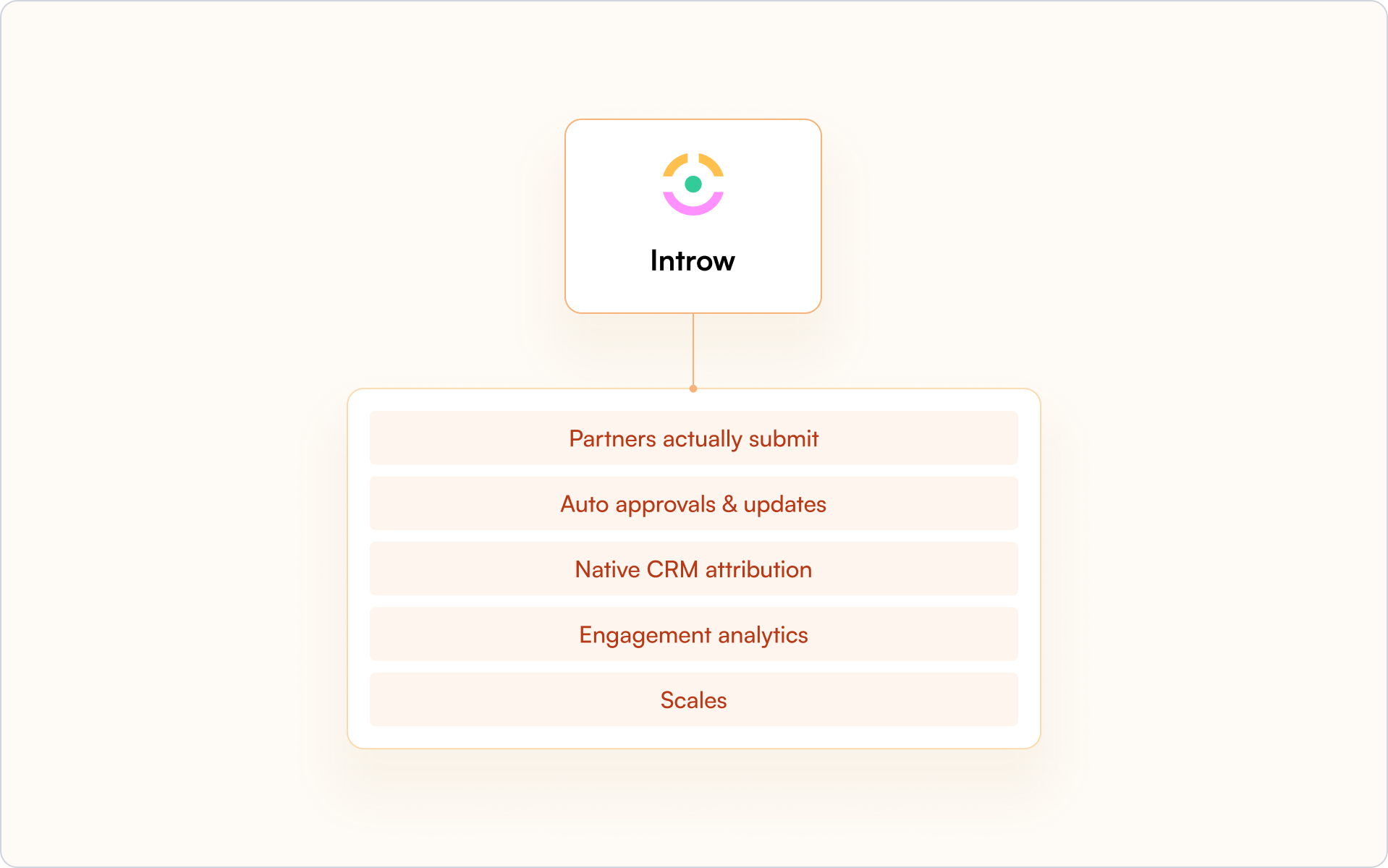
A quick look at how Introw compares
The results teams see with Introw
Introw is used in real partner programs that need reliable deal registration software. One example comes from SANDSIV, where moving away from spreadsheets to a CRM-first workflow created a measurable impact.
This lift came from reducing friction, improving partner satisfaction, and giving internal sales teams clear visibility into deal stages across different partner segments.
Your next steps
If you want your partner program to run with less friction and more consistency, here are three simple places to start:
- Audit your current deal registration process
Identify where partners get stuck, which steps require manual updates, and where deal data becomes unreliable in your CRM. - Test two or three tools with real partners
Even a small pilot shows which platform supports your channel partners and which ones create more work. - Compare CRM-native workflows
Look closely at how each tool handles deal stages, approvals, and pipeline visibility inside Salesforce or HubSpot.
Ready to see what a CRM-first, partner-friendly workflow looks like in practice? Schedule a short Introw session and request a demo today.
Still curious? Here are some quick answers to help clear things up
A deal registration program lets channel partners register deals early, so your teams can track ownership, reduce channel conflict, and protect partner relationships. It keeps deal data clean, improves forecasting, and gives both channel partners and internal sales teams clear visibility into the sales pipeline.
Off-portal intake lets partners register deals through email, Slack, or a simple form instead of a partner portal. This removes friction, reduces manual data entry, and encourages partners to register deals consistently across different partner segments.
You need clear approval rules based on time stamps, partner tier, and customer ownership. These rules help your business reduce channel conflict, prevent multiple partners from claiming the same customer, and ensure approved deals move through deal stages without delays.
Yes. CRM-native software deal registration allows partners to register deals while your teams manage everything inside Salesforce or HubSpot. This keeps deal data accurate, supports clean reporting, and aligns direct sales and channel partners on deal progress.
Start by cleaning your current deal data, mapping your fields to Salesforce or HubSpot, and importing existing sales opportunities. Then run a short partner pilot to confirm that the new deal registration tool supports your partner program, partner pipeline, and approval process without extra work.






Are you already an active Introw partner?
Book a demo with one of our partner program experts, or explore Introw on your own time.