


What is a partner portal, and why and when do you need one
A partner portal is a secure space where your partners access the tools, data, training, and marketing materials they need to sell with you.
Modern partner portal software connects deal registration, partner onboarding, partner marketing, and CRM visibility in one platform so your team can manage relationships and revenue without spreadsheets.
Why and when you need one
You need a partner portal when your partner program starts influencing real sales. If your team is manually updating deals, your resellers need controlled access to pipeline data, or you cannot clearly tie partner engagement to revenue, manual processes will slow your business down.
The right partner portal software gives your partners access to relevant deals and support while keeping Salesforce or HubSpot as the single source of truth. That balance is what drives adoption, visibility, and scalable channel growth.
So what separates average partner portal software from the best partner portal software for your business?
It comes down to adoption, CRM alignment, and how well the portal supports your partners in real selling situations.
The Shortlist: Best Partner Portal Software (2026)
Here's our shortlist of partner portal software platforms worth comparing in 2026, starting with the option built specifically for SaaS channel programs.
1. Introw partner portal

Best for
SaaS partner programs that care about adoption, CRM trust, and measurable revenue impact.
Why it’s a fit for portals
The Introw partner portal is built specifically for external partner use. It gives your partners controlled access to deals, leads, marketing materials, and training while keeping your CRM as the single source of truth.
Unlike traditional partner relationship management software that operates beside your CRM, Introw works inside it. Your partner portal reflects real Salesforce or HubSpot data with permission-based visibility. Your business data stays protected, and your partners see only what is relevant to them.
If adoption is your priority, this matters. Partners can engage through email and Slack without constantly logging in. When they reply by email, activity is logged automatically, so your team sees partner activities without chasing updates.
You can explore the full experience on Introw’s partner portal.
Highlights
Introw focuses on the practical elements that drive partner experience and revenue clarity. The portal connects your partner program directly to your CRM so you can manage deals, engagement, and performance in one platform.
- White-label branding and SSO so the portal reflects your brand
- Granular access controls for channel partners, resellers, and distributors
- Real-time deal registration and partner-safe pipeline views via our Salesforce integration or HubSpot integration
- Embedded Partner LMS for partner onboarding, certifications, recert windows, and AI-powered course creation
Because the portal is CRM-native, your sales team and internal teams do not need to reconcile data across disconnected tools. You get better reporting, clearer attribution, and visibility into how partners sell and influence deals.
If you want the broader category view, this guide to the best PRM software is a helpful companion.
Considerations
Introw is not designed as a heavy enterprise suite with complex incentive engines or layered distributor rebate structures. It focuses on adoption, clean CRM alignment, co-selling workflows, and partner enablement for SaaS channel programs.
If your channel programs rely heavily on advanced incentive modeling or carrier-style rule complexity, you should validate fit carefully.
Pricing note
Introw is structured to support external partner access without charging for casual logins. If you want to see how it works inside your CRM, you can request a demo.
2. Impartner
Best for
Enterprise companies running large, multi-tier channel programs across regions and partner types.
Why it’s a fit for portals
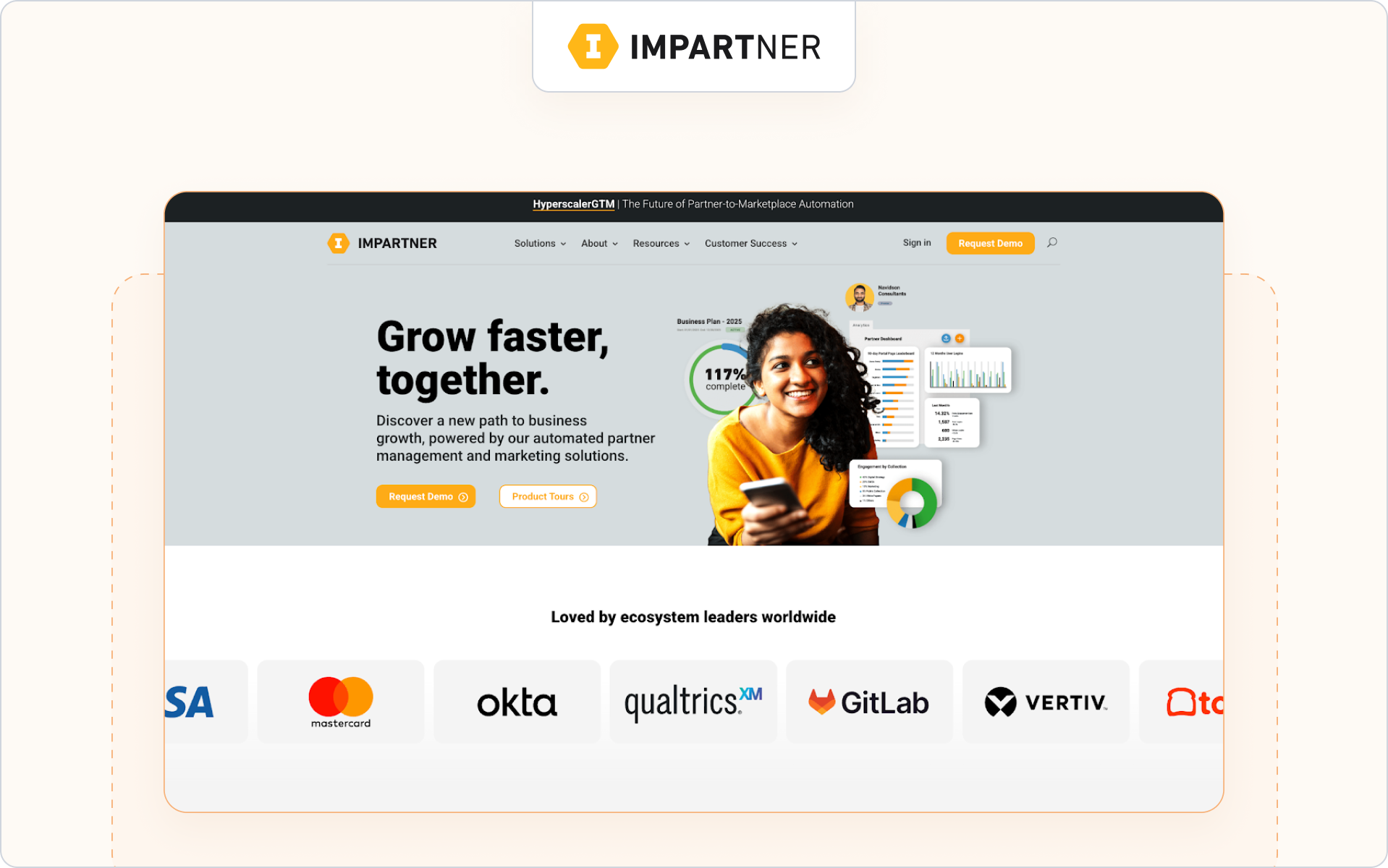
Impartner is a long-standing partner relationship management software provider with a robust portal module. Its partner portal is designed to support complex channel programs, including distributors, resellers, and global alliances.
The platform emphasizes structured governance, automation, and scale. If your portal sits inside a broader enterprise PRM strategy, Impartner is often on the shortlist.
Highlights
- Configurable portal with role-based access and SSO
- Built-in deal registration workflows and approval routing
- Program management tools for tiers, incentives, and partner performance
Considerations
Impartner’s depth can mean a heavier setup and ongoing administration. If fast partner adoption and lightweight workflows are your priority, validate how complex the experience feels for your partners.
Pricing note
Enterprise pricing. Typically requires direct consultation.
3. Channeltivity
Best for
Mid-market companies that want a clean partner portal combined with core PRM functionality.
Why it’s a fit for portals
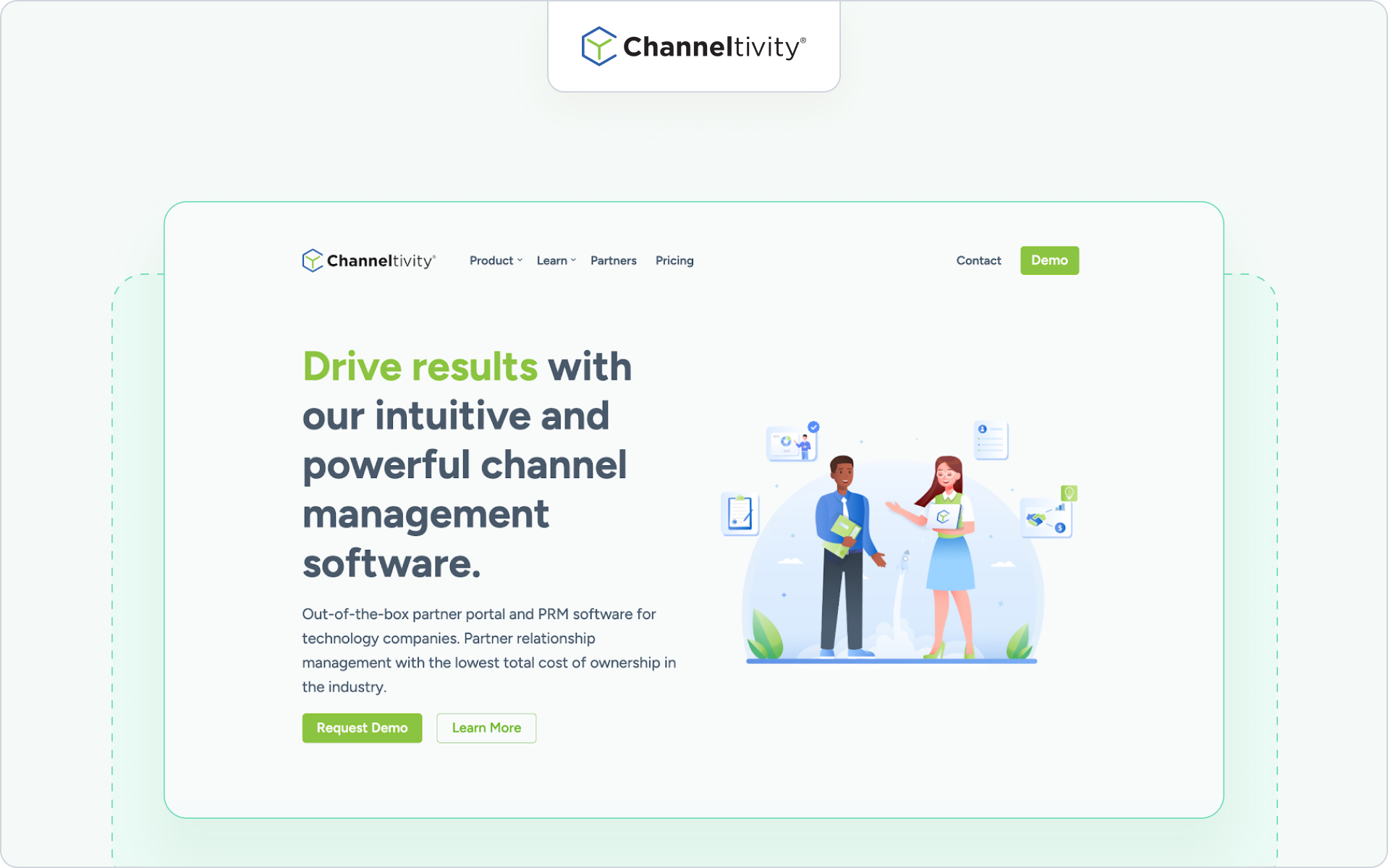
Channeltivity positions its portal as a structured, self-service environment for channel partners. It supports deal registration, content access, training, and partner communication within a straightforward interface.
If you want partner portal software that balances functionality and usability without heavy enterprise overhead, this is a practical option.
Highlights
- Branded partner portal with permission-based access
- Deal registration and lead distribution workflows
- Resource libraries and training modules
Considerations
If your business relies heavily on advanced partner marketing automation or distributor-level complexity, validate how far the portal can scale with your channel strategy.
Pricing note
Public tiered pricing is available on their website.
4. Magentrix
Best for
Salesforce-centric teams that want a flexible, community-style partner portal.
Why it’s a fit for portals
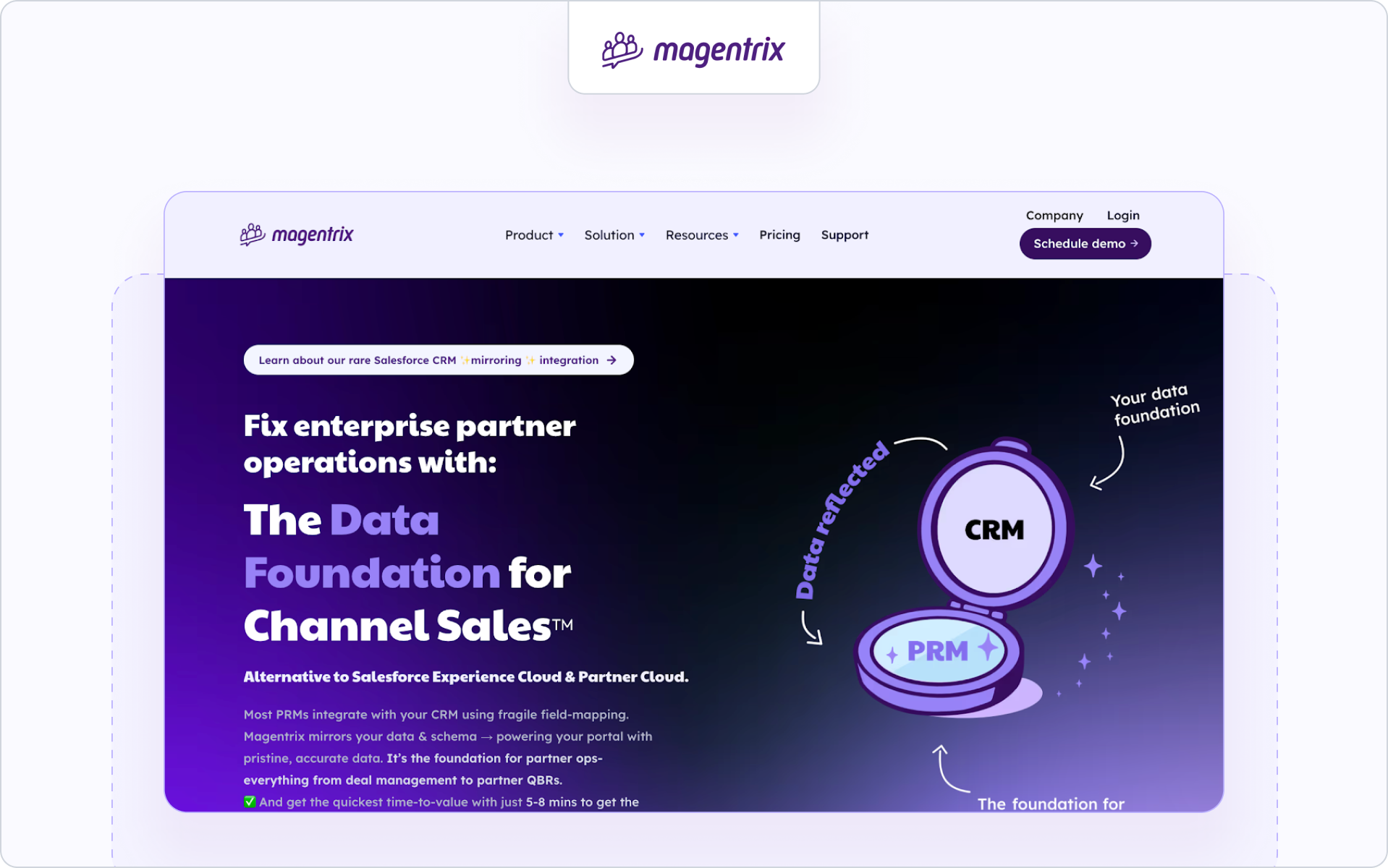
Magentrix offers partner portal software that integrates closely with Salesforce and can leverage Experience Cloud foundations. It combines portal capabilities with structured partner relationship management features.
If your business is deeply invested in Salesforce and you want strong layout customization, Magentrix can be a strong fit.
Highlights
- Salesforce-integrated deal and account visibility
- Customizable portal layouts and dashboards
- Training and onboarding modules
Considerations
Portal experience and reporting depth may depend on your internal Salesforce configuration capacity. Admin resources matter here.
Pricing note
Pricing is structured in tiers and typically requires consultation.
5. Salesforce PRM (Experience Cloud)
Best for
Organizations that want their partner portal fully embedded in the Salesforce infrastructure.
Why it’s a fit for portals
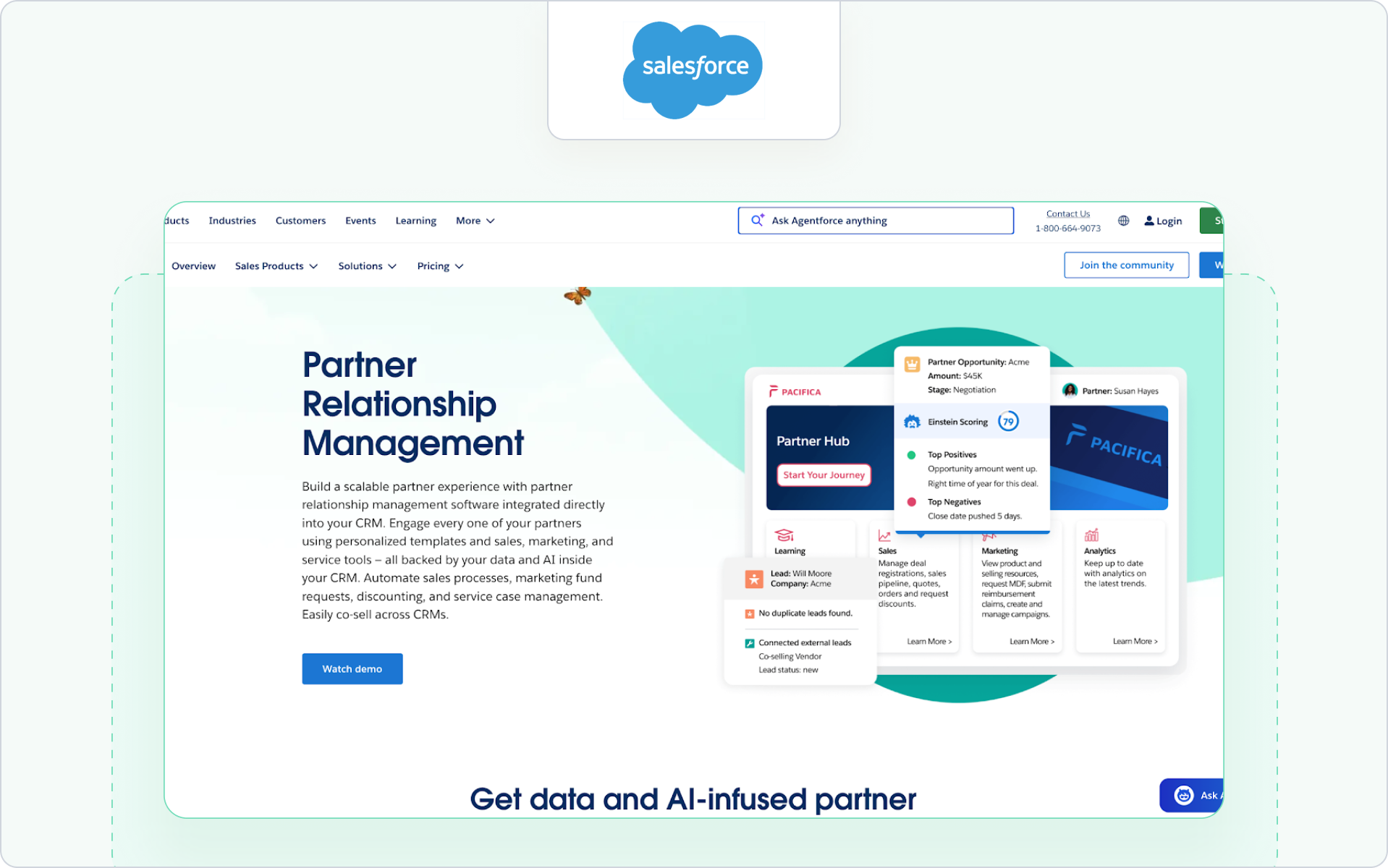
Salesforce PRM is built on Experience Cloud and allows you to create a partner portal directly inside your CRM environment. For Salesforce-first companies, this offers deep control over data access, workflows, and reporting.
This approach works well if your internal teams are comfortable managing Salesforce configurations and you want your partner portal tightly aligned with sales operations.
Highlights
- Direct CRM data access with granular role-based permissions
- Native deal registration and lead sharing
- Custom dashboards and reporting tied to sales performance
Considerations
Implementation and maintenance can be resource-intensive. If you want a fast-to-launch partner portal with minimal configuration, this route may require more internal support.
Pricing note
Pricing is typically per partner user license and varies by edition. Consultation with Salesforce is required for exact figures.
6. ZINFI
Best for
Organizations that want a full PRM suite with structured partner lifecycle management and global channel programs.
Why it’s a fit for portals
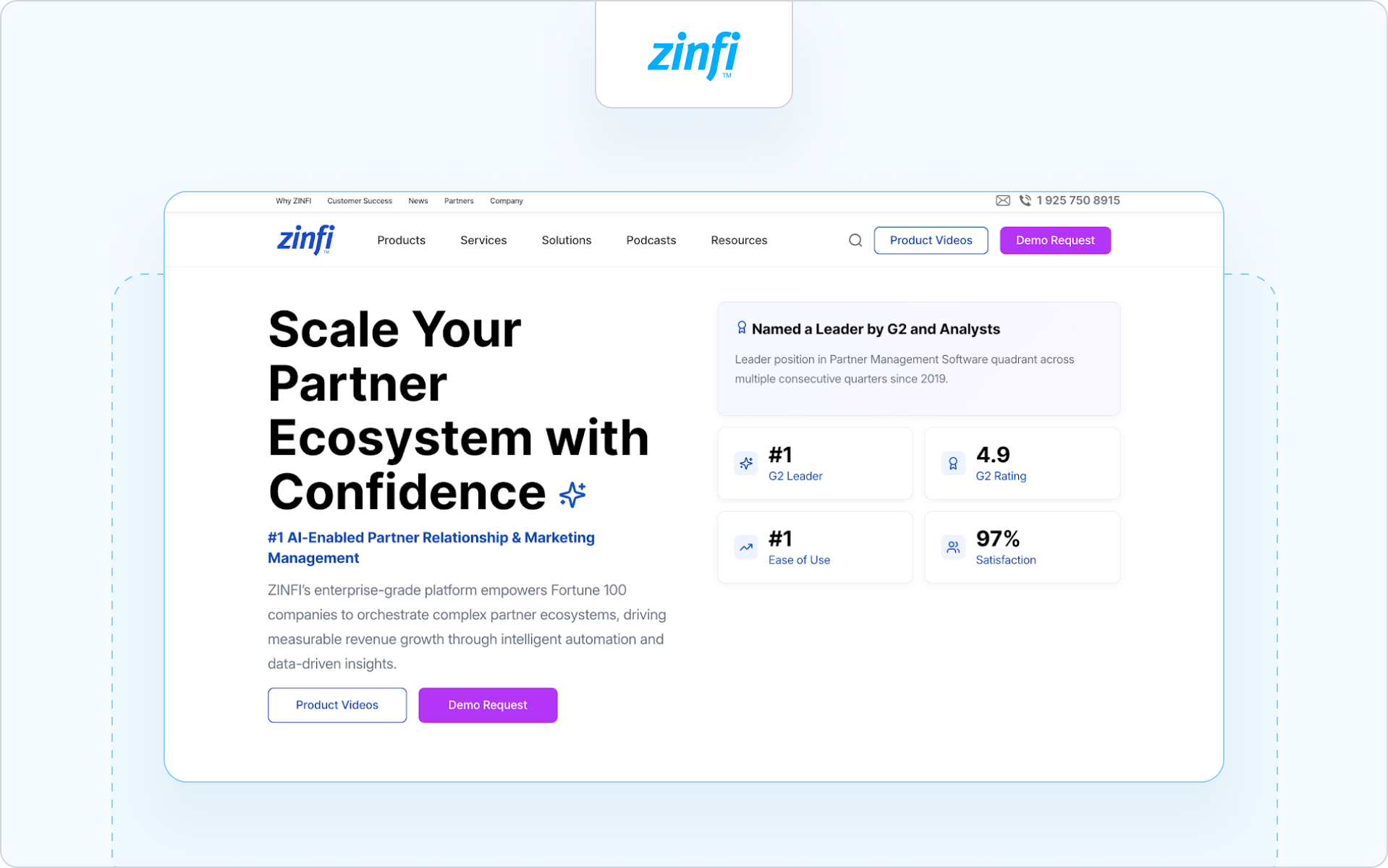
ZINFI positions its Unified Channel Management platform as an end-to-end partner relationship management solution. Its partner portal sits inside a broader system that supports complex channel programs across regions and industries.
If your partner portal is one layer inside a larger partner tech stack, ZINFI is often evaluated.
Highlights
- Structured deal registration and partner onboarding workflows
- Built-in learning management and certification modules
- Channel marketing automation with analytics for partner performance
Considerations
Because ZINFI is a comprehensive platform, portal experience and speed of rollout may depend on how much configuration your internal team can support.
Pricing note
Pricing is typically customized based on modules and scale.
7. Unifyr
Best for
Vendors and distributors that prioritize through-channel marketing automation alongside their partner portal.
Why it’s a fit for portals
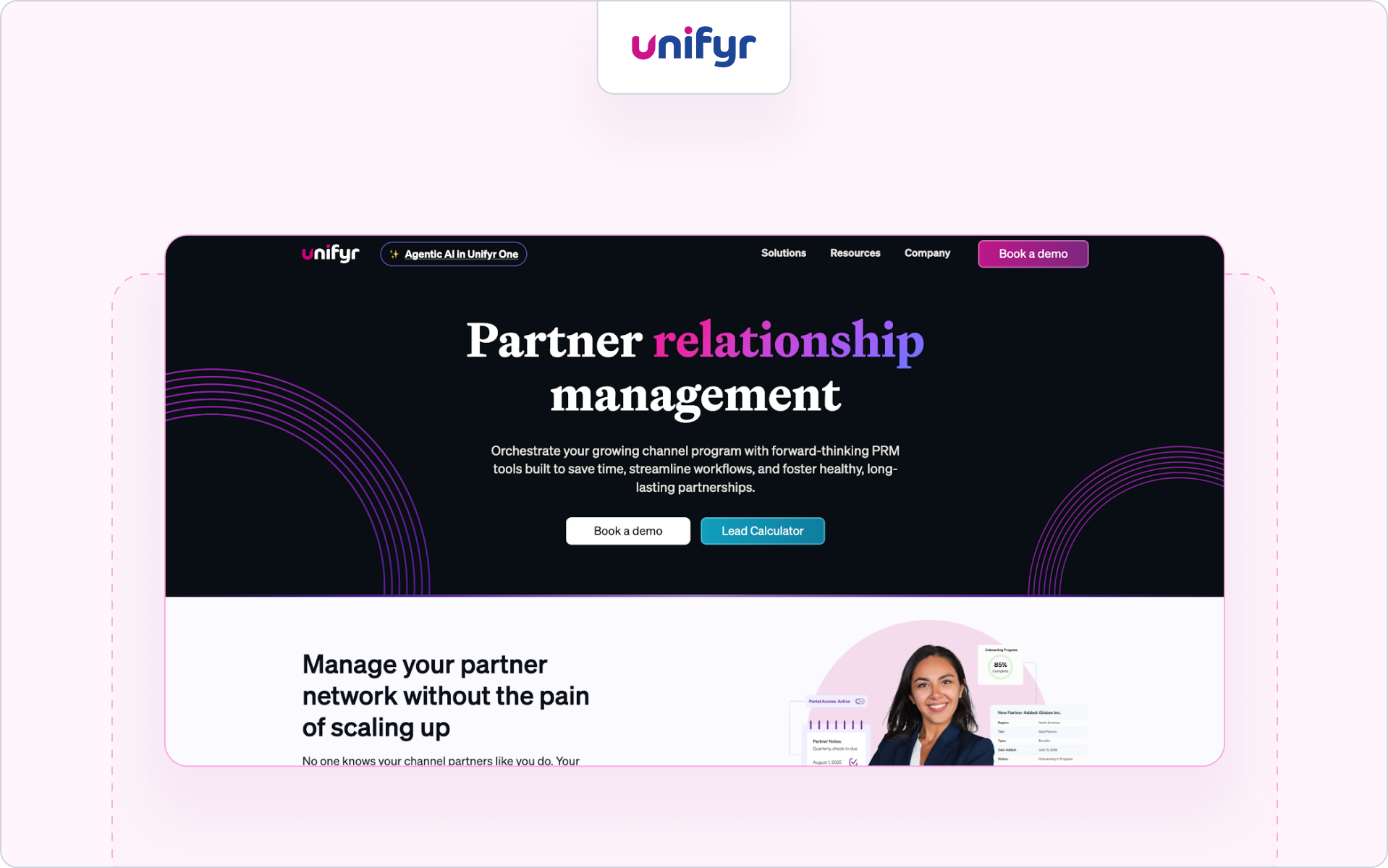
Unifyr combines PRM functionality with through-channel marketing automation. The partner portal is designed to support structured partner communication, campaign distribution, and co-branded marketing assets across large distributor networks.
This makes it a frequent contender for the best partner portal software for technology distributors that need marketing reach across multiple partners.
Highlights
- Integrated portal with deal registration and partner marketing workflows
- Campaign distribution and co-branded marketing assets
- Built-in learning and enablement features
Considerations
If your priority is CRM-native pipeline visibility and streamlined co-selling, validate how tightly reporting and attribution connect to your CRM.
Pricing note
Pricing is typically available upon request.
8. Mindmatrix (Bridge)

Best for
Companies that want a portal focused on sales enablement and partner marketing activation.
Why it’s a fit for portals
Mindmatrix blends partner portal functionality with marketing automation and enablement tools. The portal becomes a structured hub where partners access marketing materials, training, and sales content in one platform.
If your focus is driving partner engagement through marketing tools and guided selling workflows, this approach can fit well.
Highlights
- Resource hubs with trackable marketing materials
- Training and coaching modules
- Campaign and content distribution to help partners sell
Considerations
If your business requires deep CRM alignment for deal visibility and better reporting tied directly to revenue, confirm how data sync is handled.
Pricing note
Pricing varies by configuration and partner scale.
9. PartnerStack
Best for
Companies running partner-led growth programs across affiliates, agencies, and SaaS resellers.
Why it’s a fit for portals
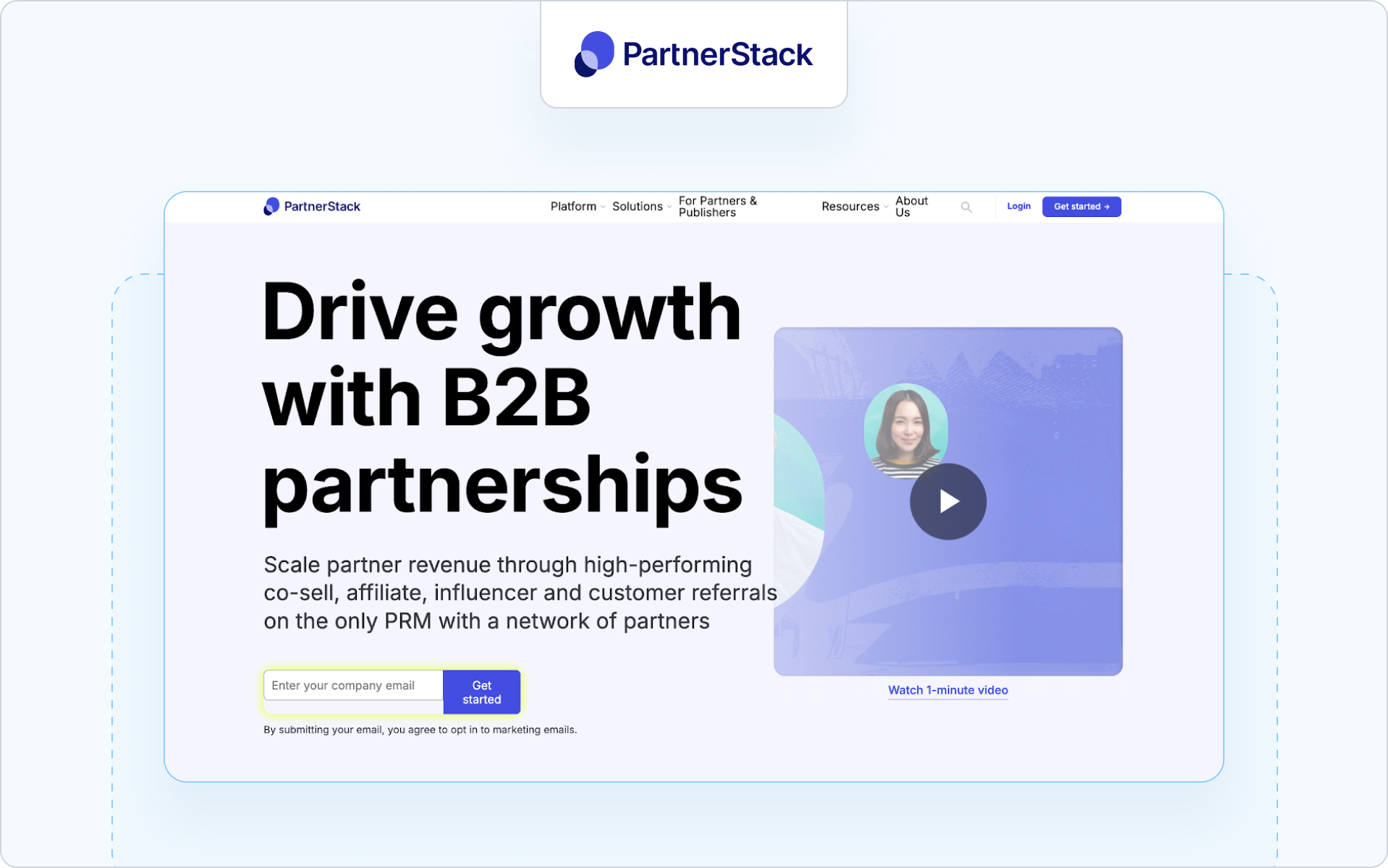
PartnerStack is less a traditional reseller portal and more a partner ecosystem platform focused on acquisition and performance tracking. It supports programs where incentives, referrals, and partner performance measurement drive growth.
If your channel programs revolve around partner recruitment and performance marketing rather than structured reseller co-selling, this model may align.
Highlights
- Marketplace-style partner recruitment and onboarding
- Automated tracking of referrals and conversions
- Incentive and payout management
Considerations
If you need structured deal registration, CRM-aligned pipeline access, and deep collaboration between partners and your sales team, validate fit carefully.
Pricing note
Pricing is typically customized based on program structure.
10. Channext
Best for
Vendors that prioritize partner marketing and campaign distribution across resellers and distributors.
Why it’s a fit for portals
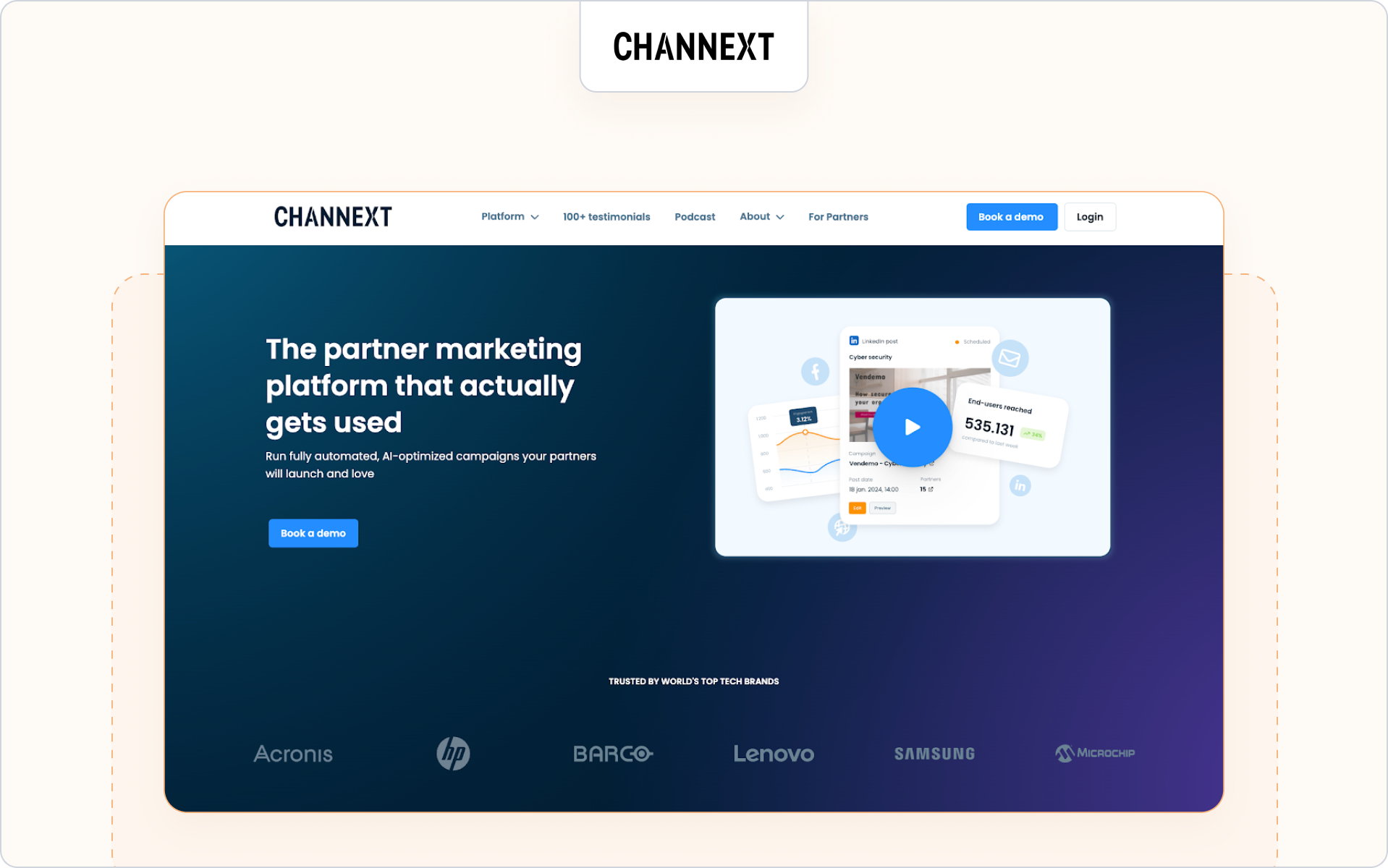
Channext focuses heavily on partner marketing automation. Its portal-like environment enables partners to quickly find and activate marketing materials, campaigns, and co-branded marketing assets.
If your channel strategy is built around helping partners sell through ready-to-use marketing tools, Channext can act as a partner portal automation software layer focused on activation rather than deep CRM workflows.
Highlights
- Campaign distribution across resellers and distributors
- Central hub where partners access marketing materials
- Analytics tied to engagement and marketing performance
Considerations
If your business needs advanced deal registration, structured co-selling, or deep CRM-based collaboration, confirm how well Channext connects to your broader partner tech stack.
Pricing note
Pricing is typically provided upon request.
11. Kiflo

Best for
SMB SaaS companies launching or formalizing their first structured partner program.
Why it’s a fit for portals
Kiflo positions itself as a lightweight partner relationship management platform with built-in portal capabilities. It is designed to help smaller companies manage partnerships, track leads, and support partner onboarding without heavy enterprise overhead.
If you are building your first formal partner portal software solution and want a simpler approach to register deals and manage relationships, Kiflo may fit.
Highlights
- Straightforward deal registration and lead tracking
- Basic partner onboarding and training tools
- Dashboard views to help your team manage partner activities
Considerations
As your partner ecosystem grows, you may need more advanced CRM-native controls, partner communication automation, and deeper reporting to scale revenue across a larger industry footprint.
Pricing note
Tiered pricing is available, typically aligned to partner count and feature depth.
Main takeaways
The best partner portal software depends on your business model and how your partners sell.
- If you run complex channel programs with layered incentives, enterprise platforms may fit.
- If your focus is partner marketing activation, choose a portal built around campaigns and content distribution.
- If adoption, CRM alignment, and clean deal visibility matter most, prioritize software that keeps your CRM as the single source of truth.
Above all, choose a partner portal your partners will actually use. Adoption drives engagement. Engagement drives revenue.
Choosing your partner portal software is step one; getting partners to use it is step two.
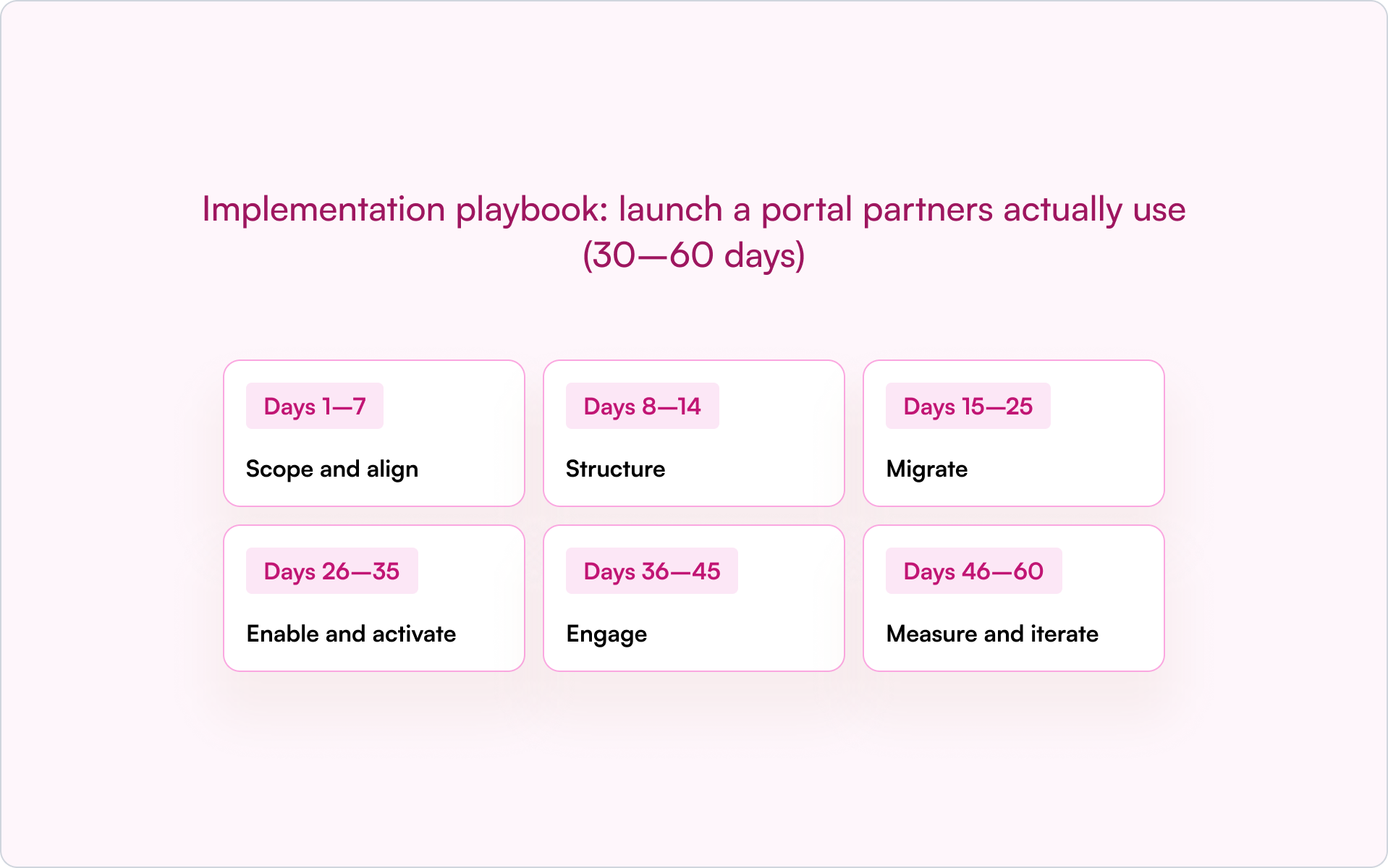
A structured rollout is what turns a portal into real adoption, deal registration, and measurable revenue impact. Here is our practical 30–60 day implementation playbook you can execute.
Implementation playbook: launch a portal partners actually use (30–60 days)
Treat your partner portal software rollout like a structured launch. Here is a practical 30–60-day framework you can follow.
If you want to validate your CRM setup before launch, this guide to the top partner management CRM can help you align reporting, deal visibility, and revenue tracking.
A structured rollout increases adoption. Adoption drives engagement. Engagement drives revenue.
If this framework feels heavy, it usually means your portal and your CRM are not aligned.
The right partner portal software reduces complexity instead of adding to it. It makes deal registration, partner onboarding, and CRM visibility part of one connected workflow.
Here’s how Introw approaches that model in practice.
Why Introw is a top pick for partner portals (quick proof)
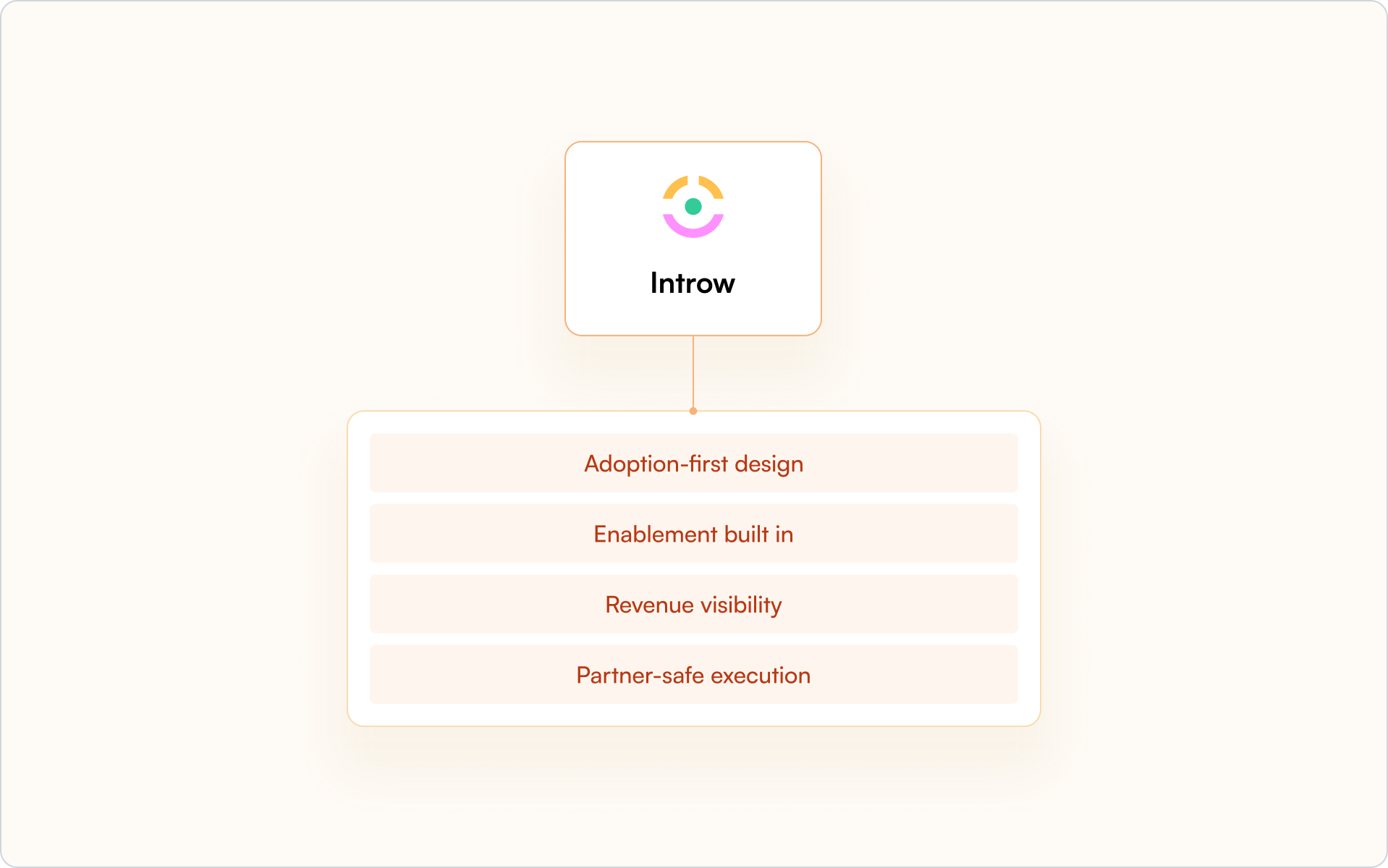
You’ve seen the landscape. Now here’s the difference. Introw is built around one idea: adoption drives revenue.
Adoption-first design
Your partners do not need another login. Announcements go out via email or Slack. Partners can reply by email, and their activity is logged automatically. Engagement happens where they already work.
Enablement built in
Create training in minutes with the AI course builder. Issue one-click certificates. Bulk enroll cohorts. Set recert windows. Partner onboarding and partner enablement live inside the portal, not in disconnected tools.
Revenue visibility
Completions, certifications, and content influence write back into Salesforce or HubSpot. Your CRM stays the single source of truth. Your sales team and internal teams see real partner impact.
Partner-safe execution
Surface deal registration clearly. Let partners register deals and collaborate through shared pipeline views with field-level safelists and SSO controls.
What you can do next
- Audit your current portal against the 30–60 day playbook
- Identify where adoption breaks down
- Decide whether your current partner portal software supports CRM-native visibility
If you want to learn how to enable your partners, request a demo today.
Because in the end, the best partner portal software is the one your partners actually use.
Still curious? Here are some quick answers to help clear things up
Partner portal software is the experience layer where partners access deals, training, and marketing materials. PRM software is broader partner relationship management that includes program rules, incentives, onboarding, and lifecycle management. Many platforms combine both, but the portal focuses on adoption and controlled access.
Yes. Salesforce manages your internal sales data, but it is not designed as a channel partner portal software experience. A portal gives partners controlled access to relevant data without exposing your full CRM.
Portals increase revenue by making it easier to register deals, access marketing support, complete training, and collaborate with your sales team. Higher adoption leads to better engagement, clearer attribution, and a more partner-influenced pipeline.
Start with defined roles and SSO groups, migrate only relevant content, surface deal registration clearly, and connect your CRM early. A structured 30–60 day rollout focused on adoption is the fastest path to results.
Connect your portal to Salesforce or HubSpot and write back course completions, certifications, and content engagement. Then measure deal influence and pipeline impact directly in your CRM dashboards.





See AI-Native PRM in Action
Book a demo with one of our partner program experts, or explore Introw on your own time.