


Channel conflict rarely starts with open disagreement.
It usually appears late in the sales cycle, when a deal is already active, and expectations are already set. A partner believes they have ownership. The sales team believes otherwise. Another channel surfaces at the last moment.
At that point, resolving channel conflict becomes slow, political, and expensive.
The more effective approach is prevention. When rules are clear, data is shared correctly, and ownership is visible early, channel conflicts are far less likely to occur.
You'll learn about a prevention-first operating model for channel conflict, built for SaaS teams managing multiple channels, channel partners, and direct sales motions at the same time.
But, to prevent channel conflict, you need clarity on what channel conflict is and the types of channel conflict that show up in modern SaaS programs.
Channel Conflict 101 (Types, Causes, and B2B SaaS Context)
To prevent channel conflict, everyone needs to be aligned on what it actually means in a modern SaaS environment.
What is channel conflict?
In B2B SaaS, channel conflict occurs when multiple channels or channel partners pursue the same customers, accounts, or revenue without clear ownership, rules, or visibility.
This weakens channel relationships and makes effective channel partner management harder for partners and direct sales teams.
The main types of channel conflict in SaaS

These channel conflict types are rarely about bad behavior. They are a predictable outcome of multiple channels operating without shared rules or data.
Root causes of channel conflict in B2B SaaS
Most channel conflicts stem from a small set of structural issues:
- Unclear rules of engagement across different channels
- Overlapping territories, segments, or named accounts
- Inconsistent pricing strategies, discounting, or price protection
- Unmanaged renewals and expansions across the same customer base
- Poor communication cadence and limited visibility into customer data
As SaaS teams scale and add new channels, these gaps quickly create potential conflicts, even when channel management intentions are sound. This is common when channel relationships evolve faster than the operating model behind channel partner management.
Next, we’ll look at how to detect channel conflict early, before it turns into an escalation, a stalled deal, or a damaged partner relationship.
Early Warning System: Spot Conflicts Before They Surface
Channel conflict is easiest to manage when you catch it early. The goal here isn’t perfect forecasting; it’s visibility into the signals that show channel conflicts forming before they slow a deal or damage channel relationships.
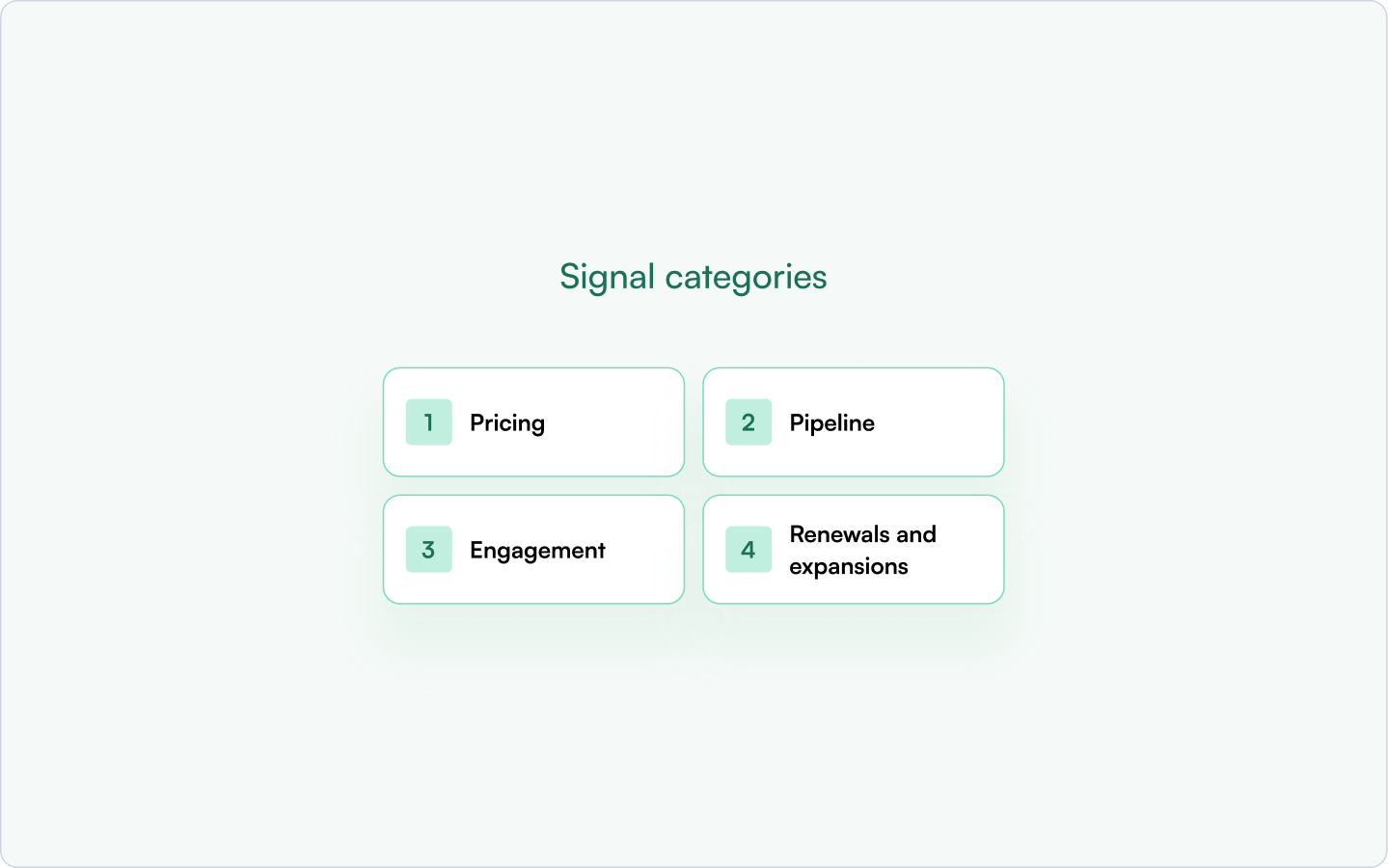
Signal categories
Pricing
Unusual discount requests, overlapping price protection, or duplicate quotes for the same product often signal early channel partner conflict. Left unchecked, these patterns can escalate into price wars that hurt brand integrity and market share.
Pipeline
Duplicate opportunities or accounts, missing partner fields, or sudden owner changes are classic indicators that multiple channels are touching the same account. In a customer relationship management system, this is often the first sign of horizontal conflict across the same channel or same region.
Engagement
Emails from partners raising concerns about fairness, silence after policy changes, or reduced response to announcements often indicate tension across channel members, even before it shows up in the sales channel data.
Renewals and expansions
When a direct sales team engages an account with an incumbent reseller or SI already in place, channel conflict occurs fast, especially if renewal ownership rules are unclear.
Automations to catch them
Early detection depends on automation, not vigilance.
Common safeguards include duplicate detection, stage-change alerts, two-opportunities-one-account reports, expiring deal registration timers, and renewal ownership rules enforced directly in your CRM.
A structured deal registration process is especially effective for surfacing potential conflicts early and keeping different channel partners on the same page.
Teams that rely on manual checks usually spot conflicts too late. Teams that automate signals spend far less time on conflict resolution and more time closing deals.
Let's design your channel program so these signals appear less often in the first place, starting with segmentation, territories, and pricing guardrails.
Program Design That Prevents Conflict (Get This Right First)
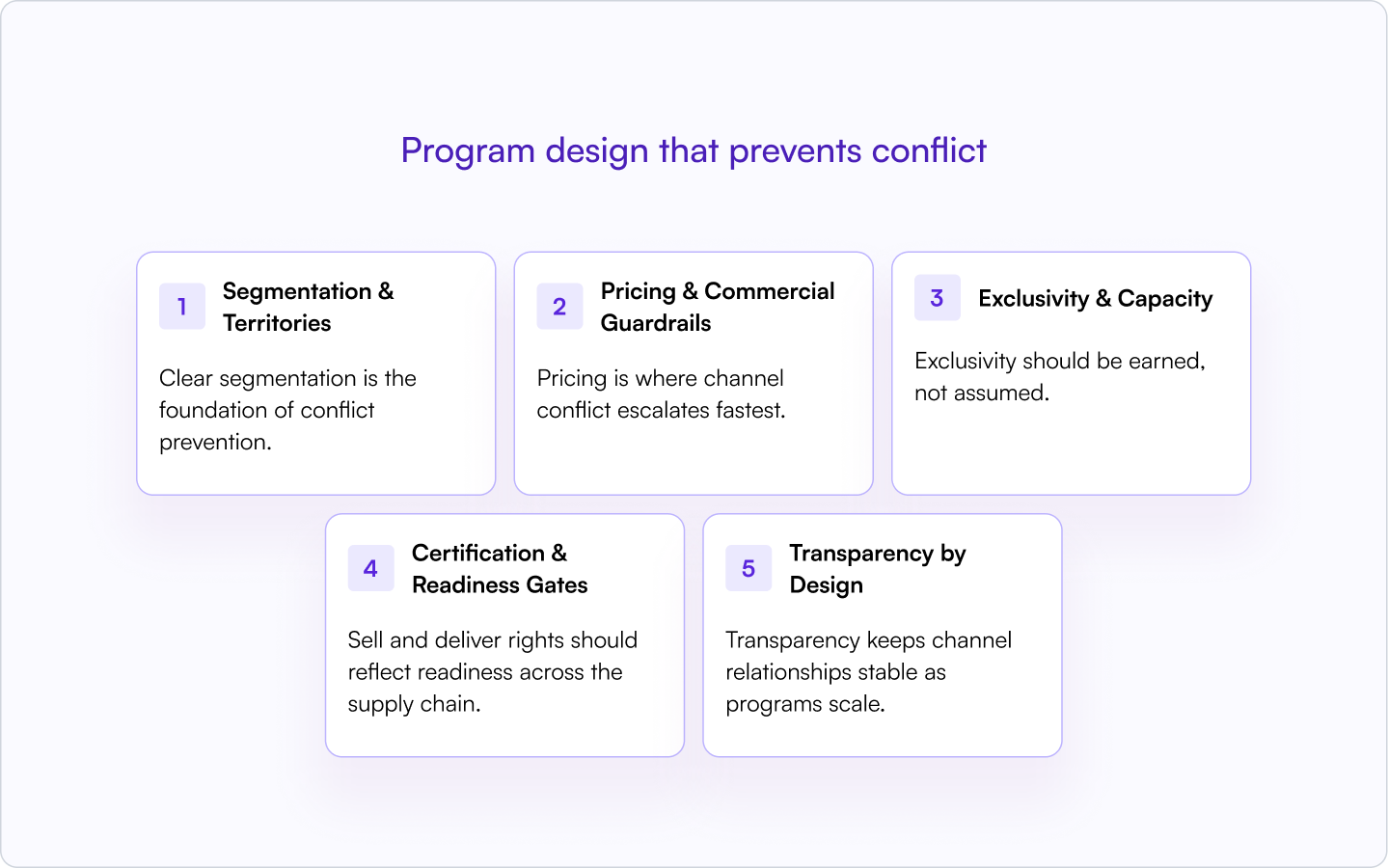
Most channel conflict is designed early. Strong program design aligns channel members across distribution channels before deals exist and reduces the need to resolve channel conflict later.
1) Segmentation & Territories
Clear segmentation is the foundation of conflict prevention.
- Define a clear ICP and segment channel partners by region, vertical, tier, and install base
- Use named-account programs for strategic partners operating at the same level
- Set explicit rules for marketplace versus direct sales ownership
- Avoid multiple distribution channels working the same customers by default
This kind of structure is a core pillar of effective channel management, especially as new channels are added.
2) Pricing & Commercial Guardrails
Pricing is where channel conflict escalates fastest.
- Define pricing strategies by partner tier and sales channel, including referral, resale, marketplace, and SI
- Set price protection duration and clarify renewal and expansion applicability
- Enforce minimum advertised price policies where applicable to protect brand integrity
- Use SPIFFs versus margin deliberately to prevent price wars and lower prices across channels
Fair pricing policies reduce direct competition between channel members selling the same product through different channels.
3) Exclusivity & Capacity
Exclusivity should be earned, not assumed.
- Grant exclusivity only when justified by specialization, certification, or commitment
- Set capacity limits per region, product line, or customer base
- Avoid onboarding too many partners into the same sales channel
Capacity limits help minimize conflicts caused by too many partners competing in the same region or account.
4) Certification & Readiness Gates
Sell and deliver rights should reflect readiness across the supply chain.
- Tie sell and deliver permissions to the certification status
- Require certification for access to exclusive products or specific customer segments
- Set expiration and re-certification SLAs aligned with supply chain management needs
Readiness gates protect customer satisfaction and reduce downstream conflict tied to poor execution.
5) Transparency by Design
Transparency keeps channel relationships stable as programs scale.
- Publish rules of engagement in a partner portal as the single source of truth
- Announce policy changes early and often through shared communication channels like email or Slack
- Require acknowledgment to ensure all parties involved stay on the same page
- Use SSO to remove access friction and reduce shadow communication
Platforms like Introw support this by combining a partner portal, announcements with read receipts, and frictionless access.
When paired with a structured deal registration process, teams can enforce rules consistently instead of relying on ad-hoc decisions.
Let's go deeper into deal registration itself and how to use it as a conflict firewall rather than a bottleneck.
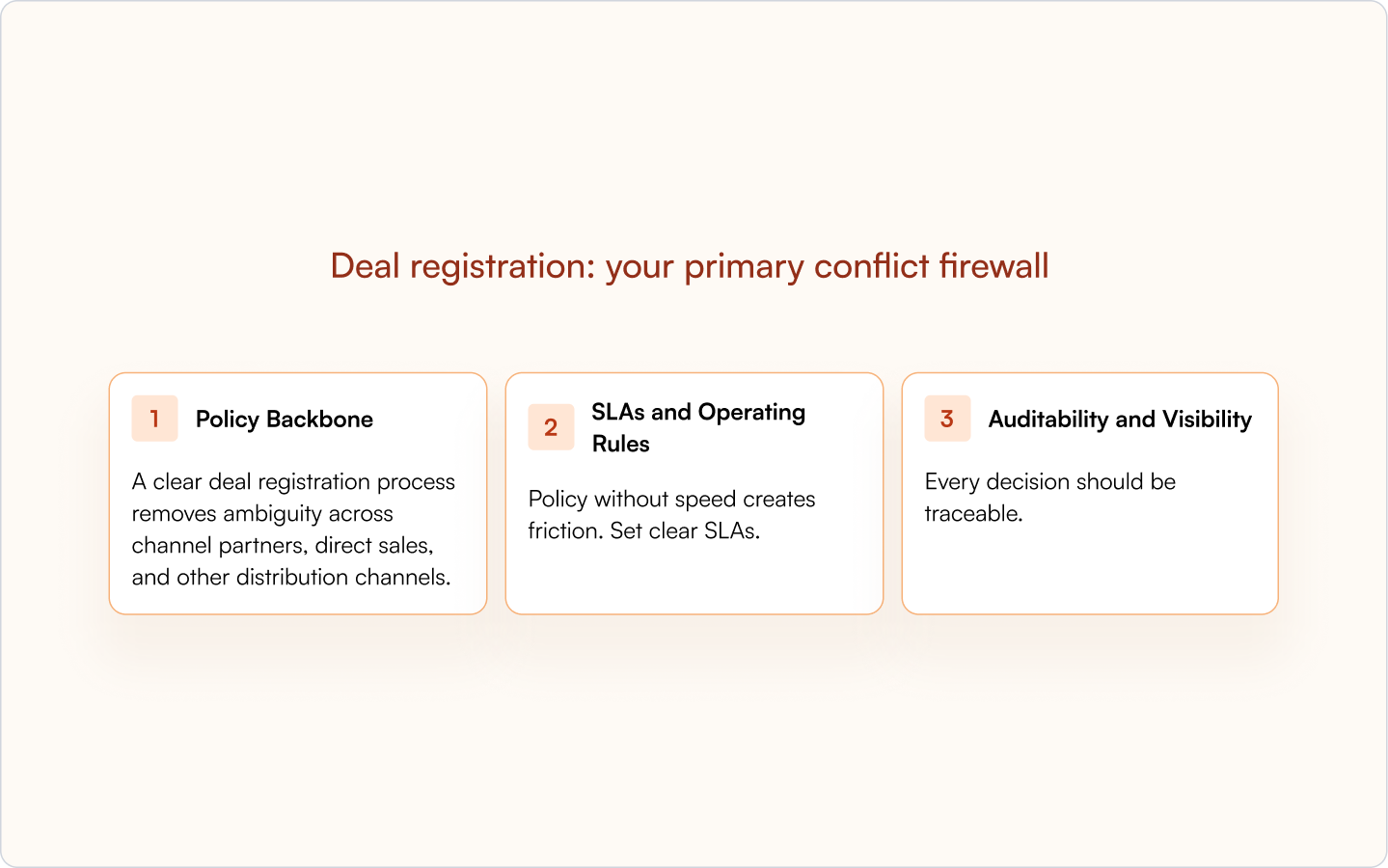
Deal Registration: Your Primary Conflict Firewall
If you’re looking for a practical answer to how to manage channel conflict, deal registration is it. This is where ownership is established early and where most channel conflicts can be prevented instead of debated.
Policy Backbone
A clear deal registration process removes ambiguity across channel partners, direct sales, and other distribution channels.
Your policy should define:
- Eligibility criteria, required fields, proof of work, and a customer uniqueness test to prevent different partners pursuing the same account
- A protection window, typically 60–90 days, with explicit extension rules
- Renewal and expansion of ownership rules when the same customers move between partners and the sales team
- A conflict hierarchy, registered beats unregistered, incumbent beats net-new, certification status breaks ties
- An appeals and escalation window with defined evidence requirements
This is the operational layer of channel conflict resolution. Without it, vertical conflict and horizontal conflict are left to judgment calls, which quickly strain existing channel relationships.
SLAs and Operating Rules
Policy without speed creates friction.
Set clear SLAs:
- Approval or decline within 48 hours
- Automatic reminders before protection expires, usually seven days out
- Reassignment rules for inactive deals based on no-touch thresholds
These mechanics are a core part of effective channel management, especially in programs that rely on co-selling and shared ownership across teams.
Many teams formalize this alongside their broader approach to managing co-selling effectively to keep all parties aligned.
Auditability and Visibility
Every decision should be traceable.
Approvals, declines, timestamps, and rationale should live in your customer relationship management system, with shared pipeline visibility limited to safe fields like stage, owner, and protection status.
This keeps different partners on the same page without exposing pricing or internal notes.
In practice, this is where a structured deal registration process, supported by modern partner relationship management software, makes it far easier to resolve channel conflict consistently as programs scale.
Next, we’ll look at the CRM data model you need to support this, and how to enforce these rules automatically across multiple channels.
Your CRM Data Model for Conflict Prevention (Salesforce/HubSpot)
Channel conflict becomes expensive when your CRM can’t answer basic ownership questions. A clean data model makes channel conflict visible early and keeps channel partners, direct sales, and RevOps aligned across multiple channels.
Required fields on Opportunity or Deal
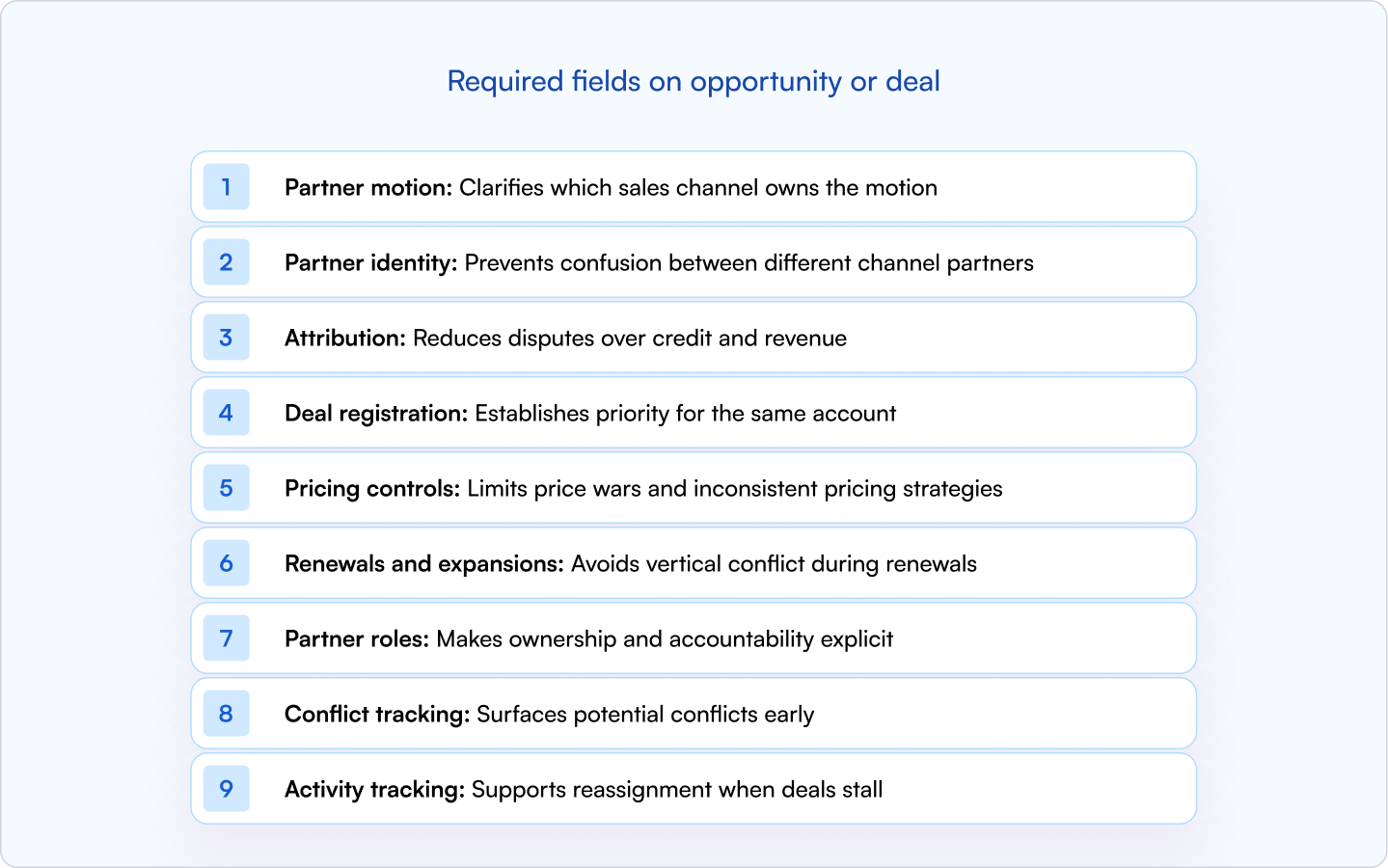
Without these fields, channel conflict occurs late, often after multiple partners have already engaged the same customers.
Governance Rules That Enforce Discipline
Fields only work if they’re enforced.
- Stage-change validations that require partner fields before deals advance
- Duplicate rules on accounts and opportunities to catch horizontal conflict early
- Renewal ownership logic to prevent overlap with direct sales
- Dashboards segmented by motion and conflict status for fast visibility
This is what managing channel conflict looks like in practice, not spreadsheets and exceptions.
How This Works In Practice
With native integrations for Salesforce and HubSpot, partner-submitted data stays synced without manual updates.
Shared pipeline views expose only safe properties, such as stage, owner, and protection status, so different partners stay aligned without seeing sensitive pricing or internal notes.
Announcements can then be used to communicate policy changes tied to these fields, keeping channel members on the same page as rules evolve.
At this point, conflict is no longer hidden. The question becomes how consistently your team reviews signals and communicates decisions.
Operating Cadence & Communications (the “no-surprises” policy)
Once ownership and risk are visible, cadence is what keeps channel conflict from resurfacing. This is how to manage channel conflict day to day, without escalation or guesswork.
Cadence That Prevents Surprises
This rhythm supports strong channel relationships across multiple channels and distribution strategies, especially as new channels are introduced.
Response SLAs That Reduce Escalation
Speed signals fairness.
- Deal registration decision within 48 hours
- Conflict acknowledgment within 24 hours, with a resolution plan in five business days
- Renewal ownership confirmed at least 90 days before renewal
Clear SLAs help resolve channel conflict consistently and protect existing channel relationships when the same account is touched by different partners or direct sales.
Keeping Communication Operational, Not Performative
Announcements should push updates through email and Slack, so channel members don’t have to log into another portal. Replies via email should write back to the CRM timeline automatically, preserving context and evidence without slowing the sales team.
This approach supports open communication without adding friction, and it scales far better than ad-hoc outreach.
Many teams formalize this cadence alongside guidance on building a channel partner program and broader ecosystem expectations outlined in a channel partnership guide.
At this point, channel conflict refers to a managed process, not an unexpected interruption. Incentives, recognition, and feedback loops can then reinforce the right behaviors, something teams often pair with thoughtful channel partner gamification.
Introw supports this prevention-first approach by enforcing rules, surfacing risk early, and keeping partners aligned without adding friction. Here's how.
How Introw Helps Prevent Channel Conflict
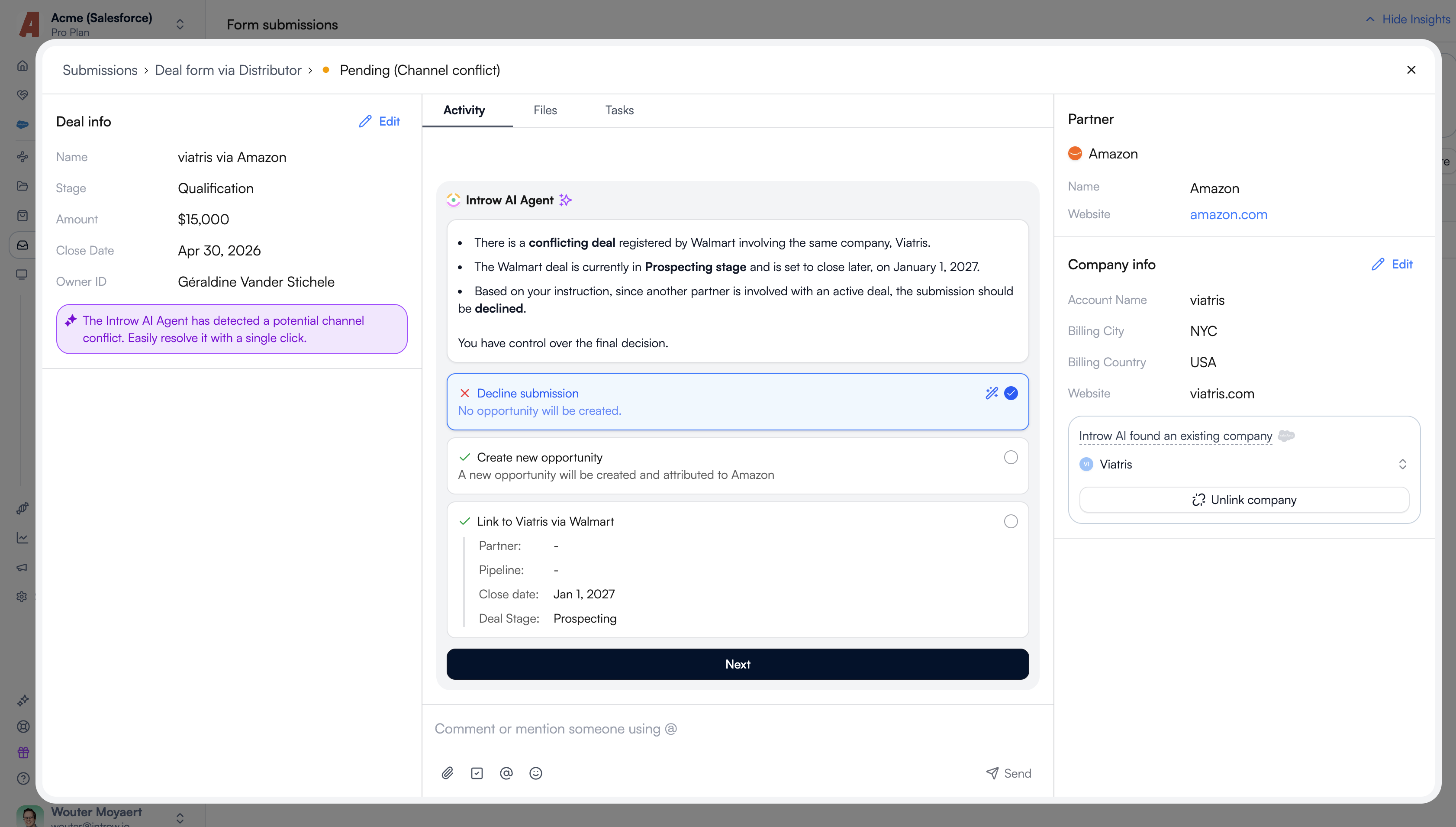
If you want to prevent channel conflict, your rules can’t live in slide decks or policy docs. They have to show up where deals are registered, approved, and worked on every day, by your team and your partners.
Introw does that by embedding your channel rules directly into the workflow.
Single source of truth from day one.
Deal and lead registration ensure every opportunity starts with the same required context.
Ownership, approvals, protection windows, and timestamps are clear from the moment a deal is submitted, which matters when your channel partners and direct sales team are working the same account.
Rules your partners don’t have to hunt for.
Rules of engagement, pricing bands, and territories live in the partner portal with SSO. Your partners always know what applies right now, without forwarding old emails or guessing which version is current.
Shared visibility without oversharing.
Shared pipeline views show partners exactly what they need, like stage, next step, and protection expiry, without exposing pricing or internal notes.
That keeps everyone aligned while deals are active and reduces channel partner conflict before it escalates.
Signals your team can act on early.
Alerts for new registrations, approval deadlines, expiring protection windows, and stage changes are pushed through email and Slack.
Partners can reply by email, and those responses are written back to the CRM timeline so decisions are based on full context, not memory.
This is what modern partner relationship management software is meant to support: consistent execution, fewer surprises, and channel conflict resolution that scales with your business.
With the right structure in place, prevention does most of the work. What remains is a clear, repeatable way to resolve the few conflicts that still surface.
Over to You: Prevent First, Resolve Less
Channel conflict doesn’t have to be a constant fire drill. When you design for prevention, most issues never reach escalation, and the few that do are easier to resolve without damaging trust or momentum.
The teams that handle channel conflict well don’t rely on heroics or exceptions. They rely on clear rules, early signals, and consistent execution across partners, direct sales, and systems. That’s what keeps deals moving and relationships intact as your channel scales.
What to do next:
- Review where channel conflict occurs today and identify which signals surface too late
- Pressure-test your deal registration, ownership, and renewal rules against real scenarios
- Make sure your tooling enforces the model instead of working around it
Final Takeaway
Channel conflict is rarely about intent. It’s about clarity, timing, and visibility. Get those right, and conflict becomes manageable instead of disruptive.
If you want to see how this prevention-first model works in practice, you can request a demo and walk through how Introw supports it across your channel program.
Still curious? Here are some quick answers to help clear things up
Vertical channel conflict happens between you and your partners, usually around pricing, ownership, or renewals. Horizontal channel conflict happens between partners at the same level competing for the same account.
Most teams set price protection between 60 and 90 days. The right window depends on deal cycle length, partner motion, and whether the partner is actively working the opportunity.
Ownership depends on your model. Many teams assign renewals to the incumbent partner if they are certified, active, and adding value. Clear rules upfront are essential for channel conflict resolution.
Define sourced as partner-created demand and influenced as partner-supported deals. Set attribution percentages in advance and apply them consistently to avoid reopening decisions later.
Yes, with limits. Most teams share fields like stage, next step, and protection expiry, while hiding pricing and internal notes. This level of visibility reduces channel partner conflict without oversharing.




Are you already an active Introw partner?
Book a demo with one of our partner program experts, or explore Introw on your own time.