


Referral partner programs sound simple: partners send you leads, you close them, everyone gets paid. But most programs stall before they generate meaningful revenue — not because the incentives are wrong, but because the infrastructure isn’t there.
The difference between a program that produces sporadic leads and one that drives predictable pipeline comes down to how you design registration, tracking, and communication from day one. This guide breaks down what a referral partner program actually is, how to launch one, and how to manage it as you scale.
What is a referral partner program?
A referral partner program is a mutually beneficial arrangement where you incentivize individuals or third-party companies to recommend your product or service in exchange for a reward — typically a commission on closed revenue.
Unlike affiliate programs that rely on tracking links and high-volume marketing, referral partnerships are built for high-consideration B2B sales. Partners identify strong-fit prospects and make warm introductions, then your sales team runs the sales cycle.
Common referral partners include:
- Consultants and fractional operators
- Agencies serving your target ICP
- Complementary SaaS or service providers
- Happy customers who want to refer peers
The best programs are formal: they define what counts as a qualified referral, how attribution works, when payouts happen, and how conflicts get resolved.
How referral partners differ from affiliates and resellers
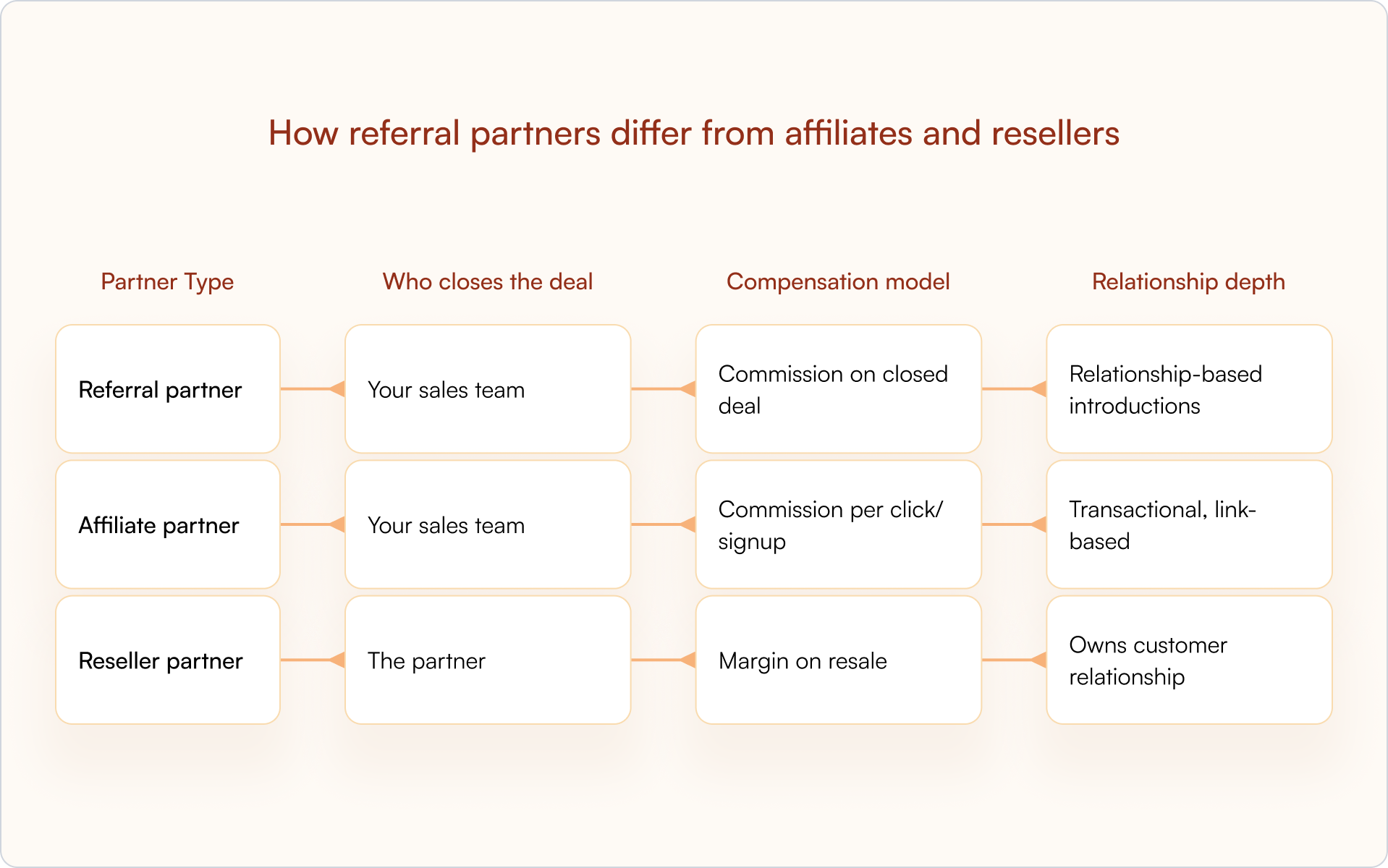
Founders often lump “partners” into one bucket. That’s where misaligned expectations start — and where programs get designed incorrectly. Here’s the clean way to think about it:
Referral partners vs affiliate partners
Affiliates drive traffic through content, ads, and tracking links. Referral partners make personal introductions based on existing relationships. The trust transfer is different — and so is the lead quality.
Referral partners vs reseller partners
Resellers purchase or license your product and sell it themselves. They own the customer relationship, often handle support, and earn margin on resale. Referral partners hand off qualified leads to you and step back, which changes everything: revenue share, enablement needs, and who owns the pipeline.
Referral partners vs technology partners
Technology partners integrate products or build on your platform. Referral partners recommend without any integration requirement. They’re endorsing, not embedding.
Why B2B companies launch a referral partner program
A referral partner program works when you operationalize it like any other revenue motion — with systems, rules, and accountability. Done right, it becomes a durable acquisition channel.
Lower customer acquisition costs
Partners bring leads through their existing networks, reducing reliance on paid advertising and outbound prospecting. You pay only when deals close, which helps keep unit economics predictable.
Higher quality leads from trusted introductions
Warm referrals carry built-in credibility. Prospects already trust the person making the introduction, which translates to better-qualified pipeline and higher conversion rates.
Expanded market reach without adding headcount
Referral partners help you reach new verticals, geographies, or segments without hiring dedicated sales reps for each. Your partners already have the relationships you’d otherwise spend months building.
Faster sales cycles through warm referrals
Referred prospects skip a chunk of the trust-building phase. In many B2B motions, that means fewer early-stage calls and a faster path to “real” evaluation.
What every referral partner program needs
If you want your referral partner program to be more than a slide deck and a promise, you need the basics in place first. This is the infrastructure that prevents deals from getting lost and partners from going dark.
Commission and incentive structure
Define how partners get paid. The most common options:
- Percentage of deal: Partner earns a cut of closed revenue, typically 10–20%
- Flat fee: Fixed payout per qualified referral that closes
- Tiered rewards: Increasing commission rates based on referral volume
Keep it simple. Complicated partners commission structures create confusion and slow payouts, both of which kill partner motivation.
CRM integration for tracking and attribution
Your CRM for partner management tracks every referral from submission to close. Accurate attribution, forecasting, and commission calculations all depend on clean data.
Referral data belongs inside Salesforce or HubSpot, not in a disconnected spreadsheet or portal. When partner activity lives in your CRM, sales and partnerships operate from the same source of truth.
Deal registration workflow
Partners need a clear way to submit leads, ideally without logging into a portal. Your workflow should capture the essentials (contact, company, context), route for approval, and set a protection window so partners feel safe investing their reputation.
A structured deal registration process is where ownership gets established early and where most conflicts can be prevented.
Rules of engagement documentation
Write down how conflicts are resolved, which accounts are off-limits (if any), what happens if multiple partners refer the same lead, and what “qualified” actually means. A clear policy prevents messy debates later.
Partner communication channels
Decide how you’ll keep partners informed: email updates, Slack notifications, or lightweight portal announcements. The point is consistency — not adding another tool your partners will ignore.
Onboarding and enablement resources
Provide pitch decks, one-pagers, competitive notes, and simple messaging that helps partners explain who you’re for (and who you’re not for). Partners refer more confidently when they can position your product clearly.
How to launch a referral partner program in six steps
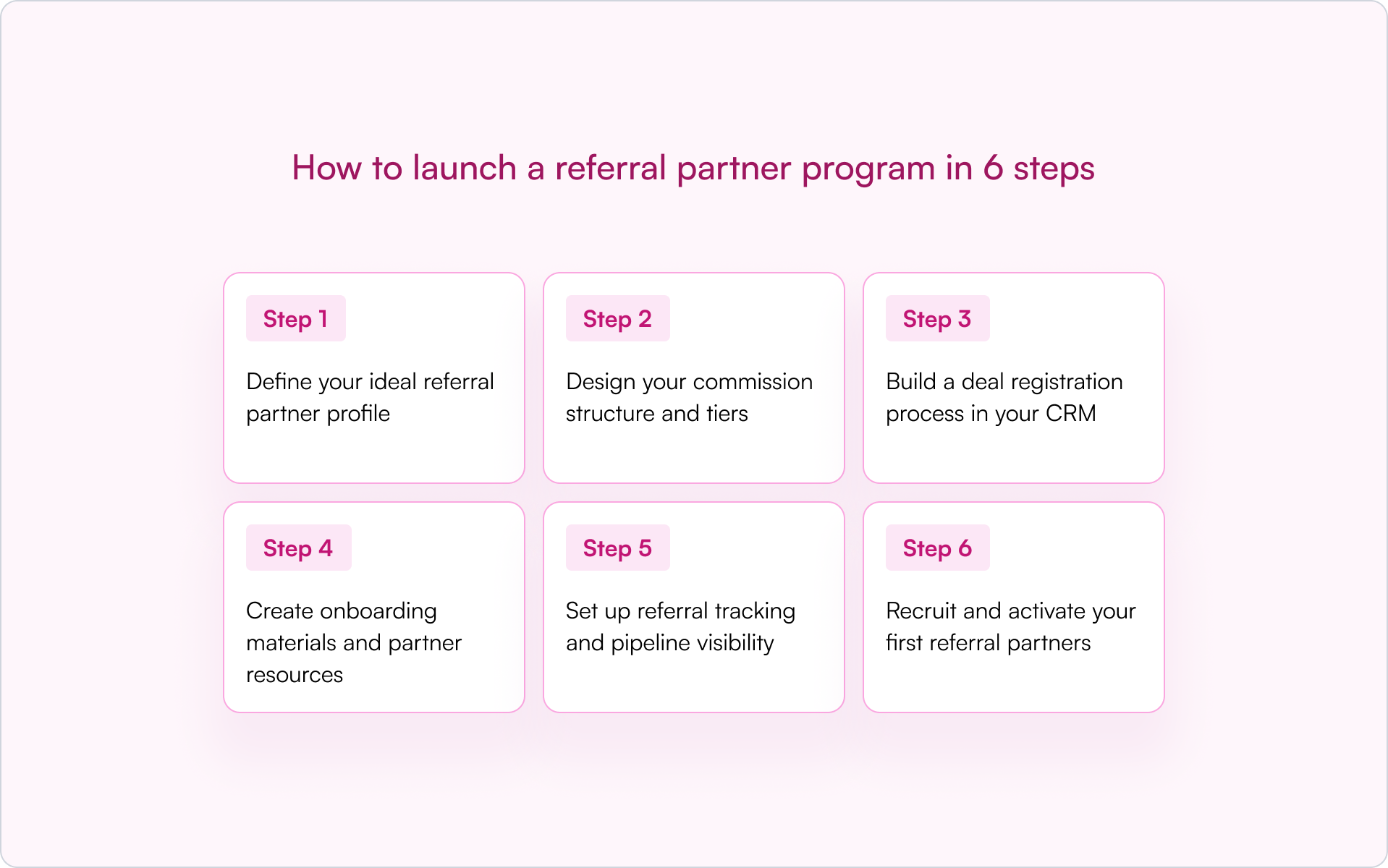
1) Define your ideal referral partner profile
Start by getting specific about who is likely to refer your best customers. In most startups, that’s consultants and agencies serving your ICP, complementary providers, and a handful of power users who love your product.
Create simple qualification criteria (audience overlap, deal size alignment, credibility, responsiveness) so you recruit strategically, not randomly.
2) Design your commission structure and tiers
Set compensation that motivates without turning your program into a math problem. Choose percentage vs flat fee, and consider adding tiers (Standard, Silver, Gold) once you have baseline performance data.
Start simple. You can add complexity later, but you can’t easily walk back a confusing structure.
3) Build a deal registration process in your CRM
Create a submission workflow using deal registration software inside Salesforce or HubSpot with required fields, automatic routing for approval, and timestamped records. Set protection windows so partners feel secure that their referrals won’t be claimed by direct sales.
4) Create onboarding materials and partner resources
Build a partner welcome kit with product training, FAQs, email templates, and co-brandable collateral following a structured partner onboarding checklist. The faster partners can start referring, the more likely they will.
5) Set up referral tracking and pipeline visibility
Configure your CRM to tag partner-sourced deals and make deal status visible to partners without constant back-and-forth. Visibility keeps partners engaged and builds trust.
Partners who can see what’s happening with their referrals stay active. Partners who have to email for updates eventually stop referring.
6) Recruit and activate your first referral partners
Start with warm relationships: existing customers, consultants who already mention you, and industry contacts. Reach out personally, explain the program benefits, and make it easy to join.
How to manage and scale your referral partner program
Launching is the easy part. Sustained performance comes from tight operations — and from removing every ounce of friction between a partner thinking “I should introduce you” and that introduction turning into pipeline.
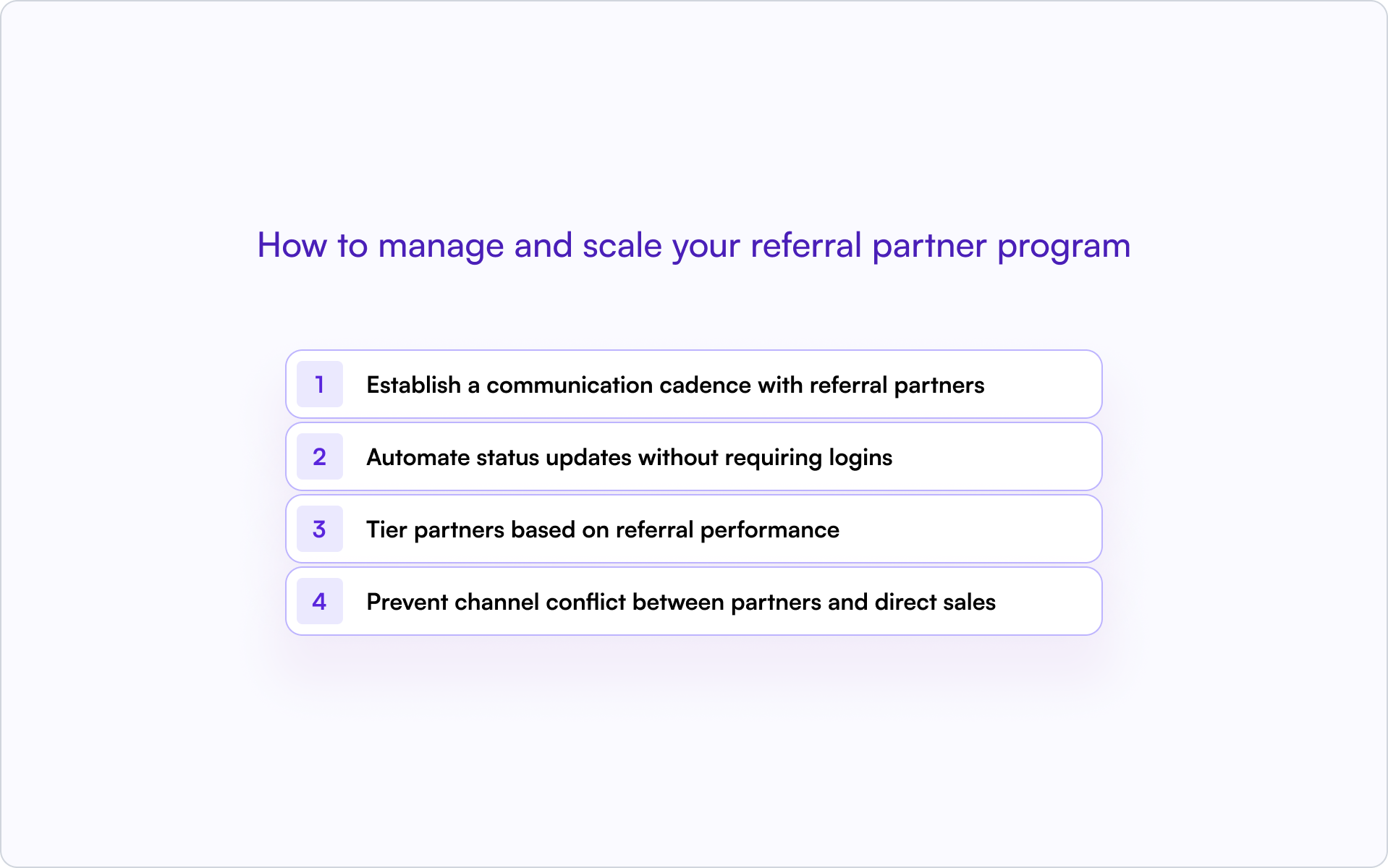
Establish a communication cadence with referral partners
Set regular touchpoints: monthly newsletters, quarterly check-ins, and short program updates when something changes. Silence kills referral partnerships. Consistent partner engagement keeps partners active and informed.
Automate status updates without requiring logins
Partners drop off when they have to log into portals for updates. Use email notifications tied to deal stage changes so partners stay informed automatically.
If you can let partners reply to notifications via email, with responses syncing back to your CRM timeline, you’ll remove the “chase you for updates” loop that quietly destroys many programs.
Tier partners based on referral performance
As you get data, create partner tiers (Bronze, Silver, Gold) with escalating benefits:
- Higher commissions: Reward volume and consistency
- Priority support: Faster response times for top performers
- Co-marketing opportunities: Joint campaigns and content
Tiering motivates top performers and gives newer partners something to work toward.
Prevent channel conflict between partners and direct sales
Define clear rules: who gets credit if a lead is already in your pipeline, how deal protection works, and how disputes are resolved. Document everything in your rules of engagement and enforce consistently.
Channel conflict rarely starts with bad intent. It starts with unclear rules.
Referral partner program metrics you should track
If you want partner-sourced revenue to become predictable, you need a handful of KPIs that tell you what’s actually happening — not just who “seems engaged.”
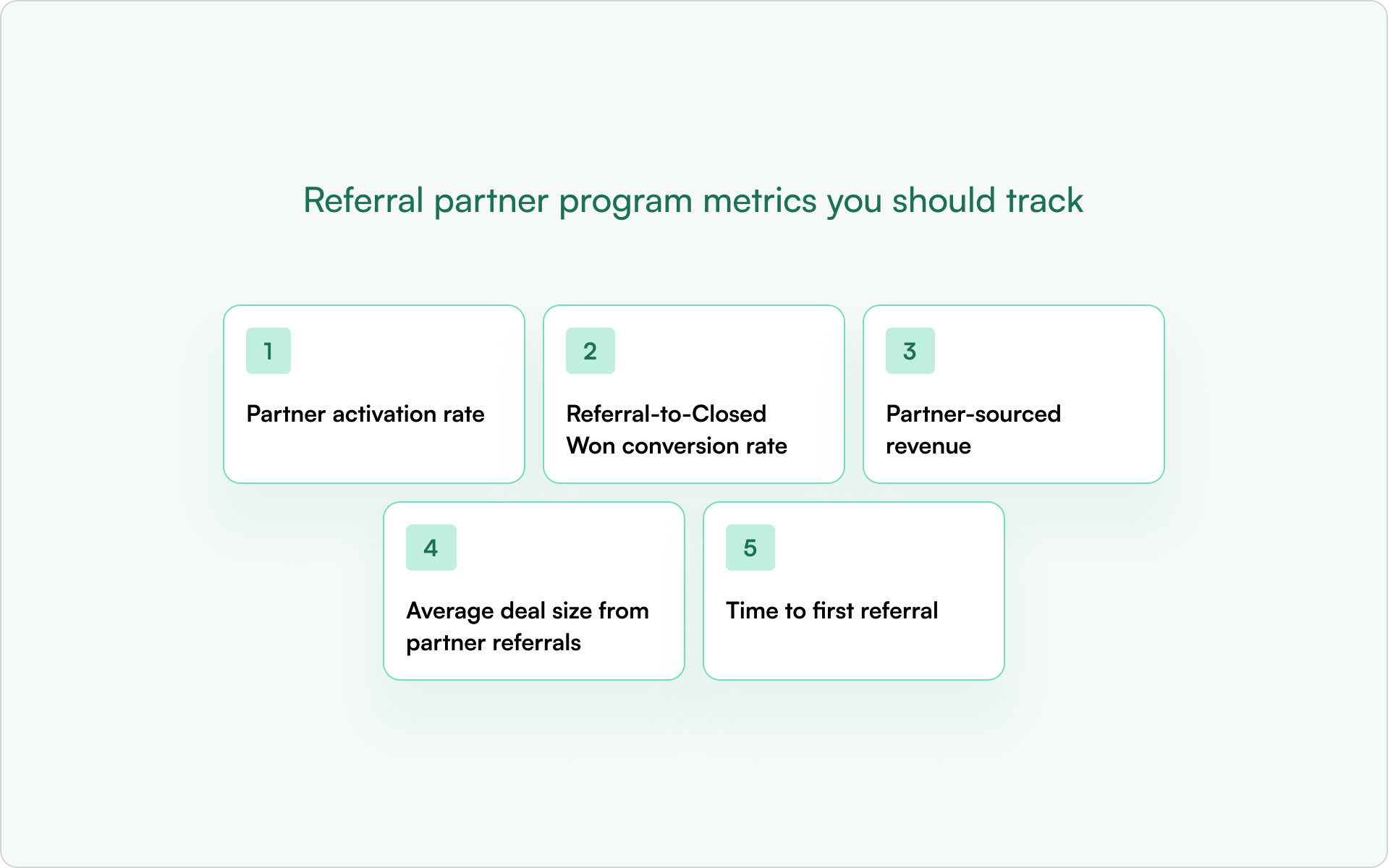
Partner activation rate
What percentage of recruited partners submit their first referral? Low activation usually signals onboarding friction, unclear positioning, or a muddled ask.
Referral-to-Closed Won conversion rate
How many partner referrals become paying customers? This is a direct read on lead quality and how reliably your sales team follows up.
Partner-sourced revenue
The total revenue attributed to partner referrals. This is your north star for program ROI.
Average deal size from partner referrals
Compare this to direct sales. Partner referrals often yield larger deals due to trust and fit.
Time to first referral
How quickly do new partners submit their first lead? Faster activation correlates with long-term partner success because it proves the workflow works.
Common mistakes that kill referral partnerships
Most referral partner programs don’t fail because of bad incentives. They fail because of friction and silence.
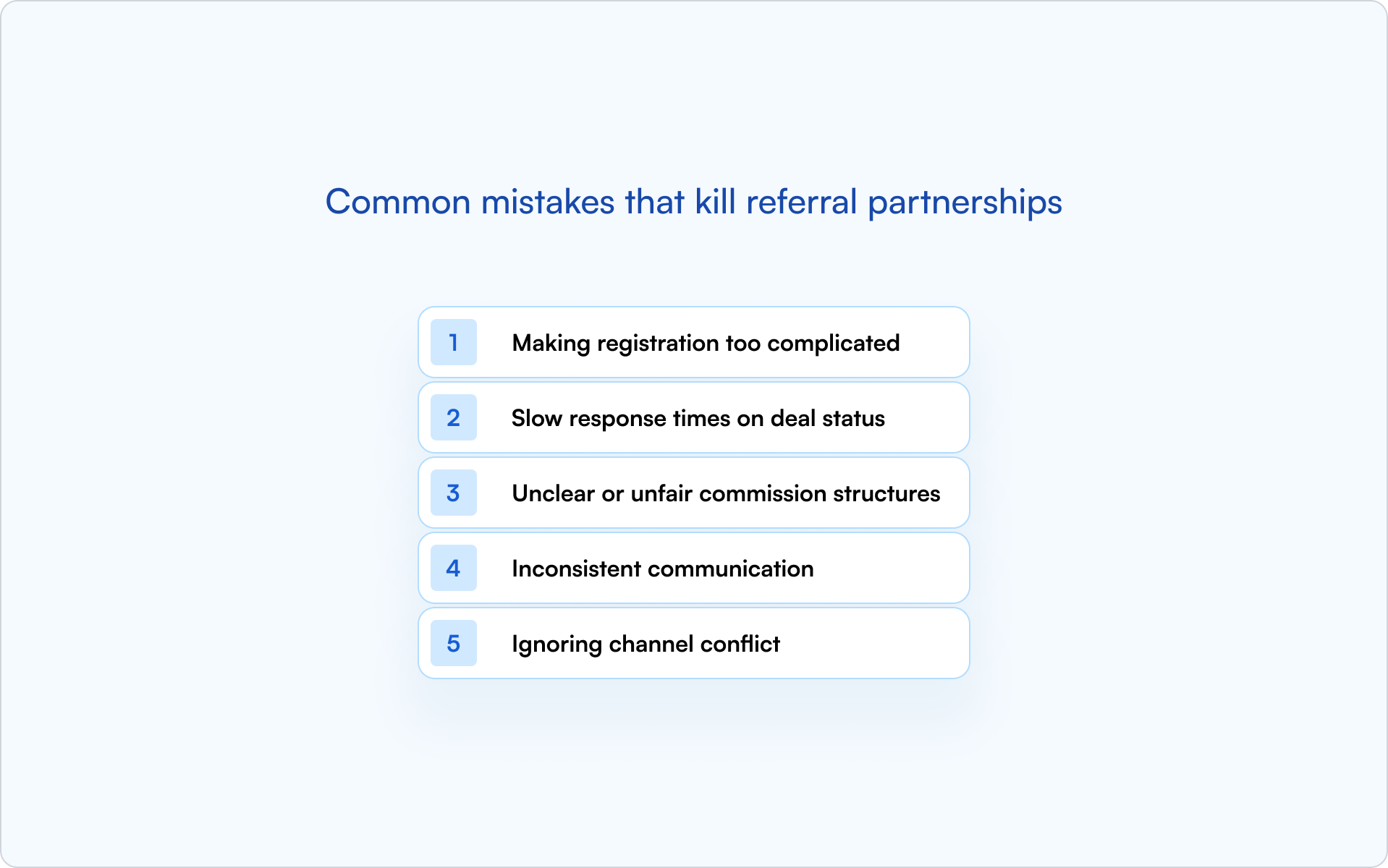
- Making registration too complicated: If partners have to jump through hoops or log into clunky portals, they won’t bother.
- Slow response times on deal status: Partners lose trust when they don’t know what’s happening with their referrals.
- Unclear or unfair commission structures: Ambiguity breeds resentment. Partners disengage when they can’t predict payouts.
- Inconsistent communication: Going silent for months then suddenly asking for referrals doesn’t work.
- Ignoring channel conflict: Letting direct sales claim partner deals destroys relationships fast.
Turn referral partners into a predictable revenue channel
A referral partner program works when it’s built on clear structure, CRM-first tracking, and a consistent partner experience. Teams that scale partner-sourced revenue don’t rely on spreadsheets or manual follow-up — they rely on systems that enforce rules and surface visibility automatically.
Introw helps teams launch partner portals connected to Salesforce or HubSpot, automate deal registration, and keep partners engaged without forcing logins. Partners register leads, see status updates, and stay active, all without creating another system to manage.
Book a demo to see how it works.
Still curious? Here are some quick answers to help clear things up
Most referral partner programs pay partners after the referred opportunity becomes Closed Won and a hold period (if any) has passed. Payouts are commonly handled via direct deposit, wire transfer, PayPal, or account credits, depending on your finance process and partner agreement.
The most common structures are (1) percentage-of-deal (a share of closed revenue) and (2) flat-fee payouts per closed referral. If you’re early, default to the simplest model your team can administer consistently — complexity is only worth it once you have volume and clean tracking.
Many B2B programs use a 30–90 day protection window. Shorter windows can discourage partners from referring, while longer windows can create edge cases if a prospect goes cold. Choose a window that matches your typical sales cycle and make the rules explicit.
Put referral submission and attribution directly in your CRM. A CRM-first workflow ensures your partner-sourced pipeline, forecasting, and commission calculations are based on the same dataset your sales team uses every day.
Yes. You can send automated email updates triggered by CRM stage changes, so partners get proactive visibility as deals progress. This reduces “any update?” emails and keeps partners confident their referrals are being worked.






Are you already an active Introw partner?
Book a demo with one of our partner program experts, or explore Introw on your own time.