

.svg)


.svg)
.svg)








Articles by Ruben
Strategic Partner Management 2026 - 9 Ways to Maximize Value
What is strategic partner management, really?
Strategic partner management is the structured process of planning, building, and managing strategic partnerships that directly support your company’s objectives — market access, product acceleration, or revenue growth. Unlike casual marketing partnerships or short-term campaigns, a strategic partnership is built for mutual success and governed by a long-range plan. It spans the entire relationship lifecycle: scouting potential partners, negotiation, joint planning, launch, co-marketing, co-selling, support, and continuous improvement.
Strategic partnerships take many shapes: strategic alliances to co-market a combined offer, joint ventures and equity-based partnerships to build a new line of business, technology partnerships to integrate new technologies, supply chain collaborations with external partners to stabilize delivery, or channel partnerships to broaden a customer base in new markets. However the partner operates, the goal is the same — a win-win business partnership that compounds over time.
A partnership manager (or strategic partner manager) orchestrates this motion across multiple partnerships. They set the partnership strategy, evaluate fit, manage the sales process for co-sell motions, coordinate marketing partnerships, provide training and offering guidance, and keep both companies on the same page with regular check-ins and clear metrics.
9 Ways to Maximize Partnership Value in 2026
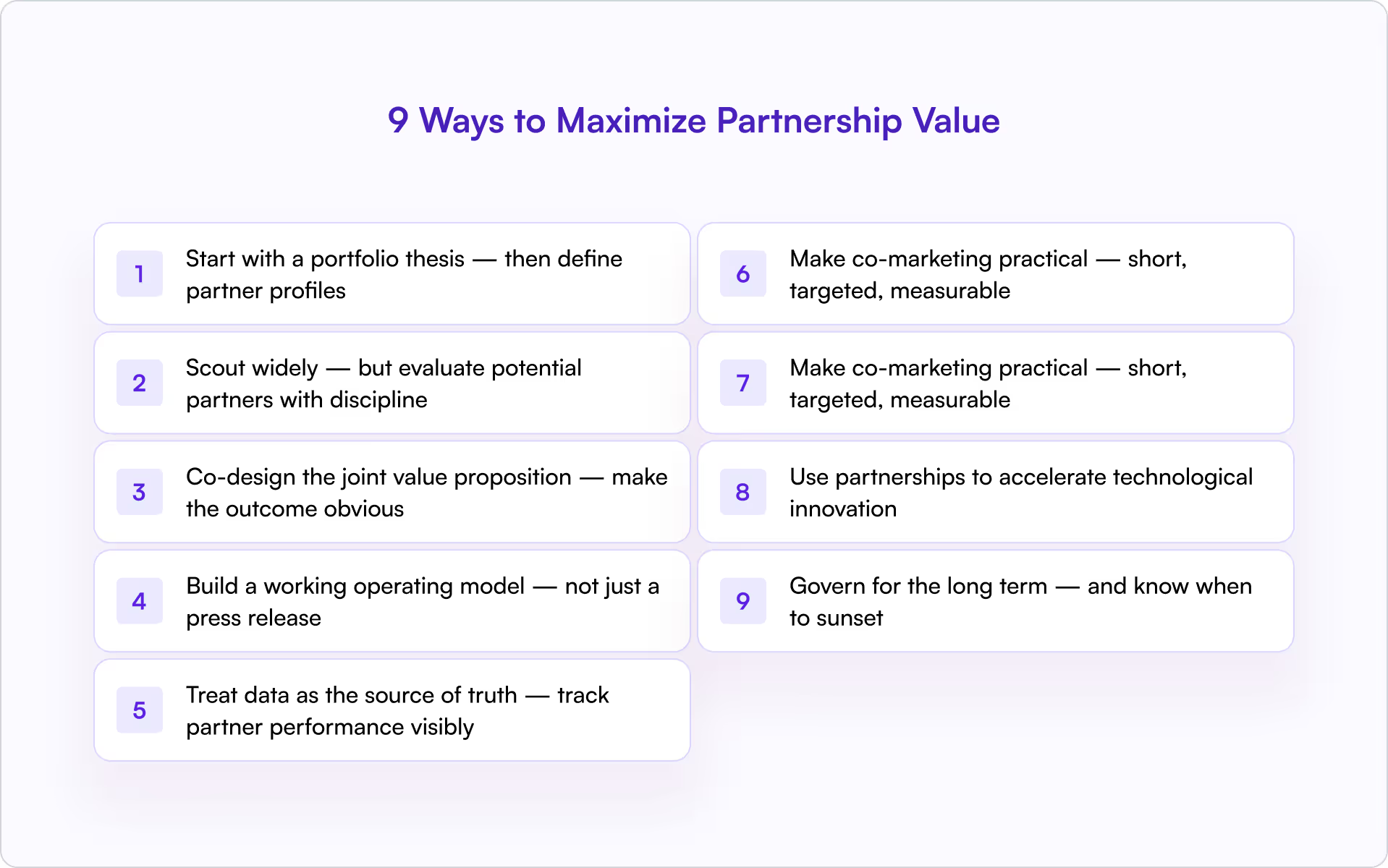
1) Start with a portfolio thesis — then define partner profiles
Before you approach a single potential partner, write a one-page partnership strategy that answers four questions:
- Why partner now — which objectives does your own company need help to achieve? New markets, a larger customer base, product coverage, or credibility in a specific industry?
- Where partnerships can help — list concrete use cases: a marketing partnership to reach a niche audience, a strategic alliance to bundle services, a supply chain relationship to reduce risk, or a technology collaboration to add an integration customers request.
- Which partner types — system integrators, managed service providers, ISVs, complementary SaaS, OEMs, value-added resellers, agencies, logistics providers.
- What good looks like — shared business goals, segment focus, sales model alignment, and the minimum resources each party commits.
Turn this thesis into two or three partner profiles. For each profile, capture the business model, ideal segment, where the partner operates geographically, and the value exchange — what your company gives and what you receive. That clarity filters noise and helps you find partners who can deliver at the same level you need.
2) Scout widely — but evaluate potential partners with discipline
Partner ecosystems are crowded. To find partners worth pursuing, combine outbound scouting with warm introductions and data:
- Build a short list of potential candidates from marketplaces, analyst lists, customer win stories, and events.
- Ask customers which other company they trust alongside you. That signal is gold for relationship building.
- Score each potential partner on strategic alignment, complementary capabilities, overlap in customer base, sales process compatibility, and resourcing.
Use a simple evaluation matrix. Weight the criteria that matter — segment focus, technical fit, strategic planning alignment, and executive sponsorship. Limit monthly adds to your pipeline of potential partners so your team can manage the negotiation phase and early enablement without spreading thin.
3) Co-design the joint value proposition — make the outcome obvious
A successful partnership starts with a shared narrative for the end customer. Write it down together:
- Who is the ideal customer and what problem are you solving together?
- What do the two companies create that neither can deliver alone — a complete solution, a bundled service, a faster sales process, a lower total cost, access to new markets?
- How will success be measured — opportunity creation, influenced revenue, activation rate for the integration, expansion within existing accounts?
Keep this to one slide and one page. If a seller from either side can’t explain the combined value in 30 seconds, you don’t have a partnership strategy — you have a handshake.
4) Build a working operating model — not just a press release
Strategic partners become successful when the relationship moves smoothly from idea to execution. Agree on the basics early:
- Owners and roles — name one partnership manager per side, plus marketing, product, and sales contacts.
- Cadence — regular check-ins, quarterly business reviews, and a shared calendar of campaigns and launches.
- Enablement plan — providing training for both sales teams and partner success managers, along with simple sales tools and marketing materials that sellers actually use.
- Rules of engagement — how you handle overlaps, route opportunities, manage channel conflict, and credit partner influence fairly.
- Mutually beneficial incentives — SPIFFs, referral fees, or margin structures that reward partners who invest.
Write it into a mutual action plan so both parties can track progress. Strong relationships thrive on transparency and accountability.
5) Treat data as the source of truth — track partner performance visibly
If you can’t see partner activities, you can’t manage them. Define the key performance indicators that prove the partnership is working:
- Sourced opportunities by stage and segment
- Influenced opportunities and attach rate to existing deals
- Time-to-first deal and ramp for new partners
- Win rate for co-sell motions vs. direct
- Pipeline coverage by partner type and region
- Integration adoption and retention where new technologies are involved
Share a simple dashboard with both sides, and run your regular check-ins from the same numbers. This keeps both companies on the same page, surfaces issues early, and shows where additional resources or support will unlock growth.
If you use a CRM-first partner platform like Introw, you can manage the entire partner journey — deal registration, mutual action plans, co-marketing — inside Salesforce or HubSpot. That reduces friction, makes relationship building easier, and gives leadership valuable insights without extra spreadsheets.
6) Make co-marketing practical — short, targeted, measurable
Not every strategic partnership needs a giant launch. In many cases, small, well-aimed marketing partnerships outperform broad campaigns:
- One page and one webinar per quarter, each aimed at a specific industry.
- Three social posts with a clear CTA and a landing page you both promote.
- A joint case study that shows how the two companies deliver a win-win outcome for a single customer.
- A field event tied to a conference, with a single sign-up path and agreed lead-sharing rules.
Keep attribution clear. Only share leads who engage with the content and consent to follow-up. Measure outcomes in the same dashboard you use for partner performance.
7) Align sales processes — reduce friction where sellers live
Strategic thinking is great, but sellers need practical steps. Make it easier for both sales teams to work together:
- Build a two-slide quick start for partner teams: which accounts to target, how to introduce each other, and what to say.
- Create a single intake form for co-sell opportunities with fields both CRMs can map.
- Define the negotiation phase — who leads pricing, who joins calls, and how to escalate blockers.
- Publish a short playbook for renewal and expansion so both parties know how to protect existing business.
When partners sell together without friction, successful strategic partnerships scale. When the basics are unclear, even strong relationships stall.
8) Use partnerships to accelerate technological innovation
Partnerships can help you move faster on new technologies and emerging technologies without hiring a team for every capability. Good examples:
- Technology partnerships that integrate your platform with an adjacent tool — reducing time-to-value and increasing retention.
- Joint ventures to explore a new product area when speed to market matters more than building in-house.
- Equity-based partnerships that align incentives for multi-year innovation.
- Multiple partnerships across a category so you can cover more use cases while staying vendor-neutral for customers.
Treat each integration or co-build like a product. Set a roadmap, quality bar, security review, and a clear definition of done. If the partner operates in your supply chain, add risk and continuity planning so both parties can manage disruption together.
9) Govern for the long term — and know when to sunset
Strategic alliances evolve. Some relationships become core; others fade. A healthy partner management program makes it safe to do both:
- Tier your strategic partners by impact and engagement — gold, silver, emerging.
- Review performance quarterly and reset objectives as markets change.
- Offer additional resources to high-performing partners — joint business planning, access to roadmaps, or early co-marketing funds.
- For low-impact partnerships, either improve the operating model or sunset the relationship respectfully with a transition plan.
Strong relationships last because both companies invest consistently, keep objectives aligned, and solve problems openly.
A simple framework to run strategic partner management day to day
Use this five-stage loop to manage the various stages of the partner journey:
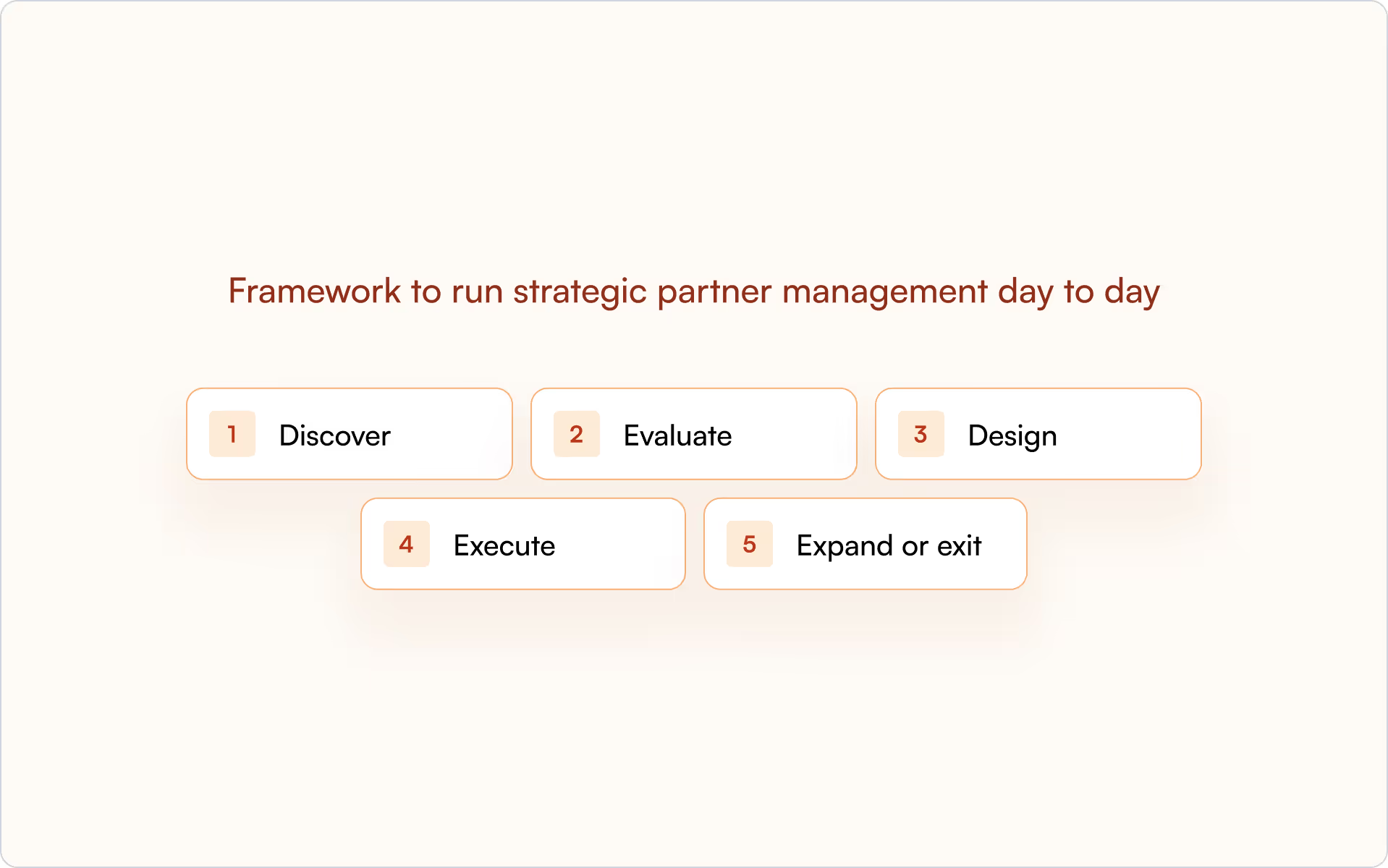
- Discover — find partners that match your thesis; validate interest.
- Evaluate — confirm strategic fit, capability, and resourcing; run an executive alignment call.
- Design — write the joint value proposition, rules of engagement, and first-quarter plan.
- Execute — launch one co-marketing motion and one co-sell motion; provide training and sales tools; track performance weekly.
- Expand or exit — double down with new partners in the same pattern if results are strong; otherwise, adjust or conclude the relationship.
Run this loop across multiple partnerships, but never at the expense of quality. Depth beats breadth when outcomes matter.
Templates and tools that keep partnerships on track
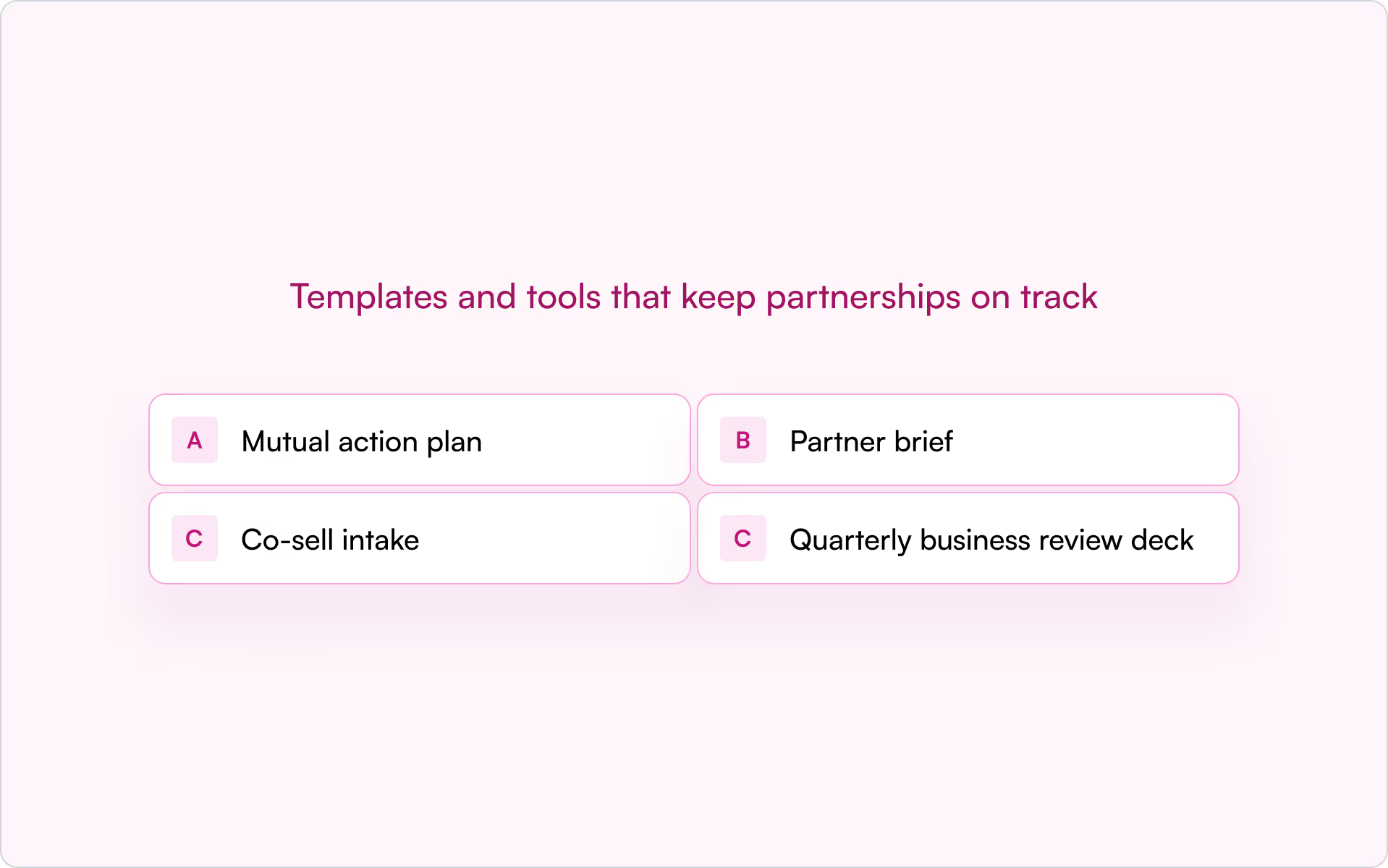
- Mutual action plan — a single, shared checklist with owners, dates, evidence, and risks.
- Partner brief — one page with ICP, key messages, approved claims, and three proof points.
- Co-sell intake — a minimal form both CRMs can accept.
- Quarterly business review deck — pipeline, wins, losses, customer feedback, next-quarter bets.
If you’re using Introw, you can host these templates in partner workspaces, let partners update milestones via email or Slack, and sync progress to your CRM. That keeps managing strategic partners lightweight and visible.
Example use cases across industries
- SaaS and services. A technology partnership with a system integrator to implement complex deployments, with co-selling into existing accounts.
- Supply chain collaborations. Two companies align forecasting and inventory data to reduce stockouts and serve new markets together.
- Marketing partnerships. A webinar and field series across a shared industry, feeding a joint landing page with a single lead-sharing process.
- Joint ventures. Equity-based partnerships that build a new solution faster than either company could alone.
Each case follows the same pattern — shared objectives, clear governance, and measurable outcomes.
Where to place strategic partner management inside the org
High-leverage programs typically report to a senior revenue leader or a GM who owns a partner ecosystem. The partnership manager coordinates with product, legal, finance, marketing, and sales, and brings problem solving to bear when priorities clash. For start-ups, begin with one experienced owner. As you grow, invest in partner operations to manage data, processes, and compliance at scale. Contact our team and we’ll show you how strategic partner management is done.
What Is Co-Selling? A Guide to Scaling Faster with the Right Partners
Most B2B companies hit a ceiling because they rely solely on direct sales. But growth doesn’t have to be a solo mission. The fastest path to revenue? Co-selling.
A co-selling strategy brings together two or more companies to reach new markets, shorten the sales cycle, and close more deals — faster. It’s not just about splitting commissions; it’s about aligning with the right co-selling partners to deliver more comprehensive solutions to potential customers.
This guide breaks down what co-selling is, how to build a successful co-selling partnership, and why aligning your sales team with a partner team unlocks game-changing co-sell opportunities.
If your sales reps are tired of chasing cold leads alone, it’s time to think bigger. Build a co-selling program, empower your sales process with partner intelligence, and see what happens when your co-selling efforts are structured for scale — not luck.
What Is Co-Selling and Why It Works
Co-selling is a B2B sales approach where two or more companies work together to jointly position, promote, and sell complementary solutions to a shared target market.
Unlike traditional reseller models or B2B SaaS partnerships, co-selling partners collaborate actively throughout the entire sales process — from account mapping to opportunity engagement, to closing.
The goal? Shorten the sales cycle, expand reach, and deliver a joint solution that creates more value than either company could on its own.
A well-structured co-selling program isn't just about generating leads. It's about aligning sales teams, sharing deal intelligence, and creating a seamless experience for potential customers. When executed correctly, a co-selling partnership can unlock deeper customer relationships, improved win rates, and long-term revenue growth.
So how does it actually work in practice?
Inside the Co-Selling Process: How It Works
At its core, co-selling is all about alignment — across systems, teams, and incentives. Whether you’re running a formal co-selling program or experimenting with an ad hoc co-selling motion, success comes down to shared intent and execution.
Here’s what a typical co-selling process looks like:
- Identifying complementary solutions that solve adjacent pain points
- Mapping accounts to uncover overlap and co-sell opportunities
- Activating sales teams on both sides to co-engage prospects
- Tracking co-selling activities across CRM and partner tools
- Maintaining consistent communication to keep both teams aligned
This level of collaboration between two sales teams requires coordination, visibility, and trust. That’s why the most effective co-selling partnerships are built on clear agreements and repeatable workflows.
Co-Selling Agreements: Setting the Rules for Collaboration
To avoid confusion and misalignment, leading companies establish a co-selling agreement — a formal, legally binding contract that defines how the co-selling partnership will operate.
A co-selling agreement outlines critical components of your co-selling process, including:
- Roles and responsibilities across both sales teams
- Lead sharing and deal registration procedures
- Incentive structures and commission splits
- Rules for customer ownership and contract management
- Guidelines for co-marketing plans, communication, and escalation paths
In short, it clarifies who owns what, who does what, and how both parties benefit — paving the way for a successful co-selling relationship.
Now let’s take a look at real-world examples that show how co-selling partners put this into action.
Real-World Co-Selling Examples and Strategies
Now that we’ve covered what co-selling is and how it works, let’s look at real-world examples that show how co-selling partners create value through collaboration.
Each example highlights a key type of co-selling activity that helps expand reach, improve the sales process, and increase adoption through joint effort.
1. Identifying Complementary Co-Selling Solutions
Co-selling works best when the products or services naturally complement each other—creating a more compelling value proposition for sales teams and potential customers.
Take HubSpot and Introw, for example:
- HubSpot equips sales teams with robust tools for lead management, helping them track, organize, and nurture pipeline more effectively.
- Introw focuses on automated outreach, enabling reps to reach out to shared accounts via personalized emails, timely follow-ups, and Slack nudges — all synced with the CRM.
Since sales reps need both efficient lead tracking and high-volume outreach, these two companies form a strong co-selling partnership to jointly offer a more complete solution. It’s a classic example of combining capabilities to strengthen the entire sales process.
Another example? Dropbox and HelloSign:
These tools are bundled into a single workflow where users can store, access, and sign documents in one place. By solving multiple pain points in a single motion, co-selling partners reduce complexity, drive adoption, and improve retention.
2. Integrating the Products (Optional, But Powerful)
When co-selling partners go a step further and integrate their products, the value of the joint solution multiplies.
Consider Slack and Zoom. Their integration allows users to start video calls directly from Slack — removing friction and improving daily workflow for marketing teams, customer success, and sales teams alike.
This kind of product alignment boosts stickiness, enhances user engagement, and makes the co-selling relationship feel like a natural fit — not a bolt-on. Integrated experiences are key to delivering more comprehensive solutions and building deeper customer relationships.
3. Aligning Sales and Marketing Teams for Co-Marketing Success
A successful co-selling strategy depends not just on product synergy, but on team alignment.
For example, in the Slack + Zoom model, both companies' sales teams and marketing teams co-develop messaging, plan co-marketing campaigns, and execute coordinated outreach to potential customers. The result? Clearer communication, faster execution, and a stronger pipeline.
When both sales teams are on the same page, co-engagement feels seamless — and prospects experience a unified, high-value solution.
4. Leveraging Partner Ecosystems for Co-Sell Opportunities
Cloud marketplaces like AWS, Microsoft Azure, and Google Cloud offer built-in trust and exposure—making them perfect launchpads for co-selling programs.
For example, a security SaaS vendor participating in the AWS Marketplace can co-sell with AWS, positioning their product as “AWS-optimized” and immediately gaining access to larger enterprise deals.
By tapping into the marketplace’s partner ecosystem, vendors eliminate friction in the sales cycle, reduce procurement hurdles, and access co-sell opportunities that would be difficult to close via direct sales teams alone.
Each of these examples shows how a thoughtful co-selling program can deliver more than just pipeline — it creates leverage, trust, and sales enablement across every touchpoint.
Next, we’ll look at how co-selling compares to reselling, and why understanding the distinction matters for long-term partner strategy.
Co-Selling vs. Reselling: Understanding the Strategic Difference
As you build out your co-selling strategy, it’s important to understand how it differs from reselling—especially when aligning your sales team, setting expectations with co-selling partners, and structuring your co-selling program for scale.
While both approaches involve multiple companies working together to drive revenue, the key distinction lies in ownership of the deal and relationship with the customer.
- In a co-selling partnership, each company contributes to the sales process, but the original vendor retains ownership of the customer and contract. The value comes from mutual sales efforts, faster deal velocity, and the ability to reach new markets together.
- In a reseller model, one company purchases your product (often at a discount) and resells it independently. You may get the deal, but you lose visibility, control, and direct contact with the potential customers.
Understanding this distinction is critical as you build your co-selling program, prioritize co-sell opportunities, and design effective incentive models for your sales reps and partner team.
Here’s a side-by-side breakdown to make the difference crystal clear:
Whether you choose co-selling, reselling, or a hybrid of both, understanding the mechanics of each model is key to avoiding misalignment—and unlocking the true benefits of co-selling.
Why Co-Selling Matters More Than Ever
As B2B sales cycles grow longer and buyers get harder to reach, co-selling has become more than a strategy — it’s a competitive advantage.
According to ZDNet, 84% of sales professionals say partner selling impacts revenue more today than it did just a year ago. And nearly 9 out of 10 sales teams are already engaging in some form of co-selling.
For SaaS companies looking to scale faster, break into new markets, and build deeper customer relationships, a structured co-selling program isn’t optional — it’s essential.
That’s why leading B2B teams are investing in the right systems — to make co-selling repeatable, visible, and scalable.
How to Run a Scalable Co-Selling Program with PRM Software
Running a co-selling program at scale isn’t about working harder — it’s about working smarter. That’s where PRM (Partner Relationship Management) software comes in.
A modern PRM platform helps co-selling partners align across teams, systems, and workflows — enabling faster execution, stronger sales enablement, and greater co-sell opportunities.
But not all PRMs are built for how today’s SaaS companies sell.
Enter Introw: CRM-First, Partner-Ready
Introw is purpose-built to streamline the entire co-selling process — from deal registration and account mapping to partner engagement and performance tracking — all inside the tools your sales team already uses (like Salesforce or HubSpot).
Here’s how you can run a successful co-selling program with Introw:
1. Define Clear Co-Selling Objectives
Before launching into activity, define what success looks like.
- Are you entering new markets?
- Targeting a shared target market?
- Trying to shorten the sales cycle?
- Aligning around partner sourced deals?
With Introw, you can build structured co-sell motions from the start — tracking success by CRM stage, partner type, and target account segment.
Pro tip: Start with account mapping using Crossbeam and Introw to surface mutual customers or warm intro paths.
2. Identify & Onboard the Right Partners
Not every company is a fit for co-selling — focus on those with a natural joint solution, adjacent ICP, and a motivated partner team.
Once identified, Introw makes onboarding painless:
- No logins required
- Partner-friendly deal forms
- Slack + email notifications
- Full sync with your CRM
This allows your co-selling partners to contribute without friction — and your sales reps stay focused on deals, not admin.
3. Streamline Deal Registration & Account Mapping
This is where most co-selling efforts fall apart: misalignment around who’s working what, and no central system to track it.
With Introw:
- Partners register deals via simple forms linked directly to your CRM
- All mapped accounts are visible and actionable by your sales team
- Auto-tagged, auto-synced — no more chasing down updates
Bonus: Get Slack nudges when a new deal is registered or a mapped account is touched, so your sales process stays proactive.
4. Track Performance & Automate Feedback Loops
A successful co-selling relationship thrives on visibility and iteration.
Introw gives you shared dashboards across both teams — tracking:
- Partner activity across deals, accounts, and emails
- Win rates and sales velocity
- Top-performing co-selling partners
- Campaign performance from co-marketing plans
This isn’t just helpful for RevOps — it empowers sales teams, partner managers, and leadership to see where the revenue is really coming from.
5. Enable Real-Time Communication & Collaboration
Speed matters. With Introw, your co-selling activities move fast and stay aligned:
- Chat with partners in Slack or via email (no login required)
- Share pitch decks, proposals, or videos via integrated doc-sharing
- Trigger Slack or email notifications when key actions are taken (e.g. deal registered, task assigned, doc opened)
Think of it as the connective tissue that keeps your two sales teams on the same page — even across orgs.
6. Incentivize and Optimize
Co-selling isn’t a one-and-done motion — it’s a growth engine.
Use Introw to:
- Set up custom incentives tied to partner performance
- Monitor partner-driven revenue by segment or region
- Run A/B tests on co-selling offers, outreach styles, or co-marketing campaigns
By turning every co-sell opportunity into structured data, Introw lets you double down on what works — and sunset what doesn’t.
Why Introw Makes Co-Selling Scalable
Co-selling requires precision, process, and trust. Introw delivers:
- CRM-first workflows (Salesforce & HubSpot)
- Slack and email-native partner comms
- Real-time dashboards and deal insights
- No login friction for partners
- Built-in co-sell motion templates
- Custom workflows by partner type (reseller, referral, MSP, etc.)
Whether you're working with 5 partners or 500, Introw helps you launch, run, and scale a co-selling program that drives real revenue — without burning out your sales team or partner ops.
Ready to Turn Co-Selling Into a Scalable Revenue Engine?
You’ve built a great product. Your sales team is putting in the work. But growth still feels slower than it should — because you’re doing it alone.
The companies scaling fastest right now aren’t just selling — they’re co-selling. They’re tapping into partner ecosystems, collaborating across two sales teams, and unlocking warm intros that never would’ve come from cold outreach.
The difference? They’re not running their co-selling efforts on spreadsheets and hope. They’re using Introw.
Introw gives you everything you need to turn your co-selling program into a repeatable revenue machine:
- Seamless Salesforce and HubSpot integration
- Slack and email-native workflows — no logins needed
- Real-time dashboards across partners, deals, and accounts
- Built-in guardrails for RevOps, CROs, and partner managers alike
No friction. No guesswork. Just faster, smarter revenue — driven by aligned teams and trusted partners.
Stop relying on luck. Start co-selling with intention.
Book your Introw demo and see how today’s top SaaS companies are building scalable, partner-powered pipelines.
B2B SaaS Partnerships Guide: How to Scale and Win with the Right Partner Program
B2B SaaS, partnerships aren’t just a strategy — they’re a growth engine. Whether you’re launching a new go-to-market initiative, expanding into new customer segments, or co-developing innovative solutions, forming strategic SaaS partnerships with the right partner is essential.
But let’s be clear: successful partnerships don’t just happen. They require structure, consistency, and purpose-built tools. That’s where Partner Relationship Management (PRM) software like Introw becomes a game-changer.
In this guide, we’ll walk through:
- Why B2B SaaS partnerships are critical for modern SaaS companies
- The most common partner types — and how to work with them
- How to build and scale a partner program with the right infrastructure
Let’s dive in.
Why B2B SaaS Partnerships Matter
SaaS companies need more than just a strong product — they need a powerful partner ecosystem. Strategic partnerships enable two or more companies to align around a shared go-to-market strategy, extending reach and reducing customer acquisition costs.
Well-executed SaaS partner programs can:
- Help tap into new markets
- Create new revenue streams through revenue sharing
- Accelerate product development partnerships
- Improve customer satisfaction and customer retention
Whether you're managing channel partnerships, integration partnerships, or joint marketing efforts, strategic SaaS partnerships are a cornerstone of long-term, scalable growth.
What Are the Types of B2B Partnerships?
Before building or optimizing your partner program, it's critical to understand the types of B2B SaaS partnerships available. While affiliate marketing gets plenty of attention, the most valuable SaaS partnerships often involve deeper integration, stronger alignment, and shared success metrics.
Let’s explore the landscape:
These partner types represent the most common paths SaaS companies take when scaling through partnerships. While each type comes with its own strengths and challenges, they all share one thing in common: they work best when supported by clear processes, aligned goals, and modern tooling.
Now that you’ve seen what types of B2B SaaS partnerships exist, how do you know which ones to pursue?
Choosing the Right Partner Program
Every SaaS business is unique — and so is its path to growth. That’s why choosing the right partner program isn’t about copying what others are doing — it’s about aligning your strategy with your goals, resources, and customers.
The ideal partner strategy will vary depending on your product maturity, market penetration, and internal capacity to support partners. For example:
- If your goal is demand generation, you may benefit most from referral partners, affiliate relationships, or integration partnerships that can drive top-of-funnel awareness.
- If you’re focused on market expansion, resellers, MSPs, or distributors with strong local presence can help you enter new geographies or verticals.
- If you need deeper product alignment, ISVs or system integrators may be the right fit for long-term co-selling and co-building.
To guide your decision, start by answering these questions:
- What new customer segments do we want to reach?
- Which potential partners already serve or influence those segments?
- What kind of co-marketing, sales support, or onboarding experience can we realistically provide?
- Are there opportunities for joint marketing efforts, or even a product development partnership?
You’re looking for alignment on not just reach, but capability and collaboration potential.
This is where a Partner Relationship Management (PRM) platform like Introw becomes essential. It surfaces real-time insights into:
- Which partners are submitting deals
- How fast those deals move through the sales pipeline
- Who’s engaging (and who’s not)
With those insights, your partner strategy becomes proactive, not reactive — based on data, not guesswork.
Let’s now dig into how to evaluate your current ecosystem and decide where to focus next.
How to Decide on Expanding Your B2B Partnerships
Expanding your partner program isn’t about volume — it’s about strategic alignment. Start by analyzing your current ecosystem: who’s performing, who’s not, and where the untapped opportunities lie.
- Referral partnerships can drive top-funnel growth with minimal overhead.
- Joint venture SaaS partnerships with ISVs or tech partners can open up new product capabilities.
- Channel partnerships and distributors can accelerate go-to-market in new geos or verticals.
With the PRM market projected to grow from $1.3B in 2023 to $4.6B by 2033, now’s the time to invest in systems that scale. Manual tracking simply won’t cut it — especially when the right partner could be your next major revenue stream.
Essential Functions of Partner Relationship Management Software
To succeed at scale, you need structure. PRM software is built to manage the entire partner lifecycle — from onboarding to revenue attribution.
Why SaaS Companies Need PRM
Choosing the right PRM helps:
- Scale channel partners with consistent experiences
- Eliminate chaos from your sales process
- Automate lead registration and partner onboarding
- Enable seamless co-selling and co-marketing
- Optimize for revenue attribution and partner performance
PRM = Structure + Speed + Scale
Spreadsheets and email threads might work for 5 partners — not 50. Introw gives you the automation, real-time insights, and CRM-native experience needed to grow your program without adding headcount.
So how do you ensure that growth doesn’t come at the cost of quality? It starts with a repeatable, scalable process for managing partner relationships at every stage of the journey.
6 Stages of a Partner Relationship Journey
A successful SaaS partner program follows a repeatable, structured journey. Here's how you scale from one partner to hundreds, without losing quality, engagement, or results:
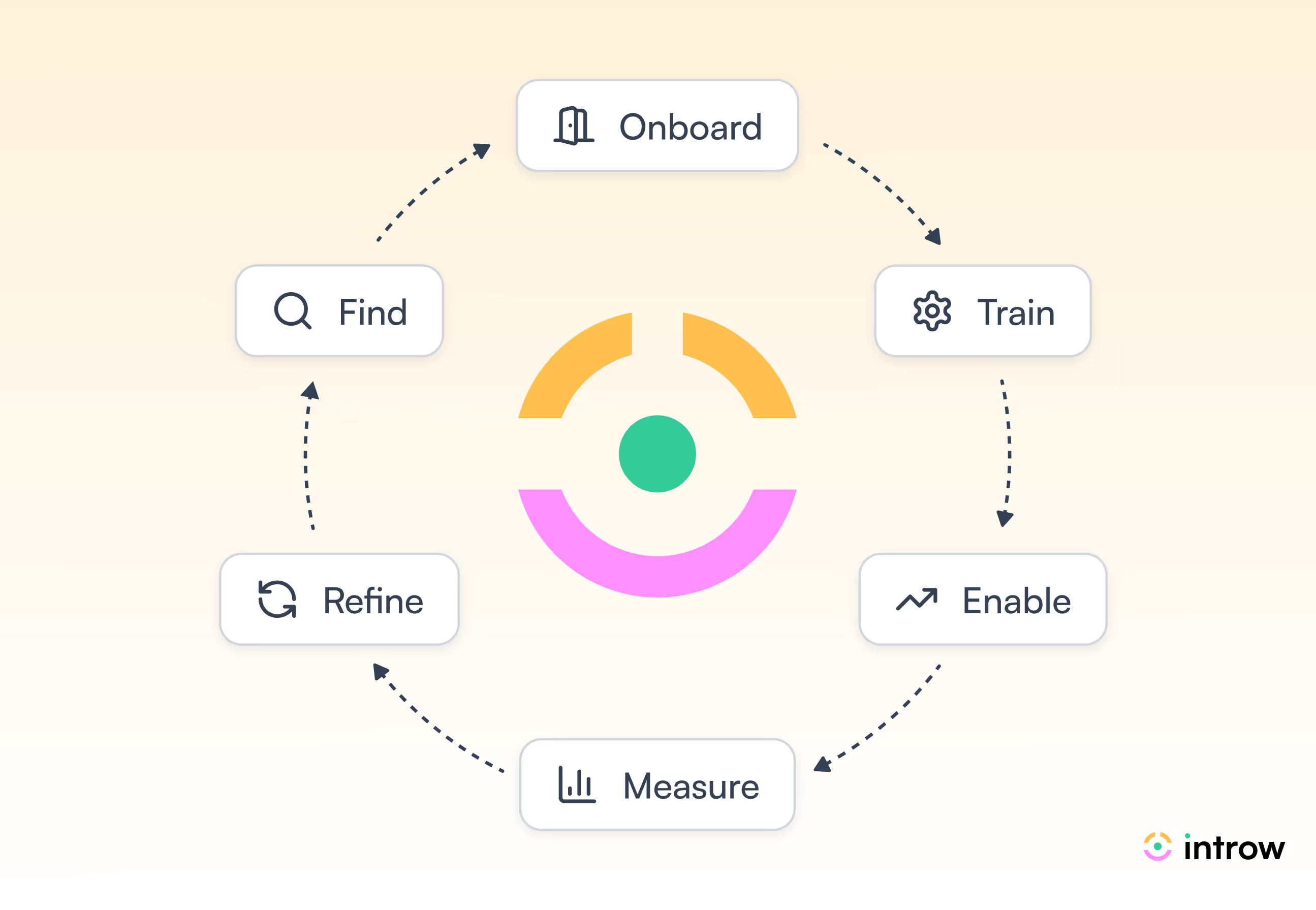
1. Find the Right Partners
Identifying the right partner is foundational. Evaluate potential partners based on their customer base, market alignment, technical compatibility, and cultural fit. Use tools like account mapping to uncover overlap between your customers and theirs — and prioritize partners with proven influence in your target segments.
2. Onboard with Ease
Once a partner is selected, the onboarding process should feel smooth, professional, and repeatable. Share training modules, certifications, documentation, and sales playbooks. With Introw, onboarding is automated with workflows, due dates, and reminders — so partners hit the ground running without bottlenecks.
3. Enable for Growth
Partner enablement is more than a checklist — it’s an ongoing relationship. Provide co-branded marketing materials, demo scripts, objection handling guides, and access to shared assets. Support them with regular updates and resource drops that align with product launches and campaigns.
4. Co-Sell with Precision
In the execution stage, seamless collaboration is key. Enable real-time deal registration, pipeline visibility, and clear ownership. Introw connects partners directly to your CRM workflows — allowing for faster response times, cleaner data, and collaborative pipeline management without the need for additional tools.
5. Measure and Motivate
Track KPIs like sourced revenue, win rates, sales cycle length, and content engagement. Use this data to recognize high performers and identify who needs extra support. Publicly celebrate success — and gamify performance through tiers, contests, and quarterly business reviews.
6. Refine and Scale
As your partner program matures, revisit your strategy. Which partners deliver the most value? Where are the drop-offs in the journey? What tools are underutilized? Use this insight to refine onboarding, update your enablement materials, and launch advanced tiers, integrations, or co-marketing campaigns.
Most importantly, keep feedback loops open — your best partners will show you what success looks like if you ask, listen, and iterate.
What should you look out for when building B2B Partnerships?
As your partner program grows, it becomes more complex — and more impactful. To keep things running smoothly, your PRM must do more than check boxes. It should actively empower your team to scale without sacrificing clarity or control.
Here are the most important capabilities to look for when scaling a SaaS partner program:
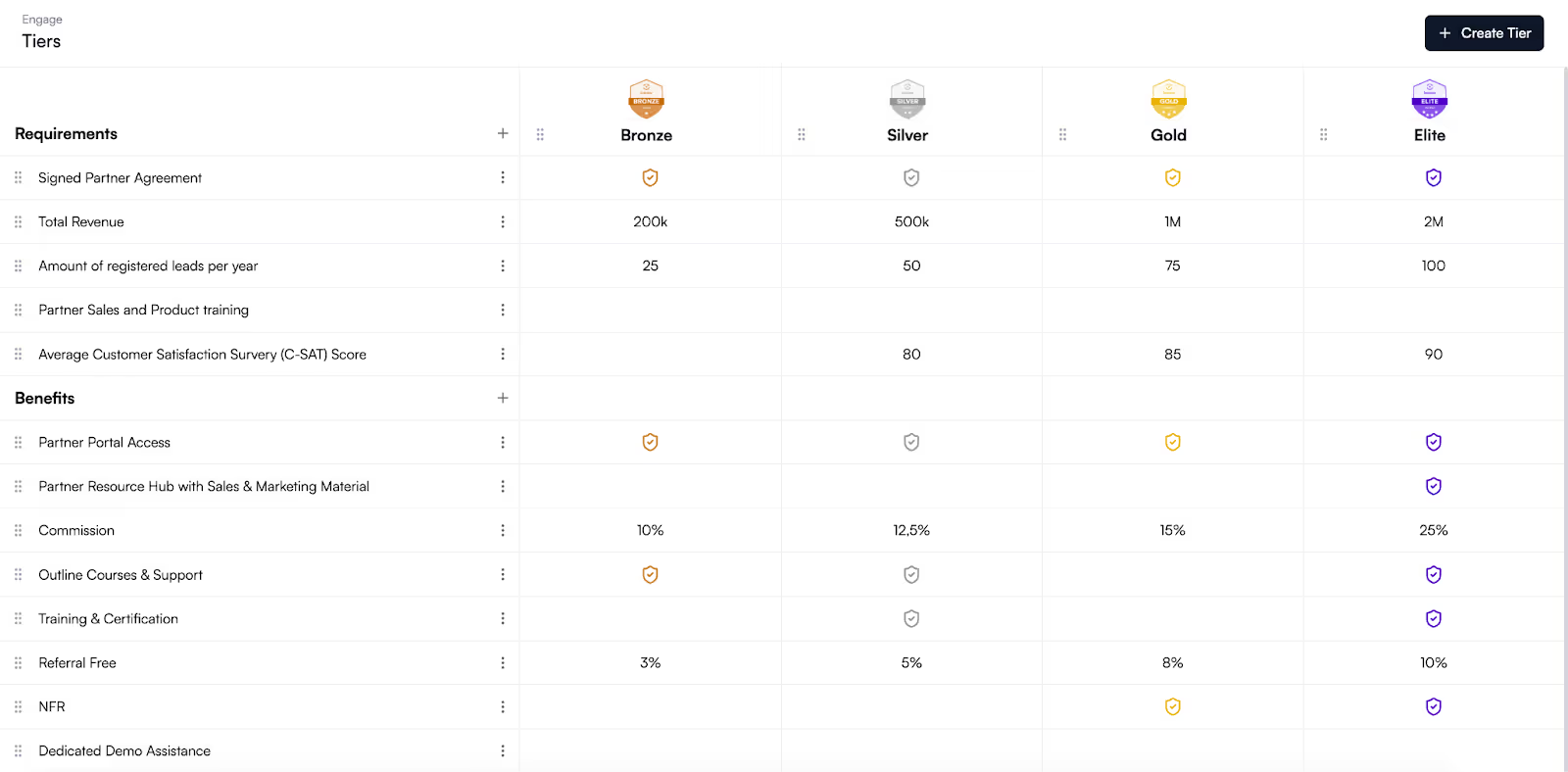
Partner Tiering & Certification
- Segment partners by performance, partner type (e.g., reseller, referral, MSP), or vertical.
- Automate training and certification workflows.
- Incentivize growth with exclusive rewards and visibility for top-tier partners.
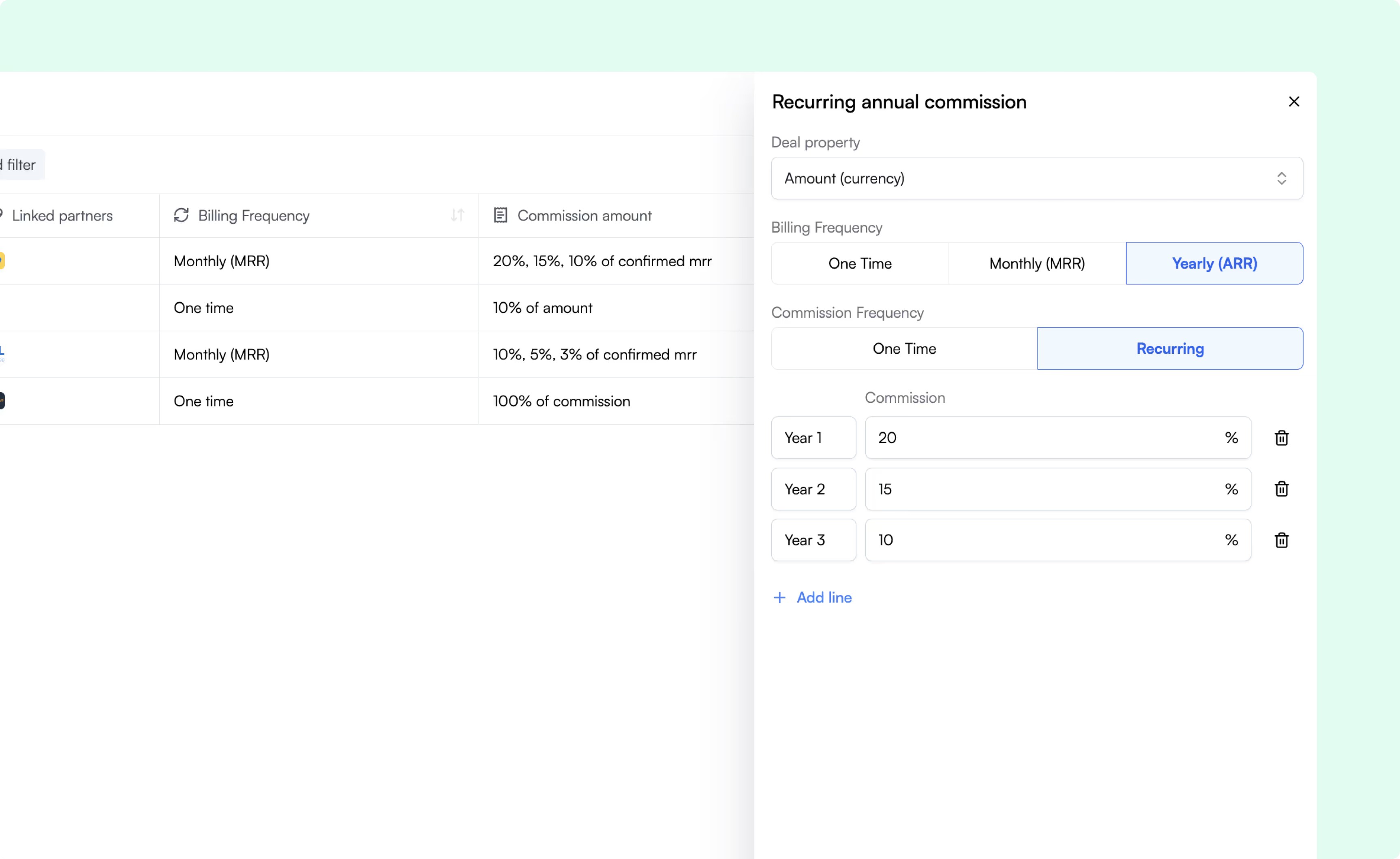
2. Commission Automation
- Tailor commission rules by partner type or deal stage.
- Auto-calculate and distribute rewards to reduce admin overhead.
- Ensure transparency and accuracy to build partner trust.
3. Partner Portal
- Offer a white-labeled, easy-to-navigate portal with sales enablement, product content, and real-time updates.
- Give partners a self-service hub for everything from training to reporting.
4. Lead & Deal Registration
- Prevent channel conflict with transparent, time-stamped registration.
- Support off-portal registration to boost partner participation by up to 30%.
- Auto-map to the correct Salesforce or HubSpot fields.
5. Account Mapping & Co-Sell Planning
- Identify overlap with tech partners, resellers, or integration partners.
- Use Introw’s built-in mapping to discover shared customers and coordinate co-selling.
6. CRM-Embedded Insights
- All partner data stays native to Salesforce or HubSpot.
- Enable RevOps teams to monitor performance, improve data hygiene, and support accurate forecasting.
These features help RevOps, Partner Managers, and revenue leaders align around shared KPIs — without adding complexity or extra tools.
Why Introw Works for Modern SaaS Partner Teams
SaaS companies operating in competitive markets — especially in the US and UK — are turning to PRM tools that integrate directly into their CRM, reduce manual work, and support partner collaboration at scale.
Introw supports:
- Partner & Channel Managers who want better visibility and fewer bottlenecks
- RevOps teams who care about data cleanliness, automation, and attribution
- CROs who need forecasting clarity and aligned revenue motions
With support for Salesforce and HubSpot, and no-login-required experiences for partners, Introw is built for fast-growing SaaS teams with real partnership goals.
Conclusion: From Strategy to Execution
Strategic partnerships are no longer a “nice to have” — they are a growth mandate for any B2B SaaS company looking to meet market demands, accelerate revenue streams, and serve new customer segments. But executing on that strategy requires more than good intent — it demands systems that scale, clear partner relationships, and the ability to act on data.
Whether you’re managing channel partners, building integration partnerships with tech partners, or exploring product development SaaS partnerships, your ability to structure and scale the program determines success. That's where modern partner infrastructure plays a transformative role.
PRM software like Introw empowers SaaS teams to:
- Build high-performing, data-driven partner ecosystems
- Align sales teams, marketing efforts, and RevOps around a shared pipeline
- Reduce development costs by turning co-selling and co-marketing into repeatable motions
- Increase deal velocity and improve customer satisfaction by enabling the right partner experience
The result? Successful partnerships that feel effortless — for both you and your partners.
Ready to unlock the next phase of your SaaS partnership strategy? 👉 Book a demo with Introw and build the partner ecosystem that drives your next stage of growth.

