
.avif)

What is AI sales coaching software?
AI sales coaching software helps your team improve how they handle deals, sales calls, and buyer conversations by providing guidance while work is happening, not just after the fact. It uses sales coaching AI to surface next steps, suggest responses to objections, and highlight what’s most likely to move a deal forward.
The category has expanded quickly since 2024, and today, an AI sales coach isn't just one type of tool. It covers several different approaches to coaching sales reps across the full sales cycle.
Here are the five main categories you need to know before choosing a solution:
Most “best sales coaching software” lists only compare conversation intelligence and roleplay tools. But teams working in indirect revenue models or partner sales need visibility into partner and channel deal coaching as well. Understanding all five categories makes it easier to choose the right sales coaching platform for your business.
AI sales coaching software comparison table
This table compares leading tools across the five coaching categories so you can quickly see where each one fits and whether it supports internal reps, external partners, or both.
Most tools support internal sales teams only, so if your partners help close deals, you’ll need software built to coach them inside real pipeline activity, not just review calls after the fact.
The 13 best AI sales coaching software tools in 2026
Here’s how the leading AI sales coaching tools compare across the five main categories buyers should evaluate today.
Category 1: partner and channel deal coaching
This is the newest and fastest-growing category of AI-powered sales coaching. These tools guide external partners on live opportunities inside the environments they already use, including partner portals, Slack, and email, so coaching happens while deals are moving instead of after they stall. They’re best for companies that sell through resellers, referral partners, distributors, or ecosystem programs and want to improve partner close rates without adding more partner managers.
#1 Introw – Best for AI deal coaching in partner and channel sales
What it does:
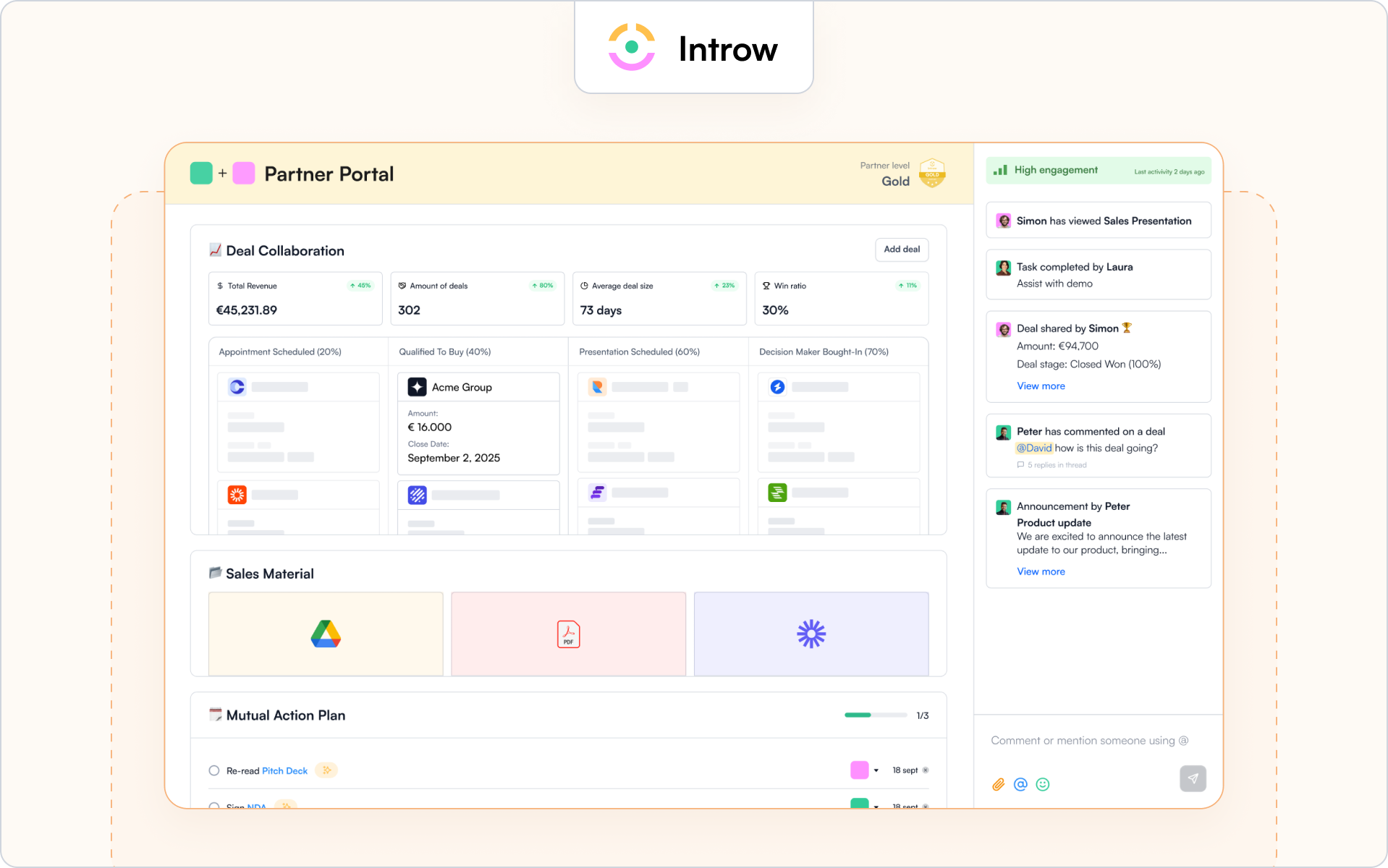
Introw is the only PRM with built-in AI deal coaching that creates a dedicated AI sales coach for each pipeline, such as reseller, referral, or co-sell. That means every partner deal gets stage guidance, objection handling, asset recommendations, and rules of engagement automatically inside the deal itself through deal coaching.
Who it’s best for:
B2B companies that rely on partners, resellers, or ecosystem motions and want partner-sourced pipeline to close more like direct pipeline without hiring more partner managers.
Key features:
- Dedicated AI coach per partner segment with templates for reseller, co-sell, and referral motions
- Stage guidance that tells partners what to do next at each deal step
- Context-aware objection handling based on deal stage and engagement signals
- Asset recommendations surfaced inside the opportunity when partners need them
- Rules of engagement that clarify when to involve your internal team
CRM integrations:
Works with HubSpot and Salesforce.
Pricing:
Custom pricing from Starter to Enterprise based on the number of seats and configuration, and you can start for free.
Category 2: conversation intelligence and call coaching
These sales coaching tools record and analyze sales calls, then turn those conversations into coaching insights your sales managers can use to coach sales reps more consistently. They’re best for internal sales teams that want better visibility into sales conversations, rep performance, and patterns across customer interactions.
#2 Gong – Best for revenue intelligence and call pattern analysis
What it does:
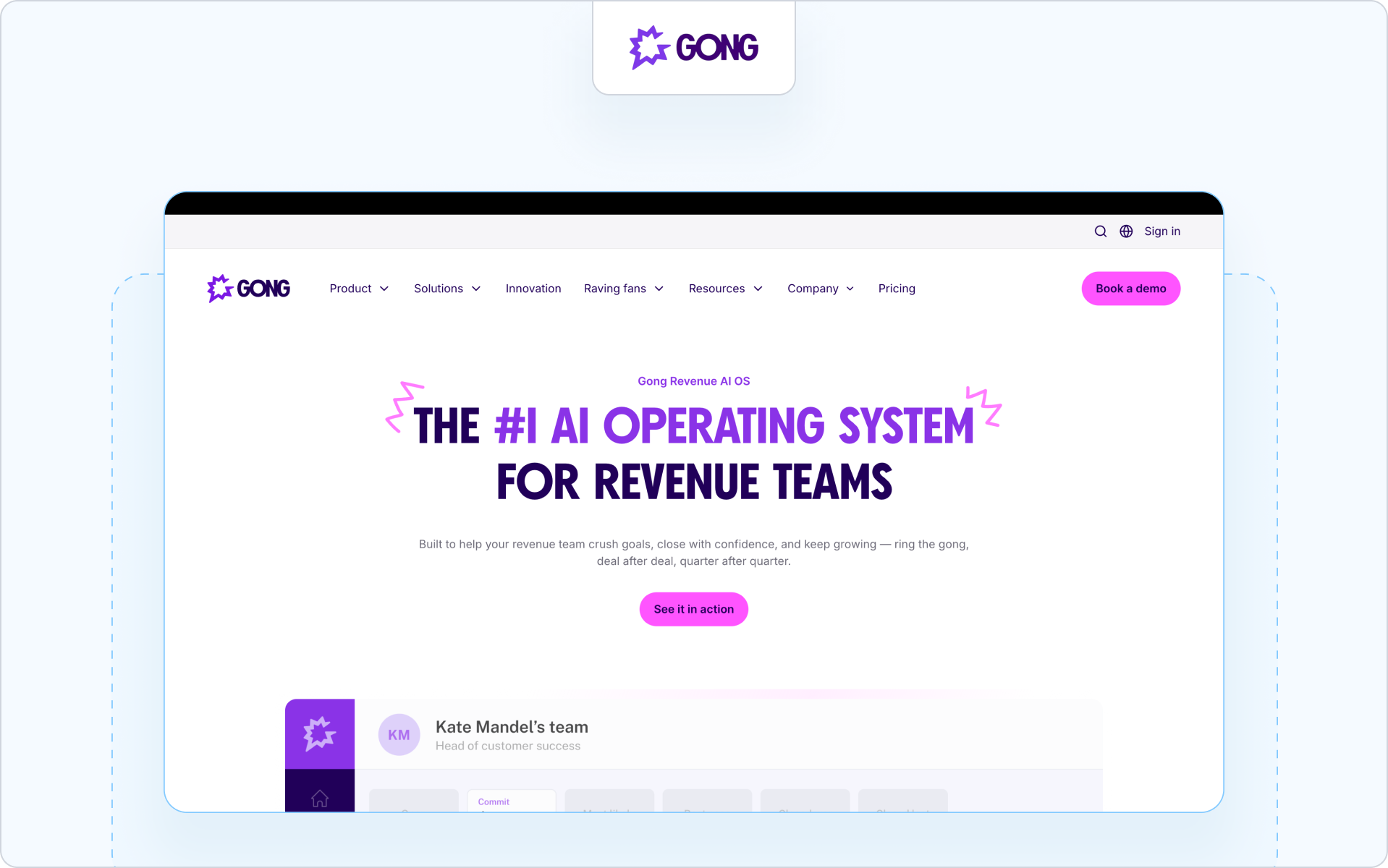
Gong records and analyzes customer calls, meetings, and emails to surface patterns that affect deal outcomes. It helps sales leaders understand what top performers do differently and uses conversation intelligence to highlight risks, competitor mentions, and coaching opportunities across the sales cycle.
Who it’s best for:
Mid-market and enterprise sales teams that run high volumes of sales calls and want data-driven insights to improve team performance.
Key features:
- Call recordings with speech and sentiment analysis
- Pipeline risk alerts and deal insights based on conversation patterns
- Manager dashboards that support structured coaching feedback
CRM integrations:
Works with Salesforce, HubSpot, and other major sales cloud environments.
Pricing:
Custom pricing, typically reported between $100 and $150 per user per month depending on contract size and feature access.
Partner/channel gap:
Gong is designed for internal sales professionals using company-managed meeting tools. Partners usually sell independently, which limits how often they appear in recorded workflows that support channel partner sales enablement or structured co-selling.
#3 Chorus by ZoomInfo – Best for call coaching inside the ZoomInfo ecosystem
What it does:
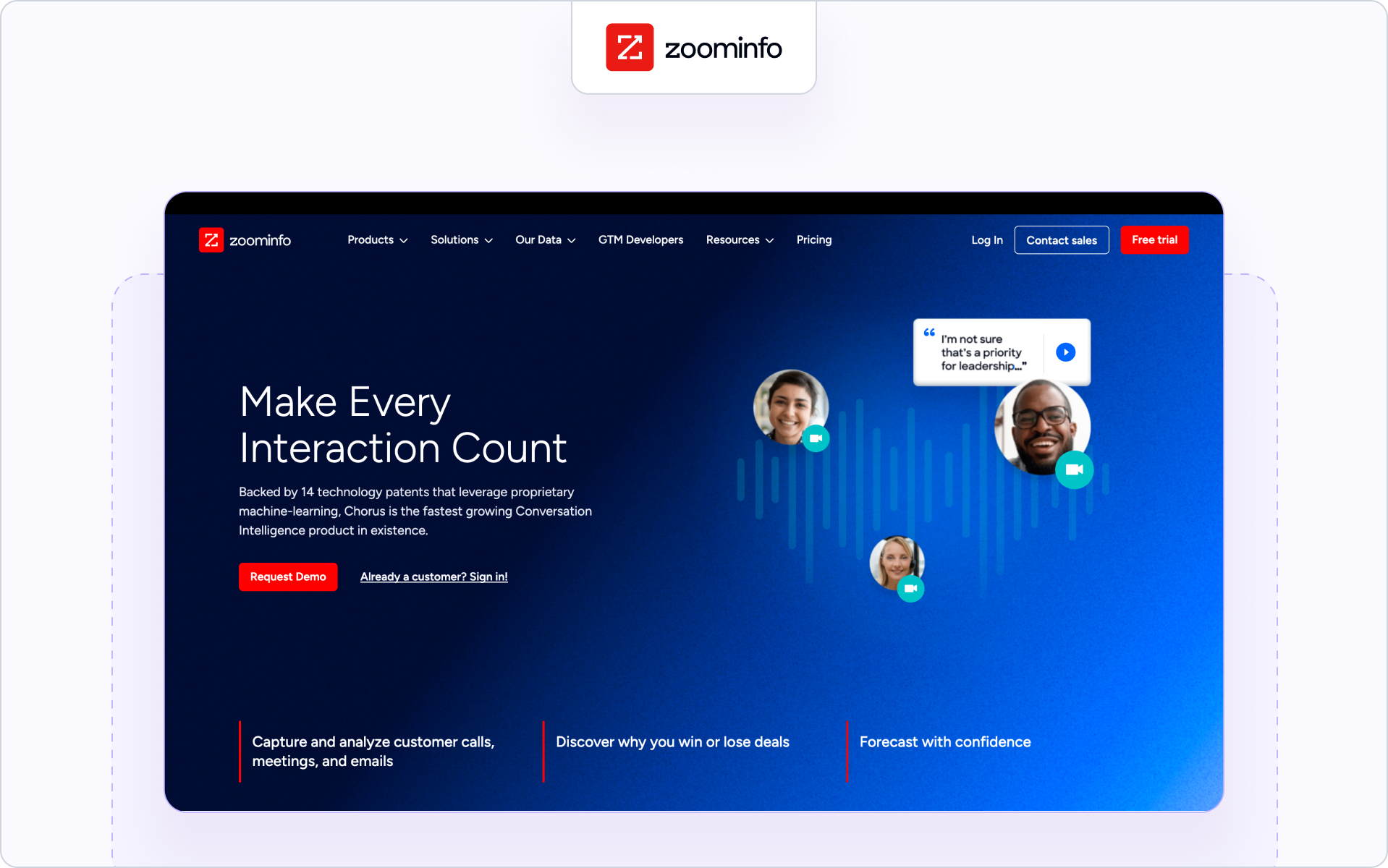
Chorus by ZoomInfo captures sales conversations and turns them into coaching cues using artificial intelligence. It highlights talk ratios, objection-handling moments, and deal risks so sales managers can deliver more consistent coaching across customer calls.
Who it’s best for:
Sales teams already using ZoomInfo that want AI coaching tools connected to prospecting intelligence and enrichment data.
Key features:
- Call recording with AI-generated summaries and coaching cues
- Conversation analytics tied to ZoomInfo contact and company data
- Performance analytics that help identify skill gaps across teams
CRM integrations:
Integrates with Salesforce and HubSpot for pipeline visibility and activity capture.
Pricing:
Bundled within ZoomInfo platform subscriptions with custom pricing based on package level.
Partner/channel gap:
Like most AI sales coaching tools in this category, Chorus depends on recorded meetings inside your stack. That makes it harder to support distributed partner ecosystems where deals often happen outside internal call tracking environments.
#4 Clari – Best for pipeline forecasting with coaching signals
.png)
What it does:
Clari is a revenue platform that combines forecasting, pipeline inspection, and activity capture to generate coaching signals from sales data rather than only analyzing call recordings. It helps sales leaders identify deal risks earlier and supports more accurate planning across enterprise sales teams.
Who it’s best for:
Revenue leaders and sales managers focused on forecast accuracy, pipeline health, and predictable revenue growth.
Key features:
- Forecast modeling based on pipeline movement and activity capture
- Deal inspection workflows that highlight performance improvement opportunities
- AI-driven insights connected to pipeline coverage and execution
CRM integrations:
Primarily integrates with Salesforce and related revenue infrastructure tools.
Pricing:
Custom enterprise pricing based on deployment scope and forecasting modules.
Partner/channel gap:
Clari focuses on internal pipeline visibility rather than external partner execution. It doesn’t provide coaching inside partner workflows such as shared deal registration processes supported by deal registration or distributed partner deal collaboration.
Category 3: AI roleplay and practice
These AI coaching tools simulate sales conversations so reps can practice objection handling, discovery calls, and positioning in a safe environment. They’re best for onboarding new reps and reinforcing consistent messaging before live customer interactions.
#5 Second Nature – Best for AI-powered sales roleplay simulations
.png)
What it does:
Second Nature creates AI-powered sales roleplay simulations where reps practice conversations with a virtual buyer that responds in real time. The platform scores performance and highlights areas for improvement so teams can run targeted training at scale.
Who it’s best for:
Sales enablement teams running onboarding programs, product launches, or messaging rollouts that require consistent training across distributed teams.
Key features:
- AI conversational roleplay simulations with adaptive buyer responses
- Performance scoring tied to predefined sales coaching techniques
- Custom scenario builder for product positioning and objection handling
CRM integrations:
Limited CRM integrations. Primarily used as a standalone sales training platform.
Pricing:
Custom enterprise pricing based on deployment scope and team size.
Partner/channel gap:
Can support partner training if partners log into the system, but it isn’t embedded in the deal flow or partner portal environments typically used for channel partner sales enablement.
#6 Hyperbound – Best for AI cold call and discovery practice
.png)
What it does:
Hyperbound simulates realistic cold call and discovery conversations using AI buyer personas that react dynamically during practice sessions. Reps receive instant feedback and scoring to help refine talk tracks and improve early-stage pipeline conversations.
Who it’s best for:
SDR and BDR teams focused on improving outbound performance and discovery call execution.
Key features:
- AI buyer personas designed for cold call and discovery practice
- Instant feedback with scoring across coaching moments
- Leaderboards that help managers track rep performance improvement
CRM integrations:
Minimal CRM connectivity. Designed primarily as a standalone AI sales training environment.
Pricing:
Typically starts around $40 to $60 per user per month depending on configuration.
Partner/channel gap:
Built for internal outbound teams rather than partner programs. It doesn’t support ongoing deal review workflows or structured partner enablement.
#7 Quantified – Best for AI avatar-based sales simulations
.png)
What it does:
Quantified uses AI-generated video avatars to simulate realistic buyer presentations so reps can practice delivery, positioning, and messaging before live meetings. The platform evaluates performance using AI feedback and benchmarking across teams.
Who it’s best for:
Enterprise sales teams focused on presentation readiness and improving messaging consistency across complex sales cycles.
Key features:
- AI video avatars that simulate live buyer presentation scenarios
- Messaging analysis aligned with your sales methodology
- Benchmarking dashboards that compare results across teams
CRM integrations:
Limited CRM integrations. Primarily deployed as a structured sales training software layer.
Pricing:
Custom enterprise pricing based on rollout scope.
Partner/channel gap:
Designed for structured training rather than live pipeline execution. It doesn’t support deal-level coaching or workflows connected to partner ecosystems such as those covered in this partner enablement guide.
Category 4: sales enablement with coaching features
These platforms manage sales content such as decks, battle cards, and playbooks, then add guided selling and coaching layers on top. They’re best for teams that want content control and contextual support in one system instead of separate sales coaching solutions.
#8 Highspot – Best for content management with guided selling
.png)
What it does:
Highspot is a sales enablement platform that manages content, training, and buyer engagement while adding AI-powered sales coaching tools like guided selling and content recommendations that support reps during live opportunities.
Who it’s best for:
Enterprise sales and enablement teams managing large content libraries that need structured guidance on what to send and when.
Key features:
- Centralized content management with usage tracking
- Guided selling plays aligned to a specific sales methodology
- AI content recommendations based on deal context
CRM integrations:
Integrates with Salesforce and Microsoft Dynamics.
Pricing:
Custom enterprise pricing based on deployment scope and content volume.
Partner/channel gap:
Includes some partner content sharing workflows, but coaching is primarily designed for internal sales teams rather than embedded channel sales enablement across partner-managed deals.
#9 Showpad – Best for sales content and coaching in one platform
.png)
What it does:
Showpad combines sales content management with interactive training and coaching layers so teams can align messaging, improve onboarding, and support consistent execution across the sales cycle.
Who it’s best for:
Mid-market sales teams that want sales training software and content management in a single platform.
Key features:
- Content management with version control and engagement tracking
- Interactive training modules that support targeted training programs
- Coaching dashboards that highlight skill gaps across teams
CRM integrations:
Integrates with Salesforce, HubSpot, and Microsoft Dynamics.
Pricing:
Custom pricing based on team size and feature configuration.
Partner/channel gap:
Supports partner content distribution, but coaching features are designed mainly for internal rep workflows rather than structured channel partner sales enablement.
#10 Seismic – Best for enterprise-scale sales enablement and coaching
.png)
What it does:
Seismic is an enterprise sales enablement platform that combines content automation, training, coaching scorecards, and analytics with AI-powered sales guidance to help organizations improve execution consistency at scale.
Who it’s best for:
Large enterprise sales organizations managing complex content ecosystems and structured training programs.
Key features:
- Content automation with governance controls
- AI content recommendations aligned to buyer stage
- Seismic Learning for structured training and coaching programs
CRM integrations:
Integrates with Salesforce and Microsoft Dynamics.
Pricing:
Custom enterprise pricing based on rollout scope.
Partner/channel gap:
Includes partner-facing capabilities, but coaching layers are designed primarily for internal seller workflows rather than ongoing partner deal execution.
Category 5: sales training and LMS with coaching layers
These platforms focus on structured learning paths, certifications, and readiness tracking, then add coaching layers like scorecards and manager feedback. They’re best for teams that want consistent training tied to performance improvement across sales teams.
#11 Mindtickle – Best for sales readiness and coaching scorecards
.png)
What it does:
Mindtickle is a sales readiness platform that combines structured learning paths, call analysis, and AI-powered coaching scorecards so enablement teams can track how training affects rep performance over time.
Who it’s best for:
Sales enablement leaders who want to measure readiness across teams and connect training programs to coaching outcomes.
Key features:
- Role-based learning paths with certification tracking
- AI coaching scorecards tied to readiness indexes
- Call recordings analysis connected to sales training progress
CRM integrations:
Integrates with Salesforce and HubSpot.
Pricing:
Custom enterprise pricing based on deployment scope and enablement modules.
Partner/channel gap:
Primarily designed for internal sales professionals. Partners typically require separate onboarding to access training environments.
#12 Allego – Best for video coaching and peer-to-peer learning
.png)
What it does:
Allego is a sales learning platform centered on video-based practice, peer-to-peer coaching, and conversation intelligence so teams can reinforce messaging through recorded examples and feedback loops.
Who it’s best for:
Organizations that want collaborative coaching environments where reps learn from shared recordings and structured video practice.
Key features:
- Video-based coaching workflows with manager feedback
- Conversation intelligence tied to recorded customer calls
- Peer-to-peer learning supported by shared practice libraries
CRM integrations:
Integrates with Salesforce.
Pricing:
Custom pricing based on rollout scope and learning configuration.
Partner/channel gap:
Built for internal rep coaching and structured learning rather than ongoing partner deal execution.
#13 Brainshark by Bigtincan – Best for sales readiness and onboarding
.png)
What it does:
Brainshark by Bigtincan delivers structured onboarding, certification paths, and readiness scorecards with video coaching features that help teams standardize early-stage training and onboarding outcomes.
Who it’s best for:
Sales teams focused on onboarding consistency and certification-driven readiness programs.
Key features:
- Training content authoring with certification tracking
- Video coaching workflows tied to readiness scorecards
- Mobile learning access for distributed sales representatives
CRM integrations:
Integrates with Salesforce.
Pricing:
Custom enterprise pricing based on deployment scope and certification needs.
Partner/channel gap:
Focused on structured training rather than deal-level coaching. It does not support partner pipeline execution or external partner coaching workflows.
There are many strong tools in this space, and they solve very different problems. That can make the decision feel harder than it should be.
The key is to match the type of coaching to how your team actually sells, especially if partners are part of your pipeline.
How to evaluate AI sales coaching software (buyer checklist)
Use this checklist to compare AI sales coaching software capabilities across vendors before you decide.
Teams that sell through partners should also confirm whether the platform supports partner workflows alongside internal sales processes.
Which type of AI sales coaching software do you need?
Start with where coaching needs to happen in your workflow.
- If partners, resellers, or referral teams help close deals, you’ll get the most impact from tools that guide external sellers inside active opportunities. That matters even more once you see how partner-sourced opportunities typically perform compared to direct deals. You can evaluate that difference using these partner deal stats.
- If most revenue comes from direct sellers, conversation intelligence platforms help improve call quality and pipeline visibility.
- If your priority is onboarding or messaging consistency, roleplay tools help new reps practice before speaking with customers.
- If your challenge is keeping partner training aligned with how deals actually move, a structured partner LMS helps reinforce learning inside your partner motion.
When both direct and partner pipeline matter, coaching works best when guidance appears automatically at the right moment inside each deal.
That’s where support from an embedded AI agent helps teams deliver consistent next steps without adding manual coaching overhead.
Why Introw is the best choice for partner teams
By now, you’ve probably noticed most AI sales coaching tools are built for internal reps. That works if your pipeline lives inside your team. It’s harder when partners are responsible for part of your revenue and you don’t always see what’s happening inside their deals.
Introw supports execution inside the deal itself. Partners see what to do next at each stage, which reduces stalled opportunities and removes the need for constant partner manager involvement.
As partner programs scale, execution naturally becomes less consistent across resellers, referral partners, and co-selling motions. Introw helps standardize how deals move forward by adapting guidance to deal stage, partner role, and engagement signals.
What you'll see:
- Fewer deals going quiet
- Clearer collaboration between partners and internal teams
- More predictable partner pipeline.
This is especially valuable in organizations where partner-led and direct pipeline often run side by side.
If partner deals are already part of your revenue motion, you can Request a demo to see what deal-level coaching looks like inside an active partner workflow.
Still curious? Here are some quick answers to help clear things up
AI sales coaching software helps sales teams improve how they run deals, sales calls, and customer interactions by providing guidance based on real pipeline activity and conversation data. Unlike traditional coaching methods, it delivers actionable feedback while work is happening, not just after training sessions.
The best sales coaching software depends on how your team sells. Conversation intelligence tools support internal reps, while roleplay platforms help with onboarding. Teams that rely on partners often need AI-powered sales coaching designed for partner pipeline execution as well.
AI sales coaching uses artificial intelligence to analyze sales data, deal movement, and customer signals, then provide personalized guidance on what to do next. Many platforms now deliver real time insights that improve execution before opportunities stall.
Yes. Most modern AI sales coaching tools connect to Salesforce and Hubspot so they can read deal stage changes, contact activity, and pipeline history. Deeper integrations enable coaching recommendations triggered by CRM updates rather than manual inputs.
Sales coaching software focuses on improving rep performance through feedback and guidance, while sales enablement platforms manage content, training, and messaging consistency. Many organizations combine both to support stronger sales strategy execution.




Are you already an active Introw partner?
Book a demo with one of our partner program experts, or explore Introw on your own time.