


What is an ISV partnership?
An ISV, or independent software vendor, is a company that builds and sells its software.
An ISV partnership brings two software companies together because their products work better side by side.
That might mean one product:
- Integrates with the other
- Fills a gap in its feature set
- Helps both companies solve a bigger customer problem
What makes ISV partnerships different is the partner itself.
An ISV partner already has its software product, sales team, and customers.
So this isn’t a consultant sending the odd referral. It isn’t a reseller carrying your product either.
You’re working with another software company whose customer base may overlap with the market you want to reach.
That changes the relationship from “send us leads” to “let’s open doors for each other.”
For example, an independent software vendor might build a seamless integration with a larger platform provider. The integration creates a stronger combined solution.
The bigger opportunity comes when both sales teams identify shared accounts, support the same deals, and introduce each other to new customers.
ISV partnerships are a specific partner type within the wider technology partnership category.
Their defining feature is simple: two software vendors use their products, sales teams, and customer bases to create pipeline together.
Why ISV partnerships drive pipeline: The install-base advantage
Most partnerships start with one question: who can send us leads?
ISV partnerships work differently. Each independent software vendor already has customers, a sales team, and a place in the market.
When your ICPs overlap, your partner’s customers become a warm audience for your software solutions:
- They already trust your partner
- They already buy software
- They may already have the problem your product solves
That’s the install-base advantage. You’re not starting from zero.
The strongest ISV partners don’t stop at building a seamless integration and adding it to a directory. They identify shared accounts, support the same sales cycles, and reach new customers through effective co-selling.
A directory listing is passive. Active co-selling turns product alignment into pipeline.
Both software vendors:
- Find shared or high-fit accounts
- Agree on who owns the relationship
- Coordinate outreach, deal support, and attribution
That’s also why ISV referral partnerships are useful but limited. A referral creates one introduction. A full ISV partnership creates a repeatable route into each company’s install base.
An ISV fintech partnership is a clear example. Two vendors may serve the same finance teams from different parts of the tech stack, giving them a natural path to joint deals.
With clear ownership and structured partner management, that shared customer base becomes a steady source of revenue opportunities.
Types of ISV partnerships
ISV partnerships range from simple referrals to deeply connected software solutions.
The right model depends on how closely your products connect and whether your main goal is reach, product value, or pipeline.
Platform partnerships can also reduce physical infrastructure costs. Cloud environments help ISV partners scale resources, improve disaster recovery, and spend less time maintaining hardware and operating systems.
Before joining, check the platform’s technical requirements, security compliance, market reputation, and level of support. Partners also need the right content and technical guidance, so make it easy to enable partners with content.
A referral program is the lightest option. Co-selling, embedding, and platform partnerships require more technical alignment and commitment.
The best ISV partner programs often start with one partner type, then move toward active co-selling as trust and demand grow.
How to build an ISV partner program
So, how can ISV create a partner program that brings in real pipeline?
The same six steps work whether you’re a platform provider recruiting software vendors or an independent software vendor building partnerships around your product.
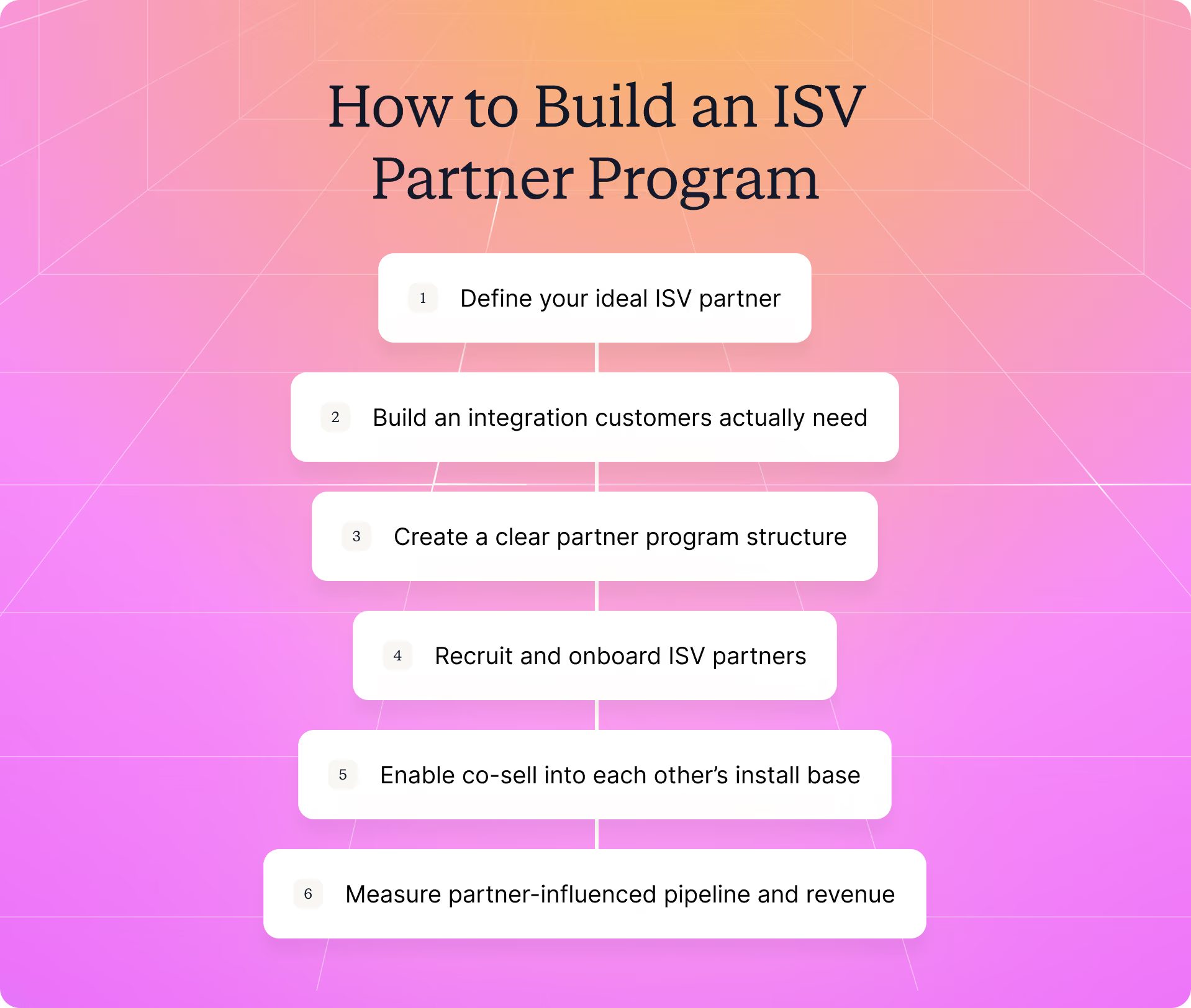
Step 1: Define your ideal ISV partner
Start with customer overlap.
The best ISV partners sell complementary software solutions to the same types of customers you want to reach. They solve an adjacent business problem without competing directly with your product.
Look for:
- A shared ideal customer
- Complementary software products
- A strong market presence
- Sales teams willing to work together
- Technical capabilities that support the integration
Customer overlap matters more than the size of the partner’s logo. That overlap is where your strongest co-sell business opportunities will come from.
Step 2: Build an integration customers actually need
The integration is the foundation of the partnership, but it needs to solve a real workflow problem.
A basic API connection may prove that two systems can talk. A useful integration helps customers complete a task, move data, or use both SaaS solutions with less friction.
This may require both engineering teams to:
- Define the shared use case
- Test performance and security
- Agree on support ownership
- Plan how future product changes will be handled
Building the integration is only the first half of the job. Many ISV partnerships stall because the teams never create a plan for selling the integrated solutions.
Step 3: Create a clear partner program structure
Your ISV partner program shouldn’t be a collection of one-off agreements.
Decide what types of relationships you’ll support, such as referral, integration, marketplace, or co-sell. Then define what each ISV partner receives and what you expect in return.
That could include:
- Technical and marketing support
- Joint enablement and campaign resources
- Referral fees or revenue share
- Access to a branded partner portal
- Clear rules for registering and supporting deals
For your first program, keep the business model simple. Start with one referral or co-sell motion, prove that it works, and add tiers as more partners join.
Step 4: Recruit and onboard ISV partners
Once the structure is clear, show potential partners why the relationship is worth their attention.
Your pitch should explain the shared customer problem, the joint ISV solution, and how both sides can gain access to new markets or revenue streams.
Onboarding should equip the partner’s full sales team with:
- Your ICP and main use cases
- The joint value proposition
- Product and integration training
- Clear deal and support processes
- Messaging for shared customers
You’re not training one contact. You’re helping another independent software vendor’s reps feel confident selling software alongside your product.
Step 5: Enable co-sell into each other’s install base
This is where it all becomes practical.
Use account mapping to find where your customers, prospects, and ISV partner accounts overlap. Introw’s Crossbeam integration brings those overlap signals into the partner workflow so teams can act on them instead of leaving them in another tool.
Focus first on accounts where:
- One partner already has a trusted relationship
- The customer has a clear need for both products
- The joint solution can improve the user experience
- Both sales teams have a reason to engage now
From there, agree on who owns the relationship, how each team will provide support, and how the opportunity will be tracked.
This is the difference between a passive integration and effective co-selling. The integration creates the reason to talk. The install base creates the route into the account.
Step 6: Measure partner-influenced pipeline and revenue
Track what every ISV partnership contributes.
That includes:
- Referred opportunities
- Co-sold pipeline
- Partner-influenced deals
- Closed revenue
- Marketplace or subscription sales
Keep this data inside the CRM so RevOps and sales leaders can trust it. A native HubSpot or Salesforce integration connects partner activity to the same accounts, deals, and reports your business already uses.
Without attribution, you can’t tell which ISV partners deserve more support or which partnerships aren’t creating results.
With it, your ISV partner program becomes a measurable route to market rather than a side project built around integrations.
How Introw helps you run an ISV partner program
Introw is an independent software vendor with native HubSpot and Salesforce integrations. That means the team understands both sides of ISV partnerships.
It also knows the integration is only the start. Introw gives you the CRM-native PRM layer to manage partners, support co-sell deals, and prove which relationships drive pipeline.
It doesn’t build the integration for you. It helps you turn that integration into revenue.
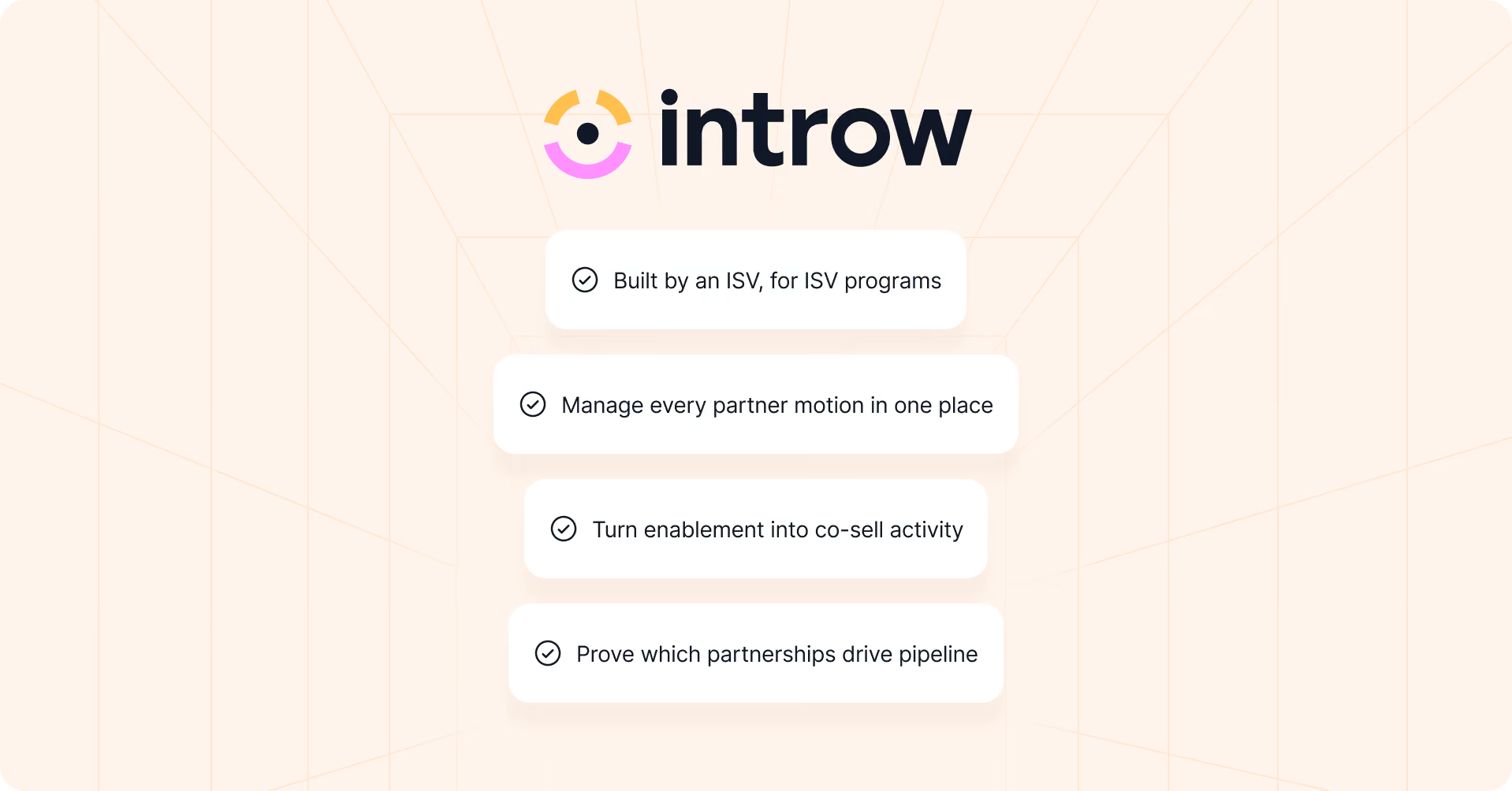
Built by an ISV, for ISV programs
Introw works with the same CRM systems and cloud platforms its customers use.
That gives the team a clear view of what both sides need:
- ISV partners need easy access to deals, content, and support
- Platform providers need control over data, workflows, and attribution
- Both sides need a simple way to work shared opportunities
That perspective is built into the product.
Manage every partner motion in one place
Your ISV program may include referral, integration, and co-sell partners. Each group needs different access, content, and workflows.
With partner management, you can manage these relationships on the same HubSpot or Salesforce data.
You can segment partners by partner type, tier, region, or program. Each group then sees only the deals, goals, content, and tools relevant to them.
This gives your team control without forcing every partner into the same process.
Turn enablement into co-sell activity
A strong integration won’t create pipeline on its own.
Your ISV partners’ sales teams need clear messaging, shared use cases, and joint materials. Introw helps you enable partners with content through the portal, email, and Slack.
When a shared opportunity appears, both teams can use deal and lead registration to keep ownership and attribution clear.
That means fewer crossed wires, better visibility, and a more consistent co-sell process.
Prove which partnerships drive pipeline
The clearest ISV partnership meaning comes down to measurable value.
Because Introw works on top of your CRM, every referral, co-sell deal, and partner-influenced opportunity stays connected to the accounts and reports your revenue team already uses.
You can see:
- Which ISV partners create qualified pipeline
- Which deals need support
- Which programs deserve more investment
- Which activities lead to revenue
Ringover shows what this model can achieve.
After moving partner activity, content, and deal tracking into a Salesforce-native setup, Ringover increased partner activity from 20% to over 70%.
Its partners also submitted more than 200 leads, with over 80% qualifying.
That’s how an ISV program becomes more than a directory of logos. It becomes a measurable revenue channel.
Stop letting strong ISV partnerships stall after the integration. Book a demo to turn them into tracked, shared pipeline.
Still curious? Here are some quick answers to help clear things up
An independent software vendor is a company that develops and sells its software products or ISV software.
An ISV partner program is a structured way to recruit, onboard, manage, and grow ISV partners.
Start by finding complementary software manufacturers, building a useful integration, choosing a referral or co-sell model, and tracking shared pipeline.
ISV referral partnerships are arrangements where one software vendor sends customers to another, often in return for a referral fee.
They give both vendors access to a warm customer base that already trusts the partner, making co-selling more effective than cold outreach.





Are you already an active Introw partner?
Book a demo with one of our partner program experts, or explore Introw on your own time.