


What is nearbound marketing?
Nearbound is a go-to-market motion that helps you reach buyers through partners they already trust.

The term was popularized by the partnership community, particularly Reveal, Crossbeam, and industry voices like Jared Fuller and Bob Moore, as a third motion alongside inbound and outbound.
How does nearbound work?
Buyers trust people they already know. A partner, consultant, agency, technology vendor, or industry influencer with an established relationship can often open doors that traditional outbound marketing cannot.
Nearbound marketing uses partner data, ecosystem data, and partner relationships to guide your marketing efforts and demand generation.
Instead of treating every account the same, you focus on accounts where partner overlap already exists and where a trusted path to the buyer is available.
Common nearbound tactics include:
- Co-marketing campaigns
- Partner introductions
- Joint events and webinars
- Partner-backed outreach
- Shared account plans and co-selling motions
Many teams start with account mapping to identify where those overlaps exist. Once you know which partners already have access to your target audience, you can build a nearbound strategy around warm relationships instead of cold outreach.
Nearbound doesn’t replace inbound and outbound. It strengthens both by adding trust to the equation.
Why nearbound works
Nearbound works because it helps you reach the right prospects through trust, relationships, and partner signals that already exist.
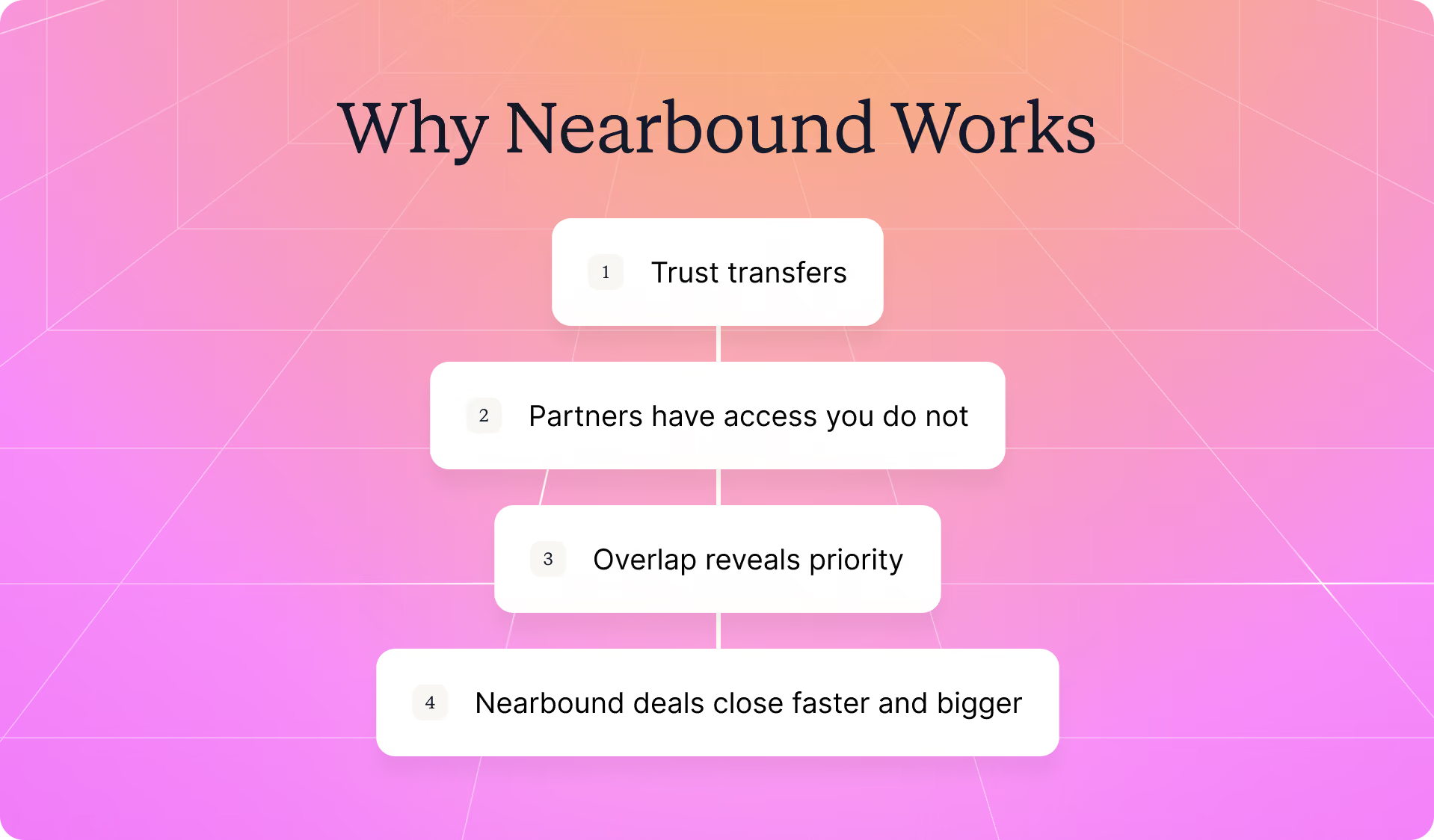
Trust transfers
Trust is the foundation of every purchasing decision.
A cold outbound email starts at zero trust. A warm introduction starts with credibility already built in.
The main differences
When trusted partners recommend your business, buyers are more likely to engage and move forward.
That’s one reason nearbound lead generation often produces higher quality leads than traditional outbound marketing.
Partners have access you do not
Your partners are already inside accounts you’re trying to reach.
They often know:
- The decision-makers
- The buying timeline
- Internal priorities
- Existing technology investments
- Potential blockers
That access cannot be replicated through cold calls or outbound strategies alone.
This is why many successful companies treat partner relationships as a strategic growth asset rather than a supporting channel.
Overlap reveals priority
Not every account deserves the same level of attention.
When you compare your target accounts against your partners’ customers, prospects, and relationships, patterns emerge. Some accounts sit at the center of your ecosystem. Others have no meaningful overlap at all.
Here's a simple way to think about it:
This is where nearbound sales becomes more efficient. Instead of guessing which accounts to pursue, you can use partner data and ecosystem signals to identify where your marketing efforts are most likely to succeed.
Teams that invest in a structured channel partner marketing approach often use these signals to determine where to focus first.
Nearbound deals close faster and bigger
Partner-backed opportunities typically move faster because trust already exists.
The partner reduces friction, provides context, and helps buyers evaluate solutions with more confidence. That shortens the sales cycle and increases the likelihood of success.
Many organizations also find that nearbound leads generate larger opportunities because partners bring qualified introductions instead of cold names.
The result is often:
- Faster conversions
- More highly qualified leads
- Better win rates
- More partner-influenced revenue
Strong partner sales motions help teams turn those introductions into measurable pipeline and revenue.
The same principle applies to partnership marketing, where co-marketing initiatives help both companies reach audiences they could not access alone.
The strongest nearbound strategy starts with trust, but it scales through data, prioritization, and repeatable execution.
What are partner signals (and how to find them)
Partner signals are the data points that help you identify where partner-led opportunities already exist.
Account overlap signals
Account overlap is the foundation of any nearbound approach.
It shows where your target accounts overlap with your partners’ customers or prospects.
Common overlap signals include:
Tools like Crossbeam help uncover these overlaps through privacy-first data sharing, so both sides can identify opportunities without exposing full customer lists.
Teams like yours usually start with a dedicated Crossbeam integration to surface overlap signals directly from their ecosystem.
Relationship strength signals
Not all overlaps deserve the same priority.
Look at:
- How recently the partner worked with the account
- Relationship depth
- Deal size
- Engagement history
- Executive connections
A recent customer relationship is usually more valuable than a dormant contact from two years ago.
The goal isn’t just to identify overlap. It’s to determine where the strongest partner relationships exist.
Intent and timing signals
The best nearbound signals combine trust and timing.
An account becomes much more attractive when partner overlap exists alongside buying activity.
Examples include:
- Visiting your website
- Consuming valuable content
- Engaging with marketing campaigns
- Entering an active buying process
This combination helps marketing teams generate leads more effectively because you’re reaching prospects at the right moment.
If you’re running nearbound marketing in HubSpot, connecting partner insights to your HubSpot integration makes these signals easier to spot.
Partner-sourced and partner-influenced signals
Some of the most useful signals already live inside your CRM.
Track:
- Deals sourced by partners
- Deals influenced by partners
- Revenue generated through partnerships
- Accounts with recurring partner involvement
These signals show which partners drive results and which motions create success.
When partner attribution is connected to your CRM through partner management, the signal becomes actionable. You can identify what works, double down on it, and build a stronger nearbound strategy over time.
The strongest signals combine overlap, relationship strength, intent, and attribution data in one place.
How to run a nearbound marketing motion
This six-step process helps your team turn partner signals into nearbound leads, pipeline, and revenue.
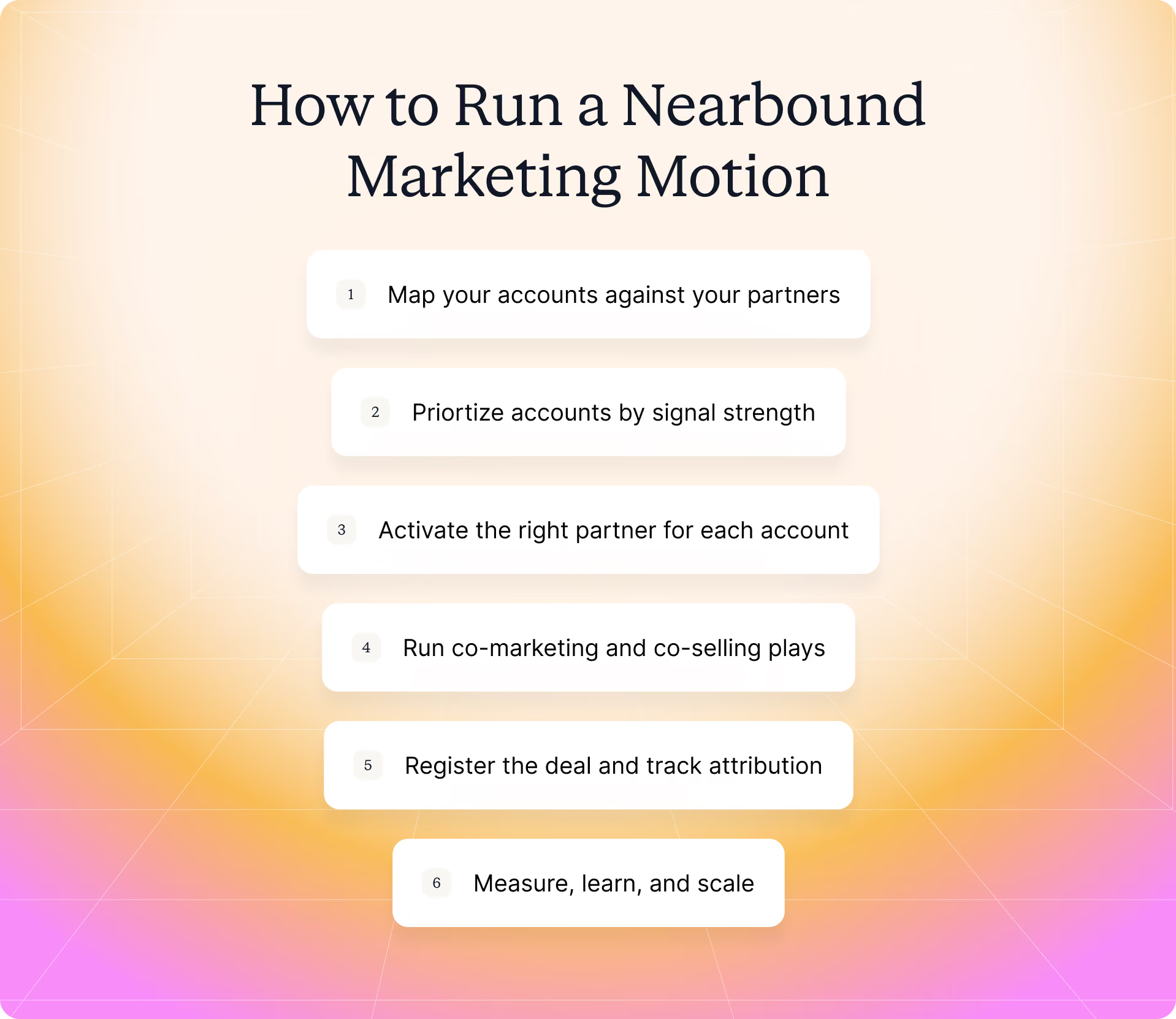
Step 1: Map your accounts against your partners
Start with account mapping.
Connect your CRM, partner data, and ecosystem data to an account mapping platform. Your goal is to identify:
- Prospects that are already your partners’ customers
- Shared opportunities
- Existing customers your partners want to reach
- Accounts where multiple partners have active relationships
If your business runs on Salesforce, a Salesforce integration helps keep these signals connected to your existing workflows.
The output of this step is a list of target accounts ranked by overlap and relationship strength.
Step 2: Prioritize accounts by signal strength
Once you’ve identified overlap, determine which accounts deserve attention first.
The strongest signals combine:
An account showing intent, active customer engagement, and multiple trusted partners should move to the top of your list.
This prioritization is one of the key components of a successful nearbound strategy.
Step 3: Activate the right partner for each account
Now identify which partner is most likely to help.
Look for:
- Strong existing relationships
- Recent activity
- Relevant expertise
- Clear motivation to participate
Then make a specific request.
Instead of asking a partner to support your marketing, ask them to:
- Introduce you to a named contact
- Invite the account to an event
- Share valuable content with stakeholders
- Participate in a joint meeting
Specific requests help partner teams generate leads more effectively than broad outreach.
Step 4: Run co-marketing and co-selling plays
This is where the nearbound approach becomes visible to buyers.
Your tactics might include:
- Co-marketing initiatives
- Joint webinars
- Partner-backed campaigns
- Executive introductions
- Co-selling opportunities
Many marketing teams use a formal channel partner marketing framework to align campaigns around shared target accounts.
When opportunities move into active pipeline, a structured co-selling process helps both organizations coordinate sales activities and improve win rates.
These programs often create higher quality leads because the outreach comes through trusted relationships rather than cold outbound.
Step 5: Register the deal and track attribution
When a partner helps create an opportunity, track it immediately.
A formal deal registration process helps your team:
- Track partner-sourced revenue
- Track partner-influenced revenue
- Measure which tactics work
- Identify which partners create success
Without attribution, nearbound marketing becomes difficult to scale.
With attribution, you can clearly see which leads generated pipeline, which partnerships influenced purchasing decisions, and which activities deserve more investment.
Step 6: Measure, learn, and scale
Review performance regularly.
Track:
- Nearbound leads created
- Revenue influenced by partners
- Win rates by account type
- Sales cycle length
- Which partners create the most value
Then use those insights to refine your marketing strategy.
The strongest nearbound programs continuously leverage attribution data to achieve better results, improve prioritization, and scale what works.
Nearbound vs. inbound vs. outbound (and why you need all three)
Nearbound doesn’t replace inbound and outbound. It makes both work better.
Think of nearbound as a layer that helps your team leverage existing relationships, ecosystem data, and partner signals across your entire go-to-market strategy.
Nearbound + outbound = warm outbound
Traditional outbound marketing starts with cold calls, cold emails, and outreach to people who may not know your company.
Nearbound changes that dynamic.
Instead of reaching out cold, you use partner relationships to get introduced to the right people inside your target accounts. The result is warmer conversations, higher response rates, and a shorter sales funnel.
For many partner teams, this is the fastest way to improve existing outbound motions without increasing activity levels.
Nearbound + inbound = partner-amplified reach
Inbound marketing helps you create valuable content and attract interest.
Nearbound helps more people see it.
Your partners can:
- Share content with their customers
- Promote webinars
- Support co marketing initiatives
- Introduce your brand to new audiences
This gives your marketing teams access to audiences they could not reach on their own.
It also helps generate leads from trusted sources rather than relying entirely on paid channels.
Nearbound as its own motion = partner-sourced pipeline
Nearbound also stands on its own.
A mature nearbound marketing program creates:
- Nearbound leads
- Partner-sourced opportunities
- Co marketing campaigns
- Partner engagement across the customer journey
- Revenue driven through partnerships
In this model, partners are not just amplifying your marketing efforts. They are actively helping create pipeline and influence purchasing decisions.
This is one reason nearbound has become a core part of ecosystem-led growth (ELG).
The best GTM teams use all three
The strongest companies combine inbound and outbound with a nearbound strategy.
- Inbound attracts attention.
- Outbound creates new opportunities.
- Nearbound adds trust, context, and access.
Together, they help you generate leads more effectively, create higher quality leads, and improve win rates across the entire sales cycle.
As your ecosystem grows, partner engagement becomes one of the most valuable ways to scale relationships, reach new customers, and create repeatable revenue.
Many teams use dedicated partner engagement workflows to keep those relationships active and turn partner signals into action.
Where Introw fits: From partner signal to closed revenue
Account mapping shows you the opportunity. Introw helps you act on it.
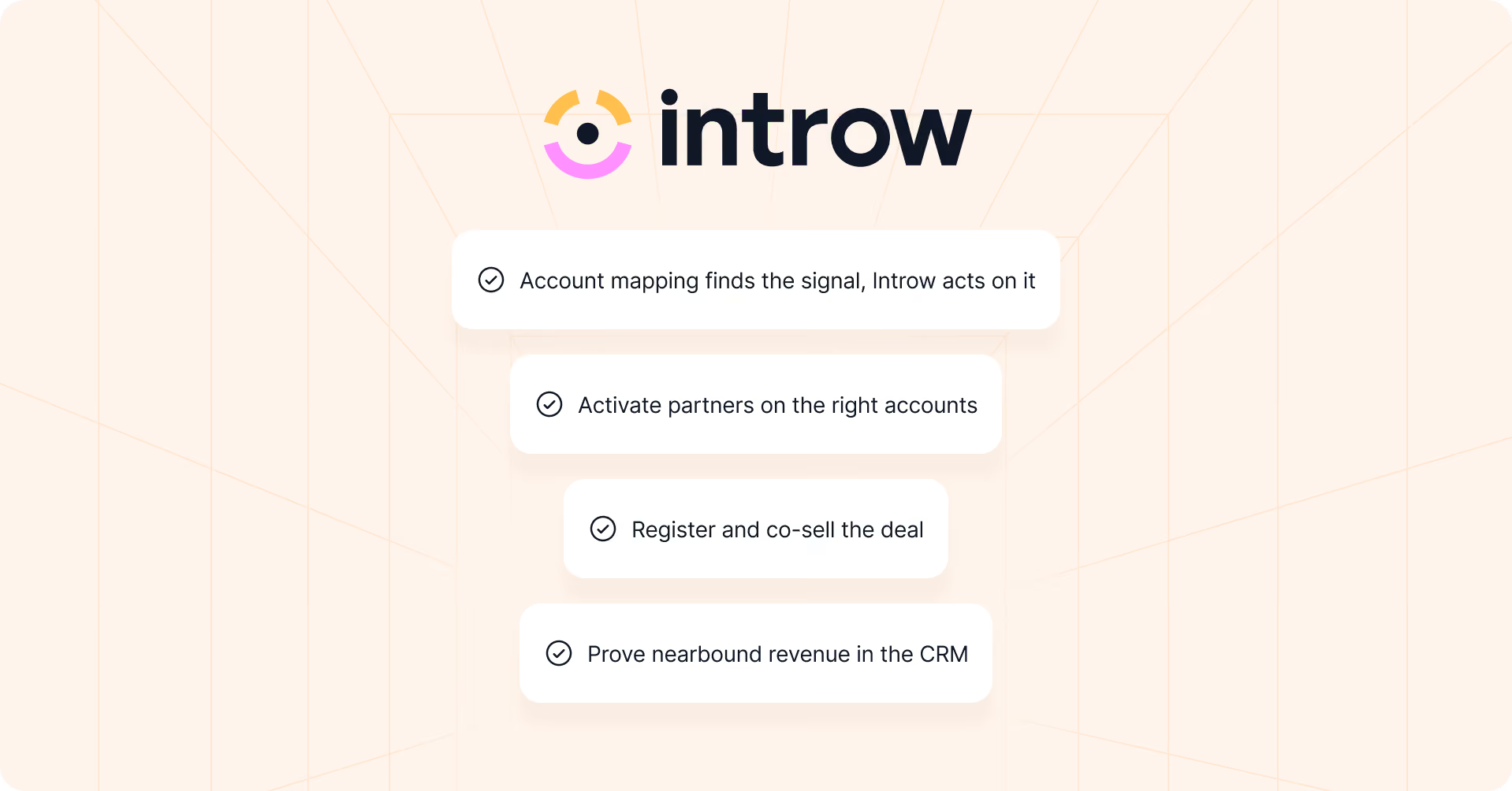
Account mapping finds the signal, Introw acts on it
Tools like Crossbeam and Reveal are great at identifying overlap between your accounts and your partners’ accounts.
They help you identify:
- Shared customers and prospects
- Partner relationships
- Open opportunities
- Priority accounts
That’s the signal.
Introw’s Crossbeam integration turns that signal into action by bringing account overlap directly into your partner workflows.
Instead of stopping at discovery, your team can move immediately into execution.
Activate partners on the right accounts
Once you’ve identified the right account, you need the right partner involved.
Introw helps partner teams coordinate introductions, co-selling, and partner engagement without giving partners CRM access.
You can:
- Share target accounts
- Request warm introductions
- Launch co-selling motions
- Collaborate on opportunities
Partners work through a portal, Slack, or email, making engagement easier and reducing management overhead.
Register and co-sell the deal
When a nearbound opportunity becomes real, it needs structure.
Through deal registration, partners can submit opportunities, receive credit, and collaborate on deals from a shared pipeline.
The platform supports:
- Shared visibility
- Partner attribution
- AI-powered conflict detection
- CRM synchronization
These services help turn an introduction into a tracked revenue opportunity rather than an untracked favor.
Prove nearbound revenue in the CRM
This is where nearbound delivers several advantages over informal partner programs.
Introw tracks partner-sourced and partner-influenced revenue through its partner management capabilities and CRM integrations.
That makes it possible to answer critical questions:
- Which partners drive the most revenue?
- Which accounts convert fastest?
- Which plays create pipeline?
- Which partner activities influence purchasing decisions?
Without attribution, nearbound remains difficult to scale.
With attribution, the signal becomes measurable revenue, giving your business the data needed to invest with confidence.
Ready to move beyond account mapping and turn partner signals into measurable revenue?
Book a demo to see how Introw helps you activate partners, run co-sell motions, track attribution, and prove the impact of your nearbound strategy directly in your CRM.
Still curious? Here are some quick answers to help clear things up
Nearbound marketing is the practice of using partner relationships, account overlap, and partner signals to reach buyers through trusted partners instead of relying only on inbound marketing or outbound marketing.
Outbound marketing starts with direct outreach to prospects through emails, calls, or other outbound motions. Nearbound uses existing relationships to create warm introductions and trusted paths into target accounts.
Inbound marketing helps attract potential customers through content and campaigns. Nearbound helps distribute that content through partners, expanding your reach and creating more opportunities for partner engagement.
The key components include account mapping, partner data, partner relationships, intent signals, co-selling, attribution tracking, and a process for activating the right partners on the right accounts.
Nearbound leads come from partner referrals, account overlap, co-marketing initiatives, co-selling opportunities, and partner-sourced introductions. These leads often convert faster because trust already exists.






Are you already an active Introw partner?
Book a demo with one of our partner program experts, or explore Introw on your own time.