

What is a white-label software partner program?
A white-label software partner program lets another company rebrand and resell your software as its own. The partner controls the brand, packaging, pricing, and customer relationship, while you provide and maintain the underlying platform.
The difference is simple:
- A standard reseller sells software under the vendor’s brand.
- A white-label partner sells software under its own brand.
That distinction shapes the whole program. The partner’s customers should see its logo, domain, pricing, quotes, and support experience, not yours.
Software companies build white-label partner programs to:
- Reach new markets through partners with established customer relationships
- Scale distribution without expanding their direct sales team
- Let agencies, MSPs, and software platforms add proven tools to their existing services
- Create recurring revenue from partner-sold subscriptions
For partners, white-label software offers a faster way to launch new services without paying the full development costs of building their own product. For vendors, it opens new revenue opportunities while the partner handles sales and client management.
This model is one of several partner types, but it’s distinct because the partner owns the brand, pricing, and customer relationship.
The core challenge of white-label: The experience must be the partner’s
A white-label partnership only works when the full experience feels like the partner’s product, not yours.
That includes the partner’s:
- Logo and brand identity
- Custom domain and login screen
- User interface and portal
- Quotes, pricing, and invoices
- Emails and customer communication
If your branding appears where it shouldn’t, the white-label promise breaks. The end customer may question who owns the product, and the white-label partner loses trust in the setup.
This is where many reseller programs struggle. Their tools support basic rebranding, but the vendor’s name still appears in portal URLs, automated emails, quotes, or support flows.
A true white-label partner portal needs to protect the partner’s own brand across every touchpoint. The tips below cover how to build a white-label partner program with the right business model, pricing, contracts, support, and infrastructure.
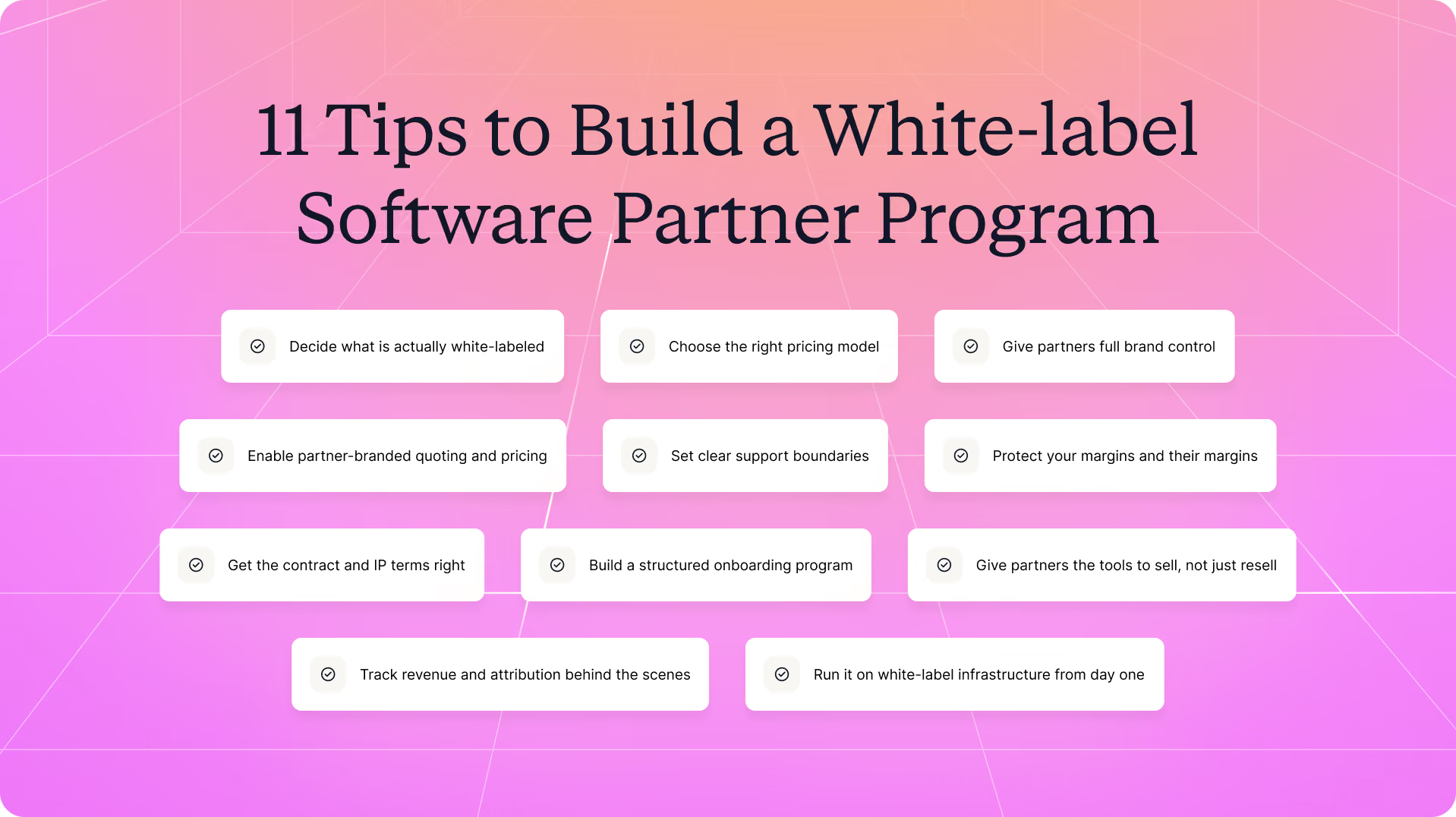
11 tips to build a white-label software partner program
The best white-label partner program is built around one rule: the partner must be able to sell, brand, price, and support the product as its own.
These 11 tips cover the business model, brand control, pricing, onboarding, support, attribution, and infrastructure needed to run a white-label partnership at scale.
Tip 1: Decide what is actually white-labeled
Start by defining exactly what the partner can rebrand. “White-label” can mean three different things:
- Full white-label: The partner’s brand appears across the product, domain, emails, quotes, invoices, and support experience.
- Customer-facing white-label: The partner controls the user interface, but your company may appear in contracts, administration, or technical support.
- Co-branded: The partner leads the experience, but your name remains visible through “powered by” messaging.
Each model affects pricing, support, infrastructure, and development costs. It also shapes what customers expect from the partner.
Decide whether you’re building an open or closed white-label model too. An open white-label partnership supports collaboration and co-creation across multiple partners. A closed model offers more exclusivity, often with tailored product offerings or territory rights.
Document the scope in your partner management process so sales, RevOps, support, and product teams work from the same definition.
Tip 2: Choose the right pricing model
Pricing structures in white-label programs usually follow one of three models:
Wholesale is common in a white-label reseller program because partners can set their own prices and keep the margin. That gives them room to invest in lead generation, marketing services, and customer relationships.
Revenue-sharing models work when both sides stay involved. The partner may handle client communication while the vendor provides technical expertise, maintenance, and backend support.
You can also charge a one-time setup fee, a recurring subscription, or both. Choose a model that supports recurring revenue without making the product too expensive to sell.
Use your wider partner sales strategy to balance partner incentives with your own unit economics.
Tip 3: Give partners full brand control
Brand control is the heart of private labeling.
Your white-label partner should be able to apply its own brand across:
- Logo, colors, and fonts
- Custom domain and login screen
- Portal and user interface
- Emails and notifications
- Reports and shared documents
- Mobile apps, where relevant
A logo swap isn’t enough. If customers see your name in a URL, email sender, browser tab, or system alert, the experience no longer feels like the partner’s own product.
A true partner portal should run on the partner’s own domain and protect its brand identity across every touchpoint.
That matters because partners are putting their brand reputation on the line. Marketing agencies and service providers can strengthen their market presence with high-quality branded tools, but only when the experience is consistent.
Tip 4: Enable partner-branded quoting and pricing
A white-label software reseller needs to quote customers under its own brand and at its own prices.
This is where weak white-label infrastructure often breaks. The portal looks right, but the quote suddenly includes the vendor’s logo, legal name, or standard pricing.
Give partners tools to:
- Create branded quotes
- Select approved products
- Set their own retail pricing
- Apply tier-based discounts
- Generate and sign proposals
- Stay within your margin rules
Introw’s partner CPQ lets partners create branded quotes from an approved product catalog while pricing rules and quote data stay connected to the vendor’s CRM.
Set the guardrails centrally, then give partners enough control to match their target market and perceived value.
Tip 5: Set clear support boundaries
Support gets messy when customers believe they bought the software directly from the partner.
A tiered model is usually the clearest:
- Tier 1: The partner handles common questions and basic troubleshooting.
- Tier 2: Your team handles deeper product or technical issues behind the scenes.
- Tier 3: Engineering handles bugs, security incidents, and complex integrations.
The partner should remain the visible point of contact unless your agreement says otherwise. Escalations to your team should stay invisible to the customer.
Define response times, ownership, escalation paths, and handoff rules before launch.
A strong vendor partnership includes training, sales resources, collaboration tools, and fast support. You should also assess whether the white-label provider has the track record, internal resources, and financial stability to support long-term success.
Tip 6: Protect your margins and their margins
White-label partnerships only work when both sides make money.
Calculate the real cost of:
- Hosting and infrastructure
- Product maintenance
- Onboarding and training
- Technical support
- Billing
- Program management
Then set a wholesale rate or revenue share that protects those costs while leaving the partner enough margin to sell and support the product.
Successful resellers may earn recurring revenue, competitive monthly commissions, or both. Volume incentives can reward growth without forcing you to renegotiate every contract.
Model the economics at 10, 100, and 1,000 customers. A margin structure that works at launch may break once usage and support volume rise.
Use commission and SPIFF management to calculate earnings, apply rules consistently, and give partners transparent reporting.
Tip 7: Get the contract and IP terms right
White-label software agreements need to cover issues standard reseller contracts may not.
Define:
- Software and IP ownership
- Brand usage rights
- Customer and data ownership
- Security and privacy responsibilities
- Support and service levels
- Territory or industry exclusivity
- Pricing and renewal terms
- Liability
- What happens to customers if the partnership ends
The partner may sell the software as its own, but you still own the underlying platform.
Security and compliance are critical. Confirm how data is stored, who can access it, and which side is responsible for legal or industry requirements.
Align your goals with the potential white-label partner’s goals. Check its experience, track record, customer satisfaction, financial stability, and work culture before signing.
This isn’t legal advice. Ask qualified counsel to review the agreement.
Tip 8: Build a structured onboarding program
White-label partners need deeper onboarding because they’re presenting the software as their own.
They need to know how to explain, demo, sell, configure, and support it without relying on your team for every question.
Cover:
- Product knowledge
- Target customers
- Positioning
- Demo and sales processes
- Pricing and packaging
- Brand rules
- Technical setup
- Support escalation
- Security and compliance
- Certification
Your white-label SaaS partner program should also provide rebrandable sales materials, demo scripts, FAQs, and product updates.
Use a branded content hub to enable your partners with content and track which resources they view or complete.
The vendor manages backend maintenance and updates, but partners still need enough knowledge to explain those updates to customers.
Tip 9: Give partners the tools to sell, not just resell
The strongest white-label partners don’t just list your product on their site. They actively sell it.
Give them:
- Rebrandable pitch decks
- Demo environments
- Case studies and objection handling
- Lead generation support
- Deal registration
- Pipeline collaboration
- Sales coaching
- Co-marketing support
- Renewal and expansion tools
A deal and lead registration process gives you pipeline visibility without exposing your brand to the customer. It also helps prevent duplicate opportunities.
This matters even when the partner owns the client relationship. You still need to know which deals are active, where they stall, and which sales resources help them move.
SaaS reseller programs reduce business risk because partners can sell proven white-label solutions instead of building a new product from scratch. But access to the software alone isn’t enough. They need practical sales support too.
Tip 10: Track revenue and attribution behind the scenes
Customers may only see the partner’s brand, but you still need full visibility underneath.
Track:
- Partner-sourced pipeline
- New customers
- Active subscriptions
- Recurring revenue
- Renewals and churn
- Product usage
- Partner margins
- Support volume
- Revenue by partner, tier, and market
Keep this data in your CRM so partnerships, sales, finance, and RevOps work from the same numbers.
Robust integration capabilities are essential because white-label software must fit into your existing business systems. Introw’s HubSpot and Salesforce integration connect partner records, deals, contacts, and activity to the CRM.
That visibility shows which partners are expanding your market reach, opening new markets, or need more support.
Tip 11: Run it on white-label infrastructure from day one
Everything above depends on infrastructure designed for white-label partnership management.
Most programs fail when they bolt white-label services onto tools built for standard reseller programs. The logo changes, but the vendor’s brand still appears in emails, portal URLs, reports, support flows, or quotes.
Choose infrastructure that supports:
- A portal on the partner’s own domain
- Partner-specific branding
- Branded login screens and emails
- White-label quoting
- Partner-set pricing
- Tier and margin rules
- Content and training
- Deal registration
- CRM-native attribution
- Hidden internal reporting
Introw provides the partner infrastructure needed to run these partner types without becoming the white-label software provider itself. Your product remains the underlying platform. Introw manages the branded partner experience, quoting, enablement, pipeline, and attribution around it.
How Introw powers white-label software partner programs
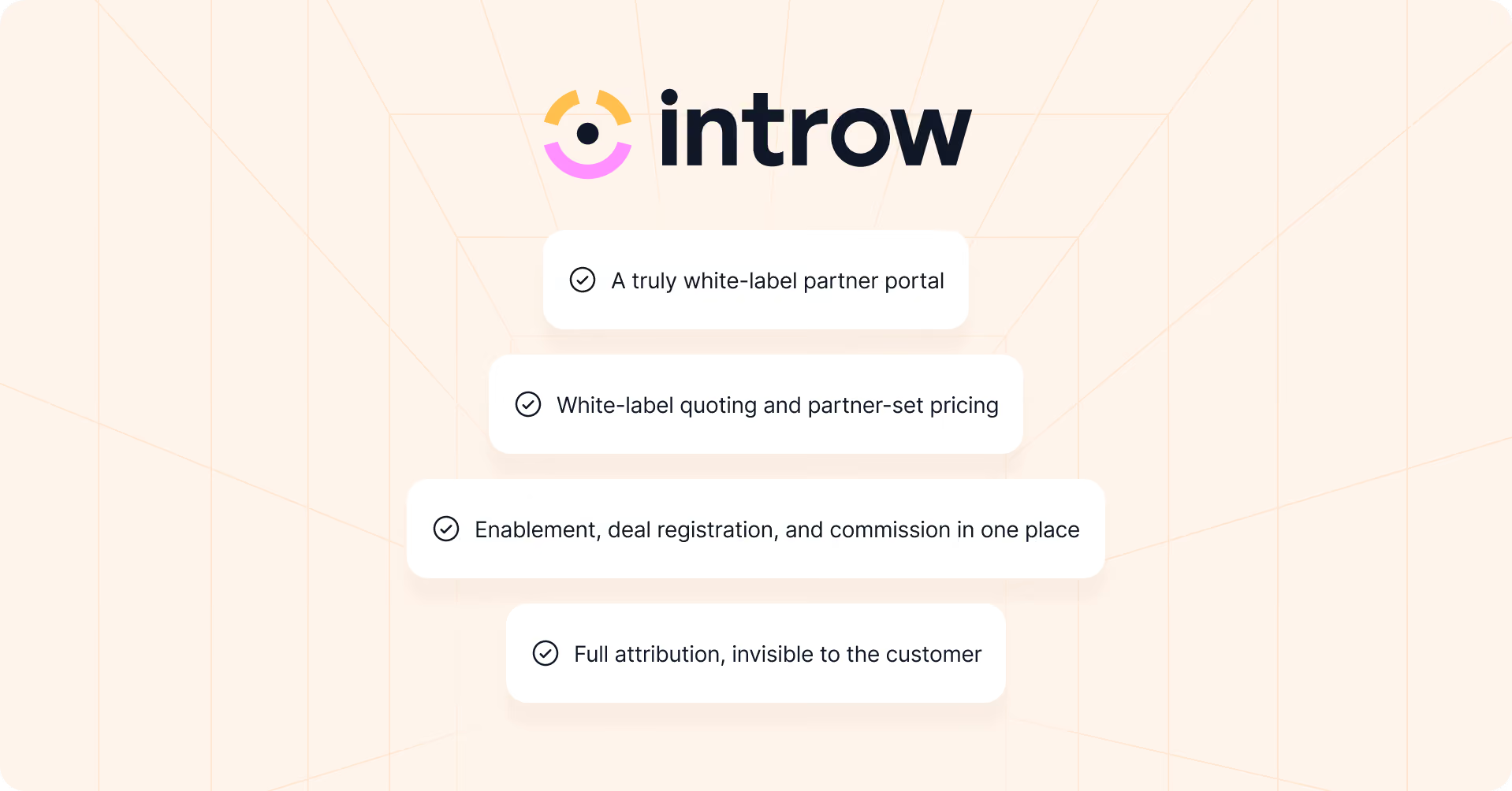
Introw doesn’t turn your product into white-label software. It gives you the infrastructure to run the white-label partner program around it, from branded partner experiences to quoting, enablement, attribution, and revenue tracking.
A truly white-label partner portal
With Introw’s partner portal, each partner gets an experience built around its own brand:
- Logo, colors, and fonts
- Custom domain and login screen
- Partner-specific content and workflows
- A portal that feels like part of the partner’s product
That protects brand trust and gives partners a credible way to sell and support your software as their own.
White-label quoting and partner-set pricing
Introw’s partner CPQ lets partners create quotes under their own brand and set customer pricing within the margin rules you define.
The customer sees the partner’s quote, identity, and price. You keep control of products, discounts, and CRM data behind the scenes.
Enablement, deal registration, and commission in one place
Introw gives white-label partners the tools to sell confidently without forcing your team to manage separate systems.
You can:
- Enable your partners with content through branded training and rebrandable sales materials
- Track opportunities through CRM-connected deal registration
- Manage margins, incentives, and payouts with commission and SPIFF workflows
Partners get a complete selling system. Your team gets cleaner processes, faster onboarding, and full visibility.
Full attribution, invisible to the customer
Introw’s CRM-native partner management keeps partner revenue, pipeline, activity, and performance connected to HubSpot or Salesforce.
The customer sees only the partner brand. You see which partners are generating revenue, where deals are moving, and where to invest next.
Ready to build a white-label partner experience that protects the partner’s brand without losing control underneath? Book a demo and see how Introw can power the full program.
Still curious? Here are some quick answers to help clear things up
A reseller sells your product under your brand. A white-label partner sells it under its own brand, and the customer may never know which white-label provider powers it.
Most white-label programs use wholesale pricing, revenue share, or per-seat fees. Wholesale is common because the partner sets the retail price and keeps the remaining margin.
You need a white-label platform that supports a branded portal, partner-set pricing, branded quotes, enablement, support workflows, and behind-the-scenes attribution.
Define this upfront. Usually, the partner handles tier-1 support while the vendor resolves technical issues invisibly behind the partner brand.
Connect partner deals, subscriptions, and revenue to your CRM. The customer sees only the partner brand, while you retain full visibility into performance and desired outcomes.





Are you already an active Introw partner?
Book a demo with one of our partner program experts, or explore Introw on your own time.