
Introw vs Mindmatrix
Introw is the modern PRM for revenue teams running on HubSpot or Salesforce. Partner workflows live natively inside the CRM, partners engage off portal, and teams go live in days. Mindmatrix takes a different approach: a broad enterprise platform spanning PRM, TCMA, and ecosystem orchestration, with a steep learning curve, no dedicated admin experience, an LMS that requires support tickets to update, and implementations that stretch into months. The rest of this page breaks down how the two platforms compare.
Introw vs Mindmatrix:
Comparison
With Mindmatrix


Broad coverage across PRM, TCMA, LMS, and ecosystem orchestration. Mindmatrix adds AI-driven content and marketing automation. In practice, teams report steep learning curves, no dedicated admin experience, an LMS that requires support to maintain, and implementations that run well beyond launch day.

With Introw
Native HubSpot and Salesforce sync, no-code setup, agentic AI, off-portal collaboration, CPQ, and automated partner engagement. Partnership managers run everything themselves. Live in 2 to 4 days.
Feature comparison


Deep bi-directional sync, custom objects, in-CRM Introw card. HubSpot and Salesforce as the system of record.
Native bi-directional CRM integrations with Salesforce and HubSpot. Mindmatrix also connects to partner CRMs. Some teams report integration complexity at scale.
No custom coding. Portal live in minutes. Full deployment in days, not months.
Broad platform scope means longer setup. Teams report significant onboarding time before the platform is usable in practice.
Partnership managers control forms, portal, assets, LMS, and automations without any developer involvement.
No separate admin experience. Managing the platform requires navigating the same interface as end users, which increases complexity.
AI course builder: partnership managers create, update, and publish courses without support tickets.
LMS updates require support involvement. Teams cannot easily update course content independently.
Precise control over what each partner user sees, by role, tier, partner type, or stage.
No granular role-based access control. Visibility settings lack the precision needed for tiered or mixed partner programs.
Partners reply by email. Updates auto-track in CRM. No portal login required to move deals forward.
Mindmatrix is portal-centered. Most partner workflows require logging into the platform.
Deal reg, tasks, QBR insights, full partner support in shared channels with live CRM context.
No native Slack integration for partner-facing workflows.
Deal reg, coaching, announcements, training, QBR insights. Autonomous CRM-connected actions.
Mindmatrix covers content generation, social selling automation, and marketing personalization. Strong TCMA AI. Less focused on deal-level execution and CRM-native actions.
Register via Slack, email, embedded forms, or portal. Auto-syncs to CRM with attribution.
Deal registration available. Primarily portal-based submission flow.
Partners create quotes and manage pricing connected to CRM deal data. No extra tool required.
No native CPQ for partner quoting inside the PRM.
Fully customizable without developers. Multiple experiences per partner type.
Customizable portal with branding options, but configuration requires more time and support involvement.
Claude connects directly to live partner and CRM data. No custom dev.
No MCP support. AI capabilities locked within the Mindmatrix platform.
Where Introw wins
Six areas where the gap is clearest for growing partner teams.

1. Live in days, not months
Introw goes live in 2 to 4 days with no custom coding and no support tickets to get started. Mindmatrix is a broad enterprise platform: teams report that the sheer scope of modules and configuration depth means implementation stretches well beyond initial launch. For teams that need to move quickly, the time to value gap is decisive.
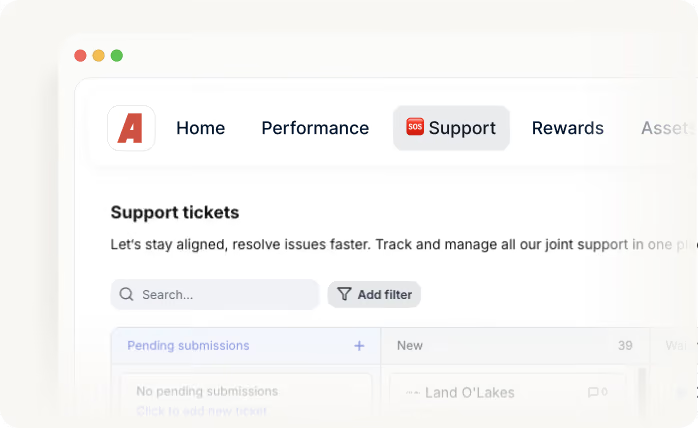
2. Partnership managers run it, no support tickets needed
Mindmatrix has no dedicated admin experience. Managing the platform means navigating the same interface as end users, which adds operational complexity. Updating LMS content requires raising support tickets rather than editing directly. Introw is fully no-code from day one: partnership managers create and update courses, forms, portal content, automations, and access rules themselves, without waiting on support or developers.
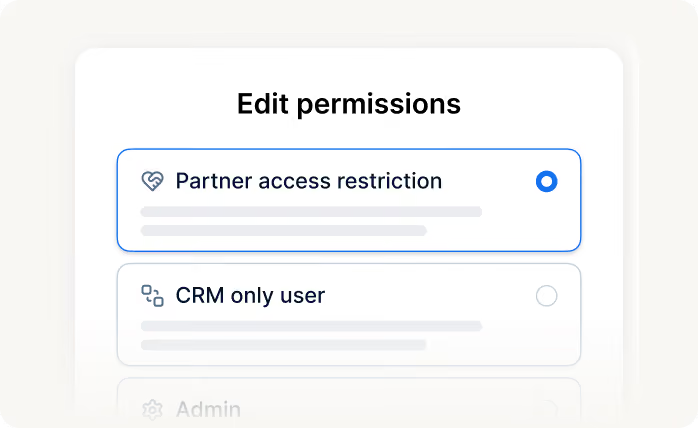
3. Granular role-based access control
Mindmatrix lacks granular role-based access control, which limits your ability to manage tiered or mixed partner programs with precision. Introw gives you full control over what each partner user sees, by role, tier, partner type, or stage in their onboarding journey. The right information reaches the right partner at the right time, without manual gatekeeping.

4. CRM-native deal workflows, including CPQ
Introw is built on top of HubSpot and Salesforce. Deal registration, CPQ, partner attribution, and channel conflict detection all live inside the CRM your team already uses. Mindmatrix integrates with CRMs, but adds another system layer. Teams switching from Mindmatrix to Introw consistently flag the need for tight two-way CRM integration with deal registration and CPQ as the primary reason. Introw was the only platform that could deliver it.

5. Off-portal collaboration that keeps deals moving
Mindmatrix is portal-centric. Partners must log into Mindmatrix for most workflows. Introw flips this: partners register deals from email or Slack, reply to updates without logging in, and stay informed through automated CRM-triggered notifications. Your team manages every interaction from inside HubSpot or Salesforce via the Introw card. No tab switching, no portal dependency.

6. Agentic AI that acts on CRM data, not just content
Mindmatrix is genuinely strong on content generation, social selling automation, and marketing personalization. But its AI is primarily TCMA-focused. Introw's AI agent acts across the full deal lifecycle: registering deals from Slack, coaching on live opportunities with context from your playbooks, generating CRM-segmented announcements, and surfacing QBR insights. A native Claude MCP integration extends this into any chat surface your team uses. The difference is breadth of execution, not just generation.
Why partner teams choose Introw
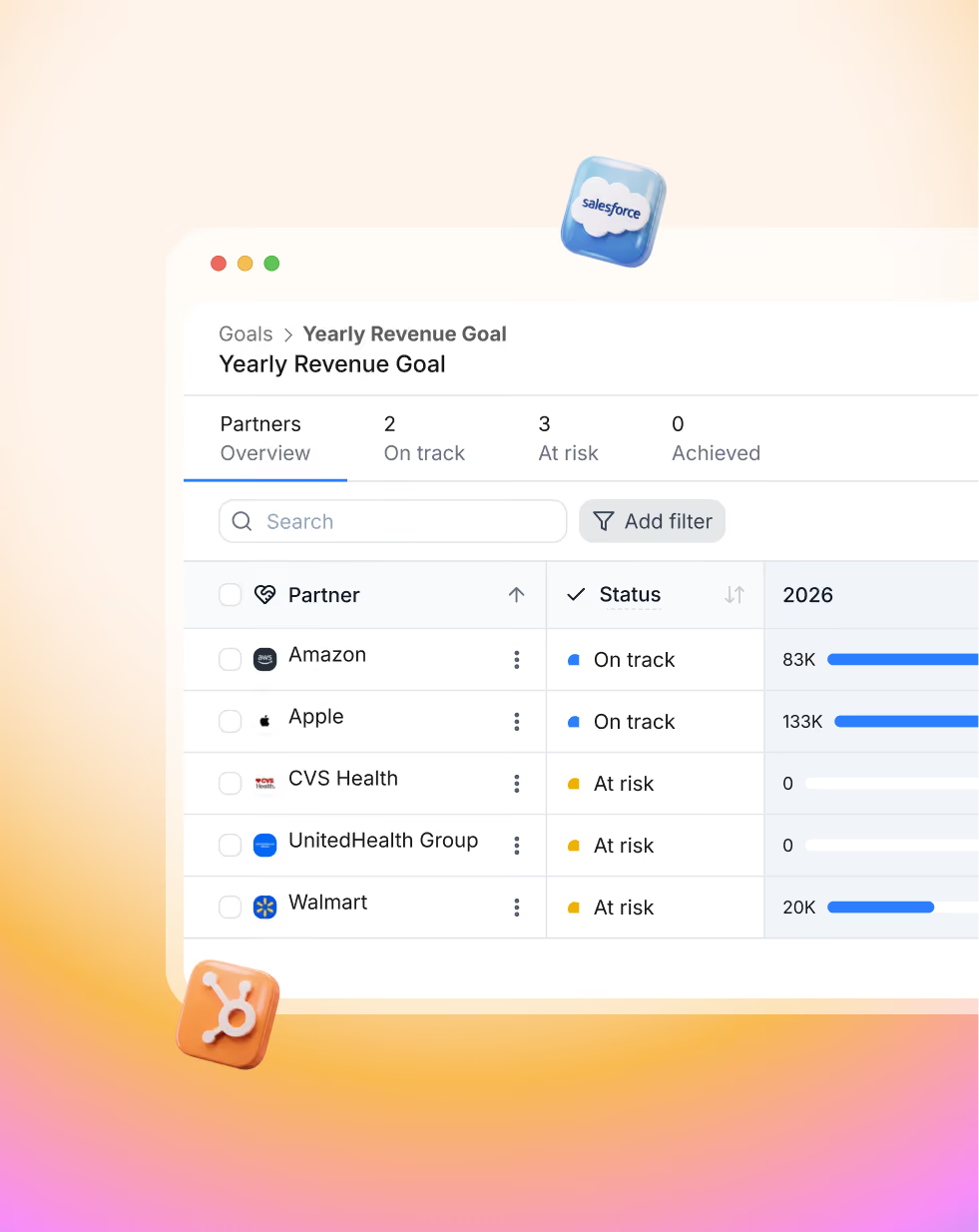
Introw turns dormant programs into revenue engines. Partners register more deals, faster, with deal flow synced directly into your CRM.
Skip the months of setup. Partners go from signup to selling in days, with AI-driven onboarding, certification, and content all in one place.
Get full visibility into every partner-touched deal. Attribution lives in your CRM, so you can prove and expand what's working.
_MomentumLeader_Leader.svg)


_EasiestToUse_EaseOfUse.svg)
_HighPerformer_HighPerformer.svg)

_MostImplementable_Total.svg)
_BestUsability_Total.svg)




Still curious? Here are some quick answers to help clear things up
Introw is built natively on top of HubSpot and Salesforce. Deal registration, CPQ, partner attribution, and every partner workflow live inside the CRM your team already uses. Mindmatrix integrates with CRMs, but operates as a separate platform layer. Teams switching from Mindmatrix to Introw consistently report that CRM integration depth, especially for two-way deal registration and CPQ, was the critical deciding factor.
Most teams have a portal set up in minutes and are fully live in 2 to 4 days. No custom coding, no middleware to configure, no developer resources required. Mindmatrix implementations typically take significantly longer due to the platform's breadth and configuration depth.
Yes. Introw's AI-powered LMS lets partnership managers create, update, and publish courses directly, without support tickets or developer involvement. This is one of the most common frustrations teams bring from Mindmatrix, where LMS updates require going through support.
Yes, with full granularity. You can control exactly what each partner user sees by role, tier, partner type, or stage in their journey. Mindmatrix lacks this level of role-based access control, which creates visibility challenges for tiered or mixed partner programs.
BridgeAI is strong on TCMA: content generation, social selling automation, and marketing personalization at scale. Introw's AI Agent focuses on the full partner workflow: registering deals from Slack or email, coaching live opportunities with CRM context, running segmented partner campaigns and announcements, surfacing QBR insights proactively, and answering partner questions from your enablement content in real time. A native Claude & custom MCP integration extends these workflows into any chat surface your team uses. The two platforms have different AI strengths, but Introw wins on the full partner experience journey.
See AI-Native PRM in Action
Book a demo with one of our partner program experts, or explore Introw on your own time.