Channel Partner Agreement Template: Free Download
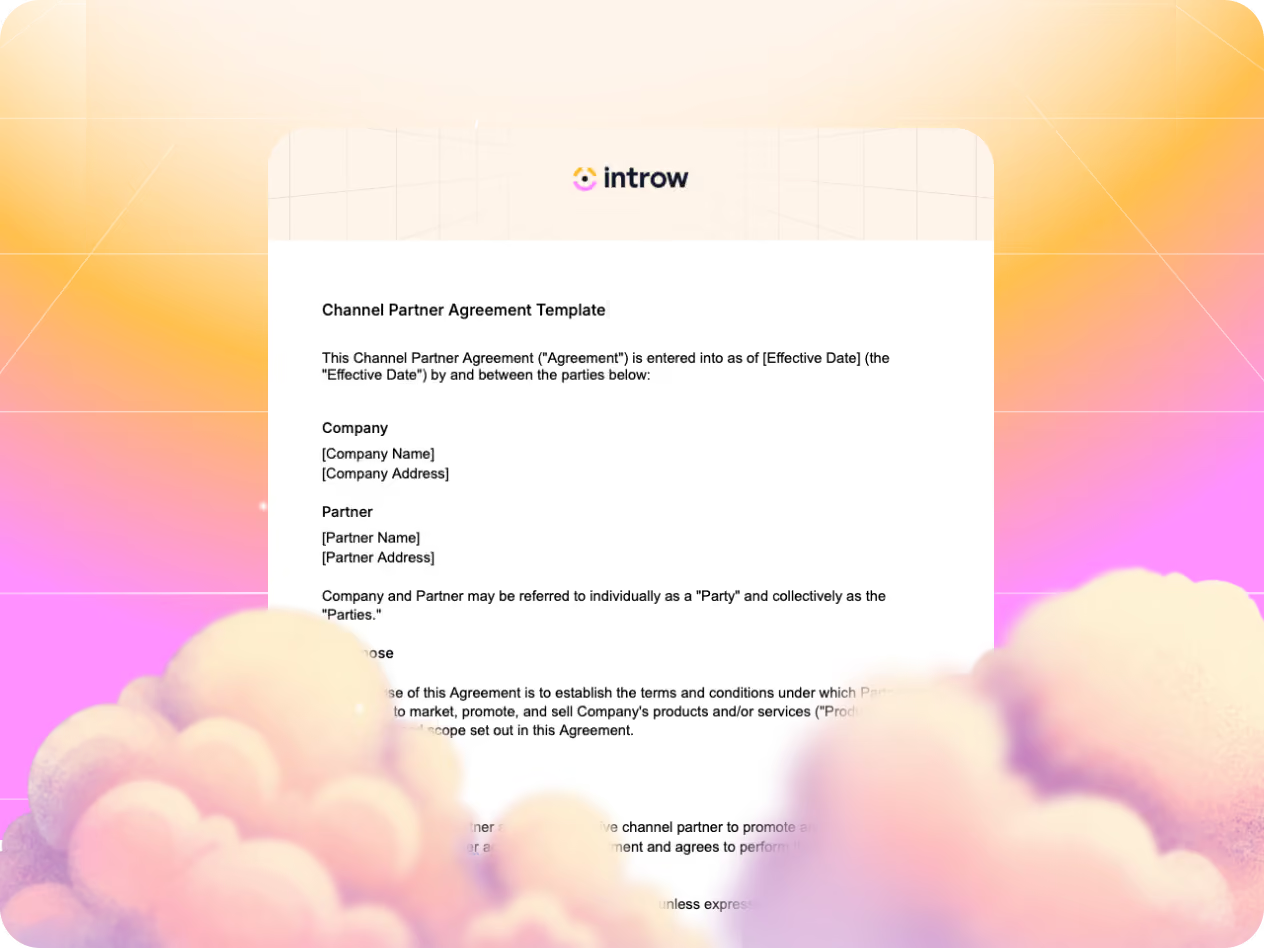
What is a channel partner agreement?
A channel partner agreement is a contract between a vendor and a channel partner (a referral partner, reseller, VAR, distributor, or similar) that sets the terms of how they sell together. It defines what the partner is authorized to do, how they earn margin or commission, how deals are registered and protected, which territories or segments they cover, and how either side can end the relationship.
[Legal note: this article is not legal advice; always have counsel review your agreement template before use.]
When to use a channel partner agreement (and which type)
Use a channel partner agreement whenever a third party helps you market, sell, or distribute your product. The right version depends on how much of the sale the partner owns.
- Referral or affiliate agreement – the simplest. The partner introduces leads and earns a commission; they don’t own the sale, hold no pricing authority, and carry little risk. Keep it short. See our affiliate and referral agreement templates.
- Reseller or VAR agreement – more involved, because the partner transacts the sale. It must cover resale margin or discount, pricing conduct, order and payment terms, and often support and warranty obligations. See our reseller agreement template.
- Distributor agreement – the most complex, adding multi-tier resale rights, inventory or credit terms, and sub-reseller management.
- Technology or alliance agreement – shifts the emphasis to IP, integration rights, co-sell terms, and joint go-to-market, with margin often secondary.
Don’t paper a referral partner with a distributor contract, or the other way around. An over-heavy agreement creates friction that deters exactly the good partners you want.
What to include in Channel Partner Agreement
- Parties and effective date – who’s contracting and when it starts
- Definitions – Products, Registered Deal, Territory, Confidential Information, and other terms used throughout
- Appointment and scope – what the partner is authorized to do, and whether it’s exclusive or non-exclusive
- Partner obligations – sales or performance expectations, certification, brand and conduct standards
- Vendor obligations – product access, enablement, lead sharing, and the tools you’ll provide
- Pricing, margin, and payment – the rate, what it’s calculated on, and when it’s paid
- Deal registration and rules of engagement – how deals are claimed, protected, and deconflicted
- Territories or segments – geographic, vertical, or account boundaries, and whether they’re exclusive
- IP and brand use – how the partner may use your trademarks, logos, and materials
- Confidentiality and data protection – protect non-public information and personal data
- Term and termination – renewal, notice, cause vs. convenience, and what survives exit
- General terms – warranties, liability, indemnification, governing law, notices
This structure is broadly consistent with widely used channel templates; tailor the economics, exclusivity, and registration rules to your motion.
The three clauses that actually cause disputes in channel partnerships
If you spend your negotiation energy anywhere, spend it here. Nearly every serious channel dispute traces back to one of these three.
- Margin or commission. Ambiguity about what a partner earns and when it’s payable is the number-one source of conflict. Be explicit: the rate, what it’s calculated on, when it’s paid, and how registered-deal uplift or clawbacks work.
- Deal registration and rules of engagement. Unclear rules about who “owns” a deal produce channel conflict – partner-vs-partner and vendor-vs-partner fights over the same account. Define the exclusivity window (commonly 90–180 days) and the tie-break rules before you need them.
- Termination and what survives it. The relationship will end someday. Spell out notice and cause, and – the part everyone forgets – whether the partner still gets paid on deals registered or in-flight when the agreement terminates.
Keep the mechanics out of the contract
A practical structuring tip: put the operational mechanics in a referenced policy, not the contract itself. The agreement should reference deal registration and rules of engagement; the actual registration window, submission process, and current pricing should live in a partner-program policy or portal you can update without amending and re-signing.
This keeps the legal document stable while the program evolves. It also means the rules partners operate under live where they work every day instead of buried in a PDF nobody reopens after signing.
Where Introw fits
Introw is where partners actually operate rules set in contracts. You can keep deal registration, rules of engagement, commissions, and tiering in a partner workspace linked to Salesforce or HubSpot. Partners register opportunities and update deals via email or Slack, with no portal login required, and everything syncs back to the opportunity record.
Want to see a channel program run from a single source of truth? Request an Introw demo and we’ll show you end-to-end.
Still curious? Here are some quick answers to help clear things up
A referral or affiliate agreement is simpler: the partner introduces leads and is paid a commission, but never owns the sale, holds no pricing authority, and takes on little risk. A reseller agreement is more involved because the partner transacts the sale, so it must address resale margin or discount, pricing conduct, order and payment terms, and often support. Match the agreement type to the partner type.
Yes. This walkthrough explains the sections a channel partner agreement typically contains so you can prepare an informed draft and negotiate the commercial terms confidently. It isn’t legal advice, and it isn’t a substitute for a qualified attorney licensed in your jurisdiction.
Reference deal registration and the rules of engagement in the contract rather than burying the operational detail inside it. Specify that registration grants a time-bound window of exclusivity on a qualifying opportunity, how conflicts between partners are resolved, and where the current process lives. Keeping the mechanics in a referenced policy lets you update the process without amending the contract.
Most run for an initial term of one year and then renew automatically unless either side gives notice. What matters more than the length is a clean termination clause: notice periods, cause vs. convenience, and what happens to registered deals and in-flight commissions when the relationship ends.
See AI-Native PRM in Action
Book a demo with one of our partner program experts, or explore Introw on your own time.