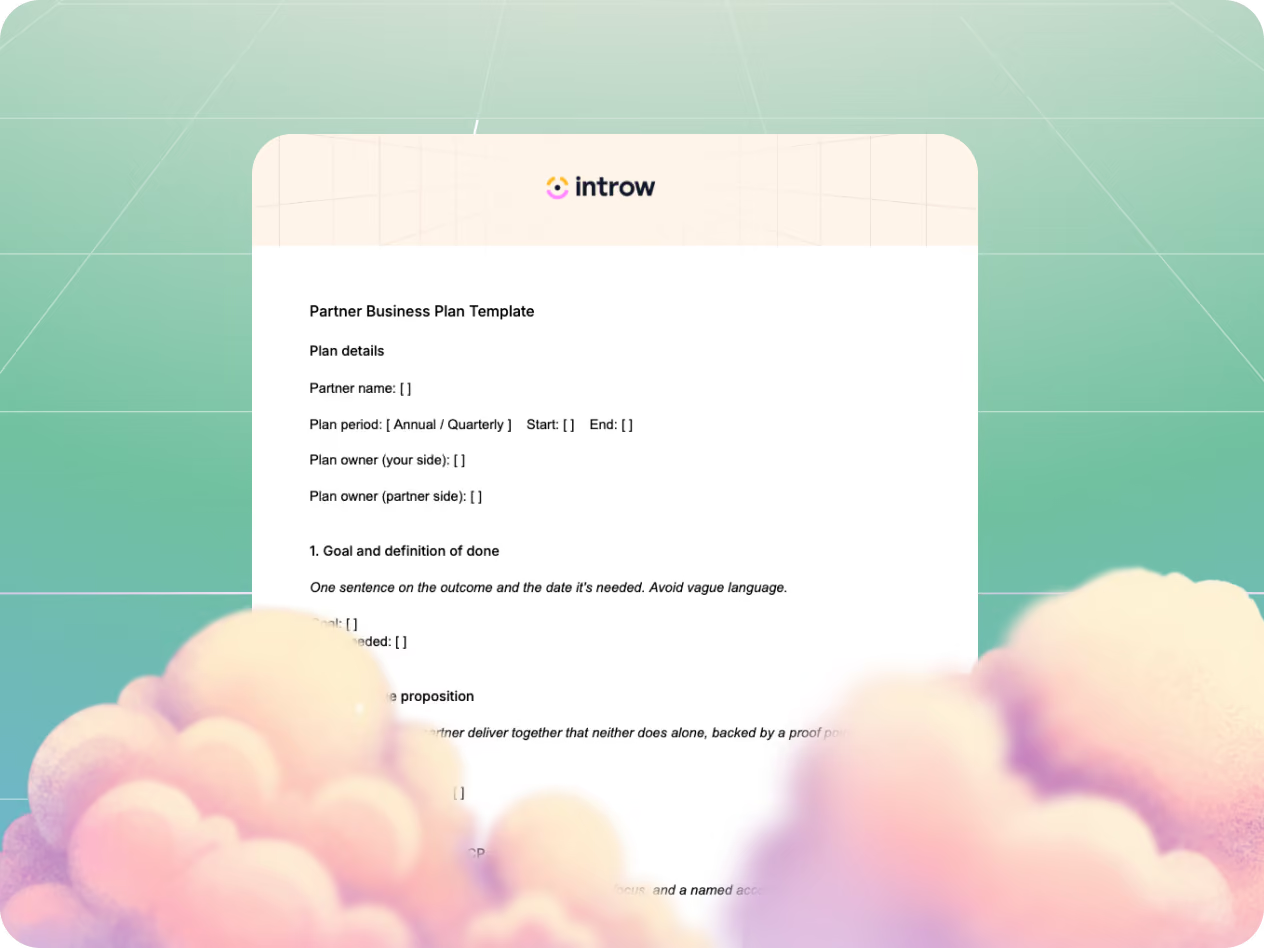
Partner Business Plan Template: Free Download
[Legal note: this article is not legal advice; always have counsel review your document before use.]
What is a partner business plan?
A partner business plan is a shared document between you and a partner that sets out the goals, targets, and actions for the relationship over a quarter or a year.
Done well, a partner business plan holds both sides accountable to the same numbers. It usually covers the joint value proposition, target segments, sales and marketing targets, enablement and certification, and a communication cadence.
When you actually need a partner business plan
Not every partner needs one. A partner business plan is real work to draft and maintain, so reserve it for the partners who can move your desired numbers. For the long tail, a light profile and a quarterly check-in are enough.
If your program is brand new, business planning can be an overkill. Wait until you understand a partner's market, capabilities, and where your product fits in their stack. Then build a plan with the handful of partners who justify the investment.
Think quality over quantity: it's better to run one great plan with three partners than five stale plans with fifteen.
Annual vs. quarterly plans (pick the right cadence)
Annual plan: Sets the yearly thesis like target segments, joint value proposition, revenue goal, and the big co-marketing bets. Review it each quarter and adjust.
Quarterly plan: Breaks the annual number into 90-day sprints with concrete plays, campaigns, and pipeline targets. Easier to own, easier to course-correct.
Set direction once a year, execute in quarters. Match the plan's cadence to your internal sales motion so targets feel attainable and check-ins land naturally.
What to include (quick checklist)
- Goal and definition of done — one sentence on the outcome and the date it's needed, not vague language
- Joint value proposition — what you and the partner deliver together that neither does alone, backed by a proof point or key win
- Target accounts and ICP — shared ideal customer profile, territory or industry focus, and a named account list
- Go-to-market motion — referral, resale, or co-sell; who leads discovery, demos, and the customer contract
- Sales KPIs — registered opportunities, sourced and influenced pipeline, and a revenue target broken down by quarter
- Marketing projects — campaigns, webinars, and content with launch dates, owners, and expected leads (note any MDF and who funds it)
- Enablement and certification — training each side needs, certified individuals to add, and any tiering impact
- Communication standards — meeting cadence, channel (portal, email, or Slack), and response SLAs on sales-critical asks
- Risks and dependencies — known blockers, single owners, and mitigations
- Review cadence — the next date you'll inspect the plan together and how slips get handled
This structure works for most channel motions. Tailor the KPIs, the account list, and the marketing bets to the partner in front of you.
3 Tips to keep the plan alive
The plans that work are living records, not PDFs that die in a shared drive. Three habits keep them useful:
One home, where you sell. Host the plan in your CRM or partner workspace so progress becomes part of the record, not hidden in a sheet that falls out of date.
A standing review. Read back the KPIs and open actions on a set cadence. If an action is three weeks old with no movement, escalate or reassign.
An off-track playbook. When the number slips, name the gap, assign a single owner, and agree a fix by a date. A plan that surfaces risk early is doing its job.
Where Introw fits
Build the partner business plan inside Introw syncing it to Salesforce or HubSpot, and let it run the relationship. Introw pulls pipeline, campaigns, and milestones straight from your CRM, so the plan reflects reality without duplicate notes. Partners update steps via email or Slack and those updates sync back to the opportunity.
Want to see a living plan replace the spreadsheet? Request an Introw demo and we’ll show you end-to-end.
Still curious? Here are some quick answers to help clear things up
A partner business plan sets the shared strategy for the whole relationship — value proposition, target accounts, KPIs, and cadence over a quarter or a year. A mutual action plan is deal-level: the milestones and owners needed to close one specific opportunity. Use the business plan to steer the partnership and a mutual action plan to move each deal inside it.
Both, layered. Set the yearly thesis and revenue goal annually, then break it into 90-day plans with concrete plays and targets. Review the annual plan each quarter and adjust rather than starting from scratch.
Your strategic, managed partners with active pipeline or clear near-term potential. For everyone else, a light profile plus a monthly or quarterly check-in is enough. Business planning is quality over quantity.
Keep it scannable. A joint value proposition, a named account list, KPIs by quarter, owners with dates, and a review cadence cover most partnerships. Push deeper detail into linked docs so the plan stays easy to read and easy to update.
See AI-Native PRM in Action
Book a demo with one of our partner program experts, or explore Introw on your own time.