Revenue Sharing Agreement Template: Free Download
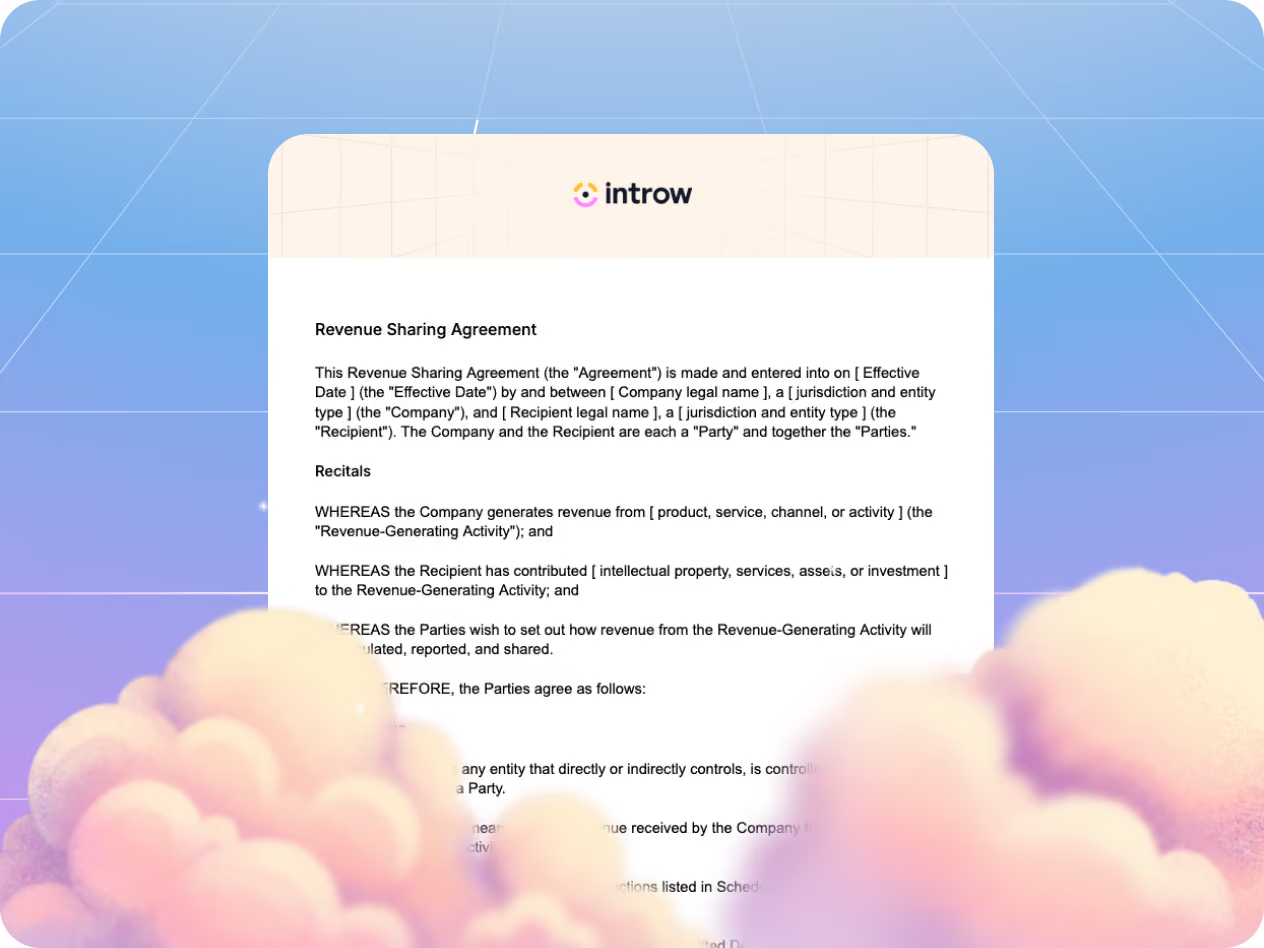
[Legal note: this article is not legal advice; always have counsel review your document before use.]
What is a revenue sharing agreement?
A revenue sharing agreement is a contract that defines how income from a business activity gets split between two or more parties. Instead of leaving payments to trust, it sets out who gets paid, how much, and when.
It's not the same as profit sharing. Profit sharing divides what's left after costs, while revenue sharing distributes income before most deductions, aside from the ones you agree on up front.
Which type of revenue share to use one?
Use a revenue sharing agreement when a partner earns an ongoing percentage of the income a deal generates. It fits co-sell and co-developed motions where both sides contribute over time and want incentives aligned to actual revenue.
- Commission or referral fee: Choose this when a partner hands off a lead and earns a fixed amount or a one-time percentage on the deal they sourced. Simpler to administer, no long-tail reporting.
- Reseller margin: Choose this when the partner sells, invoices, and supports the customer directly, keeping the spread between your price and theirs. The partner owns the contract.
- Revenue share: Choose this when you keep the customer contract but pay the partner a percentage of the income over an agreed period. Good for co-sell and IP or asset arrangements where the finish line is a share of revenue, not a margin.
What to include in revenue sharing agreement (quick checklist)
- Parties and purpose: who's involved and the activity whose revenue is being shared
- Revenue definition: what counts as revenue and which deductions are permitted before the split
- Share and structure: the percentage, any cap, and any tiered thresholds
- Payment timing: the schedule (monthly, quarterly, or annual) and the currency
- Reporting: the statement provided with each payment: gross receipts, deductions, shared revenue, amount due
- Audit and records: the right to verify figures, with a frequency cap and notice period
- Clawbacks and holdbacks: how refunds, chargebacks, and non-payment reverse or pause a share
- Asset sale or transfer: what the partner receives if you sell the underlying assets before a cap is reached
- Intellectual property and confidentiality: each party keeps its IP; protect revenue figures and terms
- Term, termination, and general terms: convenience, for-cause, a minimum-revenue exit, plus governing law and disputes
This structure is broadly consistent with widely used revenue sharing templates; tailor the base, rate, and reporting cadence to your motion.
Getting the most important part right
Ambiguity about what counts as revenue is the leading cause of revenue-share disputes. One side calculates on gross receipts; the other deducts everything from processing fees to overhead.
- Start from gross. State gross receipts, then list each permitted deduction by name — refunds, chargebacks, taxes, processing fees, and cost of goods sold where relevant.
- Cap the deductions. Where you can, define each deduction numerically or as a percentage of gross so it can't expand later.
- Use a schedule. If several products or channels are in scope, put the detail in an attached schedule — easier to amend than the body of the agreement.
- Name the base. For SaaS, first-year annual recurring revenue is a clean, defensible base; exclude one-off setup fees and taxes.
Where Introw fits
A revenue share is only as clean as the attribution and reporting behind it. With Introw, partner-sourced and influenced revenue ties back to the opportunity in Salesforce or HubSpot, so the numbers behind each split are visible to both sides. Partners see accepted deals, status, and expected payouts via email or Slack and reporting stays in one place instead of a spreadsheet. Pair it with deal registration to prevent duplicate claims before they become disputes.
Want to see attribution and payouts run off one source of truth? Request an Introw demo and we’ll show you end-to-end.
Still curious? Here are some quick answers to help clear things up
Revenue sharing splits income before most costs are deducted, aside from the deductions you agree on up front. Profit sharing divides what's left after expenses. Revenue sharing is more transparent and easier to verify, which is why it's common in partner and licensing arrangements.
Cap it when you're rewarding a one-time contribution and want a clear finish line, such as an asset or licence deal. Leave it uncapped when the share reflects an ongoing operating partnership, usually with a smaller percentage. The structure should match how long the value keeps flowing.
Tie it to the structure. Capped agreements end when the cap is reached; uncapped ones run for the term you set, often with a minimum-revenue exit so a dead channel doesn't linger. Align the payment cadence and termination notice with your billing cycle.
Yes. You can permit co-selling support while keeping the customer contract with you and paying the partner a share of the revenue. Be explicit that all sales agreements are between you and the customer and that the partner cannot quote unapproved terms or bind you.
See AI-Native PRM in Action
Book a demo with one of our partner program experts, or explore Introw on your own time.