[Legal note: this article is not legal advice; always have counsel review your agreement template before use.]
What is a teaming agreement?
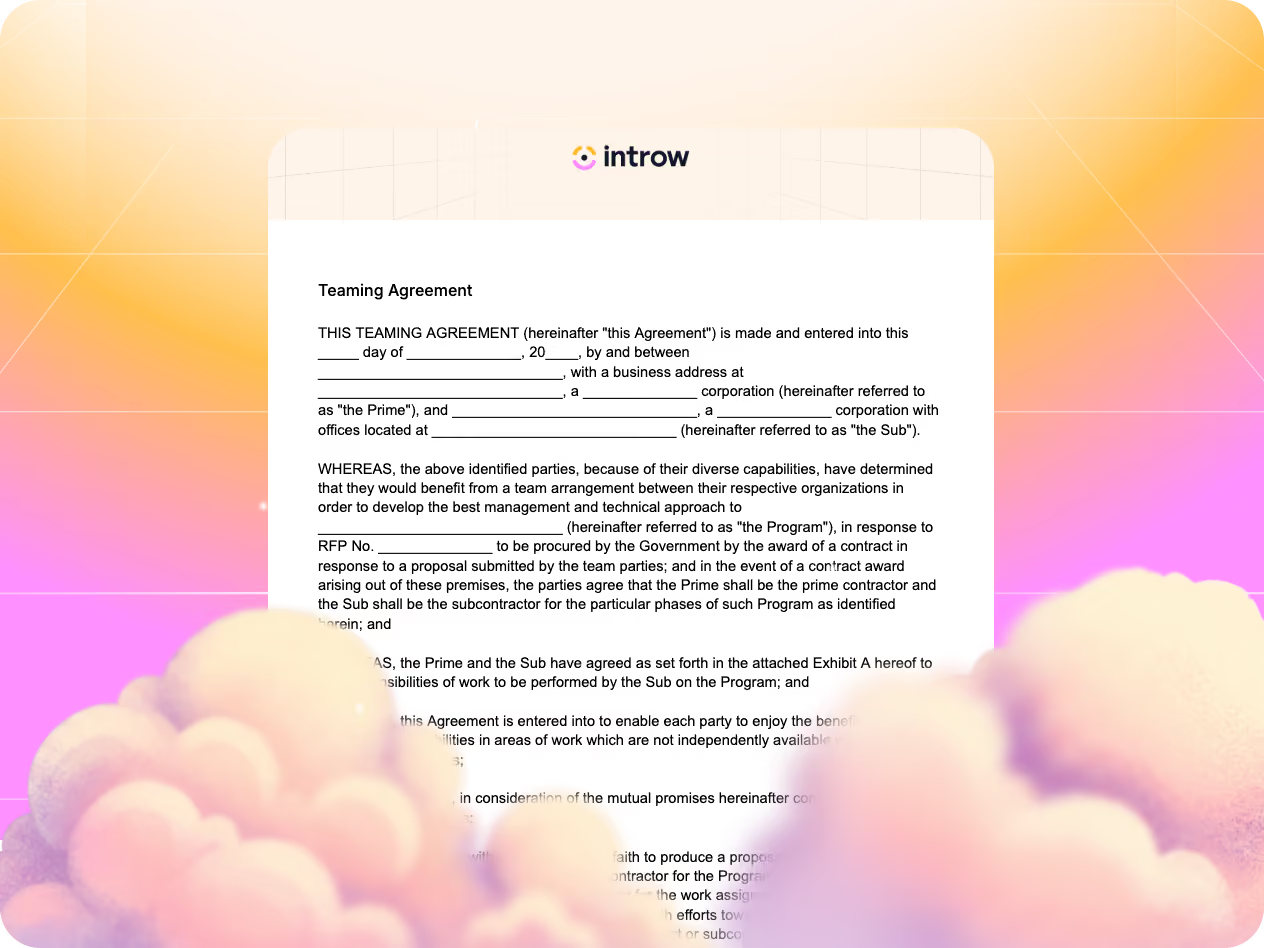
A teaming agreement binds two companies to chase one specific opportunity together, usually as a prime and a partner. One side leads the proposal and carries responsibility for the bid; the other agrees to perform a defined slice of the work under a subcontract if the bid wins. It’s a proposal-phase document — it sets intent, secures exclusivity for the pursuit, and typically expires once the contract is awarded or lost.
A teaming agreement isn’t a joint venture: no new entity is formed, and the parties keep separate legal identities and don’t share profit and loss.
When to use one and how formal to make it
Use a teaming agreement when you can’t win a bid alone and need a partner’s capabilities, past performance, or reach to put together a credible proposal. How formal it should be depends on how much is riding on it.
- Letter of understanding — the lightest option. It lays out preliminary terms fast and cheaply, and works when the stakes are modest or you’re moving quickly.
- Memorandum of understanding — a middle step that captures the key terms both sides care about, like exclusivity and confidentiality, without a full contract.
- Full teaming agreement — the most formal and binding pre-contract arrangement. Use it when the partner is critical to winning, when they’re contributing real proposal material, or when the opportunity is large enough that both sides want firm assurances.
The bigger the opportunity and the more central the partner, the more formal you’ll want to be.
What to include (quick checklist)
- Parties and the opportunity — who’s teaming, and the specific bid or solicitation it’s tied to
- Scope and work-share — the exact split of work, in percentages, not vague promises
- Exclusivity — that the partner won’t join or support a competing bid for this pursuit
- Proposal responsibilities — who prepares what, and by when
- Promise to award — that the prime shall award the subcontract on the defined terms if it wins
- Intellectual property — protection of proprietary data shared during the proposal
- Confidentiality — an NDA covering everything exchanged for the bid
- Term and termination — when the agreement expires, and the events that end it early
- Notices — how the parties reach each other, with named representatives
- Statement of work — the partner’s tasks and roles, usually set out in an exhibit
This structure is broadly consistent with widely used teaming templates; tie every clause to the specific pursuit so the agreement stays enforceable.
How to make teaming agreement enforceable
Courts frequently treat teaming agreements as unenforceable “agreements to agree”, a promise to negotiate later isn’t a promise a court will hold you to. If the bid wins and the terms were left vague, the partner can be left with nothing.
The fix is to remove the ambiguity up front. Define the material terms (scope, work-share, pricing method, and period of performance) so there’s nothing left to “agree” later. Use mandatory language: the prime shall award the subcontract, not will negotiate one. The strongest version negotiates the full subcontract before you submit the proposal and attaches it as an exhibit, so winning the bid triggers a contract that already exists.
Common mistakes and easy fixes
- Vague work-share. “A portion of the work” isn’t a term a court can enforce. State the exact percentage and the tasks in the statement of work.
- “Will negotiate” language. A promise to negotiate later is an agreement to agree. Use “shall award” and define the subcontract terms now.
- No exclusivity or sunset. Without them, a partner can join a rival bid, or the agreement can linger past the award. Lock exclusivity to this pursuit and set clear expiry events.
- Over-reliance on the partner (federal). Leaning too heavily on a subcontractor can trigger SBA affiliation. Keep management authority with the prime and meet the self-performance minimum.
- No NDA on proposal data. Teaming means sharing sensitive information before anything is signed for real. Attach an NDA covering everything exchanged for the bid.
- Signing without counsel. A template gets you an informed draft; a lawyer keeps it enforceable in your jurisdiction.
Where Introw fits
Introw keeps the joint bid on track: the shared opportunity, the proposal deliverables and deadlines, and partner alignment all sit against the deal in Salesforce or HubSpot, and the partner can post updates via email or Slack without logging into a portal.
Want to see co-selling run from a single source of truth? Request an Introw demo and we’ll show you end-to-end.
Still curious? Here are some quick answers to help clear things up
A teaming agreement keeps the two companies separate. A joint venture creates a new legal entity that both companies own and run together. Teaming is lighter and faster; a joint venture takes far more legal setup.
Timing. A teaming agreement is signed during the proposal phase to set intent and exclusivity, and it usually expires once the bid is awarded. The subcontract is the binding post-award document that governs the actual work. Because courts often won’t enforce the teaming agreement itself, you sign a separate subcontract to secure the work.
Yes, if you’re bidding with a partner. Even outside federal contracting, a teaming agreement sets who does what, protects the information you share, and holds the partner to your bid rather than a competitor’s. The same scope, work-share, and exclusivity terms apply.
Most teaming agreements end at the first of a few events: the bid is awarded and the subcontract signed, the bid is lost, a set time passes, or one party withdraws on notice. Spell those events out so the agreement doesn’t linger past the pursuit it was written for.
See AI-Native PRM in Action
Book a demo with one of our partner program experts, or explore Introw on your own time.