

Imagine knowing exactly which partners are ready to sell today.
No chasing updates or guessing certification status across your partner ecosystem.
With the right partner certification program software, certification becomes real leverage. You get cleaner sales motions, fewer surprises, and better partner performance.
Let's first breakdown what partner certification program software is.
What is Partner Certification Program Software?
Partner certification program software is built for external partners, not internal employees. It supports training programs, certification status, and partner tier rules tied to revenue.
Where generic LMS tracks courses and training completion, partner certification software focuses on readiness, partner performance, and sales performance.
That difference becomes obvious as partner ecosystems grow.
Partners need access to training that reflects real knowledge, practical skills, and selling ability.
Partner Certification Software vs. Employee LMS
Strong certification programs reduce escalations and improve win rates. They make it clear which certified partners can sell specific solutions.
Modern teams also expect certification to connect to their CRM. When certification status syncs with Salesforce or HubSpot, assessment scores and progress tracking map directly to pipeline.
This is why certification rarely lives in isolation. So, when teams evaluate how certification fits alongside PRM and engagement, they usually also look into partner enablement to round it out.
Now it's time to take a look at the platforms that teams like yours are evaluating or using.
1. Introw Partner LMS (Best overall for CRM-first certifications and sales gating)
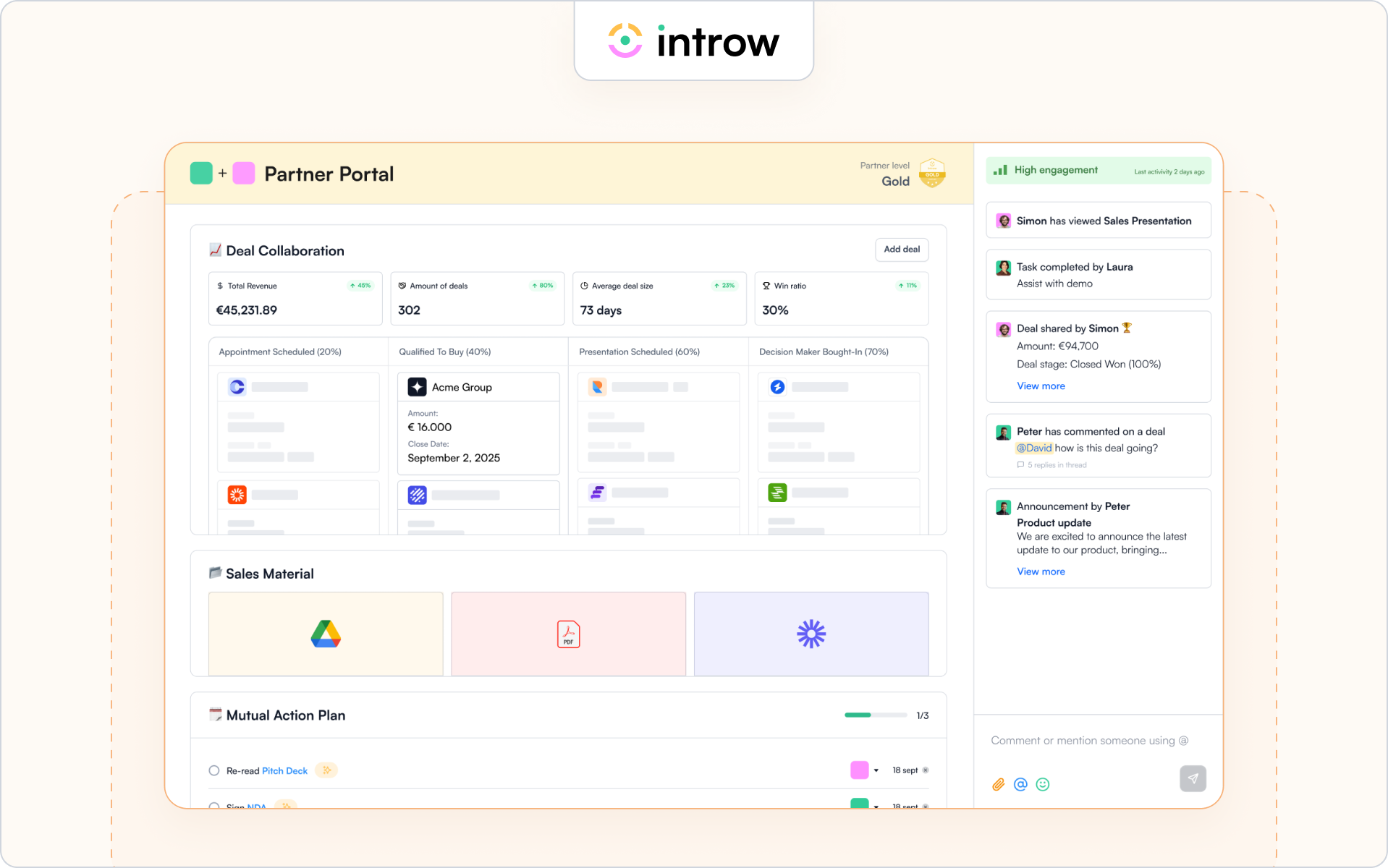
Introw’s Partner LMS is built for partner teams that want partner certification to directly control readiness, access, and revenue, not live as a standalone learning system.
Best for:
B2B teams on Salesforce or HubSpot that need fast partner courses, governed certification programs, and clear attribution to pipeline.
Why it stands out:
Introw treats partner certification as an operational control layer. Instead of manually building courses, an AI agent converts existing website or partner portal content into structured training programs with assessments.
Certificates are issued in one click, can expire automatically, and support recertification as products or services change.
Certification status then determines who can access specific solutions or selling motions, without relying on manual checks.
Key certification capabilities
- Certificates with expiration and recertification rules
- Customized learning paths by role or partner tier
- Manual and automated certificate assignment
- Assessment scores and progress tracking visible in CRM
- Centralized control to issue, revoke, or audit certifications
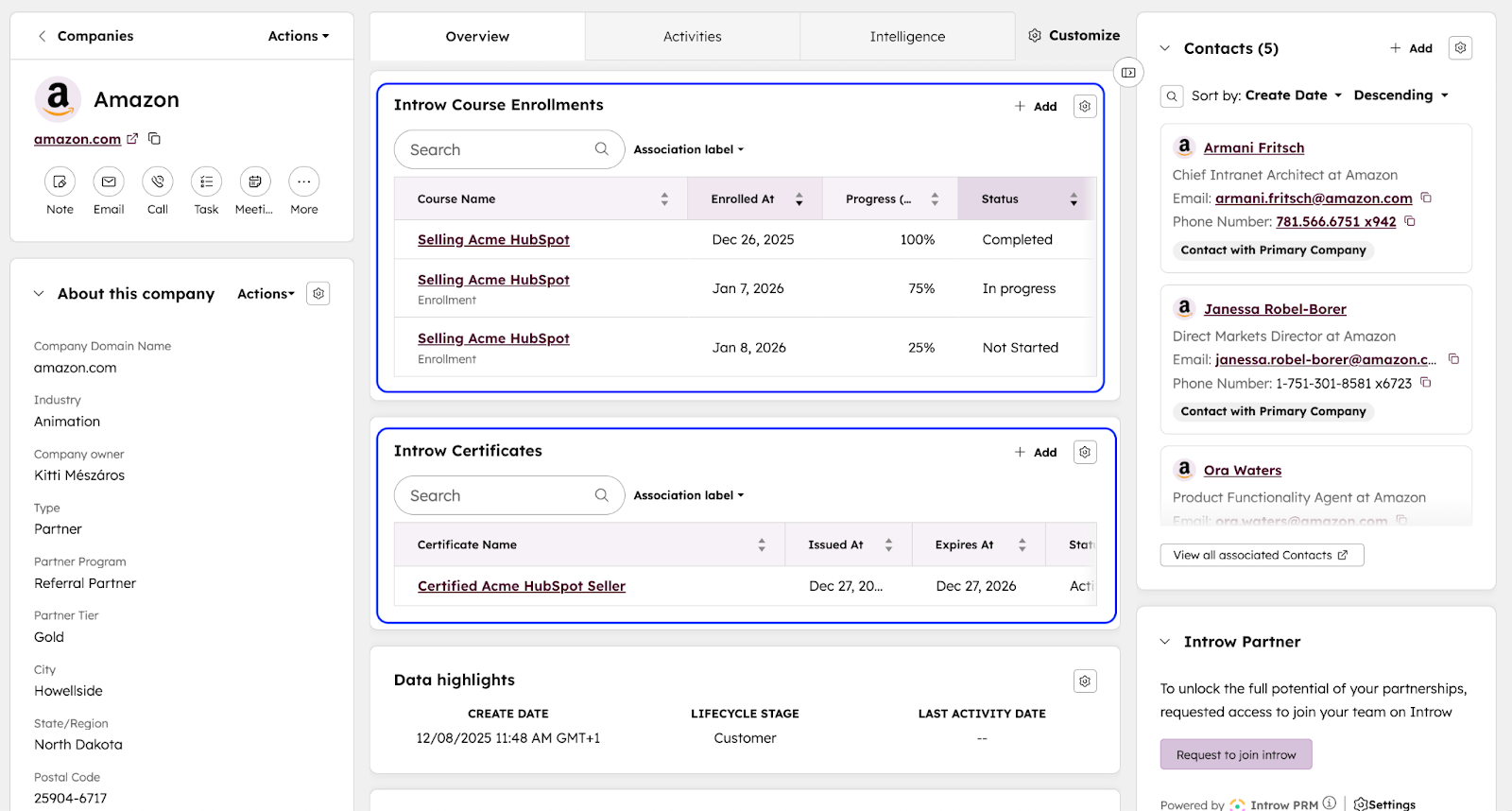
CRM-Aligned Reporting in Introw
Keep in mind
Introw works best when certification, engagement, and deal permissions move together. It's designed for teams that want certification to actively shape partner behavior.
Integrations:
Native integrations with Salesforce, HubSpot, Slack, and API access.
You can see how courses and certificates are created in practice in this short Introw Partner LMS walkthrough:
2. Skilljar by Gainsight - External academies with robust analytics

Skilljar is built for external training programs, with many teams using it for customer and partner academies.
Best for:
Teams running partner training at scale, with strong analytics tools.
Why it stands out:
Skilljar puts reporting and data access front and center. It’s a solid fit when you care about training completion signals.
Partner certification features:
- External learning portals for partners and customers.
- Certification capabilities, plus data and reporting for impact.
Keep in mind:
Skilljar is oriented around external education experiences. CRM tie-ins depend on your setup and data workflow.
3. LearnUpon - Multi-portal certification at extended-enterprise scale
LearnUpon is designed for extended-enterprise training, including partners and customers, with a strong focus on managing multiple external audiences.
Best for:
Teams that need to run partner certification programs across regions, partner tiers, or business units.
Why it stands out:
LearnUpon supports multiple branded portals from a single system.
This makes it easier to deliver different training programs without duplicating setup.
Partner certification features:
- Separate portals for different partner groups and audiences
- Certification programs with structured learning paths and reporting
Keep in mind:
Multi-portal setups require clear governance. Plan early how certification status feeds into reporting and partner operations.
4. Docebo - Enterprise AI and gamification with certification controls

Docebo is an enterprise learning platform used for extended-enterprise training, including partners, resellers, and customers.
Best for:
Large organizations running complex partner training and certification programs at scale.
Why it stands out:
Docebo combines scalable delivery with AI-assisted content and engagement features. Gamification tools can help improve training completion across large partner networks.
Partner certification features:
- Certification programs for external audiences
- Learning paths, assessments, and automation for partner training
Keep in mind:
Implementation can be complex so teams should validate reporting depth and CRM alignment early.
5. Absorb LMS – Advanced reporting with branded partner portals
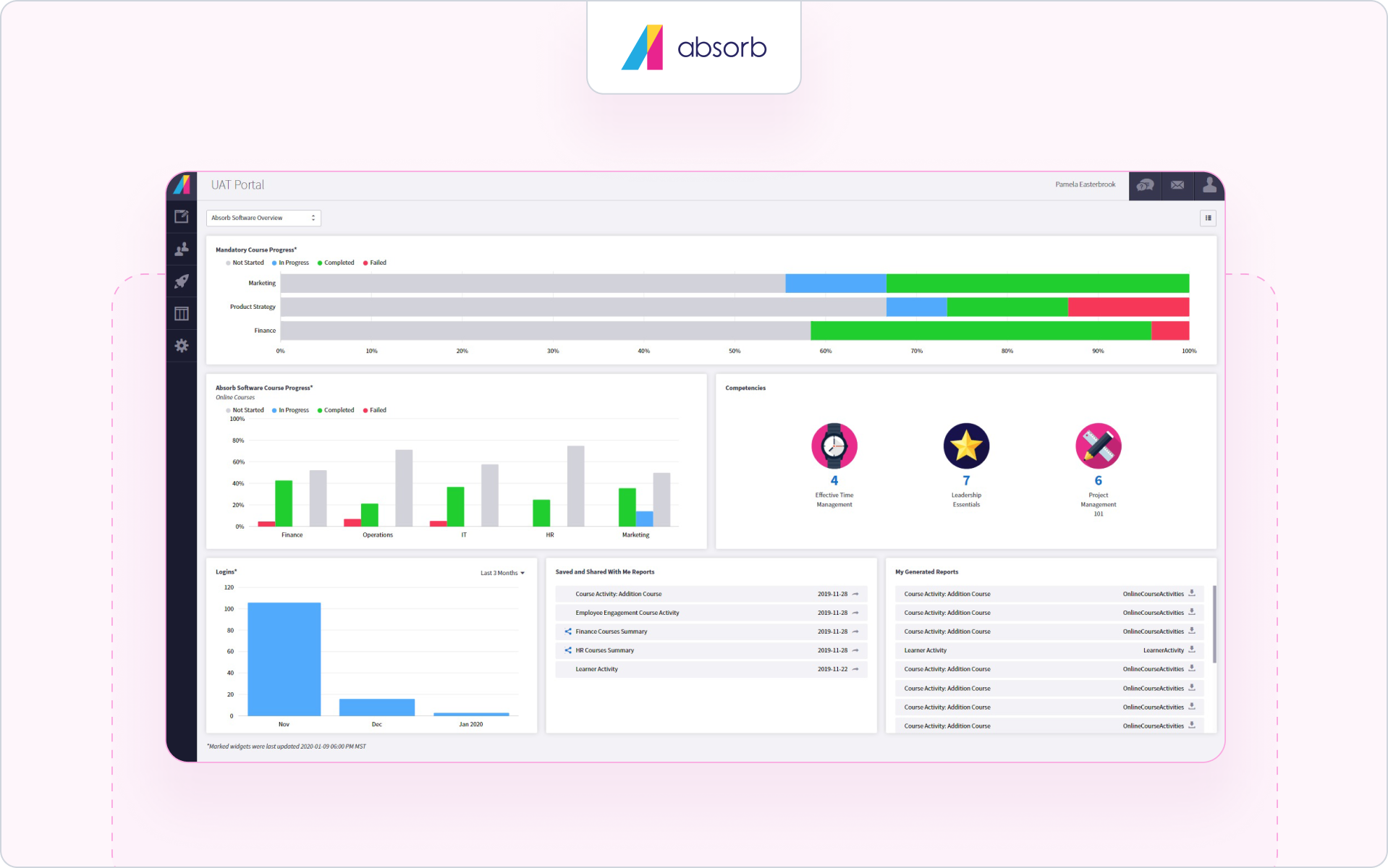
Absorb LMS supports partner and customer training through configurable, branded learning experiences.
Best for:
Teams that want strong reporting and polished partner-facing portals.
Why it stands out:
Absorb emphasizes dashboards and analytics across external learners. This helps teams monitor training completion and engagement trends.
Partner certification features:
- Branded portals for partners and customers
- Certification tracking with reporting and automation
Keep in mind:
Engagement outside the LMS often relies on integrations. Be sure to assess how partner certification connects to broader partner performance data.
6. 360Learning – Collaborative certification and peer-driven learning

360Learning is a learning platform focused on collaborative and peer-driven training, sometimes extended to partners.
Best for:
Teams that want partners to contribute content or learn from each other.
Why it stands out:
360Learning emphasizes social learning and peer validation. This can support certification readiness in highly collaborative partner ecosystems.
Partner certification features:
- External partner groups and shared learning spaces
- Certifications supported through courses and assessments
Keep in mind:
The collaboration-first model needs clear governance. It works best when partner contribution is intentional and structured.
7. LearnWorlds – Branded certification academies with flexible learning paths
LearnWorlds is an online course platform often used to build external partner academies and certification hubs.
Best for:
Teams running partner certification programs that need branded academies and customized learning paths without enterprise complexity.
Why it stands out:
LearnWorlds focuses on structured learning experiences with strong control over course flow. It works well when different training programs need to support partners across regions or roles.
Partner certification features:
- Courses, assessments, and certificates for external partners and customers
- Customized learning paths and prerequisites to guide partners through different training
Keep in mind:
LearnWorlds is optimized for education delivery. Advanced CRM integration and partner performance reporting usually require additional tools.
8. Intellum – Enterprise academies with configurable certification programs

Intellum supports large-scale customer and partner education programs.
Best for:
Enterprise teams running structured partner certification at scale.
Why it stands out:
Intellum offers configurable learning experiences and analytics. It’s often used for complex partner and customer academies.
Partner certification features:
- Certification programs across external audiences
- Reporting on training completion and progress
Keep in mind:
Implementation effort can be significant, so CRM alignment and operational fit should be assessed early.
9. WorkRamp – Enablement-focused training with certification paths
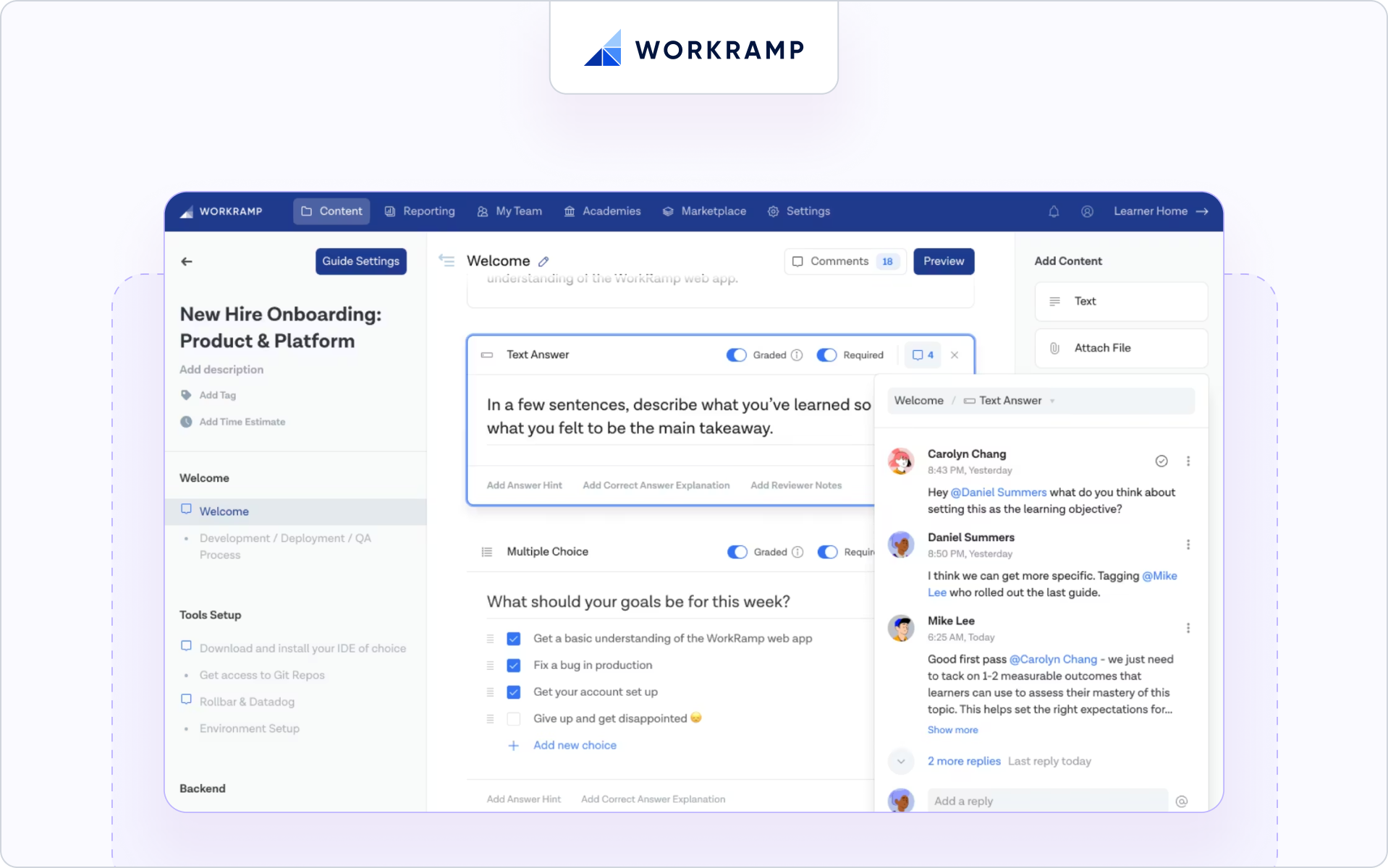
WorkRamp is used for partner training when certification supports broader enablement programs and sales motions.
Best for:
Teams aligning partner certification with enablement programs and customer success initiatives.
Why it stands out:
WorkRamp focuses on helping partners complete training that builds practical skills. Certification supports partner success by validating readiness across different training programs.
Partner certification features:
- Certification paths tied to enablement programs
- Assessments with clear assessment scores and progress tracking
Keep in mind:
Partner-specific governance may need planning. Evaluate how certification status supports sales performance and helps close deals.
10. Channeltivity (Training Module) – PRM with built-in certification
Channeltivity combines partner training with PRM workflows inside one platform.
Best for:
Teams managing partner ecosystems where certification supports partner tier rules.
Why it stands out:
Training and certification live alongside deal registration and partner operations.
This reduces time spent switching tools across the organization.
Partner certification features:
- Built-in training programs for partners
- Certification tracking tied to partner tier access
Keep in mind:
Training depth is limited compared to standalone tools. Many teams review this alongside partner relationship management software to assess long-term fit.
11. TalentLMS – Fast setup with branches for partner audiences
TalentLMS is often used as an entry-level partner certification program software.
Best for:
Teams that need to create training programs quickly for partners and customers.
Why it stands out:
TalentLMS supports fast rollout with minimal setup. Branches allow different training for partner groups and regions.
Partner certification features:
- Certifications tied to course completion
- Basic analytics tools for training completion
Keep in mind:
CRM integration is limited. As partner ecosystems grow, teams often reassess their certification status needs.
12. Litmos – Compliance-heavy certification for global partners
Litmos is used for certification programs with strict compliance needs.
Best for:
Organizations delivering standardized training programs across regions and industries.
Why it stands out:
Litmos supports consistent certification and reporting at scale. It’s common in industries with high regulatory demand.
Partner certification features:
- Certifications and assessments for partners and customers
- Reporting on completion rates and training completion
Keep in mind:
User experience can feel rigid, so engagement and relevant content often require additional marketing tools.
13. Mindtickle – Sales readiness and role-based certification
Mindtickle focuses on sales readiness rather than broad partner training.
Best for:
Teams prioritizing sales performance and selling skills.
Why it stands out:
Mindtickle emphasizes coaching, feedback, and assessments. Certification validates practical skills tied to real sales scenarios.
Partner certification features:
- Role-based certifications for partners
- Assessments and readiness scoring
Keep in mind:
Not designed as a full partner certification program software. Most teams pair it with other tools so partners can access training consistently.
14. Thought Industries – Multi-tenant academies with certification

Thought Industries supports external academies for partners and customers.
Best for:
Teams running multiple certification programs across brands or regions.
Why it stands out:
Multi-tenant architecture supports different training needs. Certification can support demand generation and customer success.
Partner certification features:
- External academies with certification paths
- Analytics and reporting for training completion
Keep in mind:
Configuration can be complex. Plan certification governance early to avoid operational pain points.
15. iSpring LMS – Affordable certification with built-in authoring
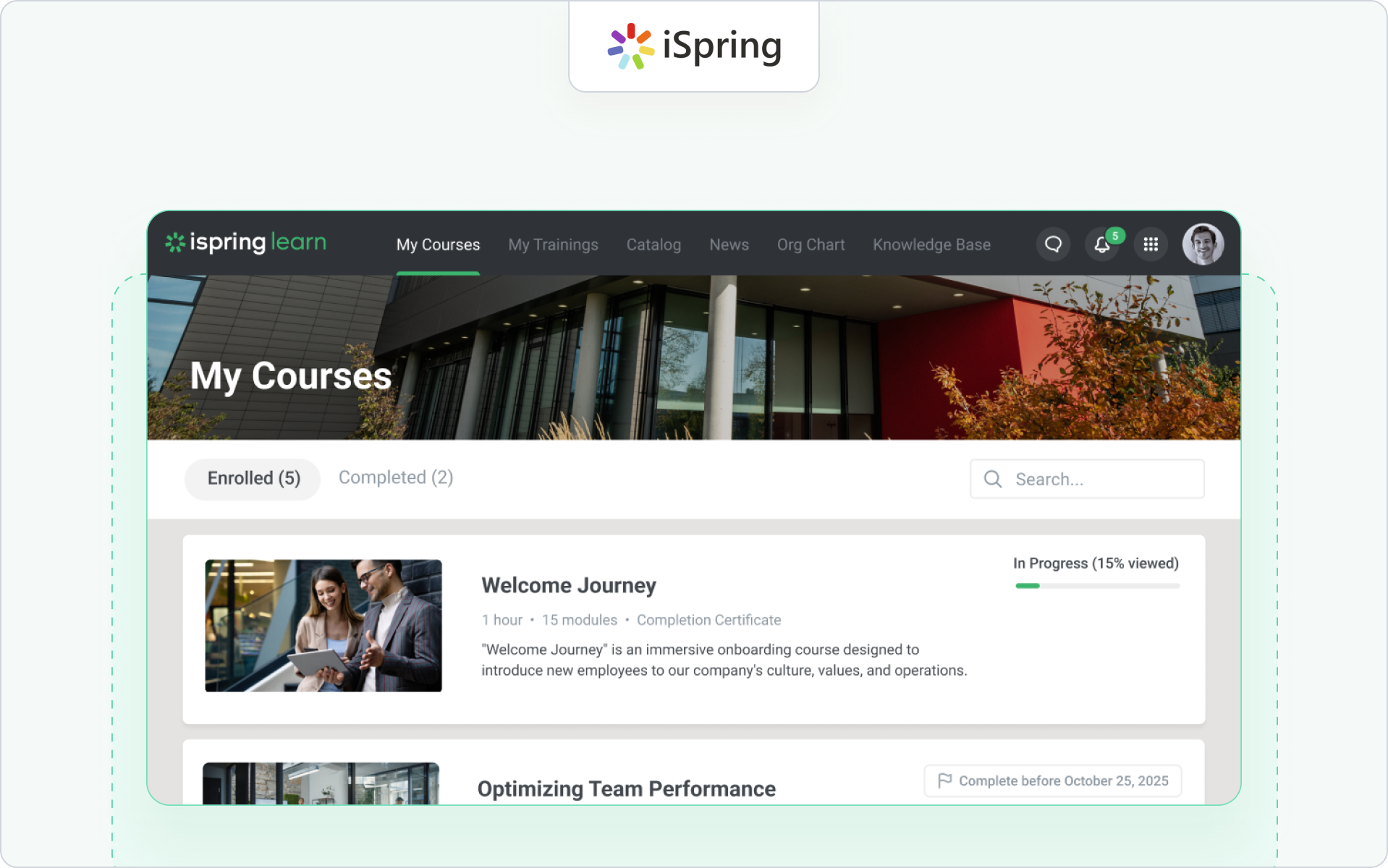
iSpring LMS combines course authoring with certification delivery.
Best for:
Teams looking to develop partner training without enterprise pricing.
Why it stands out:
Built-in authoring reduces time spent creating courses, supporting faster access to training for partners.
Partner certification features:
- Certifications and assessments
- Course creation tools for different training needs
Keep in mind:
Advanced integrations are limited. Teams often review CRM alignment separately when choosing the right CRM for partner management.
Choosing the right tool depends on how critical certification is to your partner motion.
That’s why the next step is breaking down the certification-critical features that actually matter when evaluating partner certification program software.
Buyer’s checklist: Certification-critical features
Partner certification program software only works if it holds up operationally.
This checklist helps you evaluate whether a tool supports real partner readiness, not just training delivery.
When these features work together, certification supports partner performance beyond training alone.
That’s why many teams align certification with a broader partner engagement strategy. From there, the real question is which platforms make this easy to run at scale.
That leads directly to why teams choose Introw for partner certification.
Why Teams Choose Introw for Partner Certification
Introw is a partner certification program software built for teams that treat certification as operational leverage. It helps you move faster without losing control as partner training and certification scale.
Create in minutes
Introw’s AI agent turns existing site or portal content into structured courses with quizzes and assessments. That means training programs evolve with your products, without extra time spent rebuilding content.
Certify with control
Certificates are issued in one click and expire automatically when knowledge changes. Certification status stays current and protects program benefits as partners move across solutions and services.
Enroll at scale
You can segment by role, region, or partner tier and invite partners in bulk. This supports different training needs while keeping access to training consistent across the partner ecosystem.
Drive adoption without friction
Partners receive reminders and updates through email or Slack. They can complete training without living inside another portal, which improves completion rates.
Prove impact where it matters
Training completion, assessment scores, and progress tracking sync with Salesforce and HubSpot. That connection turns certification into insight you can use to improve sales performance and customer success.
Before you commit, pressure-test this
- Will certification remove pain points or add more admin work?
- Can certified partners be trusted to sell and close deals confidently?
- Will certification still work as demand, growth, and complexity increase?
If certification needs to support real execution, not just compliance, Introw is designed for that.
Request a demo to see what Introw and your business can achieve together.
Still curious? Here are some quick answers to help clear things up
A partner LMS focuses on delivering courses and tracking training completion. Partner certification program software validates skills, enforces certification status, and supports partner performance across the partner ecosystem.
Modern certification tools support expiration rules, recertification windows, and assessment scores. This keeps knowledge current as services, solutions, and market demand evolve.
Yes, certification can control who is allowed to sell specific solutions, protecting program benefits and ensuring only certified partners operate at higher tiers.
Teams track completion rates, assessment scores, and certification status alongside sales data. When paired with analytics tools and partnership marketing insights, certification becomes part of the pipeline strategy rather than a standalone program. You can see how this fits into broader partnership marketing.
Yes, off-portal notifications support early access to updates and reduce time spent chasing responses. This improves engagement and helps partners access training without friction.



See what your partner program actually could look like
Book a demo with one of our partner program experts, or explore Introw on your own time.