


What is a technology partner program?
A technology partner program is a structured way to recruit, manage, enable, and monetize companies whose products integrate with or complement yours.
These technology partners may also be called:
- Integration partners
- ISVs
- Tech alliance partners
- Technology alliance partners
The terms "technology partner program" and "integration partner program" are often used interchangeably. An integration partner is a technology partner, so use whichever term fits your ecosystem.
You may also see related names such as:
- Technology integration partner program
- Technology alliance partner program
- ISV partner program
- ISV partnerships
The main difference is how these partners create value.
Each partner motion needs its mix of enablement, deal access, attribution, and collaboration. Workflows for different partner types vary across technology partners, resellers, referral partners, and system integrators.
Most technology partnerships start as non-revenue relationships. Two companies build and validate an integration, then add it to a marketplace.
A technology partnership becomes a revenue channel only when both sides drive adoption, share leads, and co-sell. That operating layer is the core of a strong technology partner program framework and one of the biggest benefits of technology partner programs.
Why most technology and integration partner programs fail
Most technology partnerships fail because nobody builds the process around the integration.
A strong technology partner program has two jobs:
- Help customers discover, activate, and use the integration.
- Help both sales teams find shared opportunities and co-sell.
Miss either one, and the tech partnership becomes a logo exchange instead of a revenue channel. Here are five issues you should watch out for:
The technology partnership stops at launch
The usual playbook looks like this:
- Build the integration.
- Validate it.
- Add it to an online marketplace.
- Publish an announcement.
- Move on.
Marketplace listings can improve visibility and credibility for certified product integrations. But they won’t create demand on their own.
Customers won’t automatically find the integration or understand why it matters. Sales reps won’t promote it unless they know where it fits and how it helps close a deal.
You’re left with a technical asset and no go-to-market motion behind it.
Customers can’t find, activate, or use the integration
Even the right integrations create no customer value when adoption stays low.
Your existing customers need a clear reason to turn the integration on. They also need:
- Simple setup guidance
- Relevant use cases
- Product education
- Support during activation
- Updates when the integration changes
Without that enablement, a seamless integration can still create a poor integration experience.
The problem grows as you add more integrations. Your marketing team can’t run the same campaign for every tech partner, and customers shouldn’t have to dig through a marketplace to find the services they need.
A structured partner enablement process helps technology partners share the right marketing materials, guidance, and use cases with the right customer base.
The two sales teams never learn to co-sell
Technology partnerships create pipeline when two companies know where their products fit together and act on shared accounts.
Most tech partner programs still lack the basics:
- Account overlap data
- Shared target lists
- Rules for lead ownership
- Deal registration
- Shared pipeline visibility
- Clear sales handoffs
Without those workflows, each sales team keeps working alone. The products are connected, but the people selling them aren’t.
A repeatable co-selling process helps both companies find potential customers, coordinate outreach, and track qualified leads.
The same applies to SaaS partnerships, a system integrator partner program, software distributor motion, or strategic technology partnership. Each requires shared objectives, clear ownership, and visibility.
Technology partners can’t register or track opportunities
Even motivated partners disengage when sharing an opportunity creates more work.
When a tech partner has to send account details by email, wait for confirmation, and chase your team for updates, the partnership loses momentum. Your sales team also risks duplicate records, channel conflict, and unclear attribution.
A structured deal and lead registration process lets partners submit opportunities while keeping the CRM accurate.
It also creates the foundation for a successful tech partnership:
- Clear attribution
- Faster lead routing
- Defined deal ownership
- Shared status updates
- Reliable pipeline reporting
Without those basics, partner programs can’t scale beyond a few high-touch relationships.
Nobody can prove what the technology partnership influenced
If you can’t connect integration adoption and partner activity to pipeline, leadership won’t keep investing.
Most technology partnership programs can report how many integrations launched. Far fewer can answer:
- Which customers activated them?
- Which integrations support increased customer retention?
- Which technology partners introduced new opportunities?
- Which deals did the integration influence?
- Which partners deserve more support?
Impact is rarely spread evenly across the partner ecosystem. A small group of technology partners usually drives most adoption, engagement, and revenue.
Effective partner management helps you compare partner activity with pipeline outcomes instead of treating every relationship the same.
That’s why learning how to build a successful technology partner program isn’t mainly about recruiting more partners or launching more product integrations. It’s about giving the right partners a repeatable way to drive adoption, support shared business goals, and create measurable revenue.
The types of technology and integration partnerships
Not every tech partnership works the same way. Some are simple product integrations. Others grow into strategic collaborations with shared roadmaps, co-marketing, and joint sales.
The best tech partner programs recognize that these relationships sit on a spectrum. Your goal is to move the right partners from “the integration exists” to “customers use it and both companies help sell it.”
Integration partnerships connect two products
Integration partnerships are the baseline tech partnership model. Two companies build integrations so their products can exchange data or work together.
This is where the terms 'integration partner program' and 'technology integration partner program' are most often used.
The focus is usually on:
- APIs and developer resources
- Integration testing
- Certification and validation
- Launch support
- Customer activation
A seamless integration can improve the customer experience, but the partnership won’t create business growth unless customers discover and use it.
ISV partnerships help platforms expand
ISV partnerships involve independent software vendors that build on or integrate with a SaaS platform.
An ISV partner may create:
- Native apps
- Plugins and extensions
- Connectors
- Industry-specific tools
- New solutions for shared customers
Strong ISV partner programs help potential partners build integrations, access technical support, and bring those integrations to market.
These partnerships can also deepen over time. An ISV may start by building a product integration, then join co-marketing efforts, share qualified leads, or work with your sales teams on larger opportunities.
Technology alliances go beyond the integration
A technology alliance partnership is a deeper relationship built around shared objectives.
These strategic technology partnerships often include:
- Joint product planning
- Co-marketing
- Shared marketing campaigns
- Account mapping
- Co-selling
- Executive alignment
- Joint business goals
The best tech partnerships don’t stop at launch. Both sides invest in adoption, customer feedback, and shared go-to-market activity.
This is where a lightweight tech partnership can become a successful partnership with real market reach and a stronger competitive advantage.
OEM technology partnerships embed one product inside another
In OEM technology partnerships, one company’s technology becomes part of another company’s product.
For example, a business may embed:
- A payments engine
- A security feature
- An analytics tool
- A communications layer
- An AI capability
This model gives companies access to proven technological solutions without having to build everything themselves. It can improve cost efficiency, reduce development risk, and speed up digital transformation.
OEM relationships often need deeper technical governance, pricing rules, and long-term strategic goals than standard integration partnerships.
System integrator partnerships connect products and services
A system integrator partner program supports companies that implement, configure, and connect technology for customers.
System integrators typically work across several products, vendors, and customer environments. They may also support larger companies with complex requirements.
Because SIs combine products with professional services, they need more than a marketplace listing. They need:
- Technical enablement
- Certification
- Access to relevant deal context
- Shared implementation plans
- Clear handoffs between teams
The right setup for system integrators gives both sides a shared view of pipeline, delivery, and customer outcomes.
Platform and marketplace partnerships improve discovery
Platform and marketplace partnerships help companies showcase and distribute integrations to potential customers.
This may include:
- App marketplaces
- Cloud marketplaces
- Integration directories
- Plugin libraries
- Partner catalogs
Marketplaces can boost visibility, especially for certified integrations. They also make it easier for customers to compare services and find the right integrations.
But a listing still needs support from marketing, partner sales, and customer success. Without that, the integration may be visible but inactive.
This is especially relevant for software and hardware distributors, where the partnership program may combine marketplace exposure, sales support, and channel partnerships.
These partnership types aren’t fixed boxes. A tech partner may start with a simple integration, join your marketplace, contribute to marketing efforts, and later become a strategic co-sell partner.
That movement is the point of a strong tech partnership program. You’re not only trying to recruit more partners. You’re helping the right ones drive innovation, improve the customer experience, and create mutual growth.
How to build a technology and integration partner program
A technology partner program needs more than a recruitment page and an integration marketplace. You need a repeatable process for choosing the right partners, launching useful integrations, driving adoption, and creating shared revenue.
Use these seven steps as your technology partner program framework.
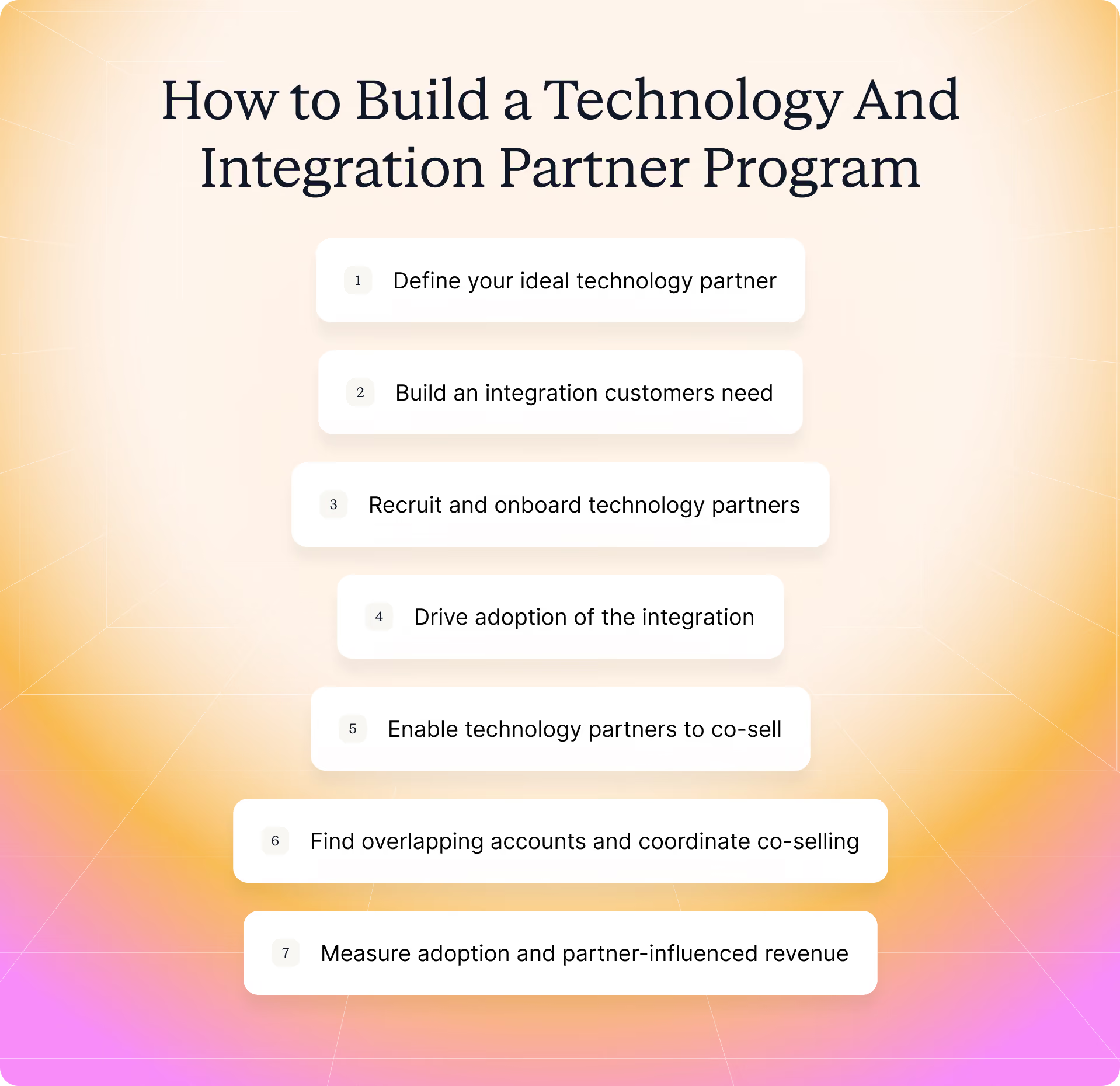
Step 1: Define your ideal technology partner
Don’t build an integration just because another company asks for one.
The strongest potential partners have a complementary product, an overlapping ideal customer profile, and a clear joint use case. Customer demand matters too. Repeated requests for the same connection are a stronger signal than a partner’s general interest.
What to look for
You’ll also need a commercial model. Some tech partner programs are free, while others use annual fees, usage charges, revenue share, or referral payments. Choose one that supports your business goals without discouraging strong partners.
Step 2: Build an integration customers need
The integration is table stakes, but it still has to solve a real problem.
The strongest product integrations remove steps from an important workflow, improve the customer experience, or let customers do something neither product could support alone.
Your product and engineering teams may use native APIs, an iPaaS, plugins, extensions, embedded components, or custom connectors.
Test the full integration experience
Don’t stop at checking whether data moves. Setup should be clear, the connection reliable, and the outcome easy to understand.
Building the integration creates the possibility of value. Your partnership program has to turn that into adoption and revenue.
Step 3: Recruit and onboard technology partners
Give partners a clear way to understand the program, apply, and get started.
Your program page should cover
- Who the program is for
- Which partnership models you support
- Technical requirements
- Partner benefits
- How applications are reviewed
- What happens after acceptance
Your onboarding should cover
API documentation isn’t enough. Partners also need your ideal customer profile, core messaging, joint value proposition, use cases, product training, launch responsibilities, and co-marketing and co-selling expectations.
A partner who understands only the technical connection can help maintain it. A partner who understands the customer problem can help sell it.
A shared partner portal can keep onboarding tasks, developer resources, training, contacts, and joint plans in one place without separating that work from your CRM.
Step 4: Drive adoption of the integration
An integration creates value only when customers turn it on and use it.
Track activation, active usage, and retention by integration. Listing views and clicks show interest, not adoption.
Engaged technology partners can also build credibility. When both companies support the integration and communicate a consistent use case, customers have more reason to trust it.
Step 5: Enable technology partners to co-sell
Once customers can adopt the integration, give both teams what they need to sell it together.
Core enablement
- Joint value proposition
- Sales decks and one-pagers
- Integration demos
- Customer stories
- Battle cards
- Qualification questions
- Objection handling
- Rules for ownership and handoffs
Don’t bury these materials in a folder. Organize them around the customer, use case, and deal stage.
Enablement also has to work both ways. Your reps should know when the partner’s product strengthens a deal, and the partner’s reps should know when to bring yours in.
That’s how technology partnerships move from product compatibility to partner sales and shared pipeline.
Step 6: Find overlapping accounts and coordinate co-selling
Start with the customers and prospects both companies already know.
Account mapping can reveal where one company has a relationship the other can use, where both sides share a customer, or where a prospect could benefit from the combined solution.
A Crossbeam integration can surface these overlaps and show where the technology partnership has a real sales opportunity.
Turn each useful overlap into a coordinated motion
- Agree on the joint use case.
- Decide who owns the relationship.
- Register the opportunity.
- Assign next steps.
- Share the deal context each side needs.
- Keep the pipeline updated.
This is where account mapping becomes nearbound marketing: using trusted relationships around an account to reach the right buyer with more context.
Keep the motion connected to your CRM. Native Salesforce or HubSpot workflows let sales teams stay in the system they already use while partners receive the updates they need.
Step 7: Measure adoption and partner-influenced revenue
Measure the two jobs your program exists to do.
Connect both sets of data. You should be able to see whether customers who adopt an integration stay longer, expand faster, or create new co-sell opportunities.
Don’t spread resources evenly across every relationship. A small group of partners will often drive most adoption and revenue.
That’s how a technology partnership program becomes a proven revenue channel: you can see which integrations customers use, which partners influence deals, and where more investment is likely to drive business growth.
How Introw turns technology and integration partnerships into a revenue channel
Introw doesn’t build integrations, and it isn’t an iPaaS.
It steps in after the integration exists, when you need to manage the partner, drive adoption, coordinate co-sell deals, and prove the revenue the partnership creates.
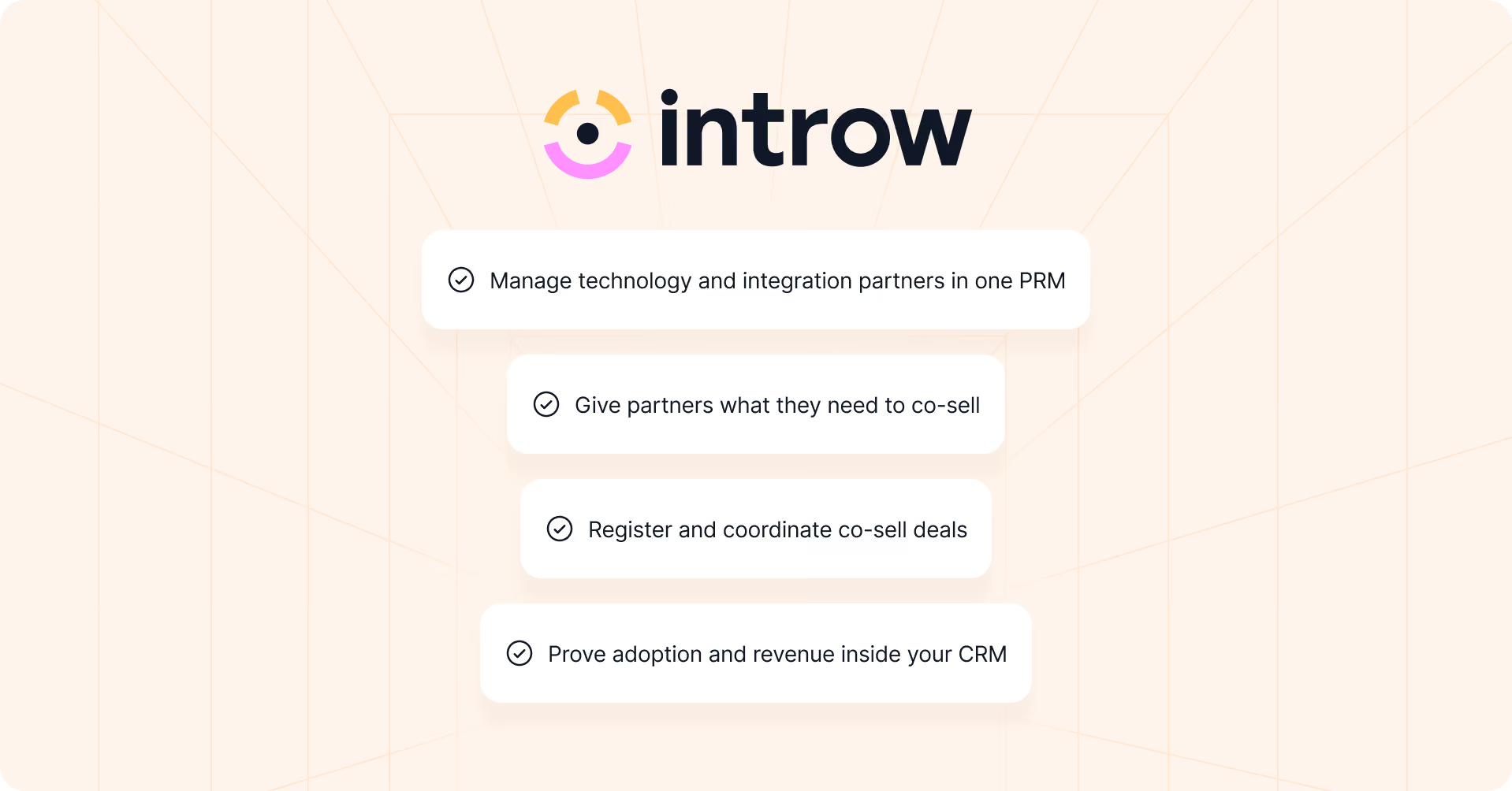
Manage technology and integration partners in one PRM
Technology partners usually sit alongside resellers, referral partners, distributors, and system integrators.
With Introw’s partner management platform, you can manage all of those relationships in one CRM-native system while giving each partner type the right experience.
You can:
- Segment partners by type, tier, region, or program
- Share only the CRM data each partner needs
- Track contacts, goals, activity, and pipeline
- Replace spreadsheets with live partner data
That keeps your technology partnerships connected to the rest of your partner program instead of turning them into a side project. You can also see how Introw supports different partner types without forcing every relationship into the same workflow.
Give partners what they need to co-sell
A partner can’t bring your product into a deal if they don’t understand the joint value.
Introw helps you enable partners with content built around the integration and the problem it solves.
That can include:
- Joint sales decks
- Battle cards
- Integration demos
- Customer stories
- Qualification questions
- Co-sell training
- Ownership and handoff rules
Partners can access this through the portal, Slack, or email, so they’re not digging through folders or trying to remember another login.
The result is simple: they know when your product fits, how to explain the combined value, and when to involve your team.
Register and coordinate co-sell deals
When a shared opportunity appears, both teams need clear ownership, next steps, and attribution.
Introw’s deal and lead registration give partners a straightforward way to submit opportunities while keeping the CRM clean.
That means you can:
- Credit the right partner
- Check for overlap with direct sales
- Prevent duplicate deals and channel conflict
- Assign ownership and next steps
- Keep both sides updated
- Maintain one shared pipeline view
That structure turns co-selling from a few informal introductions into a repeatable sales motion.
Your partner gets visibility and credit. Your sales team gets clean data and clear ownership. Nobody has to reconstruct the deal from email threads.
Prove adoption and revenue inside your CRM
Most programs can count integrations. Far fewer can show which ones customers use or which technology partnerships influence revenue.
Because Introw works with HubSpot or Salesforce as the system of record, partner activity and co-sell deals stay tied to the CRM data your team already trusts.
You can see:
- Which partners are active
- Which integrations support real opportunities
- Which partners source or influence pipeline
- Which co-sell deals are moving
- Where more investment makes sense
That closes the gap between “we launched an integration” and “this partnership drove revenue.”
You no longer have to ask leadership to fund the program on faith. You can show which partnerships are working, where they need support, and which ones are ready to grow.
Your integrations already took time and money to build. Make sure they do more than sit in a marketplace. Book a demo to see how Introw helps you turn technology partnerships into adopted, co-sold revenue.
Still curious? Here are some quick answers to help clear things up
An integration partner program is the same as a technology partner program. Both terms describe a program for companies that build integrations with your product and support adoption, marketing, and co-selling.
A reseller sells your product. A technology partner connects its product with yours to create joint value for shared customers.
Some technology partners may also refer leads, resell, or co-sell, but the relationship starts with the integration.
Technology partnerships drive revenue through adoption and co-selling.
Customers must discover and use the integration. Then both sales teams need a way to work shared accounts, register deals, coordinate pipeline, and track influence.
Track:
- Integration activation and usage
- Retention among integration users
- Shared accounts
- Registered opportunities
- Partner-sourced and partner-influenced pipeline
- Win rate and closed revenue
A small group of partners will often drive most of the impact. A CRM-native PRM like Introw keeps those results connected to HubSpot or Salesforce so you can see where more investment makes sense.
The main types are:
- Integration partnerships
- ISV partnerships
- Technology alliance partnerships
- OEM partnerships
- System integrator partnerships
- Platform and marketplace partnerships
They range from simple product integrations to deeper relationships with joint roadmaps, marketing, and sales.






Are you already an active Introw partner?
Book a demo with one of our partner program experts, or explore Introw on your own time.