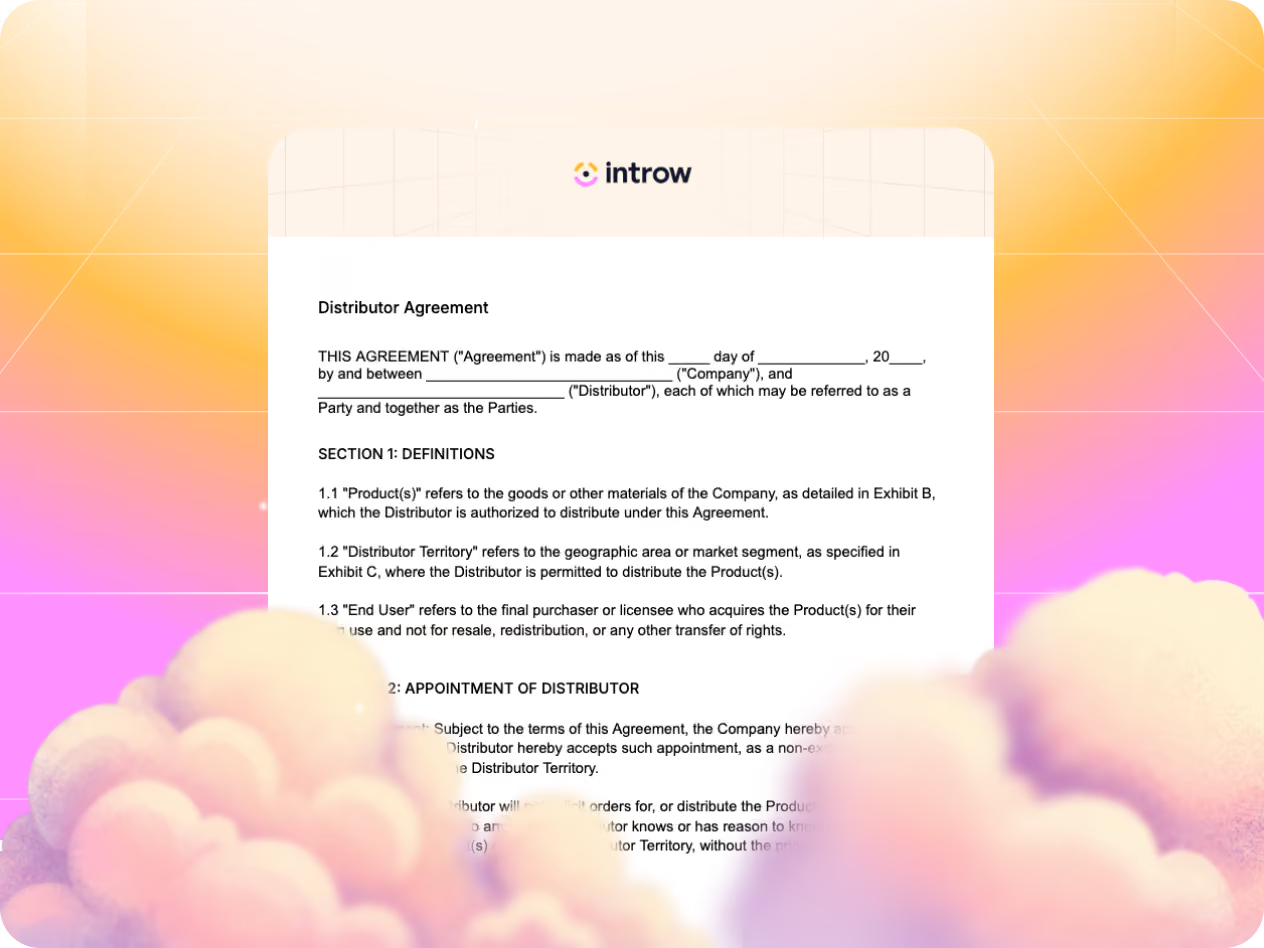
Distribution Agreement Template: Free Download
[Legal note: this article is not legal advice; always have counsel review your agreement template before use.]
What is a distribution agreement?
A distribution agreement is a contract between a supplier or manufacturer and a distributor who agrees to sell and distribute the supplier’s products to customers or end users. The distributor often buys the products and resells them under their own trading name, in return for margin or a commission. It sets out the rights, obligations, and responsibilities of both sides: what’s sold, where, at what price, and on what terms.
Distributor isn’t the same as a reseller or wholesaler: a distributor buys and resells, may hold inventory, and sometimes manages sub-distribution, while a reseller simply sells to end customers and a wholesaler moves bulk volume through its own network.
Exclusive, wholesale, or software — pick your model
The clauses that matter shift depending on what you’re distributing and how much of your market you’re handing over.
- Exclusive — one distributor gets sole rights to a territory or a set of customers. It’s the strongest commitment you can make to a partner, and the hardest to walk back if they don’t deliver.
- Non-exclusive — you appoint several distributors across the same patch. Sensible for most programs starting out.
- Wholesale — you supply in bulk at a lower unit cost and the distributor resells into retail or direct to consumers.
- Software / SaaS — the distributor licenses your software to end users. Shipping and warranty language gives way to provisioning and your SaaS terms, covered further down.
If your partner won’t hold stock or take on resale risk (they just pass you leads, or resell without carrying inventory) a distribution contract is heavier than you need. Point those relationships at the referral, affiliate, or reseller template instead, and use the channel partner agreement overview if you’re still deciding which relationship you’re in.
What is included in the distributor agreement
Run through this before you draft, and keep anything you’ll change often (e.g. prices) in exhibits rather than the body.
- Parties and effective date — who’s contracting and when the appointment starts
- Distribution right and exclusivity — what the distributor may sell, and whether it’s exclusive
- Territory — the geographies or customer segments the distributor covers
- Distributor obligations — what they commit to, including any purchase minimums
- Supplier obligations — supply, marketing support, and the tools you’ll provide
- Ordering and purchase orders — how orders are placed, accepted, and confirmed
- Pricing and payment — price lists, discount tiers, invoicing, and payment terms
- Delivery — timing, cost, risk, and how faulty goods are handled
- Warranty and product liability — the state of the goods and the insurance each side carries
- IP and brand use — how the distributor may use your trademarks and logos
- Confidentiality and data protection — protect non-public information and personal data
- Term, renewal, and termination — notice, cause vs. convenience, and any post-termination sell-off
- General terms — liability caps, force majeure, governing law, notices
Keep price lists, discounts, and territory in exhibits so you can update them with notice instead of renegotiating the whole contract.
The clauses that carry the most weight
A few sections do most of the real work. Here’s what each is protecting you from.
- The distribution right and territory. This is the heart of the deal — what the distributor can sell and where. Say plainly whether the rights are exclusive, and draw the territory tightly enough that two distributors, or a distributor and your own sales team, never think they own the same account.
- Purchase orders and pricing. Spell out how orders are placed and accepted, and reference a price list held in an exhibit. A price change is then an updated exhibit with notice — not a contract amendment.
- Delivery, warranty, and liability. For physical goods, most of the operational detail lives here: when title and risk pass, how a distributor flags goods that arrive damaged, what the warranty covers, and who answers if a product causes harm. Have both sides carry product liability insurance to an agreed amount.
- Term and what happens at the end. Set the initial term, how it renews, and the notice each side gives. Then handle the part people skip — open purchase orders, unsold stock, and how long the distributor may keep selling once the agreement is over.
Selling physical goods vs. software
One template covers both motions with a few deliberate swaps. For physical goods, keep the delivery, DOA and returns, and warranty-period clauses, and hold both sides to product liability insurance. For subscriptions or software, swap delivery for electronic provisioning, add renewal mechanics, proration, and any usage-based fees, and point end users to your SaaS terms rather than shipping and warranty language. The commercial core stays the same, only the delivery and support mechanics change.
Where Introw fits
Introw runs the distributor relationship by keeping price lists, territory and channel-conflict rules in a partner workspace linked to CRM. Distributors register deals and post updates via email or Slack, no portal login required, and everything syncs back to the opportunity record.
Want to see a distribution program run from a single source of truth? Request an Introw demo and we’ll show you end-to-end.
Still curious? Here are some quick answers to help clear things up
No. A distributor buys and resells your products under its own name and may hold stock or appoint sub-distributors. A reseller sells to end customers without necessarily holding inventory, and a wholesaler moves bulk volume through its own buyers. Pick the contract that matches how the partner really operates.
Usually not at the start. Exclusivity motivates a distributor but is hard to reverse if they underperform, so most suppliers begin non-exclusive and grant exclusivity later — tied to purchase minimums that make it earned and revocable.
Yes. Replace delivery with provisioning, add renewal and any usage-based terms, and send end users to your SaaS terms. The rights, territory, pricing, and term sections carry over unchanged.
That belongs in the termination section. Cover the notice each side gives, whether it’s ending for cause or convenience, how open purchase orders are fulfilled, and how long the distributor can sell remaining inventory.
See AI-Native PRM in Action
Book a demo with one of our partner program experts, or explore Introw on your own time.