

.svg)


.svg)
.svg)








Articles by Janis
A Guide to Choosing the Best CRM for Partner Management: 15 Top Tools For 2026
A strong CRM system should be the backbone of your partner programs.
Embrace your CRM when it comes to partner management, and you can expect centralized relationships, seamless collaboration, full alignment with business operations, fewer channel conflicts, and improved revenue projections.
What's more, by embedding partner management within a CRM, businesses gain a unified source of truth, improving efficiency, accountability, and long-term success in partner ecosystems.
Traditional, siloed partner tools simply can't keep up with the power of modern CRMs.
It makes sense, then, that businesses are increasingly shifting to CRM-first workflows, integrating partner management into broader customer and revenue strategies.
This transition eliminates inefficiencies caused by disconnected systems, enabling real-time visibility into partner performance.
When moving to a CRM-first workflow, businesses must understand the importance of native integrations, deal tracking, and forecasting.
Look for CRM tools that offer native integrations with marketing automation, sales pipelines, and support tools to ensure that partner activities are fully aligned with business operations.
Meanwhile, deal tracking within a CRM allows businesses to monitor partner-driven opportunities, assign leads effectively, and prevent channel conflicts.
And forecasting capabilities provide data-driven insights into revenue projections, helping companies optimize their partner strategies.
To sum up, a CRM-first approach fosters stronger, data-backed partnerships that drive sustainable growth.
⬇️In this guide, we'll cover everything you need to know to make the best CRM decision for your business and your partners.
What to Look for in a CRM for Partner Management
When considering which CRM to go for, you'll undoubtedly already have several 'must have' features in mind.
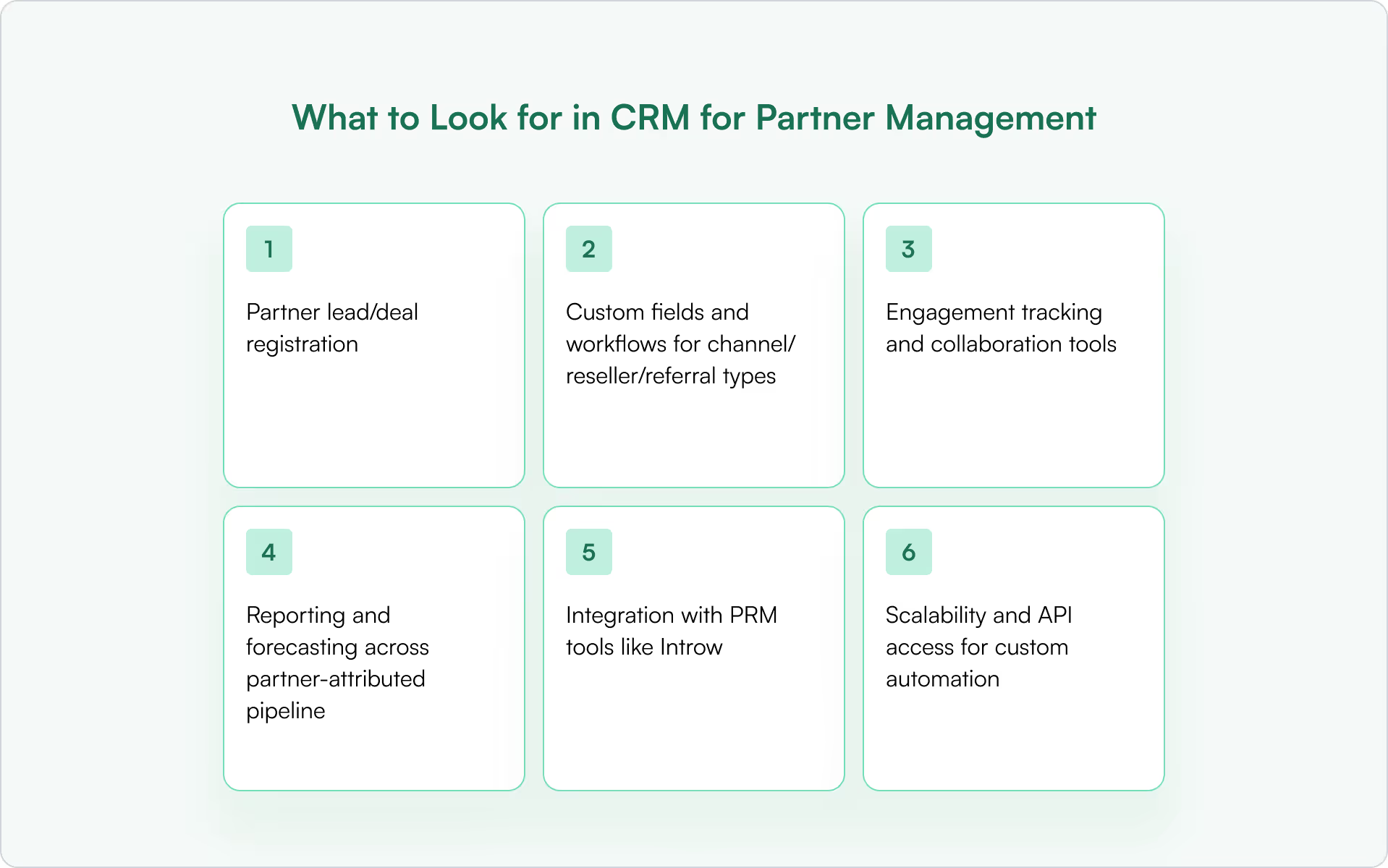
But here are the most important features to look out for when it comes to partner management:
- Partner lead/deal registration
- Custom fields and workflows for channel/reseller/referral types
- Engagement tracking and collaboration tools
- Reporting and forecasting across partner-attributed pipeline
- Integration with PRM tools like Introw
- Scalability and API access for custom automation
15 Best CRM Platforms for Partner Management in 2026
So, we know that a CRM-first approach has a wide variety of benefits for partner management.
But choosing the right CRM can be daunting; after all, it's a pretty big decision.
And not every CRM is fit for partner management.
To help you out, we've compiled a list of the best 15 CRM for partner management, along with their pros and cons.
#1 HubSpot
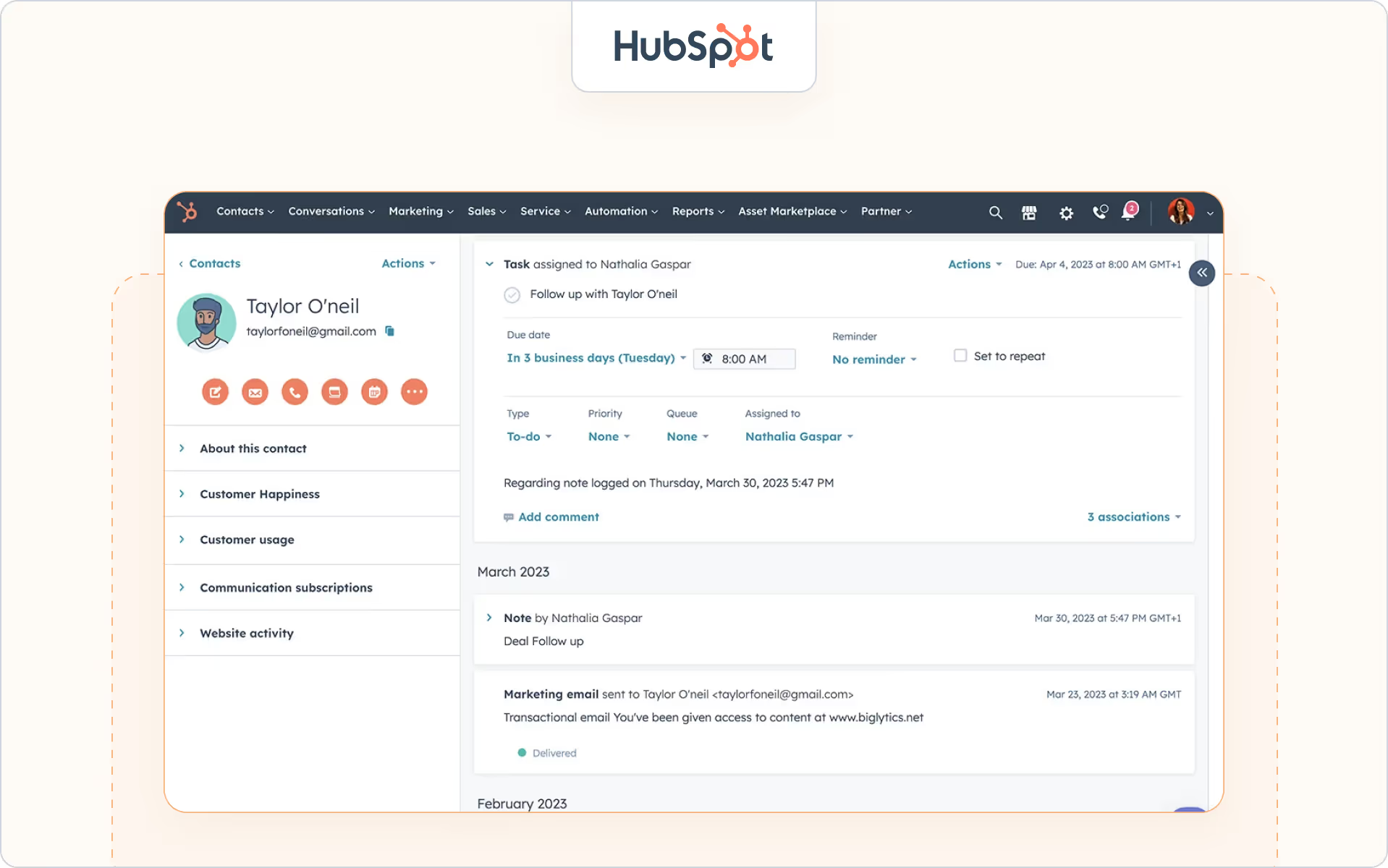
A giant of the CRM world, HubSpot's CRM is super popular among growing SaaS teams.
This comprehensive, AI-powered platform is designed to unify customer data, streamline business operations, and enhance customer experiences.
It offers a suite of tools across marketing, sales, customer service, content management, and operations, all integrated into a single system to facilitate seamless collaboration and efficiency.
And when it comes to partner management, Hubspot's CRM boasts several key features, including:
For partner management, HubSpot CRM provides several key features:
✅ CRM partner relationship management (PRM) integrations: Access PRM software Introw through HubSpot's App Marketplace for partner engagement tracking, lead registration, and Slack-based collaboration.
✅ Association labels: Define and manage relationships with partners by labelling companies as "Partner" or "Distributor," clarifying roles and facilitating targeted communication.
✅ Partner services: Utilize Partner Services to track and manage services provided by partners, ensuring organized and efficient collaboration.
✅ Automation: Save time by automating workflows and repetitive processes
These features enable businesses to effectively manage and nurture their partner relationships within HubSpot CRM.
🔗 Find out more about how Introw and Hubspot work together
#2 Salesforce

Salesforce remains the gold standard for enterprise partner programs.
This comprehensive, cloud-based platform streamlines customer relationship management and partner relationship management by integrating sales, marketing, customer service, and more into a unified system.
It empowers businesses to enhance customer interactions, improve satisfaction, and drive growth through data-driven insights and automation.
For partner management in CRM, Salesforce CRM offers several key features:
✅ Partner relationship management software integration: Seamlessly integrates with Introw to place PRM functionalities firmly within the CRM, enabling tracking of partner pipeline, engagement, and performance — all natively.
✅ Powerful reporting and forecasting: Delivers key data insights to enable data-driven decisions, as well as accurate forecasting.
✅ Personalized partner engagement: Provides personalized templates and data-driven enablement tools to engage partners effectively, enhancing communication and collaboration.
✅ Automated processes: Automates marketing fund requests, discounting, and service case management, reducing manual tasks and increasing efficiency in partner interactions.
✅ Real-time updates with partner connect: Facilitates secure deal tracking and real-time, automated updates on co-selling deals across different CRMs, ensuring transparency and reducing data duplication.
✅ Scalability: Built on the Salesforce platform, it scales easily to accommodate growing partner ecosystems, adapting to evolving business needs.
🔗 Learn more here: Introw + Salesforce Integration
#3 Zoho CRM
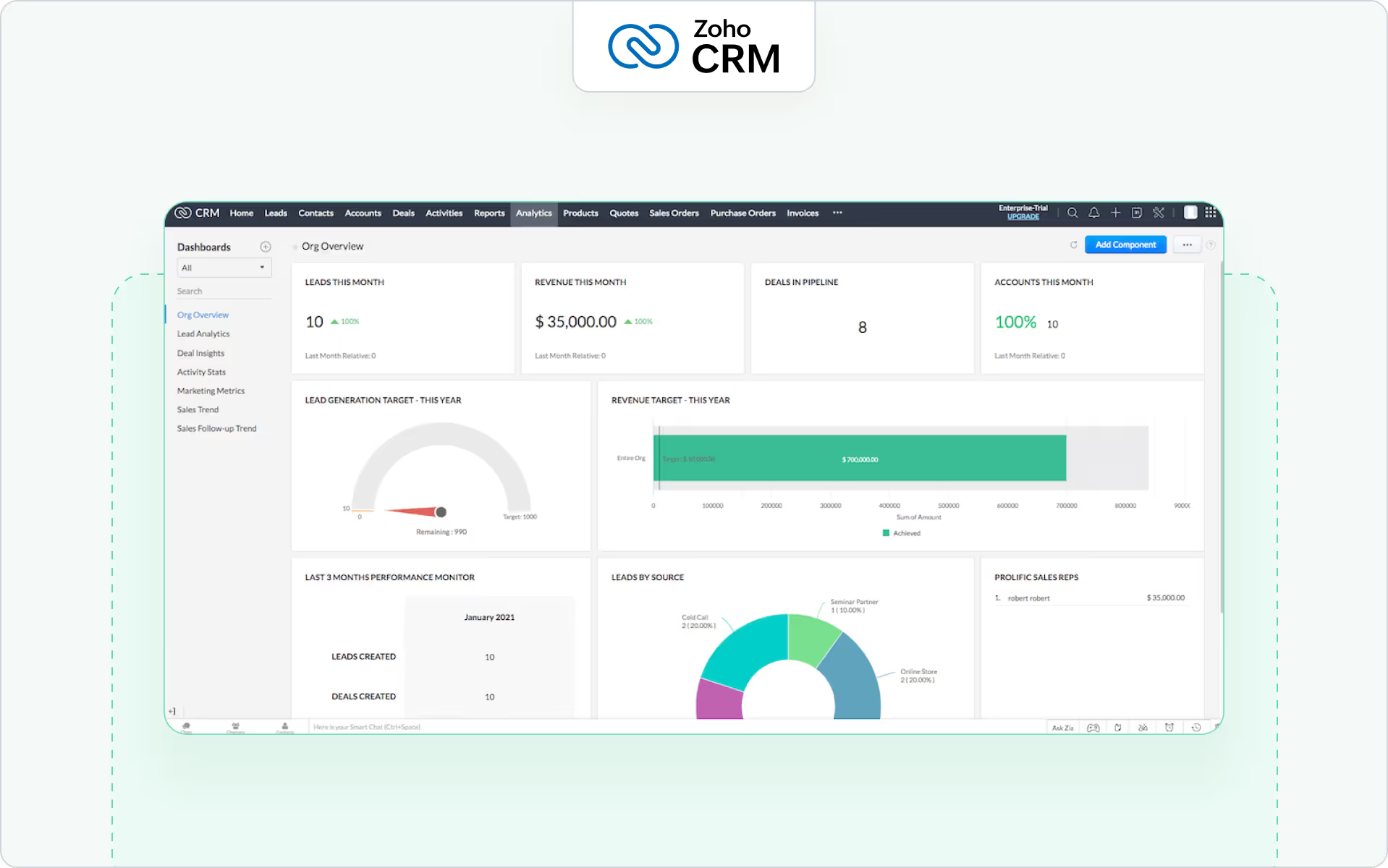
Zoho offers a flexible, cloud-based CRM that helps businesses manage sales, marketing, and customer relationships efficiently.
It's also a good option for those looking for a CRM that will support partner relationship management for sustainable business growth.
✅ Territory management: Organize and manage partner territories effectively, aligning sales strategies with specific regions or market segments.
✅ Workflow automation: Automate routine tasks and processes, enabling partners to focus on strategic activities and improving overall efficiency.
✅ Advanced analytics: Gain insights into partner performance through detailed reports and dashboards, facilitating data-driven decision-making.
✅ Customizable modules: Tailor CRM modules to fit specific partner management needs, ensuring a personalized and relevant experience.
✅ Multi-channel communication: Engage with partners across various channels, including email, phone, and social media, ensuring seamless communication.
Pros: Affordable, customizable, partner portal add-on
Cons: Weaker reporting, fewer native integrations
Best For: SMEs or mid-market teams just starting their partner motion.
#4 Microsoft Dynamics 365
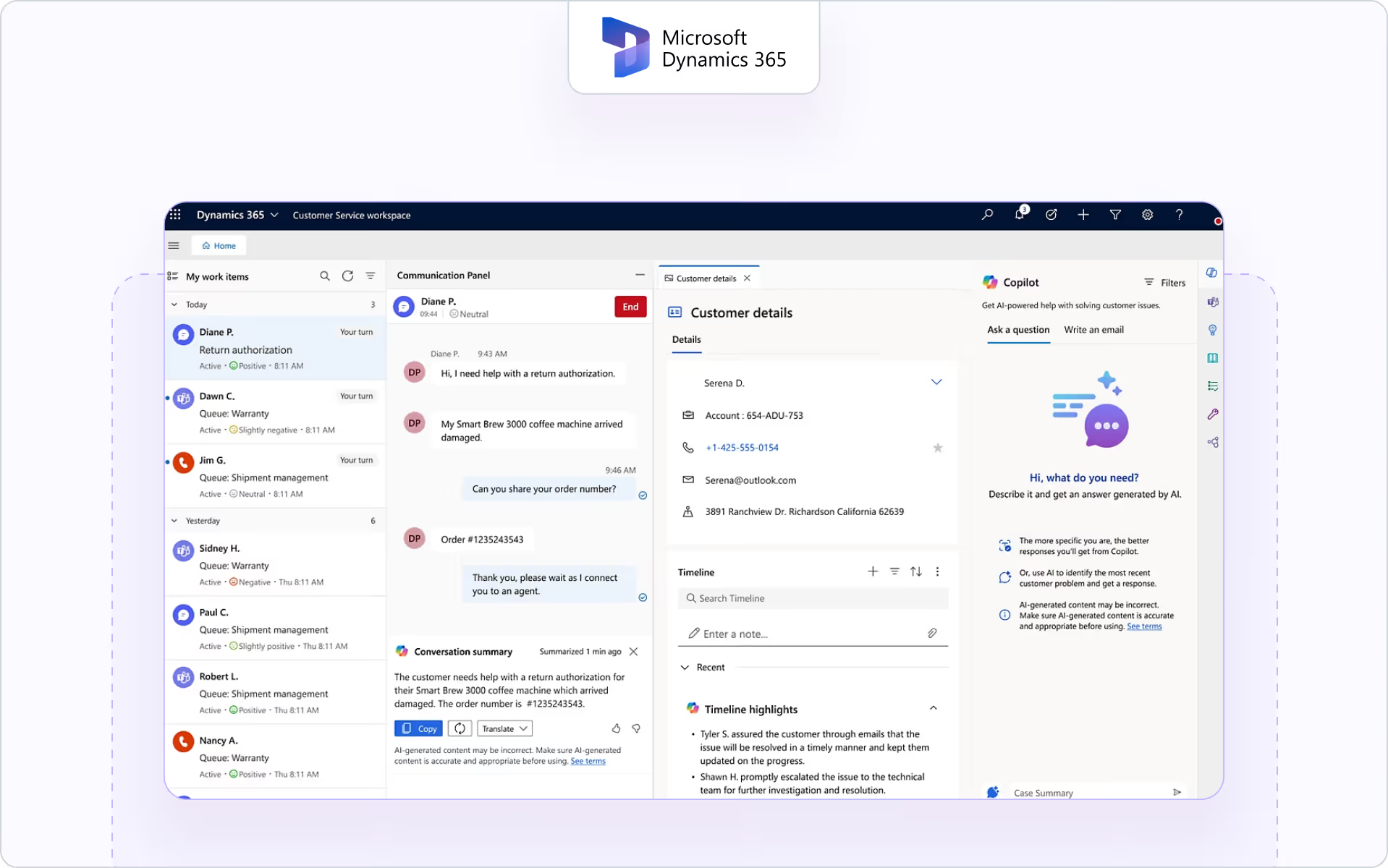
Microsoft Dynamics 365 is an AI-powered suite of business applications that combines CRM and ERP capabilities to enhance customer experiences and business operations.
It integrates sales, marketing, service, and financial data to help organizations innovate, automate processes, and drive growth.
It encompasses several key features for partner management:
✅ Manage partner relationships with shared data insights
✅ Automate lead and opportunity tracking
✅ Integrate partner sales data for streamlined collaboration
✅ Enable partner performance monitoring through analytics
✅ Use AI to provide personalized partner support
Pros: Deep integrations, enterprise-friendly
Cons: Steep learning curve, dev-heavy
Best For: Enterprises already deep in Microsoft's stack or those with in-house CRM admins
#5 Pipedrive
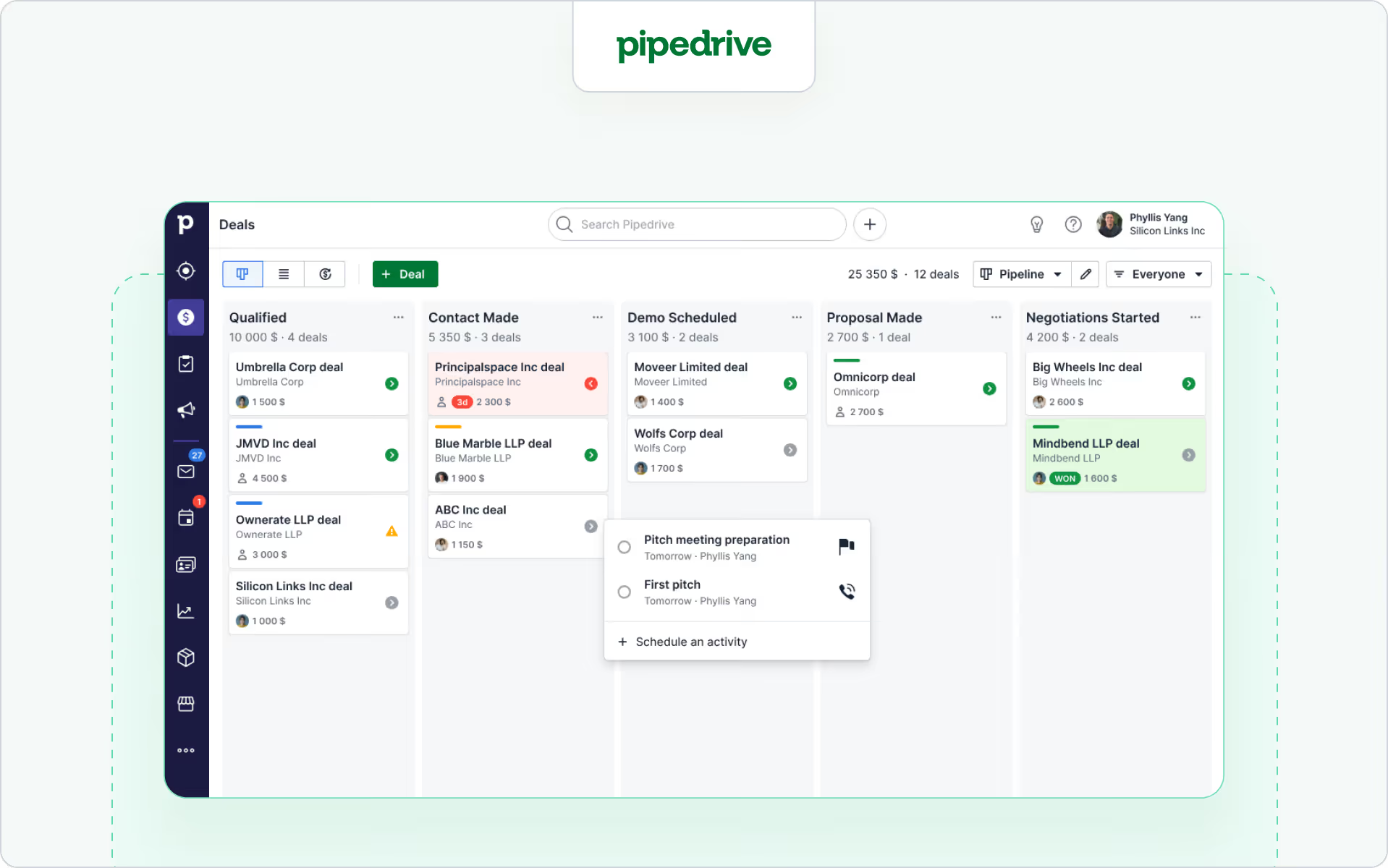
Pipedrive offers a clean, simple CRM that's easy to use.
It automates repetitive tasks, tracks communications, and provides actionable insights to help sales teams optimize performance.
Admittedly, this one isn't purpose-built for partners, but it can support small partner programs with the right tagging and workflows.
When it comes to partner management, Pipedrive allows you to:
✅ Organize and track partner interactions in one space
✅ Automate partner follow-ups and communications
✅ Visualize partner pipeline for better decision-making
✅ Use AI for personalized partner management insights
✅ Centralize partner data for easy collaboration and reporting
Pros: Visual pipeline, easy setup
Cons: Limited partner automation, no partner-specific fields
Best For: Early-stage teams experimenting with partnerships
#6 Close.com

Close CRM is a platform designed to streamline sales processes for small businesses, focusing on automation, communication, and deal management.
It offers an intuitive, fast interface for managing leads and communications — and can also prove useful for partner relationship management.
Here's how:
✅ Track partner interactions and pipeline progress
✅ Automate partner outreach and follow-ups
✅ Centralize partner data and activity
✅ Monitor partner performance with analytics
✅ Seamlessly integrate with other tools for collaboration
Pros: Simple, easy-to-use
Cons: Limited customization
Best For: Small businesses with big growth ambitions
#7 Freshsales
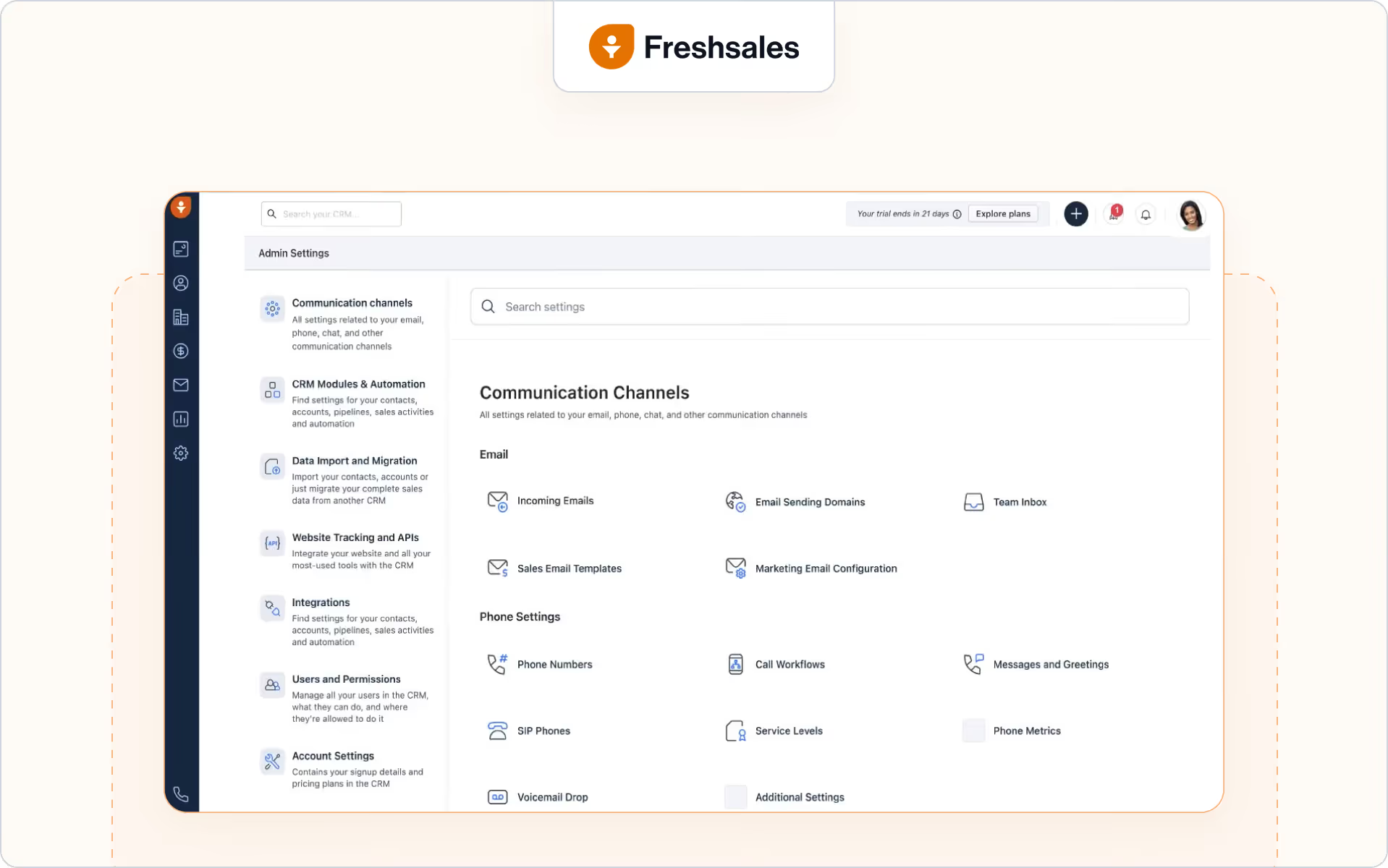
Freshsales by Freshworks is an AI-powered sales CRM that enhances revenue growth with automation, lead scoring, and predictive analytics.
It streamlines workflows and provides insights to improve sales efficiency.
Here's how it can boost partner management:
✅ Track and manage partner relationships efficiently
✅ Automate follow-ups and communication with partners
✅ Centralized data for seamless collaboration
✅ AI-powered insights to optimize partner engagement
✅ Customizable pipelines to monitor partner deals
Pros: Easy to use and excellent customer support
Cons: Limited features and a steep learning curve
Best For: Start-ups and SMEs that need a friendly, affordable CRM solution.
#8 Copper
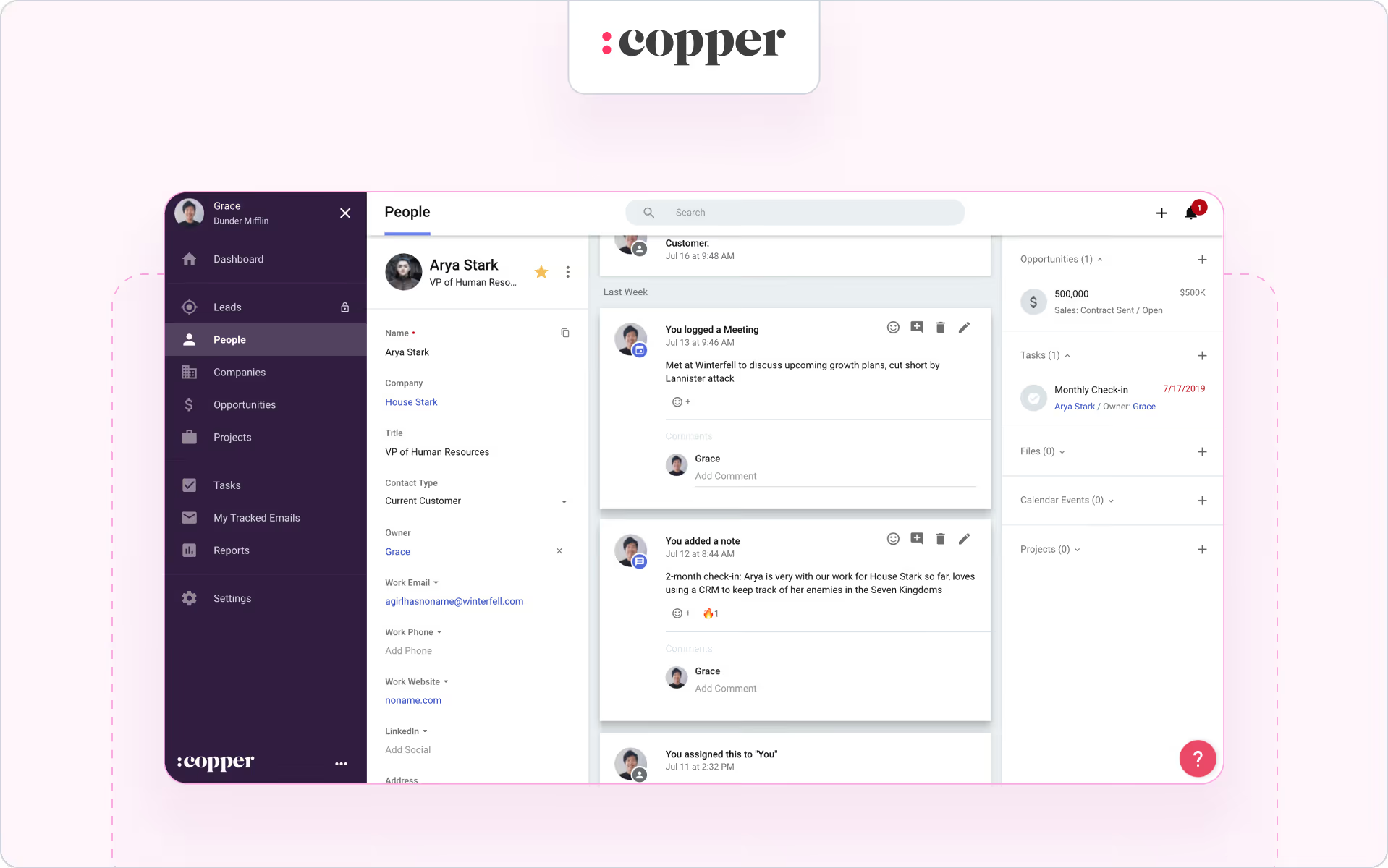
A relationship-focused CRM designed for Google Workspace users, Copper is all about streamlining contact management, deal tracking, and workflow automation.
It also minimizes data entry and integrates seamlessly with Gmail.
Key features for partner management:
✅ Centralized partner contact and activity tracking
✅ Automated workflows for partner communications
✅ Custom pipelines to monitor partner deals
✅ Seamless integration with Google Workspace
✅ Real-time reporting and analytics for partner performance
Pros: Easy integration with Google properties, user-friendly
Cons: Limited scalability
Best For: Businesses that depend on Google Workspace
#9 Insightly
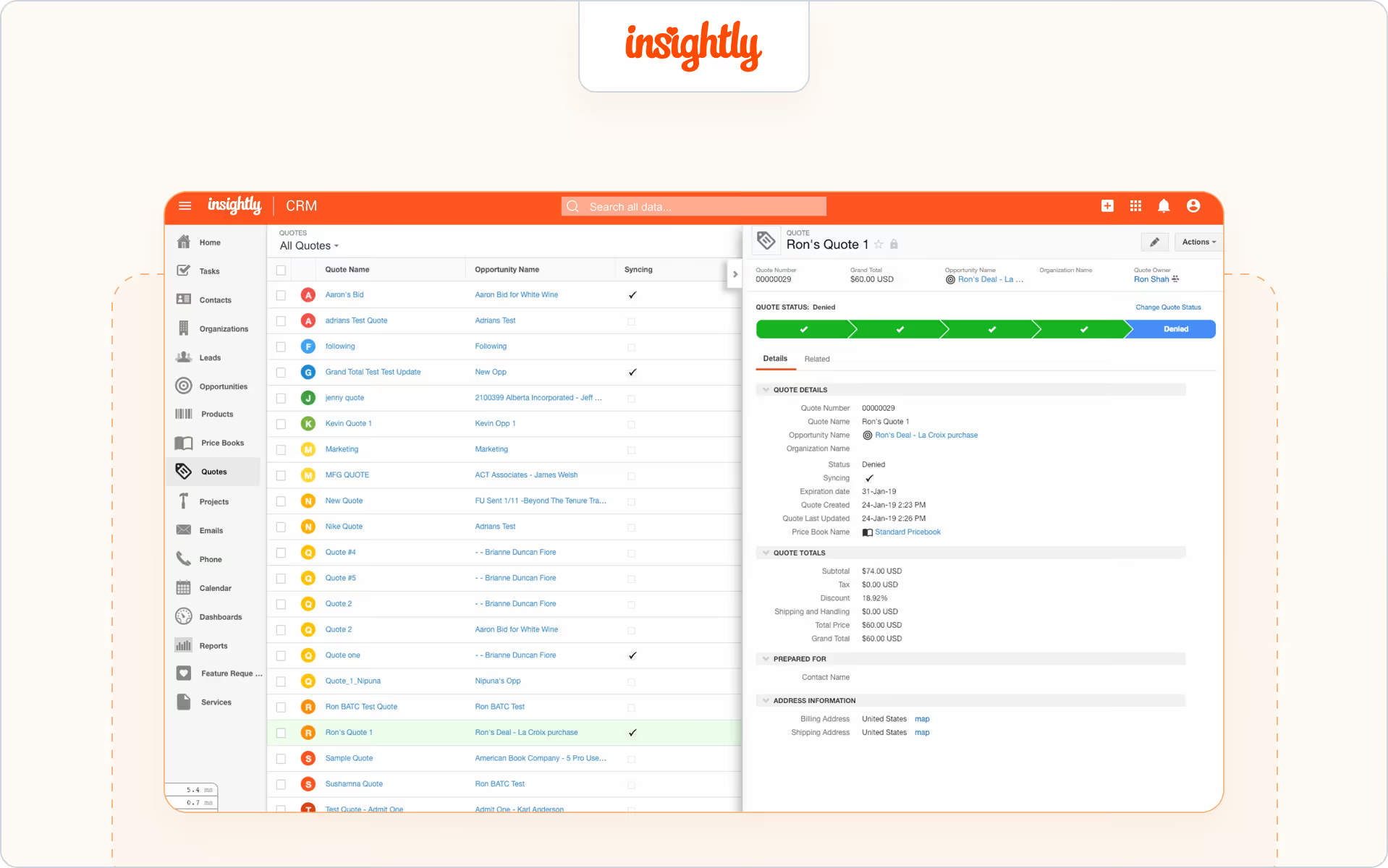
Insightly is a scalable CRM designed for businesses to manage customer relationships, sales, and marketing in one platform.
It offers automation, project tracking, and analytics to drive growth and efficiency.
Looking for a CRM to boost partner management?
Here's how Insightly can support PRM:
✅ Centralized partner relationship tracking
✅ Automated workflows for partner interactions
✅ Customizable pipelines for deal management
✅ Advanced analytics for partner performance monitoring
✅ Integration with third-party apps for collaboration
Pros: Great customer support and deep customization
Cons: Steep learning curve
Best For: SMEs and start-ups looking for a customizable and scalable CRM.
#10 SugarCRM
A flexible, AI-driven CRM platform, SugarCRM is designed for B2B sales, marketing, and customer service.
It automates data collection, provides predictive insights, and streamlines workflows for enhanced efficiency.
Key features for partner management include:
✅ Centralized partner relationship tracking
✅ AI-powered insights for partner engagement
✅ Automated workflows for seamless collaboration
✅ Custom dashboards for partner performance monitoring
✅ Integration with third-party tools for extended functionality
Pros: Lots of features, good customer support
Cons: Long implementation, steep learning curve
Best For: Large businesses and enterprises looking to commit to a CRM long-term
#11 Nutshell CRM

Nutshell is a user-friendly CRM that combines sales, marketing, and pipeline management into one intuitive platform.
It simplifies lead tracking, automates workflows, and integrates with essential tools to enhance team collaboration and efficiency.
Here are Nutshell's most useful partner management features:
✅ Centralized partner contact and deal tracking
✅ Automated follow-ups and task reminders
✅ Customizable pipelines for partner relationship management
✅ Integration with marketing automation tools for outreach
✅ Real-time reporting and analytics for partner performance
Pros: Simple, easy to use, great customer support
Cons: Steep learning curve, limited integrations
Best For: Smaller businesses looking for a simple, affordable CRM
#12 Creatio
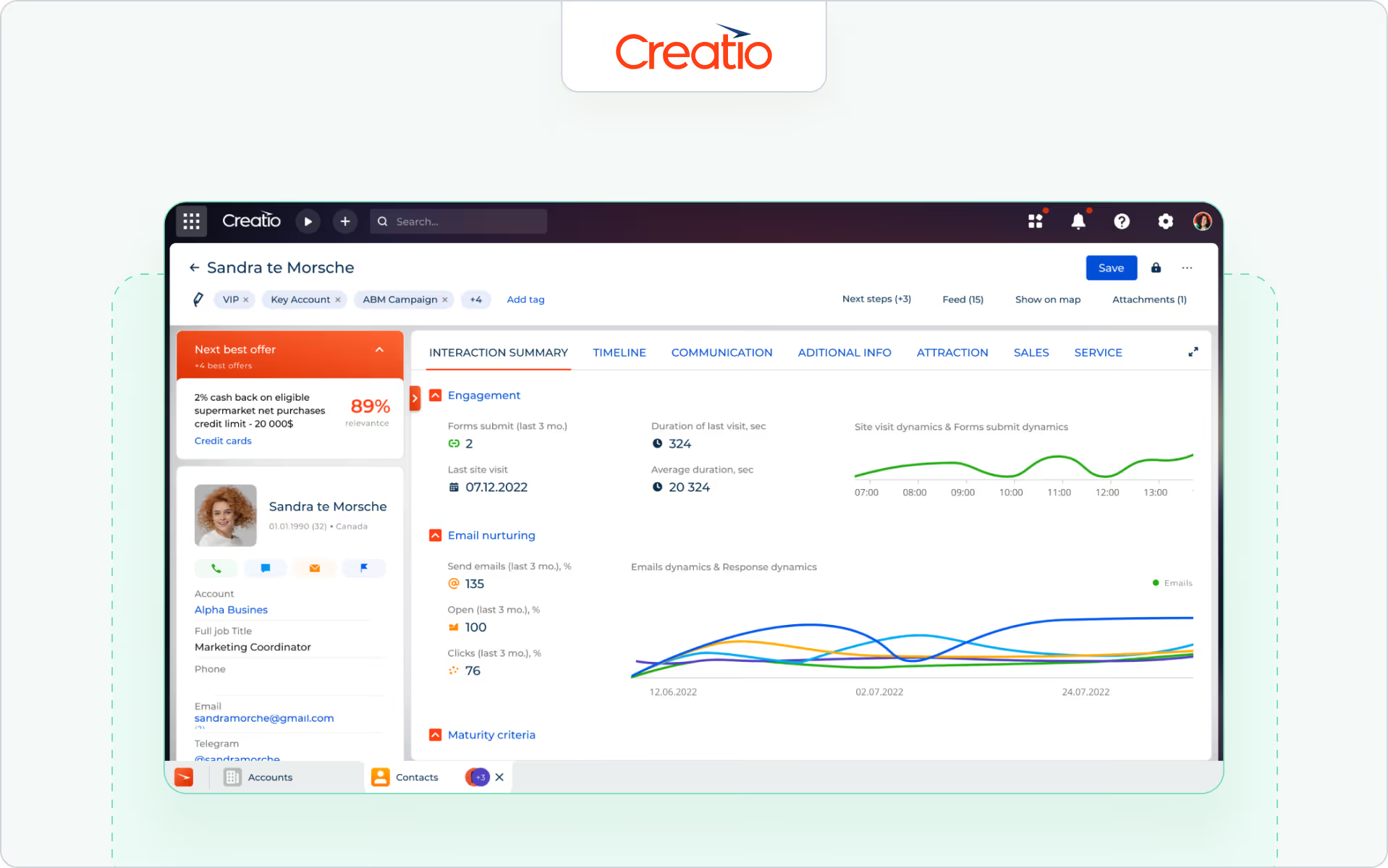
Creatio is an AI-powered, no-code CRM platform.
It automates workflows and customer relationship management for sales, marketing, and service teams, empowering businesses to streamline operations, optimize engagement, and enhance productivity.
It's pretty helpful when it comes to partner management, too.
Here's how:
✅ Centralized partner relationship tracking
✅ AI-driven insights for partner engagement
✅ No-code automation for partner collaboration
✅ Custom dashboards for performance monitoring
✅ Seamless integrations for extended functionality
Pros: Great automation, customization, and usability
Cons: Steep learning curve
Best For: Large businesses with multiple departments that require smooth company-wide adoption
#13 NetSuite CRM
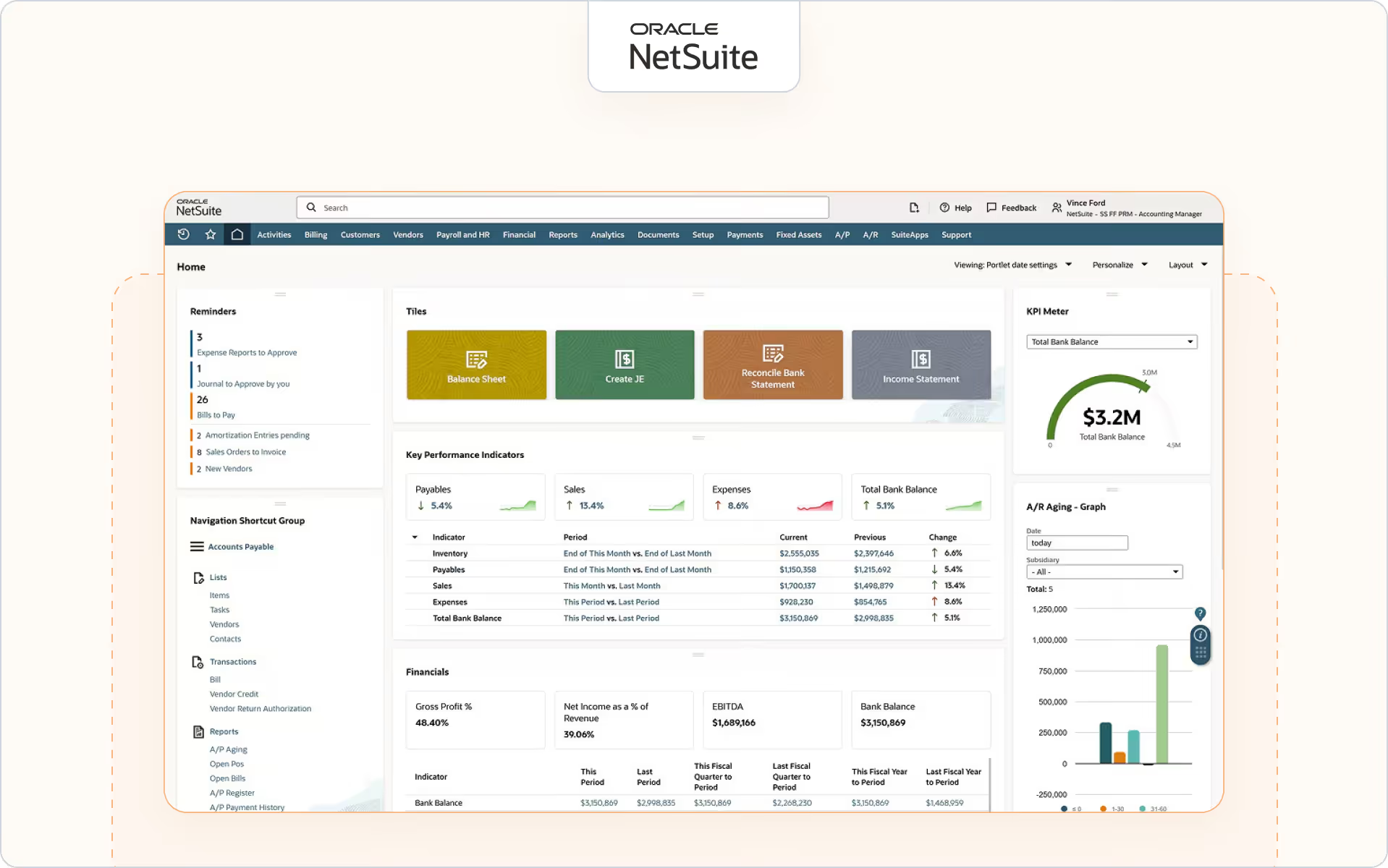
NetSuite is a cloud-based business management suite that includes CRM, ERP, and financial tools to streamline operations, automate workflows, and improve decision-making.
It provides robust partner management capabilities, such as:
✅ Partner relationship management with centralized data
✅ Automated workflows for seamless collaboration
✅ Real-time analytics for partner performance tracking
✅ Custom dashboards to monitor deal progress
✅ Integration with third-party applications
Pros: Great functionality and ease of use.
Cons: Steep learning curve, expensive, complex implementation
Best For: Enterprises that need to streamline their processes.
#14 Monday CRM

Monday CRM is a flexible, no-code customer relationship management platform that helps businesses manage sales, projects, and workflows.
It centralizes data, automates tasks, and enhances collaboration to improve efficiency.
Monday's key features for partner management include:
✅ Centralized partner tracking and collaboration
✅ Automated workflows for partner onboarding and engagement
✅ Customizable pipelines to manage partner deals
✅ Integration with third-party tools for seamless operations
✅ Real-time analytics for partner performance insights
Pros: Great range of features, scalable, easy to customize
Cons: Steep learning curve
Best For: SMEs and service businesses
#15 Zendesk Sell
A modern sales CRM, Zendesk Sell enhances productivity, provides full pipeline visibility, and integrates automation to streamline deal management.
It helps sales teams manage leads, track interactions, and optimize workflows.
However, its features can also be used for PRM, including:
✅ Centralized partner tracking and collaboration
✅ Automated workflows for partner engagement
✅ Customizable sales pipelines for partner deals
✅ Real-time analytics for partner performance insights
✅ Seamless integrations with external tools
Pros: Simple user interface, intuitive to use, good automation features
Cons: Complex setup
Best For: Businesses of any size that want to streamline their processes
How to Choose the Right CRM for Partner Management
Ready to decide on your new CRM?
Here are some handy guidelines.
Make sure your new CRM has:
- Native or customizable deal reg
- CRM alignment with partner program complexity
- Integration with a PRM like Introw
- Automation and reporting
And watch out for these common pitfalls:
- No partner-specific fields or segmentation
- Manual tracking outside the CRM
- No integration between CRM and partner activities
Three final tips for choosing a CRM for partner channel management:
- Align with RevOps early
- Evaluate scalability and workflow compatibility
- Test integrations with tools like Introw
How Introw Supercharges CRM for Partner Management
Of course, when it comes to partner relationship management, a CRM alone won't do.
Sure, investing in the right CRM can significantly boost your partner relationships, but if you aim to establish a profitable ecosystem, PRM software is crucial.
And your PRM must integrate seamlessly with your CRM.
This is where state-of-the-art PRM Introw comes in.
Here's why Introw stands out among other PRMs:
- CRM-first: your team works entirely within Salesforce or HubSpot — no extra logins, no tool-switching. Partners still collaborate via a dedicated portal, fully synced with your CRM.
- Deal and lead registration are mapped directly to the CRM
- Partner engagement tracking is synced with both the CRM and Slack
- Forecasting and visibility operates across all partner-attributed revenue
- No-code workflows for referrals, resellers, and MSPs
But don't just take our word for it — book your personalized demo today and see Introw in action.
Conclusion
The message is clear — choosing the right CRM is foundational to scaling partner revenue.
The best CRMs support visibility, collaboration, and clean partner data.
They also integrate seamlessly with your PRM, empowering you to effectively manage your partners without leaving your CRM.
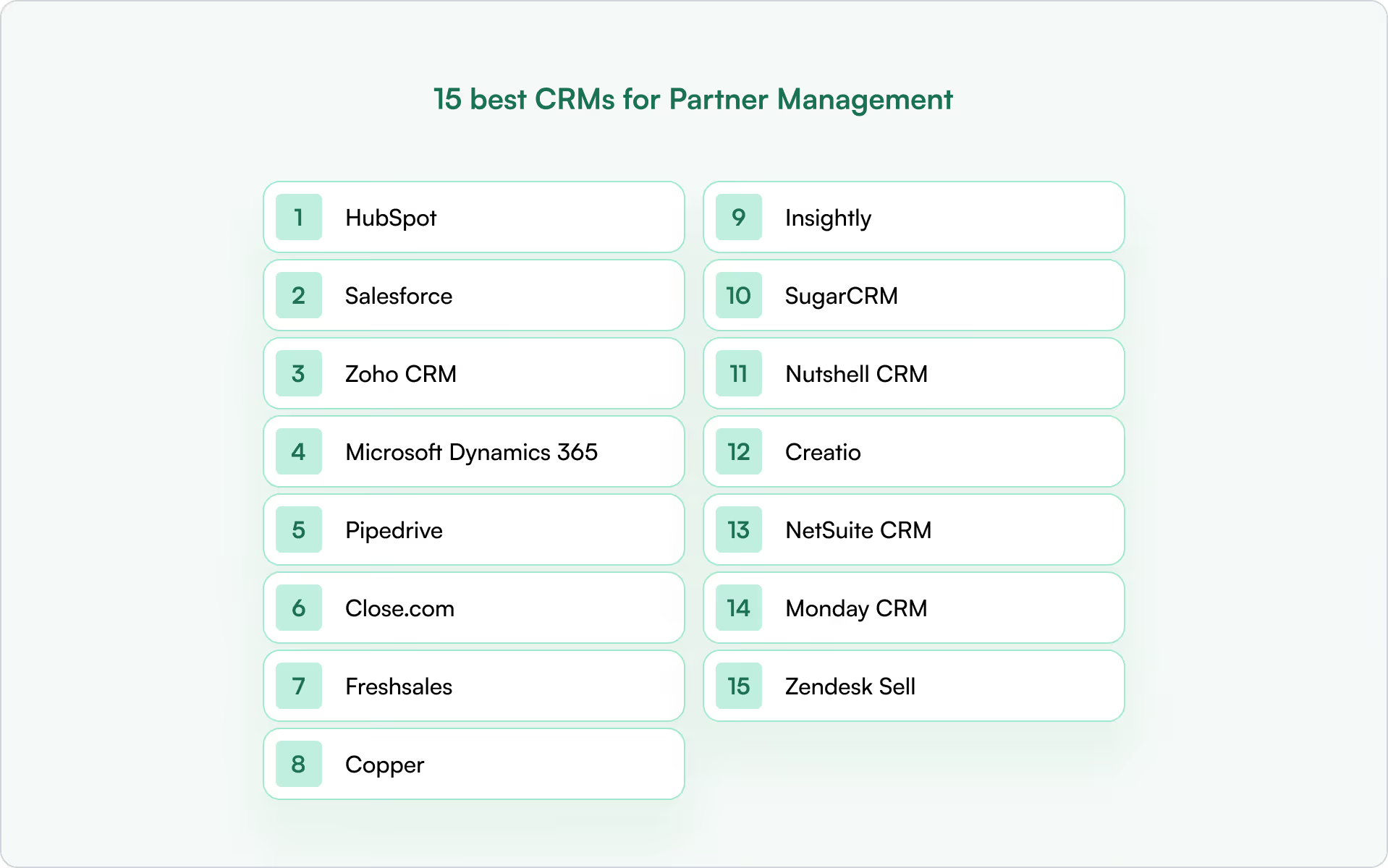
To recap, here are the 15 best CRMs for partner management in 2026:
- HubSpot
- Salesforce
- Zoho CRM
- Microsoft Dynamics 365
- Pipedrive
- Close.com
- Freshsales
- Copper
- Insightly
- SugarCRM
- Nutshell CRM
- Creatio
- NetSuite CRM
- Monday CRM
- Zendesk Sell
Want to manage your entire partner program from your CRM? Try Introw — the CRM-first PRM.
15+ Impartner Alternatives To Choose From in 2026
Let's start with an obvious question - why teams look beyond Impartner? Impartner is a leading partner relationship management and TCMA provider and remains popular with enterprise programs that need MDF, incentives, and a full management system for partner relationships. Still, many companies assess Impartner competitors to find a better fit for HubSpot coexistence, speed of deployment, lighter admin overhead, or specialized motions like hyperscaler co selling, affiliate partnerships, and marketplace listings.
To help you choose, we compared core PRM software key features — partner portals, partner onboarding and partner training, lead generation and registration, co selling workflows, content management for enablement, real time data sync, and analytics to monitor performance — plus security, global scale, and time-to-value. We also looked at AI capabilities that support partner adoption, guide partners, and automate or orchestrate tasks.
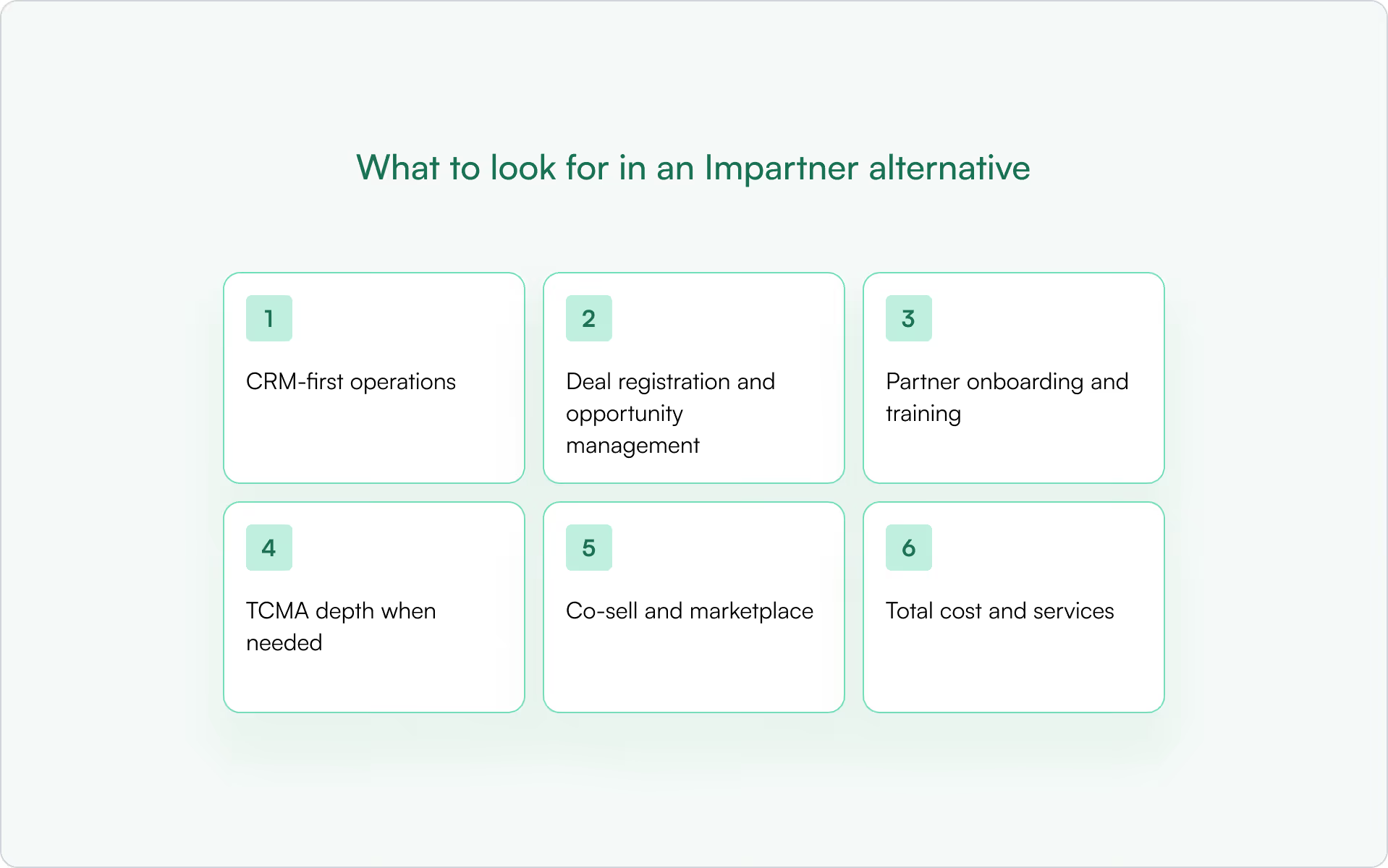
What to look for in an Impartner alternative
- CRM-first operations — keep sellers in Salesforce or HubSpot and give partners a portal that syncs customer and partner data without brittle connectors.
- Deal registration and opportunity management — clear conflict prevention, stage mapping, and SLA alerts so you can track deals, forecast, and run pipeline inspection.
- Partner onboarding and training — automate steps, certify roles, and deliver outcome based enablement that increases partner productivity and adoption.
- TCMA depth when needed — if local demand generation is core, ensure strong through channel marketing automation for brand-compliant campaigns and funding.
- Co-sell and marketplace — if you work with AWS or Microsoft, look for native hyperscaler integrations so alliance teams can collaborate and sell together from your CRM.
- Total cost and services — compare subscription, implementation, and ongoing admin. Lightweight tools can reduce costs and complexity for many businesses.
If you nodded along to most of the checklist above, you’re already thinking like a modern channel team — CRM-first operations, outcome-based enablement, and motion-specific depth where it actually moves the needle. The next step is matching those needs to a platform that your partners will adopt and your RevOps can trust.
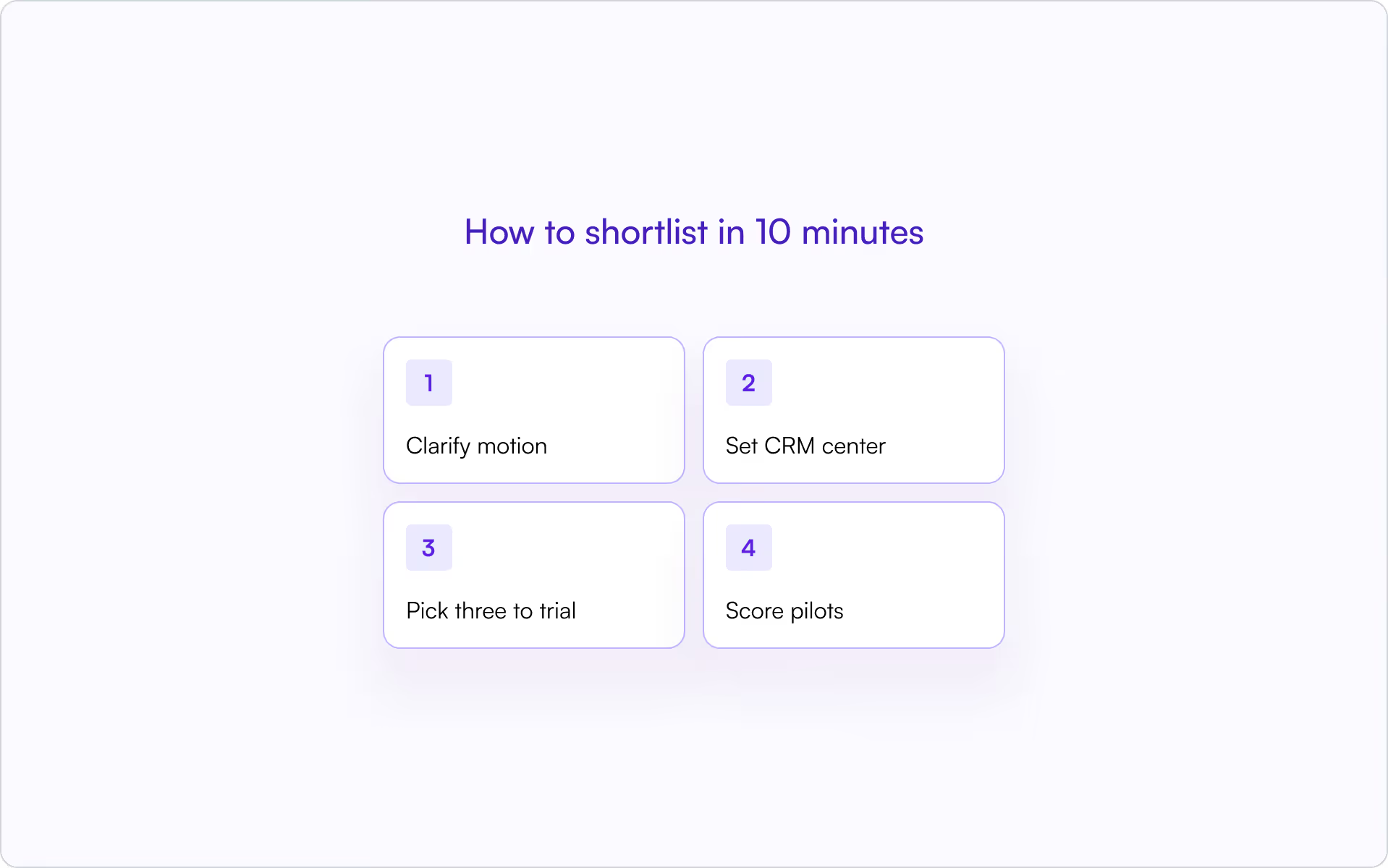
How to shortlist in 10 minutes
If that sounds like your roadmap — faster time-to-value, fewer admin cycles, and motions your partners will actually use — the next step is turning options into a shortlist your team can pilot. Use the quick framework below to move from “interesting” to “in production” without stalling in analysis:
- Clarify motion — reseller, referral, co selling, affiliate.
- Set CRM center — Salesforce only, or Salesforce plus HubSpot.
- Pick three to trial — for CRM-first PRM consider Introw; for breadth and incentives consider ZINFI, Unifyr, Channelscaler; for performance-led programs consider impact.com or Everflow; for hyperscaler co-sell consider WorkSpan.
- Score pilots — time to first deal registration, partner adoption and engagement, CRM data quality, visibility for pipeline inspection, and ability to monitor performance.
The 17 best Impartner alternatives in 2026
Before we dive in, a quick orientation: the list mixes classic PRM, co-sell orchestration, and TCMA-led options. Skim the “Best for” line to see fit at a glance, then use the “Why it’s an Impartner alternative” line to understand how each platform approaches partner onboarding, deal registration, and day-to-day collaboration differently.
1) Introw
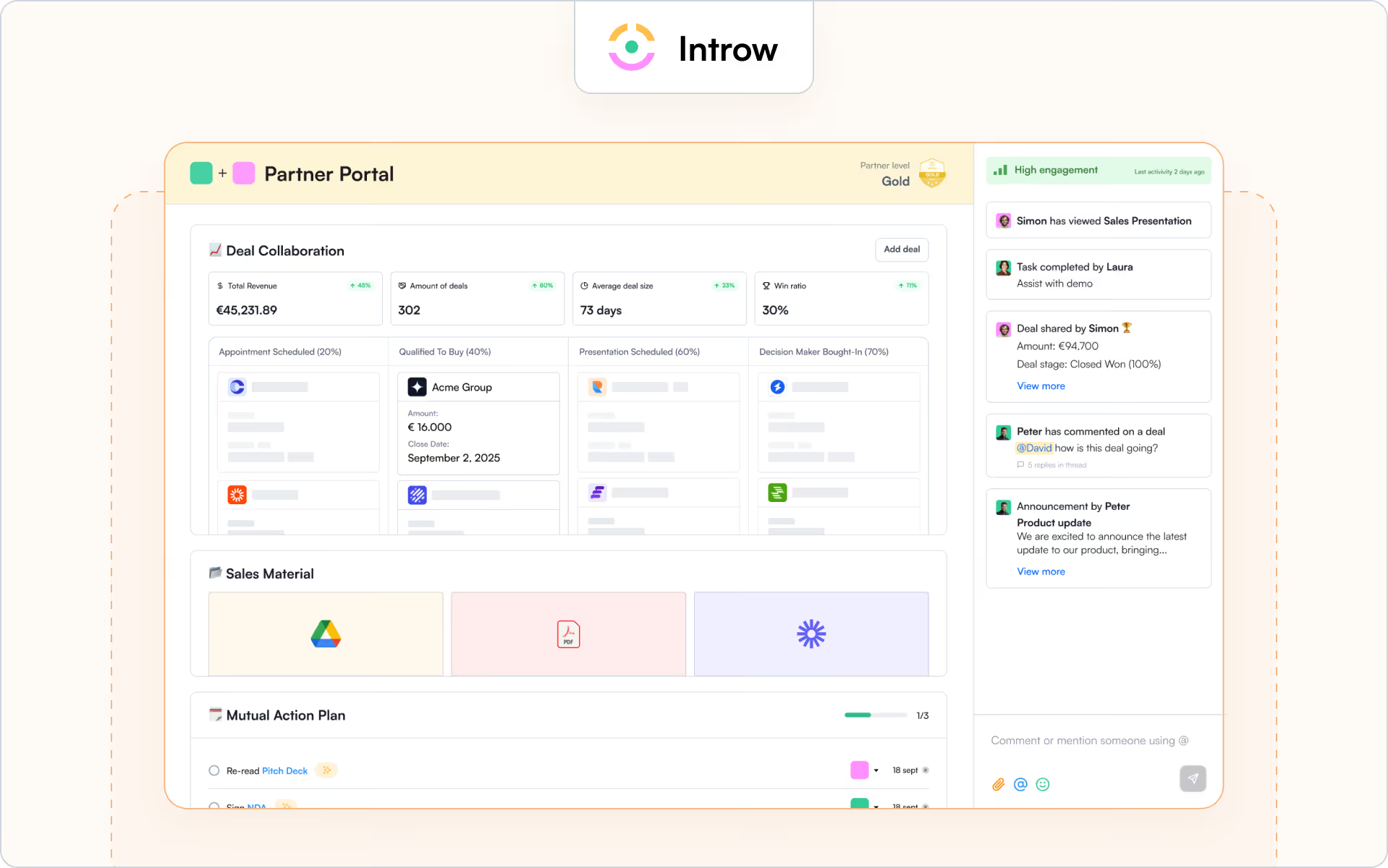
Best for: CRM-first teams that want partner relationship management embedded in Salesforce or HubSpot — including partner portals, deal registration, and Slack/email collaboration that keeps partners engaged without logins.
Why it’s an Impartner alternative: Introw keeps the portal simple and pushes updates to where people already work. Partners can create and update leads and opportunities; AEs see real time changes in the CRM; RevOps avoids duplicate records. This approach can shorten time-to-value for companies that don’t need a heavy management system.
Notable callouts: Native Salesforce and HubSpot integrations, off-portal Slack and email nudges, and templates that enable partners with the right content at the right time, plus support for custom objects and AI-assisted engagement.
2) Salesforce Partner Cloud (Salesforce PRM)

Best for: Channel partners operating in a single platform with tight ties to Sales Cloud and Service Cloud.
Why it’s an Impartner alternative: Partner Cloud provides partner portals, deal registration, lead distribution, and in app guidance on Experience Cloud with AI CRM alignment. It fits when your organization standardizes on other Salesforce products and wants to automate sales processes in the same data model.
Notable callouts: Strong configuration patterns for deal registration, lead distribution, portal security, and partner enablement practices.
3) ZINFI (Unified Partner Management)
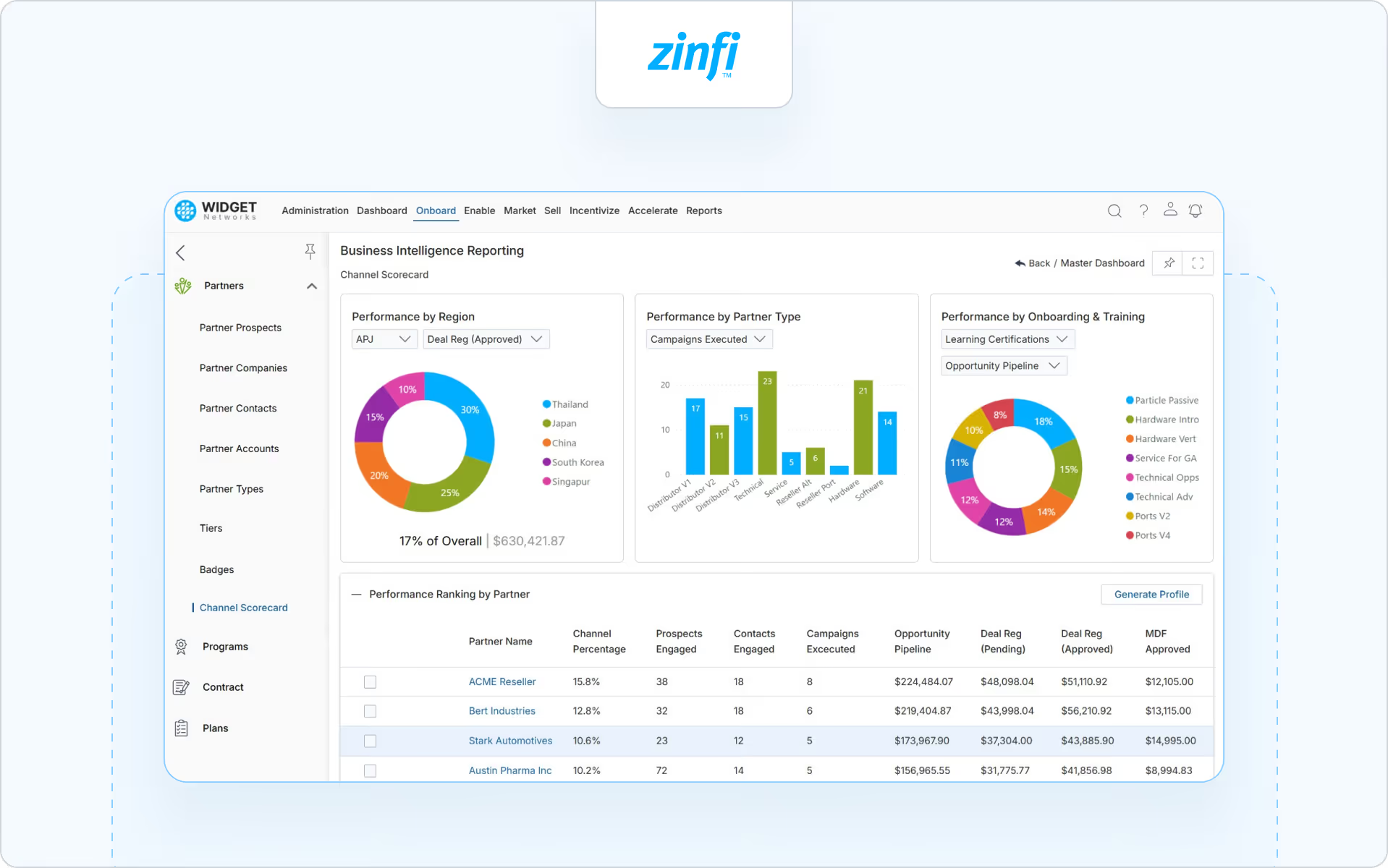
Best for: Programs needing broad PRM coverage — recruitment, onboarding, enablement, incentives — with steady product velocity and AI functionality.
Why it’s an Impartner alternative: ZINFI bundles partner management, partner training, MDF, and automation into one solution so channel managers can manage lifecycles in fewer tools. Often shortlisted by Impartner customers exploring options.
Notable callouts: Emphasis on AI and autonomous workflows to improve engagement and performance while reducing admin.
4) Unifyr (formerly Zift Solutions)

Best for: Teams that want PRM plus through channel marketing automation and training under one roof.
Why it’s an Impartner alternative: The ZiftONE stack rebranded as Unifyr, positioning an all-in-one, AI-enabled platform for partner ecosystem growth. It shines when MDF, enablement, and content syndication sit alongside PRM.
Notable callouts: Automated partner onboarding, certification, and flexible experiences for VARs, MSPs, referral partners, and distributors.
5) Channelscaler (Allbound + Channel Mechanics)

Best for: Teams that need modern PRM UX plus enterprise-grade rebates, pricing, and incentive automation.
Why it’s an Impartner alternative: After the Allbound and Channel Mechanics merger, Channelscaler unified PRM with powerful commercial automation — an attractive combo for programs that need both.
Notable callouts: Focus on scalability, integration, and intelligence that improves partner experience and outcomes.
6) Channeltivity
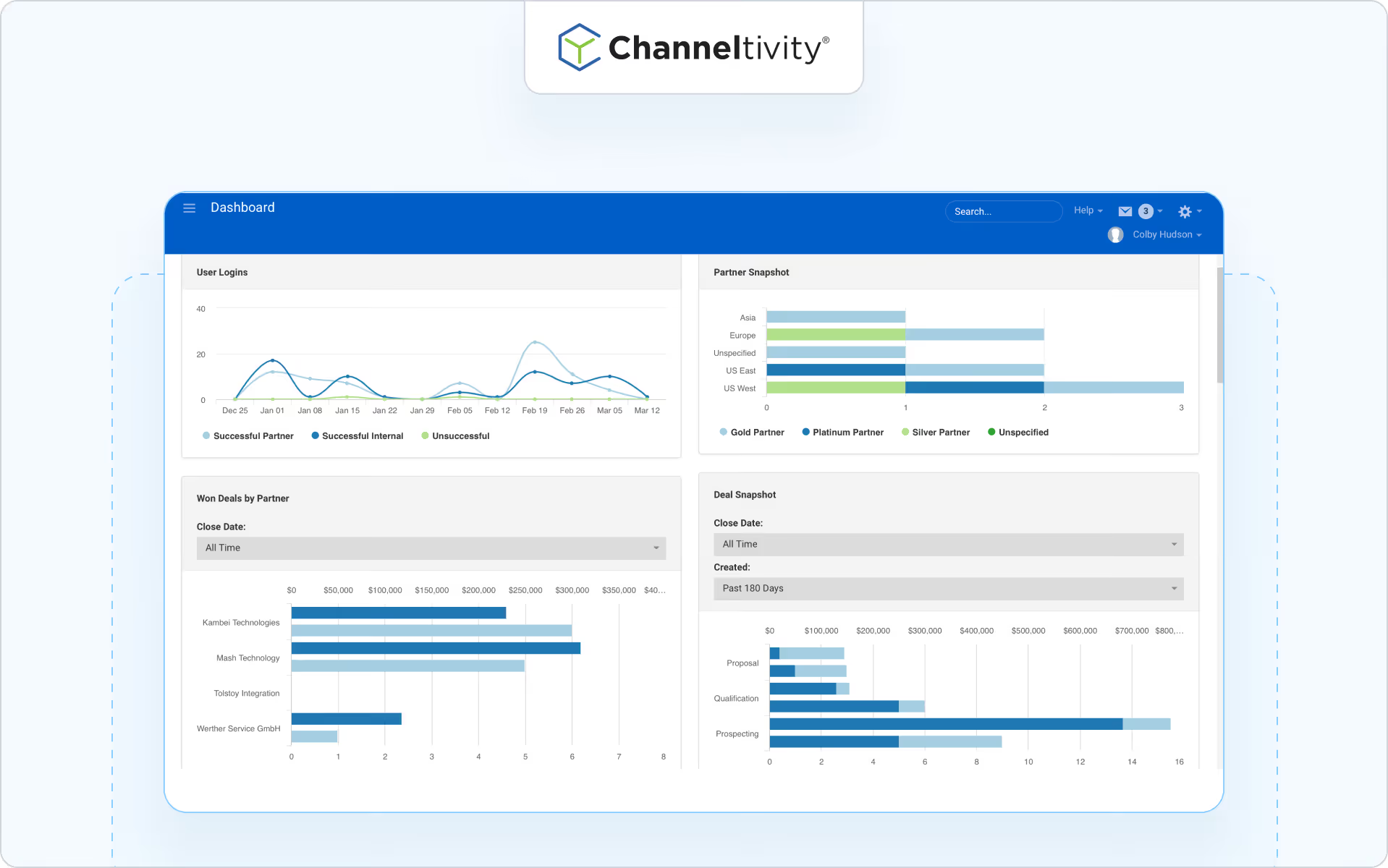
Best for: Mid-market teams prioritizing fast deployment and point-and-click CRM integration over custom builds.
Why it’s an Impartner alternative: Channeltivity’s partner portal integrates with HubSpot and Salesforce to sync partners, contacts, deal registration, and referrals — giving channel managers immediate visibility in CRM.
Notable callouts: Two-way sync and simple field mapping — helpful when ramping new partners quickly.
7) Magentrix
Best for: Salesforce-centric companies that want a configurable portal with strong CRM mirroring and fewer sync headaches.
Why it’s an Impartner alternative: Magentrix positions itself as a Salesforce PRM alternative to Experience Cloud, focusing on partner portals, collaboration, and opportunity management.
Notable callouts: Integration resources and guides emphasize running partner operations without constant connector firefights.
8) PartnerStack

Best for: B2B programs combining affiliate, referral, and reseller motions with marketplace reach and automated payouts.
Why it’s an Impartner alternative: PartnerStack marries PRM-like workflows with a large marketplace and payouts engine — useful when you need to drive traffic, recruit the right partners, and pay at scale.
Notable callouts: Strong market reach and partner liquidity that can accelerate lead generation and revenue.
9) Kiflo
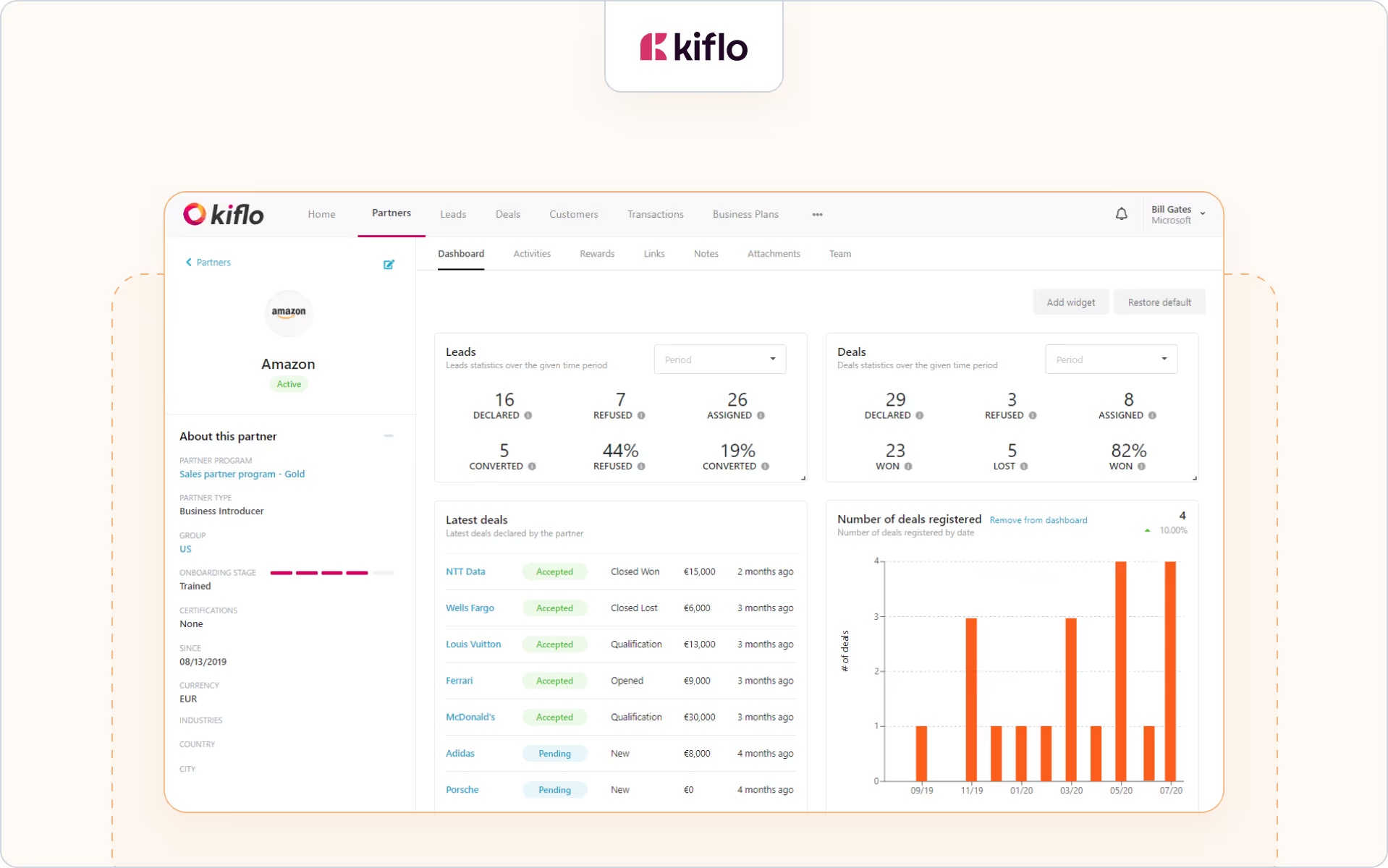
Best for: SMBs and scale-ups formalizing a first partner program with clean HubSpot connectivity.
Why it’s an Impartner alternative: Kiflo is a lighter-weight PRM software with native HubSpot sync for leads, deals, and contacts — enough to manage partners, share marketing resources, and track outcomes without a heavy lift.
Notable callouts: Two-way sync and field mapping that support quick adoption.
10) WorkSpan
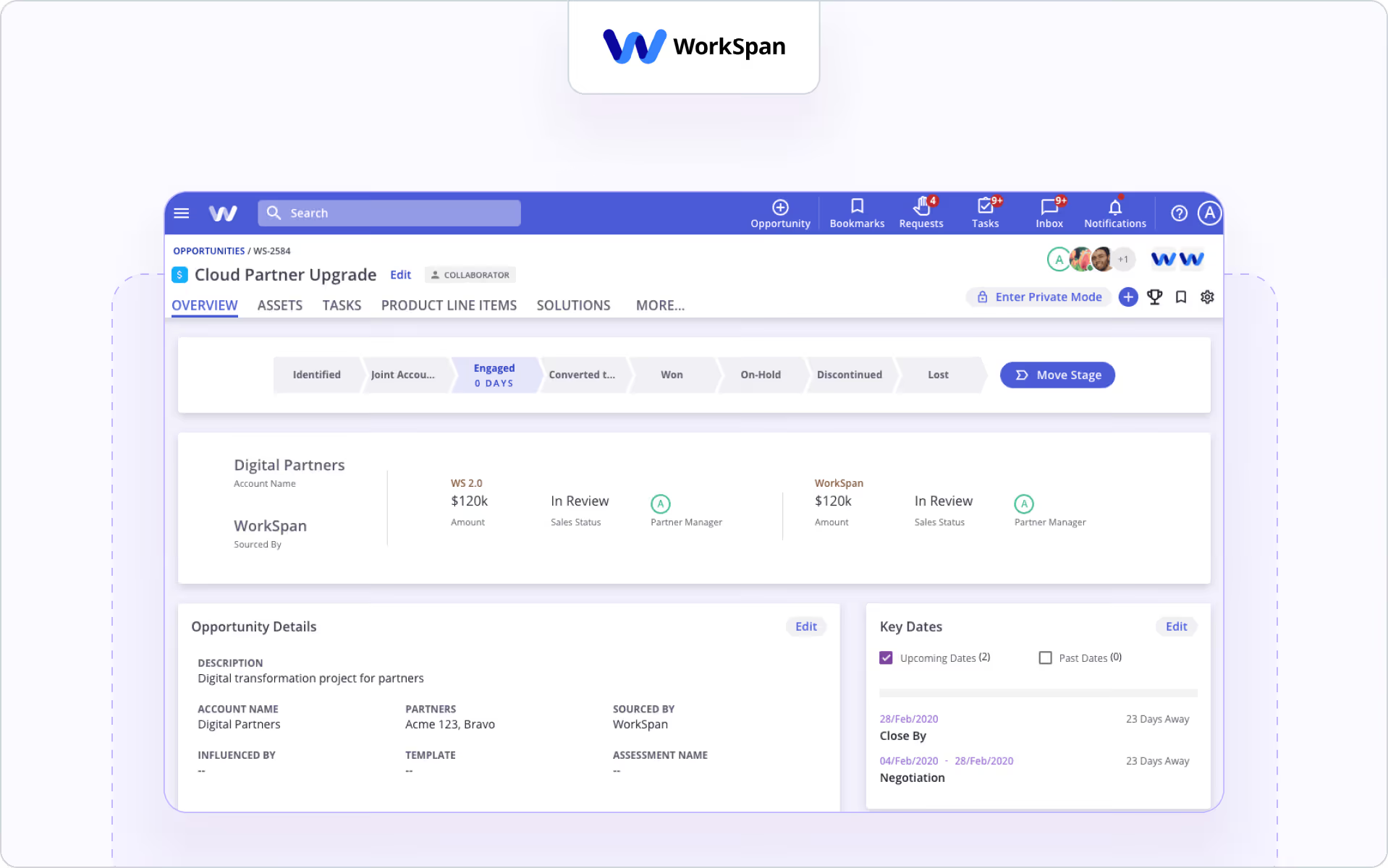
Best for: ISVs and companies that co-sell with AWS, Microsoft, or Google — and want those motions inside Salesforce.
Why it’s an Impartner alternative: WorkSpan digitizes co-sell and marketplace workflows with managed packages for Sales Cloud, integrating with hyperscaler partner systems to share referrals and real time insights.
Notable callouts: Bi-directional sync, KPI dashboards, and private offer support that keep alliance teams aligned.
11) Mindmatrix (Bridge)
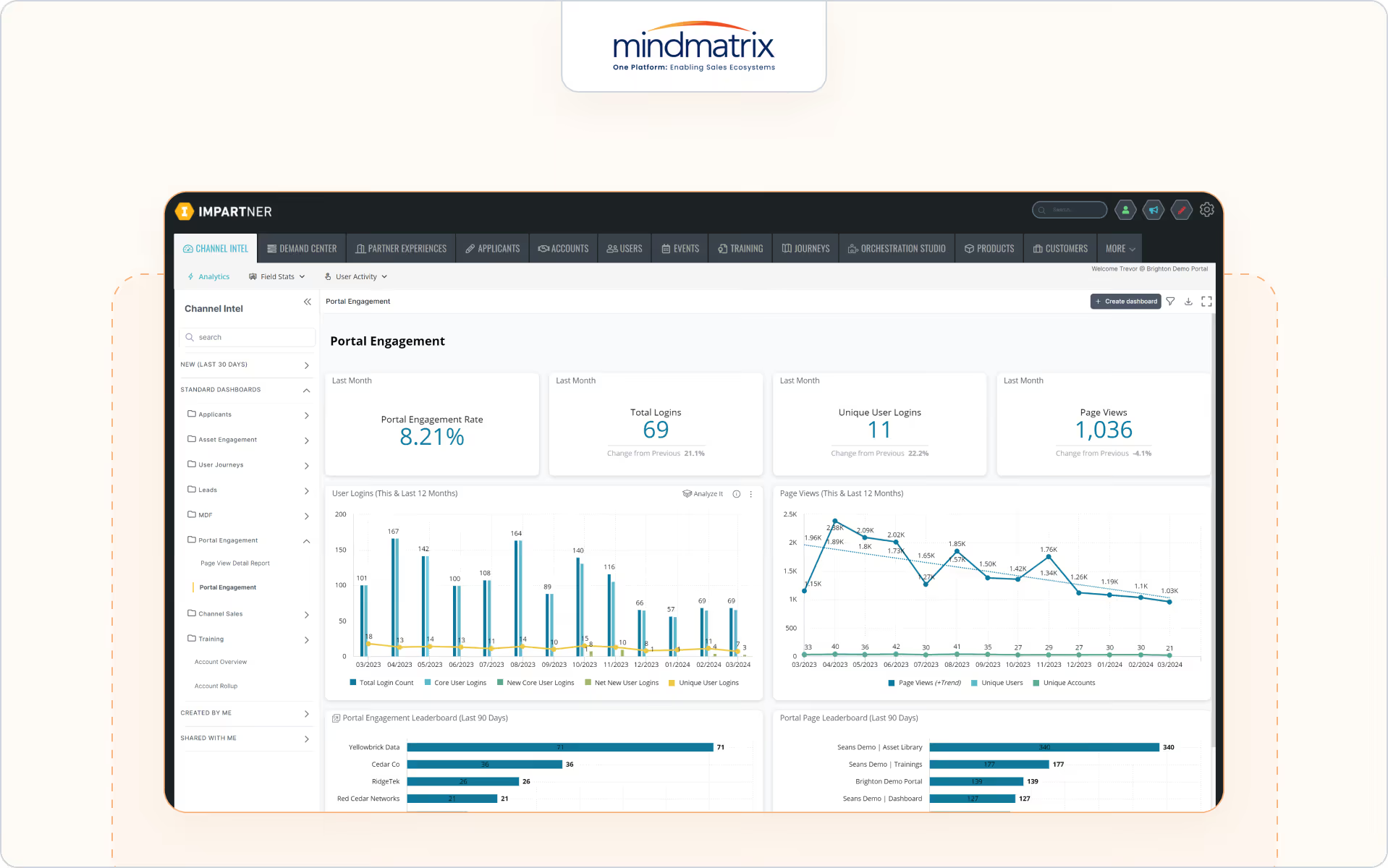
Best for: Programs that need deep partner enablement and partner marketing with integrated PRM and TCMA.
Why it’s an Impartner alternative: Mindmatrix positions an AI-powered PRM that spans engagement, partner onboarding, training, and performance — combining portal experience with campaign tools.
Notable callouts: Bi-directional sync, KPI tracking, and training capabilities to enable partners effectively.
12) StructuredWeb

Best for: Enterprise brands where through channel marketing automation is central to the partner program.
Why it’s an Impartner alternative: StructuredWeb focuses on channel marketing automation, personalization, and last-mile execution to help partners sell more.
Notable callouts: Enterprise-grade TCMA that complements PRM for brand control and local activation.
13) SproutLoud
Best for: Distributed marketing and brand-to-local execution where partners need turnkey, compliant campaigns.
Why it’s an Impartner alternative: SproutLoud simplifies local marketing with catalogs, last-mile fulfillment, and services that help partners launch campaigns and drive traffic.
Notable callouts: Education content and analytics to monitor performance and optimize spend.
14) Everflow
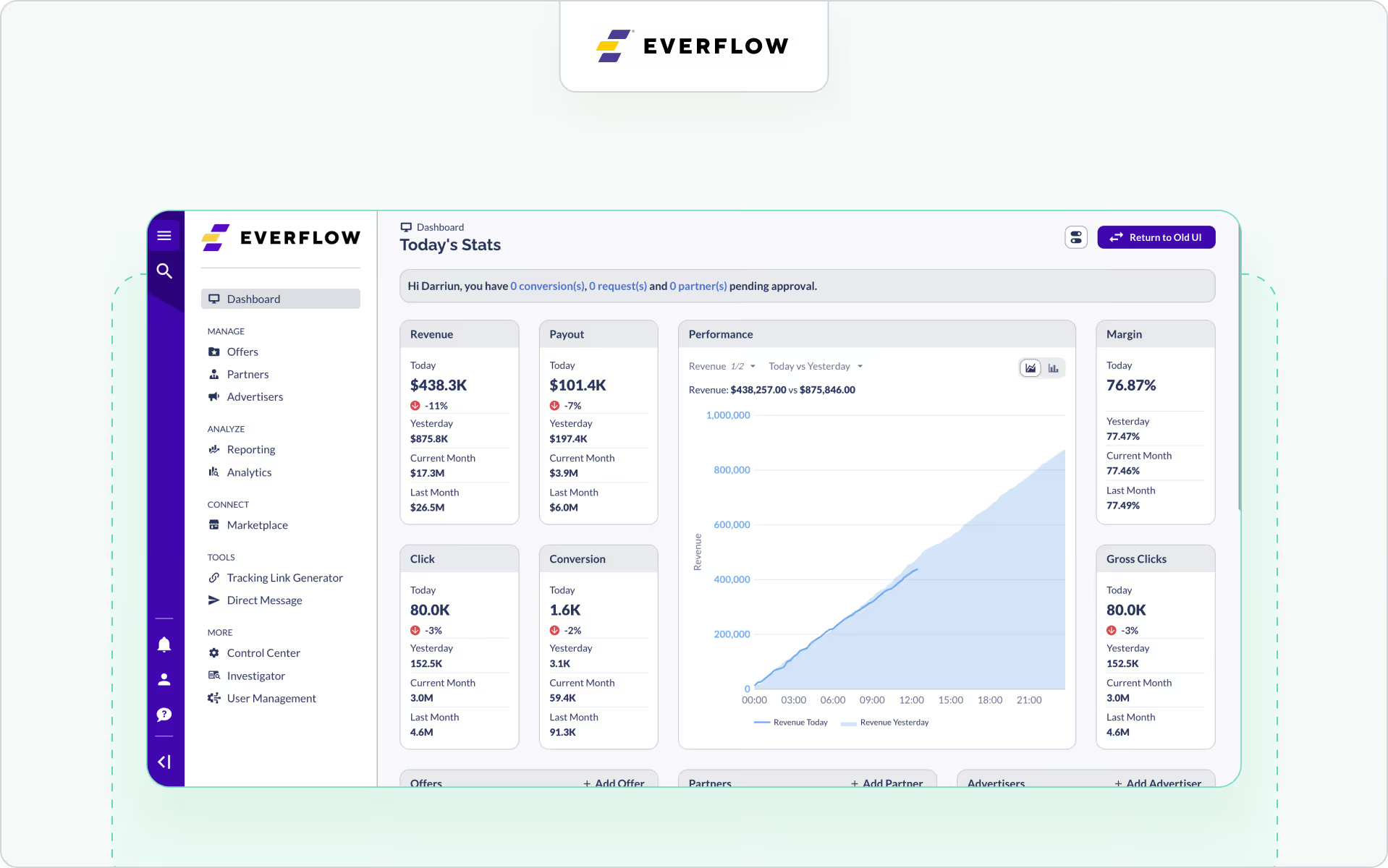
Best for: Performance-driven partnerships where you need granular tracking, fraud controls, and analytics across affiliates, influencers, and B2B referrals.
Why it’s an Impartner alternative: Everflow consolidates partner and affiliate management in one platform with strong reporting — useful for companies that treat affiliates as a core channel.
Notable callouts: First-party tracking and multi-channel attribution to track leads, engagement, and deals.
15) TUNE

Best for: Teams that want a highly configurable partner and affiliate software with branded experiences.
Why it’s an Impartner alternative: TUNE emphasizes customization and flexible commissioning — good when your program model doesn’t fit template tools and you want more control over partner activities and payouts.
Notable callouts: Usability and data visualization for managing partnerships end-to-end.
16) Partnerize

Best for: Global brands scaling affiliate and partnership channels with AI-assisted optimization.
Why it’s an Impartner alternative: Partnerize invests in AI and data intelligence — helping brands identify the right partners, optimize spend, and mitigate fraud.
Notable callouts: An AI-powered roadmap and enterprise focus — relevant if you run a mature performance program.
17) PartnerPortal.io
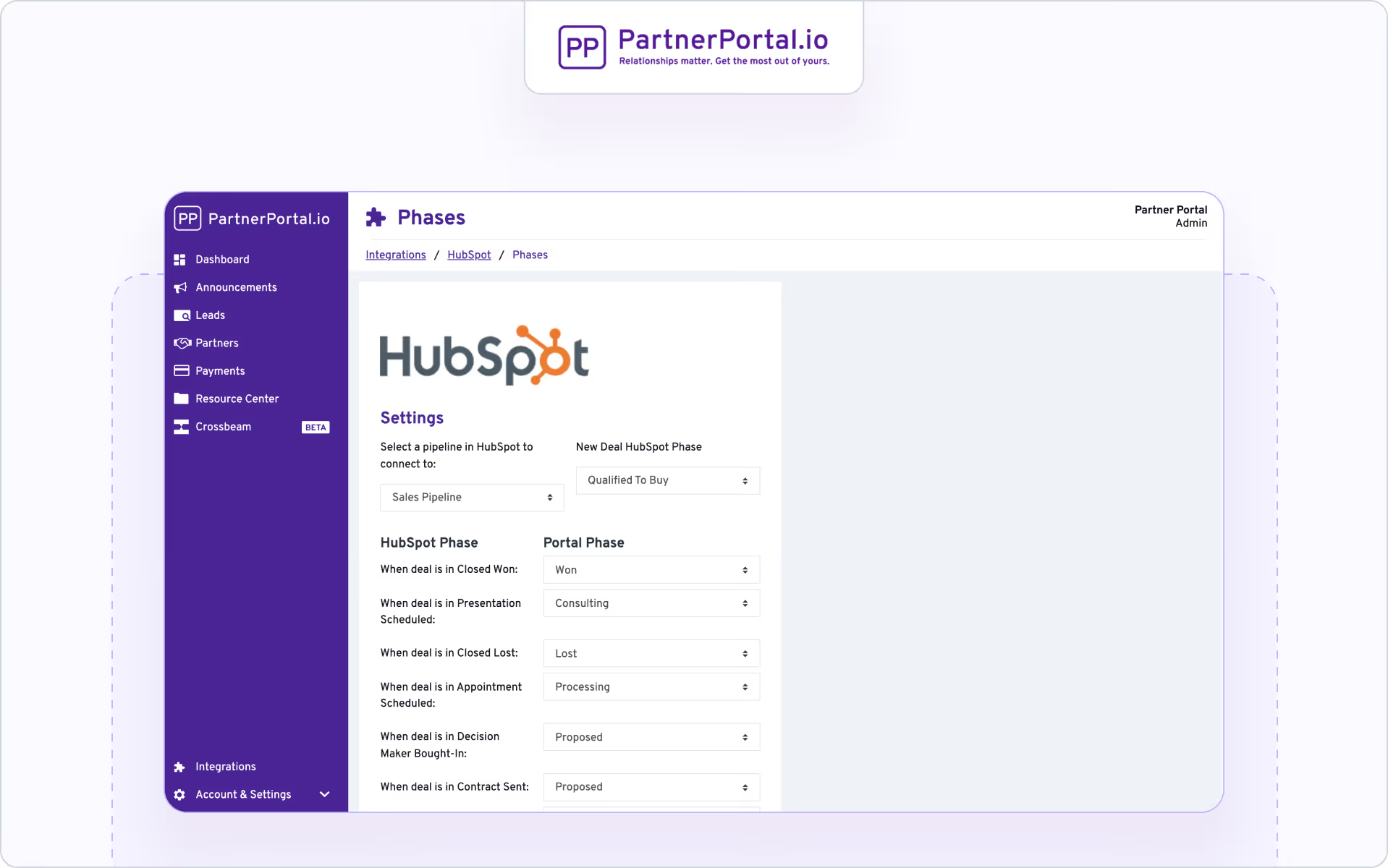
Best for: HubSpot-centric teams that want a 15-minute partner portal for registration, lead generation, deal registration, and a simple resource center.
Why it’s an Impartner alternative: Instead of a big PRM rollout, PartnerPortal.io is plug-and-play — submit leads, create or link deals, and leverage account mapping for attribution.
Notable callouts: Fast setup and two-way sync for channel partners that need to get moving now.
With PartnerPortal.io, we wrap up the spectrum from enterprise suites to plug-and-play portals — spanning PRM depth, TCMA muscle, co-sell orchestration, and affiliate performance. If one of these fits your motion, great. If not, it’s worth checking whether your needs actually match what Impartner already does best.
When to stick with Impartner
Stay with Impartner if you’re deeply invested in MDF, TCMA, and global governance — especially if your partner program needs robust incentives and brand control plus advanced services and support. Impartner’s breadth in incentives and marketing operations remains a differentiator for many Impartner customers.
Switch when your priorities are CRM-first workflows, lightweight admin, or specialized motions — such as hyperscaler co selling (WorkSpan), HubSpot-native operations (Introw, PartnerPortal.io), or affiliate-heavy growth (impact.com, Everflow, TUNE, Partnerize).
Why Introw is your choice in 2026
If you want partner operations that feel native to your CRM, Introw keeps partners, AEs, and RevOps working in the same place — no extra portals or swivel-chairing. You can create and manage leads and opportunities, use custom objects where it makes sense, and rely on real time data for tracking deals, attribution, and forecasts. Partners can collaborate via email or Slack, and updates land back in the CRM automatically. Enablement stays practical too — lightweight content, simple guidance, and clear checkpoints so partners know what to do next and you can monitor progress without chasing spreadsheets.
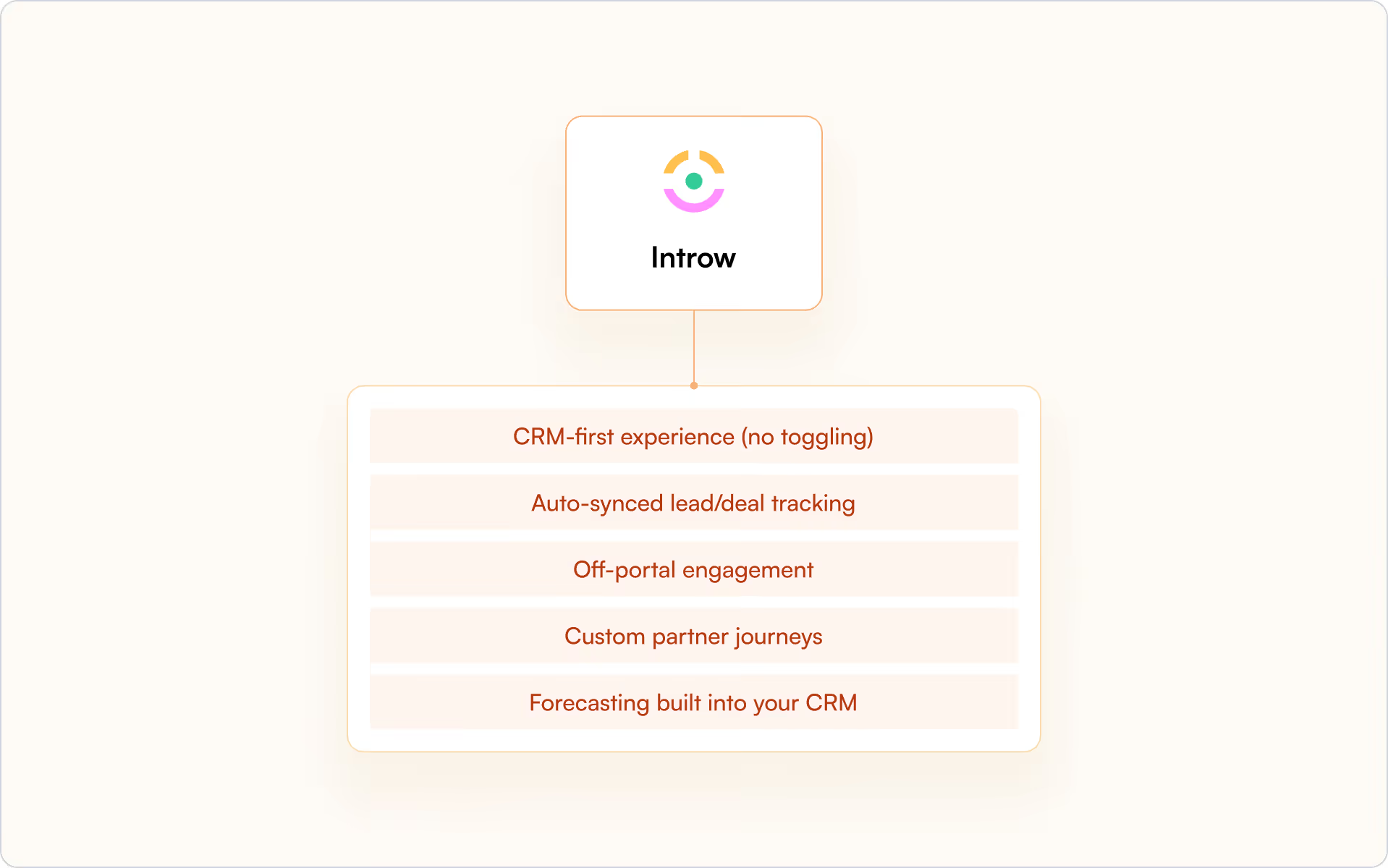
The payoff is straightforward: cleaner customer data, faster handoffs, and a steadier pipeline without the overhead of a custom Experience Cloud build. If that’s the kind of partner experience you’re after, book a short demo to see Introw in your stack and talk through your motions.
Partner Analytics - Metrics & Tools to Measure Partnership Channel ROI in 2026
Get your SaaS channel partnerships right, and they should drive a significant portion of your revenue and growth.
But to enjoy strong results from partner programs, SaaS leaders must first understand how they are performing and why.
This is where partner analytics comes in.
After all, without clear visibility, leaders risk missed opportunities, inefficiencies, and poor ROI.
Invest in partner analytics, and you’ll be empowered to make better decisions, develop stronger relationships, and enjoy more scalable, predictable partner-led growth.
In this guide, we’ll take you through the core partner analytics that SaaS businesses should be tracking, explain how to operationalize these metrics, and cover the top tools — like Introw — that power these processes.
📈 Introw makes partner analytics easy, empowering you to make the data-driven decisions necessary to take your program to the next level. Book a demo here.
What Is Partner Analytics?
Operating a strong partner analytics scheme is crucial for partnership success.
But what exactly do we mean by ‘partner analytics’, and why is it so important for SaaS brands?
Defining the Term
‘Partner analytics’ refers to tracking and analyzing data on how channel, referral, or strategic partners contribute to revenue, sales pipeline, and customer acquisition.
This means tracking key metrics that show progress towards your partner-related goals, and using these insights to regularly make data-driven decisions designed to optimize your partnership program.
While this may sound time-consuming (and once upon a time it was), in 2026, there are plenty of partner analytics tools on the market that make tracking and analysis quick and easy.
And it’s worth investing in these tools — in the fiercely competitive SaaS landscape of 2026, partner ecosystems are increasingly becoming a key revenue stream for brands.
This means that understanding partner performance is more important now than ever before.
Indeed, with tighter budgets, rising growth targets and more competition, SaaS leaders need precise insights to prioritize high-performing partnerships and scale efficiently.
Why It’s Mission-Critical for SaaS Growth
As partner ecosystems become a core segment of SaaS go-to-market strategy, partner analytics is mission-critical for SaaS growth.
Here’s why.
Firstly, chief revenue officers (CROs) and chief customer officers (CCOs) rely on having a forecastable pipeline to plan and hit growth targets.
Without clear partner data, this vital visibility breaks down.
Meanwhile, RevOps teams demand clean, clearly-attributed data to accurately report on performance and optimize processes across channels.
And channel managers must prove the impact of their partners to secure budget and resources.
This is impossible without real-time insights.
Partner analytics addresses these needs simultaneously, enabling teams to track sourced and influenced revenue, identify top-performing partners, and make confident, data-driven decisions.
Ultimately, in a highly competitive SaaS landscape where efficiency and accountability are key, measuring and managing partner performance isn’t just helpful — it’s essential for driving sustainable, scalable growth.
Core Partner Analytics Metrics to Track
So, we’ve established that tapping into partner analytics is essential for SaaS success, and we know why it’s so important.
But how can you effectively harness the power of partner analytics?
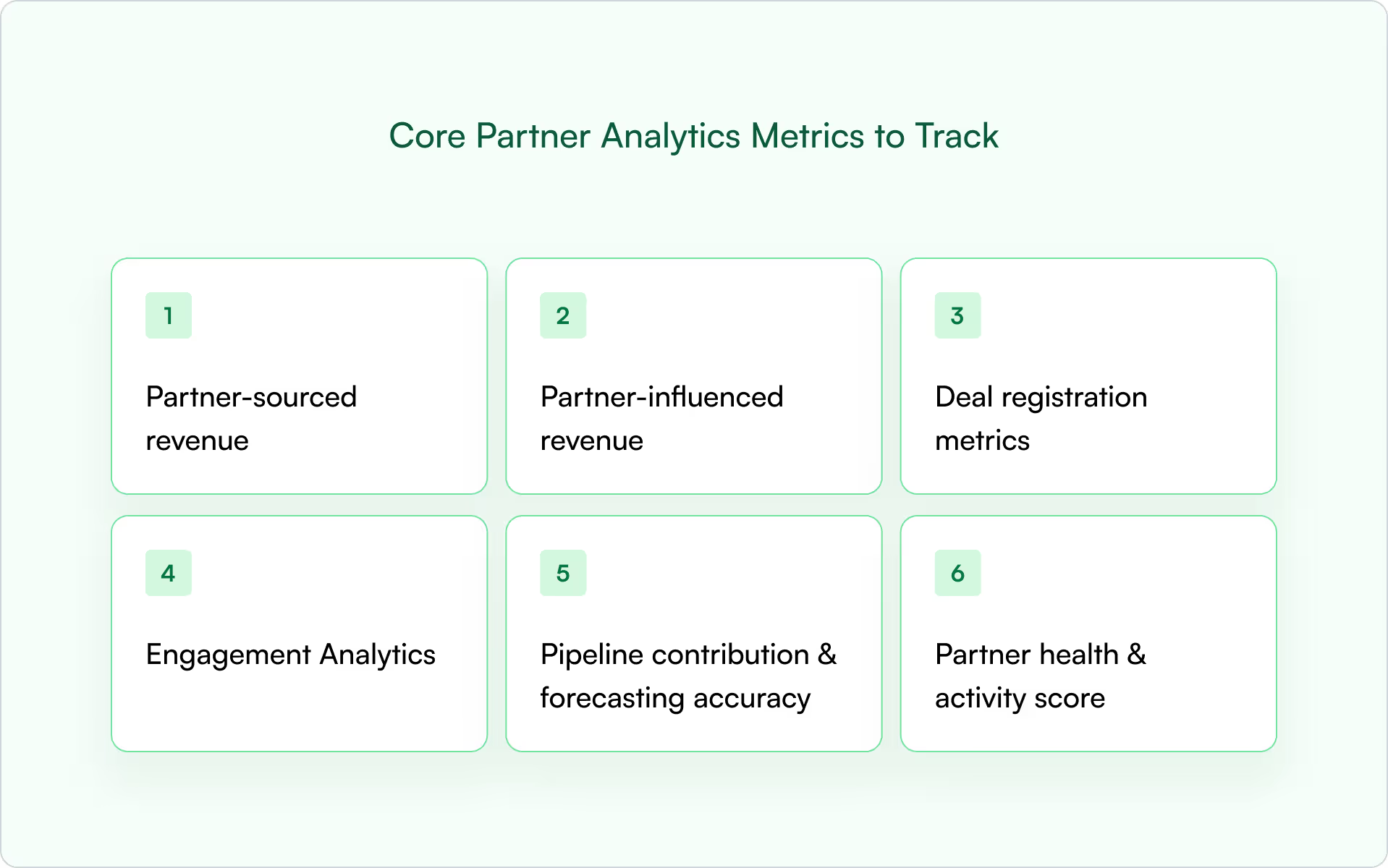
Here are six types of core partner analytics metrics to track.
1. Partner-Sourced Revenue
The most important metric when it comes to tracking third party performance, this quantifies the total revenue generated directly through leads, opportunities, or deals sourced by external partners.
To make this metric actionable, break it down into components like:
- Total Revenue
- Number of Partner-Sourced Deals
- Average Deal Size
- Sales Cycle Length
- ARR (Annual Recurring Revenue) and MRR (Monthly Recurring Revenue)
Analyzing these dimensions by partner, deal stage, or deal type can reveal what’s working and where to optimize.
CRM alignment is critical. When your PRM integrates natively with your CRM (like Introw does with HubSpot and Salesforce), these metrics are automatically tracked — no need for disconnected spreadsheets or manual exports.
Instead, you get real-time, reliable insights directly inside your CRM, improving forecasting accuracy, boosting efficiency, and making strategic decisions easier and faster.
2. Partner-Influenced Revenue
Not every deal starts with a partner — but that doesn’t mean they don’t play a critical role. Partner-influenced revenue captures the deals where your direct sales team owns the motion, but a partner steps in to support, accelerate, or strengthen the outcome.
There are a few common scenarios where looping in a partner makes sense:
- Integration Partners: let’s say your prospect mentions they use a platform you integrate with. Inviting that partner’s CSM or account manager into the deal can build trust, reduce perceived risk, and help speed up the close.
- Reseller or Regional Partners: maybe you’re selling into a region like Australia, but don’t have local coverage. A trusted reseller can step in to help with sales execution and post-sale support — making the deal more likely to land.
While these deals aren’t “sourced” by partners, the partner’s involvement clearly adds value. The challenge is attribution: how do you track and measure that influence?
That’s where having CRM-native attribution models comes in. When you tag partner involvement — at the contact, opportunity, or activity level — you start to get real visibility into which partners are actually driving results. And over time, this data becomes a key part of understanding partner ROI, optimizing enablement, and scaling what works.
3. Deal Registration Metrics
Deal Registration Metrics track partner-submitted sales opportunities, measuring volume, approval rates, conversion rates, deal velocity, win rates and average deal size.
These metrics help SaaS leaders evaluate partner engagement, pipeline quality, and program effectiveness, revealing how effectively partners contribute to revenue growth through registered deals.
Introw automatically syncs partner data through its integrations with CRMs like Salesforce and HubSpot.
It detects partner accounts, imports contacts, and maps deal registrations in real time, keeping your CRM as the single source of truth.
The result?
Seamless collaboration and accurate tracking of partner-sourced revenue.
4. Engagement Analytics
Your engagement analytics measure how actively partners interact with your communication and enablement channels.
Put simply, high engagement means better partner performance and deal outcomes.
Key indicators include email opens, showing interest in campaigns or updates; Slack replies, reflecting real-time collaboration and responsiveness; and portal views, indicating how frequently partners access resources or training materials.
These metrics help channel managers gauge partner interest, identify engaged versus disengaged partners, and optimize communication strategies.
Tracking these interactions enables more personalized support, targeted enablement, and data-driven decisions to improve overall partner program effectiveness and return on investment (ROI).
5. Pipeline Contribution & Forecasting Accuracy
Want to assess how much revenue partners generate and how reliably their deals close?
This is where pipeline contribution and forecasting accuracy come in.
Tracking your partners’ contribution to your pipeline helps identify high-performing partners and predict future revenue.
It gives you oversight of their pipeline-related activities, such as sourcing leads, registering deals, and co-selling opportunities.
Accurate forecasting is a huge advantage for SaaS brands.
To optimize your forecasting, you must first track accuracy using forecasting dashboards inside Salesforce or HubSpot.
6. Partner Health & Activity Score
This metric measures partner engagement and effectiveness based on key interactions and performance.
For example, you may wish to track touchpoints like meetings or communications, shared content such as training or enablement materials accessed, and recent deals registered or closed.
In 2026, this doesn’t have to be consuming, with partnership trackers doing the hard work for you.
Your partner health and activity score helps to identify active, high-potential partners versus inactive ones.
This enables channel teams to prioritize support, optimize enablement, and drive stronger pipeline contribution through more engaged partnerships.
How to Operationalize These Metrics
Once you’ve chosen the most relevant metrics for your partner program, how can you implement them?
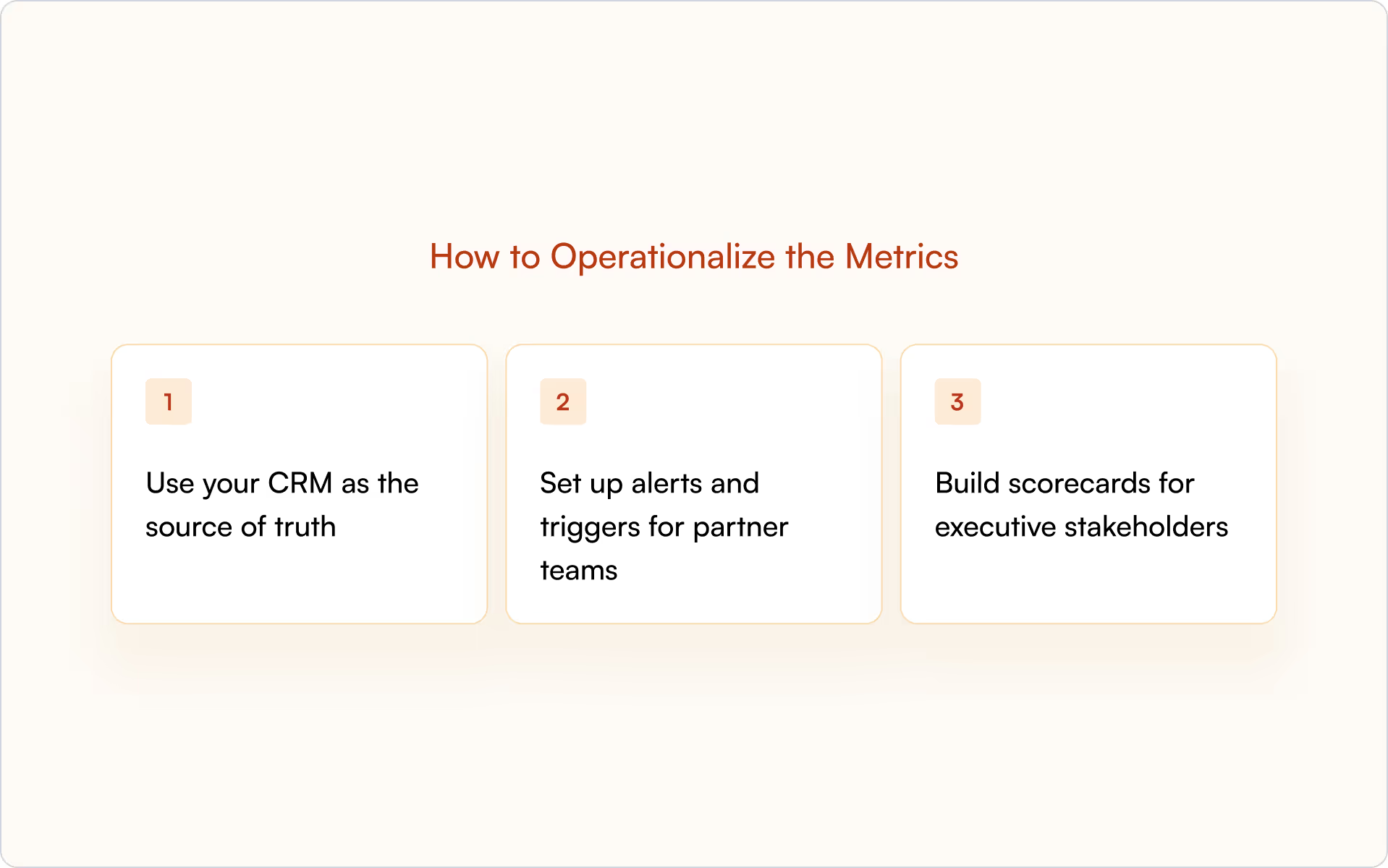
Here are three vital tips for actioning your partner metrics:
Use Your CRM as the Source of Truth
Stop managing your partner analytics in spreadsheets, and instead use your CRM as your single source of truth.
Benefits of this approach include:
- Real-time, centralized data
- Better data integrity and more accurate data
- Improved scalability
- Better security
- Automated reporting
- Partner trust and transparency
To ensure your CRM is your single source of truth, it’s vital to invest in a PRM that plugs into your CRM (Introw, for example, integrates with Salesforce and HubSpot).
Set Up Alerts and Triggers for Partner Teams
Leverage Introw’s workflow automation features to set up alerts and triggers for your partner teams in your CRM.
This setup allows you to define specific events that automatically trigger notifications, such as a partner registering a lead, a deal reaching a new stage, or a task being assigned.
These notifications can be sent via Slack or email, ensuring real-time communication with your partners.
This approach keeps partners informed and engaged without requiring them to log into a portal, facilitating off-portal collaboration and timely updates.
Build Scorecards for Executive Stakeholders
Creating scorecards for executive stakeholders helps to align your partner program with your business goals — and achieving this is essential for success.
You can use dashboards to clearly show the impact of partners on pipeline and revenue, which is crucial for engaging CROs and driving continued investment.
With this in mind, scorecards should highlight KPIs like partner-sourced revenue, win rates, and deal velocity.
Include mutual action plans to show progress on shared goals and timelines, and incorporate automated reporting to keep leadership informed in real time.
This data-driven approach builds credibility, helps prioritize strategic partnerships, and ensures the partner program is seen as a measurable growth driver — not just a support function.
Tools That Power Channel Partner Analytics
In 2026, plenty of tools can significantly boost your partner analytics efforts.
Excellent partner relationship management (PRM) software like Introw is vital for success.
Not only does it improve forecasting, performance tracking, efficiency and partner relationships, but it centralizes your collaboration and automates tedious, time-consuming tasks.
What to Look For in a Partner Analytics Tool
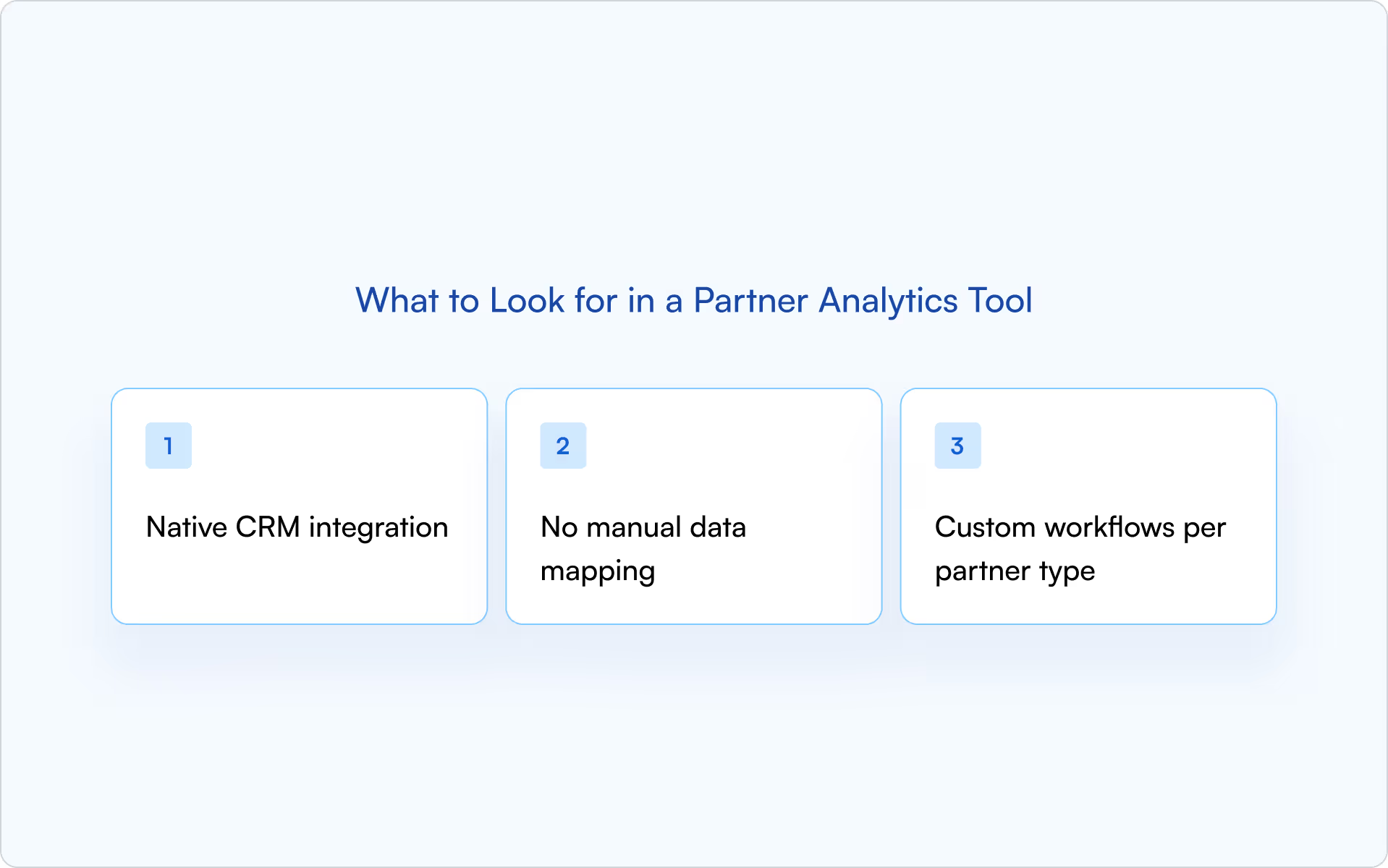
- Native CRM integration: Ensures seamless, real-time syncing of partner data with your CRM platform, such as Salesforce, HubSpot, reducing data silos and improving accuracy.
- No manual data mapping: Automatically recognizes and aligns partner fields and objects without requiring a tedious setup.
- Custom workflows per partner type: Allows you to tailor processes, alerts, and reporting based on partner tiers.
Why Introw PRM Stands Out
Here’s why you should consider investing in Introw PRM.
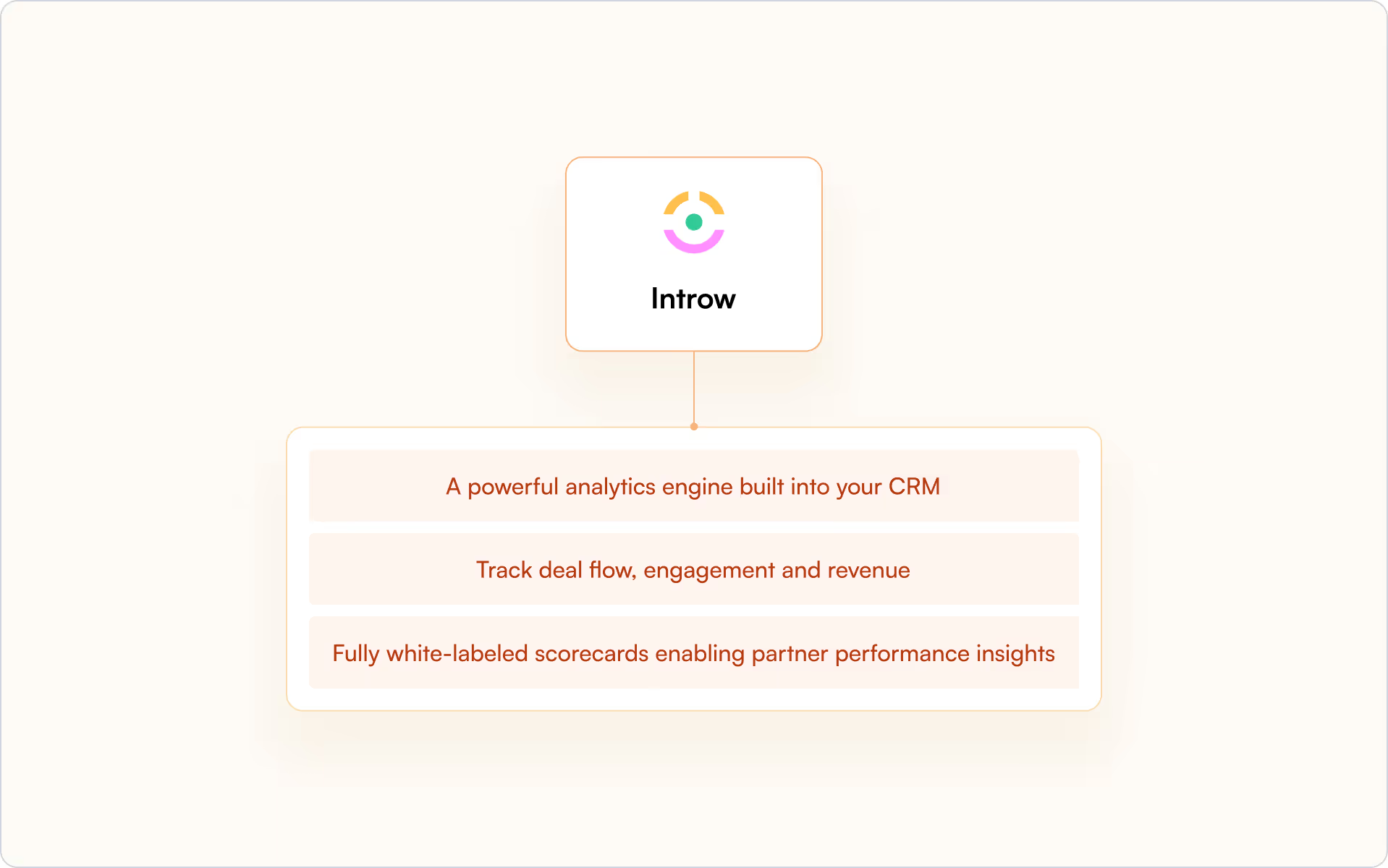
- A powerful analytics engine built into your CRM. Introw seamlessly integrates with your existing CRM, such as Salesforce or HubSpot, embedding partner analytics directly within your primary sales platform to eliminate data silos.
- Track deal flow, engagement and revenue — no external tools needed. With Introw, you can monitor partner deal registrations, engagement metrics, and revenue contributions in real-time, all within your CRM, removing the need for separate tracking tools.
- Fully white-labeled scorecards enabling partner performance insights. Introw provides customizable, white-labeled partner scorecards that offer real-time insights into partner performance, enabling you to evaluate and prioritize partnerships effectively.
➡️ Find out more about Introw’s partner portal or request a demo here
Summary: From Insight to Impact
In 2026, tracking partner analytics is non-negotiable.
After all, partner ecosystems are driving a growing share of SaaS revenue.
Without clear data on deal flow, engagement, and ROI, companies risk underperforming partnerships, misallocated resources, and missed growth.
Partner analytics empower smarter decisions, stronger collaboration, and measurable impact in today’s ecosystem-led go-to-market strategies.
To recap, the six key metrics every SaaS team should monitor are:
- Partner-sourced revenue
- Partner-influenced revenue
- Deal registration metrics
- Engagement analytics
- Pipeline contribution and forecasting accuracy
- Partner health and activity score
✅ Is it time to audit your current partner analytics system? Explore how Introw could level up your partnerships by booking a demo here today.

