

.svg)


.svg)
.svg)








Articles by Janis
How to Enable Distributors to Win Deals with Distributor Sales Training
Why distributor sales training is different from standard partner training
Distributor sales training is different because distributors do not sell the same way referral partners do. They support resellers, coordinate pipeline, and help move deals forward across multiple layers of the channel.
That changes what your training needs to cover.
Here’s where they differ:
Software distributors need visibility into reseller activity without full CRM access. Training should explain attribution, pipeline flow, and where distributors support deals.
Hardware distributors work across longer deal cycles with technical contacts and quotes. Their training should cover specs, territory rules, and installation readiness early.
Once training reflects how distributors actually support deals, it becomes easier to define what they need to perform effectively across software and hardware motions.
What software and hardware distributors actually need to win deals
Most distributors are not closing deals themselves. They help resellers move opportunities forward. So distributor sales training should focus on coordination, visibility, and readiness, not just product knowledge.
Here’s how software and hardware distributor needs compare:
Many teams support these workflows through structured partner environments built for software distributors and hardware distributors, where visibility stays clear without opening the full CRM.
Across both motions, strong distributor sales training programs still rely on the same foundations:
- current assets distributors can trust and reuse
- clear rules for deal registration and ownership
- onboarding tailored to the distribution sales team
- visibility into downstream reseller activity
- confidence that attribution supports revenue growth
When distributors understand how they support deals inside your distribution sales process, they engage earlier and help create more pipeline.
With those needs clear, the structure of an effective distributor sales training program becomes much easier to design.
4 Core components of an effective distributor sales training program
Strong training works when it supports real deals, not just theory. Your goal is to help distributors understand how to act inside your motion and support resellers across indirect sales channels.
This applies whether you are running IT distributor sales training, building structured sales training for distributors, or improving how you are training the distributors sales team across regions.
Here are the components that make distribution sales training improve sales performance.
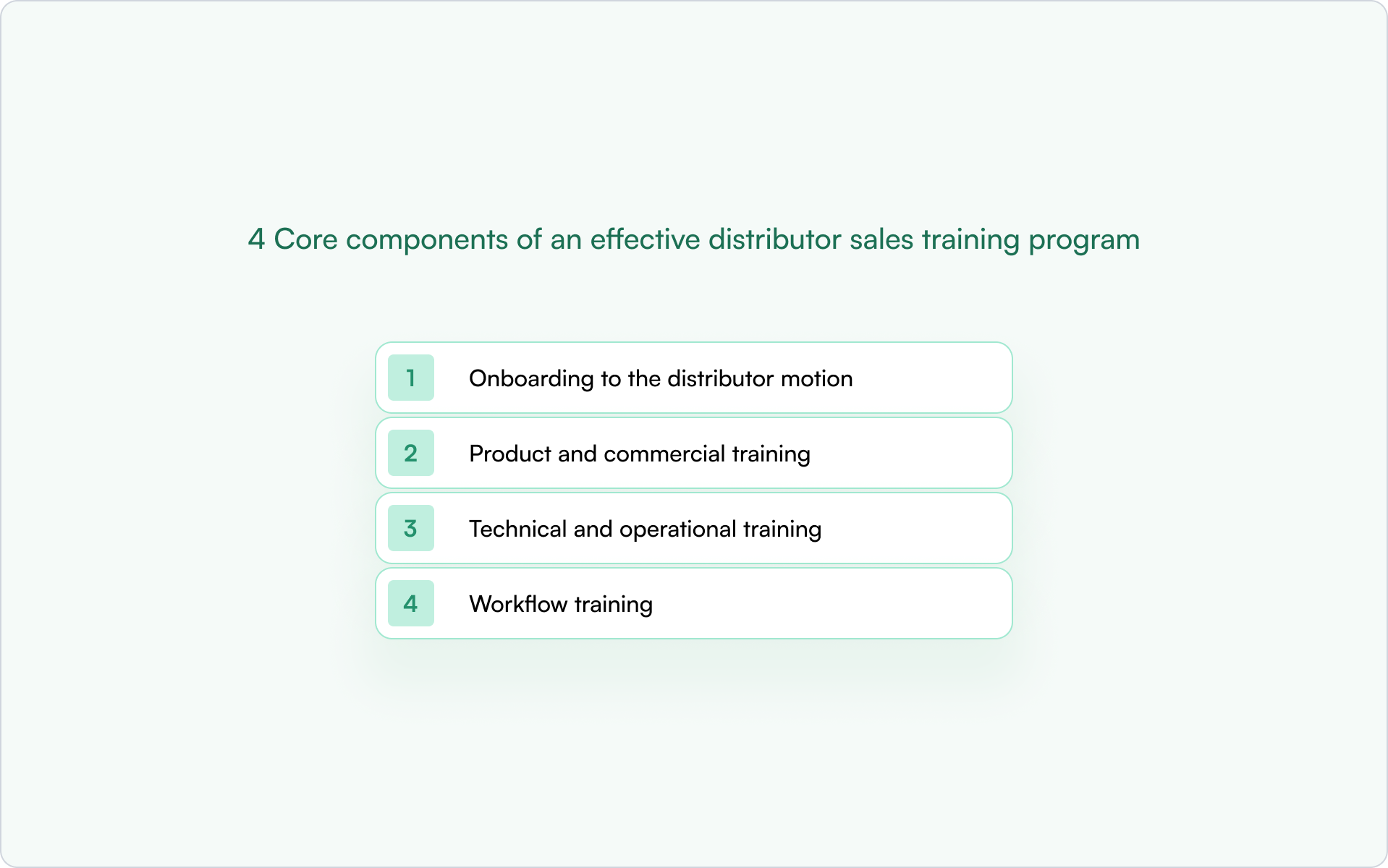
1. Onboarding to the distributor motion
Start by explaining how distributors fit into your distribution processes.
Your team should cover:
- how distributors support external partners and resellers
- how attribution works across the sales force
- where distributors influence pipeline and follow-ups
- what ownership rules affect daily operations
This helps sales reps and sales managers understand how they support customers earlier in the sales process.
Clear onboarding closes skill gaps fast and improves distributor performance. Next comes positioning and commercial readiness.
2. Product and commercial training
Generic sales training is not enough for distributors. They need positioning that fits your ecosystem and market.
Focus on:
- buyer pain points and market trends
- objection handling and consultative selling
- competitor positioning
- pricing context and sales conversation readiness
- modern sales foundations that help distributors sell smarter
This strengthens customer relationships and helps distributors increase sales without adding friction to reseller coordination.
Commercial clarity improves selling confidence. Technical readiness comes next.
3. Technical and operational training
Distributors often support installation, implementation, quoting, or inventory management depending on your industry.
Training should include:
- technical details needed during pre sales coordination
- specs and documentation access
- territory rules and stock levels awareness
- onboarding tasks tied to training completion
- short training videos that reinforce new skills
Structured training modules like these support stronger relationship building across multi-contact deal teams and create strong relationships with customers over time.
Operational readiness keeps deals moving. Workflow readiness makes them easier to close.
4. Workflow training
This is where many distributor training programs fall short.
Distributors need to know:
- how deal registration works
- how pipeline visibility supports more deals
- how to collaborate without CRM access
- how to support product launches
- how to manage follow ups across partner layers
When training connects directly to workflows, your teams see better sales results and clearer performance tracking tied to business goals.
If you want certification paths that reinforce these workflows, structured guidance like LMS partner certification strategies and practical frameworks explaining the LMS benefits for channel partner certification can help you design programs that scale across markets.
But even well-designed programs can underperform if they introduce friction too early, which is where many teams run into avoidable mistakes.
Common mistakes in distributor sales training
Distributor sales training fails when it looks like generic partner enablement instead of support for real channel work.
Here are six mistakes to avoid.
.png)
1. Starting with too much training before showing value
Many teams launch long certification tracks before distributors support real opportunities. Start with positioning, deal registration basics, and early workflows. Add deeper skills later.
Structured paths help once partners are active. Guidance on how certification programs improve partner engagement shows how training supports pipeline instead of passive learning.
2. Using one training path for every role
Sales and technical contacts need different training. Commercial teams need positioning and sales techniques. Technical teams need specs and installation readiness.
Role-based training improves adoption and customer loyalty.
3. Treating distributors like referral partners
Distributors coordinate resellers, attribution, and shared pipeline visibility. Training should reflect these responsibilities, not generic partner programs.
4. Ignoring workflows like deal registration and quoting
If distributors cannot support quoting, territory rules, or reseller coordination, they cannot influence deal outcomes.
Training must match real distribution processes.
5. Overloading distributors with content instead of relevant content
Large learning libraries create friction. Start with the skills needed to support active deals, then expand later.
Resources comparing the best partner certification program software help structure certification without slowing adoption.
6. Not connecting training to pipeline visibility or performance
Distributor training should support measurable activity across resellers and deals. When it does, adoption improves quickly.
Avoiding these issues makes it much easier to build role-specific learning paths that distributors can actually use in active opportunities.
How to structure distributor sales training by role
Start by separating distributor training into role-based tracks. Most programs fail because they treat the entire distributor team the same, even though commercial, technical, and manager roles support different parts of the motion.
.png)
Step 1: Define the commercial track for distributor sales reps
Sales reps need to support resellers and move deals forward early. Focus training on positioning, ownership rules, territory clarity, and handling sales conversations during active opportunities.
The goal is simple: help reps contribute quickly instead of waiting for full certification paths.
Step 2: Build a technical track for pre-sales and implementation contacts
Technical contacts support evaluations, quoting, and delivery readiness. Their training should focus on specs, solution structure, and implementation coordination so they can answer questions without slowing deals.
Short certification paths work best here. Many teams structure these using systems like the best partner LMS software.
Step 3: Create a coordination track for distributor managers
Distributor managers oversee reseller alignment and pipeline visibility. They do not need deep product detail. They need clarity on partner progress, attribution, and shared dashboards.
A simple structure works well:
- track reseller activity across regions
- monitor partner goals and engagement
- support opportunities as they move forward
Once roles are defined, the priority shifts to delivering training in a way that scales across partners and regions without adding overhead.
How to deliver distributor sales training at scale
Once your role tracks are clear, focus on delivery. Distributor sales training should be easy to launch, easy to update, and tied to real partner activity.
Start with short learning paths, not long programs. Distributors engage faster when training supports active opportunities.
.png)
Use modular learning paths
Break training into small modules by role. Commercial contacts need positioning first. Technical contacts need specs and implementation readiness. Managers need pipeline visibility and coordination guidance.
Short modules make training easier to adopt and apply immediately.
Add certifications at the right moment
Certifications work best after distributors begin supporting deals. At that stage, training reinforces confidence instead of creating friction.
Track completion by role so you know who is ready to support resellers.
Keep assets and updates in one place
Distributors should not search across emails, portals, and documents. A single workspace for materials and announcements keeps teams aligned as opportunities move forward.
Connect training to pipeline activity
Training should support deal registration, reseller coordination, and shared progress tracking. When learning connects to real channel workflows, adoption improves and programs scale naturally.
With delivery in place, the focus moves to understanding whether training is improving coordination, pipeline activity, and deal outcomes.
What to measure in distributor sales training
Distributor sales training should improve how partners support real opportunities. If your program is working, you should see changes in readiness, pipeline activity, deal quality, and revenue contribution.
Here are the metrics that matter most:
When these signals improve, your distributor sales training is supporting real-deal execution instead of passive learning.
Next, let’s look at how Introw helps teams run distributor training more effectively.
How Introw helps teams train distributors more effectively
Distributor sales training works best when it supports what your partners are already doing inside active deals. Introw connects training to pipeline activity so distributors learn in context, not in isolation.
In daily work, that changes a few important things.
- Sales contacts can see where they support opportunities without needing full CRM access.
- Technical teams get specs and coordination steps in one place.
- Distributor managers gain visibility into reseller progress and attribution across regions.
With Salesforce and HubSpot integrations, training milestones appear alongside pipeline activity instead of in a separate portal. That makes it clear who is ready to support deals and where enablement is still needed.
If you want to connect distributor training to pipeline visibility, attribution, and partner collaboration, you can request a demo.
With the right structure and tools in place, rolling out distributor training can start delivering results within weeks rather than months.
A 30-day distributor training rollout plan
You do not need a full academy to start distributor sales training. A simple four-week rollout is enough to give your distributors clarity, confidence, and early pipeline impact.
.png)
Week 1: Define your motion and partner roles
Start by mapping how your distributors support deals.
Identify:
- whether you work with software or hardware distributors
- which contacts are commercial vs technical
- how distributors interact with resellers
- where deal registration and attribution happen
This ensures your training reflects real channel workflows from the beginning.
Week 2: Build the first training modules
Focus only on the training that helps distributors support opportunities early.
Create:
- a short onboarding module explaining the distributor role
- positioning guidance for commercial contacts
- technical readiness content where needed
- a simple workflow guide for deal registration and coordination
Keep this phase light so distributors can apply what they learn immediately.
Week 3: Launch with a small distributor group
Start with a pilot instead of rolling training out to everyone at once.
Enroll:
- Distributor sales contacts
- technical contacts supporting evaluations
- distributor managers coordinating reseller activity
Collect feedback quickly and adjust modules before expanding further.
Week 4: Connect training to real partner activity
Now measure whether training supports execution.
Track:
- onboarding completion by role
- first deal registrations
- early reseller coordination activity
- participation in technical collaboration
At this point, you should already see distributors engaging earlier in opportunities. From here, you can expand certifications and scale the program across the broader distributor team.
11 Best Partner Engagement Platforms for SaaS Partner Programs
The 11 best partner engagement tools in 2026
The right partner engagement tools help your team activate partners, keep communication consistent, and connect partner activity to real pipeline.
Here is our shortlist of platforms used by SaaS companies to manage partner engagement, partner enablement, and channel partner collaboration.
1. Introw - Best CRM-native partner engagement platform
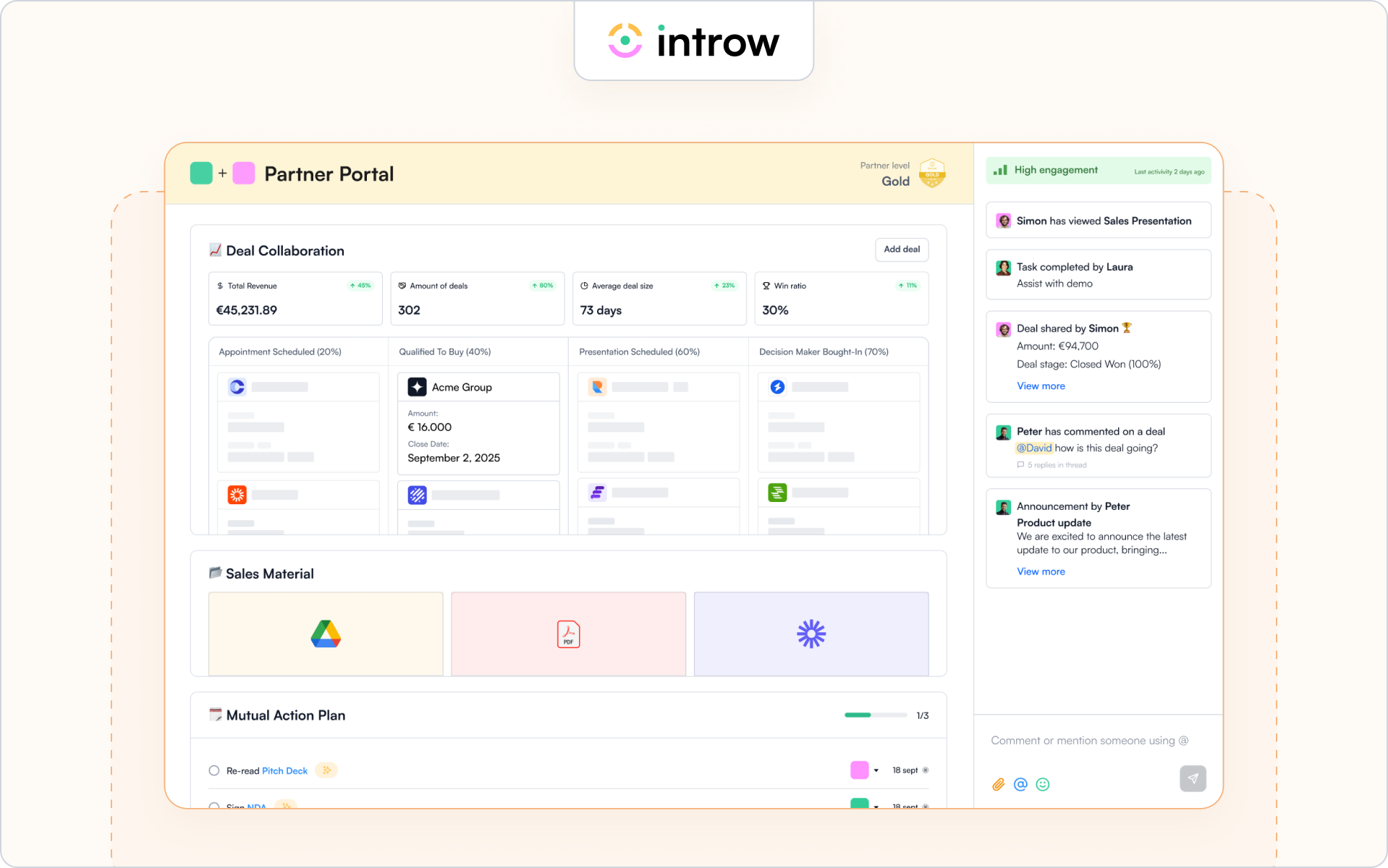
Introw is a CRM-first partner engagement platform built for SaaS companies that want partner engagement tied directly to pipeline activity.
Instead of forcing partners into a portal, Introw keeps partners up to date through email, Slack, and CRM-driven workflows while logging partner activities directly inside HubSpot or Salesforce.
Because engagement data connects to deals and revenue, your team can clearly see how partner engagement influences partner performance and sales performance. This is why many SaaS companies adopt a CRM-native approach to partner engagement rather than relying on standalone partner portals.
Teams often use Introw to manage partner communication, deal registration, partner onboarding, and channel partner enablement directly inside their CRM. Many of the workflows behind these processes are documented in Introw’s resources on partner engagement.
Best for
SaaS companies that want partner engagement tied directly to pipeline and CRM workflows.
Key engagement features
- CRM-native collaboration inside HubSpot and Salesforce
- Segmented announcements to keep partners up to date
- Engagement tracking and performance analytics
- Off-portal communication logging across email and Slack
- Deal registration and deal-based partner activity visibility
- Engagement metrics connected to partner performance and revenue
- Integrated partner portal and partner training capabilities for channel partner enablement programs
Strength
Deep CRM integration allows partner engagement data to live alongside deals, accounts, and sales process activity, making it easier for RevOps and the sales team to monitor partner activities and optimize channel partner performance.
Limitation
Companies without Salesforce or HubSpot will not benefit from the platform’s CRM-native design.
Ideal company size
Mid-market and enterprise SaaS companies running structured partner programs with multiple partner managers and active partner ecosystems.
A strong partner engagement platform should make it easier to activate partners and track their impact on the pipeline. Now let’s look at other tools used across partner ecosystems and channel partner enablement programs.
2. Impartner – Enterprise partner management platform
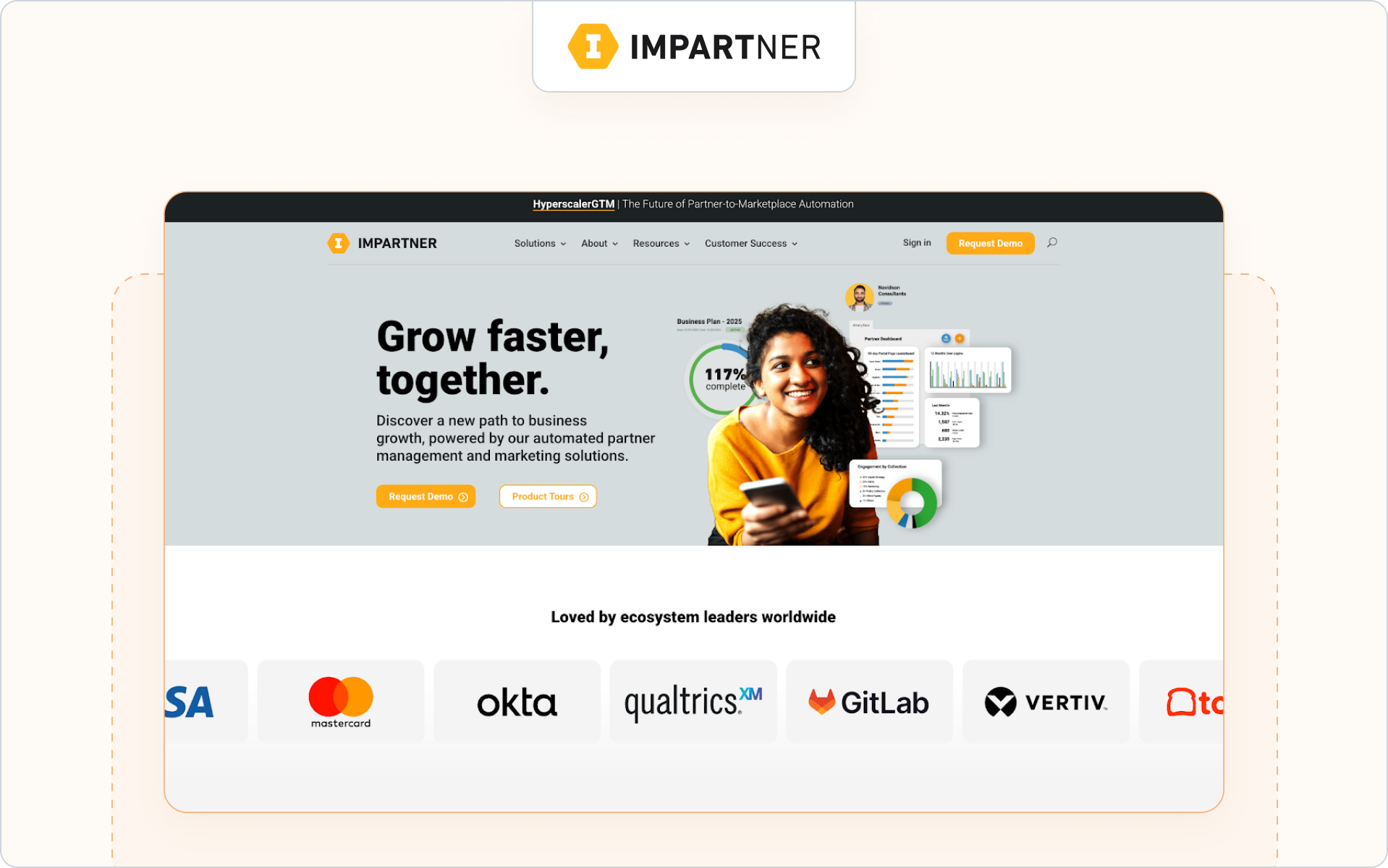
Impartner is a partner management platform designed for companies running large channel partner ecosystems. It focuses on structured partner onboarding, partner marketing, and automation that helps partner programs scale while keeping partners up to date.
Best for
Enterprise companies managing complex channel partner ecosystems and structured channel partner enablement programs.
Key engagement features
- Automated partner onboarding and partner training workflows
- Campaign management and marketing materials for partner marketing
- Performance analytics dashboards to monitor partner performance
Strength
Strong structure for large partner ecosystems that need standardized workflows across partner onboarding, partner enablement, and partner management.
Limitation
Engagement often depends on partners returning to a portal, which can slow down real-time partner activities and collaboration with the sales team.
Ideal company size
Enterprise organizations with global partner programs and large partner networks.
3. Channelscaler – Partner enablement and automation platform
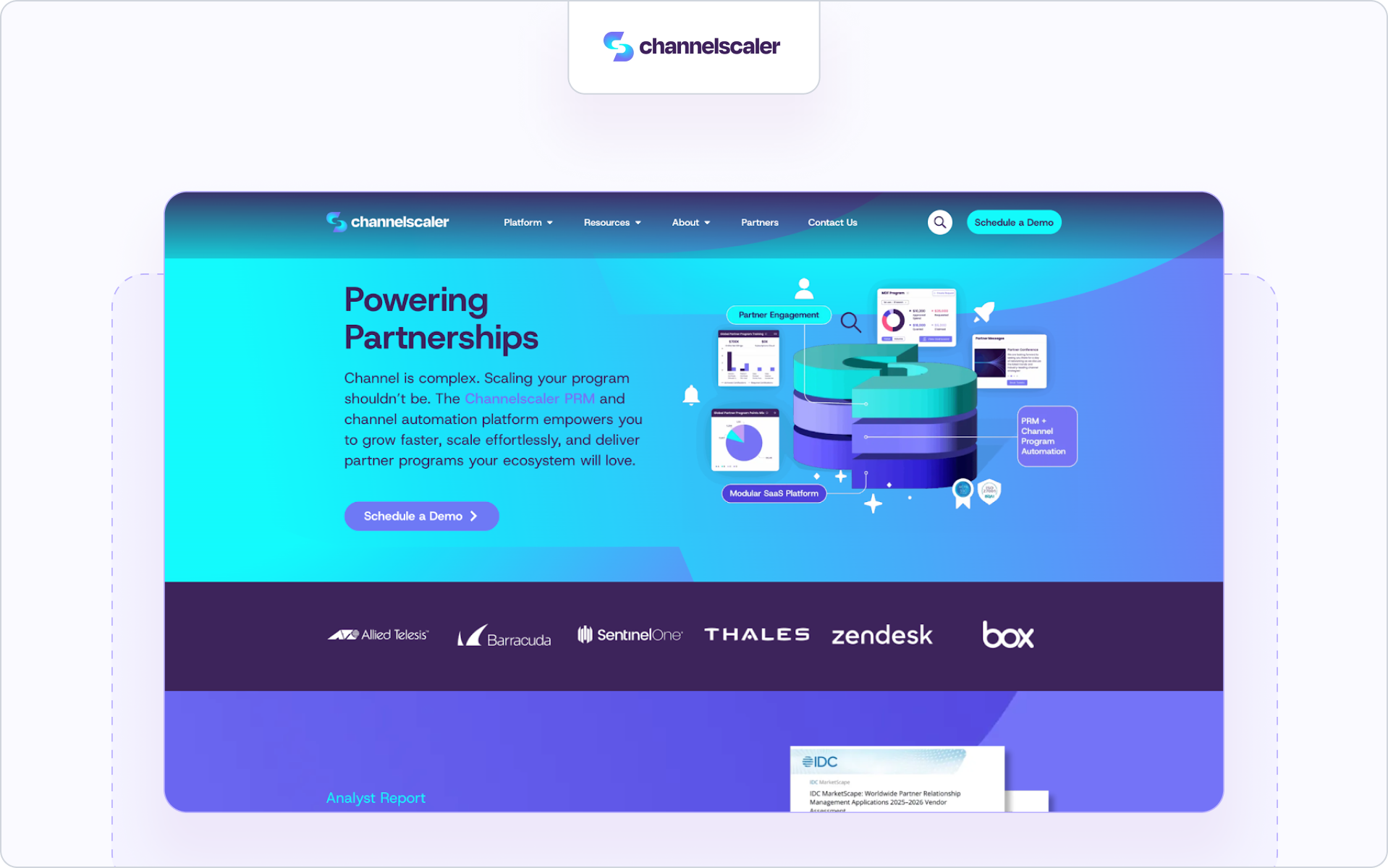
Channelscaler is a partner platform designed to help companies scale partner revenue through PRM, partner program automation, and channel partner enablement. It focuses on partner onboarding, training, content delivery, and structured program management across partner ecosystems.
Best for
Companies that want structured partner onboarding, partner enablement, and channel partner enablement tools in one platform.
Key engagement features
- Partner onboarding, training, and personalized learning paths
- Content delivery for marketing resources and marketing materials
- Program automation and reporting to monitor partner performance
Strength
Strong fit for teams that need structured channel partner enablement and formal partner program workflows across a growing partner network.
Limitation
The platform is more program- and portal-led than lightweight, CRM-native engagement, so it may feel heavier for teams that want faster off-platform collaboration. This is an inference from its public positioning and feature structure.
Ideal company size
Mid-market and enterprise companies running structured partner programs.
4. Channeltivity – Practical PRM for growing channel teams
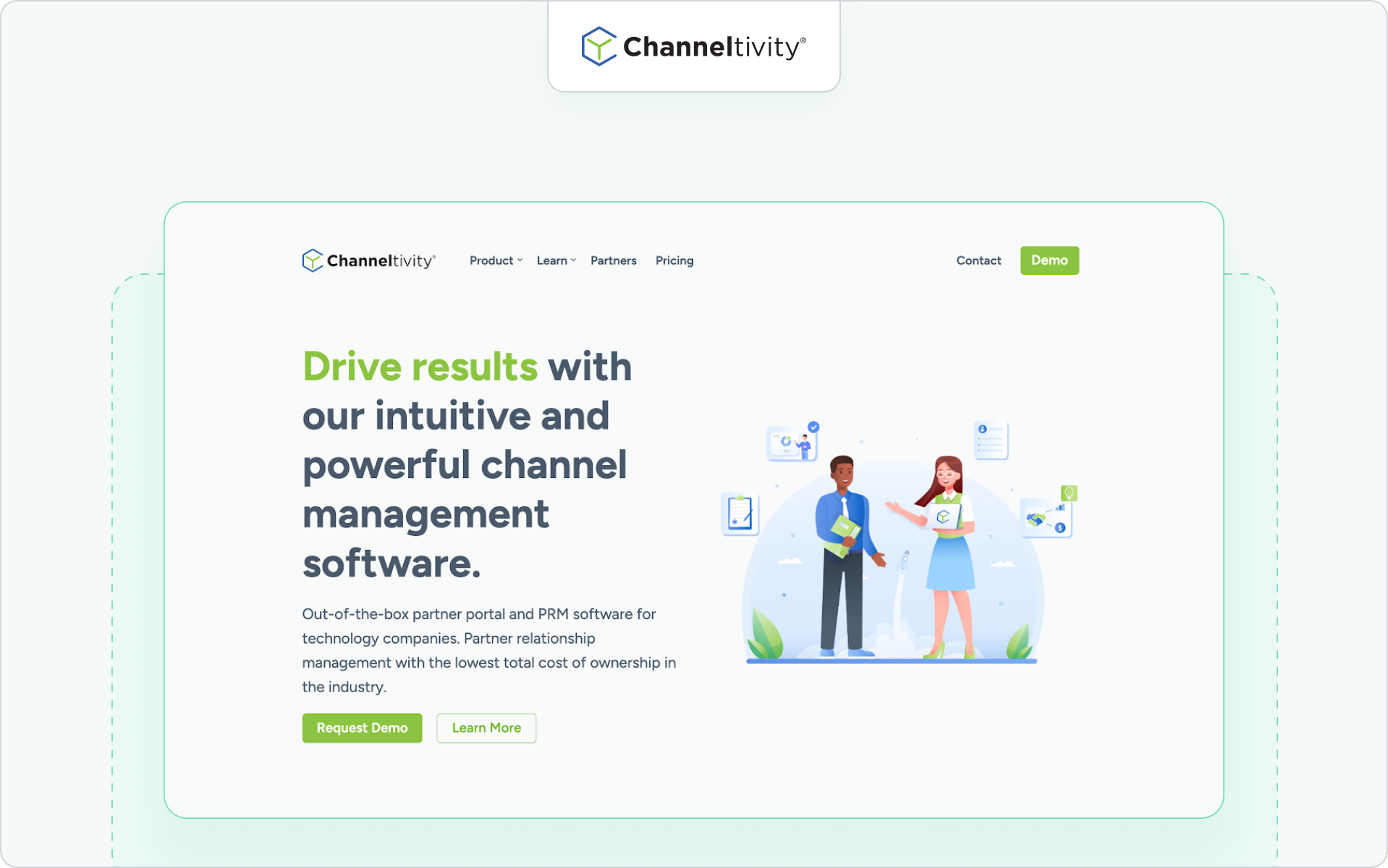
Channeltivity is PRM software built for companies that want practical partner management without heavy enterprise complexity. It supports partner onboarding, partner marketing coordination, and deal registration workflows across growing partner ecosystems.
Teams often use the platform to monitor partner activities, track channel partner performance, and keep partners up to date on sales strategies and partner initiatives.
Best for
Mid-market companies building structured partner programs and growing channel partner ecosystems.
Key engagement features
- Deal registration, referral tracking, and lead generation workflows
- Built-in communication tools to keep partners up to date
- Reporting dashboards that track partner performance and sales performance
Strength
Clear operational structure for partner activities and partner onboarding across growing partner networks.
Limitation
The platform focuses on partner management processes rather than deeper engagement analytics tied directly to pipeline.
Ideal company size
Mid-market organizations with developing partner ecosystems and growing channel partner programs.
5. PartnerStack – Ecosystem platform for affiliate and referral programs
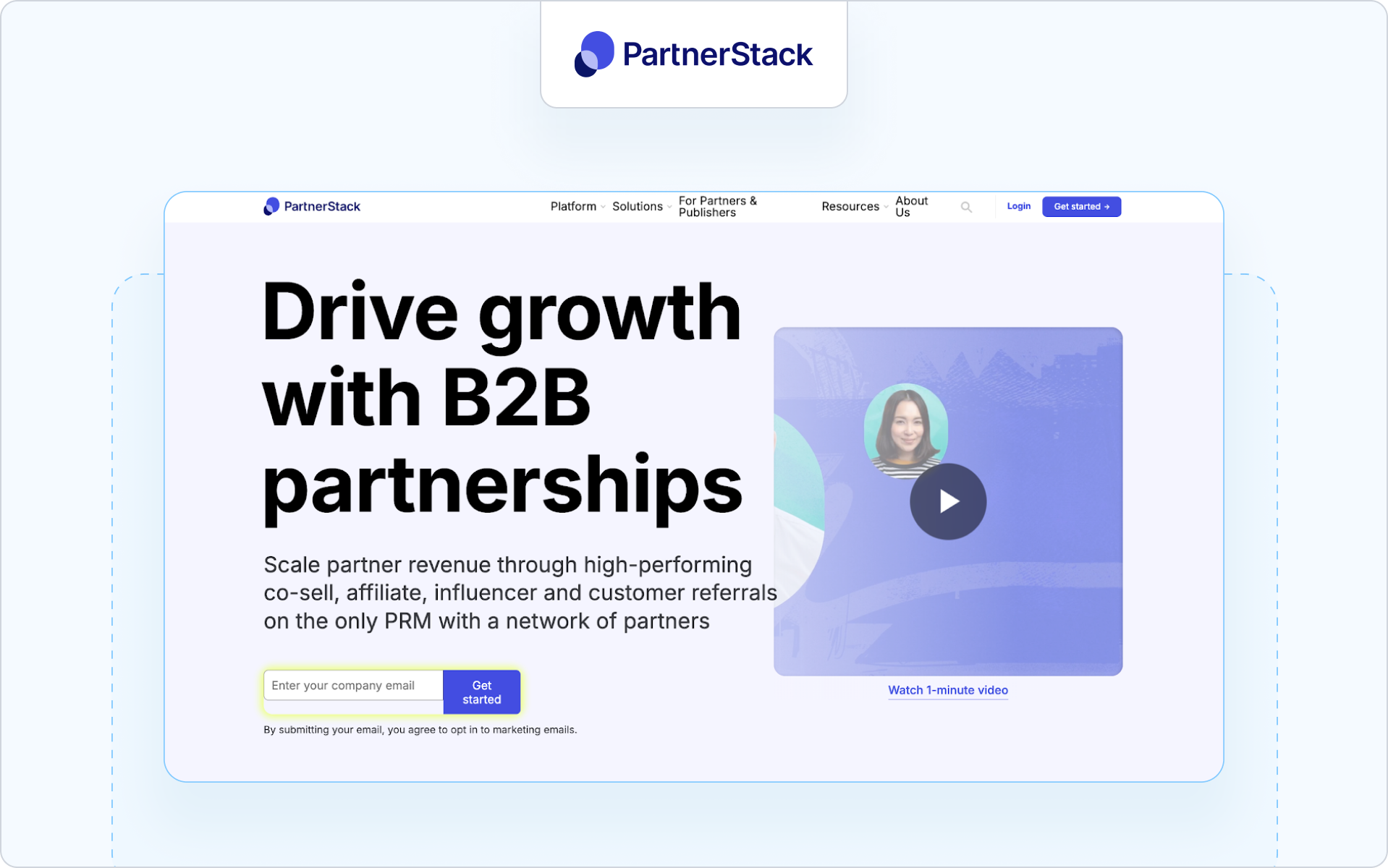
PartnerStack is an ecosystem platform used by SaaS companies to recruit, manage, and reward partners across affiliate, referral, and reseller partner programs. It helps companies scale their market reach by managing partner incentives and partner performance at scale.
Many SaaS companies rely on PartnerStack to support lead generation and expand their partner network while rewarding partner productivity.
Best for
SaaS companies running affiliate, referral, or partner-led growth programs.
Key engagement features
- Automated partner onboarding and partner incentives management
- Commission tracking and reward partners workflows
- Performance analytics dashboards that track partner productivity
Strength
Strong ecosystem platform for scaling partner programs and expanding market reach.
Limitation
The platform focuses primarily on affiliate-style programs rather than deep co-selling workflows tied to CRM sales process activity.
Ideal company size
Small to mid-market SaaS companies scaling partner ecosystems and referral programs.
6. Unifyr – Enterprise ecosystem management platform
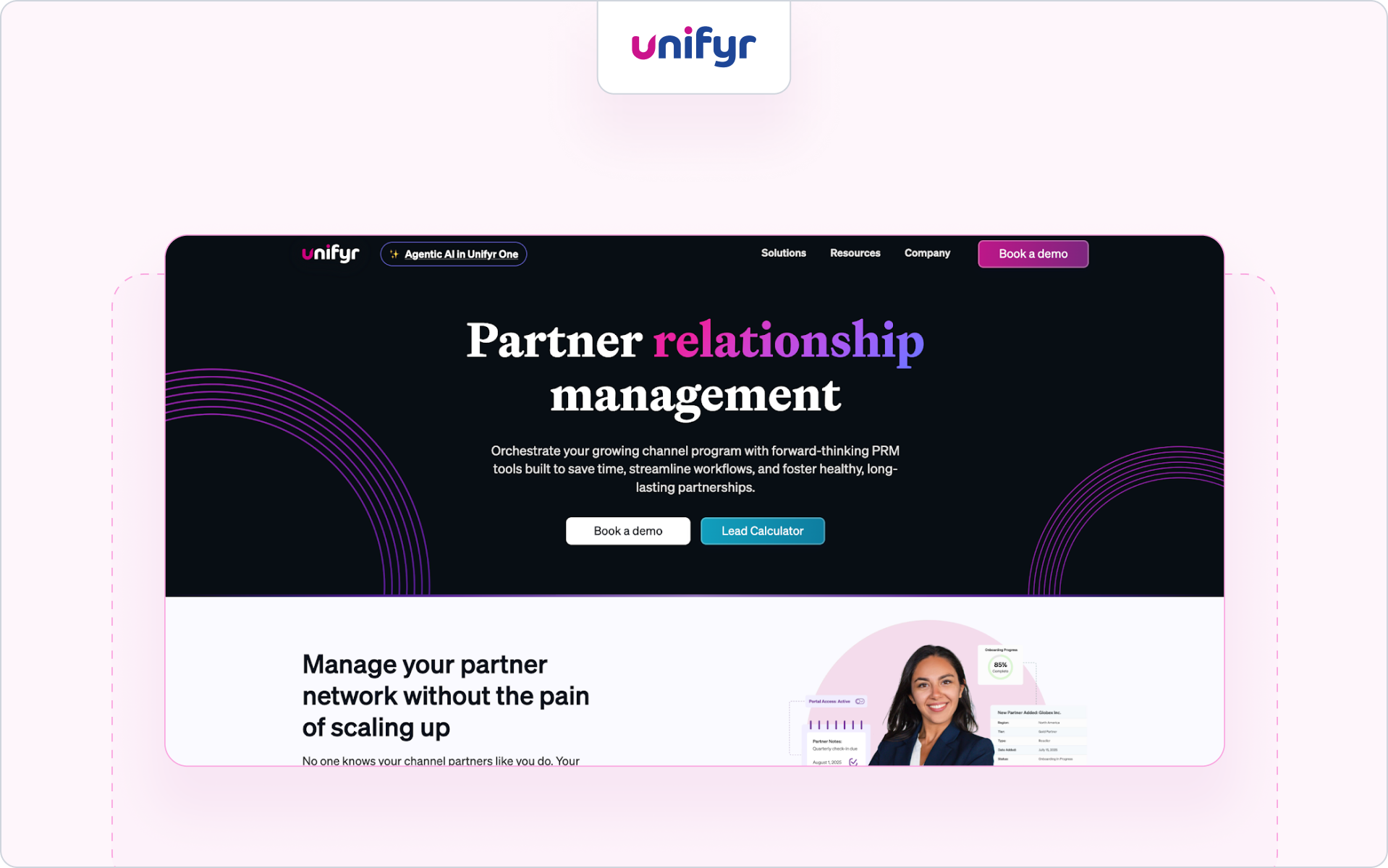
Unifyr is an ecosystem management platform designed to help enterprise companies coordinate partner engagement, partner marketing, and partner enablement across complex partner ecosystems.
It supports structured partner programs with automation, analytics, and tools designed to optimize channel performance across large partner networks.
Companies running global channel programs often use the platform to strengthen relationships with partners and monitor channel partner performance across multiple regions.
Best for
Enterprise companies managing complex global partner ecosystems.
Key engagement features
- Multi-portal partner engagement and partner management capabilities
- Campaign management and marketing resources for partner marketing
- Performance analytics that track channel partner performance
Strength
Enterprise-grade ecosystem management with strong reporting and partner marketing capabilities.
Limitation
The platform is designed for large enterprise ecosystems and may be too complex for smaller partner programs.
Ideal company size
Enterprise organizations managing large partner ecosystems and global channel partner networks.
7. Magentrix – Partner portal and collaboration platform
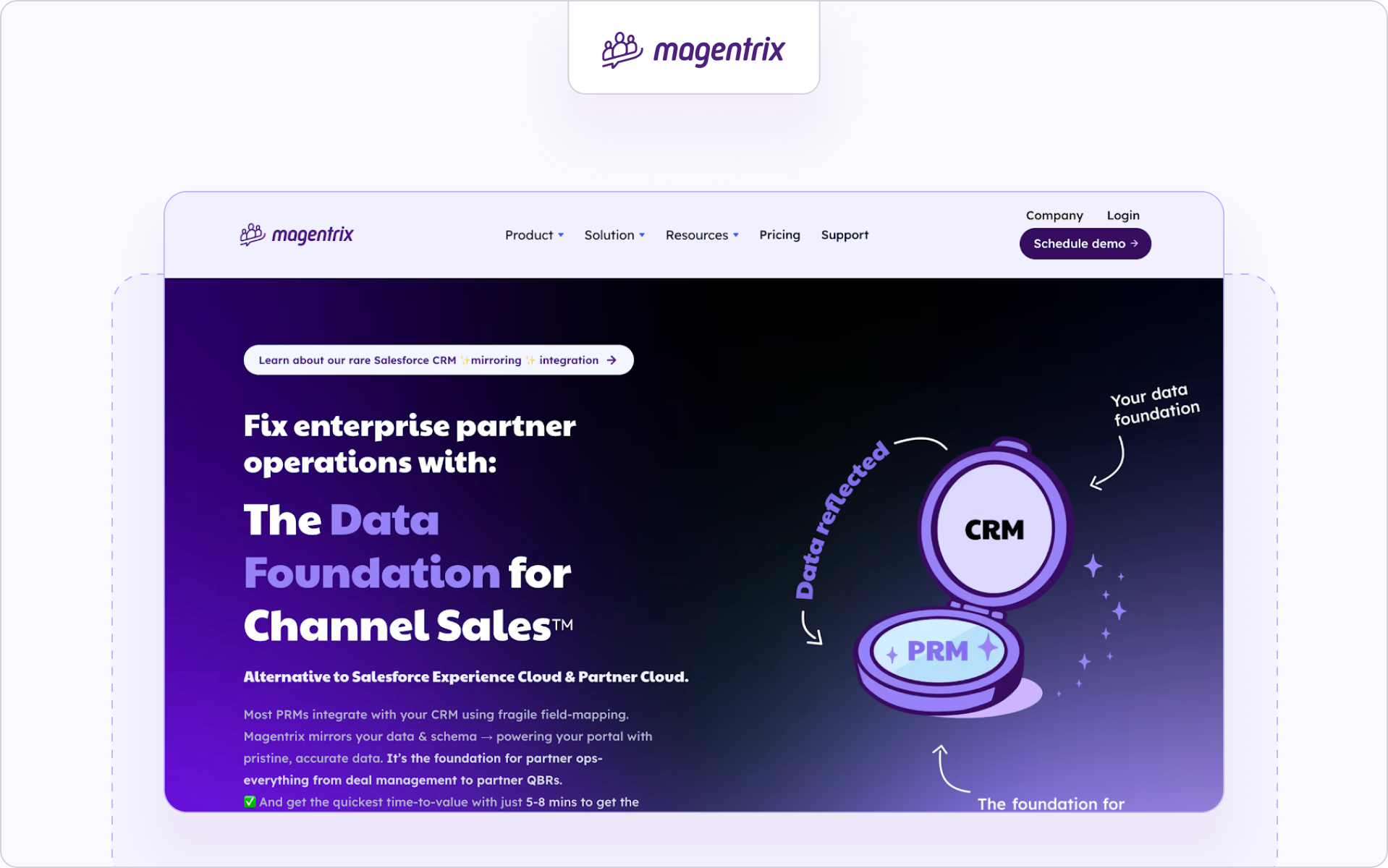
Magentrix is a partner portal platform built on Salesforce that helps companies manage partner onboarding, partner communication, and collaboration across partner ecosystems. It focuses on centralizing partner engagement, marketing resources, and communication tools inside a secure partner portal.
Best for
Companies running Salesforce that want structured partner portals to support channel partner enablement.
Key engagement features
- Partner portal collaboration and communication tools
- Content hubs for marketing materials and partner marketing
- Activity tracking to monitor partner activities and partner performance
Strength
Tight Salesforce integration helps the sales team monitor partner activities and support channel partner performance across deals.
Limitation
Engagement often depends on partners logging into the portal rather than collaborating through external communication channels.
Ideal company size
Mid-market and enterprise companies managing partner ecosystems on Salesforce.
8. Kiflo PRM – Lightweight partner management platform
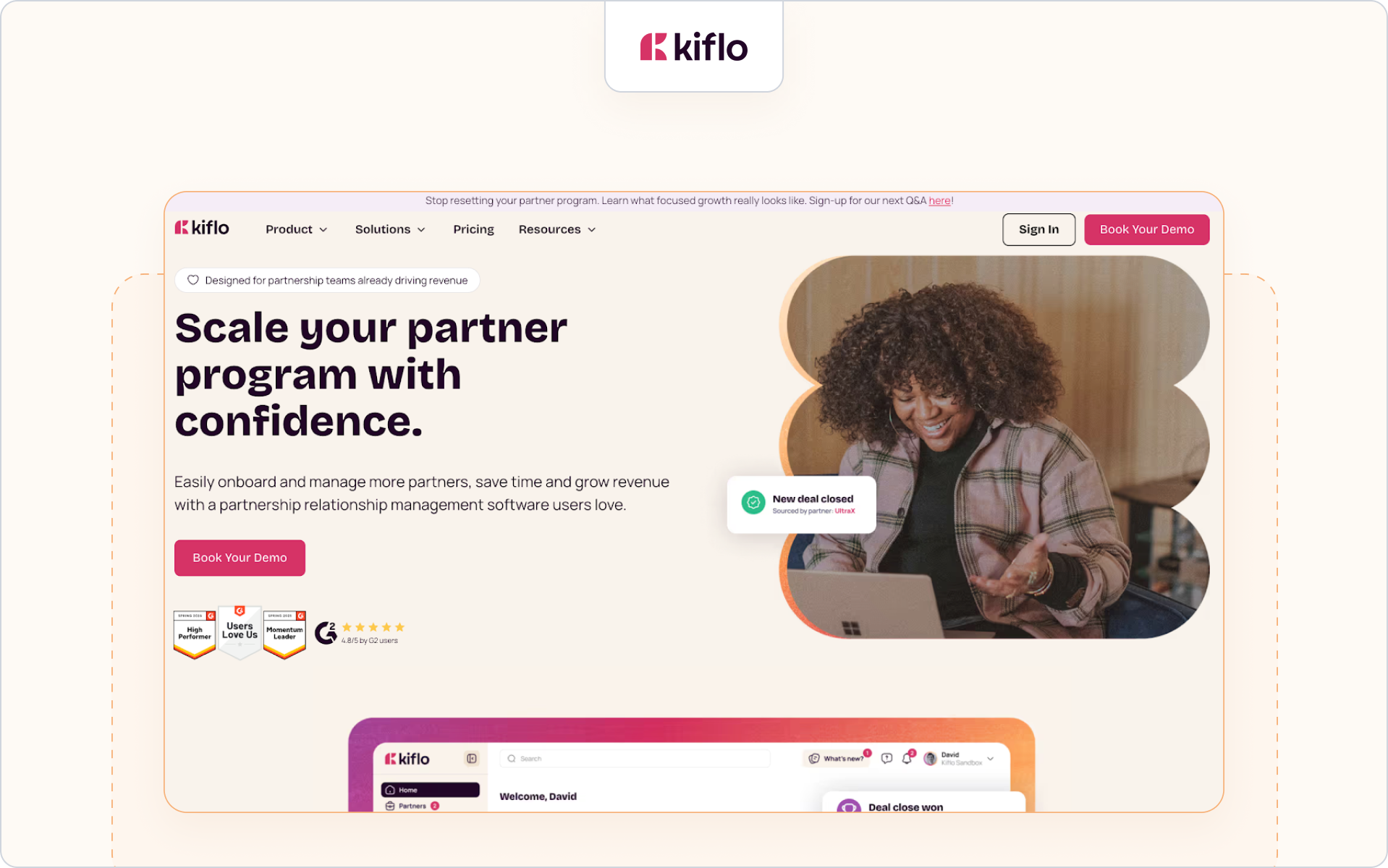
Kiflo PRM is a partner management platform designed for SaaS companies building structured partner programs. The platform focuses on partner onboarding, deal registration, and partner engagement across growing partner networks.
It helps partner managers monitor partner activities and coordinate partner enablement programs without the complexity of heavier enterprise PRM systems.
Best for
SaaS companies launching or scaling channel partner programs.
Key engagement features
- Partner onboarding workflows and partner tiers management
- Deal registration and pipeline collaboration with the sales team
- Reporting dashboards to track partner productivity and partner performance
Strength
Lightweight partner management system that helps smaller teams organize partner activities and improve partner productivity.
Limitation
The platform is simpler than enterprise partner engagement tools and may lack deeper ecosystem automation for very large partner programs.
Ideal company size
Small to mid-market SaaS companies building early partner ecosystems.
9. WorkSpan – Ecosystem collaboration platform
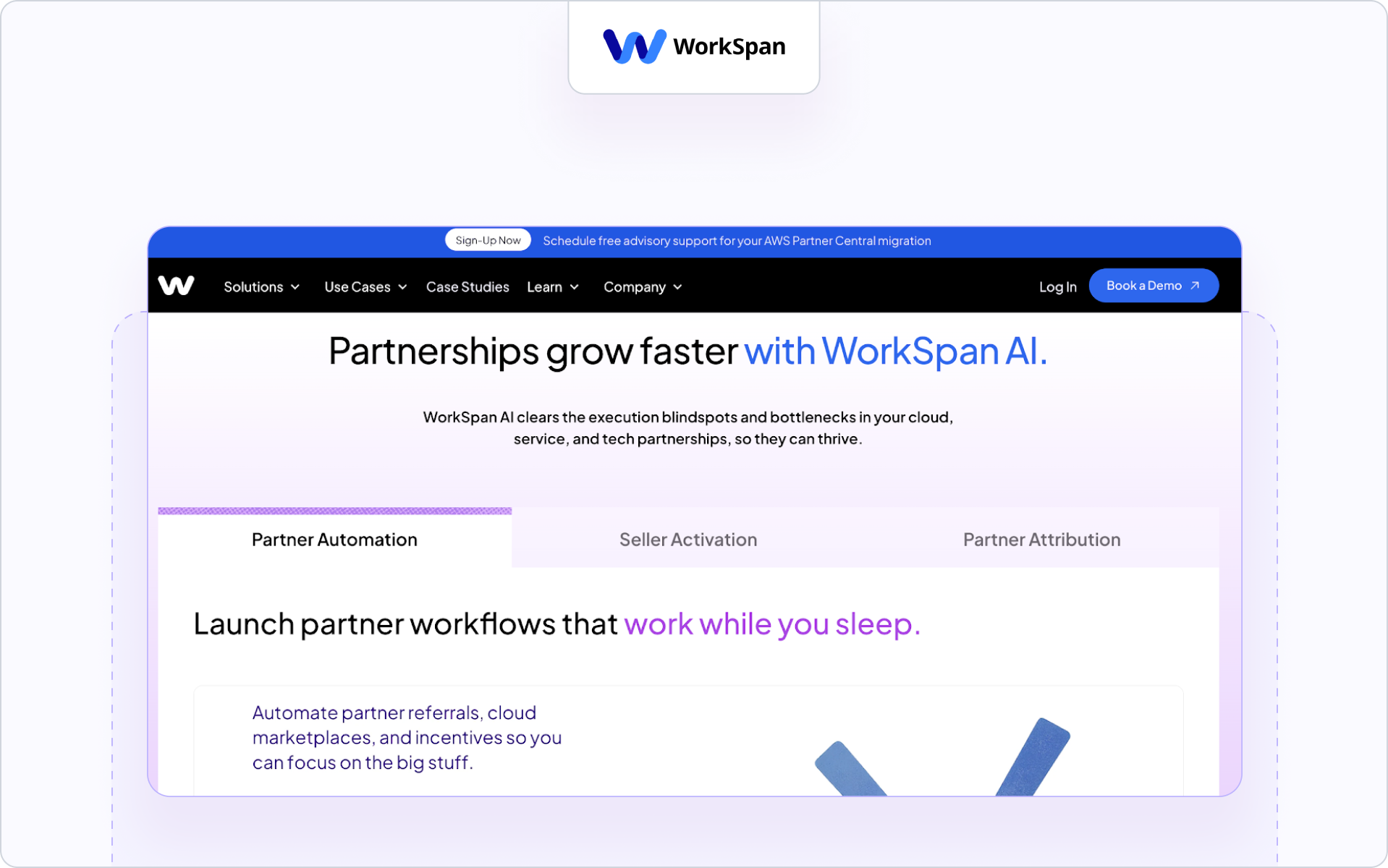
WorkSpan is an ecosystem management platform designed to help companies coordinate partnerships, co-sell motions, and joint sales strategies across partner ecosystems. It focuses on collaboration between companies rather than traditional PRM portals.
The platform helps revenue teams monitor partner activities and connect partner engagement to shared business objectives.
Best for
Enterprise companies running strategic alliances, co-sell partnerships, and ecosystem programs.
Key engagement features
- Joint pipeline tracking and opportunity collaboration
- Ecosystem reporting and performance analytics
- Shared workspaces to coordinate partner activities
Strength
Strong platform for companies that want to optimize channel performance across strategic alliances and joint sales initiatives.
Limitation
It focuses more on ecosystem collaboration than traditional partner onboarding or partner enablement workflows.
Ideal company size
Enterprise companies managing strategic partner ecosystems and alliances.
10. Mindmatrix – Partner enablement and marketing platform
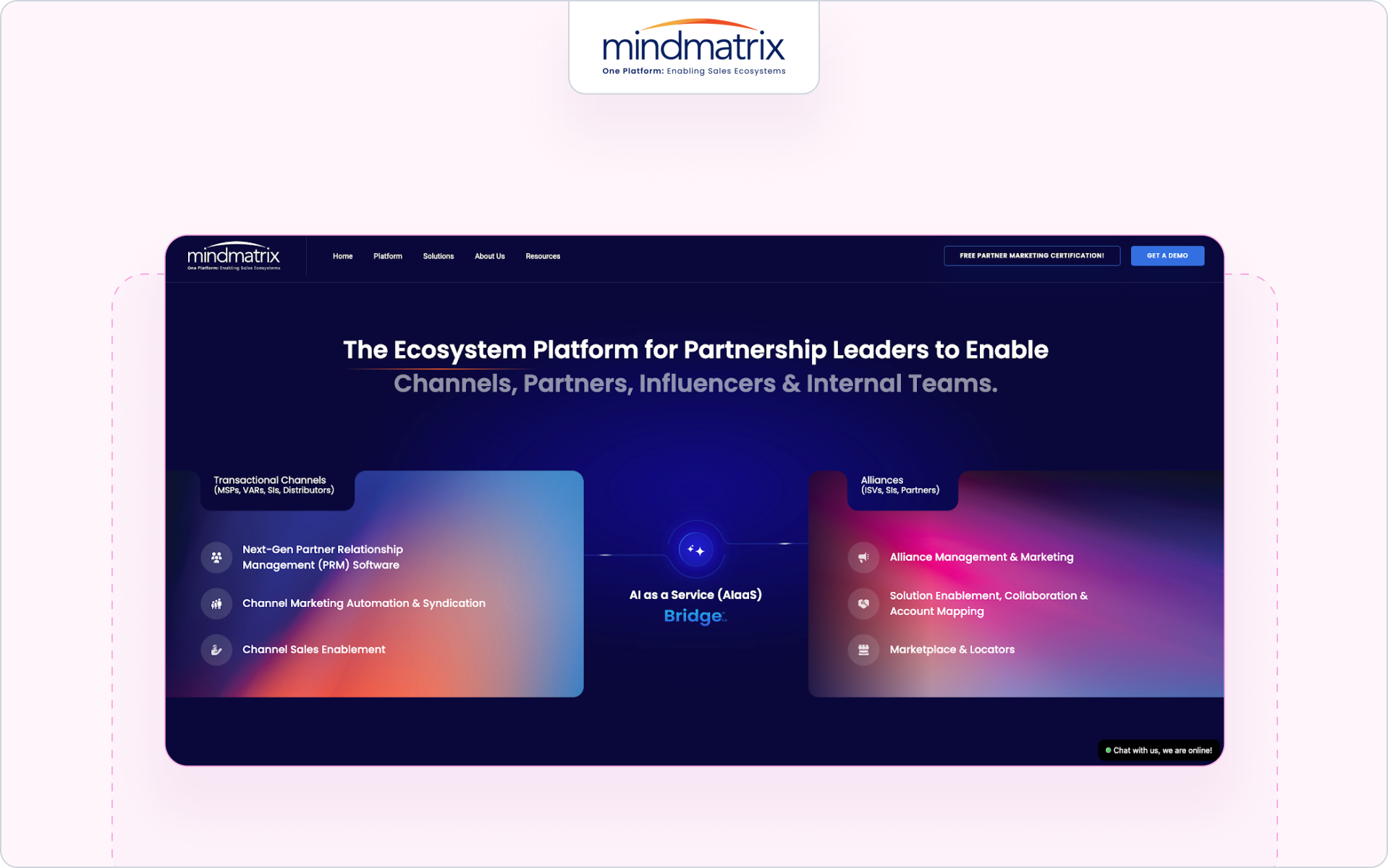
Mindmatrix is a partner enablement platform designed to help companies manage partner marketing, partner training, and partner engagement across global partner networks.
The platform combines partner enablement tools with marketing automation and sales content management to help partners stay aligned with company sales strategies.
Best for
Companies that want to support partner marketing and channel partner enablement at scale.
Key engagement features
- Marketing automation and marketing resources for partners
- Training modules with tailored training programs
- Incentive management and engagement analytics for partner performance
Strength
Strong support for partner marketing and marketing materials that help motivate partners and strengthen relationships.
Limitation
The platform focuses heavily on marketing automation rather than direct CRM collaboration with the sales process.
Ideal company size
Mid-market and enterprise companies managing global partner programs.
11. Salesforce PRM – Native partner management inside Salesforce
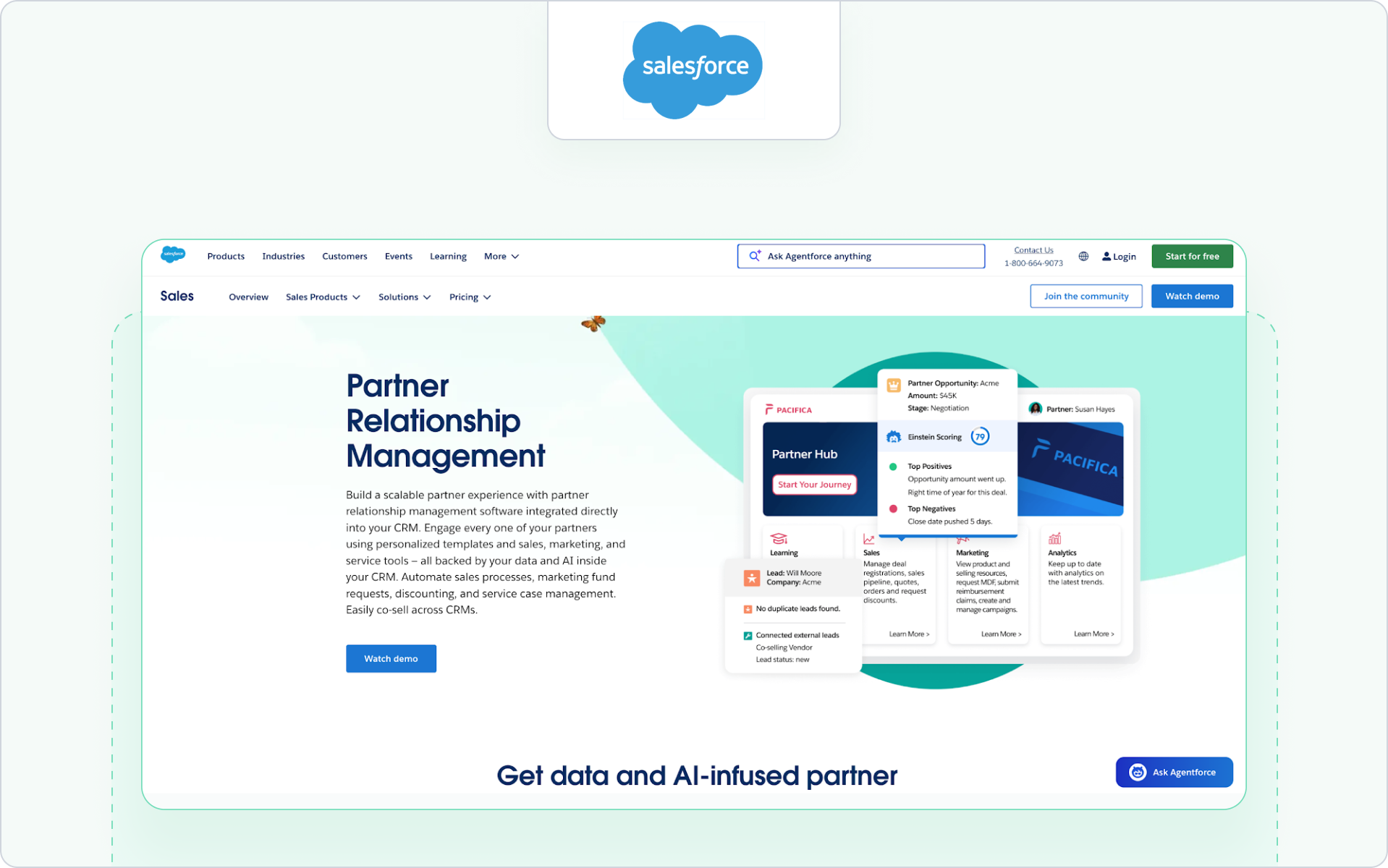
Salesforce PRM is Salesforce’s native partner relationship management solution built within Experience Cloud. It allows companies to manage partner onboarding, partner engagement, and deal collaboration directly inside the Salesforce ecosystem.
Because partner activities are connected to CRM data, revenue teams can monitor channel partner performance and track how partner engagement influences sales performance.
Best for
Organizations already running Salesforce that want partner management built directly into their CRM.
Key engagement features
- Deal registration and pipeline collaboration with the sales team
- Partner portals with content libraries and communication tools
- Reporting dashboards that track partner performance and partner satisfaction
Strength
Native CRM integration allows partner activities to connect directly to pipeline and sales performance.
Limitation
Setup and customization can require significant Salesforce administration and technical resources.
Ideal company size
Mid-market and enterprise companies operating primarily within Salesforce ecosystems.
These platforms show the different ways companies approach partner engagement. Some focus on portals and partner management. Others focus on ecosystem collaboration or partner marketing automation.
The right choice depends on how your team activates partners, supports the sales process, and monitors partner performance across your partner network.
Next, let’s look at the specific capabilities that matter most when comparing partner engagement tools.
What to compare in partner engagement tools
Once you’ve shortlisted a few partner engagement tools, the next step is evaluating how they support real partner engagement across your partner network.
The right platform should help you monitor partner activities, keep partners up to date, and connect engagement to pipeline.
Most modern partner engagement tools also act as a centralized platform that aligns partner work with the sales process.
Here are the capabilities revenue teams compare when evaluating partner engagement platforms.
1. CRM-native collaboration
Many partner engagement tools still operate outside the CRM. That makes it harder for the sales team to see partner activities during the sales process.
Look for platforms that allow partner collaboration directly around deals.
Check whether the tool can:
- Log partner activities inside Salesforce or HubSpot
- Support deal registration and opportunity collaboration
- Capture email or Slack conversations tied to deals
- Give the sales team visibility into partner engagement
CRM visibility helps teams connect partner engagement to sales performance and optimize channel performance across partner ecosystems.
Teams building structured partner programs often pair CRM collaboration with clear partner lifecycle management so engagement aligns with pipeline development.
Next, let’s look at communication capabilities.
2. Segmented announcements and messaging
Generic announcements rarely motivate partners.
Modern partner engagement tools allow partner managers to target messages based on partner tiers, market reach, or product focus.
Look for platforms that support:
- Segmentation by partner tiers or partner programs
- Targeted updates that keep partners up to date
- Communication tools that track responses and engagement
Clear messaging helps improve partner productivity and maintain alignment across B2B SaaS partnerships and partner ecosystems.
Once communication improves, the next step is measuring impact.
3. Engagement analytics and revenue visibility
Partner engagement should connect to measurable outcomes.
Strong platforms provide analytics that help teams monitor partner activities and understand how engagement affects revenue.
Look for reporting that shows:
- Active partners across your partner network
- Campaign participation and engagement trends
- Partner productivity and sales performance
- Revenue influenced by engaged partners
These insights help teams optimize channel performance and reward partners who contribute to the pipeline. Many programs support this with structured partner performance incentives.
Next, consider how tools support collaboration outside portals.
4. Off-portal engagement capabilities
Many partners stop logging into portals after partner onboarding.
Partner engagement tools should support collaboration outside the portal while still tracking engagement.
Look for tools that allow partners to:
- Respond to messages via email
- Collaborate through communication tools like Slack
- Join deal discussions without logging into a portal
- Sync conversations back to the CRM
This improves partner experience and helps partner managers maintain consistent engagement across partner ecosystems.
Finally, automation helps scale engagement.
5. Workflow automation
As partner ecosystems grow, manual partner management becomes difficult.
Partner engagement tools should automate repetitive partner activities so partner managers can focus on strategy.
Look for automation features such as:
- Deal follow-ups tied to the sales process
- Reactivation campaigns for inactive partners
- Partner tier progression triggers
- Incentive management to reward partners
Automation improves partner productivity and helps maintain consistent partner engagement across channel partner enablement programs.
Next, let’s look at how Introw approaches partner engagement at the execution layer.
How Introw powers partner engagement (execution layer)
Most partner engagement tools rely on portals.
But if engagement data never reaches the CRM, revenue teams lose visibility into how partners actually influence pipeline.
Introw is designed to solve partner engagement around deals, conversations, and partner activities that move the sales process forward.
Instead of managing partner engagement in a separate system, Introw connects partner communication, collaboration, and engagement insights directly to HubSpot and Salesforce.
Introw acts as a centralized platform where partner engagement, deal collaboration, and revenue visibility live together.
CRM-native collaboration
Partner engagement should happen where opportunities live.
Introw allows partner managers and the sales team to collaborate with partners directly around deals inside the CRM. Partner activities stay tied to accounts, opportunities, and the broader sales process.
Teams can:
- Track partner engagement alongside deals and pipeline
- Collaborate with partners during deal registration and opportunity development
- Monitor partner productivity and partner performance across partner programs
Because engagement happens inside the CRM, revenue teams can finally connect partner engagement to sales performance.
Announcements and partner segmentation
Keeping partners up to date across partner ecosystems is harder than it sounds.
Introw allows partner managers to send segmented announcements based on partner tiers, region, or product specialization. This helps channel teams communicate relevant updates without overwhelming the partner network.
Announcements often support:
- Product updates and sales strategies
- Channel partner enablement program updates
- Partner marketing initiatives and marketing resources
- Partner training and tailored training programs
Targeted communication helps partner managers motivate partners and strengthen relationships across partner ecosystems.
Off-portal engagement
Many partners stop logging into portals after partner onboarding.
Introw supports off-portal engagement so partners can respond through email or Slack while engagement data still syncs back to the CRM.
This allows teams to:
- Monitor partner activities without forcing portal logins
- Keep partners up to date through familiar communication tools
- Capture conversations tied to opportunities and deal progress
If you would like to explore the feature set in more detail, the resources on partner engagement explain how announcements, engagement insights, and communication workflows work inside the platform.
Engagement insights and revenue visibility
Partner engagement should lead to measurable outcomes.
Introw gives revenue teams visibility into how partner engagement affects channel partner performance across the pipeline.
Teams can track:
- Active partners across the partner network
- Engagement trends across partner ecosystems
- Partner productivity tied to deals and revenue
- How engagement supports lead generation and market reach
This makes it easier to optimize channel performance and reward partners who contribute to real business outcomes.
If you’re evaluating partner engagement tools, start by asking a few practical questions:
- Can we see partner engagement directly inside our CRM and sales process?
- Do we have visibility into partner activities and partner performance across our partner network?
- Can we keep partners up to date without relying on a portal?
- Are we measuring engagement in ways that actually improve channel partner performance?
If the answer to those questions is unclear, it may be time to rethink how partner engagement works in your partner programs.
Over to you
You can request a demo to see how Introw connects partner engagement, CRM collaboration, and revenue visibility in one place.
What Is Partner Collaboration and Why Most Teams Get It Wrong
Partner collaboration is when two or more businesses work together — sharing resources, expertise, and goals — to achieve outcomes neither could reach alone. In B2B SaaS, it’s the difference between signed partners who never engage and partners who actively drive pipeline.
Most teams get partner collaboration wrong not because they lack partners, but because they rely on portals partners won’t log into, data that lives outside the CRM, and rules that aren’t visible to anyone. This guide breaks down what collaboration actually means, why it breaks down in the real world, and how to build collaboration that scales without the usual friction.
What Is Partner Collaboration?
Partner collaboration is when two or more entities — businesses, organizations, or individuals — actively work together, sharing resources, expertise, and goals to achieve outcomes greater than either could accomplish alone.
In B2B SaaS, partner collaboration typically means vendors and their channel partners (resellers, referral partners, implementation partners) coordinating on deals, sharing pipeline visibility, and aligning on go-to-market efforts.
The key distinction: partner collaboration goes beyond signing agreements. It’s the day-to-day execution — deal updates, shared visibility, and mutual accountability — that turns a partnership into revenue.
Core elements of effective partner collaboration
- Shared goals: Working toward common revenue objectives, not just individual sales targets
- Resource pooling: Combining knowledge, technology, market reach, and customer relationships
- Mutual benefit: Creating value for all parties — market access, enhanced offerings, revenue growth
- Trust and communication: Sharing deal updates, challenges, and information openly
- Strategic approach: Defining roles, responsibilities, and processes upfront
When these pieces are in place, partners become a scalable revenue channel. When they’re missing, you end up with signed partners who never engage — or worse, partners who engage but create confusion instead of pipeline.
Why Partner Collaboration Matters for Revenue Growth
Partner collaboration isn’t a relationship exercise. It’s a revenue lever.
When collaboration works, partners accelerate market expansion, reduce customer acquisition costs, and help you deliver more complete solutions. When it doesn’t, you’re left chasing updates, losing deals to confusion, and wondering why your partner program isn’t scaling.
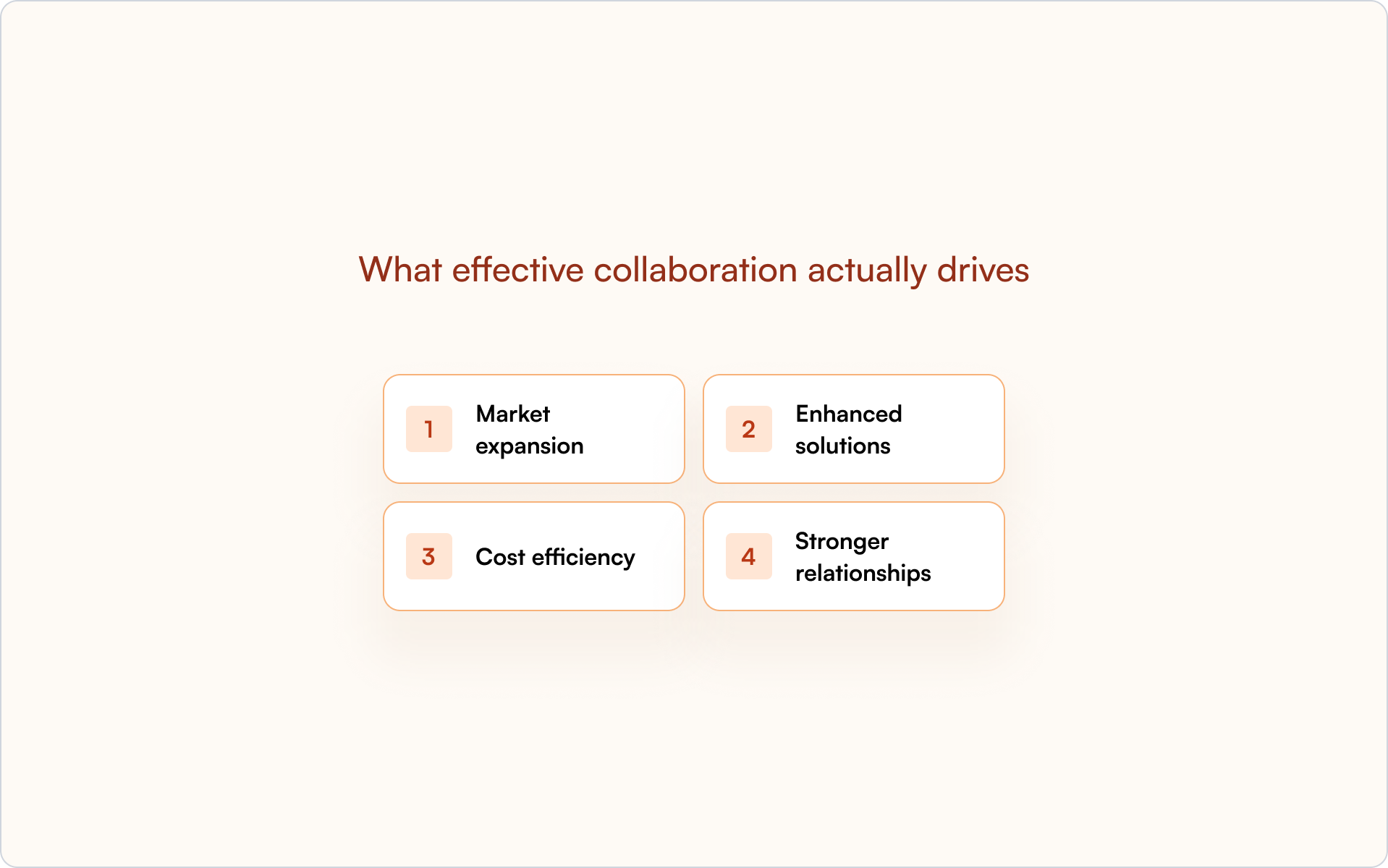
What effective collaboration actually drives
- Market expansion: Partners with relationships in your target verticals or regions open doors faster than your direct team alone
- Enhanced solutions: Combining your product with partner expertise — implementation, integrations, services — creates better customer outcomes
- Cost efficiency: Sharing go-to-market costs like marketing, sales infrastructure, and support reduces your overall spend
- Stronger relationships: Deeper partner ties lead to more referrals, renewals, and co-sell opportunities over time
The math is straightforward: partners who collaborate effectively bring real pipeline. Partners who don’t become names in a spreadsheet.
Collaboration vs. Partnership (and Why the Difference Matters)
Partnership and collaboration get used interchangeably, but they’re not the same thing.
A partnership is the formal agreement — the contract, the tier, the commercial terms. Collaboration is the ongoing work of executing together. You can have a signed partnership agreement and still fail completely at partner collaboration.
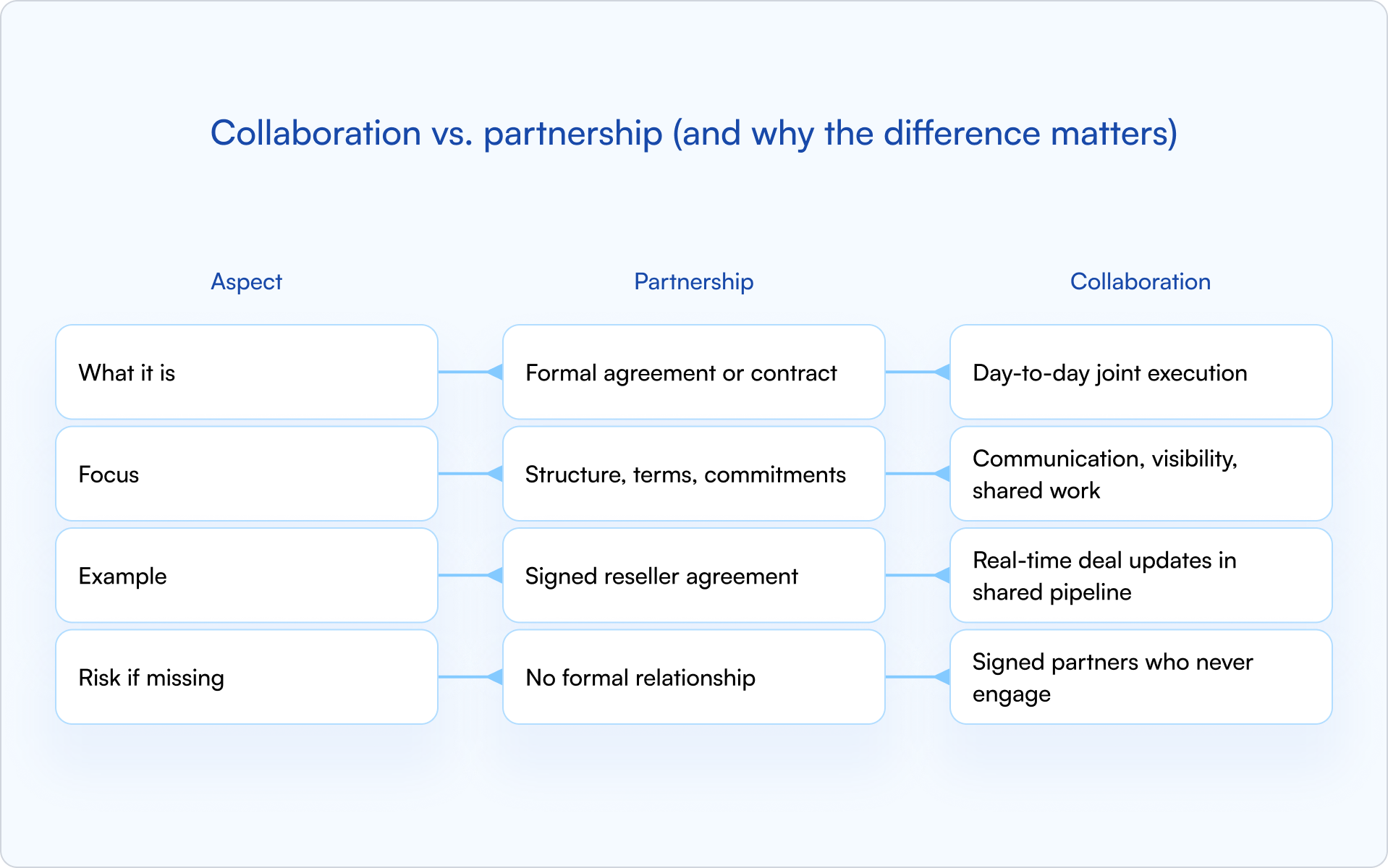
This distinction matters because most partner programs fail at collaboration, not partnership. The agreements are fine. The execution is where things break down.
Why Most Teams Fail at Partner Collaboration
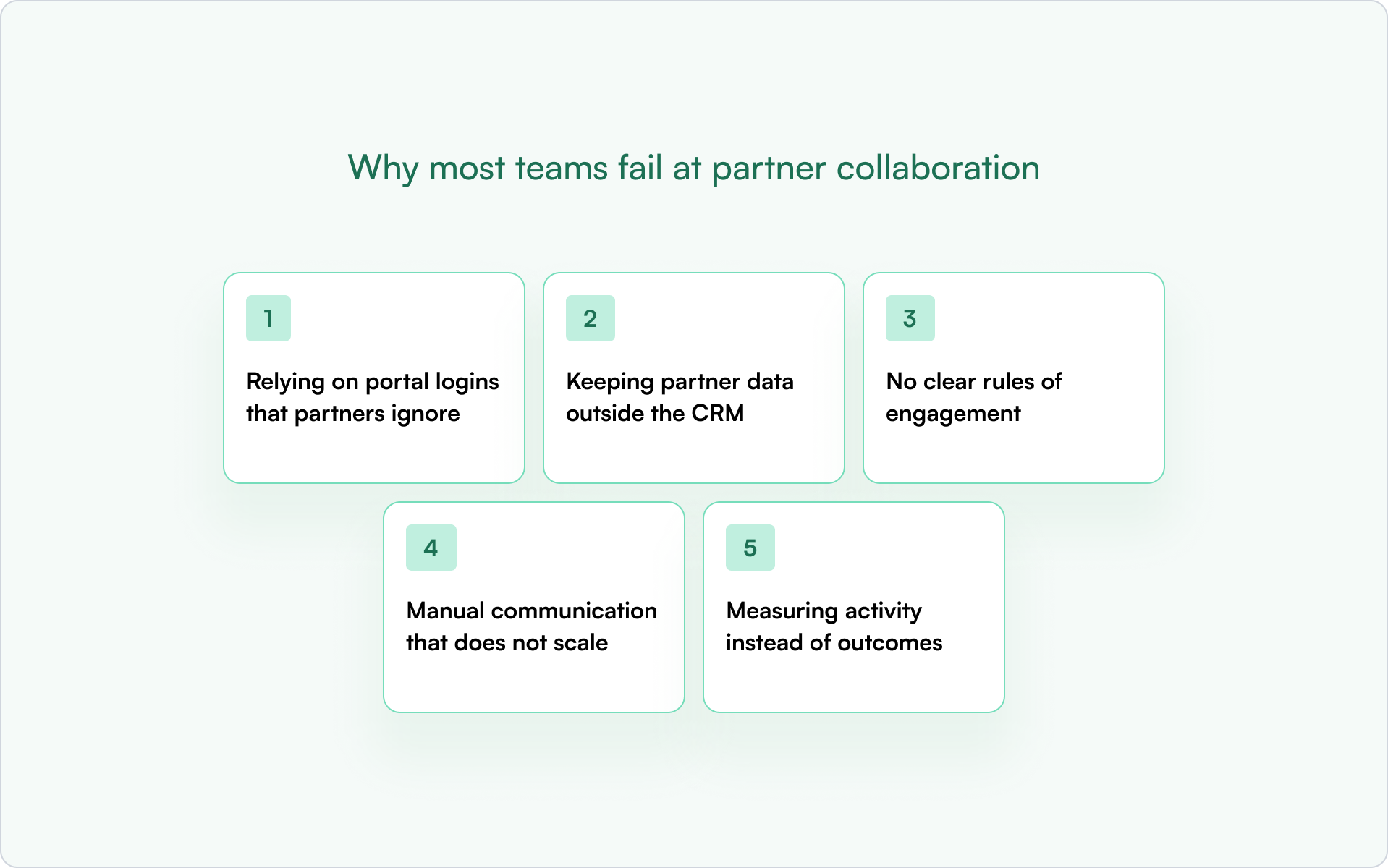
If you’ve ever wondered why your partner program looks good on paper but underdelivers on revenue, the answer is usually one (or more) of these five issues.
1) Relying on portal logins that partners ignore
Traditional PRMs require partners to log into a separate portal to submit deals or get updates. The problem is simple: most partners won’t do it. They’re busy selling — not managing another set of credentials.
The portal becomes a graveyard. Deals go unregistered. Updates stop flowing. And you’re left wondering why engagement dropped off right after onboarding.
2) Keeping partner data outside the CRM
Many teams track partner activity in spreadsheets, emails, or siloed tools. Sales can’t see partner pipeline. RevOps can’t trust the data. Attribution becomes guesswork, and forecasting breaks.
This is where “CRM-first” matters. When partner data lives inside HubSpot or Salesforce — not alongside it — everyone sees the same reality.
3) No clear rules of engagement
Partners and direct sales clash when there’s no clarity on who owns which accounts, how deals are registered, or what protection windows exist. This causes channel conflict and erodes trust fast.
Without documented rules, every overlap becomes a judgment call. And judgment calls don’t scale.
4) Manual communication that does not scale
Chasing partners for updates via email or Slack threads works with five partners. It collapses at fifty. Updates get lost, deals go dark, and partner managers burn out.
The fix isn’t more effort — it’s automation that keeps communication flowing without manual follow-up.
5) Measuring activity instead of outcomes
Tracking portal logins or training completions misses the point. What matters is partner-sourced revenue, deal velocity, and pipeline contribution.
Activity metrics create false confidence. Outcome metrics tell you whether partner collaboration is actually working.
How to Collaborate with Partners Without Portal Logins
Here’s the shift that changes everything: partners don’t have to log into a portal to collaborate effectively.
Off-portal collaboration means partners can register deals, provide updates, and stay informed via email or lightweight forms — no credentials required. Replies sync back to the CRM automatically, so nothing gets lost and your team isn’t stuck reconciling notes later.
What off-portal partner collaboration looks like in practice
- Email-based updates: Partners reply to notifications, and responses sync to the CRM deal record automatically
- Lightweight forms: Shareable links for deal registration — no account creation required
- Real-time visibility: Partners see deal status without logging in, and you see their updates inside your CRM
When you remove the login barrier, engagement goes up. When updates sync automatically, data stays clean. That’s the foundation of partner collaboration that actually scales.
What Effective Partner Collaboration Looks Like
When collaboration works, it’s visible in how deals move — not just in how many partners you’ve signed.
Shared visibility into deals and pipeline
Both you and your partners see deal status, next steps, and blockers without chasing each other. Property-level sharing lets you show partners what they need (stage, protection expiry, next step) without exposing internal notes or pricing.
Frictionless, real-time communication
Updates flow automatically via email or Slack. Partners don’t have to remember to log in. You don’t have to chase them. Every touchpoint is logged in the CRM timeline.
Clear ownership and accountability
Deal registration establishes who owns what and for how long. Rules of engagement are documented and accessible. Disputes are rare because the rules are visible to everyone.
Mutual value and win-win structures
Collaboration works when both sides benefit. Partners get leads, visibility, and support. You get pipeline, market reach, and revenue. Align incentives clearly, and the relationship sustains itself.
Tools and Technology to Collaborate with Partners
The right technology makes partner collaboration repeatable. The wrong technology creates another system to manage — and another place where the truth gets lost.
What to look for in partner collaboration tooling
- CRM integration: Tools that work inside HubSpot or Salesforce — not alongside them — keep data clean and visible
- Deal registration: Centralized submission, approval workflows, and protection windows that enforce your rules
- Partner portal: A self-serve hub for resources, deal status, and communication — but not the only way to engage
- Off-portal engagement: Email and Slack-based collaboration for partners who won’t log in
- Reporting and attribution: Accurate tracking of partner-sourced vs. partner-influenced revenue
Introw is a CRM-first PRM built directly on HubSpot and Salesforce. It enables off-portal collaboration without forcing partner logins — so partners stay engaged and your data stays clean.
If you want to see how this works in practice, get a demo to walk through how Introw supports partner collaboration inside your CRM.
How to Measure Partner Collaboration Success
Activity metrics tell you partners are logging in. Outcome metrics tell you whether partner collaboration is driving revenue.
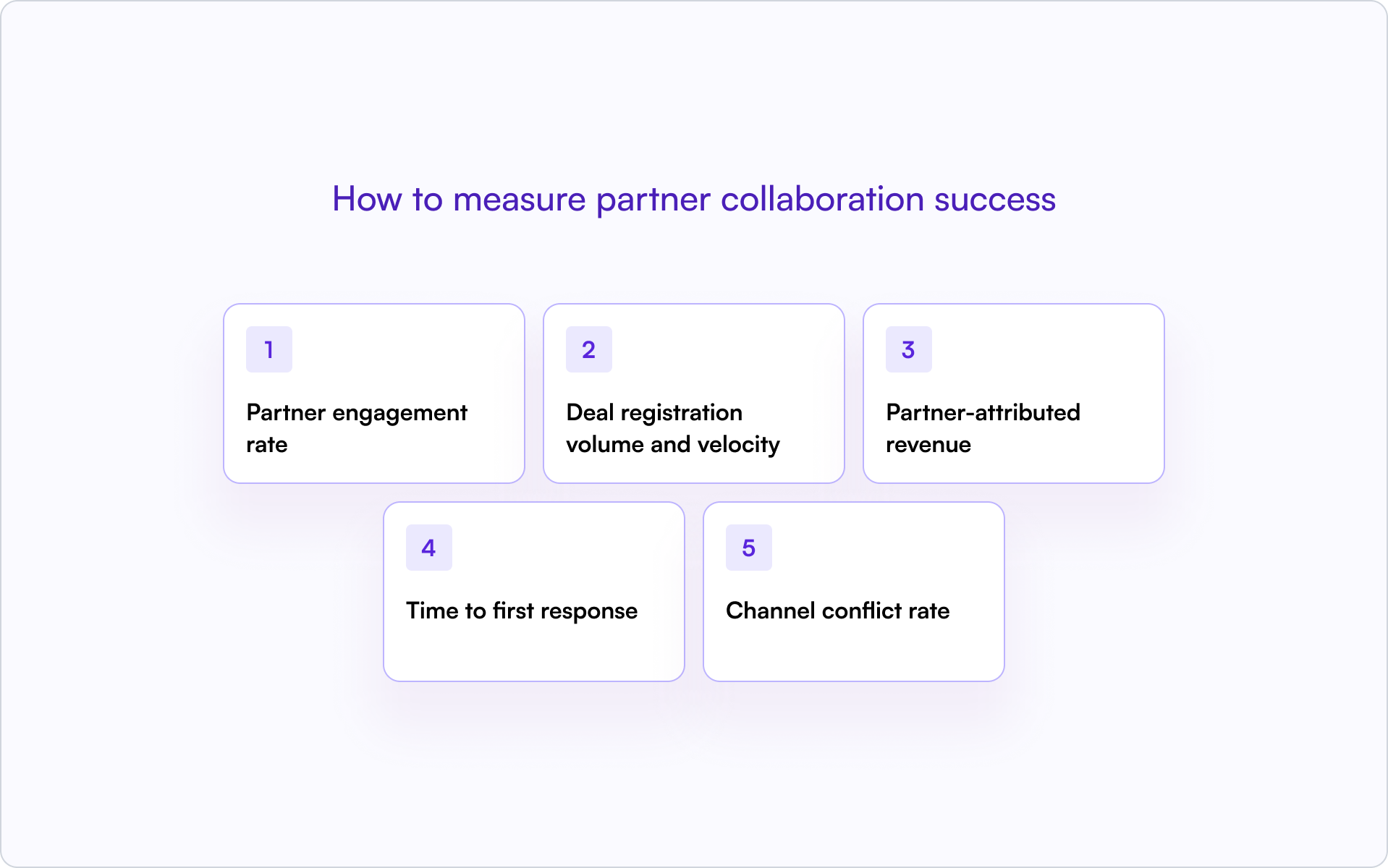
Partner engagement rate
The percentage of partners actively submitting deals or providing updates within a given period. Low partner engagement signals friction in the collaboration process — usually a login or communication problem.
Deal registration volume and velocity
How many deals partners register and how quickly deals move through stages. This measures whether partners are bringing real pipeline, not just names.
Partner-attributed revenue
Closed-won revenue sourced or influenced by partners. This is the ultimate measure of whether collaboration drives business results.
Time to first response
How quickly partners respond to deal updates or requests. Faster responses indicate healthy, engaged collaboration.
Channel conflict rate
The frequency of disputes over deal ownership between partners or between partners and direct sales. Lower is better — it means your rules of engagement are working.
Build Partner Collaboration That Scales Inside Your CRM
Partner collaboration doesn’t fail because of bad intentions. It fails because of bad systems — portals partners won’t use, data that lives outside the CRM, and rules that aren’t visible or enforced.
The teams that scale partner revenue don’t rely on heroics. They rely on clear rules, shared visibility, and tools that meet partners where they already work.
If you’re ready to collaborate with partners without chasing logins or losing deals in spreadsheets, get a demo of Introw to see how CRM-first partner collaboration works.
8 KPIs for Measuring Partner Enablement Program Success in 2026
Most partner teams can tell you how many partners completed training last quarter. Far fewer can tell you whether that training led to a single closed deal.
That gap between enablement activity and revenue impact is where partner programs lose credibility with leadership. The right KPIs for measuring partner enablement program success bridge it by connecting what partners learn and use to what they actually sell.
Below are eight partner enablement KPIs that tie training, content adoption, and portal engagement to partner-sourced revenue — plus practical ways to track them inside your CRM so you can defend budget, scale what works, and cut what doesn’t.
Why partner enablement KPIs matter for revenue growth
Partner enablement refers to the training, content, and resources you provide so partners can sell your product effectively. In practice, the KPIs for measuring partner enablement program success should cover three areas:
- Engagement (Are partners actually showing up and using what you provide?)
- Readiness (Do they understand your positioning well enough to sell?)
- Revenue outcomes (Is any of this translating to pipeline and closed-won deals?)
The reason most teams struggle to prove ROI is simple: enablement data lives in disconnected systems. Training completions sit in an LMS. Deal activity lives in the CRM. Content views and downloads live in a portal or file-sharing tool. When leadership asks, “What did we get for this?” you’re stuck stitching together screenshots and spreadsheets.
When you connect enablement effort to closed revenue, you stop guessing. You can see which onboarding steps correlate with partners reaching their first deal, which training tracks shorten the sales cycle, and which content assets show up in deals that actually close.
Partner enablement KPIs vs. channel partner performance metrics
Before you pick metrics, be clear on what you’re measuring. A lot of partner programs fail because they report only “readiness” metrics (like training completion) without tying them to performance (like revenue).
Think of enablement KPIs as leading indicators. If training completion drops, you’ll often see deal velocity slow a quarter later. If content adoption spikes after a product launch, pipeline usually follows.
The goal is to track both categories side by side so you can answer the questions founders and execs actually care about:
- Do certified partners close bigger deals?
- Which onboarding steps predict first-deal success?
- Where are partners getting stuck — and what’s the revenue impact?
Eight KPIs for measuring partner enablement program success (the ones that actually map to revenue)
Each KPI below is designed to connect enablement investment to outcomes. If a metric can’t influence a decision (what to fix, what to double down on, what to stop), it doesn’t belong on your dashboard.
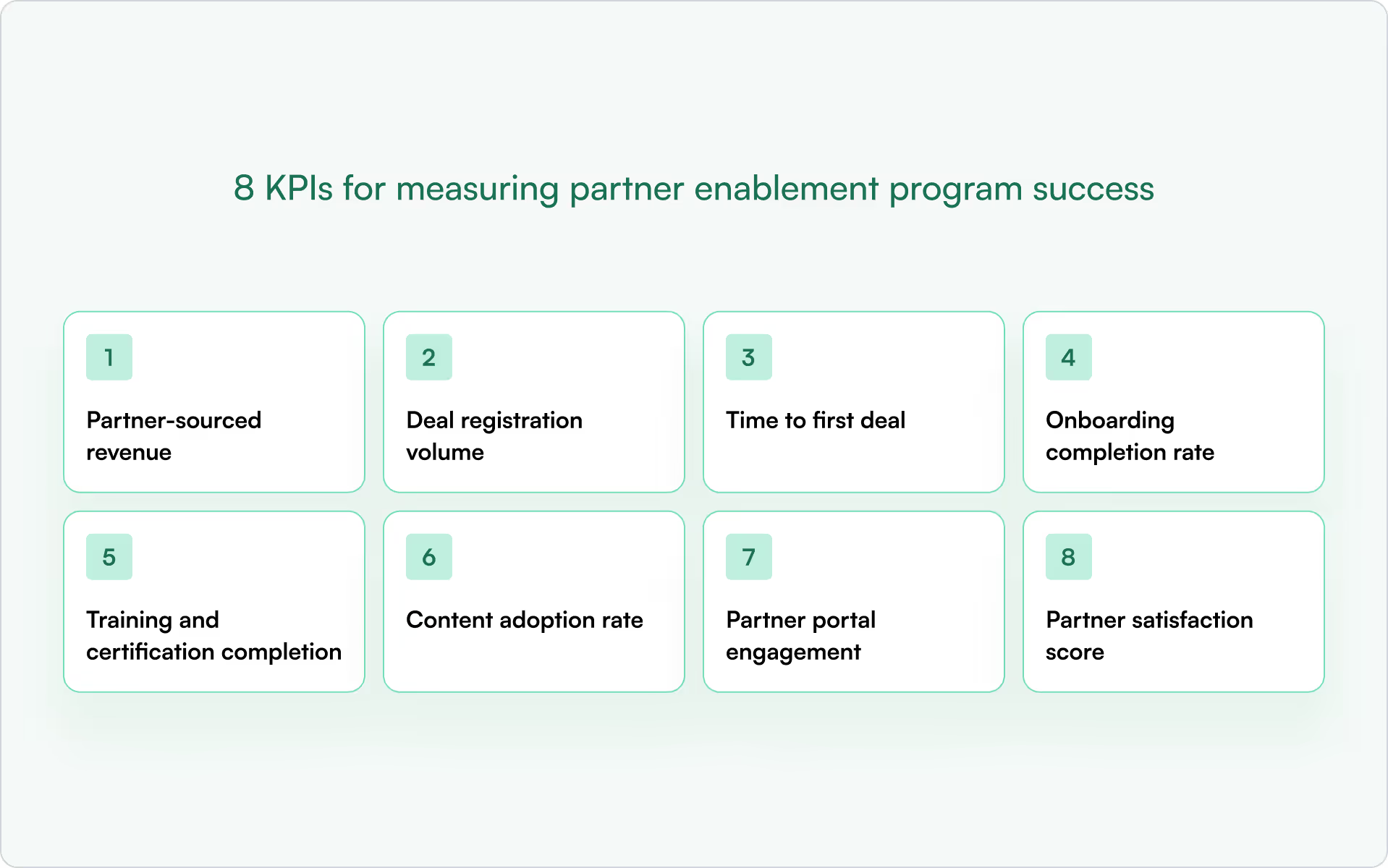
1) Partner-sourced revenue
Partner-sourced revenue is the total revenue from deals your partners originated and closed. This is the cleanest proof that enablement isn’t just “busywork.”
Why it matters: It validates that partner training, content, and support translate into closed-won results — not just activity.
How to track it: To measure it, tag deals with a partner source field in HubSpot or Salesforce. Segment by partner tier, region, or motion to see where enablement is working and where it isn’t.
2) Deal registration volume
Deal registration volume is the number of deals partners register over a given period. It’s a strong signal of partner confidence and program clarity.
Why it matters: Enabled partners who understand your positioning and process tend to register more deals — and earlier in their sales motion.
How to track it: Track registrations per partner and segment by tier, region, or partner manager. A sudden drop in registrations from a previously active partner often indicates friction in your enablement or deal reg process, potentially signaling channel conflict.
3) Time to first deal
Time to first deal measures the days from partner onboarding completion to their first closed-won deal. If you want a single KPI that reflects “partner ramp speed,” it’s this one.
Why it matters: A long ramp time usually means your onboarding is too theoretical, too long, or missing the real-world steps partners need to sell.
How to track it: Store an onboarding completion date on the partner record, then compare it to the first closed-won date on partner-associated opportunities. Track median time (not just average) to avoid outliers distorting the story.
4) Onboarding completion rate
Onboarding completion rate is the percentage of new partners who finish your onboarding program. Low completion is rarely a “partner problem” — it’s typically a relevance or friction problem.
Why it matters: If partners don’t complete onboarding, they won’t know how to position, qualify, register, or co-sell — and your pipeline will show it later.
How to track it: Track completion status per partner and identify where drop-off occurs. If most partners abandon onboarding at the same step, that step is the bottleneck — rewrite it, shorten it, or make it more hands-on.
5) Training and certification completion
Training and certification completion measures the percentage of partners who complete required training or earn certifications. In many programs, certification is the “permission to sell” signal.
Why it matters: Certified partners tend to position more accurately, handle objections better, and require less support per deal.
How to track it: Sync LMS or training platform data to partner records in your CRM. That connection lets you correlate certification status with win rate, cycle length, and average deal size — not just completions.
6) Content adoption rate
Content adoption rate tracks how frequently partners access sales collateral, pitch decks, and marketing assets. If content exists but isn’t used, it’s not enablement — it’s clutter.
Why it matters: Content adoption tells you what partners actually use in the field — and what you should stop spending time on.
How to track it: Track downloads, views, and shares inside your partner portal. Low adoption on a specific asset is a signal to update it, reposition it, or retire it.
7) Partner portal engagement
Partner portal engagement includes login frequency, session duration, and pages viewed. It’s an imperfect metric, but still useful when you interpret it correctly.
Why it matters: Engaged partners stay informed on messaging, launches, and plays — and they tend to bring you into deals earlier.
How to track it: Tie portal analytics to partner account records in your CRM. Low portal engagement may signal login friction. Partners who can collaborate without logging in — via email or Slack — often stay more active than partners who face a login wall every time.
8) Partner satisfaction score
Partner satisfaction score is a survey-based metric capturing partner experience with your program. This is your early warning system — partners usually disengage before they churn.
Why it matters: Dissatisfied partners deprioritize you in favor of vendors who make it easier to sell.
How to track it: Run NPS or CSAT surveys at key milestones: post-onboarding, quarterly, and after major program changes. Declining scores point to specific fixes — unclear rules of engagement, slow deal support, messy content, or weak enablement.
How to track partner enablement and performance metrics in your CRM
If you’re building a partner motion in 2026, your CRM can’t be optional. Tracking KPIs inside HubSpot or Salesforce gives Sales, Partnerships, and RevOps real-time visibility into the same truth — and removes the “whose spreadsheet is right?” debate during QBRs.
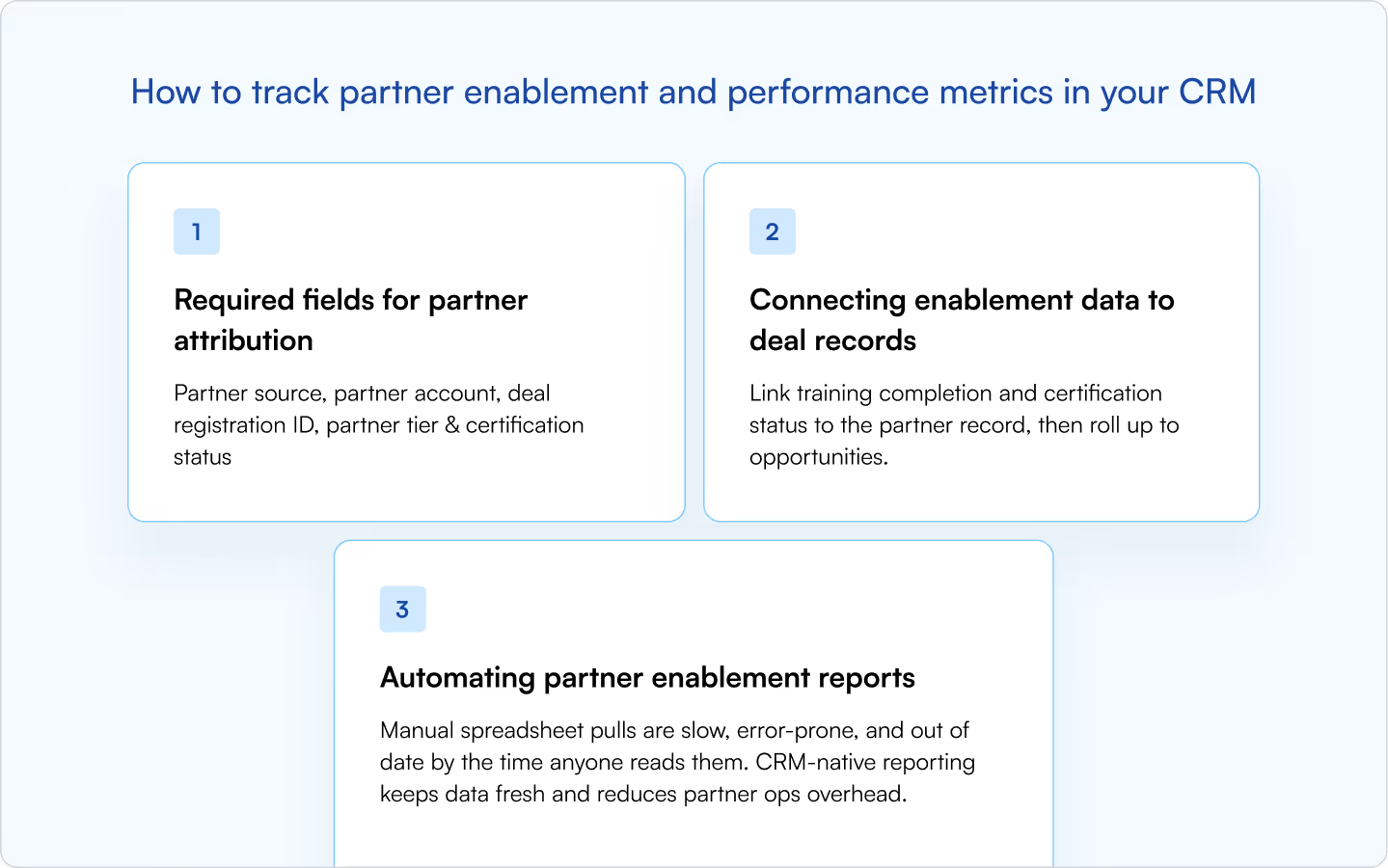
Required fields for partner attribution
Your CRM data model determines what you can measure. Without the right fields, you’ll be stuck with manual reconciliation and fuzzy attribution.
- Partner source: Sourced vs. influenced
- Partner account: Link to partner company record
- Deal registration ID: Ties opportunity to registration
- Partner tier: Segment partner performance metrics by tier
- Certification status: Correlate training to outcomes
Connecting enablement data to deal records
Link training completion and certification status to the partner record, then roll up to opportunities. This is how you answer executive-level questions with data:
- Do certified partners close bigger deals?
- Which training modules correlate with faster deal cycles?
- Does onboarding completion predict partner-sourced pipeline within 90 days?
The connection between enablement and outcomes is where most programs fall short. If your LMS and CRM don’t talk to each other, you’ll keep measuring activity without understanding impact.
Automating partner enablement reports
Manual spreadsheet pulls are slow, error-prone, and out of date by the time anyone reads them. CRM-native reporting keeps data fresh and reduces partner ops overhead.
What to automate weekly:
- Expiring deal registrations and stalled registered opportunities
- Training completion trends by tier and cohort
- Partner-sourced pipeline by stage and expected close date
Automating both partner enablement KPIs and partner performance metrics helps you spend QBR time on decisions — not on attribution debates.
How to build a partner enablement dashboard (that leadership will actually trust)
A dashboard is only useful if it lives where your team already works. The best dashboards sit inside the CRM so leadership sees partner data alongside direct sales.
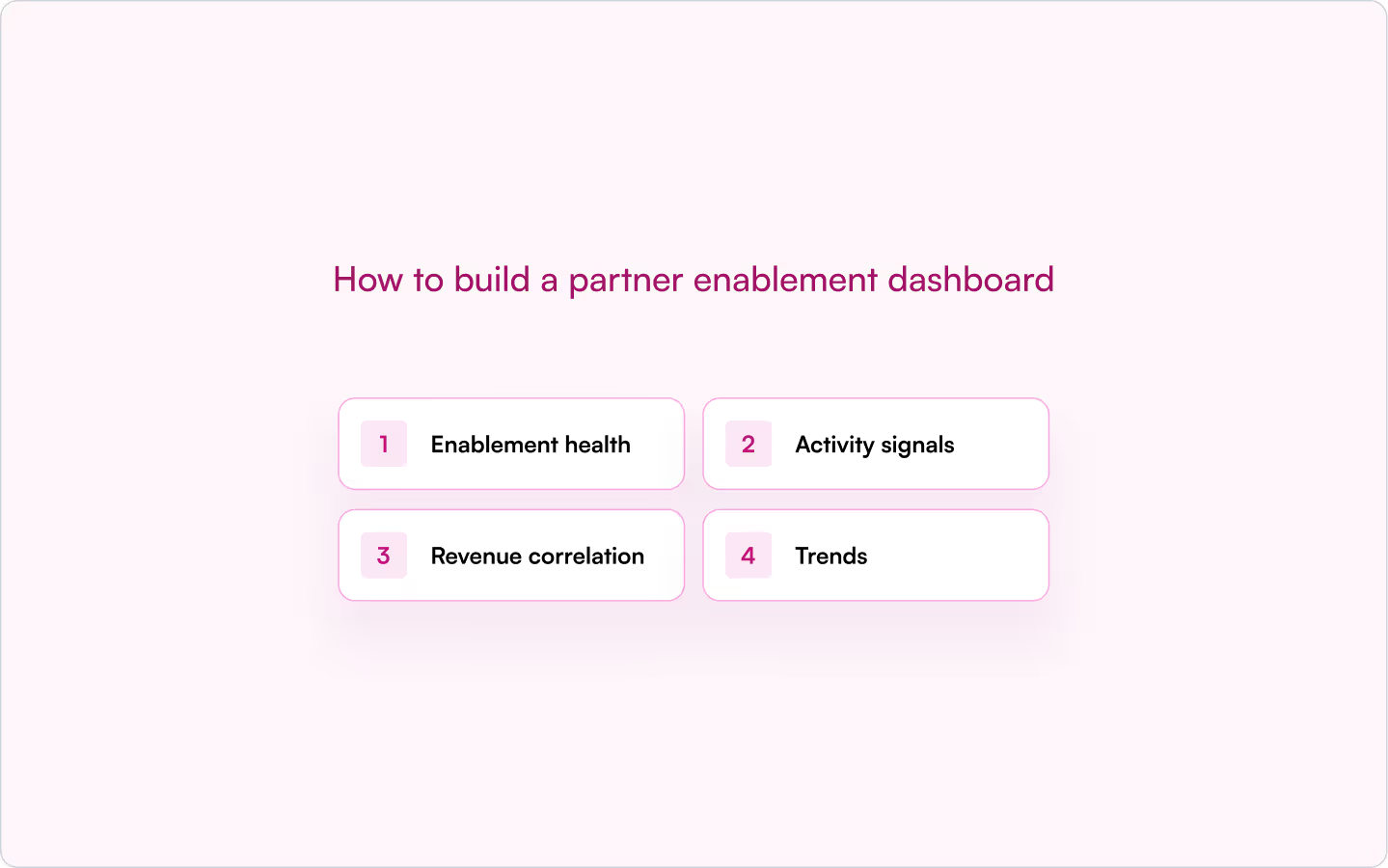
Include these dashboard components:
- Enablement health: onboarding completion, training completion, content adoption
- Activity signals: portal logins, deal registrations, content downloads
- Revenue correlation: partner-sourced revenue by enablement stage (new, trained, certified)
- Trends: month-over-month changes to spot issues early
When enablement and revenue show up in the same view, you can quickly see which partners are ramping and which are stalling. That visibility makes it easier to intervene early — before a partner disengages entirely.
Turn partner enablement data into repeatable revenue
Measuring KPIs for measuring partner enablement program success isn’t about producing more reports. It’s about building a partner motion that scales — with clear signals for what to fix, what to standardize, and where to invest.
When you track enablement metrics, deal registrations, and partner activity inside your CRM, you get real-time visibility without chasing partners for updates. You can see which training programs correlate with faster deal cycles, which content partners actually use, and which onboarding steps predict long-term engagement.
A CRM-first PRM like Introw keeps all of this in HubSpot or Salesforce, so your team and your partners work from the same source of truth.
Subtle next step: If you’re already tracking deals in HubSpot or Salesforce, start by adding the attribution fields above and building a simple dashboard. You’ll learn more in two weeks of clean data than in a quarter of portal “engagement” guesses.
Ready to track partner enablement KPIs inside your CRM? Get a demo.
The Ultimate Guide to Channel Partner Management in 2026
Effective channel partner management is the backbone of every successful SaaS partner program. In 2026, winning teams are moving far beyond static portals and manual spreadsheets. Instead, they’re combining clear channel strategy, consistent communication, and CRM-first execution to turn channel partners into a dependable source of pipeline and revenue growth. In this guide, you’ll find practical frameworks, best practices, and tools to help you build a solid foundation, motivate partners, and run an operating model that scales across multiple vendors, motions, and regions. Along the way, we’ll show where Introw’s partner relationship management approach fits when you want less friction and more shared truth.
What Is Channel Partner Management?
In B2B SaaS, channel partner management is the ongoing, two-way system for recruiting the right partners, enabling them with training resources, aligning on business objectives, and collaborating to win and retain customers. It’s broader than enablement and deeper than a partner portal login count. It covers the business relationship and the business model: how partners sell, how you reward partners, how you prevent channel conflict, and how you measure partner performance across the customer lifecycle. Engaged partners submit qualified deals, join joint business planning sessions, co-host campaigns, and escalate risks early. A capable channel partner manager orchestrates these motions, balancing sales techniques with program design so third party partners can move quickly without sacrificing data quality. The outcome you’re after isn’t activity for activity’s sake; it’s mutual support, new customers, and sustainable revenue.
Why Channel Partner Management Still Matters in 2026
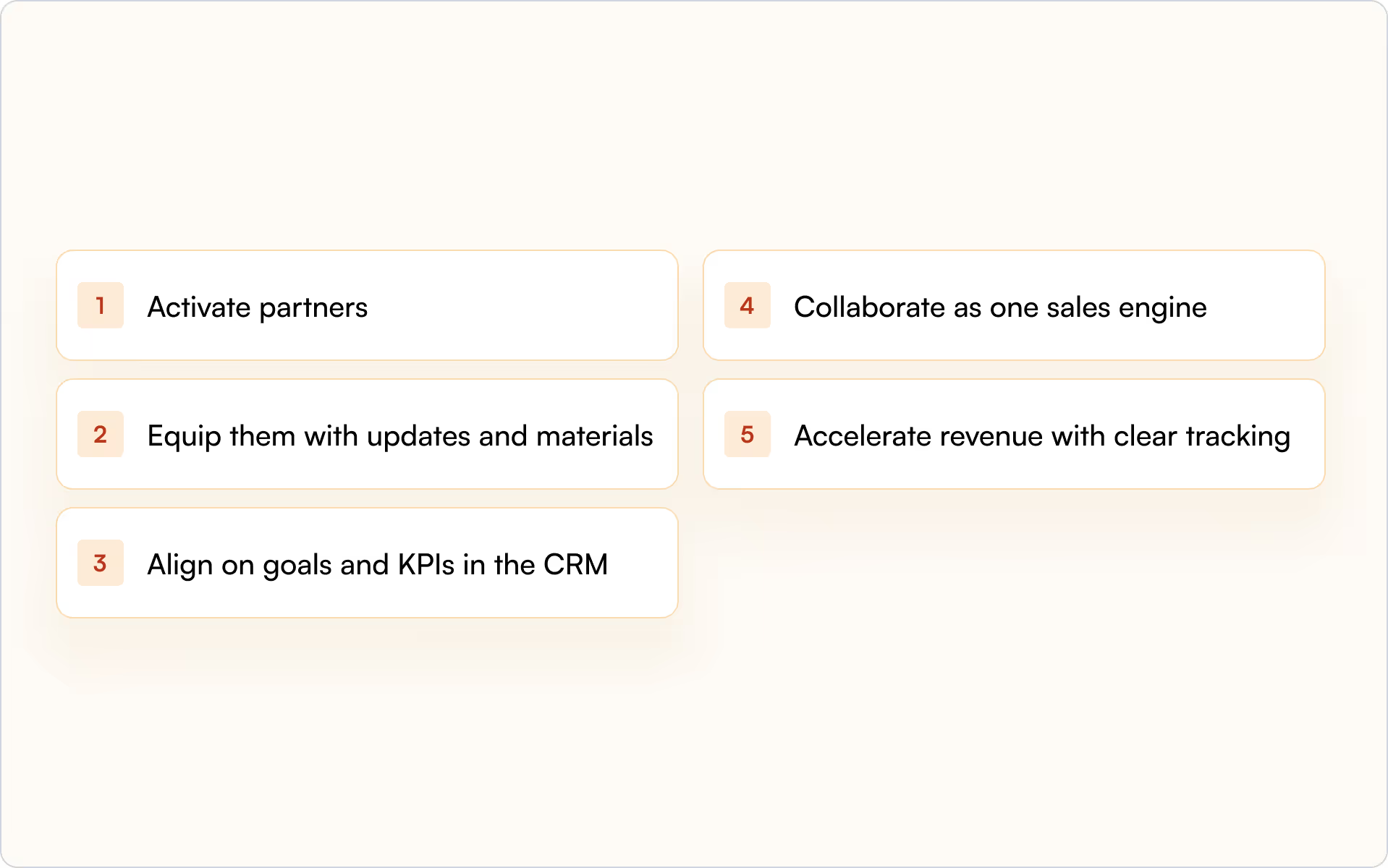
Signing new partners is easy; managing channel for mutual success is the real work. Competition is intense, partner ecosystems are crowded, and buyers expect coordinated experiences across software, services, and integrations. If you don’t keep partner relationships active — through timely updates, useful marketing materials, and clear sales support — enthusiasm fades, channel conflict rises, and deals quietly stall. The best programs treat partners as an extension of the sales team, not a parallel track. They publish sales targets and key performance indicators, make the entire partner lifecycle visible in the CRM, and keep the same page across partner managers, AE, and RevOps. When you track partner progress alongside direct motions and tie activities to outcomes, you get faster cycles, cleaner attribution, and reliable forecasting. Introw’s stance is pragmatic: meet partners where they already work, sync everything back to Salesforce or HubSpot, and let automation handle the nudges so humans can focus on selling.
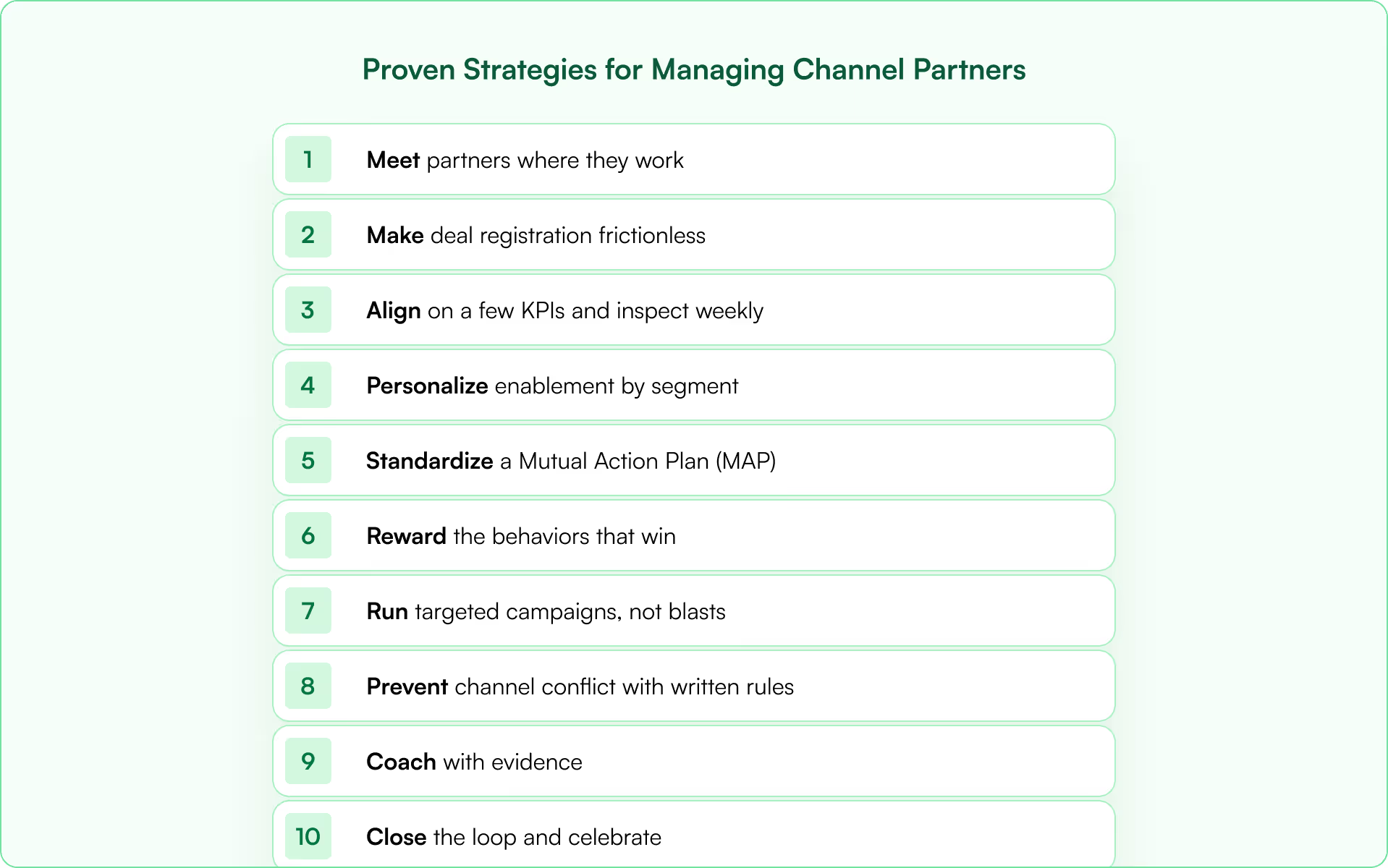
10 Proven Strategies for Managing Channel Partners in 2026
1) Meet Partners Where They Work
Reduce friction by engaging partners through the tools they already use — email, Slack, and the CRM. Replace “please log in” moments with no-login updates and reply-to-update workflows. Introw enables off-portal collaboration so partners can respond from their inbox and have that context land on the opportunity. The result: higher partner engagement, fewer missed signals, and faster decisions.
2) Make Deal Registration Frictionless
Short forms, clear rules, instant confirmation. Let partners register via link or email and auto-attach submissions to the right account with deduplication. Acceptance SLAs should be visible so a partner manager isn’t chasing status. When registration is simple, partners sell earlier, attribution is clean, and your sales team can prioritize correctly.
3) Align on a Few KPIs and Inspect Weekly
Pick a concise set of key performance indicators that tie to outcomes: partner-sourced pipeline, time from registration to acceptance, stage conversion on co-sell deals, average discount, and renewal or expansion on shared accounts. Review weekly internally and monthly with partners. Action beats dashboards: agree on one change per review and track the effect.
4) Personalize Enablement by Segment
Managed service providers often need deeper technical support and services packaging; resellers want campaigns and pricing clarity; referral partners need fast handoffs. Segment by type, tier, and region, then tailor training materials, sales strategies, and incentive programs accordingly. Keep everything easy to find and easy to reuse.
5) Standardize a Mutual Action Plan
Create a simple plan template for every registered opportunity: owners on both sides, next three steps, and dates. Keep it inside the CRM so partner activities and internal tasks live together. This turns “let’s sync later” into concrete progress and keeps independent entities rowing in the same direction.
6) Reward the Behaviors That Win
Develop incentive programs that favor early, qualified registrations, first-meeting mutual action plans, and clean data. Pay on time and publish status so finance doesn’t become the help desk. Balance sourced and influenced models to prevent noise. When rewards mirror reality, you’ll see improved partner performance without adding complexity.
7) Run Targeted Campaigns, Not Blasts
Use your segments to deliver timely announcements, co-marketing offers, and marketing materials that match the partner’s audience. Track opens, clicks, replies, and pipeline created so you can double down on what works. Partners feel valued when outreach is relevant and light on ceremony.
8) Prevent Channel Conflict With Written Rules
Define protection windows, duplicate logic, and escalation paths. Keep decisions quick and documented in the CRM. Clear, enforced rules lower drama and safeguard long term relationships — especially when multiple vendors and overlapping territories are in play.
9) Coach With Evidence
Replace gut feel with concrete observations: “Your registrations stall at validation; let’s tighten discovery and bring technical support earlier.” Use conversation snippets, win-loss notes, and customer data patterns to improve talk tracks. Share learnings across partners so valuable insights travel.
10) Close the Loop and Celebrate
Publish small wins, share what changed because of feedback, and highlight partner reps who moved a deal. Recognition compounds motivation. A simple monthly roundup does more for partner relationships than another generic webinar.
Tech Stack & Frameworks That Actually Help
Modern partner management doesn’t require a maze of tools. Aim for a CRM-first spine that covers registration, collaboration, and analytics. You’ll want automation for updates, no-login access for partners, and real-time engagement tracking so you can measure without chasing screenshots. Introw’s approach is to mirror your sales processes, keep partner portal usage optional, and centralize partner activities on opportunities, accounts, and contacts. That way, track partner progress and revenue attribution live where leadership already inspects the business.
The operate framework
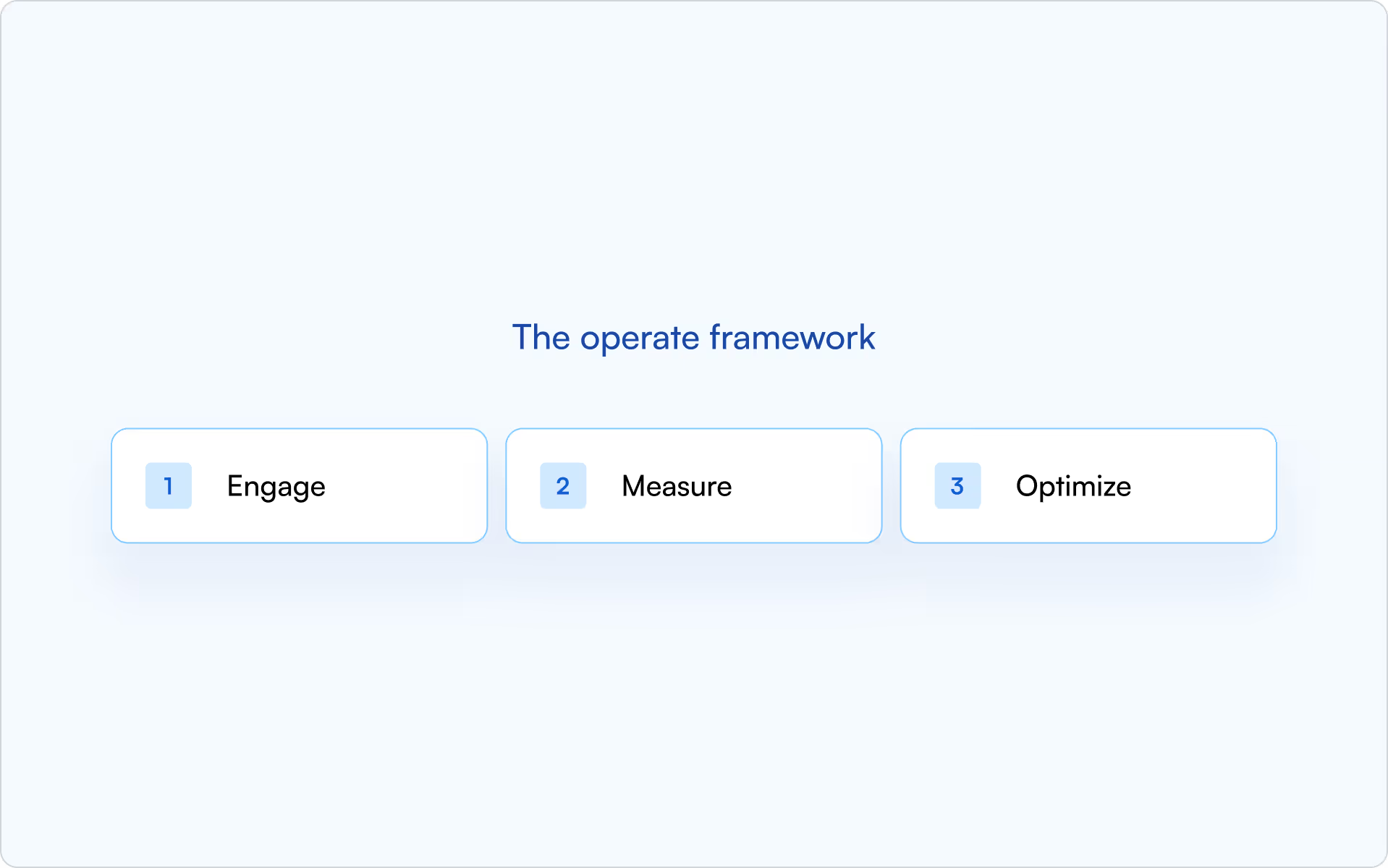
- Engage: meet partners in their tools, send concise updates, and provide sales tools they’ll actually use.
- Measure: tie partner activities to pipeline and bookings, not just logins.
- Optimize: retire low-yield motions, expand plays that convert, and adjust incentives quarterly.
How Introw Supports This Operating Model
Introw brings partner relationship management into Salesforce and HubSpot, letting partners sell without changing their day-to-day habits. No-login deal registration, reply-to-update collaboration, Slack nudges, and role-based dashboards keep everyone aligned. For partner managers, it simplifies managing channel by removing swivel-chair work. For RevOps, it protects data hygiene. For CROs, it links partner activities to forecast and revenue growth — the measures that matter.
Conclusion
Channel partner management in 2026 is a flow, not a checklist. Recruit the right partners, align on a few KPIs, keep communication lightweight and frequent, and make it effortless to register and advance deals. Handle conflict quickly, reward partners for behaviors that move the needle, and keep improving the business strategy with evidence, not hunches. When you operate from a single source of truth and design for adoption, you get mutual success: stronger partner relationships, predictable pipeline, and customers who experience coordinated service from first meeting through renewal. If you want that flow to scale, consider a CRM-first platform like Introw to keep the work simple and the results visible.
Partner Lead Registration: Capture Leads Without Logins in 2026
Great partner programs die on their first form. You want partners engaged, but the moment they hit a login wall, many stop. The good news: you can run partner lead registration without a portal login, keep data clean, and still resolve ownership fast. Below is a practical guide for teams that want more registered leads, fewer disputes, and a smoother sales process.
Why partner lead registration matters now
As your partner ecosystem grows, multiple partners find the same end customer, sales reps ask “who owns this account,” and leadership needs pipeline visibility. Lead registration (capturing a partner-sourced prospect early) protects the partner’s effort, reduces channel conflict, and lets you assign leads to the right team fast. It also creates a trail you can trust for commission payments and co-sell attribution.
When you make registration lightweight and fair, partners stay engaged, your sales team sees context, and operations keep a single source of truth for registered leads and registered deal records.
What “partner lead registration” is (and how it differs from deal registration)
Think of lead registration as the earliest claim: the partner flags a prospect with enough data for you to review and accept or decline. Deal registration comes later, once there’s a qualified opportunity with stage, amount, and next steps. Both fit inside modern partner programs, but they serve different moments:
- Lead registration: fast intake to assign leads, mark a cooling-off period, and prevent multiple partners from colliding on the same company.
- Deal registration: deeper validation to approve an existing deal with co-sell motions, attached resources, and clear SLAs.
Successful programs use both. Start with easy lead registration to capture more top-of-funnel, then elevate to deal reg when real pipeline appears.
The no-portal approach: five simple ways to capture partner leads
Logins are the biggest drop-off point. You can capture leads without a portal login and still keep control.
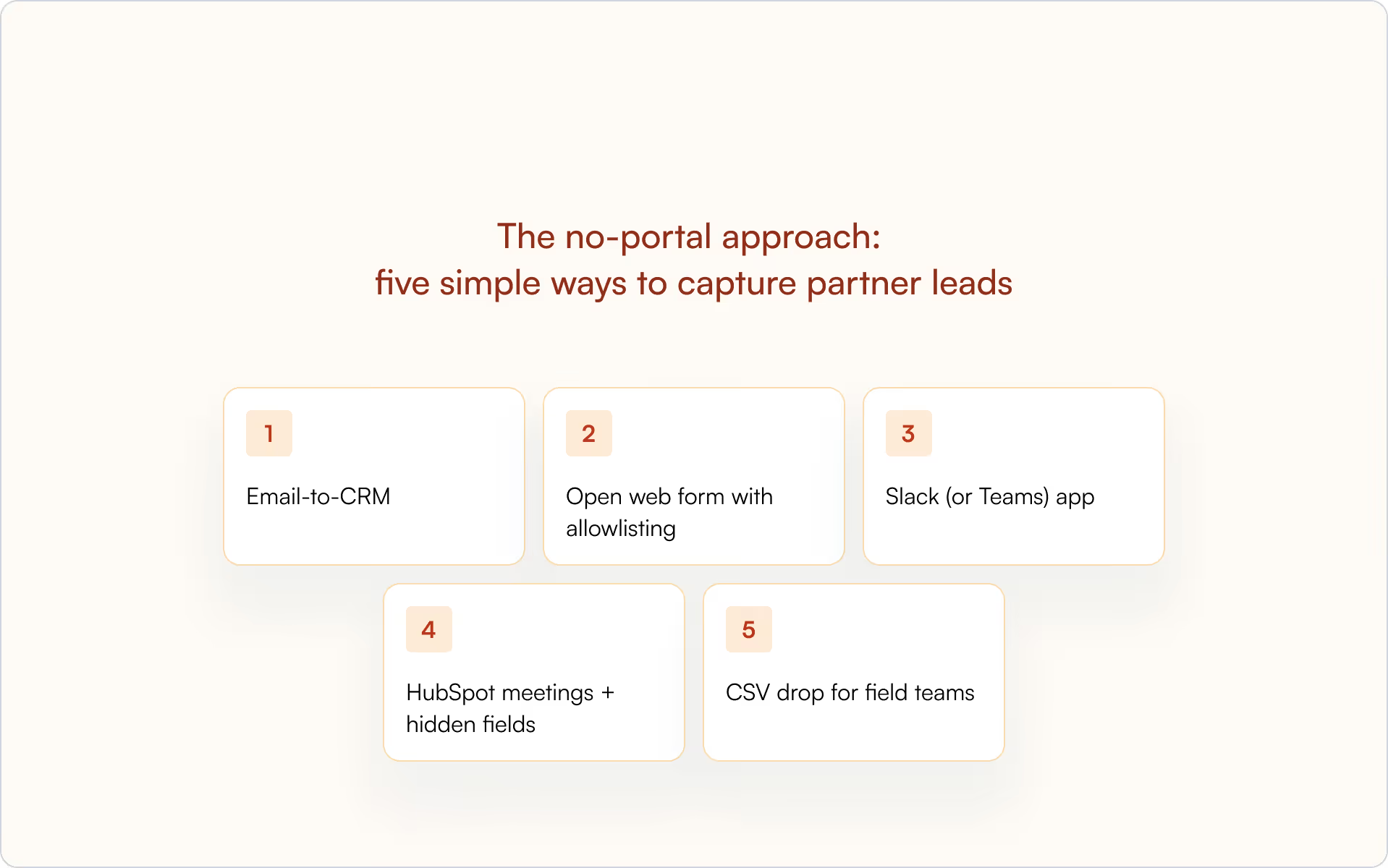
- Email-to-CRM
Give partners a single address (for example, partners@yourcompany.com). When they send a short “registration form” by email (company name, contact, problem, consent), an automated flow parses the message, creates the record, and returns a case number and status.
- Open web form with allowlisting
Host a short registration form that’s public but gated by reCAPTCHA and a partner email domain check. Submissions create a lead and kick off validation, while approved third parties (your partners) get instant confirmation and a “pending” badge.
- Slack (or Teams) app
If you co-sell in shared channels, let partners use a “/register” slash command. The bot collects company, contact, use case, and creates the registered deal or lead in your system, then posts back the record link.
- HubSpot meetings + hidden fields
For HubSpot partner lead registration, use a short form attached to a partner-facing “Book a discovery” page. Hidden fields tag partner ID and program. When the form is submitted, HubSpot creates the contact, company, and a deal stub, and your workflow moves it to “Submitted for review.”
- CSV drop for field teams
Some service partners prefer bulk. A controlled CSV upload (fields validated on import) lets them register a new deal list weekly. Your system dedupes by domain and company name, flags conflicts, and returns approved/declined with reasons.
All five methods can feed the same backend rules, the same partner portal views, and the same commission plan. The difference is friction: partners can register from wherever they already work.
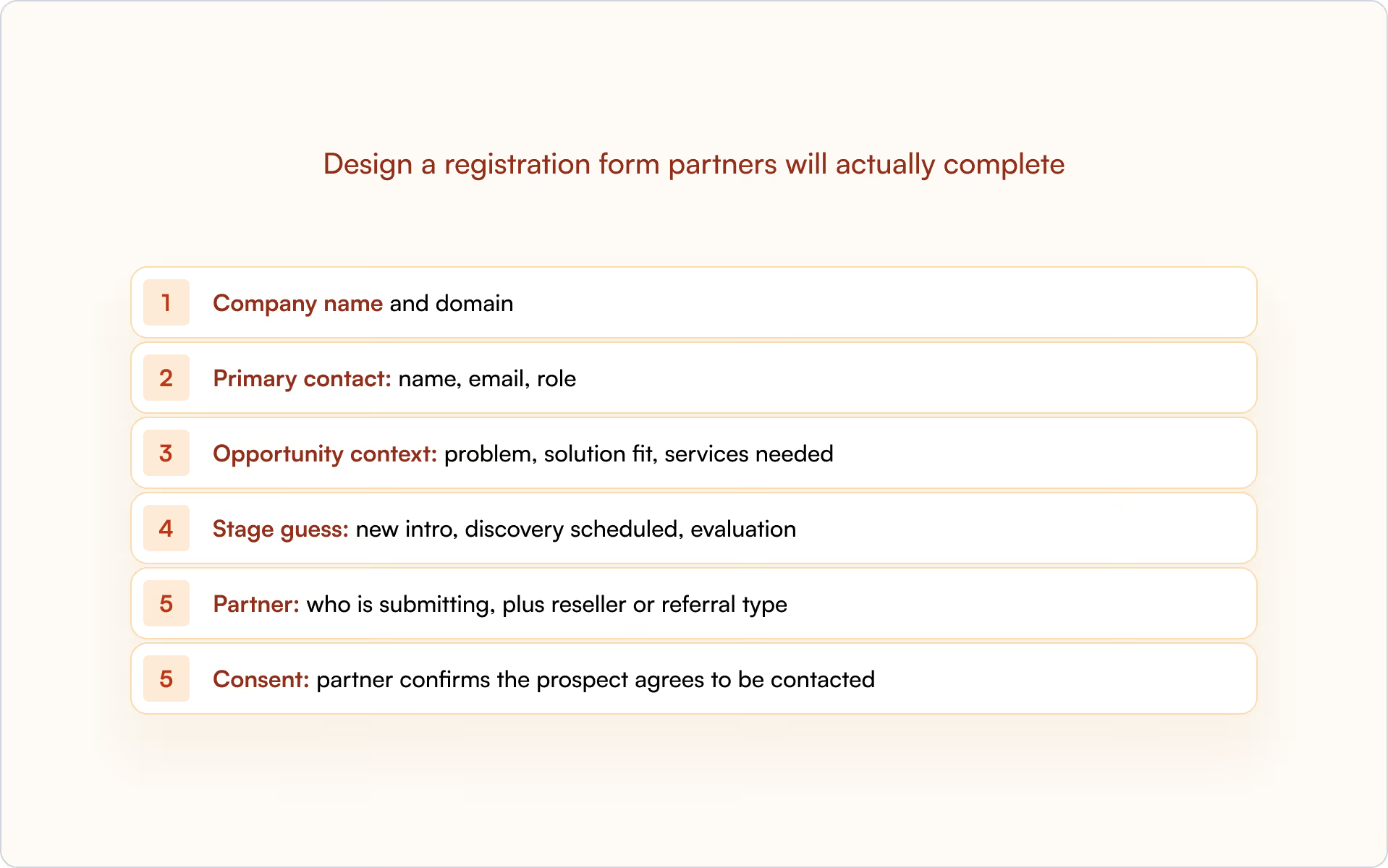
Design a registration form partners will actually complete
Keep it under a minute. These fields usually give you enough to decide:
- Company name and domain
- Primary contact: name, email, role
- Opportunity context: problem, solution fit, services needed
- Stage guess: new intro, discovery scheduled, evaluation
- Partner: who is submitting, plus reseller or referral type
- Consent: partner confirms the prospect agrees to be contacted
Optional, when needed: geography, target revenue, product interest, and competing vendors.
Make validation fair: from “submitted” to “approved” without drama
A good lead reg process balances speed and fairness. Publish the rules, enforce them consistently, and give partners a clean status they can see.
- SLA: respond inside two business days.
- Checks: duplicate by domain, existing deal check, territory rules, blocked accounts.
- Results: approved (with hold window), ask for more info, or declined (with reason).
- Hold window: 60–90 days of protection when partners complete the next step (for example, first meeting or intro email logged).
- Channel conflict: if two partners submit the same prospect, the one who got the first meeting within the window wins, or you split by segment/solution if that’s your policy.
Introw codifies these rules so operations doesn’t have to referee edge cases every week.
Map it to your CRM: HubSpot and Salesforce without side spreadsheets
Whether you run Salesforce or HubSpot, treat partner lead registration like any other intake you want to automate and audit.
- Objects: create a “Partner Registration” object or use a custom property set on Deals to track registration, status, partner, and window end date.
- De-dupe: auto-link to Company by domain; show “existing deal” if one is open.
- Workflows:
- Submitted → Validation queue → Approved/Declined
- Approved → Notify AE/partner → Start sales process tasks
- First meeting scheduled → Lock or extend hold window
- Dashboards: real time dashboards for operations and partner managers: pending, aging, approvals, meeting rates, win rates.
For HubSpot partner lead registration, keep your registration form in HubSpot, route through workflows, and surface status to partners via automated emails or a lightweight shared page. On Salesforce, mirror the same flow with Process Builder or Flow.
Incentives and SLAs that keep partners engaged (without overpaying)
You don’t need to pay for every submission. Reward progress, not spam.
- Tiered incentives: small flat fee when the first meeting is completed, larger percentage on new customers won, and accelerators for high margin products.
- Partner tier alignment: higher tiers may get faster response, priority support, or co-sell resources.
- SLAs: you respond within two days; the partner books a meeting within 14 days; your rep updates next steps after every call. Clear, mutual commitments build trust.
Seven metrics that prove the system works
Leaders care about outcomes. Measure what moves revenue and reduces friction.
- Registration-to-meeting rate within 14 days
- Approval rate by partner and segment
- Conflicts avoided vs. unresolved disputes
- Win rate and sales volume on approved registrations
- Time to first response and time to approval
- Active protection windows by region and product
- Commission payments accuracy and cycle time
When the numbers are visible, you can adjust commission structures, spot partner behavior trends, and focus enablement where it helps most.
A 30-day rollout you can actually ship
You don’t need a massive project to modernize lead reg. Keep it tight and iterative.
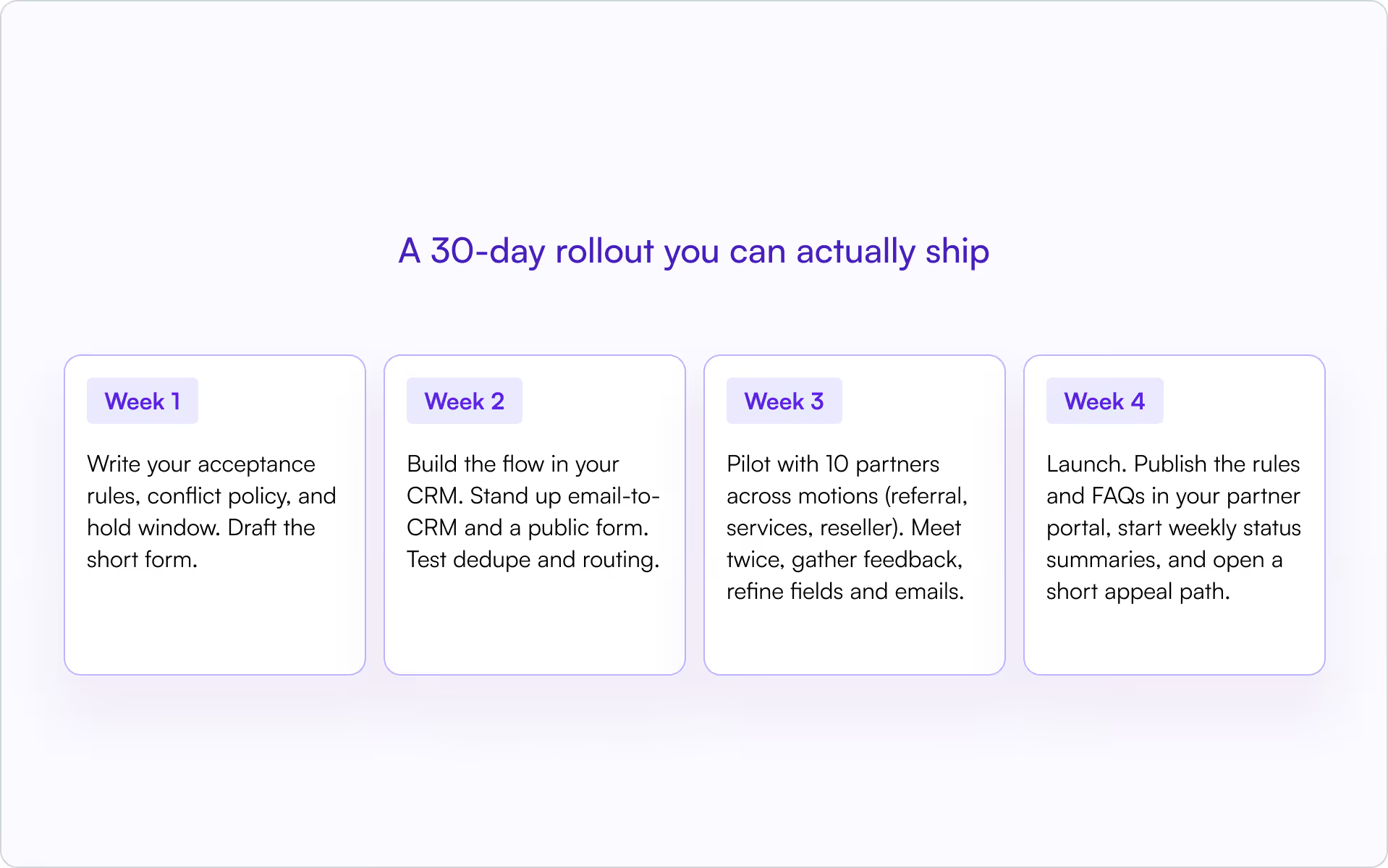
- Week 1: Write your acceptance rules, conflict policy, and hold window. Draft the short form.
- Week 2: Build the flow in your CRM. Stand up email-to-CRM and a public form. Test dedupe and routing.
- Week 3: Pilot with 10 partners across motions (referral, services, reseller). Meet twice, gather feedback, refine fields and emails.
- Week 4: Launch. Publish the rules and FAQs in your partner portal, start weekly status summaries, and open a short appeal path.
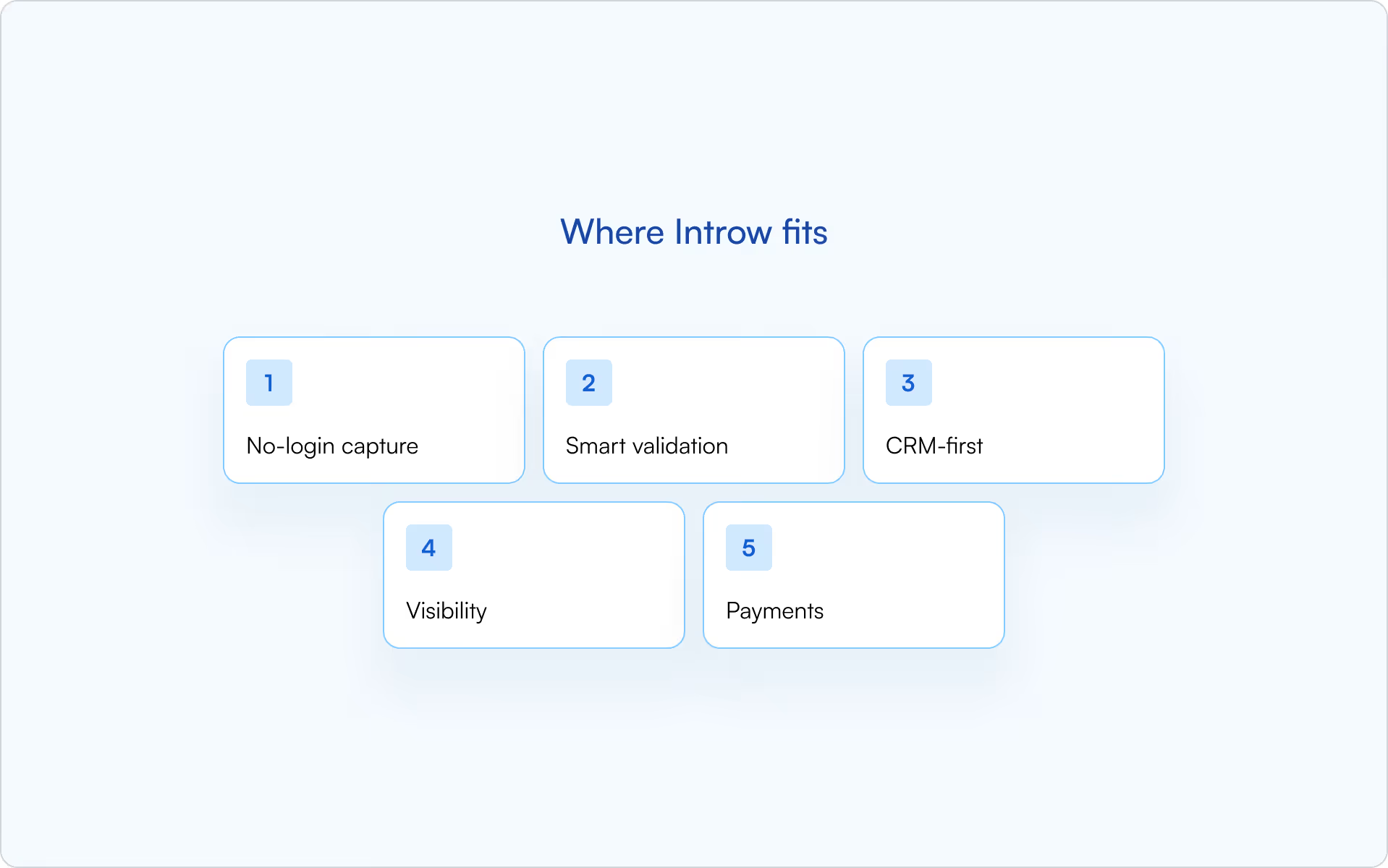
Where Introw fits
Introw is built to remove friction from partner lead registration and deal registration alike:
- No-login capture: partners register via email, a shared page, or Slack; Introw creates the record and sends status.
- Smart validation: automatic dedupe, account checks, and clear status transitions from submitted to approved to won.
- CRM-first: bi-directional sync with Salesforce or HubSpot, so ops and reps work in systems they already know.
- Visibility: partners see progress and next steps without asking you to “check the portal.”
- Payments: clean attribution makes commission management straightforward and commission payments timely.
If you’re ready to move beyond “please log in and fill this long form,” Introw gives you a lightweight, auditable path to more revenue and fewer headaches.
Ready to simplify partner lead registration?
If you want partners engaged, fewer conflicts, and clean data, make registration effortless and visible. Introw lets you capture leads without logins, validate fairly, and sync everything to your CRM so your sales team and partners can focus on winning. Request a demo and see how it works in your environment.

