

.svg)


.svg)
.svg)








Articles by Simon
How to Evaluate PRM Platforms for Security and Scalability: Buyer’s Checklist
Before choosing a vendor, compare how each partner platform handles real-world complexity across the entire partner lifecycle, not just what the partner portal looks like in a demo.
Why security and scalability now define PRM success
A PRM used to be mostly a partner portal. Today, it exposes deal registration, lead distribution, certifications, content, and partner-facing collaboration across your entire partner lifecycle.
That creates more value. It also creates more risk.
More external users now interact with partner data, customer data, and revenue workflows. Your PRM may support multiple partner programs, regions, and channel sales motions at once. That adds real complexity your team has to manage.
What this changes for security
Security is no longer just infrastructure. It’s about role-based visibility, field-level permissions, secure data sharing, and protecting sensitive data across partner relationships.
What this changes for scalability
Scalability is not user count. It’s whether your system can support multiple partner ecosystems, automated workflows, and structured deal and lead registration without creating manual work for internal teams.
Many platforms look strong in a demo but struggle once real partner management begins at scale. That’s why security and scalability directly shape partner trust, adoption, and revenue operations.
Next, let’s look at what security actually means when evaluating a PRM platform.
How to evaluate PRM security (beyond certifications)
Security certifications matter. They confirm a vendor follows strong security protocols and supports regulatory compliance.
But real PRM security shows up in daily partner management.
It affects how partner data is shared, how access works across partner programs, and how your team handles direct customer interactions inside connected systems. Strong controls help reduce vendor risks, support third-party risk management, and improve risk mitigation across your entire vendor ecosystem.
Here’s what to evaluate first.
.png)
Identity and access controls
Access control is where most security gaps start.
You should be able to control who enters the platform, what they see, and how quickly access can be removed across partner onboarding and channel programs involving multiple partner types.
Look for:
- SSO and SAML support
- MFA for internal teams and partners
- role-based access by partner tier or region
- fast provisioning and removal of users
- secure authentication without manual passwords
These controls reduce cyber risk and strengthen your organization’s security across the vendor lifecycle while supporting consistent third-party risk assessments.
Strong identity controls only work if visibility inside the platform is equally precise.
Granular permissions and data visibility
Most PRM security issues come from oversharing partner data, not infrastructure failures.
A strong permission model lets you control field-level visibility, object-level access, and partner-safe CRM views across different partner journeys. Referral partners rarely need pipeline access, while resellers often do.
You should be able to:
- segment access by partner type, role, or region
- control visibility across deals, contacts, and marketing funds
- protect sensitive data across partner ecosystems
- support structured revenue tracking without exposing unnecessary fields
These controls support vendor risk management and help mitigate risks across the entire supply chain as partners interact with shared workflows.
Platforms built for structured partner management make these controls easier to apply consistently across partner relationships.
Security visibility also depends on whether activity is traceable across the system.
Auditability and governance
If something changes in your partner ecosystem, you should be able to see who did it and when.
Auditability supports risk assessment, compliance risk monitoring, and stronger third-party risk management across the entire partner lifecycle. It also helps teams respond faster to security questionnaires and internal reviews.
Look for:
- activity logs across deals and approvals
- change tracking for shared records
- visibility into deal registration approvals
- traceable partner onboarding updates
- reporting capabilities for compliance reviews
These controls improve risk posture and support ongoing monitoring across your vendor lifecycle, especially when working with high-risk vendors or regulated industries such as a healthcare provider environment.
Content sharing is another place where security gaps often appear.
Content and asset access controls
Modern partner ecosystems depend on shared marketing assets, certifications, and training. That makes content governance part of everyday risk management.
You should be able to control who can access resources, limit visibility by role or region, and track engagement across partner programs. This matters even more when running through channel marketing automation, co-branded email campaigns, or social media syndication.
Platforms with a built-in partner LMS and tools to enable partners with content make it easier to manage content securely without adding manual approval steps.
Strong content controls reduce compliance risks and support consistent security across your entire partner ecosystem.
From here, the focus shifts to whether your PRM can handle growing complexity across partner programs, workflows, and systems.
What “scalable” really means in a PRM platform
PRM scalability isn’t about user limits. It’s about supporting more partner programs, partner types, and workflows without adding manual work for your team.
As your ecosystem grows, complexity increases across partner onboarding, approvals, and reporting.
A scalable platform keeps partner engagement steady, supports partner adoption, and maintains revenue visibility across the entire vendor ecosystem.
Here’s what scalability should look like in practice.
Scaling across partner programs and ecosystems
Many PRMs work well with one partner motion. Problems appear when programs expand.
As your ecosystem grows, distributors, resellers, and referral partners often need different pipelines, permissions, and incentive management structures. A scalable platform supports multiple partner journeys inside one unified platform without duplicating setup.
This reduces vendor risks and makes managing risks across the entire supply chain easier across the vendor lifecycle.
Scaling deal registration and engagement workflows
Deal workflows are often the first place scalability breaks.
As your ecosystem grows, distributors, resellers, and referral partners need different pipelines, permissions, and incentive management structures. A scalable platform supports multiple partner journeys in one unified platform without duplication.
Platforms designed for structured partner engagement make it easier to scale collaboration without adding operational risk factors.
Supporting cross-functional internal teams
A scalable PRM should support more than channel managers.
As programs mature, RevOps, marketing, enablement, and leadership rely on the same partner data. Without shared access and real-time visibility, coordination breaks across existing systems.
A dedicated system to manage contacts, track partner onboarding, and support direct customer interactions becomes the central nervous system of your ecosystem.
This improves performance metrics and strengthens the partner experience across programs.
CRM integration and systems scale
CRM integration defines whether a PRM can scale long term.
Your PRM should support deep synchronization with existing systems so partners can collaborate across pipelines, objects, and workflows without creating data handling risks or exposure to data breaches.
Comparing vendors across modern PRM software helps teams maintain data security while scaling workflows across critical phases of partner management.
With that foundation in place, the checklist below helps you evaluate whether a PRM can support both security and complexity as your partner programs grow.
PRM security and scalability checklist for buyers
Use this checklist during vendor selection, demos, and internal risk assessment reviews. It helps your team compare platforms based on real security controls, scalability limits, and how well each system supports long-term partner management.
.png)
1. Identity and access controls
Identity controls determine who can enter your partner portal and what they can see once inside. Weak access rules increase third-party risk quickly, especially as partner programs expand across regions and partner types.
Strong identity controls protect the rest of your partner management environment from avoidable access risks.
2. Permission model and data governance
Permissions decide how safely partner data moves across your ecosystem. Without granular controls, even well-designed partner programs can introduce channel conflict, compliance gaps, and vendor risks.
Flexible permissions help maintain secure collaboration as partner relationships evolve.
3. CRM integration and data visibility controls
CRM integration affects how safely your PRM connects with existing systems and how reliably partner data flows between teams. Weak integrations often create hidden exposure across pipelines and reporting workflows.
Reliable CRM governance supports both scalability and secure long-term partner management.
4. Secure deal registration and approval workflows
Deal workflows directly affect revenue tracking, attribution, and partner trust. If approvals are unclear or inconsistent, they increase financial risk and create friction across partner programs.
Structured deal workflows support predictable collaboration across the entire partner lifecycle.
5. Secure partner collaboration and communication
Partners interact with your systems daily. Those interactions should remain visible, traceable, and controlled across the ongoing process of partner engagement.
Secure collaboration controls protect both partner relationships and internal workflows.
6. Content and enablement access controls
Content sharing is part of everyday partner engagement. Without structure, marketing assets and certifications can become a source of compliance risks across partner programs.
Controlled enablement ensures partners access the right resources without increasing exposure.
7. Scaling across partner types and motions
Most ecosystems include multiple partner motions. A scalable platform should support distributors, resellers, and referral partners without duplicating workflows or creating structural limits.
Support for multiple partner motions keeps programs flexible as ecosystems grow.
8. Admin and reporting at scale
Reporting determines whether teams can actually manage risks across large partner ecosystems. Without structured analytics, partner management quickly becomes manual and fragmented.
Strong reporting capabilities make it easier to compare vendors and choose a platform that scales with your partner programs.
Taken together, these checks help you evaluate how well a PRM supports security, scalability, and day-to-day partner management across your entire vendor ecosystem.
They also make it easier to compare vendors objectively during vendor selection instead of relying on surface-level demos.
If a platform cannot meet these criteria, the limitations usually appear later as channel conflict, reporting gaps, or manual approval work that slows partner engagement and reduces partner adoption.
Before moving forward with a shortlist, it helps to recognize the warning signs teams often overlook during evaluation.
PRM evaluation red flags most buyers miss
Some PRM platforms look strong in a demo but show limits once partner programs expand. These gaps often appear during partner onboarding, reporting, or deal collaboration across multiple partner types.
Watch for these common red flags during vendor selection:
- Permissions are role-based but not field-level, which increases exposure to sensitive data
- CRM sync is one-way, creating gaps across revenue tracking and partner data handling
- Deal registration approvals cannot adapt across regions or partner tiers
- The partner portal supports access, but not partner-safe visibility into shared records
- Reporting lacks comprehensive analytics across partner segments
- Collaboration happens outside the system without audit visibility
- Scaling requires services work instead of configuration inside a unified platform
These limitations increase vendor risks over time and weaken your ability to manage risks across the entire supply chain.
Spotting these issues early helps you ask sharper questions during vendor evaluation meetings.
How to evaluate PRM vendors in demos and internal reviews
You’re probably thinking, 'This might be helpful, but what should I actually ask during a demo?'
This is the stage where vendor selection becomes practical.
Security and scalability claims sound convincing on slides, but what matters is how a platform behaves across your CRM, your partner workflows, and your ongoing process for managing partner programs.
The questions and scorecard below help you evaluate whether a third-party vendor can support automated deal registration, reduce channel conflict, and scale without introducing financial risk later.
16 Questions to ask during a PRM vendor demo
Security and scalability rarely appear in feature lists. They show up in how a platform handles partner visibility, approvals, reporting, and collaboration across real workflows.
Use these questions with every vendor on your shortlist, including Introw.
CRM and data control
- How does partner activity write back to the CRM in real time?
- Can we control which fields partners see at record level?
- How do you prevent duplicate pipelines across partner programs?
- What visibility controls exist beyond a standard partner portal?
Deal registration and conflict prevention
- Does the platform support automated deal registration workflows?
- How are approvals adapted by region, role, or partner tier?
- How does the system detect or reduce channel conflict?
- Can we track deal ownership changes across lifecycle stages?
Security and regulatory requirements
- How does the platform support GDPR and regional regulatory requirements?
- What permissions exist for restricting access to sensitive records?
- How are external partner actions logged for audit visibility?
- Can access be revoked instantly across partner environments?
Reporting and scalability
- What comprehensive analytics exist across partner segments?
- Can reporting track performance across multiple partner tiers?
- How does the system scale across regions and partner types?
- What workflows require services support instead of configuration?
Strong vendors demonstrate these answers directly inside the product instead of describing them in theory.
These responses also make internal comparisons much easier once evaluation moves beyond the demo stage.
A simple internal scorecard for comparing PRM platforms
After vendor demos, most teams rely on notes and impressions. A structured scorecard turns those observations into a consistent vendor selection process.
Score each area from 1 to 5:
- 1 = missing or high risk
- 3 = partially supported with limitations
- 5 = strong native capability
.png)
Platforms that score consistently high across these areas are more likely to support partner programs as they expand across regions, partner types, and revenue motions.
Using a structured scorecard also helps align partnerships, RevOps, and leadership teams around a shared evaluation framework instead of feature-by-feature comparisons alone.
With that foundation in place, it becomes easier to see how a CRM-native platform like Introw approaches security, visibility, and scalable partner collaboration differently from traditional partner portal systems.
How Introw supports security and scalability in PRM
Security and scalability become much clearer when you look at how a platform supports real partner workflows, not just permission settings.
Introw focuses on structured collaboration inside Salesforce and HubSpot while supporting controlled external partner experiences through a partner portal.
This helps SaaS teams scale partner programs without losing visibility across deals, approvals, and enablement activity.
.png)
CRM-native visibility without duplicate partner data
Introw connects directly to Salesforce and HubSpot so partner collaboration stays inside your existing revenue workflows.
Teams can:
- control partner-safe record visibility
- track partner engagement alongside pipeline activity
- maintain audit-friendly interaction history
- avoid syncing partner data across separate systems
This makes it easier to expand partner programs without creating parallel infrastructure.
Deal registration and governance across partner tiers
As ecosystems grow, manual approvals increase channel conflict and operational risk.
Introw supports automated deal registration and lead routing workflows that adapt across regions, lifecycle stages, and partner roles. This keeps ownership clearer while maintaining structured governance across partner-submitted opportunities.
Enablement, certifications, and partner content in one environment
Partner readiness depends on timely access to training and sales resources.
Introw includes partner LMS capabilities, certification paths, and partner-facing asset hubs within the same environment. Access can be segmented by role, region, or partner tier so enablement stays aligned with how partners support active opportunities.
This reduces the need for separate training systems or disconnected content portals.
Built to support multiple partner motions as programs grow
Most SaaS ecosystems combine referrals, co-selling, and reseller collaboration.
Introw supports these partner motions inside one shared system while keeping visibility structured across teams and lifecycle stages. Programs can launch quickly using existing CRM data and expand over time without over-engineering early setup.
Integrations also play a role here. For example, teams using the Claude integration can extend partner workflows with AI-assisted coordination and content support without moving collaboration outside their existing environment.
That makes it easier to introduce structure early and scale partner engagement as ecosystems mature.
Over to you
If you're evaluating tools in this category, here are some useful next steps:
- review your current partner workflows and note where visibility or approvals break down
- shortlist the vendors that best match your CRM, partner motions, and governance needs
- bring your checklist into the demo so you can test real workflows, not just UI
If you want to see how Introw fits with your business and teams inside a CRM-native partner environment, request a demo today.
What Makes B2B Partner Training Successful in 2026
Partner training is the process of equipping your channel partners — resellers, referral partners, distributors, and implementation partners — with the knowledge to sell, support, and deliver your product. For founders, it’s one of the most leveraged parts of a partner program: done well, it improves revenue, brand consistency, and customer outcomes without linearly increasing your headcount.
Most partner training programs fail not because the content is “bad,” but because the experience is high-friction and hard to connect to business results — too many logins, disconnected tools, stale materials, and no clear link between completion and pipeline. This guide breaks down what partner training is, why it matters, how to build a program that scales, and how to measure whether it’s actually working.
What is partner training?
Partner training is a structured approach to giving your channel partners the knowledge and skills to successfully sell, implement, and support your products. It’s different from internal enablement because partners sit outside your org, represent multiple vendors, and will always prioritize what’s easiest and most profitable this quarter.
That reality shapes your program design: your training must be fast to access, immediately useful, and clearly tied to partner outcomes (more deals closed, fewer escalations, higher margins).
Who partner training is for
- Resellers: Purchase and resell your product to end customers
- Referral partners: Send qualified leads in exchange for a commission
- Implementation partners: Deploy, integrate, or customize your product for customers
- Distributors: Sell through their own network of sub-partners
In practice, partner training fills the gap between “we signed a partner” and “that partner reliably drives revenue and delivers great customer experiences.”
Why partner training matters for B2B revenue
If you’re building a partner-led motion, partner training isn’t a side project — it’s a revenue lever. Partners who understand your positioning, product, and sales motion close more deals and create fewer downstream issues.
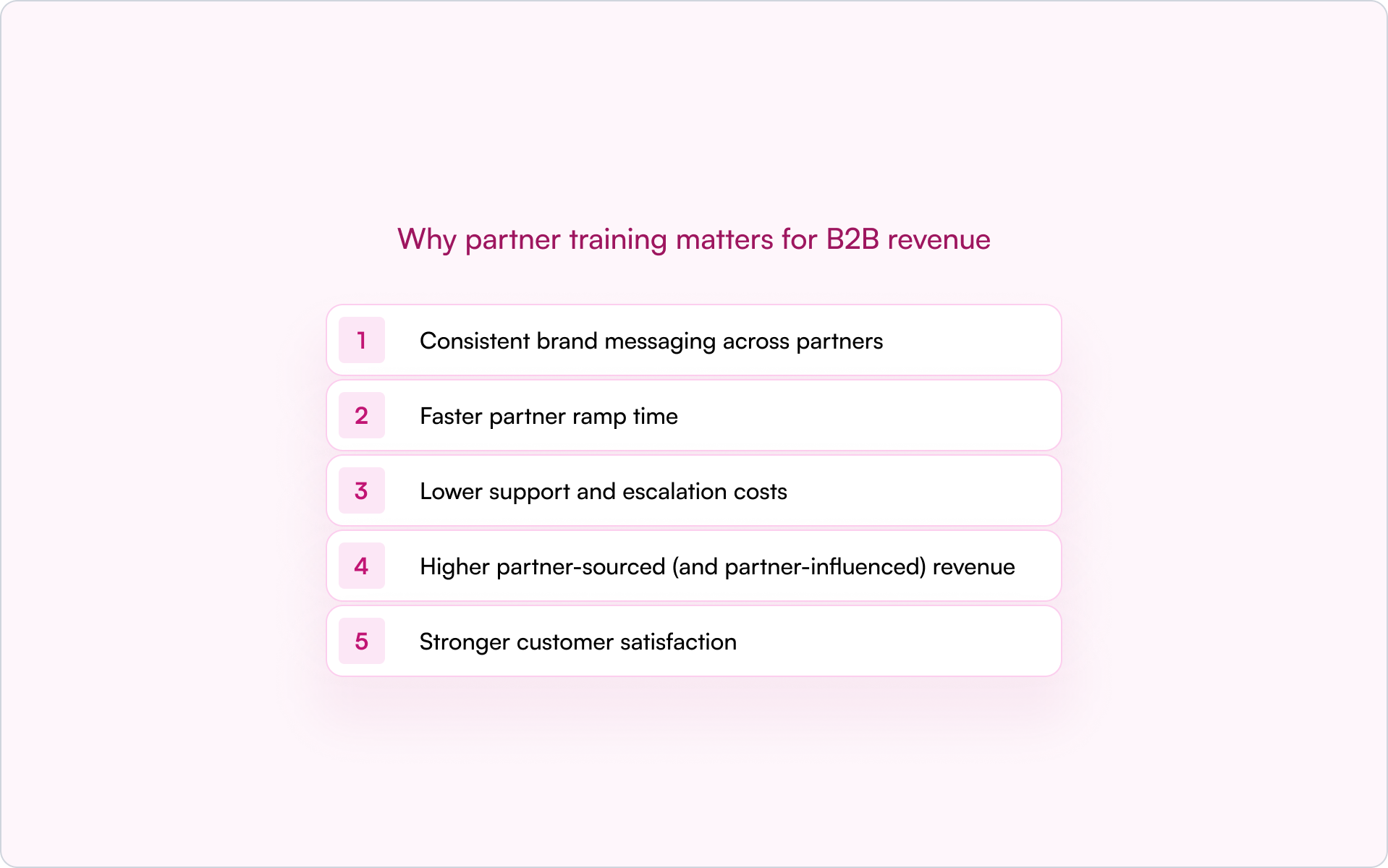
Consistent brand messaging across partners
Untrained partners misrepresent products all the time — not out of malice, but because they’re guessing. The result is predictable: incorrect pricing expectations, wrong feature assumptions, and deal cycles slowed by re-education.
Training aligns partners on what to say, what not to say, and how to position you in a crowded market.
Faster partner ramp time
Ramp time is the window between onboarding and the first closed deal. The shorter that window, the more confident a partner feels in your program — and the more likely they are to keep investing.
The goal isn’t to “teach everything.” It’s to teach what’s required to get to a credible demo, a clean handoff, and a first win.
Lower support and escalation costs
When partners know how to handle common questions and first-line troubleshooting, they escalate less. That protects your internal team’s time and keeps support focused on complex issues, not repetitive basics.
Higher partner-sourced (and partner-influenced) revenue
Training makes partners better at identifying the right use cases, qualifying opportunities, and navigating objections. When paired with CRM visibility, you can directly answer: “Do certified partners close more deals?” and then double down on what works.
Stronger customer satisfaction
Customers served by trained partners get more accurate expectations, smoother implementations, and cleaner support experiences — which shows up as lower churn and more expansion.
Types of partner training programs
The best partner training program is rarely one format. Most teams combine modules, live sessions, certifications, and reference docs — then tailor them by partner type and role.
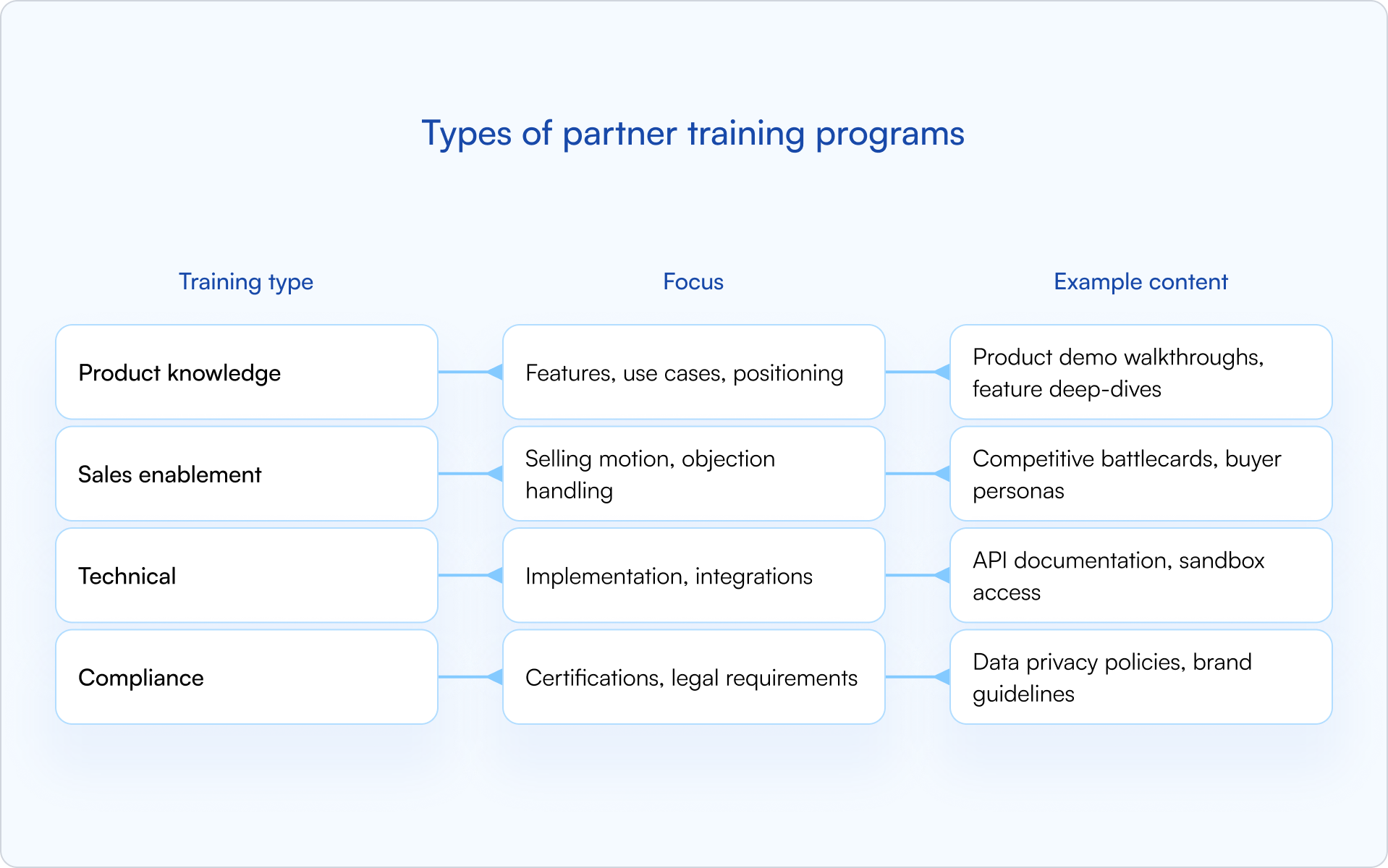
Product knowledge training
Product knowledge is the foundation. Partners need to understand what your product does, the primary use cases, and where you win. Without it, demos are shaky and deals stall during basic discovery.
Sales enablement training
Sales training is how you translate “features” into “revenue.” It covers buyer personas, qualification, pricing conversations, competitive positioning, and objection handling. This matters most for resellers and referral partners who are sourcing and shaping deals.
Technical and implementation training
For SIs and implementation partners, technical training is non-negotiable. Strong programs include hands-on labs, sandbox environments, and practical scenarios that mirror real customer deployments.
Many companies gate delivery rights behind technical certification — partners can’t implement until they’ve proven competence.
Compliance and certification training
Compliance training protects the business. It can include data privacy, security requirements, procurement standards, and brand usage guidelines. Certifications, meanwhile, give you a scalable “quality bar” across an ecosystem.
How to build a partner training program (step-by-step)
If you’re building partner training as a founder or lean GTM team, your advantage is speed. Start with outcomes, ship a minimum viable curriculum, and iterate based on what moves pipeline.
a
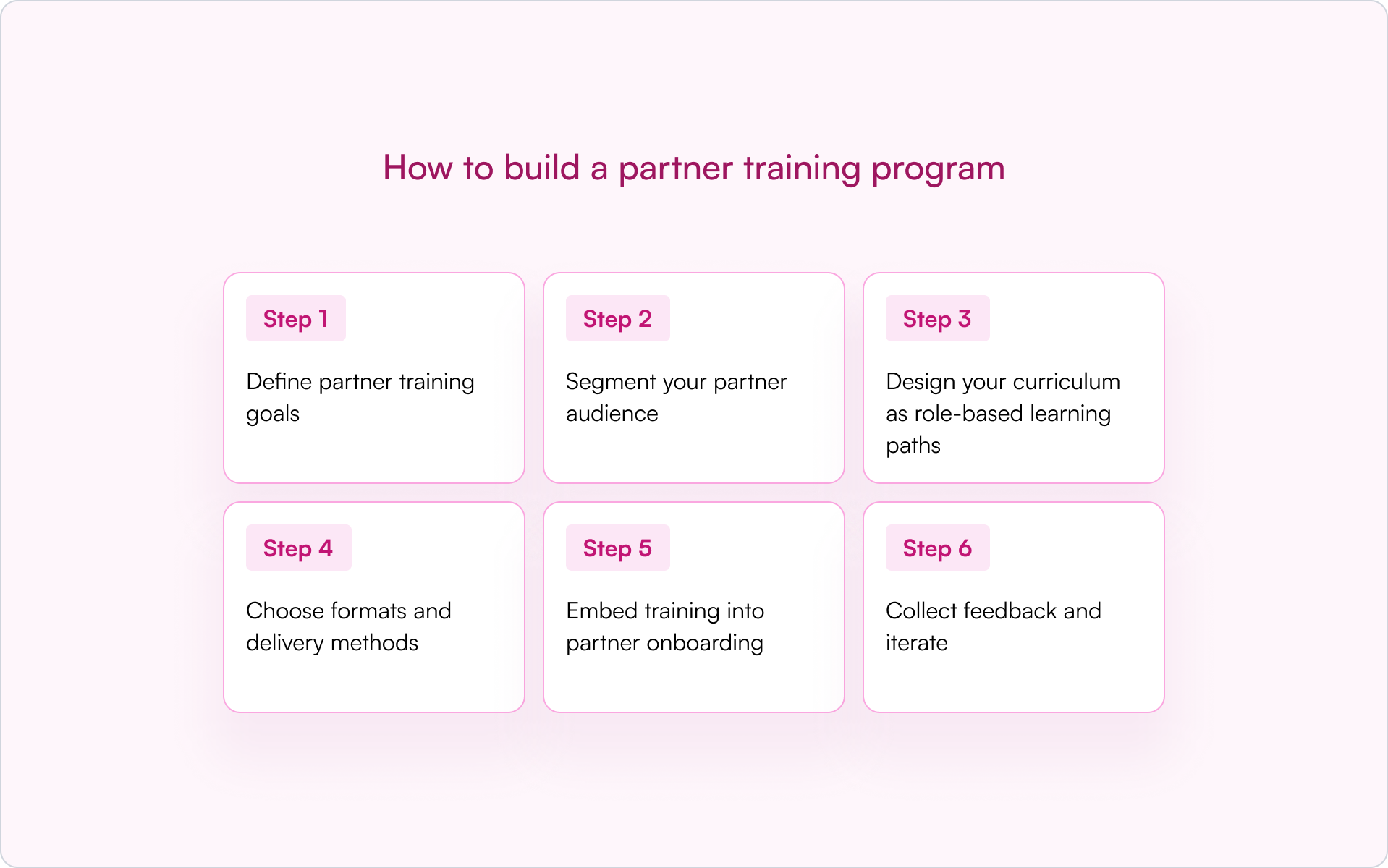
1) Define partner training goals
Start with outcomes, not content. What should a trained partner be able to do?
- Independently run a credible demo
- Handle first-line support and common troubleshooting
- Close deals without constant sales engineer involvement
Goals tied to measurable business metrics — like time-to-first-deal, win rate, or ticket volume — are easier to prioritize and defend internally.
2) Segment your partner audience
Not all partners need the same training. A referral partner needs messaging and qualification, while an SI needs implementation depth. Segment by partner type, tier, and role (sales, technical, support).
3) Design your curriculum as role-based learning paths
Map training content to each segment and goal, then package it into clear paths like:
- Sales Certification Path (positioning, discovery, objections, demo)
- Technical Certification Path (setup, integrations, troubleshooting)
- Support Readiness Path (FAQs, escalation rules, SLAs)
Start small. Your first version should be “the shortest route to competence,” not a comprehensive encyclopedia.
4) Choose formats and delivery methods
Use the format that matches the job to be done:
- Self-paced modules: scalable across time zones; best for foundational knowledge
- Live webinars: interactive Q&A; best for launches and complex topics
- On-demand video: easy to consume; great for demo walkthroughs
- In-person workshops: high-trust and high-touch; best for strategic partners
- Documentation and guides: durable reference; best for technical details
5) Embed training into partner onboarding
Training works best when it's embedded into the partner onboarding process — not treated as a separate initiative.
The best partner portals surface training content alongside deal registration, resources, and support. When training lives where partners already work, completion rates rise naturally.
6) Collect feedback and iterate
Products change, competitors reposition, and partners forget. Treat partner training like a product: review what’s being used, what’s being skipped, and what correlates with revenue outcomes.
- Short surveys after modules
- Quarterly reviews with partner managers
- Regular updates tied to releases and competitive changes
Partner training best practices for 2026
Once the basics are in place, the biggest improvements come from removing friction, aligning incentives, and making training measurable.
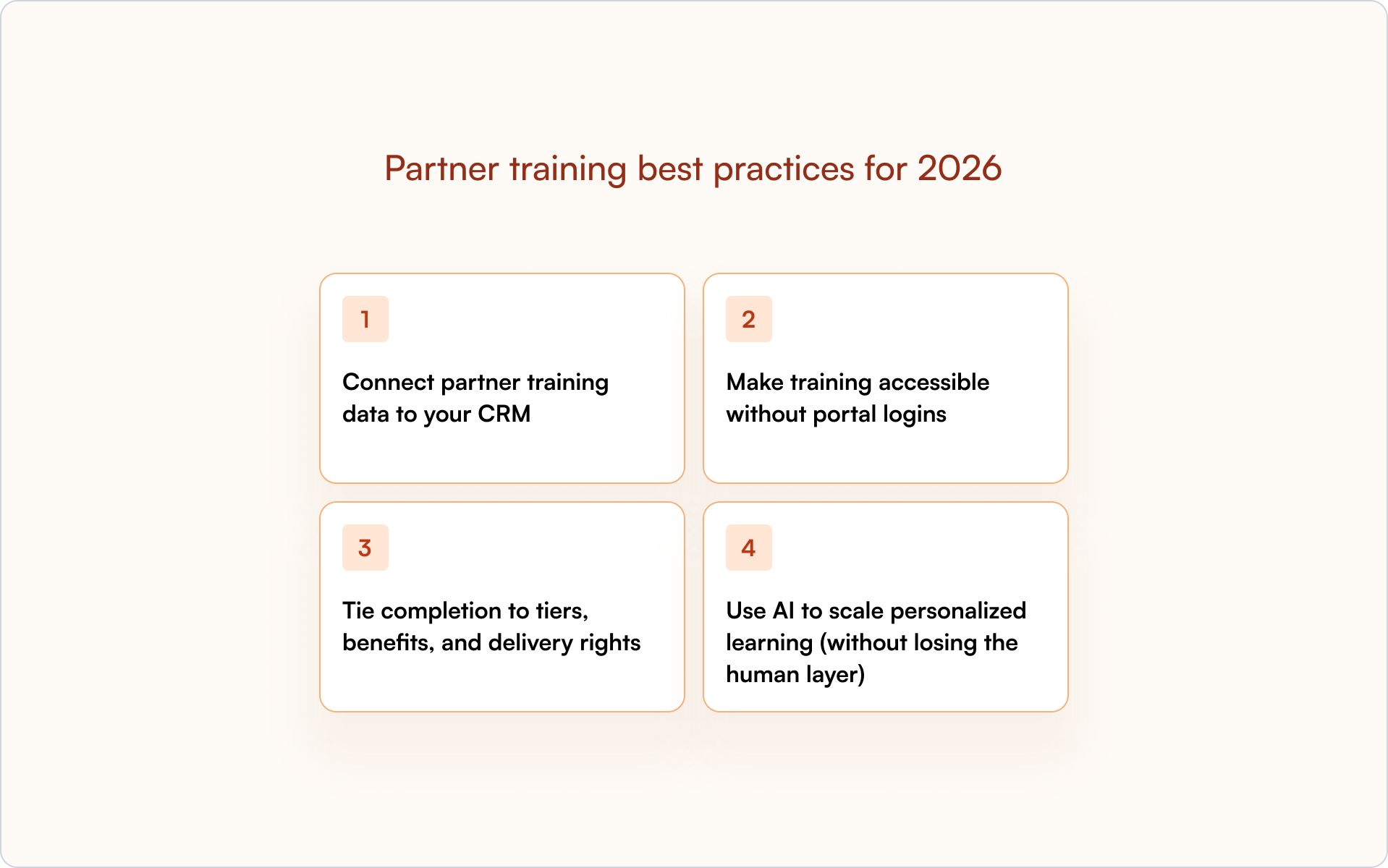
Connect partner training data to your CRM
Training completion only becomes strategically useful when it’s connected to partner records in your CRM. With CRM integration, you can trigger workflows based on training status and correlate certifications with deal performance.
Without it, you’ll keep debating training impact with opinions instead of answers.
Make training accessible without portal logins
Login friction is a silent killer. Partners juggle multiple vendor portals and credentials, and every extra step reduces completion.
Consider SSO, training embedded in email, or lightweight portal experiences. Off-portal access — where partners can engage without logging in — consistently increases completion rates.
Tie completion to tiers, benefits, and delivery rights
Incentives drive behavior. When certification unlocks tier advancement, higher margins, MDF access, or lead distribution, training becomes a business decision for the partner.
This also protects your customers: partners who aren’t trained shouldn’t be delivering complex implementations under your brand.
Use AI to scale personalized learning (without losing the human layer)
AI can recommend the right modules based on partner role and performance and answer common questions in real time. The goal isn’t to replace enablement — it’s to scale what your best partner managers already do manually.
How to choose partner training software
If you're evaluating partner training software or a channel partner training platform, prioritize capabilities that support partner-led growth — not generic LMS checklists.
CRM integration and data sync
The platform you choose will ideally write training data — certifications, completion dates, learning paths — back to HubSpot or Salesforce. Without CRM integration, training data becomes a silo and you lose visibility into how learning impacts revenue.
Self-serve partner portal capabilities
Training adoption improves when it lives next to the rest of the partner experience: deals, content, updates, and support. Look for platforms that reduce tool sprawl instead of adding another login.
Content hosting and certification management
The platform will ideally host various content types (videos, documents, quizzes), issue certifications, and track completion. Expiration tracking and re-certification workflows are especially useful once your program scales.
Engagement features and notifications
Partners forget — and they’re busy. Automated reminders for required training, expiring certifications, and new modules help keep completion rates high. Bonus points if partners can engage without logging in.
How to evaluate partner training programs
A partner training program is “working” when it measurably improves partner performance — not when it has a lot of content. Use metrics that connect learning activity to outcomes.
Training completion rates (by segment)
Track completion for required modules and certifications, then segment by partner type and tier. Low completion usually signals friction, irrelevant content, or unclear incentives.
Time to first deal
Measure time from onboarding to first closed deal. If training is effective, ramp time should compress. If it doesn’t, your curriculum likely isn’t aligned to what partners actually need in the sales process.
Partner-sourced revenue attribution
The hardest metric is also the most important: do certified partners create more pipeline and close more revenue? Answering this requires clean CRM attribution and consistent partner records.
Partner satisfaction and usefulness
Survey partners on the relevance and quality of training, and ask what’s missing. Satisfaction often highlights issues completion rates won’t — for example, modules that are “finished” but not actionable.
How a CRM-first partner portal simplifies partner training
Training works best when it's integrated into the partner experience — not siloed in a separate LMS. A CRM-first approach means training data, deal data, and partner data live in one system of record.
What “CRM-first” looks like in practice
- Single source of truth: training completion is visible alongside deals and partner info in HubSpot or Salesforce
- Automated workflows: trigger certifications, tier upgrades, and reminders based on training status
- Fewer logins: partners access training in the same place they register deals and get updates
- Real-time visibility: partner managers see who’s trained and who’s not without chasing reports
For founders, this is the real win: less operational overhead, clearer accountability, and better answers to “what’s driving revenue?”
Conclusion: treat partner training like a growth system
In 2026, successful partner training isn’t defined by how much content you ship. It’s defined by whether partners can access it quickly, apply it immediately, and whether you can tie completion to real outcomes in your CRM.
If you’re building a partner channel from scratch, start with the shortest path to competence, remove friction (especially logins), and attach incentives to the behaviors you want. Then iterate relentlessly based on performance data.
If you want to make training part of a single partner experience — alongside onboarding, deal registration, and performance reporting — see how Introw’s partner portal supports that workflow: get a demo.
How to Prevent Channel Conflict Before It Kills a Deal
Channel conflict rarely starts with open disagreement.
It usually appears late in the sales cycle, when a deal is already active, and expectations are already set. A partner believes they have ownership. The sales team believes otherwise. Another channel surfaces at the last moment.
At that point, resolving channel conflict becomes slow, political, and expensive.
The more effective approach is prevention. When rules are clear, data is shared correctly, and ownership is visible early, channel conflicts are far less likely to occur.
You'll learn about a prevention-first operating model for channel conflict, built for SaaS teams managing multiple channels, channel partners, and direct sales motions at the same time.
But, to prevent channel conflict, you need clarity on what channel conflict is and the types of channel conflict that show up in modern SaaS programs.
Channel Conflict 101 (Types, Causes, and B2B SaaS Context)
To prevent channel conflict, everyone needs to be aligned on what it actually means in a modern SaaS environment.
What is channel conflict?
In B2B SaaS, channel conflict occurs when multiple channels or channel partners pursue the same customers, accounts, or revenue without clear ownership, rules, or visibility.
This weakens channel relationships and makes effective channel partner management harder for partners and direct sales teams.
The main types of channel conflict in SaaS
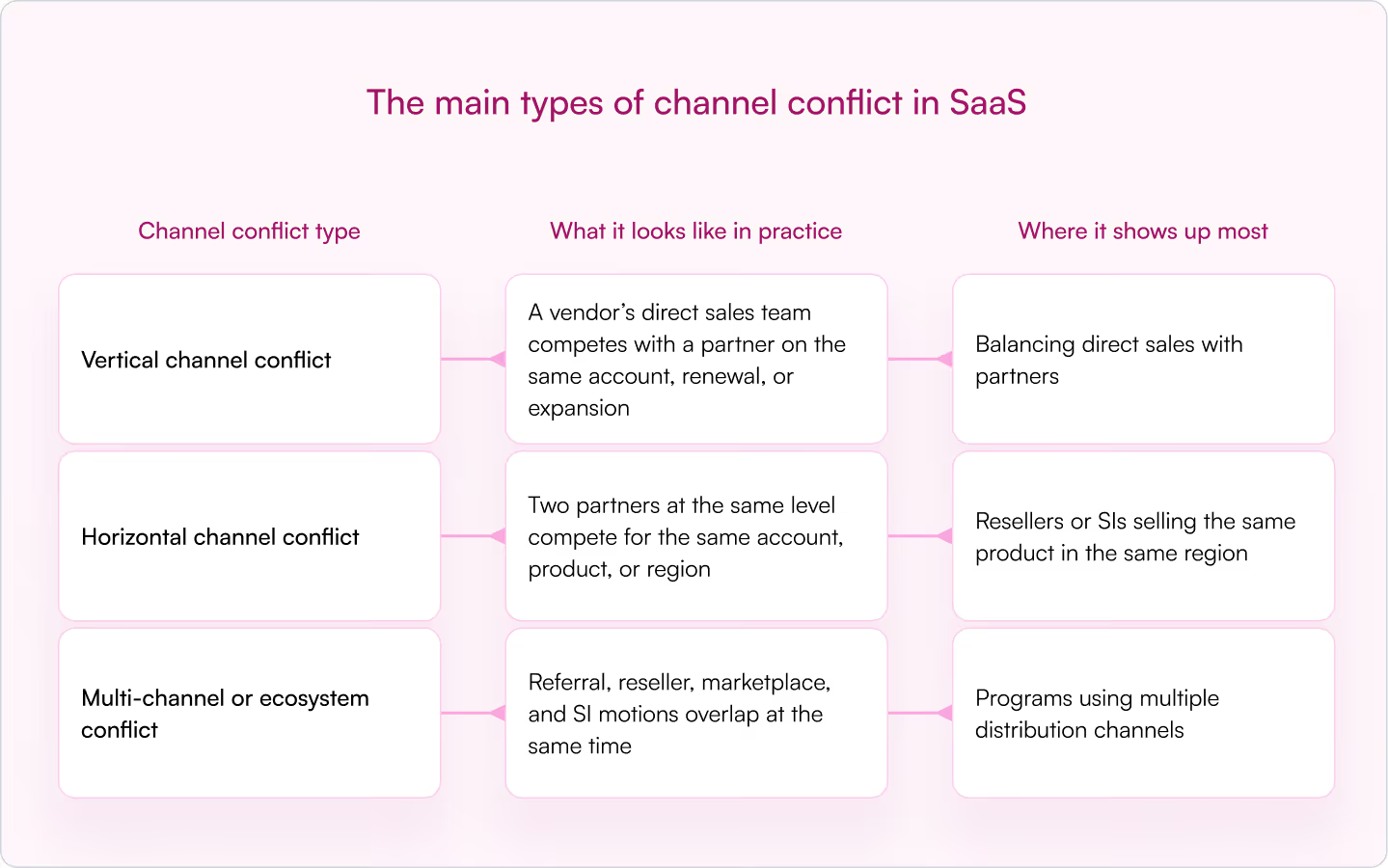
These channel conflict types are rarely about bad behavior. They are a predictable outcome of multiple channels operating without shared rules or data.
Root causes of channel conflict in B2B SaaS
Most channel conflicts stem from a small set of structural issues:
- Unclear rules of engagement across different channels
- Overlapping territories, segments, or named accounts
- Inconsistent pricing strategies, discounting, or price protection
- Unmanaged renewals and expansions across the same customer base
- Poor communication cadence and limited visibility into customer data
As SaaS teams scale and add new channels, these gaps quickly create potential conflicts, even when channel management intentions are sound. This is common when channel relationships evolve faster than the operating model behind channel partner management.
Next, we’ll look at how to detect channel conflict early, before it turns into an escalation, a stalled deal, or a damaged partner relationship.
Early Warning System: Spot Conflicts Before They Surface
Channel conflict is easiest to manage when you catch it early. The goal here isn’t perfect forecasting; it’s visibility into the signals that show channel conflicts forming before they slow a deal or damage channel relationships.
Signal categories
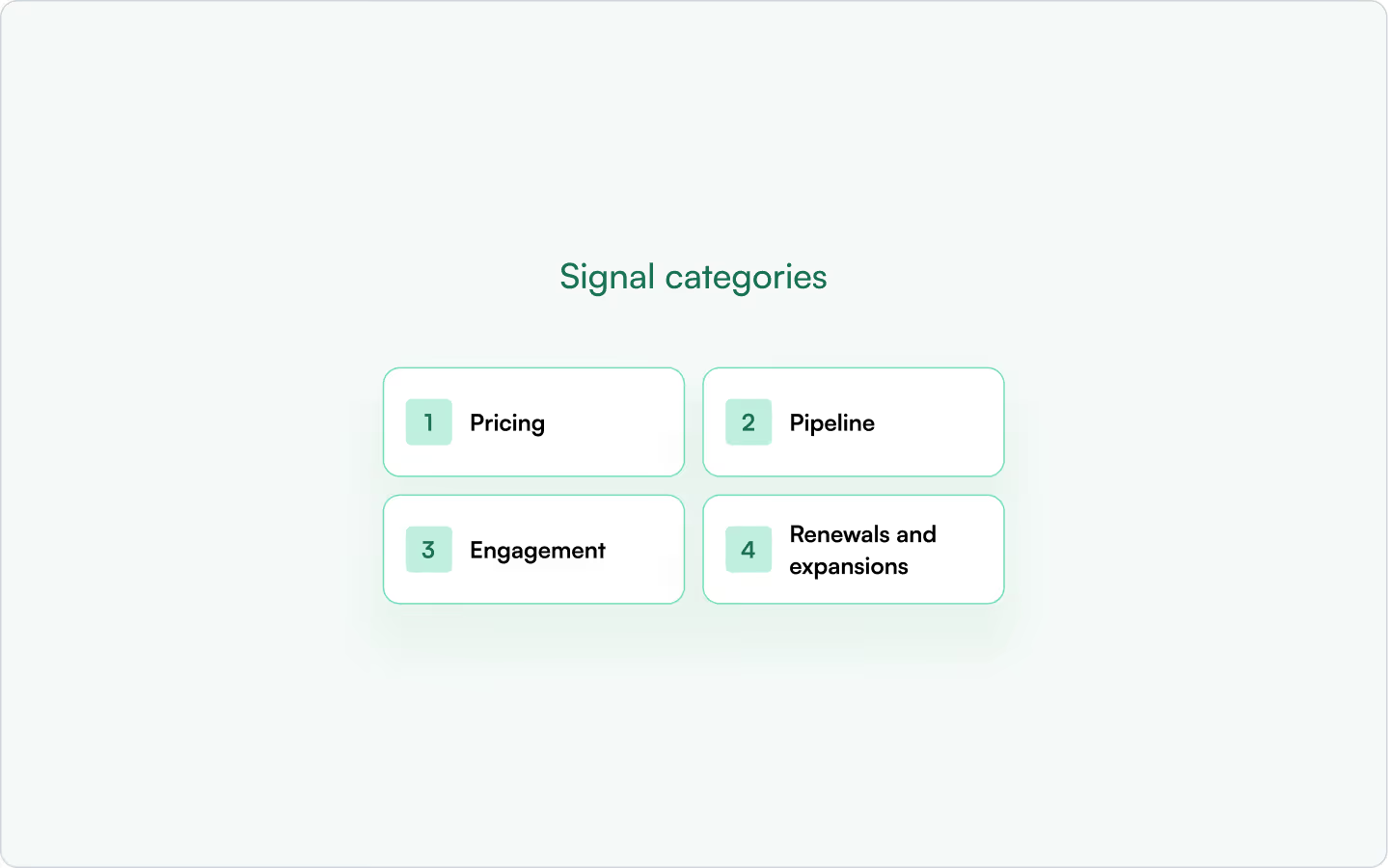
Pricing
Unusual discount requests, overlapping price protection, or duplicate quotes for the same product often signal early channel partner conflict. Left unchecked, these patterns can escalate into price wars that hurt brand integrity and market share.
Pipeline
Duplicate opportunities or accounts, missing partner fields, or sudden owner changes are classic indicators that multiple channels are touching the same account. In a customer relationship management system, this is often the first sign of horizontal conflict across the same channel or same region.
Engagement
Emails from partners raising concerns about fairness, silence after policy changes, or reduced response to announcements often indicate tension across channel members, even before it shows up in the sales channel data.
Renewals and expansions
When a direct sales team engages an account with an incumbent reseller or SI already in place, channel conflict occurs fast, especially if renewal ownership rules are unclear.
Automations to catch them
Early detection depends on automation, not vigilance.
Common safeguards include duplicate detection, stage-change alerts, two-opportunities-one-account reports, expiring deal registration timers, and renewal ownership rules enforced directly in your CRM.
A structured deal registration process is especially effective for surfacing potential conflicts early and keeping different channel partners on the same page.
Teams that rely on manual checks usually spot conflicts too late. Teams that automate signals spend far less time on conflict resolution and more time closing deals.
Let's design your channel program so these signals appear less often in the first place, starting with segmentation, territories, and pricing guardrails.
Program Design That Prevents Conflict (Get This Right First)
Most channel conflict is designed early. Strong program design aligns channel members across distribution channels before deals exist and reduces the need to resolve channel conflict later.
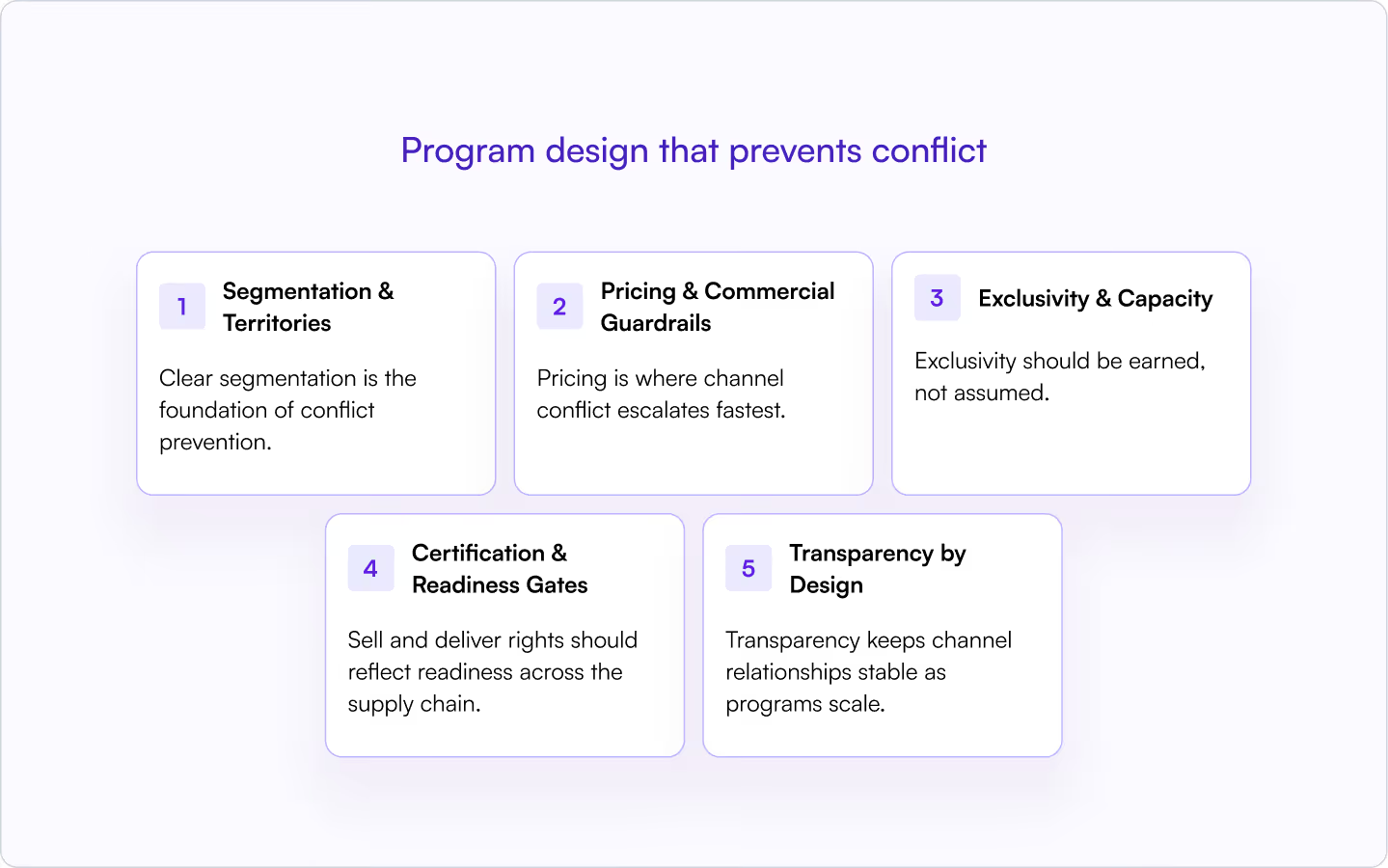
1) Segmentation & Territories
Clear segmentation is the foundation of conflict prevention.
- Define a clear ICP and segment channel partners by region, vertical, tier, and install base
- Use named-account programs for strategic partners operating at the same level
- Set explicit rules for marketplace versus direct sales ownership
- Avoid multiple distribution channels working the same customers by default
This kind of structure is a core pillar of effective channel management, especially as new channels are added.
2) Pricing & Commercial Guardrails
Pricing is where channel conflict escalates fastest.
- Define pricing strategies by partner tier and sales channel, including referral, resale, marketplace, and SI
- Set price protection duration and clarify renewal and expansion applicability
- Enforce minimum advertised price policies where applicable to protect brand integrity
- Use SPIFFs versus margin deliberately to prevent price wars and lower prices across channels
Fair pricing policies reduce direct competition between channel members selling the same product through different channels.
3) Exclusivity & Capacity
Exclusivity should be earned, not assumed.
- Grant exclusivity only when justified by specialization, certification, or commitment
- Set capacity limits per region, product line, or customer base
- Avoid onboarding too many partners into the same sales channel
Capacity limits help minimize conflicts caused by too many partners competing in the same region or account.
4) Certification & Readiness Gates
Sell and deliver rights should reflect readiness across the supply chain.
- Tie sell and deliver permissions to the certification status
- Require certification for access to exclusive products or specific customer segments
- Set expiration and re-certification SLAs aligned with supply chain management needs
Readiness gates protect customer satisfaction and reduce downstream conflict tied to poor execution.
5) Transparency by Design
Transparency keeps channel relationships stable as programs scale.
- Publish rules of engagement in a partner portal as the single source of truth
- Announce policy changes early and often through shared communication channels like email or Slack
- Require acknowledgment to ensure all parties involved stay on the same page
- Use SSO to remove access friction and reduce shadow communication
Platforms like Introw support this by combining a partner portal, announcements with read receipts, and frictionless access.
When paired with a structured deal registration process, teams can enforce rules consistently instead of relying on ad-hoc decisions.
Let's go deeper into deal registration itself and how to use it as a conflict firewall rather than a bottleneck.
Deal Registration: Your Primary Conflict Firewall
If you’re looking for a practical answer to how to manage channel conflict, deal registration is it. This is where ownership is established early and where most channel conflicts can be prevented instead of debated.
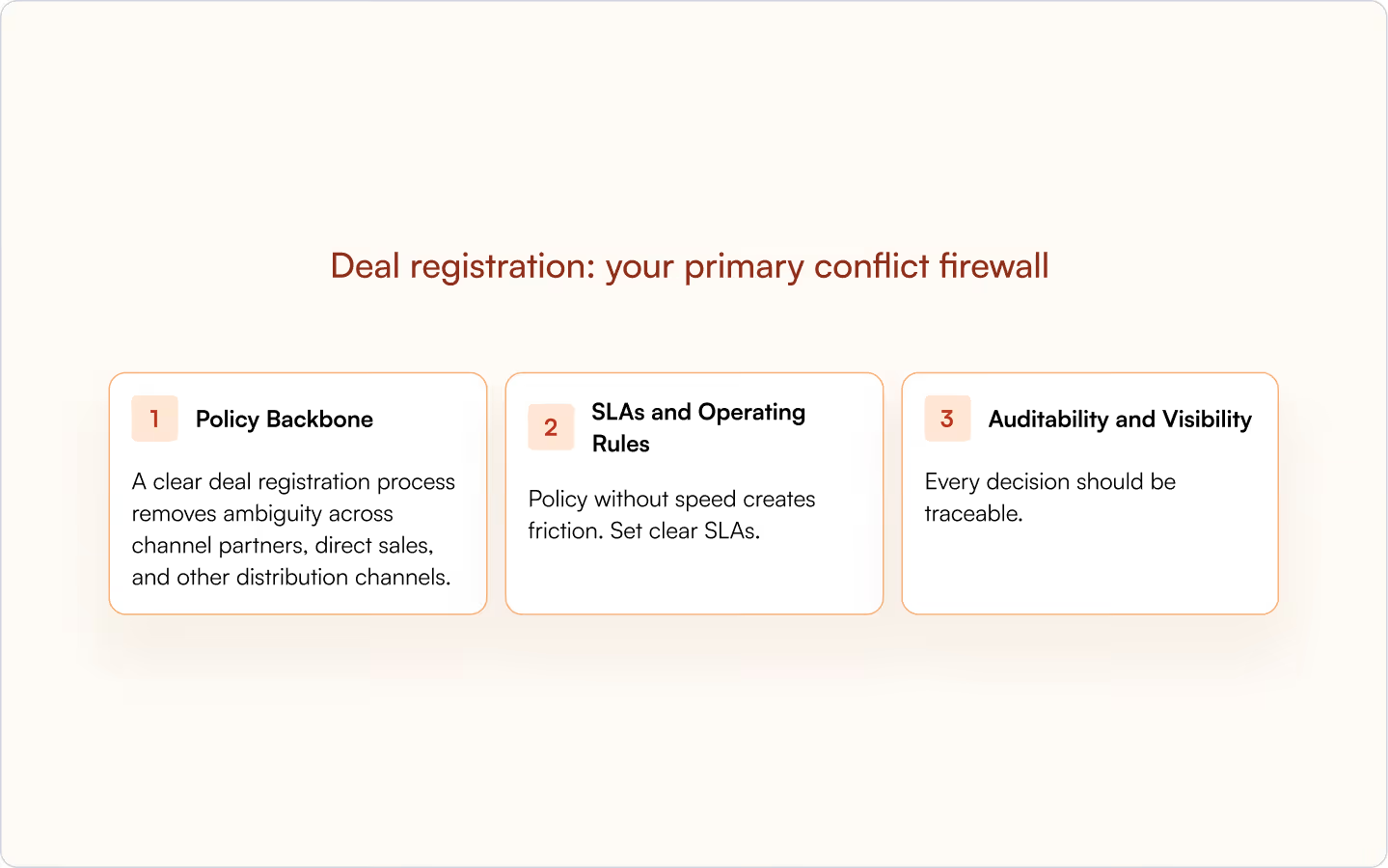
Policy Backbone
A clear deal registration process removes ambiguity across channel partners, direct sales, and other distribution channels.
Your policy should define:
- Eligibility criteria, required fields, proof of work, and a customer uniqueness test to prevent different partners pursuing the same account
- A protection window, typically 60–90 days, with explicit extension rules
- Renewal and expansion of ownership rules when the same customers move between partners and the sales team
- A conflict hierarchy, registered beats unregistered, incumbent beats net-new, certification status breaks ties
- An appeals and escalation window with defined evidence requirements
This is the operational layer of channel conflict resolution. Without it, vertical conflict and horizontal conflict are left to judgment calls, which quickly strain existing channel relationships.
SLAs and Operating Rules
Policy without speed creates friction.
Set clear SLAs:
- Approval or decline within 48 hours
- Automatic reminders before protection expires, usually seven days out
- Reassignment rules for inactive deals based on no-touch thresholds
These mechanics are a core part of effective channel management, especially in programs that rely on co-selling and shared ownership across teams.
Many teams formalize this alongside their broader approach to managing co-selling effectively to keep all parties aligned.
Auditability and Visibility
Every decision should be traceable.
Approvals, declines, timestamps, and rationale should live in your customer relationship management system, with shared pipeline visibility limited to safe fields like stage, owner, and protection status.
This keeps different partners on the same page without exposing pricing or internal notes.
In practice, this is where a structured deal registration process, supported by modern partner relationship management software, makes it far easier to resolve channel conflict consistently as programs scale.
Next, we’ll look at the CRM data model you need to support this, and how to enforce these rules automatically across multiple channels.
Your CRM Data Model for Conflict Prevention (Salesforce/HubSpot)
Channel conflict becomes expensive when your CRM can’t answer basic ownership questions. A clean data model makes channel conflict visible early and keeps channel partners, direct sales, and RevOps aligned across multiple channels.
Required fields on Opportunity or Deal
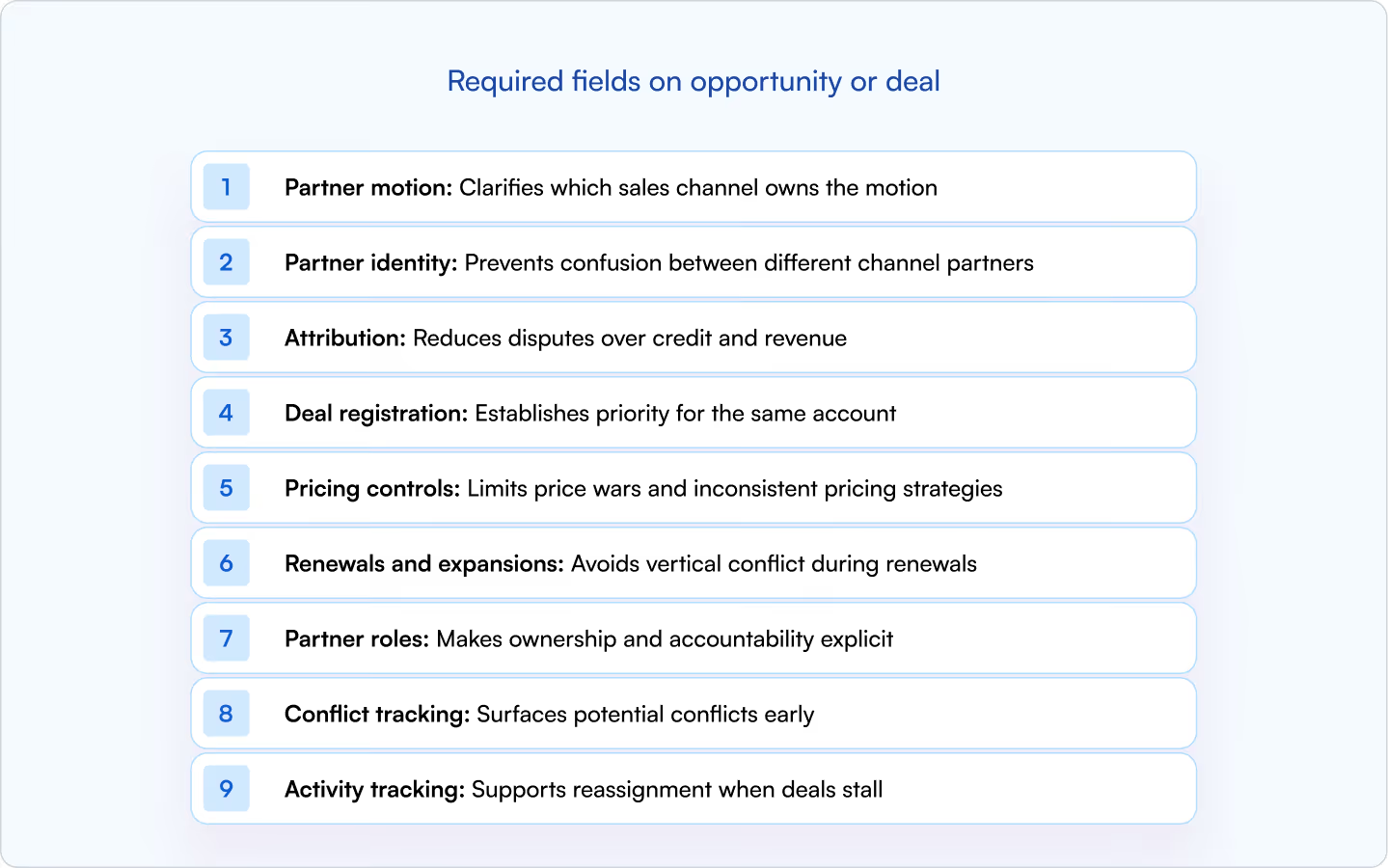
Without these fields, channel conflict occurs late, often after multiple partners have already engaged the same customers.
Governance Rules That Enforce Discipline
Fields only work if they’re enforced.
- Stage-change validations that require partner fields before deals advance
- Duplicate rules on accounts and opportunities to catch horizontal conflict early
- Renewal ownership logic to prevent overlap with direct sales
- Dashboards segmented by motion and conflict status for fast visibility
This is what managing channel conflict looks like in practice, not spreadsheets and exceptions.
How This Works In Practice
With native integrations for Salesforce and HubSpot, partner-submitted data stays synced without manual updates.
Shared pipeline views expose only safe properties, such as stage, owner, and protection status, so different partners stay aligned without seeing sensitive pricing or internal notes.
Announcements can then be used to communicate policy changes tied to these fields, keeping channel members on the same page as rules evolve.
At this point, conflict is no longer hidden. The question becomes how consistently your team reviews signals and communicates decisions.
Operating Cadence & Communications (the “no-surprises” policy)
Once ownership and risk are visible, cadence is what keeps channel conflict from resurfacing. This is how to manage channel conflict day to day, without escalation or guesswork.
Cadence That Prevents Surprises
This rhythm supports strong channel relationships across multiple channels and distribution strategies, especially as new channels are introduced.
Response SLAs That Reduce Escalation
Speed signals fairness.
- Deal registration decision within 48 hours
- Conflict acknowledgment within 24 hours, with a resolution plan in five business days
- Renewal ownership confirmed at least 90 days before renewal
Clear SLAs help resolve channel conflict consistently and protect existing channel relationships when the same account is touched by different partners or direct sales.
Keeping Communication Operational, Not Performative
Announcements should push updates through email and Slack, so channel members don’t have to log into another portal. Replies via email should write back to the CRM timeline automatically, preserving context and evidence without slowing the sales team.
This approach supports open communication without adding friction, and it scales far better than ad-hoc outreach.
Many teams formalize this cadence alongside guidance on building a channel partner program and broader ecosystem expectations outlined in a channel partnership guide.
At this point, channel conflict refers to a managed process, not an unexpected interruption. Incentives, recognition, and feedback loops can then reinforce the right behaviors, something teams often pair with thoughtful channel partner gamification.
Introw supports this prevention-first approach by enforcing rules, surfacing risk early, and keeping partners aligned without adding friction. Here's how.
How Introw Helps Prevent Channel Conflict
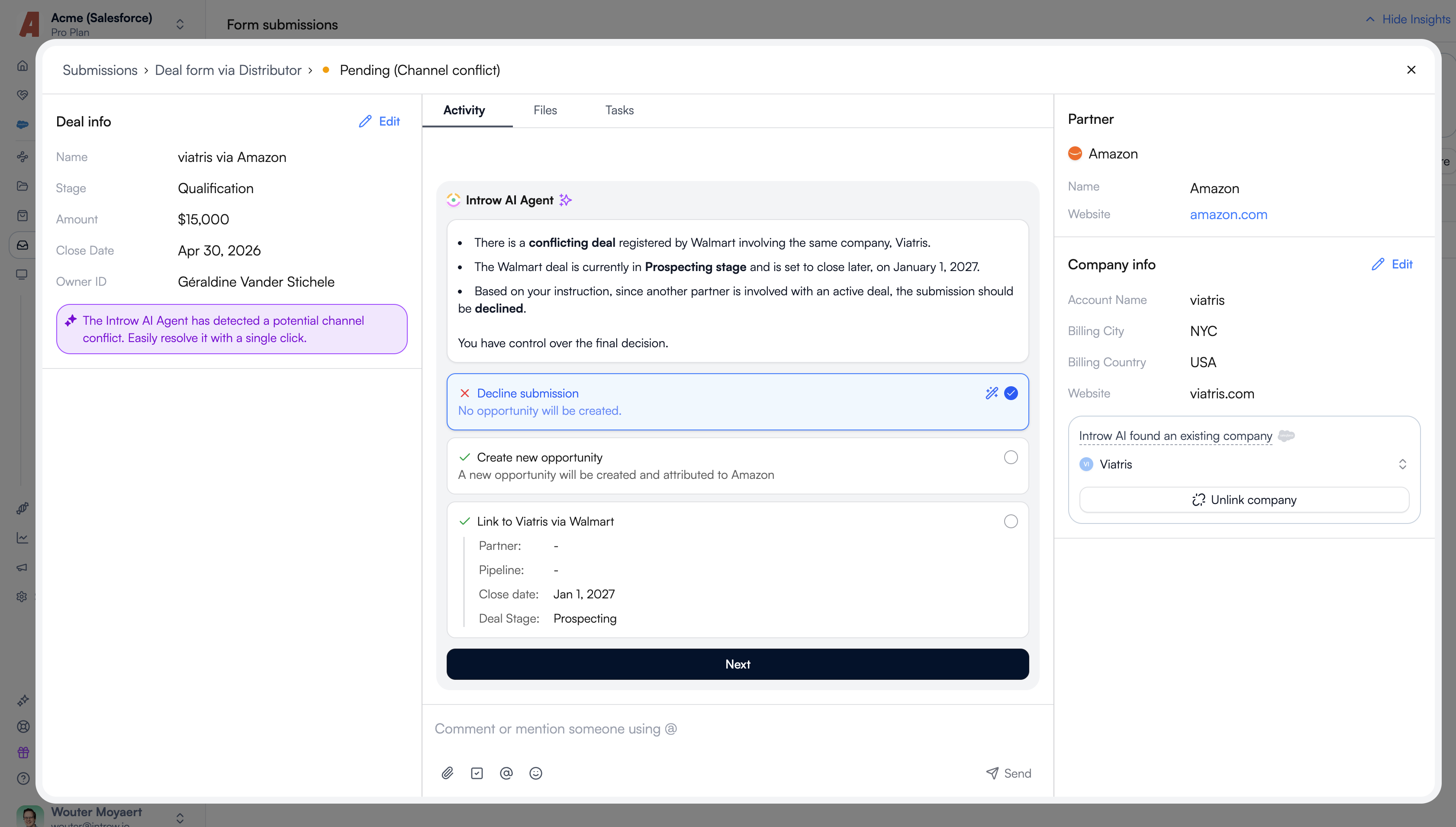
If you want to prevent channel conflict, your rules can’t live in slide decks or policy docs. They have to show up where deals are registered, approved, and worked on every day, by your team and your partners.
Introw does that by embedding your channel rules directly into the workflow.
Single source of truth from day one.
Deal and lead registration ensure every opportunity starts with the same required context.
Ownership, approvals, protection windows, and timestamps are clear from the moment a deal is submitted, which matters when your channel partners and direct sales team are working the same account.
Rules your partners don’t have to hunt for.
Rules of engagement, pricing bands, and territories live in the partner portal with SSO. Your partners always know what applies right now, without forwarding old emails or guessing which version is current.
Shared visibility without oversharing.
Shared pipeline views show partners exactly what they need, like stage, next step, and protection expiry, without exposing pricing or internal notes.
That keeps everyone aligned while deals are active and reduces channel partner conflict before it escalates.
Signals your team can act on early.
Alerts for new registrations, approval deadlines, expiring protection windows, and stage changes are pushed through email and Slack.
Partners can reply by email, and those responses are written back to the CRM timeline so decisions are based on full context, not memory.
This is what modern partner relationship management software is meant to support: consistent execution, fewer surprises, and channel conflict resolution that scales with your business.
With the right structure in place, prevention does most of the work. What remains is a clear, repeatable way to resolve the few conflicts that still surface.
Over to You: Prevent First, Resolve Less
Channel conflict doesn’t have to be a constant fire drill. When you design for prevention, most issues never reach escalation, and the few that do are easier to resolve without damaging trust or momentum.
The teams that handle channel conflict well don’t rely on heroics or exceptions. They rely on clear rules, early signals, and consistent execution across partners, direct sales, and systems. That’s what keeps deals moving and relationships intact as your channel scales.
What to do next:
- Review where channel conflict occurs today and identify which signals surface too late
- Pressure-test your deal registration, ownership, and renewal rules against real scenarios
- Make sure your tooling enforces the model instead of working around it
Final Takeaway
Channel conflict is rarely about intent. It’s about clarity, timing, and visibility. Get those right, and conflict becomes manageable instead of disruptive.
If you want to see how this prevention-first model works in practice, you can request a demo and walk through how Introw supports it across your channel program.

