


Partners can’t sell what they don’t understand. Yet most SaaS partner programs still “enable” partners by handing over a few outdated PDFs, linking to a cluttered Google Drive, and hoping partner-sourced pipeline magically appears.
A strong partner content program changes the equation. It gives partners the materials they actually need — organized, accessible, and mapped to how they sell — so they can represent your product without constant hand-holding. In this guide, we’ll walk through the best practices for SaaS partner content programs in 2026, from identifying what’s missing to proving which assets drive revenue.
What is a SaaS partner content program?
A partner content program is the collection of enablement materials, sales collateral, co-marketing assets, and training resources you create specifically for partners to use when selling or implementing your product. The best programs go beyond “upload and hope” — they co-create tailored, high-value assets (case studies, webinars, whitepapers) that highlight joint solutions for shared target audiences.
Unlike internal sales content, partner content is built for an external audience. Your partners don’t have the same product context your AEs do, and they’re often juggling multiple vendors at once. That means your content has to be clearer, more findable, and easier to reuse.
- Enablement content: Product training, battle cards, and objection handling guides
- Sales collateral: Pitch decks, one-pagers, and ROI calculators partners can use with prospects
- Co-marketing assets: Co-brandable templates, campaign kits, and joint webinar materials
- Technical resources: Integration docs, implementation guides, and API references
Why partner content programs matter for SaaS growth
A signed partnership isn’t a growth channel by default. It becomes a growth channel when partners can confidently position, sell, and deliver your product without needing your team in every conversation.
Content is the link that turns a partner agreement into active, revenue-generating behavior — and it does it at scale.
- Faster partner ramp: Partners close deals sooner when they have ready-to-use materials
- Consistent messaging: Your value proposition stays intact across every partner conversation
- Reduced support burden: Self-serve content means fewer questions hitting your partner team
- Scalable co-selling: Content enables partners to act as an extension of your sales team
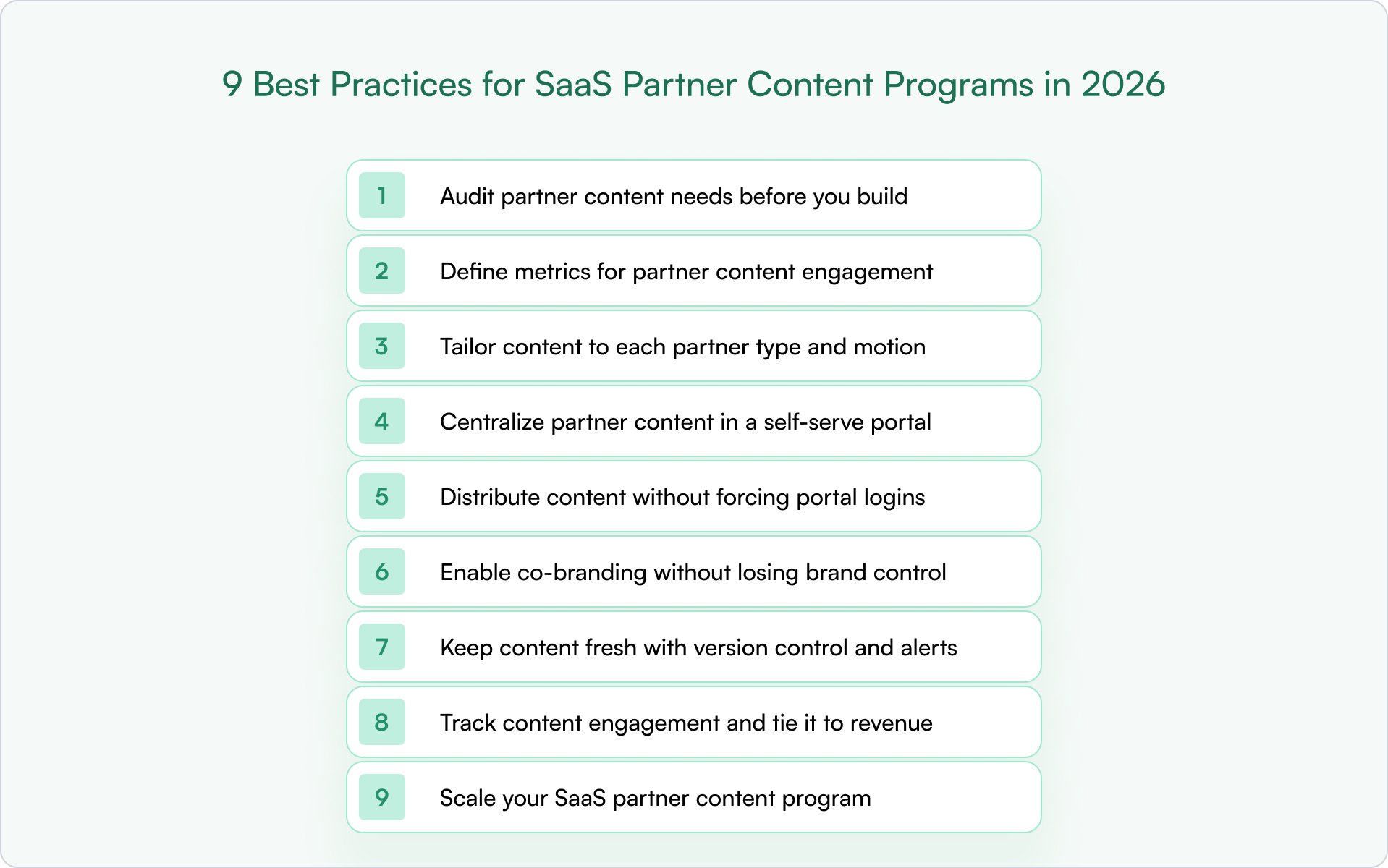
The 9 best practices for SaaS partner content programs
If you’re building this as a founder or early revenue leader, the goal isn’t “more content.” The goal is the smallest set of assets that helps partners create pipeline — and the operating system to keep those assets current, discoverable, and measurable.
1. Audit partner content needs before you build
Before you write a single new deck, validate what partners actually need. Many partner programs burn time creating content that never gets used because it doesn’t solve a real selling problem.
Interview partners about content gaps
Ask your existing partners what’s missing, what’s outdated, and what they wish they had. Keep the conversation grounded in real deals: what stops them from moving a prospect forward or answering questions with confidence?
Even five conversations usually reveal patterns. For example, partners might not want another product overview — they might need a competitive comparison they can forward when a prospect is evaluating alternatives.
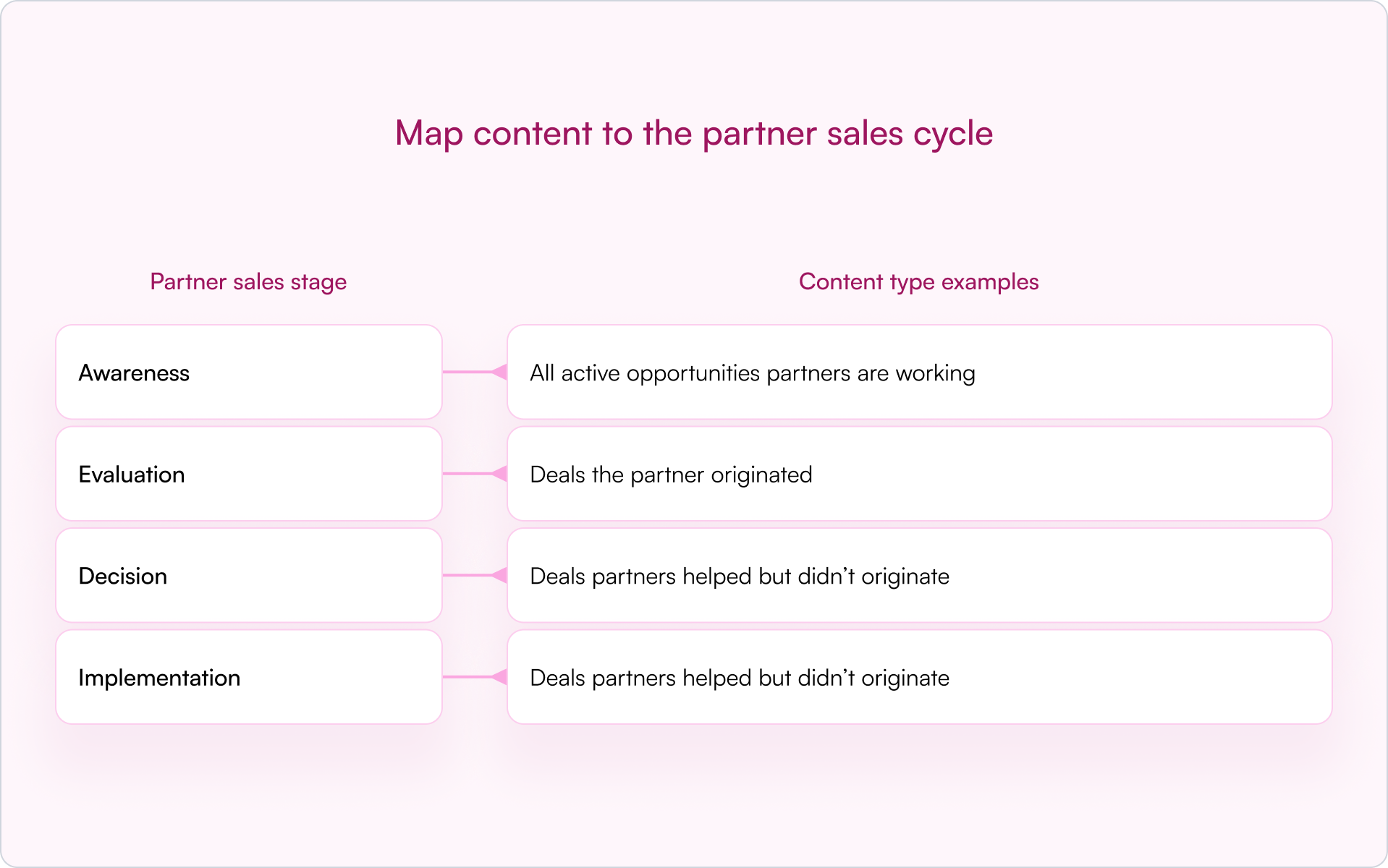
Map content to the partner sales cycle
Different stages of the partner-led sales cycle require different assets. Awareness-stage conversations benefit from solution briefs and intro decks. Evaluation calls for competitive comparisons and demo videos. Decision-stage deals often hinge on ROI calculators and customer stories. Implementation requires technical guides and onboarding checklists.
Also consider your partner model. Referral, reseller, and systems integrator motions typically need different content at each stage.
Identify high-value assets vs. nice-to-haves
Prioritize ruthlessly. Start with content that directly impacts deal velocity — battle cards, pricing guidance, and objection handling. Save high-effort production (heavy video, glossy campaigns) until the essentials are working.
2. Define metrics for partner content engagement
You can’t improve what you don’t measure. If you want partner content to be treated like a growth lever (not a cost center), set up tracking from day one.
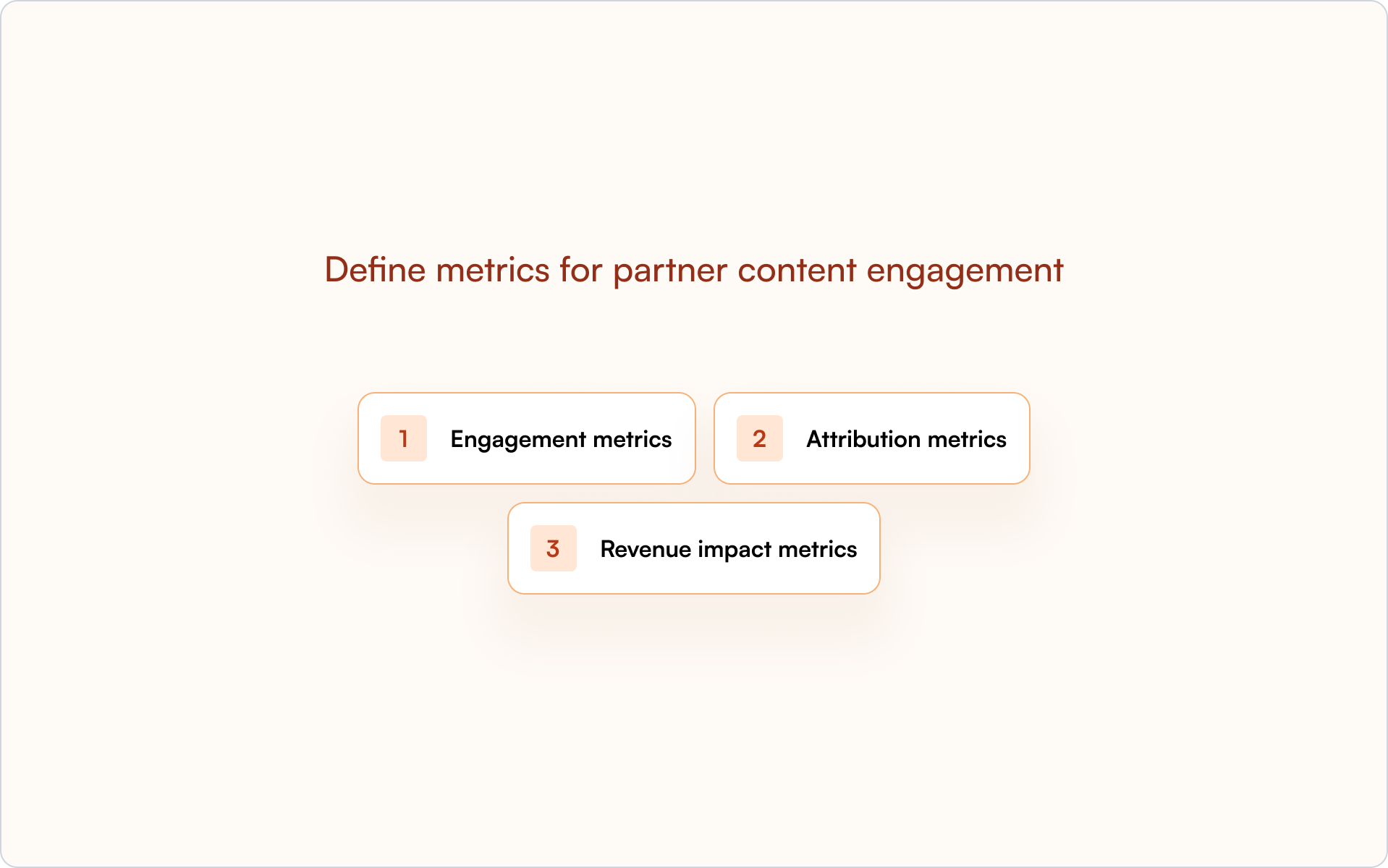
Engagement metrics
Track views, downloads, shares, and time spent on each asset. This is your early signal for what’s useful versus what’s ignored.
Attribution metrics
Go beyond engagement by connecting content consumption to deal registration and pipeline generation. For example: did partners who used a specific battle card register more deals, or move deals to the next stage faster?
Revenue impact metrics
The gold standard is tying content engagement to closed-won revenue. Identify which assets consistently appear in the journey of deals that close — then reinvest in what’s working and prune what isn’t.
3. Tailor content to each partner type and motion
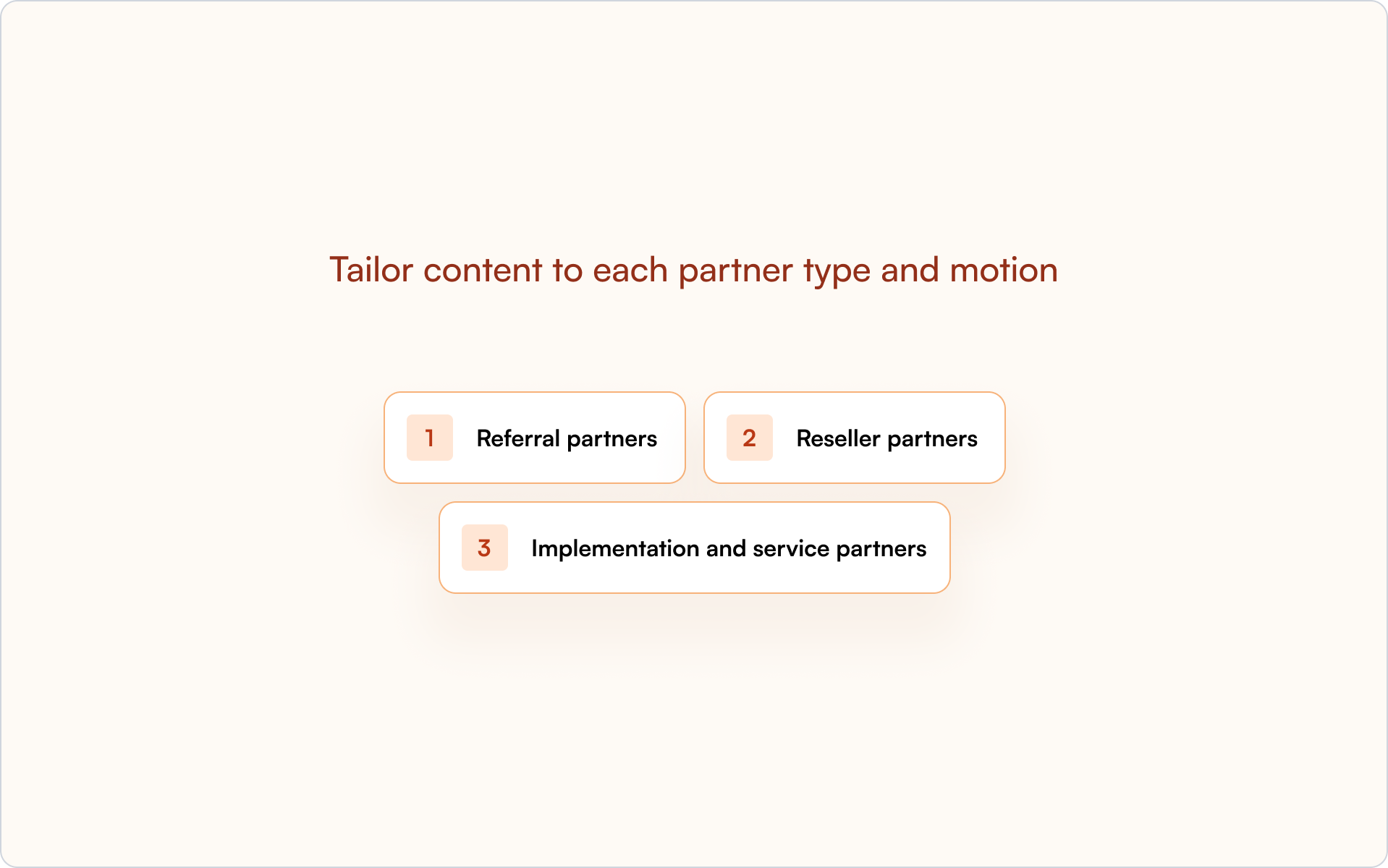
One of the most common reasons partner content programs underperform: every partner gets the same folder of assets. But a referral partner and a reseller are doing fundamentally different jobs — so they need different materials.
Referral partners
Optimize for speed and shareability: one-pagers, pre-written email templates, and landing pages they can forward to prospects. Referral partners typically don’t need deep product training — they need to qualify opportunities and hand them off cleanly.
Reseller partners
Resellers need full sales enablement: comprehensive pitch decks, demo scripts, pricing calculators, and objection handling guides. If they own the sales cycle, your program has to help them sound like experts quickly.
Implementation and service partners
Prioritize technical documentation, implementation playbooks, and certification materials. These partners deliver value post-sale, so your content should reduce delivery risk and improve time-to-value.
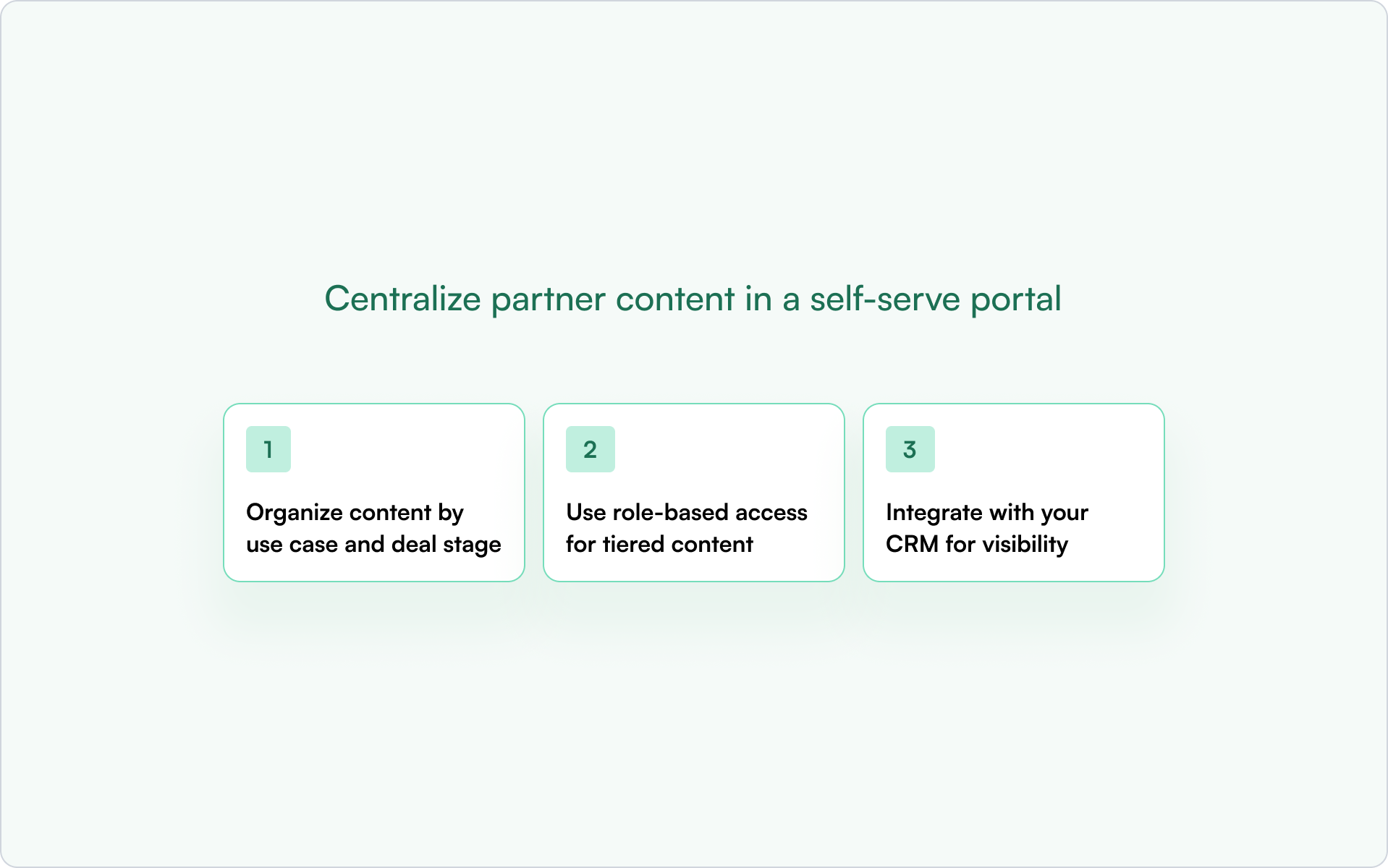
4. Centralize partner content in a self-serve portal
Partners won’t hunt through old email threads or shared drives. A centralized portal makes assets discoverable and ensures everyone is working from the same version.
Organize content by use case and deal stage
Structure the portal so partners can find what they need in seconds. Organize by “I’m trying to…” use cases — not your internal folders. A partner looking for a competitive comparison shouldn’t have to guess whether it lives under “Marketing > Collateral > Q3.”
Use role-based access for tiered content
Not every partner should see everything. Gate advanced content — pricing details, product roadmaps, competitive intelligence — behind certification or partner tier status. Done well, this also creates a healthy incentive for partners to level up.
Integrate with your CRM for visibility
When your portal connects to HubSpot or Salesforce, you can see which partners access which content and tie engagement back to pipeline. A CRM-first approach keeps this data visible to your revenue team — not trapped in a separate system.
5. Distribute content without forcing portal logins
Here’s the reality: many partners won’t log into your portal regularly. The best practices for SaaS partner content programs assume that, and they meet partners where they already work — inbox, Slack, and direct links.
Push content via email and Slack alerts
Don’t wait for partners to “check the portal.” Proactively send new or updated content through channels they use daily. A quick Slack message with a direct link to a new battle card beats hoping they stumble on it later.
Enable off-portal access for key assets
When possible, allow partners to access critical assets without authentication. Removing friction matters most in high-pressure moments — like five minutes before a discovery call.
Capture engagement without requiring authentication
Use trackable links or lightweight forms so you can still see what’s being used, by whom, and when — without adding password friction.
6. Enable co-branding without losing brand control
Partners want to put their logo on your materials. You want your messaging (and legal disclaimers) to stay accurate. The compromise is to design co-branding into the system — not bolt it on later.
Set co-branding templates and guardrails
Create templates with clearly defined editable zones (partner logo and contact info) and locked zones (product messaging, positioning, disclaimers). Make the rules obvious so partners can move fast without breaking your brand.
Automate partner logo insertion
Where possible, use dynamic templates that auto-populate a partner’s branding based on who’s logged in. This reduces manual edits and avoids “wrong-logo” mistakes.
Review and approve workflows
For high-stakes assets — customer-facing decks, public case studies, press releases — include an approval step. Automate what you can, but protect brand integrity where it matters.
7. Keep content fresh with version control and alerts
Outdated content is worse than no content. It creates confusion, slows deals, and erodes partner trust. Maintenance needs to be part of your operating rhythm — not a once-a-year cleanup.
Set refresh cadences by content type
Define review cycles and put them on a calendar. For example: review pricing quarterly, update product docs after each release, and refresh competitive intel monthly.
Sunset outdated assets automatically
Archive or hide assets past their expiration date. Partners shouldn’t accidentally pull last year’s pricing sheet the night before a proposal goes out.
Notify partners when content is updated
When you update an important asset, tell partners immediately. Email or Slack notifications keep everyone aligned on the latest version.
8. Track content engagement and tie it to revenue
If you want partner content to earn ongoing investment, you need to show how it impacts pipeline and revenue — not just downloads.
Measure views, downloads, and shares
Engagement metrics show what’s popular. Track at both the asset level and the partner level to identify high-performing content and your most engaged partners.
Connect engagement to deal progression
Look for patterns that correlate with movement: when a partner downloads an ROI calculator and then registers a new deal, you want that sequence visible. Build reporting that makes content a measurable part of deal velocity.
Report content ROI in partner QBRs
Bring content engagement data into quarterly business reviews. It’s one of the fastest ways to align on what’s working, what’s missing, and what you should build next together.
9. Scale your SaaS partner content program
What works with ten partners breaks at one hundred. Scaling a partner content program requires automation, personalization, and strong self-serve foundations — otherwise your partner team becomes a content concierge.
Automate content distribution workflows
Trigger content based on milestones: completing a certification, registering a first deal, entering a new tier, or launching a joint campaign. Automation keeps the partner experience consistent as volume grows.
Use AI for personalization at scale
AI can recommend the most relevant assets based on partner type, deal stage, and past engagement. Relevance drives usage — and usage drives revenue.
Reduce manual content requests with self-serve
Repeated partner requests for the same asset usually mean it’s not findable. Treat every manual request as product feedback on your portal’s organization, then close the gap.
Conclusion: make partner content a growth system, not a folder
The best practices for SaaS partner content programs aren’t about producing more collateral. They’re about building a repeatable system: the right assets for each partner motion, delivered where partners actually work, kept current with version control, and measured against pipeline and revenue.
If you get those fundamentals right, your partners stop feeling like a channel you have to manage — and start acting like a go-to-market multiplier.
Build your SaaS partner content program with Introw
Introw’s CRM-first partner portal helps teams centralize, distribute, and track partner content — all inside HubSpot or Salesforce.
- Content hosting directly in the portal
- Announcements to push updates via email and Slack
- Engagement tracking that syncs to CRM records
- Off-portal access so partners don’t always need logins
Get a demo to see how Introw helps SaaS partner programs deliver content partners actually use.
Still curious? Here are some quick answers to help clear things up
Start with the assets that support a partner’s first real selling conversations: a pitch deck, a one-pager, and a basic objection handling guide. If your partners run demos, add a demo script and a short “what to show” checklist next. Then expand based on what partners ask for in active deals.
Tie updates to how quickly information becomes wrong. Product docs should update after each major release. Pricing should be reviewed quarterly (and immediately when terms change). Competitive intel typically needs at least quarterly review, and often monthly if you’re in a fast-moving category.
Yes — and many prefer it. The most effective partner content programs distribute critical assets via email, Slack, and direct trackable links so partners can access materials without authentication friction, especially right before prospect calls.
Connect content engagement (views, downloads, shares) to deal registration, pipeline creation, and closed-won revenue in your CRM. Over time, you can identify which assets show up most often in successful deal journeys and prioritize those in your roadmap.
No. Referral partners need lightweight, shareable assets to qualify and hand off leads (one-pagers, email templates, landing pages). Resellers need deeper sales enablement (decks, demo guidance, pricing and packaging, objection handling) because they’re representing your product directly through the full sales cycle.






Are you already an active Introw partner?
Book a demo with one of our partner program experts, or explore Introw on your own time.