
Partner collaboration is when two or more businesses work together — sharing resources, expertise, and goals — to achieve outcomes neither could reach alone. In B2B SaaS, it’s the difference between signed partners who never engage and partners who actively drive pipeline.
Most teams get partner collaboration wrong not because they lack partners, but because they rely on portals partners won’t log into, data that lives outside the CRM, and rules that aren’t visible to anyone. This guide breaks down what collaboration actually means, why it breaks down in the real world, and how to build collaboration that scales without the usual friction.
What Is Partner Collaboration?
Partner collaboration is when two or more entities — businesses, organizations, or individuals — actively work together, sharing resources, expertise, and goals to achieve outcomes greater than either could accomplish alone.
In B2B SaaS, partner collaboration typically means vendors and their channel partners (resellers, referral partners, implementation partners) coordinating on deals, sharing pipeline visibility, and aligning on go-to-market efforts.
The key distinction: partner collaboration goes beyond signing agreements. It’s the day-to-day execution — deal updates, shared visibility, and mutual accountability — that turns a partnership into revenue.
Core elements of effective partner collaboration
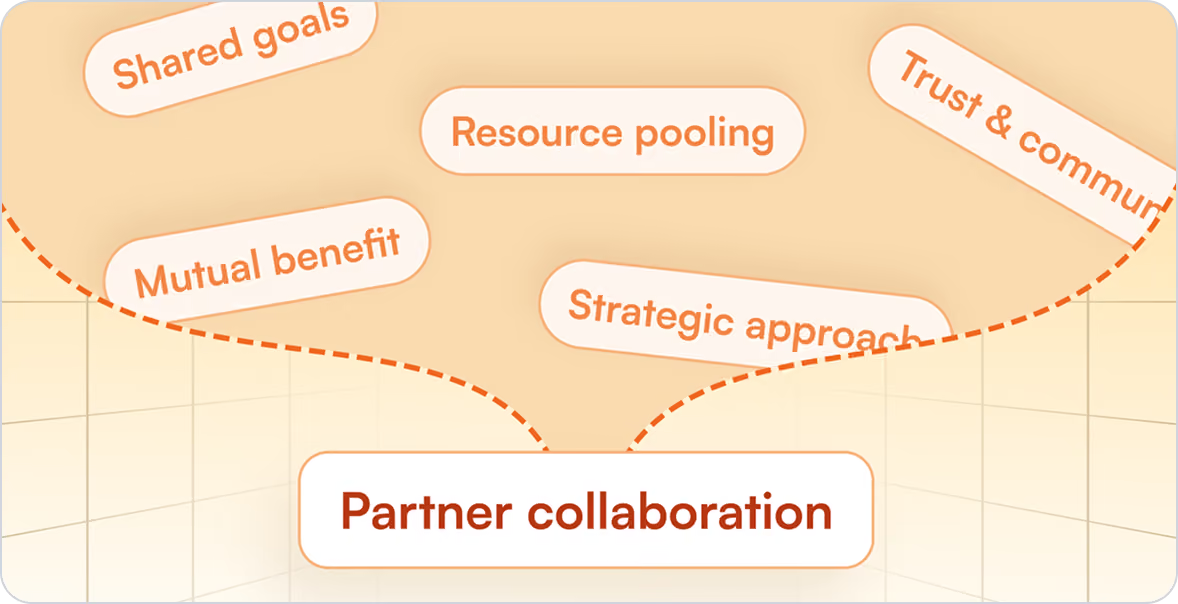
- Shared goals: Working toward common revenue objectives, not just individual sales targets
- Resource pooling: Combining knowledge, technology, market reach, and customer relationships
- Mutual benefit: Creating value for all parties — market access, enhanced offerings, revenue growth
- Trust and communication: Sharing deal updates, challenges, and information openly
- Strategic approach: Defining roles, responsibilities, and processes upfront
When these pieces are in place, partners become a scalable revenue channel. When they’re missing, you end up with signed partners who never engage — or worse, partners who engage but create confusion instead of pipeline.
Why Partner Collaboration Matters for Revenue Growth
Partner collaboration isn’t a relationship exercise. It’s a revenue lever.
When collaboration works, partners accelerate market expansion, reduce customer acquisition costs, and help you deliver more complete solutions. When it doesn’t, you’re left chasing updates, losing deals to confusion, and wondering why your partner program isn’t scaling.
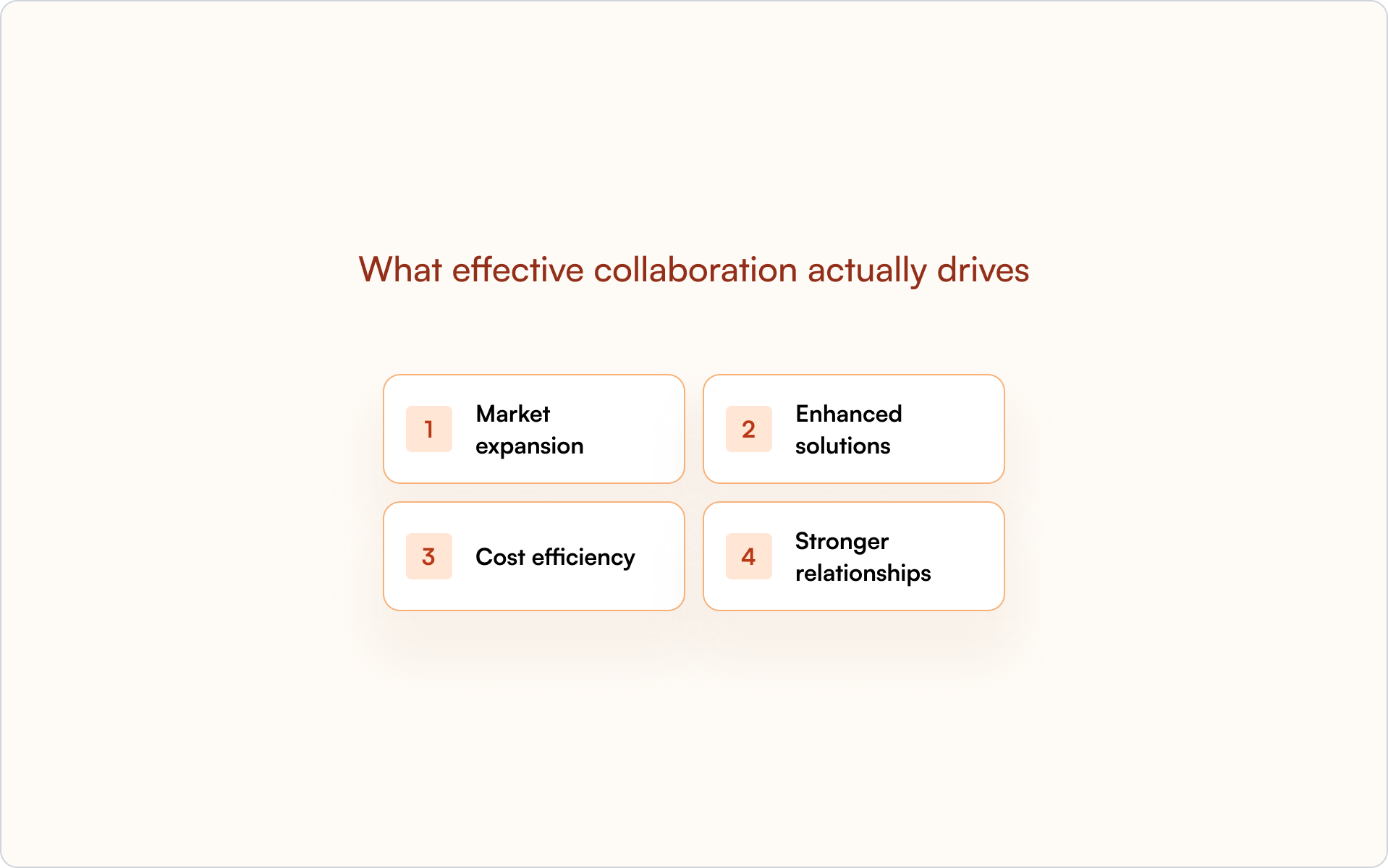
What effective collaboration actually drives
- Market expansion: Partners with relationships in your target verticals or regions open doors faster than your direct team alone
- Enhanced solutions: Combining your product with partner expertise — implementation, integrations, services — creates better customer outcomes
- Cost efficiency: Sharing go-to-market costs like marketing, sales infrastructure, and support reduces your overall spend
- Stronger relationships: Deeper partner ties lead to more referrals, renewals, and co-sell opportunities over time
The math is straightforward: partners who collaborate effectively bring real pipeline. Partners who don’t become names in a spreadsheet.
Collaboration vs. Partnership (and Why the Difference Matters)
Partnership and collaboration get used interchangeably, but they’re not the same thing.
A partnership is the formal agreement — the contract, the tier, the commercial terms. Collaboration is the ongoing work of executing together. You can have a signed partnership agreement and still fail completely at partner collaboration.
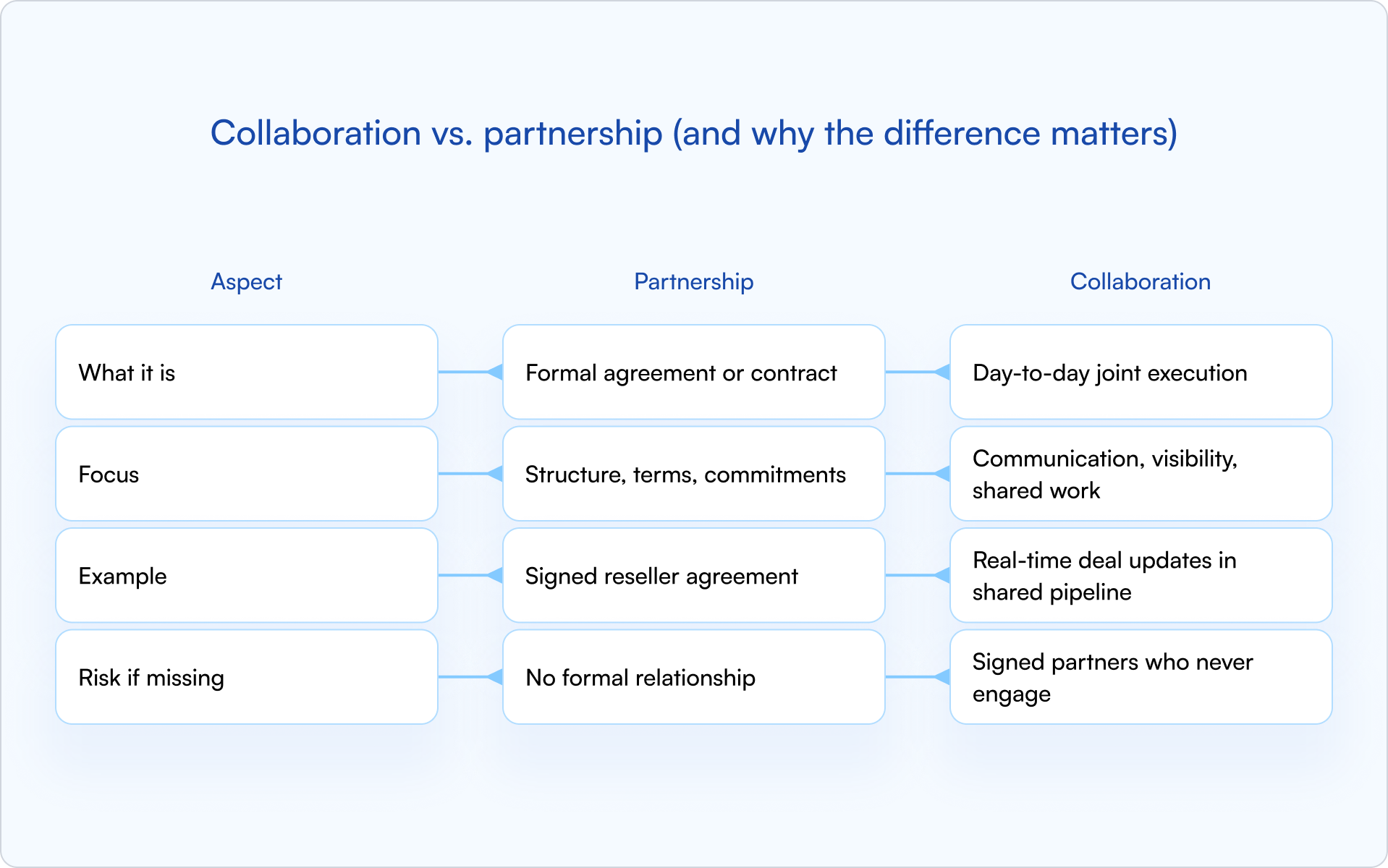
This distinction matters because most partner programs fail at collaboration, not partnership. The agreements are fine. The execution is where things break down.
Why Most Teams Fail at Partner Collaboration
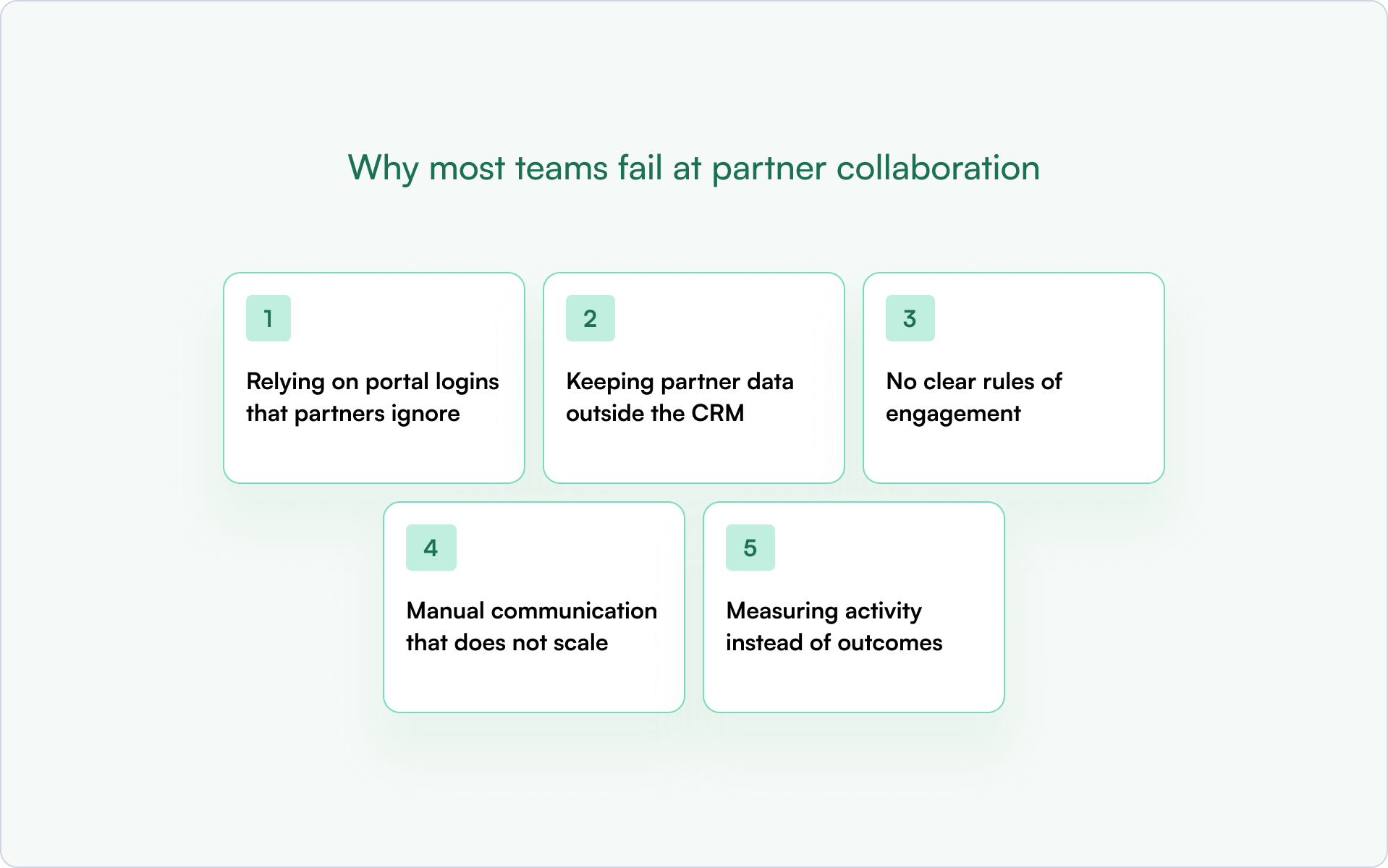
If you’ve ever wondered why your partner program looks good on paper but underdelivers on revenue, the answer is usually one (or more) of these five issues.
1) Relying on portal logins that partners ignore
Traditional PRMs require partners to log into a separate portal to submit deals or get updates. The problem is simple: most partners won’t do it. They’re busy selling — not managing another set of credentials.
The portal becomes a graveyard. Deals go unregistered. Updates stop flowing. And you’re left wondering why engagement dropped off right after onboarding.
2) Keeping partner data outside the CRM
Many teams track partner activity in spreadsheets, emails, or siloed tools. Sales can’t see partner pipeline. RevOps can’t trust the data. Attribution becomes guesswork, and forecasting breaks.
This is where “CRM-first” matters. When partner data lives inside HubSpot or Salesforce — not alongside it — everyone sees the same reality.
3) No clear rules of engagement
Partners and direct sales clash when there’s no clarity on who owns which accounts, how deals are registered, or what protection windows exist. This causes channel conflict and erodes trust fast.
Without documented rules, every overlap becomes a judgment call. And judgment calls don’t scale.
4) Manual communication that does not scale
Chasing partners for updates via email or Slack threads works with five partners. It collapses at fifty. Updates get lost, deals go dark, and partner managers burn out.
The fix isn’t more effort — it’s automation that keeps communication flowing without manual follow-up.
5) Measuring activity instead of outcomes
Tracking portal logins or training completions misses the point. What matters is partner-sourced revenue, deal velocity, and pipeline contribution.
Activity metrics create false confidence. Outcome metrics tell you whether partner collaboration is actually working.
How to Collaborate with Partners Without Portal Logins
Here’s the shift that changes everything: partners don’t have to log into a portal to collaborate effectively.
Off-portal collaboration means partners can register deals, provide updates, and stay informed via email or lightweight forms — no credentials required. Replies sync back to the CRM automatically, so nothing gets lost and your team isn’t stuck reconciling notes later.
What off-portal partner collaboration looks like in practice
- Email-based updates: Partners reply to notifications, and responses sync to the CRM deal record automatically
- Lightweight forms: Shareable links for deal registration — no account creation required
- Real-time visibility: Partners see deal status without logging in, and you see their updates inside your CRM
When you remove the login barrier, engagement goes up. When updates sync automatically, data stays clean. That’s the foundation of partner collaboration that actually scales.
What Effective Partner Collaboration Looks Like
When collaboration works, it’s visible in how deals move — not just in how many partners you’ve signed.
Shared visibility into deals and pipeline
Both you and your partners see deal status, next steps, and blockers without chasing each other. Property-level sharing lets you show partners what they need (stage, protection expiry, next step) without exposing internal notes or pricing.
Frictionless, real-time communication
Updates flow automatically via email or Slack. Partners don’t have to remember to log in. You don’t have to chase them. Every touchpoint is logged in the CRM timeline.
Clear ownership and accountability
Deal registration establishes who owns what and for how long. Rules of engagement are documented and accessible. Disputes are rare because the rules are visible to everyone.
Mutual value and win-win structures
Collaboration works when both sides benefit. Partners get leads, visibility, and support. You get pipeline, market reach, and revenue. Align incentives clearly, and the relationship sustains itself.
Tools and Technology to Collaborate with Partners
The right technology makes partner collaboration repeatable. The wrong technology creates another system to manage — and another place where the truth gets lost.
What to look for in partner collaboration tooling
- CRM integration: Tools that work inside HubSpot or Salesforce — not alongside them — keep data clean and visible
- Deal registration: Centralized submission, approval workflows, and protection windows that enforce your rules
- Partner portal: A self-serve hub for resources, deal status, and communication — but not the only way to engage
- Off-portal engagement: Email and Slack-based collaboration for partners who won’t log in
- Reporting and attribution: Accurate tracking of partner-sourced vs. partner-influenced revenue
Introw is a CRM-first PRM built directly on HubSpot and Salesforce. It enables off-portal collaboration without forcing partner logins — so partners stay engaged and your data stays clean.
If you want to see how this works in practice, get a demo to walk through how Introw supports partner collaboration inside your CRM.
How to Measure Partner Collaboration Success
Activity metrics tell you partners are logging in. Outcome metrics tell you whether partner collaboration is driving revenue.
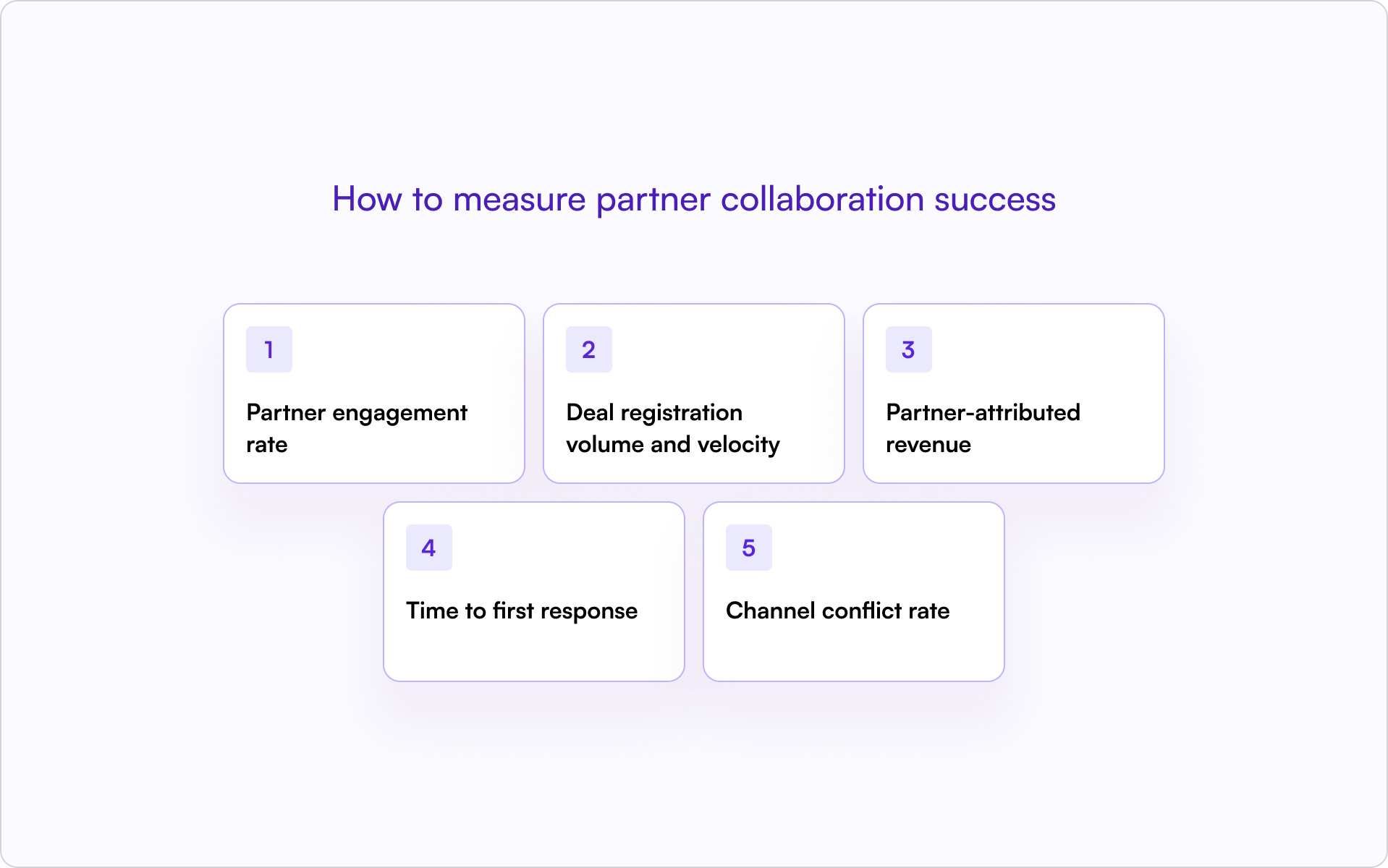
Partner engagement rate
The percentage of partners actively submitting deals or providing updates within a given period. Low partner engagement signals friction in the collaboration process — usually a login or communication problem.
Deal registration volume and velocity
How many deals partners register and how quickly deals move through stages. This measures whether partners are bringing real pipeline, not just names.
Partner-attributed revenue
Closed-won revenue sourced or influenced by partners. This is the ultimate measure of whether collaboration drives business results.
Time to first response
How quickly partners respond to deal updates or requests. Faster responses indicate healthy, engaged collaboration.
Channel conflict rate
The frequency of disputes over deal ownership between partners or between partners and direct sales. Lower is better — it means your rules of engagement are working.
Build Partner Collaboration That Scales Inside Your CRM
Partner collaboration doesn’t fail because of bad intentions. It fails because of bad systems — portals partners won’t use, data that lives outside the CRM, and rules that aren’t visible or enforced.
The teams that scale partner revenue don’t rely on heroics. They rely on clear rules, shared visibility, and tools that meet partners where they already work.
If you’re ready to collaborate with partners without chasing logins or losing deals in spreadsheets, get a demo of Introw to see how CRM-first partner collaboration works.
Still curious? Here are some quick answers to help clear things up
Partner collaboration in B2B SaaS is the ongoing, practical work of co-selling and delivering customer outcomes with partners — sharing deal context, next steps, ownership rules, and pipeline visibility. It’s what turns a “signed partner” into a revenue-producing channel.
A partner is an entity you have a formal business relationship with — reseller, referral partner, implementation partner. A collaborator is anyone you work with jointly on a project. Partners collaborate, but not all collaborators are formal partners.
Remove friction by letting partners respond via email instead of requiring portal logins. Automate reminders when deals go stale. Partners engage more when onboarding is seamless and ongoing engagement is easy.
Small programs can start with spreadsheets and email, but it breaks down quickly as you add partners, deals, and shared accounts. The moment you need reliable attribution, clean forecasting, and consistent rules of engagement, a PRM (ideally CRM-first) becomes the difference between scaling and constantly patching process gaps.
Frequency depends on deal volume and partner tier. In practice, most teams aim for real-time updates on active deals (automated where possible) plus a weekly or biweekly pipeline and enablement check-in for strategic partners.




See AI-Native PRM in Action
Book a demo with one of our partner program experts, or explore Introw on your own time.