
Engineering an ecosystem centric go to market architecture for the age of agentic AI. A collaboration between Introw and VIVA GTM.
The traditional B2B commercial model is reaching a breaking point. Despite years of talk about collaboration, the numbers are blunt. Between 60 and 80 percent of partnerships fail (McKinsey, Gartner), and 60 percent of marketing development funds go unclaimed (Canalys). This waste is the symptom of a direct only mindset that no longer fits a market shaped by agentic AI and rapid commoditization.
At Introw and VIVA GTM, we believe surviving the age of automation requires a full architectural shift toward Customer Partner Experience, or CPX. CPX is a journey aligned model that dissolves the walls between functions, so software vendors and their ecosystems work as one in service of the end client. This guide breaks down what CPX is, why it has become a survival issue, and exactly how to improve it.
What is Customer Partner Experience (CPX)?
Customer Partner Experience (CPX) is a go to market operating model where a vendor and its partner ecosystem are designed around a single, continuous buyer journey rather than around internal departments. Marketing, sales, customer success, and partner teams share account intelligence and are measured on the total customer outcome, not on who owns a given lead or deal.
Where traditional partner relationship management sits beside the workflow and logs activity after the fact, CPX puts partner influence at the center of how revenue actually gets created. In practice, improving CPX means closing the gap between the experience your buyer wants, which is seamless and ecosystem wide, and the experience your org chart produces, which is fragmented and direct only.
The Experience Gap: Why Your Buyers Are Already Gone
The power dynamic in software procurement has permanently inverted. Buyers now navigate ecosystems, not sales cycles. Research shows that 83 percent of B2B buying decisions are made before the buyer ever contacts a provider (Gartner).
Look closer and the problem sharpens. A typical B2B customer goes through 28 influence moments before making a decision, yet the average company is present for only 4 of them. The remaining 24 are owned by peer networks, consultants, and ecosystem partners (Canalys). When Marketing, Sales, and Success each operate on their own island, they hand the buyer a disjointed experience that drives up customer acquisition cost and leaks revenue at every seam.
Improving CPX starts with a simple admission. If you only show up for 4 moments out of 28, you cannot win on effort inside your own funnel. You have to earn presence in the moments your partners already own.
How to Improve Your CPX: The Three Moves That Matter
Engineering an ecosystem centric firm is a structural project, not a campaign. It comes down to three reinforcing moves. Skip one and the other two underperform.
- Influence the missing moments with strategic co marketing.
- Restructure for agility with cross functional pods led by orchestrators.
- Replace legacy PRM with a CRM native engine that makes partner influence automatic.
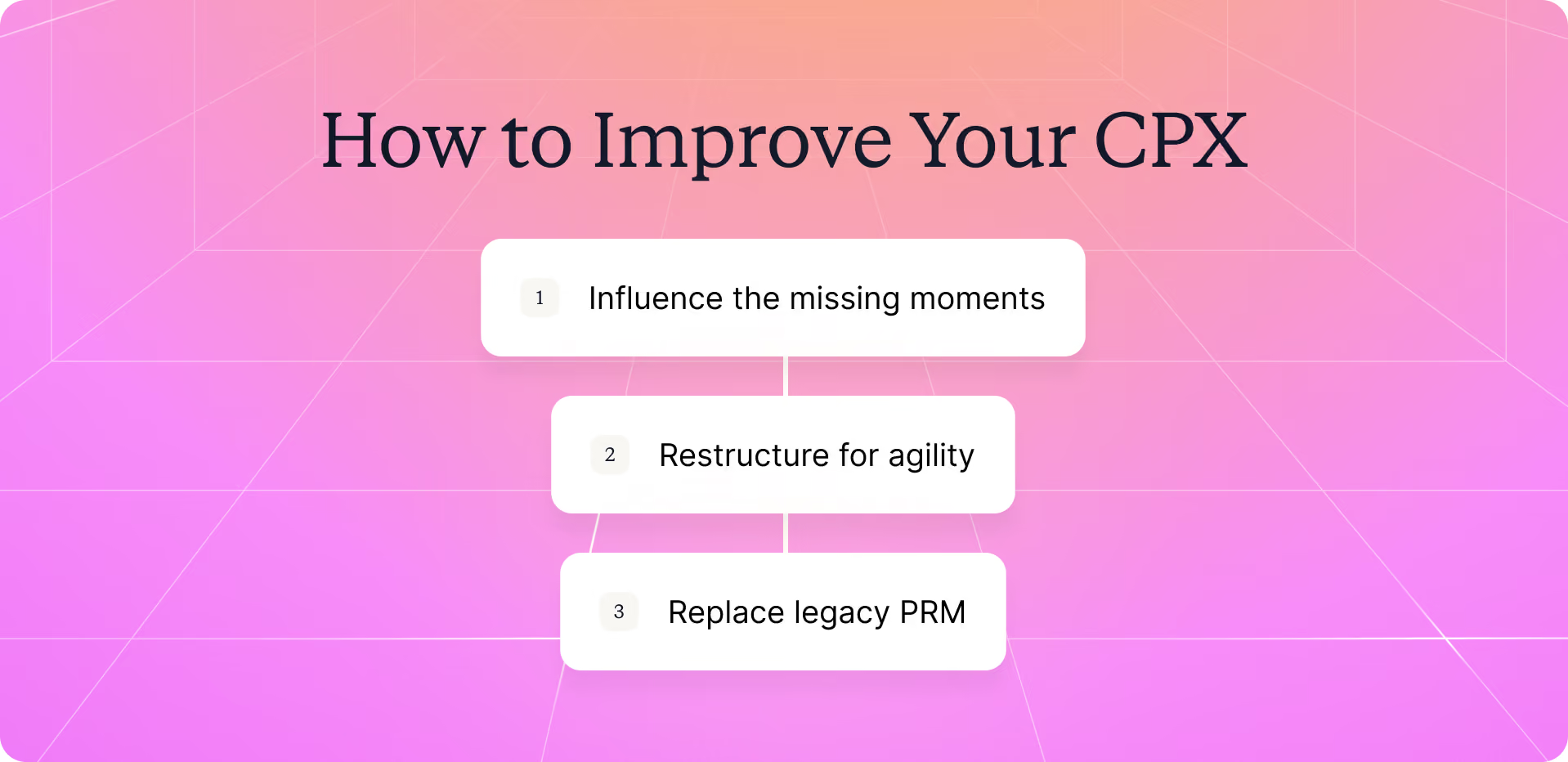
The sections below walk through each one.
Move 1: Co Marketing, the Engine of Ecosystem Demand
To bridge the experience gap, high growth vendors are shifting from generic branding to strategic co marketing. It is no longer enough to swap logos on a slide. You align your narrative with partners who share your ideal customer profile so you can influence the 24 moments you are not in.
True co marketing in the CPX era rests on three ideas:
- Narrative hybridization. Build content that solves a specific vertical problem by combining your technology with a partner's expertise, rather than two brands talking past each other.
- Influencing the influencers. Position your solution inside rooms where you are not present, carried by trusted third party advocates instead of your own reps.
- Joint demand generation. Move away from isolated campaigns toward ecosystem led events and content. Sharing the stage with established players in your partner ecosystem reduces customer acquisition cost and shortens the path to trust.
This is also where nearbound and co selling motions live. The partners who already serve your buyer become the most efficient demand channel you have, because they arrive with credibility you would otherwise spend months and budget to build.
Move 2: Restructure for Agility, the Pod and the Orchestrator
Demand created across an ecosystem cannot be serviced by a siloed org chart. A customer centric commercial restructuring has three parts:
The Pod Structure
Dissolve functional hierarchies in favor of cross functional pods that combine sales, marketing, and partner managers, aligned by segment or vertical. The pod owns the buyer journey end to end, so handoffs stop becoming drop offs.
The Orchestrator Archetype
Reskill staff from lone wolf sellers into orchestrators. These winners do not guard territory. They share account intelligence, co identify buyer intentions with partners, and lean on AI deal coaching to keep deal velocity high across a more complex motion.
Outcome Based Compensation
Align internal teams with external partners by rewarding the total customer outcome rather than individual channel credit. Comp is the strongest signal a company sends about what it actually values. If you pay for credit, you will get turf wars. If you pay for outcomes, you will get collaboration.
Move 3: Replace Legacy PRM With a CRM Native Engine
Around 60 percent of partnerships fail (McKinsey), and a major reason is that traditional PRM technology sits beside the workflow instead of inside it. To master CPX in practice, your technology has to be digital native:
- CRM native flow. High velocity orchestration needs a platform that lives inside your CRM, such as Introw, which runs natively on HubSpot and Salesforce. Partners engage off portal while partner influence is captured automatically, so it becomes a reality in your pipeline rather than a manual log nobody updates.
- The integration moat. Retention is tied directly to ecosystem depth. Customers using your software with four or more integrations are 35 percent less likely to churn than those with just one (Rollworks). Every meaningful integration is another reason to stay.
Because the workflow already lives in the CRM your revenue team uses every day, teams typically go live in 2 to 4 days, not the weeks or quarters a portal first rollout demands.
Legacy PRM vs a CRM Native CPX Engine
The Revenue Multiplier: Strategy, Skills, and Engine
Efficiency is no longer optional. Ecosystem led growth opportunities carry 48 percent higher average contract value (Pavilion). On the other side of the ledger, companies with go to market misalignment face 50 percent higher customer acquisition cost and 36 percent longer sales cycles (Pavilion). CPX is the difference between those two outcomes.
The VIVA GTM approach provides three pillars for the transformation:
- The Architect, consulting. Designing the go to market strategy and rules of engagement that de risk your expansion.
- The Empowerment, academy. Turning your entire team into ecosystem literate orchestrators.
- The Runner, Introw. The CRM native partner experience platform where your team executes with zero friction and AI powered intelligence.
How to Measure CPX
You cannot improve what you do not measure, and CPX needs metrics that cut across the old functional lines. Track these:
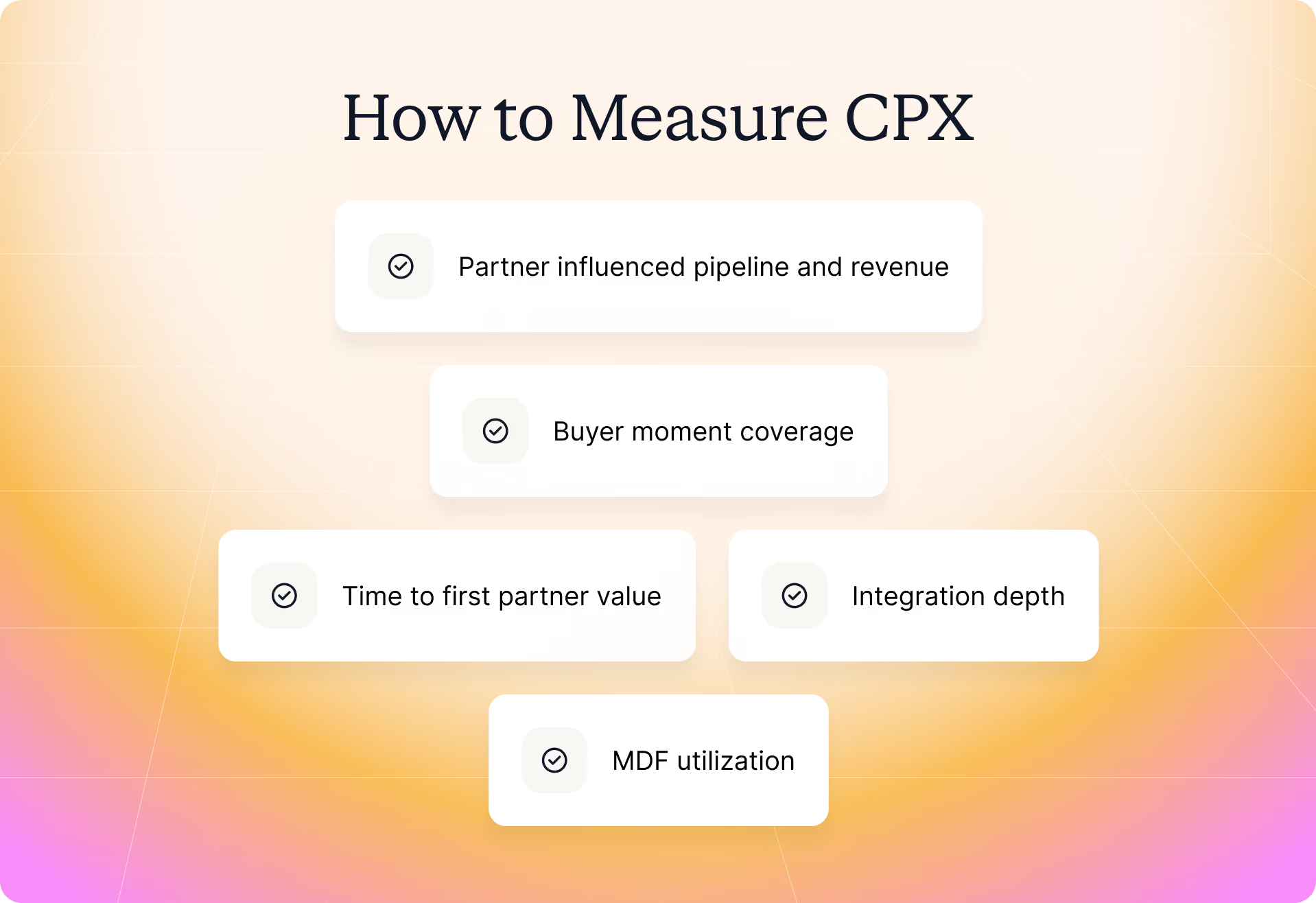
- Partner influenced pipeline and revenue. The share of pipeline and closed revenue a partner touched at any point, not only deals a partner sourced outright.
- Buyer moment coverage. How many of the influence moments in your buyer journey you and your partners are actually present for, measured against that benchmark of 28.
- Time to first partner value. How quickly a new partner reaches their first registered deal or shared opportunity.
- Integration depth. The number of active integrations per customer, given the link between four or more integrations and a 35 percent drop in churn.
- MDF utilization. The percentage of marketing development funds actually claimed and tied to outcomes, against the industry reality that 60 percent goes unspent.
Teams that run this model well see the payoff in the numbers Introw customers report: up to 70 percent more partner pipeline, 75 percent faster partner onboarding, and 60 percent more partner influenced revenue.
The Commercial Inversion
By 2030, it is forecast that 90 percent of B2B sales will happen through partners (Forrester). The future belongs to the ecosystem centric firm, where the vendor is the platform and the partner is the facilitator. The companies that win will be the ones that stopped treating partnerships as a side program and started treating Customer Partner Experience as the core of how they sell.
Transform your GTM team into an Ecosystem powerhouse. Visit www.introw.io or www.viva-gtm.com to begin your CPX transformation.
Still curious? Here are some quick answers to help clear things up
CPX is a go to market model where a vendor and its partner ecosystem are organized around one continuous buyer journey instead of around internal departments. The goal is a seamless experience for the end customer, with teams measured on the total outcome rather than on channel credit.
Traditional PRM is a system of record that sits beside your workflow and logs partner activity after it happens. CPX is an operating model, and a CRM native engine like Introw makes partner influence part of the live revenue workflow rather than a separate portal. PRM is a tool, CPX is the practice the tool should serve.
Between 60 and 80 percent of partnerships fail, largely because the technology and the org structure are built for a direct only motion. Partner data lives in a portal nobody opens, influence is never captured, and teams are paid to protect their own channel, so collaboration never takes hold.
Ecosystem led growth is a strategy that uses your partner ecosystem as a primary engine for demand, expansion, and retention. CPX is the operating model that makes ecosystem led growth executable day to day, since the strategy only works if your teams, comp, and tooling are aligned around it. Ecosystem led growth opportunities carry 48 percent higher average contract value.
At minimum you need a CRM native partner platform so partner workflows and influence live inside HubSpot or Salesforce, AI deal coaching to keep velocity high across a more complex motion, and co marketing infrastructure to influence the buyer moments your partners own. Introw provides the CRM native execution layer for this.



See AI-Native PRM in Action
Book a demo with one of our partner program experts, or explore Introw on your own time.