

.svg)








Partner Management
Tips, tactics, and tools for partner managers looking to grow revenue, boost engagement, and run scalable, CRM-first partner programs.
Latest articles
Partner Analytics - Metrics & Tools to Measure Partnership Channel ROI in 2026
Get your SaaS channel partnerships right, and they should drive a significant portion of your revenue and growth.
But to enjoy strong results from partner programs, SaaS leaders must first understand how they are performing and why.
This is where partner analytics comes in.
After all, without clear visibility, leaders risk missed opportunities, inefficiencies, and poor ROI.
Invest in partner analytics, and you’ll be empowered to make better decisions, develop stronger relationships, and enjoy more scalable, predictable partner-led growth.
In this guide, we’ll take you through the core partner analytics that SaaS businesses should be tracking, explain how to operationalize these metrics, and cover the top tools — like Introw — that power these processes.
📈 Introw makes partner analytics easy, empowering you to make the data-driven decisions necessary to take your program to the next level. Book a demo here.
What Is Partner Analytics?
Operating a strong partner analytics scheme is crucial for partnership success.
But what exactly do we mean by ‘partner analytics’, and why is it so important for SaaS brands?
Defining the Term
‘Partner analytics’ refers to tracking and analyzing data on how channel, referral, or strategic partners contribute to revenue, sales pipeline, and customer acquisition.
This means tracking key metrics that show progress towards your partner-related goals, and using these insights to regularly make data-driven decisions designed to optimize your partnership program.
While this may sound time-consuming (and once upon a time it was), in 2026, there are plenty of partner analytics tools on the market that make tracking and analysis quick and easy.
And it’s worth investing in these tools — in the fiercely competitive SaaS landscape of 2026, partner ecosystems are increasingly becoming a key revenue stream for brands.
This means that understanding partner performance is more important now than ever before.
Indeed, with tighter budgets, rising growth targets and more competition, SaaS leaders need precise insights to prioritize high-performing partnerships and scale efficiently.
Why It’s Mission-Critical for SaaS Growth
As partner ecosystems become a core segment of SaaS go-to-market strategy, partner analytics is mission-critical for SaaS growth.
Here’s why.
Firstly, chief revenue officers (CROs) and chief customer officers (CCOs) rely on having a forecastable pipeline to plan and hit growth targets.
Without clear partner data, this vital visibility breaks down.
Meanwhile, RevOps teams demand clean, clearly-attributed data to accurately report on performance and optimize processes across channels.
And channel managers must prove the impact of their partners to secure budget and resources.
This is impossible without real-time insights.
Partner analytics addresses these needs simultaneously, enabling teams to track sourced and influenced revenue, identify top-performing partners, and make confident, data-driven decisions.
Ultimately, in a highly competitive SaaS landscape where efficiency and accountability are key, measuring and managing partner performance isn’t just helpful — it’s essential for driving sustainable, scalable growth.
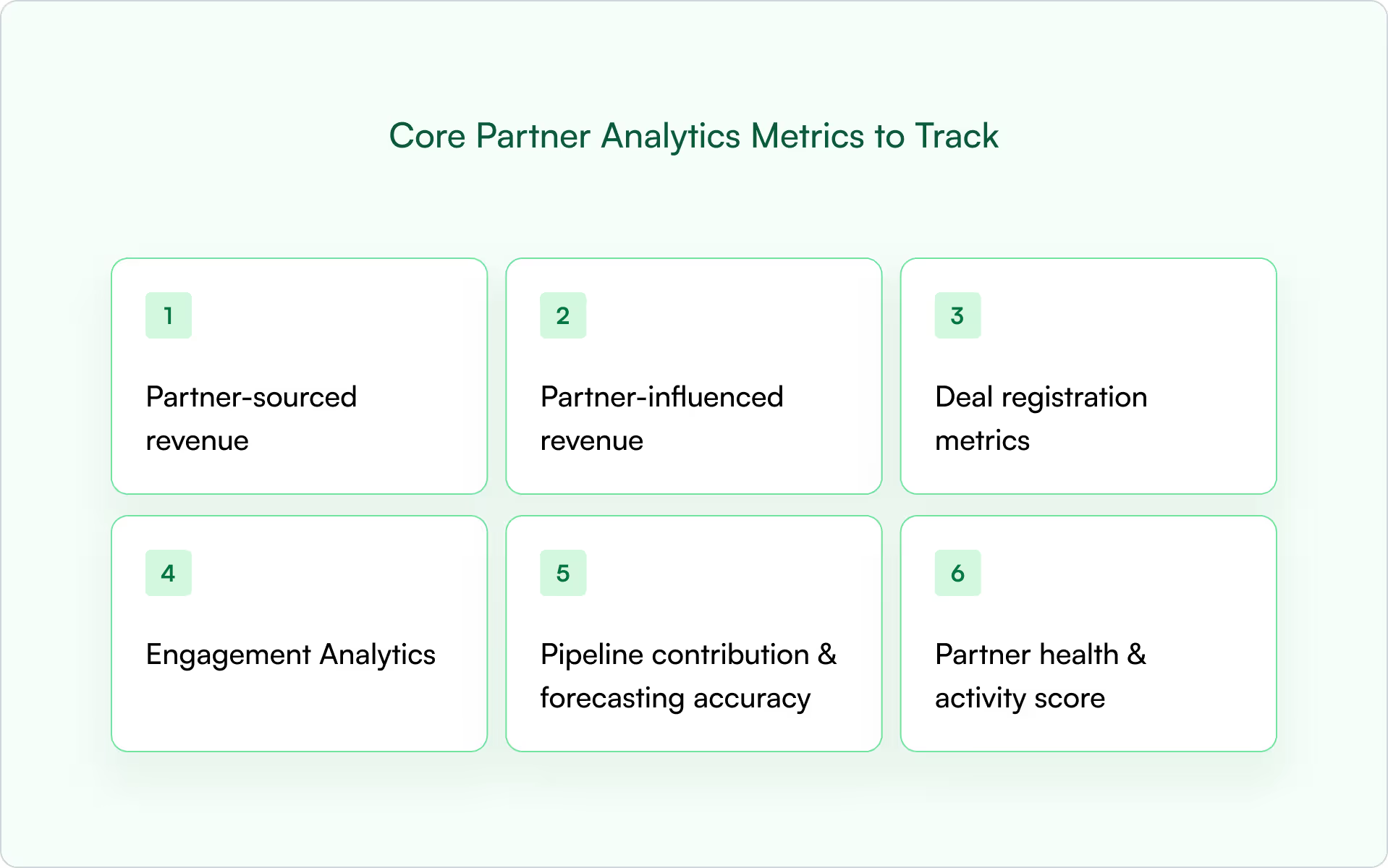
Core Partner Analytics Metrics to Track
So, we’ve established that tapping into partner analytics is essential for SaaS success, and we know why it’s so important.
But how can you effectively harness the power of partner analytics?
Here are six types of core partner analytics metrics to track.
1. Partner-Sourced Revenue
The most important metric when it comes to tracking third party performance, this quantifies the total revenue generated directly through leads, opportunities, or deals sourced by external partners.
To make this metric actionable, break it down into components like:
- Total Revenue
- Number of Partner-Sourced Deals
- Average Deal Size
- Sales Cycle Length
- ARR (Annual Recurring Revenue) and MRR (Monthly Recurring Revenue)
Analyzing these dimensions by partner, deal stage, or deal type can reveal what’s working and where to optimize.
CRM alignment is critical. When your PRM integrates natively with your CRM (like Introw does with HubSpot and Salesforce), these metrics are automatically tracked — no need for disconnected spreadsheets or manual exports.
Instead, you get real-time, reliable insights directly inside your CRM, improving forecasting accuracy, boosting efficiency, and making strategic decisions easier and faster.
2. Partner-Influenced Revenue
Not every deal starts with a partner — but that doesn’t mean they don’t play a critical role. Partner-influenced revenue captures the deals where your direct sales team owns the motion, but a partner steps in to support, accelerate, or strengthen the outcome.
There are a few common scenarios where looping in a partner makes sense:
- Integration Partners: let’s say your prospect mentions they use a platform you integrate with. Inviting that partner’s CSM or account manager into the deal can build trust, reduce perceived risk, and help speed up the close.
- Reseller or Regional Partners: maybe you’re selling into a region like Australia, but don’t have local coverage. A trusted reseller can step in to help with sales execution and post-sale support — making the deal more likely to land.
While these deals aren’t “sourced” by partners, the partner’s involvement clearly adds value. The challenge is attribution: how do you track and measure that influence?
That’s where having CRM-native attribution models comes in. When you tag partner involvement — at the contact, opportunity, or activity level — you start to get real visibility into which partners are actually driving results. And over time, this data becomes a key part of understanding partner ROI, optimizing enablement, and scaling what works.
3. Deal Registration Metrics
Deal Registration Metrics track partner-submitted sales opportunities, measuring volume, approval rates, conversion rates, deal velocity, win rates and average deal size.
These metrics help SaaS leaders evaluate partner engagement, pipeline quality, and program effectiveness, revealing how effectively partners contribute to revenue growth through registered deals.
Introw automatically syncs partner data through its integrations with CRMs like Salesforce and HubSpot.
It detects partner accounts, imports contacts, and maps deal registrations in real time, keeping your CRM as the single source of truth.
The result?
Seamless collaboration and accurate tracking of partner-sourced revenue.
4. Engagement Analytics
Your engagement analytics measure how actively partners interact with your communication and enablement channels.
Put simply, high engagement means better partner performance and deal outcomes.
Key indicators include email opens, showing interest in campaigns or updates; Slack replies, reflecting real-time collaboration and responsiveness; and portal views, indicating how frequently partners access resources or training materials.
These metrics help channel managers gauge partner interest, identify engaged versus disengaged partners, and optimize communication strategies.
Tracking these interactions enables more personalized support, targeted enablement, and data-driven decisions to improve overall partner program effectiveness and return on investment (ROI).
5. Pipeline Contribution & Forecasting Accuracy
Want to assess how much revenue partners generate and how reliably their deals close?
This is where pipeline contribution and forecasting accuracy come in.
Tracking your partners’ contribution to your pipeline helps identify high-performing partners and predict future revenue.
It gives you oversight of their pipeline-related activities, such as sourcing leads, registering deals, and co-selling opportunities.
Accurate forecasting is a huge advantage for SaaS brands.
To optimize your forecasting, you must first track accuracy using forecasting dashboards inside Salesforce or HubSpot.
6. Partner Health & Activity Score
This metric measures partner engagement and effectiveness based on key interactions and performance.
For example, you may wish to track touchpoints like meetings or communications, shared content such as training or enablement materials accessed, and recent deals registered or closed.
In 2026, this doesn’t have to be consuming, with partnership trackers doing the hard work for you.
Your partner health and activity score helps to identify active, high-potential partners versus inactive ones.
This enables channel teams to prioritize support, optimize enablement, and drive stronger pipeline contribution through more engaged partnerships.
How to Operationalize These Metrics
Once you’ve chosen the most relevant metrics for your partner program, how can you implement them?
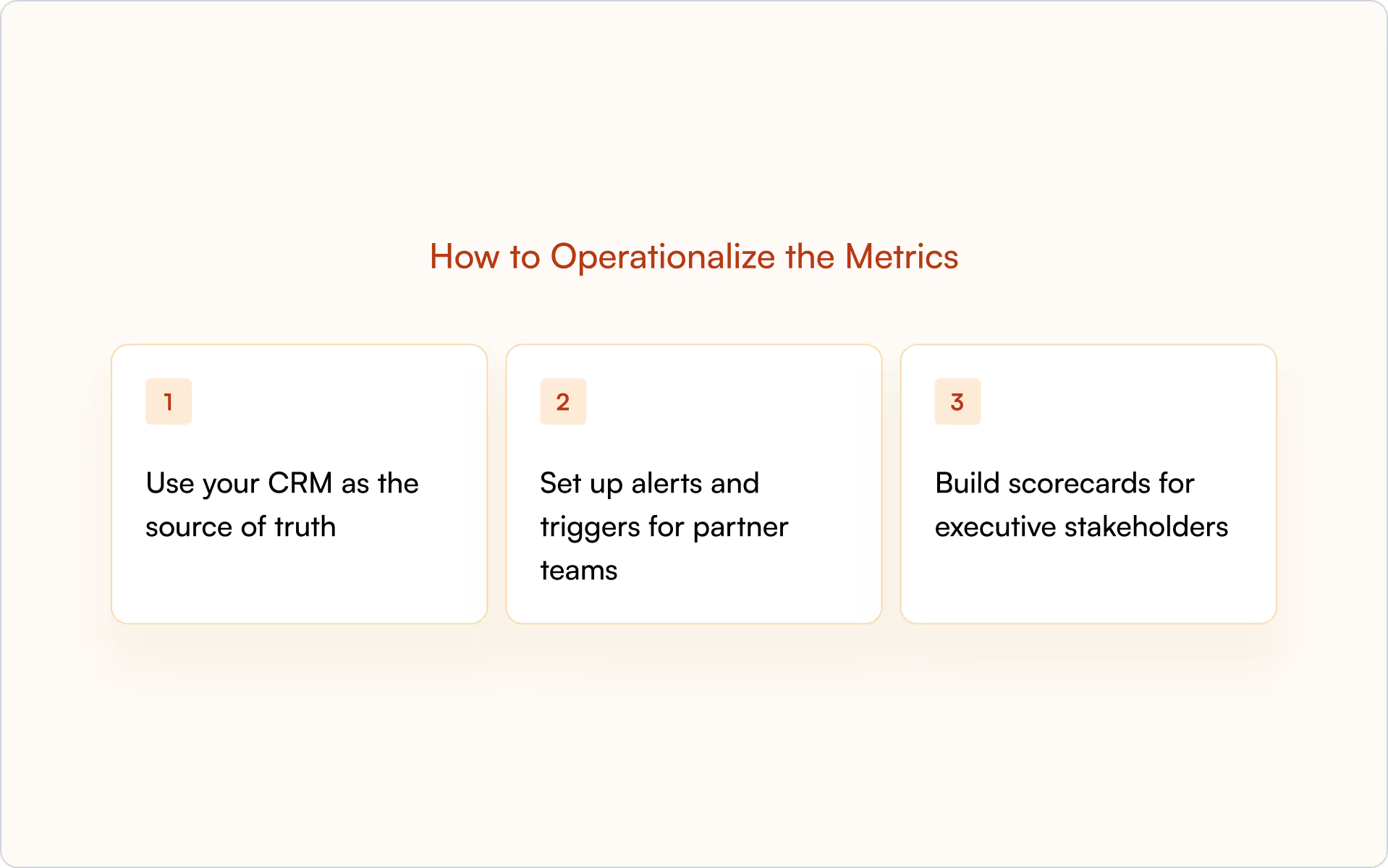
Here are three vital tips for actioning your partner metrics:
Use Your CRM as the Source of Truth
Stop managing your partner analytics in spreadsheets, and instead use your CRM as your single source of truth.
Benefits of this approach include:
- Real-time, centralized data
- Better data integrity and more accurate data
- Improved scalability
- Better security
- Automated reporting
- Partner trust and transparency
To ensure your CRM is your single source of truth, it’s vital to invest in a PRM that plugs into your CRM (Introw, for example, integrates with Salesforce and HubSpot).
Set Up Alerts and Triggers for Partner Teams
Leverage Introw’s workflow automation features to set up alerts and triggers for your partner teams in your CRM.
This setup allows you to define specific events that automatically trigger notifications, such as a partner registering a lead, a deal reaching a new stage, or a task being assigned.
These notifications can be sent via Slack or email, ensuring real-time communication with your partners.
This approach keeps partners informed and engaged without requiring them to log into a portal, facilitating off-portal collaboration and timely updates.
Build Scorecards for Executive Stakeholders
Creating scorecards for executive stakeholders helps to align your partner program with your business goals — and achieving this is essential for success.
You can use dashboards to clearly show the impact of partners on pipeline and revenue, which is crucial for engaging CROs and driving continued investment.
With this in mind, scorecards should highlight KPIs like partner-sourced revenue, win rates, and deal velocity.
Include mutual action plans to show progress on shared goals and timelines, and incorporate automated reporting to keep leadership informed in real time.
This data-driven approach builds credibility, helps prioritize strategic partnerships, and ensures the partner program is seen as a measurable growth driver — not just a support function.
Tools That Power Channel Partner Analytics
In 2026, plenty of tools can significantly boost your partner analytics efforts.
Excellent partner relationship management (PRM) software like Introw is vital for success.
Not only does it improve forecasting, performance tracking, efficiency and partner relationships, but it centralizes your collaboration and automates tedious, time-consuming tasks.
What to Look For in a Partner Analytics Tool
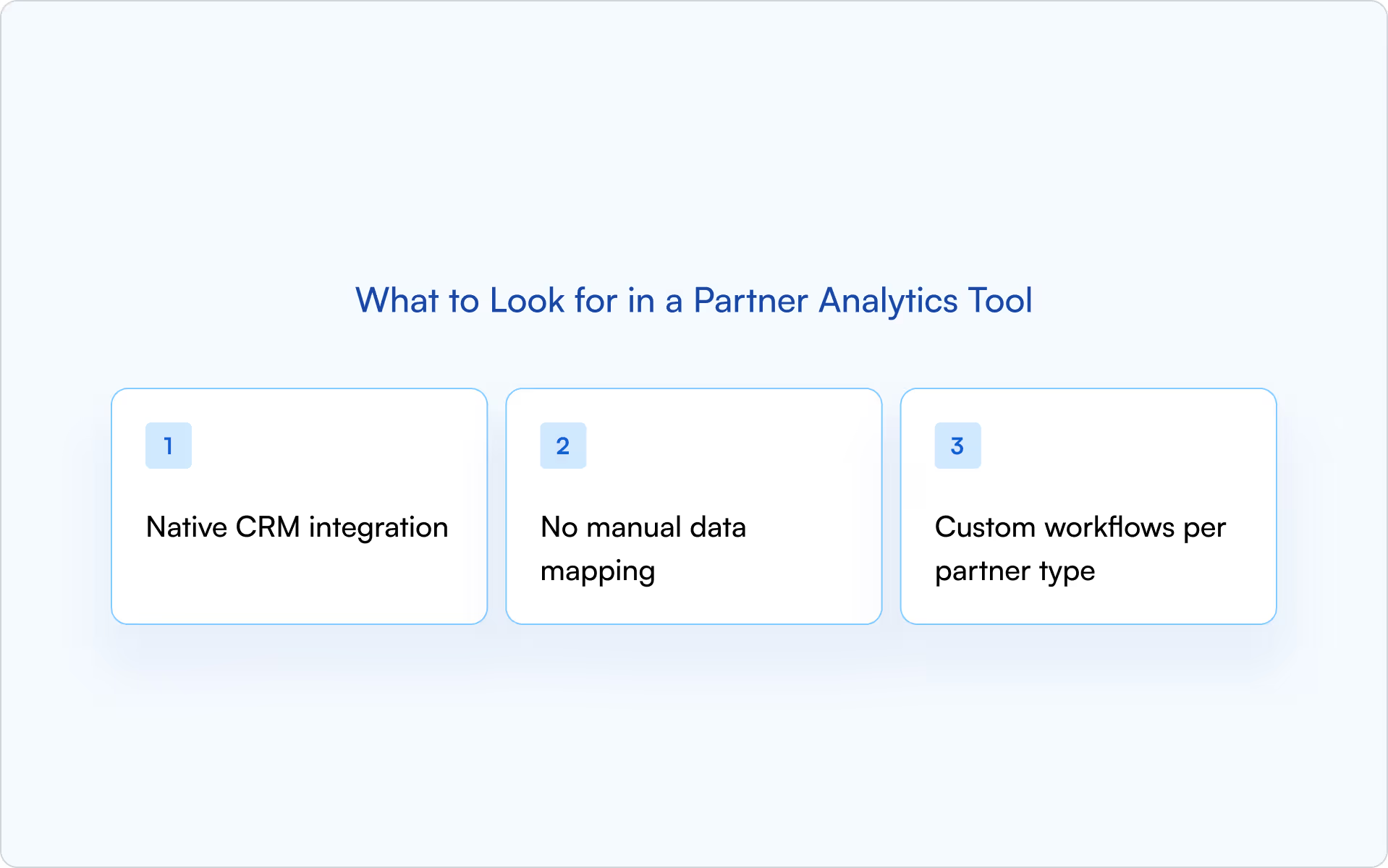
- Native CRM integration: Ensures seamless, real-time syncing of partner data with your CRM platform, such as Salesforce, HubSpot, reducing data silos and improving accuracy.
- No manual data mapping: Automatically recognizes and aligns partner fields and objects without requiring a tedious setup.
- Custom workflows per partner type: Allows you to tailor processes, alerts, and reporting based on partner tiers.
Why Introw PRM Stands Out
Here’s why you should consider investing in Introw PRM.
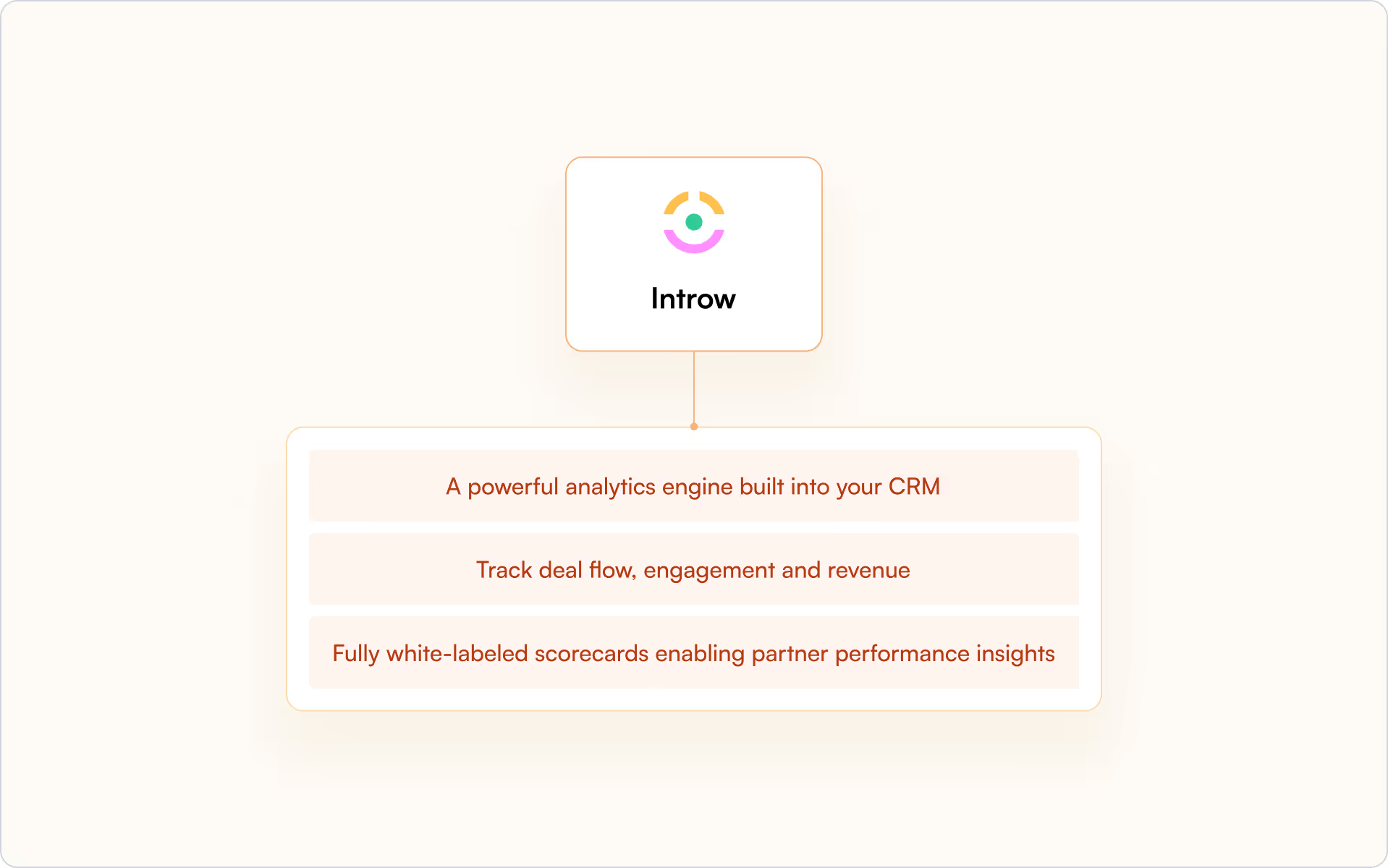
- A powerful analytics engine built into your CRM. Introw seamlessly integrates with your existing CRM, such as Salesforce or HubSpot, embedding partner analytics directly within your primary sales platform to eliminate data silos.
- Track deal flow, engagement and revenue — no external tools needed. With Introw, you can monitor partner deal registrations, engagement metrics, and revenue contributions in real-time, all within your CRM, removing the need for separate tracking tools.
- Fully white-labeled scorecards enabling partner performance insights. Introw provides customizable, white-labeled partner scorecards that offer real-time insights into partner performance, enabling you to evaluate and prioritize partnerships effectively.
➡️ Find out more about Introw’s partner portal or request a demo here
Summary: From Insight to Impact
In 2026, tracking partner analytics is non-negotiable.
After all, partner ecosystems are driving a growing share of SaaS revenue.
Without clear data on deal flow, engagement, and ROI, companies risk underperforming partnerships, misallocated resources, and missed growth.
Partner analytics empower smarter decisions, stronger collaboration, and measurable impact in today’s ecosystem-led go-to-market strategies.
To recap, the six key metrics every SaaS team should monitor are:
- Partner-sourced revenue
- Partner-influenced revenue
- Deal registration metrics
- Engagement analytics
- Pipeline contribution and forecasting accuracy
- Partner health and activity score
✅ Is it time to audit your current partner analytics system? Explore how Introw could level up your partnerships by booking a demo here today.
The 4 ways to manage your B2B partners in Salesforce and attribute revenue
When working with B2B partners, it's important to have a clear way of tracking who’s involved in your opportunities and how they contribute to revenue. In Salesforce, there’s no one-size-fits-all method — and that’s the beauty of it. Depending on your organization’s needs, technical maturity, and the complexity of your partner ecosystem, you can choose from several flexible approaches.
Below, we break down 4 common ways to manage partners in Salesforce and attribute revenue to them effectively.
1. Picklist field on an Opportunity
Best for: Simpler programs with one partner per Opportunity
The most straightforward method is to add a picklist field to the Opportunity object — for example, a field called Partner Name or Partner Source. You pre-define a list of your partners and let your sales team select the right one during opportunity creation.
How does it work?
What are the pros?
✅ Easy to implement
✅ No complex relationships needed
✅ Good for easy single-partner attribution
What are the cons?
❌ Not ideal for scaling or multi-touch attribution
2. Lookup field to an Account object Recommended
Best for: One-to-one attribution with better data control
A step up from a picklist is using a lookup relationship field that connects an Opportunity to an Account object. This allows you to reference a full account record (your partner) and pull in relevant details automatically.
How does it work?
What are the pros?
✅ Clean reference to partner data being stored in your accounts
✅ Can support reporting and automation more effectively
✅ Easy to update if the Account record changes
What are the cons?
❌ Limited to one partner account per opportunity
3. Via a Relation table
Best for: Multi-partner attribution or shared deals
If you need to support multiple partners per opportunity, you’ll want to use a relation table that sits between Opportunities and Partner Accounts. This creates a many-to-many relationship, enabling flexible collaboration and advanced revenue sharing logic.
How does it work?
What are the pros?
✅ Ideal for ecosystems with resellers, distributors, and co-marketing partners
✅ Enables advanced logic for revenue splits or co-selling
✅ Ideal for ecosystems with resellers, distributors, and co-marketing partners
What are the cons?
❌ Requires a more technical setup and configuration
❌ More complex for reporting unless standardized
4. Custom Object for Partners
Best for: Large-scale partner programs with tiering, statuses, and multiple partner touchpoints
For organizations that want to treat their partners as a core part of the Salesforce data model, creating a dedicated Partner object is the most robust option. You can relate this object to Opportunities, Contacts, Accounts, and more — and track custom partner attributes like tier, region, industry focus, etc.
How does it work?
What are the pros?
✅ Fully flexible and scalable
✅ Allows for richer partner data and automation
✅ Better suited for partner performance analytics and program insights
What are the cons?
❌ Requires upfront planning and schema design
❌ Needs buy-in from operations and potentially dev teams
Conclusion
Choosing the right method to manage and attribute your B2B partners in Salesforce depends on the complexity of your partnerships and the level of reporting or automation you need. While simple picklists work for early-stage programs, relation tables or custom objects are better suited for mature ecosystems.
At Introw, we help customers integrate their partner workflows directly into Salesforce — making it easy to attribute, collaborate, and scale with partners, no matter which method you use.
👉 Curious how this would work in your setup? Request a demo now.
Salesforce Partner Management: 7 Top Tips to Scale in 2026
In 2026, ecosystem-led growth is a key priority for SaaS teams.
In a fiercely competitive landscape, relying solely on your direct sales team and internal resources is no longer enough.
SaaS companies increasingly recognize the power of strategic partnerships to drive scalable, sustainable revenue.
Indeed, by tapping into partner ecosystems, companies can expand market reach, accelerate customer acquisition, and increase trust through third-party validation.
But in order to efficiently manage and scale partnership programs, you need the right tech stack.
In 2026, this means a partner relationship management system that seamlessly integrates with — and is embedded within — your CRM.
Introw is an attractive option for Salesforce users.
This no-code PRM platform empowers teams to manage partner collaboration within a fully customizable portal — while keeping everything synced in Salesforce, eliminating the need for manual updates or disconnected tools.
Embedded partner management streamlines workflows, enhances collaboration, helps you deliver engaging partner experiences and eliminates the need for partners to switch platforms, ultimately driving higher adoption and performance.
It turns the CRM into a central hub for direct and partner-led growth, ensuring tighter integration with core sales processes, better data accuracy, and real-time visibility.
⬇️ In this guide, we'll take you through our top recommendations for scaling your partnership program through Salesforce.
What Makes Salesforce Powerful for Partner Management?
So, first up — why should you opt for partner management in Salesforce?
Here are four major Salesforce partner relationship management features:
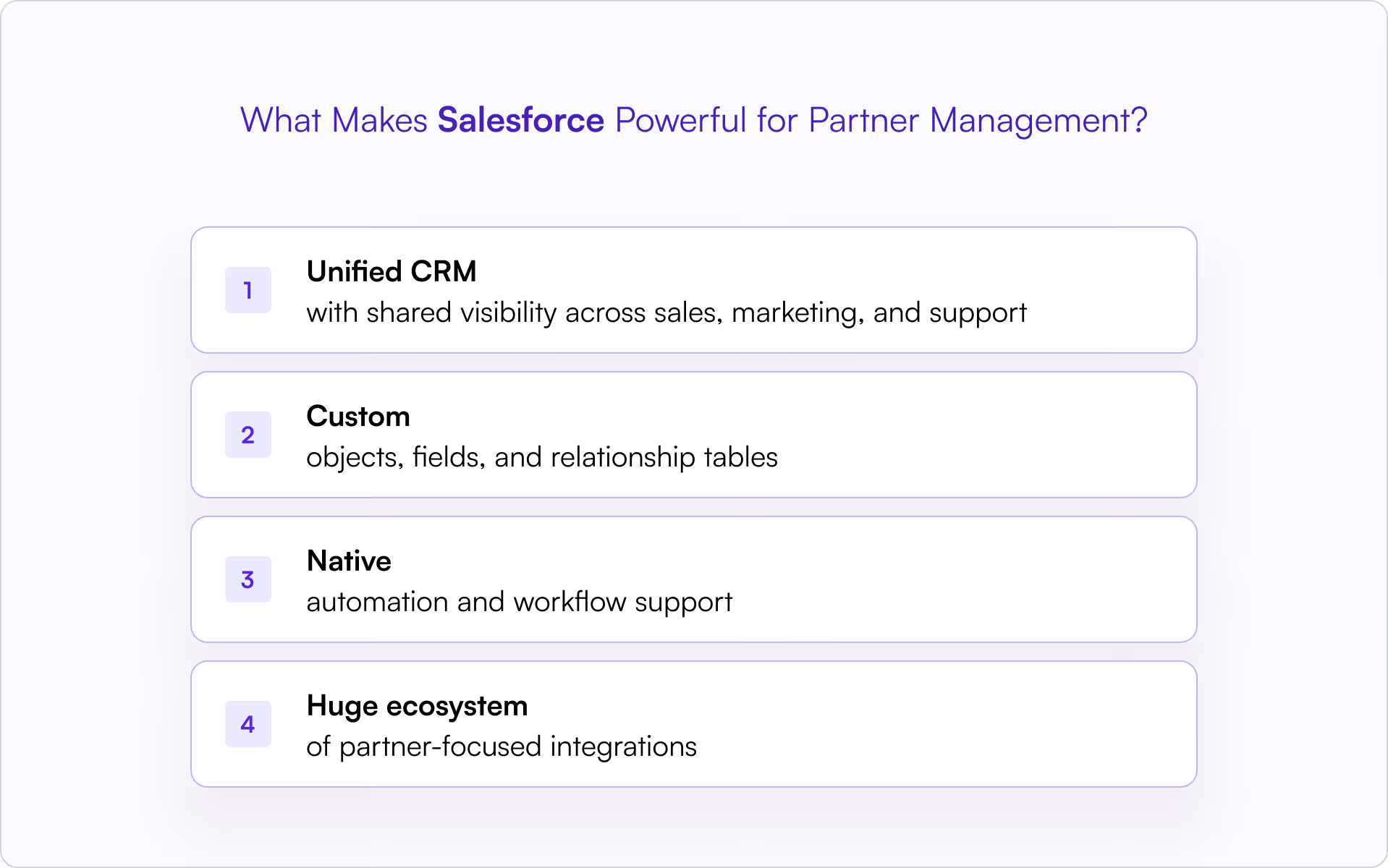
1. Unified CRM With Shared Visibility Across Sales, Marketing, And Support
Salesforce's Experience Cloud PRM is fully integrated within its CRM platform, providing a centralized system where sales, marketing, and support teams can collaborate seamlessly.
The Salesforce partner management software allows for real-time sharing of sales leads, marketing campaigns, and support cases with partners.
It aims to ensure consistent and efficient communication across all departments.
2. Custom Objects, Fields, and Relationship Tables
Salesforce offers the flexibility to create custom objects and fields.
This is super useful when it comes to partner relationship management.
Indeed, these handy customizations enable businesses to tailor their partner management processes to their specific needs.
Furthermore, they facilitate complex data modeling and allow for the precise tracking of partner interactions and performance metrics.
3. Native Automation And Workflow Support
In 2026, automation is a must if you wish to remain competitive.
Fortunately, Salesforce delivers with a whole host of built-in automation tools via Sales Cloud.
For instance, users can create workflows that streamline partner onboarding, deal registration, and lead distribution.
These automated processes reduce manual tasks, enhance efficiency, and ensure that partners receive timely updates and support throughout their engagement lifecycle.
4. Huge Ecosystem Of Partner-Focused Integrations
Partner relationship management on Salesforce is made much easier by the platform's extensive AppExchange.
Here you'll discover a vast array of partner-focused integrations, with access to thousands of prebuilt applications and consultant offerings.
This extensive ecosystem allows businesses to extend their capabilities, incorporating tools for PRM, marketing automation, analytics, and more, to enhance partner collaboration and drive revenue growth.
While Salesforce is an excellent option for partner management — especially if it's already your CRM — when it comes to PRM, it's worth looking beyond Experience Cloud.
Experience Cloud is expensive, dev-heavy, and slow to implement.
What's more, it can be way too complex for smaller organizations or those with smaller partner programs.
Instead, take a look at Introw.
This slick no-code PRM platform integrates seamlessly with Salesforce, enabling rapid deployment and off-portal collaboration with no extensive setup.
Introw delivers off-portal collaboration tools such as Slack integration, so partners no longer need to log into Salesforce directly to engage through shared channels or receive updates.
At the same time, Introw is embedded within Salesforce, so your CRM remains your single source of truth.
7 Salesforce Partner Management Recommendations for 2026
Ready to take your partner program to the next level with Salesforce partner relationship management via Introw?
Here are seven best practices to follow.
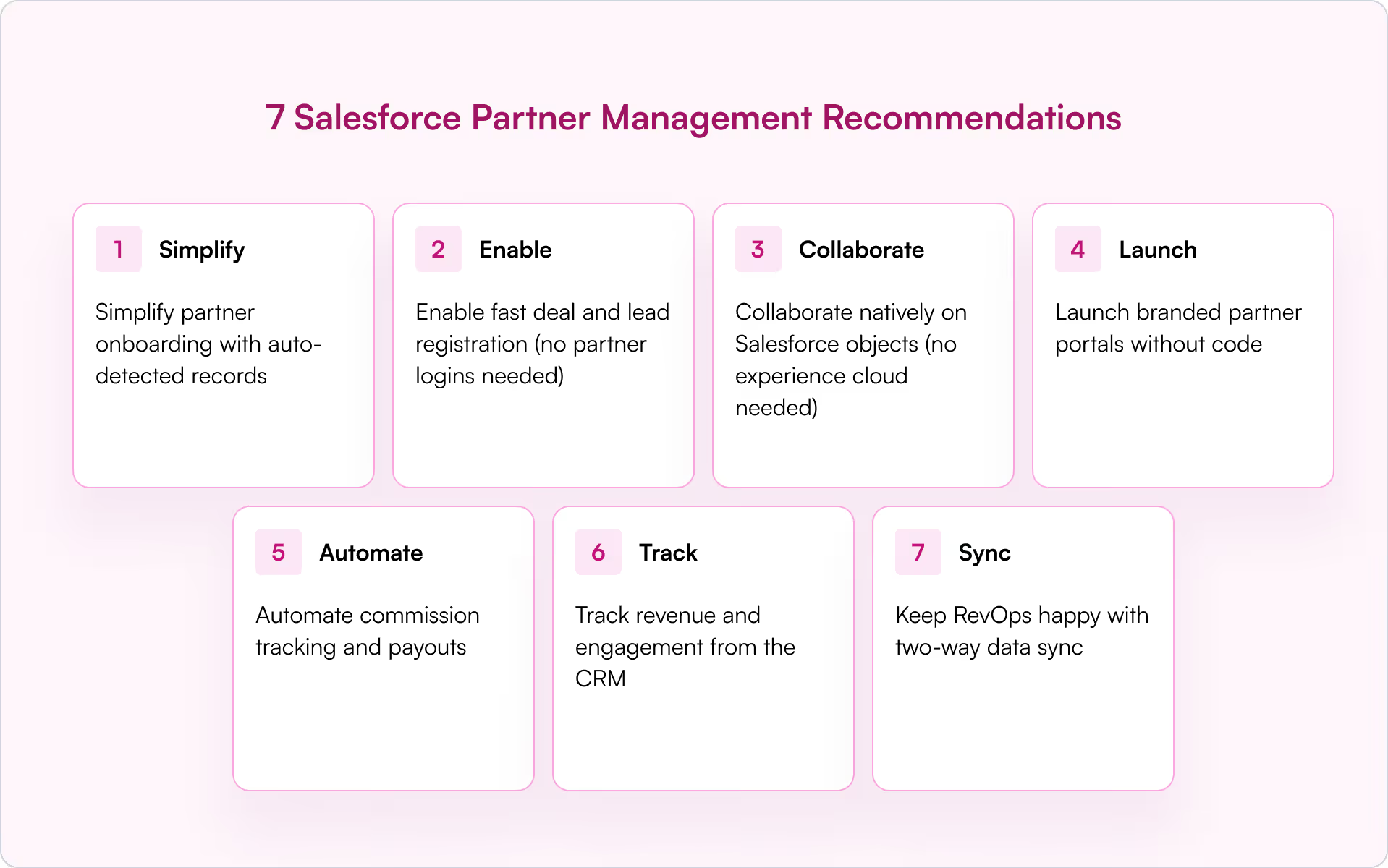
1. Simplify Partner Onboarding with Auto-Detected Records
Introw simplifies partner onboarding by seamlessly integrating with Salesforce to auto-detect partner records.
Upon connecting Salesforce to Introw, the PRM platform automatically syncs partner data from the CRM and kicks off workflows automatically.
It identifies partners by filtering accounts labeled as 'Partner' or based on your custom configurations.
This automation eliminates manual data entry, ensuring a swift and accurate setup.
Once detected, Introw enables you to build no-code onboarding workflows that guide partners through essential steps like profile completion, content access, and deal registration.
These workflows are tracked and synced with Salesforce, maintaining your CRM as the single source of truth and enhancing the efficiency of your partner onboarding process.
2. Enable Fast Deal And Lead Registration (No Partner Logins Needed)
Introw enables fast deal and lead registration without requiring partners to log in to Salesforce.
This streamlined approach accelerates partner engagement and ensures all submissions are tracked within your CRM.
Here's how it works.
Partners submit deals via secure, custom-branded forms created within Introw.
These forms are linked directly to Salesforce and automatically map submitted data — like company, contact, and deal details — to the correct custom objects, such as Opportunities or Leads.
Furthermore, Introw's native Salesforce integration ensures real-time syncing, eliminating manual data entry and reducing friction for partners.
3. Collaborate Natively On Salesforce Objects (No Experience Cloud Needed)
Introw lets users collaborate directly on Salesforce objects — like Opportunities, Contacts, or Accounts — without Experience Cloud.
Through Introw's native Salesforce integration, partners can:
- Leave comments
- Upload files
- Share updates via Introw's interface
Meanwhile, all this activity is automatically synced to the corresponding Salesforce records.
This keeps every note, document, and status update tied to the right object in your CRM, ensuring full context and traceability without requiring partner logins.
By eliminating the need for Experience Cloud, Introw reduces complexity and cost while enabling seamless, real-time collaboration between internal teams and external partners — all within your existing Salesforce environment.
4. Launch Branded Partner Portals Without Code
With Introw, users can launch fully branded partner portals in Salesforce in minutes — no coding required.
These portals are dynamically generated and personalized based on partner type, deal stage, or custom Salesforce fields.
Introw pulls data directly from Salesforce to tailor each partner's experience, displaying relevant content, contacts, and opportunities.
Businesses can also customize branding, messaging, and segmentation rules to reflect their identity and target different partner segments.
Unlike traditional Experience Cloud setups, Introw's no-code approach simplifies deployment while offering powerful functionality, empowering teams to quickly deliver a professional, secure, and scalable partner experience directly integrated with their Salesforce data.
5. Automate Commission Tracking And Payouts
Want to save time on commission and payments while also ensuring your partners are accurately rewarded?
Introw automates commission tracking and payouts by tapping into real-time Salesforce data.
Once connected, Introw monitors key objects like Opportunities or custom revenue fields to determine commission eligibility.
Users can configure rules to automate when and how payouts are triggered — no manual input required.
Moreover, partners gain visibility into their commission status through branded, no-login-required portals.
All activity is synced back to Salesforce.
6. Track Revenue And Engagement From The CRM
Introw enables users to track deals, revenue and partner engagement directly from Salesforce by syncing real-time CRM data into intuitive dashboards.
Leveraging connected objects like Opportunities, Accounts, and custom fields, Introw surfaces deal flow, partner performance, and key engagement signals — such as submitted deals, shared files, and comments.
These insights are then visualized in real-time dashboards that require no manual updates or separate tools.
This gives you a vital overview of which partners are most active and where revenue is being influenced, making it easier to optimize partner programs based on accurate, live performance and engagement metrics.
7. Keep RevOps Happy With Two-Way Data Sync
Introw keeps RevOps aligned by enabling two-way data sync with Salesforce, ensuring the CRM remains the single source of truth while powering enhanced partner-facing workflows.
When partners submit deals, leave comments, or share updates via Introw, all activity is instantly synced to the correct Salesforce objects — like Opportunities or Contacts.
Furthermore, any updates made in Salesforce are also reflected in partner-facing views, maintaining real-time consistency.
This eliminates manual data entry, reduces errors, and ensures that every internal or external interaction is captured and tracked centrally.
RevOps teams gain full visibility and control, while partners enjoy a seamless, user-friendly experience without needing direct CRM access.
Why Introw Is the Ideal Salesforce PRM Integration
Introw is purpose-built to enhance Salesforce with seamless, secure, and scalable partner relationship management — without disrupting your existing CRM workflows.
If Salesforce is already your CRM, choosing Introw for your PRM needs is a no-brainer.
Here are seven reasons why: partner relationship management on Salesforce
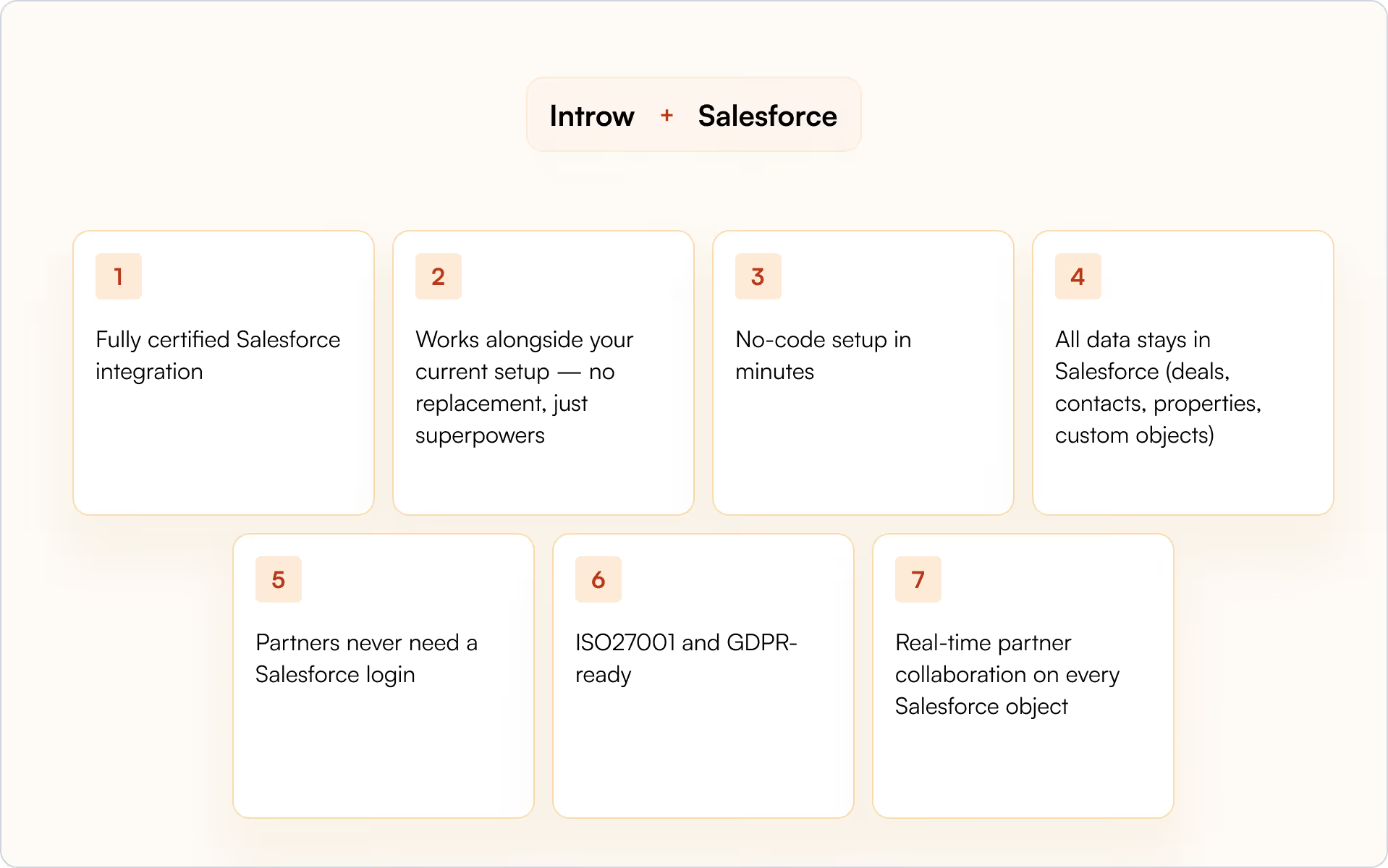
- Fully certified Salesforce integration: Introw meets the highest standards for security, functionality, and compatibility, providing a seamless connection with your Salesforce CRM.
- Works alongside your current setup — no replacement, just superpowers: Introw enhances your existing Salesforce environment by introducing sophisticated PRM capabilities without requiring a complete system overhaul or replacement.
- No-code setup in minutes: Users can quickly implement and customize the intuitive platform in minutes, eliminating the need for technical expertise or lengthy development processes.
- All data stays in Salesforce (deals, contacts, properties, custom objects): Introw ensures that all partner-related data remains within your Salesforce environment, preserving data integrity and centralizing all information.
- Partners never need a Salesforce login: Introw encourages partner enablement by allowing partners to collaborate and access necessary data without requiring them to log into Salesforce, simplifying the user experience and increasing partner engagement.
- ISO27001 and GDPR-ready: Introw complies with ISO27001 and GDPR regulations, ensuring that all partner data is securely managed and your organization meets global data privacy standards.
- Real-time partner collaboration on every Salesforce object: Introw facilitates real-time collaboration on every Salesforce object, including Opportunities, Contacts, and custom objects, keeping all interactions up-to-date and integrated for better decision-making.
🚀 Ready to launch your Salesforce Partner Portal in minutes? → Book a Demo
Conclusion
Salesforce is already your customer engine — now it can be your partner engine too.
Don't overbuild with Experience Cloud when Introw gives you instant value: faster launches, better adoption, and cleaner CRM data.
📈 Want to scale partner revenue inside Salesforce? Get a personalized Introw demo
HubSpot Partner Management: 7 Best Practices For 2026
Partner-led growth depends on empowering partners to work alongside direct sales to drive customer acquisition and revenue — and tight integration between your CRM and partner workflows is essential to get this right.
This seamless integration creates a unified view of leads and opportunities, allowing both internal teams and partners to collaborate seamlessly and avoid duplicating their efforts.
Furthermore, integrated systems enable accurate deal registration, attribution, and tracking, which is critical for partner incentives and performance insights.
With synced workflows, partners can register deals directly, co-sell with your team, and stay aligned through shared timelines and updates.
Additionally, CRM integration enables automated notifications, streamlined onboarding, and enhanced forecasting (by including partner pipeline in revenue projections).
The key benefits of tightly integrating your CRM and partner workflows?
Less friction, shorter sales cycles, and better partner trust.
Ultimately, it allows you to scale your partner ecosystem efficiently while maintaining transparency, accountability, and data-driven decision-making — all of which are vital to a successful partner-led growth strategy.
This is why companies are increasingly shifting from standalone PRM portals to CRM-first experiences like Introw — which integrates with popular CRMs, including HubSpot — to streamline their partner collaboration.
This approach meets partners where they work and aligns them more closely with internal sales processes.
Ready to scale your partner management this year?
⬇️ In this guide, we'll cover why HubSpot is a highly effective platform for partner management and take you through seven must-have best practices for scaling in 2026.
Can You Manage Partners in HubSpot? (Spoiler: Yes — with the Right Setup)
HubSpot doesn't have native PRM, but it offers several features that can be useful for SaaS partner management projects.
For example, the platform supports custom objects, labels, and workflows.
All of these elements are super useful for companies running small partner management projects.
The problem arises when you want to scale.
Indeed, most partner programs will quickly outgrow manual tagging and disconnected forms.
Once you get serious about your partner program, you need a PRM that is tailor-made for managing and scaling these schemes.
At the same time, you don't want to silo your partner management efforts from your CRM — this would create data disconnects, limiting visibility into partner-driven deals and slowing collaboration.
The solution?
Invest in tightly CRM-integrated PRM tools like Introw.
This way, you fill the PRM gap natively inside HubSpot and give your partnerships the best possible chance of flourishing.
Why HubSpot Is a Strong Foundation for Partner Management
Many SaaS teams already rely on HubSpot as their central source of truth for customers, deals, and marketing.
But increasingly, partner managers are realizing HubSpot can also be a superb command center for their partner programs — as long as they configure the platform in the right way.
Here's why HubSpot makes sense as a foundation for partner management in 2026:
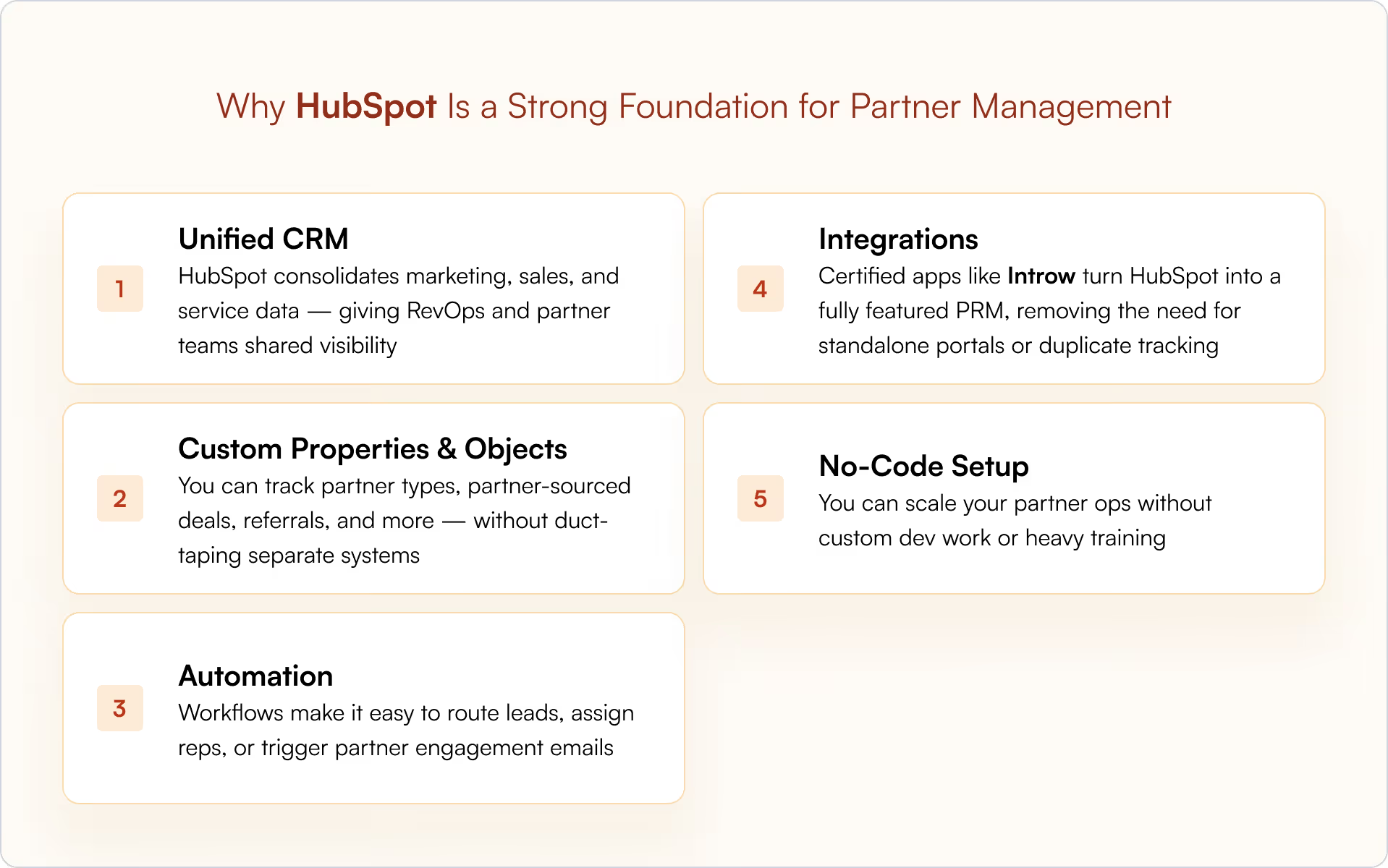
- Unified CRM: HubSpot consolidates marketing, sales, and service data — giving RevOps and partner teams shared visibility
- Custom Properties & Objects: You can track partner types, partner-sourced deals, referrals, and more — without duct-taping separate systems
- Automation: Workflows make it easy to route leads, assign reps, or trigger partner engagement emails
- Integrations: Certified apps like Introw turn HubSpot into a fully featured PRM, removing the need for standalone portals or duplicate tracking
- No-Code Setup: You can scale your partner ops without custom dev work or heavy training
In short, if HubSpot is already your CRM, there's no reason to manage your partner program outside of it.
Instead, plug in a PRM like Introw, and you'll gain a partner-ready ecosystem inside your CRM — one that works for RevOps, Sales, and Partner Managers alike.
7 Must-Have HubSpot Partner Management Practices for 2026
Ready to scale your partner program with Hubspot?
Here are seven vital HubSpot partner management practices you should be following for success in 2026.
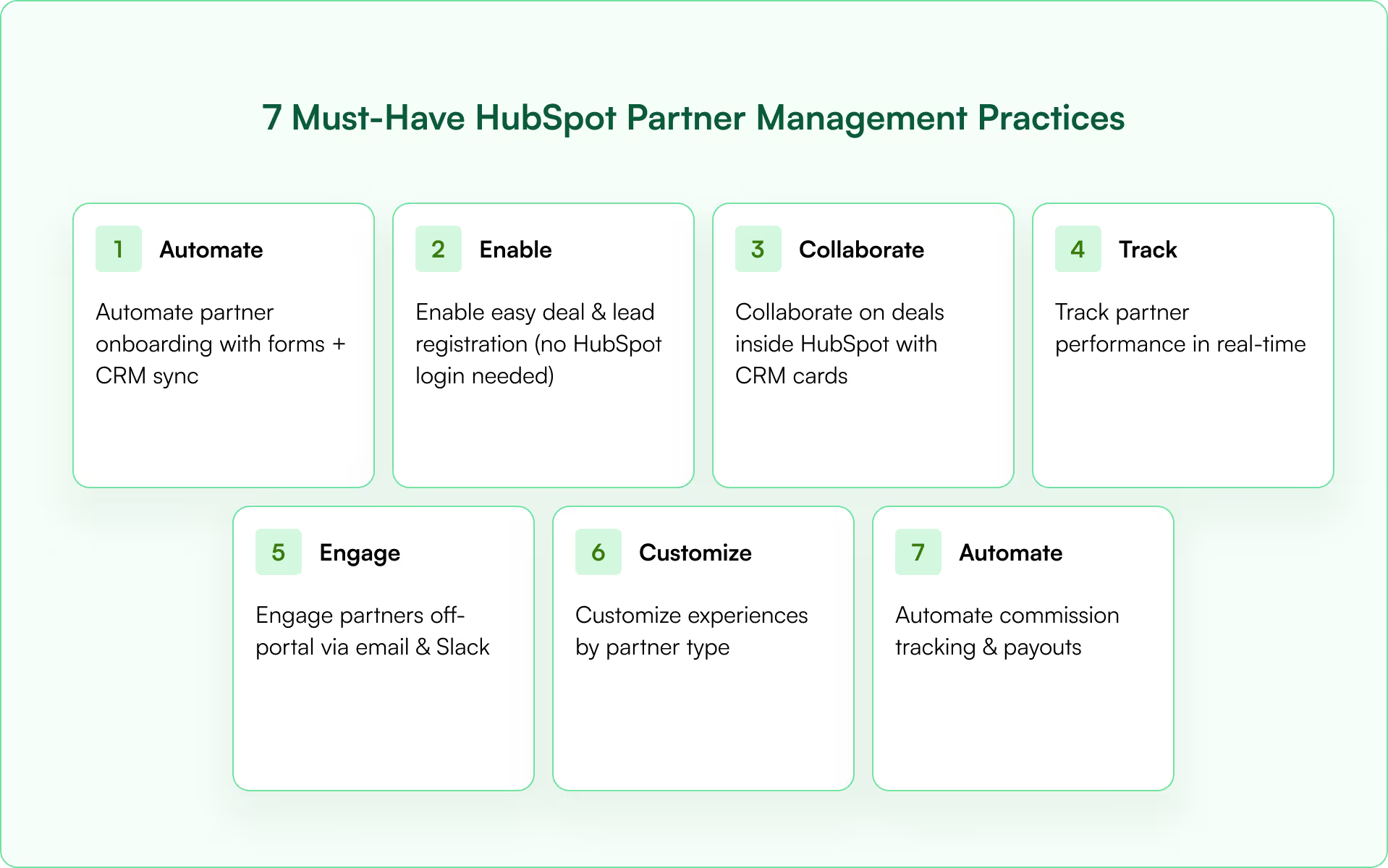
1. Automate Partner Onboarding with Forms + CRM Sync
This one will save you a lot of time!
Did you know you can use Introw to push form data (e.g. "Become a Partner") directly into HubSpot?
First, connect Introw to HubSpot to enable seamless data synchronization.
This integration allows form submissions, such as partner applications, to be pushed directly into HubSpot.
You can then use HubSpot's automation tools to trigger actions upon form submission.
For instance, automatically create a contact or company record, assign tasks, or send follow-up emails.
2. Enable Easy Deal & Lead Registration (No HubSpot Login Needed)
Introw allows for off-portal collaboration, which makes life much easier for your partners.
Indeed, your partners don't even need to log in to HubSpot in order to submit deals or register leads.
Instead, they can submit deals via a form, Slack or email.
The details are then auto-mapped to HubSpot, which acts as your single source of truth.
3. Collaborate on Deals Inside HubSpot with CRM Cards
Using CRM cards from Introw, teams can collaborate on partner-sourced deals directly inside HubSpot.
These embedded cards show deal details, partner info, and updates in real-time — without switching tools.
This means your partner's comments are automatically turned into CRM notes
Real-time sync keeps the deal's status, details, and updates aligned with your HubSpot pipeline, enabling smooth, in-CRM collaboration.
This streamlines communication, boosts visibility and keeps sales and partner teams aligned throughout the deal cycle.
4. Track Partner Performance in Real-Time
The success of your partner strategy hinges on data analysis.
Tracking partner performance in real-time is crucial to help you identify top performers, spot bottlenecks, and optimize your partner strategy as deals progress.
Indeed, without a sophisticated tracking and data analysis system, you're just guessing at what works and hoping you're right.
But with the right tools in your arsenal, you unlock faster decision-making, more accurate forecasting, and effective incentives — driving accountability, growth, and stronger partner relationships across your ecosystem.
Fortunately, Introw and HubSpot work together to make real-time data analysis easy.
Introw generates dashboards based on HubSpot data.
Set up dashboards based on metrics that speak to your goals — for example, revenue, activity, pipeline, or deal data.
5. Engage Partners Off-Portal via Email & Slack
One of Introw's most partner-friendly features is that it allows you to engage your partners off-portal via email and Slack.
This means partners don't need to log into their portal to communicate or collaborate with you.
Instead, they receive real-time notifications, can comment on deals, and stay in the loop — all off-portal — making collaboration faster, easier, and more integrated into their daily workflows.
6. Customize Experiences by Partner Type
In 2026, personalization is crucial when it comes to engaging your partners.
Deliver an irrelevant or jarring experience, and partners could lose trust in your offering and become more reluctant to recommend you.
Introw supports dynamic views and objects in HubSpot, which allows you to customize partner experiences by type.
For example, you can tailor onboarding flows, forms, content, and deal stages for different partner types, like partner submitted referrals, a successful reseller channel, or MSPs.
Simply segment partners within HubSpot and Introw, then deliver relevant experiences and workflows that match their role, ensuring higher engagement and more effective collaboration across partner types.
7. Automate Commission Tracking & Payouts
Connect Introw with your HubSpot CRM to automate commission tracking and payouts.
As deals close, Introw tracks which partner influenced each one, calculates commissions based on preset rules and logs the data.
You can then use CRM triggers to automate payout workflows or give partners visibility over their commissions.
This ensures accuracy, transparency, and timely rewards.
Why Introw Is the Best HubSpot PRM Integration for 2026
Introw stands out in 2026 as the ultimate PRM integration for HubSpot, delivering unmatched efficiency, partner experiences, and growth capabilities.
Here's why it's the best partner relationship management tool integration with HubSpot:
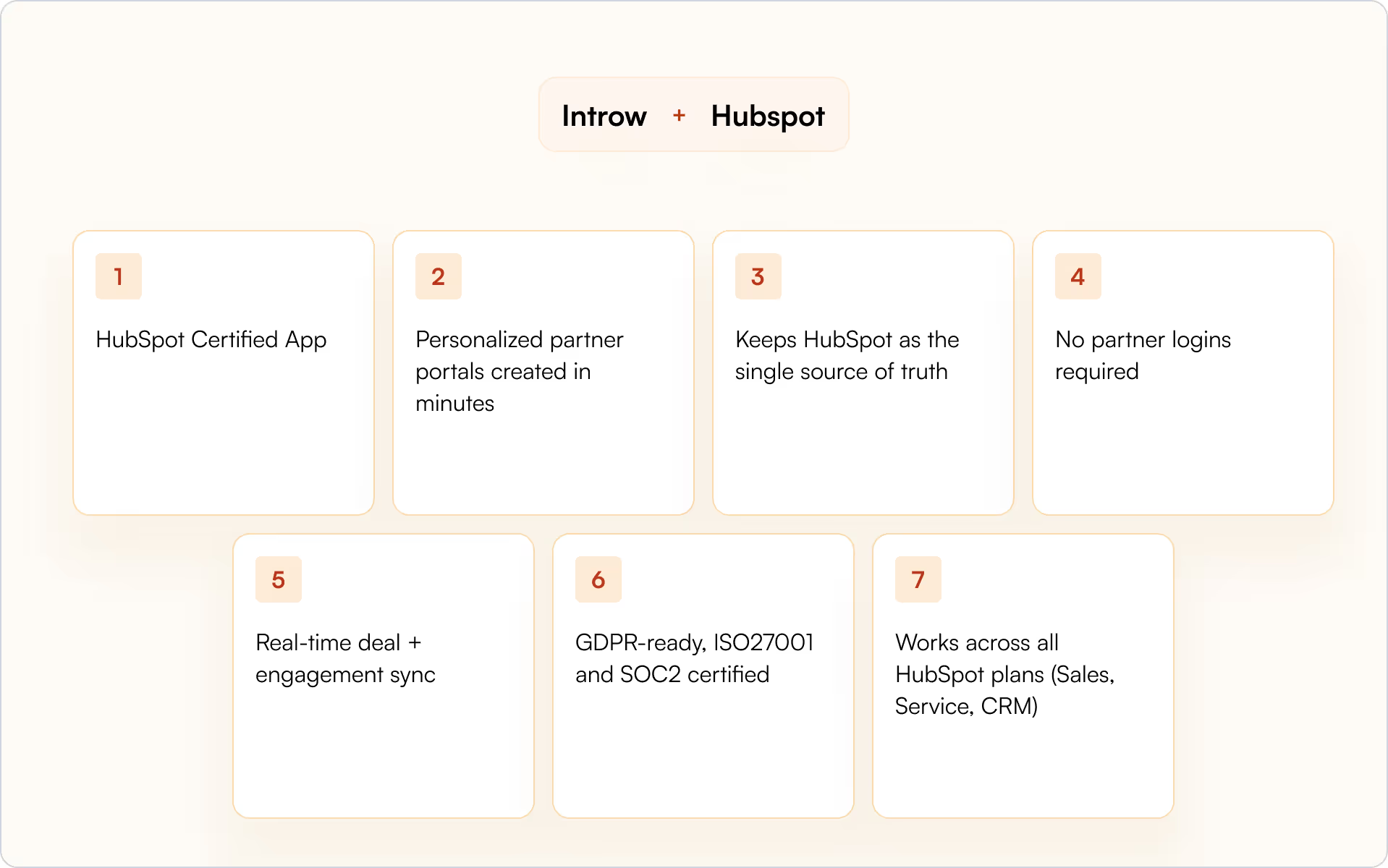
- HubSpot Certified App: Introw is trusted and verified by HubSpot, ensuring a smooth, secure integration.
- Personalized partner portals created in minutes: Launch clean, branded portals for each partner quickly — no technical setup required.
- Keeps HubSpot as the single source of truth: All partner data, leads, and deal activity sync directly into HubSpot, eliminating the need to manage a separate PRM system.
- No partner logins required: Partners can view, register, and collaborate on deals via shared links — no friction, forgotten passwords, or onboarding headaches.
- Real-time deal + engagement sync: Instantly reflects partner-submitted leads and activity in HubSpot, giving your sales team live visibility.
- GDPR-ready, ISO27001 and SOC2 certified: Designed with enterprise-level security and global compliance in mind.
- Works across all HubSpot plans (Sales, Service, CRM): Fully compatible with the entire HubSpot suite, so you can support partner workflows wherever your teams operate.
🚀 Launch Your HubSpot Partner Portal in Minutes — Book a Demo!
Conclusion
If HubSpot is already your CRM, why not make it your partner system too?
With Introw, you can scale partner programs without silos, clunky portals, or extra logins.
Save RevOps time, align with Sales, and drive more revenue from your ecosystem.
✅ Ready to simplify partner management in HubSpot? Get a personalized demo
Top 10 Partnership Trackers: Driving Co-Sell Revenue in 2026
Partnerships can be a lucrative revenue stream — when your business has the right tools for the job.
Indeed, many SaaS companies miss out on potential partner-driven revenue because they lack precise partnership tracking.
It's no secret that, in 2026, the traditional spreadsheet tracking is dead.
Manual updates, delayed insights, and fragmented data no longer cut it.
Instead, today's partner programs demand real-time visibility from overlap to close, ensuring every deal is tracked, attributed, and optimized for growth.
Modern solutions replace outdated spreadsheets with automated, CRM-integrated partnership tracking software, ensuring that partner-sourced revenue is captured seamlessly.
A precision-driven, real-time partnership tracker gives SaaS companies the edge by aligning sales teams, automating reporting, and enabling data-driven decisions.
With clear visibility into partner-influenced deals, businesses can maximize partner ROI, improve collaboration, and scale revenue faster.
In today's competitive landscape, partnership tracking isn't optional — it's essential for unlocking sustainable, repeatable growth.
What to Look for in a Partnership Tracking Platform
So, you know you need a modern partnership tracking platform.
But which features should you be looking out for?
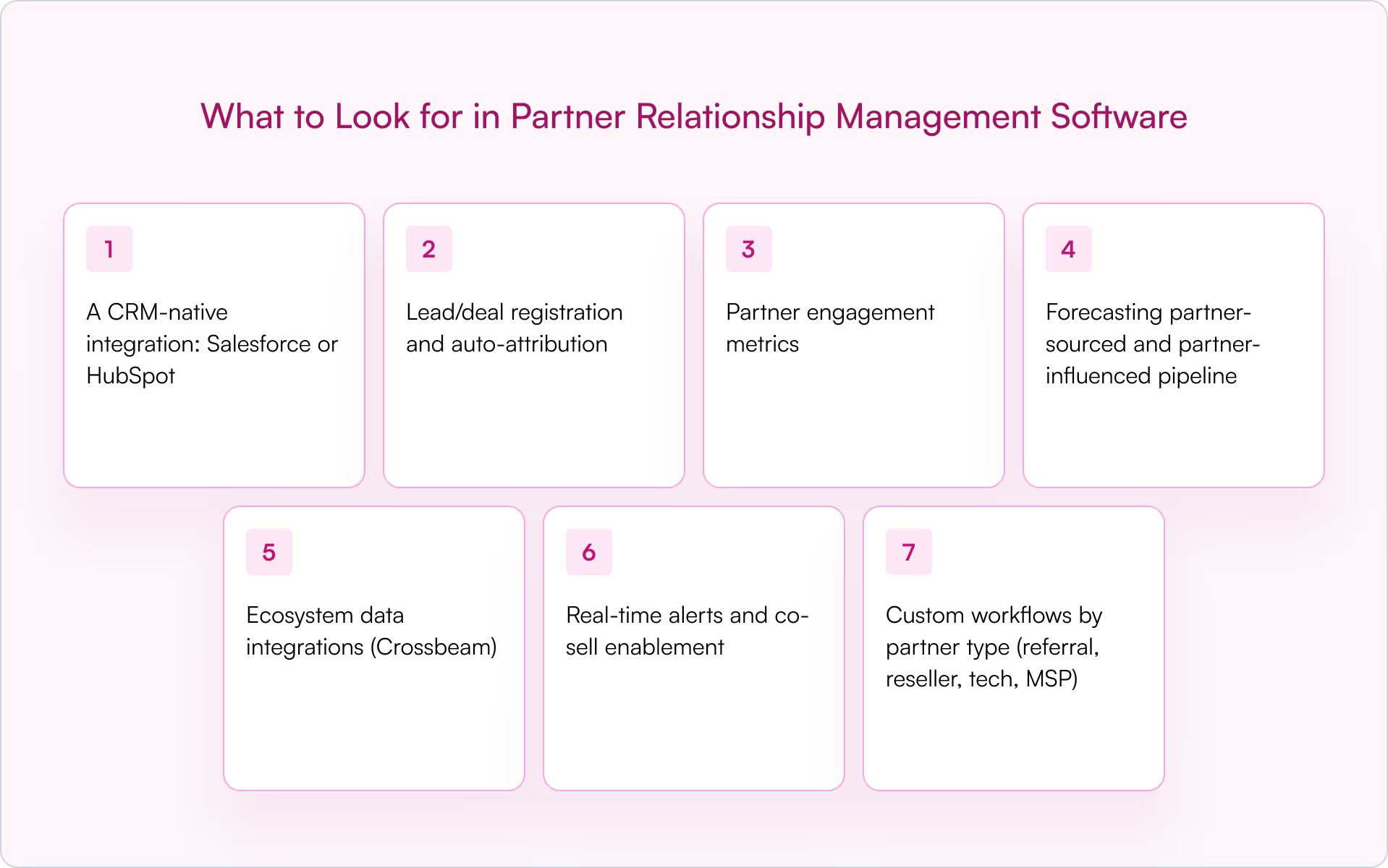
Here are seven features that every strong partnership tracking platform should have in 2026:
- A CRM-native integration: Salesforce or HubSpot
- Lead/deal registration and auto-attribution
- Partner engagement metrics — for example: Slack or email syncs, partner activities log
- Forecasting partner-sourced and partner-influenced pipeline
- Ecosystem data integrations (Crossbeam)
- Real-time alerts and co-sell enablement
- Custom workflows by partner type (referral, reseller, tech, MSP)
10 Best Partnership Trackers to Use in 2026
Ready to revolutionize your partnerships by investing in a new partnerships tracker?
Here are ten top tools to consider.
#1 Introw (with Crossbeam Integration)
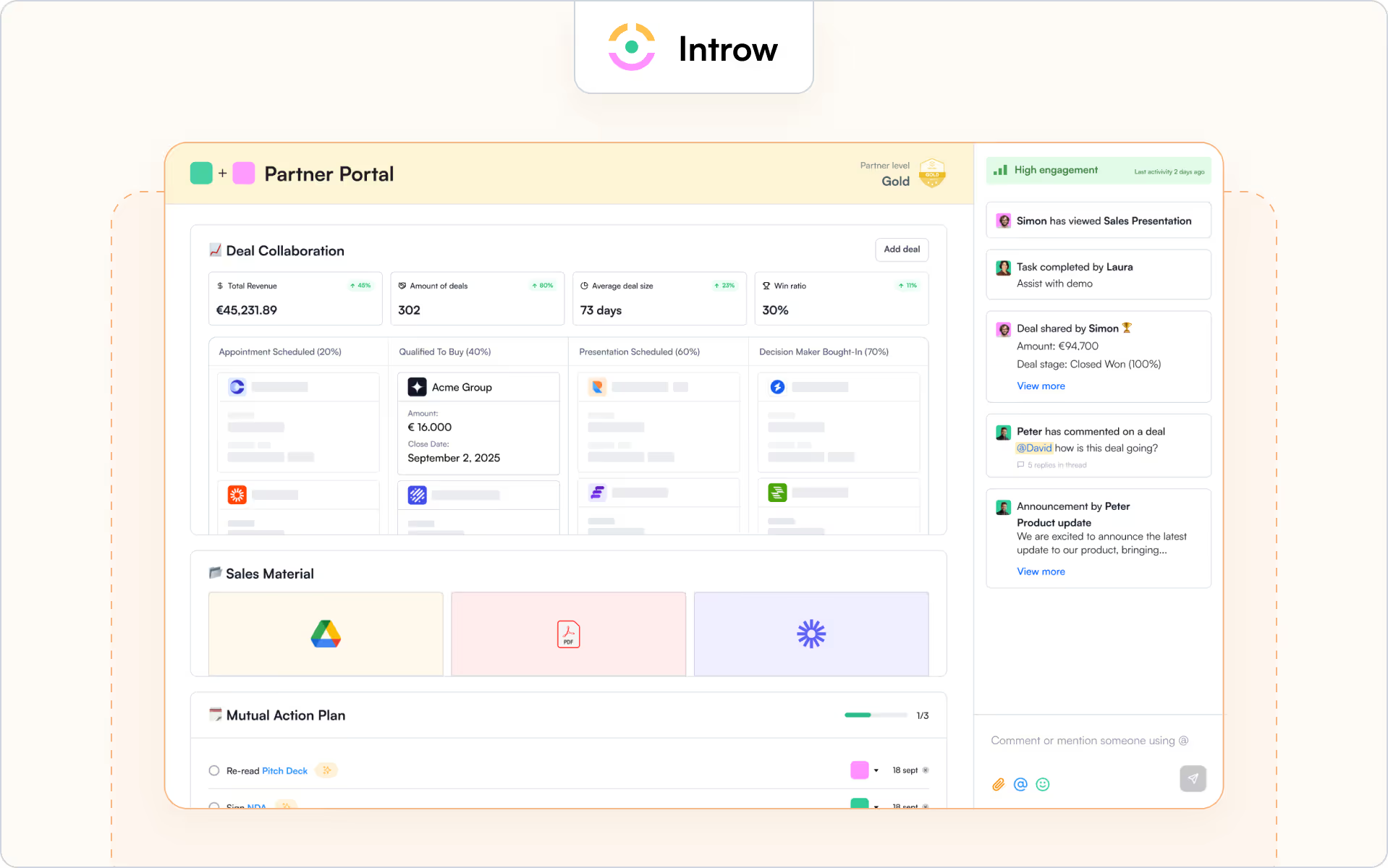
Introw is the most powerful PRM for modern SaaS companies — and its native integration with Crossbeam supercharges the entire partner revenue workflow.
Here's Why It's #1:
- Starts where your team lives: Salesforce or HubSpot
- Tracks every partner deal, lead, and engagement touch in real time
- Uses Crossbeam's account mapping data to identify overlapping customers and prospects across your ecosystem
- Tracks every engagement your partners have with content/sales presentations
- Tracks commissions in real-time
- All activity is tracked and visible to Partner Managers, RevOps, and CROs
Quick Feature Rundown:
- CRM-native lead & deal registration
- Real-time alerts via Slack and email
- Deal attribution and forecasting built into your pipeline
- Partner segmentation, enablement, and engagement tracking
- Modular workflows (referral, reseller, MSP, tech)
- Set-up in minutes — not months
Find out more:
🔗 Introw + Crossbeam Integration Overview
#2 PartnerStack

Referral and affiliate program software PartnerStack comes with some handy partner performance tracking features designed to help businesses recruit, track, and optimize partnerships effectively.
Quick Feature Rundown:
- Lead Monitoring
- CRM Integration
- Automated Attribution
- Performance Reporting
- Commission Automation
- UTM Tracking Support
- Fraud Protection
Pros: Commission automation, partner marketplace
Cons: Not ideal for co-sell motions or deep CRM integration
#3 Impartner
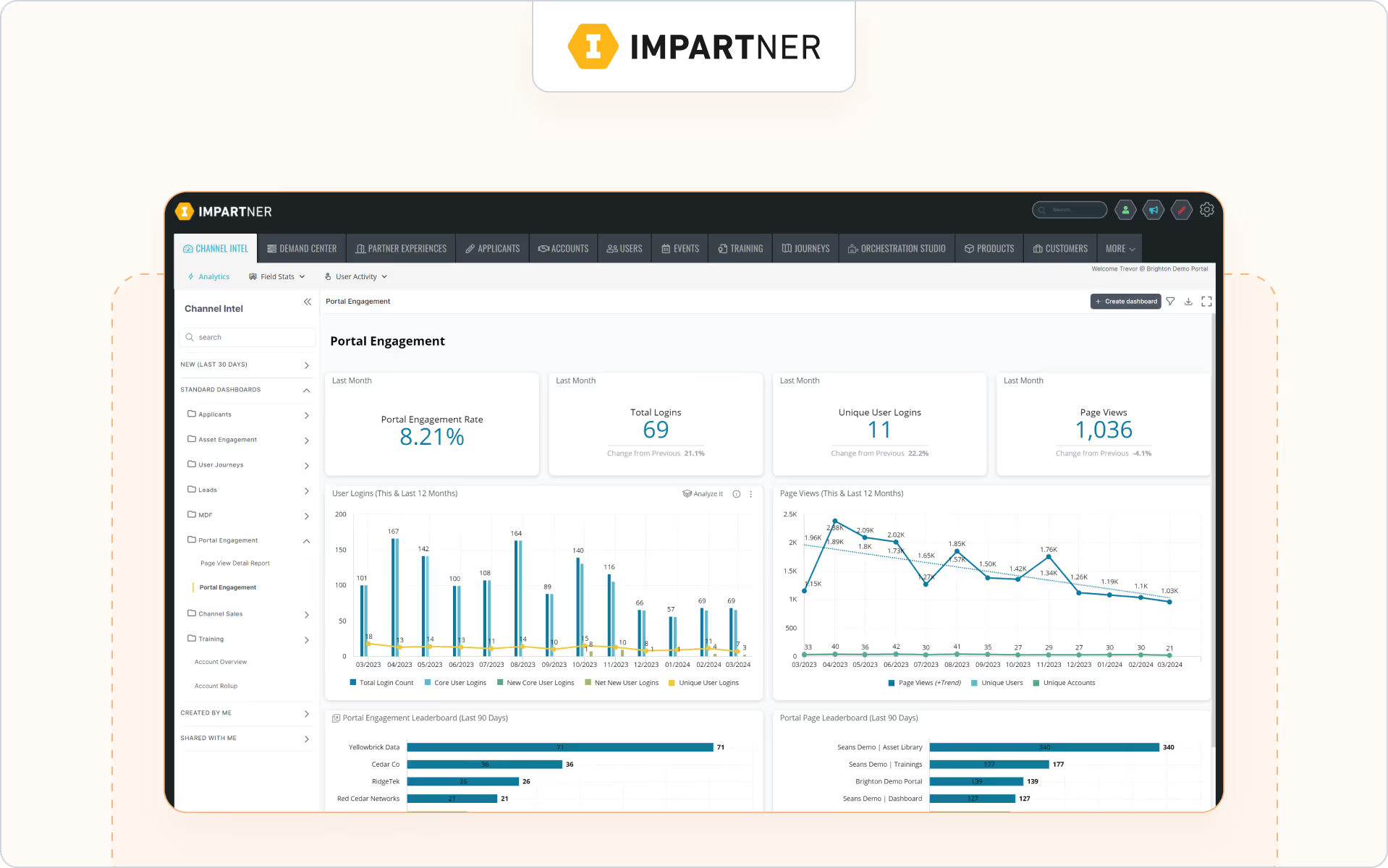
Impartner is a leading Partner Relationship Management platform designed to optimize and automate the entire partner lifecycle, enhancing collaboration and driving revenue growth.
Quick Feature Rundown:
- Partner dashboards
- Individual Partner Portals
- Portal workflows
- Role-based permissions
- Opportunity management
- Action tracking
- Lead management
- Partner performance reporting
- Partner engagement tools
- CRM integration
Pros: Comprehensive tracking, robust backend
Cons: Heavier set-up, limited CRM-native tracking
#4 Allbound (now Channelscaler)

Channelscaler (previously Allbound) helps leaders scale by winning partner mindshare, ensuring high levels of partner engagement and placing ease of doing business at the heart of your go-to-market channel strategy.
Quick Feature Rundown:
- Lead Management
- Opportunity Management
- Action Tracking
- Partner Performance Reporting
- CRM Integration
- Program Compliance Manager
- Business Planning Tools
- Journey Builder
- Analytics Studio
Pros: Great partner management, easy to use, good customer support
Cons: Limited customization
#5 ZINFI
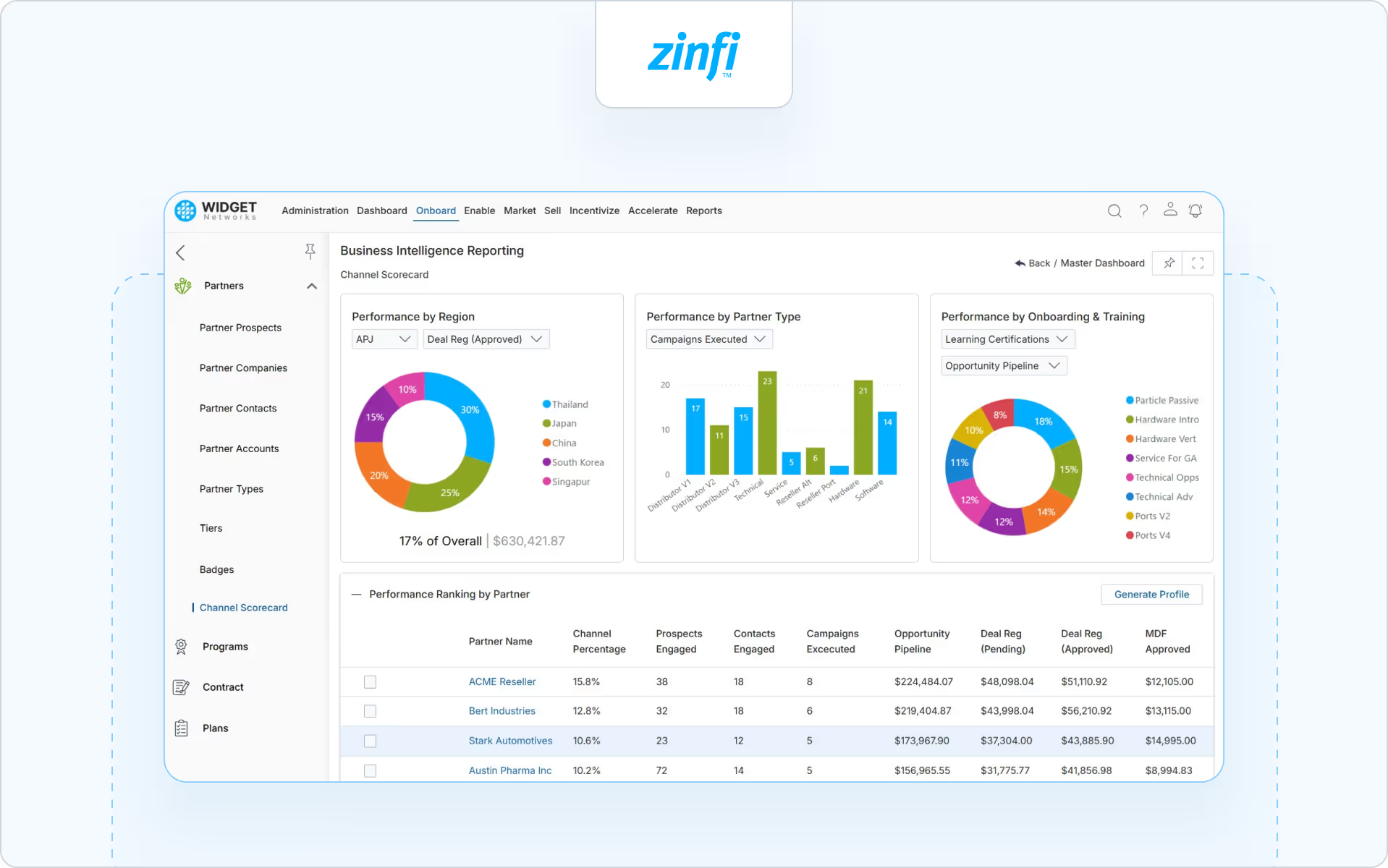
ZINFI is a comprehensive Partner Relationship Management platform that streamlines partner engagement and performance tracking.
This platform puts a heavy focus on automation, empowering you to save time and money when managing your partnerships.
Quick Feature Rundown:
- Lead management
- Opportunity management
- Performance analytics
- Incentive management
- Partner portal
- Partner onboarding
- Partner training
- Deal registration
- Automated partner onboarding, training, marketing, selling, and performance tracking
Pros: Easy to use, strong partner management, good customer support
Cons: Some features are limited
#6 Kiflo
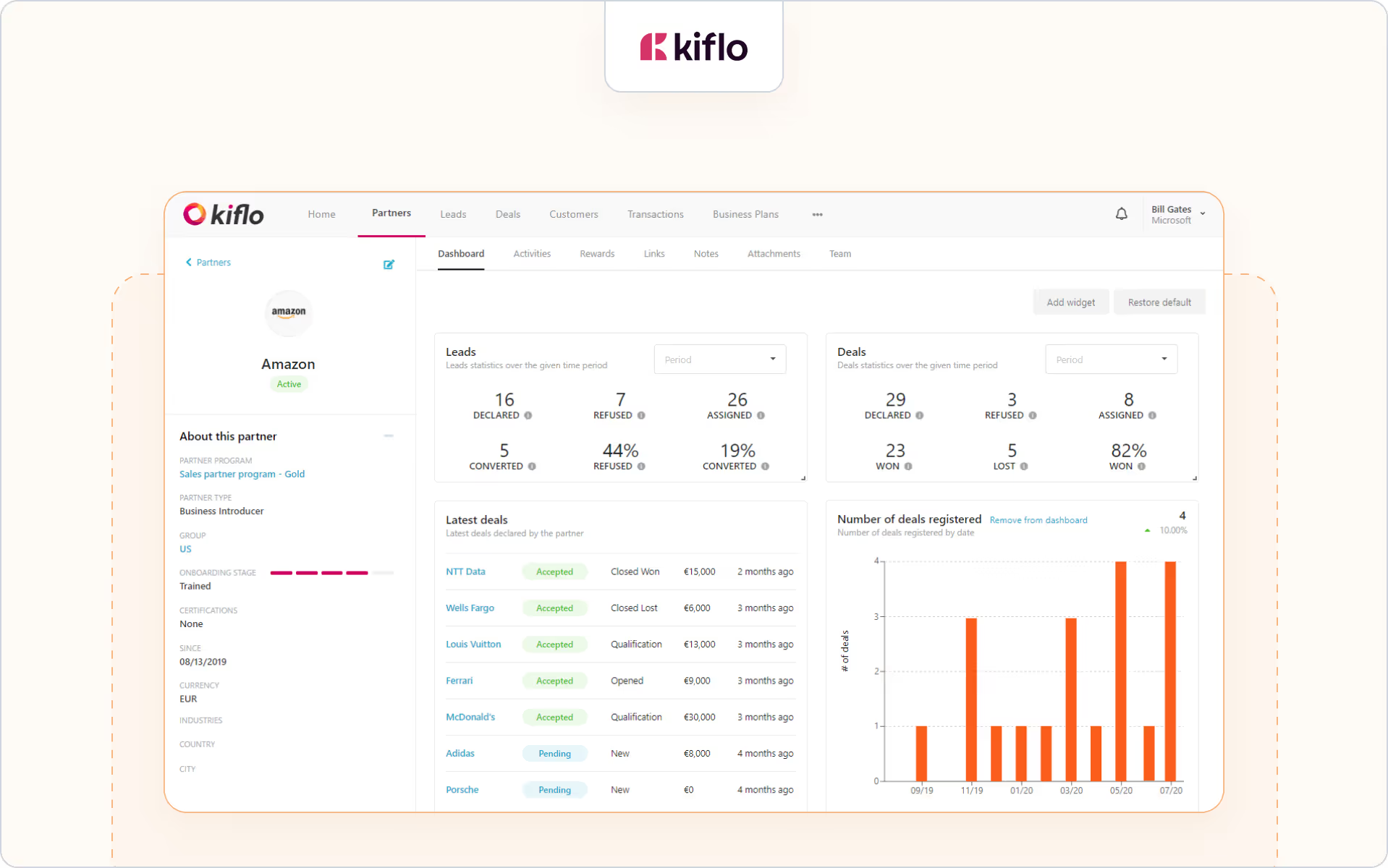
Partner Relationship Management platform Kiflo is designed to streamline partner engagement, growth, and success.
It offers customizable and automated tools that show users a visual representation of their partnerships.
Furthermore, Kiflo caters specifically to small to medium-sized businesses, providing a personalized approach to partner management.
Quick Feature Rundown:
- Lead and Deal Registration
- Real-Time Deal Tracking
- Dynamic Performance Dashboards
- Automated Partner Onboarding
- Customizable Certifications
- Content Management and Sharing
- Automated Reward and Incentive Management
- Comprehensive Analytics
- CRM Integration
Pros: Good customer support, strong partner management features
Cons: Integrations have limitations
#7 WorkSpan
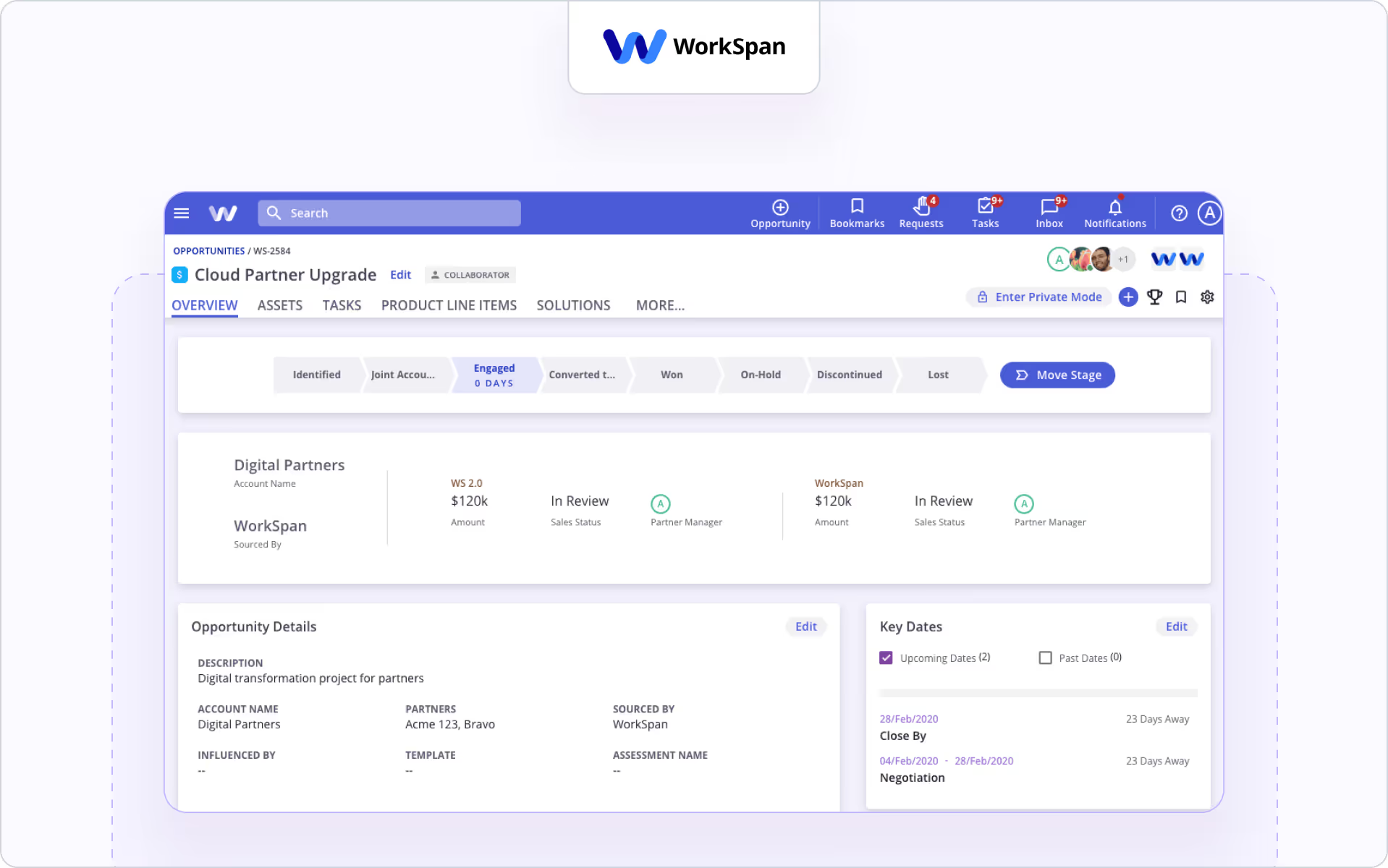
WorkSpan is a Partner Relationship Management platform designed to enhance collaboration and drive revenue growth through strategic partnerships.
It provides a comprehensive ecosystem for co-selling, co-innovating, co-marketing, and co-investing, enabling organizations to optimize their partnership strategies effectively.
Quick Feature Rundown:
- Co-sell opportunity management
- Performance measurement
- Best-practice partnership planning templates
- Comprehensive reporting and analytics
- Real-time data sharing and collaboration
- AI-driven insights and recommendations
- Secure ecosystem access control
- Automated referral creation and sharing
- Customizable dashboards and metrics
- Integration with existing CRM systems
Pros: Strong partner management and collaboration tools
Cons: Steep learning curve
#8 LeadsBridge

LeadsBridge is a comprehensive integration platform designed to streamline lead generation and management processes by connecting various marketing and CRM tools.
Its unique value proposition lies in offering over 380 integrations.
These integrations include custom solutions tailored to specific business needs, ensuring seamless data synchronization and enhanced marketing efficiency.
Quick Feature Rundown:
- Lead sync
- Audience targeting
- Online-to-offline tracking
- Custom integration
- Real-time data syncing
- Lookalike audiences
- Platform-to-platform integration
- Lead nurturing
- eCommerce synchronization
Pros: Helpful customer support, thorough automation, seamless integrations
Cons: Initial set-up can be complex
#9 ZiftONE

Zift Solutions is a comprehensive Partner Relationship Management platform that streamlines channel management, enhances partner engagement, and drives revenue growth.
This software integrates marketing, sales, and learning processes into a single platform, offering personalized experiences for businesses and their partners.
Quick Feature Rundown:
- Partner explorer
- Tier Programs
- User achievements
- Partner groups
- Customizable partner portals
- Real-time analytics and reporting
- Seamless CRM integration
- Automated lead distribution
- Partner onboarding tools
Pros: Easy to use and good customer support
Cons: Limited customization
#10 Channeltivity
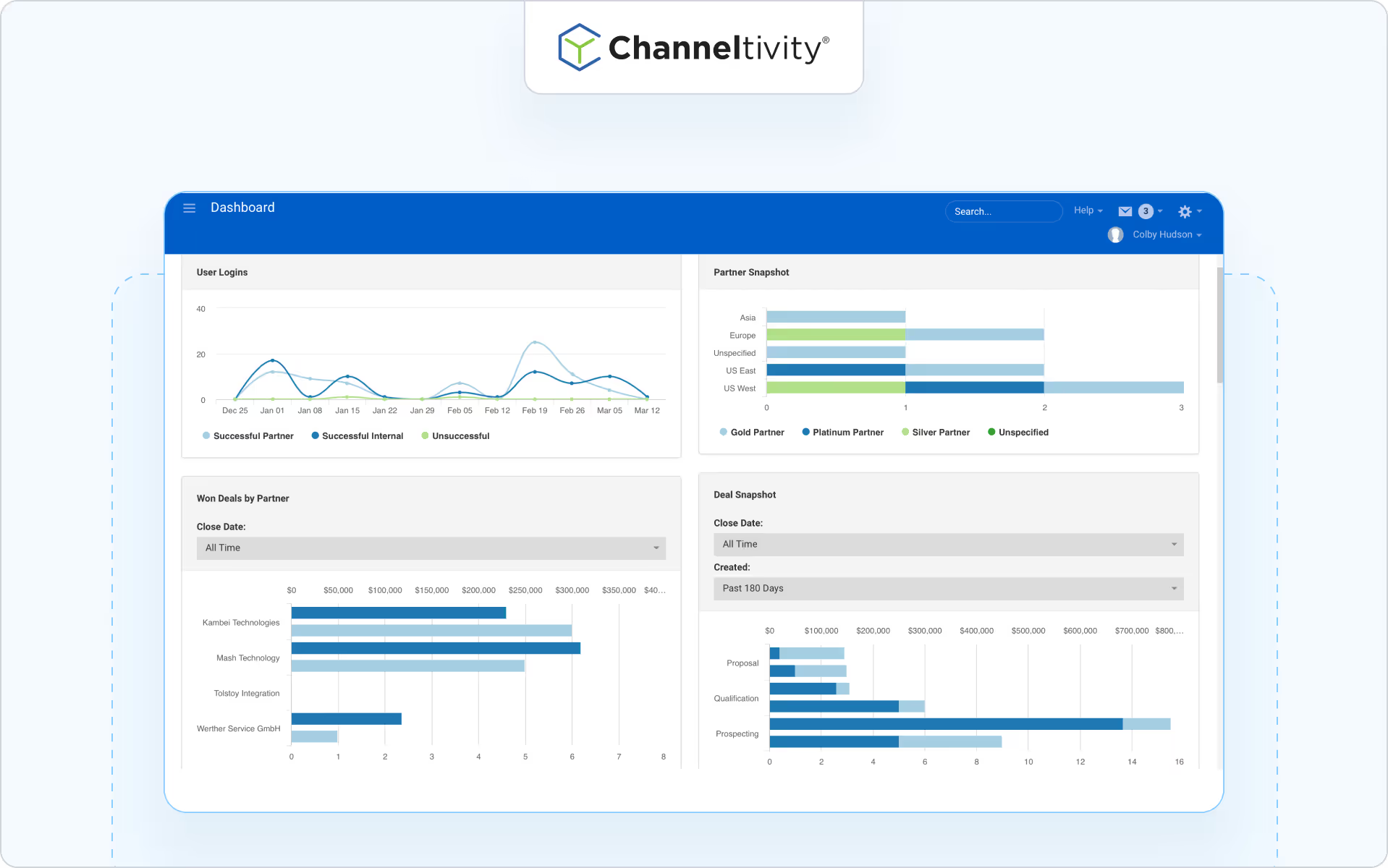
Channeltivity is a Partner Relationship Management platform designed to streamline channel management, enhance partner engagement, and drive revenue growth.
The software offers a comprehensive suite of tools — including deal registration, lead distribution, and partnership performance tracking — tailored to optimize channel operations for technology companies.
Meanwhile, its analytics and reporting suite, empowers leaders to make data-driven decisions and improve resource allocation.
Quick Feature Rundown:
- Deal registration
- Lead distribution
- Referrals and commissions
- Distributor management
- Partner dashboards
- Analytics and reporting
- Notifications and reminders
- Partner portal
- Training and certification
- Business planning
Pros: Streamlined partner engagement and deal tracking and responsive support to ensure customer satisfaction
Cons: Customization limitations
Why Introw + Crossbeam is the Best Partnership Tracking Stack in 2026
If you're ready to integrate account mapping into your PRM, consider Introw with Crossbeam.
So, how do the two platforms work together?
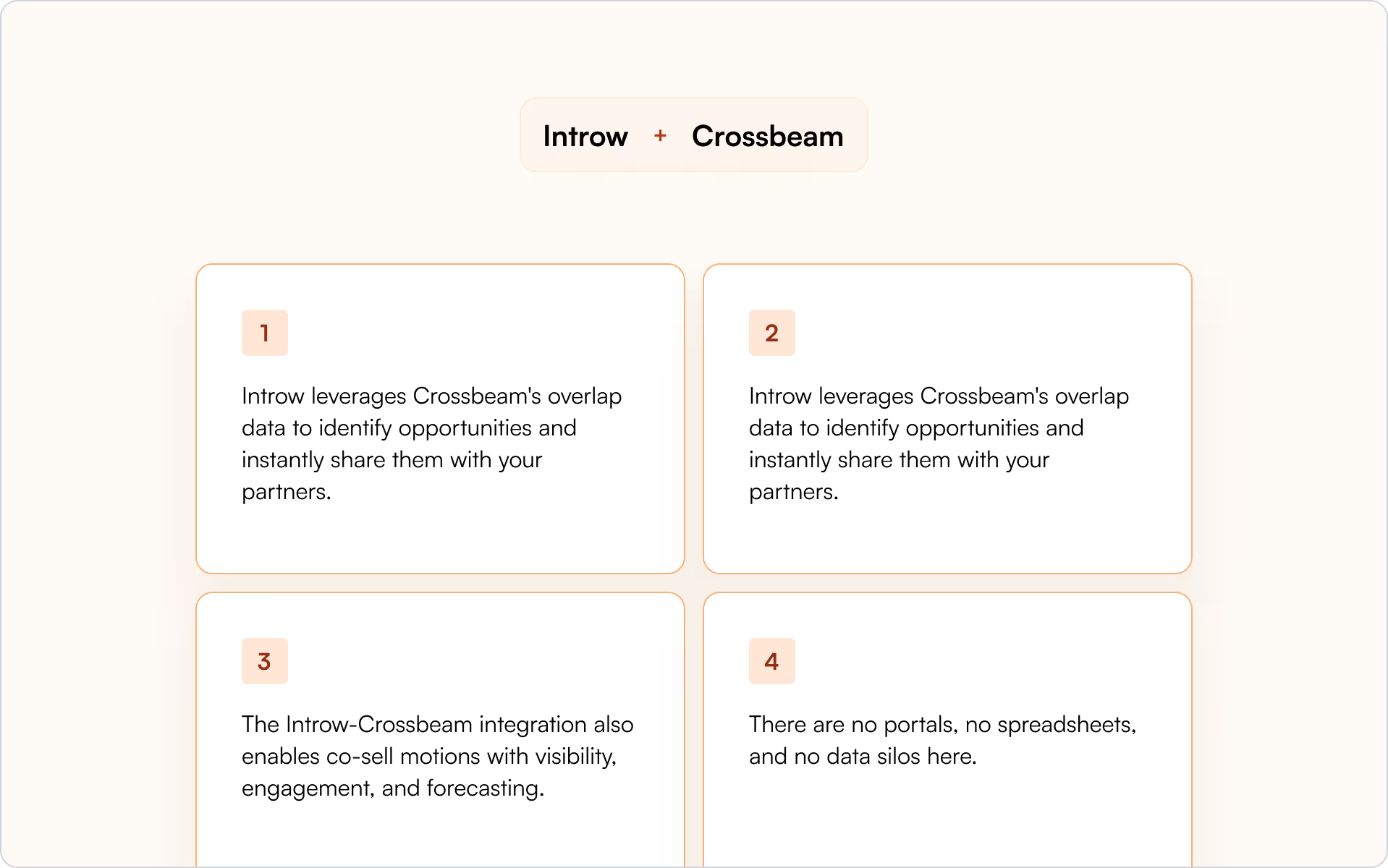
Introw leverages Crossbeam's overlap data to identify opportunities and instantly share them with your partners.
Essentially, Crossbeam finds the opportunity, and Introw then turns it into revenue.
This process is super simple too — one-click integration connects the partner overlap data to the actual pipeline.
What's more, Introw (with Crossbeam) syncs seamlessly into Salesforce or HubSpot, empowering you to manage your partner tracking process from inside your CRM.
The Introw-Crossbeam integration also enables co-sell motions with visibility, engagement, and forecasting.
And Introw is built for scale!
There are no portals, no spreadsheets, and no data silos here.
Conclusion
Today's partner programs live and die by what they can track.
Introw + Crossbeam is the only solution that handles account mapping, lead registration, engagement tracking, and forecasting — all in one flow
So, say goodbye to portal logins and spreadsheet chaos.
✅ Ready to track every opportunity and turn partnerships into pipeline? Book your personalized Introw demo
A Guide to Choosing the Best CRM for Partner Management: 15 Top Tools For 2026
A strong CRM system should be the backbone of your partner programs.
Embrace your CRM when it comes to partner management, and you can expect centralized relationships, seamless collaboration, full alignment with business operations, fewer channel conflicts, and improved revenue projections.
What's more, by embedding partner management within a CRM, businesses gain a unified source of truth, improving efficiency, accountability, and long-term success in partner ecosystems.
Traditional, siloed partner tools simply can't keep up with the power of modern CRMs.
It makes sense, then, that businesses are increasingly shifting to CRM-first workflows, integrating partner management into broader customer and revenue strategies.
This transition eliminates inefficiencies caused by disconnected systems, enabling real-time visibility into partner performance.
When moving to a CRM-first workflow, businesses must understand the importance of native integrations, deal tracking, and forecasting.
Look for CRM tools that offer native integrations with marketing automation, sales pipelines, and support tools to ensure that partner activities are fully aligned with business operations.
Meanwhile, deal tracking within a CRM allows businesses to monitor partner-driven opportunities, assign leads effectively, and prevent channel conflicts.
And forecasting capabilities provide data-driven insights into revenue projections, helping companies optimize their partner strategies.
To sum up, a CRM-first approach fosters stronger, data-backed partnerships that drive sustainable growth.
⬇️In this guide, we'll cover everything you need to know to make the best CRM decision for your business and your partners.
What to Look for in a CRM for Partner Management
When considering which CRM to go for, you'll undoubtedly already have several 'must have' features in mind.
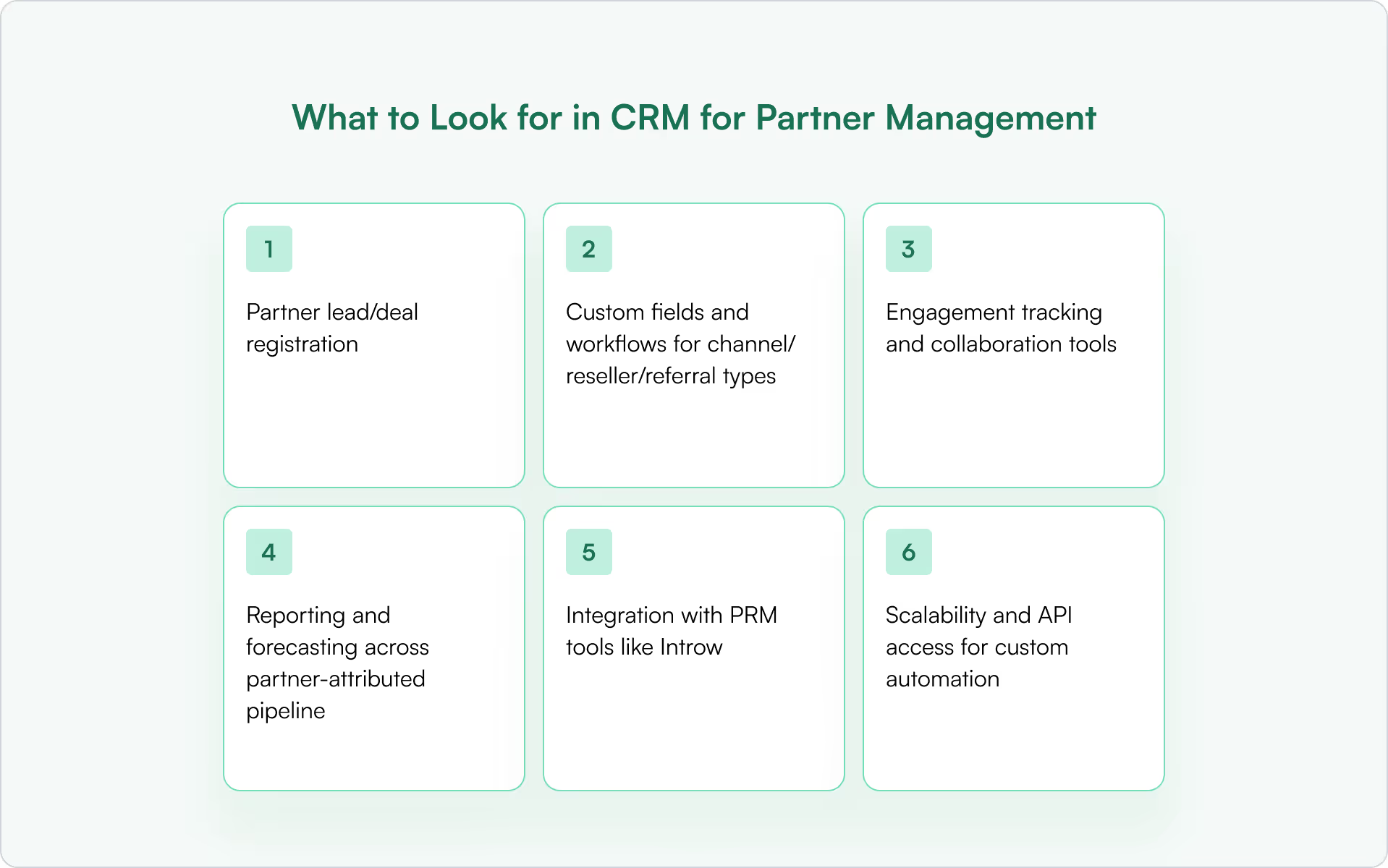
But here are the most important features to look out for when it comes to partner management:
- Partner lead/deal registration
- Custom fields and workflows for channel/reseller/referral types
- Engagement tracking and collaboration tools
- Reporting and forecasting across partner-attributed pipeline
- Integration with PRM tools like Introw
- Scalability and API access for custom automation
15 Best CRM Platforms for Partner Management in 2026
So, we know that a CRM-first approach has a wide variety of benefits for partner management.
But choosing the right CRM can be daunting; after all, it's a pretty big decision.
And not every CRM is fit for partner management.
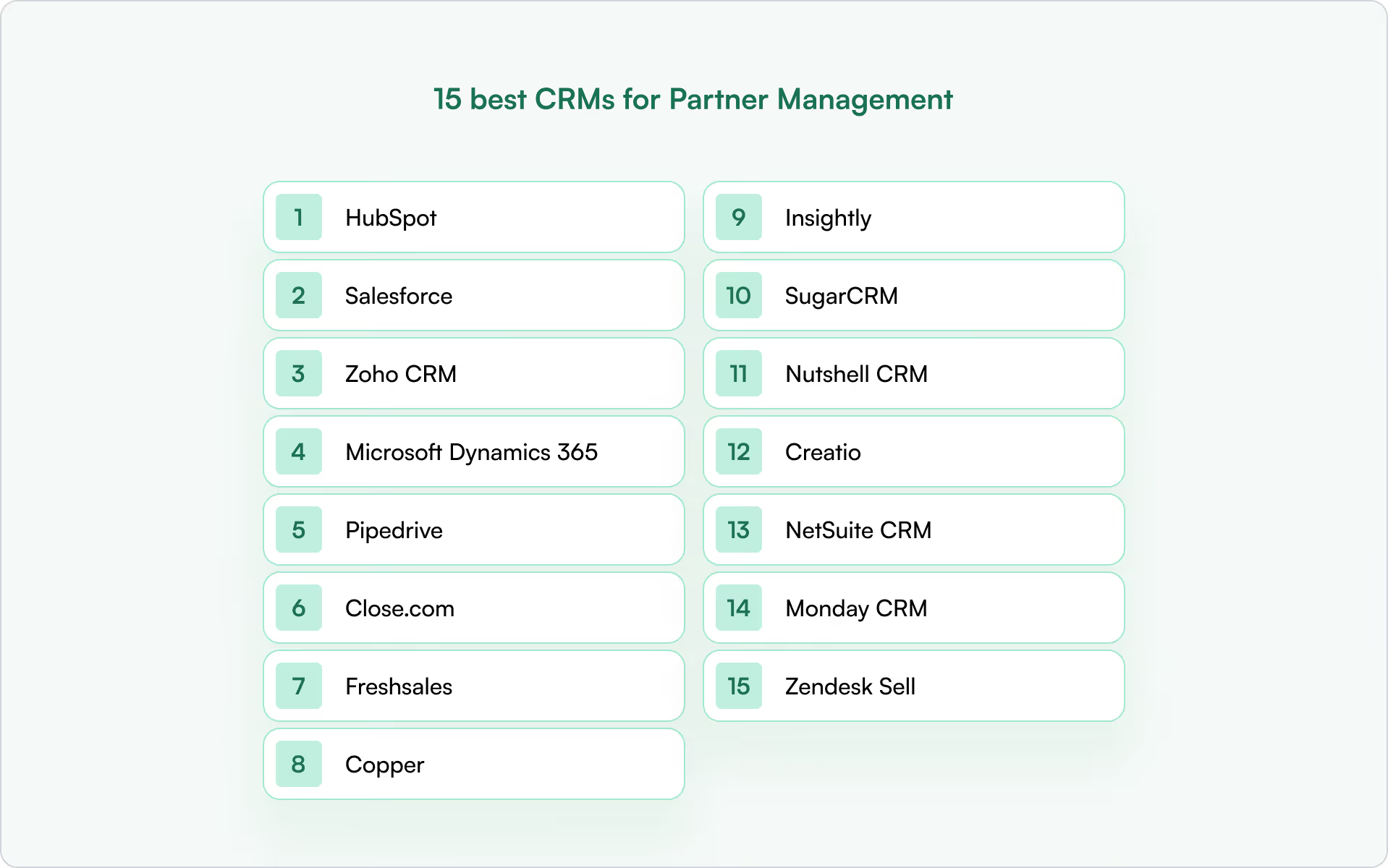
To help you out, we've compiled a list of the best 15 CRM for partner management, along with their pros and cons.
#1 HubSpot
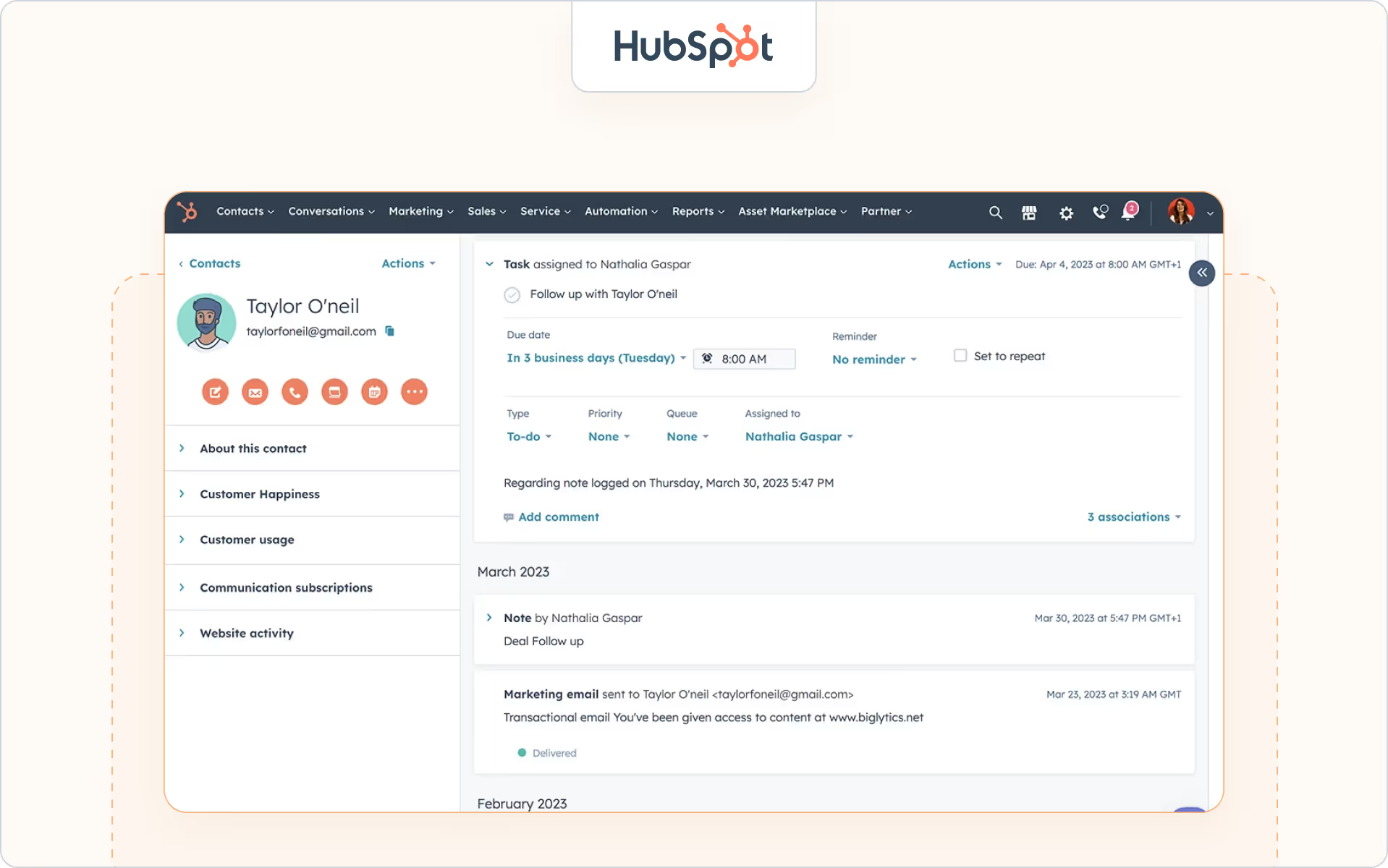
A giant of the CRM world, HubSpot's CRM is super popular among growing SaaS teams.
This comprehensive, AI-powered platform is designed to unify customer data, streamline business operations, and enhance customer experiences.
It offers a suite of tools across marketing, sales, customer service, content management, and operations, all integrated into a single system to facilitate seamless collaboration and efficiency.
And when it comes to partner management, Hubspot's CRM boasts several key features, including:
For partner management, HubSpot CRM provides several key features:
✅ CRM partner relationship management (PRM) integrations: Access PRM software Introw through HubSpot's App Marketplace for partner engagement tracking, lead registration, and Slack-based collaboration.
✅ Association labels: Define and manage relationships with partners by labelling companies as "Partner" or "Distributor," clarifying roles and facilitating targeted communication.
✅ Partner services: Utilize Partner Services to track and manage services provided by partners, ensuring organized and efficient collaboration.
✅ Automation: Save time by automating workflows and repetitive processes
These features enable businesses to effectively manage and nurture their partner relationships within HubSpot CRM.
🔗 Find out more about how Introw and Hubspot work together
#2 Salesforce

Salesforce remains the gold standard for enterprise partner programs.
This comprehensive, cloud-based platform streamlines customer relationship management and partner relationship management by integrating sales, marketing, customer service, and more into a unified system.
It empowers businesses to enhance customer interactions, improve satisfaction, and drive growth through data-driven insights and automation.
For partner management in CRM, Salesforce CRM offers several key features:
✅ Partner relationship management software integration: Seamlessly integrates with Introw to place PRM functionalities firmly within the CRM, enabling tracking of partner pipeline, engagement, and performance — all natively.
✅ Powerful reporting and forecasting: Delivers key data insights to enable data-driven decisions, as well as accurate forecasting.
✅ Personalized partner engagement: Provides personalized templates and data-driven enablement tools to engage partners effectively, enhancing communication and collaboration.
✅ Automated processes: Automates marketing fund requests, discounting, and service case management, reducing manual tasks and increasing efficiency in partner interactions.
✅ Real-time updates with partner connect: Facilitates secure deal tracking and real-time, automated updates on co-selling deals across different CRMs, ensuring transparency and reducing data duplication.
✅ Scalability: Built on the Salesforce platform, it scales easily to accommodate growing partner ecosystems, adapting to evolving business needs.
🔗 Learn more here: Introw + Salesforce Integration
#3 Zoho CRM
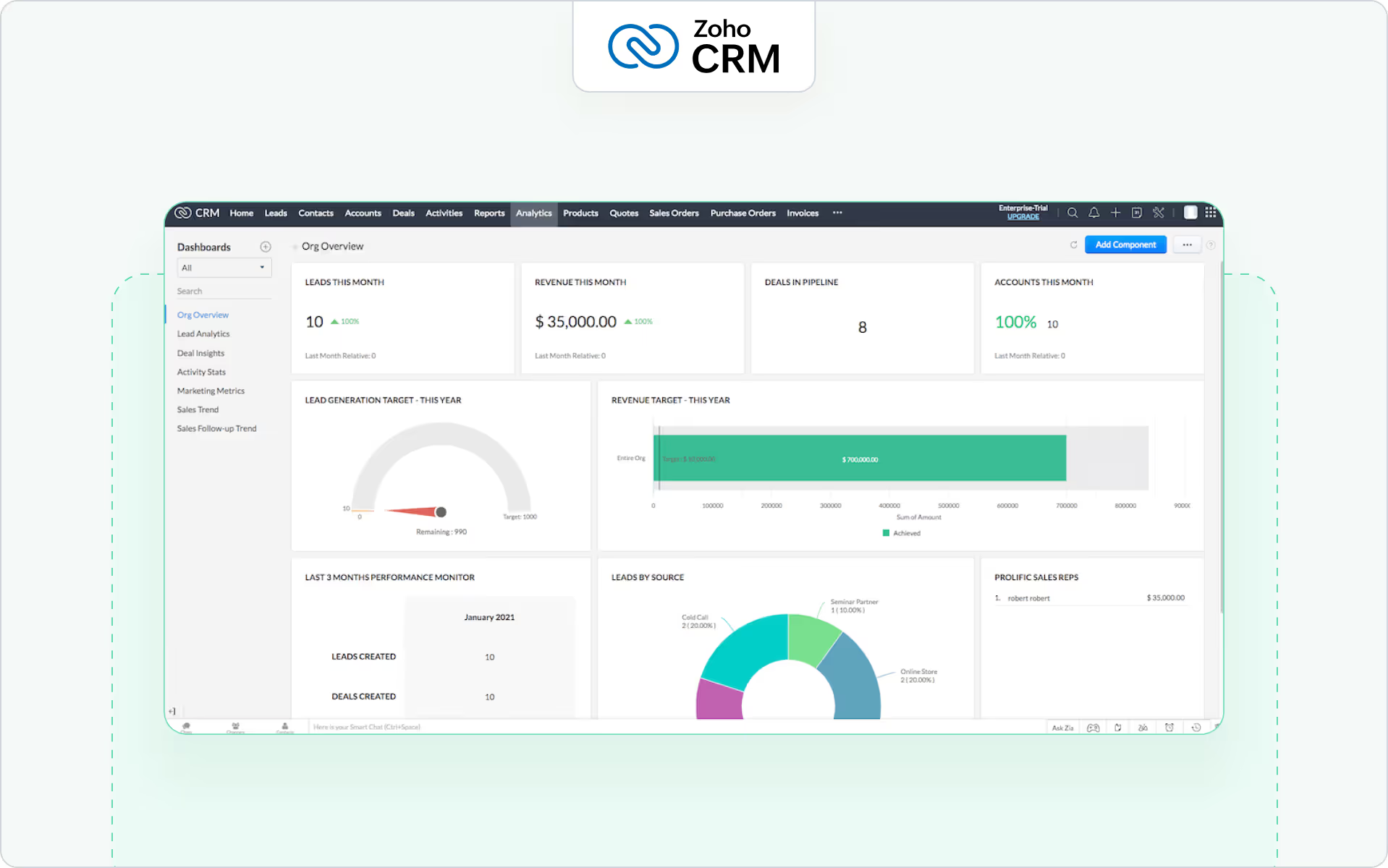
Zoho offers a flexible, cloud-based CRM that helps businesses manage sales, marketing, and customer relationships efficiently.
It's also a good option for those looking for a CRM that will support partner relationship management for sustainable business growth.
✅ Territory management: Organize and manage partner territories effectively, aligning sales strategies with specific regions or market segments.
✅ Workflow automation: Automate routine tasks and processes, enabling partners to focus on strategic activities and improving overall efficiency.
✅ Advanced analytics: Gain insights into partner performance through detailed reports and dashboards, facilitating data-driven decision-making.
✅ Customizable modules: Tailor CRM modules to fit specific partner management needs, ensuring a personalized and relevant experience.
✅ Multi-channel communication: Engage with partners across various channels, including email, phone, and social media, ensuring seamless communication.
Pros: Affordable, customizable, partner portal add-on
Cons: Weaker reporting, fewer native integrations
Best For: SMEs or mid-market teams just starting their partner motion.
#4 Microsoft Dynamics 365
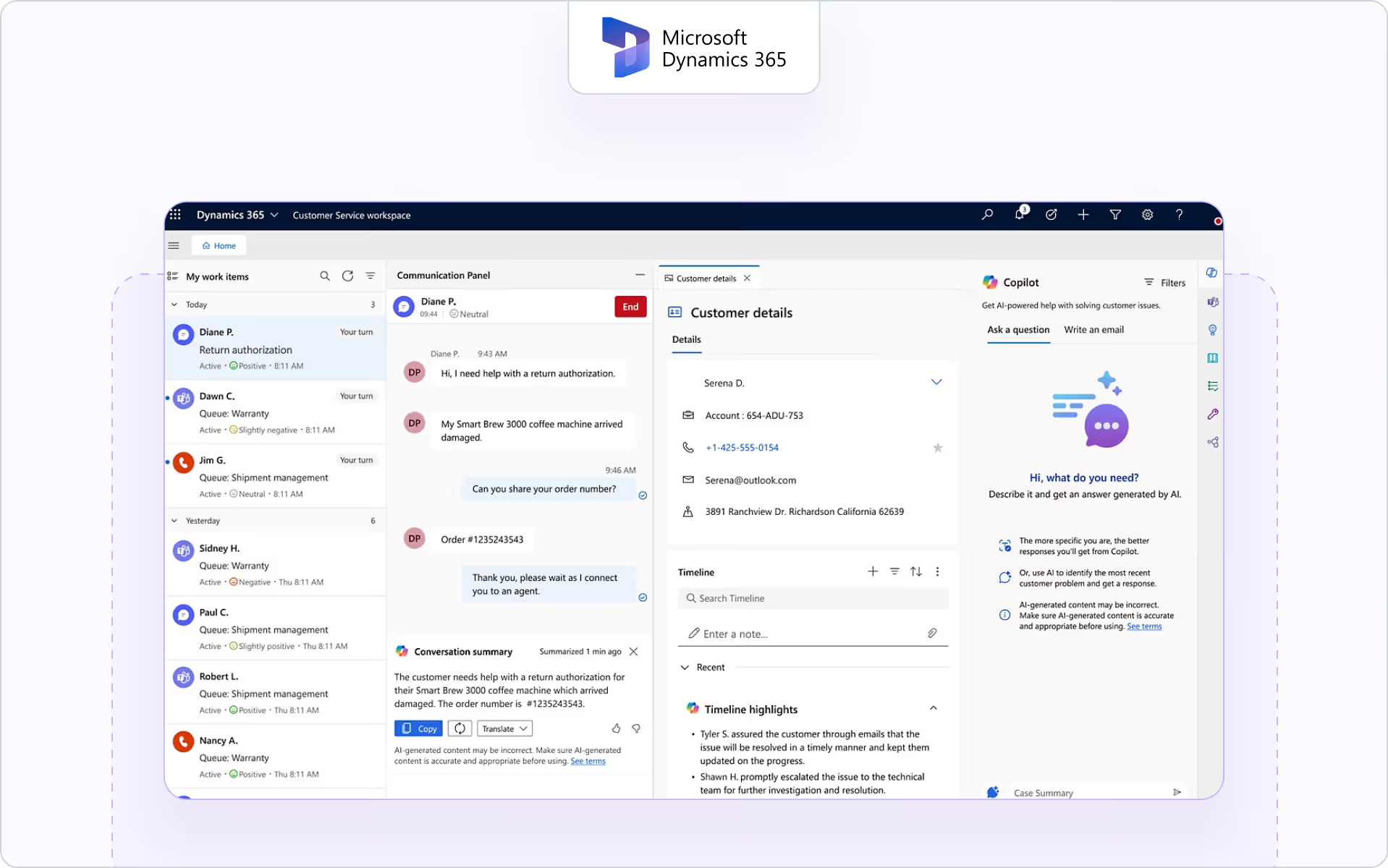
Microsoft Dynamics 365 is an AI-powered suite of business applications that combines CRM and ERP capabilities to enhance customer experiences and business operations.
It integrates sales, marketing, service, and financial data to help organizations innovate, automate processes, and drive growth.
It encompasses several key features for partner management:
✅ Manage partner relationships with shared data insights
✅ Automate lead and opportunity tracking
✅ Integrate partner sales data for streamlined collaboration
✅ Enable partner performance monitoring through analytics
✅ Use AI to provide personalized partner support
Pros: Deep integrations, enterprise-friendly
Cons: Steep learning curve, dev-heavy
Best For: Enterprises already deep in Microsoft's stack or those with in-house CRM admins
#5 Pipedrive
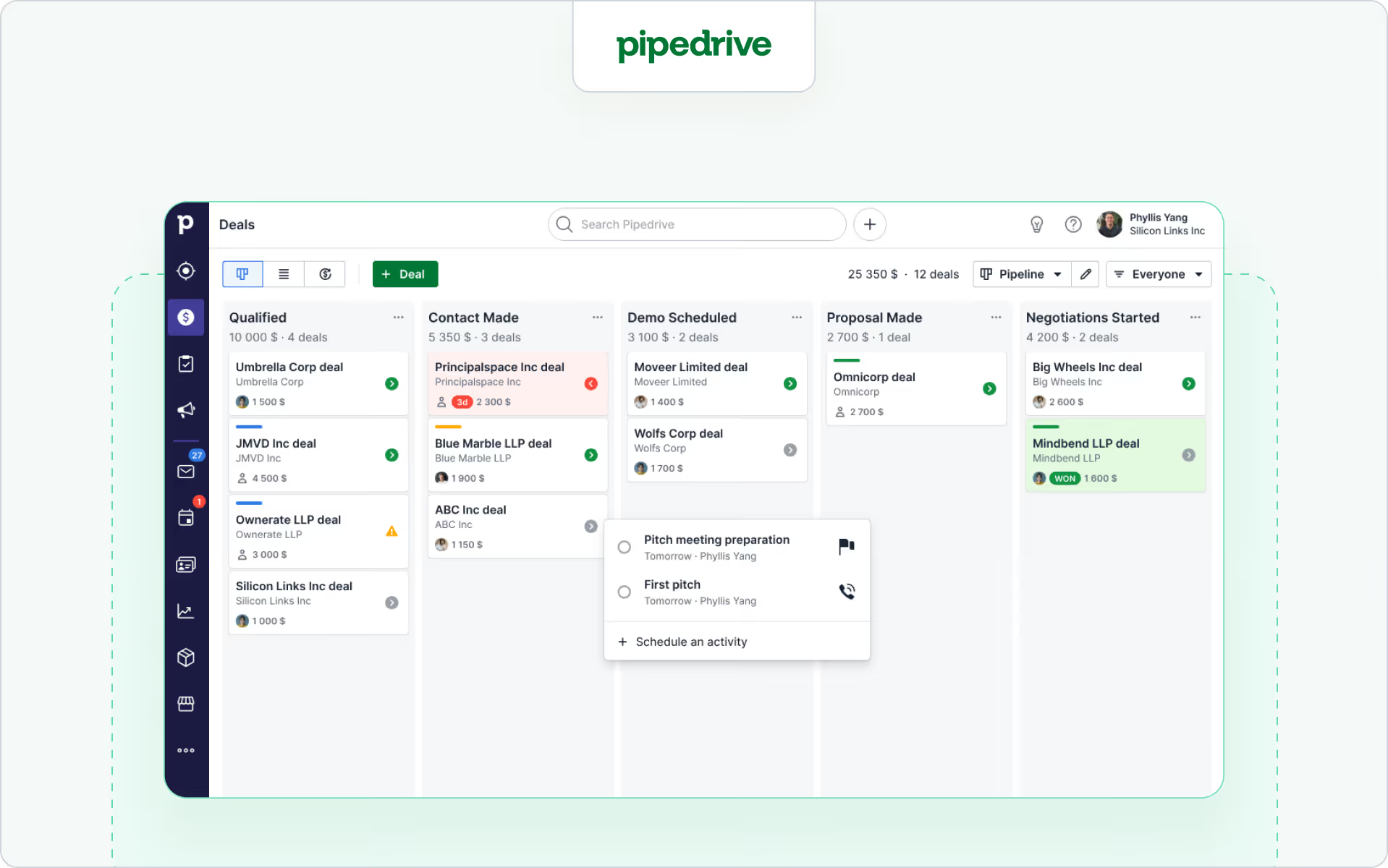
Pipedrive offers a clean, simple CRM that's easy to use.
It automates repetitive tasks, tracks communications, and provides actionable insights to help sales teams optimize performance.
Admittedly, this one isn't purpose-built for partners, but it can support small partner programs with the right tagging and workflows.
When it comes to partner management, Pipedrive allows you to:
✅ Organize and track partner interactions in one space
✅ Automate partner follow-ups and communications
✅ Visualize partner pipeline for better decision-making
✅ Use AI for personalized partner management insights
✅ Centralize partner data for easy collaboration and reporting
Pros: Visual pipeline, easy setup
Cons: Limited partner automation, no partner-specific fields
Best For: Early-stage teams experimenting with partnerships
#6 Close.com

Close CRM is a platform designed to streamline sales processes for small businesses, focusing on automation, communication, and deal management.
It offers an intuitive, fast interface for managing leads and communications — and can also prove useful for partner relationship management.
Here's how:
✅ Track partner interactions and pipeline progress
✅ Automate partner outreach and follow-ups
✅ Centralize partner data and activity
✅ Monitor partner performance with analytics
✅ Seamlessly integrate with other tools for collaboration
Pros: Simple, easy-to-use
Cons: Limited customization
Best For: Small businesses with big growth ambitions
#7 Freshsales
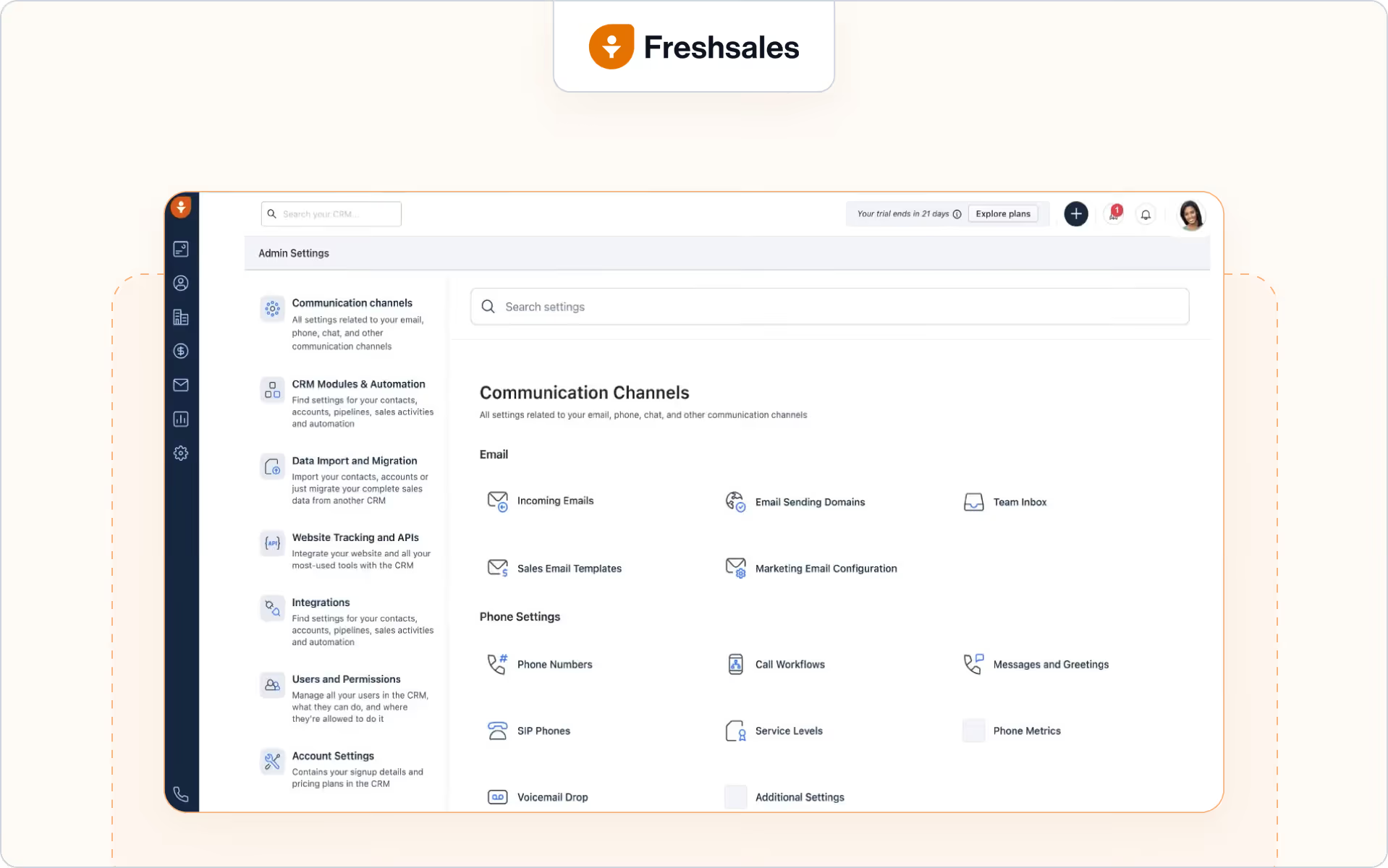
Freshsales by Freshworks is an AI-powered sales CRM that enhances revenue growth with automation, lead scoring, and predictive analytics.
It streamlines workflows and provides insights to improve sales efficiency.
Here's how it can boost partner management:
✅ Track and manage partner relationships efficiently
✅ Automate follow-ups and communication with partners
✅ Centralized data for seamless collaboration
✅ AI-powered insights to optimize partner engagement
✅ Customizable pipelines to monitor partner deals
Pros: Easy to use and excellent customer support
Cons: Limited features and a steep learning curve
Best For: Start-ups and SMEs that need a friendly, affordable CRM solution.
#8 Copper
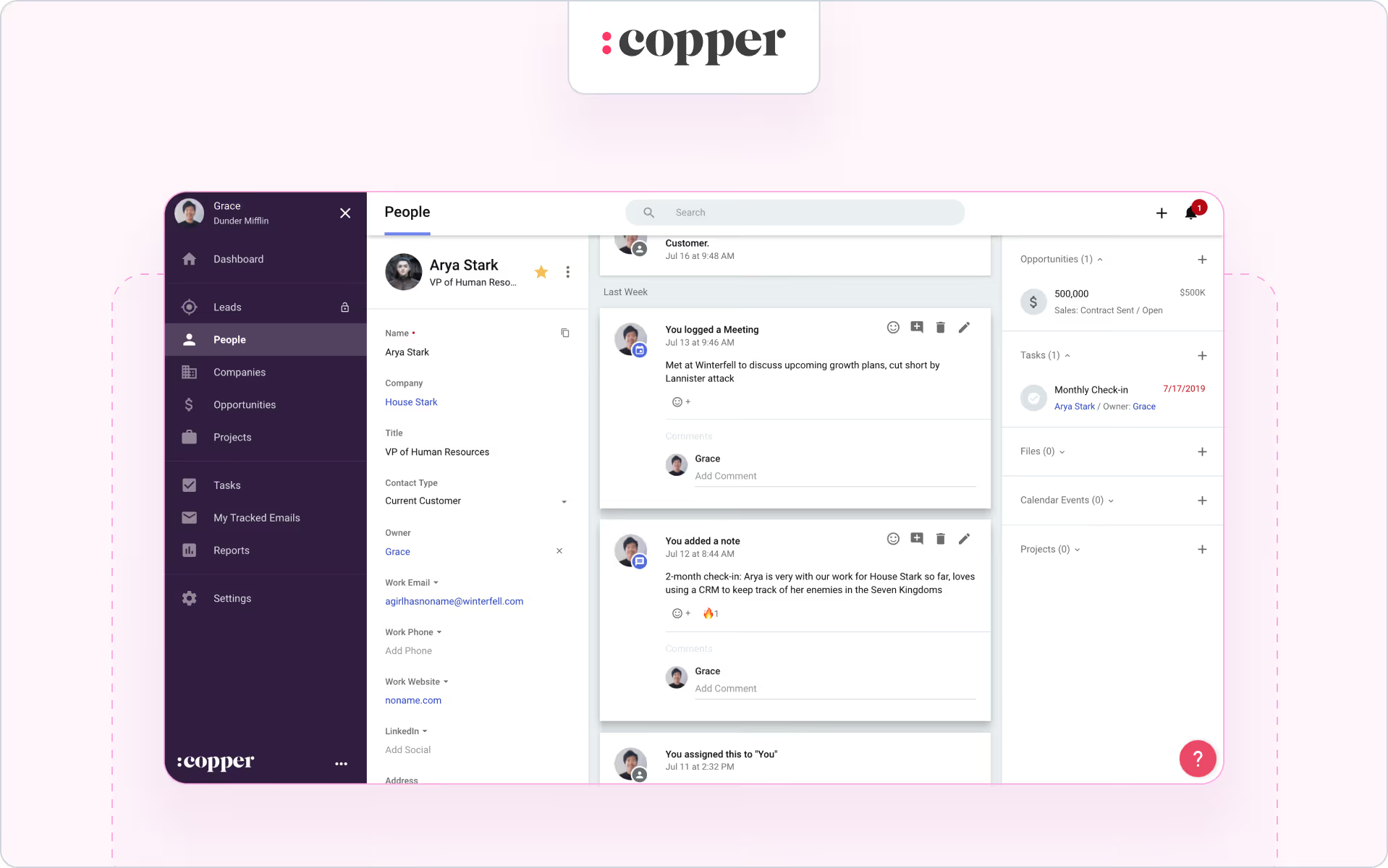
A relationship-focused CRM designed for Google Workspace users, Copper is all about streamlining contact management, deal tracking, and workflow automation.
It also minimizes data entry and integrates seamlessly with Gmail.
Key features for partner management:
✅ Centralized partner contact and activity tracking
✅ Automated workflows for partner communications
✅ Custom pipelines to monitor partner deals
✅ Seamless integration with Google Workspace
✅ Real-time reporting and analytics for partner performance
Pros: Easy integration with Google properties, user-friendly
Cons: Limited scalability
Best For: Businesses that depend on Google Workspace
#9 Insightly
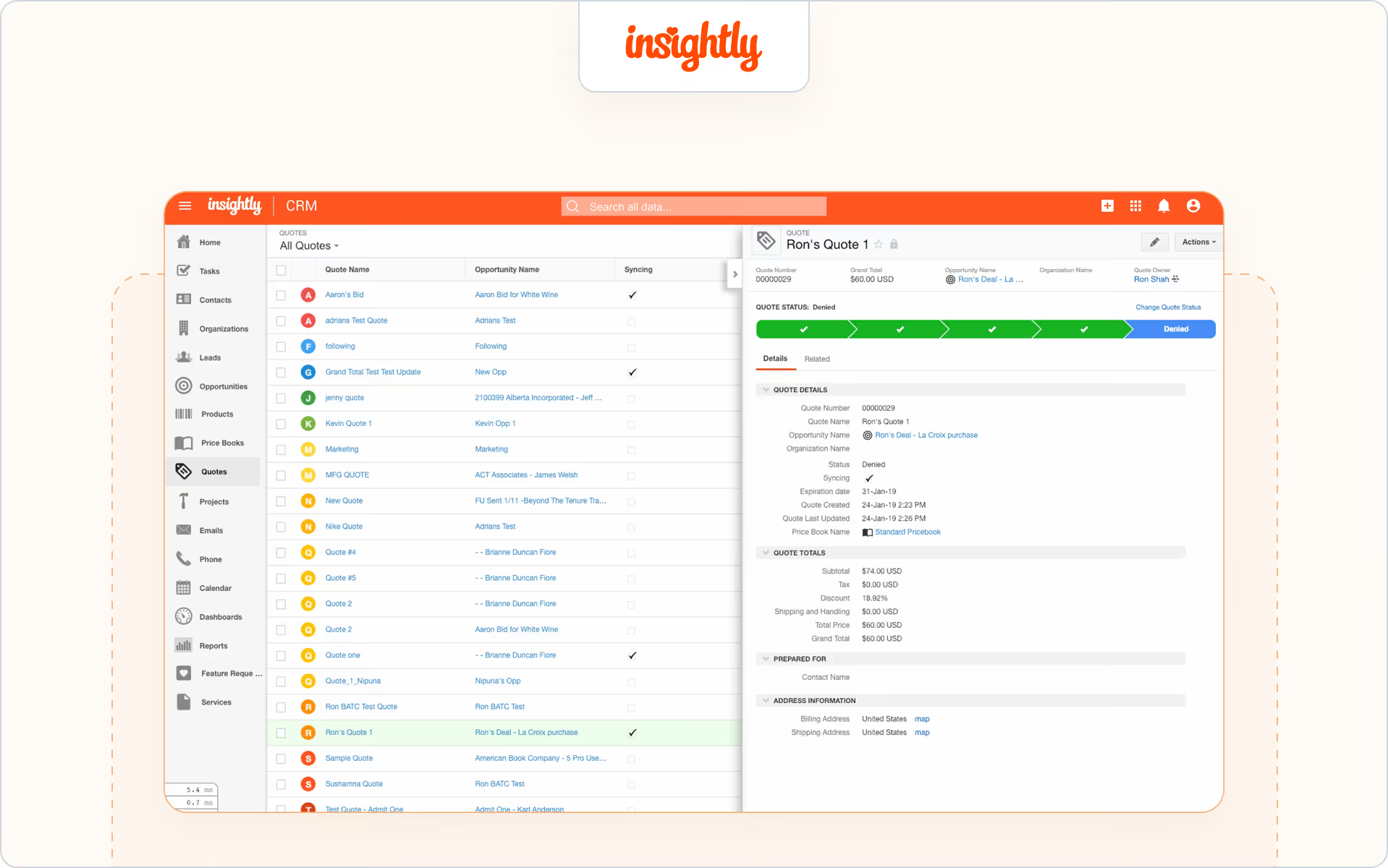
Insightly is a scalable CRM designed for businesses to manage customer relationships, sales, and marketing in one platform.
It offers automation, project tracking, and analytics to drive growth and efficiency.
Looking for a CRM to boost partner management?
Here's how Insightly can support PRM:
✅ Centralized partner relationship tracking
✅ Automated workflows for partner interactions
✅ Customizable pipelines for deal management
✅ Advanced analytics for partner performance monitoring
✅ Integration with third-party apps for collaboration
Pros: Great customer support and deep customization
Cons: Steep learning curve
Best For: SMEs and start-ups looking for a customizable and scalable CRM.
#10 SugarCRM
A flexible, AI-driven CRM platform, SugarCRM is designed for B2B sales, marketing, and customer service.
It automates data collection, provides predictive insights, and streamlines workflows for enhanced efficiency.
Key features for partner management include:
✅ Centralized partner relationship tracking
✅ AI-powered insights for partner engagement
✅ Automated workflows for seamless collaboration
✅ Custom dashboards for partner performance monitoring
✅ Integration with third-party tools for extended functionality
Pros: Lots of features, good customer support
Cons: Long implementation, steep learning curve
Best For: Large businesses and enterprises looking to commit to a CRM long-term
#11 Nutshell CRM

Nutshell is a user-friendly CRM that combines sales, marketing, and pipeline management into one intuitive platform.
It simplifies lead tracking, automates workflows, and integrates with essential tools to enhance team collaboration and efficiency.
Here are Nutshell's most useful partner management features:
✅ Centralized partner contact and deal tracking
✅ Automated follow-ups and task reminders
✅ Customizable pipelines for partner relationship management
✅ Integration with marketing automation tools for outreach
✅ Real-time reporting and analytics for partner performance
Pros: Simple, easy to use, great customer support
Cons: Steep learning curve, limited integrations
Best For: Smaller businesses looking for a simple, affordable CRM
#12 Creatio
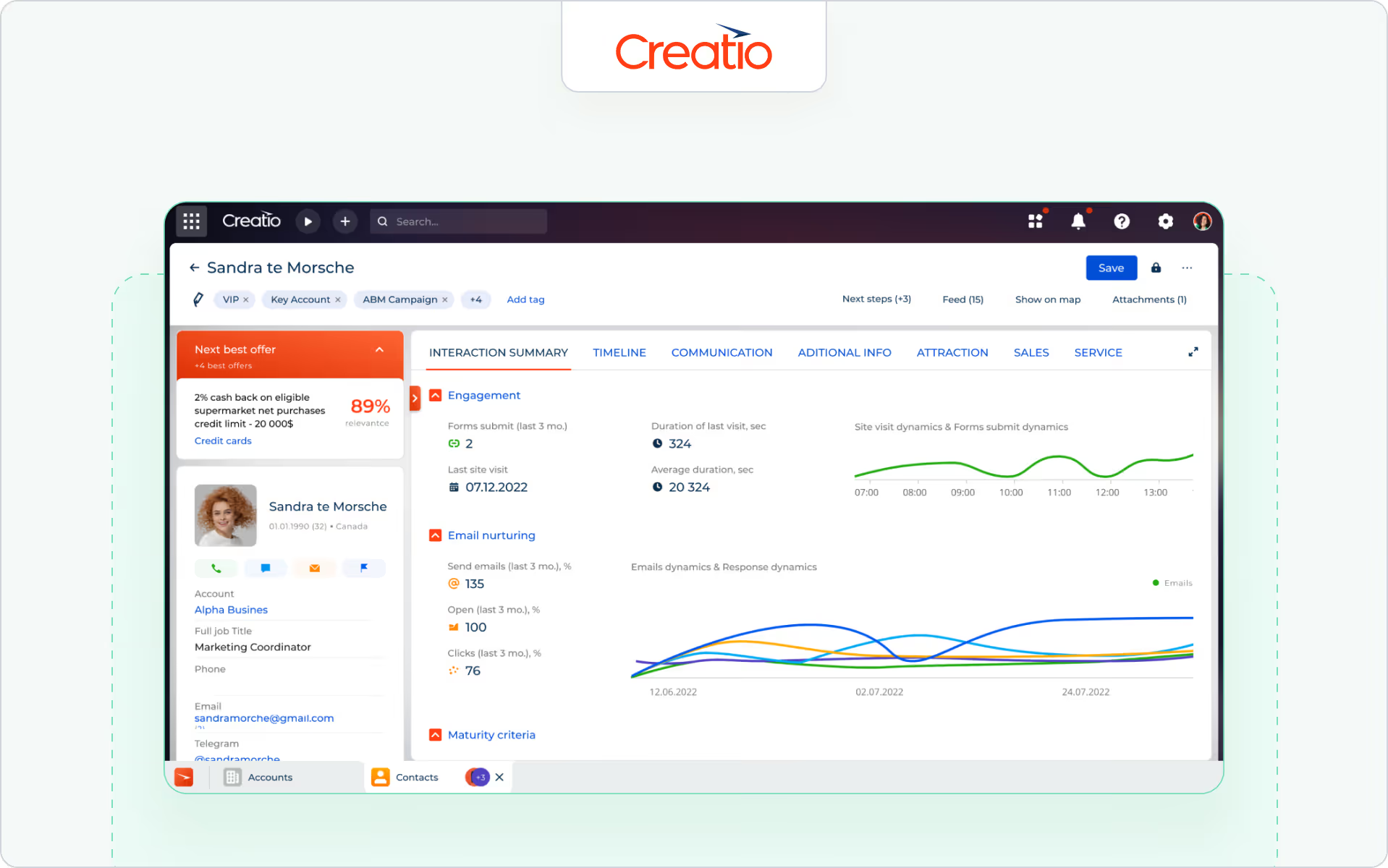
Creatio is an AI-powered, no-code CRM platform.
It automates workflows and customer relationship management for sales, marketing, and service teams, empowering businesses to streamline operations, optimize engagement, and enhance productivity.
It's pretty helpful when it comes to partner management, too.
Here's how:
✅ Centralized partner relationship tracking
✅ AI-driven insights for partner engagement
✅ No-code automation for partner collaboration
✅ Custom dashboards for performance monitoring
✅ Seamless integrations for extended functionality
Pros: Great automation, customization, and usability
Cons: Steep learning curve
Best For: Large businesses with multiple departments that require smooth company-wide adoption
#13 NetSuite CRM
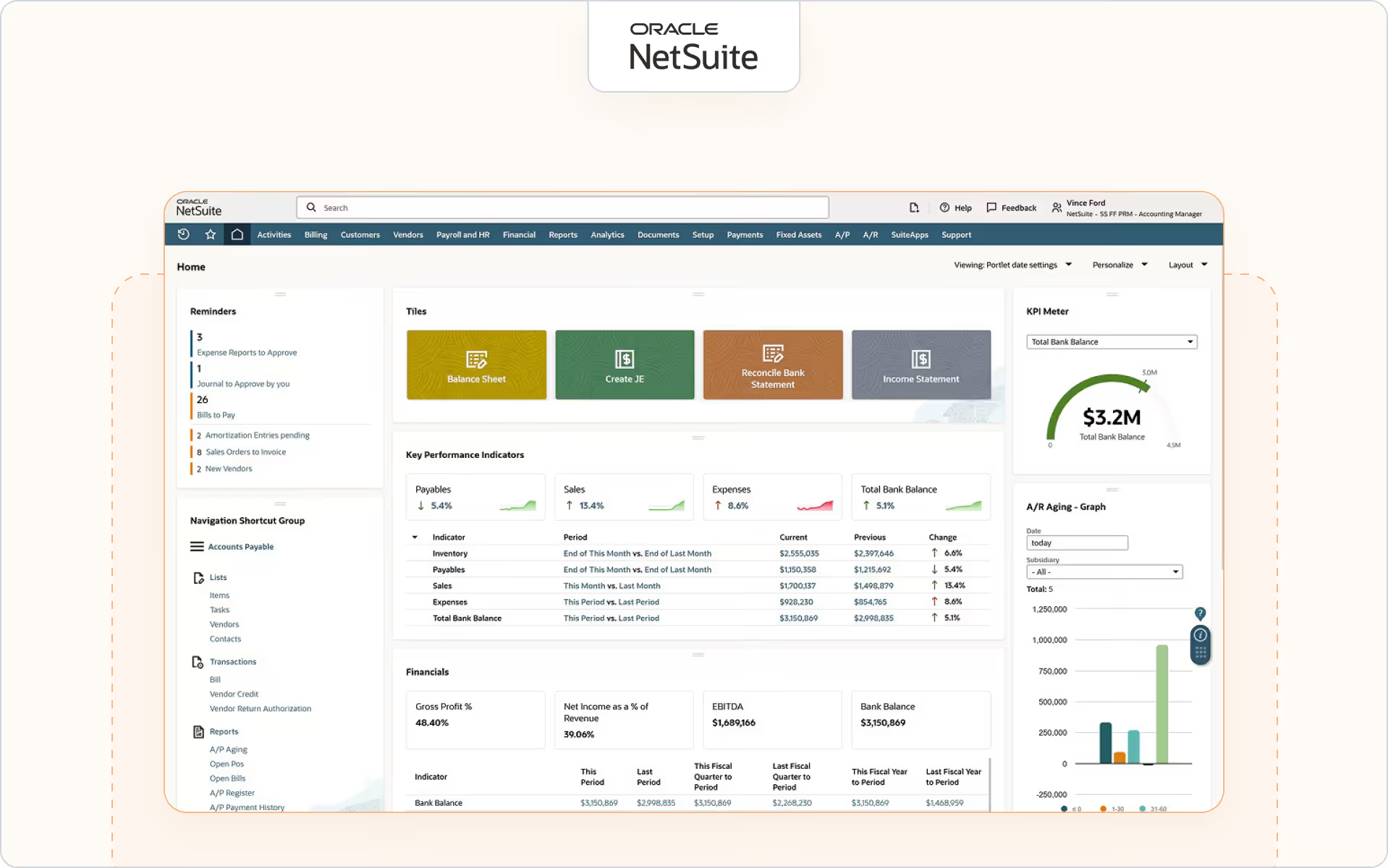
NetSuite is a cloud-based business management suite that includes CRM, ERP, and financial tools to streamline operations, automate workflows, and improve decision-making.
It provides robust partner management capabilities, such as:
✅ Partner relationship management with centralized data
✅ Automated workflows for seamless collaboration
✅ Real-time analytics for partner performance tracking
✅ Custom dashboards to monitor deal progress
✅ Integration with third-party applications
Pros: Great functionality and ease of use.
Cons: Steep learning curve, expensive, complex implementation
Best For: Enterprises that need to streamline their processes.
#14 Monday CRM

Monday CRM is a flexible, no-code customer relationship management platform that helps businesses manage sales, projects, and workflows.
It centralizes data, automates tasks, and enhances collaboration to improve efficiency.
Monday's key features for partner management include:
✅ Centralized partner tracking and collaboration
✅ Automated workflows for partner onboarding and engagement
✅ Customizable pipelines to manage partner deals
✅ Integration with third-party tools for seamless operations
✅ Real-time analytics for partner performance insights
Pros: Great range of features, scalable, easy to customize
Cons: Steep learning curve
Best For: SMEs and service businesses
#15 Zendesk Sell
A modern sales CRM, Zendesk Sell enhances productivity, provides full pipeline visibility, and integrates automation to streamline deal management.
It helps sales teams manage leads, track interactions, and optimize workflows.
However, its features can also be used for PRM, including:
✅ Centralized partner tracking and collaboration
✅ Automated workflows for partner engagement
✅ Customizable sales pipelines for partner deals
✅ Real-time analytics for partner performance insights
✅ Seamless integrations with external tools
Pros: Simple user interface, intuitive to use, good automation features
Cons: Complex setup
Best For: Businesses of any size that want to streamline their processes
How to Choose the Right CRM for Partner Management
Ready to decide on your new CRM?
Here are some handy guidelines.
Make sure your new CRM has:
- Native or customizable deal reg
- CRM alignment with partner program complexity
- Integration with a PRM like Introw
- Automation and reporting
And watch out for these common pitfalls:
- No partner-specific fields or segmentation
- Manual tracking outside the CRM
- No integration between CRM and partner activities
Three final tips for choosing a CRM for partner channel management:
- Align with RevOps early
- Evaluate scalability and workflow compatibility
- Test integrations with tools like Introw
How Introw Supercharges CRM for Partner Management
Of course, when it comes to partner relationship management, a CRM alone won't do.
Sure, investing in the right CRM can significantly boost your partner relationships, but if you aim to establish a profitable ecosystem, PRM software is crucial.
And your PRM must integrate seamlessly with your CRM.
This is where state-of-the-art PRM Introw comes in.
Here's why Introw stands out among other PRMs:
- CRM-first: your team works entirely within Salesforce or HubSpot — no extra logins, no tool-switching. Partners still collaborate via a dedicated portal, fully synced with your CRM.
- Deal and lead registration are mapped directly to the CRM
- Partner engagement tracking is synced with both the CRM and Slack
- Forecasting and visibility operates across all partner-attributed revenue
- No-code workflows for referrals, resellers, and MSPs
But don't just take our word for it — book your personalized demo today and see Introw in action.
Conclusion
The message is clear — choosing the right CRM is foundational to scaling partner revenue.
The best CRMs support visibility, collaboration, and clean partner data.
They also integrate seamlessly with your PRM, empowering you to effectively manage your partners without leaving your CRM.
To recap, here are the 15 best CRMs for partner management in 2026:
- HubSpot
- Salesforce
- Zoho CRM
- Microsoft Dynamics 365
- Pipedrive
- Close.com
- Freshsales
- Copper
- Insightly
- SugarCRM
- Nutshell CRM
- Creatio
- NetSuite CRM
- Monday CRM
- Zendesk Sell
Want to manage your entire partner program from your CRM? Try Introw — the CRM-first PRM.
Best Partner Relationship Management (PRM) Software for B2B Teams in 2026
If you’re comparing PRM software, this guide shows what actually works and how to choose the right fit.
Most PRM platforms still rely on a partner portal, which can slow down partner onboarding, partner activities, and adoption. Newer platforms focus on real-time collaboration, cleaner partner data, and better partner communication.
That makes it easier to manage partner relationships across the entire partner lifecycle, support channel partners, and improve partner performance.
If you’re looking for a faster, CRM-first approach to partner relationship management, Introw is built to help your sales team move quicker and stay aligned.
The best partner relationship management software (shortlist)
If you’re comparing PRM software, you don’t need a long list. You need tools that help you manage partner relationships, support co-selling, and drive partner revenue without slowing your team down. If you’re still deciding what matters, reviewing PRM best practices and learning how to choose a PRM will help you make a better call.
1. Introw
Introw is an AI-first partner relationship management software built for SaaS teams that want a modern partner experience directly inside their customer relationship management system.
It replaces the partner portal with real collaboration across email and Slack, so your sales team and channel partners stay aligned on deal registration, deal progression, and partner activities.
For co-selling and indirect sales channels, it gives you clear visibility into partner performance, partner revenue, and the sales pipeline without duplicating partner data.
Introw also combines execution with AI, helping you automate partner onboarding, track partner activities in real time, and keep deals moving across the sales cycle with built-in insights and communication support.
Best for
- SaaS teams scaling partner programs and partner networks
- Teams that want to manage partner relationships without a partner portal
- Businesses focused on co-selling and partner growth
How Introw approaches partner relationship management differently
Most partner relationship management tools are built around structure. They rely on partner portals, manual updates, and separate workflows for partners and sales teams.
That works for some channel programs. But it can slow things down, especially if your team is focused on co-selling and real collaboration across the partner journey.
Introw takes a different approach.
Built inside your CRM, not around it
Introw works directly inside your customer relationship management system, including native integrations with Salesforce and HubSpot.
Your partner relationship manager, sales team, internal teams, and channel partners all stay aligned on deal registration, deal progression, and partner activities in one place.
This makes it easier to manage partner relationships without duplicating data or switching between systems.
Collaboration without the portal friction
Instead of forcing partners into a portal, Introw supports collaboration through email, Slack, and shared workflows.
That means business partners can stay engaged without changing how they already work.
It also reduces delays. Conversations, updates, and deal progress all happen in real time, which is critical for co-selling and keeping momentum across your partnership strategy.
Visibility into what partners are actually doing
Because everything happens inside your CRM, you get a clearer view of partner performance, partner revenue, and pipeline.
You can see which partners are active, where deals are progressing, and where support is needed without chasing updates.
This level of visibility helps teams reduce channel conflict and balance partner motions with direct sales.
AI support that fits into your workflow
Introw combines execution with AI to reduce manual work.
With the Introw + Claude integration, your team can generate summaries, surface insights, and keep partner communication moving without extra tools.
If you want to get started, you can install the Claude connector directly into your workflow.
If your team is building toward world class partner programs with faster execution and stronger visibility, this approach can feel much simpler than traditional partner management software.
In the end, the difference comes down to how your team actually works with partners.
If you’re looking for a simpler way to manage partner relationships and improve partner engagement across the entire partner lifecycle, Introw is a strong option to consider.
2. Salesforce PRM

Salesforce PRM is a partner relationship management software built into the broader customer relationship management platform, so it’s a natural fit if your business already runs on Salesforce. It helps you manage partner relationships, track deal registration, monitor partner activities, and support channel partners within a single system.
It works well for large partner ecosystems with complex partner programs, but it often depends on partner portals and custom setup across the partner lifecycle. That can slow partner onboarding and make partner experience harder to manage without strong partner operations and clear relationship management processes.
Best for
- Enterprise teams already using Salesforce
- Complex partner programs and channel sales
- Businesses with strong internal ops resources
When it may not be the right fit
If your team needs fast setup, flexible collaboration, or wants to avoid heavy customization and portal-based workflows, this approach can feel limiting
If you’re exploring alternatives, many teams compare Salesforce PRM alternatives to see how modern PRM software supports co-selling and partner experience.
3. Impartner
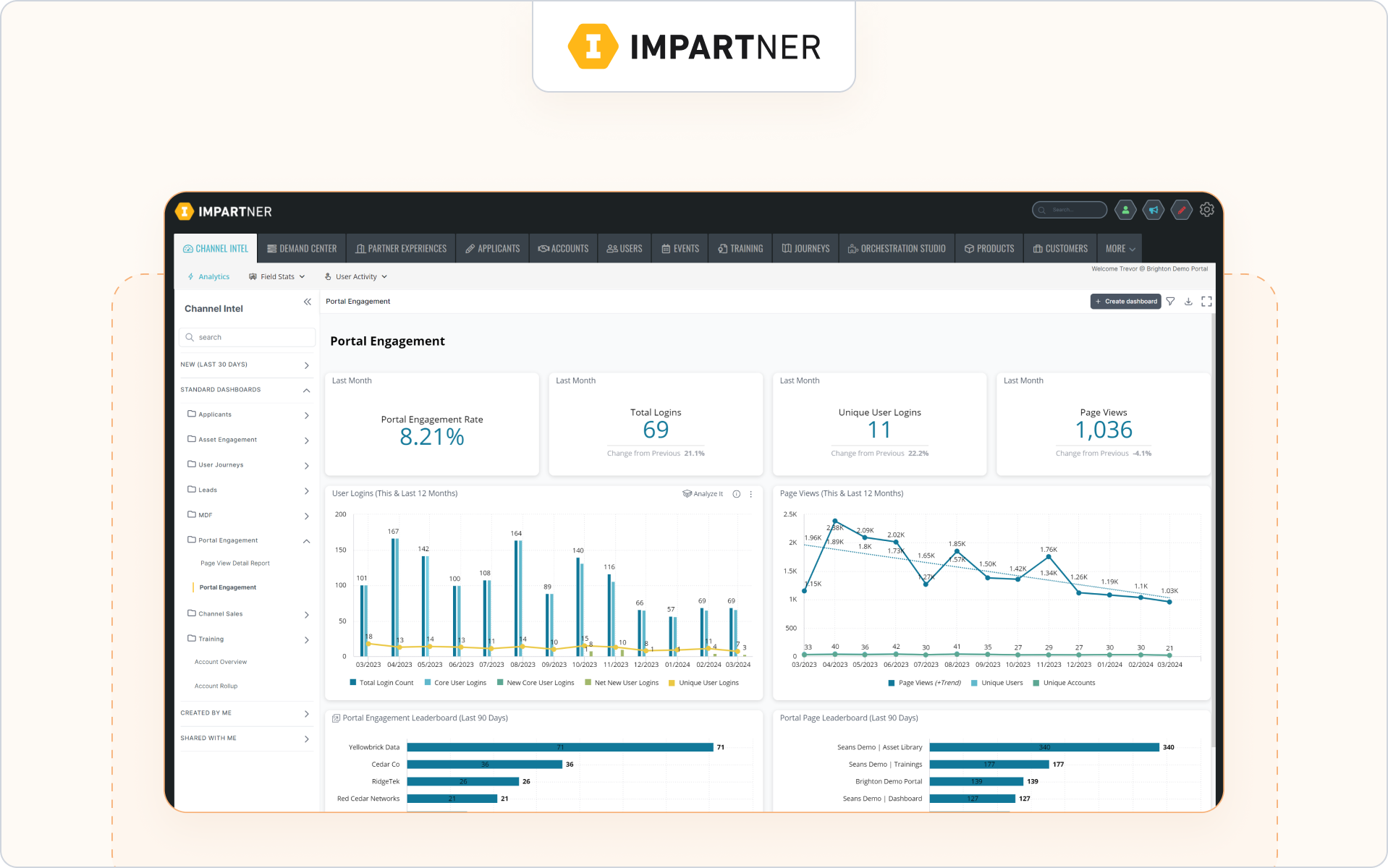
Impartner is a well-known partner relationship management software designed to support structured partner programs across large partner networks. It focuses on partner onboarding, partner portals, and managing the partner lifecycle at scale.
It’s often used by companies with established reseller programs and formal partner operations. That said, it can feel heavy if your team wants faster setup or more flexible co selling workflows.
Best for
- Mid-market to enterprise partner programs
- Teams running structured reseller partners and referral partners
- Businesses focused on long-term partner lifecycle management
When it may not be the right fit
If your team prioritizes speed, simplicity, or real-time collaboration over structured partner programs, this setup can feel heavy and slow to adapt.
If you’re comparing tools in this category, reviewing the best Impartner competitors can help you see how newer PRM platforms approach partner management.
4. ZINFI
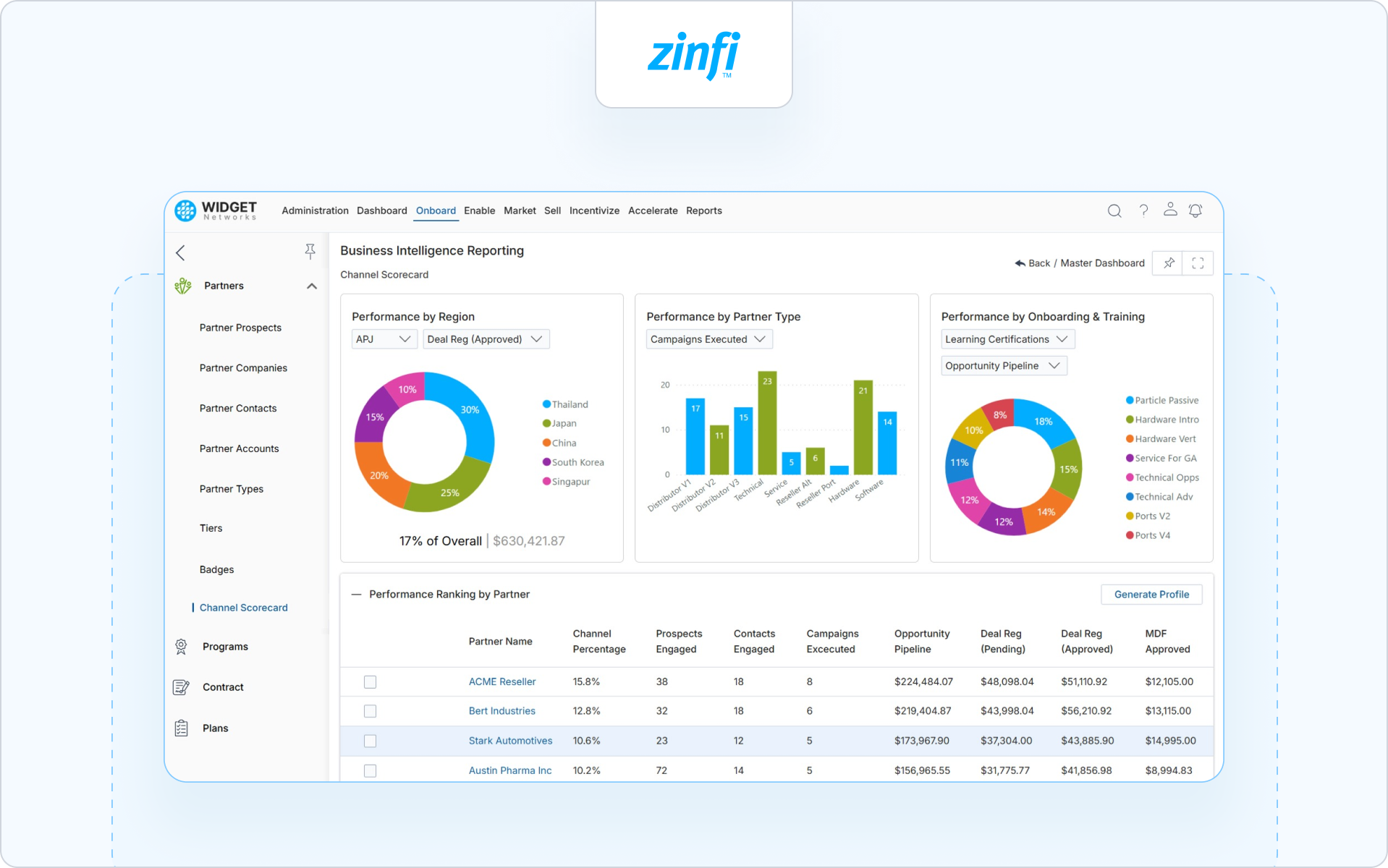
ZINFI is a partner relationship management software focused on channel partners, partner recruitment, and managing global partner ecosystems. It combines partner management, marketing activities, and sales enablement into one platform designed for indirect sales.
It’s a solid option for companies that need to manage reseller programs across regions, but the experience often centers around partner portals and structured workflows across the partner lifecycle.
Best for
- Global partner ecosystems and channel sales teams
- Businesses managing reseller programs at scale
- Teams focused on partner recruitment and partner performance
When it may not be the right fit
If your team needs flexible collaboration, faster execution, or wants to reduce reliance on partner portals, this approach may feel too rigid.
5. Magentrix
Magentrix is a partner relationship management software focused on customizable partner portals and controlled access to partner resources. It helps teams manage partner relationships, share marketing materials, and track deal registration and partner activities across the partner lifecycle.
It’s often chosen by teams that want flexibility without building a system from scratch, though most workflows still run through the partner portal.
Best for
- Teams that want customizable partner portals
- Businesses managing partner networks with structured access
- Companies sharing marketing materials and partner resources
When it may not be the right fit
If your team prioritizes real-time collaboration, faster execution, or wants to reduce reliance on a partner portal, this setup may feel limiting.
6. Mindmatrix
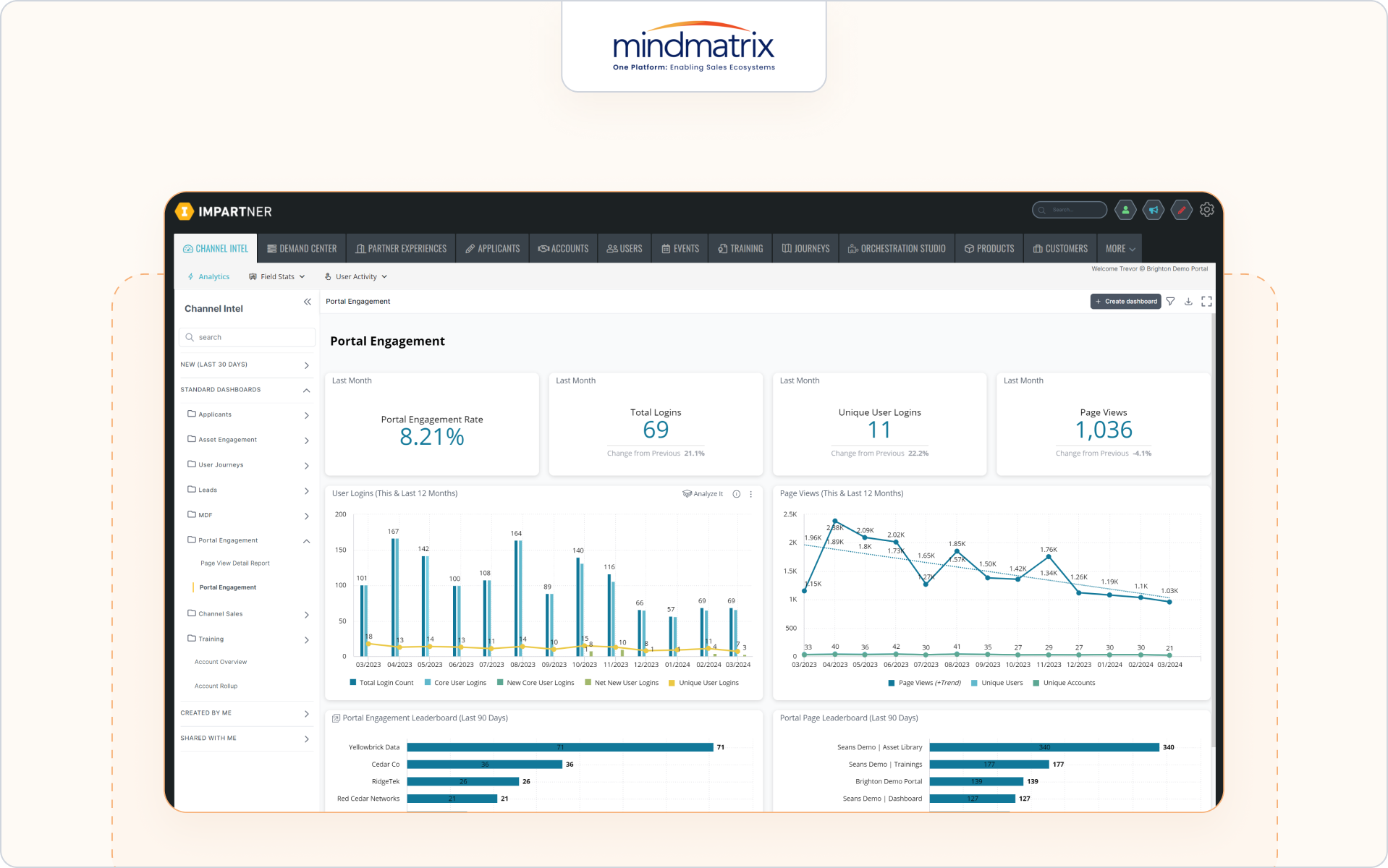
Mindmatrix is a partner relationship management software that combines partner management, marketing automation, and partner enablement into one platform. It helps teams onboard partners, manage partner activities, and run marketing activities across the partner lifecycle.
It’s often used by companies that want to support partners beyond deal registration, especially with content, campaigns, and ongoing engagement.
Best for
- Teams focused on partner onboarding and partner enablement
- Businesses running content-driven partner programs
- Companies supporting partners across the entire partner lifecycle
When it may not be the right fit
If your team wants a lightweight tool or primarily needs CRM-native collaboration, this platform may feel too complex.
7. PartnerStack

PartnerStack is partner relationship management software built for SaaS companies running affiliate, referral, and reseller partner programs. It focuses on partner recruitment, incentive programs, and scaling partner networks.
It’s widely used for SaaS growth through partnerships, especially in marketing-led and indirect sales models.
Best for
- SaaS companies running affiliate or referral partner programs
- Teams focused on partner recruitment and partner growth
- Businesses scaling partner ecosystems quickly
When it may not be the right fit
If your focus is on complex sales processes, co-selling, or managing enterprise channel partners, this platform may not provide enough depth.
8. Crossbeam

Crossbeam is a partner ecosystem platform focused on account mapping, partner data sharing, and identifying opportunities across your partner network. It helps teams uncover overlap, support co-selling, and improve partner collaboration through shared insights.
It’s often used alongside partner relationship management software rather than as a full partner management solution.
Best for
- Teams focused on co-selling and account mapping
- Businesses running ecosystem-led growth strategies
- Sales teams identifying shared opportunities with channel partners
When it may not be the right fit
If you need complete partner relationship management software to manage the entire partner lifecycle, this platform will need to be paired with other tools.
9. Kiflo PRM
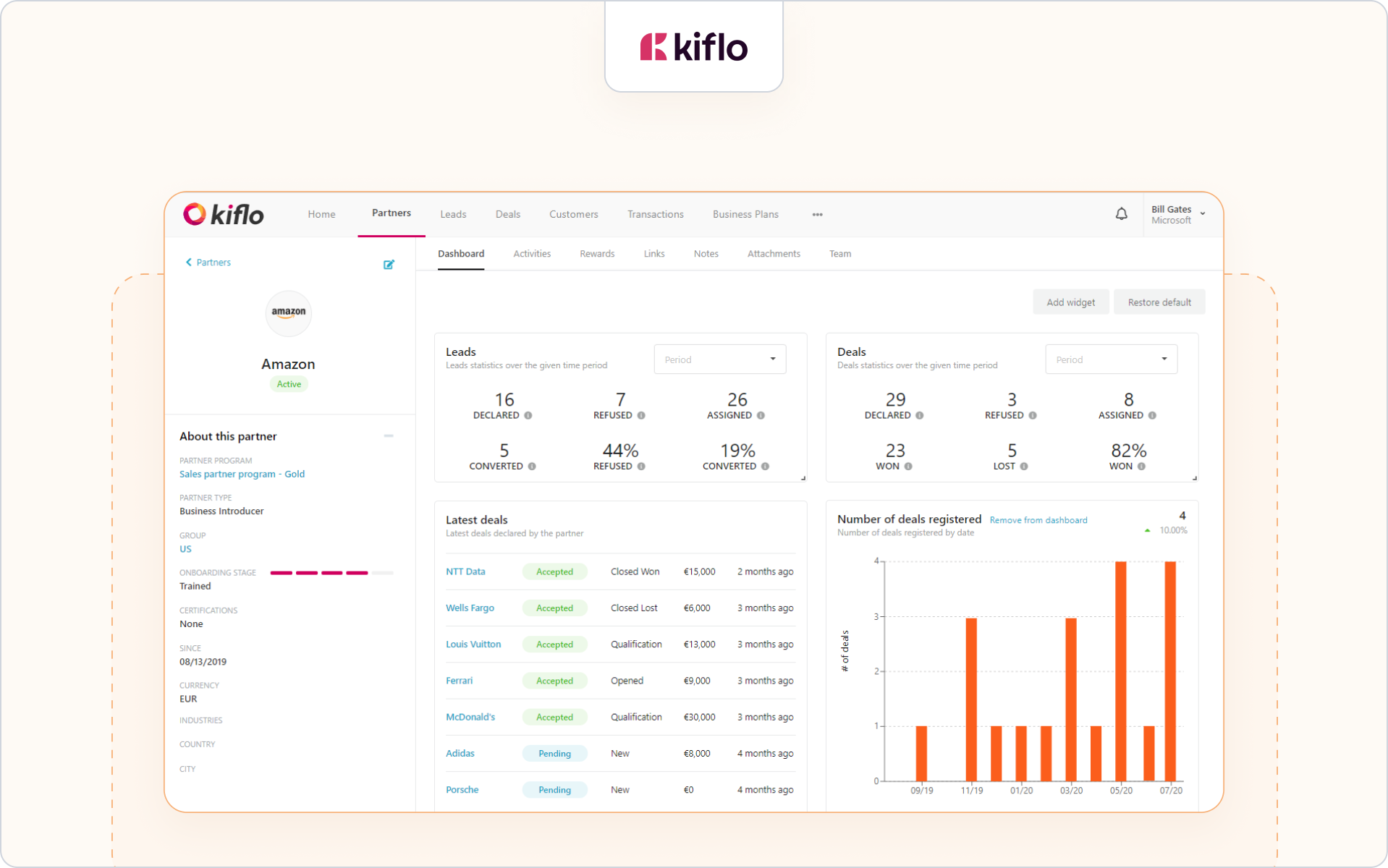
Kiflo PRM is a lightweight partner relationship management software designed for small to mid-sized SaaS companies. It focuses on simplicity, helping teams manage partner onboarding, deal registration, and partner activities without heavy setup.
It’s positioned as an accessible option for teams building or scaling partner programs.
Best for
- Small to mid-sized SaaS companies
- Teams starting or growing partner programs
- Businesses looking for simple partner management tools
10. Channeltivity
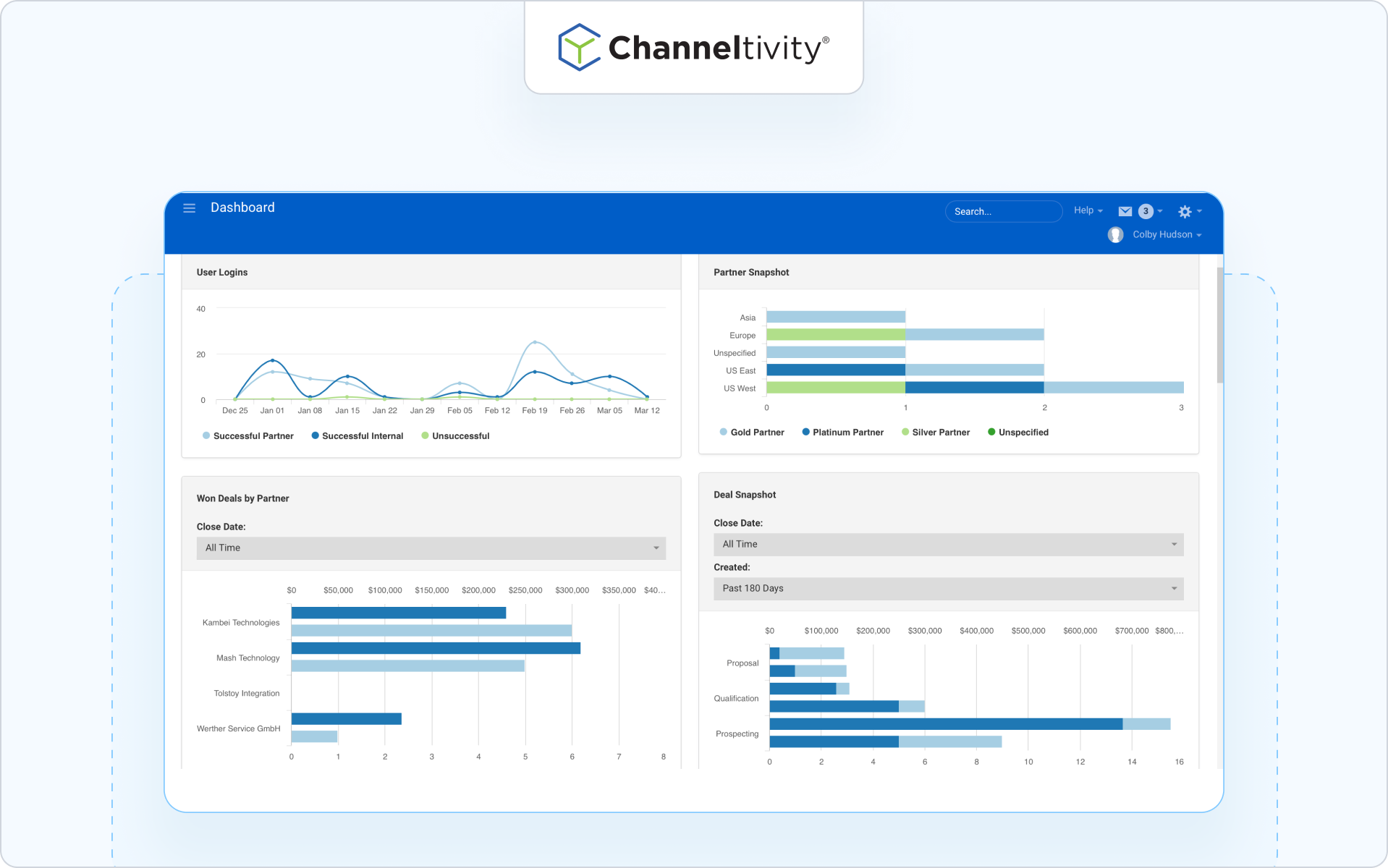
Channeltivity is a partner relationship management software focused on deal registration, partner communication, and performance tracking. It provides structured workflows through a partner portal to manage partner relationships and partner activities.
It’s often used by mid-market companies that want clear processes and visibility without enterprise-level complexity.
Best for
- Mid-market B2B companies
- Teams focused on deal registration and partner performance
- Businesses managing structured partner programs
When it may not be the right fit
If your team wants flexible collaboration or to move away from partner portal workflows, this setup may feel restrictive.
11. ChannelScaler
ChannelScaler is a partner relationship management software designed to help SaaS companies scale indirect sales and improve partner performance through better visibility and performance tracking.
It focuses on helping teams understand partner contribution to channel revenue, prioritize high-performing partners, and improve decision-making across their partner network.
Best for
- SaaS companies scaling indirect sales channels
- Teams focused on partner performance and channel revenue
- Businesses needing better visibility into partner data
When it may not be the right fit
If your team needs strong partner onboarding, enablement, or day-to-day collaboration features, this platform may not cover all needs.
PRM software: A side-by-side comparison
We know there were plenty of options. And of course they don’t all solve the same problem.
Some are built for structured partner programs. Others focus on co-selling, partner engagement, or ecosystem visibility.
The right choice depends on how your team works today and where you want to take your partner strategy next.
Let’s look at how to evaluate these tools in a way that actually supports your goals.
How to evaluate partner engagement tools: 5 key questions
Choosing partner engagement tools isn’t about features. It’s about how well the platform supports your partner program and how your sales team works with partners day to day.
A quick way to assess this is to pressure-test how the tool supports the partner lifecycle. Many teams start by reviewing a broader partner lifecycle management strategy to see where tools need to support execution.
Here are five key questions to ask:
1. Does it match how your partners actually sell?
Start with your partner model.
If you’re running structured channel partner programs alongside direct sales, you may need tighter workflows. If you’re focused on co-selling, flexibility matters more.
Many teams choose partner relationship management software that looks powerful but doesn’t match how their sales team actually works.
2. Where does collaboration actually happen?
Some tools rely on a partner portal. Others support collaboration through email, Slack, and shared workflows.
Portals can create structure, but they also add friction. If partners don’t log in regularly, deal registration slows down.
The easier it is to work together, the easier it is to keep partners engaged.
3. Can you clearly see partner performance?
You should be able to track partner performance, pipeline, and revenue without digging through reports.
Strong visibility helps you understand what’s working and where deals are stuck. It also makes it easier to manage both partner and direct sales motions.
4. Does it help you enable partners or just track them?
There’s a big difference between managing partners and enabling them.
Strong tools support partner onboarding, share the right resources, and help partners move deals forward.
If your tool only tracks activity, it’s not doing enough.
5. How quickly will it deliver value?
Some tools take months to implement. Others start working in weeks.
If setup is slow, adoption drops. The best tools reduce manual work and help your team start supporting partners quickly.
This is where the gap between traditional PRM software and newer approaches starts to show. But how can you close that gap?
Final thoughts
The best partner relationship management tools don’t just help you manage partners. They help you build active partners, improve partner satisfaction, and drive consistent partner revenue.
Some platforms prioritize structure and control. Others focus on speed, collaboration, and visibility across your partner ecosystem.
The right software solution comes down to how your team works and what your partnership strategy needs to support.
Next steps
- Review your current setup and identify where partner engagement slows down
- Look at how easily your team can register deals and manage lead management across partners
- Prioritize platforms that help you enable partners, not just manage them
If you’re exploring a more flexible, CRM-native approach to partner management, book a demo to see how Introw works in practice.
10 Best Practices for Channel Management: Proven Strategies to Grow Partner Revenue
Channel management isn’t about working harder — it’s about managing smarter. Whether you're scaling across indirect sales channels, empowering your channel partners, or optimizing your partner network, the right strategy makes all the difference.
A strong channel management strategy helps you align your business objectives with the partners that can move your product, expand your reach, and grow your bottom line. But without clarity and consistency, you’ll run into channel conflict, poor visibility, and disengaged partners — all of which stall growth.
This guide outlines 10 proven best practices to help you elevate your channel management efforts, improve partner performance, and build a more efficient, scalable revenue engine.
From setting clear goals and automating workflows to improving communication and analyzing channel performance, these strategies are designed for channel managers ready to win in today’s complex, multi-partner landscape.
What is Channel Management?
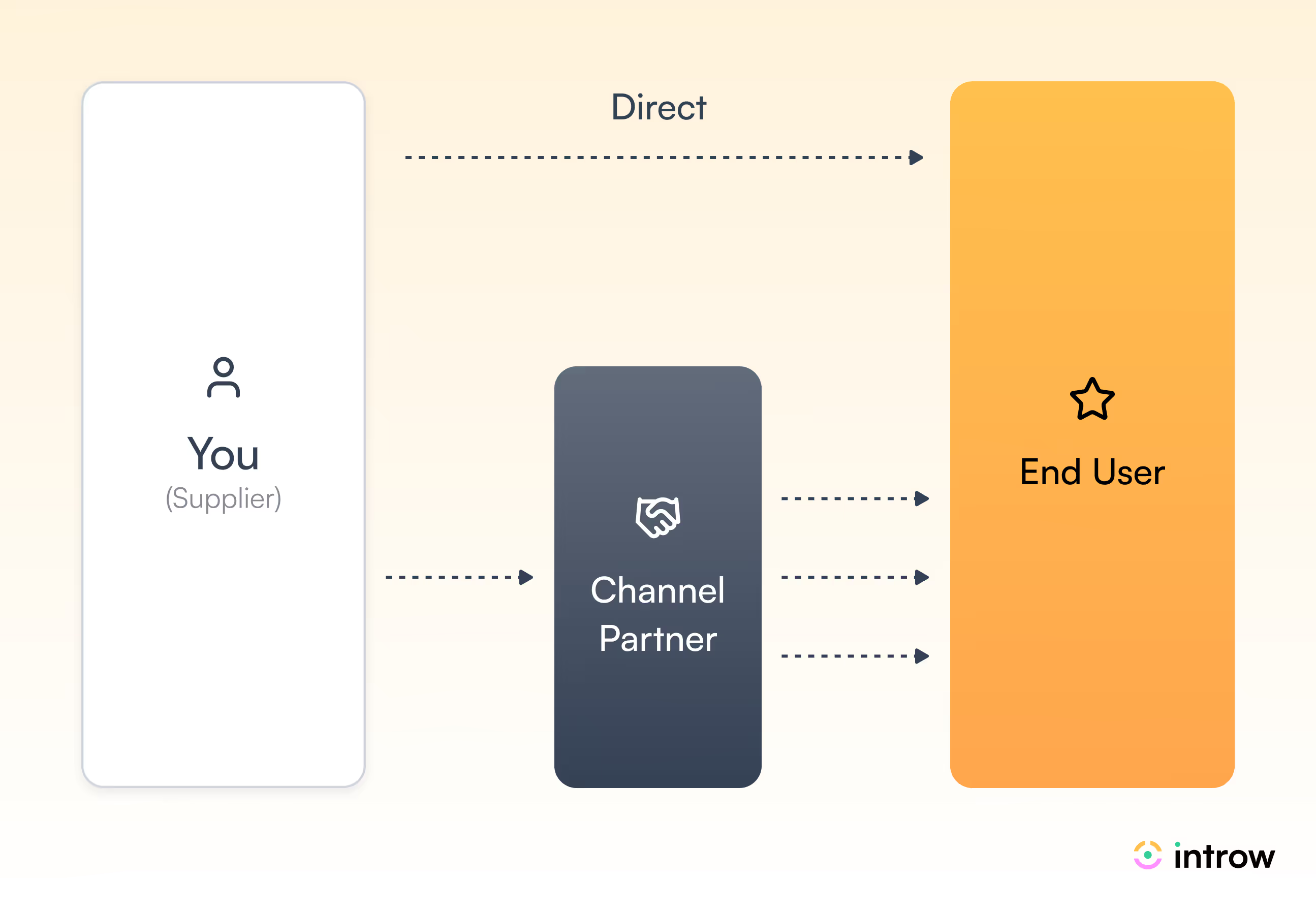
Before you can optimize your partner strategy, you need a clear understanding of what channel management really means — and why it’s essential for sustainable business growth.
Most companies rely on a mix of direct sales and indirect sales channels to reach their target customers. But as your business scales, juggling multiple sales channels without a clear system creates confusion, misalignment, and missed revenue.
That’s where effective channel management comes in — the foundation for building, maintaining, and scaling strong partner relationships.
Let’s break it down.
A channel is more than just a system — it’s your gateway to delivering products and services to the end customer.
Going through direct channels means your sales team handles every touchpoint: prospecting, selling, servicing, and supporting. It’s personal — but hard to scale.
By contrast, channel partners — like resellers, distributors, affiliates, and even e-commerce platforms — extend your reach through distribution channels you couldn’t access alone.
Think of it like this: Instead of selling toothpaste tube by tube, you sell an entire pallet to a retailer who handles the rest. In the SaaS world, channel partners introduce your product into networks and customer segments you haven’t penetrated yet.
Channel management refers to the systems and processes you use for managing relationships with the partners who sell, support, or promote your offering to the market.
A solid channel management strategy ensures these relationships are aligned with your business goals, supported with the right tools and training, and optimized for long-term performance. In short: it’s the blueprint for scalable, profitable growth through partners.
Common Challenges in Channel Management
Even the most promising channel strategy can fall short without a solid foundation. Many companies enter partnerships with the best intentions, only to find themselves facing roadblocks that stall channel performance and hurt business growth.
Whether you're just starting out or managing a mature partner network, it’s critical to understand the most common friction points and how they impact your results.
Here are four challenges that often derail effective channel management:
1. Lack of Alignment
A SaaS company partners with resellers but doesn’t align on sales targets or target customer profiles. The result? Conflicting priorities, overlapping efforts, and missed revenue opportunities.
2. Inconsistent Communication
A SaaS provider launches a major product update but only notifies a few partners. Others remain in the dark, unable to update marketing materials or support end customers, causing confusion and delays.
3. Poor Feedback Loop
New features are rolled out, but partner feedback is never collected. Valuable frontline insights are lost, resulting in lower adoption and features that don’t resonate with users.
4. Inadequate Training
Partners are onboarded quickly but without proper enablement. Without a clear understanding of the product, value props, and sales tools, they struggle to convert leads and support customers.
Each of these issues stems from one core problem: poor relationship management. And the impact is real — misalignment, inefficiencies, and channel conflict that erodes trust and slows momentum.
The good news? Every one of these challenges is fixable.
The right channel management tools can eliminate inefficiencies, increase partner performance, and ensure your channel management efforts are aligned with your most important business objectives.
Tools like Introw give you full visibility into your partner ecosystem — from onboarding to enablement to deal tracking. By reducing knowledge gaps and increasing accountability, you empower partners to succeed and scale faster.
So how do you move from reactive to strategic?
You start by optimizing every stage of the channel management process — from recruitment to retention.
In the next section, we’ll break down the 10 best practices that define a high-performance channel management strategy.
Optimize Every Stage of Channel Management with Modern PRM Tools
Mastering channel management means taking a lifecycle approach to your partner program — from recruitment and onboarding to co-selling and expansion. Each phase plays a critical role in achieving alignment, improving partner performance, and scaling revenue.
Modern channel management software like Introw enables this end-to-end orchestration. With seamless CRM integration, real-time deal tracking, and partner-friendly collaboration tools, you can support your entire partner network without friction.
Unlike outdated tools or spreadsheets, Introw aligns your channel managers, direct sales team, and indirect sales channels under one unified platform — so you can analyze channel performance, manage distribution partners, and grow revenue faster.
Let’s walk through the 10 key practices that define a high-performing channel management strategy, and how tools like Introw help you implement them across multiple sales channels:
1. Define Clear Channel Goals
If you want your channel programs to thrive, clarity is non-negotiable. Your channel partners need to understand exactly what you aim to achieve from the collaboration — and you should be clear on the value you’re delivering in return.
To execute a successful channel, start with measurable objectives tied to your business goals — such as growing a specific customer segment, launching in a new market, or improving customer satisfaction.
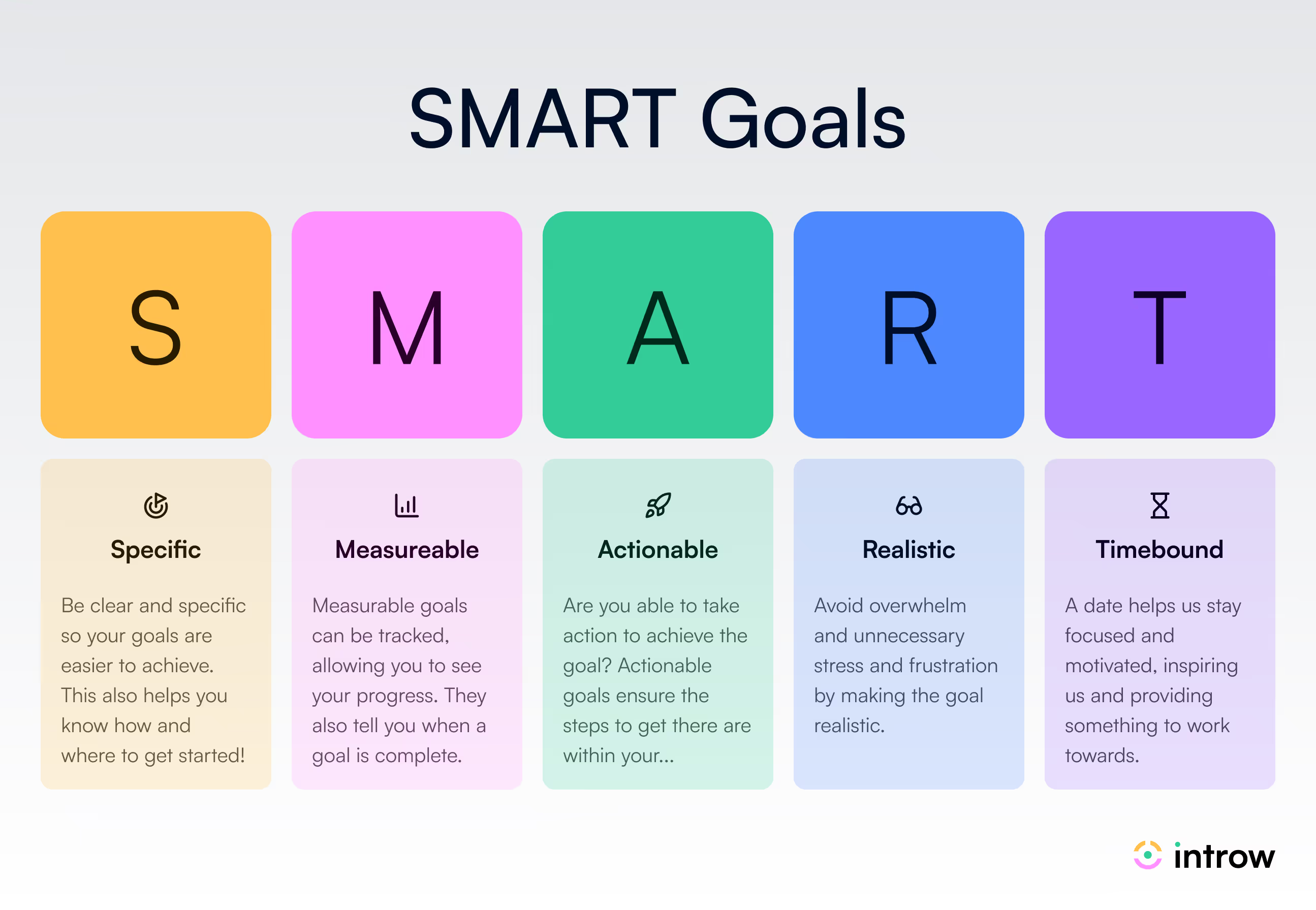
That’s where PRM platforms like Introw come in.
Introw transforms SMART goals into trackable metrics — like referral rates, sales process efficiency, and campaign impact — and visualizes them in real-time dashboards. This makes it easy for channel managers to track progress and optimize faster.
With automated KPIs and clear visibility, your channel strategy stays aligned across teams and partners.
2. Choose the Right Partners
When it comes to building a high-performance partner network, quality always beats quantity.
Too many companies take a "more is better" approach, signing dozens of channel partners without clear alignment. The result? Mixed priorities, missed revenue, and constant channel conflict.
Instead, focus your channel management efforts on a select group of high-impact partners:
- Partners who align with your business objectives and target customers
- Organizations that bring complementary reach, technology, or expertise
- Teams that can scale alongside your growth in multiple channels
Introw helps channel managers identify these high-potential fits through partner profiling, CRM overlap analysis, and visibility into historical engagement.
Pro tip: Use Introw’s native Crossbeam integration to discover partner overlaps, shared accounts, and warm intro paths — so you invest in partners that can actually move the needle.
And don’t forget to evaluate:
- Willingness to Invest: Are they engaged in joint planning, marketing strategy, or co-selling?
- Ability to Scale: Can they grow with you across new markets and distribution channels?
- Complementary Strengths: Do they unlock access to underserved customer segments or fill a technical gap?
A partner with a proven track record, strong internal enablement, and enthusiasm for collaboration is more valuable than ten who just want portal access.
3. Invest in Partner Onboarding
Initial onboarding isn’t just a checklist — it’s the foundation for long-term partner relationships and sales growth.
When channel management involves proper onboarding, partners:
- Understand your product positioning
- Get trained on your sales tools and ICP
- Learn how to represent your brand effectively in-market
Introw’s partner onboarding tools eliminate manual overhead with:
- Streamlined approval flows and digital agreements
- Auto-triggered welcome sequences and training checklists
- CRM-integrated training progress tracking
Your channel management software should reduce time-to-productivity and drive early wins.
With Introw, you can:
- Deliver custom content per partner tier or type
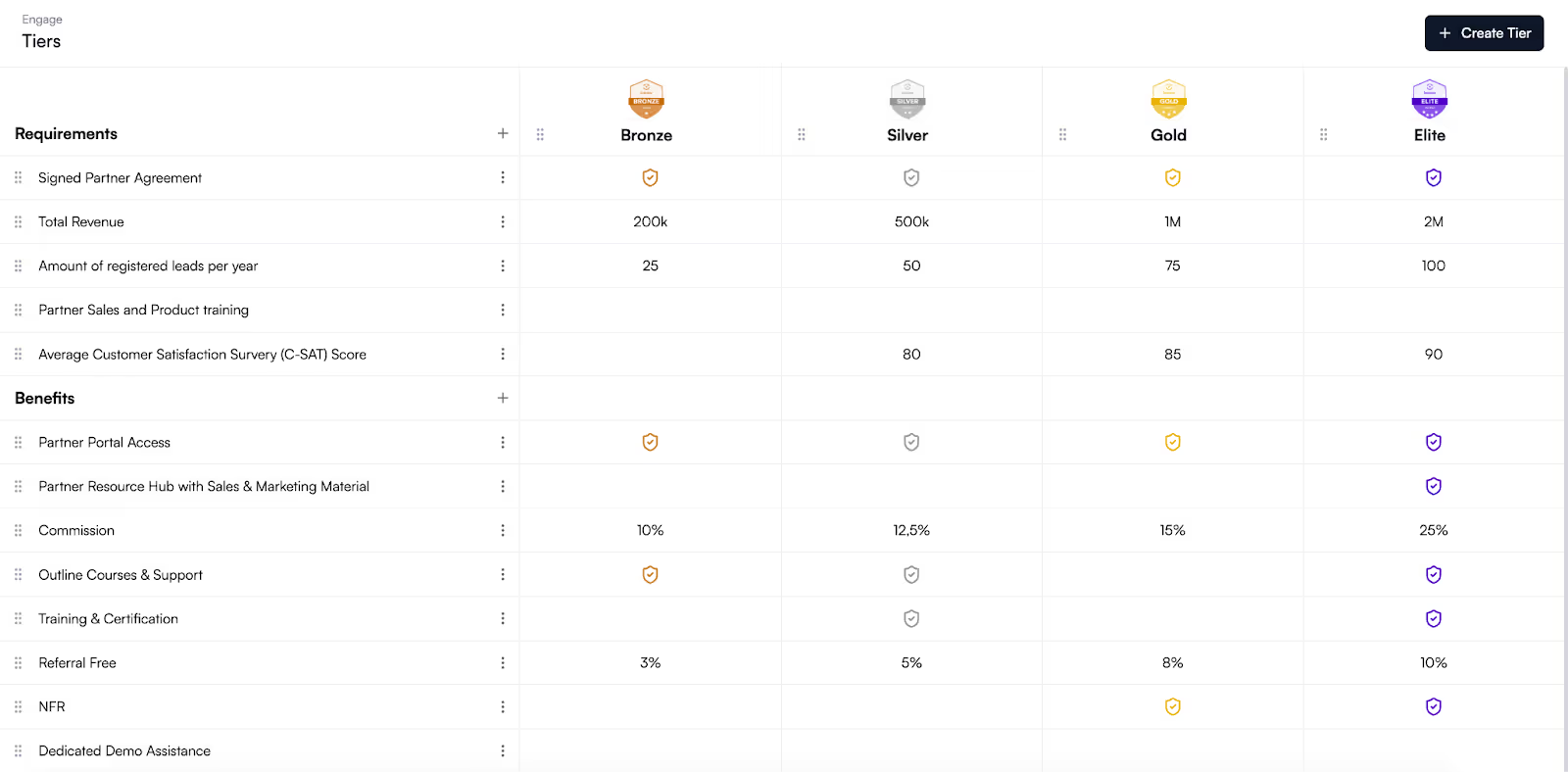
- Issue certifications for completed courses
- Track onboarding completion right from your CRM system
Because effective channel management ensures every partner gets the support they need — without overloading your internal teams.
4. Master Channel Management with a PRM Tool
Once your onboarding foundation is in place, the next step is to unify your ecosystem. That’s where a purpose-built PRM tool becomes essential to every aspect of your channel management strategy.
While traditional systems struggle to connect your sales channels, partner relationships, and real-time metrics, a modern solution like Introw brings them all together in one interface.
With Introw, you:
- Eliminate data silos across CRM systems, spreadsheets, and email threads
- Track deals, accounts, and partner activity in one place
- Enable cross-functional visibility between your direct sales channels and indirect sales teams
Introw’s CRM-native approach means you don’t have to switch tabs or train partners on new software. Instead, you get a lightweight experience that works through tools your teams already use — like Slack, Gmail, Salesforce, and HubSpot.
This integration enables:
- Real-time alerts when a deal is touched
- Shared dashboards to monitor channel performance
- Actionable insights for analyzing channel performance and resolving gaps
By giving both internal teams and channel partners access to centralized, real-time data, you reduce friction, improve accountability, and enable a more consistent customer experience.
Introw isn’t just the right tool — it’s the right channel management software for modern B2B teams who want faster execution, smarter collaboration, and measurable sales growth.
Let’s now explore how automation helps scale those results even further — while eliminating one of the biggest pain points: channel conflict.
5. Automate Manual Processes to Prevent Channel Conflict
Even the most aligned partner ecosystems face operational friction. Manual processes — like deal registration, email follow-ups, or lead assignment — often lead to miscommunication, duplication, and channel conflict.
Without automation, channel managers waste hours chasing updates or resolving disputes between distribution partners. And worse — deals fall through the cracks.
Introw automates the complexity so your team can stay focused on driving results. Here’s how:
- Deal Registration Automation: Prevent duplicate entries by flagging overlaps in real time across your CRM systems.
- Auto-Synced Workflows: Trigger follow-ups, assign tasks, or escalate conflicts automatically — no manual coordination required.
- Real-Time Notifications: Notify sales reps or channel partners immediately when a deal progresses or a task is completed.
By streamlining these core workflows, you reduce errors, improve sales performance, and maintain trust across your partner network.
6. Enhance Partner Communication
Strong partner relationships are built on clear, consistent communication. But too often, partner comms are scattered across emails, Slack messages, and outdated dashboards.
A unified system — like Introw — brings it all together.
With Introw, you can:
- Sync messaging across your CRM system, Slack, and email
- Share updates on campaigns, product changes, or marketing materials in real time
- Create account-specific channels for seamless collaboration between internal and external teams
This centralized visibility keeps your sales channels aligned and your channel strategy moving forward.
Plus, with integrated customer data and deal timelines, your channel partners never miss a beat — and your end customers get a smoother, more informed buying experience.
7. Create Regular Training Programs
Great partners aren’t found — they’re developed. Ongoing enablement is a critical pillar of effective channel management.
Whether you’re onboarding new MSPs, resellers, or VARs, your training should cover:
- Product updates and positioning
- Competitive landscape and market trends
- Use cases by customer segment and industry
- Sales tactics, pricing strategies, and objection handling
With Introw:
- Launch and manage certification programs by partner tier
- Track completion through embedded quizzes and progress dashboards
- Deliver content in multiple formats — PDFs, videos, Google Docs — all within one branded partner portal
This keeps your channel programs scalable and your partner performance consistent across various sales channels.
8. Incentivize and Reward High Performance
Nothing accelerates channel sales like the right incentives. And nothing derails it faster than unclear or delayed payouts.
High-performing channel partners want transparency and trust — and channel managers need a scalable system to track it all.
With Introw:
- Set up tiered commission structures or SPIFs
- Track revenue attribution by partner, territory, or campaign
- Automate payout reporting and eligibility reminders
You can even integrate partner performance data with your CRM system or finance tool to eliminate manual calculations and ensure every reward is backed by real-time numbers.
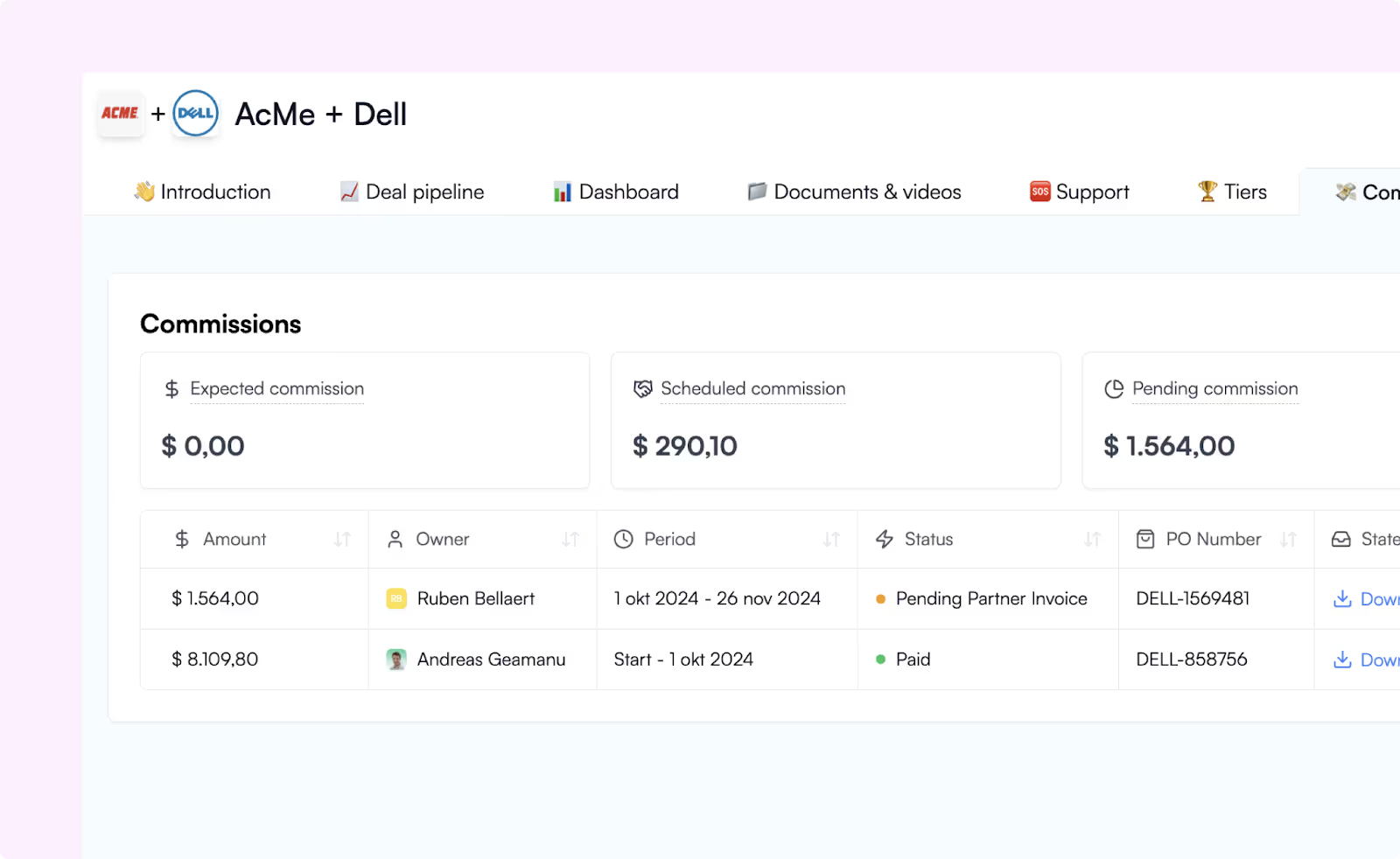
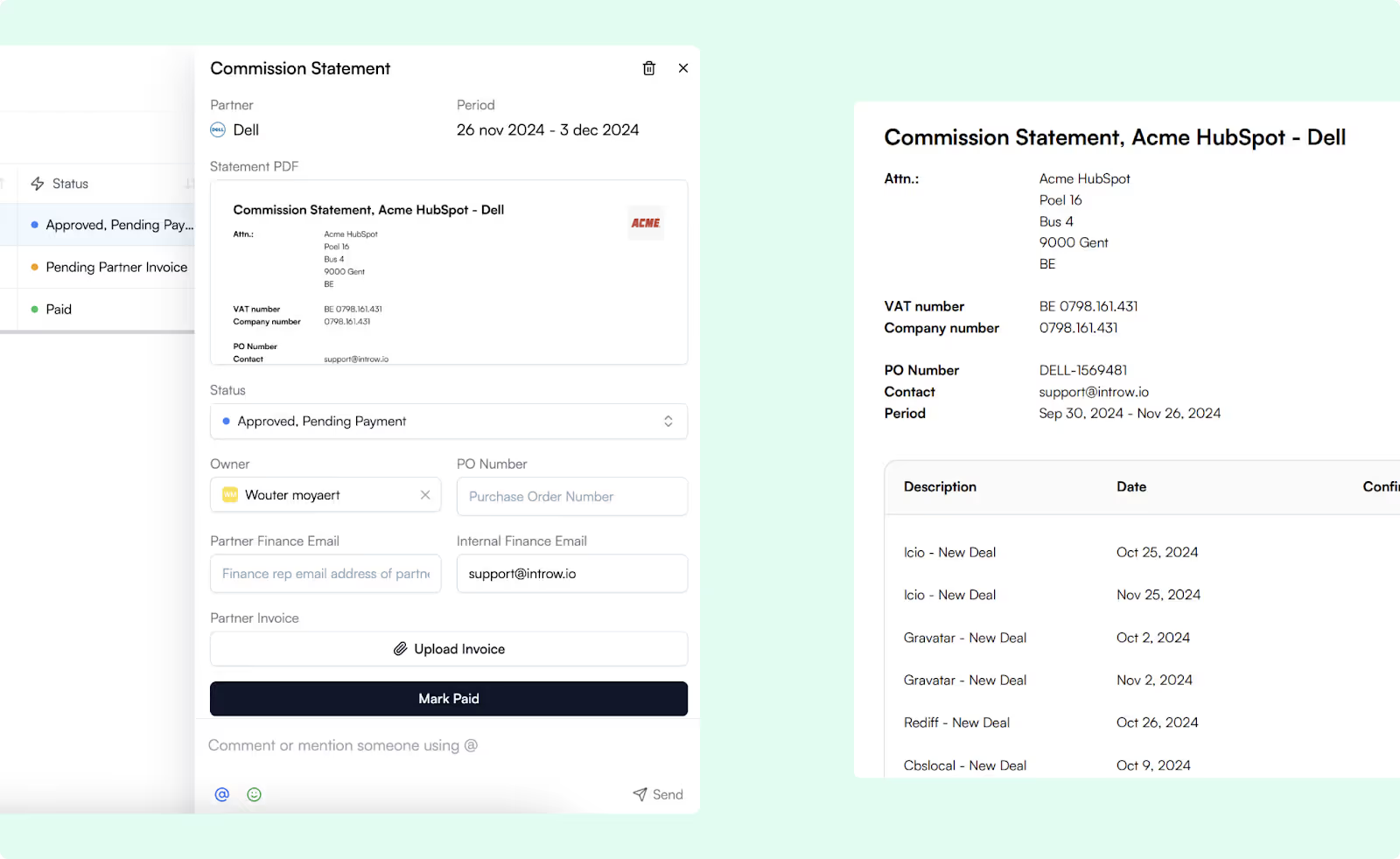
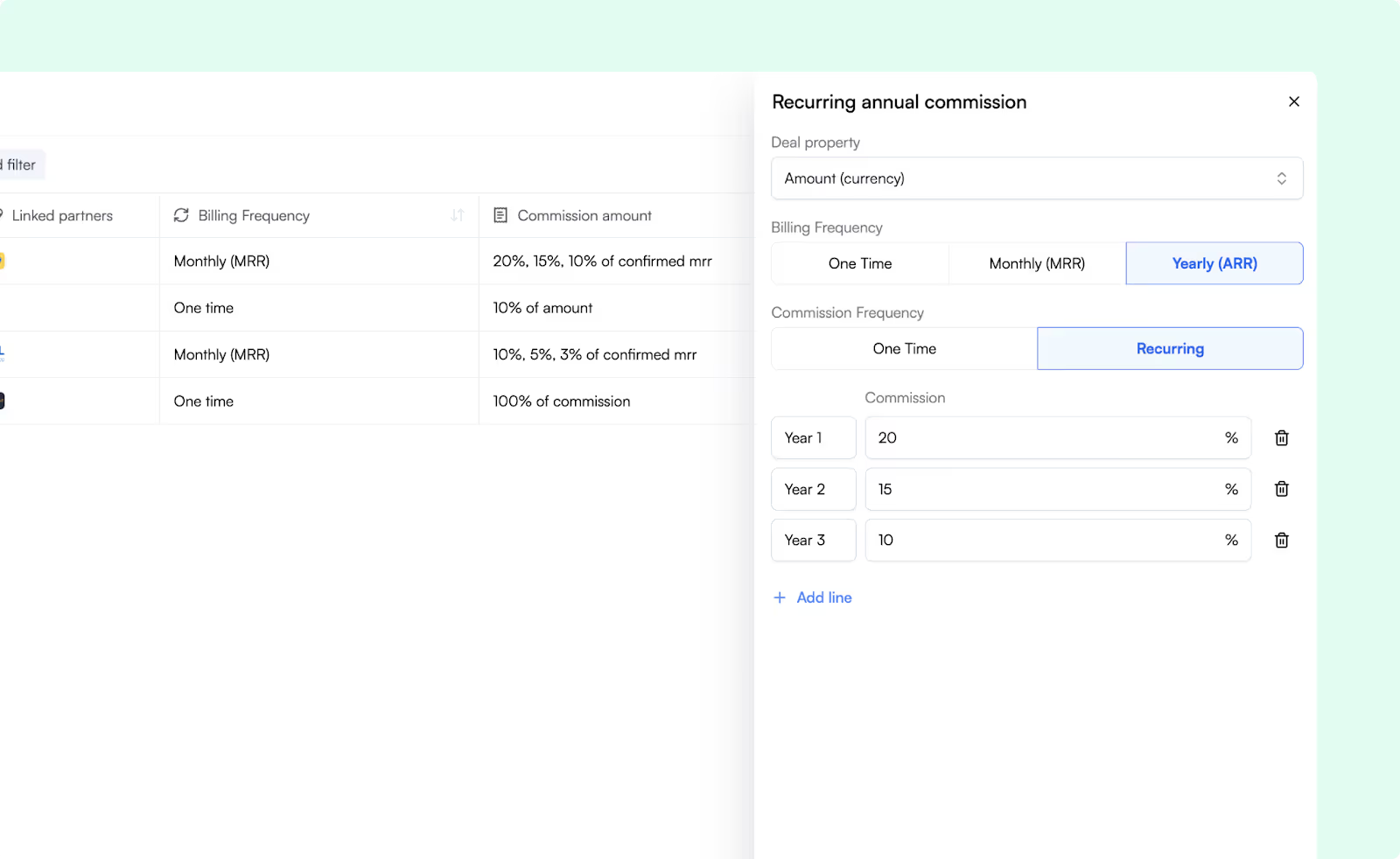
This keeps motivation high, reduces disputes, and turns your partner program into a powerful sales engine.
9. Monitor Performance and Deliver Feedback
To continuously improve your channel management strategy, you need visibility. Not just into revenue — but into deal velocity, campaign engagement, and partner health.
Introw’s reporting engine makes it easy to:
- Set key performance indicators (KPIs) by partner type
- Analyze contribution to pipeline and close rate
- Identify underperforming regions or partners at risk
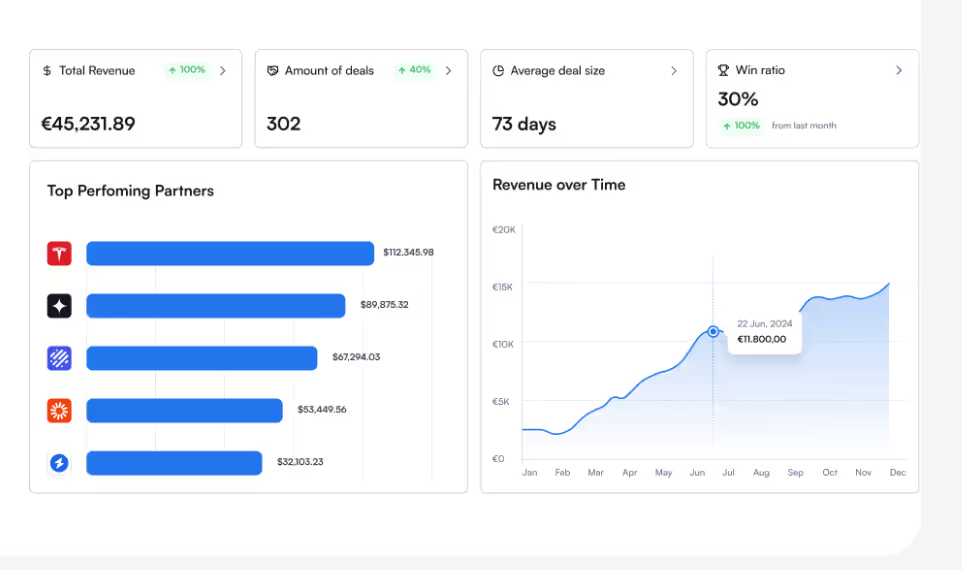
More importantly, it enables ongoing support — through automated feedback loops, QBRs, and personalized coaching plans.
Because channel management involves more than just metrics — it’s about managing relationships that fuel long-term business growth.
10. Amplify Success Through Channel Marketing and Co-Marketing
Finally, even the best partnerships can stall without marketing support. Your partners need assets, guidance, and budget to drive demand — and you need visibility into what’s working.
A modern channel campaign management approach includes:
- Co-branded email and ad templates
- Social content tailored to customer preferences
- Campaign tracking tied to lead generation or revenue
With Introw:
- Share approved messaging and assets in your partner portal
- Track campaign adoption and outcomes by region or partner
- Collect insights that help you optimize your marketing strategy across the ecosystem
Co-marketing isn’t a nice-to-have — it’s a growth multiplier. With Introw, you can turn co-marketing from ad hoc to always-on.
Conclusion
Without effective channel management, even the best partner programs stall. If your strategy isn’t aligned, automated, and data-driven — you’re leaving revenue on the table.
A modern channel management strategy requires clear goals, the right partners, a frictionless onboarding experience, and consistent training and communication. But most importantly, it needs a system that scales.
That’s where Introw comes in.
With Introw, channel managers can:
- Eliminate manual workflows and reduce channel conflict
- Improve visibility across multiple sales channels and partner types
- Automate onboarding, training, deal tracking, and performance reporting
- Support better partner relationships with real-time CRM insights
- Track and analyze channel performance and drive revenue growth
Whether you’re running a mature channel sales strategy or just starting to scale with indirect sales channels, Introw gives you the right channel management software to move faster, stay aligned, and grow with confidence.
Ready to turn your partner ecosystem into a high-performing revenue machine?
B2B SaaS Partnerships Guide: How to Scale and Win with the Right Partner Program
B2B SaaS, partnerships aren’t just a strategy — they’re a growth engine. Whether you’re launching a new go-to-market initiative, expanding into new customer segments, or co-developing innovative solutions, forming strategic SaaS partnerships with the right partner is essential.
But let’s be clear: successful partnerships don’t just happen. They require structure, consistency, and purpose-built tools. That’s where Partner Relationship Management (PRM) software like Introw becomes a game-changer.
In this guide, we’ll walk through:
- Why B2B SaaS partnerships are critical for modern SaaS companies
- The most common partner types — and how to work with them
- How to build and scale a partner program with the right infrastructure
Let’s dive in.
Why B2B SaaS Partnerships Matter
SaaS companies need more than just a strong product — they need a powerful partner ecosystem. Strategic partnerships enable two or more companies to align around a shared go-to-market strategy, extending reach and reducing customer acquisition costs.
Well-executed SaaS partner programs can:
- Help tap into new markets
- Create new revenue streams through revenue sharing
- Accelerate product development partnerships
- Improve customer satisfaction and customer retention
Whether you're managing channel partnerships, integration partnerships, or joint marketing efforts, strategic SaaS partnerships are a cornerstone of long-term, scalable growth.
What Are the Types of B2B Partnerships?
Before building or optimizing your partner program, it's critical to understand the types of B2B SaaS partnerships available. While affiliate marketing gets plenty of attention, the most valuable SaaS partnerships often involve deeper integration, stronger alignment, and shared success metrics.
Let’s explore the landscape:
These partner types represent the most common paths SaaS companies take when scaling through partnerships. While each type comes with its own strengths and challenges, they all share one thing in common: they work best when supported by clear processes, aligned goals, and modern tooling.
Now that you’ve seen what types of B2B SaaS partnerships exist, how do you know which ones to pursue?
Choosing the Right Partner Program
Every SaaS business is unique — and so is its path to growth. That’s why choosing the right partner program isn’t about copying what others are doing — it’s about aligning your strategy with your goals, resources, and customers.
The ideal partner strategy will vary depending on your product maturity, market penetration, and internal capacity to support partners. For example:
- If your goal is demand generation, you may benefit most from referral partners, affiliate relationships, or integration partnerships that can drive top-of-funnel awareness.
- If you’re focused on market expansion, resellers, MSPs, or distributors with strong local presence can help you enter new geographies or verticals.
- If you need deeper product alignment, ISVs or system integrators may be the right fit for long-term co-selling and co-building.
To guide your decision, start by answering these questions:
- What new customer segments do we want to reach?
- Which potential partners already serve or influence those segments?
- What kind of co-marketing, sales support, or onboarding experience can we realistically provide?
- Are there opportunities for joint marketing efforts, or even a product development partnership?
You’re looking for alignment on not just reach, but capability and collaboration potential.
This is where a Partner Relationship Management (PRM) platform like Introw becomes essential. It surfaces real-time insights into:
- Which partners are submitting deals
- How fast those deals move through the sales pipeline
- Who’s engaging (and who’s not)
With those insights, your partner strategy becomes proactive, not reactive — based on data, not guesswork.
Let’s now dig into how to evaluate your current ecosystem and decide where to focus next.
How to Decide on Expanding Your B2B Partnerships
Expanding your partner program isn’t about volume — it’s about strategic alignment. Start by analyzing your current ecosystem: who’s performing, who’s not, and where the untapped opportunities lie.
- Referral partnerships can drive top-funnel growth with minimal overhead.
- Joint venture SaaS partnerships with ISVs or tech partners can open up new product capabilities.
- Channel partnerships and distributors can accelerate go-to-market in new geos or verticals.
With the PRM market projected to grow from $1.3B in 2023 to $4.6B by 2033, now’s the time to invest in systems that scale. Manual tracking simply won’t cut it — especially when the right partner could be your next major revenue stream.
Essential Functions of Partner Relationship Management Software
To succeed at scale, you need structure. PRM software is built to manage the entire partner lifecycle — from onboarding to revenue attribution.
Why SaaS Companies Need PRM
Choosing the right PRM helps:
- Scale channel partners with consistent experiences
- Eliminate chaos from your sales process
- Automate lead registration and partner onboarding
- Enable seamless co-selling and co-marketing
- Optimize for revenue attribution and partner performance
PRM = Structure + Speed + Scale
Spreadsheets and email threads might work for 5 partners — not 50. Introw gives you the automation, real-time insights, and CRM-native experience needed to grow your program without adding headcount.
So how do you ensure that growth doesn’t come at the cost of quality? It starts with a repeatable, scalable process for managing partner relationships at every stage of the journey.
6 Stages of a Partner Relationship Journey
A successful SaaS partner program follows a repeatable, structured journey. Here's how you scale from one partner to hundreds, without losing quality, engagement, or results:
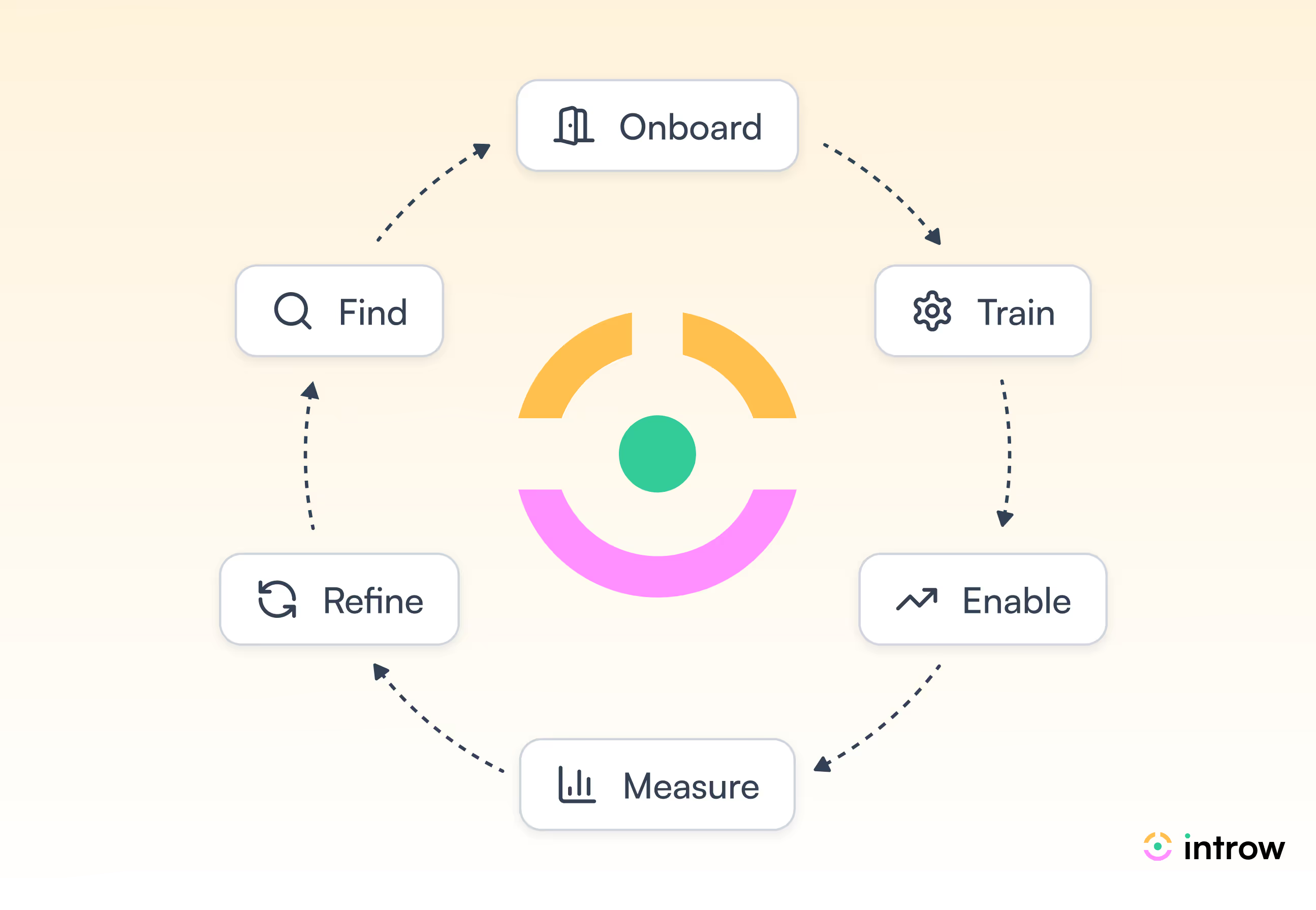
1. Find the Right Partners
Identifying the right partner is foundational. Evaluate potential partners based on their customer base, market alignment, technical compatibility, and cultural fit. Use tools like account mapping to uncover overlap between your customers and theirs — and prioritize partners with proven influence in your target segments.
2. Onboard with Ease
Once a partner is selected, the onboarding process should feel smooth, professional, and repeatable. Share training modules, certifications, documentation, and sales playbooks. With Introw, onboarding is automated with workflows, due dates, and reminders — so partners hit the ground running without bottlenecks.
3. Enable for Growth
Partner enablement is more than a checklist — it’s an ongoing relationship. Provide co-branded marketing materials, demo scripts, objection handling guides, and access to shared assets. Support them with regular updates and resource drops that align with product launches and campaigns.
4. Co-Sell with Precision
In the execution stage, seamless collaboration is key. Enable real-time deal registration, pipeline visibility, and clear ownership. Introw connects partners directly to your CRM workflows — allowing for faster response times, cleaner data, and collaborative pipeline management without the need for additional tools.
5. Measure and Motivate
Track KPIs like sourced revenue, win rates, sales cycle length, and content engagement. Use this data to recognize high performers and identify who needs extra support. Publicly celebrate success — and gamify performance through tiers, contests, and quarterly business reviews.
6. Refine and Scale
As your partner program matures, revisit your strategy. Which partners deliver the most value? Where are the drop-offs in the journey? What tools are underutilized? Use this insight to refine onboarding, update your enablement materials, and launch advanced tiers, integrations, or co-marketing campaigns.
Most importantly, keep feedback loops open — your best partners will show you what success looks like if you ask, listen, and iterate.
What should you look out for when building B2B Partnerships?
As your partner program grows, it becomes more complex — and more impactful. To keep things running smoothly, your PRM must do more than check boxes. It should actively empower your team to scale without sacrificing clarity or control.
Here are the most important capabilities to look for when scaling a SaaS partner program:
Partner Tiering & Certification
- Segment partners by performance, partner type (e.g., reseller, referral, MSP), or vertical.
- Automate training and certification workflows.
- Incentivize growth with exclusive rewards and visibility for top-tier partners.
2. Commission Automation
- Tailor commission rules by partner type or deal stage.
- Auto-calculate and distribute rewards to reduce admin overhead.
- Ensure transparency and accuracy to build partner trust.
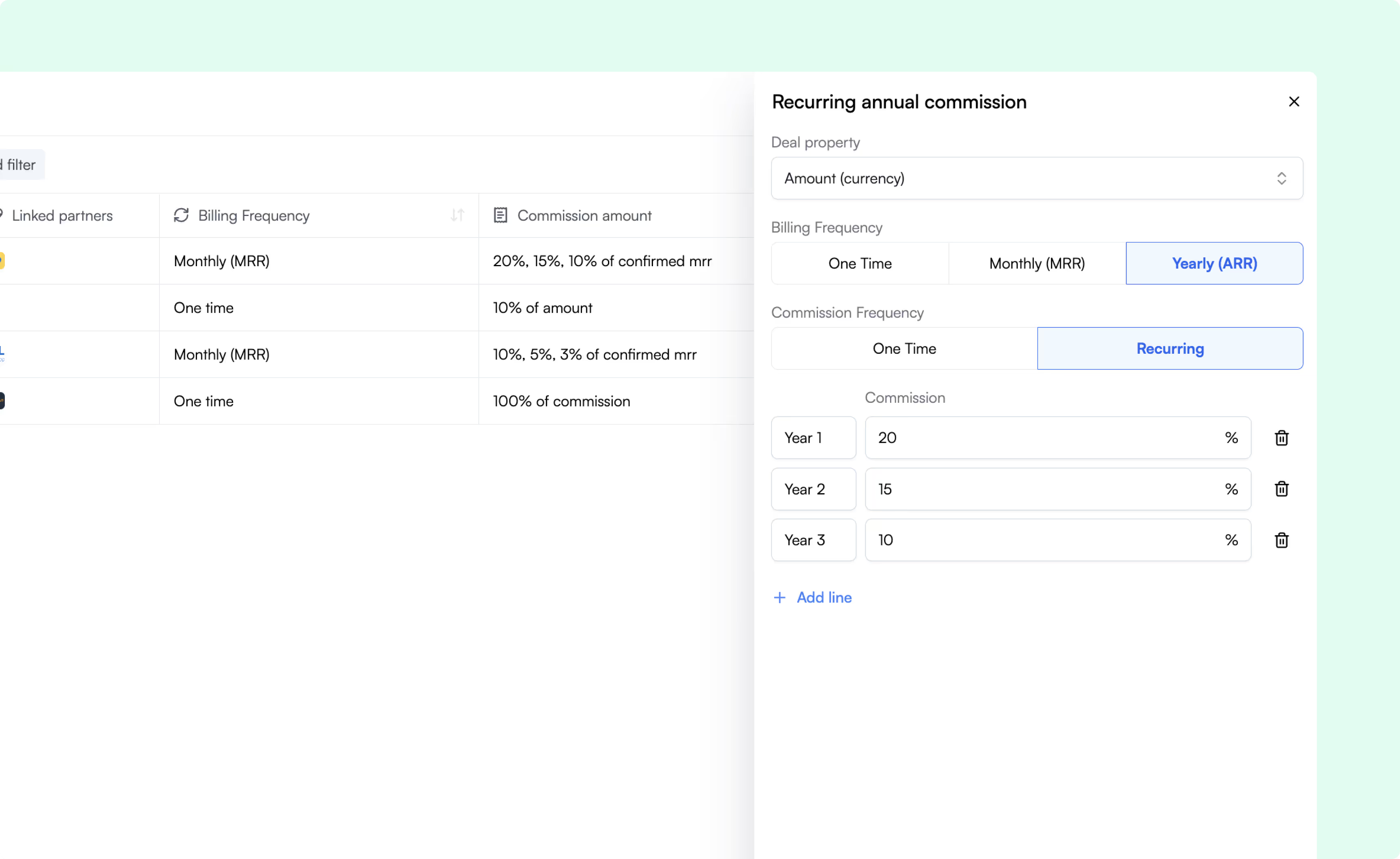
3. Partner Portal
- Offer a white-labeled, easy-to-navigate portal with sales enablement, product content, and real-time updates.
- Give partners a self-service hub for everything from training to reporting.
4. Lead & Deal Registration
- Prevent channel conflict with transparent, time-stamped registration.
- Support off-portal registration to boost partner participation by up to 30%.
- Auto-map to the correct Salesforce or HubSpot fields.
5. Account Mapping & Co-Sell Planning
- Identify overlap with tech partners, resellers, or integration partners.
- Use Introw’s built-in mapping to discover shared customers and coordinate co-selling.
6. CRM-Embedded Insights
- All partner data stays native to Salesforce or HubSpot.
- Enable RevOps teams to monitor performance, improve data hygiene, and support accurate forecasting.
These features help RevOps, Partner Managers, and revenue leaders align around shared KPIs — without adding complexity or extra tools.
Why Introw Works for Modern SaaS Partner Teams
SaaS companies operating in competitive markets — especially in the US and UK — are turning to PRM tools that integrate directly into their CRM, reduce manual work, and support partner collaboration at scale.
Introw supports:
- Partner & Channel Managers who want better visibility and fewer bottlenecks
- RevOps teams who care about data cleanliness, automation, and attribution
- CROs who need forecasting clarity and aligned revenue motions
With support for Salesforce and HubSpot, and no-login-required experiences for partners, Introw is built for fast-growing SaaS teams with real partnership goals.
Conclusion: From Strategy to Execution
Strategic partnerships are no longer a “nice to have” — they are a growth mandate for any B2B SaaS company looking to meet market demands, accelerate revenue streams, and serve new customer segments. But executing on that strategy requires more than good intent — it demands systems that scale, clear partner relationships, and the ability to act on data.
Whether you’re managing channel partners, building integration partnerships with tech partners, or exploring product development SaaS partnerships, your ability to structure and scale the program determines success. That's where modern partner infrastructure plays a transformative role.
PRM software like Introw empowers SaaS teams to:
- Build high-performing, data-driven partner ecosystems
- Align sales teams, marketing efforts, and RevOps around a shared pipeline
- Reduce development costs by turning co-selling and co-marketing into repeatable motions
- Increase deal velocity and improve customer satisfaction by enabling the right partner experience
The result? Successful partnerships that feel effortless — for both you and your partners.
Ready to unlock the next phase of your SaaS partnership strategy? 👉 Book a demo with Introw and build the partner ecosystem that drives your next stage of growth.

