

.svg)


.svg)
.svg)







PRM Resources
Templates, checklists, and guides to help partner teams streamline onboarding, deal reg, and co-selling — all synced with your CRM.
Latest articles
Partner Engagement Guide 2026: Strategies & Best Practices To Use Today
Effective partner engagement is the backbone of every successful SaaS partner program.
In 2026, winning teams are moving far beyond checklists.
Instead, they're harnessing the power of automation, smart communication, and data-driven strategies to boost partner activity, pipeline, and loyalty.
In this guide, you'll discover practical frameworks, best practices, and modern tools to transform your partner engagement into collaborative relationships and a real revenue driver.
Why Partner Engagement Still Matters in 2026
Let’s be honest: in SaaS these days, just signing a new partner isn’t enough for mutual success. The competition’s intense, partners have more choices, and with everyone working remotely or in hybrid teams, it’s all too easy for those relationships to fizzle out.
That’s why real partner engagement matters now more than ever in building a strong partner community . If you’re not keeping partners in the loop, helping them stay active, and making sure you’re all pulling in the same direction, it doesn’t take long for deals to go missing or for enthusiasm to drop off.
The best SaaS companies get this. They don’t just tick the box on onboarding and move on. Instead, they make it simple for partners to stay connected - automating key updates, sharing useful content, and actually listening to feedback. And they track what really counts: things like registered deals, joint selling, and genuine collaboration - not just who logged in last week.
The upside? You get better teamwork, a stronger pipeline, and partnerships that actually last. At the end of the day, partner engagement isn’t just some metric to report on—it’s what sets you apart.
What Is Partner Engagement?
Before diving into how to maximize partner engagement, let's establish a working definition for B2B SaaS.
In B2B SaaS, partner engagement refers to the ongoing, two-way interaction between a company and its partners that drives real business outcomes like pipeline growth and revenue.
Unlike enablement (which focuses on training) or activity (which tracks basic actions), engagement is about meaningful participation.
Engaged partners don't just watch webinars — they join calls, submit qualified deals, and actively support marketing campaigns.
Simply put, engaged partners are those who consistently show up, contribute, and help move the business forward.
7 Proven Strategies for Maximizing Partner Engagement in 2026
Looking to boost partner performance and drive more value from your ecosystem in 2026?
These seven proven strategies will help you cut through the noise, deepen relationships, and keep your partners truly engaged.
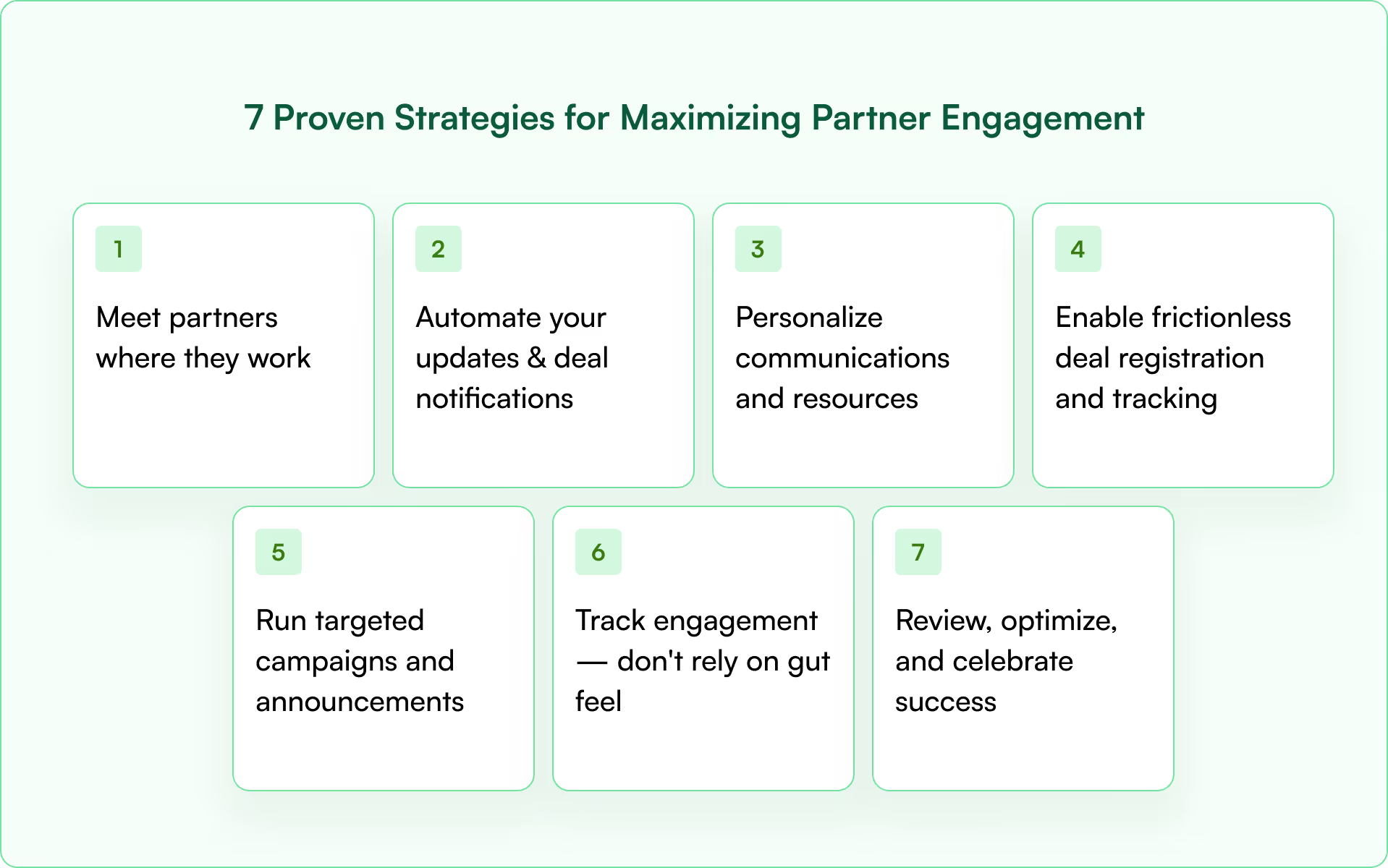
1. Meet Partners Where They Work
Meeting partners where they work means engaging them through the tools and platforms they use daily — whether that's Slack, email, or CRM systems.
This approach reduces friction, boosts consistency, and makes interactions seamless, increasing the chances that partners will respond and participate — your desired outcome.
Think about it.
Would you be more likely to engage with a company if:
1. You needed to find, log into, and navigate an unfamiliar portal
2. They simply showed up on an app you were already using.
When companies integrate partner communications and resources into familiar environments, partners stay informed without disrupting their workflow.
What's more, real-time collaboration and faster decision-making become a reality.
At Introw, we understand that meeting partners where they work fosters stronger connections, boosts engagement, and drives better results.
That's why our sophisticated partner relationship management (PRM) platform, Introw, enables off-portal collaboration.
Indeed, by integrating with tools like Slack and email, Introw automates deal updates, announcements, and notifications, ensuring partners stay informed and engaged in real-time.
This approach reduces friction, enhances responsiveness, and maintains alignment between teams and partners, all while keeping your CRM as the single source of truth.
2. Automate Your Updates & Deal Notifications
Automating updates and deal notifications keeps partners up to speed without the need for manual follow-ups.
By automatically sharing deal status changes, wins, losses, and campaign news, you eliminate delays and reduce the risk of miscommunication.
It's an effective way to maintain productive relationships.
For example, Introw sends real-time notifications to partners at every stage of the sales cycle, so they always know where deals stand without you having to chase.
As well as saving time on your end, this boosts partner confidence and responsiveness, helping to keep the sales pipeline moving smoothly and ensuring everyone stays aligned on priorities.
3. Personalize Communications and Resources
Personalization is crucial when it comes to keeping partners engaged and motivated.
Start by segmenting your partners based on:
- Type
- Tier
- Region
This partner engagement model empowers you to deliver targeted content, offers, and training that will resonate much more than if you applied the same initiatives to every partner.
Indeed, while one-size-fits-all approaches often fall short, tailored messaging demonstrates that you understand their business and challenges.
The results?
Increased partner satisfaction, a rise in meaningful interactions, and more active participation.
4. Enable Frictionless Deal Registration and Tracking
Traditionally, deal registration and tracking slowed down partner engagement due to time-consuming tasks and administrative barriers.
However, with Introw, it's easy to eliminate friction from these processes.
For instance, it empowers you to simplify forms and allow submissions without logins, making it much faster and easier for partners to register deals.
Furthermore, there's no need for laborious data collection or manual analysis anymore.
Introw enables you to auto-sync data with CRMs like Salesforce or HubSpot, giving you instant visibility into partner activity and pipeline health.
This seamless process reduces admin headaches, speeds up deal management, and keeps everyone aligned — empowering partners to focus on selling and helping your team monitor progress effortlessly.
5. Run Targeted Campaigns and Announcements
Well-timed, personalized campaigns and announcements not only drive action but also show partners you're invested in their success.
This proactive communication fosters productive relationships and boosts overall partner performance — critical for SaaS growth.
Successful targeted campaigns start with segmentation (as outlined in strategy 3).
In terms of the content itself, schedule and send updates about new features, incentives (like SPIFFs), or upcoming deadlines, using branded templates for consistency.
And this content must, of course, be tailored towards the group of partners you're targeting with your campaign.
For example, if you're launching exciting new incentive programs exclusively for your premium-tier partners, you'll only want to run that campaign for the premium segment of your audience.
Then, leverage campaign analytics to track opens and clicks, helping you to understand what resonates and who needs follow-up.
Finally, automate follow-ups based on engagement in order to encourage partners to take the desired action.
6. Track Engagement — Don't Rely on Gut Feel
Stop the guesswork — use data to understand channel partner engagement.
So how to measure partner engagement?
Start by tracking key actions like:
- Portal visits
- Content downloads
- Email replies
- Deal submissions.
You can use Introw's dashboards to quickly identify which partners are active, dormant, or high-performing.
This knowledge empowers you to tailor support, optimize outreach, and prioritize efforts where they'll drive the most impact.
7. Review, Optimize, and Celebrate Success
In 2026, this partner engagement process is absolutely vital if you are to maintain a competitive edge.
Hold regular partner reviews using real performance data to identify what's working and where to improve.
Use these sessions to share success stories, spotlight top performers, and highlight best practices.
Recognizing achievements fosters loyalty and motivates others, creating a culture of continuous improvement and stronger engagement across your partner ecosystem.
6 Pitfalls to Avoid in 2026
We've covered which partner engagement activities you should be doing — but what tactics should you avoid in 2026?
Read on for six pitfalls to swerve when it comes to partner engagement.
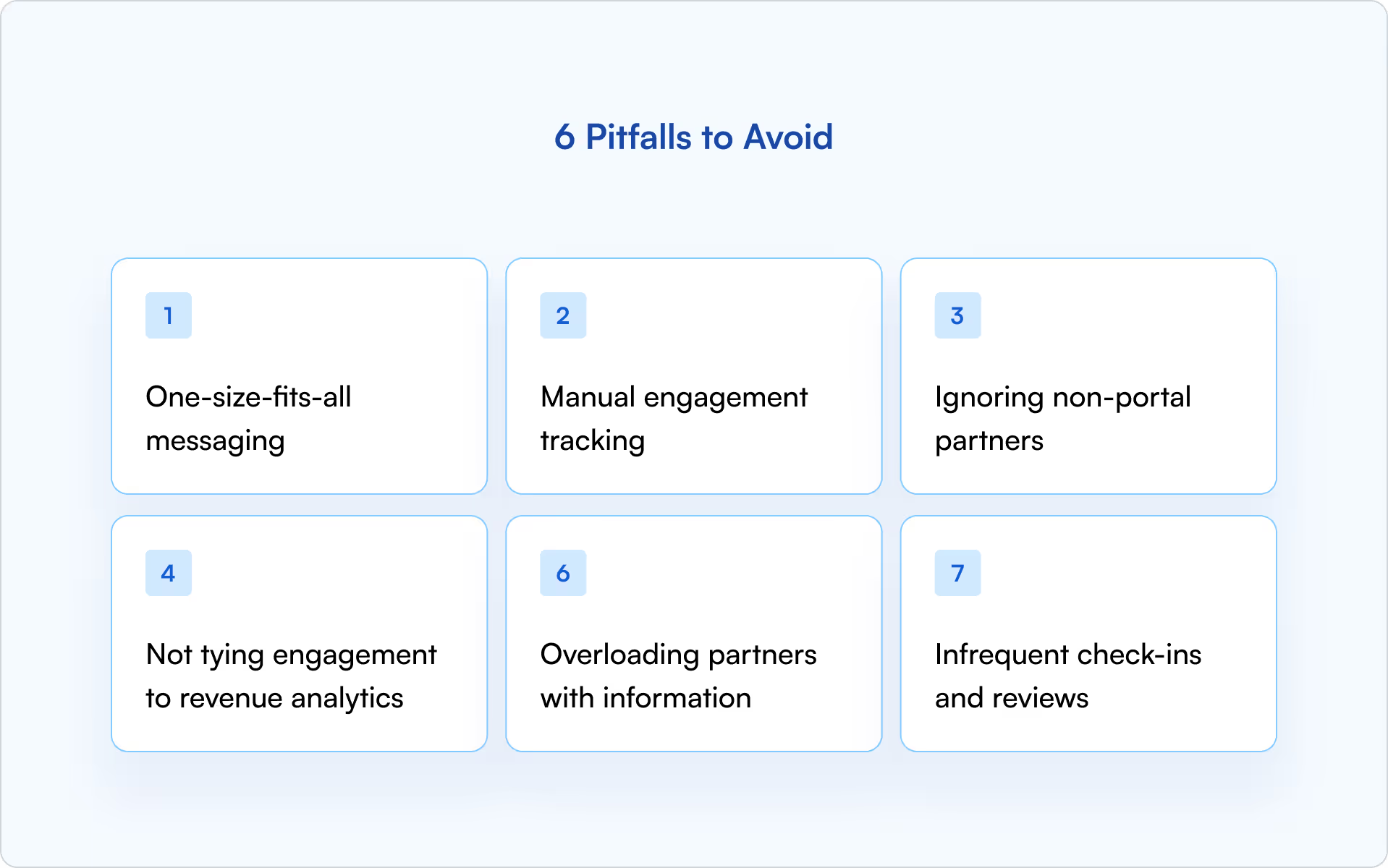
1. One-Size-Fits-All Messaging
Treating all partners the same leads to disengagement.
It certainly won't make partners feel valued.
Do this, and you'll likely see significantly lower open and click rates than if you were running a targeted campaign.
Remember — in 2026, partners expect personalized, relevant messaging based on their tier, industry, or performance.
Anything less may cause them to lose interest in working with you or even dent their trust in your brand.
2. Manual Engagement Tracking
Using manual spreadsheets and email chains to track partner activity consumes a significant amount of time and invites human error.
In 2026, sophisticated tools like Introw empower you to automate engagement tracking across your entire tech stack, providing the visibility and scalability you need to succeed.
3. Ignoring Non-Portal Partners
Focusing solely on portal-active partners means you're overlooking a significant portion of your ecosystem.
Instead, engage partners where they are.
This can be done via email, on Slack, at events, or through embedded touchpoints.
4. Not Tying Engagement to Revenue
Tracking partner activity is essential — but if you're not connecting that activity to real revenue results, you're missing the bigger picture.
In 2026, successful SaaS brands align engagement key performance indicators (like portal logins, content downloads, or training completions) with tangible outcomes such as leads generated, deals influenced, or revenue closed.
This enables you to demonstrate the ROI of your partner program, prioritize high-impact partners, and justify investments in enablement and support.
Without this alignment, it's easy to overvalue busy work and undervalue genuine contributors — in other words, effective optimization becomes harder.
5. Overloading Partners with Information
In the race to keep partners informed, it's easy to overwhelm them with too many updates, tools, and campaigns — especially when communications come from multiple, uncoordinated teams.
But in 2026, attention is a scarce resource, and clarity wins.
After all, when partners receive frequent, unfocused messages, they tend to tune out, miss important details and may feel uncertain about what to prioritize.
SaaS brands should streamline communication channels, prioritize high-impact content, and curate messaging based on what's most relevant to each partner's goals or stage in the journey.
6. Infrequent Check-Ins and Reviews
Waiting for quarterly or annual business reviews to connect with partners and discuss your business objectives, joint business plans, and mutual interests will not cut it in 2026.
In SaaS, things move quickly - if partners go too long without updates or support, it’s easy to lose momentum or miss out on deals.
And when it comes to partner programs, mutual support is vital.
Regular, data-backed check-ins (monthly or even biweekly for key partners) help you stay in sync on joint initiatives, reinforce goals, and identify blockers early.
These reviews don't have to be formal — even short, structured syncs that include performance insights, pipeline updates, and support needs can go a long way to maintaining a mutually beneficial relationship.
Tech Stack & Frameworks for Modern Partner Engagement
Strong partner engagement requires more than a static portal — it demands flexible, data-driven tools that integrate seamlessly with your existing workflows and those of your partners.
Indeed, old-school partner portals are often clunky, login-gated, and siloed — leading to low adoption and limited insight.
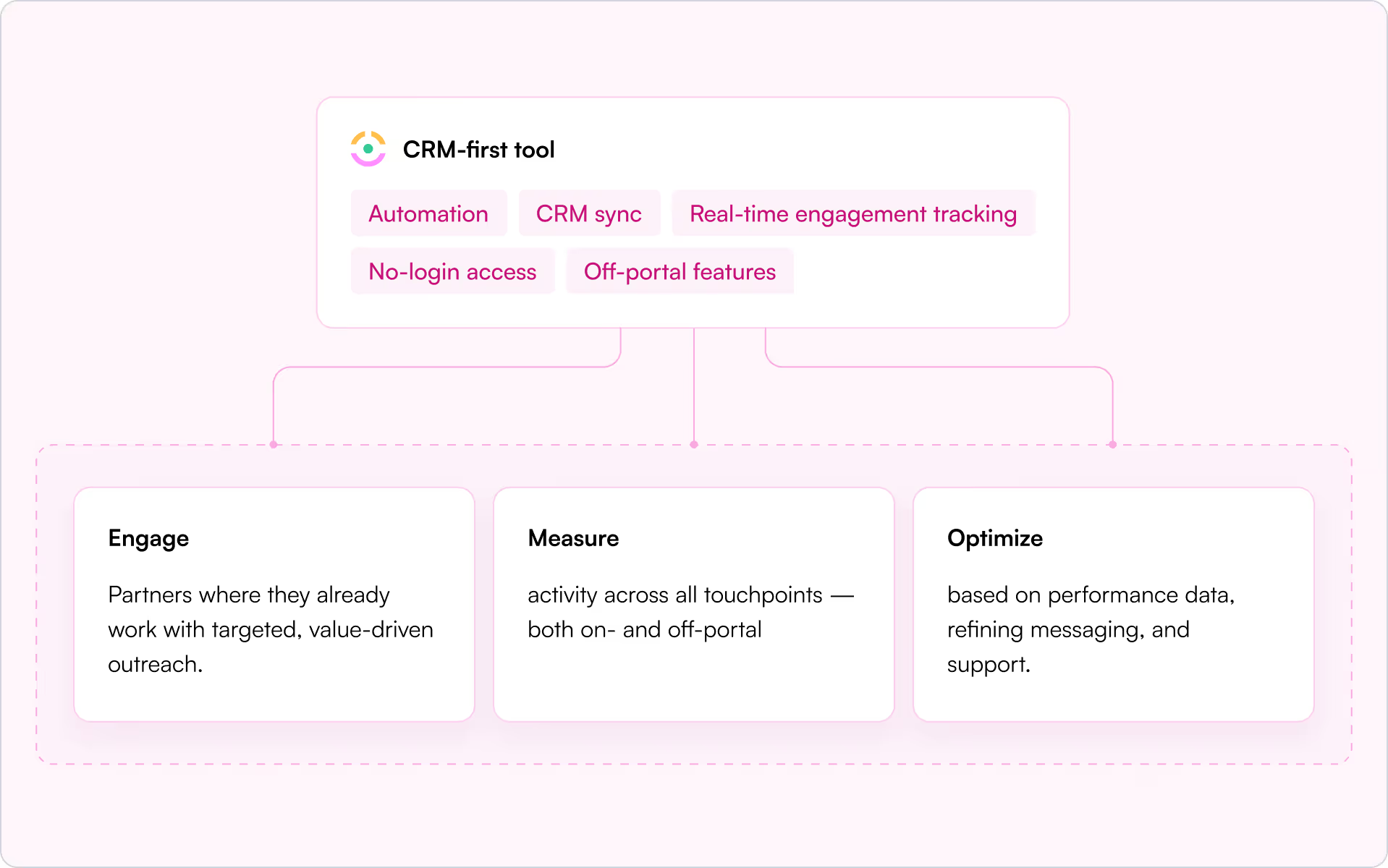
In contrast, modern CRM-first tools like Introw deliver partner content and campaigns directly through email or embed them in sales workflows, making engagement effortless and trackable.
So, when evaluating your tech stack, look for solutions that offer:
- Automation
- CRM sync
- Real-time engagement tracking
- No-login access
- Off-portal features
Then drive results with an engage>measure>optimize partner engagement framework:
- Engage partners where they already work with targeted, value-driven outreach.
- Measure activity across all touchpoints — both on- and off-portal
- Optimize based on performance data, refining messaging, and support.
With the right stack and channel partner engagement strategy, you can drive partner engagement and create a scalable growth engine.
How Introw Simplifies and Supercharges Partner Engagement
Introw revolutionizes partner engagement by automating and streamlining key processes, ensuring that both partners and internal teams operate efficiently and effectively.
Here's how.
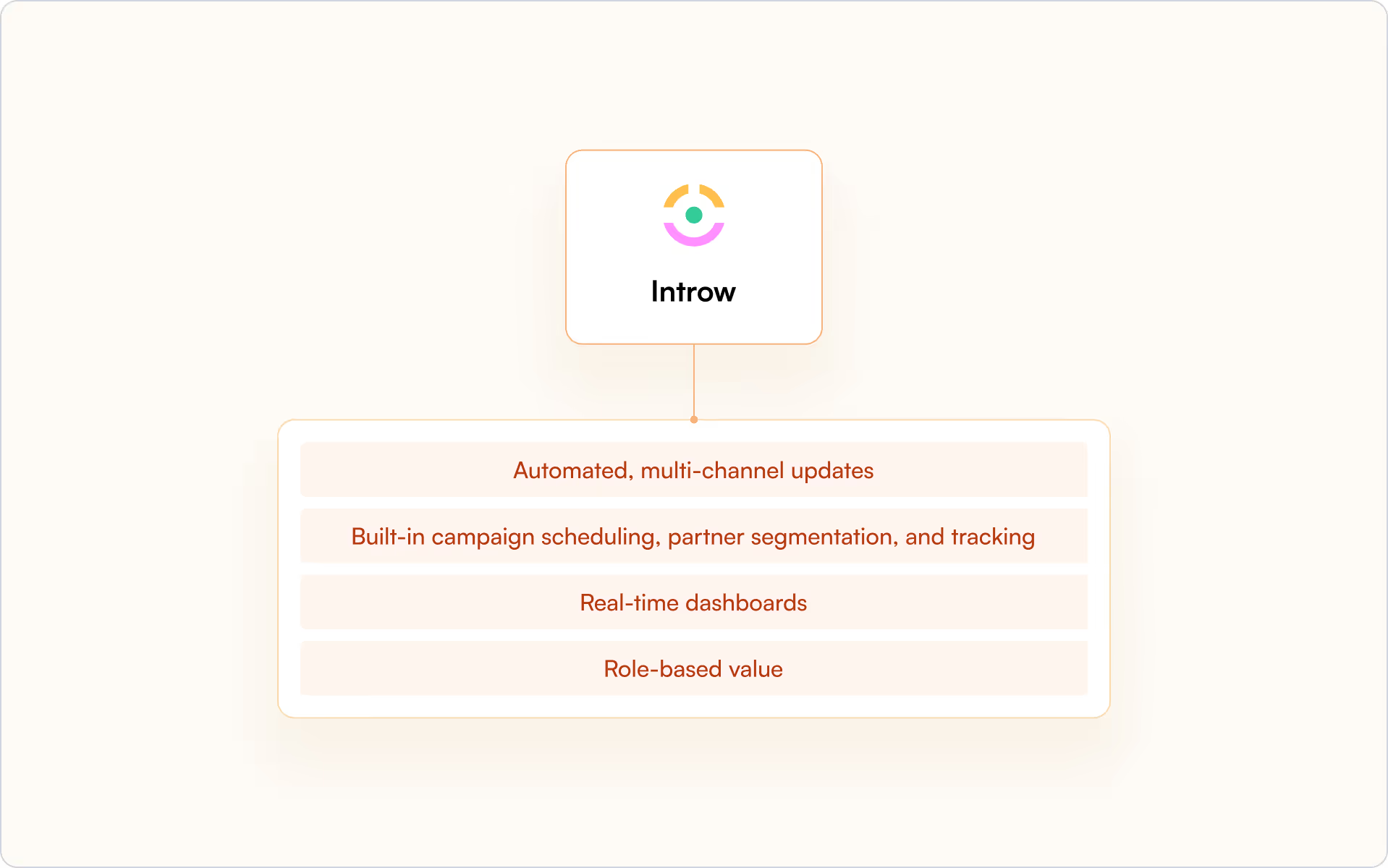
Automated, Multi-Channel Updates
Introw delivers timely updates to partners via email and Slack, eliminating the need for them to log into a portal.
This approach ensures that partners remain informed and engaged without the friction of additional logins.
Built-In Campaign Scheduling, Partner Segmentation, and Tracking
The platform also allows for the scheduling of campaigns tailored to specific partner segments.
With integrated tracking, teams can monitor the performance of these campaigns in real time and adjust their strategies as needed to maximize impact.
Real-Time Dashboards
Introw's dynamic dashboards offer insights into partner engagement levels, content effectiveness, and revenue contributions.
This real-time visibility enables you to identify top-performing partners and pinpoint areas that require attention.
And being able to access this real-time information at the touch of a button empowers you to swiftly and consistently optimize your strategy, whether that's implementing more of what's working or troubleshooting problem areas.
Role-Based Value
Different roles within an organization benefit from Introw's features:
- Channel Managers gain insights into partner journey and performance.
- RevOps receives synchronized data between Introw and CRM systems, facilitating accurate reporting.
- CROs can directly link partner engagement metrics to pipeline outcomes, aligning partner activities with revenue goals.
Experience firsthand how Introw can transform your partner engagement strategy. Request a demo today and see the difference.
Conclusion
Remember — engagement is the #1 lever for a healthy, revenue-driven, successful partner program in 2026.
To increase partner engagement, maintain your competitive advantage and drive revenue growth, regularly review your partner engagement strategies — consider what you can automate, measure, or personalize today.
Leveraging technology and data ensures your joint efforts are efficient, targeted, and impactful.
So start optimizing your partner program today and unlock its full potential.
To supercharge your partner engagement and boost results, try Introw — a sophisticated platform designed to simplify engagement through automation, real-time insights, and seamless CRM integration.
How to Build a Channel Partner Program Guide 2026: Step-by-Step Instructions
SaaS brands are increasingly learning on channel partner programs to tap into new markets and accelerate growth without increasing sales team overhead. Within modern channel partner programs, companies collaborate with third parties, such as resellers or service providers, to market and sell their products. These ecosystems are a perfect fit for SaaS brands that are already using HubSpot or Salesforce. In this step-by-step guide, you'll learn whether a partner program is a good fit for you and how to build one from beginning to end.
Why Channel Partner Programs Matter in 2026
Channel programs have been around, in one form or another, for years.
After all, businesses have always recognized the benefits of having diverse revenue streams.
But it's only recently that these partnerships have been worked into formal strategies.
This is partially because we now have tech — such as partner relationship management systems (PRMs) — that allow us to easily manage and scale partner ecosystems.
But it's also because, in 2026, we need strategic partner programs more than ever.
Here's why.
The Shift to Ecosystem-Led Growth
Channel partners extend market reach, accelerate customer acquisition, and slash sales costs.
And in 2026, these benefits are extremely valuable.
After all, it's not easy out there — SaaS brands are now contending with intense market saturation, rising customer acquisition costs and longer sales cycles.
However, with the right go-to-market (GTM) strategy, there are huge opportunities in SaaS.
Indeed, partners help SaaS companies penetrate new regions and verticals more effectively, thanks to their established customer relationships and local market knowledge. Also, Partner Deals have a 32% bigger deal size and 2.8X higher win rate.
Companies with partner programs are also up to 5x more likely to exceed expectations on a variety of business metrics.
Partners provide value-added services like integration, customization, and support, enhancing customer satisfaction and retention.
As SaaS buyers increasingly seek solutions tailored to their specific needs, trusted channel partners act as advisors, boosting credibility and trust.
Additionally, leveraging partner networks enables SaaS providers to scale rapidly without significantly expanding internal sales teams, making GTM efforts more agile and cost-efficient.
Key Benefits for SaaS Companies
To recap, the four key benefits of ecosystem-led growth for SaaS companies are as follows:
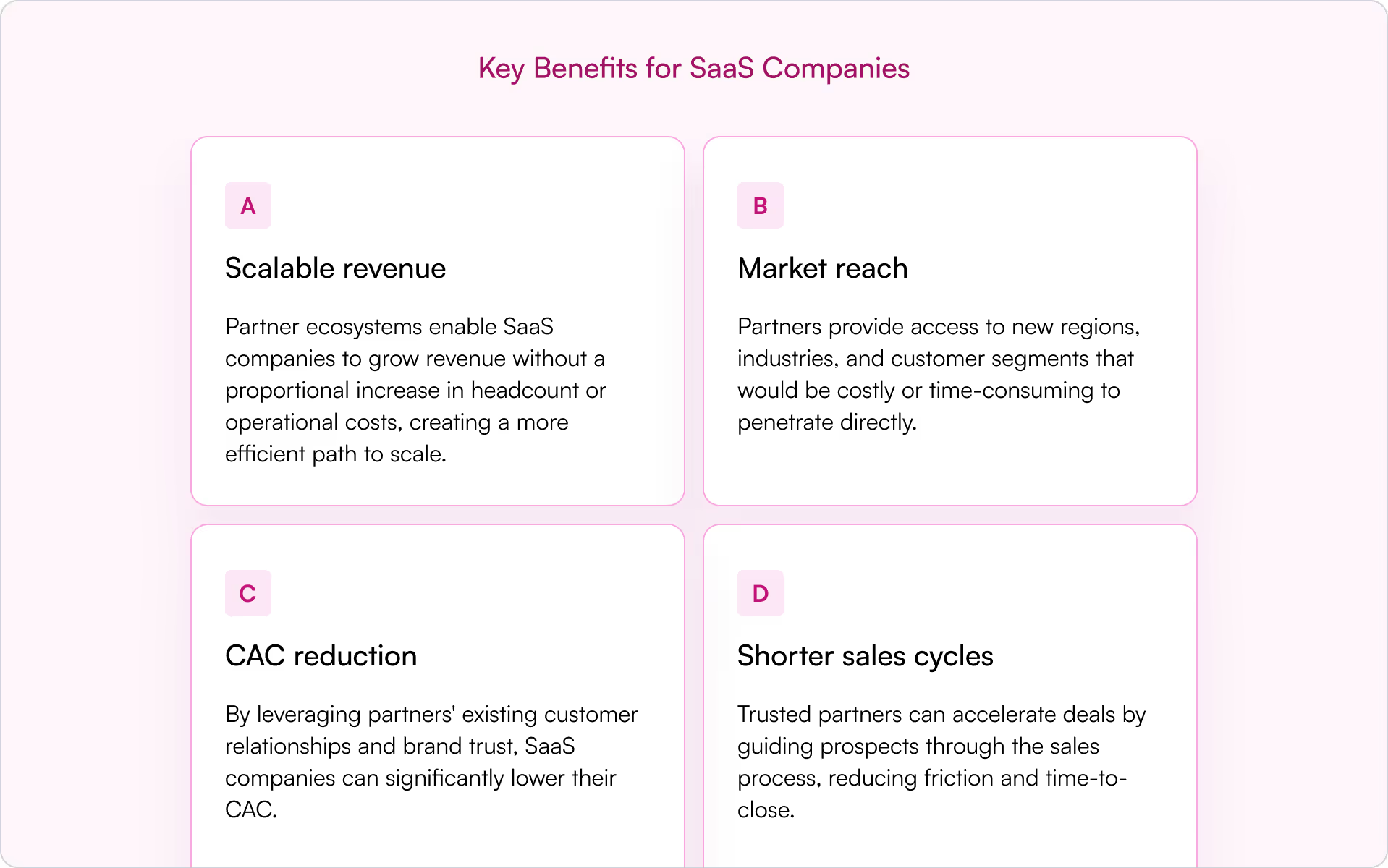
- Scalable revenue: Partner ecosystems enable SaaS companies to grow revenue without a proportional increase in headcount or operational costs, creating a more efficient path to scale.
- Market reach: Partners provide access to new regions, industries, and customer segments that would be costly or time-consuming to penetrate directly.
- CAC reduction: By leveraging partners' existing customer relationships and brand trust, SaaS companies can significantly lower their CAC.
- Shorter sales cycles: Trusted partners can accelerate deals by guiding prospects through the sales process, reducing friction and time-to-close.
Are You Ready to Build One?
As outlined above, strong partnership programs have myriad benefits for SaaS brands.
However, not every company is in the right place to start building its program.
In order for your scheme to drive success, first you need to build the right foundations.
Is your company ready to start building your partnership scheme?
⬇️ If you answer 'yes' to the three questions below, you've got the green light!
- Do you have 2+ partner managers?
- Are you already using either Salesforce or HubSpot?
- Do you already have some partner traction?
Step-by-Step: How to Build a Channel Partner Program
So, we know why implementing robust partner programs is essential for many SaaS brands in 2026, and you've established that your business is primed to build one.
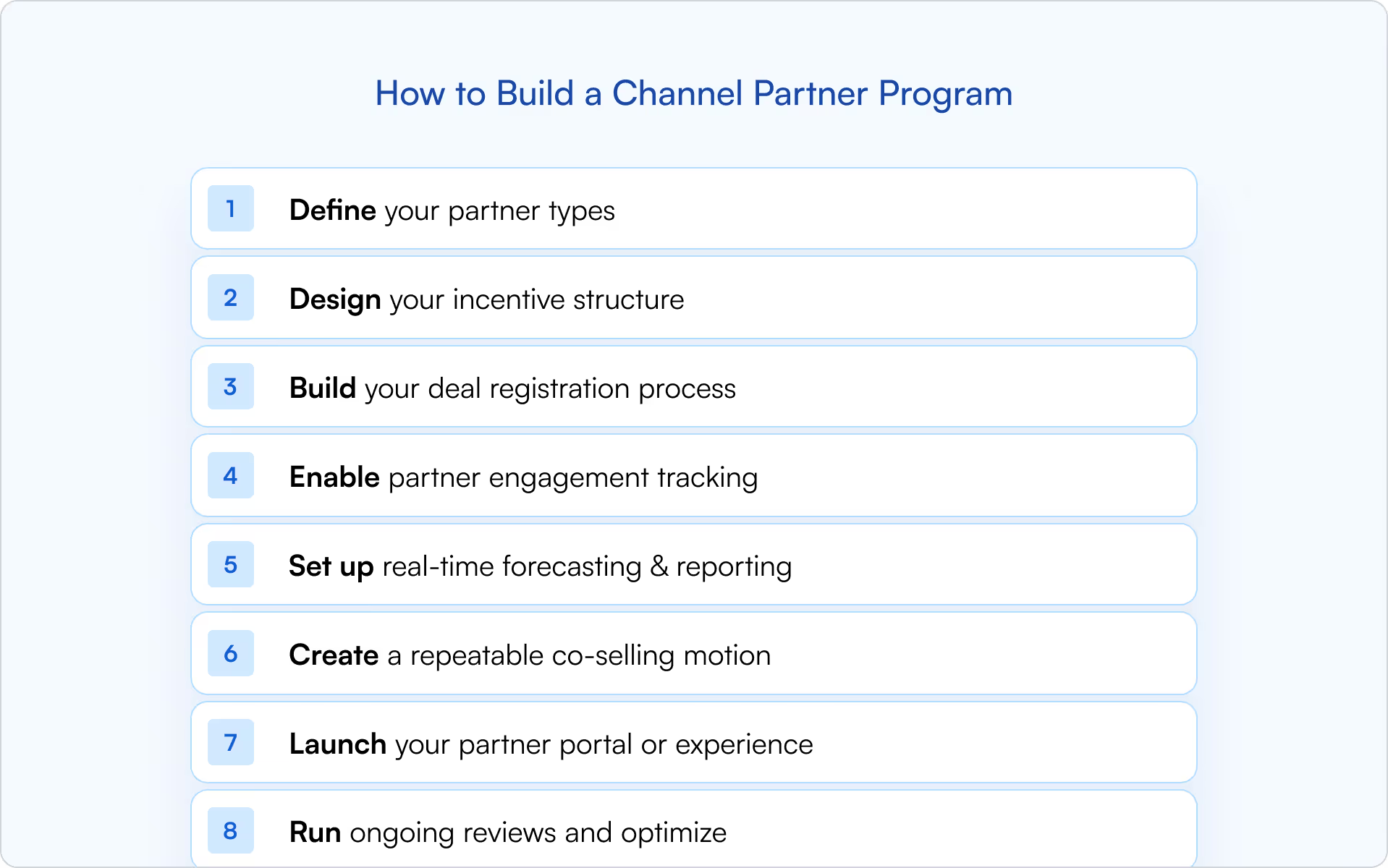
Here's how to build a channel partner program.
1. Define Your Partner Types
Start by clearly identifying the types of partners that best support your go-to-market goals.
These may include:
- Resellers who sell your product directly
- Referral partners who generate leads
- Technology alliances that integrate with your platform
- Managed service providers (MSPs) that offer bundled solutions
2. Design Your Incentive Structure
A well-structured incentive program is central to any modern partner program.
Due to the nature of partnerships, appealing incentives are the only impactful tool you have for motivating partner performance and aligning their efforts with your company's revenue goals.
Begin by deciding on core components such as:
- Commission rates
- Tiered benefits
- Performance-based rewards.
Set clear performance goals tied to strategic outcomes, and ensure alignment with your Chief Revenue Officer (CRO) and/or your Chief Customer Officer (CCO) to maintain focus on pipeline quality, ARR growth, and customer success.
Get your incentives right, and you should be able to drive partner behaviour and strengthen mutual accountability and long-term value creation.
3. Build Your Deal Registration Process
An efficient and friction-free deal registration process drives partner engagement and prevents channel conflict.
Start by creating a simple, user-friendly registration form that captures key deal information without overwhelming your partners.
Make sure the process is fast, intuitive, and clearly communicates the benefits of registering deals, such as deal protection or priority support.
To streamline operations, auto-map the registration system directly to HubSpot PRM or Salesforce PRM — automatically sending partner-submitted data to your sales pipeline.
In addition to slashing manual data entry, this integration also gives your revenue teams real-time visibility into partner-sourced opportunities, improving forecasting accuracy and cross-functional alignment.
📚 Read more: Top 10 Partnership Trackers: Driving Co-Sell Revenue in 2026
4. Enable Partner Engagement Tracking
To manage and optimize partner relationships effectively, you need clear visibility into engagement activity.
It's essential to gain visibility over:
- Emails
- Meetings
- Shared files
- Partner responses throughout the sales cycle
While once upon a time, this engagement tracking would have been a tedious time drain, in 2026, it can be super simple with the right tech stack.
Ensure your communication tools integrate with your PRM and customer relationship management (CRM) platform for centralized data, easy tracking, and a unified view of partner interactions.
For example, the Introw PRM boasts a super useful Slack integration.
Engagement tracking helps identify your most active and productive partners, enabling your team to strategically prioritize support and resources.
It ensures alignment across sales and marketing efforts and RevOps by making partner activity transparent, measurable, and actionable.
5. Set Up Real-Time Forecasting & Reporting
Ditch static spreadsheets and move to real-time, CRM-native forecasting to gain accurate, up-to-the-minute insights into partner performance and pipeline health.
By pulling data directly from your CRM, you ensure consistency, reduce manual errors, and save valuable time.
Real-time dashboards can display key partnership metrics such as:
- Deal stage progression
- Partner-contributed revenue
- Forecasted ARR
- Partner tier performance
This high level of visibility empowers both your partners and your RevOps teams to make data-driven decisions quickly, and helps to align cross-functional stakeholders, including your CRO and CCO, around shared revenue targets.
It also empowers channel managers to identify underperforming areas early and swiftly take action to adjust strategies or provide extra resources.
In short, real-time forecasting transforms your partner program into a measurable, predictable growth engine.
6. Create a Repeatable Co-Selling Motion
A structured, repeatable co-selling process is key to turning partnerships into pipeline.
Indeed, running disjointed or unstandardized partnership processes is a quick way to lose partners and prospects and waste time and money.
So, how can you create a repeatable co-selling motion?
Begin by establishing regular joint pipeline reviews with your partners to align on deal status, next steps, and mutual priorities.
Use these sessions to identify blockers, share insights, and reinforce accountability on both sides.
Implement mutual action plans for key deals — clearly outlining responsibilities, timelines, and partner success criteria for each party.
This keeps everyone focused and reduces deal slippage.
To scale co-selling effectively, invest in a PRM platform like Introw that integrates with your CRM.
A strong PRM centralizes your partner information and enables the tracking of joint opportunities, document sharing and communication, ensuring nothing falls through the cracks.
Using your PRM, it's easy to set up standardized processes for partners within your PRM, ensuring the same workflows are followed, and the same milestones are hit from the start to the end of the sales cycle.
By standardizing your co-selling motion, you not only drive consistent results but also create a more predictable, scalable path to revenue — turning ad hoc collaboration into a high-performance engine for growth.
7. Launch Your Partner Portal or Experience
It's time to launch your partner portal!
Modern partner engagement requires a frictionless, branded experience — this is where your partner portal comes in.
For instance, Introw offers a modern, user-friendly partner portal that simplifies and enhances collaboration between businesses and their partners.
The portal is fully white-labeled, allowing companies to customize it with their branding.
Another standout feature is the no-login-required access, enabling partners to interact with the portal through secure links via email or Slack.
This approach reduces friction, making it easier for partners to register deals, access resources, and stay engaged without the hassle of managing additional login credentials.
What's more, the portal integrates seamlessly with popular CRMs like Salesforce and HubSpot, ensuring that all partner activities are automatically synced, providing real-time visibility into the sales pipeline and partner performance.
Further reading: Here's everything you need to know about choosing Your Next PRM
8. Run Ongoing Reviews and Optimize
Building a successful partner program isn't a one-time effort — it requires continuous evaluation and improvement.
To build agility and responsiveness into your program, establish monthly review sessions with key partners to assess performance, pipeline health, and alignment with mutual goals.
Use Mutual Action Plans and clearly defined KPIs to guide these reviews, focusing on metrics like deal velocity, close rates, and partner-sourced revenue.
These sessions should provide your business and your partners with a forum to identify what's working, uncover bottlenecks, and refine strategies collaboratively.
It's crucial to ensure alignment with your Chief Revenue Officer and RevOps team, too, so that partner activity is directly tied to overall revenue outcomes and forecasting.
Think of it this way — regular reviews turn your channel into a living, evolving asset that consistently delivers results.
Channel Partner Program Best Practices (2026)
So, when building a strong, modern channel partner program, which best practices produce the best channel partner programs?
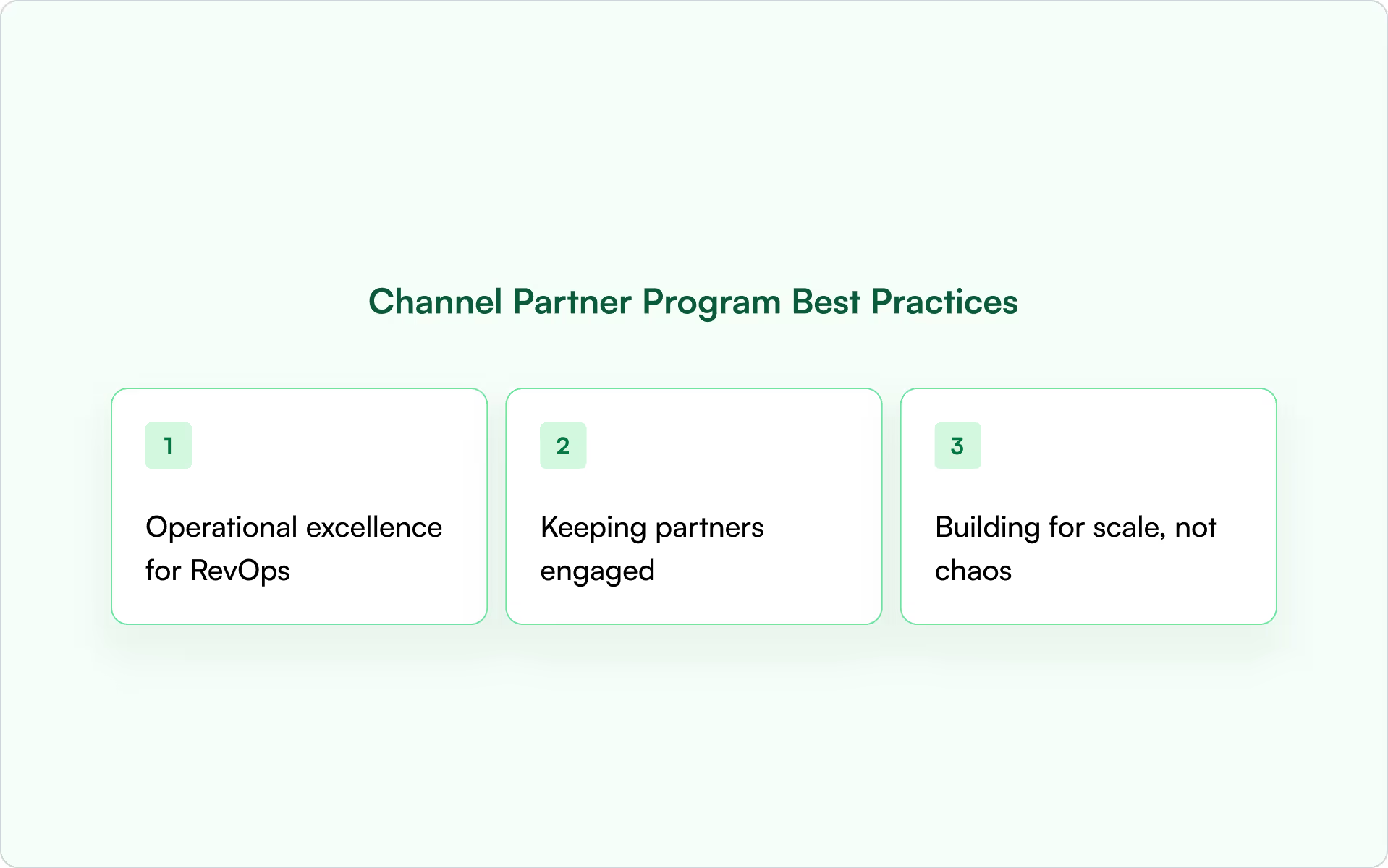
1. Operational Excellence for RevOps
RevOps plays a critical role in driving the efficiency and scalability of your channel partner program.
To deliver operational excellence, start by ensuring that you have clean, consistent CRM data — accurate partner attribution, deal stages, and source tracking are essential for reporting and forecasting.
Then, implement structured partner segmentation.
This segmentation allows you to personalize your engagement, enablement, and incentives based on partner type, performance, and potential for better results — saving you time while driving engagement.
Furthermore, to achieve true operational excellence in 2026, you will need an outstanding and thoughtfully-assembled tech stack.
You can leverage no-code tools to automate workflows, integrate systems, and scale processes — empowering you to scale without heavy reliance on technical support.
2. Keeping Partners Engaged
Sustained engagement is key to a successful channel partner program.
Indeed, timely, relevant communication keeps your solution top-of-mind and builds trust over time.
It's crucial to use communication and engagement tools that integrate with your partner portal — such as email or Slack — to streamline communication.
A strong level of communication surrounding deal progress, next steps and mutual responsibilities provides much-needed visibility into the shared pipeline, ensuring partners stay informed.
Think instant notifications for new leads, updates, or closed deals.
Consistent, transparent updates turn partners into proactive, invested collaborators, driving more pipeline and stronger results.
3. Building for Scale, Not Chaos
As your partner program grows, consistency becomes critical, and the risk of chaos rises!
Constructing a scalable foundation not only accelerates growth but also allows your team to focus on strategy rather than chasing down processes or managing one-off exceptions.
So, how can you ensure you're building for scale rather than running headfirst into operational chaos?
Start by creating standardized templates for key processes — like onboarding, deal registration, co-selling, and reporting.
These templates will save you time, reduce errors, and make it easy to bring on new partners without reinventing the wheel.
At the same time, you can use your PRM, CRM, and communication tools to customize workflows and content based on partner type, maintaining flexibility and ensuring relevance while preserving operational flexibility.
📚 Read more: 10 Best Practices for Channel Management
Common Pitfalls to Avoid
As with any large project, most SaaS companies will face several challenges while implementing their channel partner program.
Here are the pitfalls to look out for and avoid. /
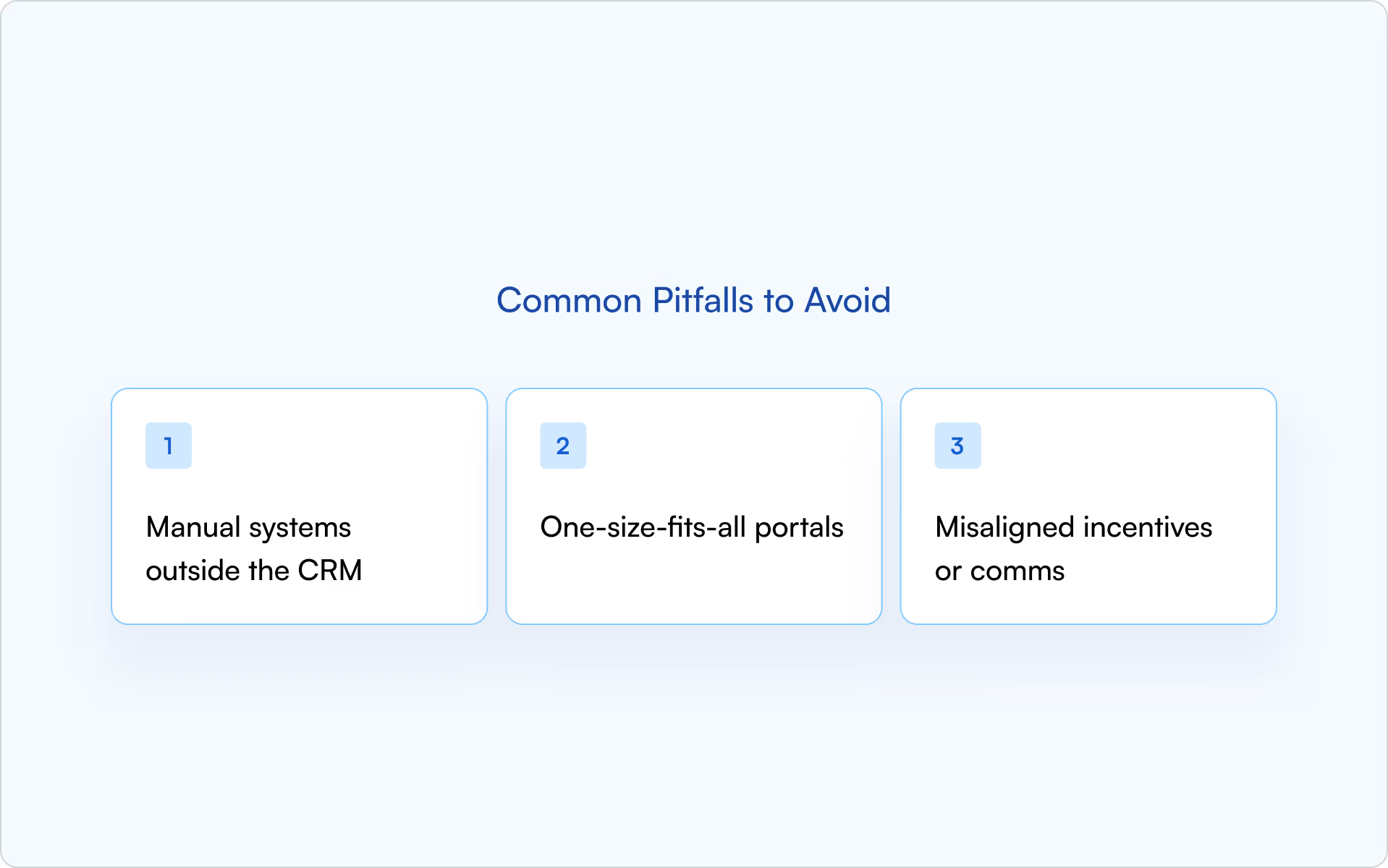
1. Manual Systems Outside the CRM
Relying on spreadsheets, email threads, or disconnected tools to manage partner activity creates inefficiencies, errors, and data silos.
These manual systems make it difficult to track deal status, attribute revenue accurately, or forecast effectively.
Worse, they hinder collaboration between sales and partnerships teams.
Centralizing all partner data and workflows inside your CRM through integrations and a CRM-first PRM like Introw ensures real-time visibility, better alignment, and a scalable foundation for long-term business growth.
2. One-Size-Fits-All Portals
Generic partner portals often fall short by failing to meet the unique needs of different partner types, and a lack of branding can also cause a drop in trust.
Furthermore, without tailored experiences, engagement drops and partners struggle to find relevant resources.
Customizing content, workflows, and portal access based on partner roles ensures higher activation, better collaboration, and a more productive, scalable ecosystem.
Meanwhile, the option for branded portals should help to build partners' trust in your business.
3. Misaligned Incentives or Comms
Engagement and performance suffer when incentives or communication strategies don't align with partner goals.
For example, overly complex rewards or unclear messaging can lead to confusion and missed opportunities.
Instead, ensure that incentives are simple, outcome-driven, and well-communicated.
Regularly sync with partners to reinforce alignment and keep both sides focused on shared revenue and success.
How Introw Simplifies Every Step
Building a channel partner program may sound complex, but — with the right PRM — it can be pretty straightforward.
Here's what Introw brings to the table.
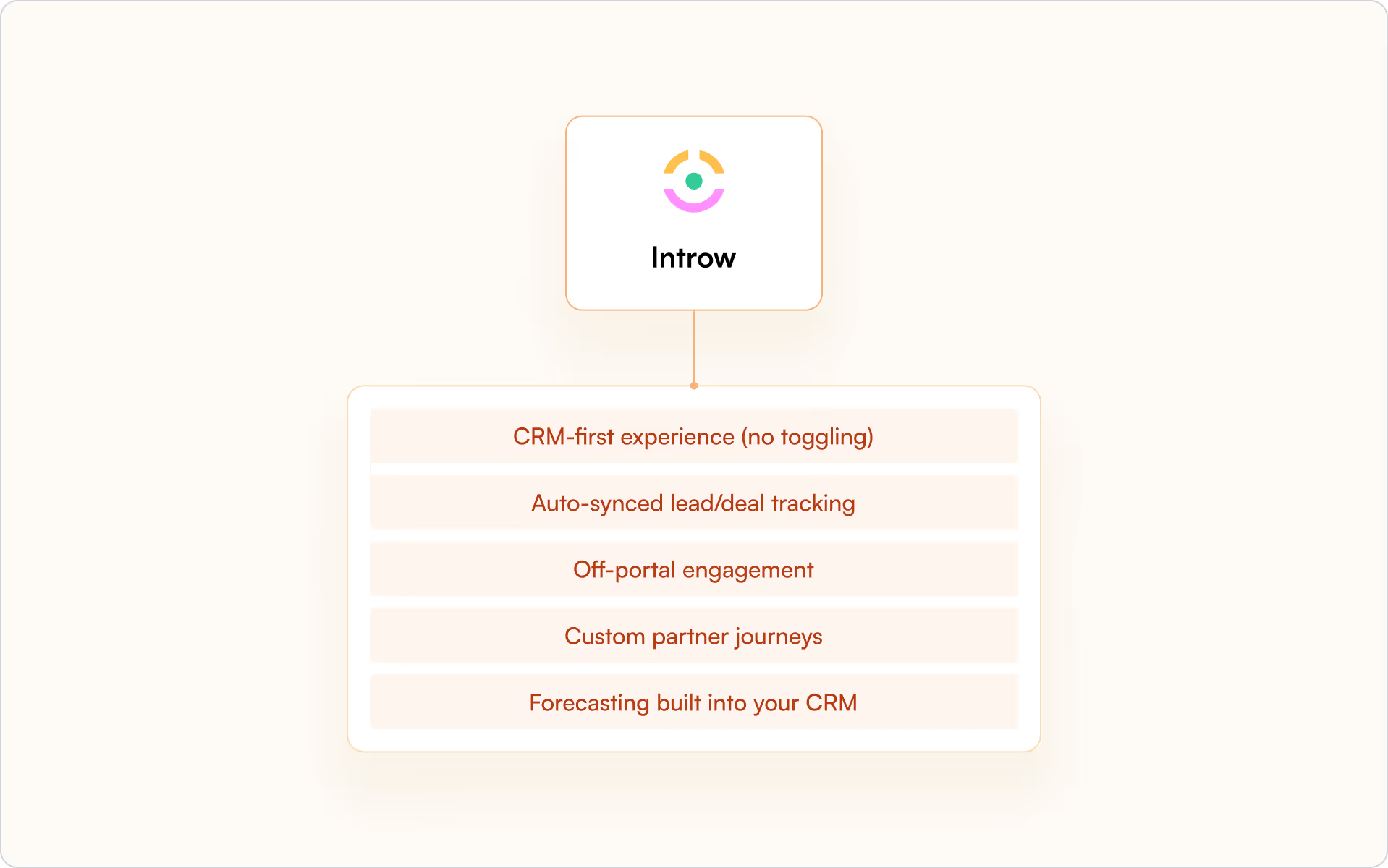
- CRM-first experience (no toggling): Introw keeps your CRM as the single source of truth, eliminating the need to switch between multiple platforms. Integrating directly with systems like Salesforce and HubSpot ensures that all partner activities are centralized, streamlining workflows and reducing manual data entry.
- Auto-synced lead/deal tracking: Leads and deals submitted by partners are automatically detected and tracked within your CRM. This ensures real-time visibility into partnership revenue and eliminates the need for manual updates.
- Off-portal engagement: Partners can submit leads, collaborate, and stay updated via Slack, email, or shared deal workspaces, all of which are seamlessly synced to your CRM. Or, they can enter the Introw partner portal to find all the resources they need.
- Custom partner journeys: Automate and customize partner journeys based on partner type or tier. This enhances engagement by delivering relevant content and interactions.
- Forecasting built into your CRM: By integrating partner data directly into your CRM, Introw enables real-time forecasting and reporting. This integration provides accurate insights into partner performance and pipeline health, facilitating data-driven decisions and aligning partner activities with overall revenue goals.
📚 Further Reading: Find The Best PRM Software For Your Agency
Ready to Scale Your Channel in 2026?
Is your SaaS business ready to build your own channel partner program?
To recap, here's how to start benefiting from your partnerships in eight straightforward steps:
- Define your partner types
- Design your incentive structure
- Build your deal registration process
- Enable partner engagement tracking
- Set up real-time forecasting and reporting
- Create a repeatable co-selling motion
- Launch your partner portal or experience
- Run ongoing reviews and optimize
In 2026, cutting-edge tech tools make the process of operating partner programs much smoother and way more scalable.
Introw helps SaaS companies launch, manage, and scale high-performing partner ecosystems — without the complexity.
From CRM-native deal tracking to no-login partner experiences, Introw gives you everything you need to activate partners and drive revenue from day one.
This PRM is perfect for SaaS brands that use HubSpot, Salesforce or Slack.
🚀 Book a live demo today and start building a partner program your CRO will love
📚 Next Read: The Ultimate Partnership Marketing Guide for 2026: Strategies, Examples & Tips

