

.svg)


.svg)
.svg)







PRM Resources
Templates, checklists, and guides to help partner teams streamline onboarding, deal reg, and co-selling — all synced with your CRM.
Latest articles
The 13 Best AI Sales Coaching Software Tools for Partner and Channel Sales in 2026
What is AI sales coaching software?
AI sales coaching software helps your team improve how they handle deals, sales calls, and buyer conversations by providing guidance while work is happening, not just after the fact. It uses sales coaching AI to surface next steps, suggest responses to objections, and highlight what’s most likely to move a deal forward.
The category has expanded quickly since 2024, and today, an AI sales coach isn't just one type of tool. It covers several different approaches to coaching sales reps across the full sales cycle.
Here are the five main categories you need to know before choosing a solution:
Most “best sales coaching software” lists only compare conversation intelligence and roleplay tools. But teams working in indirect revenue models or partner sales need visibility into partner and channel deal coaching as well. Understanding all five categories makes it easier to choose the right sales coaching platform for your business.
AI sales coaching software comparison table
This table compares leading tools across the five coaching categories so you can quickly see where each one fits and whether it supports internal reps, external partners, or both.
Most tools support internal sales teams only, so if your partners help close deals, you’ll need software built to coach them inside real pipeline activity, not just review calls after the fact.
The 13 best AI sales coaching software tools in 2026
Here’s how the leading AI sales coaching tools compare across the five main categories buyers should evaluate today.
Category 1: partner and channel deal coaching
This is the newest and fastest-growing category of AI-powered sales coaching. These tools guide external partners on live opportunities inside the environments they already use, including partner portals, Slack, and email, so coaching happens while deals are moving instead of after they stall. They’re best for companies that sell through resellers, referral partners, distributors, or ecosystem programs and want to improve partner close rates without adding more partner managers.
#1 Introw – Best for AI deal coaching in partner and channel sales

What it does:
Introw is the only PRM with built-in AI deal coaching that creates a dedicated AI sales coach for each pipeline, such as reseller, referral, or co-sell. That means every partner deal gets stage guidance, objection handling, asset recommendations, and rules of engagement automatically inside the deal itself through deal coaching.
Who it’s best for:
B2B companies that rely on partners, resellers, or ecosystem motions and want partner-sourced pipeline to close more like direct pipeline without hiring more partner managers.
Key features:
- Dedicated AI coach per partner segment with templates for reseller, co-sell, and referral motions
- Stage guidance that tells partners what to do next at each deal step
- Context-aware objection handling based on deal stage and engagement signals
- Asset recommendations surfaced inside the opportunity when partners need them
- Rules of engagement that clarify when to involve your internal team
CRM integrations:
Works with HubSpot and Salesforce.
Pricing:
Custom pricing from Starter to Enterprise based on the number of seats and configuration, and you can start for free.
Category 2: conversation intelligence and call coaching
These sales coaching tools record and analyze sales calls, then turn those conversations into coaching insights your sales managers can use to coach sales reps more consistently. They’re best for internal sales teams that want better visibility into sales conversations, rep performance, and patterns across customer interactions.
#2 Gong – Best for revenue intelligence and call pattern analysis

What it does:
Gong records and analyzes customer calls, meetings, and emails to surface patterns that affect deal outcomes. It helps sales leaders understand what top performers do differently and uses conversation intelligence to highlight risks, competitor mentions, and coaching opportunities across the sales cycle.
Who it’s best for:
Mid-market and enterprise sales teams that run high volumes of sales calls and want data-driven insights to improve team performance.
Key features:
- Call recordings with speech and sentiment analysis
- Pipeline risk alerts and deal insights based on conversation patterns
- Manager dashboards that support structured coaching feedback
CRM integrations:
Works with Salesforce, HubSpot, and other major sales cloud environments.
Pricing:
Custom pricing, typically reported between $100 and $150 per user per month depending on contract size and feature access.
Partner/channel gap:
Gong is designed for internal sales professionals using company-managed meeting tools. Partners usually sell independently, which limits how often they appear in recorded workflows that support channel partner sales enablement or structured co-selling.
#3 Chorus by ZoomInfo – Best for call coaching inside the ZoomInfo ecosystem

What it does:
Chorus by ZoomInfo captures sales conversations and turns them into coaching cues using artificial intelligence. It highlights talk ratios, objection-handling moments, and deal risks so sales managers can deliver more consistent coaching across customer calls.
Who it’s best for:
Sales teams already using ZoomInfo that want AI coaching tools connected to prospecting intelligence and enrichment data.
Key features:
- Call recording with AI-generated summaries and coaching cues
- Conversation analytics tied to ZoomInfo contact and company data
- Performance analytics that help identify skill gaps across teams
CRM integrations:
Integrates with Salesforce and HubSpot for pipeline visibility and activity capture.
Pricing:
Bundled within ZoomInfo platform subscriptions with custom pricing based on package level.
Partner/channel gap:
Like most AI sales coaching tools in this category, Chorus depends on recorded meetings inside your stack. That makes it harder to support distributed partner ecosystems where deals often happen outside internal call tracking environments.
#4 Clari – Best for pipeline forecasting with coaching signals
.png)
What it does:
Clari is a revenue platform that combines forecasting, pipeline inspection, and activity capture to generate coaching signals from sales data rather than only analyzing call recordings. It helps sales leaders identify deal risks earlier and supports more accurate planning across enterprise sales teams.
Who it’s best for:
Revenue leaders and sales managers focused on forecast accuracy, pipeline health, and predictable revenue growth.
Key features:
- Forecast modeling based on pipeline movement and activity capture
- Deal inspection workflows that highlight performance improvement opportunities
- AI-driven insights connected to pipeline coverage and execution
CRM integrations:
Primarily integrates with Salesforce and related revenue infrastructure tools.
Pricing:
Custom enterprise pricing based on deployment scope and forecasting modules.
Partner/channel gap:
Clari focuses on internal pipeline visibility rather than external partner execution. It doesn’t provide coaching inside partner workflows such as shared deal registration processes supported by deal registration or distributed partner deal collaboration.
Category 3: AI roleplay and practice
These AI coaching tools simulate sales conversations so reps can practice objection handling, discovery calls, and positioning in a safe environment. They’re best for onboarding new reps and reinforcing consistent messaging before live customer interactions.
#5 Second Nature – Best for AI-powered sales roleplay simulations
.png)
What it does:
Second Nature creates AI-powered sales roleplay simulations where reps practice conversations with a virtual buyer that responds in real time. The platform scores performance and highlights areas for improvement so teams can run targeted training at scale.
Who it’s best for:
Sales enablement teams running onboarding programs, product launches, or messaging rollouts that require consistent training across distributed teams.
Key features:
- AI conversational roleplay simulations with adaptive buyer responses
- Performance scoring tied to predefined sales coaching techniques
- Custom scenario builder for product positioning and objection handling
CRM integrations:
Limited CRM integrations. Primarily used as a standalone sales training platform.
Pricing:
Custom enterprise pricing based on deployment scope and team size.
Partner/channel gap:
Can support partner training if partners log into the system, but it isn’t embedded in the deal flow or partner portal environments typically used for channel partner sales enablement.
#6 Hyperbound – Best for AI cold call and discovery practice
.png)
What it does:
Hyperbound simulates realistic cold call and discovery conversations using AI buyer personas that react dynamically during practice sessions. Reps receive instant feedback and scoring to help refine talk tracks and improve early-stage pipeline conversations.
Who it’s best for:
SDR and BDR teams focused on improving outbound performance and discovery call execution.
Key features:
- AI buyer personas designed for cold call and discovery practice
- Instant feedback with scoring across coaching moments
- Leaderboards that help managers track rep performance improvement
CRM integrations:
Minimal CRM connectivity. Designed primarily as a standalone AI sales training environment.
Pricing:
Typically starts around $40 to $60 per user per month depending on configuration.
Partner/channel gap:
Built for internal outbound teams rather than partner programs. It doesn’t support ongoing deal review workflows or structured partner enablement.
#7 Quantified – Best for AI avatar-based sales simulations
.png)
What it does:
Quantified uses AI-generated video avatars to simulate realistic buyer presentations so reps can practice delivery, positioning, and messaging before live meetings. The platform evaluates performance using AI feedback and benchmarking across teams.
Who it’s best for:
Enterprise sales teams focused on presentation readiness and improving messaging consistency across complex sales cycles.
Key features:
- AI video avatars that simulate live buyer presentation scenarios
- Messaging analysis aligned with your sales methodology
- Benchmarking dashboards that compare results across teams
CRM integrations:
Limited CRM integrations. Primarily deployed as a structured sales training software layer.
Pricing:
Custom enterprise pricing based on rollout scope.
Partner/channel gap:
Designed for structured training rather than live pipeline execution. It doesn’t support deal-level coaching or workflows connected to partner ecosystems such as those covered in this partner enablement guide.
Category 4: sales enablement with coaching features
These platforms manage sales content such as decks, battle cards, and playbooks, then add guided selling and coaching layers on top. They’re best for teams that want content control and contextual support in one system instead of separate sales coaching solutions.
#8 Highspot – Best for content management with guided selling
.png)
What it does:
Highspot is a sales enablement platform that manages content, training, and buyer engagement while adding AI-powered sales coaching tools like guided selling and content recommendations that support reps during live opportunities.
Who it’s best for:
Enterprise sales and enablement teams managing large content libraries that need structured guidance on what to send and when.
Key features:
- Centralized content management with usage tracking
- Guided selling plays aligned to a specific sales methodology
- AI content recommendations based on deal context
CRM integrations:
Integrates with Salesforce and Microsoft Dynamics.
Pricing:
Custom enterprise pricing based on deployment scope and content volume.
Partner/channel gap:
Includes some partner content sharing workflows, but coaching is primarily designed for internal sales teams rather than embedded channel sales enablement across partner-managed deals.
#9 Showpad – Best for sales content and coaching in one platform
.png)
What it does:
Showpad combines sales content management with interactive training and coaching layers so teams can align messaging, improve onboarding, and support consistent execution across the sales cycle.
Who it’s best for:
Mid-market sales teams that want sales training software and content management in a single platform.
Key features:
- Content management with version control and engagement tracking
- Interactive training modules that support targeted training programs
- Coaching dashboards that highlight skill gaps across teams
CRM integrations:
Integrates with Salesforce, HubSpot, and Microsoft Dynamics.
Pricing:
Custom pricing based on team size and feature configuration.
Partner/channel gap:
Supports partner content distribution, but coaching features are designed mainly for internal rep workflows rather than structured channel partner sales enablement.
#10 Seismic – Best for enterprise-scale sales enablement and coaching
.png)
What it does:
Seismic is an enterprise sales enablement platform that combines content automation, training, coaching scorecards, and analytics with AI-powered sales guidance to help organizations improve execution consistency at scale.
Who it’s best for:
Large enterprise sales organizations managing complex content ecosystems and structured training programs.
Key features:
- Content automation with governance controls
- AI content recommendations aligned to buyer stage
- Seismic Learning for structured training and coaching programs
CRM integrations:
Integrates with Salesforce and Microsoft Dynamics.
Pricing:
Custom enterprise pricing based on rollout scope.
Partner/channel gap:
Includes partner-facing capabilities, but coaching layers are designed primarily for internal seller workflows rather than ongoing partner deal execution.
Category 5: sales training and LMS with coaching layers
These platforms focus on structured learning paths, certifications, and readiness tracking, then add coaching layers like scorecards and manager feedback. They’re best for teams that want consistent training tied to performance improvement across sales teams.
#11 Mindtickle – Best for sales readiness and coaching scorecards
.png)
What it does:
Mindtickle is a sales readiness platform that combines structured learning paths, call analysis, and AI-powered coaching scorecards so enablement teams can track how training affects rep performance over time.
Who it’s best for:
Sales enablement leaders who want to measure readiness across teams and connect training programs to coaching outcomes.
Key features:
- Role-based learning paths with certification tracking
- AI coaching scorecards tied to readiness indexes
- Call recordings analysis connected to sales training progress
CRM integrations:
Integrates with Salesforce and HubSpot.
Pricing:
Custom enterprise pricing based on deployment scope and enablement modules.
Partner/channel gap:
Primarily designed for internal sales professionals. Partners typically require separate onboarding to access training environments.
#12 Allego – Best for video coaching and peer-to-peer learning
.png)
What it does:
Allego is a sales learning platform centered on video-based practice, peer-to-peer coaching, and conversation intelligence so teams can reinforce messaging through recorded examples and feedback loops.
Who it’s best for:
Organizations that want collaborative coaching environments where reps learn from shared recordings and structured video practice.
Key features:
- Video-based coaching workflows with manager feedback
- Conversation intelligence tied to recorded customer calls
- Peer-to-peer learning supported by shared practice libraries
CRM integrations:
Integrates with Salesforce.
Pricing:
Custom pricing based on rollout scope and learning configuration.
Partner/channel gap:
Built for internal rep coaching and structured learning rather than ongoing partner deal execution.
#13 Brainshark by Bigtincan – Best for sales readiness and onboarding
.png)
What it does:
Brainshark by Bigtincan delivers structured onboarding, certification paths, and readiness scorecards with video coaching features that help teams standardize early-stage training and onboarding outcomes.
Who it’s best for:
Sales teams focused on onboarding consistency and certification-driven readiness programs.
Key features:
- Training content authoring with certification tracking
- Video coaching workflows tied to readiness scorecards
- Mobile learning access for distributed sales representatives
CRM integrations:
Integrates with Salesforce.
Pricing:
Custom enterprise pricing based on deployment scope and certification needs.
Partner/channel gap:
Focused on structured training rather than deal-level coaching. It does not support partner pipeline execution or external partner coaching workflows.
There are many strong tools in this space, and they solve very different problems. That can make the decision feel harder than it should be.
The key is to match the type of coaching to how your team actually sells, especially if partners are part of your pipeline.
How to evaluate AI sales coaching software (buyer checklist)
Use this checklist to compare AI sales coaching software capabilities across vendors before you decide.
Teams that sell through partners should also confirm whether the platform supports partner workflows alongside internal sales processes.
Which type of AI sales coaching software do you need?
Start with where coaching needs to happen in your workflow.
- If partners, resellers, or referral teams help close deals, you’ll get the most impact from tools that guide external sellers inside active opportunities. That matters even more once you see how partner-sourced opportunities typically perform compared to direct deals. You can evaluate that difference using these partner deal stats.
- If most revenue comes from direct sellers, conversation intelligence platforms help improve call quality and pipeline visibility.
- If your priority is onboarding or messaging consistency, roleplay tools help new reps practice before speaking with customers.
- If your challenge is keeping partner training aligned with how deals actually move, a structured partner LMS helps reinforce learning inside your partner motion.
When both direct and partner pipeline matter, coaching works best when guidance appears automatically at the right moment inside each deal.
That’s where support from an embedded AI agent helps teams deliver consistent next steps without adding manual coaching overhead.
Why Introw is the best choice for partner teams
By now, you’ve probably noticed most AI sales coaching tools are built for internal reps. That works if your pipeline lives inside your team. It’s harder when partners are responsible for part of your revenue and you don’t always see what’s happening inside their deals.
Introw supports execution inside the deal itself. Partners see what to do next at each stage, which reduces stalled opportunities and removes the need for constant partner manager involvement.
As partner programs scale, execution naturally becomes less consistent across resellers, referral partners, and co-selling motions. Introw helps standardize how deals move forward by adapting guidance to deal stage, partner role, and engagement signals.
What you'll see:
- Fewer deals going quiet
- Clearer collaboration between partners and internal teams
- More predictable partner pipeline.
This is especially valuable in organizations where partner-led and direct pipeline often run side by side.
If partner deals are already part of your revenue motion, you can Request a demo to see what deal-level coaching looks like inside an active partner workflow.
AI Sales Coaching for Partner Teams: The Missing Layer in Partner Revenue
The real reason partner deals stall (and it is not your partners)
Partner-sourced opportunities are often your most valuable pipeline.
They tend to be larger, more strategic, and more likely to convert when they move forward. Introw’s own research shows partner deal stats that partner-sourced opportunities consistently outperform average direct deals when they reach the finish line.
So, the issue is the difference between how your partners vs. your sales teams are coached.
Think about how partners actually work:
- They juggle multiple vendors at once
- They do not live inside your product every day
- They have not gone through your internal sales training
- They rarely get real-time feedback during customer interactions
When partners hit objections they have not seen before or reach stages they do not fully understand, they usually do not escalate. They guess. They pause. Or they quietly move on.
Nearly 60% of forecasted deals never close. For partner deals, the number is worse because partners are operating without the same level of sales coaching as your internal sales reps.
Inside your business, your sales reps get deal reviews and support from sales managers across your revenue teams. Your partners typically get a content library, a quarterly QBR, and generic partner enablement that sits outside the deal instead of helping them move it forward.
Most AI sales coaching tools still focus on internal sales calls and call analysis. But partners do not work inside those environments. Without an AI sales coach built for partner teams, they do not get the targeted feedback needed to close more deals consistently.
Why traditional AI sales coaching does not work for partner teams
Most AI sales coaching tools were built to coach sales reps inside your organization.
They rely on call recordings, conversation intelligence, and deal review workflows that assume partners are part of your internal sales process. They are not.
This is where channel partner sales enablement breaks down.
Partners typically:
- Do not join your coaching sessions
- Do not receive real-time coaching during customer interactions
- Do not get support when deals begin to stall
The result is predictable: slower deal progression, weaker sales performance, and fewer partner-sourced wins across your broader partner sales motion.
Instead of reviewing deals after they slip, an AI deal coach delivers personalized coaching during the sales cycle, helping partners respond to objections, take the right next step, and keep opportunities moving.
Modern deal coaching makes this possible by embedding AI assistance in deal coaching directly into partner workflows, so guidance appears where partners already collaborate.
Why traditional partner enablement does not fix this
Most teams see the coaching gap and try to solve it with traditional enablement.
They invest in content hubs, LMS programs, quarterly reviews, and more partner-manager time. All useful. None designed for coaching partners inside live deals.
Here is the pattern most partner teams run into:
Each of these gaps shows up differently across your partner motion.
Content libraries go unread
Content libraries solve access, not timing.
You built a strong asset hub with pitch decks, battle cards, and case studies. But partners do not stop mid–sales cycle to search for the right file. They need the right asset surfaced inside the deal.
This is the gap between documentation and real sales coaching solutions built around AI in deal coaching.
Structured partner content enablement improves access. It does not create coaching in the moment.
Training gets forgotten
Training builds a foundation. It does not support execution months later.
LMS programs help partners understand your product and process. But when a partner faces a difficult objection four months later, that knowledge is gone. Traditional sales training cannot provide personalized feedback during active opportunities.
Even with a strong partner LMS, partners still need guidance inside the deal itself.
QBRs review the past, not the present
Quarterly business reviews improve alignment. They do not improve deal movement.
By the time a stalled opportunity appears in a QBR deck, the coaching window has already closed. Traditional coaching works retrospectively. AI powered sales coaching works inside the deal while it is still active.
Partner managers cannot be in every deal
This is where most programs hit a scaling limit.
Even strong partner managers cannot coach every opportunity across dozens or hundreds of partners. They cannot review every deal, respond to every Slack question, or support every objection in time.
This is not a hiring problem. It is a structural constraint.
That is why teams are turning to AI sales coaching software and sales coaching AI approaches that support partners directly inside the sales cycle instead of relying only on humans to coach sales reps manually.
The use cases: where AI deal coaching lifts partner win rates, deal sizes, and sales cycles
AI deal coaching is not just a feature. It is the layer that lifts win rates, expands deal sizes, and shortens sales cycles across your partner pipeline. Not by replacing partner managers, and not by adding another training partners will forget. By coaching partners inside live deals, the moment they need it.
Stage guidance: Coaching partners through unfamiliar deal stages
Partners don't always know how to best sell in all these different scenarios. They hit stages they have only navigated a few times, prospects with unfamiliar buying patterns, deal types they rarely run. Without clear guidance in the moment, they default to what worked last time. Sometimes that translates. Often it does not.
AI deal coaching surfaces stage-specific guidance inside the deal: what needs to be true to advance, the actions to take, and ready-to-send email templates for that exact stage. Partners get clarity on how your sales process works, without sitting through another training they will forget by next Friday.
The result: shorter sales cycles, because partners stop stalling at stages they have not mastered.
Handling objections partners have not seen before
A partner gets "we already use a competitor" or a pricing pushback they have not encountered. They send a generic reply, the deal goes quiet, and three weeks later it is gone.
AI deal coaching pulls the right objection-handling response based on the objection itself, the deal stage, and the deal context. The partner gets the framework, the proof points, and the talk track inside the deal, before they reply. Newer partners get the institutional knowledge of your top sellers without scheduling a call.
The result: higher partner win rates, because partners stop losing deals to objections your top AEs would have closed.
Surfacing the right asset at the right stage
Content libraries fail because partners do not stop mid-deal to search a folder for the right battle card. They send what they remember, which is usually the wrong asset for the stage they are in.
AI deal coaching attaches an asset library to the coach itself: pitch decks, one-pagers, battle cards, case studies. The AI surfaces the right one at the right stage automatically. The partner does not search. The right asset just appears.
The result: larger deal sizes, because the right case study or ROI document shows up before the prospect asks for budget justification.
Keeping partners and your internal team aligned on escalations
Partners hesitate to escalate when they are unsure. They sit on pricing questions, hold off on involving an AE, or loop in technical support too late. By the time you find out, the deal has slipped.
AI deal coaching embeds rules of engagement directly into the coach: when pricing needs approval, when to bring in an AE, when to involve technical support, when a deal needs your team's attention. Partners know exactly what is in and out of bounds, and stop hesitating.
The result: faster deals and higher partner confidence, because partners stop sitting on questions and start moving.
Onboarding new partner reps without a multi-week ramp
A new rep starts at one of your partners. In the old model, you send them to a partner LMS, walk them through a deck, hand off a content folder, and hope it sticks. By the time they hit a real deal three weeks later, most of it is gone.
AI deal coaching collapses that timeline. The new rep gets dropped straight into a real opportunity, with stage guidance, objection responses, the right assets, and clear escalation rules surfaced inside the deal itself. They learn your sales process by running it, with an expert coach in the deal alongside them. No three-week ramp. No lengthy training they will forget. The first deal becomes the training.
The result: faster partner ramp, lower training overhead, and new reps contributing pipeline from week one instead of month three.
Catching stalled deals before the coaching window closes
The biggest gap in partner programs is timing. Coaching that arrives in next quarter's QBR is too late. Coaching that arrives when a deal stops moving is on time.
Because AI deal coaching reads stage, vertical, engagement signals, and full deal history, it surfaces guidance proactively the moment the deal needs it. Partners get the next best action while the opportunity is still active, not after it has been written off.
The result: fewer deals lost to silence, and a measurable lift in partner-sourced win rate.
Where AI coaching actually shows up for partners
Most AI sales coaching tools assume partners will log into a platform, review insights, and adjust how they run deals.
That rarely happens.
For AI coaching to improve real partner execution, it has to appear inside the places partners already work. Not in dashboards. Not in transcripts. Not in separate sales coaching platforms.
Here is where effective AI sales coaching actually shows up.
In the CRM
Most partners already live inside HubSpot or Salesforce. It is where they log activity, manage pipeline, and review what is happening across deals.
A modern AI sales coaching platform meets them there first. Guidance appears directly on the deal record, surfaced alongside the data partners are already looking at:
- The next best action for that specific opportunity
- Risk signals based on stage, activity, and recent changes
- Suggested talk tracks for the next conversation
- Context pulled from related deals and past interactions
Because the coaching lives inside the CRM, partners do not have to switch tools, learn a new workflow, or remember to check anything extra. The guidance shows up in the same view where they are already working the deal.
This is the most natural surface for AI coaching, and the one with the highest adoption, because it requires zero behavior change.
In the partner portal
Inside a modern AI sales coaching platform, guidance appears directly in the deal detail view.
Every time a partner opens an opportunity, they see:
- The next best action
- Relevant objection handling
- Suggested assets
- Stage-specific deal guidance
This creates real-time coaching tied to the exact opportunity they are working on. It improves sales conversations without requiring partners to search for help or revisit traditional sales training materials.
Over time, this kind of embedded AI coaching increases sales velocity because partners always know what to do next inside the sales cycle.
In Slack deal notifications
Partners already rely on notifications to track deal movement.
When a stage changes, AI coaching tools can surface guidance alongside the alert itself:
- What changed in the deal
- What action to take next
- What risk signals to watch
- When to involve your team
This turns activity alerts into coaching moments and gives partners instant feedback while deals are still moving.
Instead of waiting for a human sales manager to step in, partners get direction exactly when they need it.
In email deal updates
Some partners never log into portals consistently. That is normal.
AI-powered sales coaching solves this by embedding guidance directly into deal update emails. Even if a partner never opens your PRM, coaching still reaches them inside their inbox.
That means:
- No new tools to learn
- No passwords to remember
- No extra workflows to adopt
Guidance simply follows the deal.
This is why AI sales coaching works differently from static enablement or content libraries. It delivers support inside active customer interactions, where partners actually make decisions that affect outcomes and sales velocity.
When coaching meets partners where they already work, adoption stops being the problem and execution starts improving.
What changes when every partner deal is coached
When AI sales coaching runs inside every opportunity, partner execution stops depending on memory, timing, or partner-manager availability. Coaching becomes consistent across your ecosystem and visible where deals actually move forward.
Here is what changes in practice.
Partner-sourced pipeline starts closing like direct pipeline
Your internal sales reps already benefit from structured sales coaching across every stage. Partners usually do not.
AI sales coaching closes that gap by delivering:
- Stage-specific next steps
- Objection handling guidance
- Asset recommendations inside the deal
- Real-time coaching during active sales conversations
This is where AI sales coaching solutions begin improving sales performance across partner pipeline without changing your existing sales strategy.
You improve execution without adding headcount
Traditional coaching depends on access to a human sales manager. That model does not scale.
With AI-powered sales coaching embedded directly into partner workflows:
- Every deal receives consistent support
- Guidance appears automatically
- No manual coaching sessions are required
- No additional partner-manager coverage is needed
Unlike most sales tools, this type of coaching runs continuously once configured.
Partners get guidance before deals stall
Most traditional coaching happens after something slips. AI coaching changes the timing.
Partners receive:
- Instant feedback when deal stages change
- Targeted feedback during customer interactions
- Conversation insights before risks grow
- Actionable insights while opportunities are still active
That shift from reactive support to proactive coaching is where artificial intelligence starts to boost performance across partner-led sales conversations.
Enablement finally gets used because it lives inside the deal
Enablement fails when partners have to go looking for it. It works when guidance appears exactly when it matters.
Instead of digging through folders or repeating old sales training, partners see:
- The right battle card
- The right objection response
- The right next step
- The right supporting asset
All surfaced inside the opportunity itself through a structured partner content enablement guide.
When coaching follows the deal instead of waiting in a library, adoption increases naturally, and partners close more deals with less friction.
How Introw brings coaching into every partner deal
If you manage partner pipeline, you’ve probably had this happen more than once.
A deal looks strong. The partner is engaged. The customer is interested. Then things slow down. No clear next step. No question from the partner. And by the time you notice, the deal is already stuck.
Not because the partner did something wrong. They just didn’t have the same support your internal team gets.
Introw changes that by adding coaching directly to the deal itself, so partners always know what to do next while the opportunity is still moving.
Here’s what that looks like in practice.
Stage guidance that shows partners what “good” looks like
At each deal stage, partners see what needs to happen before moving forward.
That might include:
- What to confirm with the customer
- What risks to check for early
- What signals mean the deal is healthy
- When to involve your team
Instead of guessing their way through your process, partners follow the same structure your internal sales reps already use.
Objection handling when partners actually need it
Partners do not remember every positioning detail from training.
So when a customer raises a pricing concern, mentions a competitor, or asks a technical question, Introw surfaces the response right inside the deal.
That keeps sales conversations moving instead of going quiet while partners wait for help.
The right assets appear at the right moment
Most content libraries fail because partners have to go looking for them.
Introw surfaces the exact case study, battle card, or message they need based on the deal stage they are in. The guidance shows up automatically instead of sitting in a folder somewhere else.
Clear rules about when to loop your team in
Partners often hesitate because they are unsure when to escalate.
Introw makes that visible. Partners know:
- When pricing needs approval
- When to bring in an AE
- When to involve technical support
- When a deal needs extra attention
That removes hesitation and keeps opportunities moving forward.
For your team, this usually means fewer deals drifting off track, fewer last-minute surprises in pipeline reviews, and more partner deals progressing with the same structure as your direct deals.
If that’s the kind of change you’re trying to make this year, you can request a demo and see how it would work with your partner deals.
9 Best Practices for SaaS Partner Content Programs in 2026
Partners can’t sell what they don’t understand. Yet most SaaS partner programs still “enable” partners by handing over a few outdated PDFs, linking to a cluttered Google Drive, and hoping partner-sourced pipeline magically appears.
A strong partner content program changes the equation. It gives partners the materials they actually need — organized, accessible, and mapped to how they sell — so they can represent your product without constant hand-holding. In this guide, we’ll walk through the best practices for SaaS partner content programs in 2026, from identifying what’s missing to proving which assets drive revenue.
What is a SaaS partner content program?
A partner content program is the collection of enablement materials, sales collateral, co-marketing assets, and training resources you create specifically for partners to use when selling or implementing your product. The best programs go beyond “upload and hope” — they co-create tailored, high-value assets (case studies, webinars, whitepapers) that highlight joint solutions for shared target audiences.
Unlike internal sales content, partner content is built for an external audience. Your partners don’t have the same product context your AEs do, and they’re often juggling multiple vendors at once. That means your content has to be clearer, more findable, and easier to reuse.
- Enablement content: Product training, battle cards, and objection handling guides
- Sales collateral: Pitch decks, one-pagers, and ROI calculators partners can use with prospects
- Co-marketing assets: Co-brandable templates, campaign kits, and joint webinar materials
- Technical resources: Integration docs, implementation guides, and API references
Why partner content programs matter for SaaS growth
A signed partnership isn’t a growth channel by default. It becomes a growth channel when partners can confidently position, sell, and deliver your product without needing your team in every conversation.
Content is the link that turns a partner agreement into active, revenue-generating behavior — and it does it at scale.
- Faster partner ramp: Partners close deals sooner when they have ready-to-use materials
- Consistent messaging: Your value proposition stays intact across every partner conversation
- Reduced support burden: Self-serve content means fewer questions hitting your partner team
- Scalable co-selling: Content enables partners to act as an extension of your sales team
The 9 best practices for SaaS partner content programs
If you’re building this as a founder or early revenue leader, the goal isn’t “more content.” The goal is the smallest set of assets that helps partners create pipeline — and the operating system to keep those assets current, discoverable, and measurable.
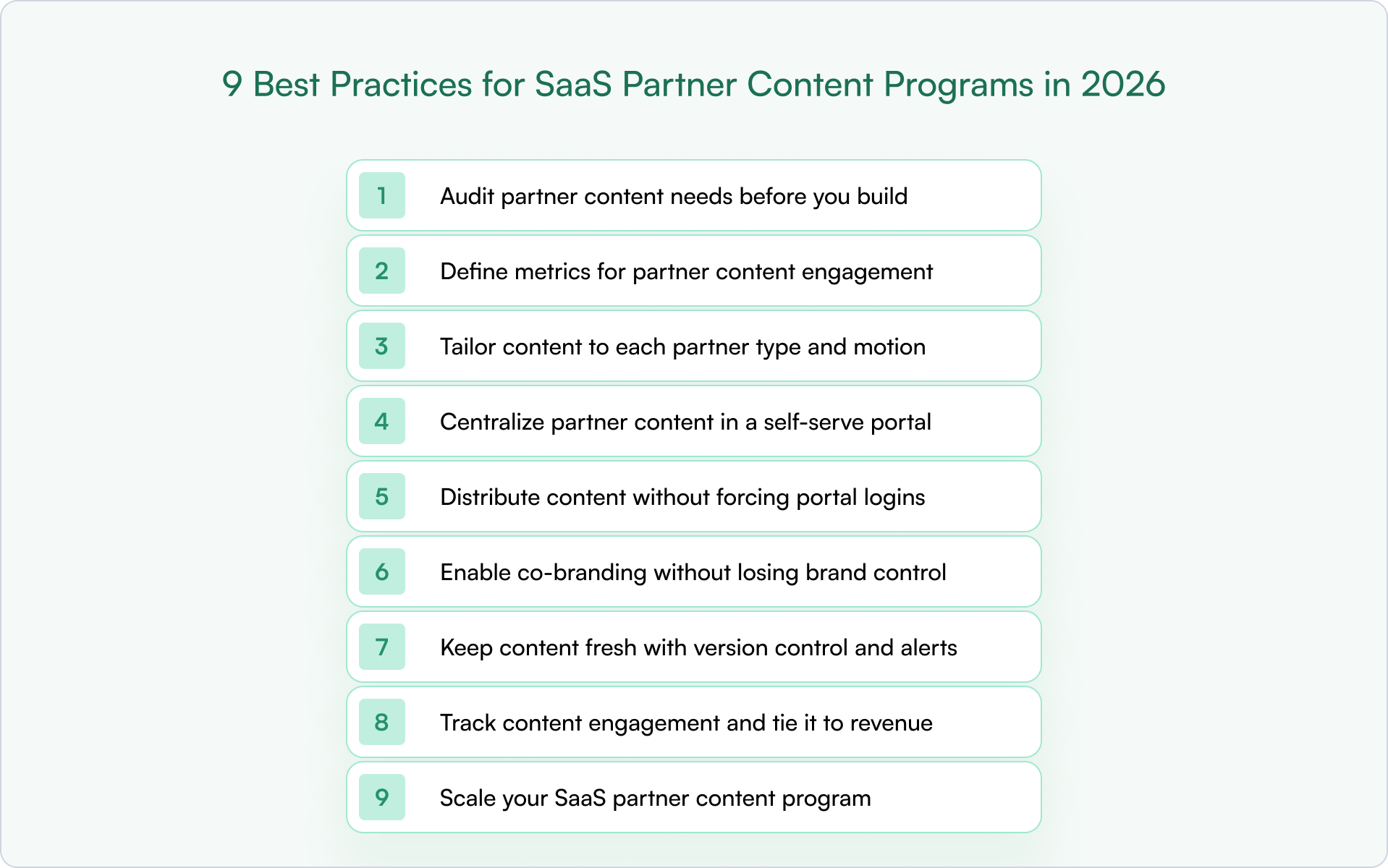
1. Audit partner content needs before you build
Before you write a single new deck, validate what partners actually need. Many partner programs burn time creating content that never gets used because it doesn’t solve a real selling problem.
Interview partners about content gaps
Ask your existing partners what’s missing, what’s outdated, and what they wish they had. Keep the conversation grounded in real deals: what stops them from moving a prospect forward or answering questions with confidence?
Even five conversations usually reveal patterns. For example, partners might not want another product overview — they might need a competitive comparison they can forward when a prospect is evaluating alternatives.
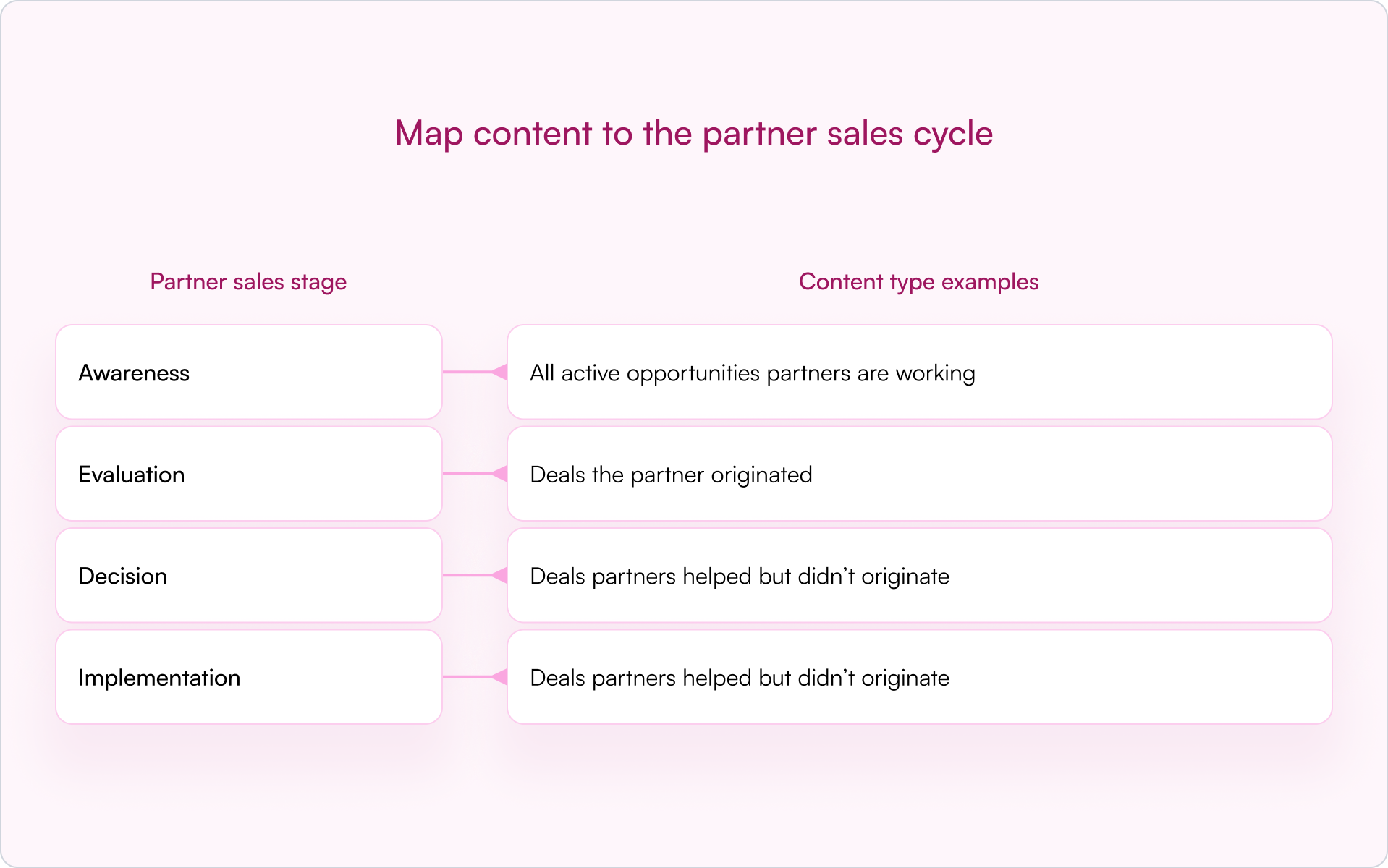
Map content to the partner sales cycle
Different stages of the partner-led sales cycle require different assets. Awareness-stage conversations benefit from solution briefs and intro decks. Evaluation calls for competitive comparisons and demo videos. Decision-stage deals often hinge on ROI calculators and customer stories. Implementation requires technical guides and onboarding checklists.
Also consider your partner model. Referral, reseller, and systems integrator motions typically need different content at each stage.
Identify high-value assets vs. nice-to-haves
Prioritize ruthlessly. Start with content that directly impacts deal velocity — battle cards, pricing guidance, and objection handling. Save high-effort production (heavy video, glossy campaigns) until the essentials are working.
2. Define metrics for partner content engagement
You can’t improve what you don’t measure. If you want partner content to be treated like a growth lever (not a cost center), set up tracking from day one.
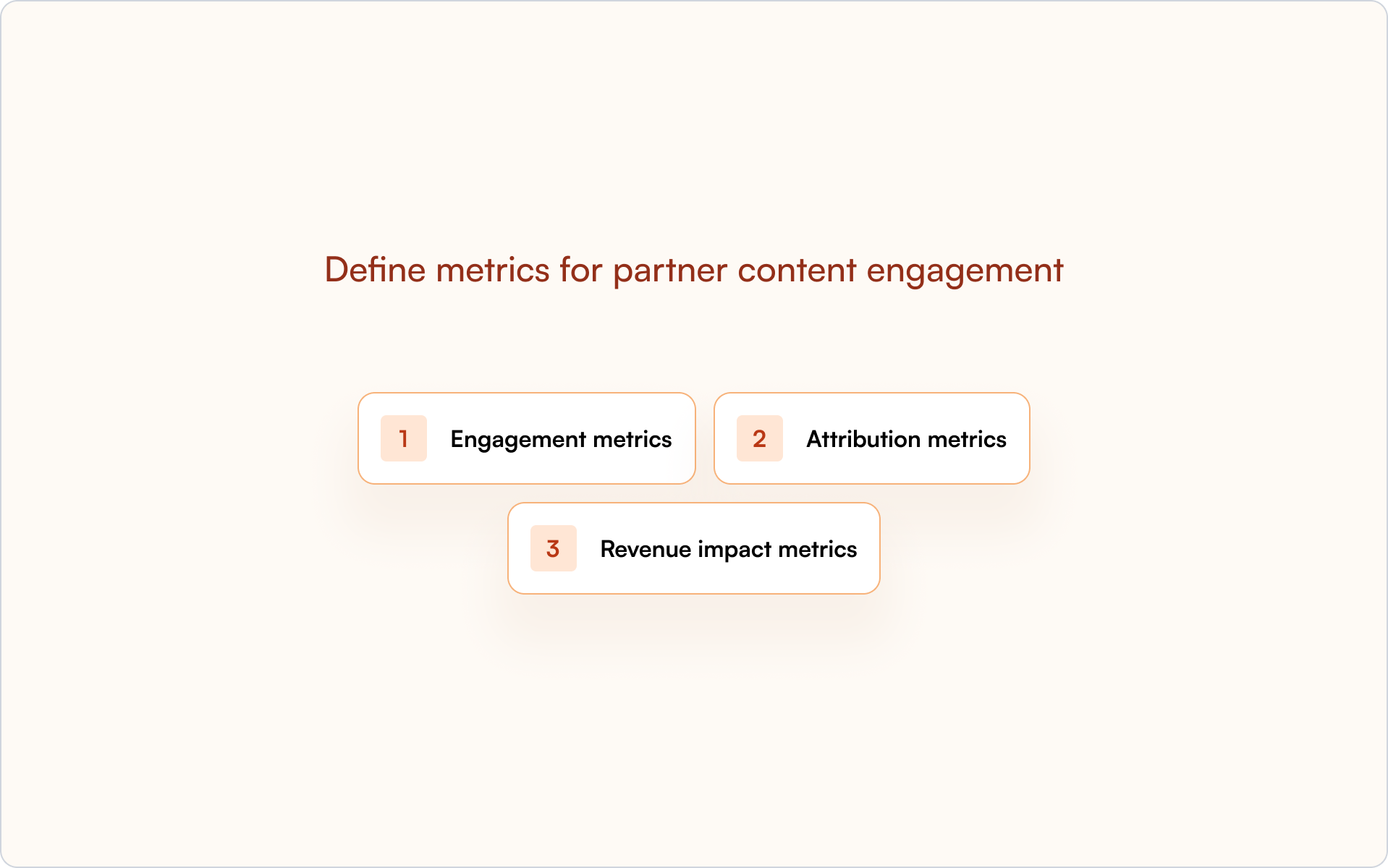
Engagement metrics
Track views, downloads, shares, and time spent on each asset. This is your early signal for what’s useful versus what’s ignored.
Attribution metrics
Go beyond engagement by connecting content consumption to deal registration and pipeline generation. For example: did partners who used a specific battle card register more deals, or move deals to the next stage faster?
Revenue impact metrics
The gold standard is tying content engagement to closed-won revenue. Identify which assets consistently appear in the journey of deals that close — then reinvest in what’s working and prune what isn’t.
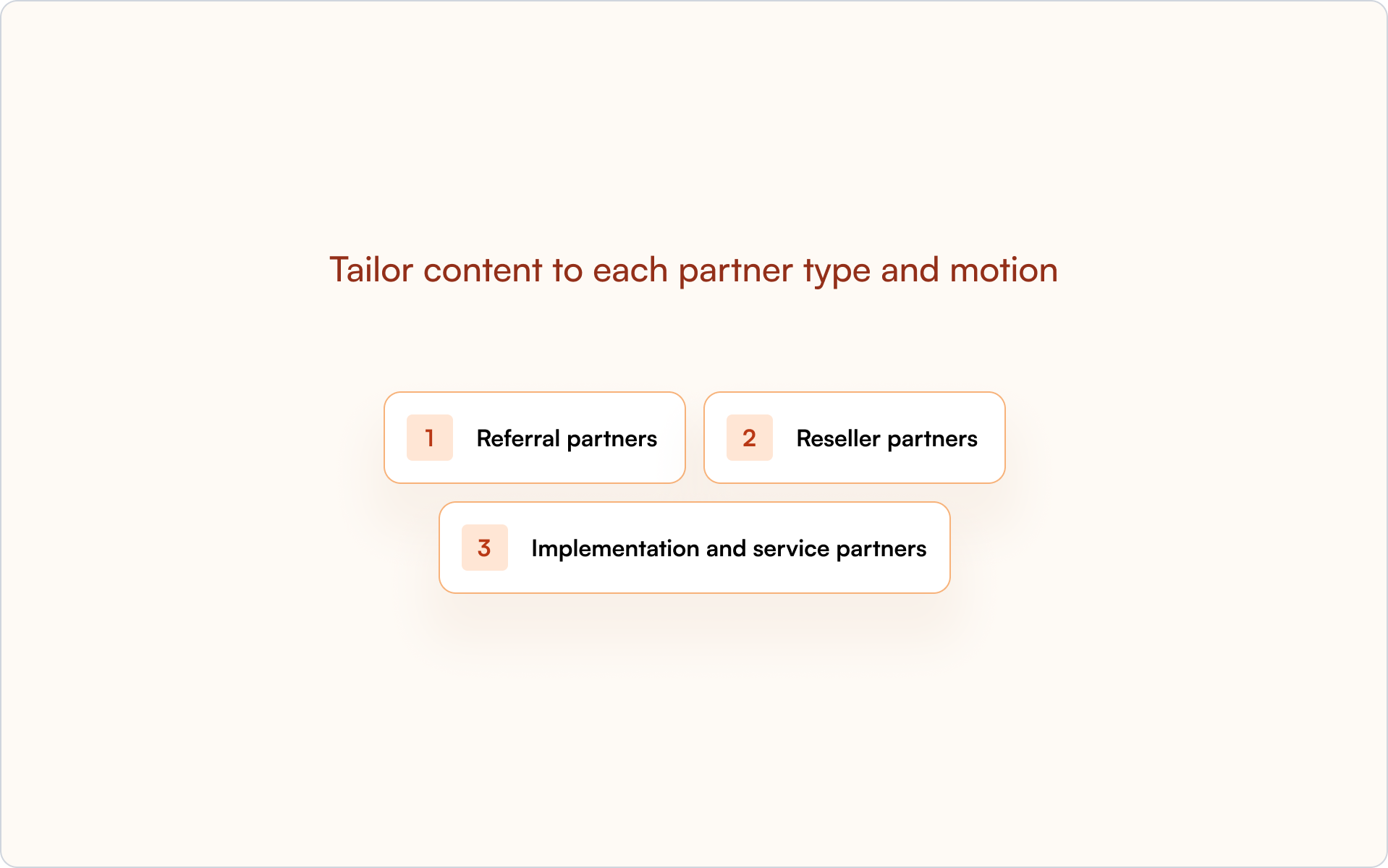
3. Tailor content to each partner type and motion
One of the most common reasons partner content programs underperform: every partner gets the same folder of assets. But a referral partner and a reseller are doing fundamentally different jobs — so they need different materials.
Referral partners
Optimize for speed and shareability: one-pagers, pre-written email templates, and landing pages they can forward to prospects. Referral partners typically don’t need deep product training — they need to qualify opportunities and hand them off cleanly.
Reseller partners
Resellers need full sales enablement: comprehensive pitch decks, demo scripts, pricing calculators, and objection handling guides. If they own the sales cycle, your program has to help them sound like experts quickly.
Implementation and service partners
Prioritize technical documentation, implementation playbooks, and certification materials. These partners deliver value post-sale, so your content should reduce delivery risk and improve time-to-value.
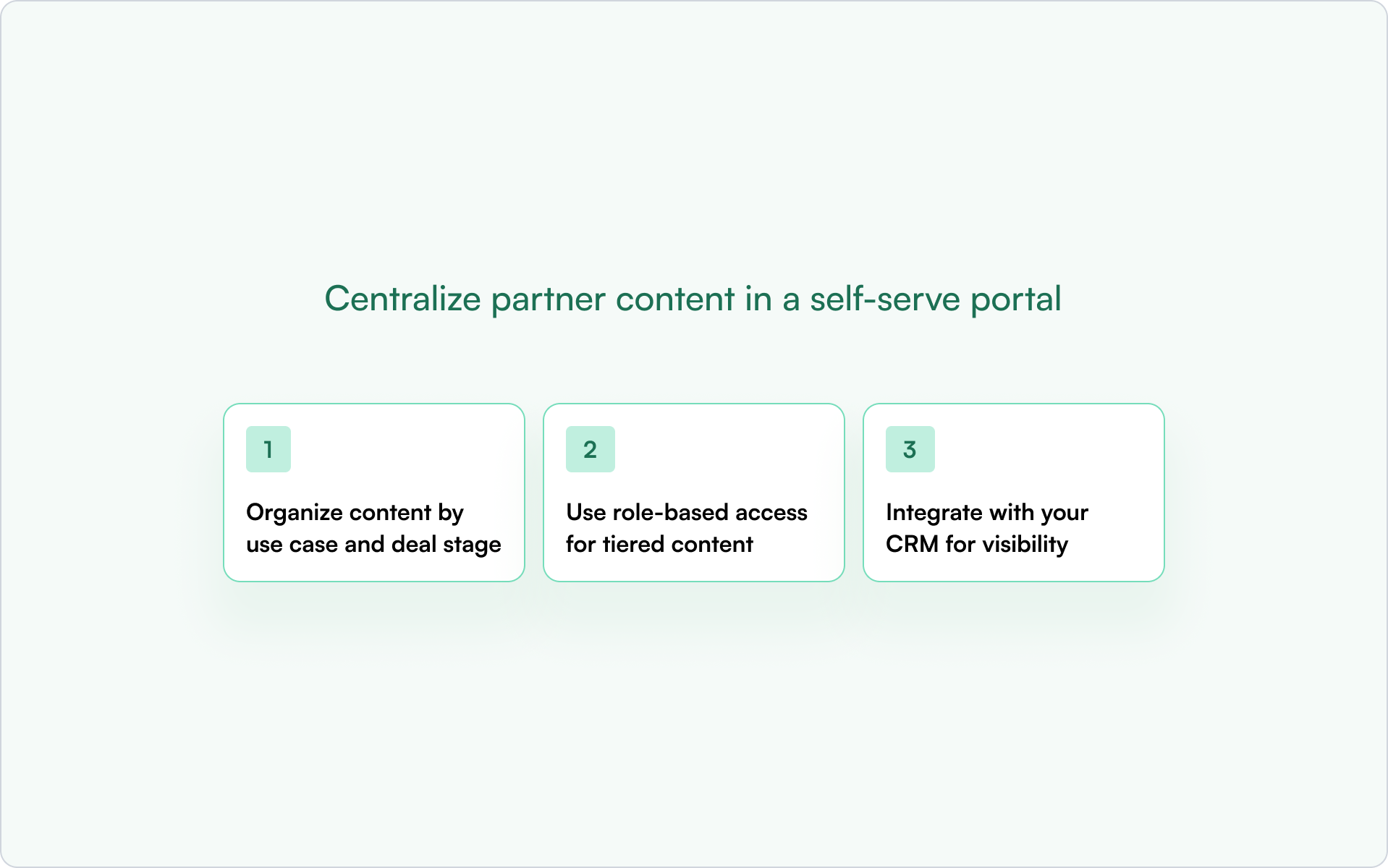
4. Centralize partner content in a self-serve portal
Partners won’t hunt through old email threads or shared drives. A centralized portal makes assets discoverable and ensures everyone is working from the same version.
Organize content by use case and deal stage
Structure the portal so partners can find what they need in seconds. Organize by “I’m trying to…” use cases — not your internal folders. A partner looking for a competitive comparison shouldn’t have to guess whether it lives under “Marketing > Collateral > Q3.”
Use role-based access for tiered content
Not every partner should see everything. Gate advanced content — pricing details, product roadmaps, competitive intelligence — behind certification or partner tier status. Done well, this also creates a healthy incentive for partners to level up.
Integrate with your CRM for visibility
When your portal connects to HubSpot or Salesforce, you can see which partners access which content and tie engagement back to pipeline. A CRM-first approach keeps this data visible to your revenue team — not trapped in a separate system.
5. Distribute content without forcing portal logins
Here’s the reality: many partners won’t log into your portal regularly. The best practices for SaaS partner content programs assume that, and they meet partners where they already work — inbox, Slack, and direct links.
Push content via email and Slack alerts
Don’t wait for partners to “check the portal.” Proactively send new or updated content through channels they use daily. A quick Slack message with a direct link to a new battle card beats hoping they stumble on it later.
Enable off-portal access for key assets
When possible, allow partners to access critical assets without authentication. Removing friction matters most in high-pressure moments — like five minutes before a discovery call.
Capture engagement without requiring authentication
Use trackable links or lightweight forms so you can still see what’s being used, by whom, and when — without adding password friction.
6. Enable co-branding without losing brand control
Partners want to put their logo on your materials. You want your messaging (and legal disclaimers) to stay accurate. The compromise is to design co-branding into the system — not bolt it on later.
Set co-branding templates and guardrails
Create templates with clearly defined editable zones (partner logo and contact info) and locked zones (product messaging, positioning, disclaimers). Make the rules obvious so partners can move fast without breaking your brand.
Automate partner logo insertion
Where possible, use dynamic templates that auto-populate a partner’s branding based on who’s logged in. This reduces manual edits and avoids “wrong-logo” mistakes.
Review and approve workflows
For high-stakes assets — customer-facing decks, public case studies, press releases — include an approval step. Automate what you can, but protect brand integrity where it matters.
7. Keep content fresh with version control and alerts
Outdated content is worse than no content. It creates confusion, slows deals, and erodes partner trust. Maintenance needs to be part of your operating rhythm — not a once-a-year cleanup.
Set refresh cadences by content type
Define review cycles and put them on a calendar. For example: review pricing quarterly, update product docs after each release, and refresh competitive intel monthly.
Sunset outdated assets automatically
Archive or hide assets past their expiration date. Partners shouldn’t accidentally pull last year’s pricing sheet the night before a proposal goes out.
Notify partners when content is updated
When you update an important asset, tell partners immediately. Email or Slack notifications keep everyone aligned on the latest version.
8. Track content engagement and tie it to revenue
If you want partner content to earn ongoing investment, you need to show how it impacts pipeline and revenue — not just downloads.
Measure views, downloads, and shares
Engagement metrics show what’s popular. Track at both the asset level and the partner level to identify high-performing content and your most engaged partners.
Connect engagement to deal progression
Look for patterns that correlate with movement: when a partner downloads an ROI calculator and then registers a new deal, you want that sequence visible. Build reporting that makes content a measurable part of deal velocity.
Report content ROI in partner QBRs
Bring content engagement data into quarterly business reviews. It’s one of the fastest ways to align on what’s working, what’s missing, and what you should build next together.
9. Scale your SaaS partner content program
What works with ten partners breaks at one hundred. Scaling a partner content program requires automation, personalization, and strong self-serve foundations — otherwise your partner team becomes a content concierge.
Automate content distribution workflows
Trigger content based on milestones: completing a certification, registering a first deal, entering a new tier, or launching a joint campaign. Automation keeps the partner experience consistent as volume grows.
Use AI for personalization at scale
AI can recommend the most relevant assets based on partner type, deal stage, and past engagement. Relevance drives usage — and usage drives revenue.
Reduce manual content requests with self-serve
Repeated partner requests for the same asset usually mean it’s not findable. Treat every manual request as product feedback on your portal’s organization, then close the gap.
Conclusion: make partner content a growth system, not a folder
The best practices for SaaS partner content programs aren’t about producing more collateral. They’re about building a repeatable system: the right assets for each partner motion, delivered where partners actually work, kept current with version control, and measured against pipeline and revenue.
If you get those fundamentals right, your partners stop feeling like a channel you have to manage — and start acting like a go-to-market multiplier.
Build your SaaS partner content program with Introw
Introw’s CRM-first partner portal helps teams centralize, distribute, and track partner content — all inside HubSpot or Salesforce.
- Content hosting directly in the portal
- Announcements to push updates via email and Slack
- Engagement tracking that syncs to CRM records
- Off-portal access so partners don’t always need logins
Get a demo to see how Introw helps SaaS partner programs deliver content partners actually use.
What Is Partner Collaboration and Why Most Teams Get It Wrong
Partner collaboration is when two or more businesses work together — sharing resources, expertise, and goals — to achieve outcomes neither could reach alone. In B2B SaaS, it’s the difference between signed partners who never engage and partners who actively drive pipeline.
Most teams get partner collaboration wrong not because they lack partners, but because they rely on portals partners won’t log into, data that lives outside the CRM, and rules that aren’t visible to anyone. This guide breaks down what collaboration actually means, why it breaks down in the real world, and how to build collaboration that scales without the usual friction.
What Is Partner Collaboration?
Partner collaboration is when two or more entities — businesses, organizations, or individuals — actively work together, sharing resources, expertise, and goals to achieve outcomes greater than either could accomplish alone.
In B2B SaaS, partner collaboration typically means vendors and their channel partners (resellers, referral partners, implementation partners) coordinating on deals, sharing pipeline visibility, and aligning on go-to-market efforts.
The key distinction: partner collaboration goes beyond signing agreements. It’s the day-to-day execution — deal updates, shared visibility, and mutual accountability — that turns a partnership into revenue.
Core elements of effective partner collaboration
- Shared goals: Working toward common revenue objectives, not just individual sales targets
- Resource pooling: Combining knowledge, technology, market reach, and customer relationships
- Mutual benefit: Creating value for all parties — market access, enhanced offerings, revenue growth
- Trust and communication: Sharing deal updates, challenges, and information openly
- Strategic approach: Defining roles, responsibilities, and processes upfront
When these pieces are in place, partners become a scalable revenue channel. When they’re missing, you end up with signed partners who never engage — or worse, partners who engage but create confusion instead of pipeline.
Why Partner Collaboration Matters for Revenue Growth
Partner collaboration isn’t a relationship exercise. It’s a revenue lever.
When collaboration works, partners accelerate market expansion, reduce customer acquisition costs, and help you deliver more complete solutions. When it doesn’t, you’re left chasing updates, losing deals to confusion, and wondering why your partner program isn’t scaling.
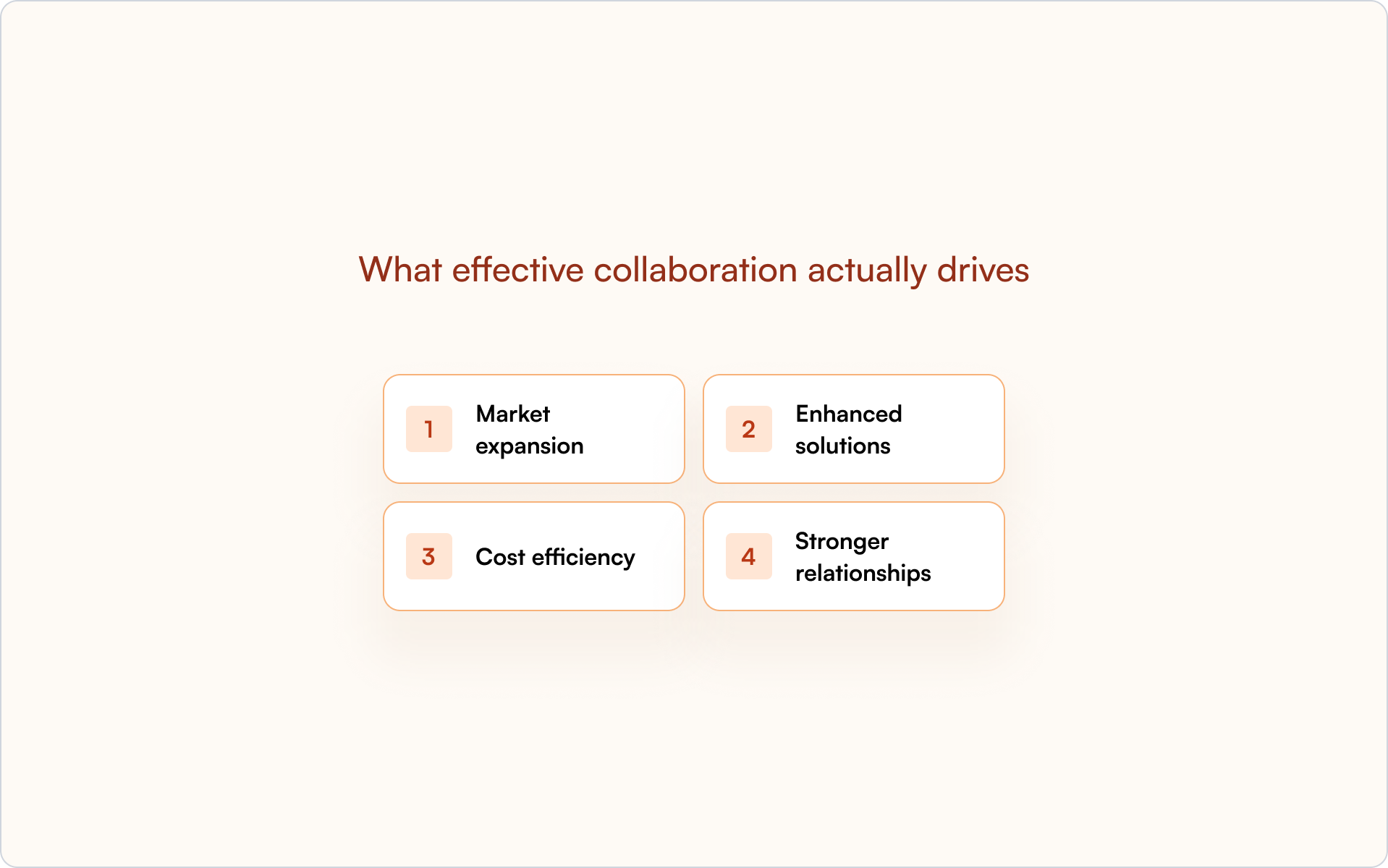
What effective collaboration actually drives
- Market expansion: Partners with relationships in your target verticals or regions open doors faster than your direct team alone
- Enhanced solutions: Combining your product with partner expertise — implementation, integrations, services — creates better customer outcomes
- Cost efficiency: Sharing go-to-market costs like marketing, sales infrastructure, and support reduces your overall spend
- Stronger relationships: Deeper partner ties lead to more referrals, renewals, and co-sell opportunities over time
The math is straightforward: partners who collaborate effectively bring real pipeline. Partners who don’t become names in a spreadsheet.
Collaboration vs. Partnership (and Why the Difference Matters)
Partnership and collaboration get used interchangeably, but they’re not the same thing.
A partnership is the formal agreement — the contract, the tier, the commercial terms. Collaboration is the ongoing work of executing together. You can have a signed partnership agreement and still fail completely at partner collaboration.
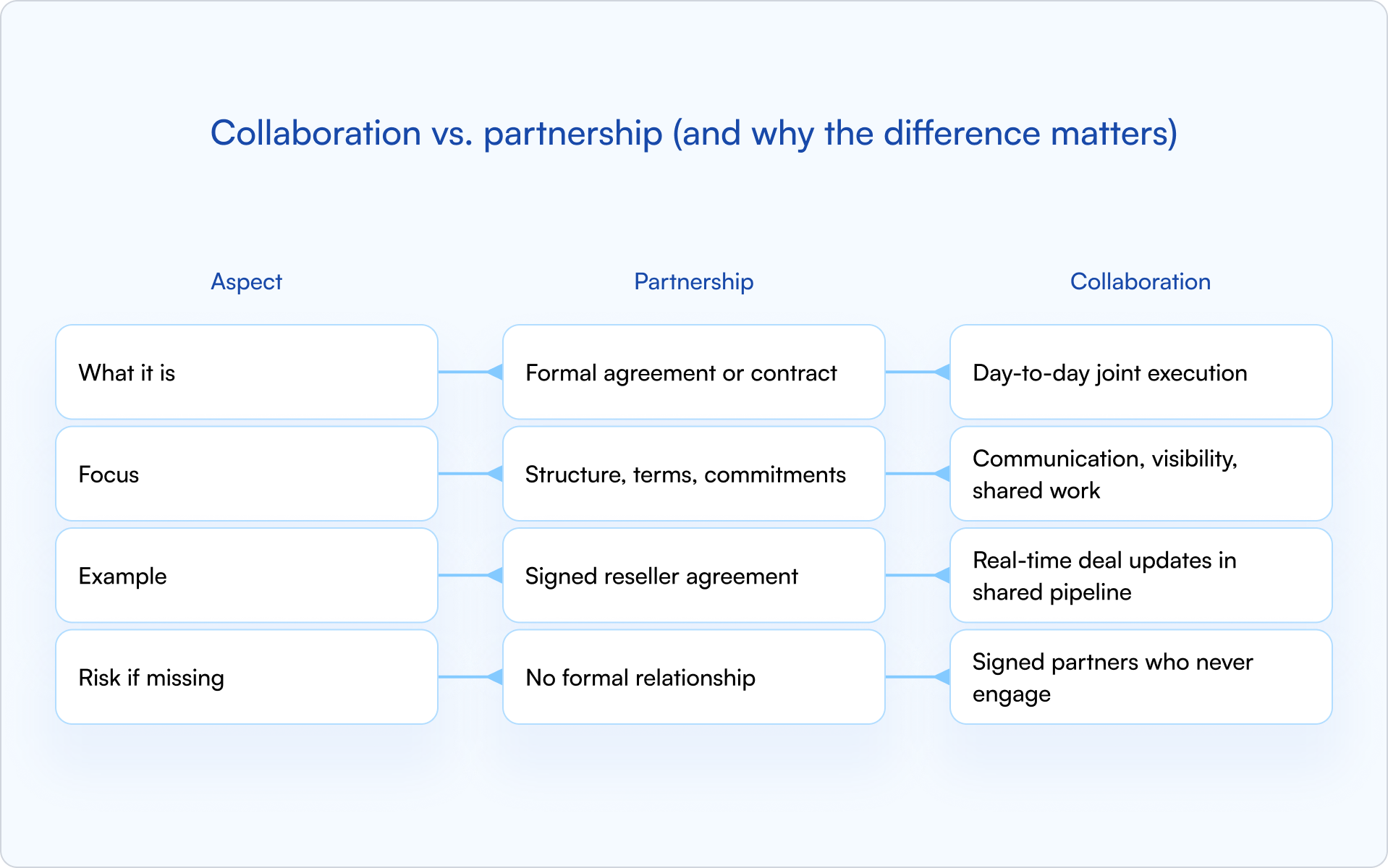
This distinction matters because most partner programs fail at collaboration, not partnership. The agreements are fine. The execution is where things break down.
Why Most Teams Fail at Partner Collaboration
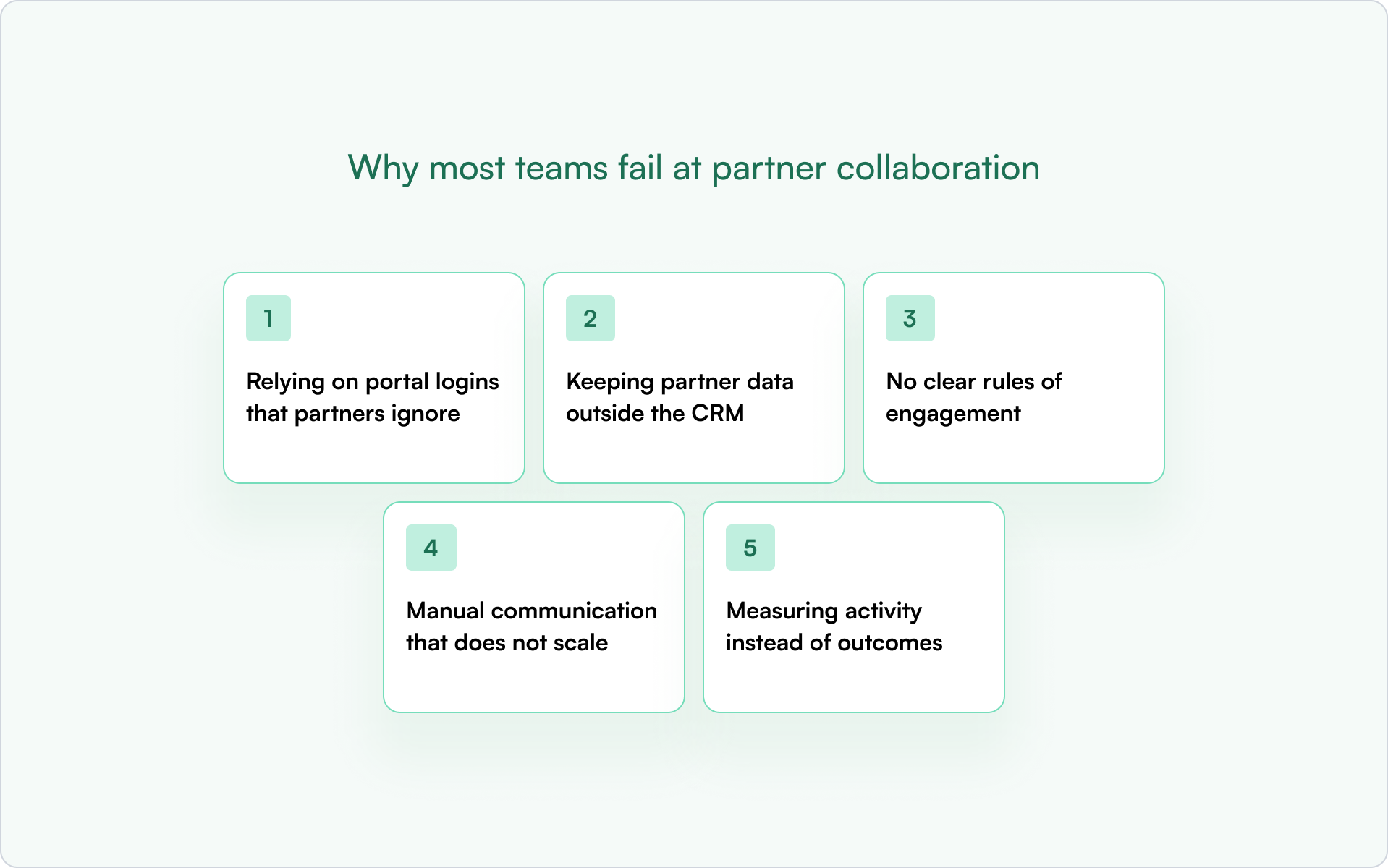
If you’ve ever wondered why your partner program looks good on paper but underdelivers on revenue, the answer is usually one (or more) of these five issues.
1) Relying on portal logins that partners ignore
Traditional PRMs require partners to log into a separate portal to submit deals or get updates. The problem is simple: most partners won’t do it. They’re busy selling — not managing another set of credentials.
The portal becomes a graveyard. Deals go unregistered. Updates stop flowing. And you’re left wondering why engagement dropped off right after onboarding.
2) Keeping partner data outside the CRM
Many teams track partner activity in spreadsheets, emails, or siloed tools. Sales can’t see partner pipeline. RevOps can’t trust the data. Attribution becomes guesswork, and forecasting breaks.
This is where “CRM-first” matters. When partner data lives inside HubSpot or Salesforce — not alongside it — everyone sees the same reality.
3) No clear rules of engagement
Partners and direct sales clash when there’s no clarity on who owns which accounts, how deals are registered, or what protection windows exist. This causes channel conflict and erodes trust fast.
Without documented rules, every overlap becomes a judgment call. And judgment calls don’t scale.
4) Manual communication that does not scale
Chasing partners for updates via email or Slack threads works with five partners. It collapses at fifty. Updates get lost, deals go dark, and partner managers burn out.
The fix isn’t more effort — it’s automation that keeps communication flowing without manual follow-up.
5) Measuring activity instead of outcomes
Tracking portal logins or training completions misses the point. What matters is partner-sourced revenue, deal velocity, and pipeline contribution.
Activity metrics create false confidence. Outcome metrics tell you whether partner collaboration is actually working.
How to Collaborate with Partners Without Portal Logins
Here’s the shift that changes everything: partners don’t have to log into a portal to collaborate effectively.
Off-portal collaboration means partners can register deals, provide updates, and stay informed via email or lightweight forms — no credentials required. Replies sync back to the CRM automatically, so nothing gets lost and your team isn’t stuck reconciling notes later.
What off-portal partner collaboration looks like in practice
- Email-based updates: Partners reply to notifications, and responses sync to the CRM deal record automatically
- Lightweight forms: Shareable links for deal registration — no account creation required
- Real-time visibility: Partners see deal status without logging in, and you see their updates inside your CRM
When you remove the login barrier, engagement goes up. When updates sync automatically, data stays clean. That’s the foundation of partner collaboration that actually scales.
What Effective Partner Collaboration Looks Like
When collaboration works, it’s visible in how deals move — not just in how many partners you’ve signed.
Shared visibility into deals and pipeline
Both you and your partners see deal status, next steps, and blockers without chasing each other. Property-level sharing lets you show partners what they need (stage, protection expiry, next step) without exposing internal notes or pricing.
Frictionless, real-time communication
Updates flow automatically via email or Slack. Partners don’t have to remember to log in. You don’t have to chase them. Every touchpoint is logged in the CRM timeline.
Clear ownership and accountability
Deal registration establishes who owns what and for how long. Rules of engagement are documented and accessible. Disputes are rare because the rules are visible to everyone.
Mutual value and win-win structures
Collaboration works when both sides benefit. Partners get leads, visibility, and support. You get pipeline, market reach, and revenue. Align incentives clearly, and the relationship sustains itself.
Tools and Technology to Collaborate with Partners
The right technology makes partner collaboration repeatable. The wrong technology creates another system to manage — and another place where the truth gets lost.
What to look for in partner collaboration tooling
- CRM integration: Tools that work inside HubSpot or Salesforce — not alongside them — keep data clean and visible
- Deal registration: Centralized submission, approval workflows, and protection windows that enforce your rules
- Partner portal: A self-serve hub for resources, deal status, and communication — but not the only way to engage
- Off-portal engagement: Email and Slack-based collaboration for partners who won’t log in
- Reporting and attribution: Accurate tracking of partner-sourced vs. partner-influenced revenue
Introw is a CRM-first PRM built directly on HubSpot and Salesforce. It enables off-portal collaboration without forcing partner logins — so partners stay engaged and your data stays clean.
If you want to see how this works in practice, get a demo to walk through how Introw supports partner collaboration inside your CRM.
How to Measure Partner Collaboration Success
Activity metrics tell you partners are logging in. Outcome metrics tell you whether partner collaboration is driving revenue.
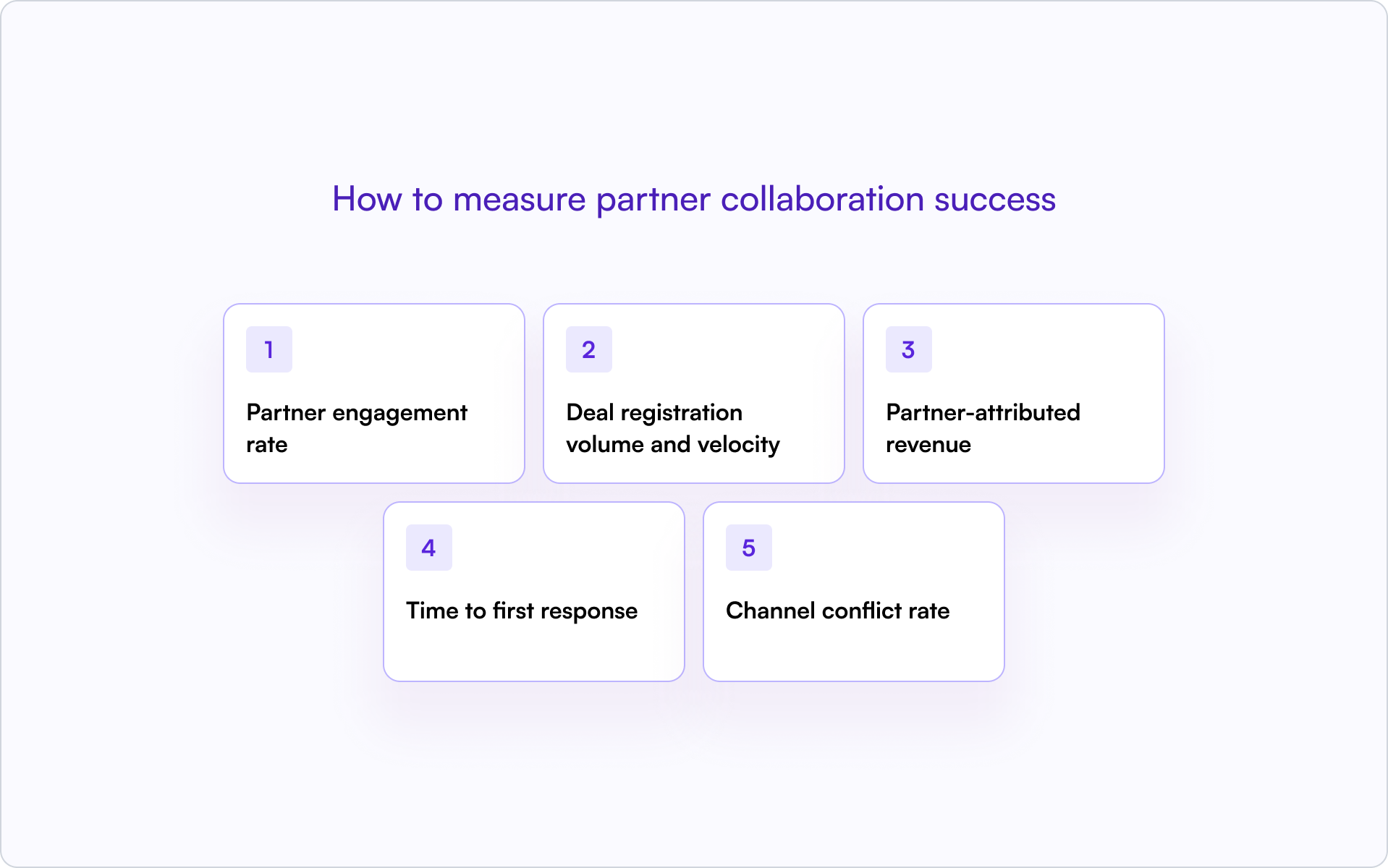
Partner engagement rate
The percentage of partners actively submitting deals or providing updates within a given period. Low partner engagement signals friction in the collaboration process — usually a login or communication problem.
Deal registration volume and velocity
How many deals partners register and how quickly deals move through stages. This measures whether partners are bringing real pipeline, not just names.
Partner-attributed revenue
Closed-won revenue sourced or influenced by partners. This is the ultimate measure of whether collaboration drives business results.
Time to first response
How quickly partners respond to deal updates or requests. Faster responses indicate healthy, engaged collaboration.
Channel conflict rate
The frequency of disputes over deal ownership between partners or between partners and direct sales. Lower is better — it means your rules of engagement are working.
Build Partner Collaboration That Scales Inside Your CRM
Partner collaboration doesn’t fail because of bad intentions. It fails because of bad systems — portals partners won’t use, data that lives outside the CRM, and rules that aren’t visible or enforced.
The teams that scale partner revenue don’t rely on heroics. They rely on clear rules, shared visibility, and tools that meet partners where they already work.
If you’re ready to collaborate with partners without chasing logins or losing deals in spreadsheets, get a demo of Introw to see how CRM-first partner collaboration works.
16 Deal Registration Software Platforms Your Partners Will Actually Use
What would change if every partner could register deals from email or Slack in seconds?
Most deal registration programs still rely on long forms, portal logins, and manual updates. That slows partners down and creates a duplicate pipeline and unclear ownership.
A modern deal registration process removes those steps, automates approvals, and keeps every deal stage in your CRM. When registering deals feels easy, partners submit earlier and stay aligned with your team.
You’ll learn
- what effective deal registration software looks like today,
- how to evaluate the essentials,
- and which platforms actually help partners register deals consistently.
So where does friction come from, and how does a better workflow protect partner trust and improve forecasting?
Why deal registration still breaks (and how to fix it)
Deal registration should be simple. Partners register deals, your team reviews them quickly, and everyone stays aligned.
Yet many deal registration programs still create friction. Partners hit access issues, approvals move slowly, and deal data becomes inconsistent.
Over time, this reduces partner trust and increases channel conflict across direct and indirect sales.
Deal registration process friction
Most deal registration failures come from three predictable blockers:
- Partner portals that require logins or too many steps.
- Deal submission forms that take too long to complete.
- Approval delays that leave partners without updates.
When the process feels heavy, partners default to emailing an AE instead of using the deal registration tool.
This leads to duplicate deal data, unclear ownership, and rising tension between channel partners and the direct sales team.
Channel managers then lose visibility into deal stages and partner behavior.
A common breakdown looks like this:
- A partner tries to register deals but cannot access the partner portal easily.
- The direct sales team enters the same customer manually.
- Conflicting records appear, and no one has a clean view of deal progress.
This cycle hurts partner relationships and weakens your partner program.
What good deal registration looks like
A strong deal registration program focuses on three essentials:
- Off-portal intake through email, Slack, or lightweight links.
- Instant confirmations tied to CRM deal stages.
- Clean, CRM-native deal data that updates in real time.
With these elements in place, partners register deals earlier and more consistently.
Clear rules reduce conflict when multiple partners work with the same customer. Automated updates keep partners informed without manual data entry. And real-time visibility across your sales pipeline helps both channel partners and internal channel managers stay aligned.
Here is how modern systems solve old problems:
Platforms that follow this model, including Introw’s deal and lead registration workflow, reduce friction by syncing every submission directly into the CRM and keeping partners informed automatically.
Why this matters for deal flow
Deal registration software works only when partners trust the experience.
When partners can register deals quickly, stay informed, and see consistent deal stages, they engage more. This leads to cleaner partner pipeline visibility, fewer disputes, and faster revenue cycles.
To evaluate which deal registration software delivers on this, the next section breaks down the core features every buyer should look for in 2026.
How to evaluate deal registration tools (buyer checklist)
Choosing deal registration software is easier when you know what actually drives partner adoption.
Most teams compare features, but in our experience, the real difference comes from how well the tool supports your partners day to day.
If the process feels simple, partners register deals more often, and your deal data stays clean inside Salesforce or HubSpot.
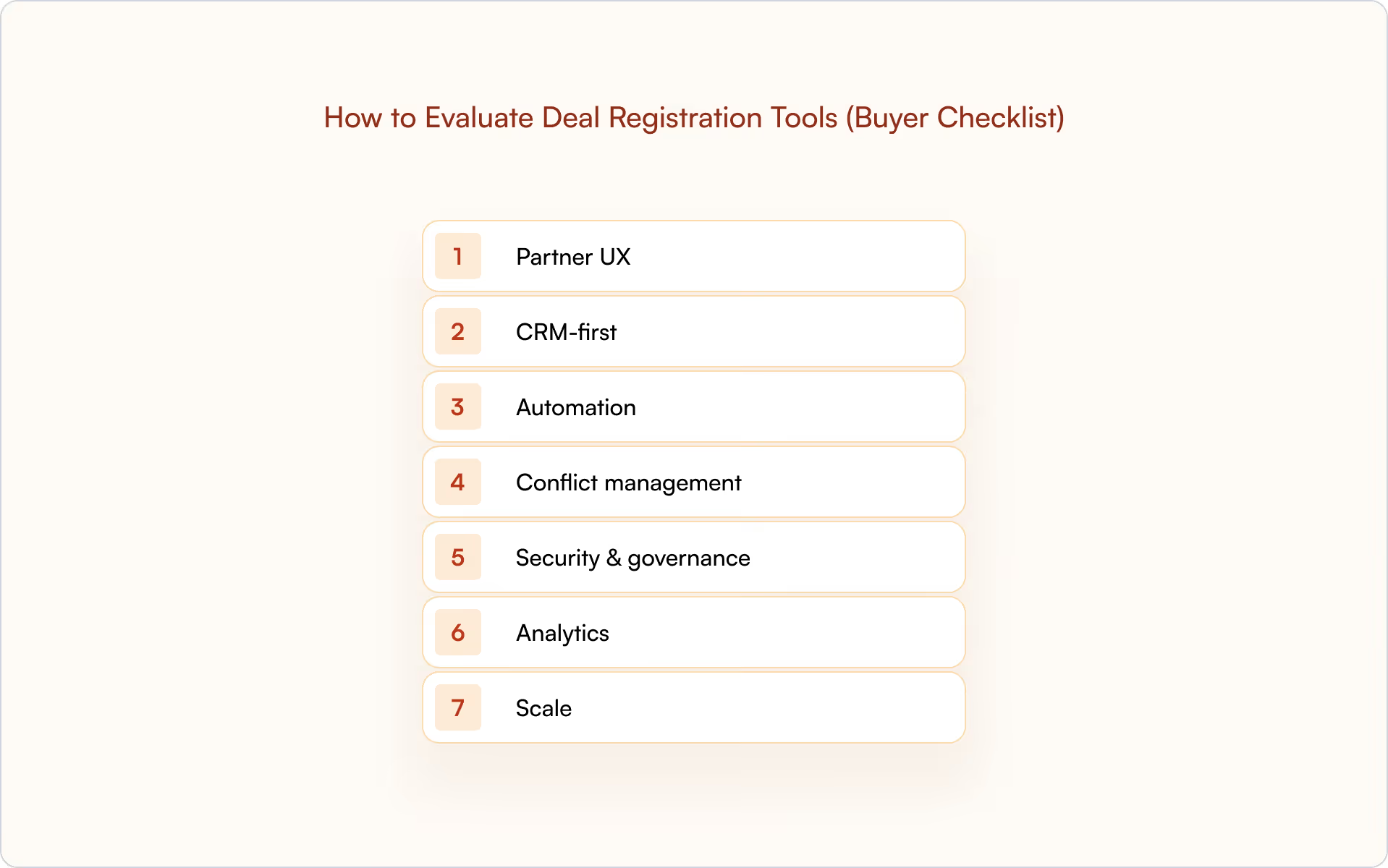
Start with partner experience
Partner experience is the biggest factor in deal registration success. If the process feels slow or confusing, partners will skip it and email someone on your direct sales team instead.
Strong tools make deal registration simple by offering:
- Fast intake through email, Slack, or a short deal submission form.
- Clear steps so partners know exactly how to register deals.
- Mobile-friendly options for partners who work on the go.
We see the best results when channel partners can register deals without touching a partner portal. It removes friction and improves partner trust from the start.
Set up a good deal registration module
A good deal registration module should help your business reduce channel conflict and keep deal progress visible across teams.
When tools automate the steps partners usually struggle with, your partner program becomes easier to run.
Look for:
- Automatic approvals based on time stamps, partner tier, or ownership rules.
- Real-time sync of deal stages inside your CRM.
- Clean deal data that does not require manual data entry.
These features keep your channel pipeline data accurate and give both partner managers and internal sales teams a single view of each opportunity.
Governance and scale as your partner program grows
As your partner program expands, you need structure. Different partner segments often need different experiences, and your internal teams need clear rules to avoid mix-ups.
We suggest checking for:
- Role-based access so partner managers and sales leadership see what they need.
- A reliable audit trail that tracks changes and partner behavior.
- Flexible segmentation for geos, partner tier, or product lines.
These guardrails help your business stay aligned as more partners register deals and your sales pipeline grows.
A quick way to compare tools
Why this checklist helps your business
A deal registration program only works when partners engage with it.
If you choose software that simplifies the process, your partners register deals earlier, your teams stay aligned, and you avoid the channel conflict that slows down revenue.
Now that you know what to look for, we can compare the deal registration tools that actually help partners register deals without friction.
The 17 best deal registration software platforms (2026)
We've put together our picks for solid deal registration tools that we see most often across SaaS partner programs.
Each one supports deal registration, but they solve different problems depending on your partner segments, tech stack, and channel strategy.
Use this section to match your program design to the right platform, not just the biggest brand.
1. Introw
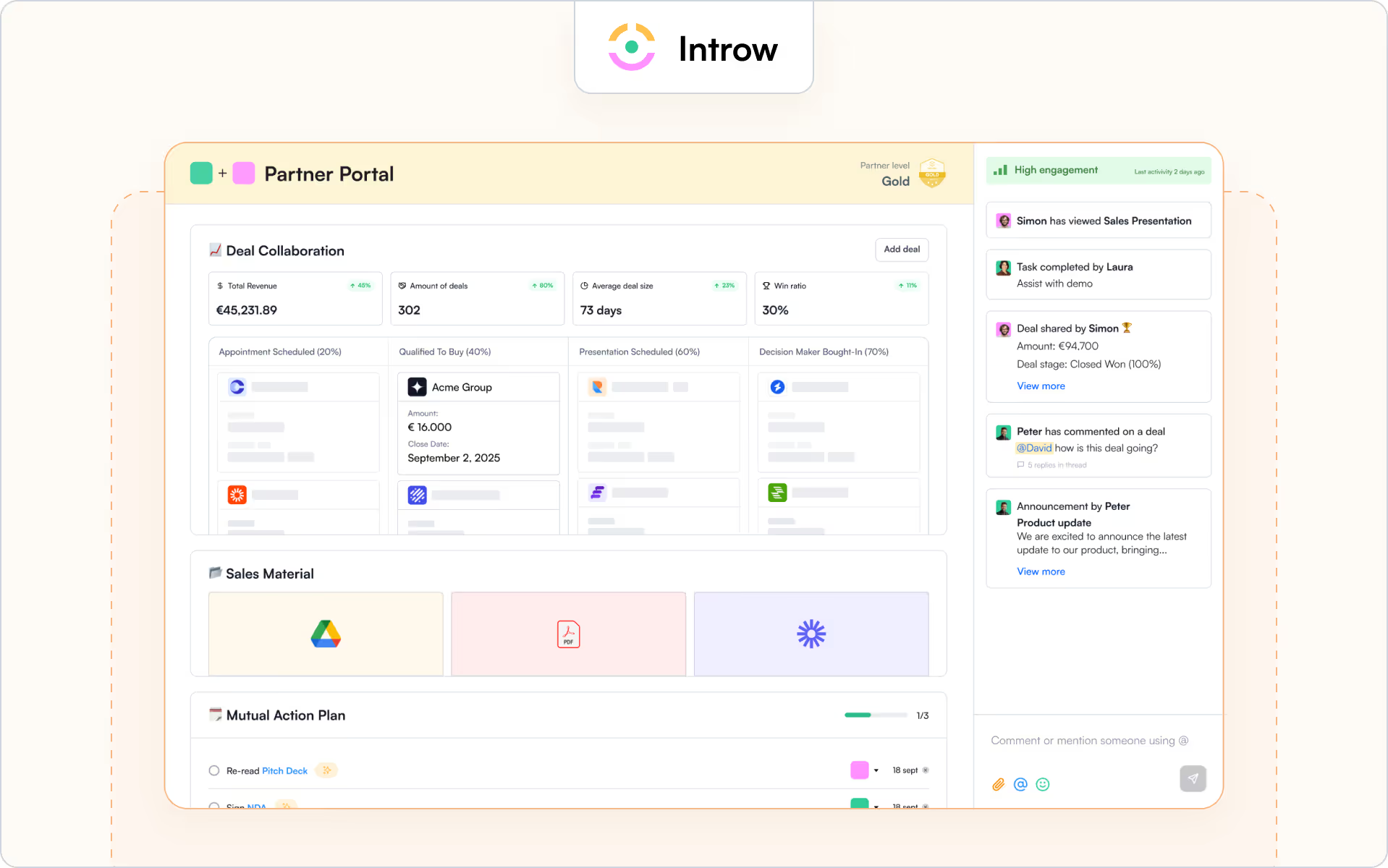
Introw is a CRM-native deal registration system that lets partners register deals from email, Slack, or lightweight links instead of a portal.
Who it’s for
B2B teams on Salesforce or HubSpot running referral, reseller, or co-sell motions with 20–300+ channel partners.
Why choose it
Partners register deals without logging in, while your teams work entirely from native CRM objects with real-time deal stages.
Standout capabilities
Off-portal intake, automated approvals, deal progress updates synced to Salesforce or HubSpot, and engagement analytics across the partner pipeline.
Keep in mind
Best if you want deal registration, partner engagement, and attribution in one CRM-first platform instead of a heavy portal.
Integrations/notes
Deep Salesforce and HubSpot integrations, Slack notifications, open API, and a focused deal registration module tied to clean pipeline data.
2. Impartner
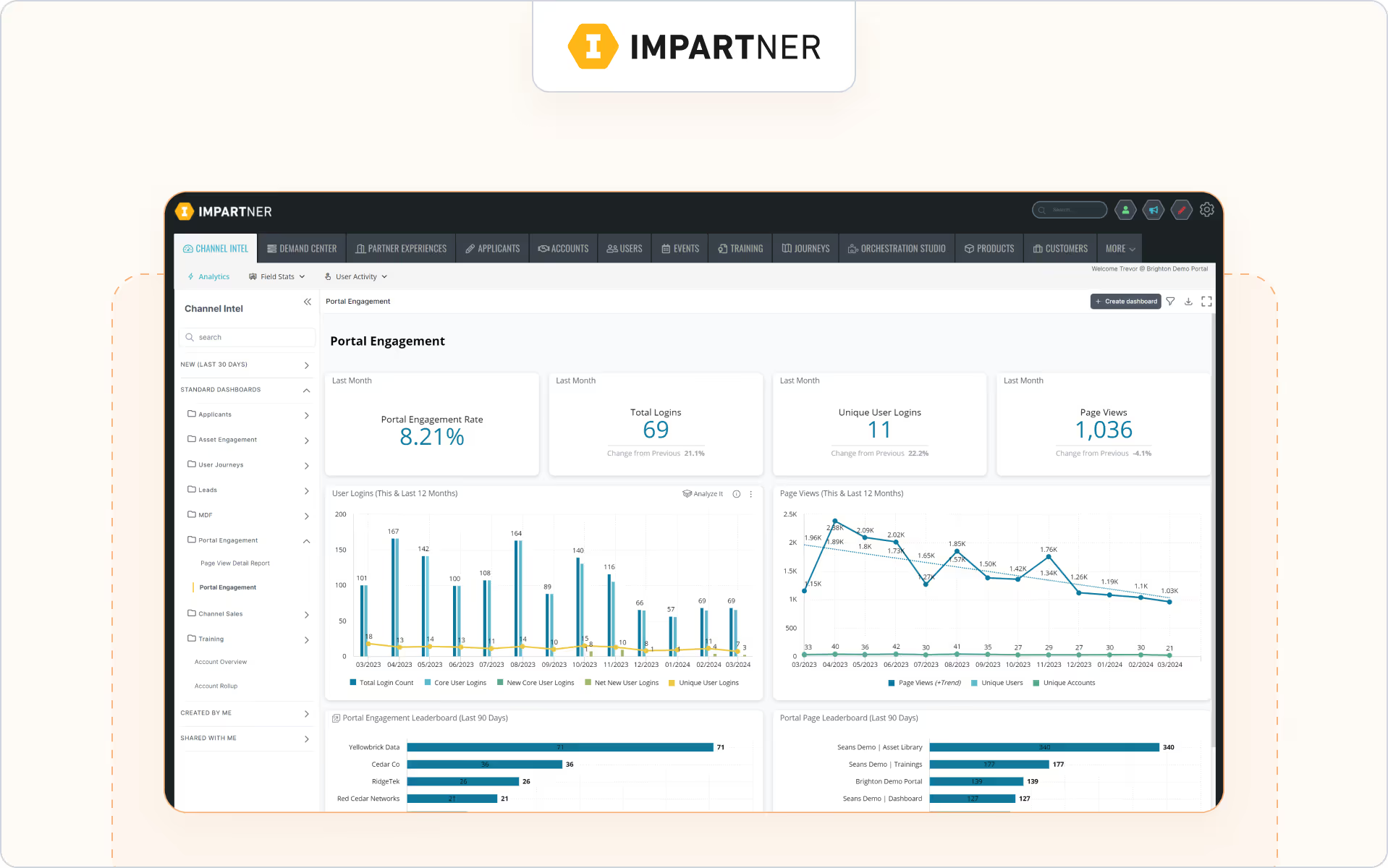
Impartner is a full PRM platform built for large channel programs with complex workflows.
Who it’s for
Global SaaS and technology companies with structured partner tiers and compliance needs.
Why choose it
Mature deal registration module, configurable approval logic, and strong governance for value-added resellers and distributors.
Standout capabilities
Tier rules, multi-step approvals, MDF, channel performance reporting, and tools to reduce channel conflict.
Keep in mind
Heavier setup; works best with dedicated channel managers and Salesforce-centric environments.
Integrations/notes
Strong CRM connectors, especially Salesforce, plus a wide ecosystem of partner marketing integrations.
3. Channelscaler (prev. Allbound)

Channelscaler combines partner training, content, and deal registration in a single portal.
Who it’s for
Teams that care about partner enablement as much as partner pipeline.
Why choose it
Partners can access marketing materials, complete training, and register deals in one place.
Standout capabilities
Content hub, learning paths, QBR support, and MDF handling with a guided partner portal.
Keep in mind
Portal-first model, so plan how you will keep partners logging in consistently.
Integrations/notes
Integrates with major CRMs and common partner marketing tools.
4. Kiflo
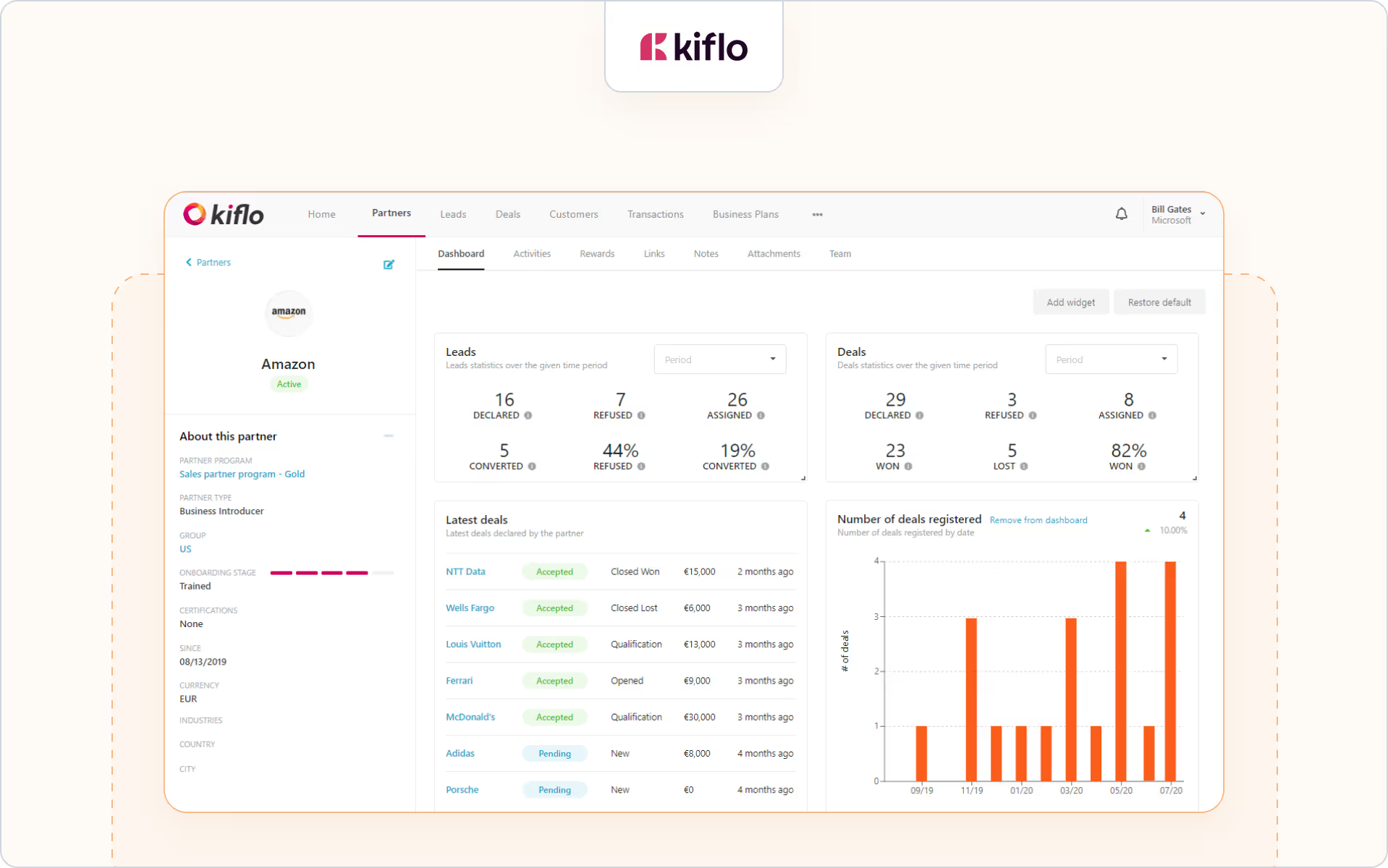
Kiflo is a simple, lightweight PRM with built-in deal registration for growing partner programs.
Who it’s for
SMB and mid-market SaaS companies launching a partner program for the first time.
Why choose it
Straightforward deal registration and onboarding without heavy admin.
Standout capabilities
Deal forms, partner onboarding, commission tracking, and basic partner performance reporting.
Keep in mind
Analytics and customization are lighter for complex global programs.
Integrations/notes
Connects with Salesforce, HubSpot, and common marketing tools.
5. Channeltivity
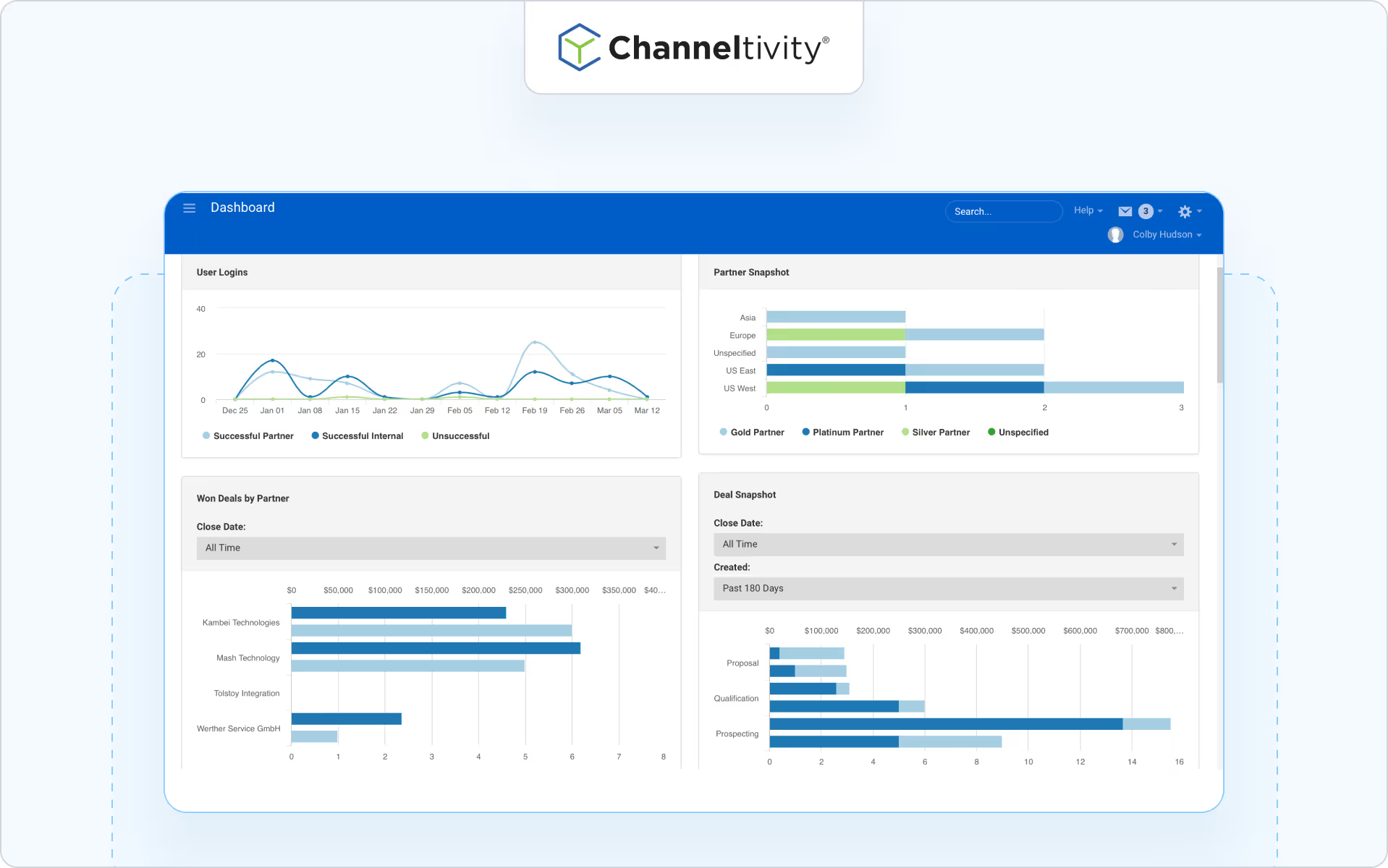
Channeltivity delivers structured deal registration and channel operations in a clean partner portal.
Who it’s for
Tech vendors that want predictable deal registration and partner management without enterprise overhead.
Why choose it
Reliable deal registration module with lead distribution and partner onboarding.
Standout capabilities
Deal forms, MDF, lead routing, referral management, and HubSpot integration.
Keep in mind
Off-portal submission is limited, so adoption relies on partner portal use.
Integrations/notes
Strong HubSpot integration with support for Salesforce.
6. Magentrix
Magentrix is a partner relationship management (PRM) platform.
Who it’s for
Salesforce-centric companies that need branded partner experiences.
Why choose it
Lets you build custom partner portals with community features, content, and deal registration.
Standout capabilities
Admin is no-code with drag-and-drop capabilities (and has been for the past three years). Magentrix emphasises that it’s the only enterprise-fit PRM with 100% no-code capability. You can also create flexible portal pages and set granular permission controls.
Integrations/notes
Magentrix positions itself as an alternative to Salesforce Experience Cloud, with integrations/connectors available (including Salesforce, depending on your setup) as well as support and marketing tools.
7. ZINFI
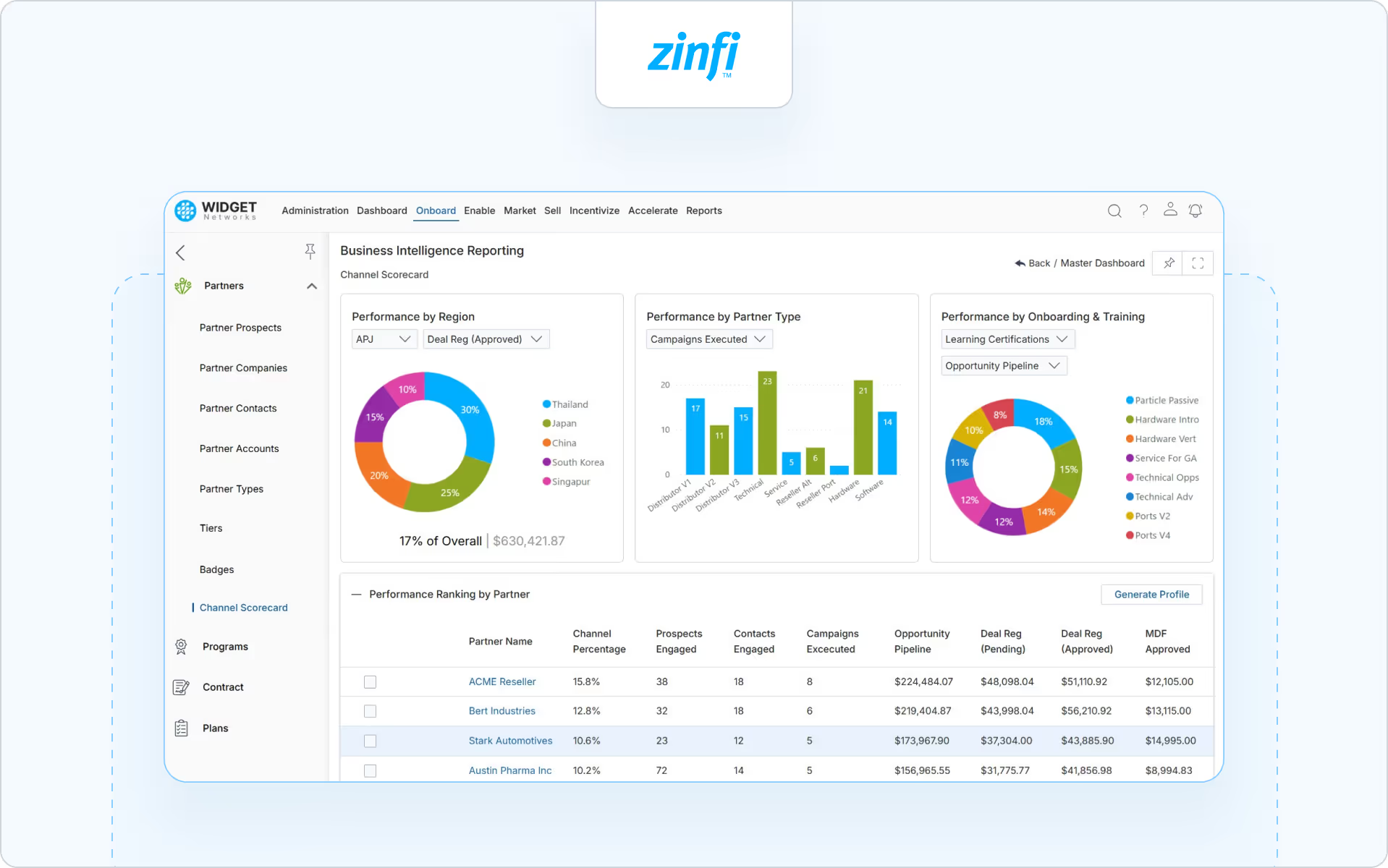
ZINFI supports large, complex channel programs that need detailed rules and compliance.
Who it’s for
Enterprises with many partner types, geos, and strict governance requirements.
Why choose it
Highly configurable approval rules and workflows for deal registration programs at scale.
Standout capabilities
Audit trails, rule engines, partner tiering, and multi-language support.
Keep in mind
Admin setup can be intensive; best for structured, mature channel programs.
Integrations/notes
CRM integrations plus connectors for channel marketing and data management.
8. WorkSpan
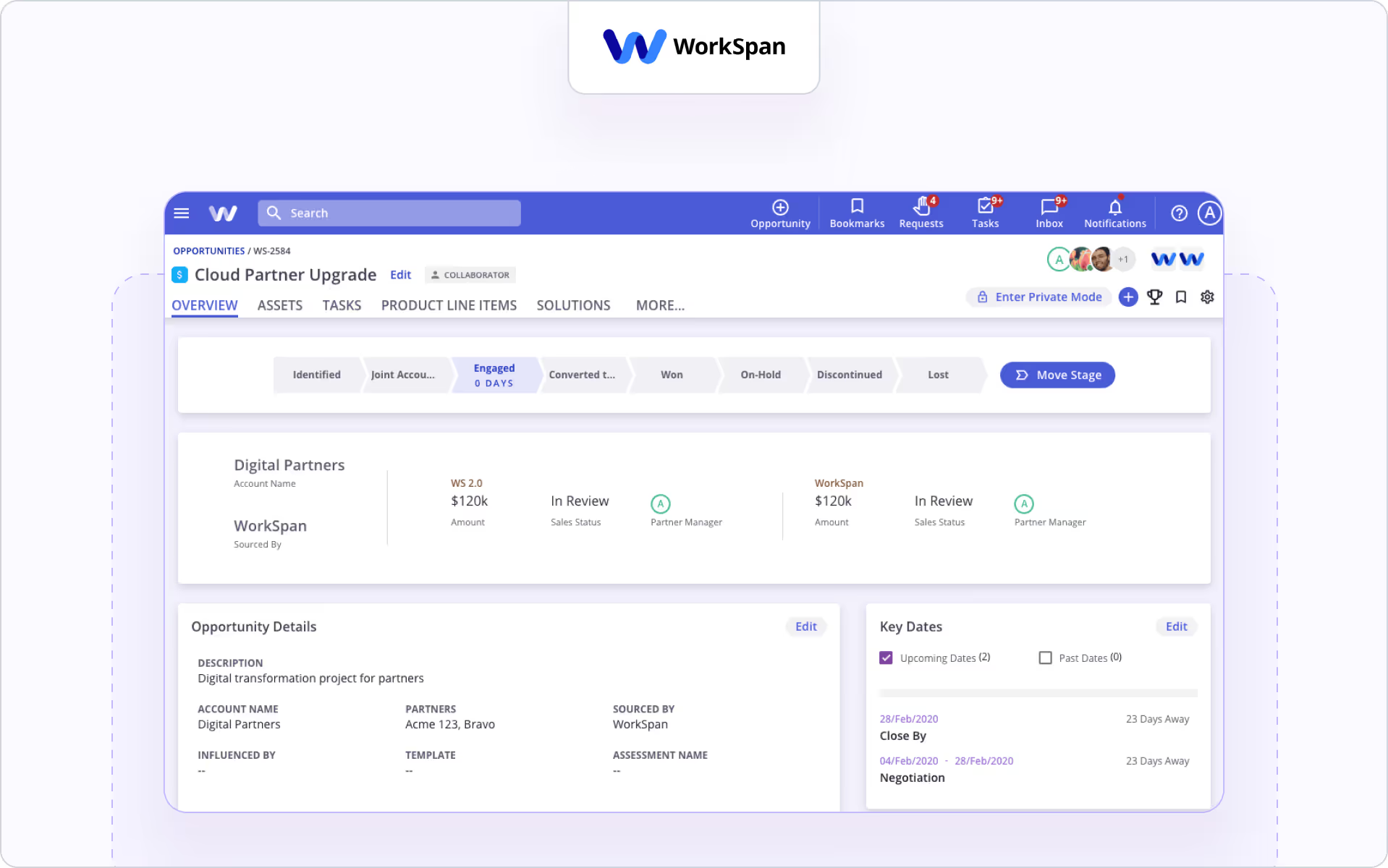
WorkSpan specializes in co-selling and alliances rather than classic PRM workflows.
Who it’s for
Vendors working with hyperscalers or cloud marketplaces on joint opportunities.
Why choose it
Shared opportunity records make co-sell deal stages clear across both organizations.
Standout capabilities
Joint pipeline, ecosystem account mapping, and influenced-versus-sourced reporting.
Keep in mind
Not a traditional deal registration portal; often used alongside other partner tools.
Integrations/notes
Salesforce, Microsoft Dynamics, and cloud marketplace ecosystems.
9. Unifyr (formerly Zift Solutions)

Unifyr is an all-in-one partner management platform that includes deal registration, partner marketing, and enablement.
Who it’s for
Established channel programs managing many partners, regions, and partner segments.
Why choose it
Combines deal registration, training, and channel marketing in one partner portal.
Standout capabilities
Through-channel marketing, certification paths, deal lifecycle tracking, and channel revenue reporting.
Keep in mind
Broad feature set; define which modules matter most so partners are not overwhelmed.
Integrations/notes
Connectors for Salesforce, HubSpot, and major marketing systems.
10. Computer Market Research (CMR)

CMR provides deal registration and compliance automation for traditional channel programs.
Who it’s for
Vendors managing distributors, resellers, or partners with strict governance requirements.
Why choose it
Strong multi-step approval logic and audit records for channel conflict management.
Standout capabilities
Deal registration module, ERP/CRM connectors, and tier-based workflows.
Keep in mind
UX leans traditional; training may be needed for partner adoption.
Integrations/notes
Supports major CRMs and ERPs used in hardware and distribution channels.
11. PartnerStack
PartnerStack mixes affiliate, referral, and reseller programs with simple lead and deal registration.
Who it’s for
SaaS companies working with many small partners across different partner segments.
Why choose it
Partners get one portal to find campaigns, register deals, and track rewards.
Standout capabilities
Marketplace, payout automation, onboarding flows, and basic deal registration.
Keep in mind
Not CRM-native; syncing tight pipeline data may require extra setup.
Integrations/notes
Billing, payment, and referral tools, with optional CRM integrations.
12. Kademi
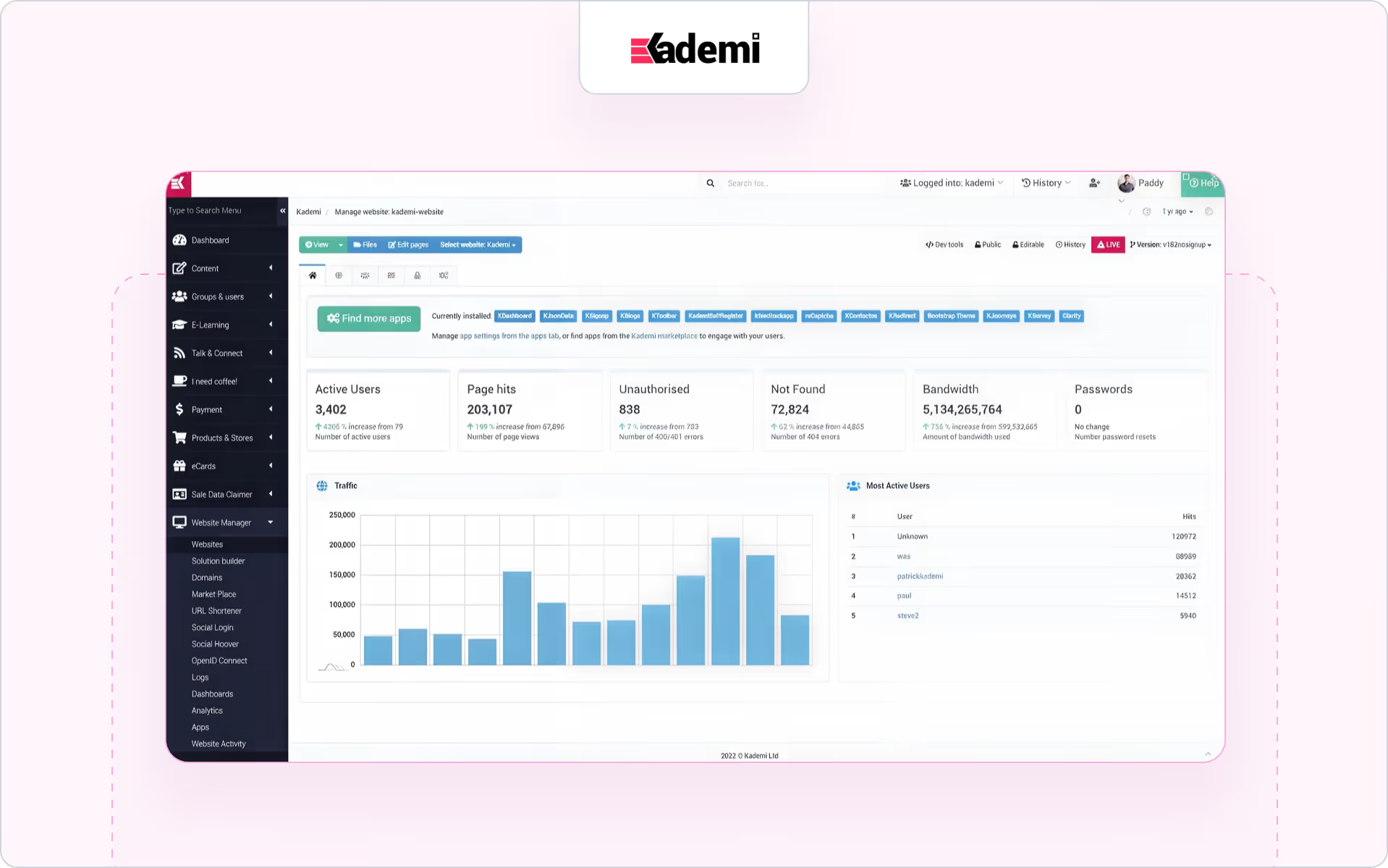
Kademi focuses on partner enablement, incentives, and engagement, with deal registration included.
Who it’s for
Partner programs that rely heavily on motivation, gamification, and performance tracking.
Why choose it
Combines deal registration with incentives, certifications, and training.
Standout capabilities
Gamification, rewards, content libraries, and deal forms in one portal.
Keep in mind
Best suited for programs where partner loyalty is the main driver.
Integrations/notes
CRM and marketing tool integrations to support partner programs.
13. Partnerize
Partnerize supports partnership management across affiliates, influencers, and strategic partners.
Who it’s for
Enterprise brands with hybrid partner programs, including both performance and strategic partnerships.
Why choose it
Tracking, contracting, and attribution across many partner types, including deal-like flows.
Standout capabilities
Payments, performance reporting, partner discovery, and flexible contracting.
Keep in mind
Not built for classic B2B co-sell deal registration.
Integrations/notes
API-driven integrations for analytics, data warehouses, and performance platforms.
14. TUNE

TUNE is a customizable partner platform for app, mobile, and performance-driven programs.
Who it’s for
Mobile-focused vendors and performance teams that need flexible tracking.
Why choose it
Open APIs let teams design their own partner workflows, including light deal-style submissions.
Standout capabilities
Custom tracking, flexible partner types, and strong analytics.
Keep in mind
Not designed for B2B channel sales or structured deal registration.
Integrations/notes
API-first, integrates with mobile and ad-tech ecosystems.
15. Affise

Affise powers performance and affiliate programs with tracking, attribution, and partner management.
Who it’s for
Digital commerce vendors working with large performance networks.
Why choose it
High-scale partner tracking with optional lead or deal-style inputs.
Standout capabilities
Fraud protection, performance analytics, and flexible payout setups.
Keep in mind
Not a traditional channel sales platform; confirm fit for B2B deal registration needs.
Integrations/notes
Analytics, BI tools, and performance marketing platforms.
16. Salesforce PRM
Salesforce PRM extends Sales Cloud with partner portal and deal registration features.
Who it’s for
Companies standardized on Salesforce that want deal registration inside their CRM.
Why choose it
Partners register deals through a branded portal built on Experience Cloud with native Salesforce objects.
Standout capabilities
Partner portal, opportunity sharing, channel sales workflows, and training through Trailhead.
Keep in mind
Out-of-the-box UX is basic; usually needs admin support to fine-tune.
Integrations/notes
Deep Salesforce ecosystem integration, including Slack.
We know reviewing this many tools can feel overwhelming, but having a clear comparison helps you focus on what truly improves partner adoption and reduces friction.
The best way to narrow your list is to run a small, structured test.
So how do you compare platforms in a way that reflects real partner behavior?
Your 30-day deal registration software evaluation plan
A simple, structured test is the easiest way to see which deal registration software your partners will actually use.
In our experience, a short evaluation reveals far more than feature lists or demos. It shows how your channel partners register deals in real conditions, how clean your deal data stays, and which tool removes friction for your teams.
Week 1: shortlist and configure
Start with two or three options from your list. Set them up with the basics:
- Deal fields, partner segments, and approval rules
- Off-portal intake through email, Slack, or a lightweight form
- CRM sync for deal stages and ownership
This gives you a real view of how each deal registration tool fits your sales process.
Week 2: run a small partner pilot
Invite ten partners from different partner segments. Ask them to register deals the same way they usually would and watch what slows them down.
Measure:
- How fast partners register deals
- What questions they ask during the deal registration process
- How easily they stay informed as deal data updates in your CRM
This shows the difference between portal-heavy tools and software deal registration that partners enjoy using.
Week 3: evaluate performance
Focus on the signals that matter for channel programs:
- Submission time and approval speed
- Percent of accepted deals and clean deal stages
- Partner feedback on ease of use and partner satisfaction
These metrics show which platform improves partner pipeline visibility and reduces channel conflict across teams.
Week 4: choose your winner
Share your findings with sales leadership and internal channel managers. Here are the steps:
- Highlight what helped partners register deals faster,
- Look at where deal data stayed clean,
- and evaluate which deal registration software supported your channel partners without extra effort.
A fast path forward is to adopt the tool that reduces friction and improves forecasting.
Want to see how a CRM-first workflow feels in Salesforce or HubSpot? Request an Introw demo.
To understand how this plays out when partners register deals without hesitation, it helps to look at how Introw handles the entire flow.
Why SaaS teams pick Introw for deal registration
If you want partners to register deals consistently, keep deal data clean, and avoid channel conflict, the experience has to be simple.
Introw was built for that.
It meets partners where they already work, keeps your CRM as the single source of truth, and removes the manual work that slows teams down.
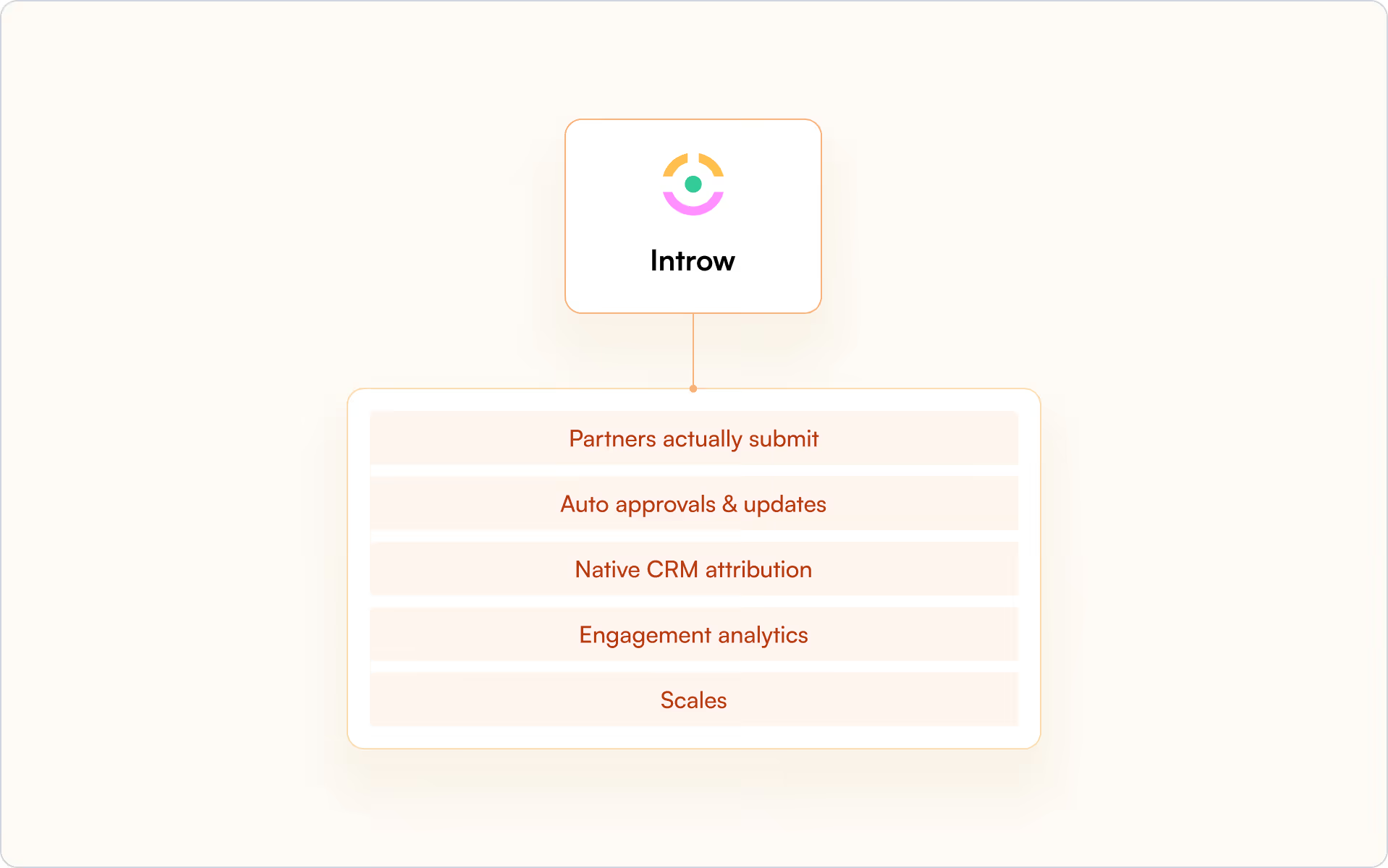
A quick look at how Introw compares
The results teams see with Introw
Introw is used in real partner programs that need reliable deal registration software. One example comes from SANDSIV, where moving away from spreadsheets to a CRM-first workflow created a measurable impact.
This lift came from reducing friction, improving partner satisfaction, and giving internal sales teams clear visibility into deal stages across different partner segments.
Your next steps
If you want your partner program to run with less friction and more consistency, here are three simple places to start:
- Audit your current deal registration process
Identify where partners get stuck, which steps require manual updates, and where deal data becomes unreliable in your CRM. - Test two or three tools with real partners
Even a small pilot shows which platform supports your channel partners and which ones create more work. - Compare CRM-native workflows
Look closely at how each tool handles deal stages, approvals, and pipeline visibility inside Salesforce or HubSpot.
Ready to see what a CRM-first, partner-friendly workflow looks like in practice? Schedule a short Introw session and request a demo today.
17 Salesforce PRM Alternatives to Choose From in 2026 (Partner Cloud)
Salesforce’s native PRM — now packaged as Partner Cloud on Experience Cloud — lets you build a partner portal, run deal registration, and connect partner activity into Sales Cloud and other Salesforce products. If your team is already all-in on Salesforce, it can be compelling. Still, many SaaS companies consider alternatives in 2026 for faster rollout, lower total cost, stronger HubSpot coexistence, or deeper support for motions like hyperscaler co-selling deals and affiliate marketing. The right partner relationship management software should automate sales processes, support opportunity management, and surface real time data for pipeline inspection across partners, customers, and channel sales.
Who this guide is for: B2B SaaS teams with active partner programs, at least two channel managers, and Salesforce or HubSpot CRM as the source of truth.
How we evaluated: CRM alignment (Salesforce and HubSpot), time-to-value, partner performance and adoption without logins, co-sell capability, affiliate needs across various industries, governance for RevOps, and reporting in the CRM. We also looked at AI capabilities, content management for enablement, and operational efficiency to drive long term success.
What to look for instead of Salesforce PRM
If you are replacing Experience Cloud for partners, prioritize CRM-first operations so sellers never leave Sales Cloud or HubSpot. Look for partner relationship management PRM workflows that reduce channel conflict, guide partners with in app guidance, and enable real time collaboration by email or Slack. You also want clean attribution and forecasting in the CRM, outcome based enablement that helps partners track progress and monitor performance, plus role-based access that keeps RevOps happy as you scale. Tools that automate sales processes, support custom objects, and give a complete view of customers, partners, and deals on a single platform will help many businesses improve market reach and reduce costs.
How to shortlist in 10 minutes
- Map motions — reseller, referral, co-sell, affiliate.
- Pick your CRM center — Salesforce only or Salesforce + HubSpot.
- Choose three to trial — e.g., Introw, Channeltivity, and Magentrix for CRM-first PRM; Impartner, ZINFI, Unifyr for enterprise channel scale; impact.com or Everflow for affiliate-heavy strategies; WorkSpan for hyperscaler co-sell.
- Score pilots on — time to first live deal registration, partner engagement without logins, CRM visibility, pipeline inspection, and forecast accuracy.
The 17 best Salesforce PRM alternatives in 2026
Whether you lean into referrals, resellers, co-sell, or affiliate, the options below span pure PRM software, co-sell orchestration, and performance-partner tools. For each, we highlight key features that affect partner productivity, customer data hygiene, and how easily channel managers can manage leads and opportunities across third party partners while staying fully integrated with your AI CRM and other Salesforce products like Service Cloud.
1) Introw
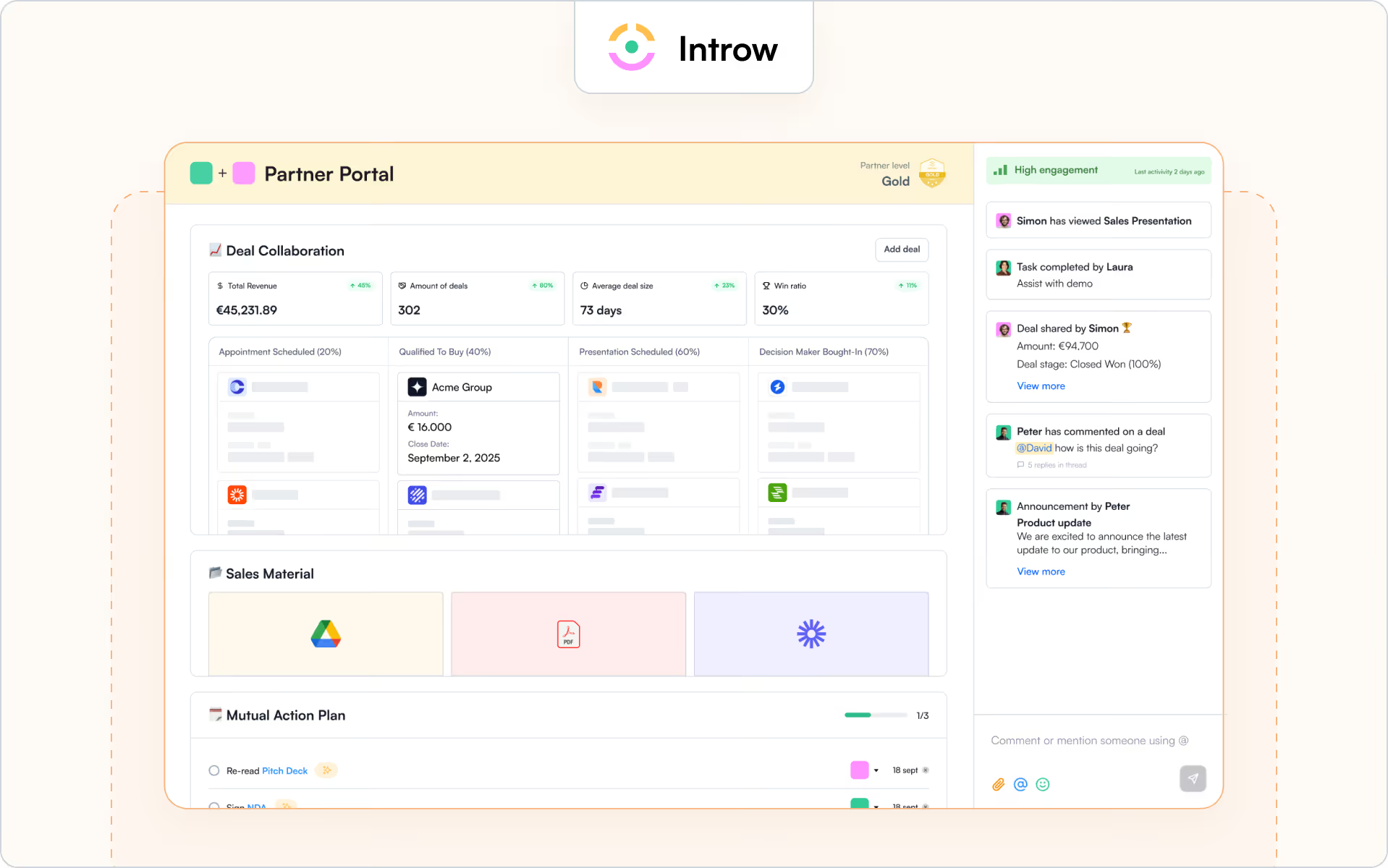
Best for: SaaS companies running referral, reseller, and co-sell motions that want the entire partner workflow to live in Salesforce or HubSpot — while keeping partners engaged through email and Slack so no one is forced to log in.
Why it’s an alternative: Instead of building a heavy Experience Cloud site, Introw keeps deal registration, collaboration, and reporting in your CRM and uses off-portal notifications so partners can reply to updates by email or collaborate via Slack — all synced back to Salesforce or HubSpot. That is a practical way to reduce portal fatigue, track deals and track leads with real time data, and speed time-to-value.
Callouts: Native integrations for Slack, HubSpot, and Salesforce help you capture leads and opportunities quickly. Partners can submit leads via public forms, email, or Slack, and every submission maps to the right CRM fields for clean attribution. If you are scaling a mixed motion — reseller, referral, MSP — the no-code partner portal, content management for enablement, and analytics make it easy to personalize experiences by partner type and monitor performance.
2) Impartner
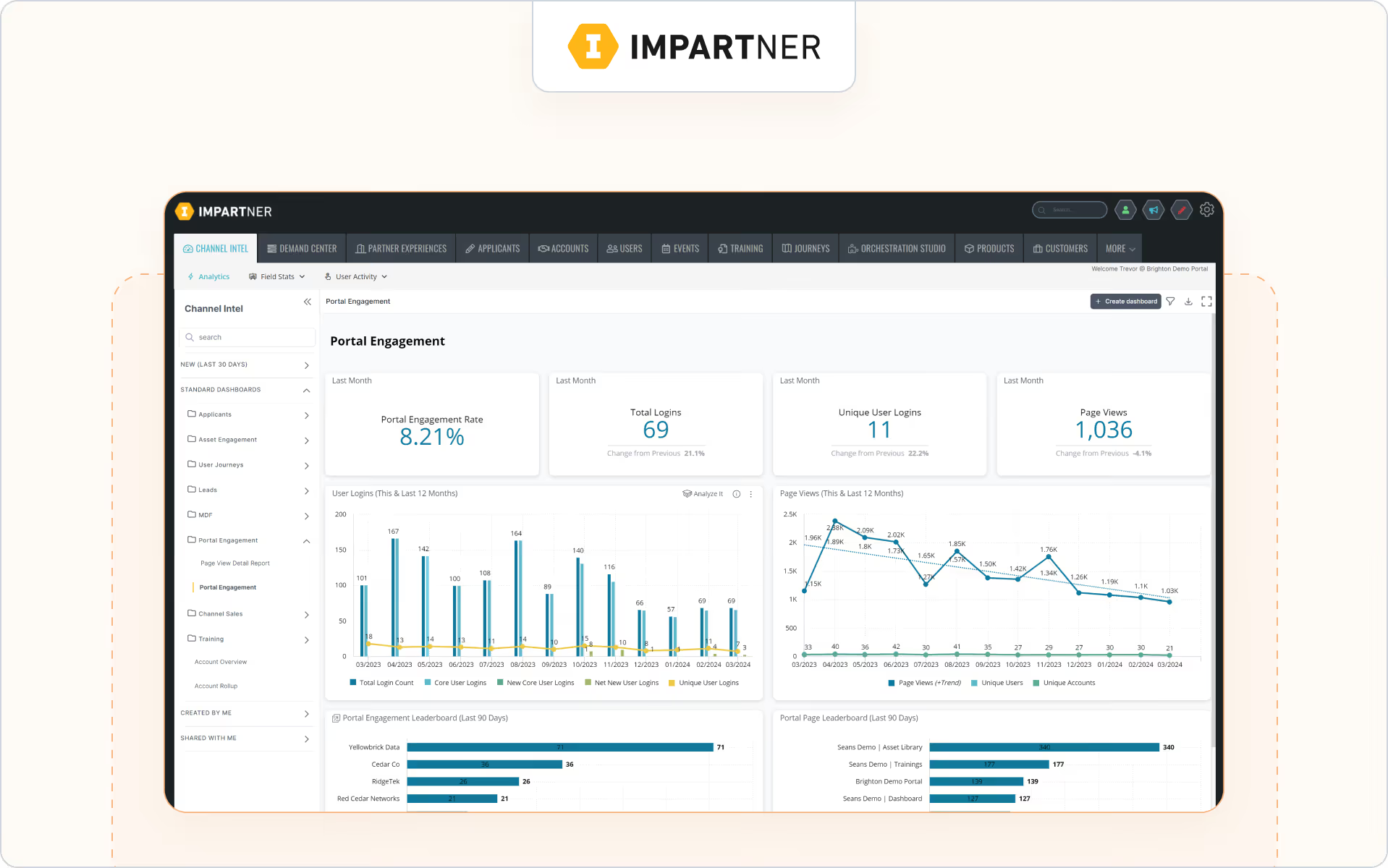
Best for: Enterprises with global channels that rely on structured tiering, incentives, and MDF — and need proven governance at scale.
Why it’s an alternative: If custom-building PRM on Experience Cloud is too slow or complex, Impartner delivers mature modules out of the box — recruitment, enablement, deal reg, and MDF — with a track record in large channel programs.
Callouts: Its MDF tooling stands out — budgeting, approvals, reimbursements, and notifications are built into the PRM, which is valuable if partner funding drives growth. Third-party directories and analyst sites also show broad deployments and comparisons, plus AI functionality appearing across enablement and analytics.
3) ZINFI (Unified Partner Management)
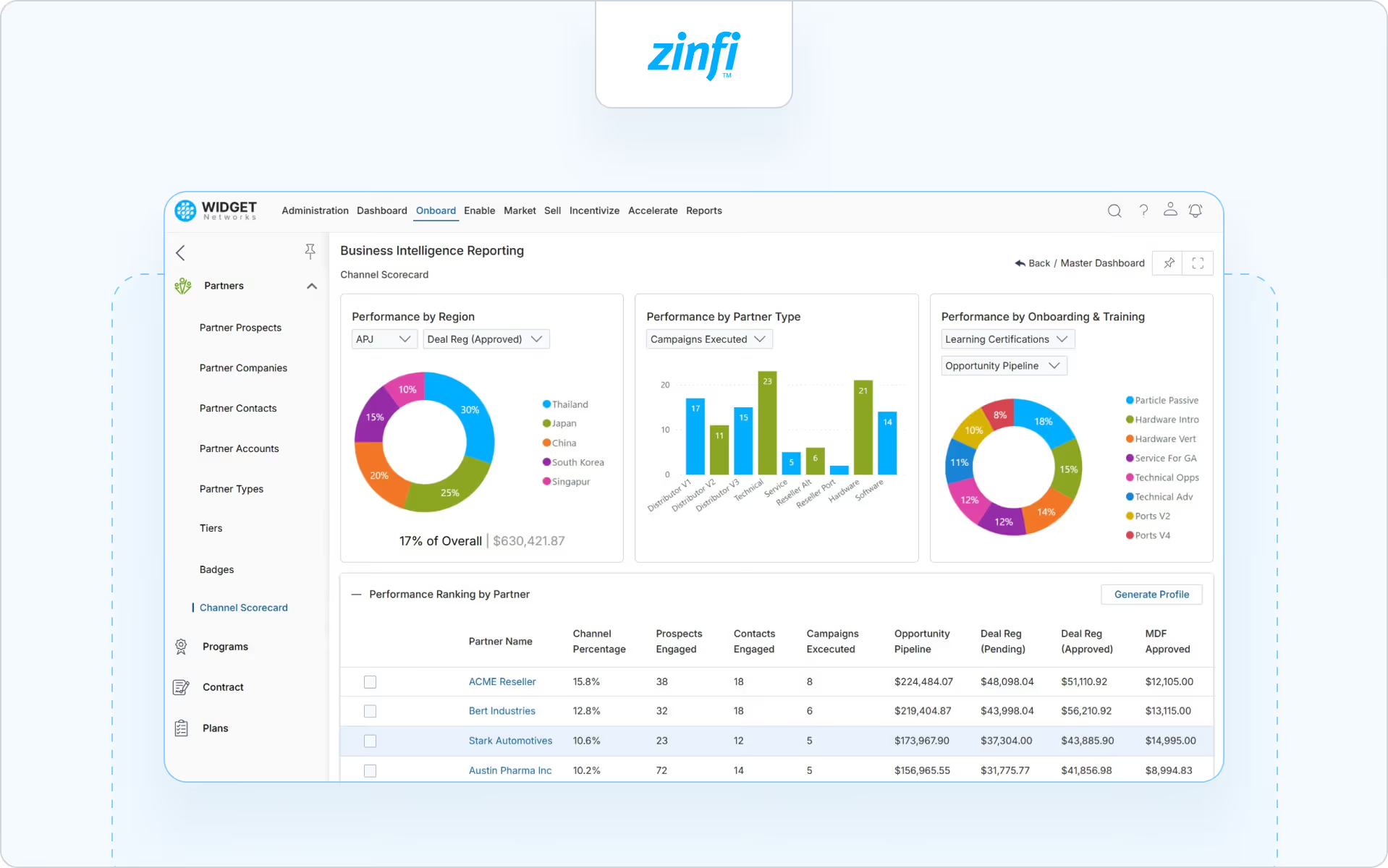
Best for: Teams seeking a comprehensive PRM suite with strong analyst and peer recognition, plus a steady cadence of product updates.
Why it’s an alternative: ZINFI’s Unified Partner Management spans recruit, enable, market, sell, and incentivize. In 2026 the company continues to emphasize AI-assisted workflows — useful if you want breadth without assembling point tools.
Callouts: The company highlights ease of use and modularity across UPM. If you have multiple partner types and need one platform to cover lifecycle workflows end to end, this is a credible shortlist option for partner enablement and opportunity management.
4) Unifyr (formerly Zift Solutions)
Best for: Channel-heavy orgs that prefer one vendor for PRM, through-channel marketing, and training — rather than stitching together separate systems.
Why it’s an alternative: Zift Solutions rebranded as Unifyr and now positions an AI-enabled partner ecosystem platform. If your Experience Cloud setup became a patchwork of apps, Unifyr’s all-in-one packaging can simplify operations.
Callouts: Messaging focuses on onboarding, activation, and performance insights across the partner lifecycle — helping guide partners, track progress, and align sales processes with marketing.
5) Channelscaler (Allbound + Channel Mechanics)
Best for: Companies that want modern PRM UX combined with enterprise-grade pricing, rebates, and incentive automation — all in one platform.
Why it’s an alternative: Allbound and Channel Mechanics merged and rebranded as Channelscaler. For teams that would otherwise combine a PRM front end with a separate channel automation engine, this unified approach is attractive.
Callouts: Press and analyst notes highlight scalability and intelligence post-merger, with emphasis on accelerating indirect revenue, expanding market reach, and improving operational efficiency.
6) Channeltivity
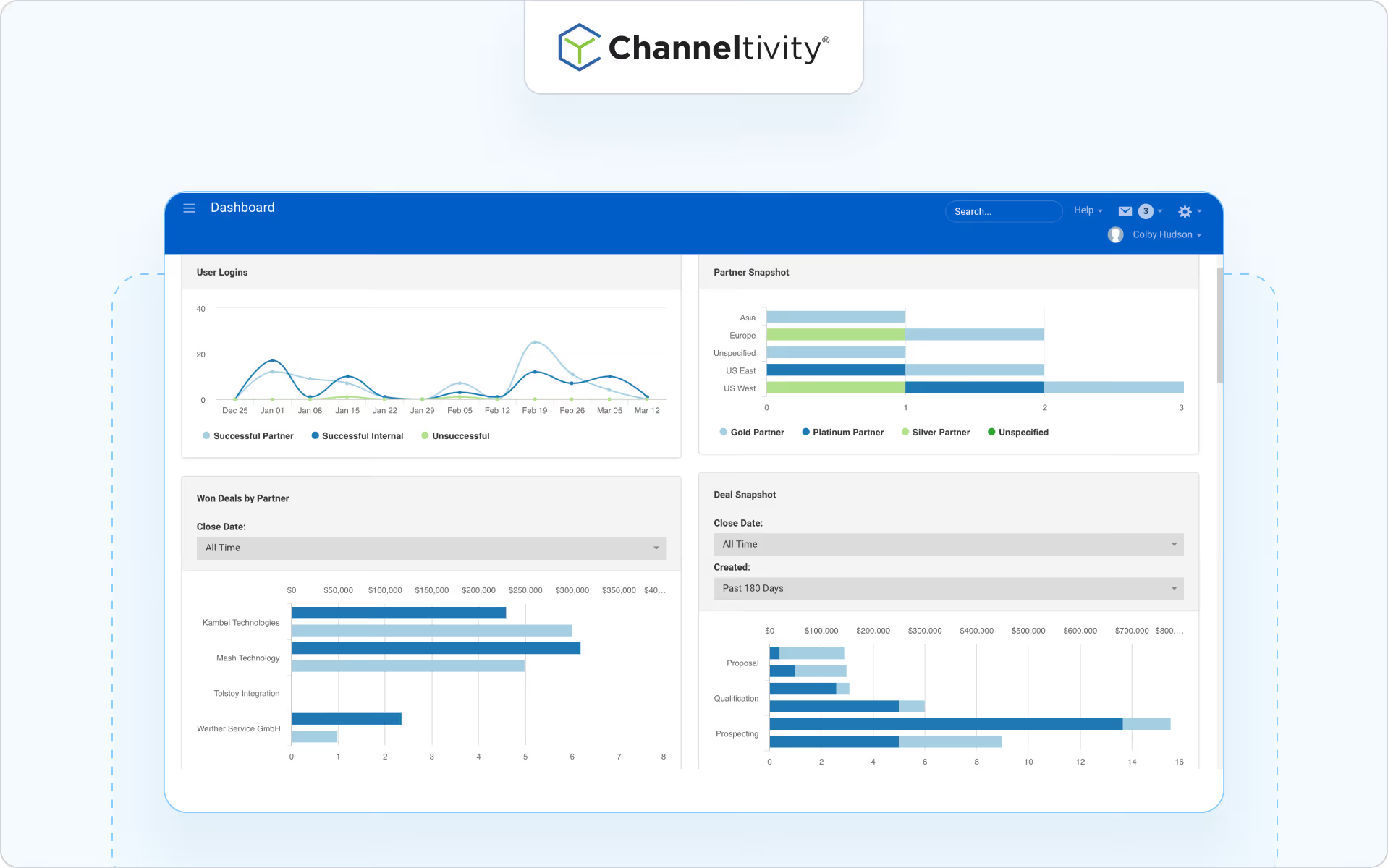
Best for: Mid-market teams looking for fast time-to-value and clicks-not-code integrations with Sales Cloud or HubSpot.
Why it’s an alternative: Channeltivity’s plug-and-play CRM integrations minimize implementation risk versus custom sites. Deal reg and referrals sync into the CRM so sales and RevOps get partner pipeline inspection and visibility without manual work.
Callouts: The HubSpot marketplace listing and help center show two-way sync, field mapping, and setup guides — handy if you want to go live quickly without heavy IT, and still monitor performance and track deals.
7) Magentrix
Best for: Salesforce-centric programs that want a configurable partner portal tightly coupled to CRM objects and data.
Why it’s an alternative: Magentrix is a long-standing AppExchange PRM. Its approach centers on mirroring CRM structure and reducing brittle syncs, which can be smoother than building and maintaining a bespoke Experience Cloud site.
Callouts: Features include deal registration and assignment with automated notifications. The company also publishes guidance on CRM-to-PRM data mirroring — useful for teams managing customer data at scale.
8) PartnerStack
Best for: SaaS teams combining affiliate, referral, and reseller motions — and wanting marketplace reach plus automated payouts.
Why it’s an alternative: PartnerStack pairs PRM-like workflows with a robust rewards engine and partner marketplace. If paying many partners on time is your bottleneck, this can be more turnkey than building equivalents on Salesforce.
Callouts: Flexible commission triggers and scheduled payouts help finance and ops keep partners confident, especially when scaling long-tail programs across partners and customers.
9) Kiflo
Best for: SMBs and scale-ups formalizing their first partner program with a straightforward CRM sync.
Why it’s an alternative: Kiflo focuses on PRM basics — referrals, resellers, simple enablement — and integrates natively with HubSpot to sync leads, deals, and contacts. If Experience Cloud feels over-powered for your stage, this is a pragmatic start.
Callouts: Marketplace listings and docs show two-way sync and mapping, which reduces swivel-chair work for partner managers and RevOps.
10) WorkSpan
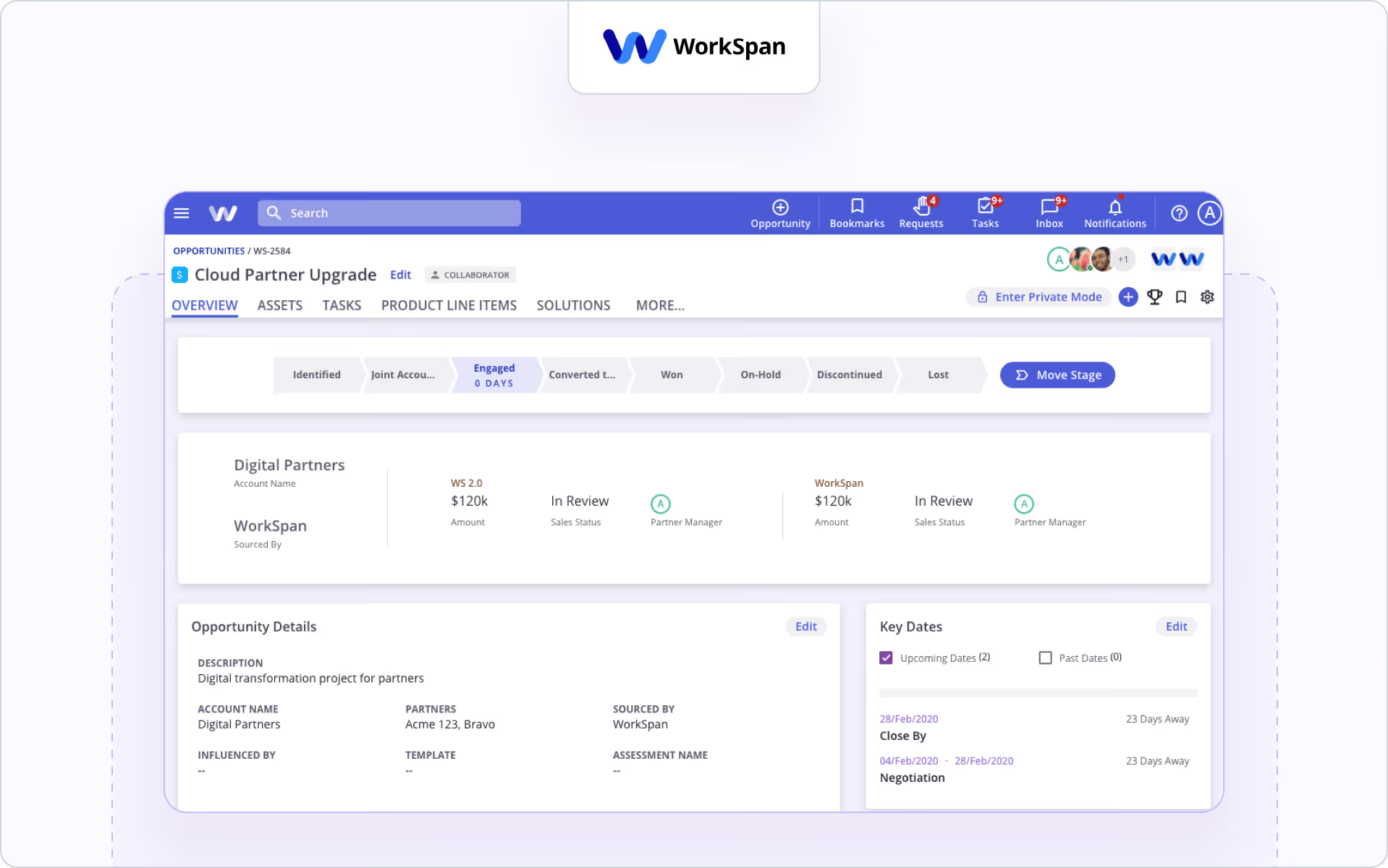
Best for: ISVs pursuing hyperscaler co-sell with AWS, Microsoft, or Google — and running marketplace private offers — who want those processes embedded in Salesforce.
Why it’s an alternative: WorkSpan is purpose-built for co-sell and marketplace operations and ships a Salesforce app to automate referral sharing with AWS ACE and Microsoft Partner Center. If your gap with Salesforce PRM is hyperscaler motion, this is a strong fit.
Callouts: The Hyperscaler Edition supports marketplace listings and private offer workflows and integrates with Salesforce, HubSpot, and Dynamics so alliance teams and AEs can operate from the CRM with real time data.
11) impact.com
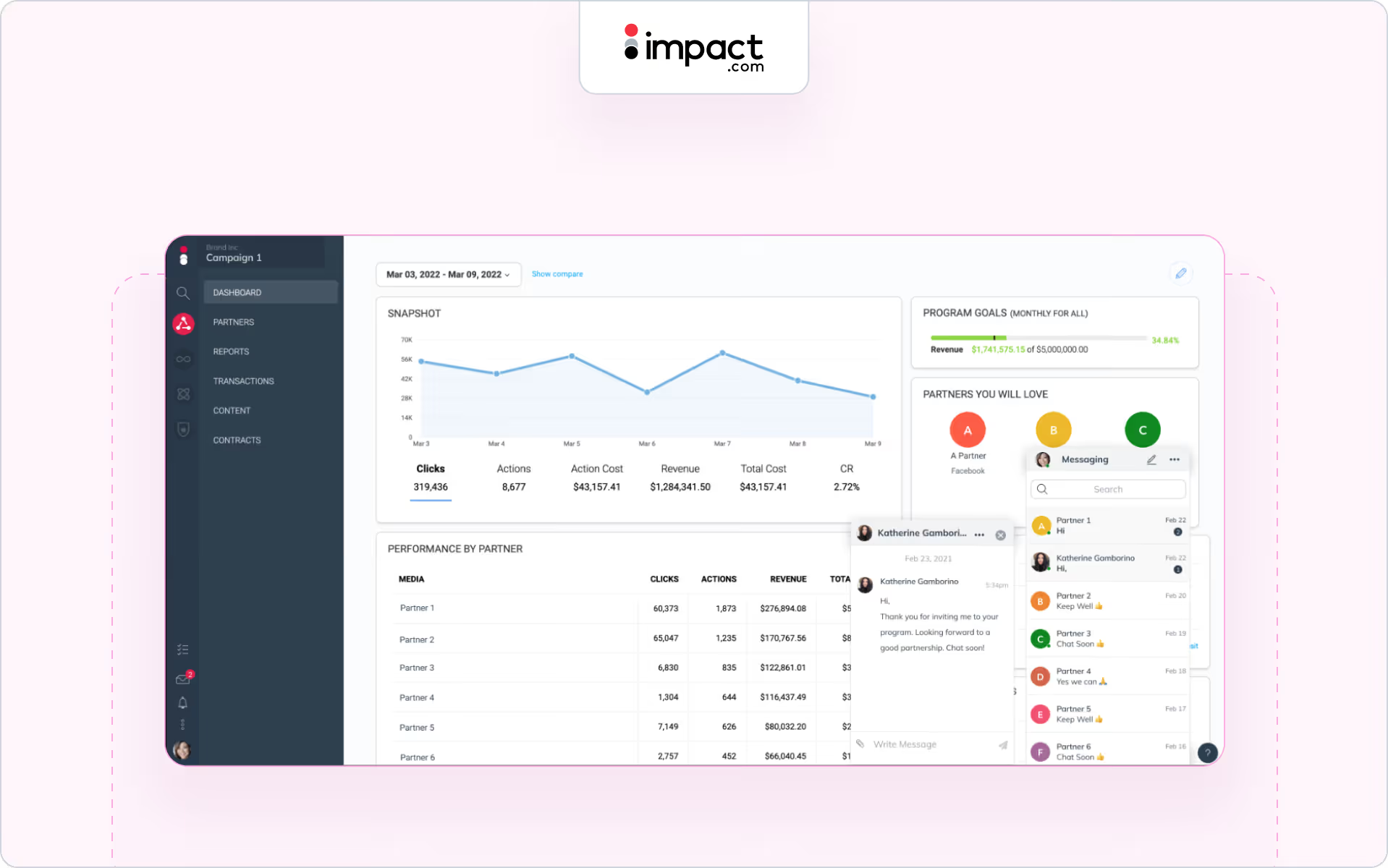
Best for: Affiliate, influencer, and advocacy programs where discovery, contracting, tracking, and payouts need to live together.
Why it’s an alternative: Rather than bolt affiliate tools onto a PRM, impact.com centralizes the performance side of partnerships and automates contracts and payments. Many B2B brands pair it with CRM reporting to measure influenced revenue.
Callouts: Reviews and third-party roundups repeatedly highlight automation, fraud controls, and reporting — useful if partner marketing is your growth lever.
12) Everflow
Best for: Advanced partner and affiliate programs that need granular tracking, analytics, and a white-label experience for agencies or multi-brand portfolios.
Why it’s an alternative: Everflow emphasizes measurement — cross-channel tracking, detailed attribution, and integrations — so you can quantify pipeline and revenue without stitching multiple tools.
Callouts: Independent reviews point to robust analytics, clickless tracking, and marketplace options that help teams scale efficiently and track leads from various industries.
13) TUNE

Best for: Marketers who need a highly customizable partner marketing platform — flexible commissioning, deep tracking, and brandable partner experiences.
Why it’s an alternative: TUNE is known for configurability. If your commissioning logic or partner types do not fit a standard mold, TUNE’s platform can be easier than forcing that complexity into a generic affiliate add-on or a DIY Experience Cloud build.
Callouts: The product’s positioning around flexibility across mobile and web, plus pricing options, makes it an option when you want control more than templates.
14) Partnerize
Best for: Global brands scaling affiliate and partnership channels with AI-assisted optimization.
Why it’s an alternative: Partnerize has invested in AI functionality and data intelligence — helpful for predictive insights in partner recruitment and optimization. If your Salesforce PRM alternative needs performance marketing depth, shortlist this.
Callouts: Public posts underscore ambitions for category growth and an AI-powered roadmap, pointing to continued velocity.
15) PartnerPortal.io
Best for: HubSpot-centric channel managers who want a portal to capture leads and deals, share resources, and push updates — without heavyweight implementation.
Why it’s an alternative: Rather than rolling your own Experience Cloud site, PartnerPortal.io is plug-and-play for HubSpot. Partner-submitted leads can create or link deals, and the product ships a simple resource center and accounting integrations. There is even native Crossbeam support for attribution and account mapping.
Callouts: The marketplace pages show quick deployment, two-way sync, and a focus on keeping everything inside HubSpot — handy for teams trying to avoid net-new systems.
16) Partnero

Best for: Lean partner teams that need low-friction lead submission and simple affiliate or referral flows rather than a full PRM suite.
Why it’s an alternative: Partnero makes it easy to accept partner or public lead submissions through a customizable page and manage the accept or reject workflow — a lightweight way to operationalize referrals without a big build.
Callouts: Product updates highlight continued investment in lead submission, attribution, and payouts — useful when simplicity and speed matter most.
17) RocketPRM (Impulse Creative)
Best for: Organizations that are all-in on HubSpot and want a turnkey PRM built entirely on HubSpot CRM and CMS — no separate platform to administer.
Why it’s an alternative: RocketPRM lives inside HubSpot, so you can keep your existing deal pipeline and manage a partner-facing portal with HubSpot page layouts and forms. If your team wants to avoid juggling another vendor while staying native to HubSpot, this is a clean option.
Callouts: The vendor site and community posts explain the architecture and implementation, emphasizing a HubSpot-only approach that keeps partner data and workflows in one place.
When to stay with Salesforce PRM
Stick with Salesforce Partner Cloud when your GTM is truly Salesforce-only, you want to keep data and AI CRM investments under one roof, and your team can support an Experience Cloud build. Salesforce provides native deal registration, lead distribution, and partner portals within that ecosystem — which can be the most straightforward path if you are standardized on Sales Cloud, Service Cloud, and related platform services that collaborate with other Salesforce products on a single platform.
Switch when you need HubSpot coexistence, faster rollout, off-portal engagement, or hyperscaler co-sell. Those needs are precisely where the alternatives above usually win on time-to-value, partner productivity, and adoption.
Why Introw is your choice in 2026
If your team wants partner relationship management that is fully integrated with your CRM, Introw’s CRM-first approach keeps partners, AEs, and RevOps in one workflow. You can create and manage leads and opportunities, use custom objects where needed, and rely on real time data for tracking deals, attribution, and forecasting.
Off-portal email and Slack let third party partners collaborate without friction; outcome based enablement and a lightweight content management layer help guide partners, share resources, and monitor performance. The result is higher partner productivity, fewer sync issues when managing customer data, and measurable revenue impact across sales, marketing, and service teams — without the overhead of a custom Experience Cloud build. For many businesses, this combination of automation, AI capabilities, and operational efficiency translates to lower total cost and long term success. Book a demo to see for yourself.
The Ultimate Guide to Channel Partner Management in 2026
Effective channel partner management is the backbone of every successful SaaS partner program. In 2026, winning teams are moving far beyond static portals and manual spreadsheets. Instead, they’re combining clear channel strategy, consistent communication, and CRM-first execution to turn channel partners into a dependable source of pipeline and revenue growth. In this guide, you’ll find practical frameworks, best practices, and tools to help you build a solid foundation, motivate partners, and run an operating model that scales across multiple vendors, motions, and regions. Along the way, we’ll show where Introw’s partner relationship management approach fits when you want less friction and more shared truth.
What Is Channel Partner Management?
In B2B SaaS, channel partner management is the ongoing, two-way system for recruiting the right partners, enabling them with training resources, aligning on business objectives, and collaborating to win and retain customers. It’s broader than enablement and deeper than a partner portal login count. It covers the business relationship and the business model: how partners sell, how you reward partners, how you prevent channel conflict, and how you measure partner performance across the customer lifecycle. Engaged partners submit qualified deals, join joint business planning sessions, co-host campaigns, and escalate risks early. A capable channel partner manager orchestrates these motions, balancing sales techniques with program design so third party partners can move quickly without sacrificing data quality. The outcome you’re after isn’t activity for activity’s sake; it’s mutual support, new customers, and sustainable revenue.
Why Channel Partner Management Still Matters in 2026
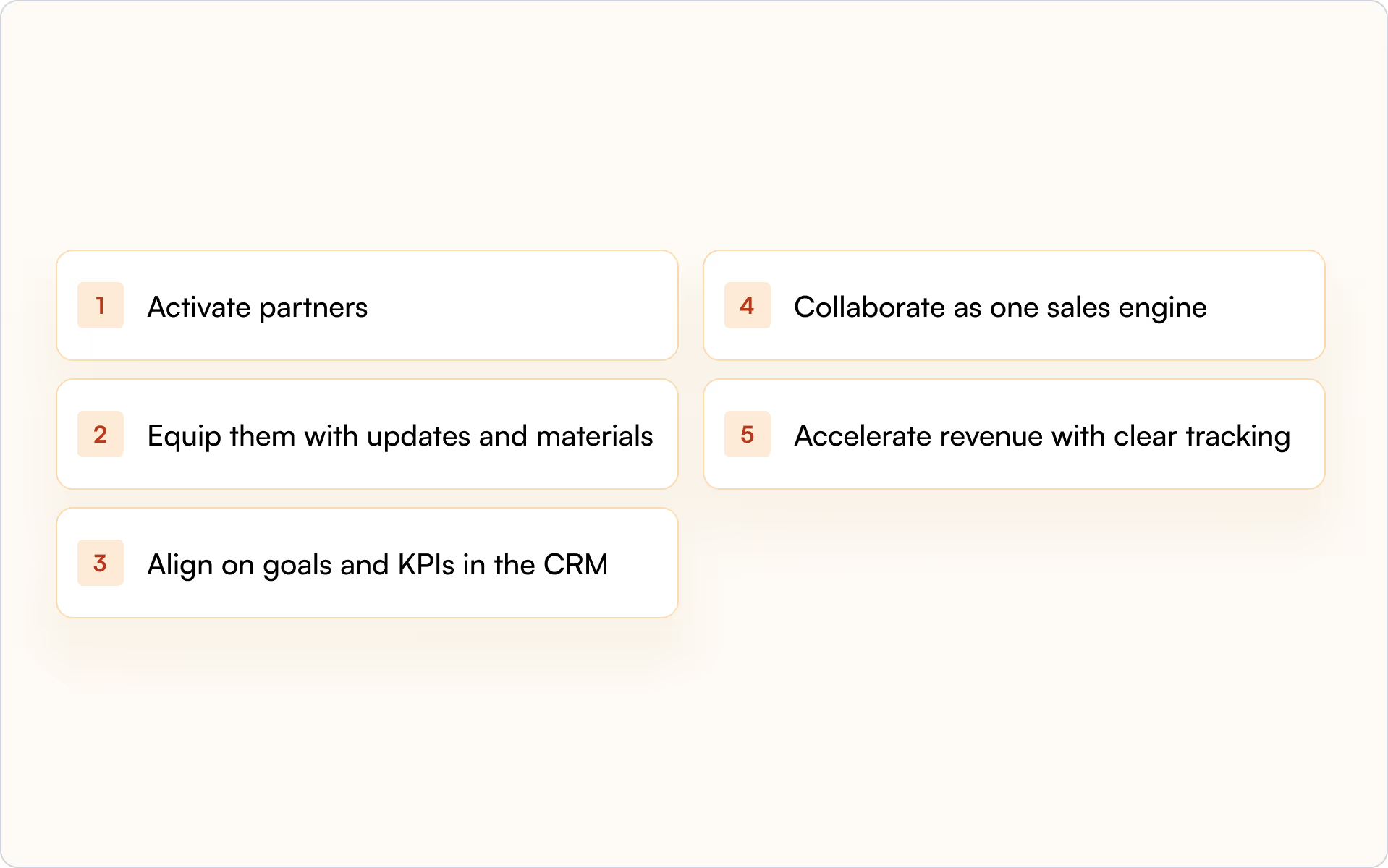
Signing new partners is easy; managing channel for mutual success is the real work. Competition is intense, partner ecosystems are crowded, and buyers expect coordinated experiences across software, services, and integrations. If you don’t keep partner relationships active — through timely updates, useful marketing materials, and clear sales support — enthusiasm fades, channel conflict rises, and deals quietly stall. The best programs treat partners as an extension of the sales team, not a parallel track. They publish sales targets and key performance indicators, make the entire partner lifecycle visible in the CRM, and keep the same page across partner managers, AE, and RevOps. When you track partner progress alongside direct motions and tie activities to outcomes, you get faster cycles, cleaner attribution, and reliable forecasting. Introw’s stance is pragmatic: meet partners where they already work, sync everything back to Salesforce or HubSpot, and let automation handle the nudges so humans can focus on selling.
10 Proven Strategies for Managing Channel Partners in 2026
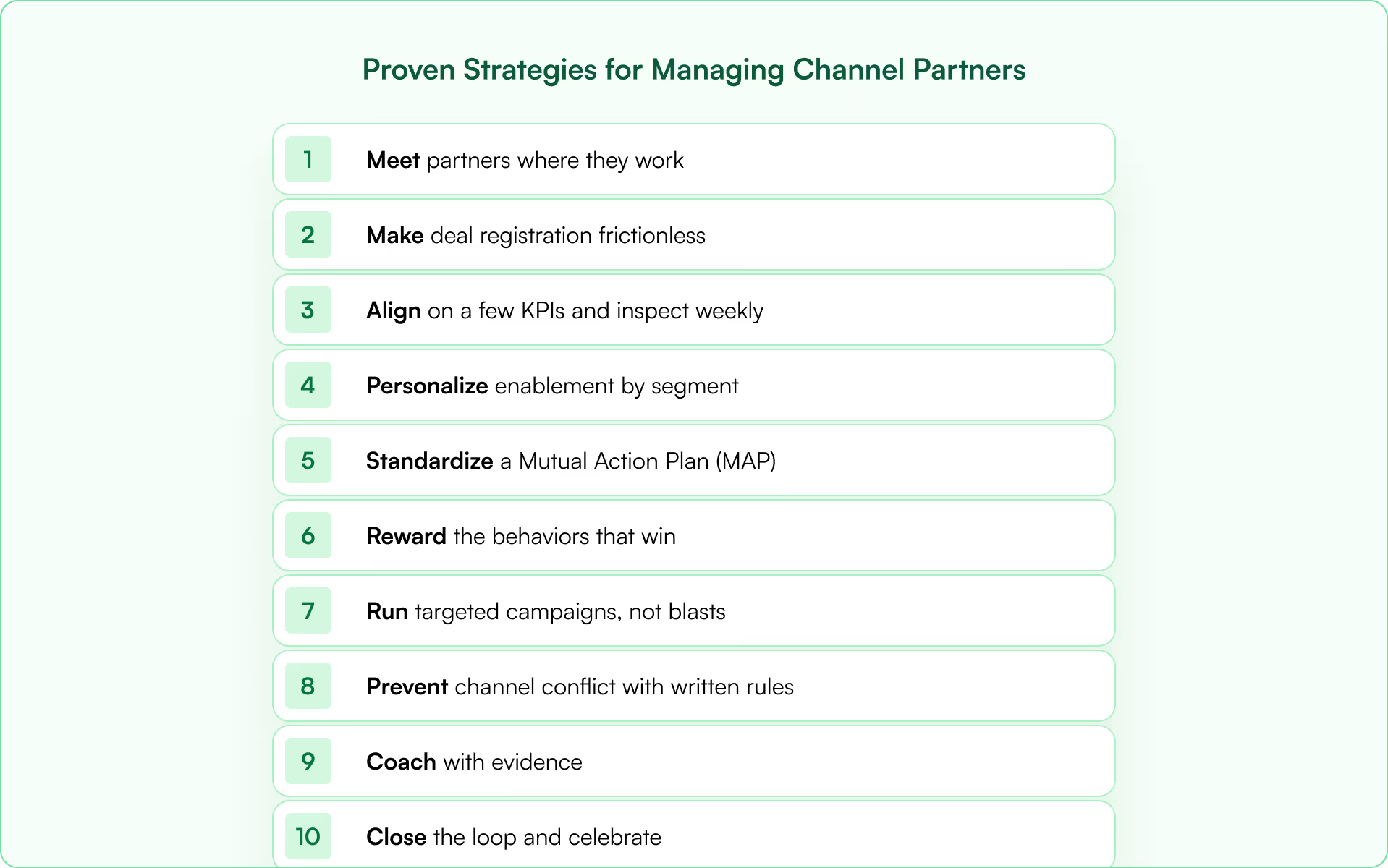
1) Meet Partners Where They Work
Reduce friction by engaging partners through the tools they already use — email, Slack, and the CRM. Replace “please log in” moments with no-login updates and reply-to-update workflows. Introw enables off-portal collaboration so partners can respond from their inbox and have that context land on the opportunity. The result: higher partner engagement, fewer missed signals, and faster decisions.
2) Make Deal Registration Frictionless
Short forms, clear rules, instant confirmation. Let partners register via link or email and auto-attach submissions to the right account with deduplication. Acceptance SLAs should be visible so a partner manager isn’t chasing status. When registration is simple, partners sell earlier, attribution is clean, and your sales team can prioritize correctly.
3) Align on a Few KPIs and Inspect Weekly
Pick a concise set of key performance indicators that tie to outcomes: partner-sourced pipeline, time from registration to acceptance, stage conversion on co-sell deals, average discount, and renewal or expansion on shared accounts. Review weekly internally and monthly with partners. Action beats dashboards: agree on one change per review and track the effect.
4) Personalize Enablement by Segment
Managed service providers often need deeper technical support and services packaging; resellers want campaigns and pricing clarity; referral partners need fast handoffs. Segment by type, tier, and region, then tailor training materials, sales strategies, and incentive programs accordingly. Keep everything easy to find and easy to reuse.
5) Standardize a Mutual Action Plan
Create a simple plan template for every registered opportunity: owners on both sides, next three steps, and dates. Keep it inside the CRM so partner activities and internal tasks live together. This turns “let’s sync later” into concrete progress and keeps independent entities rowing in the same direction.
6) Reward the Behaviors That Win
Develop incentive programs that favor early, qualified registrations, first-meeting mutual action plans, and clean data. Pay on time and publish status so finance doesn’t become the help desk. Balance sourced and influenced models to prevent noise. When rewards mirror reality, you’ll see improved partner performance without adding complexity.
7) Run Targeted Campaigns, Not Blasts
Use your segments to deliver timely announcements, co-marketing offers, and marketing materials that match the partner’s audience. Track opens, clicks, replies, and pipeline created so you can double down on what works. Partners feel valued when outreach is relevant and light on ceremony.
8) Prevent Channel Conflict With Written Rules
Define protection windows, duplicate logic, and escalation paths. Keep decisions quick and documented in the CRM. Clear, enforced rules lower drama and safeguard long term relationships — especially when multiple vendors and overlapping territories are in play.
9) Coach With Evidence
Replace gut feel with concrete observations: “Your registrations stall at validation; let’s tighten discovery and bring technical support earlier.” Use conversation snippets, win-loss notes, and customer data patterns to improve talk tracks. Share learnings across partners so valuable insights travel.
10) Close the Loop and Celebrate
Publish small wins, share what changed because of feedback, and highlight partner reps who moved a deal. Recognition compounds motivation. A simple monthly roundup does more for partner relationships than another generic webinar.
Tech Stack & Frameworks That Actually Help
Modern partner management doesn’t require a maze of tools. Aim for a CRM-first spine that covers registration, collaboration, and analytics. You’ll want automation for updates, no-login access for partners, and real-time engagement tracking so you can measure without chasing screenshots. Introw’s approach is to mirror your sales processes, keep partner portal usage optional, and centralize partner activities on opportunities, accounts, and contacts. That way, track partner progress and revenue attribution live where leadership already inspects the business.
The operate framework
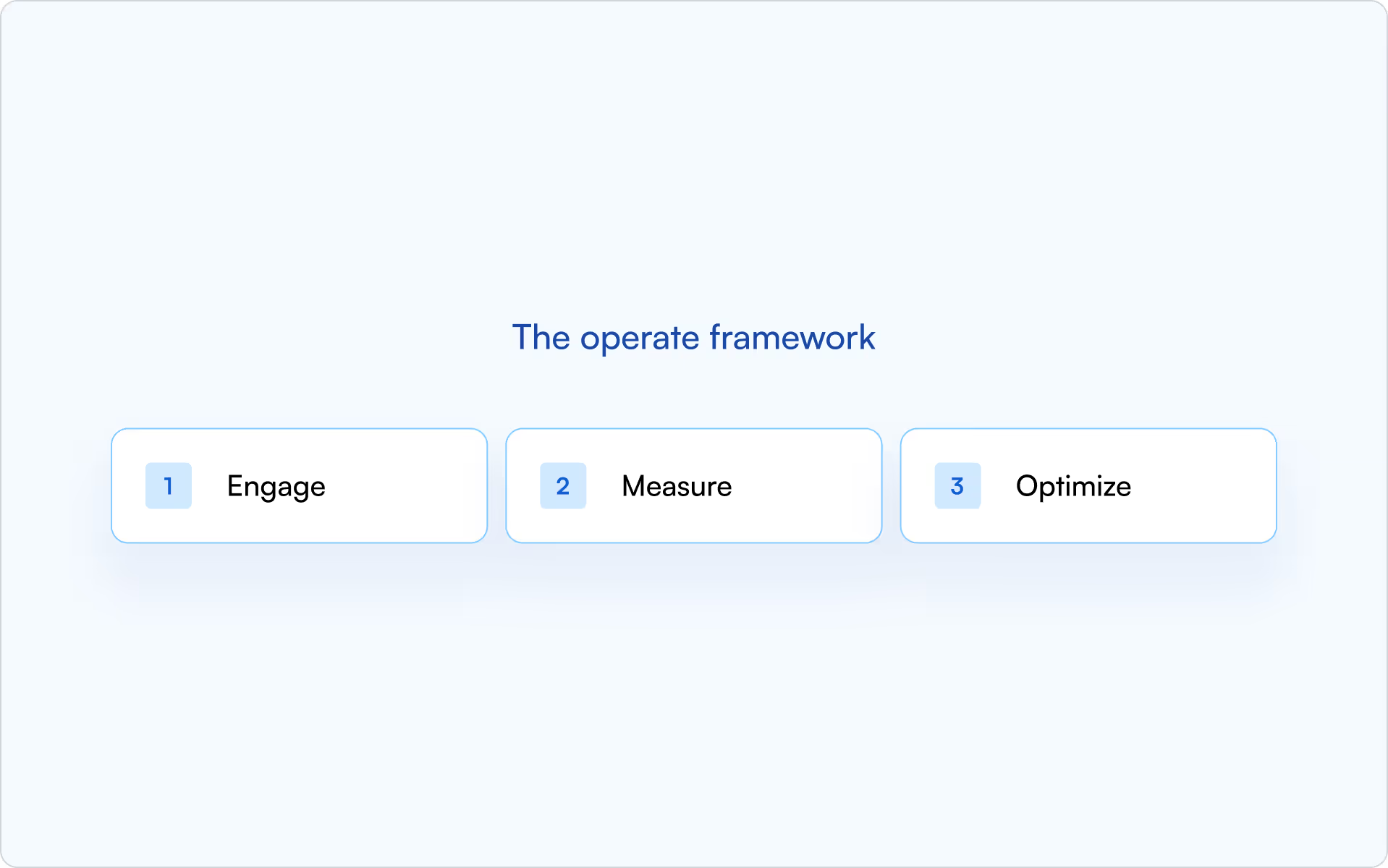
- Engage: meet partners in their tools, send concise updates, and provide sales tools they’ll actually use.
- Measure: tie partner activities to pipeline and bookings, not just logins.
- Optimize: retire low-yield motions, expand plays that convert, and adjust incentives quarterly.
How Introw Supports This Operating Model
Introw brings partner relationship management into Salesforce and HubSpot, letting partners sell without changing their day-to-day habits. No-login deal registration, reply-to-update collaboration, Slack nudges, and role-based dashboards keep everyone aligned. For partner managers, it simplifies managing channel by removing swivel-chair work. For RevOps, it protects data hygiene. For CROs, it links partner activities to forecast and revenue growth — the measures that matter.
Conclusion
Channel partner management in 2026 is a flow, not a checklist. Recruit the right partners, align on a few KPIs, keep communication lightweight and frequent, and make it effortless to register and advance deals. Handle conflict quickly, reward partners for behaviors that move the needle, and keep improving the business strategy with evidence, not hunches. When you operate from a single source of truth and design for adoption, you get mutual success: stronger partner relationships, predictable pipeline, and customers who experience coordinated service from first meeting through renewal. If you want that flow to scale, consider a CRM-first platform like Introw to keep the work simple and the results visible.
GTM Partnerships Guide: Best Practices and Strategies for 2026
GTM partnerships are now core to how most companies reach a target market, launch products, and expand revenue streams. When you combine complementary strengths — channel partnerships, technology integrations, service partners, and referral partners — you create a go to market strategy that wins trust faster and serves the end customer with a more complete solution. This guide lays out practical frameworks, real-world plays, and key performance indicators so partnership leaders, marketing teams, and sales reps can run GTM with partnership discipline rather than ad hoc coordination.
Why GTM partnerships matter in 2026
Routes to market have multiplied, buying committees have grown, and product offerings often depend on new technology delivered by third party partners. In this environment, one company rarely brings everything the target customers need. Strategic partnerships help you reach new markets, lower customer acquisition costs, and turn niche partner capabilities into a competitive advantage. Channel partner programs extend distribution, technology partnerships improve product fit, and service partners make adoption stick. When the motion is run well, both you and your trusted partners share measurable business outcomes — revenue growth, higher win rates, and happier customers — while the end customer enjoys a unified experience across discovery, purchase, and support.
What counts as a GTM partnership
A GTM partnership is a structured go to market agreement between two or more organizations to reach a target market together. Common categories include:
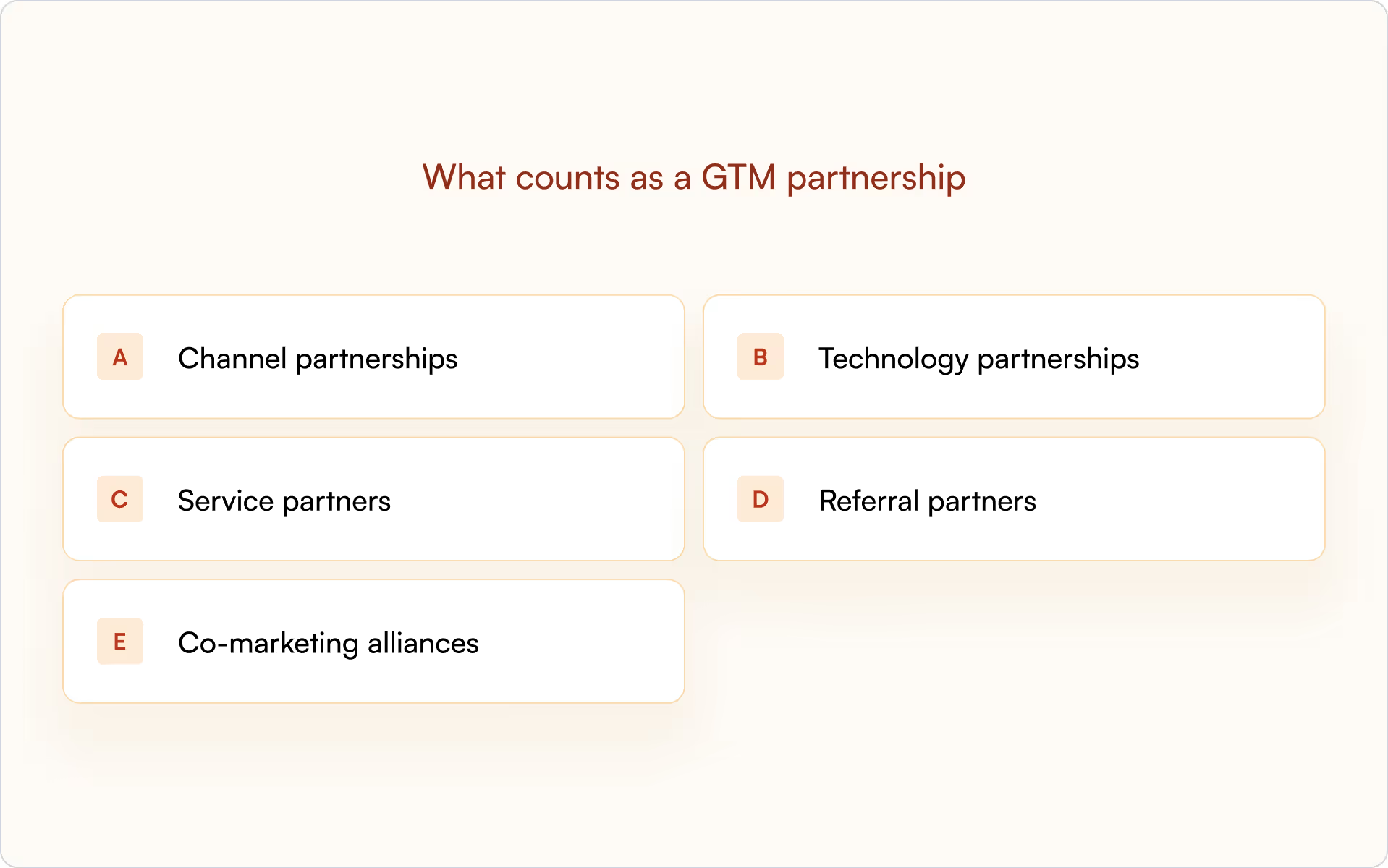
- Channel partnerships: value added resellers, distributors, agents, and original equipment manufacturers that resell or embed your product or service.
- Technology partnerships: integrations and joint solutions with cloud services or complementary platforms that create more value than either product alone.
- Service partners: system integrators and consultants who implement, customize, and support the solution for the end customer.
- Referral partners and affiliate program: partners who refer customers and share in fair market value rewards.
- Co-marketing alliances: joint webinars, social media posts, and digital marketing campaigns that generate qualified demand.
The best programs mix these motions deliberately, recognizing that one partner may span multiple roles over time.
A reusable framework for GTM with partnership
Think in four phases that repeat throughout the partnership program.
1. Discover and select right partners
Define your partnership strategy and selection criteria: target audience overlap, complementary capabilities, fair market value terms, product market fit alignment, and ability to execute. Score potential partners and run a small pilot before committing.
2. Design the offer and the plan
Write a joint value proposition, map the sales process, and package a combined offer. Clarify intellectual property boundaries, pricing ranges, and how you will refer customers between teams. Agree on key performance indicators early so progress is visible.
3. Deliver the plays
Launch two or three simple plays first — a co-marketing campaign, a referral motion, and a co-sell sequence for top accounts. Share training resources and marketing content so both teams can operate without waiting on approvals.
4. Develop and expand
Inspect results monthly, reward performance, and double down on what works. Rotate out low-yield motions and add new markets or segments when the data supports it.
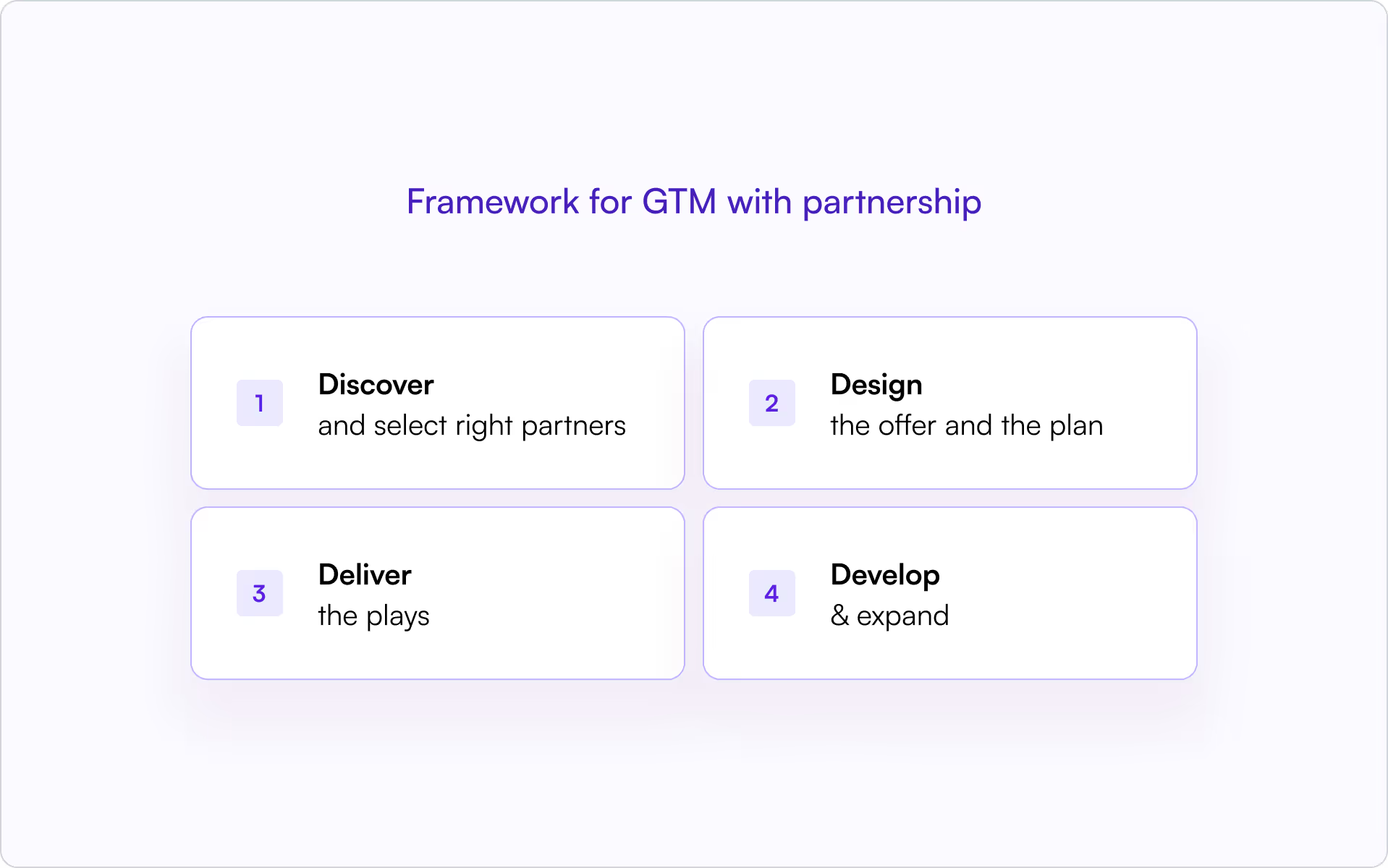
Seven high-impact strategies that work now
1) Build a joint value proposition customers can repeat
Target customers need to hear one clear story. Combine positioning from both companies into a plain-language promise: who the solution is for, the problem it solves, and why the joint approach delivers more value. Pressure-test with three real world examples — one from a current customer, one from a recent win, and one from a pilot. Keep a one-page version for sales reps and a five-slide version for product or service demos.
2) Stand up a co-marketing engine in 30 days
Launch a quarterly campaign together: one webinar, one customer story, and three social media posts supported by a lead-capture page. Divide responsibilities so the marketing team at one company runs creative while the other drives list building and follow-up. Track cost per registration, show rate, and opportunities created to ensure lower customer acquisition costs rather than vanity metrics. Repurpose content across channels and localize where your GTM partners have stronger market reach.
3) Make deal registration and routing effortless
If partners cannot register interest quickly, you will miss momentum. Offer no-login forms, email-to-register, and automatic record matching in the CRM. Route by territory and segment, and confirm acceptance within 24 hours. Publish response-time SLAs and compensation basics so the fair market mechanics are transparent. The administrative layer should never slow the buyer journey.
4) Enable both sides with the same playbook
Provide joint training resources that keep teams aligned: discovery questions, a product or service demo path, objection handling, and a short integration brief for the IT department. Record a call teardown for a real opportunity so sellers hear what good sounds like. Add role-based micro-learning for channel partners and system integrators who need deeper technical content. Update the content monthly and retire stale assets.
5) Run a simple co-sell sequence for named accounts
Choose ten accounts where both companies already have traction. Map contacts, confirm the value proposition, and stage a three-step sequence — joint intro, discovery, and proof. Keep a mutual action plan on the opportunity so everyone sees owners and dates. This play consistently accelerates direct sales cycles and increases sales conversion by adding the right partners at the right moment.
6) Design incentives that reward performance, not activity
Pay for outcomes that matter: sourced opportunities accepted, closed-won revenue, and verified expansion. Tie referral partners to clean qualification and fast handoffs. For channel partner programs, align discounts and market development funds to pipeline and bookings, not just logo tiers. Publish how you measure fair market value and how you will review it annually, especially if subscription models shift the revenue timing.
7) Package services to make adoption easy
Even great integrations stall without hands-on help. With service partners and system integrators, publish two implementation bundles — essential and advanced — with timelines and responsibilities. Co-price where appropriate and clarify who invoices. This removes ambiguity for the end customer and protects margins for both companies.
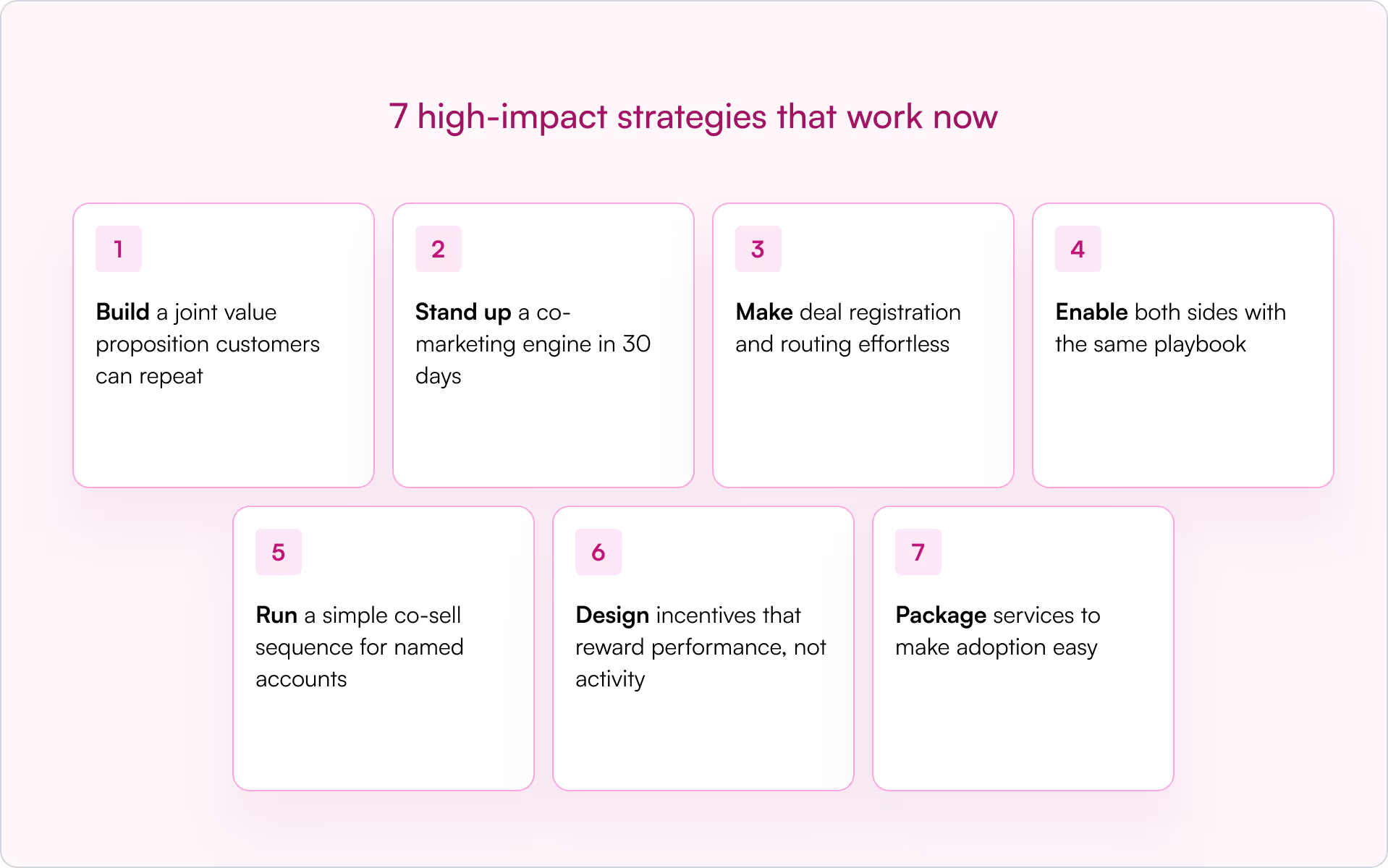
KPIs that prove the GTM partnership is working
Measure a short list that leadership believes and front-line teams can influence.
- Pipeline created by partner type and segment
- Acceptance time and conversion for registered opportunities
- Win rate and average selling price for co-sell versus direct sales
- Cycle time from first joint touch to close
- Attach rate for integration or services on new customers
- Customer satisfaction and early retention for joint wins
Review weekly internally and monthly with partners. Use the numbers to tune messaging, shift resources, and decide where to add additional revenue streams or where to pause.
Governance and operating rhythm
GTM partnerships succeed when the cadence is predictable. Set a monthly operating review and a quarterly steering session. Document decision owners, escalation paths, and how conflicts get resolved. Keep a single partnership plan that lists shared goals, campaigns, and account plays. One partner should own scheduling — alternating quarterly keeps things balanced. When roles are clear and the calendar is steady, collaboration scales without friction.
Tech stack and where Introw fits
Operate where work already happens — the CRM. Deal registration, attribution, and partner activities should live on opportunities, accounts, and contacts. Use email and Slack to communicate, but sync replies back to records so nothing lives only in an inbox. Introw supports this CRM-first operating model: partners can register deals without a portal, updates flow through everyday channels, and dashboards show KPIs by partner, play, and stage. That alignment helps partnership leaders manage GTM partnership motions alongside direct sales without swivel-chair work.
Putting it together: a 60-day starter plan
Weeks 1–2: finalize partner selection, agree on KPIs, and draft the joint value proposition.
Weeks 3–4: assemble training resources, set up registration and routing, and schedule the first webinar.
Weeks 5–6: launch the campaign, run joint discovery on top five accounts, and publish a mutual action plan template.
Weeks 7–8: review results, reward performance, and decide whether to expand the play, shift segments, or add a second partner.
Conclusion
GTM partnerships turn complementary strengths into market impact. When you choose the right partners, agree on a clear plan, and measure the outcomes that matter, you lower acquisition costs, reach new markets, and ship a better customer experience. Keep the operating system simple — shared KPIs, steady cadence, and CRM-first execution — and your GTM strategy will scale across channels, technologies, and regions. If you want the mechanics to feel lighter, consider Introw to keep the data clean, the collaboration easy, and the results visible.
How To Win With Channel Partnership Programs in 2026
In the early days of SaaS channel partnership programs, companies relied heavily on static partner portals and endless email threads.
And although this approach was admittedly clunky and time-consuming, it worked okay while these programs were in their infancy and encompassed only one or two, easily-trackable partners.
But in 2026, the approach to partner programs has shifted dramatically.
Casual, ad hoc partnerships have been replaced by watertight, multi-channel ecosystems inhabited by a wide range of strategic partners.
At the heart of these sophisticated programs? Collaboration, data sharing, co-selling — and a tech stack that can keep up.
After all, manual tasks, disconnected tools, and outdated portals create friction in the partner journey, while platforms with limited automation capabilities put you at an automatic disadvantage.
So what should you be looking for in a modern SaaS partner program tool?
Automation, real-time visibility, and CRM-first platforms that seamlessly integrate into daily workflows.
Several key trends are reshaping the channel landscape:
- AI-powered partner discovery and enablement are accelerating matchmaking and performance tracking.
- Remote selling is making virtual collaboration tools essential.
- Self-service onboarding and content access are empowering partners to move at their own pace.
- “Always-on” enablement means support, training, and updates need to be embedded throughout the partner journey — not just during onboarding.
The future of channel partnership programs is not only more connected — it’s also more impactful, scalable, and aligned with how SaaS businesses grow today.
What Is a Channel Partnership?
Let’s start with an up-to-date channel partner definition.
In SaaS, a channel partnership is a strategic collaboration in which third-party organizations help market, sell, support, or integrate your product, thereby extending your reach beyond direct sales.
Unlike direct sales teams, which engage customers directly, channel partners act as multipliers, introducing your solution to new audiences, markets, or industries.
So, what is a channel partner?
There are many different types of channel partners, including:
- Resellers who purchase and sell your software under their own margins
- Referral partners who pass along leads in exchange for commission
- Managed Service Providers (MSPs) who include your SaaS in bundled services
- Agencies and consultants that implement or recommend your platform
- Tech integrations and ISVs that enhance your product’s capabilities
- OEM partners who embed your software into their offering
- Strategic alliances that co-market or co-sell complementary solutions
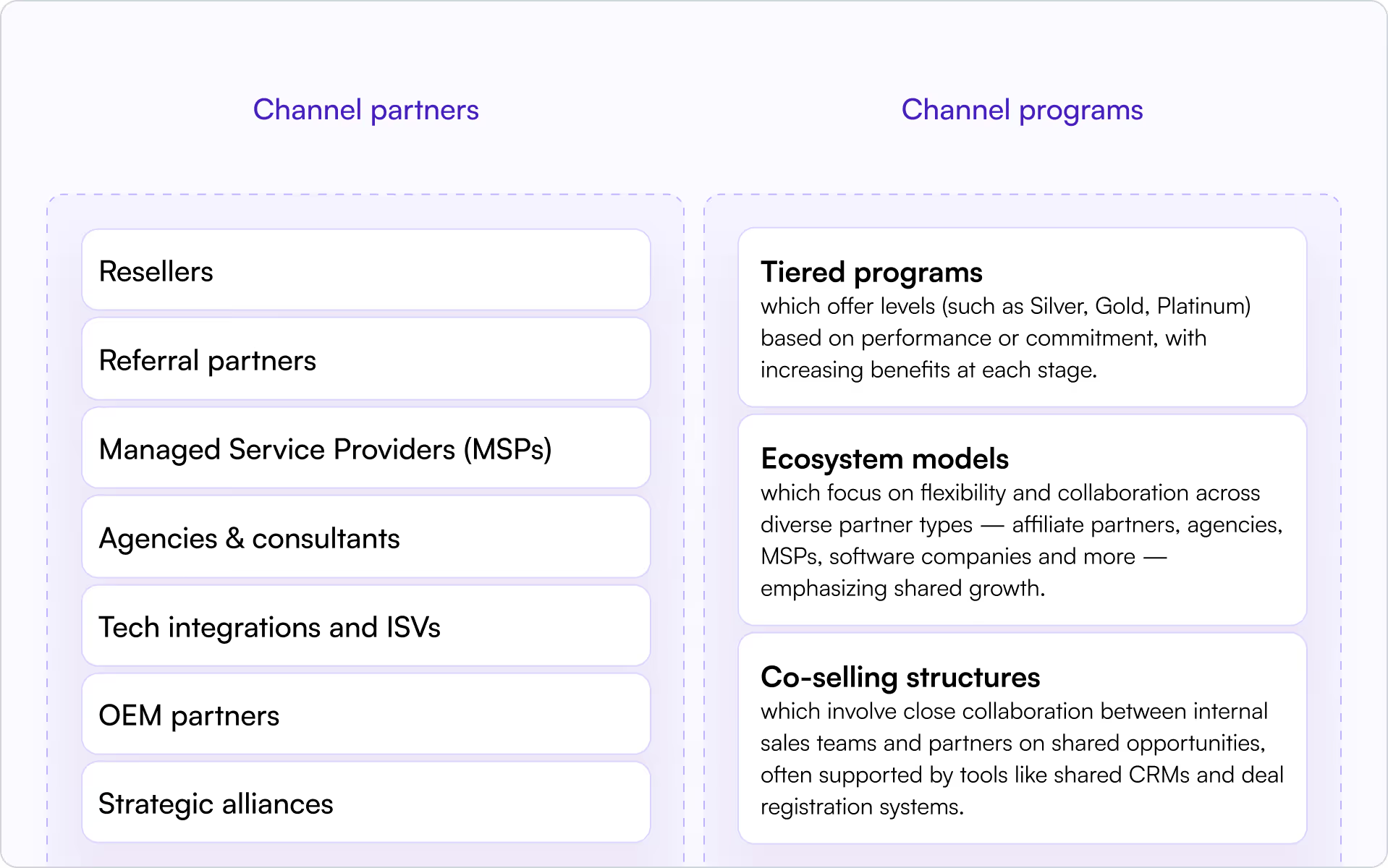
Channel partnership programs vary significantly, depending on the SaaS company’s size, product, needs, and goals.
Some of the most common structures are:
- Tiered programs, which offer levels (such as Silver, Gold, Platinum) based on performance or commitment, with increasing benefits at each stage.
- Ecosystem models, which focus on flexibility and collaboration across diverse partner types — affiliate partners, agencies, MSPs, software companies and more — emphasizing shared growth.
- Co-selling structures, which involve close collaboration between internal sales teams and partners on shared opportunities, often supported by tools like shared CRMs and deal registration systems.
In 2026, SaaS channel programs are increasingly built around flexible, ecosystem-driven structures rather than rigid, tier-based structures.
However, many programs blend the above approaches to support partner autonomy while driving alignment, scalability, and faster routes to market across different partner motions.
Why Channel Partnerships Are More Strategic Than Ever
Channel partnerships are now a core growth strategy for SaaS companies' business models — not just a sales supplement.
When approached strategically, they offer high-margin revenue, specialized expertise, expanded market reach into new market segments, and enable scalable growth without expanding headcount.
Partnerships also help mitigate risk by diversifying go-to-market motions.
The SaaS partner power law is relevant here: typically, 20% of partners drive 80% of the value, making a strategic focus essential.
From a CRO or RevOps perspective, strong channel programs support clearer attribution, more accurate forecasting, and greater operational efficiency.
But without a strategic approach, companies face channel conflict, missed pipeline opportunities, and partner churn — ultimately weakening revenue performance and market competitiveness.
12 Advanced Steps to Win at Channel Partnering in 2026
Ready to reap the benefits of an impactful channel partnership strategy?
Follow these 12 steps to take your SaaS partnerships to the next level.
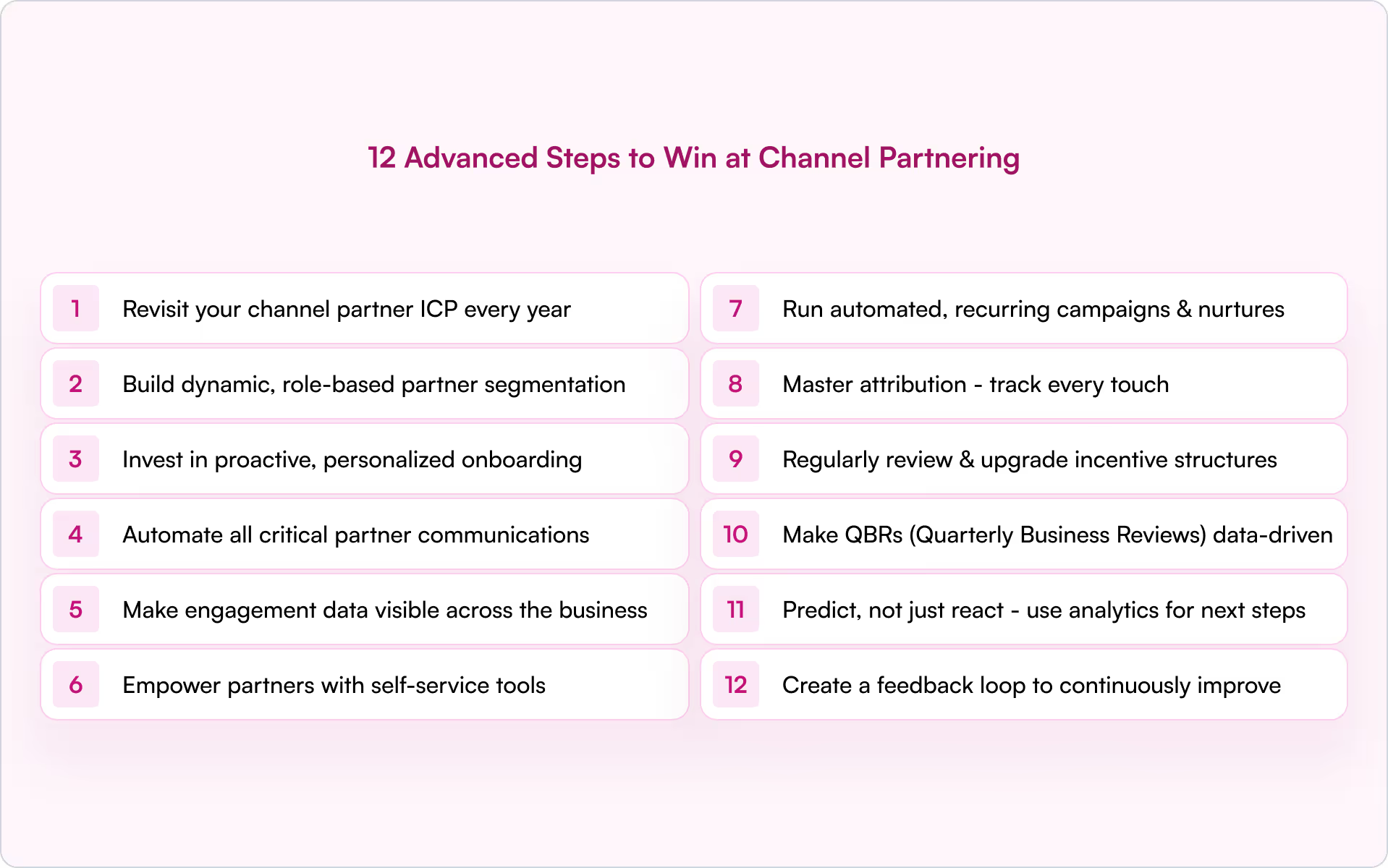
Step 1: Revisit Your Channel Partner ICP Every Year
To build a high-performing channel, it’s crucial to regularly revisit your Ideal Channel Partner (ICP).
After all, the SaaS industry evolves at lightning speed, so your ICP this year could look very different from the last.
Start your review by analyzing which partners are actively contributing pipeline and revenue.
Note which verticals these top-performing partners operate in and consider their technology stacks, sales motions, and customer types.
Then, use CRM data, engagement tracking, and partner feedback to refine your ICP criteria.
This ensures you focus on partners who align with your product, go-to-market strategy, and growth stage.
Step 2: Build Dynamic, Role-Based Partner Segmentation
Developing effective customer segments allows you to deliver the right experience to the right partners at scale.
Segment by:
- Tier
- Partner type (for example, reseller, ISV, agency)
- Geography
- Engagement/activity level
- Strategic value
It’s also helpful to include roles within your partner companies — for example, sales, marketing, technical — so you can tailor communications and incentives to individual contributors.
This approach enables targeted enablement, personalized support, and performance-based rewards.
For example, high-engagement referral partners might receive co-marketing funds, while new ISVs get onboarding support.
Categorising customers into market segments doesn’t have to be complicated: you can structure it using a simple table like the example below.
Step 3: Invest in Proactive, Personalized Onboarding
In 2026, personalization is no longer merely a nice-to-have; it’s a must.
And it’s super important during the onboarding process, which is most likely your partner’s first real contact with your SaaS brand.
Indeed, a strong, personalized onboarding experience sets the tone for a productive and long-term partnership.
Tailor onboarding experiences based on partner type, tier, and role.
For example, a reseller might need sales training and pricing tools, while a technology partnership benefits more from API documentation and integration support.
Blend live interactions (such as kickoff calls, QBRs, and workshops) with self-serve resources, including videos, guides, and a searchable knowledge base.
Here’s a handy channel partnership best practice for proactive, personalized onboarding.
Auto-trigger onboarding flows when a partner registers a deal or completes signup — ensuring immediate engagement and faster time-to-value.
Step 4: Automate All Critical Partner Communications
Timely, relevant communication is key to keeping partners engaged — but manual outreach doesn’t scale.
Thanks to the rise of automation, in 2026, a small workforce is no longer a barrier to scaling.
Simply automate critical partner updates like:
- Deal status
- Spiff launches
- Deadlines
- Training rollouts
To achieve this, you can use triggers tied to specific partner actions or milestones.
Automating these updates ensures that none of your partners miss essential info while also freeing up your team’s time to focus on more valuable tasks.
It’s important to use a multi-channel approach — for instance, using Slack, email, in-app messages, and CRM alerts — alongside your PRM to meet partners where they already work.
With modern PRMs such as Introw, channel managers can send branded updates directly from their CRM without switching platforms or logging into a portal.
Step 5: Make Engagement Data Visible Across the Business
Transparency is pivotal to channel success.
Sharing partner engagement data (such as email opens, content downloads, meeting attendance, and portal activity) helps align sales, RevOps, and leadership around which partners are driving momentum.
Live dashboards are a game-changer when it comes to transparency and visibility.
Use them to clearly visualize partner engagement data, supporting QBRs, pipeline reviews, and forecasting.
With Introw, partner engagement data flows directly into Salesforce or HubSpot, so teams don’t need to leave their CRM to see which partners are active, which need attention, and where opportunities are growing.
Step 6: Empower Partners With Self-Service Tools
Self-service doesn’t just save time — it builds trust and drives faster, more scalable channel growth.
Empower your partners with self-service tools that make it easy to register deals, access channel partner sales content, complete training, and launch campaigns without login barriers or confusing portals, thereby eliminating friction.
Take it a step further by supporting custom assets and co-branded marketing, allowing partners to tailor their messaging to their target audience.
For example, with Introw, partners can submit co-marketing requests through branded, embedded forms, which automatically trigger internal workflows and approvals.
Step 7: Run Automated, Recurring Campaigns and Nurtures
When it comes to keeping partners engaged, consistency is key.
And, thanks to automation tools, it’s never been easier to stay consistent.
Set up automated, recurring campaigns that deliver timely content, training, and pipeline nudges to ensure consistent engagement.
This might look like:
- Monthly enablement newsletters
- QBR reminders
- Seasonal promotions
- Product update highlights
- Pipeline review reminders
Segment your content and tone of voice based on partner maturity.
For example, new partners may need onboarding touchpoints, while established ones benefit from co-selling tips or market-specific playbooks.
You can also use pre-built templates to re-engage top or at-risk partners with personalized outreach that reignites interest and activity.
Step 8: Master Attribution - Track Every Touch
We’ve always known the importance of accurate attribution in proving the value of a channel partnership program.
Yet historically, getting attribution right has been a time-consuming headache.
But, once you move beyond spreadsheets, accurate attribution is within reach.
Auto-sync all partner activities — for instance, deal registrations, campaign clicks, and content downloads — directly into your CRM.
This allows you to tie revenue back to specific partners, motions, marketing materials, and assets with complete visibility.
By automating attrition, you’ll gain invaluable (and accurate) answers to crucial questions, including:
- Which partners are influencing pipeline
- What content drives conversions
- Where to invest next
In addition to making attrition easier and more accurate, automation tools also enhance visibility, making data-driven decision-making easier across your business.
For example, a CRO could view a real-time forecast of partner-sourced deals within Salesforce or HubSpot, enabling them to report on performance, plan resources, and align teams.
In this way, clean, automated attribution turns insight into strategy.
Step 9: Regularly Review & Upgrade Incentive Structures
Your incentive program should evolve as your partner ecosystem grows.
Attaching incentives to the volume or value of partner bookings is obvious.
But to level up your incentive structure, move beyond one-dimensional rewards tied only to bookings and start rewarding engagement too.
For instance, you could offer bonuses for:
- Training completion
- Content usage
- Co-selling participation
- Marketing activity
Rewarding engagement encourages consistent, long-term behavior rather than chasing one-off wins.
It’s also important to regularly test and iterate incentives to determine what motivates different types of channel partnerships — MSPs, for example, may be motivated by very different rewards than ISVs — and adjust accordingly.
Bring your tier system into 2026 with dynamic tiering.
Within a dynamic tiering structure, quarterly reviews promote or demote partners based on performance and activity, not just deal volume, helping to ensure consistent engagement.
Step 10: Make QBRs (Quarterly Business Reviews) Data-Driven
It’s time to ditch QBR PowerPoints in favor of live dashboards, engagement metrics, and pipeline data.
This creates a more transparent, actionable conversation focused on what’s working, what’s blocked, and how to win together.
Start with a clear, mutual action plan that aligns goals across teams, then dive into valuable insights, such as deal velocity, content engagement, and training progress.
It’s also worth tailoring your prep by role.
For example, CROs should receive high-level growth strategies and revenue forecasts, while partner managers are more likely to want detailed activity breakdowns and enablement metrics.
Step 11: Predict, Not Just React - Use Analytics for Next Steps
The best partner programs don’t just measure — they anticipate.
Leverage engagement trends, pipeline activity, and content usage to identify at-risk partners early and spot emerging top performers.
With analytics and AI, channel managers can receive “next best action” recommendations, which suggest where they should focus their time for maximum impact — whether it’s reactivating a dormant partner or accelerating a high-potential one.
For example, Introw’s live dashboards automatically flag dormant partners showing signs of churn — such as declining logins or no recent deal activity — so you can step in before it’s too late.
Step 12: Create a Feedback Loop to Continuously Improve
Every strong channel partner program is built on two-way communication.
The key to success here is to make it as easy as possible for partners to share their input on their needs and challenges as well as feedback on enablement, product, support, and marketing efforts.
Establish regular feedback channels such as:
- Monthly surveys
- Partner advisory boards
- Open office hours
Most importantly, you must act on the feedback by incorporating it into program updates, campaign planning, and even roadmaps for products or services.
This shows partners that their voices matter.
5 Common Pitfalls & Outdated Practices to Avoid in 2026
So, we’ve discussed how to boost your channel partnership program in 2026, but what shouldn’t you be doing?
Here are five major pitfalls to avoid:
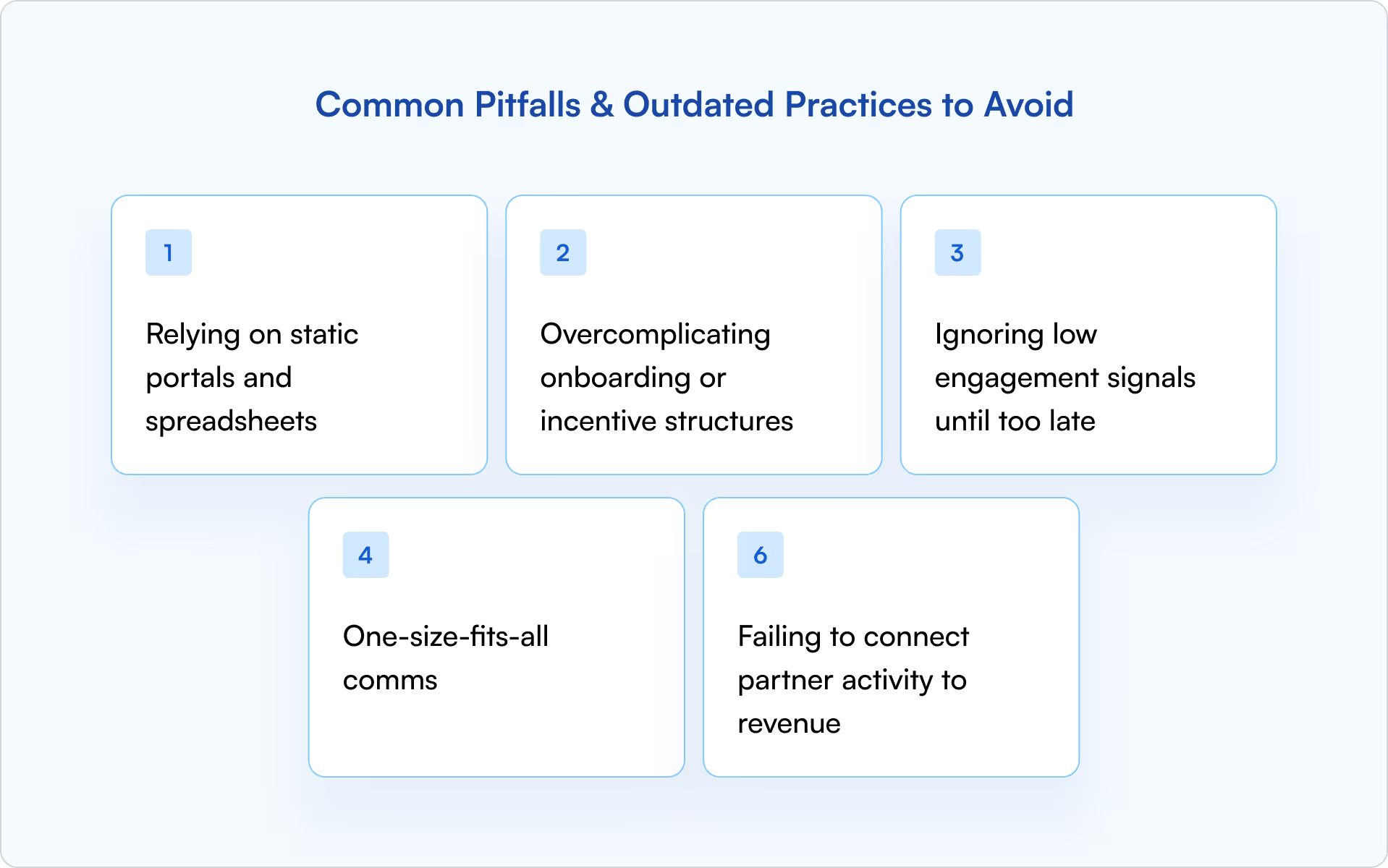
- Relying on static portals and spreadsheets — Manual tools are slow, siloed, and prone to error. They create friction for partners and limit your ability to scale or track real-time performance.
- Overcomplicating onboarding or incentive structures — If partners can’t quickly understand how to get started or what’s in it for them, they disengage with sales efforts.
- Ignoring low engagement signals until too late — A drop in logins or deal registrations often signals a deeper issue. Without proactive monitoring, you risk silent churn and lost revenue.
- One-size-fits-all comms — Generic emails or mass updates miss the mark and will cause partners to tune out.
- Failing to connect partner activity to revenue — Without clear attribution, it’s hard to prove value or optimize performance. Revenue-connected metrics help secure internal support and guide smarter investments.
Channel Tech Stack — Tools That Separate Winners From Laggards
In 2026, your channel tech stack is a key differentiator.
Leading SaaS companies are moving beyond legacy PRMs and static partner portals, adopting CRM-first, frictionless platforms that drive real engagement and measurable results.
Traditional PRMs often require logins, manual updates, and siloed data — making it hard for partners to stay active and for teams to track success.
So what’s new in the world of PRMs?
In 2026, you should be looking for a platform that offers off-portal updates, self-service enablement, automated campaigns, real-time attribution dashboards, and AI-powered nudges that guide partner and channel manager actions alike.
Furthermore, these systems should integrate directly into your CRM (like Salesforce or HubSpot), enabling seamless workflows, deal tracking, and self-service enablement without leaving familiar tools.
Modern PRM Checklist:
✅ CRM-first PRM (Salesforce/HubSpot native)
✅ No-login deal reg, content access, and tools to support co-marketing activities
✅ Automated partner campaigns
✅ Live dashboards for attribution and engagement
✅ AI insights: next-best-action, churn risk, high-potential partners
Upgrading your tech isn’t just about convenience — it’s about enabling scale, accountability, and partner success in a fast-changing SaaS landscape.
Why Introw?
So when choosing a modern PRM, why should you opt for Introw?
Built directly into your CRM (like Salesforce or HubSpot), Introw keeps your CRM as the single source of truth while automating multi-channel engagement, including emails, Slack alerts, updates, and more.
What’s more, it delivers an off-portal experience for partners, helping to eliminate friction and enable mutual growth.
Indeed, partners can submit leads, collaborate on deals, and receive updates through email or Slack, with everything synced back to your CRM.
And thanks to real-time engagement tracking for every role, managers, RevOps teams, and CROs gain instant visibility into metrics like partner-sourced leads, deal progression, support tickets, and engagement across the partner ecosystem.
👉Want to see Introw in action? Request a demo here.
Conclusion - The New Playbook for Channel Partnering
Winning SaaS teams in 2026 are embracing a new standard:
- Automating partner workflows
- Personalizing every interaction
- Measuring impact across the funnel
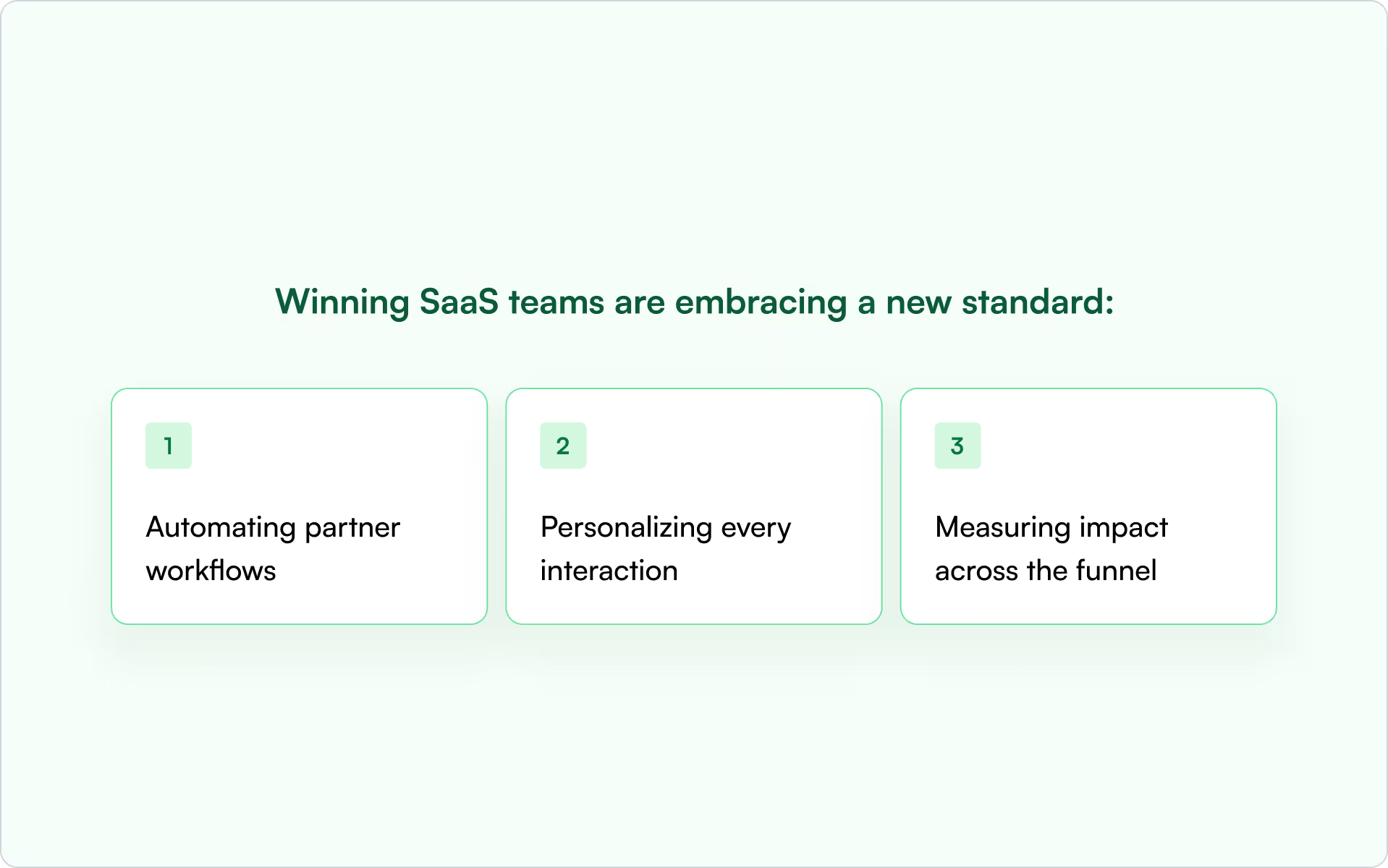
Channel partnership programs are no longer merely a sales lever — they’re becoming a core strategic revenue stream that drives scalable, efficient growth.
To stay competitive, now is the time to audit your current partner motion, identify gaps, and explore how Introw can help you build and power a next-generation, CRM-first channel program. ➡️ Request a demo here today.

