

What are headless partnerships?
Headless commerce separated the storefront from the back-end commerce engine.
The engine stayed the same. Brands could then deliver commerce through any interface, including a website, app, kiosk, or social channel.
Headless partnerships basically apply the same model to a partner program:
In a headless PRM model, the portal is no longer the center of every task.
Partners can:
- Register deals
- Access resources
- Receive updates
- Ask questions
- Check progress
Your team can manage partner activity, automated workflows, and partner performance without forcing everyone into one platform.
This is what makes an agentic PRM different from traditional partner portal software. AI agents handle routine work such as deal registration, partner communication, data lookups, and follow-up. People stay involved when a decision needs context, approval, or judgment.
The AI agent becomes another working surface, while your CRM remains the source of truth. The partner portal still exists when partners need a branded self-service environment, but it becomes one option among many.
A headless partner program does not remove the portal. It just removes the requirement that every partner experience must begin and end there.
Why the partner portal limits partner engagement
Traditional channel programs put the partner portal at the center of everything.
That gave vendors one place to manage deal registration, partner onboarding, training materials, and partner communication. It also forced every partner to change how they worked.
Why portal-first programs lose partner engagement
Most channel partners support several vendors at once. They already work in email, Slack, Teams, and their own CRM.
Your partner portal becomes:
- One more login to remember
- One more customer portal to check
- One more set of portal layouts to learn
- One more system outside their daily workflow
Even the best partner portal software can’t solve low partner engagement when the operating model depends on partners visiting a separate platform.
How the portal-first model hurts partner performance
When partners avoid the portal:
- Deal registration forms get abandoned
- Marketing materials and resource libraries go unread
- Partner activity becomes harder to track
- CAMs spend their time chasing updates
- RevOps becomes the bottleneck for business data
- Partner performance reports drift away from reality
As partner networks and the wider partner ecosystem grow, these manual processes become harder to manage.
How headless partnerships improve the partner experience
A CRM-native approach to partner management brings partner data, automated workflows, and deal updates into the tools people already use.
The partner portal can still support a branded self-service environment, partner enablement, and onboarding. It just stops being the required starting point for every task.
That shift also helps partner activation because new partners can take action without first learning another platform.
Portal-first programs ask partners to adapt to the software. Headless partner management adapts the program to the partner.
Portal-era PRM vs. the agentic, headless model
The shift to agentic partner management changes how partners access the program, how teams work, and how quickly decisions get made.
A headless partner platform isn’t a better portal. It’s a partner program without a portal at the center.
The CRM remains the engine, while an AI-native PRM brings deal registration, partner communication, QBR preparation, and partner data into the tools people already use.
Our overview of AI use cases in partnerships shows how the same agentic model supports work across the full partner lifecycle.
The four principles that make headless partnerships work
A headless partner platform works because it follows four design principles that legacy PRMs usually don’t. Together, they keep the program flexible, easier to run, and connected to the systems your revenue team already trusts.
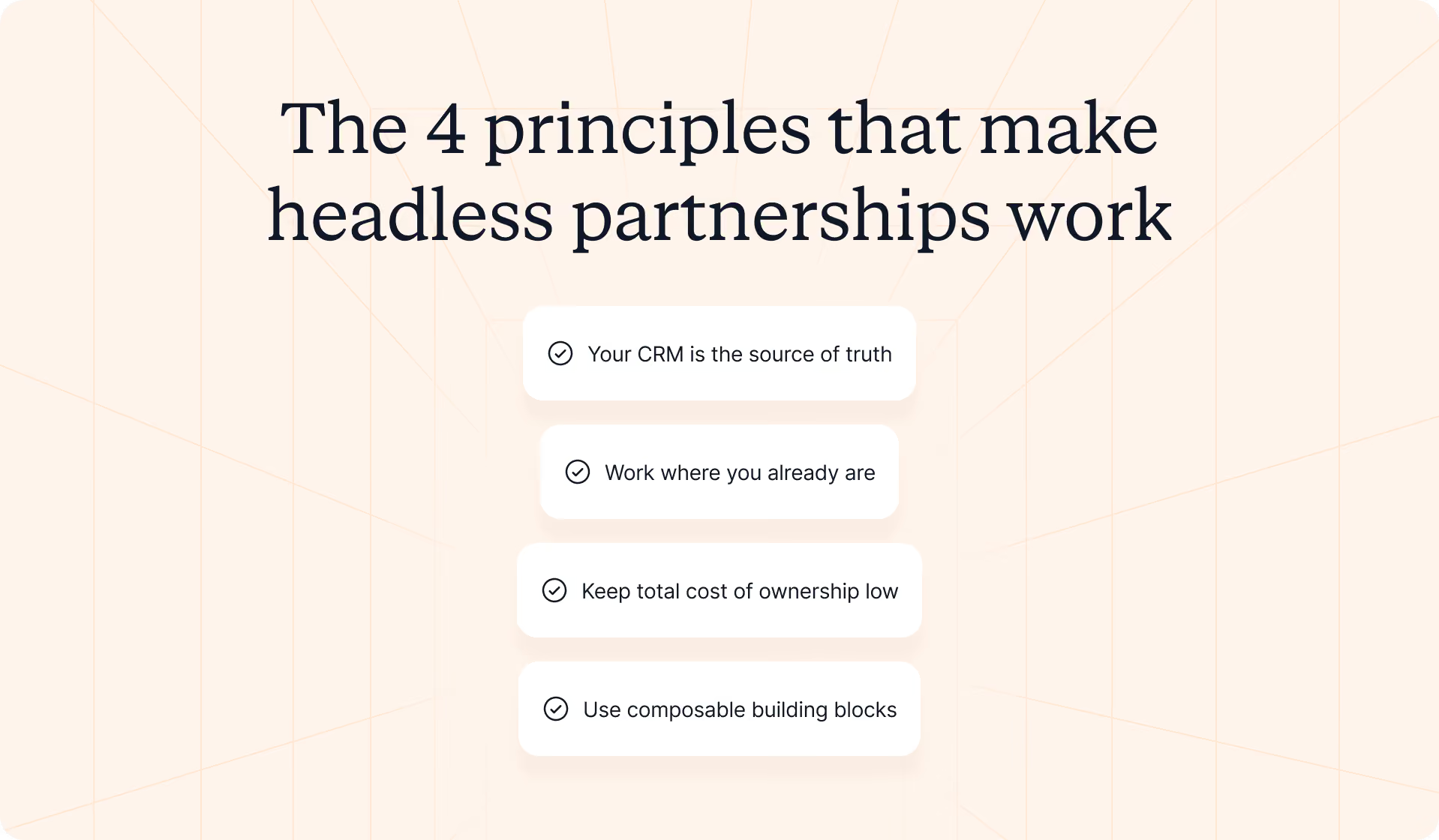
1. Your CRM is the source of truth
The CRM is the engine behind the entire partner program.
Every agent reads from and writes back to your CRM, so there’s nothing to migrate into a separate system and nothing to reconcile later.
That keeps:
- Deal registration current
- Partner activity visible
- Program performance accurate
- Partner attribution tied to real revenue data
Because partner attribution stays inside the CRM, reporting doesn’t drift from what sales and RevOps already see.
2. Work where you already are
The interface is no longer fixed.
Partners and internal teams can act through the CRM, Slack, Teams, email, Claude, or ChatGPT. The partner portal still exists, but nobody has to start there.
This helps teams like yours:
- Keep partners informed in real time
- Improve partner engagement without more logins
- Support different partner types through different interfaces
- Give partners a more relevant partner experience
That flexibility matters as partner networks grow. One partner may prefer Slack, another may work mainly from email, and another may need a branded customer portal. The engine stays the same while the experience changes.
3. Keep total cost of ownership low
Legacy partner portal software often brings long implementation cycles, consultants, dev tickets, and ongoing maintenance.
A headless, CRM-native model avoids that burden.
The partnerships team can configure:
- Forms
- Portal layouts
- Training materials
- Resource libraries
- Automated workflows
- AI agents
That reduces manual processes and lets the people running the program make changes without waiting on IT. It also helps accelerate partner onboarding because new partners can enter structured workflows without a long setup cycle.
4. Use composable building blocks
Headless partnerships don’t force every team and partner into one rigid system.
Instead, you combine the pieces your program needs:
- API
- Embed
- Sync
- MCP
That gives you more control over interfaces, workflows, and partner types. Each component can scale on its own, and your partner ecosystem isn’t locked into one monolithic platform.
You shape the experience around your stack, while deal intelligence continues to run from the same CRM-backed foundation.
MCP: The mechanism that makes headless partnerships work
A headless partner program only works if AI assistants can connect securely to the systems that hold partner data.
That connection is MCP.
What MCP does
The Model Context Protocol gives AI clients a standard way to connect to tools and data.
Introw runs a secure, OAuth-protected MCP server that connects your partner program to:
- Claude
- ChatGPT
- Cursor
- Other MCP-compatible assistants
This is what turns an MCP partner platform from an idea into a working system.
What an assistant can do
Once connected, an assistant can work with the same partner data and business processes your team already manages in the CRM.
In plain language, you can ask it to:
- Search partners
- Look up commissions and goals
- Review deal registration submissions
- Prepare a partner business review
- Check partner performance
- Update a partner record
- Register deals
- Answer questions about partner activity
The AI agent handles these tasks without forcing channel managers to switch between multiple systems or wait for RevOps to pull a report.
Partners use the same connection
MCP also works on the partner side.
Each partner can connect their assistant and work with the data they’re allowed to access. One partner can’t see another partner’s records, commissions, deals, or sensitive data.
That means partners can check progress, access resources, and complete routine tasks without opening the partner portal.
MCP is the connective tissue between the AI interface and the CRM engine. It’s what makes running a partner program from Claude, ChatGPT, or Slack practical, secure, and useful.
One partner experience for your team and every partner
A headless model supports both sides of the relationship. Your channel team gets one way to run the partner ecosystem, while partners get a simpler way to manage every vendor they work with.
This model respects how channel partners actually work. They carry several vendors, use different systems, and don’t want another partner portal to manage.
Instead of asking partners to adapt to every vendor’s software, the partner brings their assistant into the relationship. That improves partner engagement, makes partner onboarding easier, and gives both sides a clearer path to successful partnerships.
How AI agents support every stage of the partner lifecycle
Headless partner management keeps the same six lifecycle stages. It simply moves the work into the tools your team and partners already use.
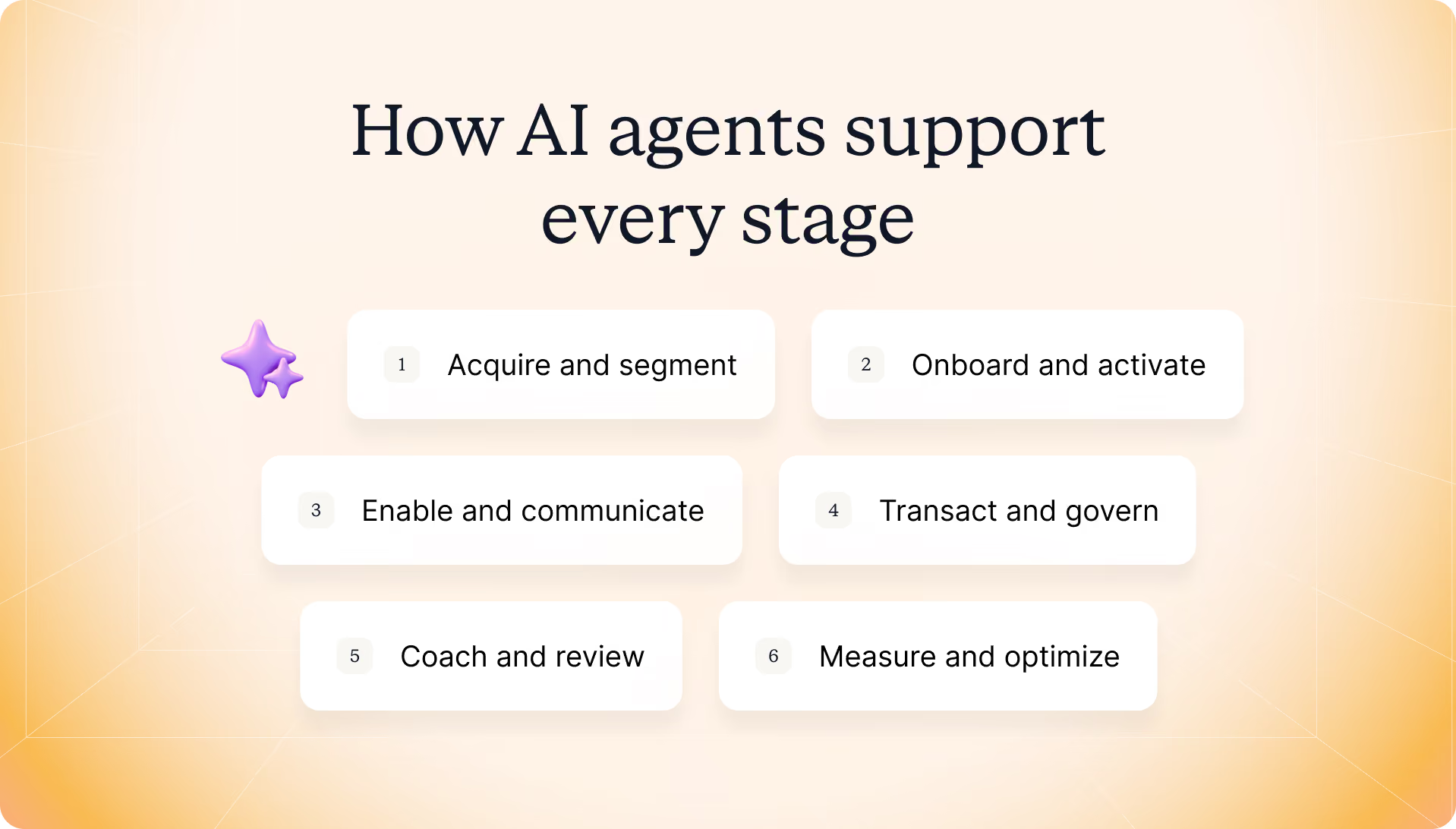
1. Acquire and segment
Use live data to find strong-fit channel partners and segment them by region, partner type, performance, or potential.
2. Onboard and activate
Guide partner onboarding, answer questions, track progress, and flag silent failure before new partners disengage.
3. Enable and communicate
Generate training, campaigns, and partner communication from your knowledge base, with 24/7 answers in each partner’s language.
4. Transact and govern
Let partners register deals conversationally while automated workflows handle approvals, duplicate checks, and channel conflict.
5. Coach and review
Give every deal a coach and prepare QBRs in seconds, so partner managers can focus on the conversation.
6. Measure and optimize
Ask plain-language questions about commissions, pipeline, partner engagement, and ecosystem health while the data is still current.
Explore our guide to AI in partnerships for the complete 14-use-case breakdown across each stage.
Governance: what makes headless partnerships deployable
An AI agent that can read your CRM and act on behalf of partners needs more than useful outputs.
It needs clear answers to three questions:
- What can it see?
- What can it do on its own?
- What happened afterward?
A headless model answers all three through identity, permissions, approvals, and audit trails.
Each person connects with their login. There are no shared keys or back doors.
The agent follows your existing role-based access controls, so:
- A partner’s assistant can only reach that partner’s records
- Internal users only see what their role already allows
- The agent never widens access beyond the signed-in user
- Every action is written to the CRM timeline
That gives RevOps, IT, and Security a clear record of what happened, who approved it, and which partner was involved.
The capability matrix: what the agent can and can’t do
The capability matrix is the control layer behind the AI agent.
You decide which actions run automatically and which ones stop for human review.
This is what keeps routine work moving without removing human judgment.
Deal registration, data lookups, and standard updates can flow straight through. Sensitive or high-impact actions wait for approval.
The safeguard isn’t added after deployment. It’s part of how the agent works.
Compliance built into the architecture
Enterprise headless partnerships also need a technical foundation that Security can approve.
Introw’s MCP architecture is built around:
- SOC 2 Type 2
- ISO 27001
- GDPR-ready controls
- OAuth-protected access
- MCP-native connections
- CRM-based audit trails
That makes the model practical for global channel programs where agents may work with sensitive data, partner records, commissions, and pipeline.
The result is an agentic system that can move quickly without becoming a black box. Your team keeps control over access, approvals, and reporting, while AI handles the work that doesn’t need a person.
Who wins in a headless partner program?
Agentic, headless PRM doesn’t replace people. It moves each role toward the work that needs judgment, context, and relationships, while agents absorb the mechanical work that slows teams down.
Channel chiefs
Channel leaders move from reactive management to live visibility across the partner ecosystem.
They can:
- Ask questions and get answers in seconds
- Build a recruitment ICP from real data
- Spot risk across partner networks earlier
- Prevent channel conflict before it hurts win rates
- Make faster, data-driven decisions about where to invest
Partner development managers
PDMs spend less time building slideware and more time improving partner engagement.
The impact:
- QBR coverage reaches 100% of strategic partners
- Coaching scales across every deal
- Roughly 250 to 500 hours per year are recovered
- More time goes into partner success, not report preparation
Channel account managers
CAMs can focus on relationships instead of chasing updates.
Agents handle 40% to 60% of routine support, including:
- Partner onboarding follow-up
- FAQs
- Progress tracking
- Basic requests
- Routine partner communication
The work happens through the partner’s preferred channel, not another partner portal.
Partner marketing
Partner marketers become editors instead of content assembly lines.
Agents can help produce 10 to 20 times more content without adding headcount, while the team keeps control of messaging, quality, and channel strategy.
That makes it easier to support more partners with useful campaigns, training, and co-branded assets.
RevOps and Channel Ops
Operations teams stop being the bottleneck for every request.
Routine lookups, list building, and standard approvals can resolve automatically, so RevOps can focus on:
- Integration capabilities
- Data quality
- Automated workflows
- Program design
- Operational efficiency
This is a major shift from legacy partner portal software, where every question often creates another manual task.
Partners
Partners get a model that respects their time.
They can:
- Register a deal in under 90 seconds
- Check commissions in real time
- Get coaching inside every deal
- Ask questions 24/7 in their language
- Access resources without juggling portal logins
- Work through one assistant across every vendor relationship
Modern partner portal software may improve the interface, but it still asks partners to enter another system. A headless model improves the partner experience by bringing the work into the tools they already use.
Introw’s headless skill library turns these role-specific workflows into reusable skills for channel teams and partners.
How to move toward a headless partner program
You don’t need to rebuild your entire partner program at once.
Start with the workflow causing the most friction, prove the model, then expand.
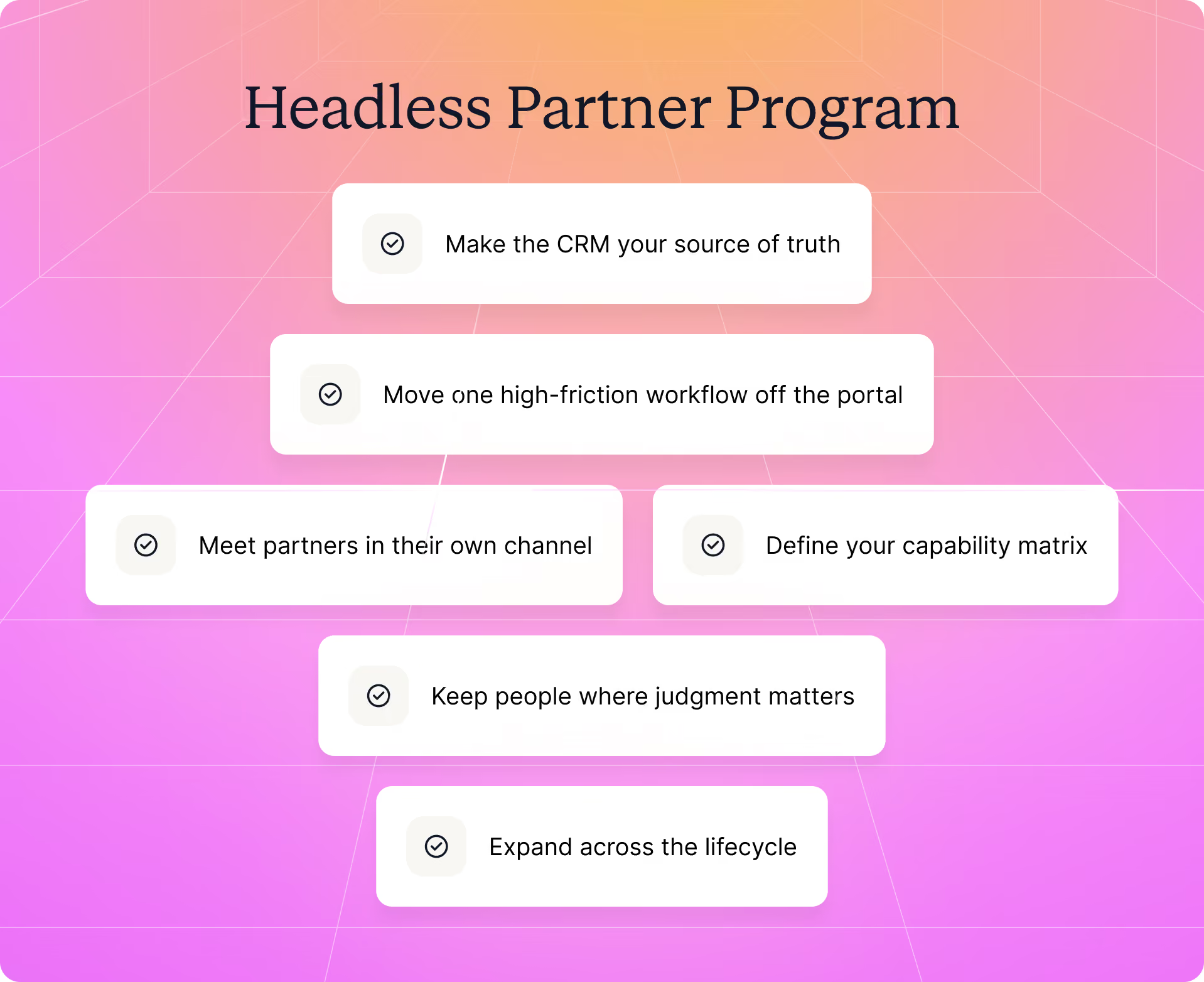
1. Make the CRM your source of truth
Headless partnerships only work when partner data, deals, commissions, and activity already live in the CRM.
Fix duplicate records, unclear ownership, and missing attribution before adding AI on top.
2. Move one high-friction workflow off the portal
Start with the task partners avoid most.
That’s usually:
- Deal registration
- Commission questions
- Status updates
- Onboarding follow-up
Pick one workflow and make it available through email, Slack, or an AI assistant.
3. Meet partners in their own channel
Don’t replace one login with another.
Let partners work through the tools they already use, whether that’s Slack, email, their CRM, or their own assistant.
4. Define your capability matrix
Decide what agents can:
- Read
- Do automatically
- Route for approval
- Never access
Set these rules before deployment, not after something goes wrong.
5. Keep people where judgment matters
A headless model isn’t fully autonomous.
Agents handle repetitive work. People still make strategic decisions, resolve exceptions, approve sensitive actions, and manage relationships.
6. Expand across the lifecycle
Once one workflow works, extend the same model into partner onboarding, enablement, coaching, QBRs, incentives, and ecosystem reporting.
Introw is purpose-built for this shift, giving teams a CRM-native foundation, agentic workflows, and optional partner portal software in one headless partner platform.
Introw is the headless partner platform
Introw is purpose-built for companies that want to run partnerships through the CRM, AI assistants, and communication tools their teams and partners already use.
The partner portal remains available, but it no longer has to sit at the center of the program.
AI-native and CRM-native by design
Introw combines an AI agent with CRM-native partner management.
It isn’t traditional partner portal software with AI added later. Agents can support work from Claude, ChatGPT, Slack, Teams, and the CRM, while each action writes back to the system of record.
Introw’s deep HubSpot and Salesforce integration keep deals, partner activity, attribution, and reporting connected to the revenue data your team already trusts.
Run it from the AI you already use
Introw’s secure MCP server connects the program engine to the AI assistant, where each person already works.
Your team can use plain language to:
- Search and segment partners
- Review submissions
- Check goals and commissions
- Prepare QBRs
- Update records
- Register deals
Partners can connect their assistants too, with access limited to their data.
The partner portal is there when a task needs a visual self-service environment. When it doesn’t, the workflow can happen somewhere else.
Deployable, with governance built in
Introw controls what each agent can see and do through:
- Per-user login and RBAC
- A vendor-owned capability matrix
- Human approval for sensitive actions
- CRM-based audit trails
SOC 2 Type 2, ISO 27001, and GDPR-ready compliance are built into the architecture, so IT and Security can evaluate a working governance model rather than an AI promise.
Start with ready-to-run skills for both sides
Introw’s agentic skill library includes 32 drop-in Claude Code skills for channel teams and partners.
These skills cover workflows such as recruitment, onboarding, deal operations, commissions, QBRs, and ecosystem monitoring, so teams don’t have to build every agent workflow from scratch.
Because Introw runs on the CRM you already have, companies can go live in two to four days, not after a long legacy PRM implementation.
Ready to stop forcing partners into another portal? Book a demo to see how Introw runs your partner program from the CRM, AI assistants, and the tools your partners already use.
Still curious? Here are some quick answers to help clear things up
Headless partnerships are a model for running a partner program without a portal at the center. The interface is decoupled from the CRM engine, so partners and teams can work through Claude, Slack, Teams, email, and the CRM while AI agents handle routine tasks.
A headless PRM is a partner relationship management model where the CRM acts as the engine, and the interface can be any tool people already use. Agents read from and write back to the CRM instead of forcing every action through a standalone portal.
The principle is the same, but the use case is different. Headless commerce separates the storefront from the commerce engine, while headless partnerships separate the partner-program interface from its CRM engine.
An agentic PRM uses AI agents to complete mechanical work across the partner lifecycle. They work inside existing tools, write updates back to the CRM, and leave judgment-based decisions to people.
No. The partner portal is optional. Partners can register deals, check commissions, receive updates, and ask questions through Slack, email, or their AI assistant.


Are you already an active Introw partner?
Book a demo with one of our partner program experts, or explore Introw on your own time.