

What is deal intelligence?
Deal intelligence is the practice of using data and AI to understand deal health, identify risks, and determine the next best action to move a deal forward.
It helps answer questions like:
- Which deals are stalling?
- Why are they stalling?
- Which opportunities are at risk?
- What should happen next?
- What can the seller do right now?
Strong deal intelligence helps sales teams improve deal progress, support better deal management, and make more informed decisions throughout the sales process.
Deal intelligence is often confused with other categories:
Most deal intelligence software was built for internal sales teams. It assumes sellers work inside your CRM, whether that’s HubSpot or Salesforce, and that their activity is visible.
Many deal intelligence platforms use CRM data, customer behavior, buying signals, and conversation intelligence to generate actionable insights, improve forecast accuracy, and surface deal risk.
Partner sales are different. The seller is external.
You can’t rely on:
- Call recordings
- Activity tracking
- Manager oversight
That makes it much harder to understand:
- Deal health
- Deal progress
- Actionable intelligence
That’s why partner deal intelligence starts with visibility.
Before you can identify risk, improve deal outcomes, or coach a stalled deal, you need a shared view of the opportunity. Structured deal registration creates that foundation by connecting partners and revenue teams to the same deal data.
If deal intelligence platforms are designed to spot risk early, why do so many partner deals still stall without warning?
Why partner deals stall (and why traditional deal intelligence misses them)
Most deal intelligence software was built to help internal sales teams. Partner deals follow a different sales process, which creates blind spots that traditional intelligence platforms struggle to solve.
You can’t see the deal
When a partner is running a deal, much of the activity happens outside your CRM.
The partner may be:
- Having meetings you’re not part of
- Handling objections you never hear about
- Talking to the buying committee behind the scenes
- Waiting on information from your team
- Delaying a follow-up that slows the entire deal
None of that activity is guaranteed to appear in your reporting.
By the time a stalled deal shows up in your dashboard, it may have already been inactive for weeks.
Traditional deal intelligence software relies on CRM activity, conversation intelligence, call recording, and other forms of automated activity capture to measure deal health and identify risk.
Partner deals often generate none of that data.
Without those signals, deal health scoring, deal risk scoring, forecast accuracy, revenue predictability, and AI forecasting become much harder to trust.
Even a strong Salesforce integration can’t help if the activity never reaches the CRM.
You cannot coach what you cannot see
Knowing a deal has stalled is only half the problem.
You also need to know why.
Without visibility into those signals, coaching becomes guesswork instead of actionable intelligence.
Sales managers and sales leaders need context before they can help. A dashboard can tell you a deal is stuck, but it can’t explain what happened inside the opportunity.
Most partner managers only discover issues during:
- QBRs
- Forecast reviews
- Pipeline inspection meetings
- Quarterly business reviews
By then, deal outcomes are often already affected.
That’s why many teams are rethinking how they approach partner sales. Waiting for a partner to raise their hand is not a reliable sales strategy.
The partner is not in your tools
This is the structural difference most revenue intelligence and sales intelligence platforms overlook.
Internal deal intelligence assumes sellers use:
- Your CRM
- Your dialer
- Your meeting recorder
- Your sales engagement tools
That gives the intelligence platform access to CRM data, activity history, customer behavior, intent data, and other signals that can power predictive insights.
Partners don’t work that way.
They typically work through email, Slack, and a partner portal. Many never log into your CRM at all.
As a result, intelligence tools built for internal sales reps struggle to create a complete picture of deal health, deal progress, and pipeline data.
If you want actionable insights, coaching insights, and informed decisions that improve deal management, the intelligence has to reach partners where they already work.
The same challenge exists in co-selling, where both sides need visibility into the same opportunity.
You can’t fix a problem you don’t know exists. And that’s exactly what makes partner deals so challenging to manage.
The three layers of partner deal intelligence
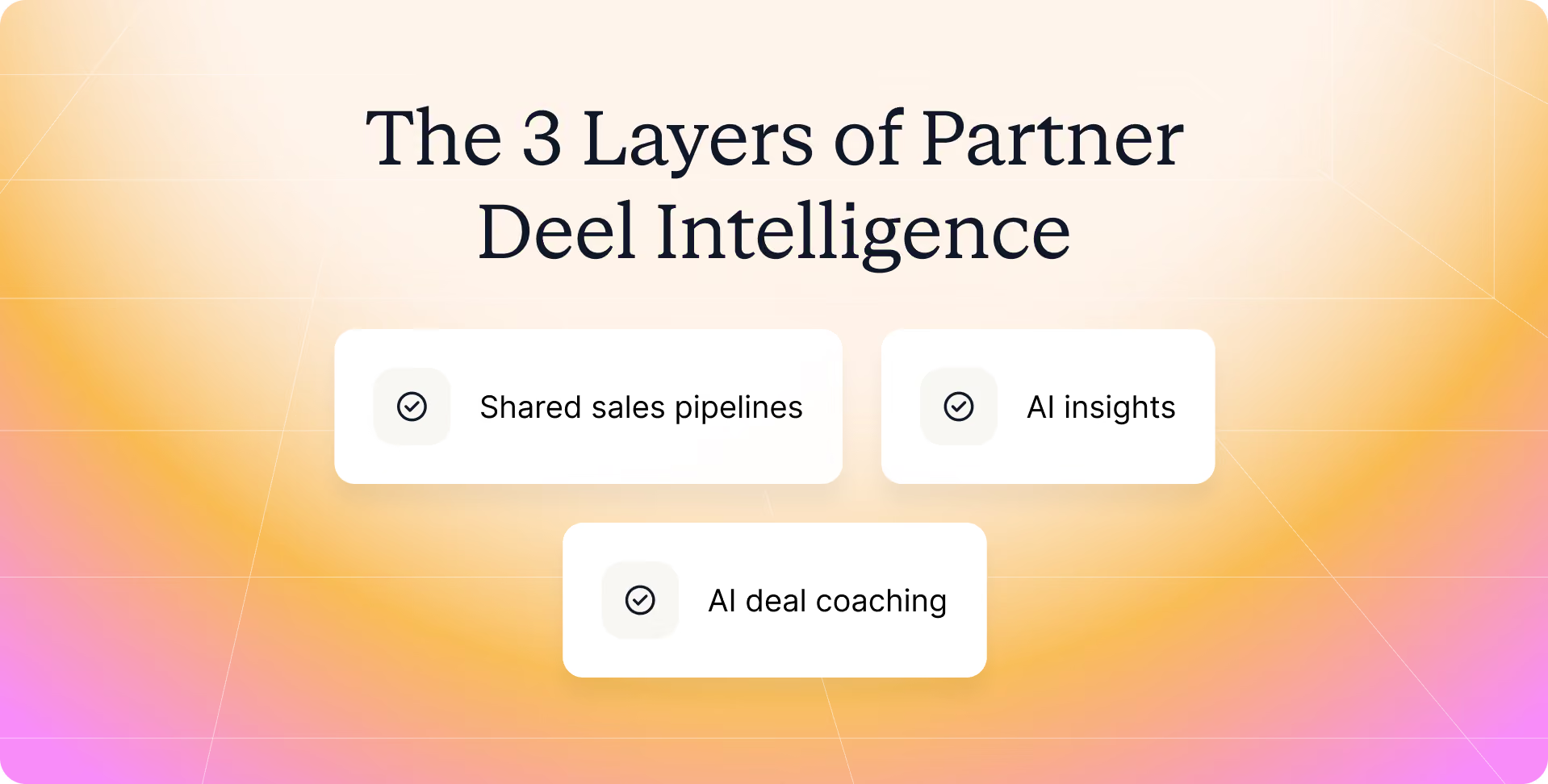
Partner deal intelligence is built in layers. Each one depends on the layer before it.
Most deal intelligence platforms help internal sales teams understand what happened inside a deal.
Partner deal intelligence helps partners understand what to do next.
This matters for sales and marketing teams that rely on partners to generate pipeline, especially in mid market organizations where partner managers often support large numbers of active deals.
You can’t generate meaningful insights without shared data. And you can’t improve deal outcomes if those insights never reach the partner.
The sections below break down each layer and show how deal coaching turns deal intelligence into actionable intelligence that helps partners close more deals.
Layer 1: Shared sales pipelines (the data foundation)
A shared pipeline gives both sides access to the same opportunity. Your team works in the CRM. Your partners work in the portal. Updates sync in both directions, creating real-time visibility into deal progress.
Without a shared pipeline, partner deal data quickly becomes outdated. With one, you have a shared source of truth that supports better forecasting, pipeline management, and the AI-powered guidance. For example, all of that can be delivered through Introw's AI Agent.
Why shared pipelines change the game
Without a shared sales pipeline, partner updates are scattered across emails, spreadsheets, and quarterly reviews. Deal data becomes outdated fast.
A shared pipeline changes that.
Partners see deal progress in real time and update opportunities directly in the portal. Those changes sync back to the CRM, giving both sides one platform and one source of truth.
That means:
- Partners stop emailing for status updates
- Partner managers stop chasing updates
- Deal data stays current
- Real-time insights become possible
This is the foundation for AI-powered insights, better forecasting, and every other layer of partner deal intelligence.
Without a shared pipeline, partner deal intelligence is mostly guesswork. With one, every layer that follows has reliable data to work from.
Layer 2: AI insights (reading the deal)
Once you have a shared sales pipeline, AI can start reading it.
This is where raw pipeline data becomes actionable intelligence.
Unlike conversation intelligence tools that depend on sales calls and call recording data, partner deal intelligence looks at the actual state of the deal. Because the data comes directly from the CRM and shared pipeline, the AI has real context rather than relying on assumptions.
That allows a deal intelligence platform to surface signals such as:
This is where partner deal intelligence overlaps with traditional revenue intelligence software and revenue intelligence platforms. Both are designed to help teams identify risk, improve forecast accuracy, and make better decisions.
The difference is where the insight goes.
Most revenue intelligence platforms surface insights for internal sales leaders. Partner deal intelligence can deliver those same insights directly to the partner responsible for the deal.
For example, instead of simply flagging a stalled deal in a dashboard, the system can identify that a deal has been sitting in the same stage for 30 days, has no recent activity, and is now at risk.
Those signals create the foundation for predictive deal scoring, stronger sales strategy, and better sales process execution.
As AI and artificial intelligence continue reshaping how teams work, the real opportunity is not collecting more data. It’s turning existing data into timely, actionable insights.
From insight to action
Insight alone does not close deals.
A dashboard that says “this deal is stalled” does not help an account executive, partner manager, or sales leader unless someone takes action.
The value of a deal intelligence platform comes from delivering the right recommendation at the right moment.
For example:
- Follow up with a stakeholder who has gone silent
- Escalate a deal that is past its expected close date
- Bring in support before a deal becomes a channel conflict
- Share content that addresses a specific objection
This is where partner deal intelligence moves beyond traditional sales intelligence software.
The goal is not just to identify risk. The goal is to help someone act on it.
Because knowing a deal is stuck doesn’t help much if the partner still doesn’t know what to do next. That’s precisely what AI-powered deal coaching and modern AI sales coaching software are designed to solve.
The next layer turns those insights into coaching that partners can use immediately.
Layer 3: AI deal coaching (acting on the insight)
This is where deal intelligence becomes action.
AI deal coaching turns deal intelligence into specific recommendations that help partners move deals forward. Instead of showing risk in a dashboard, it delivers guidance inside the deal itself.
Unlike traditional sales intelligence software or revenue intelligence software, the goal isn’t just to identify risk. The goal is to change the outcome.
Introw’s coaching is tied directly to CRM pipelines and can be customized for different motions, including reselling, co-selling, referrals, and renewals.
Stage guidance
Partners often know a deal has stalled. They don’t always know what to do next.
For every deal stage, Introw provides:
- Criteria that must be achieved before advancing
- Actions to take during that stage
- Ready-to-send email templates
A deal sitting in “Proposal Sent” might prompt the partner to re-engage the buying committee, validate decision criteria, or schedule a follow-up meeting.
The guidance is fully customizable and aligned to your sales process, whether you’re running in HubSpot Sales Hub, Salesforce, or another CRM environment.
This helps sales reps, sales leaders, and partner managers maintain consistency across every deal.
Objection handling
Many deals don’t fail because of competition.
They fail because the partner hears an objection they can’t answer.
The coach surfaces recommended responses based on:
- The objection
- The deal stage
- The deal context
This gives partners access to coaching insights before opportunities go cold.
Whether the objection relates to pricing, implementation complexity, a competitor mentioned in the evaluation, or stakeholder concerns, partners get guidance without waiting for manual support.
Asset recommendations
Finding the right content shouldn’t slow down a deal.
The coach surfaces relevant assets directly inside the opportunity, including:
- Case studies
- Battle cards
- Pitch decks
- One-pagers
- ROI calculators
Because recommendations are tied to deal context, customer behavior, and deal stage, partners spend less time searching and more time selling.
This creates a competitive edge and improves how enablement materials are used across enterprise organizations and mid market teams.
Rules of engagement
Deals move faster when everyone follows the same rules.
Rules of engagement define:
- Escalation paths
- Stakeholder responsibilities
- Pricing authority
- Collaboration expectations
This helps prevent channel disputes, protects data quality, and keeps enterprise deals aligned with your sales strategy.
For organizations managing overlapping partner relationships, clear rules also reduce the risk of channel conflict.
Delivered where partners work
This is where partner deal intelligence separates itself from most intelligence tools.
Traditional revenue intelligence platforms often stop at reporting. Introw delivers guidance directly to the person who can act on it.
Partners receive coaching:
- Inside the deal record
- Inside the partner portal
- Inside Slack notifications
- Inside email updates
The coaching can appear alongside CRM data from Salesforce HubSpot environments, support a native Salesforce integration, and help partners take action without creating additional rep data entry.
The result is a more modern platform that combines deal intelligence, artificial intelligence, and coaching in a unified platform.
For a deeper look at how coaching works in practice, see the AI deal coaching guide or explore Introw’s deal coaching capabilities.
How to use deal intelligence to close stalled partner deals
A step-by-step playbook helps your team move from “this deal is stuck” to “here’s what we do now.”
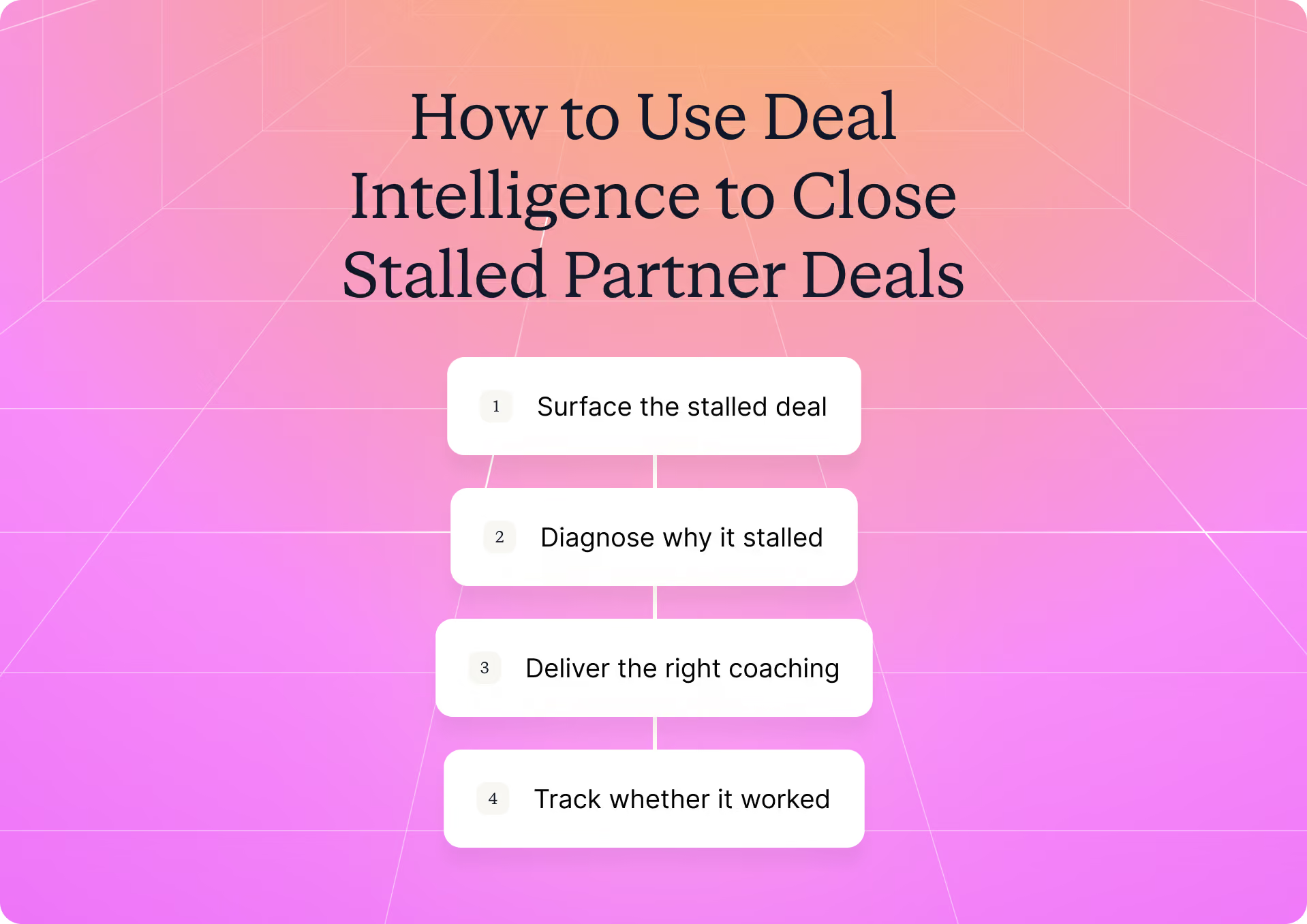
Step 1: Surface the stalled deal
Start by finding the deal while there’s still time to act.
With a shared sales pipeline, you can spot warning signs such as:
- The deal has been in one stage too long
- The close date has passed
- The partner has not updated the deal
- No meaningful activity has happened recently
This gives your team a live view of risk instead of a surprise at month-end.
Step 2: Diagnose why it stalled
Once you find the stalled deal, look for the reason behind the slowdown.
This step turns deal intelligence into something useful. You’re not just seeing that a deal is stuck. You’re seeing what may be blocking it.
Step 3: Deliver the right coaching
Once you understand the blocker, send the partner guidance they can use right away.
That might be:
- An objection response
- A follow-up email template
- A case study
- A technical one-pager
- A prompt to involve your partner manager
The partner should not have to search for help or wait for your team to review every deal manually.
The coaching should show up where they work, tied to the deal they’re trying to move.
Step 4: Track whether it worked
After the partner acts, check what changed.
Ask:
- Did the partner take the recommended action?
- Did the deal move to the next stage?
- Did the prospect respond?
- Did the deal close, slip, or stay stuck?
This is what makes deal intelligence useful beyond reporting.
You see which actions actually help stalled partner deals move forward, then use that knowledge to improve future coaching.
Here is how partner teams run deal intelligence with Introw
Introw combines shared pipelines, AI insights, and AI coaching into one workflow that runs on top of your CRM.
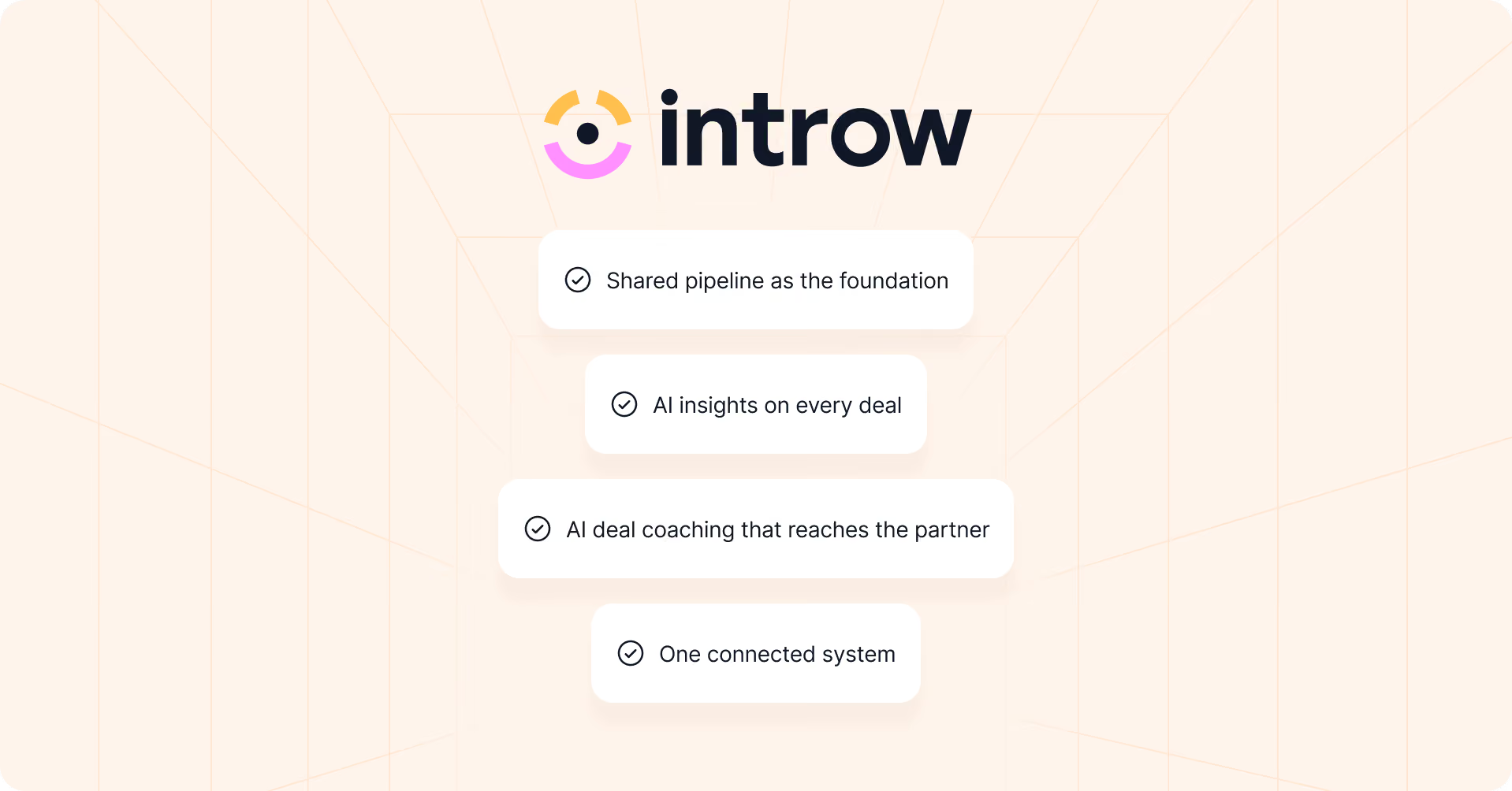
Shared pipeline as the foundation
Everything starts with a shared pipeline.
Introw syncs your CRM pipeline into the partner portal, giving partners a live view of their opportunities. Partners can update deals, move them through approved stages, and maintain deal information without needing CRM access.
You control:
- Which pipeline is shared
- Which stages partners can see
- Which stages are renamed for partners
- Which properties are visible
- Which properties are editable
- Which properties stay private
For example, partners can see fields such as deal value, stage, and close date while internal notes and margin information remain hidden.
All updates sync back to HubSpot or Salesforce, creating a single source of truth for partner deals.
Our shared pipeline setup guide provides a deeper look at how pipeline sharing, permissions, and notifications work.
AI insights on every deal
Once the data is shared, Introw’s AI can read it.
The AI analyzes deal state, deal progress, risk signals, engagement patterns, and next-best actions using live CRM data rather than stale exports.
Because partners maintain the deal directly in the shared pipeline, the AI works with current information instead of month-old updates.
Teams can also use Introw’s AI Agent to ask questions about deals, surface trends, and generate insights on demand.
AI deal coaching that reaches the partner
Insights only matter when someone acts on them.
Introw’s AI deal coaching turns insights into guidance delivered directly to partners.
Partners receive:
- Stage guidance
- Objection handling
- Asset recommendations
- Rules of engagement
You can create separate coaches for reseller, referral, and co-sell motions, then tailor coaching for different partner tiers.
Most importantly, the coaching appears where partners already work: inside the portal, Slack notifications, and email updates.
Suggested further reading:
Our deal coaching documentation explains how coaching is configured, while the deal coaching product page shows how it fits into the broader partner workflow.
One connected system
Each layer solves a different problem.
- Shared pipelines create visibility
- AI insights identify risk and opportunities
- AI coaching helps partners take action
Together, they form a complete deal intelligence system built for partner sales.
Partners don’t need separate tools to learn. Your team doesn’t need to manually review every deal. Everything runs on top of the CRM and reaches partners where they already work.
If you’re trying to understand why partner deals stall, where they lose momentum, and how to help partners take the right action at the right time, book a demo to see the full workflow in action.
Still curious? Here are some quick answers to help clear things up
A deal intelligence platform helps sales teams understand the health of individual opportunities and identify the best next action. Unlike a CRM, which stores information, a deal intelligence platform analyzes deal progress, risk signals, customer behavior, and engagement patterns to help teams close more deals and improve deal outcomes.
Conversation intelligence focuses on sales calls, call recording, and meeting analysis. Deal intelligence looks at the entire opportunity, including pipeline data, CRM data, contact data, buying signals, and stakeholder activity. Conversation intelligence explains what happened in a conversation. Deal intelligence helps determine what should happen next.
Deal intelligence improves pipeline management by helping revenue teams identify stalled opportunities, prioritize resources, and intervene earlier when risk appears. Better visibility into deal progress also improves forecast accuracy, revenue predictability, and sales process execution while helping teams make more informed decisions.
Sales intelligence helps identify deal risk early by combining account enrichment, customer behavior data, contact data, and engagement signals. When combined with deal intelligence software, these insights help sales teams spot problems before opportunities disappear from the pipeline.
Yes. Deal intelligence software improves forecast accuracy by monitoring deal health, deal stage movement, activity levels, and close-date changes. Many platforms also support AI forecasting, helping sales leaders identify trends, evaluate pipeline strength, and make better decisions based on current data rather than assumptions.



See AI-Native PRM in Action
Book a demo with one of our partner program experts, or explore Introw on your own time.