
What is partner activation?
Partner activation is the process of moving a newly recruited partner from a signed agreement to actively generating pipeline.
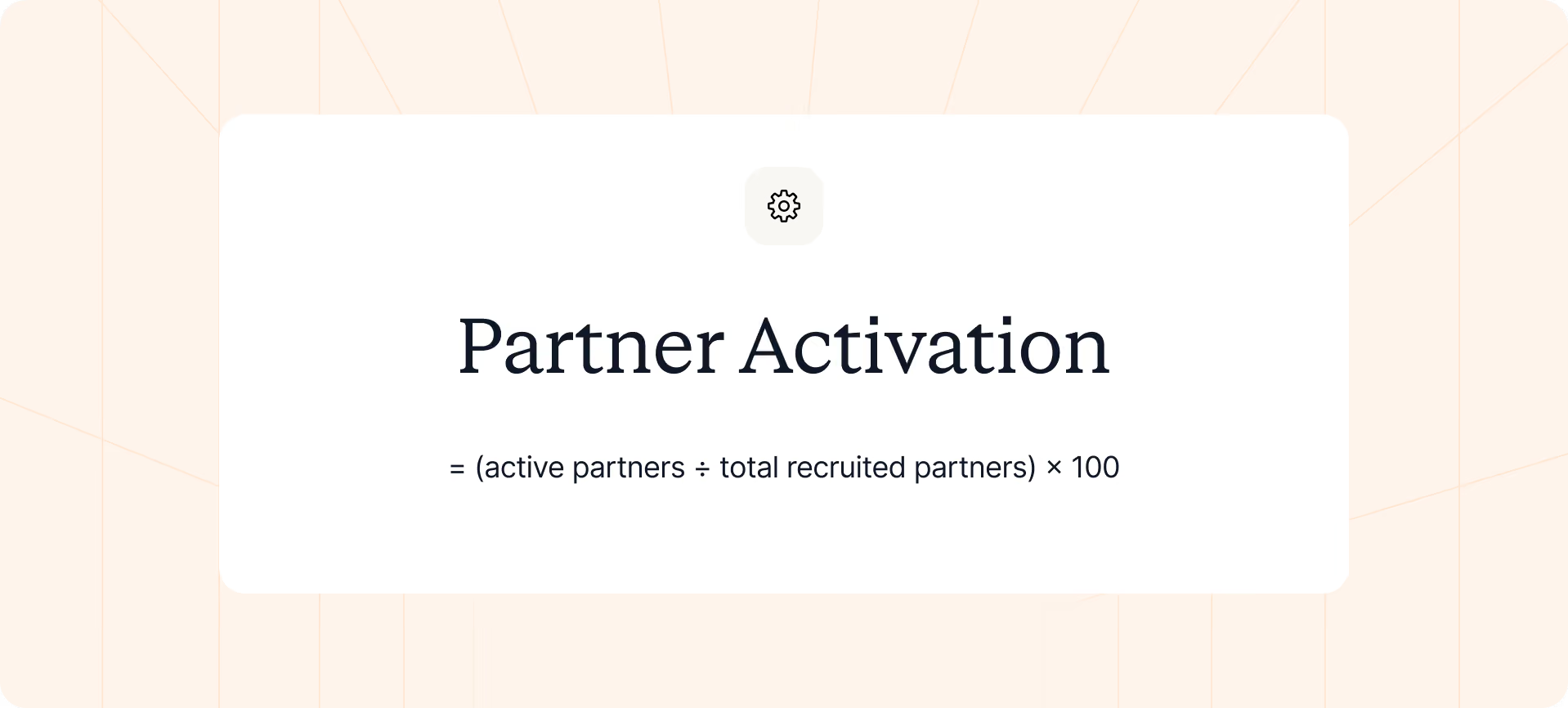
A defined activation milestone is typically the partner’s first deal registration or first closed-won opportunity within 90 days. The partner activation rate measures the percentage of recruited partners who reach that milestone within the set window.
Partner activation rate = (active partners ÷ total recruited partners) × 100
So, what is a partner activation rate in practical terms? It shows how many partners move beyond sign-up and start creating real commercial value.
Activation sits between the onboarding process and sustained partner engagement:
- Onboarding: Agreements are signed, access is granted, and training begins.
- Activation: The partner reaches a clear activation event, such as registering a first deal or first referral.
- Sustained engagement: The partner keeps generating leads, pipeline, and revenue over time.
Onboarding completion is not activation. A partner can finish every training module and still never register a deal.
That is why partner activation rate matters. It shows whether your recruitment investment is producing pipeline or simply adding more names to the program.
What is a good partner activation rate?
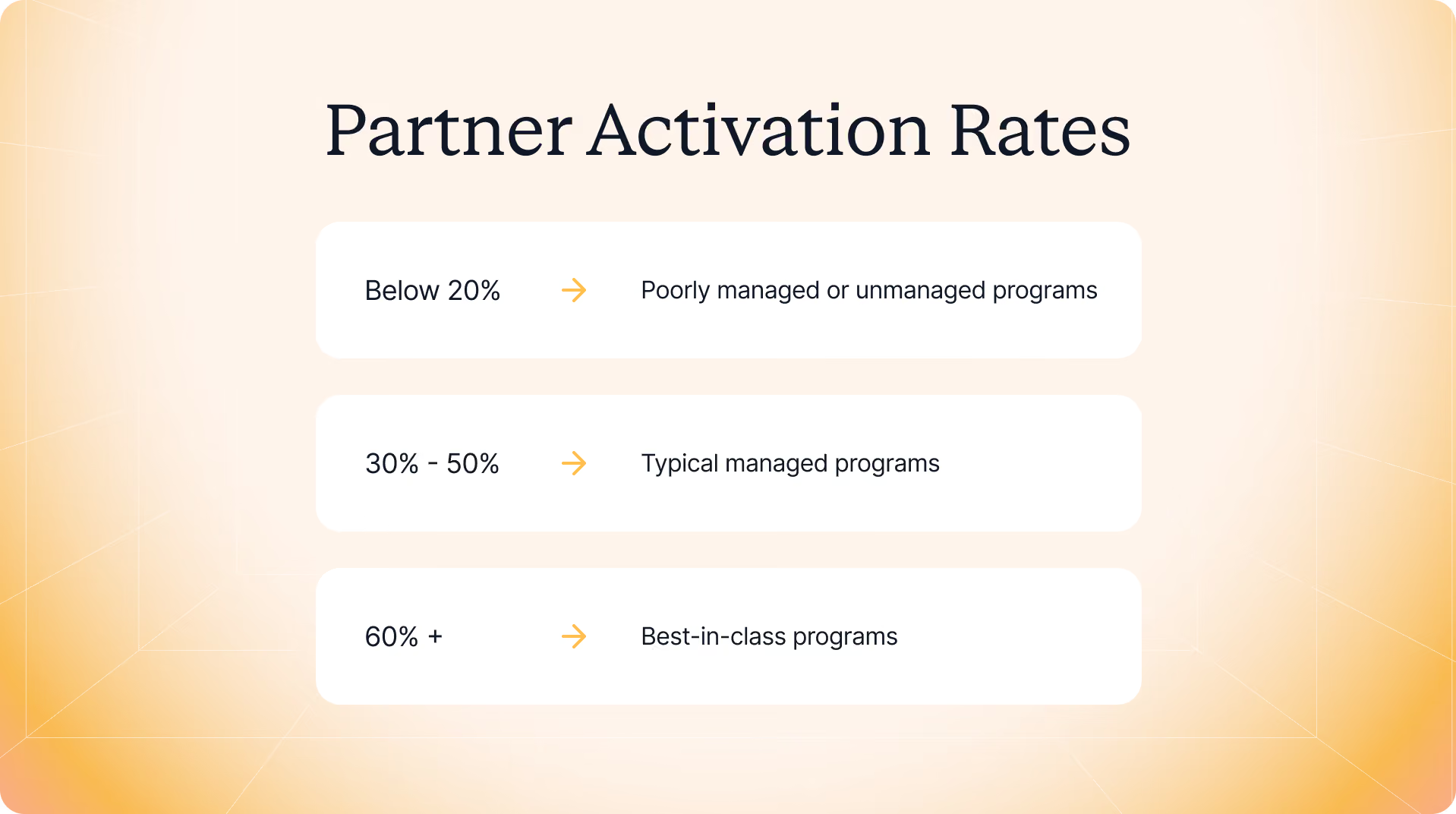
According to the Unifyr 2026 Channel Atlas, a good partner activation rate depends on how actively you manage the transition from partner onboarding to first deal:
- Below 20%: Poorly managed or unmanaged programs
- 30% to 50%: Typical managed programs
- 60% or higher: Best-in-class programs
Your realistic target also depends on partner type.
Referral partners may activate quickly by submitting a first referral, while enterprise system integrators often need more training, technical alignment, and sales support.
Speed matters as much as the final activation rate. Partners who register their first deal within 90 days are three to four times more likely to remain active after one year.
So, a strong partner activation strategy should focus on shortening the path from sign-up to first pipeline, not simply activating more partners eventually.
Why partner activation failures stay hidden until it is too late
Most programs track visible activity. The bigger risk is what partners stop doing.
Silent failure is invisible by design
No alert fires when a partner does not register a deal.
The same is true when a partner stops:
- Opening content
- Logging into the partner portal
- Updating an opportunity
- Using your deal and lead registration process
This is the core issue behind why partners go inactive, and partner engagement drops before most teams notice. The problem often appears at the next QBR, 90 days after momentum started to fade.
Half your recruitment budget can produce nothing
Even with a good partner activation rate, inactive partners still account for a large share of your intake.
Example:
- 100 partners recruited
- €15,000 spent per acquired partner
- 50% activation rate
- €750,000 tied to partners producing no pipeline
That makes partner onboarding to first deal a commercial issue, not just an enablement task.
Strong partner management treats partner channel activation as an ongoing process, not a number reviewed later in a partner dashboard.
Reactivation costs more than prevention
Re-engagement flows with two or more touchpoints can lift dormant activity from about 4% to 12%. But bringing partners back often requires fresh incentives, extra commission, or new MDF.
The best channel partner enablement strategies to re-engage inactive partners still cost more than catching disengagement early.
An AI agent can flag an unactivated partner at week six and route the right next step:
- A CAM call
- A warm lead
- Targeted training
- A personalized campaign
This is how to activate channel partners before they go cold. It also turns partner ecosystem activation into a managed workflow by detecting silent failure early and acting before reactivation becomes necessary.
Why partners go inactive after the onboarding process
Partners rarely choose to leave. They get busy with the vendor that stayed visible, shared a useful lead, or made the next step clear.
The post-onboarding process often fails because there is no clear activation milestone, no relevant opportunity, and no regular communication. Every week of delay lowers the chance that a partner becomes commercially productive.
The blocker is different for every partner
Common causes include:
- Capability gap: Key training or certification is incomplete.
- Lead drought: There are no warm leads or customer opportunities to act on.
- Stuck pipeline: Open opportunities have not moved for 14 days or more.
- Goal mismatch: The partner’s goals do not match the support or resources you provide.
- Stakeholder gap: The main contact leaves and nobody takes ownership.
- Channel-preference miss: You use email, but the partner works in Slack.
- Margin friction: Weak incentives reduce the value of taking action.
A strong partner engagement guide can help you spot these patterns, but diagnosis still needs to happen at the partner level.
Diagnose before you prescribe
An unactivated partner consumes resources without generating returns. A generic nudge will not fix every problem.
A capability gap needs targeted training. A lead drought needs a real opportunity. A stuck pipeline needs deal support. Network activation with personalized campaigns works because the intervention matches the blocker.
That same diagnosis also improves partner attribution by showing which actions actually move partners toward the pipeline.
How to move partners from signed to first deal faster
The biggest shift is to stop reporting partner activation after the fact and start managing it as an ongoing process.
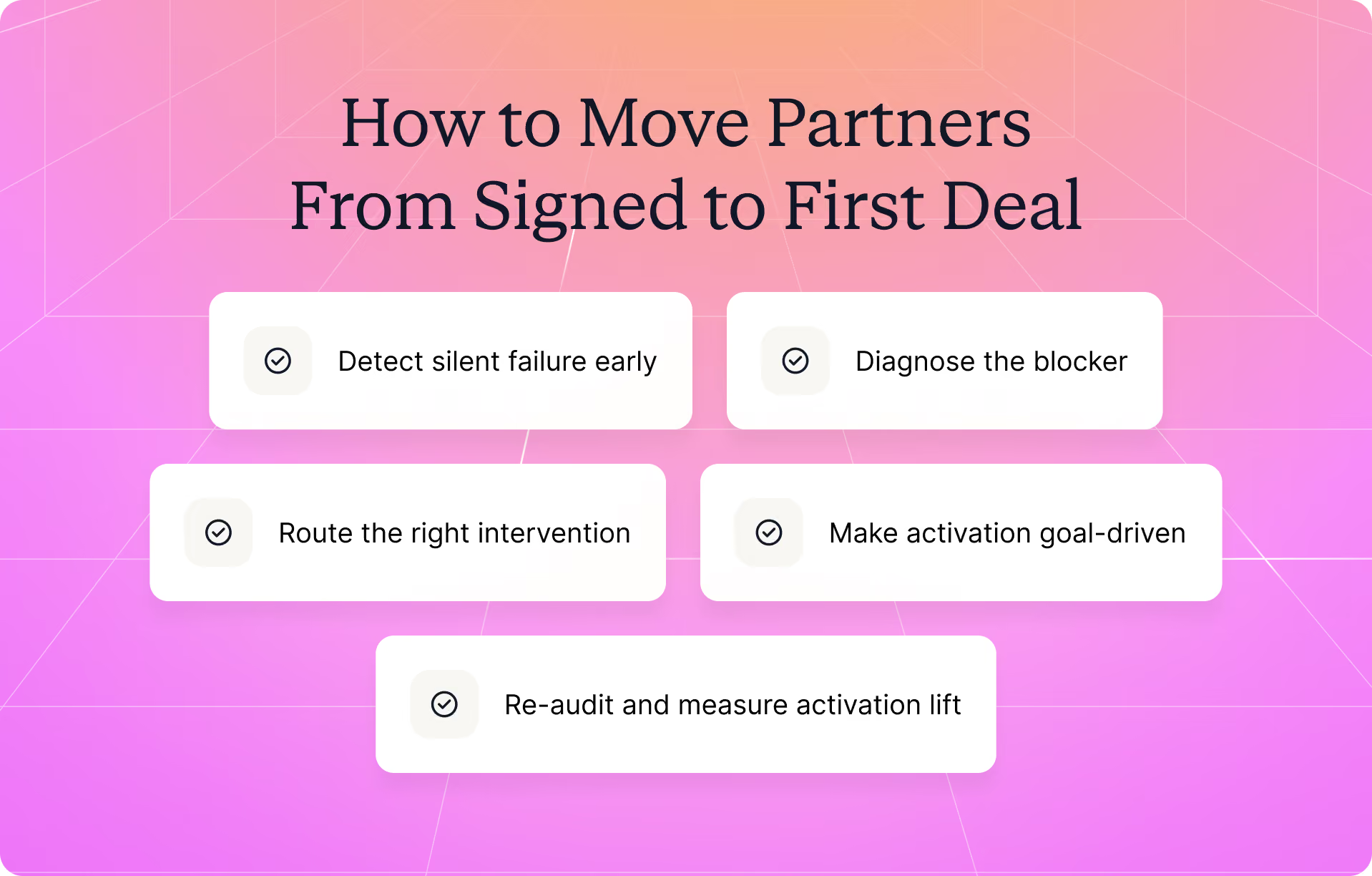
#1 Detect silent failure early
Monitor for missing behavior, not just visible activity.
Flag partners when they show signals such as:
- No registration within 30, 60, or 90 days
- No partner portal logins or content interaction
- Skipped training or email campaigns
- User engagement below the cohort median
- Open CRM opportunities untouched for 14 days
These signals appear well before disengagement reaches a QBR. Early monitoring gives your team time to intervene while the partner is still interested.
#2 Diagnose the blocker
A list of inactive partners tells you who is stalled. It does not tell you why.
Define the blocker for each partner:
- Capability gap: Missing knowledge or training
- Lead drought: No relevant opportunities
- Stuck pipeline: Existing opportunities are not advancing
- Goal mismatch: Program support does not match the partner’s goals
- Stakeholder gap: The main contact has left
- Channel mismatch: You use email, but the partner prefers Slack
- Margin friction: The incentive does not justify the effort
Diagnosis matters because the wrong response can lower the activation rate further. More training will not help a partner who already understands your products or services but has no leads.
#3 Route the right intervention
Turn each diagnosis into a specific action.
This should create an action queue with clear owners, not another dashboard.
When capability is the issue, enable partners with content tied to the current sales motion instead of sending more generic resources.
#4 Make activation goal-driven
Generic “we miss you” messages rarely improve partner activation. Use the partner’s actual goals to shape the intervention.
For example:
- A partner close to a new tier needs a clear view of the remaining activation milestone.
- A partner with capacity but no opportunities needs a lead, not another course.
- A partner planning co-marketing campaigns requires campaign resources and clear next steps.
Goal visibility makes the value proposition clear and gives partners a reason to act now.
#5 Re-audit and measure activation lift
Recheck each partner after a defined window. Fourteen days is a practical starting point.
Track:
- The percentage of flagged partners who become activated
- Changes in partner activation rate
- Which interventions have the highest conversion rate
- Time from sign-up to the defined activation event
- Retention after activation
Activation rate matters because it predicts whether recruited partners will create lasting value. Treat it as a live operational metric, then use the data to optimize the activation process across your partner ecosystem.
The shift from reporting activation to managing it
Most companies treat partner activation as a metric to report. Once a quarter, someone calculates the activation rate, adds it to a slide, and moves on.
The problem is that disengagement happens between reporting cycles.
Managing activation means treating it as a live state with:
- Clear triggers
- Named owners
- Routed interventions
- Regular re-audits
- Data on what improves effectiveness
Think of it like a smoke alarm. It's not something you check once a year. You want it to go off the moment something starts to smoke.
That is why partner activation rate matters. Partners activating within 60 to 90 days tend to generate more first-year revenue and show stronger retention. For instance, catching a stalled partner early gives your team time to act before the relationship goes cold.
The economics compound fast.
Lifting the activation rate from 30% to 50% on the same intake creates 67% more productive partners. At €500,000 in average sourced ARR per activated partner, that can mean roughly €10 million in incremental revenue per 100-partner cohort.
Higher activation does not come from recruiting more partners. It comes from helping more of the partners you already signed reach commercial value.
How Introw activates your partner network
Introw manages partner activation as a live process on top of your CRM. It detects stalled partners, diagnoses the blocker, and routes the next action before inactivity reaches the next QBR.
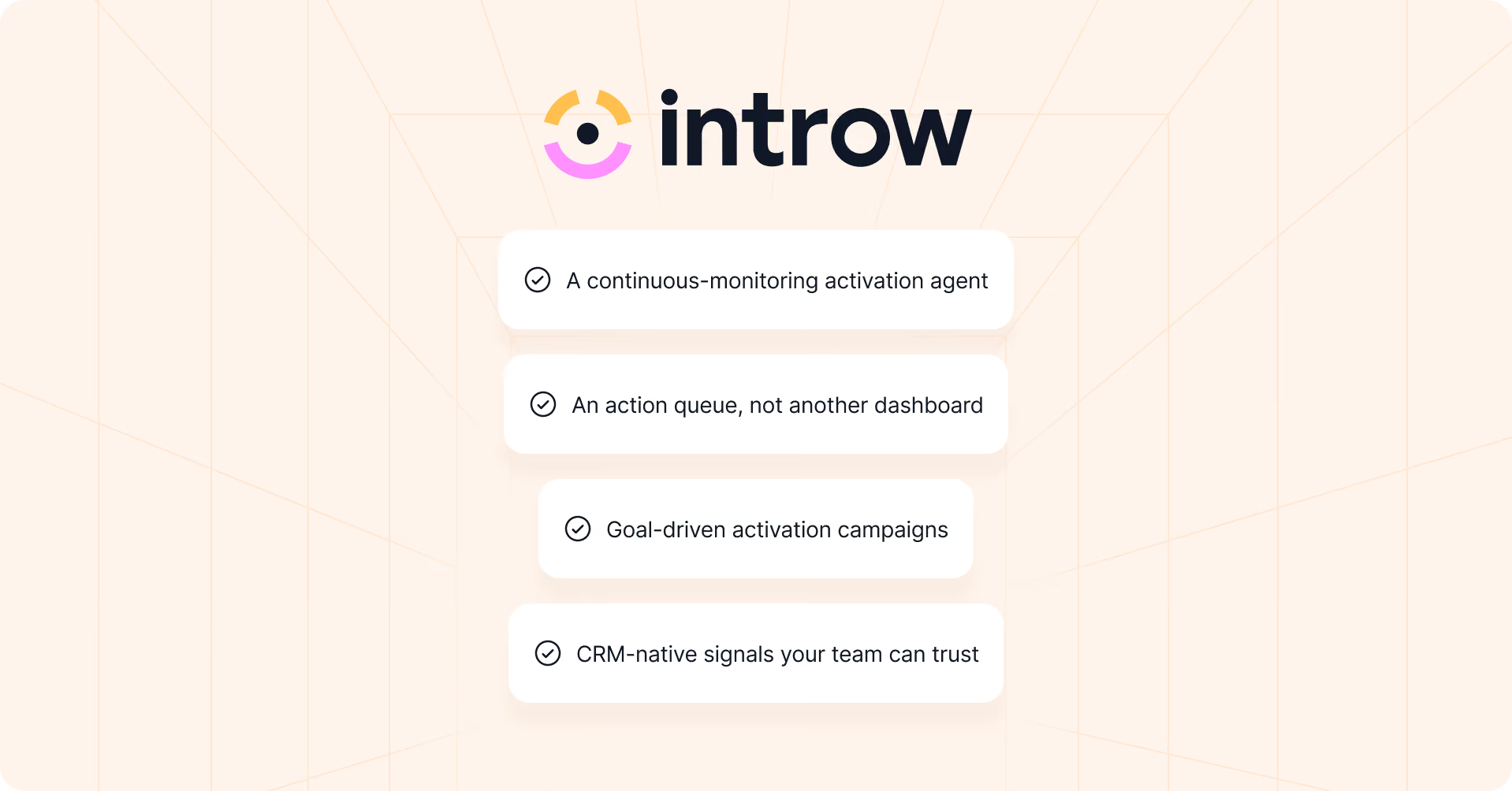
A continuous-monitoring activation agent
Introw’s AI agent watches for missing behavior across your partner ecosystem, including:
- No deal registration within 30, 60, or 90 days
- No partner portal logins or content engagement
- Skipped training or campaigns
- User engagement below the cohort median
- CRM opportunities untouched for 14 days
This helps you lift partner activation rate by surfacing silent failure 60 to 90 days earlier than quarterly reporting.
An action queue, not another dashboard
The agent does not simply flag inactive partners. It explains what happened and suggests the next step.
For example:
- Route a warm lead to a partner with no pipeline
- Send a micro-course to a partner with a capability gap
- Book a CAM check-in for a stalled opportunity
Your team gets a prioritized action queue with context, owners, and clear next steps.
Goal-driven activation campaigns
Introw audits each partner against their goals, tier, engagement data, and diagnosed blocker. It then supports network activation with personalized campaigns instead of sending the same message to everyone.
A campaign might highlight:
- Deal protection or margin
- MDF access
- Pre-sales support
- Tier progression
- A relevant next action
You can enable partners with content or guide them toward deal and lead registration based on what is blocking activation.
CRM-native signals your team can trust
Introw’s HubSpot and Salesforce integrations pull activation signals from the system of record.
Partner data, pipeline activity, interventions, and responses stay connected to the same CRM record. That makes partner management more accurate and gives your next QBR the full history.
Strong partner activation does not come from another quarterly report. It comes from detecting silent failure early and helping more partners become activated.
Catch silent partner failure before it becomes lost pipeline. Book a demo to see how Introw helps more partners reach their first deal faster.
Still curious? Here are some quick answers to help clear things up
Partner activation rate is the percentage of newly recruited partners who move from a signed agreement to generating pipeline within a set period, often 90 days.
Formula: (Activated partners ÷ Total number of recruited partners) × 100
Unifyr’s 2026 Channel Atlas puts managed programs at 30% to 50%, poorly managed programs below 20%, and best-in-class programs at 60% or higher.
Your target depends on partner type and how actively you manage the post-onboarding transition.
Most partners do not choose to leave. Their user journey loses momentum because there is no clear next step, relevant opportunity, proactive support, or regular communication.
They often focus on another vendor that stayed visible and made action easier.
Partner activation is the first transition from signed to commercially active.
Partner engagement is the ongoing effort an activated partner puts into your program, such as using resources, joining campaigns, and creating pipeline that supports revenue growth.
Track leading signals such as no registration after onboarding, low partner portal activity, limited content or campaign engagement, missed training, and CRM opportunities with no recent updates.
When the data moves below expected cohort norms, identify the blocker and route the right intervention.




See AI-Native PRM in Action
Book a demo with one of our partner program experts, or explore Introw on your own time.