

What is partner attribution?
Partner attribution is the link between a CRM record and the partner responsible for sourcing or influencing it.
At minimum, that means connecting a HubSpot deal or Salesforce opportunity to the right partner. You can also attribute leads, contacts, companies, tickets, accounts, and custom objects when those relationships matter to your sales process.
In simple terms, partner attribution answers one question:
Whose deal is this?
That answer powers everything downstream:
- Pipeline visibility: A partner only sees a deal in their shared pipeline when it is attributed to them.
- Revenue reporting: Your team can only measure partner-sourced revenue, partner-influenced revenue, and channel ROI when the CRM contains a reliable partner link.
- Commission payments: A commission plan only pays when it can tie the deal to an enrolled partner.
A wrong or missing attribution can therefore undercount sourced revenue, erase a partner’s influence, hide a deal from the right team, or block a valid payout. Introw’s documentation explains in more detail what attribution drives across the partner ecosystem.
This is why a partner attribution tool should do more than visualize metrics after a deal closes. It should create and maintain the underlying partner relationships inside the CRM.
With CRM-native partner management, attribution stays connected to the same data your sales team uses to manage pipeline, forecast revenue, and track performance. That gives partnership leaders a trusted foundation for how to track partner-sourced revenue and how to measure partner-influenced revenue.
Why partner attribution is so hard (and why it matters)
Most companies know partners contribute revenue. The hard part is proving how much they sourced, influenced, or helped close without inflating the numbers.
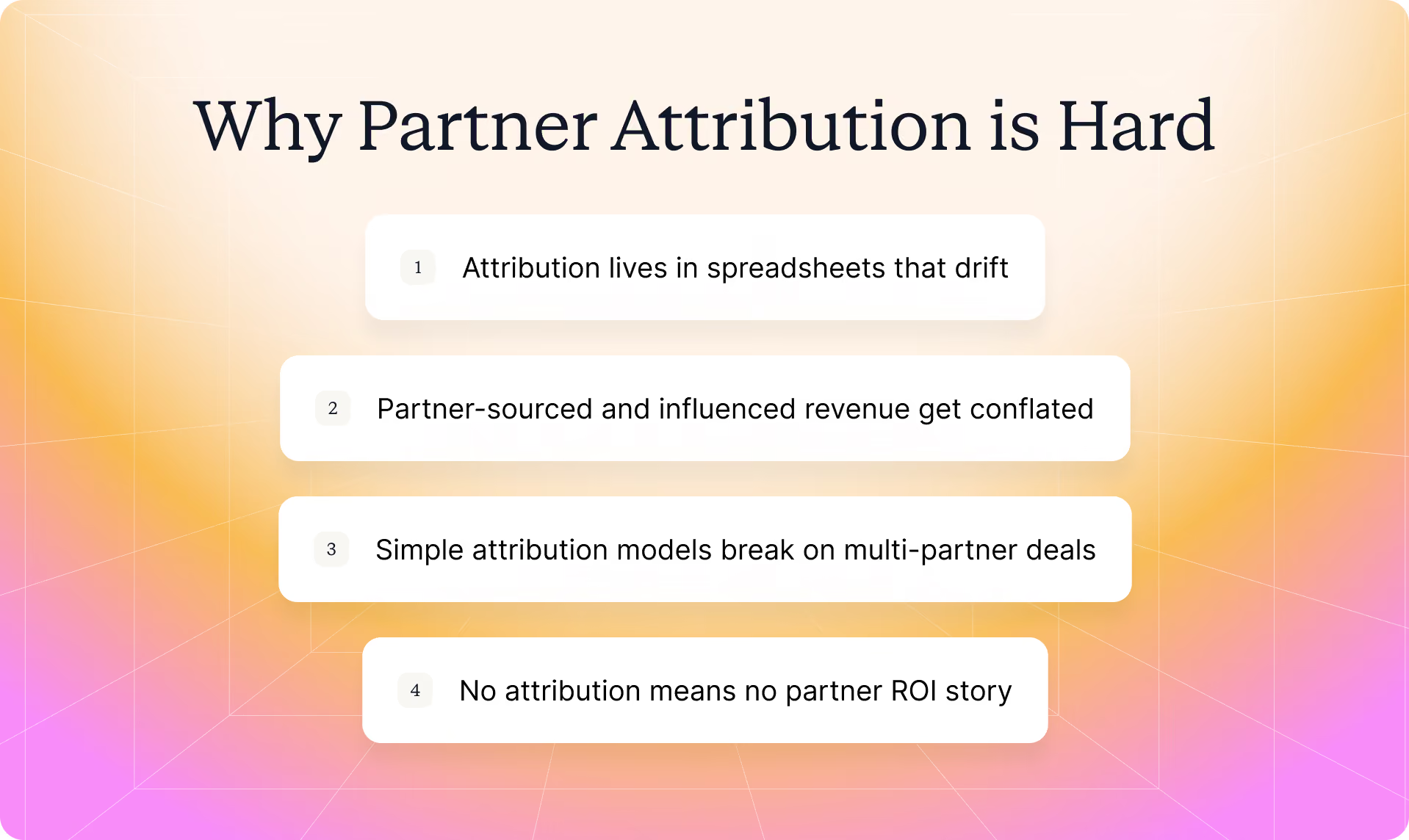
Attribution lives in spreadsheets that drift
Many partnerships teams still track partner-sourced revenue outside the CRM.
That creates a familiar cycle:
- A sales rep updates the deal.
- The spreadsheet stays stale.
- The team spends hours reconciling data.
- Leadership stops trusting the numbers.
Introw’s HubSpot and Salesforce integrations keep partner credit connected to the live CRM record.
Partner-sourced and influenced revenue get conflated
A partner-sourced deal exists because the partner created the opportunity. Partner-influenced revenue comes from an existing deal the partner helped move forward through introductions, technical validation, sales calls, or co-selling.
Without clear attribution models, teams usually:
- Undervalue partners by only counting sourced revenue.
- Overstate impact by crediting every partner activity.
Simple attribution models break on multi-partner deals
One deal may involve:
- A referral partner
- A reseller
- A distributor
- A co-selling partner
A single-partner field cannot represent those relationships accurately. Credit collides, and one partner’s contribution can erase another’s.
Introw’s guide to how multi-tier attribution works shows how different partner roles can receive separate credit on the same deal.
No attribution means no partner ROI story
If you cannot connect partner activities to sourced revenue and influenced revenue, you cannot prove partner ROI or channel ROI.
Accurate report dashboards can surface the insights, but only when the underlying attribution is trustworthy.
That makes partner attribution the difference between a program that earns more investment and one that gets cut.
Partner-sourced vs. partner-influenced revenue
Partner-sourced and partner-influenced revenue capture different kinds of partner value.
Sourced revenue is the clearest measure of partner impact, but it misses the many ways partners influence the sales cycle. Influenced revenue captures that broader contribution, but it becomes hard to defend without clear rules.
That is why strong partner attribution models use separate named attributions:
- Sourced by: for the partner that created the opportunity
- Influenced by: for the partner that materially helped move it forward
In Introw, those names determine how credit appears in reporting and which deals a commission and SPIFF management plan can target. The guide to what attribution drives explains how each relationship controls visibility, reporting, and payouts.
This is how to attribute revenue to partner influence vs. partner-sourced activity without collapsing both into one vague field. Together, they give you a credible view of partner ROI and channel ROI.
Multi-tier attribution: crediting more than one partner
Many partner sales deals involve more than one contributor:
- A referral partner sources the opportunity, while a co-selling partner helps close it.
- A distributor supports the deal, while a reseller owns the customer relationship.
Multi-tier attribution gives each partner independent credit without one relationship overwriting another.
How multi-tier attribution works
A single CRM deal carries multiple named partner attributions, such as:
Each partner role is mapped separately on the CRM deal. This keeps credit clear and gives every partner access to the same deal through their own scoped pipeline.
At registration, a distributor or reseller picker can capture who is involved and attribute submissions to your partner. But the picker is only the input. The actual credit still lives on the CRM record.
There are two important limits:
- Multi-tier attribution is not a parent-child partner hierarchy.
- Introw does not automatically roll up revenue across an entire reseller network.
Each partner is reported through their attribution. (Introw’s guide to how multi-tier attribution works explains the model in more detail.)
That makes multi-tier attribution more reliable than partner-influenced revenue attribution models that attach several partners to one deal without defining what each contributed.
How to set up partner attribution that actually works
Reliable attribution starts with a clear CRM relationship, not a better spreadsheet. Follow these six steps to track partner-sourced revenue and measure partner influence without creating another system to reconcile.
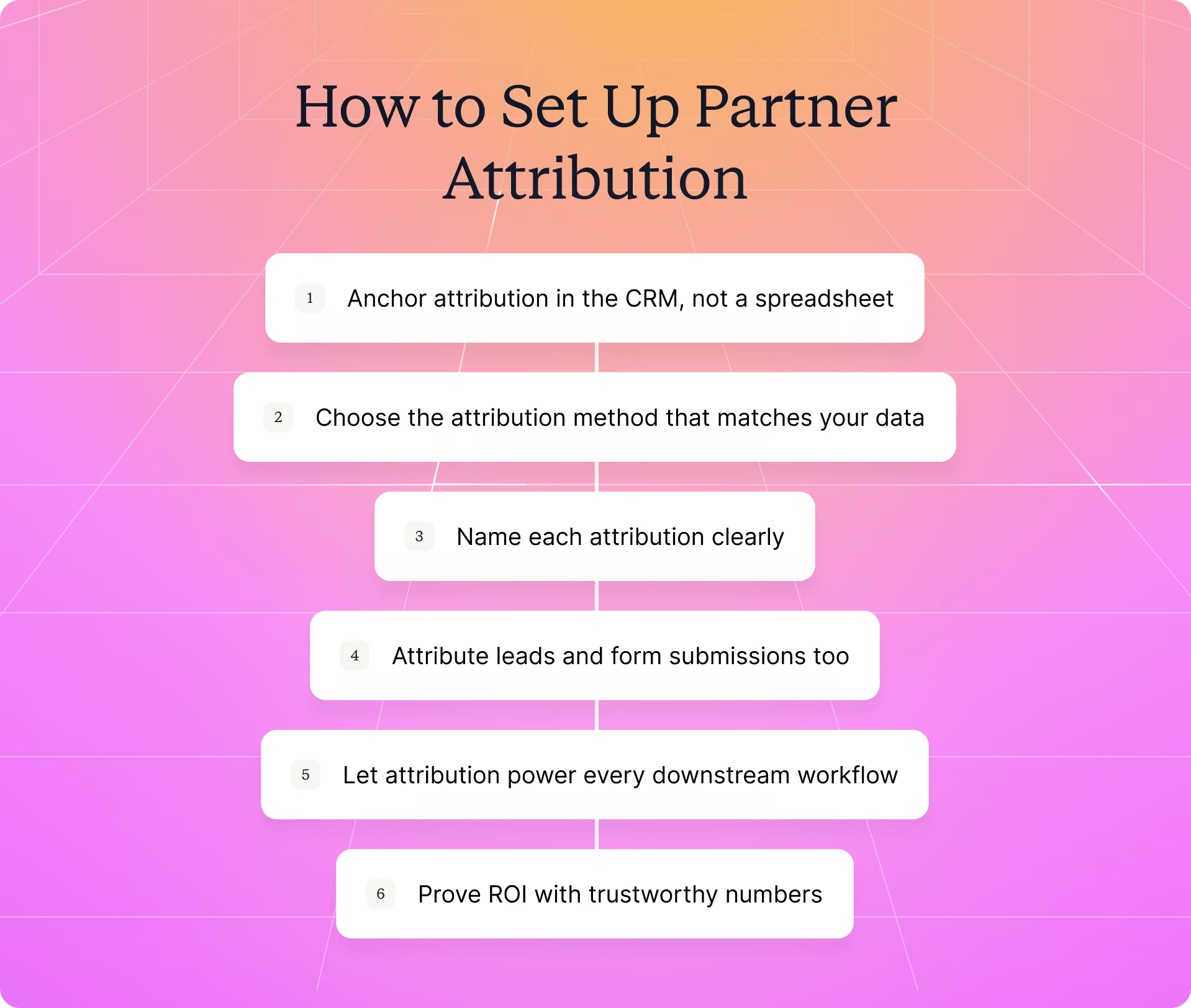
Step 1: Anchor attribution in the CRM, not a spreadsheet
Store attribution on the HubSpot deal or Salesforce opportunity itself.
When the relationship lives in the CRM:
- Deal changes stay current.
- Sales and partnerships use the same data.
- Reporting does not drift from the live pipeline.
- There is nothing to reconcile at quarter-end.
This is the difference between numbers leadership trusts and a model the team constantly second-guesses.
Step 2: Choose the attribution method that matches your data
Use the method that reflects how your CRM already connects deals to partner accounts.
The goal is not to rebuild your data model. It's to make your current attribution approach reliable. Introw’s documentation on partner attribution in CRM automations explains how these relationships are mapped.
Step 3: Name each attribution clearly
Use names that show exactly why the partner receives credit:
- Sourced by: The partner created the opportunity.
- Influenced by: The partner materially advanced it.
- Distributor: The distributor supporting the transaction.
- Reseller: The reseller managing the customer.
These labels are operational, not cosmetic. They determine how sourced revenue appears in reporting and which relationships commission plans can target.
This is more useful for partner programs than generic attribution models such as:
- First-touch attribution: Gives 100% of the credit to the first interaction.
- Last-touch attribution: Gives all credit to the final interaction before the sale.
- Time-decay attribution: Gives more weight to recent interactions.
- Position-based attribution: Gives the most credit to the first and last touches.
Those models explain when influence occurred. Named partner roles explain who contributed and what they did.
Step 4: Attribute leads and form submissions too
Don't wait until the deal closes to add partner credit.
When a partner registers a lead or opportunity, connect the submission to them through:
- A partner-specific form link
- A partner picker field
- Auto-linking between the submission and partner account
This creates a partner-sourced pipeline from the first touch. Deduplication fields also prevent duplicate CRM records and help detect channel conflict.
Introw’s form guidance shows how to attribute submissions to your partner automatically.
Step 5: Let attribution power every downstream workflow
Once attribution is configured, the same relationship should drive:
- Shared pipelines: Each partner sees the opportunities attributed to them.
- Reporting: Teams track partner-sourced revenue, partner-influenced revenue, and pipeline contribution.
- Commissions: Plans pay only on eligible deals tied to enrolled partners.
This is where CRM-native attribution pays off. Configure the relationship once, then let it support visibility, reporting, and payouts throughout the sales process.
Step 6: Prove ROI with trustworthy numbers
Accurate data lets you answer the questions leadership cares about:
- How much revenue did the program source?
- How much revenue did partners influence?
- Which partner types create the most value?
- How does channel ROI compare with program cost?
- Where should the business invest next?
That's how to measure partner-influenced revenue and channel ROI without relying on assumptions.
Define clear attribution goals, document what qualifies as meaningful influence, and audit the data regularly. Transparency in the methodology helps build trust with partners and keeps partner-influenced revenue attribution models defensible.
A well-structured partner dashboard and CRM-connected reports dashboards then turn those relationships into a credible partner ROI story.
How Introw makes partner attribution accurate and automatic
Most attribution problems don’t start in reporting. They start much earlier, when partner credit lives in a spreadsheet, gets added inconsistently, or has to be rebuilt after the deal closes.
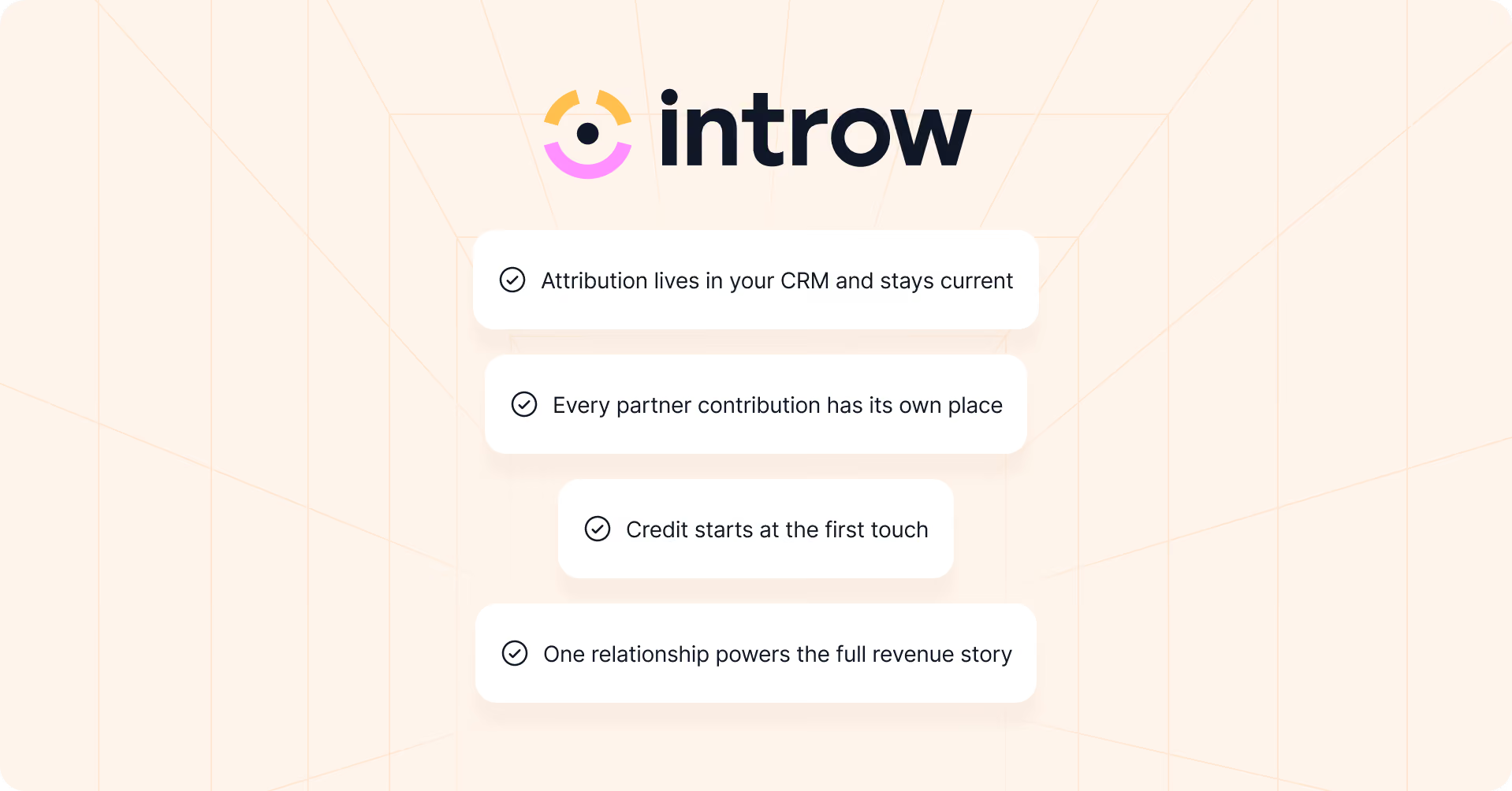
Introw keeps attribution attached to the live CRM record, so you’re not managing one version of the truth in HubSpot or Salesforce and another somewhere else.
Attribution lives in your CRM and stays current
Once you configure attribution, Introw resolves matching deals on the next sync and keeps new or updated deals attributed automatically.
You don’t have to keep checking a spreadsheet or fix broken links at quarter-end. Your partner management team, sales team, and RevOps all work from the same live CRM data.
Every partner contribution has its own place
A deal can credit:
- The partner that sourced it
- The partner that influenced it
- A distributor
- A reseller
Each role gets its own named attribution, so one partner’s credit doesn’t overwrite another’s. Every partner sees the deals attributed to them, while your team keeps one accurate record.
That gives deal and lead registration the structure it needs for real co-selling and multi-tier programs.
Credit starts at the first touch
When a partner submits a lead or registers a deal through a partner-specific link or picker, Introw connects that submission to the right partner automatically.
You’re not trying to remember who was involved six months later. The partner relationship is already attached when the pipeline enters the CRM.
One relationship powers the full revenue story
Because attribution lives in the CRM, the same link drives:
- Partner-sourced and partner-influenced revenue reporting
- Scoped pipelines for each partner
- Commission and incentive eligibility
- Partner ROI and channel performance analysis
Your reports dashboards show the impact, while commission and SPIFF management use the same attribution to determine who gets paid.
And once that foundation is in place, you can stop debating the numbers and start using them to grow the program.
Make every partner contribution visible from the moment a deal enters your CRM. Book a demo to see how Introw tracks sourced, influenced, and multi-tier revenue automatically.
Still curious? Here are some quick answers to help clear things up
Partner-sourced revenue comes from deals a partner originated. Partner-influenced revenue comes from deals a partner helped advance but did not create. Tracking both shows the full value partners contribute.
Store a named 'Sourced by' relationship on the CRM deal and report on the revenue attached to it. A CRM-native partner attribution tool like Introw keeps that relationship current as the sales process moves forward.
Define what qualifies as meaningful influence, attribute the responsible partner on the CRM deal, and compare partner-influenced pipeline and revenue against program cost. This helps leadership identify which partnerships create the most business value.
Yes. Multi-tier attribution can credit different partner types on the same deal, such as a distributor, reseller, referrer, or co-selling partner. Each role is tracked independently.
A partner attribution tool maintains the relationship between CRM records and the partners involved. It helps companies track sourced revenue, influenced revenue, partner performance, commissions, and ROI without relying on spreadsheets.





See AI-Native PRM in Action
Book a demo with one of our partner program experts, or explore Introw on your own time.