

What is channel management?
Channel management is the practice of selecting, enabling, governing, and measuring the third parties and sales channels that bring your products or services to customers.
In B2B SaaS, that usually means managing resellers, referral partners, distributors, VARs, service partners, and co-sell partners alongside direct sales.
A useful channel management definition covers the full relationship between your business and the partners selling or influencing your product.
That includes:
- Choosing the right channel partners and defining their roles
- Onboarding, training, and providing ongoing support
- Managing deal registration, pricing, and channel conflict
- Running incentive programs, commissions, MDF, and other financial rewards
- Sharing marketing materials and co-marketing support
- Analyzing channel performance, sales data, pipeline, and revenue
Channel management can include direct and indirect sales channels, multiple channels, online channels, offline channels, distributors, and even retail stores depending on the distribution strategy.
Indirect channels need more structure. Your internal teams can control the sales process for direct reps. Channel conflict arises when different channels compete for the same customer base, so clear ownership and pricing rules matter.
Strong channel management also depends on partner quality. Ongoing training ensures partners are updated on product features and sales techniques, while monitoring partner performance helps improve sales performance and customer satisfaction.
The goal is predictable growth. Effective channel management requires defining clear goals and roles for each channel. Regular communication with partners fosters trust and alignment, while strong channel partner relationships support market reach and business growth.
The six categories of channel management software
Channel management covers several jobs, so there isn't one universal channel management system.
The market is easier to navigate when you split channel management software into six categories.
Most teams need two or three categories, not all six.
A mid-market B2B SaaS company may pair a PRM with ecosystem intelligence. A global manufacturer may need an enterprise channel management platform plus specialist rebate and distribution management software.
Choosing channel management software starts with the gaps in your current channel strategy. Buying the biggest platform doesn't automatically create more effective channel management.
How to choose the right channel management software
Choosing channel management software starts with your sales channels, CRM, and business objectives. Use this checklist to compare options in order.
1. Match the software to your partner motion
List the channel partners you manage and what each one needs.
Resellers may need deal registration, quoting, training, and conflict management. Referral partners need lead capture, attribution, and commissions. Co-sell partners need shared pipeline and account overlap.
If you run various channels, make sure the platform supports different workflows without forcing every partner into the same sales process.
2. Test the CRM integration capabilities
Don't stop at a Salesforce or HubSpot logo.
Check which standard and custom objects sync, how often data updates, and whether changes flow both ways. Strong HubSpot or Salesforce integration keeps customer data, partner data, and deals connected to your customer relationship management system.
3. Confirm where attribution lives
Partner-sourced and partner-influenced revenue should appear alongside direct sales in the CRM.
Check whether you can connect channel performance with sales data, customer segments, and key performance indicators. Real-time data analytics improve decision-making in channel management by showing which partners and sales channels drive results.
4. Estimate time to value
Ask what has to happen before your channel manager and partners can use the platform.
Enterprise channel management solutions may need more configuration, while lighter tools can launch faster. Compare usable time to value, not feature count.
5. Count the extra tools you'll still need
Note whether you'll need separate systems for PRM, deal registration, commissions, CPQ, enablement, marketing, or performance analytics.
Fewer overlapping tools can improve operational efficiency and simplify your channel management strategy. Optimizing channel costs can also reduce logistics and marketing overheads.
6. Test the partner experience
Check whether every action requires a portal login or whether you can support channel partners through email, Slack, Teams, or other familiar channels.
The right channel management software should make it easier to manage relationships and maintain a consistent customer experience across partner touchpoints.
7. Compare the full cost
Include implementation, integrations, administration, and any additional channel management tools you'll need.
If PRM is the main gap in your management strategy, Introw's guide to choosing your next PRM can help narrow the options.
Best channel management software at a glance
These 13 platforms solve different parts of the channel management process.
Comparing the category first makes it easier to see which tools are direct alternatives and which belong beside each other in the same stack.
The best fit depends on whether your channel operations revolve around partner management, enterprise distribution, incentives, marketing, recruitment, or ecosystem data.
The 13 best channel management software platforms in 2026
Each platform below has a different strength.
The best fit depends on whether your channel operations revolve around partner management, enterprise distribution, incentives, marketing, recruitment, or ecosystem data.
Category 1: CRM-native channel management
This approach keeps the whole channel motion tied to the CRM, giving your team one partner list, one attribution model, and less data to reconcile.
1. Introw: Best channel management software for B2B SaaS
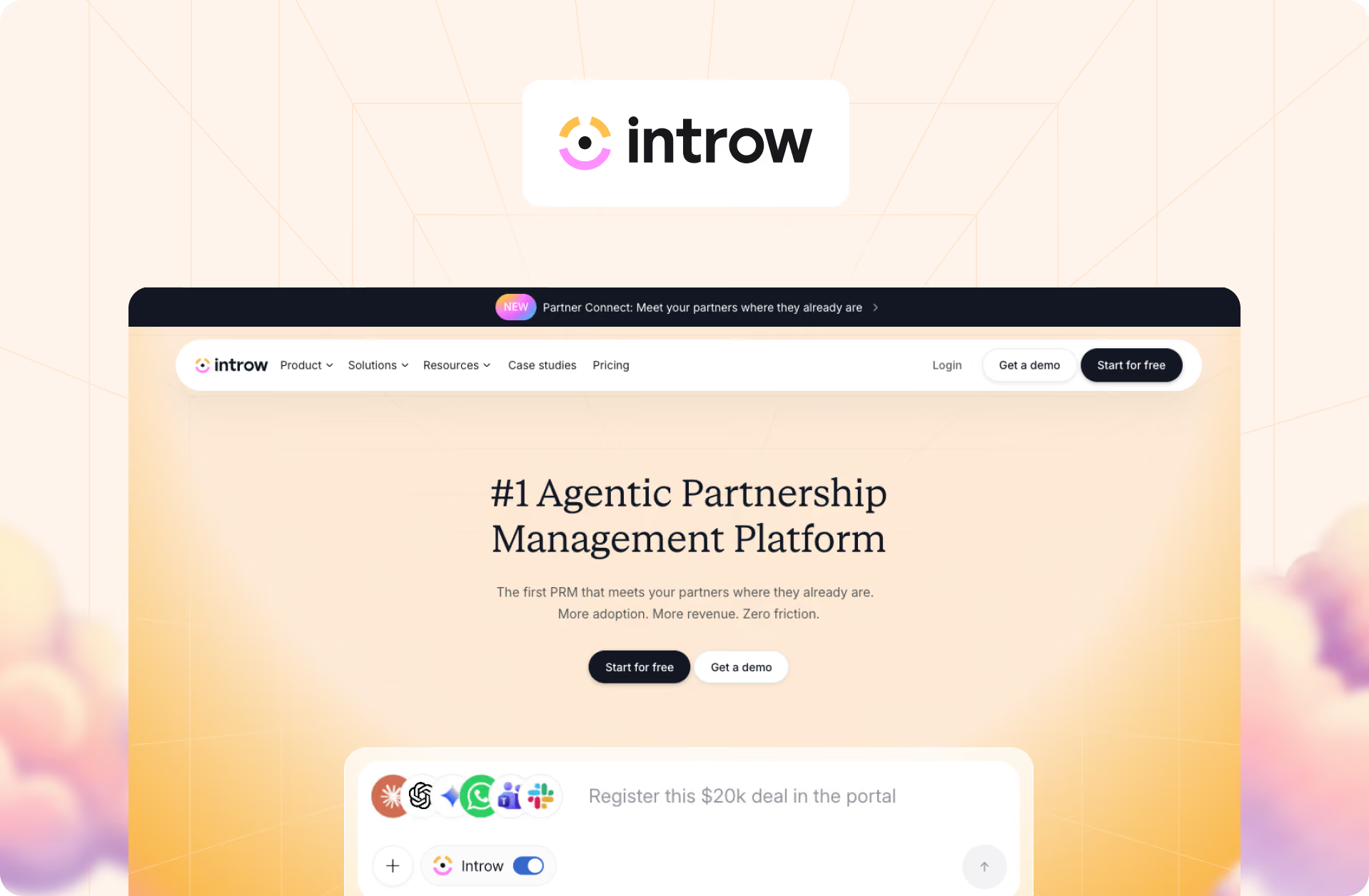
Introw is a CRM-first, AI-native channel management platform for B2B SaaS teams running resellers, referral partners, co-sell motions, and other indirect channels.
With native two-way HubSpot and Salesforce integrations, the CRM stays the source of truth while Introw adds the workflows needed to manage partners around that data.
Here's what Introw covers across the channel motion:
- Manage the partner lifecycle: Organize partners by lifecycle stage, tier, region, type, and dynamic segments without maintaining a second partner list.
- Onboard and activate partners: Create repeatable journeys, assign tasks, track goals, and automate follow-up when partners stall.
- Register and govern deals: Deal and lead registration connects submissions to CRM records, attribution, approvals, and conflict checks.
- Coach partners inside live deals: The AI agent can support stage guidance, objection handling, recommended assets, and next steps without replacing human judgment.
- Control quoting and pricing: Partner CPQ gives resellers access to approved products, pricing rules, and quote workflows.
- Handle commissions and incentives: Commission and SPIFF management connects closed-won revenue with partner rewards and payout records.
- Enable partners where they work: Training, certifications, partner content, email, Slack, Teams, CRM workflows, and optional portal experiences reduce the need for constant manual follow-up.
Introw can also support through-channel marketing, co-branded assets, MDF, partner analytics, and headless workflows. Teams can operate through the CRM or other connected interfaces instead of treating the partner portal as the center of every interaction.
The fit is strongest for mid-market B2B SaaS companies that want one attribution model across direct and indirect channels and want to reduce the number of systems sitting between partners and the CRM.
Category 2: Enterprise channel suites
Enterprise suites support broader channel operations for large, complex, often multi-tier programs.
2. Impartner: Best for enterprise channel management breadth
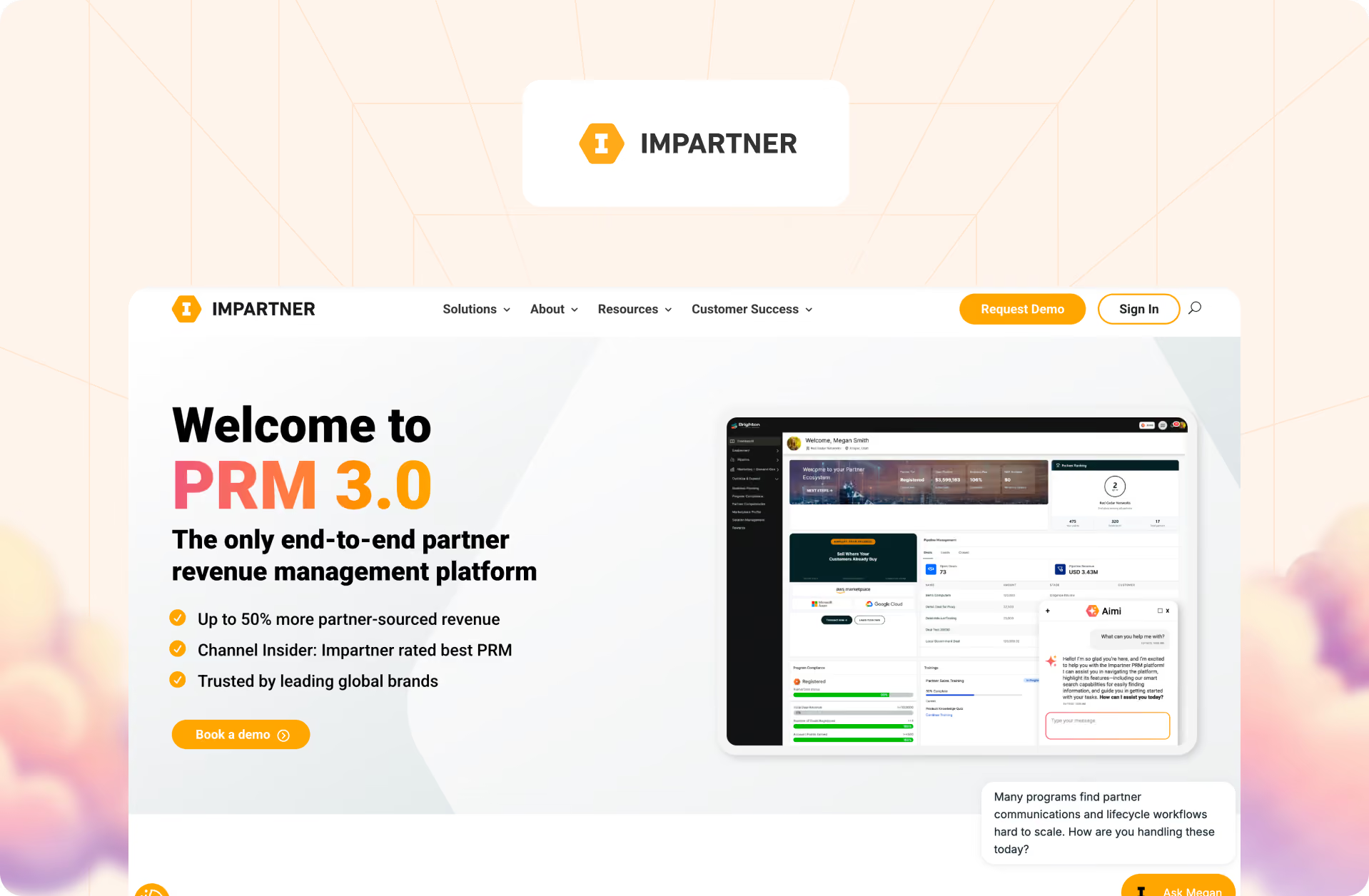
Impartner is an established enterprise platform covering PRM, enablement, lifecycle management, partner marketing, and channel operations.
Its broad enterprise feature set includes:
- Partner lifecycle, onboarding, and enablement
- Marketing and portal functionality
- Enterprise program management
- Native HubSpot and Salesforce integrations
- Standard and custom CRM object support
Impartner suits large organizations managing many channel partners and complex programs.
Smaller B2B SaaS teams may not need the scope, administration, or enterprise buying process.
3. ZINFI: Best for complex multi-tier channel programs
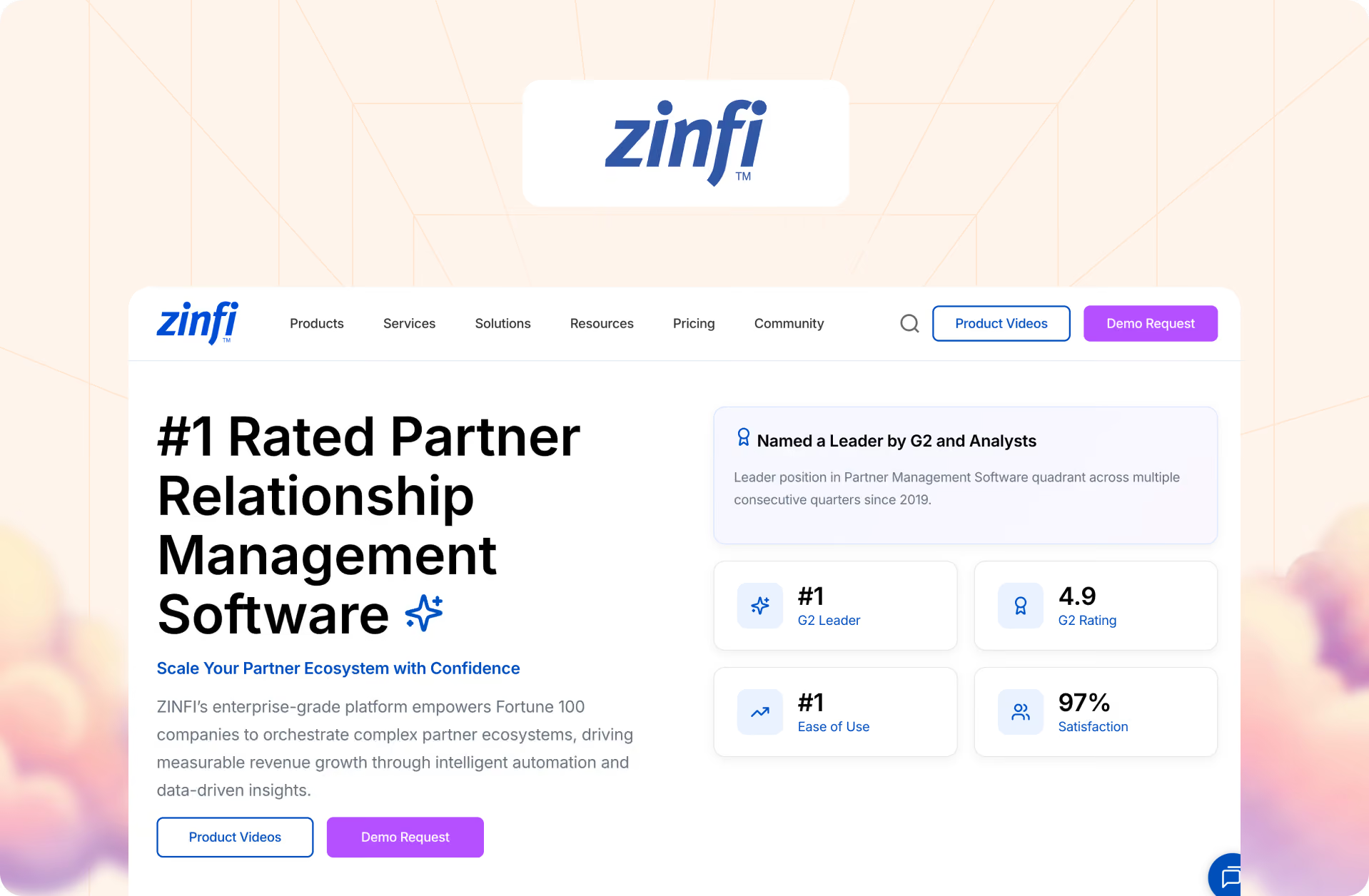
ZINFI combines PRM, partner marketing, enablement, incentives, and broader channel management in its Unified Partner Management platform.
Its platform covers:
- Multi-tier partner programs
- MDF and co-op fund management
- Partner marketing and enablement
- Channel workflow automation
- Bidirectional CRM integrations
ZINFI fits programs spanning multiple partner layers, regions, funds, and rules.
That breadth can also mean more configuration than a straightforward SaaS channel management strategy needs.
4. ChannelScaler: Best for incentive and promotion-heavy channels

ChannelScaler combines the former Allbound PRM business with Channel Mechanics' incentive and program automation technology.
Its channel capabilities include:
- PRM and partner program management
- Rebates, promotions, incentives, and claims
- Channel pricing workflows
- Distributor and reseller program support
- CRM, ERP, CPQ, LMS, and payment integrations
ChannelScaler works best when incentives and commercial rules are central to effective channel management.
It targets complex enterprise programs, so compare the modules you need against the cost and administration of a wider suite.
5. Mindmatrix: Best for through-channel marketing at scale
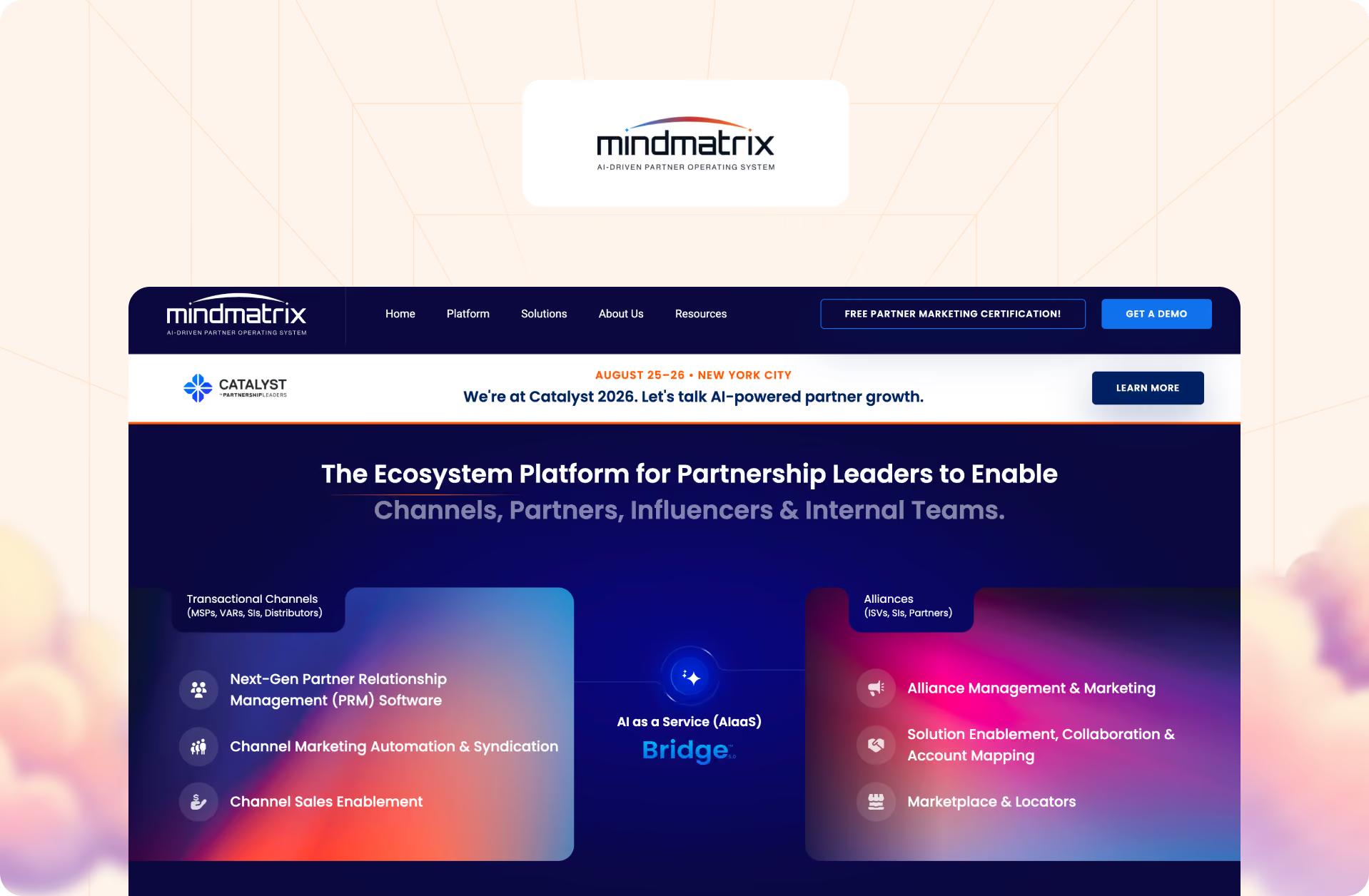
Mindmatrix combines PRM with deep through-channel marketing automation.
Its marketing capabilities include:
- Co-branded campaigns and assets
- Local marketing automation
- Content syndication and lead routing
- LMS and partner training
- Salesforce, HubSpot, and other CRM integrations
Mindmatrix fits a marketing strategy where channel partners run campaigns in their own markets while maintaining consistent messaging.
That depth may be unnecessary if your main needs are deal registration, pipeline visibility, and basic partner management.
Category 3: Mid-market and SMB PRM
These tools focus on core PRM workflows without the breadth of a full enterprise suite.
6. Channeltivity: Best for straightforward mid-market PRM and MDF
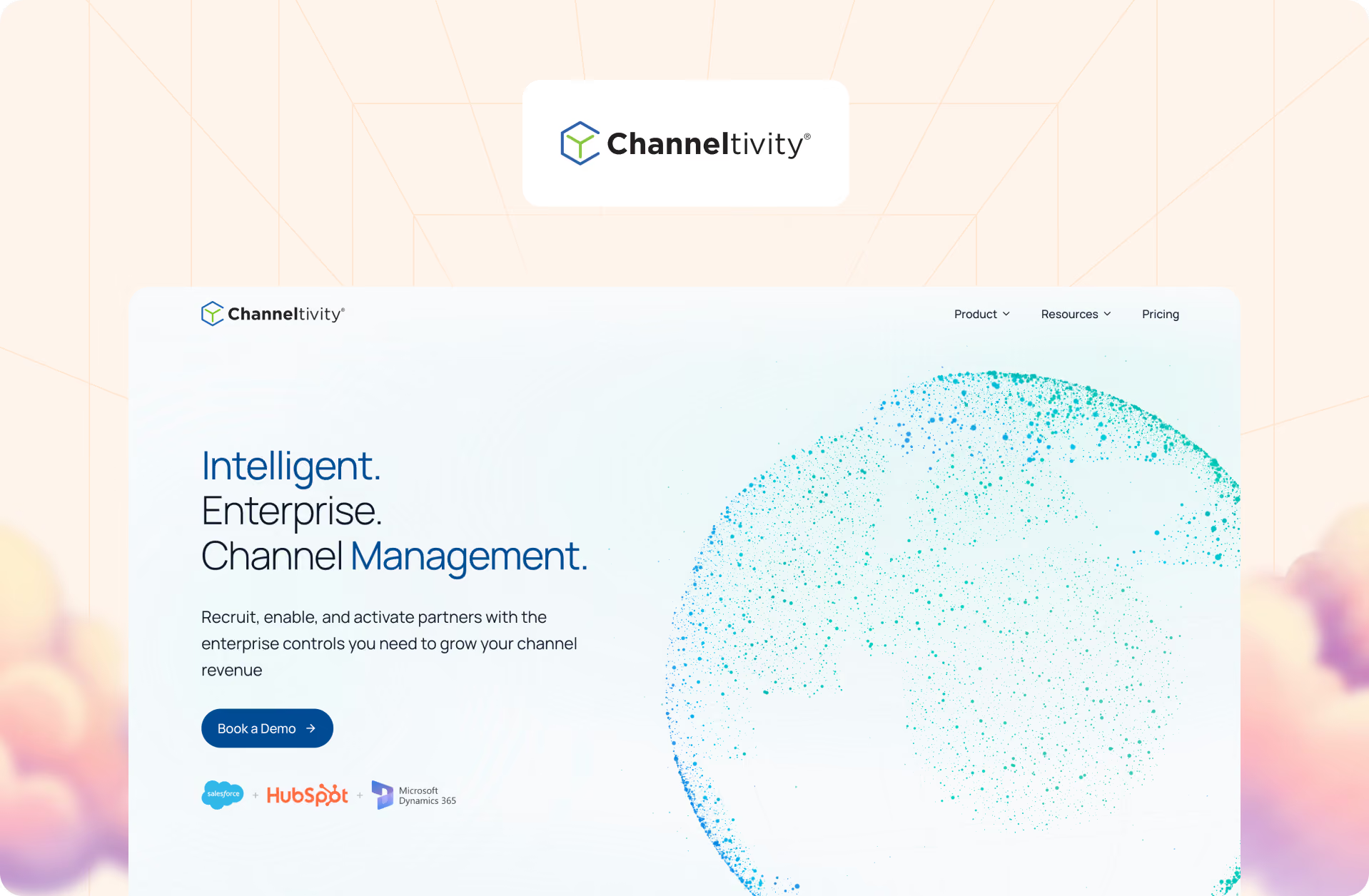
Channeltivity is a mid-market PRM built around core partner program workflows.
Its core PRM capabilities include:
- Deal and referral management
- MDF and channel marketing
- Training and enablement
- Channel analytics and reporting
- Salesforce and bidirectional HubSpot integration
Channeltivity fits teams that want established PRM workflows without enterprise complexity.
Its model remains more portal-led than newer headless channel management solutions, which may matter if off-portal engagement or AI workflows are priorities.
7. Magentrix: Best for customizable CRM-connected partner portals
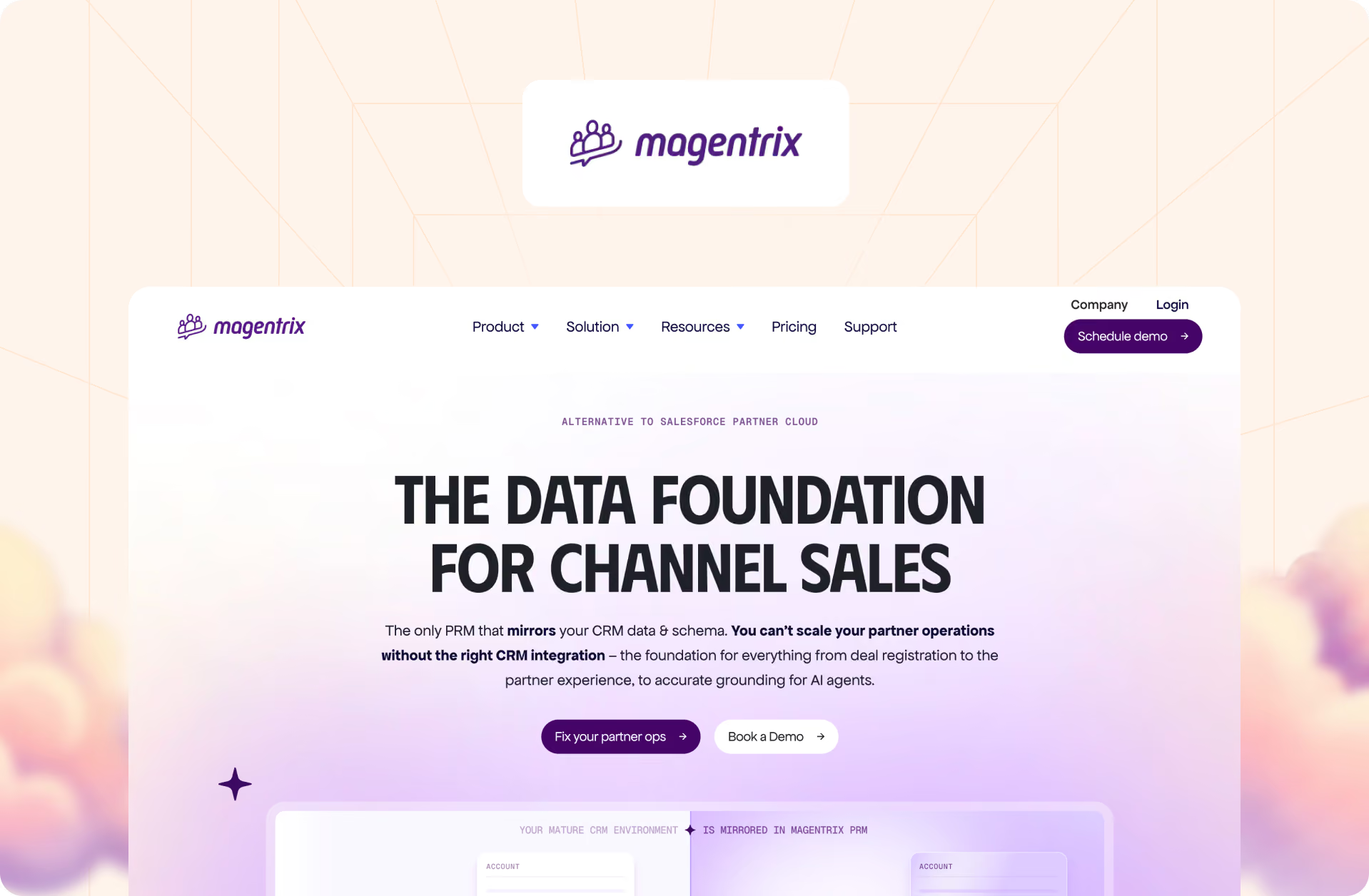
Magentrix combines configurable partner portals with PRM, enablement, and channel sales tools.
Its partner management capabilities include:
- Deal registration and pipeline workflows
- Training, LMS, and certifications
- MDF, incentives, and partner tiers
- Bidirectional HubSpot, Salesforce, and Dynamics integrations
- Wizard Agent AI and MCP capabilities
Magentrix fits teams that want a highly configurable, CRM-connected portal at the center of their channel management strategy.
Its pricing and depth may be more than smaller programs need.
8. Kiflo: Best for growing partner revenue programs

Kiflo combines partner management with deal registration, commissions, account mapping, co-selling, and revenue tracking.
Its partner revenue capabilities include:
- Partner onboarding and portal workflows
- Deal and pipeline management
- Commission management
- Account mapping and co-selling
- HubSpot and Salesforce synchronization
Kiflo now supports larger programs beyond its earlier small-team positioning.
More complex TCMA, enterprise incentive, or CPQ needs may still require specialist tools.
Category 4: Partner networks and payout platforms
These platforms focus on recruiting channel partners at scale and managing tracking or payouts across large networks.
9. PartnerStack: Best for B2B SaaS marketplace recruitment

PartnerStack combines partner management with a large B2B SaaS partner network and payout infrastructure.
Its core partner program capabilities include:
- Partner marketplace access
- Affiliate, referral, and reseller programs
- Partner onboarding and engagement
- Commission tracking and payouts
- Two-way HubSpot and Salesforce integrations
PartnerStack was acquired by AppDirect in April 2026 but continues under the PartnerStack brand.
Its strength is recruitment and payouts. Deeper co-selling, reseller quoting, or multi-tier programs may need additional tools.
10. impact.com: Best for enterprise multi-channel partnerships
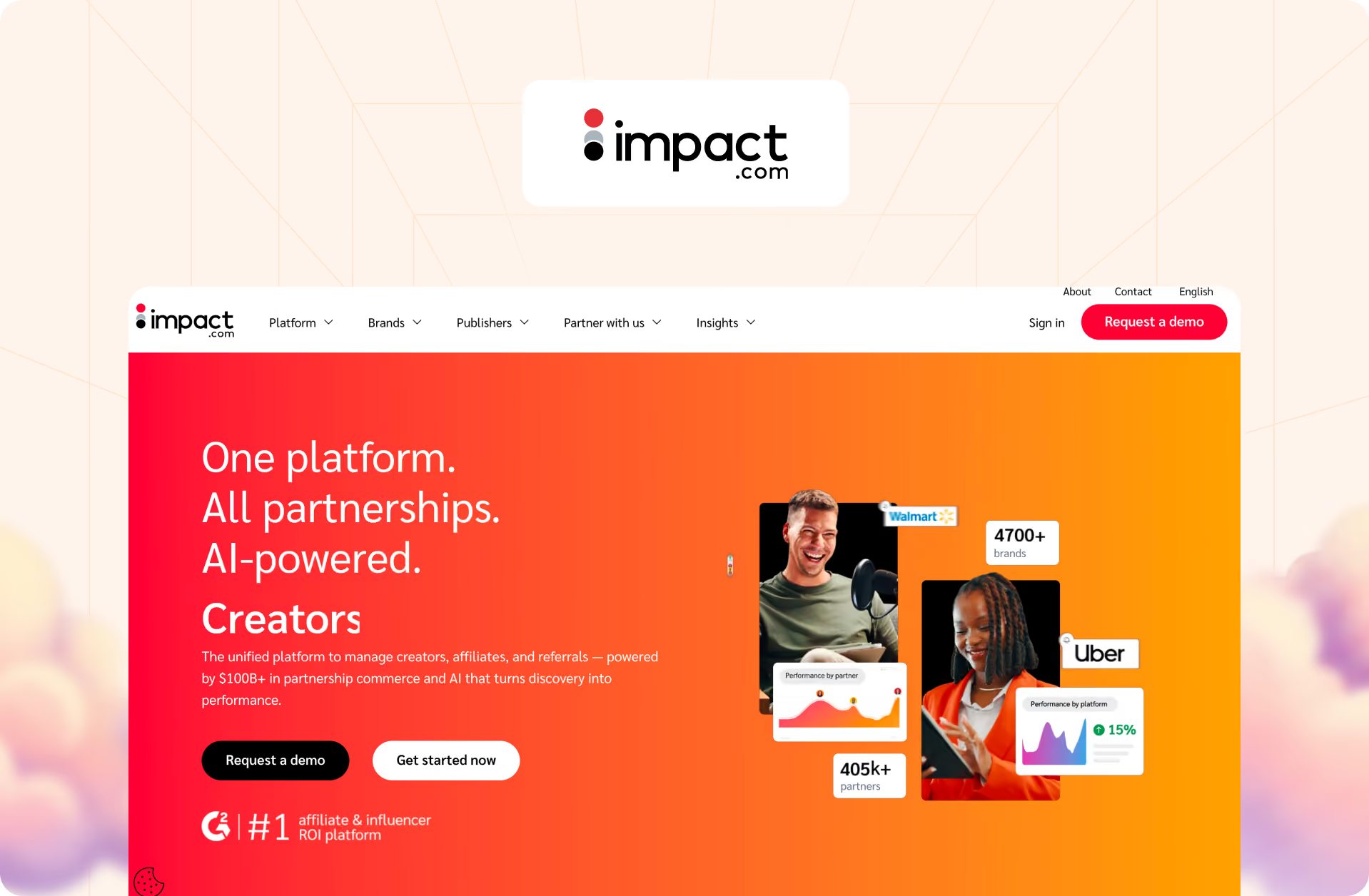
impact.com supports discovery, contracting, tracking, reporting, and payments across several partnership types.
Its partnership management capabilities include:
- Affiliate and referral management
- Creator and other partner workflows
- Contracting and payments
- Enterprise tracking and attribution
- HubSpot and Salesforce integrations
Its broad coverage suits businesses working across multiple channels and partner models.
For mid-market B2B SaaS teams focused on resellers, referrals, and co-selling, the wider infrastructure may add unnecessary complexity.
Category 5: Channel incentives and rebates
These systems go deeper than a typical PRM on rebates, co-ops, MDFs, claims, and financial rewards.
11. 360insights: Best for rebate-driven channel programs

360insights specializes in channel incentives and the systems needed to manage them at scale.
Its incentive management capabilities include:
- Rebates and claims
- MDF and co-op funds
- SPIFFs and incentive programs
- Partner tiers and rewards
- Enterprise integrations, including Salesforce
360insights fits programs where financial rewards and complex claims drive channel performance.
That depth is often excessive for SaaS programs focused on referrals, resellers, co-selling, and pipeline collaboration.
12. Vistex: Best for SAP-centric manufacturers and distributors
Vistex focuses on complex pricing, rebates, incentives, and distribution processes.
Its distribution capabilities include:
- Rebate and reimbursement management
- End-customer pricing controls
- MDF and channel promotions
- Claims and incentive agreements
- Deep SAP integration
Vistex fits manufacturers and distributors with complex commercial rules across third-party sellers.
It isn't primarily a partner engagement platform, making it far more infrastructure than most mid-market SaaS channel partners need.
Category 6: Ecosystem intelligence
Ecosystem intelligence shows where partners can influence pipeline. It complements channel management software rather than replacing it.
13. Crossbeam: Best for account mapping and ecosystem intelligence
Crossbeam compares account data between partners to identify shared customers, prospects, and opportunities.
Its ecosystem intelligence capabilities include:
- Secure account mapping
- Customer, prospect, and opportunity overlap
- Co-sell signals and partner prioritization
- Salesforce, HubSpot, Snowflake, and other integrations
- Ecosystem network for partner collaboration
Crossbeam merged with Reveal in 2024, with Crossbeam continuing as the current brand.
It identifies where a partner can help but doesn't manage onboarding, enablement, deal registration, incentives, or other channel operations.
Introw's Crossbeam integration brings those overlap signals into wider partner sales workflows.
The bottom line
Different channel management tools solve different problems, so the best choice depends on the motion you run.
For B2B SaaS teams on HubSpot or Salesforce, consolidation matters. Running PRM, deal registration, quoting, enablement, commissions, and performance analytics around the CRM means fewer systems to reconcile and one attribution model across direct and indirect channels.
Why teams choose Introw
Introw keeps the channel motion connected to HubSpot or Salesforce, so partner activity, pipeline, attribution, enablement, and commissions don't end up scattered across separate tools.
That makes it easier to grow partner revenue without adding more manual work as the program scales.
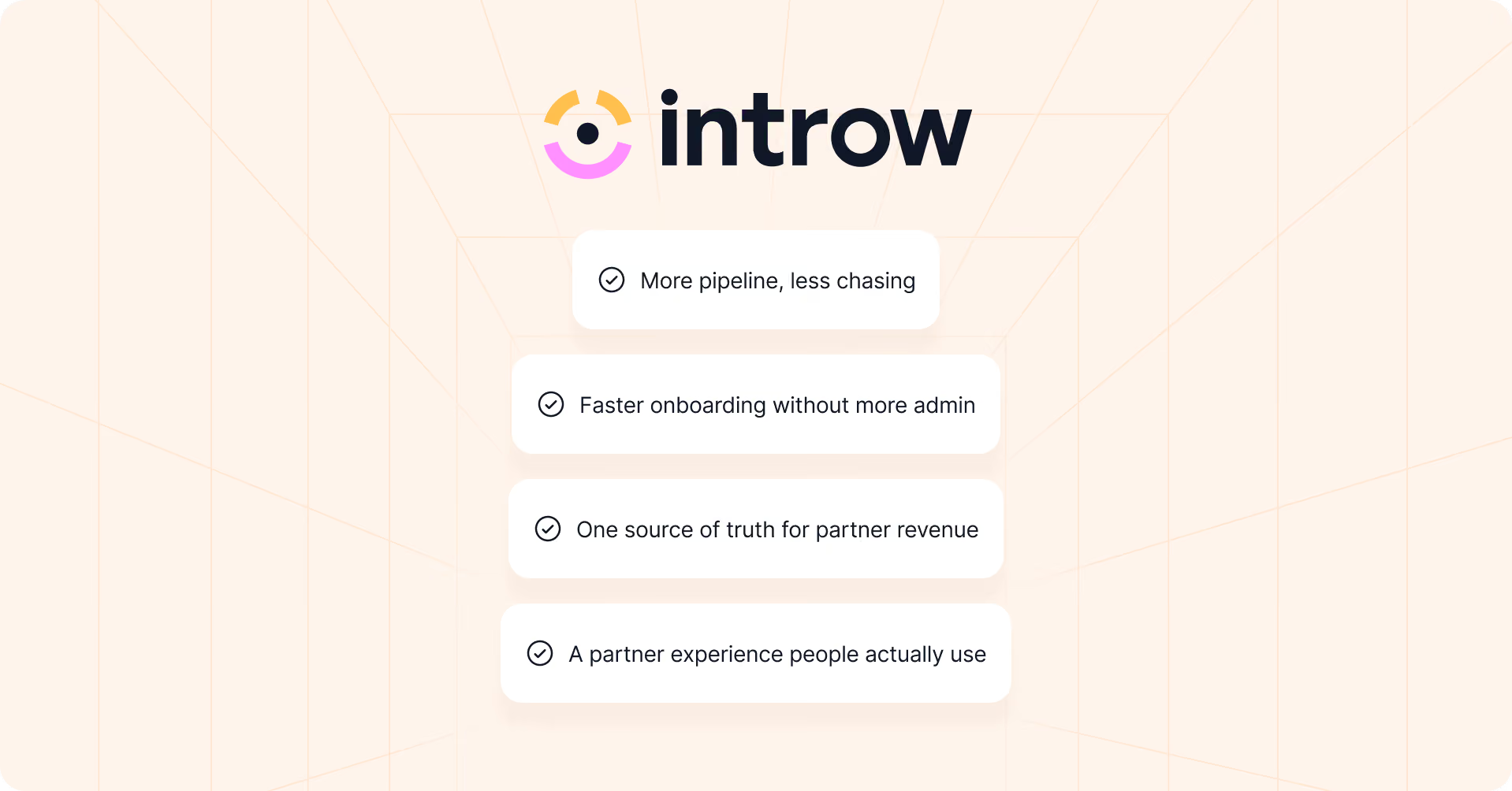
More pipeline, less chasing
Partners can register deals, get updates, access enablement, and collaborate through email, Slack, Teams, CRM-connected workflows, or the optional portal.
Deal submissions stay tied to CRM records, while real-time conflict detection helps catch duplicate or competing opportunities earlier.
That helps drive +70% more partner pipeline by removing friction from deal submission and partner collaboration.
Faster onboarding without more admin
Repeatable partner journeys replace one-off onboarding checklists and manual follow-ups.
Tasks, goals, training, and automated nudges help move partners from signed to active without waiting for the next check-in.
Teams can onboard partners 75% faster, with Introw designed to go live in days rather than months.
One source of truth for partner revenue
Partner records, deals, attribution, commissions, enablement, and engagement stay connected to HubSpot or Salesforce.
That means channel performance can be measured using the same sales data as direct revenue, with less spreadsheet reconciliation and fewer questions about whose numbers are right.
This contributes to +60% more partner-influenced revenue, with partner contribution tracked directly in the CRM instead of estimated from separate reports.
A partner experience people actually use
Partners don't have to learn another complicated workflow just to work with you.
They can engage through the channels they already use, while the portal remains available when a dedicated workspace is useful.
Ringover increased active partner engagement from 20% to 70% with Introw.
If partner updates, pipeline data, enablement, and reporting still live in different places, adding another disconnected platform won't solve the problem.
Book a demo to see how Introw can bring the full channel motion back to the CRM your team already trusts.
Still curious? Here are some quick answers to help clear things up
Channel management is the process of selecting, enabling, supporting, and measuring sales and distribution channels that bring products or services to target customers.
In B2B, effective channel management often covers resellers, distributors, VARs, referral partners, and co-sell partners alongside direct sales.
Channel management software helps companies run indirect channels by managing partners, deals, training, incentives, marketing, channel performance, and revenue data.
PRM is one category within the wider channel management software market.
A partner management system focuses on partner relationships, onboarding, deal registration, and enablement. Broader channel management can also include incentives, TCMA, ecosystem intelligence, and quoting.
The channel management process covers partner selection, onboarding, enablement, deal governance, incentives, marketing support, and performance measurement.
Regular performance monitoring identifies high-performing channels, while clear communication reduces channel conflict.
Channel management is important because indirect revenue depends on partners you don't directly control.
Strong channel management improves partner relationships, customer satisfaction, market reach, and sales performance while helping teams adapt to customer behavior and market demands.




See AI-Native PRM in Action
Book a demo with one of our partner program experts, or explore Introw on your own time.