Partner Management

15 Zinfi PRM Alternatives to Manage and Grow Your Partner Channel in 2026

Compare the top Zinfi PRM alternatives for faster onboarding, CRM-native partner management, better partner engagement, and less admin overhead.

5 min. read
10 May 2026
⚡ TL;DR

Zinfi covers PRM, onboarding, MDF, and analytics for large partner ecosystems. But many teams struggle with long implementations, heavy admin work, weak CRM-native workflows, and low partner adoption. This guide compares 15 Zinfi PRM alternatives across CRM depth, AI capabilities, partner engagement, and time to value.

What Is Zinfi (And Why Teams Look for Alternatives)

Many teams evaluating Zinfi PRM want one platform for partner management, onboarding, MDF, analytics, deal registration, and partner portals. Zinfi positions itself as a Unified Channel Management platform built for large partner ecosystems with distributors, resellers, MSPs, and referral partners.

If your business needs deep customization and broad module coverage, Zinfi can fit well. But many teams start evaluating other partner relationship management software once implementation speed, CRM alignment, and partner adoption become concerns.

1. Complex and lengthy implementations

Zinfi’s broad module set requires significant setup before your team can fully use the platform. Many businesses spend weeks or months configuring workflows, branding, forms, automations, and integrations.

For teams that need to move quickly, long implementation timelines slow onboarding and revenue generation.

2. Partner data lives in Zinfi, not the CRM

Zinfi operates as its data layer instead of a deeply CRM-native platform.

Partner data, leads, deals, and engagement activity often need ongoing syncing between Zinfi and Salesforce, HubSpot, or Dynamics. That creates extra admin work and weaker real-time visibility for sales teams.

For CRM-first organizations, this can become a major limitation.

3. Dated UI and steep admin learning curve

Verified reviews regularly mention a dated interface and complex admin experience.

Partners may struggle with navigation, while internal teams typically require extensive training before managing workflows confidently. An intuitive interface matters because low adoption hurts partner performance.

4. Heavy configuration and ongoing maintenance

Zinfi offers extensive customization across workflows, automations, portal pages, and partner program structures.

The tradeoff is ongoing maintenance. Simple changes may require support involvement, dedicated admin users, or additional setup work.

This is one reason many buyers start comparing modern partner management systems with simpler admin experiences.

5. No off-portal collaboration or agentic AI

Zinfi remains heavily portal-centric.

Your partners typically need to log in to manage deals, collaboration, training, and updates. Native Slack collaboration, email-based co-selling, and agentic AI workflows are limited compared to newer tools built around automation and real time engagement.

6. Enterprise pricing for enterprise complexity

Zinfi’s pricing reflects its enterprise positioning.

If your team only uses part of the platform, the cost-to-value ratio can feel difficult to justify. This is especially true for growing programs that want faster setup and lower operational overhead.

You should review our guide on choosing the right PRM before committing to a long-term platform.

Zinfi alternatives at a glance

Use this table to compare the main categories before you review each tool in detail.

Tool Where partner data lives Admin experience AI capability Off-portal collaboration TCMA Time to live
Introw CRM No-code Agentic Yes Basic Days
Partner.io Hybrid No-code Advisory No No Same day
Salesforce PRM CRM Config-heavy Advisory No Basic Months
Impartner Platform Config-heavy Advisory No Yes Months
PartnerStack Platform No-code Advisory No No Weeks
Kiflo Hybrid No-code None No No Days to weeks
Euler Hybrid No-code Agentic Yes Basic Days
Mindmatrix Platform Config-heavy Content-focused No Yes Months
Magentrix Hybrid No-code None No Basic Weeks
Channeltivity Platform Config-heavy None No Basic Weeks
ChannelScaler Platform Config-heavy Advisory No Yes Months
Unifyr Platform Support-dependent Content-focused No Yes Months
Crossbeam Platform No-code Advisory No No Days
PartnerPortal.io Platform No-code None No No Days
360insights Platform Support-dependent Advisory No Yes Months

The right Zinfi alternative depends on how much complexity your team actually needs and how quickly you need your partner program live.

15 Best Zinfi Alternatives in 2026

If your team is frustrated by slow implementations, heavy admin work, or partner data living outside your CRM, these are the Zinfi alternatives worth looking at first.

#1 Introw - Best overall Zinfi alternative for CRM-native partner management

What it does: Introw is an AI-first PRM built directly on HubSpot and Salesforce. It includes AI-powered partner management, MDF workflows, CPQ, account mapping, role-based permissions, and a no-code partner portal builder.

Why someone might choose it over Zinfi: Partner data stays inside your CRM instead of a separate platform. Your sales and partner teams work from the same source of truth with deep native integrations for Salesforce and HubSpot. Setup typically takes 2 to 4 days.

Introw also includes AI-powered deal registration, Slack collaboration, email-based co-selling, and real-time pipeline visibility without forcing partners into the portal for every workflow.

The platform’s AI agent can automate onboarding, QBR preparation, announcements, coaching, and partner support.

Introw also includes a native Claude integration for AI-powered partner workflows and deal guidance.

For onboarding and enablement, Introw includes a self-service partner LMS with AI-generated courses, certifications, training, and partner documents tied directly to CRM data.

Where it falls short:

  • Built primarily for Salesforce and HubSpot users
  • Less TCMA depth than some enterprise suites
  • Best fit for SaaS and modern revenue teams

CRM integrations: Native bi-directional integrations for Salesforce and HubSpot.

Pricing: Custom pricing.

Best for: SaaS teams with 2+ channel managers that want CRM-native partner relationship management without enterprise complexity.

If your team is tired of waiting months for implementation or relying on support for simple workflow changes, compare Introw directly against Zinfi or request a demo to see the workflows live.

#2 Partner.io - Best for pipeline-focused partner collaboration

What it does: Partner.io focuses on co-selling, shared pipeline visibility, partner collaboration, and partner engagement for revenue teams.

Why someone might choose it over Zinfi: Faster setup, lighter onboarding, and a more modern approach to partner collaboration and deals.

Where it falls short:

  • Smaller feature set
  • Limited TCMA
  • Limited LMS functionality
  • Smaller customer base

CRM integrations: Salesforce and HubSpot.

Pricing: Solo starts at $79/month, Growing at $299/month, with custom enterprise pricing.

Best for: Teams prioritizing co-sell workflows and pipeline collaboration.

You can compare additional Partner.io alternatives before making a final decision. We also have a comparison page so you can evaluate Partner.io against Introw.

#3 Salesforce Experience Cloud - Best for Salesforce-only organizations wanting full native control

What it does: Salesforce Experience Cloud is Salesforce’s native portal framework for customers, partners, onboarding, support, and collaboration.

Why someone might choose it over Zinfi: All partner data stays fully inside Salesforce with maximum security, customization, and control.

Where it falls short:

  • Requires developer resources
  • Long implementation cycles
  • No built-in LMS
  • No off-portal collaboration
  • No agentic AI
  • Difficult for non-technical users to manage

CRM integrations: Salesforce native.

Pricing: $20/login/month or $50/member/month billed annually

Best for: Large Salesforce organizations with dedicated development teams.

Before committing to a custom build, review other Salesforce PRM alternatives.

#4 Impartner - Best for broad enterprise PRM with marketplace capabilities

What it does: Impartner is an enterprise partner relationship management platform covering portals, TCMA, onboarding, marketplaces, partner engagement, and channel automation.

Why someone might choose it over Zinfi: Strong marketplace functionality, broader PRM lifecycle coverage, and enterprise-scale partner management features.

Where it falls short:

  • Long implementation timelines
  • Middleware CRM synchronization
  • Dated UI
  • Heavy admin overhead
  • Config-heavy setup

CRM integrations: Salesforce and HubSpot via middleware.

Pricing: By request.

Best for: Enterprise teams wanting broad PRM coverage with marketplace capabilities.

Our guide to Impartner competitors compares additional enterprise tools.

#5 PartnerStack - Best for affiliate and referral automation with payouts

What it does: PartnerStack focuses on affiliate management, referral automation, payouts, and partner recruitment through a built in marketplace.

Why someone might choose it over Zinfi: Simpler onboarding, automated payouts, lower operational overhead, and easier affiliate management.

Where it falls short:

  • Limited co-sell workflows
  • No distributor support
  • Rigid portal experience
  • Middleware CRM sync
  • Limited support for complex partner ecosystems

CRM integrations: Salesforce and HubSpot via Workato.

Pricing: Marketing plans start at $1000/month billed annually, with enterprise pricing available.

Best for: Teams running affiliate programs and referral partnerships.

See how it compares in our guide to PartnerStack alternatives.

#6 Kiflo - Best for SMBs launching their first partner program

What it does: Kiflo is a lightweight PRM focused on onboarding, partner portals, deal registration, and partner management for SMBs.

Why someone might choose it over Zinfi: Faster setup, lower cost, intuitive interface, and much simpler onboarding for new partners.

Where it falls short:

  • Limited automation
  • No AI capabilities
  • No LMS
  • Limited scalability
  • No white-label flexibility

CRM integrations: Basic HubSpot and Salesforce integrations.

Pricing: Core starts at $399/month billed annually, with custom Plus plans.

Best for: SMBs with smaller partner ecosystems and simple workflows.

Take a look at our in-depth guide to Kiflo alternatives.

#7 Euler - Best for newer programs wanting a modern PRM
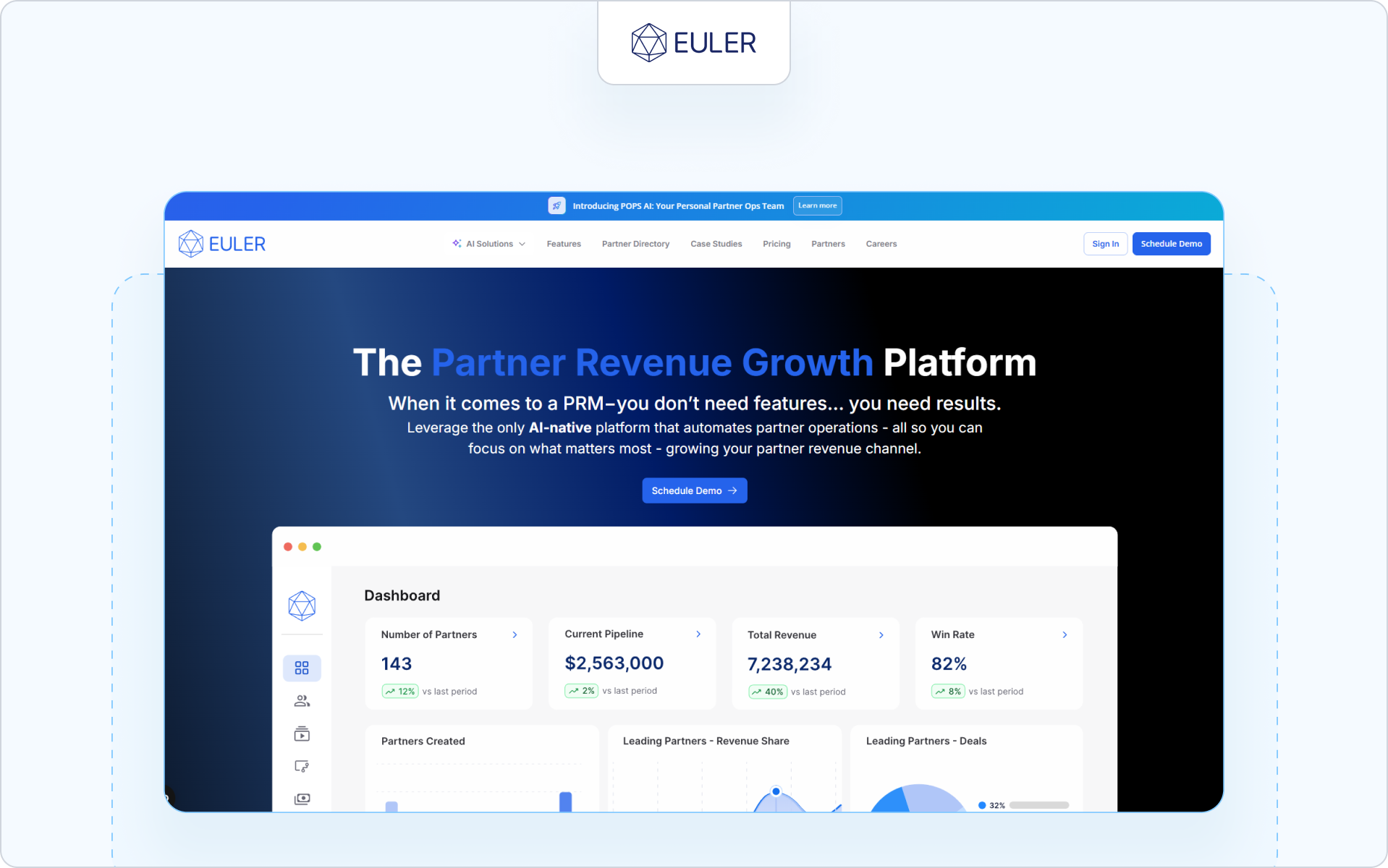
What it does: Euler is a newer PRM focused on onboarding, partner management, automation, and advisory AI assistants.

Why someone might choose it over Zinfi: Modern UI, lighter setup, and simpler workflows for growing partner programs.

Where it falls short:

  • No LMS
  • No MDF
  • Limited CRM depth
  • Limited white-label customization
  • Limited enterprise functionality

CRM integrations: Basic Salesforce and HubSpot integrations.

Pricing: Contact for pricing.

Best for: Early-stage teams wanting modern partner management without enterprise overhead.

Explore more in our guide to Euler PRM alternatives.

#8 Mindmatrix - Best for through-channel marketing automation at enterprise scale

What it does: Mindmatrix combines PRM, TCMA, onboarding, LMS functionality, content automation, and partner recruitment tools inside one enterprise platform.

Why someone might choose it over Zinfi: Stronger TCMA workflows, AI-assisted content generation, and broader tools for recruiting and enabling new partners.

Where it falls short:

  • Complex implementation
  • Heavy admin experience
  • Ongoing support dependency
  • Slower onboarding
  • Difficult to maintain consistent workflows across modules

CRM integrations: Salesforce and HubSpot.

Pricing: No pricing information available from Mindmatrix directly.

Best for: Enterprise organizations focused heavily on through-channel marketing automation.

Our roundup of Mindmatrix alternatives compares simpler options.

#9 Magentrix - Best for Salesforce-native portal-first partner management

What it does: Magentrix is a Salesforce-native portal platform for partner management, onboarding, collaboration, support, and content sharing.

Why someone might choose it over Zinfi: Partner data stays inside Salesforce with simpler portal management and less enterprise complexity.

Where it falls short:

  • Salesforce-only
  • Portal-centric workflows
  • Limited AI
  • No off-portal collaboration
  • Limited automation

CRM integrations: Salesforce native.

Pricing: Essential starts at $1500/month, Advanced at $3000/month, with custom enterprise pricing.

Best for: Salesforce organizations wanting focused partner portals without broader TCMA overhead.

Our review of Magentrix alternatives compares newer tools.

#10 Channeltivity - Best for mid-market teams wanting straightforward channel management

What it does: Channeltivity provides PRM functionality for deal registration, onboarding, partner portals, analytics, and MDF management.

Why someone might choose it over Zinfi: Simpler onboarding, lower operational overhead, and more straightforward partner management for mid-market businesses.

Where it falls short:

  • Limited AI
  • Limited CRM flexibility
  • No off-portal collaboration
  • Fewer advanced automation workflows

CRM integrations: Salesforce.

Pricing: Standard starts at $1899/month annually, with CRM Edition at $2199/month.

Best for: Mid-market teams wanting proven PRM software without enterprise complexity.

Our breakdown of Channeltivity competitors covers similar tools.

#11 ChannelScaler - Best for incentive, rebate, and MDF management

What it does: ChannelScaler combines PRM, rebates, incentives, MDF, analytics, onboarding, and automation after the Allbound and Channel Mechanics merger.

Why someone might choose it over Zinfi: Stronger rebate management, incentive automation, and MDF workflows.

Where it falls short:

  • Admin-heavy setup
  • Support-dependent CRM sync
  • Limited AI
  • No Slack collaboration
  • Steeper learning curve

CRM integrations: Salesforce and HubSpot via middleware.

Pricing: Custom pricing.

Best for: Teams with complex rebate and incentive workflows.

Our comparison of ChannelScaler alternatives explores simpler options.

#12 Unifyr (previously ZiftSolutions) - Best for enterprise channel marketing programs

What it does: Unifyr combines PRM, TCMA, onboarding, partner marketing automation, and content syndication for enterprise channel programs.

Why someone might choose it over Zinfi: Strong content syndication, campaign automation, and partner marketing support for large organizations.

Where it falls short:

  • Heavy implementation requirements
  • Support-dependent workflows
  • Dated admin experience
  • Slower setup

CRM integrations: Salesforce and Microsoft Dynamics.

Pricing: No pricing available

Best for: Large enterprise channel marketing organizations with complex campaign requirements.

#13 Crossbeam - Best for account mapping and ecosystem intelligence

What it does: Crossbeam helps teams identify account overlap, shared customers, ecosystem opportunities, and partner insights across CRM data.

Why someone might choose it over Zinfi: Stronger ecosystem intelligence, account mapping, and partner overlap analysis.

Where it falls short:

  • Not a PRM
  • No onboarding
  • No deal registration
  • No partner portals
  • No LMS

CRM integrations: Salesforce and HubSpot.

Pricing: Free plan available, with Starter at $4800/year and custom Supernode pricing for larger GTM teams.

Best for: Teams that need ecosystem intelligence alongside a PRM.

#14 PartnerPortal.io - Best for simple portal deployment

What it does: PartnerPortal.io focuses on lightweight partner portals, onboarding, content sharing, and communication.

Why someone might choose it over Zinfi: Faster setup, lower cost, and simpler portal deployment for smaller teams.

Where it falls short:

  • Limited automation
  • No AI
  • No TCMA
  • Limited CRM depth
  • Limited scalability

CRM integrations: Limited.

Pricing: Free plan available, with Professional starting at $249/month and custom enterprise pricing.

Best for: Smaller businesses wanting simple partner portals without enterprise functionality.

#15 360insights - Best for enterprise rebate and incentive management

What it does: 360insights focuses on rebates, channel incentives, claims processing, and channel revenue management for enterprise partner ecosystems.

Why someone might choose it over Zinfi: Strong rebate workflows, channel claims automation, and incentive management at enterprise scale.

Where it falls short:

  • Complex implementation
  • Heavy enterprise focus
  • Limited partner engagement functionality
  • Limited portal flexibility

CRM integrations: Salesforce and enterprise ERP integrations.

Pricing: Contact for pricing

Best for: Enterprise organizations focused heavily on rebates, claims, and incentive programs.

If your team is tired of waiting months for implementation or relying on support for simple workflow changes, focus on tools that keep partner data inside your CRM and reduce admin overhead instead of adding more of it

The bottom line

Zinfi PRM still makes sense for large enterprise organizations running complex partner ecosystems with heavy TCMA, onboarding, MDF, and distributor management requirements.

But many teams evaluating Zinfi competitors now want something very different:

  • CRM-native partner relationship management
  • Faster setup and implementation
  • Better partner engagement
  • Real-time collaboration outside the portal
  • AI that helps manage deals and onboarding
  • Less admin overhead for channel managers

That shift is why newer Zinfi alternatives like Introw are gaining traction.

Instead of moving partner data into another platform, Introw keeps everything inside Salesforce or HubSpot while helping your teams automate onboarding, deal registration, training, announcements, and partner management workflows with far less operational complexity.

Choosing a platform is really about reducing daily friction for your team and your partners.

Why teams choose Introw when looking for Zinfi alternatives

+70% more partner pipeline

Introw helps teams turn inactive partner ecosystems into real revenue growth. Partners register more deals directly inside the CRM, while real-time conflict detection helps protect data quality and reduce duplicate leads.

Because partners can collaborate through Slack, email, embedded forms, and partner portals, your teams spend less time waiting for users to log in just to track progress or manage deals.

+75% faster partner onboarding

Most Zinfi competitors still require long implementation cycles, admin training, and heavy setup before new partners can start selling.

Introw goes live in 2 to 4 days with AI-powered onboarding, certifications, training, automation, and partner documents built directly into the platform. Your channel managers can manage workflows themselves without technical support or enterprise consulting overhead.

+60% more partner-influenced revenue

Introw keeps partner management, onboarding, attribution, and partner engagement tied directly to Salesforce or HubSpot instead of a separate data layer.

That gives your organizations the ability to automate partner workflows, compare partner performance, recruit new partners faster, and maintain more consistent sales execution across your partner program.

If your team is evaluating Zinfi PRM because the operational cost, setup time, or admin overhead has become too high, Introw is one of the strongest CRM-native alternatives available today.

Ready to compare Introw against Zinfi? Book a demo and see how quickly your team can go live.

FAQs

Still curious? Here are some quick answers to help clear things up.

Contact us

What is Zinfi PRM used for?

Zinfi PRM is an enterprise partner relationship management platform used for onboarding, deal registration, TCMA, partner portals, partner management, and channel automation across large partner ecosystems.

What are the best Zinfi alternatives?

Some of the strongest Zinfi competitors include Introw, Impartner, Mindmatrix, PartnerStack, Channeltivity, and Salesforce Experience Cloud. The best alternative depends on whether your teams prioritize CRM-native workflows, enterprise customization, automation, or faster setup.

Why do teams move away from Zinfi?

Many businesses leave Zinfi because of implementation time, admin overhead, support dependency, and low partner adoption. Teams often want more intuitive interface design, lower operational costs, and CRM-native partner management without a separate data layer.

Is Zinfi better than Impartner?

Zinfi Impartner comparisons usually come down to architecture and operational complexity. Both target enterprise organizations with large partner programs, TCMA, onboarding, and partner portals. Impartner offers broader marketplace functionality, while Zinfi focuses heavily on unified channel management.

What should buyers look for in partner relationship management software?

When evaluating partner relationship management software, buyers should compare CRM integrations, onboarding workflows, partner engagement, security, automation, pricing, implementation time, and the ability to scale without adding operational overhead. Features matter, but daily usability matters more.

Launch your partner portal
in minutes!

Thank you! Your submission has been received!
Oops! Something went wrong while submitting the form.

Related blog articles

Partner Management

SPIFF Programs: What They Are, How to Design Them, and Examples That Drive Partner Sales

Stijn Provoost
Marketing
5 min. read
26 Jun 2026
⚡ TL;DR

A SPIFF program is a short-term incentive that encourages a specific action. It might reward partners for closing deals, selling a new product, entering a new market, or moving opportunities through the pipeline faster. The best SPIFF programs are simple. One goal. One reward. One clear trigger. In this guide, you’ll learn what a SPIFF program is, why it works, how to design one, and seven SPIFF program examples you can adapt for your own partner program. You’ll also see how teams use Introw to automate tracking, payouts, approvals, and reporting without spreadsheets.

A well-designed SPIFF program can turn a slow quarter, product launch, or stalled partner pipeline into a surge of sales activity. Used well, SPIFFs can change behavior fast. Used poorly, they can create expensive distractions. If you’ve heard the term before but never really knew what it meant, you’re not alone.

What is a SPIFF program?

A SPIFF program is a short-term sales incentive used to reward a specific action. SPIFF stands for sales performance incentive fund, though you may also see it written as “spiff” or “spiv.”

The SPIFF program's meaning is simple: you offer an extra reward when someone does the thing you want more of.

That could mean a direct cash bonus for closing deals above a set value, selling a new product, registering qualified leads, or reaching specific sales targets during a promotion period.

Unlike standard sales commissions, a sales SPIFF is temporary and focused. Commission usually runs in the background as part of your long-term compensation plans. A SPIFF is used when you want immediate motivation around one goal.

A well-structured SPIFF program usually has five traits:

  • Short-term: It runs for a month, a quarter, or a campaign window.
  • Targeted: It focuses on one product, region, deal size, or behavior.
  • Simple: The program rules are easy to understand.
  • Stackable: It can run alongside regular commission.
  • Trackable: Every qualifying sale is tied to clear eligibility criteria.

SPIFFs can motivate sales teams, individual salesperson performance, and external channel partners. This guide focuses on partner SPIFFs because they’re harder to manage. Your channel partners don’t live in your CRM, and they can’t always see what they’ve earned.

That’s why a strong channel partner incentive program⁠ needs more than a good reward. It also requires clear tracking, fast communication, and a simple way for partners to see progress.

If your goal is to improve partner sales⁠, a SPIFF can help. But only when the reward, rules, and payout process are easy to trust.

Why companies run SPIFF programs

The best SPIFF programs don’t just offer extra money. They encourage specific sales behaviors when they matter most.

Here’s why they work.

#1 Urgency creates action

Most sales commissions become part of the background. Sales reps and channel partners expect them, so they rarely change behavior on their own.

A short-term incentive creates a reason to act now.

For example, a channel SPIFF program might offer:

  • $500 for every new logo deal closed this quarter
  • A bonus for selling a newly launched product
  • Extra rewards for deals above a specific value

The deadline matters as much as the reward. When partners know the opportunity disappears after a promotion period, they’re more likely to prioritize that deal over competing opportunities.

This is why SPIFFs are often used during product launches, pipeline pushes, and other strategic initiatives where timing matters. Teams running incentives alongside their existing HubSpot integration⁠ can track participation and revenue generated without creating separate workflows.

#2 Clarity drives participation

A successful SPIFF program should be easy to explain.

If partners need a spreadsheet and three meetings to understand the reward, participation drops. If the rules fit in one sentence, participation rises.

For example:

“Close a new logo deal above $10,000 this quarter and earn $500.”

That’s clear. Partners know the sales goals, the reward, and the eligibility criteria immediately.

The most effective SPIFF program ideas focus on simplicity. Partners should spend time selling, not interpreting program rules.

#3 Visibility keeps partners engaged

A sales SPIFF only works when people can see it.

Many sales SPIFF programs fail because the incentive is announced once and then forgotten. The reward lives in an email or PDF while partners focus on daily sales activity.

Visibility creates immediate motivation.

For example, when incentives appear directly inside a partner portal⁠, partners can see pending and confirmed SPIFF rewards alongside active deals. Seeing the reward attached to a live opportunity keeps the incentive top of mind.

This is especially important for channel partners who may be managing opportunities across multiple sales channels at the same time.

#4 Low friction means more claims

Even strong cash SPIFFs lose impact when the payout process is complicated.

If partners have to chase approvals, fill out forms, or wait months for reward distribution, participation drops. Friction creates doubt, and doubt reduces engagement.

The best incentive program experiences make claiming rewards almost automatic.

With tools such as deal and lead registration⁠, partner activity can be tracked from the original opportunity through payout. Add automation, notifications, and approval workflows, and salespeople spend less time on admin and more time closing deals.

When earning a reward feels easy, more partners participate. When rewards are visible, simple, and easy to claim, SPIFFs consistently boost sales and increase sales activity.

How to design a SPIFF program that actually changes behavior

A successful SPIFF program starts with a clear goal. The reward matters, but the behavior matters more.

Step 1: Define the behavior you want to change

Start with the outcome, not the incentive.

Ask yourself:

  • Do you want more deals registered?
  • Do you want to shorten the sales cycle?
  • Do you want bigger deals?
  • Do you want more certified partners?
  • Do you want to increase sales in a specific market?

Pick one.

The best sales incentive programs focus on a single objective. If you try to change too many sales behaviors at once, partners won’t know what matters most.

Step 2: Set clear, simple rules

Partners should understand the SPIFF in seconds.

Every SPIFF program should answer four questions:

  • What triggers the bonus?
  • How much is the reward?
  • Who is eligible?
  • When does it expire?

For example:

“Register and close a new logo deal above $10,000 before September 30 and earn a $500 bonus.”

Simple rules lead to more participation. Complex rules lead to salespeople guessing.

Step 3: Make the incentive meaningful

A bigger reward isn’t always a better reward.

The goal is to offer meaningful rewards that justify the extra effort. For many SaaS programs, cash bonuses between $250 and $1,000 are enough to change behavior. Enterprise-focused SPIFF campaigns may require larger payouts.

You can also experiment with:

  • Cash SPIFFs
  • Non-cash rewards
  • Non-cash SPIFFs
  • Tech gadgets
  • Prepaid debit cards

The best reward is the one that motivates channel partners to take action.

Step 4: Use CRM-based conditions

Manual tracking breaks quickly.

The most effective SPIFF programs use CRM data as the source of truth.

For example:

  • Deal stage = Closed Won
  • Deal value > $10,000
  • Close date falls within Q3

When all conditions are met, the reward is triggered automatically.

In Introw, SPIFFs are configured using CRM filters, so qualifying deals are identified automatically based on your existing CRM data.

Here's an example of Introw’s commission plan builder showing CRM-based SPIFF conditions and a live preview of qualifying deals:

Good SPIFF program management starts with reliable data.

Step 5: Make the reward visible

Partners shouldn’t have to remember a SPIFF.

They should see it where they already work.

For example, Introw displays expected earnings directly on deal cards and inside the partner experience. Partners can see whether rewards are pending or confirmed without digging through old emails.

Visibility keeps sales teams driven and helps motivate channel partners throughout the entire campaign.

Step 6: Automate the payout process

A reward loses power when the payout process becomes a project.

A simple flow looks like this:

  1. The deal closes.
  2. The SPIFF calculates automatically.
  3. Eligible rewards are added to a statement.
  4. The partner uploads an invoice.
  5. Finance approves the payment.
  6. The reward is marked as paid.

Introw’s AI Agent⁠ can also help surface information and reduce admin work, making it easier to manage larger incentive programs without creating extra overhead.

The easier the process, the more likely partners are to participate.

Here's what this all looks like in action:

Step 7: Review and improve

Every SPIFF should teach you something.

After the campaign ends, review:

  • How many partners earned the reward?
  • How much sales revenue was generated?
  • Which partner segments responded best?
  • Did sales activity increase?
  • Did you achieve the original sales goals?

Use those insights to improve future iterations.

The best partner programs don’t rely on one successful SPIFF. They run targeted incentives throughout the year as part of a broader incentive strategy.

A few well-designed SPIFFs will usually outperform one giant annual campaign.

The best way to see these principles in action is through real SPIFF program examples.

7 SPIFF program examples you can steal

Not every SPIFF needs to be complicated. Here are seven proven SPIFF program examples you can adapt for your partner program.

1. The activation accelerator

Use this SPIFF when you want new partners to take action quickly instead of waiting months to engage.

Rule: Earn $750 on your first closed-won deal as a new partner.

Trigger: First deal where deal stage = Closed Won.

Bonus: $750 flat fee.

Best for: New partners in their first 90 days.

Why it works: Early sales success builds confidence. Partners who close their first deal quickly are more likely to stay active and become a team motivated by results.

2. The Q3 pipeline push

This is one of the simplest sales SPIFF programs for accelerating pipeline movement before a deadline.

Rule: Earn $500 for every deal above $25,000 closed this quarter.

Trigger: Deal amount > $25K AND deal stage = Closed Won.

Bonus: $500 flat fee.

Best for: Active reseller partners.

Why it works: Short-term incentives and cash SPIFFs create urgency. Partners focus on closing deals before the deadline instead of letting opportunities sit in the pipeline.

3. The EMEA expansion bonus

Geographic incentives work well when you’re trying to grow partner activity in a specific market.

Rule: Earn an extra 5% on every DACH deal closed this quarter.

Trigger: Deal country = Germany, Austria, or Switzerland AND deal stage = Closed Won.

Bonus: 5% of deal value.

Best for: Reseller and referral partners expanding into new markets.

Why it works: Supports broader sales strategies without changing existing sales compensation plans. The bonus stacks on top of normal sales commissions.

4. The product launch SPIFF

When product launches need momentum, a targeted SPIFF can help direct attention where you want it.

Rule: Earn $300 for every deal that includes the new product.

Trigger: Deal contains the new product SKU AND deal stage = Closed Won.

Bonus: $300 flat fee.

Best for: New product launches.

Why it works: Partners sell what they’re rewarded to sell. This type of sales incentive helps boost sales of new offerings and improves product adoption.

5. The speed-to-close SPIFF

If deals are moving slowly through the pipeline, this type of SPIFF encourages faster action.

Rule: Earn $400 for any deal closed within 45 days of registration.

Trigger: Deal registration date to close date < 45 days.

Bonus: $400 flat fee.

Best for: Programs with a slow sales cycle.

Why it works: It encourages faster sales activity and helps prevent deals from becoming stale. The goal is to stop partners from letting opportunities delay closing deals.

6. The certification reward

Not every incentive program needs to be tied directly to revenue.

Rule: Earn $200 for completing an advanced certification.

Trigger: Certification completed with a passing score.

Bonus: $200 flat fee.

Best for: Individual salesperson development.

Why it works: Better-trained sales professionals often deliver stronger sales performance. It can also boost morale, improve job satisfaction, and increase long-term sales performance.

7. The stacked deal bonus

This example shows how SPIFFs and recurring commissions can work together.

Rule: Earn your standard commission plus a $1,000 bonus on deals above $100,000.

Trigger: Deal amount > $100K AND deal stage = Closed Won.

Bonus: $1,000 flat fee plus existing commission.

Best for: Gold and Platinum partners.

Why it works: SPIFFs don’t replace long-term compensation plans. They complement them. In Introw, partners can be enrolled in multiple plans at the same time, including recurring commissions, tiered SPIFFs, and one-time bonuses. Both rewards are calculated independently and rolled into the same statement.

Notice the pattern

Every example focuses on one behavior, one reward, and one clear trigger. That’s usually all you need to create a successful sales performance incentive fund that partners actually remember and act on.

So, what are things you should watch out for to make things go smoothly?

Common SPIFF mistakes to avoid

Even a good SPIFF program can fail if the execution is poor. Here are the most common mistakes to avoid.

Making the rules too complicated

If sales reps, channel partners, or an individual salesperson need a guide to understand the reward, participation drops.

Keep the program rules simple. A well structured SPIFF program should be easy to explain in one sentence.

Trying to reward too many behaviors

Some sales SPIFF programs try to influence multiple sales behaviors at once.

For example:

  • Sell a new product
  • Increase deal size
  • Enter a new market
  • Complete training

Pick one goal per campaign. The most effective SPIFF programs focus on a single outcome.

Offering rewards that don’t motivate action

A $25 reward on a six-month deal won’t motivate salespeople.

The reward should match the effort required. Whether you use cash SPIFFs, non cash rewards, prepaid debit cards, annual bonuses, or instant rewards, the incentive needs to feel worthwhile.

Making rewards hard to track

Partners should never wonder whether they’ve earned a reward.

Poor visibility hurts a program’s effectiveness and can damage team morale. Clear tracking helps motivate channel partners and supports healthy competition.

Ignoring payouts and compliance

Rewarding participants is only half the process.

You also need clear reward distribution, payment records, and tax compliance processes. This becomes even more important when managing channel partners across different regions.

Forgetting to measure results

After every SPIFF campaign, ask:

  • Did sales targets improve?
  • Was more sales activity generated?
  • Did revenue increase?
  • Did the SPIFF help move old inventory?
  • Was the behavior change worth the cost?

The answers will help improve future SPIFF campaigns and strengthen your overall sales performance management approach.

Here is how partner teams run SPIFFs with Introw

Designing a SPIFF is only half the job. You also need a reliable way to track earnings, manage payouts, and keep channel partners informed.

Here’s what that looks like in Introw.

1. Create a SPIFF plan from CRM conditions

SPIFFs are created as commission plans using CRM data.

Set your date range, define the qualifying conditions, and choose the reward amount. Introw supports flat-fee and percentage-based rewards, and you can preview matching deals before the plan goes live.

2. Assign the plan to partners

Assign the SPIFF to individual partners or entire partner groups.

Partners can participate in multiple plans at the same time, including recurring commissions, certification rewards, and short-term incentive programs.

3. Partners see earnings in real time

Once the plan is active, partners can see expected earnings directly inside Introw.

Pending and confirmed rewards appear alongside deal information, helping partners stay focused on the opportunities that matter most.

4. Generate statements and collect invoices

When it’s time to pay, generate a statement with a few clicks.

Introw bundles eligible SPIFF rewards, sales commissions, and other payouts into a single statement. Partners can then upload invoices through the portal or simply reply to the notification email.

5. Approve payments and track everything

Every action is logged.

Partner managers and finance teams can review invoices, approve payments, and trace every reward back to the original CRM record. This creates a clear audit trail and simplifies reward distribution.

The commission overview ties it all together

The commission overview gives you one place to track SPIFF rewards, upcoming payments, and payout history.

Instead of managing spreadsheets, email chains, and separate systems, partner teams get a single source of truth for commissions, incentives, and partner earnings.

The result is a SPIFF program that’s visible to partners, tied directly to CRM data, and easy for finance teams to manage. Instead of tracking rewards across spreadsheets, email threads, and disconnected systems, everything lives in one workflow from deal registration to payout.

Ready to stop managing SPIFFs in spreadsheets? Request a demo⁠ and see how Introw automates partner incentives, commission tracking, invoicing, approvals, and payouts in one place.

Partner Management

13 Best SPIFF Software to Run Sales Incentive Programs That Partners and Reps Actually Respond To

Luna Cornil
Product Marketing
5 min. read
26 Jun 2026
⚡ TL;DR

The best SPIFF software helps you launch incentive programs, automate commission calculations, track performance in real time, and give sellers visibility into their earnings. In this guide, we’ll compare 13 SPIFF platforms for sales teams, channel partners, and incentive compensation programs. Some focus on sales commissions and compensation plans. Others specialize in partner incentives, reward distribution, and SPIFF management.

If you’re looking for a platform that combines SPIFFs, commissions, deal registration, partner portals, and CRM-native automation, Introw is one of the strongest options. We’ll break down each tool’s strengths, limitations, pricing, and ideal use cases to help you find the right fit.

What is a SPIFF (and why software matters)

A SPIFF, short for sales performance incentive fund, is a short-term bonus designed to encourage a specific action. It might reward sales reps for closing deals above a certain value, selling a new product, or hitting a quarterly goal.

So, what is a SPIFF in sales?

Think of it as a temporary incentive layered on top of regular compensation. Unlike ongoing commissions, SPIFFs are designed to influence behavior quickly and support specific business objectives.

The challenge isn’t creating SPIFF programs. It’s managing them.

When incentives live in spreadsheets, sellers can’t see their progress, managers spend time checking commission calculations, and finance teams struggle with reward distribution. Over time, trust breaks down.

For a SPIFF to work, people need real-time visibility into their rewards, earnings, and performance. They need to know what actions qualify, how much they’ve earned, and whether they’re on track to hit the goal.

That’s why more companies are replacing manual processes with dedicated SPIFF software. Many companies combine SPIFFs with broader channel partner incentive programs⁠ to drive consistent partner engagement and sales growth.

13 Best SPIFF Software Platforms in 2026

Category 1: Partner-facing SPIFF and commission software

These platforms help you run SPIFFs, commissions, and incentive programs for external partners. Unlike traditional incentive compensation software built for internal sales teams, partners can track earnings, view progress, submit invoices, and follow payment status without CRM access.

Best for: SaaS companies, reseller programs, referral programs, and channel teams managing partner incentives.

#1 Introw - Best SPIFF software for partner and channel teams

What it does

Introw is a PRM (and a  SPIFF management software platform) with built-in commission management. You can create flat-fee or percentage-based SPIFFs using CRM data, assign them to individual partners or partner segments, and automatically stack multiple SPIFFs with recurring commission plans.

Partners can access a dedicated partner portal⁠ with real-time visibility into earnings, progress, and payout status. Every reward is tied directly to CRM data, reducing manual processes and improving transparency.

Why someone might choose it

Most SPIFF software for sales is designed for internal sales reps. Introw is built for external partners.

Partners can see commissions directly on their deals, track potential earnings, submit invoices, and follow payout status without needing CRM access. The platform also handles commission statements, reward distribution, approval workflows, and multi-currency payouts from a single source.

For companies looking for a SPIFF sales incentive platform, Introw combines partner management, commission calculations, incentive management, and an AI-powered partner AI agent⁠ in one system.

Key features

  • CRM-based SPIFF creation using deal filters and conditions
  • Flat-fee or percentage-based rewards
  • One-time or recurring incentive compensation
  • Real-time visibility into partner earnings
  • Bulk assignment by tier, segment, or partner group
  • One-click commission statements
  • Multi-currency support
  • Invoice submission through the portal or email
  • Built-in approval workflow
  • Multiple SPIFFs and commission plan stacking
  • Full audit trail and commission tracing functionality

CRM integrations

Native bi-directional integrations with HubSpot⁠ and Salesforce⁠.

Pricing

Custom quote. SPIFF, commission management, partner payouts, and approval workflows are included in Introw pricing plans.

Best for

SaaS companies running SPIFFs, referral bonuses, and commission programs through channel partners, resellers, and referral networks.

Explore Introw

Ready to launch partner SPIFF programs in days instead of building manual commission workflows? Request a demo⁠.

Category 2: Internal rep commission and incentive platforms

These platforms help you calculate, track, and pay commissions and SPIFFs for your own sales team. Most support complex incentive compensation plans, quota tracking, performance tracking, and commission calculations with real-time visibility for sales reps and managers.

Best for: Direct sales organizations managing internal compensation plans, quotas, and incentive programs.

#2 Salesforce Incentive Compensation Management (formerly Spiff) - Best for Salesforce teams

What it does

Salesforce Incentive Compensation Management⁠ is the former Spiff platform, now part of Salesforce. It helps sales operations teams automate commission calculations, manage incentive compensation plans, and give sales reps real-time visibility into earnings and quota attainment.

Why someone might choose it

Strong Salesforce integration, real-time commission tracking, and support for complex incentive compensation plans. The platform also includes forecasting, plan modeling, and compliance capabilities.

Where it falls short

Built for internal sales teams only. External partners cannot track earnings or participate through a partner portal.

CRM integrations: Salesforce (native)

Pricing: Custom quote

Best for: Salesforce-centric organizations managing complex internal commissions and sales performance incentive funds.

#3 CaptivateIQ - Best for flexible compensation plan design

What it does

CaptivateIQ Incentives⁠ is an incentive compensation software platform focused on commission automation, plan modeling, and earnings transparency. It supports everything from simple commissions to highly customized compensation plans.

Why someone might choose it

Flexible plan builder, AI-powered earnings explanations, predictive commission estimator capabilities, and strong what-if modeling. It also supports partner commissions alongside internal compensation plans.

Where it falls short

Designed primarily for internal sales reps rather than partner-facing SPIFF programs. Enterprise pricing may be difficult for smaller teams.

CRM integrations: Salesforce, HubSpot, Microsoft Dynamics, Open API

Pricing: Custom quote

Best for: RevOps and finance teams with frequently changing commission needs and complex compensation structures.

#4 Xactly Incent - Best for enterprise incentive compensation management

What it does

Xactly Incent⁠ is enterprise-grade SPIFF compensation software that combines commission management, quota management, forecasting, benchmarking, and compliance into a single platform.

Why someone might choose it

Built for large organizations managing complex incentive compensation at scale. Includes AI-powered plan optimization, earnings forecasting, benchmarking data, and strong compliance support.

Where it falls short

Longer implementation cycles, significant administrative overhead, and enterprise-focused pricing.

CRM integrations: Salesforce (native), plus CRM, ERP, and HCM integrations

Pricing: Custom quote

Best for: Large enterprises with complex incentive compensation plans, compliance requirements, and global sales teams.

#5 Everstage - Best for mid-market commission automation

What it does

Everstage Incentives⁠ is a SPIFF commission software platform that automates commission calculations, payout approvals, and incentive management while providing sellers with real-time dashboards and earnings visibility.

Why someone might choose it

Easier to implement than many enterprise competitors. Includes AI assistants, performance tracking, payout forecasting, and seamless integrations across CRM, HR, ERP, and finance systems.

Where it falls short

Focused on internal incentive compensation rather than partner-facing commission programs.

CRM integrations: Salesforce, HubSpot, Pipedrive, Microsoft Dynamics, Zoho, Freshsales

Pricing: Custom quote

Best for: Mid-market sales teams looking to streamline commission management without enterprise-level complexity.

#6 Performio - Best for complex enterprise compensation plans

What it does

Performio⁠ is a SPIFF sales commission software platform built for organizations with highly complex compensation plans, crediting rules, territories, accelerators, and payout structures.

Why someone might choose it

Handles complex incentive compensation plans without custom development. AI-powered administration, real-time dashboards, commission statements, and strong audit controls help reduce risk and improve transparency.

Where it falls short

Enterprise-focused implementation and pricing. Internal sales teams only.

CRM integrations: Salesforce, HubSpot, NetSuite, ERP, HRIS, custom integrations

Pricing: Custom quote

Best for: Enterprises with complex commission calculations, compliance requirements, and large compensation programs.

Category 3: Channel incentive management platforms

These platforms help enterprises manage SPIFFs, rebates, MDF, co-op funds, and other incentive programs across large partner ecosystems. The focus is on administering incentives at scale rather than individual payout visibility.

Best for: Enterprises managing large channel programs with complex incentive structures.

#7 ChannelScaler - Best for incentive, rebate, and MDF management at scale

What it does

ChannelScaler⁠ combines PRM, incentives, rebates, and MDF management through the Allbound and Channel Mechanics platform portfolio. Its roots are in channel incentive automation and partner fund management.

Why someone might choose it

Strong support for targeted SPIFF programs, rebate administration, claim workflows, and large-scale channel operations. It can help enterprises streamline complex incentive programs across large partner networks.

Where it falls short

Administrative overhead can be high. Partners do not get real-time visibility into commissions on individual deals, and there are no AI-powered features.

CRM integrations: Salesforce, HubSpot (middleware)

Pricing: Custom quote

Best for: Enterprises running large rebate, MDF, and incentive programs across channel partners.

#8 Zinfi - Best for unified channel management with fund management

What it does

Zinfi⁠ offers a unified channel management platform covering PRM, TCMA, partner fund management, MDF, co-op programs, rebates, and analytics.

Why someone might choose it

Provides extensive fund management capabilities alongside partner enablement. Organizations with complex team structures and multiple incentive programs often use Zinfi to centralize channel operations.

Where it falls short

Implementation can be complex, and the platform is heavier than many alternatives. SPIFF management is only one part of a much broader system.

CRM integrations: Salesforce, Microsoft Dynamics

Pricing: Custom quote

Best for: Large enterprises with complex, multi-tier channel incentive programs.

#9 Channeltivity - Best for mid-market MDF and incentive tracking

What it does

Channeltivity⁠ is a PRM platform with MDF management, deal registration, channel analytics, and incentive tracking capabilities.

Why someone might choose it

Straightforward pricing, established channel management functionality, and useful data-driven insights for partner program managers. It covers many of the key benefits mid-market teams need without enterprise-level complexity.

Where it falls short

Limited AI functionality, fewer actionable insights than newer platforms, and no real-time partner commission visibility at the deal level.

CRM integrations: Salesforce

Pricing: Standard: $1,899/month annually. CRM Edition: $2,199/month annually.

Best for: Mid-market teams looking for MDF management and basic incentive tracking alongside PRM functionality.

Category 4: Sales motivation and performance platforms

A SPIFF is designed to change behavior. These platforms focus on that side of the equation. Rather than calculating commissions or managing payouts, they use contests, coaching, scorecards, recognition, and real-time visibility to keep sales teams focused on the activities and goals that drive results.

Best for: Organizations that already have incentive programs in place and want to increase participation, engagement, and performance.

#10 Ambition - Best for sales gamification with leaderboards and coaching

What it does

Ambition⁠ is a sales performance platform that combines scorecards, coaching, contests, leaderboards, and TV displays to help managers reinforce the right behaviors.

Why someone might choose it

Strong coaching workflows, competition management, and real-time performance tracking. It helps motivate sellers and keeps goals visible across the organization.

Where it falls short

Not a commission management or payout platform. You’ll need another system to handle SPIFF calculations and reward distribution.

CRM integrations: Salesforce, HubSpot

Pricing: Custom quote

Best for: Sales teams that want more visibility, accountability, and engagement around performance goals.

#11 SalesScreen (Dooly + SalesScreen) - Best for visual sales motivation and contests

What it does

SalesScreen⁠ helps sales teams run competitions, recognize achievements, and celebrate success through leaderboards, rewards, notifications, and visual dashboards.

Why someone might choose it

Strong focus on engagement, recognition, and seller motivations. The platform uses contests, badges, and rewards to influence behavior and maintain momentum around specific goals.

Where it falls short

Not a sales SPIFF software platform. It focuses on motivation rather than commission calculations or payout management.

CRM integrations: Salesforce, HubSpot, Pipedrive

Pricing: Custom quote

Best for: Teams that want to create excitement around sales incentives and performance targets.

#12 Spinify - Best for gamification with AI coaching

What it does

Spinify⁠ combines leaderboards, competitions, AI coaching, recognition, and performance tracking in a single platform.

Why someone might choose it

Helps managers reinforce clear objectives through AI coaching, contests, and real-time dashboards. Particularly useful for remote and hybrid teams.

Where it falls short

Focused on engagement and motivation rather than incentive compensation or commission management.

CRM integrations: Salesforce, HubSpot, Microsoft Dynamics

Pricing: Starts around $15/user/month

Best for: Teams looking to combine coaching, recognition, and gamification in one SPIFF tool.

#13 Ascent Cloud (LevelEleven) - Best for activity-based coaching and sales execution

What it does

LevelEleven by Ascent Cloud⁠ helps managers track activities, coach employees, run competitions, and reinforce the behaviors that drive pipeline growth.

Why someone might choose it

Strong scorecards, competitions, and coaching tools. It focuses on leading indicators like calls, meetings, and pipeline activity rather than only measuring outcomes.

Where it falls short

Not a SPIFF program platform or commission system. It tracks activity and performance but does not manage payouts or incentive compensation.

CRM integrations: Salesforce

Pricing: Custom quote

Best for: Teams that want to improve execution, coaching consistency, and sales performance.

The bottom line

The best SPIFF software depends on who you’re rewarding. Internal sales teams, channel partners, and enterprise partner ecosystems all have different requirements.

Some platforms focus on commission calculations and payouts. Others focus on engagement, coaching, and visibility. Before making a decision, it’s worth understanding which capabilities actually matter for your sales process, team structure, and incentive goals.

Let’s look at the buyer checklist.

How to evaluate SPIFF software (buyer checklist)

Not all SPIFF software solves the same problem. Some tools focus on internal sales teams. Others focus on channel partners, rebates, or sales motivation. Use this checklist to narrow down your options.

```html
Evaluation criteria What to ask
1. Internal reps or external partners? Is the platform built for your own sales teams, external partners, or both? Most incentive compensation software only supports internal users. If you run partner SPIFFs, look for a SPIFF program platform with a partner portal.
2. Real-time visibility Can users see earnings and progress as deals move through the sales process, or do they only see results when commission statements are generated? Real-time visibility helps motivate sellers and reinforces the right behaviors.
3. CRM integration Does the platform calculate rewards automatically from CRM data, or does it require manual processes? The best sales SPIFF software should pull deal data directly from Salesforce, HubSpot, or your CRM of choice.
4. Multi-currency support If you have international teams or partners, can the platform automatically convert rewards into the recipient's preferred payout currency?
5. Invoice and approval workflows How does someone actually get paid? Look for built-in workflows that reduce administrative overhead and give finance teams better transparency into approvals and payments.
6. SPIFFs and commissions together Can the platform handle multiple SPIFFs alongside ongoing commissions, or will you need separate tools? This becomes especially important as incentive programs grow and commission needs become more complex.
```

The best platform for SPIFF programs is the one that matches your audience, compensation model, and operational requirements. A sales SPIFF software platform that works well for internal sales reps may be completely unsuitable for partner incentives, and vice versa.

The bottom line

SPIFF software solves four different problems.

For internal sales teams, Salesforce Incentive Compensation Management, CaptivateIQ, Xactly, Everstage, and Performio handle commissions and payouts.

For channel incentive programs, rebates, and MDF, ChannelScaler and Zinfi are strong options. For engagement, coaching, and visibility, Ambition, SalesScreen, Spinify, and Ascent Cloud help reinforce the behaviors incentive programs are designed to reward.

The biggest decision is who you’re incentivizing.

If you’re rewarding sales reps, categories 2–4 will likely fit.

If you’re running partner sales⁠, referral bonuses, or channel commissions, you’ll need software built for external partners.

That’s where Introw stands out.

Its commission and SPIFF management platform⁠ gives partners real-time visibility into earnings, invoice submission, and built-in payout workflows.

Ready to launch partner SPIFF programs without spreadsheets or manual approvals? Request a demo⁠.

Why teams choose Introw for partner SPIFFs

Most SPIFF software is built for internal sales teams. Introw is built for external partners.

Partners trust the number because the number is live

When commissions are calculated directly from CRM deal data and displayed on every deal card, partners always know where they stand. They can see pending and confirmed earnings in real time, which creates transparency and keeps engagement high between closed-won deals. Introw can even show commissions directly to partners⁠, so they don’t have to request updates from managers or finance.

Configure a SPIFF in minutes, not weeks

In Introw, a SPIFF is simply a commission plan with a flat fee, one-time frequency, and CRM filter conditions. You can launch targeted SPIFF programs for a product push, regional campaign, certification reward, or partner tier incentive in minutes. Assign plans to one partner or thousands at once using segments and partner tiers. The process follows the same workflow used to create commission plans⁠.

One module for SPIFFs, commissions, and payouts

Introw combines flat-fee SPIFFs, percentage commissions, recurring revenue commissions, multi-currency payouts, commission statements, invoice collection, approvals, and payment tracking in one workflow. The same system handles the entire process from deal registration to payout through Introw’s commission module⁠.

No spreadsheets, no email threads, full audit trail

Every commission line links back to the underlying CRM record. Every statement, invoice, and approval is tracked automatically. Finance teams get complete transparency without manually reconciling data across multiple systems. Detailed commission statements⁠ provide a complete record of payouts and approvals.

See how Introw handles partner commissions, payouts, and SPIFF programs inside a single workflow with its commission and SPIFF management platform⁠. Ready to see it in action? Request a demo⁠.

Partner Management

16 Best CPQ Software Platforms to Configure, Price, and Quote Faster in 2026

Wouter Moyaert
Product
5 min. read
25 Jun 2026
⚡ TL;DR

CPQ software (configure, price, quote software) helps sales teams generate accurate quotes faster by automating product configuration, pricing rules, and quote creation. Most CPQ software solutions are built for internal sales teams. But many businesses now sell through partners, resellers, and channel teams that need access to pricing and quoting without direct CRM access.

This guide compares 16 of the best CPQ software platforms across five categories: partner and channel CPQ, CRM-native CPQ, standalone CPQ, proposal-focused CPQ, and manufacturing CPQ. Whether you’re looking for enterprise CPQ software, AI-powered pricing tools, or a CPQ software solution for partner sales, you’ll find the right fit here.

What is CPQ software?

CPQ stands for configure, price, quote. A CPQ system helps sales teams configure products, apply pricing rules, and generate accurate quotes without spreadsheets or manual pricing calculations.

So what is CPQ software?

A CPQ solution automates the quoting process and helps teams:

  • Reduce pricing errors
  • Speed up the sales cycle
  • Keep pricing consistent across sales channels
  • Generate accurate quotes faster
  • Connect quoting with CRM, billing, and ERP systems

Traditional CPQ tools started in manufacturing, where sales reps needed help managing complex product configurations and complex pricing structures. Today, CPQ software solutions support SaaS subscriptions, usage-based pricing, recurring revenue models, approval workflows, and dynamic pricing.

For companies that sell through partners, a CPQ platform is built into a partner portal⁠, allowing partners to create accurate quotes without direct CRM access.

Some platforms also support co-selling⁠, helping internal teams and partners collaborate on complex deals and close business faster.

Types of CPQ software (and why it matters for your buying decision)

Not every CPQ platform solves the same problem. The best CPQ software for a manufacturing company will look very different from the best CPQ software for B2B sales or channel programs.

Before comparing tools, identify which category fits your sales process.

CRM-native CPQ

Built directly into platforms like Salesforce and HubSpot. Best for sales teams that want a CPQ solution inside their existing CRM with minimal setup.

Standalone CPQ

Independent platforms that integrate with multiple CRM systems. Best for businesses with complex pricing models, custom pricing, approval workflows, or multi-CRM environments.

Proposal and document CPQ

Focused on proposals, e-signatures, and document automation. Best for teams where the quote is the primary sales document.

Manufacturing CPQ

Built for manufacturers managing complex product configurations, CAD requirements, BOM generation, and intricate pricing structures.

Partner and channel CPQ

Built for companies that sell through partners, distributors, and resellers. Partners can configure products and generate quotes through portals connected to platforms like Salesforce⁠ or HubSpot⁠ without direct CRM access.

Most CPQ guides stop at the first four categories. But partner and channel CPQ is becoming increasingly important because it helps external sellers create accurate quotes faster and improve sales efficiency.

Best CPQ software at a glance

The best CPQ software depends on how you sell. Some tools are built for CRM users, others focus on complex product configuration, and a growing category supports partner and channel sales.

```html
Tool Category CRM integration Partner quoting E-signature Visual configurator Pricing model
Introw Partner and channel CPQ Salesforce, HubSpot Yes No No Custom
Salesforce Revenue Cloud CRM-native CPQ Salesforce Yes* No No Starts at $150/user/month
HubSpot Quotes CRM-native CPQ HubSpot No Yes No Included in Sales Hub
Microsoft Dynamics 365 Sales CPQ CRM-native CPQ Dynamics 365 No No No Included in Dynamics 365 Sales
DealHub Standalone CPQ Salesforce, HubSpot, Dynamics, Freshworks Yes Yes No Custom
Conga CPQ Standalone CPQ Salesforce No Yes No Custom
Vendavo Standalone CPQ Salesforce, SAP No No No Custom
PandaDoc Proposal and document CPQ Salesforce, HubSpot, Pipedrive, Zoho No Yes No Starts at $49/user/month
Proposify Proposal and document CPQ Salesforce, HubSpot No Yes No Starts at $19/user/month
Qwilr Proposal and document CPQ Salesforce, HubSpot, Zoho, Pipedrive No Yes No Starts at $35/user/month
Epicor CPQ Manufacturing CPQ Salesforce, Dynamics, ERP systems Yes No Yes Custom
Tacton CPQ Manufacturing CPQ Salesforce, SAP, Dynamics, Oracle, HubSpot Yes No Yes Custom
Experlogix CPQ Manufacturing CPQ Dynamics 365, Salesforce No No No Custom
ConnectWise CPQ Manufacturing and IT CPQ ConnectWise PSA No Yes No Custom
Oracle CPQ Manufacturing and enterprise CPQ Oracle, Salesforce, ERP systems Yes Yes No Custom
SAP CPQ Manufacturing and enterprise CPQ SAP, Salesforce Yes No No Starts at $100/user/month
```

Now, we'll break down where each platform excels, where it falls short, and which type of business it fits best.

16 Best CPQ Software Platforms in 2026

We’ve compiled 16 of the best CPQ software platforms to help you find the right fit for your sales process, pricing complexity, and go-to-market model.

Category 1: Partner and channel CPQ

#1 Introw - Best CPQ for partner and channel sales teams

What it does

Most CPQ software is built for internal sales teams. Introw is one of the few CPQ software platforms designed for partner and channel sales.

Built directly into the partner portal, Introw allows resellers and channel partners to create accurate quotes without CRM access. Product catalogs sync automatically from HubSpot and Salesforce, eliminating manual uploads, spreadsheets, and duplicate data entry.

Partners only see the products they’re eligible to sell. For example, a Gold reseller can access different products, pricing, and discount levels than a Silver partner. Pricing rules are applied automatically, so approved discounts are enforced across every quote without manual reviews.

Partners can:

  • View existing quotes synced from the CRM
  • Create new quotes from the partner portal
  • Add products and line items
  • Adjust quantities
  • Generate proposals
  • Collect e-signatures
  • Publish quotes back to the CRM

Everything stays connected to the CRM, creating a seamless CRM integration between partner activity and your sales process.

Unlike traditional CPQ tools that stop at quote generation, Introw combines CPQ with partner collaboration, deal and lead registration⁠, partner enablement, and AI-powered workflows in a single platform.

Why someone might choose it

The biggest challenge in channel sales isn’t creating quotes. It’s eliminating the back-and-forth.

Without partner CPQ, partners typically email sales teams, request pricing, wait for a quote, then send revisions through another round of emails.

Introw removes that delay by enabling customers and partners to generate approved quotes themselves while keeping Salesforce or HubSpot as the system of record.

Here is a walkthrough of how easy it is to create quotes in Introw:

For companies running reseller, VAR, distributor, or channel programs, this can improve sales efficiency, shorten the sales cycle, and help partners move complex deals forward faster.

Key features

  • Automatic product catalog sync from CRM
  • Tier-based product visibility and access controls
  • Automatic discount and pricing rules by partner segment
  • Partner-created quotes synced back to CRM instantly
  • Locked quote title templates with dynamic variables
  • E-signature support and payment collection
  • Configurable expiration dates
  • Segment-based quoting permissions
  • Full quote and line item visibility for partners
  • Built-in AI-powered deal coaching⁠ for partner opportunities

CRM integrations

Pricing

Included in Introw plans.

Best for

Channel and partner teams that want to eliminate the “partner requests a quote, sales builds it, then emails it back” workflow while maintaining accurate pricing, approval workflows, and CRM visibility.

Category 2: CRM-native CPQ

These tools are built directly into CRM platforms, making them a strong fit for sales teams that want a native quoting process without adding a separate CPQ platform.

#2 Salesforce CPQ (Revenue Cloud) - Best CRM-native CPQ for Salesforce enterprises

What it does

Salesforce CPQ⁠ is Salesforce’s native configure price quote solution, now part of Revenue Cloud. It allows sales reps to configure products, apply pricing rules, generate accurate quotes, manage approval workflows, and support subscription management without leaving Salesforce CRM.

Why it’s strong

  • Deepest integration available within the Salesforce ecosystem
  • Strong support for complex pricing models and complex pricing rules
  • Advanced approval workflows and recurring revenue management
  • AI-powered quoting capabilities through Revenue Cloud and Agentforce

Where it falls short

  • High total cost of ownership
  • Requires significant CPQ software implementation effort
  • Often needs a dedicated Salesforce administrator or developer
  • Not designed for partner self-service quoting without additional Salesforce products

CRM integrations

  • Salesforce (native)

Pricing

Starts at $150/user/month.

Best for

Enterprise sales teams already invested in Salesforce that need a powerful CPQ system for complex deals and advanced pricing strategies.

#3 HubSpot Quotes - Best basic CPQ for HubSpot users

What it does

HubSpot Quotes⁠ is HubSpot’s built-in quoting tool. It pulls products directly from your CRM, supports product configuration, applies discounts, collects e-signatures, and helps sales teams generate accurate quotes from deal records.

Why it’s strong

  • Included with HubSpot Sales Hub
  • Fast setup and strong CPQ software adoption
  • Seamless integration with existing CRM data
  • Simple quoting process for small and mid-sized teams

Where it falls short

  • Limited support for complex configurations
  • Basic approval workflows
  • No visual configurator
  • Can struggle with complex pricing structures and custom pricing requirements

CRM integrations

  • HubSpot (native)

Pricing

Included in HubSpot Sales Hub plans.

Best for

Businesses looking for CPQ software for small business environments or straightforward sales quoting inside HubSpot.

#4 Microsoft Dynamics 365 Sales CPQ - Best native CPQ for Dynamics users

What it does

Microsoft Dynamics 365 Sales⁠ includes native CPQ capabilities for product configuration, quote generation, pricing calculations, order management, and sales automation. The platform also connects closely with Dynamics Finance and Supply Chain applications.

Why it’s strong

  • Native Microsoft Dynamics integration
  • Supports ERP systems and existing business systems
  • Good fit for organizations standardizing on Microsoft’s ecosystem
  • Helps eliminate pricing errors through centralized pricing models

Where it falls short

  • Less capable than standalone CPQ software for complex product configurations
  • Requires commitment to the Microsoft Dynamics ecosystem
  • Limited support for dynamic pricing optimization and advanced CPQ use cases

CRM integrations

  • Microsoft Dynamics 365 (native)

Pricing

Included in Dynamics 365 Sales licenses.

Best for

Companies already using Microsoft Dynamics that want a CPQ solution built directly into their existing CRM.

Category 3: Standalone CPQ platforms

Standalone CPQ platforms offer more flexibility than CRM-native tools. They’re a strong fit for sales teams that need advanced product configuration, complex pricing, subscription management, or support for multiple CRM systems.

#5 DealHub - Best standalone CPQ for sales engagement and revenue workflows

What it does

DealHub CPQ⁠ combines CPQ, contract lifecycle management (CLM), subscription billing, and digital sales rooms in a single platform. Its guided selling workflows help sales reps create accurate quotes while managing approvals, renewals, amendments, and recurring revenue from one system.

Why it’s strong

  • Guided selling simplifies complex deals
  • Supports subscription management and recurring revenue models
  • Built-in DealRoom for buyer collaboration
  • Strong sales automation capabilities
  • Integrates with multiple CRM systems

Where it falls short

  • Custom pricing
  • More functionality than many businesses need
  • Can increase total cost of ownership compared to CRM-native tools

CRM integrations

  • Salesforce
  • HubSpot
  • Microsoft Dynamics
  • Freshworks

Pricing

Custom.

Best for

B2B SaaS companies that want CPQ, billing, contracts, and sales engagement in a single platform.

#6 Conga CPQ - Best for complex enterprise configurations and approvals

What it does

Conga CPQ⁠ is an enterprise CPQ platform that helps sales teams configure products, manage complex pricing structures, generate quotes, and automate approvals. As part of the Conga Advantage Platform, it connects CPQ, document generation, e-signature, billing, and contract lifecycle management across the revenue lifecycle.

In 2026, Conga expanded its pricing and revenue management capabilities through its acquisition of the former PROS B2B business, bringing AI-powered pricing optimization and CPQ together under a single platform.

Why it’s strong

  • Handles complex product configurations and complex product rules
  • Strong document automation, e-signature, and contract workflows
  • Supports subscriptions and usage-based pricing
  • Deep Salesforce CRM integration
  • Expanded pricing optimization capabilities following the PROS B2B acquisition

Where it falls short

  • Significant CPQ software implementation effort
  • Primarily designed for the Salesforce ecosystem
  • Can be too complex for mid-market organizations

CRM integrations

  • Salesforce

Pricing

Custom.

Best for

Large Salesforce organizations managing complex sales processes, intricate pricing structures, and enterprise approval requirements.

#7 Vendavo - Best for B2B pricing optimization and margin management

What it does

Vendavo⁠ is a B2B CPQ software platform focused on pricing optimization, quoting, rebates, and margin management. The platform uses AI-powered pricing optimization, analytics, and deal guidance to help businesses improve profitability across the entire quoting process.

Why it’s strong

  • Strong dynamic pricing optimization capabilities
  • AI-powered pricing recommendations
  • Margin intelligence and deal scoring
  • Helps sales leaders improve pricing decisions and revenue growth
  • Supports advanced pricing models and custom pricing strategies

Where it falls short

  • More focused on pricing than quote generation
  • Better suited to pricing teams than frontline sales reps
  • Not as comprehensive for document generation as some CPQ software solutions

CRM integrations

  • Salesforce
  • SAP

Pricing

No pricing information available.

Best for

Large B2B companies focused on pricing optimization, margin management, and improving profitability across complex sales environments.

Category 4: Proposal and document CPQ

These tools focus less on complex product configuration and more on creating professional proposals, collecting signatures, and helping sales teams close deals faster. They’re often considered the best CPQ software for sales quoting when presentation, speed, and buyer experience matter more than advanced configuration logic.

#8 PandaDoc - Best for proposal-focused quoting with e-signature

What it does

PandaDoc CPQ⁠ combines proposals, quotes, contracts, e-signatures, payment collection, and document automation in a single platform. Its CPQ capabilities include guided selling, product bundles, approval workflows, and CRM-connected quote generation.

Why it’s strong

  • Fast setup and ease of use across sales roles
  • Strong e-signature and payment collection
  • Real-time document tracking and analytics
  • Guided selling and approval workflows
  • One of the best-rated CPQ software for sales teams focused on proposals

Where it falls short

  • Limited support for complex product configurations
  • Basic pricing rules compared to enterprise CPQ platforms
  • Less suitable for complex sales CPQ software requirements

CRM integrations

  • Salesforce
  • HubSpot
  • Pipedrive
  • Zoho

Pricing

Starts at $49/user/month.

Best for

Teams that want CPQ software for sales quoting, proposal automation, and e-signatures in a single tool.

#9 Proposify - Best for sales proposal design and brand control

What it does

Proposify⁠ helps businesses create branded proposals, quotes, contracts, and interactive pricing tables. The platform focuses on buyer experience, document design, and proposal analytics rather than traditional CPQ functionality.

Why it’s strong

  • Excellent design control and branding options
  • Interactive pricing tables support upsell and cross-sell opportunities
  • Proposal analytics and engagement tracking
  • Easy for sales teams to adopt

Where it falls short

  • Limited product configuration capabilities
  • Basic CRM integrations
  • Not designed for advanced pricing models or complex configurations

CRM integrations

  • Salesforce
  • HubSpot

Pricing

Starts at $19/user/month.

Best for

Businesses that want professional proposals and one of the top CPQ software options for client-facing sales documents.

#10 Qwilr - Best for interactive, web-based proposals

What it does

Qwilr⁠ creates interactive, web-based proposals and quotes that buyers view online instead of as PDFs. Teams can embed video, collect e-signatures, accept payments, and create a self service buying experience directly inside the proposal.

Why it’s strong

  • Modern web-based proposal experience
  • Interactive pricing and buyer engagement
  • Strong analytics and document tracking
  • Supports e-signatures and payments
  • One of the top CPQ software for streamlining sales processes in service-based sales environments

Where it falls short

  • Not a traditional CPQ solution
  • Limited product configuration features
  • Better suited to agencies and services than complex product sales

CRM integrations

  • Salesforce
  • HubSpot
  • Zoho
  • Pipedrive

Pricing

Starts at $35/user/month.

Best for

Agencies, consultancies, and service businesses that want a modern alternative to static proposals and traditional CPQ software.

Category 5: Manufacturing and industrial CPQ

These platforms are built for companies selling highly configurable physical products. If your sales process involves engineering constraints, CAD drawings, bills of materials, or thousands of product options, these are some of the best CPQ software solutions on the market.

#11 Epicor CPQ - Best visual CPQ for manufacturing

What it does

Epicor CPQ⁠ combines visual product configuration, CAD automation, BOM generation, and guided selling into a single CPQ platform. Users can configure products in 2D, 3D, and augmented reality while automatically generating manufacturing-ready outputs.

Why it’s strong

  • Industry-leading visual configurator
  • CAD automation and BOM generation
  • Handles complex product configurations
  • Strong ERP and CRM integrations

Where it falls short

  • Designed primarily for manufacturers
  • Not a fit for SaaS or service-based sales teams
  • Can be excessive for simpler quoting requirements

CRM integrations

  • Salesforce
  • Microsoft Dynamics
  • ERP systems

Pricing

Custom.

Best for

Manufacturers selling configurable products that require visual product configuration and engineering outputs.

#12 Tacton CPQ - Best for industrial and heavy manufacturing CPQ

What it does

Tacton CPQ⁠ helps manufacturers manage complex configurations through guided selling, constraint-based configuration, and automated engineering outputs. It is widely considered one of the top CPQ software platforms for highly customized industrial products.

Why it’s strong

  • Handles extreme product complexity
  • Constraint-based rules engine
  • Strong manufacturing and engineering workflows
  • Supports complex product rules and dependencies

Where it falls short

  • Enterprise-focused
  • Significant implementation effort
  • Not practical outside manufacturing environments

CRM integrations

  • Salesforce
  • SAP
  • Microsoft Dynamics

Pricing

Custom.

Best for

Large manufacturers managing thousands of product options and dependencies.

#13 Experlogix CPQ - Best for Dynamics 365 and manufacturing environments

What it does

Experlogix CPQ⁠ provides product configuration, document generation, guided selling, approval workflows, and ERP connectivity for manufacturing and distribution businesses. The platform is particularly strong for organizations already invested in Microsoft Dynamics.

Why it’s strong

  • Deep Microsoft Dynamics integration
  • Strong manufacturing and distribution capabilities
  • Supports complex configurations and pricing models
  • Good balance between CPQ and operational workflows

Where it falls short

  • User interface feels less modern than newer competitors
  • Implementation can be complex
  • Primarily geared toward manufacturing use cases

CRM integrations

  • Microsoft Dynamics 365
  • Salesforce

Pricing

Custom.

Best for

Manufacturers and distributors already running Microsoft Dynamics 365.

#14 ConnectWise CPQ - Best CPQ for MSPs and IT service providers

What it does

ConnectWise CPQ⁠ helps MSPs and IT providers automate quoting, proposal generation, distributor pricing lookups, procurement workflows, and recurring revenue quoting.

Why it’s strong

  • Built specifically for IT service providers
  • Distributor pricing integrations
  • Supports hardware, software, and service quoting
  • Helps streamline sales processes and procurement workflows

Where it falls short

  • Niche industry focus
  • Limited appeal outside IT services
  • Not designed for manufacturing or enterprise product configuration

CRM integrations

  • ConnectWise PSA
  • Distributor integrations

Pricing

Custom.

Best for

MSPs and IT providers looking for the best software for automating sales in CPQ workflows.

#15 Oracle CPQ - Best for enterprise Oracle ecosystem CPQ

What it does

Oracle CPQ⁠ is Oracle’s enterprise configure price quote platform. It combines product configuration, subscription management, pricing, quoting, approval workflows, and AI-powered recommendations within Oracle’s revenue applications suite.

Why it’s strong

  • Supports complex pricing models and complex pricing rules
  • Strong subscription management capabilities
  • AI-powered recommendations and deal guidance
  • Deep Oracle ecosystem integration

Where it falls short

  • Premium enterprise pricing
  • Oracle ecosystem commitment
  • Complex implementation and administration

CRM integrations

  • Oracle (native)
  • ERP integrations
  • Third-party integrations available

Pricing

Custom.

Best for

Enterprises already running Oracle applications that want a unified CPQ system.

#16 SAP CPQ - Best for SAP ecosystem quoting

What it does

SAP CPQ⁠ connects product configuration, pricing, quote generation, and approval workflows directly to SAP’s ERP, commerce, and billing systems. It helps sales teams create accurate quotes while keeping manufacturing, supply chain, and pricing data aligned.

Why it’s strong

  • Native SAP integration
  • Strong support for complex pricing and quoting
  • Connects quoting to manufacturing and fulfillment
  • Supports large product catalogs and enterprise workflows

Where it falls short

  • Enterprise-focused
  • Significant implementation effort
  • Best suited to organizations already invested in SAP

CRM integrations

  • SAP (native)
  • Salesforce integration

Pricing

Starts at $100/user/month with a 50-user minimum.

Best for

SAP customers that want end-to-end quote-to-cash workflows connected to manufacturing, supply chain, and billing systems.

A quick rule of thumb: the more complex your products, pricing, and sales process, the more value you’ll get from a dedicated CPQ platform instead of basic quoting tools.

The bottom line

The best CPQ software depends on how you sell.

If you need simple quoting inside your CRM, HubSpot Quotes or Salesforce CPQ may be enough. If you sell highly configurable products, Epicor, Tacton, or Experlogix are stronger fits. If pricing optimization is your priority, Vendavo and Conga stand out.

If you sell through partners and resellers, Introw is in a category of its own. It lets partners configure, price, and quote directly from the portal with tier-based discounts, automated pricing, and CRM sync built in. No CRM licenses. No email chains. No manual quote requests.

See how Introw’s CPQ solution⁠ helps partners quote independently, or book a demo⁠ to see it in action.

Why teams choose Introw for partner CPQ

Introw’s CPQ software⁠ is built for channel sales teams that want partners creating accurate quotes without CRM access. Combined with Introw’s AI agent⁠ and partner collaboration workflows, it helps remove friction from the entire partner sales process.

Zero manual product uploads

Introw syncs your full product catalog from HubSpot or Salesforce automatically. Every line item, every price, always current. No CSV uploads, no data duplication, and no drift between your CRM and partner portal.

Tier-based pricing that runs itself

Configure discount rules once per partner tier and segment. Gold resellers can receive one discount level, while Silver and Bronze partners receive different pricing automatically. Partners only see the pricing they’re eligible for, helping maintain consistent pricing across your partner sales program.

Partners quote without CRM access

Partners create quotes directly from the portal deal view. They select products, add quantities, review pricing, and generate accurate quotes that sync back to HubSpot or Salesforce automatically. No CRM licenses. No email chains. No manual quote creation by your internal sales reps.

Quoting permissions by segment

Not every partner should create quotes. Introw lets you control who can view line items, edit products, create quotes, and publish them. This gives channel teams complete control while still enabling partner self-service.

Keep partner sales and CRM data aligned

Every quote, line item, and pricing update flows back into your CRM automatically. Your team gets complete visibility into partner activity, while partners get a faster quoting experience that supports scalable partner sales⁠.

Ready to see partner CPQ in action? Watch the walkthrough:

[Embed: https://www.loom.com/share/7cb766dd73fc4d758ec19dd68482ac3f]

Give partners the ability to create, price, and publish quotes on their own, while keeping every product, discount, and deal synced to your CRM. Request a demo⁠ today.