Partner Management

14 Partner.io Alternatives for Stronger Partner Collaboration in 2026

Find the best Partner.io alternative for your partner program. Compare CRM integrations, AI, onboarding, pricing, and scalability in one guide.

⚡ TL;DR

Partner.io is a newer PRM focused on partner collaboration and portal experiences. This guide compares 14 Partner.io alternatives for teams that need deeper CRM integration, stronger automation, and broader partner management capabilities. For most growing SaaS companies, Introw is the strongest overall alternative thanks to its CRM-native approach, AI-powered workflows, and full-lifecycle partner management.

Why teams compare Partner.io with other PRMs

Partner.io is a newer partner management platform focused on partner collaboration and pipeline visibility. As programs grow, many teams evaluate Partner.io alternatives with deeper CRM integration, stronger automation, and broader partner management capabilities.

Key evaluation criteria

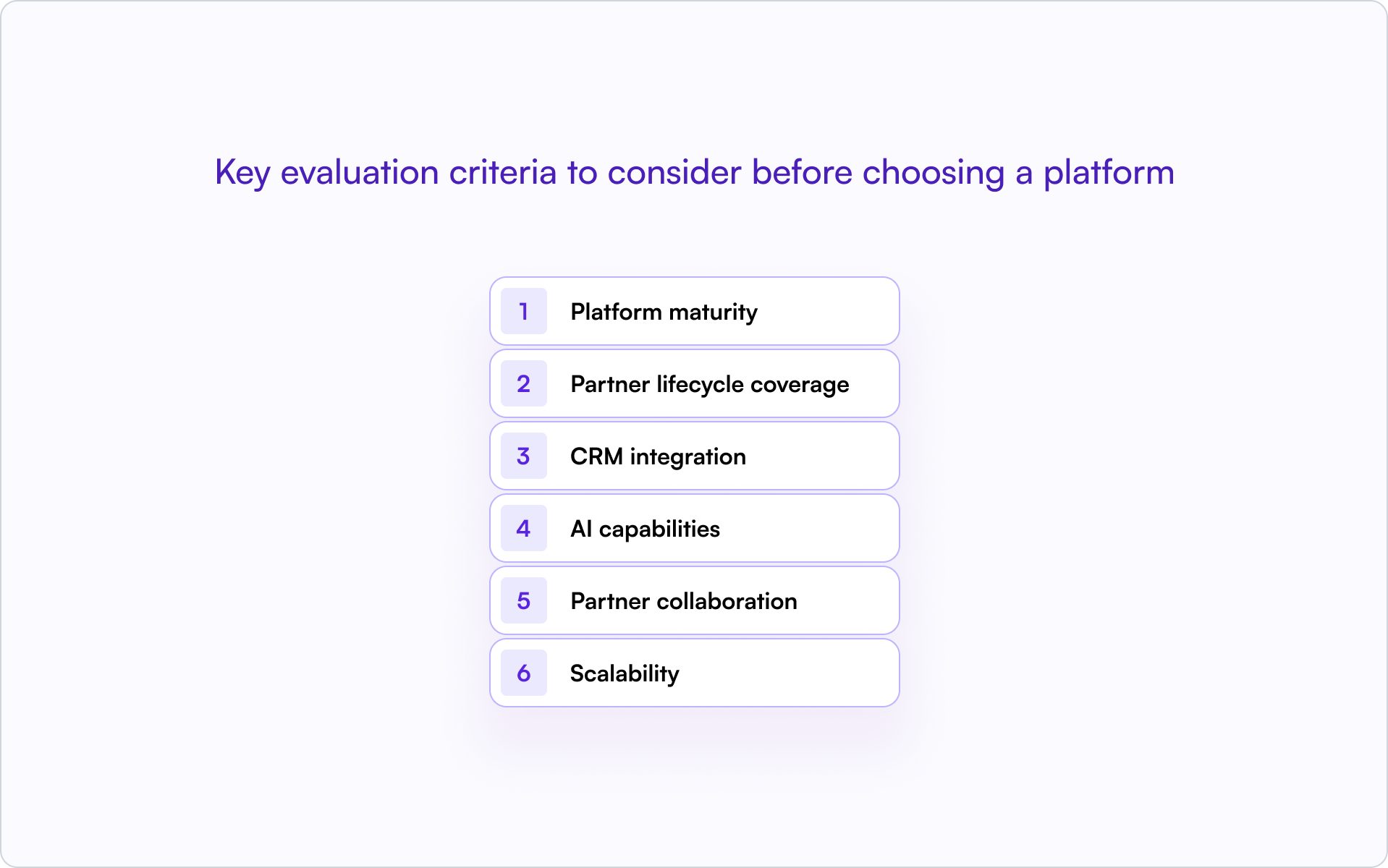
Before choosing a platform, consider:

  • Platform maturity: Customer base, reviews, case studies, and long-term product stability
  • Partner lifecycle coverage: Support for partner onboarding, partner training, deal registration, MDF, incentives, and partner engagement
  • CRM integration: How deeply the platform connects with Salesforce or HubSpot, including partner data synchronization and workflow automation
  • AI capabilities: Whether AI reduces manual work through coaching, automation, insights, or content creation
  • Partner collaboration: How easily partners can work with your team through a partner portal and other engagement channels
  • Scalability: Whether the platform can support more partners, additional partner types, and a growing partner motion without adding complexity
The best choice is the platform that fits both your current program and where you expect partner revenue to grow over the coming years.

Partner.io alternatives at a glance

Use this table to compare each Partner.io comp by maturity, CRM fit, AI depth, and how much of the partner lifecycle each tool supports.

Tool Established since CRM integration AI capability Off-portal collaboration Partner lifecycle Embedded LMS
Introw 2023 Native Agentic Yes Full AI-powered
Kiflo 2019 Basic None No Partial None
Euler 2023 Basic Advisory Yes Partial None
PartnerStack 2015 Middleware None No Partial Basic
Impartner 1997 Middleware Advisory No Full Basic
Salesforce Experience Cloud / Partner Cloud 2013 Native Agentic No Full, build-heavy None
ChannelScaler 2025 Middleware Advisory No Full Basic
Mindmatrix 1998 Basic Content No Full Basic
ZINFI 2007 Basic Advisory No Full Basic
Magentrix 2012 Native None No Partial None
Channeltivity 2007 Basic None No Partial Basic
impact.com 2008 Basic Advisory No Partial None
Crossbeam 2018 Native Advisory No Partial None
Everflow 2016 Basic Advisory No Partial None

When comparing tools, focus on CRM integration, partner onboarding, partner training, reporting, and how well the platform supports growth over time.

For a broader view, compare these options with other partner management systems and the best PRM software.

14 best Partner.io alternatives in 2026

If you’re looking for a Partner.io alternative, these are the PRM platforms most commonly evaluated by SaaS companies that need stronger partner collaboration, better CRM integration, and support for the entire partner program.

#1 Introw - Best overall Partner.io alternative for CRM-native partner management
What it does

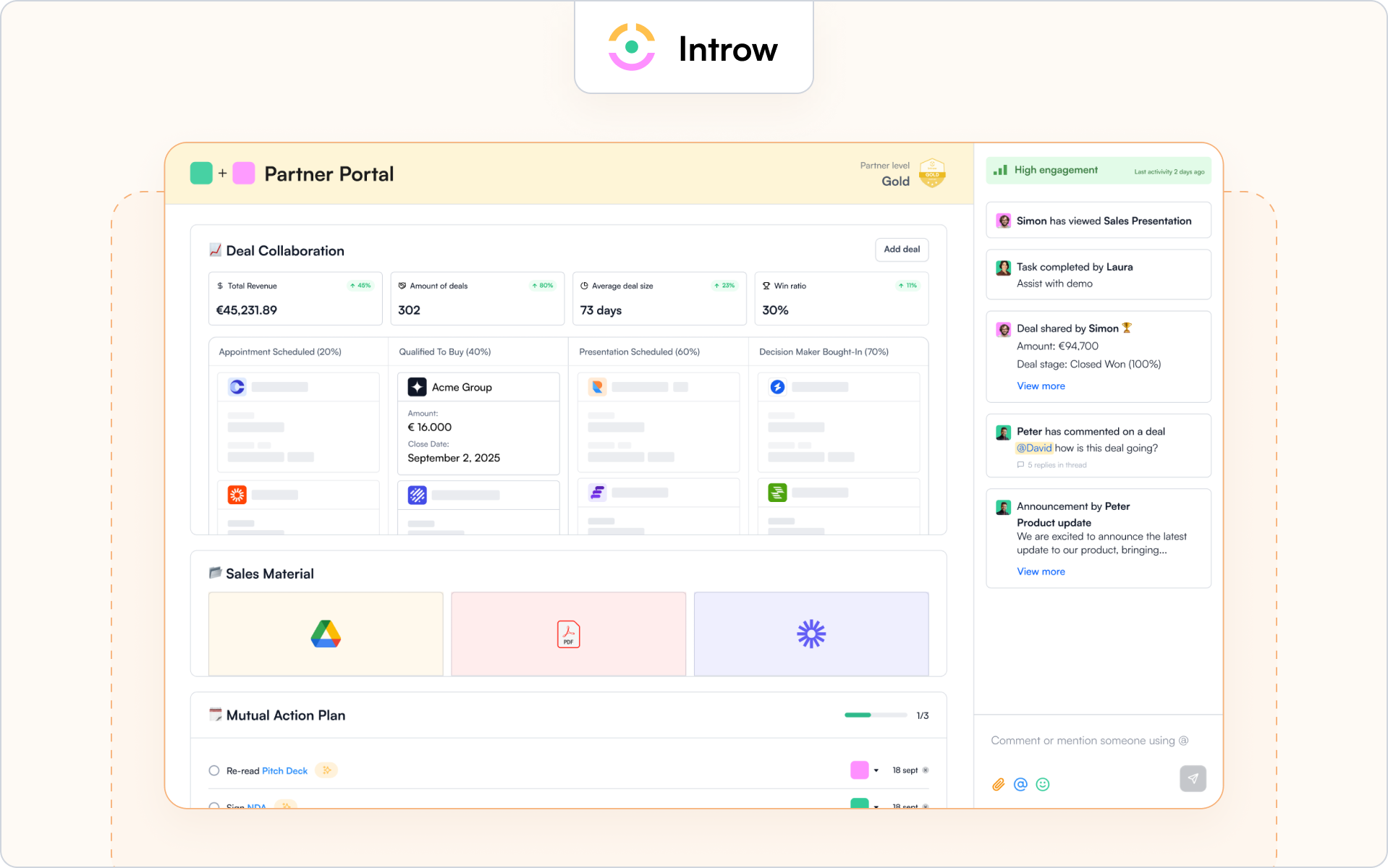
Introw is an AI-first PRM platform built directly around Salesforce and HubSpot. Instead of creating another database, it keeps CRM data as the system of record and extends it to partners through a white-label partner portal, email, Slack, AI-powered workflows, and automated collaboration.

The platform supports the full partner lifecycle, including partner onboarding, partner training, MDF, partner engagement, partner agreements, commissions, partner events, account mapping, co-selling, and partner-sourced revenue reporting.

Notable capabilities include:

  • Deep CRM integration with Salesforce and HubSpot
  • White-label no-code partner portal builder
  • AI-powered deal coaching and recommendations
  • Embedded partner LMS with AI-generated training modules
  • Native MDF management and attribution reporting
  • Automated deal and lead registration
  • AI-generated announcements and enablement content
  • Native Crossbeam integration for account mapping
  • Real-time partner data synchronization
  • Granular permissions by partner type and role

Most teams can go live in 2 to 4 days without custom development.

Why it’s the best Partner.io alternative

Introw supports the entire partner program, from partner onboarding and partner training to MDF, partner engagement, deal coaching, and partner-influenced revenue reporting.

Instead of stitching together multiple tools, Introw combines partner management, account mapping, channel conflict detection, and reporting in one platform.

Its built-in AI agent helps automate content creation, training, analysis, and partner communications.

Unlike portal-first platforms, Introw also supports collaboration through email and Slack, helping reseller partners, referral partners, and channel managers stay engaged without extra logins.

CRM integrations

  • Salesforce (native, bi-directional)
  • HubSpot (native, bi-directional)
  • Full custom object support
  • Real-time sync
  • CRM event triggers
  • In-CRM experiences for internal teams

Pricing

Custom pricing based on program requirements. A 14-day free trial is available.

Best for

SaaS companies with 2+ partner managers that want a modern PRM platform with deep CRM integration, AI-powered workflows, a centralized hub for partner management, and support for the entire partner program.

If you’d like a side-by-side breakdown, see our full Partner.io comparison or request a demo.

#2 Kiflo - Best for SMBs wanting a simple, affordable starting point

What it does

Kiflo is a lightweight PRM platform focused on partner onboarding, deal registration, referral partners, reseller partners, commission management, and basic partner management workflows. It offers a clean partner portal and a quick setup process for smaller teams.

Why someone might choose it over Partner.io

Kiflo has more customer reviews, and provides a straightforward way to launch a partner program without significant complexity. It supports Salesforce and HubSpot and covers the core needs of many SaaS startups.

Where it falls short

  • No AI capabilities
  • No off-portal collaboration
  • No embedded LMS or partner training
  • Limited performance tracking and engagement metrics
  • No support for MDF or advanced channel conflict workflows
  • Less suitable for partnership teams managing more partners or complex partner motions

CRM integrations

  • HubSpot
  • Salesforce

Pricing

Low-entry pricing with plans based on partner volume.

Best for

Small SaaS companies launching a new partner program that need an affordable partner management system with basic CRM integration and a simple partner experience.

Take a look at our in-depth guide of Kiflo alternatives to learn more.

#3 Euler - Best for newer programs wanting modern PRM with AI assistants
What it does

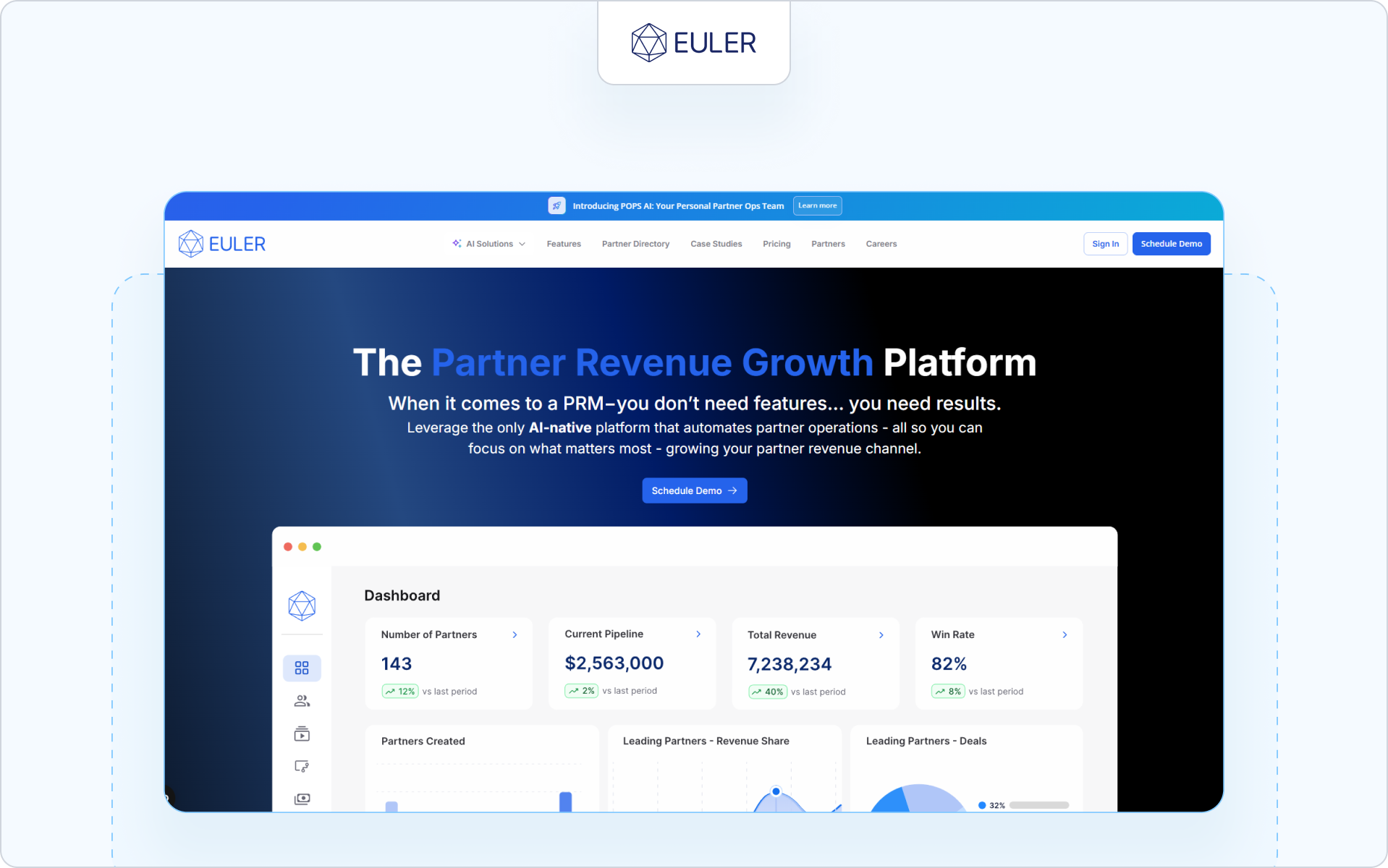
Euler is a modern PRM platform built for partner management, partner onboarding, and distributor relationships. Its AI assistants, PAM and POPS, help automate common partner management tasks and support a growing partner network.

Why someone might choose it over Partner.io

Euler shares Partner.io’s modern approach but adds advisory AI capabilities. It also has traction in distribution-heavy environments and offers a polished experience for new partners.

Where it falls short

  • No embedded LMS
  • No MDF management
  • No white-label flexibility
  • Limited support for complex partner agreements
  • No deep CRM integration with custom objects

CRM integrations

  • HubSpot
  • Salesforce

Pricing

Custom pricing.

Best for

Growing SaaS companies that want a modern partner platform with AI assistance and a relatively simple setup.

We break down the strengths and limitations in our guide to Euler PRM alternatives.

#4 PartnerStack - Best for affiliate and referral programs with automated payouts

What it does

PartnerStack is a partnership platform focused on affiliate programs, referral partners, automated payouts, tracking links, and partner recruitment through its marketplace.

Why someone might choose it over Partner.io

It offers a large partner network, built-in payout infrastructure, and proven processes for SaaS companies running affiliate-driven partnerships at scale.

Where it falls short

  • Limited support for reseller partners
  • CRM integration relies on middleware
  • Rigid portal experience
  • No co-selling workflows
  • Limited support for partner-sourced revenue management

CRM integrations

  • Salesforce (via Workato)
  • HubSpot (via Workato)

Pricing

Marketing plans start at $1000/mo. Growth plans start at $1520/mo. Enterprise pricing is custom.

Best for

Companies focused on affiliate and referral growth rather than complex channel partnerships.

For a deeper comparison, see our guide to PartnerStack alternatives.

#5 Impartner - Best for enterprise-scale PRM with broad module coverage

What it does

Impartner is a long-established PRM platform covering partner onboarding, TCMA, MDF, partner portals, partner performance management, and large-scale channel operations.

Why someone might choose it over Partner.io

It has a long track record, extensive functionality, and broad support for large companies running mature partner programs.

Where it falls short

  • Lengthy implementations
  • Enterprise complexity
  • Dated user experience
  • Middleware-based CRM integration
  • Significant administrative overhead

CRM integrations

  • Salesforce
  • Other CRMs via middleware

Pricing

Enterprise pricing only.

Best for

Large organizations with dedicated channel operations resources and complex partnerships.

See how it stacks up against similar platforms in our best Impartner competitors guide.

#6 Salesforce Experience Cloud (Partner Cloud) - Best for Salesforce-only teams wanting maximum native control

What it does

Salesforce Experience Cloud lets businesses build a highly customized partner portal directly on Salesforce. It provides complete control over CRM data, workflows, and partner experiences.

Why someone might choose it over Partner.io

Organizations already standardized on Salesforce get native access to CRM data, reporting, and customization options without relying on a third-party PRM platform.

Where it falls short

  • Requires development resources
  • Long deployment timelines
  • No built-in partner LMS
  • No off-portal collaboration
  • Higher ownership costs than most partner management tools

CRM integrations

  • Salesforce (native)

Pricing

Partner Community pricing starts at $20/login or $50/member billed annually.

Best for

Salesforce-centric enterprises with internal development teams.

Teams comparing this approach often also evaluate other Salesforce PRM alternatives.

#7 ChannelScaler - Best for incentive and rebate management alongside PRM

What it does

ChannelScaler combines PRM functionality with rebate management, incentive programs, MDF administration, and partner performance reporting.

Why someone might choose it over Partner.io

It provides broader functionality for channel managers who need to manage incentives, rebates, and partner revenue from a single dashboard.

Where it falls short

  • No AI-powered workflows
  • No Slack collaboration
  • Admin-heavy setup
  • CRM integration often requires support involvement
  • Limited innovation compared with newer platforms

CRM integrations

  • Salesforce
  • HubSpot

Pricing

No public pricing available.

Best for

Teams managing incentive-heavy channel programs.

For a closer look at the platform, explore our guide to ChannelScaler alternatives.

#8 Mindmatrix - Best for through-channel marketing automation at enterprise scale

What it does

Mindmatrix combines PRM, TCMA, partner training, marketing assets, partner events, and content automation into a unified platform.

Why someone might choose it over Partner.io

It offers significantly broader marketing functionality and helps empower partners with content distribution and enablement tools.

Where it falls short

  • Steep learning curve
  • Long implementations
  • Heavy configuration requirements
  • Older interface
  • Complex administration

CRM integrations

  • Salesforce
  • HubSpot

Pricing

Enterprise pricing.

Best for

Organizations investing heavily in through-channel marketing programs.

You can explore additional options in our roundup of Mindmatrix alternatives.

#9 ZINFI - Best for large-scale unified channel management

What it does

ZINFI offers unified channel management across partner onboarding, MDF, marketing automation, partner training, and performance tracking.

Why someone might choose it over Partner.io

It supports complex multi-tier partnerships and provides extensive functionality for managing large partner ecosystems.

Where it falls short

  • Complex implementation
  • Heavy configuration
  • Data primarily lives inside the platform
  • Dated interface
  • Higher administrative burden

CRM integrations

  • Salesforce
  • Microsoft Dynamics

Pricing

Enterprise pricing.

Best for

Large enterprises with extensive reseller programs and global partner operations.

Our guide to ZINFI alternatives explores similar options.

#10 Magentrix - Best for Salesforce-native portal experience

What it does

Magentrix is a Salesforce-focused partner management system built around partner portals, collaboration, and secure access to CRM data.

Why someone might choose it over Partner.io

It provides a more established Salesforce-native experience and gives organizations full visibility into Salesforce-based partner workflows.

Where it falls short

  • Salesforce-only
  • Limited AI capabilities
  • Portal-centric approach
  • No off-portal engagement
  • Narrower feature set than full PRM platforms

CRM integrations

  • Salesforce (native)

Pricing

Essential: $1500/mo. Advanced: $3000/mo. Enterprise pricing available on request.

Best for

Salesforce customers primarily focused on portal-based collaboration.

For a broader comparison, see our guide to Magentrix alternatives.

#11 Channeltivity - Best for mid-market teams wanting proven, straightforward PRM

What it does

Channeltivity provides deal registration, MDF management, partner portals, real-time analytics, and partner performance reporting for mid-market channel teams.

Why someone might choose it over Partner.io

It has a longer track record, established customers, and covers the core needs of many channel programs without excessive complexity.

Where it falls short

  • No AI functionality
  • No off-portal collaboration
  • Limited innovation in recent years
  • No advanced automation for partner engagement

CRM integrations

  • Salesforce
  • HubSpot

Pricing

Standard: $1899/mo annually. CRM Edition: $2199/mo annually. Enterprise pricing available on request.

Best for

Mid-market teams looking for a stable and proven PRM platform.

Take a closer look at alternative options in our guide to Channeltivity competitors.

#12 impact.com - Best for affiliate, influencer, and performance marketing

What it does

impact.com helps businesses manage affiliate, influencer, referral, and ecommerce partnerships with automated payouts and large-scale tracking capabilities.

Why someone might choose it over Partner.io

It excels at performance marketing and supports high-volume partnership programs with strong reporting and automation.

Where it falls short

  • Not a traditional PRM platform
  • No partner onboarding workflows
  • No deal registration
  • No partner portal for channel relationships

CRM integrations

  • Limited compared with dedicated PRMs

Pricing

Custom pricing with transaction-related costs.

Best for

Organizations focused on affiliate and influencer revenue programs.

#13 Crossbeam (Reveal) - Best for ecosystem data and account mapping

What it does

Crossbeam helps teams identify overlap between customers, prospects, and partners through account mapping and ecosystem intelligence.

Why someone might choose it alongside Partner.io

It helps track partner opportunities, identify co-selling opportunities, and improve partner-influenced revenue through shared data insights.

Where it falls short

  • Not a PRM platform
  • No partner portal
  • No onboarding workflows
  • No engagement tools
  • No deal registration

CRM integrations

  • Salesforce
  • HubSpot

Pricing

Free plan available. Starter: $4800/year. Enterprise pricing available on request.

Best for

Organizations that want ecosystem intelligence alongside a PRM platform.

#14 Everflow - Best for high-volume performance marketing tracking

What it does

Everflow provides performance tracking, fraud detection, automated payouts, and analytics for affiliate, referral, and influencer partnerships.

Why someone might choose it over Partner.io

It offers strong tracking capabilities, real-time visibility, and detailed reporting for organizations managing large volumes of partnership activity.

Where it falls short

  • Not a PRM platform
  • No partner onboarding
  • No LMS
  • No partner portal
  • No channel collaboration workflows

CRM integrations

  • Limited

Pricing

Custom pricing based on program scale and payout requirements.

Best for

Companies managing large-scale affiliate and referral programs where tracking and attribution are the primary priorities.

Now that you’ve seen the options, the goal is finding a platform that fits your teams today and can scale with your partner program tomorrow.

The bottom line

Partner.io may be a good fit if you’re launching your first partner program and want a straightforward way to manage collaboration.

Before you choose a platform, ask whether it can support:

  • New partners as your program grows
  • Referral partners, reseller partners, and tech partners
  • Automated onboarding and partner agreements
  • Multiple pipeline stages and evolving partner motions
  • Accurate partner-sourced revenue and partner-influenced revenue reporting
  • Full visibility into partner data, engagement metrics, and account mapping

The best partner management tools do more than provide a portal. They help partnership teams empower partners, improve the partner experience, reduce manual work, and generate more value from existing partnerships.

Introw combines AI, automation, and reporting in one hub instead of multiple systems.

It gives channel managers and heads of partnerships a centralized hub for partner engagement, marketing assets, and performance insights, all built around your CRM.

Still deciding? Our guide on choosing your next PRM covers the questions worth asking before investing in any partner management system.

Why teams choose Introw when looking for Partner.io alternatives

The right PRM should help you grow partner revenue without creating more work.

+70% more partner pipeline

Introw helps partnership teams attract more partners and move opportunities through pipeline stages faster. Deal flow stays connected to your CRM, while channel conflict detection helps prevent duplicate registrations.

+75% faster partner onboarding

Get started in days, not months. Automated onboarding, AI-generated training content, certification paths, and marketing assets help new partners become productive faster. More than 200 SaaS companies use Introw to support their entire partner program.

+60% more partner-influenced revenue

See how partnerships contribute to total revenue. Full visibility into partner-sourced revenue, partner-influenced revenue, engagement metrics, and performance tracking makes it easier to scale what’s working.

For referral partners, reseller partners, and tech partners, Introw provides one hub for collaboration, enablement, and growth.

Ready to see how Introw compares to Partner.io? Compare the platforms side by side and request a demo.

FAQs

Still curious? Here are some quick answers to help clear things up.

Contact us

What is the best Partner.io alternative?

For teams that need deeper CRM integration, AI-powered automation, partner onboarding, and partner training, Introw is one of the strongest Partner.io alternatives. Other popular options include Kiflo, Euler, and Impartner.

Does Partner.io integrate with Salesforce and HubSpot?

Yes. Partner.io offers Salesforce and HubSpot integrations, but teams should verify integration depth, custom object support, and data synchronization before committing.

What should I compare when evaluating Partner.io competitors?

Look at CRM connectivity, partner onboarding, reporting, partner engagement, scalability, and support for different partner types such as referral partners and reseller partners.

Which Partner.io alternative is best for SaaS companies?

That depends on your needs. Smaller teams often consider Kiflo or Euler, while growing SaaS companies typically look for broader platforms like Introw that support the full partner lifecycle.

Can I migrate from Partner.io to another PRM?

Yes. Most PRM vendors support importing partner records, deal history, and onboarding data to make migration easier.

Launch your partner portal
in minutes!

Thank you! Your submission has been received!
Oops! Something went wrong while submitting the form.

Related blog articles

Partner Management

From Strategy to Results: 11 Partner Enablement Best Practices That Work in 2026

Sara De Meurichy
Growth
5 min. read
19 May 2026
⚡ TL;DR

Partner enablement gives partners the training, content, tools, and support they need to sell independently rather than relying on constant hand-holding from your team. The most effective programmes are structured, segmented by partner type, and connected to the CRM so you can measure readiness, track activation, and attribute revenue accurately. Strong enablement focuses on reducing time to first deal, delivering role-based training, and giving partners collateral they will actually use in live opportunities. To understand whether the programme is working, teams should track outcome-based metrics such as pipeline, revenue, certifications, and activation speed rather than vanity portal activity.

Partner enablement looks simple on paper: give partners the right resources, and they’ll sell your product. In practice, most programs stall because content is scattered, training is generic, and no one can tell which partners are actually ready to close deals.

The difference between a partner program that generates attributable revenue and one that drains resources usually comes down to structure — clear goals, the right content at the right time, and data that lives in your CRM instead of a forgotten portal. This guide breaks down partner enablement best practices from strategy through execution, plus the metrics that tell you if it’s working.

What is partner enablement?

Partner enablement is the system you build to help external partners sell (and often implement) your product effectively. That system typically includes structured onboarding, tailored training, and easy access to the right resources so partners can move deals forward without waiting on your team.

When partner enablement is done well, partners don’t just understand what you do. They can position it, handle objections, run a clean handoff, and create repeatable wins — the same way a high-performing internal sales team would.

What partner enablement typically includes

  • Training and certification: Product knowledge, positioning, and selling motions (with a quality bar partners must meet).
  • Sales and marketing resources: Collateral, templates, and campaigns partners can use with prospects.
  • Tools and portal access: Systems that streamline deal registration, content access, and communication.
  • Ongoing communication: A predictable cadence for updates, feedback, and performance reviews.

Why partner enablement matters for revenue growth

Enabled partners drive revenue because they can execute without friction. They close deals faster, represent your brand accurately, and generate pipeline you can actually attribute.

Weak enablement is expensive in quieter ways: partners misposition the product, opportunities stall, your team becomes the bottleneck, and high-potential partners churn because “it’s too hard to work with you.”

Enablement quality What happens
Strong enablement Shorter sales cycles, higher win rates, accurate brand positioning
Weak enablement Stalled deals, brand confusion, heavy support load, high partner churn

What a partner enablement program includes

A complete channel partner enablement program isn’t a portal full of PDFs. It’s a structured system that helps partners learn, launch, and improve — with clear ownership and measurable outcomes.

Partner training and certification

Training forms the foundation: product knowledge, competitive positioning, and your sales methodology. Certification acts as a gate, ensuring partners meet a minimum quality bar before they’re authorized to sell on your behalf.

Partner sales enablement

Partner sales enablement means giving partners the same caliber of sales tools your direct team uses, adapted to their role. Think: battle cards, demo scripts, objection-handling guides, and pricing documentation.

Marketing support and co-marketing

Effective enablement helps partners generate demand, not just close it. Co-branded assets, “campaign-in-a-box” kits, and structured lead-sharing programs all increase partner-sourced pipeline.

Partner portals (and why login friction kills adoption)

A partner portal should be a self-service hub for training, collateral, deal registration, and updates. But there’s a common failure mode: partners avoid portals that require a separate, inconvenient login.

CRM-first portals reduce that friction by connecting directly to HubSpot or Salesforce, so partners can work inside the flow of real deals instead of “checking another system.”

Performance tracking and ongoing communication

Enablement is ongoing, not a one-time launch. A strong program includes visibility into partner activity, a consistent communication cadence, and mechanisms for gathering feedback and improving the experience.

11 partner enablement best practices that drive results

If you’re building a partner program inside a startup, your constraint is almost never “ideas.” It’s focus and execution. These partner enablement best practices move from strategy through rollout and iteration — with an emphasis on what actually shows up in pipeline.

1. Set specific goals and KPIs before building your program

Before you create a single asset, define what success looks like. Start with outcomes — partner-sourced revenue targets, certification completion rates, and a target time-to-first-deal — then work backward into the program.

  • Partner-sourced pipeline value
  • Certification completion rate
  • Average time from onboarding to first registered deal
  • Content engagement (downloads, video views)

2. Segment partners to personalize enablement paths

Not all partners need the same materials. Segment by partner type (reseller, referral, systems integrator), vertical focus, or performance tier, then tailor training and content accordingly.

Segment Enablement focus
Resellers Deep product training, pricing, deal registration
Referral partners Lightweight pitch training, lead handoff process
SIs/MSPs Technical implementation guides, certification

3. Connect enablement to your CRM from day one

For true visibility and attribution, all your enablement data — certifications, content consumption, deal registrations — lives best in your CRM, not in a disconnected system.

A CRM-first approach provides a single source of truth. When partner activity syncs directly to HubSpot or Salesforce, your sales team and RevOps see the same reality. No more chasing updates or reconciling spreadsheets. (If deal attribution is a pain point today, it’s worth tightening up your workflow around partner deal registration specifically.)

4. Design onboarding that speeds time to first deal

Partner onboarding works best as a structured, time-bound journey — not a massive content dump. The goal is to get partners to their first real opportunity quickly, then reinforce with deeper training once momentum is real.

A strong onboarding checklist includes:

  • Welcome and program overview
  • Product and Ideal Customer Profile (ICP) training
  • Competitive positioning
  • Deal registration process walkthrough
  • First co-sell or shadow opportunity

5. Create sales collateral partners actually use

Don’t reinvent the wheel. Audit the sales collateral your direct team uses most effectively and adapt it for your partners. Prioritize assets that accelerate live deals: one-pagers, battle cards, ROI calculators, and customer stories.

The fastest way to avoid producing content no one opens is simple: ask partners what they need to win the deals they already have, then build for that.

6. Build training programs tied to revenue outcomes

Training works best when it’s modular, role-based, and tied to certification. Use certification as a gate — for example, require a partner to complete key modules before they can register deals or request MDF.

On-demand training offers flexibility; live sessions drive engagement for complex topics. Most teams land on a hybrid model.

7. Centralize everything in a partner portal without login friction

A partner portal should be the single place to find enablement content, register deals, and get program updates. But portals fail when they add friction — especially separate logins, stale content, and unclear navigation.

If you want adoption, reduce steps. Portals built directly on the CRM (with SSO or no-login options) make access feel seamless, which is often the difference between “partners love it” and “partners ignore it.”

8. Launch co-marketing programs that generate leads for both sides

Co-marketing goes beyond providing partners with your logo. Joint webinars, co-branded content like eBooks or case studies, and Market Development Funds (MDF) programs actively help partners generate demand.

If you’re a founder, this is one of the highest-leverage shifts you can make: partners often need help creating pipeline, not just closing it.

9. Establish a communication cadence partners can count on

Define a predictable rhythm. Partners shouldn’t have to guess where to find updates or whether deal registration is working. Use channels like email and Slack to reach partners where they already operate — don’t rely solely on them logging into a portal.

Frequency What to communicate
Weekly Deal registration status updates
Monthly Product updates, new content announcements
Quarterly QBRs, performance reviews, program changes

10. Gather partner feedback and act on it fast

Enablement is a two-way street. Collect feedback through surveys, QBR conversations, and portal analytics — then close the loop by making changes and telling partners what you changed.

Partners keep investing when they feel momentum. Small, fast improvements create that signal.

11. Review and evolve your enablement strategy quarterly

Partner enablement isn’t set-and-forget. Quarterly, review what’s working and what isn’t by analyzing content engagement, certification rates, and revenue impact. Then adjust your program like you’d adjust product — based on usage and outcomes.

Partner enablement training metrics to track

To understand if your partner enablement process is working, track metrics that connect enablement activities directly to revenue outcomes — not just vanity activities.

Content engagement and consumption

Track which resources partners actually use: downloads, video completion rates, and page views. Low engagement can signal the content isn’t relevant, is hard to find, or doesn’t match what partners need in active deals.

Training completion and certification rates

Measure how many partners complete onboarding and earn certifications. Completion rates help you pinpoint drop-off points so you can shorten, reorder, or redesign modules.

Time to first deal

Track the time between partner activation and their first registered deal. This is one of the cleanest indicators that onboarding is working — or that partners are stuck.

Partner-sourced pipeline and revenue

This is the ultimate scoreboard. Track pipeline and closed-won revenue generated by partners. To do it well, you need tight CRM attribution so enablement activity can be tied to financial results without manual cleanup.

How to automate your partner enablement process

Automation lets you scale partner enablement without scaling headcount. The goal isn’t to make the experience robotic — it’s to make it consistent, timely, and measurable.

CRM-based automation is ideal because it keeps data and workflows in one system. That’s how you avoid the “portal says one thing, CRM says another” problem.

  • Onboarding sequences: Automatically enroll new partners in training modules and send welcome materials as soon as they sign up.
  • Certification reminders: Trigger automated alerts to partners and partner managers before certifications expire.
  • Content delivery: Push relevant collateral to partners based on their segment, tier, or deal stage.
  • Deal registration alerts: Automatically notify partners of the status of their registered deals.

Turn partner enablement into a revenue engine with Introw

Introw is the CRM-first PRM that makes best-practice partner enablement practical and scalable. Because it’s built on HubSpot and Salesforce, Introw centralizes your entire partner program where you already work.

It includes a partner portal for centralizing enablement content without login friction, deal registration with real-time visibility, and off-portal collaboration so partners can reply via email while data syncs automatically to your CRM.

If you’re trying to get out of spreadsheet chaos and into measurable partner-sourced revenue, get a demo.

Conclusion

The best partner enablement programs aren’t built on more content — they’re built on clarity. Clear goals, segmented paths, CRM-connected workflows, and a focus on speed-to-first-deal turn “partners we signed” into “partners who ship revenue.”

Use these partner enablement best practices as a blueprint, then iterate quarterly based on what your data (and your partners) tell you.

Partner Management

12 Channeltivity Competitors to Choose From in 2026

Laurens Lavaert
Co-founder & CTO
5 min. read
17 May 2026
⚡ TL;DR

Channeltivity is a long-standing partner relationship management platform with features like deal registration, partner onboarding, and channel analytics. But many teams now need deeper CRM integration, AI, and more flexible partner engagement. If you’re evaluating Channeltivity competitors or comparing the best Channeltivity alternatives, this guide reviews 12 options for growing partner programs in 2026.

What is Channeltivity (and why teams look for competitors)

Channeltivity is a partner relationship management platform that covers the basics well: deal registration, partner marketing, MDF, content management, and reporting.

But many teams now want AI, deeper CRM workflows, and more flexibility across the partner ecosystem. That’s why buyers evaluating Channeltivity alternatives are looking elsewhere.

1. No AI capabilities

Channeltivity does not offer AI-powered workflows for onboarding, training, support, or deals.

Many newer platforms now provide AI deal coaching, AI-generated content, AI training creation, and conversational support through an AI agent.

2. No off-portal collaboration

Channeltivity relies heavily on its portal experience. Partners typically need to log in to access content, submit leads, or track progress.

Many newer platforms focus on partner engagement through email workflows, embedded forms, notifications, and automated updates outside the portal.

3. No native Slack integration

Slack is now a common workspace for many channel teams.

Channeltivity does not provide native Slack workflows for notifications, collaboration, support, or deal updates. Teams that use Slack heavily often look for alternatives that bring partnership activity into the channels they already use.

4. Limited CRM depth

Channeltivity supports Salesforce and HubSpot, but it is not a CRM-native platform.

Organizations that run revenue operations inside the CRM often prefer custom objects, workflow triggers, and deeper integrations such as a native Salesforce integration or HubSpot integration.

5. Product innovation has slowed

Channeltivity still covers the core feature set expected from partner management software. But many newer solutions now include account mapping, partner LMS capabilities, AI-powered training, and advanced automation.

For many teams, the question is not whether Channeltivity works. It’s whether it still offers the capabilities they need to grow.

To find the best Channeltivity alternative available, what should you be looking for?

What to look for in a Channeltivity competitor

Not every Channeltivity PRM alternative solves the same problems. Focus on these six areas before you switch.

1. AI that does more than answer questions

Many tools now offer AI, but not all AI is useful. Look for AI that can automate workflows, generate content, build training, assist with support, and help move deals forward without manual effort.

2. Off-portal engagement

Your users shouldn’t have to log in every time they need an update. The best platforms let channel partners collaborate through email, notifications, and other channels while keeping data synced automatically.

3. Deep CRM integration

A CRM should remain your system of record. Look for bi-directional sync, custom object support, workflow triggers, and the ability to work directly inside Salesforce. Our guide to how to choose a PRM covers the key evaluation criteria.

4. A modern partner portal

The portal should be easy to configure without developers. Look for white-label branding, segmented experiences for different partner types, and enough flexibility to support your organization as it grows. A modern partner portal should adapt to your program, not the other way around.

5. Full lifecycle coverage

Many tools handle onboarding and deal registration but stop there. Stronger solutions also include partner marketing, referral programs, incentives, account mapping, training, performance tracking, and revenue visibility across the entire partner lifecycle.

6. Fast time to value

Some enterprise platforms take months to deploy. Others can integrate with existing systems and start delivering results in days. Faster implementation means less disruption and a quicker path to value.

With those criteria in mind, let’s compare the best Channeltivity alternatives available today.

Channeltivity competitors at a glance

Use this table to compare the best Channeltivity alternatives before you review each tool in detail.

Tool CRM integration AI capability Off-portal collaboration Slack integration MDF module Embedded LMS Time to live
Introw Native Agentic Yes Agentic Yes AI-powered Days
Channelscaler Integrated Content/advisory Limited None Yes Basic Months
Impartner Integrated Advisory Limited Basic Yes Basic Months
Salesforce PRM Native Salesforce Agentic/advisory Limited Basic Yes Basic Months
PartnerStack Integrated None Yes Basic No Basic Weeks
Kiflo Integrated None Limited None No Basic Days to weeks
ZINFI Integrated Advisory Limited Basic Yes Basic Months
Mindmatrix Integrated Advisory Limited None Yes Basic Months
Magentrix Integrated Limited Limited Basic Yes Basic Weeks to months
PartnerPortal.io Integrated None Limited None No Basic Minutes to days
Euler Native Agentic Yes Basic No None Days
Partner.io Basic None Limited None No Basic Days to weeks

This quick view shows where each platform fits. Next, let’s look at the tools in more detail.

12 Best Channeltivity Competitors in 2026

If you’ve decided Channeltivity is no longer the right fit, these are the platforms worth evaluating next.

#1 Introw - Best overall Channeltivity competitor for modern partner management

What it does

Introw is an AI-first platform designed for companies running partner programs in HubSpot or Salesforce.

It combines partner onboarding, deal registration, MDF, partner marketing, training, account mapping, revenue tracking, and partner engagement in a single CRM-native system.

Unlike traditional PRMs, Introw extends beyond the portal. Partners can collaborate through email and Slack while CRM data remains the system of record.

Why someone might choose it over Channeltivity

Introw covers everything Channeltivity offers, then adds agentic AI, off-portal collaboration, deal coaching, CPQ, AI-powered training, and deeper CRM integration.

The biggest difference is architectural. Channeltivity connects to the CRM. Introw operates from within it. That reduces duplicate data, eliminates spreadsheets, and gives teams better visibility across the entire partner ecosystem.

Teams also gain:

  • AI-powered deal coaching for channel partners and resellers
  • AI-generated training through a built-in partner LMS
  • Agentic workflows through the AI agent
  • Native deal and lead registration
  • White-label portal experiences for different partner types
  • Shared Slack and email collaboration without forcing portal logins

Where it stands out

  • Agentic AI instead of manual workflows
  • Off-portal engagement instead of portal-only collaboration
  • AI-powered LMS instead of static training resources
  • Built-in deal coaching
  • Native CPQ
  • Custom-object CRM architecture
  • Typical deployment in 2–4 days

CRM integrations

Native, bi-directional Salesforce and HubSpot integrations with custom object support.

Pricing

Custom pricing.

Best for

Mid-market SaaS companies that want a modern partner management platform built around CRM workflows and indirect revenue growth.

For a deeper look at partner management software, see our guide to partner management systems.

Ready to see why teams switch from Channeltivity to Introw? Book a demo.

#2 Impartner - Best for enterprise teams that need broad PRM coverage

What it does

Impartner combines partner portals, partner lifecycle management, TCMA, MDF, training, and ecosystem management in a large enterprise package.

Why someone might choose it over Channeltivity

It offers broader capabilities for large organizations that need extensive governance, customization, and administration controls.

Where it falls short

  • Implementation often takes months
  • Complex administration
  • Heavier CRM architecture
  • User experience feels dated in some areas

CRM integrations

Salesforce and other CRM systems through integration layers.

Pricing

Custom pricing.

Best for

Large enterprise organizations with dedicated channel operations teams.

Our guide to Impartner competitors explores additional options.

#3 PartnerStack - Best for affiliate and referral programs

What it does

PartnerStack helps companies manage affiliates, referral programs, payouts, and partner recruitment through a large marketplace.

Why someone might choose it over Channeltivity

Built-in payment infrastructure and partner discovery make it attractive for growth-focused startups and SaaS companies.

Where it falls short

  • Limited support for co-selling motions
  • Less suitable for distributor programs
  • CRM synchronization relies on middleware
  • Less flexibility than dedicated PRMs

CRM integrations

Salesforce and HubSpot through Workato.

Pricing

Marketing plans start at $1000/month. Growth plans start at $1520/month. Enterprise pricing is custom.

Best for

Companies focused on affiliates and referral programs.

See our full roundup of PartnerStack alternatives.

#4 Kiflo - Best for small partner programs

What it does

Kiflo is a lightweight PRM designed for simple onboarding, content sharing, and lead management.

Why someone might choose it over Channeltivity

It offers a cleaner interface, faster setup, and lower costs for smaller businesses.

Where it falls short

  • No AI capabilities
  • No LMS
  • No CPQ
  • Limited automation
  • Limited flexibility as programs grow

CRM integrations

Basic HubSpot and Salesforce integrations.

Pricing

Core starts at $399/month billed annually. Plus pricing is custom.

Best for

Small businesses with fewer than 20 active partners.

Explore more options in our guide to Kiflo alternatives.

#5 Euler - Best for teams that want a modern PRM experience

What it does

Euler provides partner onboarding, pipeline management, advisory AI assistants, and collaboration tools in a modern interface.

Why someone might choose it over Channeltivity

The experience feels newer and more intuitive, with AI assistance and stronger usability.

Where it falls short

  • No MDF
  • No LMS
  • No advanced onboarding paths
  • Limited CRM depth

CRM integrations

HubSpot and Salesforce.

Pricing

Custom pricing.

Best for

Early-stage programs looking for modern design and simplicity.

See our comparison of Euler PRM alternatives.

#6 Salesforce Experience Cloud - Best for Salesforce-native control

What it does

Salesforce Experience Cloud lets organizations build highly customized partner portals directly on Salesforce infrastructure.

Why someone might choose it over Channeltivity

Nothing offers deeper Salesforce integration or reporting access.

Where it falls short

  • Requires development resources
  • Long implementation cycles
  • No embedded LMS
  • No off-portal collaboration
  • Limited out-of-the-box functionality

CRM integrations

Native Salesforce.

Pricing

Partner Community starts at $20/login/month or $50/member/month billed annually.

Best for

Large Salesforce organizations with internal development teams.

If Salesforce is central to your evaluation, review these Salesforce PRM alternatives.

#7 Mindmatrix - Best for through-channel marketing automation

What it does

Mindmatrix combines partner marketing, content distribution, training, onboarding, and PRM functionality.

Why someone might choose it over Channeltivity

It delivers stronger marketing automation and broader enablement capabilities.

Where it falls short

  • Steep learning curve
  • Complex setup
  • Enterprise-focused administration
  • Some workflows require vendor assistance

CRM integrations

Salesforce and HubSpot.

Pricing

No pricing available.

Best for

Organizations heavily invested in partner marketing and enablement.

Read our breakdown of Mindmatrix alternatives.

#8 ZINFI - Best for large multi-tier channel programs

What it does

ZINFI offers unified channel management covering onboarding, MDF, marketing, incentives, and partner lifecycle management.

Why someone might choose it over Channeltivity

It supports highly complex multi-tier channel structures and global programs.

Where it falls short

  • Heavy implementation effort
  • Significant configuration requirements
  • Data often sits primarily in the platform
  • Less CRM-centric approach

CRM integrations

Salesforce, Microsoft Dynamics, and others.

Pricing

ZINFI does not publish public PRM pricing.

Best for

Large enterprise channel organizations.

You can compare other options in our guide to ZINFI alternatives.

#9 Magentrix - Best for Salesforce-based partner portals

What it does

Magentrix focuses on customer and partner portals built on Salesforce.

Why someone might choose it over Channeltivity

It provides a clean portal experience with stronger Salesforce alignment.

Where it falls short

  • Portal-centric approach
  • Limited AI
  • Limited lifecycle coverage
  • No meaningful off-portal engagement

CRM integrations

Native Salesforce.

Pricing

Essential starts at $1500/month. Advanced starts at $3000/month. Unlimited pricing is custom.

Best for

Organizations primarily looking for a Salesforce-powered portal.

Our guide to Magentrix alternatives covers comparable solutions.

#10 ChannelScaler - Best for rebates and incentives

What it does

ChannelScaler combines PRM, MDF, rebate management, incentives, and channel operations functionality.

Why someone might choose it over Channeltivity

It offers stronger rebate and incentive management for mature programs.

Where it falls short

  • Admin-heavy workflows
  • No AI
  • No Slack-based collaboration
  • CRM changes often require support involvement

CRM integrations

Salesforce and HubSpot through middleware.

Pricing

Custom pricing.

Best for

Organizations running complex incentive and rebate programs.

See our guide to ChannelScaler alternatives for a deeper comparison.

#11 Partner.io - Best for pipeline collaboration

What it does

Partner.io focuses on pipeline visibility, co-selling, and deal collaboration.

Why someone might choose it over Channeltivity

It offers a more modern experience for teams centered on shared opportunities and sales collaboration.

Where it falls short

  • Narrower feature set
  • Smaller ecosystem
  • Less mature than larger competitors

CRM integrations

Salesforce and HubSpot.

Pricing

Solo starts at $79/month. Growing starts at $299/month. Enterprise pricing is custom.

Best for

Organizations focused on pipeline collaboration and visibility.

Take a look at our roundup of Partner.io alternatives if you’re comparing pipeline-focused partner platforms. We also have a Partner.io comparison page so you can see how it stacks up against Introw.

#12 Impact - Best for affiliate and influencer partnerships

What it does

Impact helps businesses manage affiliates, creators, influencers, and referral relationships through automated tracking and payments.

Why someone might choose it over Channeltivity

It excels at performance-based partnership programs and attribution.

Where it falls short

  • Not a traditional PRM
  • No partner onboarding workflows
  • No deal registration
  • No channel sales management

CRM integrations

Limited CRM support compared to dedicated PRMs.

Pricing

Starter starts at $30/month. Essentials starts at $500/month. Pro starts at $2500/month.

Best for

Companies focused on affiliate, creator, and influencer partnerships.

Now that you’ve seen the options, the best choice comes down to how you want to support your partners, manage deals, and scale your program over the next few years.

The bottom line

Channeltivity covers the fundamentals of partner relationship management, including deal registration, partner onboarding, content management, training, and reporting. If those features meet your company’s needs, it remains a solid option.

But the industry has moved on. Today’s partner management systems help organizations automate more work, support customers more effectively, manage partner services at scale, and create more sales opportunities.

AI, CRM-native workflows, embedded training, and collaboration beyond the portal are quickly becoming standard.

If you’re evaluating partner relationship management software, Introw is a strong Channeltivity alternative. It combines mid-market simplicity with the products, resources, and automation growing partner programs need to drive better revenue results.

Why teams choose Introw when looking for Channeltivity competitors

Teams often start looking at Channeltivity competitors when they need more than a portal and basic partner management. They need a platform that helps partners sell, supports more services, and creates measurable revenue growth.

+70% more partner pipeline

Partners register more deals, faster, with deal flow synced directly into your CRM. Off-portal collaboration increases engagement, while AI helps identify duplicate opportunities before they affect results.

+75% faster partner onboarding

Go live in 2–4 days with no custom development. AI-driven onboarding, training, resources, and content help new partners start selling faster.

+60% more partner-influenced revenue

Track every partner-sourced and partner-influenced opportunity inside your CRM. Deal coaching, automation, and ongoing support help partners stay active and generate more revenue over time.

Ready to see how Introw compares to Channeltivity? Book a demo.

Partner Management

13 Mindmatrix PRM Alternatives for Growing Partner Teams in 2026

Janis De Sutter
Software Engineer
5 min. read
12 May 2026
⚡ TL;DR

Mindmatrix PRM works well for enterprise channel sales and marketing automation programs with heavy TCMA needs. But many teams leave because of long implementations, support-dependent training updates, and portal-heavy workflows. This guide compares 13 Mindmatrix alternatives across CRM depth, AI, onboarding, security, and partner engagement.

What Is Mindmatrix (And Why Teams Look for Alternatives)

Mindmatrix is an established partner management and sales enablement platform combining PRM, marketing automation, partner training, and TCMA in one platform. For large channel sales teams, that breadth can be useful.

But many teams now want faster onboarding, simpler admin controls, and deeper CRM execution.

1. Steep learning curve

Mindmatrix has no separate admin experience. Partnership managers work inside the same interface as partners, which increases complexity and slows onboarding.

2. LMS updates require support

Mindmatrix includes partner training and LMS features, but many updates require support involvement.

Tools like Introw’s partner LMS give your team direct control instead.

3. Long implementation timelines

Mindmatrix covers a wide range of features, but setup can take months.

Teams wanting faster rollout often move toward tools built natively for HubSpot or Salesforce.

4. Limited role-based access

Granular visibility controls are limited.

That becomes difficult when different partner tiers need different dashboards, deals, content, or onboarding paths.

5. Portal-heavy workflows

Mindmatrix is still largely portal-centric.

There’s no native CPQ, no Slack-based collaboration, and no off-portal workflows tied directly into tools like deal and lead registration.

6. AI focused more on content than execution

BridgeAI is strong for content generation, email marketing, and social selling.

But it does not execute actions across live deals through tools like the AI agent.

If you want faster onboarding, simpler admin, and CRM-native execution, a Mindmatrix alternative may be a better fit.

Mindmatrix alternatives at a glance

Here’s a quick comparison of the top Mindmatrix alternatives before we break each platform down in more depth.

Tool CRM integration Admin experience AI capability Off-portal collaboration Embedded LMS Role-based access Time to live
Introw Native No-code Agentic Yes Self-service Granular 2 to 4 days
Impartner Middleware Low-code Advisory Limited Self-service Granular 3 to 12 months
Zinfi Native Support-dependent Content-focused No Self-service Granular Weeks to months
PartnerStack Middleware No-code Content-focused No None Basic Days to weeks
Salesforce Experience Cloud Native Developer-dependent Advisory No None Granular Months
ChannelScaler Middleware Support-dependent None No Self-service Granular Weeks to months
Kiflo Basic No-code None No None Basic Days
Euler Basic No-code Advisory No None Basic Days to weeks
Magentrix Native Low-code None No Self-service Granular Weeks
Channeltivity Native No-code None No Self-service Granular Days to weeks
Partner.io Middleware Low-code Content-focused Limited None Basic Weeks
Impact.com Basic No-code Content-focused Limited None Basic Days to weeks
Everflow Basic No-code Content-focused No None Basic Days to weeks

While it might be tempting to focus on a tool with all the features, the right fit depends on how your teams engage partners, manage opportunities, and scale channel sales over time.

13 Best Mindmatrix Alternatives in 2026

#1 Introw - Best overall Mindmatrix alternative for CRM-native partner management

What it does

Introw is an AI-first partner management platform for teams running on HubSpot or Salesforce. It combines onboarding, deal registration, sales enablement, CPQ, MDF, dashboards, training, and partner engagement in one platform.

Unlike Mindmatrix PRM, Introw is built directly around the CRM. Partner data, opportunities, onboarding, and reporting sync bi-directionally with Salesforce and HubSpot.

Partners can collaborate through Slack and email without relying on portal logins. The partner portal is fully white-labeled, no-code, and supports granular role-based access.

Why teams choose Introw over Mindmatrix

Most teams leaving Mindmatrix want:

  • Faster onboarding
  • Less admin overhead
  • Better CRM execution

Introw gives partnership managers direct control over training, LMS updates, onboarding, access, automations, and partner programs without support tickets or developer work.

It also goes much deeper on execution AI. While Mindmatrix focuses heavily on content generation and marketing automation, Introw’s AI acts across live partner workflows and deals instead.

Examples include:

  • Deal registration from Slack or email
  • AI deal coaching tied to live CRM opportunities
  • CRM-triggered partner engagement
  • AI-generated QBR insights
  • AI-built onboarding and training flows

If your team wants faster onboarding, simpler workflows, and AI that reduces manual work, Introw is one of the strongest top Mindmatrix alternatives available today.

Where Introw stands out

  • Native Salesforce and HubSpot integrations
  • Full custom object support
  • Agentic AI workflows
  • Self-service LMS with AI course creation
  • Granular role-based access
  • Native CPQ
  • Off-portal collaboration
  • Native Claude MCP integration
  • 2–4 day onboarding
  • No-code admin experience

CRM integrations

Native Salesforce and HubSpot integrations with deep bi-directional sync.

Pricing

Custom pricing. Request a free demo for current pricing and onboarding details.

Best for

SaaS teams with multiple partner managers that want a modern PRM they can run themselves.

If you’re still comparing tools, our guides on partner relationship management software and partner management systems are also useful starting points.

#2 Impartner - Best for enterprise-scale PRM with broad module coverage

What it does

Impartner is an enterprise PRM platform covering partner portals, lifecycle management, marketplaces, and marketing automation.

Why someone might choose it

It offers broad enterprise functionality and strong marketplace capabilities for large channel sales programs.

Where it falls short

  • 3–12 month onboarding timelines
  • Middleware CRM architecture
  • Dated admin experience
  • Heavy operational overhead

Teams moving from Mindmatrix may still face similar complexity.

CRM integrations

Salesforce integrations through middleware.

Pricing

Custom enterprise pricing.

Best for

Large enterprises committed to broad PRM deployments.

Our guide to the best Impartner competitors covers additional options.

#3 Zinfi - Best for large-scale unified channel management

What it does

Zinfi combines partner management, marketing automation, onboarding, analytics, and partner marketing in one platform.

Why someone might choose it

It works well for large multi-tier partnerships and complex global channel sales structures.

Where it falls short

  • Complex setup
  • Dated interface
  • Heavy configuration needs
  • High admin overhead

CRM integrations

Salesforce and Microsoft Dynamics.

Pricing

Custom enterprise pricing.

Best for

Large enterprises managing complex partner ecosystems.

See how it compares in our guide to the best Zinfi alternatives.

#4 PartnerStack - Best for affiliate and referral program automation

What it does

PartnerStack focuses on affiliate, referral, and payout automation with a built-in marketplace.

Why someone might choose it

It’s easier to start, easy to use, and built for referral-driven growth.

Where it falls short

  • Workato middleware sync
  • Transaction fees
  • Rigid portal experience
  • Limited co-sell support
  • No two-tier workflows

CRM integrations

HubSpot and Salesforce through Workato.

Pricing

Plans start at $1000/month for marketing programs and $1250/month for co-sell programs. Enterprise pricing is custom.

Best for

Businesses focused mainly on affiliate and referral programs.

Explore our guide to the best PartnerStack alternatives.

#5 Salesforce Experience Cloud (Partner Cloud) - Best for Salesforce-first businesses

What it does

Salesforce Experience Cloud is Salesforce’s portal framework for building partner experiences directly inside Salesforce.

Why someone might choose it

It keeps customer data, reporting, security, and workflows entirely inside Salesforce.

Where it falls short

  • Heavy developer dependency
  • No self-service admin layer
  • Long implementation time
  • No built-in LMS
  • No AI partner workflows

CRM integrations

Native Salesforce integration.

Pricing

Partner Community pricing starts at $20/login/month or $50/member/month billed annually.

Best for

Large Salesforce businesses with internal development resources.

If Salesforce depth matters most, review these best Salesforce PRM alternatives.

#6 ChannelScaler - Best for incentive and rebate management

What it does

ChannelScaler combines PRM, MDF, rebates, incentives, and partner workflows after the Allbound and Channel Mechanics merger.

Why someone might choose it

It offers stronger rebate and incentive management than many competitors.

Where it falls short

  • Admin-heavy workflows
  • No AI capabilities
  • No Slack workflows
  • CRM maintenance overhead
  • Limited automated partner engagement

CRM integrations

Salesforce and HubSpot through middleware.

Pricing

Custom pricing.

Best for

Teams focused heavily on rebates, incentives, and MDF workflows.

Our guide to the best ChannelScaler alternatives will give you more context.

#7 Kiflo - Best for SMBs launching a first partner program

What it does

Kiflo is lightweight partner management software designed for smaller teams starting their first PRM.

Why someone might choose it

It’s simpler, faster, and easier to manage than Mindmatrix.

Where it falls short

  • No AI
  • No LMS
  • No CPQ
  • No two-tier support
  • Limited CRM depth

CRM integrations

Basic Salesforce and HubSpot integrations.

Pricing

Core plans start at $399/month billed annually. Plus plans are custom priced.

Best for

Small teams with straightforward partner programs.

Explore our roundup of top Kiflo alternatives.

#8 Euler - Best for modern PRM with advisory AI

What it does

Euler is a newer PRM platform focused on onboarding, partner engagement, and advisory AI assistants.

Why someone might choose it

It offers a cleaner experience and lighter setup than traditional enterprise platforms.

Where it falls short

  • No LMS
  • No MDF
  • No custom object support
  • Limited onboarding depth
  • No white-label portal

CRM integrations

Basic Salesforce and HubSpot integrations.

Pricing

Custom pricing.

Best for

Early-stage teams wanting a modern interface without enterprise complexity.

Our guide on the best Euler PRM alternatives compares more options.

#9 Magentrix - Best for Salesforce-native portal management

What it does

Magentrix is a Salesforce-native portal platform for partner and customer collaboration.

Why someone might choose it

It offers a more focused portal experience without the broader TCMA depth of Mindmatrix.

Where it falls short

  • Salesforce-only
  • Portal-centric workflows
  • Limited AI features
  • Less automation depth

CRM integrations

Native Salesforce integration.

Pricing

Custom pricing.

Best for

Salesforce-only businesses focused on partner portals.

See how it compares in our guide to the best Magentrix alternatives.

#10 Channeltivity - Best for mid-market partner programs

What it does

Channeltivity is mid-market PRM software covering deal registration, onboarding, MDF, and reporting dashboards.

Why someone might choose it

It’s easier to deploy and easier to manage than larger enterprise platforms.

Where it falls short

  • Limited AI
  • No off-portal collaboration
  • Limited CRM depth
  • Less flexible workflows

CRM integrations

Salesforce integration.

Pricing

Custom mid-market pricing.

Best for

Mid-market teams wanting straightforward partner management.

Our guide on the best Channeltivity competitors covers similar tools.

#11 Partner.io - Best for pipeline-focused partner collaboration

What it does

Partner.io focuses on partner collaboration, pipeline visibility, and co-selling workflows.

Why someone might choose it

It offers a lighter and more modern approach to shared sales workflows.

Where it falls short

  • Smaller customer base
  • Narrower feature depth
  • Less mature ecosystem

CRM integrations

Salesforce and HubSpot integrations.

Pricing

Custom pricing.

Best for

Teams prioritizing pipeline visibility and co-sell collaboration.

Take a closer look at our guide to Partner.io alternatives for another overview or our Introw vs. Partner.io page to see a direct comparison.

#12 Impact - Best for affiliate and influencer partnerships

What it does

Impact focuses on affiliate, influencer, and referral partnerships with automated payouts and tracking.

Why someone might choose it

It’s much stronger than Mindmatrix for influencer and performance marketing workflows.

Where it falls short

  • Not traditional PRM software
  • Limited reseller support
  • Limited co-sell workflows
  • Limited CRM depth

CRM integrations

Basic CRM integrations with limited depth.

Pricing

Custom pricing with transaction fees.

Best for

Marketing teams focused on affiliate and influencer partnerships.

#13 Everflow - Best for high-volume affiliate tracking

What it does

Everflow is performance marketing software focused on affiliate, referral, and influencer tracking.

Why someone might choose it

It delivers strong analytics, fraud prevention, and real-time tracking for high-volume programs.

Where it falls short

  • No PRM workflows
  • No LMS
  • No onboarding
  • No deal registration
  • No partner portal

CRM integrations

Limited CRM integrations.

Pricing

Starts around $750/month.

Best for

Teams focused on affiliate tracking rather than full partner management.

If you still need help comparing categories, this 2025 guide to choosing your next PRM can help you narrow down the right fit.

The bottom line

Mindmatrix PRM still works well for large enterprise marketing and channel sales programs.

But many teams now want faster onboarding, simpler admin, deeper CRM integration, and AI that helps move deals forward instead of just generating content.

That’s where newer alternatives stand out.

Introw combines CRM depth, agentic AI, CPQ, partner portals, dashboards, and partner engagement in one platform without long implementation projects.

Its AI helps teams route leads, surface opportunities, automate approvals, and engage partners across the full lifecycle.

You also get:

  • Self-service admin controls
  • Granular security and partner access
  • Native Salesforce and HubSpot integrations
  • AI-powered dashboards and reporting
  • Faster onboarding and time to value
  • Easy ways to integrate sales and marketing data
  • Flexible solutions for co-sell, reseller, referral, and affiliate partnerships

If your business wants a modern PRM platform your team can actually run themselves, Introw is one of the top alternatives to compare.

Why teams choose Introw when looking for Mindmatrix alternatives

Here’s what happens when businesses move from Mindmatrix to Introw.

+70% more partner pipeline

Introw helps partners register more leads and opportunities without adding admin work.

Deal registration syncs directly into your CRM, AI conflict detection improves channel sales visibility, and partners can engage through Slack or email instead of relying on portal logins. That creates a more efficient experience for both sales and marketing teams.

+75% faster partner onboarding

Go live in days, not months.

Introw gives you one platform for onboarding, sales enablement, training, dashboards, certifications, partner engagement, and partner communication. No custom coding. No support dependency. No waiting to update products, courses, or onboarding flows.

+60% more partner-influenced revenue

Get clear partner attribution tied directly to CRM data.

AI deal coaching helps partners move deals forward at the right time, while automated engagement and email marketing help keep customers, resellers, referral partners, and co-sell partnerships active long term.

You also get the flexibility to integrate your existing sales and marketing software, leverage live customer data, and create scalable partner programs without rebuilding your entire service model.

Interested to see how Mindmatrix compares to Introw?

Book a demo and get started on a faster, easier partner management experience.