

What is guided selling?
Guided selling in B2B means using rules, data, and AI to steer a seller through a sale. It points to the right products, the correct pricing, and the next best action at each stage of the selling process.
Most guided selling tools and most guided selling software are built for one kind of seller. Search “what is guided selling,” and you'll find it split across two traditions.
CPQ guided selling
The older tradition was born in manufacturing. A rep configures a complex product with hundreds of variants. It needs CPQ software built for that job to rule out invalid combinations before a quote goes out.
Sales-process guided selling
The newer tradition. Stage guidance, playbooks, and next-best-action prompts that tell sales reps what to do right now, wherever they sit in the buying journey or buying process.
Why both traditions exist
No sales reps, however good, can hold every product rule, pricing policy, and step of a sales cycle in their head. That's where a guided selling system takes over.
Most guided selling software leans on customer data, historical data, and machine learning, feeding a guided selling process that keeps improving as more deals run through it.
That's true of full-time sales reps and sales representatives, the people most guided selling tools and guided selling software were designed around: sellers living inside one sales cycle after another for a single vendor.
It's far more true of a partner selling occasionally, alongside other vendors, without your sales enablement.
Guided selling for reps is one problem. Guided selling for partners is another, where the usual guided selling strategy falls apart.
Why guided selling works differently for partners
A direct rep and a partner look like they're doing the same job, but the conditions aren't close. Most guided selling technology was built for sales teams you can train and hold to traditional methods. That's why it doesn't transfer to a partner program.
That last row matters most. With a rep, guidance lives in the person. You train them, and a manager catches a mistake before it reaches the customer.
With a partner, there's no seat in your CRM, no manager watching, and often no memory of whatever partner enablement session ran last quarter. So guided selling has to live in the system instead.
The upside, once it does:
- Higher conversion rates
- Faster closing deals
- Stronger sales performance
- A consistent customer experience and customer satisfaction, regardless of which of your resellers a customer is working with
These benefits of guided selling for a direct sales team are well documented. Applied to partners, the same guided selling process protects that consistency and customer satisfaction.
That consistency matters as much for a complex sales cycle as a simple one.
This doesn't replace sales enablement. It just recognizes partners engage with it less. Guided selling closes that customer experience gap around actual customer needs and each customer's own decision-making process, wherever they sit in their buying journey.
And generally in B2B, customer behavior matters more when nobody's watching.
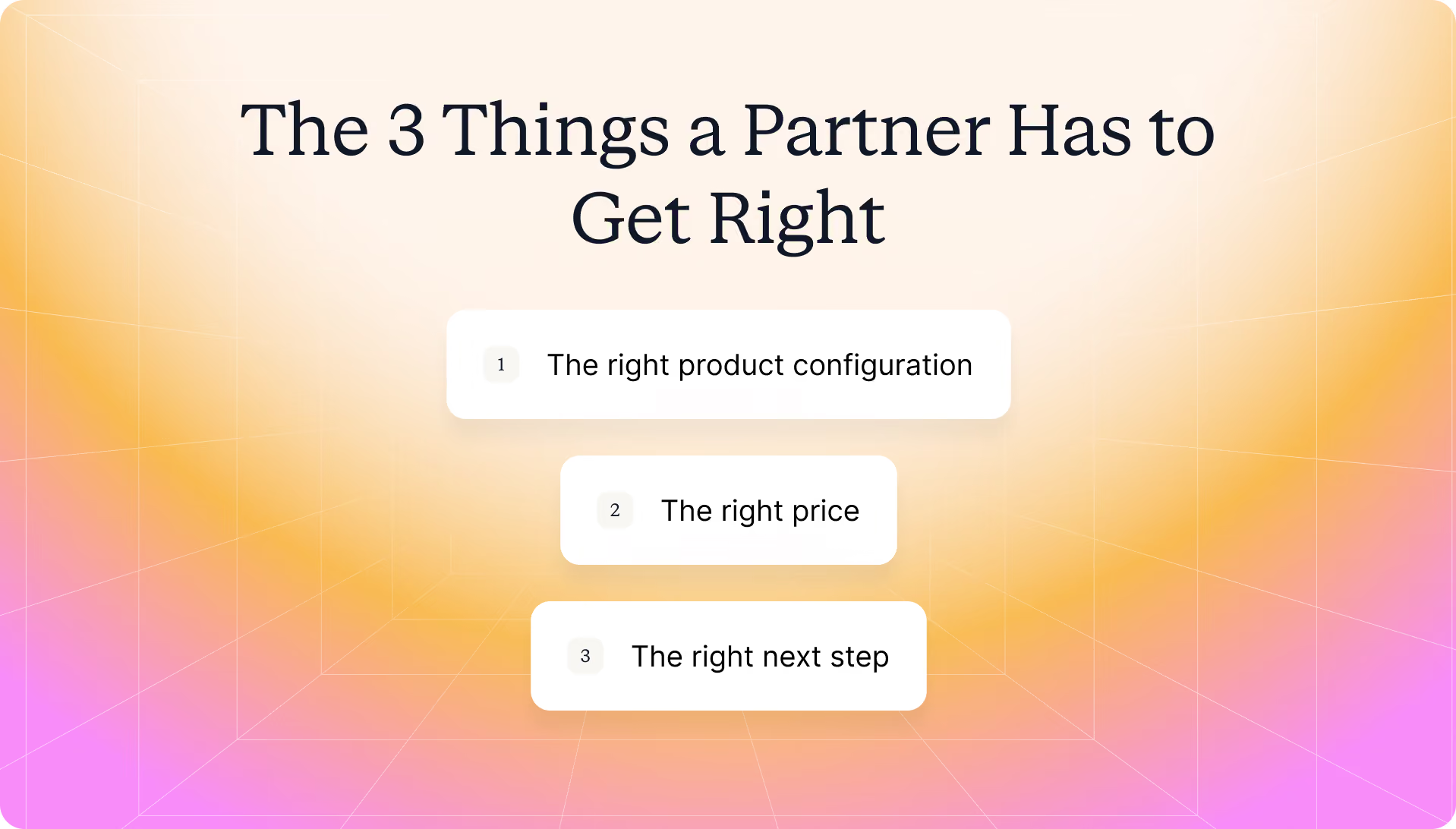
The three things a partner has to get right
Every partner quote is three decisions: the product, the price, and the next step. Guided selling for partners means removing the chance of getting any one wrong, not coaching partners to get it right more often.
That treats guided selling as a configuration problem tied to customer needs. It rests on selling systems and guided selling solutions rather than your sales teams, and it protects customer satisfaction along the way.
1. The right product configuration
The failure: a partner quotes a SKU they should never have offered, or misses the one that fits their customer needs, because your catalog was built for people who already know it well.
The fix: subtractive, not instructive. Instead of teaching a partner which products they can sell, scope the catalog so the wrong ones are never visible: by partner segment, by tier, by deal criteria. It's less about generating a new recommendation for every deal. It's more about narrowing the field to what matches real customer needs and what a partner is allowed to offer, using the same customer data your sales process relies on.
What it could look like:
- A high-volume reseller segment sees the volume of SKUs built for their kind of deal.
- A brand new partner sees only the starter SKUs they're certified to deliver.
- An enterprise SKU only surfaces once a deal crosses a set value threshold.
The principle: the wrong product shouldn't be a mistake a partner can make. It should simply not appear. The same way a governed catalog inside CPQ removes an entire category of error, product configuration does the work training usually fails to do.
2. The right price
The failure: a discount gets negotiated in the moment, drifts, margin erodes deal by deal, and two partners quote the same product at two different prices.
The fix: automatic pricing rules per product, so the correct price is a property of the system, not the outcome of a conversation.
A discount percentage isn't the only lever. Sometimes the right answer isn't a different number; it's a different product. That's exactly why catalog scoping and pricing rules work together.
Tier rules cover the common case. Custom pricing exists for the customer-specific solutions that genuinely need it, so margin stays protected without turning every partner deal into a negotiation.
That protection compounds. Fewer negotiations mean faster closing deals. Your sales teams don't need a special sales process to keep partner discounts in line with what customer data shows similar deals closed at.
3. The right next step
The failure: a partner can have the product and price nailed down and still stall. A deal that just moved a stage often requires something they don't have on hand, and there's no colleague two desks over to ask.
The fix: coaching delivered on the deal itself, not filed away in a document library.
- Stage-by-stage instructions
- Help with the objection that just came up
- The enablement asset that fits this moment
- A clear statement of what your rules of engagement allow
That coaching also needs to be scoped by motion, because a reseller, a co-seller, and a referrer are doing genuinely different jobs and need different advice:
- A reselling coach for partners who own the entire customer journey end to end.
- A co-selling coach built for joint motions runs alongside your team.
- A referral coach with discovery talk tracks and warm introduction frameworks.
None of that helps if it waits to be opened. That's why the useful version is proactive. Deal coaching sends triggered check-ins days after a deal is created, around the close date, or when a deal has stalled in one stage.
What a guided partner quote actually looks like
Here's what that looks like, from the moment a partner opens a deal to the moment it's signed.
- They open the deal. They do it inside your partner portal or embedded in your CRM, add line items from a catalog already filtered to what they're allowed to sell.
- Pricing applies itself. The moment items land on the quote, your rules calculate the price, so there's no discount to request and no margin math to get wrong.
- A guided quote builder walks them through the rest. Their information, the end user, line items, signature, or contact details, then a final review step.
- Templates keep every quote on brand. Locked titles and layouts, no matter which partner built it.
- An approval gate catches anything that needs a second look. If a deal needs oversight, the quote holds as a draft until your team publishes it, so a partner can't send something unsigned.
- The quote closes itself. E-signature and payment collection happen right there, inside the quote.
- Everything lands as a native object on the deal in your CRM. For teams on HubSpot, the quote behaves like any other native object, not a bolted-on export, with nothing to reconcile or chase down afterward.
This selling process runs on the selling systems your partners already use, not a separate tool to remember. Whichever guided selling solutions or guided selling tools sit behind the scenes, they work the same way for the partner.
6 guided selling examples for partner programs
Once catalog scoping, pricing rules, and coaching are running for your partner program, the same patterns show up again and again. Here are six of them.
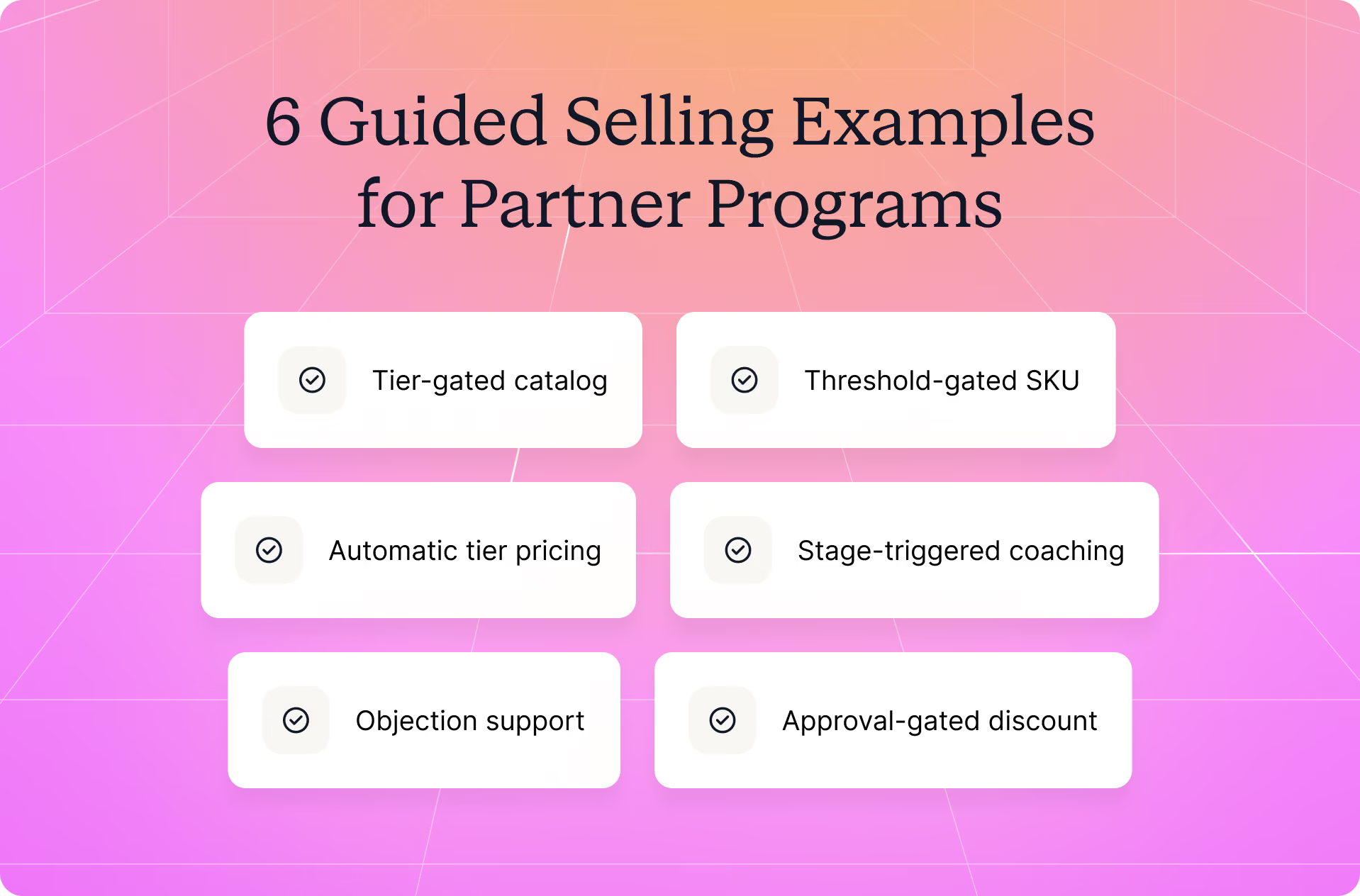
1. Tier-gated catalog
A new Bronze partner sees only the starter SKUs available to their tier, so there's no way to accidentally quote an enterprise configuration they aren't certified to deliver.
2. Threshold-gated SKU
The enterprise tier only appears once a deal crosses a set value, so it's quoted where it fits instead of wherever a partner happened to notice it.
3. Automatic tier pricing
A gold reseller adds a product to a quote, and the gold discount applies without anyone asking for it. That protects your margin and helps sales teams close deals faster, because there's no pricing question to escalate to you, no matter whose sales process it started in.
4. Stage-triggered coaching
A deal sits in proposal for fourteen days without moving, and the coach reaches out with the specific follow-up play built for that stage, not a generic reminder.
5. Objection support
A partner hits a competitive objection mid-call, and the coach surfaces the response and the right piece of content directly on the deal, instead of a library they'd have to search.
6. Approval-gated discount
A partner builds a quote that exceeds policy. The system holds it as a draft, your deal desk reviews it, and the customer never sees a number your team never approved. It's the same kind of deal intelligence that protects your conversion rates rather than losing the deal entirely over a pricing dispute.
Best practices for implementing guided selling with your partners
A few best practices separate the sales organizations that get real value from guided selling technology, guided selling software, and guided selling tools from the ones that stall early. Most come down to how your sales teams and partners use the guided selling system and the selling systems underneath it, day to day.
Start with the workflow, not the script
Implementing guided selling well means mapping your customer needs to actual workflows first, then automating those workflows. That beats digitizing a sales process that was never written down consistently in the first place, whether that process runs through your sales reps or your partners.
Treat it as ongoing, not a one-time project
Implementing guided selling effectively is less about picking the right guided selling platform once and more about continual measurement.
Sales leaders who review win rates, sales performance, and stage duration every quarter catch problems long before a partner does. They use real-time data instead of guesswork, wherever your selling systems and sales process live, and whatever guided selling system runs them.
Expect a few common obstacles
High upfront costs, patchy data integration between your CRM and CPQ, and plain resistance to change are common reasons guided selling technology adoption stalls. It hits harder with partners, who rarely give you a second chance. That's true whether the first version was one of the countless guided selling solutions on the market, or a guided selling system you built in-house with sales representatives as first users.
The go-to-market teams that treat guided selling as infrastructure for their sales teams are the ones who win. It's not a feature they turned on once. They see the benefits of guided selling show up in their numbers, best practices compounding over time.
How Introw delivers guided selling for partners
Everything above is the problem. Here's what Introw actually does about it, walking through the same three decisions from earlier.
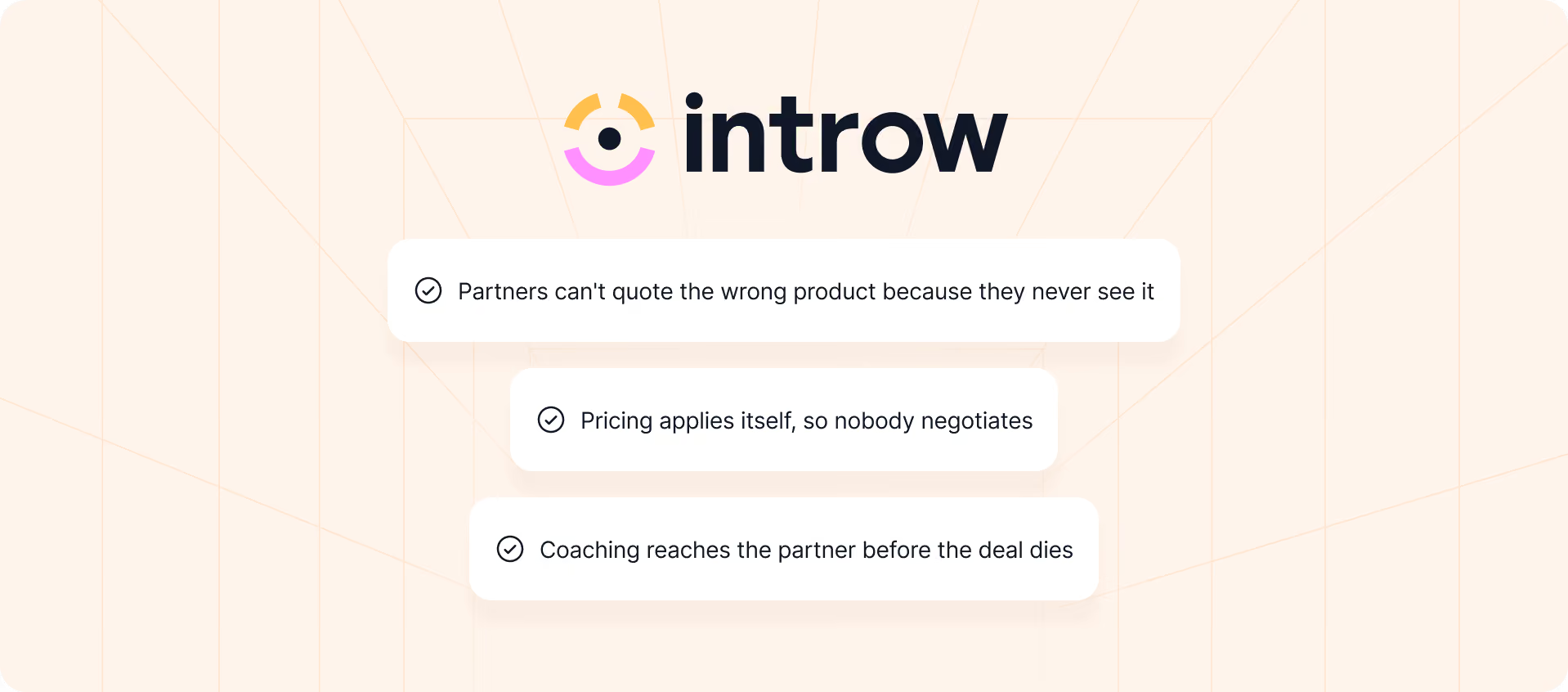
Partners can't quote the wrong product because they never see it.
The catalog is governed. It's scoped by partner segment, tier, and deal criteria. If a partner isn't authorized to quote something, it simply doesn't show up in their view. No “Can I sell this?” questions. No awkward corrections after the fact.
Pricing applies itself, so nobody negotiates.
Tier-based, partner-based, custom price, custom discount, whatever rule fits runs server-side the moment a line item lands on the quote. Nobody's guessing at a number. Nobody's waiting on you to approve one. Margin holds without you watching.
Coaching reaches the partner before the deal dies.
AI deal coaching is scoped by motion, reselling, co-selling, or referral. Proactive check-ins go out after a deal is created, around the close date, or the moment a deal stalls. The partner gets the right play automatically. You don't have to go looking for them.
Once those three are handled, the quote finishes itself. Everything lands as a native CRM object. An approval gate holds anything over policy as a draft until your team signs off. E-signature and payment collection are built right into the quote. Nothing left to chase down.
Two things power all of this behind the scenes.
- AI and machine learning drive the coaching. They pair with live deal data, so when you build a coach, AI drafts the playbook for you instead of you starting from a blank page. It's the same logic behind AI sales coaching software generally, matching the right guidance to the right moment.
- The same CPQ engine drives the catalog and pricing. Quotes and line items run on one set of rules. Pricing and discounts run on another. It's the same logic behind CPQ software, whether your partners work out of HubSpot or Salesforce.
Put together, your partners quote accurately, on brand, at the right price, without routing every question through your team. Your sales teams get their time back. Conversion rates stay steady as your partner network grows.
See how this would work on your catalog. Book a demo and watch Introw guide a partner to the right product, price, and next step, live.
Still curious? Here are some quick answers to help clear things up
AI-guided selling reads live deal data and prescribes the next action in real time, using predictive analytics instead of a fixed script.
A catalog that hides SKUs a partner can't sell, tier pricing that applies automatically, and coaching that reaches a partner when a deal stalls.
With a rep, you can train the person. With a partner, you can't, so guided selling has to live in the system instead: the catalog, the pricing rules, and the coaching.
Automatic pricing rules per product, plus catalog scoping so the wrong product isn't an option either.
The benefits of guided selling show up in customer satisfaction and customer experience together, backed by real customer data: consistent quotes, protected margin, and less time spent answering partner questions.




Are you already an active Introw partner?
Book a demo with one of our partner program experts, or explore Introw on your own time.