

.svg)


.svg)
.svg)








Articles by Laurens
12 Channeltivity Competitors to Choose From in 2026
What is Channeltivity (and why teams look for competitors)
Channeltivity is a partner relationship management platform that covers the basics well: deal registration, partner marketing, MDF, content management, and reporting.
But many teams now want AI, deeper CRM workflows, and more flexibility across the partner ecosystem. That’s why buyers evaluating Channeltivity alternatives are looking elsewhere.
.png)
1. No AI capabilities
Channeltivity does not offer AI-powered workflows for onboarding, training, support, or deals.
Many newer platforms now provide AI deal coaching, AI-generated content, AI training creation, and conversational support through an AI agent.
2. No off-portal collaboration
Channeltivity relies heavily on its portal experience. Partners typically need to log in to access content, submit leads, or track progress.
Many newer platforms focus on partner engagement through email workflows, embedded forms, notifications, and automated updates outside the portal.
3. No native Slack integration
Slack is now a common workspace for many channel teams.
Channeltivity does not provide native Slack workflows for notifications, collaboration, support, or deal updates. Teams that use Slack heavily often look for alternatives that bring partnership activity into the channels they already use.
4. Limited CRM depth
Channeltivity supports Salesforce and HubSpot, but it is not a CRM-native platform.
Organizations that run revenue operations inside the CRM often prefer custom objects, workflow triggers, and deeper integrations such as a native Salesforce integration or HubSpot integration.
5. Product innovation has slowed
Channeltivity still covers the core feature set expected from partner management software. But many newer solutions now include account mapping, partner LMS capabilities, AI-powered training, and advanced automation.
For many teams, the question is not whether Channeltivity works. It’s whether it still offers the capabilities they need to grow.
To find the best Channeltivity alternative available, what should you be looking for?
What to look for in a Channeltivity competitor
Not every Channeltivity PRM alternative solves the same problems. Focus on these six areas before you switch.
.png)
1. AI that does more than answer questions
Many tools now offer AI, but not all AI is useful. Look for AI that can automate workflows, generate content, build training, assist with support, and help move deals forward without manual effort.
2. Off-portal engagement
Your users shouldn’t have to log in every time they need an update. The best platforms let channel partners collaborate through email, notifications, and other channels while keeping data synced automatically.
3. Deep CRM integration
A CRM should remain your system of record. Look for bi-directional sync, custom object support, workflow triggers, and the ability to work directly inside Salesforce. Our guide to how to choose a PRM covers the key evaluation criteria.
4. A modern partner portal
The portal should be easy to configure without developers. Look for white-label branding, segmented experiences for different partner types, and enough flexibility to support your organization as it grows. A modern partner portal should adapt to your program, not the other way around.
5. Full lifecycle coverage
Many tools handle onboarding and deal registration but stop there. Stronger solutions also include partner marketing, referral programs, incentives, account mapping, training, performance tracking, and revenue visibility across the entire partner lifecycle.
6. Fast time to value
Some enterprise platforms take months to deploy. Others can integrate with existing systems and start delivering results in days. Faster implementation means less disruption and a quicker path to value.
With those criteria in mind, let’s compare the best Channeltivity alternatives available today.
Channeltivity competitors at a glance
Use this table to compare the best Channeltivity alternatives before you review each tool in detail.
This quick view shows where each platform fits. Next, let’s look at the tools in more detail.
12 Best Channeltivity Competitors in 2026
If you’ve decided Channeltivity is no longer the right fit, these are the platforms worth evaluating next.
#1 Introw - Best overall Channeltivity competitor for modern partner management

What it does
Introw is an AI-first platform designed for companies running partner programs in HubSpot or Salesforce.
It combines partner onboarding, deal registration, MDF, partner marketing, training, account mapping, revenue tracking, and partner engagement in a single CRM-native system.
Unlike traditional PRMs, Introw extends beyond the portal. Partners can collaborate through email and Slack while CRM data remains the system of record.
Why someone might choose it over Channeltivity
Introw covers everything Channeltivity offers, then adds agentic AI, off-portal collaboration, deal coaching, CPQ, AI-powered training, and deeper CRM integration.
The biggest difference is architectural. Channeltivity connects to the CRM. Introw operates from within it. That reduces duplicate data, eliminates spreadsheets, and gives teams better visibility across the entire partner ecosystem.
Teams also gain:
- AI-powered deal coaching for channel partners and resellers
- AI-generated training through a built-in partner LMS
- Agentic workflows through the AI agent
- Native deal and lead registration
- White-label portal experiences for different partner types
- Shared Slack and email collaboration without forcing portal logins
Where it stands out
- Agentic AI instead of manual workflows
- Off-portal engagement instead of portal-only collaboration
- AI-powered LMS instead of static training resources
- Built-in deal coaching
- Native CPQ
- Custom-object CRM architecture
- Typical deployment in 2–4 days
CRM integrations
Native, bi-directional Salesforce and HubSpot integrations with custom object support.
Pricing
Custom pricing.
Best for
Mid-market SaaS companies that want a modern partner management platform built around CRM workflows and indirect revenue growth.
For a deeper look at partner management software, see our guide to partner management systems.
Ready to see why teams switch from Channeltivity to Introw? Book a demo.
#2 Impartner - Best for enterprise teams that need broad PRM coverage
.png)
What it does
Impartner combines partner portals, partner lifecycle management, TCMA, MDF, training, and ecosystem management in a large enterprise package.
Why someone might choose it over Channeltivity
It offers broader capabilities for large organizations that need extensive governance, customization, and administration controls.
Where it falls short
- Implementation often takes months
- Complex administration
- Heavier CRM architecture
- User experience feels dated in some areas
CRM integrations
Salesforce and other CRM systems through integration layers.
Pricing
Custom pricing.
Best for
Large enterprise organizations with dedicated channel operations teams.
Our guide to Impartner competitors explores additional options.
#3 PartnerStack - Best for affiliate and referral programs
.png)
What it does
PartnerStack helps companies manage affiliates, referral programs, payouts, and partner recruitment through a large marketplace.
Why someone might choose it over Channeltivity
Built-in payment infrastructure and partner discovery make it attractive for growth-focused startups and SaaS companies.
Where it falls short
- Limited support for co-selling motions
- Less suitable for distributor programs
- CRM synchronization relies on middleware
- Less flexibility than dedicated PRMs
CRM integrations
Salesforce and HubSpot through Workato.
Pricing
Marketing plans start at $1000/month. Growth plans start at $1520/month. Enterprise pricing is custom.
Best for
Companies focused on affiliates and referral programs.
See our full roundup of PartnerStack alternatives.
#4 Kiflo - Best for small partner programs
.png)
What it does
Kiflo is a lightweight PRM designed for simple onboarding, content sharing, and lead management.
Why someone might choose it over Channeltivity
It offers a cleaner interface, faster setup, and lower costs for smaller businesses.
Where it falls short
- No AI capabilities
- No LMS
- No CPQ
- Limited automation
- Limited flexibility as programs grow
CRM integrations
Basic HubSpot and Salesforce integrations.
Pricing
Core starts at $399/month billed annually. Plus pricing is custom.
Best for
Small businesses with fewer than 20 active partners.
Explore more options in our guide to Kiflo alternatives.
#5 Euler - Best for teams that want a modern PRM experience

What it does
Euler provides partner onboarding, pipeline management, advisory AI assistants, and collaboration tools in a modern interface.
Why someone might choose it over Channeltivity
The experience feels newer and more intuitive, with AI assistance and stronger usability.
Where it falls short
- No MDF
- No LMS
- No advanced onboarding paths
- Limited CRM depth
CRM integrations
HubSpot and Salesforce.
Pricing
Custom pricing.
Best for
Early-stage programs looking for modern design and simplicity.
See our comparison of Euler PRM alternatives.
#6 Salesforce Experience Cloud - Best for Salesforce-native control
.png)
What it does
Salesforce Experience Cloud lets organizations build highly customized partner portals directly on Salesforce infrastructure.
Why someone might choose it over Channeltivity
Nothing offers deeper Salesforce integration or reporting access.
Where it falls short
- Requires development resources
- Long implementation cycles
- No embedded LMS
- No off-portal collaboration
- Limited out-of-the-box functionality
CRM integrations
Native Salesforce.
Pricing
Partner Community starts at $20/login/month or $50/member/month billed annually.
Best for
Large Salesforce organizations with internal development teams.
If Salesforce is central to your evaluation, review these Salesforce PRM alternatives.
#7 Mindmatrix - Best for through-channel marketing automation
.png)
What it does
Mindmatrix combines partner marketing, content distribution, training, onboarding, and PRM functionality.
Why someone might choose it over Channeltivity
It delivers stronger marketing automation and broader enablement capabilities.
Where it falls short
- Steep learning curve
- Complex setup
- Enterprise-focused administration
- Some workflows require vendor assistance
CRM integrations
Salesforce and HubSpot.
Pricing
No pricing available.
Best for
Organizations heavily invested in partner marketing and enablement.
Read our breakdown of Mindmatrix alternatives.
#8 ZINFI - Best for large multi-tier channel programs
.png)
What it does
ZINFI offers unified channel management covering onboarding, MDF, marketing, incentives, and partner lifecycle management.
Why someone might choose it over Channeltivity
It supports highly complex multi-tier channel structures and global programs.
Where it falls short
- Heavy implementation effort
- Significant configuration requirements
- Data often sits primarily in the platform
- Less CRM-centric approach
CRM integrations
Salesforce, Microsoft Dynamics, and others.
Pricing
ZINFI does not publish public PRM pricing.
Best for
Large enterprise channel organizations.
You can compare other options in our guide to ZINFI alternatives.
#9 Magentrix - Best for Salesforce-based partner portals
.png)
What it does
Magentrix focuses on customer and partner portals built on Salesforce.
Why someone might choose it over Channeltivity
It provides a clean portal experience with stronger Salesforce alignment.
Where it falls short
- Portal-centric approach
- Limited AI
- Limited lifecycle coverage
- No meaningful off-portal engagement
CRM integrations
Native Salesforce.
Pricing
Essential starts at $1500/month. Advanced starts at $3000/month. Unlimited pricing is custom.
Best for
Organizations primarily looking for a Salesforce-powered portal.
Our guide to Magentrix alternatives covers comparable solutions.
#10 ChannelScaler - Best for rebates and incentives
.png)
What it does
ChannelScaler combines PRM, MDF, rebate management, incentives, and channel operations functionality.
Why someone might choose it over Channeltivity
It offers stronger rebate and incentive management for mature programs.
Where it falls short
- Admin-heavy workflows
- No AI
- No Slack-based collaboration
- CRM changes often require support involvement
CRM integrations
Salesforce and HubSpot through middleware.
Pricing
Custom pricing.
Best for
Organizations running complex incentive and rebate programs.
See our guide to ChannelScaler alternatives for a deeper comparison.
#11 Partner.io - Best for pipeline collaboration
.png)
What it does
Partner.io focuses on pipeline visibility, co-selling, and deal collaboration.
Why someone might choose it over Channeltivity
It offers a more modern experience for teams centered on shared opportunities and sales collaboration.
Where it falls short
- Narrower feature set
- Smaller ecosystem
- Less mature than larger competitors
CRM integrations
Salesforce and HubSpot.
Pricing
Solo starts at $79/month. Growing starts at $299/month. Enterprise pricing is custom.
Best for
Organizations focused on pipeline collaboration and visibility.
Take a look at our roundup of Partner.io alternatives if you’re comparing pipeline-focused partner platforms. We also have a Partner.io comparison page so you can see how it stacks up against Introw.
#12 Impact - Best for affiliate and influencer partnerships
.png)
What it does
Impact helps businesses manage affiliates, creators, influencers, and referral relationships through automated tracking and payments.
Why someone might choose it over Channeltivity
It excels at performance-based partnership programs and attribution.
Where it falls short
- Not a traditional PRM
- No partner onboarding workflows
- No deal registration
- No channel sales management
CRM integrations
Limited CRM support compared to dedicated PRMs.
Pricing
Starter starts at $30/month. Essentials starts at $500/month. Pro starts at $2500/month.
Best for
Companies focused on affiliate, creator, and influencer partnerships.
Now that you’ve seen the options, the best choice comes down to how you want to support your partners, manage deals, and scale your program over the next few years.
The bottom line
Channeltivity covers the fundamentals of partner relationship management, including deal registration, partner onboarding, content management, training, and reporting. If those features meet your company’s needs, it remains a solid option.
But the industry has moved on. Today’s partner management systems help organizations automate more work, support customers more effectively, manage partner services at scale, and create more sales opportunities.
AI, CRM-native workflows, embedded training, and collaboration beyond the portal are quickly becoming standard.
If you’re evaluating partner relationship management software, Introw is a strong Channeltivity alternative. It combines mid-market simplicity with the products, resources, and automation growing partner programs need to drive better revenue results.
Why teams choose Introw when looking for Channeltivity competitors
Teams often start looking at Channeltivity competitors when they need more than a portal and basic partner management. They need a platform that helps partners sell, supports more services, and creates measurable revenue growth.
+70% more partner pipeline
Partners register more deals, faster, with deal flow synced directly into your CRM. Off-portal collaboration increases engagement, while AI helps identify duplicate opportunities before they affect results.
+75% faster partner onboarding
Go live in 2–4 days with no custom development. AI-driven onboarding, training, resources, and content help new partners start selling faster.
+60% more partner-influenced revenue
Track every partner-sourced and partner-influenced opportunity inside your CRM. Deal coaching, automation, and ongoing support help partners stay active and generate more revenue over time.
Ready to see how Introw compares to Channeltivity? Book a demo.
How to Launch and Manage a High-Performing Referral Partner Program
Referral partner programs sound simple: partners send you leads, you close them, everyone gets paid. But most programs stall before they generate meaningful revenue — not because the incentives are wrong, but because the infrastructure isn’t there.
The difference between a program that produces sporadic leads and one that drives predictable pipeline comes down to how you design registration, tracking, and communication from day one. This guide breaks down what a referral partner program actually is, how to launch one, and how to manage it as you scale.
What is a referral partner program?
A referral partner program is a mutually beneficial arrangement where you incentivize individuals or third-party companies to recommend your product or service in exchange for a reward — typically a commission on closed revenue.
Unlike affiliate programs that rely on tracking links and high-volume marketing, referral partnerships are built for high-consideration B2B sales. Partners identify strong-fit prospects and make warm introductions, then your sales team runs the sales cycle.
Common referral partners include:
- Consultants and fractional operators
- Agencies serving your target ICP
- Complementary SaaS or service providers
- Happy customers who want to refer peers
The best programs are formal: they define what counts as a qualified referral, how attribution works, when payouts happen, and how conflicts get resolved.
How referral partners differ from affiliates and resellers
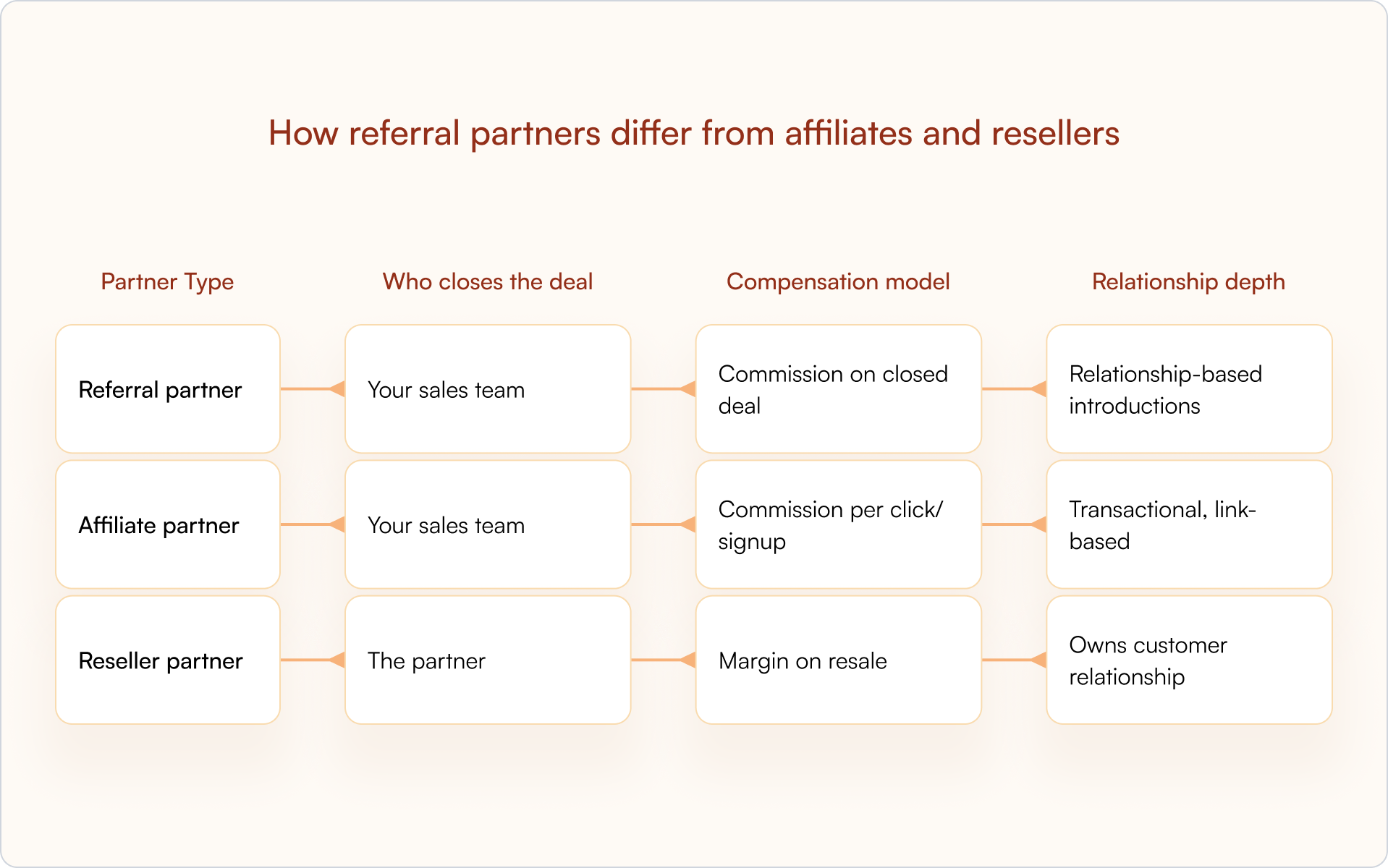
Founders often lump “partners” into one bucket. That’s where misaligned expectations start — and where programs get designed incorrectly. Here’s the clean way to think about it:
Referral partners vs affiliate partners
Affiliates drive traffic through content, ads, and tracking links. Referral partners make personal introductions based on existing relationships. The trust transfer is different — and so is the lead quality.
Referral partners vs reseller partners
Resellers purchase or license your product and sell it themselves. They own the customer relationship, often handle support, and earn margin on resale. Referral partners hand off qualified leads to you and step back, which changes everything: revenue share, enablement needs, and who owns the pipeline.
Referral partners vs technology partners
Technology partners integrate products or build on your platform. Referral partners recommend without any integration requirement. They’re endorsing, not embedding.
Why B2B companies launch a referral partner program
A referral partner program works when you operationalize it like any other revenue motion — with systems, rules, and accountability. Done right, it becomes a durable acquisition channel.
Lower customer acquisition costs
Partners bring leads through their existing networks, reducing reliance on paid advertising and outbound prospecting. You pay only when deals close, which helps keep unit economics predictable.
Higher quality leads from trusted introductions
Warm referrals carry built-in credibility. Prospects already trust the person making the introduction, which translates to better-qualified pipeline and higher conversion rates.
Expanded market reach without adding headcount
Referral partners help you reach new verticals, geographies, or segments without hiring dedicated sales reps for each. Your partners already have the relationships you’d otherwise spend months building.
Faster sales cycles through warm referrals
Referred prospects skip a chunk of the trust-building phase. In many B2B motions, that means fewer early-stage calls and a faster path to “real” evaluation.
What every referral partner program needs
If you want your referral partner program to be more than a slide deck and a promise, you need the basics in place first. This is the infrastructure that prevents deals from getting lost and partners from going dark.
Commission and incentive structure
Define how partners get paid. The most common options:
- Percentage of deal: Partner earns a cut of closed revenue, typically 10–20%
- Flat fee: Fixed payout per qualified referral that closes
- Tiered rewards: Increasing commission rates based on referral volume
Keep it simple. Complicated partners commission structures create confusion and slow payouts, both of which kill partner motivation.
CRM integration for tracking and attribution
Your CRM for partner management tracks every referral from submission to close. Accurate attribution, forecasting, and commission calculations all depend on clean data.
Referral data belongs inside Salesforce or HubSpot, not in a disconnected spreadsheet or portal. When partner activity lives in your CRM, sales and partnerships operate from the same source of truth.
Deal registration workflow
Partners need a clear way to submit leads, ideally without logging into a portal. Your workflow should capture the essentials (contact, company, context), route for approval, and set a protection window so partners feel safe investing their reputation.
A structured deal registration process is where ownership gets established early and where most conflicts can be prevented.
Rules of engagement documentation
Write down how conflicts are resolved, which accounts are off-limits (if any), what happens if multiple partners refer the same lead, and what “qualified” actually means. A clear policy prevents messy debates later.
Partner communication channels
Decide how you’ll keep partners informed: email updates, Slack notifications, or lightweight portal announcements. The point is consistency — not adding another tool your partners will ignore.
Onboarding and enablement resources
Provide pitch decks, one-pagers, competitive notes, and simple messaging that helps partners explain who you’re for (and who you’re not for). Partners refer more confidently when they can position your product clearly.
How to launch a referral partner program in six steps

1) Define your ideal referral partner profile
Start by getting specific about who is likely to refer your best customers. In most startups, that’s consultants and agencies serving your ICP, complementary providers, and a handful of power users who love your product.
Create simple qualification criteria (audience overlap, deal size alignment, credibility, responsiveness) so you recruit strategically, not randomly.
2) Design your commission structure and tiers
Set compensation that motivates without turning your program into a math problem. Choose percentage vs flat fee, and consider adding tiers (Standard, Silver, Gold) once you have baseline performance data.
Start simple. You can add complexity later, but you can’t easily walk back a confusing structure.
3) Build a deal registration process in your CRM
Create a submission workflow using deal registration software inside Salesforce or HubSpot with required fields, automatic routing for approval, and timestamped records. Set protection windows so partners feel secure that their referrals won’t be claimed by direct sales.
4) Create onboarding materials and partner resources
Build a partner welcome kit with product training, FAQs, email templates, and co-brandable collateral following a structured partner onboarding checklist. The faster partners can start referring, the more likely they will.
5) Set up referral tracking and pipeline visibility
Configure your CRM to tag partner-sourced deals and make deal status visible to partners without constant back-and-forth. Visibility keeps partners engaged and builds trust.
Partners who can see what’s happening with their referrals stay active. Partners who have to email for updates eventually stop referring.
6) Recruit and activate your first referral partners
Start with warm relationships: existing customers, consultants who already mention you, and industry contacts. Reach out personally, explain the program benefits, and make it easy to join.
How to manage and scale your referral partner program
Launching is the easy part. Sustained performance comes from tight operations — and from removing every ounce of friction between a partner thinking “I should introduce you” and that introduction turning into pipeline.
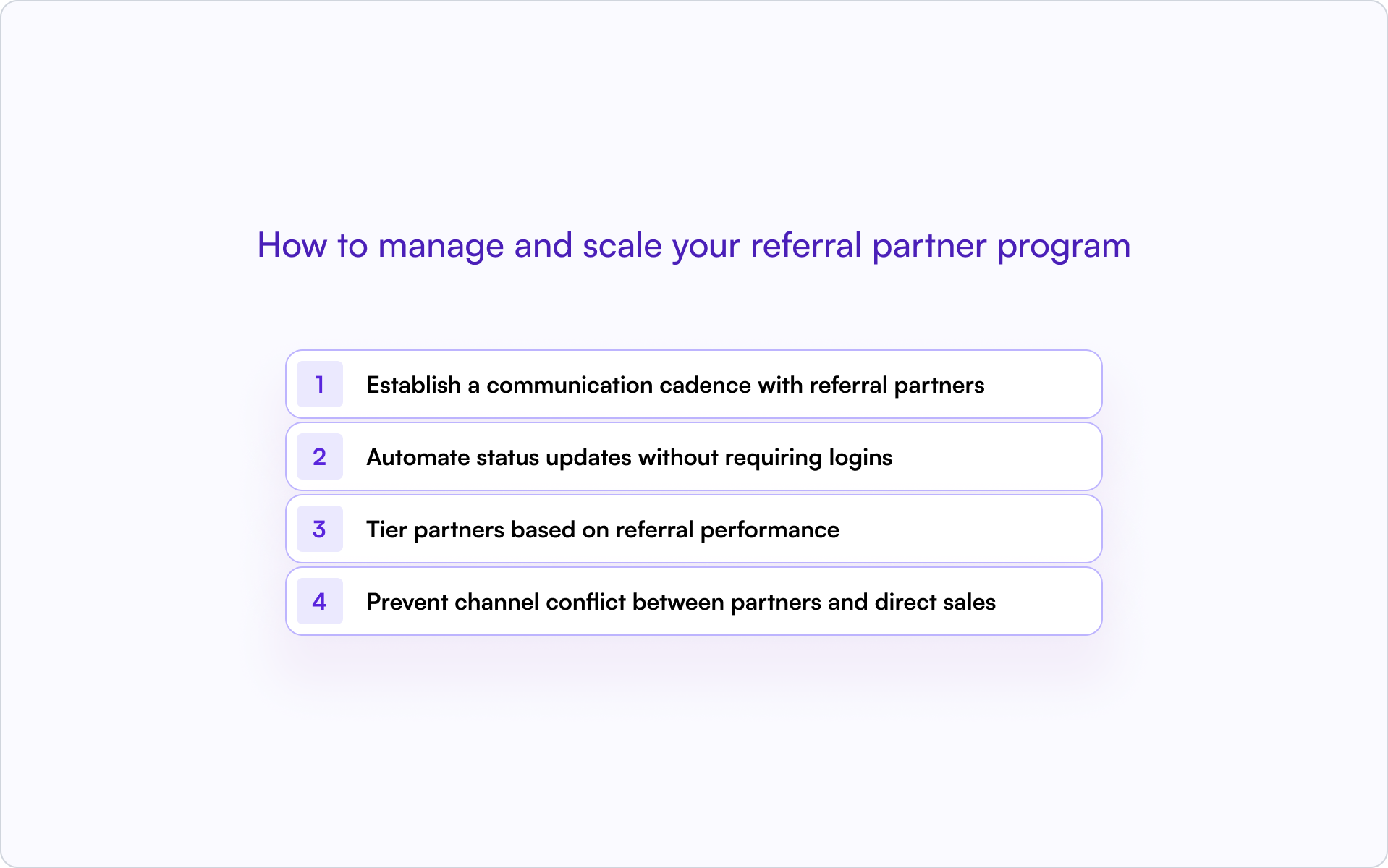
Establish a communication cadence with referral partners
Set regular touchpoints: monthly newsletters, quarterly check-ins, and short program updates when something changes. Silence kills referral partnerships. Consistent partner engagement keeps partners active and informed.
Automate status updates without requiring logins
Partners drop off when they have to log into portals for updates. Use email notifications tied to deal stage changes so partners stay informed automatically.
If you can let partners reply to notifications via email, with responses syncing back to your CRM timeline, you’ll remove the “chase you for updates” loop that quietly destroys many programs.
Tier partners based on referral performance
As you get data, create partner tiers (Bronze, Silver, Gold) with escalating benefits:
- Higher commissions: Reward volume and consistency
- Priority support: Faster response times for top performers
- Co-marketing opportunities: Joint campaigns and content
Tiering motivates top performers and gives newer partners something to work toward.
Prevent channel conflict between partners and direct sales
Define clear rules: who gets credit if a lead is already in your pipeline, how deal protection works, and how disputes are resolved. Document everything in your rules of engagement and enforce consistently.
Channel conflict rarely starts with bad intent. It starts with unclear rules.
Referral partner program metrics you should track
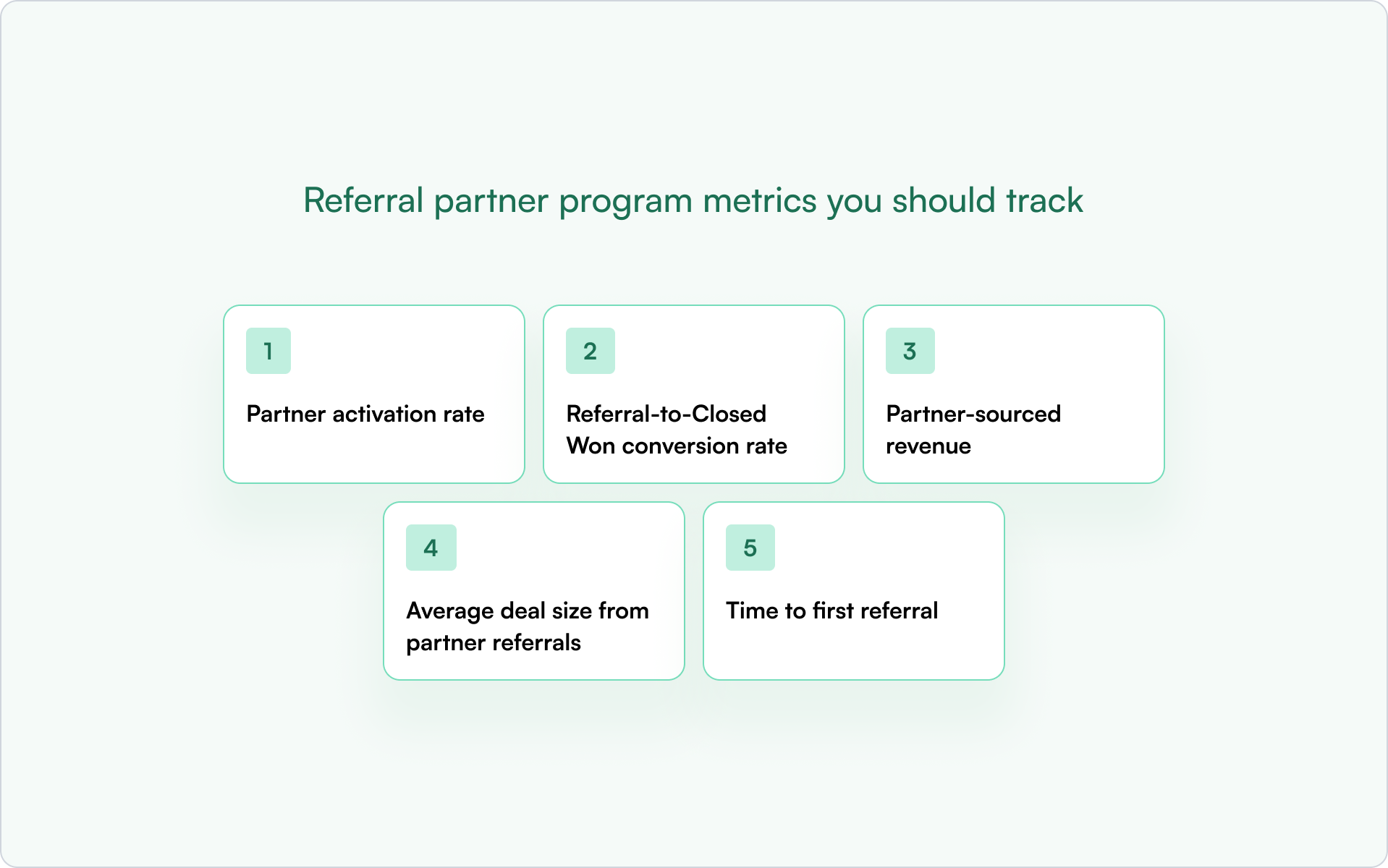
If you want partner-sourced revenue to become predictable, you need a handful of KPIs that tell you what’s actually happening — not just who “seems engaged.”
Partner activation rate
What percentage of recruited partners submit their first referral? Low activation usually signals onboarding friction, unclear positioning, or a muddled ask.
Referral-to-Closed Won conversion rate
How many partner referrals become paying customers? This is a direct read on lead quality and how reliably your sales team follows up.
Partner-sourced revenue
The total revenue attributed to partner referrals. This is your north star for program ROI.
Average deal size from partner referrals
Compare this to direct sales. Partner referrals often yield larger deals due to trust and fit.
Time to first referral
How quickly do new partners submit their first lead? Faster activation correlates with long-term partner success because it proves the workflow works.
Common mistakes that kill referral partnerships
Most referral partner programs don’t fail because of bad incentives. They fail because of friction and silence.

- Making registration too complicated: If partners have to jump through hoops or log into clunky portals, they won’t bother.
- Slow response times on deal status: Partners lose trust when they don’t know what’s happening with their referrals.
- Unclear or unfair commission structures: Ambiguity breeds resentment. Partners disengage when they can’t predict payouts.
- Inconsistent communication: Going silent for months then suddenly asking for referrals doesn’t work.
- Ignoring channel conflict: Letting direct sales claim partner deals destroys relationships fast.
Turn referral partners into a predictable revenue channel
A referral partner program works when it’s built on clear structure, CRM-first tracking, and a consistent partner experience. Teams that scale partner-sourced revenue don’t rely on spreadsheets or manual follow-up — they rely on systems that enforce rules and surface visibility automatically.
Introw helps teams launch partner portals connected to Salesforce or HubSpot, automate deal registration, and keep partners engaged without forcing logins. Partners register leads, see status updates, and stay active, all without creating another system to manage.
Book a demo to see how it works.
14 Partner Enablement Training Metrics to Track in 2026
Most partner teams can tell you how many partners completed training last quarter. Far fewer can tell you whether that training actually led to more deals, faster ramp times, or higher revenue per partner through proper partner analytics.
That gap — between activity and impact — is where enablement programs stall. In this guide, you’ll get a focused set of partner enablement training metrics to track, how to separate leading indicators from lagging ones, and how to wire the whole thing into your CRM so you can defend enablement spend with revenue outcomes.
Why partner enablement training metrics matter
Partner enablement training metrics are the KPIs that show whether your onboarding, training content, and certifications translate into real partner performance. If you’re building a channel like a founder builds a product, these metrics are your instrumentation — they tell you what’s working, what’s broken, and where your next iteration should go.
The common failure mode is measuring “inputs” (courses published, partners invited, sessions delivered) but not “outputs” (pipeline created, deals closed, revenue retained). When leadership asks, “Is this working?” you end up assembling a last-minute spreadsheet instead of opening a dashboard with a clear story.
The right partner enablement training metrics to track close that gap. They help you:
- Prove ROI on training and certification investments.
- Identify stuck partners early (before churn or inactivity becomes the default).
- Standardize coaching with objective signals instead of gut feel.
- Scale your program without adding headcount just to report on it.
Leading vs. lagging indicators for partner training (and why you need both)
If you only track lagging indicators like revenue, you’ll find out something went wrong after the quarter is over. If you only track leading indicators like course completions, you can end up celebrating progress that never turns into pipeline.
What are leading indicators?
Leading indicators are early signals that predict future performance. They’re especially valuable in partner programs because the time between “trained” and “producing revenue” can be long.
- Course enrollment rate: the percentage of partners who start assigned training — a signal of awareness and initial buy-in.
- Module completion velocity: how quickly partners move through onboarding content — often correlated with motivation and readiness.
- Content engagement: which resources partners access, how often, and where they drop off — useful for iterating your curriculum.
What are lagging indicators?
Lagging indicators are outcome-based metrics that confirm whether enablement drove business results. They’re what you use to justify budget and to decide what to double down on.
- Revenue per certified partner: compares revenue from certified vs. non-certified partners — one of the cleanest ways to quantify training value.
- Deal close rate by partner tier: shows whether more advanced enablement correlates with better conversion.
- Time-to-first-deal: how long it takes a new partner to register and close their first deal after onboarding.
How to balance both in reporting
A simple operating model: review leading indicators weekly to catch issues early, and review lagging indicators monthly or quarterly to validate ROI. When a lagging metric slips, use your leading indicators to diagnose why.
Core partner enablement training metrics to track for onboarding and certification
Onboarding is where most partner programs quietly lose momentum. The partners who don’t ramp quickly become “inactive” on your roster — but they still show up in partner counts, which can hide the issue. These metrics make onboarding performance visible.

#1 Training completion rate
Training completion rate measures the percentage of partners who finish assigned courses or modules. Low completion typically signals friction: unclear value, too much content, or a path that doesn’t map to how partners actually sell.
#2 Certification pass rate
Certification pass rate tracks how many partners pass certification exams on their first or subsequent attempts. If the pass rate is low, one of two things is usually true:
- The training doesn’t prepare partners for the exam (content gap), or
- The exam tests the wrong things (misalignment with real selling scenarios).
By the way, did you know that partners who have passed the certification can share it with their LinkedIn network in just one click in the Introw platform? It’s an excellent opportunity for you and your partners to strengthen brand awareness and expand your reach.
#3 Time to certification
Time to certification is the number of days from onboarding start to certification completion. In practice, it’s a proxy for time-to-revenue: partners who ramp quickly tend to show up in your deal registration data sooner.
#4 Content engagement by module
Content engagement by module tracks views, completions, and drop-off rates for each training section. This is the fastest way to find:
- Modules that partners consistently skip (too long, too generic, or poorly positioned).
- Modules that correlate with better downstream performance (keep and expand).
- Points in the curriculum where motivation drops (reorder, shorten, or reframe).
Partner engagement metrics that signal enablement effectiveness
Completion is a milestone — engagement is the habit. If partners aren’t consistently returning for collateral, updates, and new training, your enablement program turns into a one-time event instead of a growth system.
#5 Partner portal login frequency
Portal login frequency measures how often partners access your portal. Low logins don’t automatically mean partners don’t care — they often mean access is painful (too many passwords, slow UI, unclear navigation). CRM-first portals with SSO typically see higher engagement because you remove the friction.
#6 Resource downloads and content views
Track how often partners download or view sales collateral (pitch decks, case studies, battlecards, pricing, playbooks). Interpret this metric carefully:
- High views: content is relevant, discoverable, and timed to real selling moments.
- Low views: partners may not know content exists, or they’ve decided it’s not useful.
#7 Announcement and communication read rates
Read rates show whether partners open and engage with updates (product changes, program rules, tier requirements, co-marketing opportunities). If read rates are consistently low, partners become out of sync — and those gaps tend to surface mid-deal when it’s expensive to fix.
Pipeline and revenue metrics tied to partner enablement
This is where enablement stops being a “nice-to-have” and becomes a growth lever. If you want leadership to fund training, you need a clean line from enablement to pipeline creation and revenue conversion.
#8 Deal registrations per certified partner
Compare deal registration volume between certified and non-certified partners. A common pattern is “certified but inactive” — partners finish training but don’t translate it into pipeline. When that happens, you may have:
- A mismatch between certification and the partner’s real motion,
- Missing incentives (no meaningful tier benefits or MDF access), or
- Partners who need enablement closer to live deals (e.g., deal coaching, joint calls).
#9 Time to first deal after certification
Time-to-first-deal measures how long it takes a newly certified partner to register and close their first opportunity. Shorter timelines mean your enablement is practical, not academic — and that you’re getting faster payback on training investment.
#10 Partner-sourced vs. partner-influenced revenue
These metrics prevent undercounting your channel’s contribution. Track both:
- Partner-sourced revenue: deals the partner originated and registered.
- Partner-influenced revenue: deals where the partner contributed but didn’t originate.
Pro tip: In Introw, you can set up separate attribution tracking for partner-influenced vs. partner-sourced revenue and make both metrics visible in your dashboards. This gives you accurate insight into your channel's full contribution without manual tracking.
#11 Average deal size by partner tier
Comparing average deal size across tiers helps you validate whether advanced training and program benefits are translating into bigger outcomes. If top-tier partners consistently close larger deals, it’s a strong signal your enablement path is aligned with real revenue leverage.
Partner satisfaction and retention metrics
Training metrics don’t just predict sales outcomes — they predict relationship outcomes. Partners who feel supported stay engaged longer, and longer-tenured partners are typically more productive.
#12 Partner Net Promoter Score (NPS)
Partner NPS measures how likely partners are to recommend your program. Collect it via lightweight surveys at key moments (post-onboarding, post-first-deal, quarterly). A strong NPS usually means partners understand your value proposition and feel the program is worth prioritizing.
#13 Partner churn rate
Partner churn rate tracks the percentage of partners who leave your program over a given period. High churn often points to poor enablement, lack of support, or better opportunities elsewhere in their partner lifecycle.
#14 Program renewal rate
Renewal rate measures how many partners re-commit at the end of a contract or tier period. Declining renewal is often an early warning that your program benefits (including enablement) aren’t translating into partner ROI.
How to track partner enablement metrics in your CRM
If you want reliable attribution, you need one system of record. For most companies, that’s the CRM. When enablement data lives in a disconnected LMS or portal, you can’t confidently answer the question: “Did training change outcomes?”

Required fields on partner and deal records
To operationalize the partner enablement training metrics to track, add (or standardize) fields like:
- Certification status: current certification level and expiration date.
- Training completion date: when onboarding was completed (or last updated).
- Partner tier: ties training requirements to expected performance.
- Deal source: partner-sourced vs. partner-influenced (critical for attribution).
Dashboards and reports to build
- Enablement coverage: certification status by partner, tier, and region.
- Outcome comparison: pipeline, win rate, and revenue for certified vs. non-certified partners.
- Velocity view: time-to-certification and time-to-first-deal trends over time.
Build dashboards that drive action. If a report can’t lead to a specific next step (coach, nudge, change the curriculum, adjust tier requirements), it’s likely noise.
Automations for real-time visibility
Automations turn reporting into operations. Examples:
- Alerts when certifications are expiring.
- Reminders when training is incomplete after X days.
- Flags when certified partners haven’t registered a deal in 60–90 days.
CRM-first tools like Introw can trigger automations inside HubSpot or Salesforce — keeping enablement data visible where your team already works.
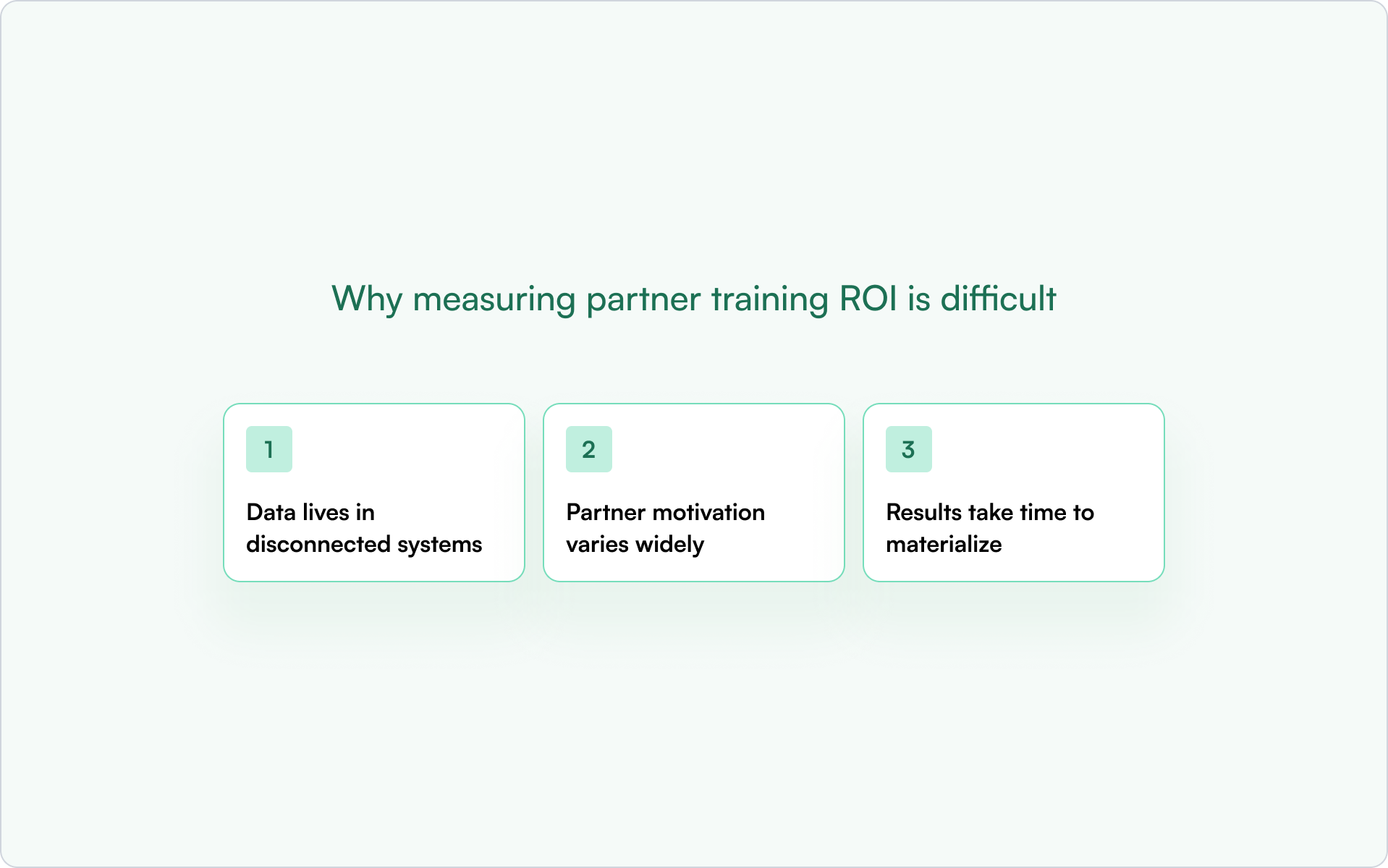
Why measuring partner training ROI is difficult (and how to avoid common traps)
Data lives in disconnected systems
LMS data, CRM data, and partner portal data often don’t sync. That breaks attribution because you can’t connect the training path to the opportunity record without manual work. CRM-first PRMs reduce this problem by keeping the key partner activity signals close to the revenue data.
Partner motivation varies widely
Partners have competing priorities. Even great training gets ignored if it feels generic, if it’s too long, or if certification doesn’t unlock real benefits. If you see high enrollment but low completion, motivation and incentives are usually the root cause — not content quality alone.
Results take time to materialize
The revenue lag is real. A partner who completes certification in Q1 might not close their first deal until Q3. This is exactly why you need a balanced dashboard: leading indicators tell you whether you’re building future performance while lagging indicators validate the payoff.
Who should see partner enablement reports (and what each team needs)
A single “master dashboard” rarely works. Different stakeholders need different slices of the truth — and different levels of detail.
- Partner managers: certification status, portal engagement, inactive-certified partner lists (coaching and outreach).
- RevOps: data quality, attribution rules, pipeline hygiene, and forecasting impact.
- CROs and revenue leaders: partner-sourced revenue, influenced revenue, deal velocity, and ROI by program.
Conclusion: turn partner enablement into a measurable growth engine
If you’re serious about scale, partner enablement can’t be measured by “who completed training.” It has to be measured by what changed: faster ramp, more pipeline, better win rates, larger deal sizes, and longer partner retention.
The good news is that you don’t need dozens of metrics. You need the right partner enablement training metrics to track, tracked consistently, and connected to CRM outcomes so the story is obvious to anyone reading the dashboard.
Turn partner enablement data into revenue with Introw
Tracking enablement metrics in spreadsheets or disconnected systems creates blind spots. Introw’s CRM-first PRM keeps enablement data inside HubSpot or Salesforce — giving you real-time visibility without manual exports or reconciliation.
Deal registration, partner portal activity, and announcement engagement all sync back to your CRM automatically. That means you can report on certification status, time-to-first-deal, and partner-sourced revenue without chasing data across systems.
If you want to see how this works in practice, you can request a demo and walk through how Introw tracks partner enablement metrics automatically.
Top 20 Partner Training Software: How to Choose the Right Platform in 2026
Ask three teams about partner training, and you’ll hear three different priorities.
- Sales wants readiness.
- RevOps wants clean, reliable data.
- Partners want fewer tools and less friction.
Partner training software sits at the intersection of those expectations.
The platforms that work are the ones that resolve the tension instead of creating another system to manage. That’s why it’s important to understand why partner training software is not the same as a traditional LMS.
Partner Training Software Isn't Just an LMS
Partner training software is often mistaken for an LMS. In reality, they’re built for fundamentally different jobs.
Employee LMS platforms are designed for internal training, usually owned by HR or L&D. Partner training software has to support external partners like resellers, system integrators, and technology alliances.
And each of them have different access rules, certification requirements, and expectations around reporting and visibility.
The difference becomes clearer when you look at what each system is optimized for.
That’s why partner training can’t stop at course delivery.
The right partner training software supports the full flow, from course creation and certification management to sales training readiness and ongoing partner engagement.
Most importantly, training progress has to show up in the CRM so teams can see how partner progress connects to pipeline in Salesforce or HubSpot.
Our Partner Enablement Guide and the Partner Engagement Guide both reflect this shift toward lifecycle-driven partner training.
If training never reaches the CRM, it’s disconnected from business objectives and hard to measure. Platforms like the Introw Partner LMS are built to close that gap by linking partner training, certifications, and engagement directly to CRM data.
With that distinction clear, let’s look at the best partner training software options for 2026 and how they compare.
1. Introw Partner Training (via Introw Partner LMS)
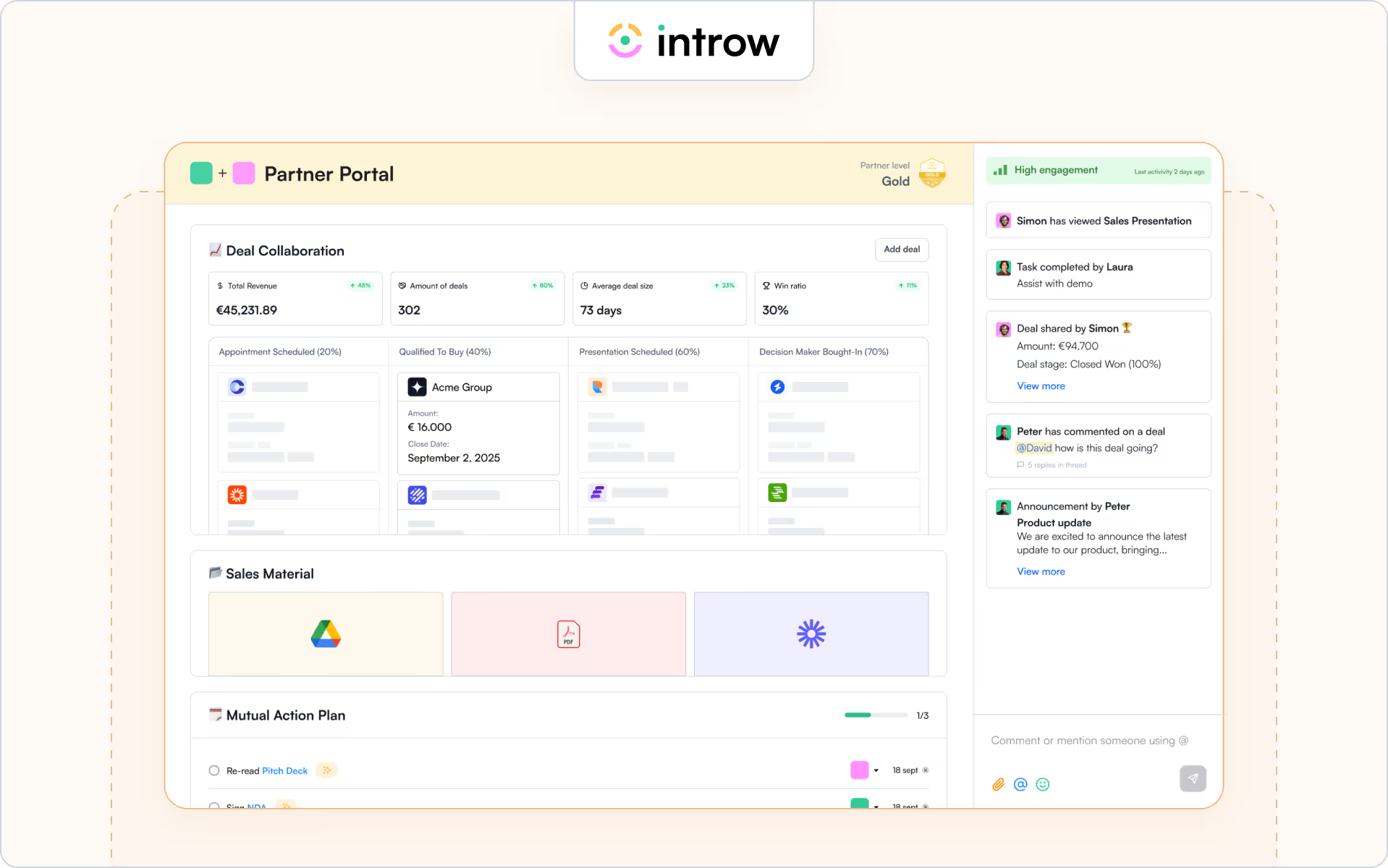
Introw is built for SaaS teams that want partner training to show up in pipeline, not disappear into an LMS.
Best for
Teams running channel partner training on Salesforce or HubSpot that need fast course creation, governed certification programs, and clear links between partner training, deal registration, and partner performance.
Why it stands out
Introw treats partner training as part of the partner workflow, not a separate learning platform. Its AI agent can create courses, modules, and quizzes from existing content in minutes, removing the steep learning curve typical of LMS for partner training.
Certification management is built in, with expiration and recertification to support real partner credibility.
Teams can segment partner audiences by partner tier or partner groups, then deliver training and sales training readiness through off-portal email and Slack nudges partners actually see.
Training progress and partner engagement are visible inside the CRM, allowing teams to link training activity directly to business objectives, partner performance, and deal registration. You can see this flow in the Introw Partner LMS demo:
Key capabilities
- AI-assisted course creation and intuitive course creation
- Partner training programs with learning paths
- Certification programs with expiration and recertification
- Partner onboarding and external training delivery
- Off-portal partner engagement via email and Slack
- Progress tracking, advanced analytics, and CRM-visible attribution
Keep in mind
Introw is strongest when partner training, partner enablement, and certification governance need to work together across the partner ecosystem.
Integrations
Salesforce, HubSpot, Slack, API.
Learn more: Partner LMS · Request a demo
2. Skilljar by Gainsight
Skilljar is built for external training programs and is commonly used for partner education and customer academies.
Best for
SaaS teams running partner training at scale that care about analytics, reporting, and training effectiveness.
Why it stands out
Skilljar emphasizes data visibility, making it easier to understand partner progress and completion across large partner networks.
Partner training features
- External partner and customer academies
- Certification programs and assessments
- Progress tracking and performance analytics
- Advanced reporting across partner groups
Keep in mind
Skilljar focuses on external education. CRM alignment and partner enablement workflows depend on integrations and data setup.
3. LearnUpon

LearnUpon supports partner training through multiple branded portals managed from a single admin environment.
Best for
Teams that need a partner education LMS to support different partner tiers, regions, or programs.
Why it stands out
LearnUpon makes it easy to separate audiences while maintaining centralized control, which helps manage complex partner programs.
Partner training features
- Multiple branded partner portals
- Certification tools with expiration and recertification
- Structured partner training programs
- Reporting across partner audiences
Keep in mind
Partner engagement and CRM-driven workflows may require additional tools beyond the LMS.
4. Docebo
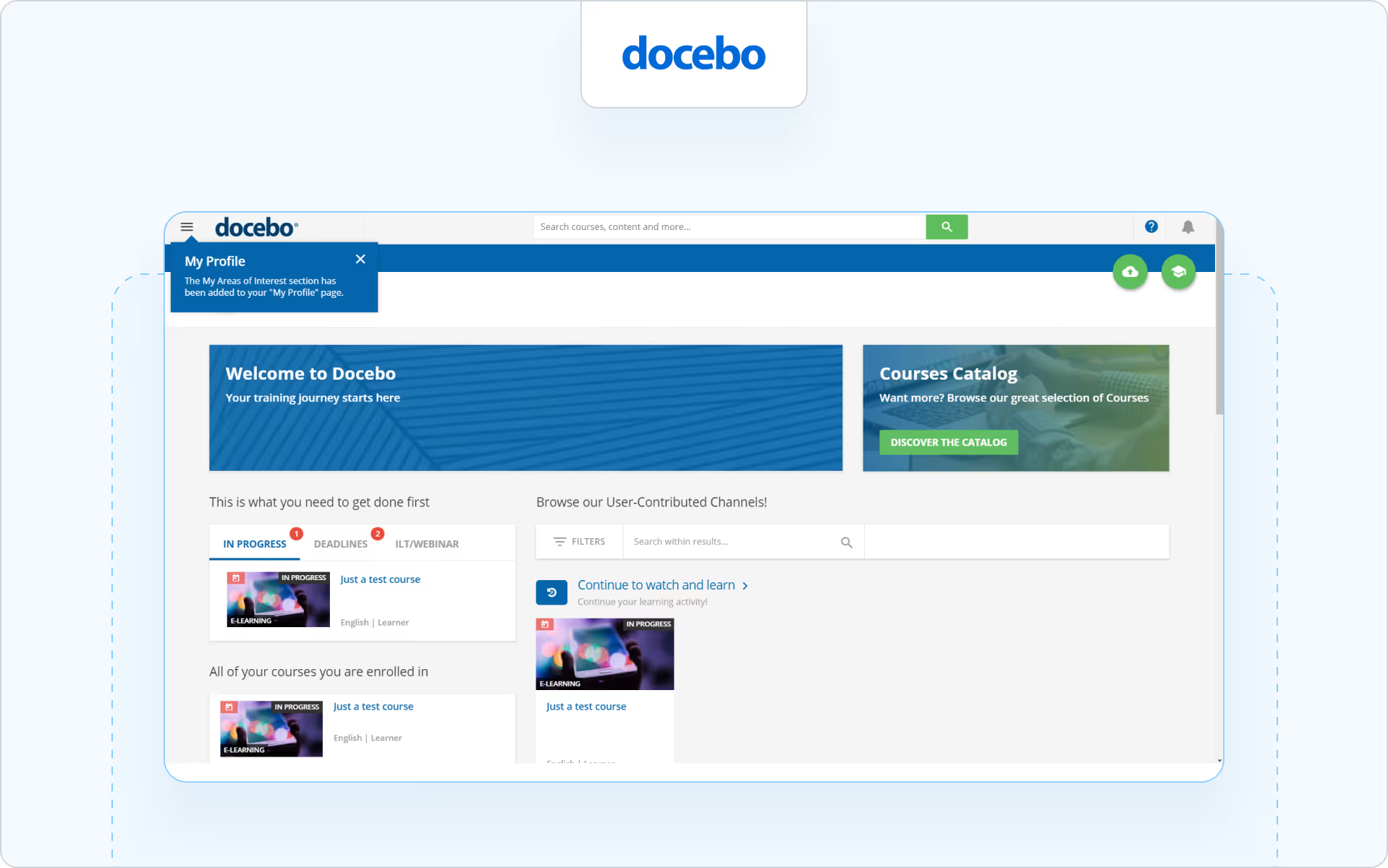
Docebo is a cloud-based LMS used for employee, customer, and channel partner training.
Best for
Large enterprises managing global channel partner training with advanced learning experience requirements.
Why it stands out
Docebo combines AI recommendations, social learning, and extensive configuration options to support large partner ecosystems.
Partner training features
- Partner training LMS software with AI-driven content recommendations
- Social learning and knowledge sharing features
- Certification programs and assessments
- Advanced analytics and reporting tools
Keep in mind
Docebo’s flexibility comes with complexity. Setup and customization can take time for partner training use cases.
5. Absorb LMS
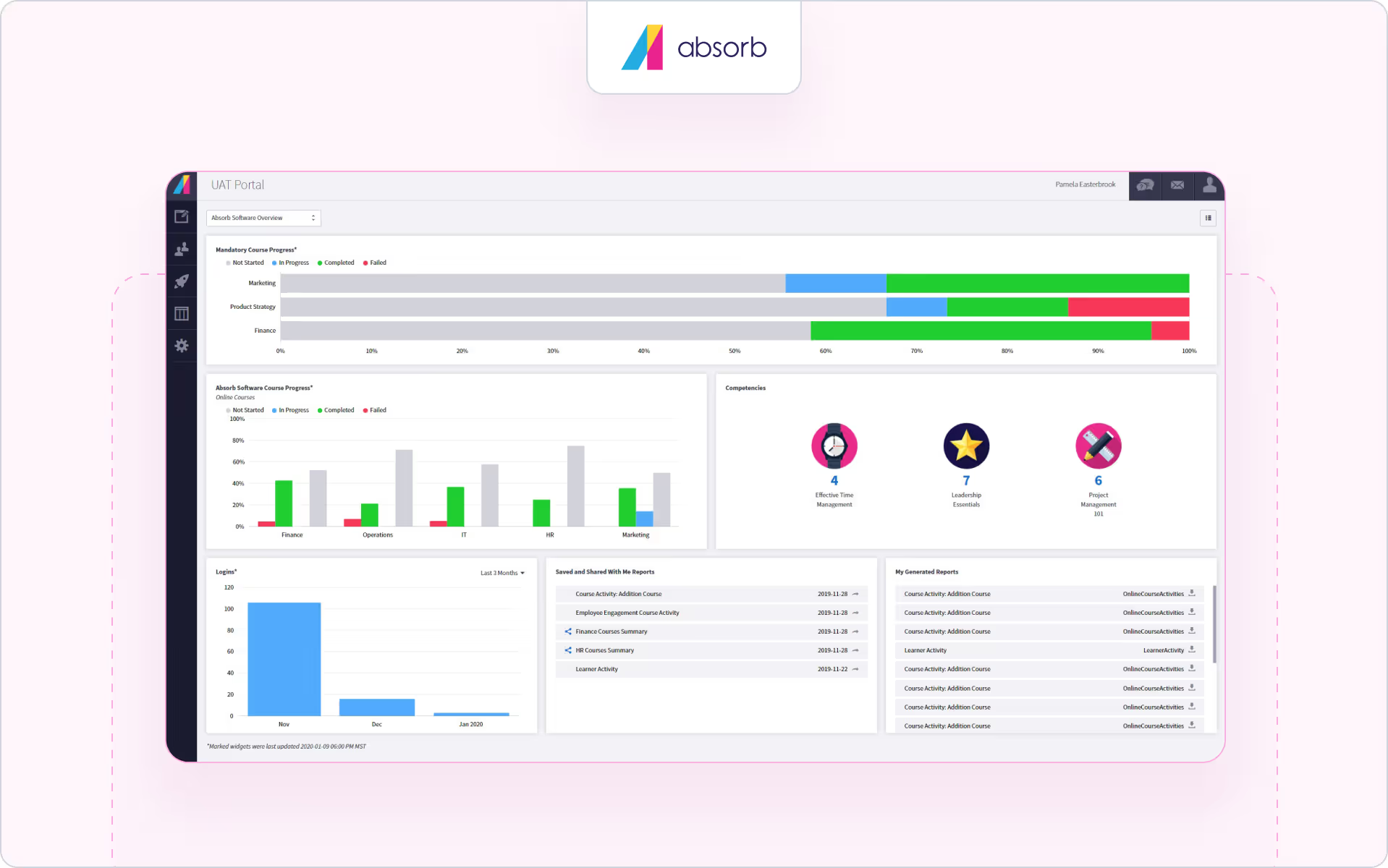
Absorb LMS is an enterprise learning platform used for customer and partner training programs.
Best for
Teams that need strong reporting tools and branded external training experiences for partners.
Why it stands out
Absorb LMS offers robust analytics and reporting, making it easier to measure partner training effectiveness across large audiences.
Partner training features
- Branded partner portals
- Certification management and assessments
- SCORM and xAPI support for training materials
- Advanced reporting and analytics
Keep in mind
Absorb LMS is feature-rich. Teams should evaluate partner user experience and onboarding effort during implementation
6. 360Learning
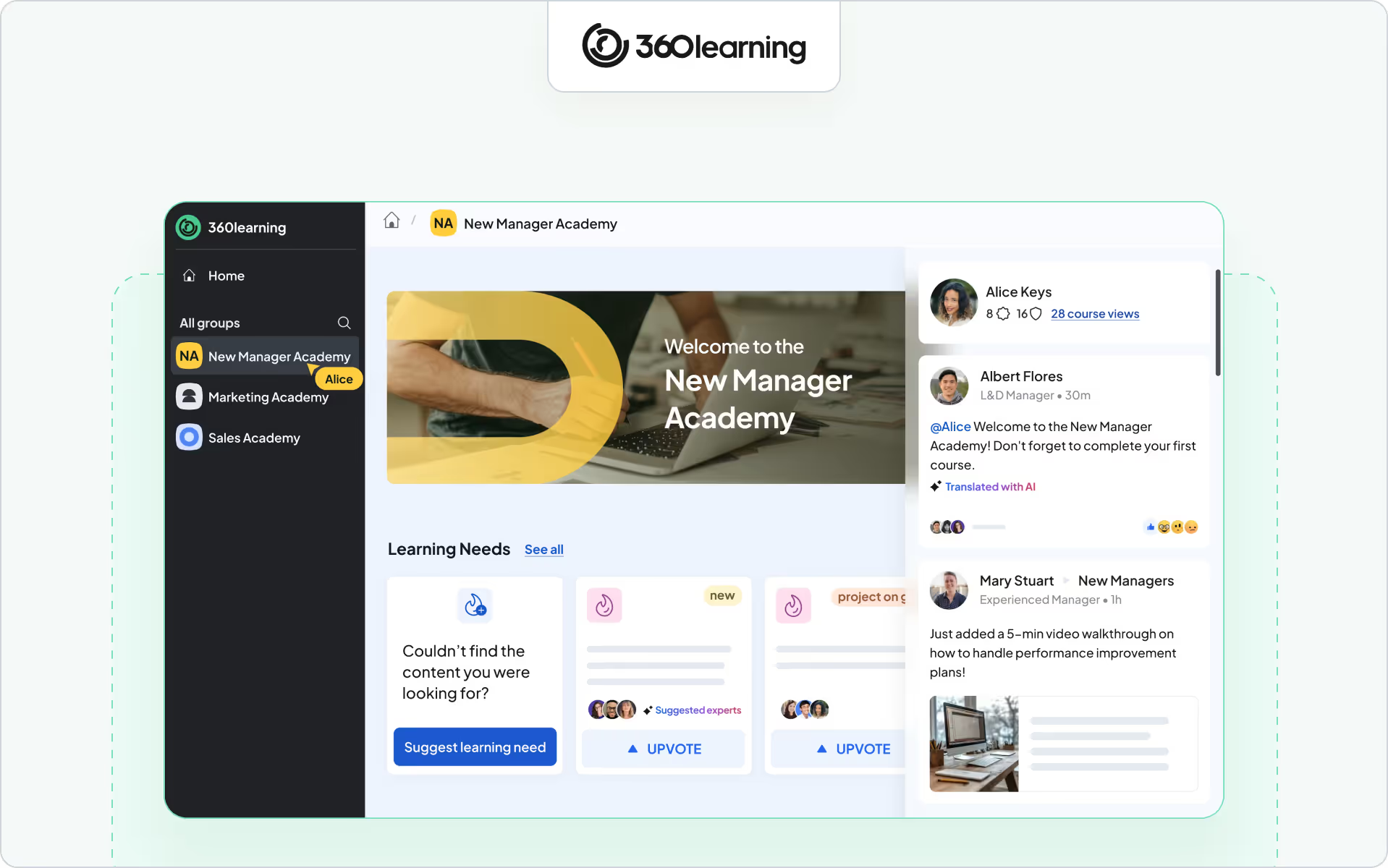
360Learning focuses on collaborative learning, with subject-matter experts contributing directly to courses.
Best for
Teams that want to accelerate partner enablement through shared knowledge and peer-driven learning.
Why it stands out
360Learning emphasizes social learning and fast content contribution, which can help surface real partner knowledge quickly.
Partner training features
- Collaborative course creation and updates
- Social learning and peer feedback
- Partner training programs with structured learning paths
- Progress tracking and reporting
Keep in mind
This model works best when partners actively contribute. Less suited for certification-heavy partner programs.
7. Intellum

Intellum supports large-scale customer and partner education programs through highly configurable learning experiences.
Best for
Enterprises running complex partner training programs that need strong authoring tools and analytics.
Why it stands out
Intellum offers deep control over learning experiences, content structure, and reporting across large partner networks.
Partner training features
- External partner education LMS
- Advanced course creation and content management
- Certification programs and assessments
- Advanced analytics and reporting
Keep in mind
Built for scale. Implementation and configuration can take time.
8. TalentLMS (by Epignosis)

TalentLMS is a cloud-based LMS often used for partner and customer training due to its simplicity.
Best for
Teams that need to deliver partner training quickly without enterprise-level complexity.
Why it stands out
TalentLMS is easy to deploy and manage, making it a practical choice for smaller partner programs.
Partner training features
- Partner training LMS with branches for partners
- Certification programs and assessments
- Course creation and training materials
- Basic reporting and progress tracking
Keep in mind
Analytics and partner enablement depth are limited compared to enterprise platforms.
9. Lessonly by Seismic
Lessonly is a learning platform focused on sales training, coaching, and readiness for internal teams and partners.
Best for
Teams that want to improve partner performance through structured sales training, coaching, and certification programs.
Why it stands out
Lessonly is strong on practice and reinforcement. It supports partner training programs that focus on real-world scenarios, role-based learning, and ongoing readiness instead of one-time course completion.
Partner training features
- Sales training and role-based learning paths
- Coaching, practice scenarios, and assessments
- Certification programs and readiness tracking
- Progress tracking and reporting tools
Keep in mind
Lessonly is optimized for readiness and coaching. Teams needing a full partner education LMS with deep content management may pair it with other tools.
10. Mindtickle

Mindtickle focuses on sales training and readiness rather than broad partner education.
Best for
Organizations prioritizing sales team readiness, coaching, and role-based partner training.
Why it stands out
Mindtickle excels at readiness measurement through role-plays, coaching workflows, and scorecards.
Partner training features
- Sales training and readiness programs
- Role-plays, coaching, and assessments
- Performance tracking and analytics
- Partner training programs aligned to sales motions
Keep in mind
Not a full partner training LMS. Often paired with other tools for broader partner education.
11. WorkRamp (by Learning Pool)
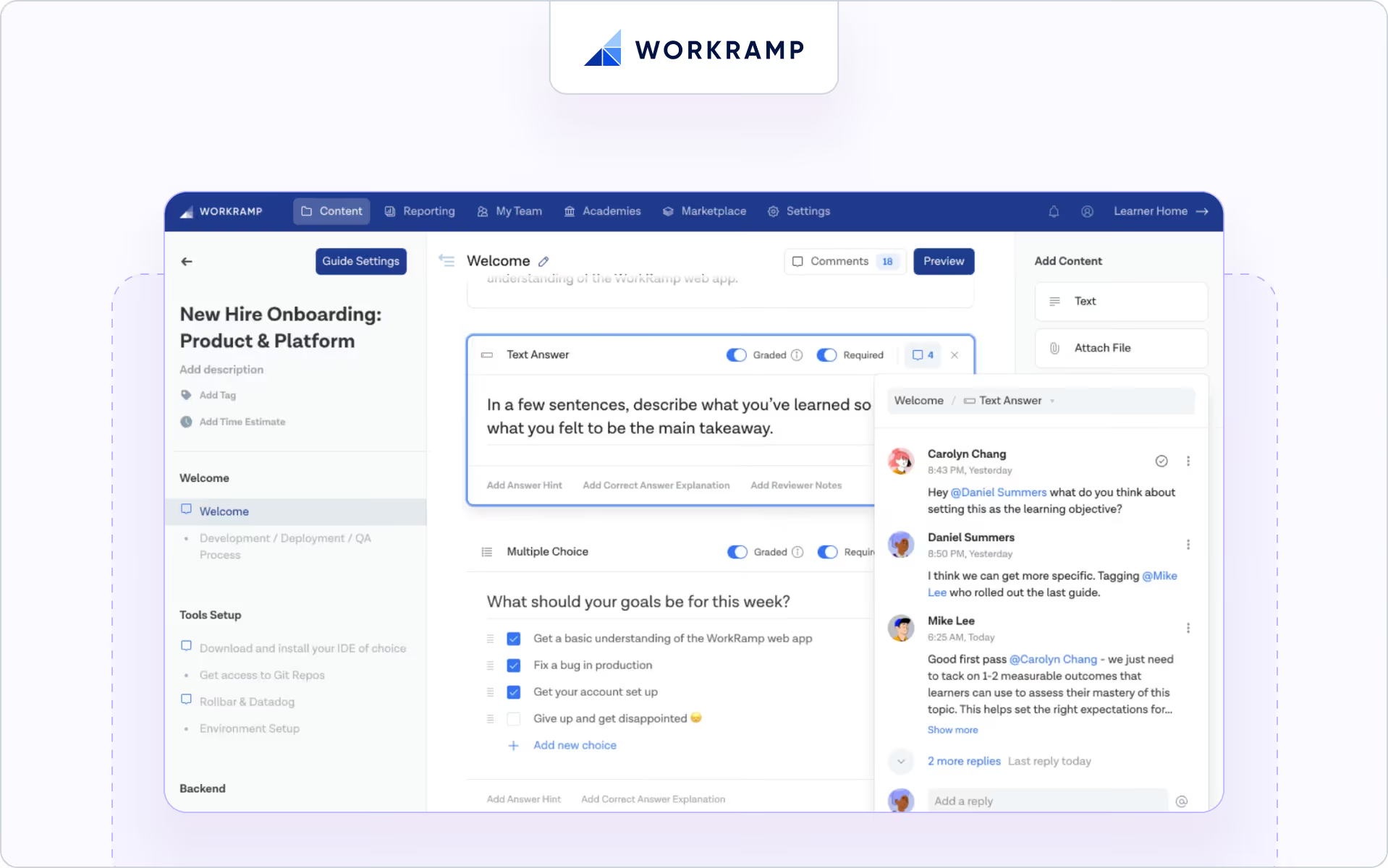
WorkRamp is a learning platform designed around sales training and partner readiness.
Best for
Teams that need partner enablement software focused on sales team readiness and partner performance.
Partner training features
- Sales training programs and coaching
- Certification programs and certification management
- Personalized learning paths and progress tracking
- Performance analytics and reporting tools
Keep in mind
WorkRamp prioritizes readiness over full partner education LMS coverage.
12. Channeltivity (Training Module)

Channeltivity combines partner management with embedded training.
Best for
Teams running a partner program that want training tightly connected to partner management.
Partner training features
- Partner onboarding and external training
- Certification tools and assessments
- Partner groups and partner tier management
- Deal registration visibility
Keep in mind
Training depth is lighter than a dedicated LMS for partner training platforms. For broader context, see the best partner relationship management software.
13. Litmos
Litmos supports large-scale external training with strong compliance controls.
Best for
Organizations delivering external training to global partner networks with strict requirements.
Partner training features
- Partner education LMS with certifications
- Training materials and assessments
- Multi-language support
- Advanced reporting and analytics capabilities
Keep in mind
Less flexible for customized learning or partner engagement beyond compliance.
14. Thought Industries

Thought Industries is built for scalable partner education and external learning experiences.
Best for
Companies investing in partner education as part of customer experience and business growth.
Partner training features
- Separate learning spaces for partner groups
- Certification programs and training program design
- Course creation and content management
- Community features and knowledge sharing
Keep in mind
CRM alignment and deal registration workflows require additional integration. Fits well alongside partnership marketing strategies, outlined in the partnership marketing guide.
15. Trainn
Trainn focuses on guided product education for external partners.
Best for
Teams that want to provide training around product knowledge and onboarding.
Partner training features
- Interactive training materials and guides
- Product knowledge walkthroughs
- Create courses quickly with AI support
- Progress tracking
Keep in mind
Not a full partner training LMS software for certifications or analytics-heavy use cases.
16. EducateMe

EducateMe supports partner education through branded learning hubs.
Best for
Teams that want to customize training and deliver structured partner training programs.
Partner training features
- Partner education LMS with automated paths
- Customized learning paths
- Certification management
- Reporting tools and partner progress tracking
Keep in mind
Advanced analytics and CRM attribution are more limited.
17. CYPHER Learning
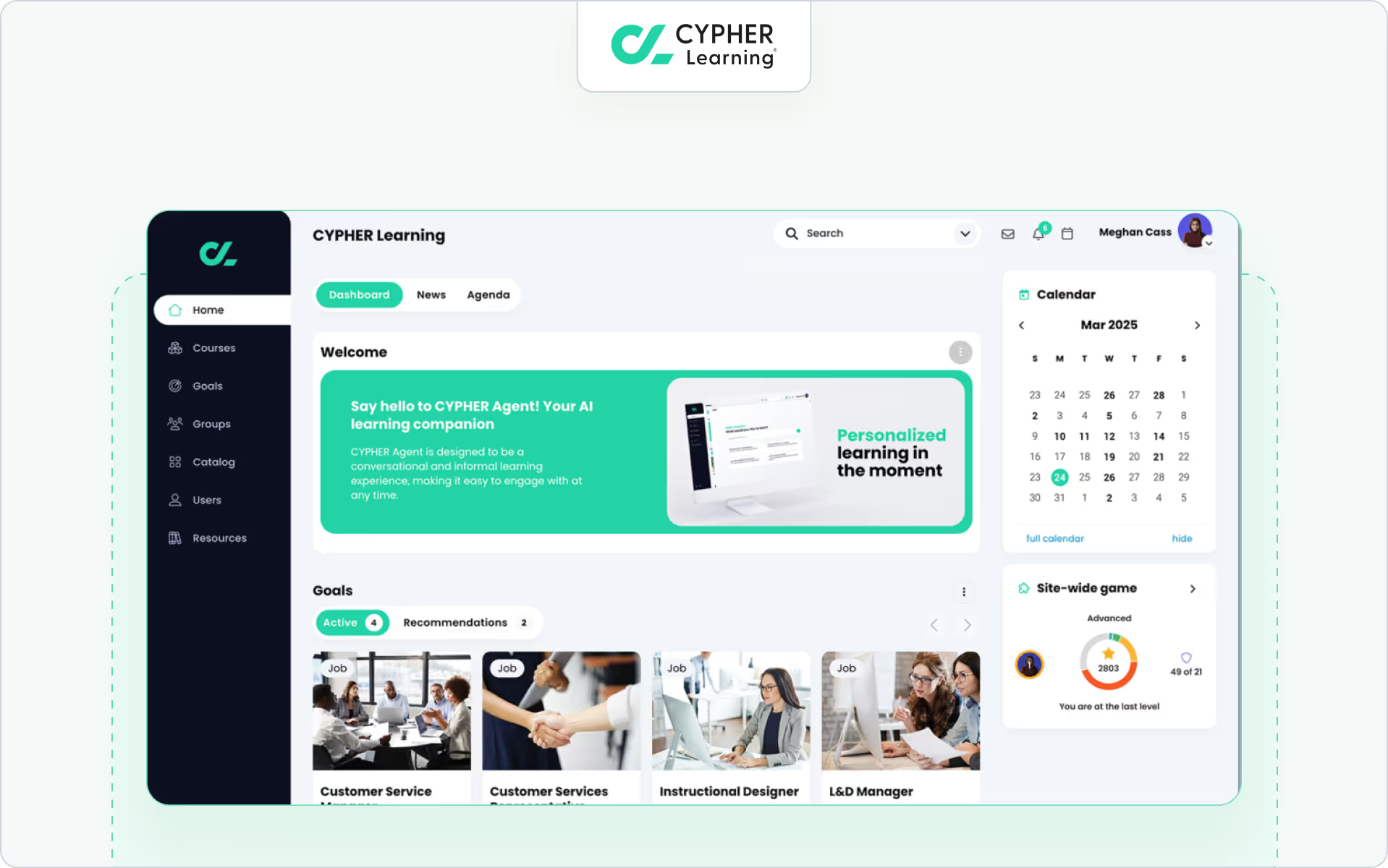
CYPHER Learning is a cloud-based LMS designed for skills development at scale.
Best for
Enterprises managing large partner ecosystems with diverse partner training needs.
Partner training features
- Adaptive learning paths and personalized learning
- Certification tools and assessments
- Robust analytics and advanced reporting
- Multi-language support
Keep in mind
Feature breadth can introduce a steep learning curve during setup. CYPHER Learning is often evaluated as training partner software for global programs.
18. Cornerstone Customer & Partner LMS
Cornerstone supports partner training across complex partner networks.
Best for
Large enterprises extending existing Cornerstone deployments to external partners.
Partner training features
- Branded external learning portals
- Certification programs and structured journeys
- Advanced analytics and performance tracking
- Partner network reporting
Keep in mind
Implementation can be heavy. Teams should validate partner experience and CRM fit early, especially when aligning with the top CRM for partner management.
19. AcademyOcean

AcademyOcean is built for structured external partner training.
Best for
Teams running partner onboarding and partner training built around multiple partner groups.
Partner training features
- Partner training LMS with multiple academies
- Personalized learning and learning experience controls
- Certification programs
- Training effectiveness tracking
Keep in mind
Analytics depth and partner enablement breadth vary by plan.
20. iSpring LMS
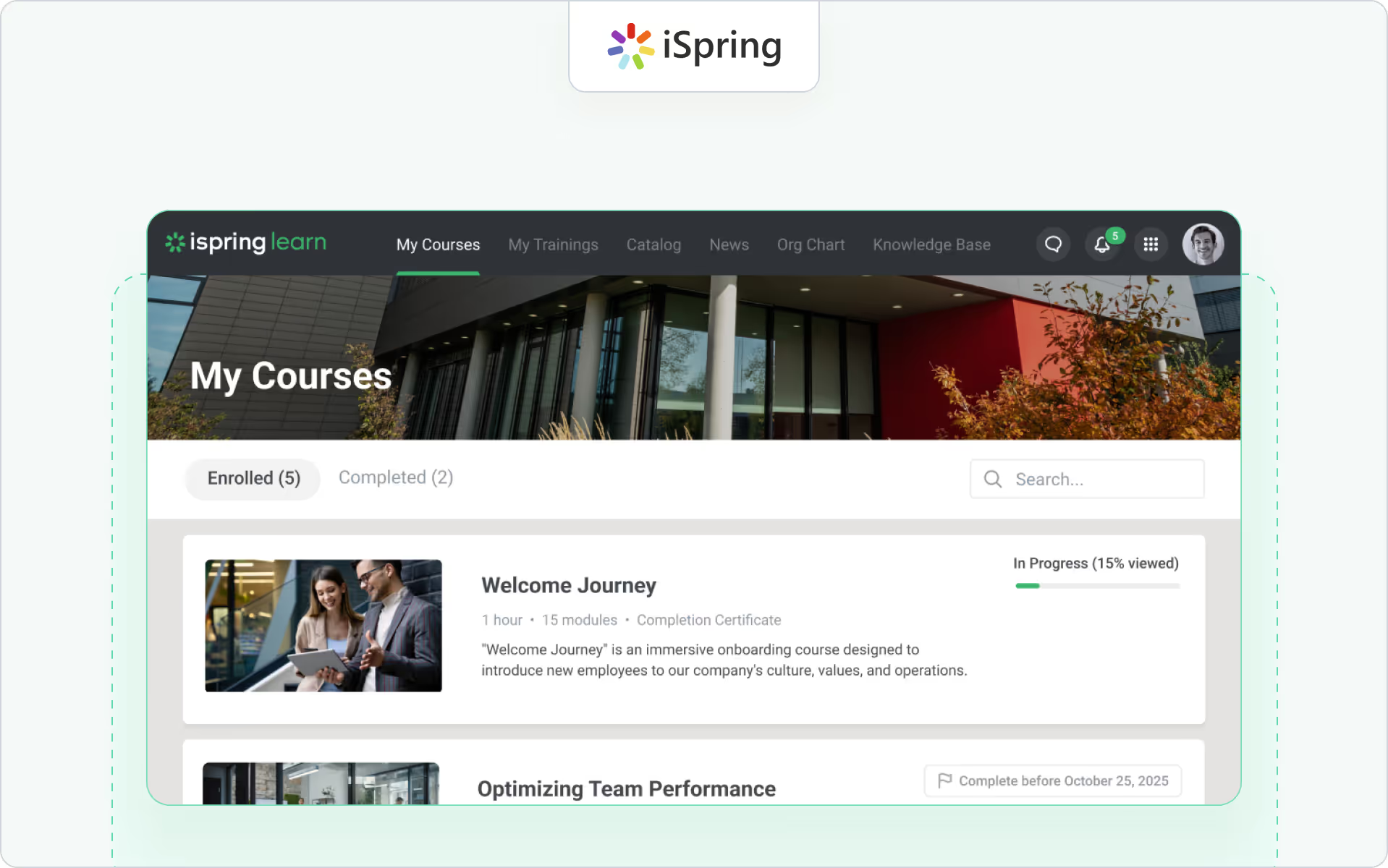
iSpring LMS combines LMS delivery with course authoring tools.
Best for
Teams that want to deliver training quickly without enterprise complexity.
Partner training features
- LMS for partner training with certificates
- Course creation and intuitive course creation tools
- Training materials and assessments
- Progress tracking and reporting tools
Keep in mind
Best suited for smaller partner programs or early-stage partner enablement.
Taken together, these tools show how wide the partner training landscape has become. Some focus on external education and certifications.
Before making a shortlist, it helps to step back and evaluate what actually matters for your partner program in 2026.
Buyer’s Checklist (What to Look For in 2026)
Use this checklist to evaluate partner training software side by side and assess fit against real partner program requirements.
Authoring speed
Look for intuitive course creation with AI-assisted course and quiz builders. The ability to create courses by importing content from your website, portal, or documentation reduces setup time and avoids a steep learning curve.
Certification governance
Effective certification programs should support certification management, expiration, and recertification, prerequisites, and product or permission gating to protect partner credibility.
Enrollment at scale
Partner training LMS platforms should support SSO or SAML, bulk invitations, and the ability to segment partner audiences by partner type, partner tier, region, role, or partner groups.
Engagement without friction
Partner engagement improves when training is delivered without forcing partners into separate learning spaces. Off-portal email and Slack announcements, reminders, and countdowns help deliver training efficiently.
Readiness and assessments
Training effectiveness depends on quizzes, scenarios, role-plays, and scorecards that track partner progress and partner performance.
CRM-first reporting
A partner training LMS should sync training progress and certifications to Salesforce or HubSpot. This enables linking training to deal registration, opportunities, ARR, and performance analytics.
Branding and multi-portal support
For larger partner ecosystems, look for white-label options, localization, and multi-portal or multi-audience support to manage different partner networks.
Security and governance
Enterprise-ready training partner software should include role-based access, audit trails, PII controls, and data residency options to support external partners securely.
Ecosystem fit
Evaluate how well the learning platform fits into your broader ecosystem. Alignment with partner management or PRM tools, support for webinars or live training, SCORM or xAPI compatibility, APIs, and marketing tools all affect long-term partner enablement and business growth.
Once you’ve worked through these criteria, a clear pattern tends to emerge.
Teams that need partner training to move beyond content delivery and actually support partner performance, engagement, and deal registration start prioritizing CRM-first workflows and governed certification at scale.
That’s where Introw comes in.
Next, we’ll look at why many teams choose Introw for partner training and how it supports these requirements in practice.
Why Teams Choose Introw for Partner Training
When teams evaluate partner training software against real-world requirements, Introw consistently stands out for one reason: it connects training directly to revenue workflows instead of isolating it in an LMS.
Introw is built for teams that want partner training to support partner performance, partner credibility, and measurable business outcomes across the entire partner ecosystem.
Your next steps
If you’re evaluating partner training software for 2026, here’s how to move forward:
- Shortlist platforms that support certification governance, CRM visibility, and off-portal engagement.
- Validate how training data connects to deal registration, pipeline, and partner performance in your CRM.
- Run a focused trial to assess authoring speed, partner adoption, and reporting depth.
Ready to see how this works in practice?
Request an Introw demo and see how partner training looks when it’s built for real partner activation, not just course completion.
16 Deal Registration Software Platforms Your Partners Will Actually Use
What would change if every partner could register deals from email or Slack in seconds?
Most deal registration programs still rely on long forms, portal logins, and manual updates. That slows partners down and creates a duplicate pipeline and unclear ownership.
A modern deal registration process removes those steps, automates approvals, and keeps every deal stage in your CRM. When registering deals feels easy, partners submit earlier and stay aligned with your team.
You’ll learn
- what effective deal registration software looks like today,
- how to evaluate the essentials,
- and which platforms actually help partners register deals consistently.
So where does friction come from, and how does a better workflow protect partner trust and improve forecasting?
Why deal registration still breaks (and how to fix it)
Deal registration should be simple. Partners register deals, your team reviews them quickly, and everyone stays aligned.
Yet many deal registration programs still create friction. Partners hit access issues, approvals move slowly, and deal data becomes inconsistent.
Over time, this reduces partner trust and increases channel conflict across direct and indirect sales.
Deal registration process friction
Most deal registration failures come from three predictable blockers:
- Partner portals that require logins or too many steps.
- Deal submission forms that take too long to complete.
- Approval delays that leave partners without updates.
When the process feels heavy, partners default to emailing an AE instead of using the deal registration tool.
This leads to duplicate deal data, unclear ownership, and rising tension between channel partners and the direct sales team.
Channel managers then lose visibility into deal stages and partner behavior.
A common breakdown looks like this:
- A partner tries to register deals but cannot access the partner portal easily.
- The direct sales team enters the same customer manually.
- Conflicting records appear, and no one has a clean view of deal progress.
This cycle hurts partner relationships and weakens your partner program.
What good deal registration looks like
A strong deal registration program focuses on three essentials:
- Off-portal intake through email, Slack, or lightweight links.
- Instant confirmations tied to CRM deal stages.
- Clean, CRM-native deal data that updates in real time.
With these elements in place, partners register deals earlier and more consistently.
Clear rules reduce conflict when multiple partners work with the same customer. Automated updates keep partners informed without manual data entry. And real-time visibility across your sales pipeline helps both channel partners and internal channel managers stay aligned.
Here is how modern systems solve old problems:
Platforms that follow this model, including Introw’s deal and lead registration workflow, reduce friction by syncing every submission directly into the CRM and keeping partners informed automatically.
Why this matters for deal flow
Deal registration software works only when partners trust the experience.
When partners can register deals quickly, stay informed, and see consistent deal stages, they engage more. This leads to cleaner partner pipeline visibility, fewer disputes, and faster revenue cycles.
To evaluate which deal registration software delivers on this, the next section breaks down the core features every buyer should look for in 2026.
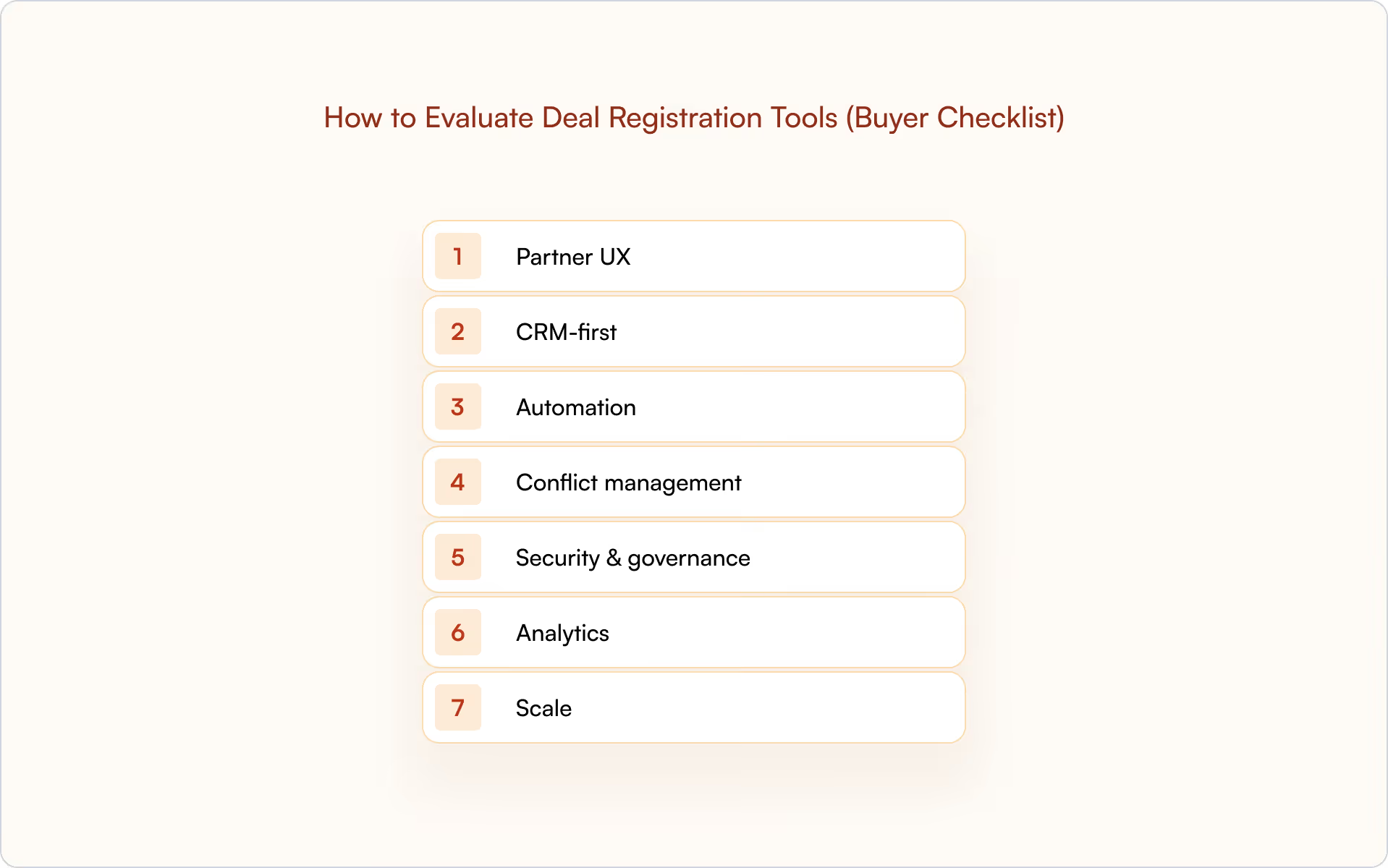
How to evaluate deal registration tools (buyer checklist)
Choosing deal registration software is easier when you know what actually drives partner adoption.
Most teams compare features, but in our experience, the real difference comes from how well the tool supports your partners day to day.
If the process feels simple, partners register deals more often, and your deal data stays clean inside Salesforce or HubSpot.
Start with partner experience
Partner experience is the biggest factor in deal registration success. If the process feels slow or confusing, partners will skip it and email someone on your direct sales team instead.
Strong tools make deal registration simple by offering:
- Fast intake through email, Slack, or a short deal submission form.
- Clear steps so partners know exactly how to register deals.
- Mobile-friendly options for partners who work on the go.
We see the best results when channel partners can register deals without touching a partner portal. It removes friction and improves partner trust from the start.
Set up a good deal registration module
A good deal registration module should help your business reduce channel conflict and keep deal progress visible across teams.
When tools automate the steps partners usually struggle with, your partner program becomes easier to run.
Look for:
- Automatic approvals based on time stamps, partner tier, or ownership rules.
- Real-time sync of deal stages inside your CRM.
- Clean deal data that does not require manual data entry.
These features keep your channel pipeline data accurate and give both partner managers and internal sales teams a single view of each opportunity.
Governance and scale as your partner program grows
As your partner program expands, you need structure. Different partner segments often need different experiences, and your internal teams need clear rules to avoid mix-ups.
We suggest checking for:
- Role-based access so partner managers and sales leadership see what they need.
- A reliable audit trail that tracks changes and partner behavior.
- Flexible segmentation for geos, partner tier, or product lines.
These guardrails help your business stay aligned as more partners register deals and your sales pipeline grows.
A quick way to compare tools
Why this checklist helps your business
A deal registration program only works when partners engage with it.
If you choose software that simplifies the process, your partners register deals earlier, your teams stay aligned, and you avoid the channel conflict that slows down revenue.
Now that you know what to look for, we can compare the deal registration tools that actually help partners register deals without friction.
The 17 best deal registration software platforms (2026)
We've put together our picks for solid deal registration tools that we see most often across SaaS partner programs.
Each one supports deal registration, but they solve different problems depending on your partner segments, tech stack, and channel strategy.
Use this section to match your program design to the right platform, not just the biggest brand.
1. Introw
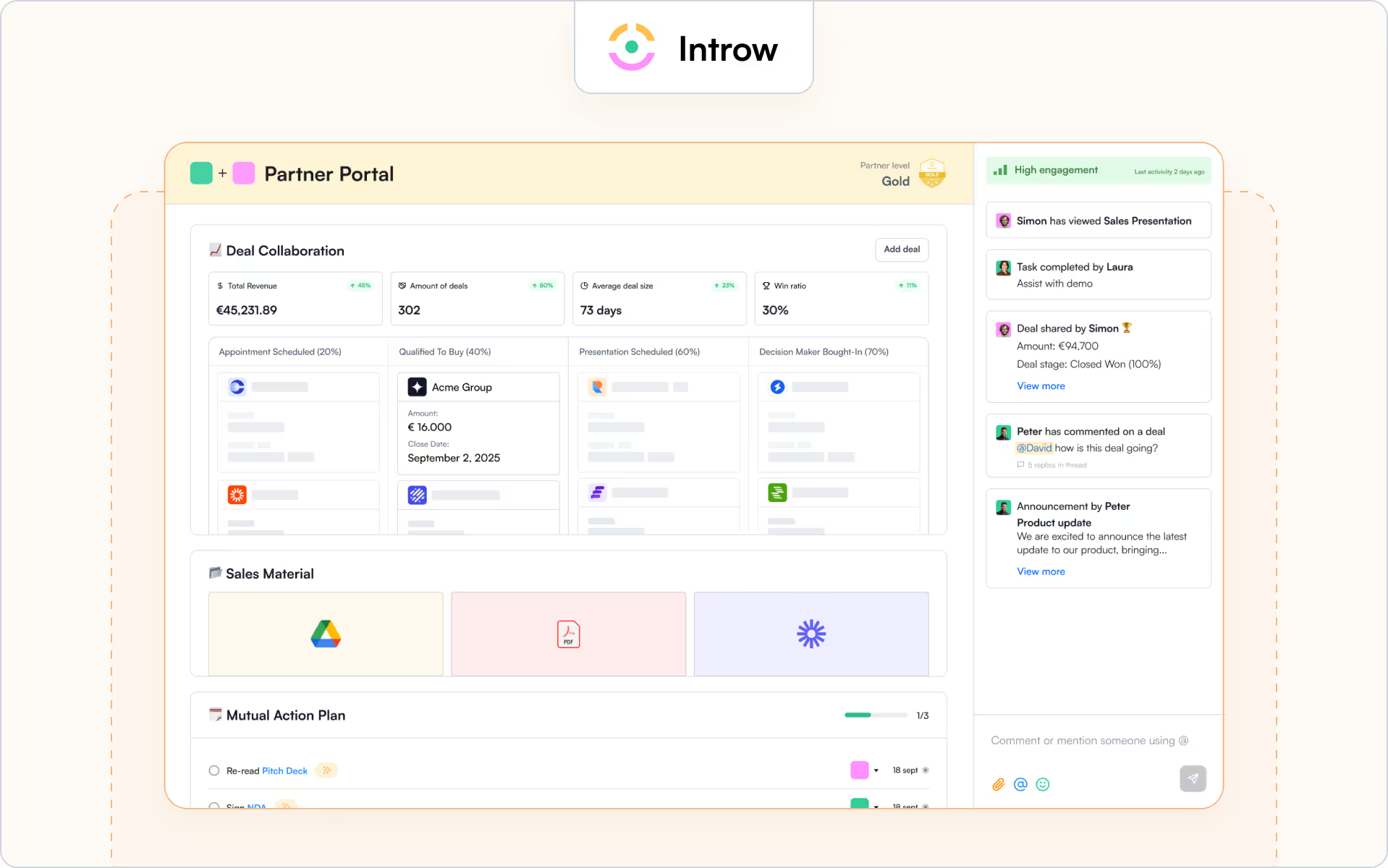
Introw is a CRM-native deal registration system that lets partners register deals from email, Slack, or lightweight links instead of a portal.
Who it’s for
B2B teams on Salesforce or HubSpot running referral, reseller, or co-sell motions with 20–300+ channel partners.
Why choose it
Partners register deals without logging in, while your teams work entirely from native CRM objects with real-time deal stages.
Standout capabilities
Off-portal intake, automated approvals, deal progress updates synced to Salesforce or HubSpot, and engagement analytics across the partner pipeline.
Keep in mind
Best if you want deal registration, partner engagement, and attribution in one CRM-first platform instead of a heavy portal.
Integrations/notes
Deep Salesforce and HubSpot integrations, Slack notifications, open API, and a focused deal registration module tied to clean pipeline data.
2. Impartner
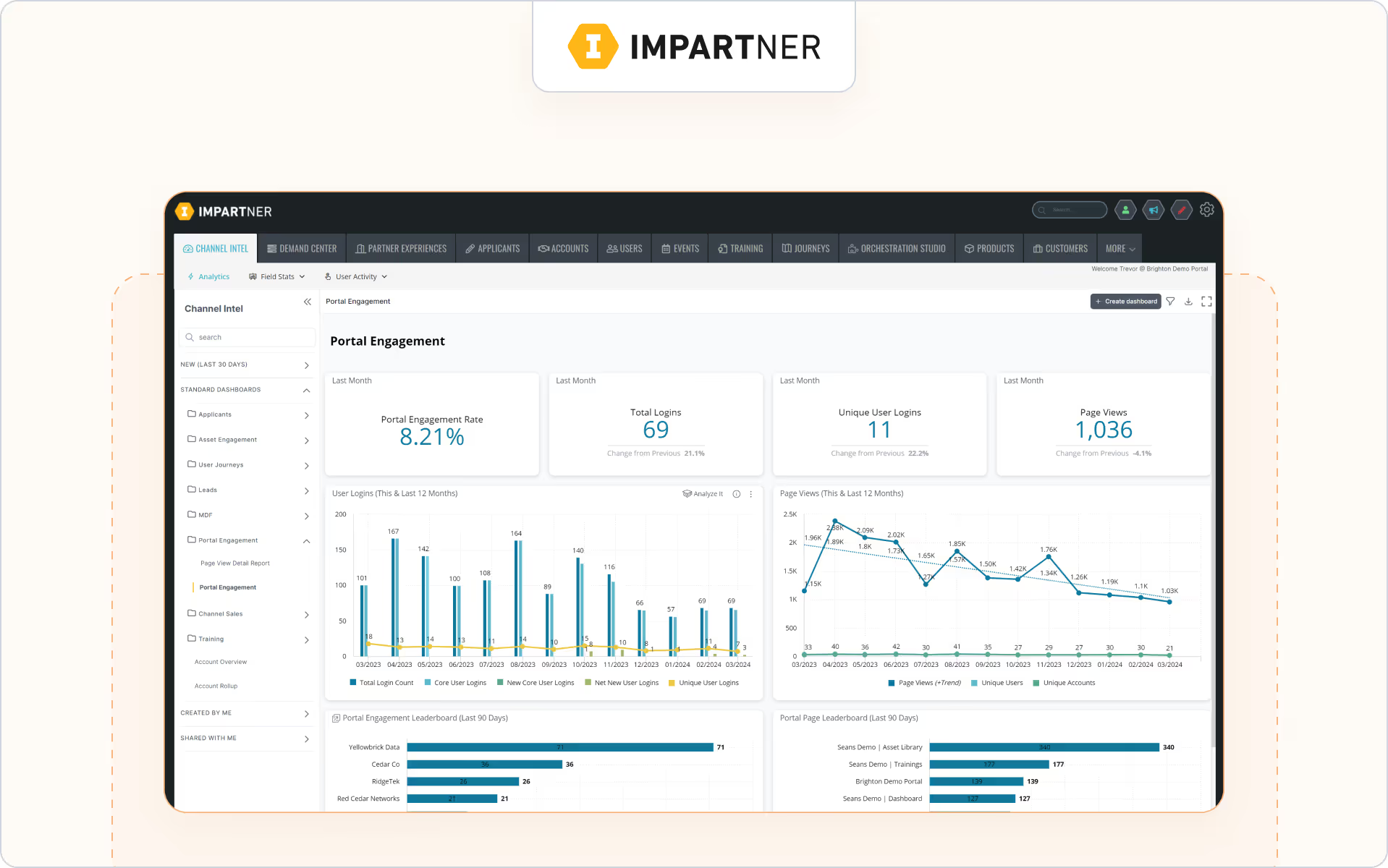
Impartner is a full PRM platform built for large channel programs with complex workflows.
Who it’s for
Global SaaS and technology companies with structured partner tiers and compliance needs.
Why choose it
Mature deal registration module, configurable approval logic, and strong governance for value-added resellers and distributors.
Standout capabilities
Tier rules, multi-step approvals, MDF, channel performance reporting, and tools to reduce channel conflict.
Keep in mind
Heavier setup; works best with dedicated channel managers and Salesforce-centric environments.
Integrations/notes
Strong CRM connectors, especially Salesforce, plus a wide ecosystem of partner marketing integrations.
3. Channelscaler (prev. Allbound)
Channelscaler combines partner training, content, and deal registration in a single portal.
Who it’s for
Teams that care about partner enablement as much as partner pipeline.
Why choose it
Partners can access marketing materials, complete training, and register deals in one place.
Standout capabilities
Content hub, learning paths, QBR support, and MDF handling with a guided partner portal.
Keep in mind
Portal-first model, so plan how you will keep partners logging in consistently.
Integrations/notes
Integrates with major CRMs and common partner marketing tools.
4. Kiflo
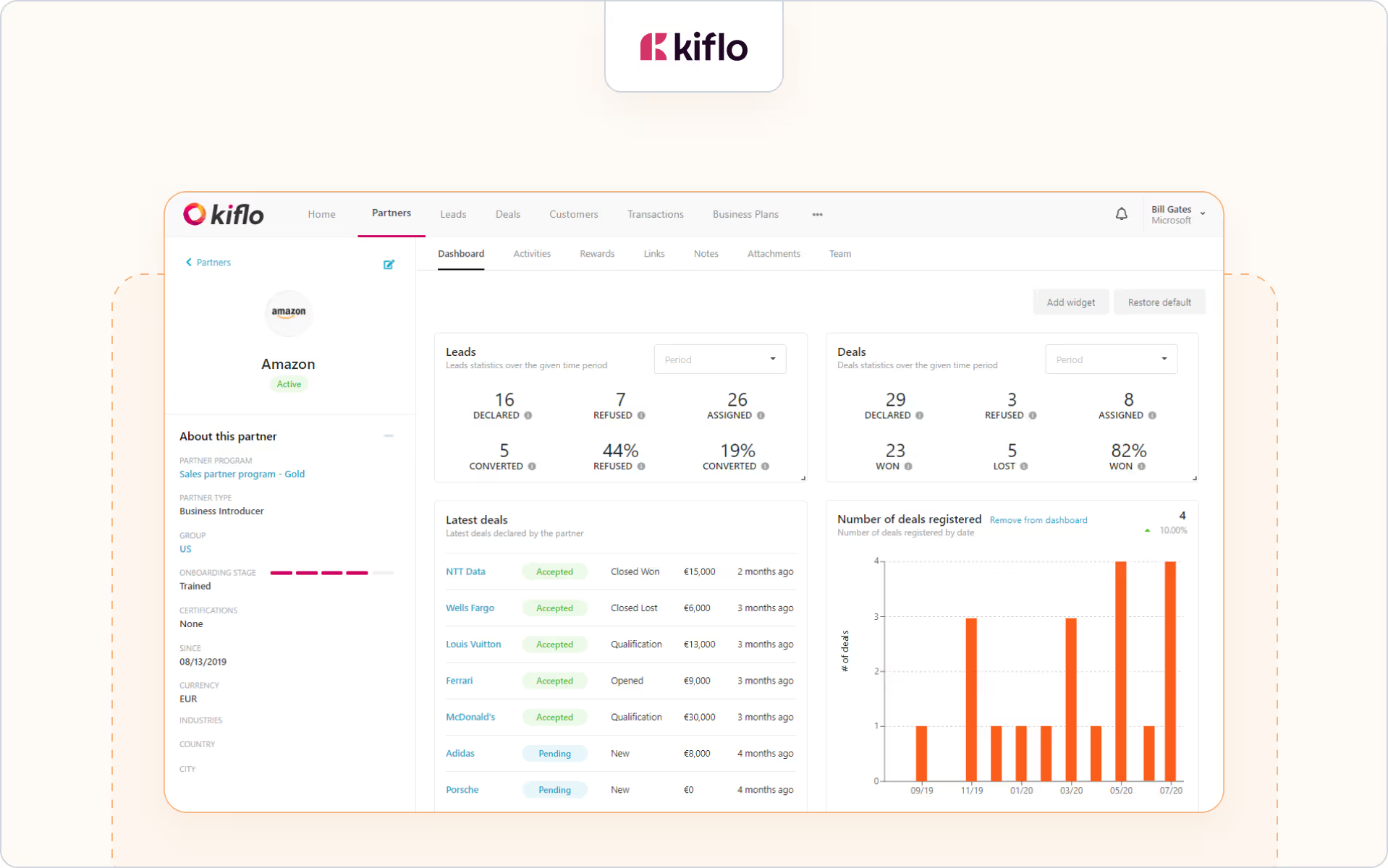
Kiflo is a simple, lightweight PRM with built-in deal registration for growing partner programs.
Who it’s for
SMB and mid-market SaaS companies launching a partner program for the first time.
Why choose it
Straightforward deal registration and onboarding without heavy admin.
Standout capabilities
Deal forms, partner onboarding, commission tracking, and basic partner performance reporting.
Keep in mind
Analytics and customization are lighter for complex global programs.
Integrations/notes
Connects with Salesforce, HubSpot, and common marketing tools.
5. Channeltivity
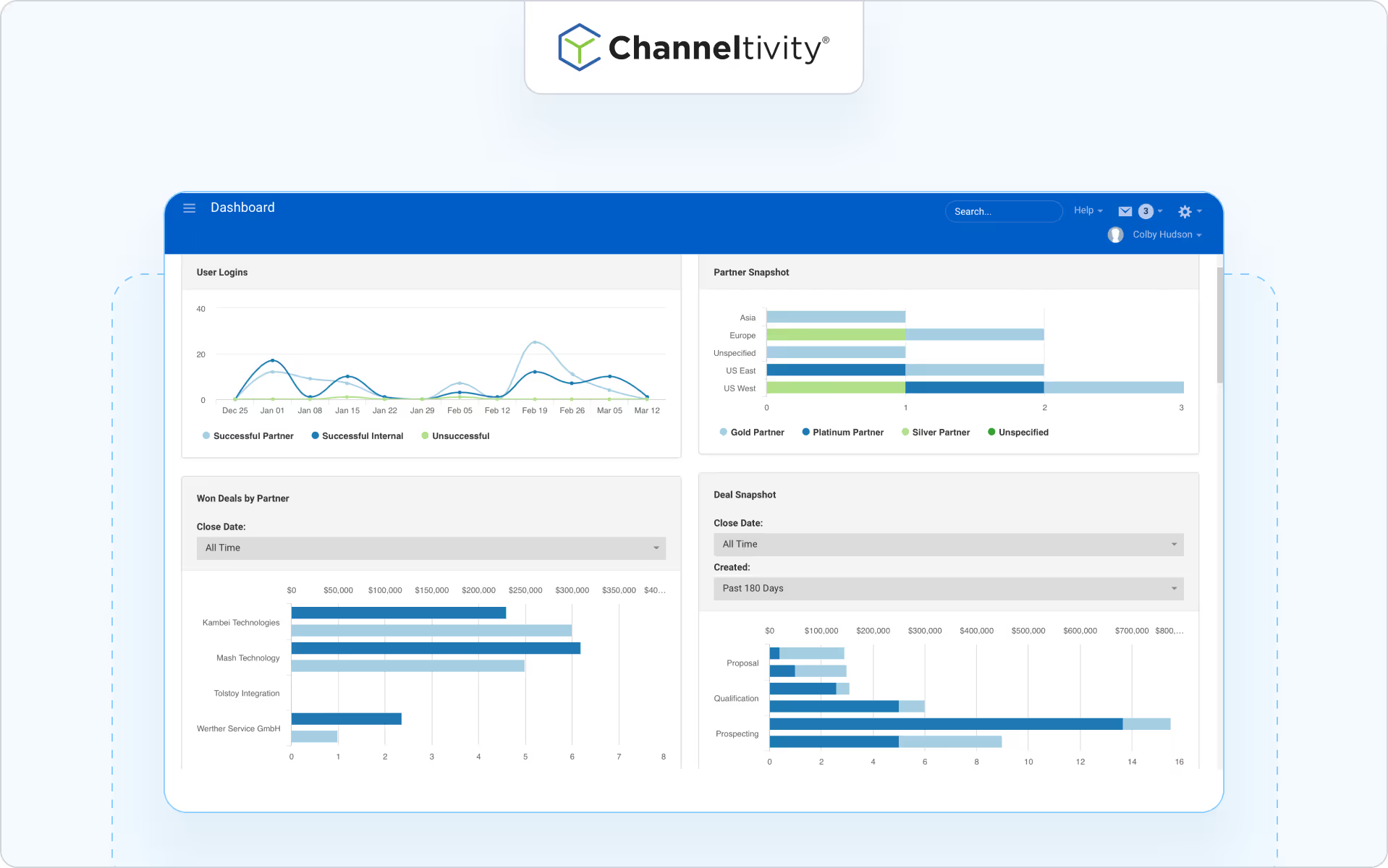
Channeltivity delivers structured deal registration and channel operations in a clean partner portal.
Who it’s for
Tech vendors that want predictable deal registration and partner management without enterprise overhead.
Why choose it
Reliable deal registration module with lead distribution and partner onboarding.
Standout capabilities
Deal forms, MDF, lead routing, referral management, and HubSpot integration.
Keep in mind
Off-portal submission is limited, so adoption relies on partner portal use.
Integrations/notes
Strong HubSpot integration with support for Salesforce.
6. Magentrix
Magentrix is a partner relationship management (PRM) platform.
Who it’s for
Salesforce-centric companies that need branded partner experiences.
Why choose it
Lets you build custom partner portals with community features, content, and deal registration.
Standout capabilities
Admin is no-code with drag-and-drop capabilities (and has been for the past three years). Magentrix emphasises that it’s the only enterprise-fit PRM with 100% no-code capability. You can also create flexible portal pages and set granular permission controls.
Integrations/notes
Magentrix positions itself as an alternative to Salesforce Experience Cloud, with integrations/connectors available (including Salesforce, depending on your setup) as well as support and marketing tools.
7. ZINFI
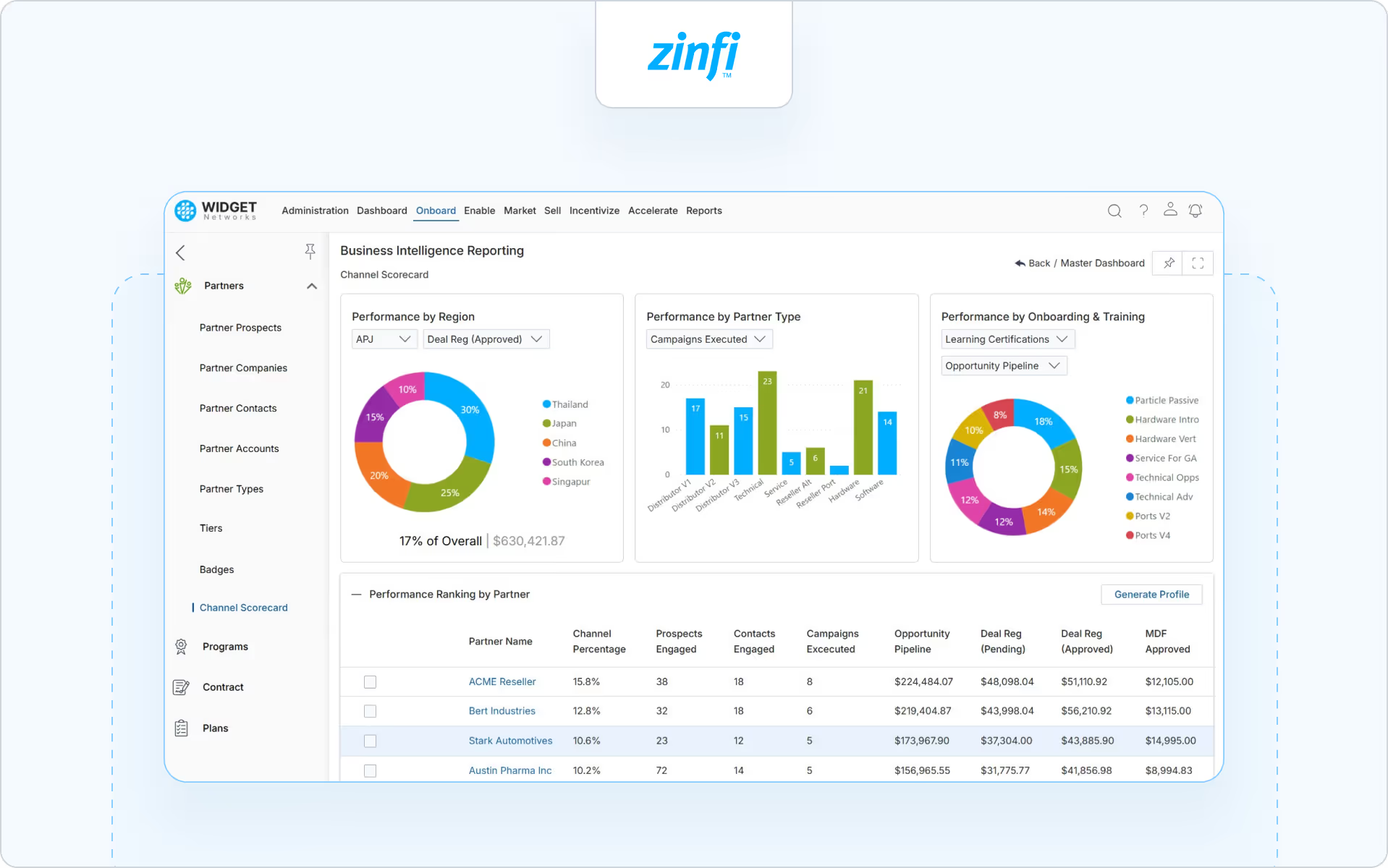
ZINFI supports large, complex channel programs that need detailed rules and compliance.
Who it’s for
Enterprises with many partner types, geos, and strict governance requirements.
Why choose it
Highly configurable approval rules and workflows for deal registration programs at scale.
Standout capabilities
Audit trails, rule engines, partner tiering, and multi-language support.
Keep in mind
Admin setup can be intensive; best for structured, mature channel programs.
Integrations/notes
CRM integrations plus connectors for channel marketing and data management.
8. WorkSpan
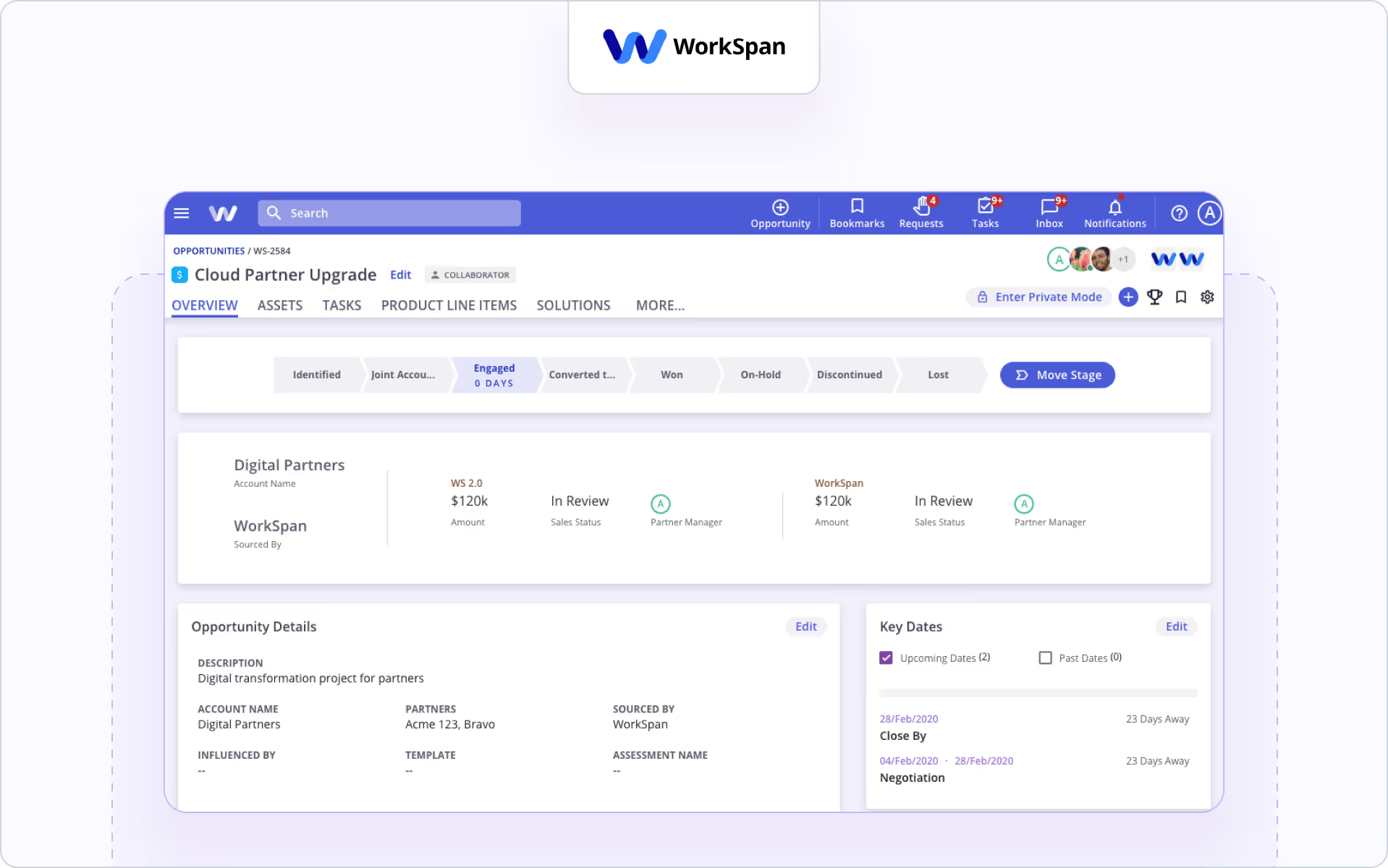
WorkSpan specializes in co-selling and alliances rather than classic PRM workflows.
Who it’s for
Vendors working with hyperscalers or cloud marketplaces on joint opportunities.
Why choose it
Shared opportunity records make co-sell deal stages clear across both organizations.
Standout capabilities
Joint pipeline, ecosystem account mapping, and influenced-versus-sourced reporting.
Keep in mind
Not a traditional deal registration portal; often used alongside other partner tools.
Integrations/notes
Salesforce, Microsoft Dynamics, and cloud marketplace ecosystems.
9. Unifyr (formerly Zift Solutions)
Unifyr is an all-in-one partner management platform that includes deal registration, partner marketing, and enablement.
Who it’s for
Established channel programs managing many partners, regions, and partner segments.
Why choose it
Combines deal registration, training, and channel marketing in one partner portal.
Standout capabilities
Through-channel marketing, certification paths, deal lifecycle tracking, and channel revenue reporting.
Keep in mind
Broad feature set; define which modules matter most so partners are not overwhelmed.
Integrations/notes
Connectors for Salesforce, HubSpot, and major marketing systems.
10. Computer Market Research (CMR)

CMR provides deal registration and compliance automation for traditional channel programs.
Who it’s for
Vendors managing distributors, resellers, or partners with strict governance requirements.
Why choose it
Strong multi-step approval logic and audit records for channel conflict management.
Standout capabilities
Deal registration module, ERP/CRM connectors, and tier-based workflows.
Keep in mind
UX leans traditional; training may be needed for partner adoption.
Integrations/notes
Supports major CRMs and ERPs used in hardware and distribution channels.
11. PartnerStack
PartnerStack mixes affiliate, referral, and reseller programs with simple lead and deal registration.
Who it’s for
SaaS companies working with many small partners across different partner segments.
Why choose it
Partners get one portal to find campaigns, register deals, and track rewards.
Standout capabilities
Marketplace, payout automation, onboarding flows, and basic deal registration.
Keep in mind
Not CRM-native; syncing tight pipeline data may require extra setup.
Integrations/notes
Billing, payment, and referral tools, with optional CRM integrations.
12. Kademi
Kademi focuses on partner enablement, incentives, and engagement, with deal registration included.
Who it’s for
Partner programs that rely heavily on motivation, gamification, and performance tracking.
Why choose it
Combines deal registration with incentives, certifications, and training.
Standout capabilities
Gamification, rewards, content libraries, and deal forms in one portal.
Keep in mind
Best suited for programs where partner loyalty is the main driver.
Integrations/notes
CRM and marketing tool integrations to support partner programs.
13. Partnerize
Partnerize supports partnership management across affiliates, influencers, and strategic partners.
Who it’s for
Enterprise brands with hybrid partner programs, including both performance and strategic partnerships.
Why choose it
Tracking, contracting, and attribution across many partner types, including deal-like flows.
Standout capabilities
Payments, performance reporting, partner discovery, and flexible contracting.
Keep in mind
Not built for classic B2B co-sell deal registration.
Integrations/notes
API-driven integrations for analytics, data warehouses, and performance platforms.
14. TUNE

TUNE is a customizable partner platform for app, mobile, and performance-driven programs.
Who it’s for
Mobile-focused vendors and performance teams that need flexible tracking.
Why choose it
Open APIs let teams design their own partner workflows, including light deal-style submissions.
Standout capabilities
Custom tracking, flexible partner types, and strong analytics.
Keep in mind
Not designed for B2B channel sales or structured deal registration.
Integrations/notes
API-first, integrates with mobile and ad-tech ecosystems.
15. Affise

Affise powers performance and affiliate programs with tracking, attribution, and partner management.
Who it’s for
Digital commerce vendors working with large performance networks.
Why choose it
High-scale partner tracking with optional lead or deal-style inputs.
Standout capabilities
Fraud protection, performance analytics, and flexible payout setups.
Keep in mind
Not a traditional channel sales platform; confirm fit for B2B deal registration needs.
Integrations/notes
Analytics, BI tools, and performance marketing platforms.
16. Salesforce PRM
Salesforce PRM extends Sales Cloud with partner portal and deal registration features.
Who it’s for
Companies standardized on Salesforce that want deal registration inside their CRM.
Why choose it
Partners register deals through a branded portal built on Experience Cloud with native Salesforce objects.
Standout capabilities
Partner portal, opportunity sharing, channel sales workflows, and training through Trailhead.
Keep in mind
Out-of-the-box UX is basic; usually needs admin support to fine-tune.
Integrations/notes
Deep Salesforce ecosystem integration, including Slack.
We know reviewing this many tools can feel overwhelming, but having a clear comparison helps you focus on what truly improves partner adoption and reduces friction.
The best way to narrow your list is to run a small, structured test.
So how do you compare platforms in a way that reflects real partner behavior?
Your 30-day deal registration software evaluation plan
A simple, structured test is the easiest way to see which deal registration software your partners will actually use.
In our experience, a short evaluation reveals far more than feature lists or demos. It shows how your channel partners register deals in real conditions, how clean your deal data stays, and which tool removes friction for your teams.
Week 1: shortlist and configure
Start with two or three options from your list. Set them up with the basics:
- Deal fields, partner segments, and approval rules
- Off-portal intake through email, Slack, or a lightweight form
- CRM sync for deal stages and ownership
This gives you a real view of how each deal registration tool fits your sales process.
Week 2: run a small partner pilot
Invite ten partners from different partner segments. Ask them to register deals the same way they usually would and watch what slows them down.
Measure:
- How fast partners register deals
- What questions they ask during the deal registration process
- How easily they stay informed as deal data updates in your CRM
This shows the difference between portal-heavy tools and software deal registration that partners enjoy using.
Week 3: evaluate performance
Focus on the signals that matter for channel programs:
- Submission time and approval speed
- Percent of accepted deals and clean deal stages
- Partner feedback on ease of use and partner satisfaction
These metrics show which platform improves partner pipeline visibility and reduces channel conflict across teams.
Week 4: choose your winner
Share your findings with sales leadership and internal channel managers. Here are the steps:
- Highlight what helped partners register deals faster,
- Look at where deal data stayed clean,
- and evaluate which deal registration software supported your channel partners without extra effort.
A fast path forward is to adopt the tool that reduces friction and improves forecasting.
Want to see how a CRM-first workflow feels in Salesforce or HubSpot? Request an Introw demo.
To understand how this plays out when partners register deals without hesitation, it helps to look at how Introw handles the entire flow.
Why SaaS teams pick Introw for deal registration
If you want partners to register deals consistently, keep deal data clean, and avoid channel conflict, the experience has to be simple.
Introw was built for that.
It meets partners where they already work, keeps your CRM as the single source of truth, and removes the manual work that slows teams down.
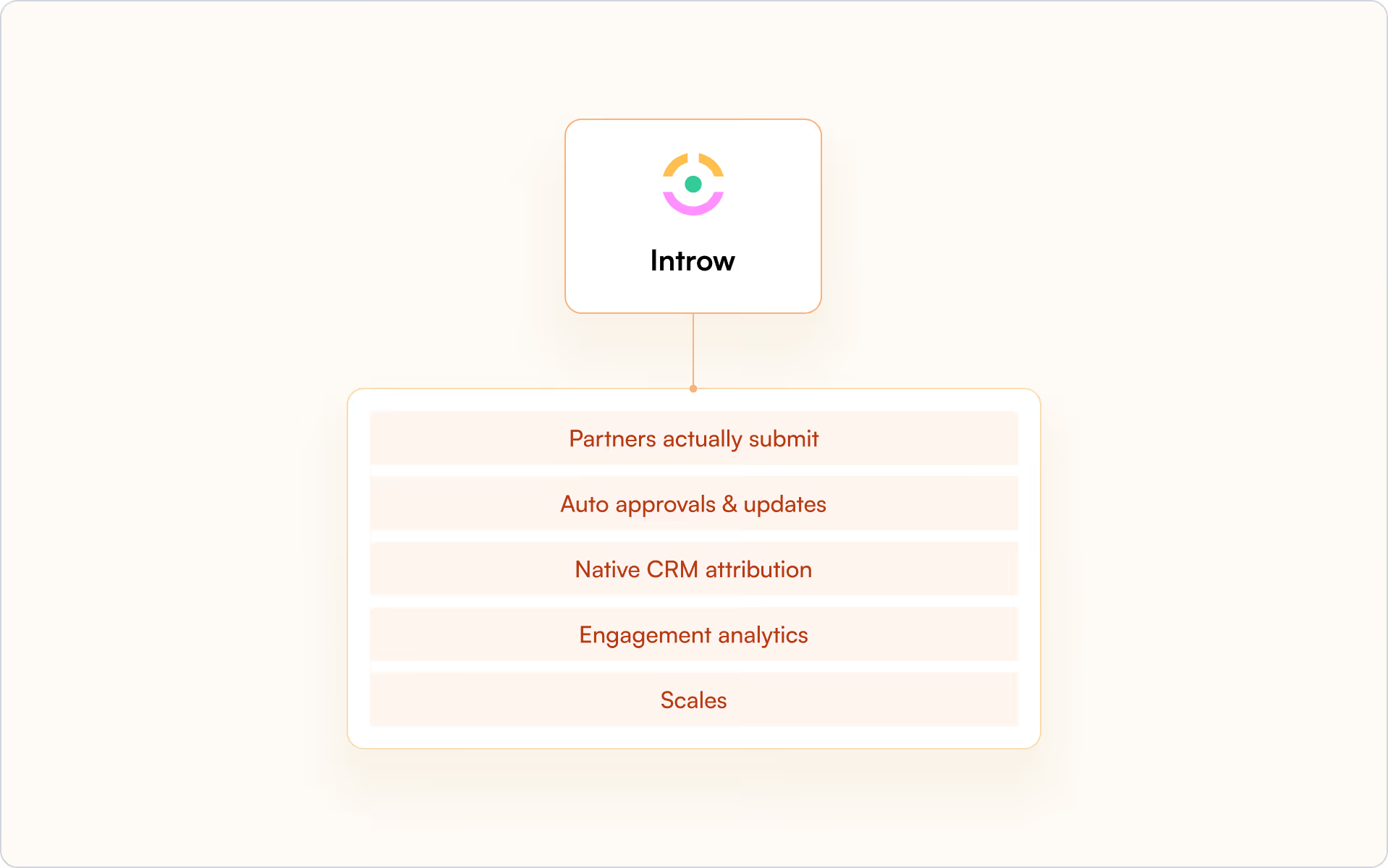
A quick look at how Introw compares
The results teams see with Introw
Introw is used in real partner programs that need reliable deal registration software. One example comes from SANDSIV, where moving away from spreadsheets to a CRM-first workflow created a measurable impact.
This lift came from reducing friction, improving partner satisfaction, and giving internal sales teams clear visibility into deal stages across different partner segments.
Your next steps
If you want your partner program to run with less friction and more consistency, here are three simple places to start:
- Audit your current deal registration process
Identify where partners get stuck, which steps require manual updates, and where deal data becomes unreliable in your CRM. - Test two or three tools with real partners
Even a small pilot shows which platform supports your channel partners and which ones create more work. - Compare CRM-native workflows
Look closely at how each tool handles deal stages, approvals, and pipeline visibility inside Salesforce or HubSpot.
Ready to see what a CRM-first, partner-friendly workflow looks like in practice? Schedule a short Introw session and request a demo today.
Partner Onboarding Guide 2026: 10 Strategies For Partner Managers
SaaS companies often overlook partner onboarding.
Indeed, onboarding is often viewed as merely a list of tedious administrative tasks that must be completed before the real work can begin.
Furthermore, siloed ownership of tasks within the onboarding process means that, in many cases, no-one really takes accountability for the performance of the whole process.
And finally, the revenue impact of onboarding is typically long-term and, in the past, was difficult to track.
However, as we’ll explore in this guide, when done well, onboarding can be a powerful tool in your partnership arsenal.
Read on to discover the ten essential strategies you need to make onboarding work for your business to lay the foundations for long-term partner success.
Why Partner Onboarding Is a Make-or-Break Moment for SaaS
Once upon a time, onboarding was little more than an administrative checklist to get through.
Contract signed? Check. Orientation? Check. Training? Check.
But modern SaaS brands demand much more from their onboarding programs.
Leaders need to frame onboarding as a revenue strategy in its own right.
After all, a robust partner onboarding process can lay the groundwork for a thriving business with a healthy revenue pipeline.
Develop a fast, seamless, and effective B2B partner onboarding program, and you can expect early wins, high adoption rates, and loyalty.
However, if you fail to effectively harness the power of onboarding, you’re not only missing out on valuable opportunities to engage new partners, but you may also be actively harming your chances of future joint success.
Ultimately, poor onboarding leads to lost revenue, wasted investment, and partner churn.
What Is Partner Onboarding? (2026 Definition & Key Stages)
In the B2B space, channel partner onboarding is a structured process in which a business equips its new partners with all the things they need to sell, market, and support its product or service.
This means effectively and efficiently passing on knowledge, tools, resources, and support to your new partners, while also successfully engaging them with your business.
It’s vital you don’t mix up the principles and goals of customer onboarding – which most B2B brands are very familiar with – with those of partner onboarding.
While customer onboarding teaches buyers how to successfully adopt and gain value from your product, the goals of a new partner onboarding process include driving joint revenue, expanding market reach, and boosting ecosystem growth.
The key stages of B2B partner onboarding are:
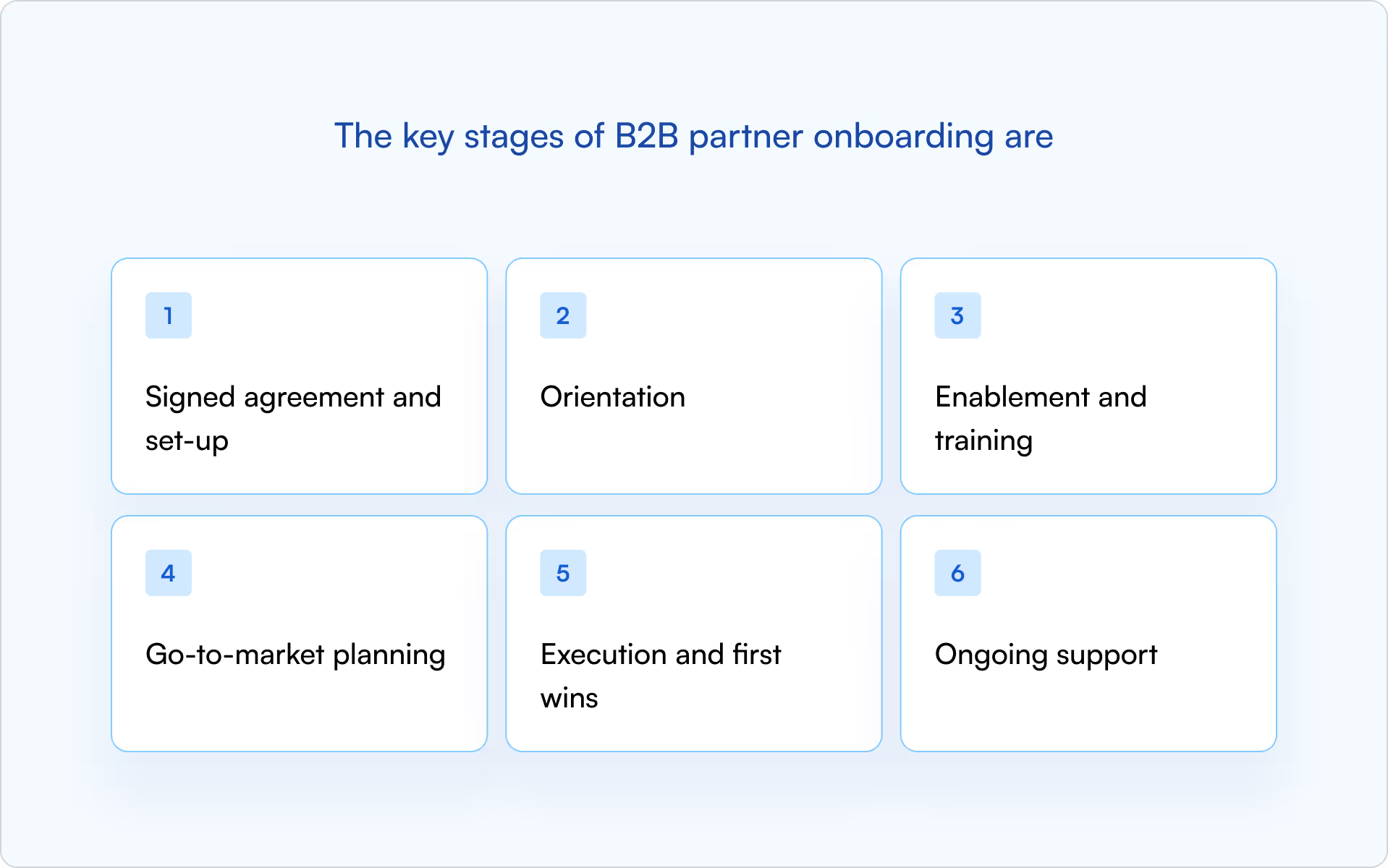
- Signed agreement and set-up: This is when you finalise your contracts, provide access to relevant systems, and integrate the new partner into your CRM or PRM.
- Orientation: It’s time to properly introduce your company! Go in-depth on your brand, SaaS product ecosystem, value proposition, and partner program structure.
- Enablement and training: Perhaps the longest stage of partner onboarding, during this phase you must deliver role-based training, certifications, and playbooks.
- Go-to-market planning: Define your target customers, joint messaging, campaigns, and pipeline expectations.
- Execution and first wins: Support your partners through their early milestones, from their first demos to their first implementations.
- Ongoing support: Don’t abandon your partners after they’re up and running. Instead, perform regular check-ins and performance reviews, and roll out advanced training and attractive incentives.
10 Essential Strategies for Modern Partner Onboarding in 2026
As outlined above, modern SaaS brands require modern partner onboarding programs.
So how can you elevate your partner onboarding scheme to make it fit for 2026?
Read on for our ten essential modern partner onboarding strategies.
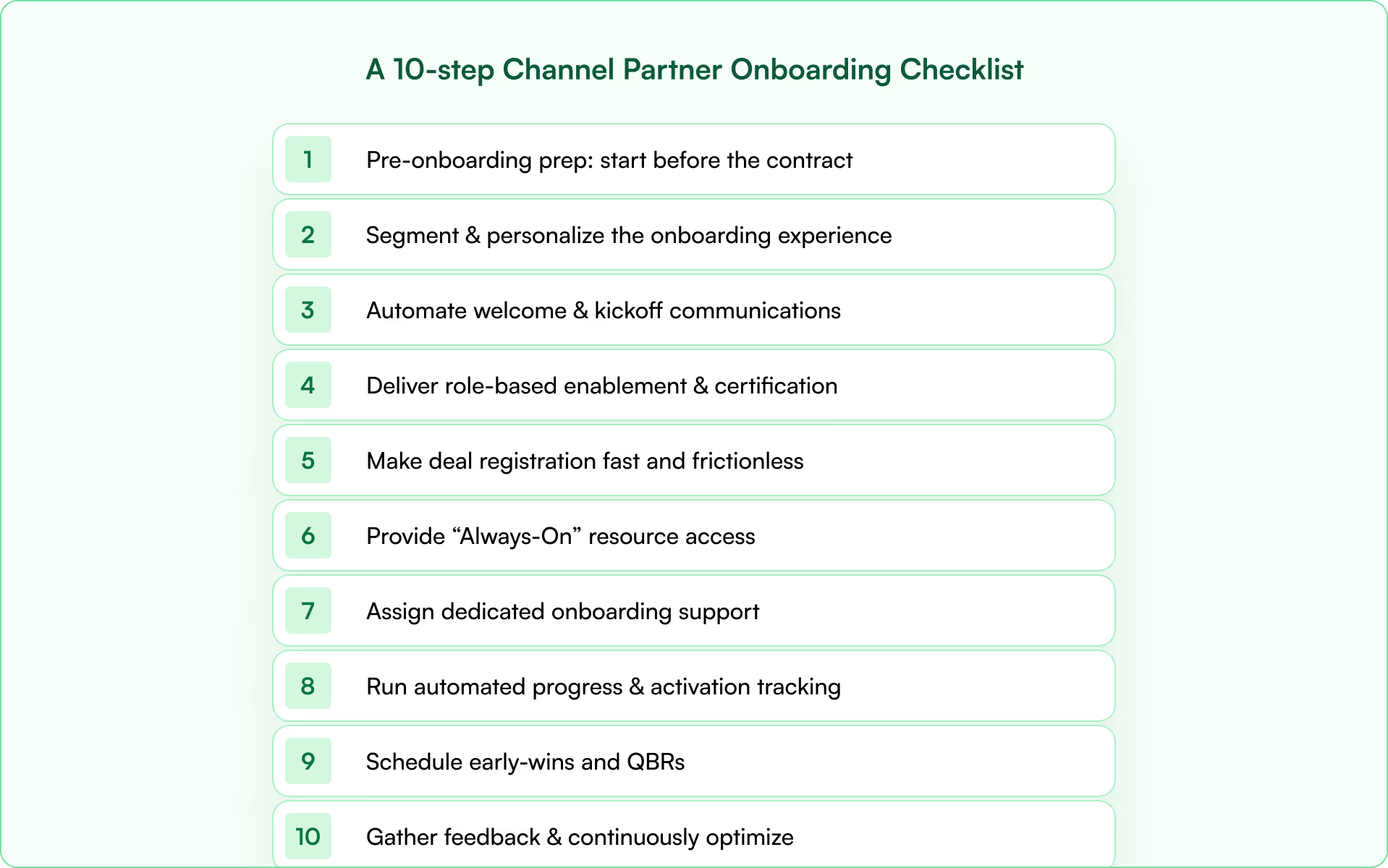
1. Pre-Onboarding Prep: Start Before the Contract
When it comes to effective partner onboarding programs, the prep starts before the contract is signed.
So, what happens at this early stage?
You’ll want to start with an internal team sync.
Bring sales, operations, and enablement together to ensure each team is aligned on partner fit and to set goals and KPIs, ensuring all stakeholders understand what success looks like.
Together, the teams also set realistic expectations, outlining what level of support and resources they can actually deliver and when, and identify any potential bottlenecks.
Finally, it’s vital that by the end of this phase, the ops team understands precisely what is required in terms of setting up systems and processes for the new partner.
Before the contract is signed, it’s also important to customize the onboarding plan for the new partner and gather all the necessary assets for the process.
If you’re using Introw, this is when you’ll set up your onboarding checklist to track and automate the onboarding process.
Introw empowers users to create structured onboarding flows and mutual action plans, enabling them to track partner responsibilities easily.
Set up and scale task templates, assign internal staff members or partner owners to tasks, and automate updates, which can be tracked via Slack or email.
2. Segment & Personalize the Onboarding Experience
Not all partners have the same goals, capabilities, or needs – but they do all expect a personalized onboarding experience.
Remember, this is your partner’s first real impression of your SaaS brand, so it’s essential to make a good impression.
To achieve a personalized onboarding experience, first, you must segment your partners.
Depending on your company and your goals, you may want to segment by:
- Partner type (for example, reseller, referral, tech, MSP)
- Location
- Partner tier
By segmenting these groups, you can then develop personalized communications and enablement paths tailored to each segment.
While personalization may seem time-consuming, Introw enables users to create structured onboarding flows and set up conditional content access, empowering you to segment and personalize at scale.
3. Automate Welcome & Kickoff Communications
While more in-depth onboarding communications are best left to humans, automating your welcome and kickoff communications is a must.
Why?
Firstly, automating this vital early communication enables you to track, analyse, and optimise – and then standardize – your messaging.
Of course, this messaging should be personalized.
Introw’s built-in messaging tools enable you to keep your partners in the loop with branded email announcements, templates that are personalized by partner type or tier, and announcement pop-ups in the partner portal.
Remember that your welcome comms need to be multi-channel – for instance, across email and Slack.
In addition to ensuring that all your partners receive the same effective welcome and don’t miss out on any important information due to human error, it also saves your team time.
Generally, welcome messaging includes assets like:
- Welcome kits
- Orientation content
- “Who’s who” intros
4. Deliver Role-Based Enablement & Certification
The best onboarding programs in 2026 don’t offer one-size-fits-all training.
Instead, they empower partners with targeted, role-based training from a comprehensive learning management system, with course content tailored to specific roles within partner organizations.
This is because not every partner, or every contact within a partner organization, requires the same level of knowledge.
For instance, sales reps require education around product positioning, objection handling, and competitive insights, while technical or implementation staff require deeper knowledge regarding product set-up, integration, and troubleshooting skills.
Meanwhile, marketers should be targeted with co-branding guidelines, campaign playbooks, and messaging alignment.
Modular training and interactive resources work well for partner onboarding as this breaks the learning into manageable chunks that partners can complete at their leisure.
Once modular, interactive training is set up, there’s little left to do.
You can simply assign modules by role, set up notifications of training completion, and it’s also easy to update training materials when necessary.
5. Make Deal Registration Fast and Frictionless
When we talk about user experience in SaaS, we’re typically considering customer satisfaction.
But don’t underestimate the importance of providing your partners with a fast, frictionless experience too.
With Introw, partners can register leads and deals on- or off-portal – whatever works best for them.
You can build lead and deal registration forms with a no-code editor and sync them to your CRM, so there’s no need for manual data entry.
From a partner’s perspective, no logins are needed – lead and deal registration forms can be accessed via a link, email, or Slack.
And don’t forget to set up autosync with your CRM for instant pipeline visibility.
6. Provide “Always-On” Resource Access
‘Always-on’ resources make the onboarding process more flexible and accessible for time-poor partners.
Consider using a self-service portal or content hub to host FAQs, playbooks, and pitch decks that partners can access at their convenience.
Introw provides analytics for every engagement metric, empowering you to track which items of content are regularly being used, and which aren’t.
Indeed, with Introw, you can track asset views and downloads to see which documents, resources, and deals your partners are engaging with.
You can then analyse this data to optimize your portal and its content accordingly.
7. Assign Dedicated Onboarding Support
Assigning dedicated onboarding support for partners – as opposed to more general support – ensures a smoother and faster ramp-up.
Depending on the scope of your program, the dedicated onboarding support could be a full-time partner success manager, an AI onboarding concierge who follows each partner throughout their onboarding journey, or even a peer mentor.
Remember – when offering support, it’s essential to conduct proactive check-ins at key milestones, rather than asking broad, passive questions.
✅ DO: “Now that you’ve completed the initial marketing training modules, how confident do you feel about positioning our product to your customers? Would you like additional guidance or resources in [X] area or [Y] area?”
❌DON’T: “Let us know if you have any questions”.
Introw’s AI agent is built to power smarter partner support, empowering businesses to easily train, optimize, and deploy their bot, all from one place.
The AI agent automatically converts existing content into actionable answers, and you can also create snippets to ensure important FAQs are answered with the correct information.
You can also give the AI agent a custom name, voice, and brand to ensure the support feels personal and on-brand.
8. Run Automated Progress & Activation Tracking
Use real-time dashboards to track partners’ progress and activation automatically.
Identify when training programs are completed and deals are registered in real time, and keep an eye on the number of portal visits by partners, too.
This allows you to spot minor issues and take swift action before they snowball into disengagement by, for example, nudging those partners who stall or need extra help.
Introw’s extensive partner engagement tracking capabilities make it easy to see which partners are active, engaged, and delivering value.
9. Schedule Early-Wins and QBRs
An important element of partner onboarding is building up momentum and getting your partners excited about working with you.
Scheduling early wins is the most effective way to do this.
Help your partners close their first deal fast, and you’ll help to build their confidence and motivation while implicitly demonstrating the value of your partnership.
What’s more, this encourages their adoption of your processes, tools, and best practices by linking them to tangible wins.
Establishing your quarterly business reviews (QBRs) early on in the partnership complements the early wins part of the strategy by ensuring your partners feel valued and heard.
This establishes a regular feedback loop and strategy review, identifies challenges and bottlenecks (ideally before they arise), and reinforces your relationship-building efforts, showing partners that you’re genuinely invested in them.
Perhaps most importantly, setting up your QBRs early on strengthens your strategic alignment.
So what should this look like?
Set up 30-, 60-, and 90-day check-ins to ensure you always have a meeting in the calendar to look forward to.
Introw PRM makes QBR prep easy thanks to its centralized partner activity, pipeline data, and performance metrics inside your CRM.
This means no slide decks, scattered spreadsheets, or lengthy prep sessions trying to collate and interpret all the data.
10. Gather Feedback & Continuously Optimize
As with any business process, it’s crucial to gather feedback on your B2B partner onboarding program and continuously optimize for success.
What should this look like?
- Onboarding surveys
- Open office hours
- A partner advisory board
- One-on-one check-ins
- Email feedback requests
- In-portal feedback tools
- Post-training quizzes with feedback prompts
- Net promoter score
This partner feedback must then be used to refine your content, each stage of the onboarding process, and onboarding support.
4 Best Practices to Avoid the Most Common Onboarding Pitfalls
Ready to build your onboarding process? There are several common pitfalls you’ll want to avoid.
Here are our four partner onboarding best practices to follow.
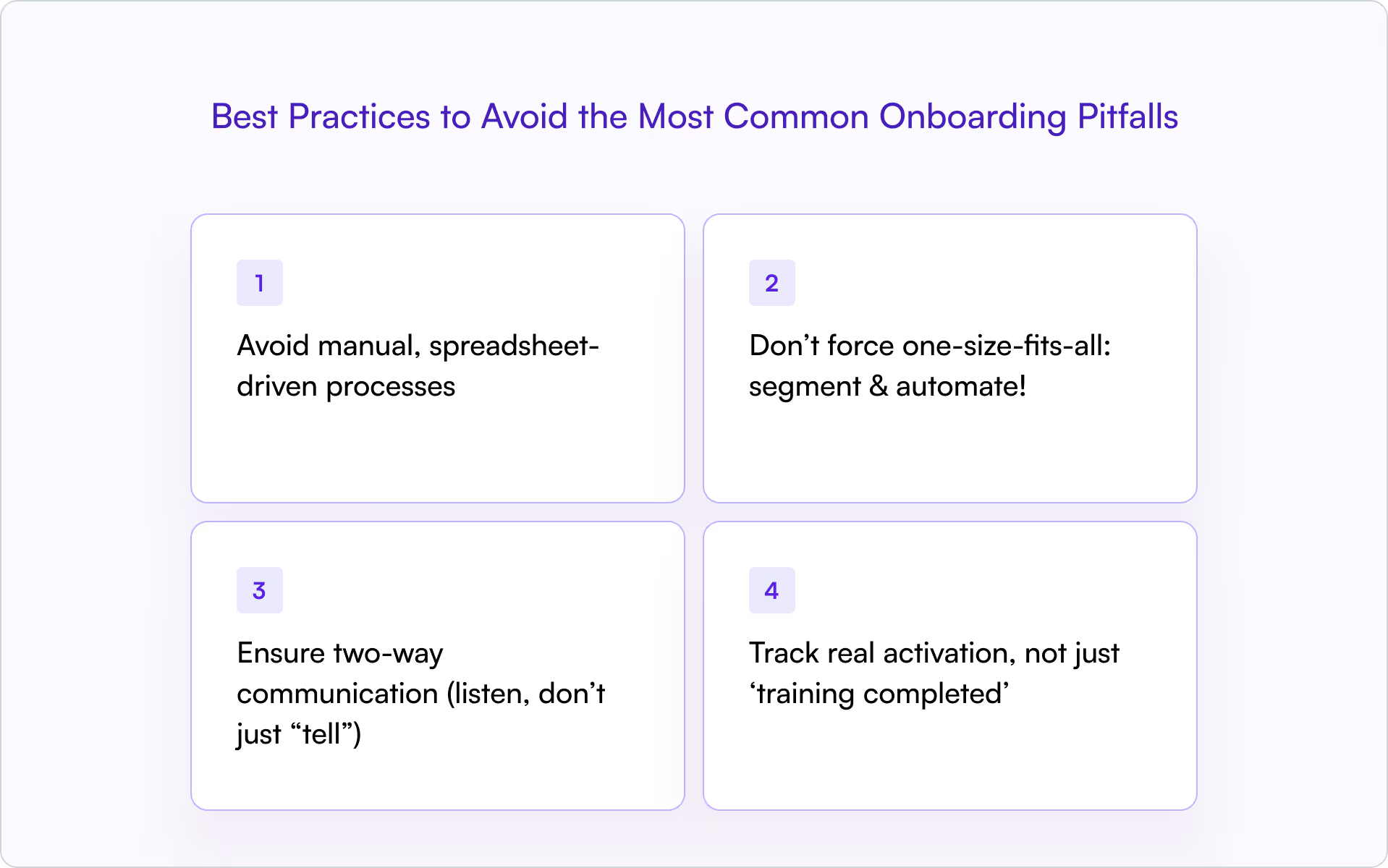
- Avoid Manual, Spreadsheet-Driven Processes
Time-consuming, ineffective, and prone to human error, in 2026 there’s simply no need for manual, spreadsheet-driven onboarding processes.
By replacing clunky spreadsheets with sophisticated PRM platforms fit for 2026, you can boost data accuracy, scale your program, and significantly increase your speed and efficiency.
- Don’t Force One-Size-Fits-All: Segment And Automate!
When dealing with a diverse partner network, a one-size-fits-all approach can result in low engagement or even complete alienation.
Fortunately, personalization has never been quicker or easier.
Indeed, using a PRM platform, you can automatically segment your partners and automate much of their personalized communication.
- Ensure Two-Way Communication (Listen, Don’t Just “Tell”)
Making feedback easy is crucial for optimizing your processes and for building strong partner relationships.
It’s crucial to give your partners a choice of channels in which they can engage in two-way communication with your brand.
This could be email, portal, and Slack, for example – just ensure you’re meeting your partners where they’re already working.
Then, you need to encourage this open and transparent communication through prompts, questions, surveys, and rapid responses.
- Track Real Activation, Not Just ‘Training Completed’
The breadth and depth of metrics that PRMs can track in 2026 empowers channel managers to track real activation.
While tracking ‘training completed’ gives you an indication of how ready your partners are to bring in business, tracking metrics like time to first deal, first revenue generated, and product usage paints a fuller picture.
How to Measure Partner Onboarding Success in 2026
While we’re on the subject of metrics, which KPIs should be used when it comes to measuring success around partner onboarding?
While the exact combination of KPIs tracked will vary from business to business, depending on their specific circumstances, business objectives, and goals, the following metrics are always useful.
- Time to first deal
- Enablement completed
- Content usage
- Partner NPS
- Time to productivity
- Onboarding completion rate
- Assessment scores
- Engagement levels
- Pipeline contribution
You’ll also need to tie your onboarding success to downstream revenue to truly appreciate the impact of your program and measure ROI.
In order to achieve this, you need to first define ‘successful onboarding’ in measurable terms — for example, first lead or deal registered. Then, track onboarding speed (aka time to value).
Next, correlate onboarding with partner revenue performance by comparing the performance of partners who completed full onboarding with those who only partially completed onboarding.
Segment partners by onboarding completion level (for example, fast vs slow, complete vs incomplete), and track their revenue across 3, 6, 9, and 12 months. Then analyse your results, and use your findings to optimize your onboarding program.
For optimal results, utilize dashboards to track progress and identify at-risk partners early.
Modern Onboarding Tech Stack: What to Look For
Building your onboarding tech stack?
Make sure your software incorporates:
✅ CRM integration
✅ Automation
✅ Real-time tracking
✅ Self-serve resources
Take a look at Introw. This CRM-native PRM comes complete with handy automation capabilities and is seamless for both partners and managers.
Example: The Introw Automated Partner Onboarding Flow
So what does a partner onboarding flow look like with Introw automating the journey?
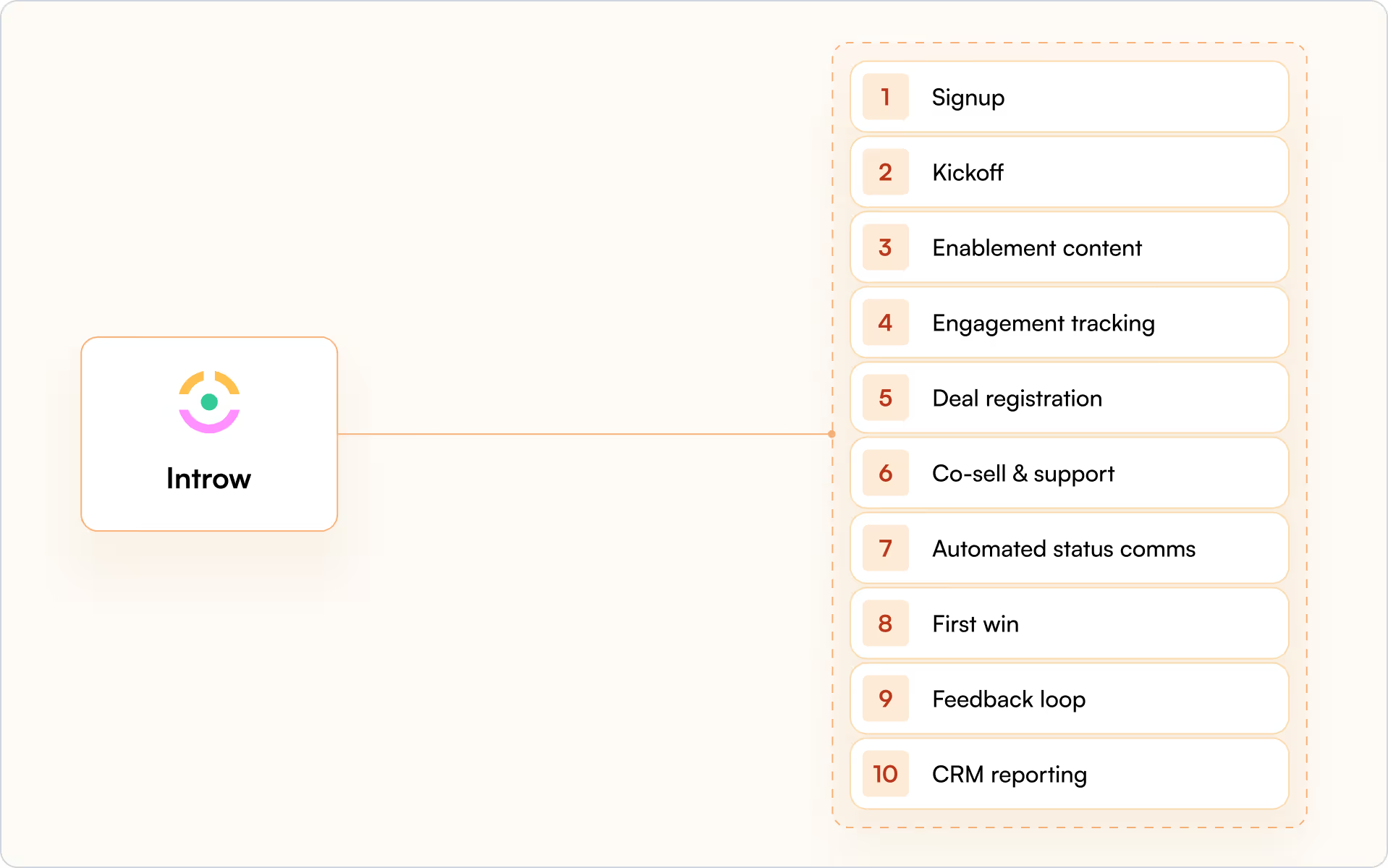
Step 1: Signup
A potential partner decides to sign up to your program via your portal or an embedded page.
At this point, Introw creates and/or updates the CRM record, assigns them to the appropriate tier, and generates the relevant program benefits.
Onboarding tasks are auto-generated from a template.
Step 2: Kickoff
The partner immediately receives a welcome pack and their onboarding checklist via email or Slack, with no portal login required.
The same tasks are reflected inside the dedicated partner portal, allowing them to self-serve.
Step 3: Enablement Content
Introw sends the partner the enablement content they need, such as sales tools and marketing materials, based on tier and partner type.
When items are opened or downloaded, you (and the partner) receive alerts, and you can see which assets they are using.
Step 4: Engagement Tracking
As the partner works their way through their tasks, Introw logs portal visits, content usage, and notification opens and clicks.
This data is then automatically sent back into your CRM for RevOps and forecasting.
Step 5: Deal Registration
The partner has identified an opportunity!
They will now submit it from the portal, or directly from Slack or email via a form.
This opportunity is then automatically mapped to your CRM, attributed to the relevant partner, and will be sent for any required approvals.
Step 6: Co-sell & Support
Your sales rep and the partner collaborate in one shared space.
If a customer raises a question, either party can open a support ticket and communicate with the other about it in real-time.
Step 7: Automated Status Comms
As the opportunity moves forward, Introw sends the partner automatic deal updates and keeps everyone aligned, again via email and/or Slack.
Step 8: First Win
Congratulations! The partner has brought in their first win.
Introw will now fire over a win notification to the partner in question, and also attach attribution to the deal.
If you’re using a commission structure to reward partners for hitting sales targets, the PRM will update commission workflows in light of the first win.
Step 9: Feedback Loop
After the first win, Intow immediately switches into feedback mode.
It will encourage partners to fill in a brief survey to capture what has helped or hindered the partner on their journey to their first win.
You can also see which content and touchpoints correlated with success in this instance, so your next partner can ramp up even faster!
Step 10: CRM Reporting
As Introw is a CRM-first platform, RevOps and leadership see everything directly in your CRM, from partner-sourced/influenced revenue to engagement scorecards and content impact.
Forecast accuracy improves because the partner pipeline is live and attributed.
Conclusion
Onboarding is the partner revenue lever that many teams ignore.
It’s easy to see why: onboarding is often viewed as little more than admin, ownership within the process is typically siloed, and any revenue impact is relatively long-term.
However, dismissing the revenue potential of a strong partner onboarding program is a huge misstep.
We know that building a top-notch structured partner onboarding process can lead to a lower time-to-first-revenue, boost retention and lifetime value, and set good engagement habits early.
Furthermore, external partners who complete a structured onboarding are generally more likely to register a deal or make a sale.
In other words, mutual success!
Without onboarding, you end up with ‘signed but silent’ partners.
With this in mind, is it time to audit your onboarding?
Consider where in the process you can add in more automation, personalization, and tracking to boost business growth.
Next step: Explore how Introw helps SaaS teams activate partners, faster

