
Referral partners send more qualified leads when three things are true: they trust they'll get credit, they can see what happens to every referral, and they get paid quickly and transparently. Bigger rewards rarely fix low referral volume on their own.
Most referral programs raise the fee when referrals dry up. The real blockers are usually trust, clarity, and friction.
This guide is for partner managers and partnership leaders running a B2B referral partner program with consultants, advisors, agencies, technology partners, or referring customers.
Why referral partners stop sending leads
Referral partners rarely announce that they've stopped referring. They just go quiet. Before you change the incentive, diagnose which of these six problems your referral program has.
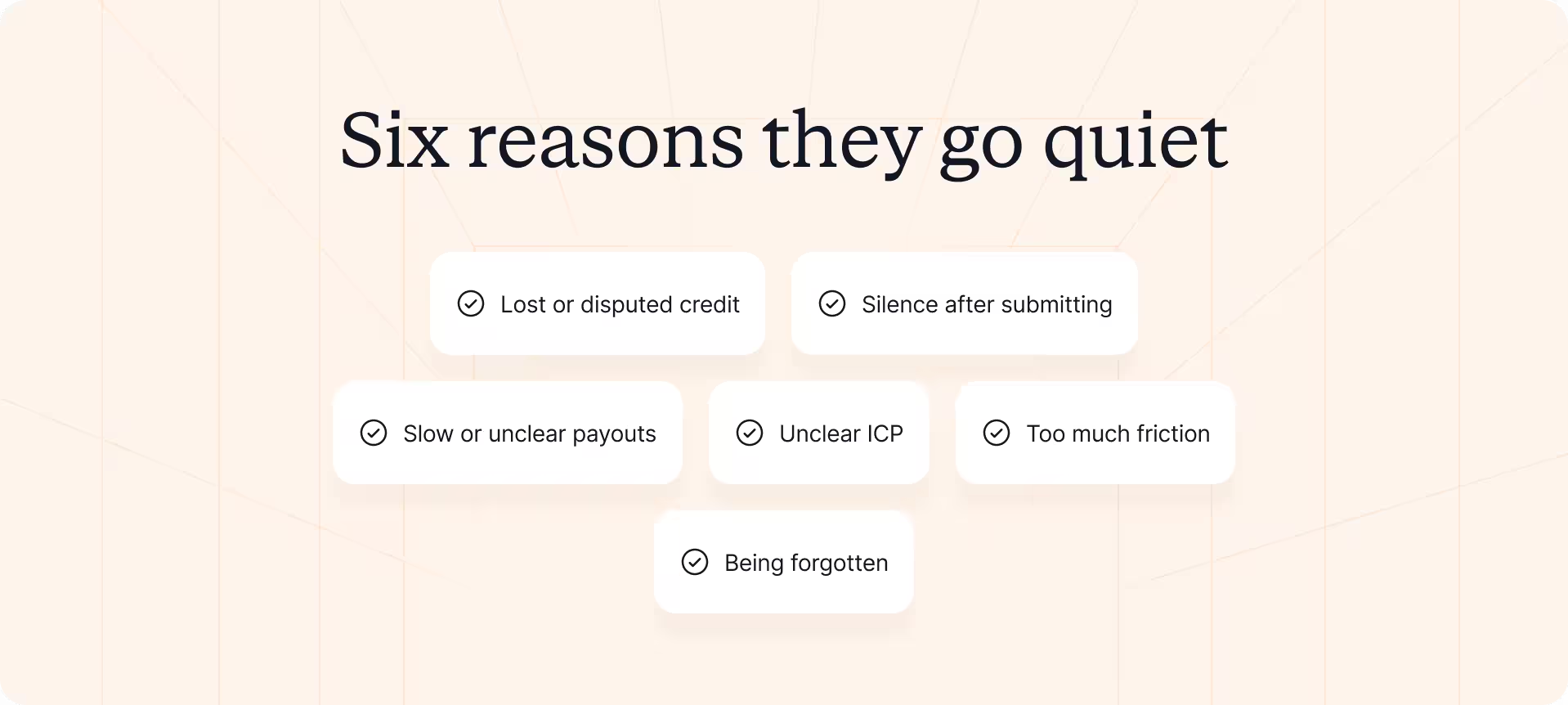
- Lost or disputed credit: the partner's referral was claimed by your direct sales team or another partner. One lost deal teaches them that referring to your business is a gamble.
- Silence after submitting: the partner sent an introduction and never heard what happened. From their side, the referral disappeared.
- Slow or unclear payouts: they had to chase you to get paid, or couldn't work out what they were owed.
- Unclear ICP: they don't know who to send, so they send nothing, or they send the wrong companies and get rejected.
- Too much friction: logging into a portal or filling in a long form for every introduction takes more effort than the referral is worth to them.
- Being forgotten: nobody contacted them after the onboarding call, so your brand slipped out of their mind.
A referral relationship is fragile. One bad experience can end every future introduction.
What motivates a B2B referral partner
Referral marketing is structured word of mouth marketing, and in B2B, the person doing the talking puts their own reputation on the line. When a consultant introduces a client to you, they're putting in a good word for your product or service. If your sales team is pushy, slow, or wrong for the client, the consultant pays for it with relationships they spent years building.
That changes what motivates them. The reward matters, but so does the answer to one question: "Will my client be glad I made this introduction?" A recommendation from someone they trust carries more weight with B2B buyers than online reviews ever will, which is exactly why referrers protect it.
For you, every active referrer is a source of new customers and more sales without adding headcount. For them, the referral program has to be worth the risk to their brand. What each partner cares about most depends on who they are and how their business works.
| Partner type | What they care about most |
|---|---|
| Consultants and advisors | Their client gets a great outcome; protecting their reputation |
| Agencies | Revenue share, reciprocal referrals, and co-marketing that builds their brand |
| Technology partners | Better outcomes for shared customers and integration adoption |
| Existing customers who refer | Recognition, perks, and being treated as an insider |
Money still matters. A clear, fair reward is part of any referral strategy, and it tells partners you value their time. But money works best once trust is in place. A generous fee on top of a referral program where credit gets disputed and referrals vanish into silence is still a program partners avoid.
6 ways to motivate referral partners to send more qualified leads
In a B2B referral marketing program, trust is built or lost after the referral is submitted. The fastest way to motivate partners is to get that stretch right, so these six ways follow it in order: what happens when a referral arrives, while the deal is worked, when the partner gets paid, and between referrals.
1. Protect their credit with clear rules and conflict checks
A referral partner's biggest fear is losing credit for an introduction they made. Start by creating written rules of engagement, in plain language, and share them before the first referral.
Your rules should answer:
- What counts as a valid referral? For example, a named contact at a company that isn't already an open opportunity.
- How long is the referral protected? Pick a window that fits your sales cycle, and say what happens when it expires.
- What if the company is already in your pipeline? Say whether the partner gets credit, partial credit, or none, and why.
- What if two partners refer the same company? First valid submission usually wins. Say so.
Then check every referral against existing deals before you accept it, and tell the partner the result. This is the same principle as deal registration for resellers: a referral that overlaps your direct pipeline should get a clear, prompt answer, not a surprise at payout time. Unclear ownership is the most common source of channel conflict, and in a referral program it costs you the partner as well as the deal.
2. Acknowledge every referral quickly
Speed of acknowledgement is a trust signal. It tells the partner their introduction landed, someone is on it, and the relationship is in good hands.
Set two simple service levels:
- Confirm receipt the same day.
- Approve or decline within a stated window, for example two business days.
Publish both in your referral program terms so partners know what to expect, and make one person accountable for the queue. Otherwise acknowledgement depends on whichever AE happens to pick up the lead.
Acknowledgement template:
Hi [Partner name], thanks for introducing [Company]. We've received the referral and [AE name] will reach out to [Contact name] by [day]. We'll confirm whether it's approved by [date], and you'll get an update when the first meeting is booked.
If you decline a referral, say why. "Already an open opportunity in our pipeline since March" is an answer. Silence is not.
3. Keep partners updated as the deal moves
Once a referral is accepted, most referral programs go dark until payout. That's when partners start to wonder whether you're worth referring to again.
Send automatic updates at the key stages:
- Meeting booked with the key decision makers: proof the introduction was worked.
- Proposal sent: a sign the deal is real.
- Closed-won: the moment to say thank you and confirm the reward.
- Closed-lost: with a short reason.
The closed-lost and rejected updates matter most for lead quality. "Not a fit: under 50 employees, below our minimum" teaches a partner more about your ideal customer than any one-pager, so every honest rejection makes the next referral better.
Send updates in the channel the partner actually uses: email, Slack, or Teams, not only a partner portal they visit twice a year. The same principles behind good partner communications apply: automatic, specific, and with a clear reason to read.
4. Reward quality, not just volume
Pay partners for the business outcome you want. If you pay for raw submissions, you'll get raw submissions, not new business.
Common referral partner incentives:
| Model | How it works | Best for | Watch out for |
|---|---|---|---|
| Flat fee per closed deal | A fixed amount when a referred deal closes | Simple referral programs and predictable deal sizes | Doesn't scale with deal value |
| Percentage of first-year contract value | A share of the customer's first-year contract | Deal sizes that vary widely | Payout waits for invoicing and collection |
| Ongoing revenue share | A share of what the customer pays, for as long as they pay or for a set period | Partners whose clients make repeat purchases or buy additional services | Long-term cost and more complex tracking |
| Tiered rewards | Higher rates or bonuses as a partner refers more qualified business | Rewarding consistent top referrers | Tiers nobody understands or ever reaches |
Pay on qualified or closed-won outcomes, not submissions. If you want to reward early effort, pay a small bonus when a referral becomes a qualified opportunity, and keep the main reward for closed-won.
There's no single right fee. The right number depends on your deal size, margin, sales cycle, what your product or service is worth to the customer, and how much effort the partner puts in.
Money isn't the only lever. Non-monetary motivators often matter as much to B2B partners, and the best ones are mutually beneficial:
- Reciprocal referrals: send new business back to agencies and consultants, or introduce them to your own network.
- Co-marketing: host webinars together, publish joint case studies that build both brands, or share a booth at trade shows.
- Early access: new features or betas their clients will care about.
- Recognition: see way 6.
5. Pay fast and transparently
For many partners, the payout experience decides whether they keep sending business your way. A partner who had to send three emails to get paid will think twice before the next introduction.
Make earnings visible:
- What they've earned: closed-won referrals and the reward for each.
- What's pending: deals in progress and what they'll earn if they close.
- When they'll be paid: the date and how payment will arrive.
Pay on a predictable schedule, such as monthly or quarterly, and stick to it. If the reward depends on the customer paying their first invoice, say so upfront and show that status too, so a delay never looks like a broken promise.
Calculate rewards from the deal record in your CRM, not from a spreadsheet someone rebuilds every month. Clean partner attribution on every referred deal is what makes that possible, and it's how you track sales back to the right partner. If your incentive strategy also includes short-term incentives, the same rule applies to a SPIFF program: if partners can't see it, it won't change behavior.
Our guides to partner attribution and SPIFF programs go deeper.
6. Recognize top referrers and re-engage quiet ones
Your best referrers deserve more than a payment. Recognition is cheap, and it signals that you see them as business partners, not suppliers.
Recognition ideas:
- A personal thank-you note from your CEO or VP Sales after a successful referral closes
- Public recognition in your partner newsletter or social media posts, with their permission
- A tier upgrade with better rewards or benefits
- An invitation to a partner advisory board
- A co-branded success story about the client they introduced
At the same time, watch for partners going quiet. Most don't decide to stop. They just get busy with another vendor that stayed in touch and kept the relationship warm.
| Warning sign | Matching action |
|---|---|
| No referral in 60 to 90 days | A personal check-in that asks about their clients, not your quota |
| No portal visits or form views | Share one relevant lead, a customer story, or the latest developments in your product |
| Updates going unopened | Switch to multiple channels, for example from email to Slack or a call |
| Engaged but not referring | Send a new campaign kit or refresh the incentive for a limited time |
Re-engage early. A partner who has been quiet for two months is much easier to win back than one who has been quiet for a year.
Motivation starts before the first referral
The six ways above keep active partners referring. They can't help the partners who never refer at all, or who send leads that never become opportunities. That outcome is usually set before the first referral, and three foundations of your referral strategy fix it. All three are about creating the right conditions before you ask a partner for anything.
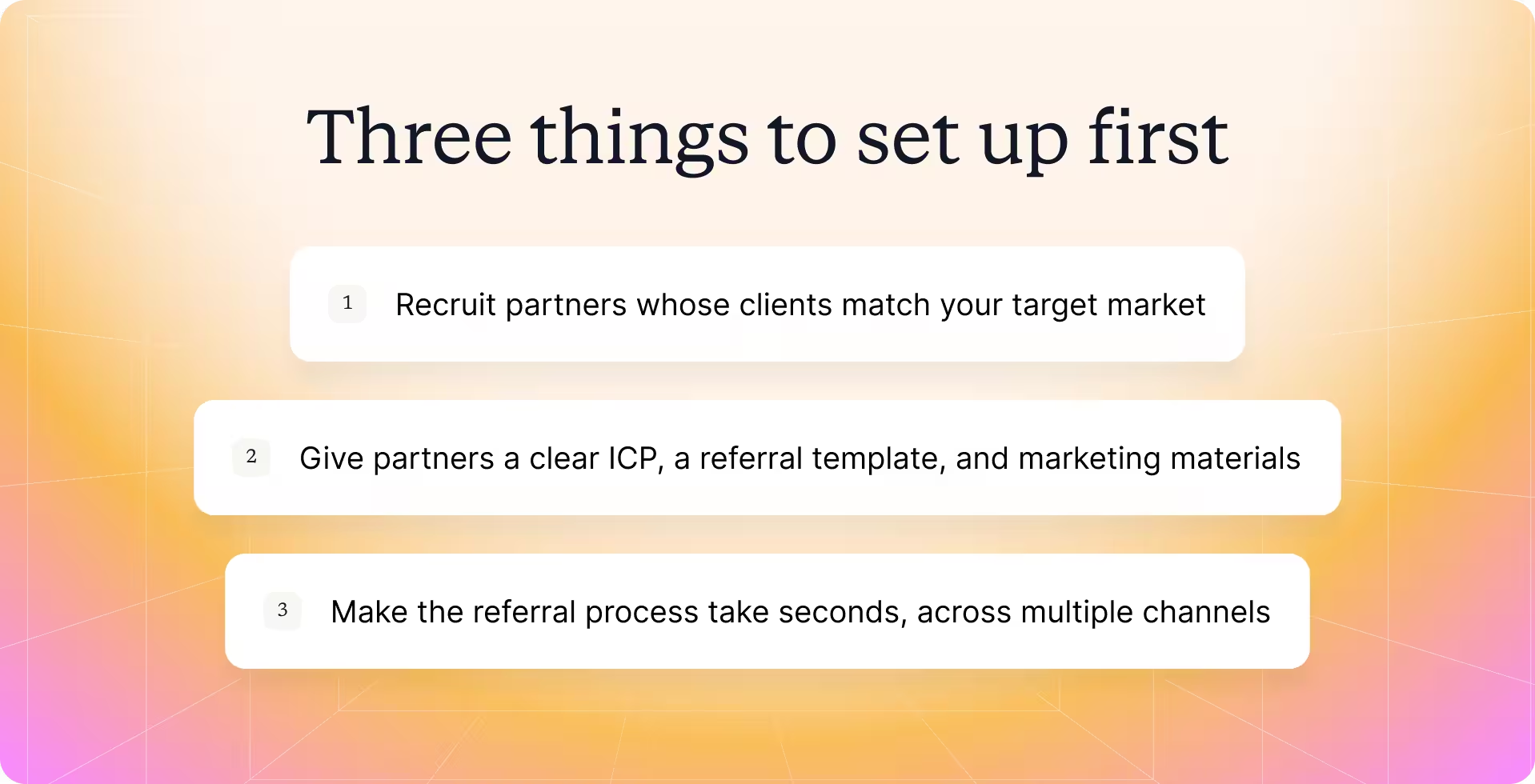
Recruit partners whose clients match your target market
The best new referral partners aren't the biggest brand names you can sign. A two-person advisory firm with a strong network in one specific market can outperform a large enterprise consultancy that rarely meets your target audience. Before you sign a partner, ask who their clients are, how often they hear about customer needs your product or service solves, whether their network could open new markets for you, and whether they already recommend vendors to the businesses they serve.
Give partners a clear ICP, a referral template, and marketing materials
Partners can't send the right companies if they have to guess. Creating a one-page ideal customer profile is the first step. It should cover who to refer, who not to refer, the trigger events that signal a fit, and two or three real example referrals that became customers. Add one or two qualifying questions, such as company size and timeline, to the referral form.
Then make the introduction itself easy. A short referral template, ready-made email templates, and marketing collateral such as a co-branded one-pager or a short demo video let a partner introduce you to a wider audience in their own words. Keep the marketing materials on-brand but light enough to forward, and point partners to a page on your website they can share.
Referral template (intro email):
Subject: Intro: [Your company] x [Client company]
Hi [Client name], you mentioned [specific problem] last week. I'd like to introduce [Contact name] at [Your company], who helps businesses like yours [outcome]. They're thoughtful and won't waste your time. [Contact name], over to you.
Make the referral process take seconds, across multiple channels
Partners won't log in to do you a favor. Let them refer through referral links, a reply-to email, a form on their own website, a chat message, or their AI assistant, and cut the form to company, contact, main need, and timeline. The partner makes the introduction, and your team does all the legwork after that.
Get these four right, and the six ways above have partners worth motivating. A referral marketing program run by hand works for a handful of referrers. Beyond that, it needs a system.
How Introw helps you motivate referral partners
Introw runs a referral partner program on top of HubSpot or Salesforce, so the foundations and the six ways above become workflows instead of reminders in someone's calendar.
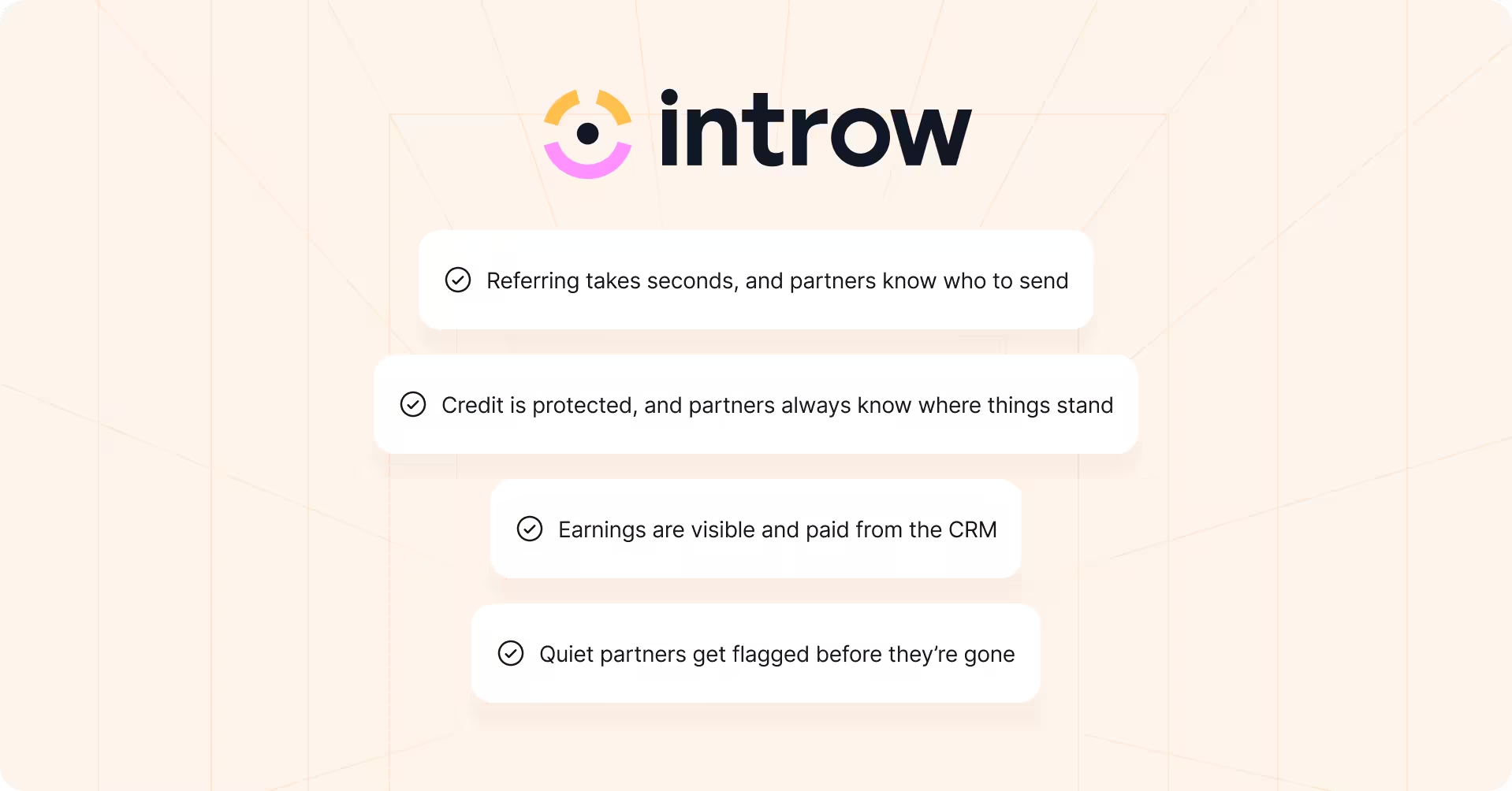
Referring takes seconds, and partners know who to send
Partners refer by link, embedded form, email, or AI assistant, or by messaging the Introw agent in Slack, Teams, or WhatsApp, with no login. Each referral lands in your CRM as an attributed deal. Short courses teach referrers your ideal customer, so what they send is worth working.
Credit is protected, and partners always know where things stand
AI channel-conflict detection checks every referral against existing direct and partner deals, and clean referrals move straight through while anything ambiguous goes to a person. From there, notifications keep referrers updated as the deal moves, through the portal, email, Slack, or Teams, with no extra work for the AE.
Earnings are visible and paid from the CRM
A lightweight portal shows referrers their sourced deals and pending rewards. Fees or commissions are calculated from closed-won deals through commission and SPIFF management, so the number partners see is the number finance pays. See how the partner portal works.
Quiet partners get flagged before they're gone
Introw's activation agent flags partners who haven't referred in the 30, 60, or 90 days after onboarding, diagnoses the likely blocker, and suggests the next step, such as a check-in, a warm lead, or a micro-course.
The referral track walks through the full setup, from connecting your CRM to paying the first referral fee.
Referral partners don't need a bigger reward to keep referring. They need a referral program they can trust.
Ready to give your referral partners a program they trust? Start free and connect HubSpot or Salesforce. No credit card, no time limit.
Still curious? Here are some quick answers to help clear things up
A referral partnership is an arrangement where a person or company introduces potential customers to your business and then steps back while your team runs the sale. Referral partners can be consultants, agencies, professional services firms, technology partners, or existing customers, and they usually receive a fee or a share of what the customer pays in return.
There's no single right number. Base it on your deal size, margin, sales cycle, and how much effort the partner puts in. Flat fees per closed deal are simpler and faster to pay, while revenue share aligns the partner with long-term customer value.
Make referring take seconds, acknowledge every referral the same day, and keep partners updated until the deal closes. Partners who trust the referral program and get paid on time send more new leads, more often.
Share a clear one-page ICP, add one or two qualifying fields to the referral form, and explain why rejected leads didn't fit. Pay on qualified or closed-won outcomes rather than raw submissions, and watch conversion rates on referred deals to see whether it's working.
Reach out personally and ask about their clients, share a relevant opportunity or update, and remove whatever friction stopped them, whether that's a login, a slow payout, or an unclear ICP.





See AI-Native PRM in Action
Book a demo with one of our partner program experts, or explore Introw on your own time.