

.svg)


.svg)
.svg)







Blog

SPIFF Programs: What They Are, How to Design Them, and Examples That Drive Partner Sales
A well-designed SPIFF program can turn a slow quarter, product launch, or stalled partner pipeline into a surge of sales activity. Used well, SPIFFs can change behavior fast. Used poorly, they can create expensive distractions. If you’ve heard the term before but never really knew what it meant, you’re not alone.
What is a SPIFF program?
A SPIFF program is a short-term sales incentive used to reward a specific action. SPIFF stands for sales performance incentive fund, though you may also see it written as “spiff” or “spiv.”
The SPIFF program's meaning is simple: you offer an extra reward when someone does the thing you want more of.
.png)
That could mean a direct cash bonus for closing deals above a set value, selling a new product, registering qualified leads, or reaching specific sales targets during a promotion period.
Unlike standard sales commissions, a sales SPIFF is temporary and focused. Commission usually runs in the background as part of your long-term compensation plans. A SPIFF is used when you want immediate motivation around one goal.
A well-structured SPIFF program usually has five traits:
- Short-term: It runs for a month, a quarter, or a campaign window.
- Targeted: It focuses on one product, region, deal size, or behavior.
- Simple: The program rules are easy to understand.
- Stackable: It can run alongside regular commission.
- Trackable: Every qualifying sale is tied to clear eligibility criteria.
.png)
SPIFFs can motivate sales teams, individual salesperson performance, and external channel partners. This guide focuses on partner SPIFFs because they’re harder to manage. Your channel partners don’t live in your CRM, and they can’t always see what they’ve earned.
That’s why a strong channel partner incentive program needs more than a good reward. It also requires clear tracking, fast communication, and a simple way for partners to see progress.
If your goal is to improve partner sales, a SPIFF can help. But only when the reward, rules, and payout process are easy to trust.
Why companies run SPIFF programs
The best SPIFF programs don’t just offer extra money. They encourage specific sales behaviors when they matter most.
Here’s why they work.
.png)
#1 Urgency creates action
Most sales commissions become part of the background. Sales reps and channel partners expect them, so they rarely change behavior on their own.
A short-term incentive creates a reason to act now.
For example, a channel SPIFF program might offer:
- $500 for every new logo deal closed this quarter
- A bonus for selling a newly launched product
- Extra rewards for deals above a specific value
The deadline matters as much as the reward. When partners know the opportunity disappears after a promotion period, they’re more likely to prioritize that deal over competing opportunities.
This is why SPIFFs are often used during product launches, pipeline pushes, and other strategic initiatives where timing matters. Teams running incentives alongside their existing HubSpot integration can track participation and revenue generated without creating separate workflows.
#2 Clarity drives participation
A successful SPIFF program should be easy to explain.
If partners need a spreadsheet and three meetings to understand the reward, participation drops. If the rules fit in one sentence, participation rises.
For example:
“Close a new logo deal above $10,000 this quarter and earn $500.”
That’s clear. Partners know the sales goals, the reward, and the eligibility criteria immediately.
The most effective SPIFF program ideas focus on simplicity. Partners should spend time selling, not interpreting program rules.
#3 Visibility keeps partners engaged
A sales SPIFF only works when people can see it.
Many sales SPIFF programs fail because the incentive is announced once and then forgotten. The reward lives in an email or PDF while partners focus on daily sales activity.
Visibility creates immediate motivation.
For example, when incentives appear directly inside a partner portal, partners can see pending and confirmed SPIFF rewards alongside active deals. Seeing the reward attached to a live opportunity keeps the incentive top of mind.
This is especially important for channel partners who may be managing opportunities across multiple sales channels at the same time.
#4 Low friction means more claims
Even strong cash SPIFFs lose impact when the payout process is complicated.
If partners have to chase approvals, fill out forms, or wait months for reward distribution, participation drops. Friction creates doubt, and doubt reduces engagement.
The best incentive program experiences make claiming rewards almost automatic.
With tools such as deal and lead registration, partner activity can be tracked from the original opportunity through payout. Add automation, notifications, and approval workflows, and salespeople spend less time on admin and more time closing deals.
When earning a reward feels easy, more partners participate. When rewards are visible, simple, and easy to claim, SPIFFs consistently boost sales and increase sales activity.
How to design a SPIFF program that actually changes behavior
A successful SPIFF program starts with a clear goal. The reward matters, but the behavior matters more.
.png)
Step 1: Define the behavior you want to change
Start with the outcome, not the incentive.
Ask yourself:
- Do you want more deals registered?
- Do you want to shorten the sales cycle?
- Do you want bigger deals?
- Do you want more certified partners?
- Do you want to increase sales in a specific market?
Pick one.
The best sales incentive programs focus on a single objective. If you try to change too many sales behaviors at once, partners won’t know what matters most.
Step 2: Set clear, simple rules
Partners should understand the SPIFF in seconds.
Every SPIFF program should answer four questions:
- What triggers the bonus?
- How much is the reward?
- Who is eligible?
- When does it expire?
For example:
“Register and close a new logo deal above $10,000 before September 30 and earn a $500 bonus.”
Simple rules lead to more participation. Complex rules lead to salespeople guessing.
Step 3: Make the incentive meaningful
A bigger reward isn’t always a better reward.
The goal is to offer meaningful rewards that justify the extra effort. For many SaaS programs, cash bonuses between $250 and $1,000 are enough to change behavior. Enterprise-focused SPIFF campaigns may require larger payouts.
You can also experiment with:
- Cash SPIFFs
- Non-cash rewards
- Non-cash SPIFFs
- Tech gadgets
- Prepaid debit cards
The best reward is the one that motivates channel partners to take action.
Step 4: Use CRM-based conditions
Manual tracking breaks quickly.
The most effective SPIFF programs use CRM data as the source of truth.
For example:
- Deal stage = Closed Won
- Deal value > $10,000
- Close date falls within Q3
When all conditions are met, the reward is triggered automatically.
In Introw, SPIFFs are configured using CRM filters, so qualifying deals are identified automatically based on your existing CRM data.
Here's an example of Introw’s commission plan builder showing CRM-based SPIFF conditions and a live preview of qualifying deals:
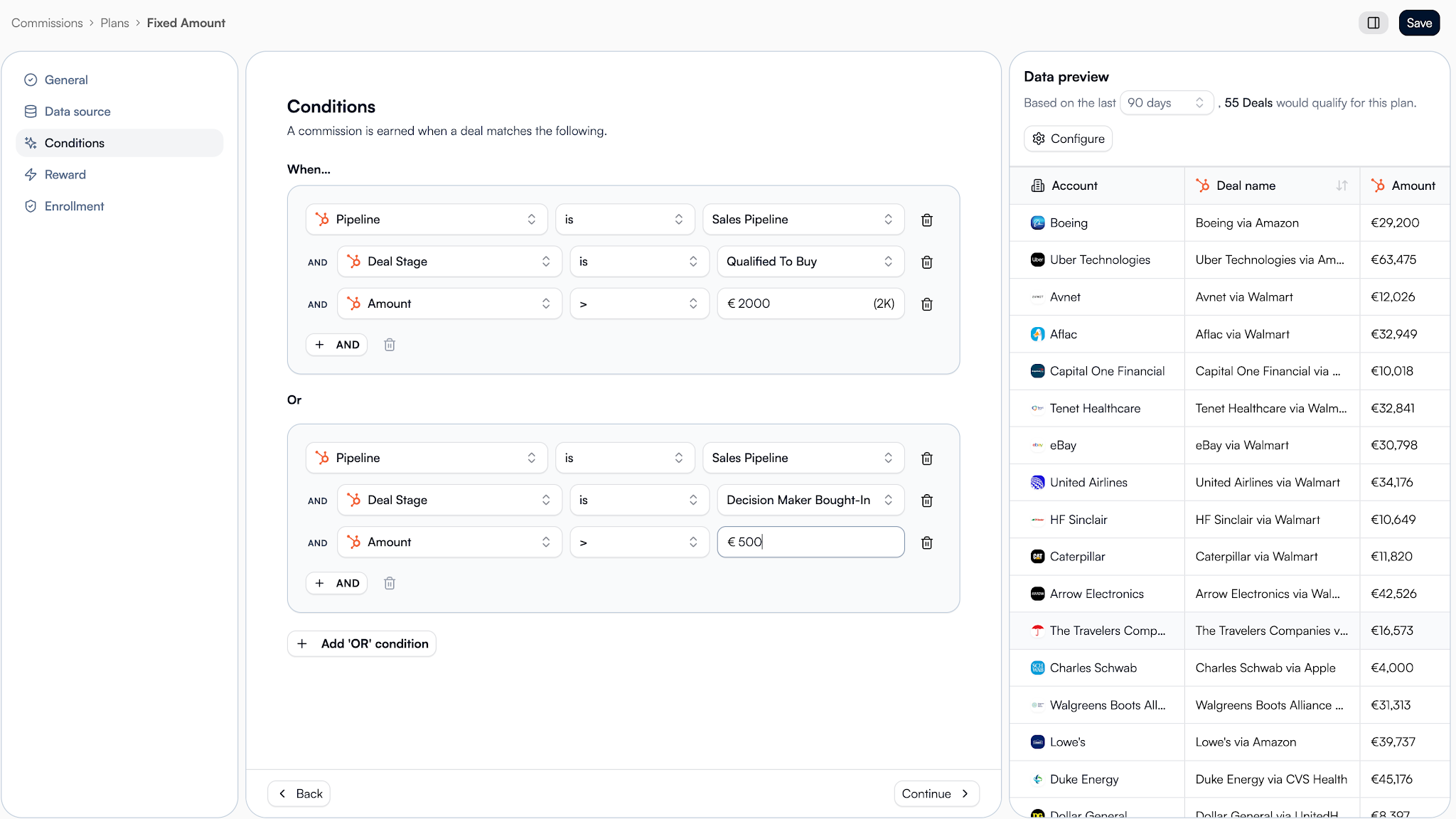
Good SPIFF program management starts with reliable data.
Step 5: Make the reward visible
Partners shouldn’t have to remember a SPIFF.
They should see it where they already work.
For example, Introw displays expected earnings directly on deal cards and inside the partner experience. Partners can see whether rewards are pending or confirmed without digging through old emails.
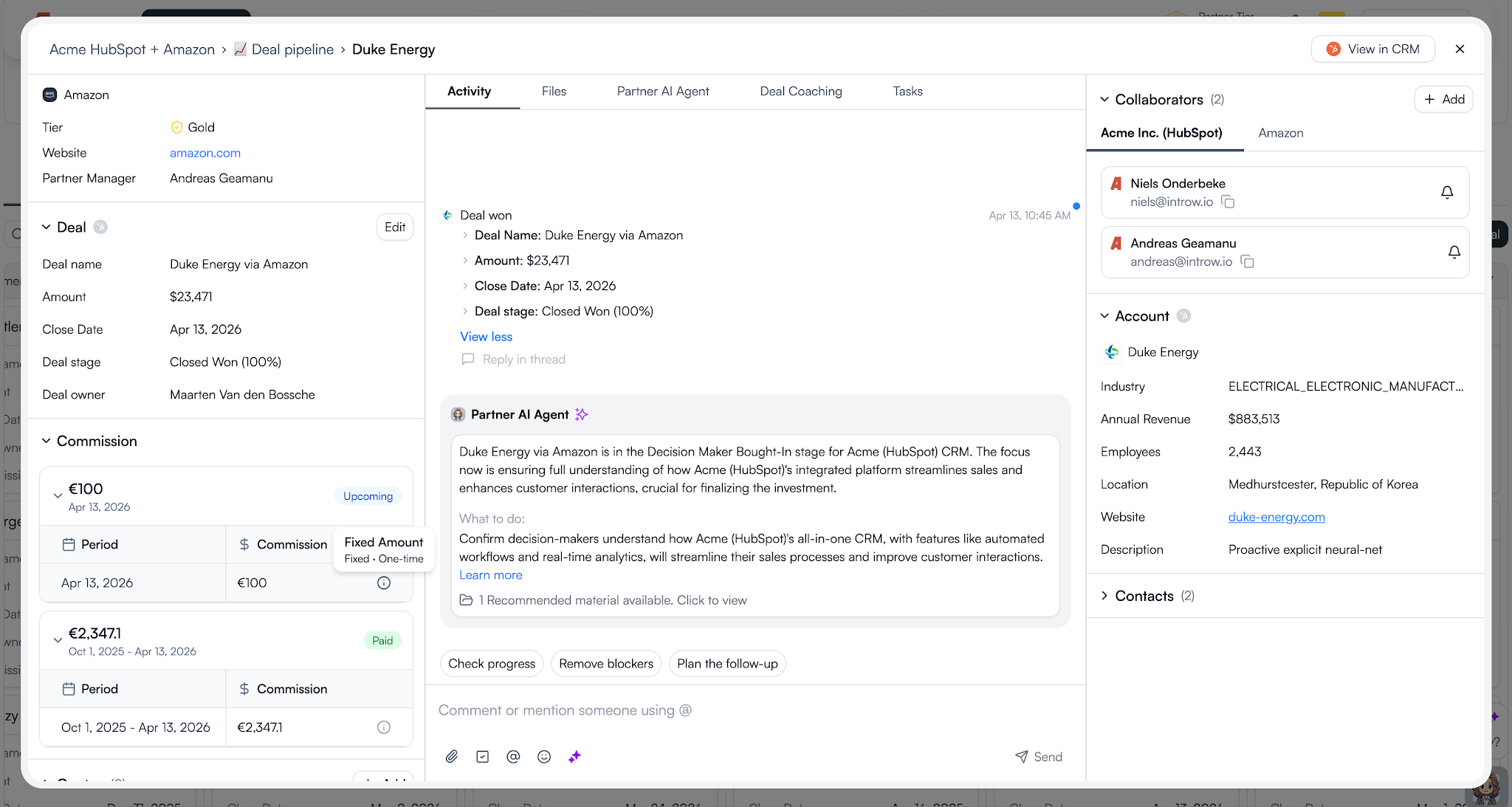
Visibility keeps sales teams driven and helps motivate channel partners throughout the entire campaign.
Step 6: Automate the payout process
A reward loses power when the payout process becomes a project.
A simple flow looks like this:
- The deal closes.
- The SPIFF calculates automatically.
- Eligible rewards are added to a statement.
- The partner uploads an invoice.
- Finance approves the payment.
- The reward is marked as paid.
Introw’s AI Agent can also help surface information and reduce admin work, making it easier to manage larger incentive programs without creating extra overhead.
The easier the process, the more likely partners are to participate.
Here's what this all looks like in action:
Step 7: Review and improve
Every SPIFF should teach you something.
After the campaign ends, review:
- How many partners earned the reward?
- How much sales revenue was generated?
- Which partner segments responded best?
- Did sales activity increase?
- Did you achieve the original sales goals?
Use those insights to improve future iterations.
The best partner programs don’t rely on one successful SPIFF. They run targeted incentives throughout the year as part of a broader incentive strategy.
A few well-designed SPIFFs will usually outperform one giant annual campaign.
The best way to see these principles in action is through real SPIFF program examples.
7 SPIFF program examples you can steal
Not every SPIFF needs to be complicated. Here are seven proven SPIFF program examples you can adapt for your partner program.
1. The activation accelerator
Use this SPIFF when you want new partners to take action quickly instead of waiting months to engage.
Rule: Earn $750 on your first closed-won deal as a new partner.
Trigger: First deal where deal stage = Closed Won.
Bonus: $750 flat fee.
Best for: New partners in their first 90 days.
Why it works: Early sales success builds confidence. Partners who close their first deal quickly are more likely to stay active and become a team motivated by results.
2. The Q3 pipeline push
This is one of the simplest sales SPIFF programs for accelerating pipeline movement before a deadline.
Rule: Earn $500 for every deal above $25,000 closed this quarter.
Trigger: Deal amount > $25K AND deal stage = Closed Won.
Bonus: $500 flat fee.
Best for: Active reseller partners.
Why it works: Short-term incentives and cash SPIFFs create urgency. Partners focus on closing deals before the deadline instead of letting opportunities sit in the pipeline.
3. The EMEA expansion bonus
Geographic incentives work well when you’re trying to grow partner activity in a specific market.
Rule: Earn an extra 5% on every DACH deal closed this quarter.
Trigger: Deal country = Germany, Austria, or Switzerland AND deal stage = Closed Won.
Bonus: 5% of deal value.
Best for: Reseller and referral partners expanding into new markets.
Why it works: Supports broader sales strategies without changing existing sales compensation plans. The bonus stacks on top of normal sales commissions.
4. The product launch SPIFF
When product launches need momentum, a targeted SPIFF can help direct attention where you want it.
Rule: Earn $300 for every deal that includes the new product.
Trigger: Deal contains the new product SKU AND deal stage = Closed Won.
Bonus: $300 flat fee.
Best for: New product launches.
Why it works: Partners sell what they’re rewarded to sell. This type of sales incentive helps boost sales of new offerings and improves product adoption.
5. The speed-to-close SPIFF
If deals are moving slowly through the pipeline, this type of SPIFF encourages faster action.
Rule: Earn $400 for any deal closed within 45 days of registration.
Trigger: Deal registration date to close date < 45 days.
Bonus: $400 flat fee.
Best for: Programs with a slow sales cycle.
Why it works: It encourages faster sales activity and helps prevent deals from becoming stale. The goal is to stop partners from letting opportunities delay closing deals.
6. The certification reward
Not every incentive program needs to be tied directly to revenue.
Rule: Earn $200 for completing an advanced certification.
Trigger: Certification completed with a passing score.
Bonus: $200 flat fee.
Best for: Individual salesperson development.
Why it works: Better-trained sales professionals often deliver stronger sales performance. It can also boost morale, improve job satisfaction, and increase long-term sales performance.
7. The stacked deal bonus
This example shows how SPIFFs and recurring commissions can work together.
Rule: Earn your standard commission plus a $1,000 bonus on deals above $100,000.
Trigger: Deal amount > $100K AND deal stage = Closed Won.
Bonus: $1,000 flat fee plus existing commission.
Best for: Gold and Platinum partners.
Why it works: SPIFFs don’t replace long-term compensation plans. They complement them. In Introw, partners can be enrolled in multiple plans at the same time, including recurring commissions, tiered SPIFFs, and one-time bonuses. Both rewards are calculated independently and rolled into the same statement.
Notice the pattern
Every example focuses on one behavior, one reward, and one clear trigger. That’s usually all you need to create a successful sales performance incentive fund that partners actually remember and act on.
So, what are things you should watch out for to make things go smoothly?
Common SPIFF mistakes to avoid
Even a good SPIFF program can fail if the execution is poor. Here are the most common mistakes to avoid.
.png)
Making the rules too complicated
If sales reps, channel partners, or an individual salesperson need a guide to understand the reward, participation drops.
Keep the program rules simple. A well structured SPIFF program should be easy to explain in one sentence.
Trying to reward too many behaviors
Some sales SPIFF programs try to influence multiple sales behaviors at once.
For example:
- Sell a new product
- Increase deal size
- Enter a new market
- Complete training
Pick one goal per campaign. The most effective SPIFF programs focus on a single outcome.
Offering rewards that don’t motivate action
A $25 reward on a six-month deal won’t motivate salespeople.
The reward should match the effort required. Whether you use cash SPIFFs, non cash rewards, prepaid debit cards, annual bonuses, or instant rewards, the incentive needs to feel worthwhile.
Making rewards hard to track
Partners should never wonder whether they’ve earned a reward.
Poor visibility hurts a program’s effectiveness and can damage team morale. Clear tracking helps motivate channel partners and supports healthy competition.
Ignoring payouts and compliance
Rewarding participants is only half the process.
You also need clear reward distribution, payment records, and tax compliance processes. This becomes even more important when managing channel partners across different regions.
Forgetting to measure results
After every SPIFF campaign, ask:
- Did sales targets improve?
- Was more sales activity generated?
- Did revenue increase?
- Did the SPIFF help move old inventory?
- Was the behavior change worth the cost?
The answers will help improve future SPIFF campaigns and strengthen your overall sales performance management approach.
Here is how partner teams run SPIFFs with Introw
Designing a SPIFF is only half the job. You also need a reliable way to track earnings, manage payouts, and keep channel partners informed.
Here’s what that looks like in Introw.
.png)
1. Create a SPIFF plan from CRM conditions
SPIFFs are created as commission plans using CRM data.
Set your date range, define the qualifying conditions, and choose the reward amount. Introw supports flat-fee and percentage-based rewards, and you can preview matching deals before the plan goes live.
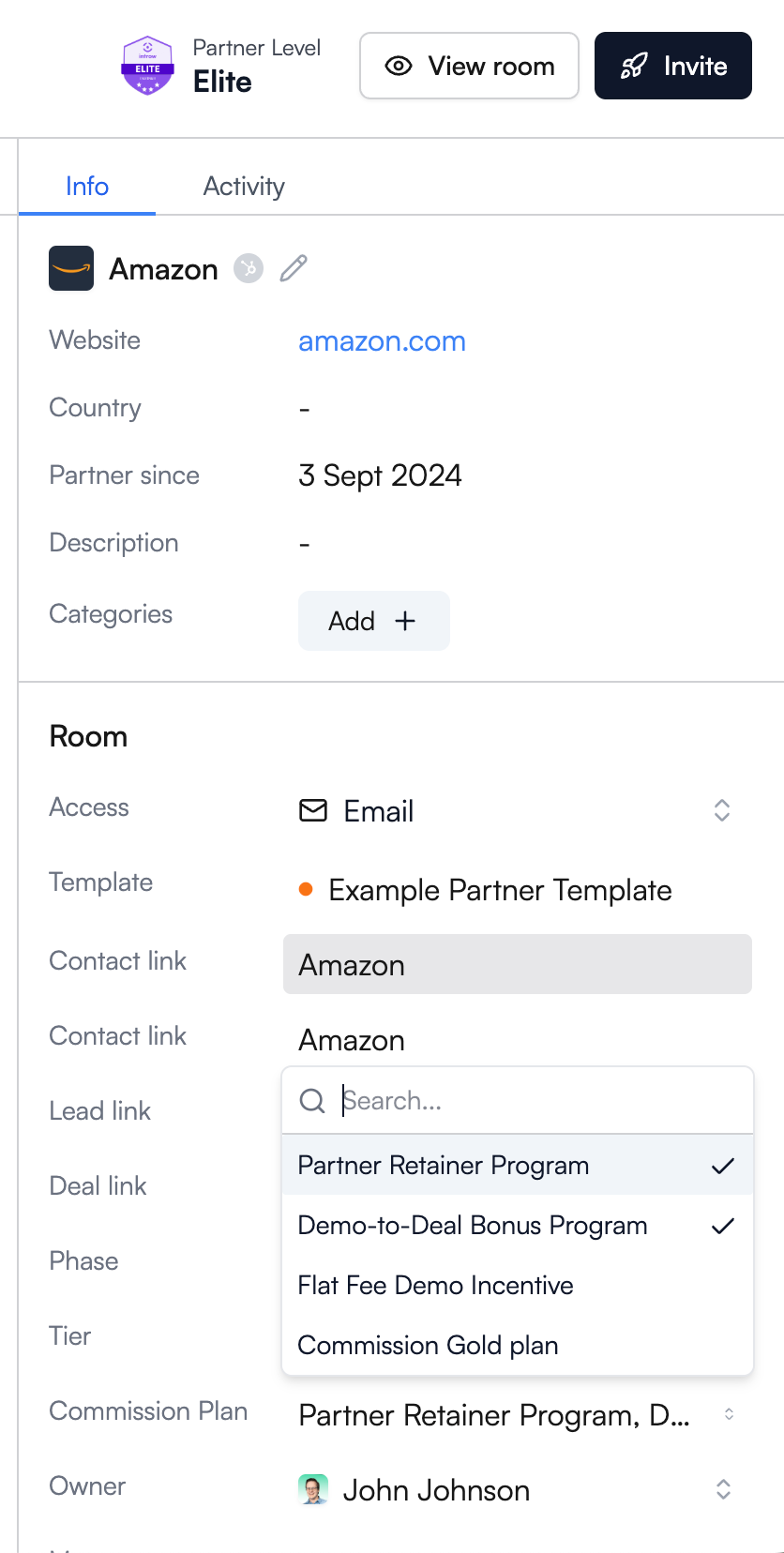
2. Assign the plan to partners
Assign the SPIFF to individual partners or entire partner groups.
Partners can participate in multiple plans at the same time, including recurring commissions, certification rewards, and short-term incentive programs.
3. Partners see earnings in real time
Once the plan is active, partners can see expected earnings directly inside Introw.
Pending and confirmed rewards appear alongside deal information, helping partners stay focused on the opportunities that matter most.
4. Generate statements and collect invoices
When it’s time to pay, generate a statement with a few clicks.
Introw bundles eligible SPIFF rewards, sales commissions, and other payouts into a single statement. Partners can then upload invoices through the portal or simply reply to the notification email.
5. Approve payments and track everything
Every action is logged.
Partner managers and finance teams can review invoices, approve payments, and trace every reward back to the original CRM record. This creates a clear audit trail and simplifies reward distribution.
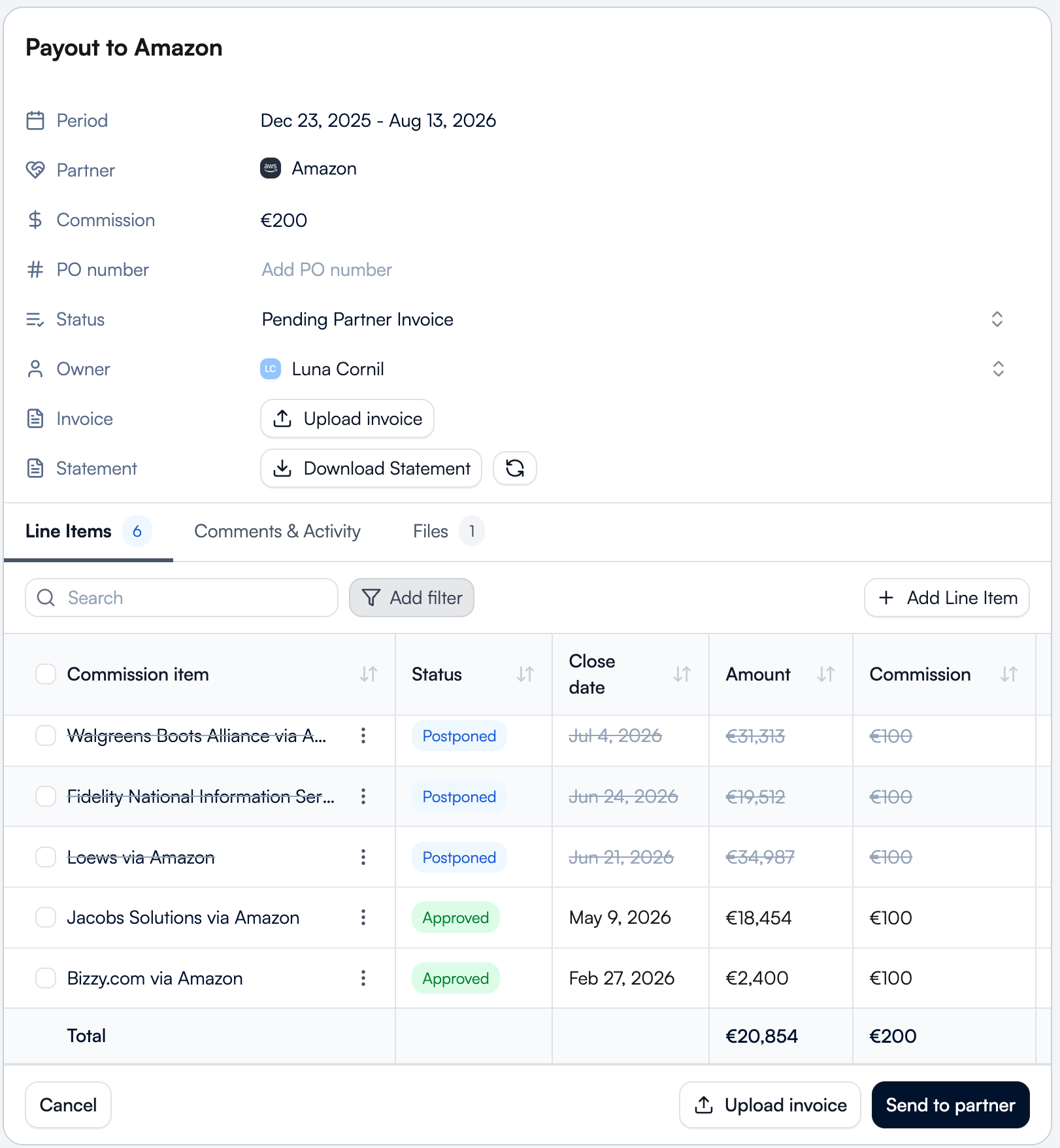
The commission overview ties it all together
The commission overview gives you one place to track SPIFF rewards, upcoming payments, and payout history.
Instead of managing spreadsheets, email chains, and separate systems, partner teams get a single source of truth for commissions, incentives, and partner earnings.
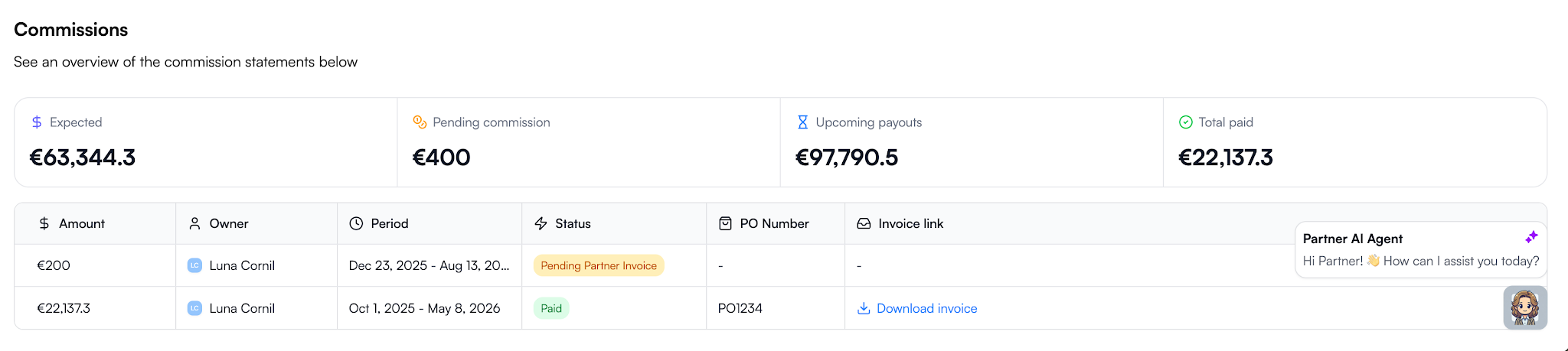
The result is a SPIFF program that’s visible to partners, tied directly to CRM data, and easy for finance teams to manage. Instead of tracking rewards across spreadsheets, email threads, and disconnected systems, everything lives in one workflow from deal registration to payout.
Ready to stop managing SPIFFs in spreadsheets? Request a demo and see how Introw automates partner incentives, commission tracking, invoicing, approvals, and payouts in one place.
15 MDF Best Practices for High-Impact Partner Programs
Why most MDF programs underperform
Most MDF programs don’t fail because the strategy is wrong. They fail because the operations around them are unclear, slow, or invisible to partners. Aligning early on expectations, ownership, and even the definition of MDF helps teams avoid the most common execution gaps.
The budget exists, but partners often don’t use it. In fact, roughly 60% of market development funds go unclaimed each year, not because partners aren’t interested, but because the process makes participation difficult.
.png)
Across many partner ecosystems, the same issues show up repeatedly:
- Channel partners don’t know funds are available
- The approval process takes too long
- Requests get lost in email or spreadsheets
- Marketing activities run without measurable outcomes
- Finance teams can’t track how marketing dollars were used
- Partner marketing teams can’t connect MDF investments to pipeline
Without structure, market development funds rarely support partner engagement or revenue growth. When MDF programs are tied to clear execution plans and measurable partner marketing campaigns, they become a predictable lever for demand generation instead of unused budget.
15 MDF best practices for SaaS partner programs
If you want market development funds to drive pipeline instead of sitting unused, you need a repeatable system. The following market development funds best practices are the framework strong SaaS teams use to make MDF programs predictable, measurable, and aligned with revenue.
.png)
1. Design your fund structure before you launch
Start with the question most teams skip: how should we allocate MDF in the first place?
Decide early whether MDF allocation is:
- Fixed per partner tier
- Performance-based
- Motion-based across reseller, referral, or integration channel partners
Also define:
- Eligible marketing activities
- Fiscal period (quarterly vs. annual)
- Whether unused MDF funds expire or roll over
Without this structure, approvals become inconsistent, and partners lose confidence in the program.
This is the foundation of strong MDF program management and best practices.
2. Make budget visibility self-service
Ask yourself this: can partners see their available budget without emailing you?
If not, adoption drops immediately.
Partners should always see:
- Total MDF allocation
- Pending requests
- Approved spend
- Remaining marketing budget
Real-time visibility improves partner engagement and increases participation in MDF campaigns faster than almost any other change you can make.
3. Build a standardized request form, not email
Inbox-driven requests slow everything down.
Instead, create a structured marketing development funds template partners complete before submitting requests. At minimum, capture:
- Campaign type
- Target audience
- Expected pipeline or qualified leads
- Timeline
- Budget requested
- Success metrics
When requests attach directly to CRM records, your MDF process becomes measurable from day one. Platforms designed for managing marketing development funds handle this automatically.
4. Set approval SLAs and default statuses
Partners don’t stop submitting requests because budgets are small. They stop because responses are slow.
Set a clear approval process, such as:
Submitted → Under review → Approved or declined
Then define an internal SLA, for example, five business days.
Predictability increases participation and improves demand generation activities across your partner ecosystem. It is one of the simplest MDF program best practices to implement.
5. Require a campaign brief, not just a budget ask
If a partner asks for marketing budget without a plan, pause.
Strong MDF programs require a short campaign brief that explains:
- What they want to run
- Who they want to reach
- What results they expect
- How the activity supports your strategic objectives
This improves strategic alignment and makes it easier to compare performance across MDF campaigns later.
6. Enable collaboration, not just approval
Approval is not execution.
After funding is approved, partners still need shared visibility into assets, timelines, and next steps. Otherwise, marketing initiatives disappear into email threads.
A structured collaboration environment improves partner marketing outcomes and keeps joint marketing initiatives visible across teams. It also strengthens ongoing partner engagement during campaign execution.
7. Link campaigns to deals and leads
Here’s the question leadership eventually asks: what did this spend actually generate?
If MDF campaigns are not connected to deals or sales leads, you cannot answer it.
Linking MDF-funded activities directly to pipeline turns market development funds into a measurable growth lever. It also helps channel managers understand which partners consistently generate qualified leads.
This is where many MDF programs break, and where the biggest gains usually happen. Make sure to use modern PRM that links all these activities directly in you CRM.
8. Track ROI automatically, not manually
If ROI lives in spreadsheets, you’re always reacting too late.
Modern MDF programs are being tracked directly in your CRM where you can connect spend directly to pipeline contribution so you can see which partners, campaigns, and marketing efforts drive revenue growth in real time.
That visibility helps you shift marketing investment toward activities that expand market reach and improve sales performance.
9. Gate future funds on proof of performance
A simple rule improves accountability quickly: show results before requesting more budget.
Ask partners to demonstrate:
- Campaign reach
- Lead generation
- Pipeline contribution
before approving additional MDF funds.
This ensures MDF investments support partners who execute and helps drive partner success across co-op programs and co-op funds.
10. Review and iterate quarterly
Treat MDF like a planning lever, not a reimbursement process.
Each quarter, review:
- Which partners used their allocation
- Which MDF campaigns generated pipeline
- Which marketing activities underperformed
These reviews strengthen your channel partner marketing strategy and make future MDF allocation easier to justify.
11. Segment MDF by partner motion, not just partner tier
Many teams allocate development funds by partner tier alone. That’s rarely enough.
Referral partners, resellers, and integration partners contribute differently to market development. Segmenting MDF allocation by motion improves market presence and ensures shared marketing resources support the right expected outcomes.
This is one of the most overlooked market development fund best practices.
12. Pre-approve high-performing campaign templates
Instead of reviewing every request from scratch, give partners a shortlist of proven campaign options.
Examples include:
- Co-branded campaigns
- Digital ads
- Local events
- Vertical webinars
Pre-approved templates reduce approval time and increase the likelihood of generating qualified leads.
They also help partners understand how to obtain marketing development funds faster because expectations are clear.
13. Tie MDF allocation to pipeline coverage targets
Not every region needs the same level of funding.
If pipeline coverage is weak in a segment or geography, allocate MDF funds there first. If another area already performs well, shift marketing investment elsewhere.
This ensures MDF allocation supports strategic priorities instead of spreading budget evenly across the partner program.
14. Combine MDF with incentive programs to change partner behavior
Funding alone doesn’t change behavior. Incentives do.
Pair MDF campaigns with structured channel partner incentive programs to encourage participation in demand generation campaigns and improve execution quality across channel partners.
This combination helps generate leads faster and strengthens overall partner performance.
15. Reserve budget for strategic initiatives, not reactive requests
Leave part of your development funds unallocated at the start of the quarter.
Use that reserve to support:
- New product launches
- Expansion into new regions
- Demand generation for priority segments
- Initiatives that increase brand visibility
This ensures MDF investments stay aligned with long-term strategic priorities instead of being consumed by opportunistic requests.
MDF request form template and checklist
A strong MDF request form does two things at once.
It makes approvals faster for your team, and it makes it easier for partners to submit campaigns that actually generate pipeline.
Without a structured request format, MDF campaigns become hard to evaluate, hard to compare, and almost impossible to attribute later.
A standardized marketing development funds template fixes that by ensuring every request captures the information needed to support demand generation, track sales performance metrics, and align spend with strategic objectives.
Use the template below as a default structure inside your partner program.
.png)
MDF request form checklist
Use this checklist to confirm your MDF process captures everything required for attribution and execution:
.png)
In a CRM-connected workflow, this structure also gives both you and your partners real-time visibility into MDF campaigns from request through execution and attribution, which is what makes modern MDF programs scalable.
Where Introw comes in
If you follow the framework above, your MDF program becomes structured. What most teams still struggle with is proving what that structure actually produces.
Introw closes that gap by connecting MDF requests directly to the partners, campaigns, and deals they are meant to influence inside your CRM. Instead of tracking approvals separately from pipeline, everything lives in one workflow.
That changes how MDF programs operate day to day:
- Partners submit structured requests without email back-and-forth
- Every request attaches automatically to the right partner and campaign
- Approvals follow a consistent approval process instead of ad-hoc routing
- Both you and your channel partners see available MDF funds in real time
- Marketing campaigns link directly to qualified leads and influenced deals
- ROI updates automatically as pipeline moves
This is what makes market development funds (MDF) measurable.
When a deal is generated or closed, you can see whether MDF supported it. When planning next quarter’s MDF allocation, you can see which partners generated pipeline and which marketing initiatives did not.
It also changes adoption. Because partners can see their allocation, submit requests quickly, and stay aligned on campaign execution, MDF funds get used instead of sitting unused across the partner ecosystem.
For a partner marketing manager managing Market Development Funds, that means fewer spreadsheets, clearer attribution, and better conversations with leadership about where marketing investment should go next.
If you want to see how structured MDF programs work when requests, approvals, campaigns, and pipeline all stay connected in one place, request a demo today.
Latest articles
Strategic Partner Management 2026 - 9 Ways to Maximize Value
What is strategic partner management, really?
Strategic partner management is the structured process of planning, building, and managing strategic partnerships that directly support your company’s objectives — market access, product acceleration, or revenue growth. Unlike casual marketing partnerships or short-term campaigns, a strategic partnership is built for mutual success and governed by a long-range plan. It spans the entire relationship lifecycle: scouting potential partners, negotiation, joint planning, launch, co-marketing, co-selling, support, and continuous improvement.
Strategic partnerships take many shapes: strategic alliances to co-market a combined offer, joint ventures and equity-based partnerships to build a new line of business, technology partnerships to integrate new technologies, supply chain collaborations with external partners to stabilize delivery, or channel partnerships to broaden a customer base in new markets. However the partner operates, the goal is the same — a win-win business partnership that compounds over time.
A partnership manager (or strategic partner manager) orchestrates this motion across multiple partnerships. They set the partnership strategy, evaluate fit, manage the sales process for co-sell motions, coordinate marketing partnerships, provide training and offering guidance, and keep both companies on the same page with regular check-ins and clear metrics.
9 Ways to Maximize Partnership Value in 2026
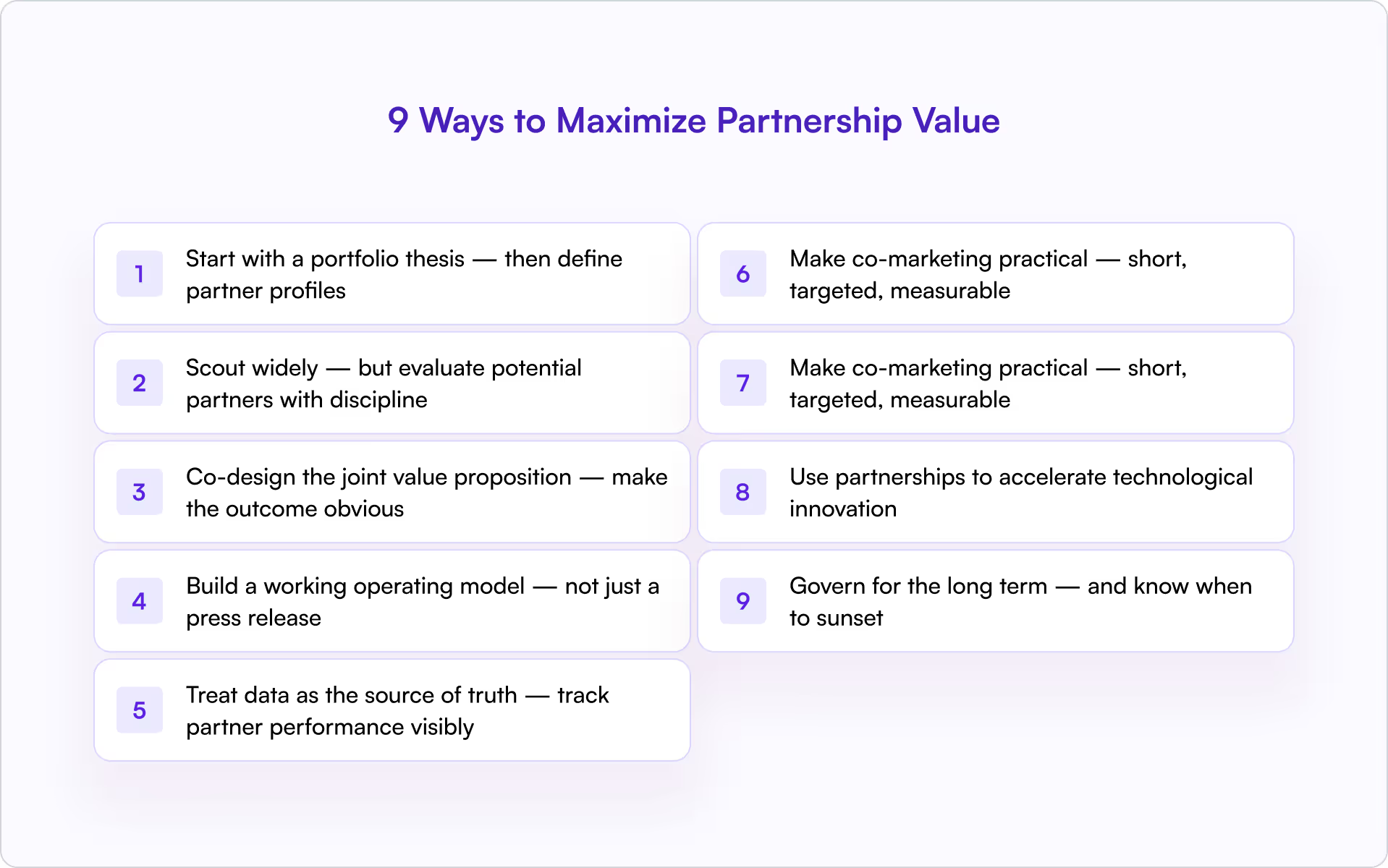
1) Start with a portfolio thesis — then define partner profiles
Before you approach a single potential partner, write a one-page partnership strategy that answers four questions:
- Why partner now — which objectives does your own company need help to achieve? New markets, a larger customer base, product coverage, or credibility in a specific industry?
- Where partnerships can help — list concrete use cases: a marketing partnership to reach a niche audience, a strategic alliance to bundle services, a supply chain relationship to reduce risk, or a technology collaboration to add an integration customers request.
- Which partner types — system integrators, managed service providers, ISVs, complementary SaaS, OEMs, value-added resellers, agencies, logistics providers.
- What good looks like — shared business goals, segment focus, sales model alignment, and the minimum resources each party commits.
Turn this thesis into two or three partner profiles. For each profile, capture the business model, ideal segment, where the partner operates geographically, and the value exchange — what your company gives and what you receive. That clarity filters noise and helps you find partners who can deliver at the same level you need.
2) Scout widely — but evaluate potential partners with discipline
Partner ecosystems are crowded. To find partners worth pursuing, combine outbound scouting with warm introductions and data:
- Build a short list of potential candidates from marketplaces, analyst lists, customer win stories, and events.
- Ask customers which other company they trust alongside you. That signal is gold for relationship building.
- Score each potential partner on strategic alignment, complementary capabilities, overlap in customer base, sales process compatibility, and resourcing.
Use a simple evaluation matrix. Weight the criteria that matter — segment focus, technical fit, strategic planning alignment, and executive sponsorship. Limit monthly adds to your pipeline of potential partners so your team can manage the negotiation phase and early enablement without spreading thin.
3) Co-design the joint value proposition — make the outcome obvious
A successful partnership starts with a shared narrative for the end customer. Write it down together:
- Who is the ideal customer and what problem are you solving together?
- What do the two companies create that neither can deliver alone — a complete solution, a bundled service, a faster sales process, a lower total cost, access to new markets?
- How will success be measured — opportunity creation, influenced revenue, activation rate for the integration, expansion within existing accounts?
Keep this to one slide and one page. If a seller from either side can’t explain the combined value in 30 seconds, you don’t have a partnership strategy — you have a handshake.
4) Build a working operating model — not just a press release
Strategic partners become successful when the relationship moves smoothly from idea to execution. Agree on the basics early:
- Owners and roles — name one partnership manager per side, plus marketing, product, and sales contacts.
- Cadence — regular check-ins, quarterly business reviews, and a shared calendar of campaigns and launches.
- Enablement plan — providing training for both sales teams and partner success managers, along with simple sales tools and marketing materials that sellers actually use.
- Rules of engagement — how you handle overlaps, route opportunities, manage channel conflict, and credit partner influence fairly.
- Mutually beneficial incentives — SPIFFs, referral fees, or margin structures that reward partners who invest.
Write it into a mutual action plan so both parties can track progress. Strong relationships thrive on transparency and accountability.
5) Treat data as the source of truth — track partner performance visibly
If you can’t see partner activities, you can’t manage them. Define the key performance indicators that prove the partnership is working:
- Sourced opportunities by stage and segment
- Influenced opportunities and attach rate to existing deals
- Time-to-first deal and ramp for new partners
- Win rate for co-sell motions vs. direct
- Pipeline coverage by partner type and region
- Integration adoption and retention where new technologies are involved
Share a simple dashboard with both sides, and run your regular check-ins from the same numbers. This keeps both companies on the same page, surfaces issues early, and shows where additional resources or support will unlock growth.
If you use a CRM-first partner platform like Introw, you can manage the entire partner journey — deal registration, mutual action plans, co-marketing — inside Salesforce or HubSpot. That reduces friction, makes relationship building easier, and gives leadership valuable insights without extra spreadsheets.
6) Make co-marketing practical — short, targeted, measurable
Not every strategic partnership needs a giant launch. In many cases, small, well-aimed marketing partnerships outperform broad campaigns:
- One page and one webinar per quarter, each aimed at a specific industry.
- Three social posts with a clear CTA and a landing page you both promote.
- A joint case study that shows how the two companies deliver a win-win outcome for a single customer.
- A field event tied to a conference, with a single sign-up path and agreed lead-sharing rules.
Keep attribution clear. Only share leads who engage with the content and consent to follow-up. Measure outcomes in the same dashboard you use for partner performance.
7) Align sales processes — reduce friction where sellers live
Strategic thinking is great, but sellers need practical steps. Make it easier for both sales teams to work together:
- Build a two-slide quick start for partner teams: which accounts to target, how to introduce each other, and what to say.
- Create a single intake form for co-sell opportunities with fields both CRMs can map.
- Define the negotiation phase — who leads pricing, who joins calls, and how to escalate blockers.
- Publish a short playbook for renewal and expansion so both parties know how to protect existing business.
When partners sell together without friction, successful strategic partnerships scale. When the basics are unclear, even strong relationships stall.
8) Use partnerships to accelerate technological innovation
Partnerships can help you move faster on new technologies and emerging technologies without hiring a team for every capability. Good examples:
- Technology partnerships that integrate your platform with an adjacent tool — reducing time-to-value and increasing retention.
- Joint ventures to explore a new product area when speed to market matters more than building in-house.
- Equity-based partnerships that align incentives for multi-year innovation.
- Multiple partnerships across a category so you can cover more use cases while staying vendor-neutral for customers.
Treat each integration or co-build like a product. Set a roadmap, quality bar, security review, and a clear definition of done. If the partner operates in your supply chain, add risk and continuity planning so both parties can manage disruption together.
9) Govern for the long term — and know when to sunset
Strategic alliances evolve. Some relationships become core; others fade. A healthy partner management program makes it safe to do both:
- Tier your strategic partners by impact and engagement — gold, silver, emerging.
- Review performance quarterly and reset objectives as markets change.
- Offer additional resources to high-performing partners — joint business planning, access to roadmaps, or early co-marketing funds.
- For low-impact partnerships, either improve the operating model or sunset the relationship respectfully with a transition plan.
Strong relationships last because both companies invest consistently, keep objectives aligned, and solve problems openly.
A simple framework to run strategic partner management day to day
Use this five-stage loop to manage the various stages of the partner journey:
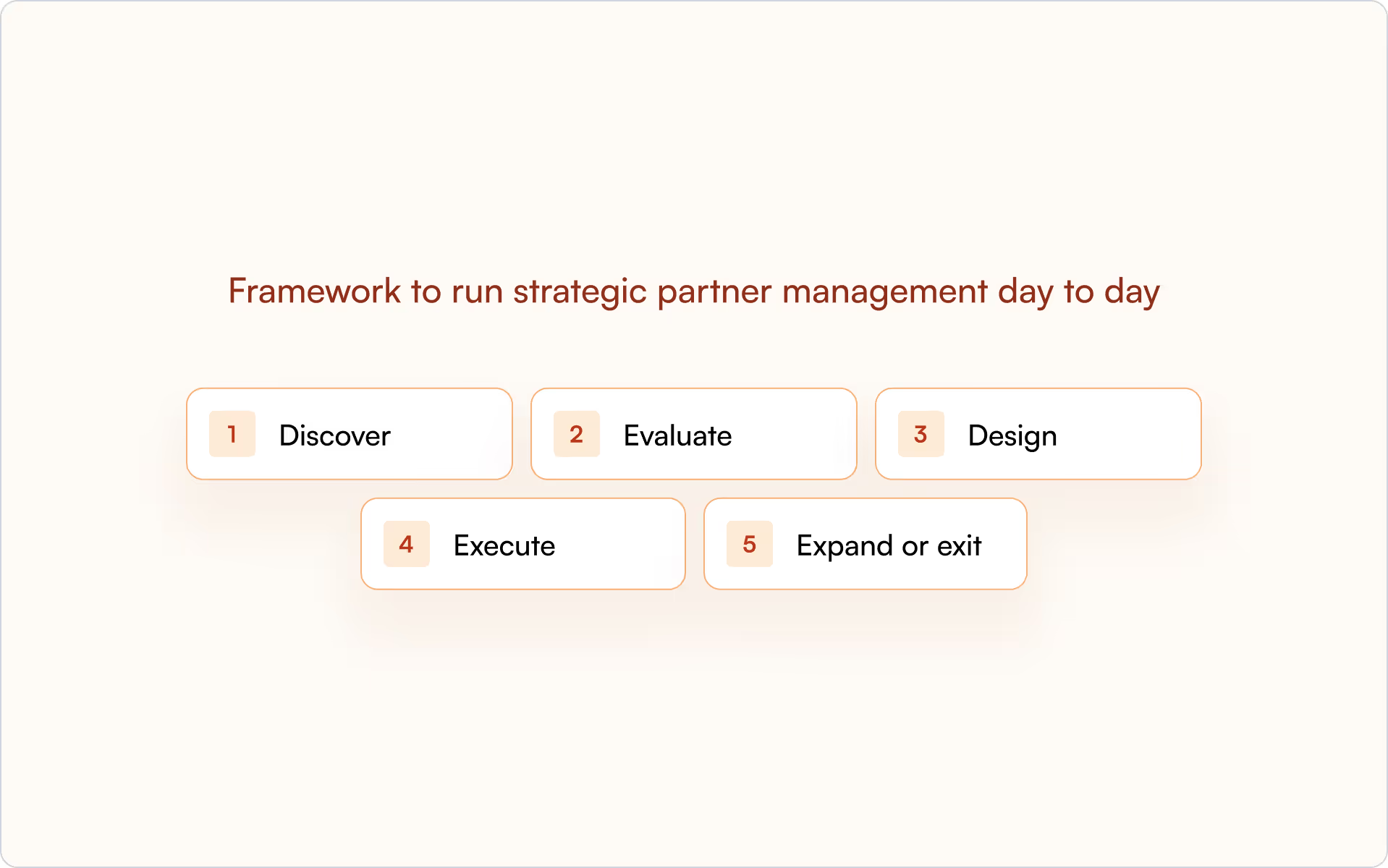
- Discover — find partners that match your thesis; validate interest.
- Evaluate — confirm strategic fit, capability, and resourcing; run an executive alignment call.
- Design — write the joint value proposition, rules of engagement, and first-quarter plan.
- Execute — launch one co-marketing motion and one co-sell motion; provide training and sales tools; track performance weekly.
- Expand or exit — double down with new partners in the same pattern if results are strong; otherwise, adjust or conclude the relationship.
Run this loop across multiple partnerships, but never at the expense of quality. Depth beats breadth when outcomes matter.
Templates and tools that keep partnerships on track
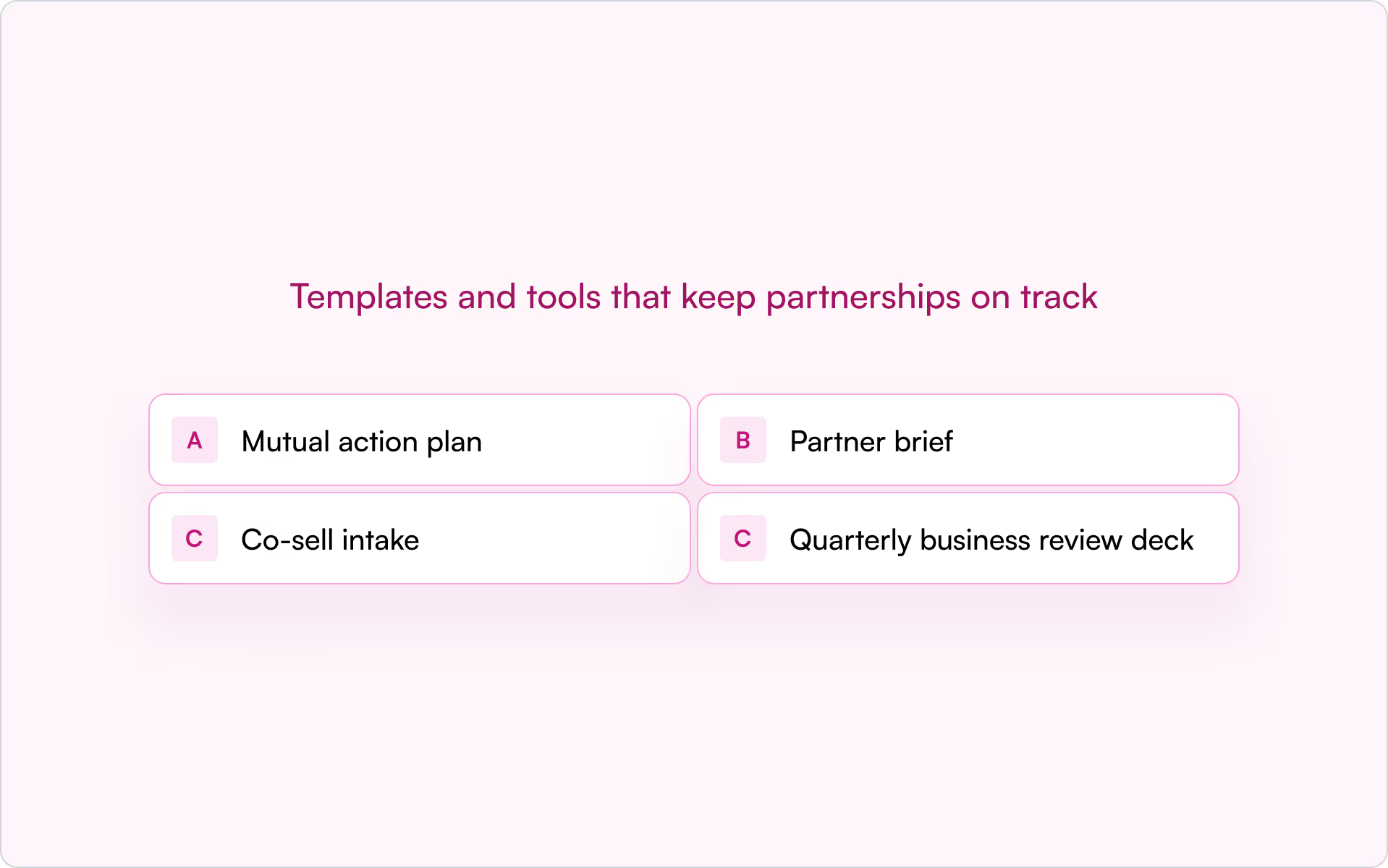
- Mutual action plan — a single, shared checklist with owners, dates, evidence, and risks.
- Partner brief — one page with ICP, key messages, approved claims, and three proof points.
- Co-sell intake — a minimal form both CRMs can accept.
- Quarterly business review deck — pipeline, wins, losses, customer feedback, next-quarter bets.
If you’re using Introw, you can host these templates in partner workspaces, let partners update milestones via email or Slack, and sync progress to your CRM. That keeps managing strategic partners lightweight and visible.
Example use cases across industries
- SaaS and services. A technology partnership with a system integrator to implement complex deployments, with co-selling into existing accounts.
- Supply chain collaborations. Two companies align forecasting and inventory data to reduce stockouts and serve new markets together.
- Marketing partnerships. A webinar and field series across a shared industry, feeding a joint landing page with a single lead-sharing process.
- Joint ventures. Equity-based partnerships that build a new solution faster than either company could alone.
Each case follows the same pattern — shared objectives, clear governance, and measurable outcomes.
Where to place strategic partner management inside the org
High-leverage programs typically report to a senior revenue leader or a GM who owns a partner ecosystem. The partnership manager coordinates with product, legal, finance, marketing, and sales, and brings problem solving to bear when priorities clash. For start-ups, begin with one experienced owner. As you grow, invest in partner operations to manage data, processes, and compliance at scale. Contact our team and we’ll show you how strategic partner management is done.
B2B Partnerships 101: 15 Strategies for Success in 2026
In 2026, B2B partnerships will be more crucial than ever as SaaS brands strive for robust business growth while reducing costs.
As SaaS companies have increasingly relied on partnerships over the past few years, their strategies have evolved, transforming basic ad hoc collaborations into complex ecosystems made up of complementary products and services.
So what exactly do B2B partnerships in SaaS look like today? And how can you ensure they have maximum impact?
Read on for our 15 strategies for SaaS partnership success in 2026.
What Are B2B Partnerships?
At their core, B2B partnerships are collaborative, revenue-oriented relationships between different businesses.
Generally, these partner companies will operate in different but complementary spaces, and they may team up for a specific function, such as distribution, marketing, product/tech, or services.
B2B partnerships are a particularly popular option in the SaaS sector, as they help software companies expand their pipelines, increase product value through integrations and bundled offerings, lower CAC by leveraging partners’ reach, and close deals faster.
An important distinction to understand is the difference between B2B partnerships, channel partnership programs, and ecosystems.
Bear in mind that, although each of the three models below is distinct, there is significant overlap.
- A B2B partnership is any collaborative relationship formed to drive shared revenue or value.
- A channel partner program is a formal, structured way of managing and scaling B2B partnerships. Often, these use tiers, incentives, and certifications.
- An ecosystem is a broad network involving many different partners in various disciplines. All these partners work together to create value for customers.
Why B2B Partnerships Will Matter More Than Ever in 2026
In 2026, partnerships are a growth engine, not a side channel.
With budgets under pressure, SaaS businesses are increasingly relying on their partnerships to drive growth while simultaneously reducing their spending.
Furthermore, buyers now expect more than stand-alone products. They want integrations, services, and bundled solutions that address larger problems – all of which can be delivered through partnerships.
Meanwhile, go-to-market has shifted toward ecosystem-led growth, where companies move with partners from co-marketing to co-sell to co-success, driving not just new business but retention and expansion.
And because the CRM is the system of record, attribution must live there, or partner impact goes unmeasured.
Types & Models of B2B Partnerships
So let’s take a look at the different types of B2B partnerships you’re likely to see in 2026.
- Marketing partnerships, including co-marketing, content creation, webinars, events, and lead generation swaps.
- Distribution partnerships, like reseller, VAR, MSP, referral, and marketplaces.
- Product/Tech partnerships, including integrations, ISVs, OEMs, and solution bundles.
- Services/SIs/Agencies, such as implementation, migration, and vertical packages.
There are also different ways to structure partner relationships.
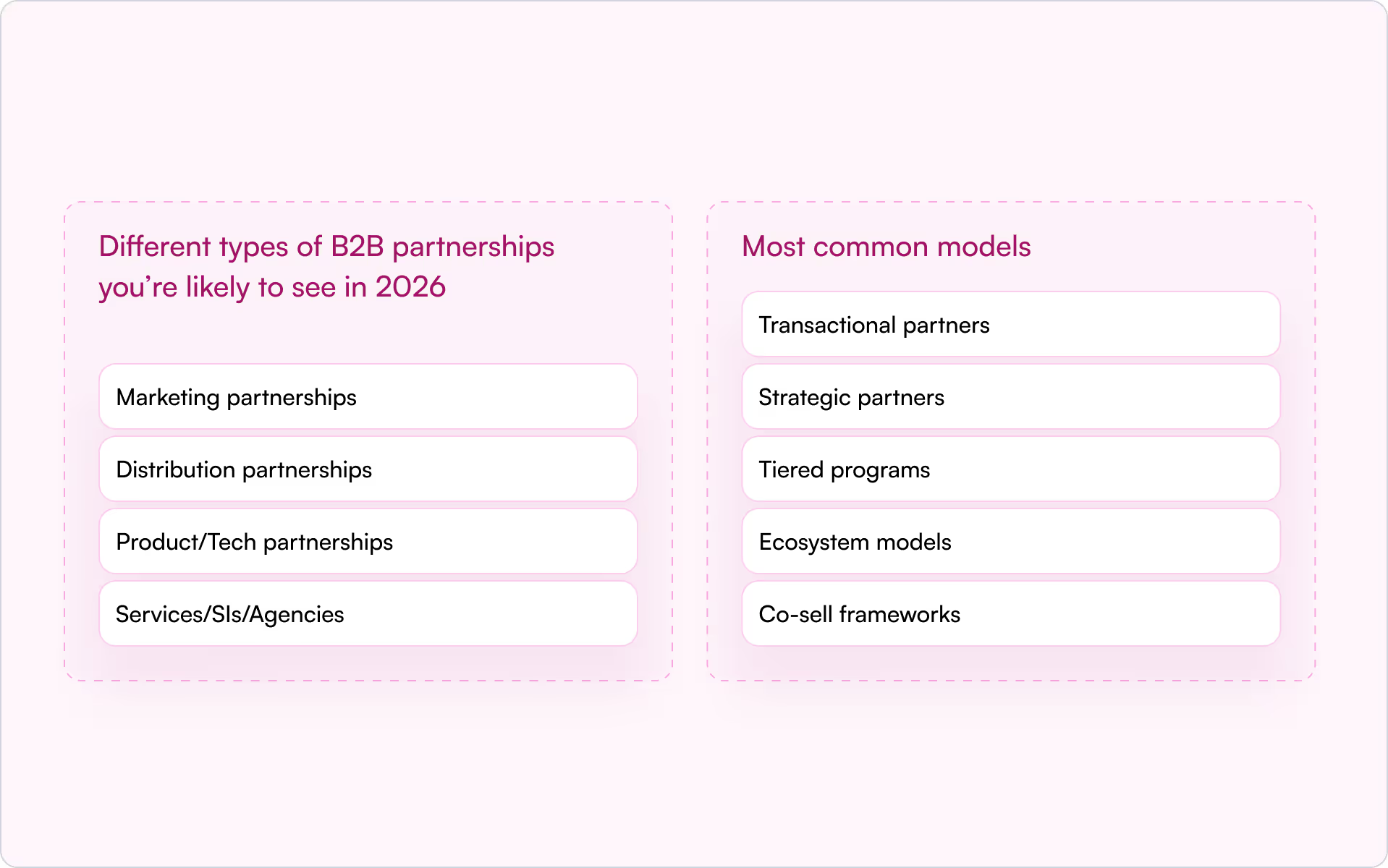
Here are some of the most common models:
- Transactional partners bring in occasional leads or deals
- Strategic partners are more aligned with shared goals, engage in joint planning, and make long-term commitments.
- Tiered programs reward partners based on volume or certification
- Ecosystem models focus on collaboration across numerous partner types
- Co-sell frameworks see direct collaboration between AEs from both companies to close deals together
For example, you might have an integration and reseller bundle that combines a SaaS integration with a reseller offering it as a packaged deal.
An SI package for a vertical could look like a systems integrator designing a tailored solution, which includes your product, for an industry like healthcare or finance.
Or perhaps you’ll develop a co-marketing → co-sell funnel? You can build this by running joint marketing campaigns with your partners and then moving qualified leads into joint sales motions in order to close.
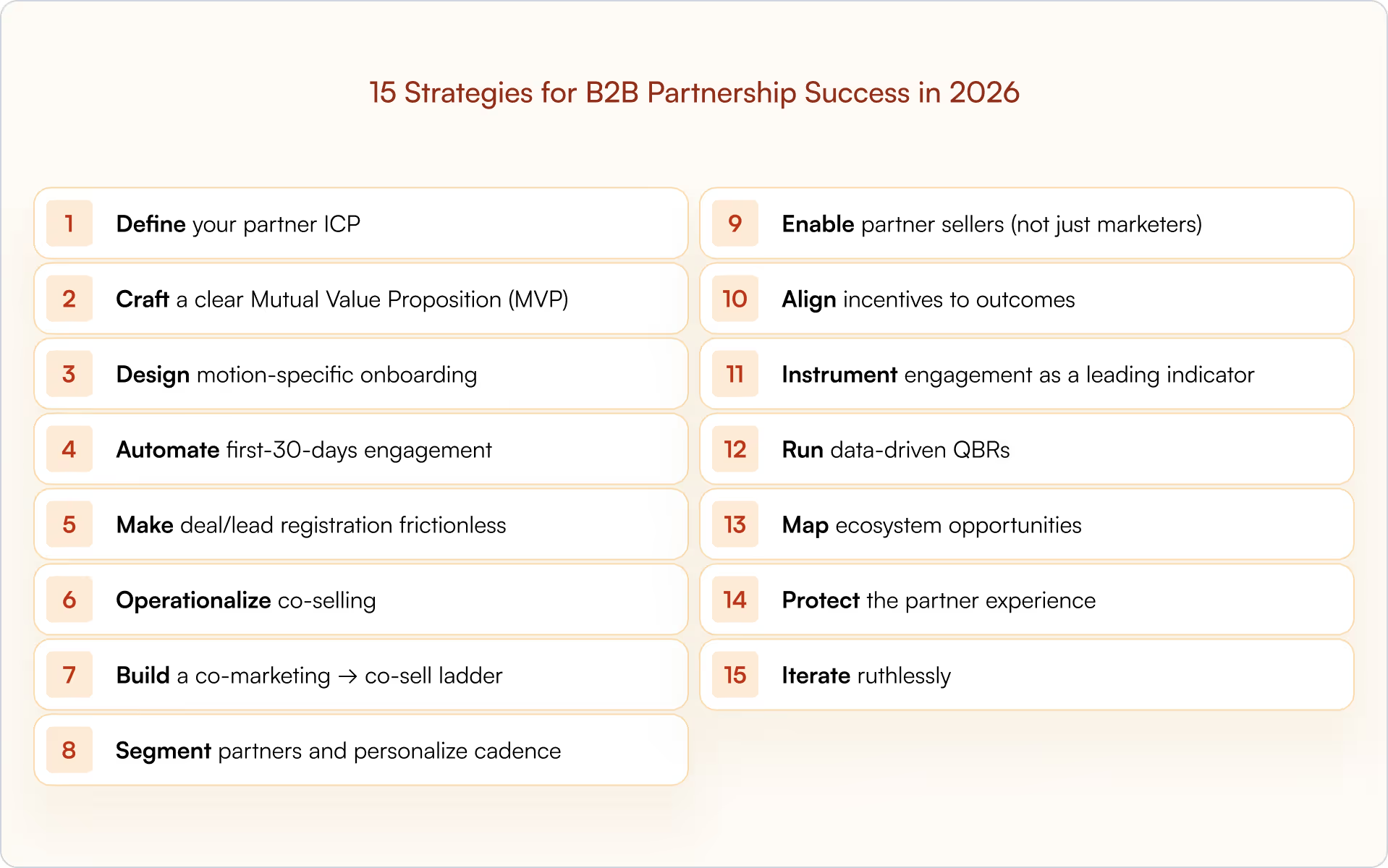
15 Strategies for B2B Partnership Success in 2026
Is it time to elevate your SaaS partnership program to the next level?
Here are 15 B2B partnership strategies for success in 2026.
1. Define Your Partner ICP
Ready to find your ideal partner?
Just like you build an Ideal Customer Profile when you start your business, partnership success kicks off with a clear partner ICP.
This should help establish a clear B2B partnership strategy, identify potential partners to prioritise, and avoid chasing ‘logo value’ over the actual revenue impact each partner could offer.
Actions
Begin by identifying which partner characteristics most closely align with your product and target customers.
Consider the following.
- Which industries do they operate in?
- What kind of deal sizes are they working with?
- Where are they geographically?
- Do you have any tech stack overlaps?
Then, build a partner fit score that prioritises ensuring you share a very similar ICP, as well as market reach, and how complementary your SaaS products are.
How Can Introw Help?
Use partner relationship management (PRM) platform Introw to segment partners and automate scoring based on their performance and engagement.
2. Craft a Clear Mutual Value Proposition (MVP)
What problem do you solve together? Why now? Why you two?
Every strong partnership revolves around a shared story of why the partners have better outcomes together.
Having this clarity makes it easier to align sales teams and resonate with customers.
Actions
When considering a new partnership, start by defining your joint problem.
Why are you best positioned to overcome this when working together?
Why is this an urgent problem that needs to be solved now?
Why is your combined approach to solving this problem unique?
Use your answers to craft a concise one-pager that lays out your MVP and includes ROI proof.
Finally, develop a joint demo narrative that showcases your solution in action.
How Can Introw Help?
With Introw, teams can keep their co-sell playbooks all in one centralized location.
This makes it much easier to track which content partners are actually using (and using successfully) to drive deals.
3. Design Motion-Specific Onboarding
Not all B2B SaaS partnerships operate in the same way.
Referral, reseller, and integration partnerships, for example, each have their own unique roles and requirements.
This is why it’s vital to avoid taking a one-size-fits-all approach.
Actions
Instead, design motion-specific onboarding programs, complete with tailored templates, 30-60-90 day enablement plans, customized training, and clear first-deal targets to guide partners toward success.
This ensures partners know what success looks like for them and have realistic goals to work towards, helping them ramp up more quickly.
How Can Introw Help?
Tailoring your onboarding program to each partner may sound time-consuming, but with Introw, it doesn’t need to be.
Indeed, this sophisticated platform can automate onboarding flows, track completion, and manage certification progress.
This empowers your team to scale partner enablement efficiently, while maintaining high-quality engagement across various partnership types through tailored programs.
4. Automate First-30-Days Engagement
The first month of a partnership is absolutely crucial.
After all, partners who take early action are far more likely to deliver long-term value: you can look at speed-to-first-activity as an indicator of lifetime value.
Actions
To accelerate speed-to-first-activity without the time-sink of manual admin, automate partner engagement to cover their first 30 days with you.
Look at:
- Automating welcome sequences
- Drip key resources over time
- Send nudges (for example, “how to register your first deal”) to encourage and guide initial activity
How Can Introw Help?
Introw helps by delivering updates via email or Slack without requiring a portal login, ensuring you can reach new partners where they’re at.
The platform also provides engagement analytics, allowing teams to track who is active, identify stalled partners, and intervene at the first sign of disengagement.
5. Make Deal/lead Registration Frictionless
Remove any barriers to deal registration – essentially make it as quick and easy as possible – and you should find that your partners log their deals more quickly and accurately, accelerating the sales cycle.
Actions
The first step towards frictionless deal or lead registration is to avoid forcing portal logins.
Instead, enable submissions via CRM, links, email, or Slack.
This removes the potential barriers of forgotten passwords,
When setting up your deal/lead registration forms, it’s vital to use standardized fields across all your platforms to ensure you’re capturing consistent data.
You should also set up conflict rules to prevent overlapping data, and further smooth the partner journey with instant confirmations that submissions have been received.
How Can Introw Help?
Introw offers CRM-native deal/lead registration, which is crucial for this step.
It automatically syncs information and sends notifications to both internal teams and partners.
As outlined above, the platform also allows deal/lead reg links, email, or Slack.
6. Operationalize Co-Selling
Structured collaboration between your team and your partners is crucial for effective co-selling.
Set up a robust co-selling infrastructure, and you can ensure accountability, cut miscommunication, and synchronize both internal and partner teams.
The result?
The ability to close more joint deals more efficiently.
Actions
To operationalize co-selling, work through the following points together:
- Align on joint qualification criteria: The list of standards that your team and your partner use to determine whether a lead or opportunity is worth pursuing together.
- Set service-level agreements: Outline your clear expectations for how quickly and reliably teams must share information around a deal.
- Define Mutual Action Plans (MAPs): This shared roadmap should outline the key steps, responsibilities, and timelines required to close a deal.
- Standardize stage definitions: If you’ve worked in more than one organization, you’ll likely be aware that sales cycle stages can be defined differently from sales team to sales team. Co-selling demands that you agree on what each stage of the sales process actually represents for both your internal team and your partner team.
- Establish clear workflows between account executives: How will your internal sales team and your partner’s sales team collaborate on shared opportunities?
- Establish a process for note sharing: Where will notes be stored? Who is responsible for taking them? Who will they be shared with? Can readers comment on notes and how?
- Meeting support: What exactly will the partners involved expect from each other in client meetings? Will you create joint demos or presentations, help to guide discussions, or simply attend to answer product or technical questions?
How Can Introw Help?
When it comes to co-selling, Introw provides a considerable boost.
This software enables seamless coordination between your company and your partners by enabling shared updates visible to both teams, and tracking MAP milestones in real time.
It also supports co-marketing efforts through a shared asset library, making it easy for both internal teams and partners to access the latest pitch decks, one-pagers, and campaigns — all auto-synced and accessible without needing to log into a portal.
7. Build a Co-Marketing → Co-Sell Ladder
B2B SaaS partnerships come into their own when they progress from shared visibility to shared revenue.
To turn this into a reality, you must construct an effective co-marketing → co-sell ladder.
This ladder should start with co-marketing campaigns to build awareness, then nurture interest into MQLs, followed by warm partner-led introductions that convert into qualified opportunities, and finally, closed deals.
Actions
Of course, this ladder must be carefully managed.
First, you’ll need to create a shared campaign calendar to ensure all stakeholders are aware of their responsibilities and deadlines.
Next, enforce UTM tracking, so you can see exactly which partner, campaign, or channel drove a lead or deal.
Finally, equip your SDRs with tailored enablement content.
How Can Introw Help?
With Introw, you can seamlessly manage co-marketing logistics such as campaign announcements.
The platform also makes tracking your co-marketing and co-sell activities easy, with visibility into partner-specific engagement like clicks and opens. Plus, you can centrally manage and distribute co-branded materials — including blog posts, one-pagers, and pitch decks — making it simple for partners to acc
8. Segment Partners and Personalize Cadence
In a true partner ecosystem, you’ll have some companies that contribute to your program daily, and others that just pop in as and when they have a lead for you.
It’s important not to treat all of these partners in the same way for two reasons.
Firstly, treating every partner as if they contribute equally will dilute your results.
Furthermore, partners will respond best to tailored outreach cadence and bespoke engagement.
Part of getting this right is about matching your partners’ maturity level within your scheme.
Actions
Start by tiering partners based on their potential (for example, market fit, shared ICP, deal size) and engagement (for example, their activity and responsiveness).
Then, tailor your outreach cadence and messaging to speak to these tiers.
For example, run a ‘Top 20%’ play for high-potential partners with frequent check-ins and co-selling support, while using re-engagement flows to revive dormant partners.
How Can Introw Help?
Not too long ago, personalization was an extremely time-consuming (but still necessary) practice.
However, Introw makes personalization scalable, with dynamic partner segments and automated cadences per tier, ensuring every partner gets the right level of attention at the right time – and without all the tedious admin.
9. Enable Partner Sellers (Not Just Marketers)
For your co-sell ecosystem to operate effectively, partner sales reps must be able to talk confidently about your joint solution.
While marketers are generally well-briefed on the products they’re expected to build campaigns around, you must understand the importance of informed salespeople.
Actions
Put all stakeholders – including partner AEs – on role-based learning paths, where they are given the exact materials they need to do their job.
For example, you could provide partner sales reps with enablement materials like:
- Bite-sized talk tracks
- Objection handling guides
- Competitive intelligence
Top tip: build out a ‘first-call win kit’, containing pitch scripts, battle cards, and mini demo flows.
These kits aim to help AEs succeed immediately, helping them overcome any initial hesitation and motivating them to reach out to more prospects.
How Can Introw Help?
Introw supports partner sales enablement through its content hub, where all your resources can live.
You can also utilize its content usage analytics to identify which materials are most engaging to users.
10. Align Incentives to Outcomes
When it comes to reward, successful partner programs go way beyond just deal commission.
Instead, they recognize the full range of contributions that drive revenue.
This approach motivates partners to stay engaged across the entire lifecycle, not just at the point of closing deals.
Actions
Consider adding certification bonuses for trained sellers, SPIFFs for short-term performance pushes, and credit for both sourced and influenced deals.
When it comes to incentives, transparency is key.
Publish clear rules around your rewards and revisit them quarterly to ensure they continue to align with your business goals.
How Can Introw Help?
By automatically capturing partner activity and revenue impact, Introw helps to ensure recognition and payouts are accurate and fair.
11. Instrument Engagement as a Leading Indicator
Looking for an early indicator of partner success?
Take your focus off revenue for a second and look at engagement metrics instead.
Actions
Track engagement metrics like:
- Portal visits
- Content downloads
- Email/message opens
- Email/message click-through rates
- Email/message replies
- Meeting attendance
These metrics will show you which partners are actively leaning in.
Now, convert your results into an engagement score.
Partner managers should use this score to decide which partners to prioritize (aka, which are most likely to deliver results?).
How Can Introw Help?
Use Introw to feed your engagement data into role-based dashboards in Salesforce or HubSpot.
12. Run Data-Driven QBRs
In 2026, your Quarterly Business Reviews (QBRs) should have moved beyond static slide decks to live CRM dashboards.
This empowers you to put a strong focus on real, actionable insights, while making reviews more collaborative and, vitally, grounded in facts rather than anecdotes.
Actions
Harness the power of live dashboards to analyze key metrics such as:
- Win/loss ratios
- Stage leakage
- Deal velocity
- Recommended next-best actions
13. Map Ecosystem Opportunities
To truly maximize the tangible benefits of your partnerships, it’s essential to connect with complementary players within the ecosystem.
Consider how you can create complementary triads within your ecosystem.
Your product + an Independent Software Vendor (ISV) + a systems integrator (SI) = bigger, stickier deals.
Actions
To uncover the best triads, run overlap analyses on your customer bases to find out which partners share a similar audience.
Once you’ve identified your complementary trio, build packaged offers that combine all your strengths, and create reference architectures that show how all your solutions fit together.
How Can Introw Help?
Introw lets you tag and add notes by partner type, making it easier to spot potential bundle plays.
This transforms isolated partnerships into ecosystem-driven opportunities with a greater impact.
14. Protect the Partner Experience
A strong partner experience hinges on high levels of trust and smooth, easy interactions.
Clear communication and fast responses are crucial to this.
Actions
While establishing clear and quick communication may feel like an easy win, it’s vital to create a strong structure to avoid lapses in your strategy.
There are three key components to a strong partner comms strategy:
- Establish a response-time SLA
- Lay out a defined escalation path for urgent issues
- Develop a feedback loop to capture partner input continuously
How Can Introw Help?
Introw supports the partner experience by sending automated status updates and running NPS-style pulse checks.
15. Iterate Ruthlessly
To maximize the impact of your partner program, keep a laser-sharp focus on what is working and what is not.
Be ruthless here: double down on the tactics that are producing results, and cut those that aren’t.
Actions
Here’s what this might look like:
- Implement monthly performance reviews
- Run A/B tests on content and campaigns
- Pilot new tiers or programs to see what resonates
- Sunset low-ROI motions
- Double down on high-ROI partners and plays
How Can Introw Help?
Introw provides performance snapshots and trend alerts, helping users to spot both successes and drops in engagement quickly, and empowering them to switch up their strategy fast.
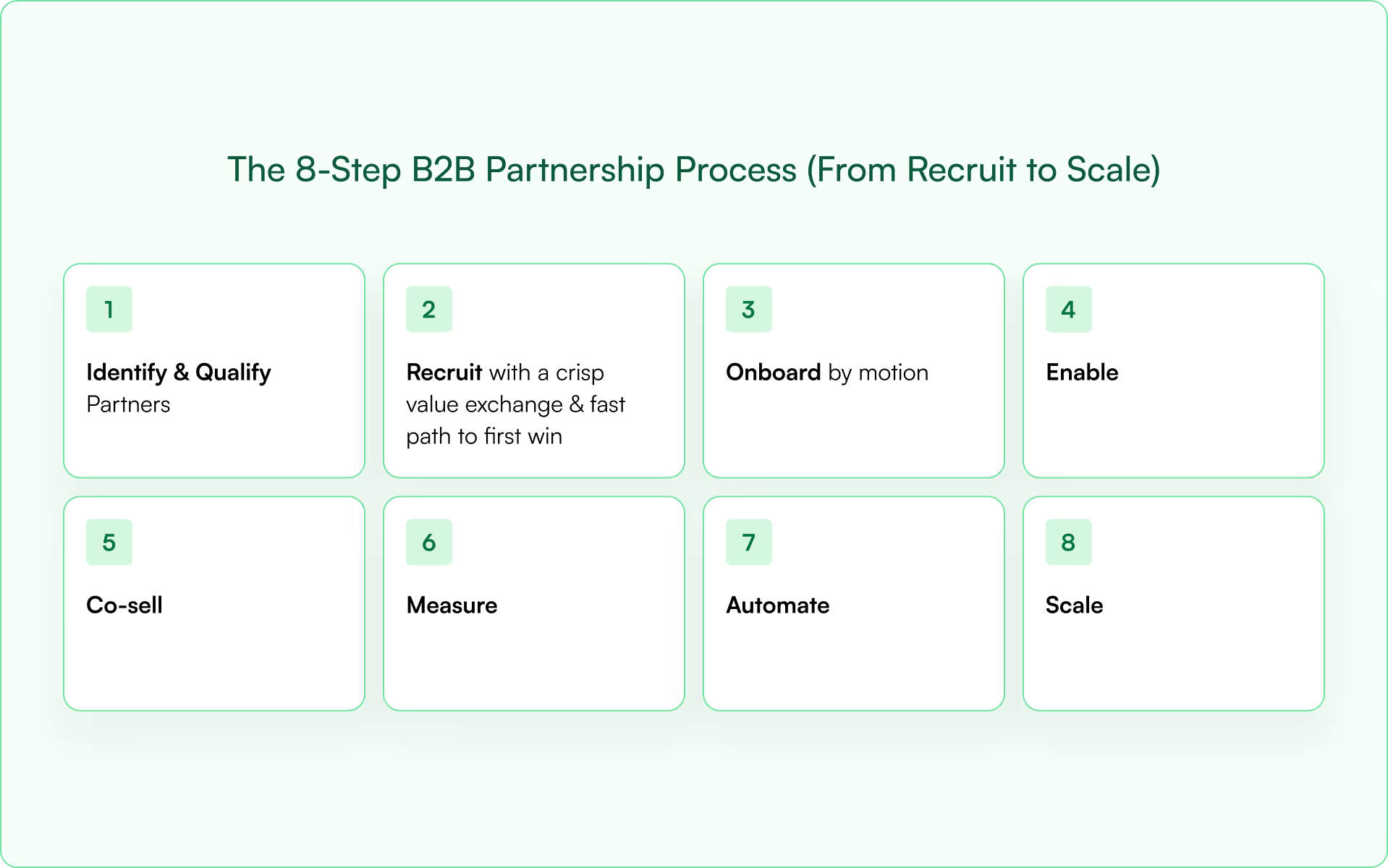
The 8-Step B2B Partnership Process (From Recruit to Scale)
Here are eight steps to take you from the recruitment stage of your partnership program to scaling.
1. Identify & Qualify Partners
Start by mapping potential partners against your ideal customer profile to assess their fit and intent.
Assess their market presence, technical compatibility, and willingness to actively engage with you.
This should ensure you focus on partners most likely to drive meaningful results.
2. Recruit With a Crisp Value Exchange & Fast Path To First Win
It’s crucial that you can clearly articulate what partners gain from working with you, from revenue opportunities to partner enablement resources.
Furthermore, you must make it easy for your partners’ sales reps to achieve their first success quickly.
After all, early wins build momentum and trust.
3. Onboard By Motion
Tailor the onboarding process to the type of partner you’re dealing with to facilitate different levels of responsibilities, knowledge, and engagement.
Apply this personalized approach to:
- SLAs
- MAPs
- Resources
4. Enable
Provide partners with ready-to-use marketing assets, including co-marketing kits and seller playbooks.
Your partnership co-marketing kit could include:
- Email templates and social posts
- Landing pages or microsites
- Decks, one-pagers, and case studies
- Logos and imagery
- Brand guidelines
Meanwhile, your seller playbooks may contain vital info on objection handling, competitive intelligence, and talk tracks.
5. Co-sell
It’s time to start selling!
But first, define structured processes for collaborating on shared opportunities.
These processes will need to take into account:
- Deal registration
- Handoffs
- Stage updates
- Conflict rules
6. Measure
The exact metrics you decide to track will depend on your company’s goals and specific circumstances.
However, when measuring the success of partnership programs, it’s beneficial to track partnership metrics surrounding:
- Engagement
- Pipeline
- Revenue
- CSAT/NPS
The resulting data should inform your decisions on where to invest, coach, or adjust your partnership strategies.
7. Review
Your QBRs will likely form the backbone of your review process.
Use these to assess your performance against your business goals, analyse your wins and losses, adjust partner tiers or incentives as required, and identify any risks to your pipeline.
And don’t forget to define next-best actions for both the vendor and the partner.
8. Scale
Finally, it’s time to scale.
Leverage successful B2B strategic partnerships to expand into new geographies or verticals, map opportunities for ecosystem bundles, and enact marketplace plays to increase visibility and adoption.
Metrics & Scorecards That Actually Predict Success
As outlined above, the exact combination of metrics you track will depend on your specific circumstances and goals.
However, when it comes to predicting success, there are a few leading and lagging indicators that are especially valuable.
Leading indicators:
- Engagement score
- Time-to-first activity
- Enablement completion
- Meeting acceptance
Lagging indicators:
- Sourced/influenced pipeline
- Win rate
- Deal velocity
- ARR
- Retention/expansion
Furthermore, here’s an example of the core categories you might want to include in a partner scorecard to track performance:
- Partner fit
- Activity
- Pipeline
- Revenue
- Forecast
- Confidence
One of the best PRM platforms on the market, Introw makes tracking and analysing all this data much easier by providing users with a single source of truth, complete with CRM-native attribution and real-time dashboards.
So, instead of juggling partner portals, spreadsheets, and CRM exports, users get easy access to unified, real-time data, all on one platform.
Here’s what this looks like:
- Single source of truth: All partner activities, from deal registration to co-selling notes, are captured in one location, so sales, marketing, and partner teams are all looking at the same information.
- CRM-native attribution: Partner influence is automatically tied to pipeline and revenue inside your CRM, ensuring that deals are appropriately credited.
- Dashboards: Automated custom dashboards make it easy to run QBRs, track ROI, and make decisions around priorities and investments.
Conclusion
B2B partnerships thrive when you reduce friction, personalize by motion, and measure in CRM.
With a clear partner ICP, motion-specific playbooks, and CRM-first automation, you’ll turn partnerships into a repeatable revenue engine – fast.
➡️ Ready to operationalize B2B partnerships in your CRM? Request an Introw demo.
Partner Onboarding Checklist: All You Need to Get It Right in 2026
Are you disappointed in your SaaS company's partner program?
You’re not alone. Most companies have confusing onboarding flows, scattered resources, and no clear path to a partner’s first deal. The result? Partners feel lost, engagement drops, and it takes far too long to see any real revenue from your partner program.
Good news: you can fix these problems with a channel partner onboarding process.
Keep reading to learn why B2B partner onboarding matters, how to onboard new partners successfully, and tools to dramatically improve partner performance.
Why B2B Partner Onboarding Matters More Than Ever
First impressions define relationships.
If a partner thinks your SaaS company is unorganized or unsupportive at the beginning of your partnership, they'll keep thinking it until the partnership ends.
An effective onboarding process will improve the partner journey from day one. How so? By ensuring each partner has the training, tools, and support they need.
Put simply, a strong onboarding process will increase partner engagement, boost deal velocity, and reduce churn—all of which will lead to higher revenue numbers.
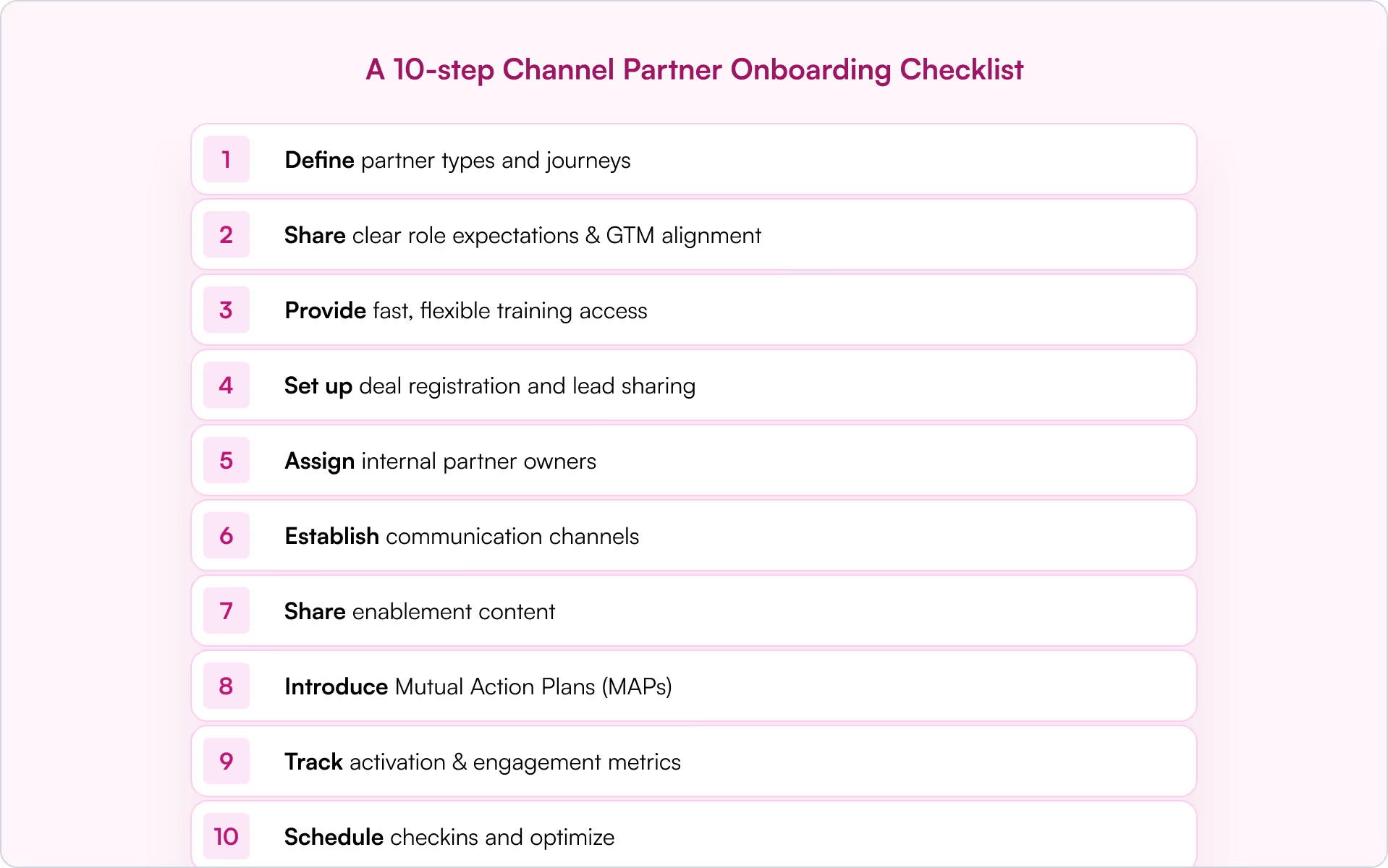
A 10-Step Channel Partner Onboarding Checklist for 2026
How do you build a partner onboarding program that works?
While we can't make guarantees, the 10-step partner onboarding template below will give the best chance to succeed in this area. Let's dive in…
Step 1: Define Partner Types and Journeys
Every partner is different. This is especially true in regard to partner types.
Referral partners are not the same as reseller partners, who are not the same as tech partners. Each has different goals, and thus, needs different onboarding workflows.
Before you do anything else, understand the partner types your SaaS company works with. Then map out an effective, repeatable journey for each.
Tools like Introw make this easy. Our platform has a no-code flow builder that will help you quickly customize onboarding workflows based on partner types. Just as important, Introw includes automation features to streamline engagement.
Step 2: Share Clear Role Expectations & GTM Alignment
What do you want your partners to actually do?
Should they generate leads for your company's sales team? Should they work with your sales reps to walk prospects through the entire sales process? Should they sell independently via affiliate links? There are plenty of options.
Once you define partner roles, set timelines and key milestones. This will help you monitor partner progress and evaluate partner performance in an objective way.
Note: you don't have to set roles, timelines, and milestones for individual partners in your partner program. Instead, aim to define these things for each partner type.
Step 3: Provide Fast, Flexible Training Access
The best partner onboarding programs include effective training materials.
This begs the question, "What does effective partner training look like?" Simple: effective partner training is bite-sized, asynchronous, and easily trackable.
- Bite-Sized: Your partners don't have time for manuals or lengthy videos. Your training materials need to deliver quality information fast.
- Asynchronous: Your partners have busy schedules. Asking them to attend training at specific times is unrealistic. Your training materials should be asynchronous so partners can consume content when they have time.
- Trackable: Your partners are easily distracted. Your training materials should be trackable. That way you always know where they are in the training process and can keep them on track. This will ensure mutual success.
You might be wondering, "How do I deliver all these training materials?" There are multiple ways, but tools like Introw allow you to store and deliver content at scale. You can also invest in a full-fledged learning management system (LMS) if needed.
One more thing: Avoid gated content at all costs. Your partners aren't leads. Asking them for contact details in exchange for content will only lead to frustration.
Step 4: Set Up Deal Registration and Lead Sharing
Your partners are trained and ready to make sales. Now what?
Now you need to set up deal registration and lead sharing processes. If you don't, your partners won't be able to fill your pipeline with prospects or generate sales.
Every partner that goes through your SaaS company's onboarding process should know exactly how to submit leads, register deals, and receive feedback quickly.
With Introw, users can connect deal registration procedures directly with their Salesforce or HubSpot accounts, which will then provide them with real-time alerts. Introw is also equipped with AI to handle conflict resolution quickly and effectively.
Step 5: Assign Internal Partner Owners
Quick suggestion: take partner relationship management seriously.
How does this apply to the partner onboarding process? Ensure partners have clear points of contact within your SaaS company. Someone they can easily reach out to for advice, product information, and the occasional bit of encouragement
This will lead to better outcomes. Your partners will get the data they need to close deals. And your company will benefit from the revenue said partners generate.
Step 6: Establish Communication Channels
How will you communicate with your partners?
You could handle all partner questions via email. Or create a dedicated Slack channel to share updates. Or invest in some kind of company intranet tool.
As long as your chosen channel is easy for partners and channel managers to use - and allows for asynchronous communication—you should be good to go.
Introw was built with effective communication in mind. Our platform integrates with Slack and replies are auto-synced with Salesforce or HubSpot - no login required.
Step 7: Share Enablement Content
Make sure every partner has access to enablement content within their dedicated partner portal. We're talking about product docs, pitch decks, and case studies.
These materials will help your partners educate customers, make sales, and drive revenue for your SaaS company. As such, they're essential to partner performance.
In an ideal world, your enablement content will be tailored to specific use cases, regions, and/or products. This will make it easier for partners to use the right materials at the right times. The result? Greater business growth. Win!
Step 8: Introduce Mutual Action Plans (MAPs)
We asked you to consider goals and timelines in "Step 2" of this partner onboarding checklist. Now it's time to pursue those goals via mutual action plans.
A mutual action plan, sometimes referred to as a MAP, is a document that describes how you and your partners will achieve specific objectives in a systematic way.
Work with partners to determine goals, steps to accomplish them, and expected timelines. That way you're all on the same page and can pursue objectives together.
Introw users can access MAPS directly inside their Salesforce or HubSpot accounts, which ensures visibility for all parties and promotes strong collaboration.
Step 9: Track Activation & Engagement Metrics
You have to track metrics to build an effective partner onboarding program. The question is, which metrics should you track. Here are the most important ones:
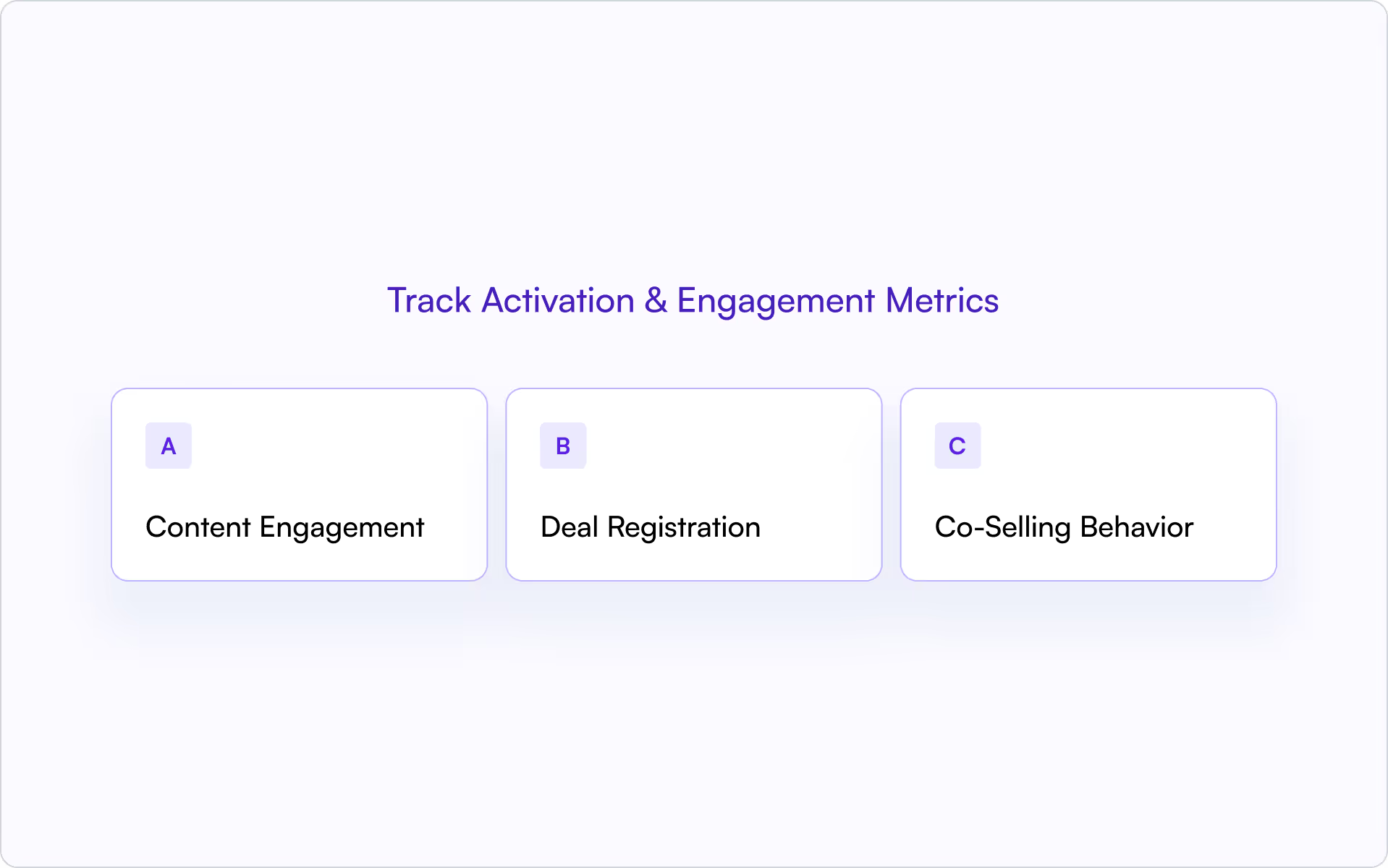
- Content Engagement: Has the partner completed the necessary training courses? Have they viewed your enablement content? Top performing partners know these things lead to more sales and success.
- Deal Registration: How many deals has the partner registered? At the end of the day, partner success is determined by revenue generated. The more each partner drives, the better—for them and your SaaS company.
- Co-Selling Behavior: Are your partners open to co-selling opportunities? Co-selling is a proven way to close deals at a consistent clip. The best partners take advantage to hit their sales targets on a regular basis.
Also worth mentioning, logins do NOT equal success.
You want partners to consume training programs, engage with your enablement content, and register new deals. Simply logging in to your partner portal doesn't drive revenue. As such, the metric doesn't signal a successful partner.
Step 10: Schedule Checkins and Optimize
Finally, schedule ongoing meetings with every partner.
These regular checkins will give you the chance to evaluate partner pipeline, assess partner progress toward goals, and educate partners to ensure future success.
We suggest 30, 60, and 90 day checkins with new partners. That way you can address questions, offer advice, and otherwise make sure your partners have a solid foundation. After 90 days, schedule quarterly business reviews (QBRs) instead.
You should consider incentive programs as well. This will encourage partners to work harder, which will only help to improve your partner program.
The Tech Stack You Need to Automate and Scale Partner Onboarding
As you might expect, the right tech stack can make all the difference when building a strong partner onboarding process. But which platform should you choose for your SaaS company? Look for a tech stack that offers:
- A CRM-Native Setup: Make sure your tech stack connects seamlessly to your CRM. That way you don't have to manually transfer data between systems.
- Off-Portal Collaboration: Make sure your platform allows you to interact with partners outside of the portal. This will reduce frustration for partners.
- No-Code Workflows: Make sure your tool is no-code. That way your team can build new partner workflows in a flash, even if they can't write code.
- Partner Engagement Tracking: Make sure your tech stack allows you to track partner engagement metrics. This will help you evaluate and optimize performance.
- Modular Partner Flows: Make sure your platform lets you easily customize partner workflows. That way you can tailor each one to a different partner type.
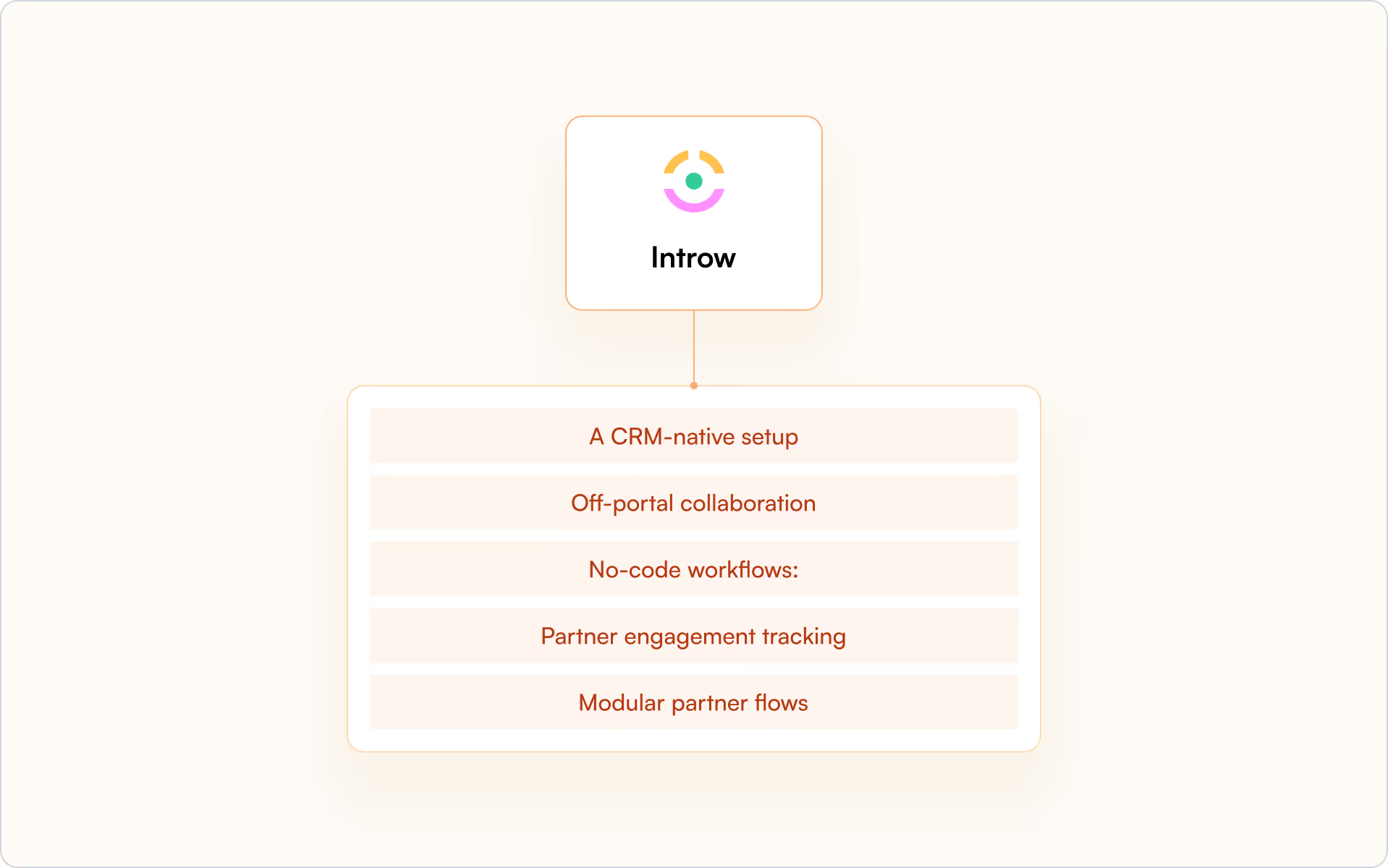
Introw was purpose-built for partner onboarding in 2026.
Our platform integrates perfectly with Salesforce and HubSpot, allows for off-portal collaboration, and includes important partner engagement metrics.
It's also no-code, so you can design custom workflows for every partner type. And you can do it in minutes, even if you've never coded before.
Sign up for a free demo today to see if Introw is right for your SaaS company.
Final Thoughts: Your Onboarding Checklist = Your Partner’s Launchpad
An effective channel partner onboarding process is essential in 2026.
Without one, your partners won't have the information and support they need to generate leads and close deals. This is why so many partner programs fail.
After reading this article, you know exactly how to build an effective partner onboarding process. Just as important, you know what to look for in a partner onboarding tool. Combined, this knowledge will help you grow profits via partners.
Partner Engagement Guide 2026: Strategies & Best Practices To Use Today
Effective partner engagement is the backbone of every successful SaaS partner program.
In 2026, winning teams are moving far beyond checklists.
Instead, they're harnessing the power of automation, smart communication, and data-driven strategies to boost partner activity, pipeline, and loyalty.
In this guide, you'll discover practical frameworks, best practices, and modern tools to transform your partner engagement into collaborative relationships and a real revenue driver.
Why Partner Engagement Still Matters in 2026
Let’s be honest: in SaaS these days, just signing a new partner isn’t enough for mutual success. The competition’s intense, partners have more choices, and with everyone working remotely or in hybrid teams, it’s all too easy for those relationships to fizzle out.
That’s why real partner engagement matters now more than ever in building a strong partner community . If you’re not keeping partners in the loop, helping them stay active, and making sure you’re all pulling in the same direction, it doesn’t take long for deals to go missing or for enthusiasm to drop off.
The best SaaS companies get this. They don’t just tick the box on onboarding and move on. Instead, they make it simple for partners to stay connected - automating key updates, sharing useful content, and actually listening to feedback. And they track what really counts: things like registered deals, joint selling, and genuine collaboration - not just who logged in last week.
The upside? You get better teamwork, a stronger pipeline, and partnerships that actually last. At the end of the day, partner engagement isn’t just some metric to report on—it’s what sets you apart.
What Is Partner Engagement?
Before diving into how to maximize partner engagement, let's establish a working definition for B2B SaaS.
In B2B SaaS, partner engagement refers to the ongoing, two-way interaction between a company and its partners that drives real business outcomes like pipeline growth and revenue.
Unlike enablement (which focuses on training) or activity (which tracks basic actions), engagement is about meaningful participation.
Engaged partners don't just watch webinars — they join calls, submit qualified deals, and actively support marketing campaigns.
Simply put, engaged partners are those who consistently show up, contribute, and help move the business forward.
7 Proven Strategies for Maximizing Partner Engagement in 2026
Looking to boost partner performance and drive more value from your ecosystem in 2026?
These seven proven strategies will help you cut through the noise, deepen relationships, and keep your partners truly engaged.
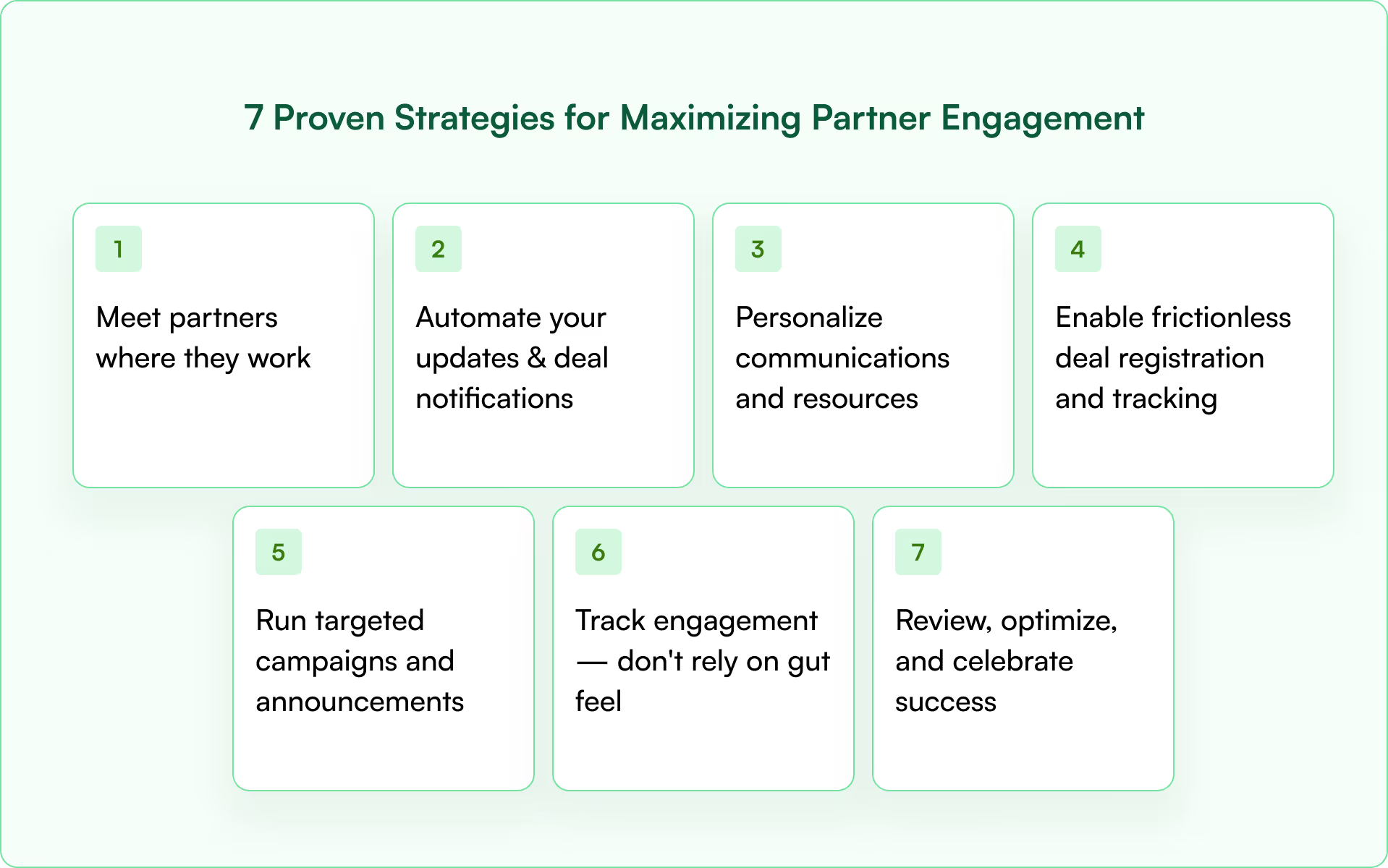
1. Meet Partners Where They Work
Meeting partners where they work means engaging them through the tools and platforms they use daily — whether that's Slack, email, or CRM systems.
This approach reduces friction, boosts consistency, and makes interactions seamless, increasing the chances that partners will respond and participate — your desired outcome.
Think about it.
Would you be more likely to engage with a company if:
1. You needed to find, log into, and navigate an unfamiliar portal
2. They simply showed up on an app you were already using.
When companies integrate partner communications and resources into familiar environments, partners stay informed without disrupting their workflow.
What's more, real-time collaboration and faster decision-making become a reality.
At Introw, we understand that meeting partners where they work fosters stronger connections, boosts engagement, and drives better results.
That's why our sophisticated partner relationship management (PRM) platform, Introw, enables off-portal collaboration.
Indeed, by integrating with tools like Slack and email, Introw automates deal updates, announcements, and notifications, ensuring partners stay informed and engaged in real-time.
This approach reduces friction, enhances responsiveness, and maintains alignment between teams and partners, all while keeping your CRM as the single source of truth.
2. Automate Your Updates & Deal Notifications
Automating updates and deal notifications keeps partners up to speed without the need for manual follow-ups.
By automatically sharing deal status changes, wins, losses, and campaign news, you eliminate delays and reduce the risk of miscommunication.
It's an effective way to maintain productive relationships.
For example, Introw sends real-time notifications to partners at every stage of the sales cycle, so they always know where deals stand without you having to chase.
As well as saving time on your end, this boosts partner confidence and responsiveness, helping to keep the sales pipeline moving smoothly and ensuring everyone stays aligned on priorities.
3. Personalize Communications and Resources
Personalization is crucial when it comes to keeping partners engaged and motivated.
Start by segmenting your partners based on:
- Type
- Tier
- Region
This partner engagement model empowers you to deliver targeted content, offers, and training that will resonate much more than if you applied the same initiatives to every partner.
Indeed, while one-size-fits-all approaches often fall short, tailored messaging demonstrates that you understand their business and challenges.
The results?
Increased partner satisfaction, a rise in meaningful interactions, and more active participation.
4. Enable Frictionless Deal Registration and Tracking
Traditionally, deal registration and tracking slowed down partner engagement due to time-consuming tasks and administrative barriers.
However, with Introw, it's easy to eliminate friction from these processes.
For instance, it empowers you to simplify forms and allow submissions without logins, making it much faster and easier for partners to register deals.
Furthermore, there's no need for laborious data collection or manual analysis anymore.
Introw enables you to auto-sync data with CRMs like Salesforce or HubSpot, giving you instant visibility into partner activity and pipeline health.
This seamless process reduces admin headaches, speeds up deal management, and keeps everyone aligned — empowering partners to focus on selling and helping your team monitor progress effortlessly.
5. Run Targeted Campaigns and Announcements
Well-timed, personalized campaigns and announcements not only drive action but also show partners you're invested in their success.
This proactive communication fosters productive relationships and boosts overall partner performance — critical for SaaS growth.
Successful targeted campaigns start with segmentation (as outlined in strategy 3).
In terms of the content itself, schedule and send updates about new features, incentives (like SPIFFs), or upcoming deadlines, using branded templates for consistency.
And this content must, of course, be tailored towards the group of partners you're targeting with your campaign.
For example, if you're launching exciting new incentive programs exclusively for your premium-tier partners, you'll only want to run that campaign for the premium segment of your audience.
Then, leverage campaign analytics to track opens and clicks, helping you to understand what resonates and who needs follow-up.
Finally, automate follow-ups based on engagement in order to encourage partners to take the desired action.
6. Track Engagement — Don't Rely on Gut Feel
Stop the guesswork — use data to understand channel partner engagement.
So how to measure partner engagement?
Start by tracking key actions like:
- Portal visits
- Content downloads
- Email replies
- Deal submissions.
You can use Introw's dashboards to quickly identify which partners are active, dormant, or high-performing.
This knowledge empowers you to tailor support, optimize outreach, and prioritize efforts where they'll drive the most impact.
7. Review, Optimize, and Celebrate Success
In 2026, this partner engagement process is absolutely vital if you are to maintain a competitive edge.
Hold regular partner reviews using real performance data to identify what's working and where to improve.
Use these sessions to share success stories, spotlight top performers, and highlight best practices.
Recognizing achievements fosters loyalty and motivates others, creating a culture of continuous improvement and stronger engagement across your partner ecosystem.
6 Pitfalls to Avoid in 2026
We've covered which partner engagement activities you should be doing — but what tactics should you avoid in 2026?
Read on for six pitfalls to swerve when it comes to partner engagement.
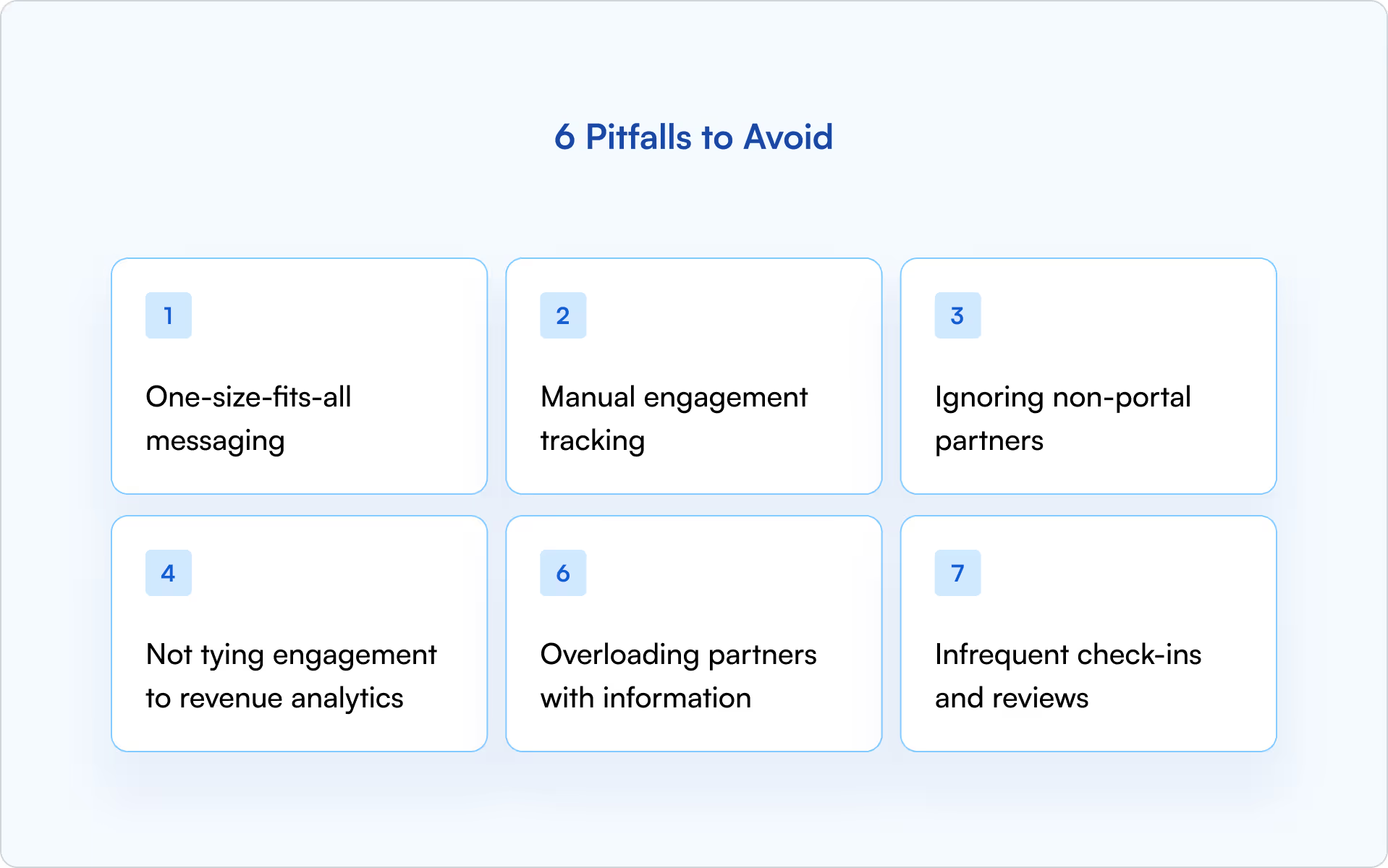
1. One-Size-Fits-All Messaging
Treating all partners the same leads to disengagement.
It certainly won't make partners feel valued.
Do this, and you'll likely see significantly lower open and click rates than if you were running a targeted campaign.
Remember — in 2026, partners expect personalized, relevant messaging based on their tier, industry, or performance.
Anything less may cause them to lose interest in working with you or even dent their trust in your brand.
2. Manual Engagement Tracking
Using manual spreadsheets and email chains to track partner activity consumes a significant amount of time and invites human error.
In 2026, sophisticated tools like Introw empower you to automate engagement tracking across your entire tech stack, providing the visibility and scalability you need to succeed.
3. Ignoring Non-Portal Partners
Focusing solely on portal-active partners means you're overlooking a significant portion of your ecosystem.
Instead, engage partners where they are.
This can be done via email, on Slack, at events, or through embedded touchpoints.
4. Not Tying Engagement to Revenue
Tracking partner activity is essential — but if you're not connecting that activity to real revenue results, you're missing the bigger picture.
In 2026, successful SaaS brands align engagement key performance indicators (like portal logins, content downloads, or training completions) with tangible outcomes such as leads generated, deals influenced, or revenue closed.
This enables you to demonstrate the ROI of your partner program, prioritize high-impact partners, and justify investments in enablement and support.
Without this alignment, it's easy to overvalue busy work and undervalue genuine contributors — in other words, effective optimization becomes harder.
5. Overloading Partners with Information
In the race to keep partners informed, it's easy to overwhelm them with too many updates, tools, and campaigns — especially when communications come from multiple, uncoordinated teams.
But in 2026, attention is a scarce resource, and clarity wins.
After all, when partners receive frequent, unfocused messages, they tend to tune out, miss important details and may feel uncertain about what to prioritize.
SaaS brands should streamline communication channels, prioritize high-impact content, and curate messaging based on what's most relevant to each partner's goals or stage in the journey.
6. Infrequent Check-Ins and Reviews
Waiting for quarterly or annual business reviews to connect with partners and discuss your business objectives, joint business plans, and mutual interests will not cut it in 2026.
In SaaS, things move quickly - if partners go too long without updates or support, it’s easy to lose momentum or miss out on deals.
And when it comes to partner programs, mutual support is vital.
Regular, data-backed check-ins (monthly or even biweekly for key partners) help you stay in sync on joint initiatives, reinforce goals, and identify blockers early.
These reviews don't have to be formal — even short, structured syncs that include performance insights, pipeline updates, and support needs can go a long way to maintaining a mutually beneficial relationship.
Tech Stack & Frameworks for Modern Partner Engagement
Strong partner engagement requires more than a static portal — it demands flexible, data-driven tools that integrate seamlessly with your existing workflows and those of your partners.
Indeed, old-school partner portals are often clunky, login-gated, and siloed — leading to low adoption and limited insight.
In contrast, modern CRM-first tools like Introw deliver partner content and campaigns directly through email or embed them in sales workflows, making engagement effortless and trackable.
So, when evaluating your tech stack, look for solutions that offer:
- Automation
- CRM sync
- Real-time engagement tracking
- No-login access
- Off-portal features
Then drive results with an engage>measure>optimize partner engagement framework:
- Engage partners where they already work with targeted, value-driven outreach.
- Measure activity across all touchpoints — both on- and off-portal
- Optimize based on performance data, refining messaging, and support.
With the right stack and channel partner engagement strategy, you can drive partner engagement and create a scalable growth engine.
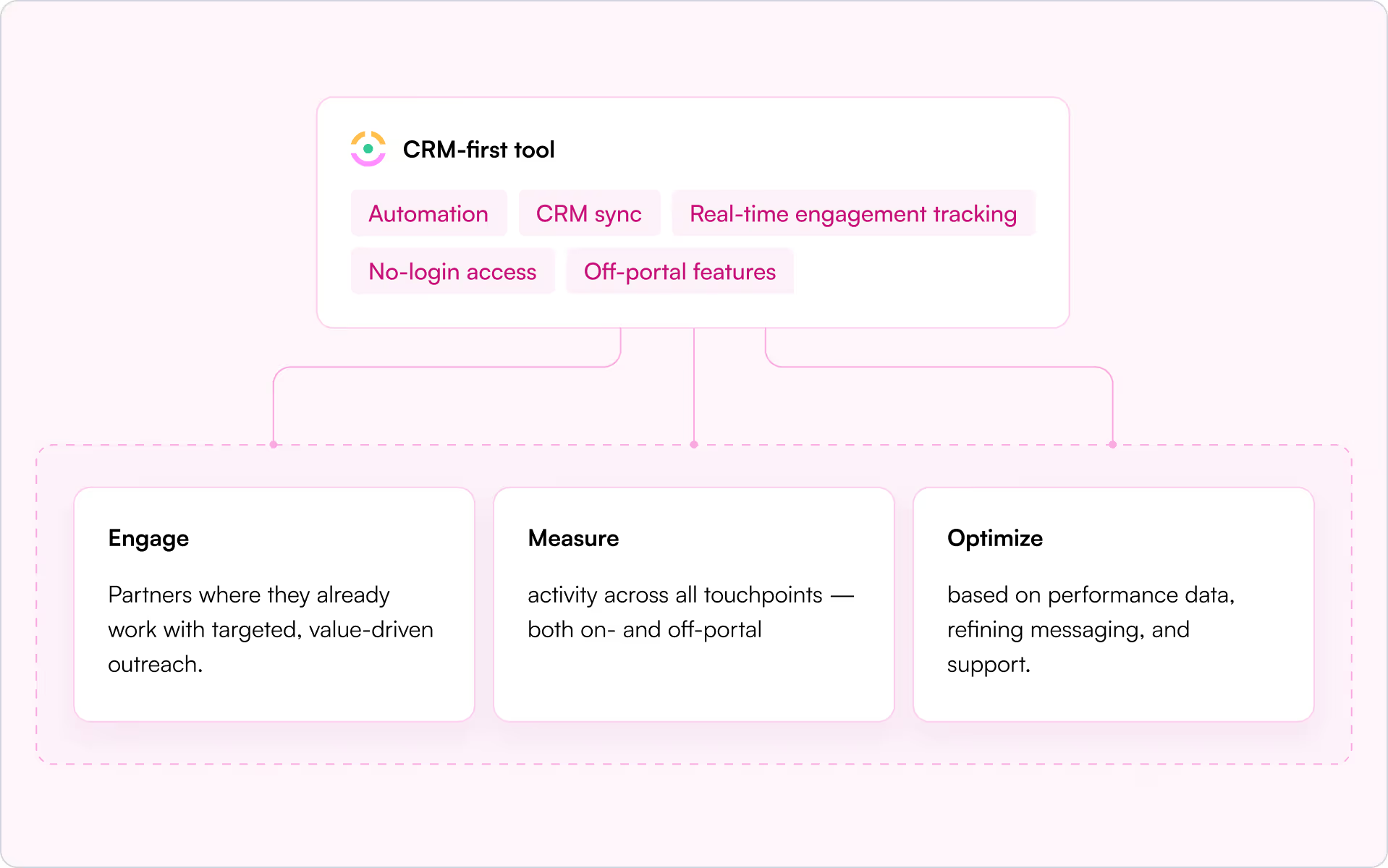
How Introw Simplifies and Supercharges Partner Engagement
Introw revolutionizes partner engagement by automating and streamlining key processes, ensuring that both partners and internal teams operate efficiently and effectively.
Here's how.
Automated, Multi-Channel Updates
Introw delivers timely updates to partners via email and Slack, eliminating the need for them to log into a portal.
This approach ensures that partners remain informed and engaged without the friction of additional logins.
Built-In Campaign Scheduling, Partner Segmentation, and Tracking
The platform also allows for the scheduling of campaigns tailored to specific partner segments.
With integrated tracking, teams can monitor the performance of these campaigns in real time and adjust their strategies as needed to maximize impact.
Real-Time Dashboards
Introw's dynamic dashboards offer insights into partner engagement levels, content effectiveness, and revenue contributions.
This real-time visibility enables you to identify top-performing partners and pinpoint areas that require attention.
And being able to access this real-time information at the touch of a button empowers you to swiftly and consistently optimize your strategy, whether that's implementing more of what's working or troubleshooting problem areas.
Role-Based Value
Different roles within an organization benefit from Introw's features:
- Channel Managers gain insights into partner journey and performance.
- RevOps receives synchronized data between Introw and CRM systems, facilitating accurate reporting.
- CROs can directly link partner engagement metrics to pipeline outcomes, aligning partner activities with revenue goals.
Experience firsthand how Introw can transform your partner engagement strategy. Request a demo today and see the difference.
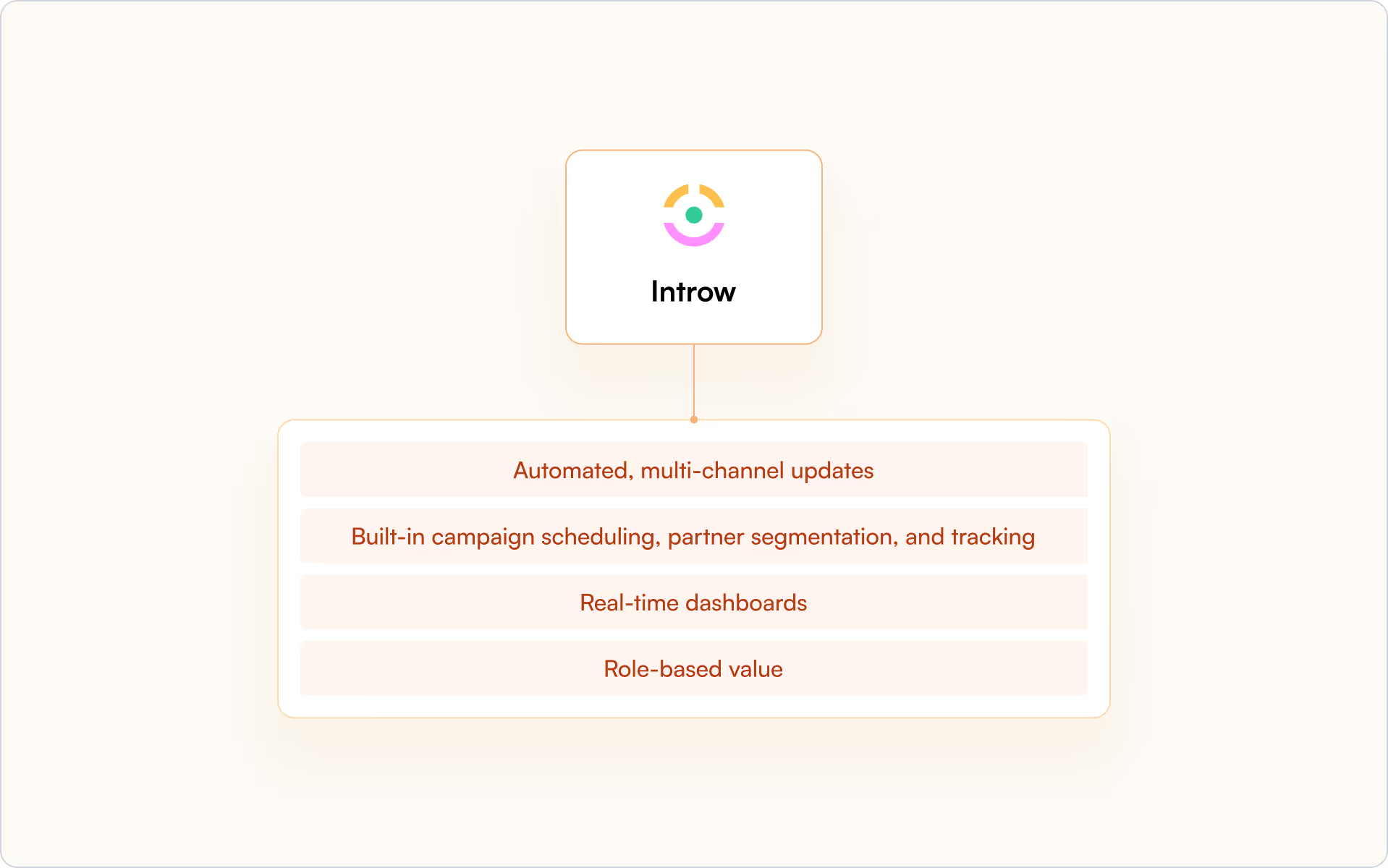
Conclusion
Remember — engagement is the #1 lever for a healthy, revenue-driven, successful partner program in 2026.
To increase partner engagement, maintain your competitive advantage and drive revenue growth, regularly review your partner engagement strategies — consider what you can automate, measure, or personalize today.
Leveraging technology and data ensures your joint efforts are efficient, targeted, and impactful.
So start optimizing your partner program today and unlock its full potential.
To supercharge your partner engagement and boost results, try Introw — a sophisticated platform designed to simplify engagement through automation, real-time insights, and seamless CRM integration.
The 4 ways to manage your B2B partners in Salesforce and attribute revenue
When working with B2B partners, it's important to have a clear way of tracking who’s involved in your opportunities and how they contribute to revenue. In Salesforce, there’s no one-size-fits-all method — and that’s the beauty of it. Depending on your organization’s needs, technical maturity, and the complexity of your partner ecosystem, you can choose from several flexible approaches.
Below, we break down 4 common ways to manage partners in Salesforce and attribute revenue to them effectively.
1. Picklist field on an Opportunity
Best for: Simpler programs with one partner per Opportunity
The most straightforward method is to add a picklist field to the Opportunity object — for example, a field called Partner Name or Partner Source. You pre-define a list of your partners and let your sales team select the right one during opportunity creation.
How does it work?
What are the pros?
✅ Easy to implement
✅ No complex relationships needed
✅ Good for easy single-partner attribution
What are the cons?
❌ Not ideal for scaling or multi-touch attribution
2. Lookup field to an Account object Recommended
Best for: One-to-one attribution with better data control
A step up from a picklist is using a lookup relationship field that connects an Opportunity to an Account object. This allows you to reference a full account record (your partner) and pull in relevant details automatically.
How does it work?
What are the pros?
✅ Clean reference to partner data being stored in your accounts
✅ Can support reporting and automation more effectively
✅ Easy to update if the Account record changes
What are the cons?
❌ Limited to one partner account per opportunity
3. Via a Relation table
Best for: Multi-partner attribution or shared deals
If you need to support multiple partners per opportunity, you’ll want to use a relation table that sits between Opportunities and Partner Accounts. This creates a many-to-many relationship, enabling flexible collaboration and advanced revenue sharing logic.
How does it work?
What are the pros?
✅ Ideal for ecosystems with resellers, distributors, and co-marketing partners
✅ Enables advanced logic for revenue splits or co-selling
✅ Ideal for ecosystems with resellers, distributors, and co-marketing partners
What are the cons?
❌ Requires a more technical setup and configuration
❌ More complex for reporting unless standardized
4. Custom Object for Partners
Best for: Large-scale partner programs with tiering, statuses, and multiple partner touchpoints
For organizations that want to treat their partners as a core part of the Salesforce data model, creating a dedicated Partner object is the most robust option. You can relate this object to Opportunities, Contacts, Accounts, and more — and track custom partner attributes like tier, region, industry focus, etc.
How does it work?
What are the pros?
✅ Fully flexible and scalable
✅ Allows for richer partner data and automation
✅ Better suited for partner performance analytics and program insights
What are the cons?
❌ Requires upfront planning and schema design
❌ Needs buy-in from operations and potentially dev teams
Conclusion
Choosing the right method to manage and attribute your B2B partners in Salesforce depends on the complexity of your partnerships and the level of reporting or automation you need. While simple picklists work for early-stage programs, relation tables or custom objects are better suited for mature ecosystems.
At Introw, we help customers integrate their partner workflows directly into Salesforce — making it easy to attribute, collaborate, and scale with partners, no matter which method you use.
👉 Curious how this would work in your setup? Request a demo now.
What Is Co-Selling? A Guide to Scaling Faster with the Right Partners
Most B2B companies hit a ceiling because they rely solely on direct sales. But growth doesn’t have to be a solo mission. The fastest path to revenue? Co-selling.
A co-selling strategy brings together two or more companies to reach new markets, shorten the sales cycle, and close more deals — faster. It’s not just about splitting commissions; it’s about aligning with the right co-selling partners to deliver more comprehensive solutions to potential customers.
This guide breaks down what co-selling is, how to build a successful co-selling partnership, and why aligning your sales team with a partner team unlocks game-changing co-sell opportunities.
If your sales reps are tired of chasing cold leads alone, it’s time to think bigger. Build a co-selling program, empower your sales process with partner intelligence, and see what happens when your co-selling efforts are structured for scale — not luck.
What Is Co-Selling and Why It Works
Co-selling is a B2B sales approach where two or more companies work together to jointly position, promote, and sell complementary solutions to a shared target market.
Unlike traditional reseller models or B2B SaaS partnerships, co-selling partners collaborate actively throughout the entire sales process — from account mapping to opportunity engagement, to closing.
The goal? Shorten the sales cycle, expand reach, and deliver a joint solution that creates more value than either company could on its own.
A well-structured co-selling program isn't just about generating leads. It's about aligning sales teams, sharing deal intelligence, and creating a seamless experience for potential customers. When executed correctly, a co-selling partnership can unlock deeper customer relationships, improved win rates, and long-term revenue growth.
So how does it actually work in practice?
Inside the Co-Selling Process: How It Works
At its core, co-selling is all about alignment — across systems, teams, and incentives. Whether you’re running a formal co-selling program or experimenting with an ad hoc co-selling motion, success comes down to shared intent and execution.
Here’s what a typical co-selling process looks like:
- Identifying complementary solutions that solve adjacent pain points
- Mapping accounts to uncover overlap and co-sell opportunities
- Activating sales teams on both sides to co-engage prospects
- Tracking co-selling activities across CRM and partner tools
- Maintaining consistent communication to keep both teams aligned
This level of collaboration between two sales teams requires coordination, visibility, and trust. That’s why the most effective co-selling partnerships are built on clear agreements and repeatable workflows.
Co-Selling Agreements: Setting the Rules for Collaboration
To avoid confusion and misalignment, leading companies establish a co-selling agreement — a formal, legally binding contract that defines how the co-selling partnership will operate.
A co-selling agreement outlines critical components of your co-selling process, including:
- Roles and responsibilities across both sales teams
- Lead sharing and deal registration procedures
- Incentive structures and commission splits
- Rules for customer ownership and contract management
- Guidelines for co-marketing plans, communication, and escalation paths
In short, it clarifies who owns what, who does what, and how both parties benefit — paving the way for a successful co-selling relationship.
Now let’s take a look at real-world examples that show how co-selling partners put this into action.
Real-World Co-Selling Examples and Strategies
Now that we’ve covered what co-selling is and how it works, let’s look at real-world examples that show how co-selling partners create value through collaboration.
Each example highlights a key type of co-selling activity that helps expand reach, improve the sales process, and increase adoption through joint effort.
1. Identifying Complementary Co-Selling Solutions
Co-selling works best when the products or services naturally complement each other—creating a more compelling value proposition for sales teams and potential customers.
Take HubSpot and Introw, for example:
- HubSpot equips sales teams with robust tools for lead management, helping them track, organize, and nurture pipeline more effectively.
- Introw focuses on automated outreach, enabling reps to reach out to shared accounts via personalized emails, timely follow-ups, and Slack nudges — all synced with the CRM.
Since sales reps need both efficient lead tracking and high-volume outreach, these two companies form a strong co-selling partnership to jointly offer a more complete solution. It’s a classic example of combining capabilities to strengthen the entire sales process.
Another example? Dropbox and HelloSign:
These tools are bundled into a single workflow where users can store, access, and sign documents in one place. By solving multiple pain points in a single motion, co-selling partners reduce complexity, drive adoption, and improve retention.
2. Integrating the Products (Optional, But Powerful)
When co-selling partners go a step further and integrate their products, the value of the joint solution multiplies.
Consider Slack and Zoom. Their integration allows users to start video calls directly from Slack — removing friction and improving daily workflow for marketing teams, customer success, and sales teams alike.
This kind of product alignment boosts stickiness, enhances user engagement, and makes the co-selling relationship feel like a natural fit — not a bolt-on. Integrated experiences are key to delivering more comprehensive solutions and building deeper customer relationships.
3. Aligning Sales and Marketing Teams for Co-Marketing Success
A successful co-selling strategy depends not just on product synergy, but on team alignment.
For example, in the Slack + Zoom model, both companies' sales teams and marketing teams co-develop messaging, plan co-marketing campaigns, and execute coordinated outreach to potential customers. The result? Clearer communication, faster execution, and a stronger pipeline.
When both sales teams are on the same page, co-engagement feels seamless — and prospects experience a unified, high-value solution.
4. Leveraging Partner Ecosystems for Co-Sell Opportunities
Cloud marketplaces like AWS, Microsoft Azure, and Google Cloud offer built-in trust and exposure—making them perfect launchpads for co-selling programs.
For example, a security SaaS vendor participating in the AWS Marketplace can co-sell with AWS, positioning their product as “AWS-optimized” and immediately gaining access to larger enterprise deals.
By tapping into the marketplace’s partner ecosystem, vendors eliminate friction in the sales cycle, reduce procurement hurdles, and access co-sell opportunities that would be difficult to close via direct sales teams alone.
Each of these examples shows how a thoughtful co-selling program can deliver more than just pipeline — it creates leverage, trust, and sales enablement across every touchpoint.
Next, we’ll look at how co-selling compares to reselling, and why understanding the distinction matters for long-term partner strategy.
Co-Selling vs. Reselling: Understanding the Strategic Difference
As you build out your co-selling strategy, it’s important to understand how it differs from reselling—especially when aligning your sales team, setting expectations with co-selling partners, and structuring your co-selling program for scale.
While both approaches involve multiple companies working together to drive revenue, the key distinction lies in ownership of the deal and relationship with the customer.
- In a co-selling partnership, each company contributes to the sales process, but the original vendor retains ownership of the customer and contract. The value comes from mutual sales efforts, faster deal velocity, and the ability to reach new markets together.
- In a reseller model, one company purchases your product (often at a discount) and resells it independently. You may get the deal, but you lose visibility, control, and direct contact with the potential customers.
Understanding this distinction is critical as you build your co-selling program, prioritize co-sell opportunities, and design effective incentive models for your sales reps and partner team.
Here’s a side-by-side breakdown to make the difference crystal clear:
Whether you choose co-selling, reselling, or a hybrid of both, understanding the mechanics of each model is key to avoiding misalignment—and unlocking the true benefits of co-selling.
Why Co-Selling Matters More Than Ever
As B2B sales cycles grow longer and buyers get harder to reach, co-selling has become more than a strategy — it’s a competitive advantage.
According to ZDNet, 84% of sales professionals say partner selling impacts revenue more today than it did just a year ago. And nearly 9 out of 10 sales teams are already engaging in some form of co-selling.
For SaaS companies looking to scale faster, break into new markets, and build deeper customer relationships, a structured co-selling program isn’t optional — it’s essential.
That’s why leading B2B teams are investing in the right systems — to make co-selling repeatable, visible, and scalable.
How to Run a Scalable Co-Selling Program with PRM Software
Running a co-selling program at scale isn’t about working harder — it’s about working smarter. That’s where PRM (Partner Relationship Management) software comes in.
A modern PRM platform helps co-selling partners align across teams, systems, and workflows — enabling faster execution, stronger sales enablement, and greater co-sell opportunities.
But not all PRMs are built for how today’s SaaS companies sell.
Enter Introw: CRM-First, Partner-Ready
Introw is purpose-built to streamline the entire co-selling process — from deal registration and account mapping to partner engagement and performance tracking — all inside the tools your sales team already uses (like Salesforce or HubSpot).
Here’s how you can run a successful co-selling program with Introw:
1. Define Clear Co-Selling Objectives
Before launching into activity, define what success looks like.
- Are you entering new markets?
- Targeting a shared target market?
- Trying to shorten the sales cycle?
- Aligning around partner sourced deals?
With Introw, you can build structured co-sell motions from the start — tracking success by CRM stage, partner type, and target account segment.
Pro tip: Start with account mapping using Crossbeam and Introw to surface mutual customers or warm intro paths.
2. Identify & Onboard the Right Partners
Not every company is a fit for co-selling — focus on those with a natural joint solution, adjacent ICP, and a motivated partner team.
Once identified, Introw makes onboarding painless:
- No logins required
- Partner-friendly deal forms
- Slack + email notifications
- Full sync with your CRM
This allows your co-selling partners to contribute without friction — and your sales reps stay focused on deals, not admin.
3. Streamline Deal Registration & Account Mapping
This is where most co-selling efforts fall apart: misalignment around who’s working what, and no central system to track it.
With Introw:
- Partners register deals via simple forms linked directly to your CRM
- All mapped accounts are visible and actionable by your sales team
- Auto-tagged, auto-synced — no more chasing down updates
Bonus: Get Slack nudges when a new deal is registered or a mapped account is touched, so your sales process stays proactive.
4. Track Performance & Automate Feedback Loops
A successful co-selling relationship thrives on visibility and iteration.
Introw gives you shared dashboards across both teams — tracking:
- Partner activity across deals, accounts, and emails
- Win rates and sales velocity
- Top-performing co-selling partners
- Campaign performance from co-marketing plans
This isn’t just helpful for RevOps — it empowers sales teams, partner managers, and leadership to see where the revenue is really coming from.
5. Enable Real-Time Communication & Collaboration
Speed matters. With Introw, your co-selling activities move fast and stay aligned:
- Chat with partners in Slack or via email (no login required)
- Share pitch decks, proposals, or videos via integrated doc-sharing
- Trigger Slack or email notifications when key actions are taken (e.g. deal registered, task assigned, doc opened)
Think of it as the connective tissue that keeps your two sales teams on the same page — even across orgs.
6. Incentivize and Optimize
Co-selling isn’t a one-and-done motion — it’s a growth engine.
Use Introw to:
- Set up custom incentives tied to partner performance
- Monitor partner-driven revenue by segment or region
- Run A/B tests on co-selling offers, outreach styles, or co-marketing campaigns
By turning every co-sell opportunity into structured data, Introw lets you double down on what works — and sunset what doesn’t.
Why Introw Makes Co-Selling Scalable
Co-selling requires precision, process, and trust. Introw delivers:
- CRM-first workflows (Salesforce & HubSpot)
- Slack and email-native partner comms
- Real-time dashboards and deal insights
- No login friction for partners
- Built-in co-sell motion templates
- Custom workflows by partner type (reseller, referral, MSP, etc.)
Whether you're working with 5 partners or 500, Introw helps you launch, run, and scale a co-selling program that drives real revenue — without burning out your sales team or partner ops.
Ready to Turn Co-Selling Into a Scalable Revenue Engine?
You’ve built a great product. Your sales team is putting in the work. But growth still feels slower than it should — because you’re doing it alone.
The companies scaling fastest right now aren’t just selling — they’re co-selling. They’re tapping into partner ecosystems, collaborating across two sales teams, and unlocking warm intros that never would’ve come from cold outreach.
The difference? They’re not running their co-selling efforts on spreadsheets and hope. They’re using Introw.
Introw gives you everything you need to turn your co-selling program into a repeatable revenue machine:
- Seamless Salesforce and HubSpot integration
- Slack and email-native workflows — no logins needed
- Real-time dashboards across partners, deals, and accounts
- Built-in guardrails for RevOps, CROs, and partner managers alike
No friction. No guesswork. Just faster, smarter revenue — driven by aligned teams and trusted partners.
Stop relying on luck. Start co-selling with intention.
Book your Introw demo and see how today’s top SaaS companies are building scalable, partner-powered pipelines.
B2B SaaS Partnerships Guide: How to Scale and Win with the Right Partner Program
B2B SaaS, partnerships aren’t just a strategy — they’re a growth engine. Whether you’re launching a new go-to-market initiative, expanding into new customer segments, or co-developing innovative solutions, forming strategic SaaS partnerships with the right partner is essential.
But let’s be clear: successful partnerships don’t just happen. They require structure, consistency, and purpose-built tools. That’s where Partner Relationship Management (PRM) software like Introw becomes a game-changer.
In this guide, we’ll walk through:
- Why B2B SaaS partnerships are critical for modern SaaS companies
- The most common partner types — and how to work with them
- How to build and scale a partner program with the right infrastructure
Let’s dive in.
Why B2B SaaS Partnerships Matter
SaaS companies need more than just a strong product — they need a powerful partner ecosystem. Strategic partnerships enable two or more companies to align around a shared go-to-market strategy, extending reach and reducing customer acquisition costs.
Well-executed SaaS partner programs can:
- Help tap into new markets
- Create new revenue streams through revenue sharing
- Accelerate product development partnerships
- Improve customer satisfaction and customer retention
Whether you're managing channel partnerships, integration partnerships, or joint marketing efforts, strategic SaaS partnerships are a cornerstone of long-term, scalable growth.
What Are the Types of B2B Partnerships?
Before building or optimizing your partner program, it's critical to understand the types of B2B SaaS partnerships available. While affiliate marketing gets plenty of attention, the most valuable SaaS partnerships often involve deeper integration, stronger alignment, and shared success metrics.
Let’s explore the landscape:
These partner types represent the most common paths SaaS companies take when scaling through partnerships. While each type comes with its own strengths and challenges, they all share one thing in common: they work best when supported by clear processes, aligned goals, and modern tooling.
Now that you’ve seen what types of B2B SaaS partnerships exist, how do you know which ones to pursue?
Choosing the Right Partner Program
Every SaaS business is unique — and so is its path to growth. That’s why choosing the right partner program isn’t about copying what others are doing — it’s about aligning your strategy with your goals, resources, and customers.
The ideal partner strategy will vary depending on your product maturity, market penetration, and internal capacity to support partners. For example:
- If your goal is demand generation, you may benefit most from referral partners, affiliate relationships, or integration partnerships that can drive top-of-funnel awareness.
- If you’re focused on market expansion, resellers, MSPs, or distributors with strong local presence can help you enter new geographies or verticals.
- If you need deeper product alignment, ISVs or system integrators may be the right fit for long-term co-selling and co-building.
To guide your decision, start by answering these questions:
- What new customer segments do we want to reach?
- Which potential partners already serve or influence those segments?
- What kind of co-marketing, sales support, or onboarding experience can we realistically provide?
- Are there opportunities for joint marketing efforts, or even a product development partnership?
You’re looking for alignment on not just reach, but capability and collaboration potential.
This is where a Partner Relationship Management (PRM) platform like Introw becomes essential. It surfaces real-time insights into:
- Which partners are submitting deals
- How fast those deals move through the sales pipeline
- Who’s engaging (and who’s not)
With those insights, your partner strategy becomes proactive, not reactive — based on data, not guesswork.
Let’s now dig into how to evaluate your current ecosystem and decide where to focus next.
How to Decide on Expanding Your B2B Partnerships
Expanding your partner program isn’t about volume — it’s about strategic alignment. Start by analyzing your current ecosystem: who’s performing, who’s not, and where the untapped opportunities lie.
- Referral partnerships can drive top-funnel growth with minimal overhead.
- Joint venture SaaS partnerships with ISVs or tech partners can open up new product capabilities.
- Channel partnerships and distributors can accelerate go-to-market in new geos or verticals.
With the PRM market projected to grow from $1.3B in 2023 to $4.6B by 2033, now’s the time to invest in systems that scale. Manual tracking simply won’t cut it — especially when the right partner could be your next major revenue stream.
Essential Functions of Partner Relationship Management Software
To succeed at scale, you need structure. PRM software is built to manage the entire partner lifecycle — from onboarding to revenue attribution.
Why SaaS Companies Need PRM
Choosing the right PRM helps:
- Scale channel partners with consistent experiences
- Eliminate chaos from your sales process
- Automate lead registration and partner onboarding
- Enable seamless co-selling and co-marketing
- Optimize for revenue attribution and partner performance
PRM = Structure + Speed + Scale
Spreadsheets and email threads might work for 5 partners — not 50. Introw gives you the automation, real-time insights, and CRM-native experience needed to grow your program without adding headcount.
So how do you ensure that growth doesn’t come at the cost of quality? It starts with a repeatable, scalable process for managing partner relationships at every stage of the journey.
6 Stages of a Partner Relationship Journey
A successful SaaS partner program follows a repeatable, structured journey. Here's how you scale from one partner to hundreds, without losing quality, engagement, or results:
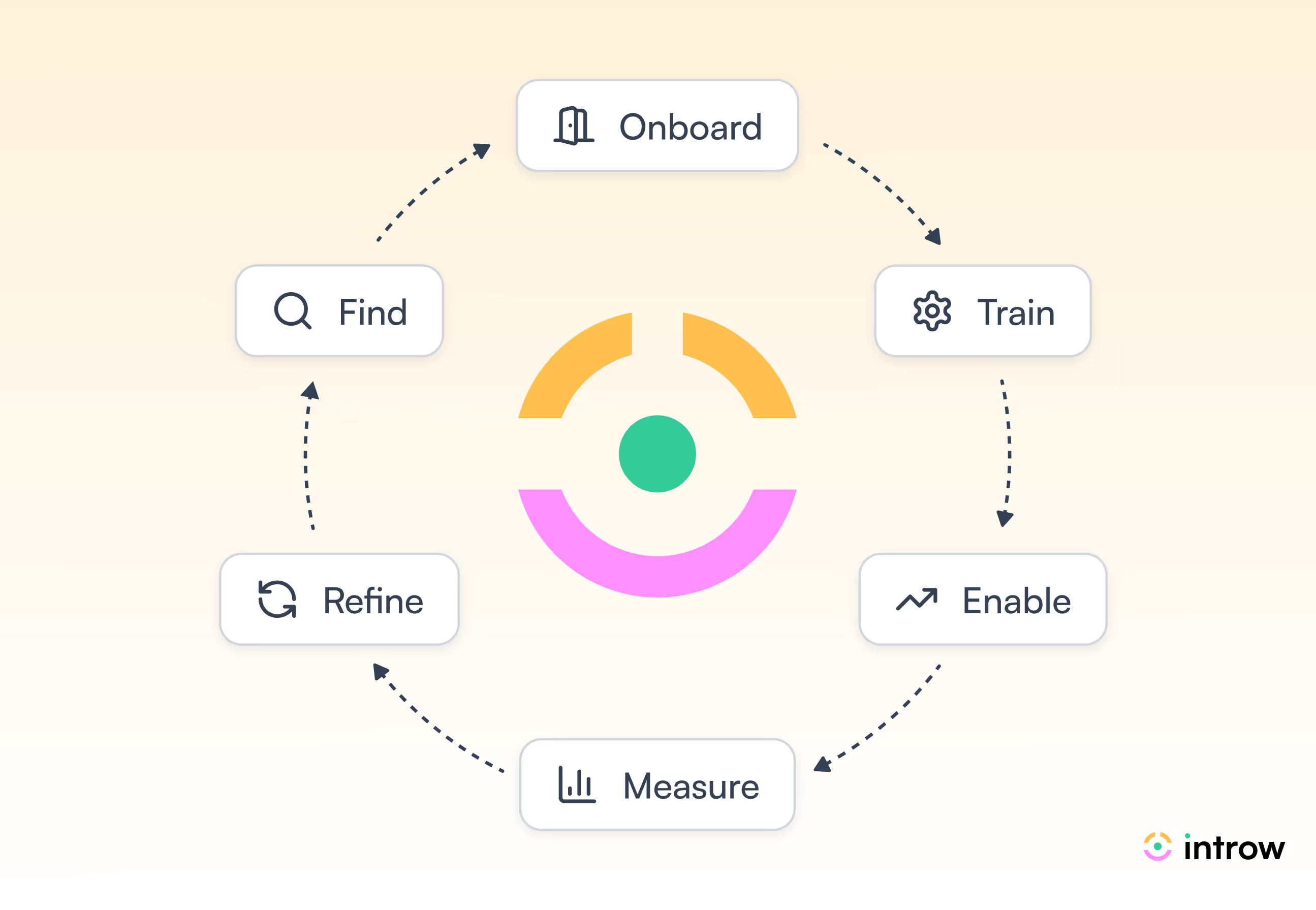
1. Find the Right Partners
Identifying the right partner is foundational. Evaluate potential partners based on their customer base, market alignment, technical compatibility, and cultural fit. Use tools like account mapping to uncover overlap between your customers and theirs — and prioritize partners with proven influence in your target segments.
2. Onboard with Ease
Once a partner is selected, the onboarding process should feel smooth, professional, and repeatable. Share training modules, certifications, documentation, and sales playbooks. With Introw, onboarding is automated with workflows, due dates, and reminders — so partners hit the ground running without bottlenecks.
3. Enable for Growth
Partner enablement is more than a checklist — it’s an ongoing relationship. Provide co-branded marketing materials, demo scripts, objection handling guides, and access to shared assets. Support them with regular updates and resource drops that align with product launches and campaigns.
4. Co-Sell with Precision
In the execution stage, seamless collaboration is key. Enable real-time deal registration, pipeline visibility, and clear ownership. Introw connects partners directly to your CRM workflows — allowing for faster response times, cleaner data, and collaborative pipeline management without the need for additional tools.
5. Measure and Motivate
Track KPIs like sourced revenue, win rates, sales cycle length, and content engagement. Use this data to recognize high performers and identify who needs extra support. Publicly celebrate success — and gamify performance through tiers, contests, and quarterly business reviews.
6. Refine and Scale
As your partner program matures, revisit your strategy. Which partners deliver the most value? Where are the drop-offs in the journey? What tools are underutilized? Use this insight to refine onboarding, update your enablement materials, and launch advanced tiers, integrations, or co-marketing campaigns.
Most importantly, keep feedback loops open — your best partners will show you what success looks like if you ask, listen, and iterate.
What should you look out for when building B2B Partnerships?
As your partner program grows, it becomes more complex — and more impactful. To keep things running smoothly, your PRM must do more than check boxes. It should actively empower your team to scale without sacrificing clarity or control.
Here are the most important capabilities to look for when scaling a SaaS partner program:
Partner Tiering & Certification
- Segment partners by performance, partner type (e.g., reseller, referral, MSP), or vertical.
- Automate training and certification workflows.
- Incentivize growth with exclusive rewards and visibility for top-tier partners.
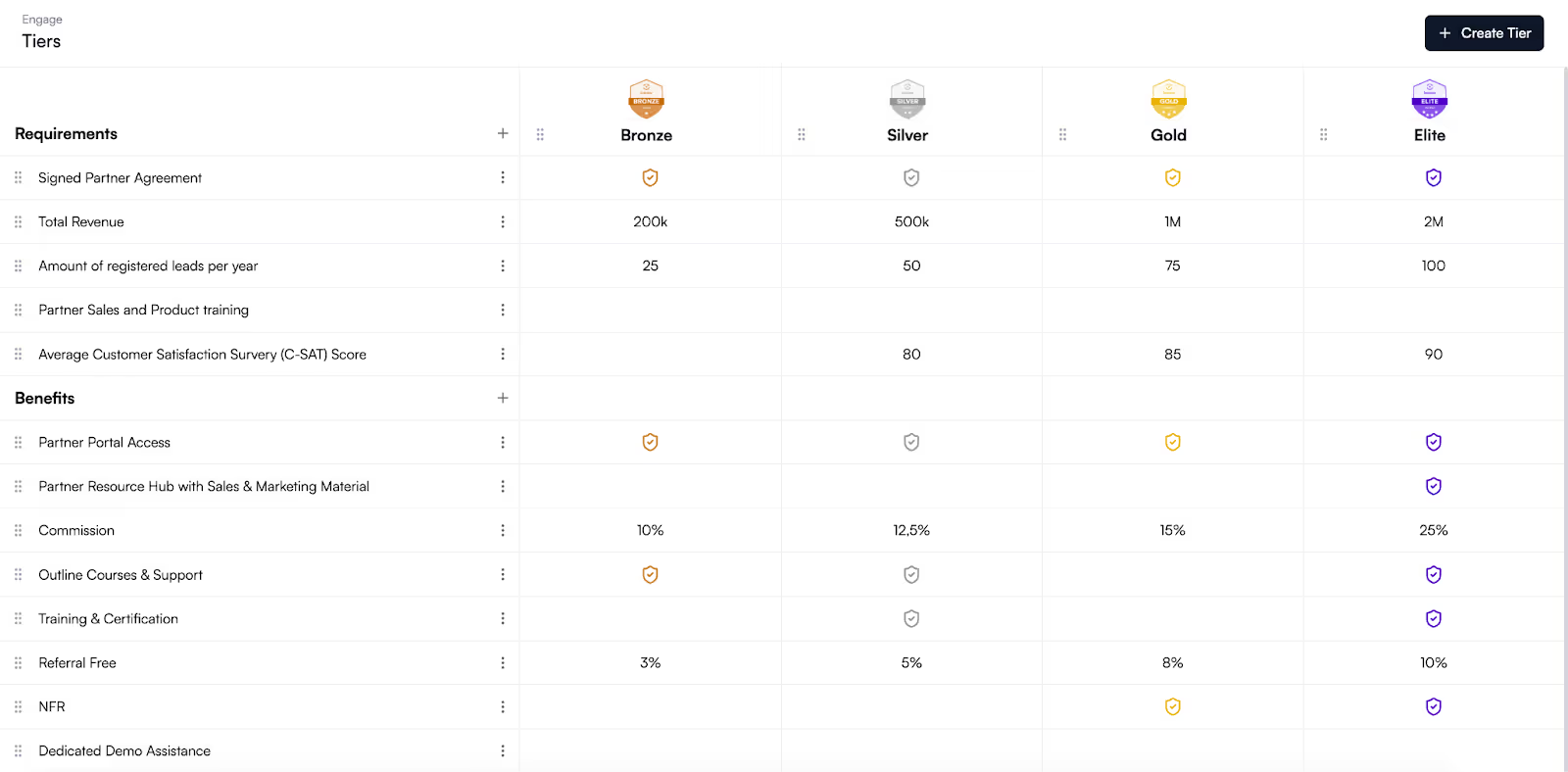
2. Commission Automation
- Tailor commission rules by partner type or deal stage.
- Auto-calculate and distribute rewards to reduce admin overhead.
- Ensure transparency and accuracy to build partner trust.
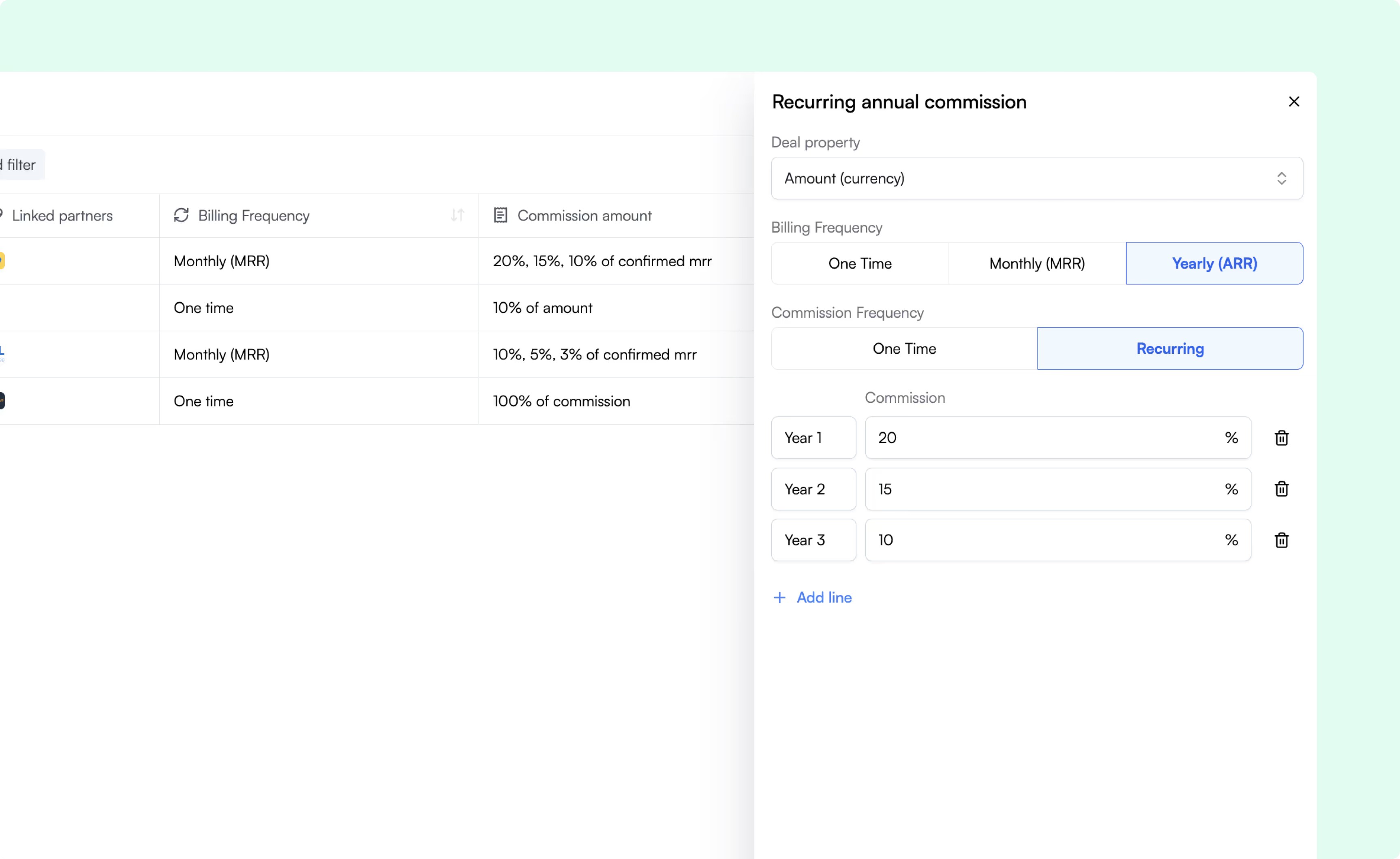
3. Partner Portal
- Offer a white-labeled, easy-to-navigate portal with sales enablement, product content, and real-time updates.
- Give partners a self-service hub for everything from training to reporting.
4. Lead & Deal Registration
- Prevent channel conflict with transparent, time-stamped registration.
- Support off-portal registration to boost partner participation by up to 30%.
- Auto-map to the correct Salesforce or HubSpot fields.
5. Account Mapping & Co-Sell Planning
- Identify overlap with tech partners, resellers, or integration partners.
- Use Introw’s built-in mapping to discover shared customers and coordinate co-selling.
6. CRM-Embedded Insights
- All partner data stays native to Salesforce or HubSpot.
- Enable RevOps teams to monitor performance, improve data hygiene, and support accurate forecasting.
These features help RevOps, Partner Managers, and revenue leaders align around shared KPIs — without adding complexity or extra tools.
Why Introw Works for Modern SaaS Partner Teams
SaaS companies operating in competitive markets — especially in the US and UK — are turning to PRM tools that integrate directly into their CRM, reduce manual work, and support partner collaboration at scale.
Introw supports:
- Partner & Channel Managers who want better visibility and fewer bottlenecks
- RevOps teams who care about data cleanliness, automation, and attribution
- CROs who need forecasting clarity and aligned revenue motions
With support for Salesforce and HubSpot, and no-login-required experiences for partners, Introw is built for fast-growing SaaS teams with real partnership goals.
Conclusion: From Strategy to Execution
Strategic partnerships are no longer a “nice to have” — they are a growth mandate for any B2B SaaS company looking to meet market demands, accelerate revenue streams, and serve new customer segments. But executing on that strategy requires more than good intent — it demands systems that scale, clear partner relationships, and the ability to act on data.
Whether you’re managing channel partners, building integration partnerships with tech partners, or exploring product development SaaS partnerships, your ability to structure and scale the program determines success. That's where modern partner infrastructure plays a transformative role.
PRM software like Introw empowers SaaS teams to:
- Build high-performing, data-driven partner ecosystems
- Align sales teams, marketing efforts, and RevOps around a shared pipeline
- Reduce development costs by turning co-selling and co-marketing into repeatable motions
- Increase deal velocity and improve customer satisfaction by enabling the right partner experience
The result? Successful partnerships that feel effortless — for both you and your partners.
Ready to unlock the next phase of your SaaS partnership strategy? 👉 Book a demo with Introw and build the partner ecosystem that drives your next stage of growth.
10 Best Practices for Channel Management: Proven Strategies to Grow Partner Revenue
Channel management isn’t about working harder — it’s about managing smarter. Whether you're scaling across indirect sales channels, empowering your channel partners, or optimizing your partner network, the right strategy makes all the difference.
A strong channel management strategy helps you align your business objectives with the partners that can move your product, expand your reach, and grow your bottom line. But without clarity and consistency, you’ll run into channel conflict, poor visibility, and disengaged partners — all of which stall growth.
This guide outlines 10 proven best practices to help you elevate your channel management efforts, improve partner performance, and build a more efficient, scalable revenue engine.
From setting clear goals and automating workflows to improving communication and analyzing channel performance, these strategies are designed for channel managers ready to win in today’s complex, multi-partner landscape.
What is Channel Management?
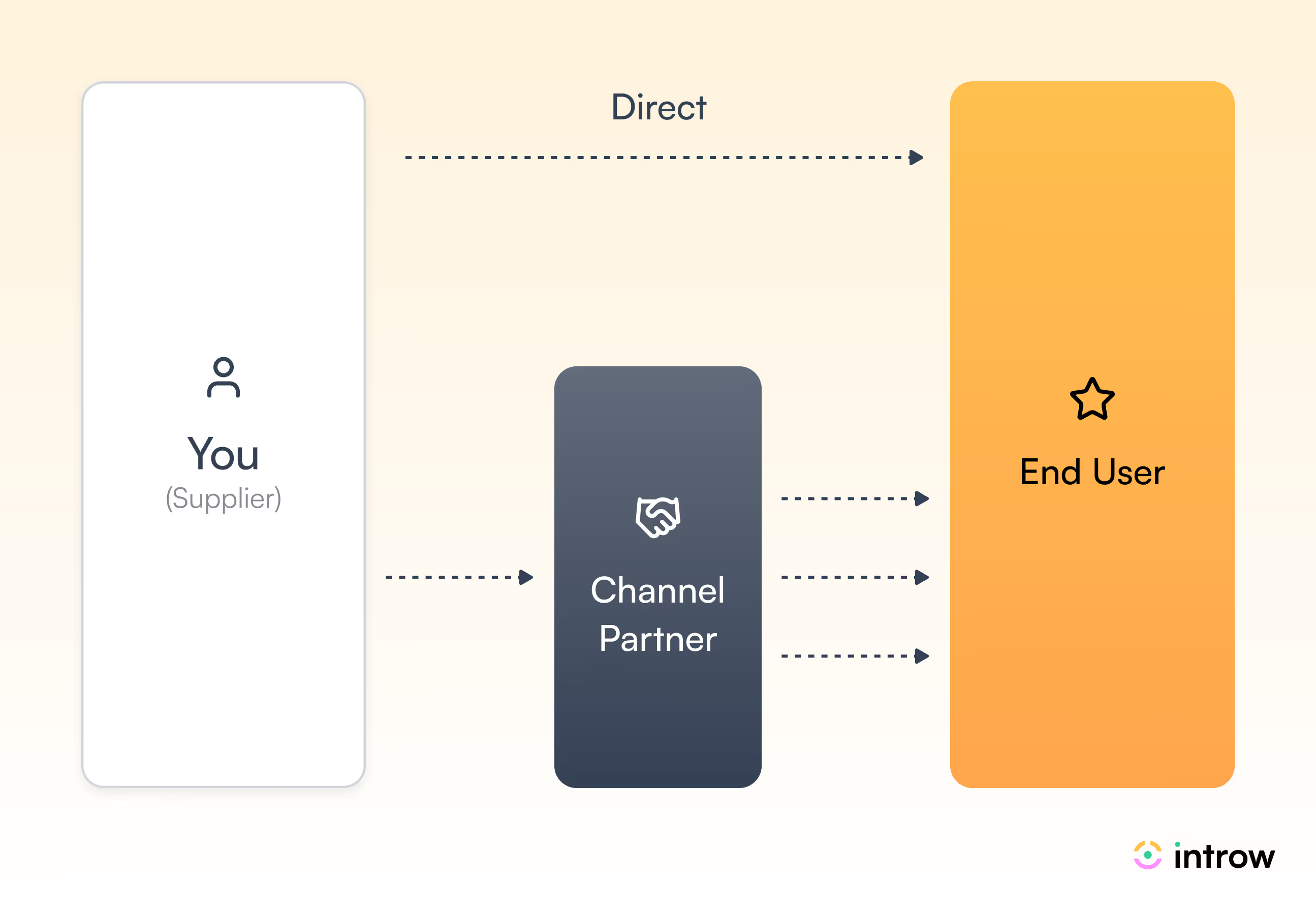
Before you can optimize your partner strategy, you need a clear understanding of what channel management really means — and why it’s essential for sustainable business growth.
Most companies rely on a mix of direct sales and indirect sales channels to reach their target customers. But as your business scales, juggling multiple sales channels without a clear system creates confusion, misalignment, and missed revenue.
That’s where effective channel management comes in — the foundation for building, maintaining, and scaling strong partner relationships.
Let’s break it down.
A channel is more than just a system — it’s your gateway to delivering products and services to the end customer.
Going through direct channels means your sales team handles every touchpoint: prospecting, selling, servicing, and supporting. It’s personal — but hard to scale.
By contrast, channel partners — like resellers, distributors, affiliates, and even e-commerce platforms — extend your reach through distribution channels you couldn’t access alone.
Think of it like this: Instead of selling toothpaste tube by tube, you sell an entire pallet to a retailer who handles the rest. In the SaaS world, channel partners introduce your product into networks and customer segments you haven’t penetrated yet.
Channel management refers to the systems and processes you use for managing relationships with the partners who sell, support, or promote your offering to the market.
A solid channel management strategy ensures these relationships are aligned with your business goals, supported with the right tools and training, and optimized for long-term performance. In short: it’s the blueprint for scalable, profitable growth through partners.
Common Challenges in Channel Management
Even the most promising channel strategy can fall short without a solid foundation. Many companies enter partnerships with the best intentions, only to find themselves facing roadblocks that stall channel performance and hurt business growth.
Whether you're just starting out or managing a mature partner network, it’s critical to understand the most common friction points and how they impact your results.
Here are four challenges that often derail effective channel management:
1. Lack of Alignment
A SaaS company partners with resellers but doesn’t align on sales targets or target customer profiles. The result? Conflicting priorities, overlapping efforts, and missed revenue opportunities.
2. Inconsistent Communication
A SaaS provider launches a major product update but only notifies a few partners. Others remain in the dark, unable to update marketing materials or support end customers, causing confusion and delays.
3. Poor Feedback Loop
New features are rolled out, but partner feedback is never collected. Valuable frontline insights are lost, resulting in lower adoption and features that don’t resonate with users.
4. Inadequate Training
Partners are onboarded quickly but without proper enablement. Without a clear understanding of the product, value props, and sales tools, they struggle to convert leads and support customers.
Each of these issues stems from one core problem: poor relationship management. And the impact is real — misalignment, inefficiencies, and channel conflict that erodes trust and slows momentum.
The good news? Every one of these challenges is fixable.
The right channel management tools can eliminate inefficiencies, increase partner performance, and ensure your channel management efforts are aligned with your most important business objectives.
Tools like Introw give you full visibility into your partner ecosystem — from onboarding to enablement to deal tracking. By reducing knowledge gaps and increasing accountability, you empower partners to succeed and scale faster.
So how do you move from reactive to strategic?
You start by optimizing every stage of the channel management process — from recruitment to retention.
In the next section, we’ll break down the 10 best practices that define a high-performance channel management strategy.
Optimize Every Stage of Channel Management with Modern PRM Tools
Mastering channel management means taking a lifecycle approach to your partner program — from recruitment and onboarding to co-selling and expansion. Each phase plays a critical role in achieving alignment, improving partner performance, and scaling revenue.
Modern channel management software like Introw enables this end-to-end orchestration. With seamless CRM integration, real-time deal tracking, and partner-friendly collaboration tools, you can support your entire partner network without friction.
Unlike outdated tools or spreadsheets, Introw aligns your channel managers, direct sales team, and indirect sales channels under one unified platform — so you can analyze channel performance, manage distribution partners, and grow revenue faster.
Let’s walk through the 10 key practices that define a high-performing channel management strategy, and how tools like Introw help you implement them across multiple sales channels:
1. Define Clear Channel Goals
If you want your channel programs to thrive, clarity is non-negotiable. Your channel partners need to understand exactly what you aim to achieve from the collaboration — and you should be clear on the value you’re delivering in return.
To execute a successful channel, start with measurable objectives tied to your business goals — such as growing a specific customer segment, launching in a new market, or improving customer satisfaction.
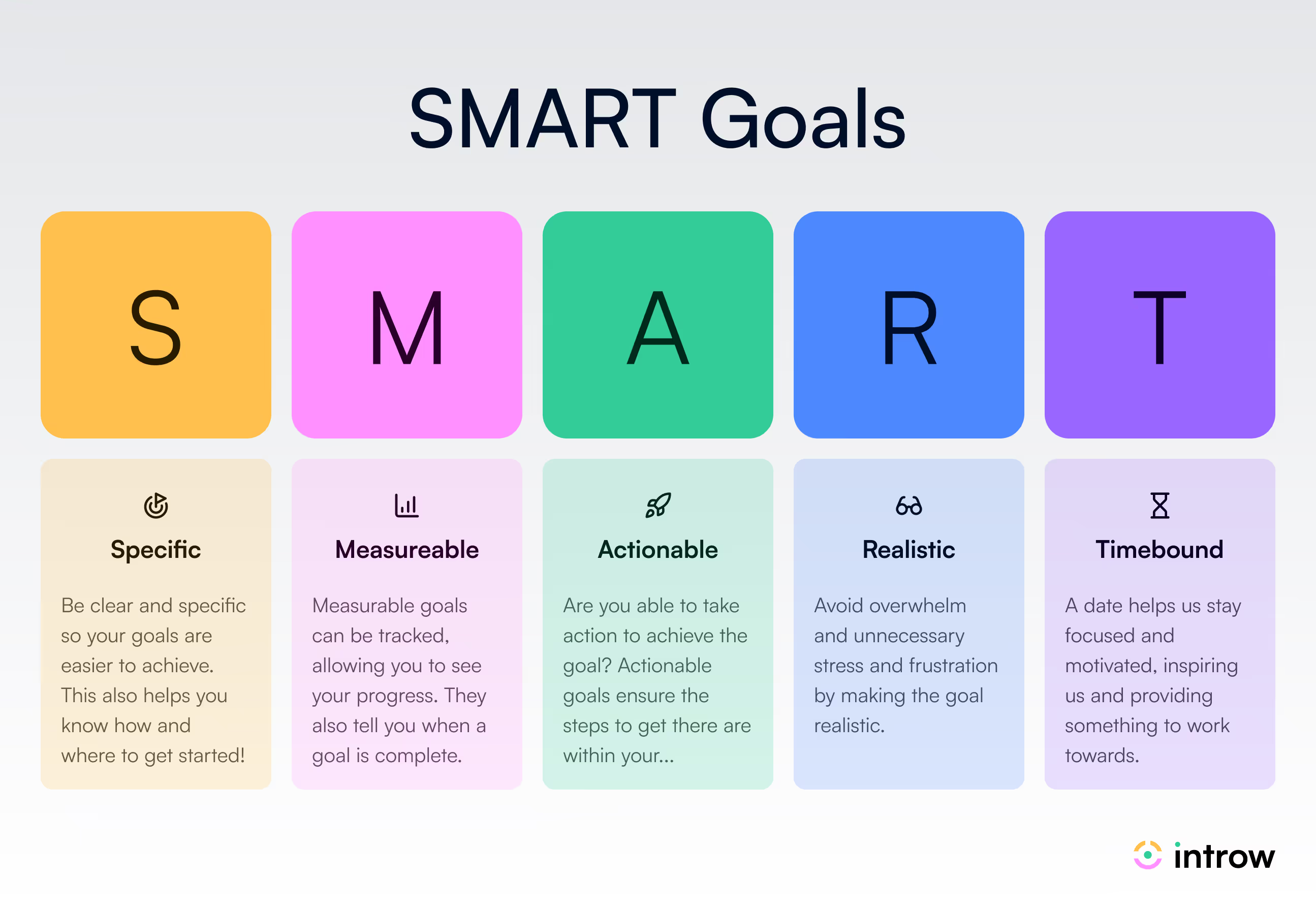
That’s where PRM platforms like Introw come in.
Introw transforms SMART goals into trackable metrics — like referral rates, sales process efficiency, and campaign impact — and visualizes them in real-time dashboards. This makes it easy for channel managers to track progress and optimize faster.
With automated KPIs and clear visibility, your channel strategy stays aligned across teams and partners.
2. Choose the Right Partners
When it comes to building a high-performance partner network, quality always beats quantity.
Too many companies take a "more is better" approach, signing dozens of channel partners without clear alignment. The result? Mixed priorities, missed revenue, and constant channel conflict.
Instead, focus your channel management efforts on a select group of high-impact partners:
- Partners who align with your business objectives and target customers
- Organizations that bring complementary reach, technology, or expertise
- Teams that can scale alongside your growth in multiple channels
Introw helps channel managers identify these high-potential fits through partner profiling, CRM overlap analysis, and visibility into historical engagement.
Pro tip: Use Introw’s native Crossbeam integration to discover partner overlaps, shared accounts, and warm intro paths — so you invest in partners that can actually move the needle.
And don’t forget to evaluate:
- Willingness to Invest: Are they engaged in joint planning, marketing strategy, or co-selling?
- Ability to Scale: Can they grow with you across new markets and distribution channels?
- Complementary Strengths: Do they unlock access to underserved customer segments or fill a technical gap?
A partner with a proven track record, strong internal enablement, and enthusiasm for collaboration is more valuable than ten who just want portal access.
3. Invest in Partner Onboarding
Initial onboarding isn’t just a checklist — it’s the foundation for long-term partner relationships and sales growth.
When channel management involves proper onboarding, partners:
- Understand your product positioning
- Get trained on your sales tools and ICP
- Learn how to represent your brand effectively in-market
Introw’s partner onboarding tools eliminate manual overhead with:
- Streamlined approval flows and digital agreements
- Auto-triggered welcome sequences and training checklists
- CRM-integrated training progress tracking
Your channel management software should reduce time-to-productivity and drive early wins.
With Introw, you can:
- Deliver custom content per partner tier or type
- Issue certifications for completed courses
- Track onboarding completion right from your CRM system
Because effective channel management ensures every partner gets the support they need — without overloading your internal teams.
4. Master Channel Management with a PRM Tool
Once your onboarding foundation is in place, the next step is to unify your ecosystem. That’s where a purpose-built PRM tool becomes essential to every aspect of your channel management strategy.
While traditional systems struggle to connect your sales channels, partner relationships, and real-time metrics, a modern solution like Introw brings them all together in one interface.
With Introw, you:
- Eliminate data silos across CRM systems, spreadsheets, and email threads
- Track deals, accounts, and partner activity in one place
- Enable cross-functional visibility between your direct sales channels and indirect sales teams
Introw’s CRM-native approach means you don’t have to switch tabs or train partners on new software. Instead, you get a lightweight experience that works through tools your teams already use — like Slack, Gmail, Salesforce, and HubSpot.
This integration enables:
- Real-time alerts when a deal is touched
- Shared dashboards to monitor channel performance
- Actionable insights for analyzing channel performance and resolving gaps
By giving both internal teams and channel partners access to centralized, real-time data, you reduce friction, improve accountability, and enable a more consistent customer experience.
Introw isn’t just the right tool — it’s the right channel management software for modern B2B teams who want faster execution, smarter collaboration, and measurable sales growth.
Let’s now explore how automation helps scale those results even further — while eliminating one of the biggest pain points: channel conflict.
5. Automate Manual Processes to Prevent Channel Conflict
Even the most aligned partner ecosystems face operational friction. Manual processes — like deal registration, email follow-ups, or lead assignment — often lead to miscommunication, duplication, and channel conflict.
Without automation, channel managers waste hours chasing updates or resolving disputes between distribution partners. And worse — deals fall through the cracks.
Introw automates the complexity so your team can stay focused on driving results. Here’s how:
- Deal Registration Automation: Prevent duplicate entries by flagging overlaps in real time across your CRM systems.
- Auto-Synced Workflows: Trigger follow-ups, assign tasks, or escalate conflicts automatically — no manual coordination required.
- Real-Time Notifications: Notify sales reps or channel partners immediately when a deal progresses or a task is completed.
By streamlining these core workflows, you reduce errors, improve sales performance, and maintain trust across your partner network.
6. Enhance Partner Communication
Strong partner relationships are built on clear, consistent communication. But too often, partner comms are scattered across emails, Slack messages, and outdated dashboards.
A unified system — like Introw — brings it all together.
With Introw, you can:
- Sync messaging across your CRM system, Slack, and email
- Share updates on campaigns, product changes, or marketing materials in real time
- Create account-specific channels for seamless collaboration between internal and external teams
This centralized visibility keeps your sales channels aligned and your channel strategy moving forward.
Plus, with integrated customer data and deal timelines, your channel partners never miss a beat — and your end customers get a smoother, more informed buying experience.
7. Create Regular Training Programs
Great partners aren’t found — they’re developed. Ongoing enablement is a critical pillar of effective channel management.
Whether you’re onboarding new MSPs, resellers, or VARs, your training should cover:
- Product updates and positioning
- Competitive landscape and market trends
- Use cases by customer segment and industry
- Sales tactics, pricing strategies, and objection handling
With Introw:
- Launch and manage certification programs by partner tier
- Track completion through embedded quizzes and progress dashboards
- Deliver content in multiple formats — PDFs, videos, Google Docs — all within one branded partner portal
This keeps your channel programs scalable and your partner performance consistent across various sales channels.
8. Incentivize and Reward High Performance
Nothing accelerates channel sales like the right incentives. And nothing derails it faster than unclear or delayed payouts.
High-performing channel partners want transparency and trust — and channel managers need a scalable system to track it all.
With Introw:
- Set up tiered commission structures or SPIFs
- Track revenue attribution by partner, territory, or campaign
- Automate payout reporting and eligibility reminders
You can even integrate partner performance data with your CRM system or finance tool to eliminate manual calculations and ensure every reward is backed by real-time numbers.
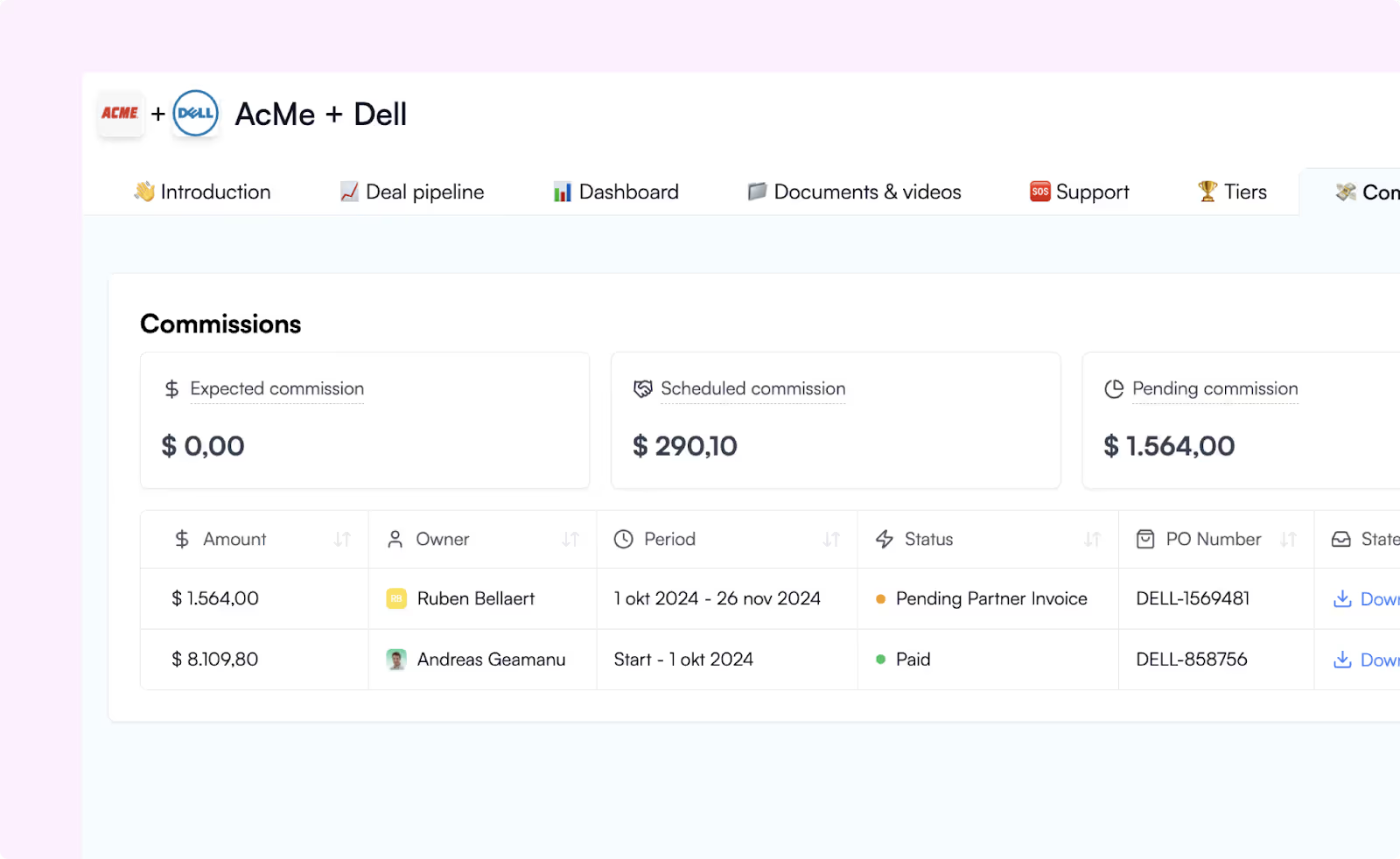
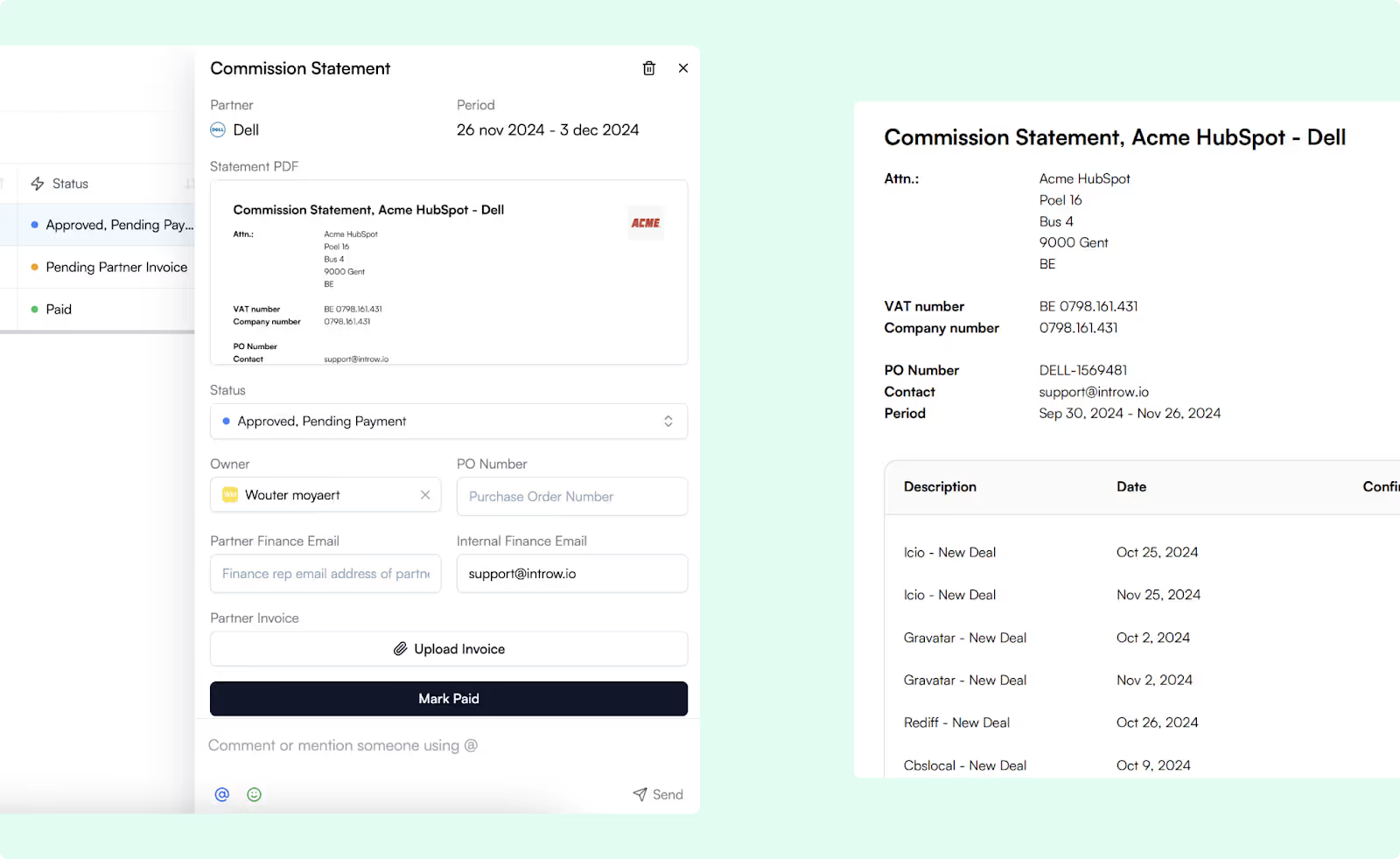
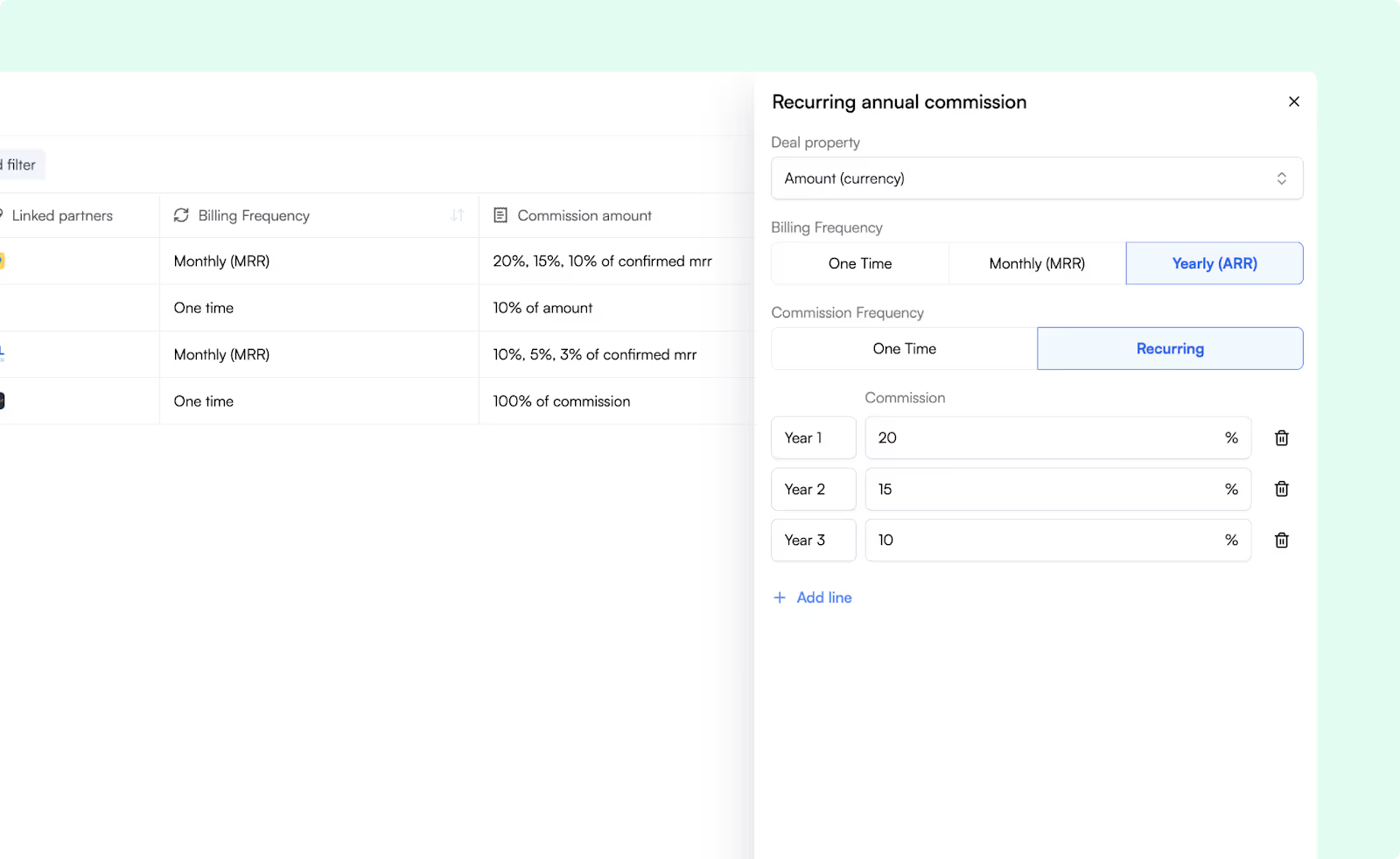
This keeps motivation high, reduces disputes, and turns your partner program into a powerful sales engine.
9. Monitor Performance and Deliver Feedback
To continuously improve your channel management strategy, you need visibility. Not just into revenue — but into deal velocity, campaign engagement, and partner health.
Introw’s reporting engine makes it easy to:
- Set key performance indicators (KPIs) by partner type
- Analyze contribution to pipeline and close rate
- Identify underperforming regions or partners at risk
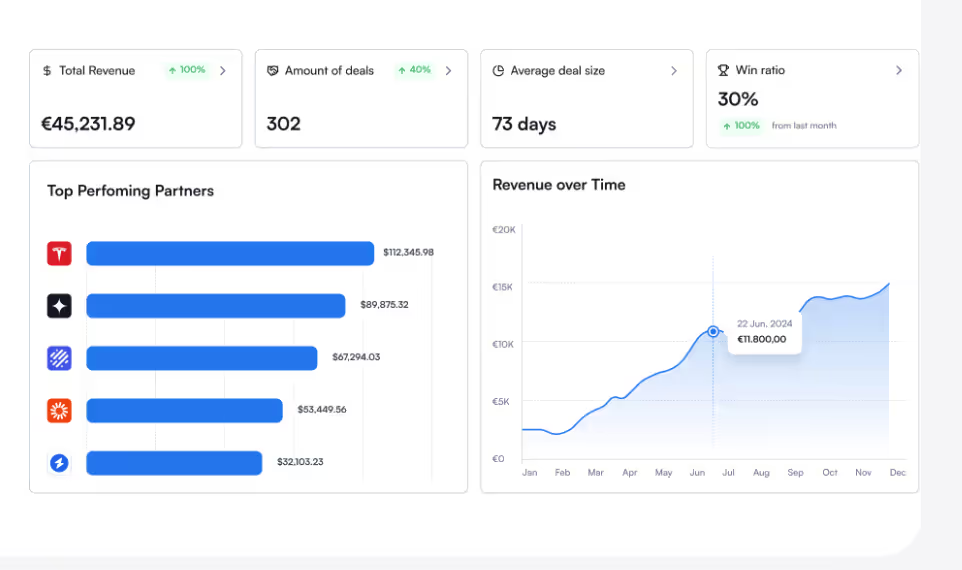
More importantly, it enables ongoing support — through automated feedback loops, QBRs, and personalized coaching plans.
Because channel management involves more than just metrics — it’s about managing relationships that fuel long-term business growth.
10. Amplify Success Through Channel Marketing and Co-Marketing
Finally, even the best partnerships can stall without marketing support. Your partners need assets, guidance, and budget to drive demand — and you need visibility into what’s working.
A modern channel campaign management approach includes:
- Co-branded email and ad templates
- Social content tailored to customer preferences
- Campaign tracking tied to lead generation or revenue
With Introw:
- Share approved messaging and assets in your partner portal
- Track campaign adoption and outcomes by region or partner
- Collect insights that help you optimize your marketing strategy across the ecosystem
Co-marketing isn’t a nice-to-have — it’s a growth multiplier. With Introw, you can turn co-marketing from ad hoc to always-on.
Conclusion
Without effective channel management, even the best partner programs stall. If your strategy isn’t aligned, automated, and data-driven — you’re leaving revenue on the table.
A modern channel management strategy requires clear goals, the right partners, a frictionless onboarding experience, and consistent training and communication. But most importantly, it needs a system that scales.
That’s where Introw comes in.
With Introw, channel managers can:
- Eliminate manual workflows and reduce channel conflict
- Improve visibility across multiple sales channels and partner types
- Automate onboarding, training, deal tracking, and performance reporting
- Support better partner relationships with real-time CRM insights
- Track and analyze channel performance and drive revenue growth
Whether you’re running a mature channel sales strategy or just starting to scale with indirect sales channels, Introw gives you the right channel management software to move faster, stay aligned, and grow with confidence.
Ready to turn your partner ecosystem into a high-performing revenue machine?
Introw PRM and Crossbeam integration
Looking to integrate account mapping data into your PRM? Introw leverages Crossbeam's overlap data to identify opportunities and share them with your partners instantly.
What is Crossbeam?
Crossbeam is a Partner Ecosystem Platform (PEP) that empowers SaaS companies to replace cumbersome spreadsheets with a streamlined system to identify overlapping customers and prospects in their partner networks. This approach is commonly known as "account mapping."
In simple: You connect your CRM, your partner connects their CRM. Crossbeam identifies overlapping data. Example: Your company has Acme Corp as a prospect, your integration partner has Acme Corp as a customer. Crossbeam will uncover this for you allowing you to ask for an introduction or intell about Acme Corp.
In 2024, Reveal and Crossbeam merged, creating a network that now connects over 30,000 companies, including Stripe, Intercom, HubSpot, and many others.

What is Introw?
Introw is an innovative Partner Relationship Management (PRM) platform designed to make managing partnerships easy, efficient, and impactful. It allows businesses to create and manage a partner portal in just minutes, with features like:
- Automated Deal and Lead Registration: Streamline workflows for registering and tracking deals all integrated with your CRM.
- Tiering and Commission Management: Automate partner tiers and commission payouts to encourage better engagement.
- Partner Enablement: Keep partners up to date and top of mind by giving them access to the right sales material and sending them announcements on autopilot.
- CRM Integration: Introw integrates seamlessly with platforms like Salesforce and HubSpot, keeping your CRM as the single source of truth.
- Real-Time Alerts and Nudges: Introw enables instant partner engagement via email and Slack, ensuring partners stay informed and motivated.
Unlike traditional PRMs, Introw starts from CRM data, and is set-up in literally minutes instead of months.
Why and How Does Introw Integrate with Crossbeam?
The integration between Introw and Crossbeam brings the best of both platforms together to enhance partnership collaboration and revenue potential. Here’s how it works:
- Seamless Connection: With just one click, Introw connects to Crossbeam, automatically matching your partners from both platforms.
- Streamlined Opportunity Sharing: Use Crossbeam's overlap data to identify opportunities and share them with your partners instantly through Introw.
- Automated Deal Attribution: Deals sourced through Crossbeam's overlap data are automatically attributed to the appropriate partner in your CRM.
- Real-Time Partner Engagement: Introw uses Slack and email to send timely updates on deal status or CRM changes, ensuring partners are always in the loop and engaged.
By combining Introw’s advanced partner management tools with Crossbeam’s powerful data-sharing capabilities, this integration creates a highly efficient system for driving partnership revenue and fostering collaboration.
Learn more and get started with the integration by creating an here.
Alternatively, schedule a 1:1 call to learn more through a personalized demo.